Category: Art

  • Another visit to the National Gallery!

    Another visit to the National Gallery!

    The National Gallery was less crowded than when I visited a few weeks ago. We do not charge entrance fees for access to museums in the UK, which is all well and good, but it does mean that they can get get rather well attended, on occasions. Teachers are very fond of bringing their classes to museums, and for tourists, it is a great benefit. In comparison, the Louvre in Paris charges 17 euros for adult admission.

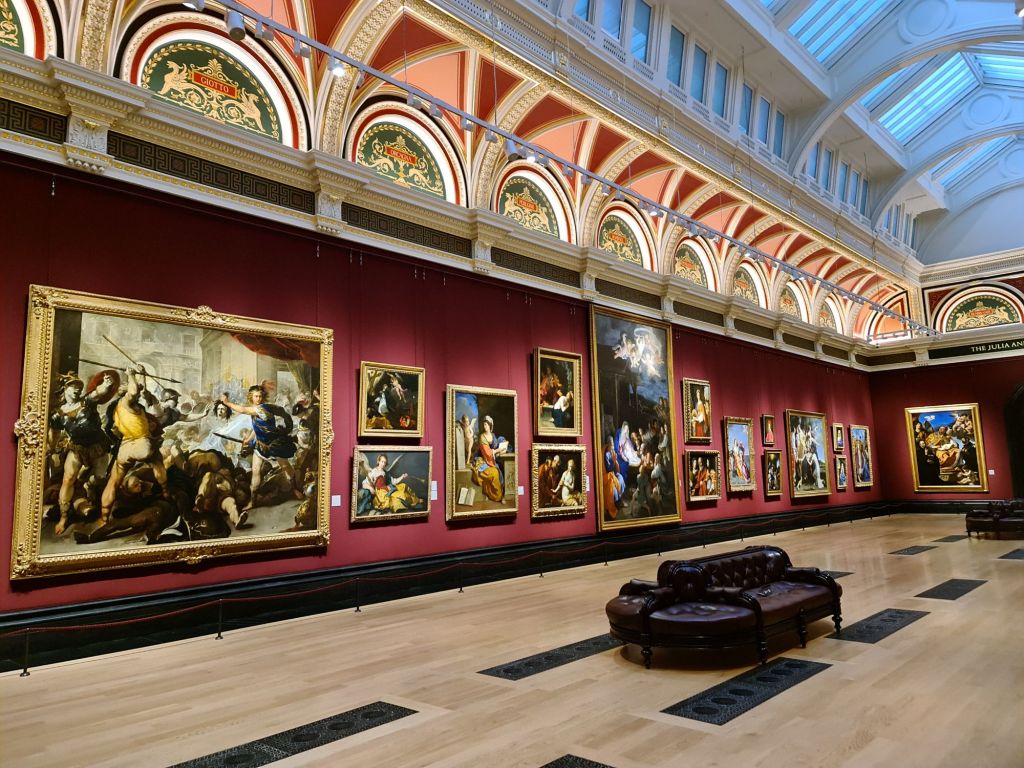
    The Sainsbury Wing of the gallery is being ‘reconfigured’, so many of the paintings have been moved around and sited in new locations, including the basement (see below).
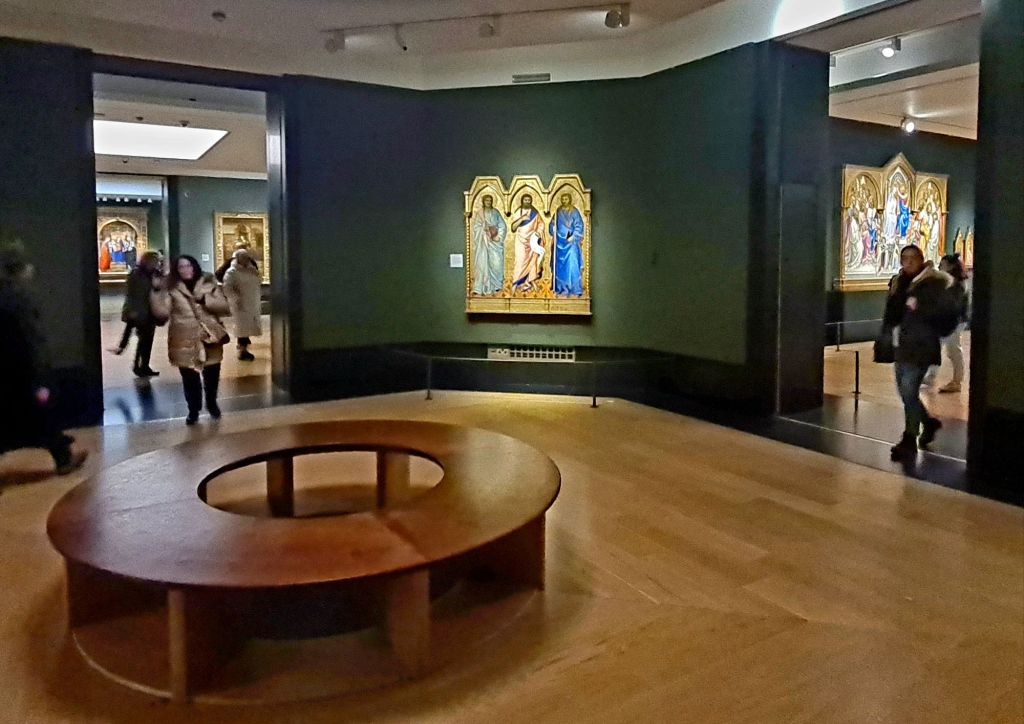
    Early Renaissance paintings in the National Gallery, London
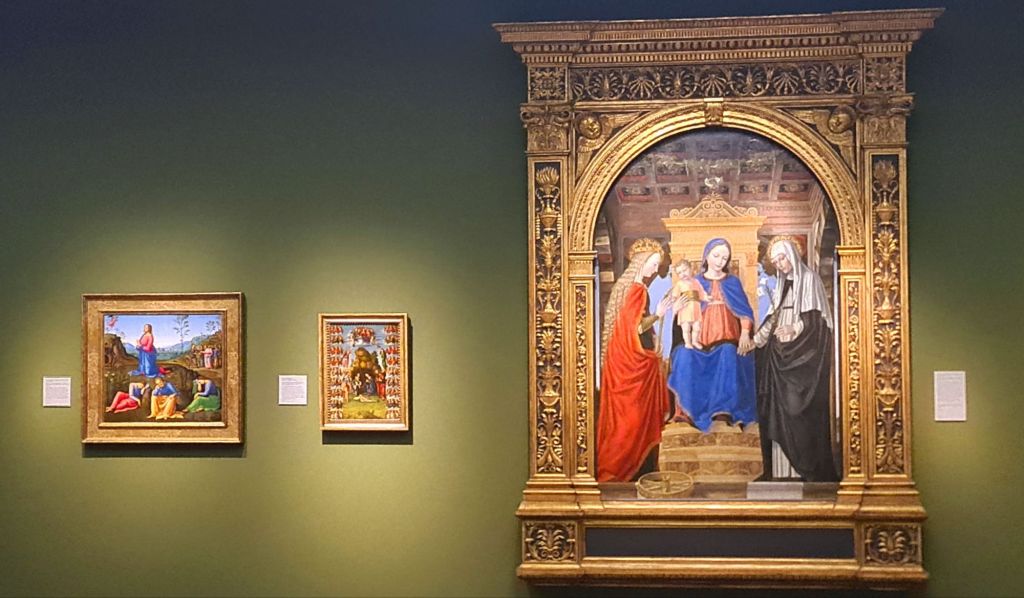
    Early Renaissance paintings in the National Gallery, London

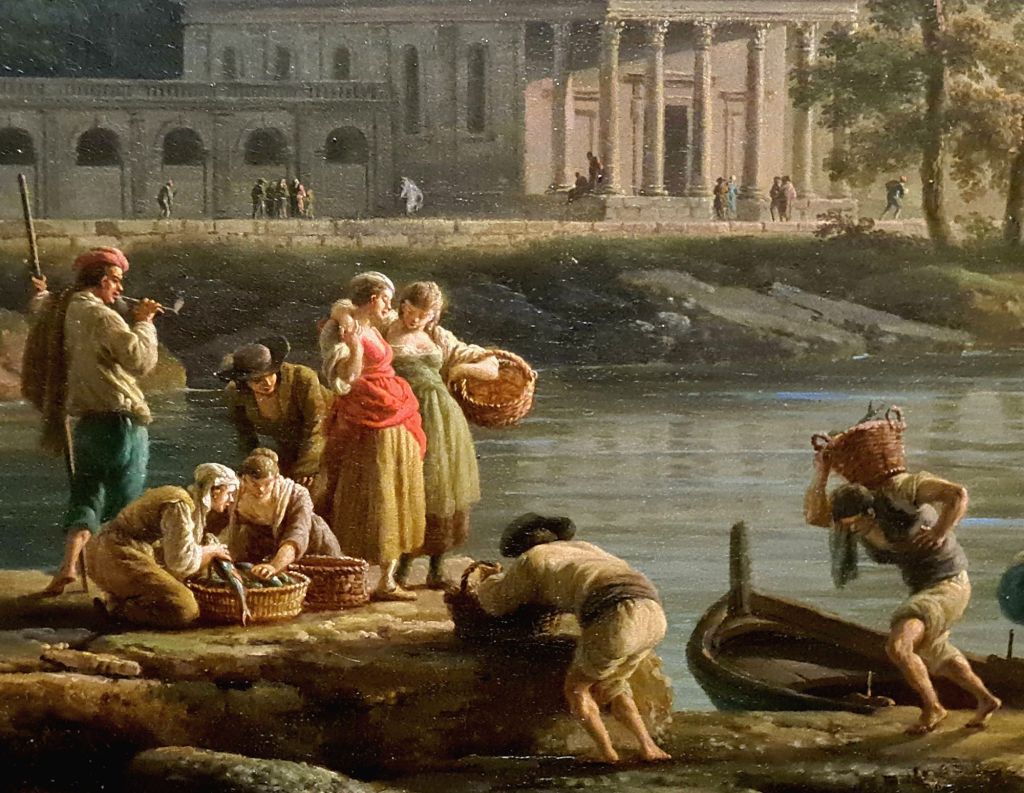
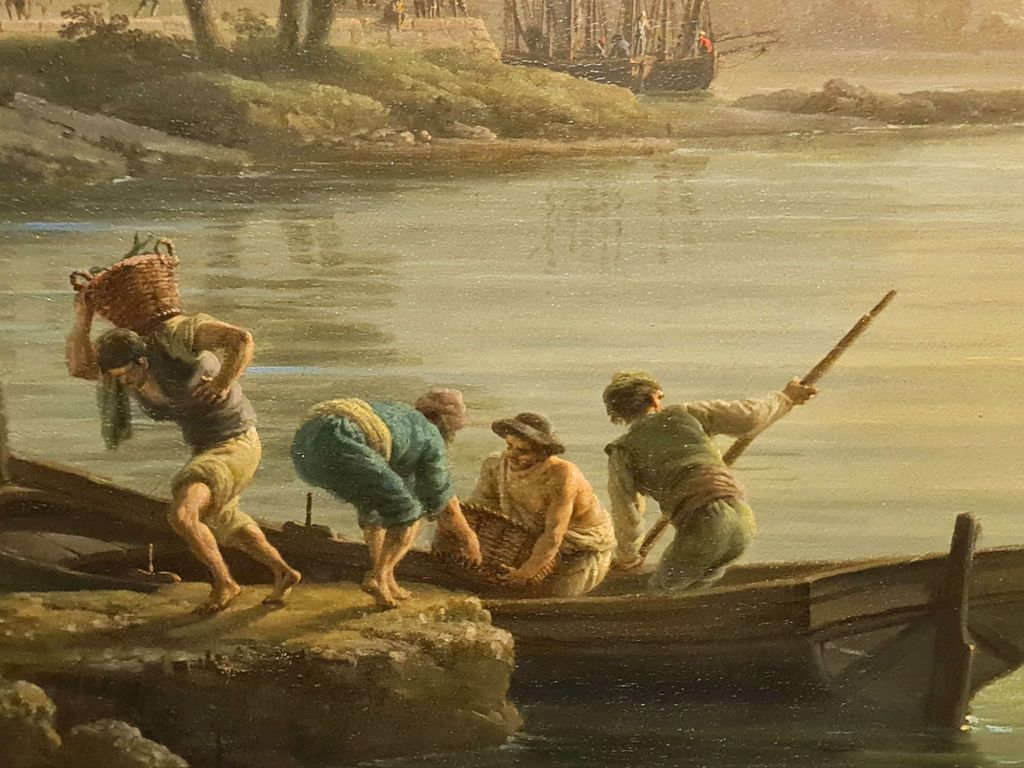
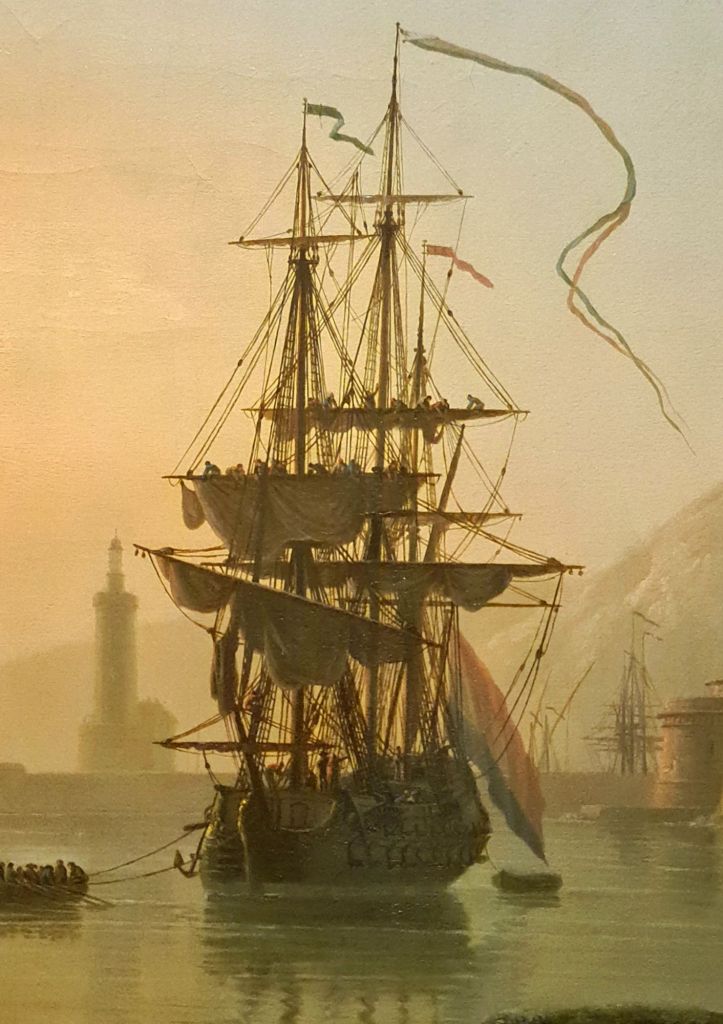
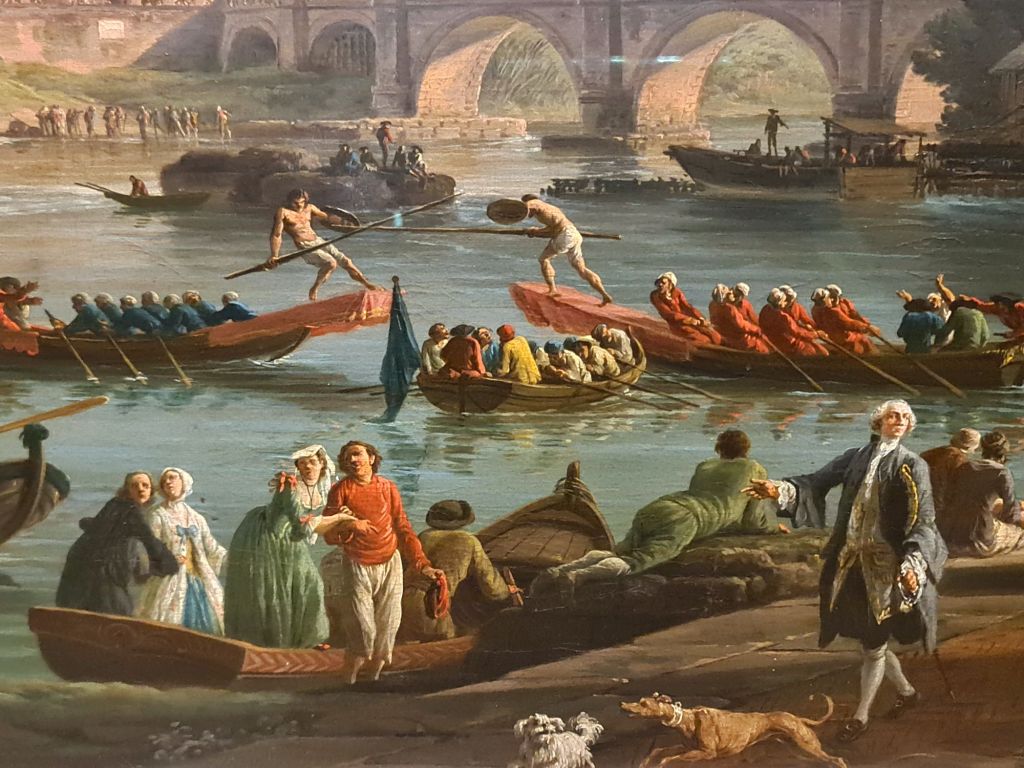
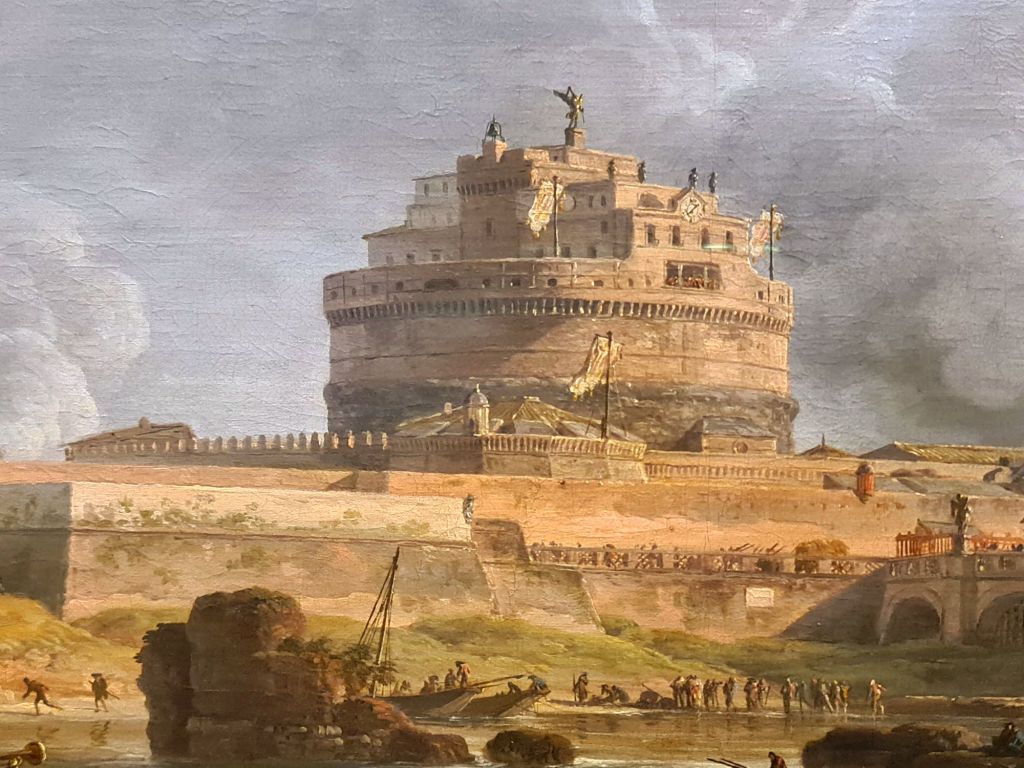
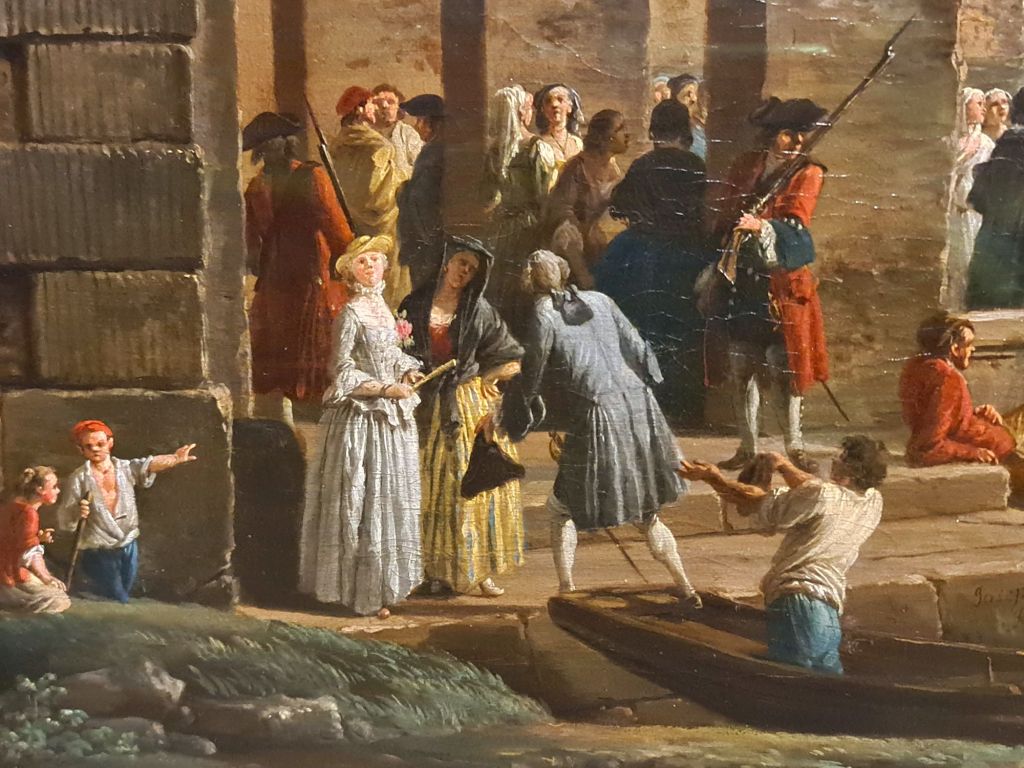
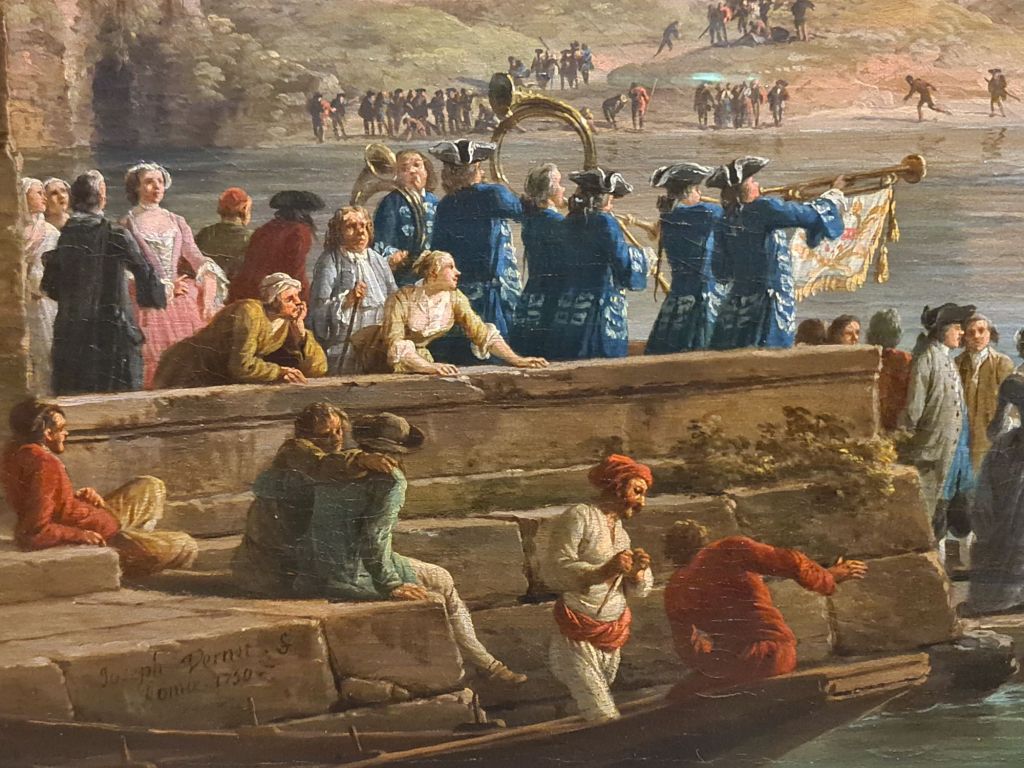
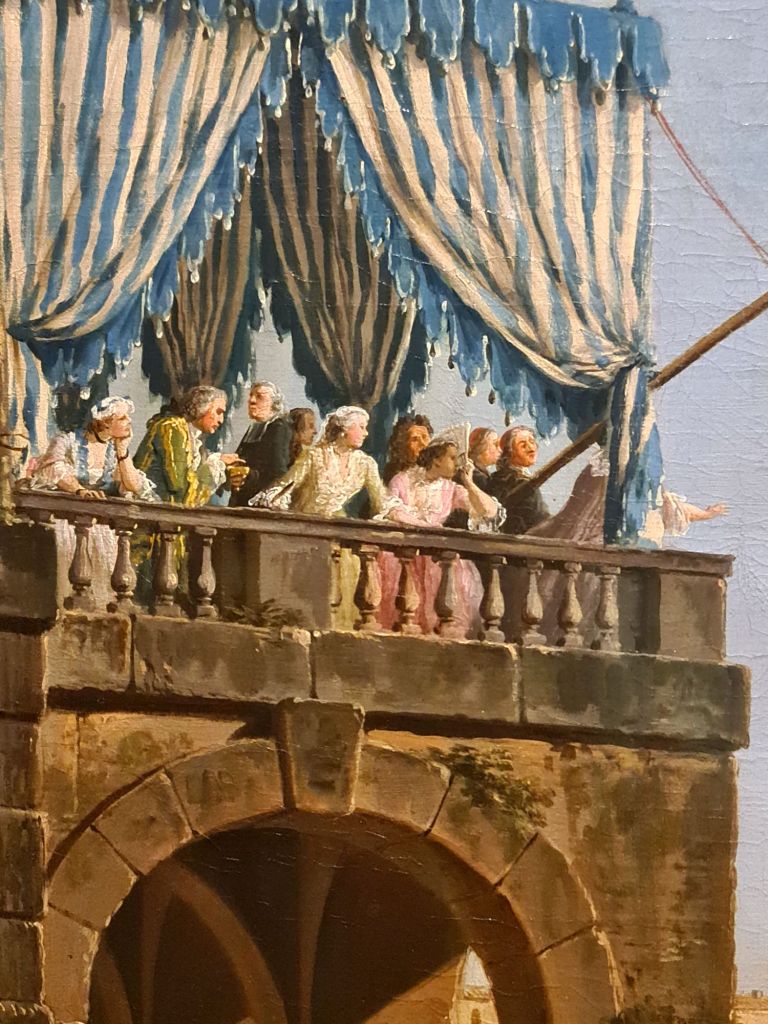
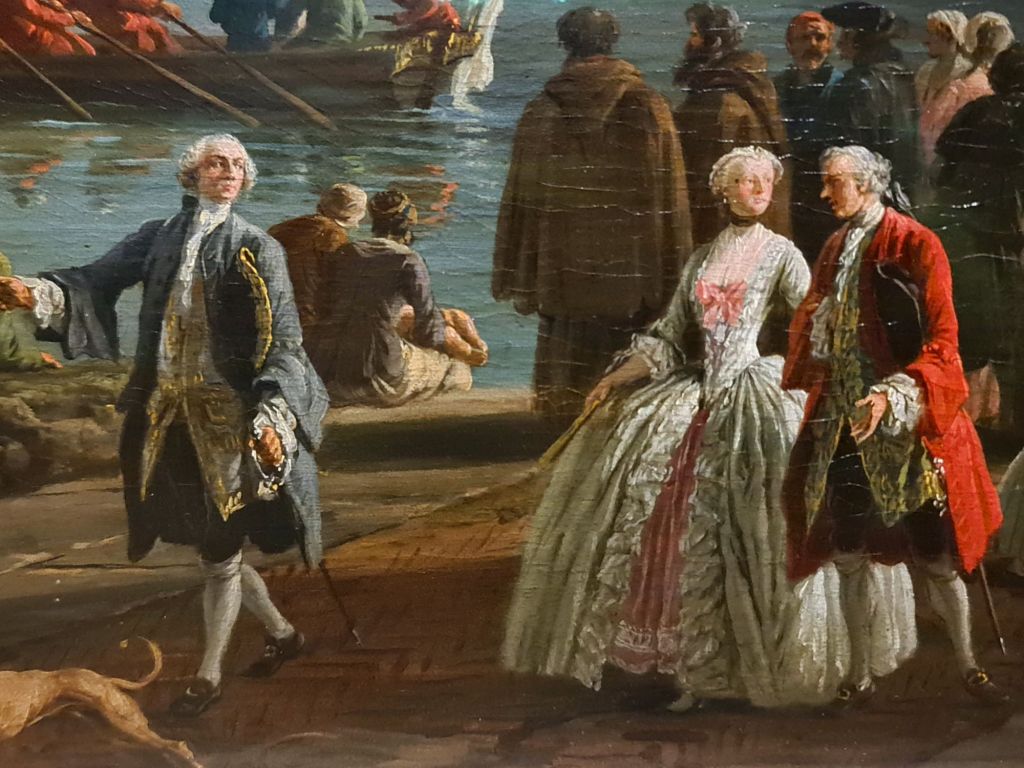
    However, on this occasion, my eye was caught by some paintings I had never seen, or stopped to look at before. There were three impressive canvases by the French artist, Claude-Joseph Vernet (below). Now these atmospheric, 18th century land- and seascapes are not my favourite sort of art, but they are fascinating and a real insight into the people and customs (including costumes!) of the times.

    Joseph Vernet (1778) by Élisabeth Louise Vigée Le Brun, Public domain, via Wikimedia Commons

    One of the fun things about going to an art gallery is taking pictures! It is not that long ago, or so it seems to me, that you were not allowed to take photographs of the paintings. The thinking at the time, was that flash light might damage the paintings. Britain was one of the last countries to give in and change the policy regarding photography. Although many people just want to take a selfie in front of a famous painting to say ‘look where I was’ (!), it does, I think, really add to the occasion by allowing you to capture an image and look at it more closely, and for more time, at home.
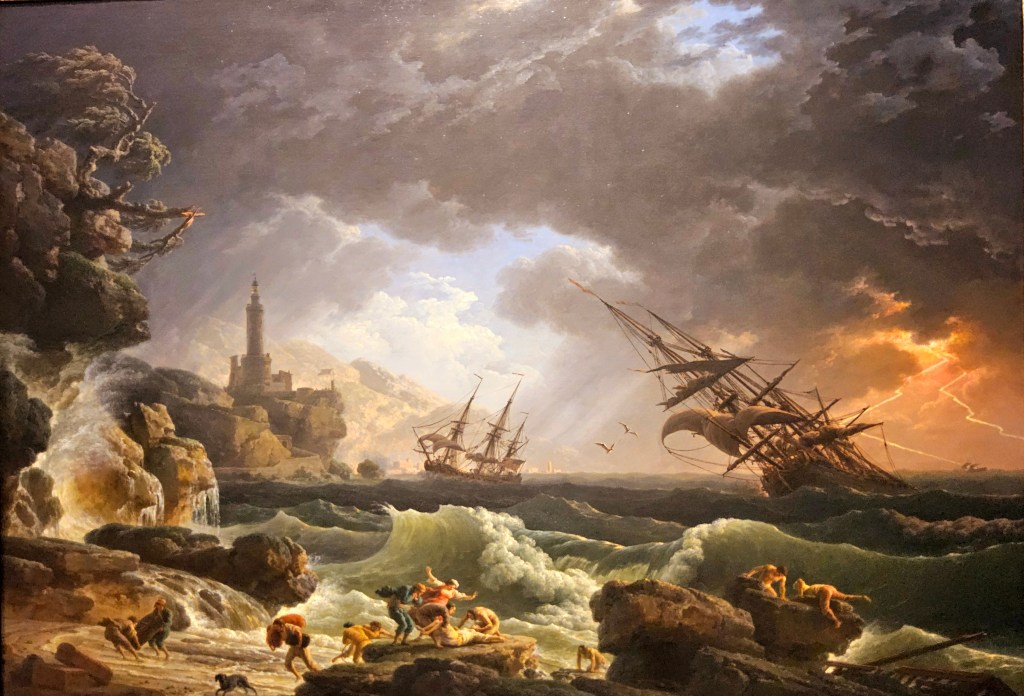
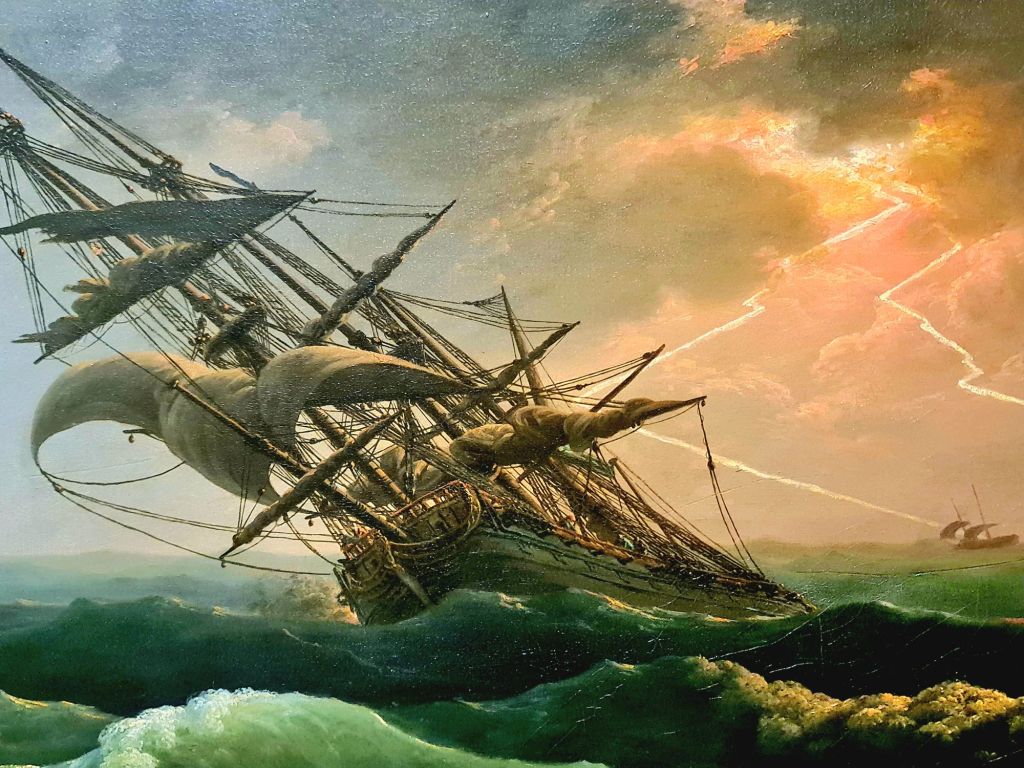
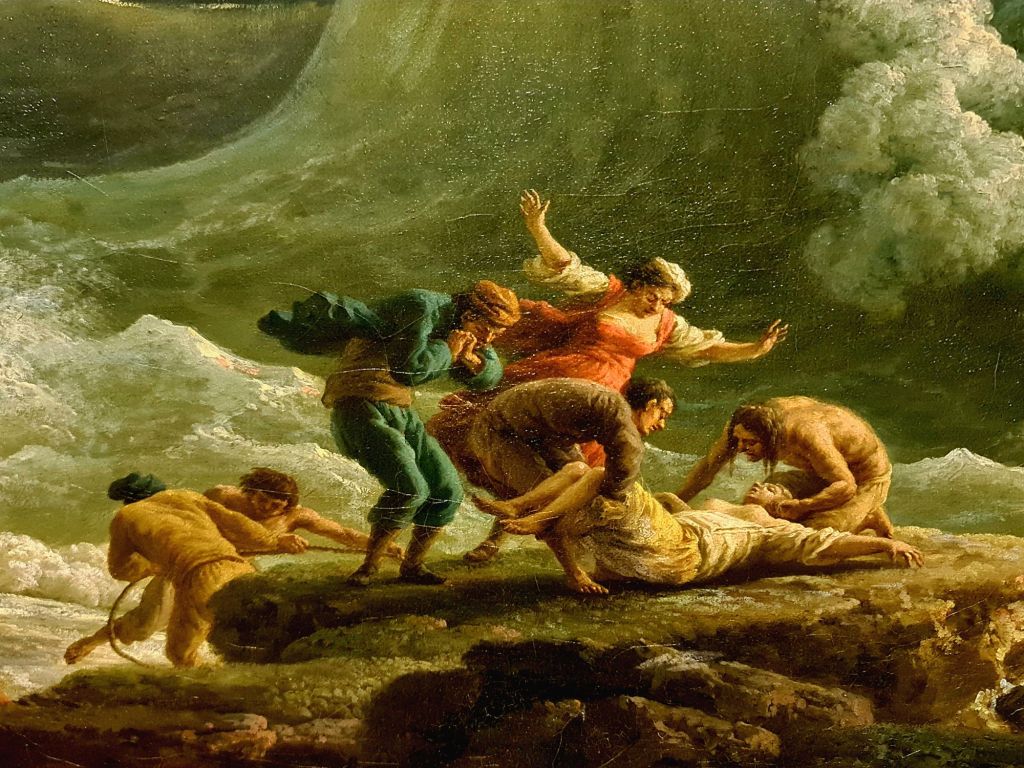
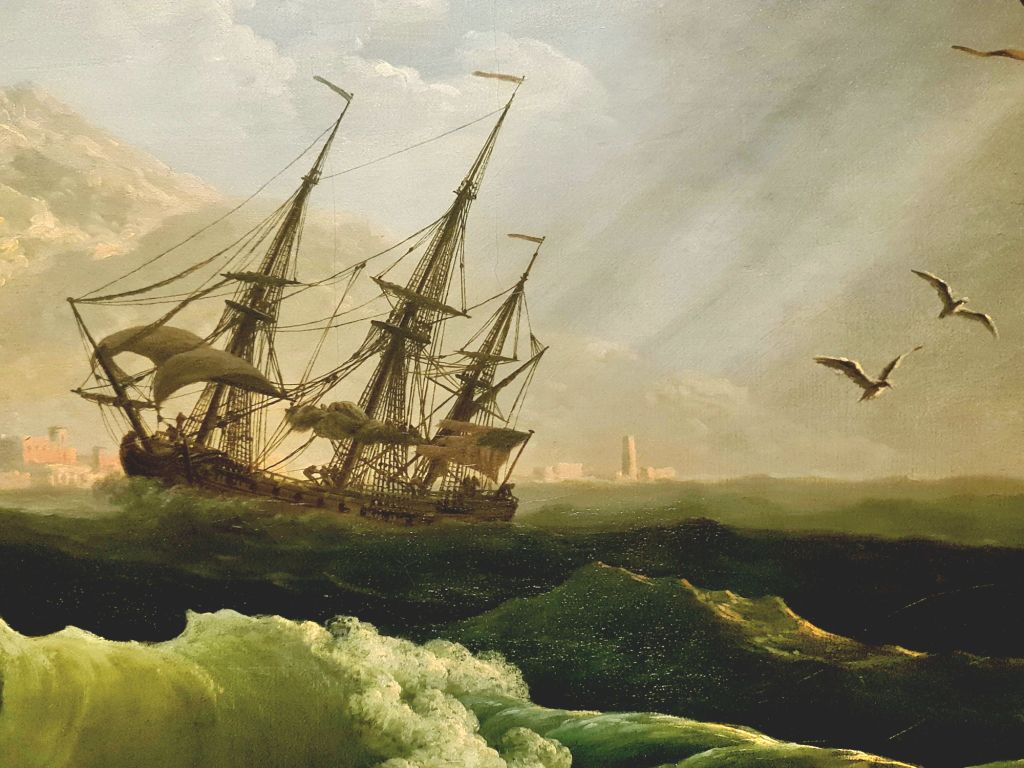
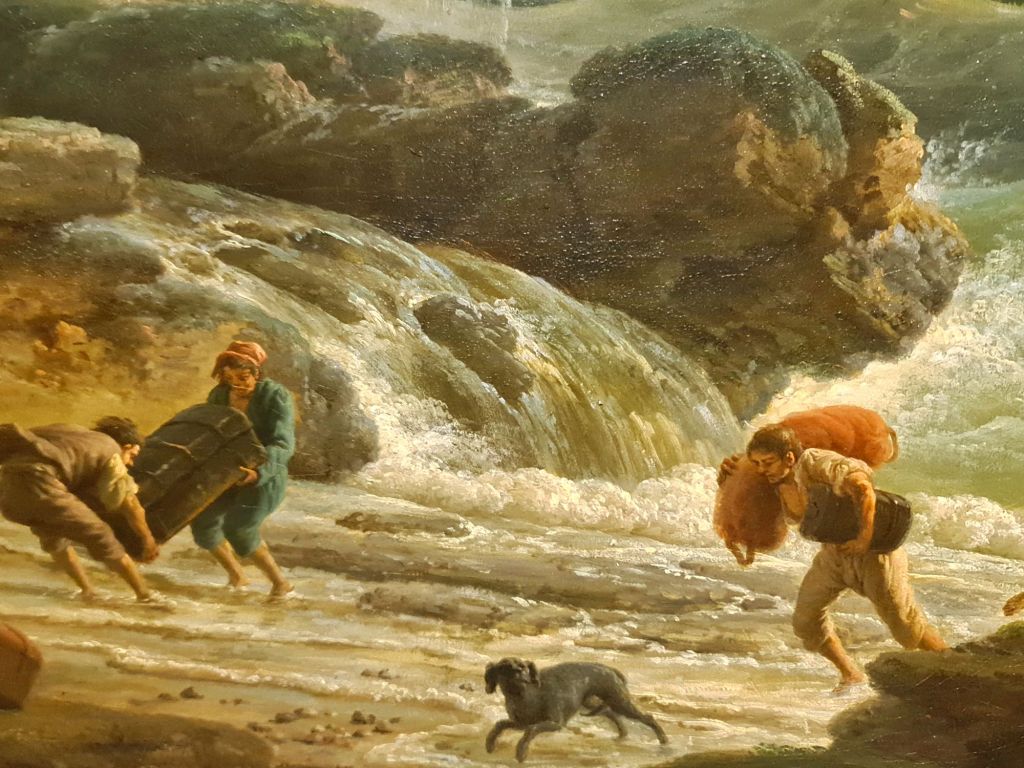
    A Shipwreck in Stormy Seas (1773) by Claude-Joseph Vernet
    National Gallery, London

    Photography also allows you to ‘sample a picture’. I really like doing this, because no matter how long you stand in front of a painting, there are details you might miss. Photographing sections, or sampling a picture, allows you to study it in much more detail. Large canvases, like those of Claude-Joseph Vernet, are full of fascinating details. It is really a portal, more than a glimpse, back into the 18th century.

    A Landscape at Sunset (1773) by Claude-Joseph Vernet
    National Gallery,  London

    It is also possible to zoom in on each of these paintings on the National Gallery’s site on Claude-Joseph Vernet.
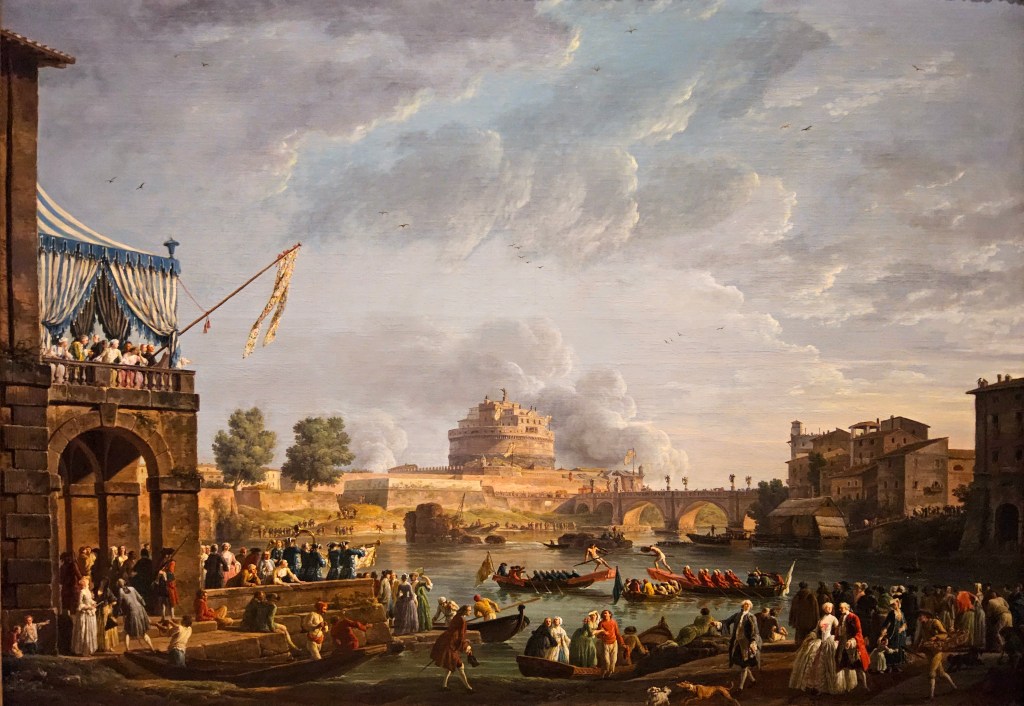
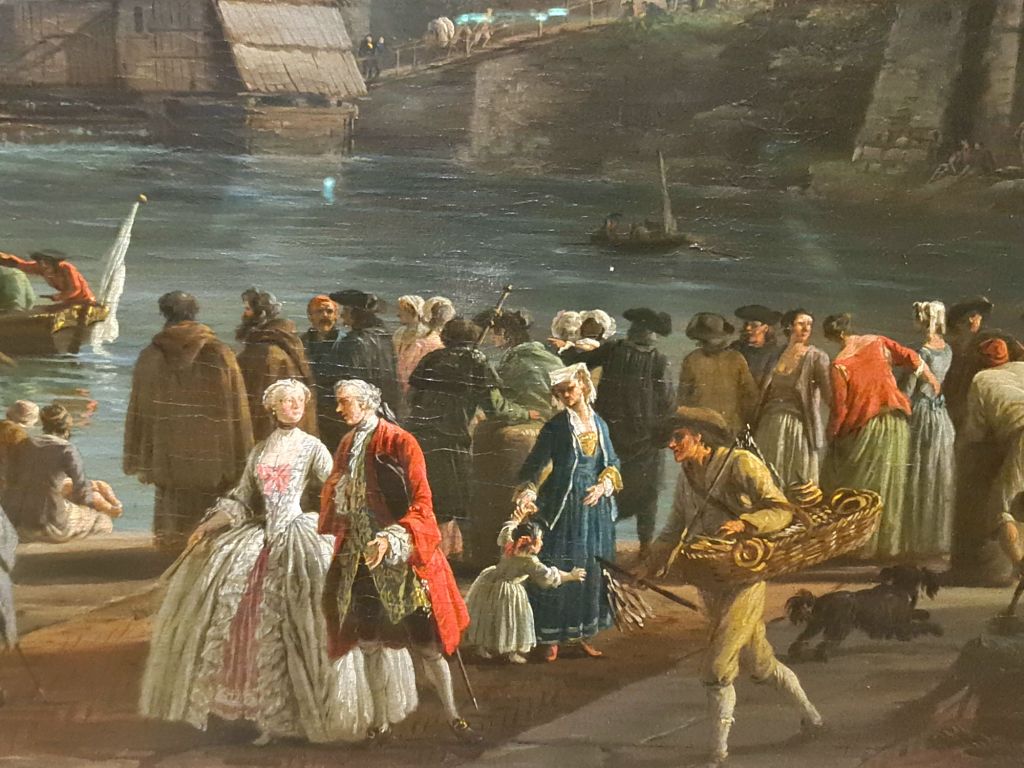
    A Sporting Contest on the Tiber (1750) by Claude-Joseph Vernet National Gallery,  London

    Another couple of paintings I had fun sampling are shown below. The painting by Jean-Honoré Fragonard called Psyche Showing Her Sisters Her Gifts from Cupid is an early work by this artist, painted when he was only 21. Follow the link for more details.

    Psyche showing her Sisters her Gifts from Cupid (1753) by Jean-Honore Fragonard National Gallery,  London

    Details from Psyche showing her Sisters her Gifts from Cupid (1753) by Jean-Honore Fragonard National Gallery,  London

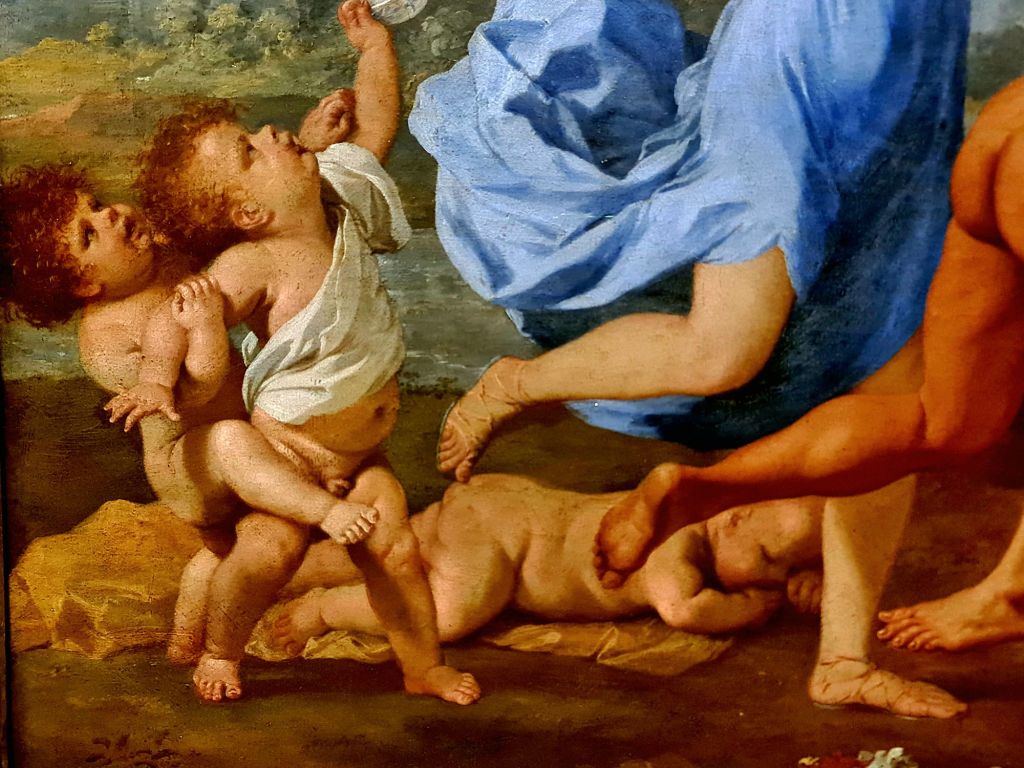
    Nicolas Poussin, another French painter, was born nearly 140 years before Fragonard, and his painting, A Bacchanalian Revel Before a Term, is in the classical style, I suppose. What struck me most about this wild party scene was what fun the dancers and revelers seem to be having! Apart from the poor baby which seems to be getting trampled underfoot, bottom left!
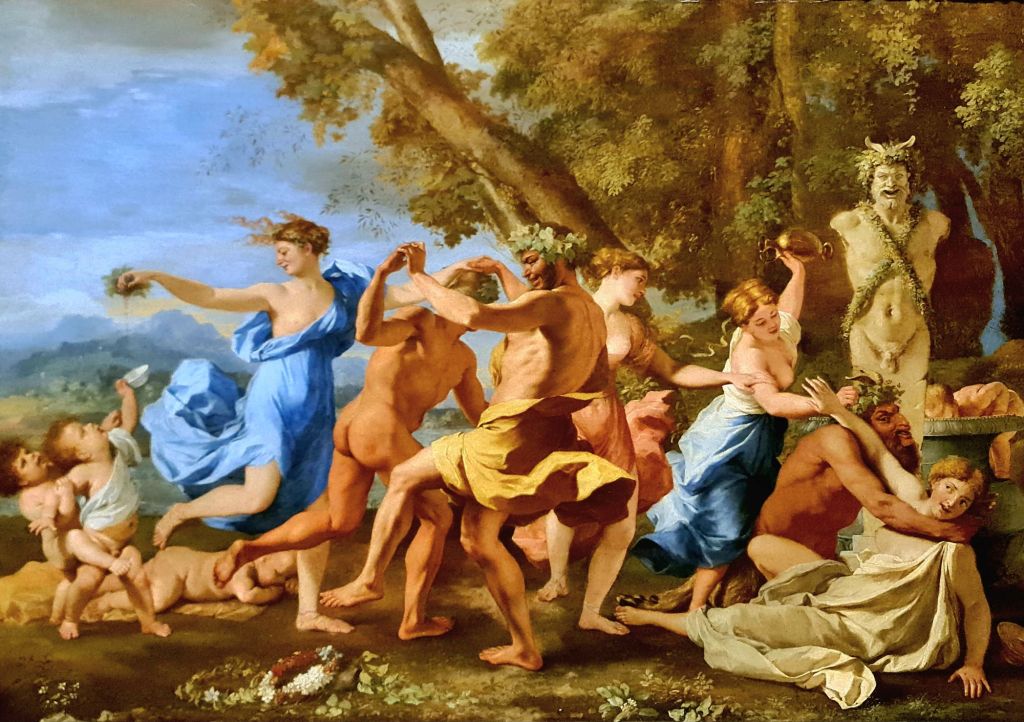
    A Bacchanalian Revel before a Tern (1632-3) by Nicolas Poussin National Gallery,  London

    A number of artists have been inspired by this painting by Poussin, including  the London-based artist Leon Kossoff, see here.

    Leon Kossoff Bacchanal before a Herm (1) 1998 Tate Gallery
  • A short visit to the National Gallery

    A short visit to the National Gallery

    I often visit the National Gallery when I am in London. There is always something new to see or old favourites to revisit and admire.

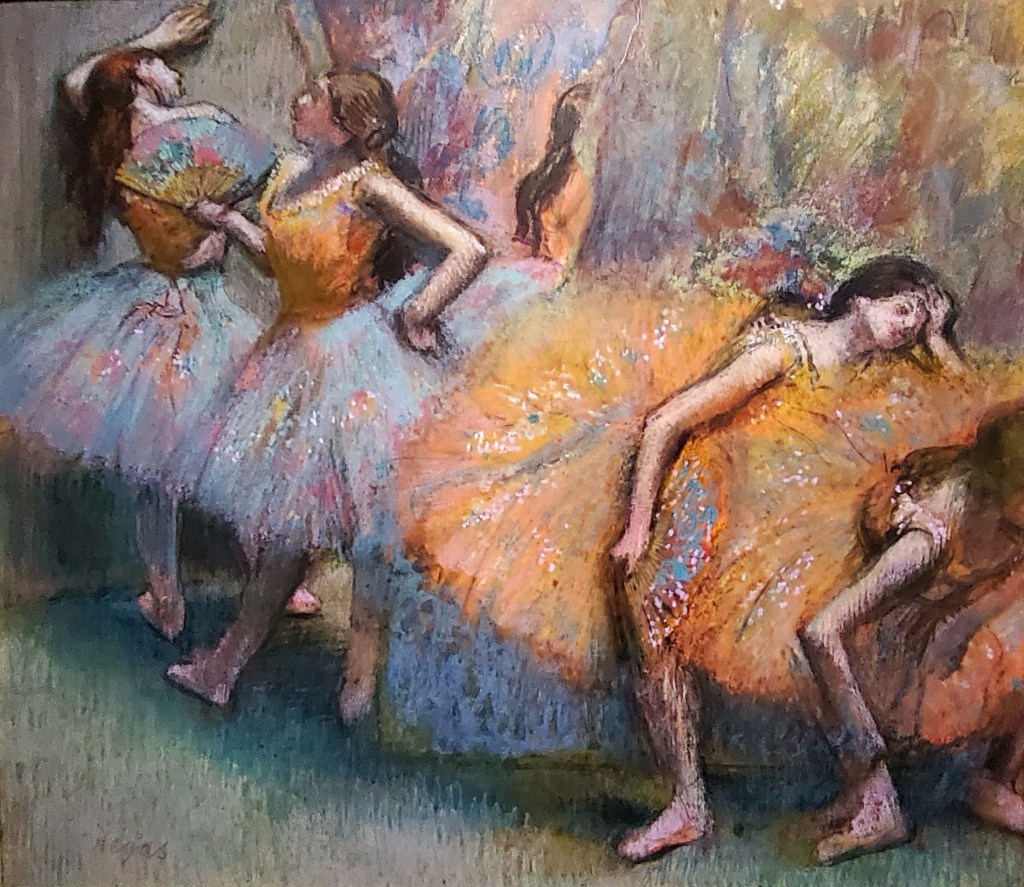
    When I was younger, I was completely taken by Impressionist artists, like Degas (below), and would generally walk rather briskly through the Old Master galleries, containing Renaissance painters and the like.

    Edgar Degas, Ballet Dancers, pastel on paper laid on panel, 1888 (The National Gallery, London)

    I still love the more modern works, but I have become more and more fascinated by the older styles of painting; not just the incredible techniques of Old Masters like Leonardo da Vinci and Rafael – to name just two – but also the wonderful colours and strange compositions of some very early paintings (see below).

    Francesco Pesellino

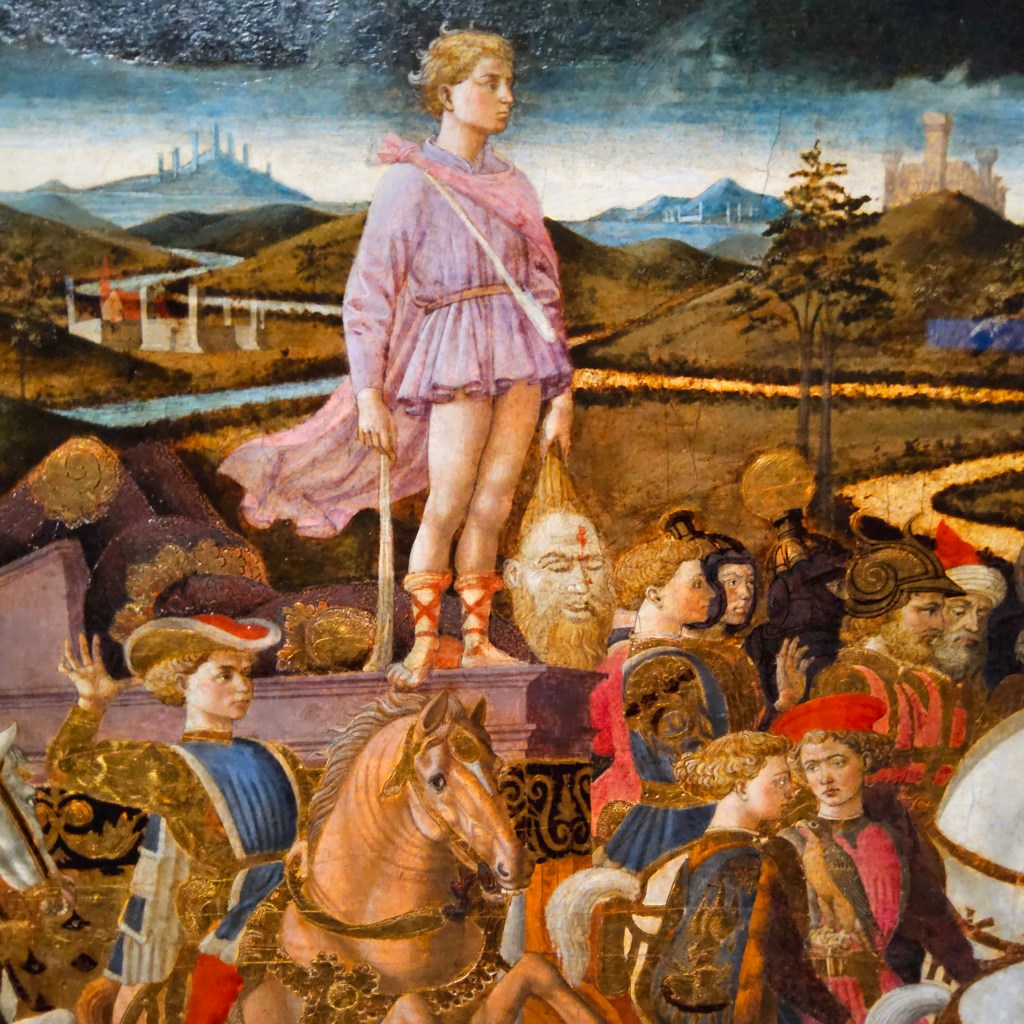
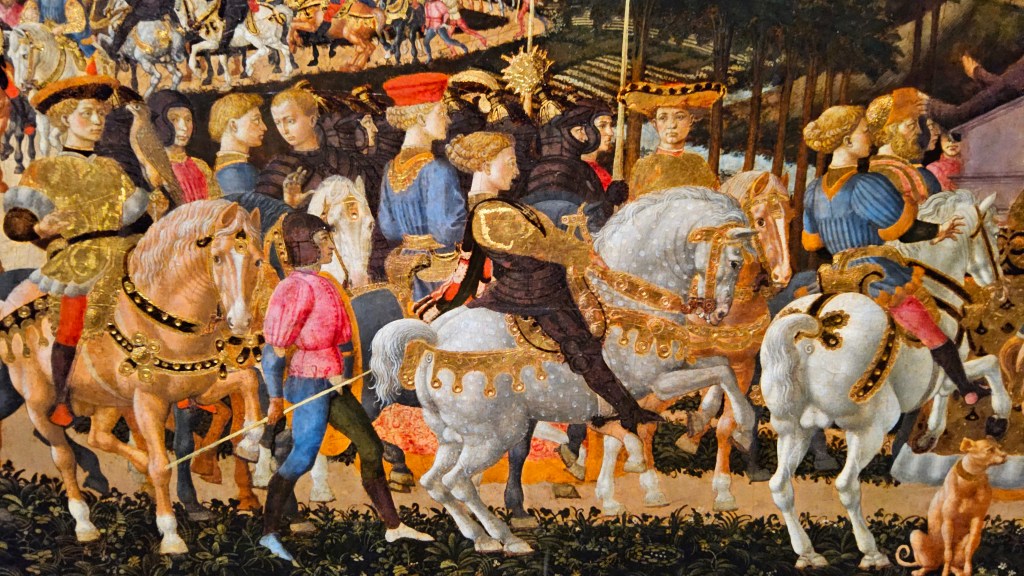
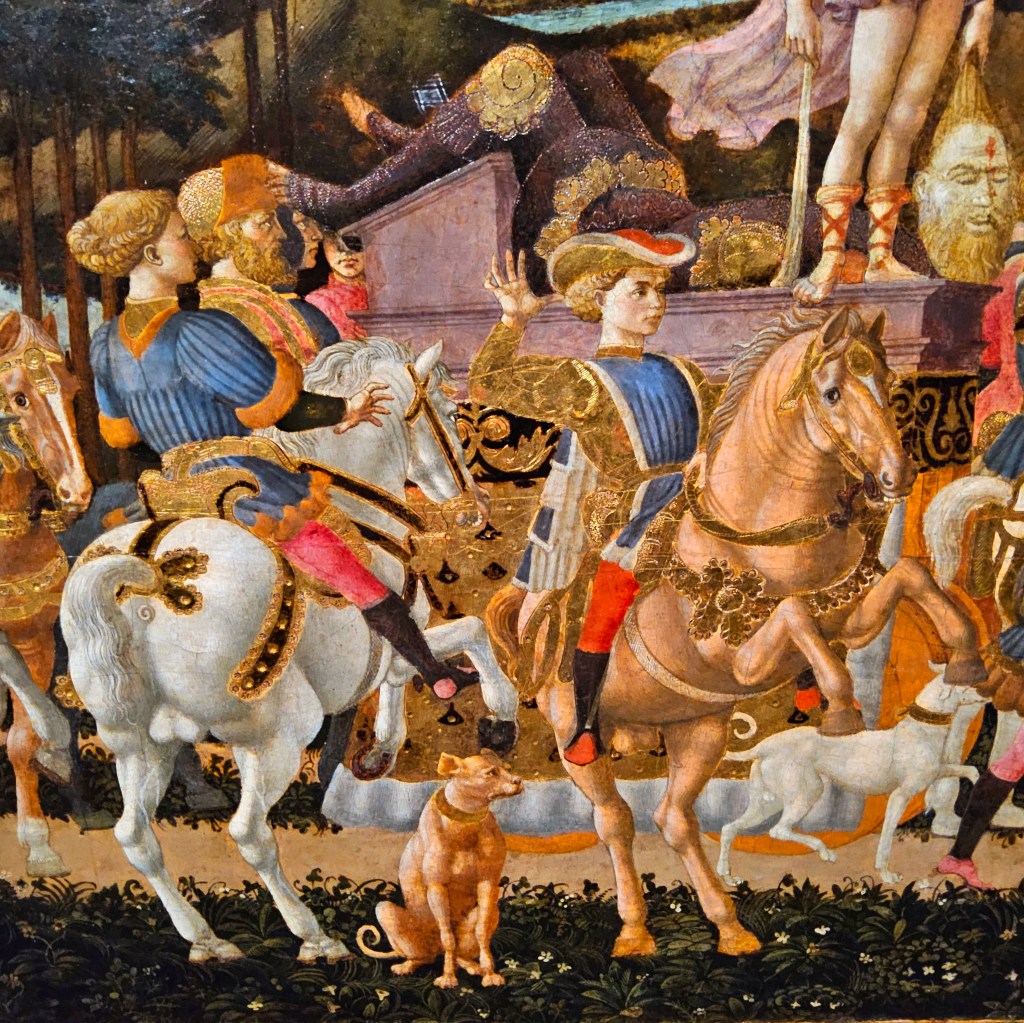
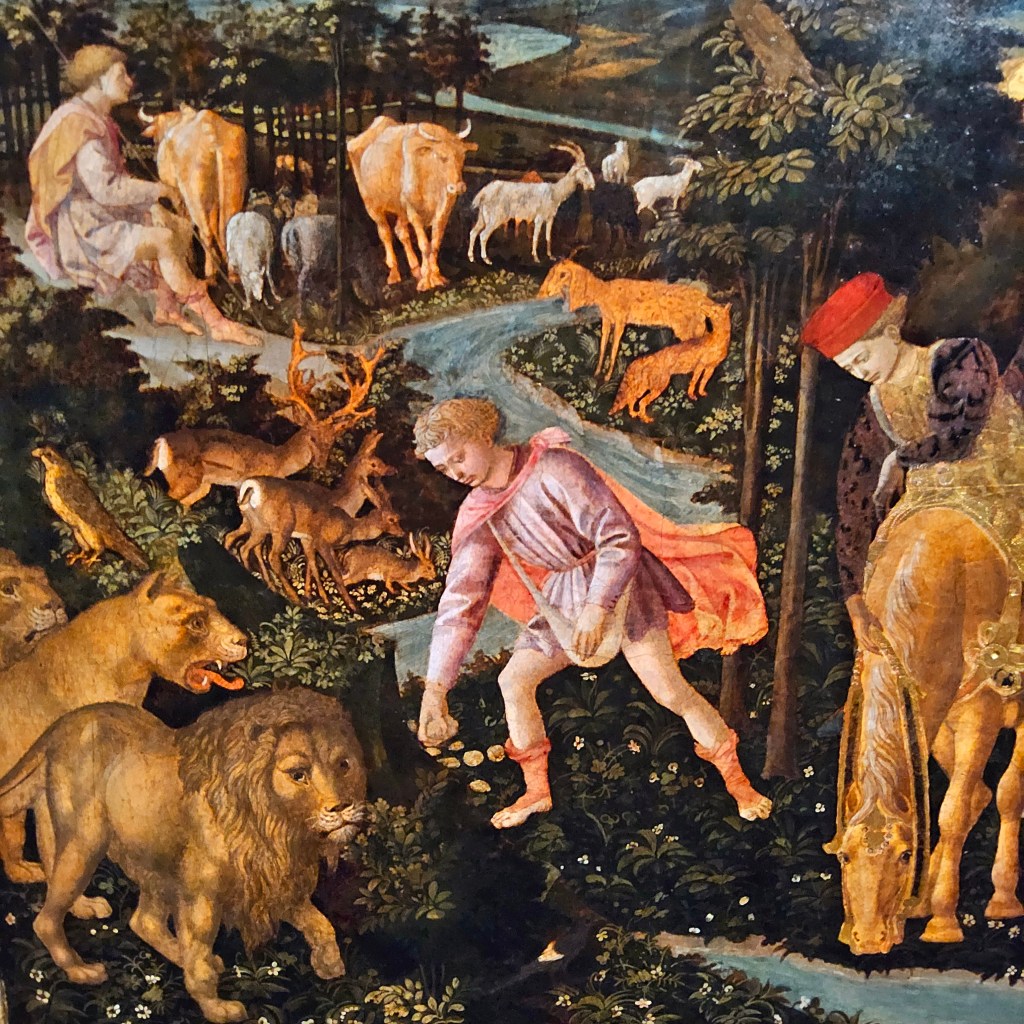
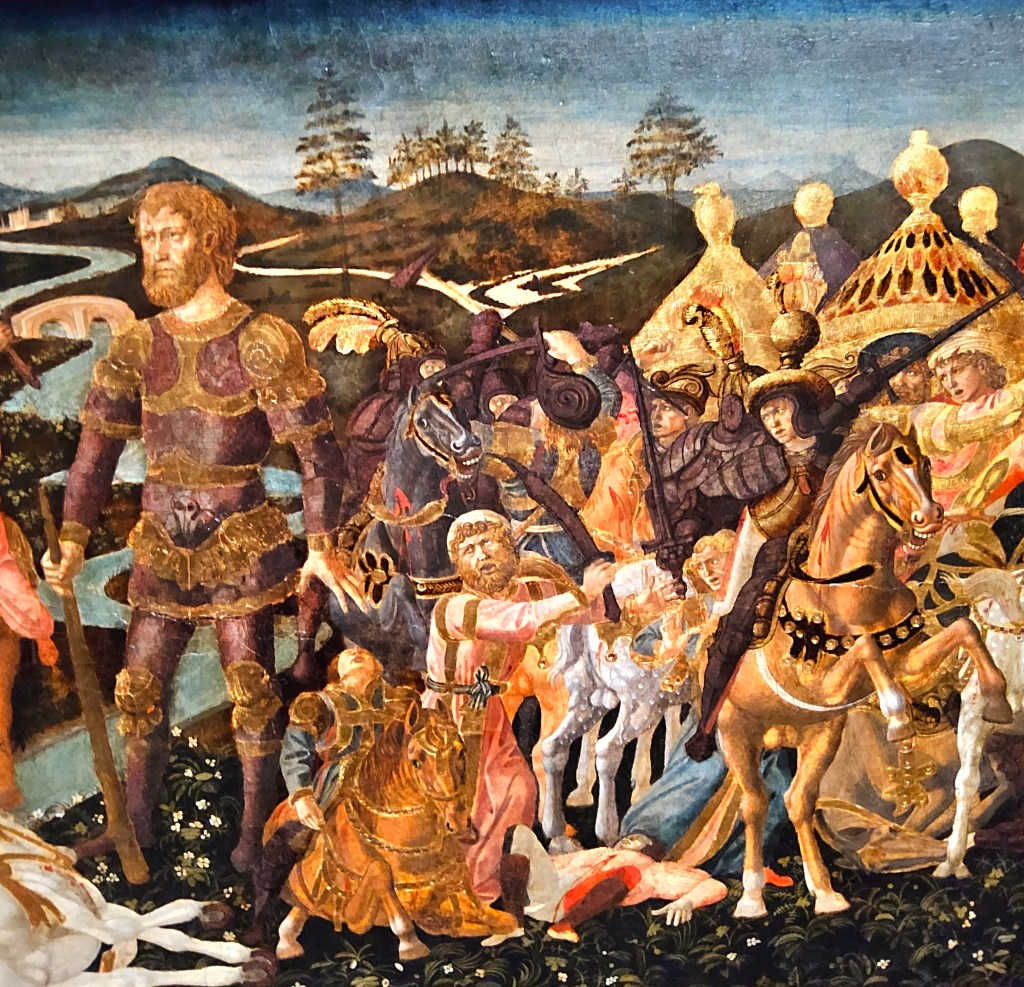
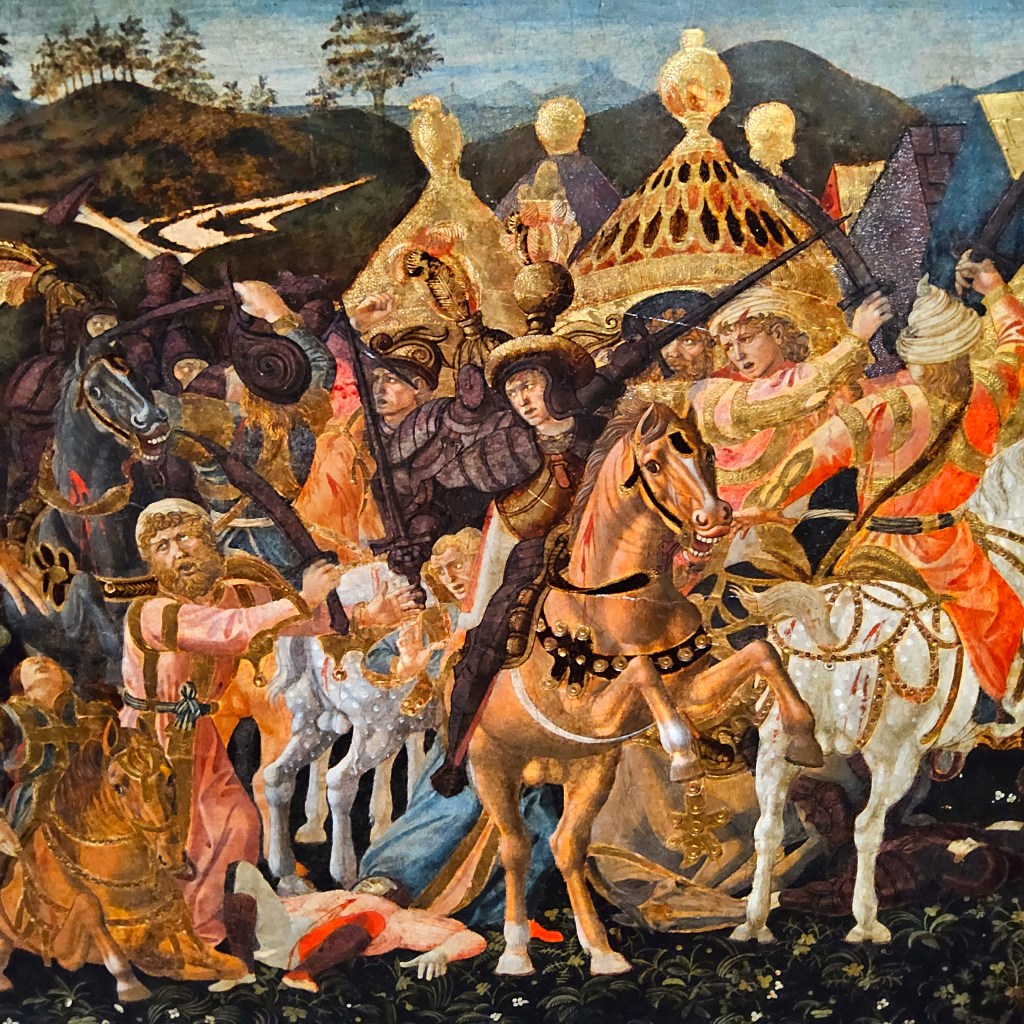
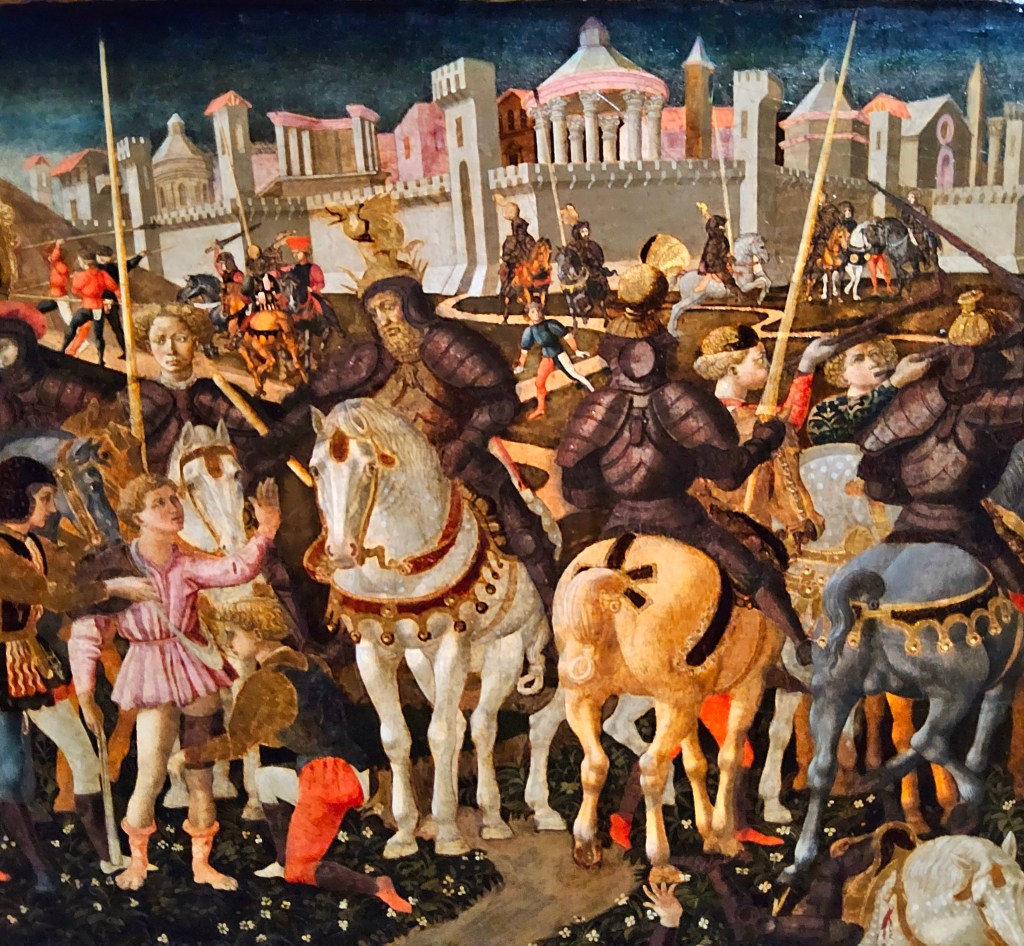
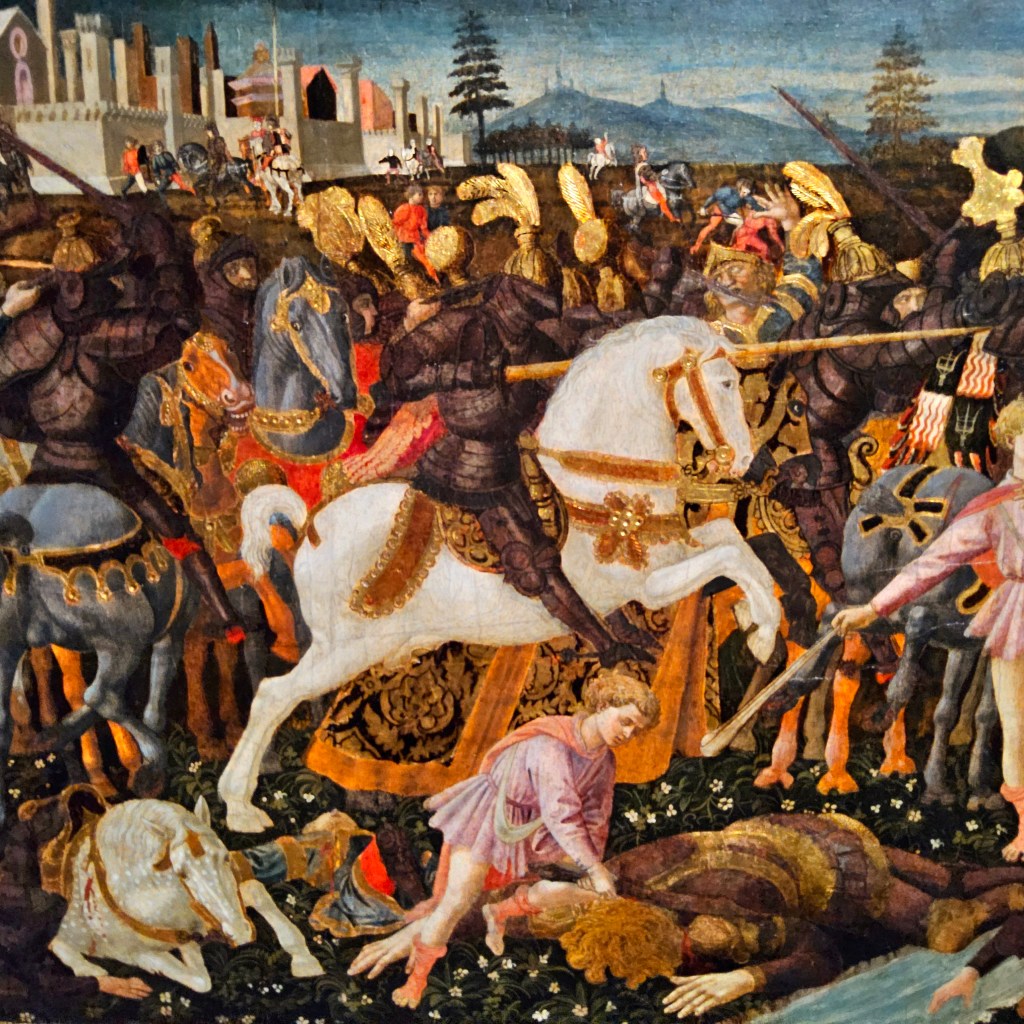
    A highlight of the visit was a small, free exhibition of works by the Italian Renaissance painter Francesco Pesellino (c. 1422 – 1457). I had not come across this artist before, and he is, it seems, something of a forgotten master, who died very young (aged only 35). The centrepiece of the exhibition is two panels depicting the Story of David. An extraordinary work of art that apparently took about 10 years to complete.

    The Triumph of David (1445-55) by Francesco Pesellino.
    Public domain, via Wikimedia Commons

    The panels were only acquired by the NG in 2000 and have only recently been put on display after a lengthy period of conservation.

    The Story of David and Goliath by Francesco Pesellino.
    Public domain, via Wikimedia Commons

    There was a scrum of people trying to get a good look at the panels, and the gallery had supplied magnifying glasses in order to obseve the details of these paintings, which was incredible. I used my tablet phone to take some pictures, also featured here and here.

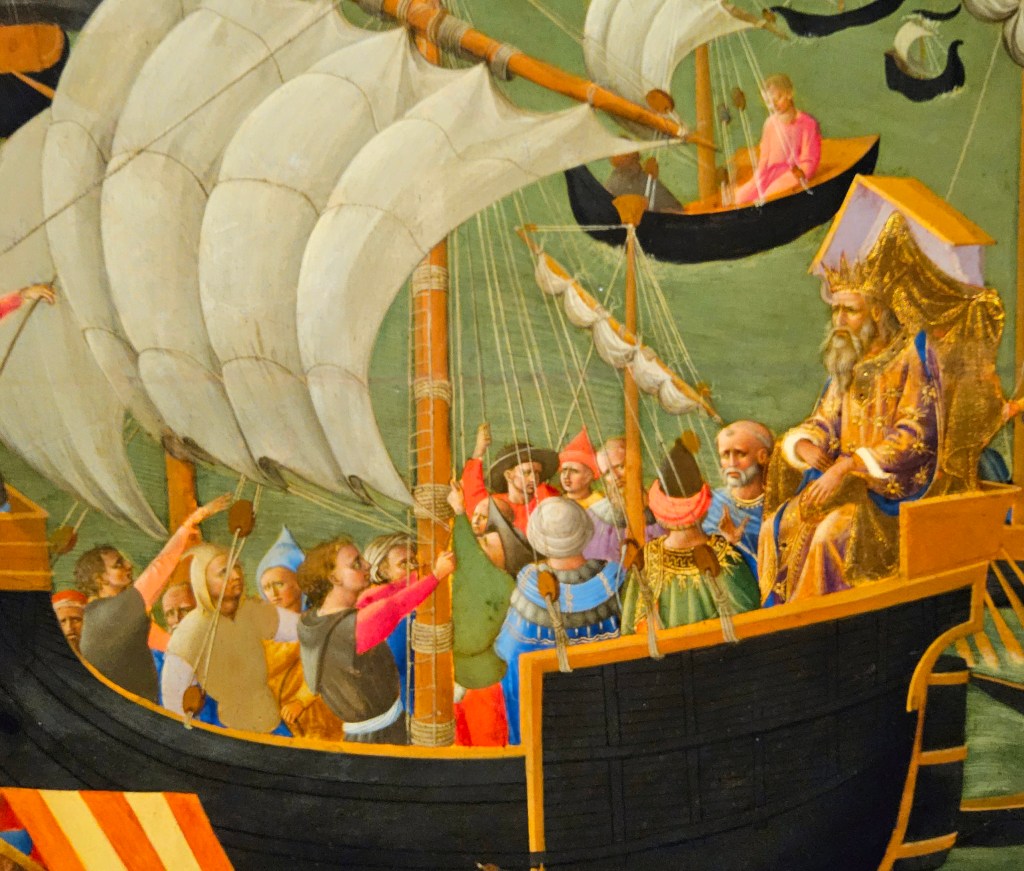
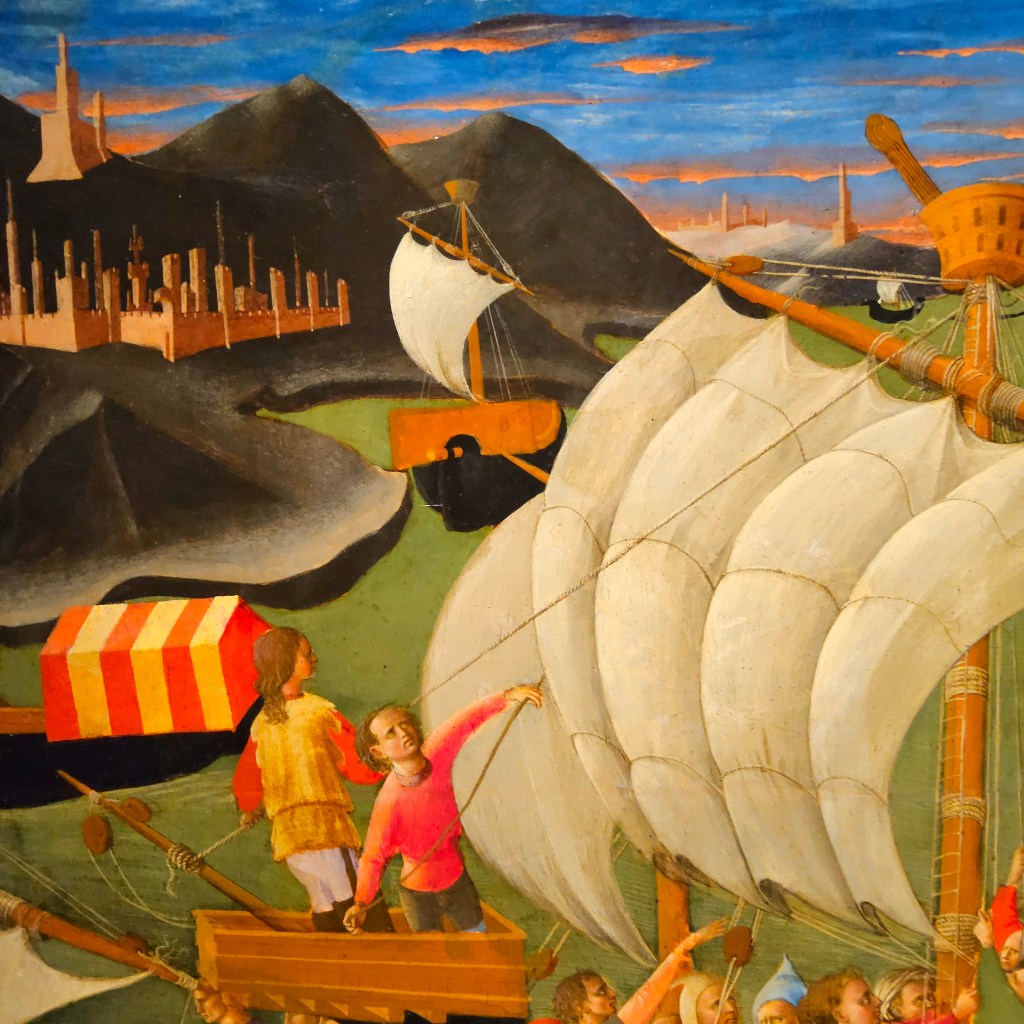
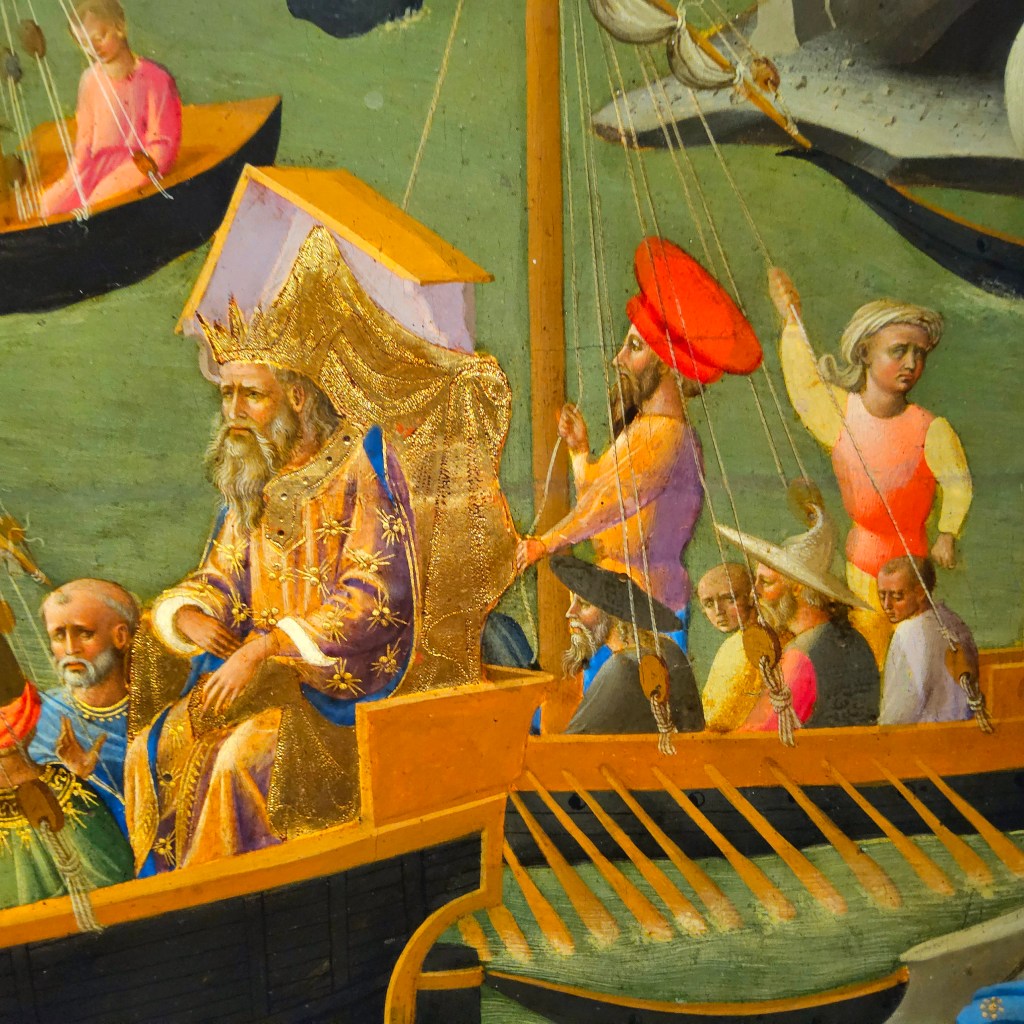
    Another fascinating painting by Pesselino was called King Melchior Sailing to the Holy Land painted c.1445–1450 in tempera, oil, and gold on panel (below). These early paintings, as well as being gorgeous works of art, also tell us a great deal about what life was like in Medieval times; the boats, the costumes, the different sorts of people.

    King Melchior Sailing to the Holy Land by Pesellino. National Gallery, London.

    Again, it is fascinating to look at the details. It is not so long ago that it was strictly forbidden to take photographs in an art museum! Now everyone is snapping away, mostly with mobile phones. It is a great opportunity to look again, more carefully, and more attentively, perhaps, at something one only just glanced at earlier.

    DIPTYCH THE ANNUNCIATION about 1450-3 by Francesco Pesellino. On loan from The Courtauld, London (Samuel Courtauld Trust) Photo © The Courtauld / Bridgeman Images

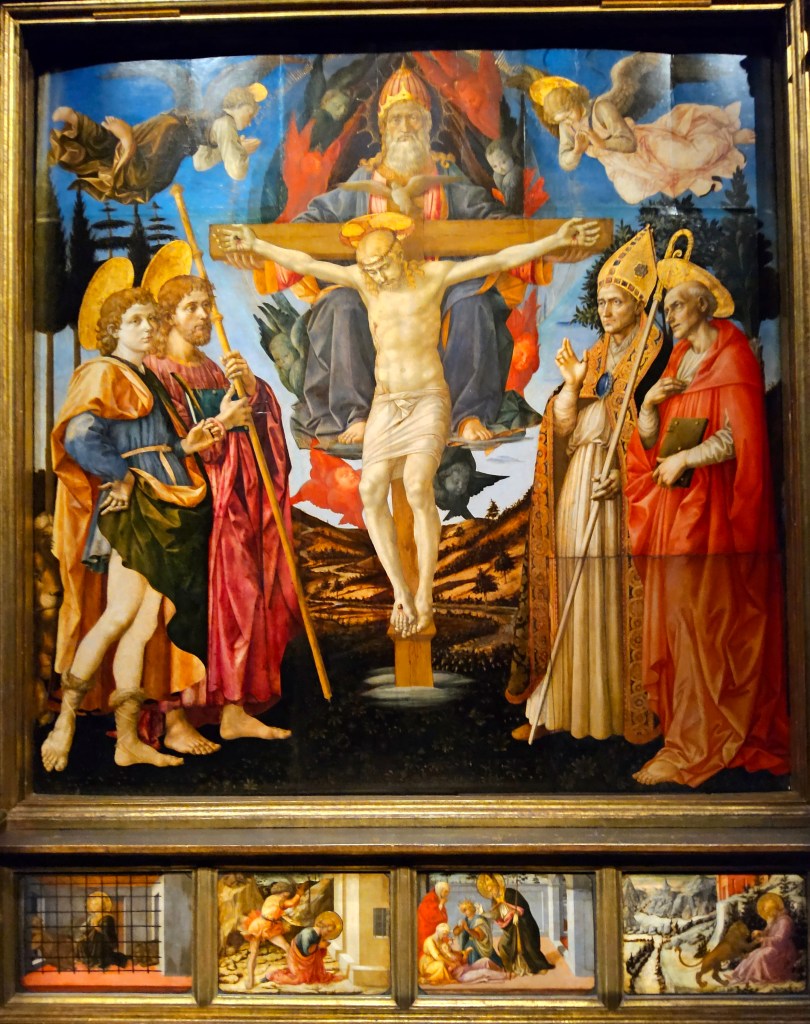
    The Pistoia Santa Trinità Altarpiece (below) was begun by Pesellino and completed by Fra Filippo Lippi and his workshop.

    The Pistoia Santa Trinità Altarpiece is a 1455-1460 egg tempera, tempera grassa and oil on wood painting, begun by Pesellino and completed by Fra Filippo Lippi and his workshop.
    Detail from Francesco Pesellino, ‘Virgin and Child’, about 1455

    New acquisition

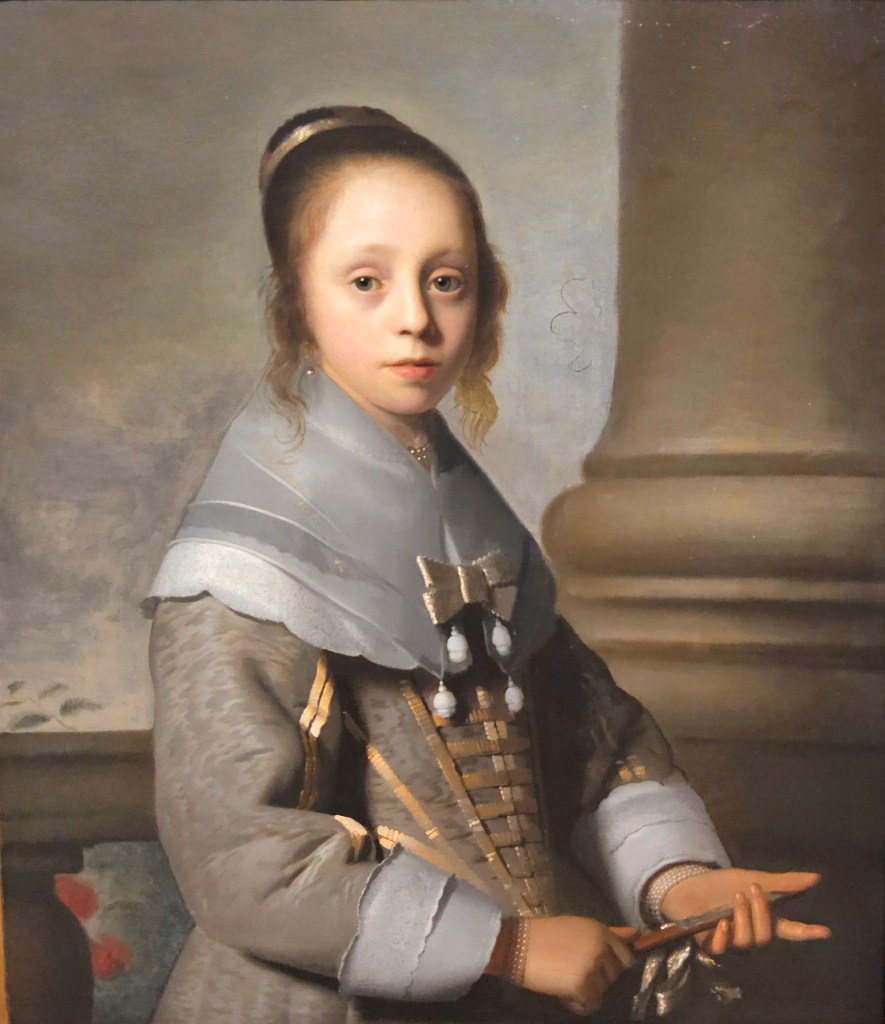
    This lovely painting caught my attention, just by chance. It turns out that it is a recent acquisition (2022) by the Gallery. This Portrait of a Girl (c. 1650) by Isaack Luttichuys (pronounced ‘Lootickhouse’) (1616–1673), was accepted in lieu of Inheritance Tax by HM Government from the estate of someone called George Pinto, a banker who died in 2018. The painting was used to settle £46,818 worth of tax, according to this press release, which seems very good value to me as it really is an exquiste painting from this Dutch master.

    Portrait of a Girl (about 1650) by Isaack Luttichuys. National Gallery

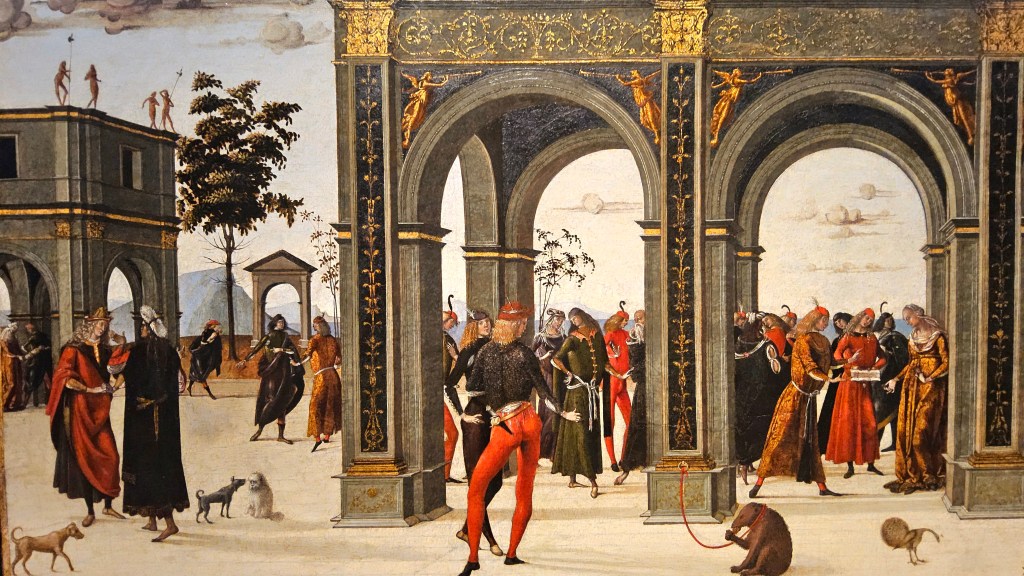
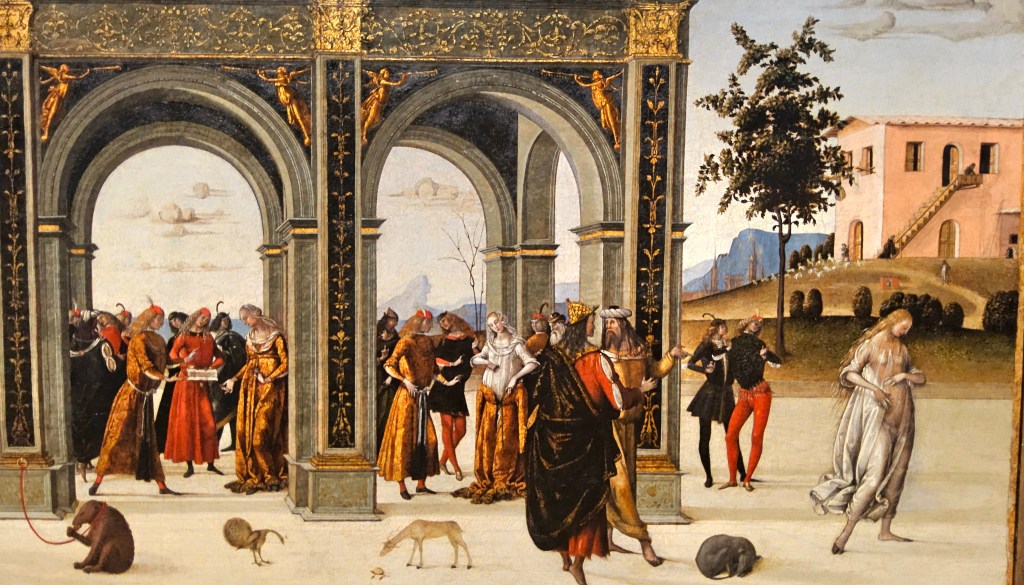
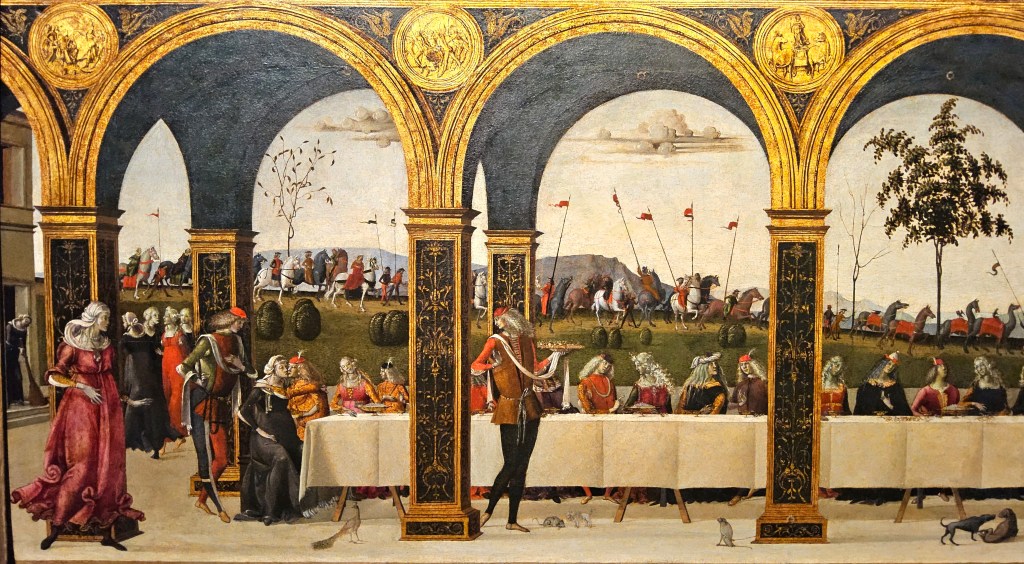
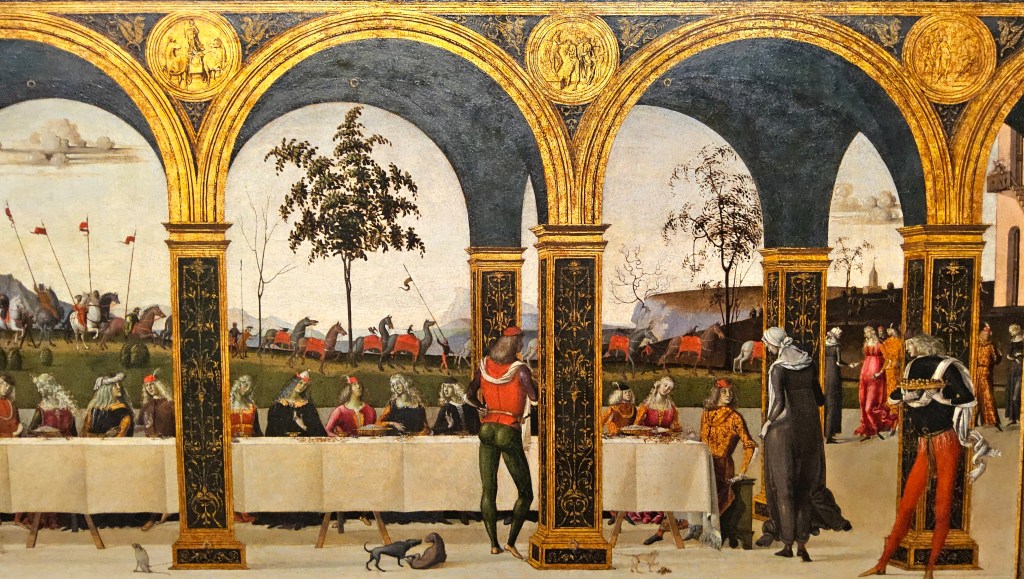
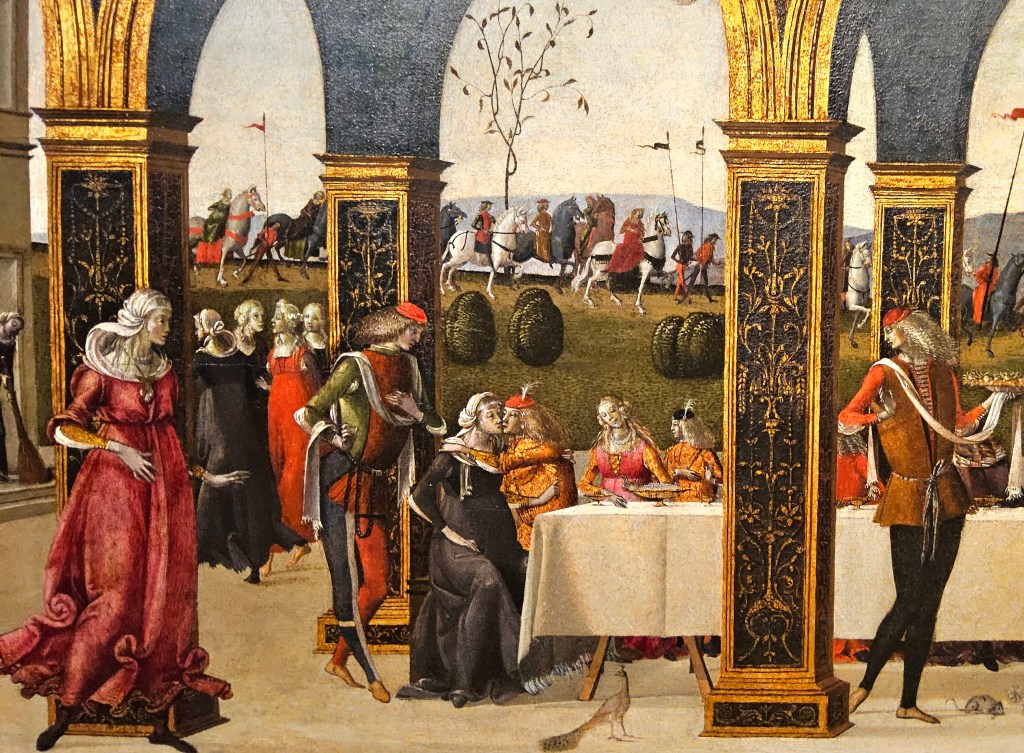
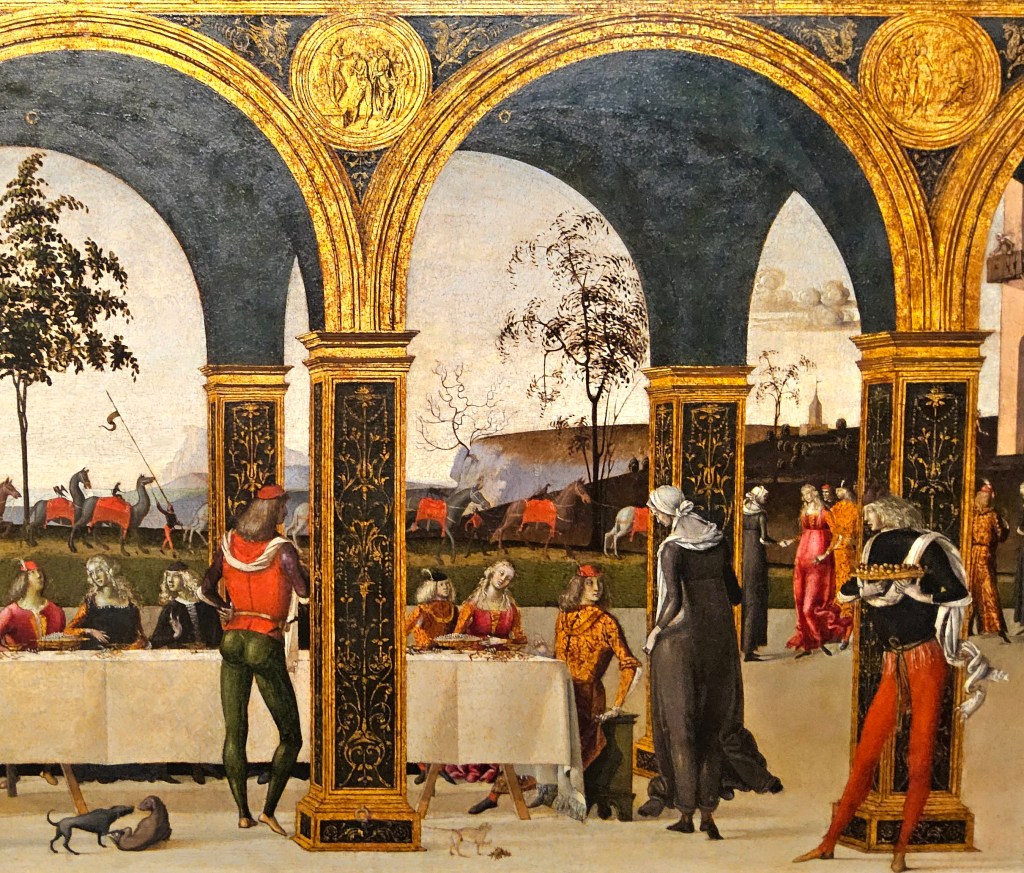
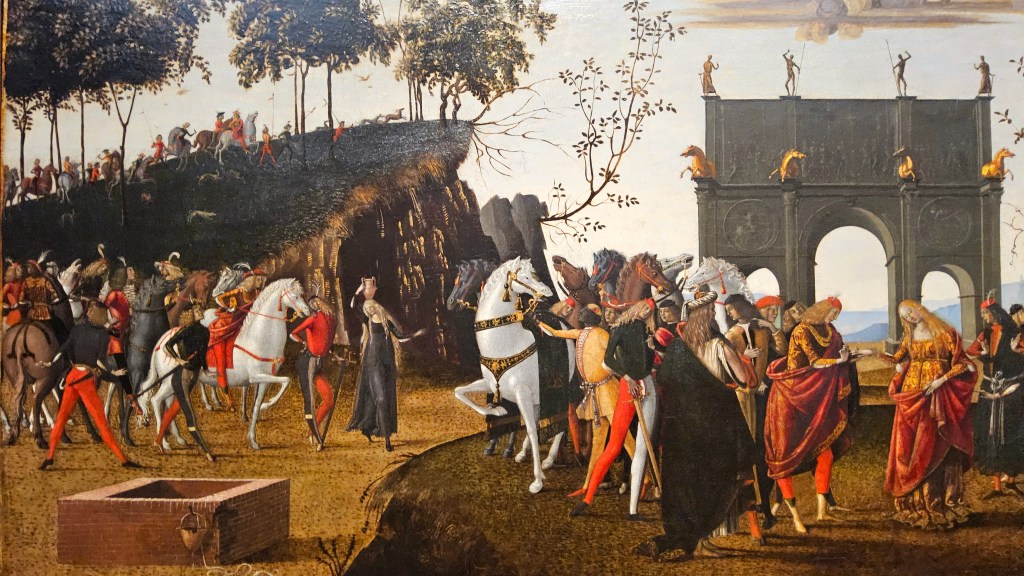
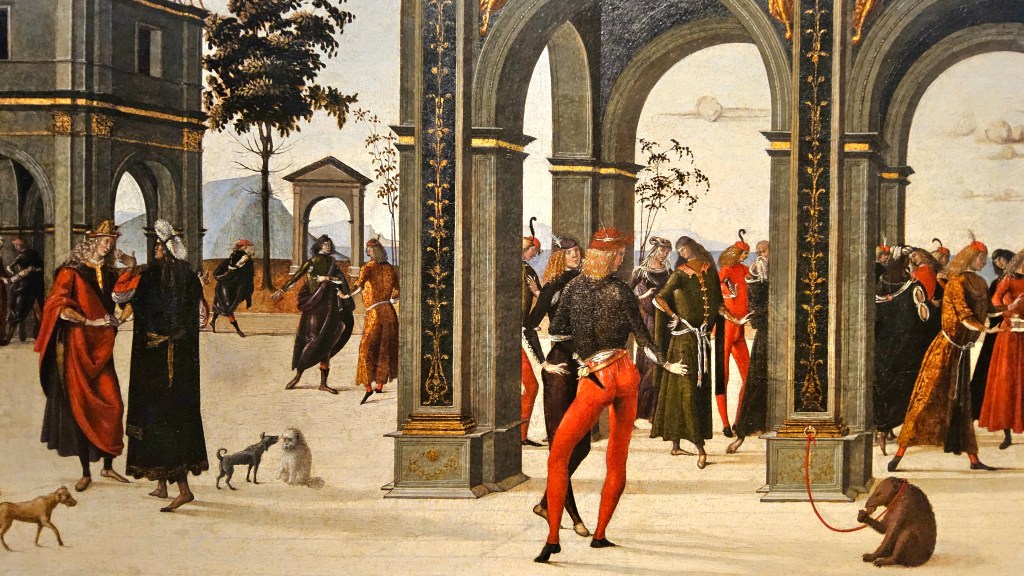
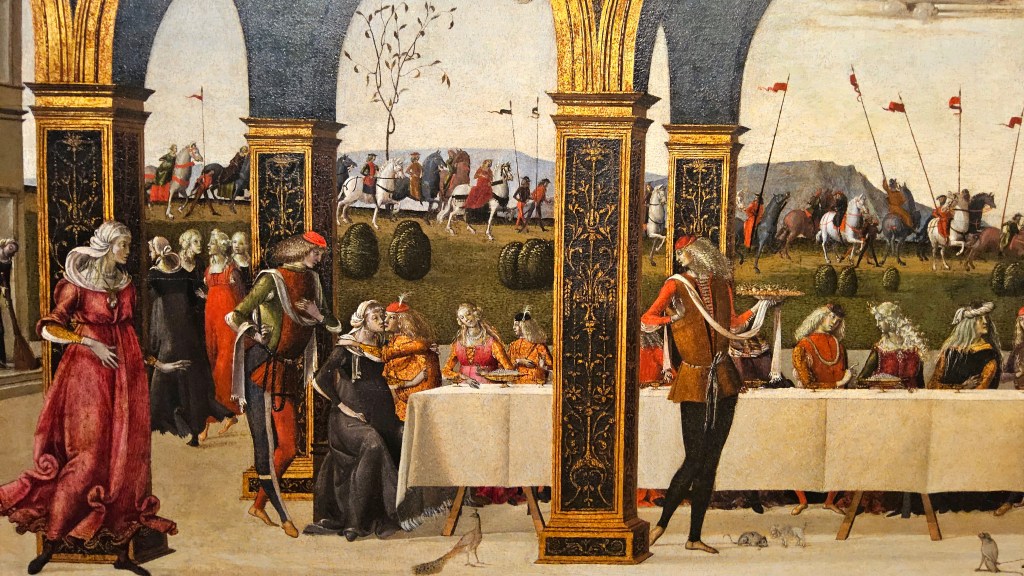
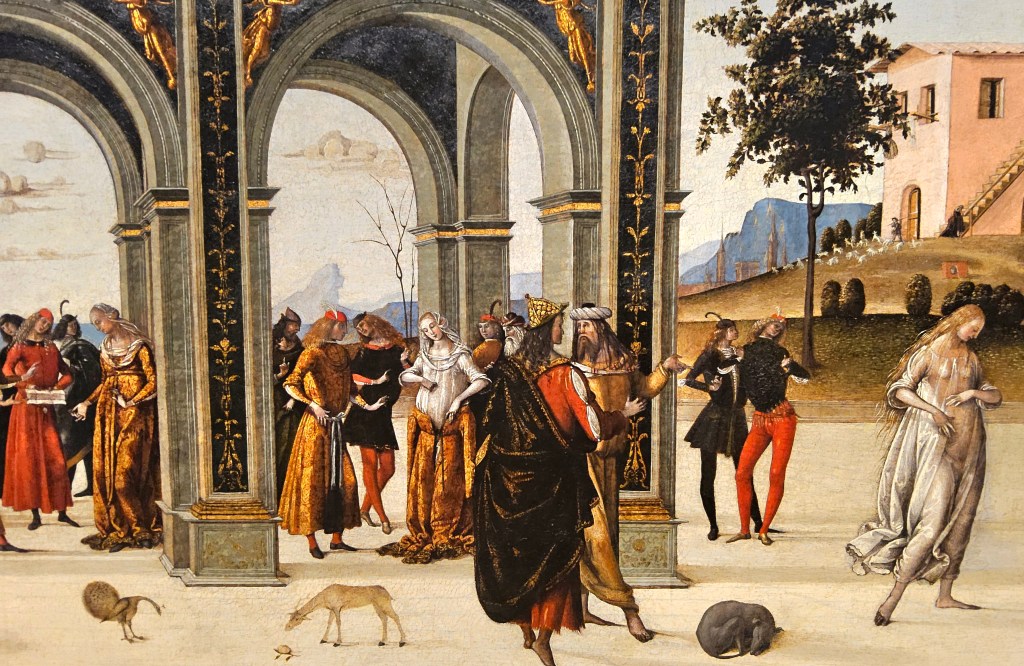
    Finally, I came across some paintings I had not noticed before, called The Story of Griselda, Part I, II, and III. It is not known who painted the work, other than he was an Italian artist who specialized in panel painting and worked in Umbria around 1490. He is, therefore, called the Master of the Story of Griselda.

    The paintings tell the story of a young peasant woman called Griselda, based on The Decameron, a 14th-century work by Boccaccio. It is a very misogynistic story about a beautiful woman who was put through a series of emotional ordeals by her husband to test her loyalty to him. The tale is also described here. Margaret Atwood did a funny, spoof version of the tale.

    I love the little animals and the camp waiters! In fact, everyone seems to be bowing or posing or trying to look cool, with heads turned to one side and hands on hips! All deliciously camp to our eyes, but no doubt, a highly stylised portrait of renaissance men and women.