Last year (October 2016) I was lucky enough to do a wonderful wildlife cruise in Indonesia, from Bali to Flores, on a small ship called MV Mermaid I (1). These ships are usually used as dive boats, but this trip was devoted to looking out for dolphins, whales and birds – which I described in my previous blog (1) – and we also had plenty of opportunities to go snorkeling.
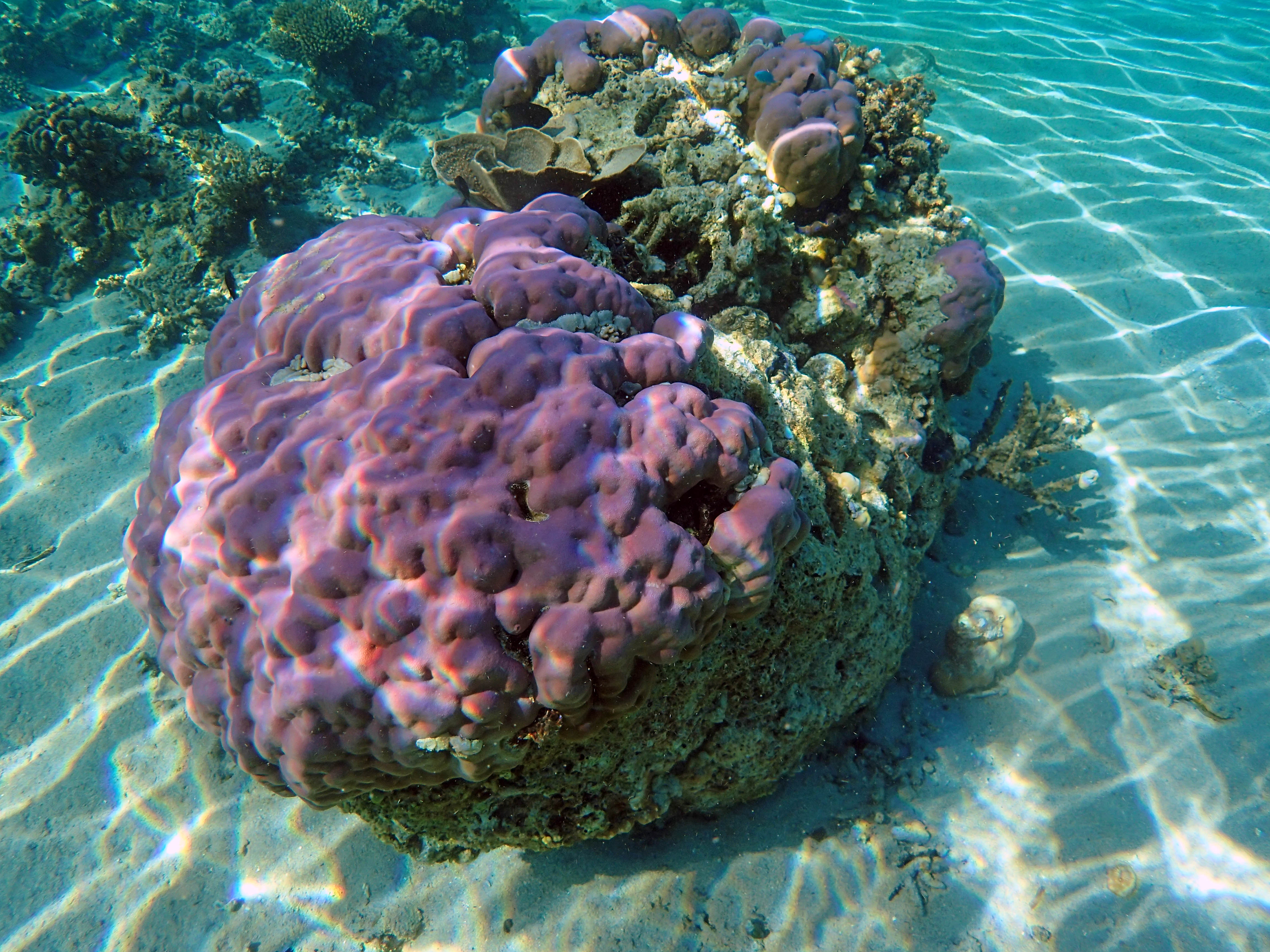
Coral head with pink encrusting coral
I took these underwater photographs with a Olympus Tough TG-5 GPS Waterproof camera, mostly with a fish eye converter attached. Unfortunately, I let some seawater in at one stage, and it never recovered from being bathed in seawater. Fortunately, I managed to capture quite a few underwater images before it died!
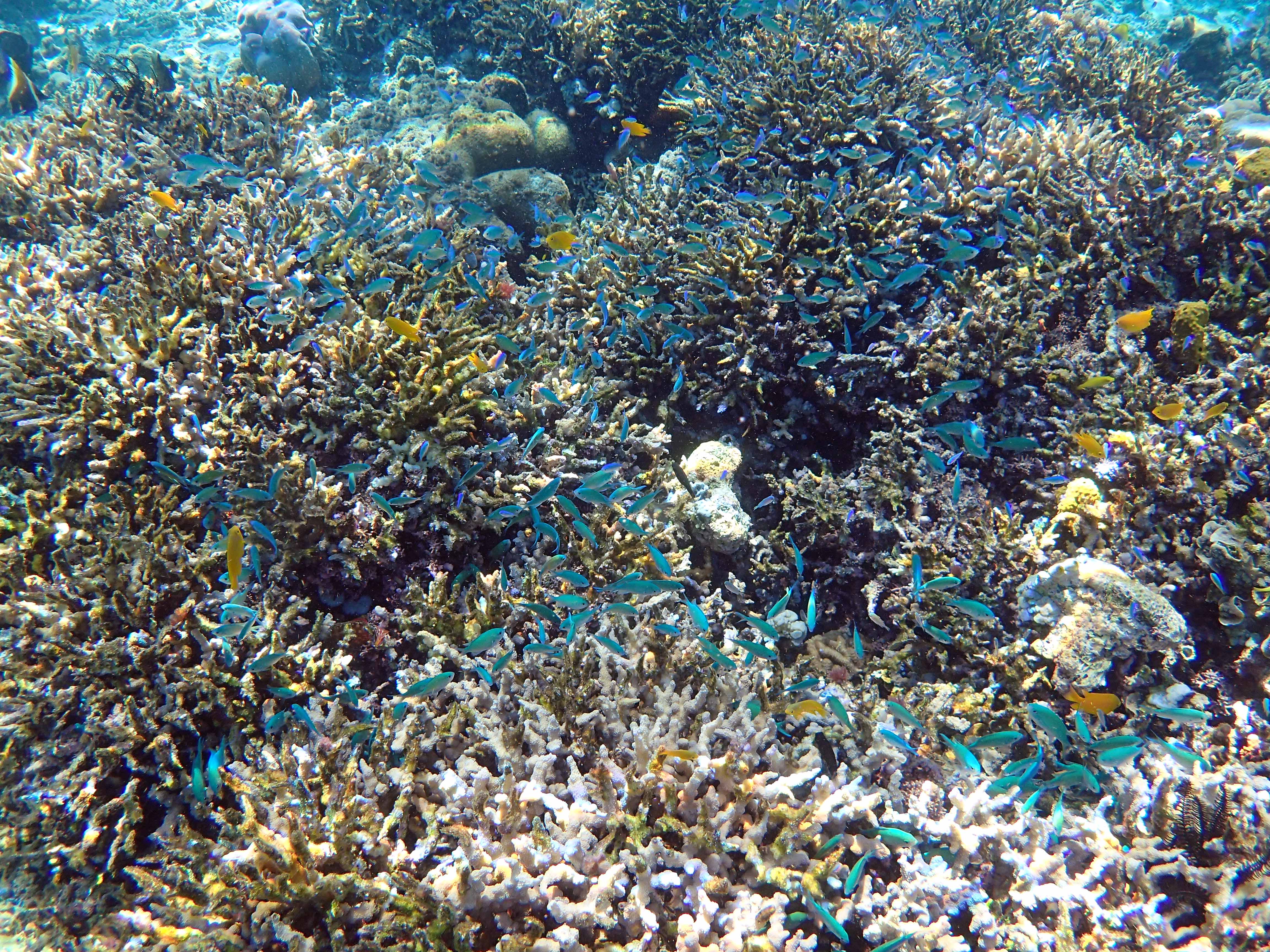
Coral with shoal of small blue fish
I wish I had kept a note of where each of the shots were taken (!) but perhaps it does not matter. It was fun to try to capture some of the amazing underwater world, mainly within the Komodo National Park. For those wanting to know exactly where we stopped off to snorkel, the trip report is available online (3).
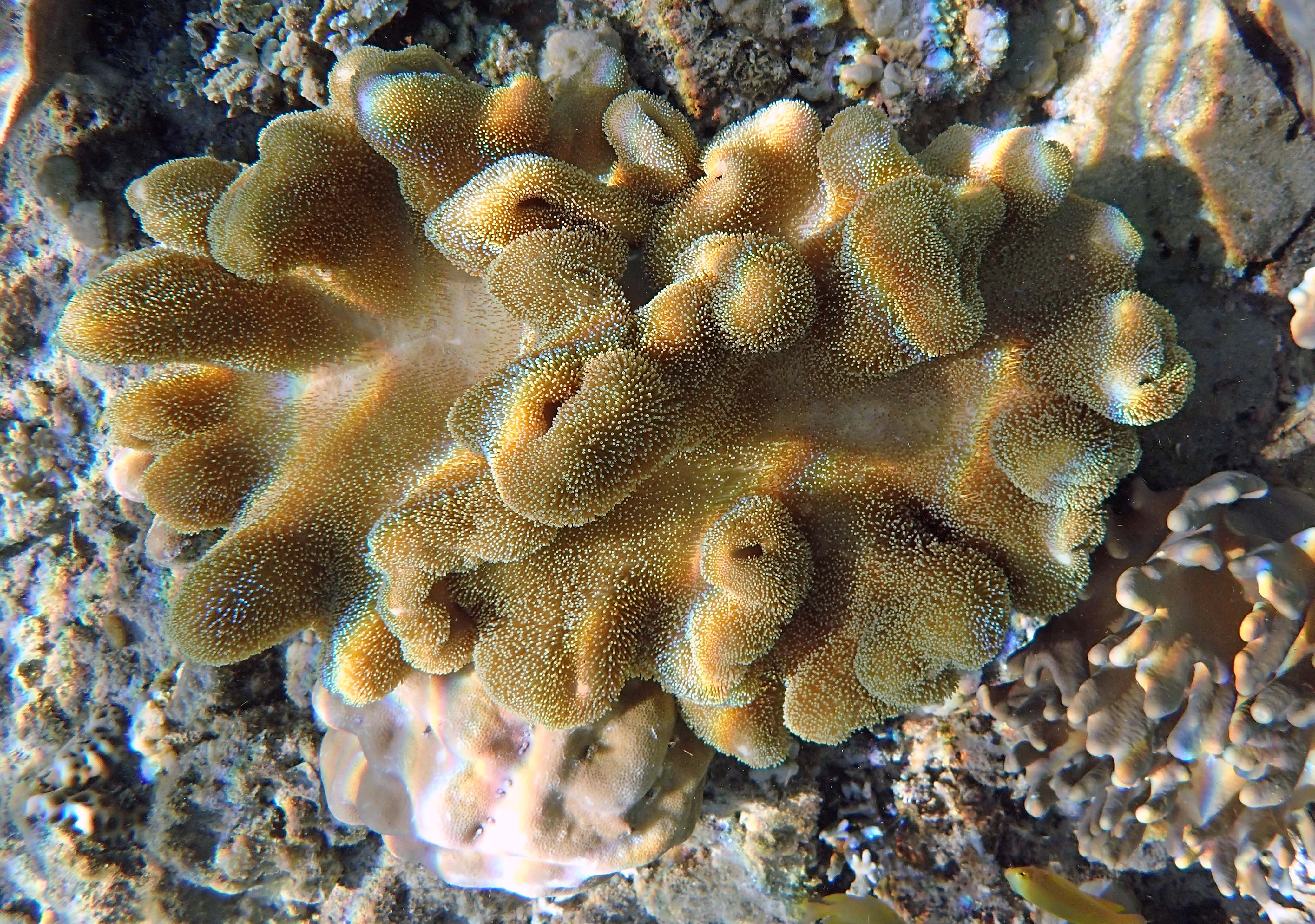
Soft coral
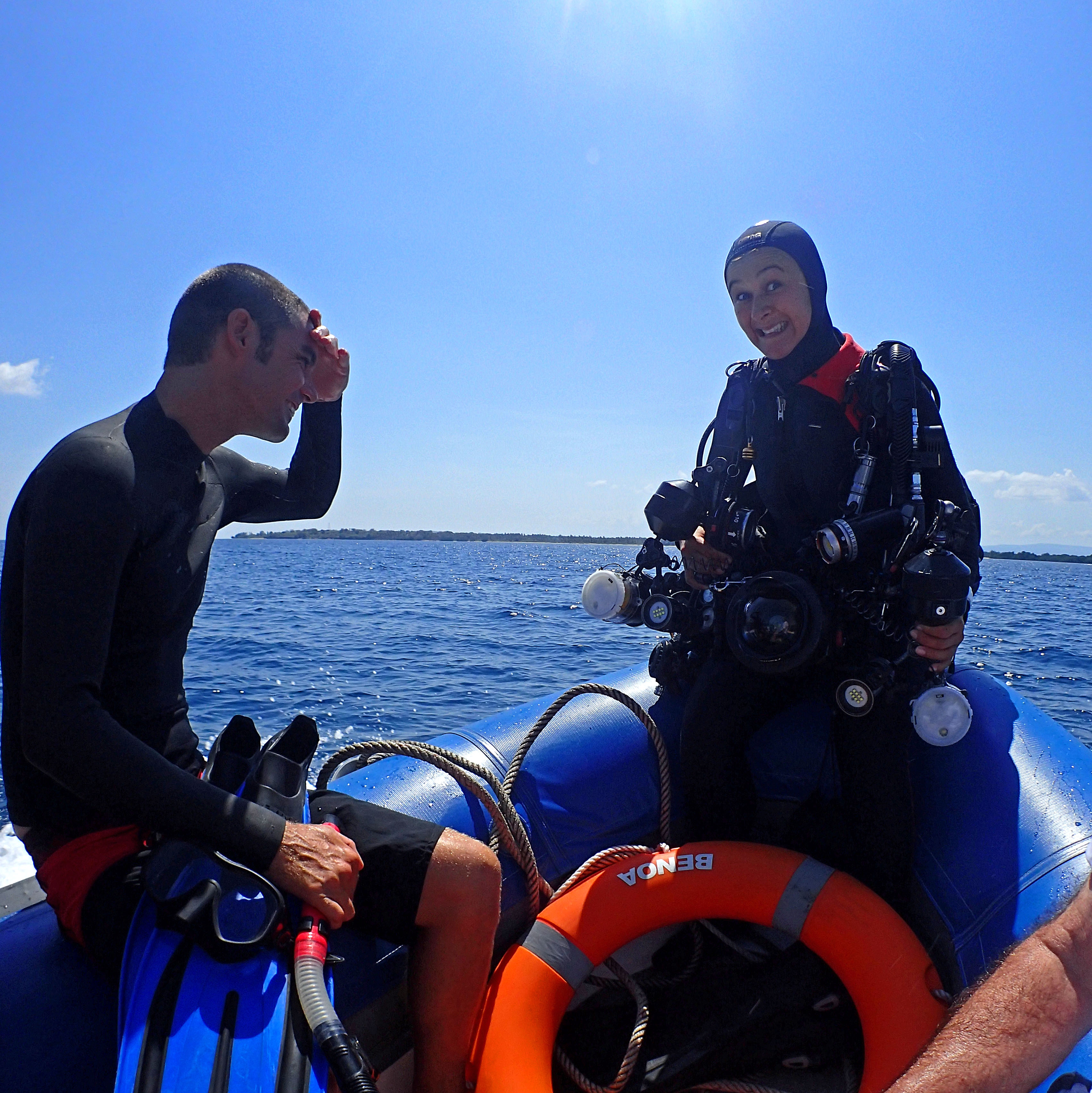
We were given instructions about the site before each snorkel dive and taken to the coral reef in the small ‘zodiacs’. The Mermaid I dive staff accompanied us and videoed each dive.
Mermaid I dive staff and photographer
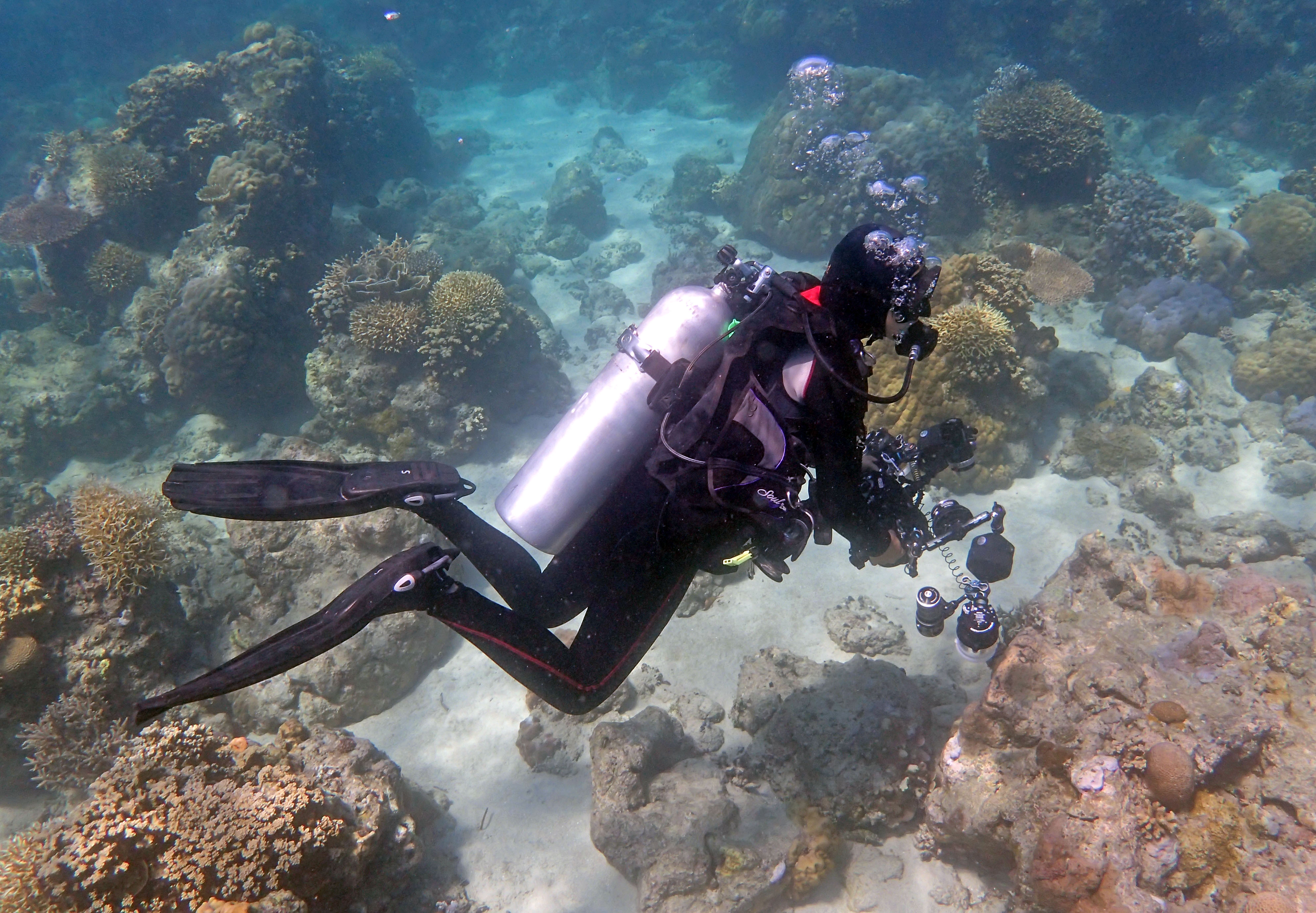
There is no question you see more whilst diving, but I have never managed to take a course and I am quite happy just snorkeling.
Scuba diver filming the action
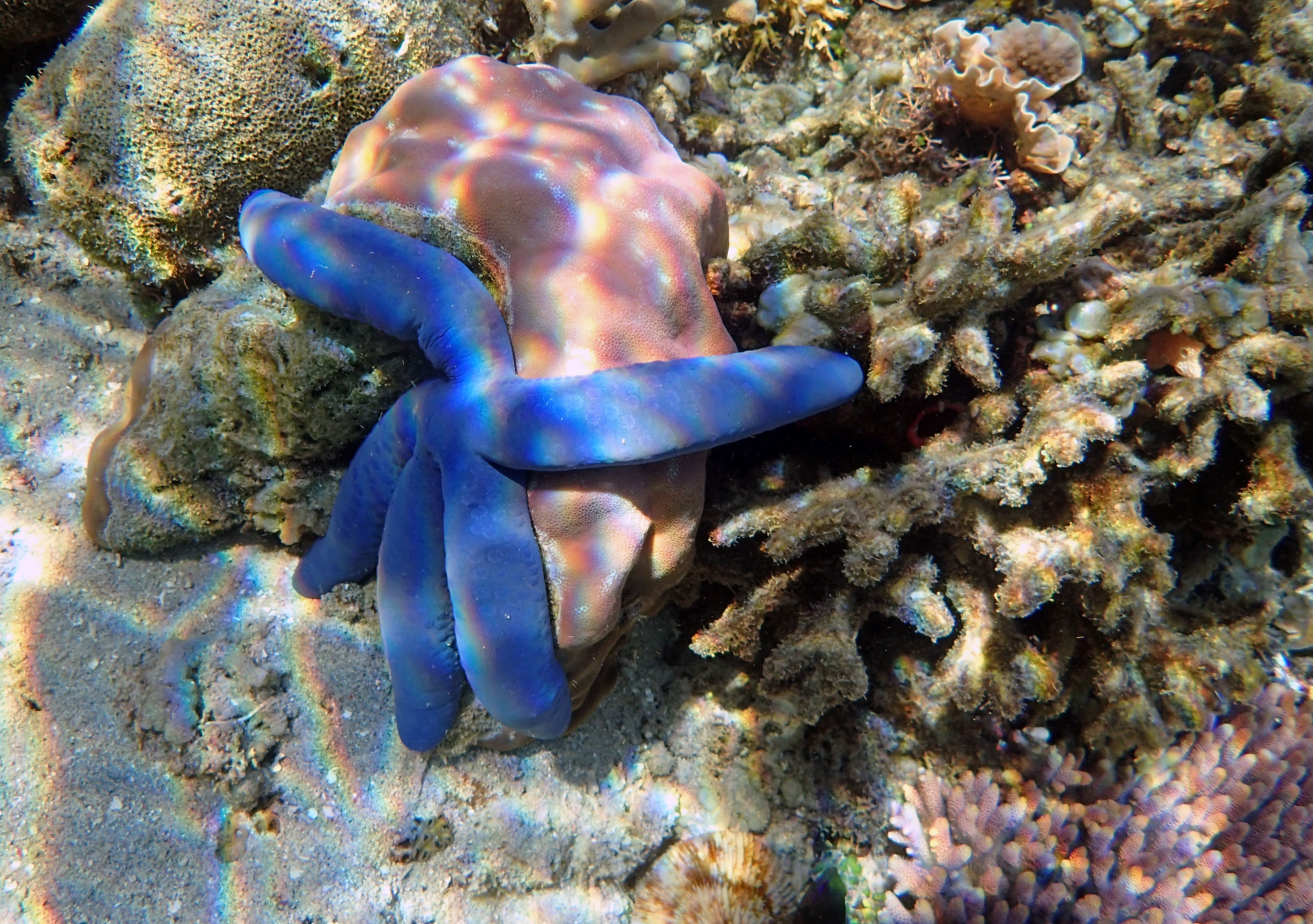
The water was relatively shallow, so it was quite straightforward to swim down and photograph the more interesting inhabitants of the reef, like this gorgeous blue starfish.
Blue starfish (Linckia laevigata) and pink coral
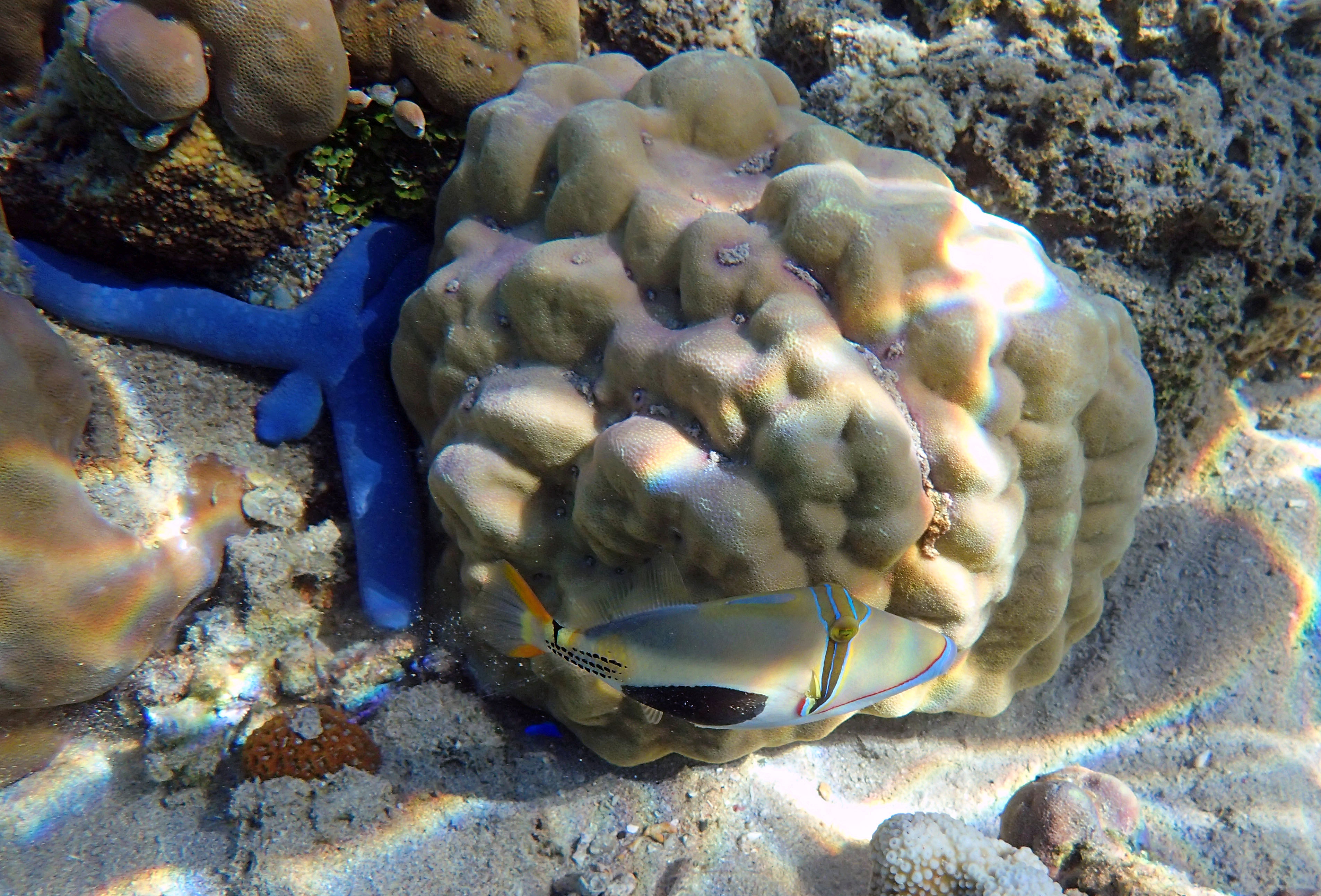
Fish were a little bit more cautious, but I managed to get fairly close to this trigger-fish (I think it is!). They bite! Feisty characters who think they own the place; well I guess they do!
Blue starfish (Linckia laevigata) and trigger fish
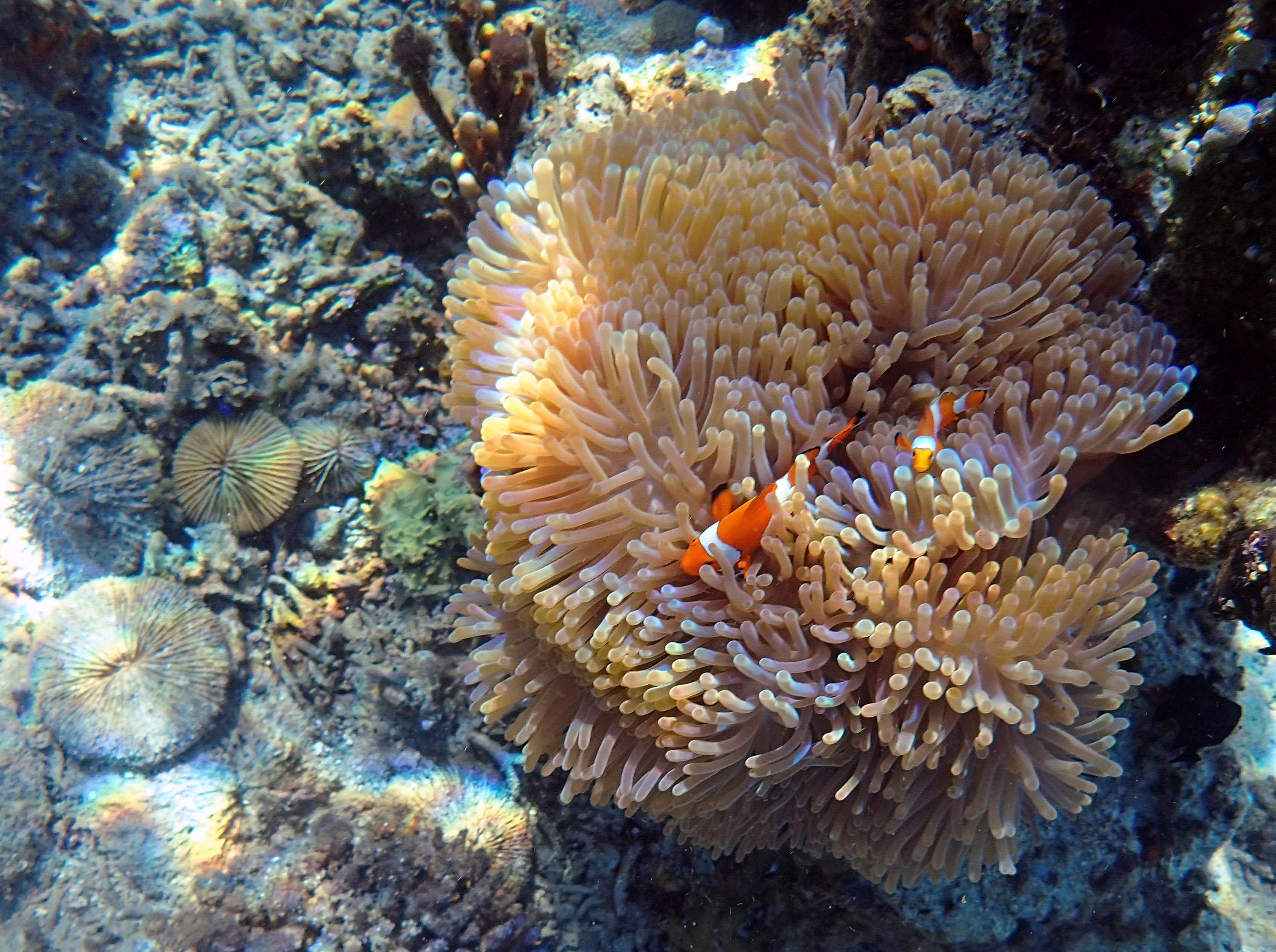
It was a treat to see the famous Clownfish, which lives within a sea anemone’s poisonous tentacles, and has been immortalized by Disney.
Clownfish (Amphiprion sp.) and anemone
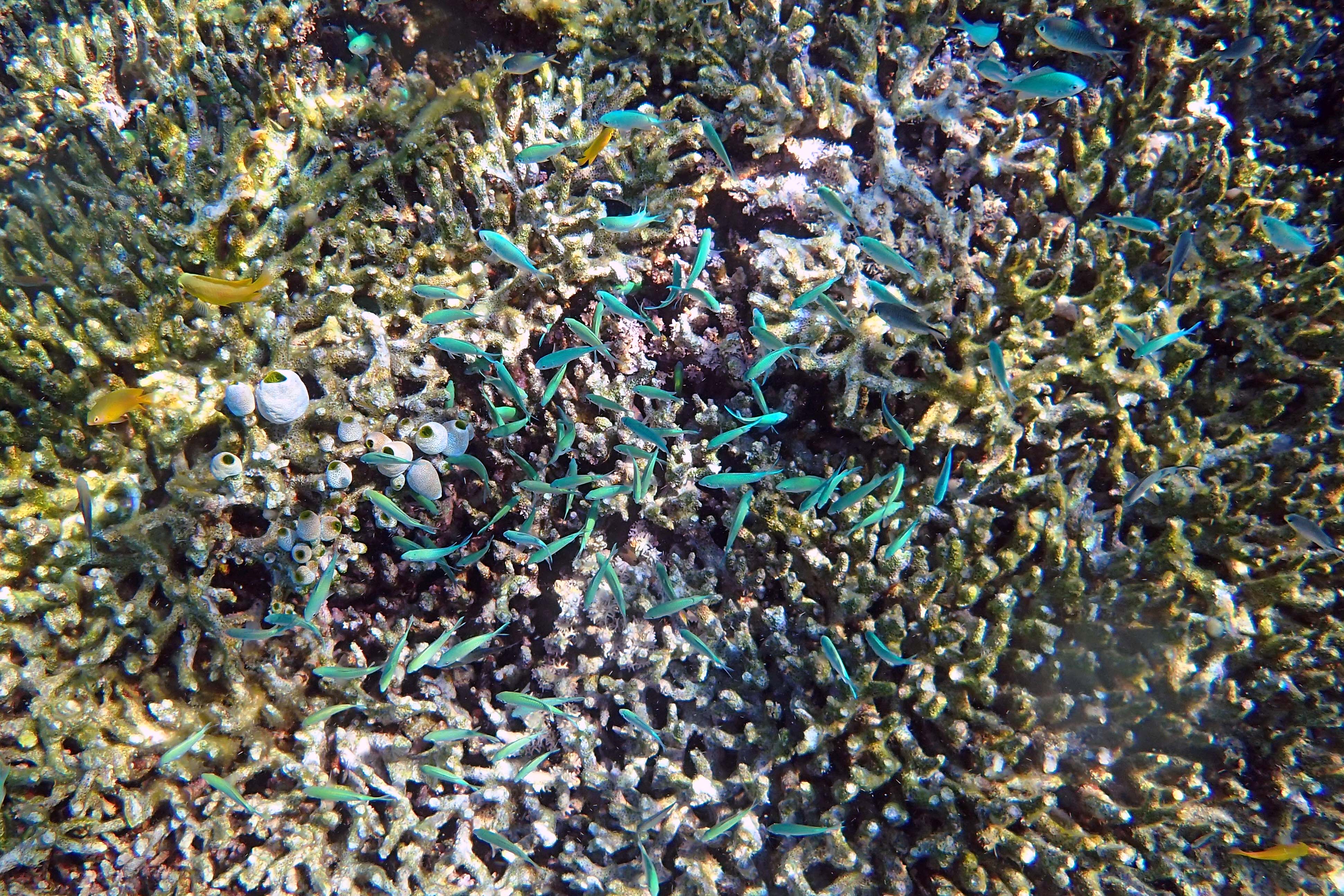
The shoals of small iridescent fish – which darted into the crevices in the coral at any sign of danger – were mesmerizing.
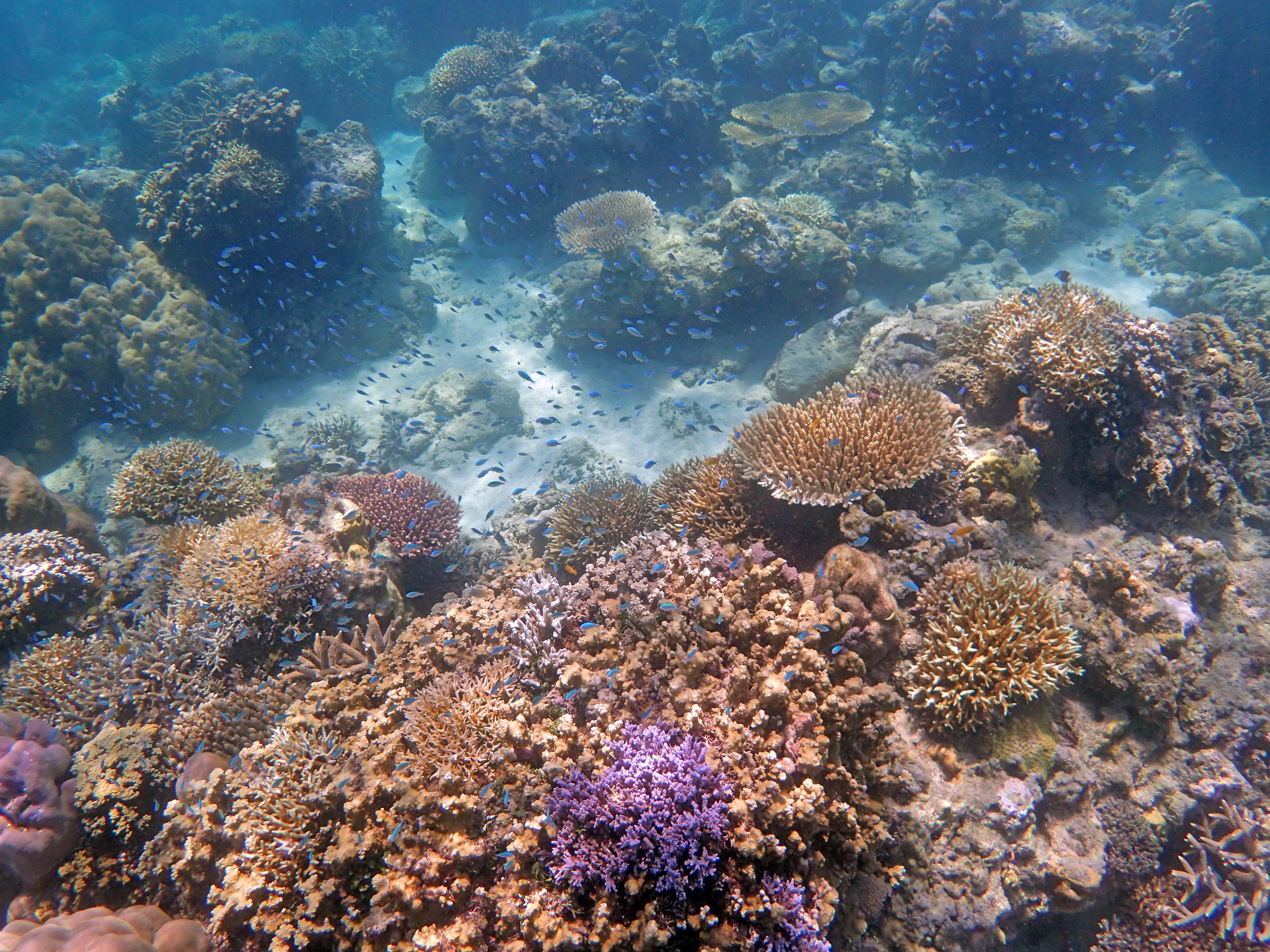
Small blue damsel-type fishCoral reef in Komodo NP
I was very happy to see how beautiful and unspoilt the coral was – at least at the places we visited in Komodo NP – although outside the protected areas may be another story. How people can fish using dynamite is difficult to comprehend; so short-sighted and stupid; but blast fishing, as it is called, does still occur, alas. (4)
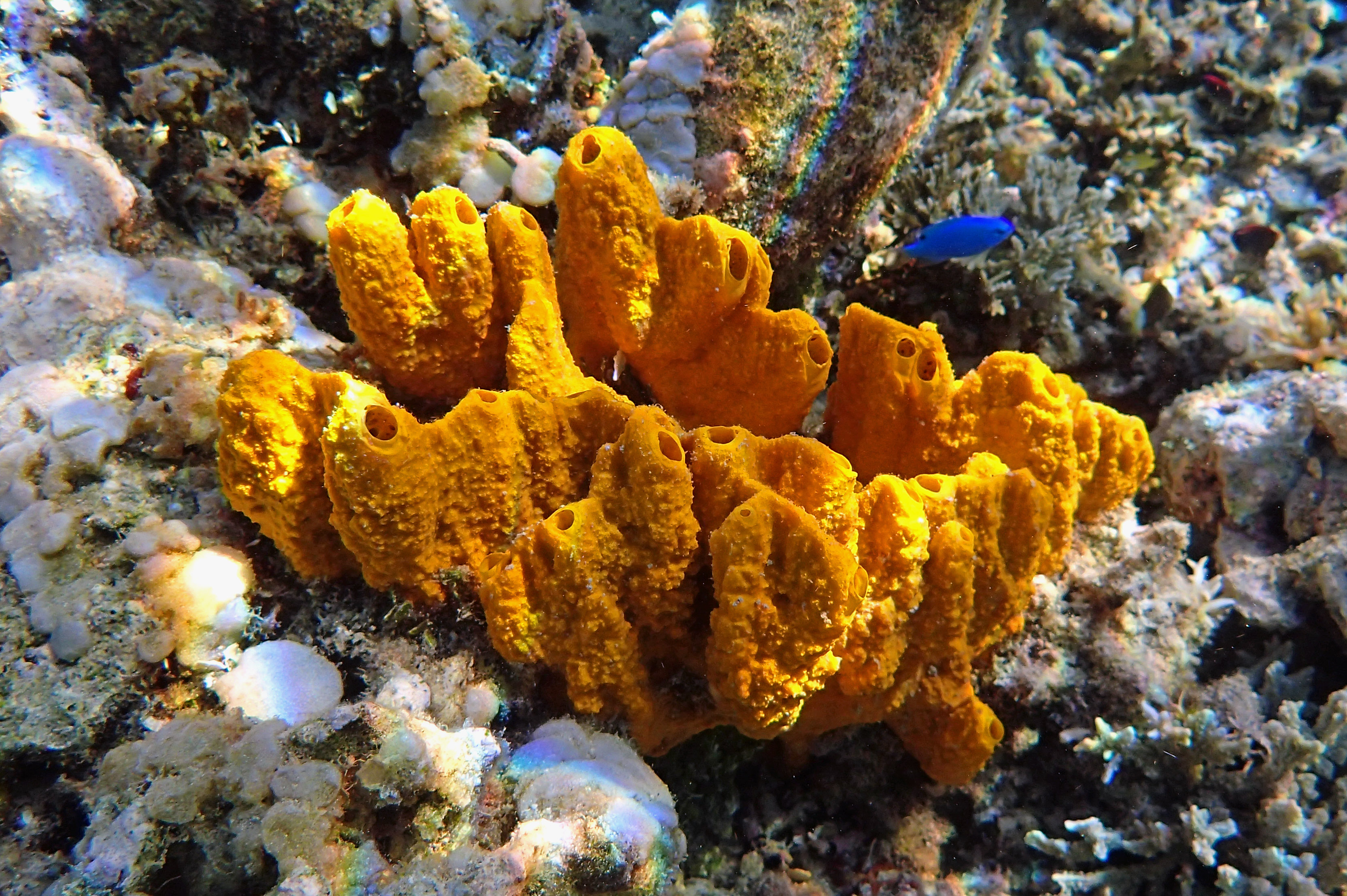
Yellow sponges
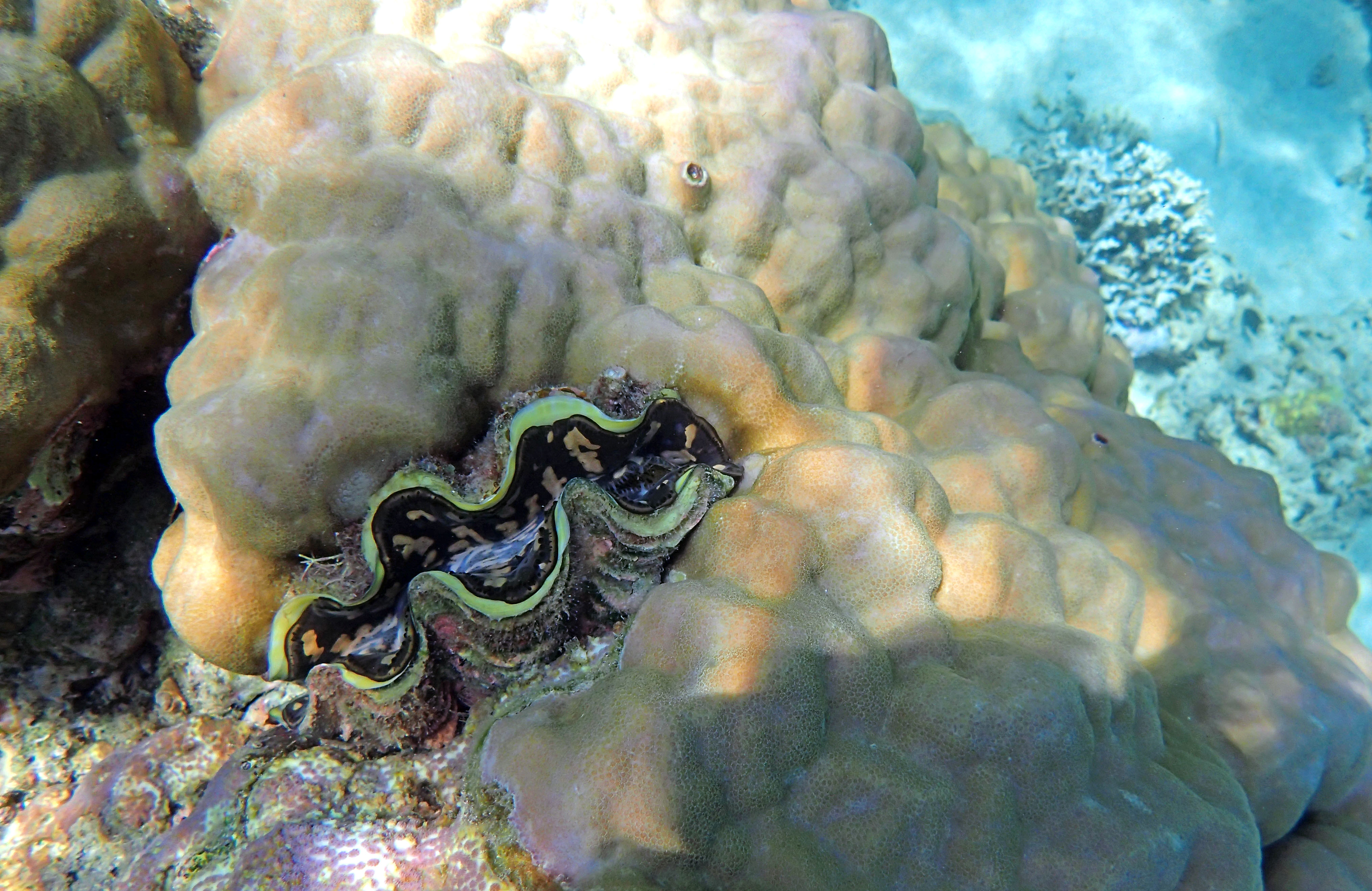
It was fun to see some giant clams. Some of them are so tightly cemented onto the coral that all you see is the beautiful soft mantle undulating along the rims of the shell.
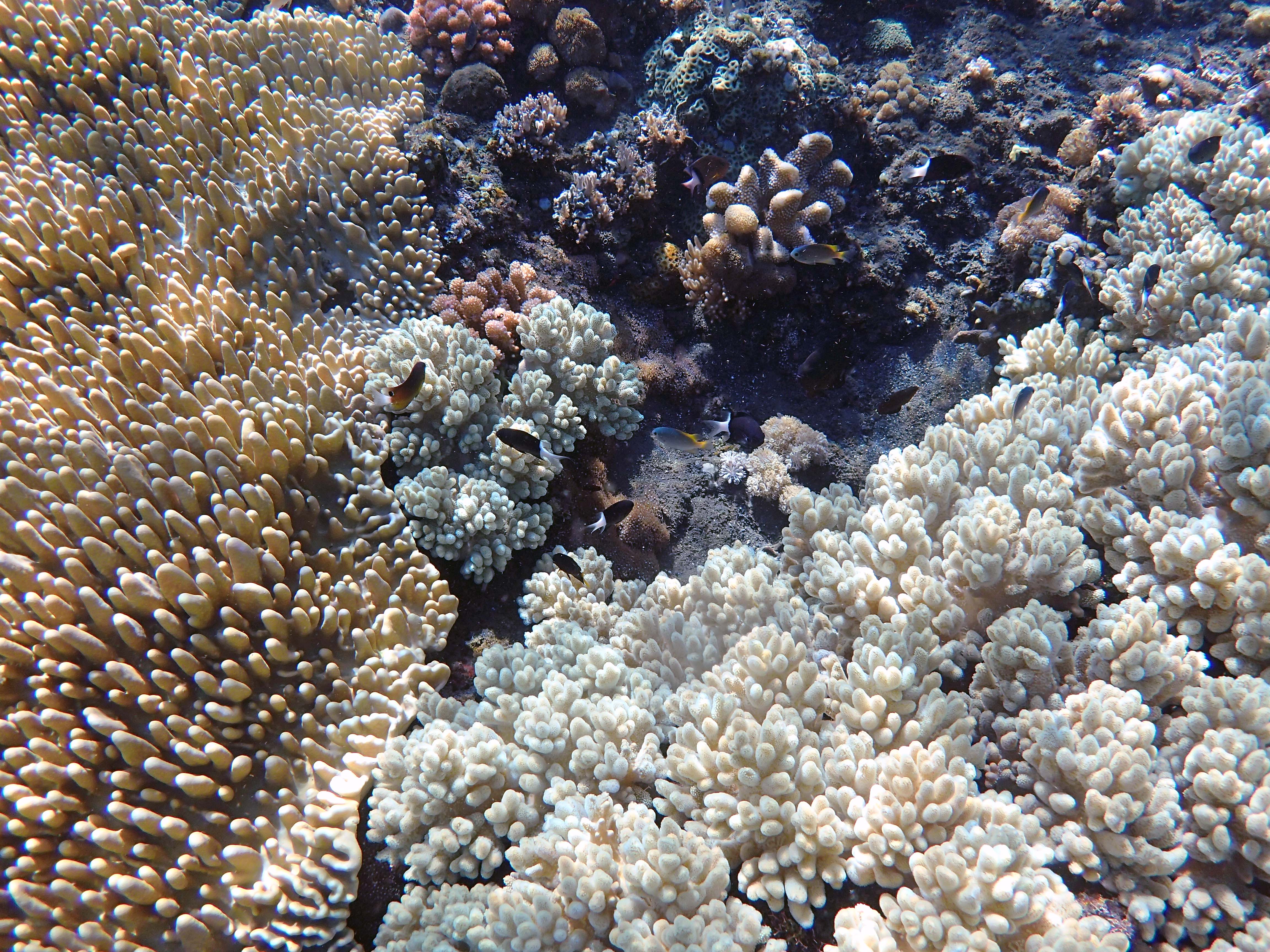
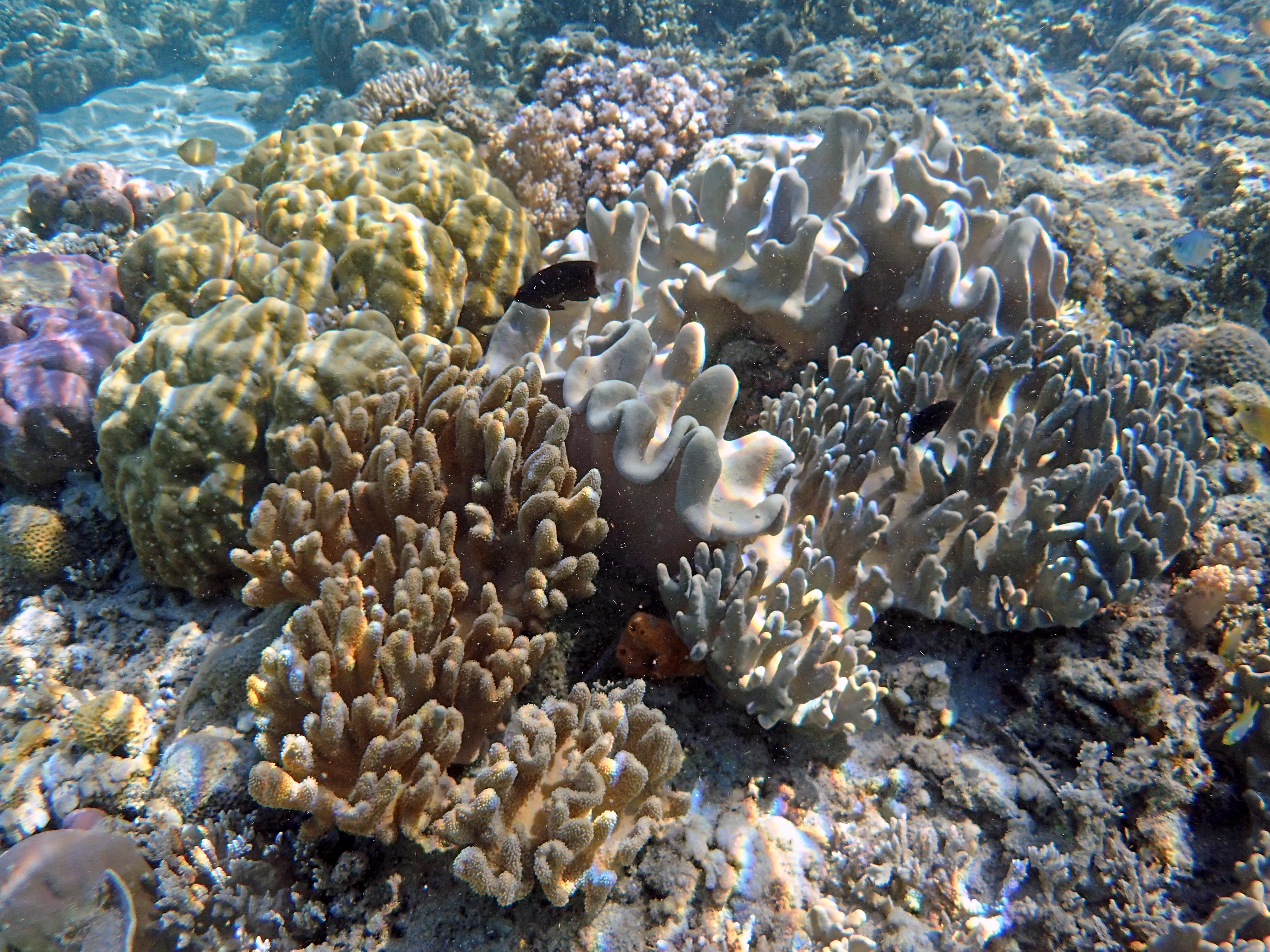
I think, what I most enjoyed seeing were the corals. They come in all shapes and sizes, soft and hard, with a myriad of different textures.
Corals with different texturesA variety of different corals
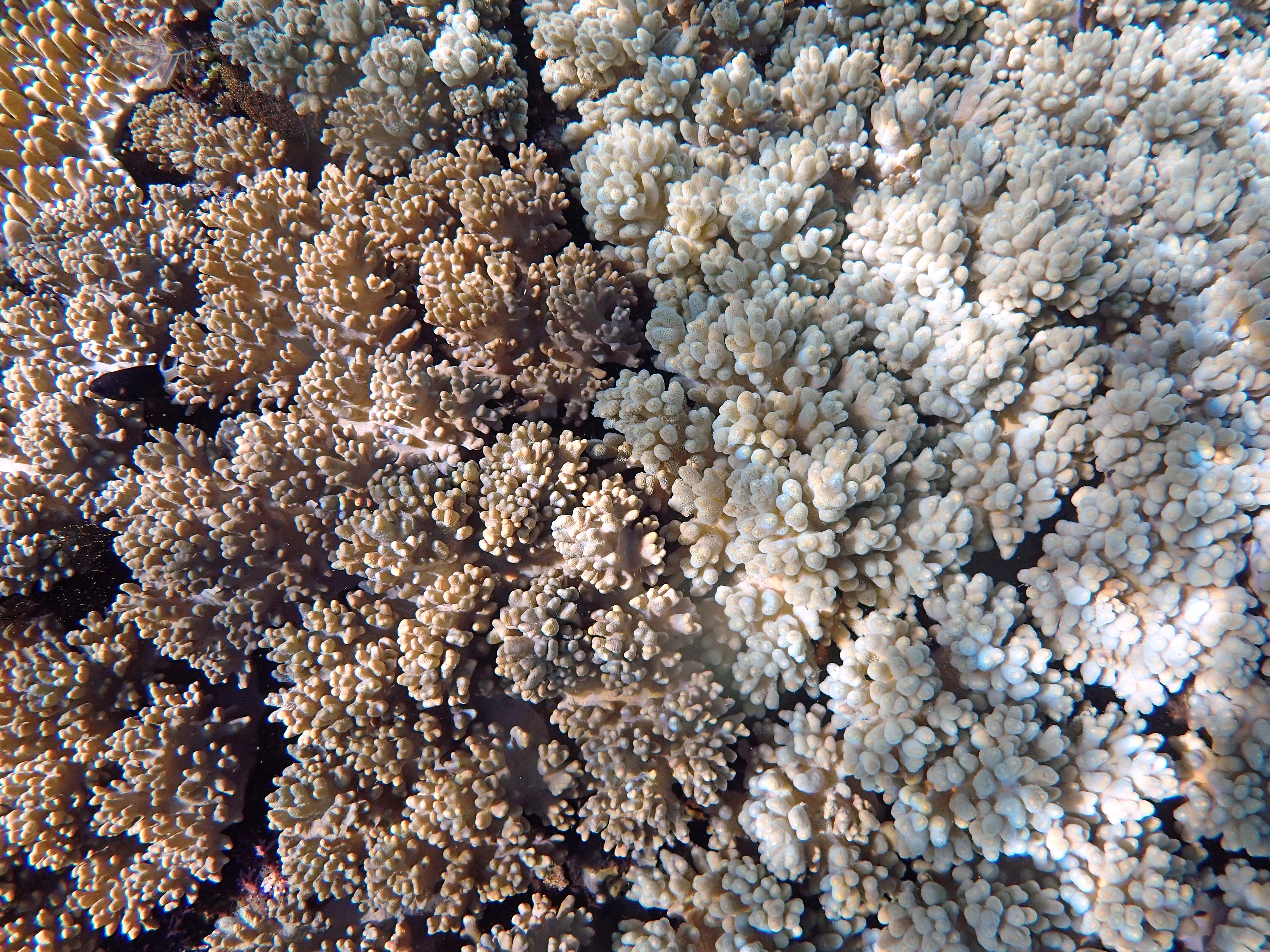
The boundaries between different coral types were often sharp and I suppose they were competing with each other for space on the reef.
Boundary between two types of coral
I should have made more use of the library of books on board the Mermaid I, and sorted out the names and species of all the different soft and hard corals, but it was more relaxing to just sit back and watch; just enjoying the spectacle without necessarily putting a name to it all. Next time perhaps! I certainly would like to know what this purple creature is (see below).
Strange purple soft coral?
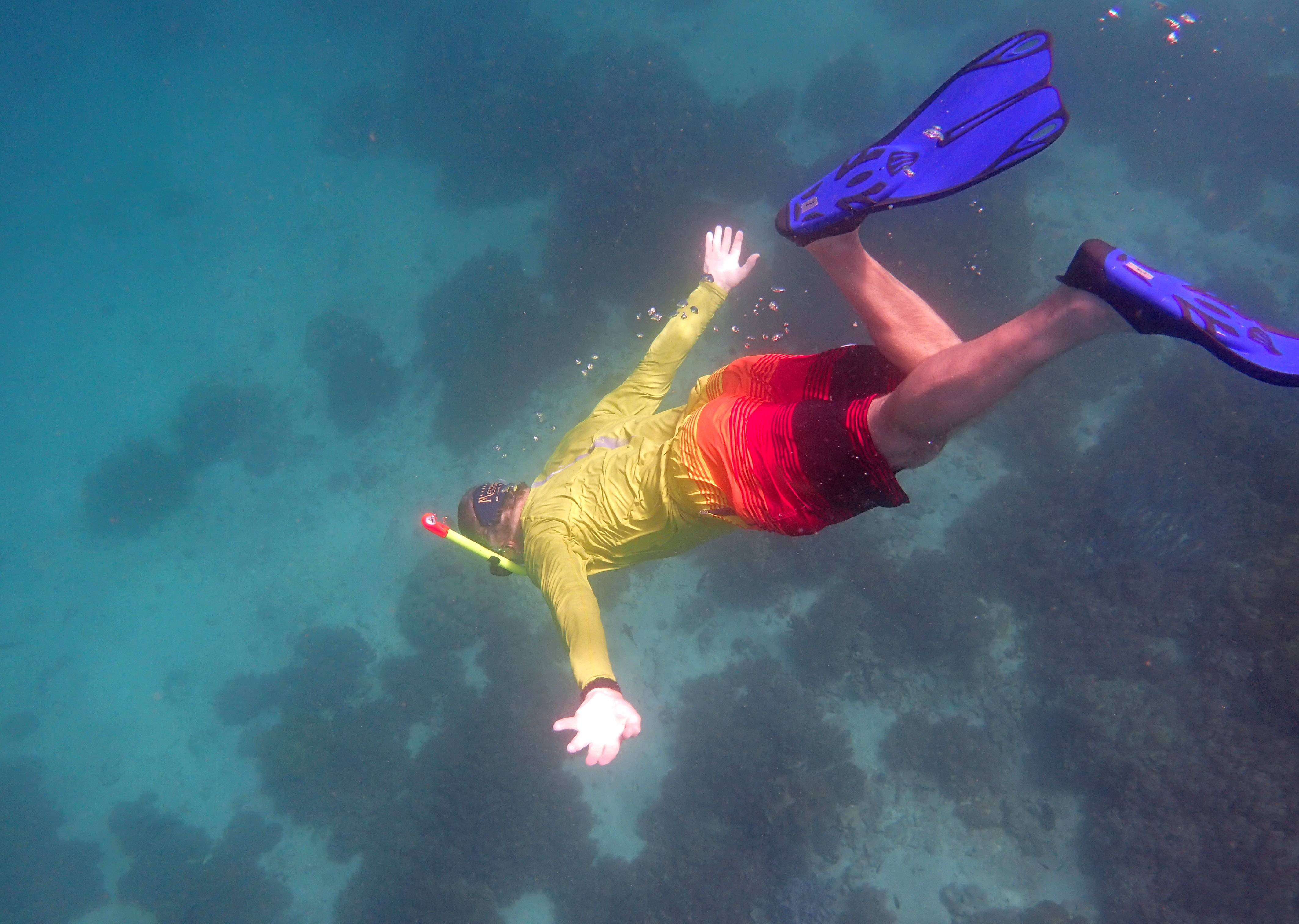
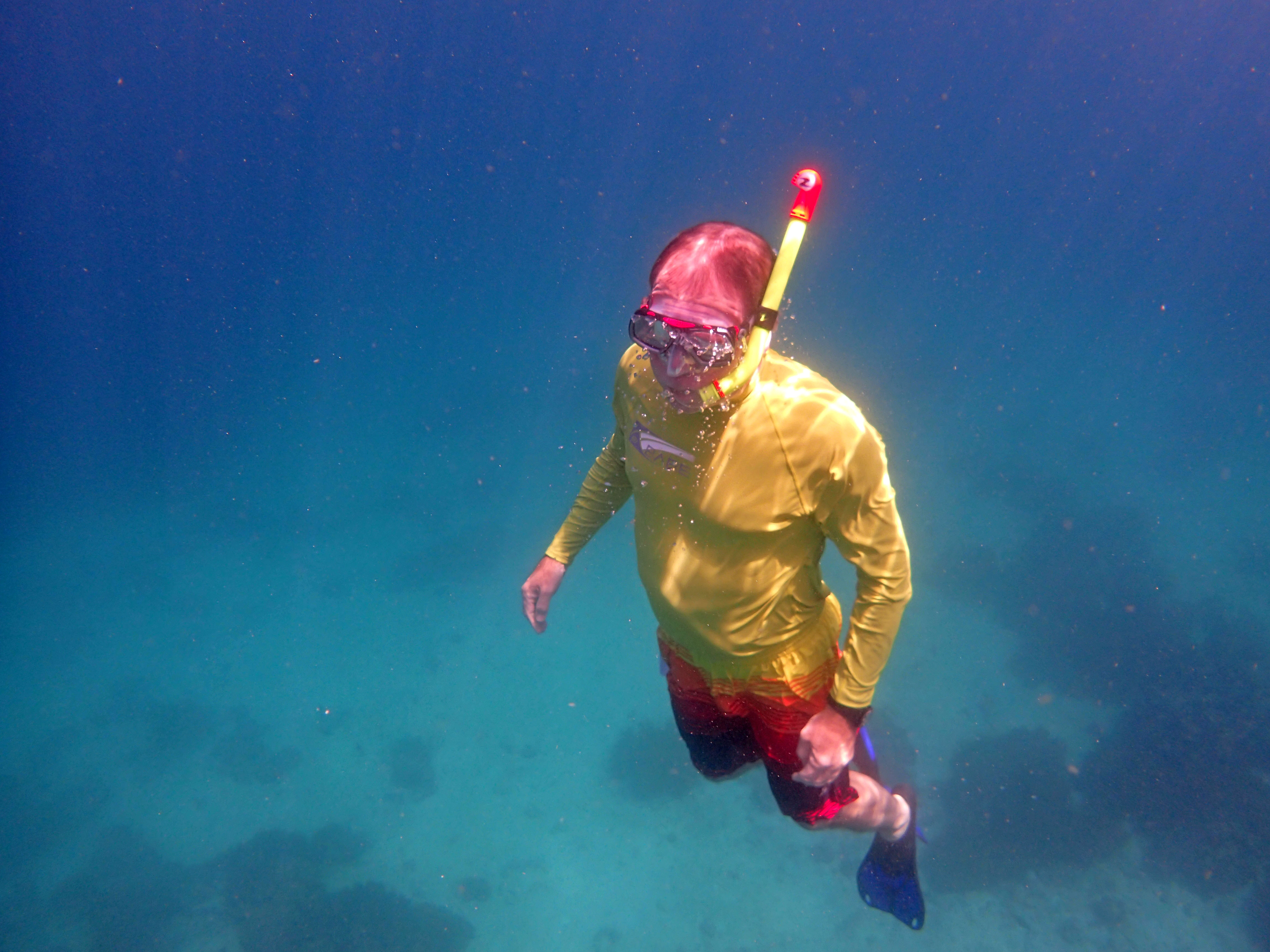
It was a wonderful experience, a sort of dream, but eventually we had to wake up and leave our underwater somnambulations. Here I am coming up for air!
Coming up for air.
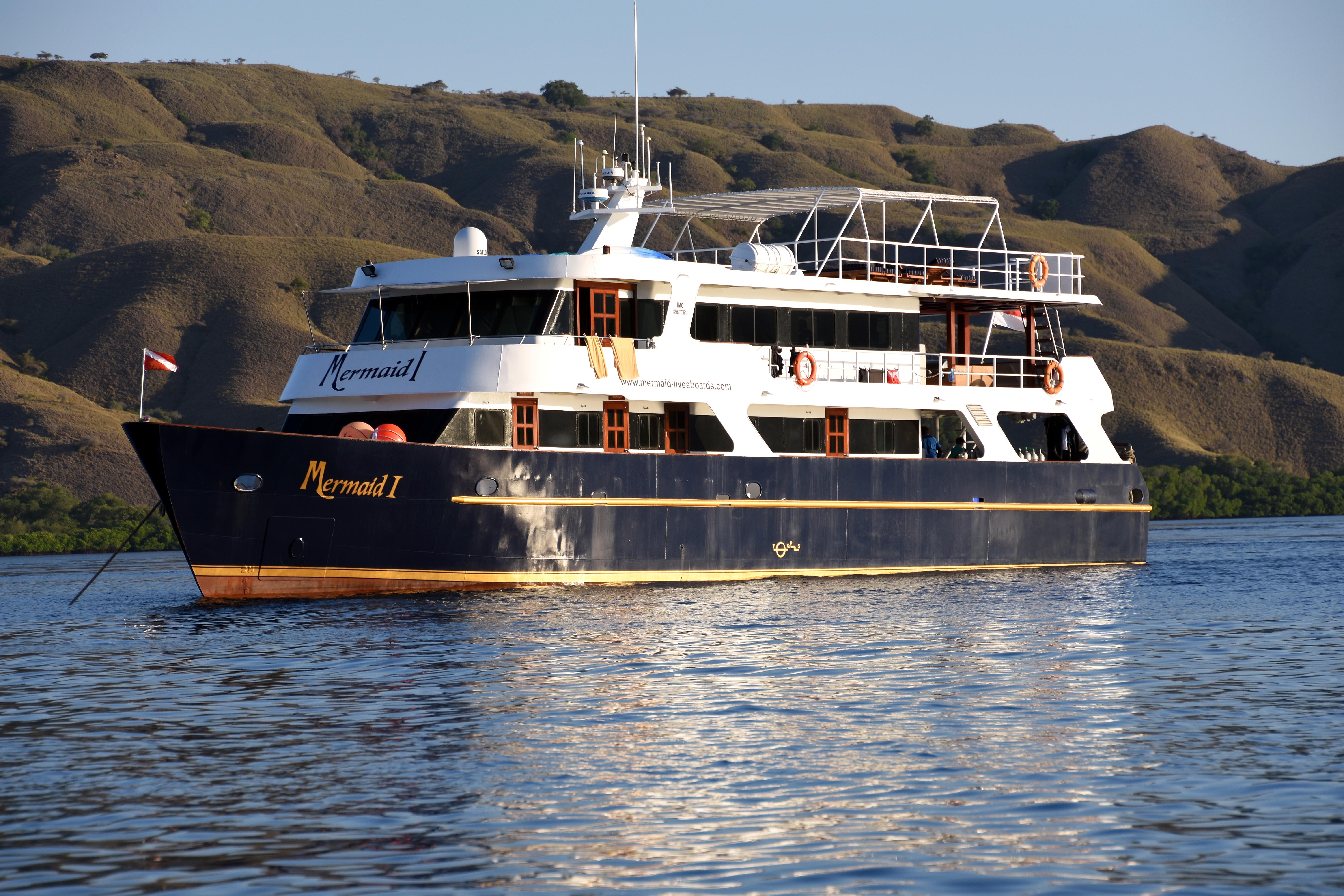
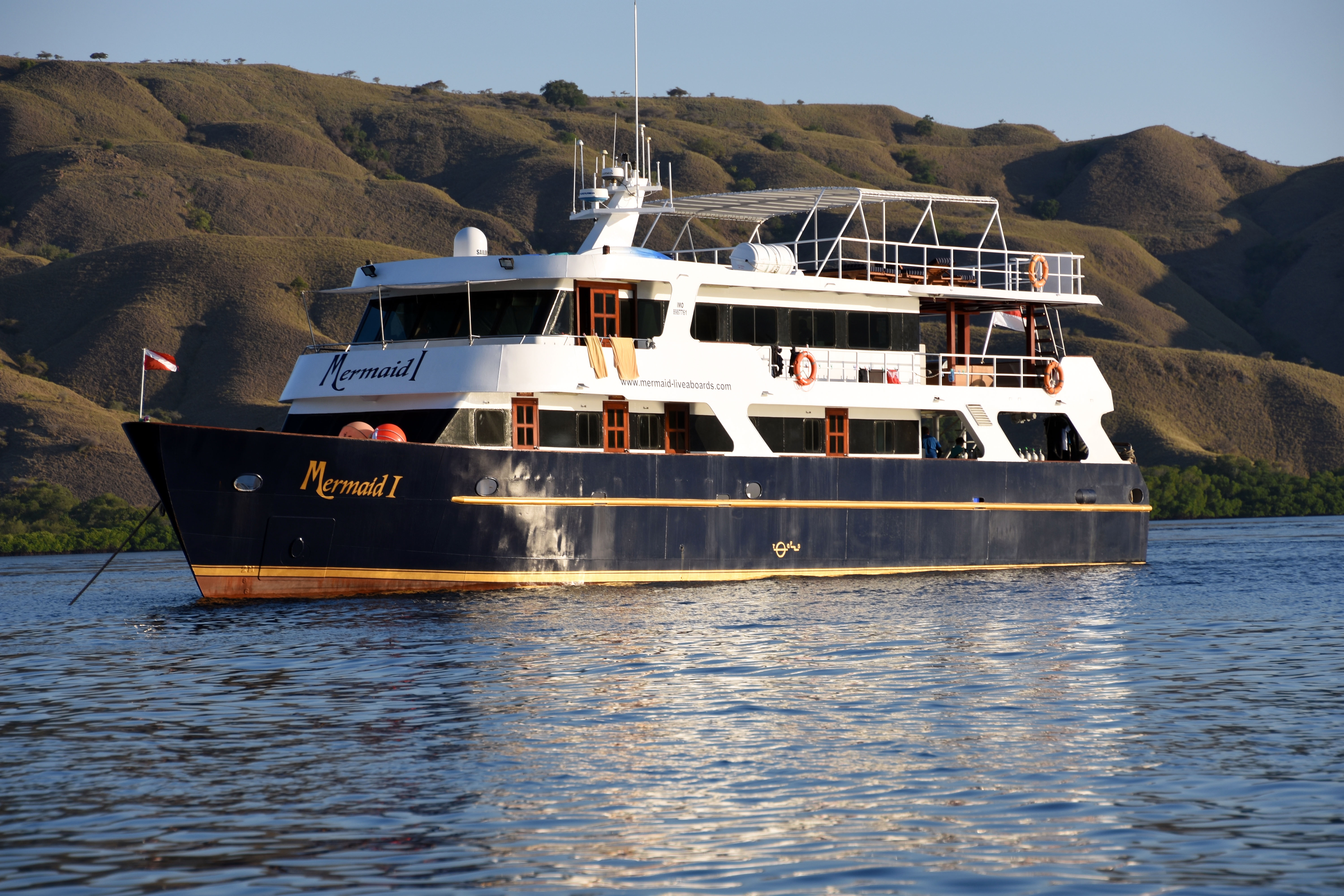
And I can’t finish without a shot of the boat (sorry, ship!) Mermaid I.
I recently had the pleasure of cruising from Bali to Flores – via the Komodo National Park – aboard the very well-appointed little ship, Mermaid I (1). This liveaboard dive vessel is usually chartered by divers to explore the water of Komodo and Raja Ampat in Indonesia, but our trip had a different mission: we were on the look out for cetaceans, led by the very knowledgeable marine biologist Chas Anderson (2). I booked the holiday through Wildwings and thoroughly enjoyed the 10 days we spent – snorkelling, bird-watching and cetacean sighting – in Indonesian waters (3).
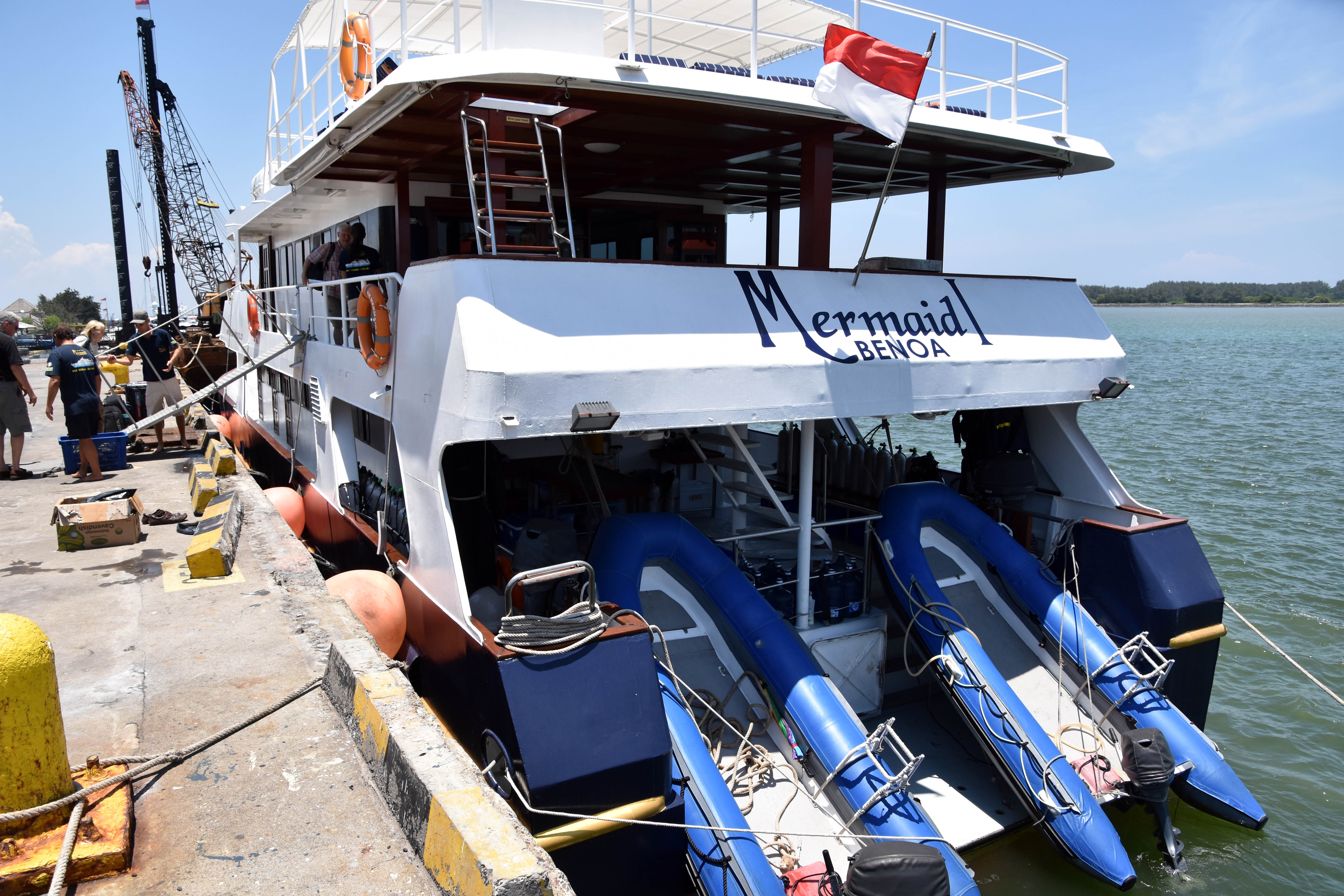
Mermaid I at Benoa Port, Bali
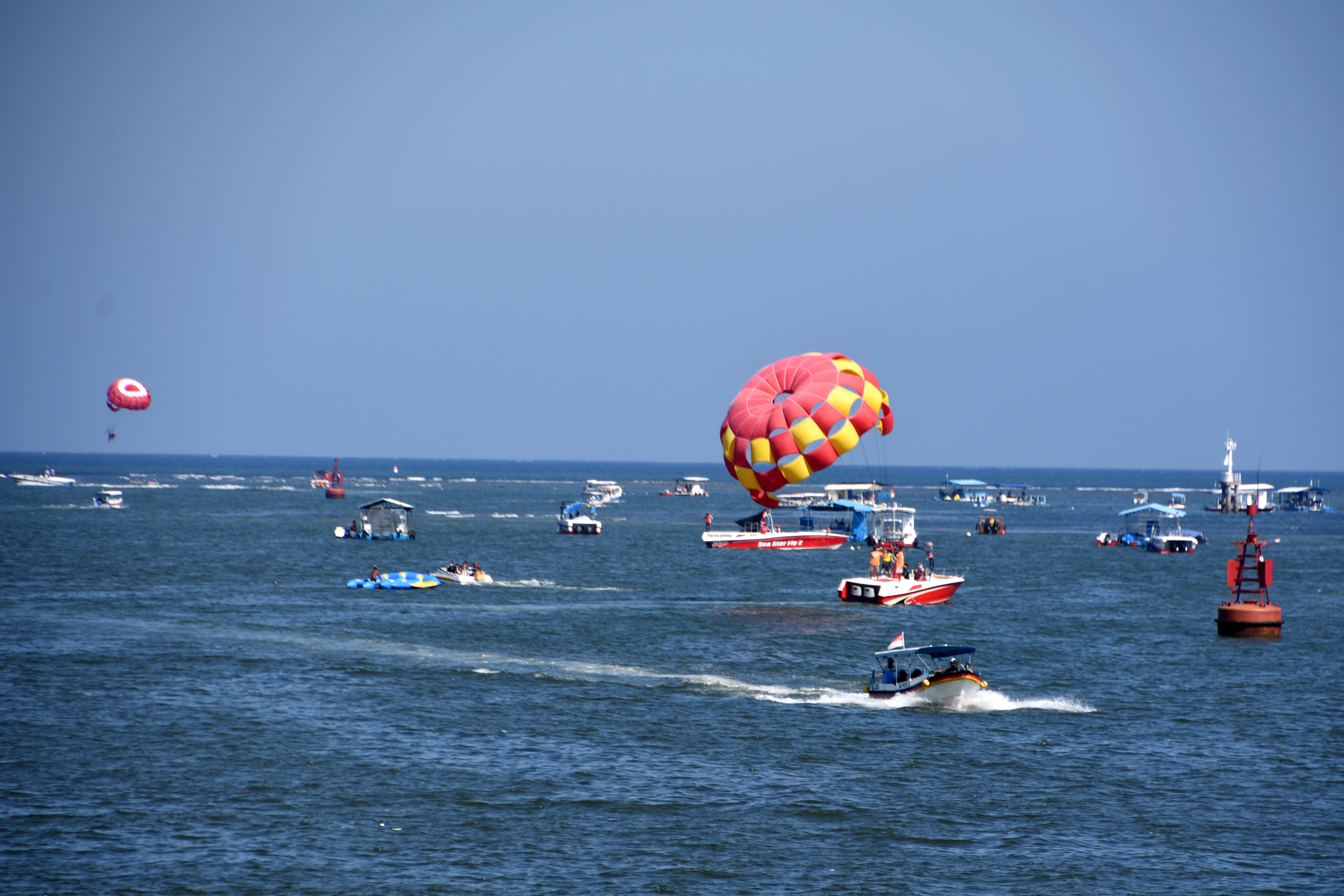
We boarded Mermaid I at Benoa Port, Bali, and set sail out into the waters of the Badung Strait – between Bali and the small island of Nusa Penida – and then further on into the Lombok Strait. There was a buzz of boating activity going on as we left the harbour.
Pleasure craft and para-gliding outside Benoa Port, Bali
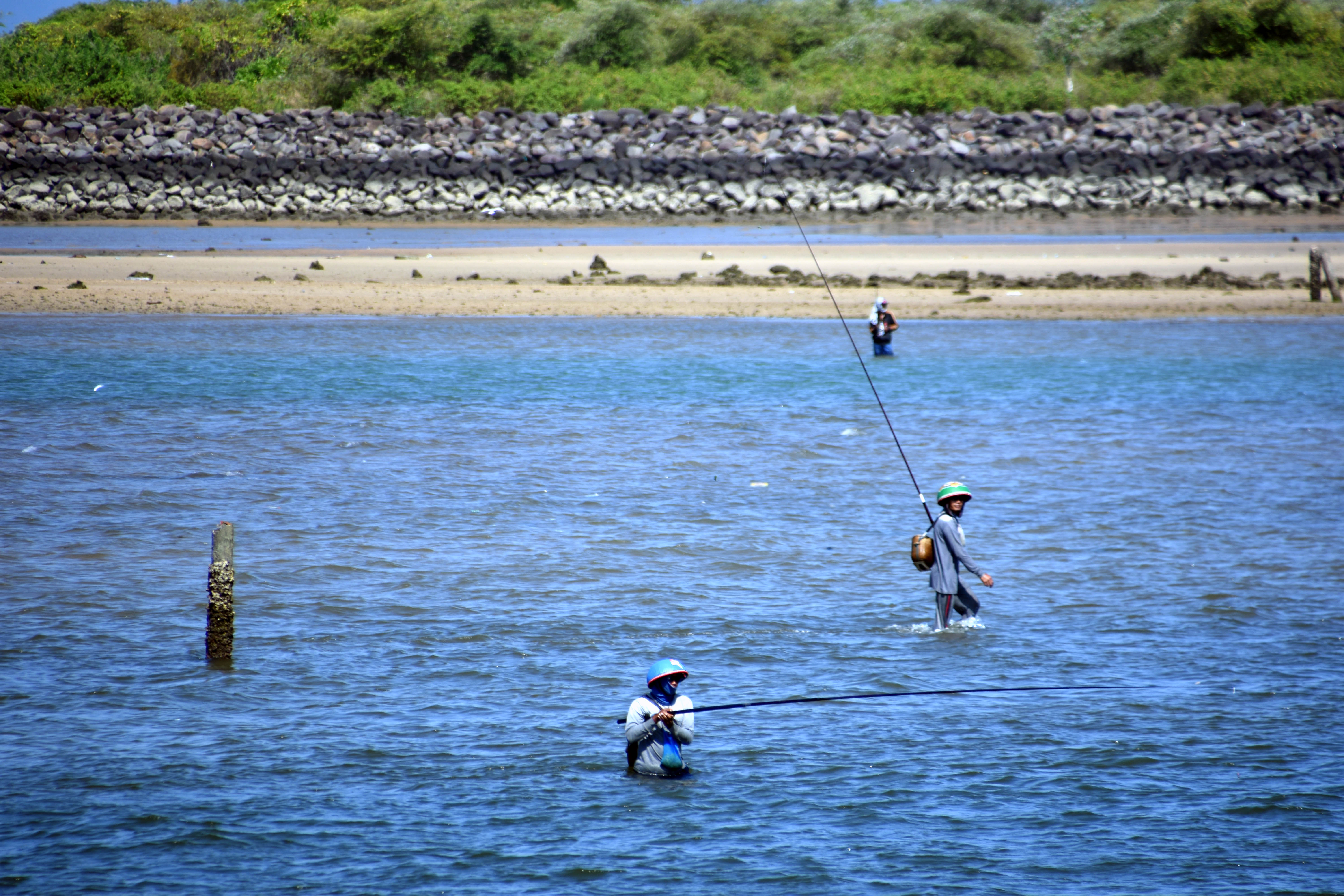
But what was more interesting, were the local fisherman standing waist-deep in the water with their long fishing rods and wicker baskets to keep the fish.
Fisherman in the sea outside Benoa Port, Bali
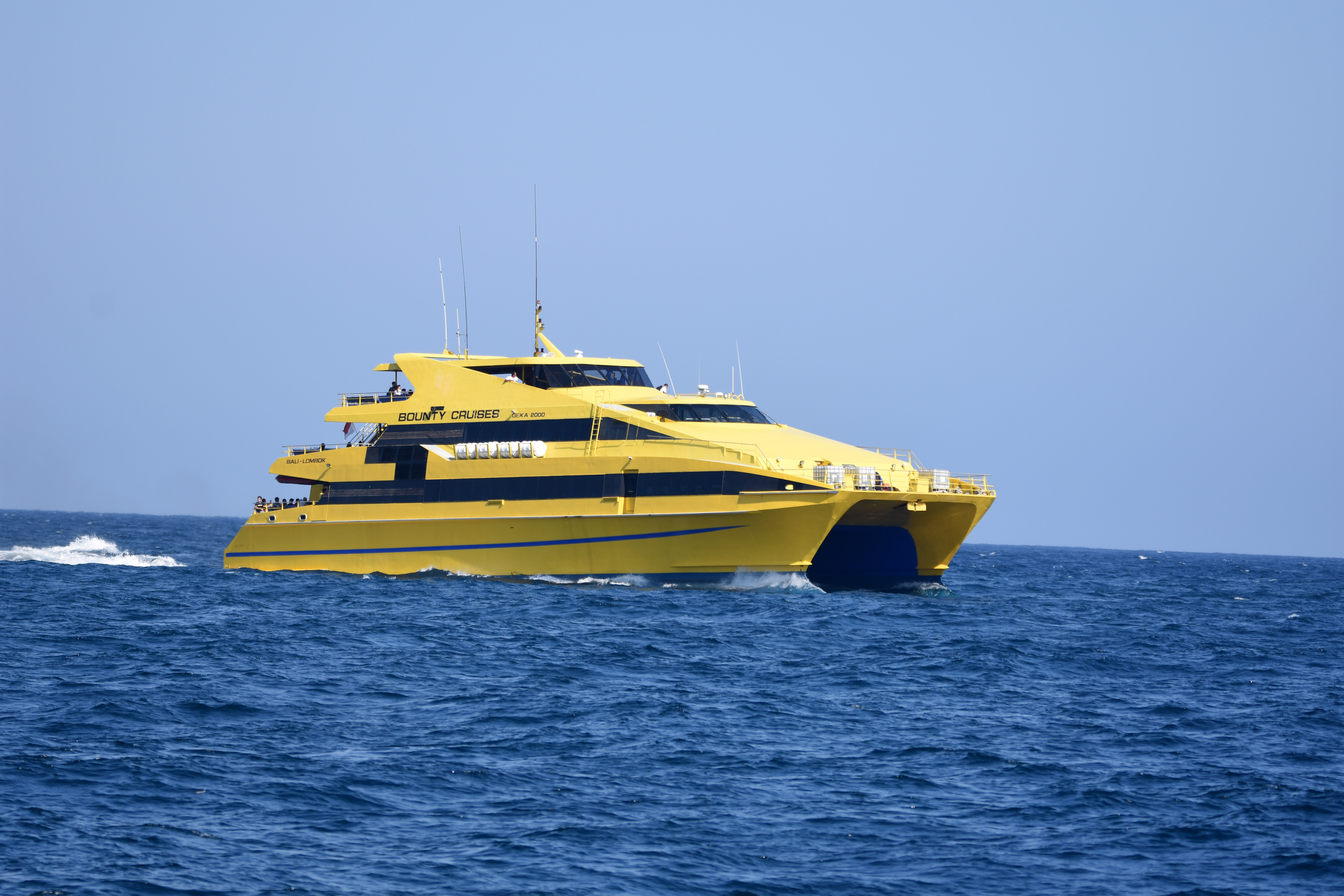
The famous faunal boundary – called Wallace’s Line – runs down the Lombok Strait, between Bali and Lombok, and is a line separating birds and animals of two separate ecozones: Asian (or Indomalayan) and Australasian. Today there are plenty of modern boats whisking tourists across this narrow, but deep strait, that still remains a barrier for many species.
Catamaran travelling from Lombok to Bali
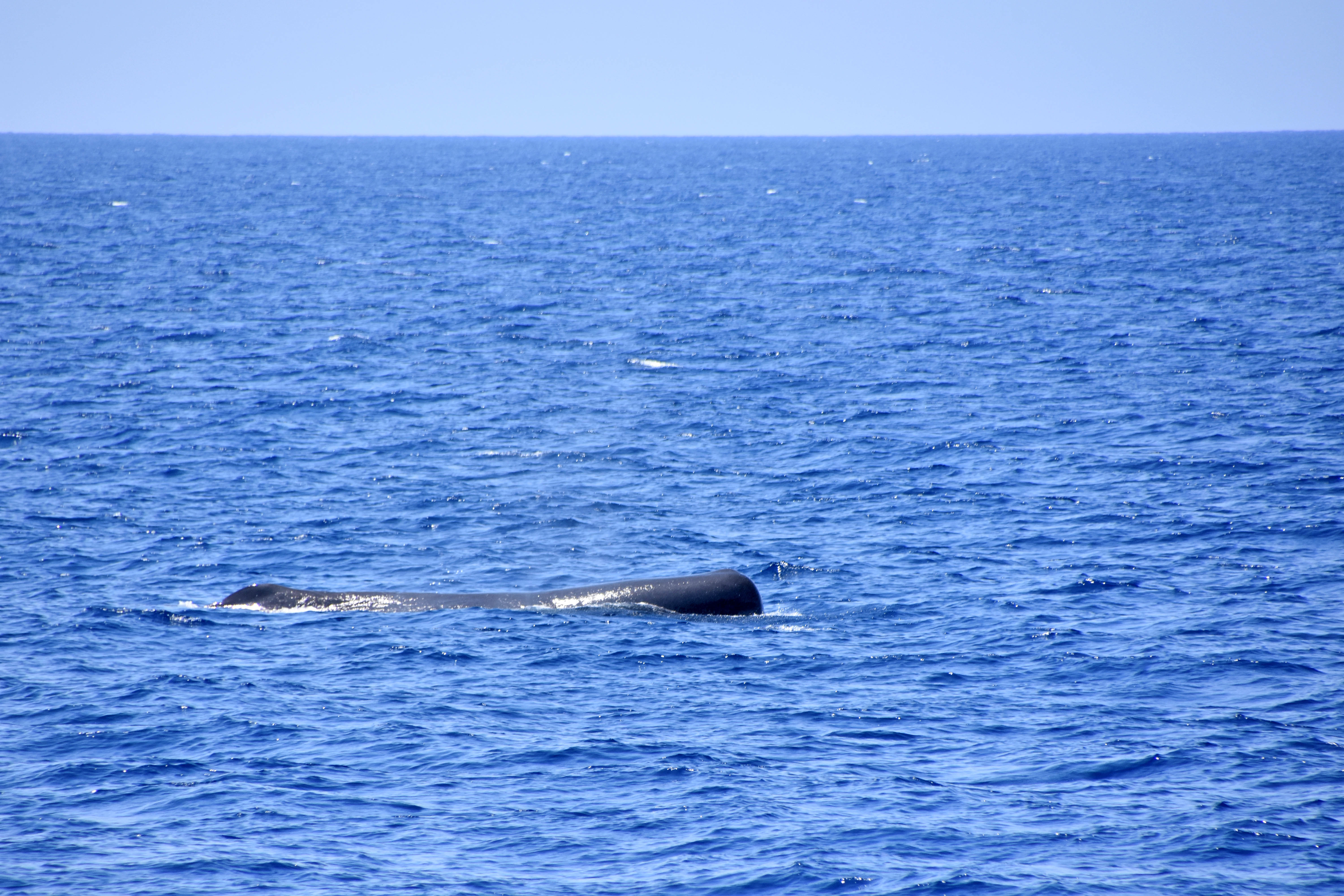
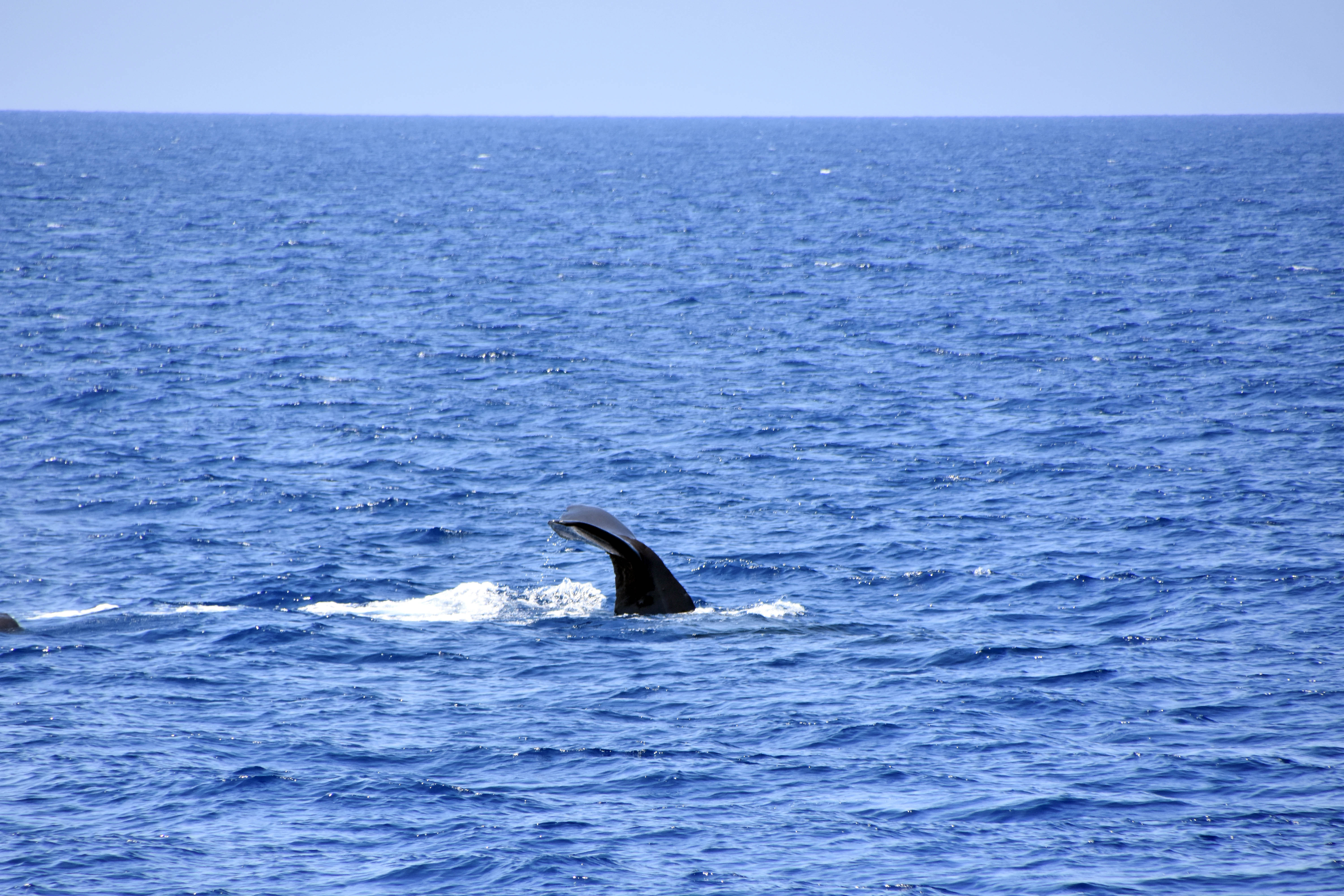
We sailed east, passing to north of the large island of Sumbawa, heading towards our first landfall: the small island of Satonda. On the way, we were fortunate enough to come across a large sperm whale; these cetaceans make deep dives – as far as 3,000m – in pursuit of large squid and fish. This individual flashed its flukes and dived down as we approached slowly towards it.
Sperm whale (Physeter macrocephalus) on the surfaceSperm whale (sperm whale (Physeter macrocephalus) diving
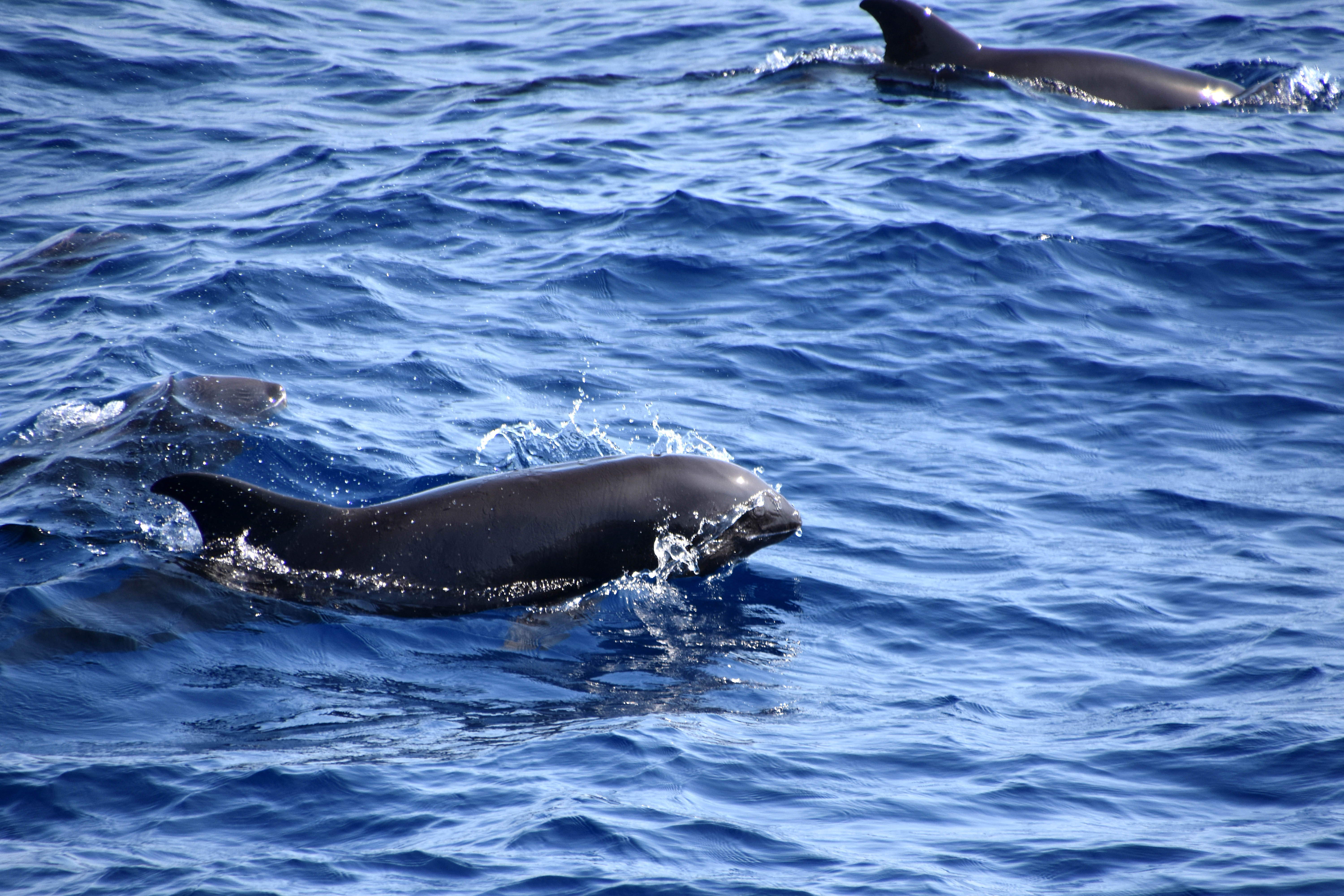
On the way to Satonda Island, we saw many different types of dolphins, including Melon-headed whales (Peponocephala electra) with their rounded heads (below).
Melon-headed whales (Peponocephala electra)
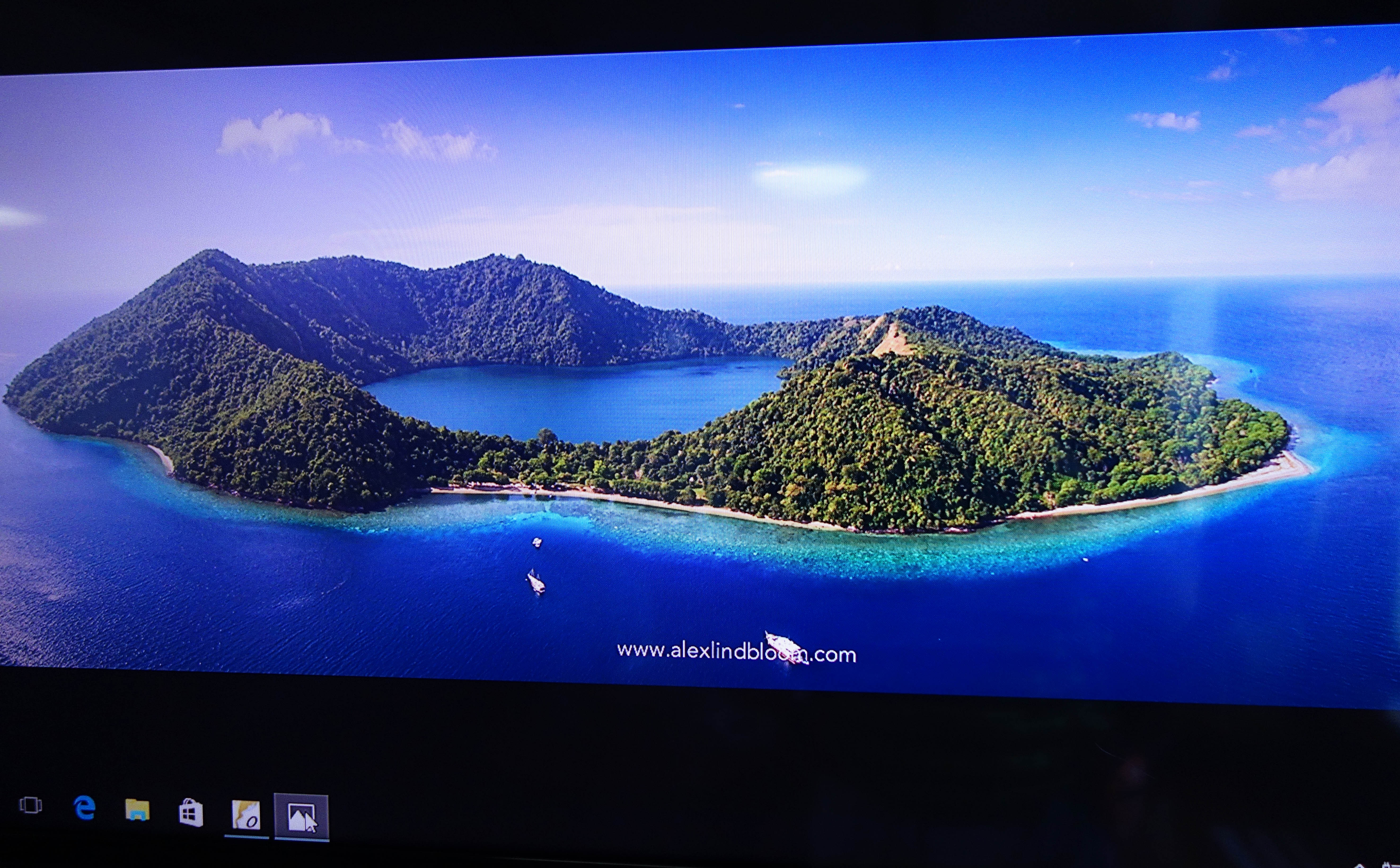
Satonda Island is the top of an extinct volcano with a lake where the crater used to be. I took this screen shot (below) off the introductory talk on Mermaid I.
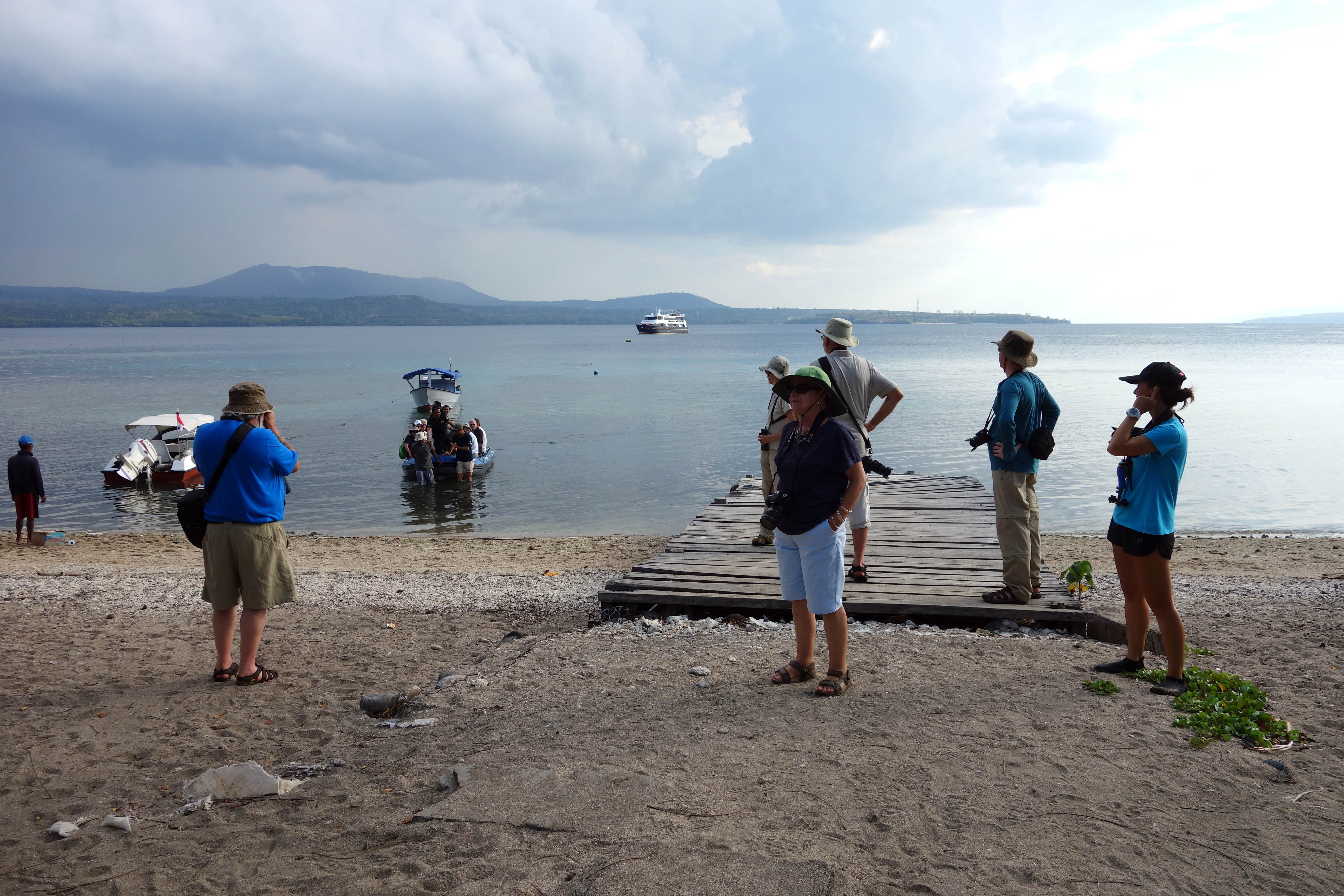
We decamped and spent an enjoyable couple of hours walking on this island, looking out for birds and butterflies.
Landing on Satonda
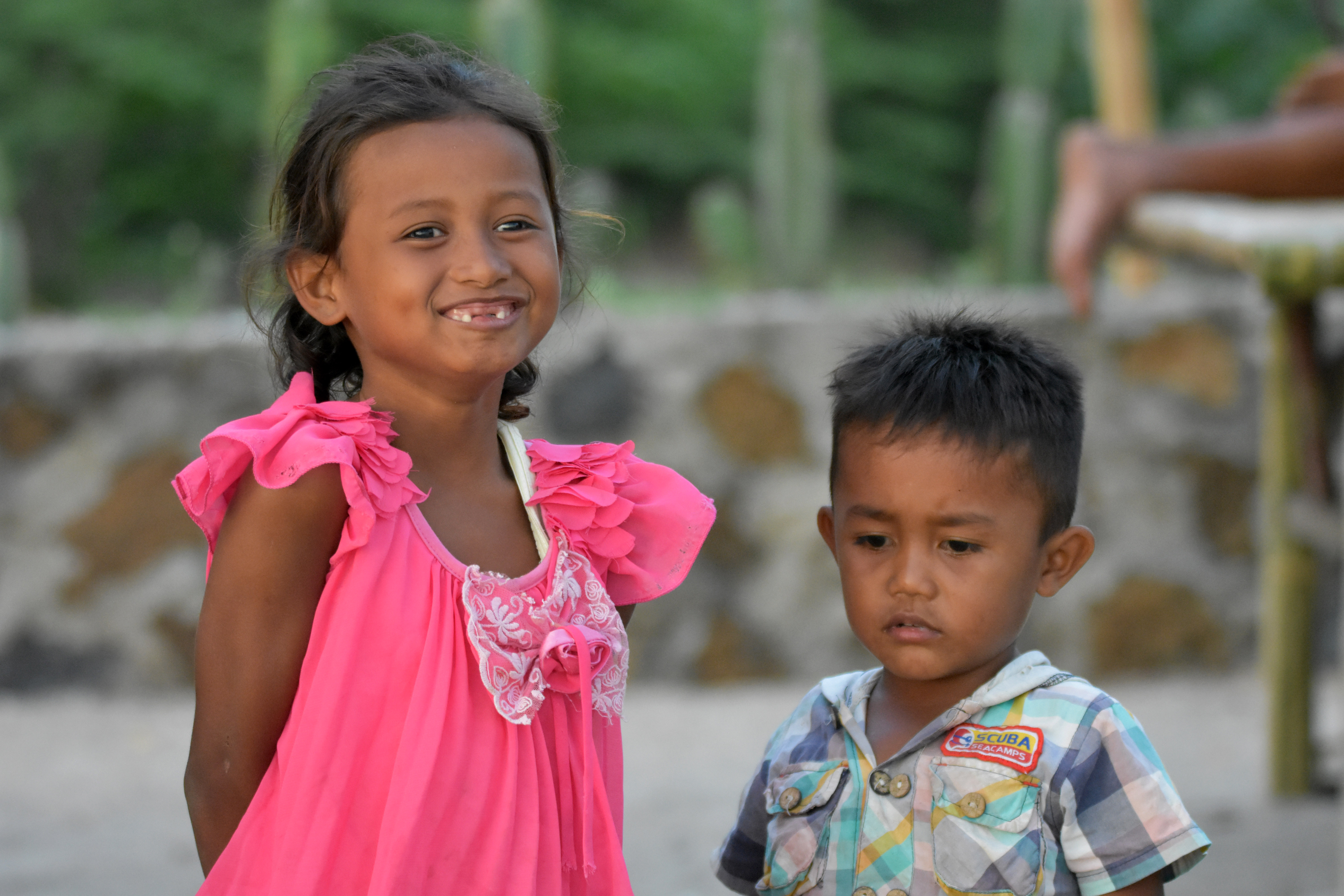
There are no villages on this island, which is a protected area, but there are a few families (of park guards) living there, including these delightful children.
Children on Satonda Island, Indonesia
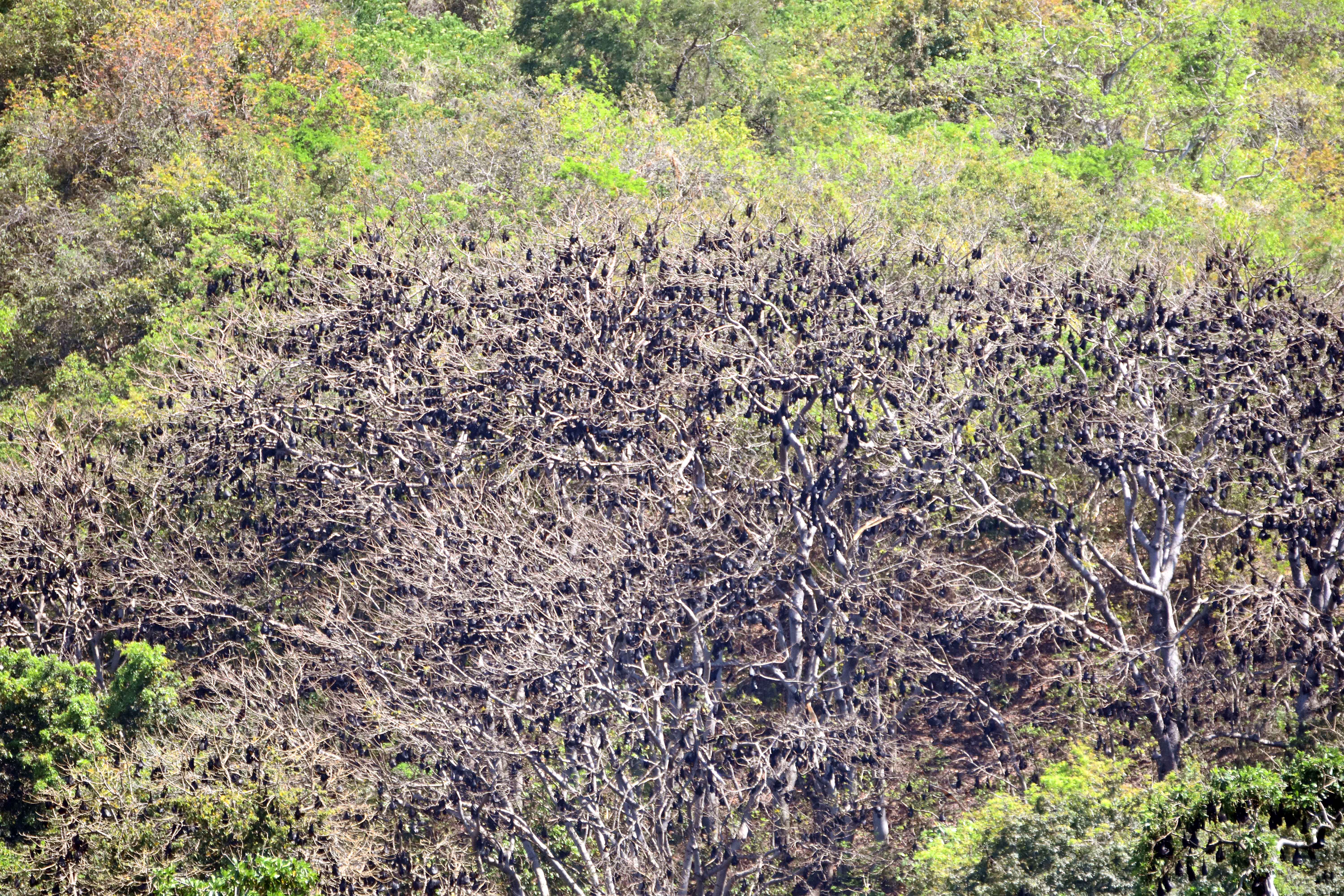
The main residents on Satonda are fruit bats, of which there must be tens, if not hundreds of thousands. Alas, we did not get to see them close up, but we did see their roosting colonies, which covered the trees on one part of the island (below). They fly off each night across the waters to the much larger islands of Moyo and Sumbawa. Unlike their smaller, insect-feeding relatives, these bats feed on fruits, so are seen as pests by some farmers. Happily they can return to their safe island home and escape retribution for their light-fingered ways. After all they were there first, long before humans arrived and started planting fruit trees!
Colony of fruit bats roosting on Satonda Island, Indonesia
After leaving the island behind us, we returned to our lookout posts, searching the seas ahead for dolphins (and birds for some).
On the lookout for birds and dolphins in front of the bridge of Mermaid I
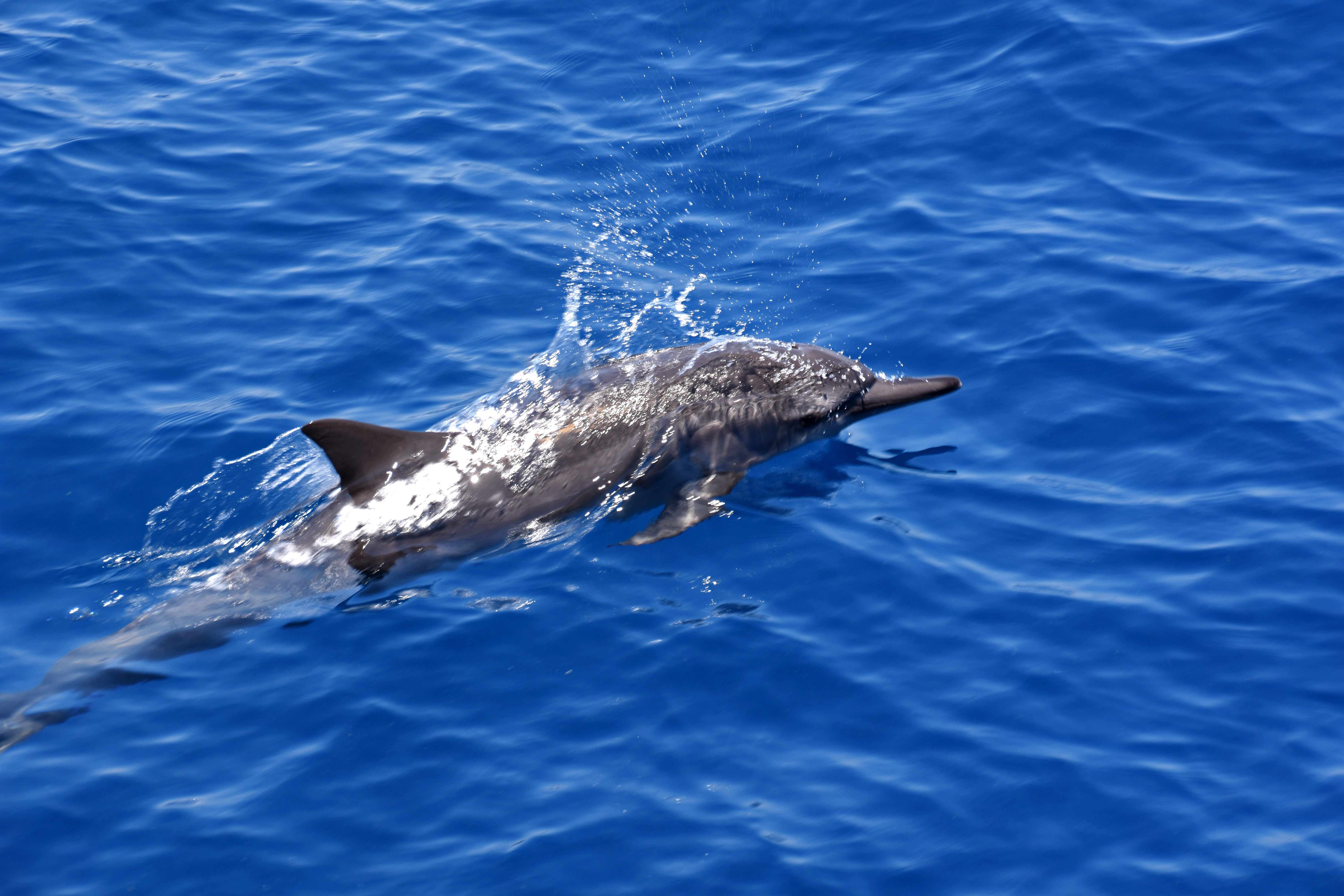
We did not have to wait long and were rewarded with sighting of a number of dolphins species, including: Frazer’s, Pantropical spotted and Spinner dolphins.
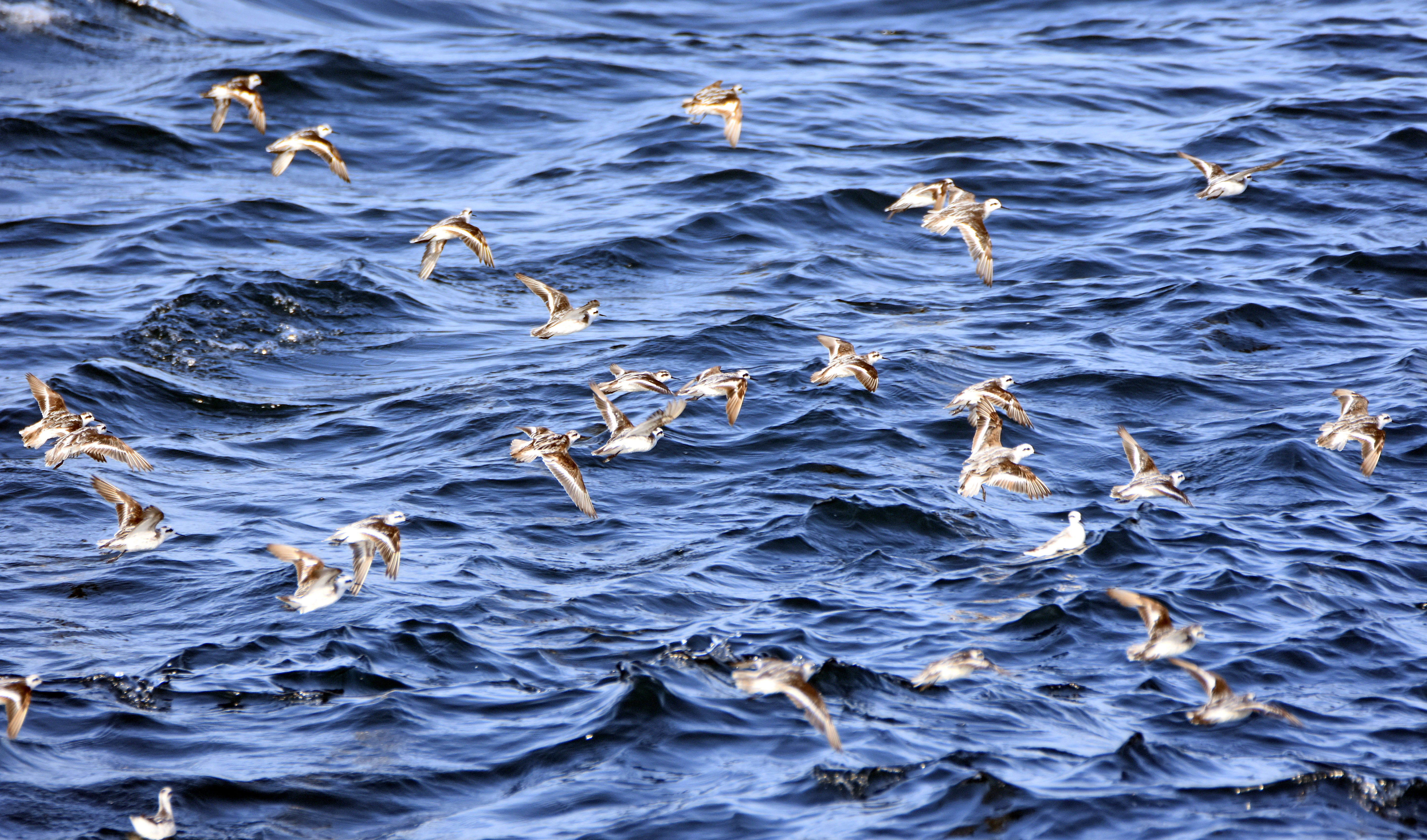
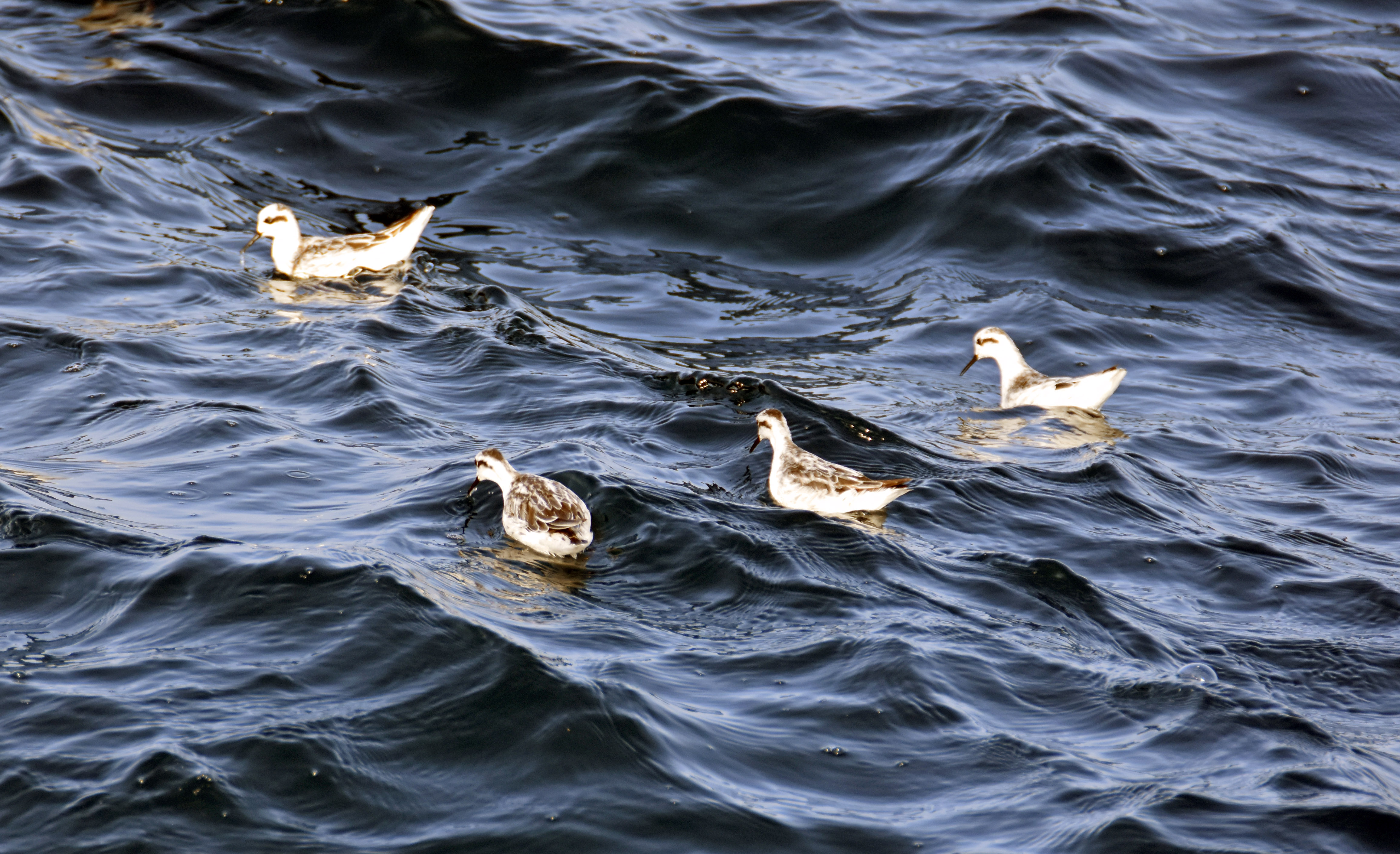
There were also lots of sea birds, especially Red-footed and Brown boobies, which I will save for a separate blog! One species which was very abundant, was the red-necked phalarope (Phalaropus lobatus). This little wader spends the northern winter in these tropical waters and we came across flock after flock of these birds (below). They seemed to me to be wonderfully adapted to oceanic life, bobbing away on the surface, pecking at tiny marine invertebrates.
Red-necked phalaropes (Phalaropus lobatus)Red-necked phalaropes (Phalaropus lobatus) feeding at the surface
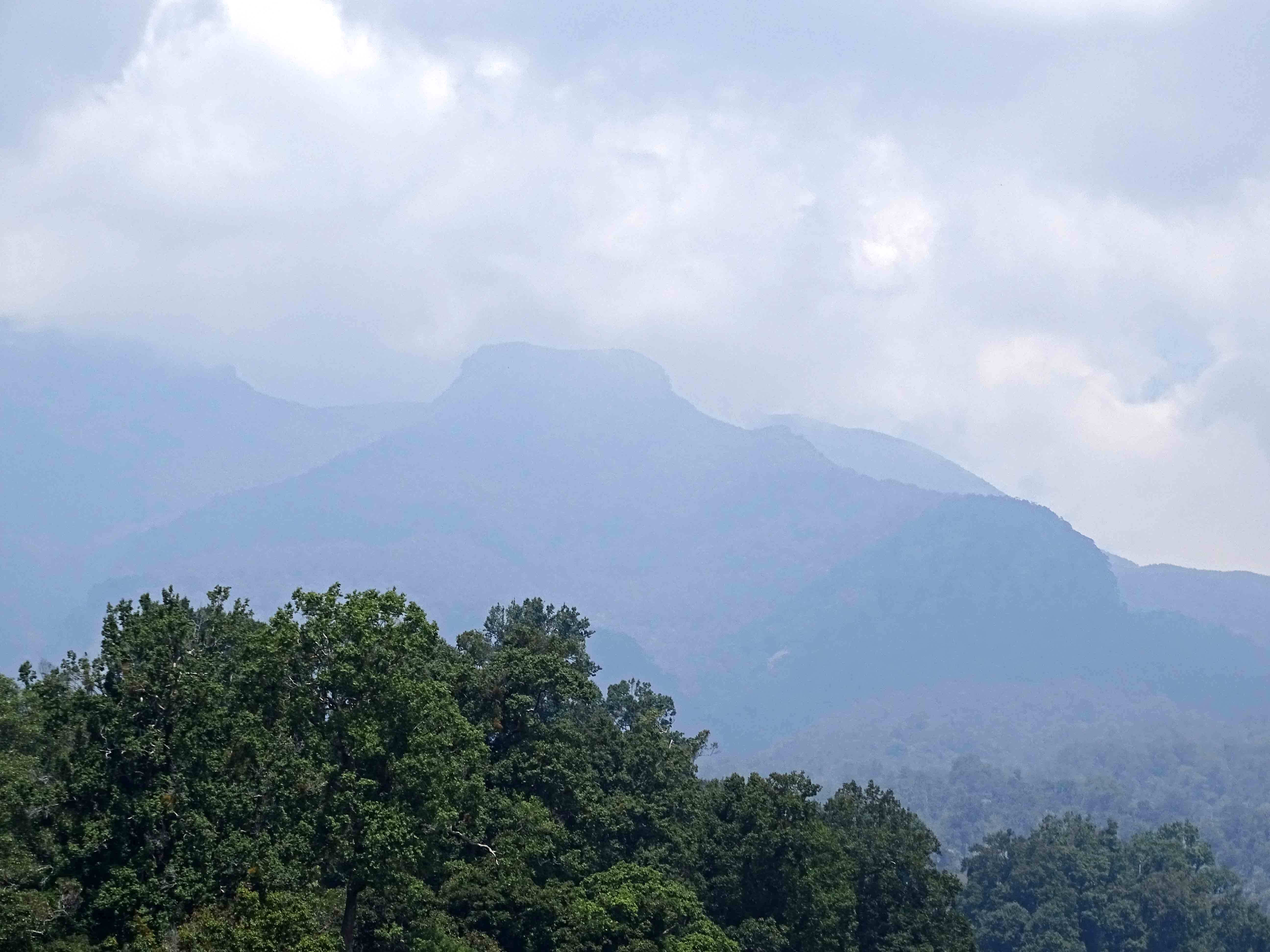
It was very interesting to sail along the northern coast of Sumbawa, which seemed to be largely uninhabited, past the huge volcano of Tambora (2,851m). It exploded in 1815 in what was the largest volcanic explosion in recorded history!
Mt Tambora on Sumbawa Island, Indonesia
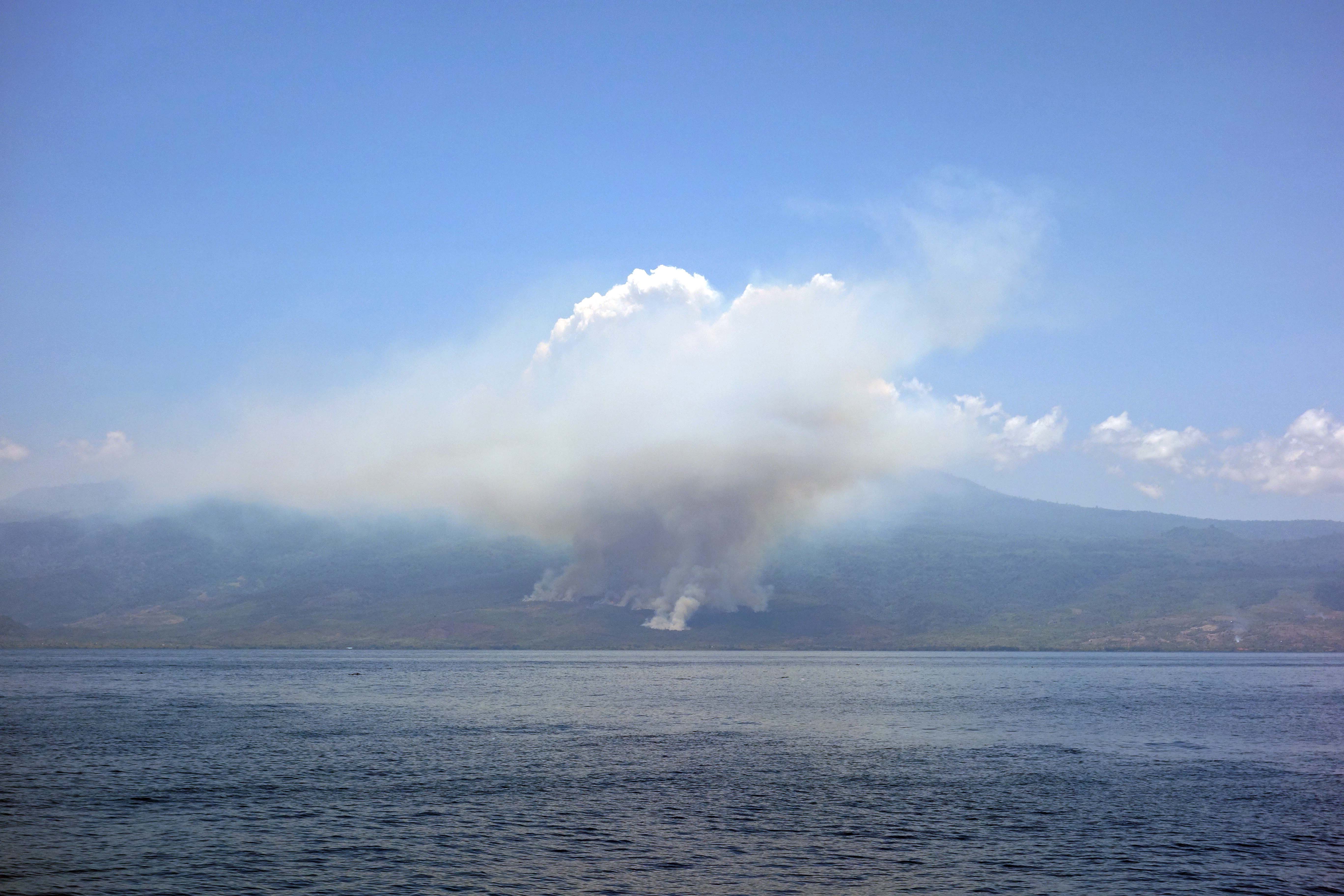
Although this part of Sumbawa looked very unpopulated, there was alas, evidence of burning, which was disappointing to see.
Burning on Sumbawa in October 2016
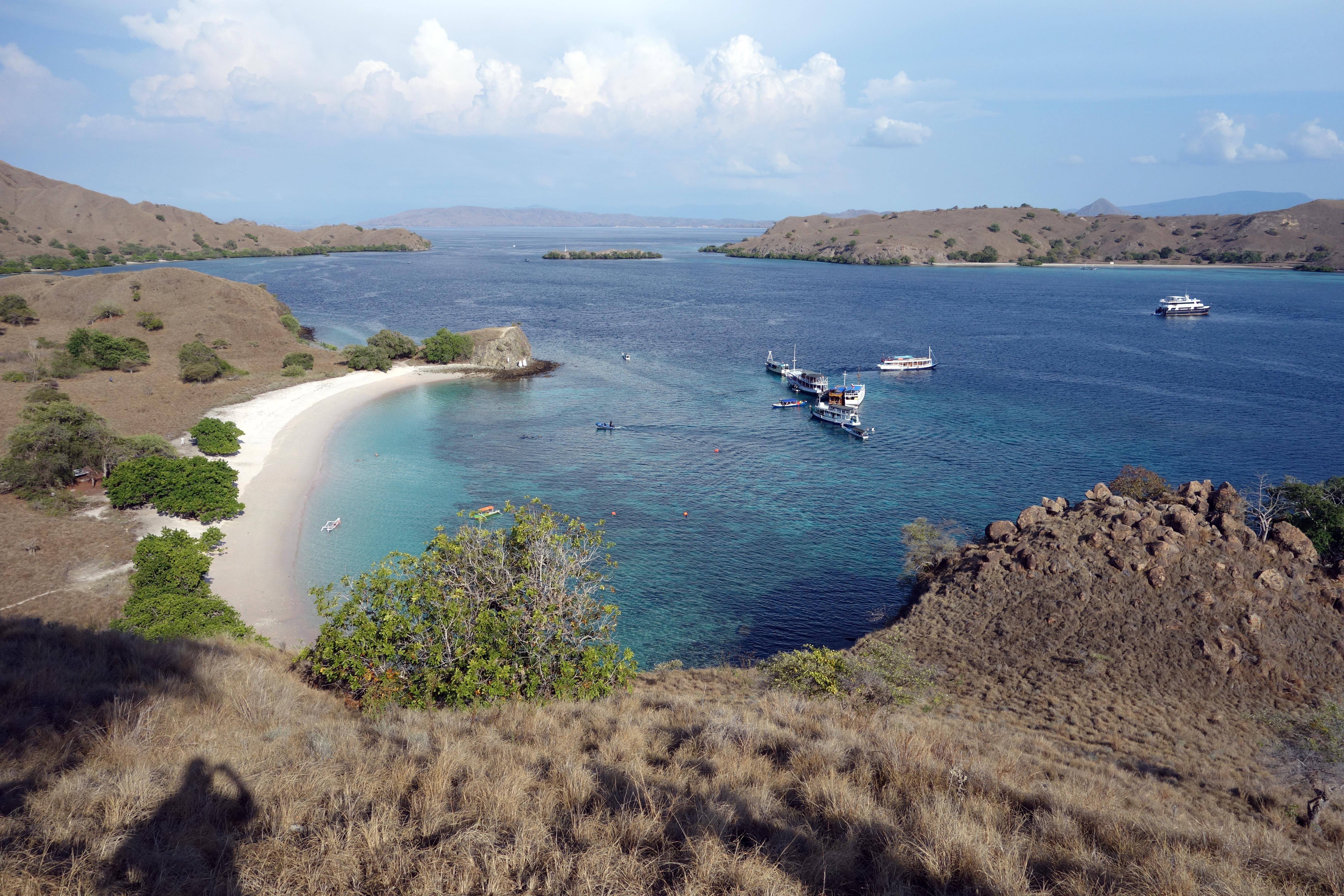
The highlight of the trip was of course the Komodo National Park, which fully lived up to expectations. There were lots of opportunities for snorkelling, usually once or twice a day, as well as excursions on islands in the archipelago that lies between Sumbawa and Flores. The largest of these islands are Komodo and Rinca, and we were able to visit both of them. Although it was quite hot, it was nice to get off the ship and go bird watching on dry land for a change.
Going ashore on Komodo Is
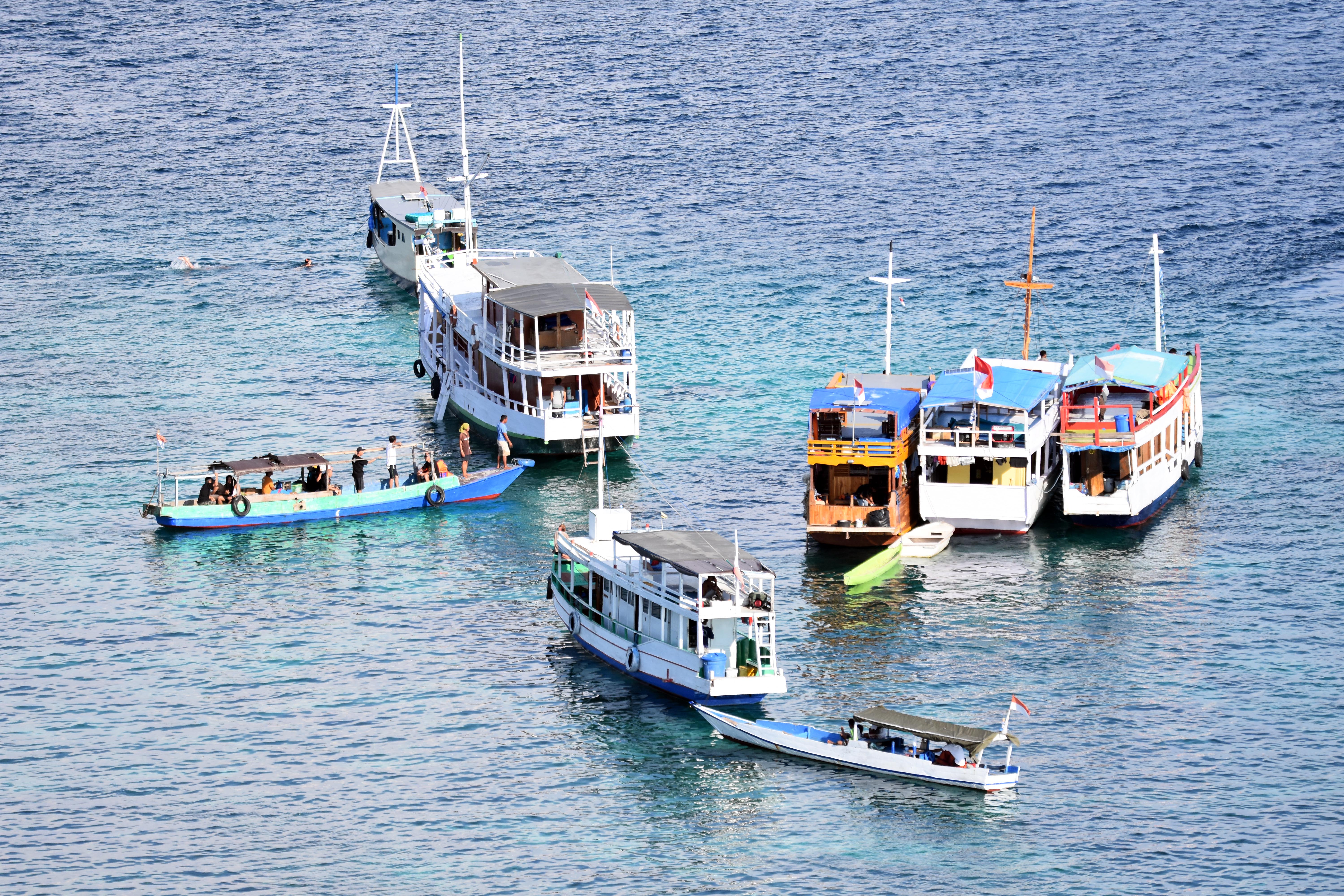
Most of the boats which visit these islands come from the nearby island of Flores, especially from Labuanbajo. I felt rather privileged to be on our smart little ship, although I guess we were paying for it!
Local tourist boats off Komodo
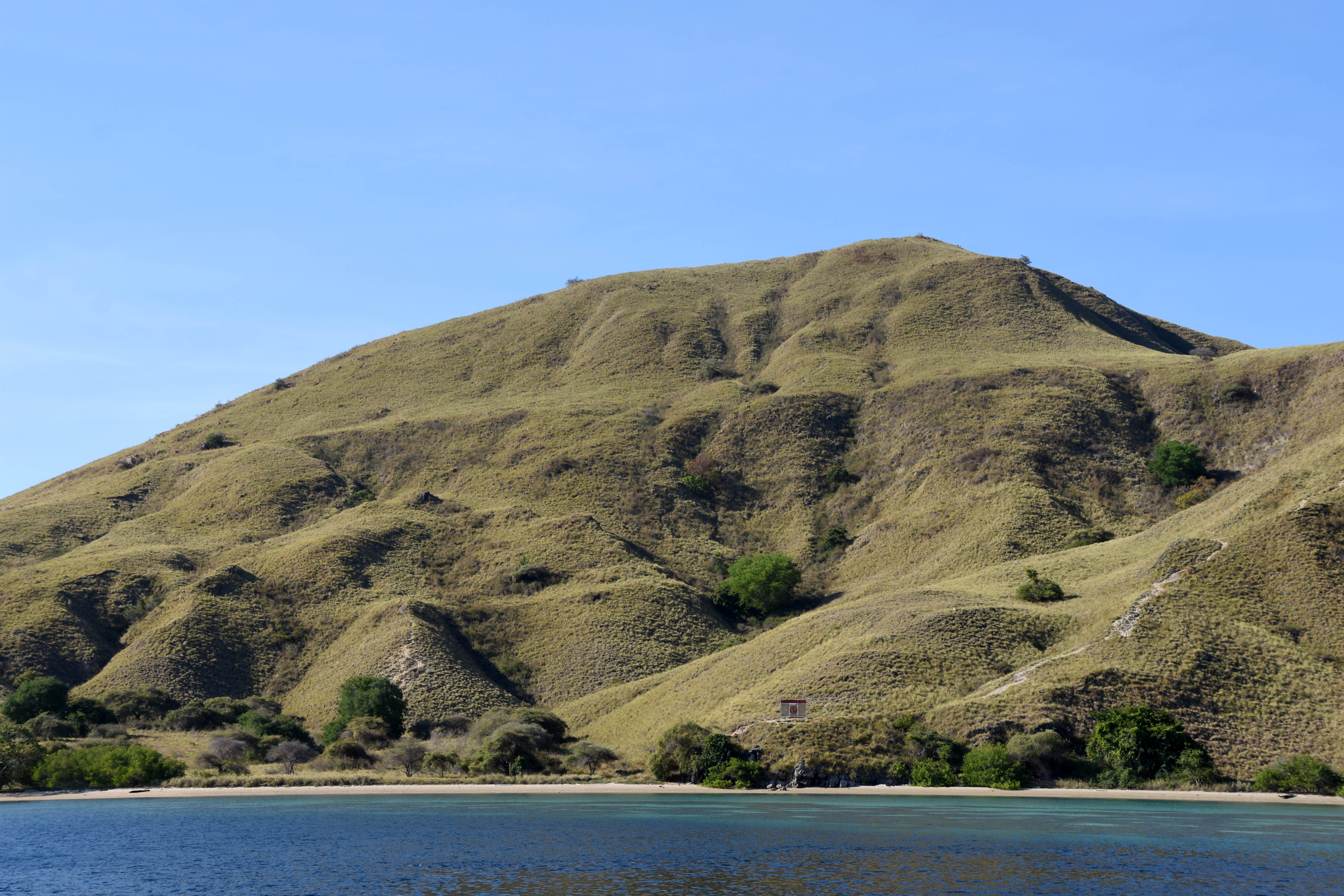
I particularly enjoyed walking about on the tiny island of Gili Lawa, just north of the main Komodo island.
Gili Lawa Island
Here we saw a number of birds, including Collared kingfisher, Zitting Cisticola, Pied Bushchat and the rather beautiful, White-breasted Woodswallow (below).
White-breasted woodswallow (Artamus leucorynchus)
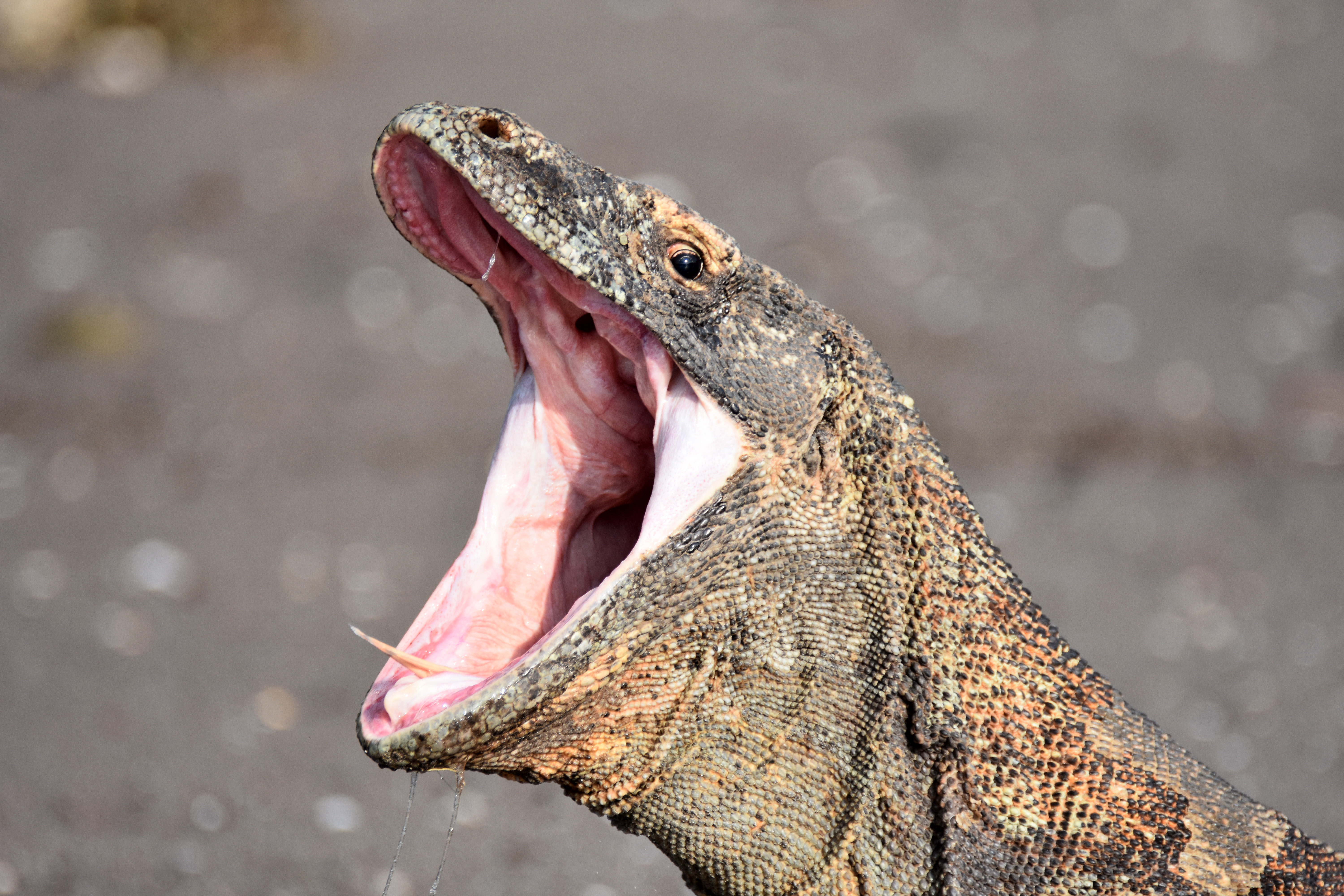
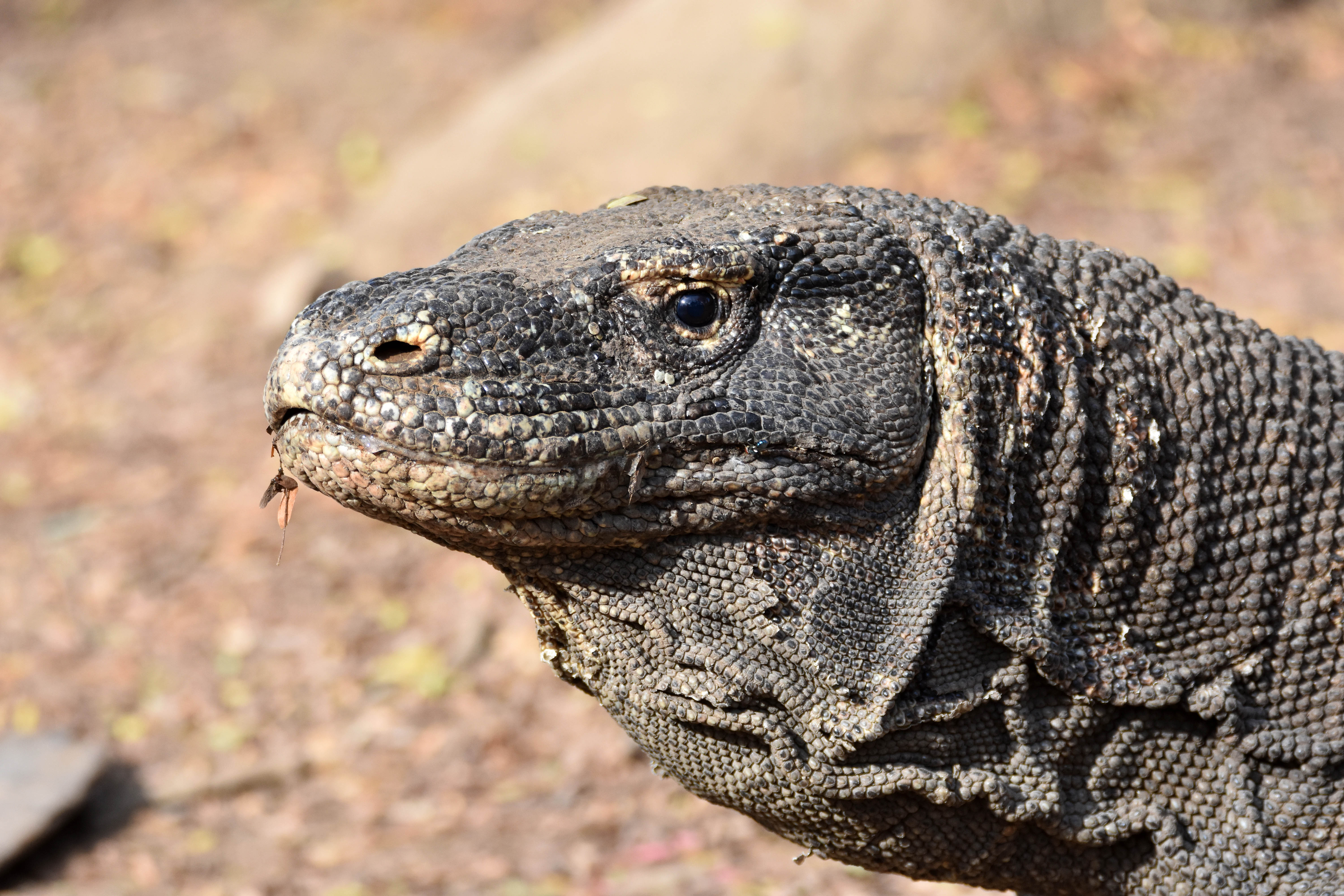
These were of course, sites were there were no Komodo dragons, otherwise it would not have been possible to wander about by ourselves (accompanied by a member of the crew). The first dragons we saw were on Rinca island. I have written about these reptiles in a separate blog on my Nature Notes site (4). They are impressive beasts, but not my favourite animal, although they cannot help the fact that they have poisonous saliva and carnivorous habits!
Komodo dragon (Varanus komodoensis) on beach with mouth open
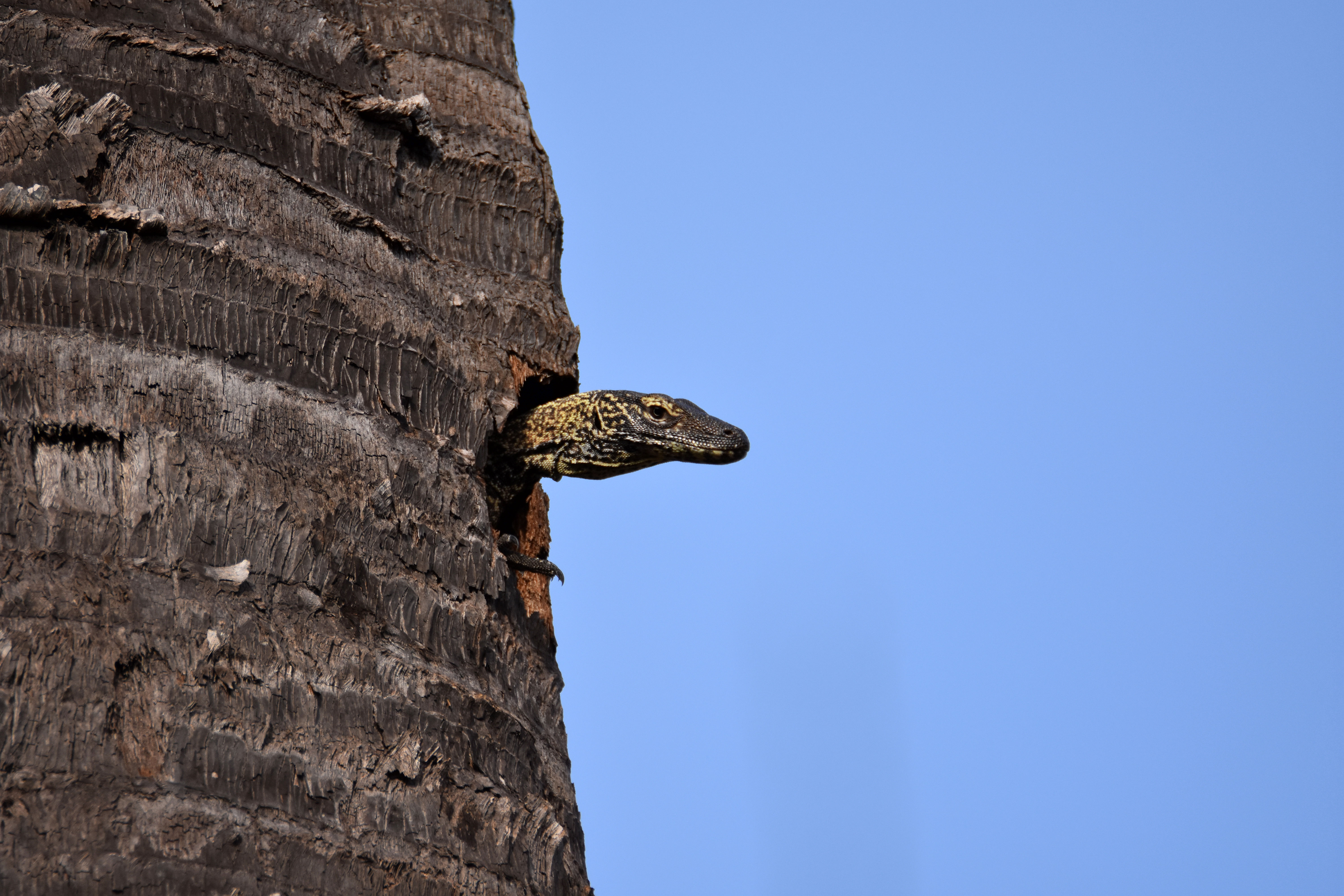
The young dragons were somewhat more appealing, until we saw one kill a rat and swallow it whole! They themselves live in trees to avoid being swallowed whole by the large dragons. You see what I mean about them not being very cuddly!
Baby Komodo dragon in a palm tree.
You are well looked after by guides and guards when you go ashore on Rinca and Komodo Islands. They walk in front and behind you carrying sticks to ward off any overly curious dragons. But for the most part, the dragons seemed to recognise that tourists were not their usual prey item, or perhaps they just weren’t hungry! People do live in villages on these islands, alongside the dragons. Not something I would like to do, I must confess.
Local guide on Komodo Is
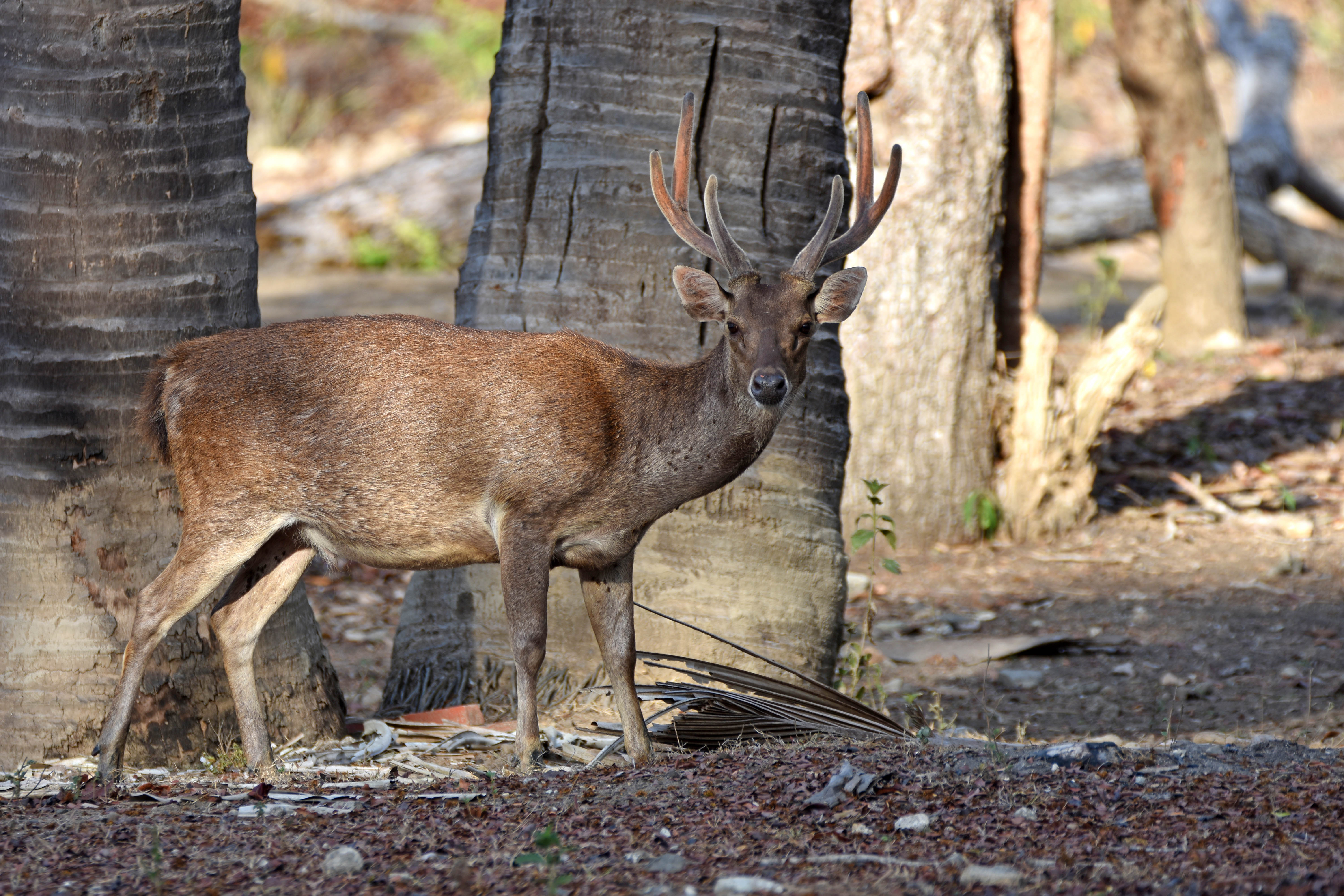
What the Komodo dragons do like to eat, together with water buffalos, are the endemic Timor Deer. I felt rather sorry for these beautiful creatures, but perhaps it is just the old and sick ones which get taken. They did not seem at all concerned about the presence of the dragons.
Timor deer on Rinca Island
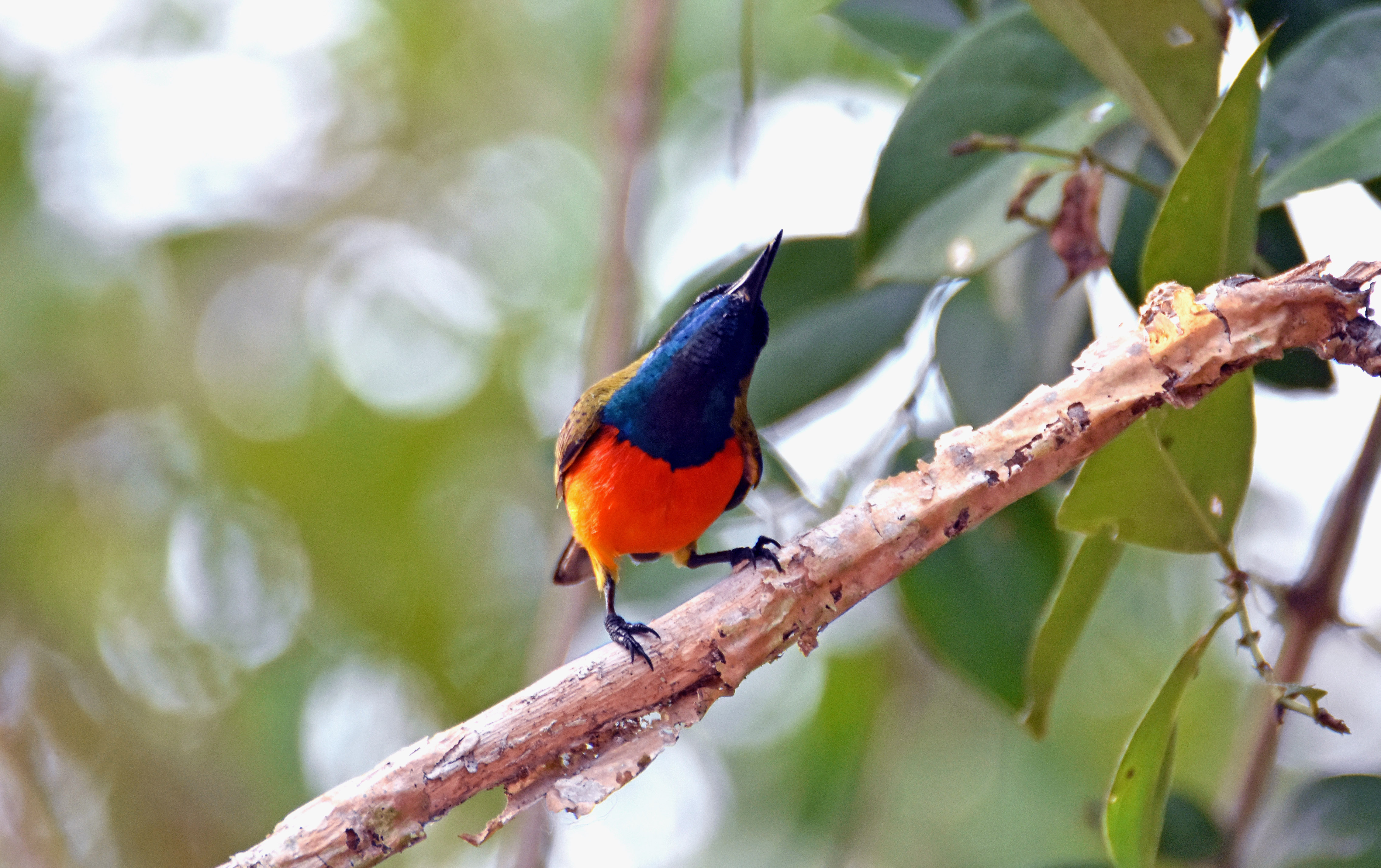
These islands are quite dry but nevertheless support a good many bird species. One of the highlights for me was the Flame-breasted sunbird. This one did not stay around for very long, just long enough for me to grab a quick shot of it before it flew off.
Flame-breasted sunbird (Cinnyris solaris)
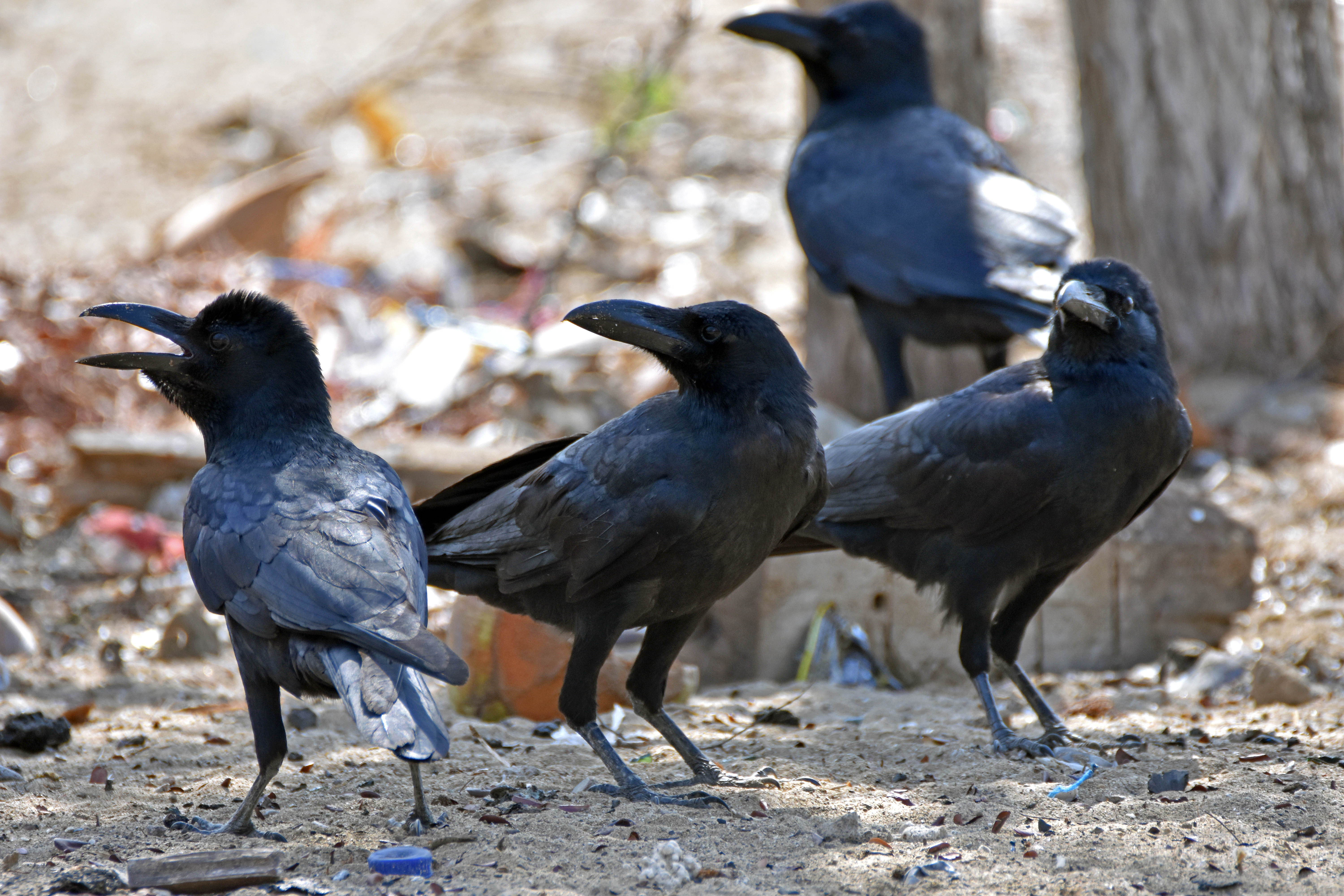
One very noisy and garrulous inhabitant of these islands, are the Jungle or Large-billed crows. These large members of the crow family really have attitude! They strut around like they owned the place; perhaps they do!
Jungle or Large-billed crow (Corvus macrorhynchos)
They did not look as though they were at all concerned to be living on an island with dragons. They are obviously too fast and able to fly off before any dragon could catch them.
Komodo dragon (Varanus komodoensis) on Komodo
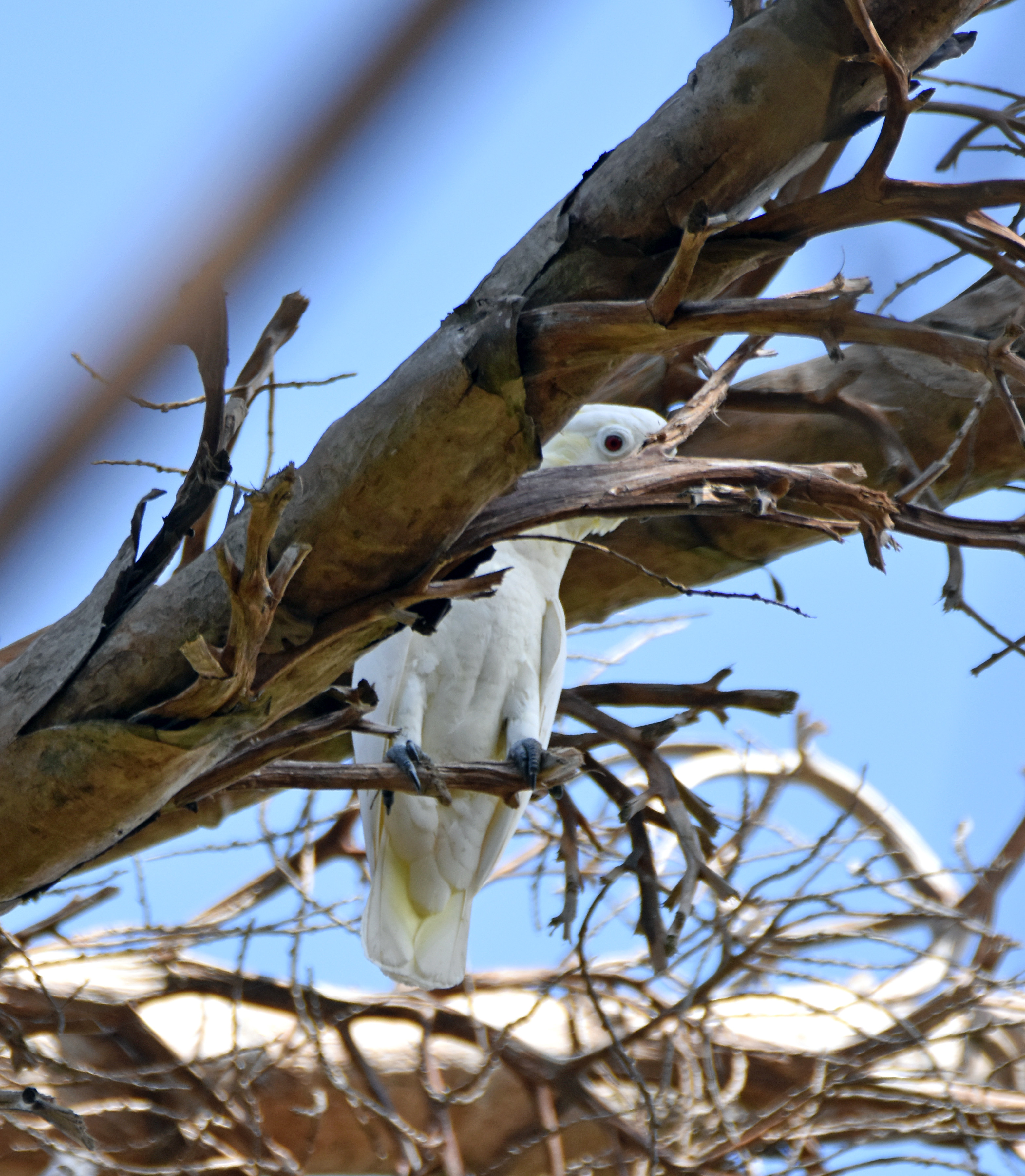
It was also nice to see plenty of Yellow-crested cockatoos on Komodo Is, although they were a little shy. Here’s one peeping through the trees (below)! These birds have been driven to local extinction in many parts of S E Asia by trapping for the pet trade. Here at least, they seem to well-protected and relatively abundant.
The yellow-crested cockatoo (Cacatua sulphurea) on Komodo
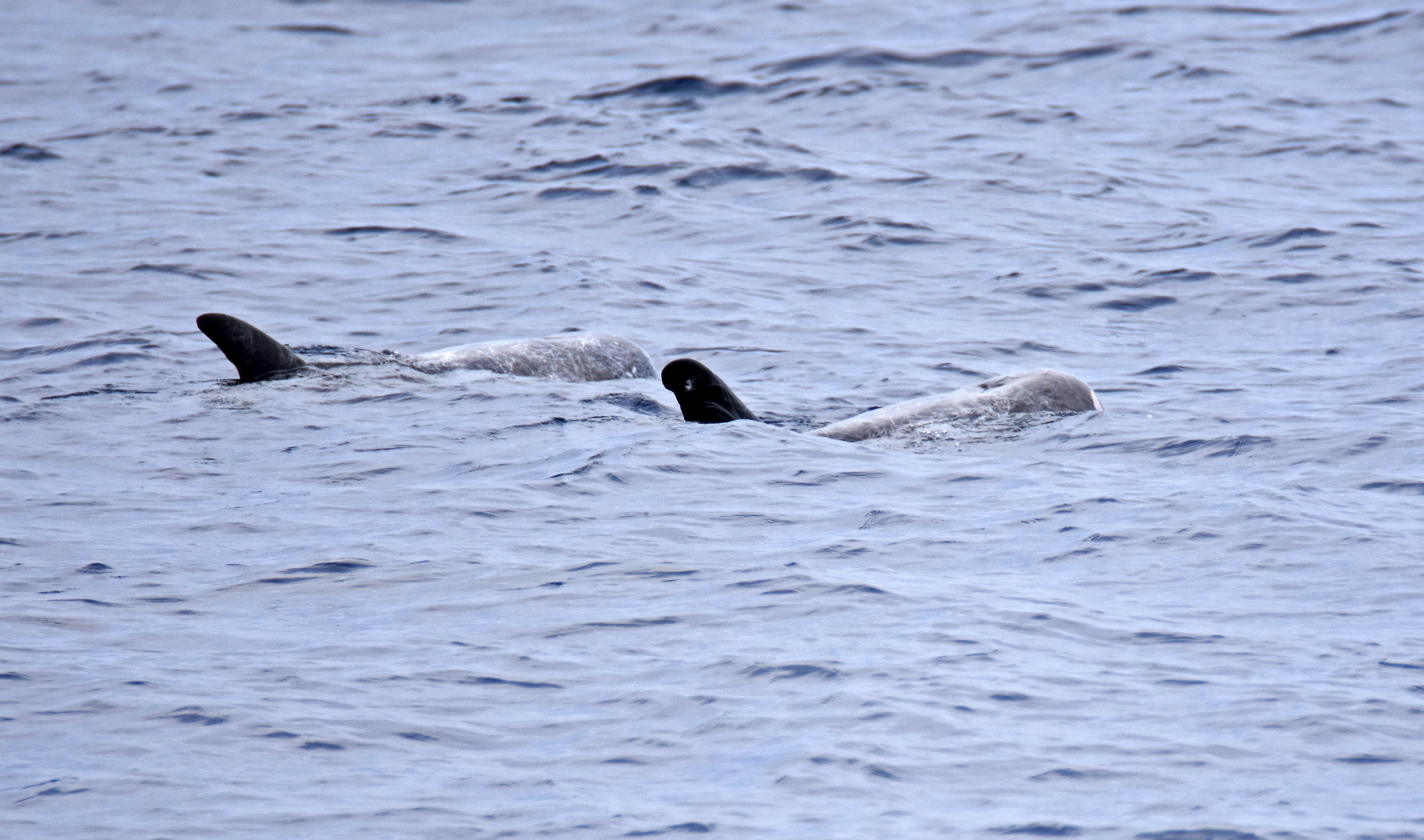
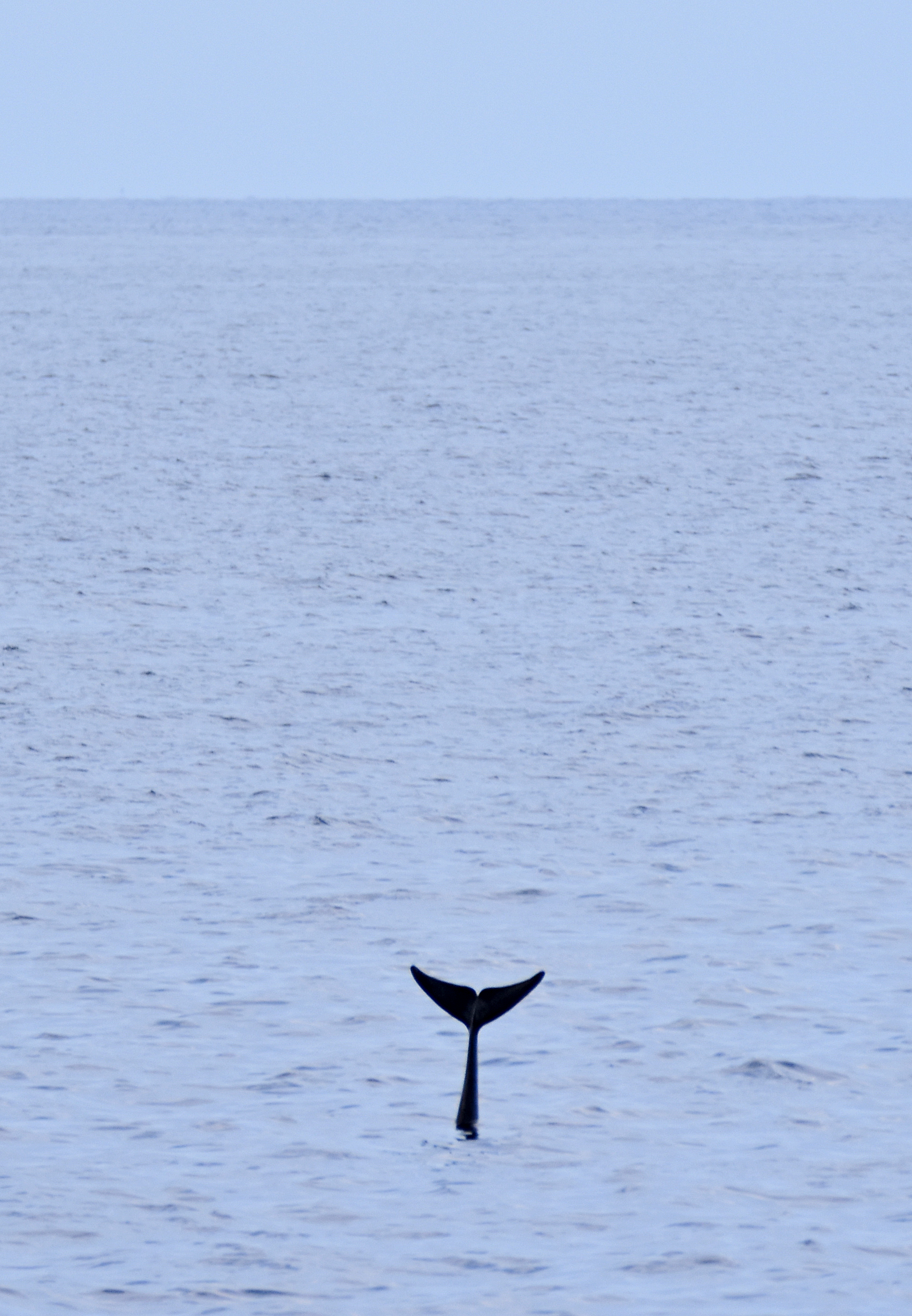
Finally, it was time to leave the Komodo national park and sail further east to our point of departure, at Maumere, on Flores. Not before we ventured south out into the open ocean, where we came across another sperm whale. We also came across the rather strange, highly scarred, Risso’s dolphin, which have a habit of waving their tails in the air. No doubt communication to each other, but what were they saying?
Risso’s dolphin (Grampus griseus) showing their highly scarred bodies – caused by fighting?Risso’s dolphin (Grampus griseus) tail waving
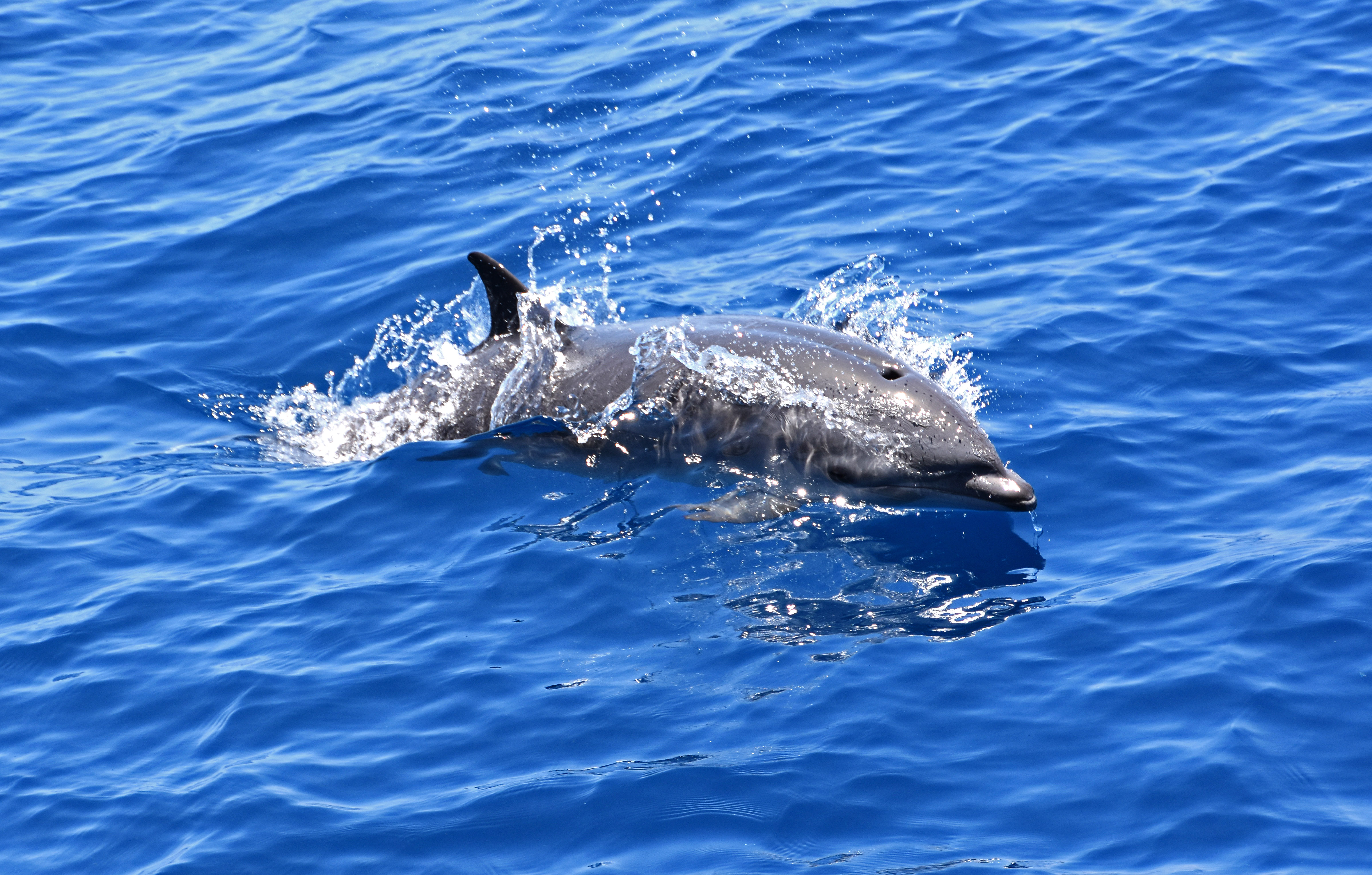
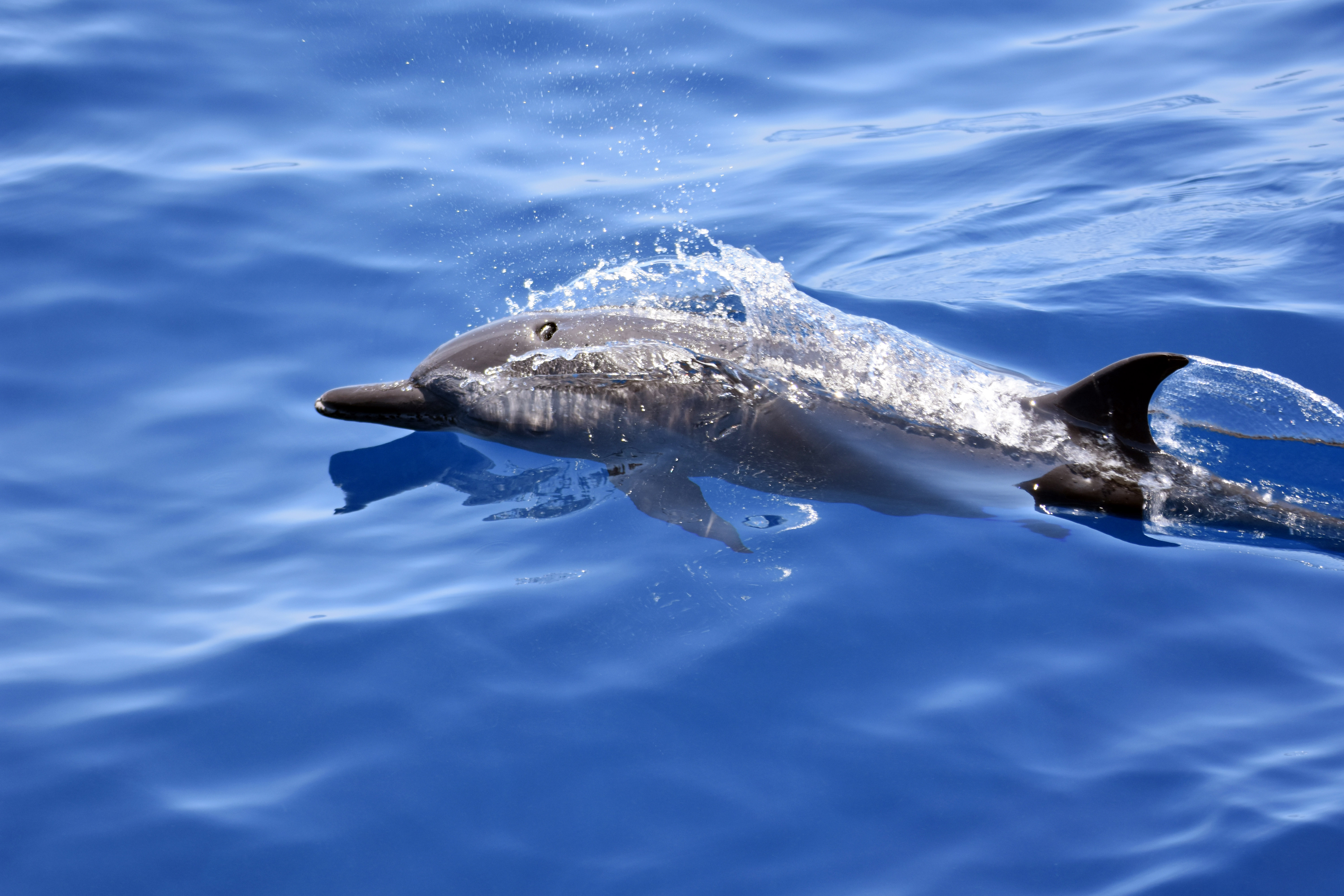
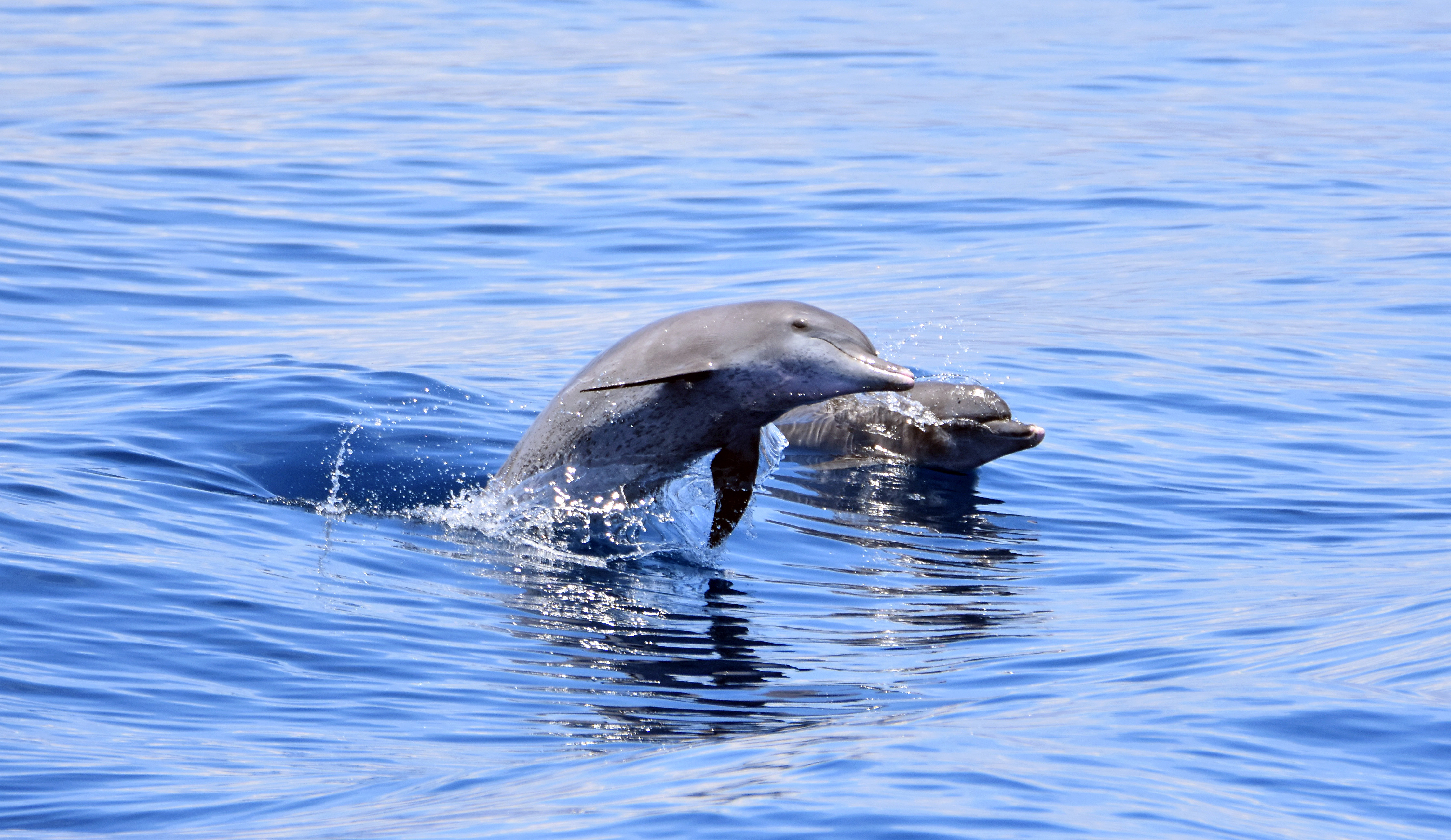
On they way back, cruising along the north coast of Flores we came across some Bottle-nosed dolphins. Sitting at the back of the ship I managed to get this lucky shot (below). Photographing dolphins is not easy! They are very fast-moving and I managed to miss them leaping out of the water on most occasions; but this time I got lucky.
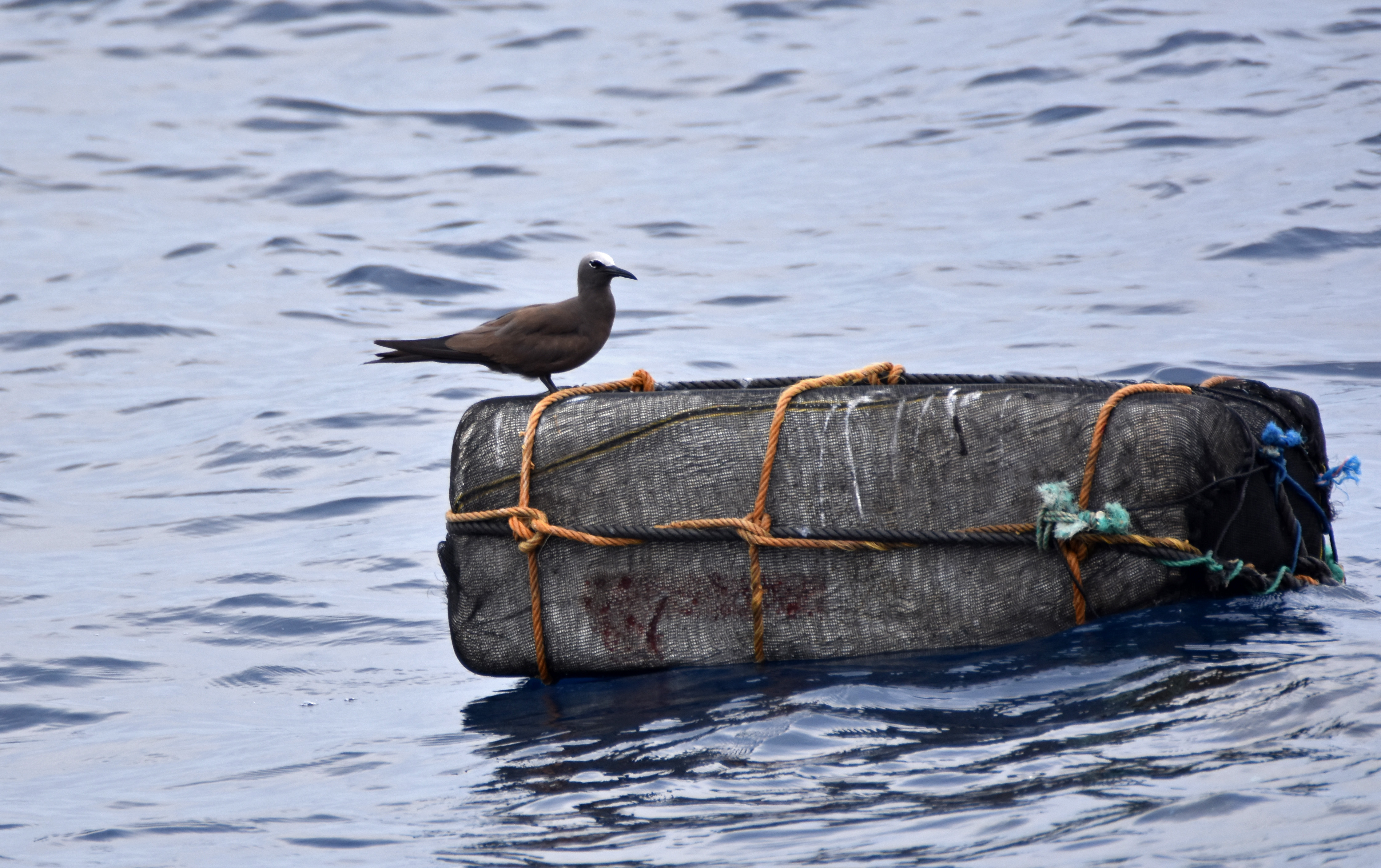
There were also some very nice Brown noodies sitting on fishing floats as we came into the port of Maumere.
Brown noody (Anous stolidus)
Dear reader, I hope you enjoyed this snap shot of my travels in this region, but I don’t want you to think it was a complete idyll. One of the persistent negatives was the ubiquitous presence of plastic pollution. We are filling up the seas with plastic and it is not a pretty sight. Even in the national park waters one came across plastic pollution and it is only going to get worse unless we take some drastic measures to stop producing plastic and discarding it carelessly. I’ll say no more. There are plenty of good websites devoted to highlighting this problem.
Plastic pollution
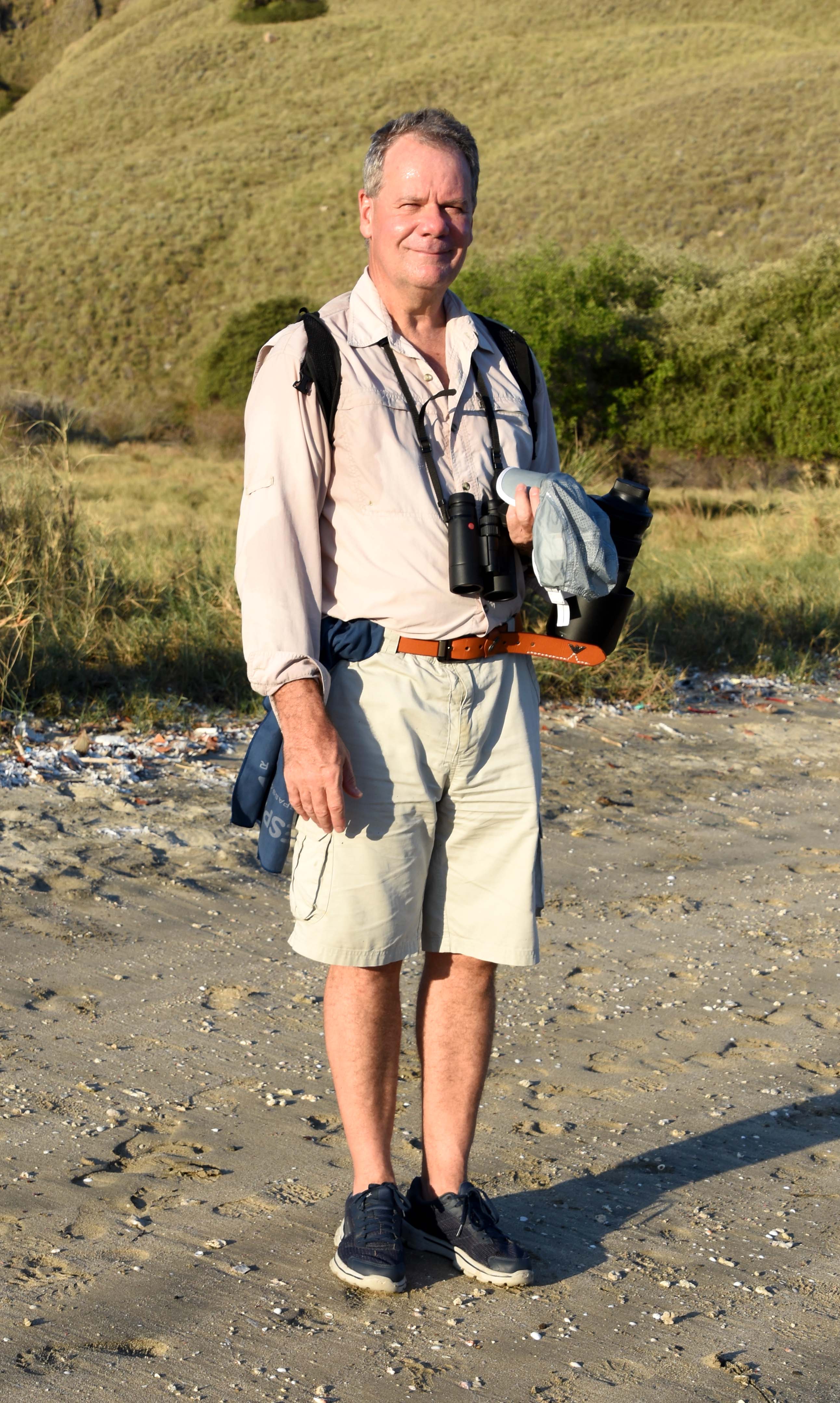
I would recommend a visit to Komodo NP. It is a world-famous location but was not over-run by tourists and from what I could see, the Indonesians seemed to be doing a good job of protecting and managing it. I’ll finish with a photograph of myself, looking hot but contented after a spell of bird-watching.
I have to confess at the outset that, unlike Alfred Russel Wallace, I did not manage to reach the top of this imposing mountain! Although the upper section of the mountain was closed and off-limits in August 2015 – something to do with a national holiday – I could have got higher if my knees had not given out! OK, Wallace was still only 38 years old, when he and his companions (two local hunters and two ‘coolies’ to carry his baggage!) successfully scaled both the twin volcanoes of Mount Gede (2,958 m) and Pangrango (3,019 m) in 1861 (1). My excuse was that I was considerably older and already worn out from two days of walking in the extensive botanical gardens (2). Next time I will make sure that I am fresh, as I definitely want to go back and get to the top.
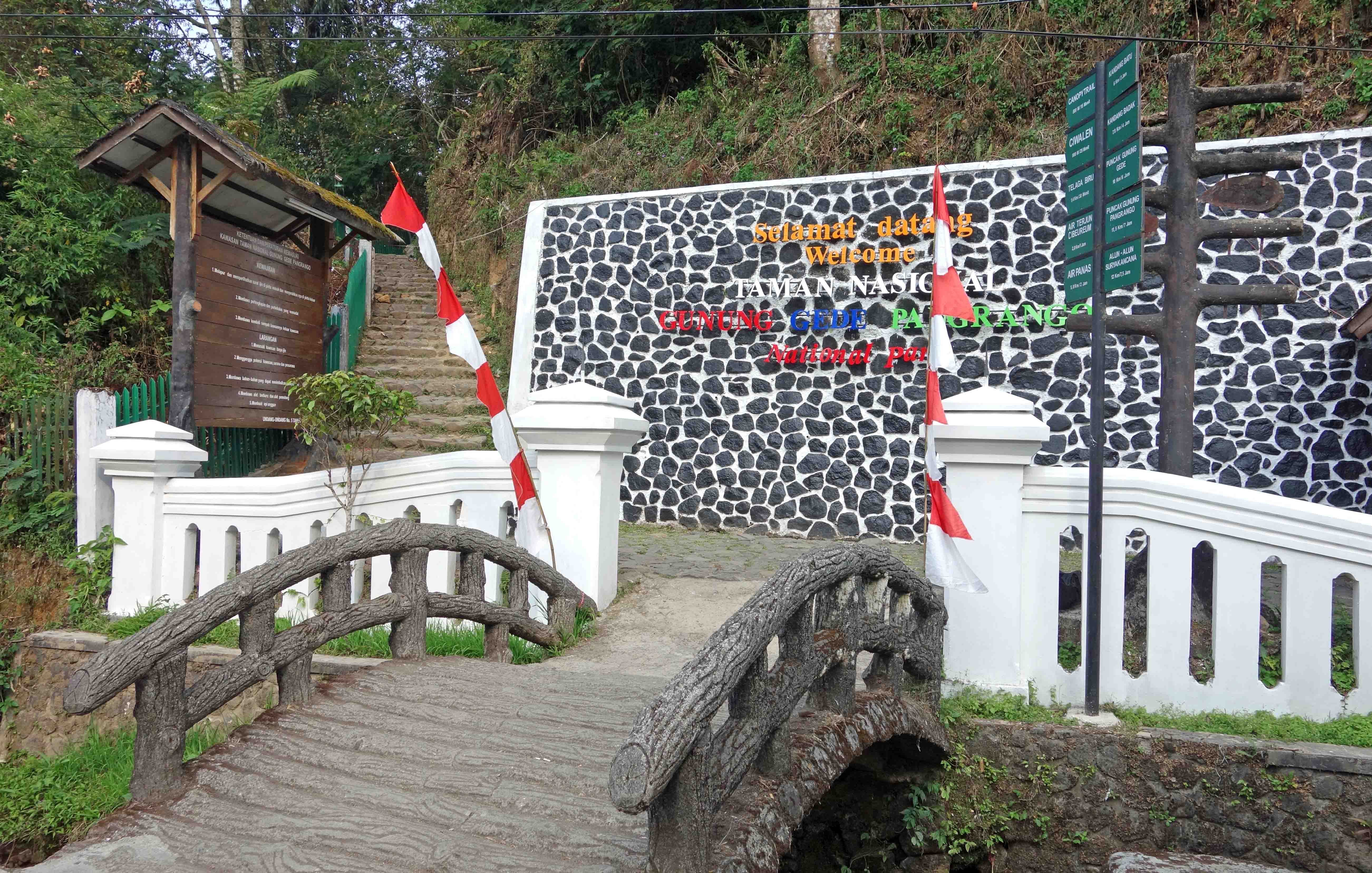
Entrance to Mount Gede Pangrango National Park, Java
Nevertheless, I did manage to get a fair way up the mountain, so can a least make a partial claim to have followed Wallace, and it gave me further confirmation of the vigour and curiosity of this remarkable Victorian naturalist.
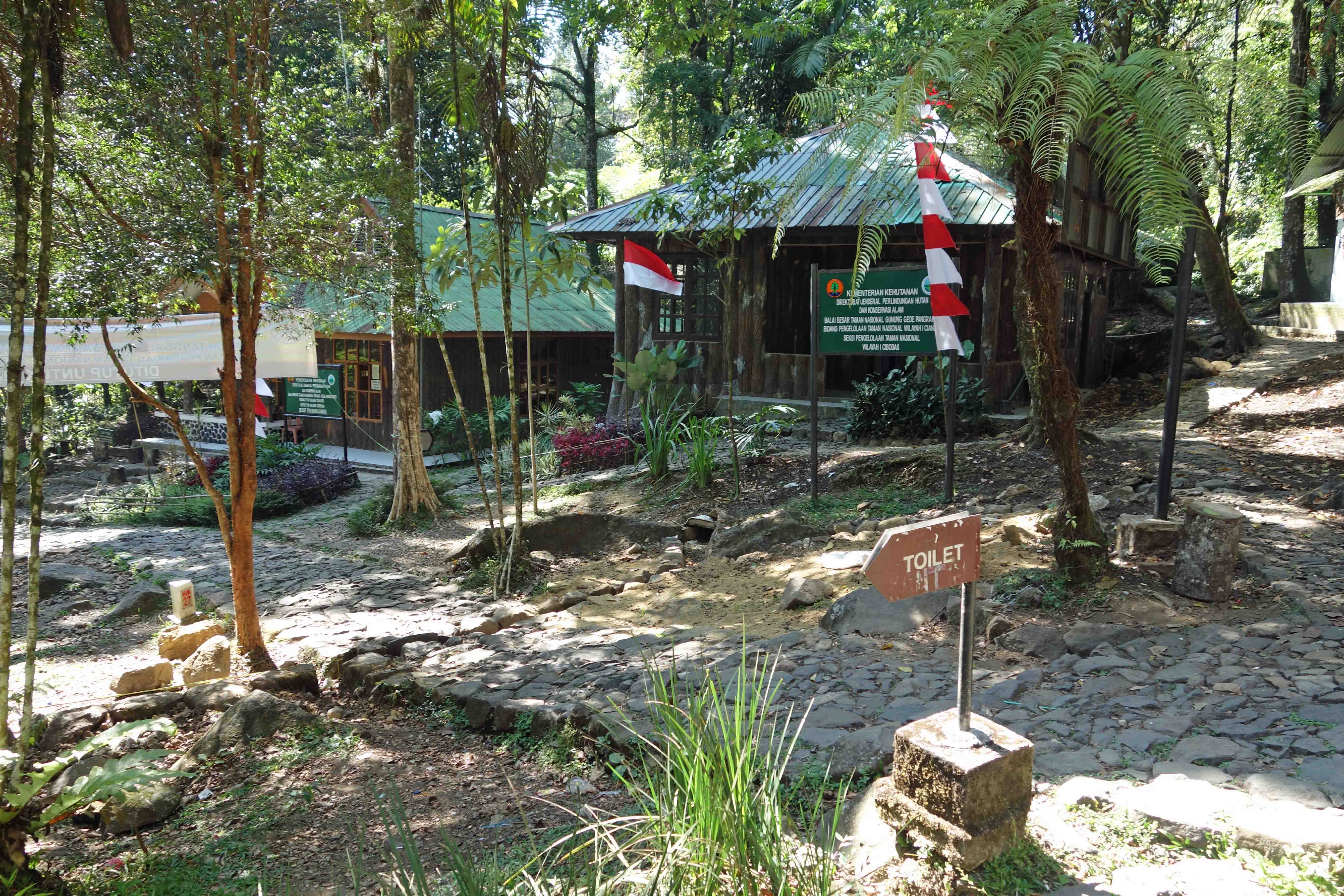
Mount Gede Pangrango National Park office
After paying the relatively steep entrance fee for foreigners (it’s a lot cheaper for Indonesians), I had a delicious cup of sugary white tea (tea tarik) to fortify me for the climb.
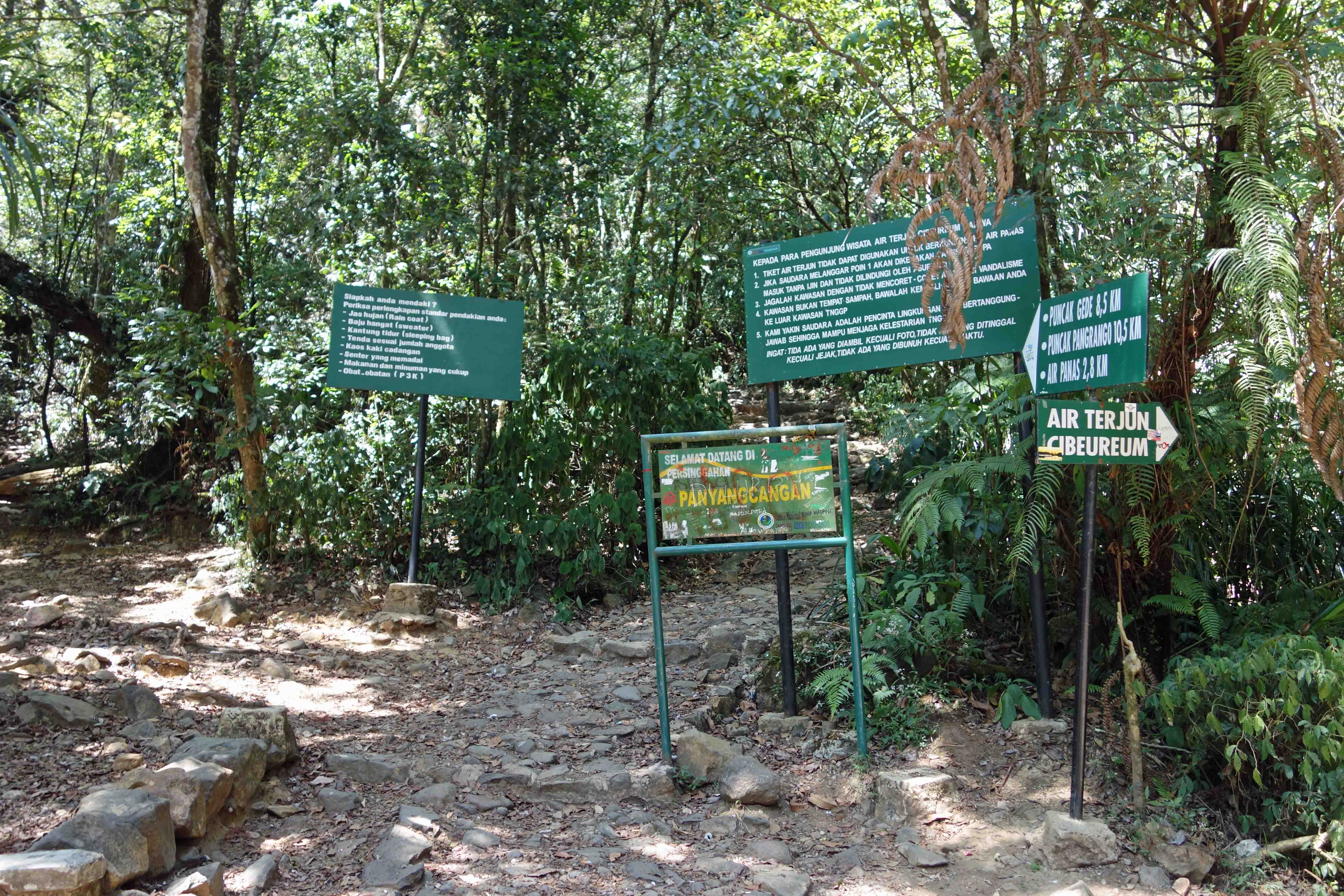
Start of the trail to Gunung Gede
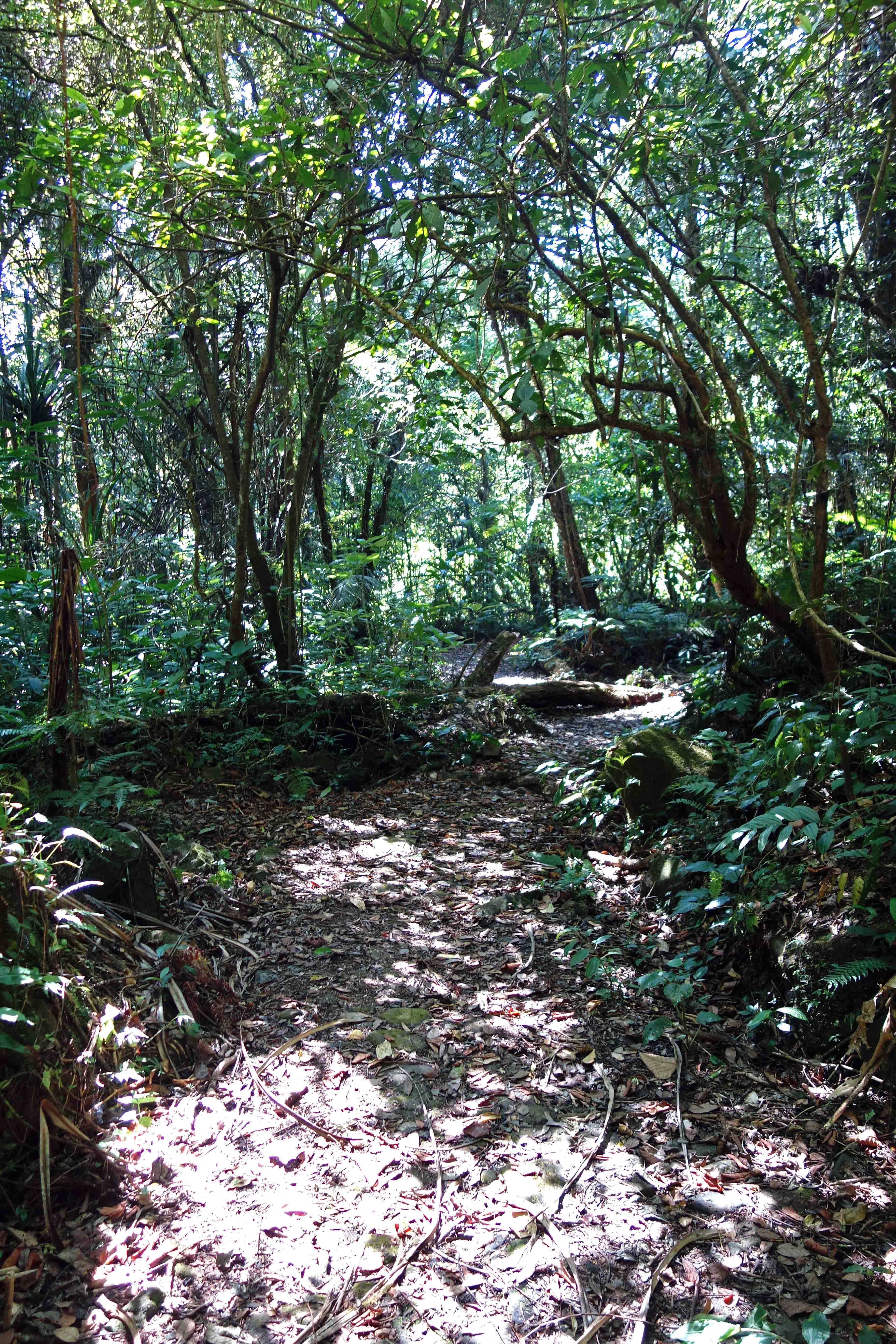
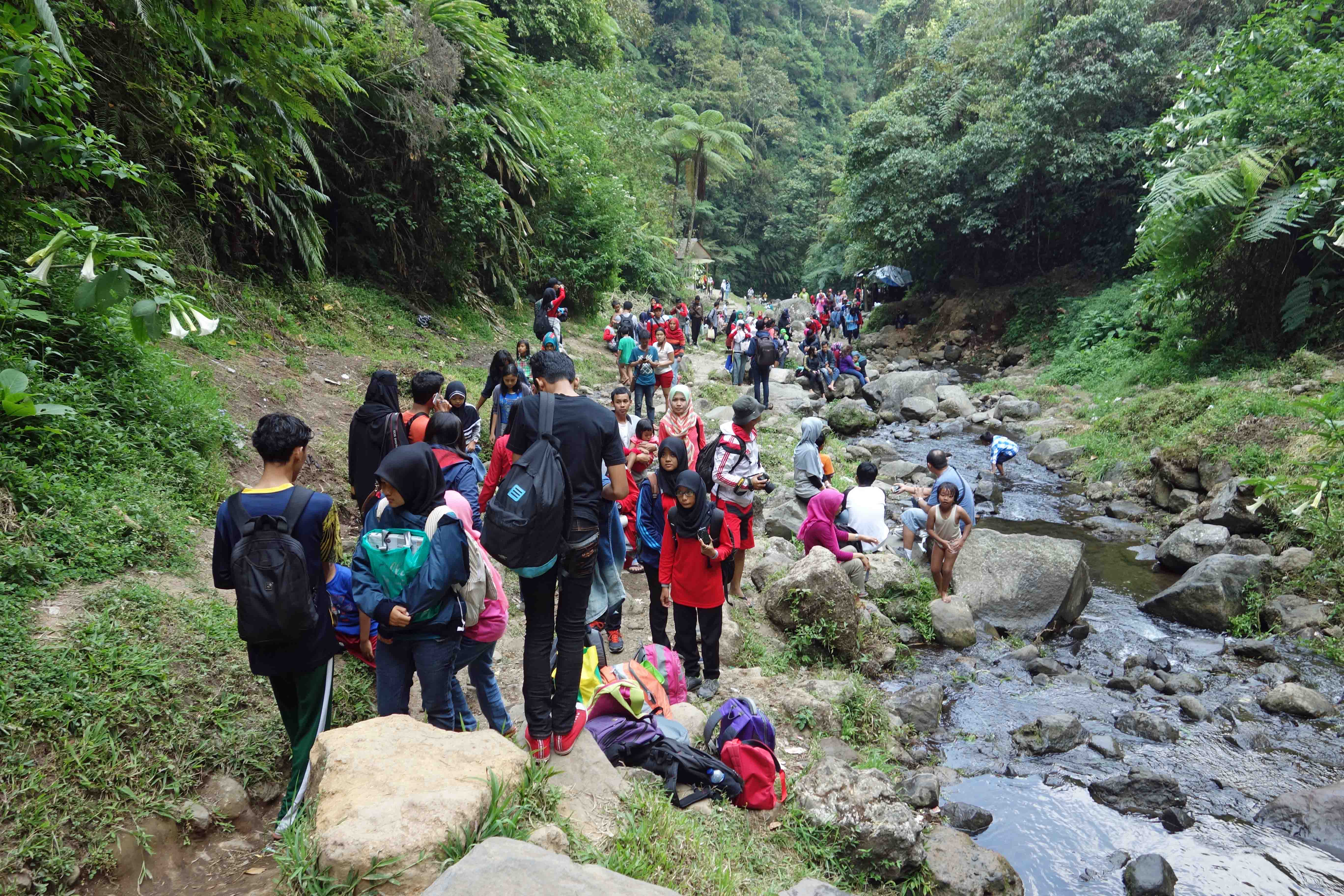
The first part of the trail is, as Wallace describes it in The Malay Archipelago, ‘a tolerably steep ascent through a grand virgin forest’. Whether or not it is still virgin forest today is hard to say, but the birding is good and the forest appears to be very healthy despite the large numbers of people who troop up the trail, particularly the first section which leads to the Cibeureum Waterfalls (at about 1,625 m). Most of the 15,000 hectares of the park are probably inaccessible.
Trail to Cibeureum Waterfall, Gunung Gede Pangrangro National Park, Java.
Wallace was struck by the ‘immense number of ferns’ on the route and recounts ‘continually stopping to admire some new and interesting forms’. His ability to notice (and collect) plants, birds and insects is impressive, but he was a highly experienced tropical naturalist, having spent about four years in the Amazon before his extensive travels in what is now Indonesia.
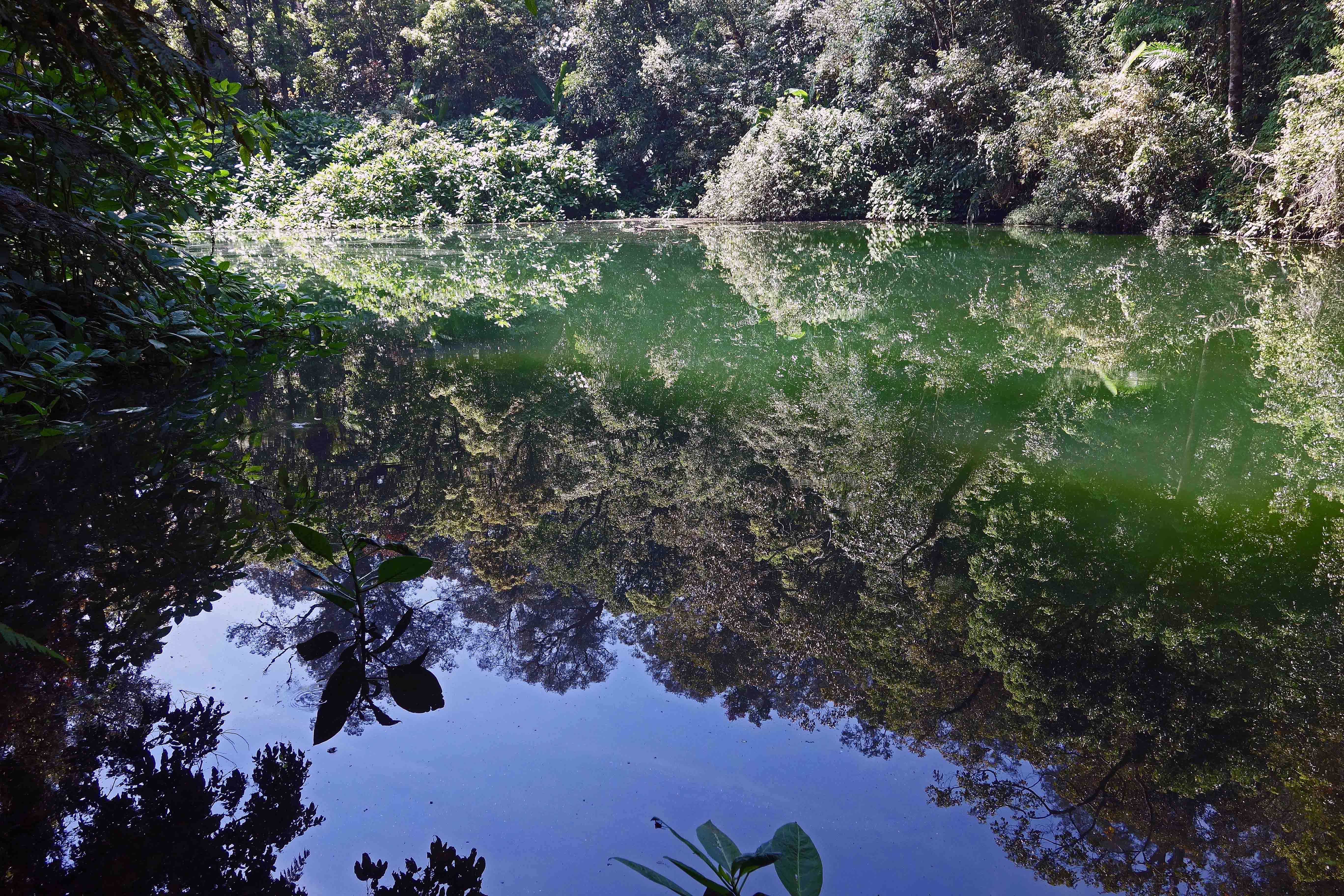
The Blue Lake, Telaga Biru (1,575 m), Mount Gede Pangrango National Park
I almost missed The Blue Lake, but I was very pleased when I stopped to admire it, as a large flock of Sunda minivets (Pericrocotus miniatus) arrived in a nearby tree. These are endemic to Indonesia, Sumatra and Java, and Wallace had already obtained a specimen of this bird on his way to the mountain (1).
Flock of Sunda minivets (Pericrocotus miniatus) near the Blue Lake
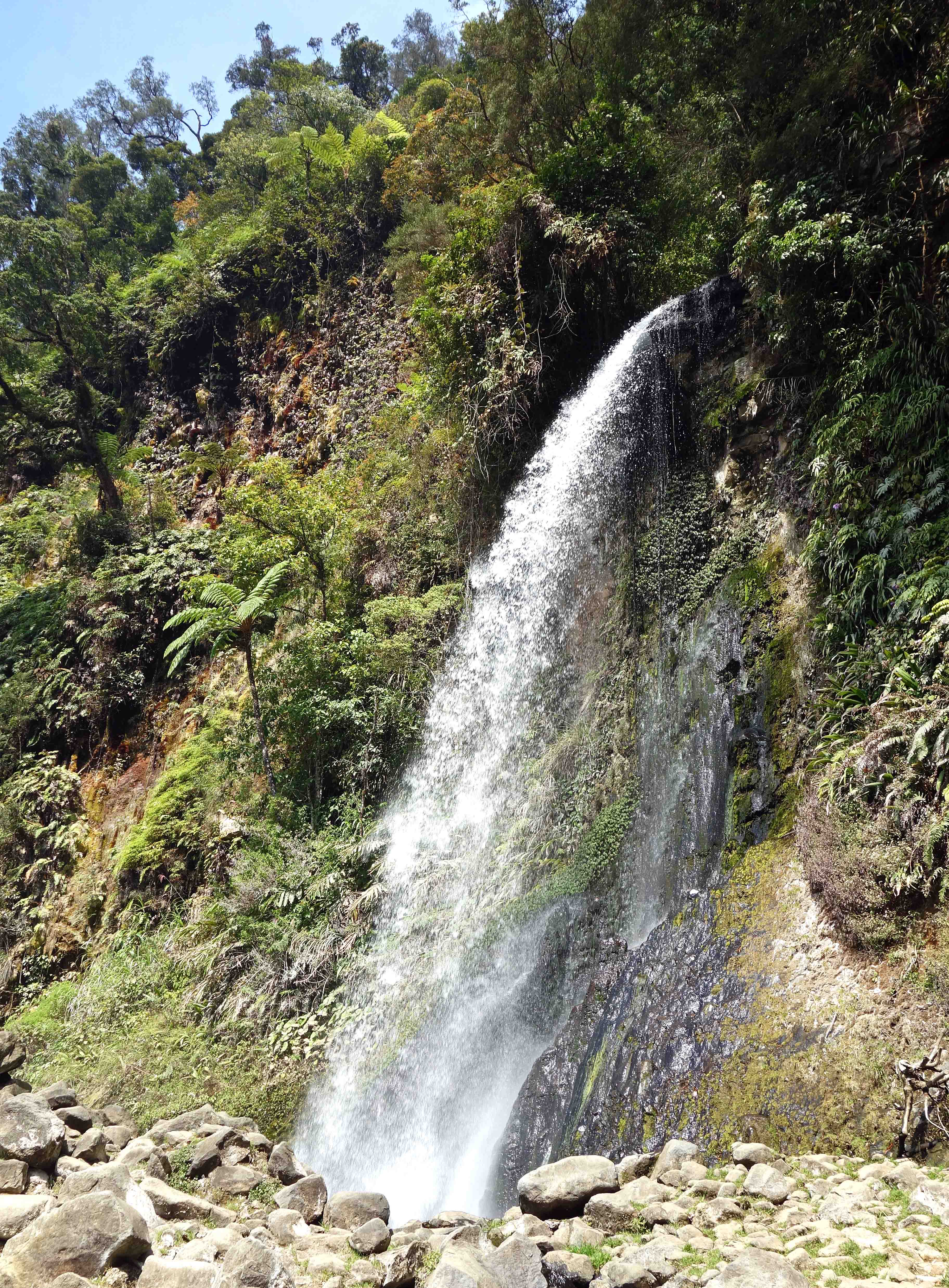
Most people on the trail seemed to have target of reaching the Cibeureum Waterfall, which is not too taxing a climb. As well as the waterfall, there are a number of fine tree ferns on the slopes (below).
Cibeureum Waterfall, Gunung Gede Pangrangro National Park, Java
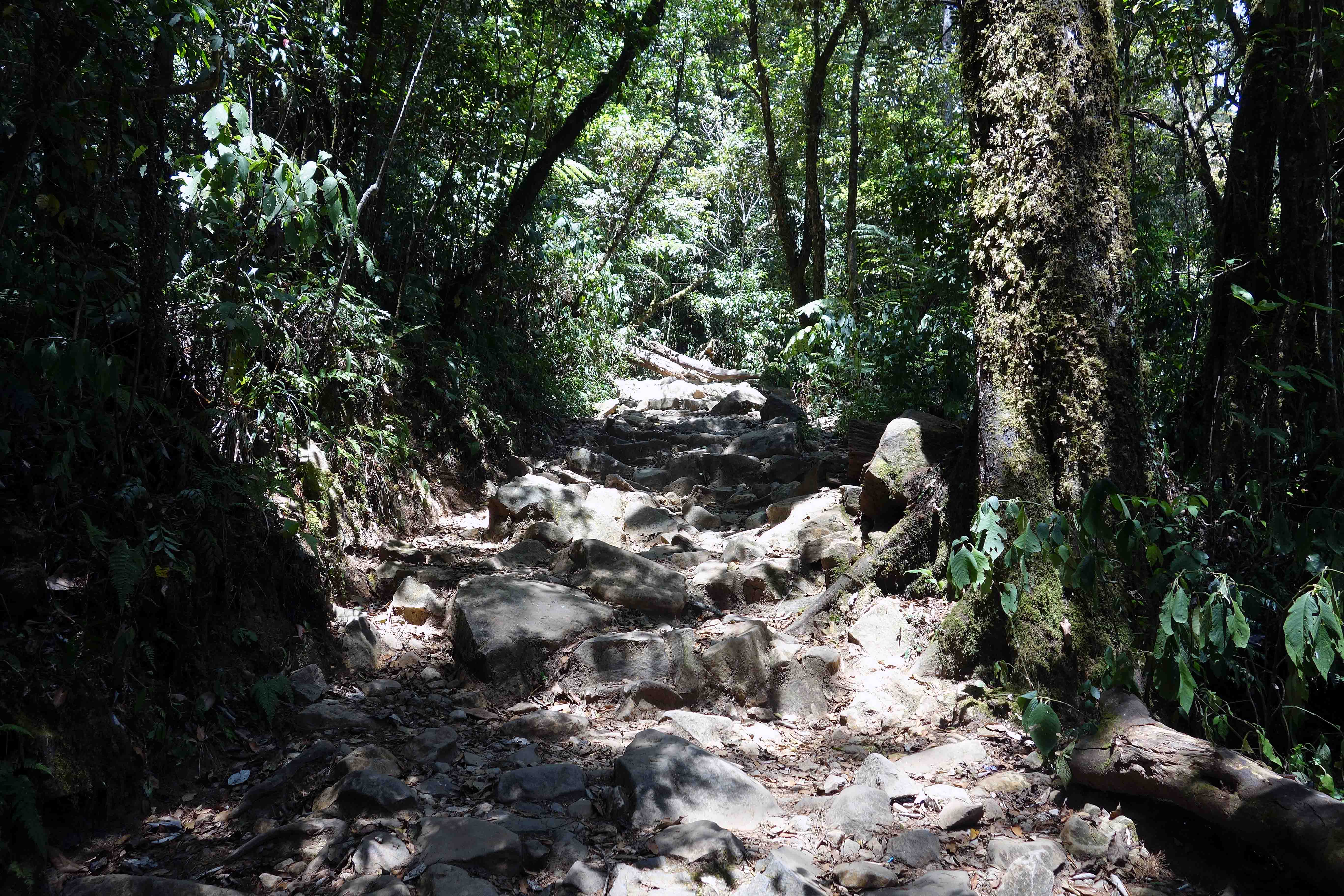
After the turn-off to the waterfall, the trails becomes ‘narrow, rugged and steep’ as Wallace described it (1). The path is very rocky and someone must have laboured long and hard to construct this access way to the peak.
Steep, rocky trail which begins after the waterfall turning
Nevertheless, there is much to look at during rest breaks (!) on the trail, such as the gorgeous Blue nuthatch (Sitta azurea). It appears that Wallace did collect this species from West Java – which was only first described some 30 years before in 1830 (3) – since there is a hand-written letter from A R Wallace in the Natural History Museum concerning this species (using a former name) where he refers to ‘a bird of mine’. Presumably one he collected and donated to the museum?
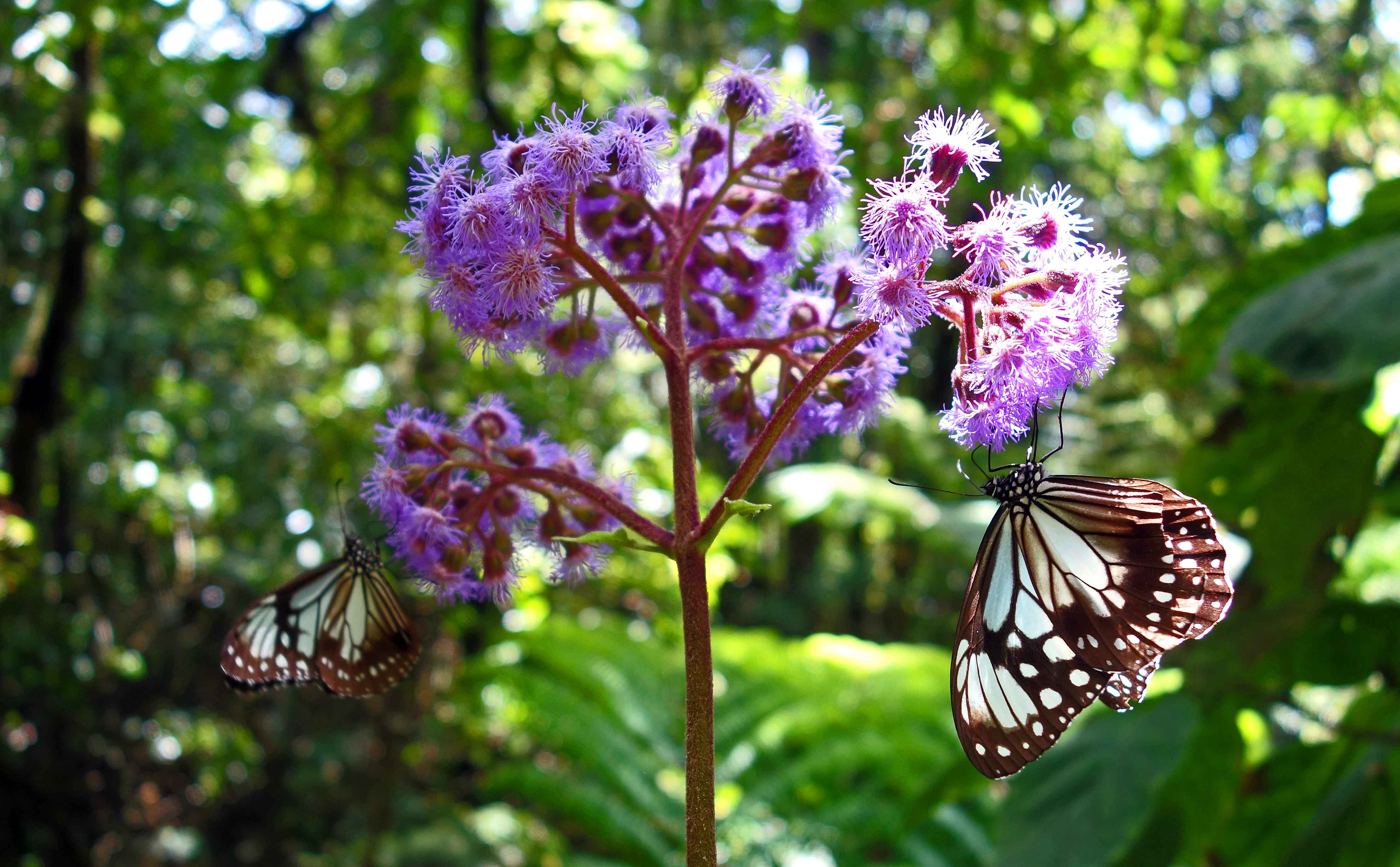
As well as many birds, I was fortunate enough to come across some beautiful tiger butterflies (Zinken’s tiger, Parantica albata) – also called danaids – which are endemic to Java (below).
Zinken’s tiger (Parantica albata) Java
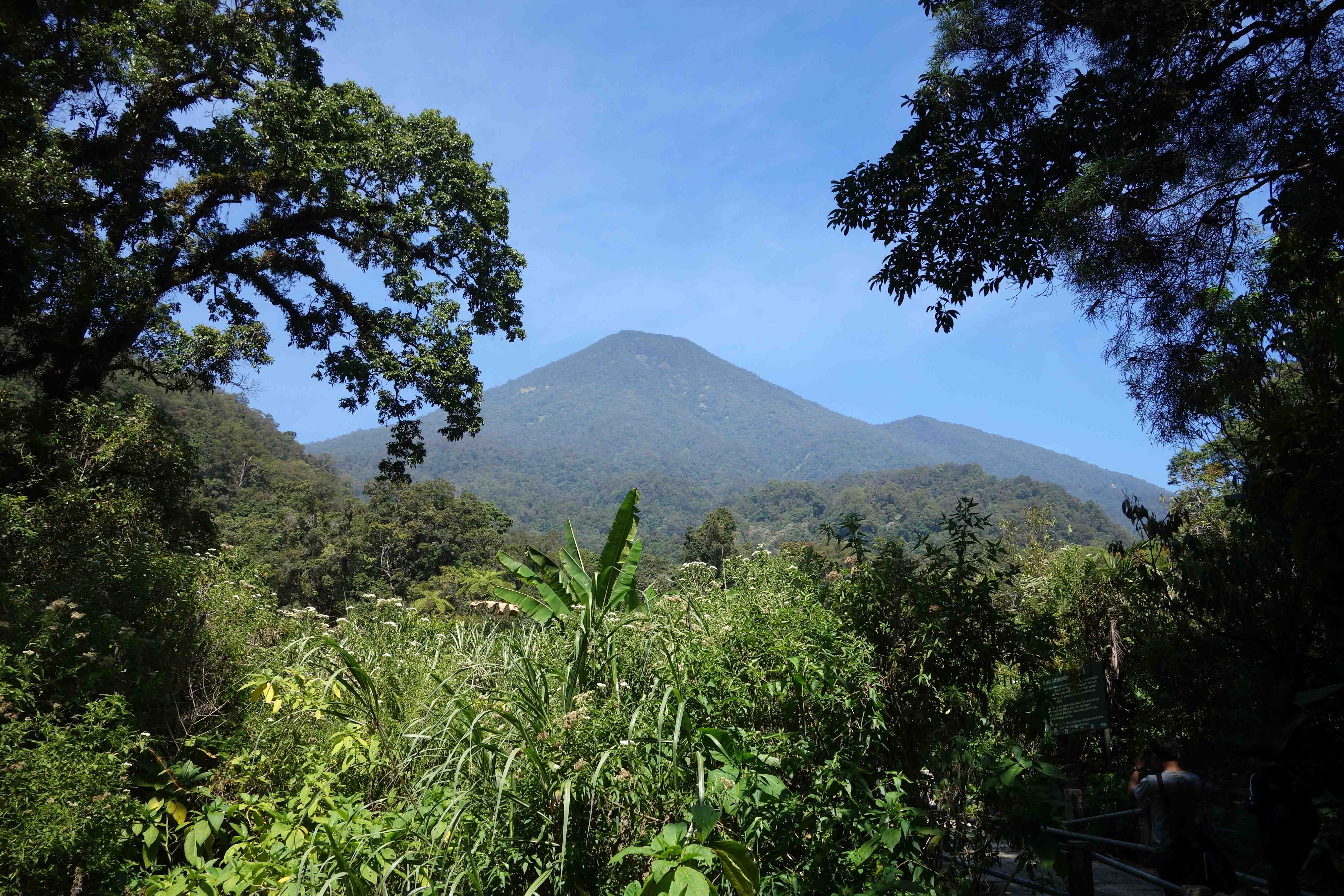
Alas, I never made it to the Hot Springs/Air Panas (2,150 m) and turned around at about 2,000m, to save my knees. There is much to see beyond this point, and Wallace describes in detail the flora on the higher slopes of the volcano, much of which was of a temperate kind, familiar to him from his botanising in England. So I would like to go back, not only to see the impressive volcano itself, but the birds, insects and plants to be found on the top of these mountains. Like many climbers today, Wallace camped near the top and took time to explore both peaks. I had to be content with a view of Mount Pangrango from the trail on the way down (below).
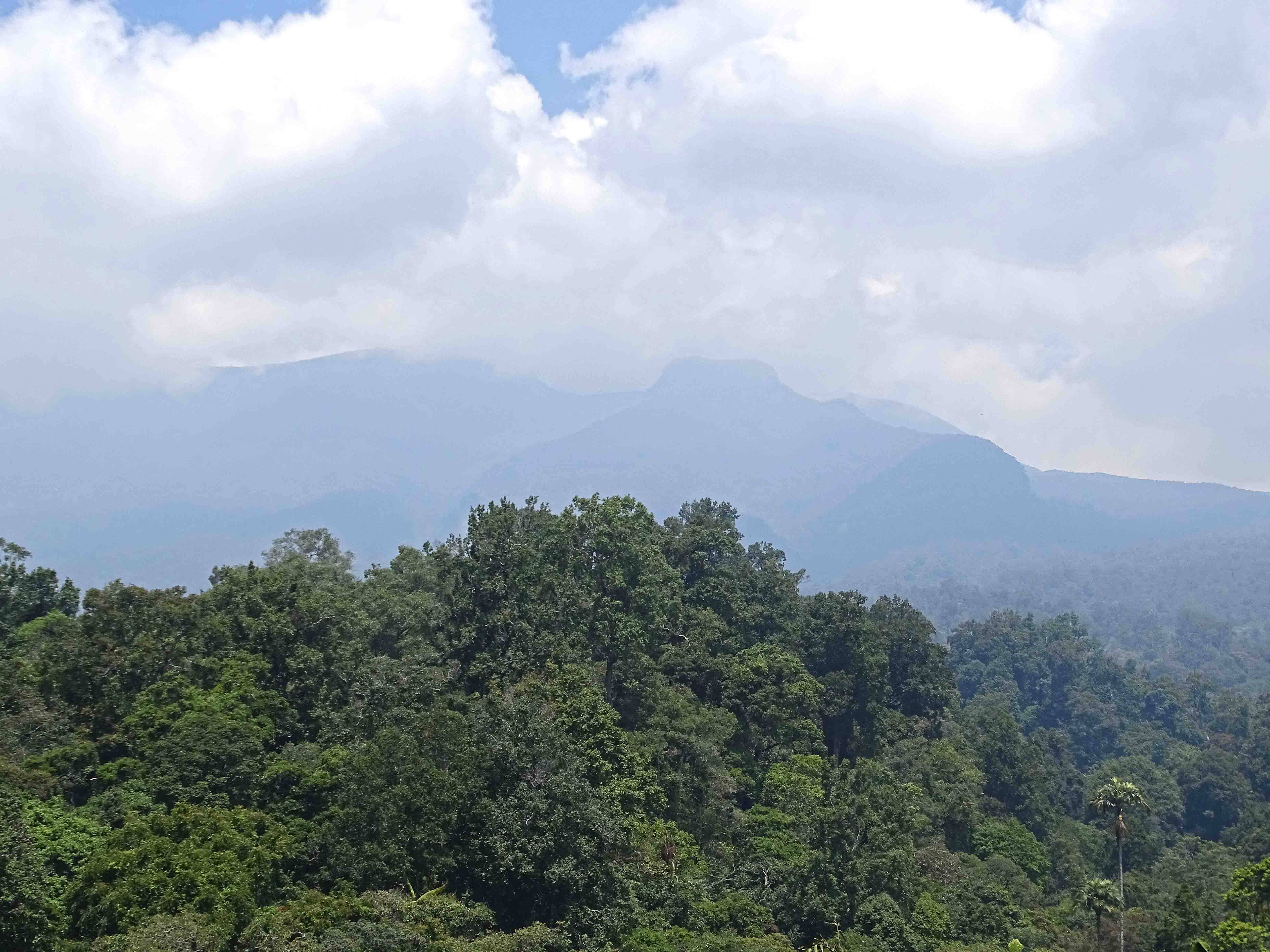
Mount Pangrango (3,019m)
Wallace, Alfred Russel. The Malay Archipelago: the land of the orang-utan and the bird of paradise; a narrative of travel, with studies of man and nature. Courier Corporation, 1869.
Alfred Russel Wallace – the great Victorian naturalist and co-discoverer of evolution by natural selection – described his journeys in West Java in 1861 in his book The Malay Archipelago (1). He travelled from the capital Jakarta, down to the town of Bogor, where he stopped off to look at the Botanical Gardens planted by the Dutch (2). Travelling south from Bogor, by horse and on foot, he headed towards the area around the volcano Mount Gede Pangrango, which is now a National Park. He described capturing a number of birds (which ‘hunters obtained for me’) on the way – a total of 40 species ‘peculiar to the Javanese fauna’.
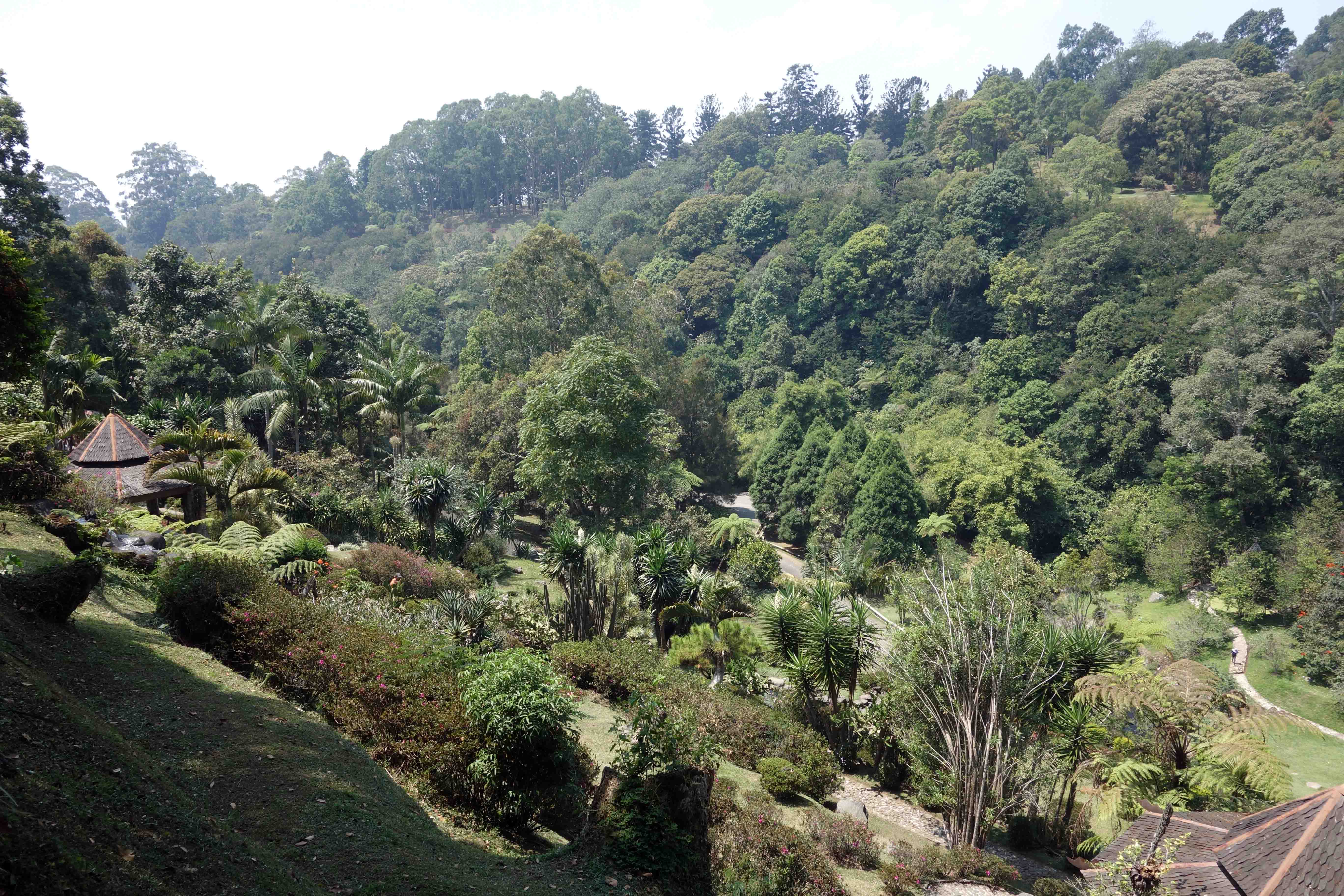
Cibodas Botanical Gardens trees
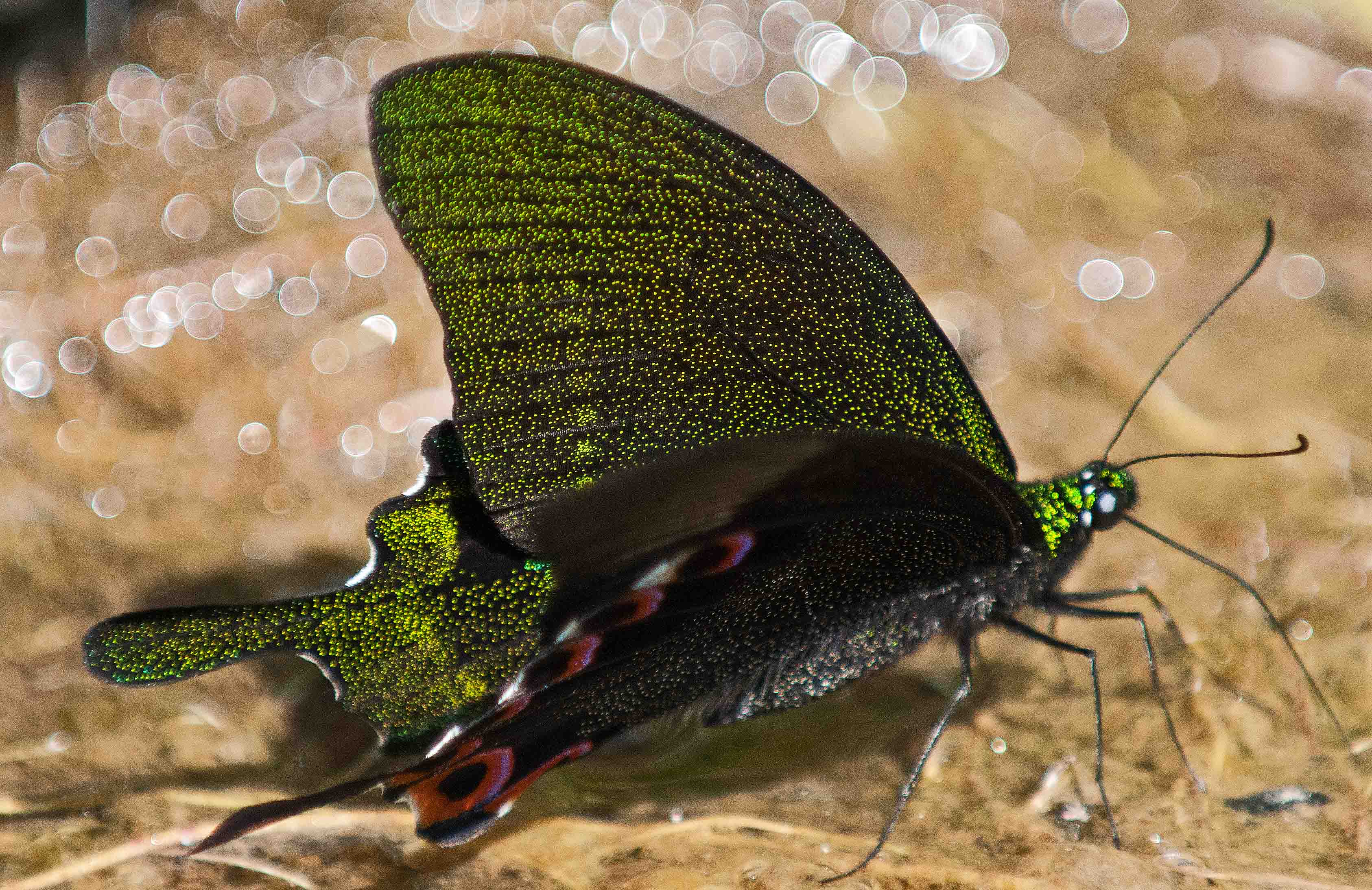
He also collected a number of ‘large and handsome butterflies’, including the ‘superb Papilio arjuna’ now known as the Paris Peacock (Papilio paris). Wallace vividly described the wings of this species as seemingly ‘powdered with grains of golden green, condensed into bands and moon-shaped spots’.
Paris Peacock (Papilio paris), collected by A R Wallace in 1861
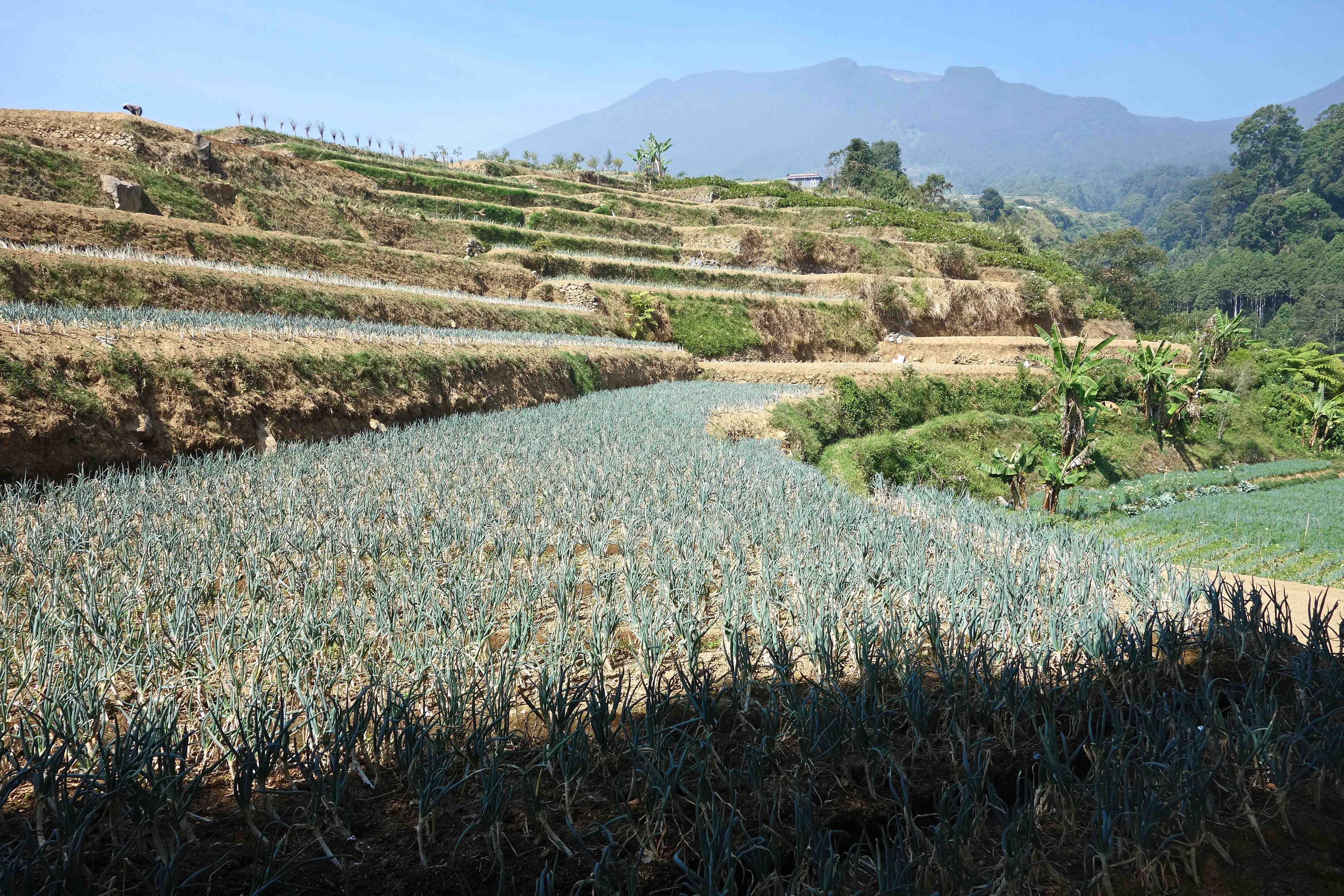
On his journey, Wallace remarked on the ‘system of terrace cultivation’, which is still very much in evidence in this part of Java, Indonesia. I was also struck by how well-tended these terraces were (below).
Terraces planted with onions below Gunung Gede
Before embarking on his climb to the summit of Pangarango and Gede mountains, Wallace stopped off at the village of Tchipanas (now Cipanas) near the ‘foot of the mountain’ as he described it. Nearby, are the Cibodas Botanical Gardens, where Wallace stayed a night with the keeper. These large (85 hectares or 210 acres) gardens were founded by the Dutch botanist Johannes Teijsmannas in 1852, as an extension of the Bogor Botanical Gardens (2). They are a magnificent collection of trees and shrubs on the lower slopes (1300-1425 m) of Gunung Gede.
Cibodas Botanical Garden
The Cibodas Botanical Gardens (called Kebun Raya Cibodas or KRC in Indonesian) were therefore, only about a decade old when Wallace visited in 1861. He descibed there being ‘many beautiful trees and shrubs’ as well as an abundance of European vegetables ‘grown for the Governor-General’s table’!
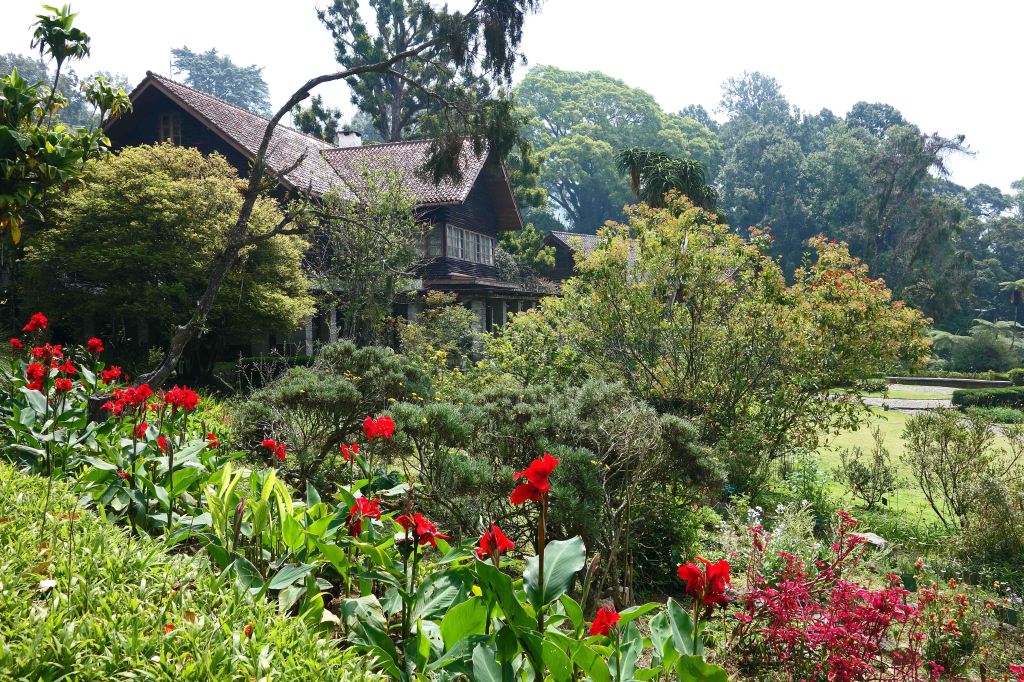
Guest house in Cibodas Botanical Gardens, Java, Indonesia.
The gardens were reportedly the first place in Indonesia where cinchona trees were grown, as a source of quinine. The climate is mild, typical of tropical lower mountain ecosystems with an annual rainfall between 3,000-4,200 mm, and average temperatures of 10-18 °C. It was however, warmer than this when I was there in August 2015. The gardens are popular with both people escaping Jakarta for the weekend, as well as tourists from further afield, such as visitors from Saudi Arabia, who come to admire the waterfalls and picnic in the gardens, at a time of year when temperatures are very high in the Arabian peninsula.
Pathway from Ciismun waterfall, Cibodas Botanical Gardens, Java
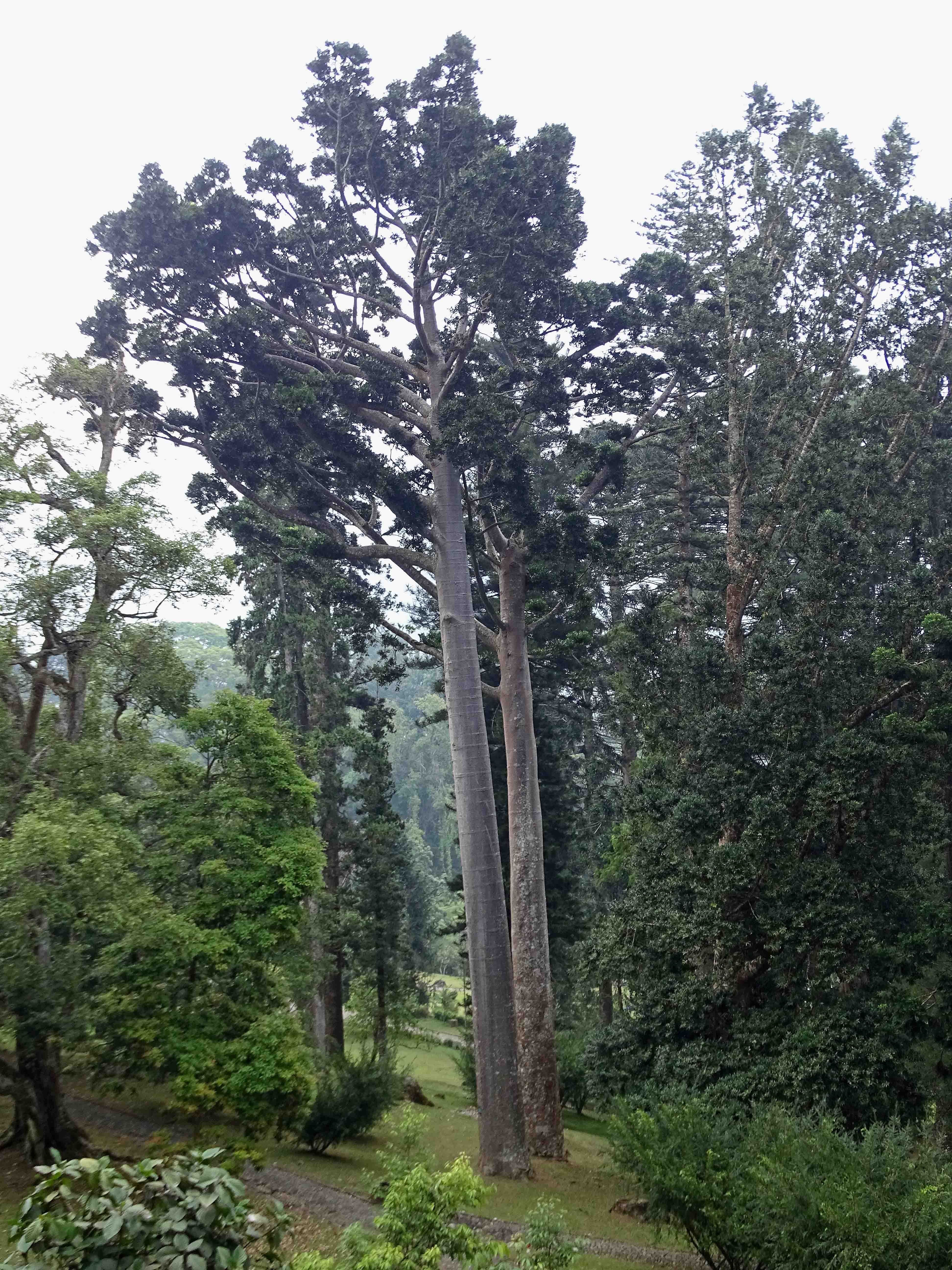
It would be interesting to know what Wallace would have thought of the gardens today. He would probably have been impressed by the size of many of the trees now, some 154 years later (in 2015). For example, he might have marvelled at the Bornean kauri trees (Agathis borneensis), which are very large, evergreen trees that can grow to 60 metres (nearly 200 feet) tall. They have a straight trunk, which goes up very high without branching. Not surprisingly, A. borneensis is valued and sought after for its timber – as well as for its resin (3). I don’t know how old these trees are, but since they are slow-growing, I expect they were here when Wallace visited in 1861.
Huge Borneo kauri trees (Agathis borneensis ) Cibodas Botanical Garden
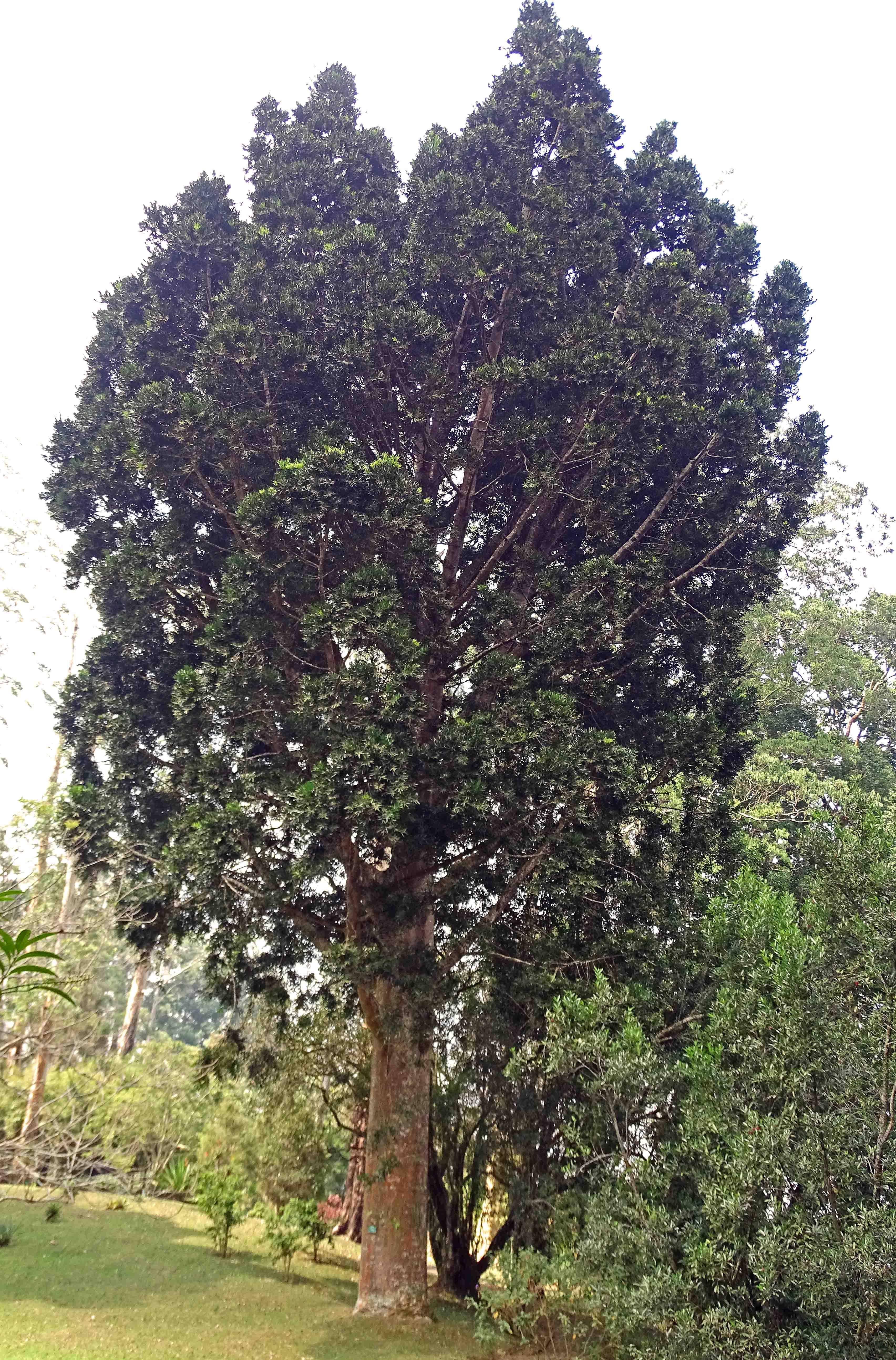
Another similar tree, is the Kauri tree (Agathis australis) from New Zealand, which can live for at least 600 years, probably longer. So the one shown gere (below), which might have been a relatively young sapling when Wallace visited in 1861, will – it is hoped – continue to grown for another 500 years or so, by which time it might equal some of its venerable ancestors in New Zealand.
Kauri tree (Agathis australis), Cibodas Botanical Gardens
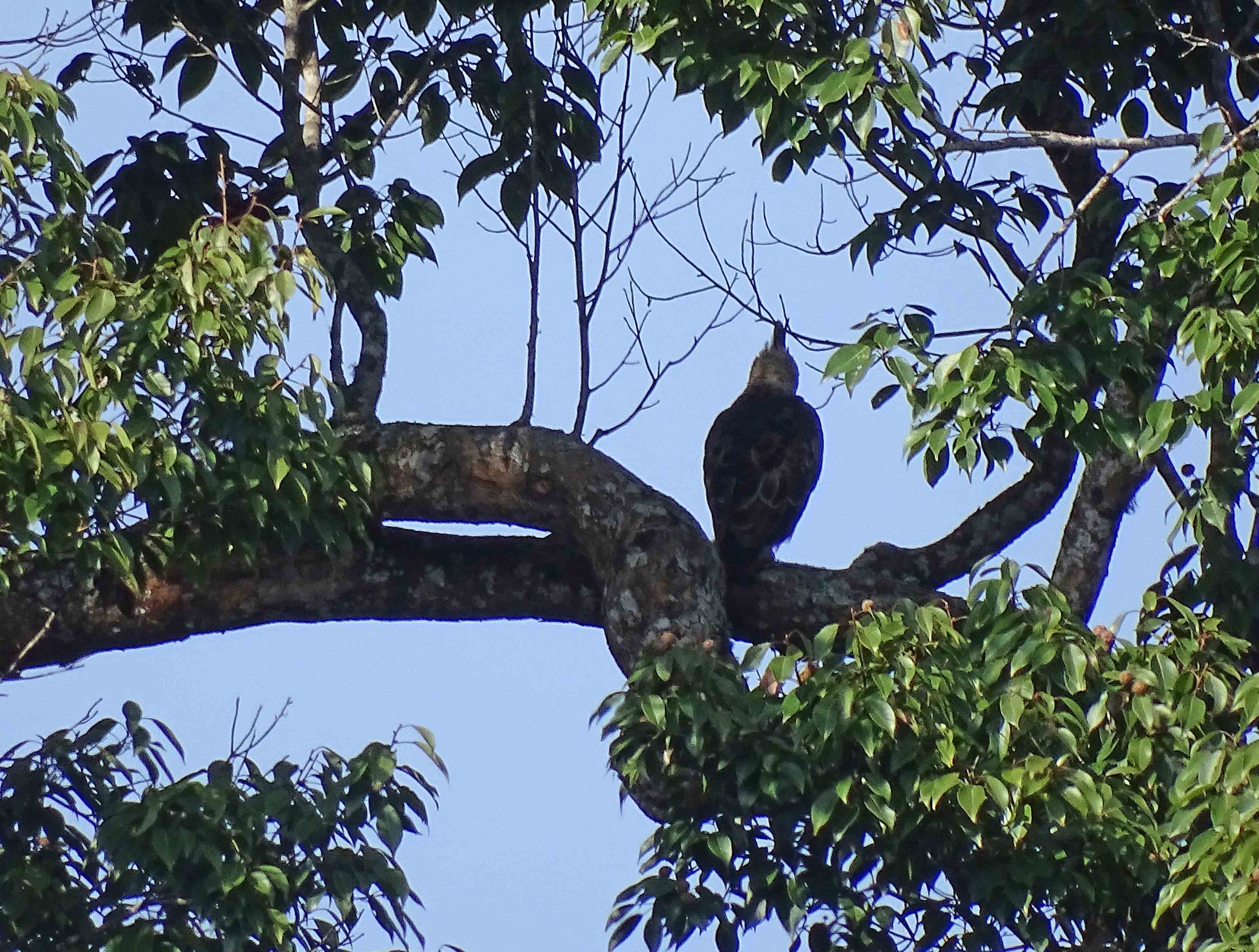
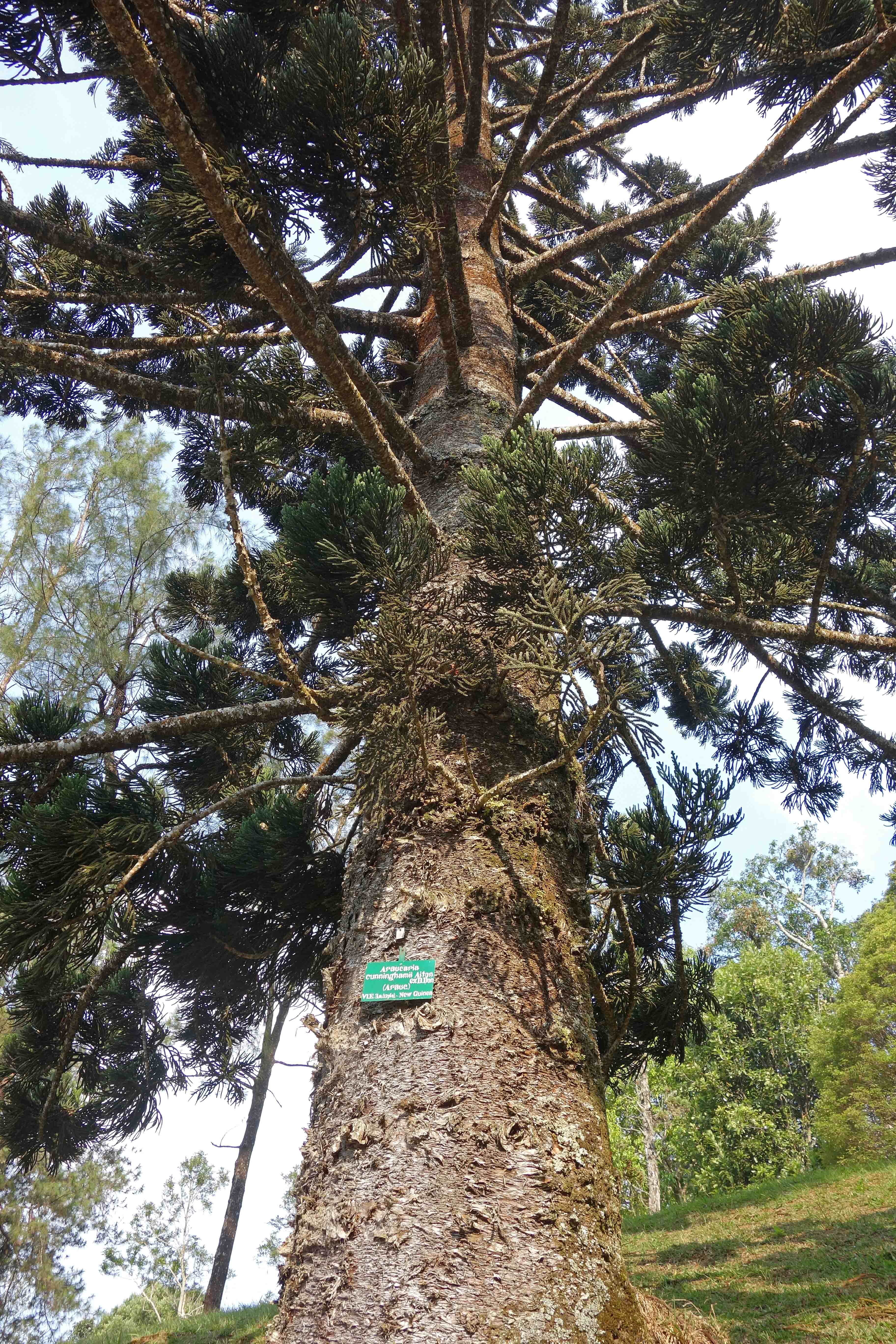
There is a splendid row of large Arucaria trees. Some of these are not native, but originate from New Guinea, e.g. Araucaria cunninghamii var. papuana. The densely branching Arucaria trees are used as roosting sites by endemic Javan hawk-eagles (Nisaetus bartelsi). One morning in the gardens I heard a strange, high-pitched, cat-like calls (4) coming from high up in the Arucaria tree above me. It took me a while to realise what this was, and before I could locate it directly above me, the bird suddenly fly off to another tree further away (below) and proceeded to look out over the forest for a while.
Javan hawk-eagle (Nisaetus bartelsi) high in a tree
The densely packed branches of the Arucaria trees presumably provide protection as well as perches for roosting hawk-eagles.
Araucaria cunninghamii var. papuana
There are said to be more that 1,200 species of plants and trees in the park and many of these are exotic to Java. For example, there is an extensive collection of Eucalyptus trees (63 species) from Australia (4). The Gardens are also a popular location for birders, who come to look for species such as Java munia, Yellow-throated hanging parrot, Java fulvetta and the iconic pygmy tit, which only occurs on Java.
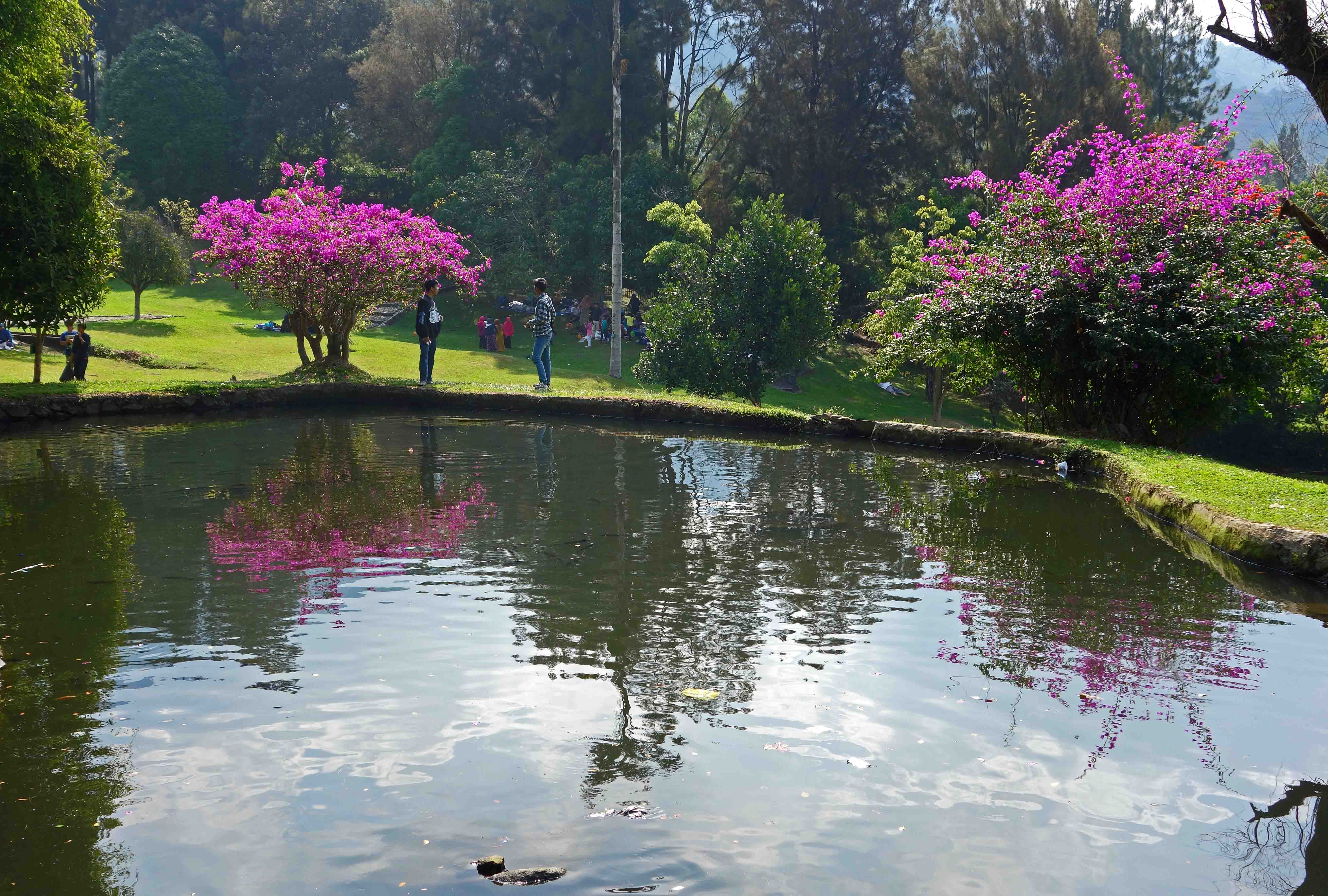
Lake in Cibodas Botanical Gardens, Java
The gardens are a nice place to wander amongst the trees, looking for birds, or admiring the flora. Wallace did not however, linger long at the gardens, after one night he headed off up the mountain (Pangrango and Gede). So it seems that Wallace did not do much collecting here, although I expect that he would have seen insects and butterflies, such as the attractive red dragonfly (Orthetrum chrysis) and the striking Himalayan jester (Symbrenthia hypselis).
Red dragonfly (Orthetrum chrysis)
Himalayan jester (Symbrenthia hypselis)
Cibodas Botanical gardens are popular at the weekend, but the large area soaks up the crowds and they are very pleasant to walk around, with plenty of kiosks and restaurants offering refreshment. There are also number of pleasant places to stay – at very reasonable costs – both inside and outside the gardens. I walked everywhere, but there were occasions when I wished I had a car. Or like Wallace, a horse!
Cibodas Botanical Gardens
Wallace, Alfred Russel. The Malay Archipelago: the land of the orang-utan and the bird of paradise; a narrative of travel, with studies of man and nature. Courier Corporation, 1869.
Alfred Russel Wallace – co-discoverer of evolution by natural selection – spent three and a half months in Java, from 18th July to 31st Oct 1861 (1). After collecting birds and insects in East Java, he took a steamer from Surabaya to Jakarta, where he stayed about a week. Jakarta did not seem to make a very good impression on Wallace. He complained that the canals ‘were all muddy’, the pebbly dives up to houses were ‘very painful to walk upon’ and he also grumbled that ‘in Jakarta everybody drives’. He probably meant, drives by horse and carriage, but it is an apt quotation; not much has changed, there are still pony and traps in some places, but it’s mainly cars, vans and buses, which are the main way of getting around for the 10 million or more of the population in Jakarta.
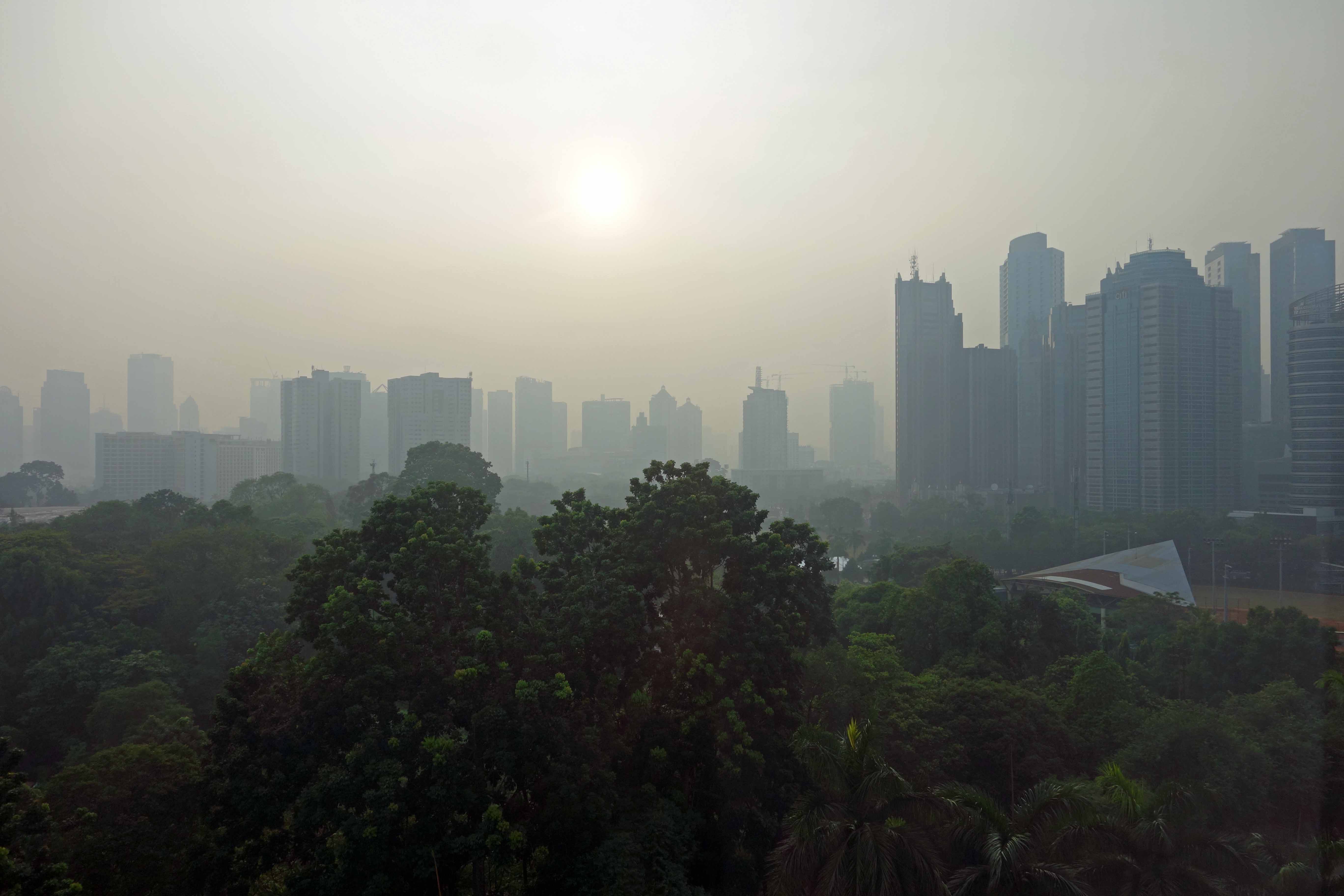
Central Jakarta in the early morning from my hotel window
I wonder what Wallace would have made of it now? Perhaps he would have noted that some birds still manage to exist in this vast city, living alongside man, colonising the patches of vegetation which exist here and there in parks and gardens. My own sojourn in the capital city of Indonesia was short; I found it too huge and too traffic clogged to grapple with it. I am sure there is much of interest, but I soon moved on. I hired a taxi to drive to Bogor, a city some 60 km (37 miles) south of the Indonesian capital. Wallace went by coach to Bogor (or Buitenzorg as the Dutch called it). He visited the Botanical Gardens, but was ‘somewhat disappointed’ by them (1). His main criticism was that ‘there is a great absence of skilful laying-out’ (you certainly could not say that today as they are very well laid out) and perhaps more significantly, he considered that the plants could not compare to the ‘luxuriance and beauty’ of the ‘same species grown in our hothouses’. Be that as it may, he did concede that ‘there is much to admire here’, and mentioned ‘avenues of stately palms’ and ‘an endless variety of tropical shrubs and trees with strange and beautiful foliage’. The same can be said today of the Kebun Raya Bogor as the Botanical Gardens are called in Indonesia; there are many strange and beautiful plants to admire.
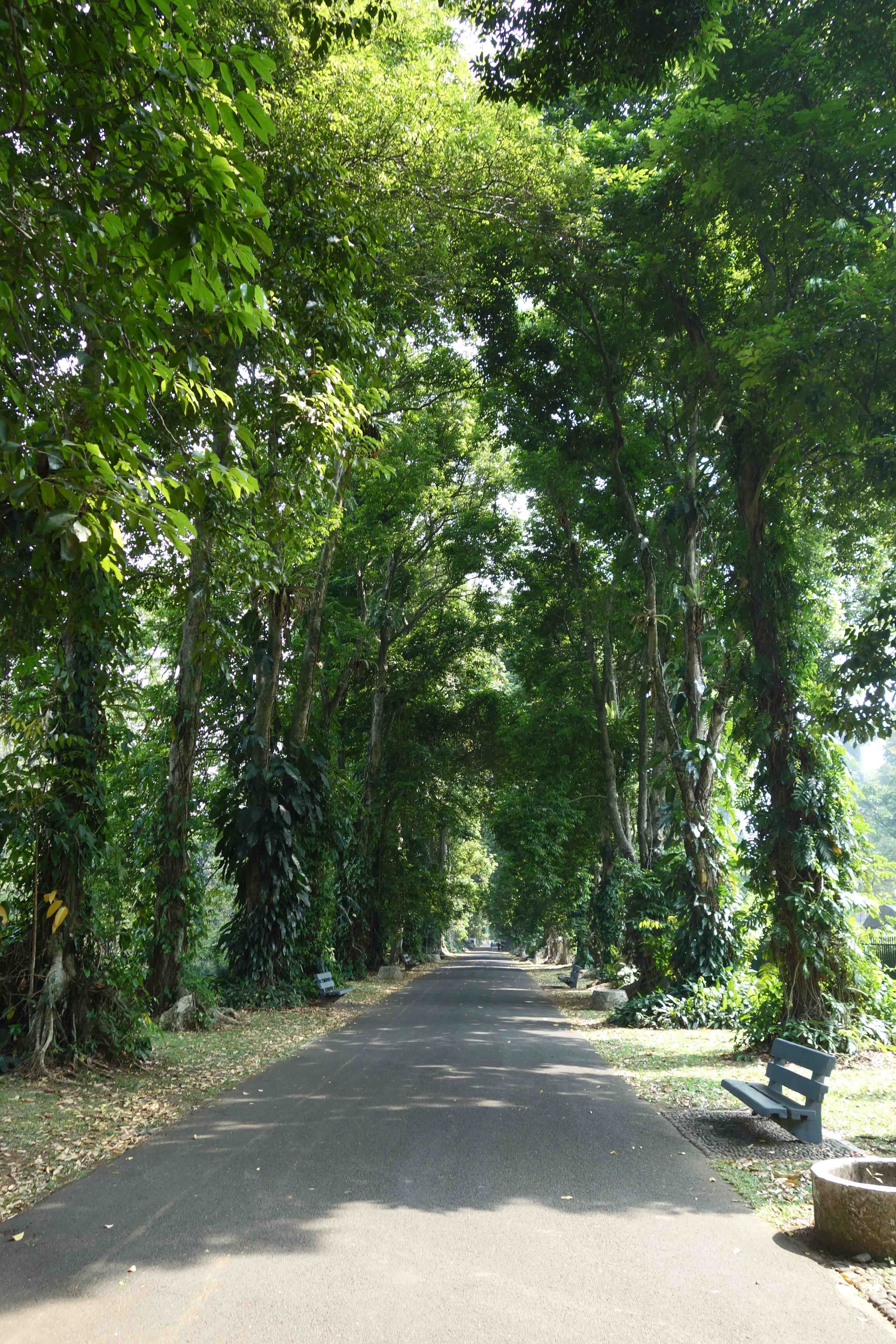
Kenari Ave, Bogor Botanical Gardens
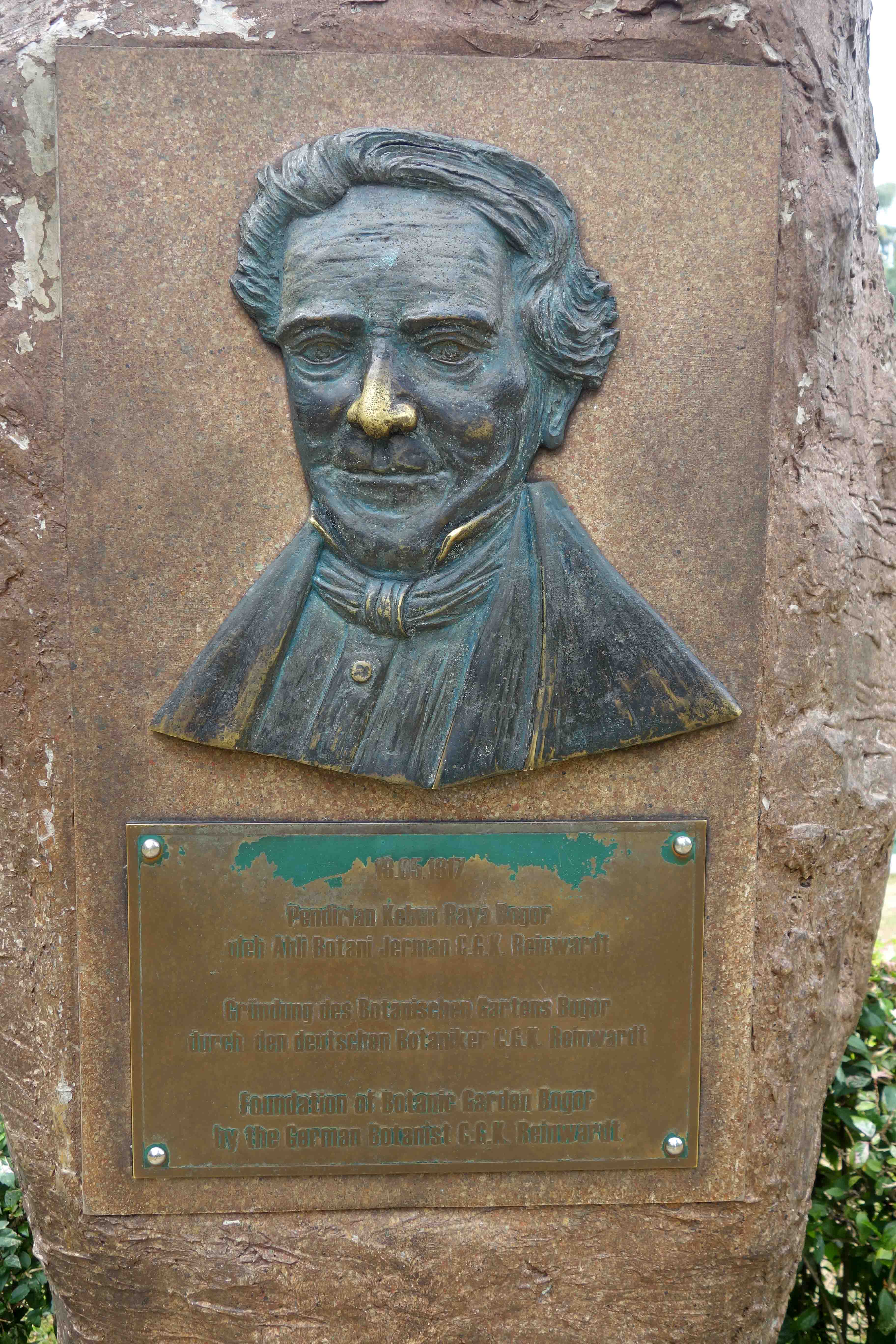
The gardens were first set up in 1817, by a Dutch botanist called Caspar Georg Carl Reinwardt(1773-1854), so they must have been quite well-developed when Wallace visited them in 1861.
Caspar Reinwardt, founder of Bogor Botanical Gardens
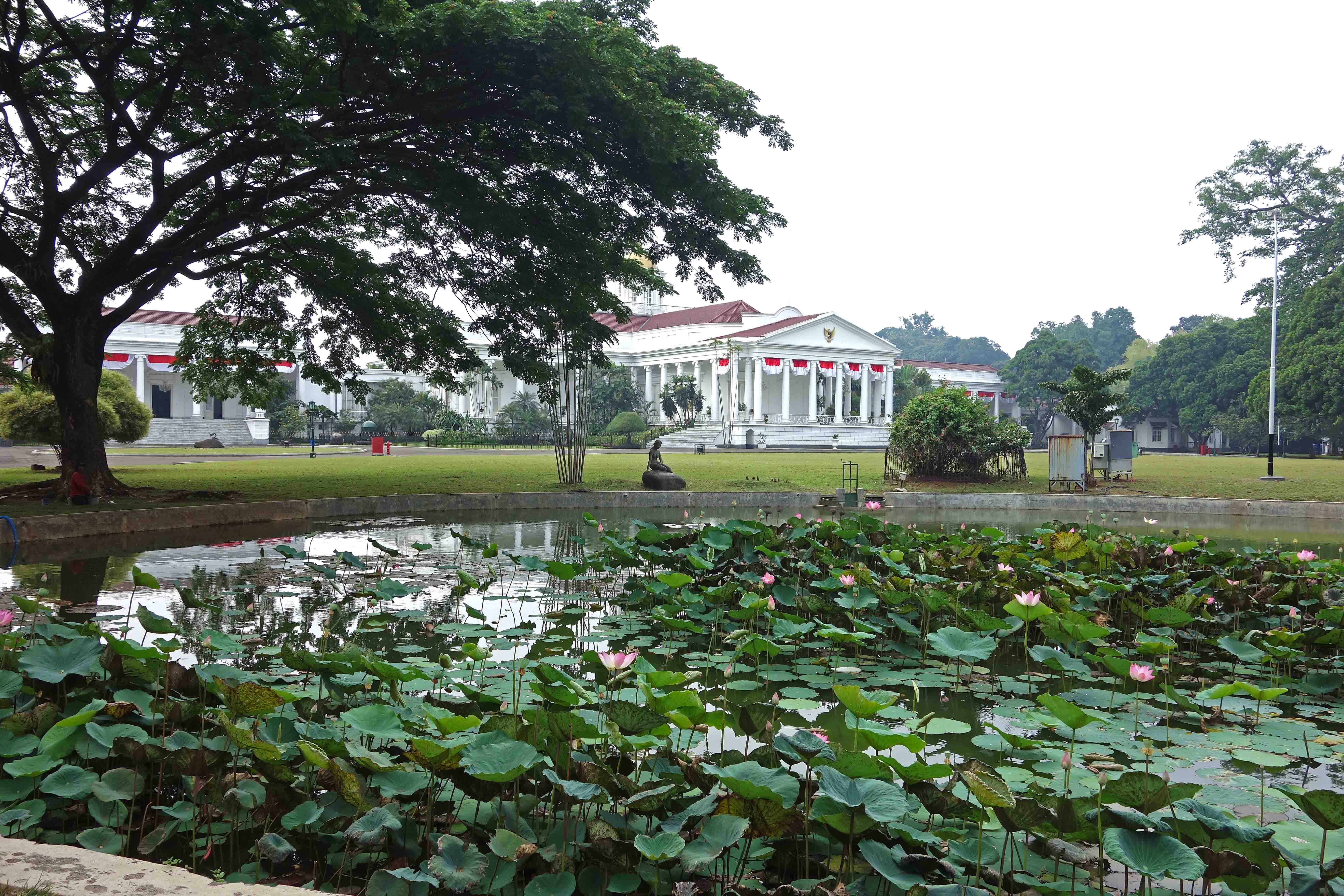
The gardens were later to become the life work of another Dutch botanist called Johannes Elias Teijsmann (1808-1882), who – I think – must have been there when Wallace visited in 1861, since he only relinquished the directorship of the gardens in 1869 (2). A lithograph of from the 1880’s illustrates a lily pond and fountain very similar to that which exists today (3).
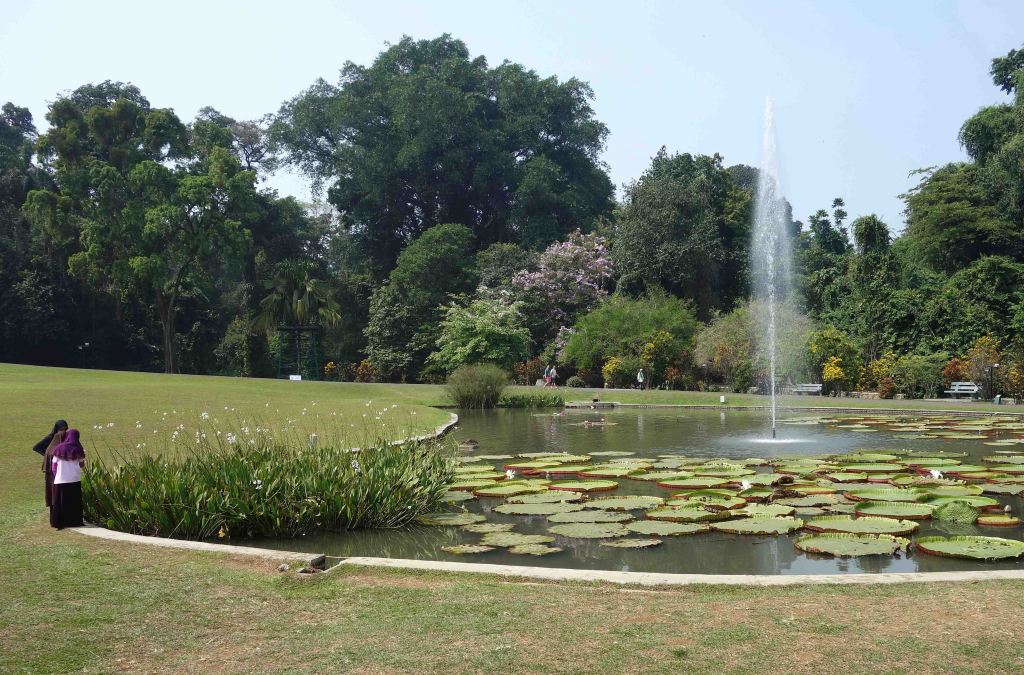
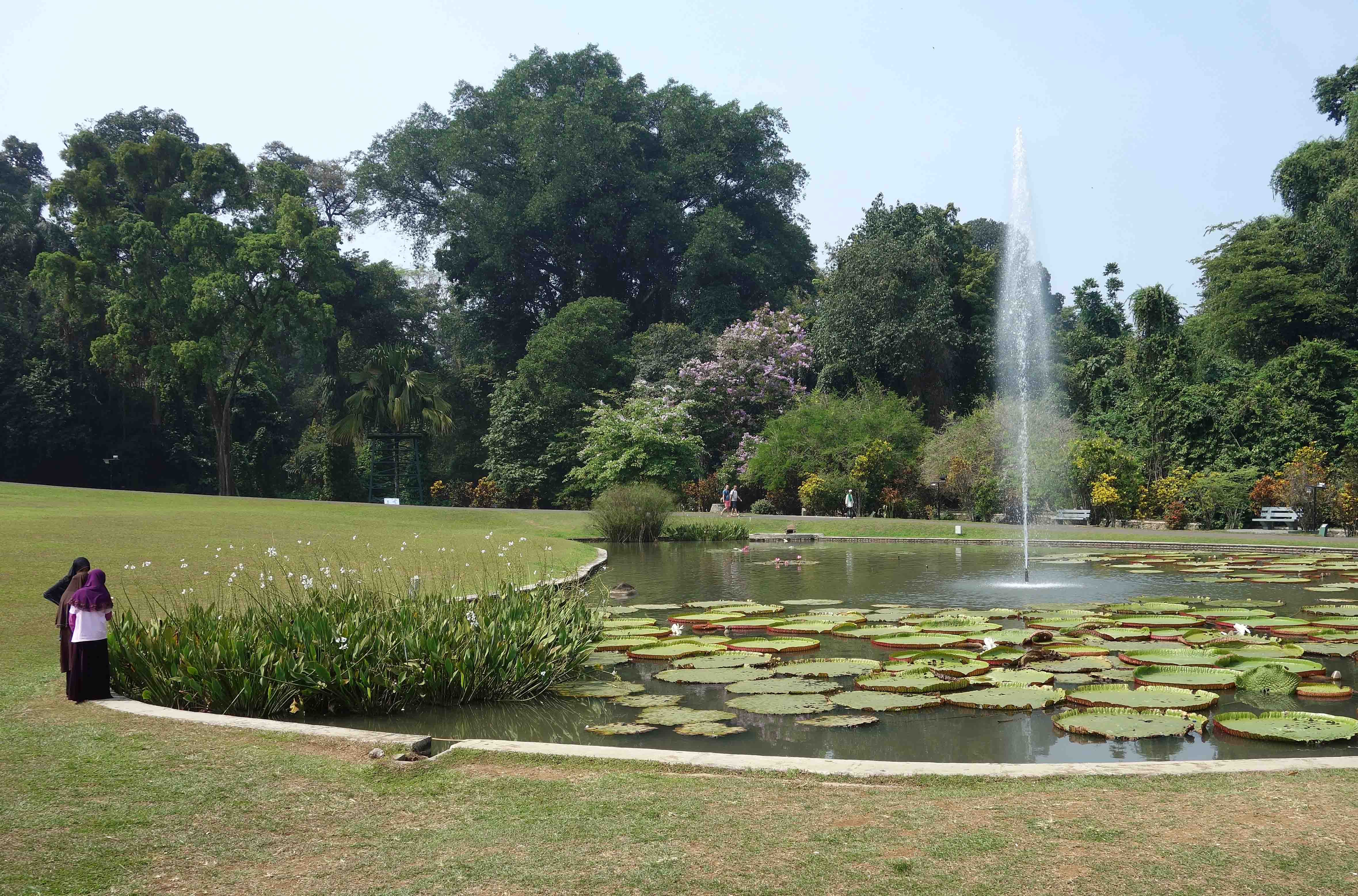
Lily (lotus) pond with the Istana Palace in background, Bogor Botanical gardens
I enjoyed visiting these gardens on two successive days in August 2015. They are a good place to do birdwatching, and I was fortunate to see some Javan species, such as the Bar-winged Prinia, which is very common on the lawns; the Javan variety of the Coppersmith Barbet; and the beautiful Scarlet-headed flowerpecker.
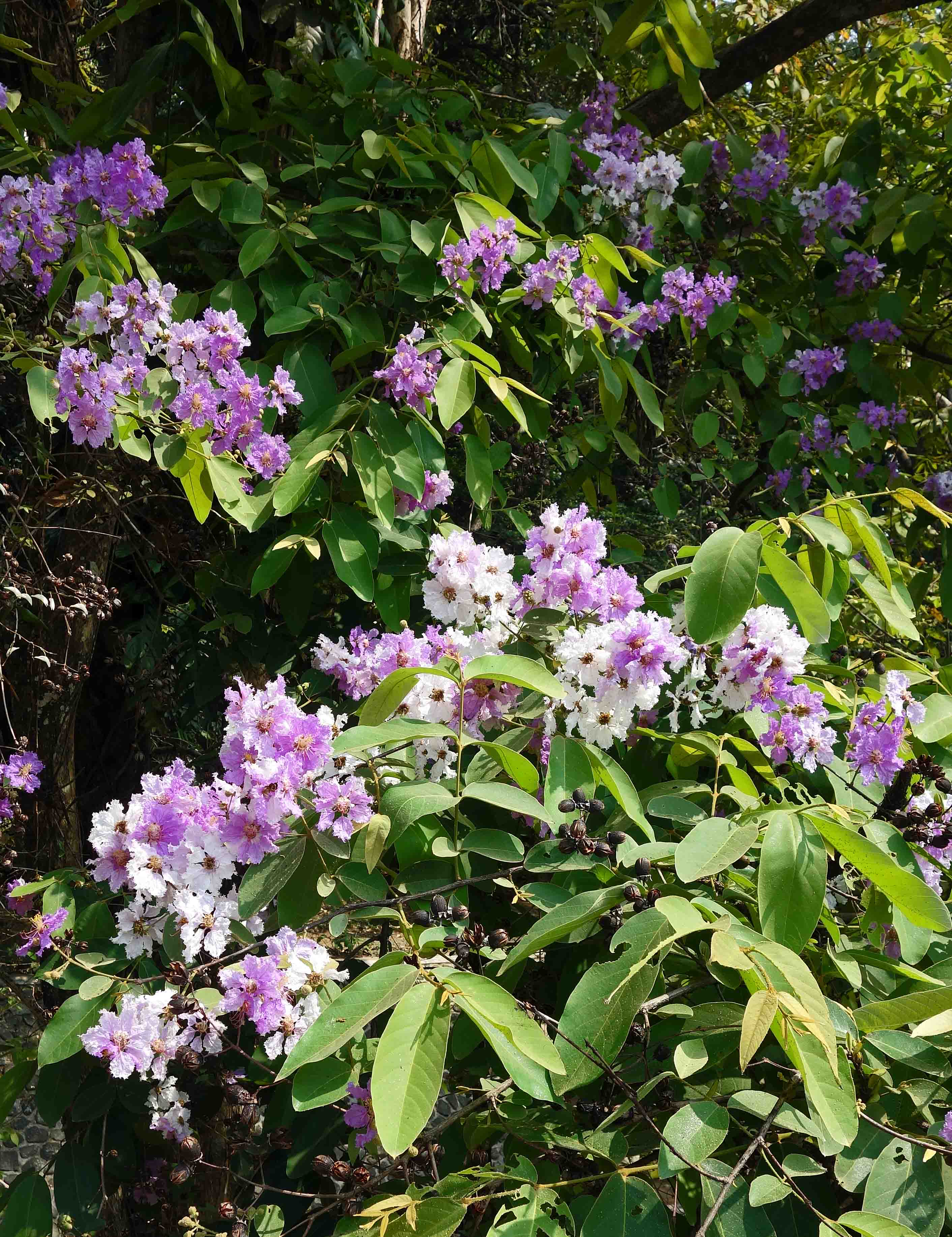
Pink flowering tree in Bogor Botanical Gardens
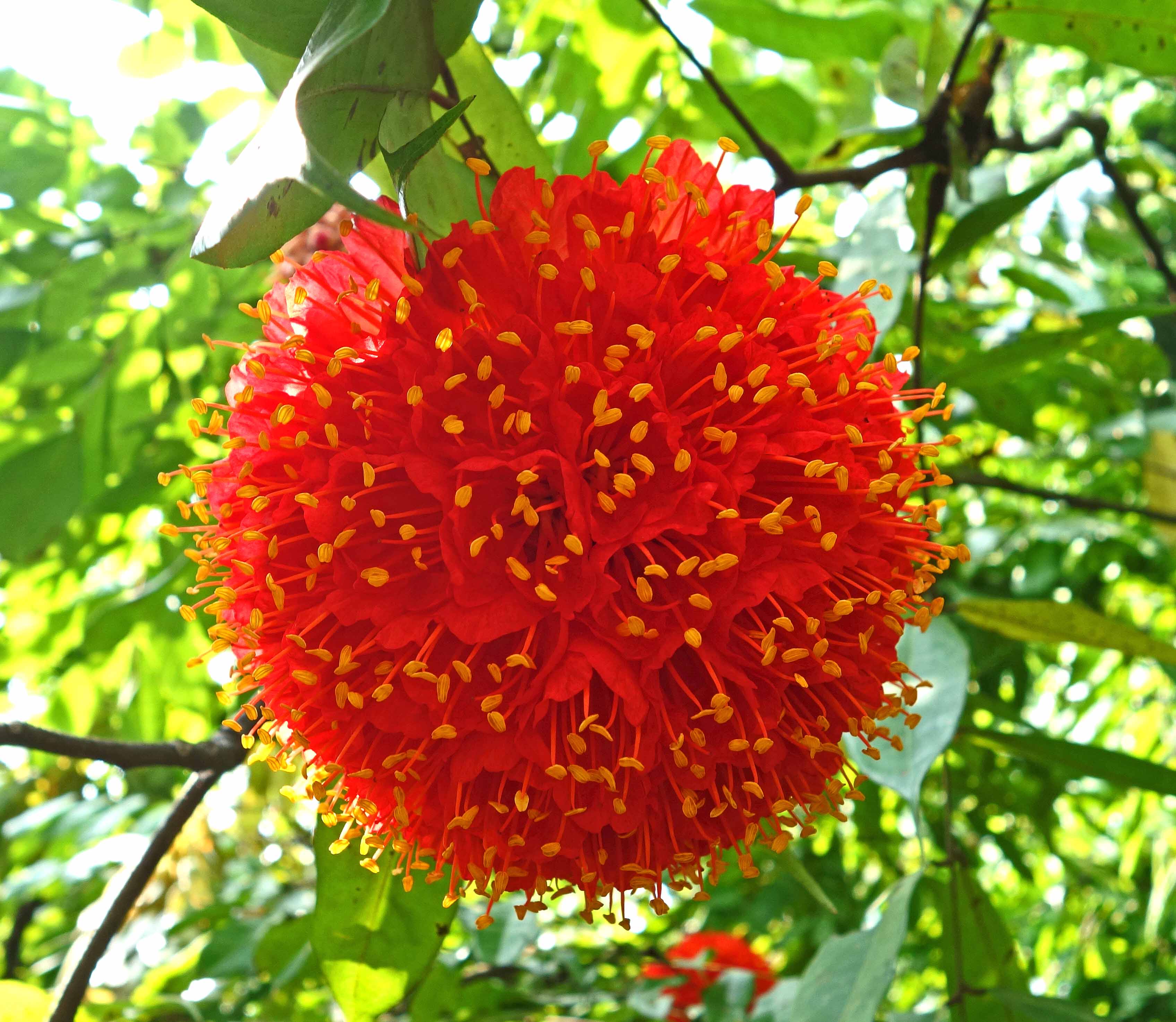
But it is the plants which are so interesting in this 87 hectare (210 acres) garden, since there are over 3,373 different species. Many of the plants are exotic species (to Java) collected or brought here by the founding Dutch fathers of the gardens (2, 3), like this Rose of Venezuela (Brownea grandiceps) flower, which I blogged about before (4).
Brownea grandiceps flower ball
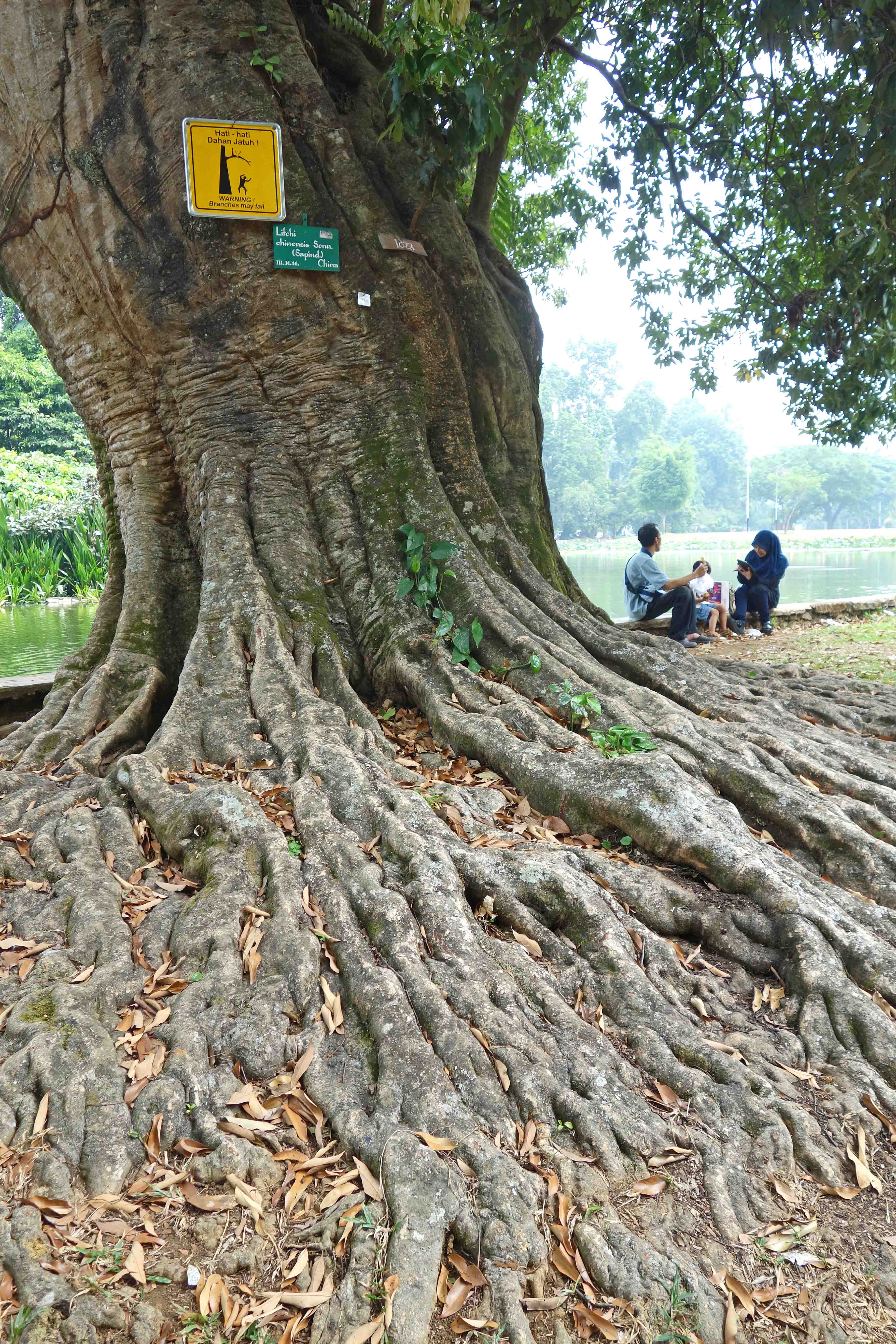
As well as the cacti, bamboos, orchids, roses and so on, there are also some remarkable trees. The oldest tree in the Botanical Gardens is said to be this lychee tree (below) which originated from southern China, and was planted in 1823. So it would have been a fair-sized, 38-year-old tree when Wallace visited; I wonder if he noticed it?
Lychee tree (Litchi chinensis) planted 1823
One thing that Wallace did remark on (again!), was the fact that the ‘walks were all of loose pebbles, making any lengthened wanderings about them very tiring and painful under a tropical sun’. Perhaps he had bad feet, or perhaps he was already was suffering from some tropical ulcers which plagued him in later years. Nevertheless, the pebbly walkways are still there in Bogor, but appear to be more consolidated than in Wallace’s day, and they did not impede me from walking extensively around the garden.
Cobbled, or pebbly, paths in Bogor Botanical Gardens
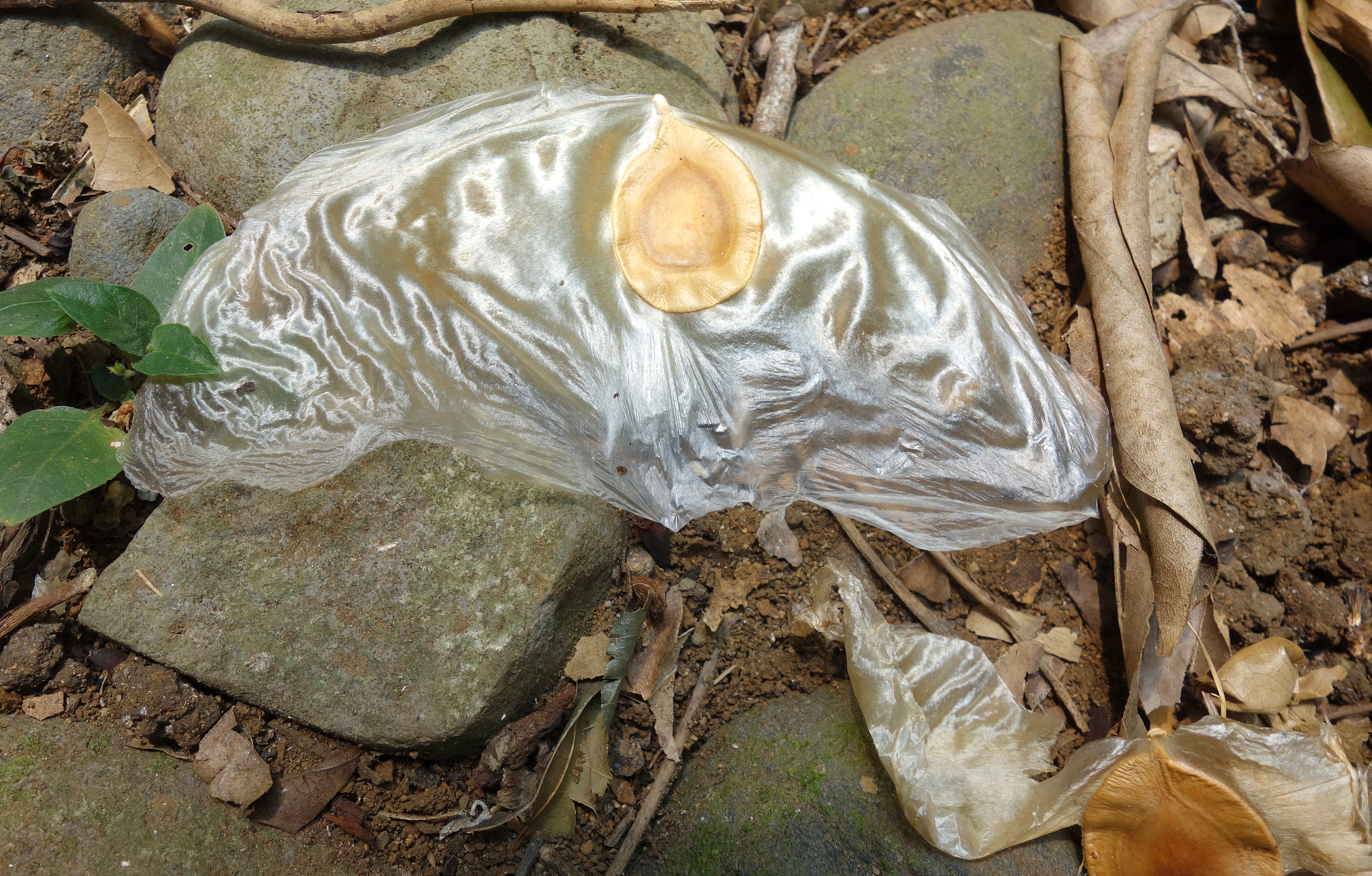
One very interesting plant I came across, which I am sure would have fascinated the ever-curious Wallace, was the seed of the Javan cucumber plant (Alsomitra macrocarpa) which were lying everywhere on the ground when I visited. These amazing, winged seeds, are packed into football-sized fruits, which hang down from the vines which are festooned high in the canopy. They are surely, Nature’s own hang-glider, since they are able to glide for very long distances. David Attenborough got there first! See BBC TV footage of these wonderful seeds (5).
Winged seed (Alsomitra macrocarpa) of Javan cucumber vine
One thing that Wallace may have noticed on his visit, was the Dutch cemetery, which contains some gravestones which date back as far as 1784. One which I noticed was to the memory of a Captain J. Drury R.N.. who died on the 1st March 1835, aged 51. Who was he and what was he doing here?
Dutch Cemetry, Bogor Botanical Gardens
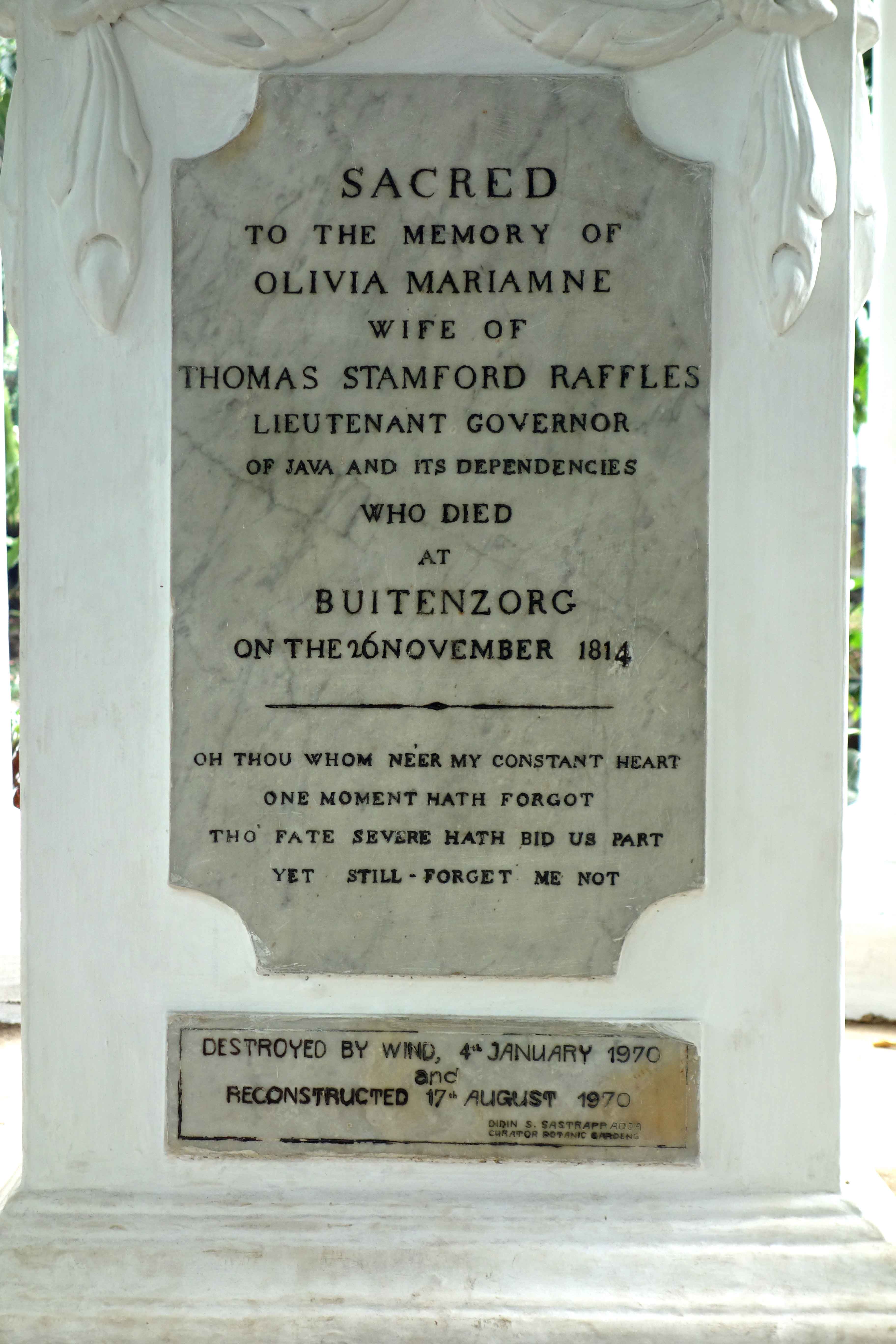
Perhaps the most famous British person buried (elsewhere) in these gardens is Olivia Mariamne Raffles – the first wife of the British governor-general Thomas Stamford Raffles. The British invaded Java in 1811, but subsequently restored the island to the Dutch rule.
Olivia Mariamne Devenish memorial
Olivia Raffles (Née Olivia Mariamne Devenish) died of malaria in Bogor, on 26 November 1814. A rather tragic irony, given that the Botanical Gardens subsequently played major role in the introduction of Cinchona trees (in 1854), which went on to make Java the largest producer of quinine bark for the treatment of malaria.
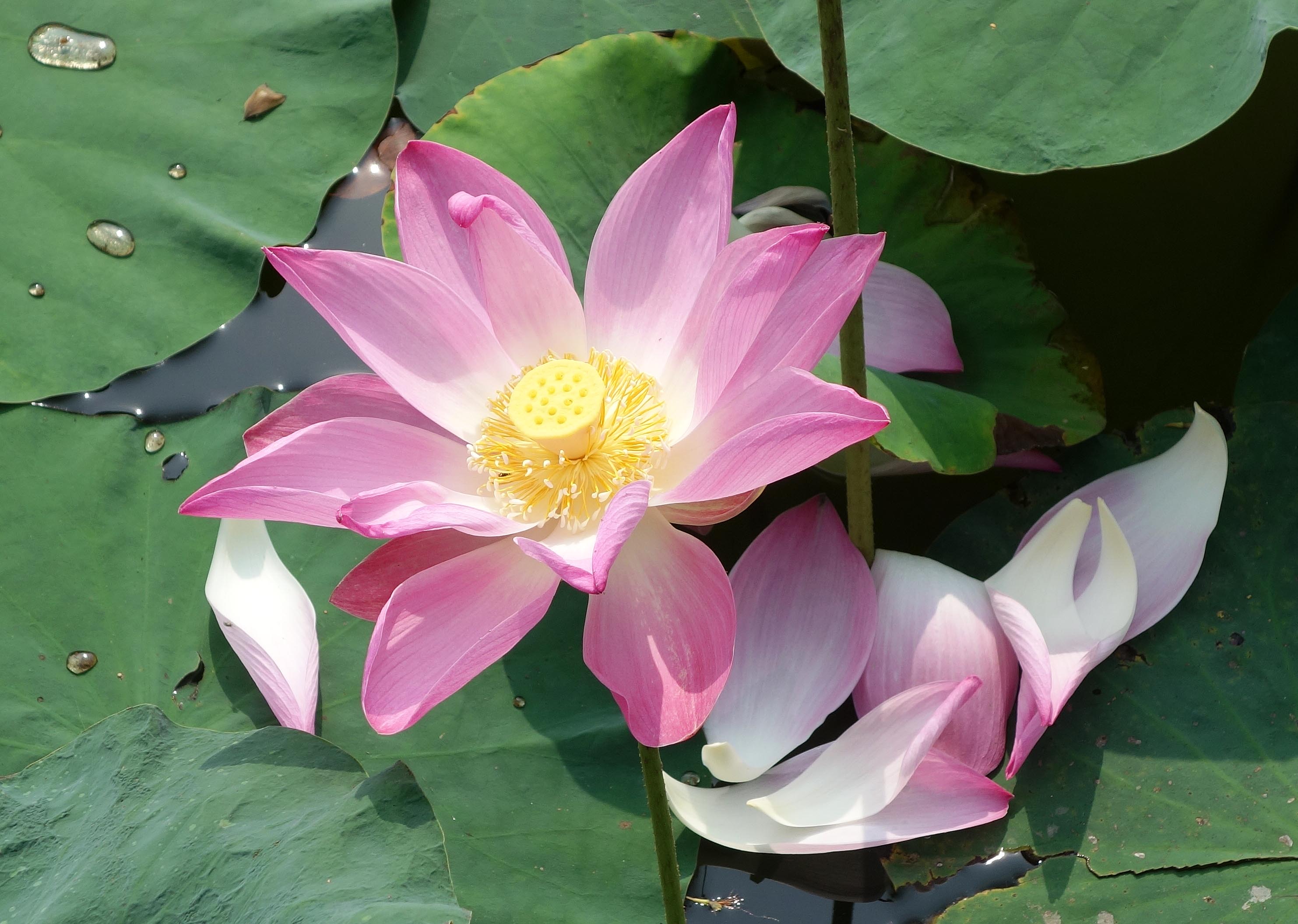
Lotus flower (Nelumbo nucifera,) Bogor Botanical Gardens
Wallace, Alfred Russel. The Malay Archipelago: the land of the orang-utan and the bird of paradise; a narrative of travel, with studies of man and nature. Courier Corporation, 1869.
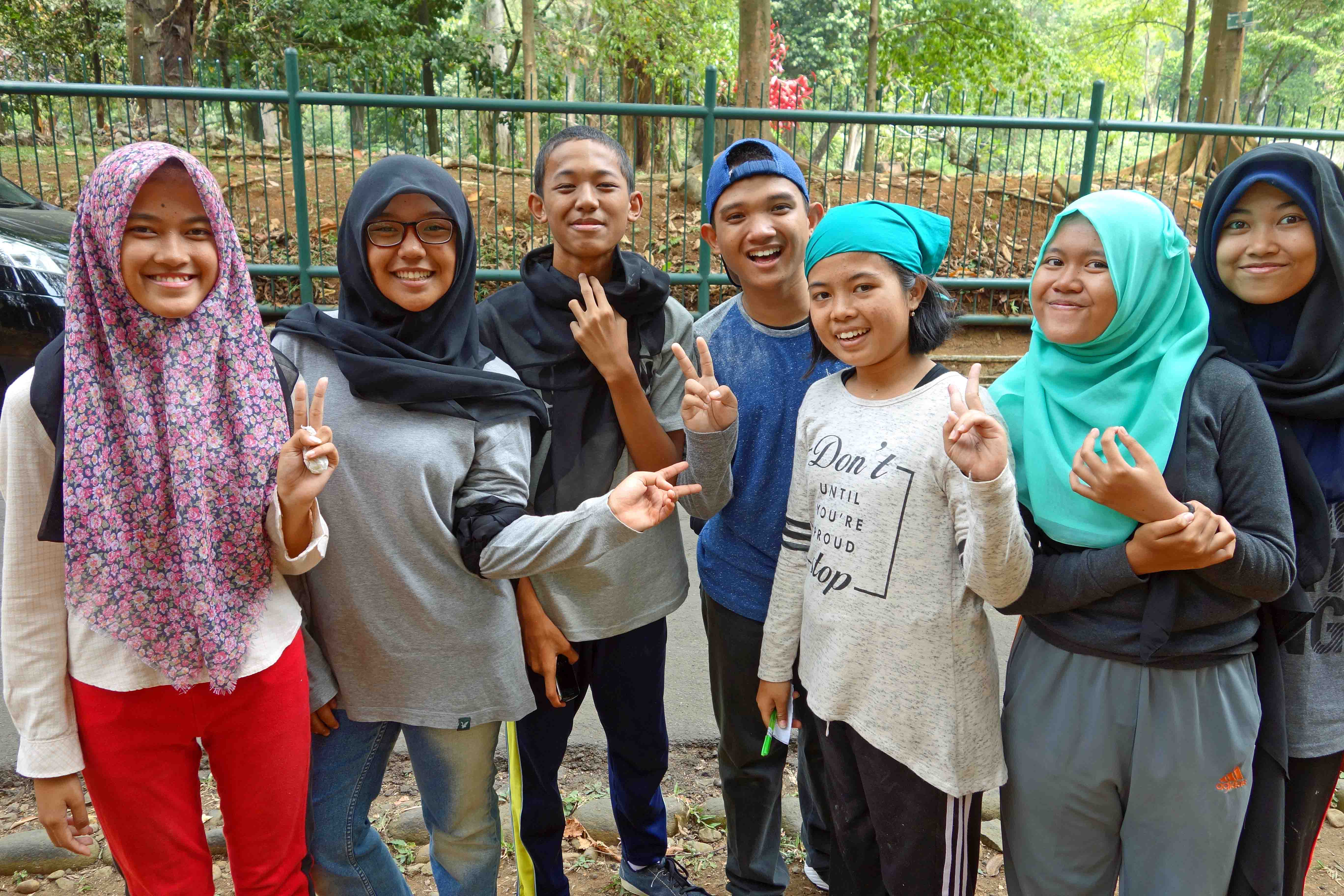
I recently traveled to Java (Indonesia) to do some bird watching. I surprised by how friendly the people were. Wherever I went – outside of the capital – people, especially children, were eager to speak to me and have their photo taken. Students liked to ask my name and where I came from. In the Bogor Botanical Gardens, there were groups of young students eager to ask tourists various questions. I was doing ‘spot the bird’ in the park, whist they were doing ‘spot the tourist’!
Students in Bogor Botanical Gardens, Java, Indonesia
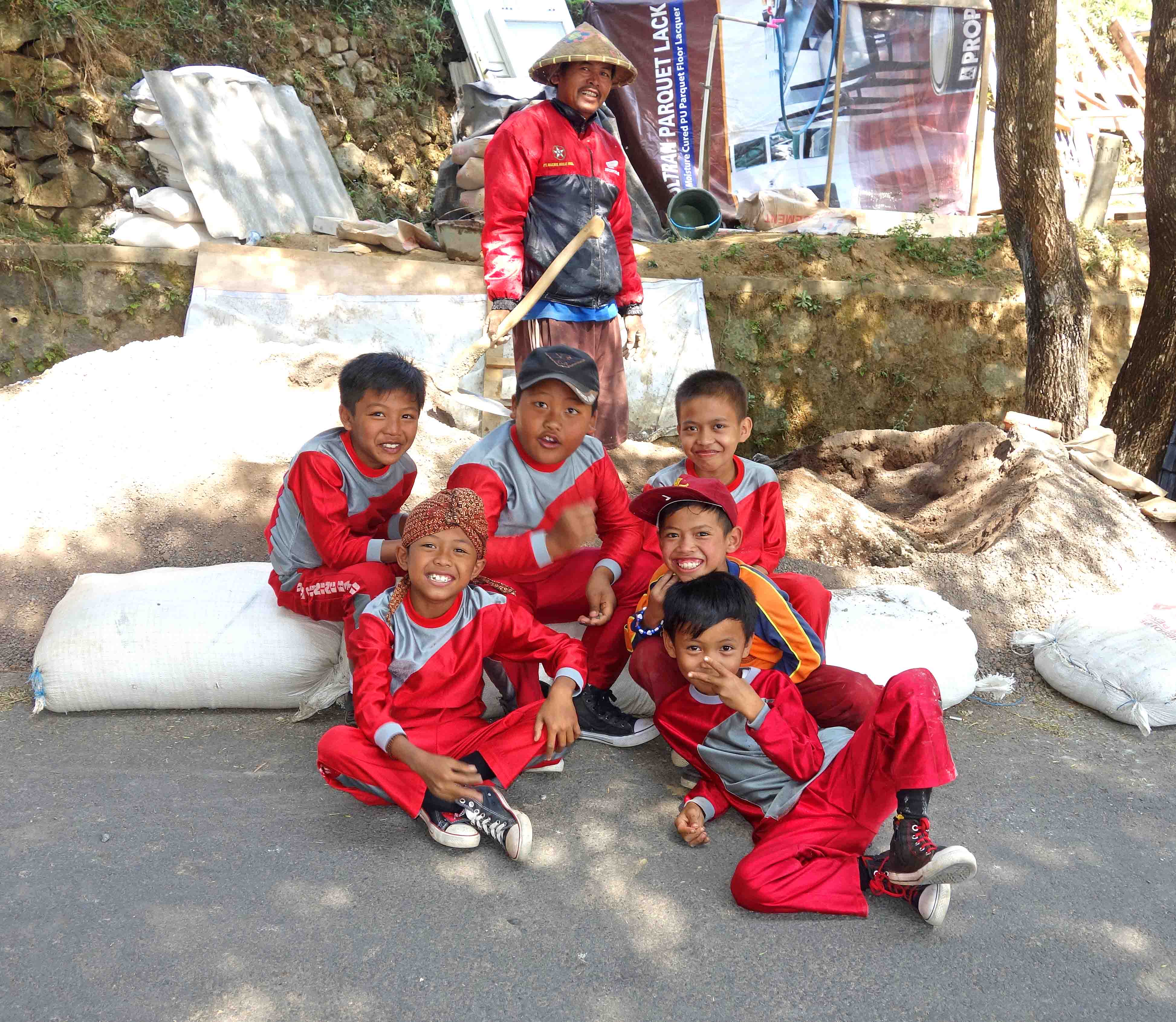
Sometimes it felt like one was a minor celebrity, with everyone wanting to know something about you! Kids sometimes ask for money. I tended to refuse, but occasionally submitted and gave them enough to buy some sweets. These kids (in red outfits, below) were being given a lesson in how to build a house, near the Cibodas Botanical Gardens. I did give them a little money, with the permission of their teacher, and they rushed off up the street to get some sweets (candy).
Boys being given a lesson in building
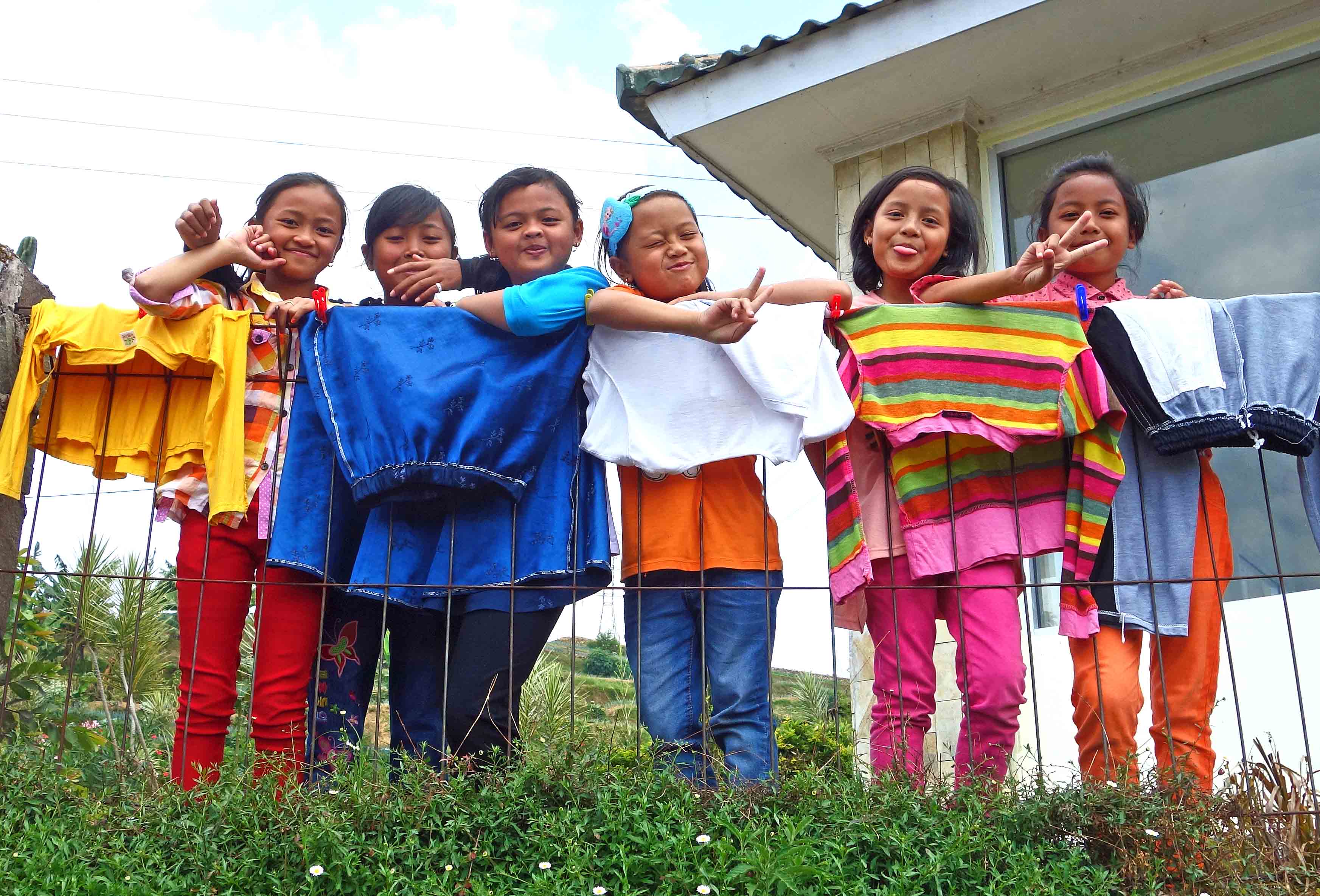
I like to walk through villages. It is interesting; you see things you would not do from a car, and you meet people. Sometimes you get teased! These girls rushed over to look at the strangeboule (white man) walking through their village.
Girls on a wall
Nobody walks in Indonesia. It is hot and there are all sorts of modes of transport, from horse and cart to car. Motor bikes and scooters are incredible common and I was always being asked if I wanted a lift on the back of one. I think the notion that I actually liked walking was a bit of a strange one. These lads were not very impressed!
Young men near the entrance to the park (Cibodas Botanical Gardens)
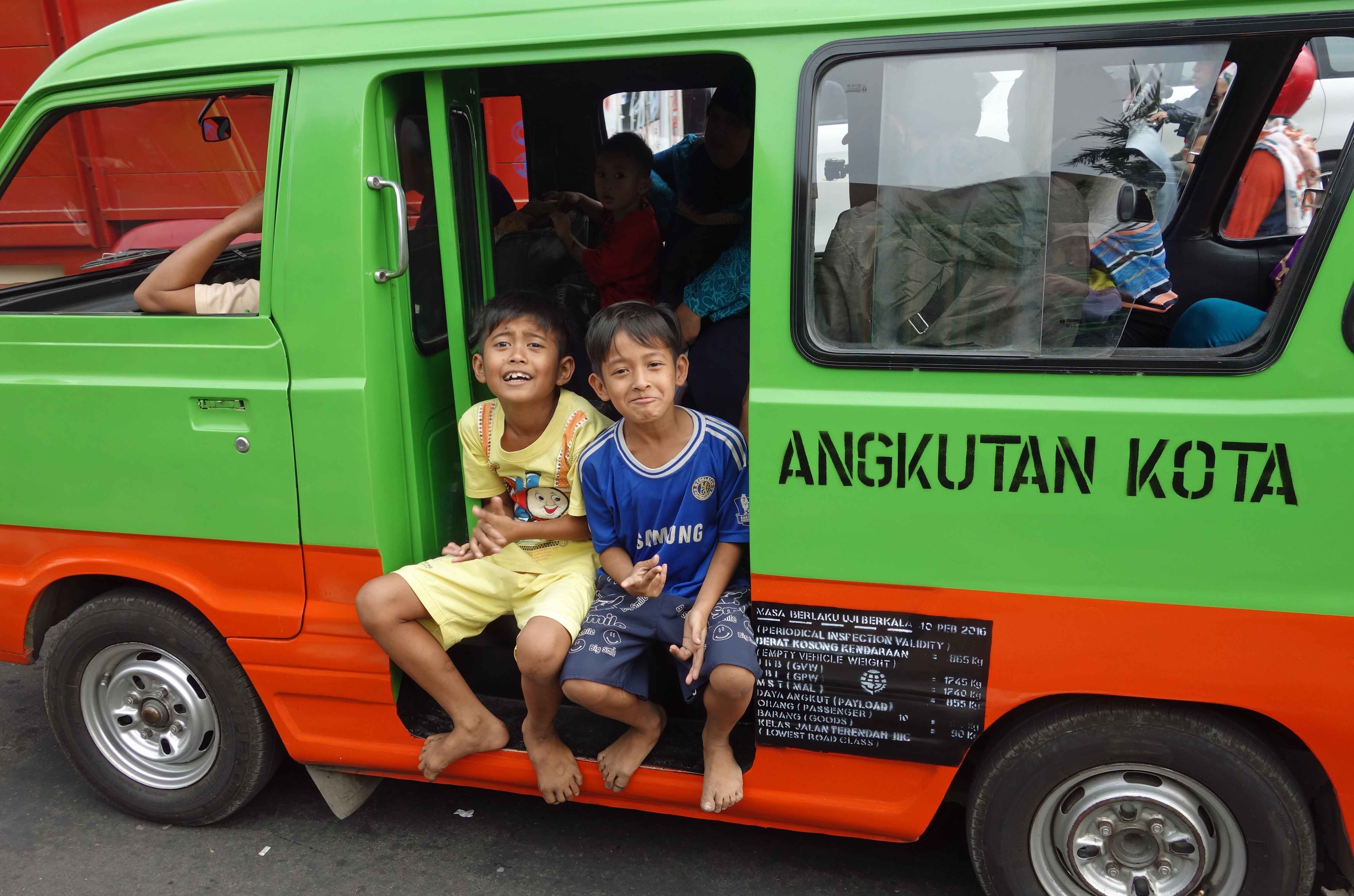
Minivans (angkut) abound in the cities of Indonesia, but they are not much use if you do not know where they are going. These boys were just riding along by sitting in the open door. Dangerous? Probably not as the traffic was moving very slowly. And great fun.
Boys on a minivan (angkut) in Bogor, Java
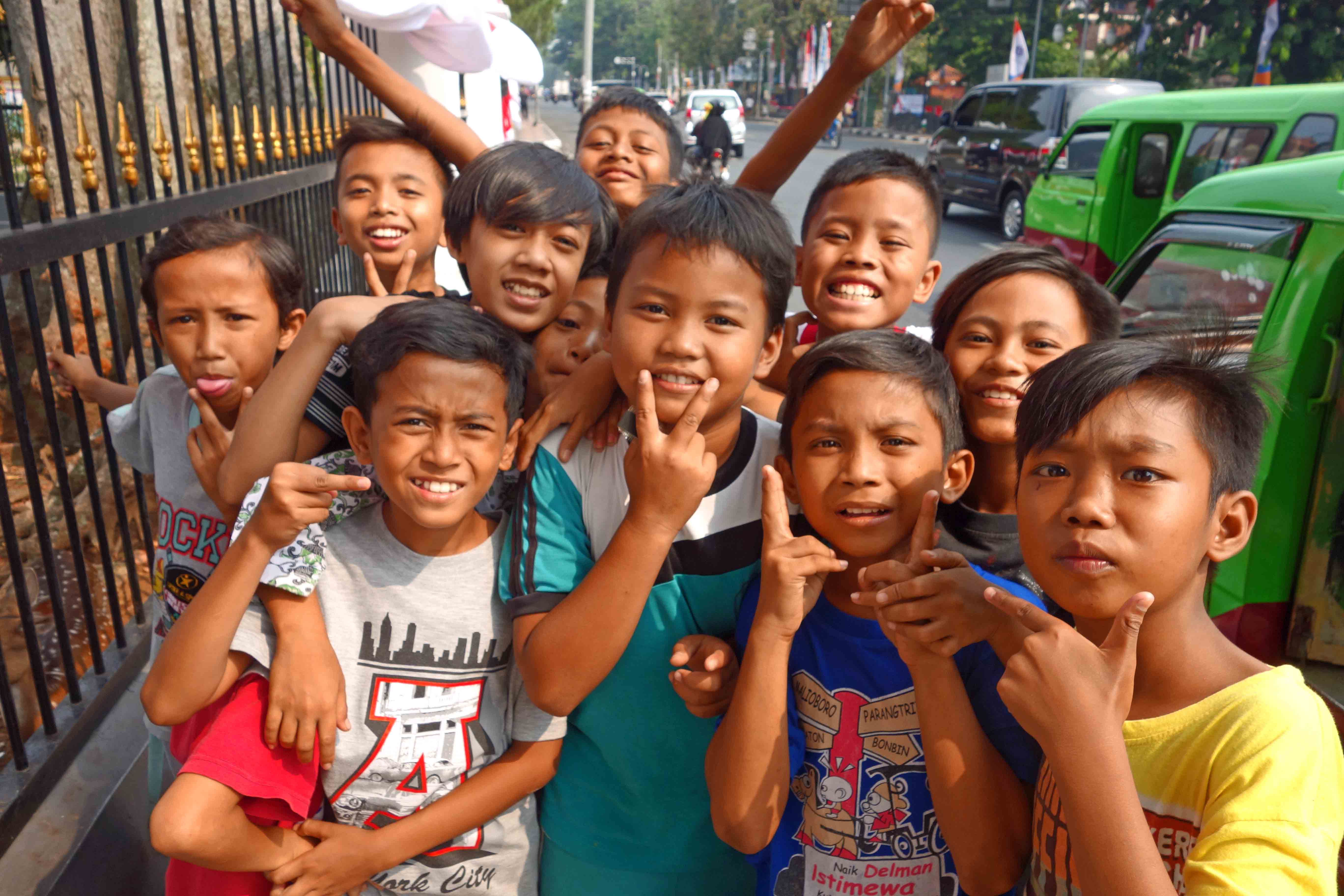
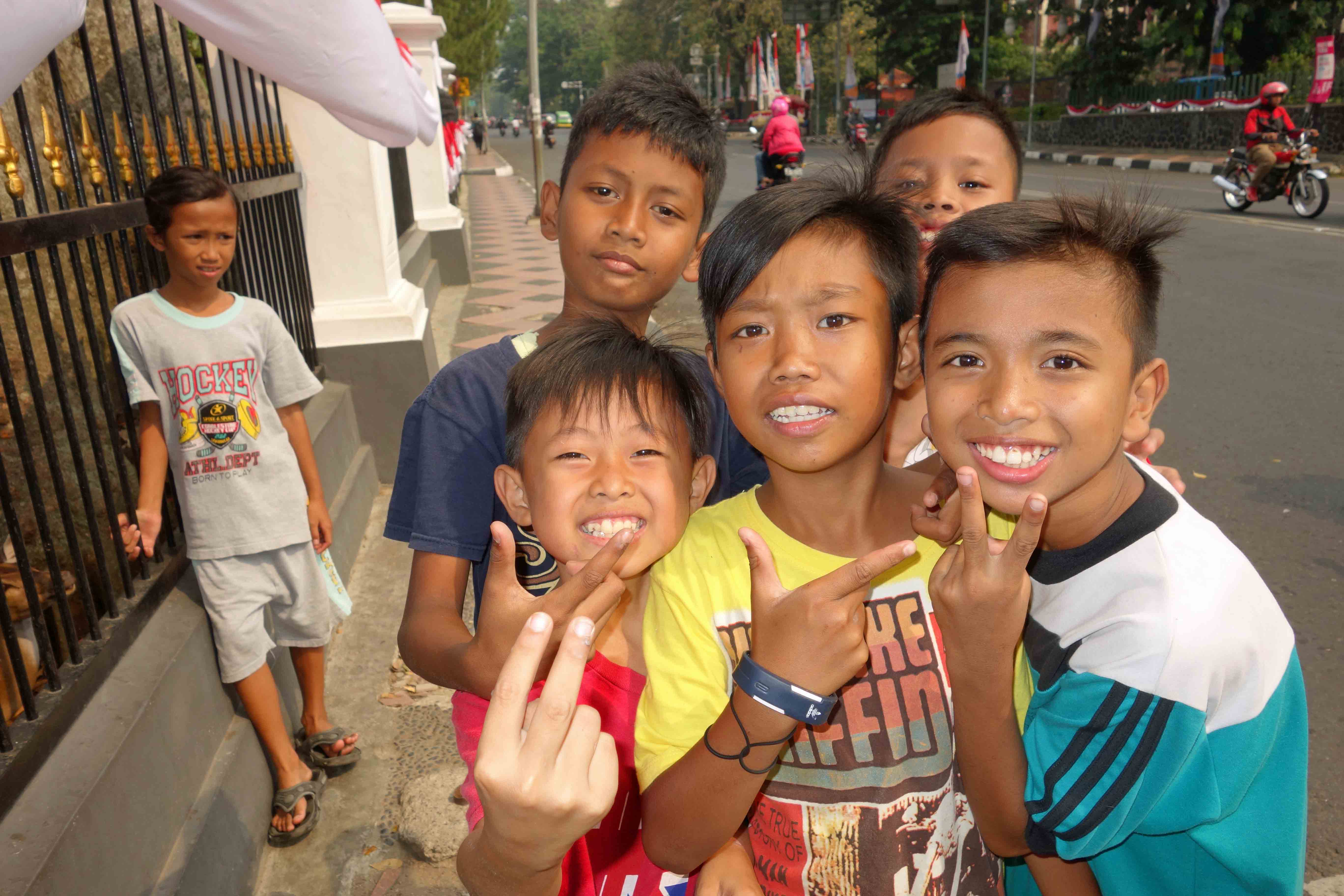
These boys (top photo and below) were hanging around outside the Bogor Palace (Istana Bogor) where it was possible to feed deer through the palace fence.
Boys outside Bogor Palace, Bogor, Java, Indonesia
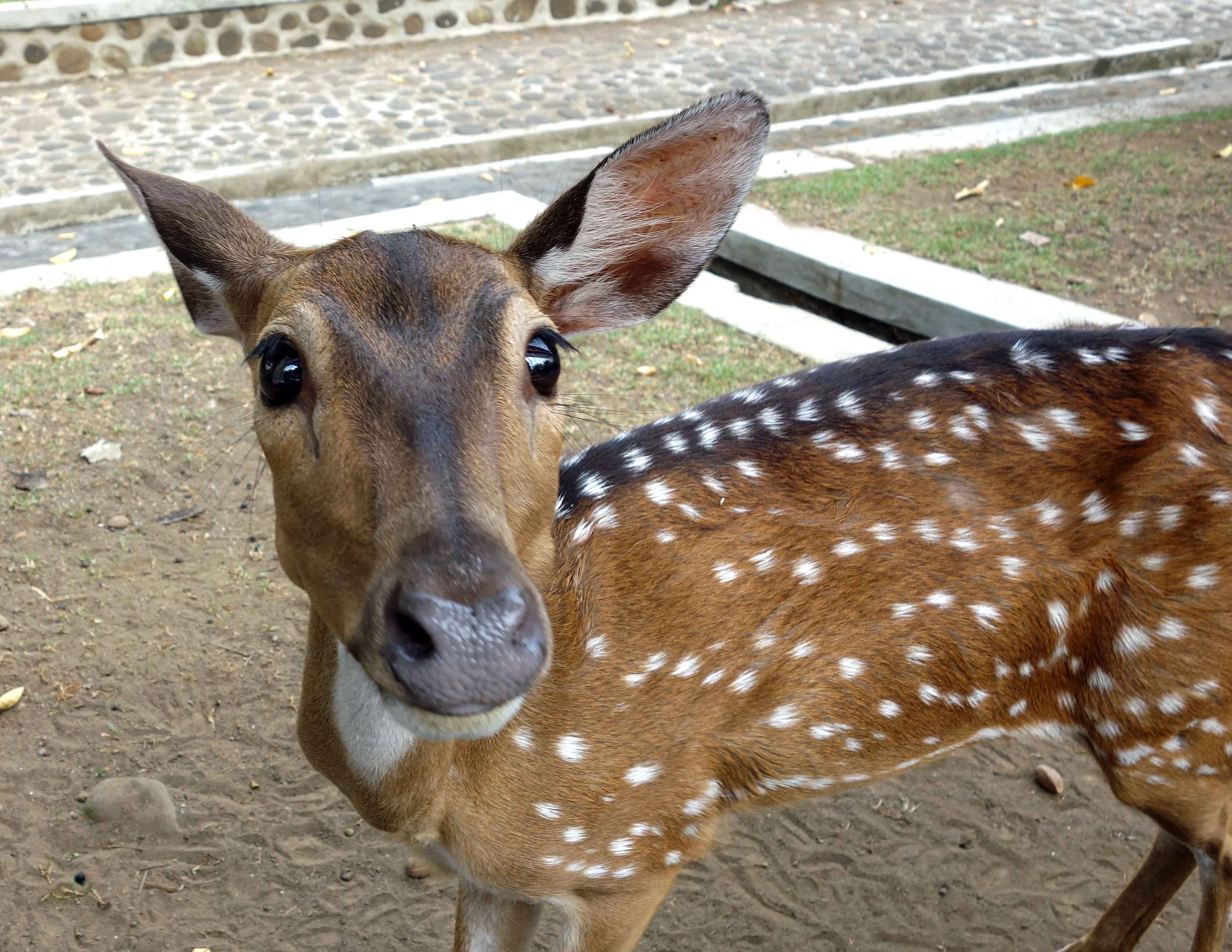
On the other side of the fence the deer were waiting for someone to feed them. Green beans were on sale to feed the chital deer, which were originally imported from India, but thriving in these private gardens in Bogor, Java.
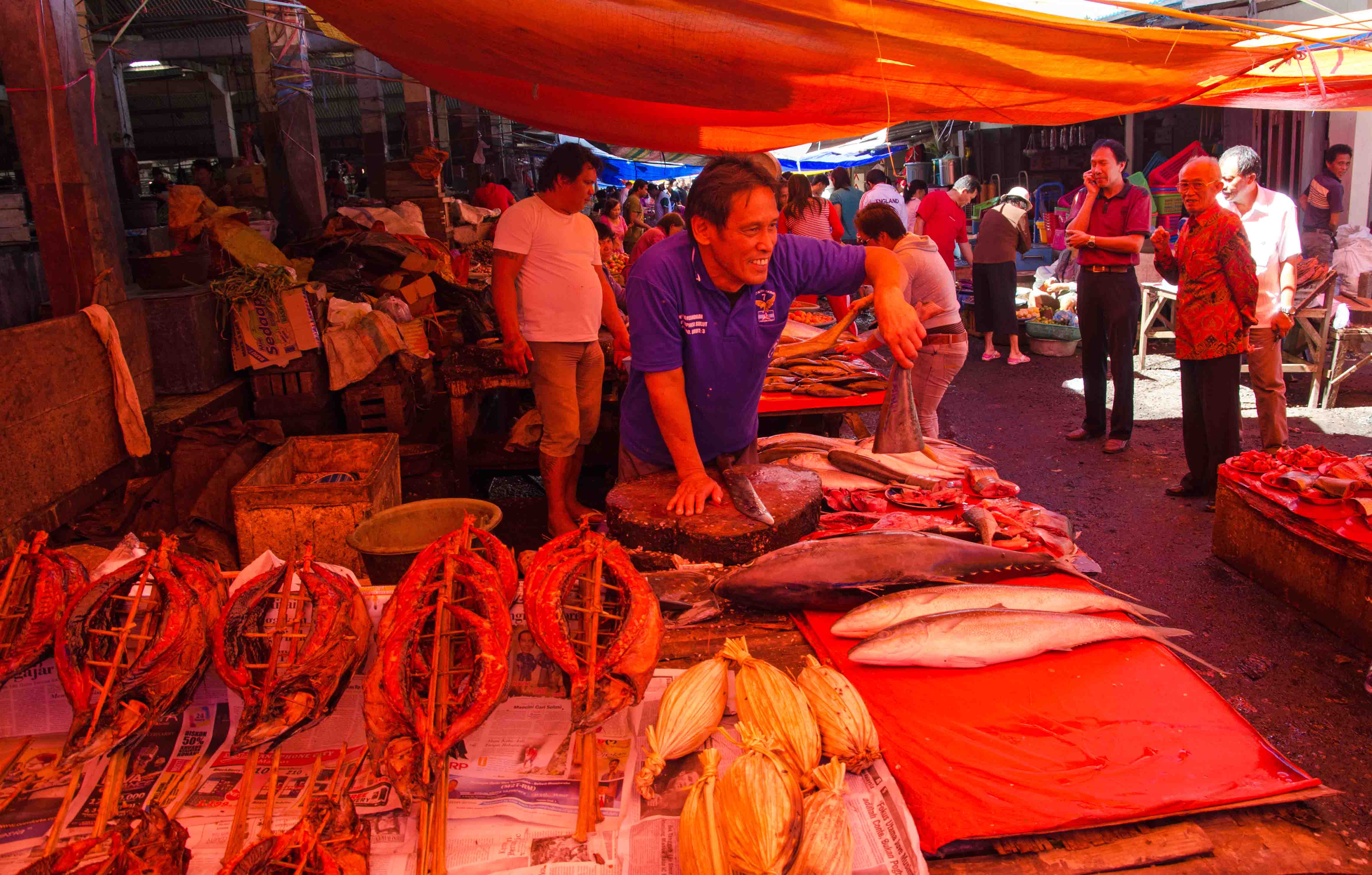
Vegetables and dried fish, Tomohon market, Sulawesi
I love visiting traditional markets in the tropics, both to enjoy looking at – and occasionally purchasing – local produce, but also as a an opportunity to take photographs. I am primarily interested in taking photographs which are interesting in terms of colours, as well as (hopefully) in terms of content.
Dried fish stall, Tomohon market, Sulawesi
I like blocks of colour, and so am often attracted to the colourful umbrellas found in such markets, as well as to the effects they produce, in terms of filtered light, such as above, where an red-orange colour cast is created by the overhead screens.
I also like taking photographs of people, but it is important to be friendly and show respect; ideally asking them whether they would mind having their photographs taken. In markets such as this, where tourists are fairly common, people are used to having their photos taken; but it’s still good to smile and ask permission. Showing the subject(s) the results is also something I like to do, if people are not too busy.
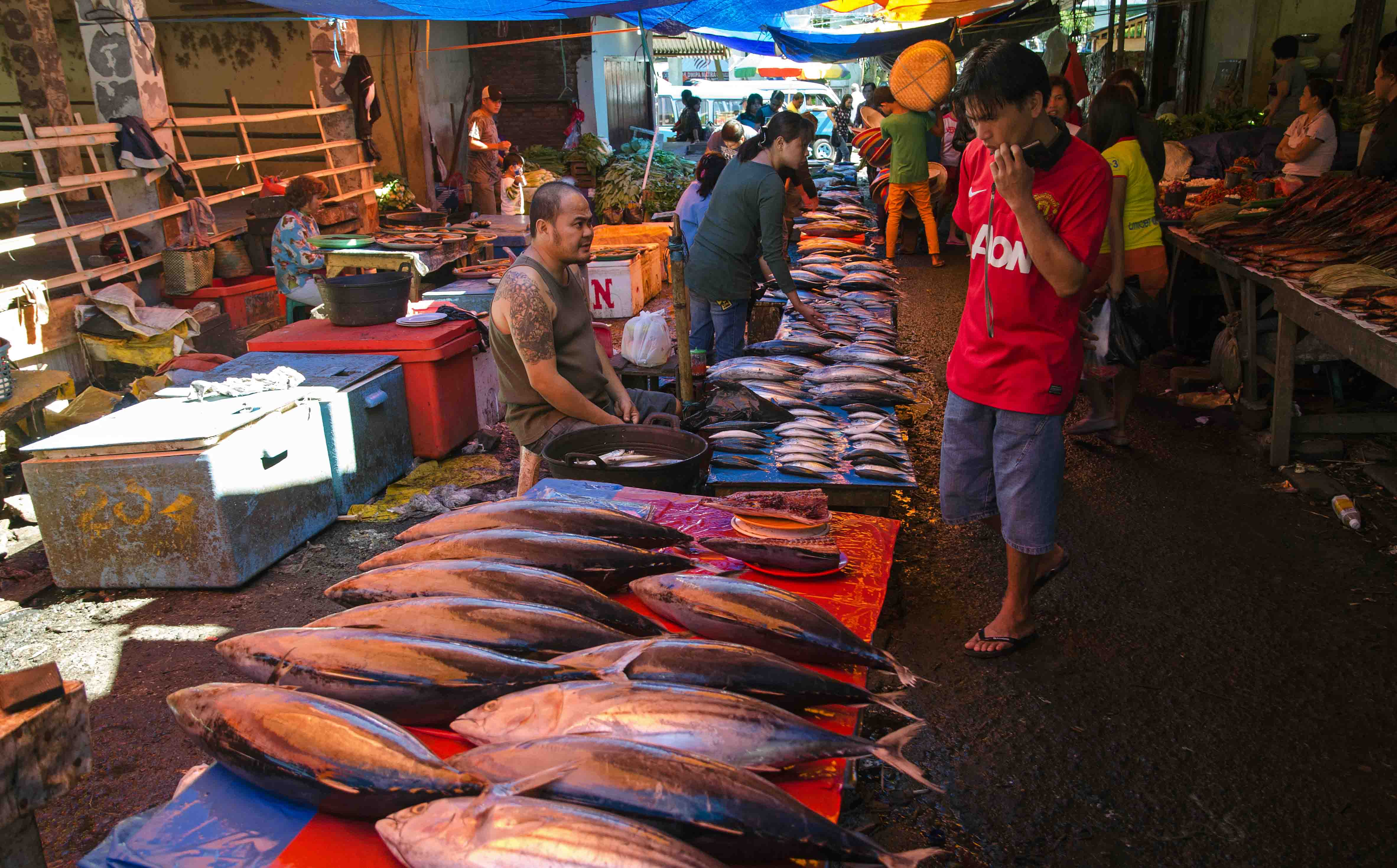
Fish – skipjack in the foreground – for sale in Tomohon market, Sulawesi
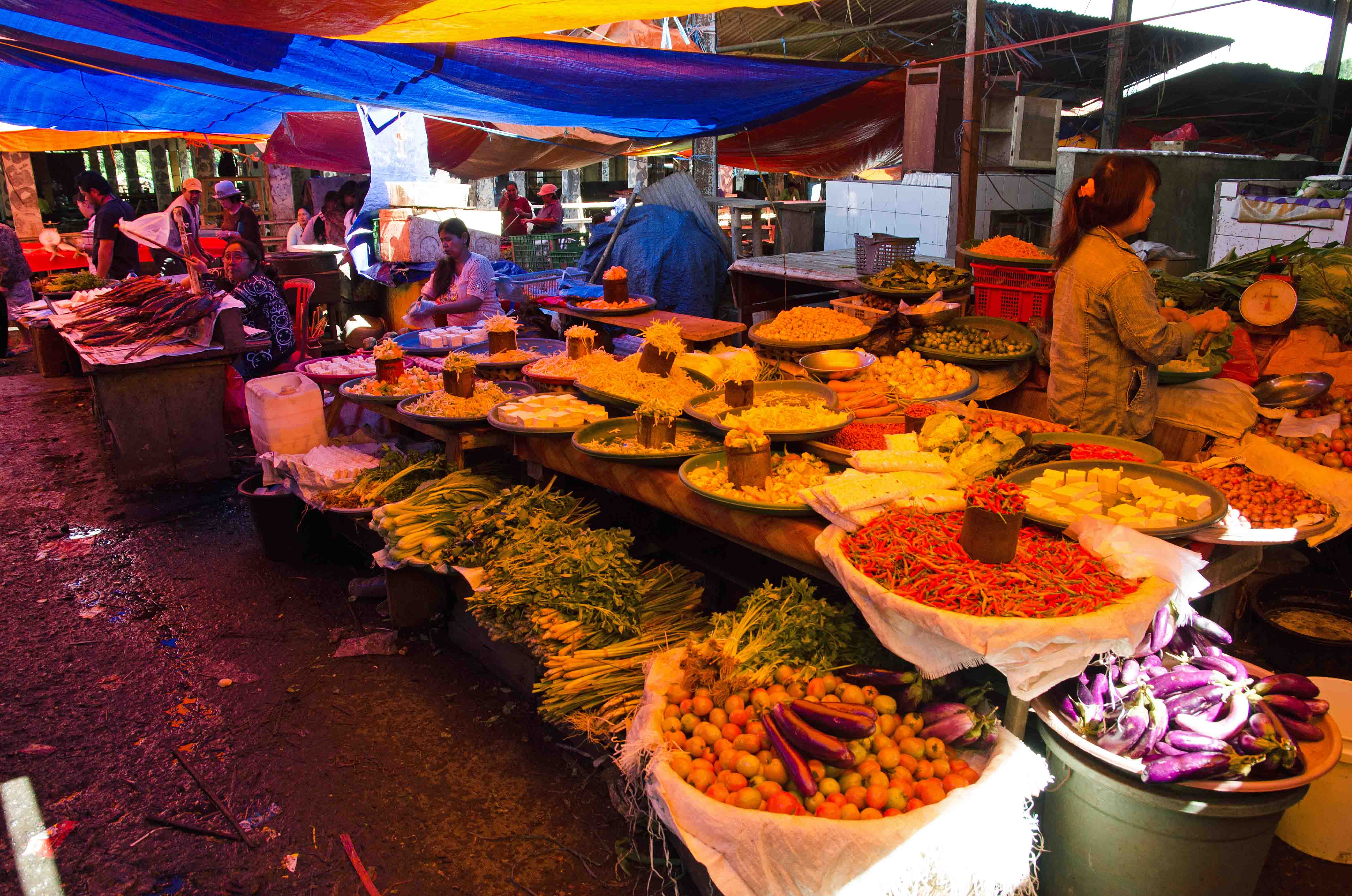
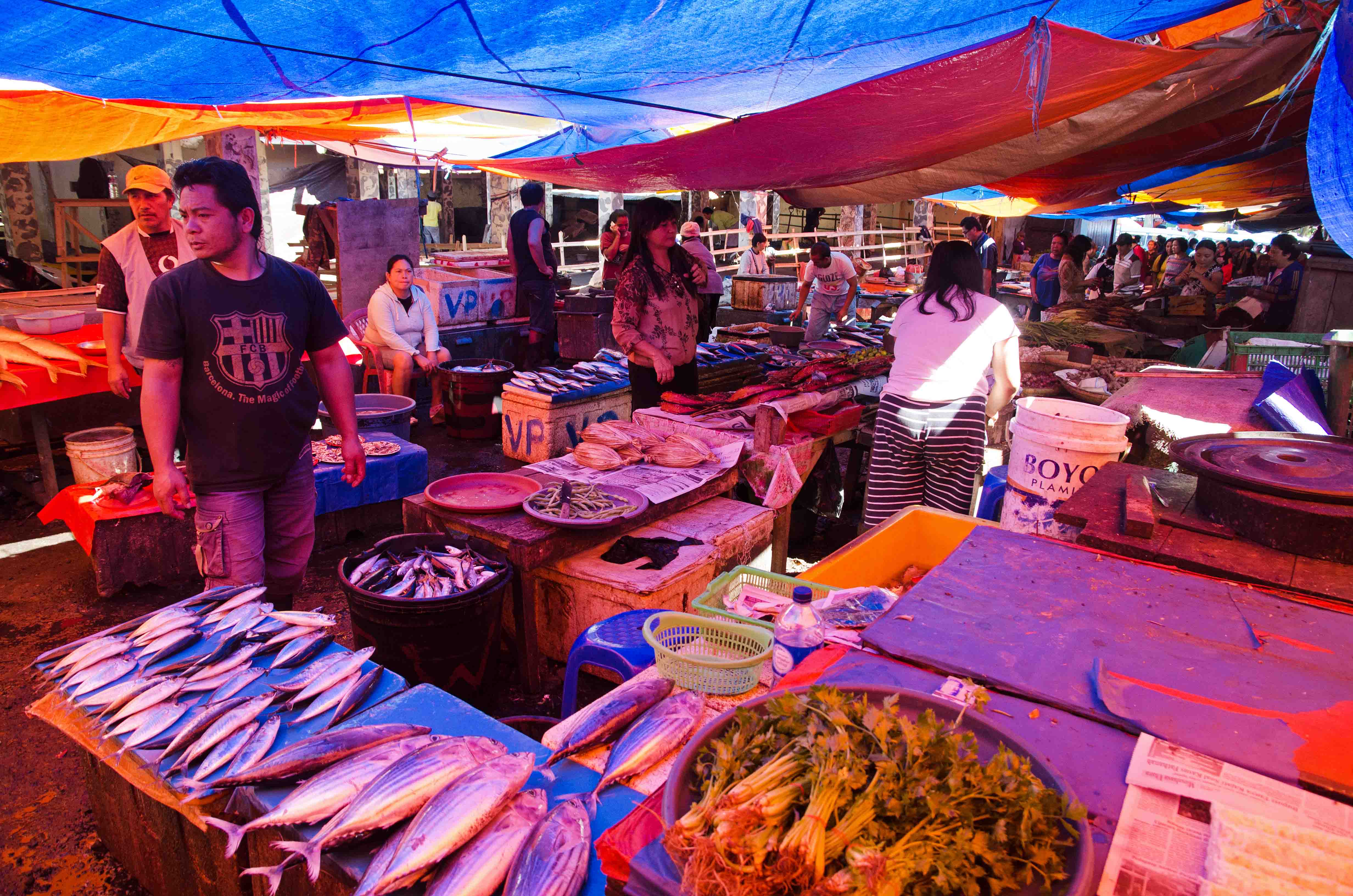
I really like photographs where there is a depth of field – I don’t mean in terms of it all being in focus – but where there is a scene stretching from the foreground into a distant background, as in the above image. I think it is more interesting if the eye can follow through into the image. It is a matter of keeping an eye out for such scenes, but it also needs a bit of luck. I never take enough photographs, they can always be deleted in this digital age, and – as any professional will admit – it is only by trying hard AND taking a lot of images that you get lucky and take a good one. I am not sure how good these are – it is easy to fall in love with your own photos – and one has to be very severe in rejecting all but the best ones. This is another one which runs from front to back, and also has some interesting colours created by the blue, red and orange canopies above the stalls selling fish and vegetables.
Colourful canopies in Tomohon market, Sulawesi
This traditional market in Tomohon is famed for having a lot of local meat, including things which many westerners do not eat such as dogs, rats and bats. I am less concerned about these than I am about threatened (rare) species, but I was not really in the mood to look at them, so I concentrated on trying to get some colourful images (literally) rather than gruesome images of roasted canines!
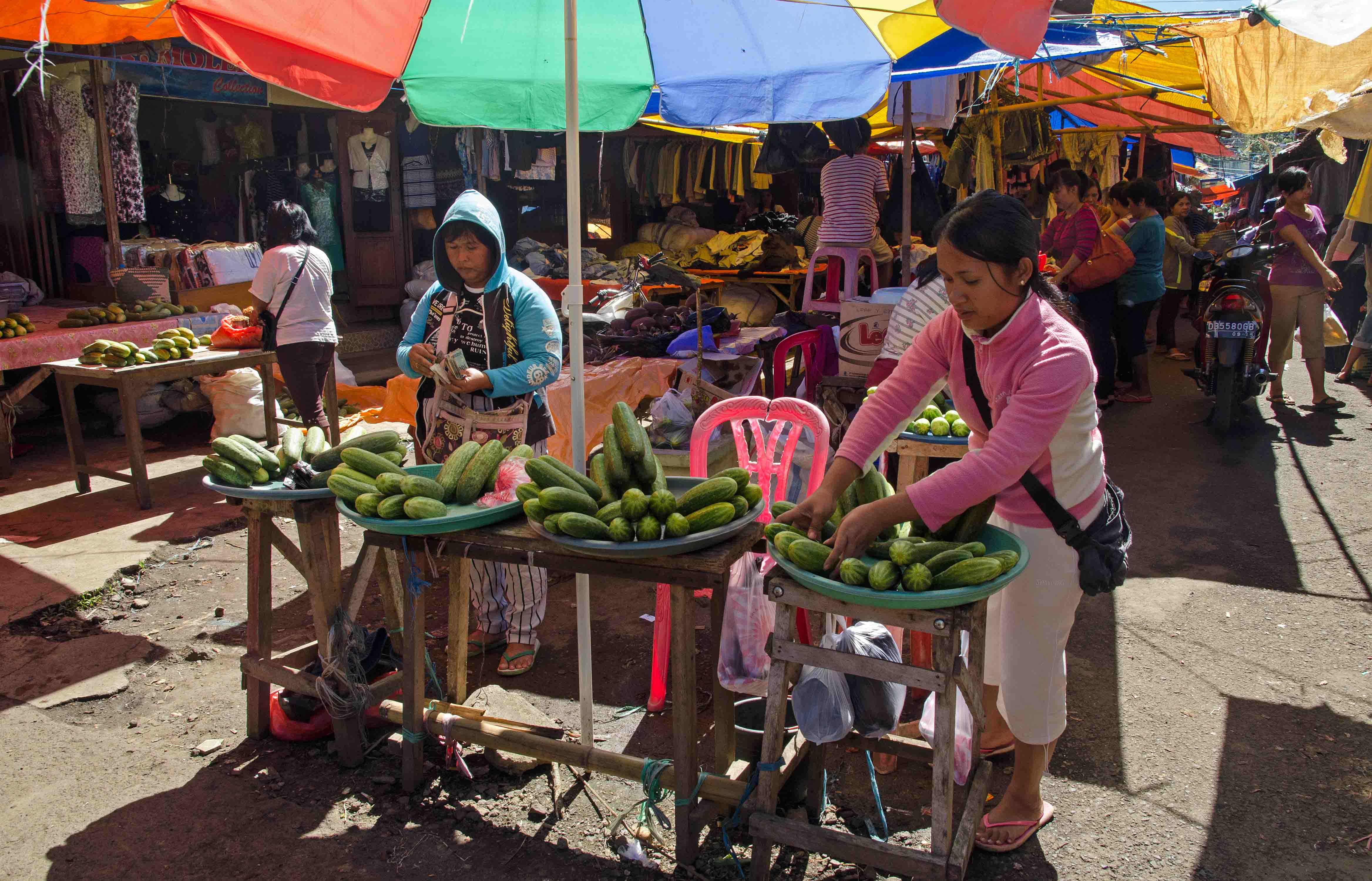
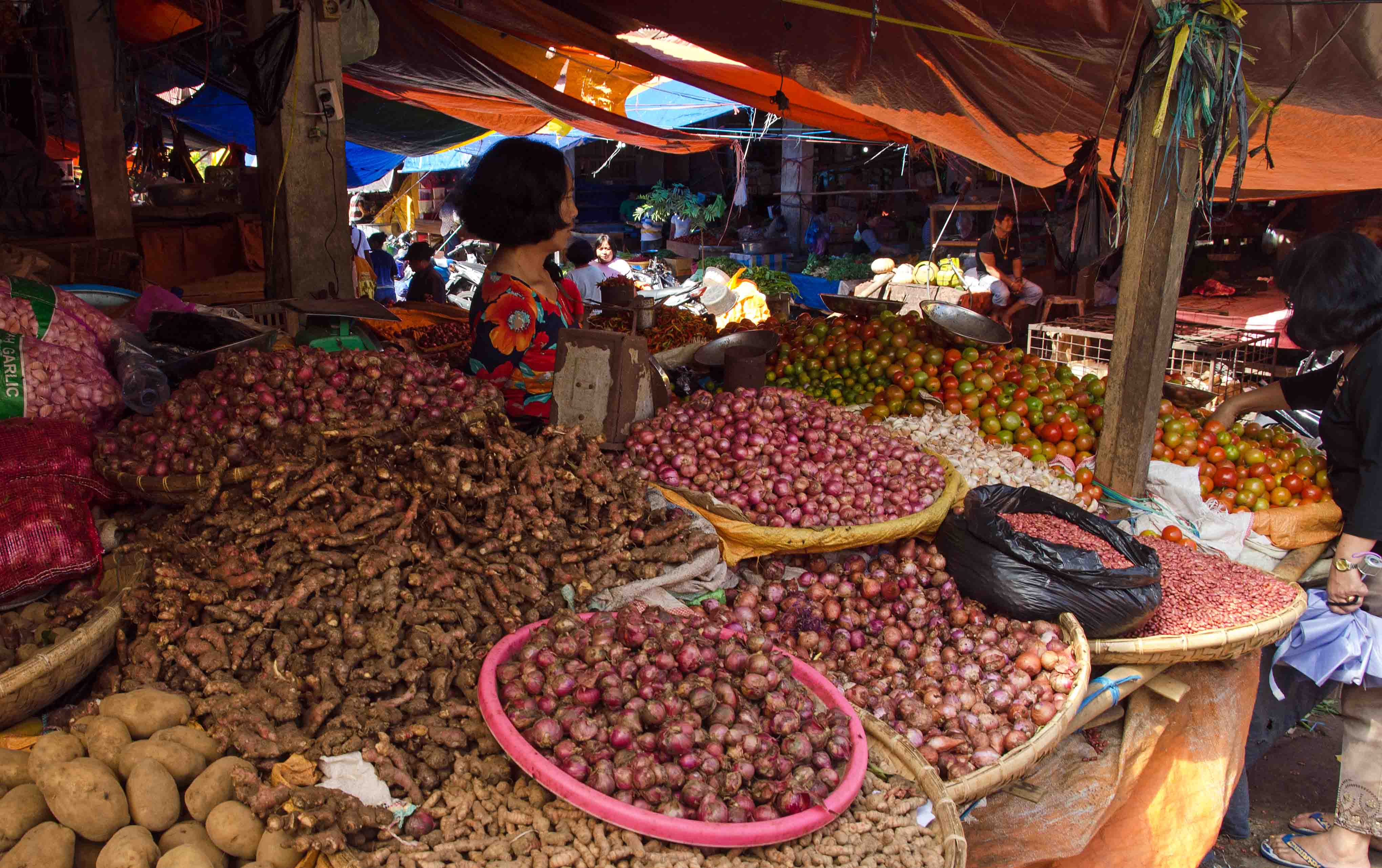
A stall selling onions, tomatoes and other vegetables in Tomohon market, Sulawesi
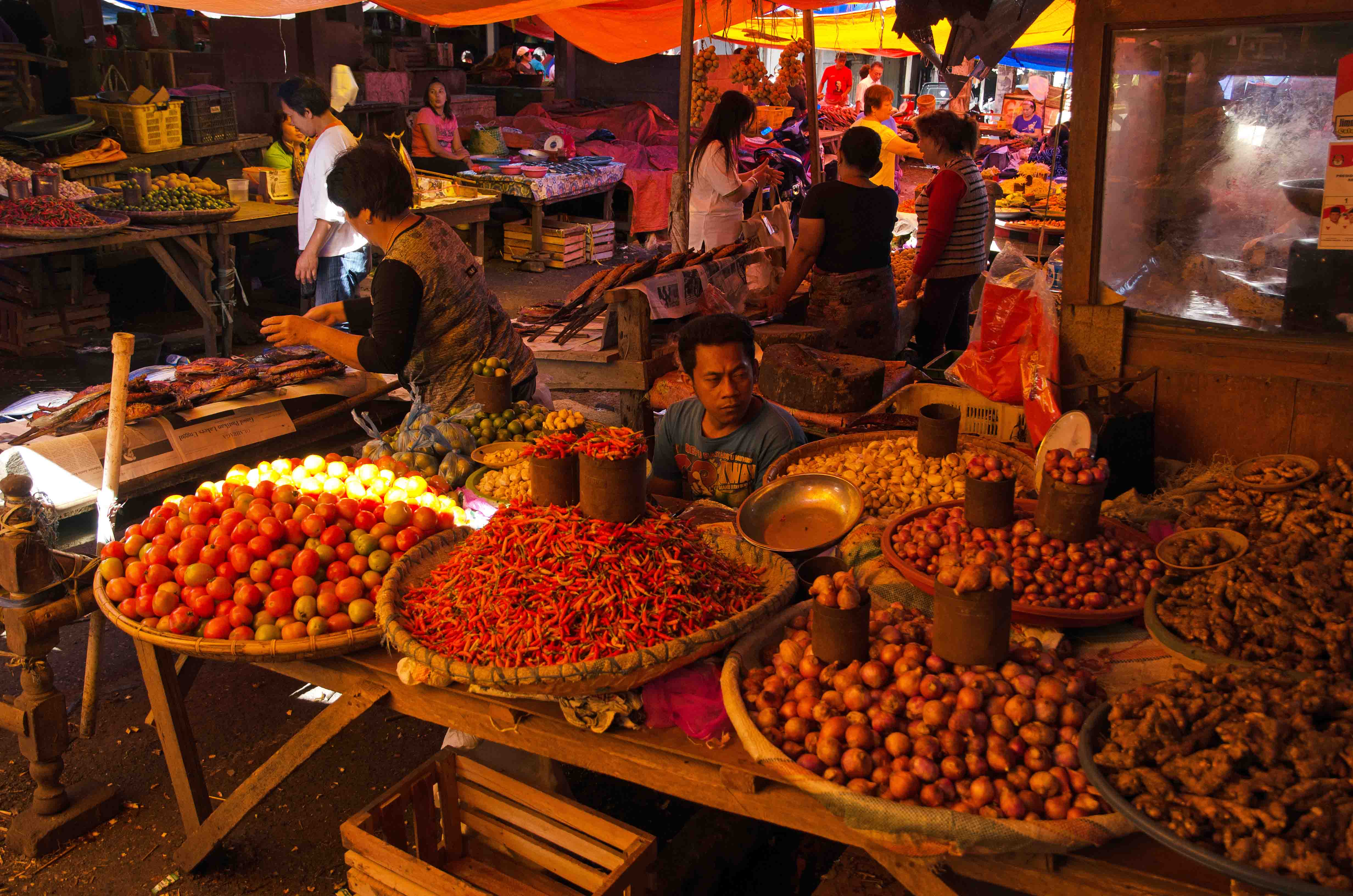
The above photograph has a lot of nice produce of the soil in the foreground, but hopefully it is interesting because one is drawn to look through it to the brightly lit background. I like photographs which have a number of layers to them. The following photograph also has a brightly lit background; it’s not to difficult to take these sorts of photographs in such a colourful and complex market place!
Peppers, onions, ginger and garilc for sale in Tomohon market, Sulawesi.
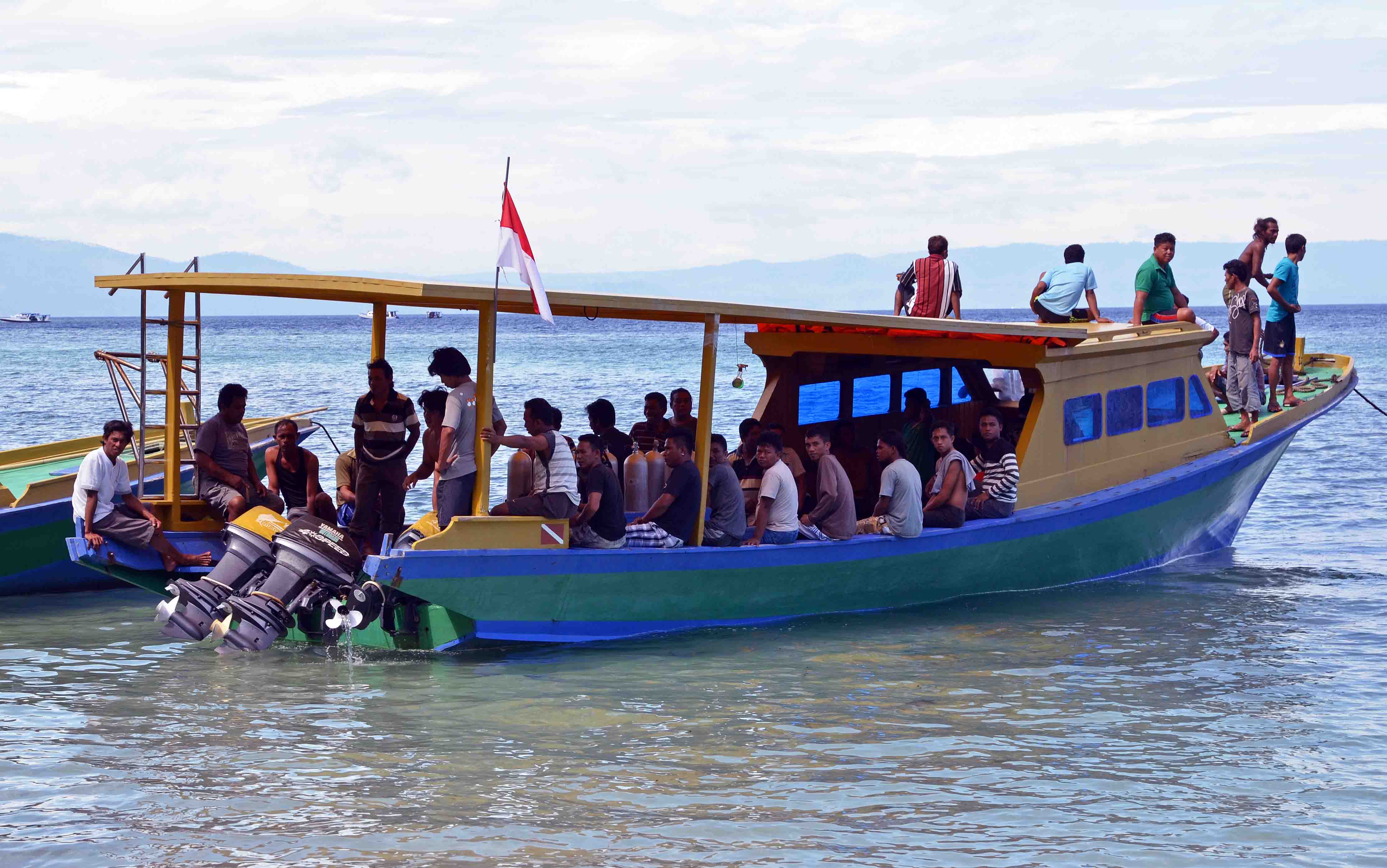
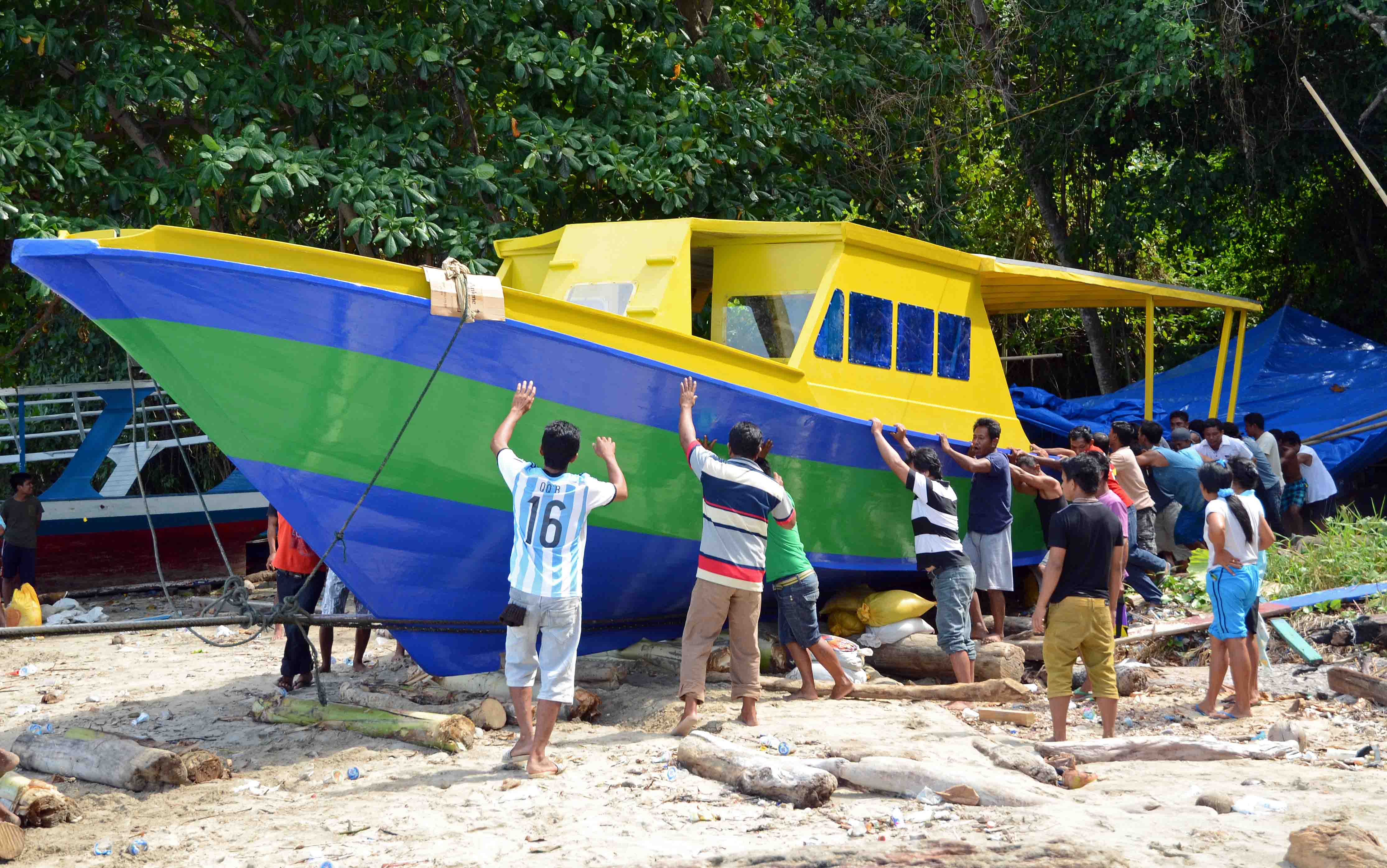
When I was staying on Bunaken Island, in North Sulawesi, I saw and photographed the launch of a new dive boat. The boat had been build using traditional methods, just above the beach just below Bunaken Island Resort where I was staying. The boat was to be launched using manpower alone, and so people (men!) had been invited from other resorts and locations around the island to help with the launch. Here are some of the men arriving on another dive boat.
People arriving to help launch a new dive boat, Bunaken Island, Sulawesi.
Bunaken is a small (8 square km) island which lies off the northern tip of Sulawesi, a short crossing from the city of Manado, on the mainland. It is popular with tourists who come to dive or snorkel on the reefs of the superb Bunaken Island National Marine Park. Each resort has a number of dive boats, which are used to ferry divers and snorkellers around the island to different dive sites. This boat had been constructed in situ just above the beach.
New dive boat ready to be launched.
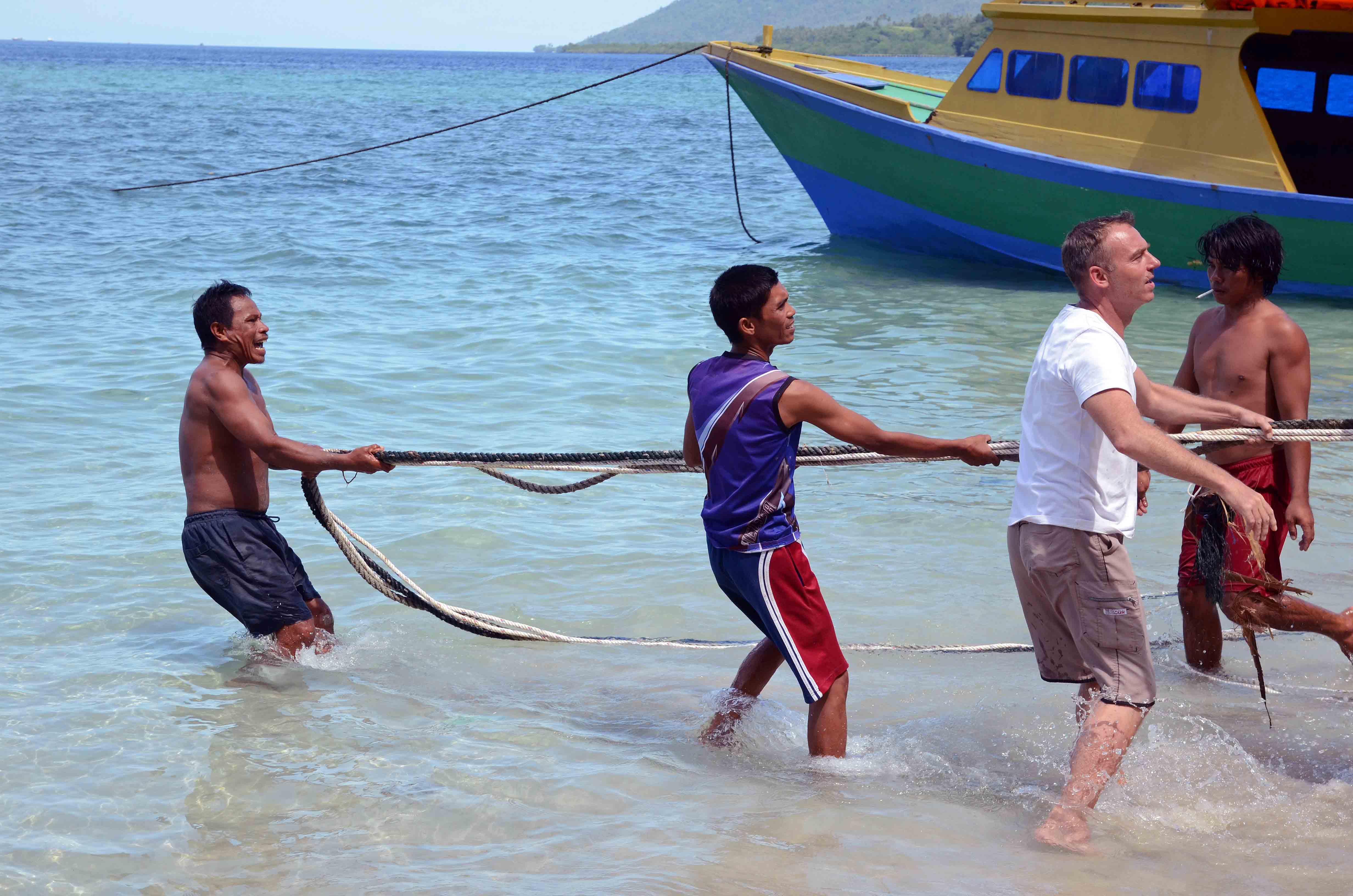
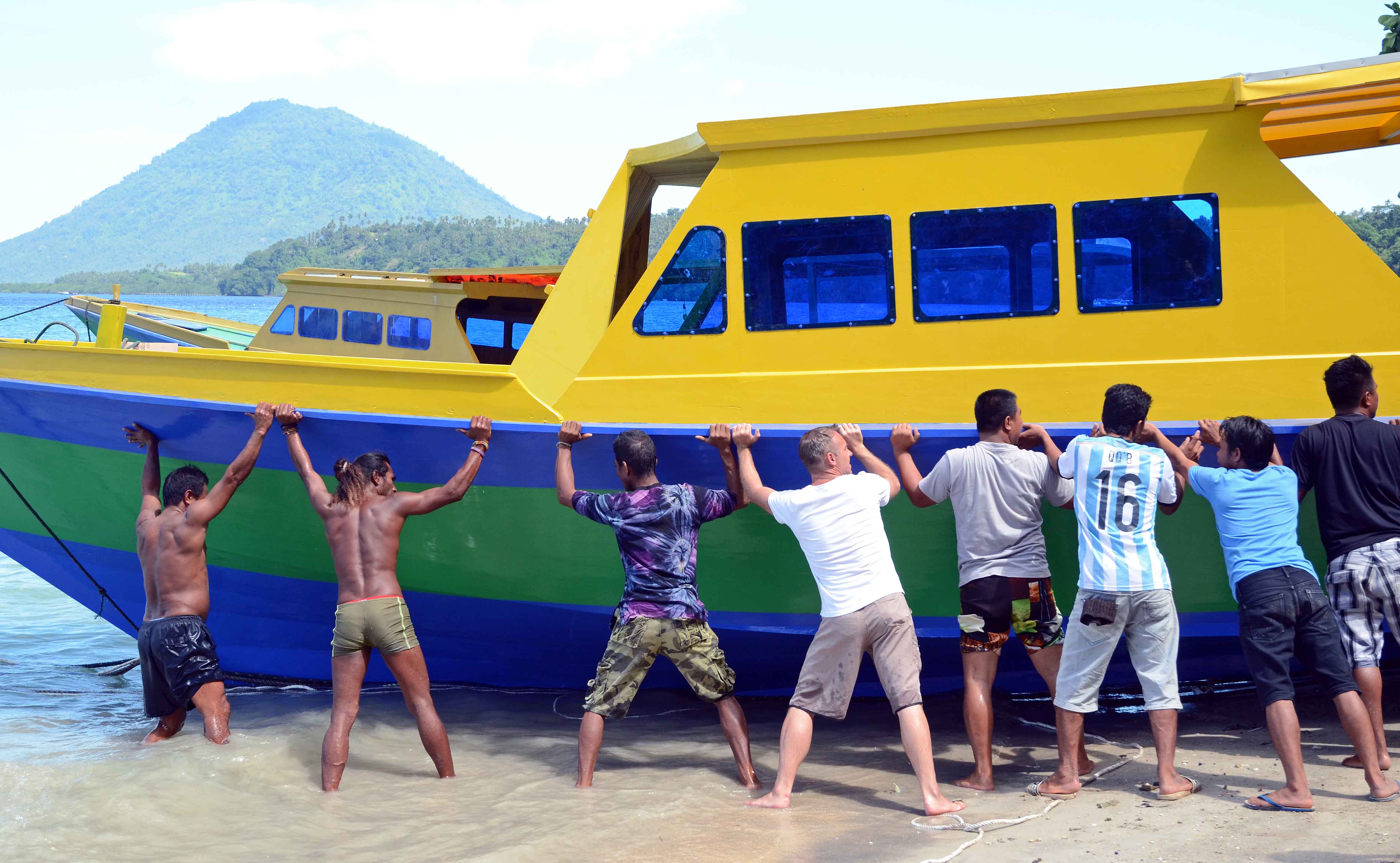
Logs were placed as rollers in the path of the boat, down the beach and sand bags were filled and placed next to them to stop the boat from rolling over. The boat was attached to ropes and simply pulled down the sand, across the beach and into the sea.
Men pulling on the end of the ropes to start the launch of the dive boat
Some people were at the other end, pushing the stern of the boat; it did not take long for them to get it moving.
With pushing and pulling the boat starts to move
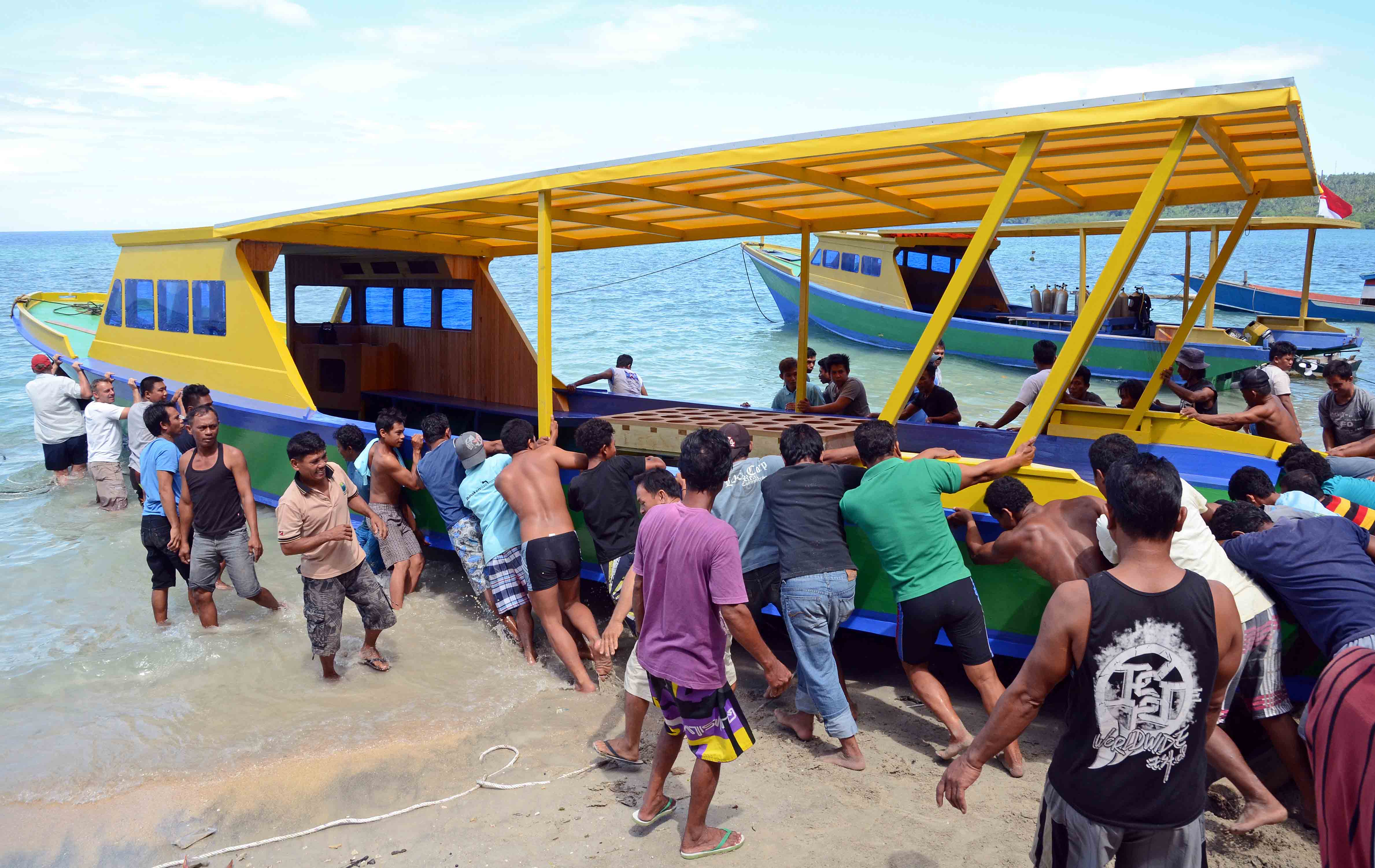
With everyone (apart from me!) pulling hard, the boat started to move down the beach.
Holding the boat upright as it moves into the sea
There was still a lot of effort required to get the boat off the last bit of beach and into the sea, afloat.
Last shove to get the boat into the water
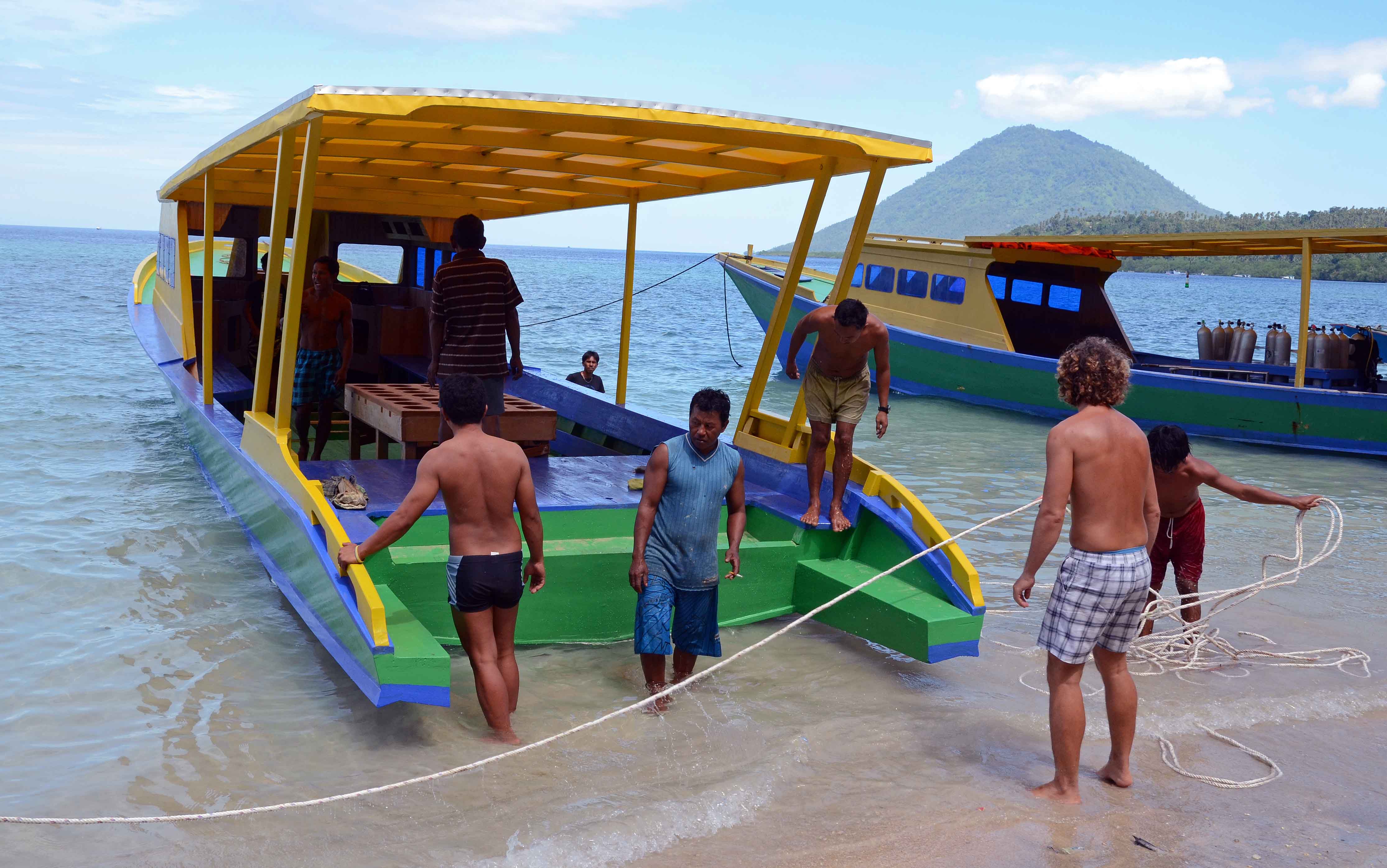
Finally, with a bit more shoving the boat ended up in the sea.
Traditional market stall in Jengki market, Manado, Sulawesi
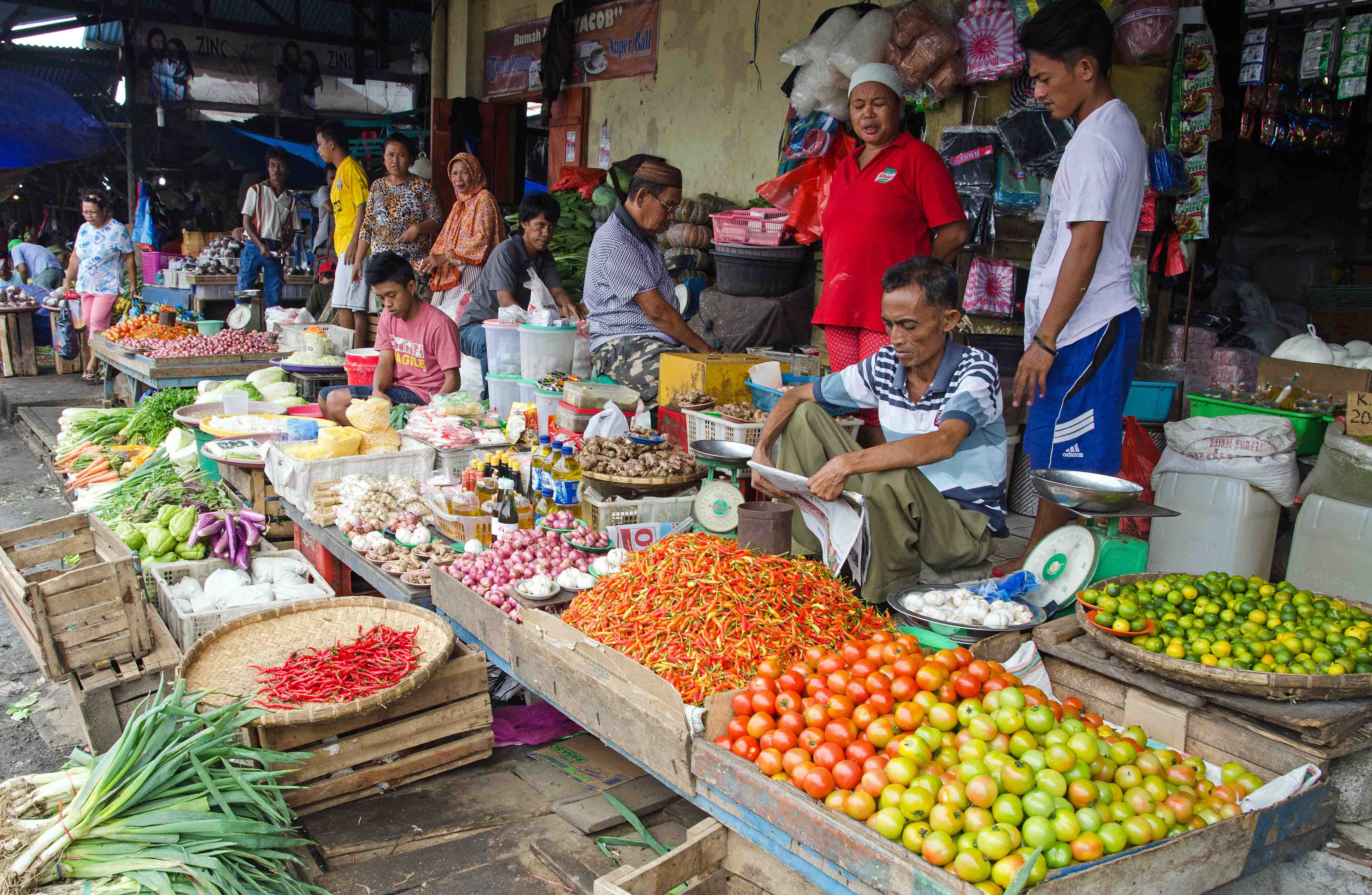
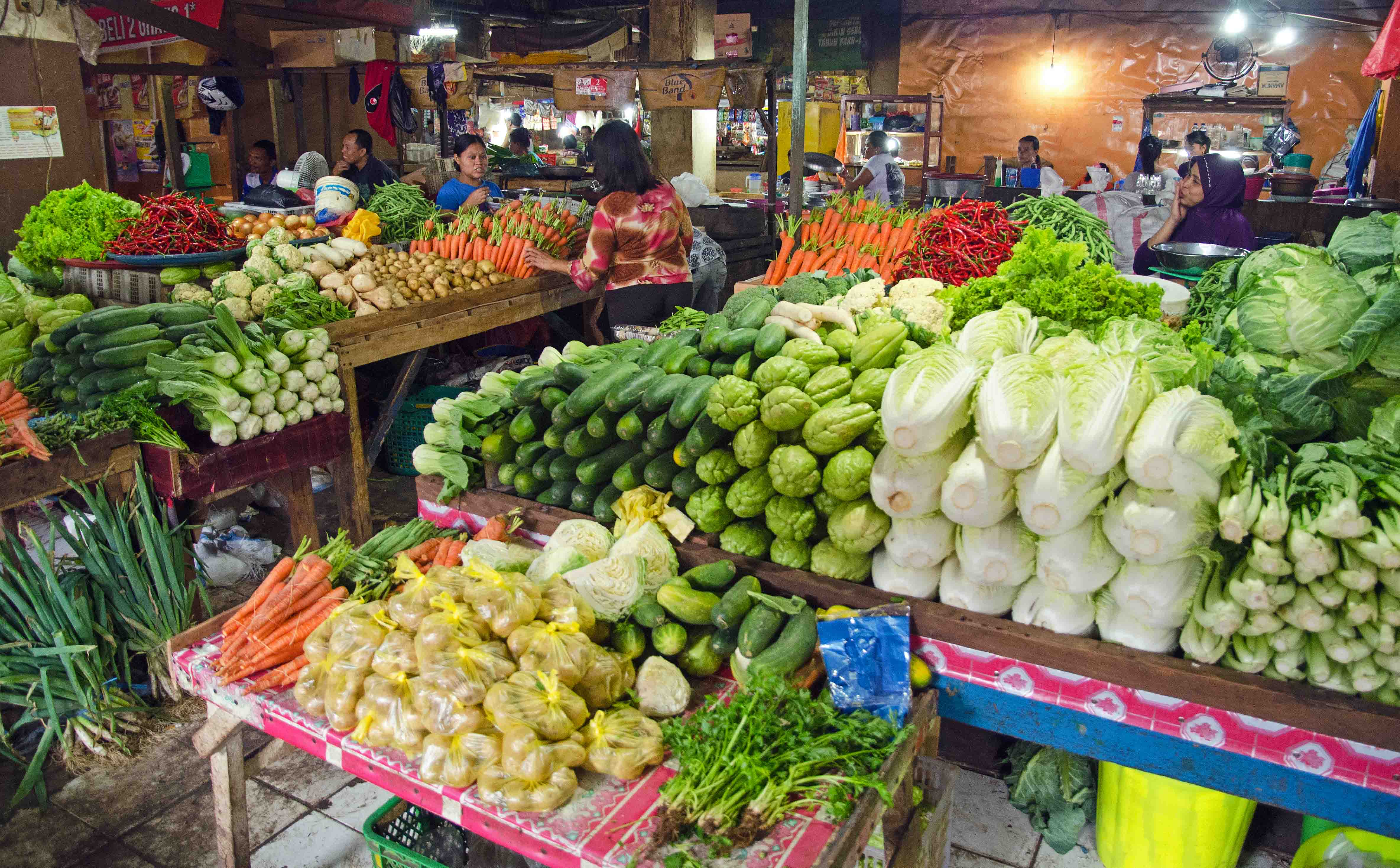
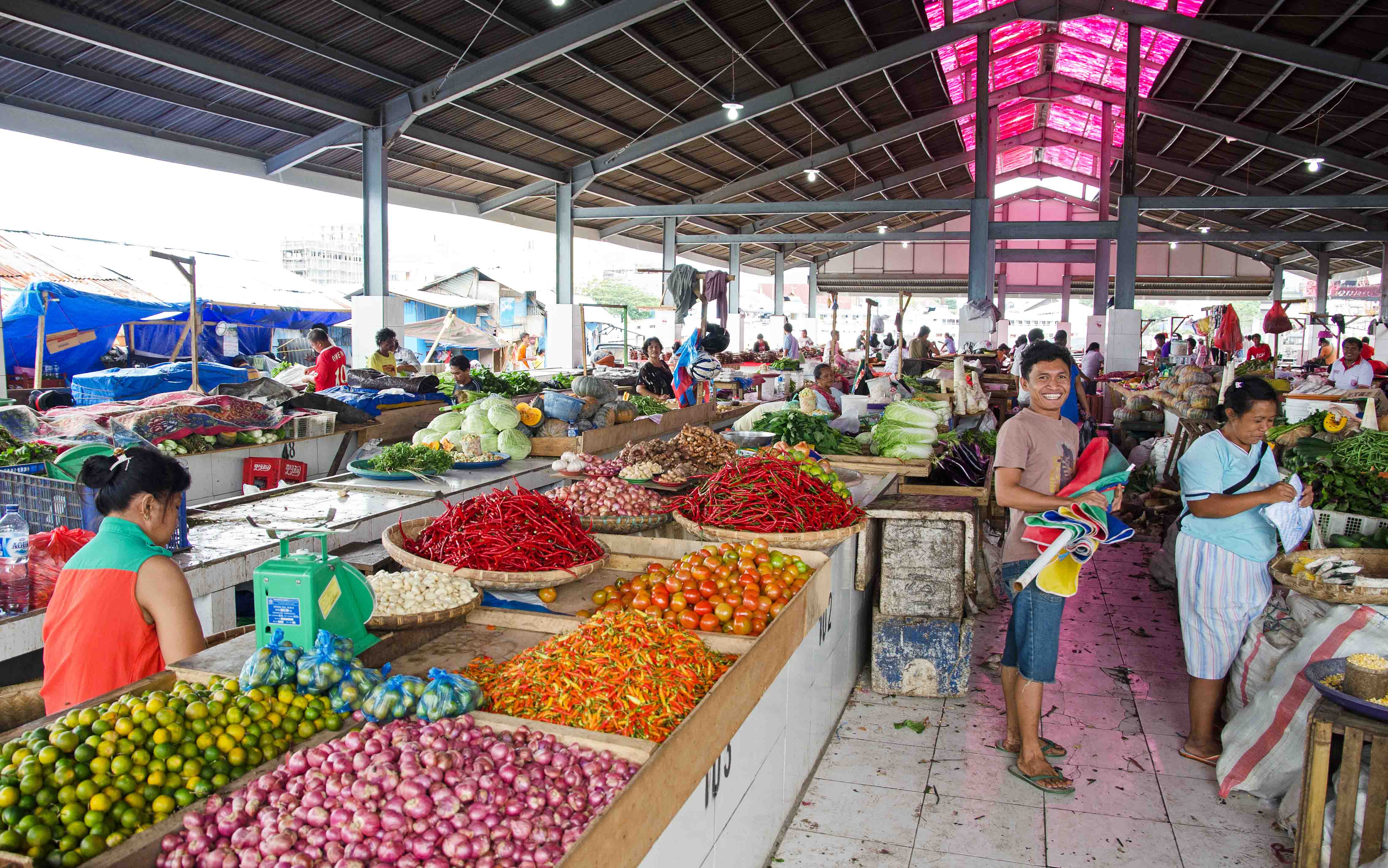
Jengki market in Manado, North Sulawesi (Indonesia) is a traditional fish and vegetable market located next to the port in this city of about half a million people. It is not the cleanest of sites, with piles of rubbish and rotting vegetable remains, but the people were very friendly, and the produce itself looked very clean and wholesome, coming from both the local seas and the fertile volcanic soils of Minahassa peninsula. Like many Asian markets, there is a great variety of fresh vegetables that would not look out-of-place in the most upmarket supermarket in the West. Indeed, it could be argued that the fruit and vegetables available to locals in these markets, is better – and certainly much cheaper – than anything available in most Western countries; take a look at this mouth-watering display (below). To be able to go and buy such fresh vegetables on a daily basis would be something I would love to be able to do! We can see it this photograph: carrots, cabbage pak choi, cucumbers, leeks, potatoes, lettuce, red peppers, onions, green beans, cauliflowers and more.
Vegetable market in Manado, Sulawesi
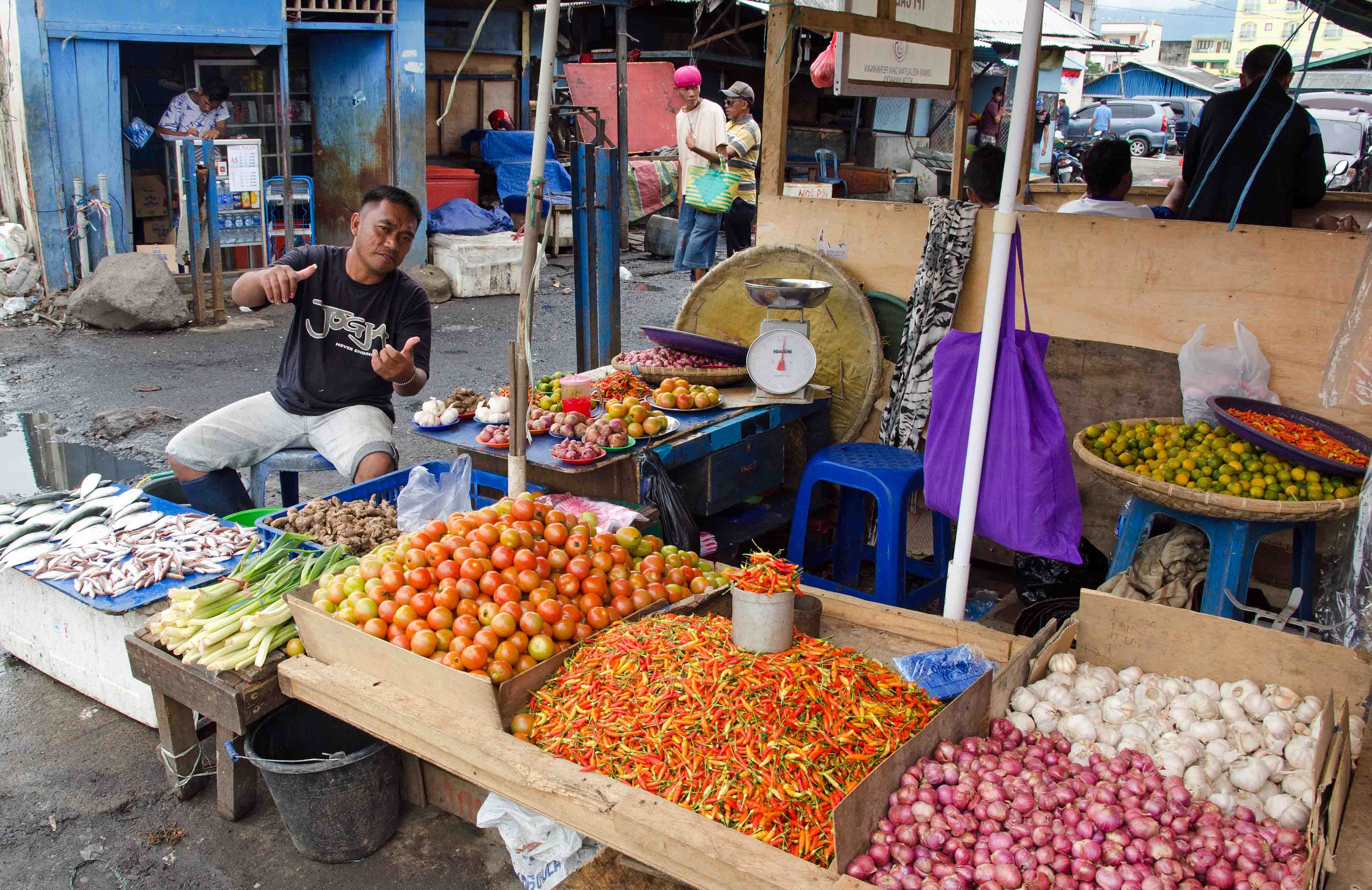
The traditional market (pasar) is an important place for locals to purchase food on a daily basis and has been integral to the formation and development of the city over nearly four centuries. The produce is usually sold at a highly competitive price, offering the best value for money, presumably better than the supermarkets, which have increased in number in recent years. The good news being that the traditional markets have continued to prosper despite the growth of the supermarket. One reason being, perhaps, that they offer the consumer a variety of fresh produce in the sort of quantities they require on a daily basis, in a simple and straightforward way, such as on small plates (see below) devoid of unnecessary packaging, which can be emptied straight into the shoppers bag or basket. Indeed, all of the ingredients for a good meal are present together on the same stall.
Stall keeper giving me the thumbs up for taking a picture of his market stall in Madado, Sulawesi.
The market is also a good place to stock up on other things, such as tinned food and other essentials, as shown in this small stall, where once again the owners were happy to have their photograph taken, once I had asked their permission. I also like to show people the photograph(s) that I have taken of them; one of the advantages of digital cameras, which would have been impossible in the old days (apart from using a Polaroid camera of course!).
Shop keepers in Jengki market, Manado, Sulawesi
One of the things which most impressed me about this market, was the variety of produce available for the consumer. In one area of the market, there were a number of stalls selling eggs, chicken eggs that is. There were a bewildering variety of differently sized eggs at different prices. I have never seen more than three categories in my local shop here in England, Large, medium and small-sized eggs. This was more like a retail market, but they were selling direct to the consumer.
Stall selling eggs in a wide range of size and price categories, Manado, Sulawesi.
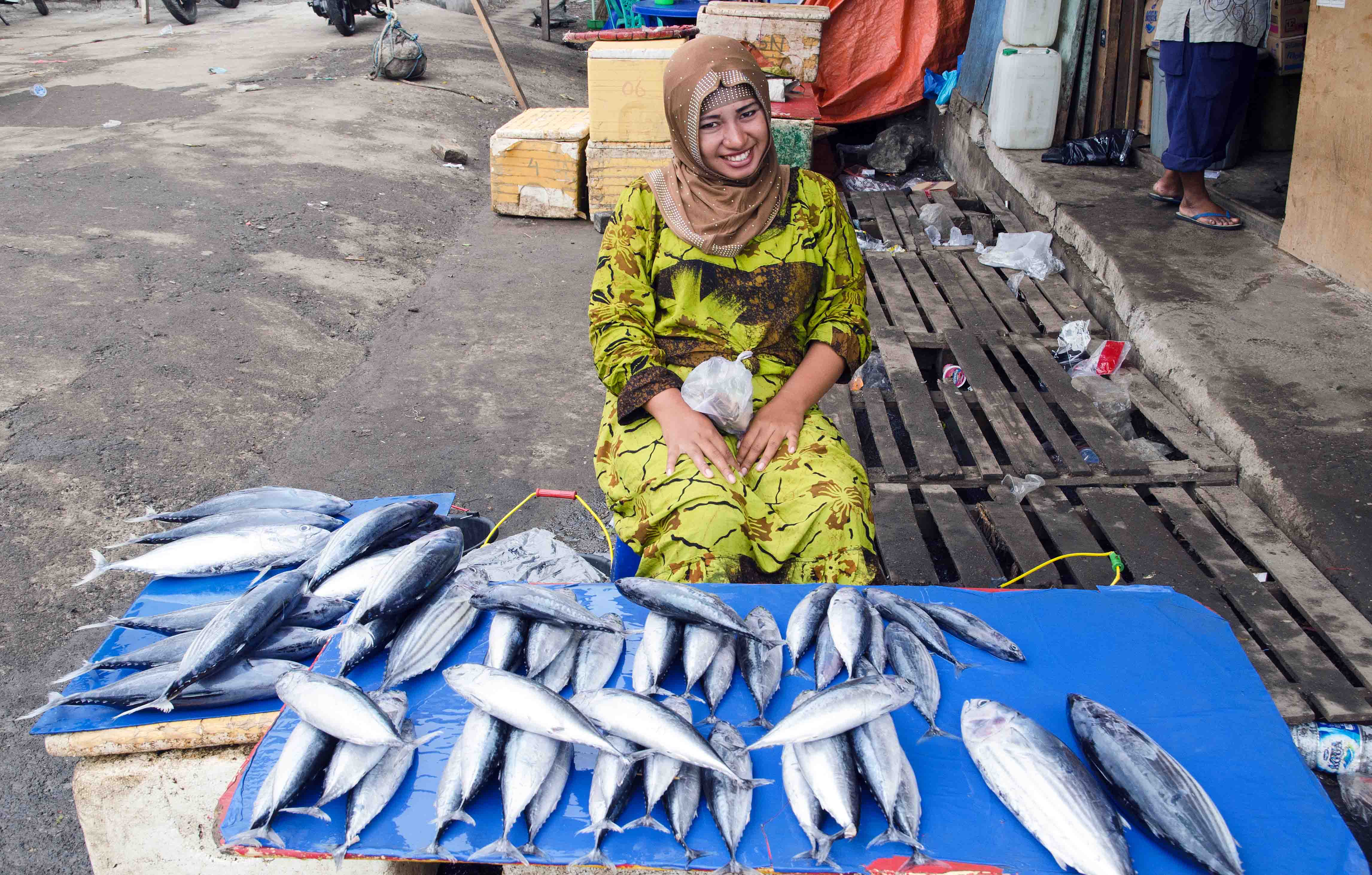
Although I am not a fish eater, I always enjoy looking around a fish market to see the variety and abundance of local fish species. There seemed to be a reasonable number of small tuna (skipjack) available although I know that numbers have decreased in recent years.
Lady selling fish in the market, Manado, Sulawesi.
Traditionally, coastal fishing for skipjack has been carried out by small pole-and-line vessels in North Sulawesi but they have had to compete with large-scale industrial offshore fishing which has reduced fish stocks considerably. The cured and smoked skipjack tun (cakalang in Minahasan) is used for a traditional dish, where the flesh of the fish is split into two and presented on a bamboo frame. There were also much smaller fish (mackerel?) which were being sold. This gentleman (below) was a bit of a character, and seemed to enjoy posing a number of times next to his fish!
Selling fish in Jengki market, Manado, Sulawesi
There were also a variety of other fish being sold. Let’s just hope that they were all caught using sustainable fishing methods, although illegal methods (such as blast fishing and using cyanide) have been widespread techniques – albeit highly damaging to reefs – in Indonesia for many years. I was sitting next to someone on the aeroplane to Manado, who told me that he had once seen someone who had blown his own arm off using a homemade fishing ‘bomb’ (often a mixture of kerosene and fertilizer). Blast fishing is easier and sometimes more productive than with other traditional methods, but is highly destructive and so short-term.
Jengki fish and vegetable market, Manado, Sulawesi
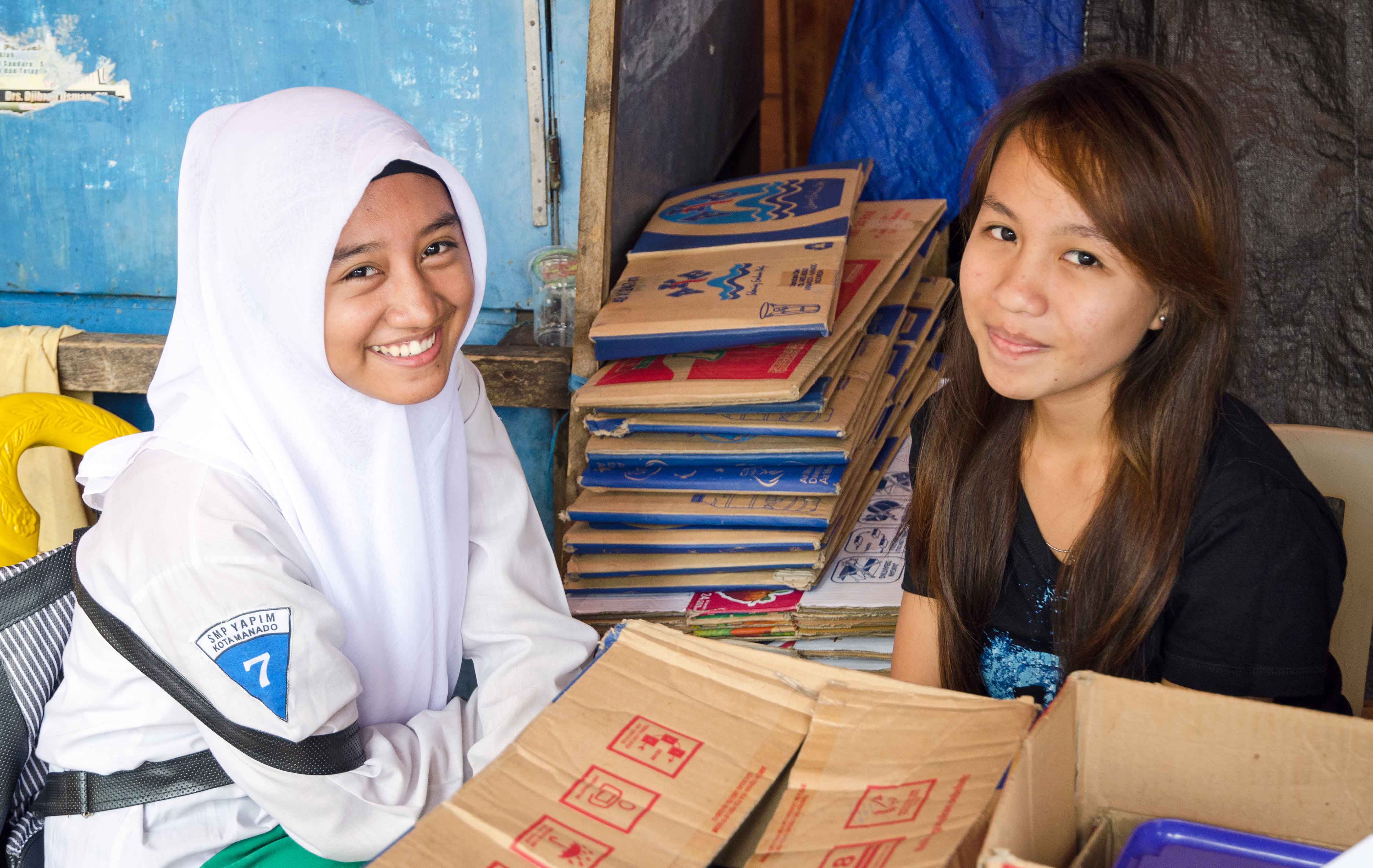
What I took away most from my short visit to this market, was the friendliness of the people. They were a little reserved at first, but once they understood that I was being respectful and was genuinely interested in what they were doing and selling, they were warm and generous, allowing me to take photographs of them, even though they must get pestered by quite a few tourists over the course of a year. I also took away a vision of people of different religions seemingly getting on very well with each other; something that many other places in the world could learn from.





















 Ray's ramblings