Category: National Parks

  • Underwater shots from Indonesia

    Into the depths I go!

    Last year (October 2016) I was lucky enough to do a wonderful wildlife cruise in Indonesia, from Bali to Flores, on a small ship called MV Mermaid I (1).  These ships are usually used as dive boats, but this trip was devoted to  looking out for dolphins, whales and birds – which I described in my previous blog (1) – and we also had plenty of opportunities to go snorkeling.
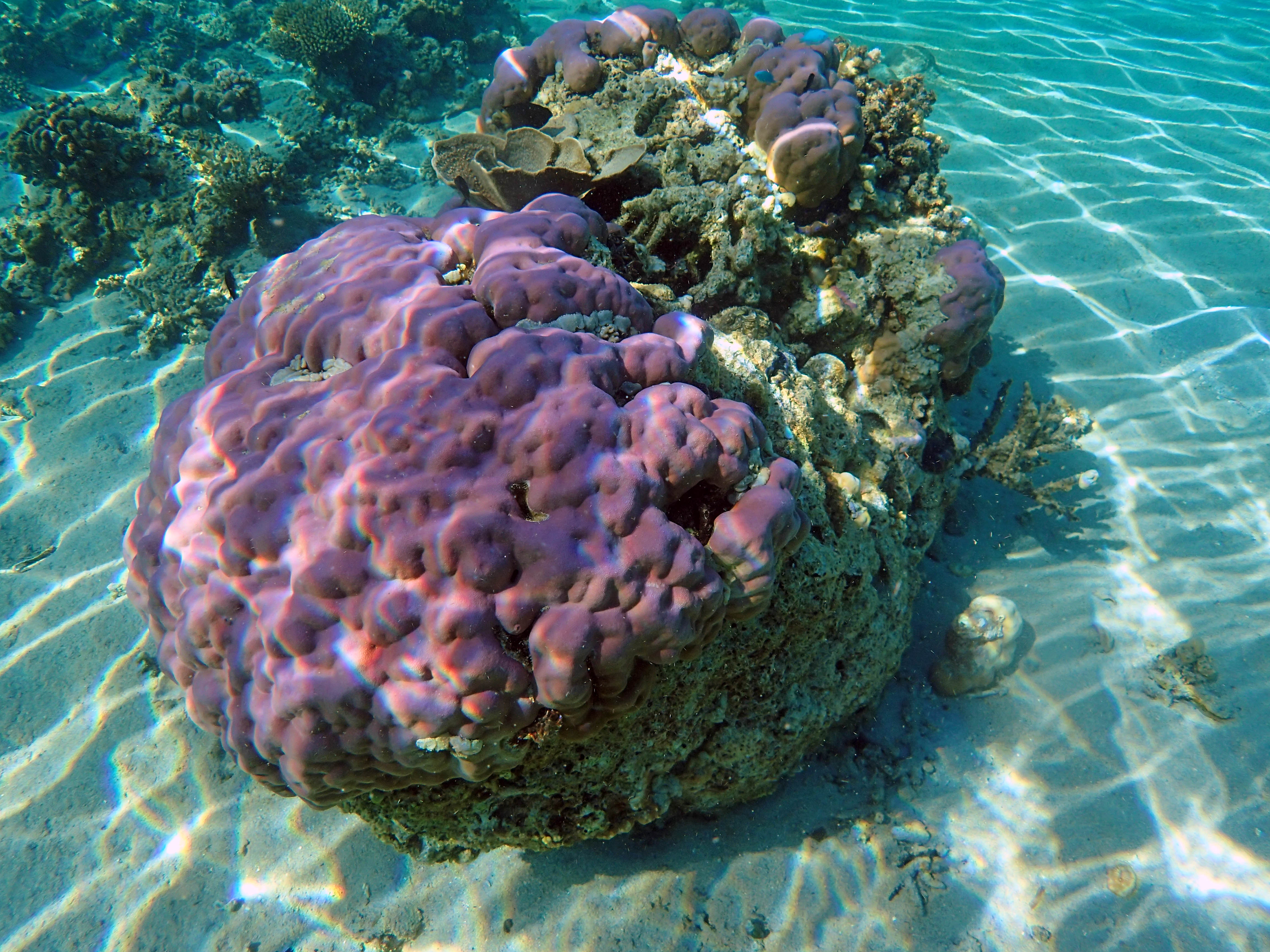
    Coral head with pink encrusting coral

    I took these underwater photographs with a Olympus Tough TG-5 GPS Waterproof camera, mostly with a fish eye converter attached. Unfortunately, I let some seawater in at one stage, and it never recovered from being bathed in seawater. Fortunately, I managed to capture quite a few underwater images before it died!
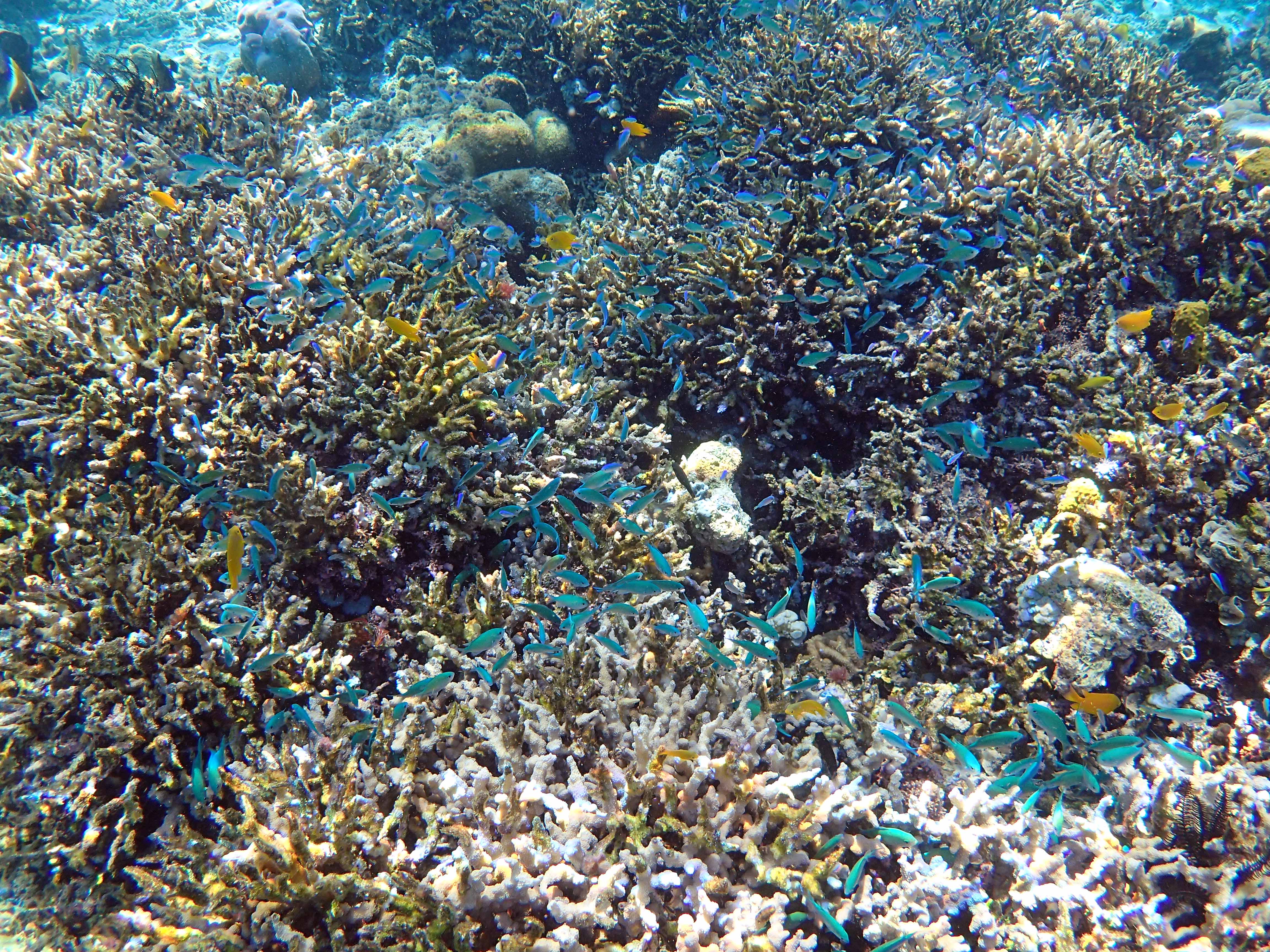
    Coral with shoal of small blue fish

    I wish I had kept a note of where each of the shots were taken (!) but perhaps it does not matter. It was fun to try to capture some of the amazing underwater world, mainly within the Komodo National Park. For those wanting to know exactly where we stopped off to snorkel, the trip report is available online (3).
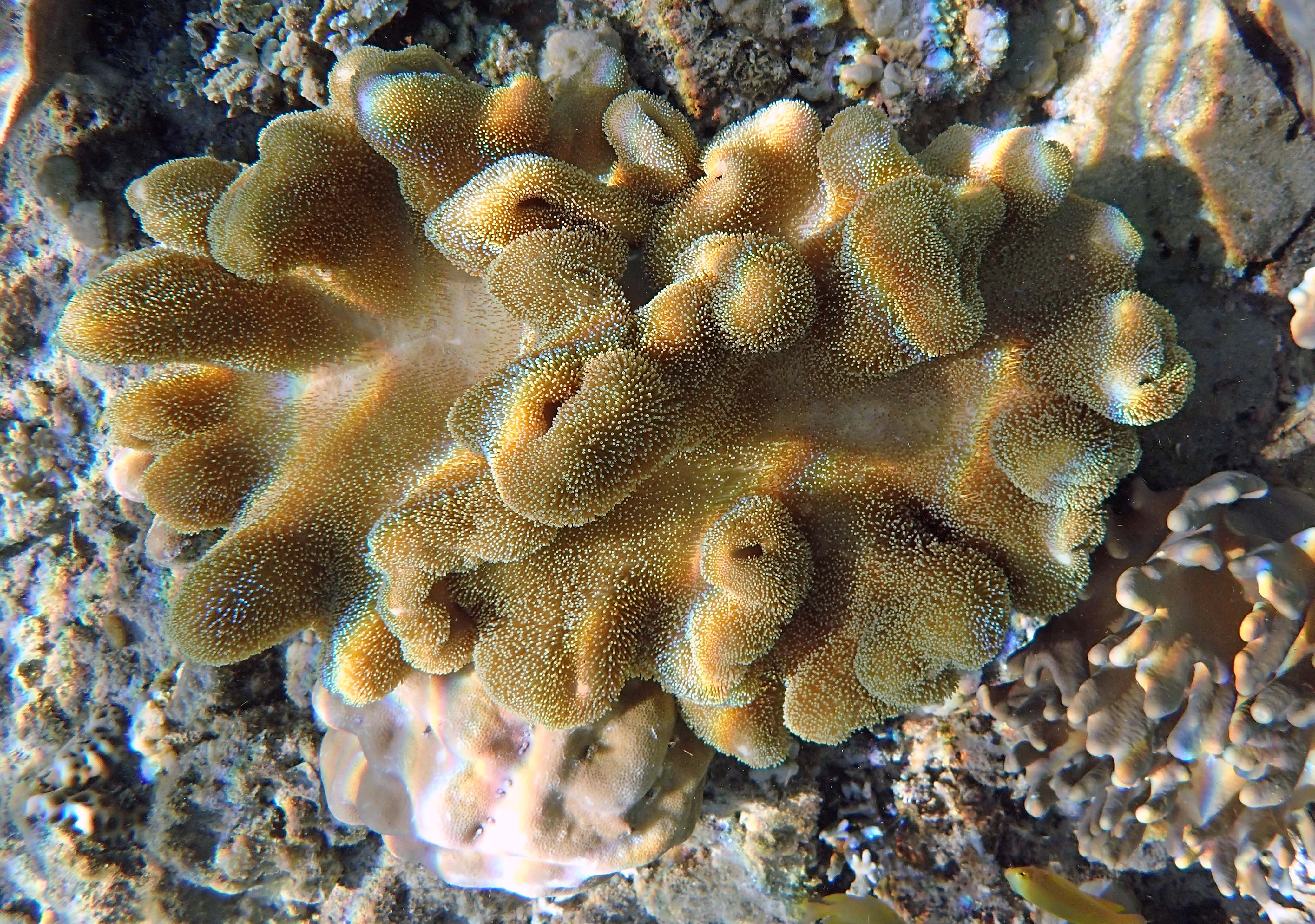
    Soft coral

    We were given instructions about the site before each snorkel dive and taken to the coral reef in the small ‘zodiacs’. The Mermaid I dive staff accompanied us and videoed each dive.
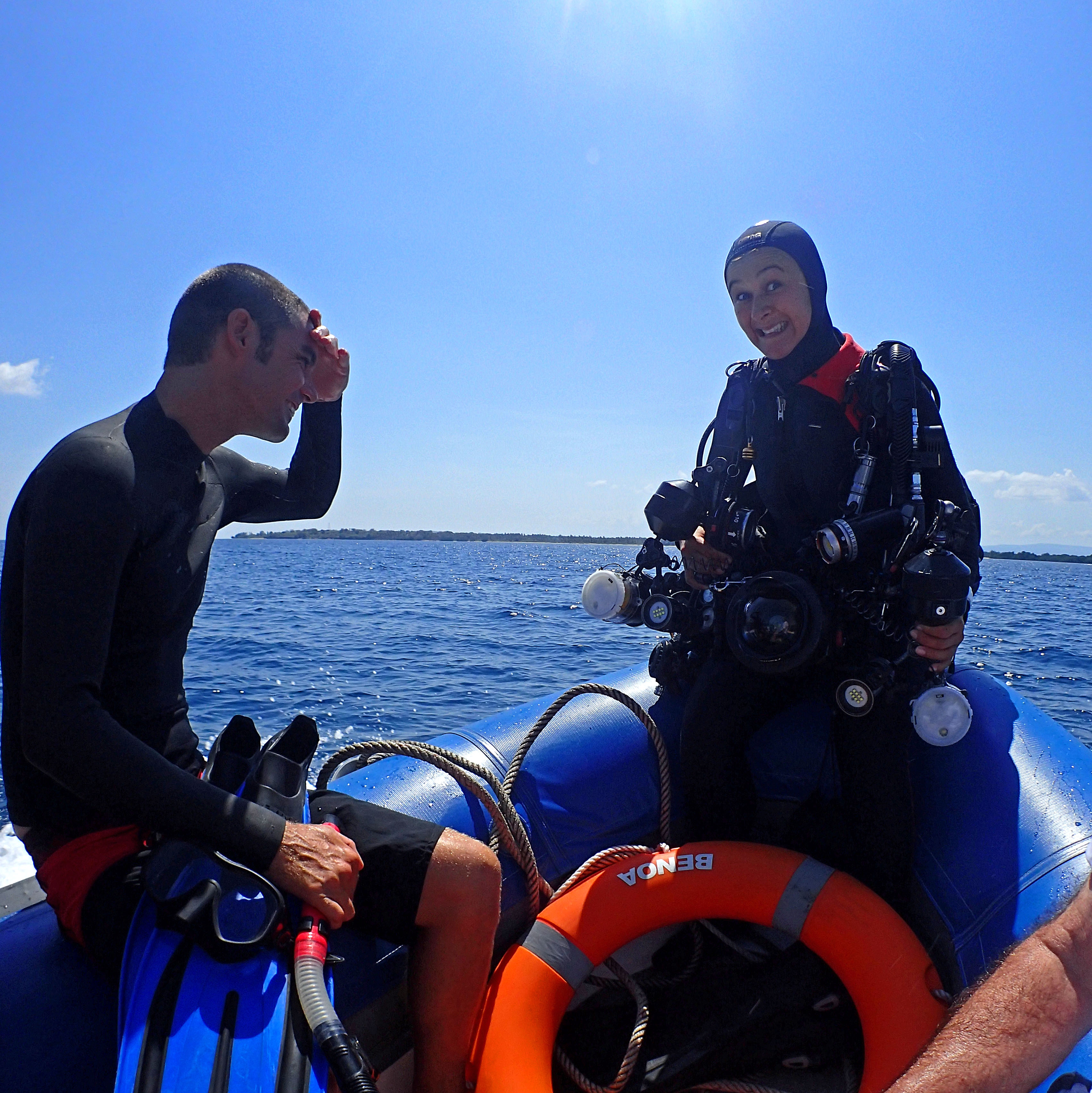
    Mermaid I dive staff and photographer

    There is no question you see more whilst diving, but I have never managed to take a course and I am quite happy just snorkeling.
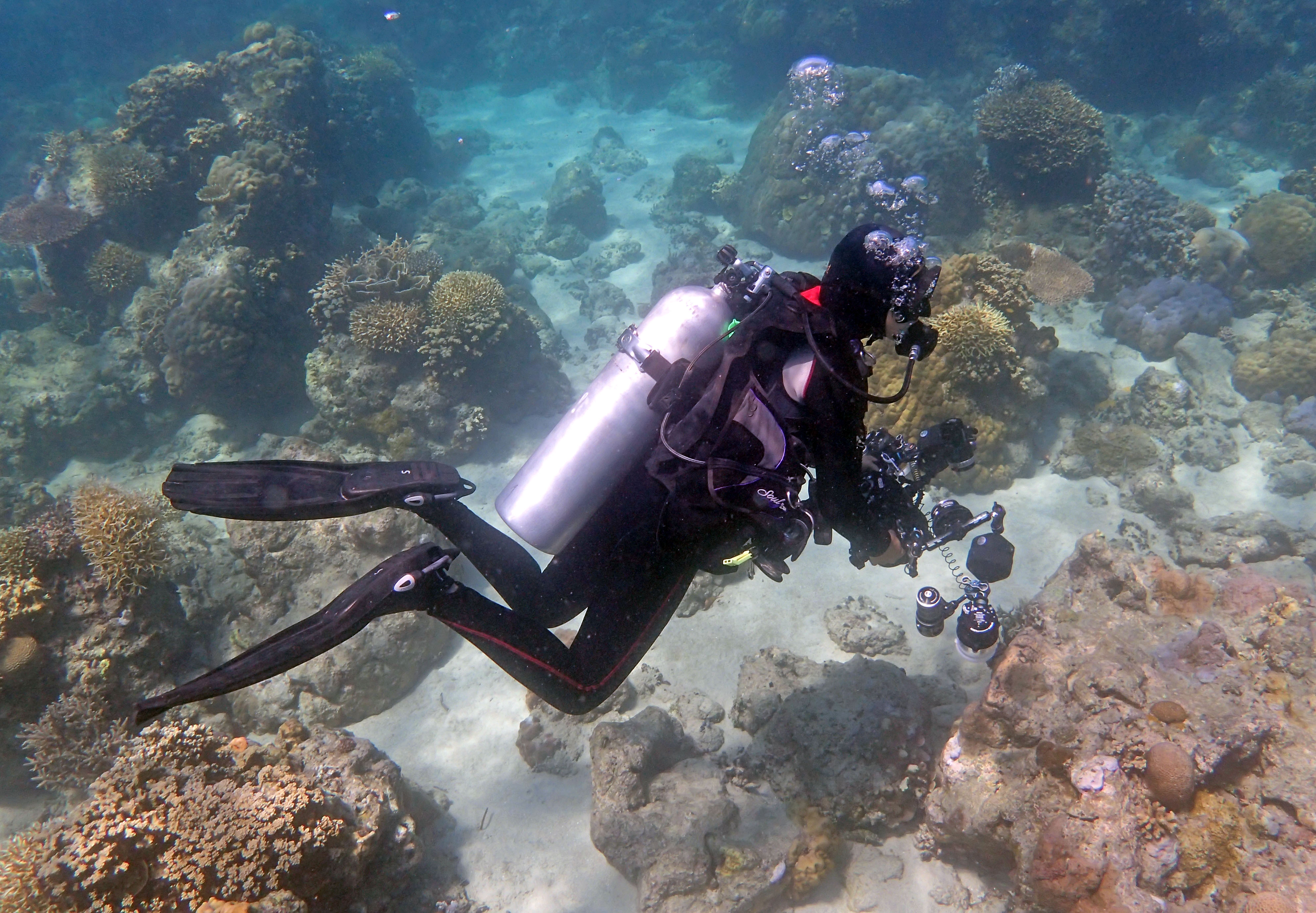
    Scuba diver filming the action

    The water was relatively shallow, so it was quite straightforward to swim down and photograph the more interesting inhabitants of the reef, like this gorgeous blue starfish.
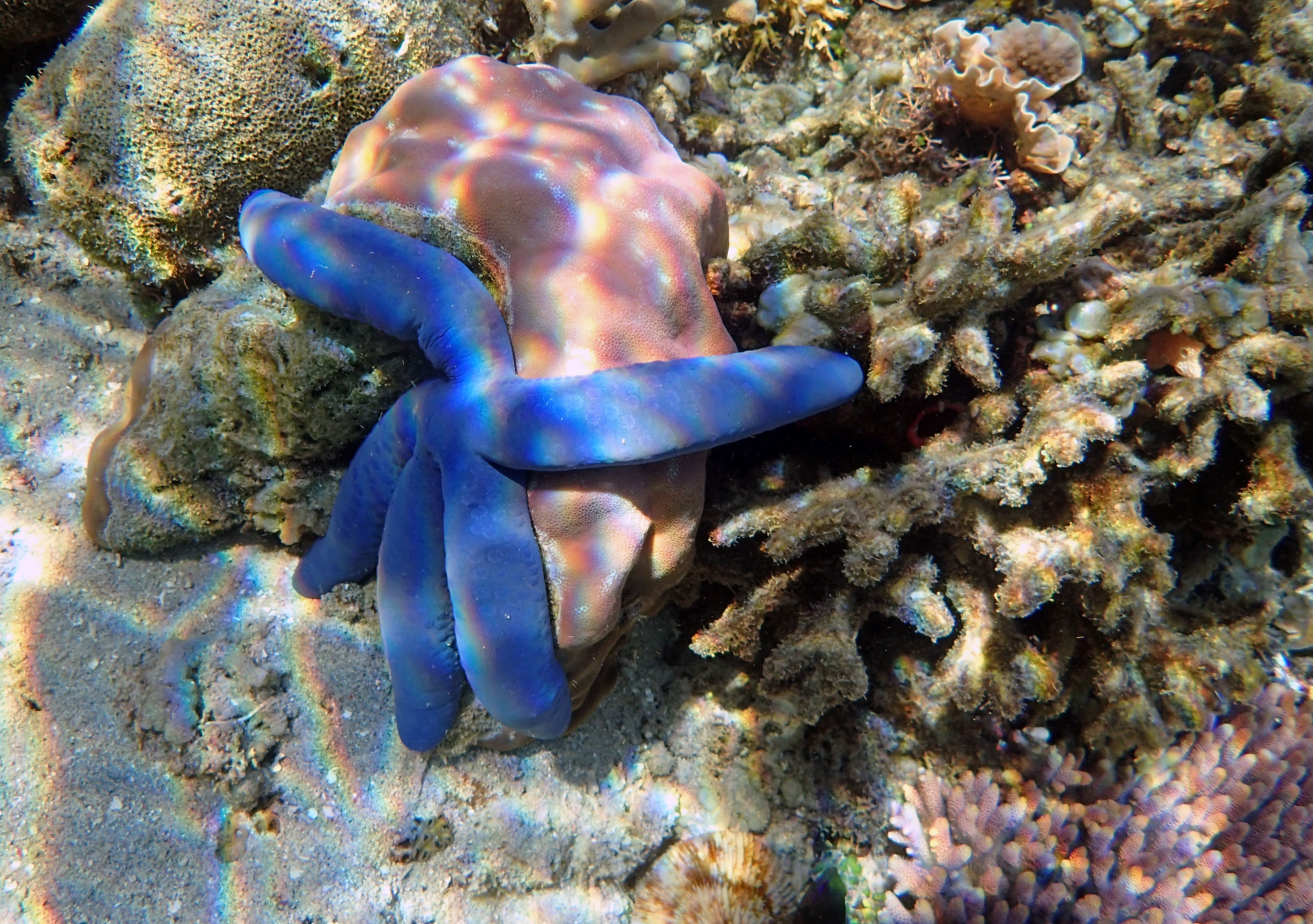
    Blue starfish (Linckia laevigata) and pink coral

    Fish were a little bit more cautious, but I managed to get fairly close to this trigger-fish (I think it is!). They bite! Feisty characters who think they own the place; well I guess they do!
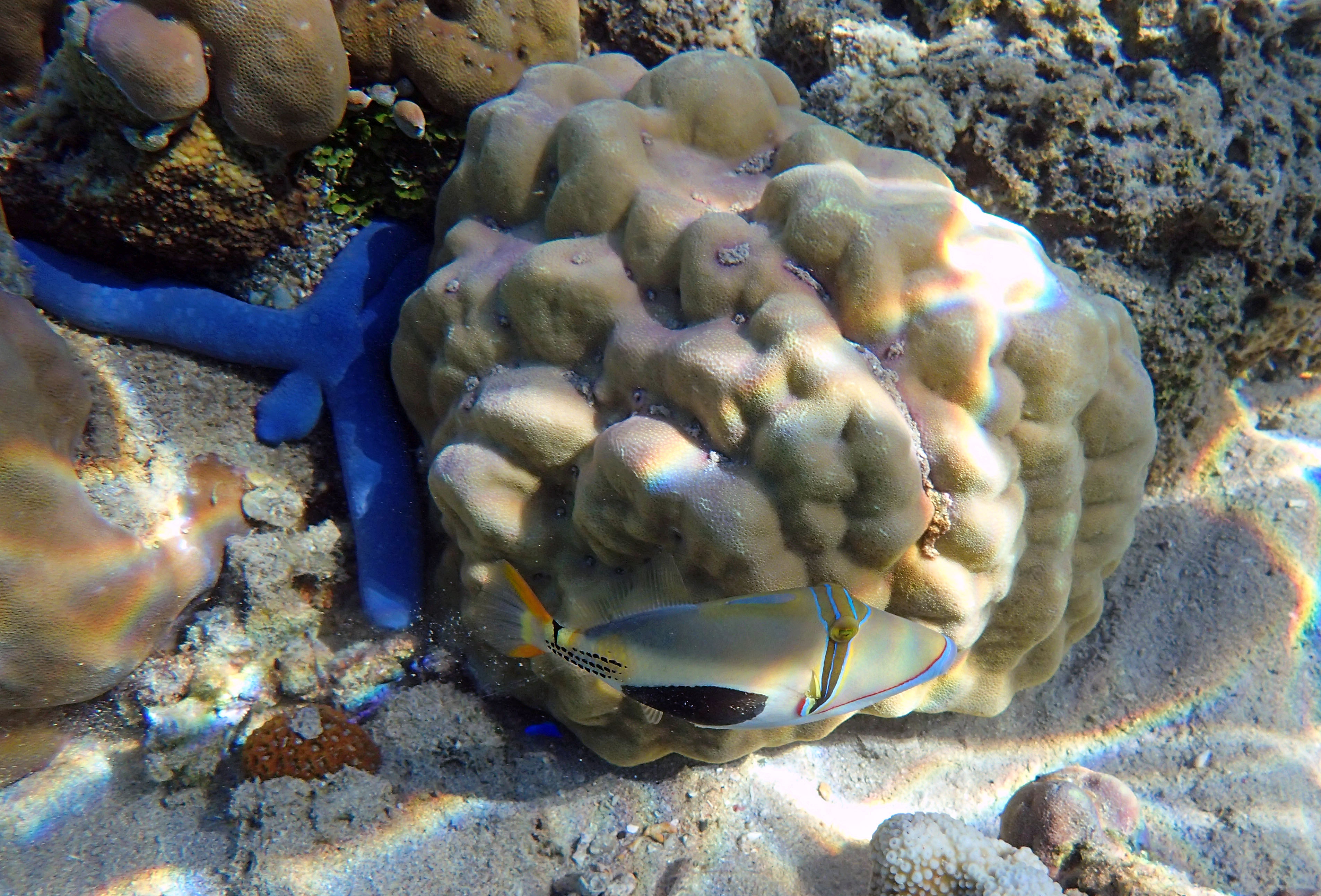
    Blue starfish (Linckia laevigata) and trigger fish

    It was a treat to see the famous Clownfish, which lives within a sea anemone’s poisonous tentacles, and has been immortalized by Disney.
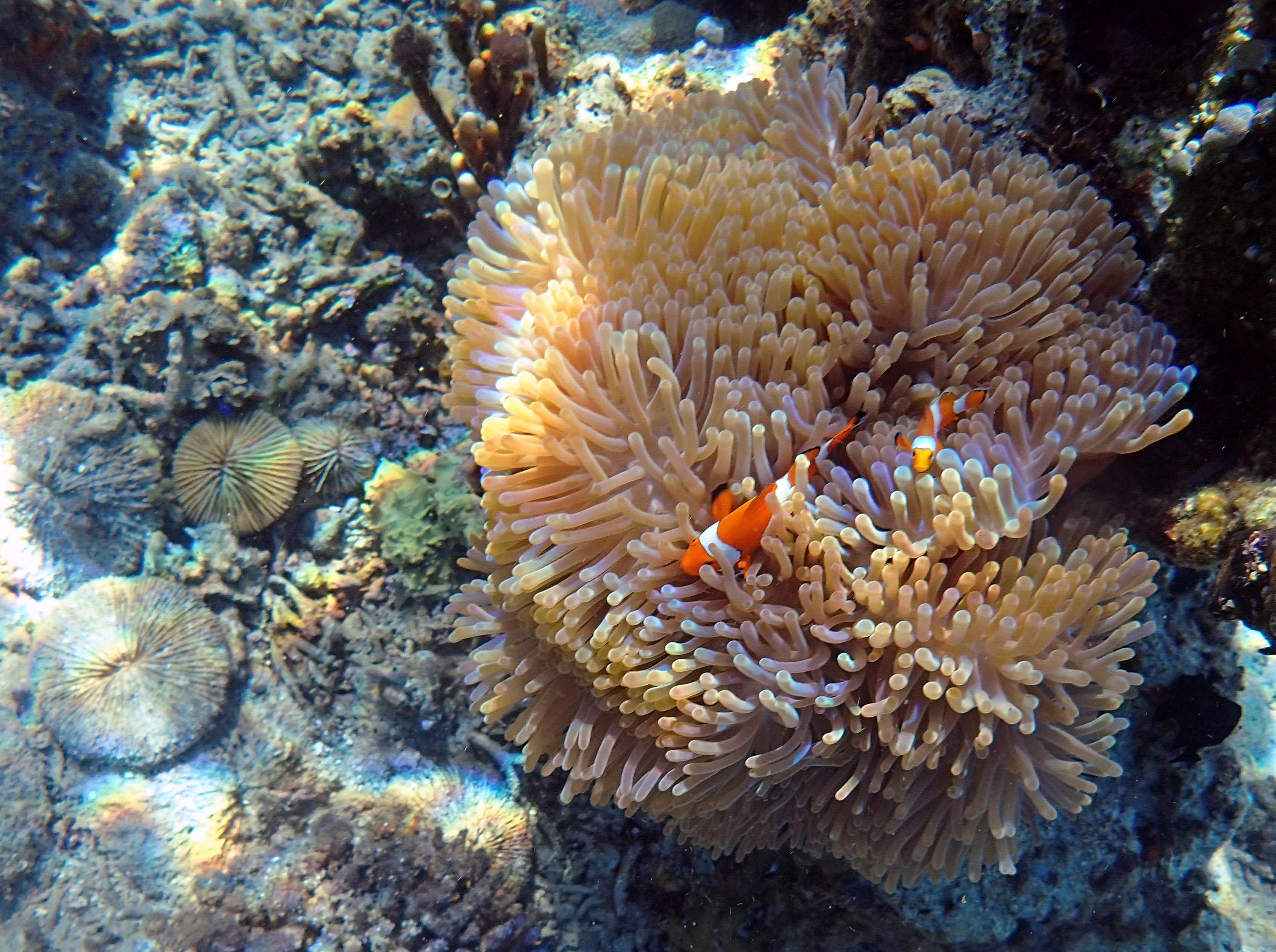
    Clownfish (Amphiprion sp.) and anemone

    The shoals of small iridescent fish – which darted into the crevices in the coral at any sign of danger – were mesmerizing.
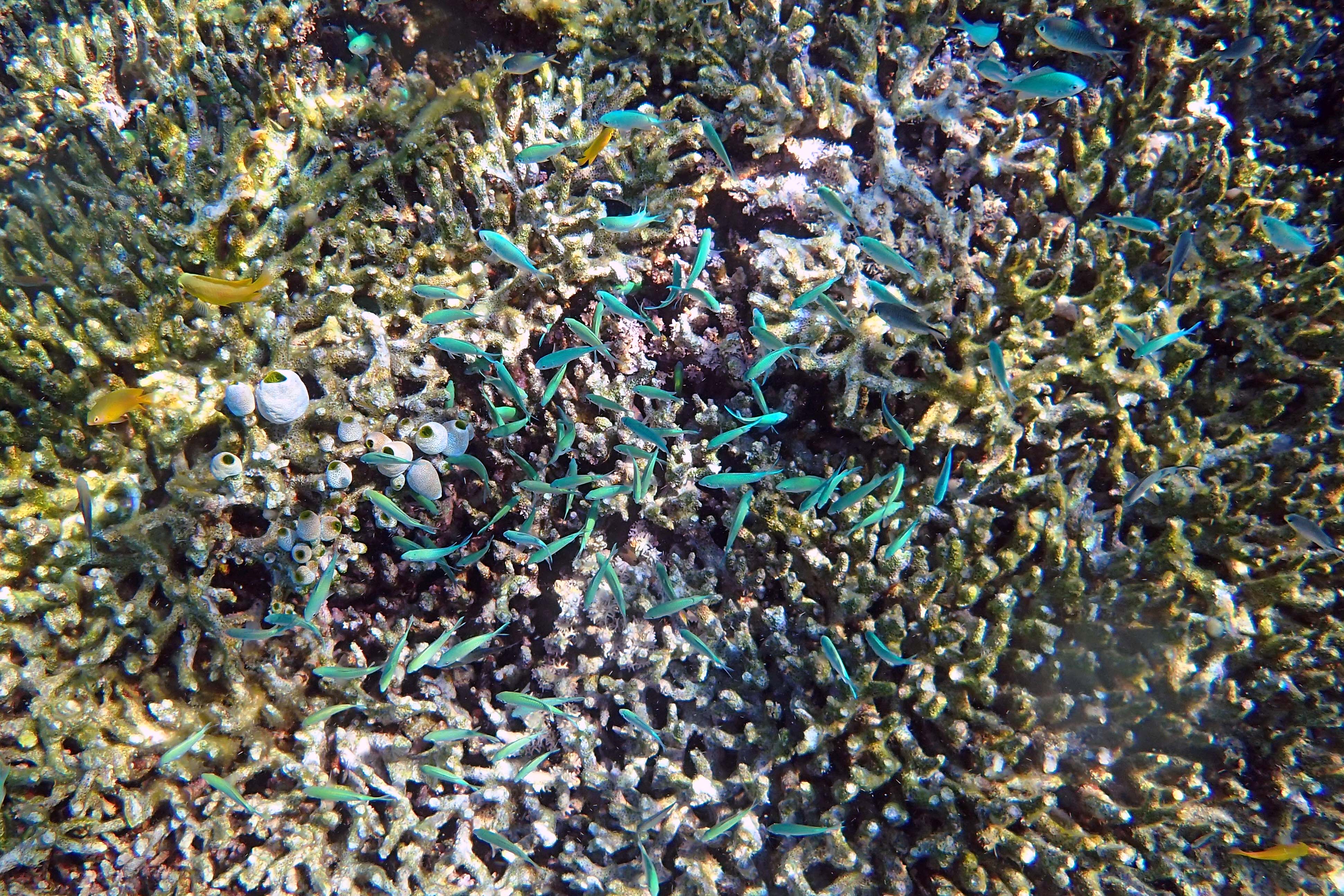
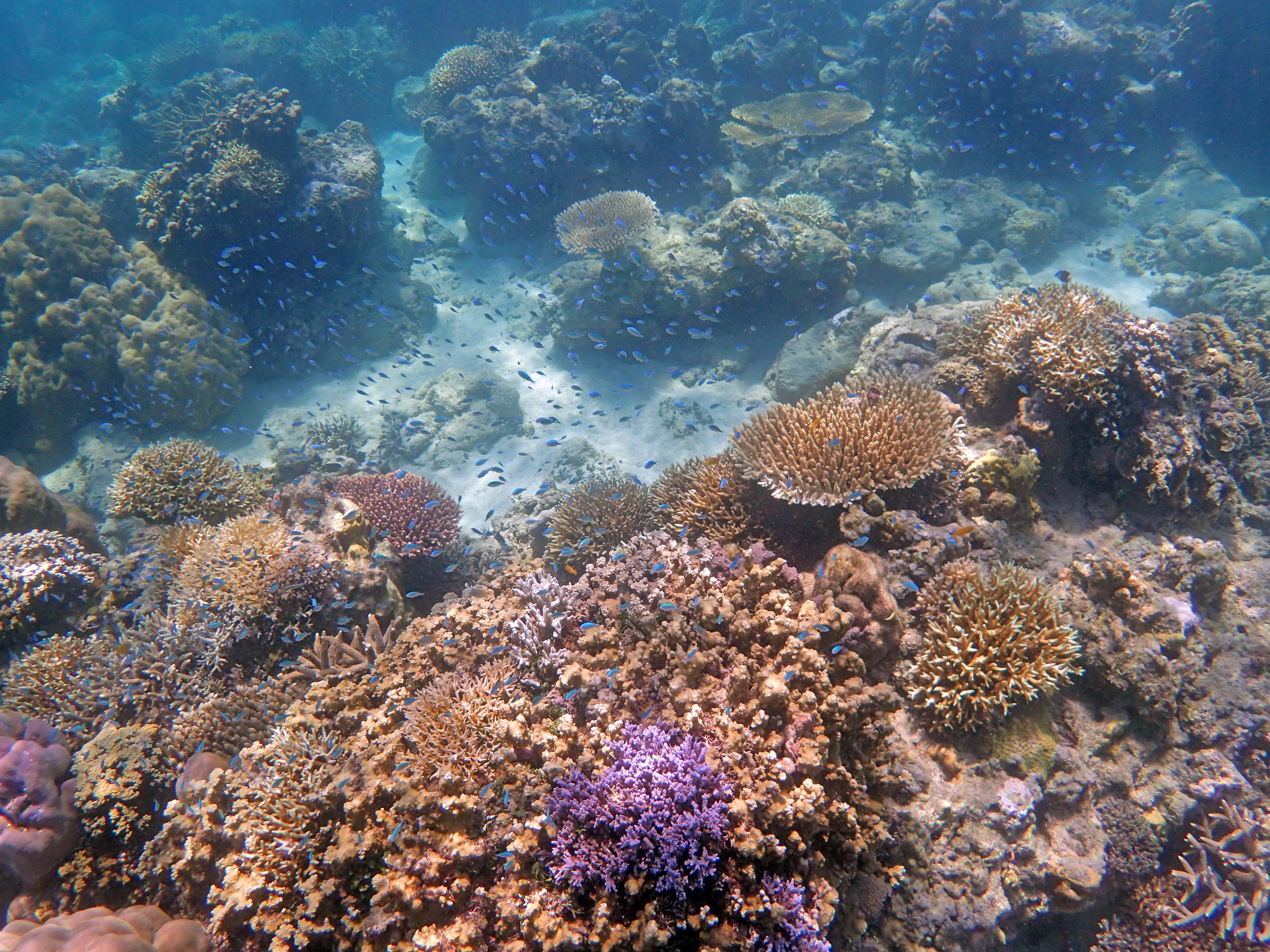
    Small blue damsel-type fish
    Coral reef in Komodo NP

    I was very happy to see how beautiful and unspoilt the coral was – at least at the places we visited in Komodo NP – although outside the protected areas may be another story. How people can fish using dynamite is difficult to comprehend; so short-sighted and stupid; but blast fishing, as it is called, does still occur, alas. (4)
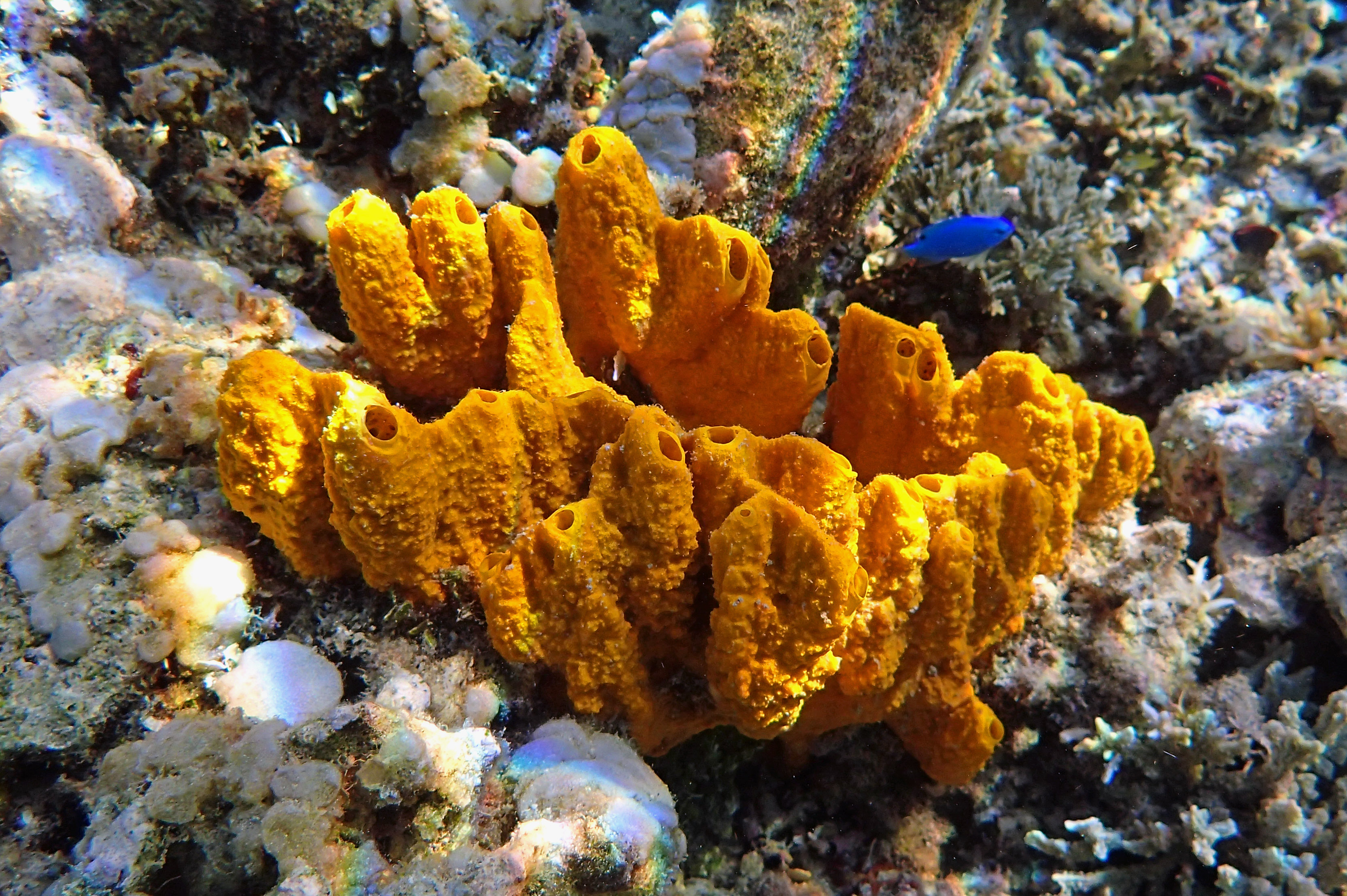
    Yellow sponges

    It was fun to see some giant clams. Some of them are so tightly cemented onto the coral that all you see is the beautiful soft mantle undulating along the rims of the shell.

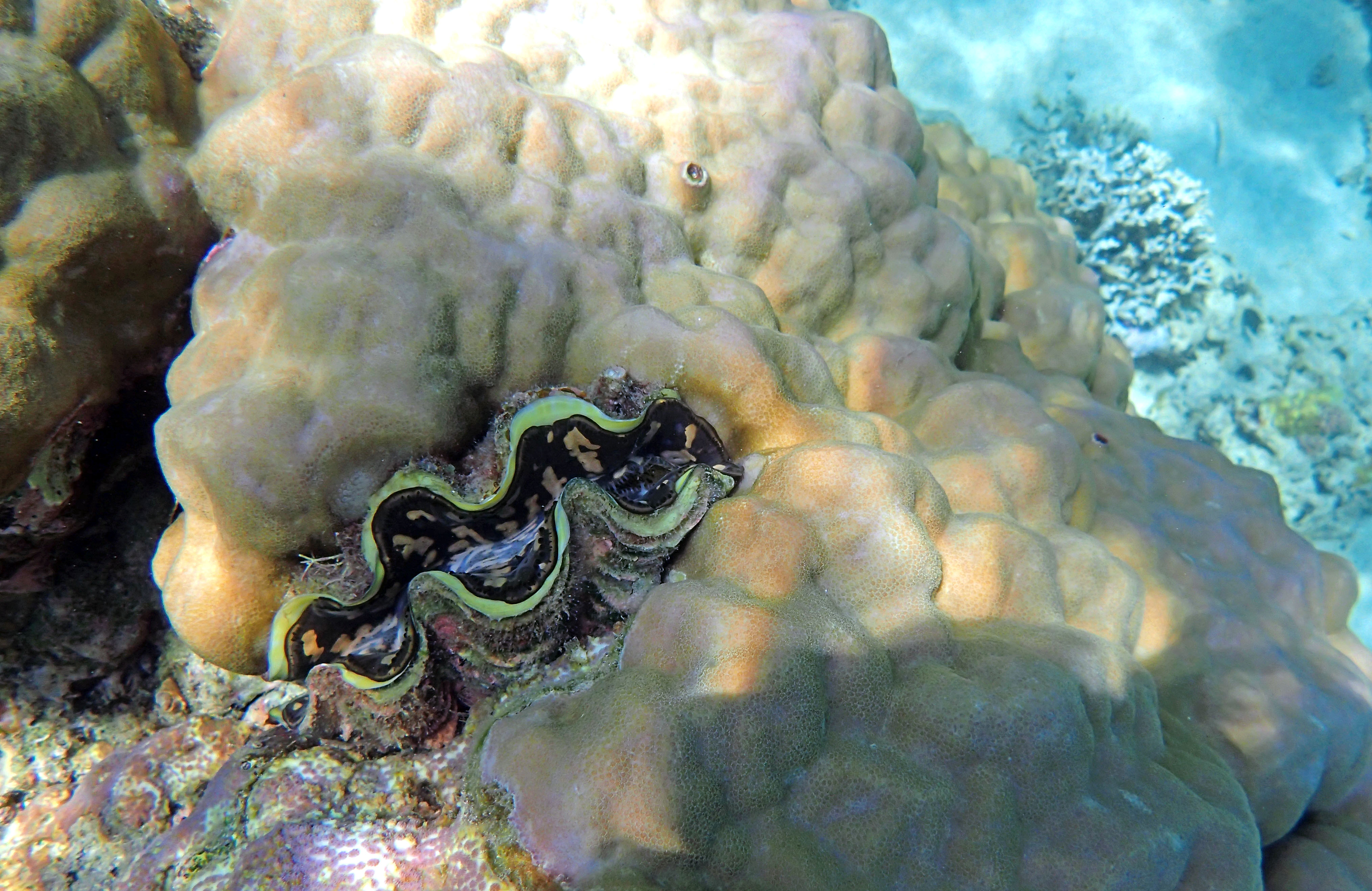
    Giant clam, Tridacna sp.
    Tridacna squamosa, fluted giant clam

    I think, what I most enjoyed seeing were the corals. They come in all shapes and sizes, soft and hard, with a myriad of different textures.
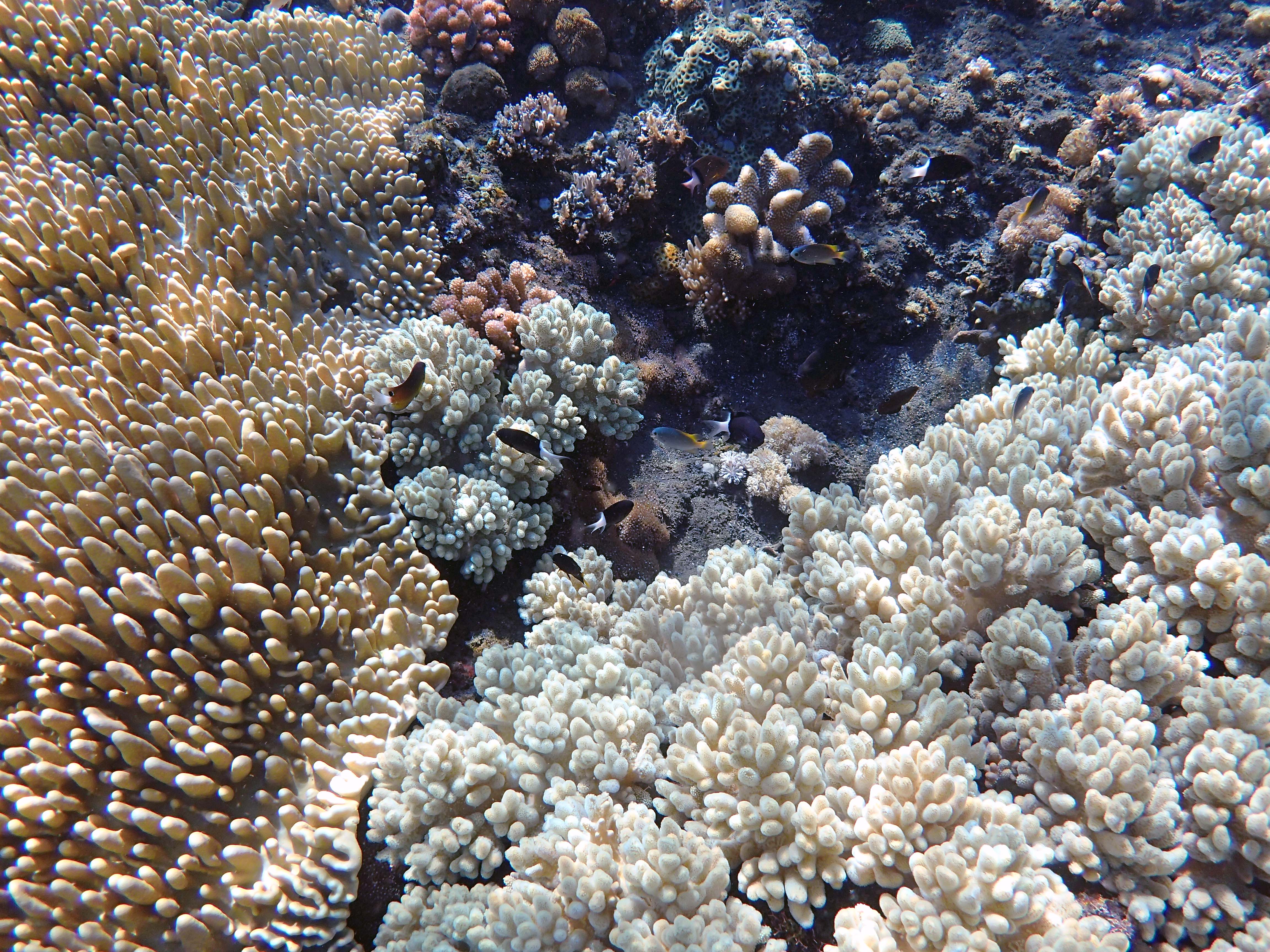
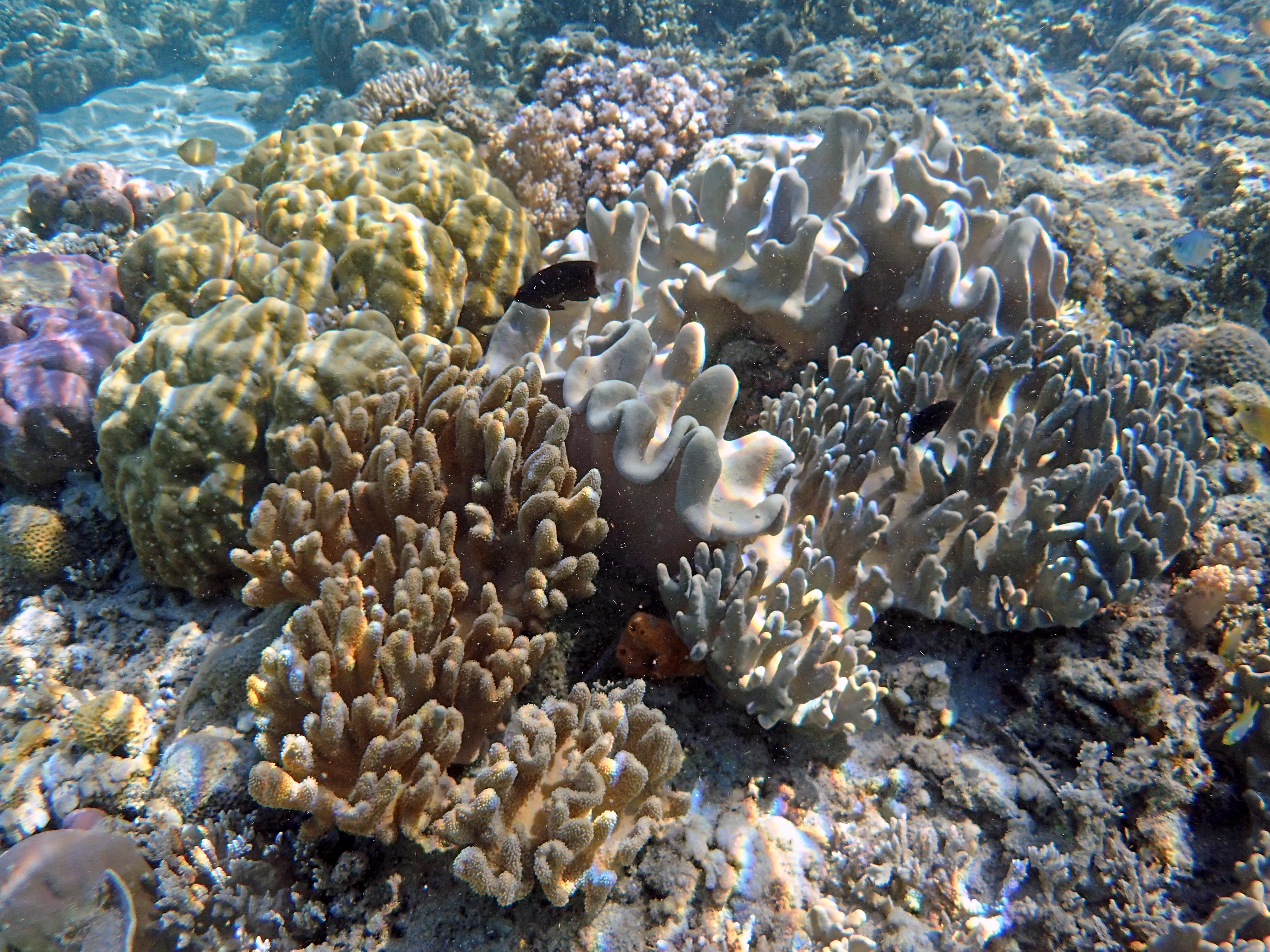
    Corals with different textures
    A variety of different corals

    The boundaries between different coral types were often sharp and I suppose they were competing with each other for space on the reef.
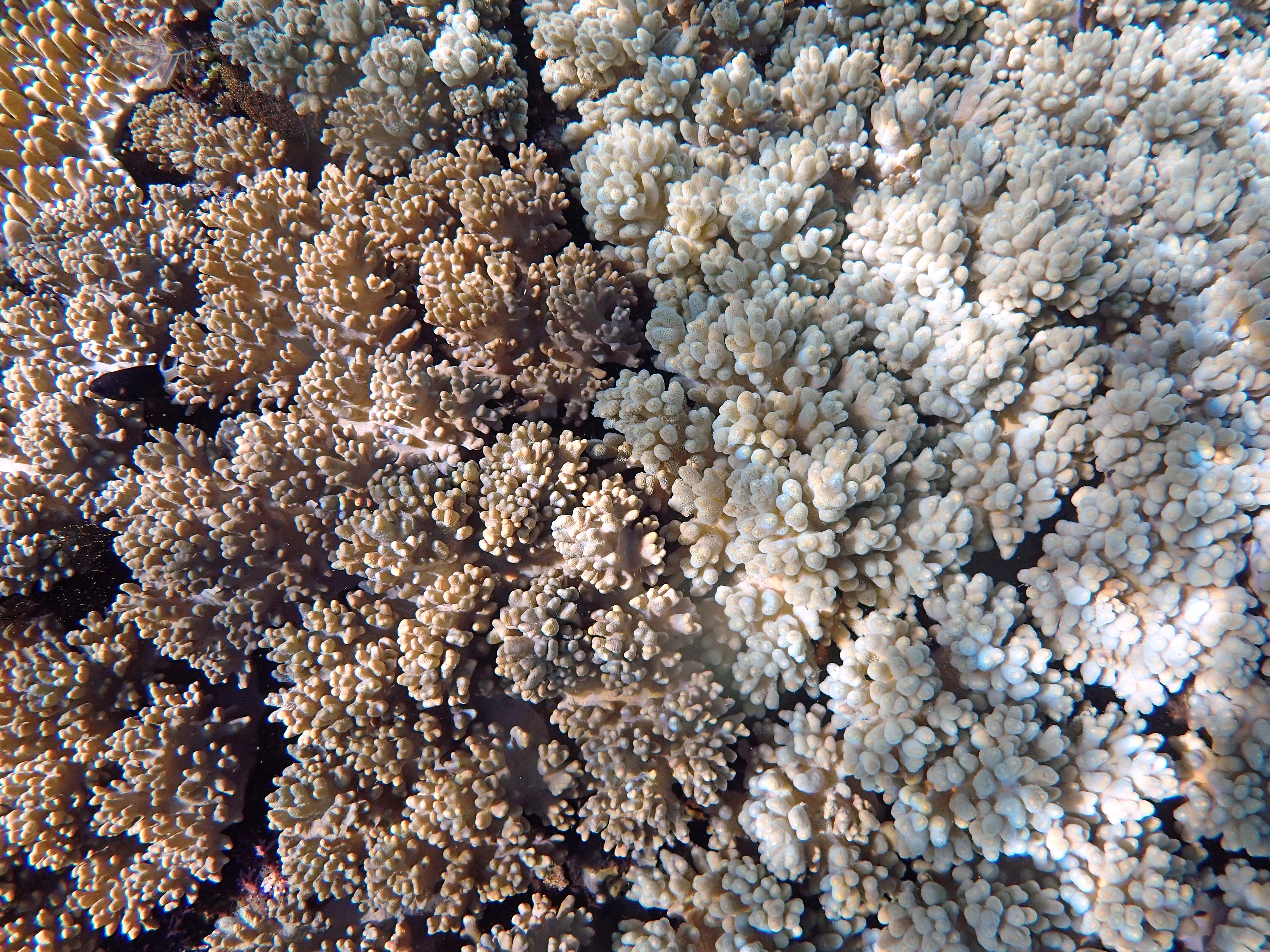
    Boundary between two types of coral

    I should have made more use of the library of books on board the Mermaid I, and sorted out the names and species of all the different soft and hard corals, but it was more relaxing to just sit back and watch; just enjoying the spectacle without necessarily putting a name to it all. Next time perhaps! I certainly would like to know what this purple creature is (see below).

    Strange purple soft coral?

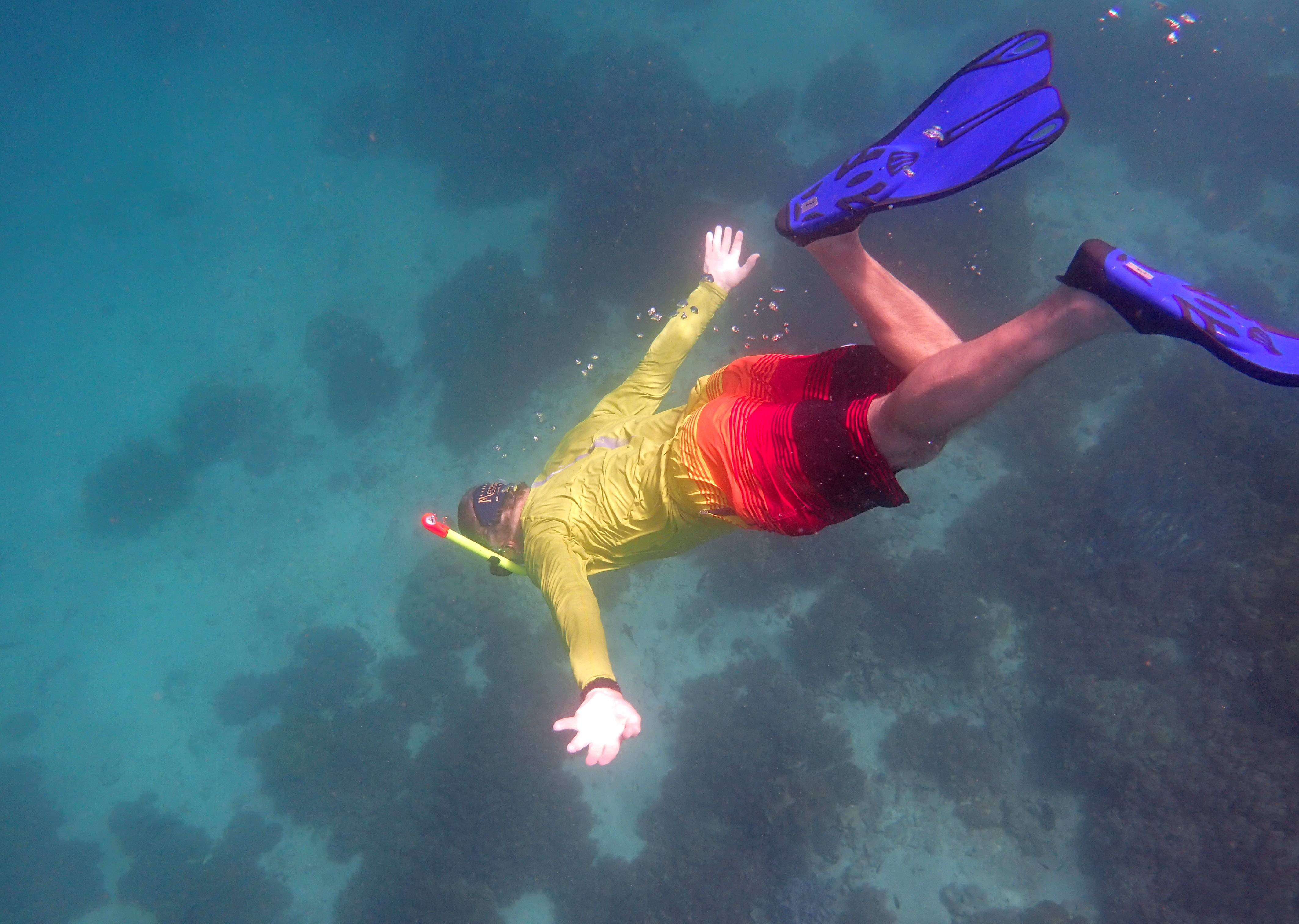
    It was a wonderful experience, a sort of dream, but eventually we had to wake up and leave our underwater somnambulations. Here I am coming up for air!
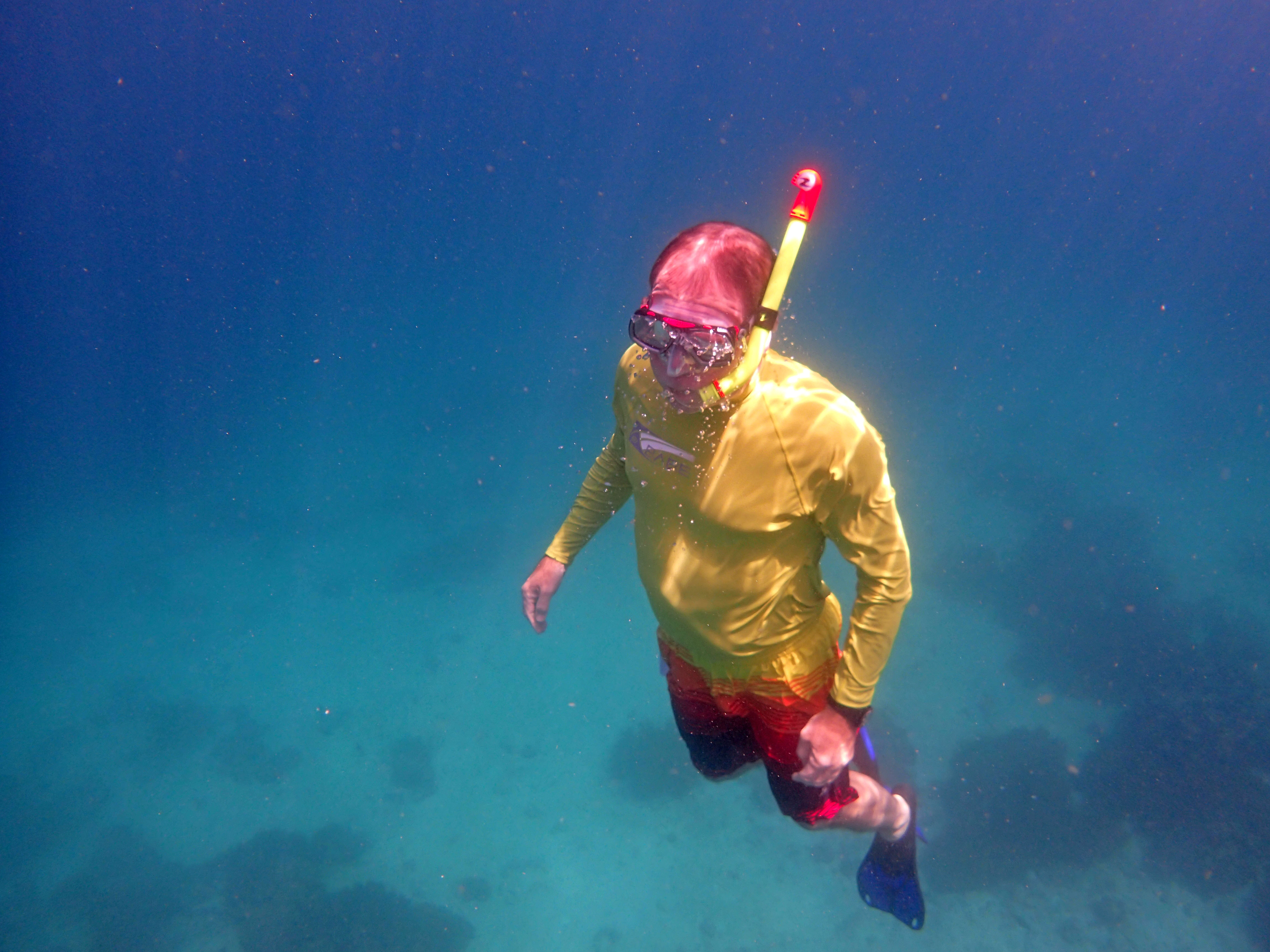
    Coming up for air.

    And I can’t finish without a shot of the boat (sorry, ship!) Mermaid I.
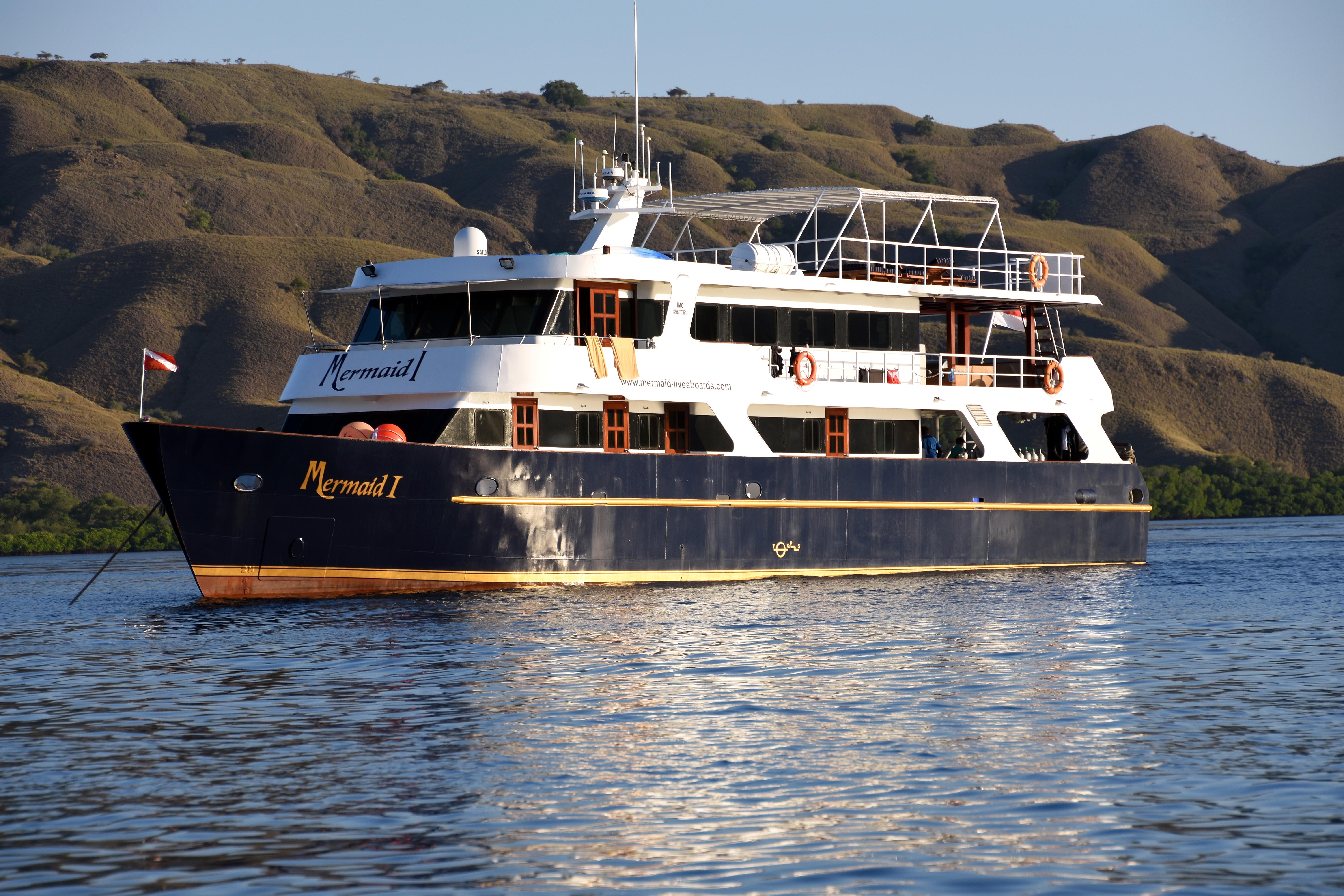
    Mermaid I in Komodo NP
    1. http://www.mermaid-liveaboards.com/
    2. https://rcannon993.wordpress.com/2017/01/17/travelling-with-a-mermaid/
    3. http://www.wildwings.co.uk/trip-reports/BaliWOtripreport2016.pdf
    4. https://en.wikipedia.org/wiki/Blast_fishing
  • Chasing leopards by the falls!

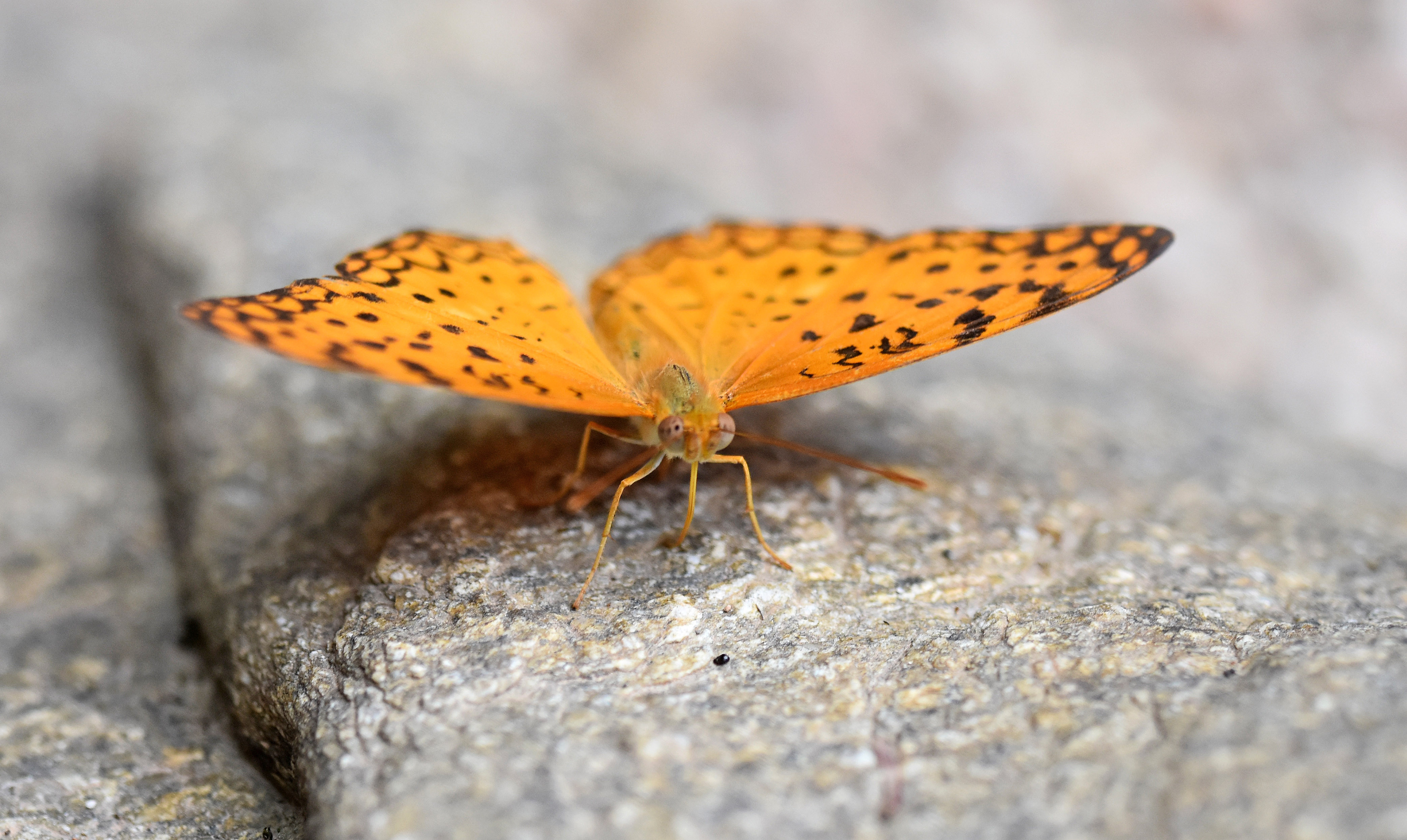
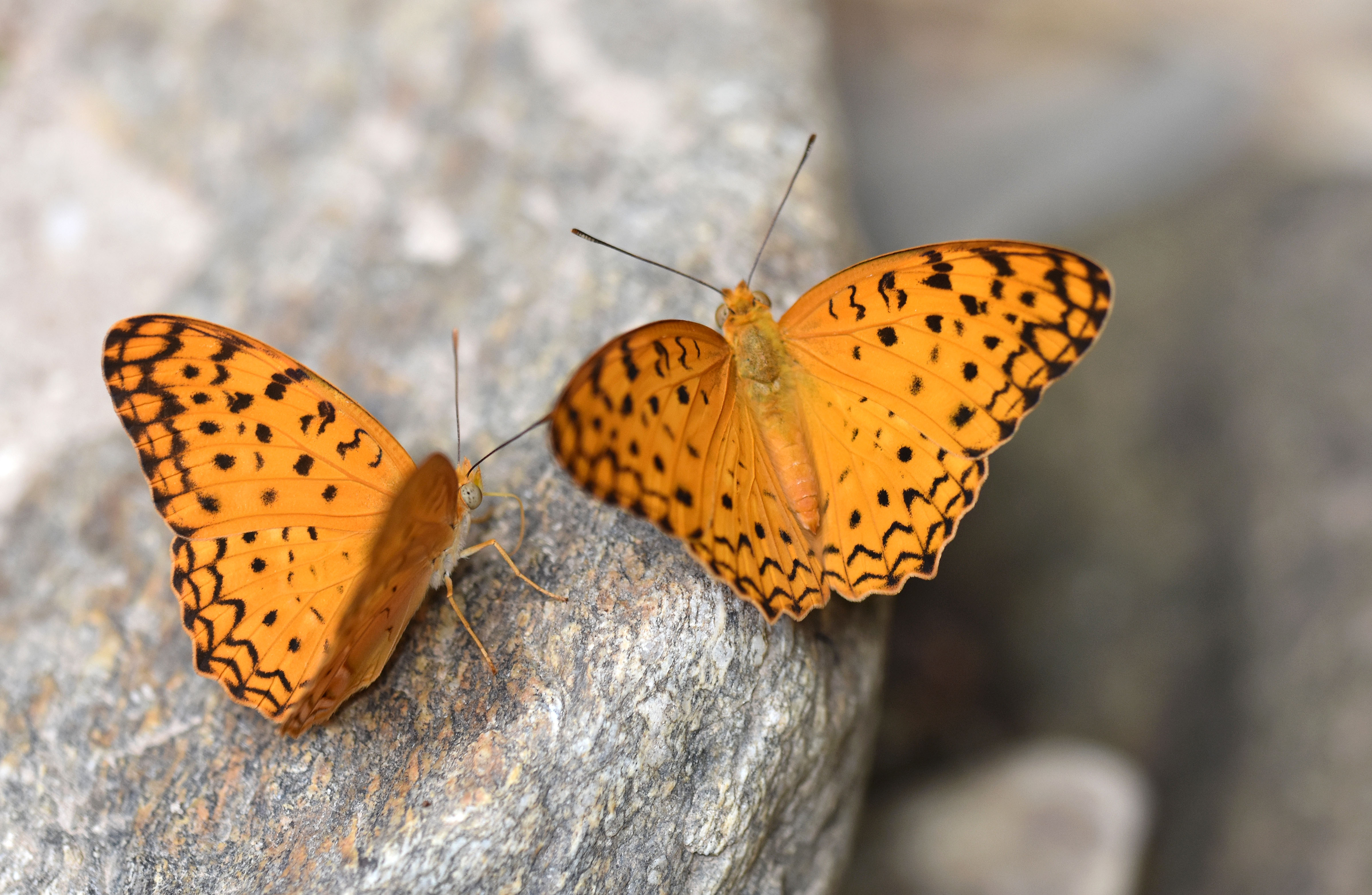
    Common Leopard Butterfly (Phalanta phalantha) mud-puddling at Mae Klang waterfall, Doi Inthanon, Thailand.

    It was a very hot day when I visited Doi Inthanon, Thailand’s highest mountain (at 2565 metres or 8415 feet), in early May this year. Temperatures in Chiang Mai city had reached 40 deg C the day before, but it was much cooler up the mountain. There are large tracts of different types of forest on this mountain – Doi Inthanon National Park covers an area of about of about 482 square kms – but it is often shrouded in cloud near the top.

    Forest on Doi Inthanon, by the Royal Chedis (or stupas) at about 2140m.

    Unfortunately, the top of the mountain was rather cloudy on 7th May, so we headed further down, stopping off at a number of waterfalls, where I hoped to photograph butterflies.

    Wachirathan Falls, Doi Inthanon, Thailand, May 2017.

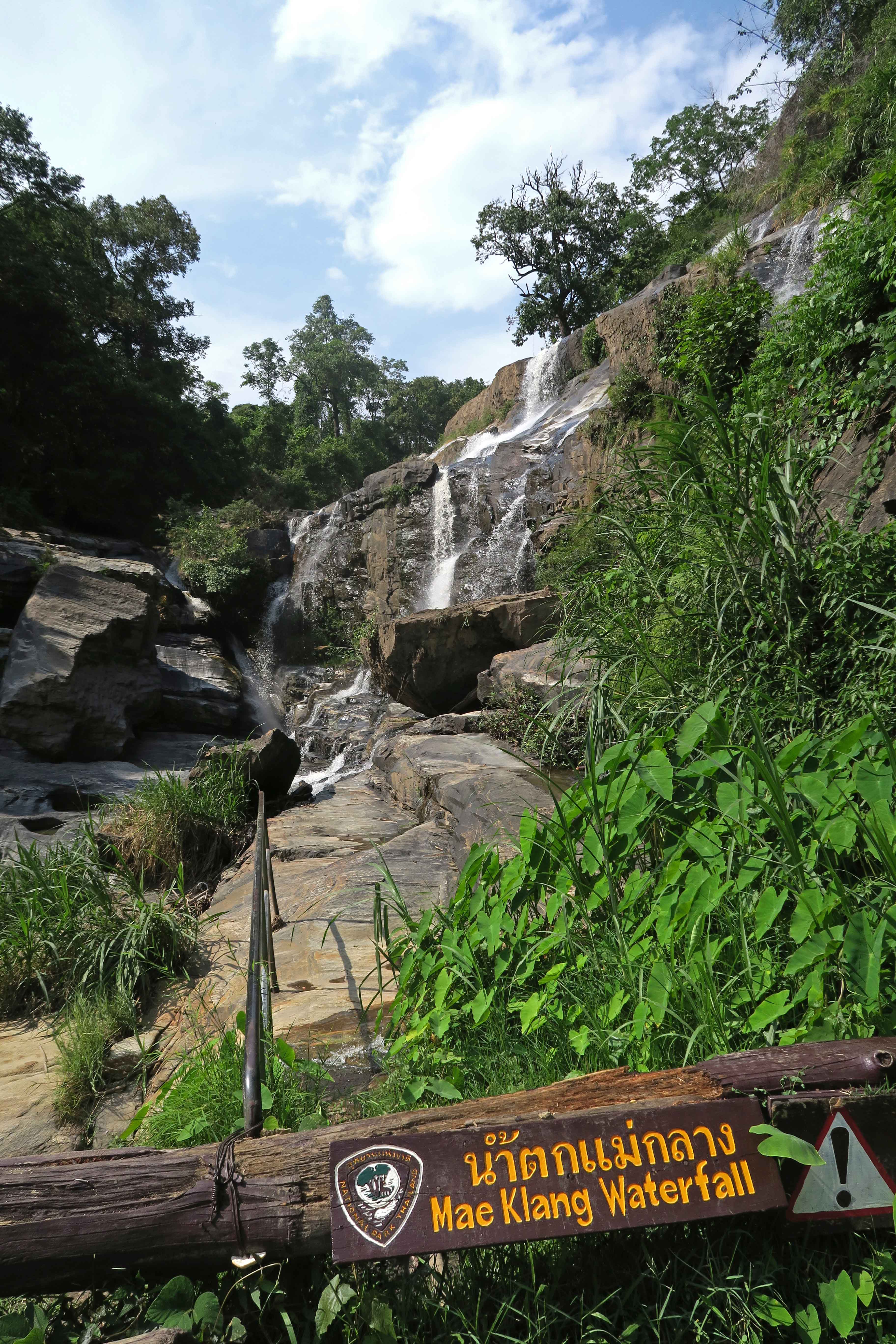
    One of the most beautiful falls on the mountain is Wachirathan Falls, just over 20 km into the NP, which is a magnificent spectacle, even in the dry season. Unfortunately, there were not many butterflies about, or the ones that were flying about were rather inaccessible, so I decided to head further down to the ever popular Mae Klang Waterfall. This lies just outside the boundaries of the NP, so is more heavily visited by picnickers and sightseers.

    Mae Klang Falls on 7th May 2017

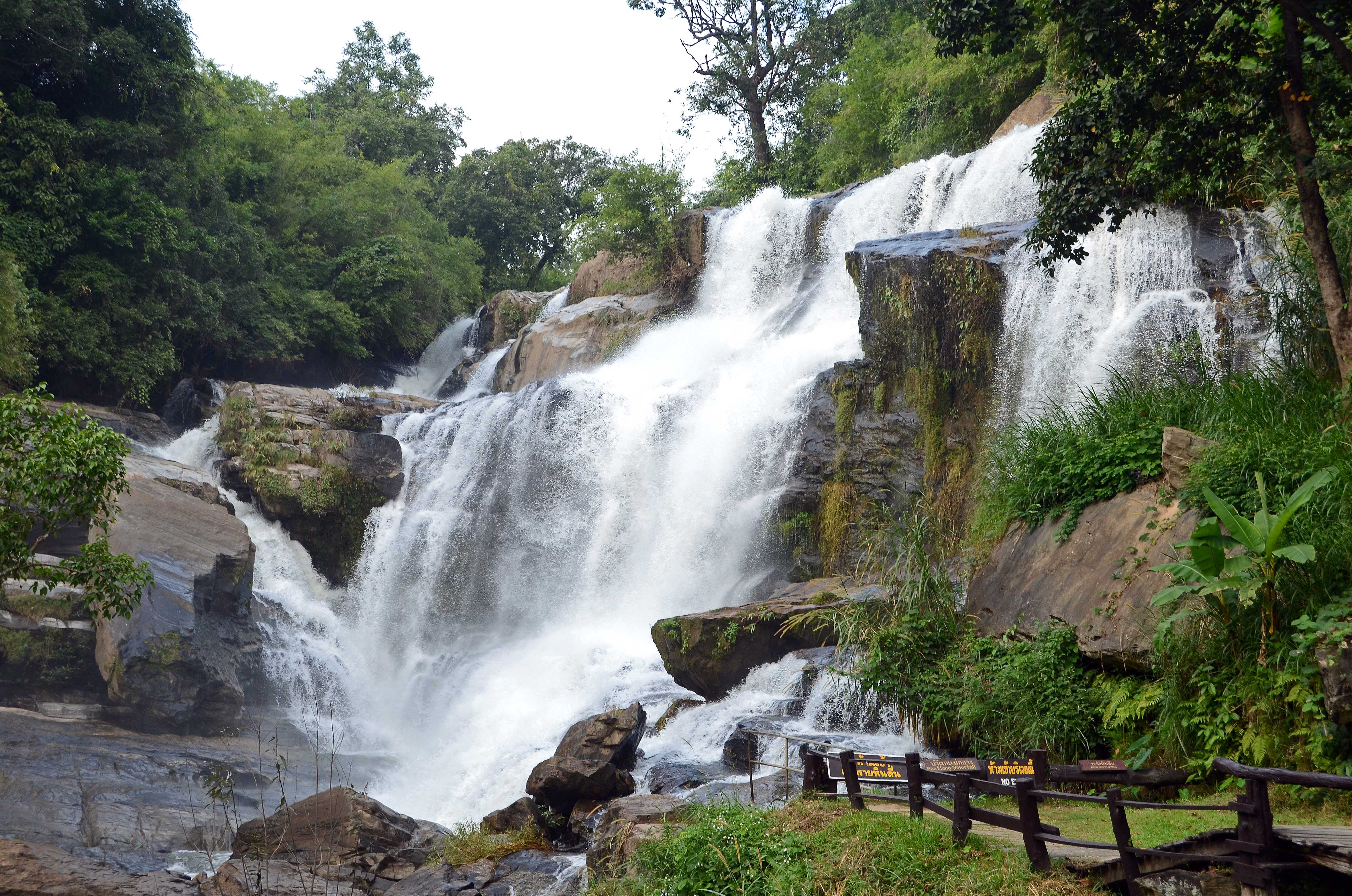
    There was much less water flowing than in previous visits; compare the photograph above (taken in May, before the rains have arrived) with that taken in November (at the end of the rainy season) in a previous year.

    Mae Klang waterfalls 8 Nov 2013

    Mae Klang waterfall is at an altitude of about 1,200 m or so, so is much hotter than further up the mountain, and there were plenty of butterflies around! The problem was that because of the high temperatures, the butterflies were flying about so fast it was very difficult to photograph them! One of the more obliging species was the Common Leopard Butterfly (Phalanta phalantha), which were present in quite large numbers along the stream beds next to the river.

    Common Leopard Butterfly (Phalanta phalantha) mud-puddling at Mae klang waterfall, Doi Inthanon.

    The butterflies were ‘puddling’ or ‘mud-puddling’ as it is called; they are trying to absorb sodium (in the form of sodium chloride, salt) or nitrogen (in the form of amino acids) from moist substrates such as mud, animal excrement, rotting fruits, carrion, dung, bird droppings, sweat, tears and so on (See 1: See you down the puddle). Curiously, many of these Common Leopard butterflies were sucking up moisture from the rocks themselves (below). There must have been a thin layer of water on the rocks, which may have produced a solution of salts or minerals attractive to these insects.

    Common Leopard Butterfly (Phalanta phalantha) Mae klang, with extended proboscis

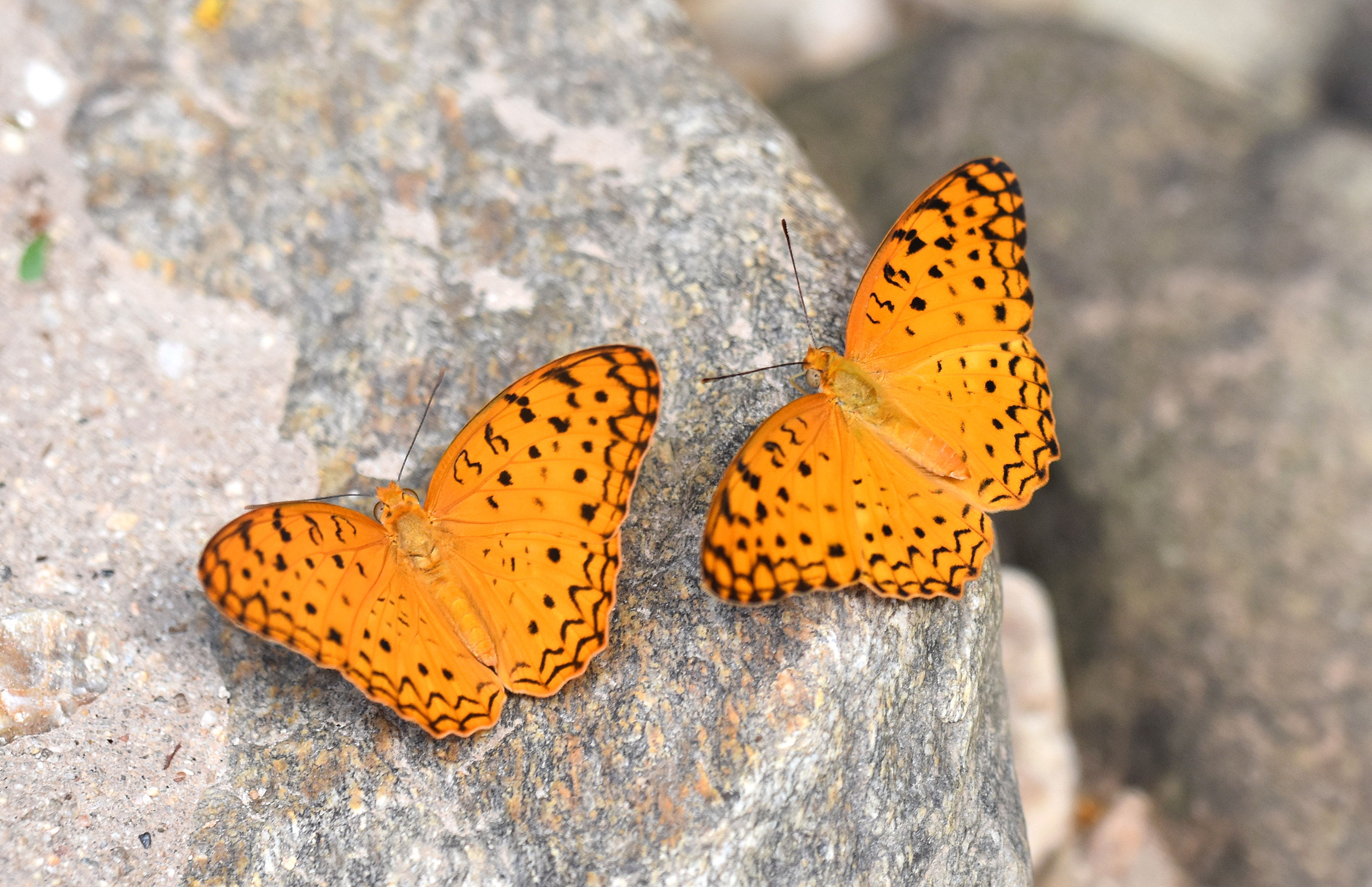
    Despite being engaged in mud- or moisture-puddling, the butterflies did not stay put for long, and usually flew off as soon as the lumbering photographer approached them! I did not manage to get as close as I would have liked, but after taking dozens of shots, I managed to get a few usable ones.

    Common Leopard butterfllies (Phalanta phalantha)

    These butterflies take about three weeks to develop from egg to adult (at 28 deg C) and the larvae feed on flowering plants in the Willow family (Salicaceae) including Flacourtia inermis and Salix babylonica (Links 2 and 3).

    Common Leopard butterfllies (Phalanta phalantha) on rocks

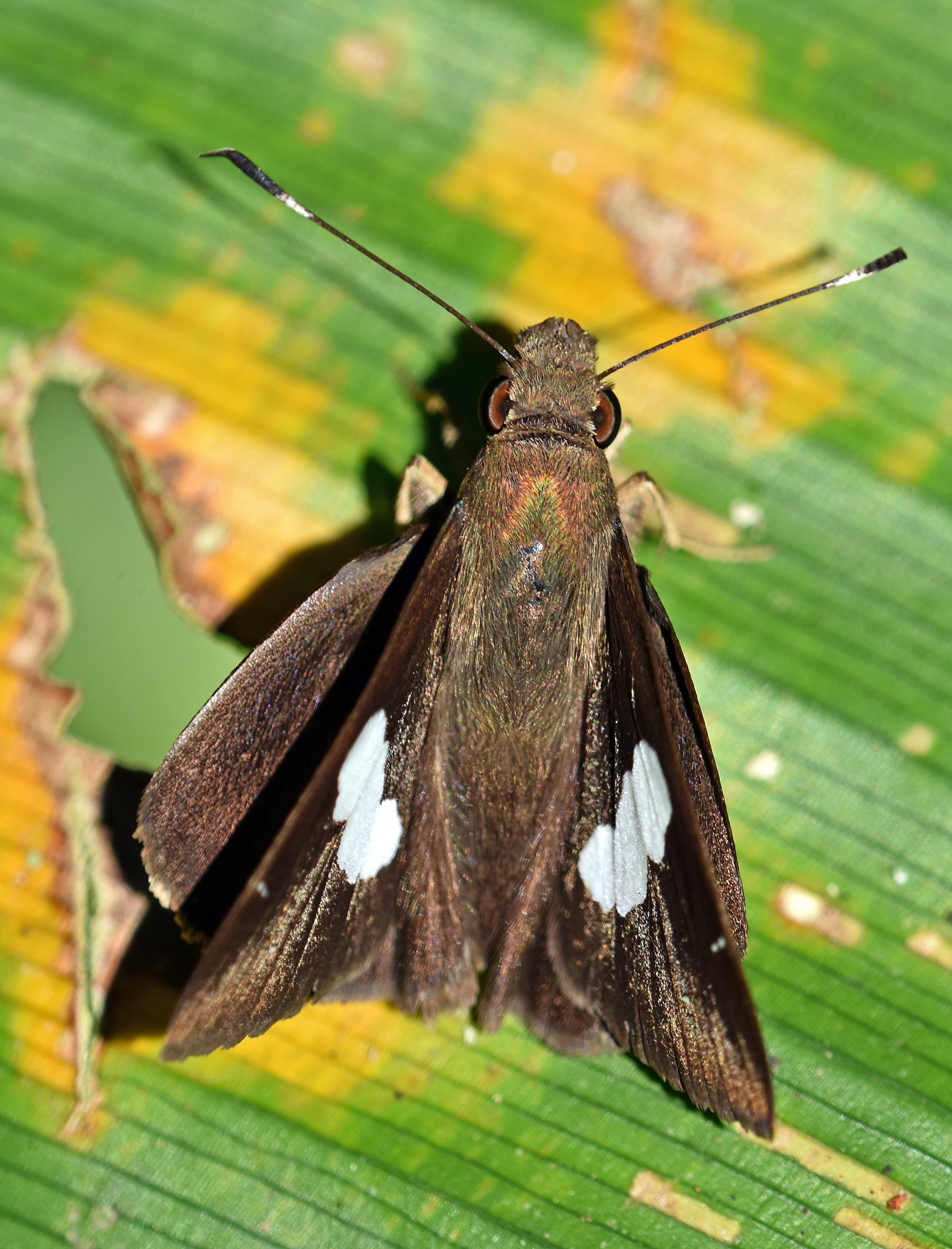
    There were also quite large numbers of yellow/green butterflies flying about, at amazing speeds! One often sees pictures of stationary butterflies, which fail to do justice to the extraordinary vitality of these insects. Butterflies can be very fast fliers – especially the nippy little Skippers, which can reach speeds of up to 60 km per hour! Skippers are shaped like little jet fighters! As the following photograph illustrates.

    Spotted Demon (Notocrypta feisthamelii alysos). A Skipper from Chiang Dao, Thailand.

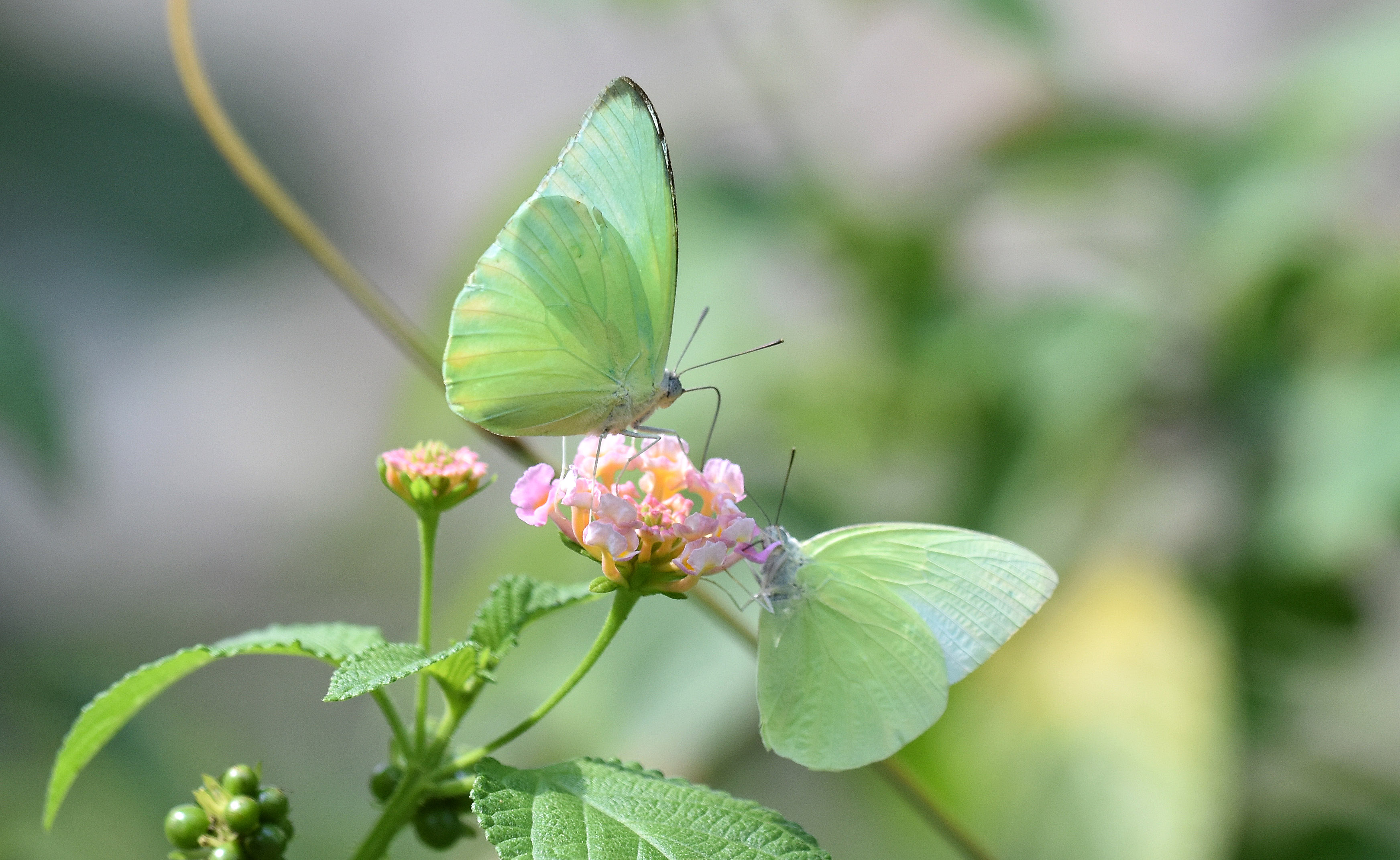
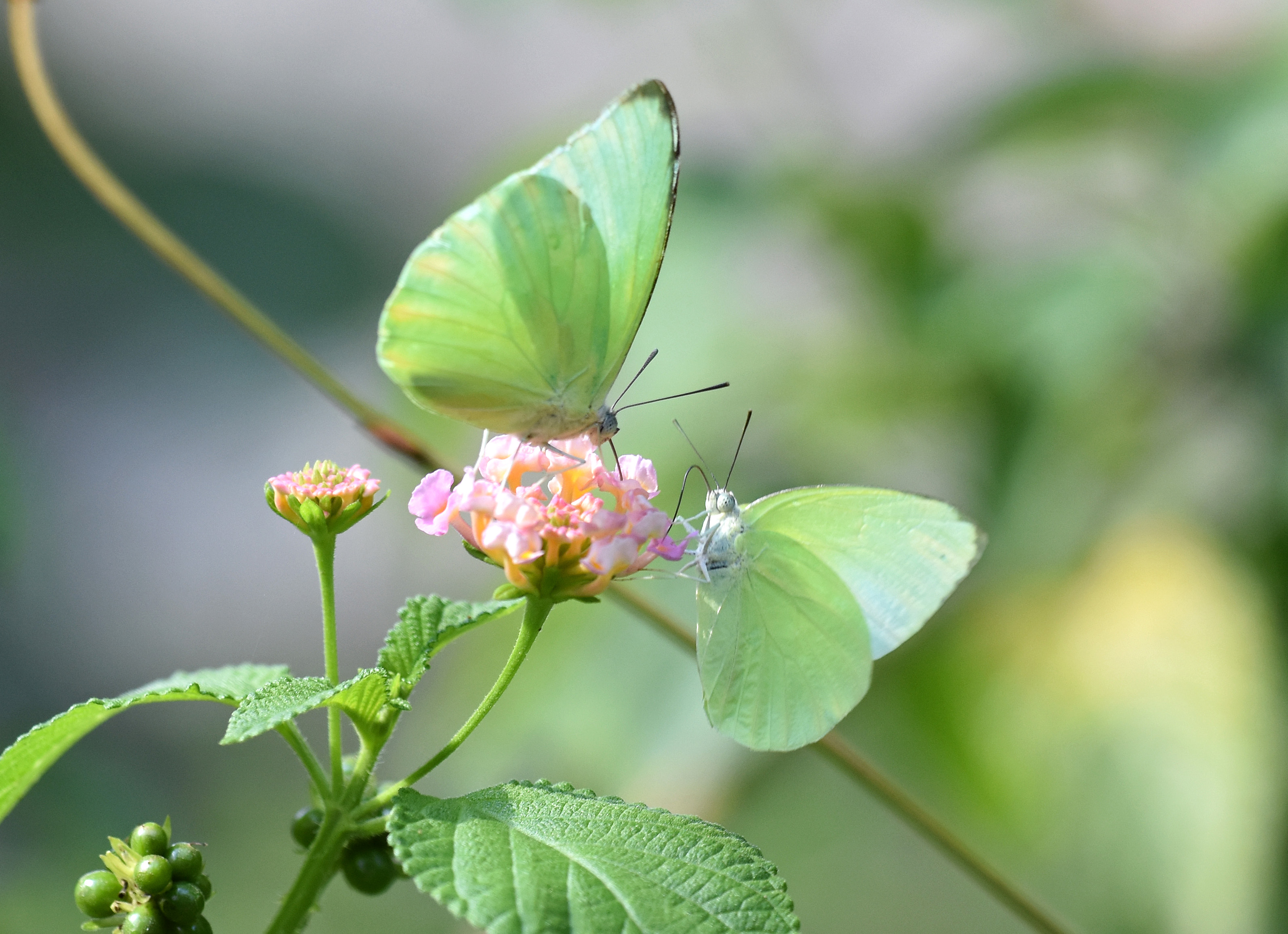
    I did manage to grab a couple of photographs of the lively yellow/green butterflies, which turned out to be Lemon Emigrants, feeding on nectar from Lantana flowers.

    Lemon Emigrant (Catopsilia pomona pomona) Mae Klang
    Lemon Emigrants (Catopsilia pomona pomona) Mae Klang

    I also came across this little skink – a Streamside Skink  (Sphenomorphus maculatus) – on the rocks near the waterfalls (below).

    Streamside Skink (Sphenomorphus maculatus) Mae Klang, Doi Inthanon, Thailand.

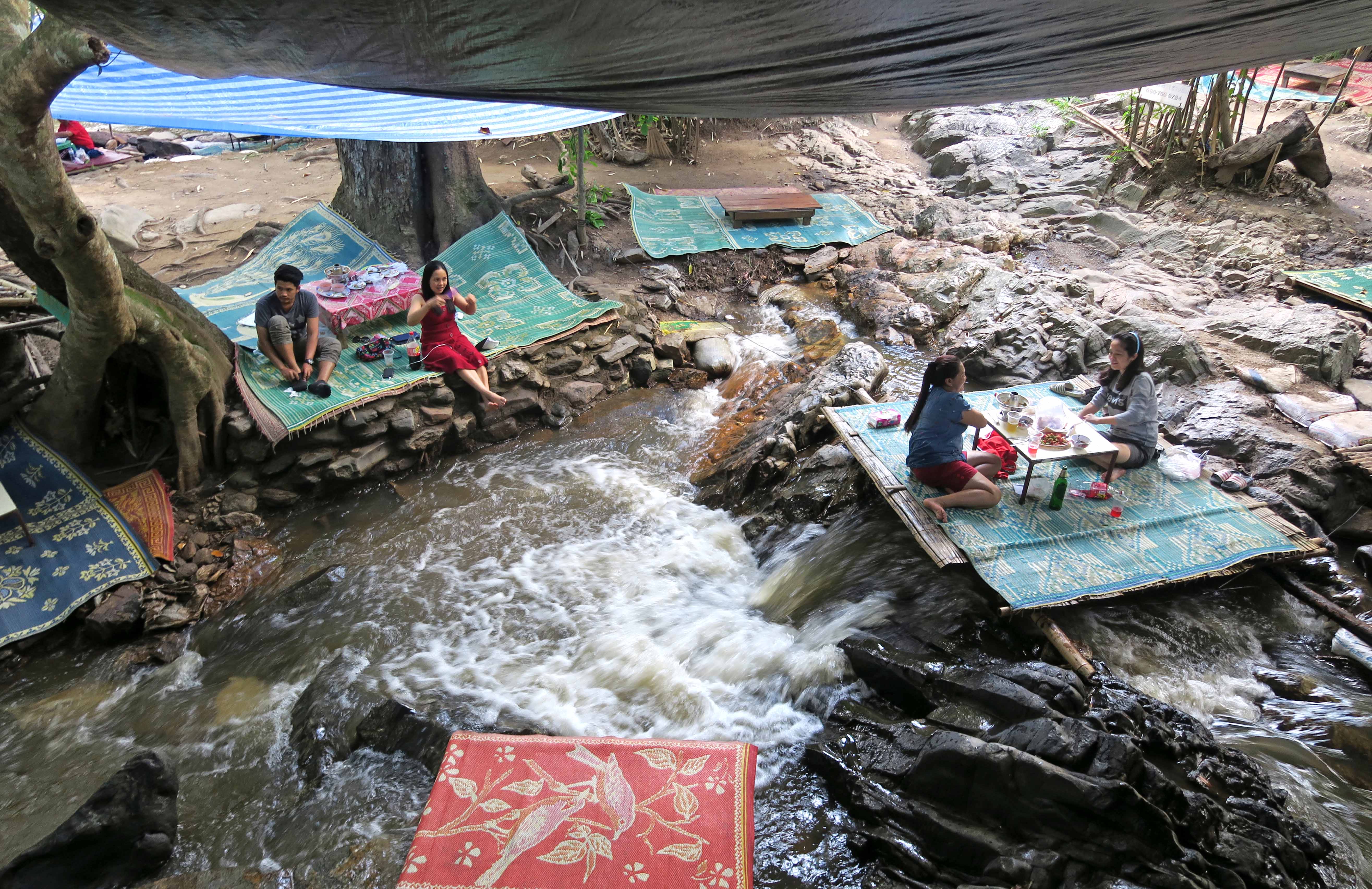
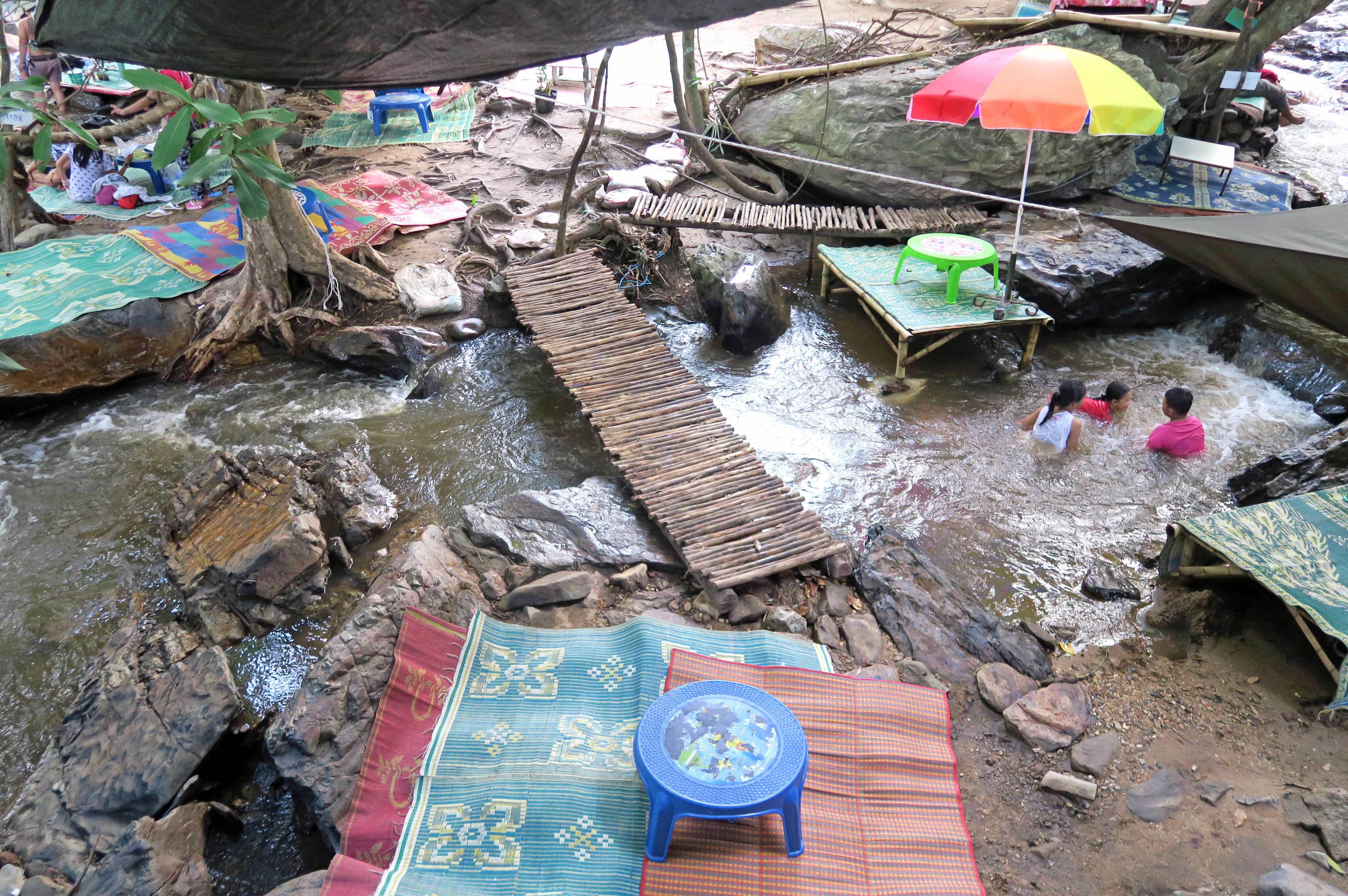
    The waterfalls are a good place to cool off on a hot day, and people like to sit and relax on the rocks beside the streams. There are plenty of small restaurants and vendors nearby providing food and snacks for visitors.

    Mae Klang Falls. People sitting and eating by the streams.
    Mae Klang Falls bathers

    So even when temperatures are unbearably hot, there are many places to go to chill out, whether you are a butterfly, skink or primate!

    1. https://rcannon992.com/2016/03/10/see-you-down-the-puddle-puddling-in-butterflies/
    2. Rayalu, M. B., Kumari, V. K., Naidu, M. T., & Atluri, J. B. (2014). Life history and larval performance of the Common Leopard butterfly, Phalanta phalantha Drury (Lepidoptera: Rhopalocera: Nymphalidae). International Journal of Advanced Research in Science and Technology, 3, 191-195.
    3. http://butterflycircle.blogspot.co.uk/2010/09/life-history-of-leopard.html