Tag: Black-legged Kittiwake

  • Kittiwakes with nowhere to go!

    Kittiwakes with nowhere to go!

    Imagine coming back from a winter spent at sea to find that your nest site is no longer there! That’s what’s happening to many kittiwakes in Scarborough this year.

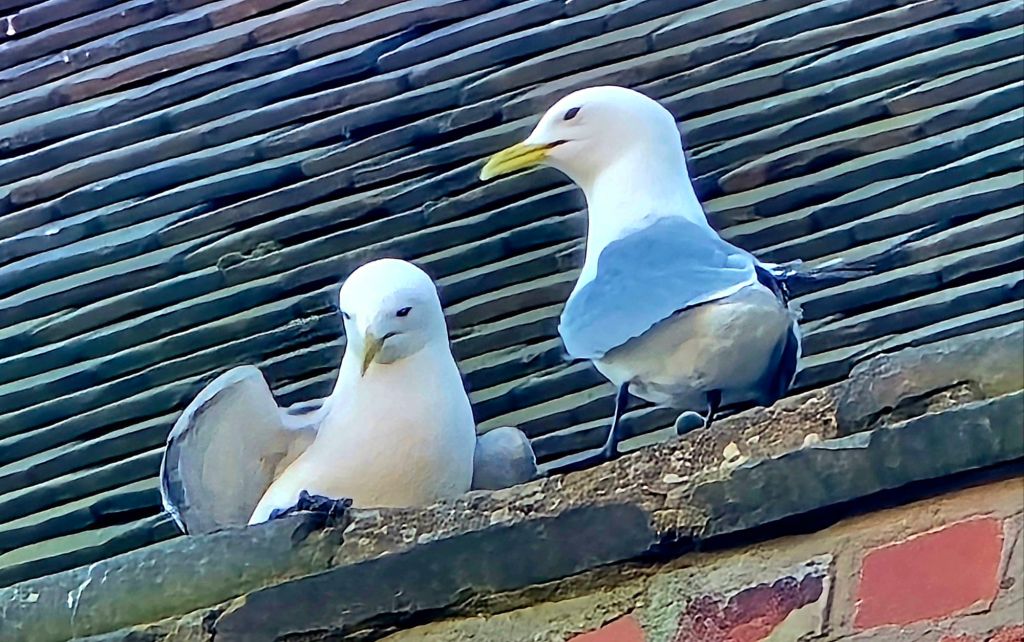
    Black-legged kittiwakes (Rissa tridactyla) excluded from previous nest sites by new wire mesh

    You’ve come back and have found your long lost love – kittiwake pairs do not stay together during the winter – but the euphoria is heavily dampened by the fact that your nesting site has gone! (Removed by the Council or the owners of the buildings).

    Whereas, in years gone by, you had a lovely big nest of seaweed – built over a previous bed of spines, it has to be said (see below) – now there are just long vicious spines.
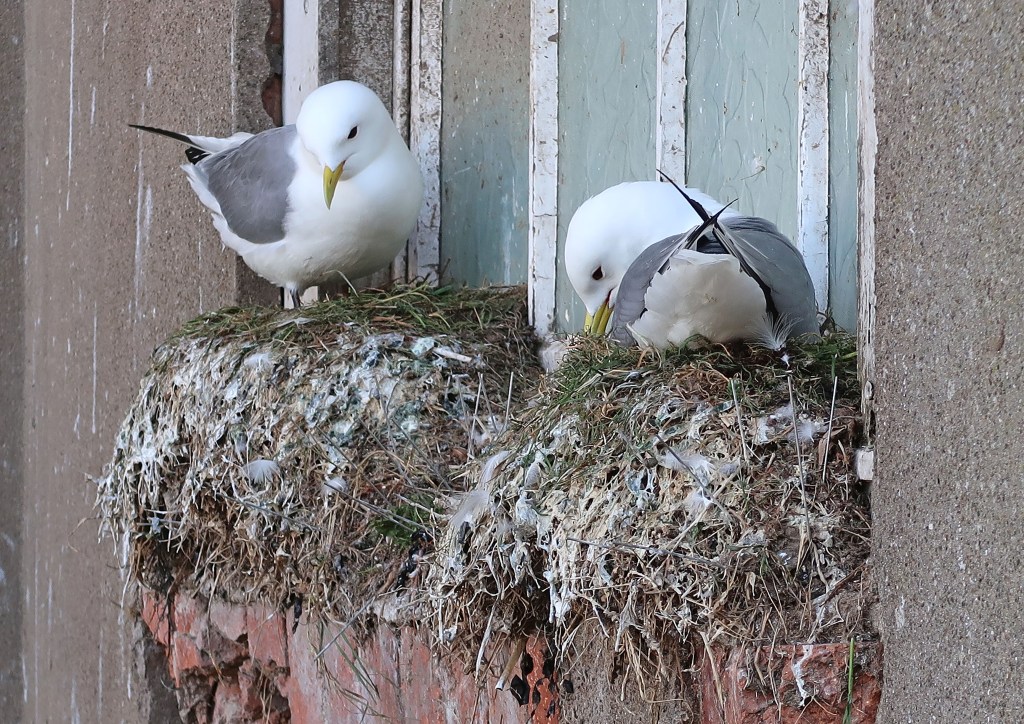
    Kittiwakes nesting on a ledge on the Grand hotel, Scarborough

    New spines have replaced the nests on this ledge (below), shown above with nesting birds.

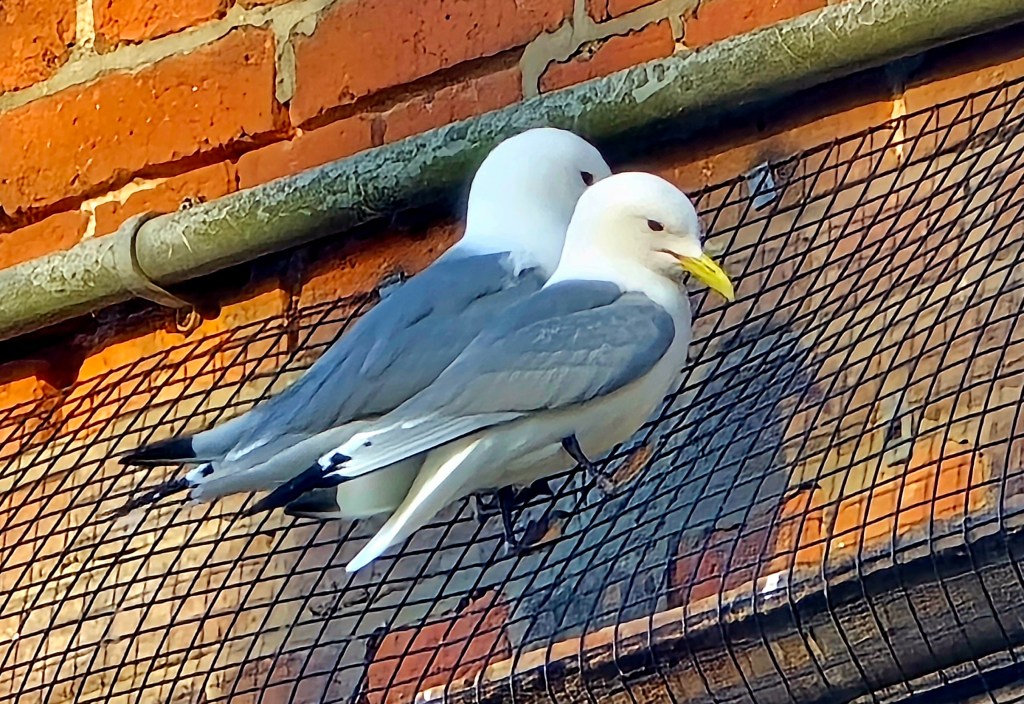
    In other places in the town, the nests have been removed, and ledges have been covered on seagull-excluding mesh.
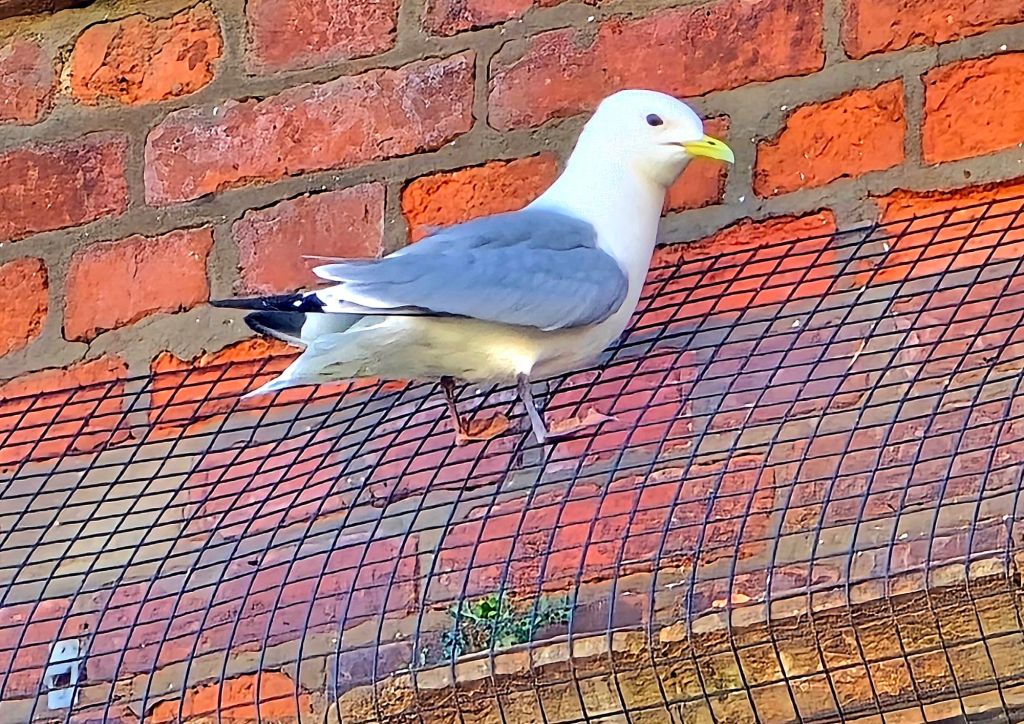
    2nd April 2025
    2nd April 2025
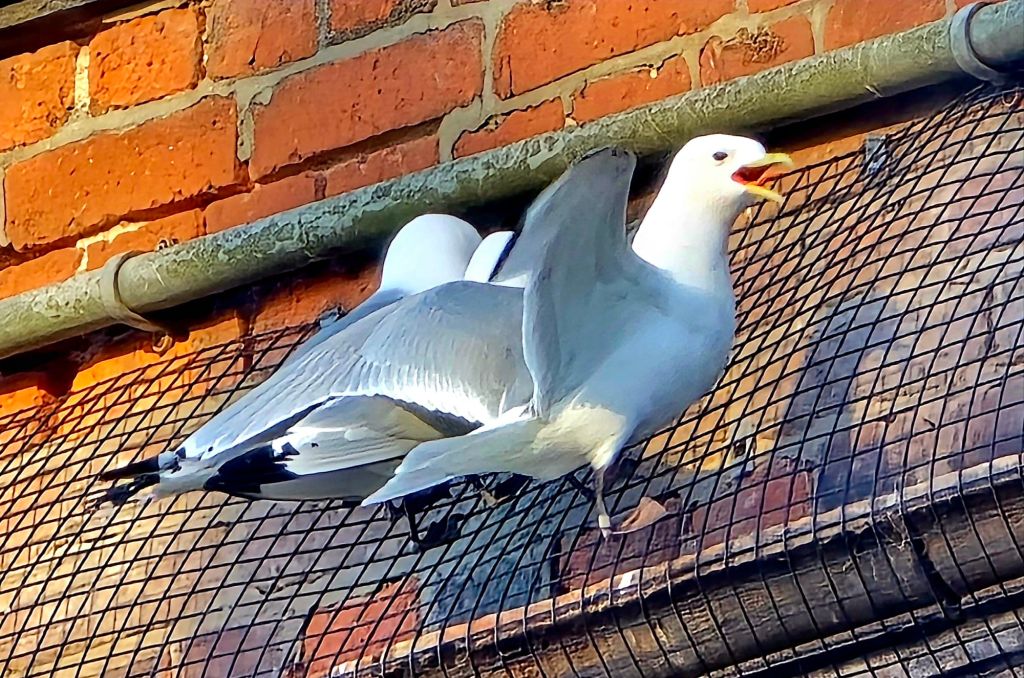
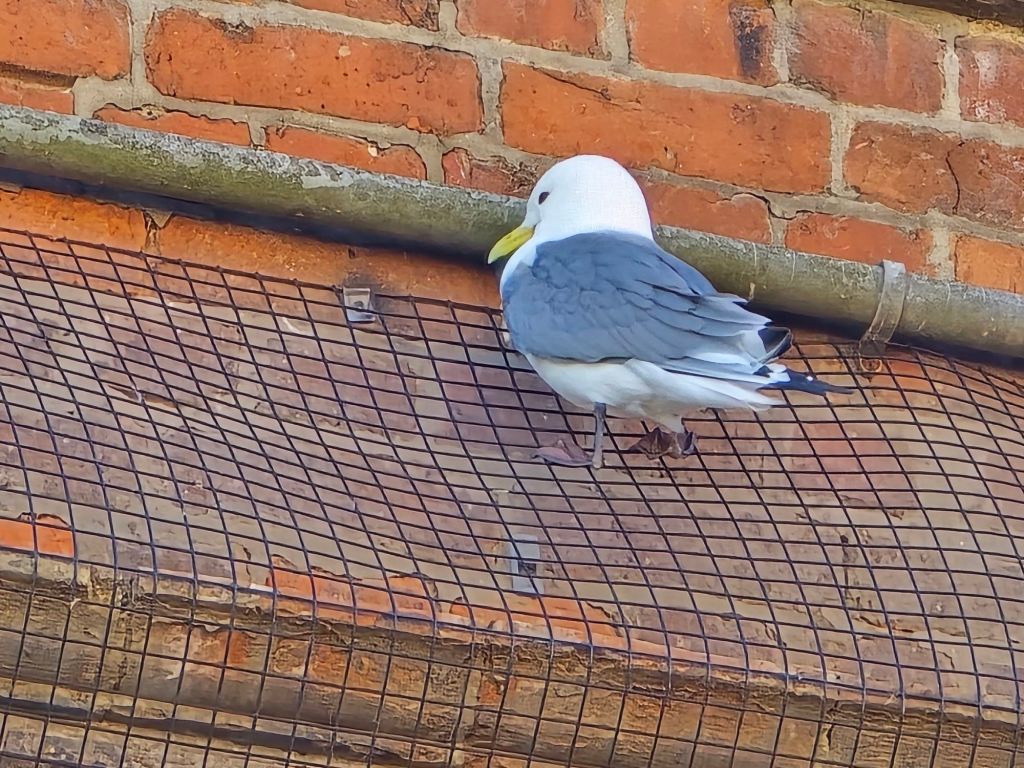
    Kittiwakes return in the Spring to find their old nest sites covered in mesh (2 Apr 25)

    Now, one can understand that not everyone wants their window ledges covered in bird’s nests! But what’s a bird to do if it’s nested there for years and years?

    The poor kittiwakes returning to their old nest sites look bewildered to me. They are standing on the mesh, looking down at where their nest used to be. I can almost hear them muttering “WTF!”

    What happened? We’ve been nesting here for years! We have always nested in the town, unlike our cousins on the cliffs. What shall we do? Where shall we go?’

    Some clever pairs have learned how to nest balanced on top of lamp-posts, but there are not too many of these, and we don’t all enjoy living above a busy road!
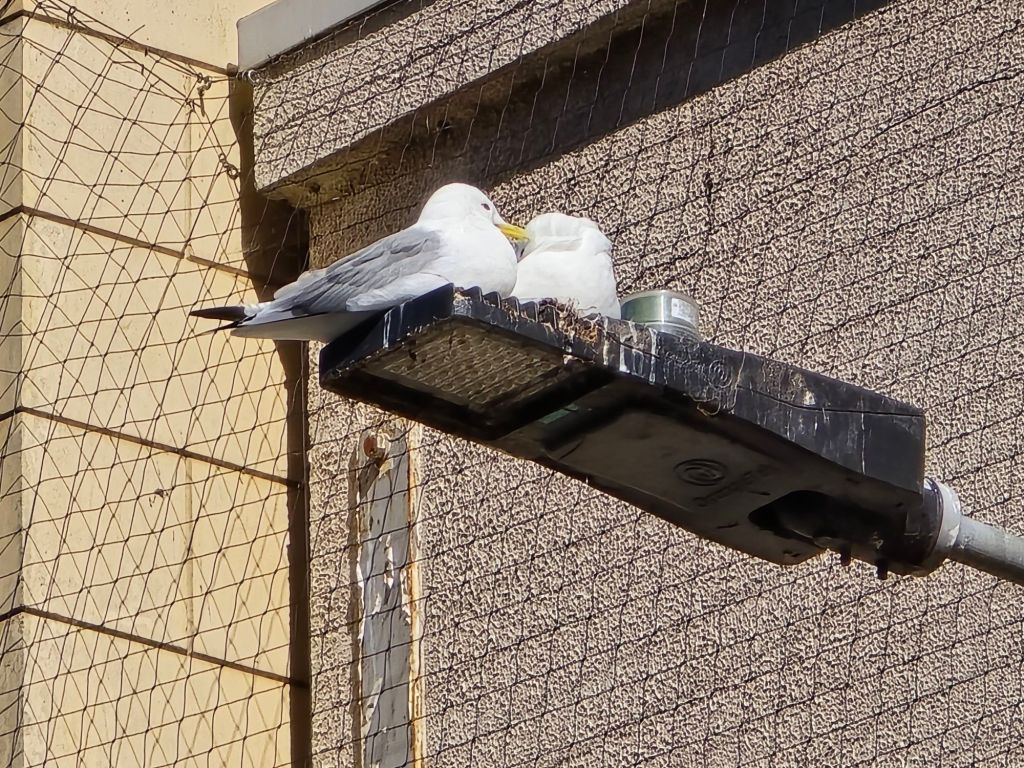
    Nesting on a street lamp. This amazing couple has brought up many chicks – sometimes two a year! – balanced on this street light.

    Another pair have opted for this other street light – at least they still have a nest site!

    Kittieakes nesting on a lamp-post. Not for the faint-hearted!

    It’s a problem. Kittiwakes have been moving into seaside towns for many years now, since the 1940’s. Life on a window ledge may seem challenging to us, but for kittiwakes, it offers an existence relatively free from predators: like peregrine falcons, which predate the birds living on the cliffs. They don’t seem to mind the hustle and bustle of the town, but unlike the larger herring gulls – which steal pasties and ice creams from unsuspecting sea-siders – kittiwakes are not living with us for our food. They fly off every day to catch fish and bring these back to their chicks. You will never see a kittiwake begging for food or stealing a chip!
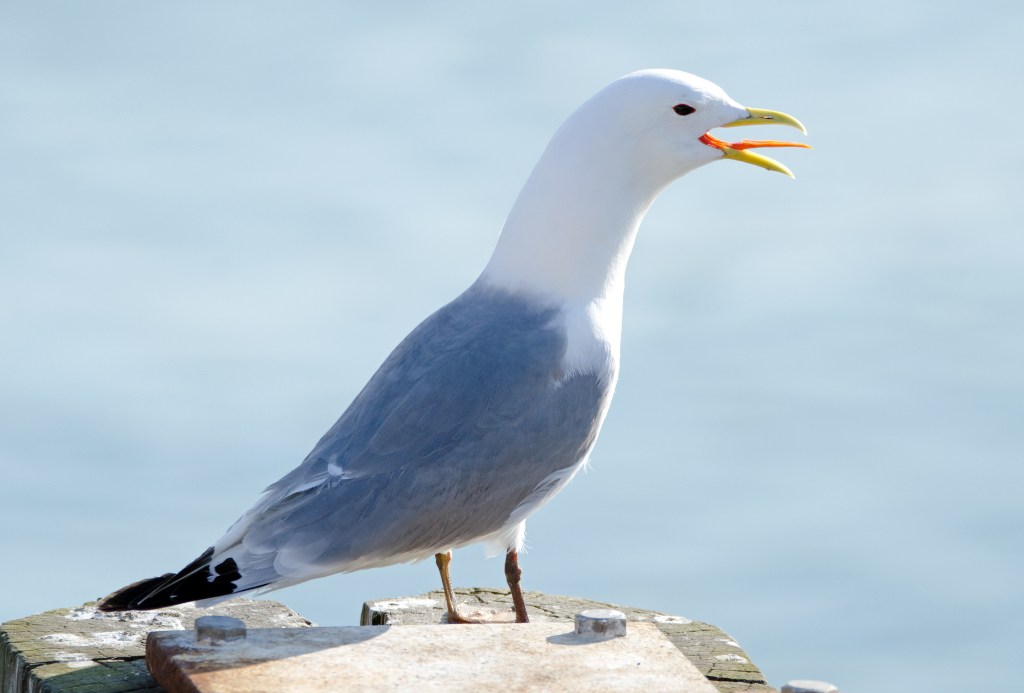
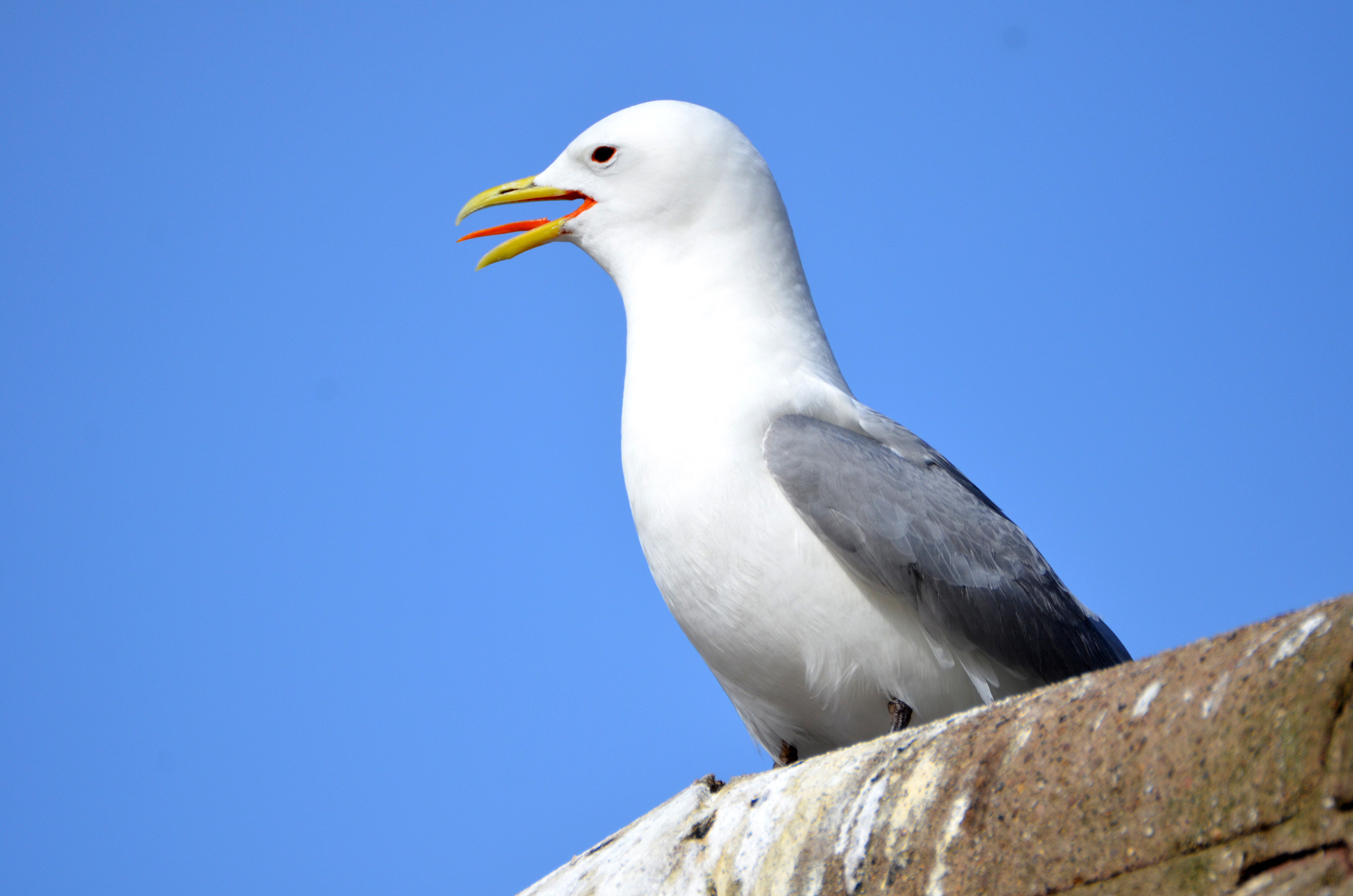
    Black-legged kittiwake (Rissa tridactyla) adult

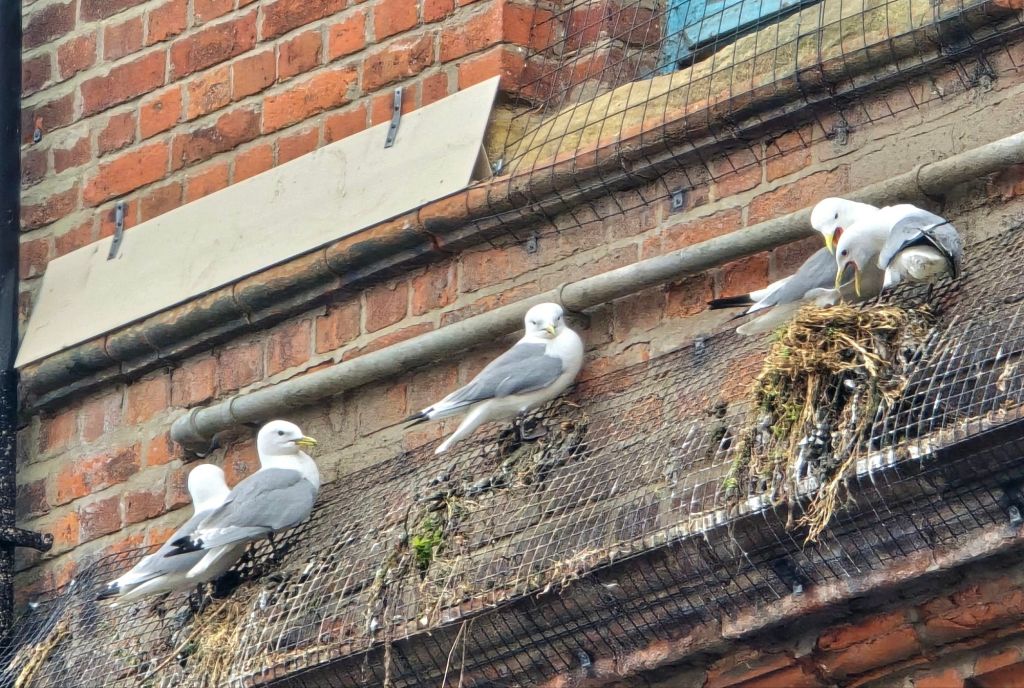
    There are still some places left in the town where kittiwakes can nest on buildings (below), but understandably, many shops and buildings have taken measures to excude them.
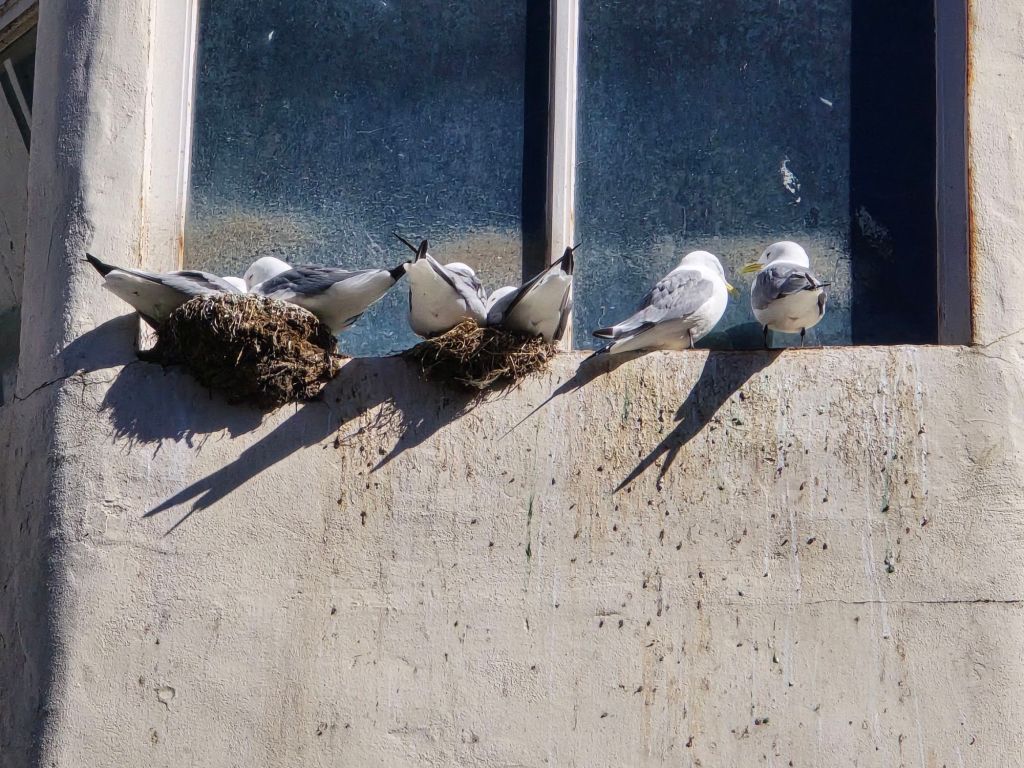
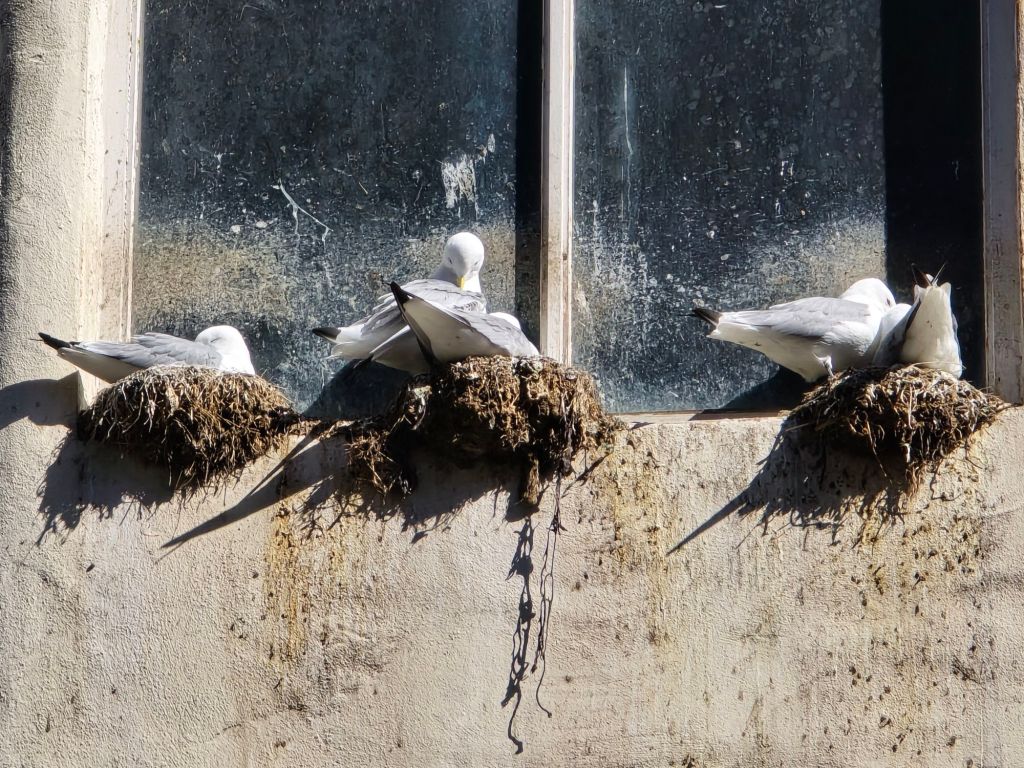
    Kittiwakes are starting to nest on window ledges in Scarborough.  The lucky ones, I suppose.

    So, what’s the solution? Kittiwake hotels! In other parts of the world, like in Tromsø, Norway, people have constructed artificial bird cliffs to encourage kittiwakes nesting away from nesting on building.  
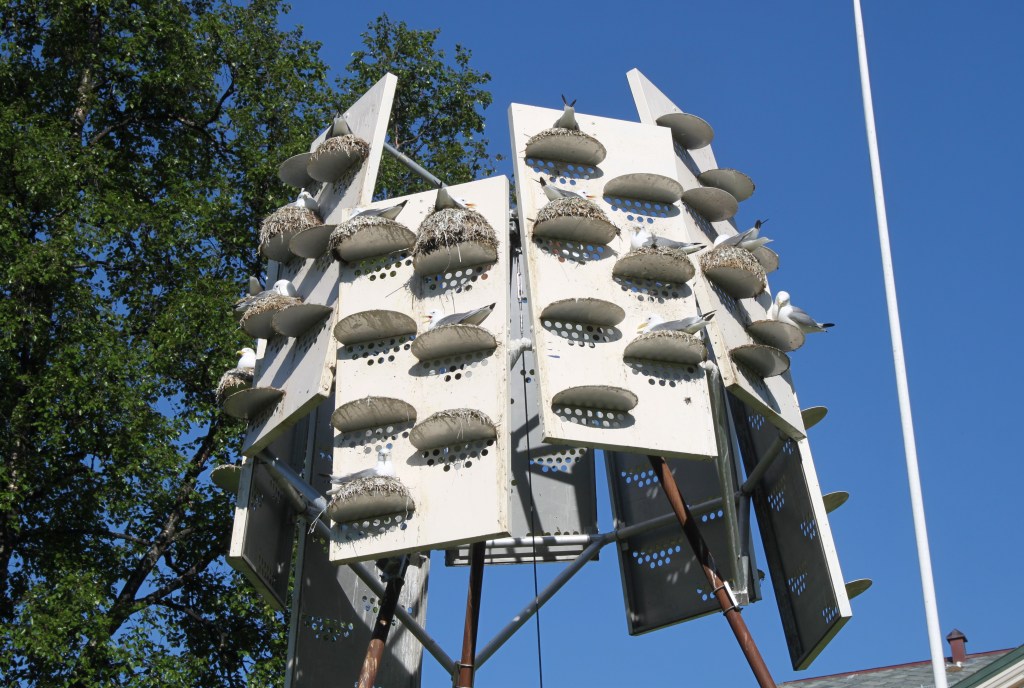
    Kittiwake hotel – Tromsø, Norway by Campbell, Sandy Attribution-NonCommercial 4.0 International.

    These artificial structures are starting to be built in the UK as well, such as these artificial nesting structures at Ness Point, also known as Lowestoft Ness, the most easterly point of England, Great Britain,
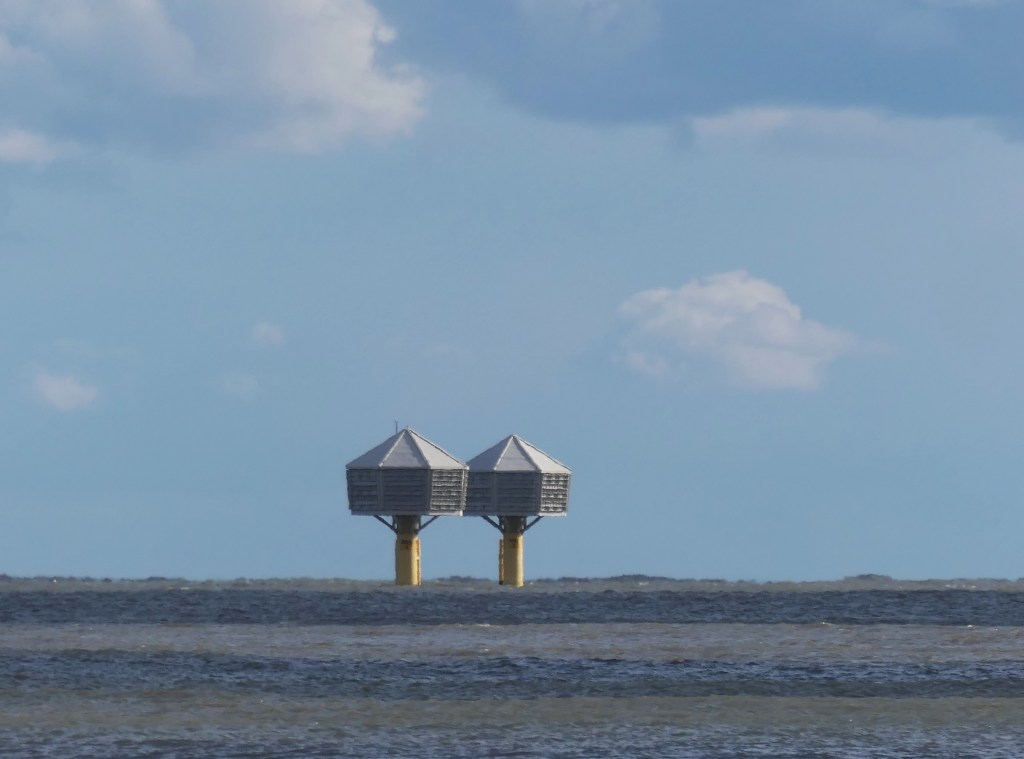
    Lowestoft, kittiwake Hotels from Ness Point. Flickr Creative Commons Attribution-Share Alike 2.0

    A kittiwake hotel has also been built in Gateshead: the Saltmeadows Tower has reportedly been a great success, and kittiwakes successfully fledge young birds, see here and here.

    Kittiwakes are Red listed species of highest conservation concern, so we need to take good care of them. Measures were taken to try and exclude them from the famous Spa Bridge in Scarborough  – read about it here and here – but in subsequent years they have largely recolonised it. 

    Kittiwakes are amazingly clever and adaptable birds! As you might have gathered, I love them. Some people visiting the seaside may not know the differences between kittiwakes and herring gulls, but they have undoubtedly heard the raucous cry of the kitiwake, which gives them their onomatopoeic name.

    The majority of kittiwakes still live on sea cliffs, but increasing numbers now live on man-made cliffs: such as bridges and buildings. If we decide to change the rules and tell them they are no longer welcome on our buildings, we have a duty, I think, to provide them with alternative accommodation. Many towns have started to do this. Scarborough needs to do so urgently! It’s a problem we can easily solve with a bit of money and ingenuity.

    Update (August 2025).

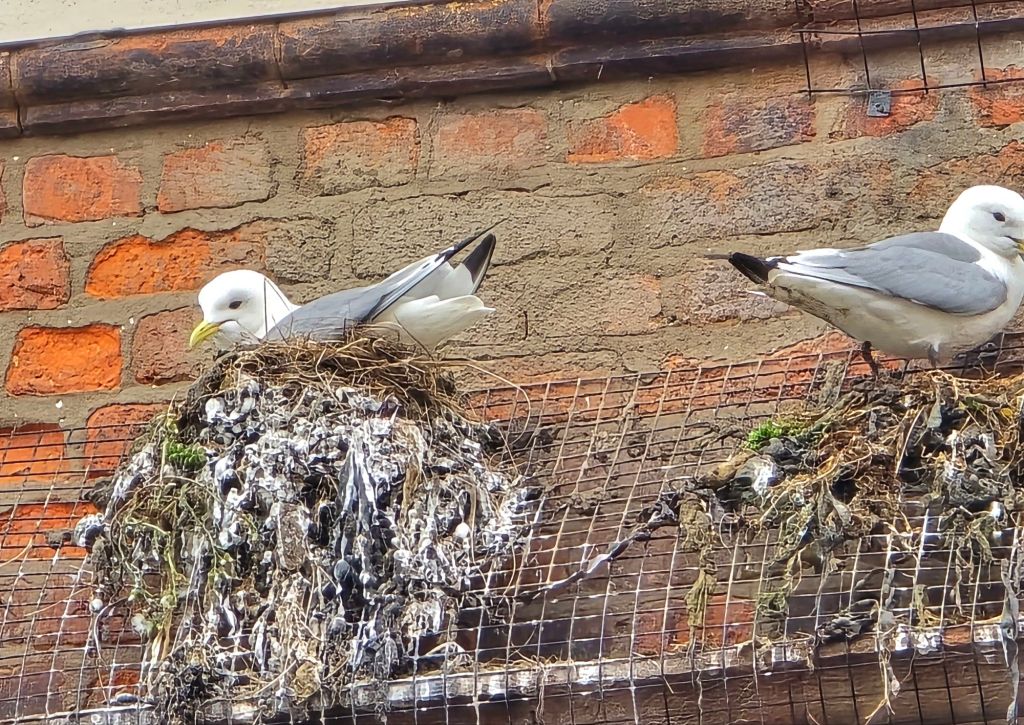
    The really good news is that the kittiwakes overcame the obstacles by pulling up seaweed on the wire mesh. It took them quite a long time, but most managed to build excellent nests composed of over avfoot of dried seaweed. Such clever birds!  I love their tenacity and adaptability.
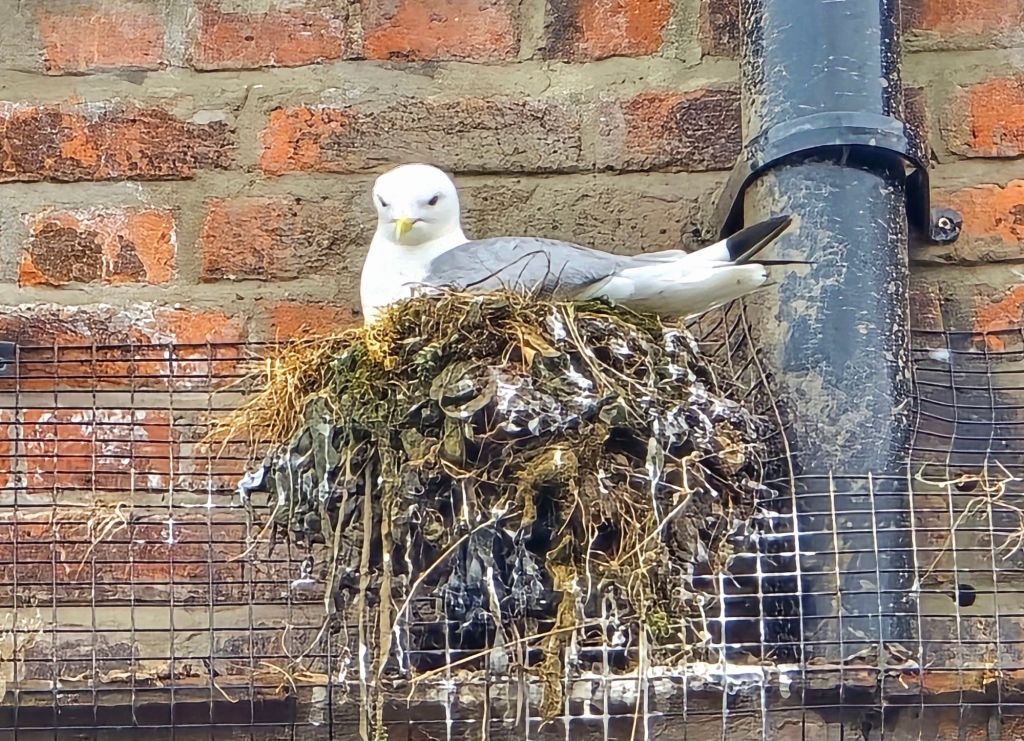
    Building their nests at the end of May 2026

    Previous blogs

    That’s nothing! I grew up on a lamp post!

    Kittiwake chicks: bringing up babies!

    Nest building kittiwakes

    Kittiwakes learning to fly

    Kittiwake kittiwake!
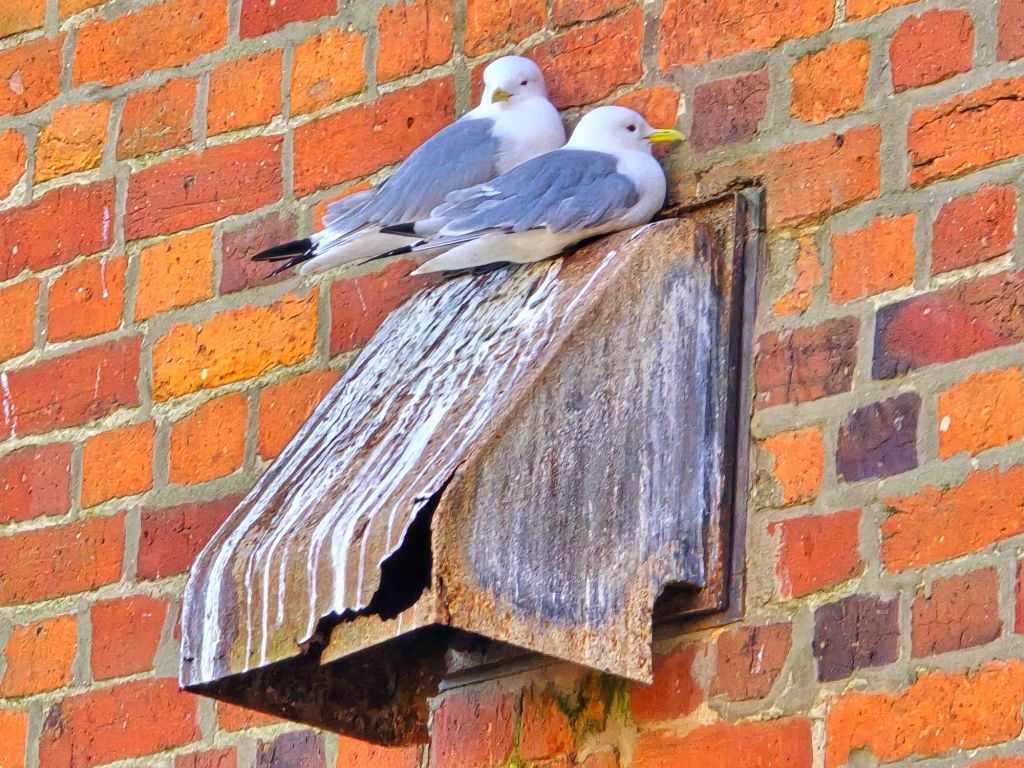
    Can we nest here?
  • Katie the Kittiwake goes to sea

    Black-legged Kittiwake (Rissa tridactyla) adult showing tongue

    The Kittiwake nests are all empty now in Scarborough; on the cliffs and in the town, the birds have all gone. Long gone. Gone to sea.

    Katie did not want to go to sea; she wanted to stay on her ledge above Marks and Spencer and try all the lovely food her gull-friends on the roofs around her were eating. But it was not to be. Her parents had looked after her and fed her well all through the summer, but now they were tired and needed a break. They wanted to go to sea. Katie would either have to come with them or look after herself, but she was quite incapable of finding food. Walking about the town begging for chips, like the herring gulls, looked like fun, but she didn’t think she could do it. Her legs were too short and she was not cut out for street life. Reluctantly, she came to conclusion that Yes, it was time to go. So one day in late August they all set off.

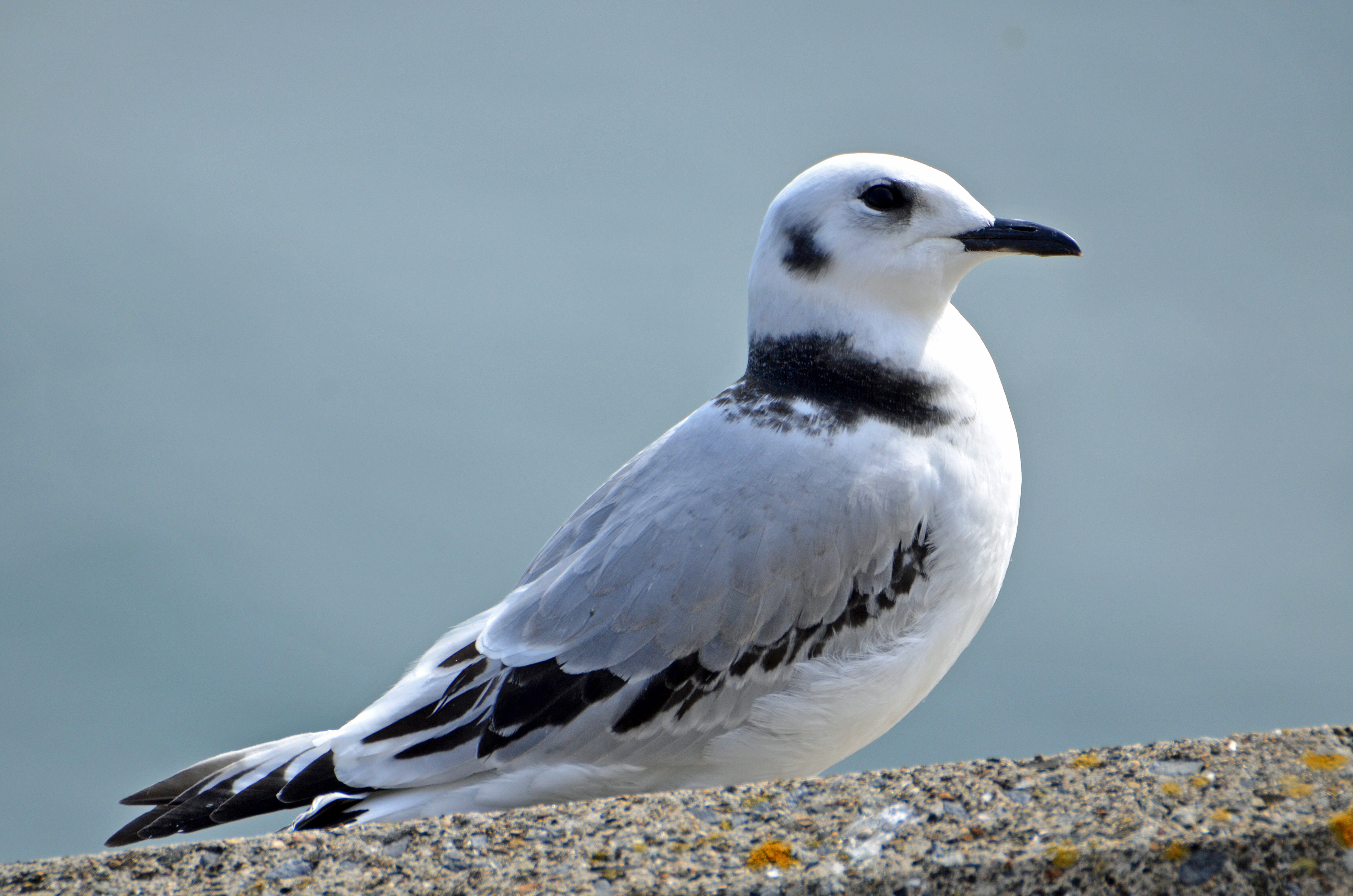
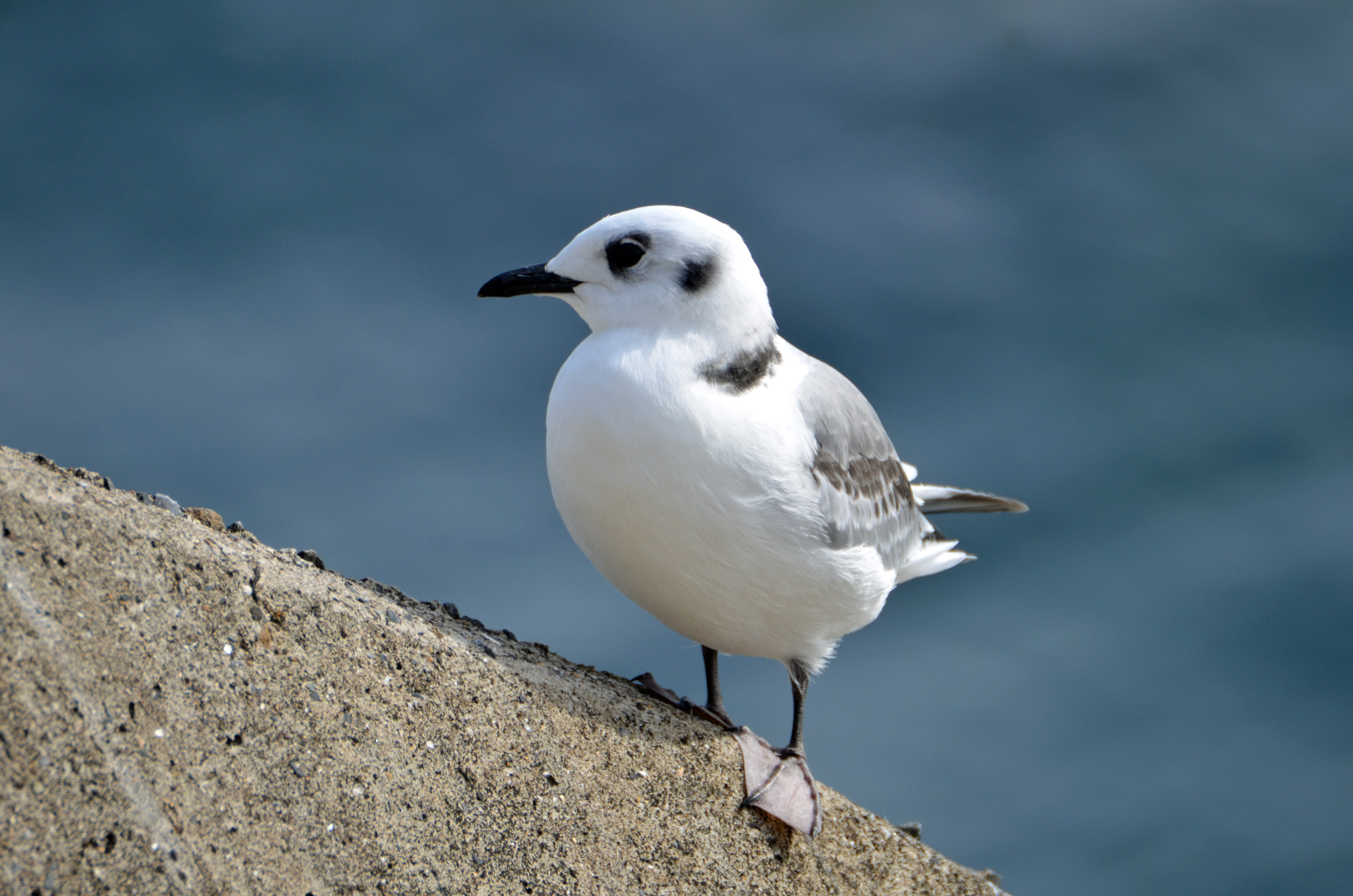
    Newly-fledged Kittiwake chick just like Katie!

    Katie had been down to the sea a few times with her parents. She had had a go at sitting on the ocean and trying to peck at the occasional morsel that passed by, but she had never really been out to sea. She had not flown far out, far away from the land. She had just jumped in and out, and sat on the sea wall smelling the ocean and watching all the other gulls.

    Black-legged Kittiwake (Rissa tridactyla) Andrew C [CC BY 2.0 (https://creativecommons.org/licenses/by/2.0)%5D

    This time was different. Her parents looked serious and in no mood to put up with her reservations. Her Dad, Harold, said: ‘Come on Katie. If you don’t come with us now, you will sit here and starve. A Kittiwake has to go out to the sea. The ocean is where we really belong. You’ll see.’ So off they went; flying high and further out than Katie had ever been before.

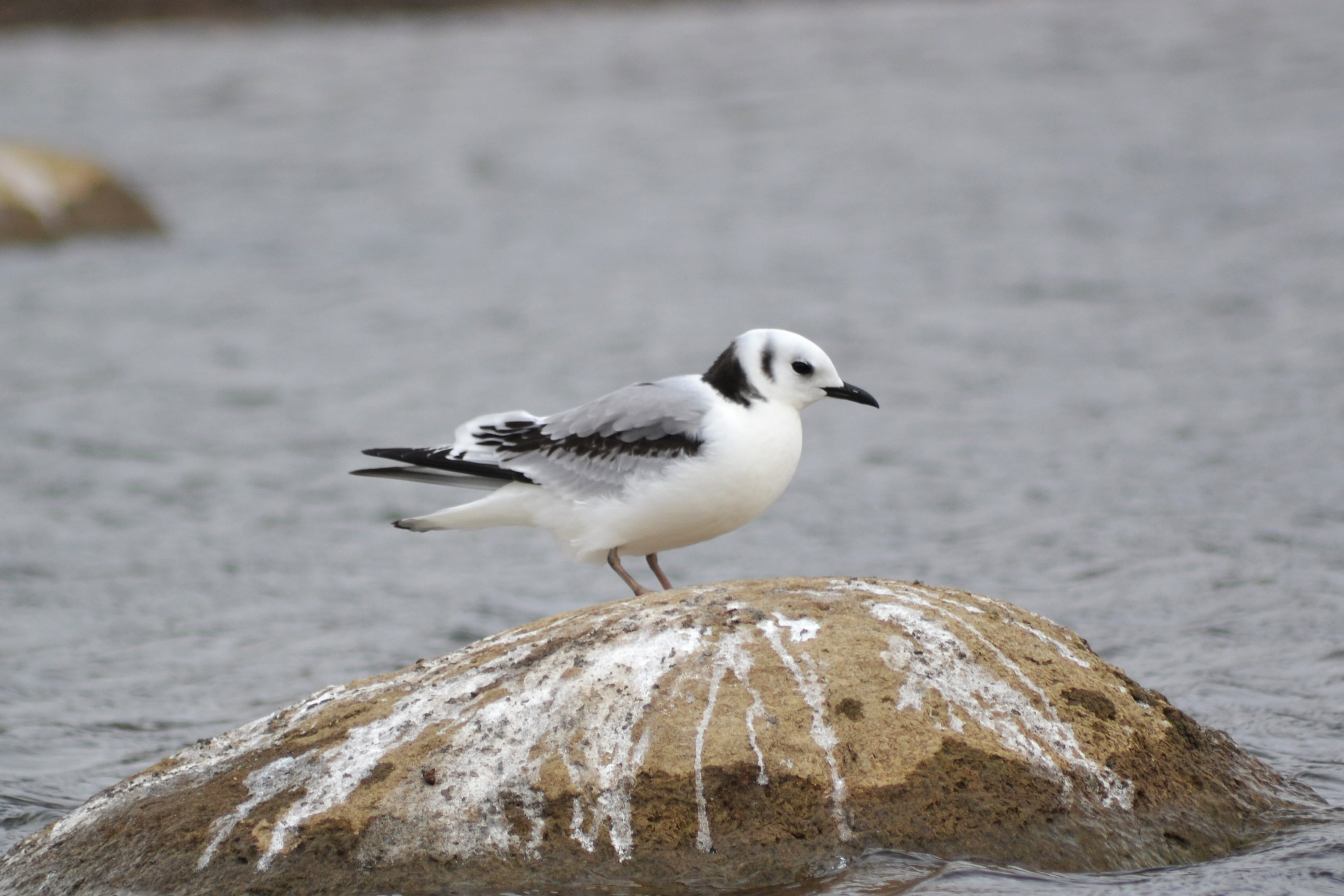
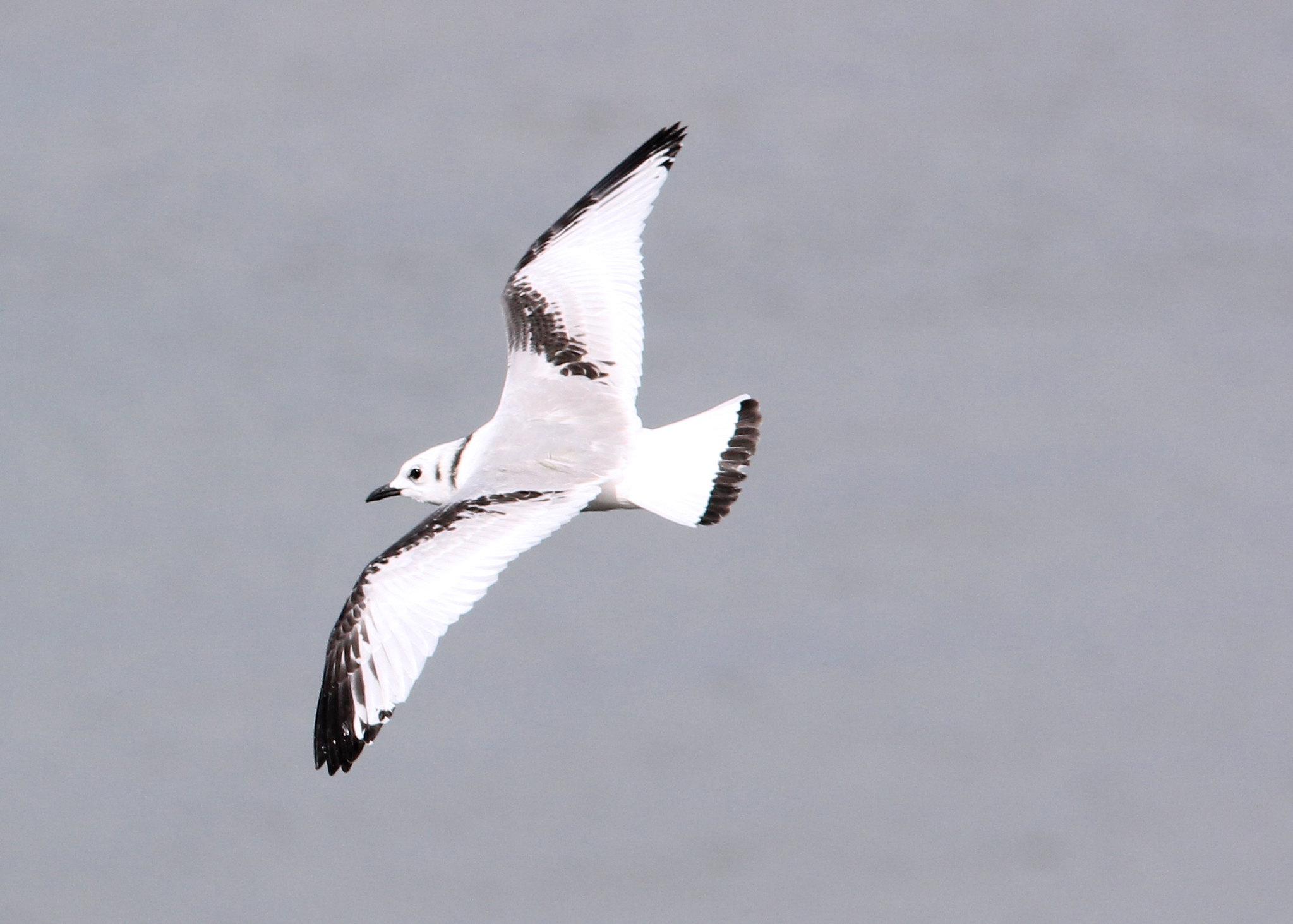
    Juvenile Kittiwake Bempton Cliffs, Katie Hostad, Flickr files (Creative Commons)

    A lot of other gulls were leaving Scarborough at the same time, and soon they joined up with others in a large flock, heading north along the coast. The were soon joined by some other Kittiwakes flying over from the land. ‘Where do you come from?’ Katie asked one of them. ‘Newcastle’ he replied, in a strange accent she had not heard before. ‘Ooh eye, its great there said one of the older gulls; we have nests on a bridge, high above the river’. ‘Oh I was born on a bridge’ said one of the other birds from Scarborough. ‘It’s great, you have a lovely view and it’s very safe. There were so many of us, all close together on the bridge.’ ‘Sounds just like Newcastle’ said the newcomer. ‘So we have something in common then’ he said, flying closer to the bird from Scarborough who happened to be a female. ‘Perhaps we should stick together for a while’ he smiled. Yes Kittiwakes can smile, only they can see it. Humans don’t know what a Kittiwake smile is!

    In winter. many kittiwakes move in small flocks …. Some flocks include both adults and first-year birds, but I doubt if there is any kinship between the individuals, as pairs and their offspring separate once they leave the colony in autumn. (Coulson, 2011).

    Newly-fledged Kittiwake chick in July. Just like Katie before she went to sea!

    After joining up with all the new birds from Newcastle, Katie looked around to see where her Mum and Dad had gone. They weren’t there. She couldn’t see them anywhere. ‘Where’s my Mum and Dad?’ screamed Katie! They’ve gone!

    ‘You are on your own now’ said one of the older birds from Newcastle. ‘You probably won’t see them again until next year now.’

    Since Kittiwakes are not fed by their parents after they leave the nest sites, successful (and rapid) dispersal to good feeding sites is probably critical for the survival of the juvenile birds. (Wernham et al., 2002).

    ‘How am I going to survive!’ moaned Katie. ‘I don’t even know how to catch fish!’ ‘Don’t worry’ said the older bird. ‘Stick with us and we’ll show you. You’ll soon get the hang of it’. ‘Yea stick with us’ said some of the other juveniles. ‘Our parents have left us as well! We’ll be OK if we stick together’. So off they flew; a small flock of adults and juveniles, not related, but with a shared purpose and common interest. Flying into the unknown, but armed with the instincts and adaptations millions of years of evolution had provided them with. Enough to give them more than a sporting chance of surviving in this new world.

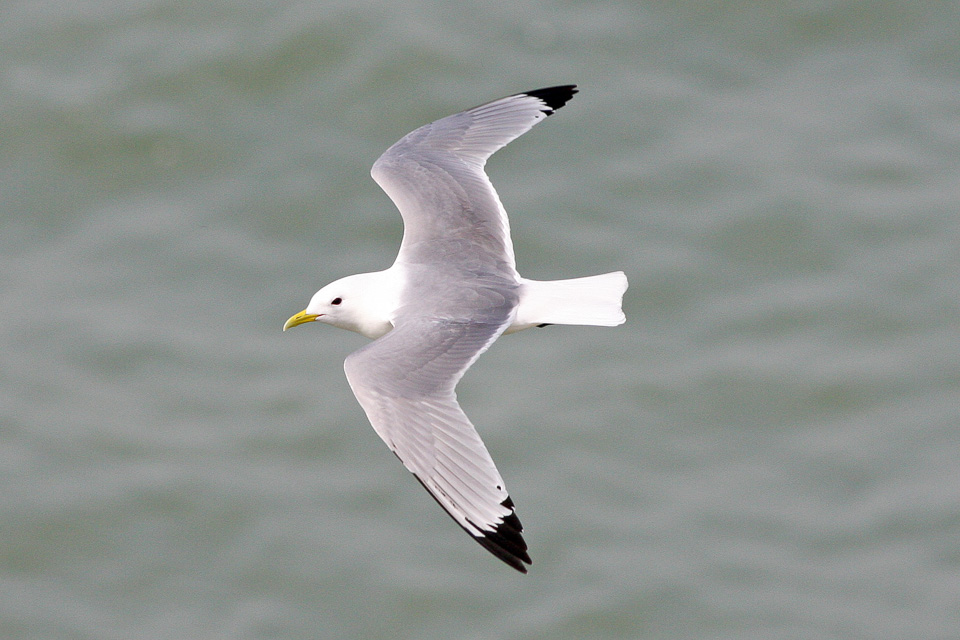
    Black-legged Kittiwake (Rissa tridactyla) at Splashpoint, West Sussex, England. Ron Knight [CC BY 2.0 (https://creativecommons.org/licenses/by/2.0)%5D

    Katie and her companions flew north helped by a strong wind blowing from the south-west. They made rapid progress and were soon up near the coast of Norway.

    ‘My Dad came from Norway’ said Katie, excitedly. ‘Let’s go and find him! ‘It will be like looking for a needle in a haystack’ said one of the older birds. ‘What’s a needle and what’s a haystack said Katie’, confused. ‘Forget it’ said the older bird. Stick with us and we will look after you’. ‘OK’ said Katie, looking wistfully across to the foreign shoreline they were flying next to.

    ‘We are going to go much further north, and then we will head over to Greenland for the winter’. Greenland sounds nice thought Katie. It should be warm there by the sound of it. Little did she know!

    Some young Kittiwakes probably remain on the other side of the Atlantic, off Newfoundland and Greenland (Wernham et al., 2002).

    They flew on, stopping off to rest and feed on the surface of the sea at night. Eventually the reached a new land. A strange place with huge cliffs and thousands and thousands – hundreds of thousands – of Kittiwakes. Katie had never seen so many Kittiwakes. They joined up with the huge flocks and Katie started chatting to some of the other juvenile birds.

    Hundreds of thousands of Kittiwakes nest at Diskobukta on Barent’s Island (Barenstøya), Svalbard Archipelago, where they are preyed upon by Arctic foxes.

    ‘Where do come from’ asked one of them. ‘Scarborough’ said Katie.

    ‘Where is that?!’ the other bird asked. ‘It’s a town far to the south from here. I was brought up on a ledge above Marks and Spencer’ said Katie. What’s that?’ said the other bird. ‘It’s a shop’ said Katie. ‘That sells food’.

    ‘Are there foxes there?’ said the newcomer. ‘Well a few’ said Katie, ‘but we don’t see them much’. ‘Here the foxes try and eat you’ said the local bird. It’s a nightmare I can tell you. My sister was taken by a fox. I can’t wait to get away from the land and head out to sea!’

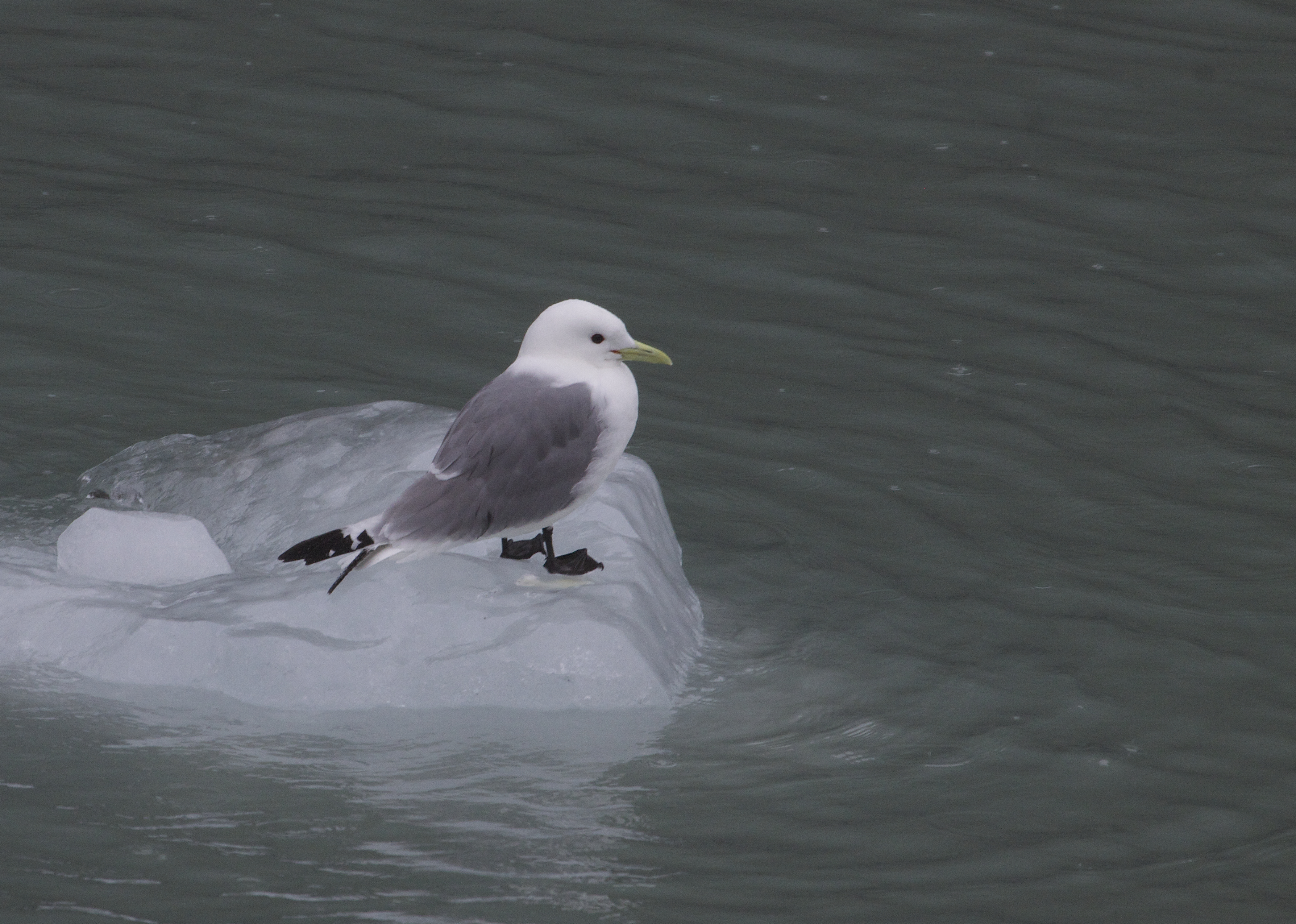
    So off they flew travelling west this time. Soon they saw something floating in the sea. ‘What’s that?’ asked Katie. ‘It’s ice stupid! Haven’t you ever seen ice before?’ ‘No’ said Katie. It looked very strange, and she was not sure if she liked it. ‘Look, you can stand on it’ said one of her new friends’ swooping down and landing on a small lump of ice.

    In winter, some Kittiwakes remain as far north as the Arctic Circle, so how do these birds feed and survive in the total darkness? The answer is not known. Some may feed behind fishing boats using floodlights, whilst others may be attracted to luminous prey. (Coulson, 2011).

    Black-legged_Kittiwake_(Rissa_tridactyla) on aniceflow (bergy bit). Gregory “Slobirdr” Smith [CC BY-SA 2.0 (https://creativecommons.org/licenses/by-sa/2.0)%5D

    What happens next? Will Katie survive the winter and learn to look after herself? Find out in the next installment of Katie the Kittiwake!

    References

    Coulson, J. (2011). The kittiwake. A&C Black.

    Wernham, C., Toms, M., Marchant, J., Clark, J., Siriwardena, G., & Baillie, S. (2002). The migration atlas: movements of the birds of Britain and Ireland. T & AD Poyser.