Tag: Chiang Mai

  • Chasing leopards by the falls!

    Common Leopard Butterfly (Phalanta phalantha) mud-puddling at Mae Klang waterfall, Doi Inthanon, Thailand.

    It was a very hot day when I visited Doi Inthanon, Thailand’s highest mountain (at 2565 metres or 8415 feet), in early May this year. Temperatures in Chiang Mai city had reached 40 deg C the day before, but it was much cooler up the mountain. There are large tracts of different types of forest on this mountain – Doi Inthanon National Park covers an area of about of about 482 square kms – but it is often shrouded in cloud near the top.

    Forest on Doi Inthanon, by the Royal Chedis (or stupas) at about 2140m.

    Unfortunately, the top of the mountain was rather cloudy on 7th May, so we headed further down, stopping off at a number of waterfalls, where I hoped to photograph butterflies.

    Wachirathan Falls, Doi Inthanon, Thailand, May 2017.

    One of the most beautiful falls on the mountain is Wachirathan Falls, just over 20 km into the NP, which is a magnificent spectacle, even in the dry season. Unfortunately, there were not many butterflies about, or the ones that were flying about were rather inaccessible, so I decided to head further down to the ever popular Mae Klang Waterfall. This lies just outside the boundaries of the NP, so is more heavily visited by picnickers and sightseers.
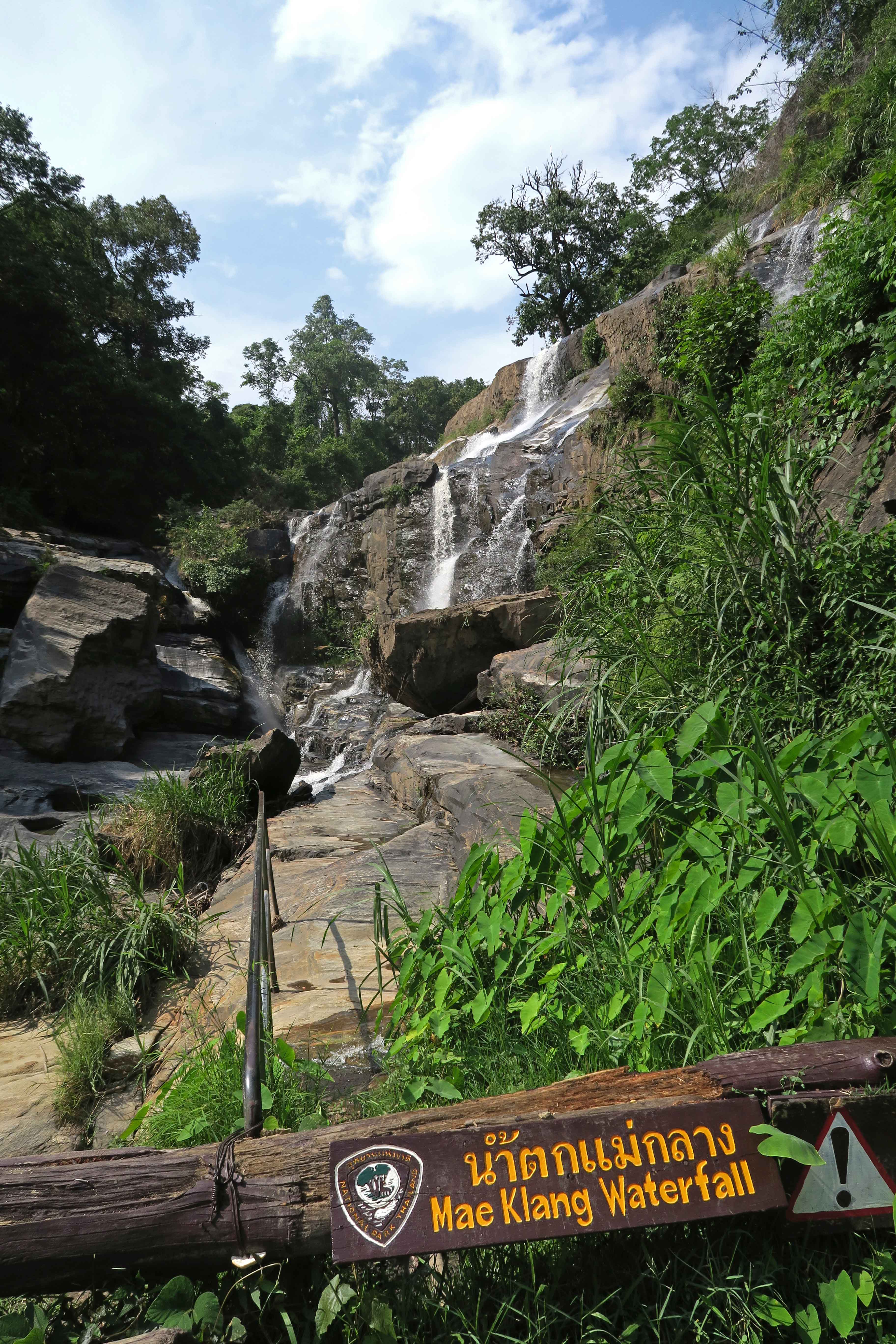
    Mae Klang Falls on 7th May 2017

    There was much less water flowing than in previous visits; compare the photograph above (taken in May, before the rains have arrived) with that taken in November (at the end of the rainy season) in a previous year.
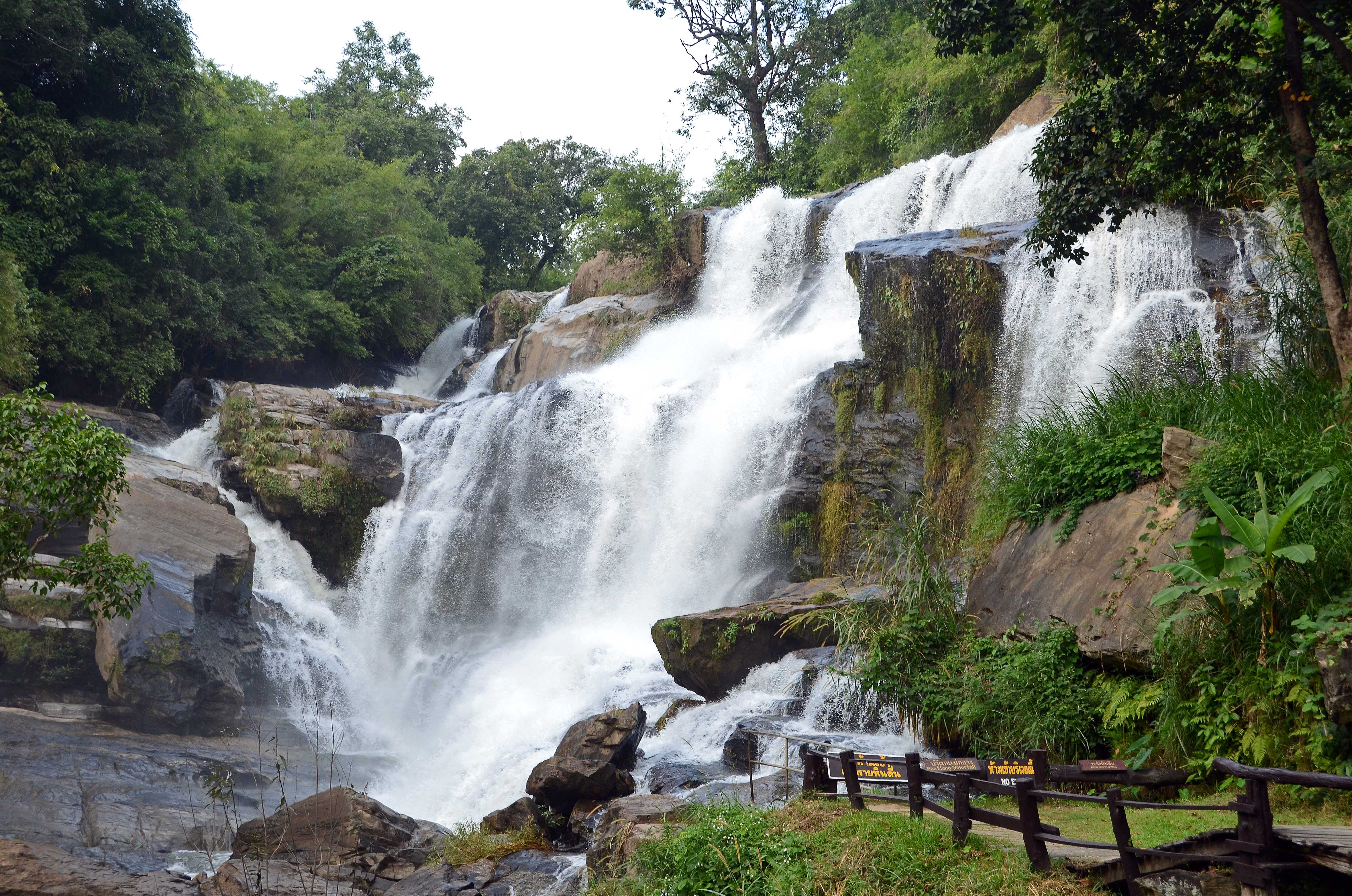
    Mae Klang waterfalls 8 Nov 2013

    Mae Klang waterfall is at an altitude of about 1,200 m or so, so is much hotter than further up the mountain, and there were plenty of butterflies around! The problem was that because of the high temperatures, the butterflies were flying about so fast it was very difficult to photograph them! One of the more obliging species was the Common Leopard Butterfly (Phalanta phalantha), which were present in quite large numbers along the stream beds next to the river.

    Common Leopard Butterfly (Phalanta phalantha) mud-puddling at Mae klang waterfall, Doi Inthanon.

    The butterflies were ‘puddling’ or ‘mud-puddling’ as it is called; they are trying to absorb sodium (in the form of sodium chloride, salt) or nitrogen (in the form of amino acids) from moist substrates such as mud, animal excrement, rotting fruits, carrion, dung, bird droppings, sweat, tears and so on (See 1: See you down the puddle). Curiously, many of these Common Leopard butterflies were sucking up moisture from the rocks themselves (below). There must have been a thin layer of water on the rocks, which may have produced a solution of salts or minerals attractive to these insects.
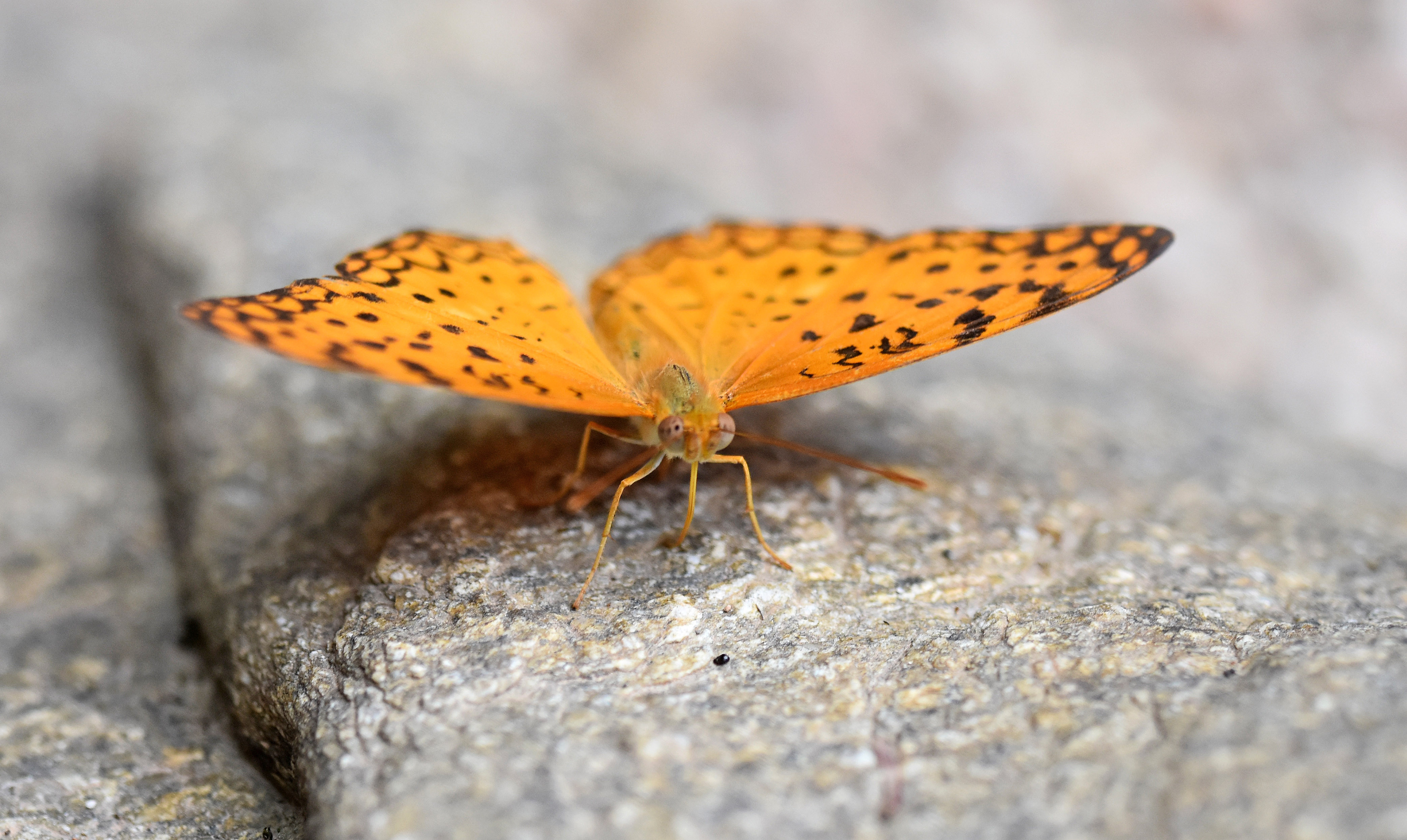
    Common Leopard Butterfly (Phalanta phalantha) Mae klang, with extended proboscis

    Despite being engaged in mud- or moisture-puddling, the butterflies did not stay put for long, and usually flew off as soon as the lumbering photographer approached them! I did not manage to get as close as I would have liked, but after taking dozens of shots, I managed to get a few usable ones.
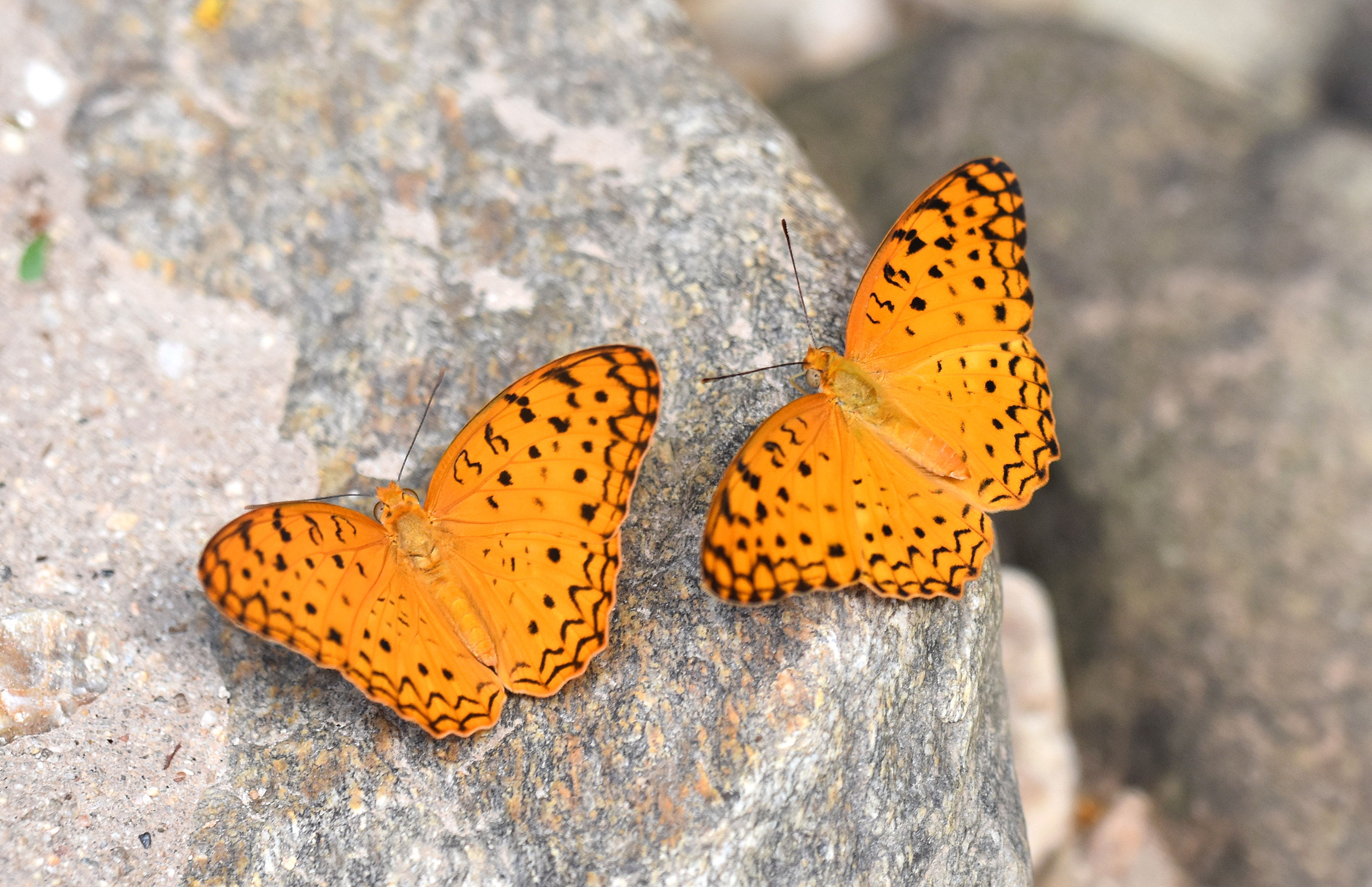
    Common Leopard butterfllies (Phalanta phalantha)

    These butterflies take about three weeks to develop from egg to adult (at 28 deg C) and the larvae feed on flowering plants in the Willow family (Salicaceae) including Flacourtia inermis and Salix babylonica (Links 2 and 3).
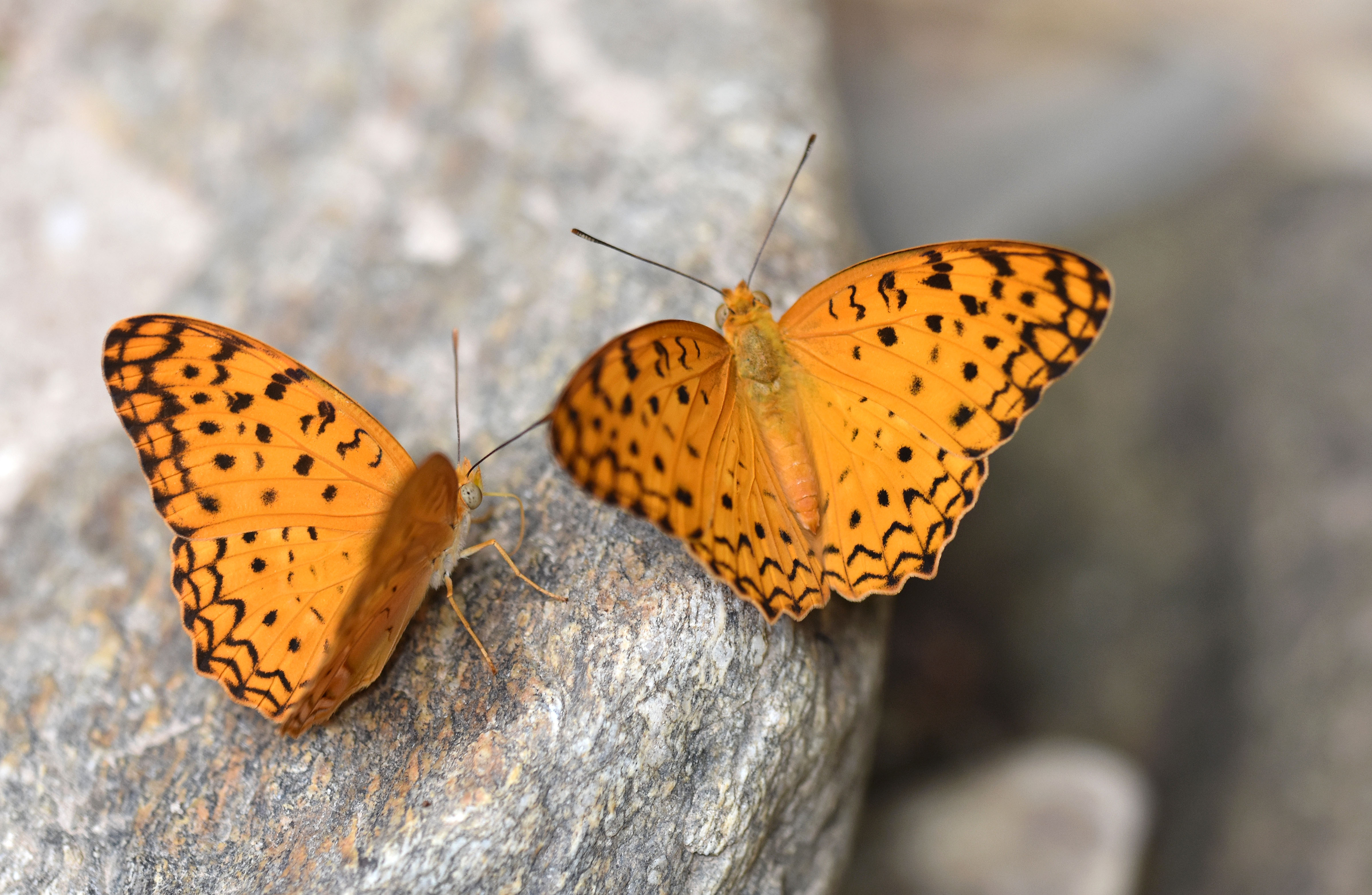
    Common Leopard butterfllies (Phalanta phalantha) on rocks

    There were also quite large numbers of yellow/green butterflies flying about, at amazing speeds! One often sees pictures of stationary butterflies, which fail to do justice to the extraordinary vitality of these insects. Butterflies can be very fast fliers – especially the nippy little Skippers, which can reach speeds of up to 60 km per hour! Skippers are shaped like little jet fighters! As the following photograph illustrates.
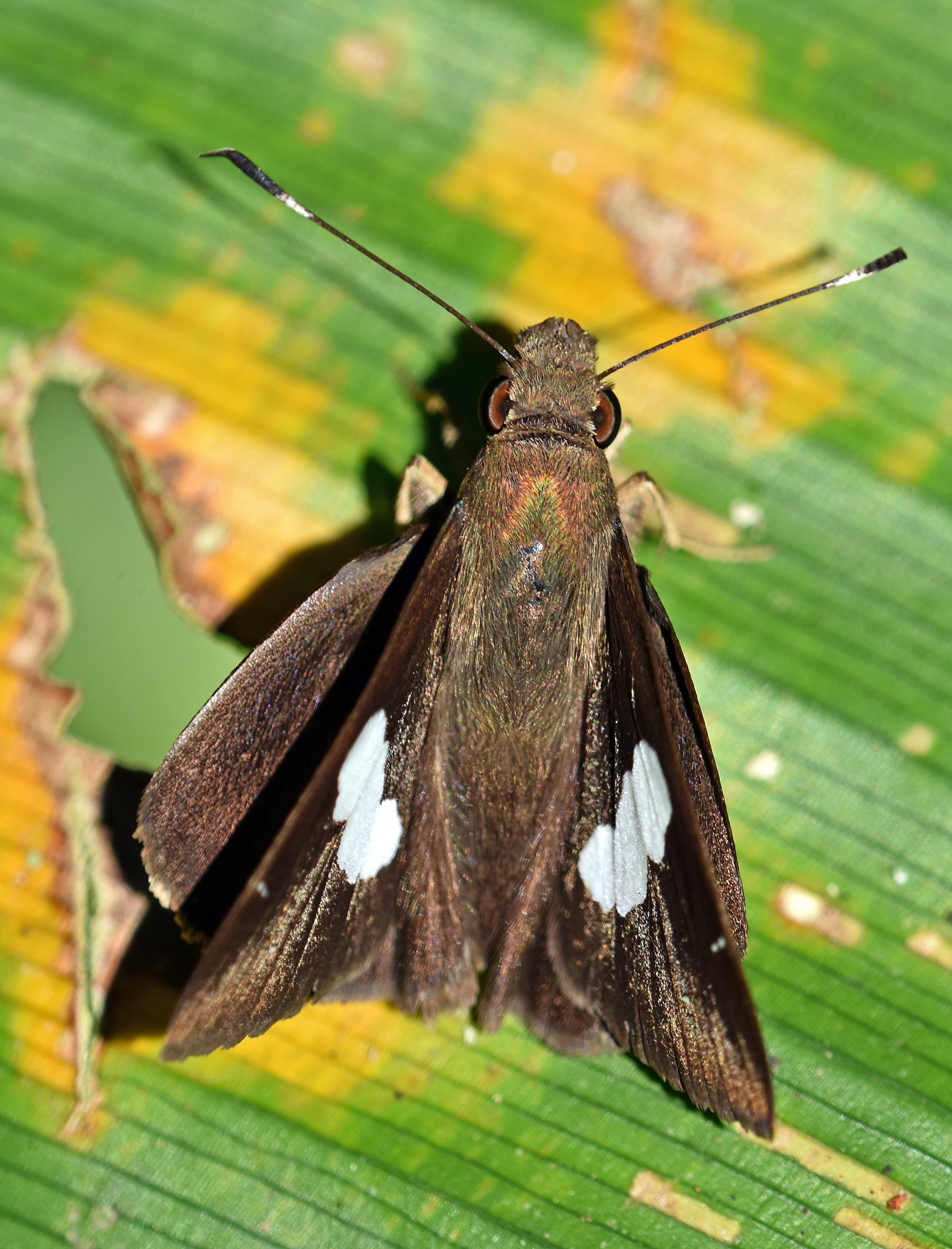
    Spotted Demon (Notocrypta feisthamelii alysos). A Skipper from Chiang Dao, Thailand.

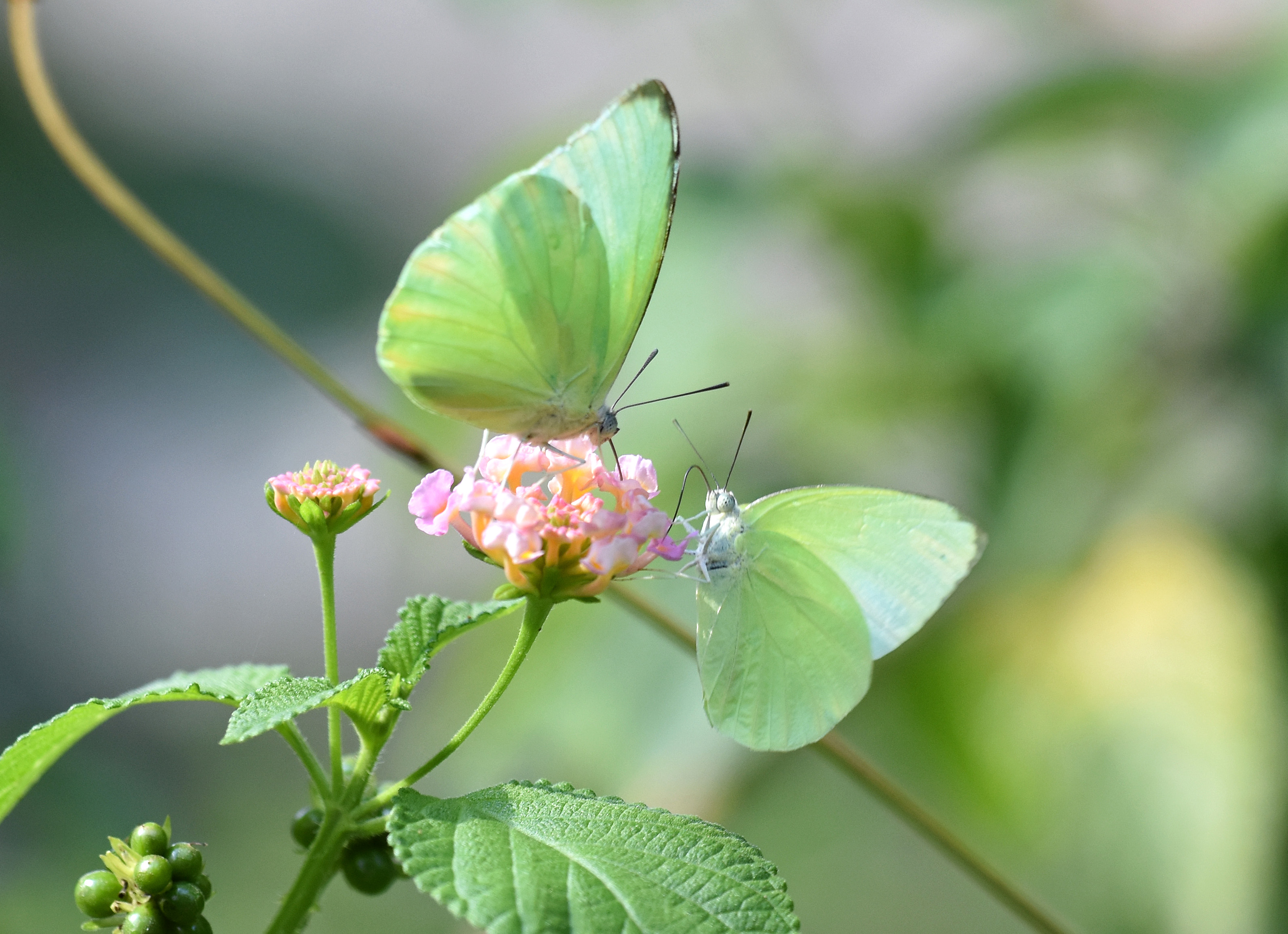
    I did manage to grab a couple of photographs of the lively yellow/green butterflies, which turned out to be Lemon Emigrants, feeding on nectar from Lantana flowers.
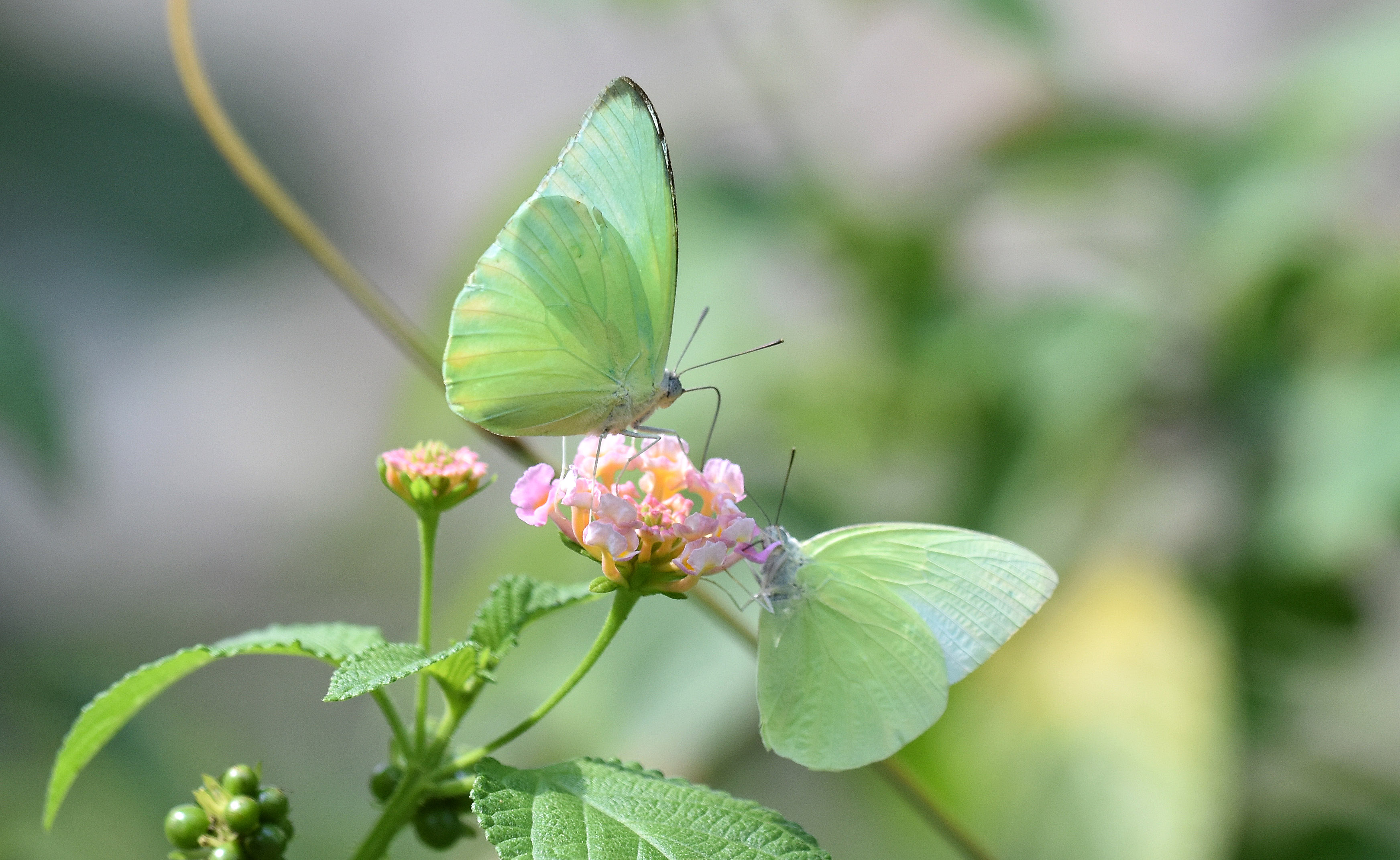
    Lemon Emigrant (Catopsilia pomona pomona) Mae Klang
    Lemon Emigrants (Catopsilia pomona pomona) Mae Klang

    I also came across this little skink – a Streamside Skink  (Sphenomorphus maculatus) – on the rocks near the waterfalls (below).

    Streamside Skink (Sphenomorphus maculatus) Mae Klang, Doi Inthanon, Thailand.

    The waterfalls are a good place to cool off on a hot day, and people like to sit and relax on the rocks beside the streams. There are plenty of small restaurants and vendors nearby providing food and snacks for visitors.
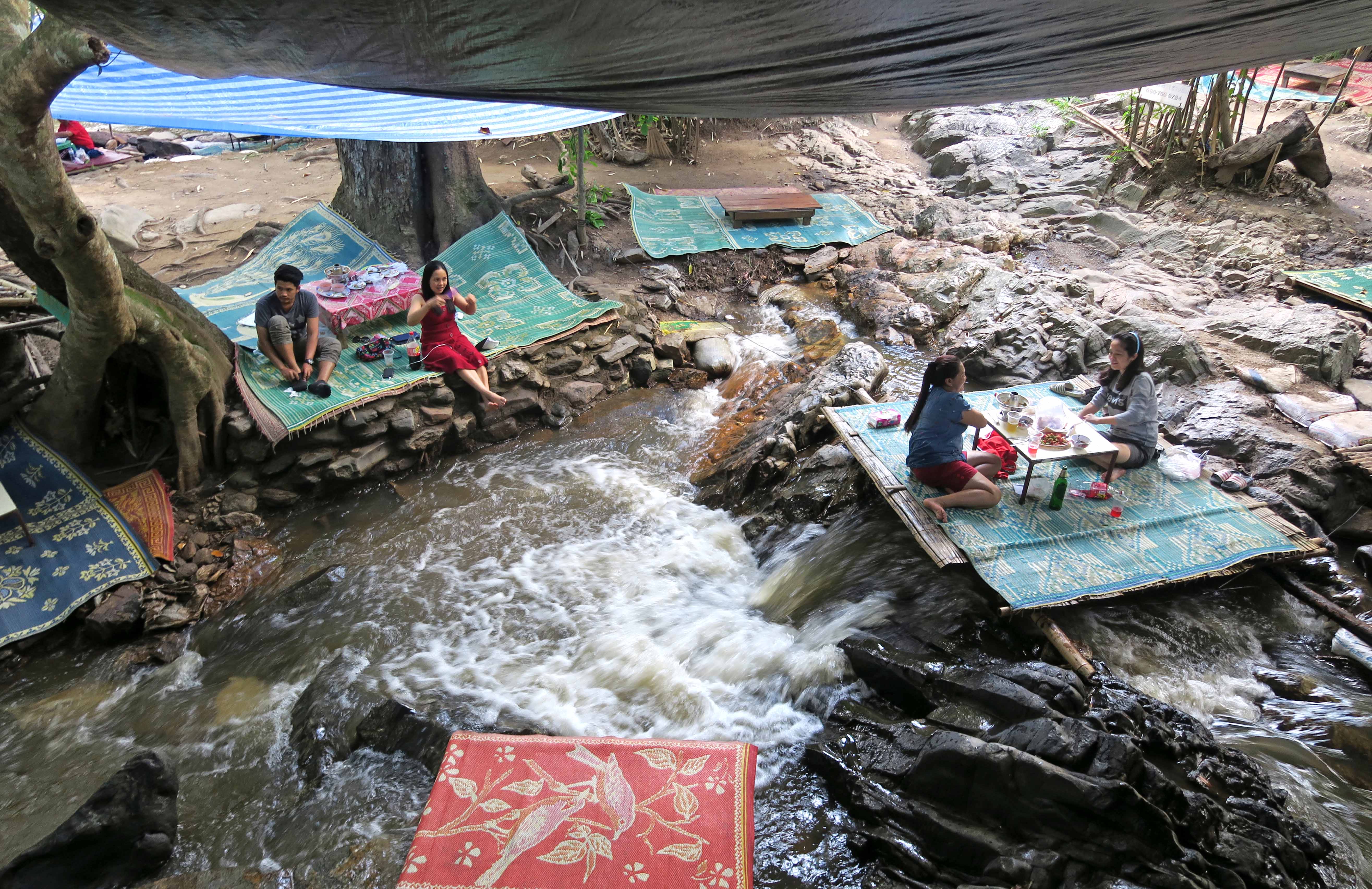
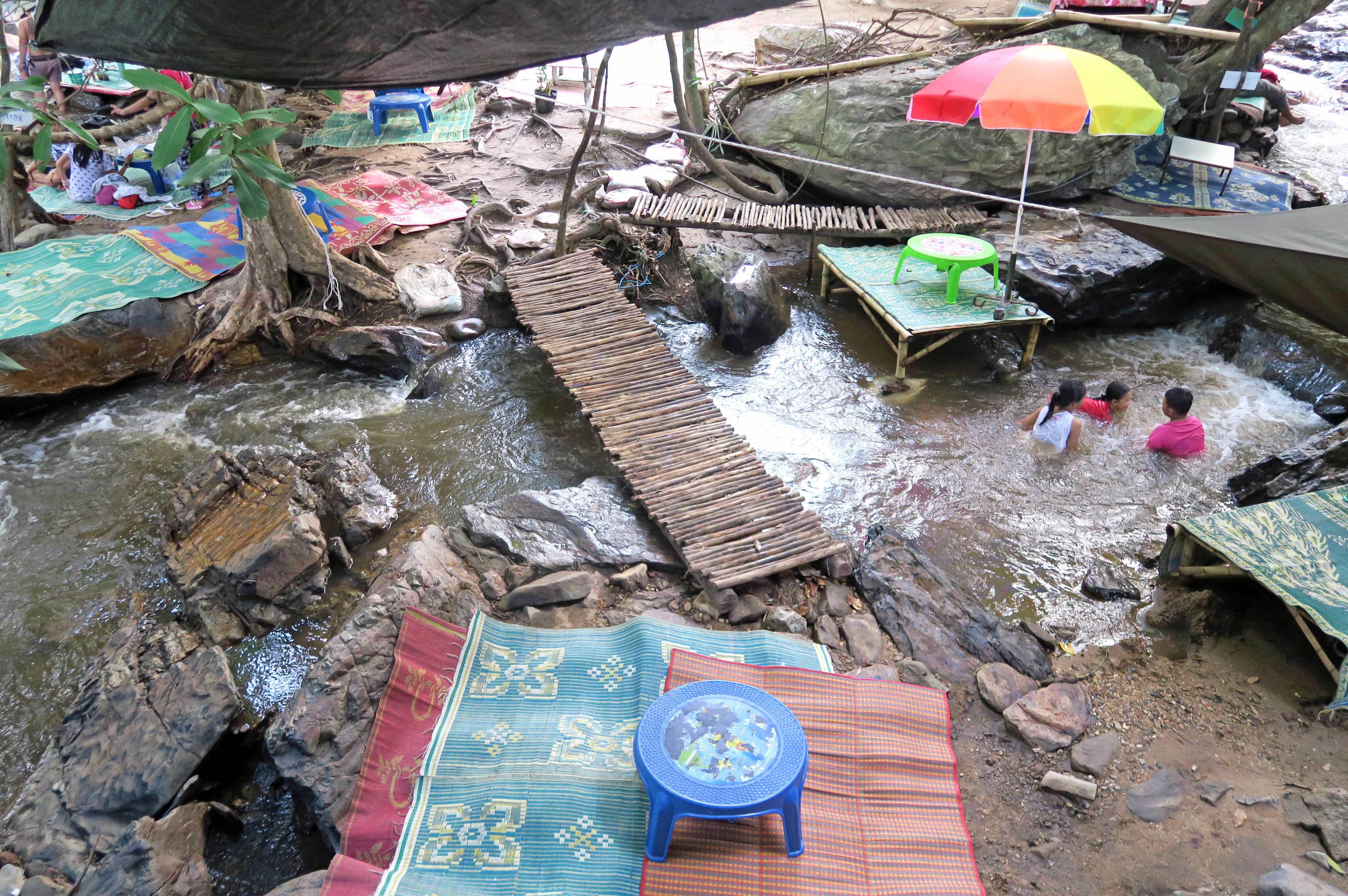
    Mae Klang Falls. People sitting and eating by the streams.
    Mae Klang Falls bathers

    So even when temperatures are unbearably hot, there are many places to go to chill out, whether you are a butterfly, skink or primate!

    1. https://rcannon992.com/2016/03/10/see-you-down-the-puddle-puddling-in-butterflies/
    2. Rayalu, M. B., Kumari, V. K., Naidu, M. T., & Atluri, J. B. (2014). Life history and larval performance of the Common Leopard butterfly, Phalanta phalantha Drury (Lepidoptera: Rhopalocera: Nymphalidae). International Journal of Advanced Research in Science and Technology, 3, 191-195.
    3. http://butterflycircle.blogspot.co.uk/2010/09/life-history-of-leopard.html
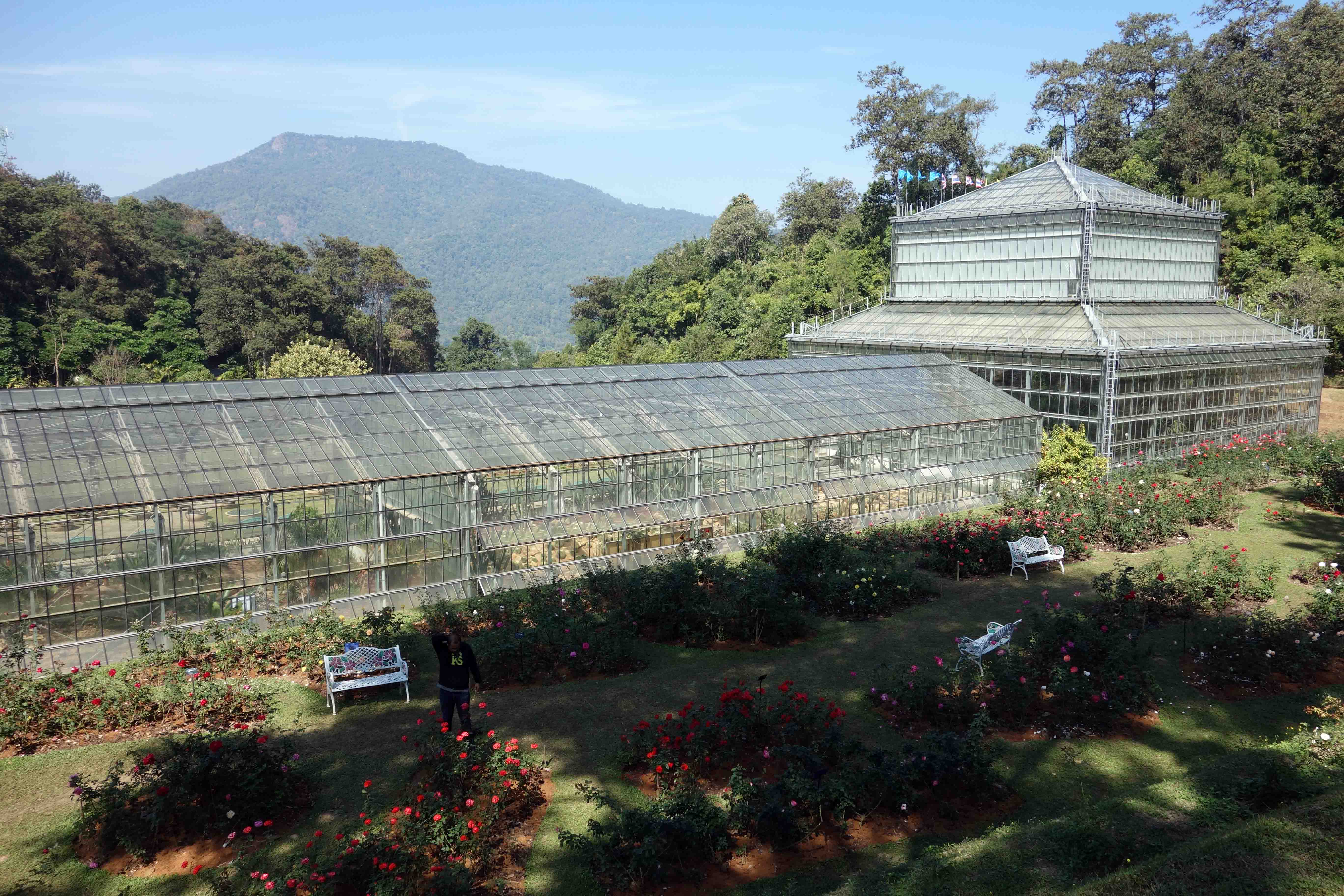
  • Queen Sirikit Botanic Garden

     Glass house complex

    Glass house complex

    The Queen Sirikit Botanic Garden is located in the Mae Sa Valley, on the edge of the Doi Sutep-Pui National Park, about fifteen km north of Chiang Mai.

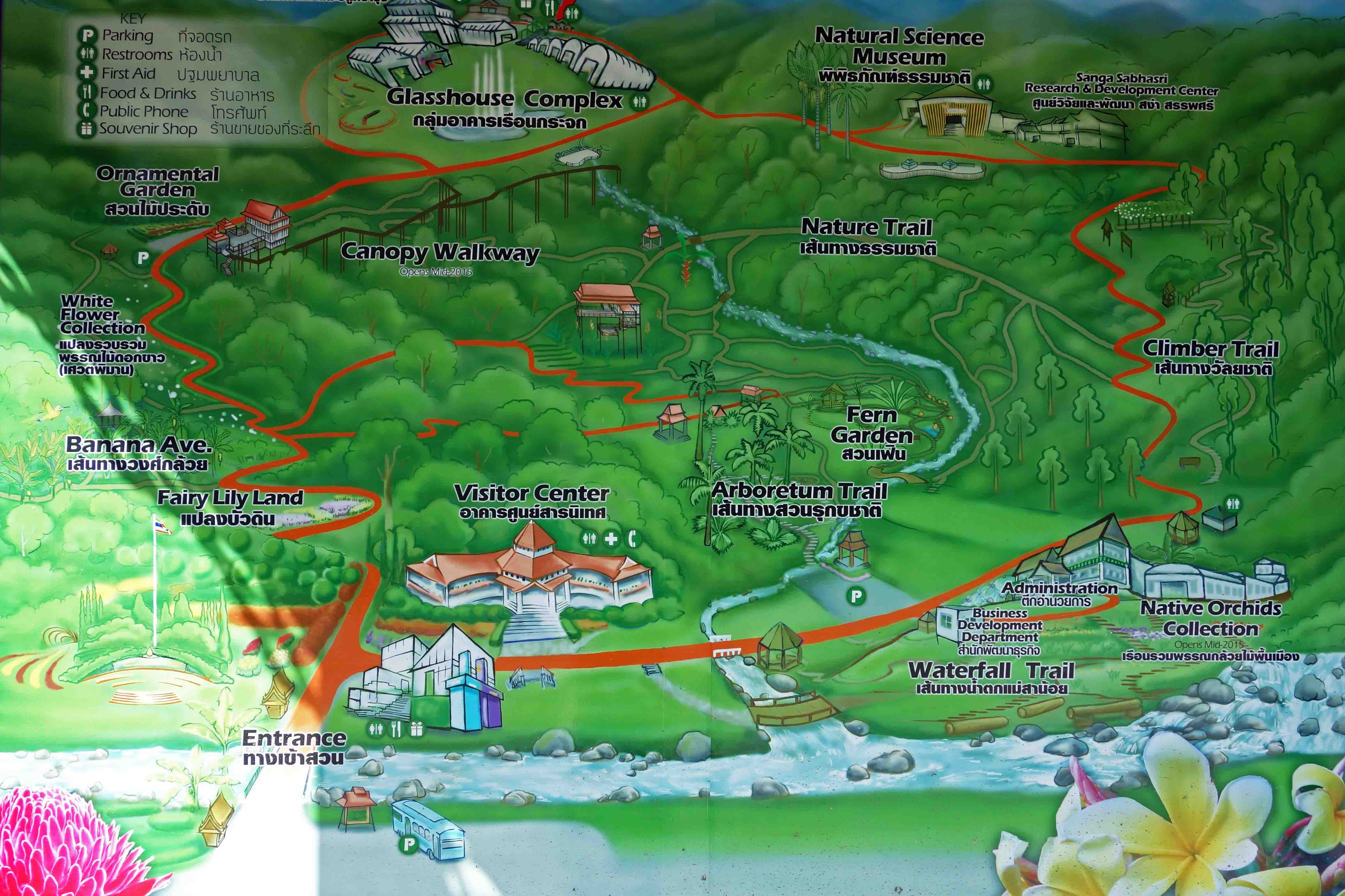
    Map of Queen Sirikit Botanic Garden
    Map of Queen Sirikit Botanic Garden

    The park is large (1000 ha) and there are a number of different sites and glasshouses linked by a perimeter road (see map).  Perhaps the most impressive exhibits are the indoor displays, housed in a series of conservatories and glasshouses at the top of the park.  When I visited in December of last year, there were relatively few visitors, and least compared to some of the more popular tourist sites in other parts of the valley.  There are also a number of trails in the garden, which are very pleasant to walk – especially in winter – and because of the elevated hillside location.

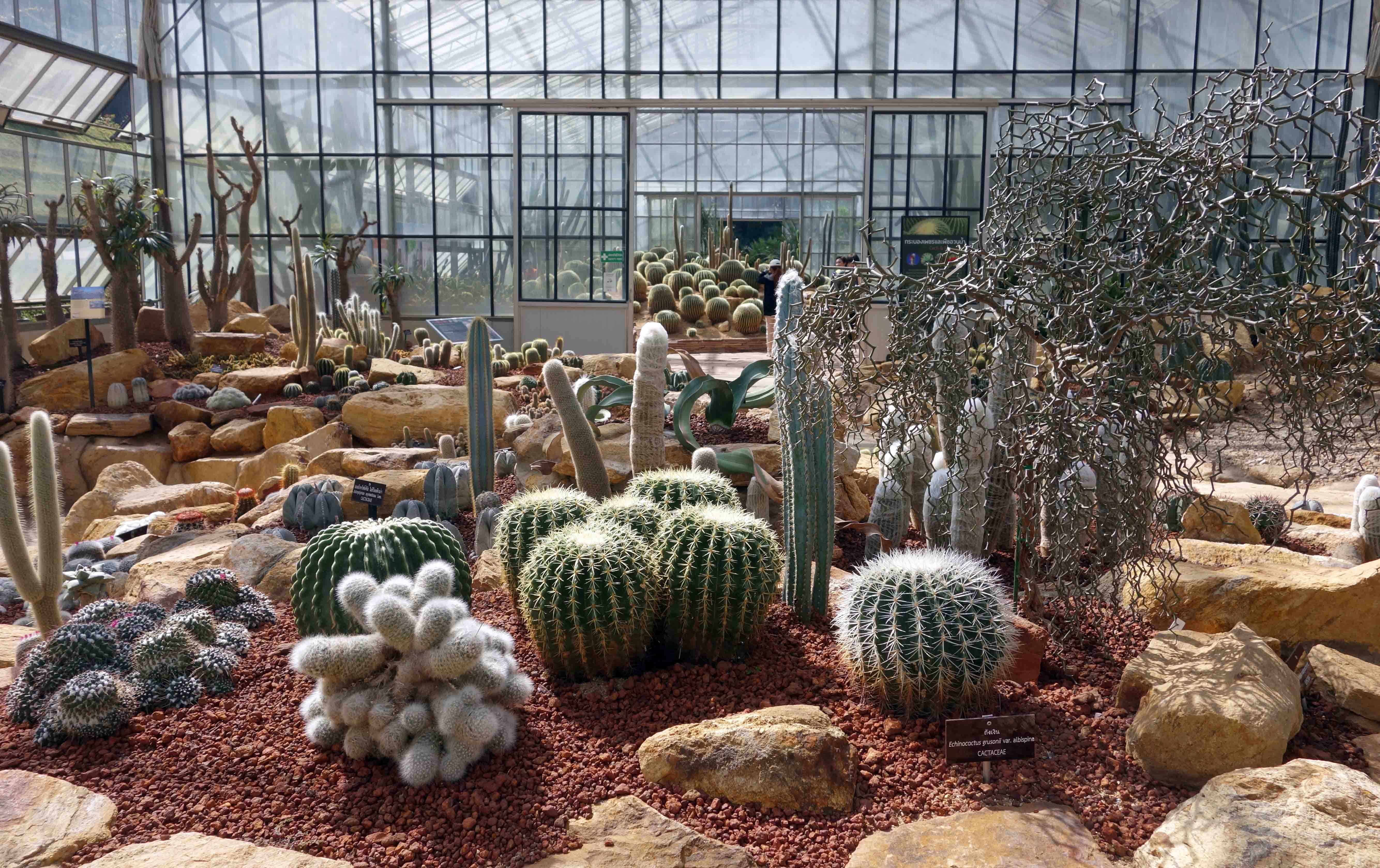
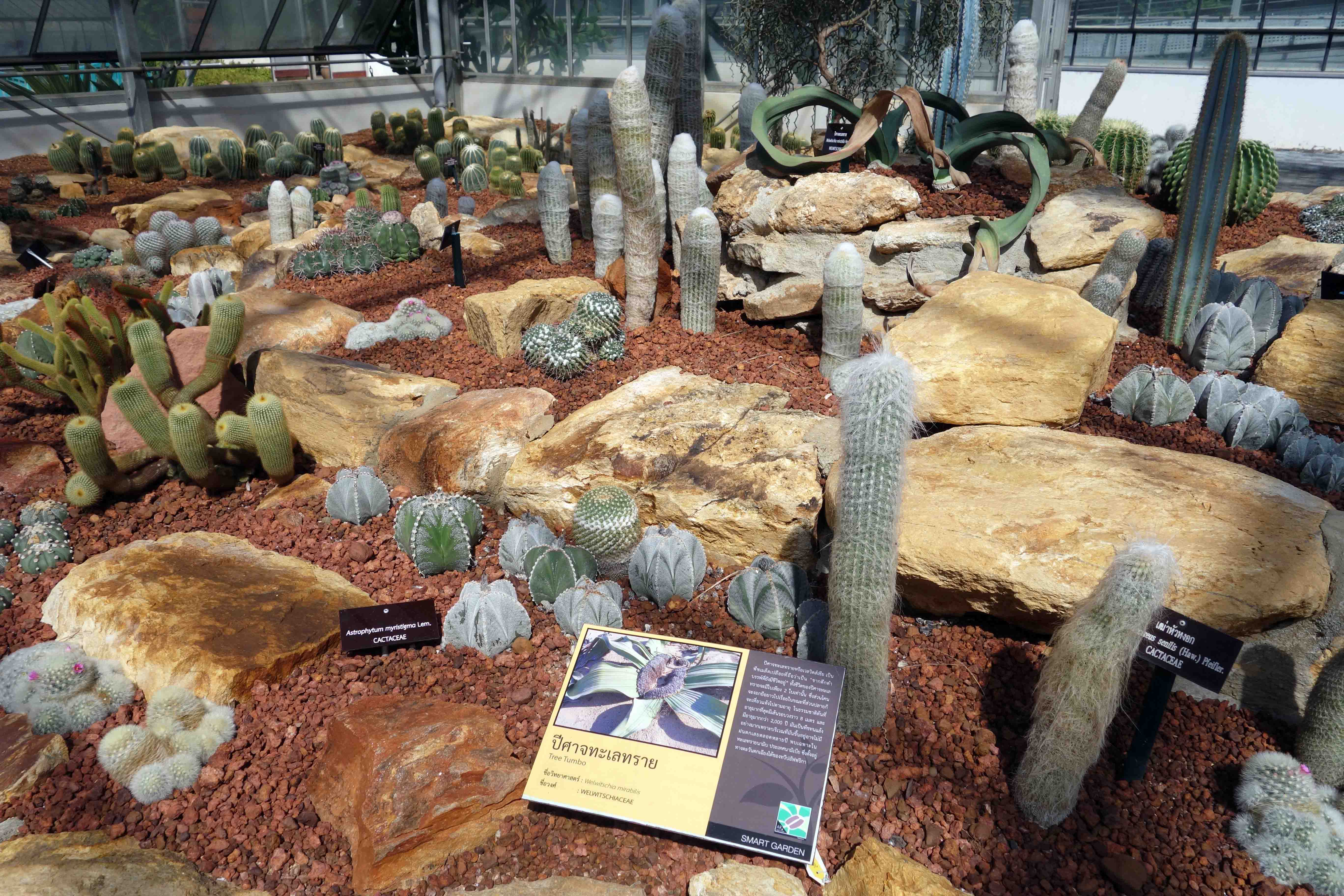
    Although the large Rainforest House is impressive, I particularly enjoyed the Arid House with its large collection of desert-dwelling cacti and succulents, which was beautifully laid out.

    The Arid House
    The Arid House

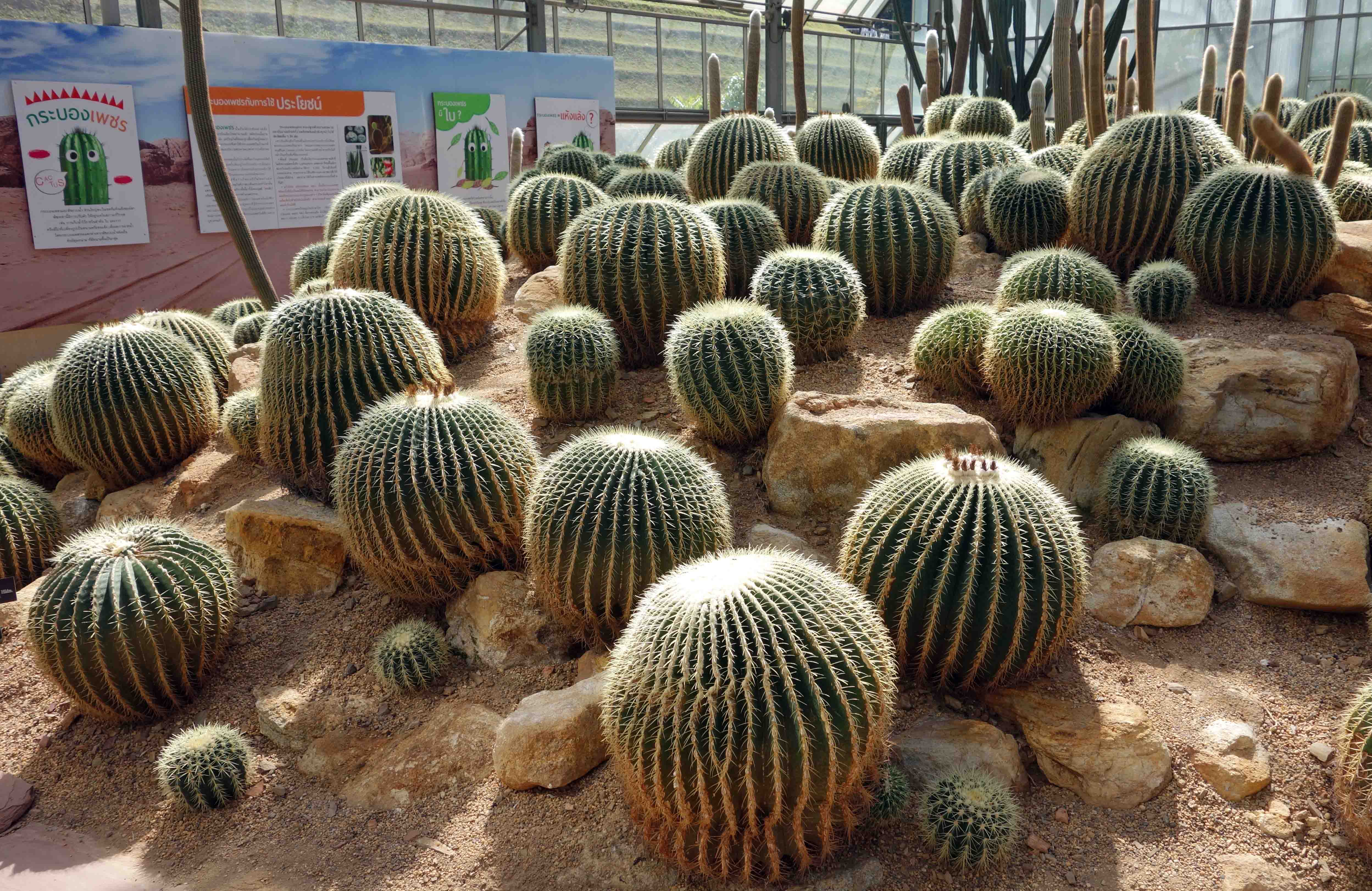
    The display of large Barrel cacti (Echinocactus grusonii), which are native to Mexico and SW United States, was very attractive (below).  Apparently, they have yellow flowers, but these were not in evidence at the time I visited.

    Barrel cacti (Echinocactus grusonii) in the Arid House
    Barrel cacti (Echinocactus grusonii) in the Arid House

    There were good information labels and signs, albeit in Thai, with the species’ common and taxonomic names in English.

    Good signage in The Arid House
    Good signage in The Arid House

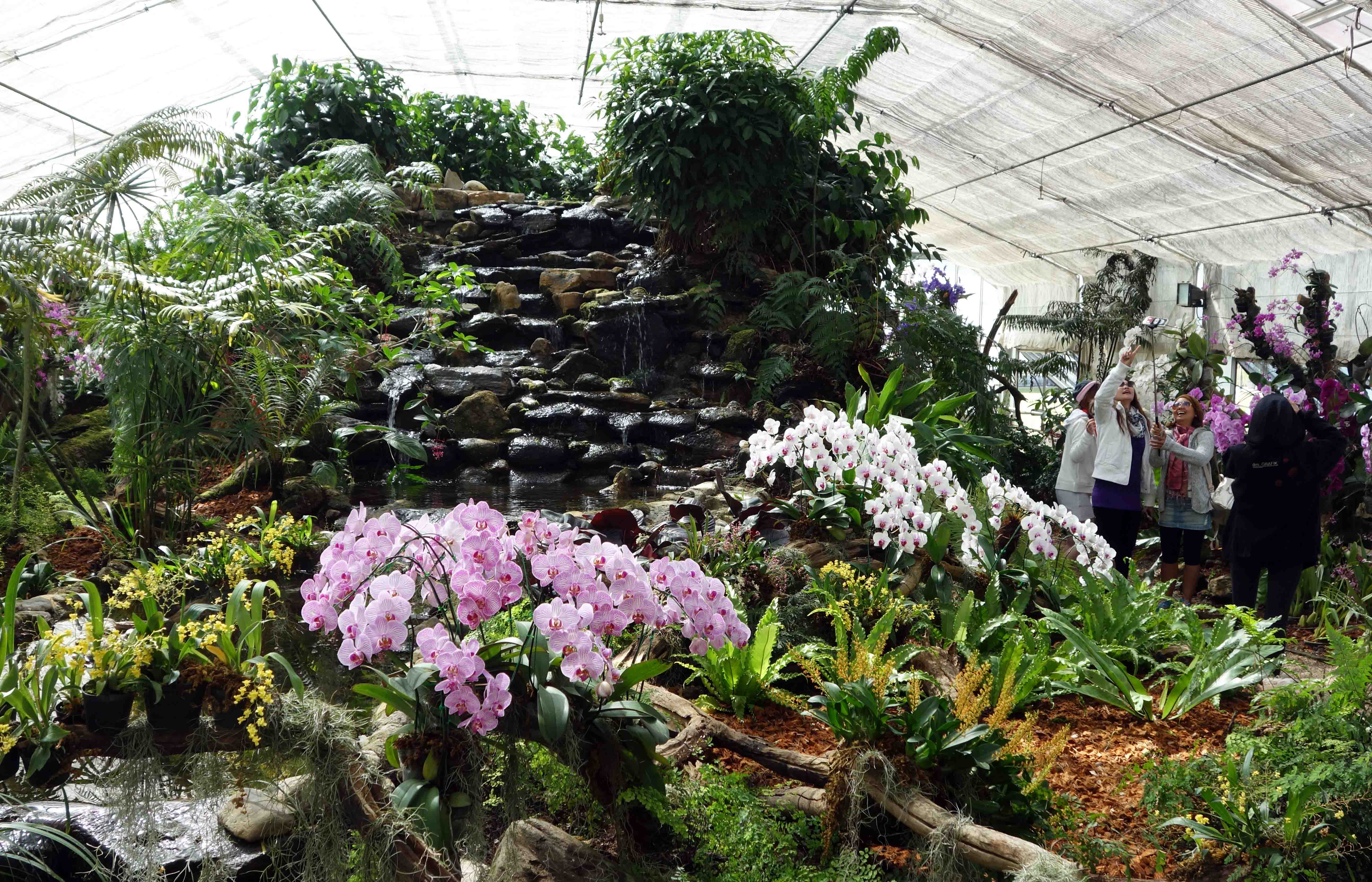
    Not surprisingly perhaps, the Orchid House was very good.  There were lots of different types of orchids on display; all were beautifully presented and in excellent condition; it must involve a great deal of work to keep this house looking so pristine and beautiful.

    Visitors in the Orchid House
    Visitors in the Orchid House

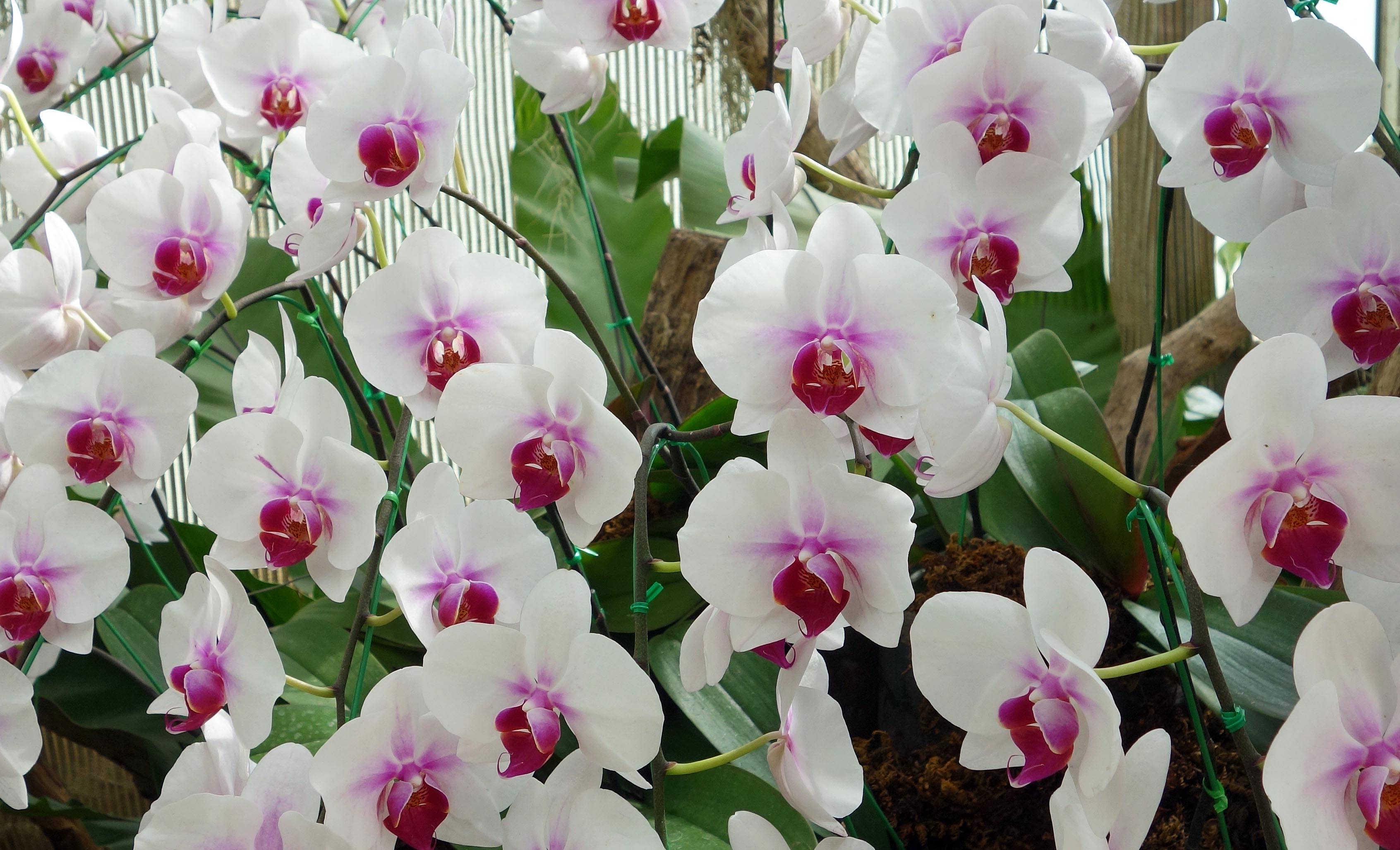
    There were many different varieties of orchids representing the different genera, such Phaelenopsis, Dendrobium and Vanda.  I think I will do a separate blog (see Ray’s Nature Notes) on the orchids; here are a few to be going on with!

    Phalaenopsis orchids in the Orchids and Ferns House
    Phalaenopsis orchids in the Orchids and Ferns House
    Pink Phalaenopsis orchids
    Pink Phalaenopsis orchids

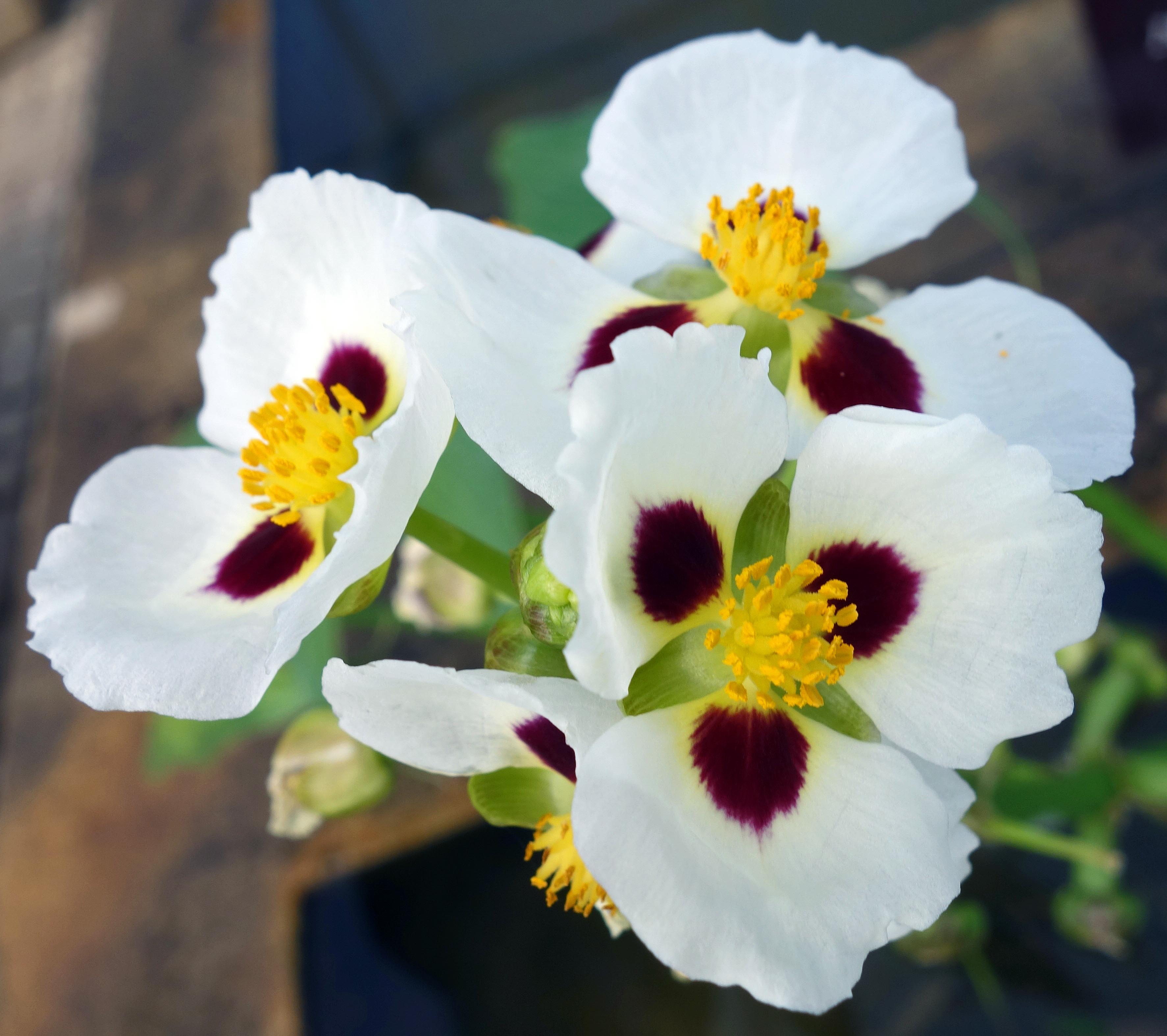
    The other highlight for me in the Garden were the water lilies; both in the Aquatic House and in the outdoor pots and ponds.  Inside the Aquatic house, it is possible to get a good close up look at some of the lilies, not all of which are native, like this gorgeous variety from the United States (below).

    Nymphaea 'St Louis Gold' USA
    Nymphaea ‘St Louis Gold’ USA

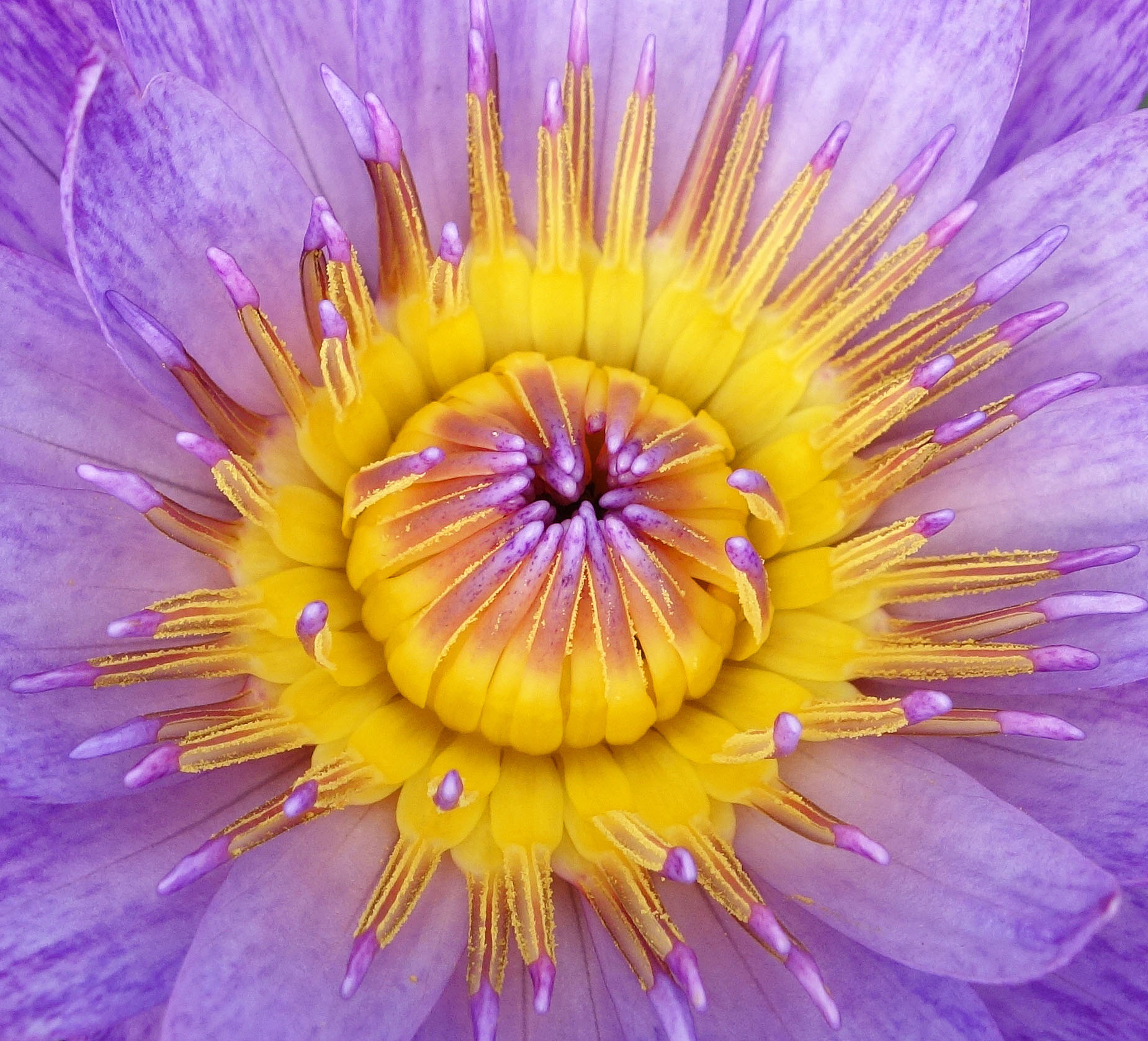
    There is something fascinating about the gold, sun-like centre of a lily flower (below).

    Centre of a lily (Nymphaea sp.) flower
    Centre of a lily (Nymphaea sp.) flower

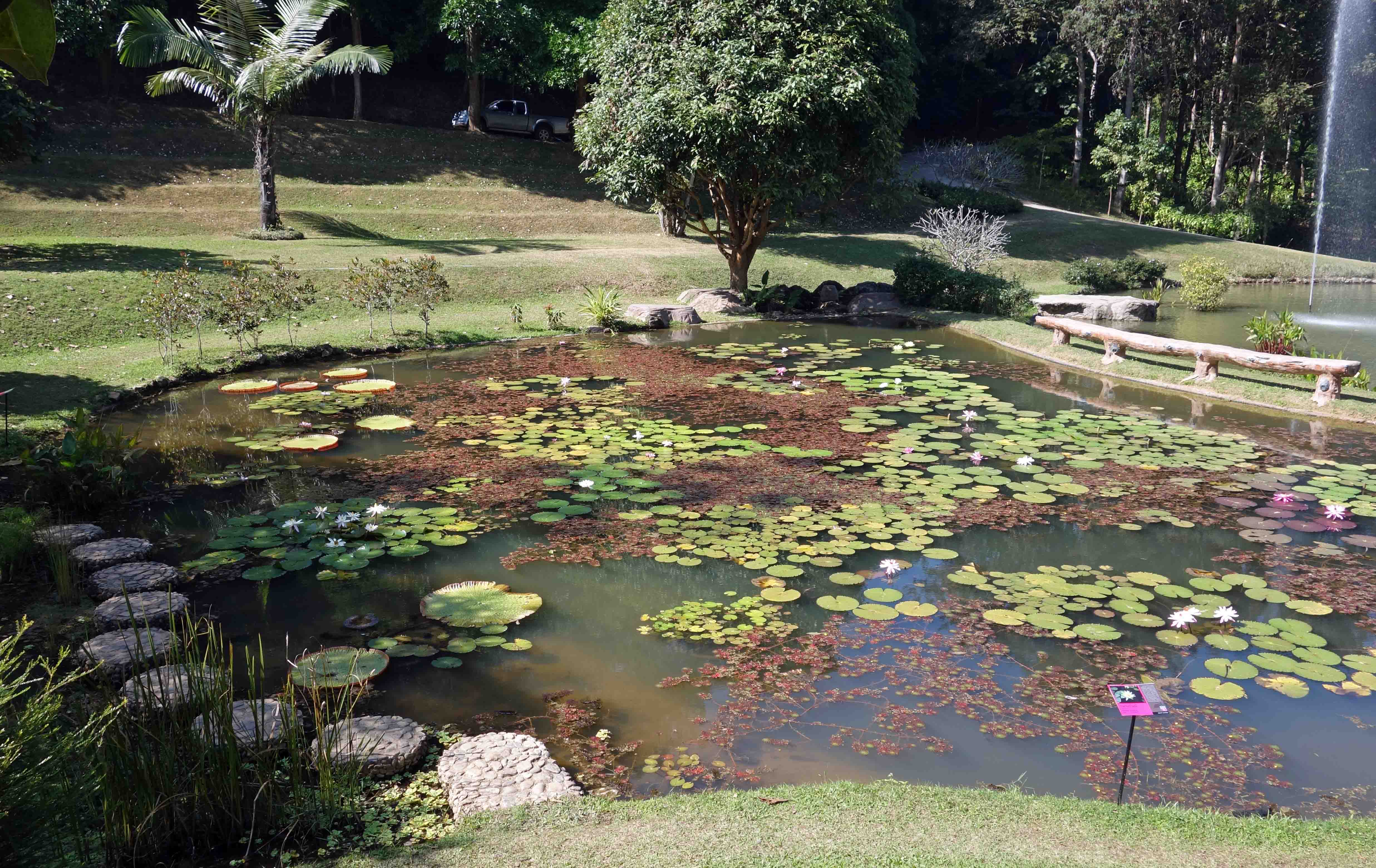
    Downhill from the Glasshouse Complex, there is a large lily pond filled with different species, including the popular, non-native Giant Water Lily (Victoria amazonica).

    Lily pond below the Glasshouse Complex
    Lily pond below the Glasshouse Complex

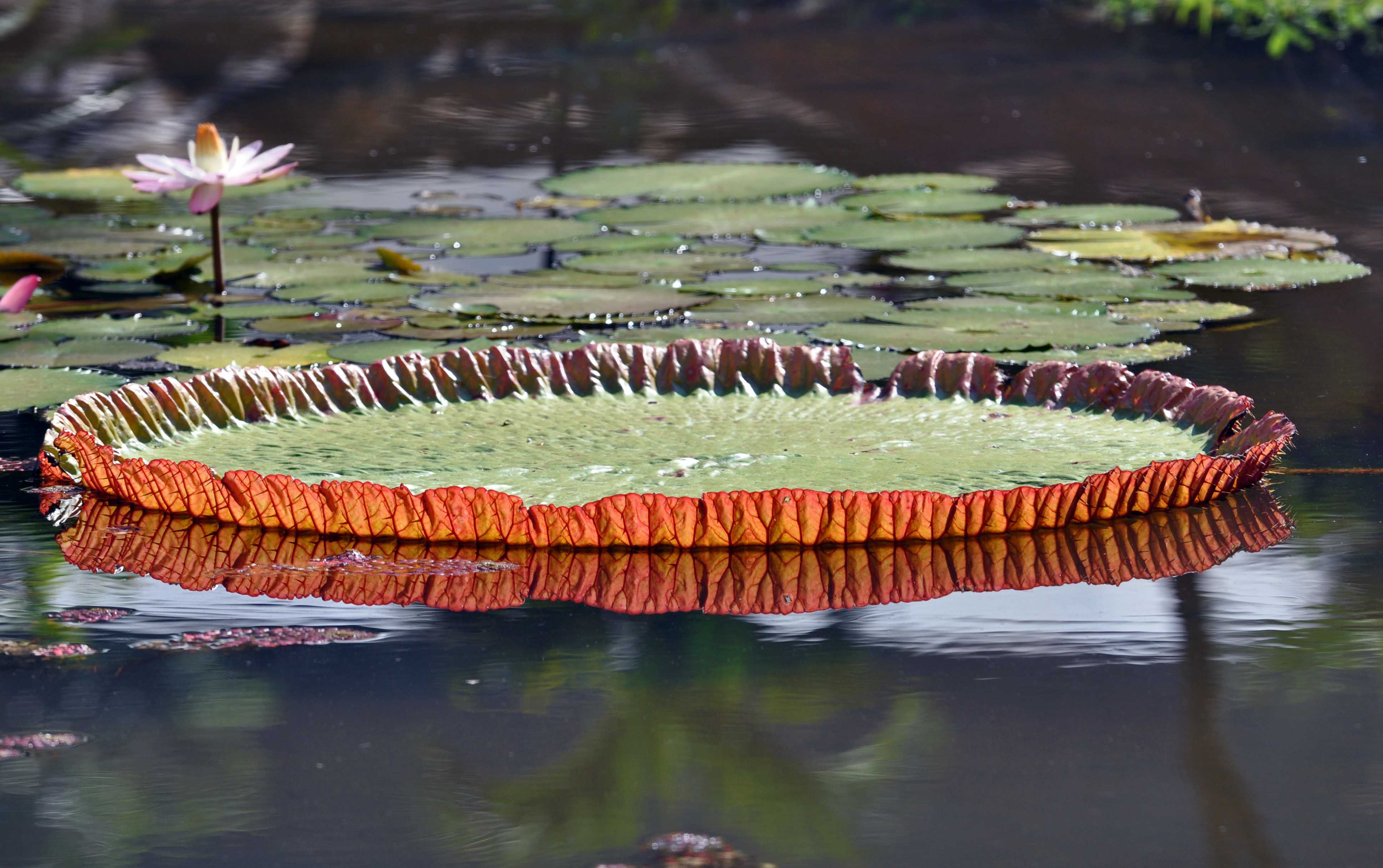
    The huge round lily pads of the Giant Water Lily really do look like you could stand on them!  It is said that they can support quite a weight but it has to be widely and evenly distributed across the leaf.  These lilies were not flowering at the Garden when I visited.  The flowers are  however, white when they first open, but turn pink on the second night!

    Giant Water Lily pad (Victoria amazonica)
    Giant Water Lily pad (Victoria amazonica)

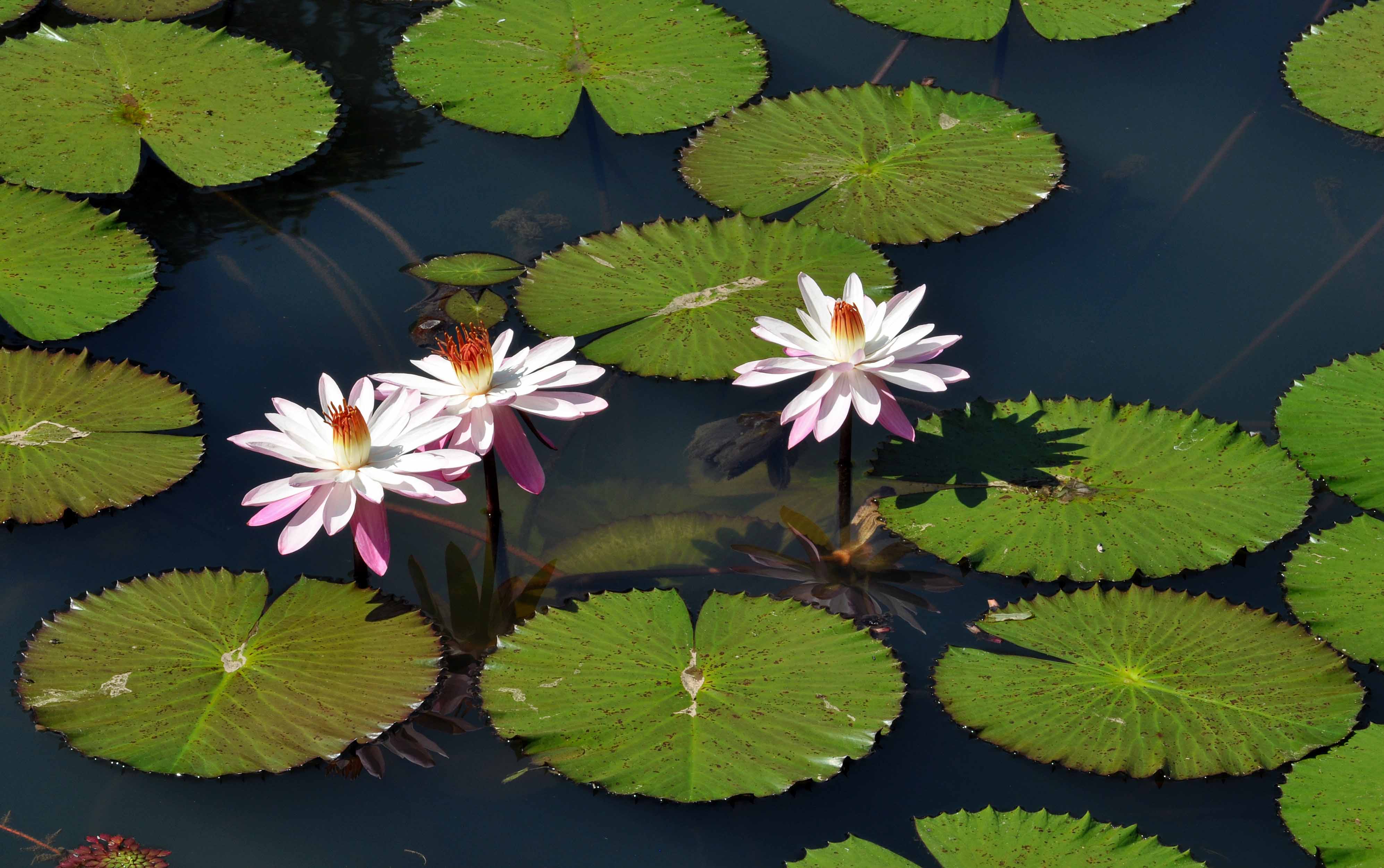
    The smaller, native water lilies were flowering and could be seen in different stages of flower opening.  They were most attractive to bees, which feed on the pollen and nectar.

    Water lilies (Nymphaea sp.)
    Water lilies (Nymphaea sp.)

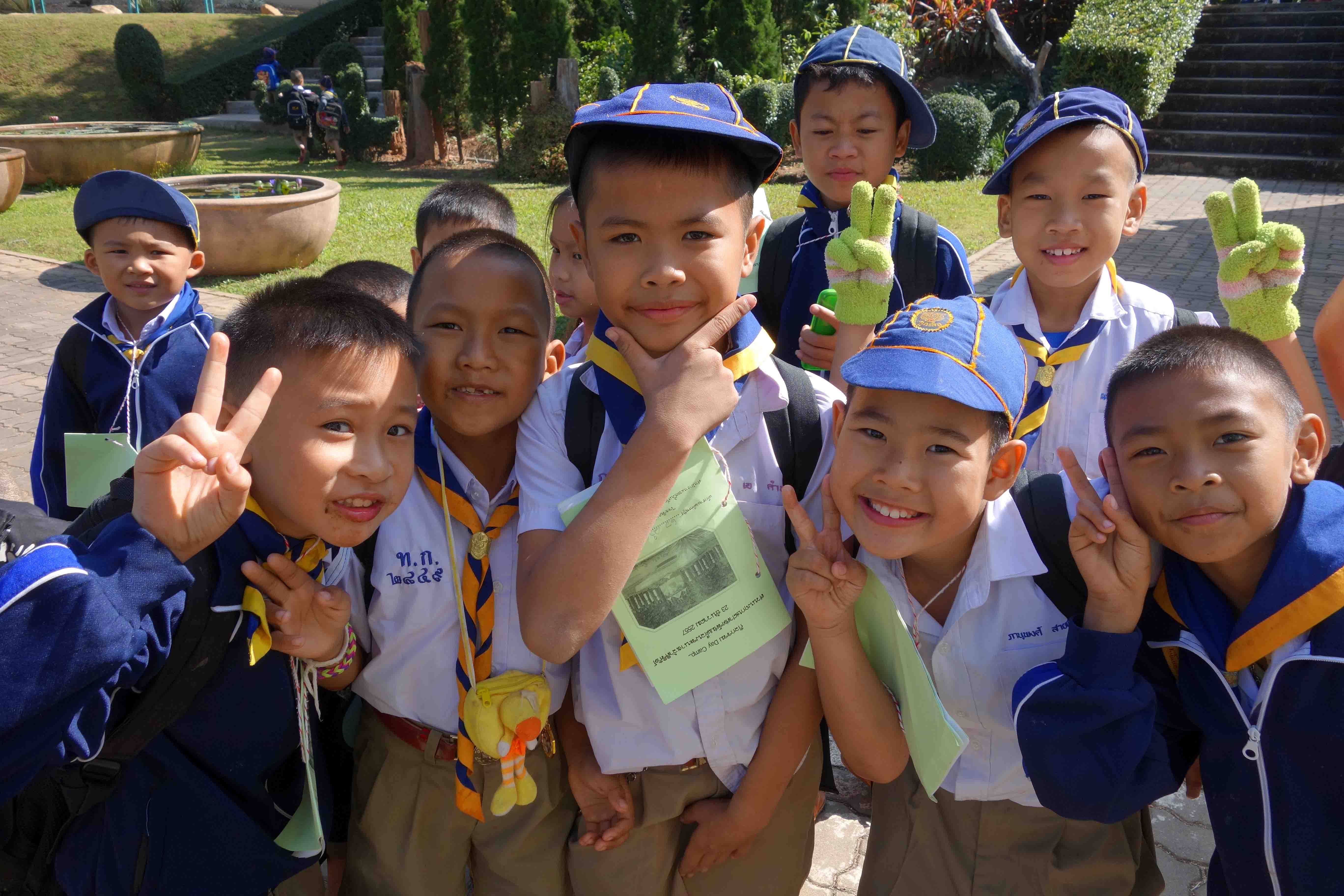
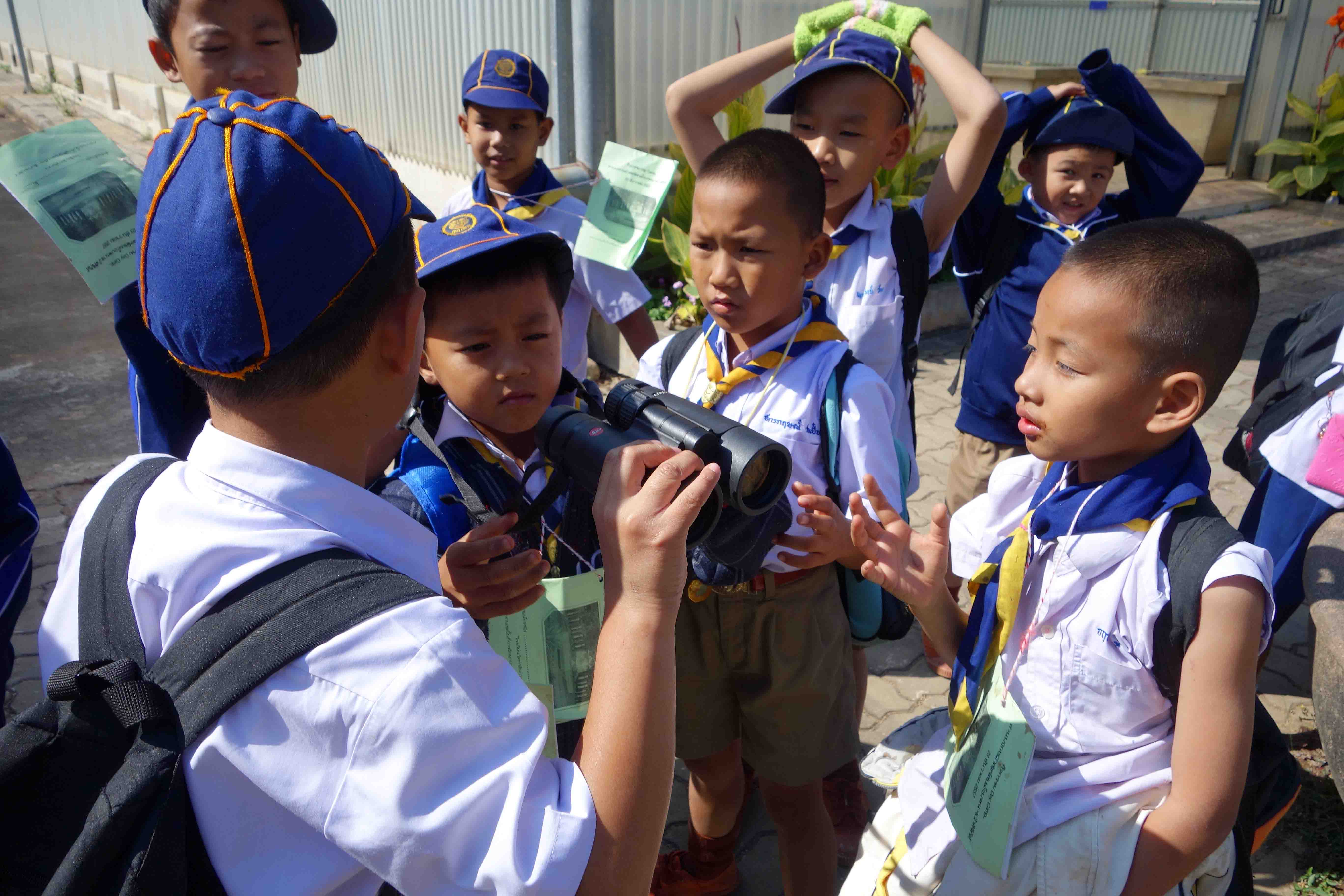
    There were quite a lot of school children visiting the Garden, like these friendly boy scouts, who had all previously had a look through my binoculars (which survived the experience!).

    Boy scouts visiting Queen Sirikit Botanic Garden
    Boy scouts visiting Queen Sirikit Botanic Garden
    Examining my binoculars!
    Examining my binoculars!

    These uncrowded and beautifully maintained gardens are highly recommended.  It must take an enormous effort to keep them looking so nice.  There is much more to this site than I have done justice to here, but I hope this gives a flavour of what is on offer.  There are reportedly, five other satellite gardens maintained by the Botanical Garden Organisation (1) around Thailand (e.g. in Rayong, Phitsanulok, Khon Kaen, Sukhothai and Phangnga provinces).  It they are anything like as interesting as this one, they would be well worth visiting.

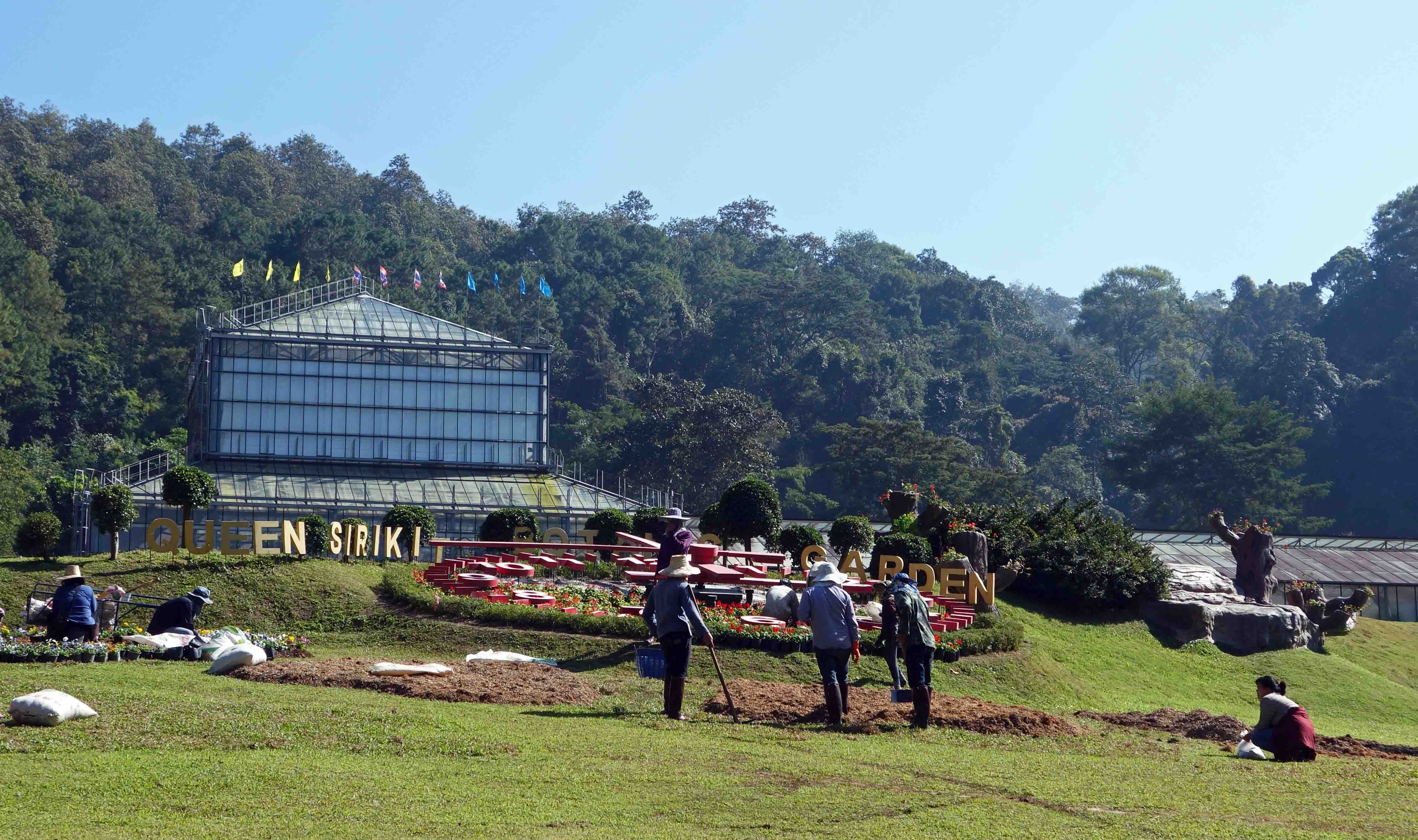
    Gardeners working at the Queen Sirikit Botanic Garden
    Gardeners working at the Queen Sirikit Botanic Garden

    1) http://www.qsbg.org/

  • Chiang Mai Sunday Night Market

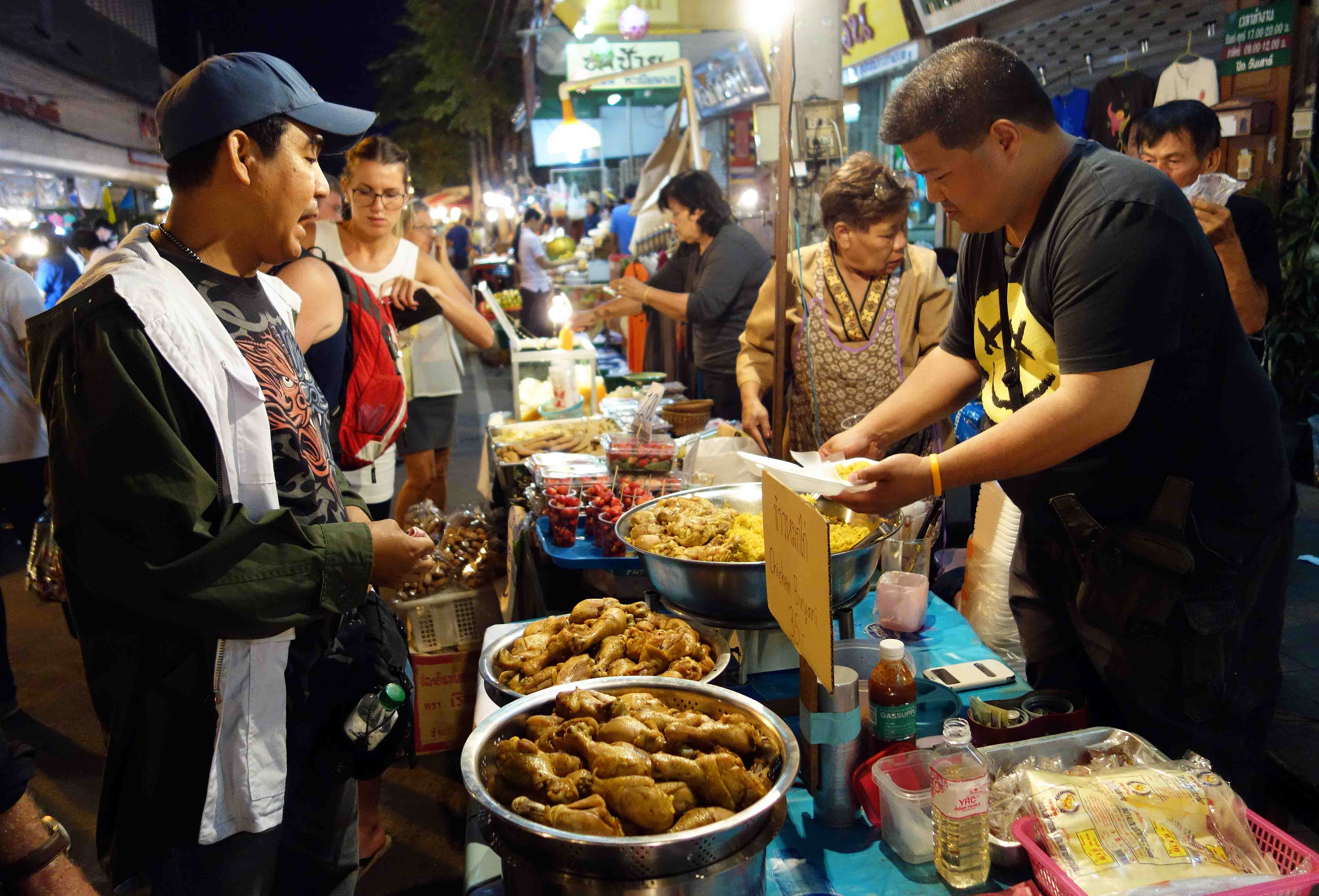
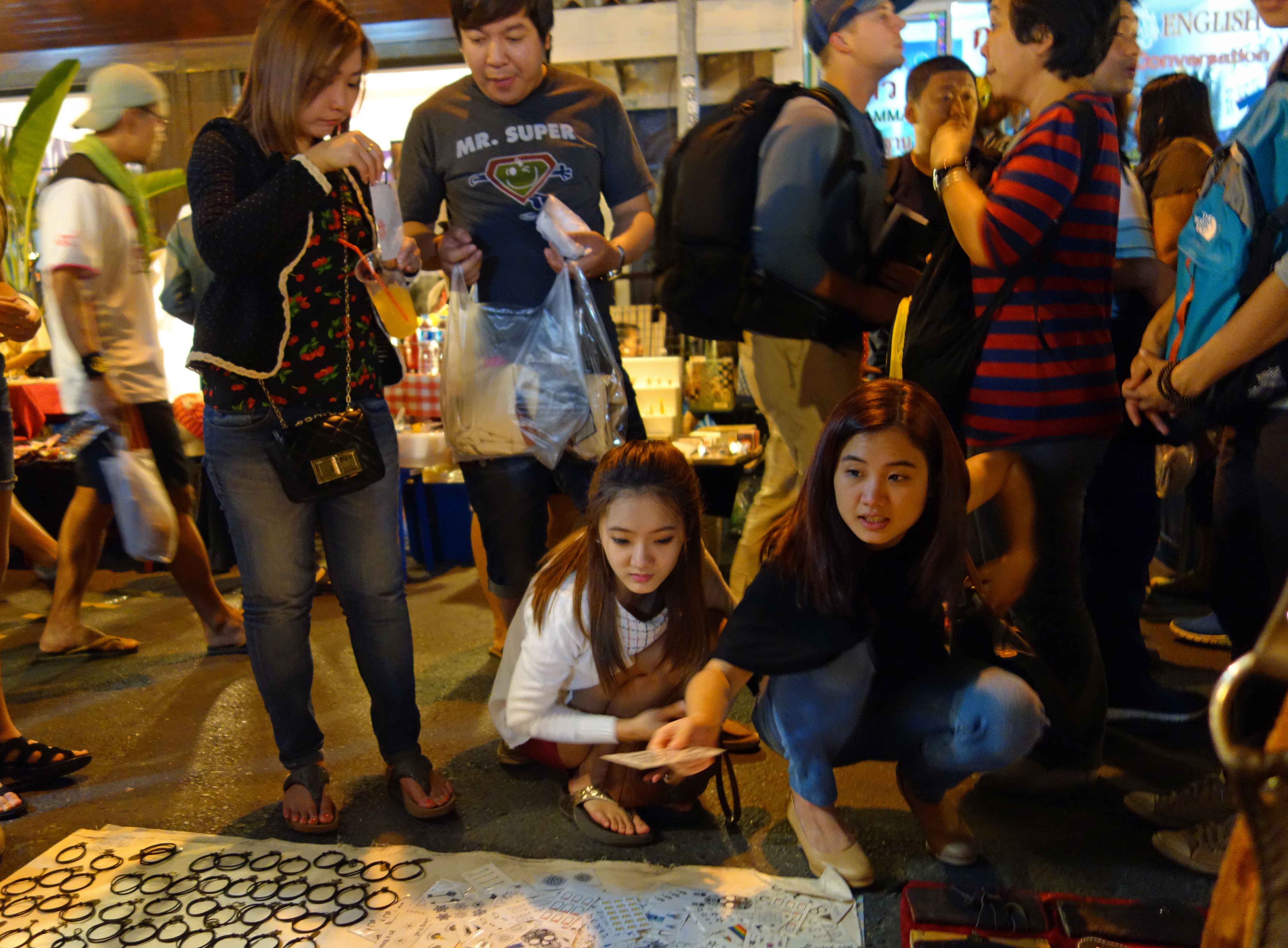
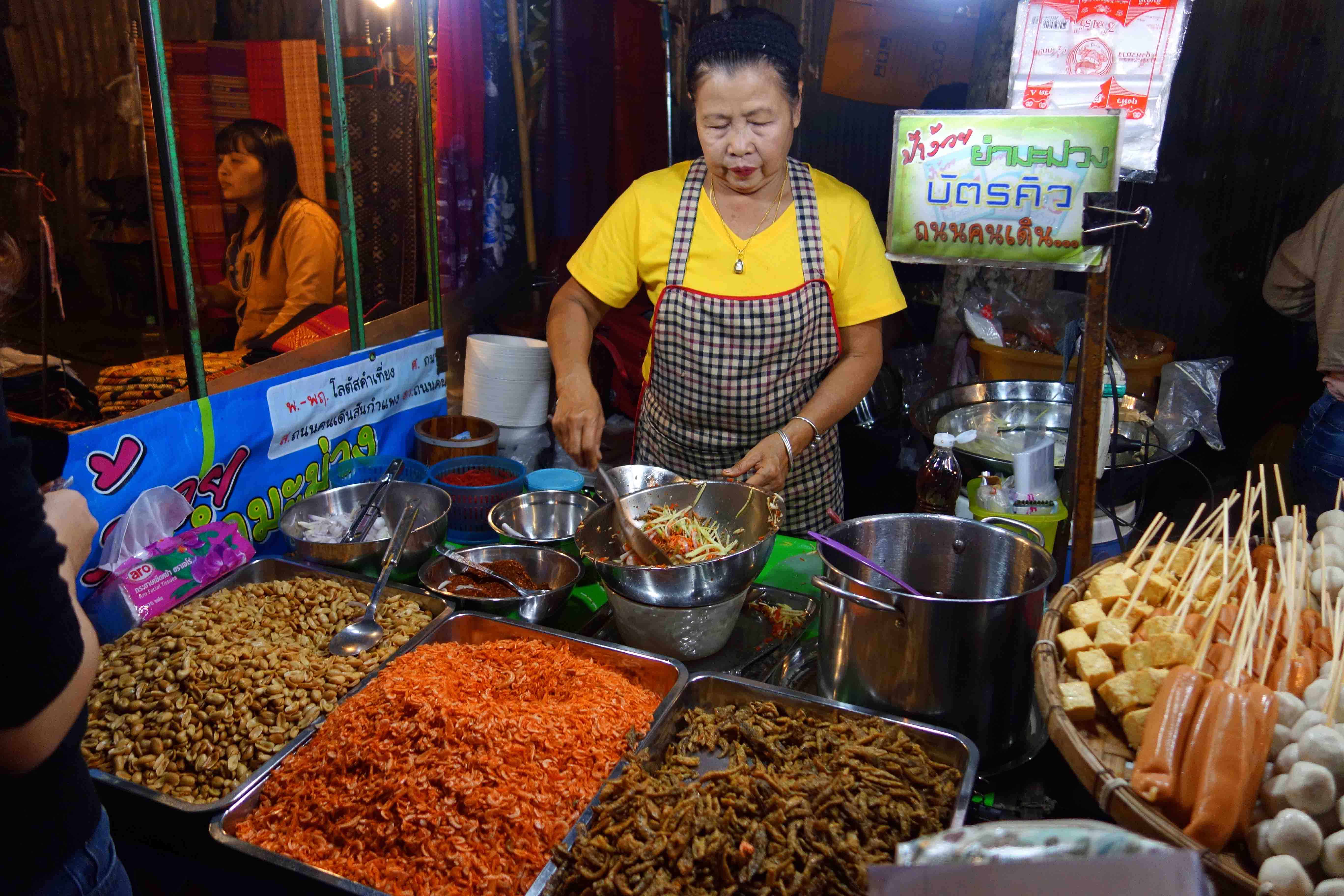
    The Sunday night walking street market in Chiang Mai has become very popular in recent years.  Once a week, a colourful traditional market bazaar takes place along the length of Ratchadamnoen Road (and other side roads) in the Old City.  The area is closed off to traffic and hundreds of market traders set up shop selling food, clothes, traditional goods, handicrafts, art and so on.  I took a stroll through the market recently and was surprised how large it was and how many people there were. High season I guess.  I was most interested in the food stalls which are colourful, lively and photogenic.

    Noodle bar
    Noodle bar
    Fried chicken and strawberries
    Fried chicken and strawberries

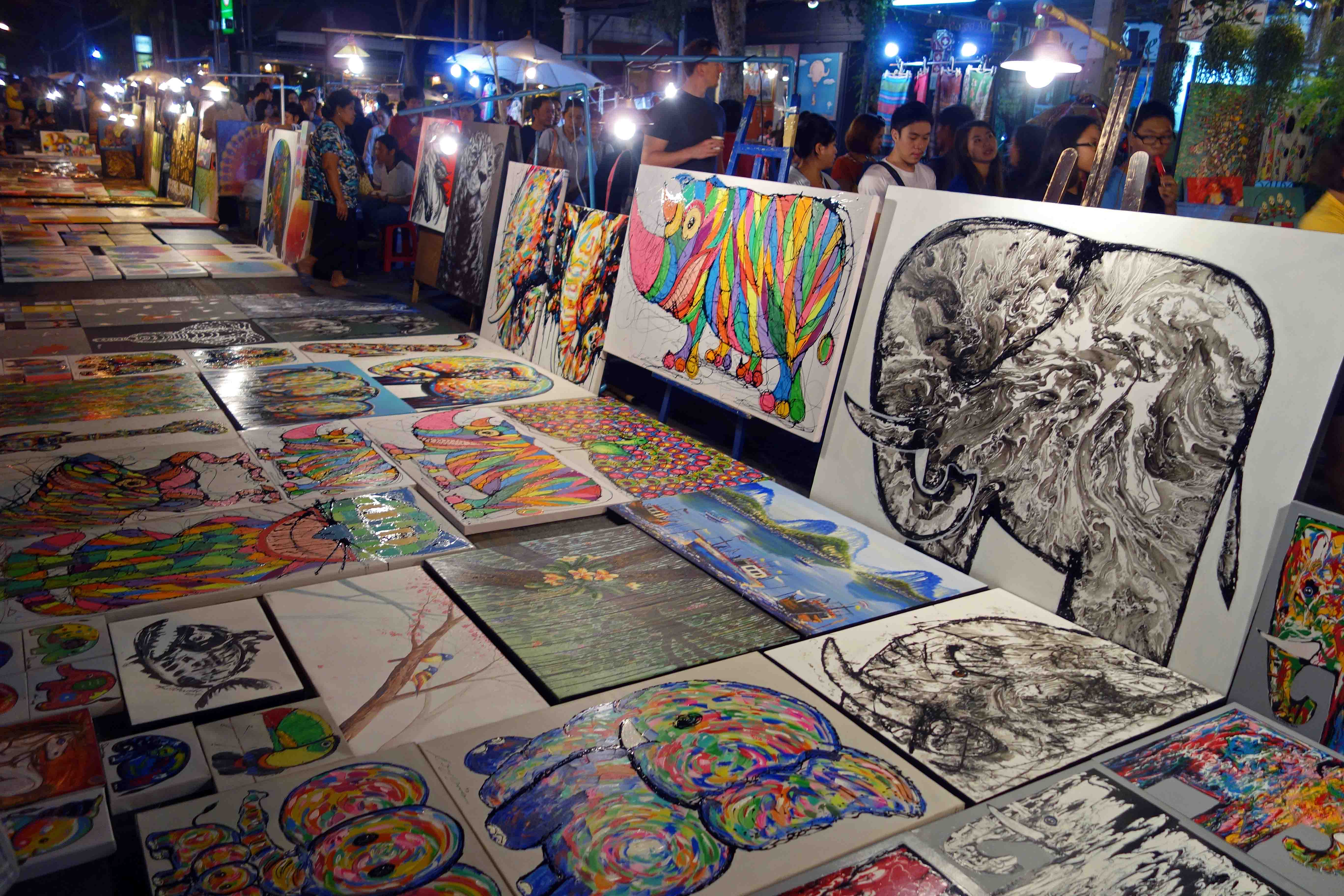
    There was a lot of art for sale.  I quite liked the animals although it was a little bit formulaic, in the sense that certain images were being replicated in numerous similar paintings.  But it is not easy to sell art, and this was a lot better than other examples I have come across.  It a matter of taste I guess.

    Street art
    Street art

    The colourful rhinos were being churned out by someone!  They are nice though, even if not a Thai animal; well I’ve never seen one!

    Colourful rhinos.
    Colourful rhinos.

    The market is by no means just for tourists; there were many Thais enjoying shopping.

    Silk scarf seller
    Silk scarf seller
    This one please!
    This one please!

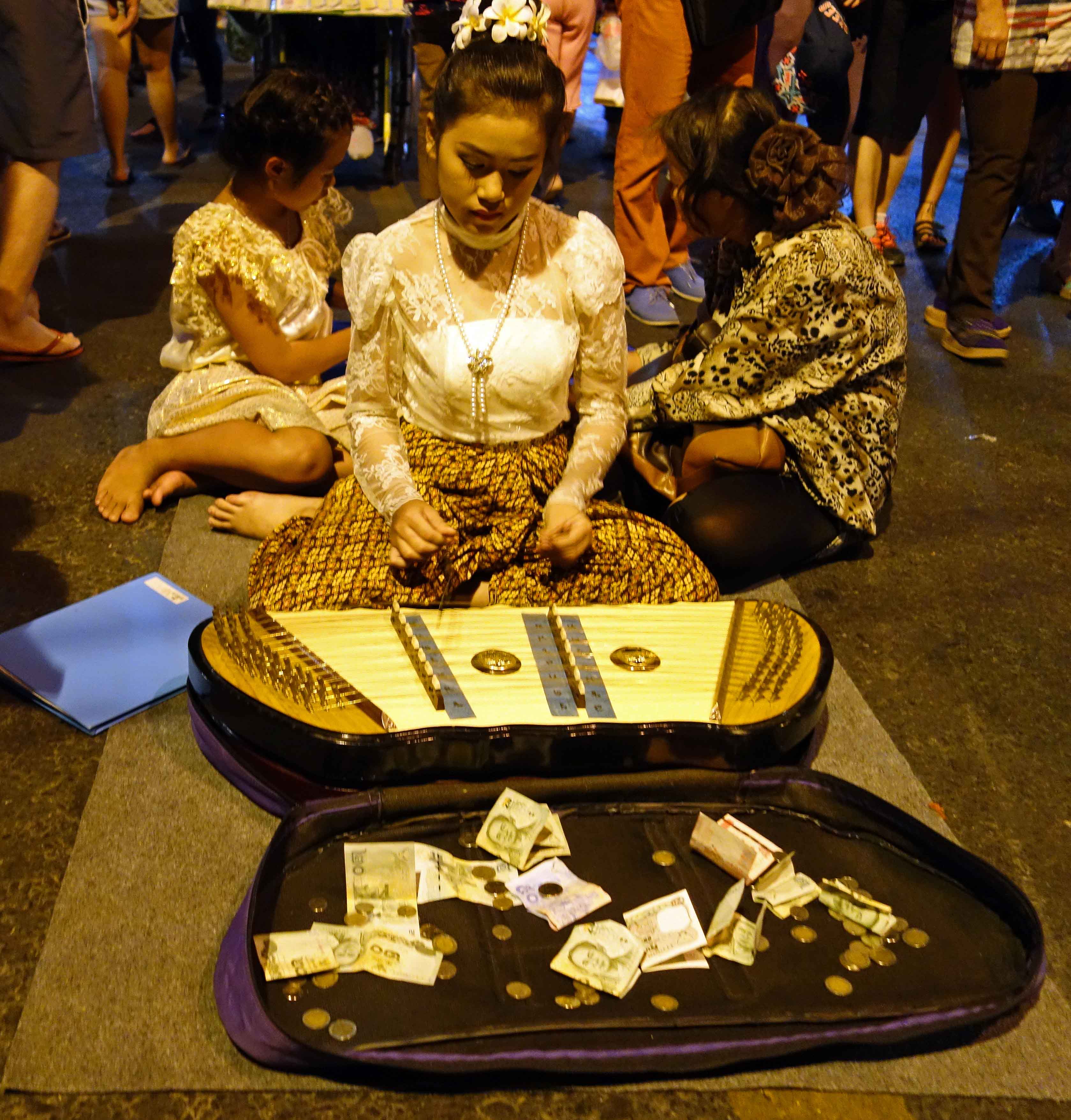
    There were a lot of musicians sitting on the ground and playing their instruments between the market stalls.

    Young musician
    Young musician

    The food in these stalls looks very tasty and looking at them again now, makes me feel hungry!

    Salad bar.
    Salad bar.

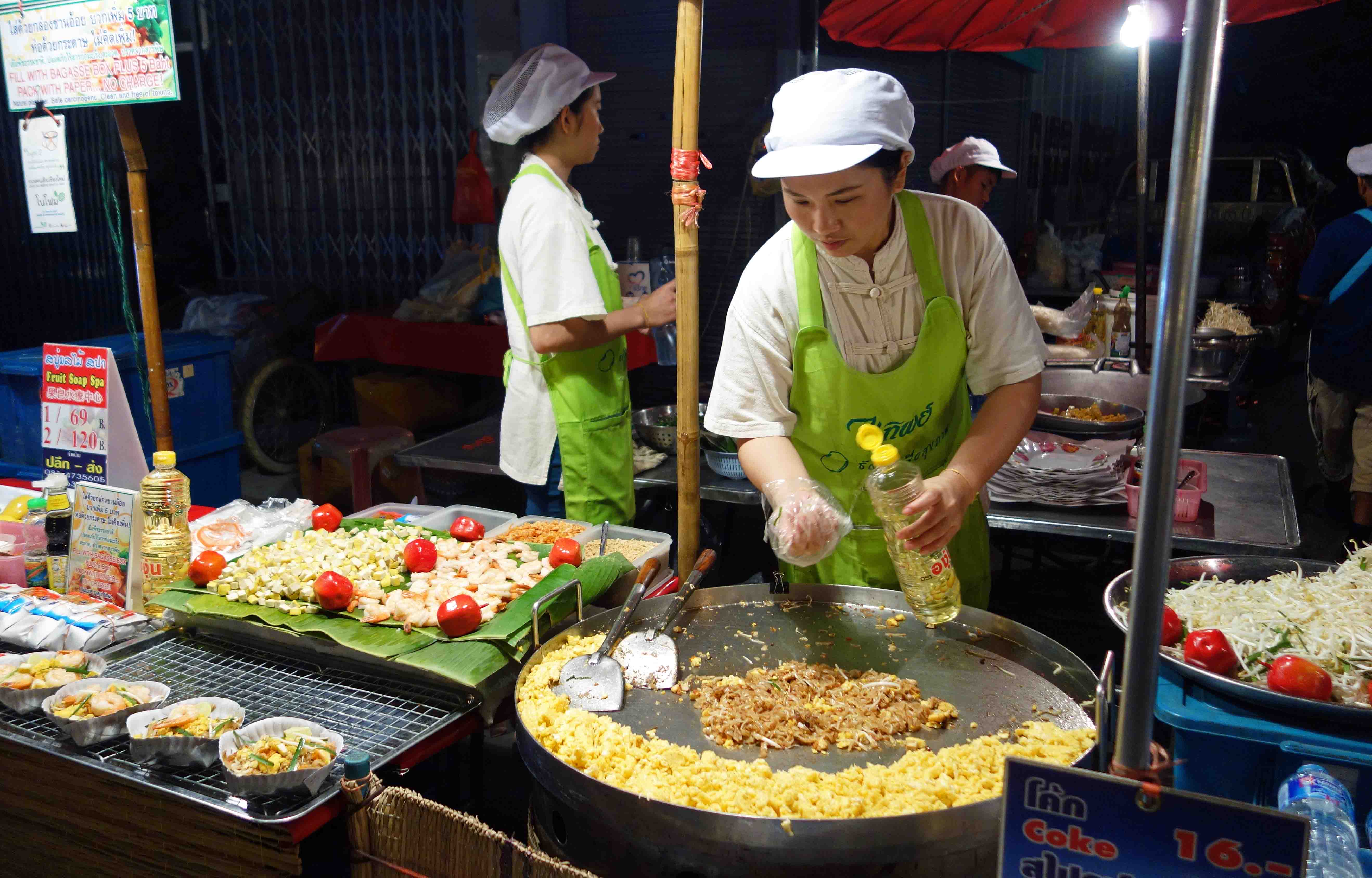
    The market extends into the area around Tha Pae Gate.  This was a fried omelette stand.  I am feeling hungry again!

    Fried omlettes
    Fried omlettes

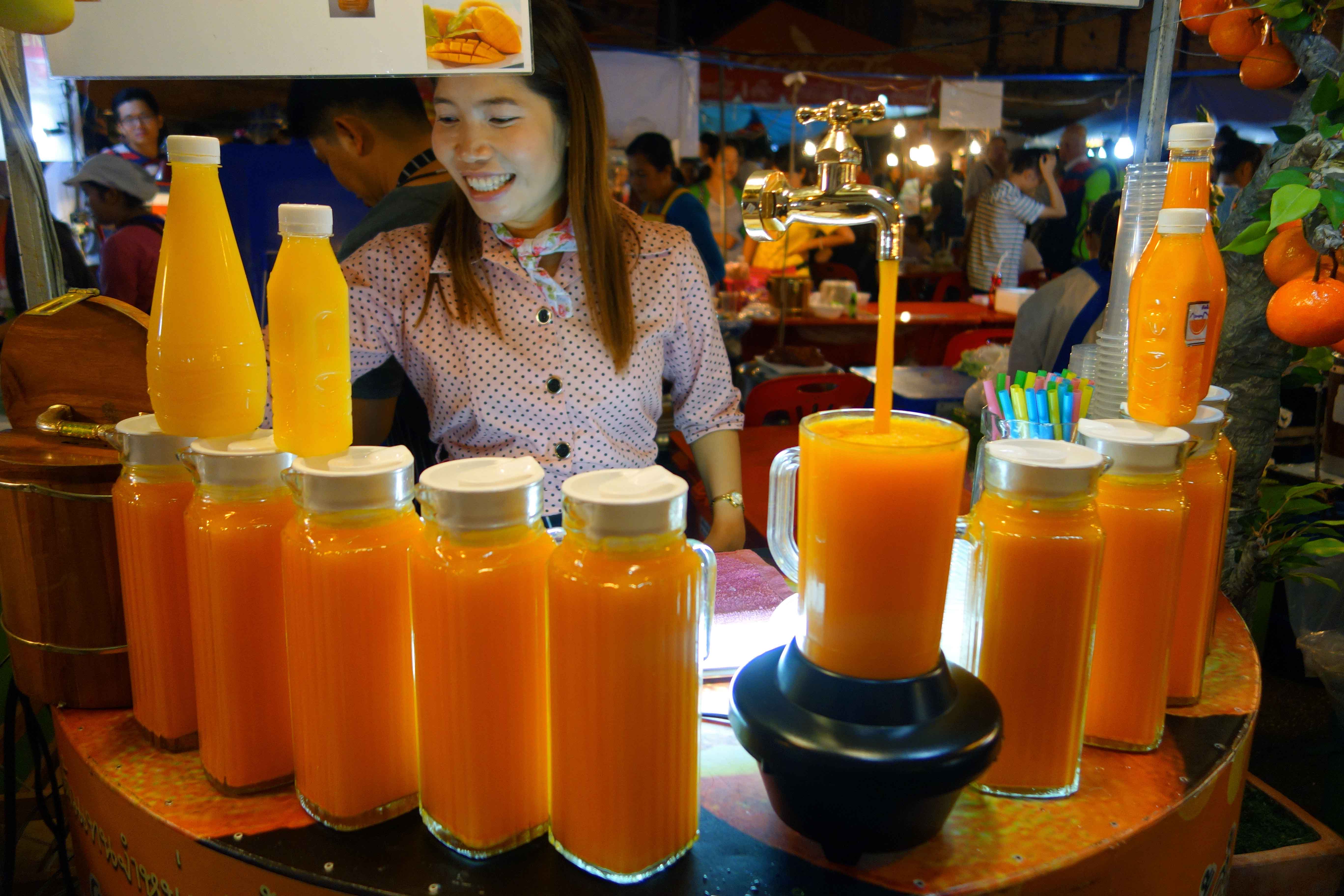
    The orange juice – nam som – stall was fronted by simple but highly effective marketing (the orange juice coming out of the floating tap is not real but the rest of the bottles and jars are), plus a lady with a lovely Thai smile.

    Nam som (orange juice)
    Nam som (orange juice)

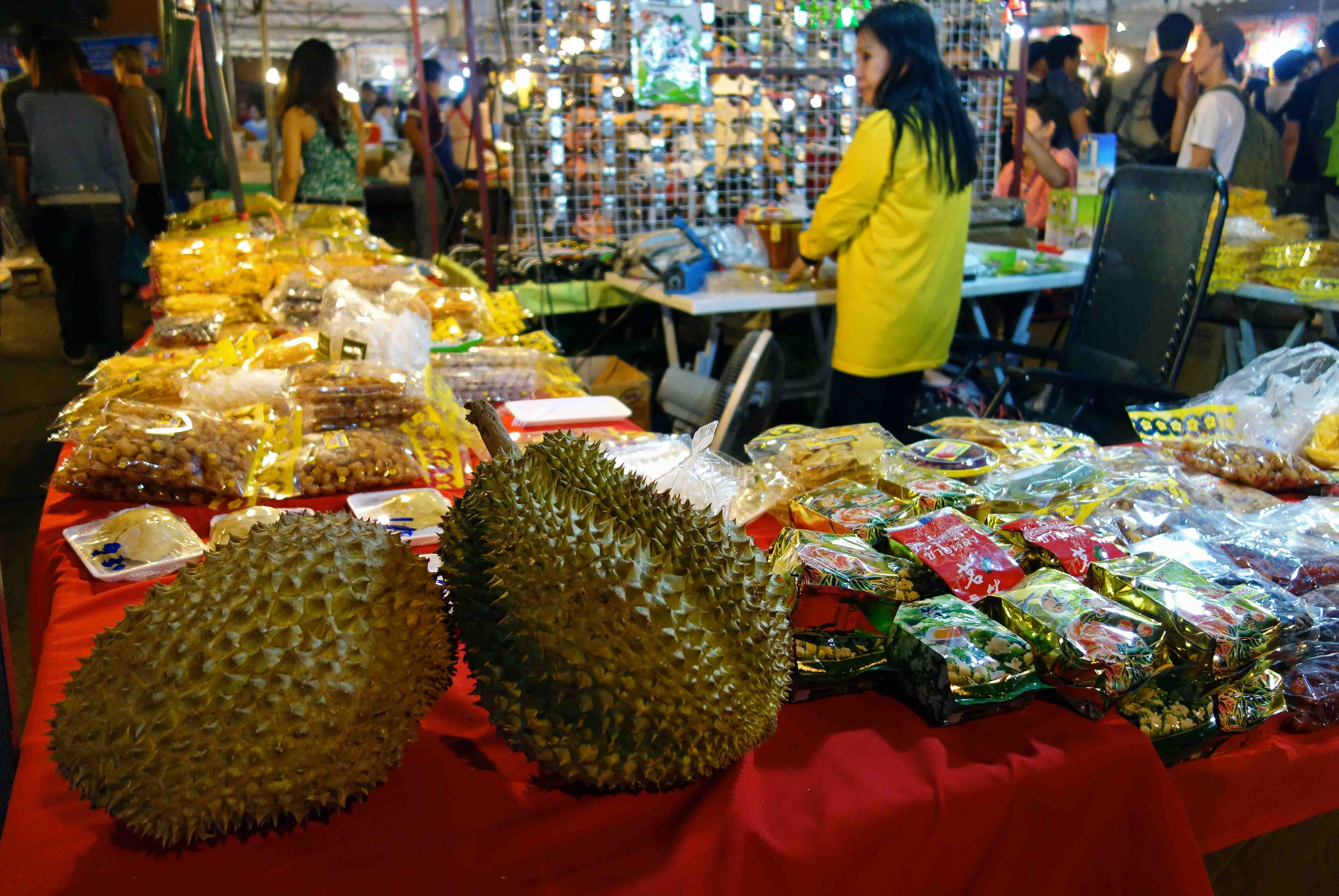
    Finally, I came across these huge prickly fruit which I am pretty sure are durians.  Jack fruits are similar but much less spiky.

    Durian fruits
    Durian fruits