Tag: Java

  • Wandering after Wallace: Gede-Pangrango National Park

    Gunung Gede ((2,958 m), Java, Indonesia
    Gunung Gede (2,958 m), Java, Indonesia

    I have to confess at the outset that, unlike Alfred Russel Wallace, I did not manage to reach the top of this imposing mountain! Although the upper section of the mountain was closed and off-limits in August 2015 – something to do with a national holiday – I could have got higher if my knees had not given out! OK, Wallace was still only 38 years old, when he and his companions (two local hunters and two ‘coolies’ to carry his baggage!) successfully scaled both the twin volcanoes of Mount Gede (2,958 m) and Pangrango (3,019 m) in 1861 (1). My excuse was that I was considerably older and already worn out from two days of walking in the extensive botanical gardens (2). Next time I will make sure that I am fresh, as I definitely want to go back and get to the top.
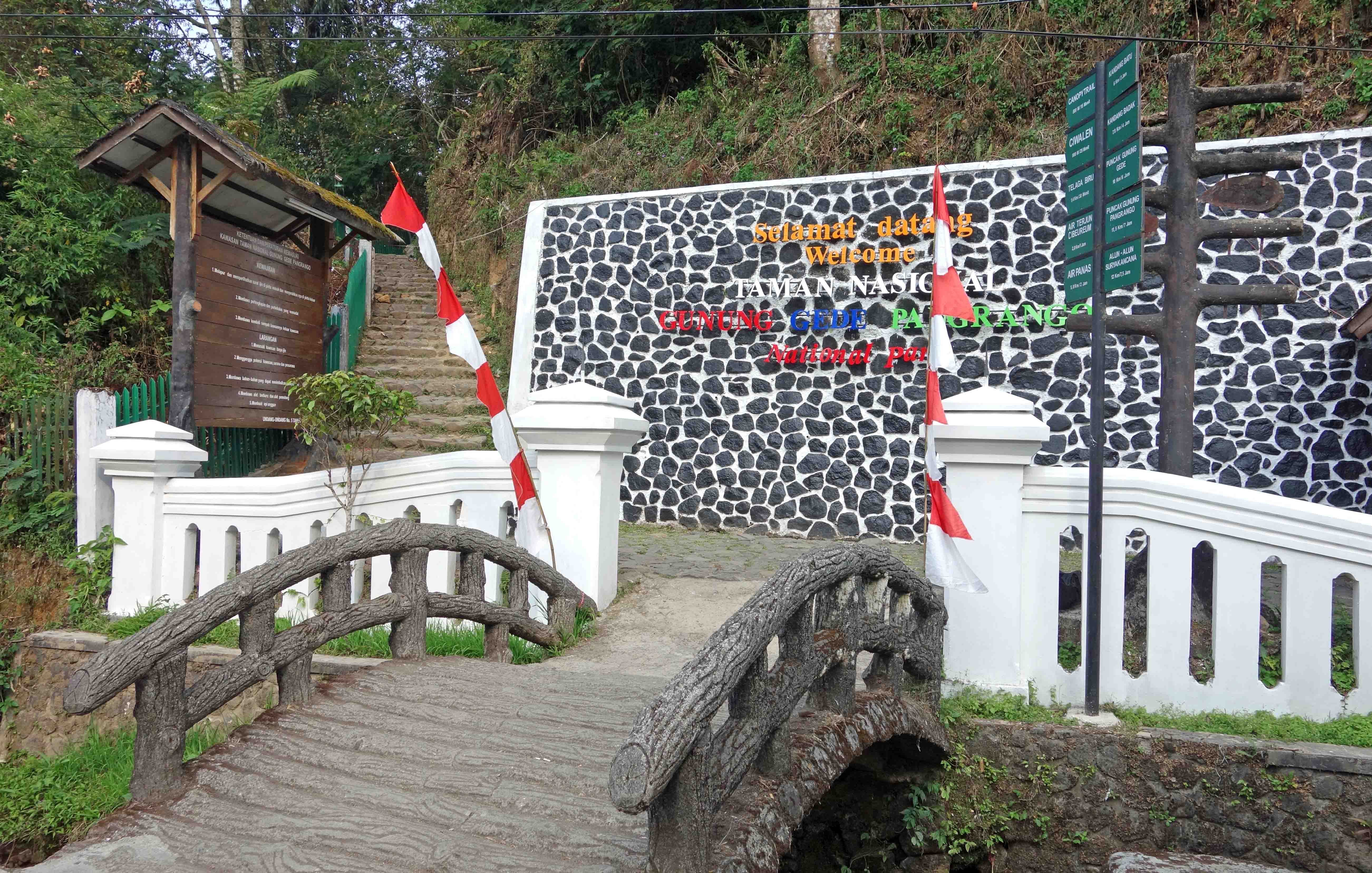
    Entrance to Mount Gede Pangrango National Park, Java
    Entrance to Mount Gede Pangrango National Park, Java

    Nevertheless, I did manage to get a fair way up the mountain, so can a least make a partial claim to have followed Wallace, and it gave me further confirmation of the vigour and curiosity of this remarkable Victorian naturalist.
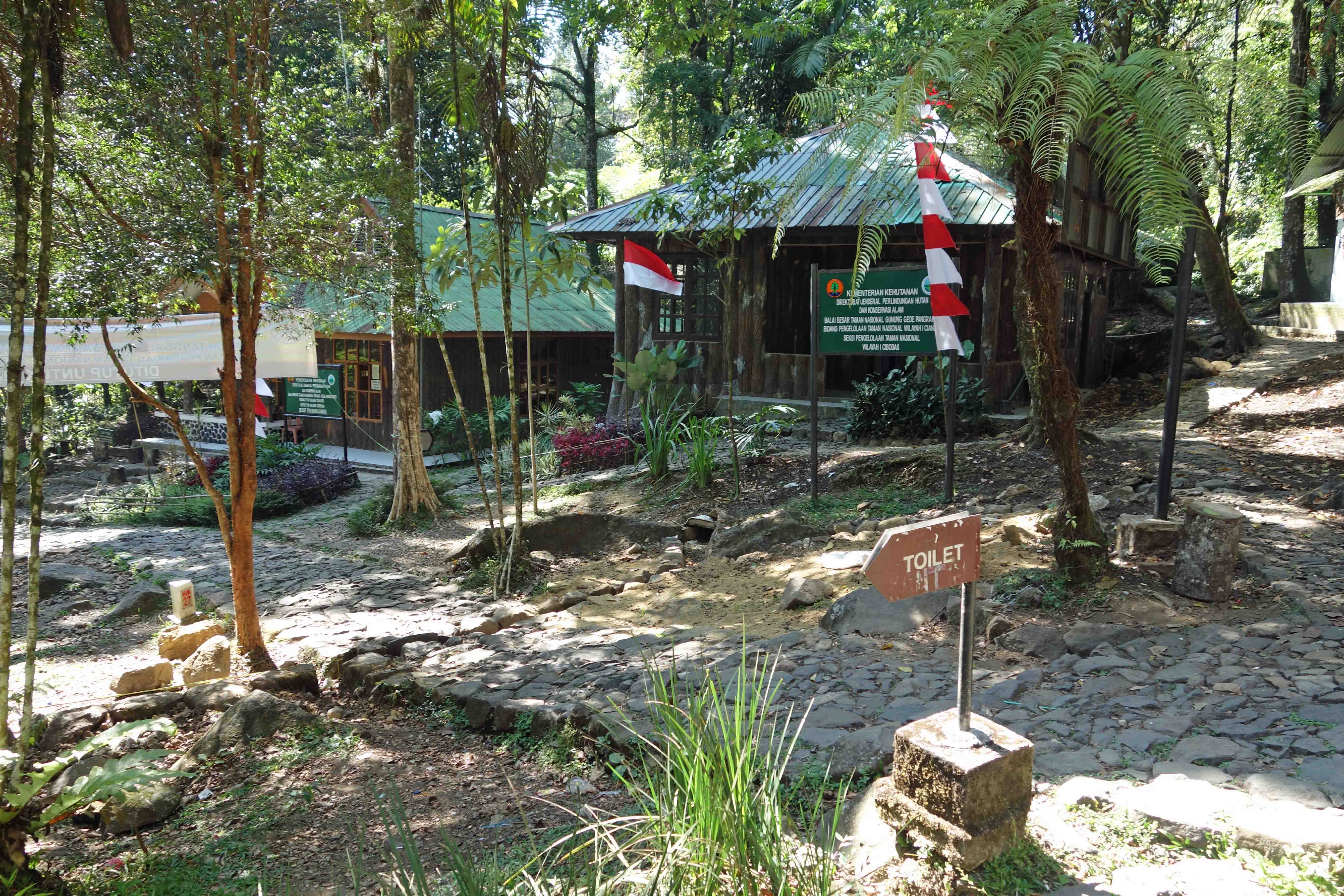
    Mount Gede Pangrango National Park office
    Mount Gede Pangrango National Park office

    After paying the relatively steep entrance fee for foreigners (it’s a lot cheaper for Indonesians), I had a delicious cup of sugary white tea (tea tarik) to fortify me for the climb.
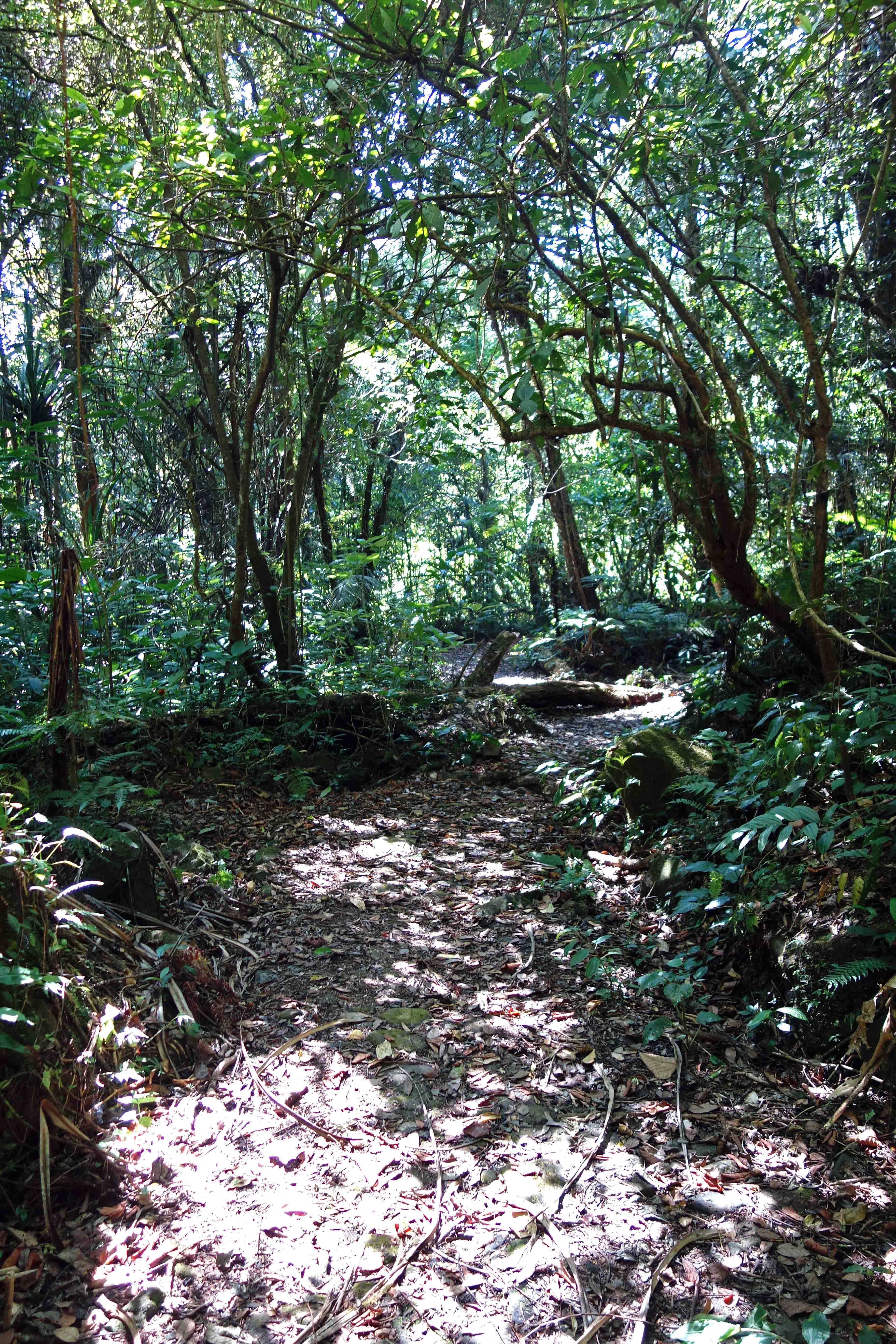
    Start of the trail to Gunung Gede
    Start of the trail to Gunung Gede

    The first part of the trail is, as Wallace describes it in The Malay Archipelago, ‘a tolerably steep ascent through a grand virgin forest’. Whether or not it is still virgin forest today is hard to say, but the birding is good and the forest appears to be very healthy despite the large numbers of people who troop up the trail, particularly the first section which leads to the Cibeureum Waterfalls (at about 1,625 m). Most of the 15,000 hectares of the park are probably inaccessible.
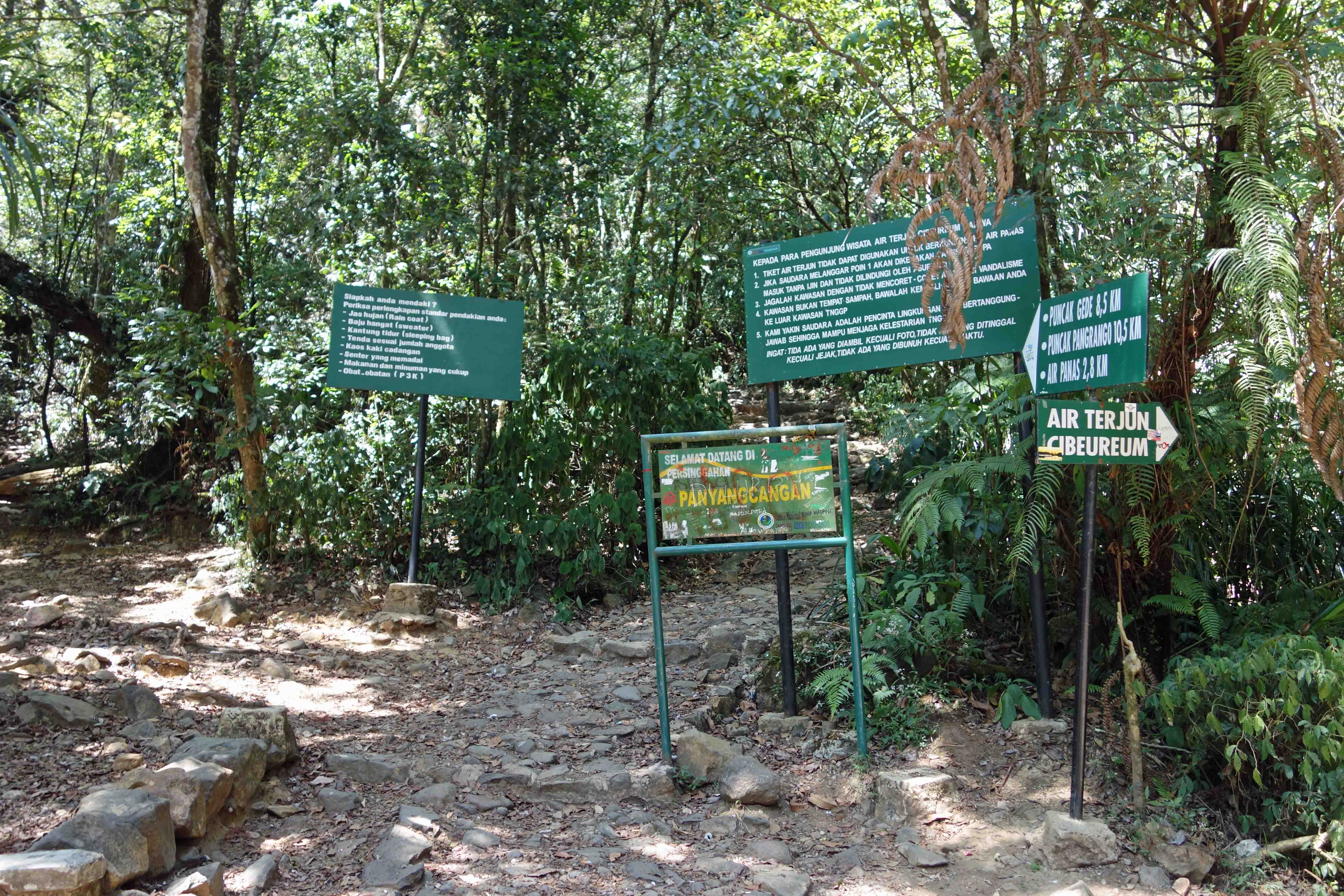
    Trail to Cibeureum Waterfall, Gunung Gede Pangrangro National Park, Java.
    Trail to Cibeureum Waterfall, Gunung Gede Pangrangro National Park, Java.

    Wallace was struck by the ‘immense number of ferns’ on the route and recounts ‘continually stopping to admire some new and interesting forms’. His ability to notice (and collect) plants, birds and insects is impressive, but he was a highly experienced tropical naturalist, having spent about four years in the Amazon before his extensive travels in what is now Indonesia.
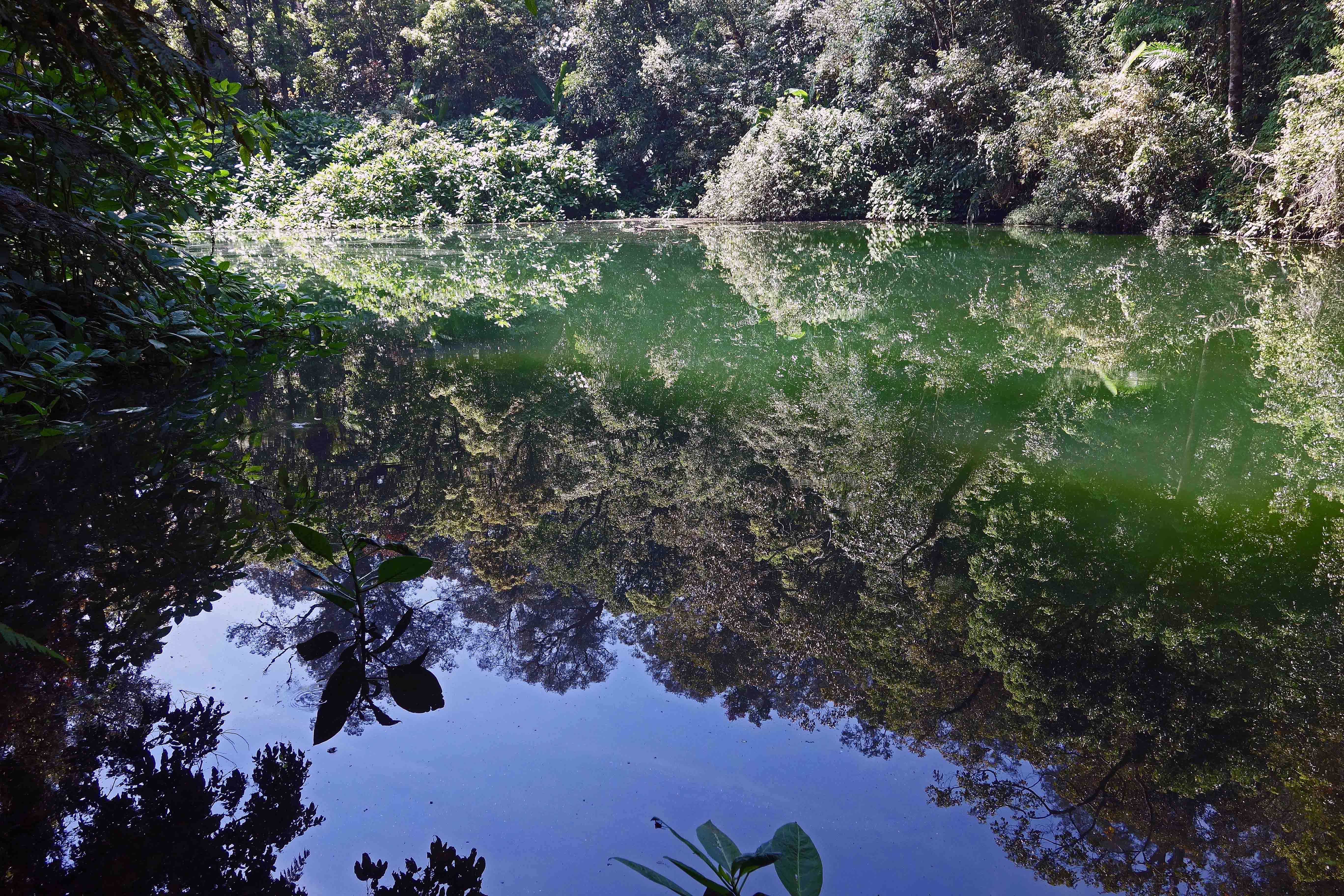
    The Blue Lake, Telaga Biru (1,575 m), Mount Gede Pangrango National Park
    The Blue Lake, Telaga Biru (1,575 m), Mount Gede Pangrango National Park

    I almost missed The Blue Lake, but I was very pleased when I stopped to admire it, as a large flock of Sunda minivets (Pericrocotus miniatus) arrived in a nearby tree. These are endemic to Indonesia, Sumatra and Java, and Wallace had already obtained a specimen of this bird on his way to the mountain (1).

    Flock of Sunda minivets (Pericrocotus miniatus) near the Blue Lake
    Flock of Sunda minivets (Pericrocotus miniatus) near the Blue Lake

    Most people on the trail seemed to have target of reaching the Cibeureum Waterfall, which is not too taxing a climb. As well as the waterfall, there are a number of fine tree ferns on the slopes (below).
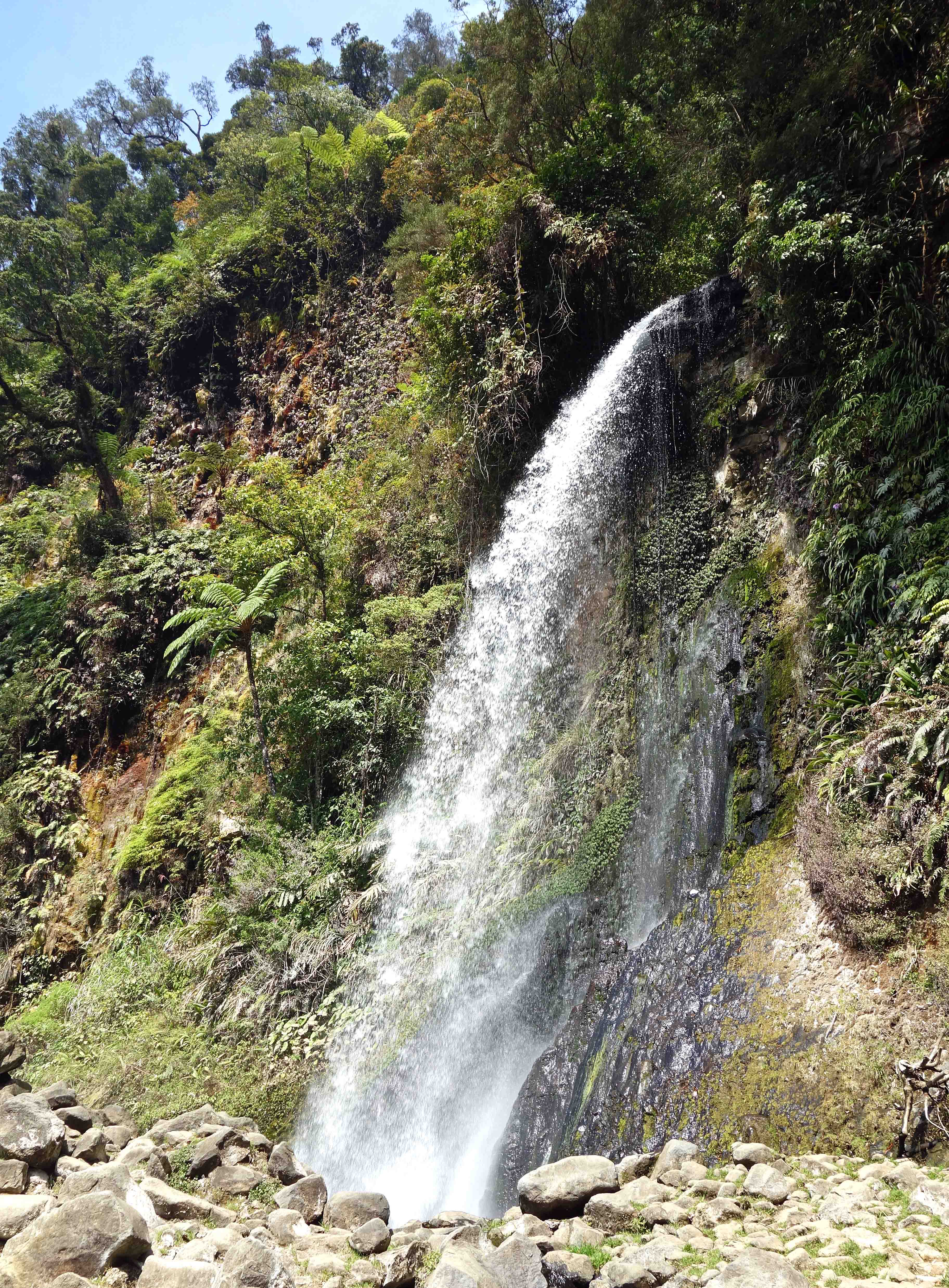
    Cibeureum Waterfall, Gunung Gede Pangrangro National Park, Java
    Cibeureum Waterfall, Gunung Gede Pangrangro National Park, Java

    After the turn-off to the waterfall, the trails becomes ‘narrow, rugged and steep’ as Wallace described it (1). The path is very rocky and someone must have laboured long and hard to construct this access way to the peak.
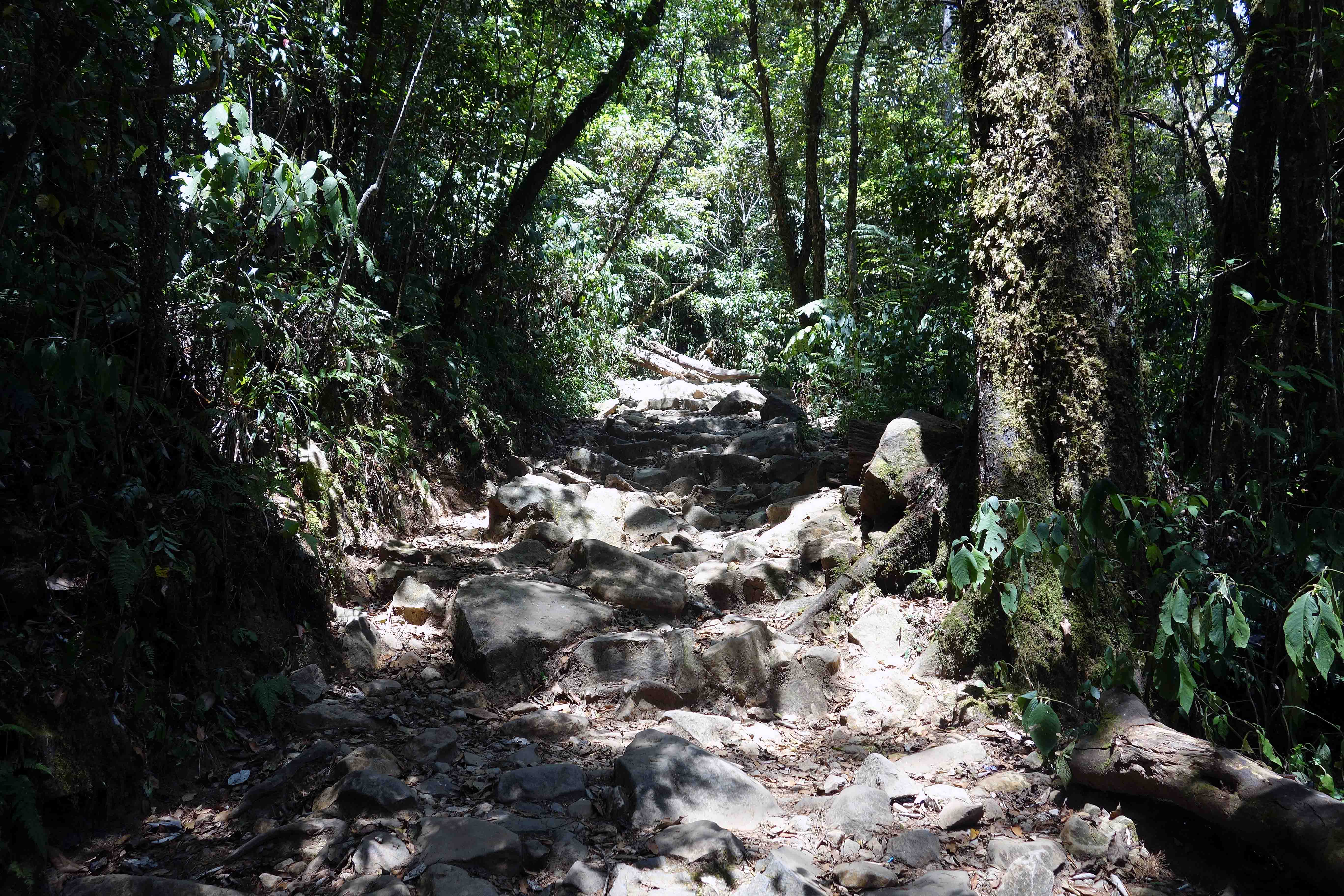
    Steep, rocky trail which begins after the waterfall turning
    Steep, rocky trail which begins after the waterfall turning

    Nevertheless, there is much to look at during rest breaks (!) on the trail, such as the gorgeous Blue nuthatch (Sitta azurea). It appears that Wallace did collect this species from West Java – which was only first described some 30 years before in 1830 (3) – since there is a hand-written letter from A R Wallace in the Natural History Museum concerning this species (using a former name) where he refers to ‘a bird of mine’. Presumably one he collected and donated to the museum?

    As well as many birds, I was fortunate enough to come across some beautiful tiger butterflies (Zinken’s tiger, Parantica albata) – also called danaids – which are endemic to Java (below).
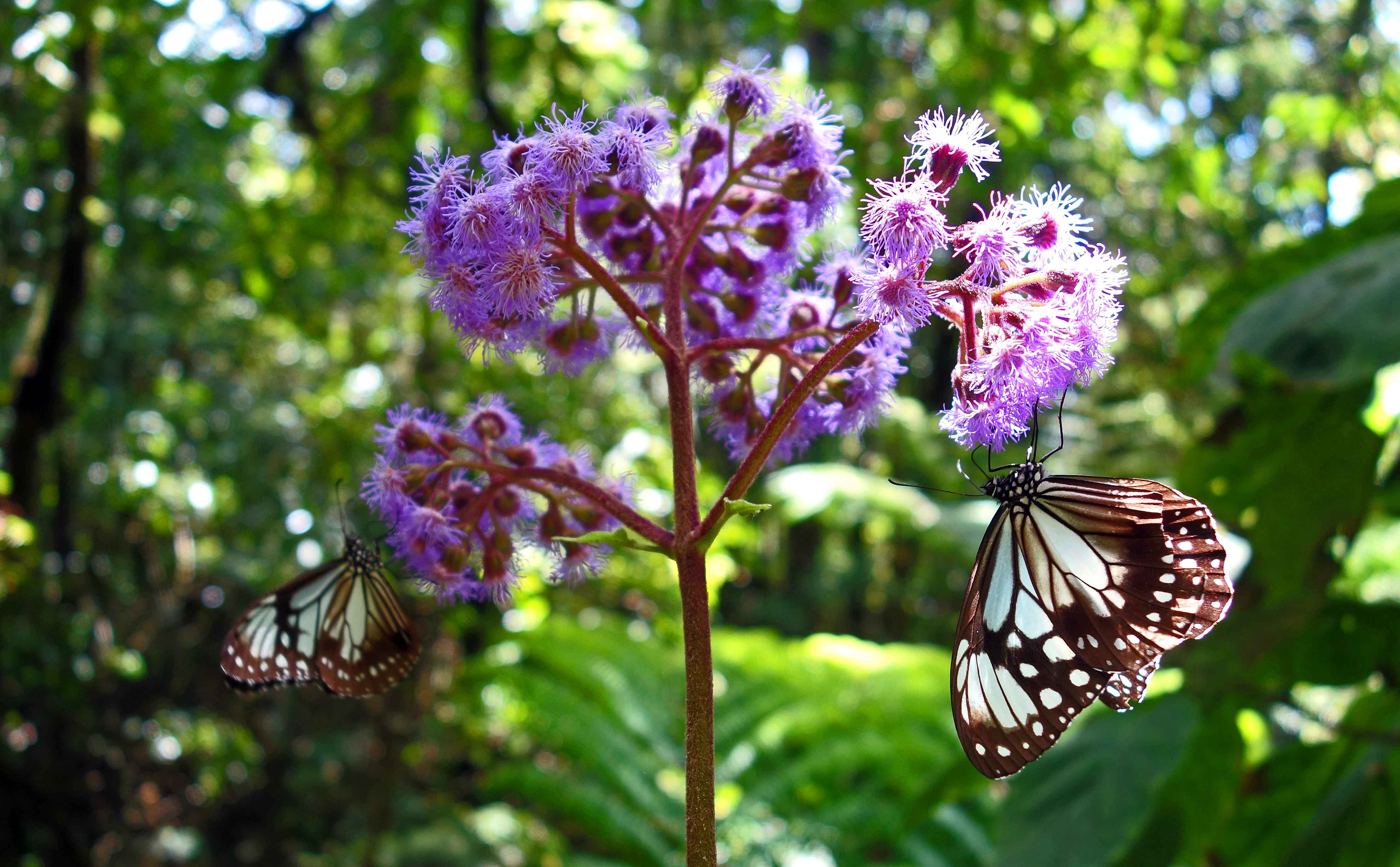
    Zinken's tiger (Parantica albata) Java
    Zinken’s tiger (Parantica albata) Java

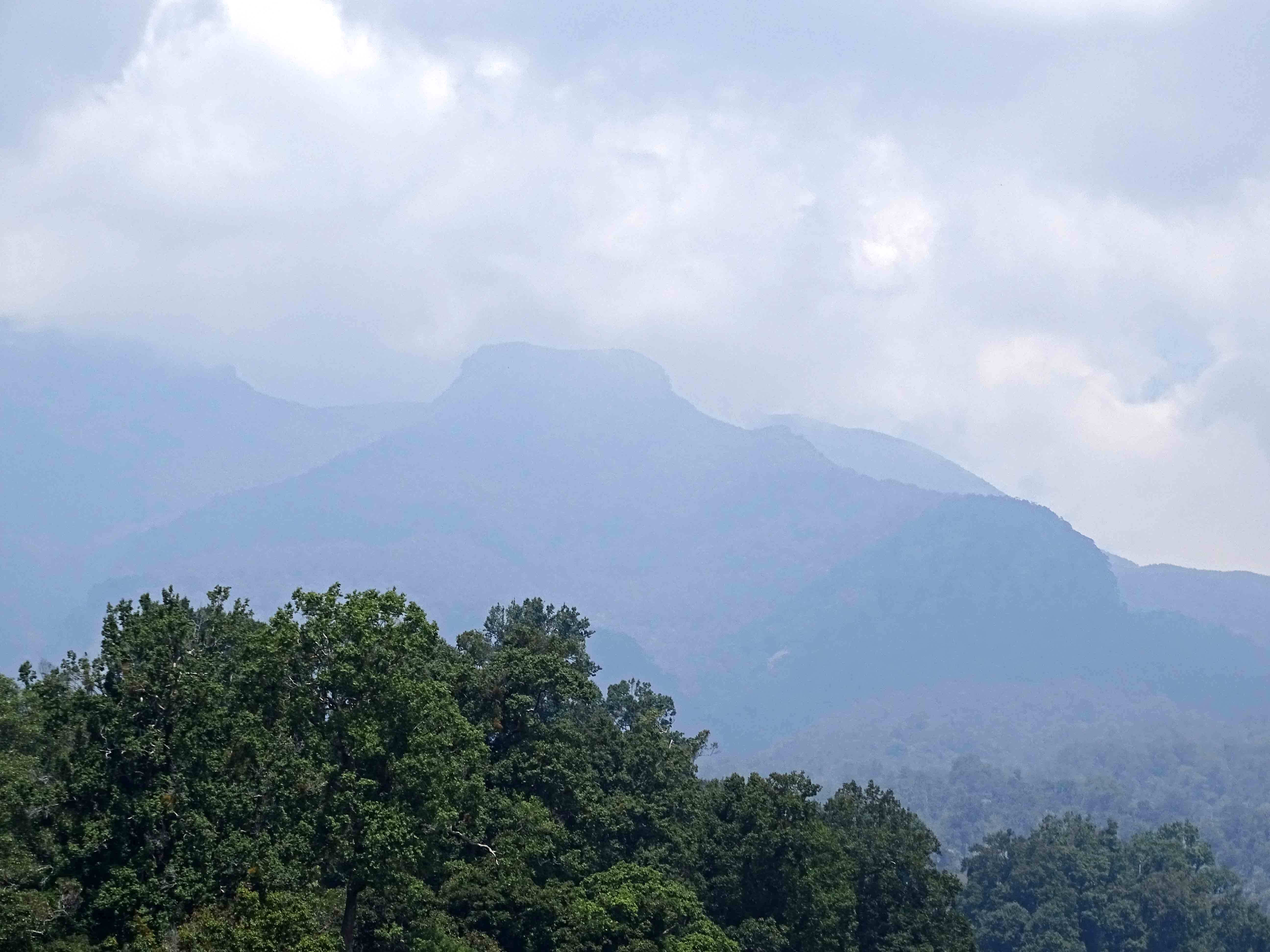
    Alas, I never made it to the Hot Springs/Air Panas (2,150 m) and turned around at about 2,000m, to save my knees. There is much to see beyond this point, and Wallace describes in detail the flora on the higher slopes of the volcano, much of which was of a temperate kind, familiar to him from his botanising in England. So I would like to go back, not only to see the impressive volcano itself, but the birds, insects and plants to be found on the top of these mountains. Like many climbers today, Wallace camped near the top and took time to explore both peaks. I had to be content with a view of Mount Pangrango from the trail on the way down (below).
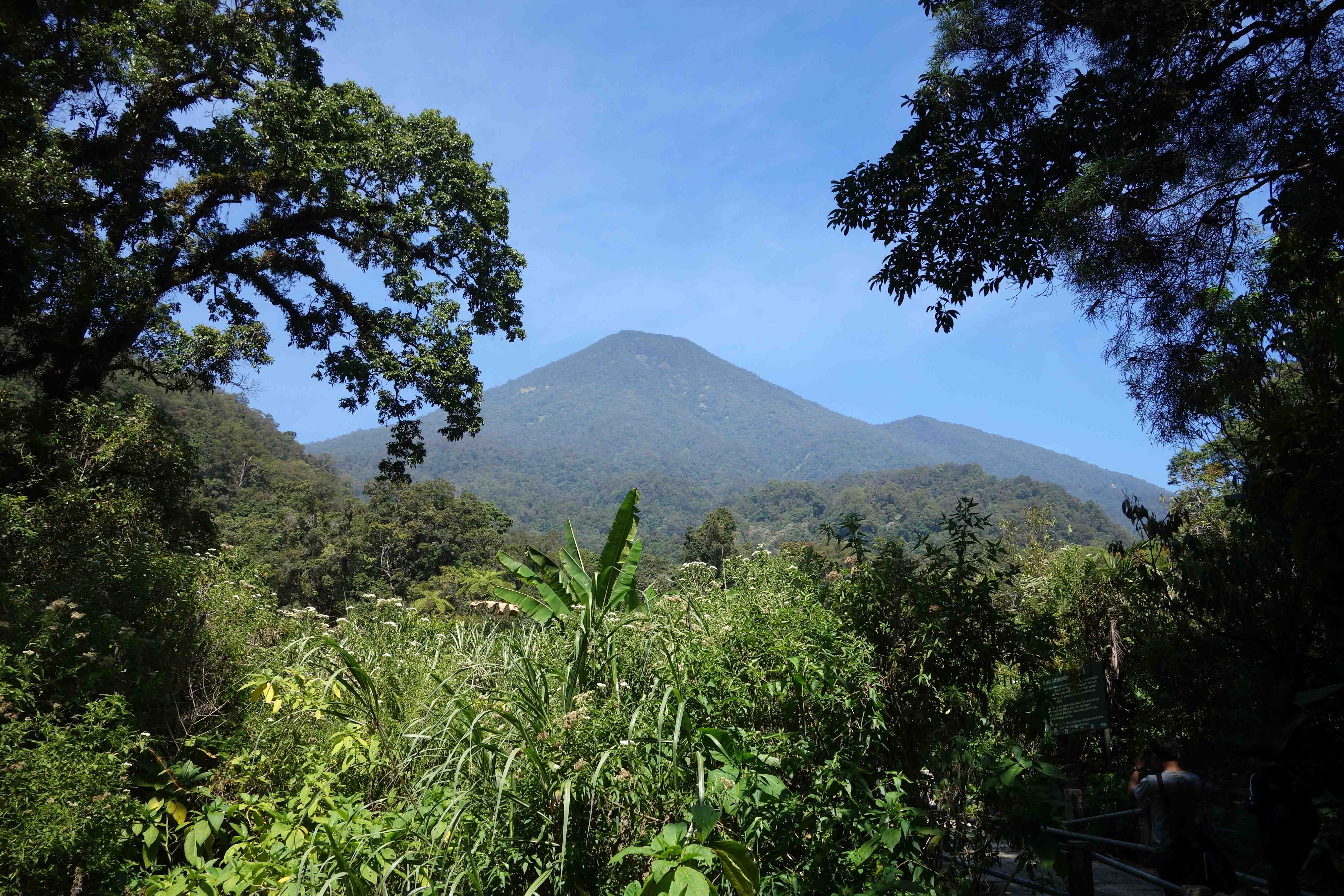
    Mount Pangrango (3,019m)
    Mount Pangrango (3,019m)
    1. Wallace, Alfred Russel. The Malay Archipelago: the land of the orang-utan and the bird of paradise; a narrative of travel, with studies of man and nature. Courier Corporation, 1869.
    2. https://rcannon993.wordpress.com/2015/10/18/wandering-after-wallace-cibodas-botanical-gardens/
    3. https://en.wikipedia.org/wiki/Blue_nuthatch
    4. http://www.nhm.ac.uk/research-curation/scientific-resources/collections/library-collections/wallace-letters-online/5678/6531/T/details.html
  • Wandering after Wallace: Bogor Botanical Gardens

    Wandering after Wallace: Bogor Botanical Gardens

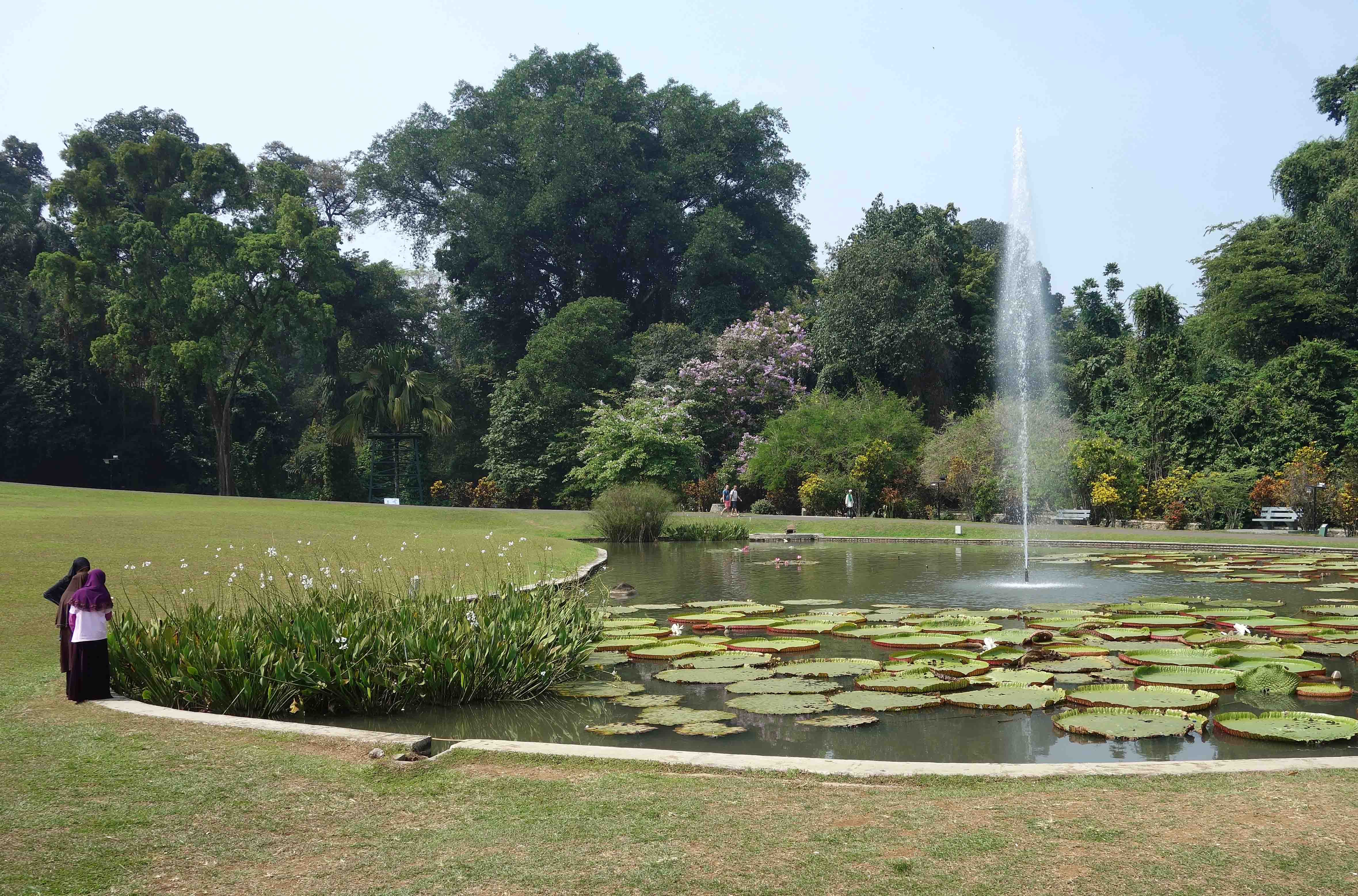
    Bogor Botanical Gardens lake
    Bogor Botanical Gardens lake

    Alfred Russel Wallace – co-discoverer of evolution by natural selection – spent three and a half months in Java, from 18th July to 31st Oct 1861 (1). After collecting birds and insects in East Java, he took a steamer from Surabaya to Jakarta, where he stayed about a week. Jakarta did not seem to make a very good impression on Wallace. He complained that the canals ‘were all muddy’, the pebbly dives up to houses were ‘very painful to walk upon’ and he also grumbled that ‘in Jakarta everybody drives’. He probably meant, drives by horse and carriage, but it is an apt quotation; not much has changed, there are still pony and traps in some places, but it’s mainly cars, vans and buses, which are the main way of getting around for the 10 million or more of the population in Jakarta.

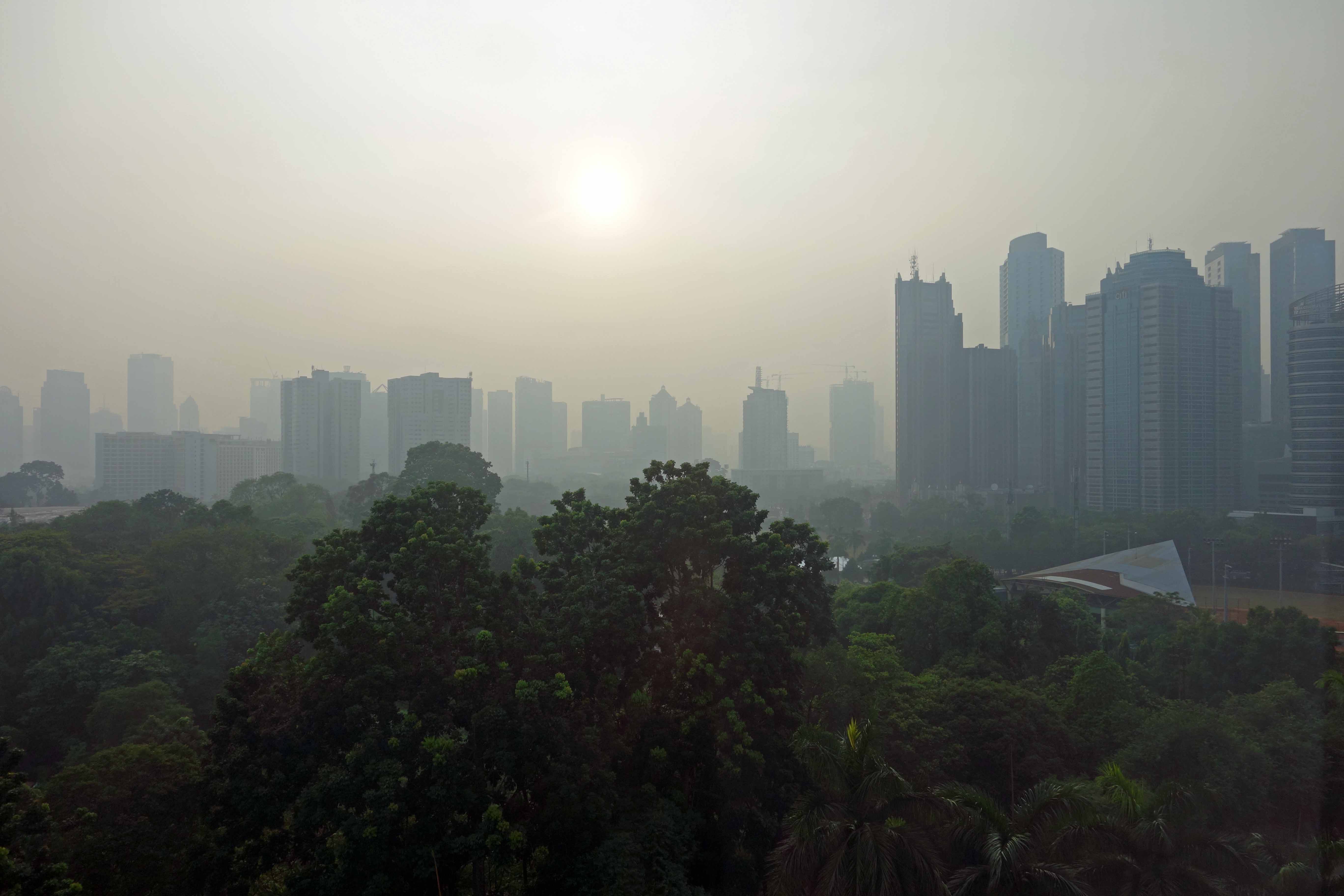
    Central Jakarta in the early morning from my hotel window
    Central Jakarta in the early morning from my hotel window

    I wonder what Wallace would have made of it now? Perhaps he would have noted that some birds still manage to exist in this vast city, living alongside man, colonising the patches of vegetation which exist here and there in parks and gardens. My own sojourn in the capital city of Indonesia was short; I  found it too huge and too traffic clogged to grapple with it. I am sure there is much of interest, but I soon moved on. I hired a taxi to drive to Bogor, a city some 60 km (37 miles) south of the Indonesian capital. Wallace went by coach to Bogor (or Buitenzorg as the Dutch called it). He visited the Botanical Gardens, but was ‘somewhat disappointed’ by them (1). His main criticism was that ‘there is a great absence of skilful laying-out’ (you certainly could not say that today as they are very well laid out) and perhaps more significantly, he considered that the plants could not compare to the ‘luxuriance and beauty’ of the ‘same species grown in our hothouses’. Be that as it may, he did concede that ‘there is much to admire here’, and mentioned ‘avenues of stately palms’ and ‘an endless variety of tropical shrubs and trees with strange and beautiful foliage’. The same can be said today of the Kebun Raya Bogor as the Botanical Gardens are called in Indonesia; there are many strange and beautiful plants to admire.

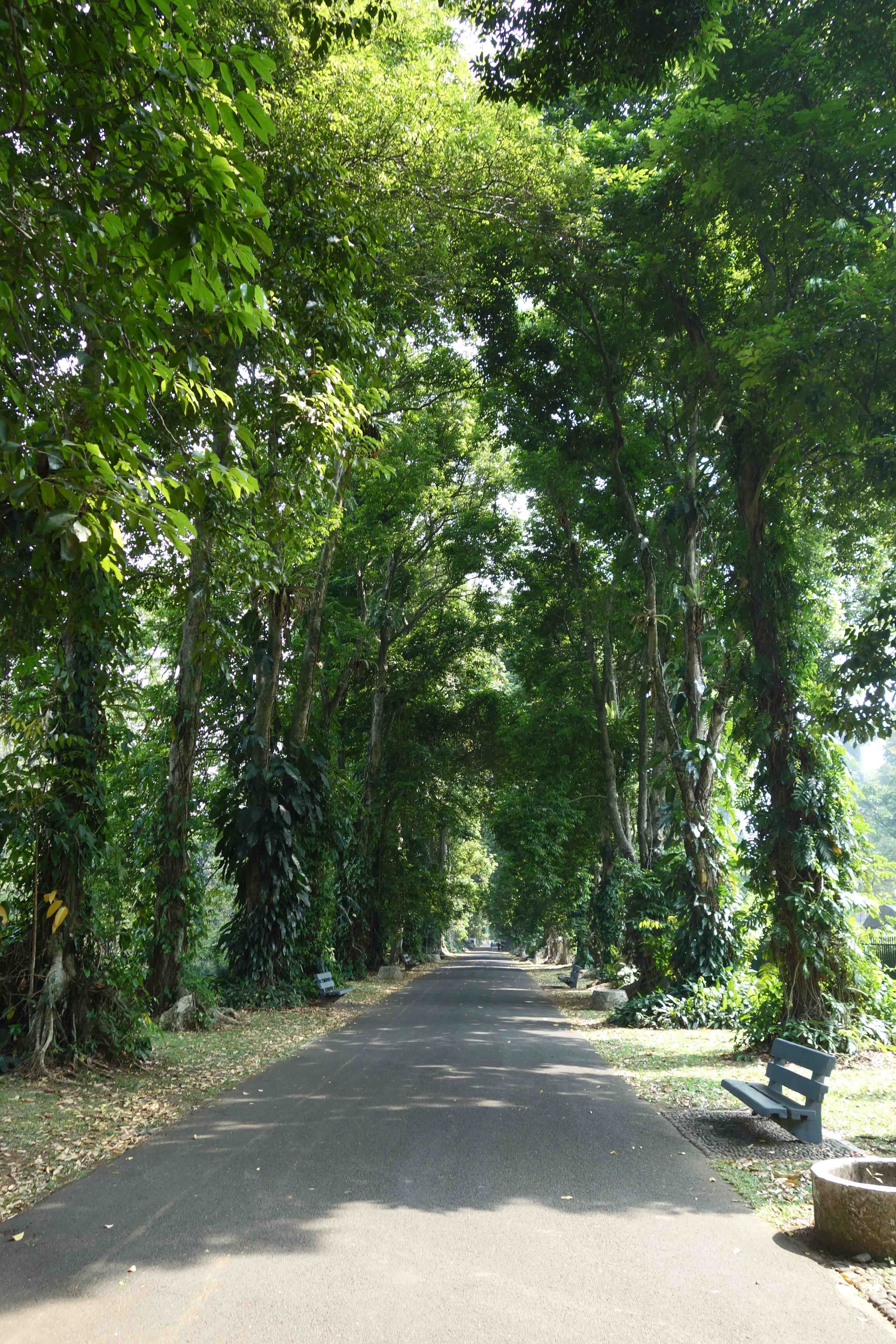
    Kenari Ave, Bogor Botanical Gardens
    Kenari Ave, Bogor Botanical Gardens

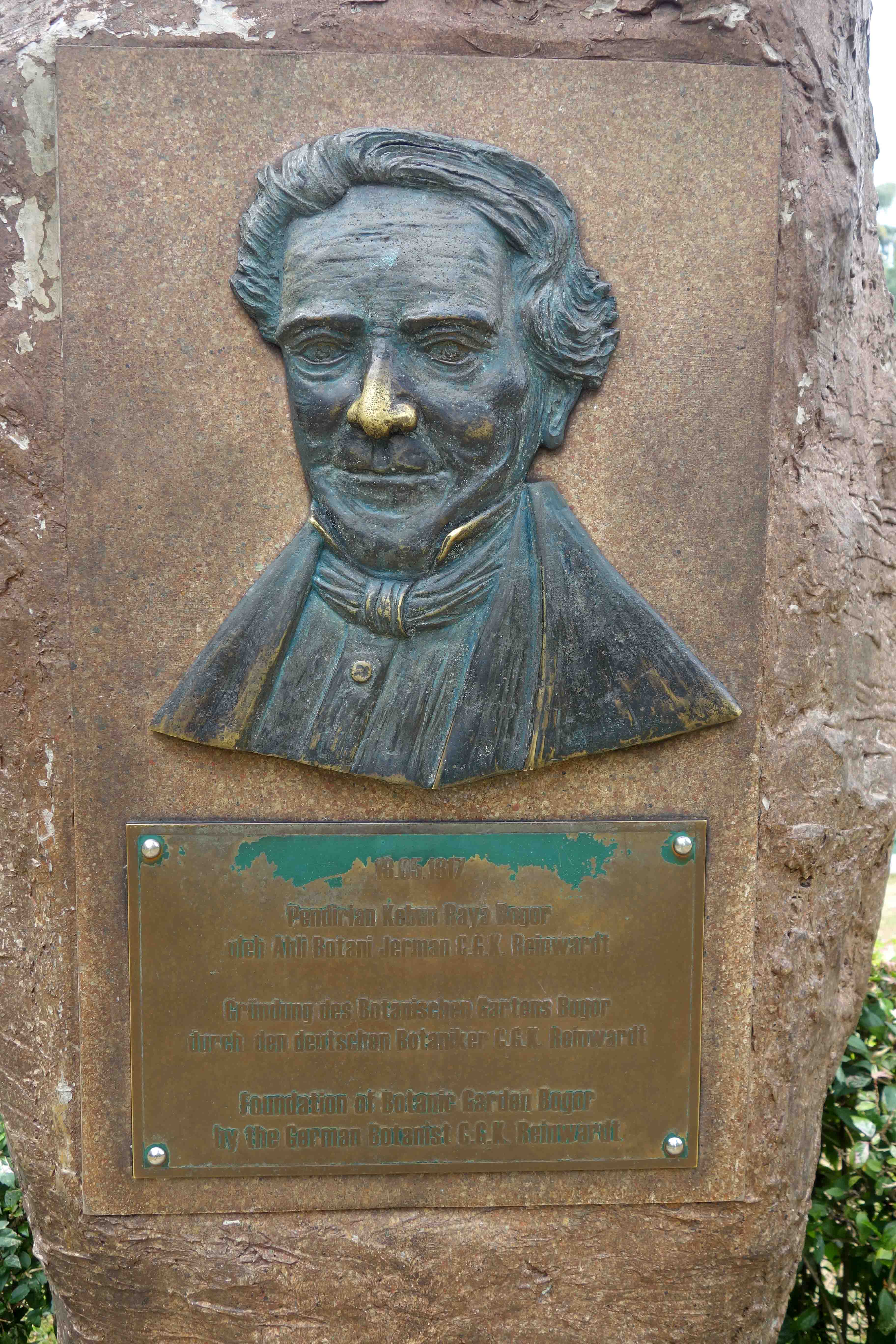
    The gardens were first set up in 1817, by a Dutch botanist called Caspar Georg Carl Reinwardt (1773-1854), so they must have been quite well-developed when Wallace visited them in 1861.

    Caspar Reinwardt, founder of Bogor Botanical Gardens
    Caspar Reinwardt, founder of Bogor Botanical Gardens

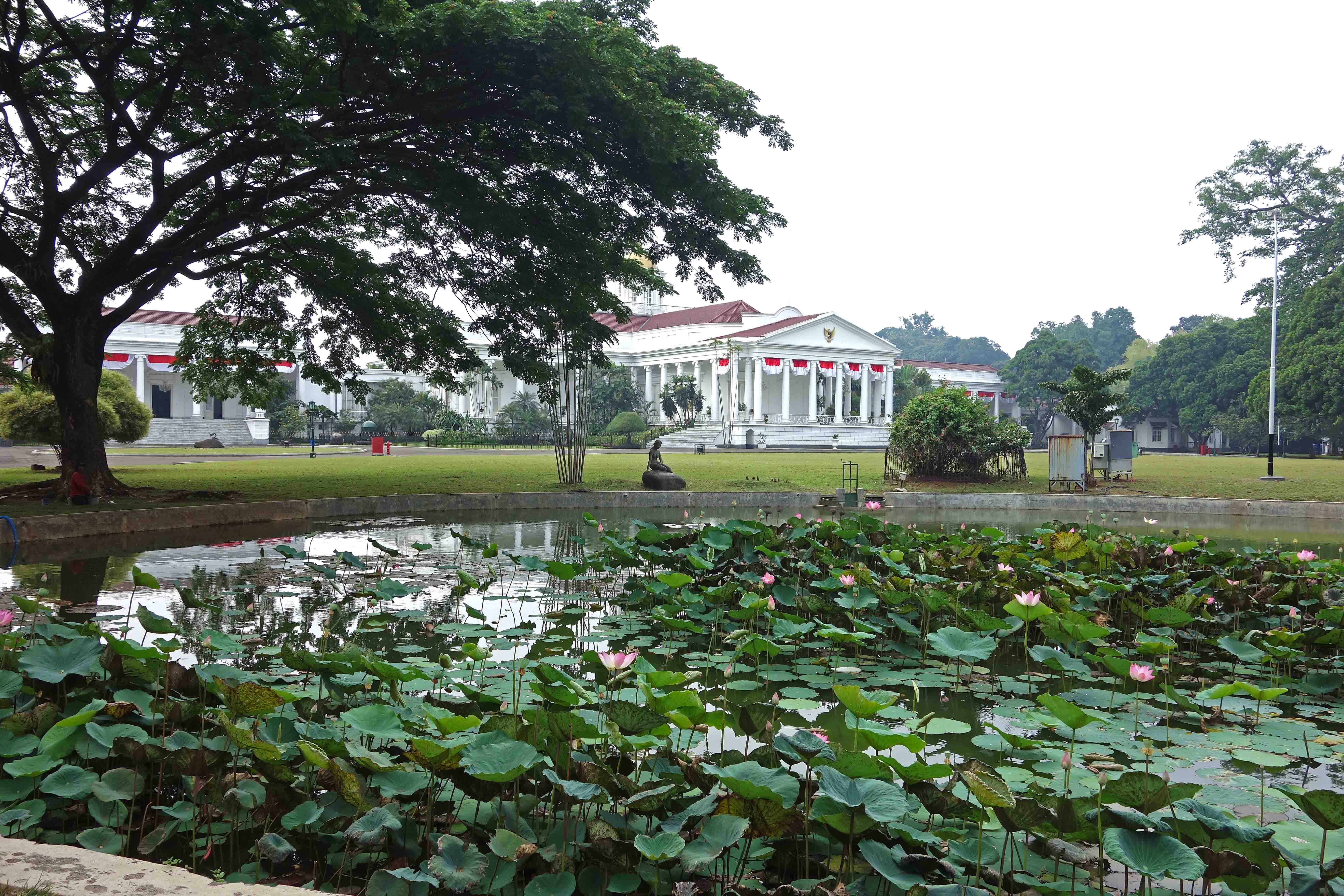
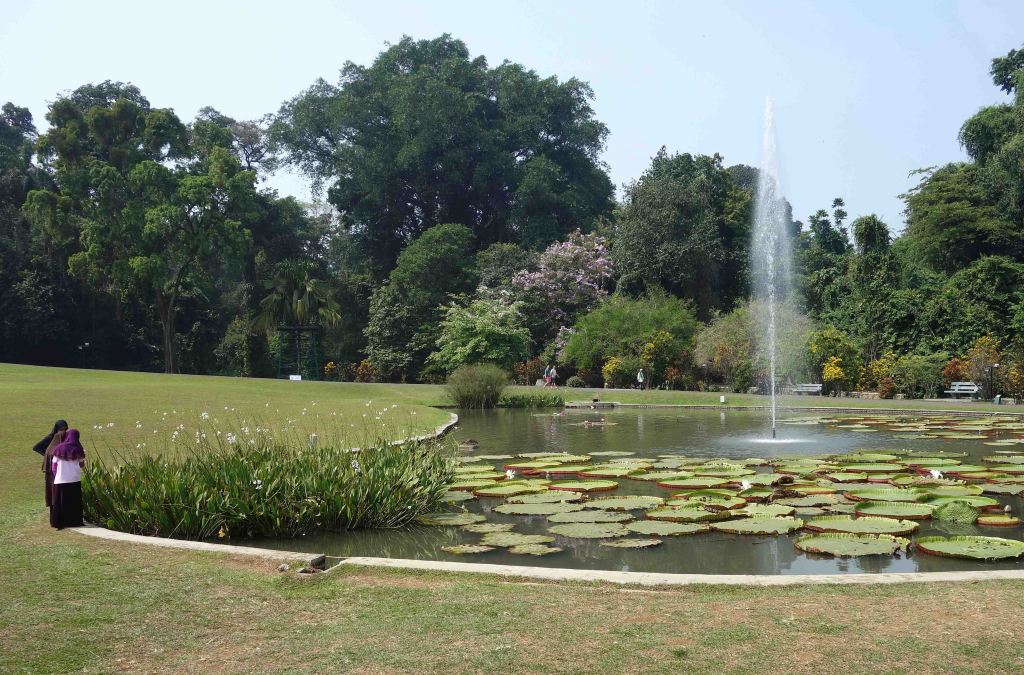
    The gardens were later to become the life work of another Dutch botanist called Johannes Elias Teijsmann (1808-1882), who – I think – must have been there when Wallace visited in 1861, since he only relinquished the directorship of the gardens in 1869 (2). A lithograph of from the 1880’s illustrates a lily pond and fountain very similar to that which exists today (3).

    Lily (lotus) pond with the Istana Palace in background, Bogor Botanical gardens
    Lily (lotus) pond with the Istana Palace in background, Bogor Botanical gardens

    I enjoyed visiting these gardens on two successive days in August 2015. They are a good place to do birdwatching, and I was fortunate to see some Javan species, such as the Bar-winged Prinia, which is very common on the lawns; the Javan variety of the Coppersmith Barbet; and the beautiful Scarlet-headed flowerpecker.

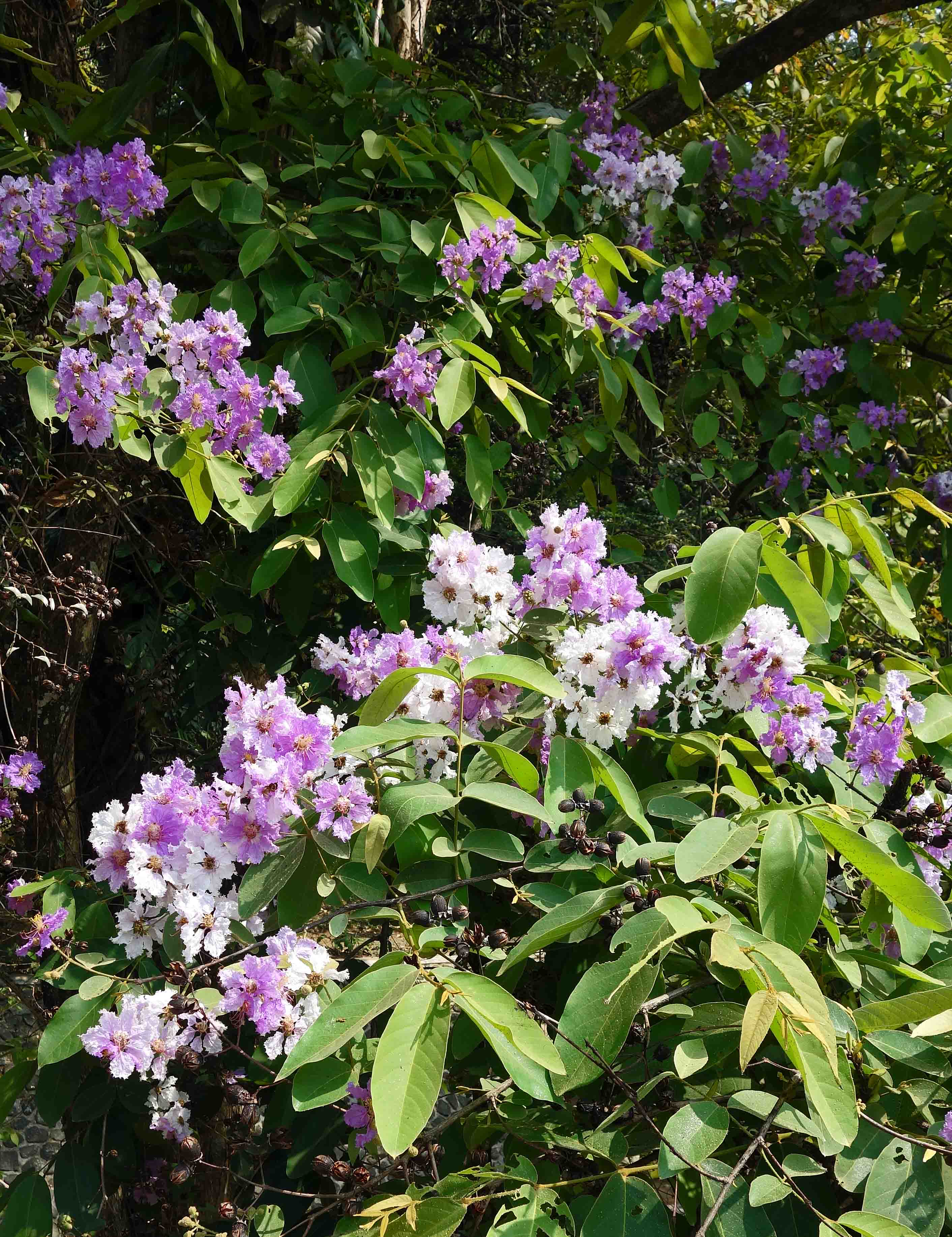
    Pink flowering tree in Bogor Botanical Gardens
    Pink flowering tree in Bogor Botanical Gardens

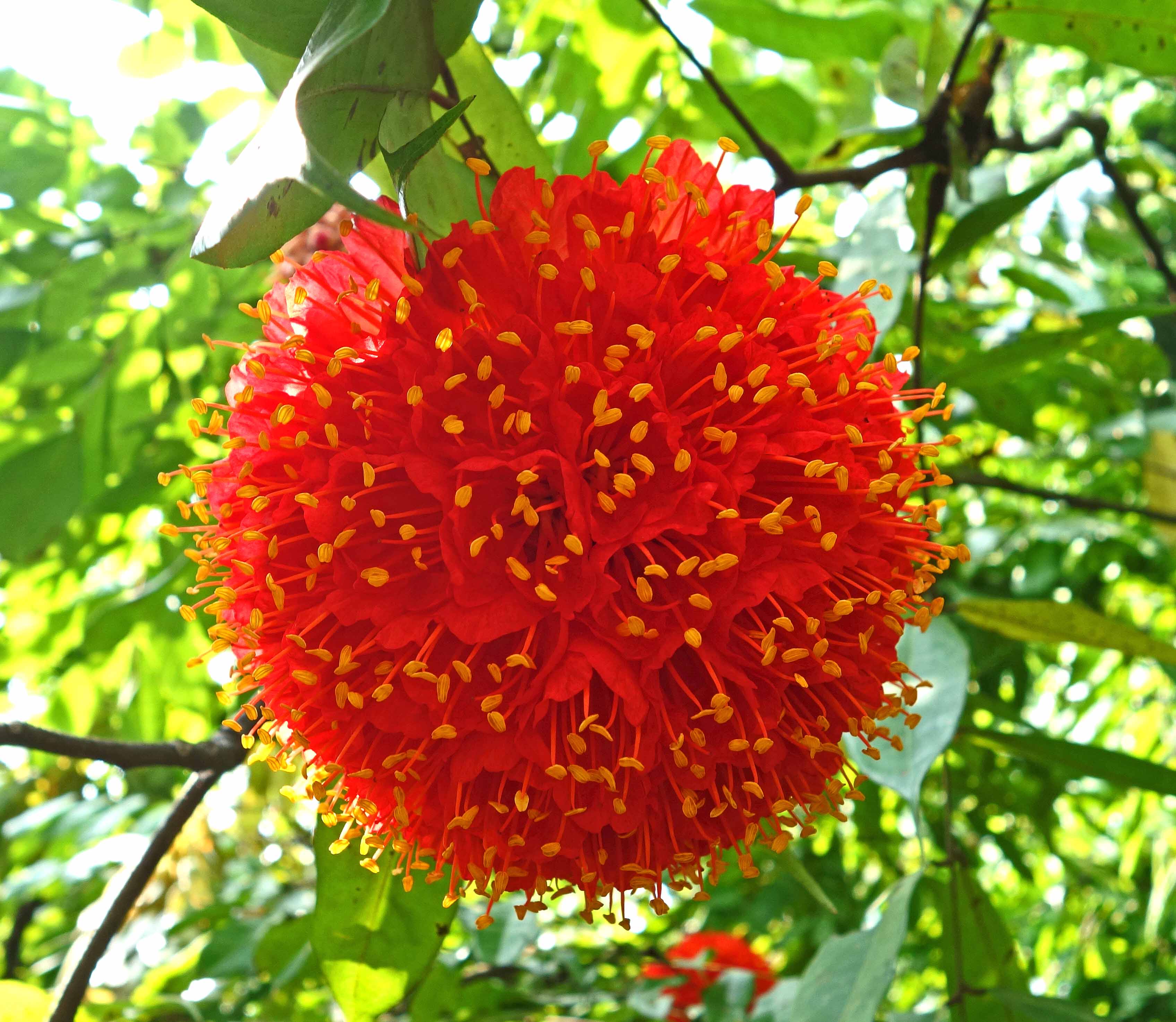
    But it is the plants which are so interesting in this 87 hectare (210 acres) garden, since there are over 3,373 different species. Many of the plants are exotic species (to Java) collected or brought here by the founding Dutch fathers of the gardens (2, 3), like this Rose of Venezuela (Brownea grandiceps) flower, which I blogged about before (4).

    Brownea grandiceps flower ball
    Brownea grandiceps flower ball

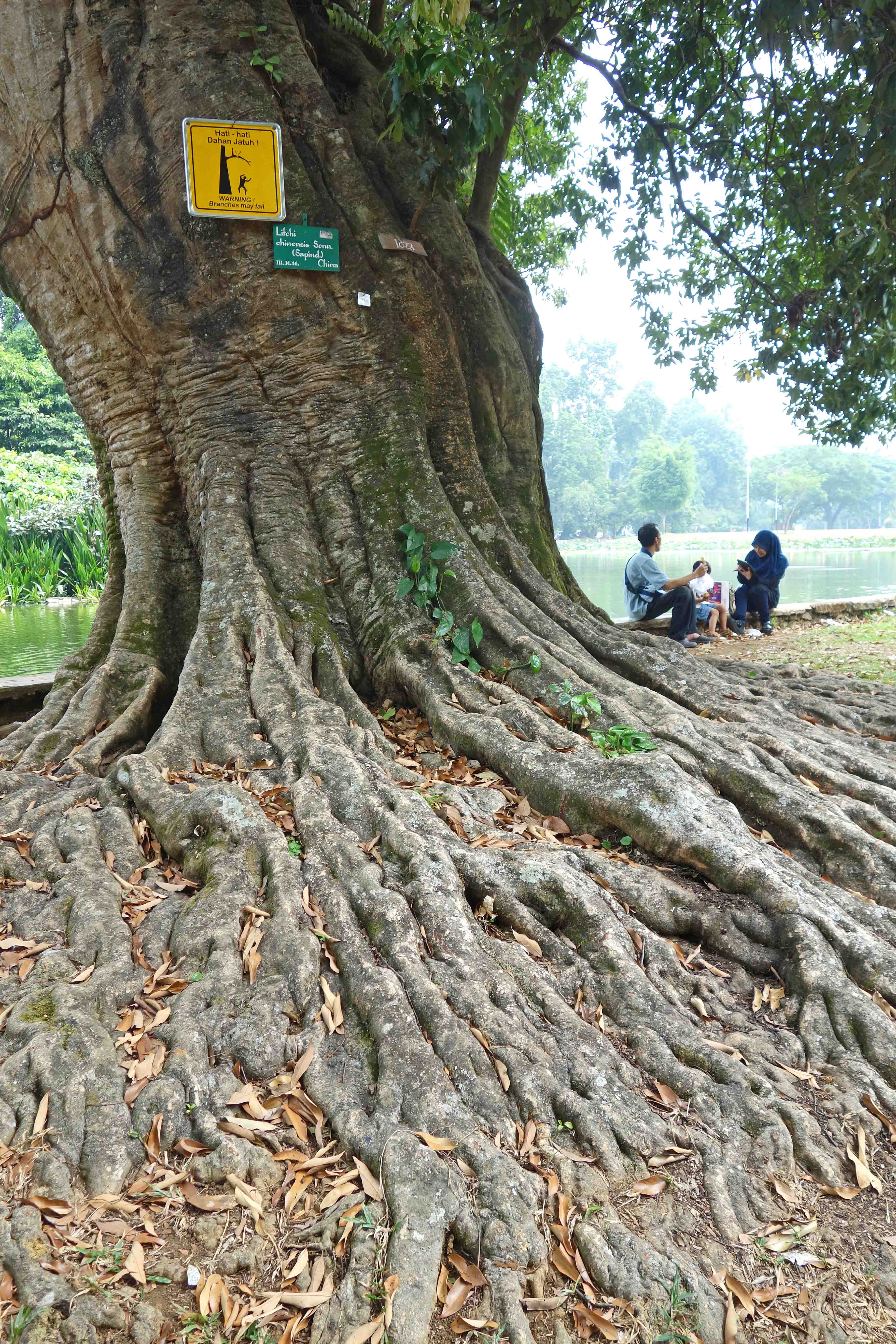
    As well as the cacti, bamboos, orchids, roses and so on, there are also some remarkable trees. The oldest tree in the Botanical Gardens is said to be this lychee tree (below) which originated from southern China, and was planted in 1823. So it would have been a fair-sized, 38-year-old tree when Wallace visited; I wonder if he noticed it?

    Lychee tree (Litchi chinensis) planted 1823
    Lychee tree (Litchi chinensis) planted 1823

    One thing that Wallace did remark on (again!), was the fact that the ‘walks were all of loose pebbles, making any lengthened wanderings about them very tiring and painful under a tropical sun’. Perhaps he had bad feet, or perhaps he was already was suffering from some tropical ulcers which plagued him in later years. Nevertheless, the pebbly walkways are still there in Bogor, but appear to be more consolidated than in Wallace’s day, and they did not impede me from walking extensively around the garden.

    Cobbled, or pebbly, paths in Bogor Botanical Gardens
    Cobbled, or pebbly, paths in Bogor Botanical Gardens

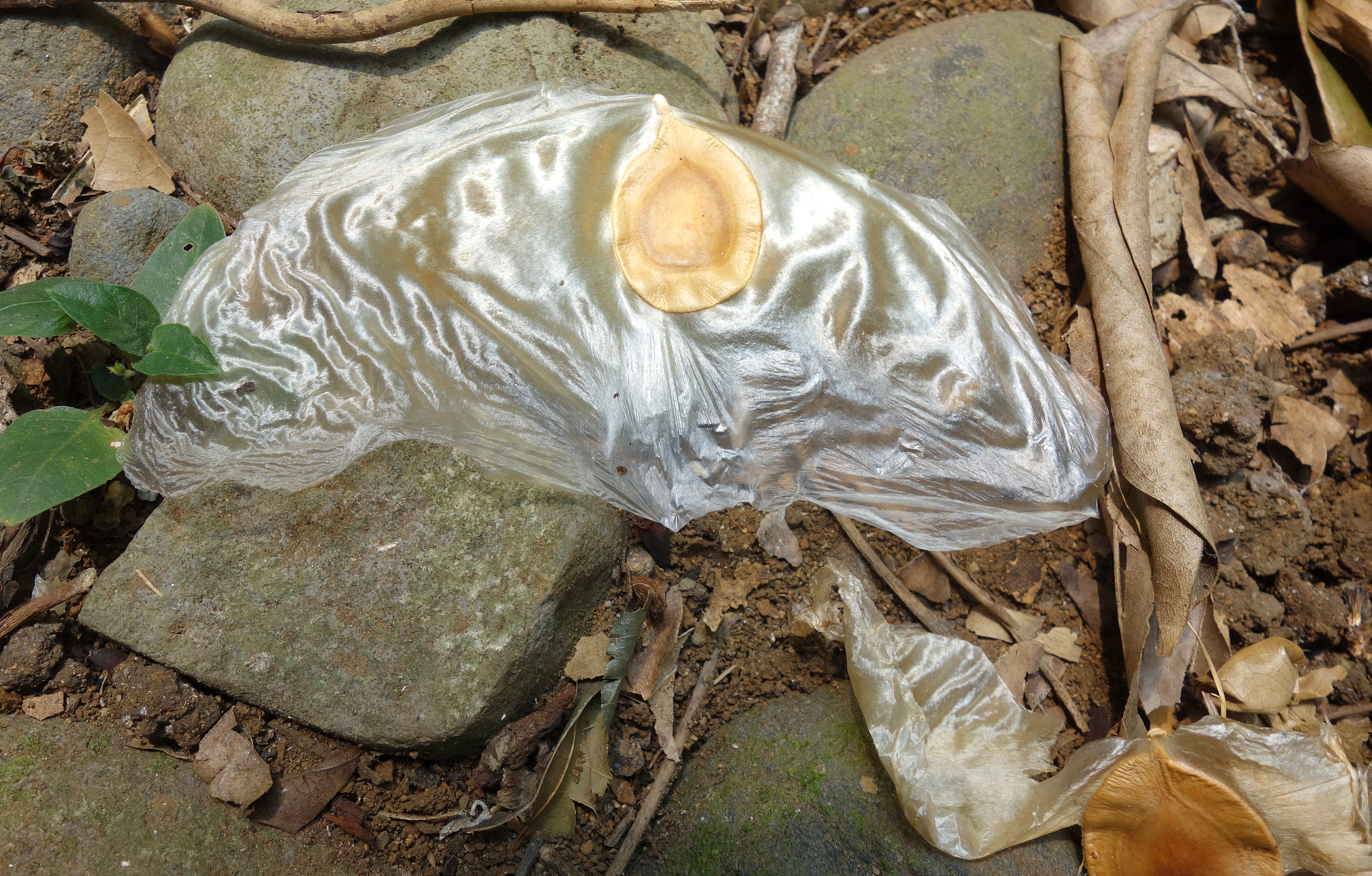
    One very interesting plant I came across, which I am sure would have fascinated the ever-curious Wallace, was the seed of the Javan cucumber plant (Alsomitra macrocarpa) which were lying everywhere on the ground when I visited. These amazing, winged seeds, are packed into football-sized fruits, which hang down from the vines which are festooned high in the canopy. They are surely, Nature’s own hang-glider, since they are able to glide for very long distances. David Attenborough got there first! See BBC TV footage of these wonderful seeds (5).

    Winged seed (Alsomitra macrocarpa) of Javan cucumber vine
    Winged seed (Alsomitra macrocarpa) of Javan cucumber vine

    One thing that Wallace may have noticed on his visit, was the Dutch cemetery, which contains some gravestones which date back as far as 1784. One which I noticed was to the memory of a Captain J. Drury R.N.. who died on the 1st March 1835, aged 51. Who was he and what was he doing here?

    Dutch Cemetry, Bogor Botanical Gardens
    Dutch Cemetry, Bogor Botanical Gardens

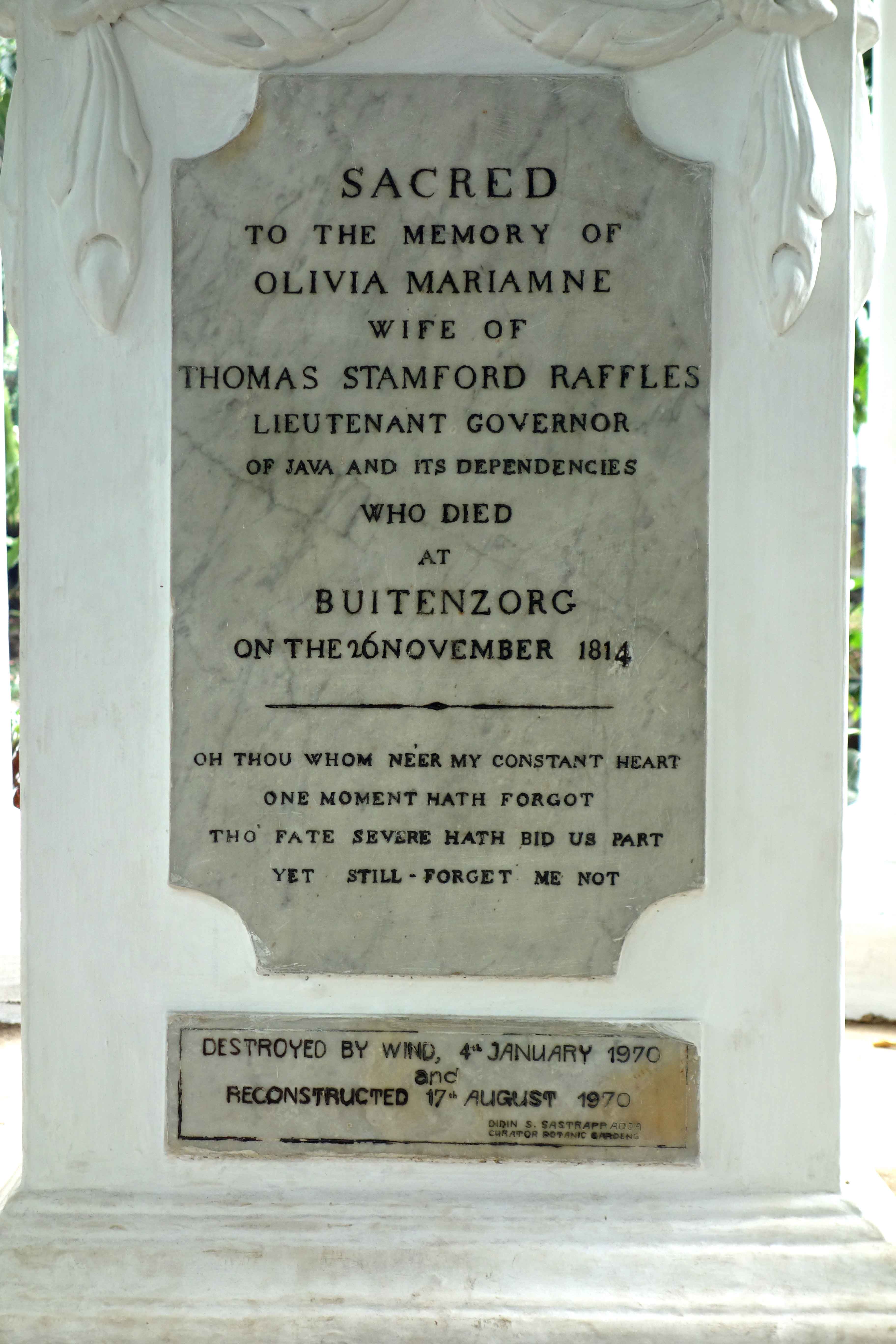
    Perhaps the most famous British person buried (elsewhere) in these gardens is  Olivia Mariamne Raffles – the first wife of the British governor-general Thomas Stamford Raffles. The British invaded Java in 1811, but subsequently restored the island to the Dutch rule.

    Olivia Mariamne Devenish memorial
    Olivia Mariamne Devenish memorial

    Olivia Raffles (Née Olivia Mariamne Devenish) died of malaria in Bogor, on 26 November 1814. A rather tragic irony, given that the Botanical Gardens subsequently played major role in the introduction of Cinchona trees (in 1854), which went on to make Java the largest producer of quinine bark for the treatment of malaria.

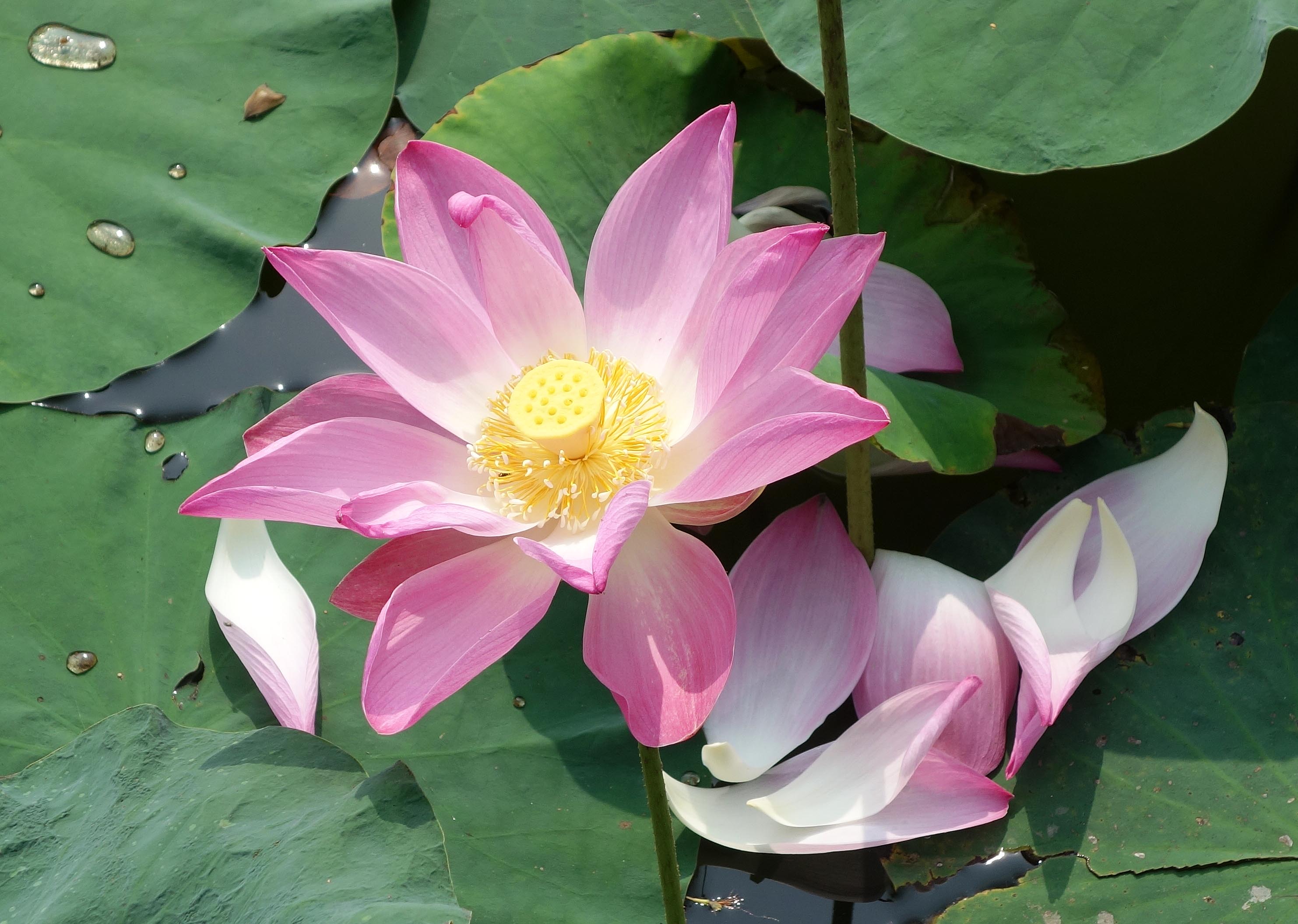
    Lotus flower (Nelumbo nucifera,) Bogor Botanical Gardens
    Lotus flower (Nelumbo nucifera,) Bogor Botanical Gardens
    1. Wallace, Alfred Russel. The Malay Archipelago: the land of the orang-utan and the bird of paradise; a narrative of travel, with studies of man and nature. Courier Corporation, 1869.
    2. https://en.wikipedia.org/wiki/Johannes_Elias_Teijsmann
    3. https://en.wikipedia.org/wiki/Caspar_Georg_Carl_Reinwardt
    4. http://rcannon992.com/2015/10/11/rose-of-the-jungle/
    5. http://news.bbc.co.uk/earth/hi/earth_news/newsid_8391000/8391345.stm
  • Javan faces

    Boys in Bogor, Java, Indonesia
    Boys in Bogor, Java, Indonesia

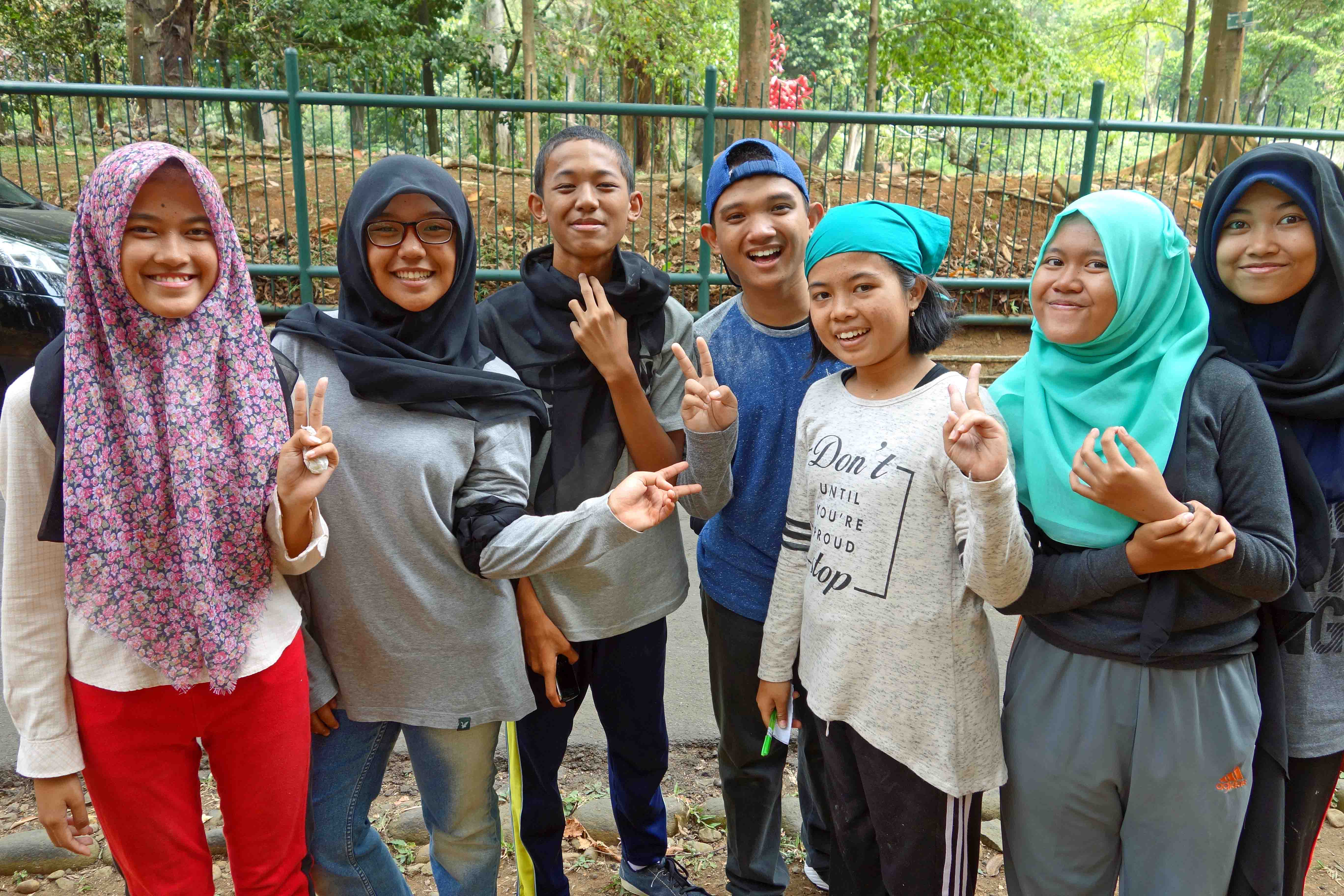
    I recently traveled to Java (Indonesia) to do some bird watching. I surprised by how friendly the people were. Wherever I went – outside of the capital – people, especially children, were eager to speak to me and have their photo taken. Students liked to ask my name and where I came from. In the Bogor Botanical Gardens, there were groups of young students eager to ask tourists various questions. I was doing ‘spot the bird’ in the park, whist they were doing ‘spot the tourist’!

    Students in Bogor Botanical Gardens, Java, Indonesia
    Students in Bogor Botanical Gardens, Java, Indonesia

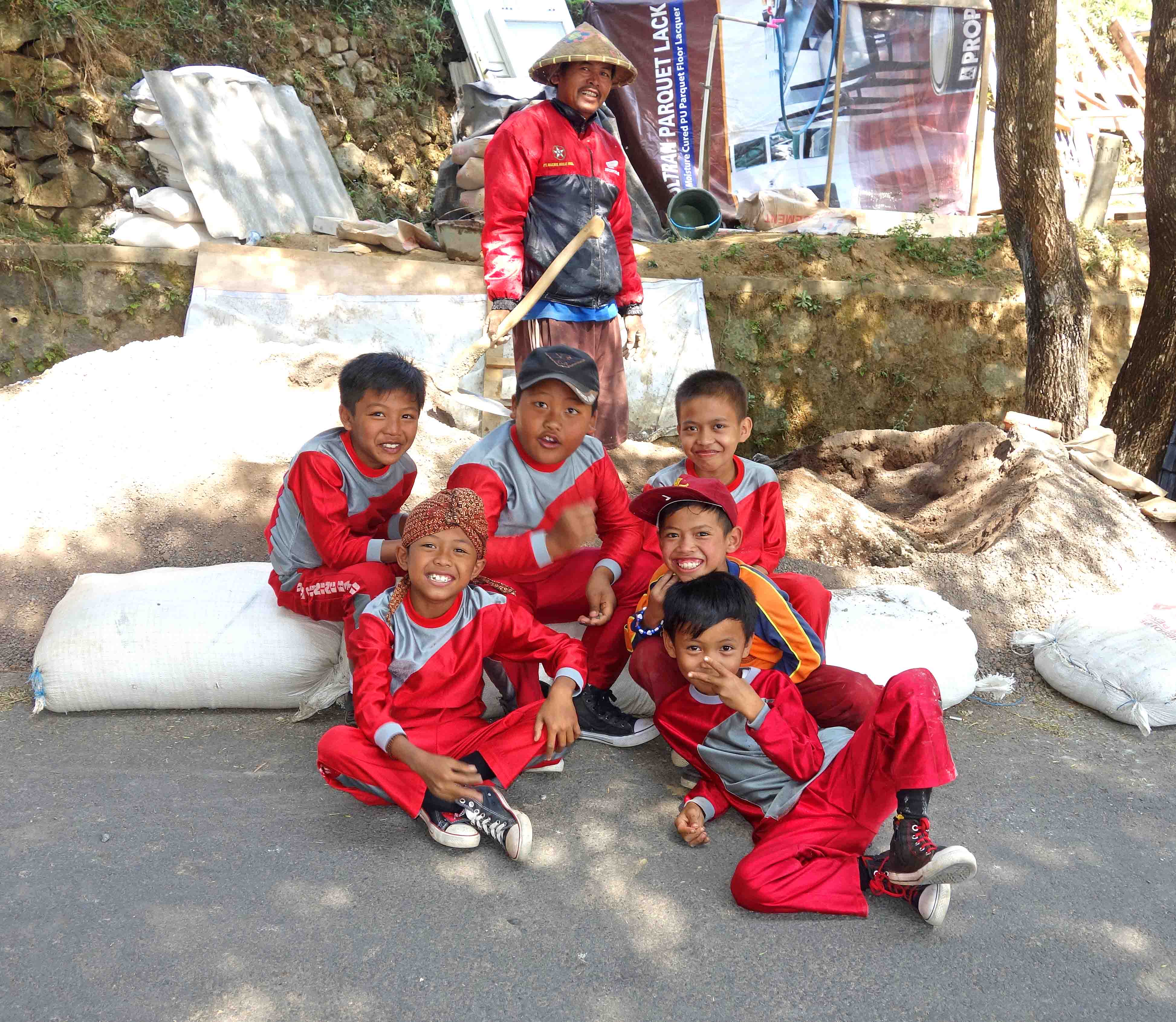
    Sometimes it felt like one was a minor celebrity, with everyone wanting to know something about you! Kids sometimes ask for money. I tended to refuse, but occasionally submitted and gave them enough to buy some sweets. These kids (in red outfits, below) were being given a lesson in how to build a house, near  the Cibodas Botanical Gardens. I did give them a little money, with the permission of their teacher, and they rushed off up the street to get some sweets (candy).

    Boys being given a lesson in building
    Boys being given a lesson in building

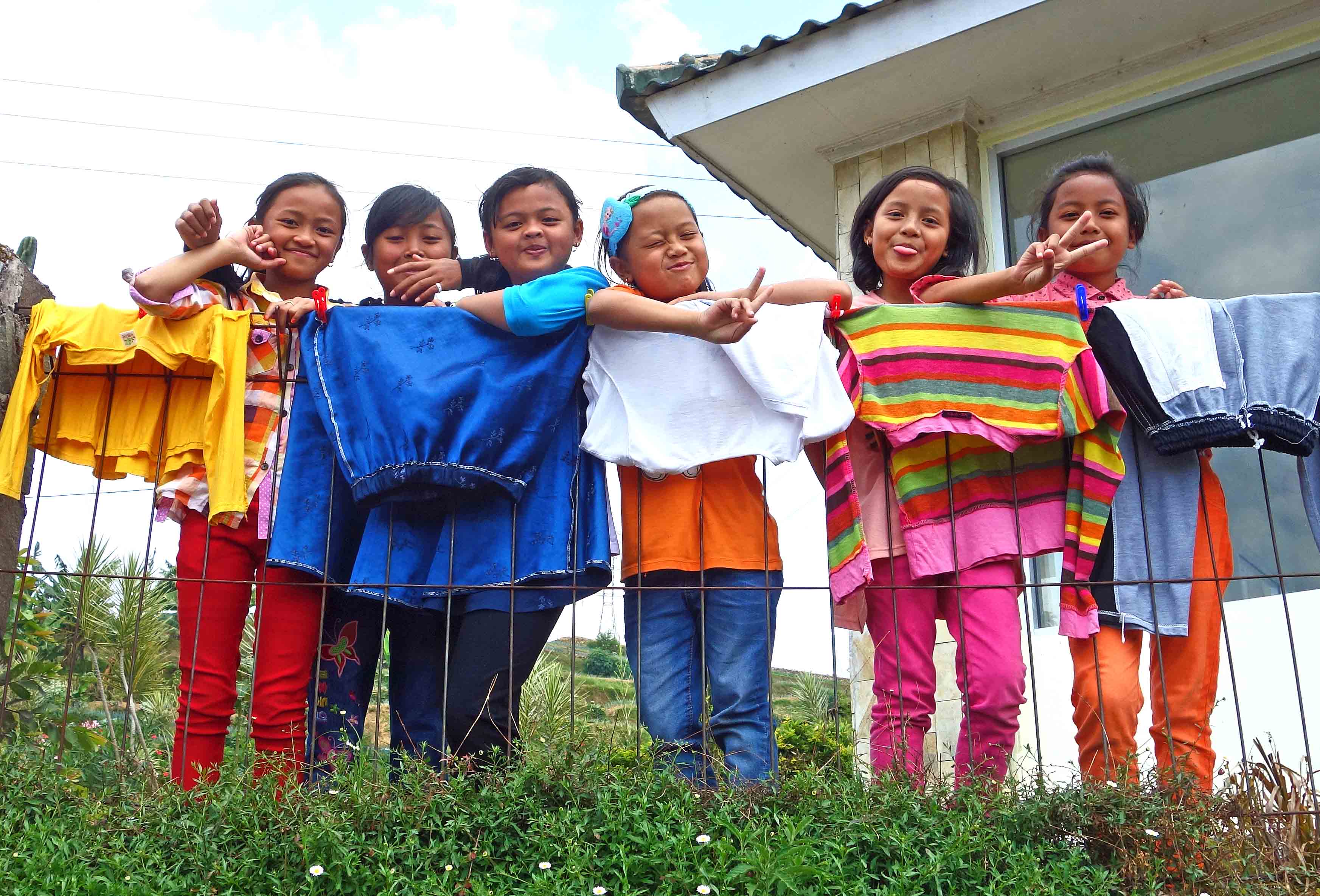
    I like to walk through villages. It is interesting; you see things you would not do from a car, and you meet people. Sometimes you get teased! These girls rushed over to look at the strange boule (white man) walking through their village.

    Girls on a wall
    Girls on a wall

    Nobody walks in Indonesia. It is hot and there are all sorts of modes of transport, from horse and cart to car. Motor bikes and scooters are incredible common and I was always being asked if I wanted a lift on the back of one. I think the notion that I actually liked walking was a bit of a strange one. These lads were not very impressed!

    Young men near the entrance to the park (Cibodas Botanical Gardens)
    Young men near the entrance to the park (Cibodas Botanical Gardens)

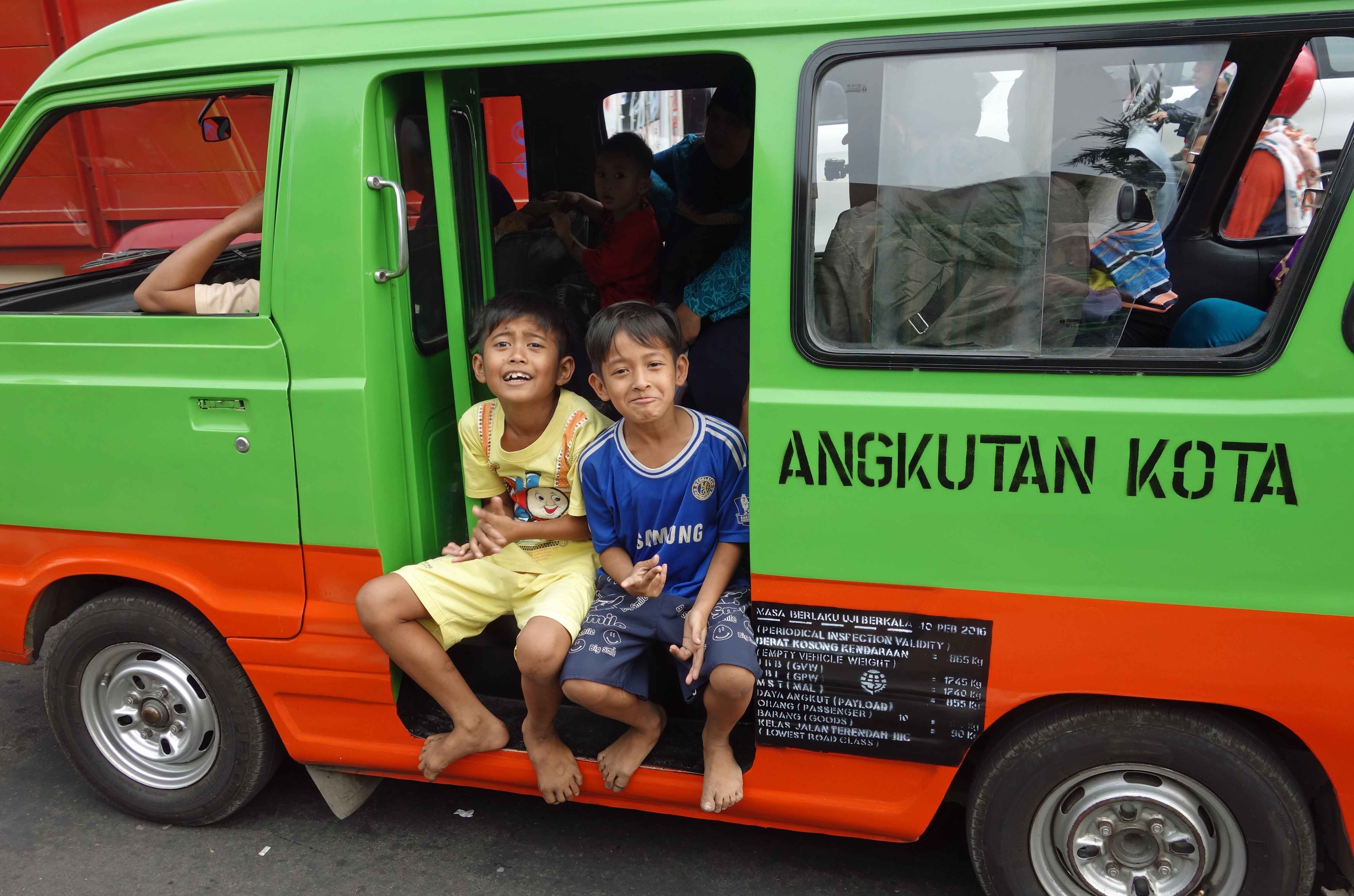
    Minivans (angkut) abound in the cities of Indonesia, but they are not much use if you do not know where they are going. These boys were just riding along by sitting in the open door. Dangerous? Probably not as the traffic was moving very slowly. And great fun.

    Boys on a minivan (angkut) in Bogor, Java
    Boys on a minivan (angkut) in Bogor, Java

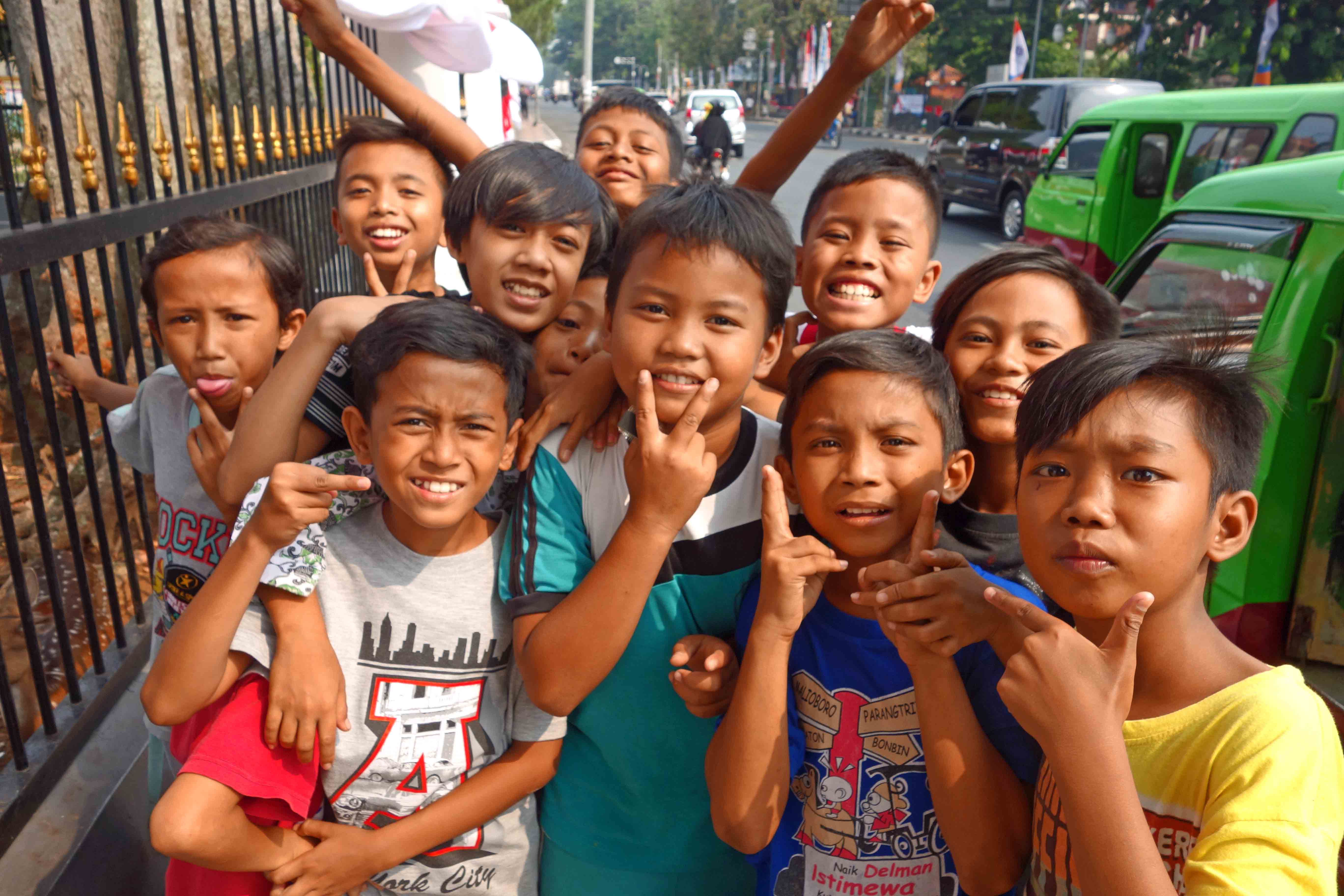
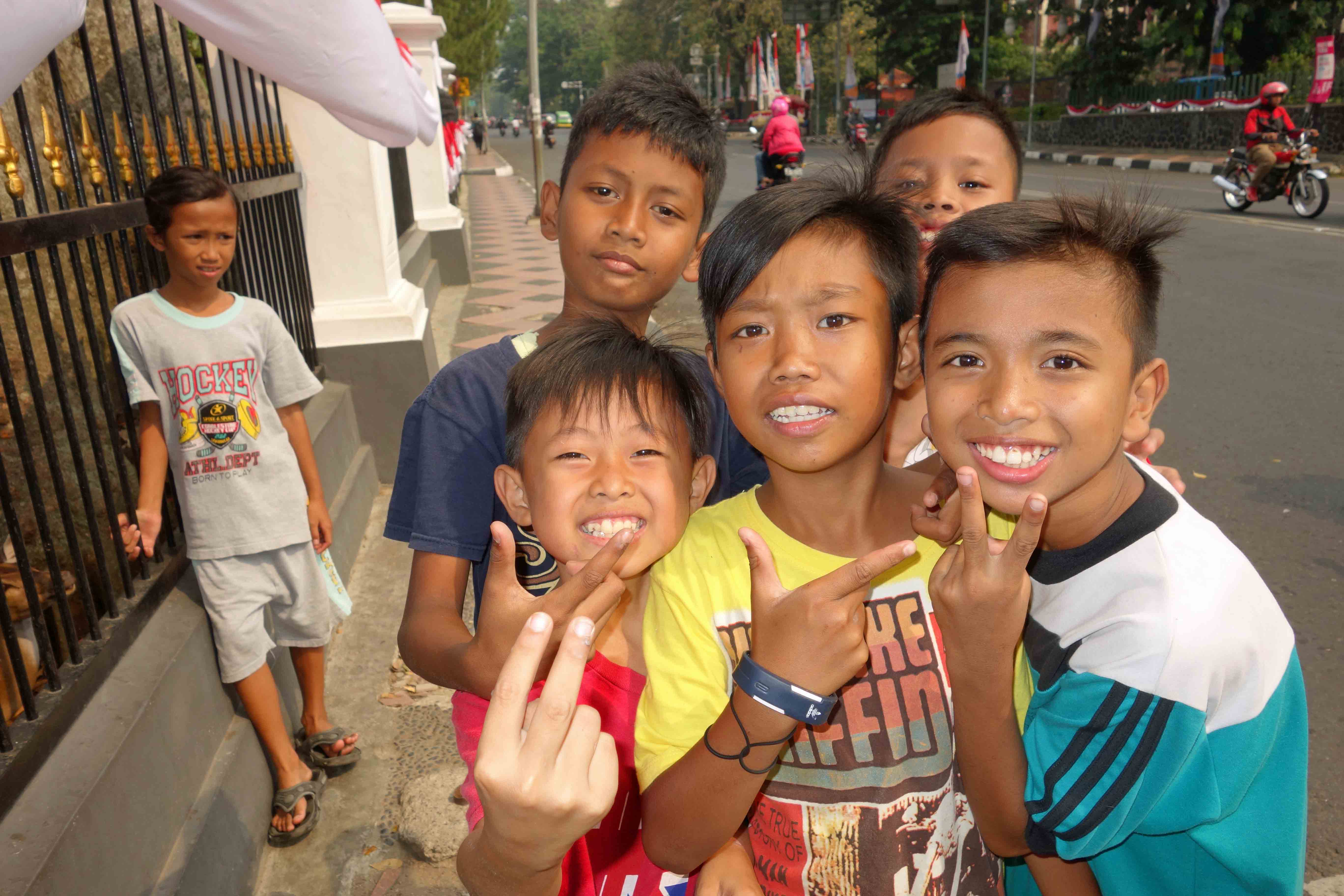
    These boys (top photo and below) were hanging around outside the Bogor Palace (Istana Bogor) where it was possible to feed deer through the palace fence.

    Boys outside Bogor Palace, Bogor, Java, Indonesia
    Boys outside Bogor Palace, Bogor, Java, Indonesia

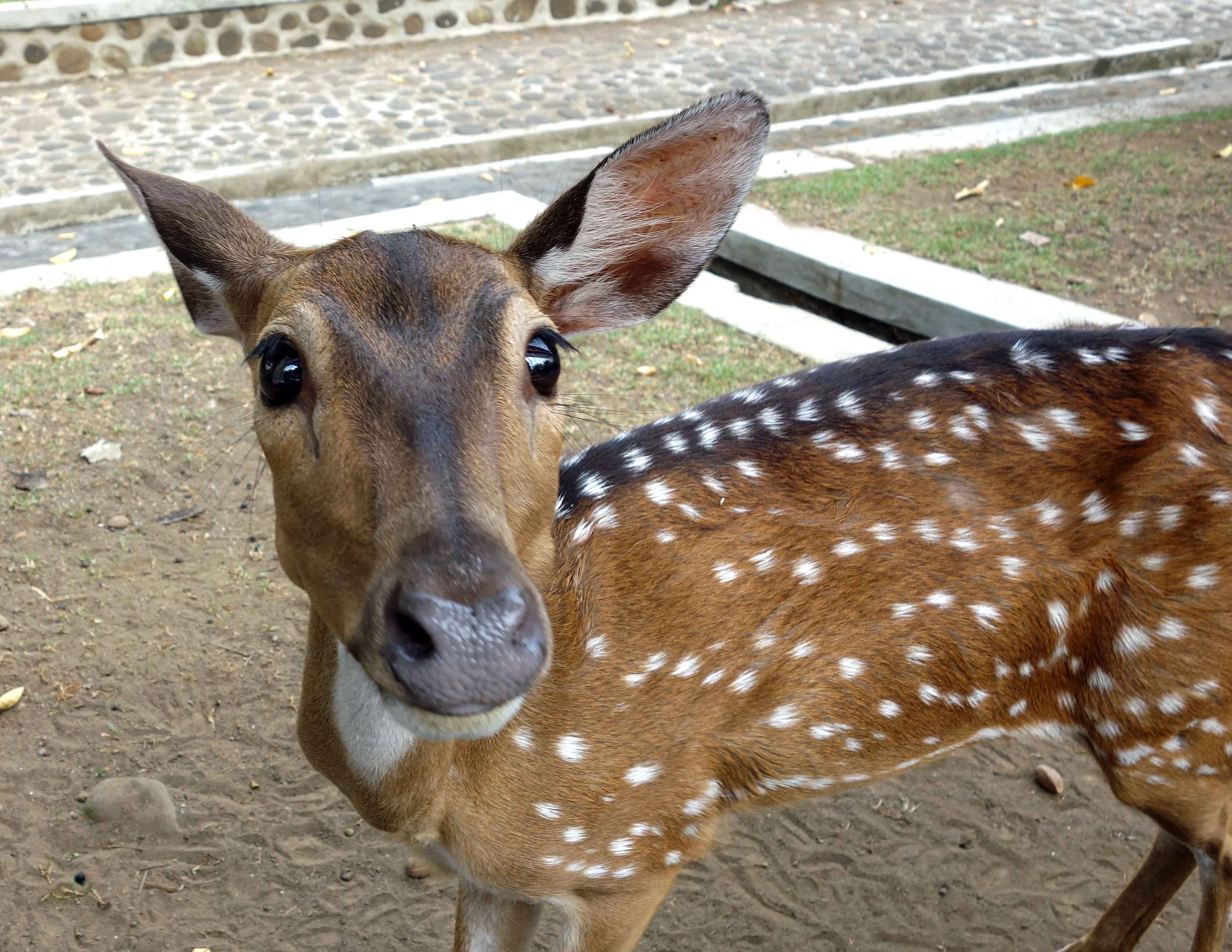
    On the other side of the fence the deer were waiting for someone to feed them. Green beans were on sale to feed the chital deer, which were originally imported from India, but thriving in these private gardens in Bogor, Java.

    Chital deer (Axis axis) Bogor Palace gardens
    Chital deer (Axis axis) Bogor Palace gardens