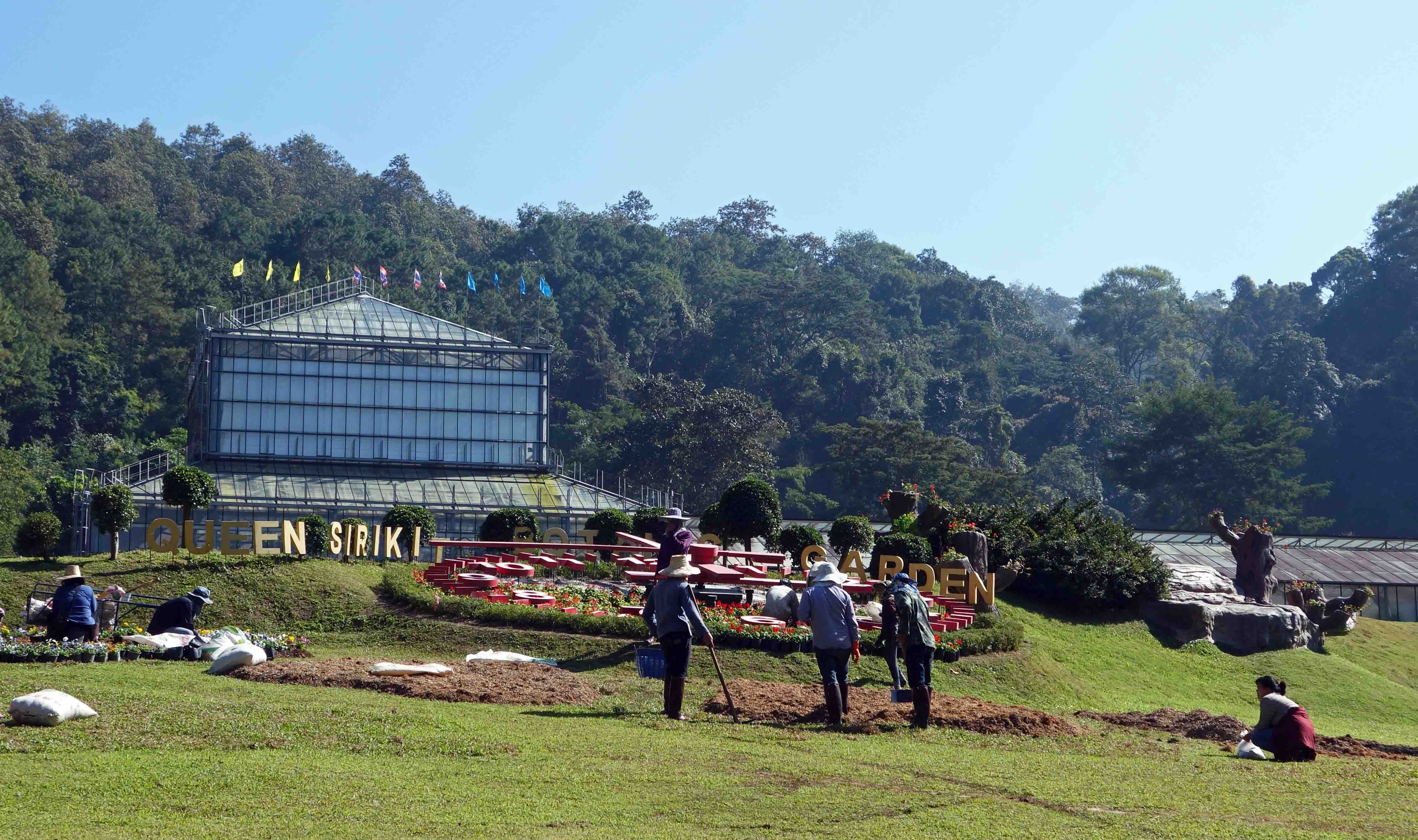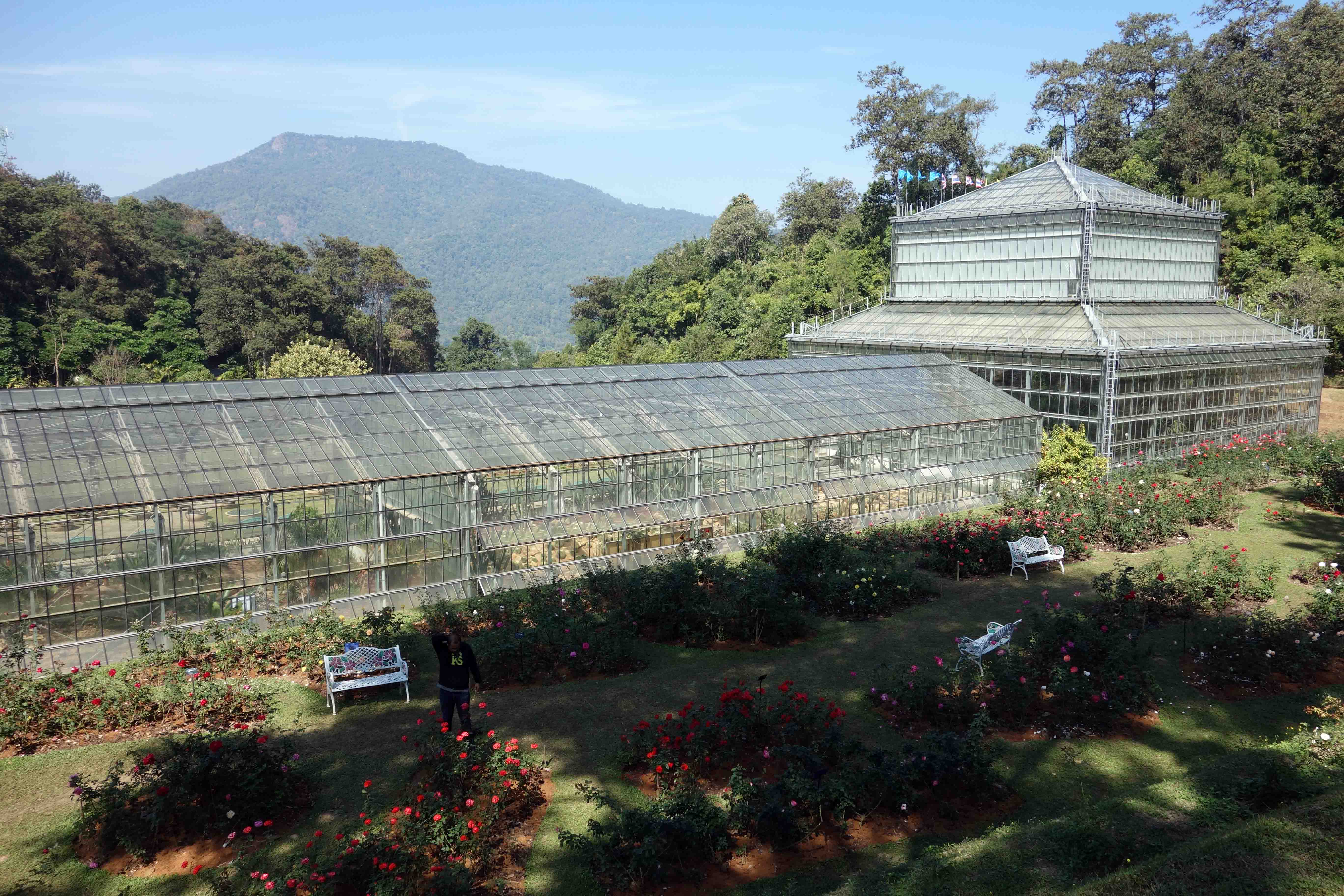
Glass house complex
The Queen Sirikit Botanic Garden is located in the Mae Sa Valley, on the edge of the Doi Sutep-Pui National Park, about fifteen km north of Chiang Mai.
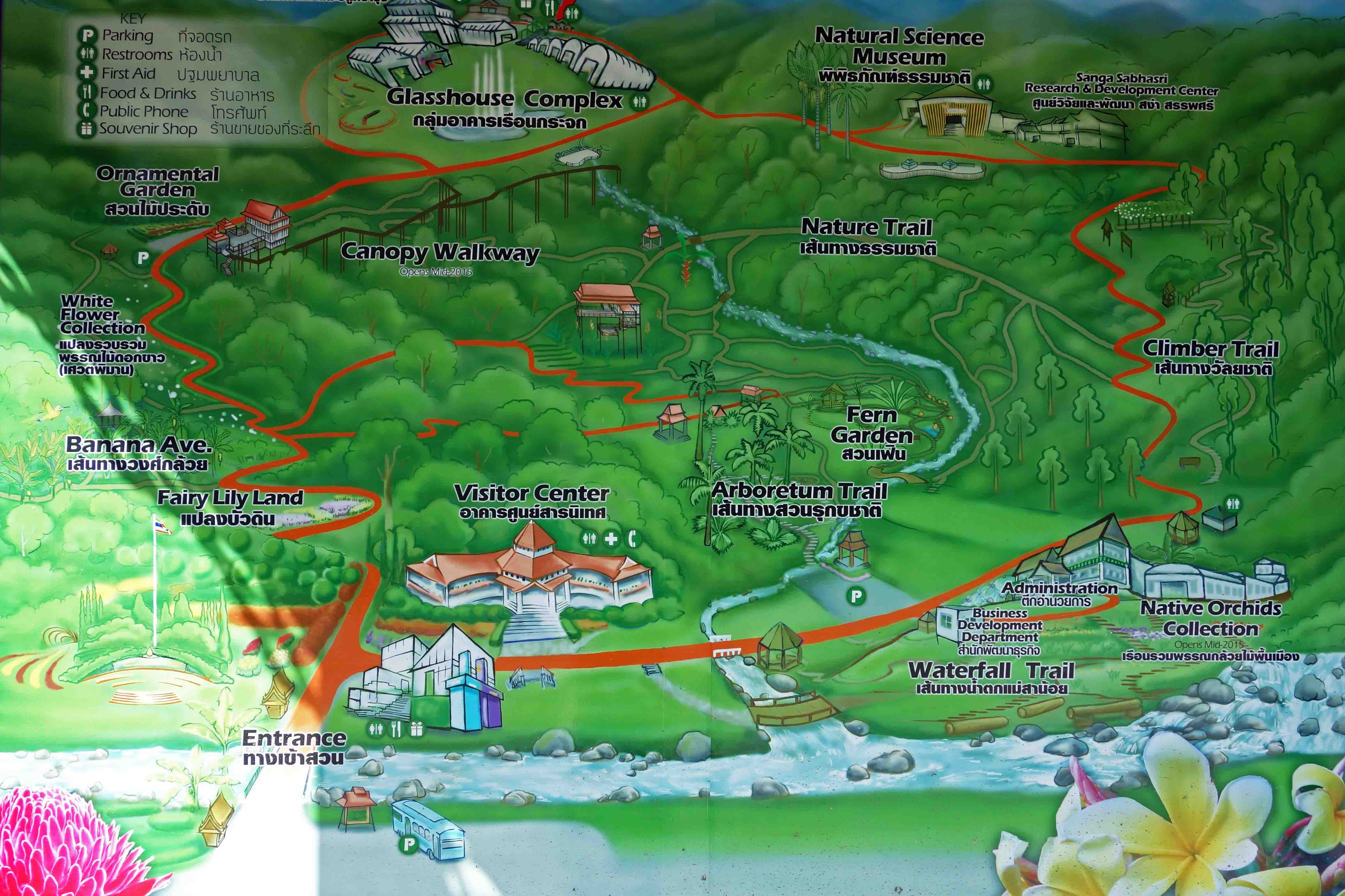
The park is large (1000 ha) and there are a number of different sites and glasshouses linked by a perimeter road (see map). Perhaps the most impressive exhibits are the indoor displays, housed in a series of conservatories and glasshouses at the top of the park. When I visited in December of last year, there were relatively few visitors, and least compared to some of the more popular tourist sites in other parts of the valley. There are also a number of trails in the garden, which are very pleasant to walk – especially in winter – and because of the elevated hillside location.
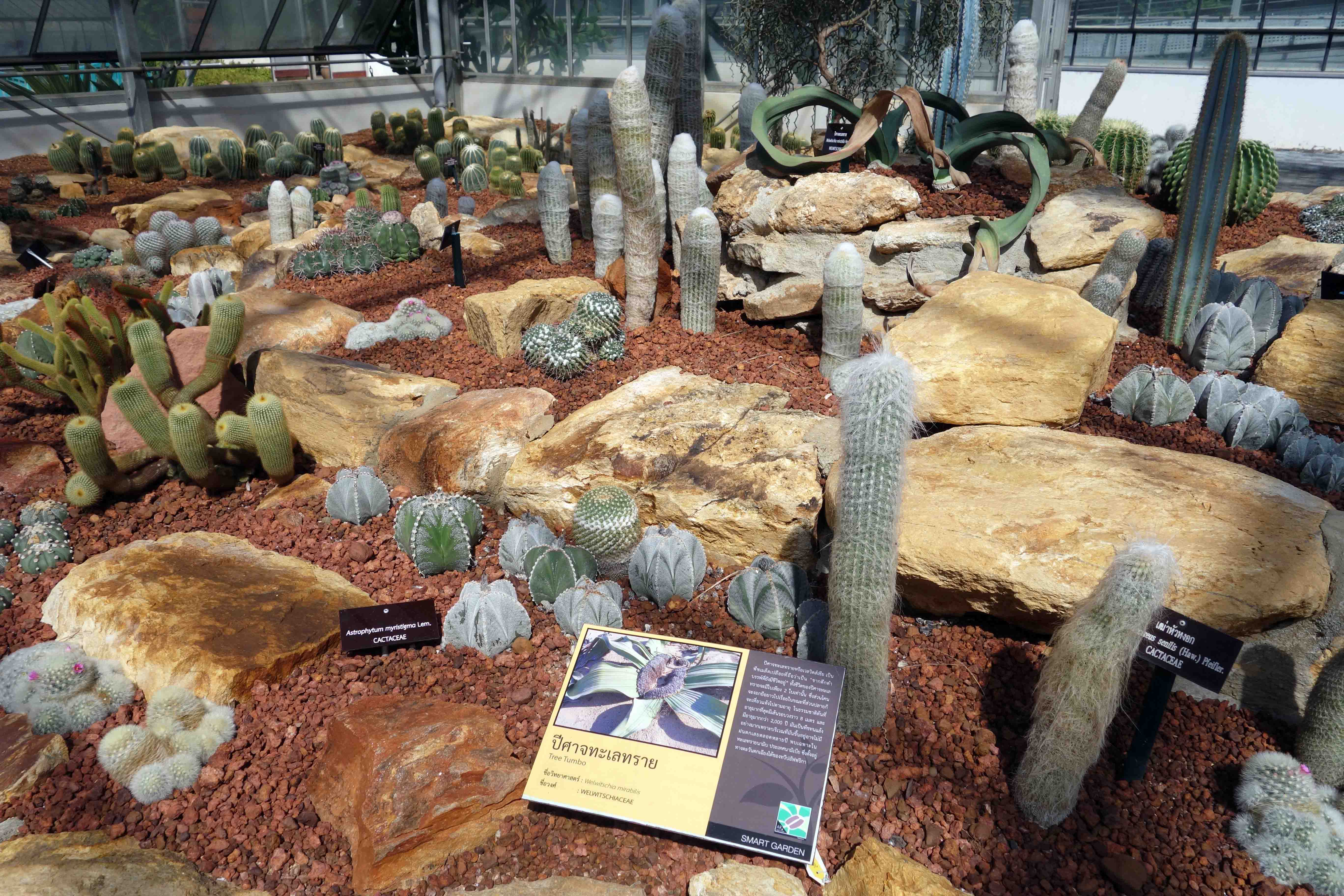
Although the large Rainforest House is impressive, I particularly enjoyed the Arid House with its large collection of desert-dwelling cacti and succulents, which was beautifully laid out.
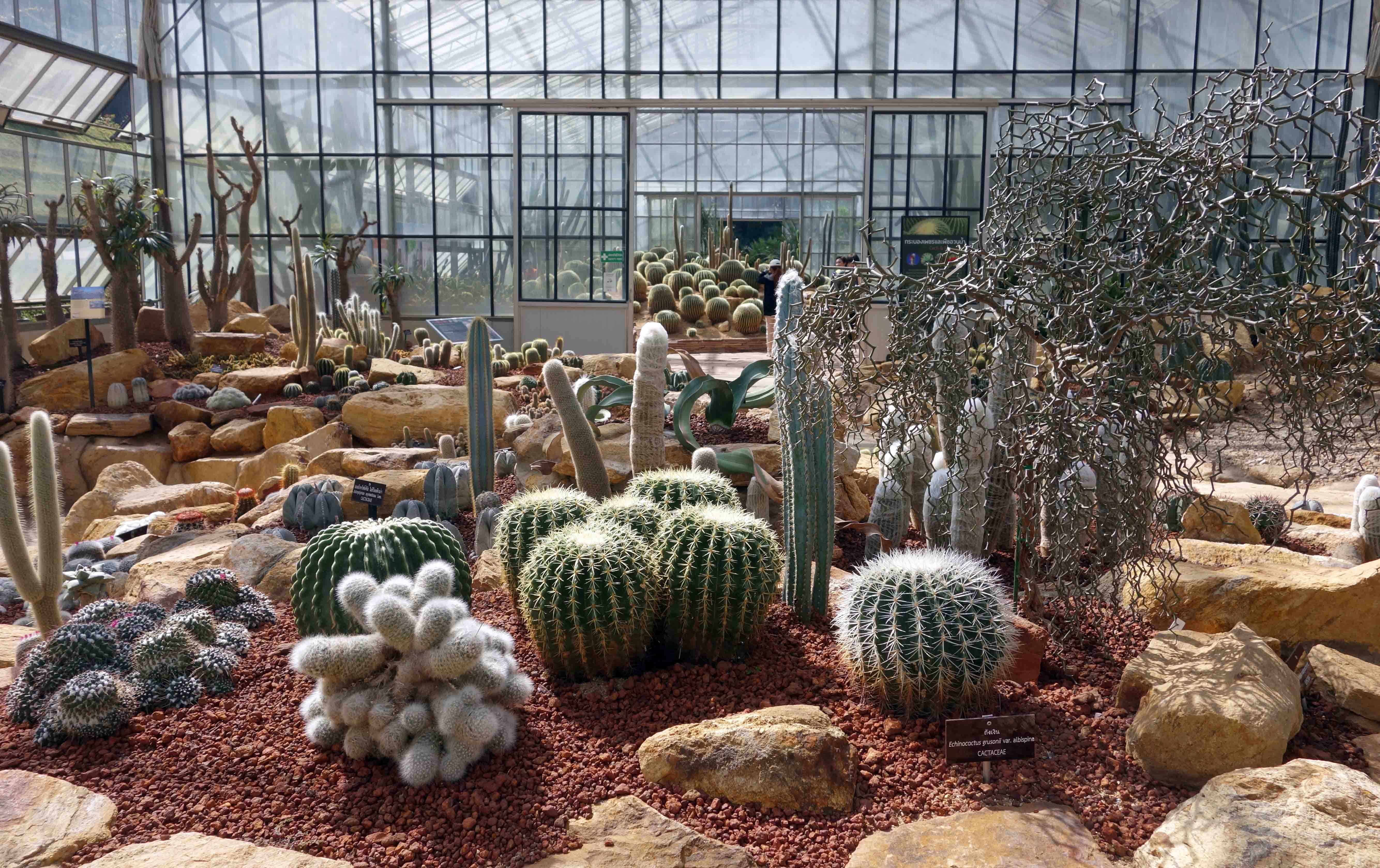
The display of large Barrel cacti (Echinocactus grusonii), which are native to Mexico and SW United States, was very attractive (below). Apparently, they have yellow flowers, but these were not in evidence at the time I visited.
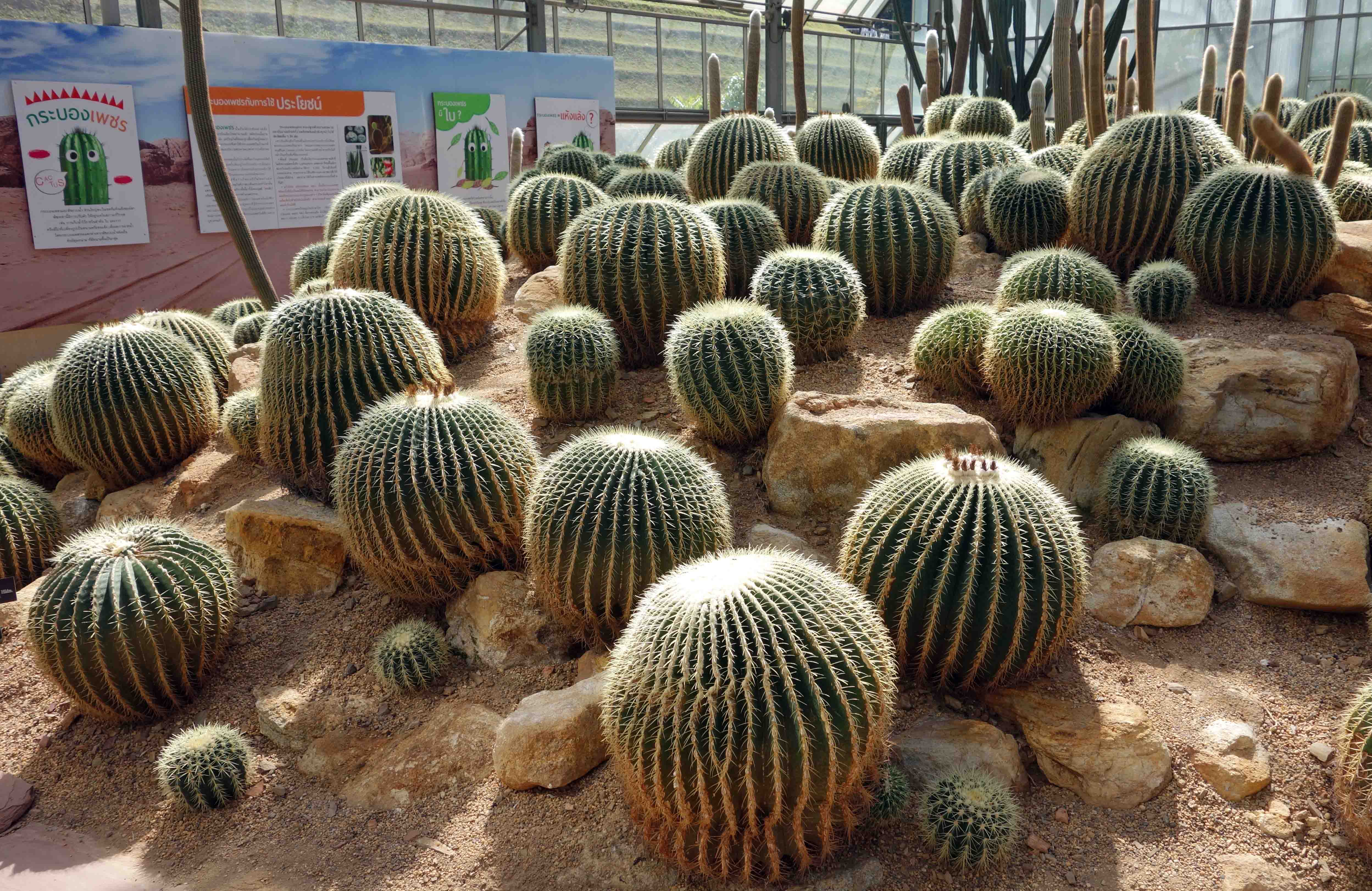
There were good information labels and signs, albeit in Thai, with the species’ common and taxonomic names in English.
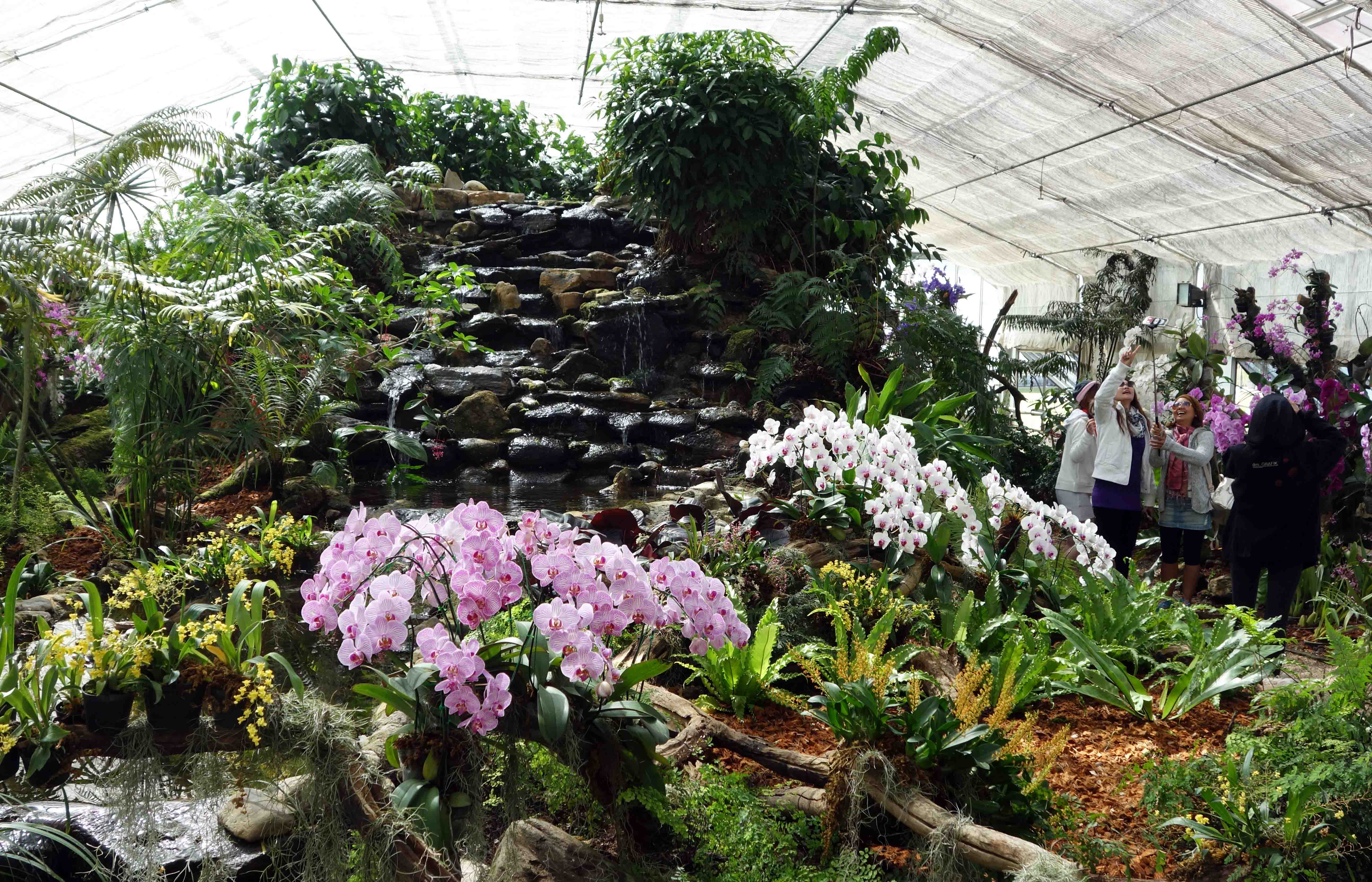
Not surprisingly perhaps, the Orchid House was very good. There were lots of different types of orchids on display; all were beautifully presented and in excellent condition; it must involve a great deal of work to keep this house looking so pristine and beautiful.
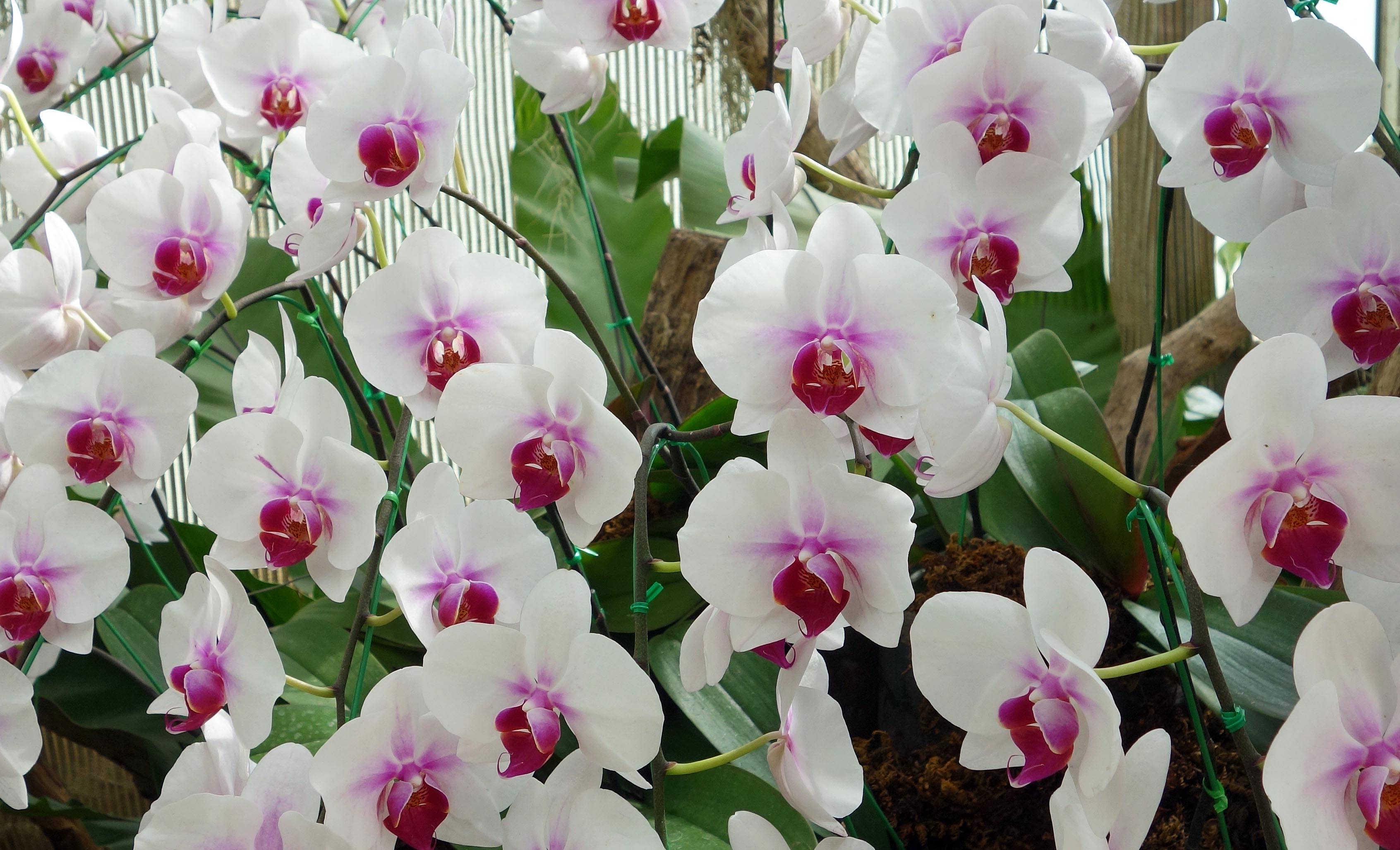
There were many different varieties of orchids representing the different genera, such Phaelenopsis, Dendrobium and Vanda. I think I will do a separate blog (see Ray’s Nature Notes) on the orchids; here are a few to be going on with!

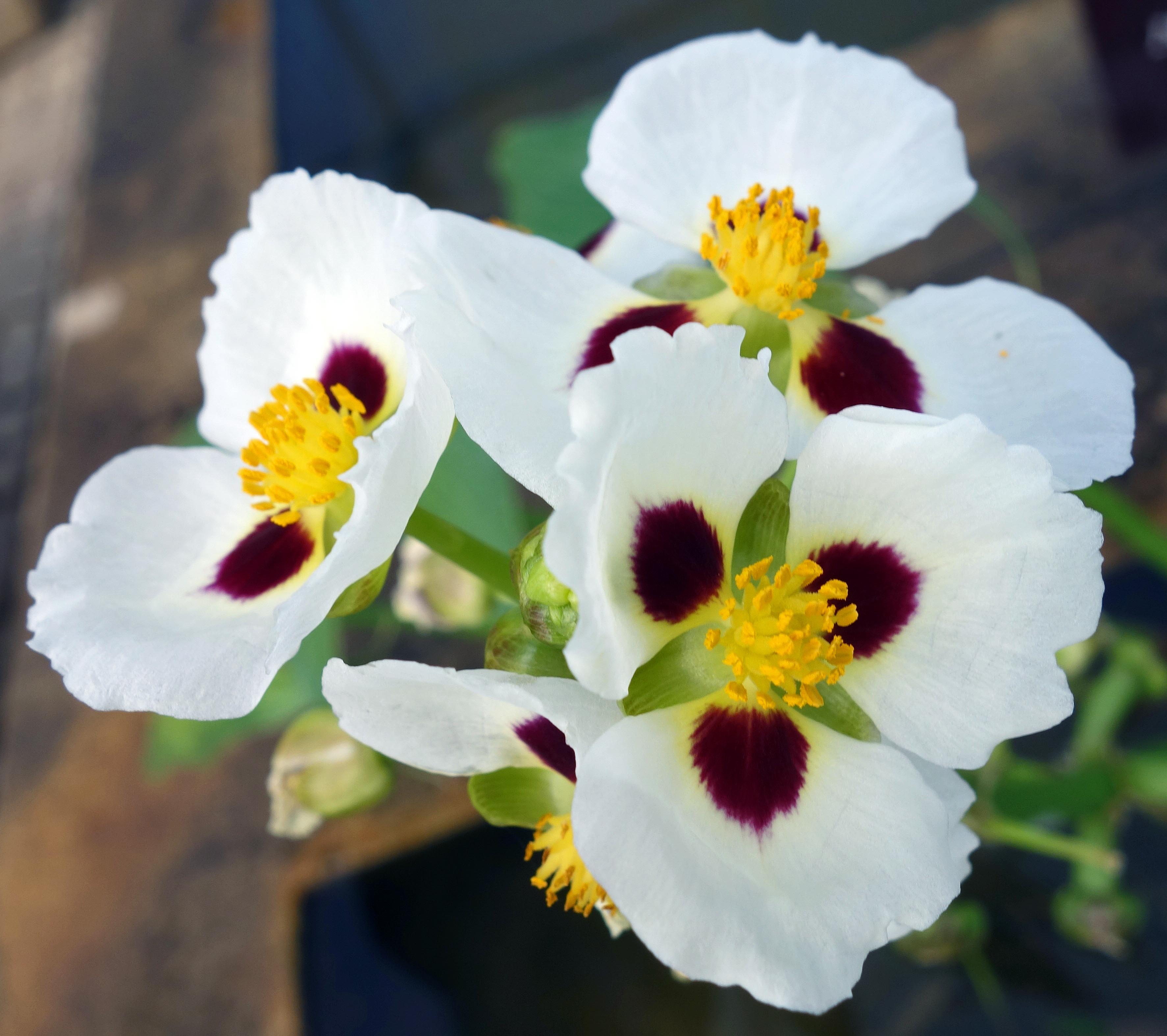
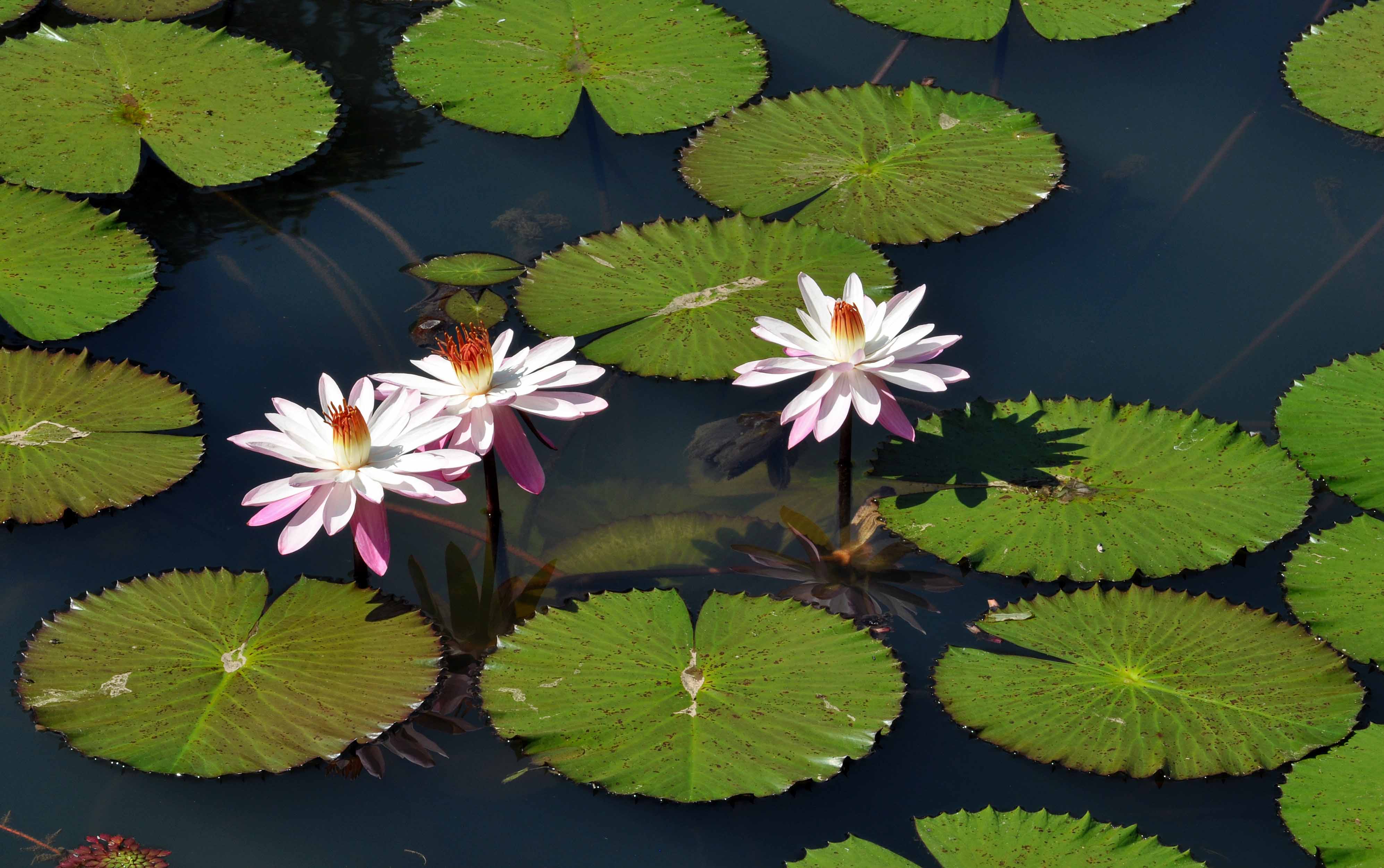
The other highlight for me in the Garden were the water lilies; both in the Aquatic House and in the outdoor pots and ponds. Inside the Aquatic house, it is possible to get a good close up look at some of the lilies, not all of which are native, like this gorgeous variety from the United States (below).
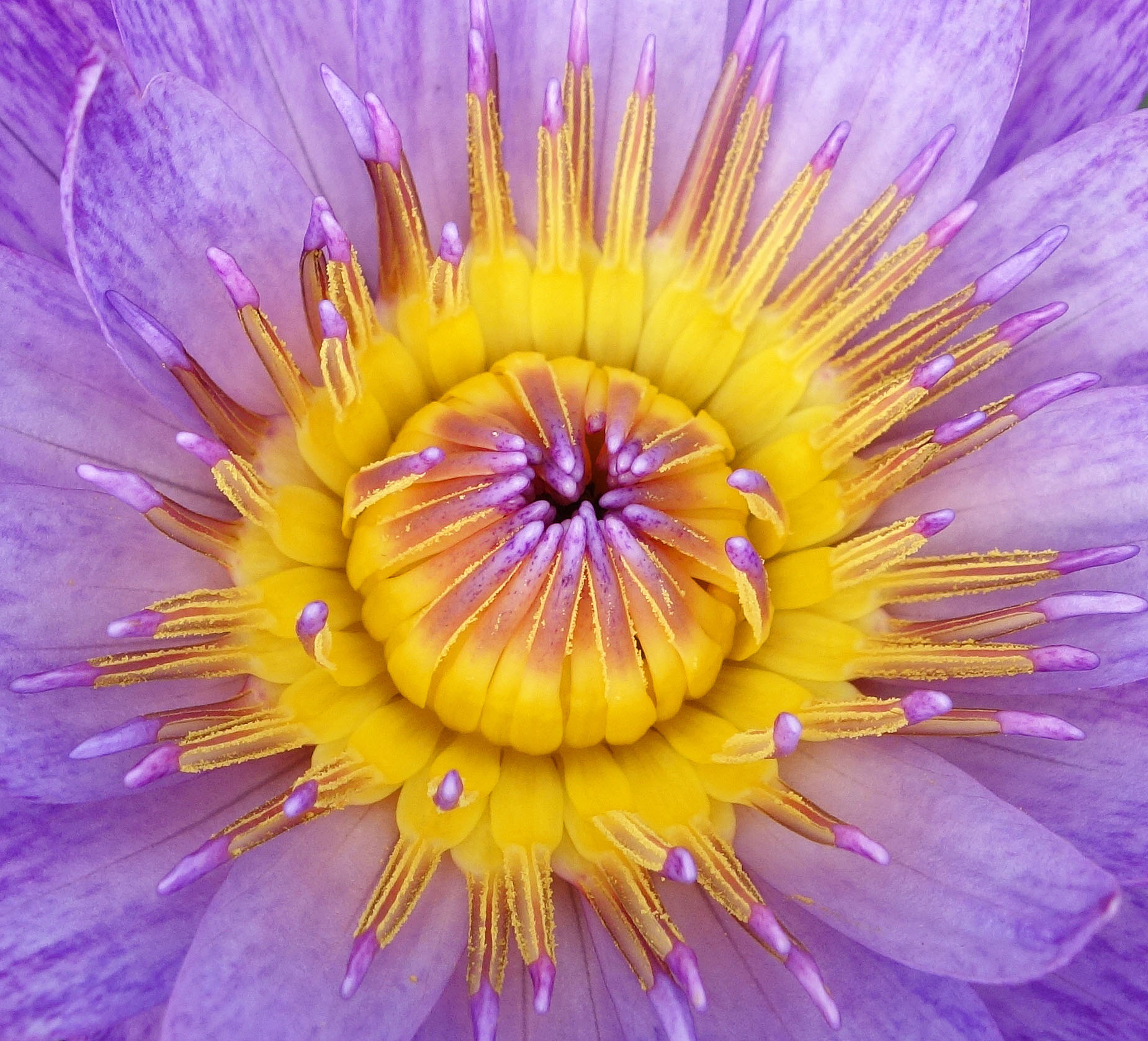
There is something fascinating about the gold, sun-like centre of a lily flower (below).
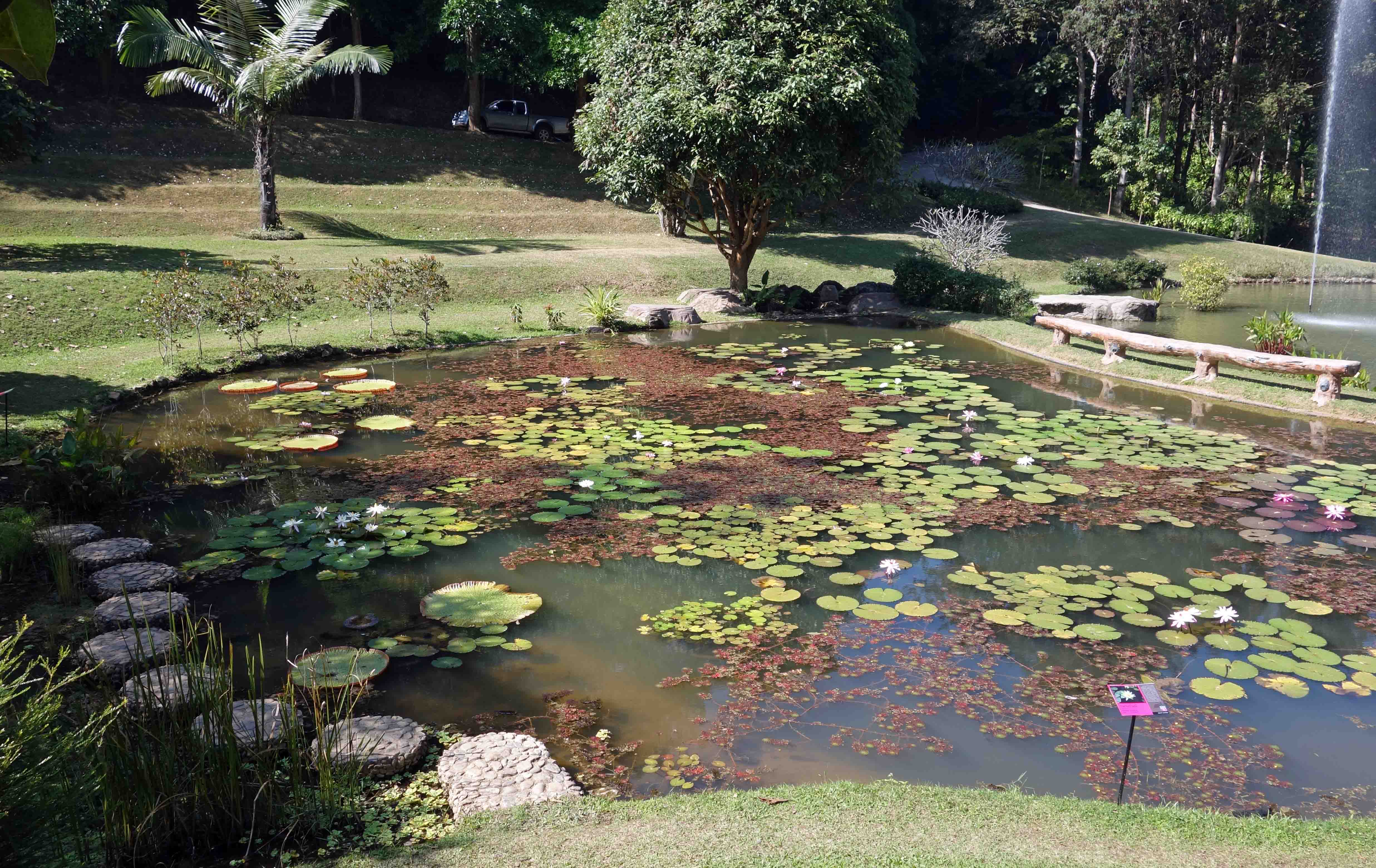
Downhill from the Glasshouse Complex, there is a large lily pond filled with different species, including the popular, non-native Giant Water Lily (Victoria amazonica).
The huge round lily pads of the Giant Water Lily really do look like you could stand on them! It is said that they can support quite a weight but it has to be widely and evenly distributed across the leaf. These lilies were not flowering at the Garden when I visited. The flowers are however, white when they first open, but turn pink on the second night!
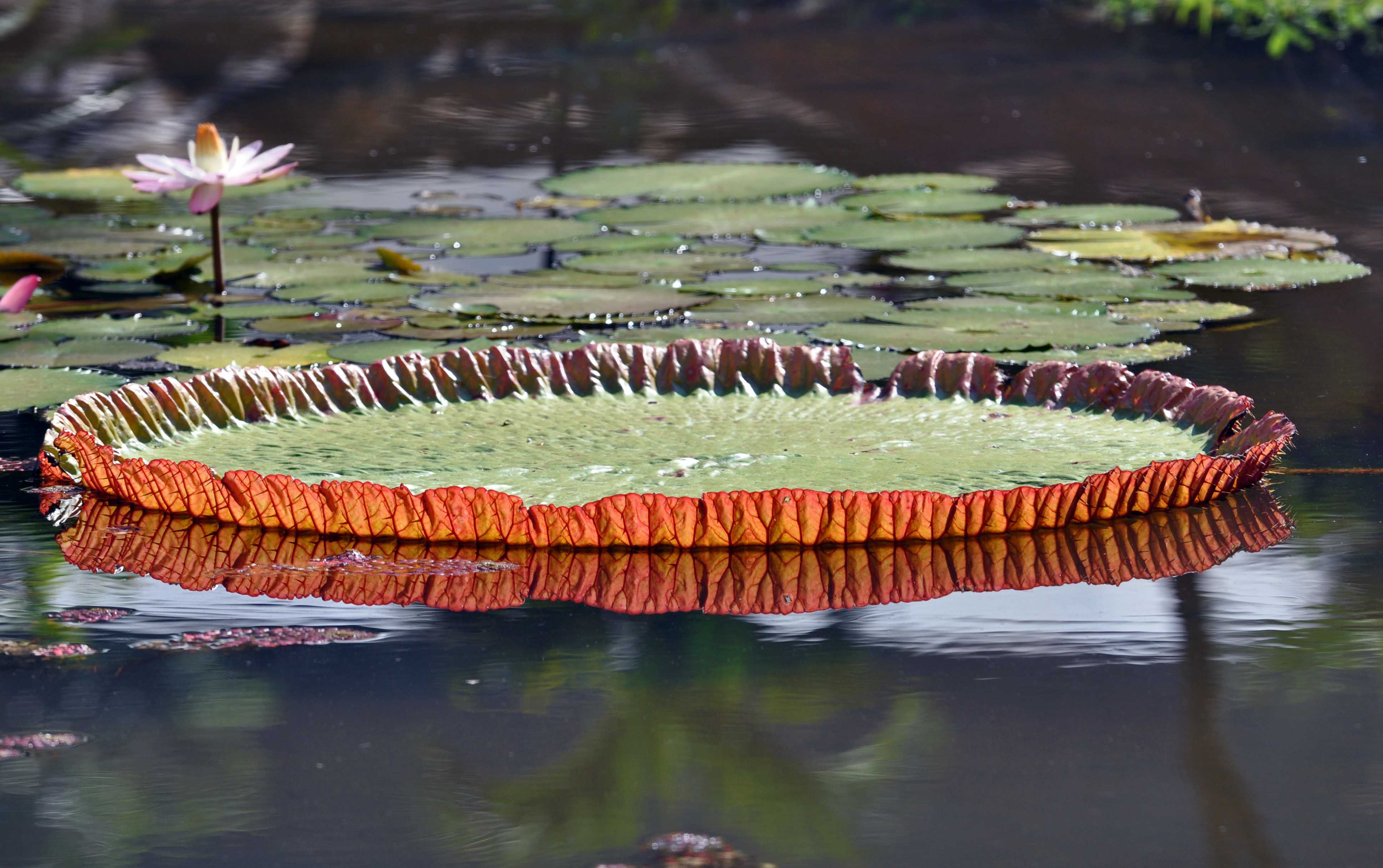
The smaller, native water lilies were flowering and could be seen in different stages of flower opening. They were most attractive to bees, which feed on the pollen and nectar.
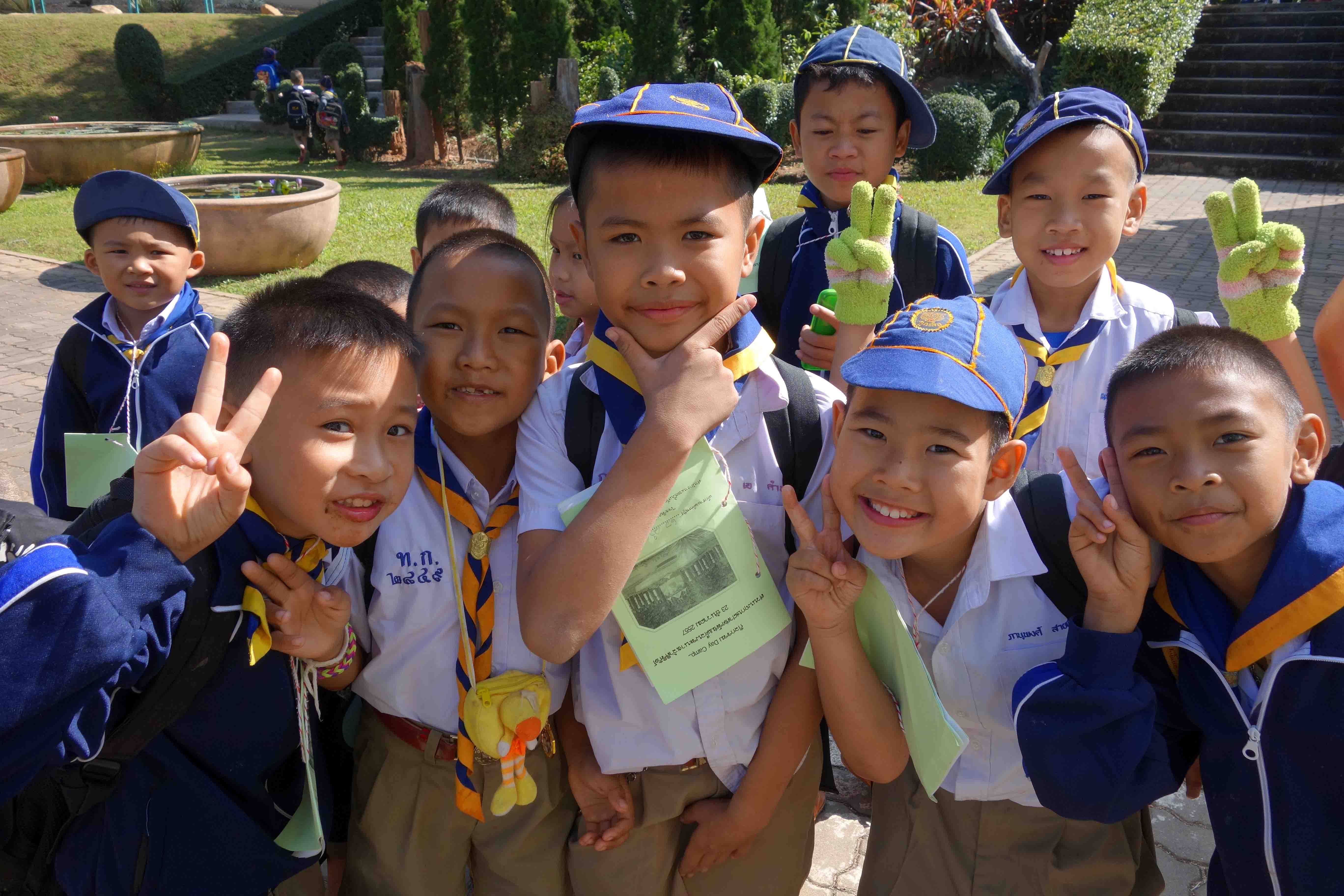
There were quite a lot of school children visiting the Garden, like these friendly boy scouts, who had all previously had a look through my binoculars (which survived the experience!).

These uncrowded and beautifully maintained gardens are highly recommended. It must take an enormous effort to keep them looking so nice. There is much more to this site than I have done justice to here, but I hope this gives a flavour of what is on offer. There are reportedly, five other satellite gardens maintained by the Botanical Garden Organisation (1) around Thailand (e.g. in Rayong, Phitsanulok, Khon Kaen, Sukhothai and Phangnga provinces). It they are anything like as interesting as this one, they would be well worth visiting.