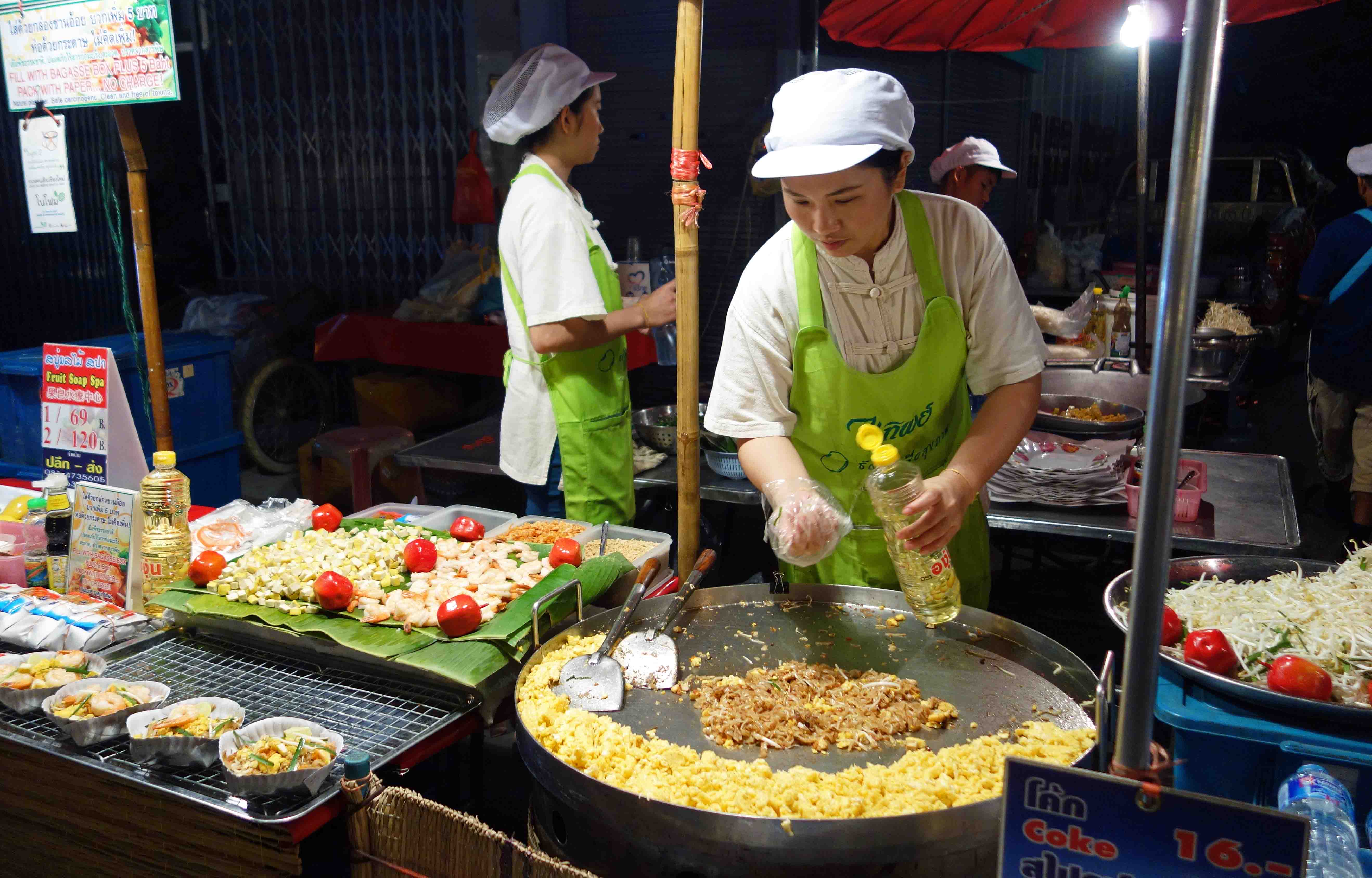
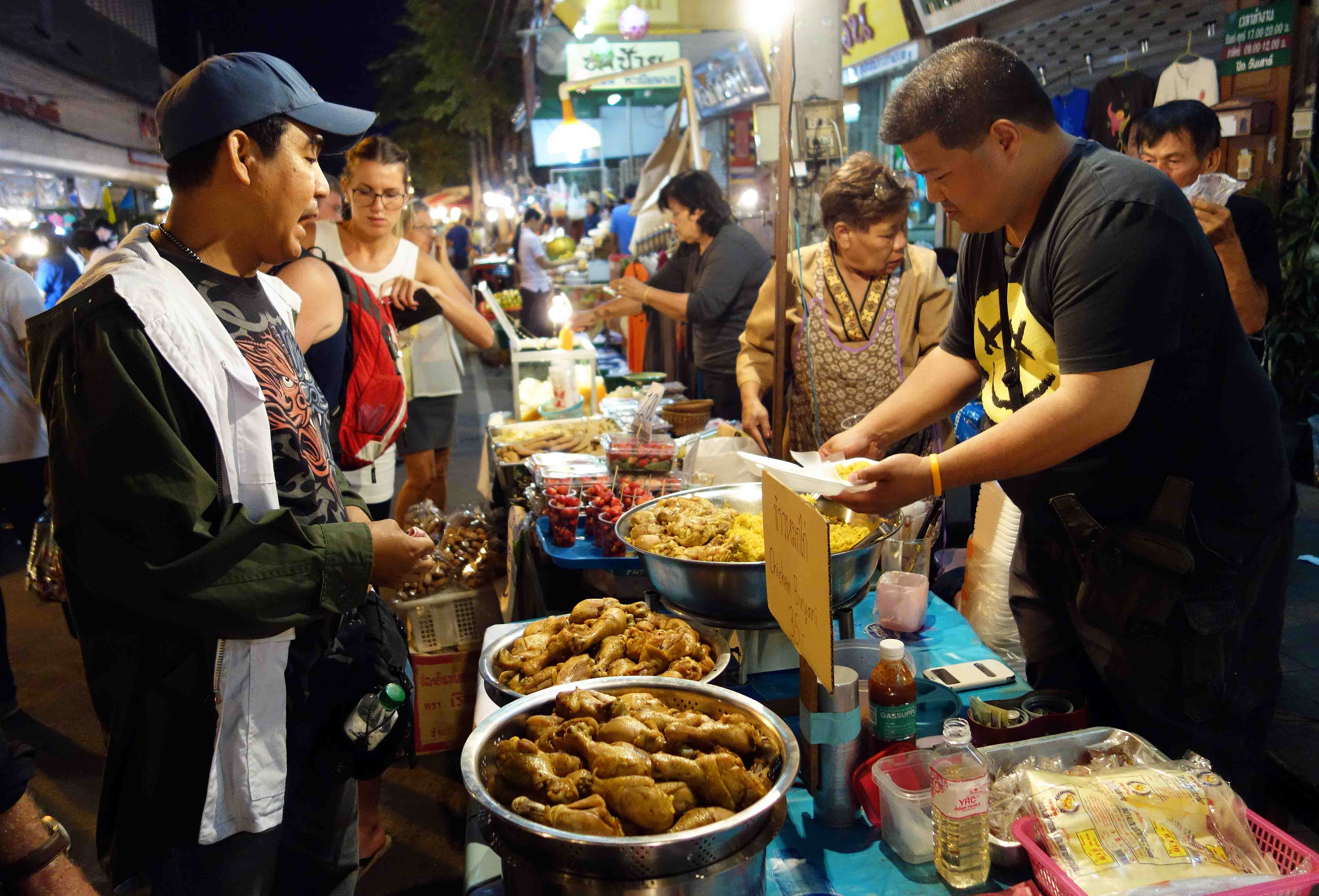
The Sunday night walking street market in Chiang Mai has become very popular in recent years. Once a week, a colourful traditional market bazaar takes place along the length of Ratchadamnoen Road (and other side roads) in the Old City. The area is closed off to traffic and hundreds of market traders set up shop selling food, clothes, traditional goods, handicrafts, art and so on. I took a stroll through the market recently and was surprised how large it was and how many people there were. High season I guess. I was most interested in the food stalls which are colourful, lively and photogenic.
Noodle barFried chicken and strawberries
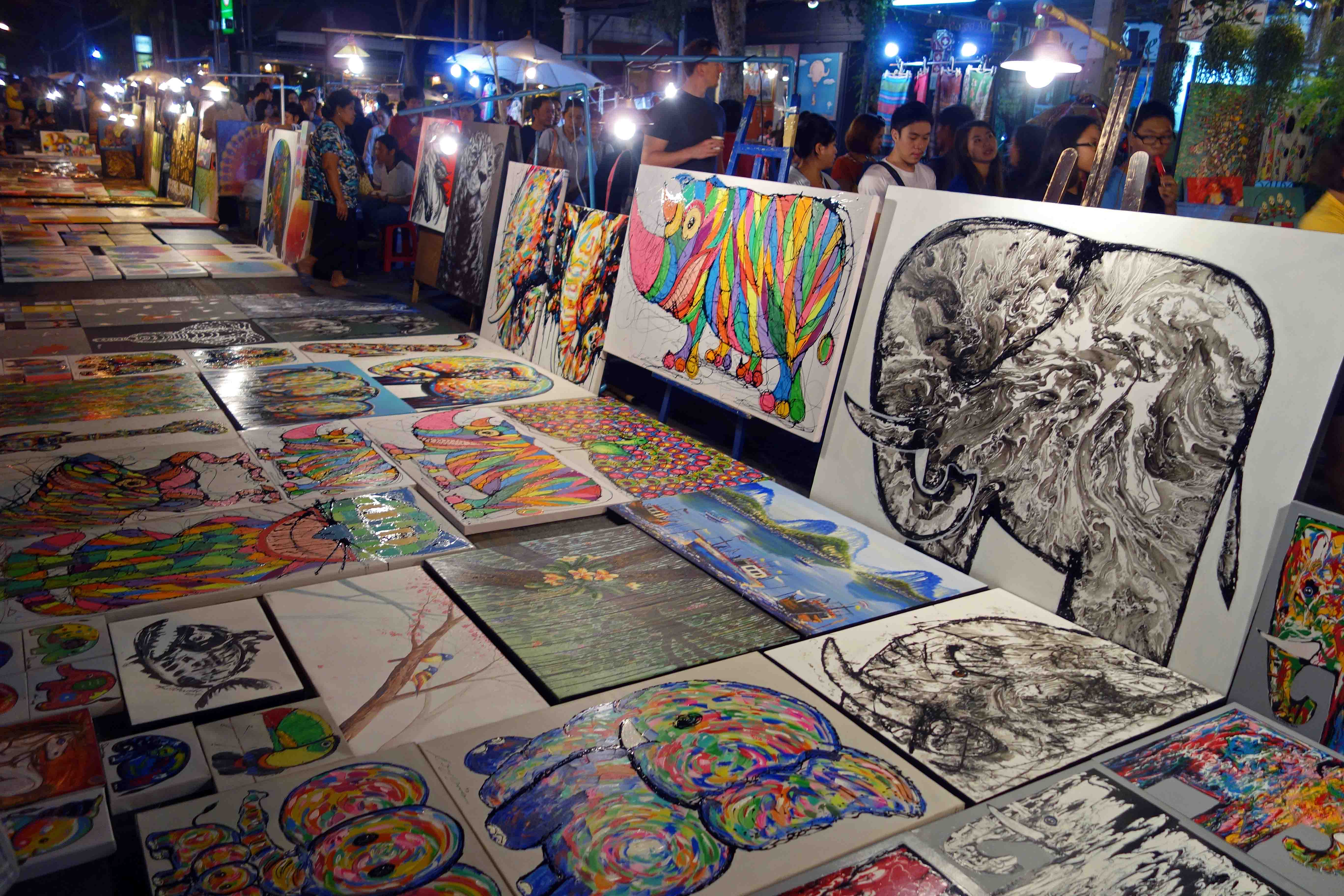
There was a lot of art for sale. I quite liked the animals although it was a little bit formulaic, in the sense that certain images were being replicated in numerous similar paintings. But it is not easy to sell art, and this was a lot better than other examples I have come across. It a matter of taste I guess.
Street art
The colourful rhinos were being churned out by someone! They are nice though, even if not a Thai animal; well I’ve never seen one!
Colourful rhinos.
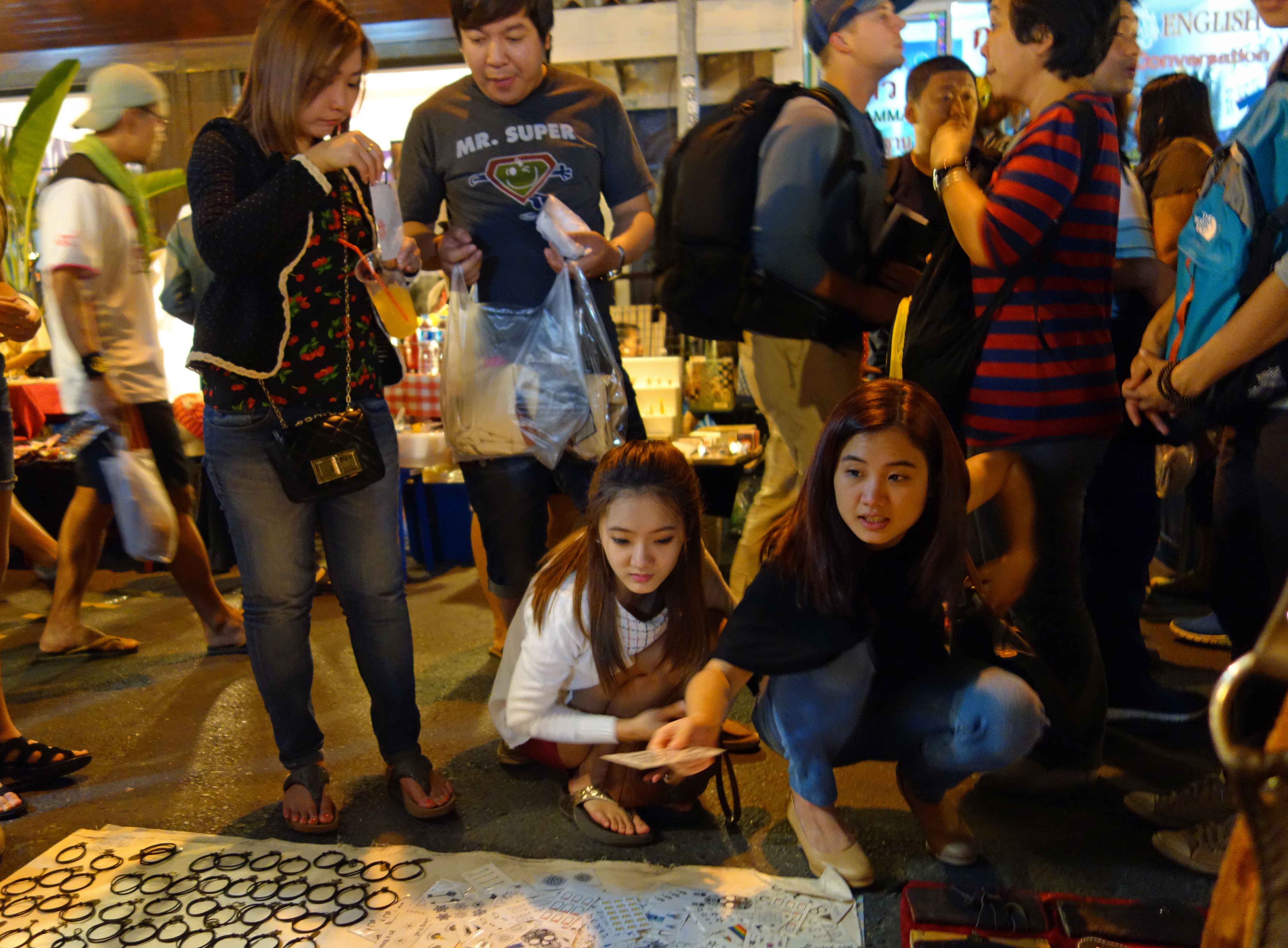
The market is by no means just for tourists; there were many Thais enjoying shopping.
Silk scarf sellerThis one please!
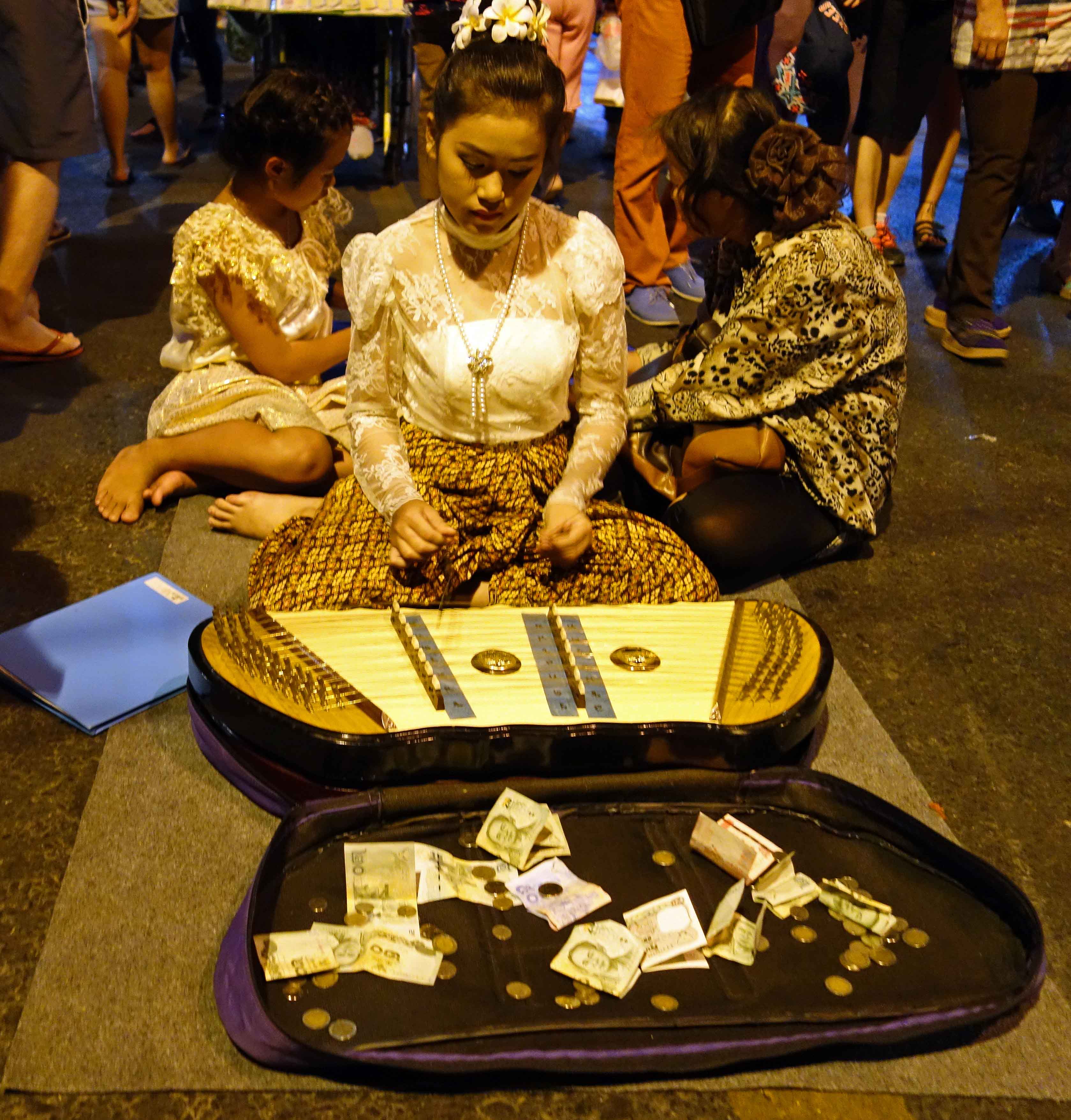
There were a lot of musicians sitting on the ground and playing their instruments between the market stalls.
Young musician
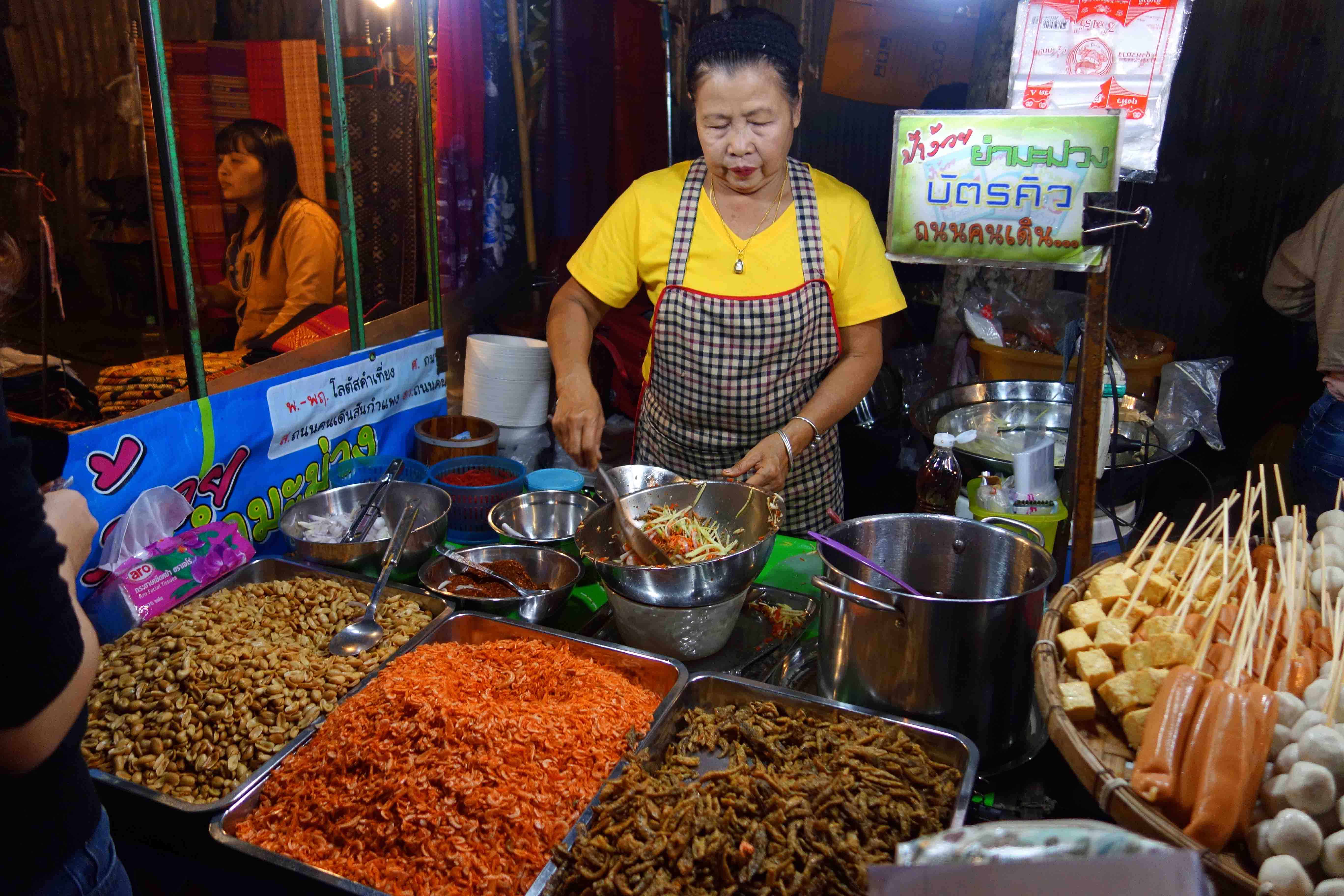
The food in these stalls looks very tasty and looking at them again now, makes me feel hungry!
Salad bar.
The market extends into the area around Tha Pae Gate. This was a fried omelette stand. I am feeling hungry again!
Fried omlettes
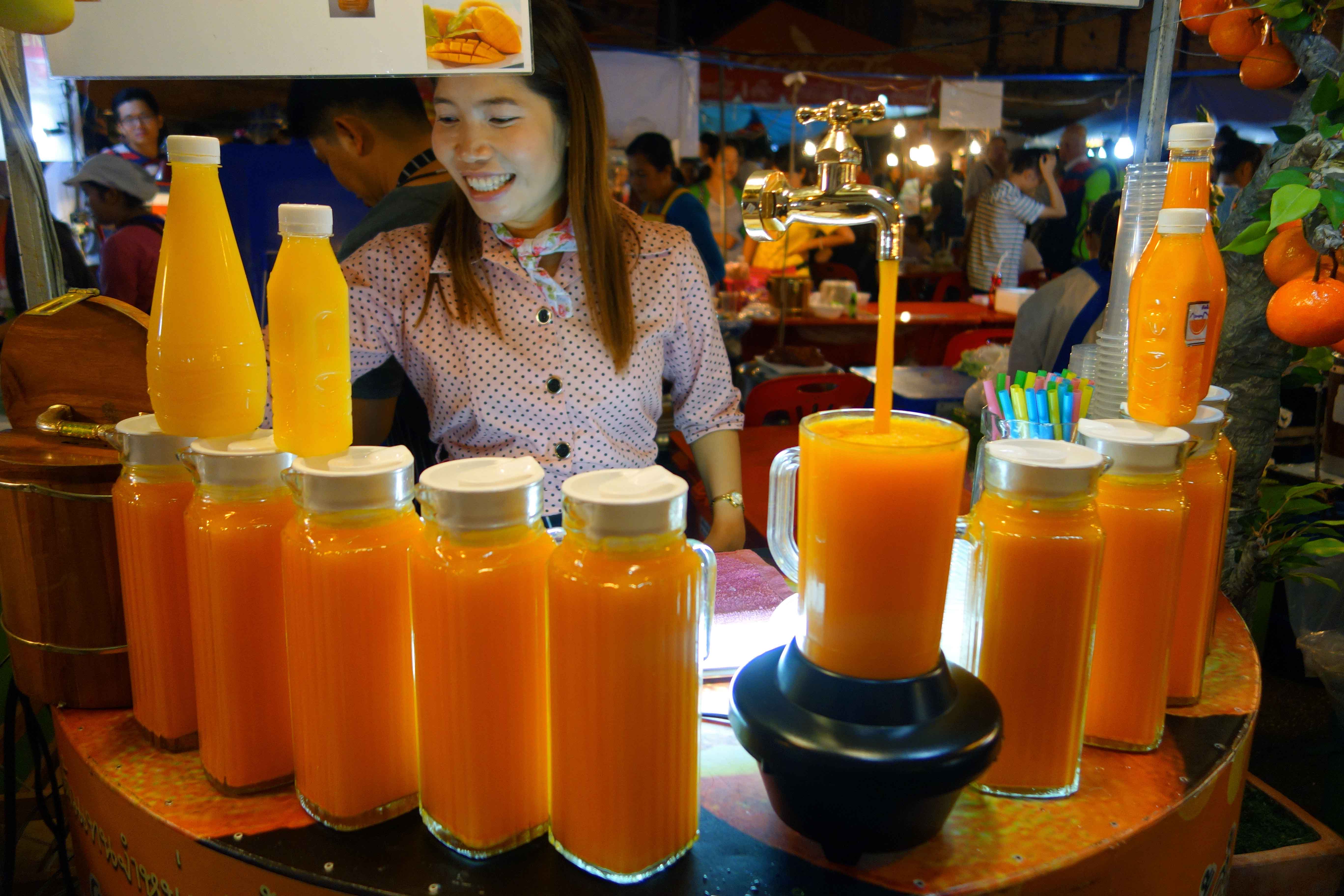
The orange juice – nam som – stall was fronted by simple but highly effective marketing (the orange juice coming out of the floating tap is not real but the rest of the bottles and jars are), plus a lady with a lovely Thai smile.
Nam som (orange juice)
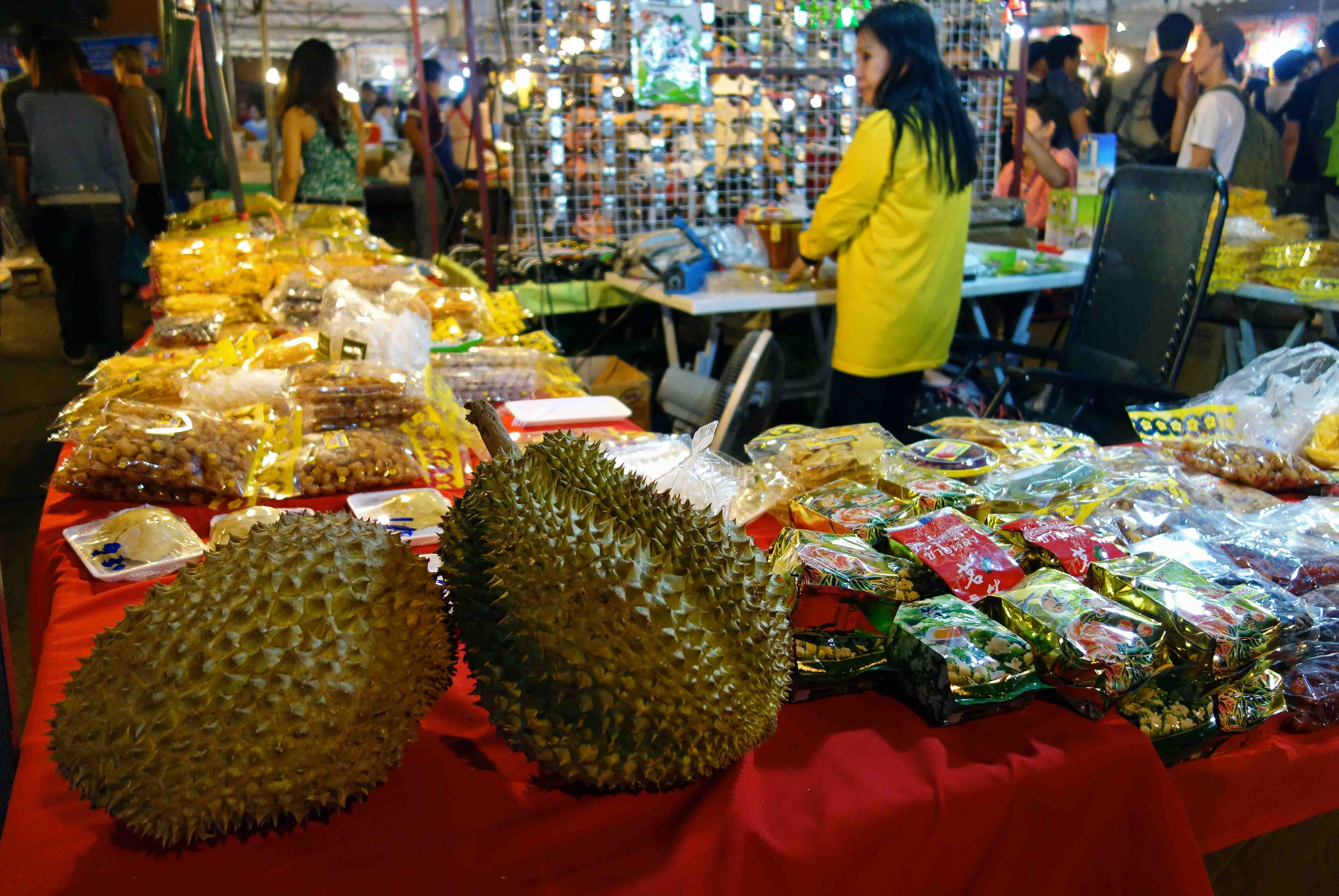
Finally, I came across these huge prickly fruit which I am pretty sure are durians. Jack fruits are similar but much less spiky.
Vegetables and dried fish, Tomohon market, Sulawesi
I love visiting traditional markets in the tropics, both to enjoy looking at – and occasionally purchasing – local produce, but also as a an opportunity to take photographs. I am primarily interested in taking photographs which are interesting in terms of colours, as well as (hopefully) in terms of content.
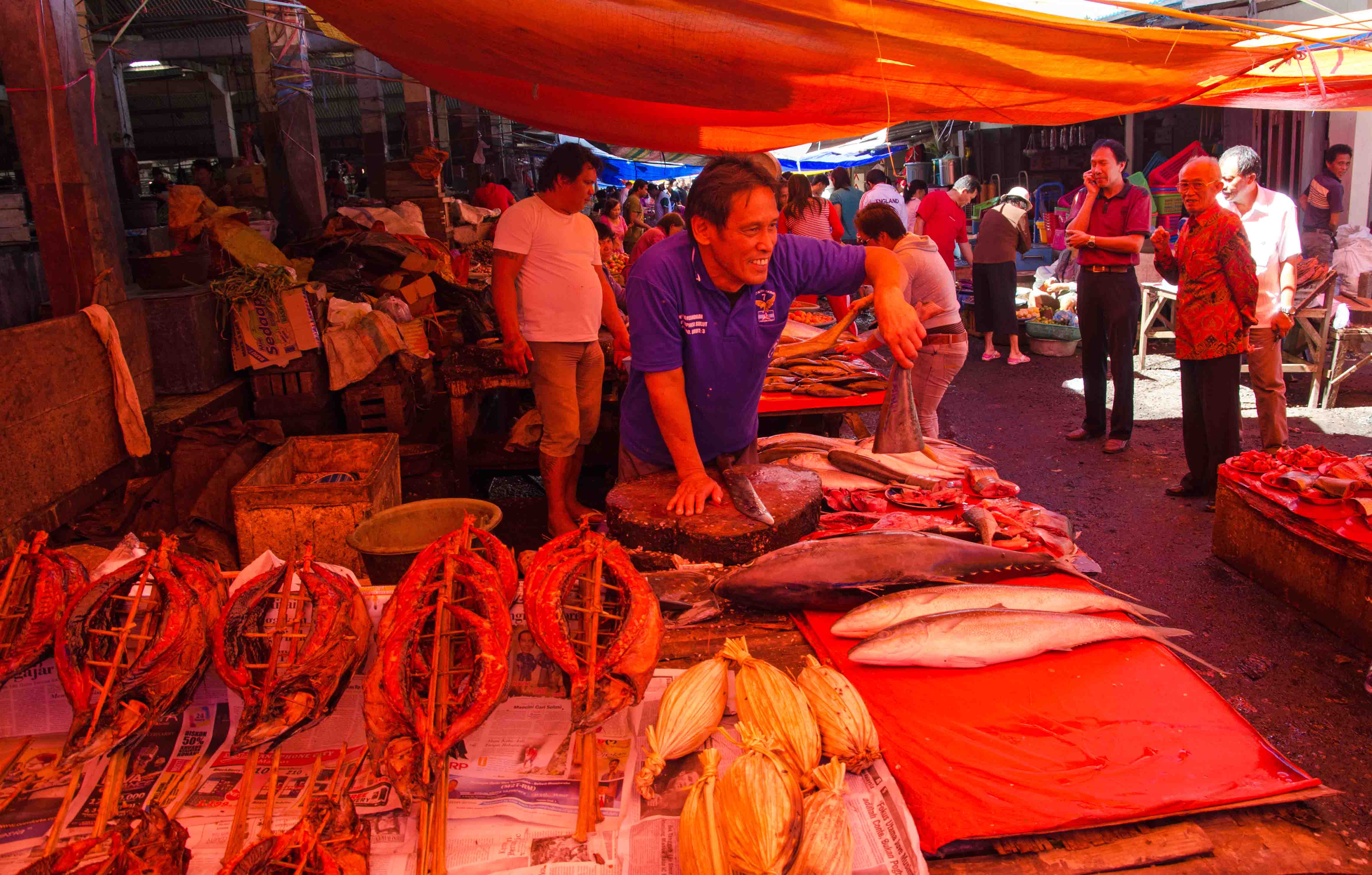
Dried fish stall, Tomohon market, Sulawesi
I like blocks of colour, and so am often attracted to the colourful umbrellas found in such markets, as well as to the effects they produce, in terms of filtered light, such as above, where an red-orange colour cast is created by the overhead screens.
I also like taking photographs of people, but it is important to be friendly and show respect; ideally asking them whether they would mind having their photographs taken. In markets such as this, where tourists are fairly common, people are used to having their photos taken; but it’s still good to smile and ask permission. Showing the subject(s) the results is also something I like to do, if people are not too busy.
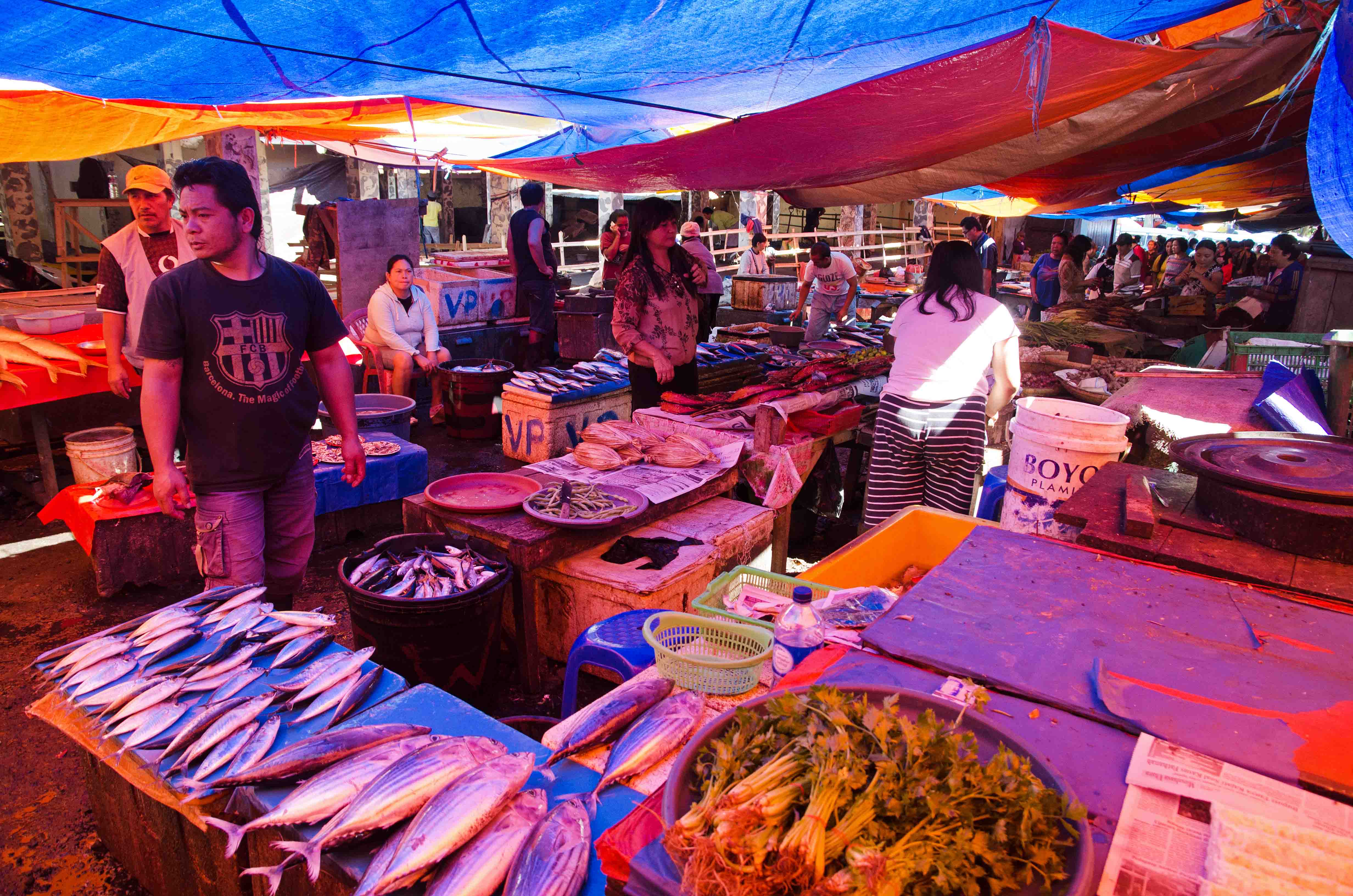
Fish – skipjack in the foreground – for sale in Tomohon market, Sulawesi
I really like photographs where there is a depth of field – I don’t mean in terms of it all being in focus – but where there is a scene stretching from the foreground into a distant background, as in the above image. I think it is more interesting if the eye can follow through into the image. It is a matter of keeping an eye out for such scenes, but it also needs a bit of luck. I never take enough photographs, they can always be deleted in this digital age, and – as any professional will admit – it is only by trying hard AND taking a lot of images that you get lucky and take a good one. I am not sure how good these are – it is easy to fall in love with your own photos – and one has to be very severe in rejecting all but the best ones. This is another one which runs from front to back, and also has some interesting colours created by the blue, red and orange canopies above the stalls selling fish and vegetables.
Colourful canopies in Tomohon market, Sulawesi
This traditional market in Tomohon is famed for having a lot of local meat, including things which many westerners do not eat such as dogs, rats and bats. I am less concerned about these than I am about threatened (rare) species, but I was not really in the mood to look at them, so I concentrated on trying to get some colourful images (literally) rather than gruesome images of roasted canines!
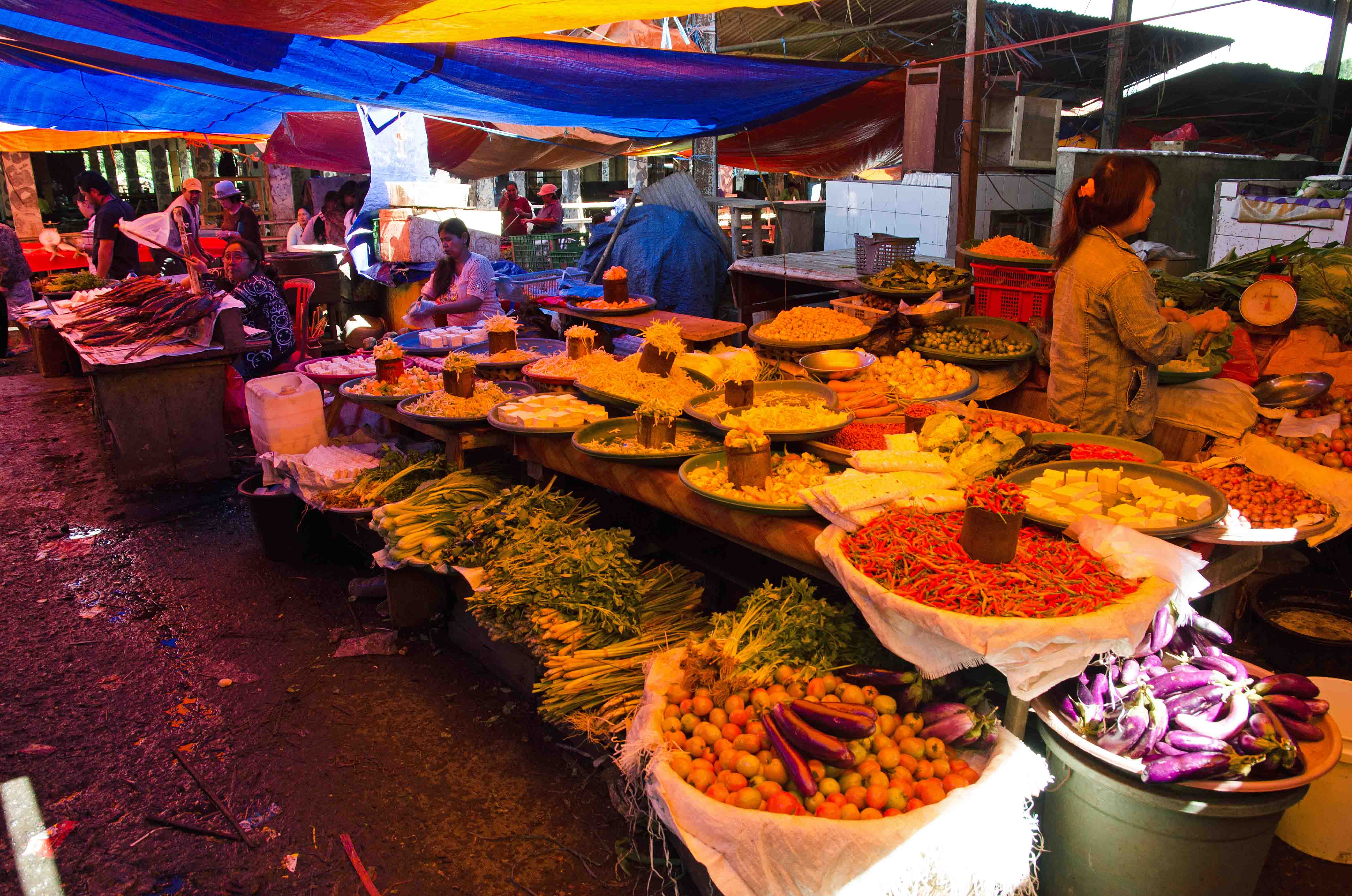
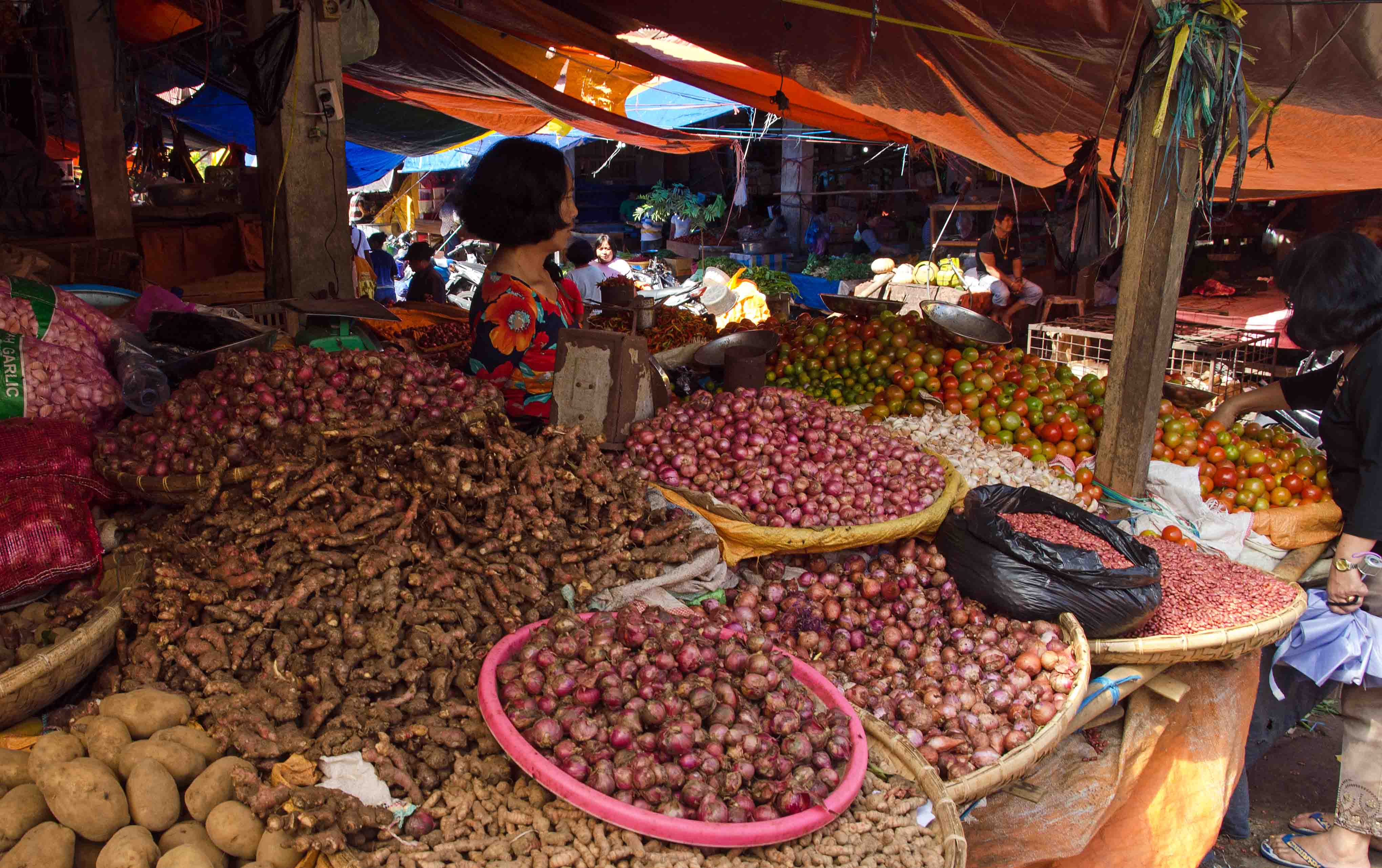
A stall selling onions, tomatoes and other vegetables in Tomohon market, Sulawesi
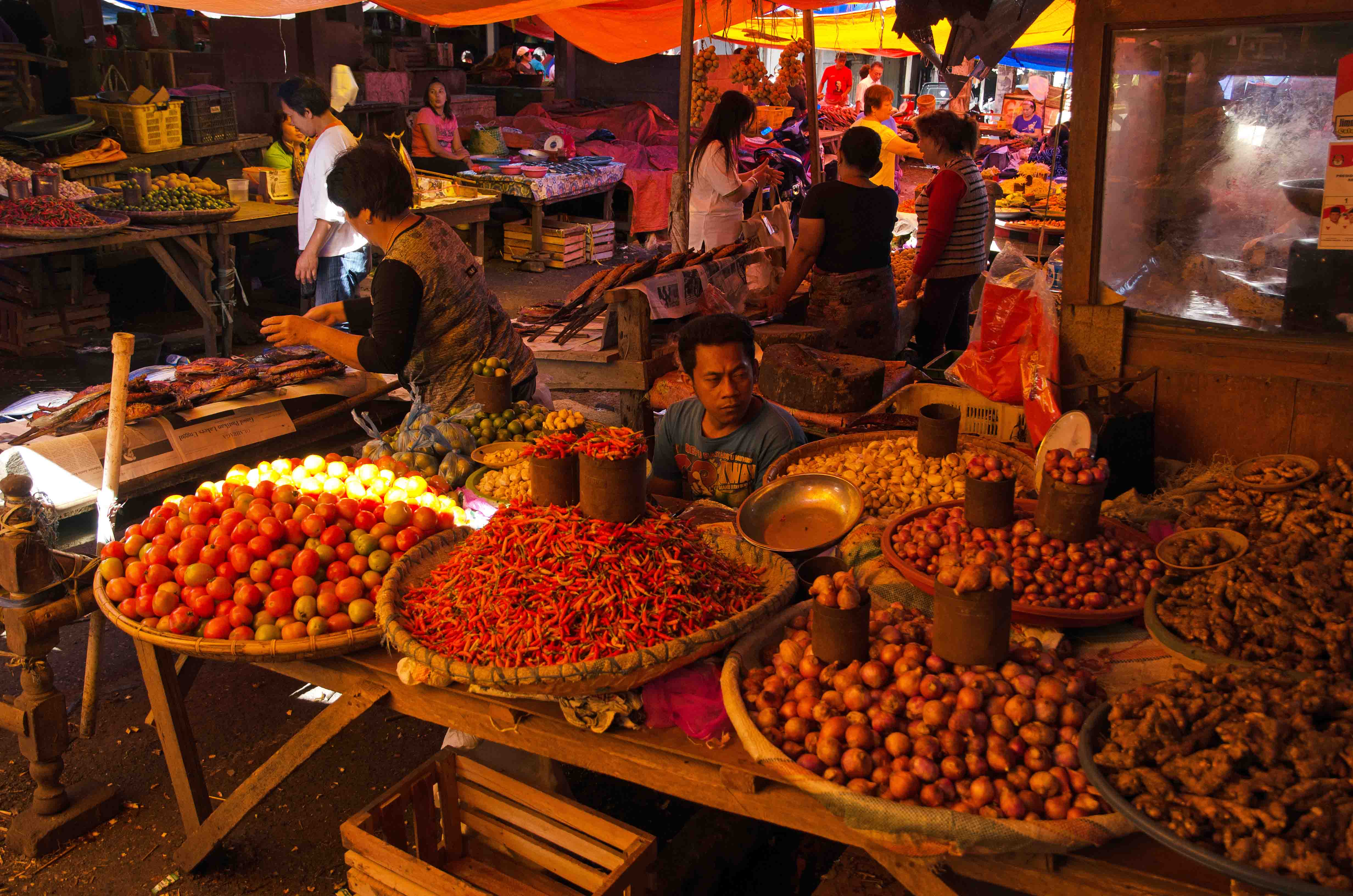
The above photograph has a lot of nice produce of the soil in the foreground, but hopefully it is interesting because one is drawn to look through it to the brightly lit background. I like photographs which have a number of layers to them. The following photograph also has a brightly lit background; it’s not to difficult to take these sorts of photographs in such a colourful and complex market place!
Peppers, onions, ginger and garilc for sale in Tomohon market, Sulawesi.
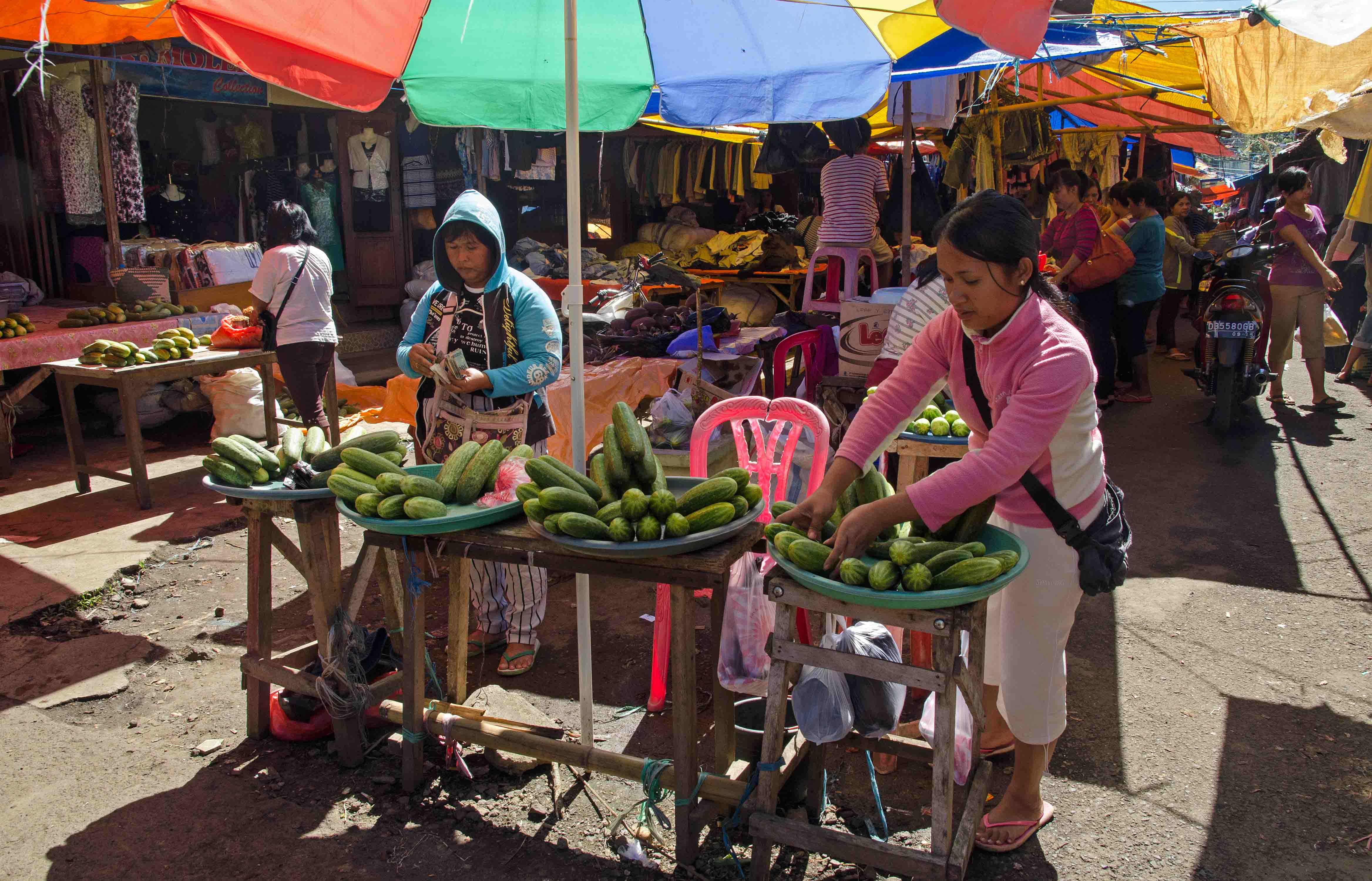
Traditional market stall in Jengki market, Manado, Sulawesi
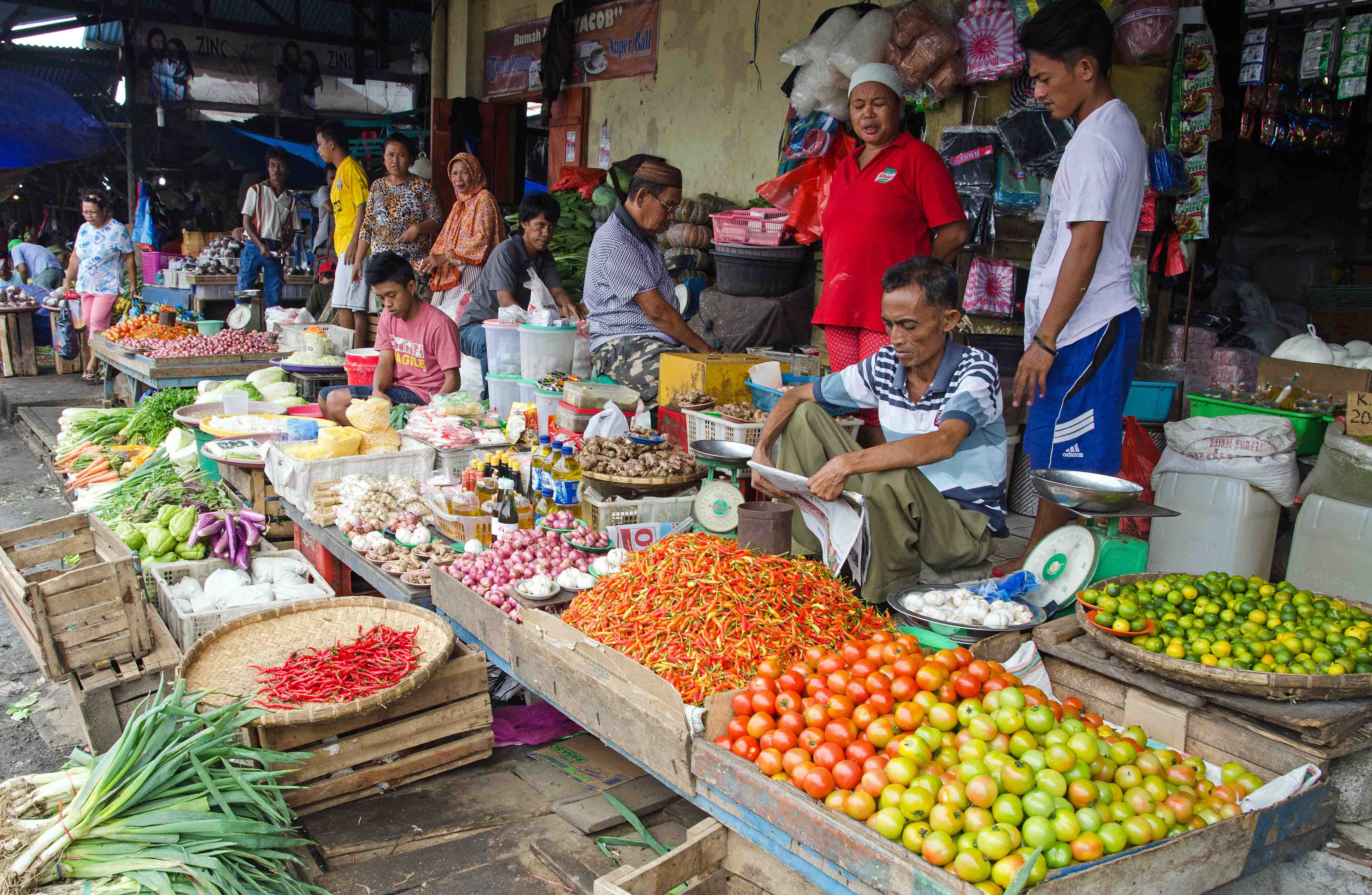
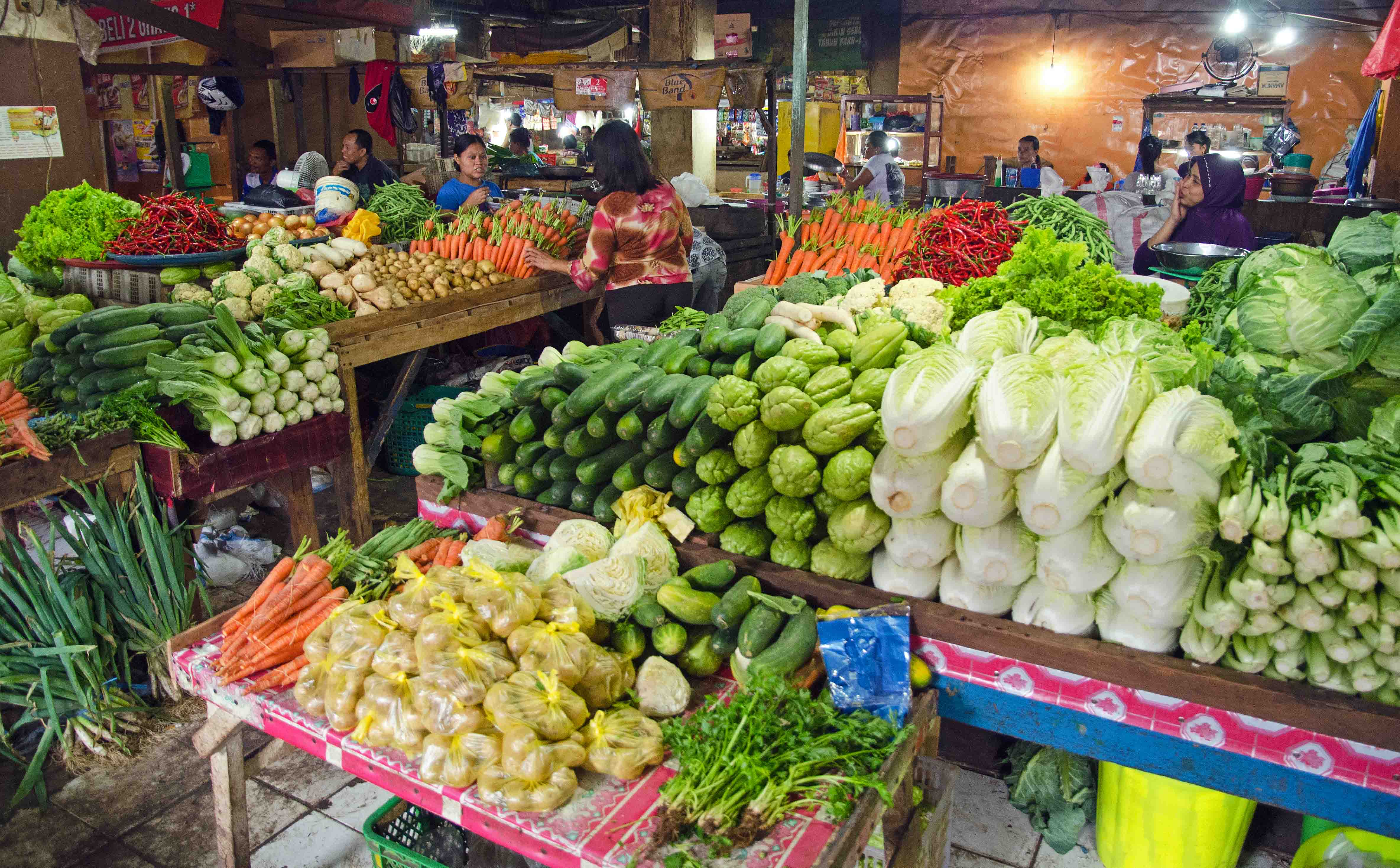
Jengki market in Manado, North Sulawesi (Indonesia) is a traditional fish and vegetable market located next to the port in this city of about half a million people. It is not the cleanest of sites, with piles of rubbish and rotting vegetable remains, but the people were very friendly, and the produce itself looked very clean and wholesome, coming from both the local seas and the fertile volcanic soils of Minahassa peninsula. Like many Asian markets, there is a great variety of fresh vegetables that would not look out-of-place in the most upmarket supermarket in the West. Indeed, it could be argued that the fruit and vegetables available to locals in these markets, is better – and certainly much cheaper – than anything available in most Western countries; take a look at this mouth-watering display (below). To be able to go and buy such fresh vegetables on a daily basis would be something I would love to be able to do! We can see it this photograph: carrots, cabbage pak choi, cucumbers, leeks, potatoes, lettuce, red peppers, onions, green beans, cauliflowers and more.
Vegetable market in Manado, Sulawesi
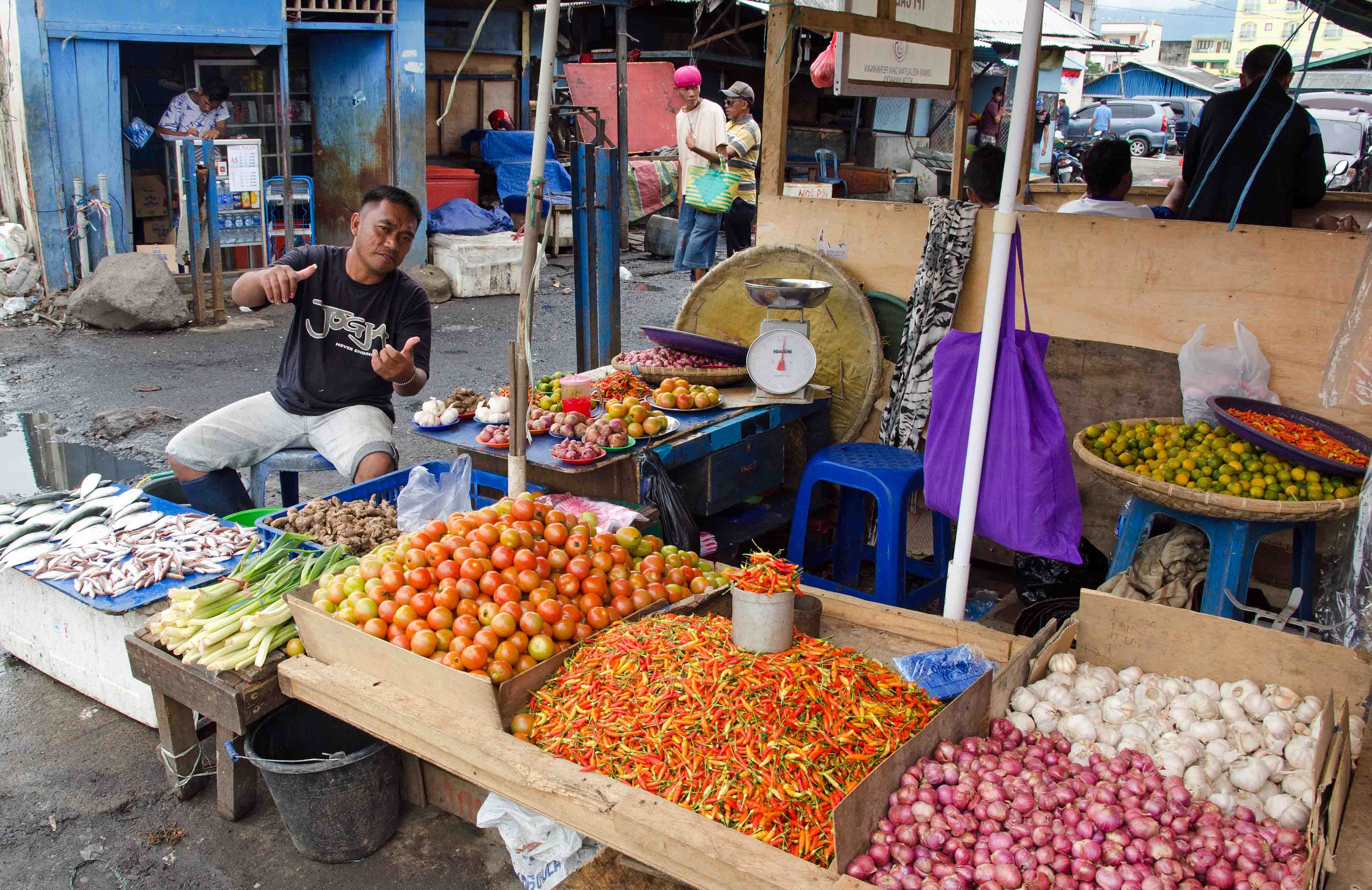
The traditional market (pasar) is an important place for locals to purchase food on a daily basis and has been integral to the formation and development of the city over nearly four centuries. The produce is usually sold at a highly competitive price, offering the best value for money, presumably better than the supermarkets, which have increased in number in recent years. The good news being that the traditional markets have continued to prosper despite the growth of the supermarket. One reason being, perhaps, that they offer the consumer a variety of fresh produce in the sort of quantities they require on a daily basis, in a simple and straightforward way, such as on small plates (see below) devoid of unnecessary packaging, which can be emptied straight into the shoppers bag or basket. Indeed, all of the ingredients for a good meal are present together on the same stall.
Stall keeper giving me the thumbs up for taking a picture of his market stall in Madado, Sulawesi.
The market is also a good place to stock up on other things, such as tinned food and other essentials, as shown in this small stall, where once again the owners were happy to have their photograph taken, once I had asked their permission. I also like to show people the photograph(s) that I have taken of them; one of the advantages of digital cameras, which would have been impossible in the old days (apart from using a Polaroid camera of course!).
Shop keepers in Jengki market, Manado, Sulawesi
One of the things which most impressed me about this market, was the variety of produce available for the consumer. In one area of the market, there were a number of stalls selling eggs, chicken eggs that is. There were a bewildering variety of differently sized eggs at different prices. I have never seen more than three categories in my local shop here in England, Large, medium and small-sized eggs. This was more like a retail market, but they were selling direct to the consumer.
Stall selling eggs in a wide range of size and price categories, Manado, Sulawesi.
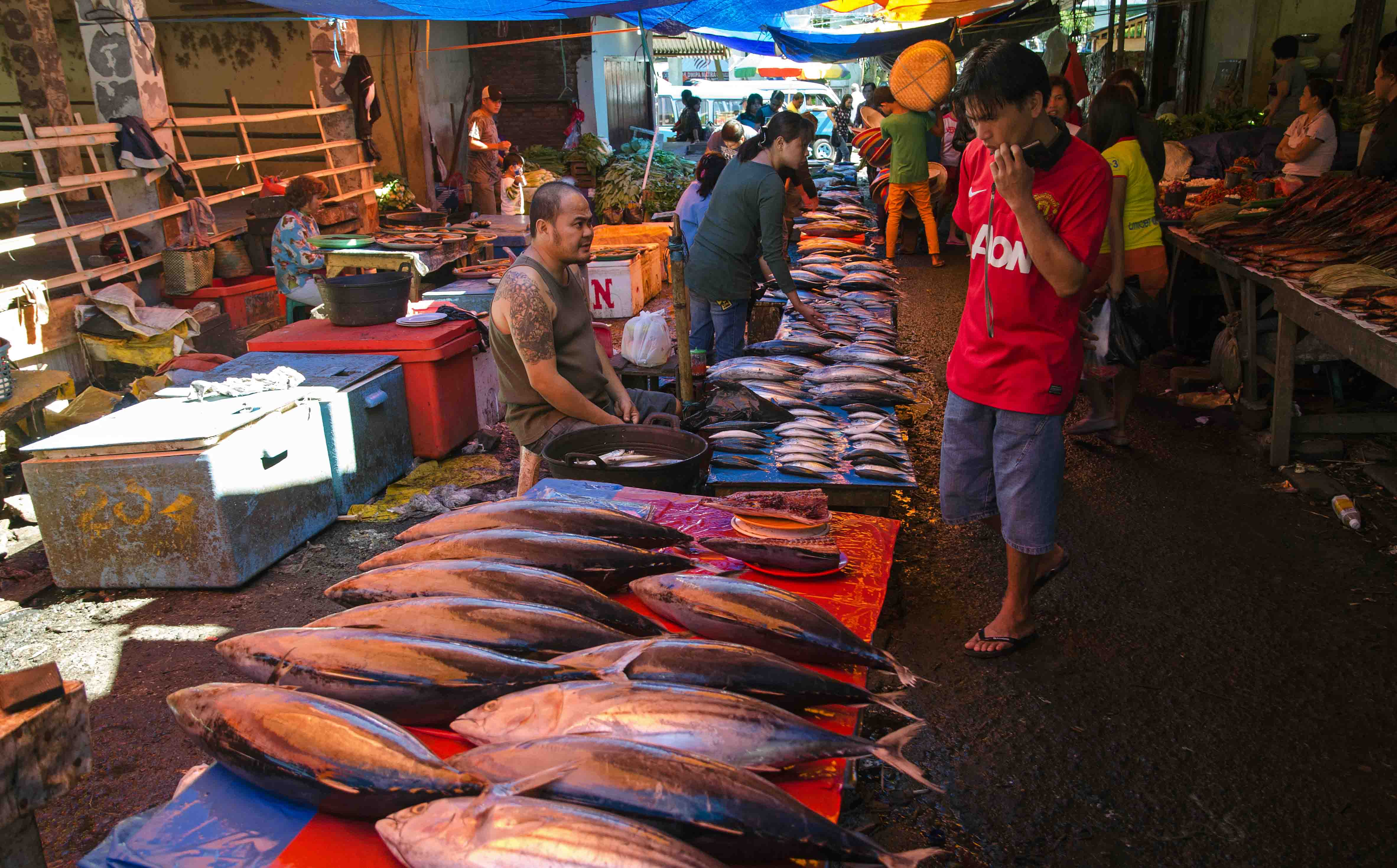
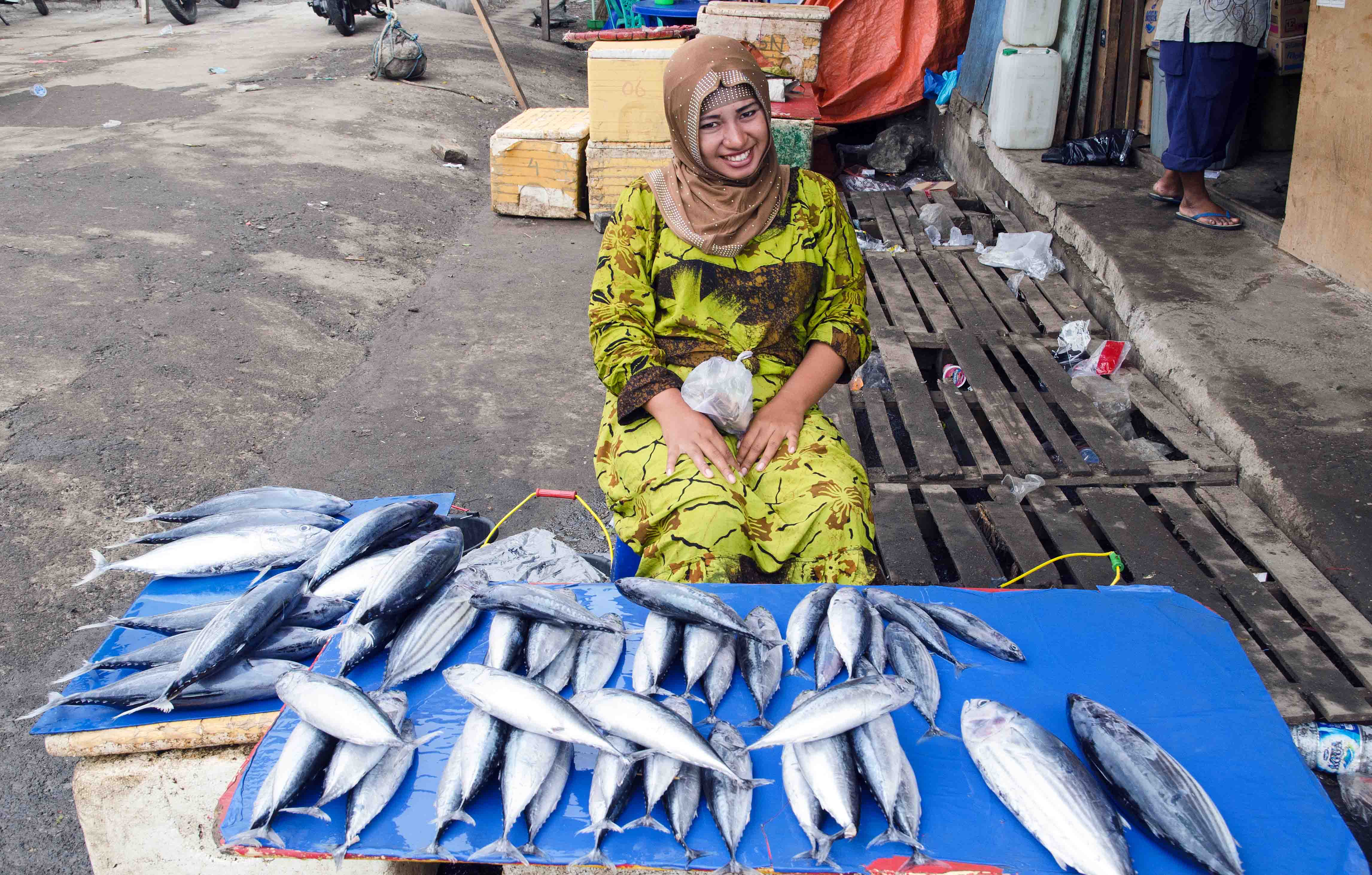
Although I am not a fish eater, I always enjoy looking around a fish market to see the variety and abundance of local fish species. There seemed to be a reasonable number of small tuna (skipjack) available although I know that numbers have decreased in recent years.
Lady selling fish in the market, Manado, Sulawesi.
Traditionally, coastal fishing for skipjack has been carried out by small pole-and-line vessels in North Sulawesi but they have had to compete with large-scale industrial offshore fishing which has reduced fish stocks considerably. The cured and smoked skipjack tun (cakalang in Minahasan) is used for a traditional dish, where the flesh of the fish is split into two and presented on a bamboo frame. There were also much smaller fish (mackerel?) which were being sold. This gentleman (below) was a bit of a character, and seemed to enjoy posing a number of times next to his fish!
Selling fish in Jengki market, Manado, Sulawesi
There were also a variety of other fish being sold. Let’s just hope that they were all caught using sustainable fishing methods, although illegal methods (such as blast fishing and using cyanide) have been widespread techniques – albeit highly damaging to reefs – in Indonesia for many years. I was sitting next to someone on the aeroplane to Manado, who told me that he had once seen someone who had blown his own arm off using a homemade fishing ‘bomb’ (often a mixture of kerosene and fertilizer). Blast fishing is easier and sometimes more productive than with other traditional methods, but is highly destructive and so short-term.
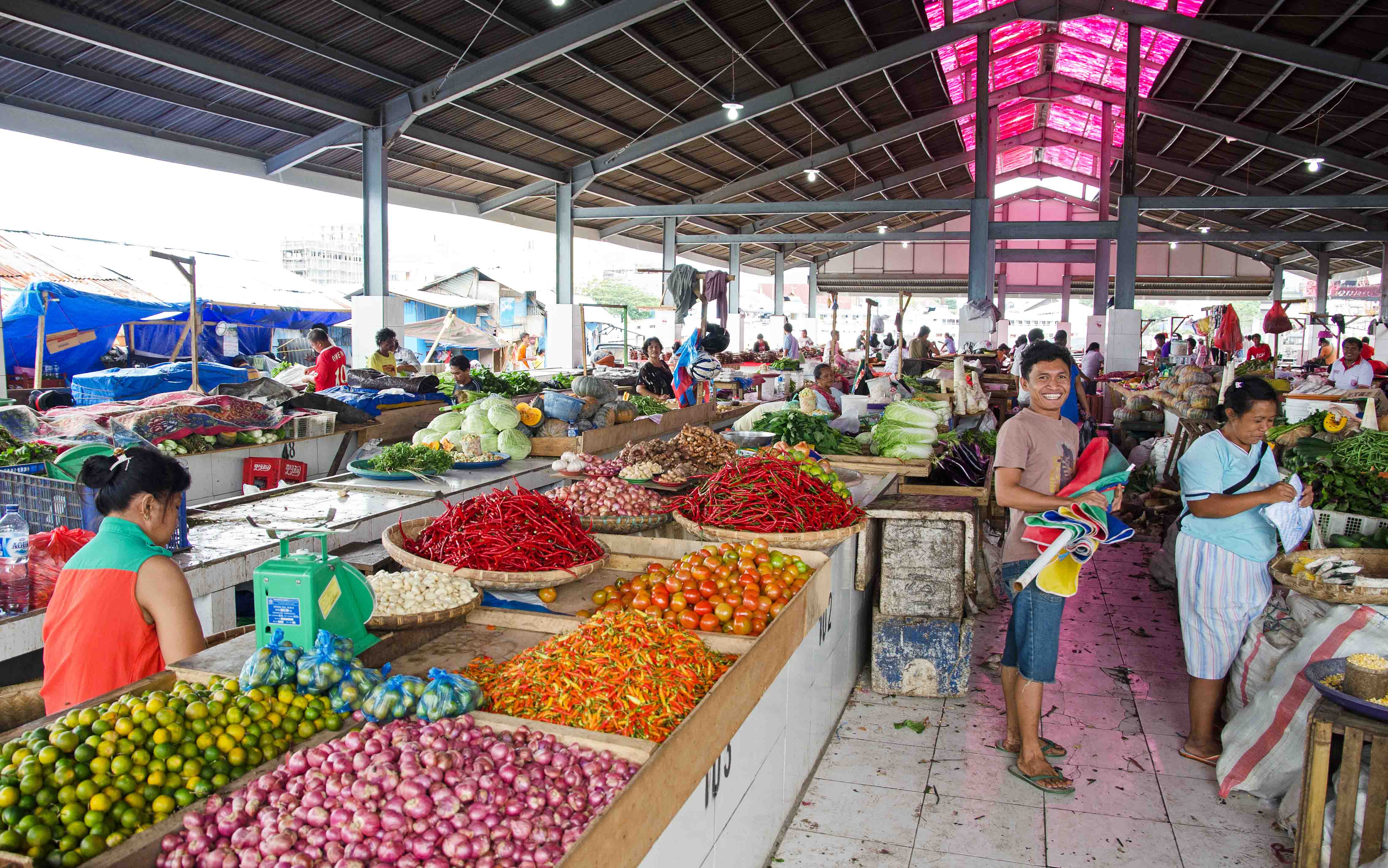
Jengki fish and vegetable market, Manado, Sulawesi
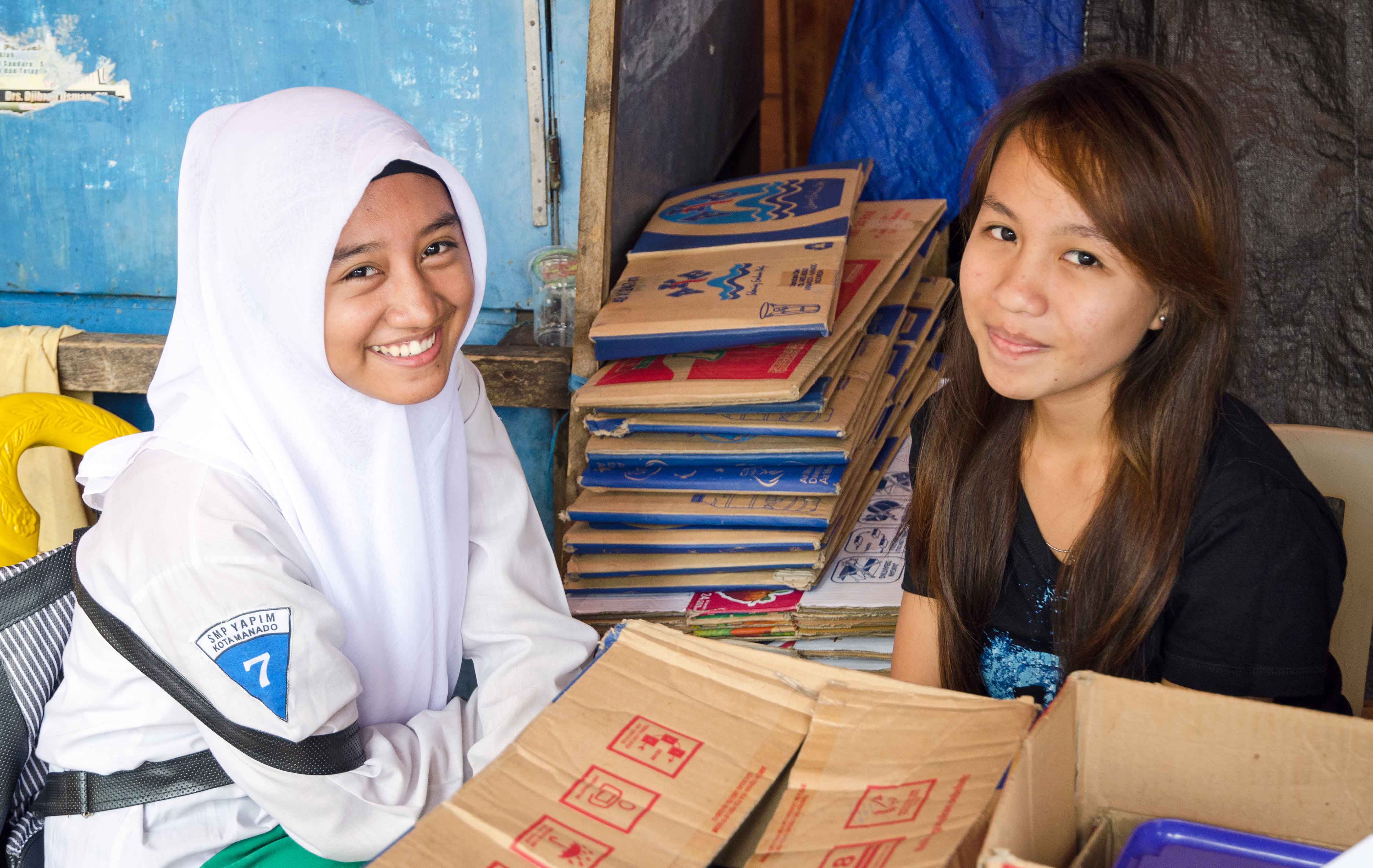
What I took away most from my short visit to this market, was the friendliness of the people. They were a little reserved at first, but once they understood that I was being respectful and was genuinely interested in what they were doing and selling, they were warm and generous, allowing me to take photographs of them, even though they must get pestered by quite a few tourists over the course of a year. I also took away a vision of people of different religions seemingly getting on very well with each other; something that many other places in the world could learn from.






 Ray's ramblings