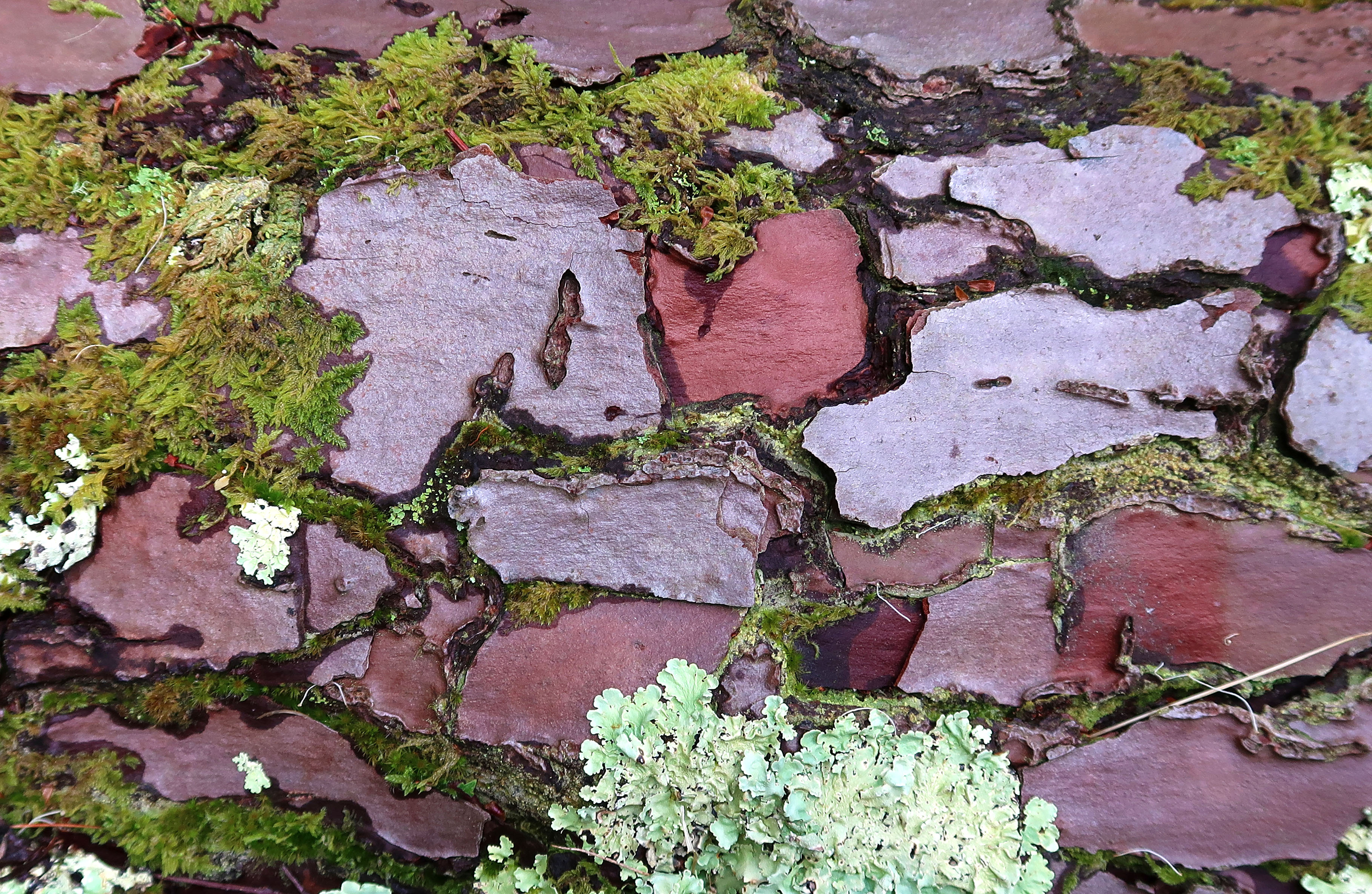
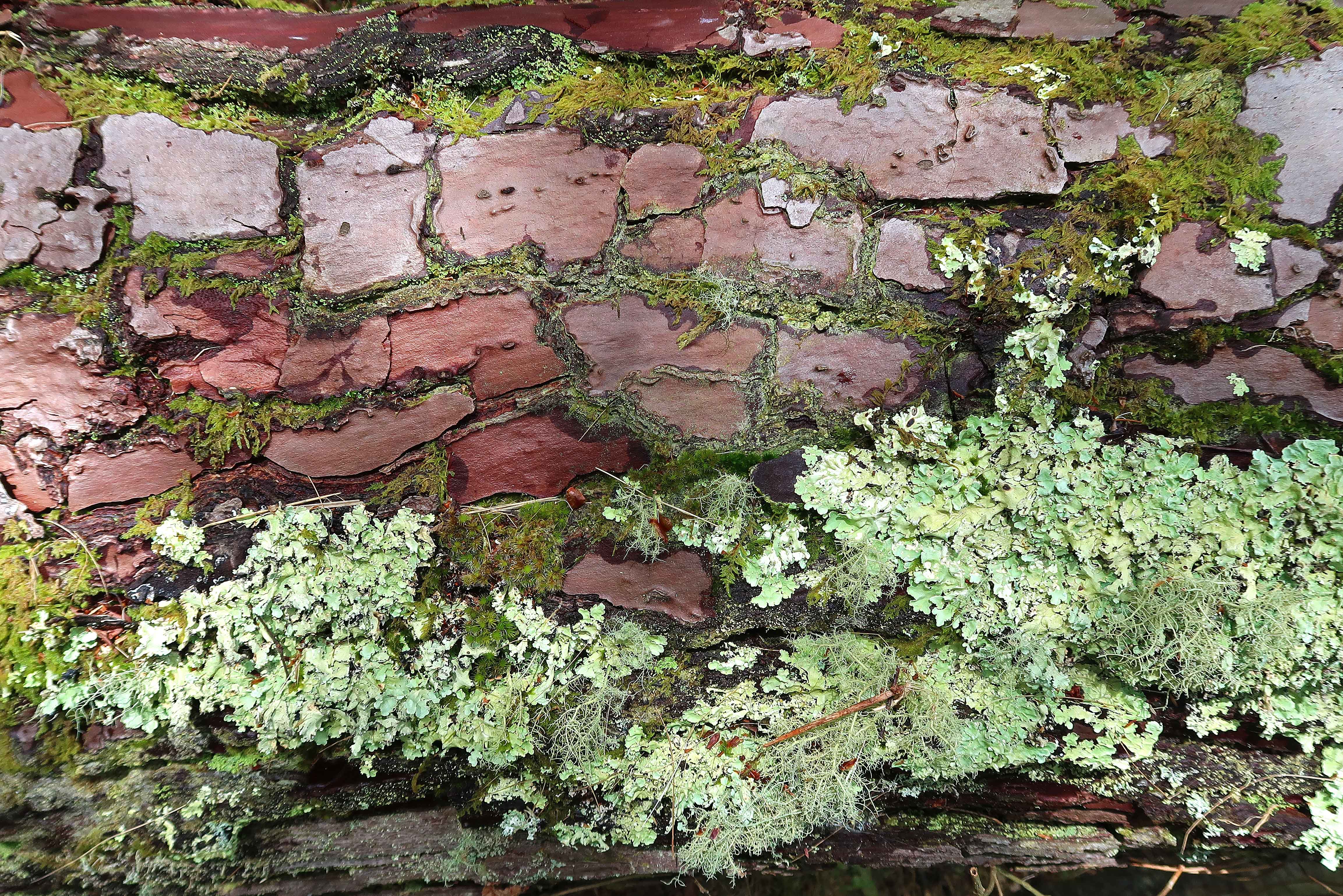
Stone pine (Pinus pinea) tree bark. Galicia, Spain
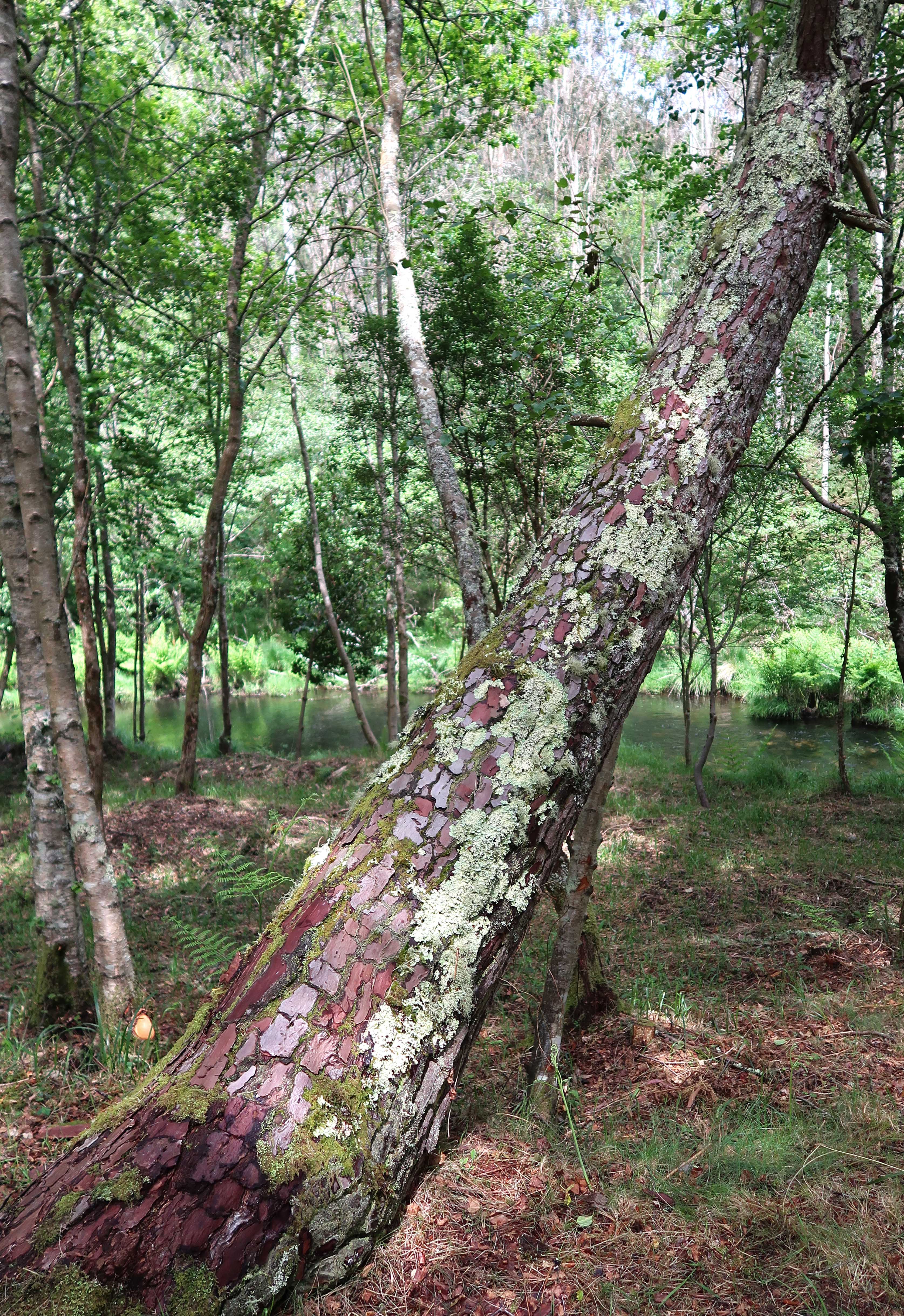
A came across this amazing tree earlier this year in Galicia, Spain. It was partially prostrate, but still growing. The beautiful, plate-like bark was adorned with mosses and lichens, which gave it a strangely artistic effect, almost like an abstract painting! It is, I think, the stone pine (Pinus pinea L.).
Stone pine (Pinus pinea) Rio Sor, Galicia, Spain
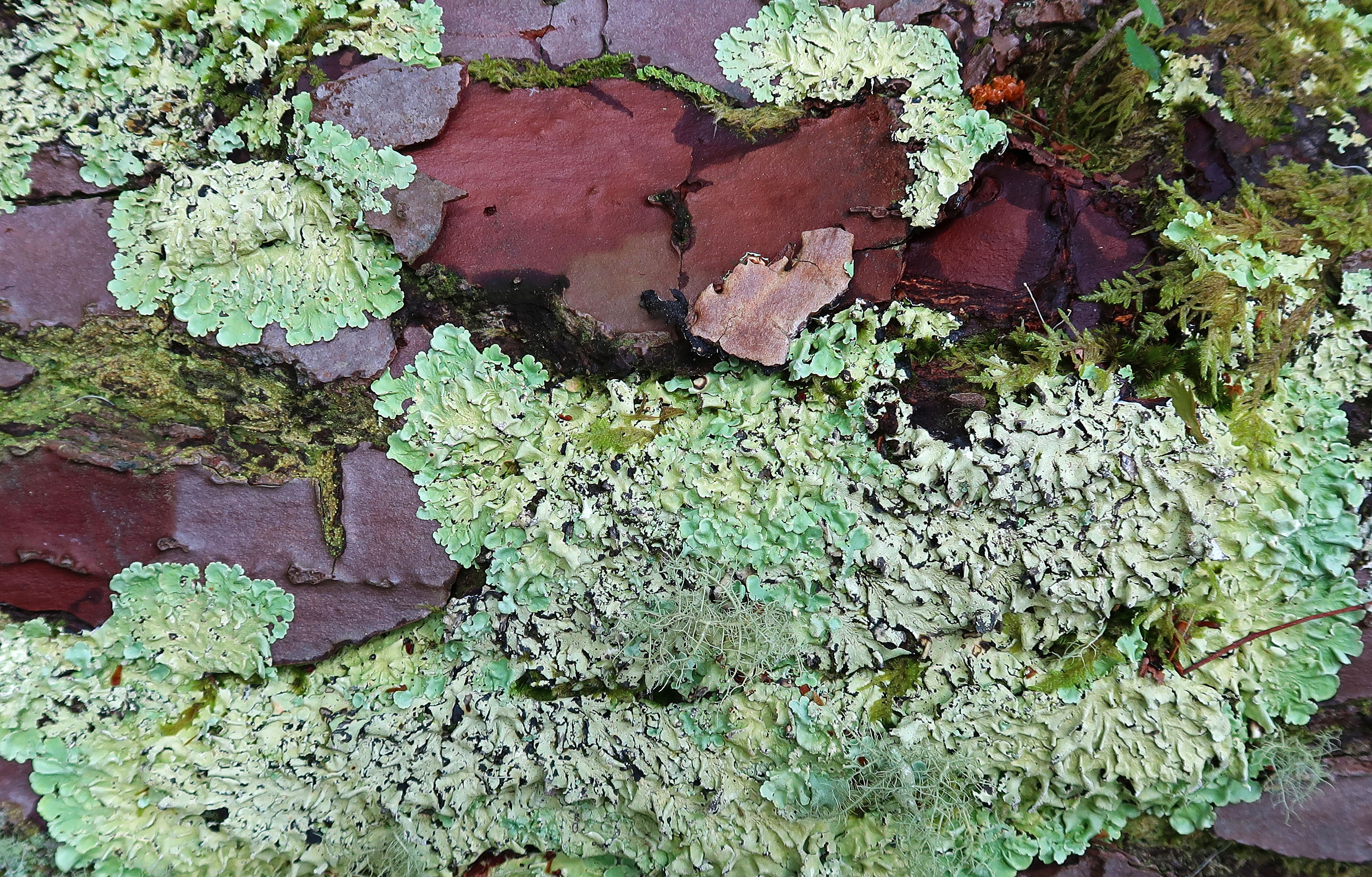
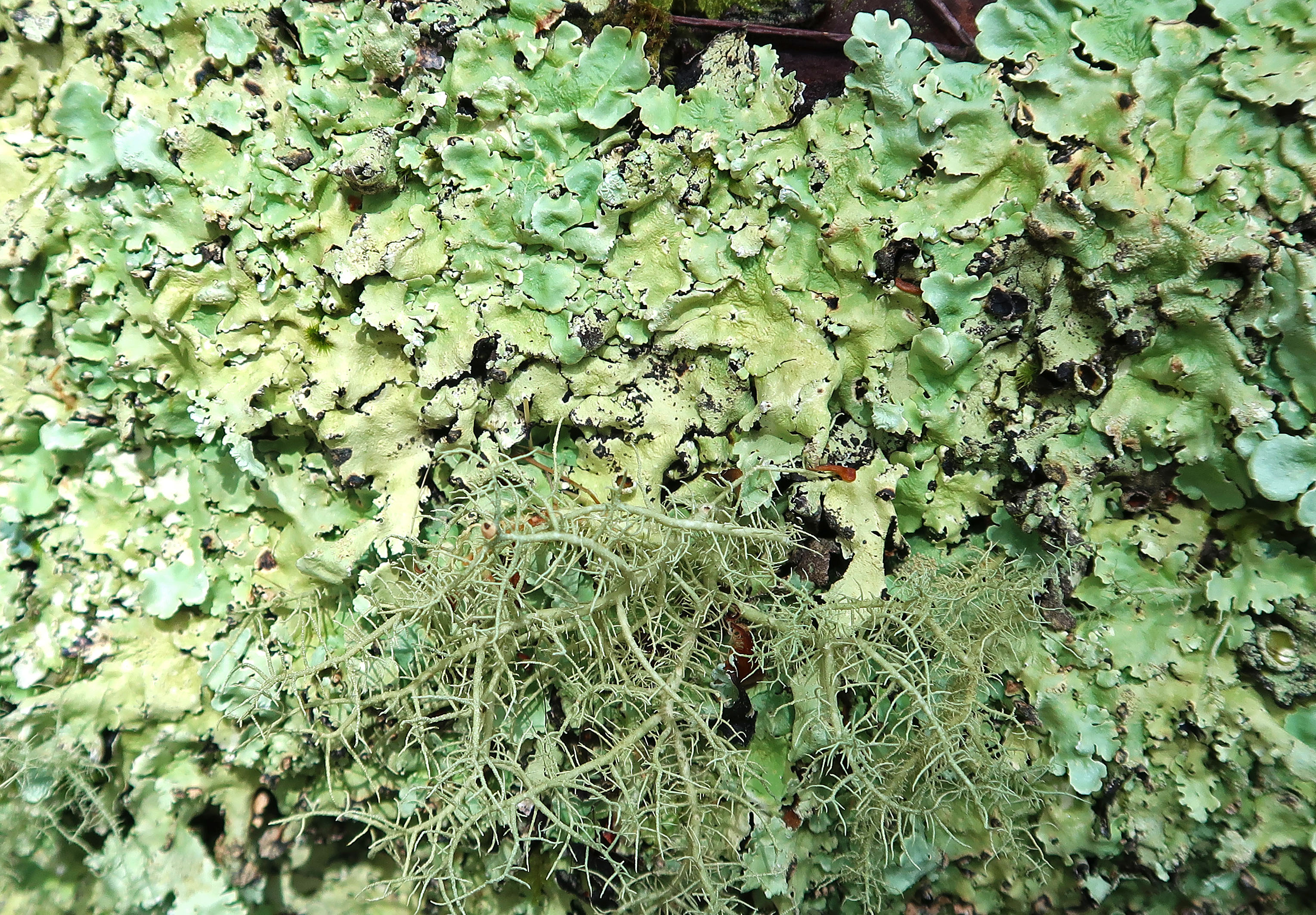
What struck me most about this tree however, was the remarkably beautiful composition and texture. The presence of the lichens pointed to clean and pristine environment.
Stone pine (Pinus pinea) with lichen
The bark of this tree is thick and plate-like, an adaptation which protects it against fires.
Stone pine (Pinus pinea) bark
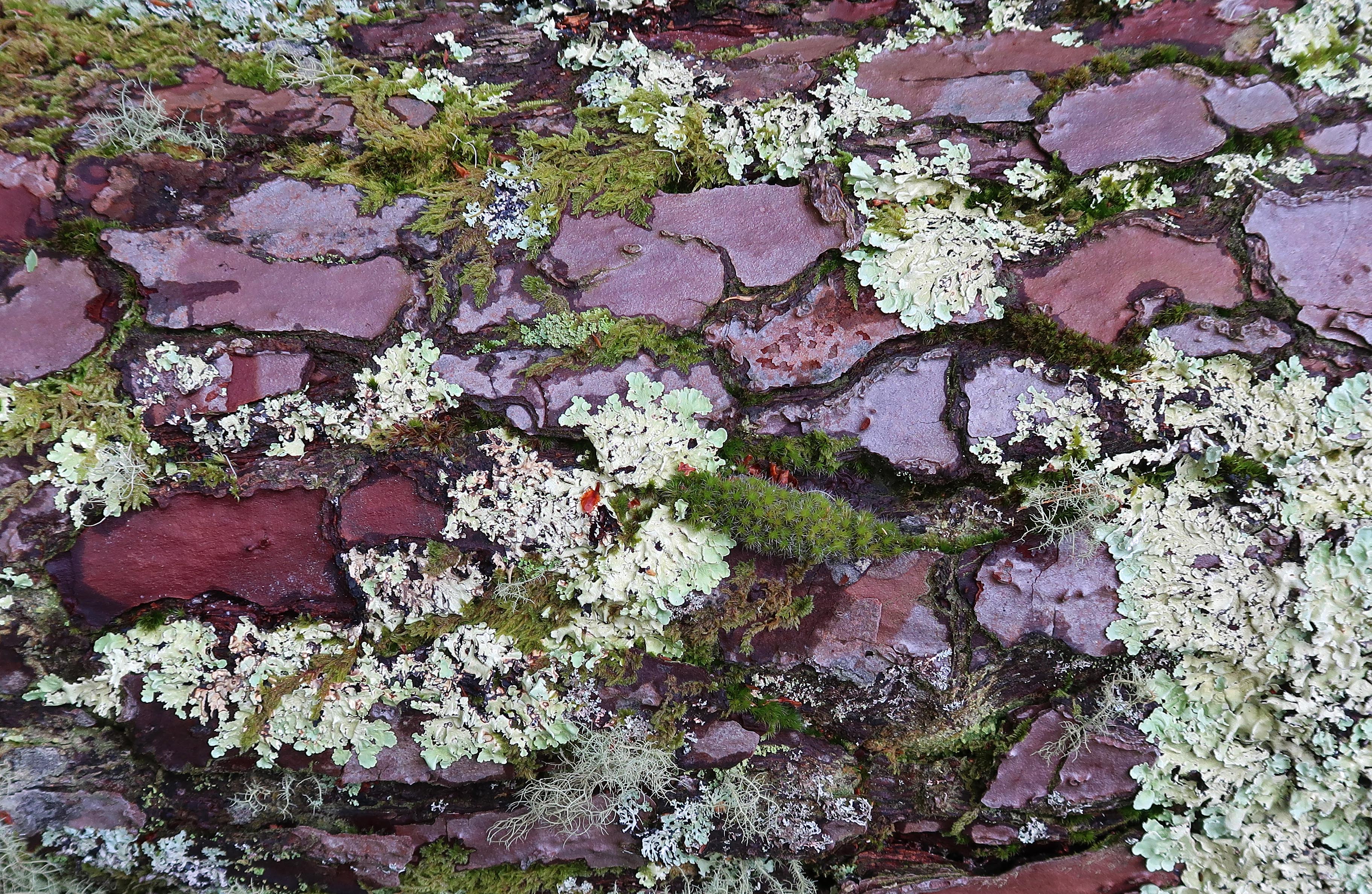
Just a natural phenomenon, but a joy to see because somehow it conjures up a deep seated desire to connect with the substance of the world from which we have emerged.
Stone pine (Pinus pinea) bark. Rio Sor, Galicia, Spain
And also, I think, a love of patterns and textures, which must somehow be related to our ability to find meaning in the complexity of nature.
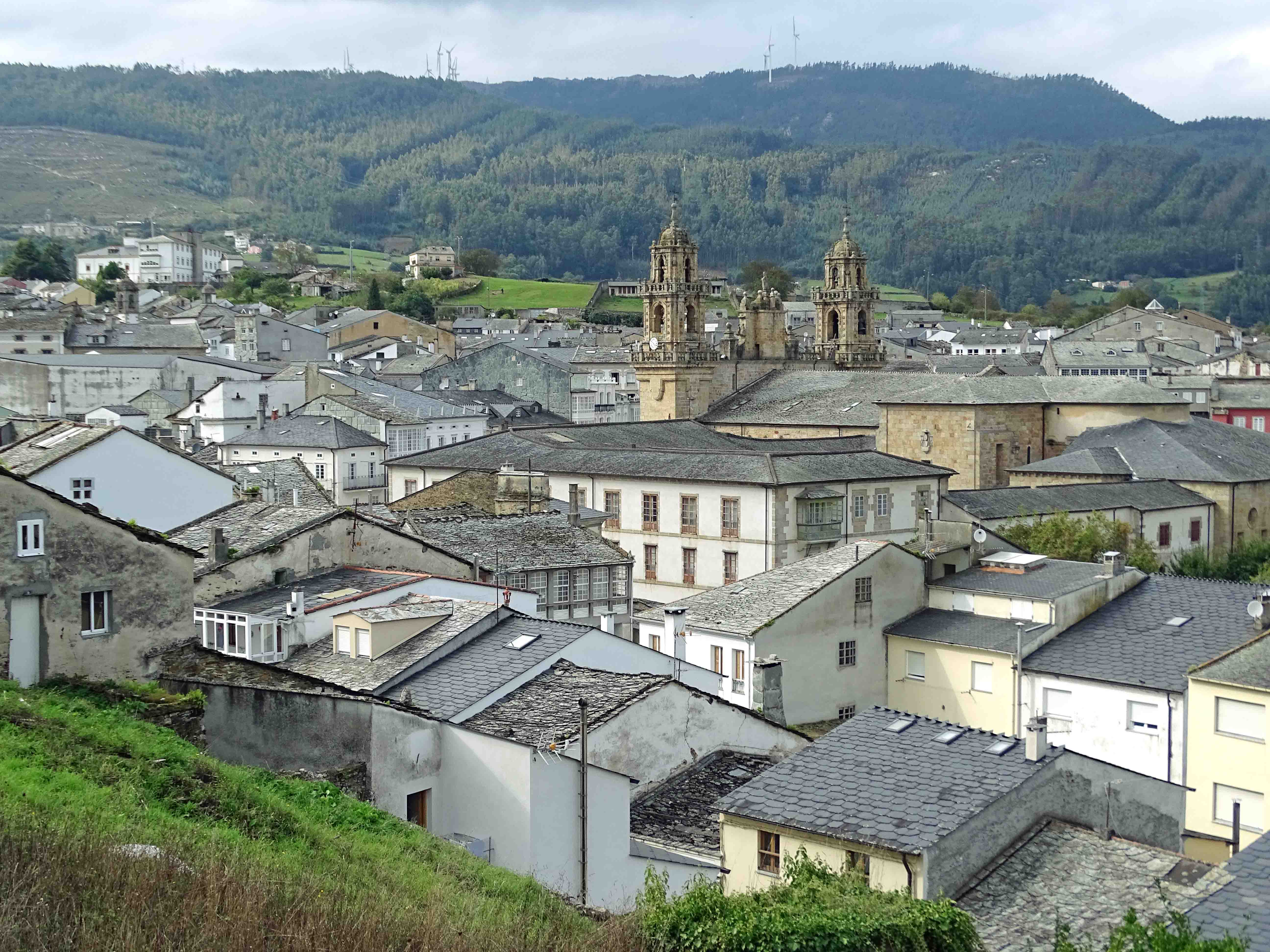
The small city of Mondoñedo is located in the province of Galicia in northwest Spain. It lies along the so-called Northern Pilgrim Way, of the Camino de Santiago (the Way of St. James) (1). Although, it is now a relatively small town of about 4,000 people – the population has been declining since the nineteenth century – it was once a mediaeval city of great historical importance.
Mondoñedo, with the cathedral church rising above the town in the centre
The central square is dominated by a large Cathedral Church which dates from the early thirteenth century. Construction of the church began in 1219 under the first Bishop, San Martín. It is worth remembering that this was at the time of the crusades, just 15 years after the sack of Constantinople during the Fourth Crusade, and at the time of the Fifth Crusade which failed to recapture Jerusalem. It was also at the time of the so-called Reconquest of Spain, when large areas of southern Spain were being recaptured from the Moors by Christian states. Indeed, by the time of the church was consecrated in 1248, most of Iberian Peninsula – apart from a small territory of Granada in the south – was under Christian control.
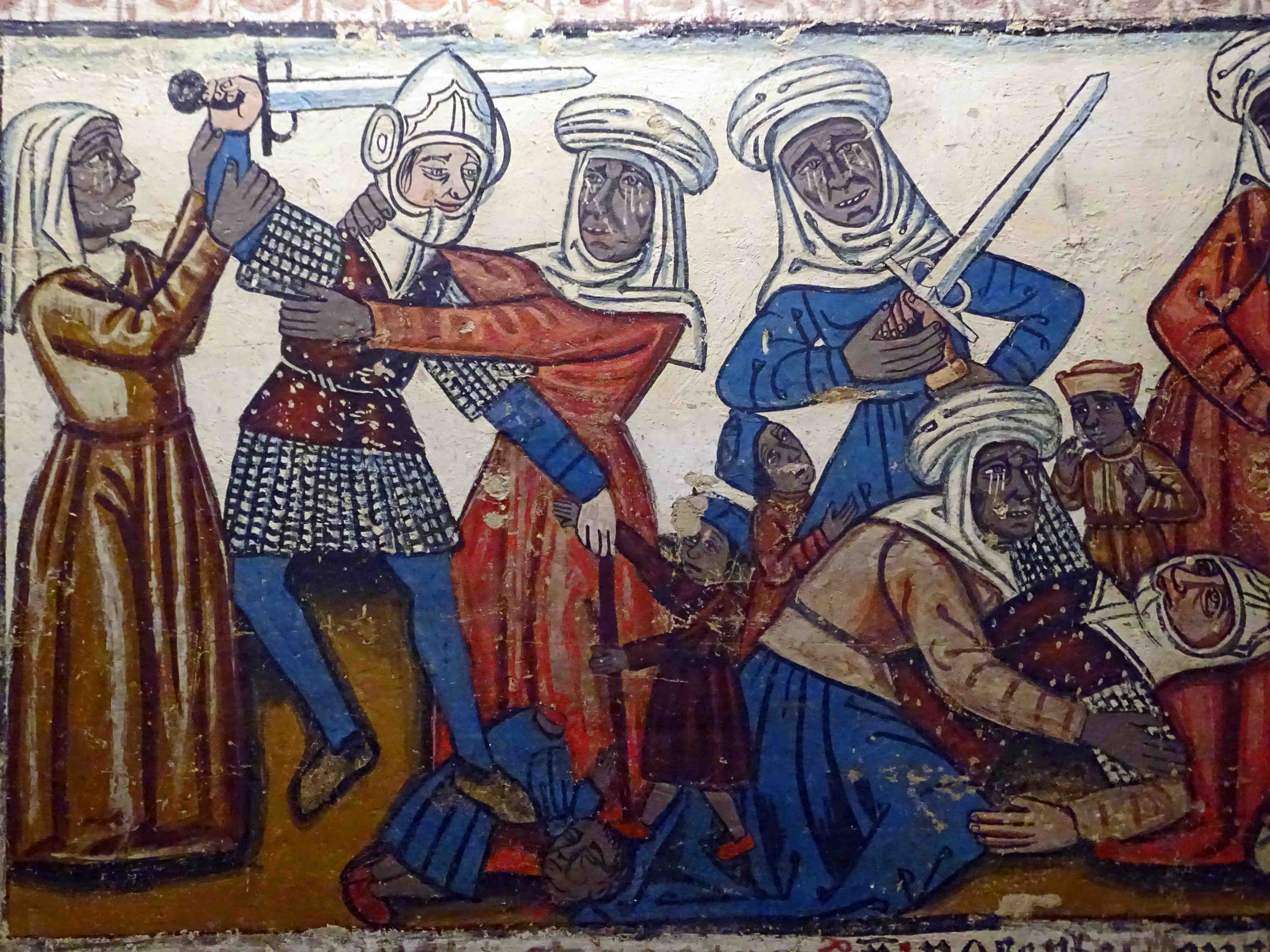
14th Century mural depicting the Slaughter of the Innocents (detail)
So against this background, it is interesting to look at the 14th century murals or frescos, in the Central nave of the Cathedral, which were only found when the choir was removed from the central nave. They are said to reflect some aspects of St Peter’s life and the Slaughter of the Innocents and the Flight from Egypt.
14th Century mural depicting the Slaughter of the Innocents
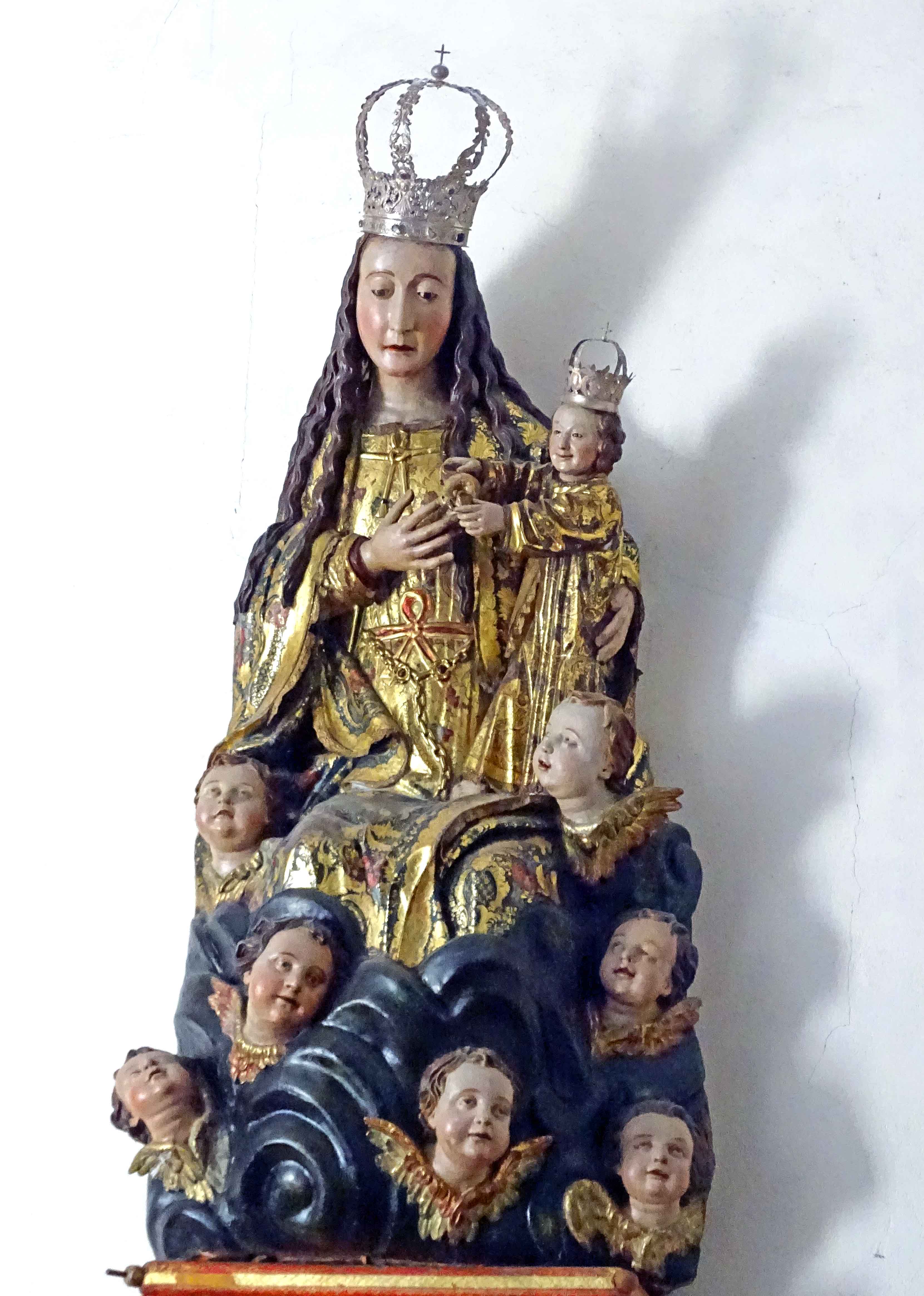
Another interesting feature of Mondoñedo cathedral is a statue called the English Madonna – Nuestra Señora la Inglesa – which is located in the sanctuary of the Blessed Sacrament. The Madonna was rescued from St Paul’s Cathedral by an Englishman nobleman called John Dutton during during the Dissolution of the Monasteries (1536 to 1541). John Dutton settled in the town of Viveiro, Galicia and brought many wooden images from English (catholic) churches to Spain. Between 1533 and 1675, thousands of Catholics fled England and moved to Spain, mainly in the north(2). One wonders how easily these exiles settled into Spainish society at the time, and what influence they had.
The English MadonaEnter a caption
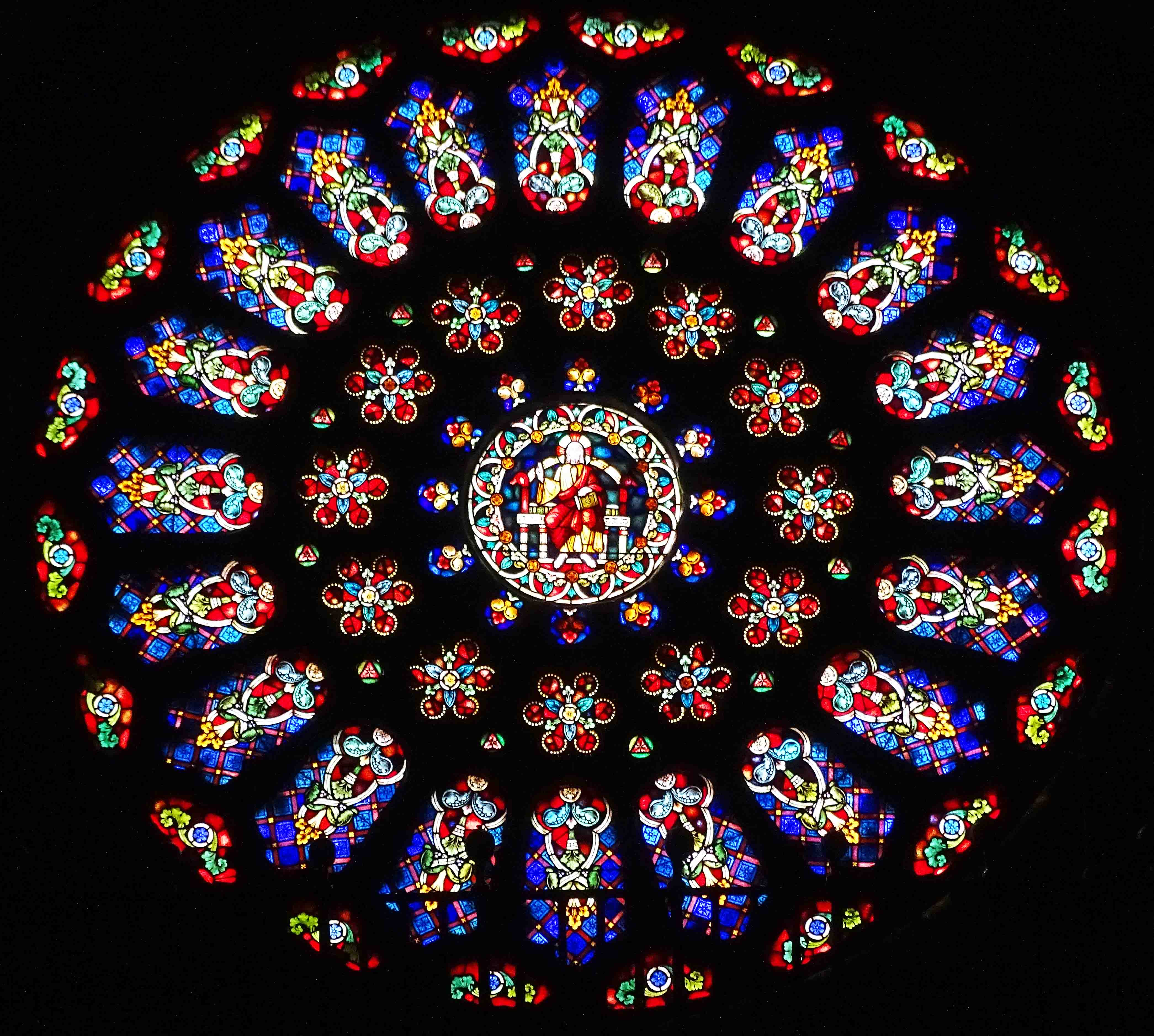
The Cathedral boasts an attractive stained glass rose window, dating from the 16th Century.
16th Century stained glass rose window
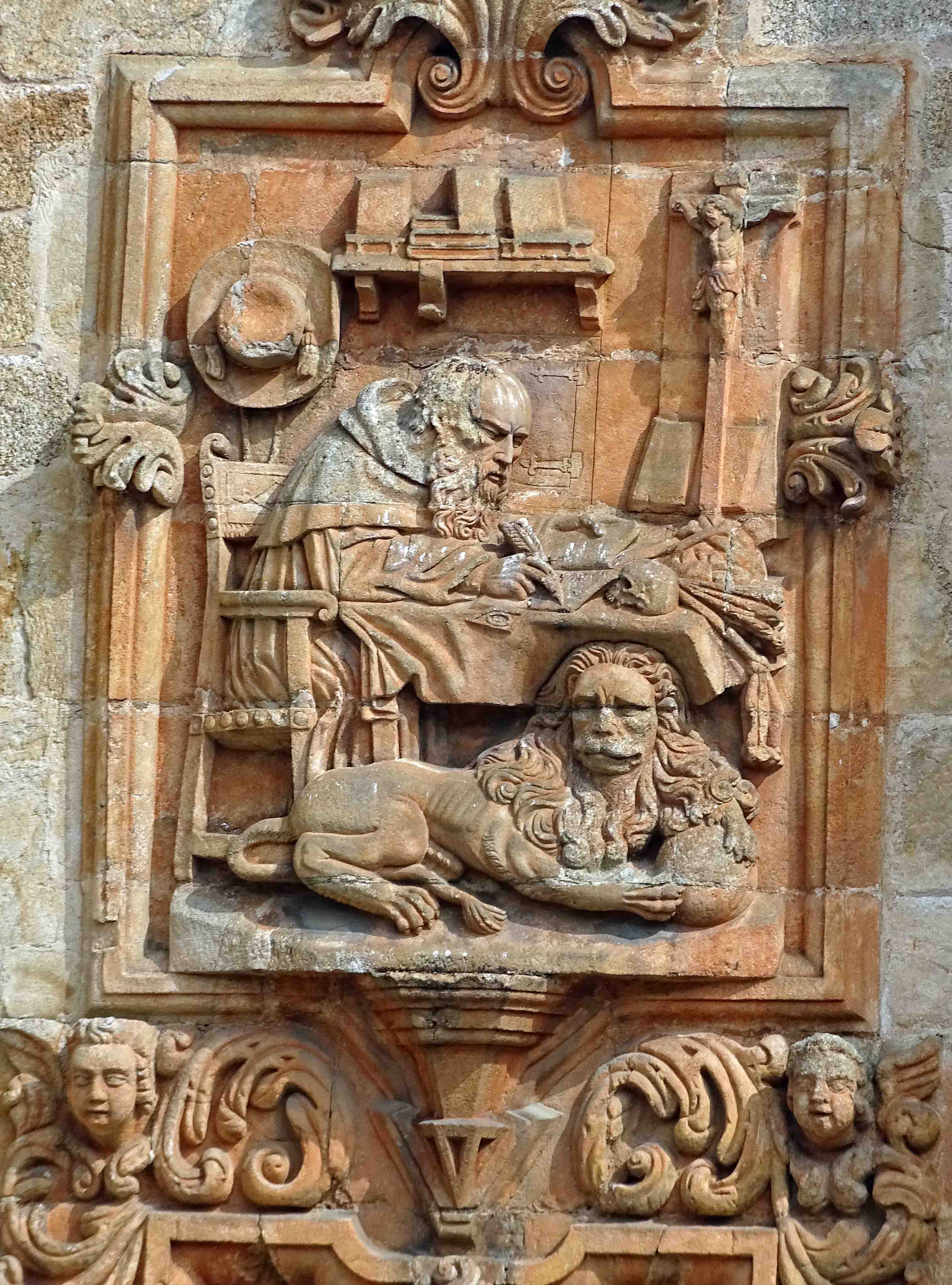
There are some striking reliefs on the outside of the cathedral. I am not sure who is depicted in this work (below), perhaps one of the founding bishops?
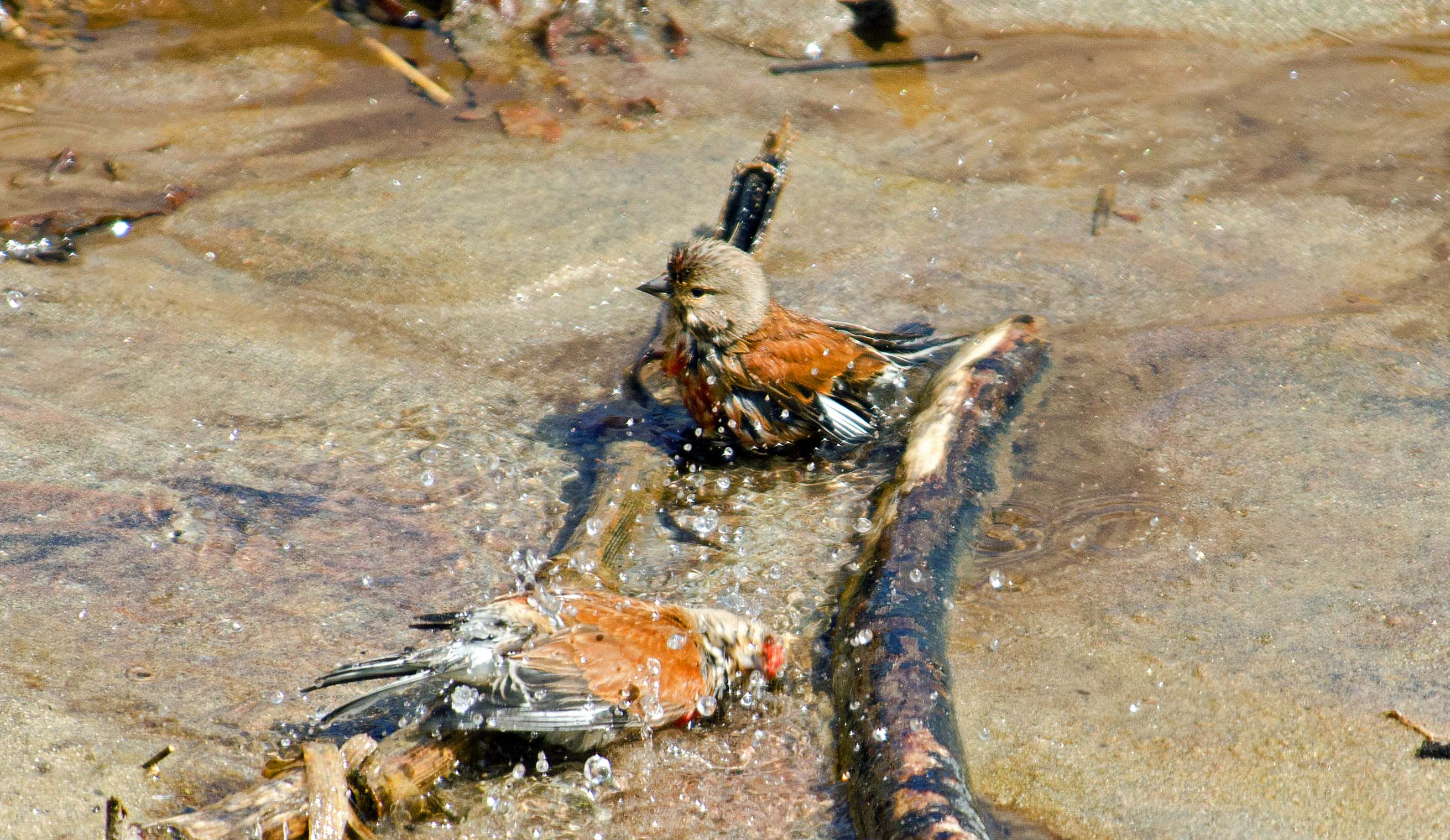
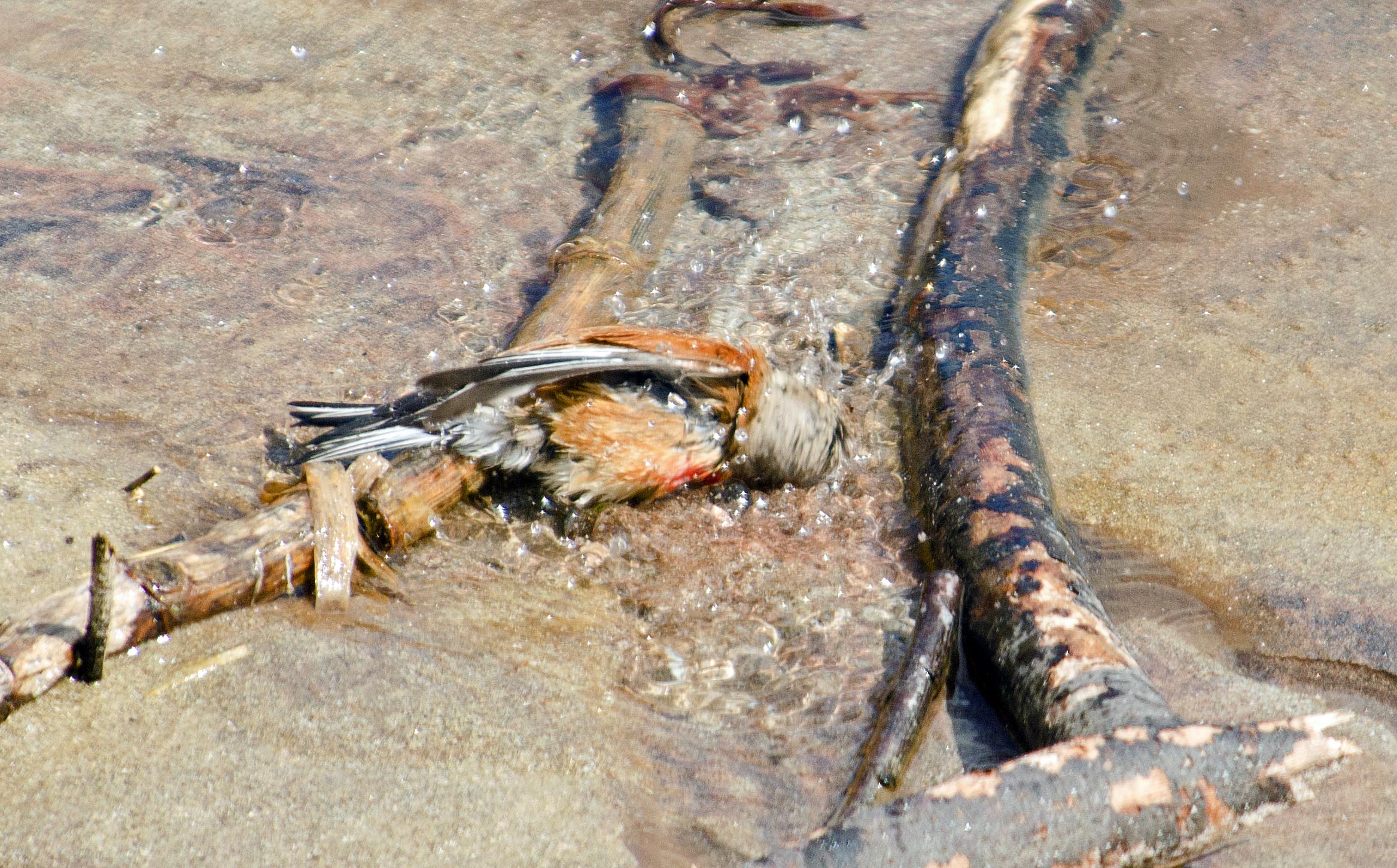
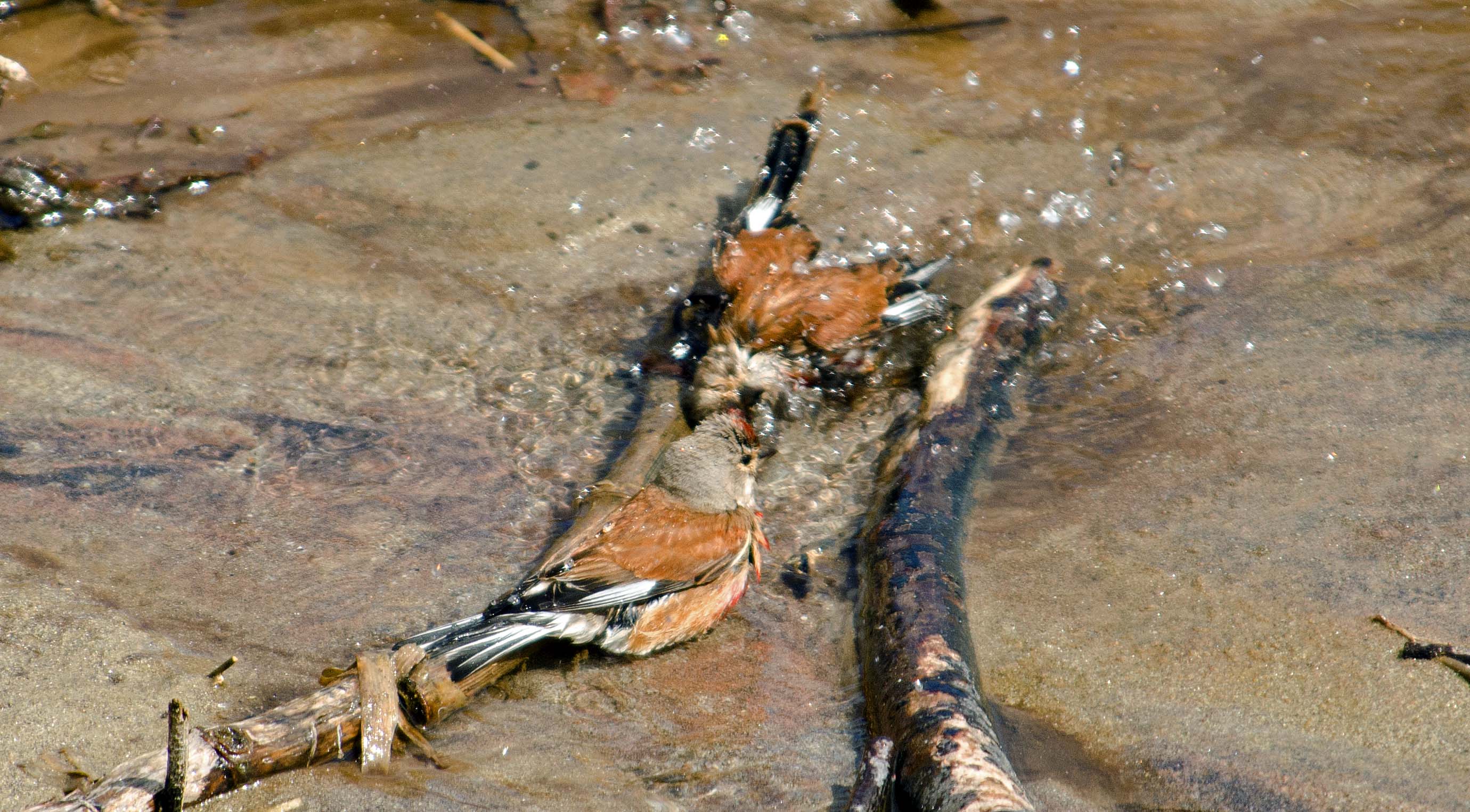
I came across a small flock of Common Linnets (Carduelis cannabina) having a bath in a small stream flowing onto the beach at Fornos, near the town of Cariño, in Galicia, Spain (1).
Linnet bathing
Linnets (Pardillo in Spanish) are quite common in Spain, and flocks can be seen throughout the year along both sides of the Ria Ortigueira. These birds were bathing and preening in late April.
Linnets bathing
There’s not a lot to say about them, but it is interesting to see how vigorously they bath and how they shake their heads rapidly to and fro.
Linnet bathing
Where there were two males together, I got the impression that one would bath and the other would keep a watch out; but this might just have been a co-incidence.
Linnets bathing
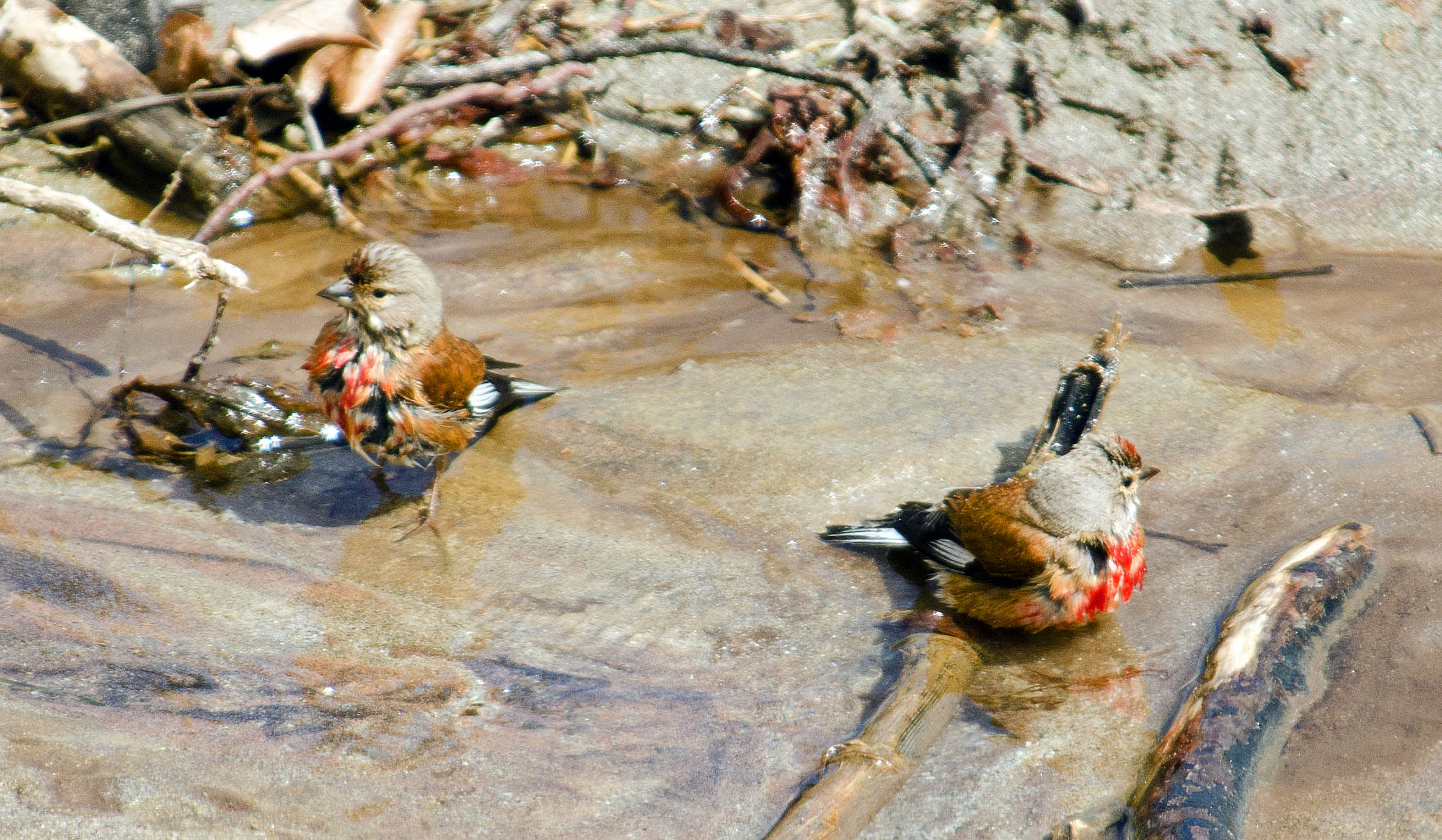
They also seem to like to get water right up under the breast feathers. Who wouldn’t! The two males in the following photo appear to have lifted up their breast feathers and you can see black under the red and white feathers. Must be wearing a vest!
Common Linnet (Carduelis cannabina) two males with raised breast feathers
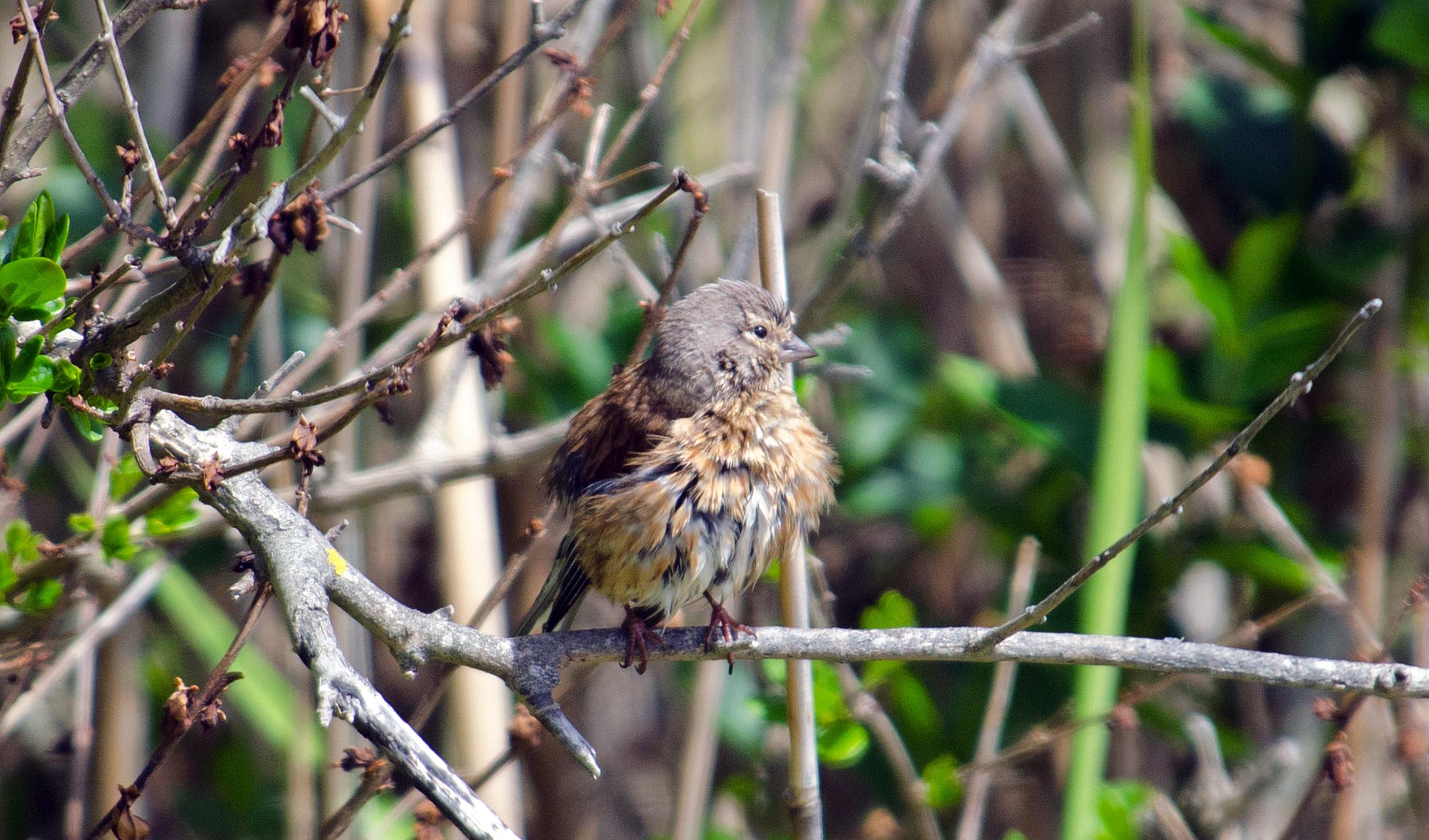
After bathing they spend some time sitting and preening and generally drying off. You can see glimpses of black (skin?) under the feathers on this female (below).
Common Linnet (Carduelis cannabina) female drying feathers
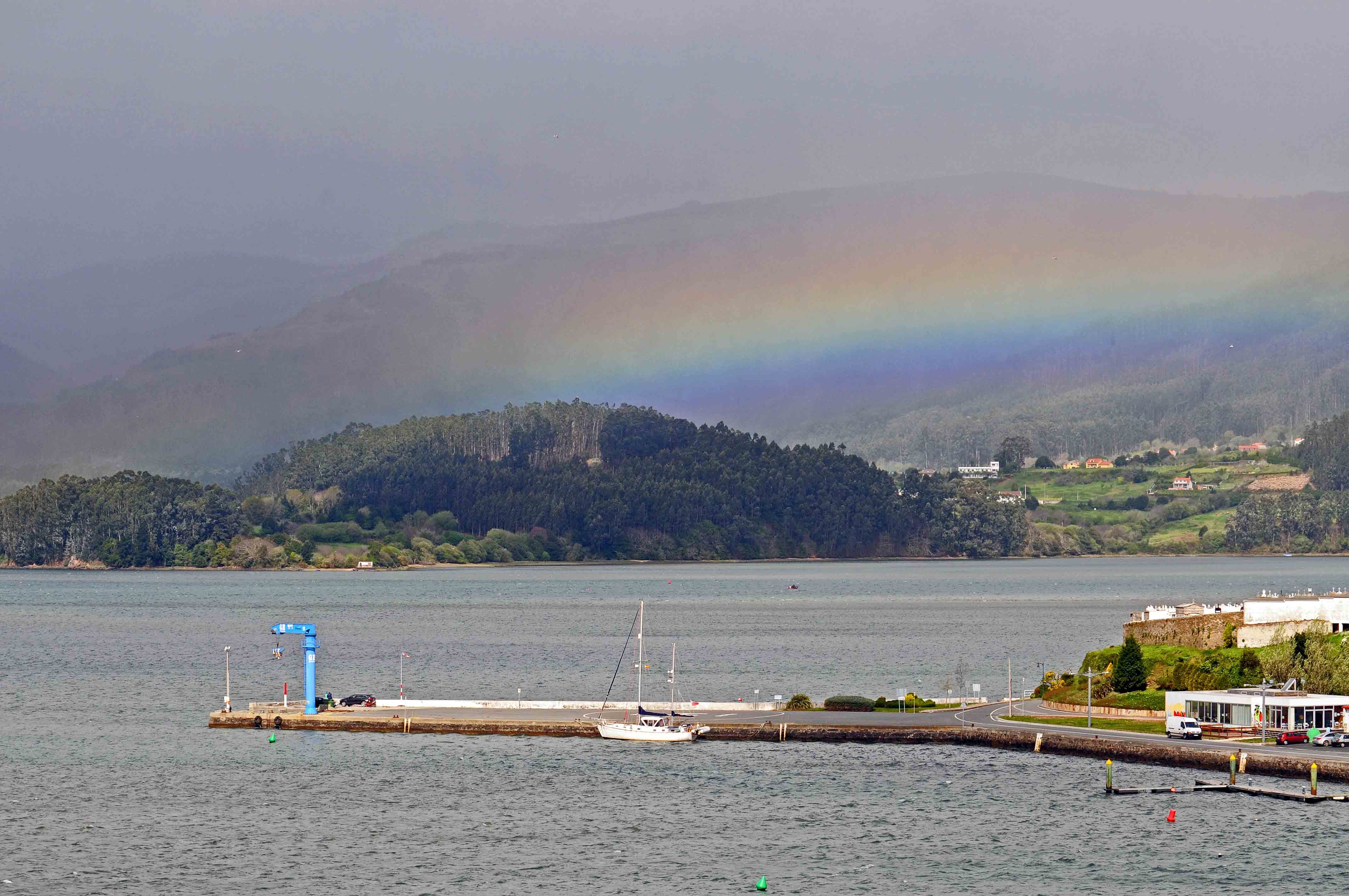
Galicia, in north-western Spain is a beautiful part of the world. It is much greener than most of the rest of Spain and is sometimes called the Scotland of Spain! It certainly has the celtic roots to go with this appellation. One of the reasons it is so green is that it often rains! weather fronts come in off the Atlantic and bring a succession of sunshine and showers. This produces a lot of rainbows, which I often see forming across the Ria Ortigueiraa from the window of my flat. Here are two I managed to capture before they faded away.
Rainbow above the Ria from the town of Santa Marta de Ortigueira in Galicia, Spain.






 Ray's ramblings