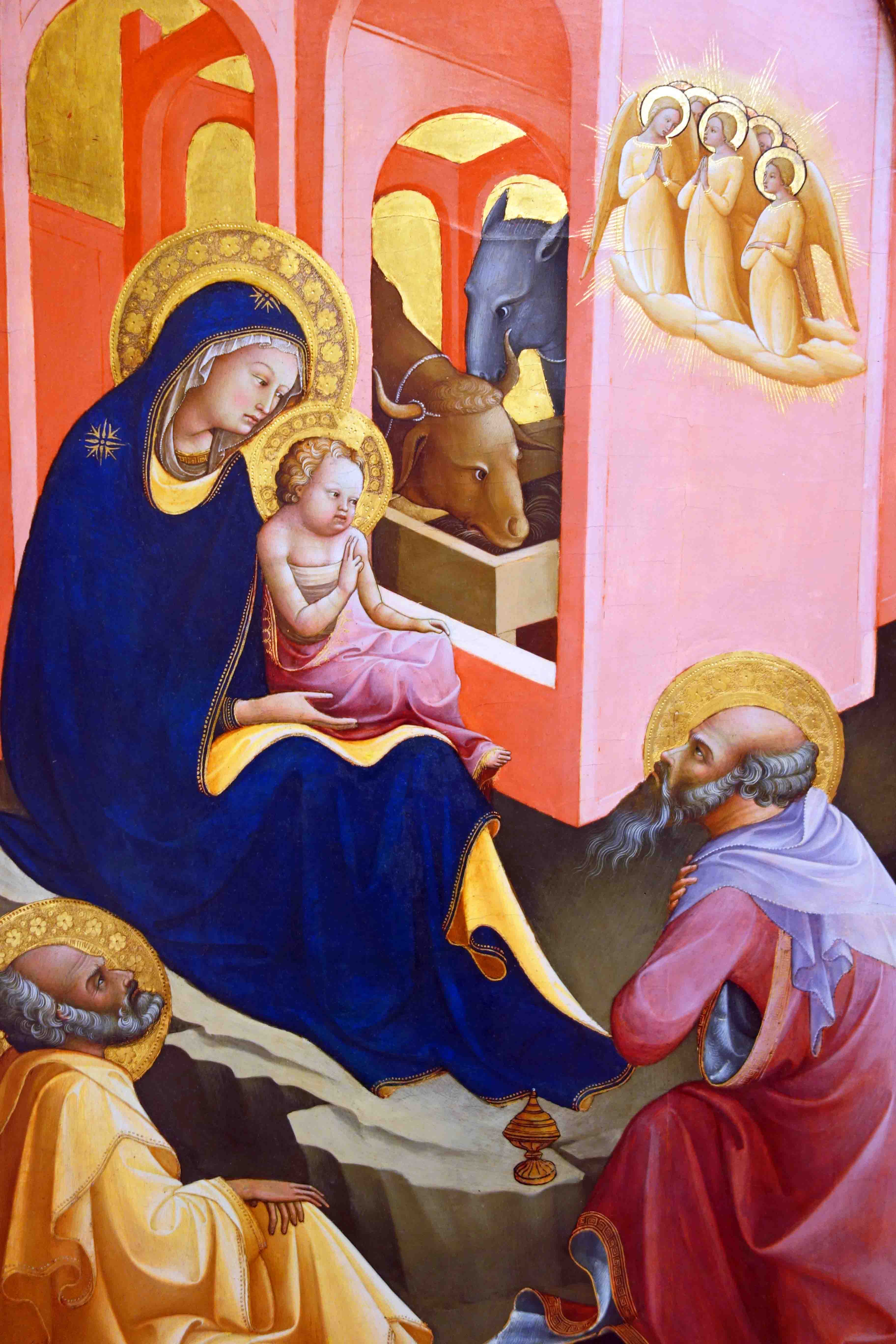
Fra Angelico (born Guido di Pietro; c. 1395 – 1455) has a confusing number of names. He was known to his contemporaries as Fra Giovanni da Fiesole (Brother John of Fiesole) as well as Fra Giovanni Angelico (Angelic Brother John). He is now called il Beato Angelico (Blessed Angelic One) in Italian, although he is known to the art world as Fra Angelico. He was a Dominican friar and a consummate artist, with a remarkable body of work held in museums around the world. Fra Angelico was trained in Florence in the workshop of another monk, Lorenzo Monaco (active 1390–1423), a painter and illustrator of manuscripts. In some ways, Lorenzo Monaco’s works are even more stunning – but lest we get side-tracked, here is just one image from the master’s master!
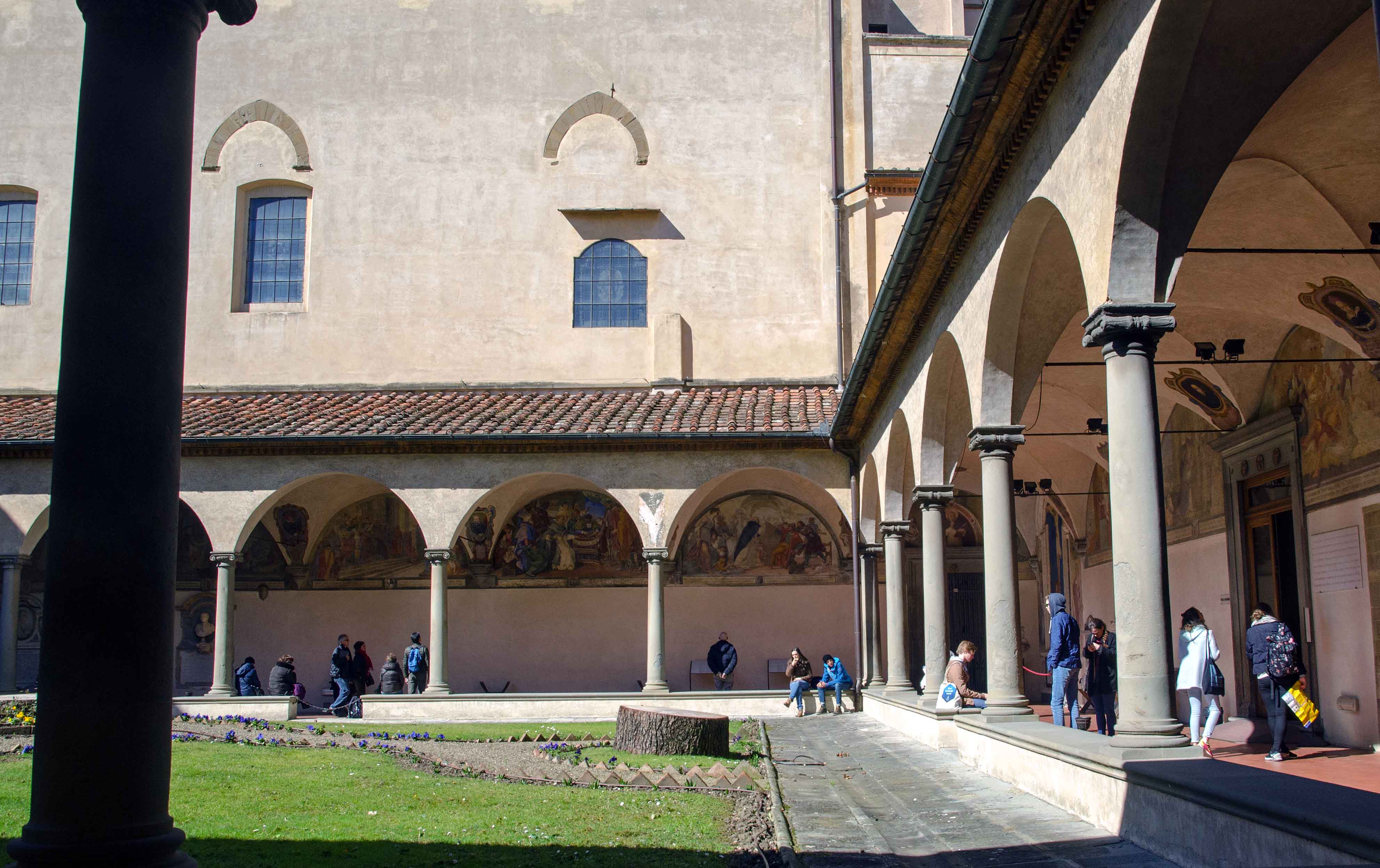
Fra Angelico was also strongly influenced by the works of another Italian artist, Masaccio (1401 – 1428), who died at the very early age of 26. The Museum or Basilica of San Marco is a wonderful place to view both the works of Fra Angelico (and other artists) and discover about the lives of these painter monks. Unlike some other sites in Florence, it is not heaving with tourists trying to take a ‘selfie’ in front of a painting (e.g. by Botticelli) or statue (e.g. by Michelangelo). Fra Angelico’s paintings have not yet achieved the worldwide cult status of some other works in Florence, which seem to attract viewers as much by their fame as their beauty, it seems. But perhaps the two are inseparable.
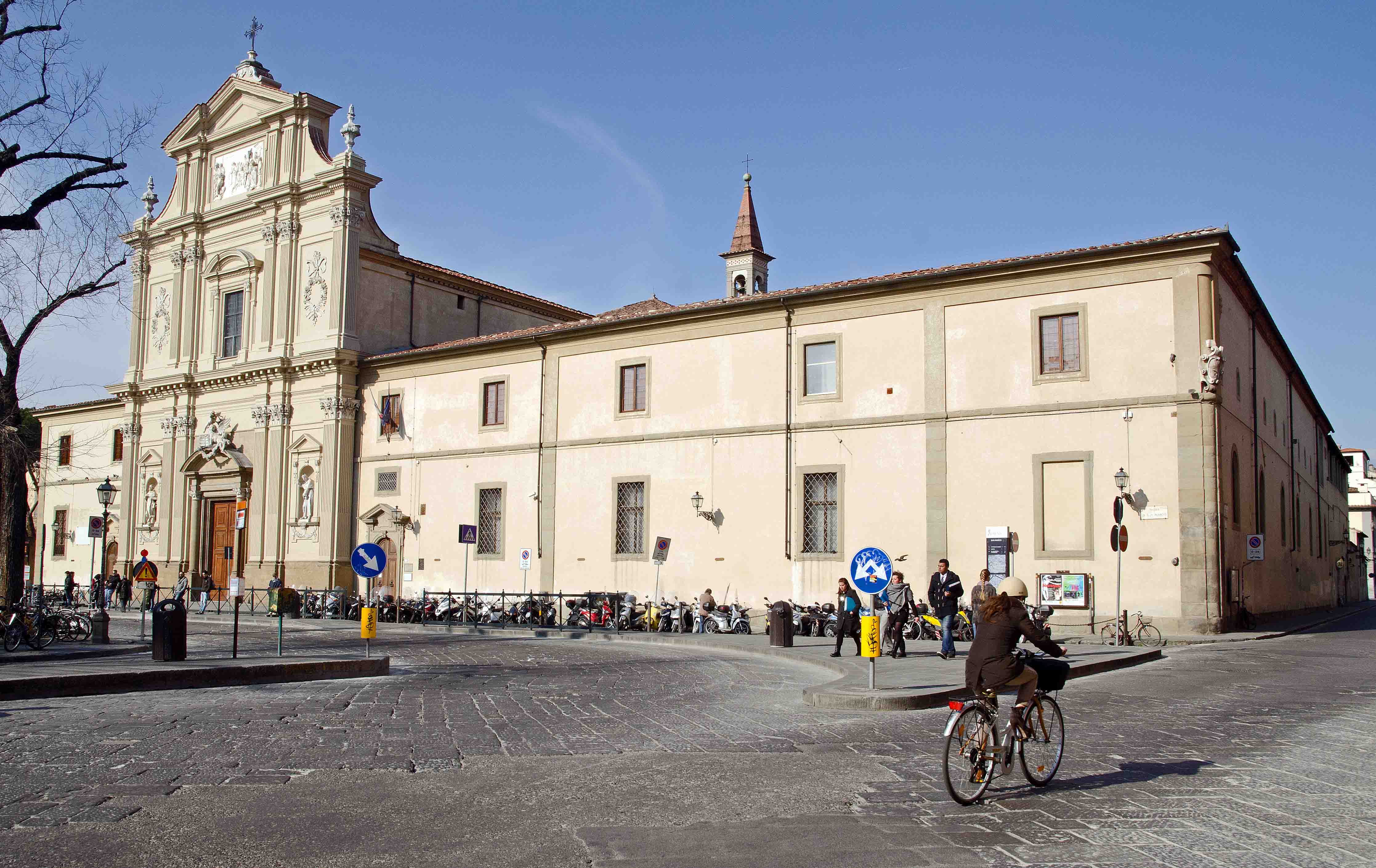
San Marco Church and Museum, Florence
What is know about Fra Angelico is that he was (according to the chronicler, Giorgio Vasari) ‘gentle and temperate’ and ‘humble and modest’. Although he knew the rulers of his day (Popes and Medici) he must have been completely dedicated to his art – albeit art in the service of his faith – to have achieved so much in his life time. Particularly, as some of the paintings must have taken so much time to produce, even with the help of a workshop of assistants. The following is a detail from a painting entitled Deposition from the Cross, which was started by his master Lorenzo Monaco, and completed by Fra Angelico between 1432 and 1434. It is the powerful use of colour as well as the imagery which attracts me to these paintings.

The Dominican monks of Fiesole, took over the then convent of San Marco in Florence in 1435. Fra Angelico (and his assistants no doubt) were then commissioned by Cosimo de’ Medici to paint frescos in the various rooms, including the cloisters, chapter house, refectory, and dormitory cells and so on. There are 44 cells, or rooms for sleeping and contemplation, each of which has its own fresco. Fra Angelico is considered to be directly responsible for the design and execution of about six of them, but presumably his assistants took a lead from him in completing the others. The cells are empty apart from the frescos but are quite pleasant, each with unique fresco and a small window looking out into the central courtyard. The monks slept, prayed and meditated in their cells and the fresco were designed as a sort of inspiration; perhaps a meditation piece? I wonder if they got fed up with one fresco, they could swap cells to look at another fresco?
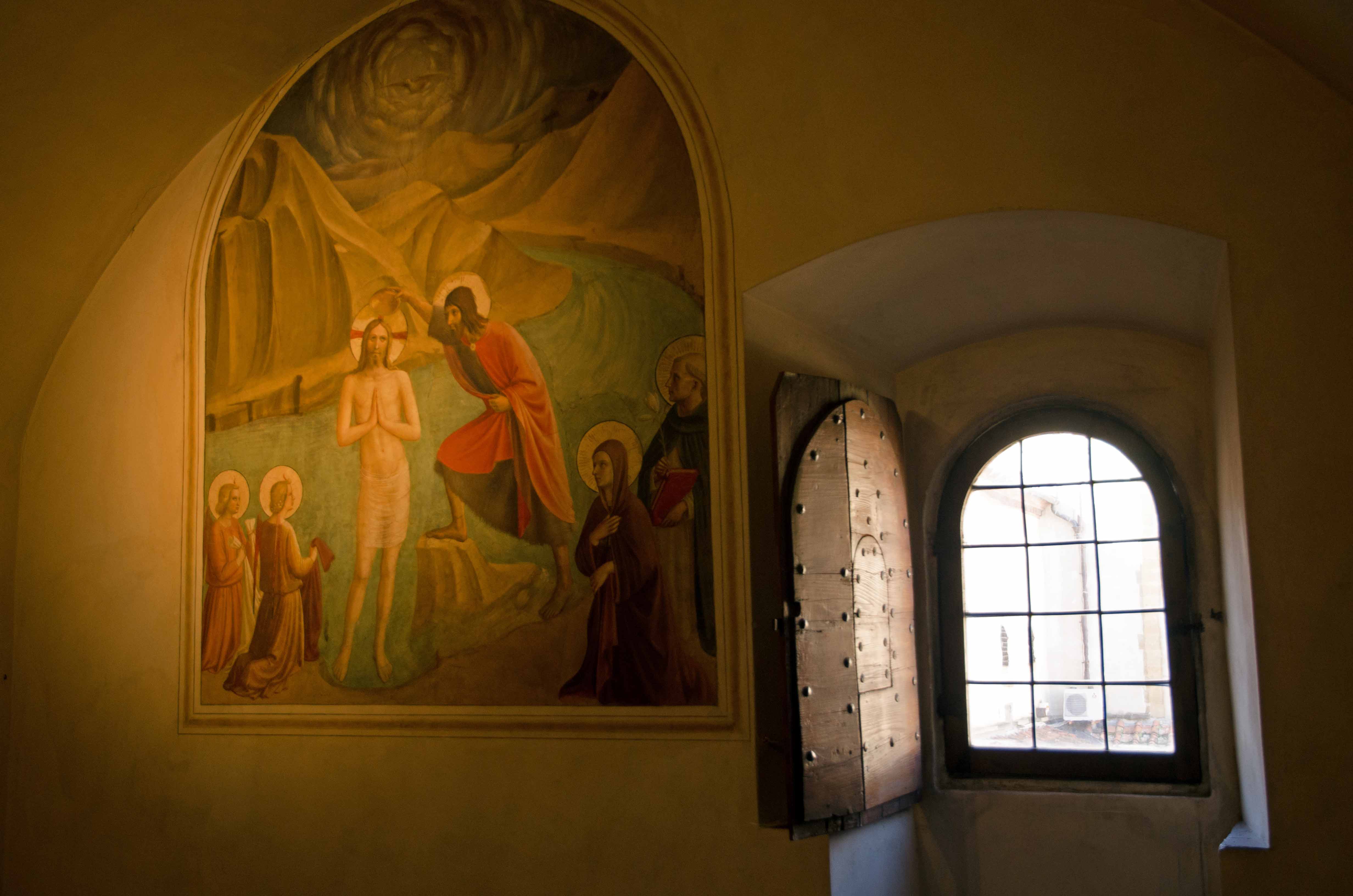
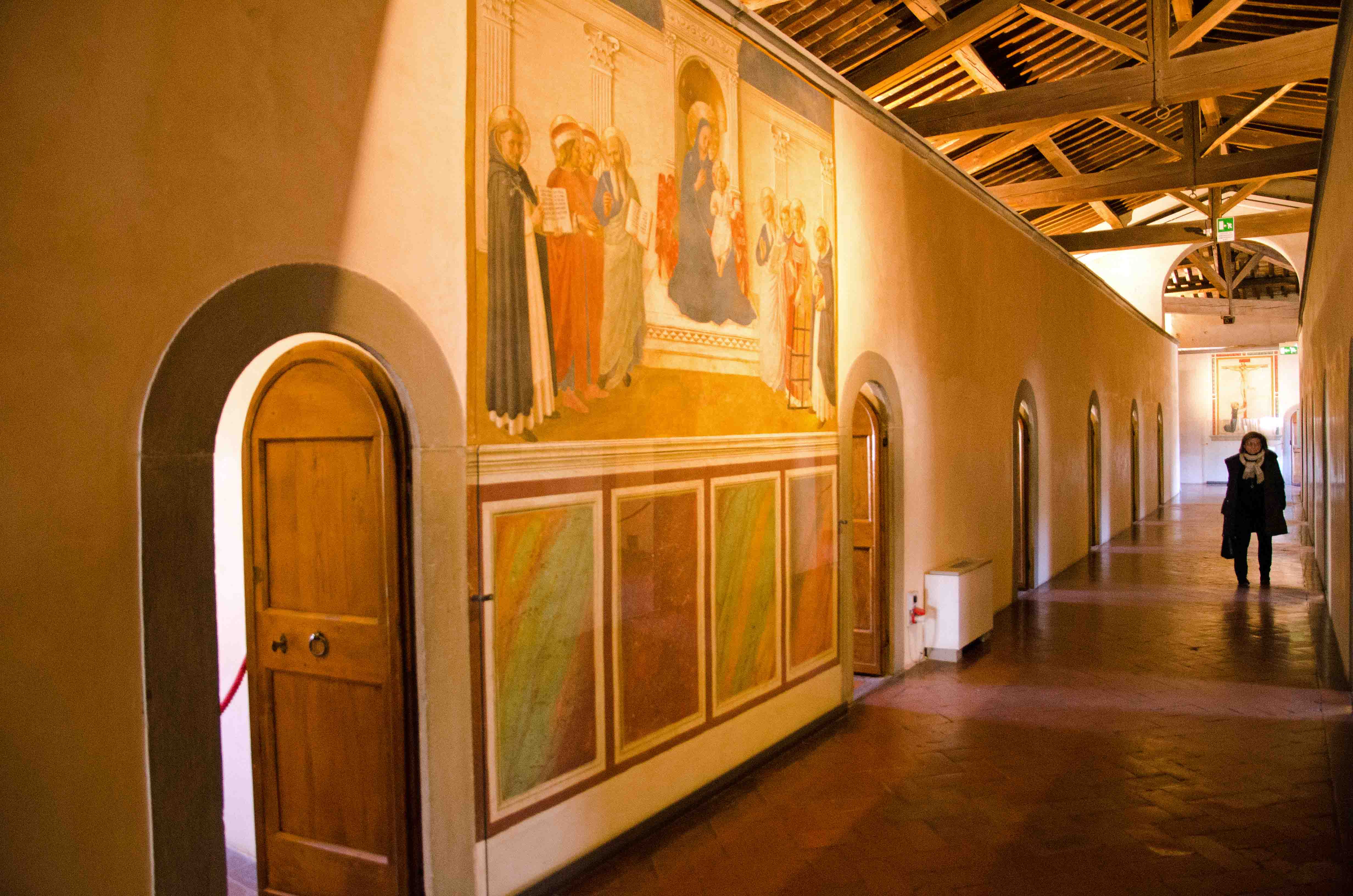
The cells were arranged along corridors on the upper floor of San Marco; there are also some frescos along the walls of the corridors.
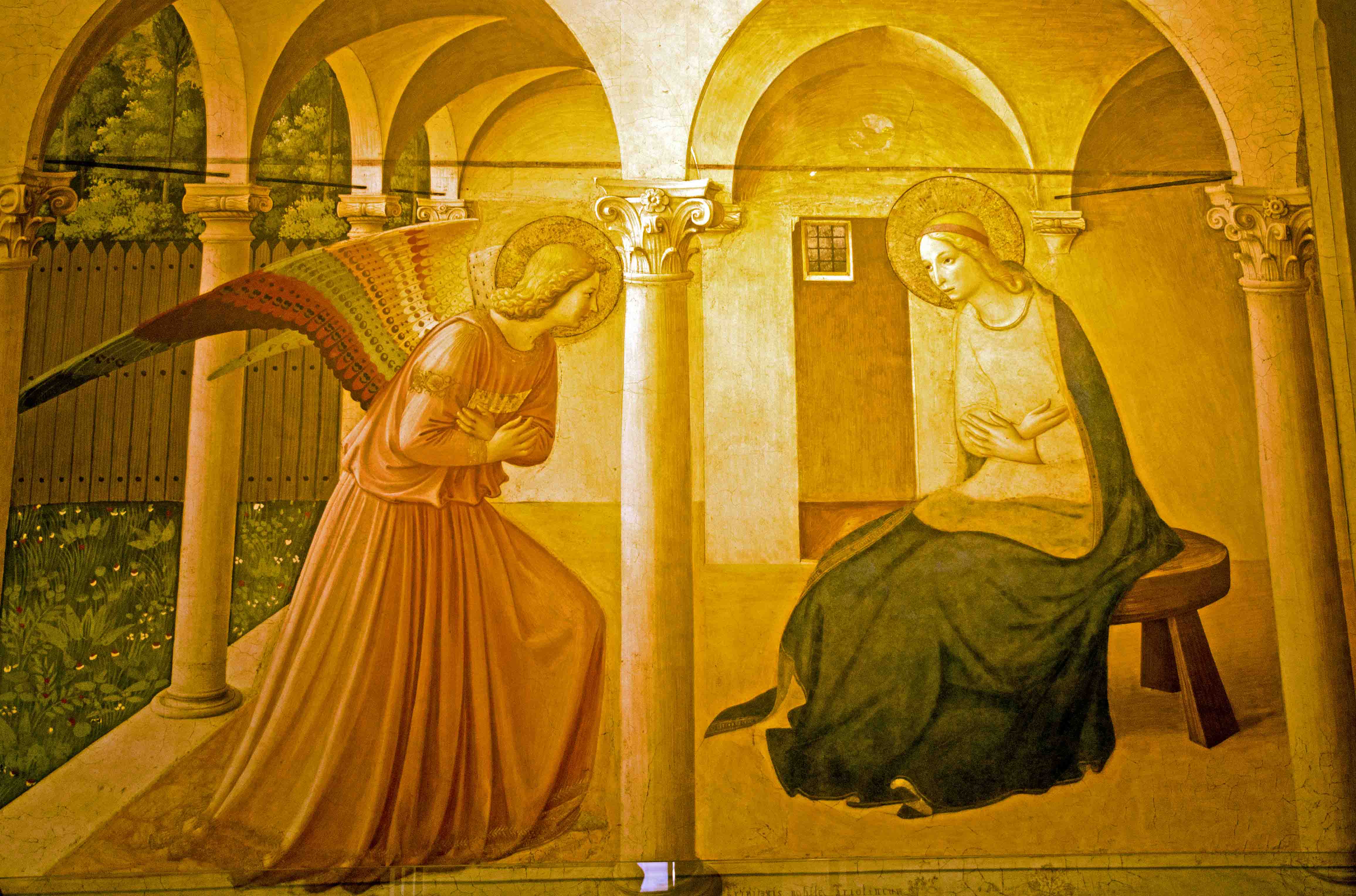
At the top of the stairs leading to the sleeping quarters (upper cells) there is a wall fresco by Fra Angelico, Annunciation. This theme of the annunciation – where the angel Gabriel tells the Virgin Mary that she is going to give birth to Jesus – is one that Fra Angelico (and many other renaissance artists of course) painted many times (there are four known examples; five if you count the one in cell 3 of the monastery). There is a superb Annunciation panel-painting by Fra Angelico in the Prado Museum in Madrid, whose colours are so magnificent and fresh, it looks like it was painted yesterday. The wall fresco (below) at San Marco is more muted, especially in my photograph, but haunting none-the-less. His Virgin Mary’s are always charmingly humble and devoted; I am not religious but I find these paintings very inspiring, in part for their straightforward qualities of gentleness and humanity.
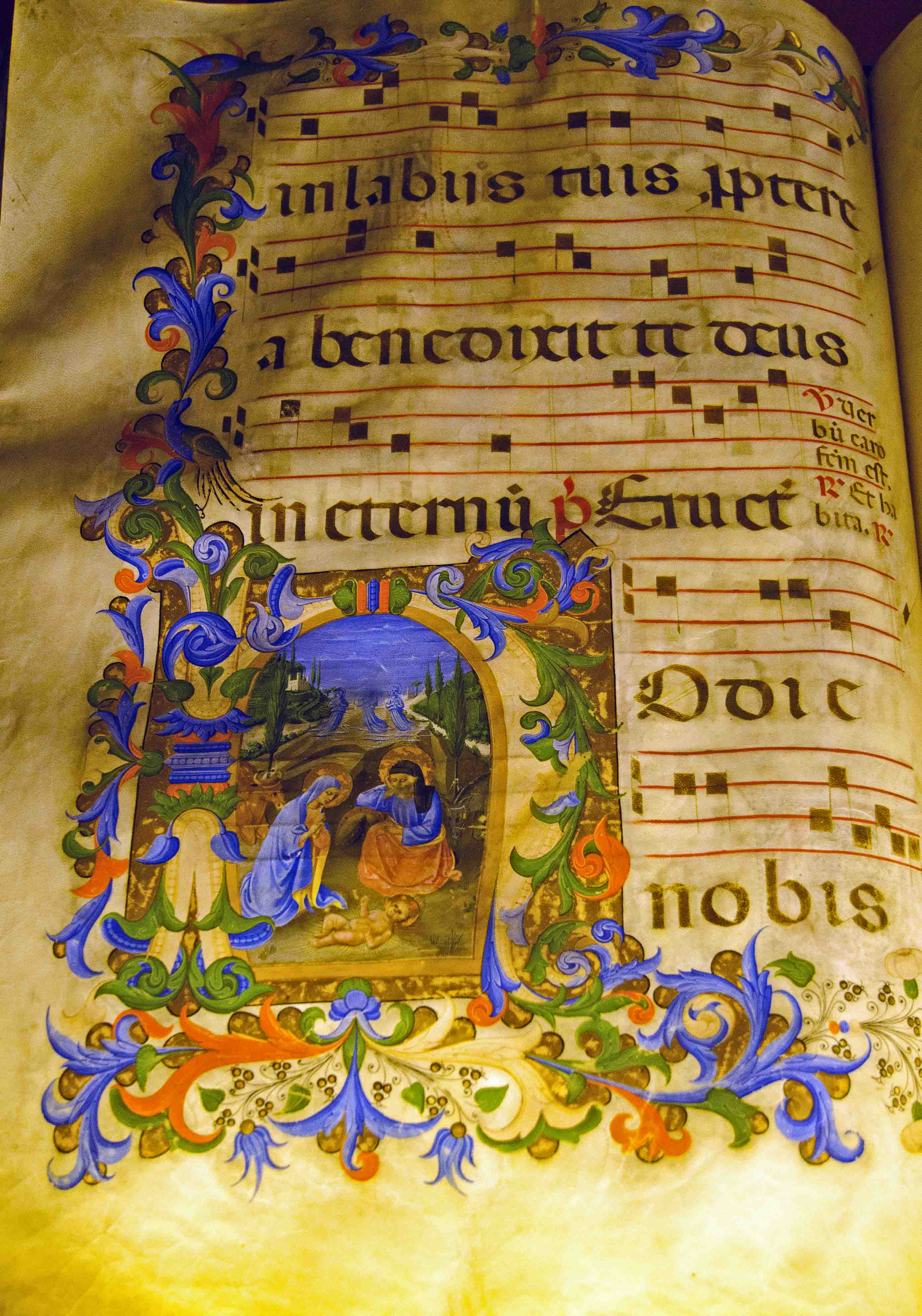
The library at the Museum San Marco is largely empty today, apart from display cabinets holding medieval illuminated manuscripts – one of which was illustrated by Fra Angelico. Illustrating missals (religious texts) was an activity carried out by the monks, and Fra Angelico also produced many miniature paintings in these beautiful books. I am not sure if this page (below) is by Fra Angelico, or one of his fellow monks, but it shows how each page is a work of art.
The library was full of books in its day, including ancient Greek and Latin texts – whose rediscovery led to the renaissance – and was a place where the friars and other visitors could work and philosophise. The poet prince, Lorenzo de’ Medici – the so-called Godfather of the Renaissance – came here to meet his humanist friends (such as the Renaissance philosopher Pico della Mirandola and classical scholar Agnolo Poliziano).
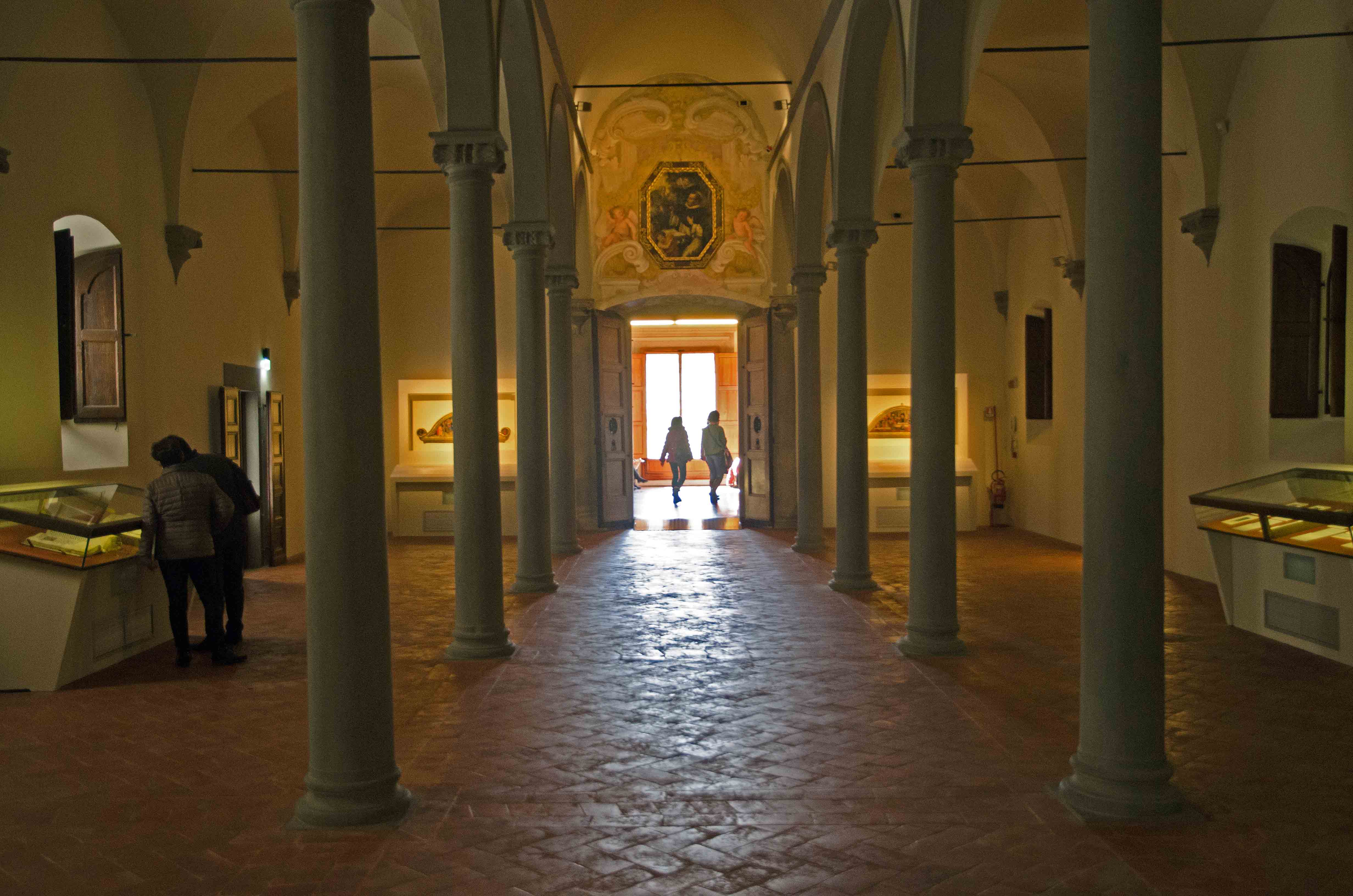
Museo di San Marco, Library
So in many ways, this place was as much a workshop of ideas, as a workshop of craftmanship and illustration (what we would call painting). To demonstrate the extent of the workmanship and dedication which went into these works, it is worth considering one painting in detail: the so-called Tabernacolo dei Linaioli (shown below).
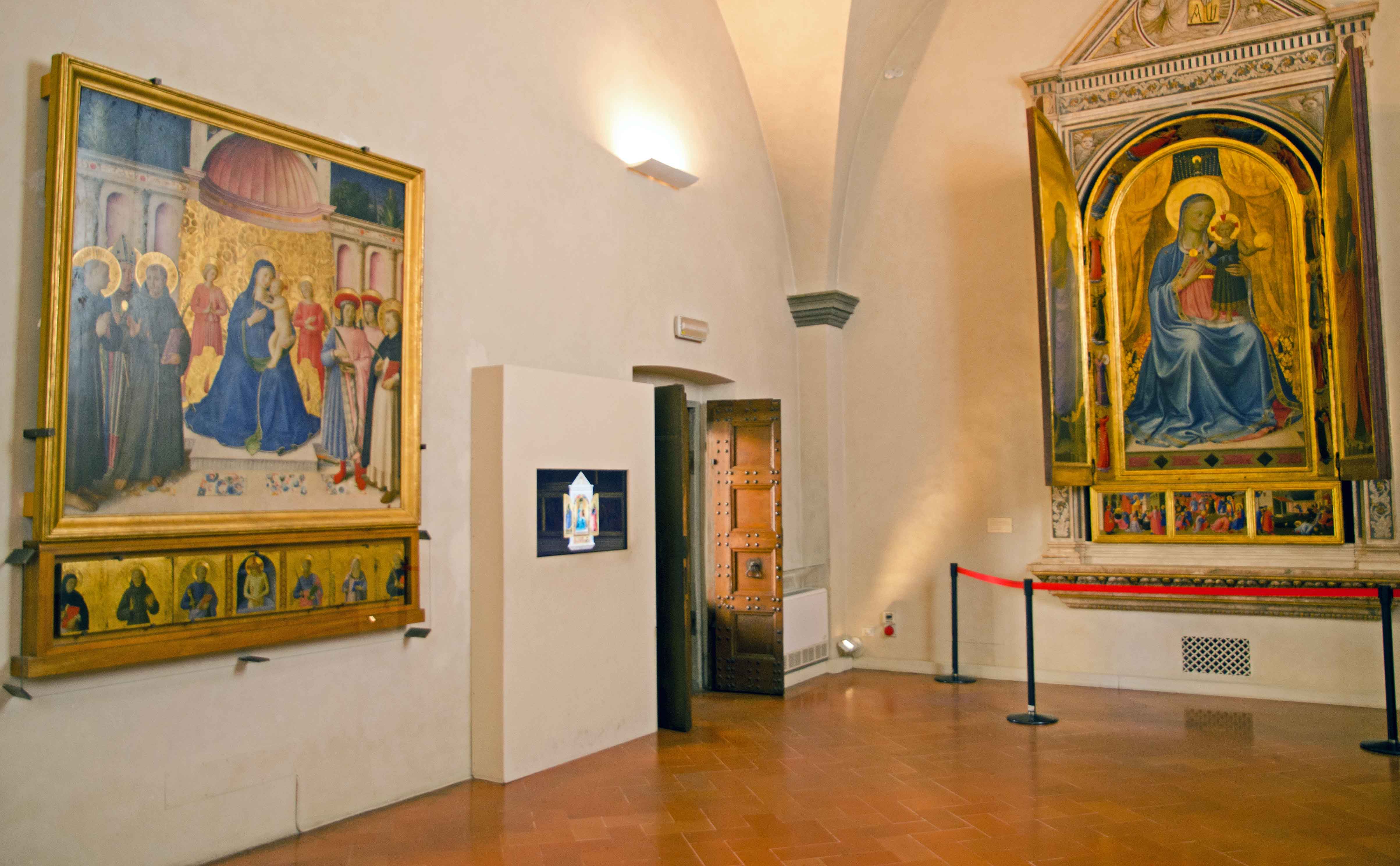
The Tabernacle of the Linaioli, is a marble shrine displaying religious paintings, which was made for the guild of line (=linen) workers in Florence, in 1433-1434. Fra Angelico reportedly received 190 gold florins for doing the painting (I wonder what thet would be worth today?), which took the best part of two years to complete. The overall design of the frame was by another Florentine artist, Lorenzo Ghiberti, who commissioned a third artist, Simone di Nanni da Fiesole, to produce the marble parts. A joint creation.
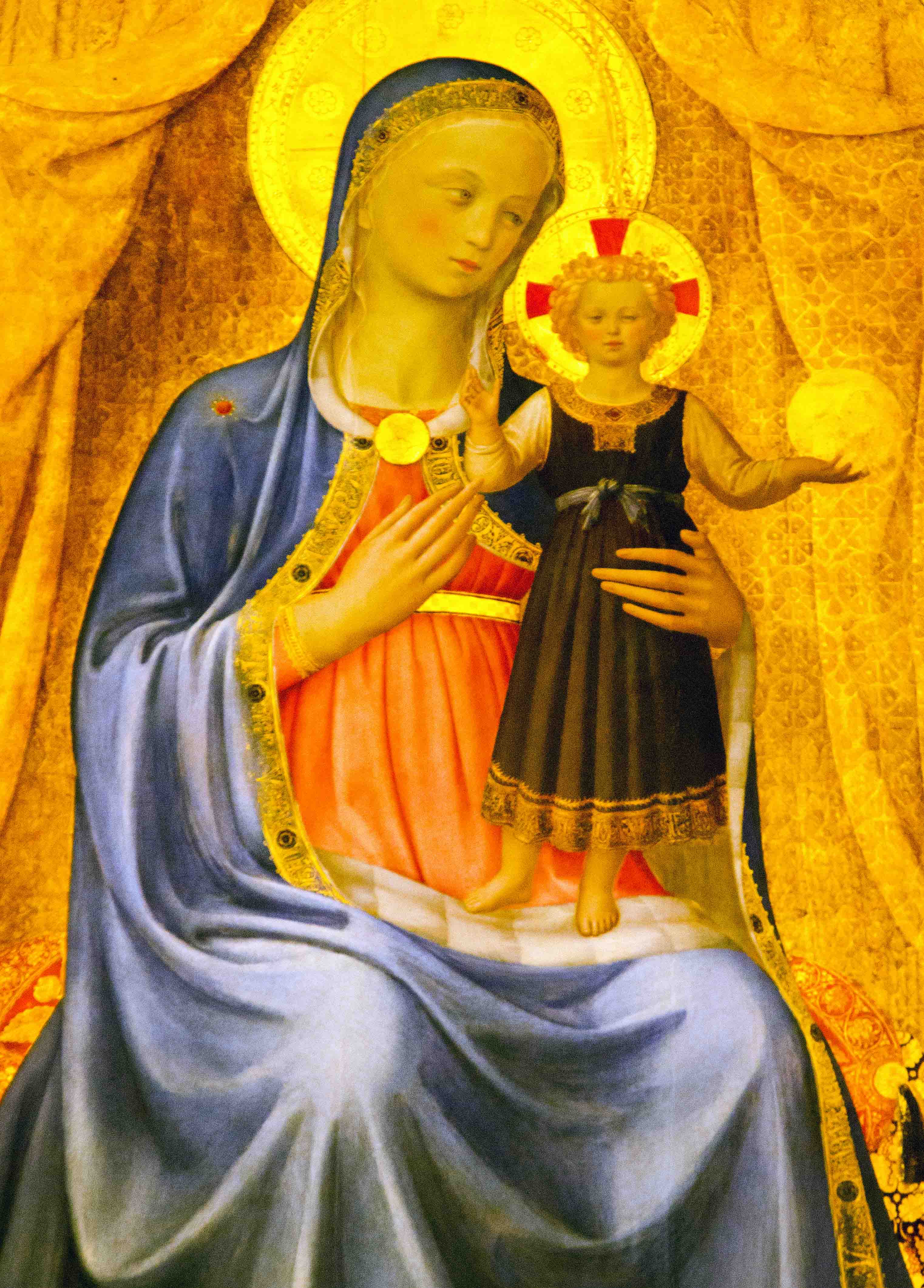
There are in effect eight separate paintings: two on each side of the doors (shutter panels), three smaller paintings along the bottom (called the predella) and the main central painting of the Madonna and child Jesus. If that were not enough, there are 12 musical angels arranged in an arc around the main panel. No wonder it took nearly two years to complete!

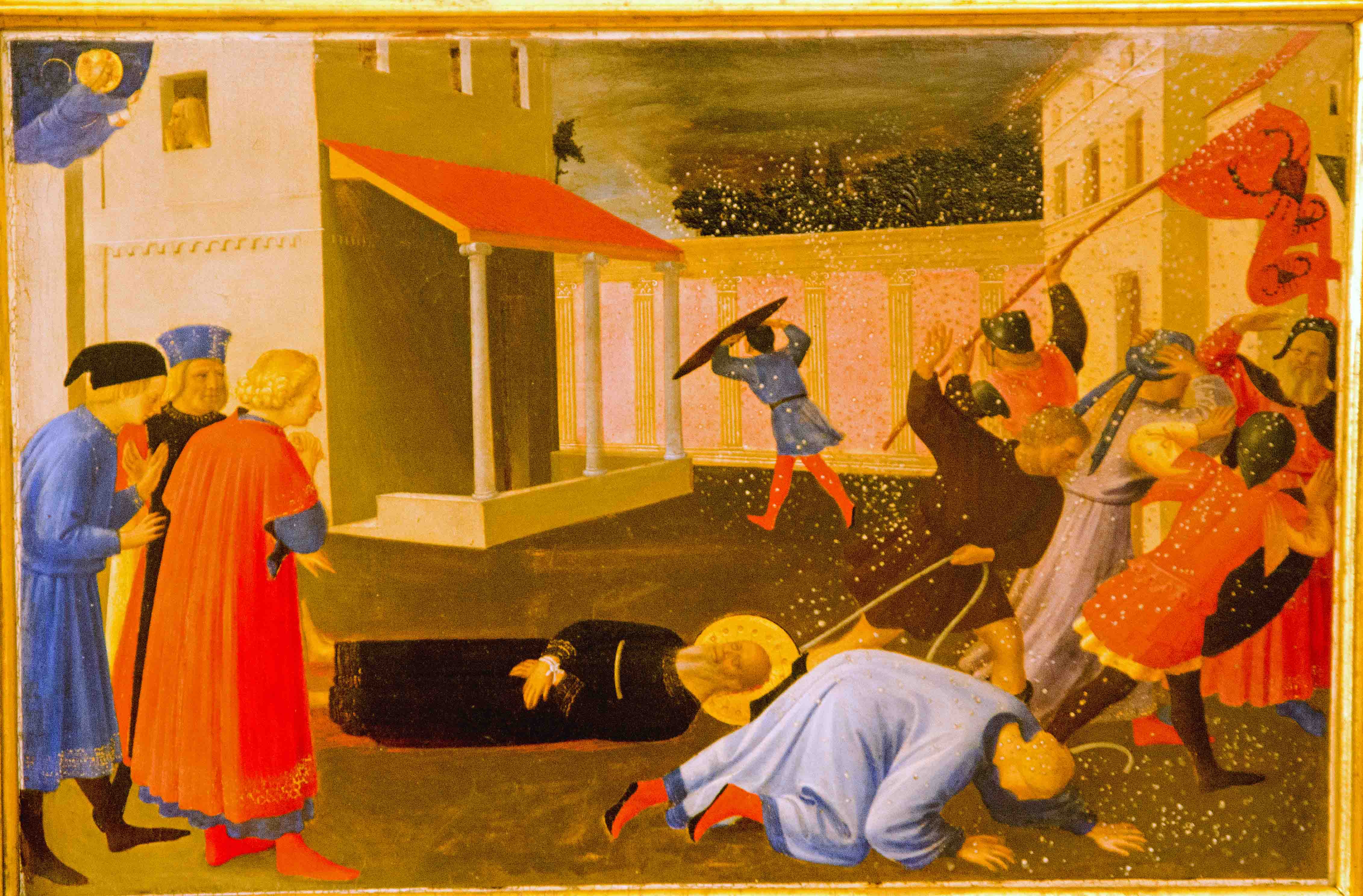
The righthand panel of the predella – the Martyrdom of St. Mark – is quite unique for the period. It illustrates a scene where the poor saint is being dragged through the streets of Alexandria in a hailstorm. The white balls of hail are very realistic (below).
There are many other works of art in the Musem San Marco, by both Fra Angelico, and other artists (such as Fra Bartolomeo) which I have not mentioned. This was also the place where Fra Girolamo Savonarola – who inspired the bonfire of the vanities – lived until he was put to death by being burnt at the stake! But that’s another story! Fra Angelico went on from here to paint a number of chapels in Rome for the Popes (Eugenius IV and his successor Nicholas V). These are fabulous works of a somewhat different style, and some I would love to see.
There are dozens of websites featuring this museum, which is a fascinating and enjoyable place to visit. They also permit the taking of photographs (without the use of flash; unfortunately many people do not know how to turn the flash off on their cameras!) which is a wonderful way to sample the art and review and enjoy it back at home. I don’t know how Fra Angelico would have fared in the digital age, but I can’t help thinking that he was such a talented and inspired person, that he would have produced something equally remarkable in our age.
 Ray Cannon's travel and photography blog
Leave a comment