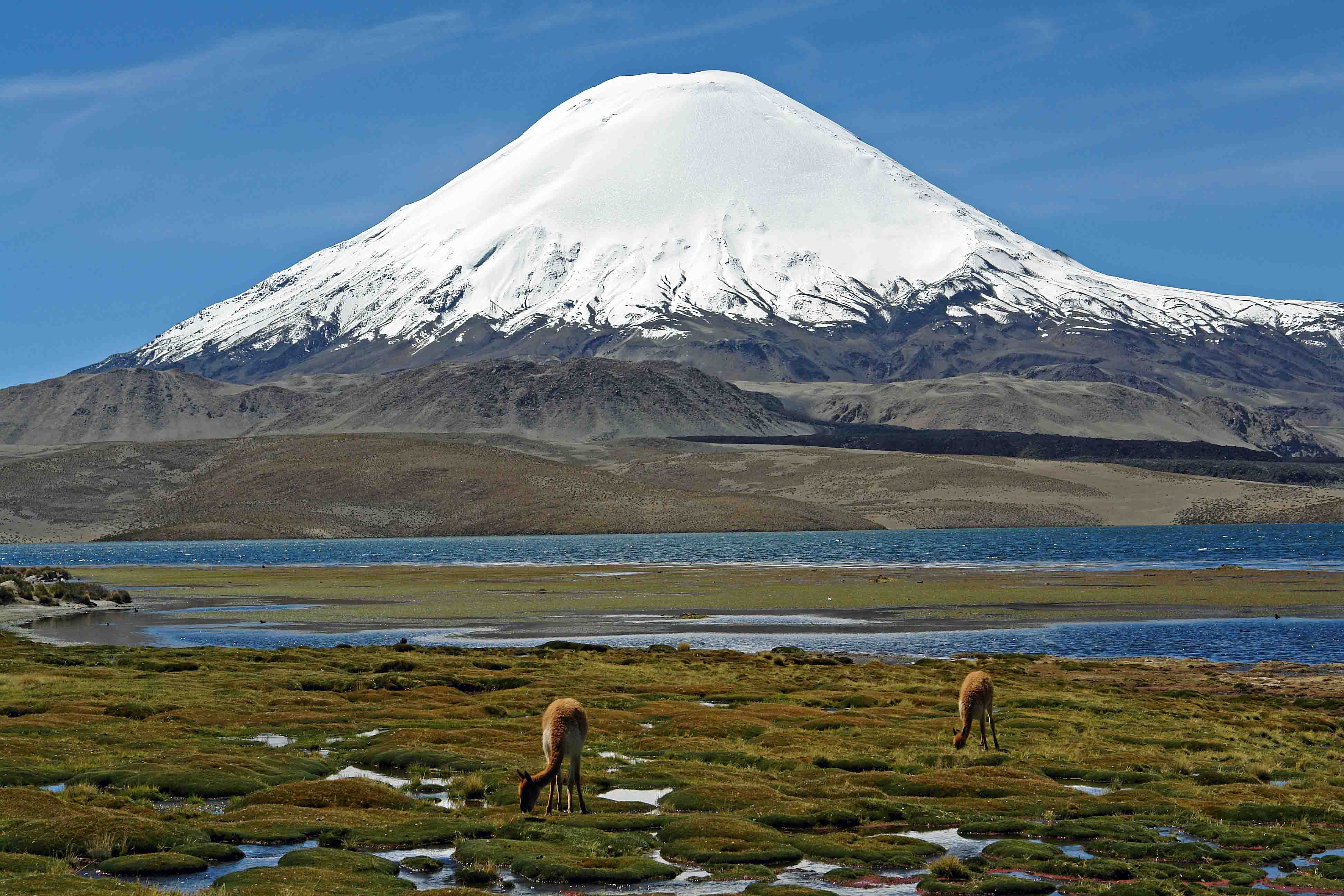
I visited Lauca National Park in northern Chile, in April 2007. I had a Sony DSC-R1 camera in those days, and I only took Jpegs. I went back over the photographs I took recently – taking the time to edit a few in Adobe Photoshop – and was surprised to find that I could improve the original shots quite a lot!
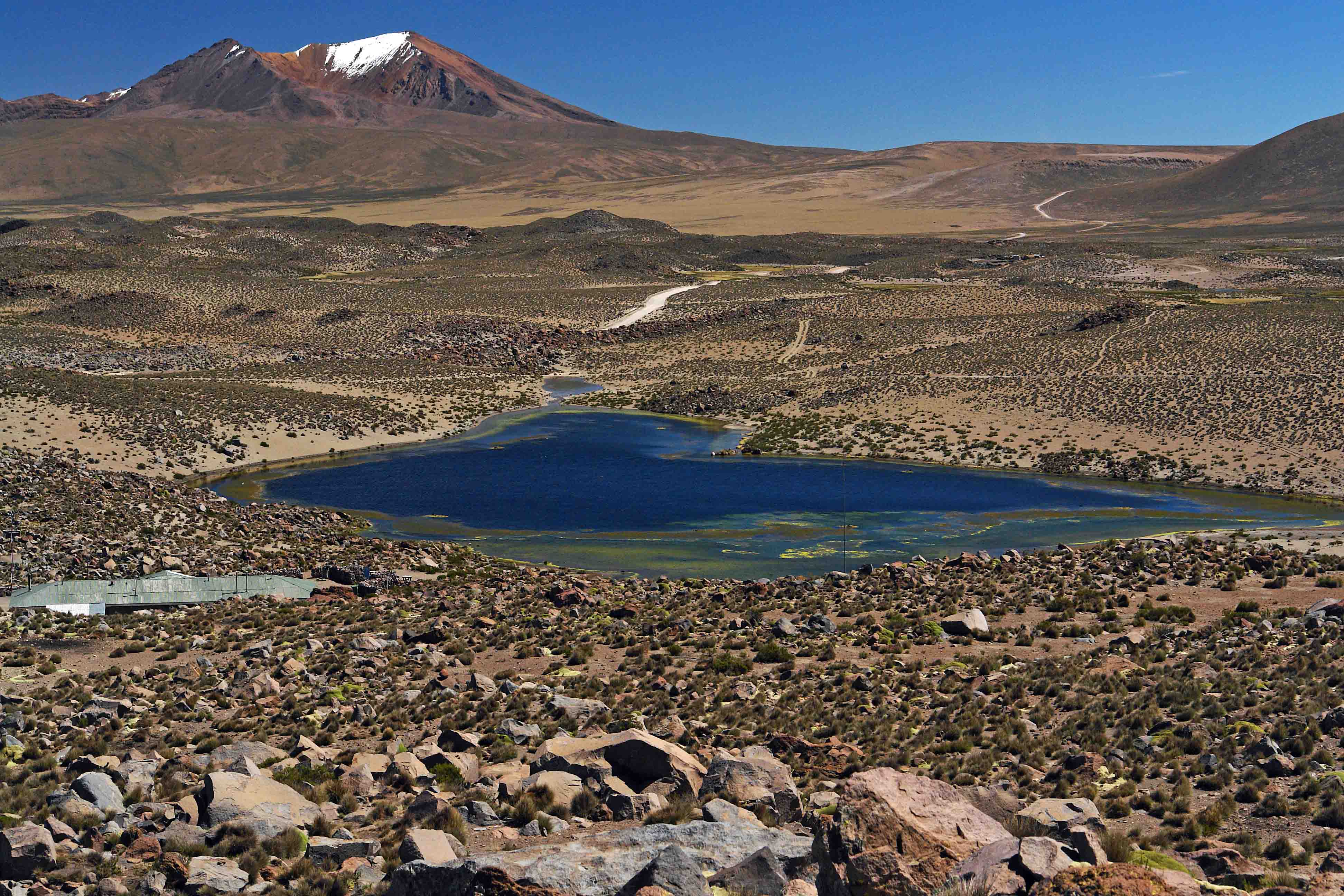
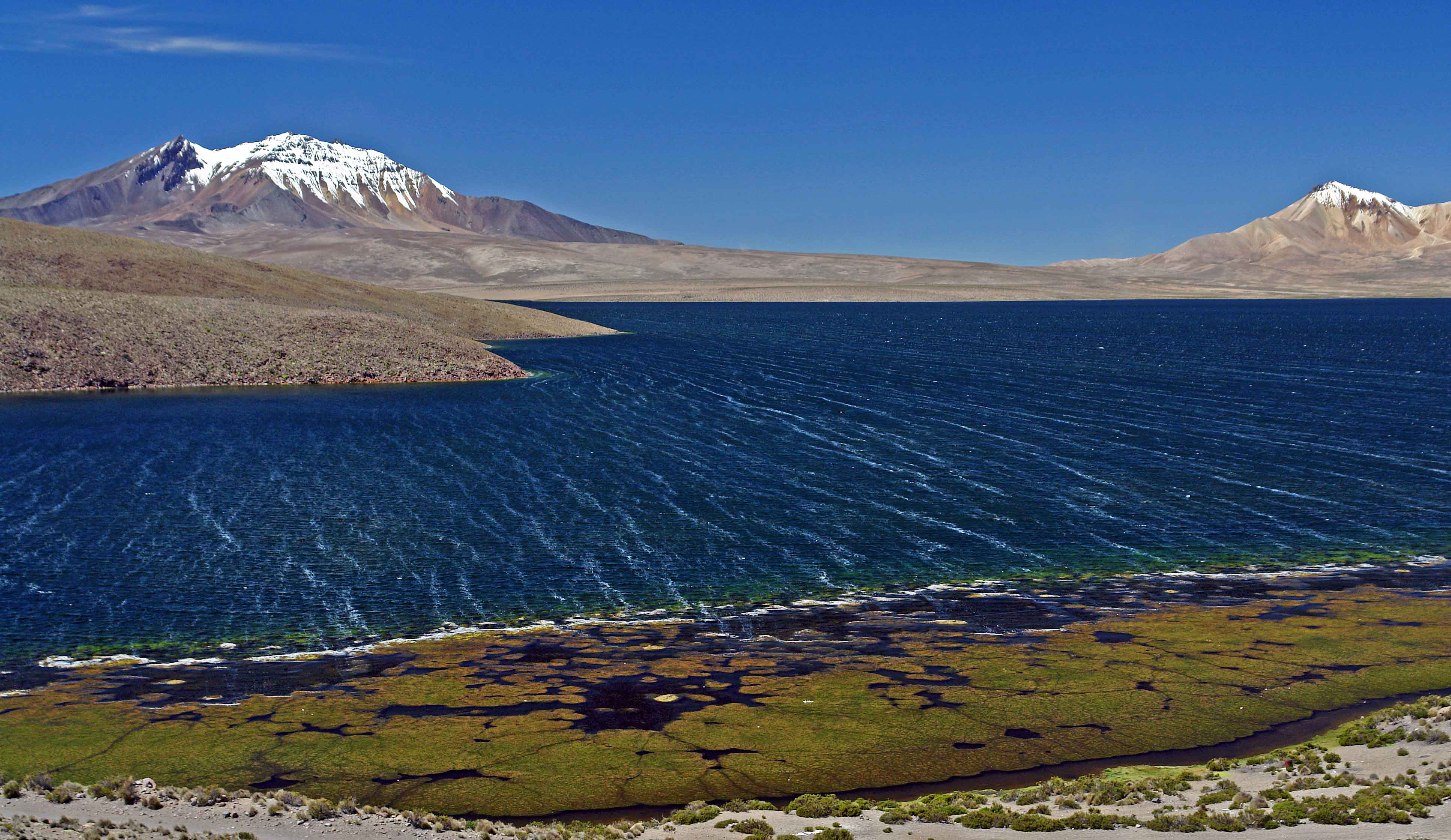
Lauca National Park with lake
Lauca NP is a stunningly beautiful area (1,379 km2 ) of altiplano (high plateau) encompassing lakes and mountains. I drove there from the city of Arica (145 km east) on the coast. It is a remarkably journey as one gradually passes through a series of ecosystems, from completely dry desert (where it never rains and there are no plants!), moving up into areas with slightly more rainfall and a few cacti, then into the pre-puna (2900–3900 m) before reaching the so-called puna steppe shrublands above 4000 m .
There are no cacti at first, until about 800m, where presumably it rains very occasionally. Otherwise, the only vegetation is in the valley bottoms, feeding off any moisture that remains from streams which occasionally flow down off the Andes, to the east.

The river valleys running through the desert get their water from the mountains and are incredibly fertile, growing all sorts of wonderful produce, such as fruit and olives.

The strange Candelabra cacti (Browningia candelaris) occur in an attitudinal zone – perhaps between 1,600 and 2,000m – in the still very dry landscape on the way up to the altiplano.

There are plenty of shrubs, lakes and wetlands on the altiplano itself. The wetlands are called ‘bofedales’ and are dominated by a type of rush, Oxychloe andina (Juncaceae).
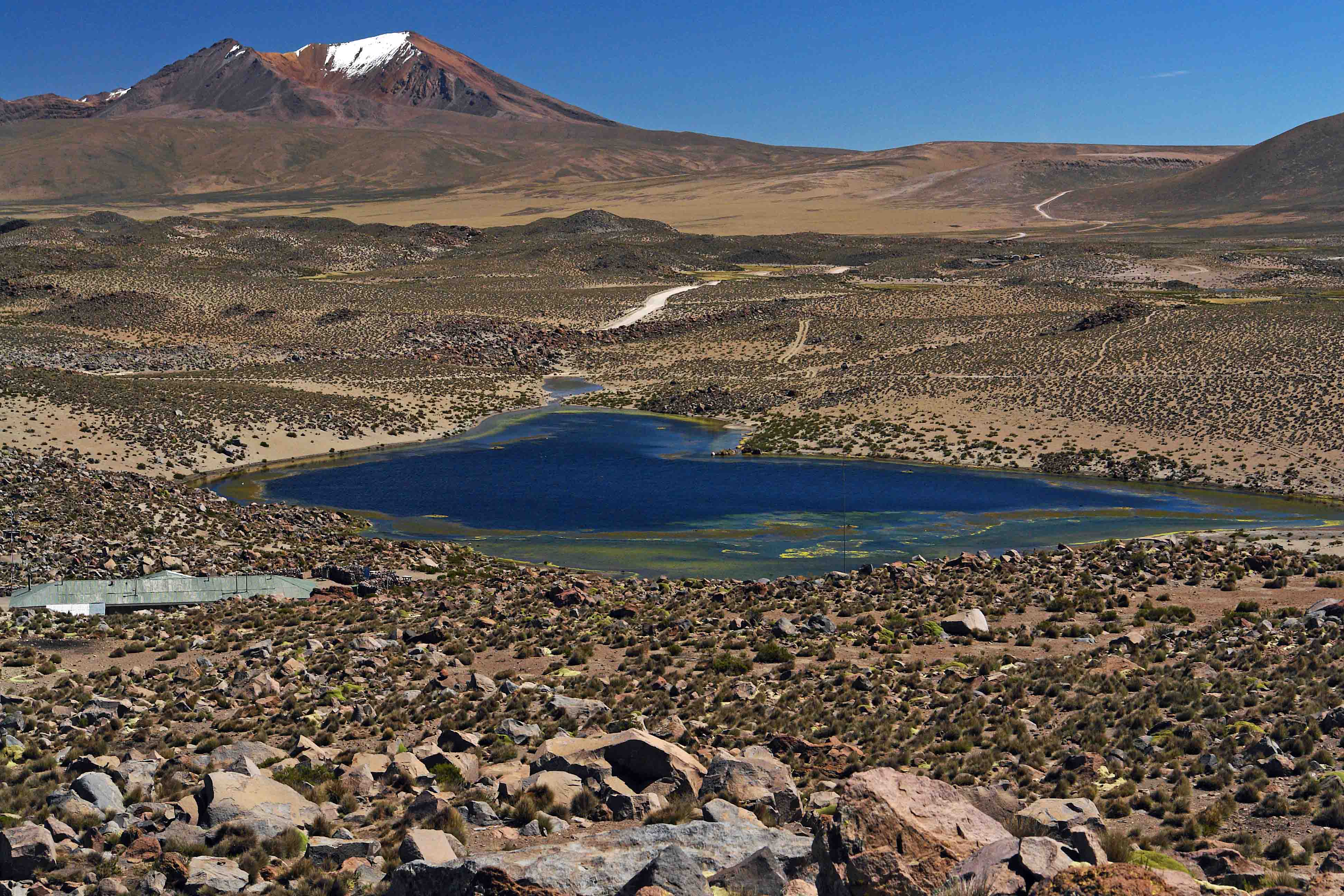

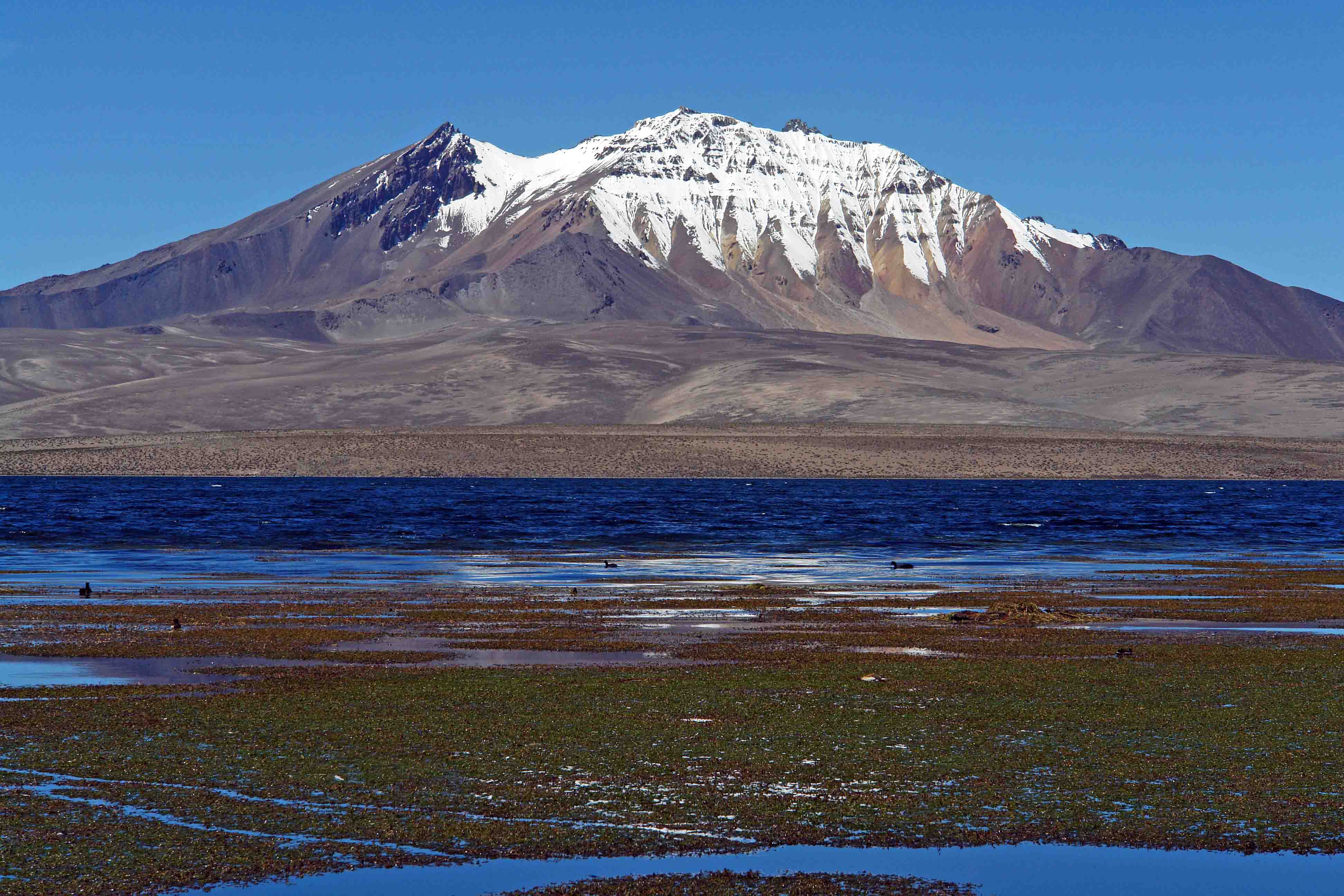
The park contains Lago (or lake) Chungará, which is apparently, the highest lake in the world, at 4518 m. I certainly felt quite breathless at this location, despite having spent the previous night at the small town of Putre (c. 3,500m), to acclimatise. It was windy, and one could only imagine how cold it would be once the sun had gone down!
Parinacota is a snow-clad volcano which dominates the surroundings; its smooth slopes rising up to 6,348 m (20,827 ft). The volcano is said to be ‘potentially active’ whatever that means, but it has not erupted since about 290AD ± 300 years.
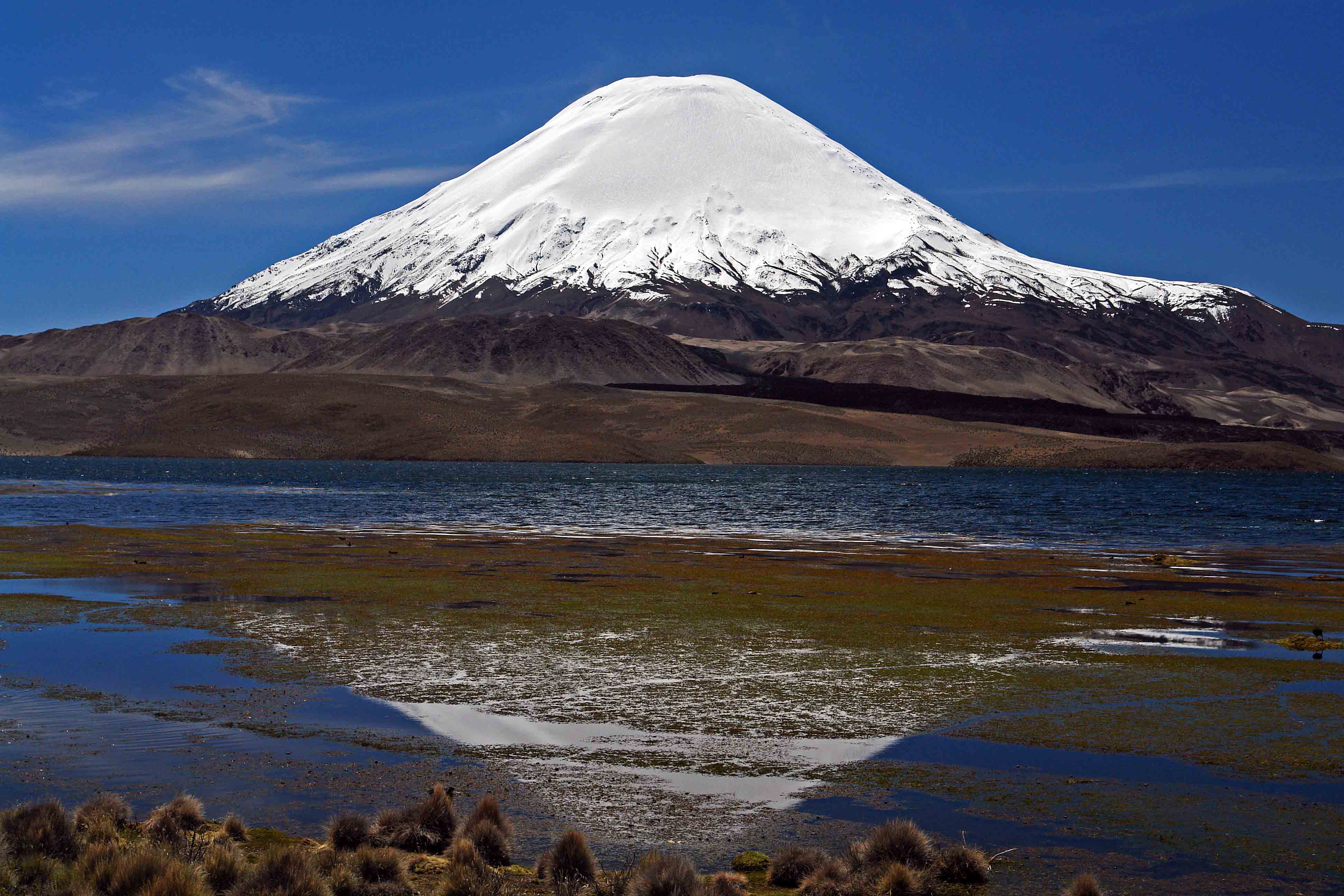
Parinacota volcano from lake Chungara
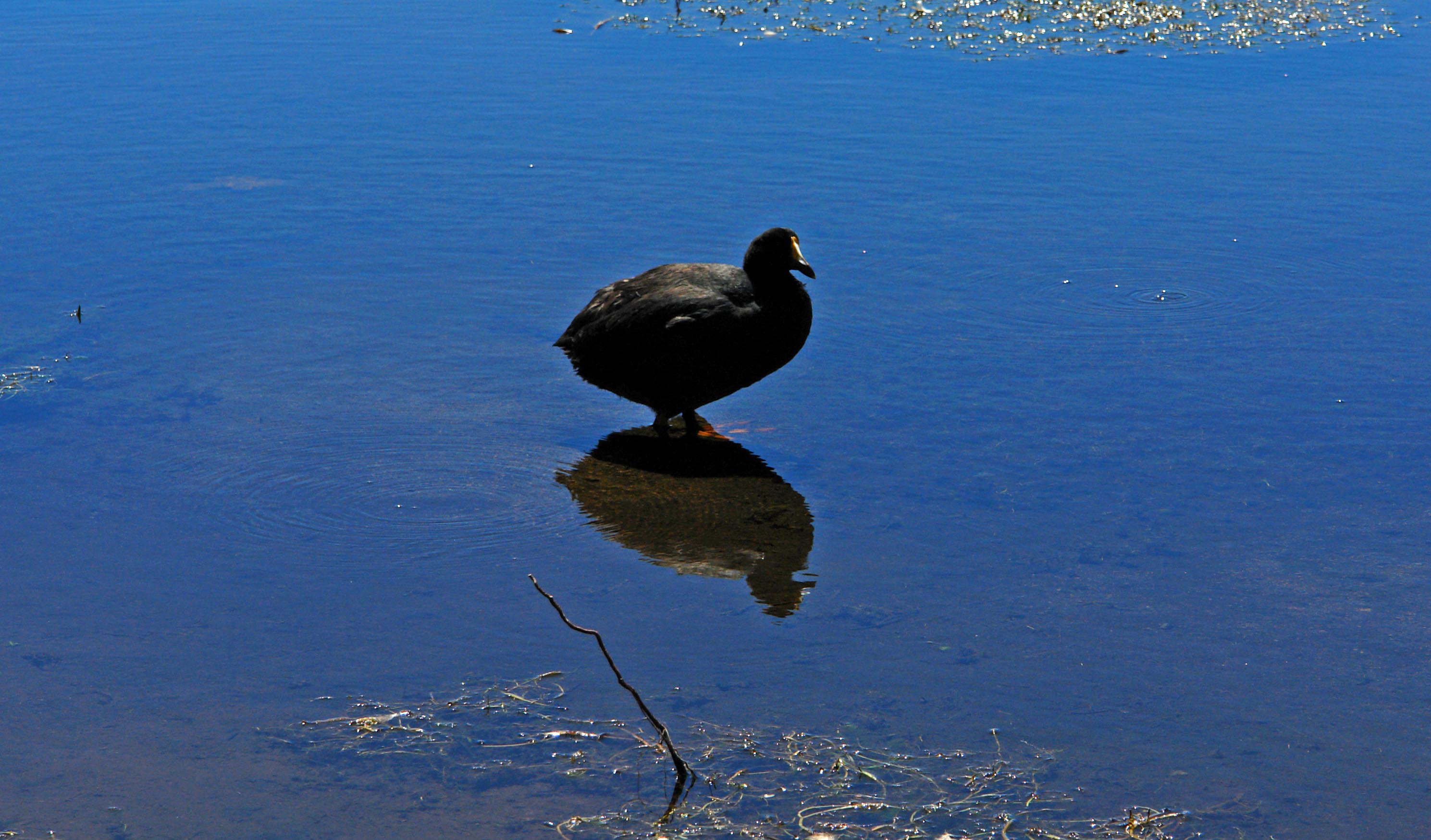
There are lots of interesting birds in this area. The only one I will mention is the Giant coot (Fulica gigantea), which is a strange flightless creature, rather different from coots we get in lakes in England.
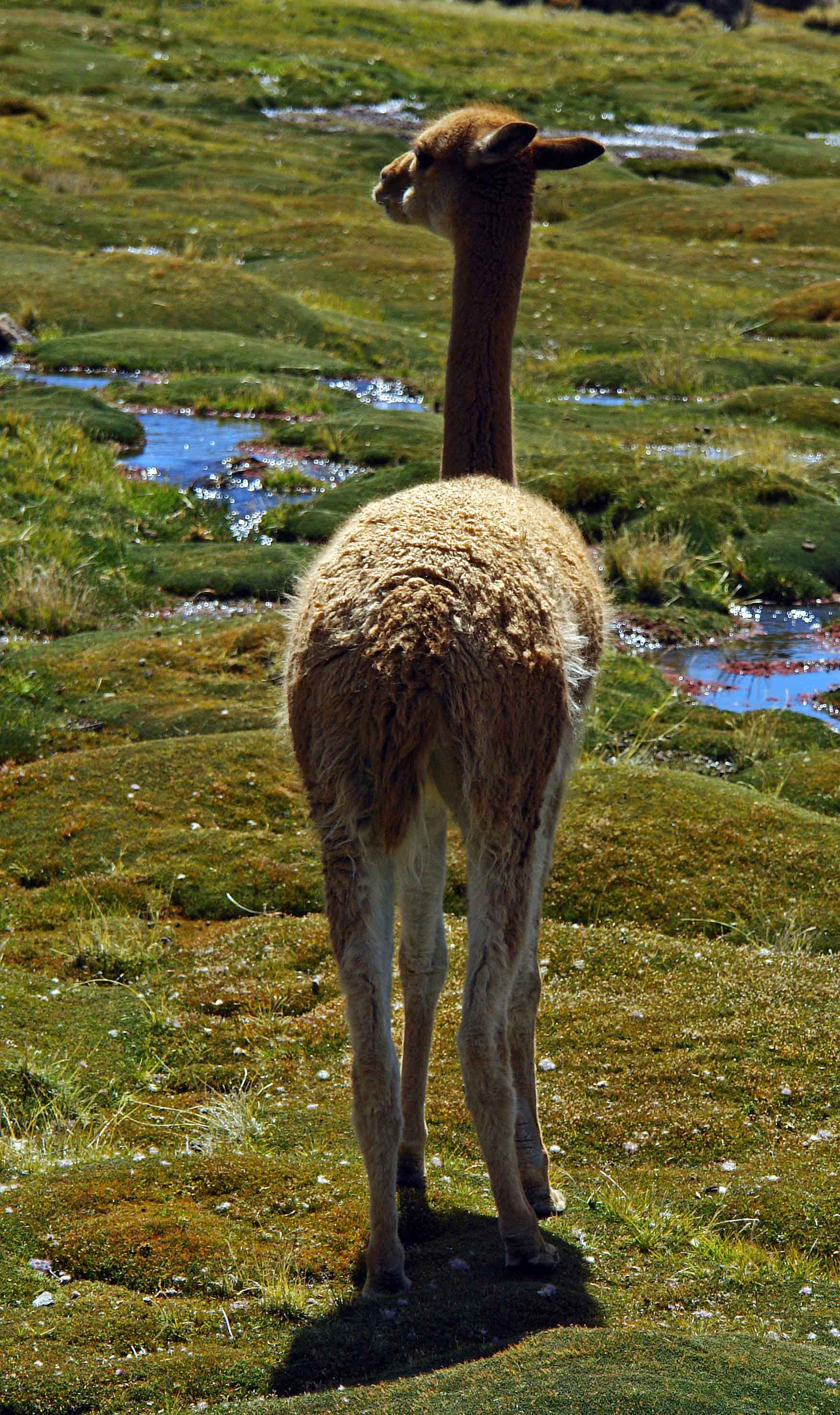
Vicuñas (Vicugna vicugna) are also quite common in this national park. They are very are attractive animals, which also produce the best wool; an exteremely fine, warm and thus, expensive fleece.
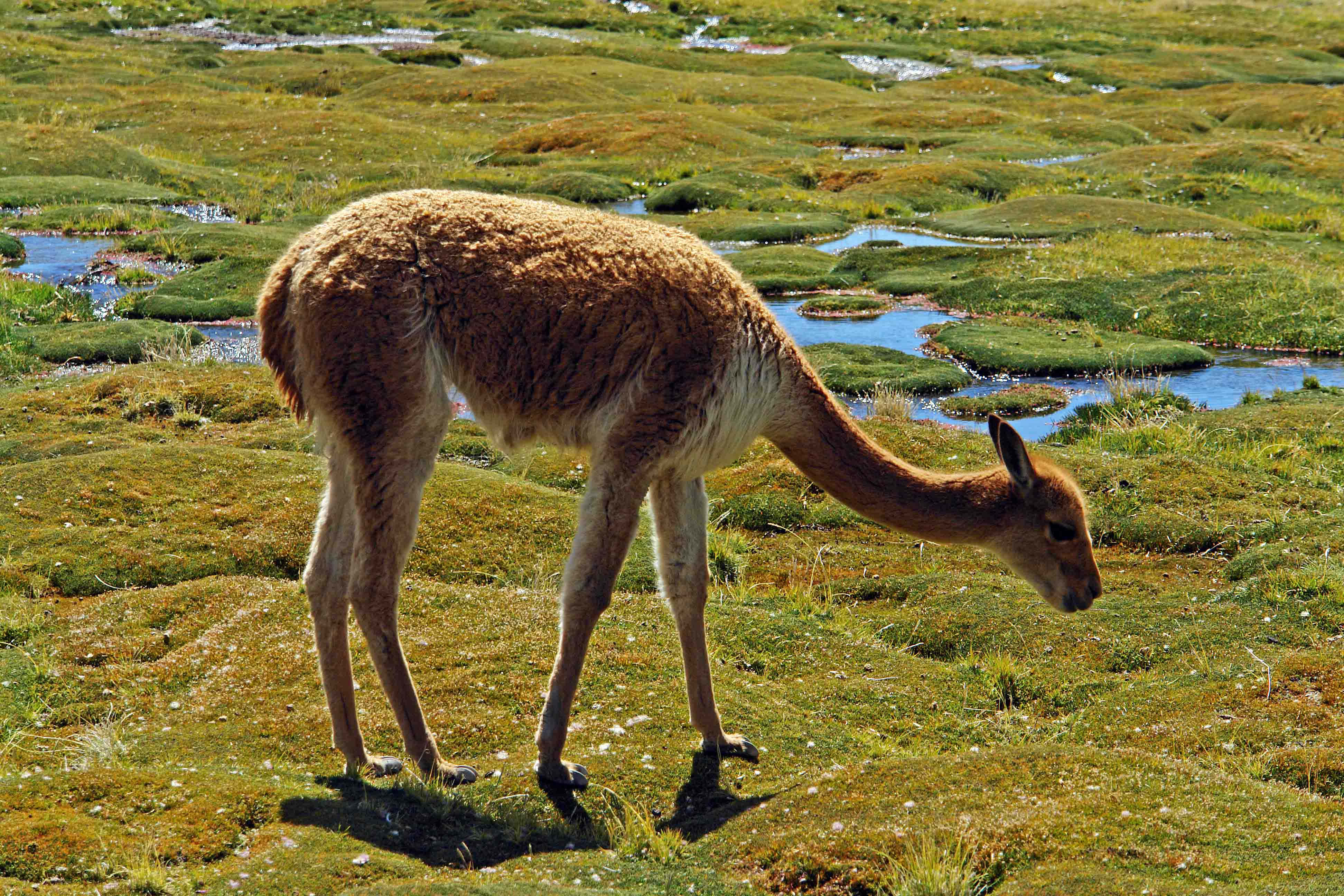
They live between 3,200 to 4,800 m in the Andes, where it must get very cold at night, so they must have evolved this very fine wool – finer than cashmere – to help them survive.
This is a spectacular region, one of the most interesting places I have ever visited, and I would love to go back there again some day (God willing).

Rundel, Philip W., and Beatriz Palma. “Preserving the unique puna ecosystems of the Andean altiplano: a descriptive account of Lauca National Park, Chile.”Mountain Research and Development 20.3 (2000): 262-271.

 Ray Cannon's travel and photography blog
Leave a comment