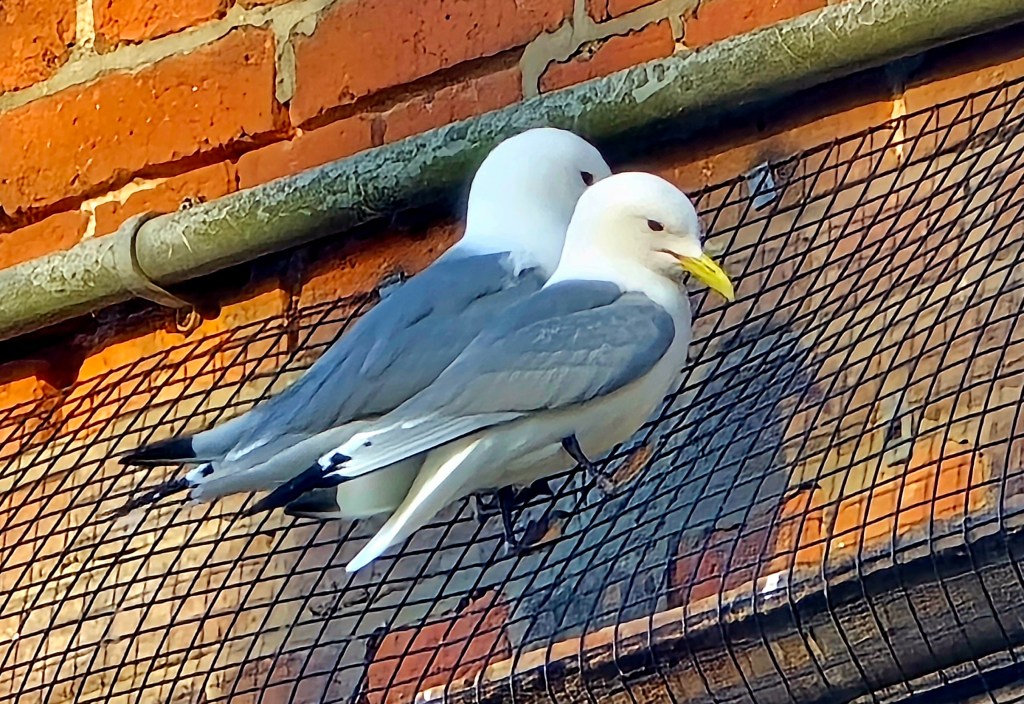
Imagine coming back from a winter spent at sea to find that your nest site is no longer there! That’s what’s happening to many kittiwakes in Scarborough this year.

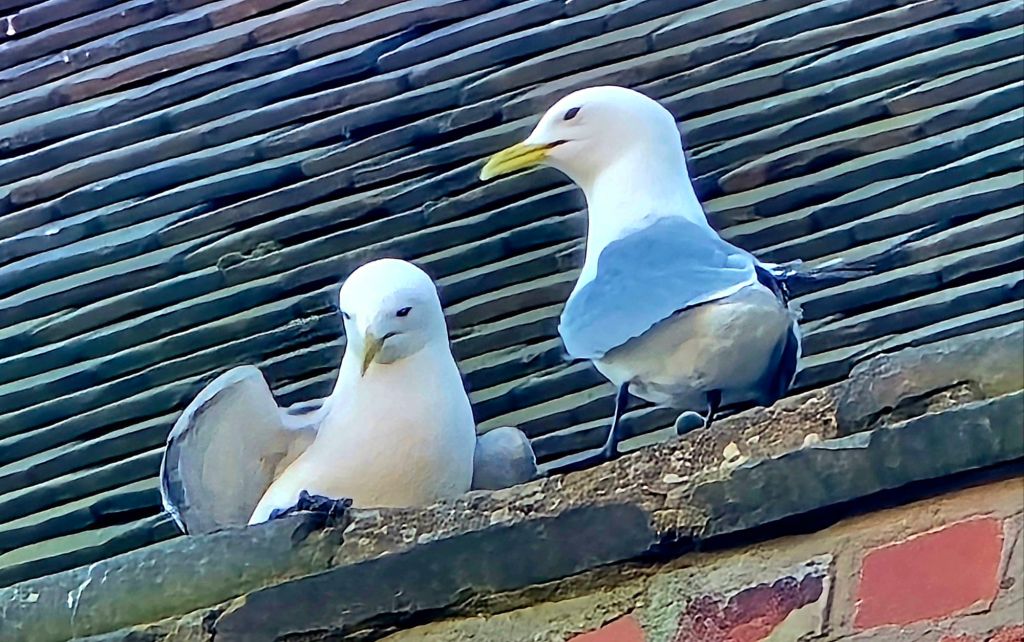
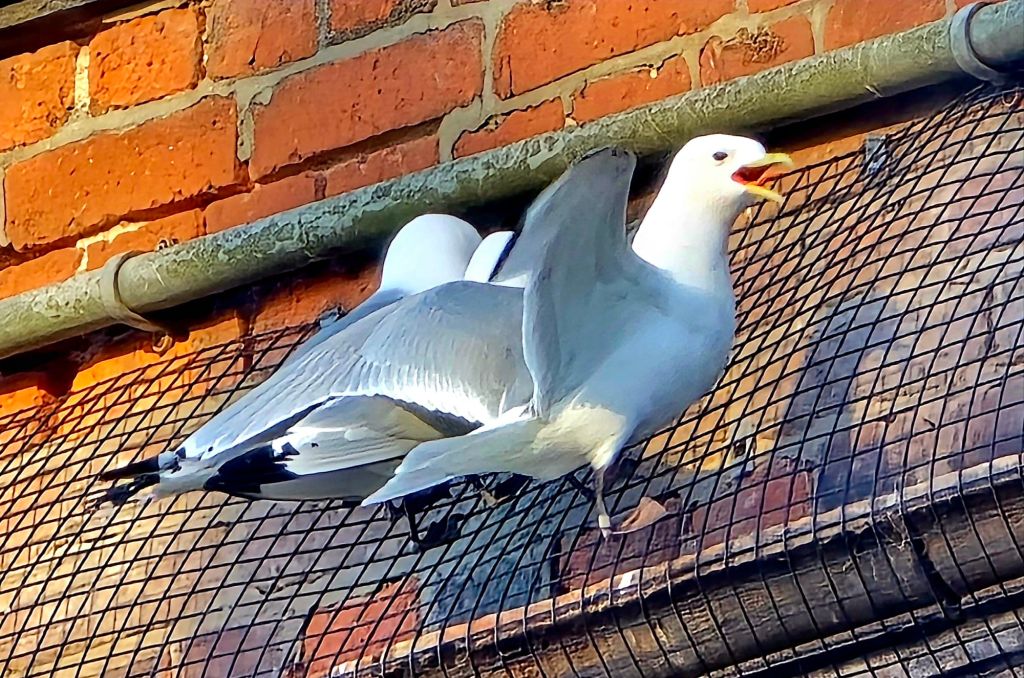
You’ve come back and have found your long lost love – kittiwake pairs do not stay together during the winter – but the euphoria is heavily dampened by the fact that your nesting site has gone! (Removed by the Council or the owners of the buildings).
Whereas, in years gone by, you had a lovely big nest of seaweed – built over a previous bed of spines, it has to be said (see below) – now there are just long vicious spines.
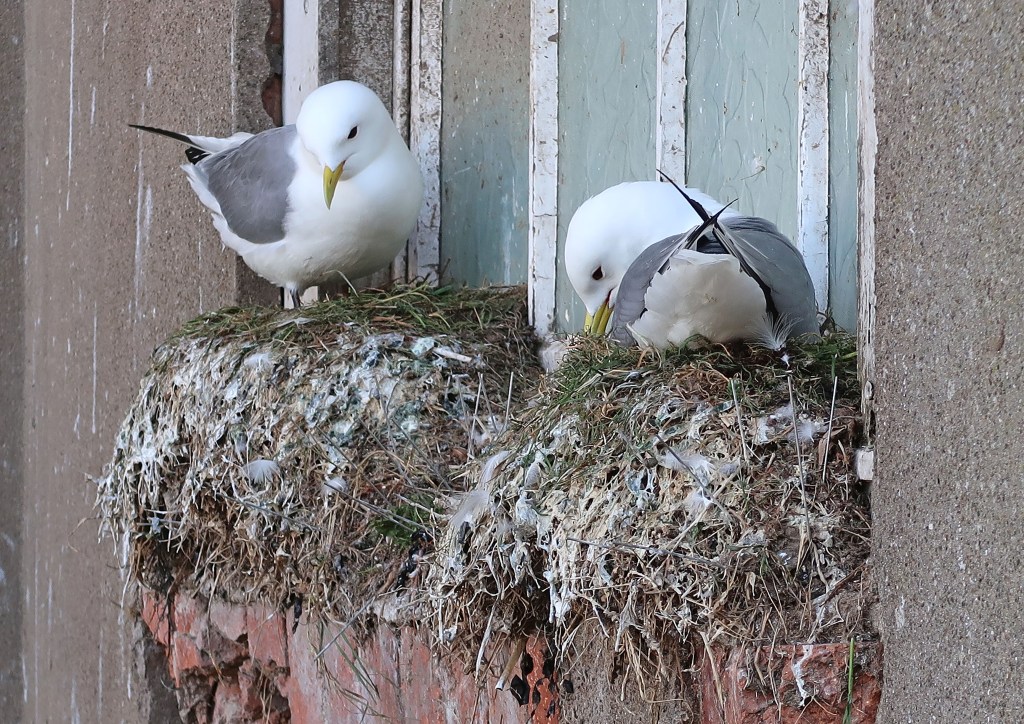
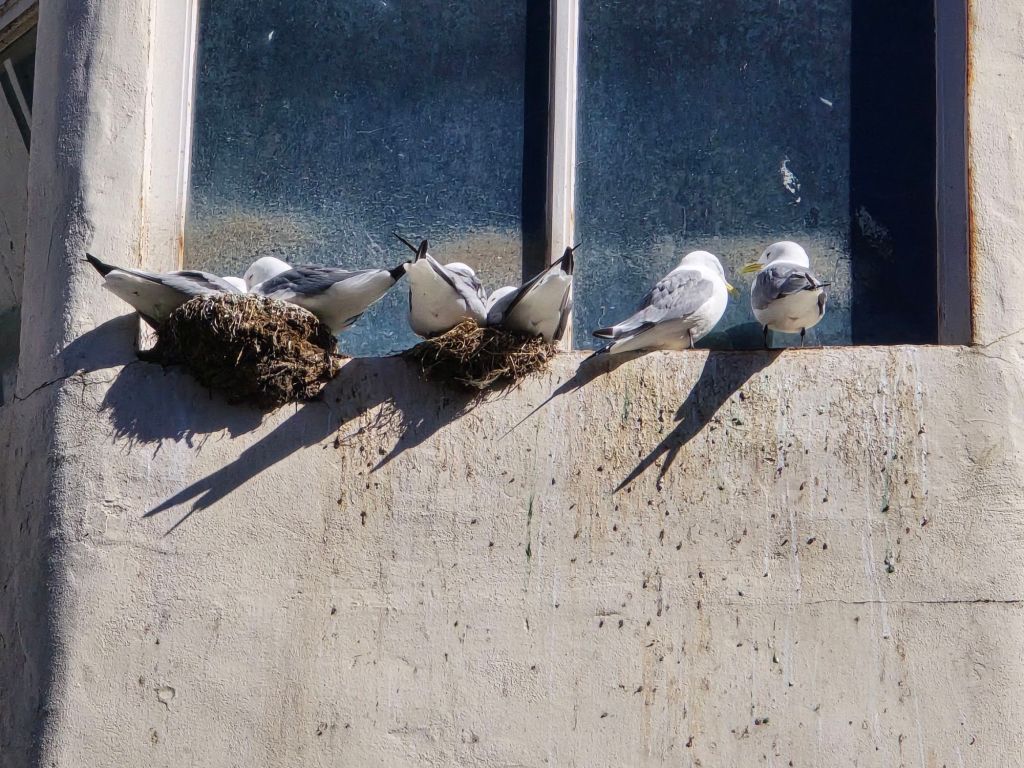
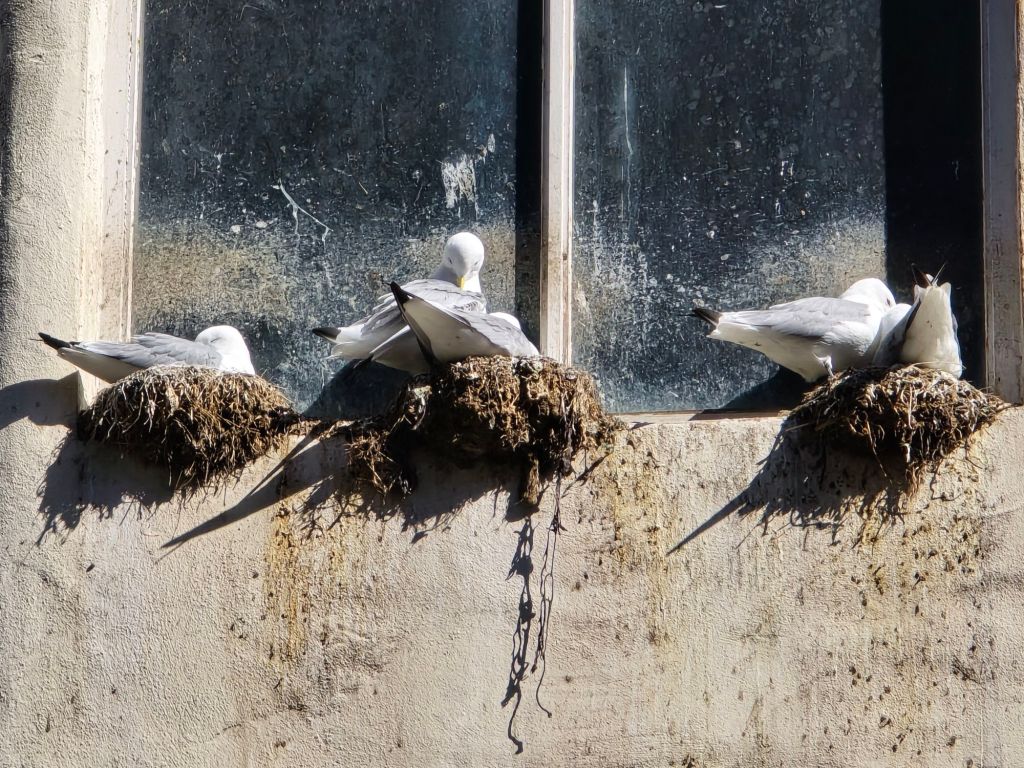
New spines have replaced the nests on this ledge (below), shown above with nesting birds.

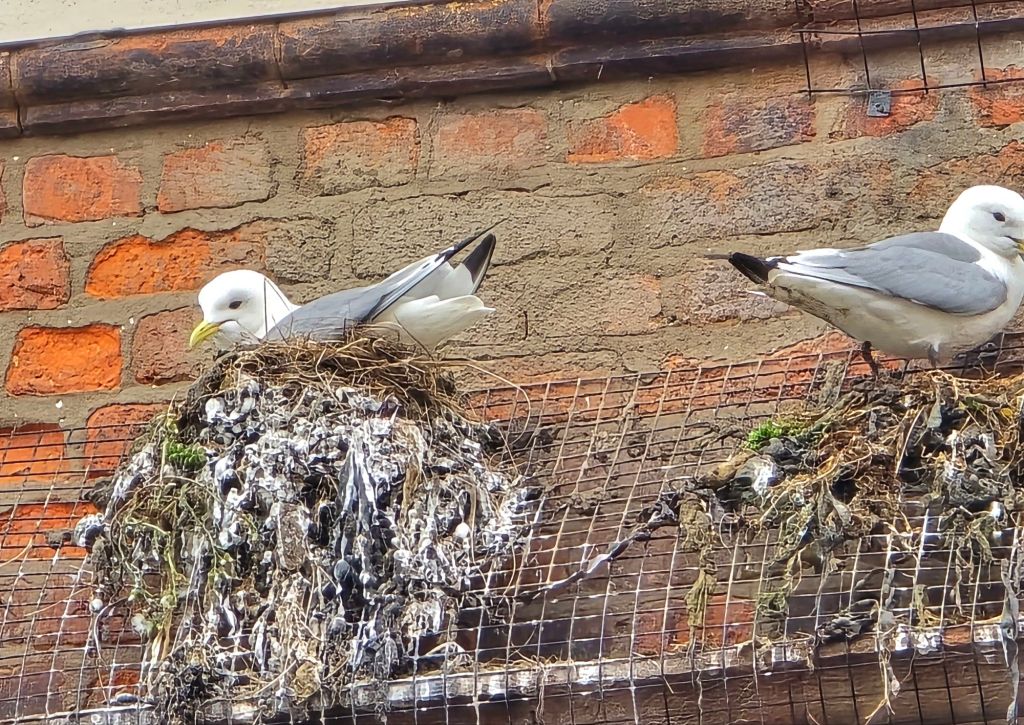
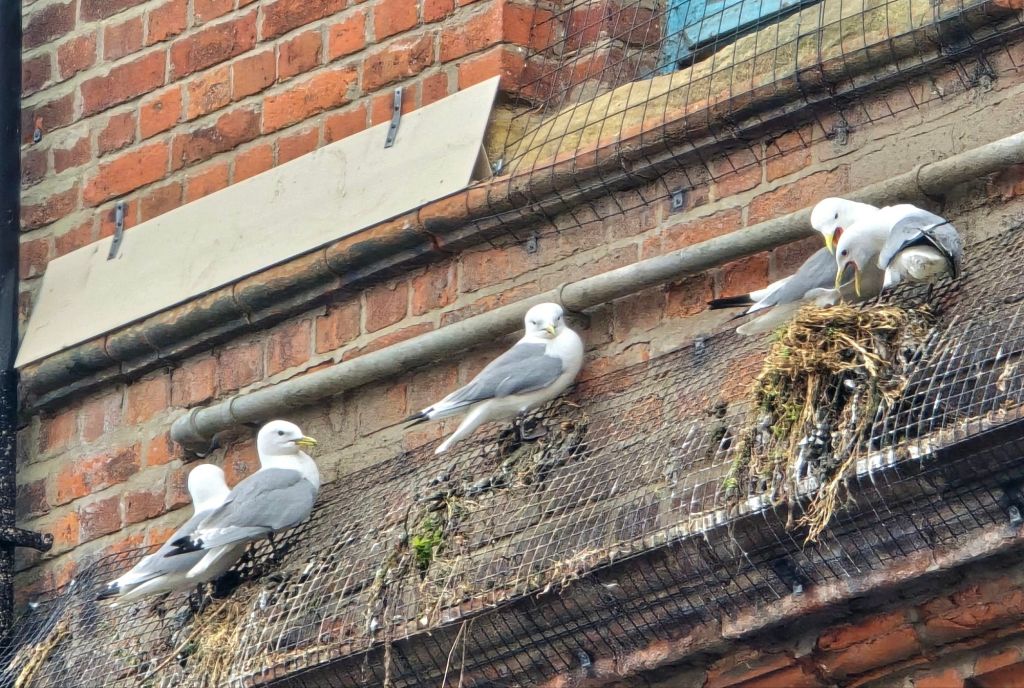
In other places in the town, the nests have been removed, and ledges have been covered on seagull-excluding mesh.
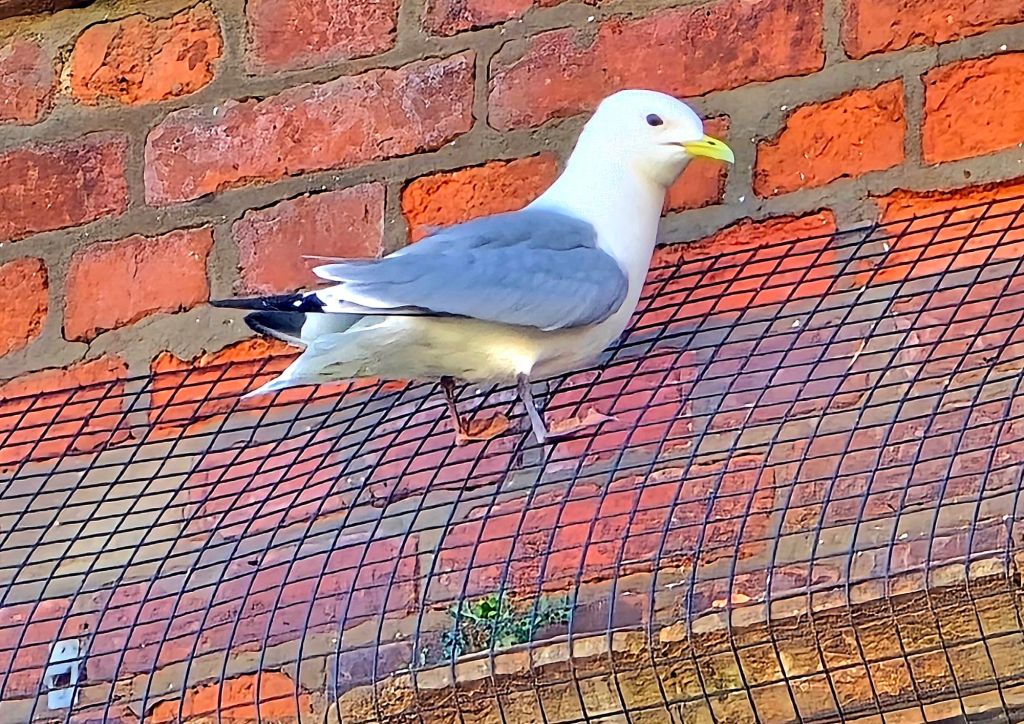

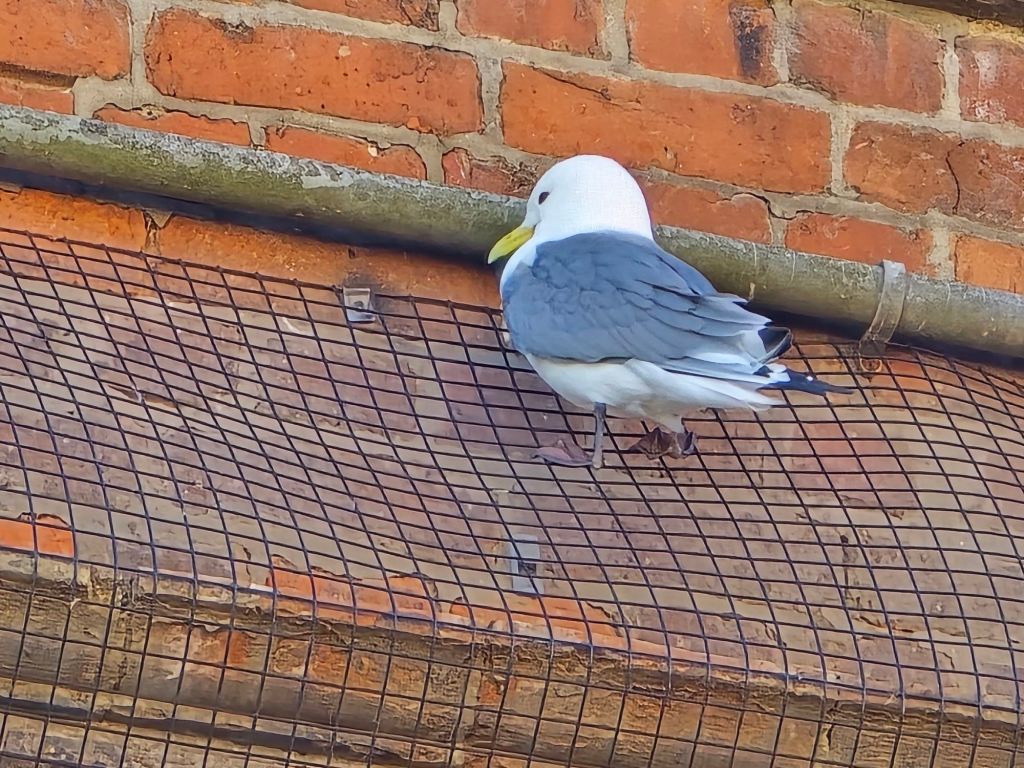
Now, one can understand that not everyone wants their window ledges covered in bird’s nests! But what’s a bird to do if it’s nested there for years and years?
The poor kittiwakes returning to their old nest sites look bewildered to me. They are standing on the mesh, looking down at where their nest used to be. I can almost hear them muttering “WTF!”
‘What happened? We’ve been nesting here for years! We have always nested in the town, unlike our cousins on the cliffs. What shall we do? Where shall we go?’
Some clever pairs have learned how to nest balanced on top of lamp-posts, but there are not too many of these, and we don’t all enjoy living above a busy road!
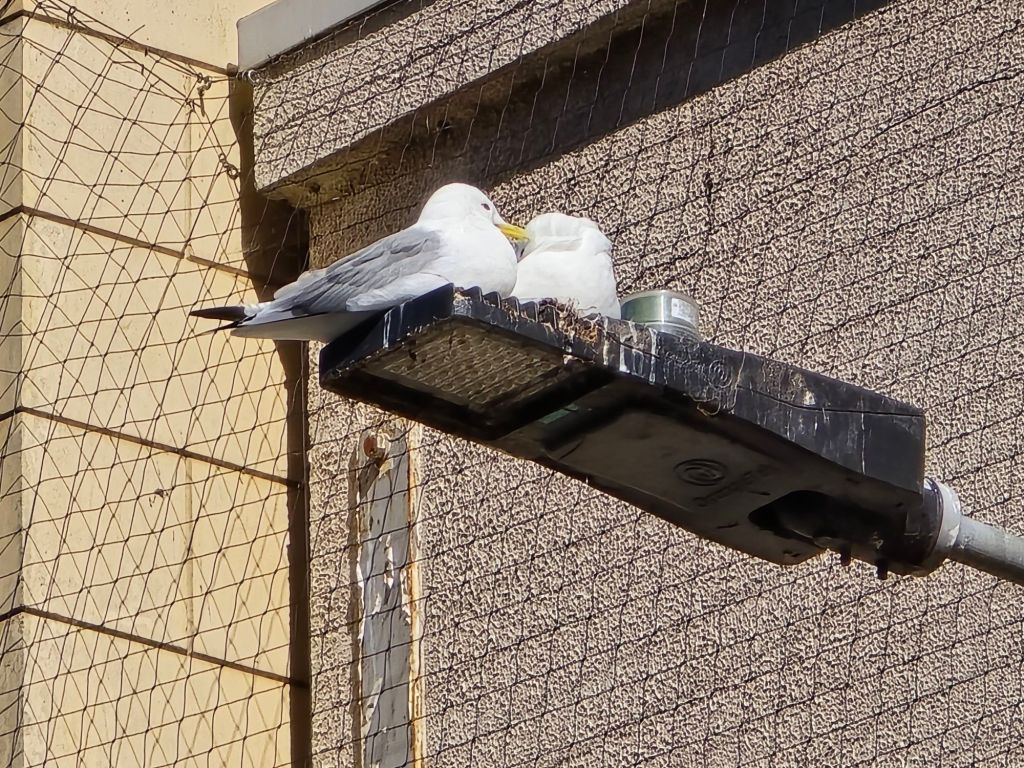
Another pair have opted for this other street light – at least they still have a nest site!

It’s a problem. Kittiwakes have been moving into seaside towns for many years now, since the 1940’s. Life on a window ledge may seem challenging to us, but for kittiwakes, it offers an existence relatively free from predators: like peregrine falcons, which predate the birds living on the cliffs. They don’t seem to mind the hustle and bustle of the town, but unlike the larger herring gulls – which steal pasties and ice creams from unsuspecting sea-siders – kittiwakes are not living with us for our food. They fly off every day to catch fish and bring these back to their chicks. You will never see a kittiwake begging for food or stealing a chip!
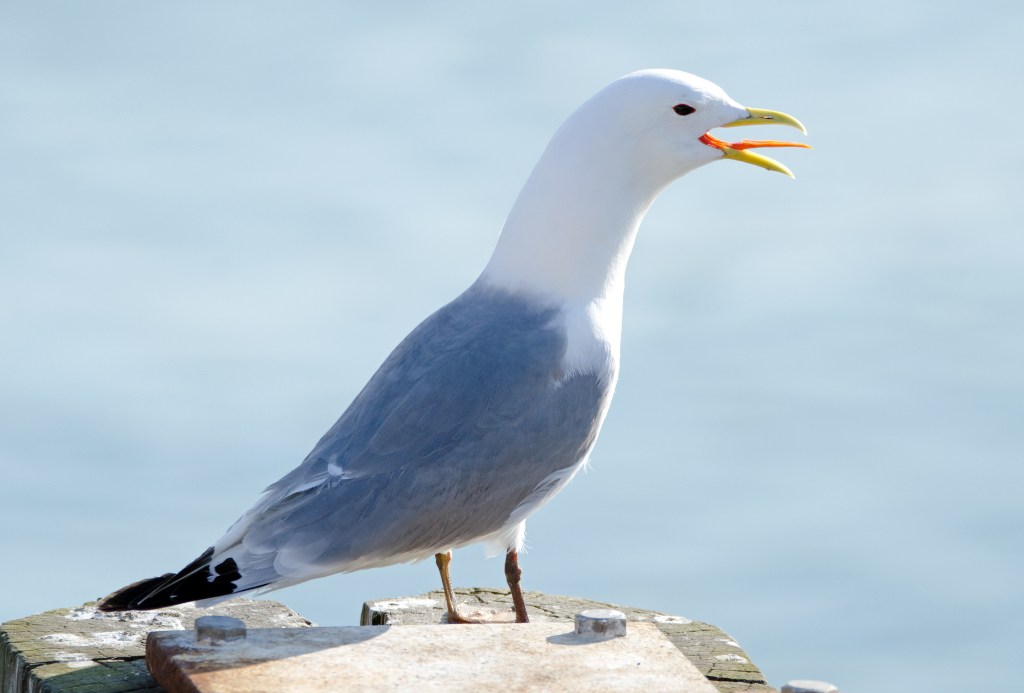
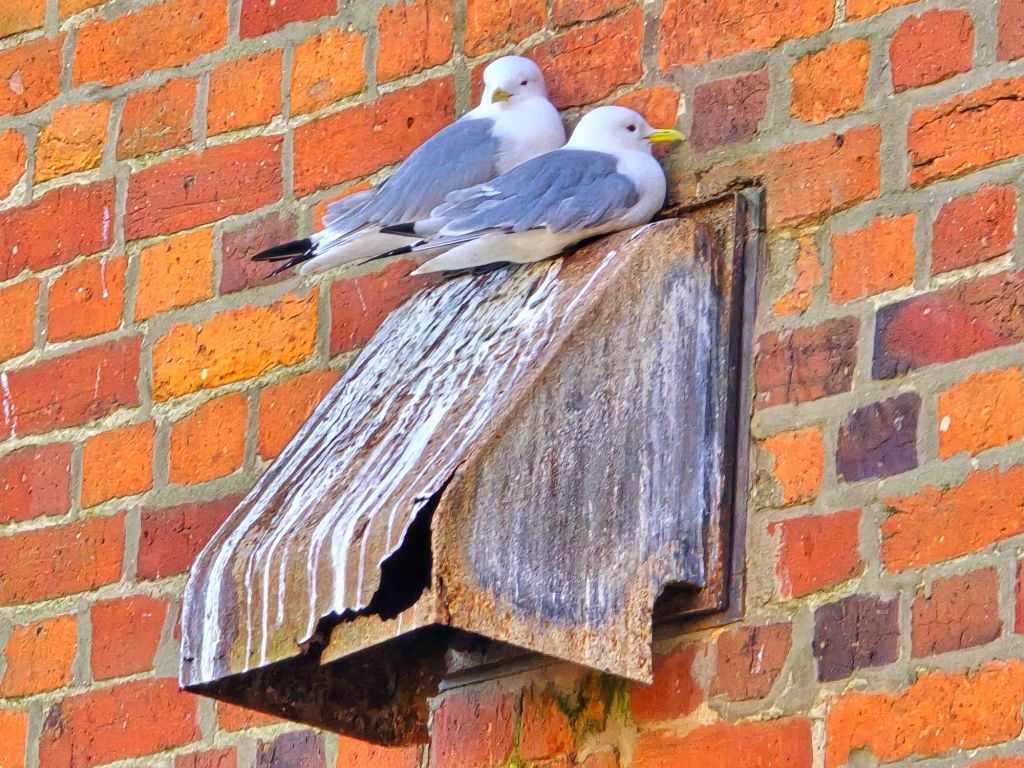
There are still some places left in the town where kittiwakes can nest on buildings (below), but understandably, many shops and buildings have taken measures to excude them.
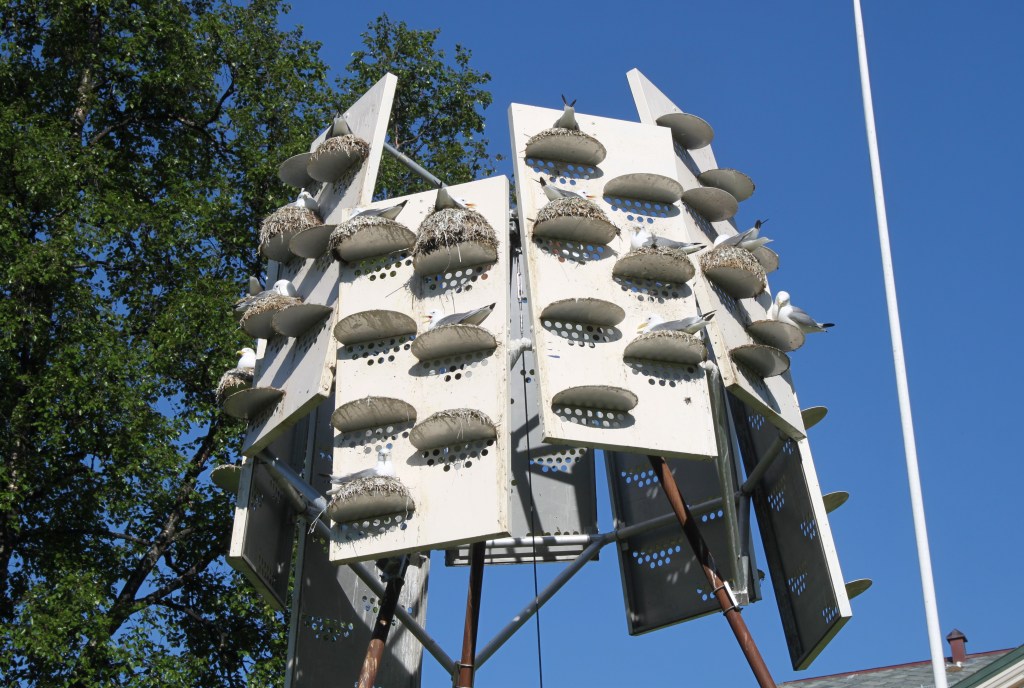
So, what’s the solution? Kittiwake hotels! In other parts of the world, like in Tromsø, Norway, people have constructed artificial bird cliffs to encourage kittiwakes nesting away from nesting on building.
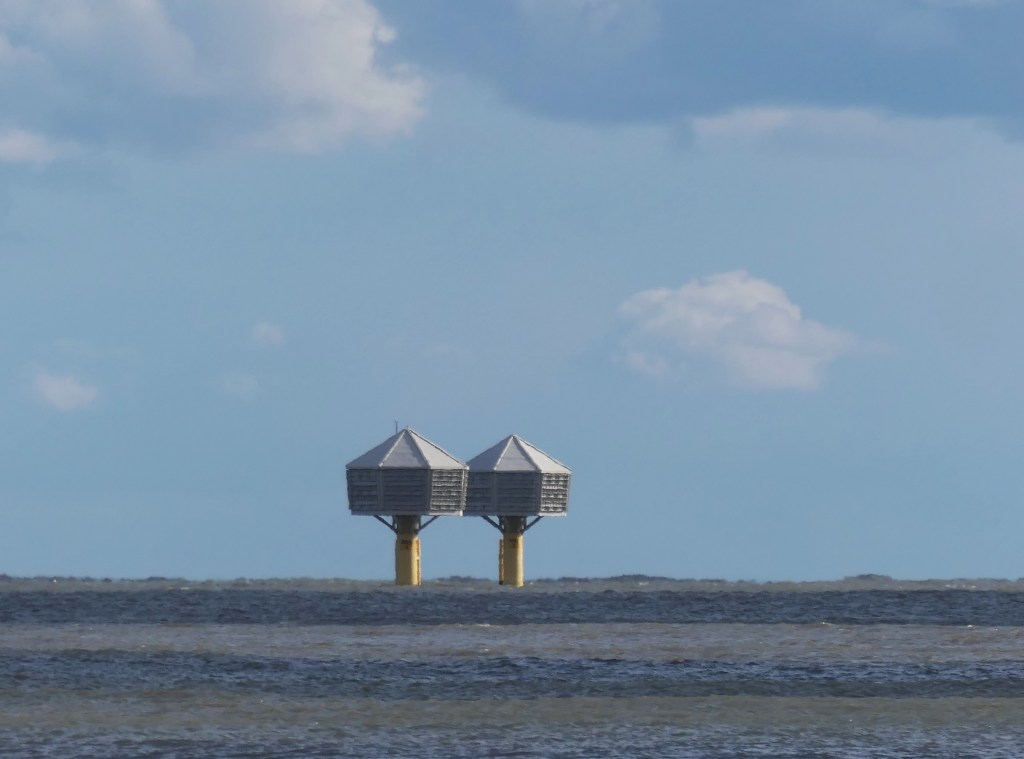
These artificial structures are starting to be built in the UK as well, such as these artificial nesting structures at Ness Point, also known as Lowestoft Ness, the most easterly point of England, Great Britain,
A kittiwake hotel has also been built in Gateshead: the Saltmeadows Tower has reportedly been a great success, and kittiwakes successfully fledge young birds, see here and here.
Kittiwakes are Red listed species of highest conservation concern, so we need to take good care of them. Measures were taken to try and exclude them from the famous Spa Bridge in Scarborough – read about it here and here – but in subsequent years they have largely recolonised it.
Kittiwakes are amazingly clever and adaptable birds! As you might have gathered, I love them. Some people visiting the seaside may not know the differences between kittiwakes and herring gulls, but they have undoubtedly heard the raucous cry of the kitiwake, which gives them their onomatopoeic name.
The majority of kittiwakes still live on sea cliffs, but increasing numbers now live on man-made cliffs: such as bridges and buildings. If we decide to change the rules and tell them they are no longer welcome on our buildings, we have a duty, I think, to provide them with alternative accommodation. Many towns have started to do this. Scarborough needs to do so urgently! It’s a problem we can easily solve with a bit of money and ingenuity.

Update (August 2025).
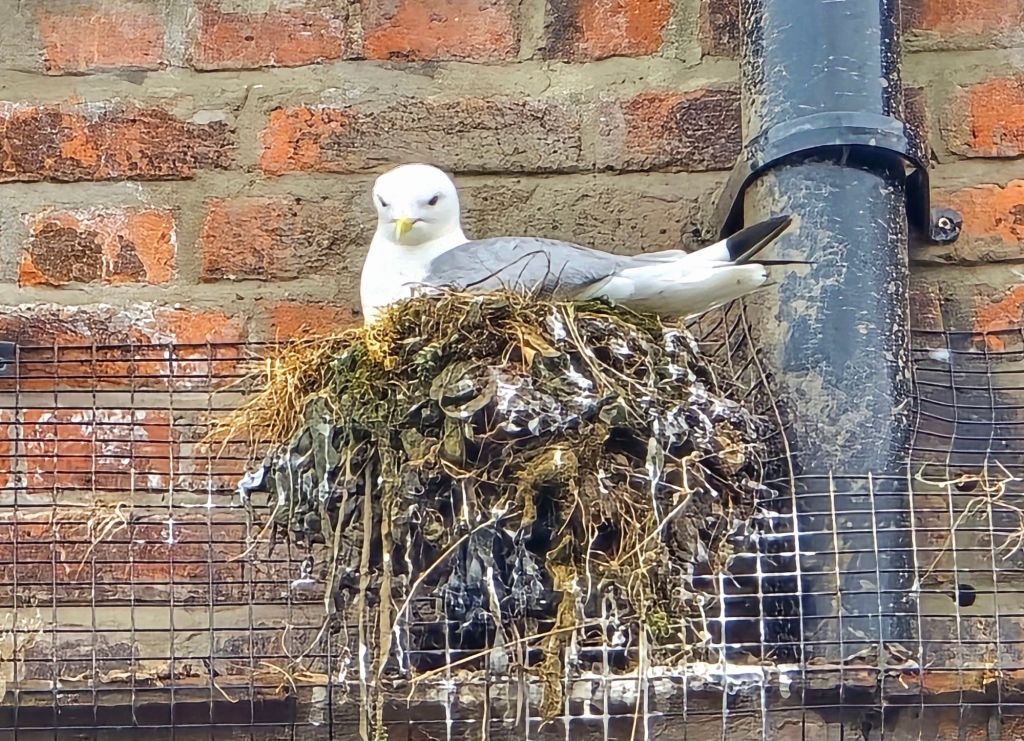
The really good news is that the kittiwakes overcame the obstacles by pulling up seaweed on the wire mesh. It took them quite a long time, but most managed to build excellent nests composed of over avfoot of dried seaweed. Such clever birds! I love their tenacity and adaptability.

Previous blogs
That’s nothing! I grew up on a lamp post!
Kittiwake chicks: bringing up babies!
Nest building kittiwakes
Kittiwakes learning to fly
Kittiwake kittiwake!
 Ray Cannon's travel and photography blog
Leave a comment