It was not that long ago that it was prohibited to take photographs in art galleries like the National Gallery. The reason given was that flash light was harmful to the paintings. Even though flash could be turned off!
Fortunately, that policy changed in 2014 for the National Gallery (earlier for some other galleries), although in the years after that, visitors were still cautioned to make sure the flash setting was turned off on their cameras.
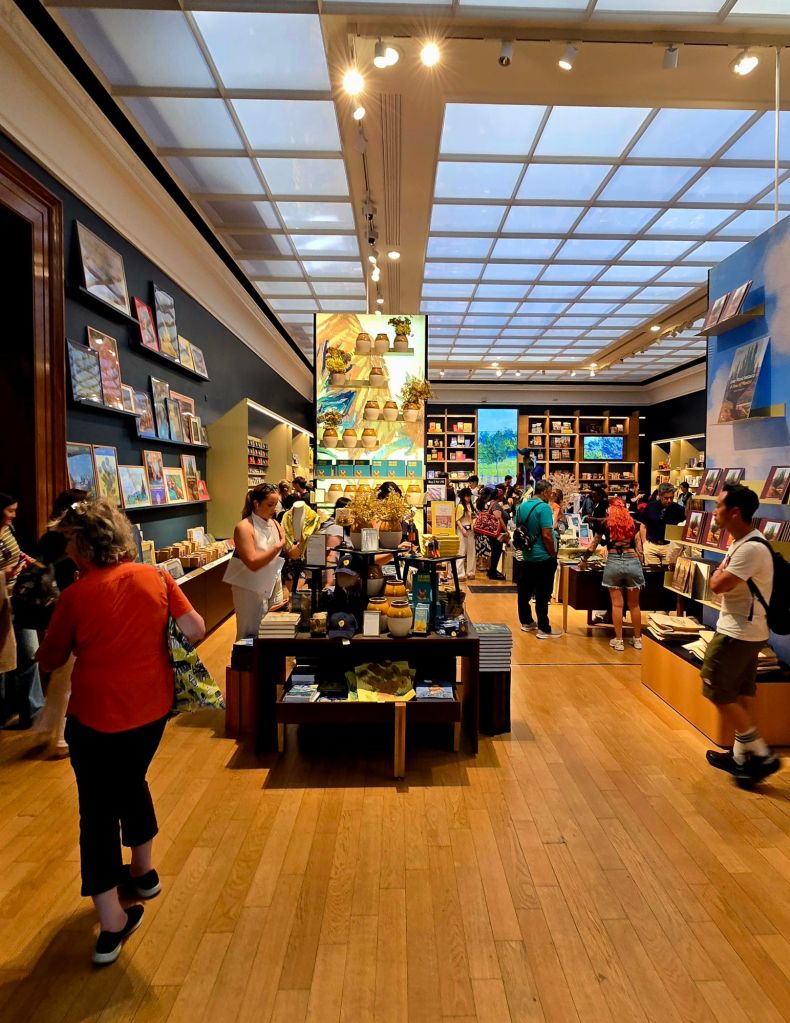
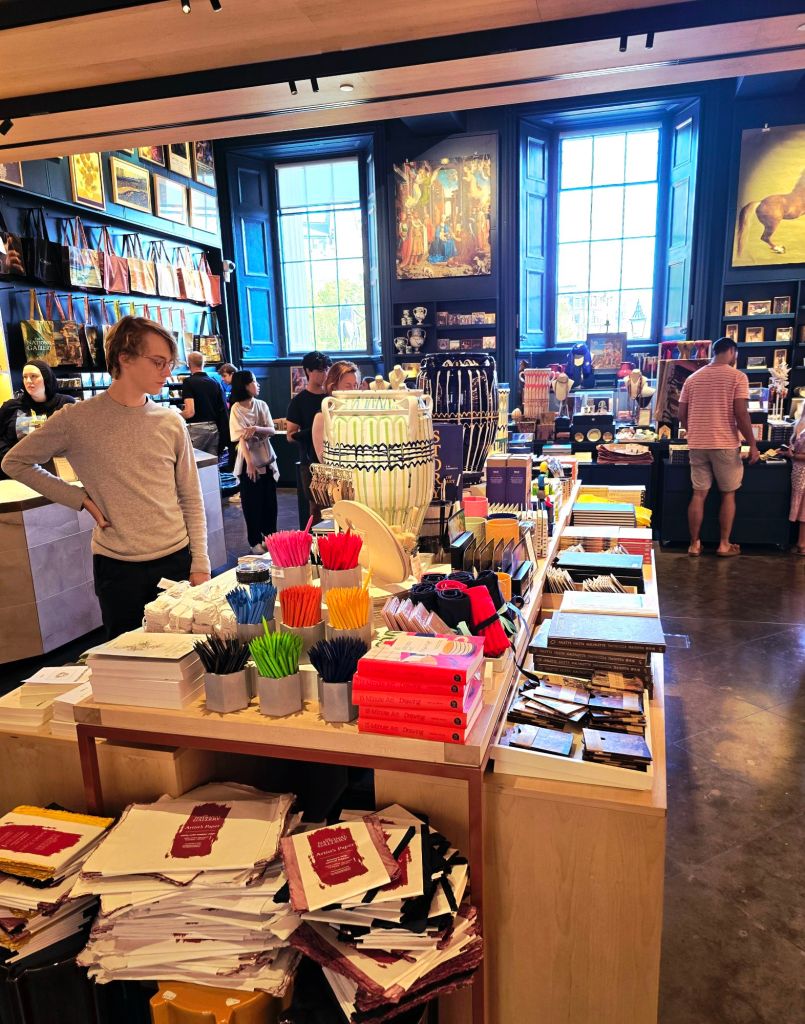
About the same time, c. 2010-12, smartphones capable of taking good quality images became much more common, although it is only relatively recently that large megapixel phone cameras have become commonplace.
What this means for looking at paintings in art galleries is that we can all – as most of the planet owns a smartphone – capture high-quality images and sample paintings to capture detailed records of the artwork.

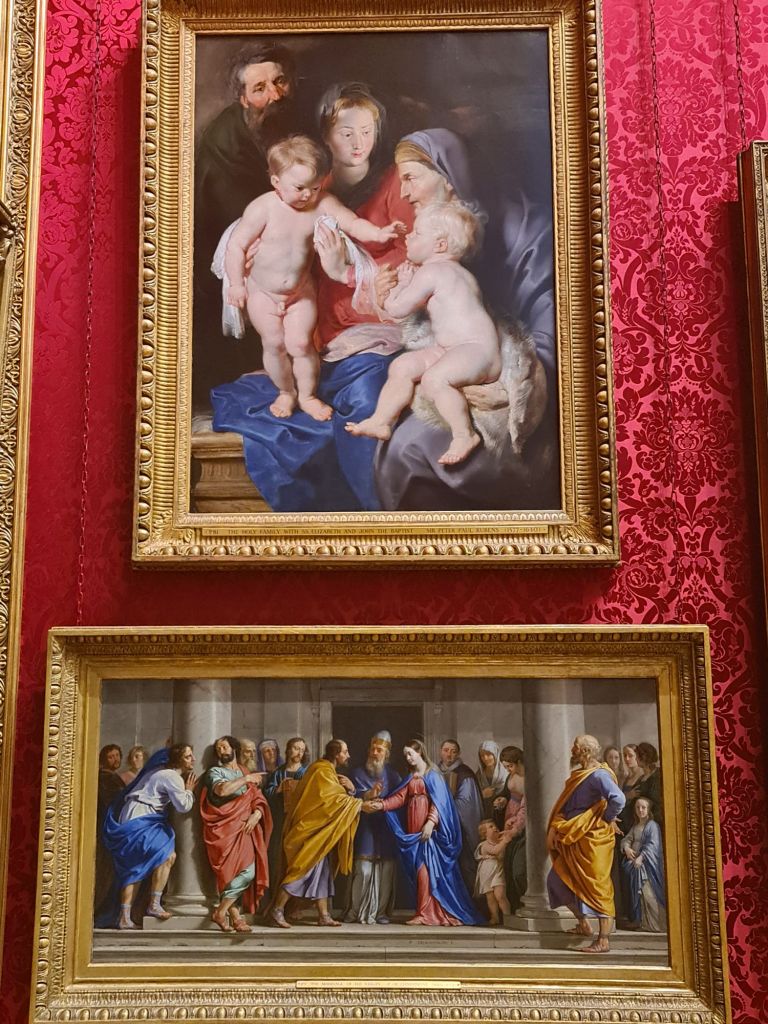

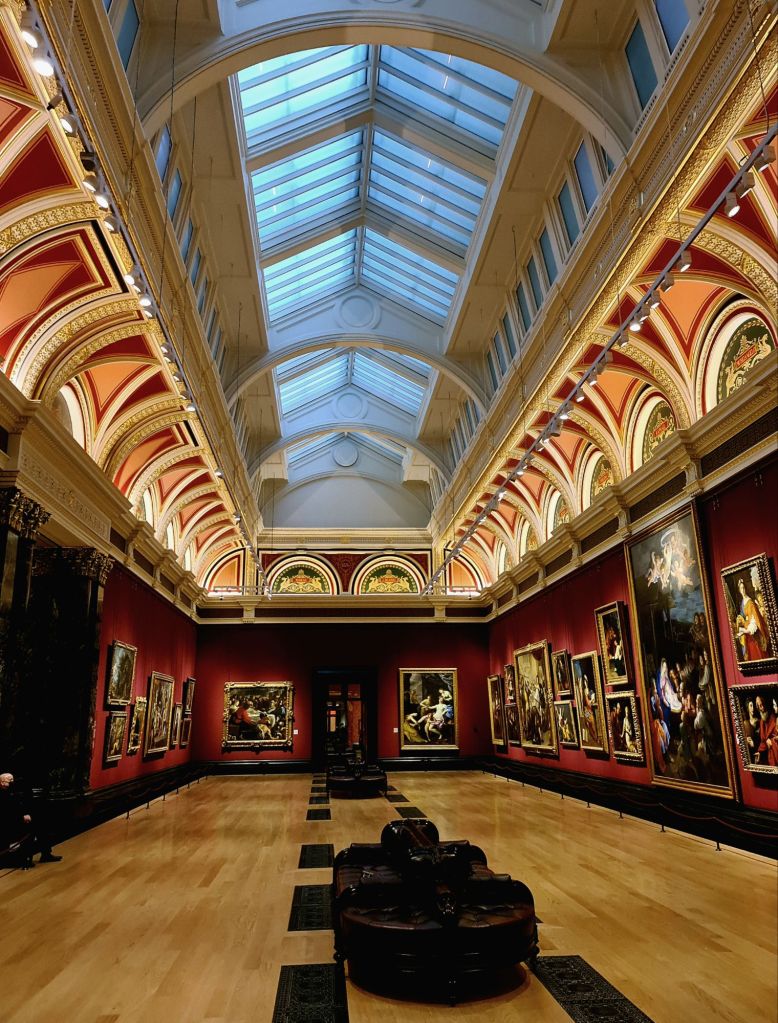
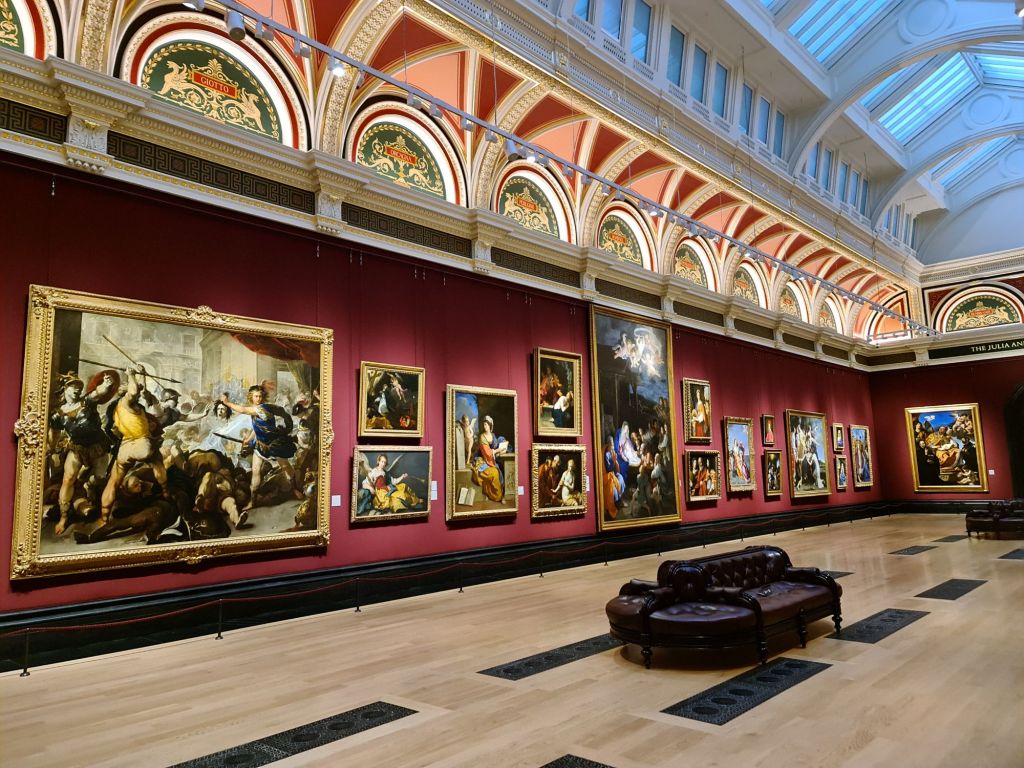
Do people actually look closer at a painting once they have photographed it? Or is it just an exercise for ‘ticking off’ a well-known icon, demonstrating that you have ‘been there’ and ‘done that’? Perhaps a bit of both.
I like to think that many people look again at the paintings via their stored images, and other people learn to recognise it when it appears on social media. Certainly, I have learnt a great deal about art from following different Facebook sites.
As someone who grew up in the analogue era, when none of us had digital phones or digital cameras, I really appreciate being able to photograph paintings in galleries.
What I like doing is sampling parts of a painting to look at details that one might miss when looking at the whole painting.
You can also use your camera to scan the painting in great detail, zooming in, without actually taking a picture.
In this blog, I feature some samples I made of some famous Renaissance paintings in the National Gallery. It enables one to see just how skilled these artists were, some 500 years ago.
Leonardo de Vicnci is the artist everyone wants to see. Certainly one of the most celebrated and revered artists of all time.
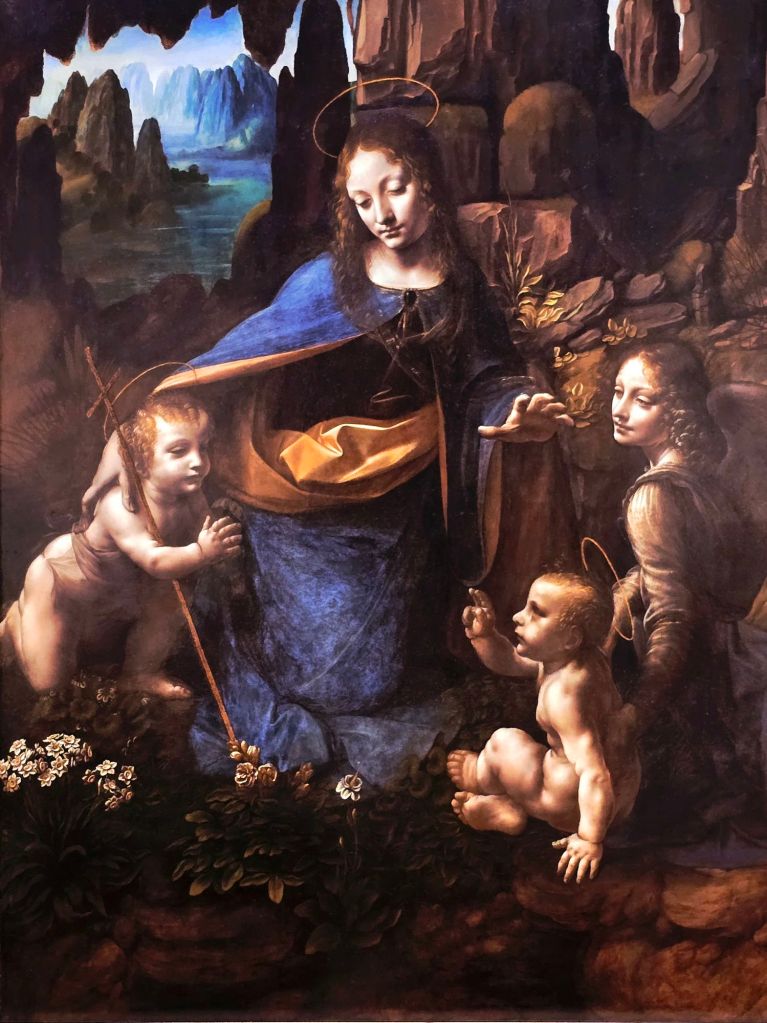
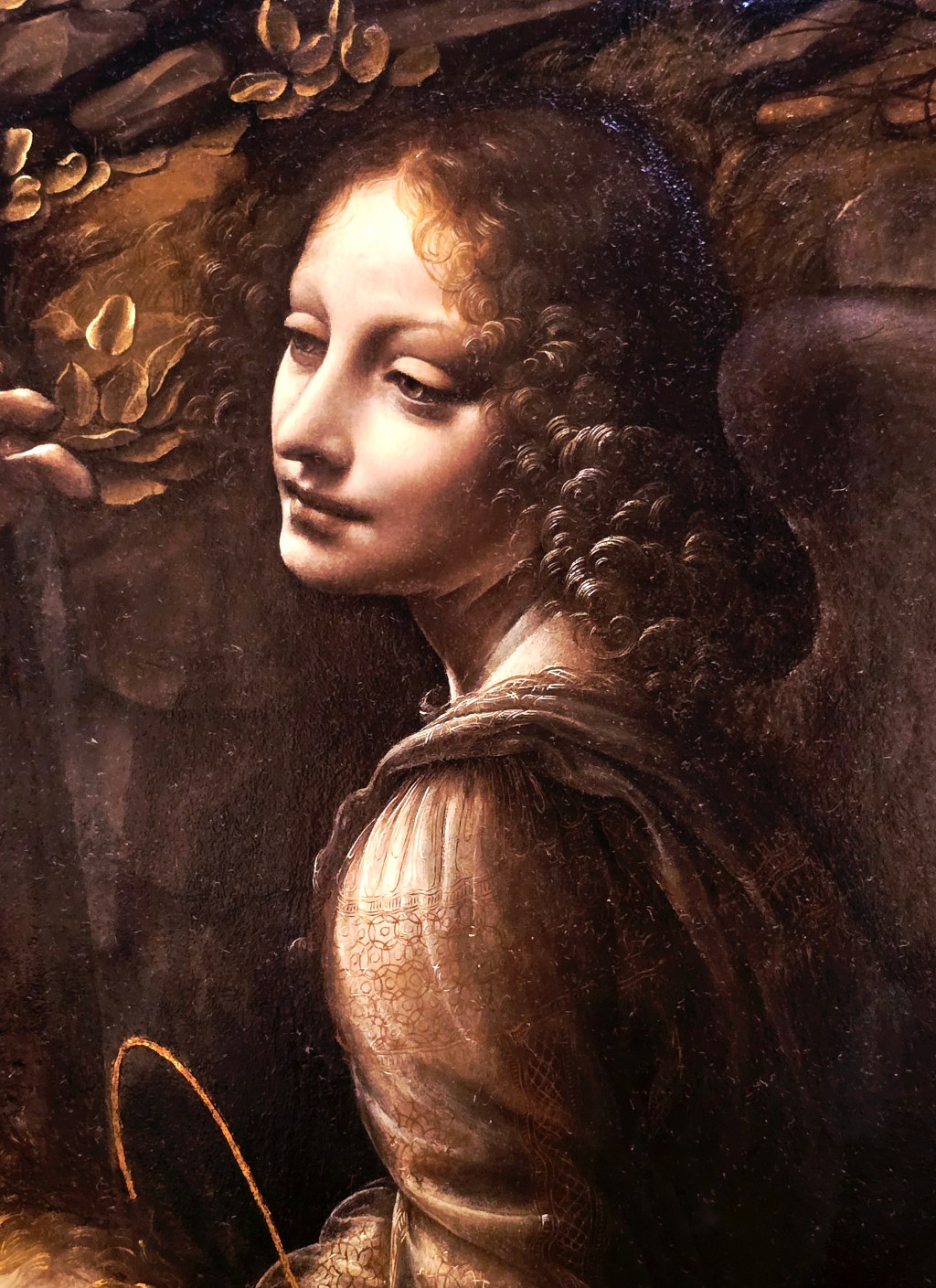
The National Gallery houses the Virgin of the Rocks, part of a large, elaborate altarpiece made for the church of San Francesco Grande, Milan, to celebrate the Immaculate Conception of the Virgin Mary. Another, earlier version, is held in the Louvre in Paris.
Here are some samples showing the amazing detail, especially the golden hair with spirals and curls typical of Leonardo.


I had to wait for the crowds to disperse before I could get close, however!

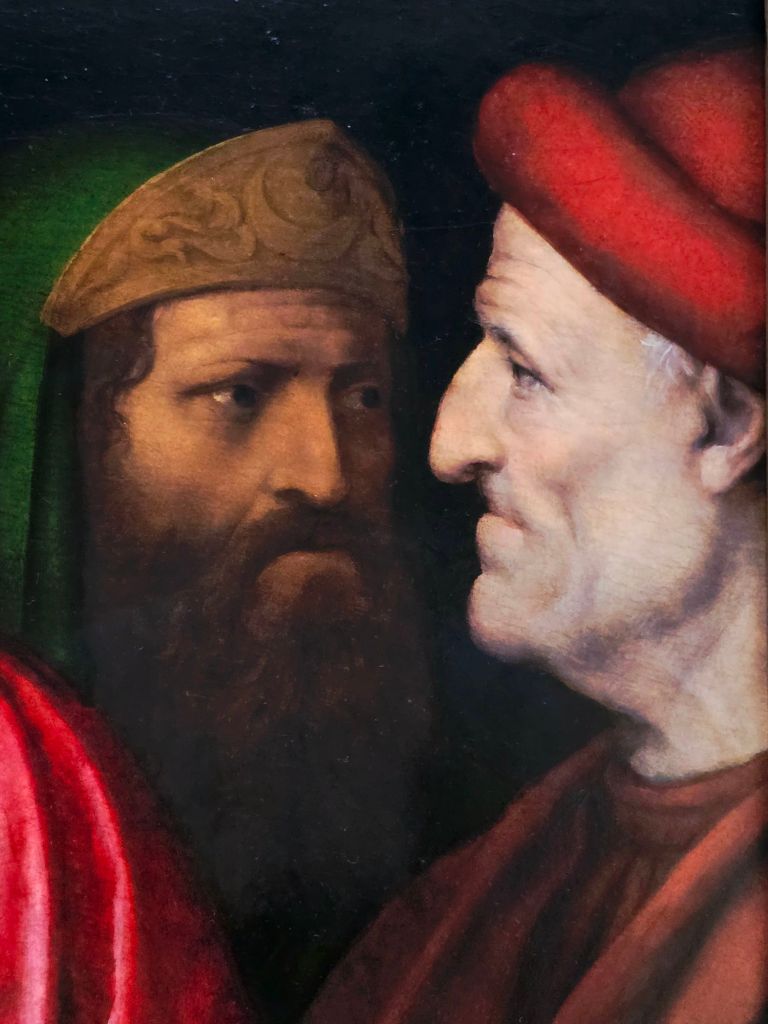
The celebrity status of Leonardo de Vicnci certainly attracts the crowds. The funny thing is that there is another painting in the National Gallery, which was once attributed to Leonardo. It is called Christ Among the Doctors by Bernardino Luini.
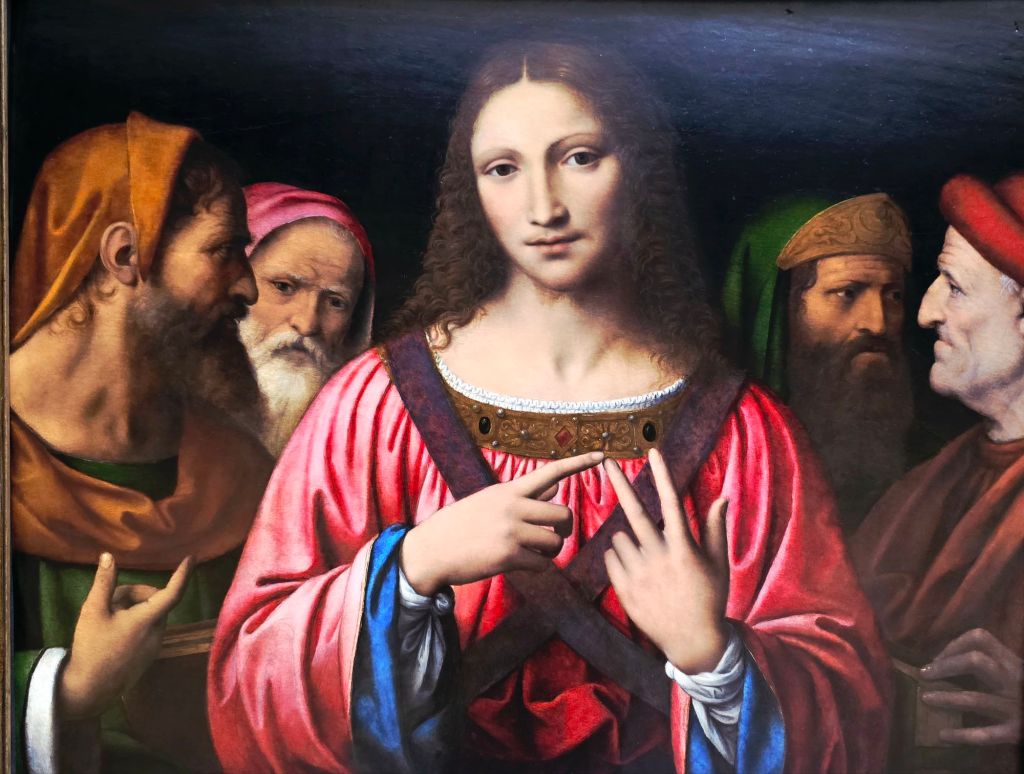
The painting was previously believed to be by Leonardo and may be based on an original design by him. There are numerous versions of this picture: the composition was enormously famous. However, there was nobody looking at it when I passed by! If it had been by the masters hand, rather than just being by a leading followers of de Vinci, I expect that there would be a gaggle of people taking selfies in front of it!
Here are samples of the doctors shown on both sides of the Christ figure Not bad if you ask me!

Leonardo was not the only one who could do curls or fine locks of hair. Domenico Ghirlandaio, or Domenico di Tommaso Curradi di Doffo Bigordito, to give him his full name, was also a master painter from Florence. Look at these details from his Virgin and Child, c. 1480-90 (below).
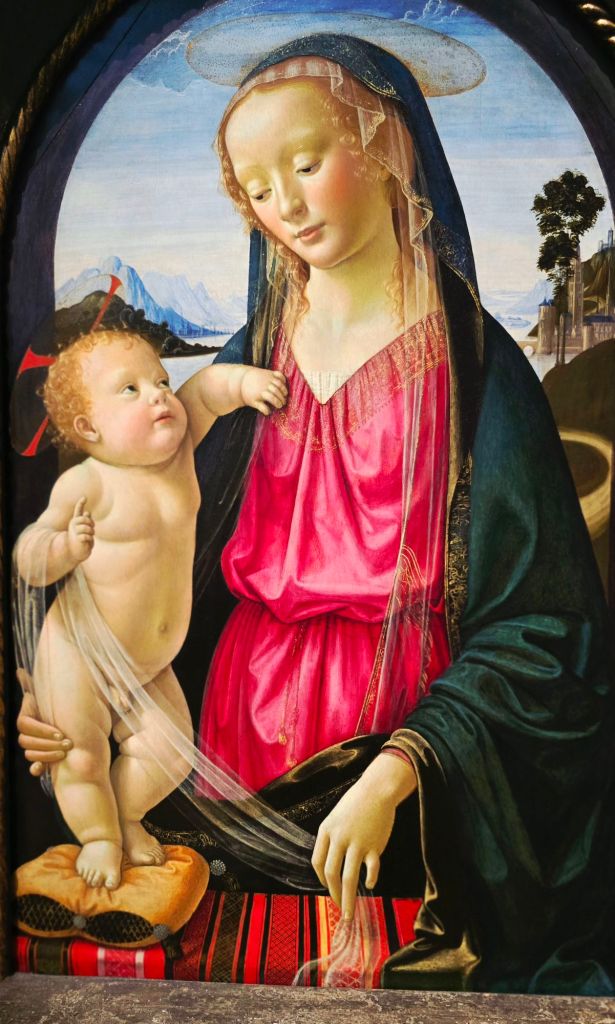
Domenico Ghirlandaio (probably about 1480-90)
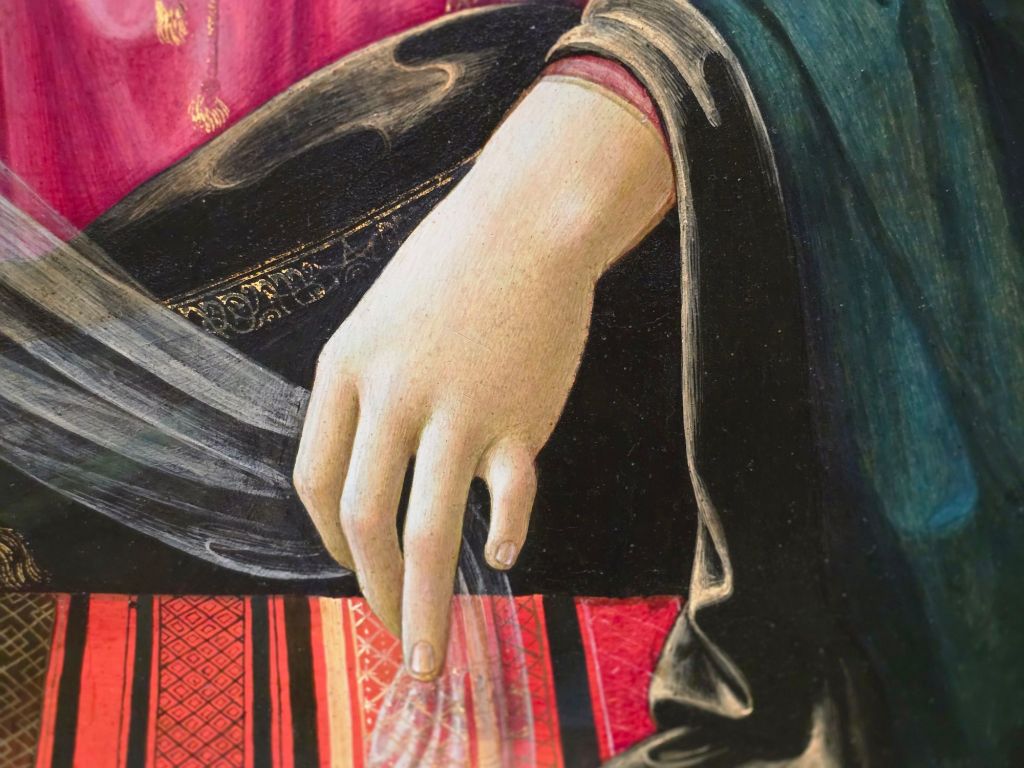
Here are some details from The Virgin and child:

I am not particularly religious, but I am struck by the beauty and artistry of these masters of the Early and High Renaissance. Some of them were priests, like Fra Filippo Lippi, who painted religious scenes with extraordinary tenderness and natural beauty.

Filippino Lippi was famous for being the teacher of Sandro Botticelli and Francesco di Pesello (called Pesellino). Here are some more details from this early work.
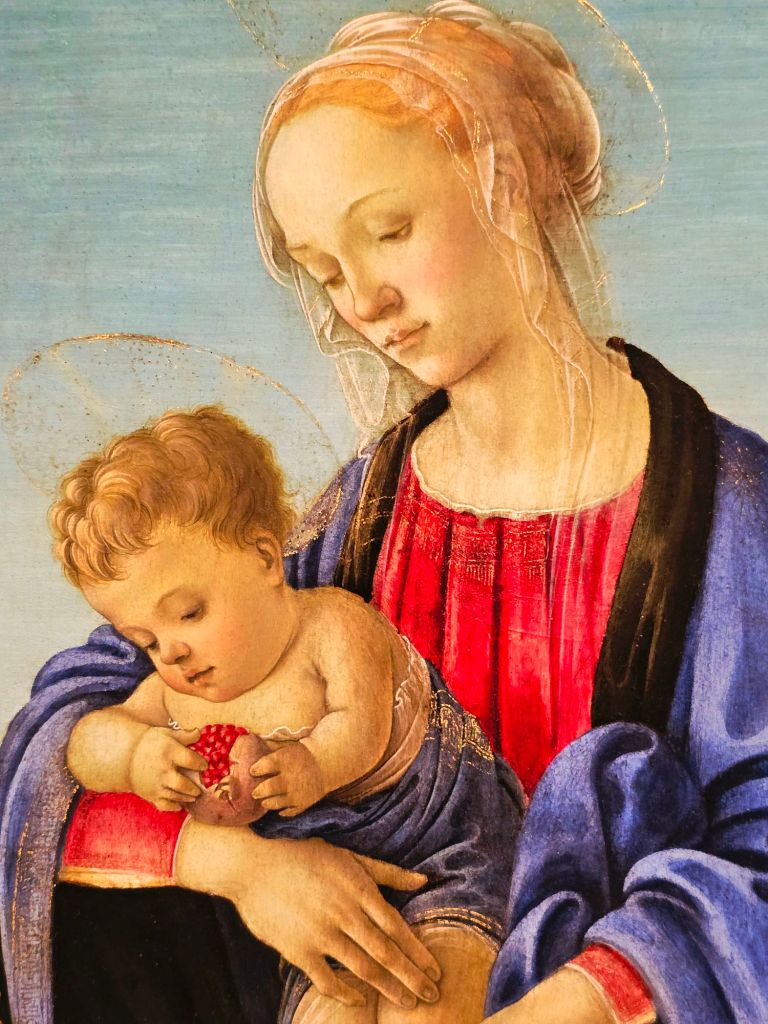
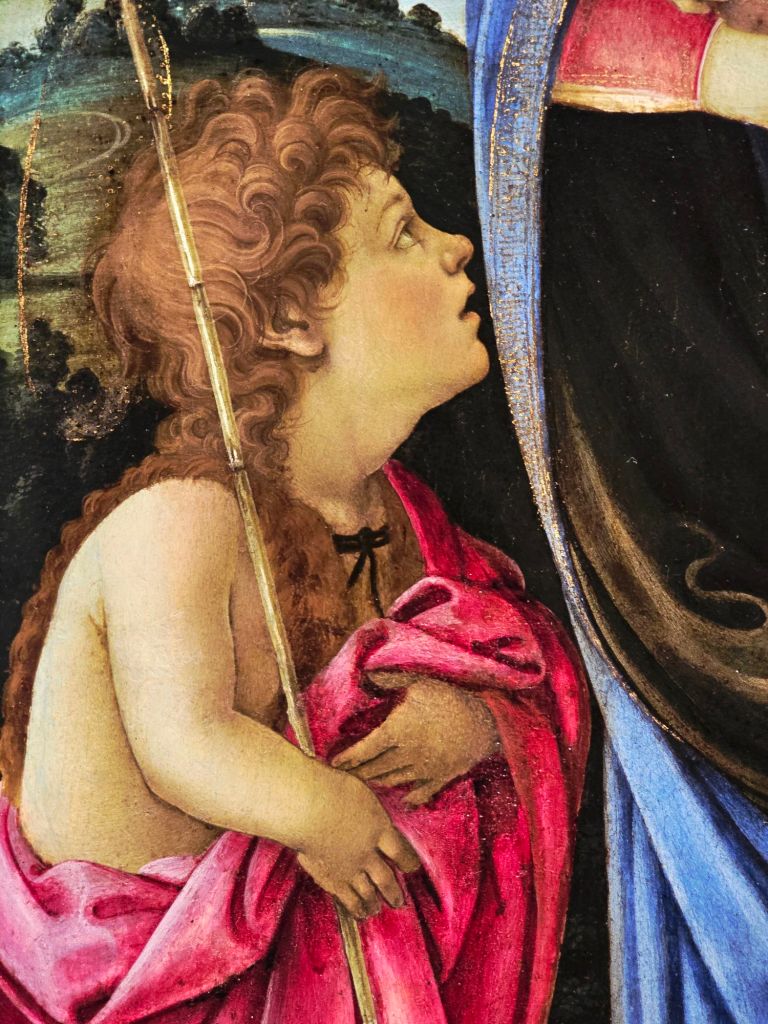

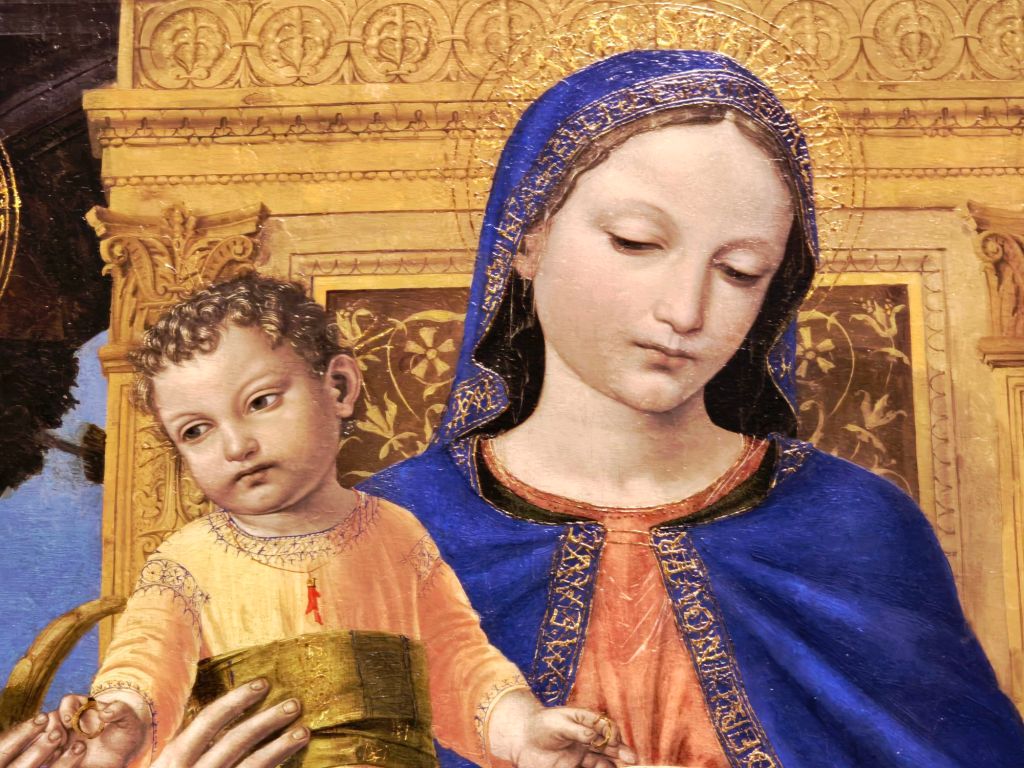
Ambrogio Bergognone (1490)
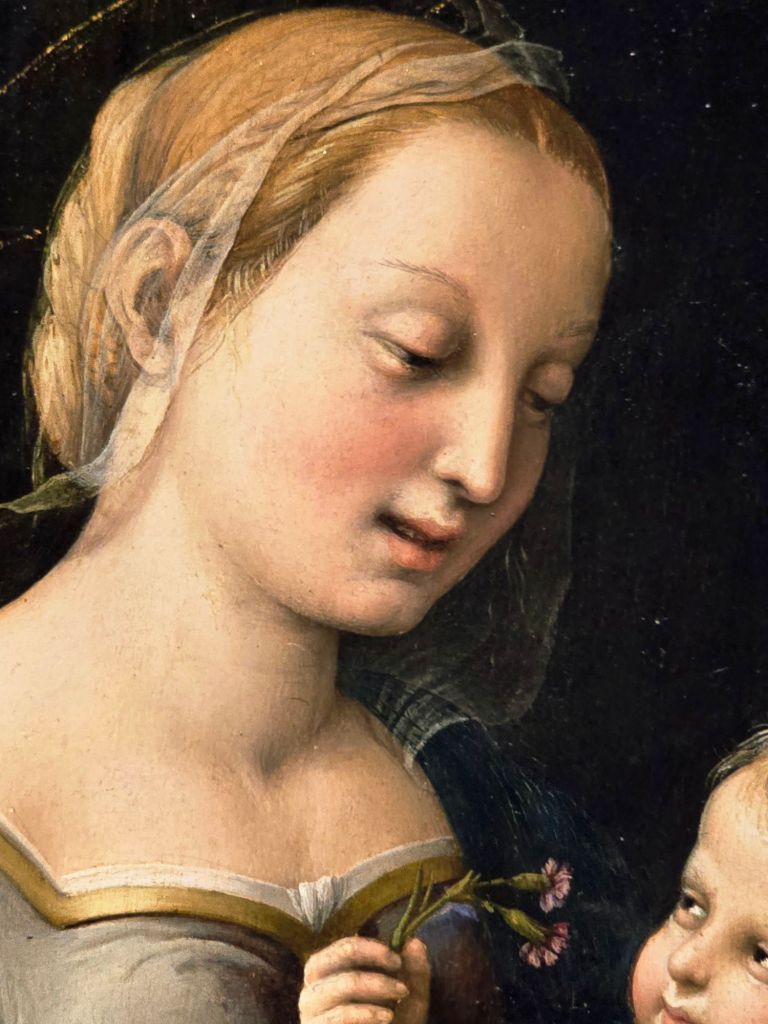
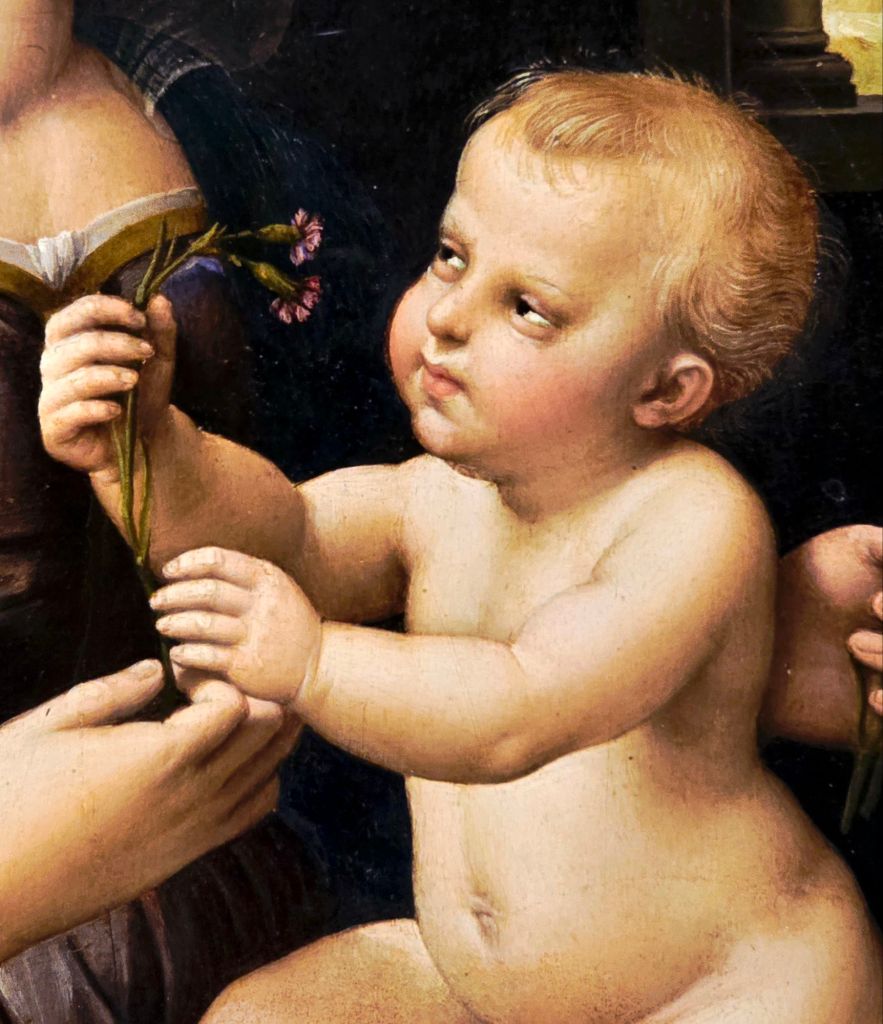
One of the greatest artists of the High Renaissance, and my favourite painter, is, of course, Raphael, or Raffaello Sanzio da Urbino to give him his Italian name. This painting is freely based on Leonardo da Vinci’s Benois Madonna (in the State Hermitage Museum, St Petersburg, an amazing place I was fortunate enough to visit in 1990).

Here are a couple of details.
Another Florentine artist and teacher of Leonardo da Vinci was Andrea del Verrocchio. This painting, the Virgin and Child with Two Angels, which had not previously been attributed to Verrocchio, was cleaned and restored about 2010 and is now attributed to him with a date of about 1467–1469. In this painting, he was assisted by assisted by Lorenzo di Credi (1435-1488).

Once again, the details are incredible. His student Lorenzo di Credi painted the chubby Christ Child, the parted curtains, and the angel on the right

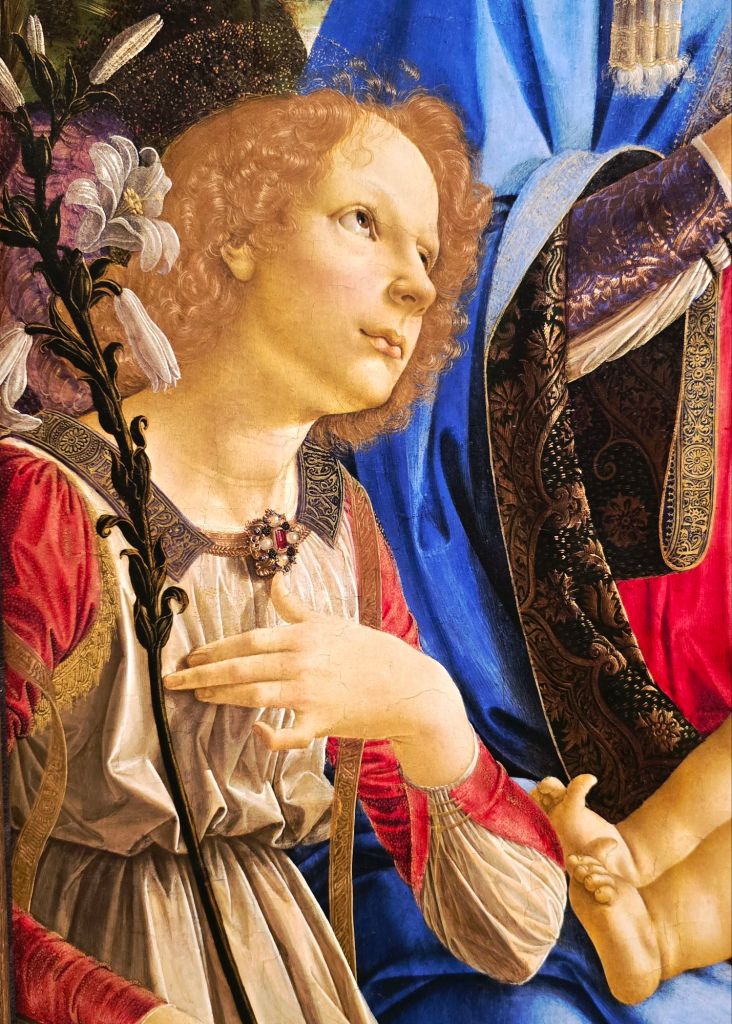
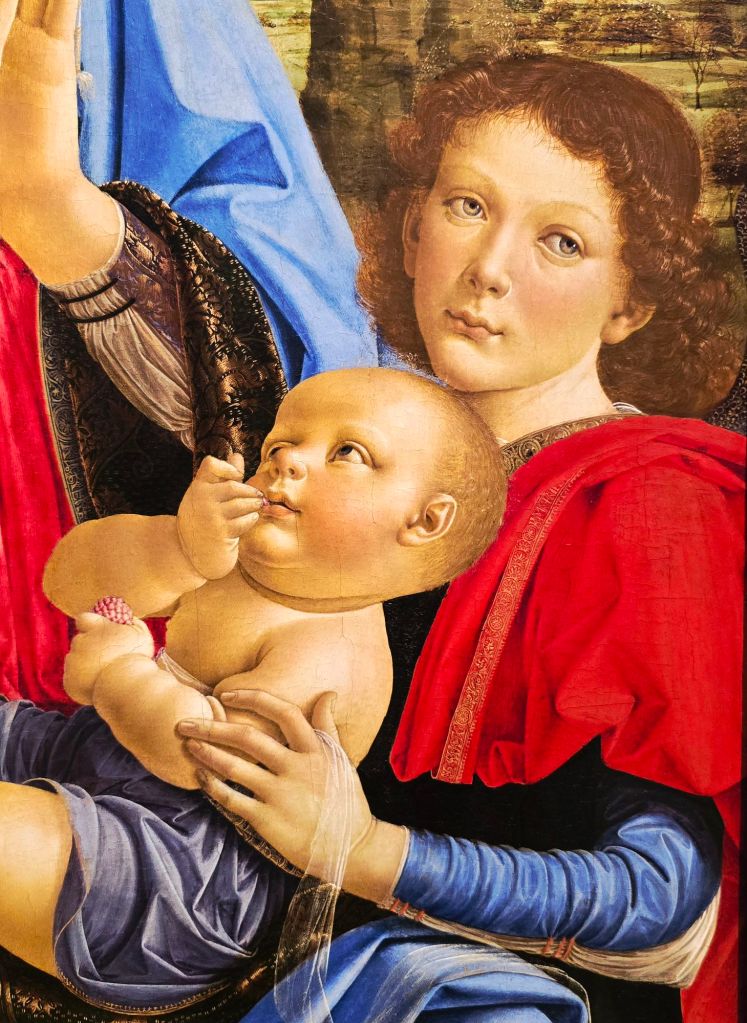
Interestingly, the National Gallery once published a book featuring the favourite details of Kenneth Clark: One Hundred Details: From the National Gallery, London (National Gallery London Publications). It is long out of date, but fortunately, we can all select our favourite details now and get an insight into the extraordinary talents of these Renaissance artists.
I’ll finish with another extraordinary painting by Andrea del Verrocchio called Virgin and Child with Two Angels (also called Madonna del Latte or Madonna of the milk because she is breastfeeding), dating from circa 1467–1469. Not to be confused with his other painting of the Virgin and Child with Two Angels, shown above!
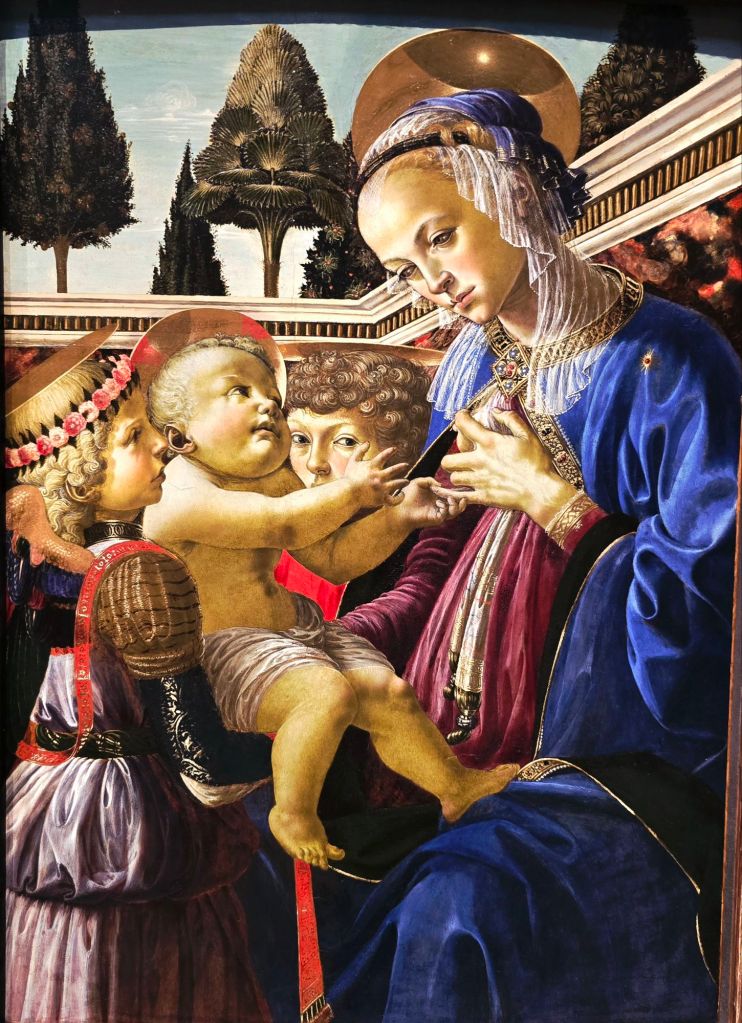
Andrea del Verrocchio
Perhaps it’s worth mentioning that all of these paintings are in the public domain and one can freely reproduce their images. Copyright protects an artist’s work during their lifetime, and for 70 years after their death, typically. After this period, the work enters the public domain, meaning it can be copied and used freely.
The paintings in the National Gallery belong to the government on behalf of the British public, and entry to the main collection is free of charge.
The images were all taken by me (Raymond JC Cannon) using a Samsung S24 Ultra mobile phone,
 Ray Cannon's travel and photography blog
Leave a comment