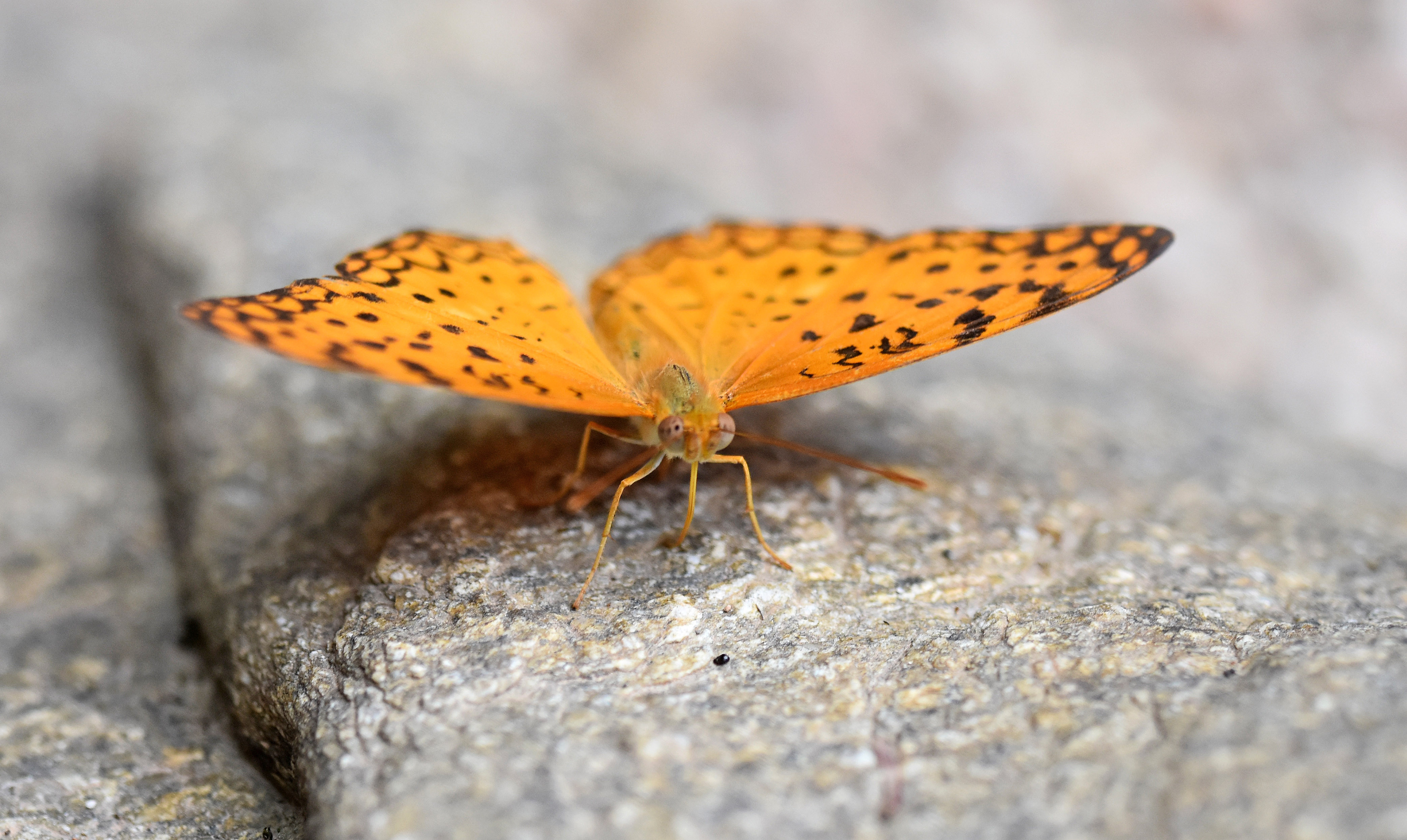
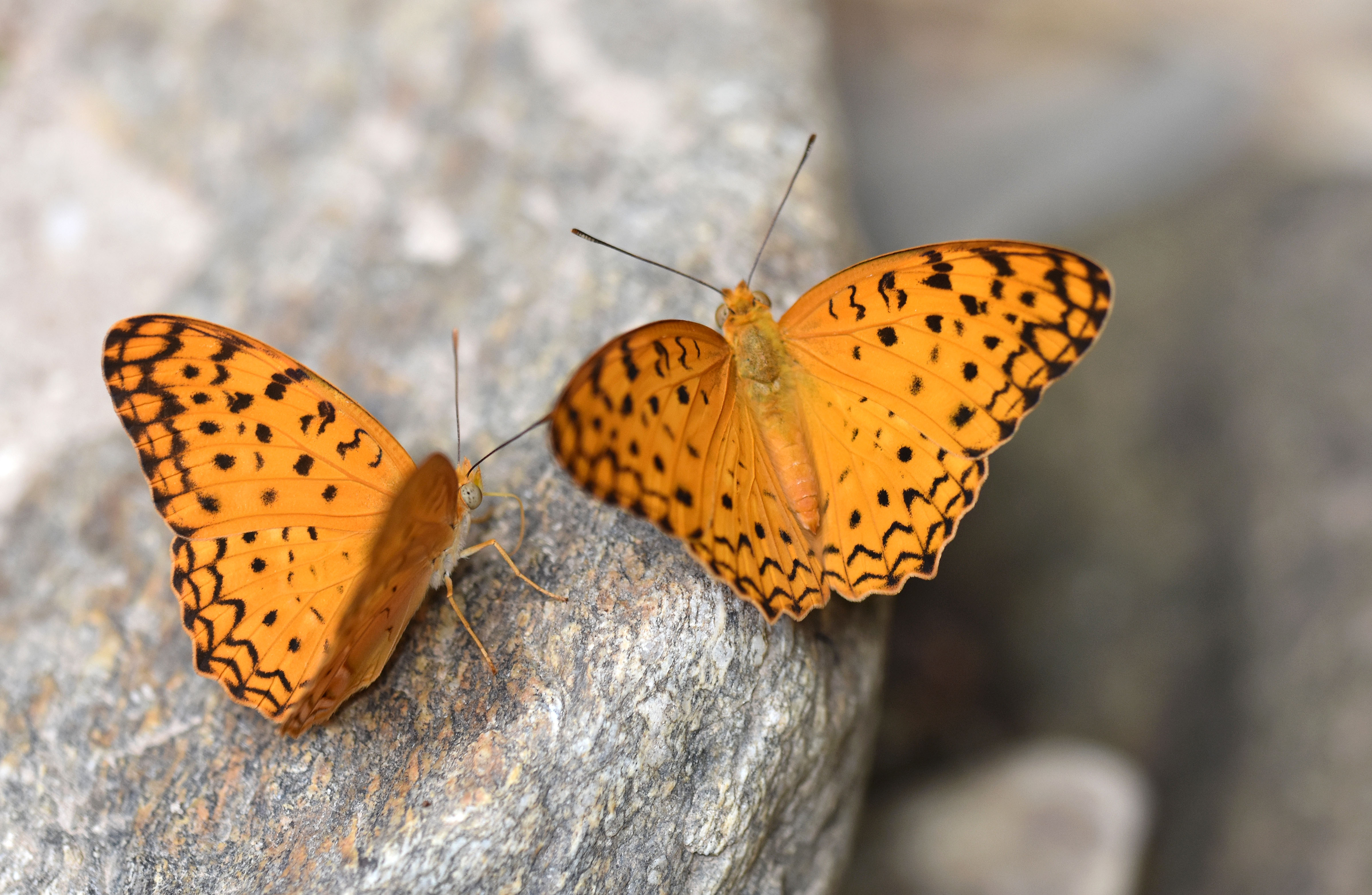
Common Leopard Butterfly (Phalanta phalantha) mud-puddling at Mae Klang waterfall, Doi Inthanon, Thailand.
It was a very hot day when I visited Doi Inthanon, Thailand’s highest mountain (at 2565 metres or 8415 feet), in early May this year. Temperatures in Chiang Mai city had reached 40 deg C the day before, but it was much cooler up the mountain. There are large tracts of different types of forest on this mountain – Doi Inthanon National Park covers an area of about of about 482 square kms – but it is often shrouded in cloud near the top.
Forest on Doi Inthanon, by the Royal Chedis (or stupas) at about 2140m.
Unfortunately, the top of the mountain was rather cloudy on 7th May, so we headed further down, stopping off at a number of waterfalls, where I hoped to photograph butterflies.
Wachirathan Falls, Doi Inthanon, Thailand, May 2017.
One of the most beautiful falls on the mountain is Wachirathan Falls, just over 20 km into the NP, which is a magnificent spectacle, even in the dry season. Unfortunately, there were not many butterflies about, or the ones that were flying about were rather inaccessible, so I decided to head further down to the ever popular Mae Klang Waterfall. This lies just outside the boundaries of the NP, so is more heavily visited by picnickers and sightseers.
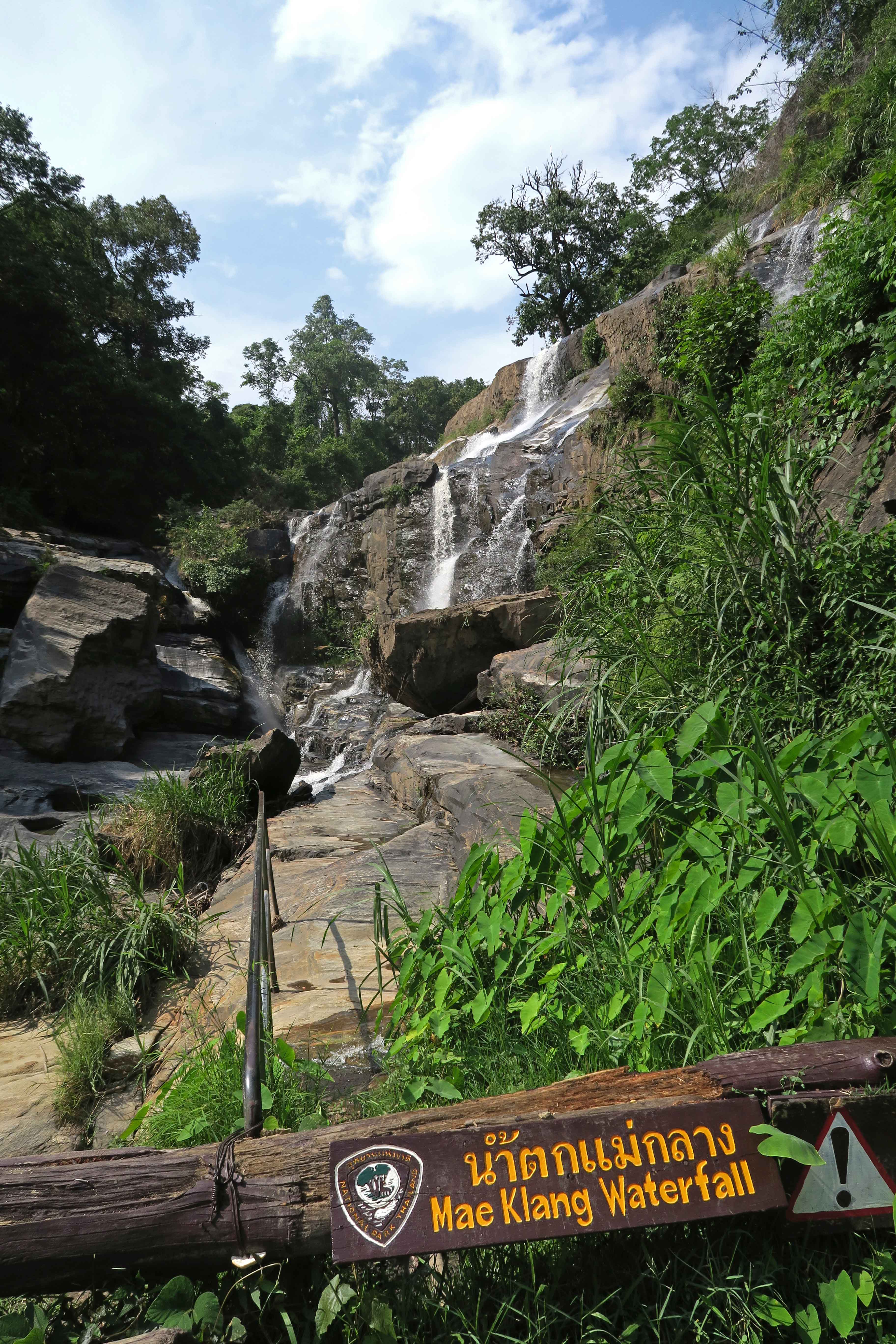
Mae Klang Falls on 7th May 2017
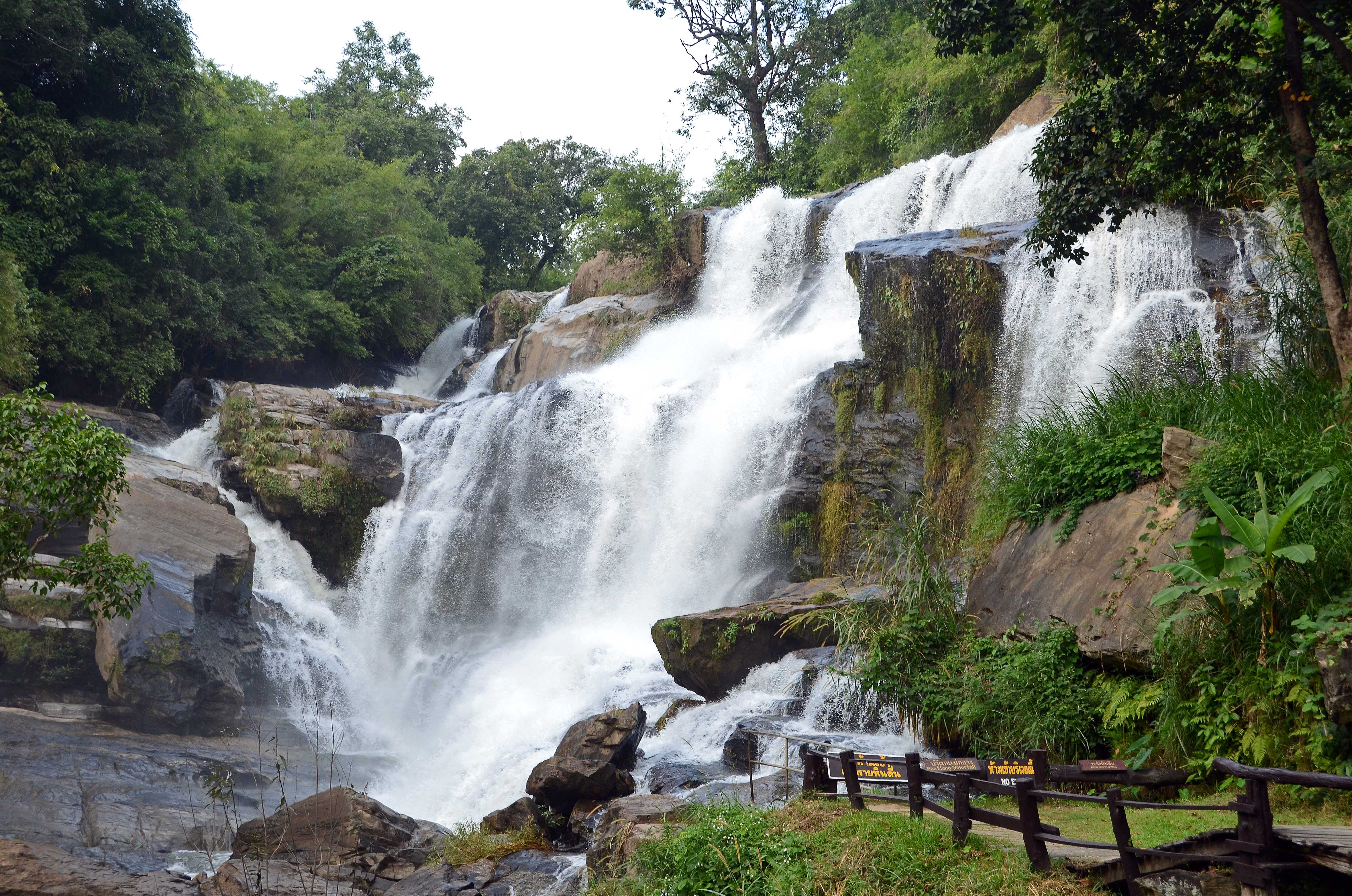
There was much less water flowing than in previous visits; compare the photograph above (taken in May, before the rains have arrived) with that taken in November (at the end of the rainy season) in a previous year.
Mae Klang waterfalls 8 Nov 2013
Mae Klang waterfall is at an altitude of about 1,200 m or so, so is much hotter than further up the mountain, and there were plenty of butterflies around! The problem was that because of the high temperatures, the butterflies were flying about so fast it was very difficult to photograph them! One of the more obliging species was the Common Leopard Butterfly (Phalanta phalantha), which were present in quite large numbers along the stream beds next to the river.
Common Leopard Butterfly (Phalanta phalantha) mud-puddling at Mae klang waterfall, Doi Inthanon.
The butterflies were ‘puddling’ or ‘mud-puddling’ as it is called; they are trying to absorb sodium (in the form of sodium chloride, salt) or nitrogen (in the form of amino acids) from moist substrates such as mud, animal excrement, rotting fruits, carrion, dung, bird droppings, sweat, tears and so on (See 1: See you down the puddle). Curiously, many of these Common Leopard butterflies were sucking up moisture from the rocks themselves (below). There must have been a thin layer of water on the rocks, which may have produced a solution of salts or minerals attractive to these insects.
Common Leopard Butterfly (Phalanta phalantha) Mae klang, with extended proboscis
Despite being engaged in mud- or moisture-puddling, the butterflies did not stay put for long, and usually flew off as soon as the lumbering photographer approached them! I did not manage to get as close as I would have liked, but after taking dozens of shots, I managed to get a few usable ones.
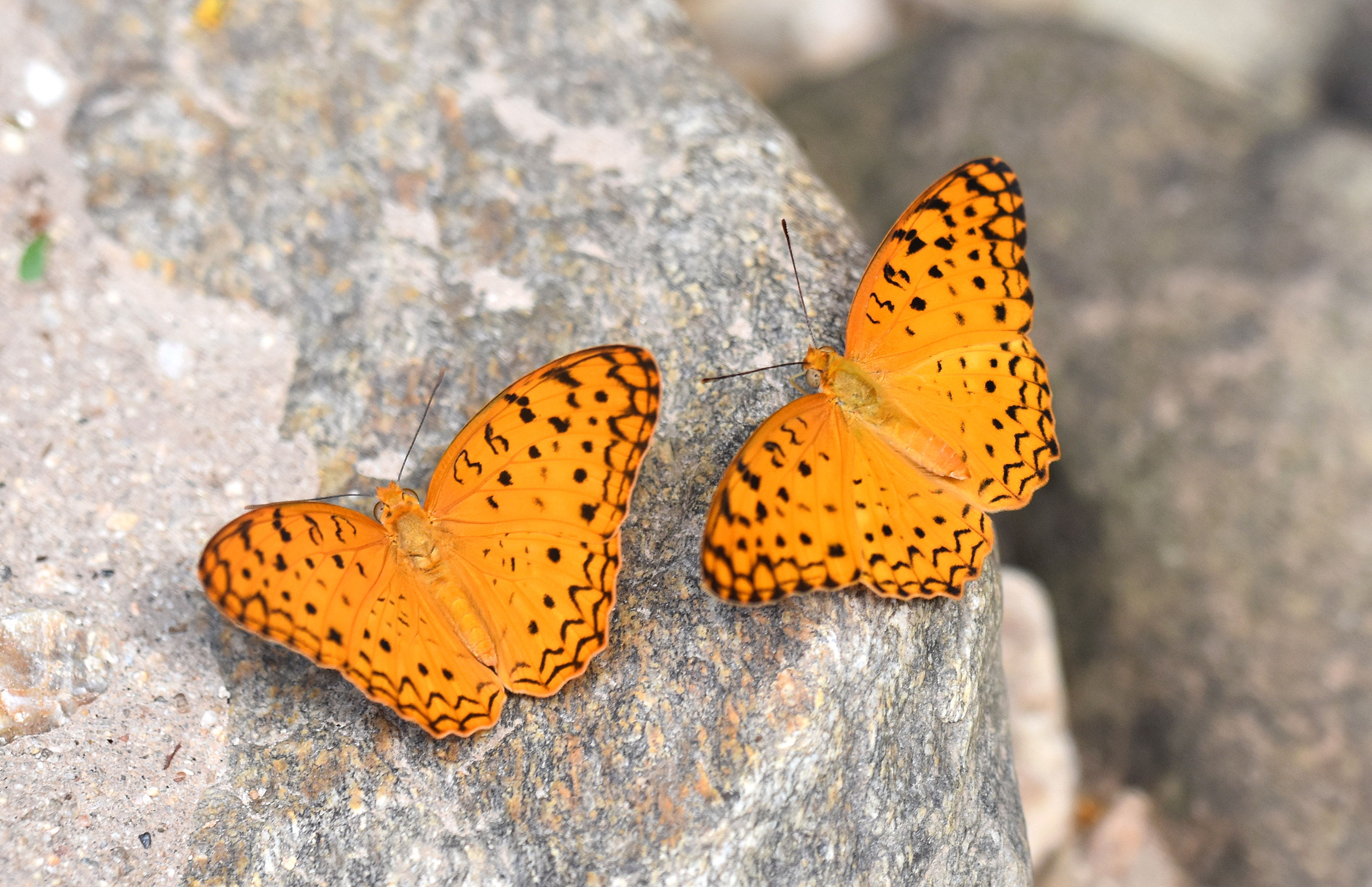
Common Leopard butterfllies (Phalanta phalantha)
These butterflies take about three weeks to develop from egg to adult (at 28 deg C) and the larvae feed on flowering plants in the Willow family (Salicaceae) including Flacourtia inermis and Salix babylonica (Links 2 and 3).
Common Leopard butterfllies (Phalanta phalantha) on rocks
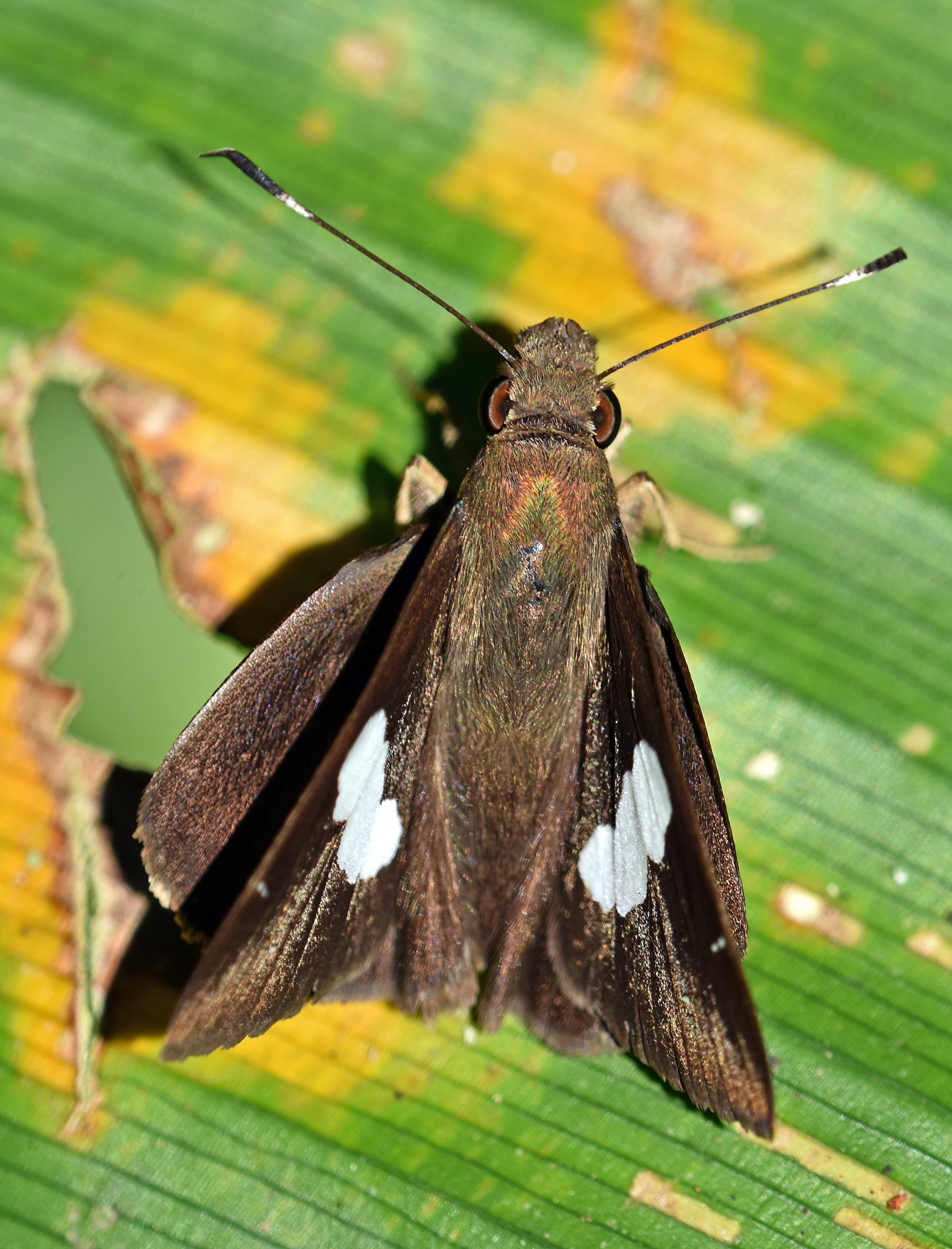
There were also quite large numbers of yellow/green butterflies flying about, at amazing speeds! One often sees pictures of stationary butterflies, which fail to do justice to the extraordinary vitality of these insects. Butterflies can be very fast fliers – especially the nippy little Skippers, which can reach speeds of up to 60 km per hour! Skippers are shaped like little jet fighters! As the following photograph illustrates.
Spotted Demon (Notocrypta feisthamelii alysos). A Skipper from Chiang Dao, Thailand.
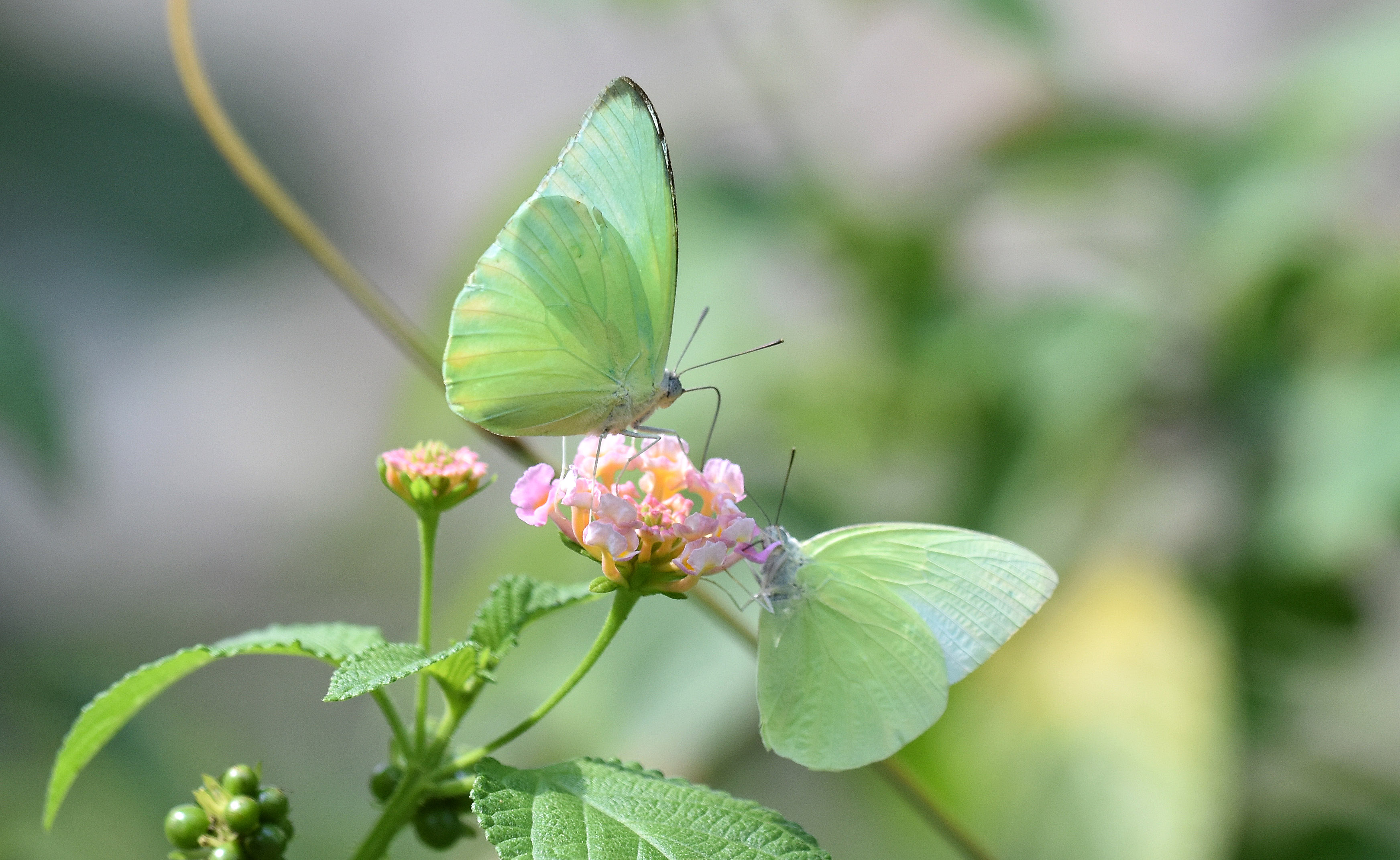
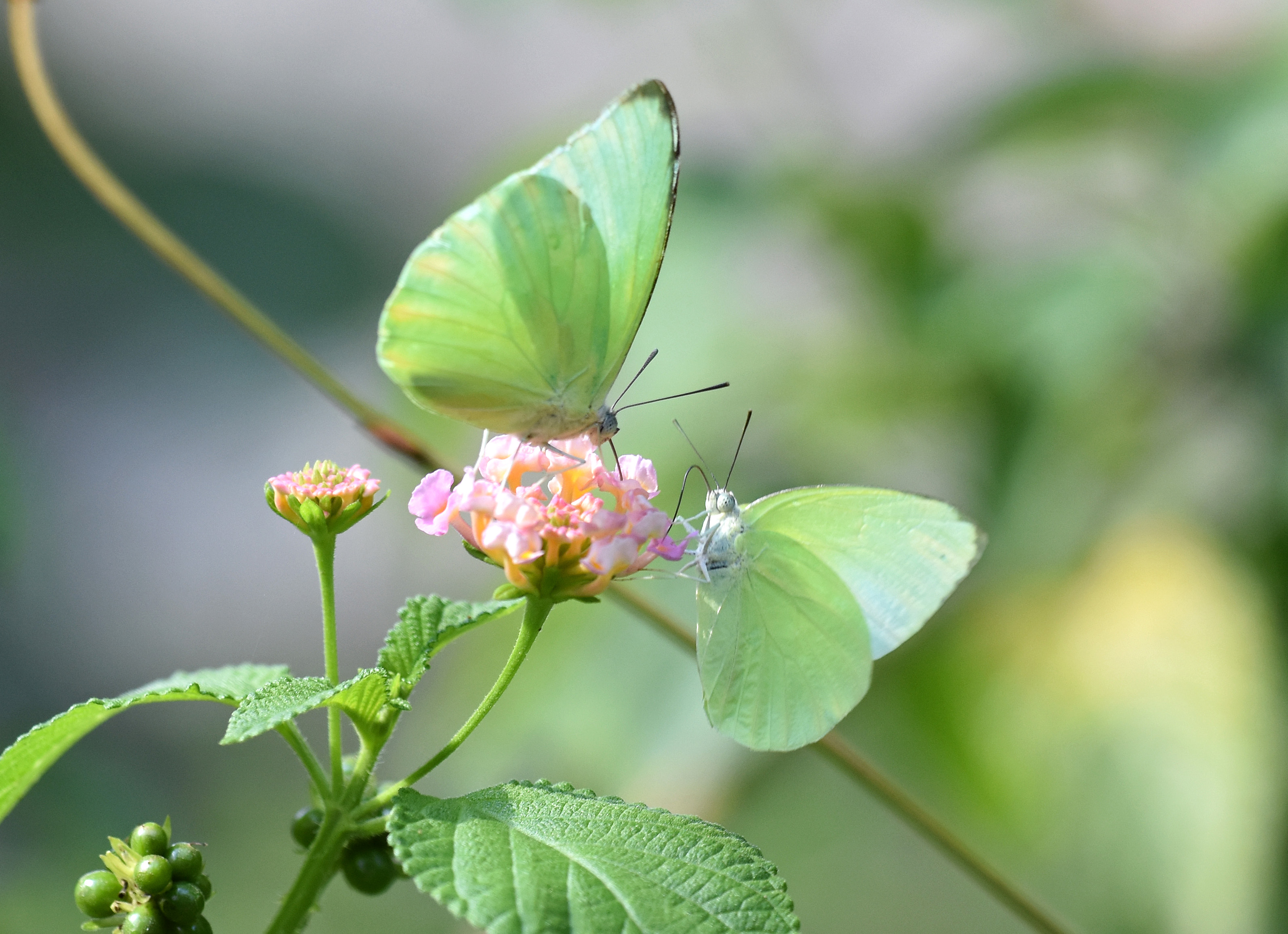
I did manage to grab a couple of photographs of the lively yellow/green butterflies, which turned out to be Lemon Emigrants, feeding on nectar from Lantana flowers.
Lemon Emigrant (Catopsilia pomona pomona) Mae KlangLemon Emigrants (Catopsilia pomona pomona) Mae Klang
I also came across this little skink – a Streamside Skink (Sphenomorphus maculatus) – on the rocks near the waterfalls (below).
Streamside Skink (Sphenomorphus maculatus) Mae Klang, Doi Inthanon, Thailand.
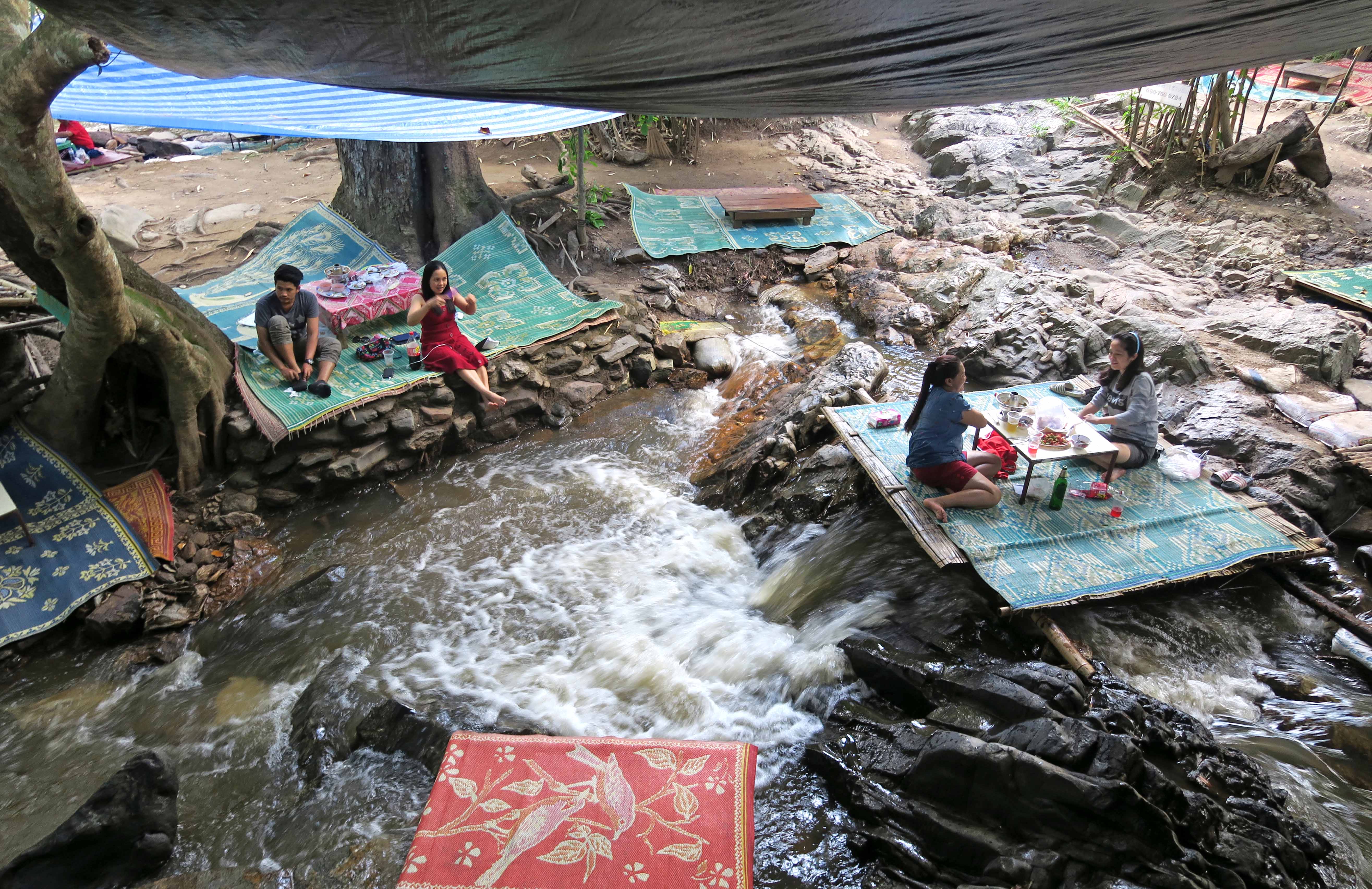
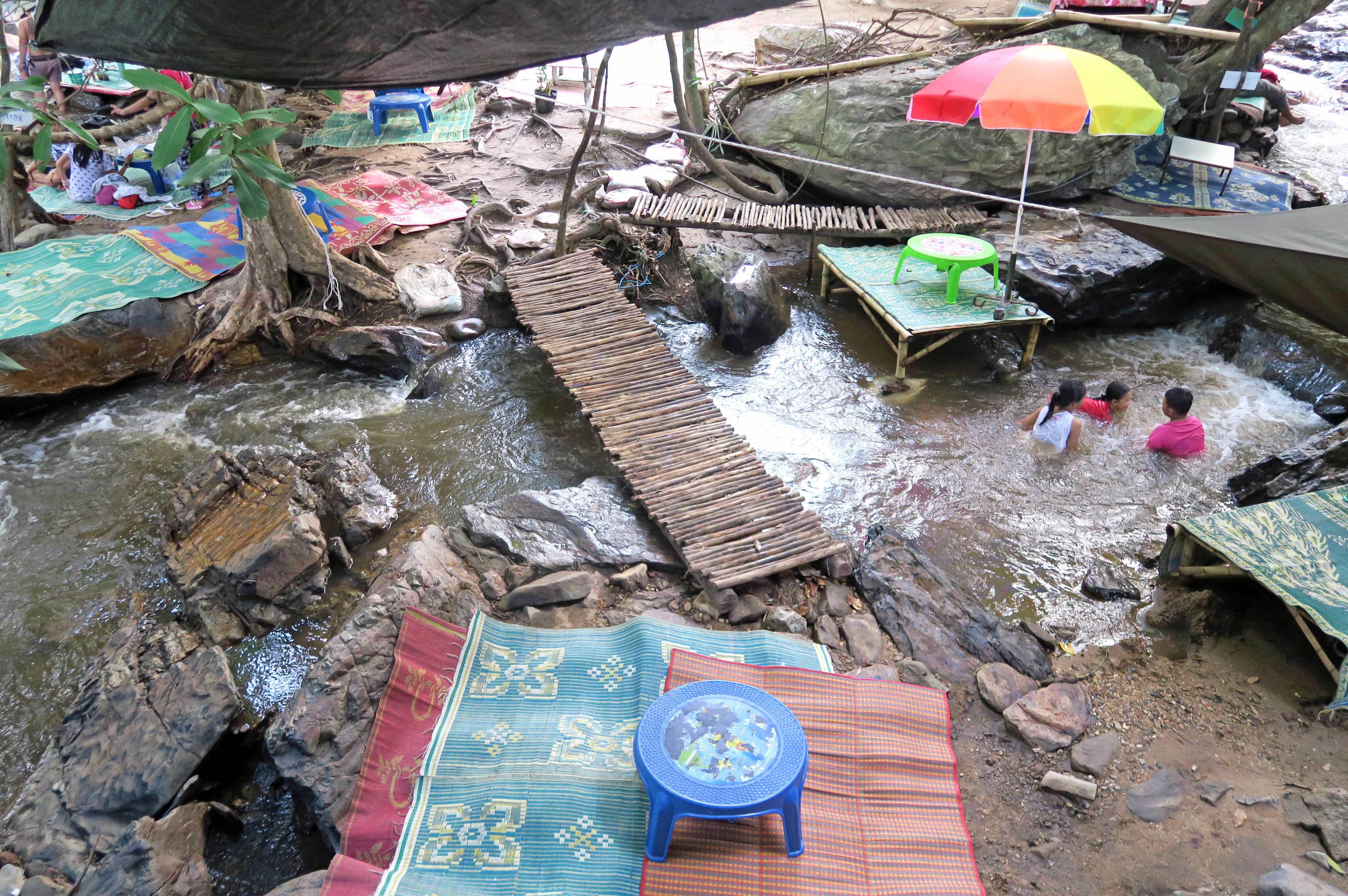
The waterfalls are a good place to cool off on a hot day, and people like to sit and relax on the rocks beside the streams. There are plenty of small restaurants and vendors nearby providing food and snacks for visitors.
Mae Klang Falls. People sitting and eating by the streams.Mae Klang Falls bathers
So even when temperatures are unbearably hot, there are many places to go to chill out, whether you are a butterfly, skink or primate!
Rayalu, M. B., Kumari, V. K., Naidu, M. T., & Atluri, J. B. (2014). Life history and larval performance of the Common Leopard butterfly, Phalanta phalantha Drury (Lepidoptera: Rhopalocera: Nymphalidae). International Journal of Advanced Research in Science and Technology, 3, 191-195.
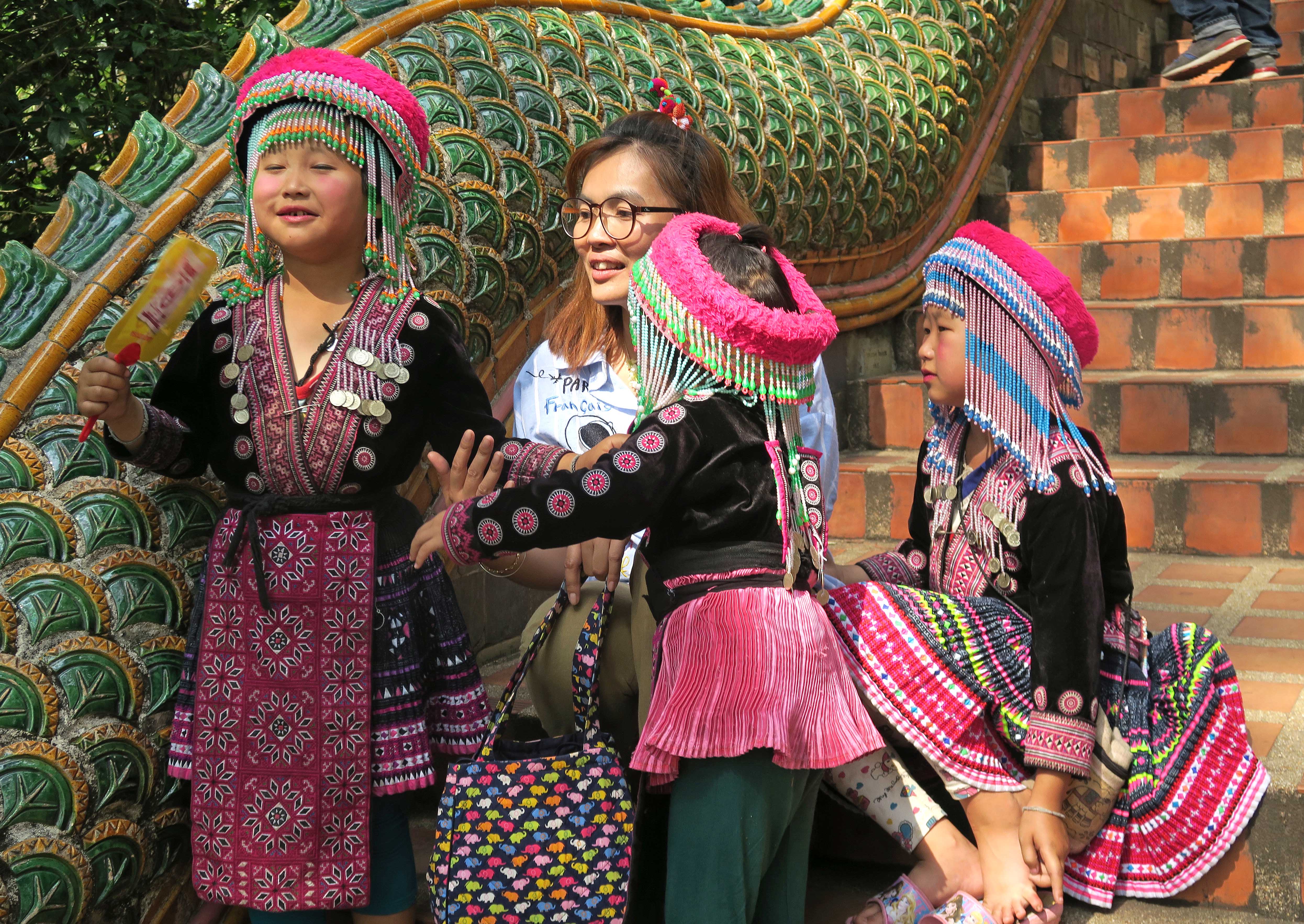
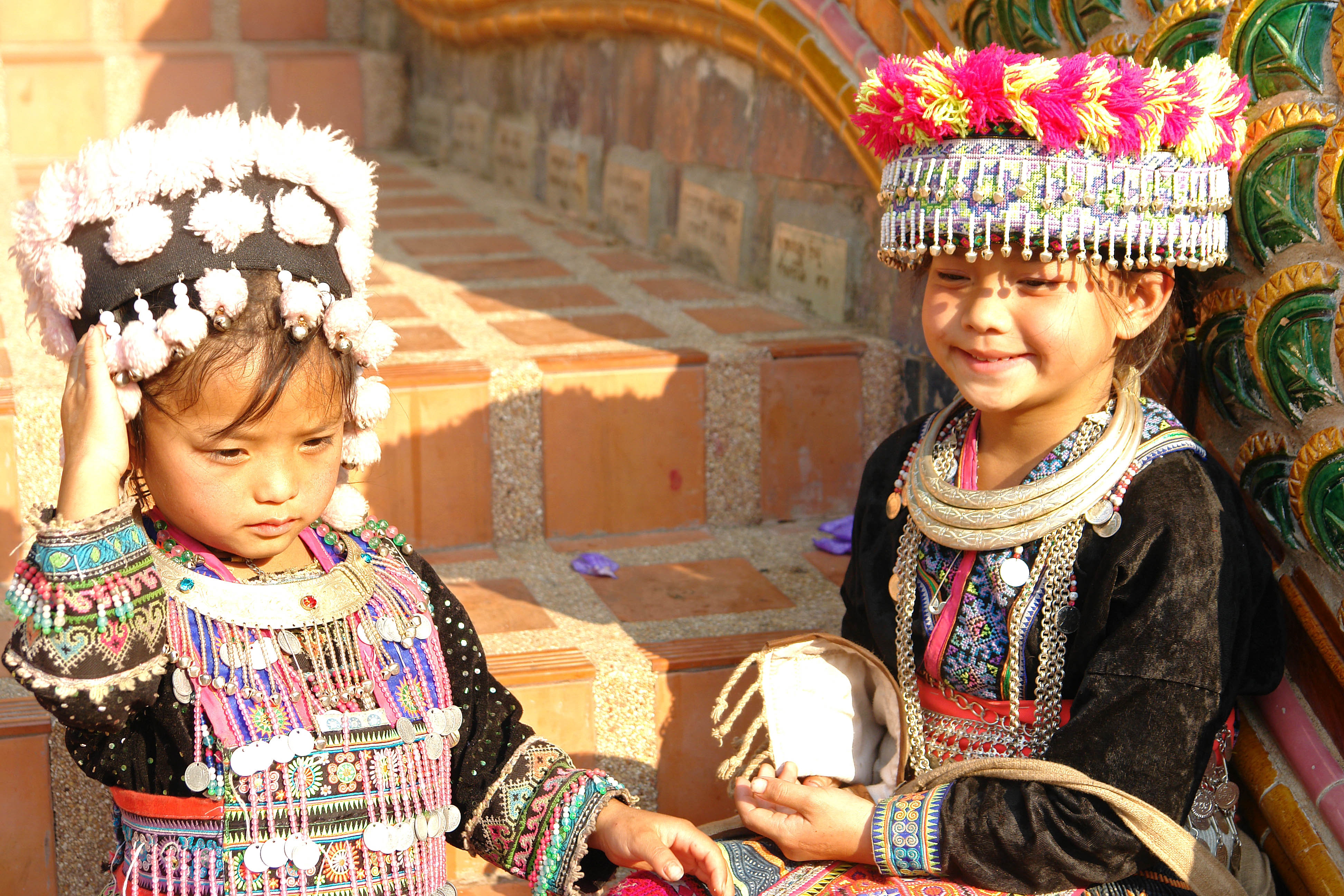
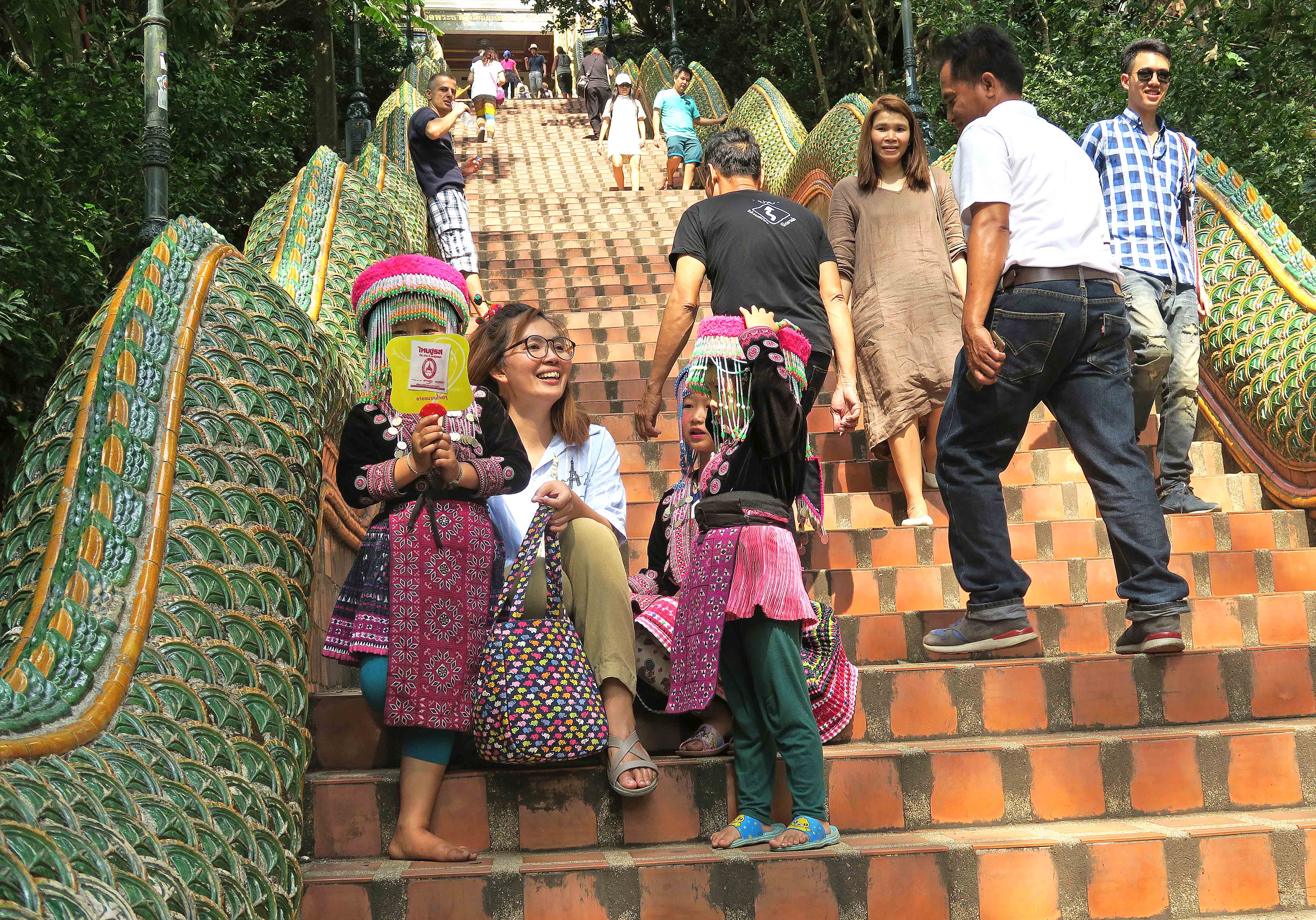
Hmong girls posing with a tourist in May 2017 on the steps of Wat Phra That Doi Suthep, Chiang Mai, Thailand
Anyone who has visited the beautiful temple – Wat Phra That Doi Suthep – on the mountain above Chiang Mai, in northern Thailand, and has walked up the long flight of stairs rather than taken the funicular lift, will have seen the lovely little girls in Hill tribe costumes who sit on the bottom of the steps – and half way up – posing for photographs. They are dressed in traditional Hmong costumes.
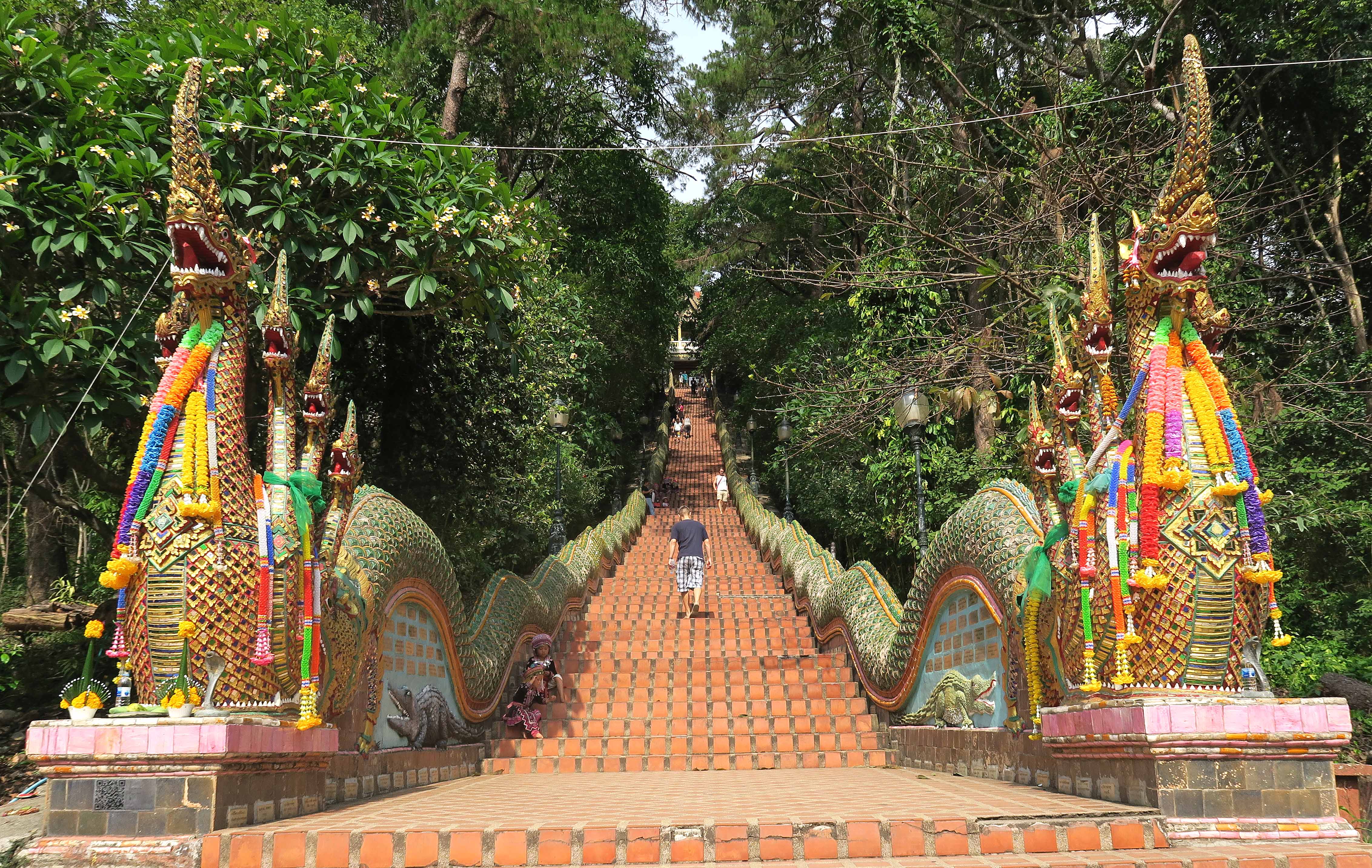
There are over 300 steps up to the pagodas on Wat Phra That Doi Suthep
Over the years I have visited this temple a number of times and have pictures of what must be different generations of youngsters sitting on the steps, going back to 2005.
Hmong girls on the steps of Wat Phra That Doi Suthep in 2005Hmong girls on the steps of Wat Phra That Doi Suthep in 2005
The girls don’t just dress up in these gorgeous costumes for fun, although they clearly enjoy interacting with tourists, they usually ask for payment. A few coins. Although, being so young they are not very aggressive in asking. Nevertheless, in my estimation they must accumulate a fair bit of money over the course of a few hours. I could be wrong, but I have the impression that they are little gold mines!
Hmong girls on steps of Wat Phrathat Doi Suthep Buddhist temple, Doi Suthep, Chiang Mai, Chiang Mai Province, Thailand. May 2017.
Nevertheless, I was very surprised to learn that two of the girls had been accused of stealing a tourist’s watch! (Links 1 and 2, below) A British tourist who had posed for a photograph with the girls, subsequently found that her watch was missing and accused them of stealing it. In the photograph, one little girl has her fingers next to the watch, but the evidence is circumstantial. The photograph and story went viral, and like millions of other people around the world I was left with the impression that this was the end of the story.
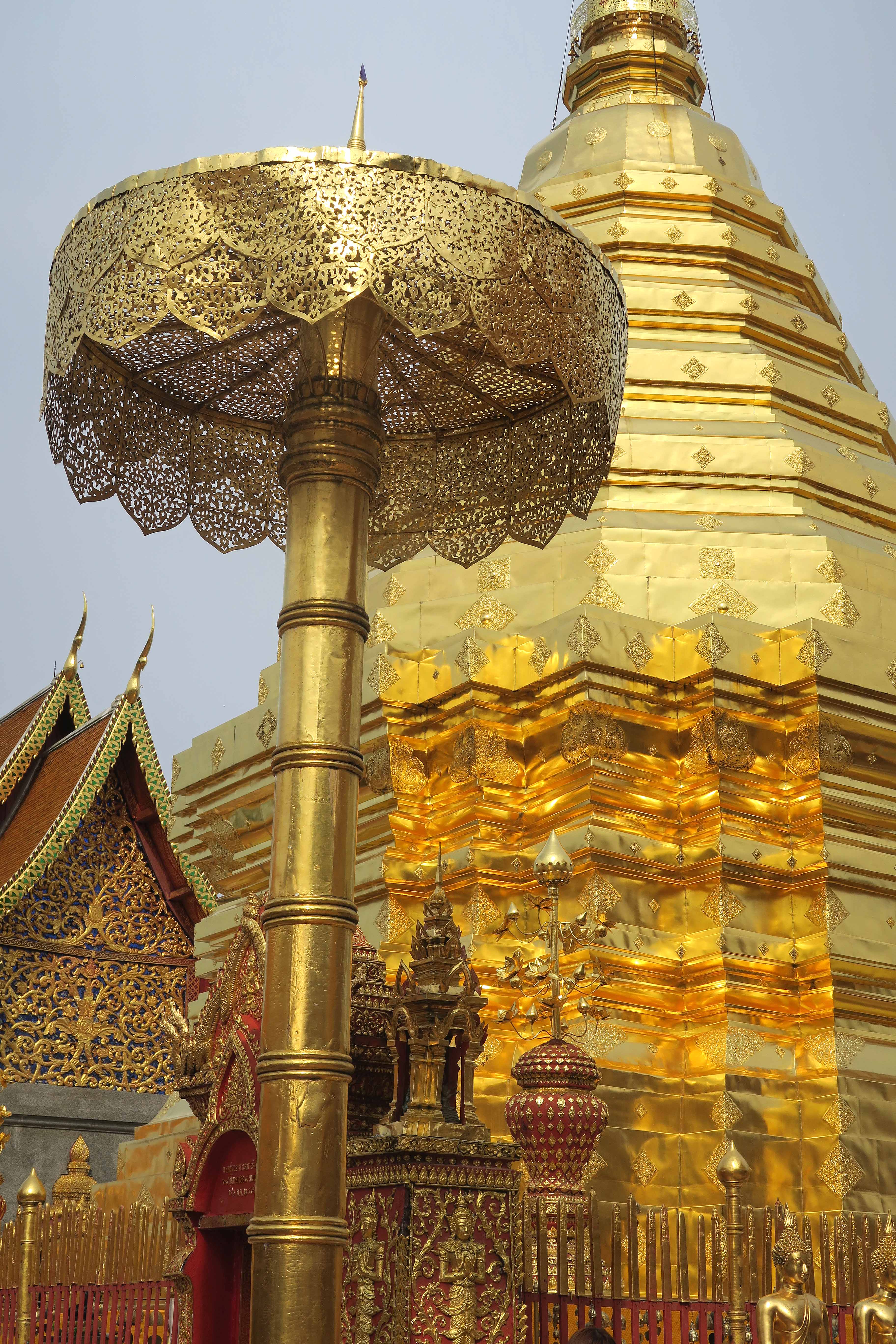
Golden umbrella on Wat Phra That Doi Suthep, Chiang Mai Province, Chiang Mai, Thailand.
It was a good story! Innocent-faced little ‘treasures’ pocket a tourist’s watch! But it turns out that it was false (See Link 3) The tourist eventually found the watch, but by then the damage was done. There are still articles on the Web accusing the children of theft (4).
This is one little apocryphal story (definition: of doubtful authenticity, although widely circulated as being true) which thanks to the power of social media, reached millions of people around the world, and left most of them with the impression that it was true. Well maybe there are child pick-pockets, and perhaps I am naive, but my impression is that they were innocent. What it demonstrates however, is that once a story has ‘gone viral’ there is very little that can be done to change it, whatever the facts may be. This is why politicians – who could I mean?! – are prepared to lie and promote falsehoods; they know that if the story is juicy enough, or salacious, it will get picked up by social medias – which we all use – and shared or spread by us all. I suppose all we can do is to remain skeptical, cautious about things until proven beyond reasonable doubt; perhaps not believing everything we see or read and remaining open to alternative explanations!
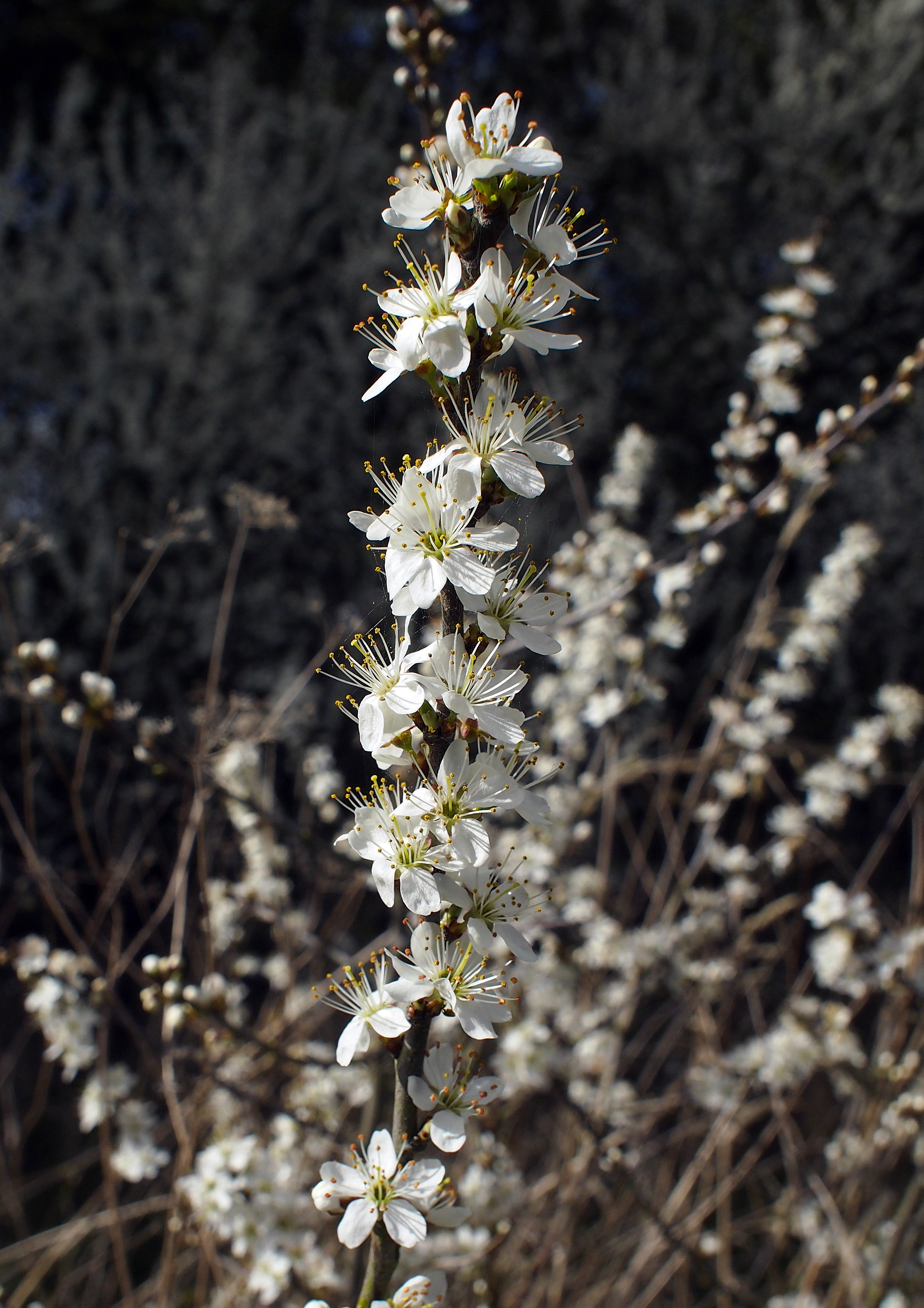
Spring has come early this year. The world is warming up; 2016 was the warmest year since record-keeping began (in 1880). (1) Perhaps 2017 will be even warmer? The countryside in Bedfordshire is waking up; shaking itself free of winter’s cloak and putting on a new dress of green leaves and spring flowers! Sprays of blossom are appearing, like this Blackthorn (Prunus spinosa) twig (below).
Blackthorn (Prunus spinosa) blossom on 1st April
One of my favourite walks, is between Sharnbrook and Felmersham and back, in Bedfordshire. An easy stroll along the banks of the Great Ouse towards the village of Felmersham and then back through the Felmersham Gravel Pits, which are a 21.6 hectare Site of Special Scientific Interest. I took these photographs along this walk on 1st April 2017, with a small camera (an Olympus Pen EP-3 fitted with a 17mm lens; 34mm equivalent).
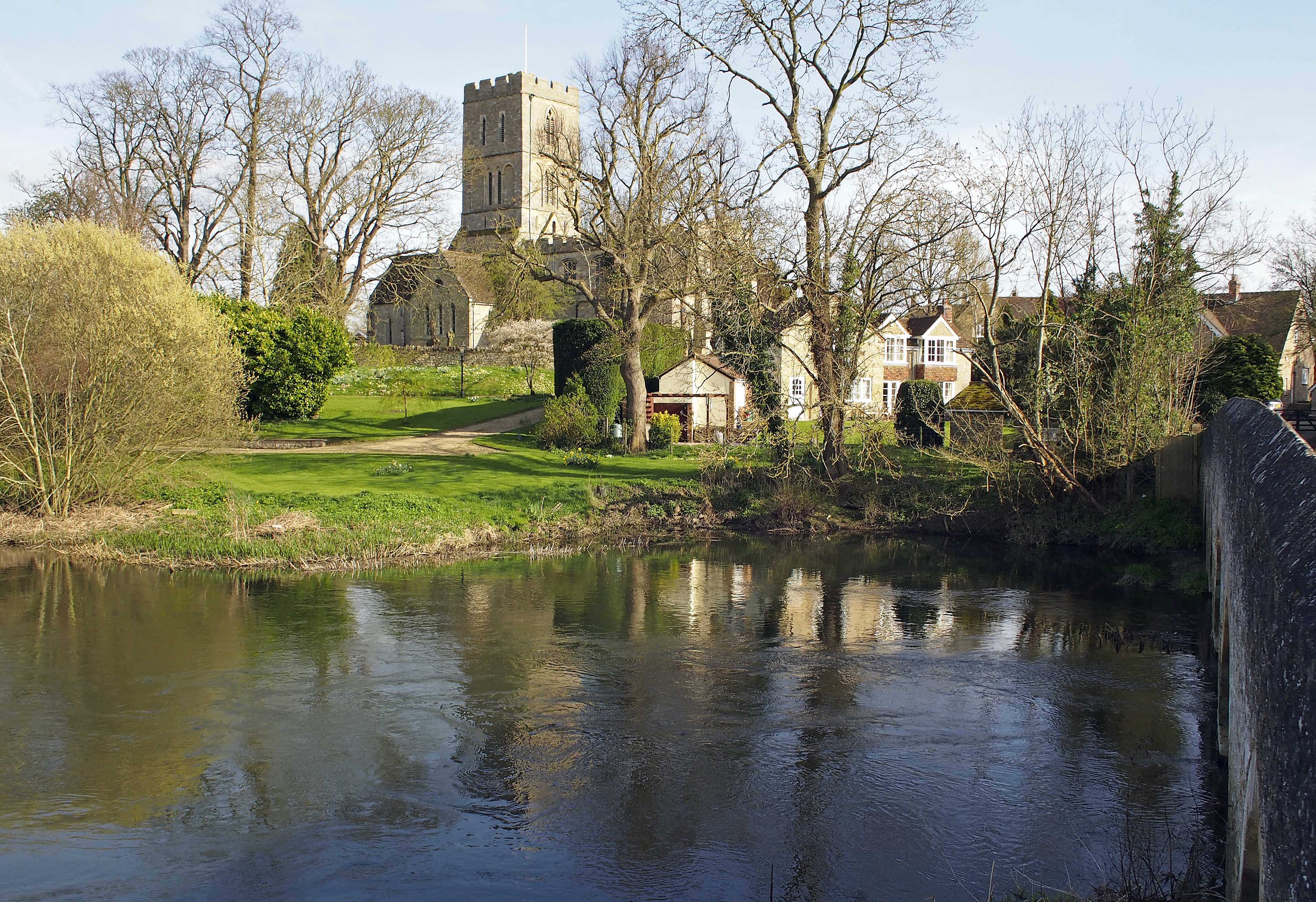
St Mary’s Church at Felmersham was build between 1220 and 1240; it doesn’t look that old! (2)
St Mary’s Church, Felmersham next to the Great Ouse, Bedfordshire
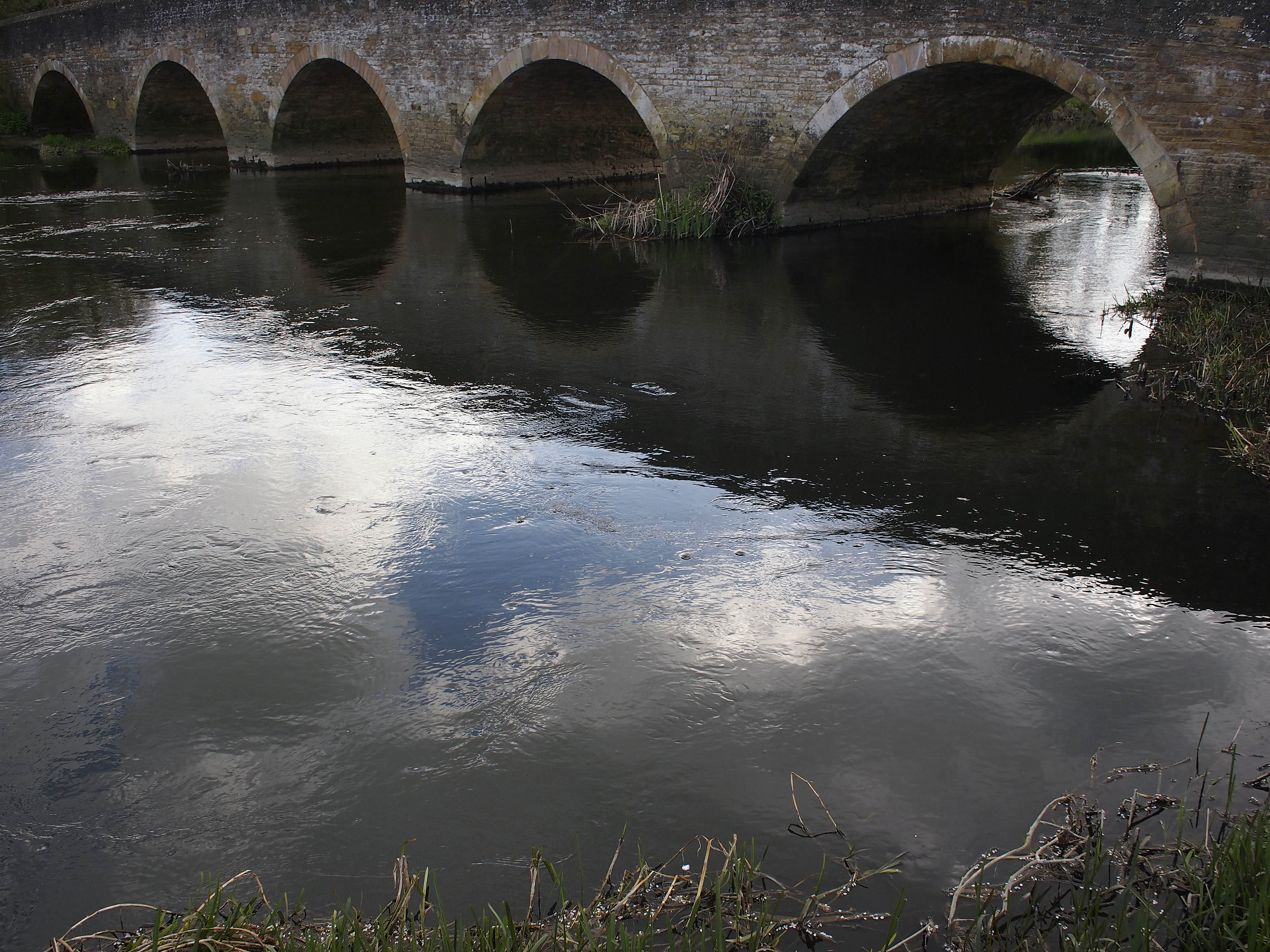
The 5-arched stone bridge, on the other hand, looks very old, but was ‘only’ built in 1818!
Stone bridge over the Great Ouse at Felmersham
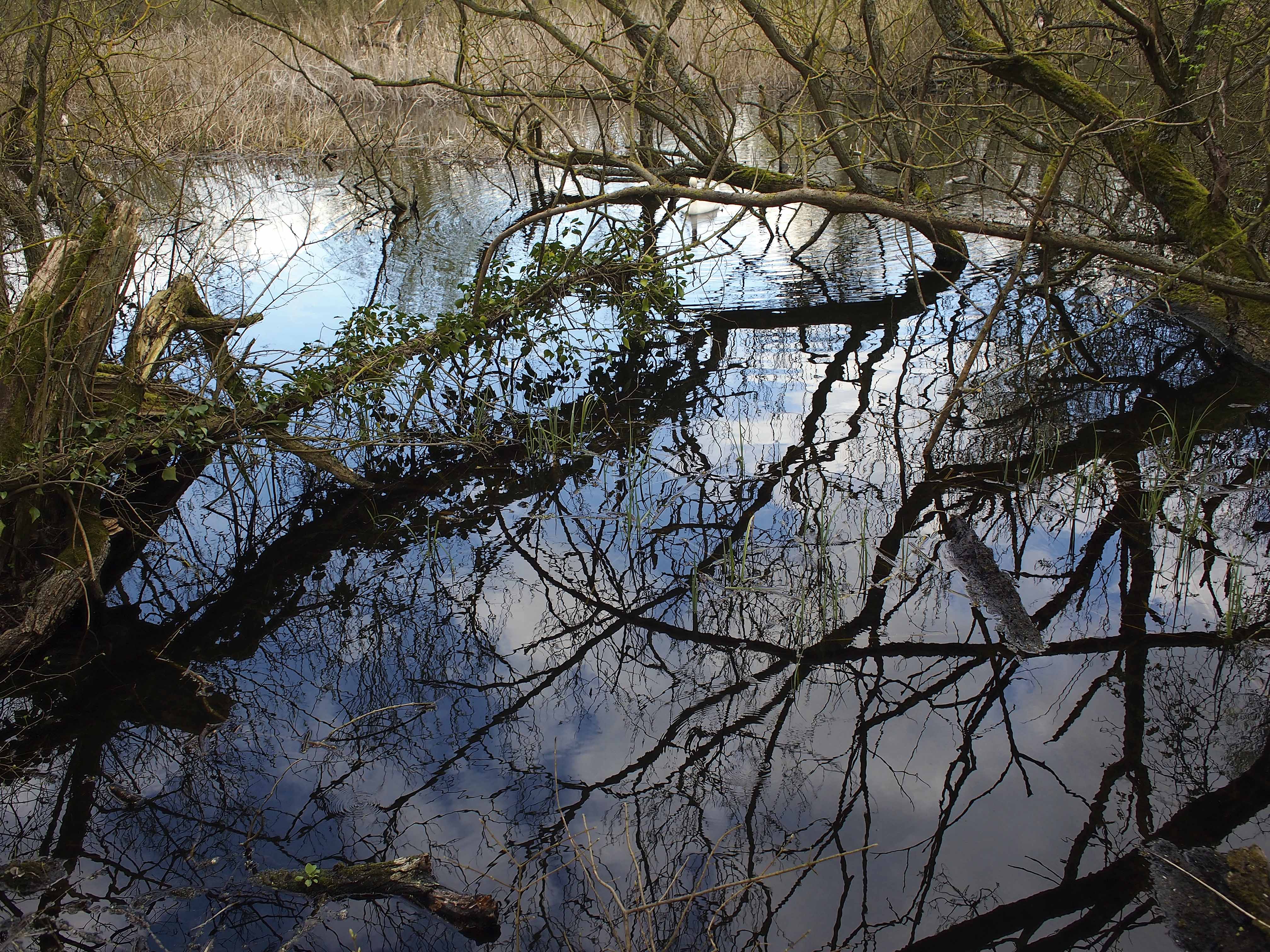
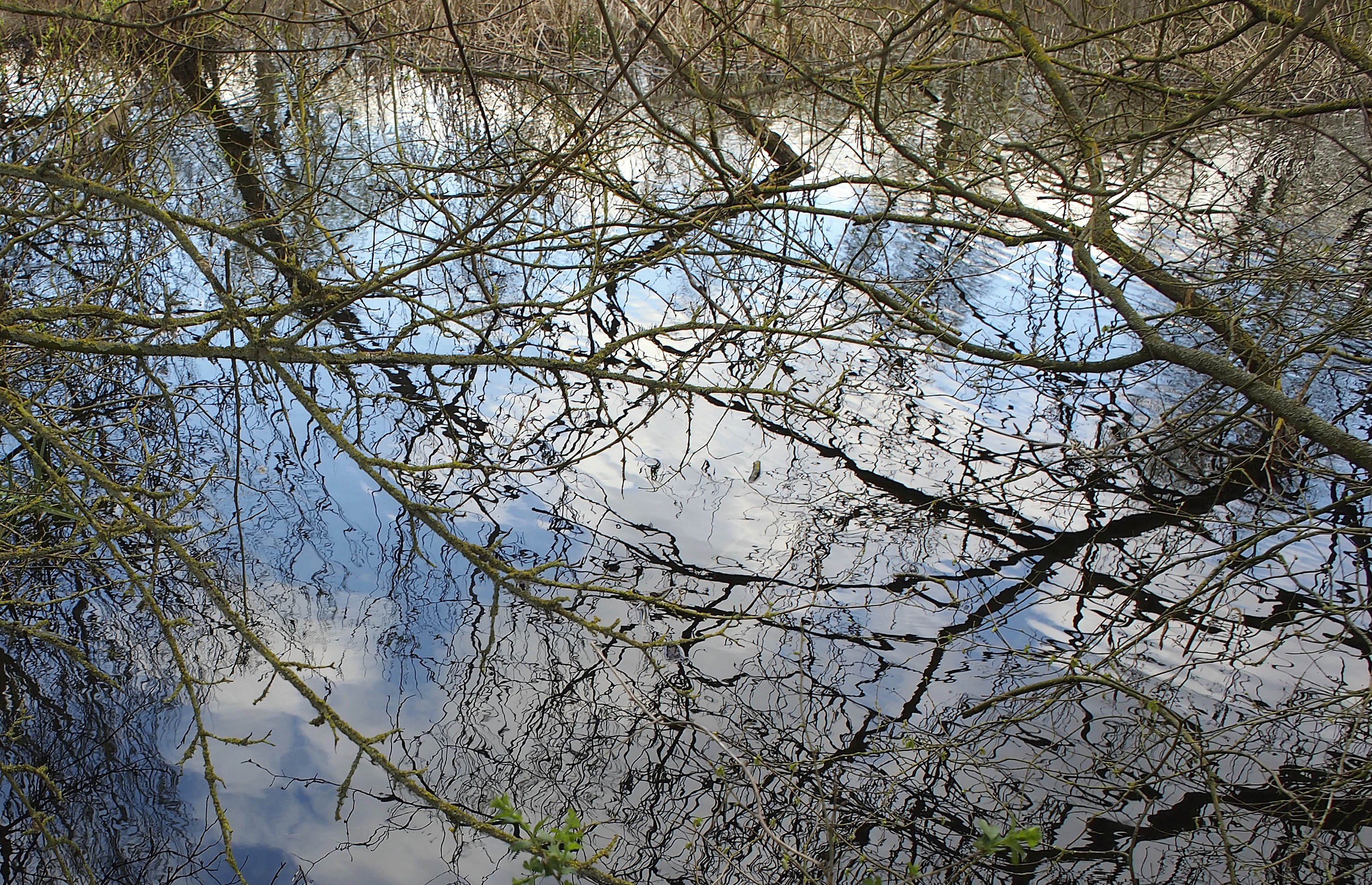
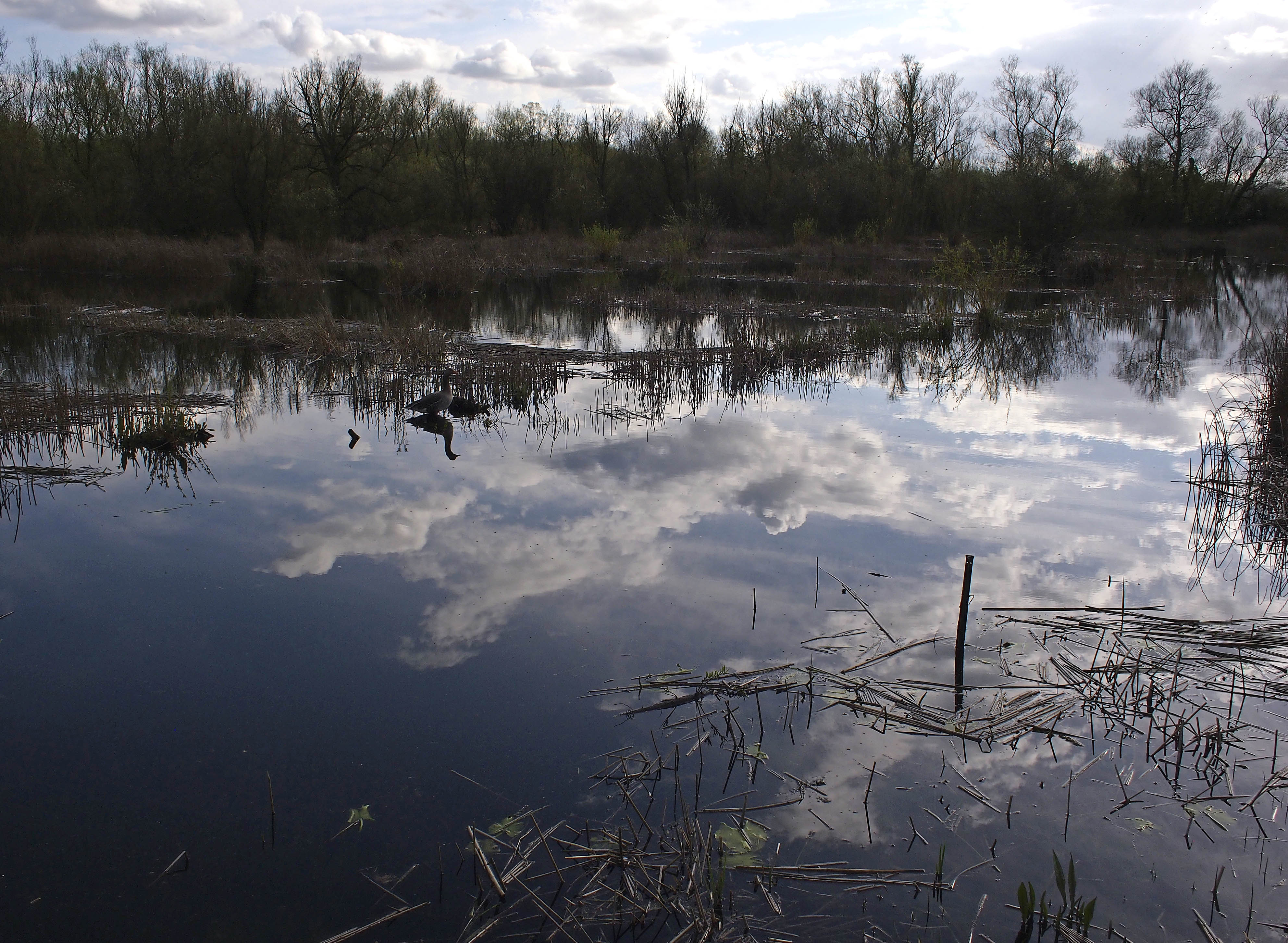
The gravel pits in the Nature Reserve were dug out during the second World War when the gravel was used in the construction of local war-time air fields. (3) The pits are now lakes and much beloved of waterfowl, including ducks, geese, swans, grebes and so on. It is a magical place that I have visited for many years; very relaxing to walk beside the lakes and ponds and reflect on the reflections!
Felmersham gravel pits, Bedfordshire
There are certain spots where I must have taken dozens of pictures, but the scene is always changing; not only through the year, but also from year to year as the vegetation grows, or is cut back by conservators to create spaces for nature.
Reflections in the lake. Felmersham gravel pits, Bedfordshire
Spot the goose! No fishermen at this time of year. Angling is apparently by Wildlife Trust permit only. (4)
Felmersham gravel pits, Bedfordshire.
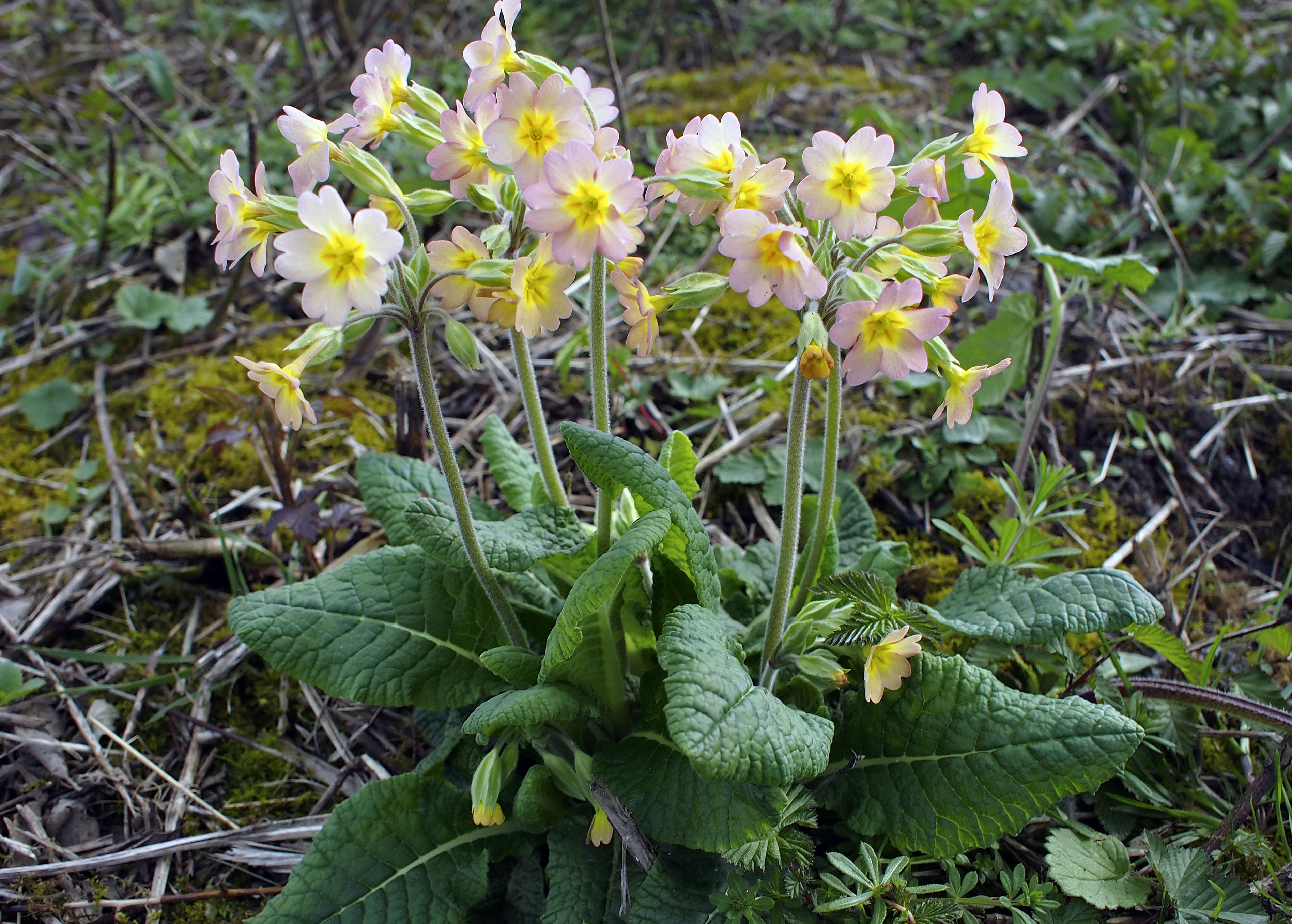
Some new flowers were starting to appear on 1st April. The primroses have been out for some time, but this was the first time I came across cowslips. These had wonderful colours; were they wild or garden escapes? I don’t know.
Pink and yellow PrimulasRed Primula veris, Coronation cowslip
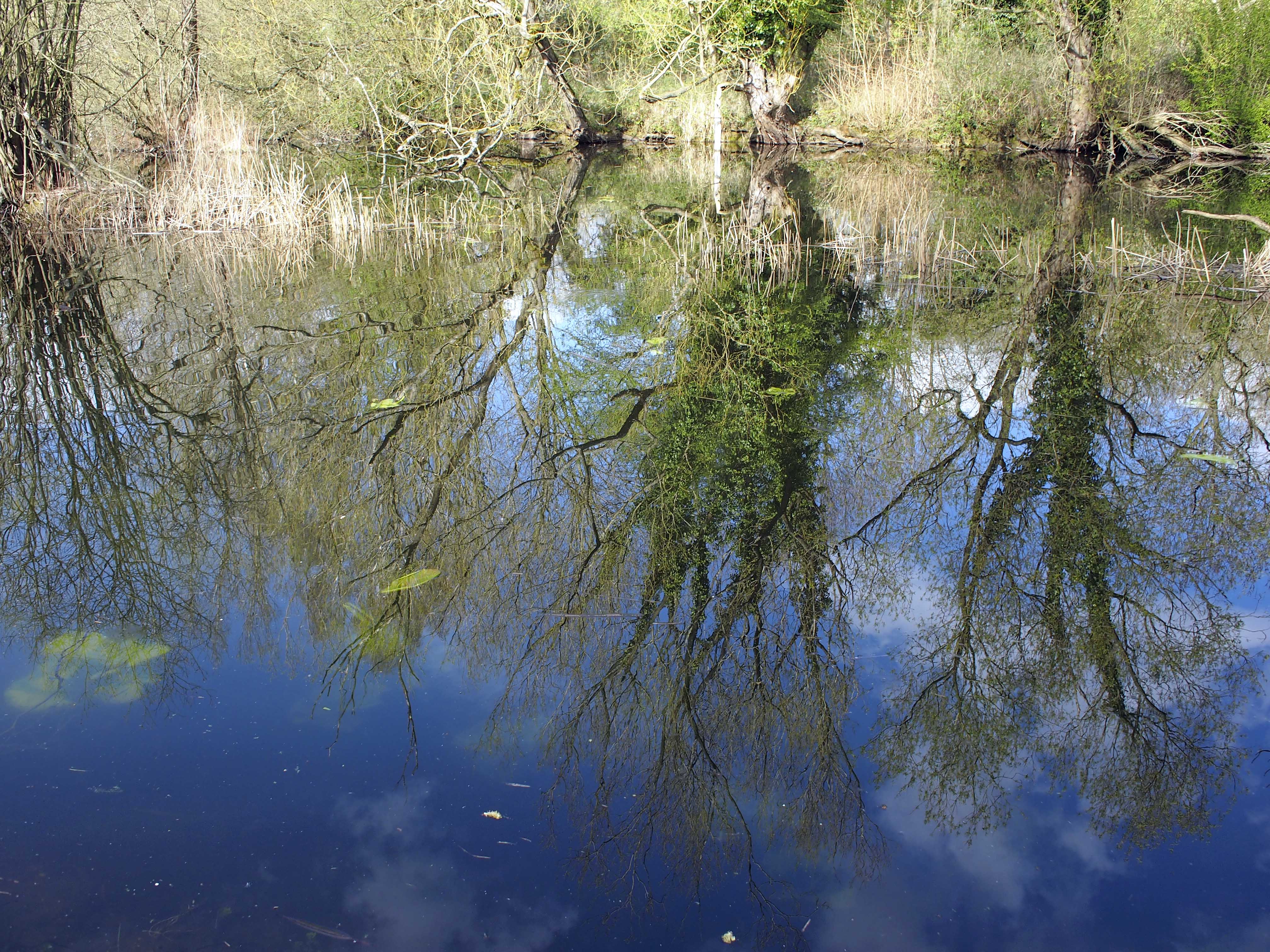
The vegetation beneath the water was also blooming! Large water-lily leaves could be seen (below).
Trees reflected in the water, with green plants underwater.
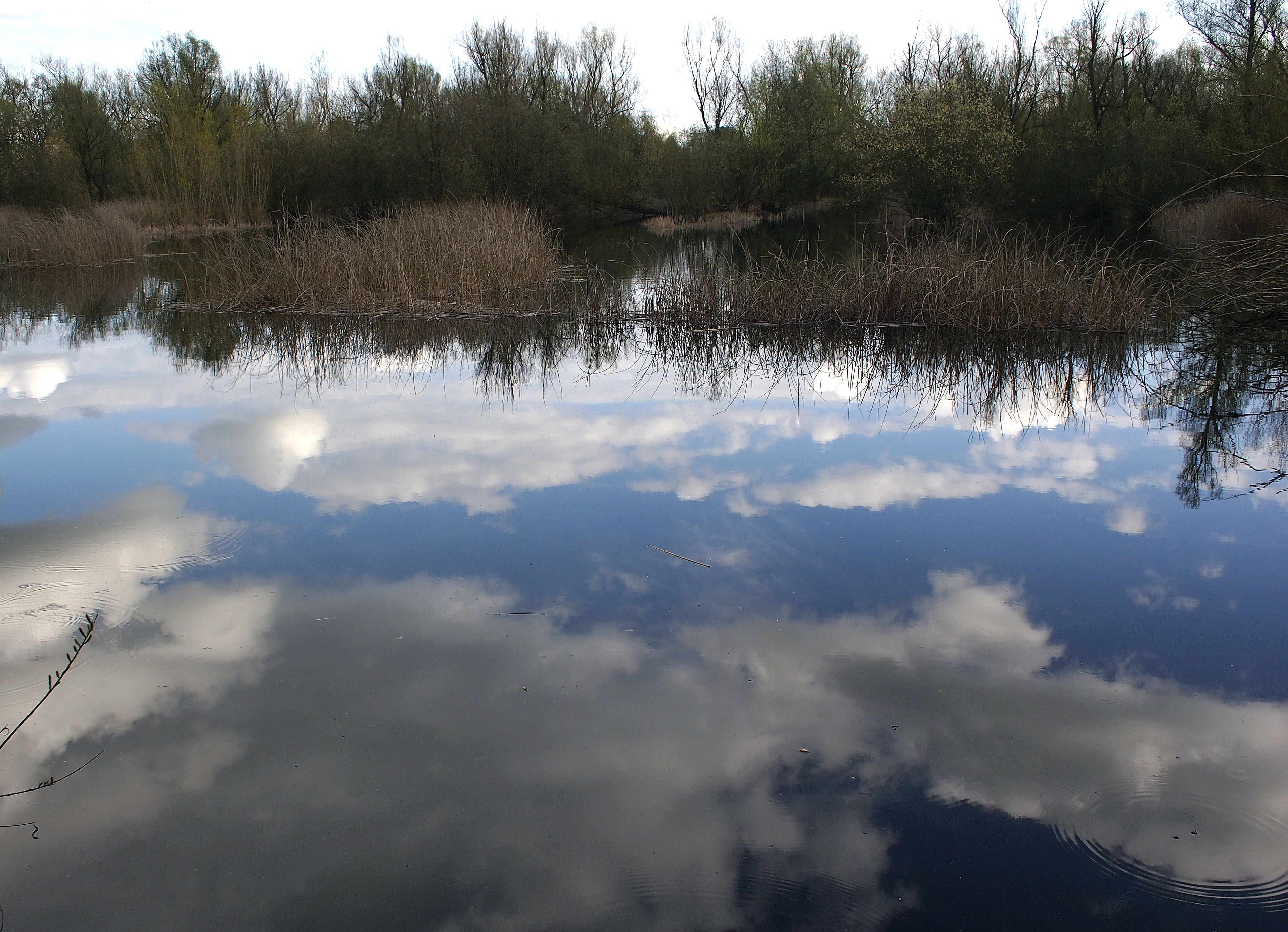
This year’s reeds have not yet emerged, however. The brown reeds are leftover from last year (below).
Reeds on Felmersham gravel pits, Bedfordshire.Clouds reflected in Felmersham gravel pits, Bedfordshire.
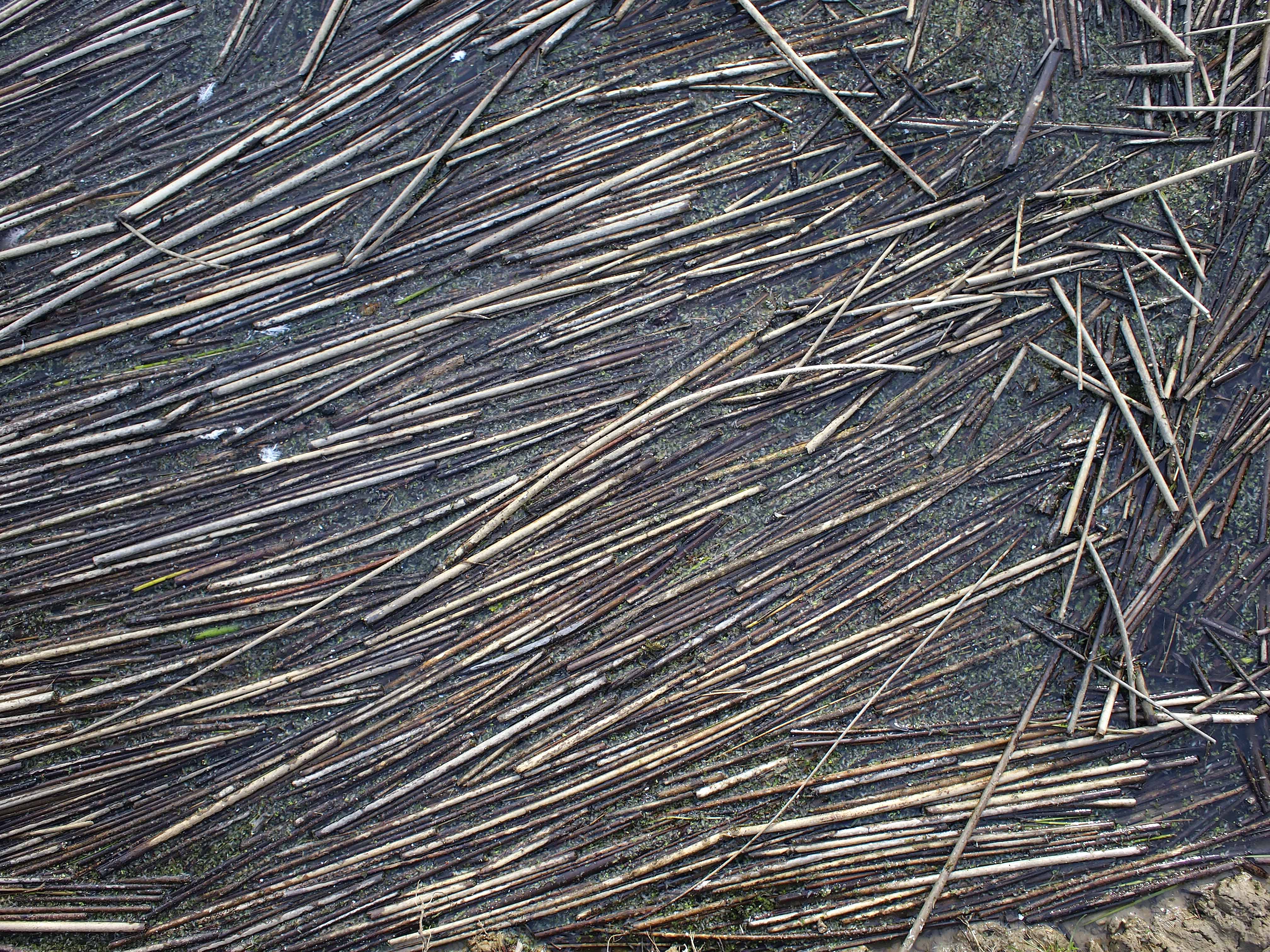
In one corner of a lake, reeds had been piled up by the wind along the bank.
Reeds floating on the water.
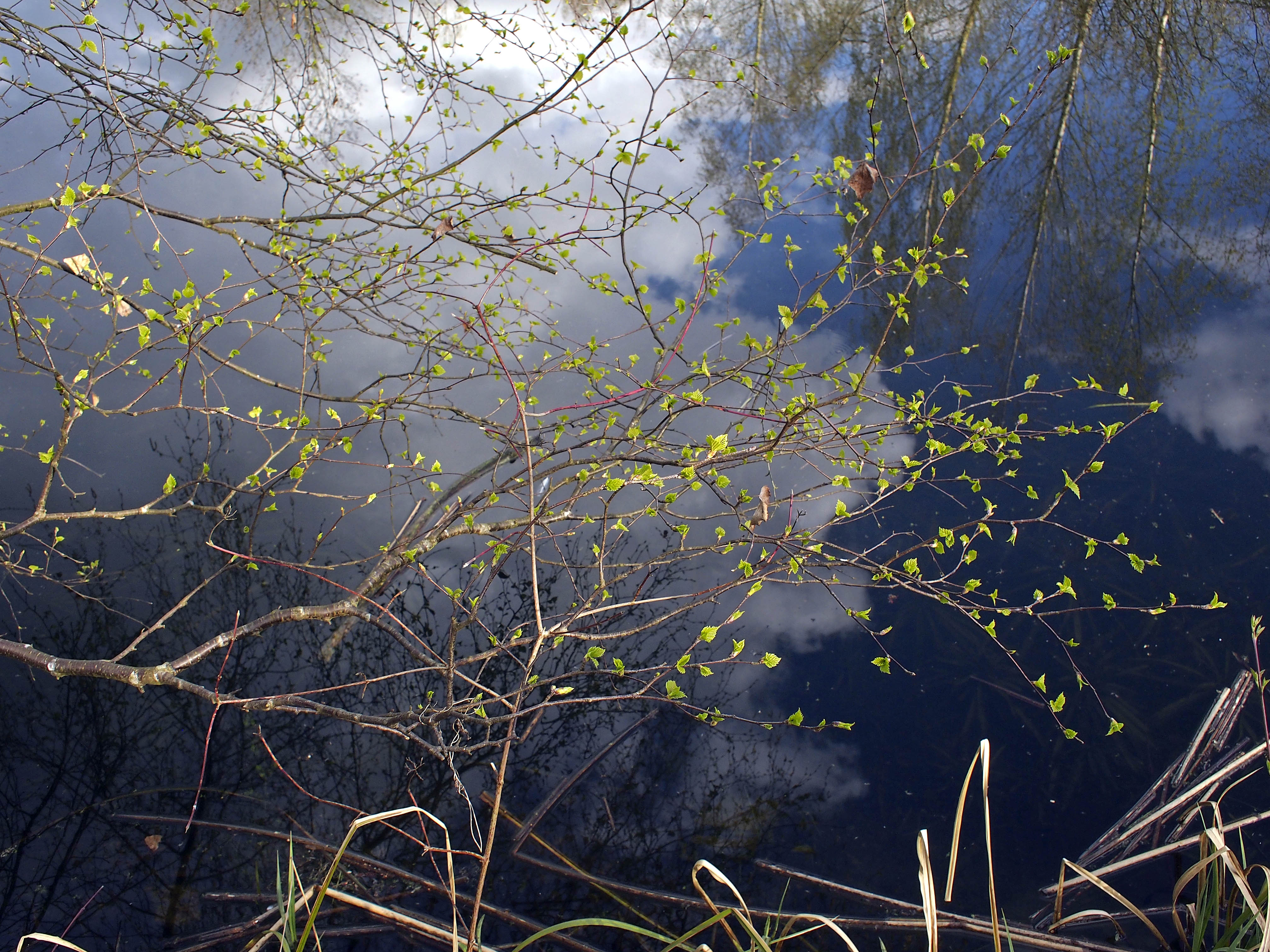
Trees vary from species to species in terms of when their leaves first appear. The leaves on this bush overhanging the water, were just starting to appear, breaking out of their buds.
New leaves emerging on overhanging bush.
One of the pleasures of travelling a familiar path is that you see old favourites in a new light, as well as coming across new things. The world is always changing and it is our blessing to be able to witness it, albeit briefly.
I had the pleasure of viewing the 41st Chiang Mai Flower Festival this year. The parade took place on 4th February 2017, on what was a beautiful, albeit very hot day. The parade starts early in the morning – about 8am – from Nawarat bridge over the Ping River, and follows a traditional route along Thapae road, Kotchasarn road, Changlor road, Arak road and ends at Nong Buak Haad Park.
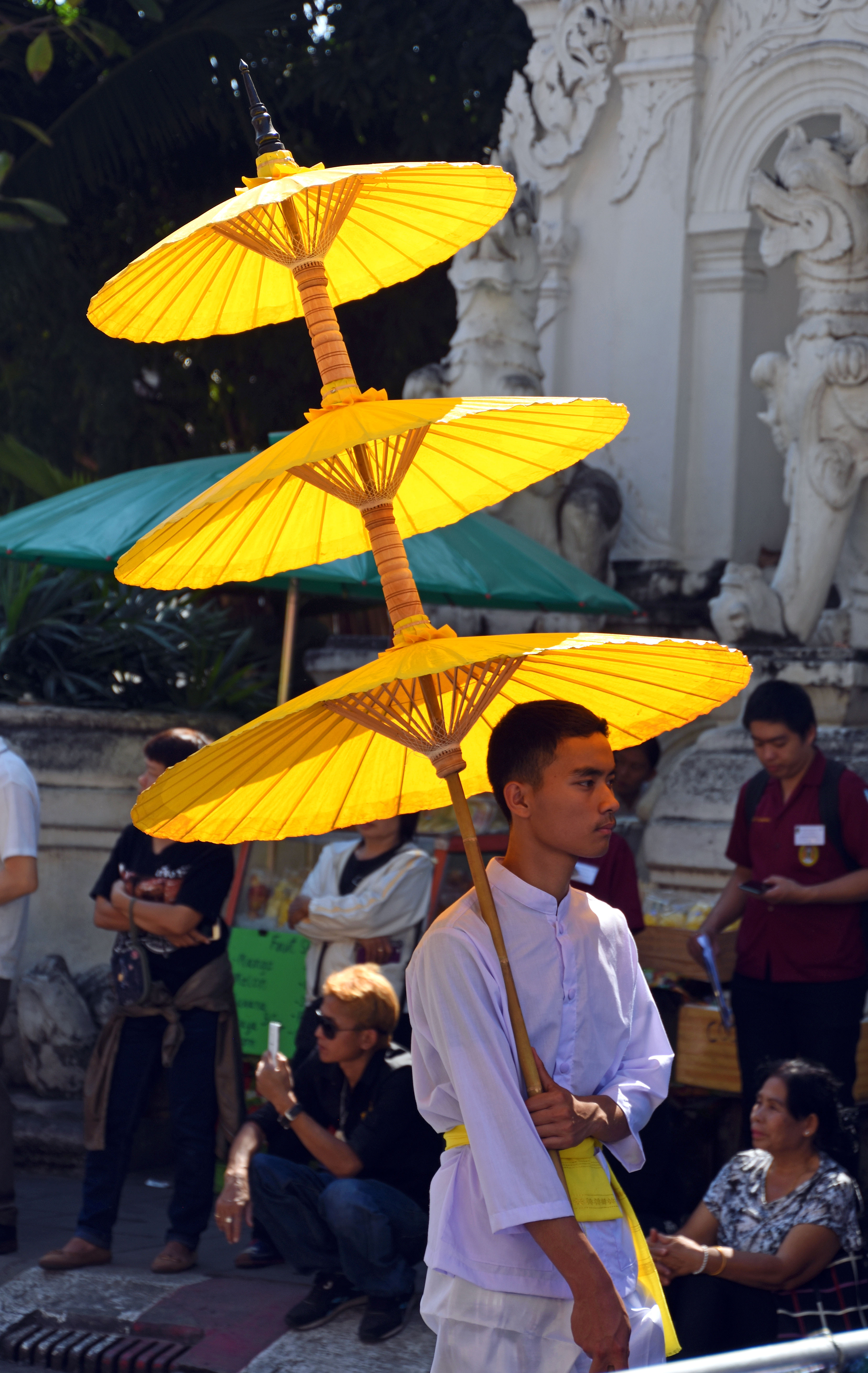
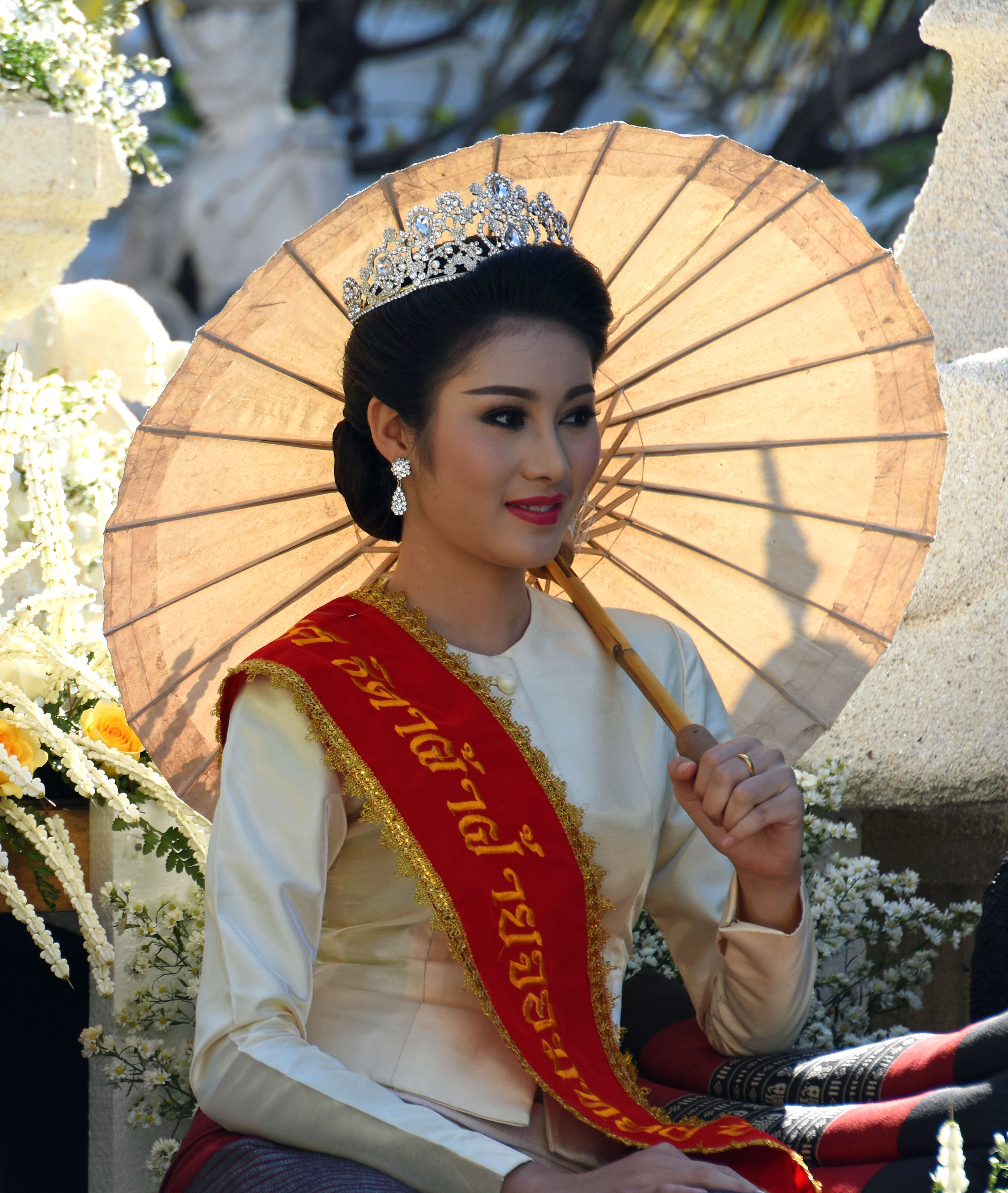
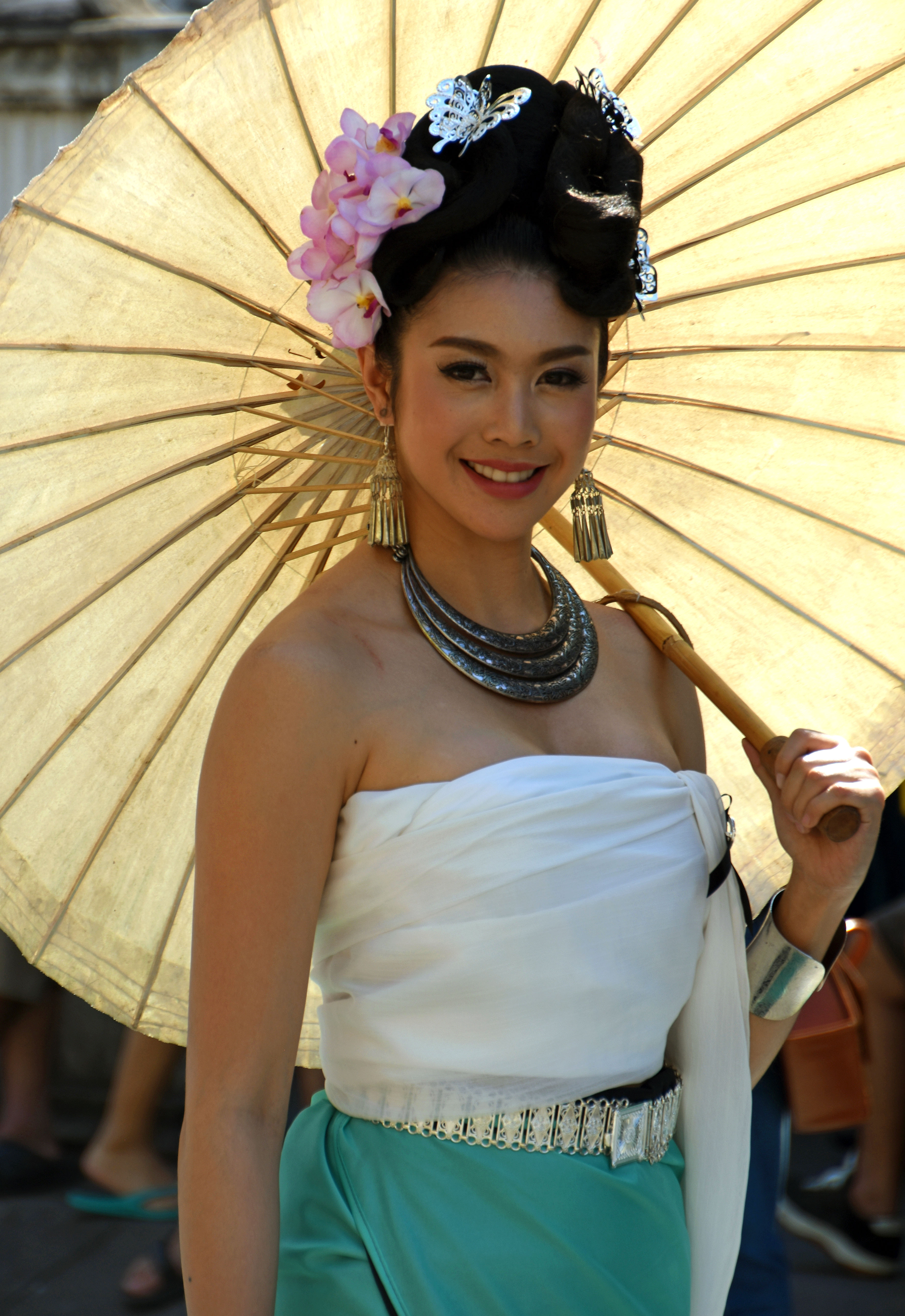
Traditional umbrella
This was the third flower festival that I have seen in Chiang Mai over the years. It is a wonderful celebration of Thai culture, with thousands of participants dressed in traditional as well as modern costumes.
Traditional Thai costume and hand movement
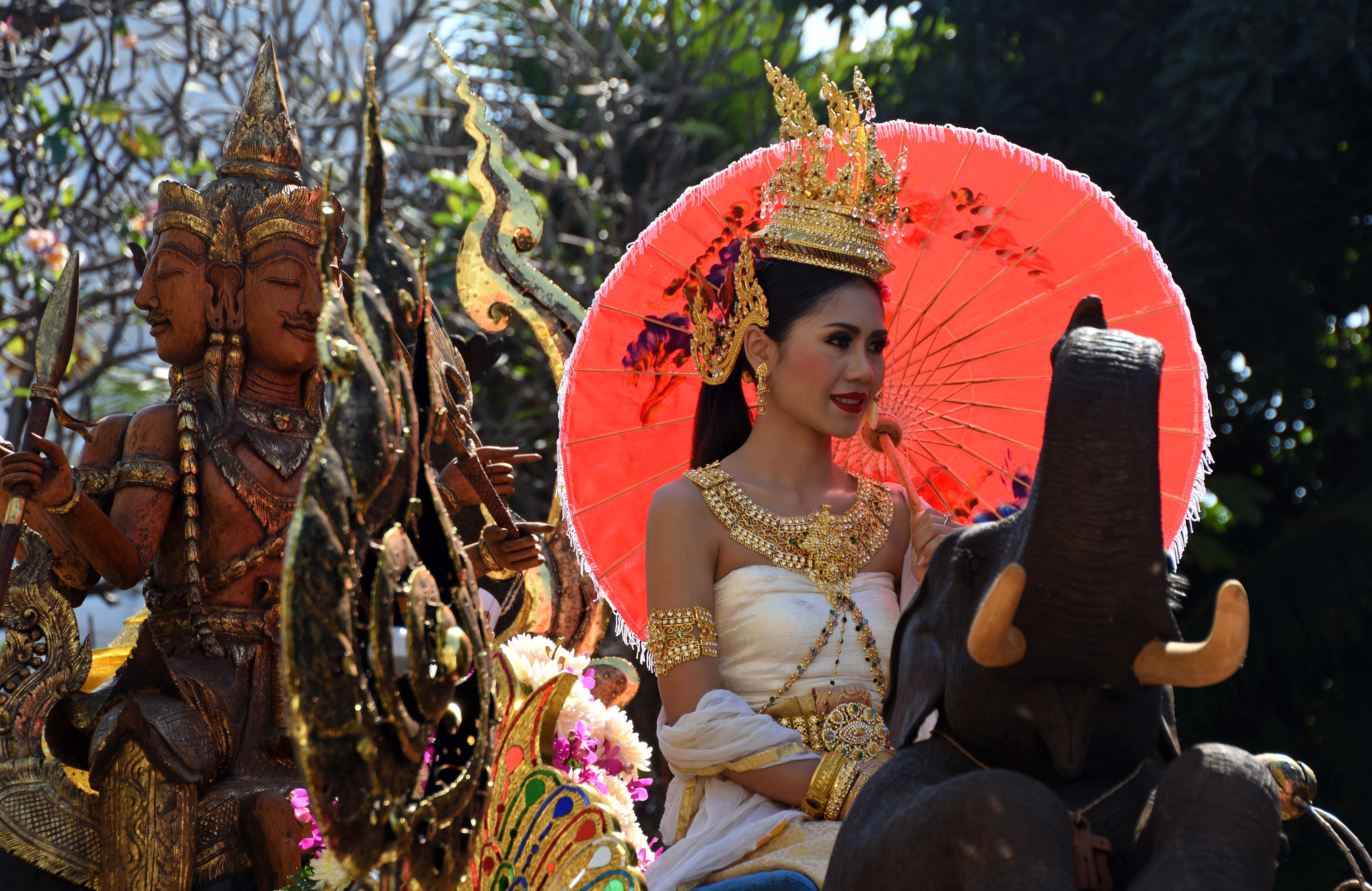
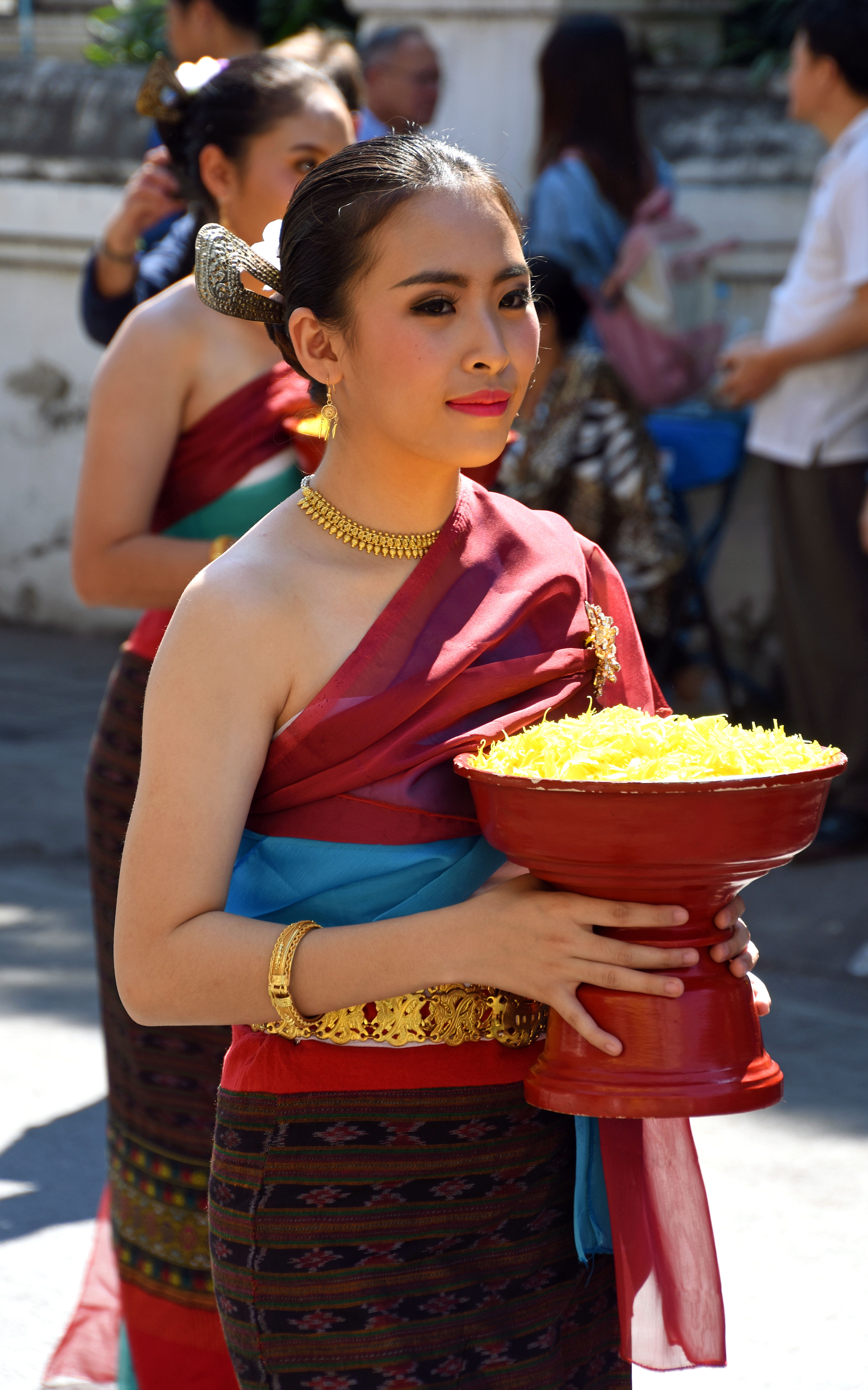
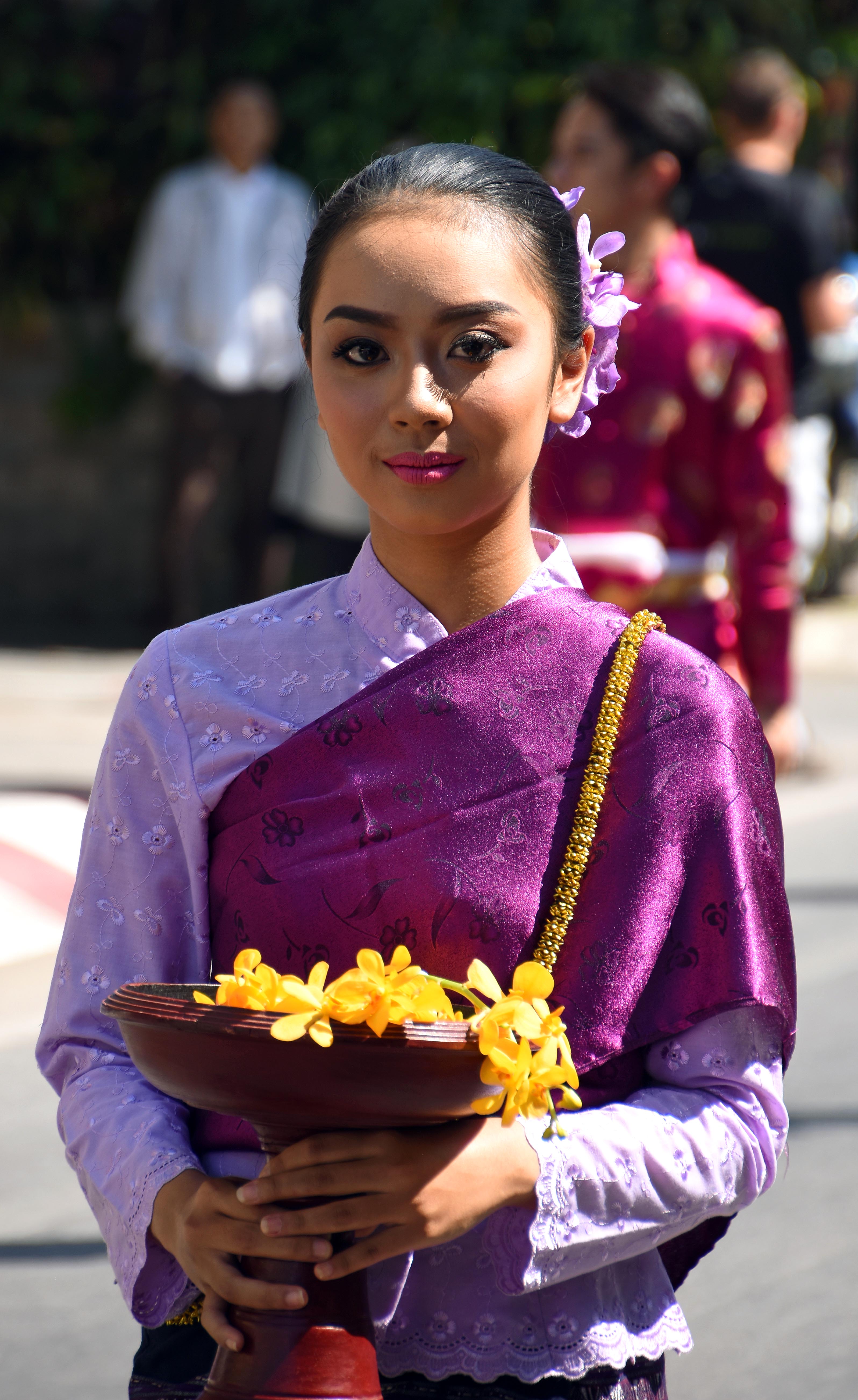
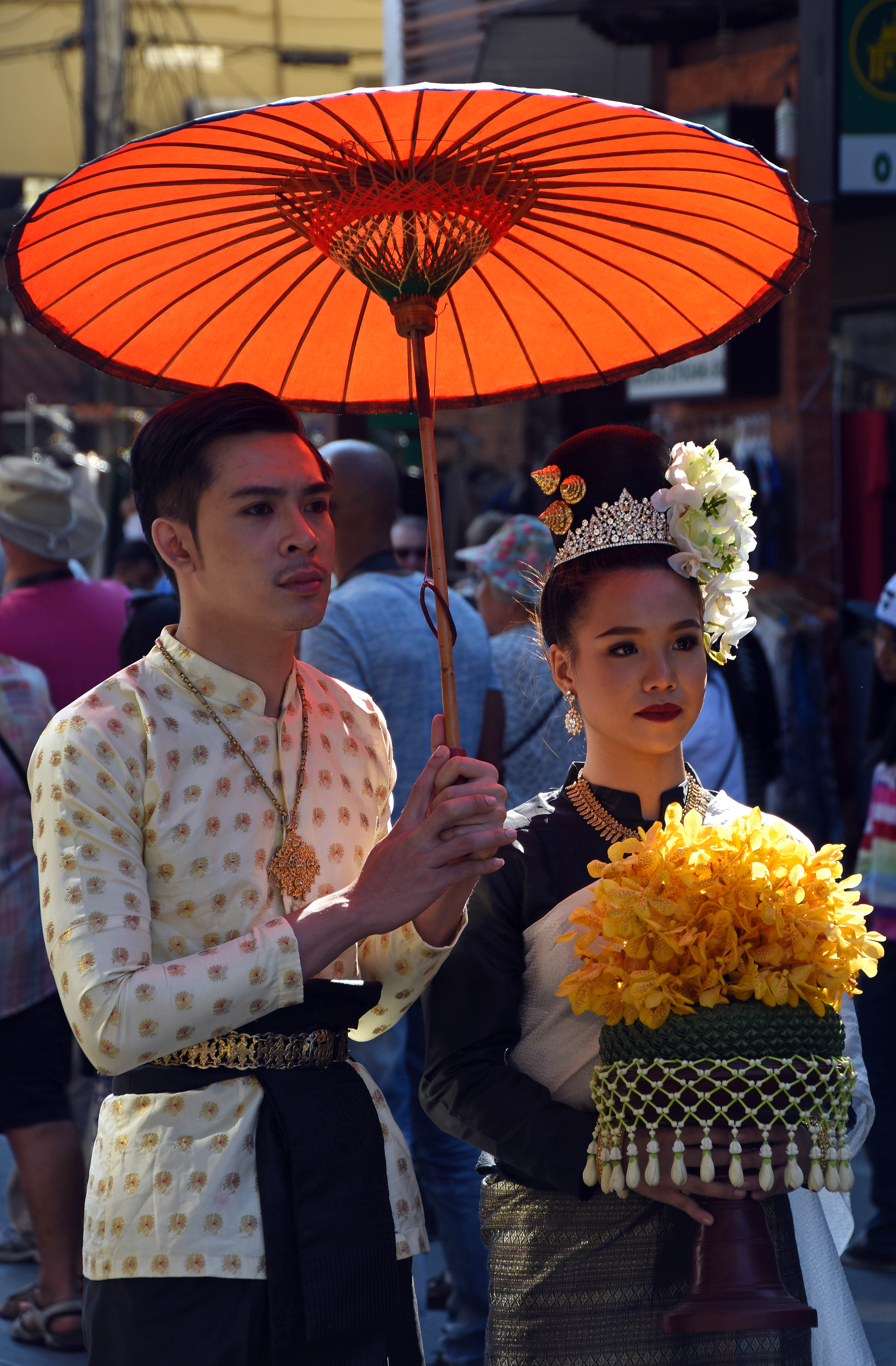
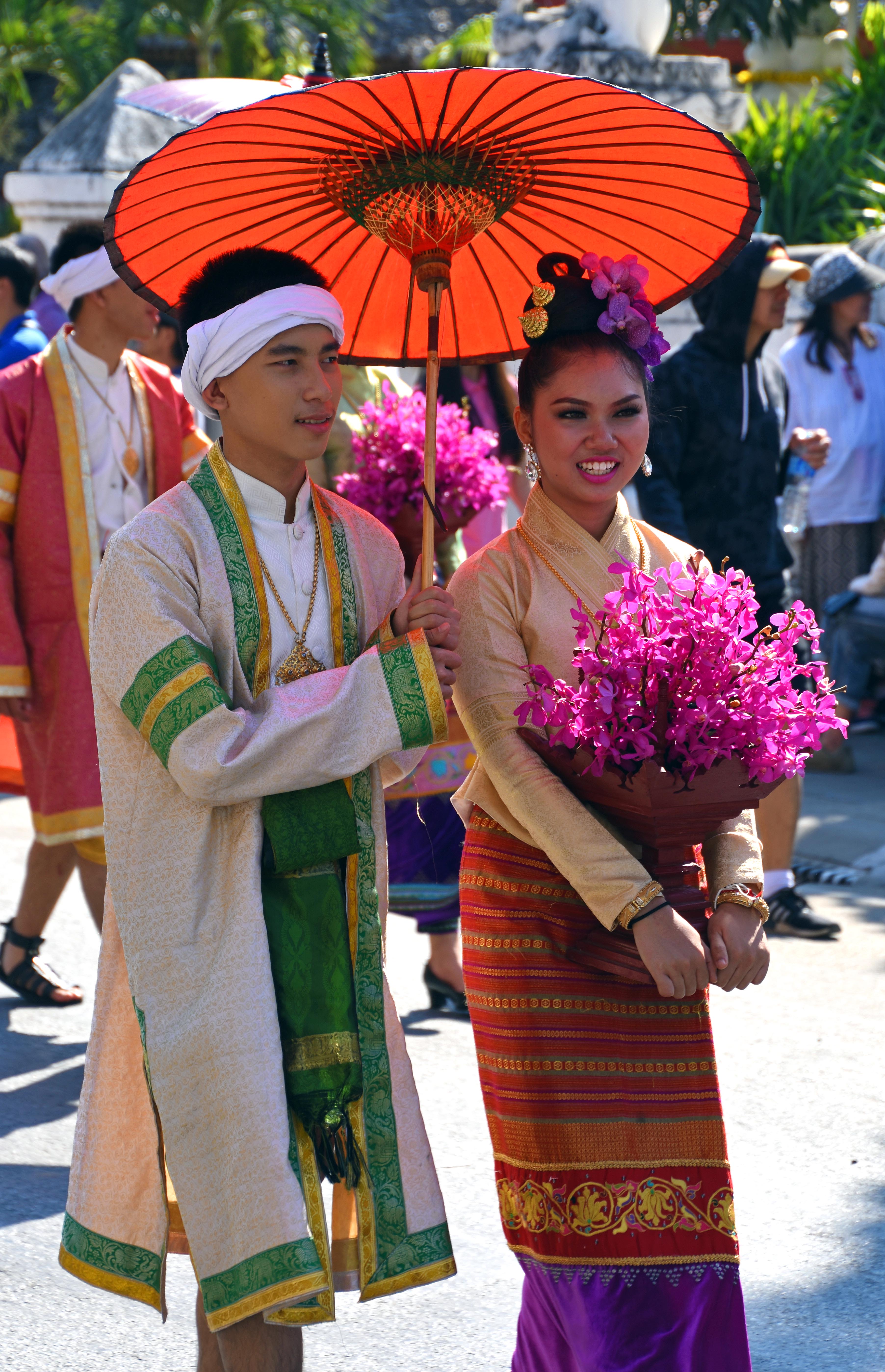
I personally love to see the traditional Thai costumes with the beautiful silks and ornate jewelry. A variety of different pots and bowls containing flower petals were carried by many girls.
Girl in traditional Thai costume holding offeringsLadies in blue silk costumes carrying pink costumes.
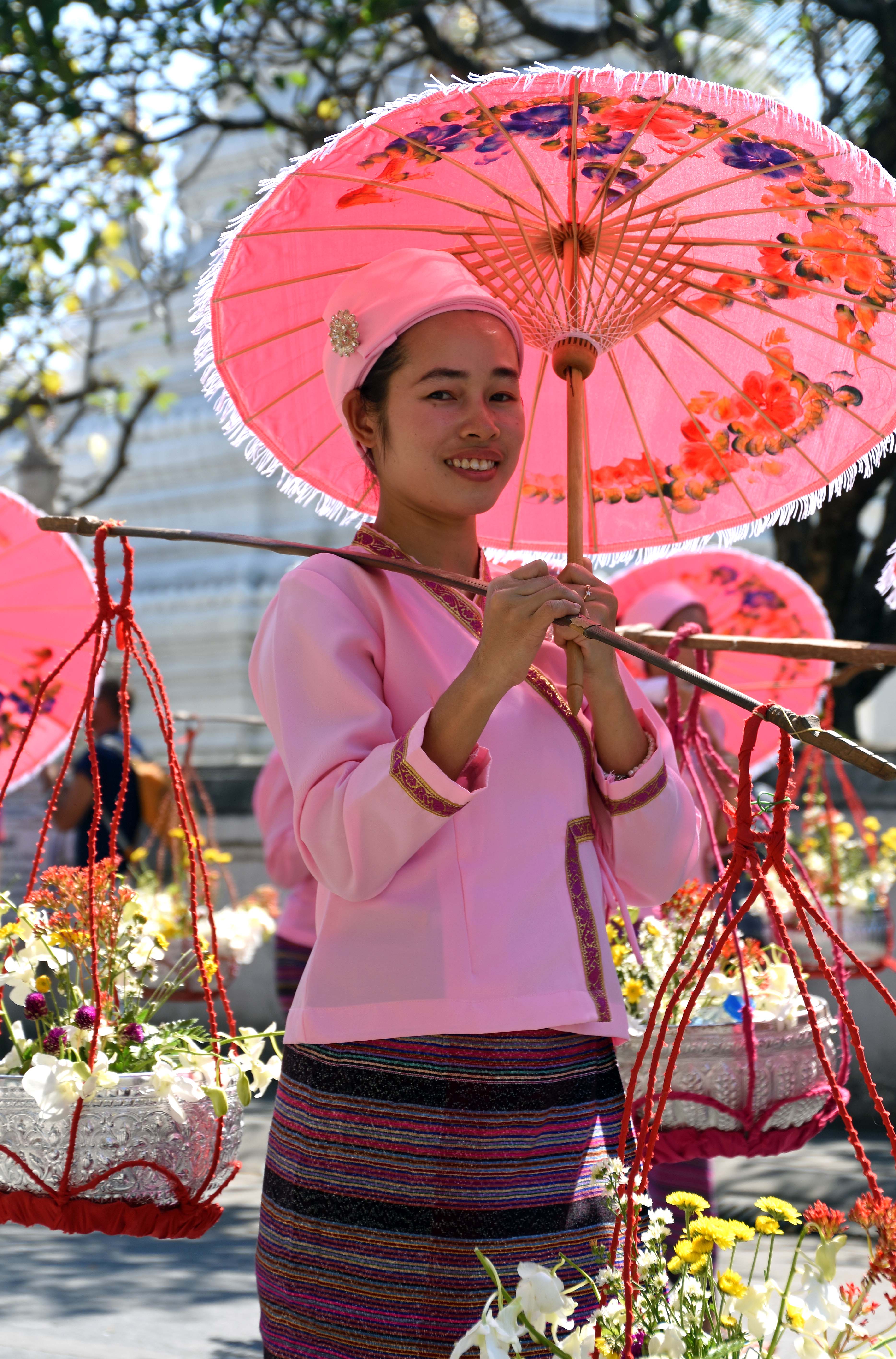
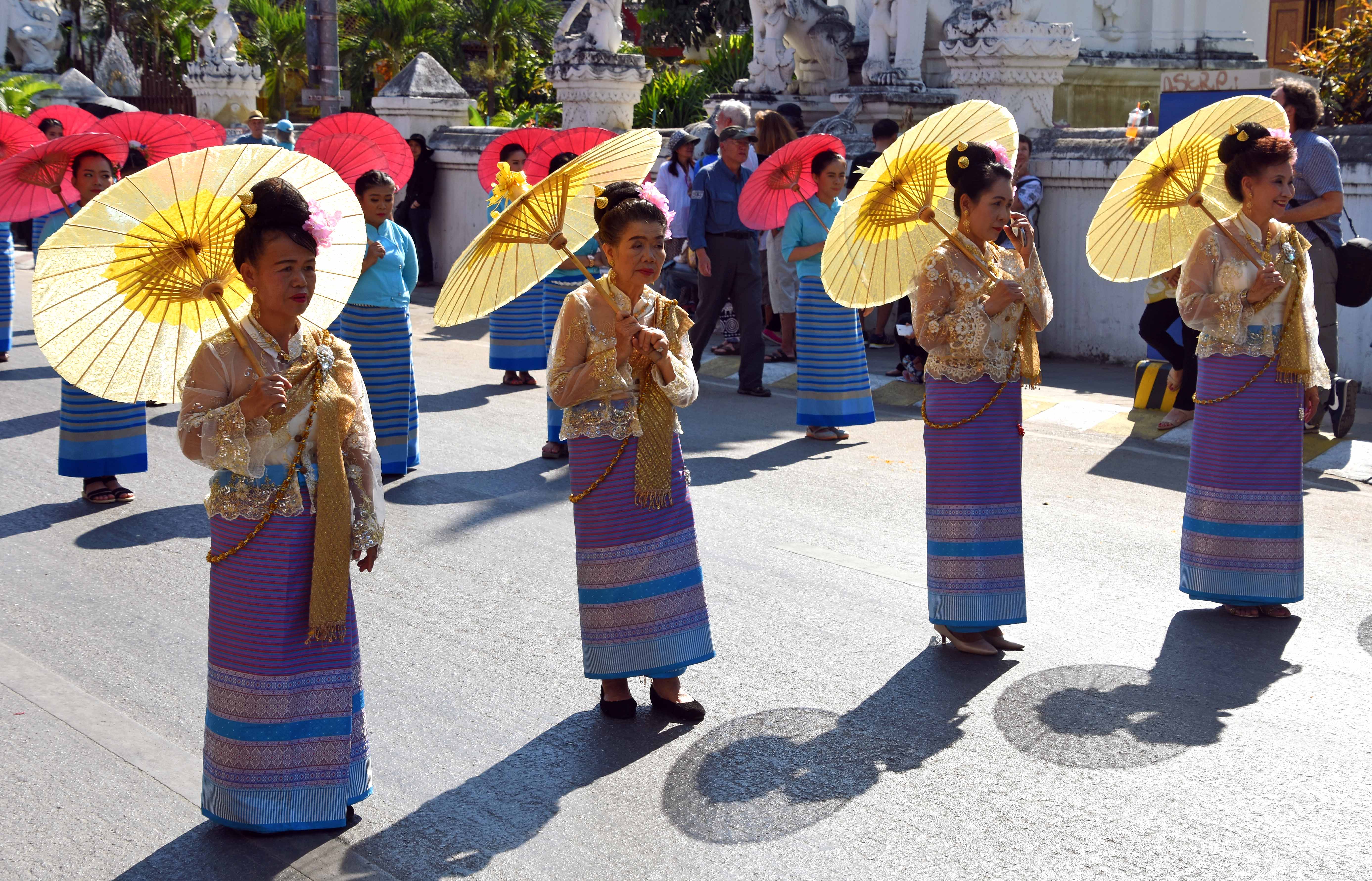
The traditional Thai umbrellas provide a wonderful contrast to the costumes, as well being as a very a light and practical sun shade. I made sure that I was on the bright side of the street so that I could try to catch the light shining through the umbrellas.
Older ladies participating in the flower parade.
A few years ago, 2014 I think, when I last viewed the flower festival, the organizers arranged for the parade to begin at about 3 pm, rather than the usual 8 am. The purpose being to save the participants from the searing sun as the parade processes, slowly – and in fits and starts – along the route. It takes about 4-5 hours, I think, for the parade to pass, and in temperatures in the low 30’s (deg C) – and with very high radiant heat – the marchers really do suffer. Indeed, if you were not born and bred in Thailand, I doubt you could survive it! Yet the girls and boys, men and women, remain beautiful and ever smiling, despite being roasted in the sun.
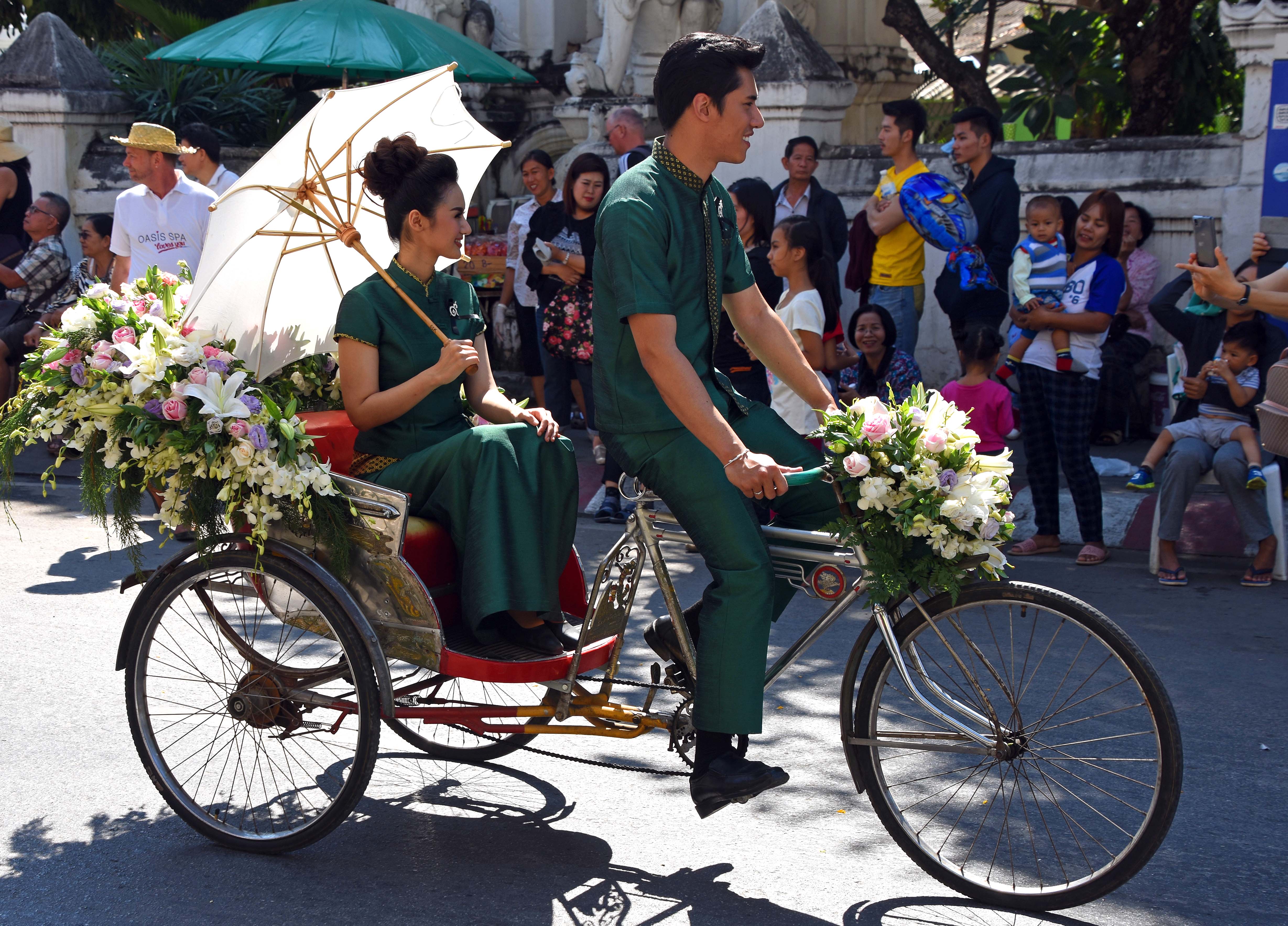
Bicycle riders with umbrella
Whilst the late start in 2014 was no doubt a relief for the marchers, it was a loss for photographers, as the sun soon moved down below the buildings and the majority of the parade passed by in the shade. Perhaps, the organizers make a decision about the start time based on the predicted temperature for the day? Anyway, the parade reverted back to the morning start this year.
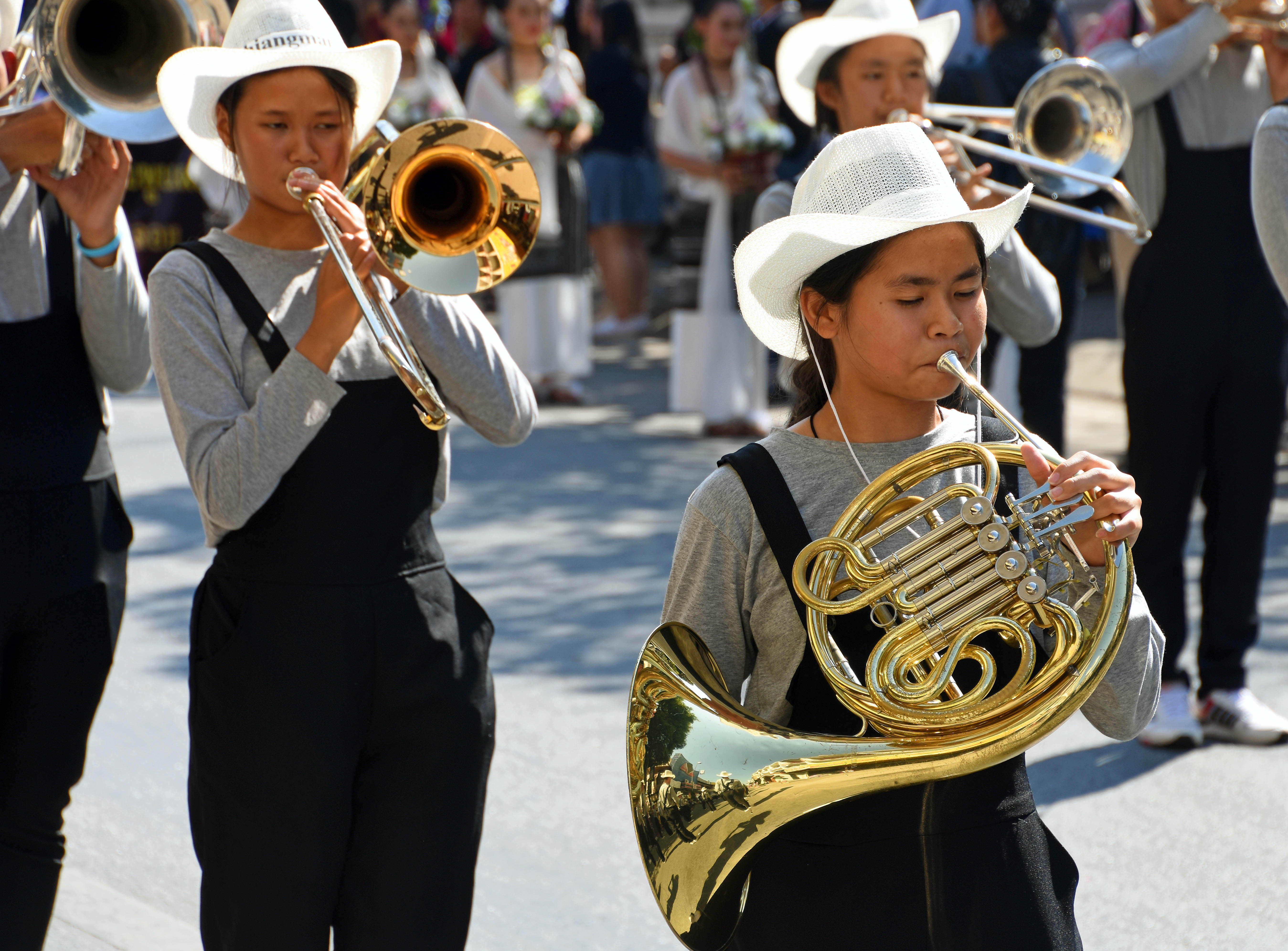
Reflections in brass; school band
Nevertheless, it was still a very hot day on 4th Feb this year and even though I was only taking photographs, I had to find some shade every now and then, to recover my cool! For many of the participants, particularly those without umbrellas, there was no such relief from the sun. Yet they remained calm and composed and smiled at every one of the thousands of photographers lining the route. They really were amazing.
One really has to take ones hat off to the participants who managed to look so calm and demure in such hot temperatures, despite it being the so-called winter season in northern Thailand.
There were numerous occasions when the parade ground to a halt, and the participants had to stand in the sun for ages until the whole procession got going again.
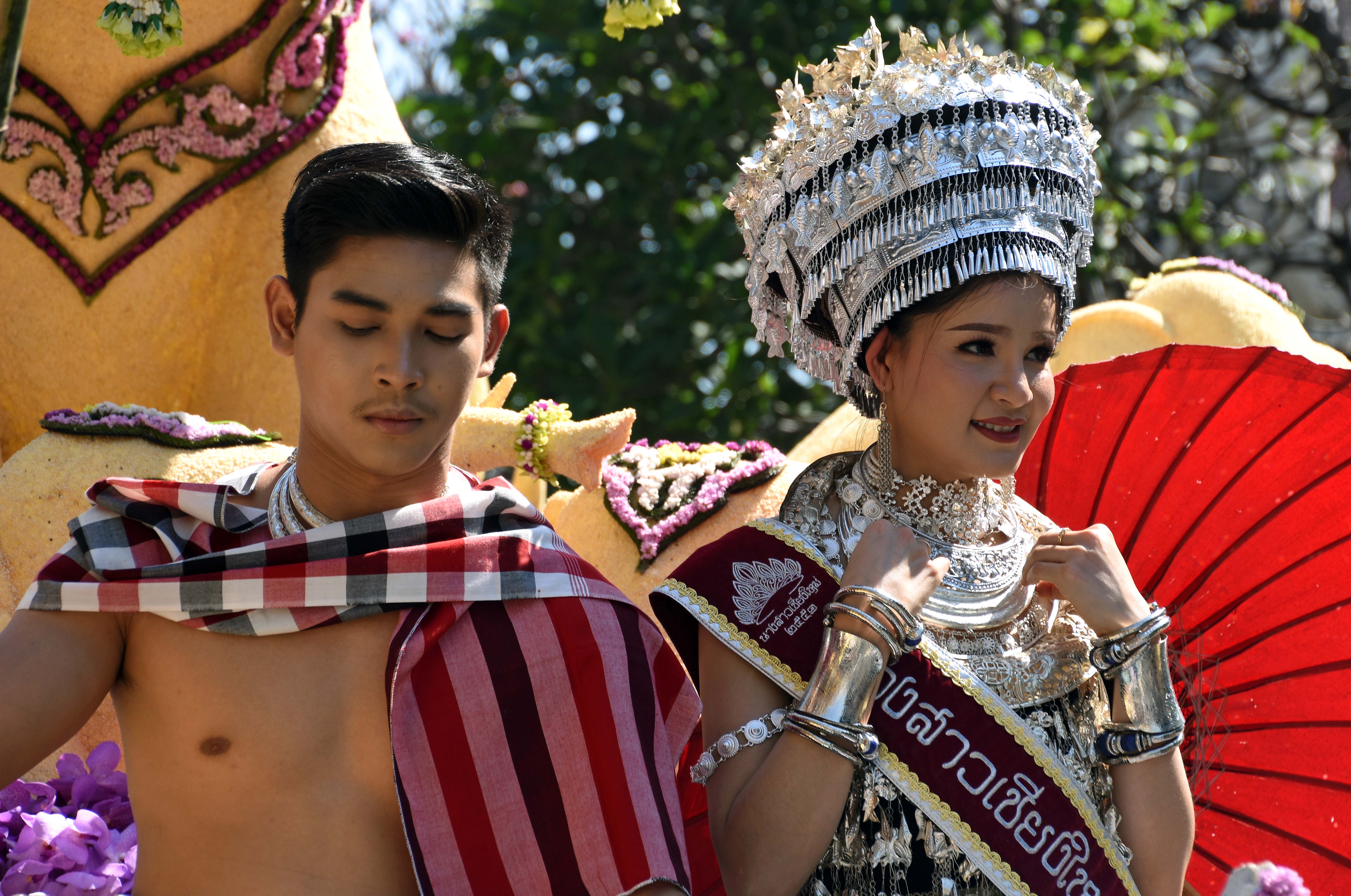
Girls in colourful Hill tribe costumes
I don’t know for sure, but it seems to me that the parade is much bigger than it used to be. There are large numbers of flower floats, school bands, participants from different schools, colleges, farms and so on. It has become a huge draw from tourists from around the world. This year I could help but notice how many tourists there were from China, as well as from countless other countries around the world.
Beautiful girl carrying umbrellaTraditional costumes on a flower float
The girls and boys on the flower floats had an easier time than the walkers, but many also had no protection from the sun.
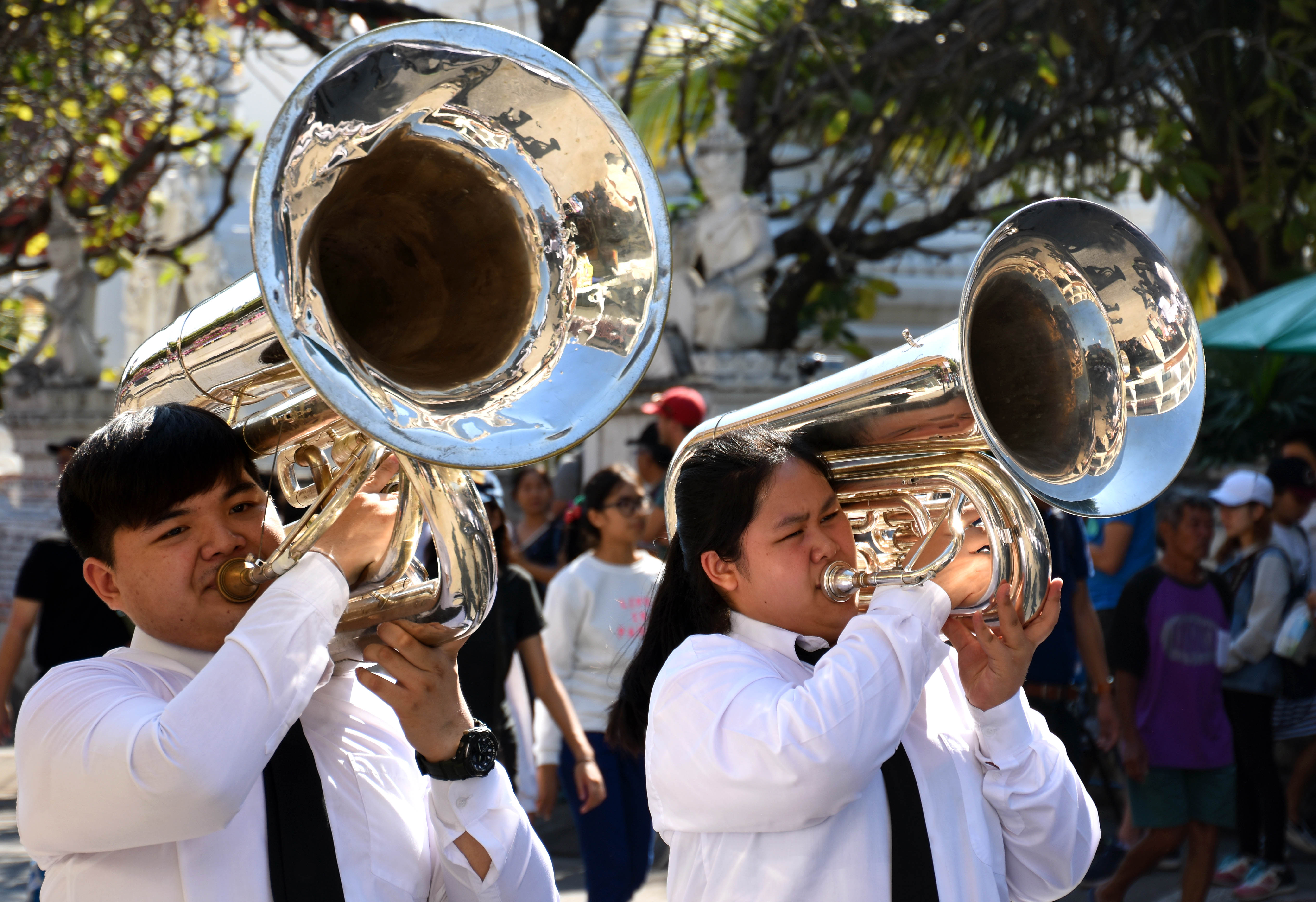
School brass bands
I loved the school and college bands. They played with such gusto!
The parade itself is only one event in the Flower Festival. It is followed by in late afternoon by the the Miss Chiang Mai Flower festival, which goes on into the evening when the new Flower Festival Queen is chosen. I did not stay to see who won, but there was no shortage of beautiful girls (and handsome boys) as the following sequence of photographs shows.
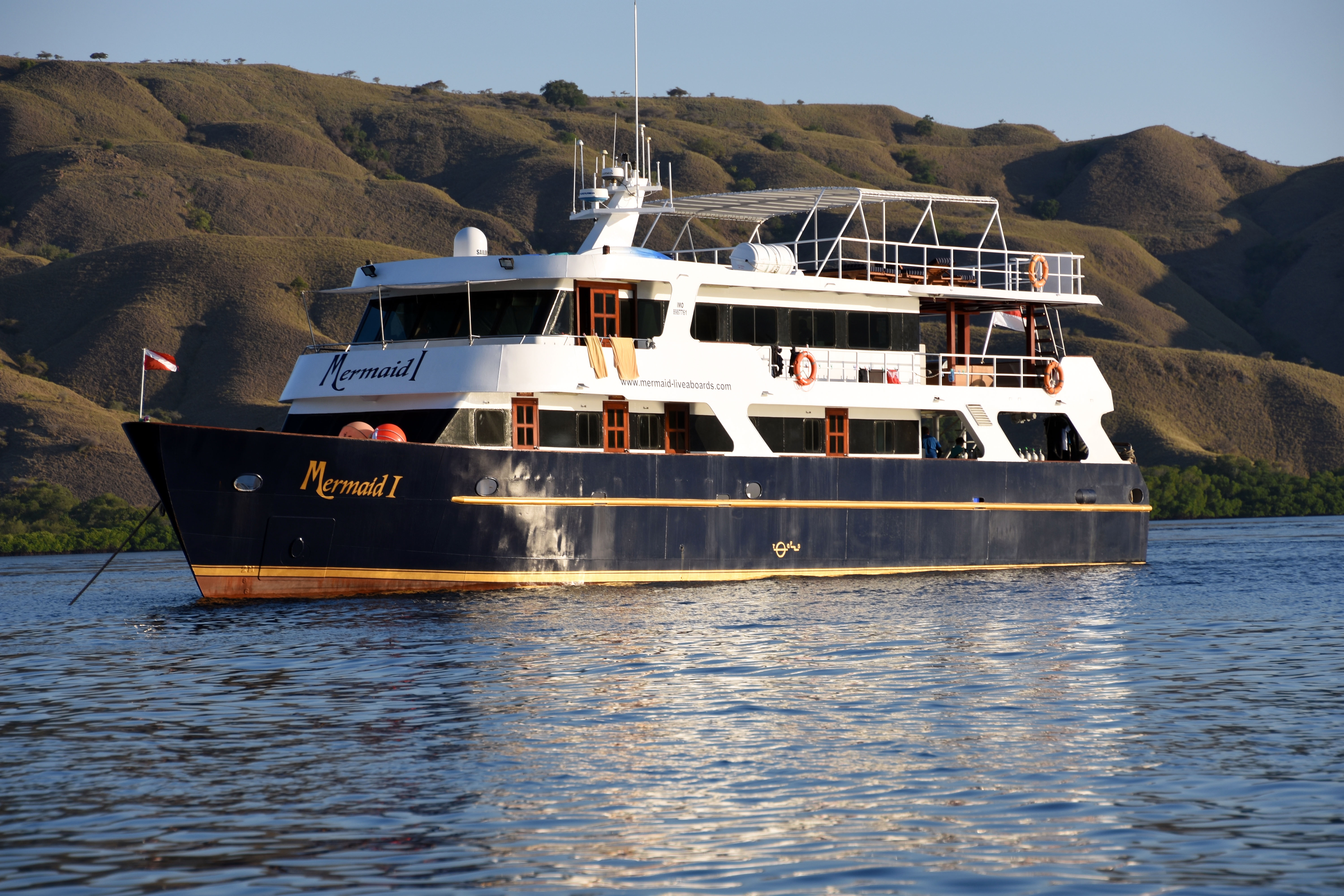
I recently had the pleasure of cruising from Bali to Flores – via the Komodo National Park – aboard the very well-appointed little ship, Mermaid I (1). This liveaboard dive vessel is usually chartered by divers to explore the water of Komodo and Raja Ampat in Indonesia, but our trip had a different mission: we were on the look out for cetaceans, led by the very knowledgeable marine biologist Chas Anderson (2). I booked the holiday through Wildwings and thoroughly enjoyed the 10 days we spent – snorkelling, bird-watching and cetacean sighting – in Indonesian waters (3).
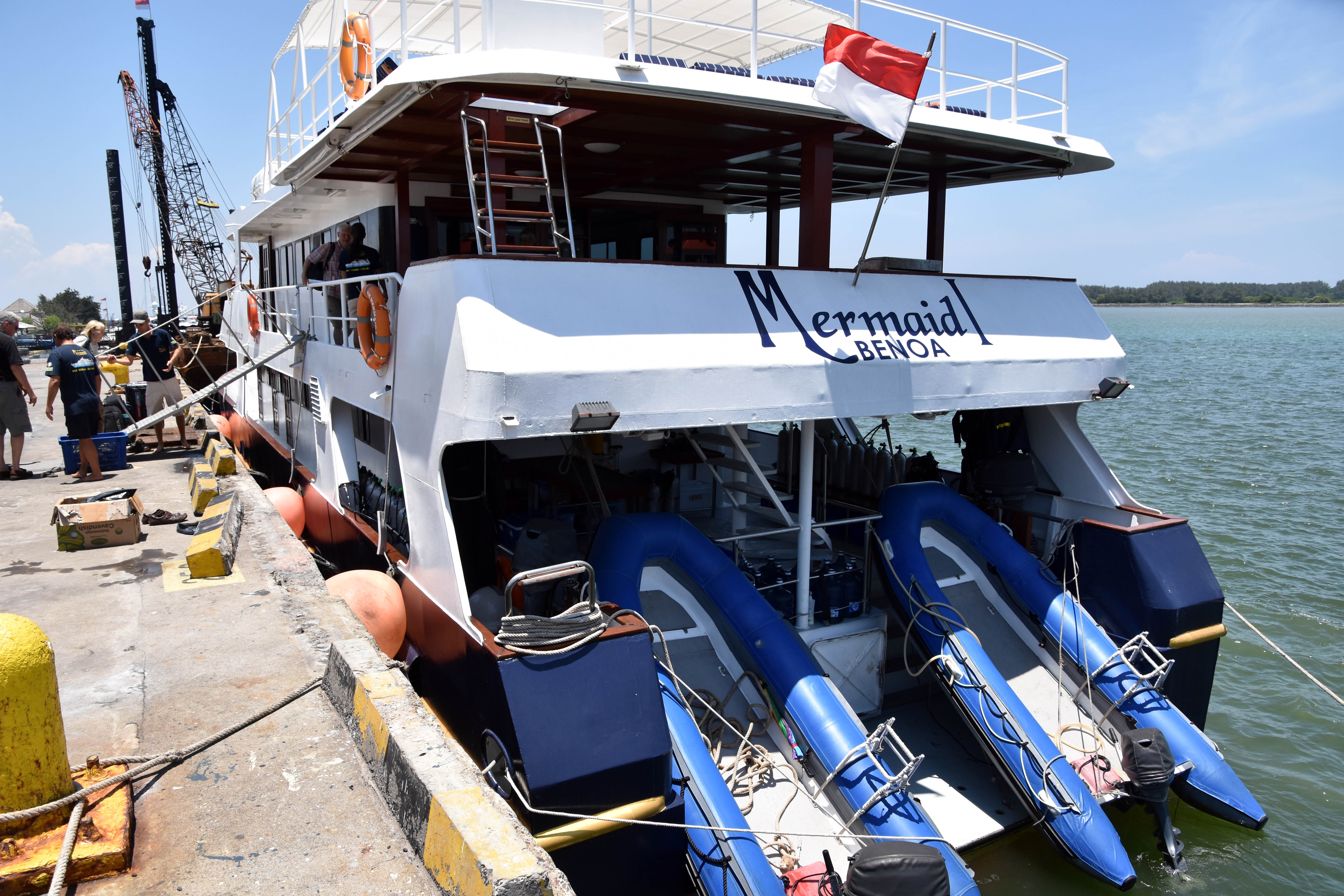
Mermaid I at Benoa Port, Bali
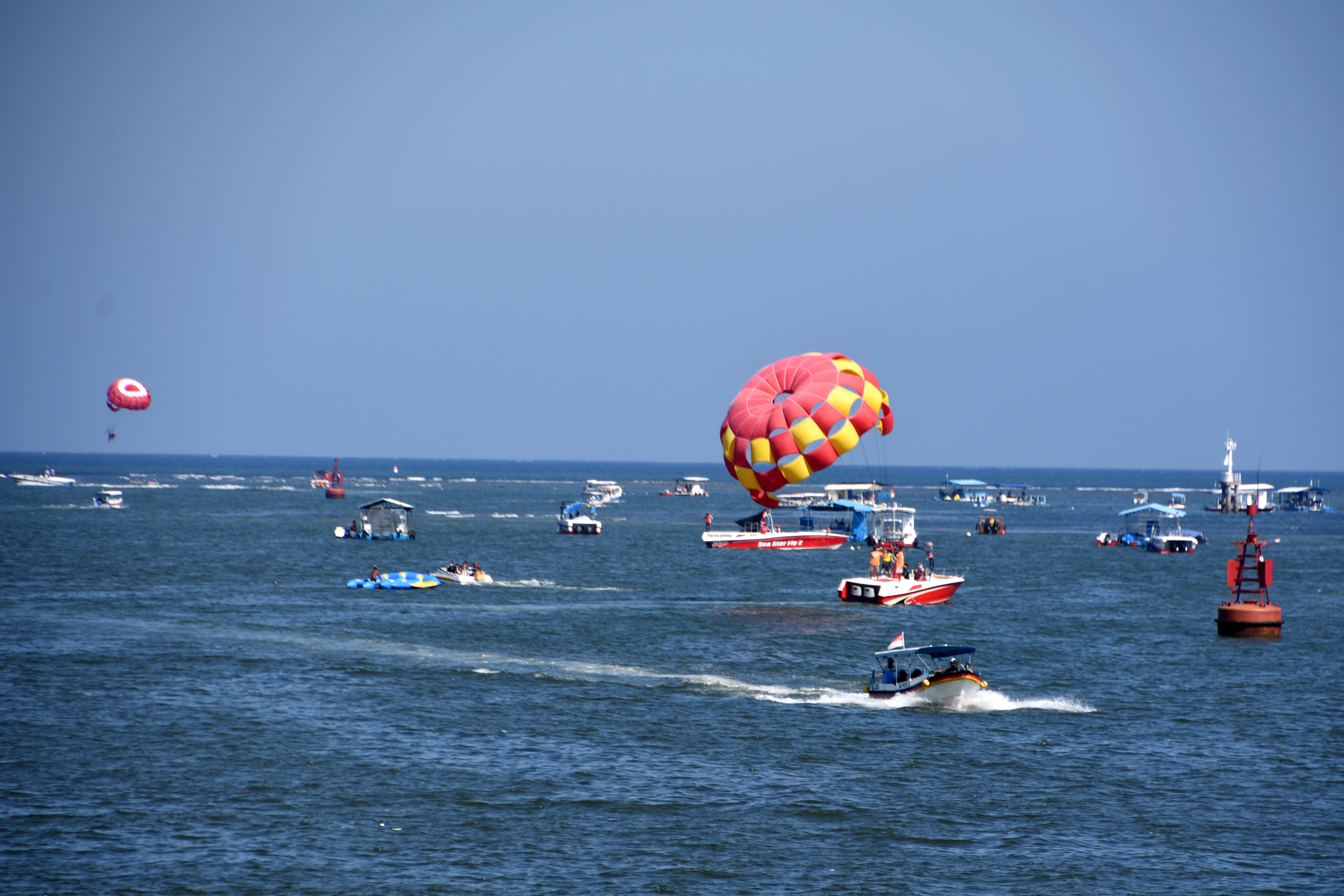
We boarded Mermaid I at Benoa Port, Bali, and set sail out into the waters of the Badung Strait – between Bali and the small island of Nusa Penida – and then further on into the Lombok Strait. There was a buzz of boating activity going on as we left the harbour.
Pleasure craft and para-gliding outside Benoa Port, Bali
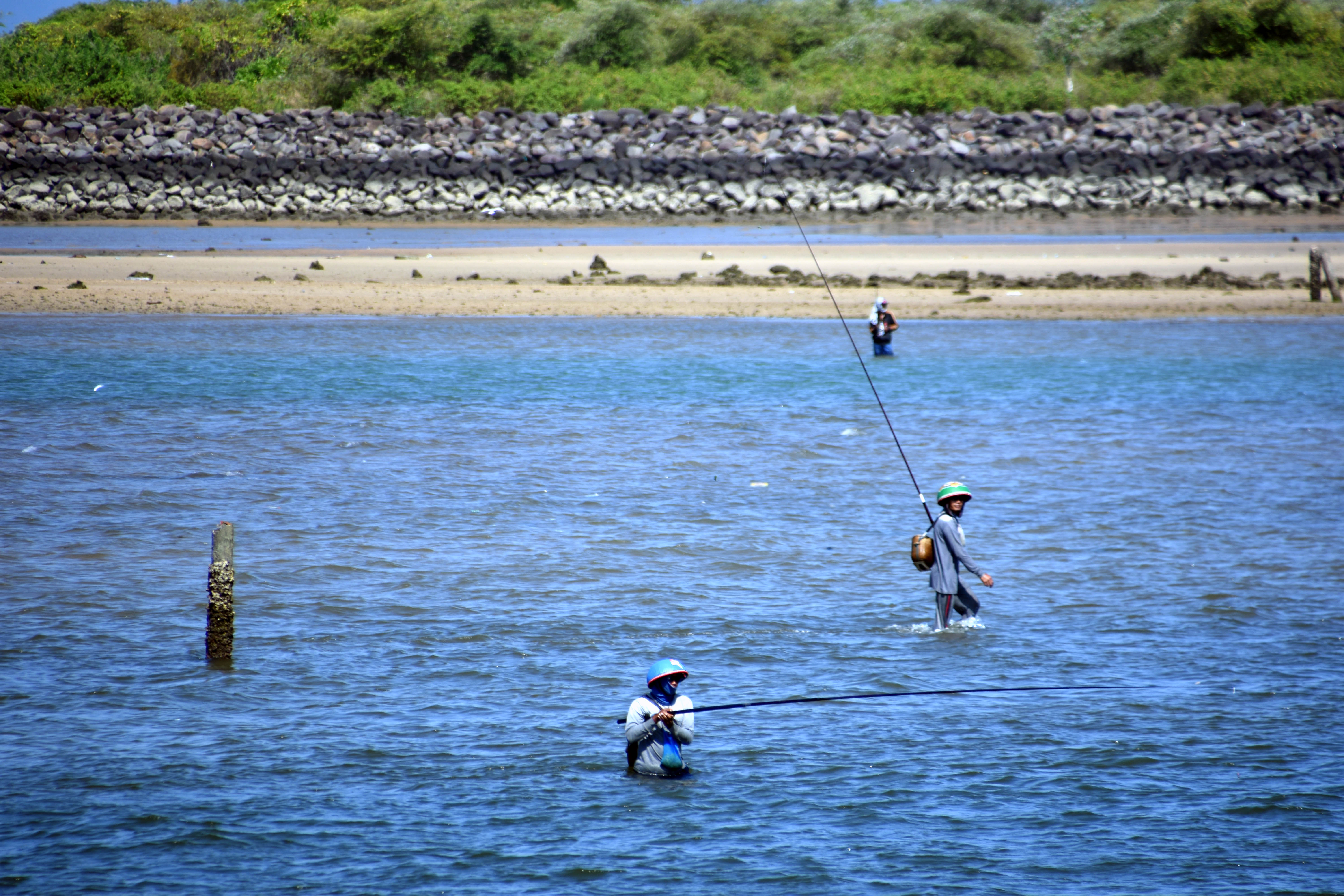
But what was more interesting, were the local fisherman standing waist-deep in the water with their long fishing rods and wicker baskets to keep the fish.
Fisherman in the sea outside Benoa Port, Bali
The famous faunal boundary – called Wallace’s Line – runs down the Lombok Strait, between Bali and Lombok, and is a line separating birds and animals of two separate ecozones: Asian (or Indomalayan) and Australasian. Today there are plenty of modern boats whisking tourists across this narrow, but deep strait, that still remains a barrier for many species.
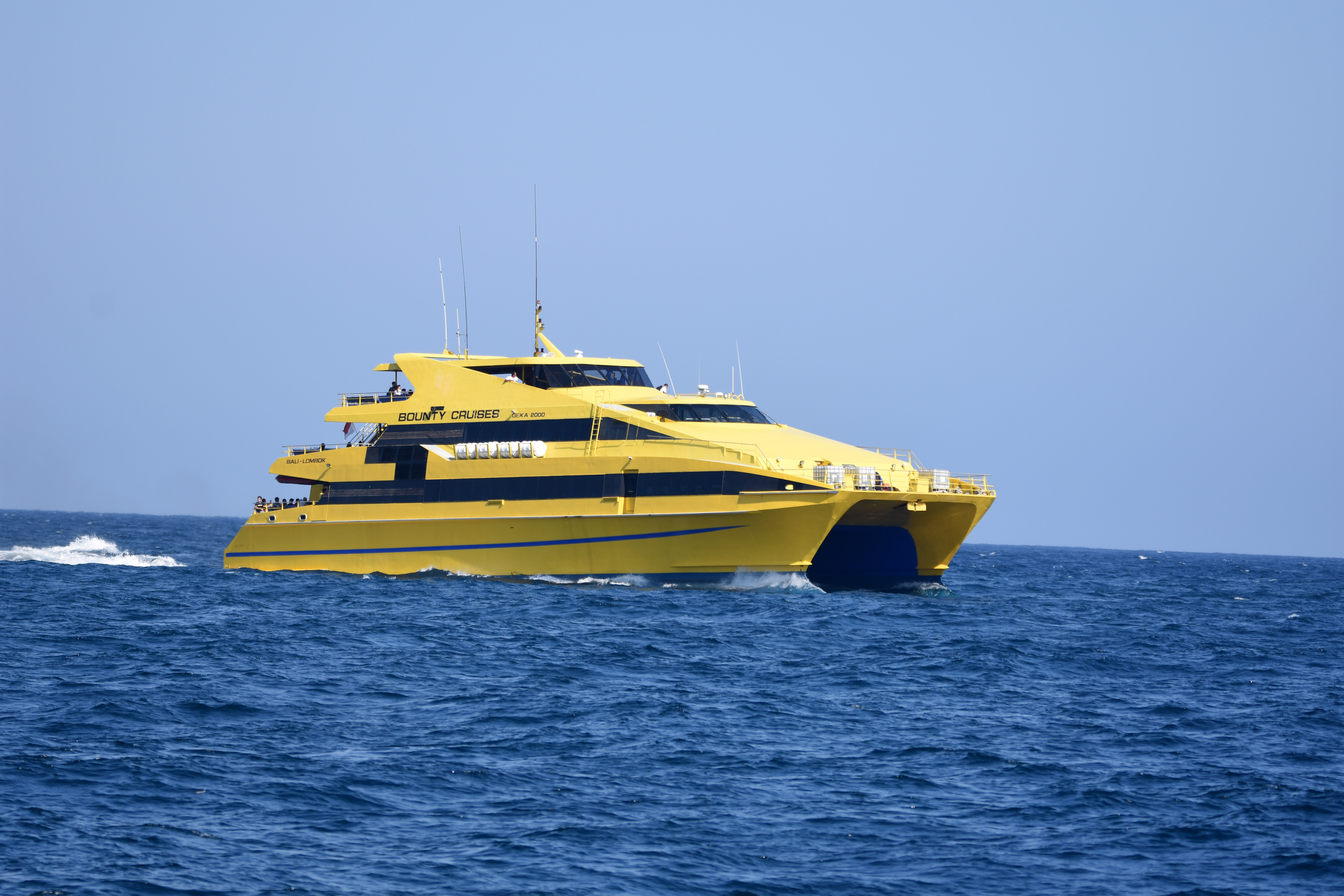
Catamaran travelling from Lombok to Bali
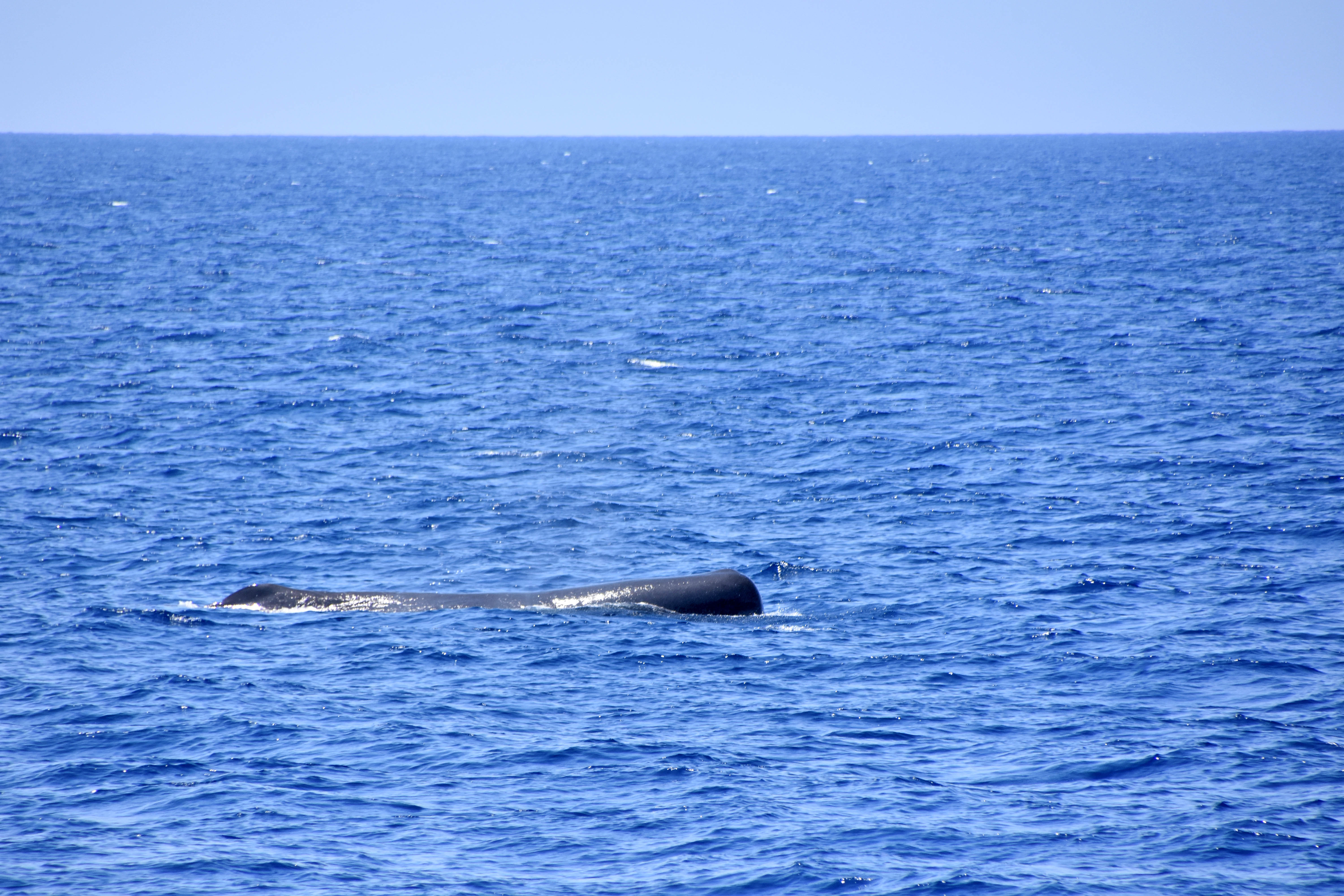
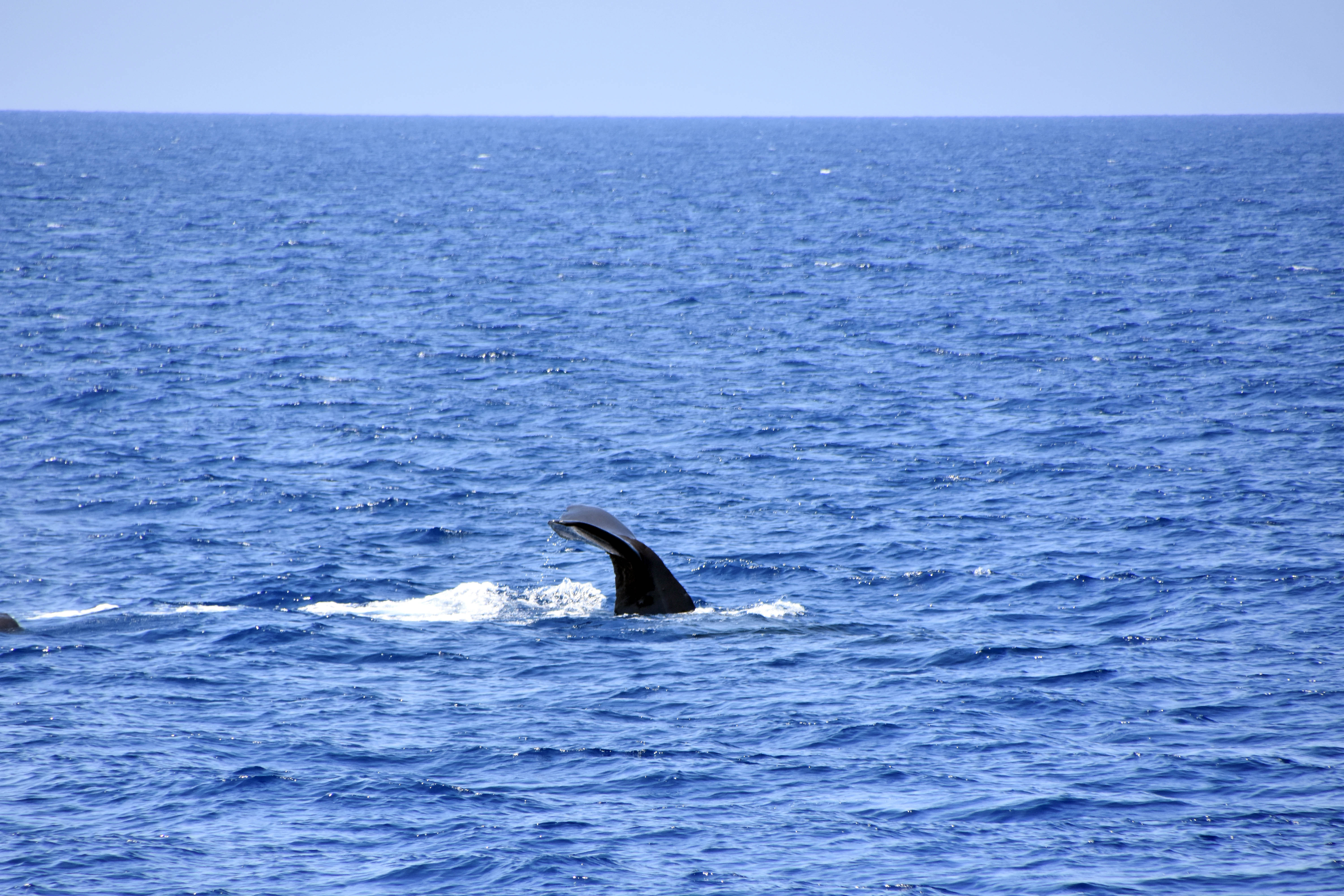
We sailed east, passing to north of the large island of Sumbawa, heading towards our first landfall: the small island of Satonda. On the way, we were fortunate enough to come across a large sperm whale; these cetaceans make deep dives – as far as 3,000m – in pursuit of large squid and fish. This individual flashed its flukes and dived down as we approached slowly towards it.
Sperm whale (Physeter macrocephalus) on the surfaceSperm whale (sperm whale (Physeter macrocephalus) diving
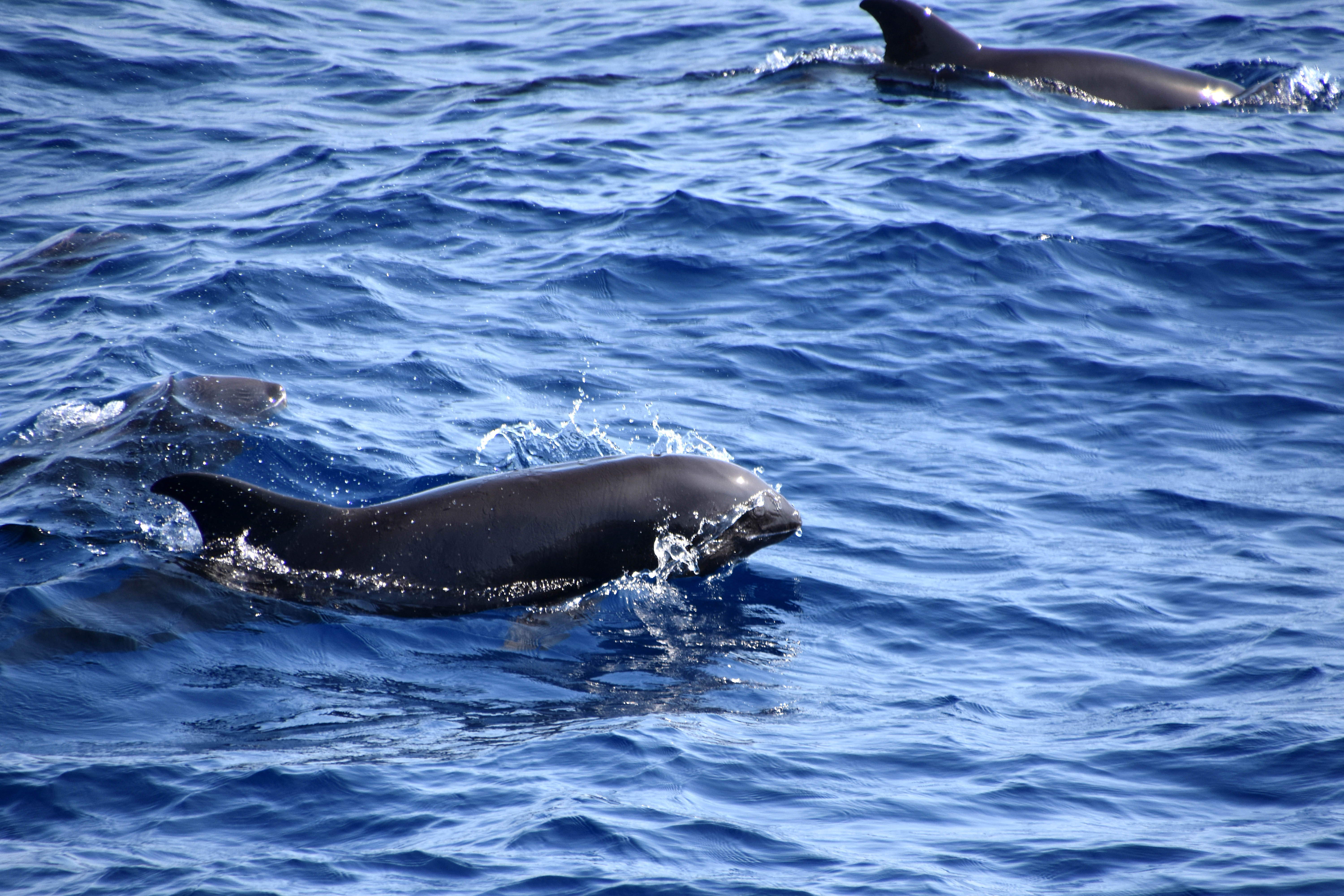
On the way to Satonda Island, we saw many different types of dolphins, including Melon-headed whales (Peponocephala electra) with their rounded heads (below).
Melon-headed whales (Peponocephala electra)
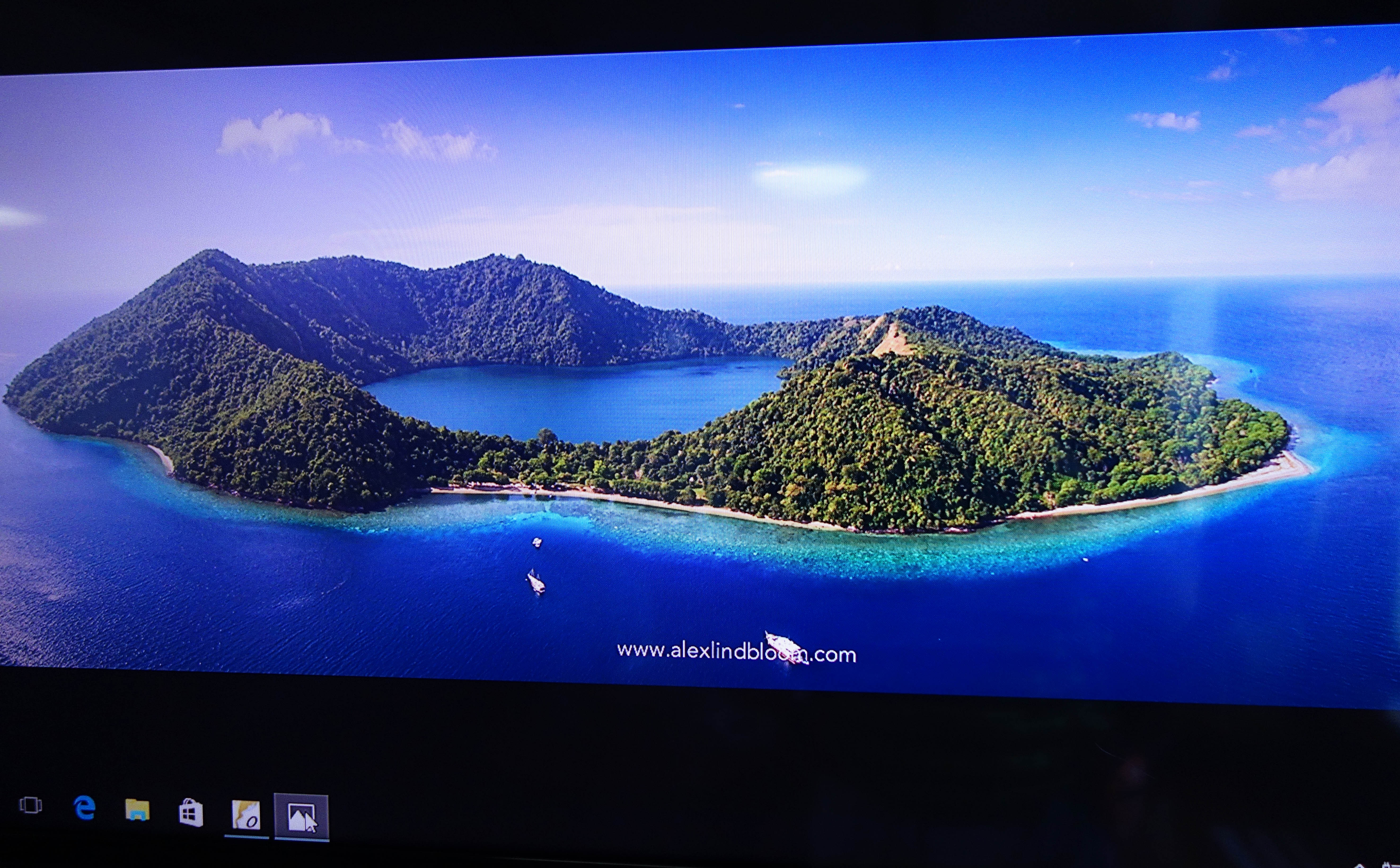
Satonda Island is the top of an extinct volcano with a lake where the crater used to be. I took this screen shot (below) off the introductory talk on Mermaid I.
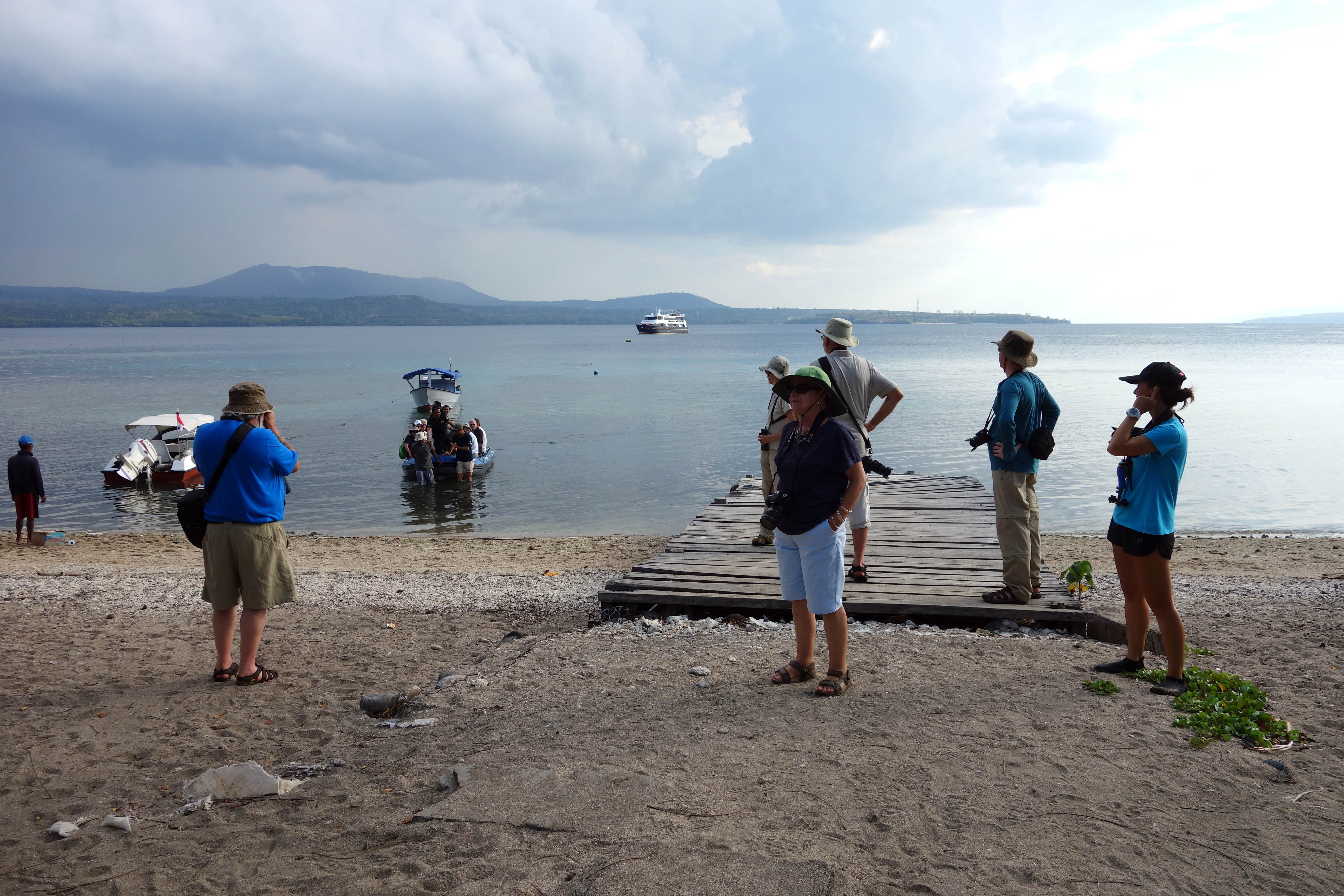
We decamped and spent an enjoyable couple of hours walking on this island, looking out for birds and butterflies.
Landing on Satonda
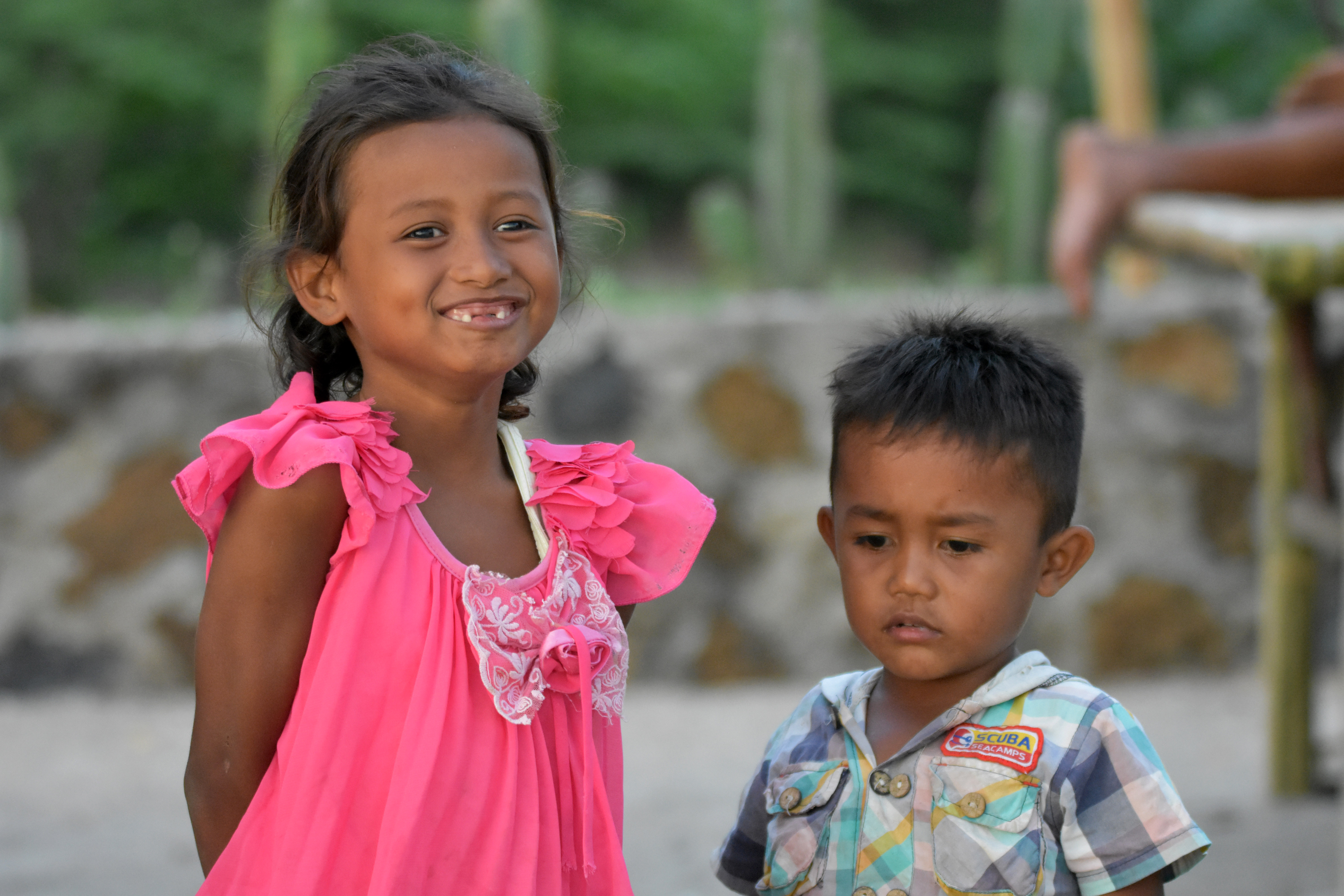
There are no villages on this island, which is a protected area, but there are a few families (of park guards) living there, including these delightful children.
Children on Satonda Island, Indonesia
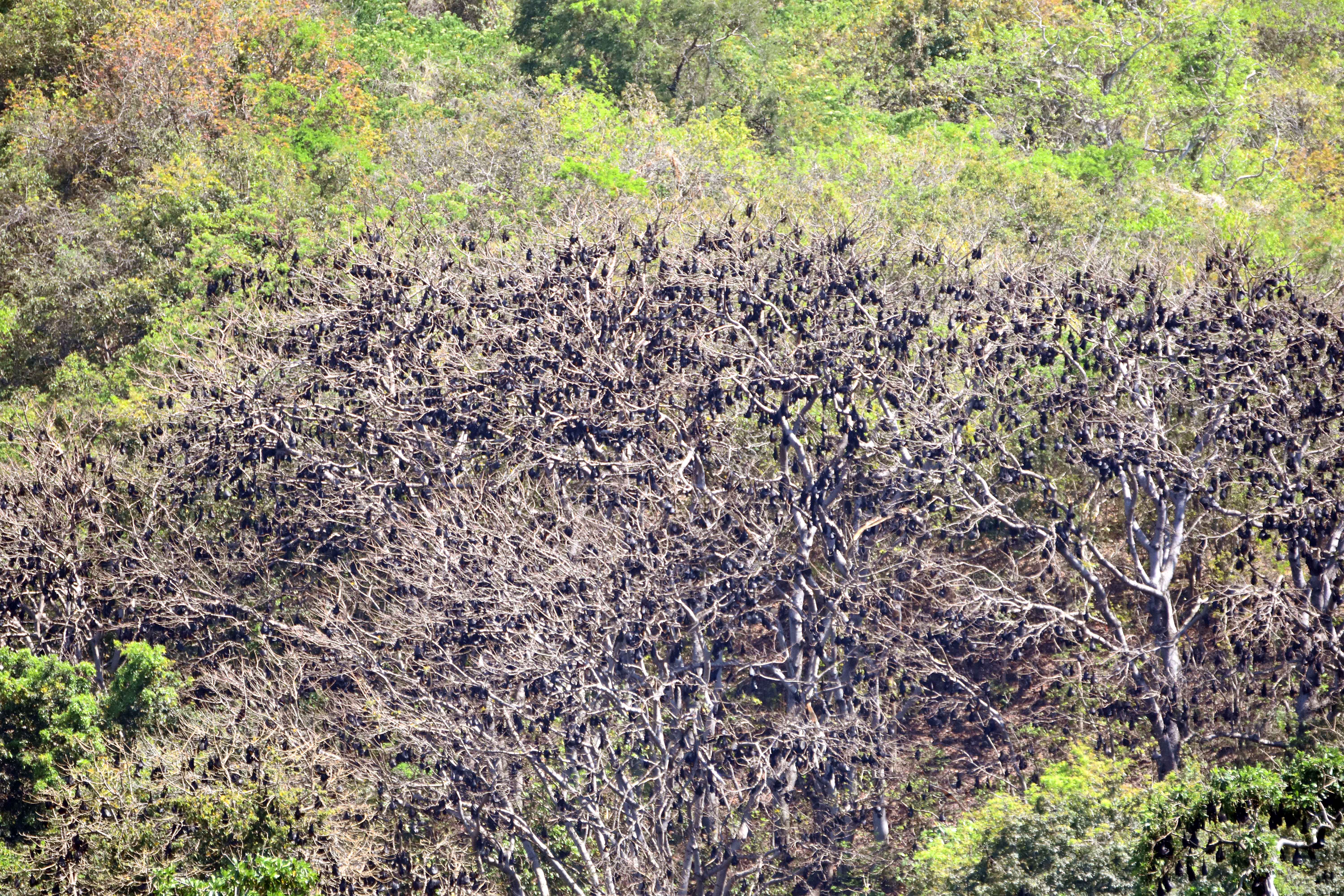
The main residents on Satonda are fruit bats, of which there must be tens, if not hundreds of thousands. Alas, we did not get to see them close up, but we did see their roosting colonies, which covered the trees on one part of the island (below). They fly off each night across the waters to the much larger islands of Moyo and Sumbawa. Unlike their smaller, insect-feeding relatives, these bats feed on fruits, so are seen as pests by some farmers. Happily they can return to their safe island home and escape retribution for their light-fingered ways. After all they were there first, long before humans arrived and started planting fruit trees!
Colony of fruit bats roosting on Satonda Island, Indonesia
After leaving the island behind us, we returned to our lookout posts, searching the seas ahead for dolphins (and birds for some).
On the lookout for birds and dolphins in front of the bridge of Mermaid I
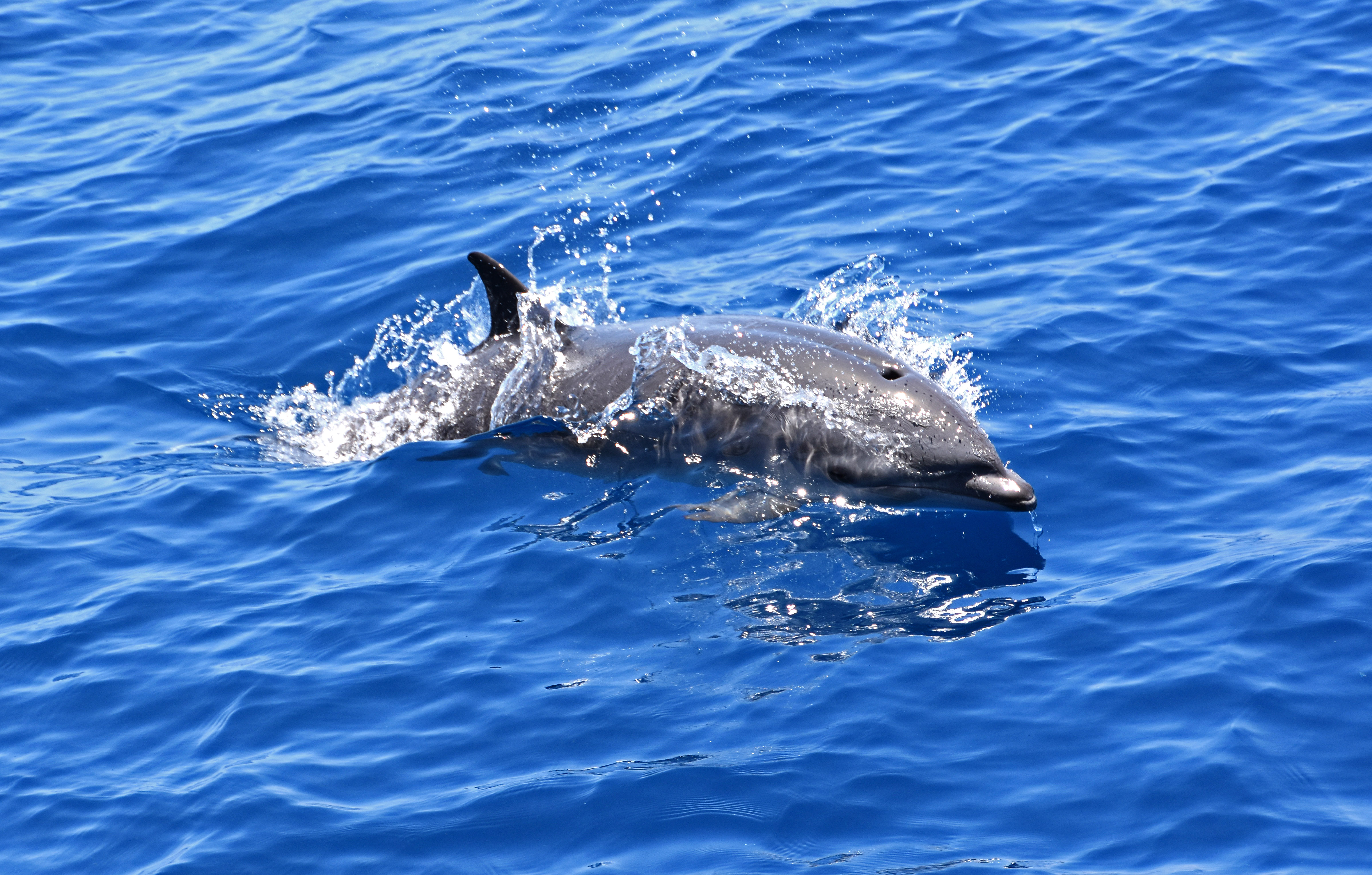
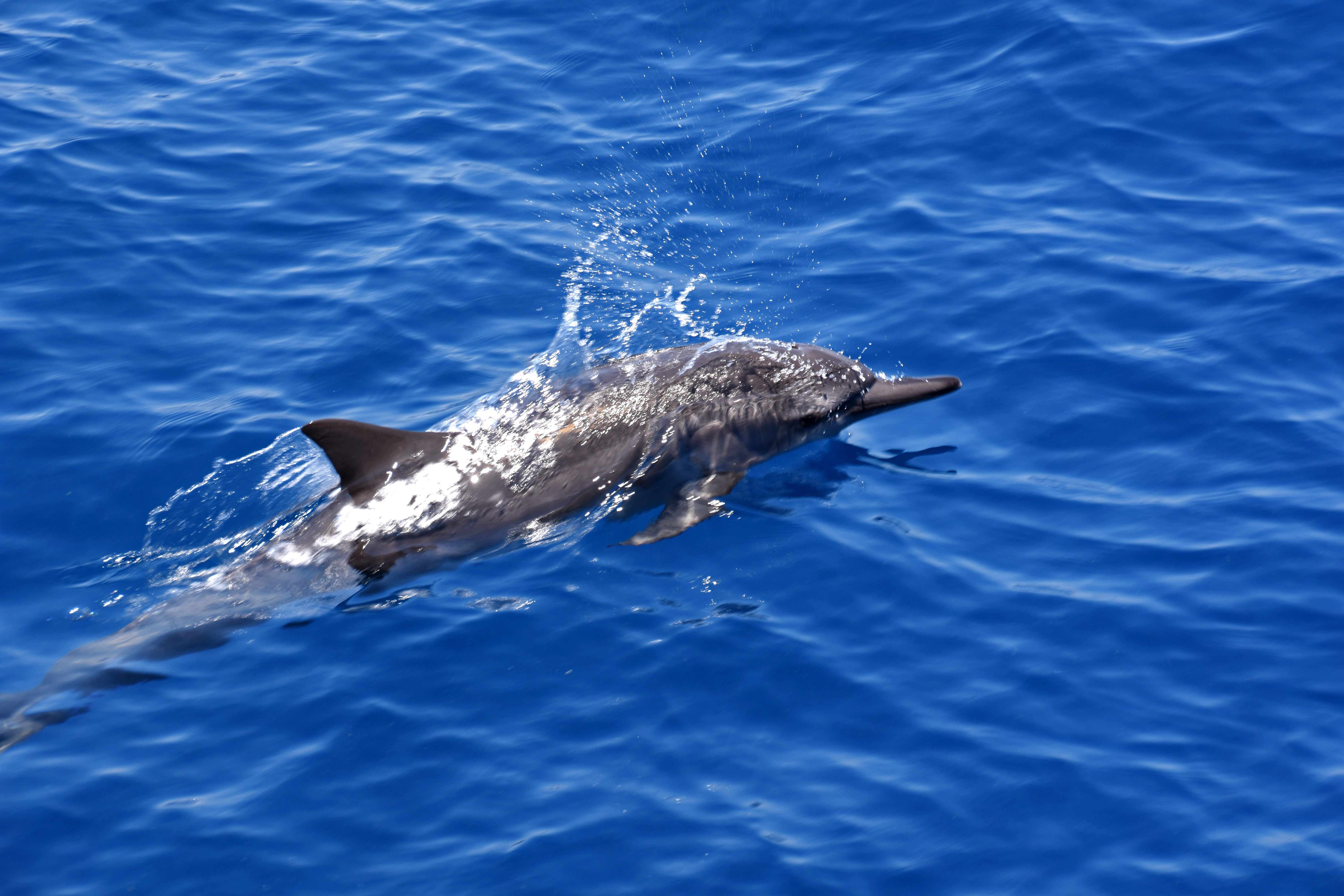
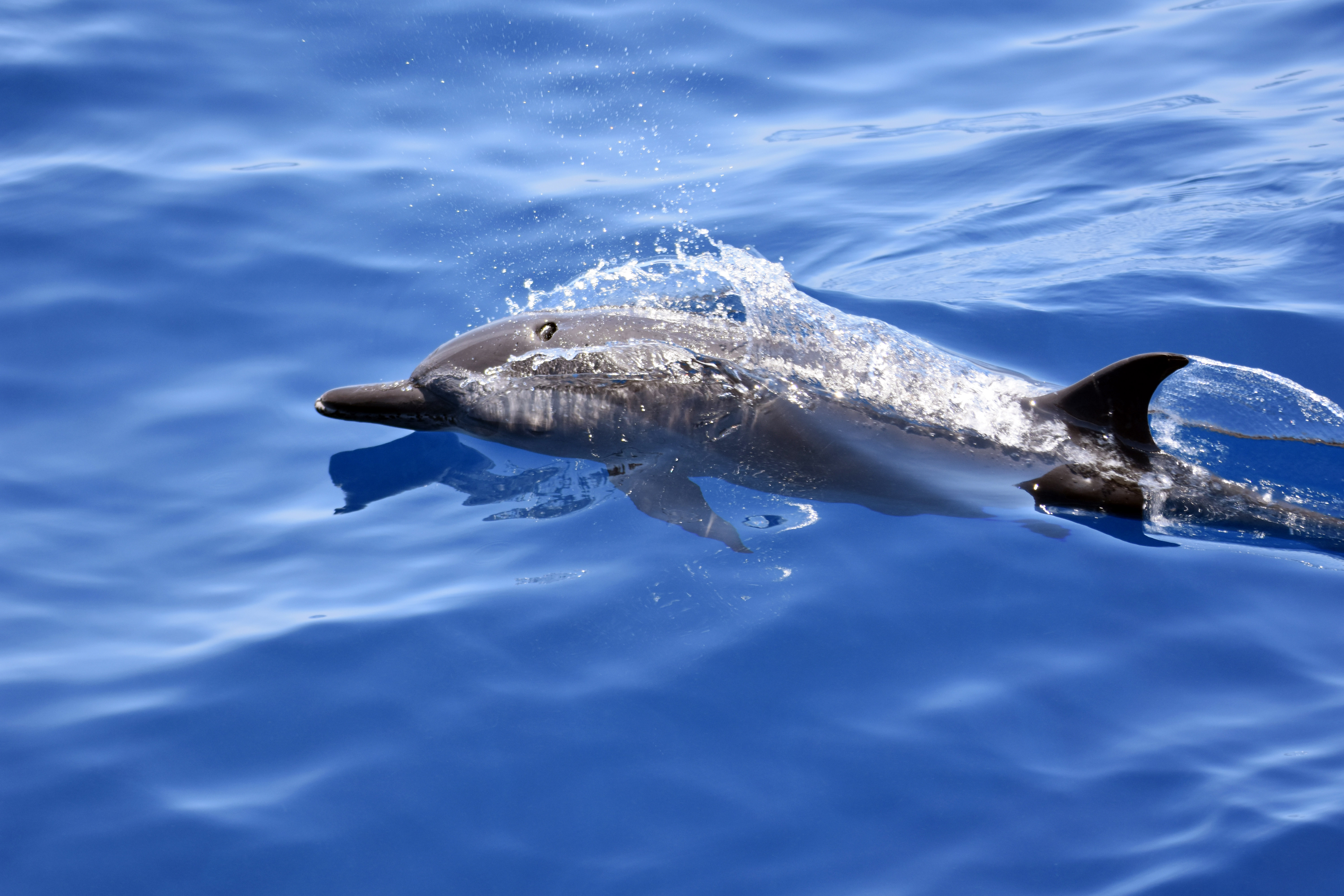
We did not have to wait long and were rewarded with sighting of a number of dolphins species, including: Frazer’s, Pantropical spotted and Spinner dolphins.
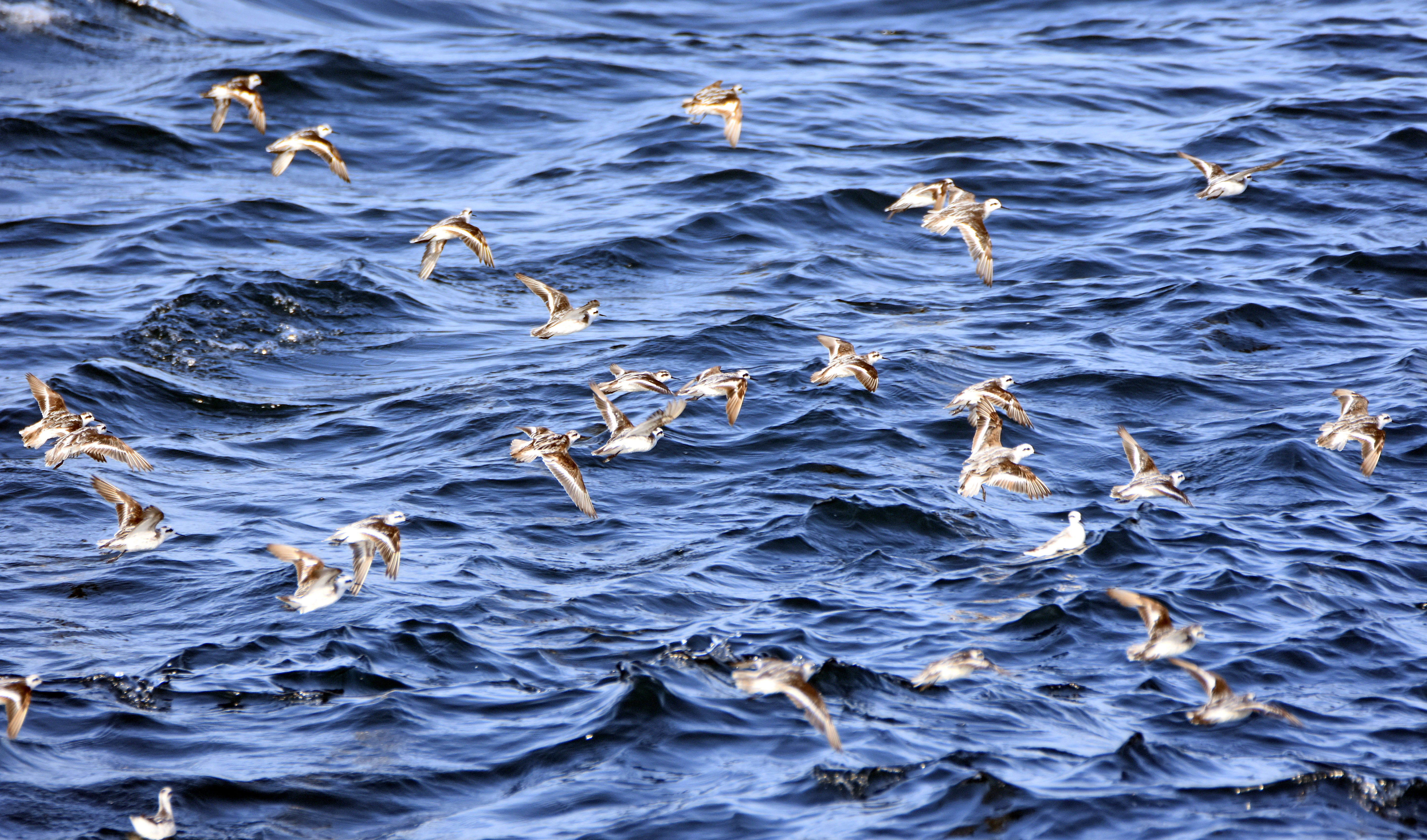
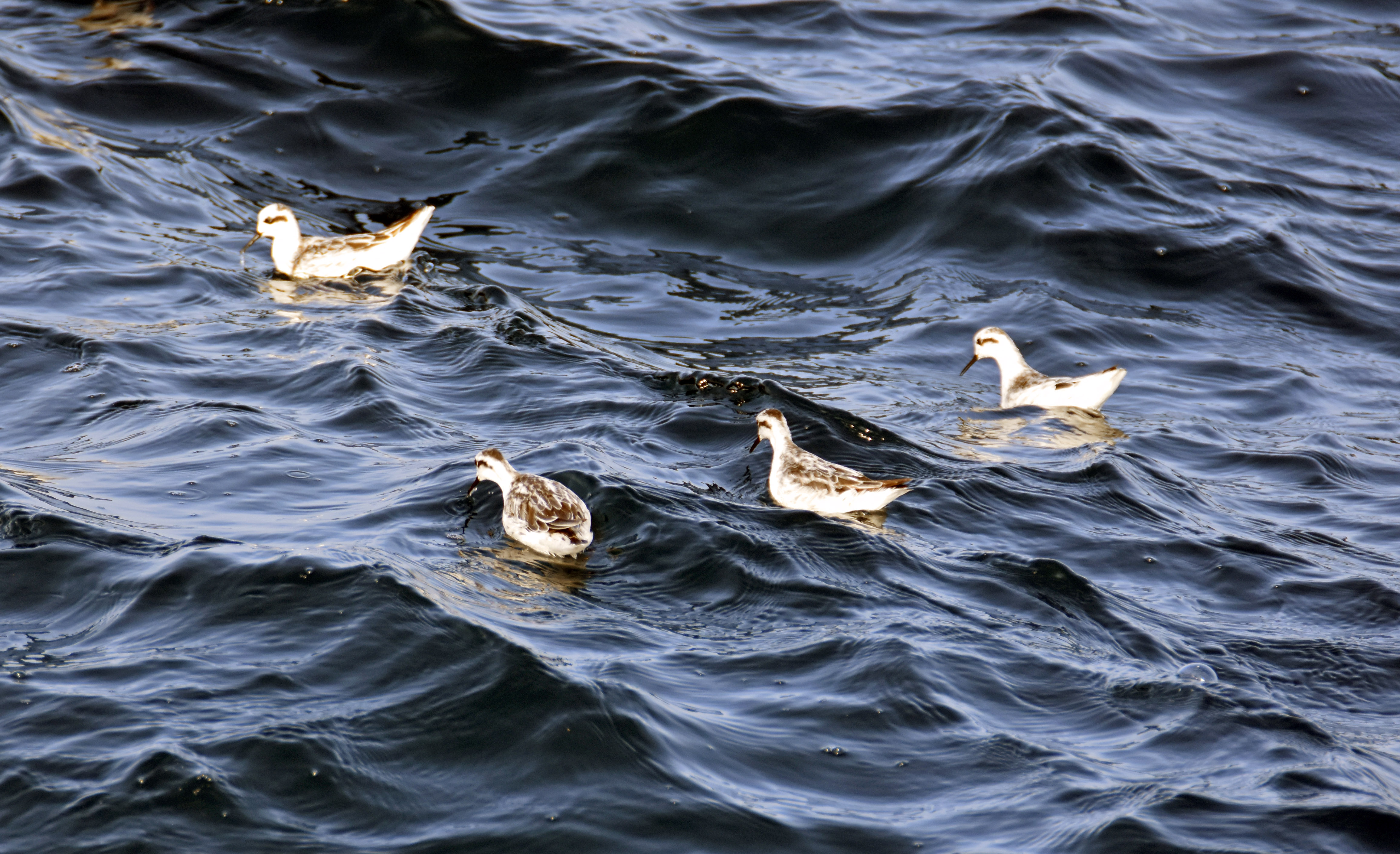
There were also lots of sea birds, especially Red-footed and Brown boobies, which I will save for a separate blog! One species which was very abundant, was the red-necked phalarope (Phalaropus lobatus). This little wader spends the northern winter in these tropical waters and we came across flock after flock of these birds (below). They seemed to me to be wonderfully adapted to oceanic life, bobbing away on the surface, pecking at tiny marine invertebrates.
Red-necked phalaropes (Phalaropus lobatus)Red-necked phalaropes (Phalaropus lobatus) feeding at the surface
It was very interesting to sail along the northern coast of Sumbawa, which seemed to be largely uninhabited, past the huge volcano of Tambora (2,851m). It exploded in 1815 in what was the largest volcanic explosion in recorded history!
Mt Tambora on Sumbawa Island, Indonesia
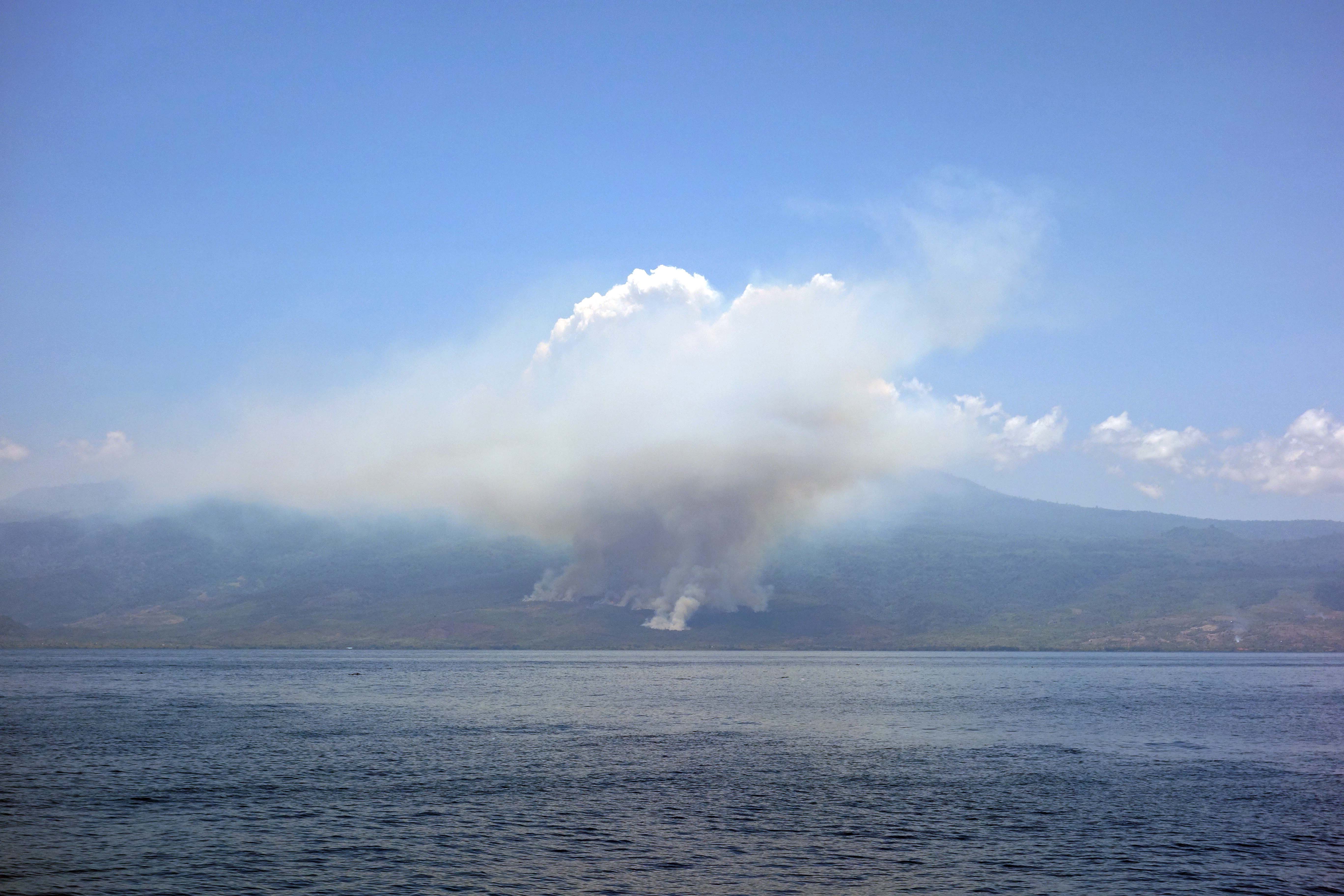
Although this part of Sumbawa looked very unpopulated, there was alas, evidence of burning, which was disappointing to see.
Burning on Sumbawa in October 2016
The highlight of the trip was of course the Komodo National Park, which fully lived up to expectations. There were lots of opportunities for snorkelling, usually once or twice a day, as well as excursions on islands in the archipelago that lies between Sumbawa and Flores. The largest of these islands are Komodo and Rinca, and we were able to visit both of them. Although it was quite hot, it was nice to get off the ship and go bird watching on dry land for a change.
Going ashore on Komodo Is
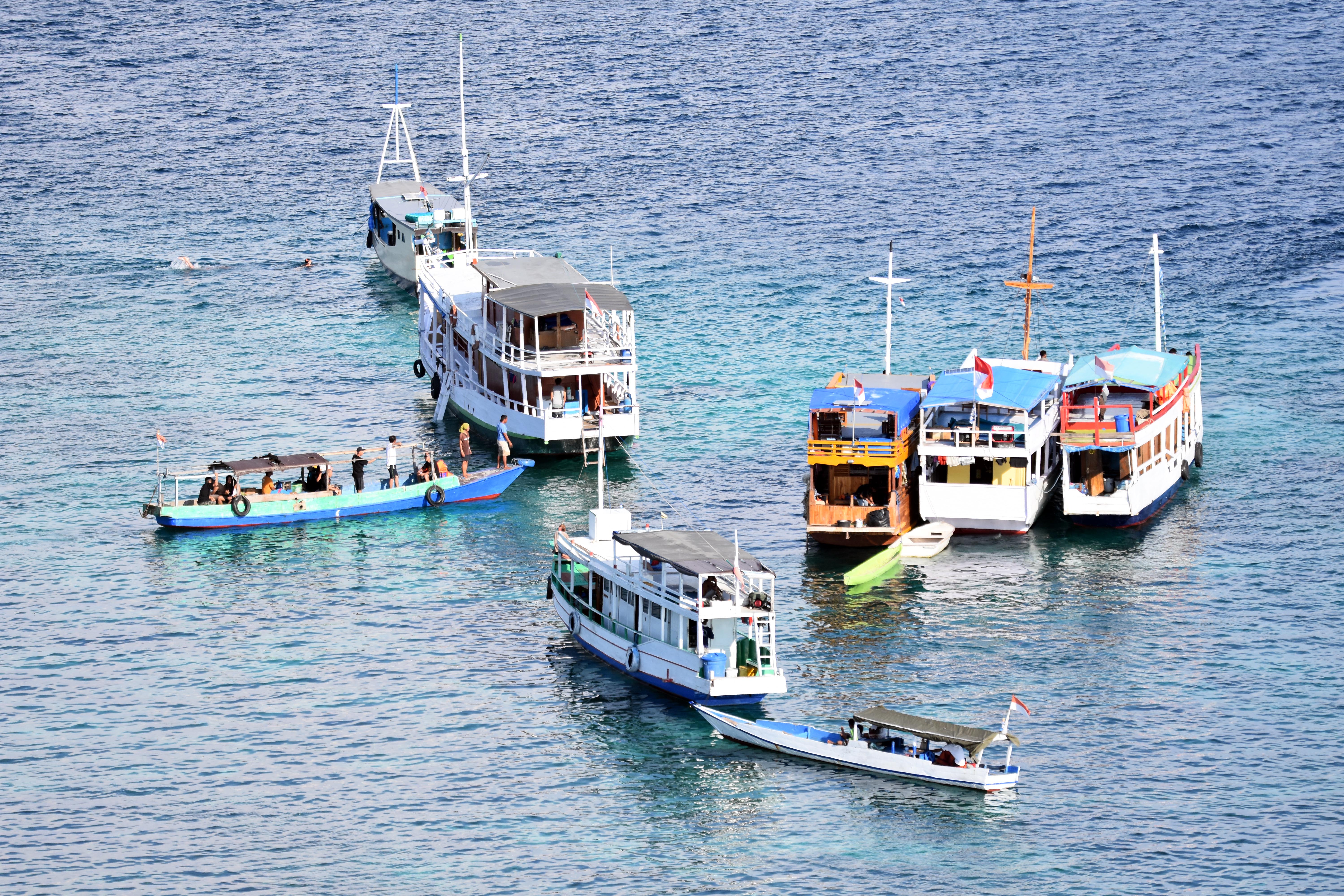
Most of the boats which visit these islands come from the nearby island of Flores, especially from Labuanbajo. I felt rather privileged to be on our smart little ship, although I guess we were paying for it!
Local tourist boats off Komodo
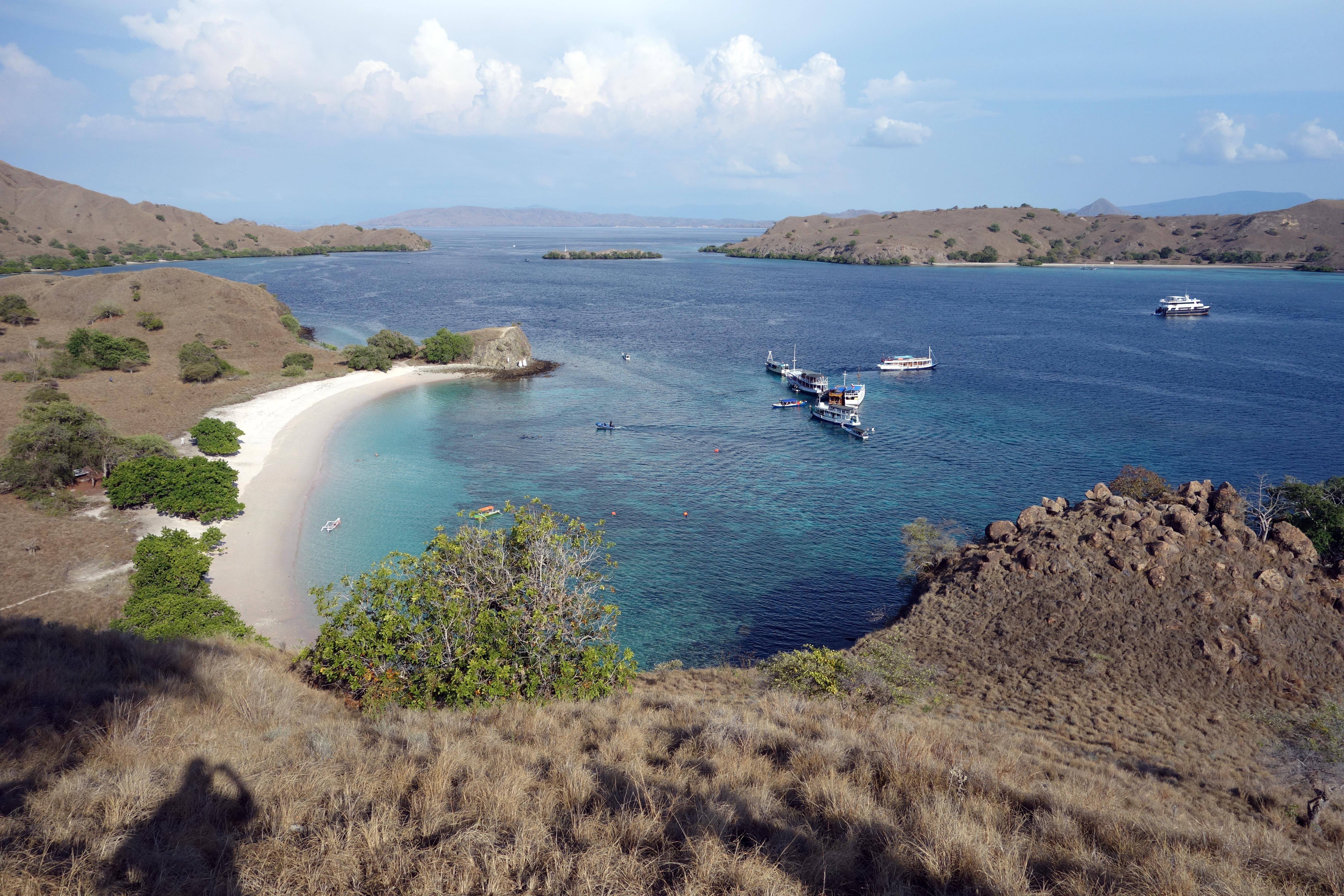
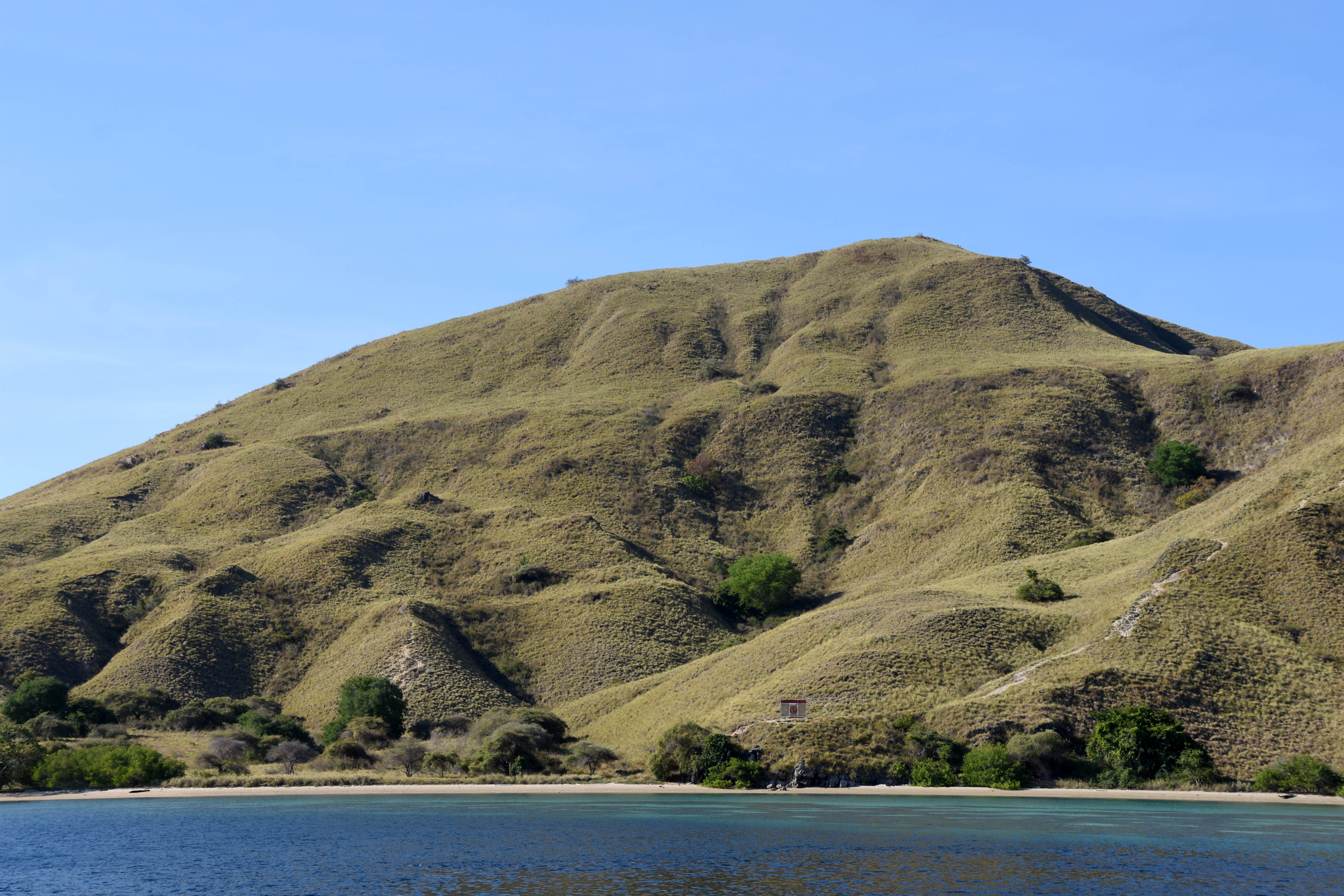
I particularly enjoyed walking about on the tiny island of Gili Lawa, just north of the main Komodo island.
Gili Lawa Island
Here we saw a number of birds, including Collared kingfisher, Zitting Cisticola, Pied Bushchat and the rather beautiful, White-breasted Woodswallow (below).
White-breasted woodswallow (Artamus leucorynchus)
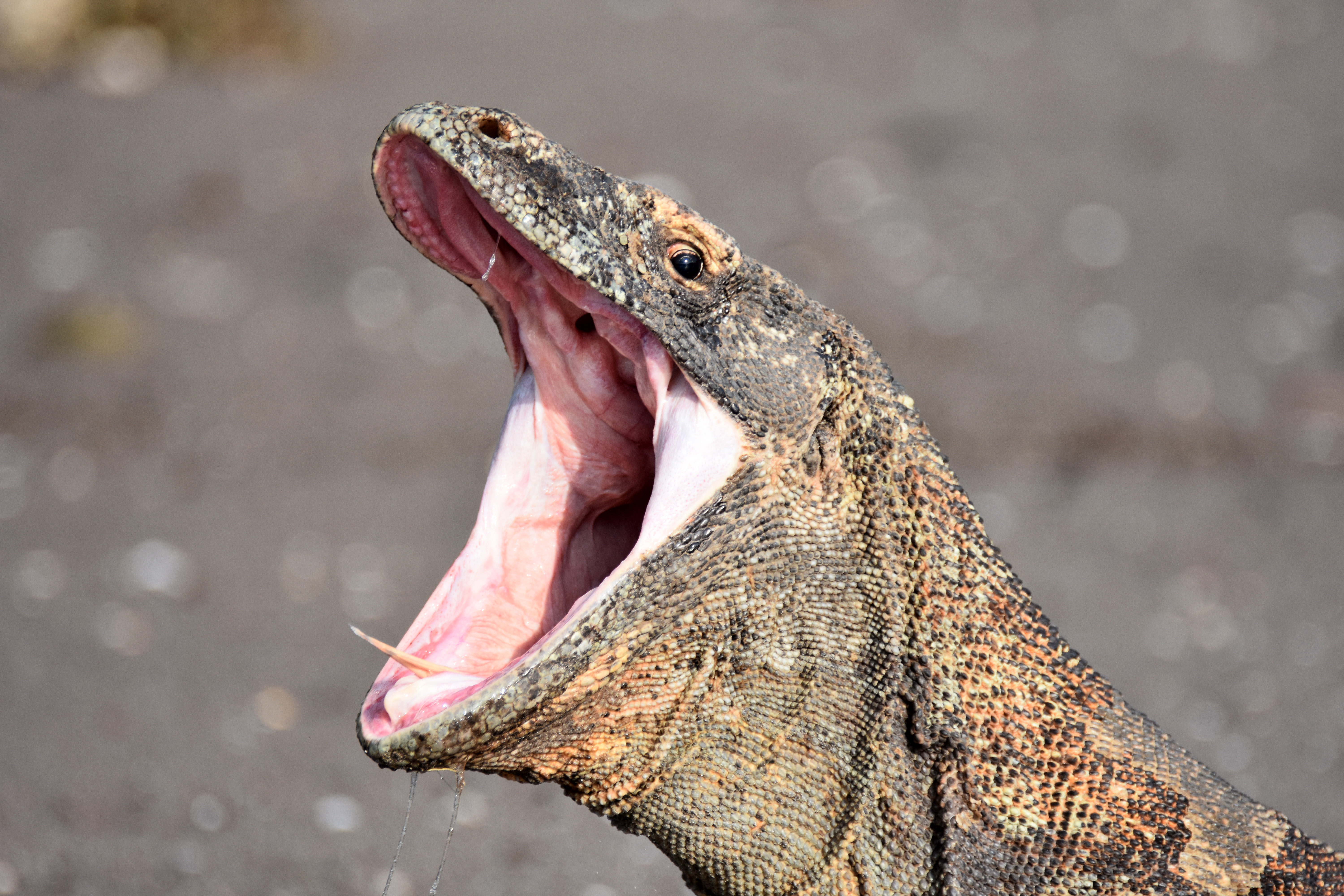
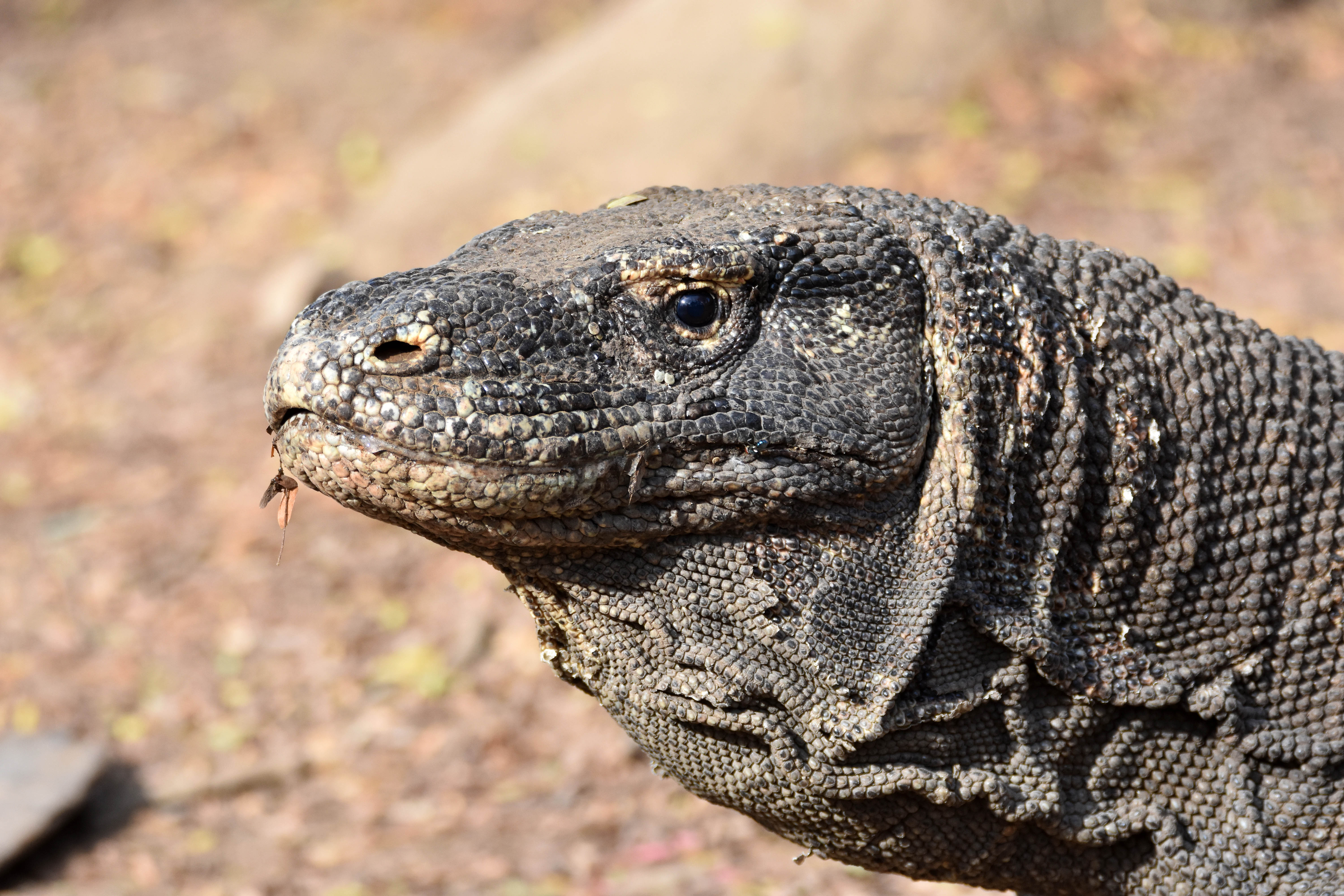
These were of course, sites were there were no Komodo dragons, otherwise it would not have been possible to wander about by ourselves (accompanied by a member of the crew). The first dragons we saw were on Rinca island. I have written about these reptiles in a separate blog on my Nature Notes site (4). They are impressive beasts, but not my favourite animal, although they cannot help the fact that they have poisonous saliva and carnivorous habits!
Komodo dragon (Varanus komodoensis) on beach with mouth open
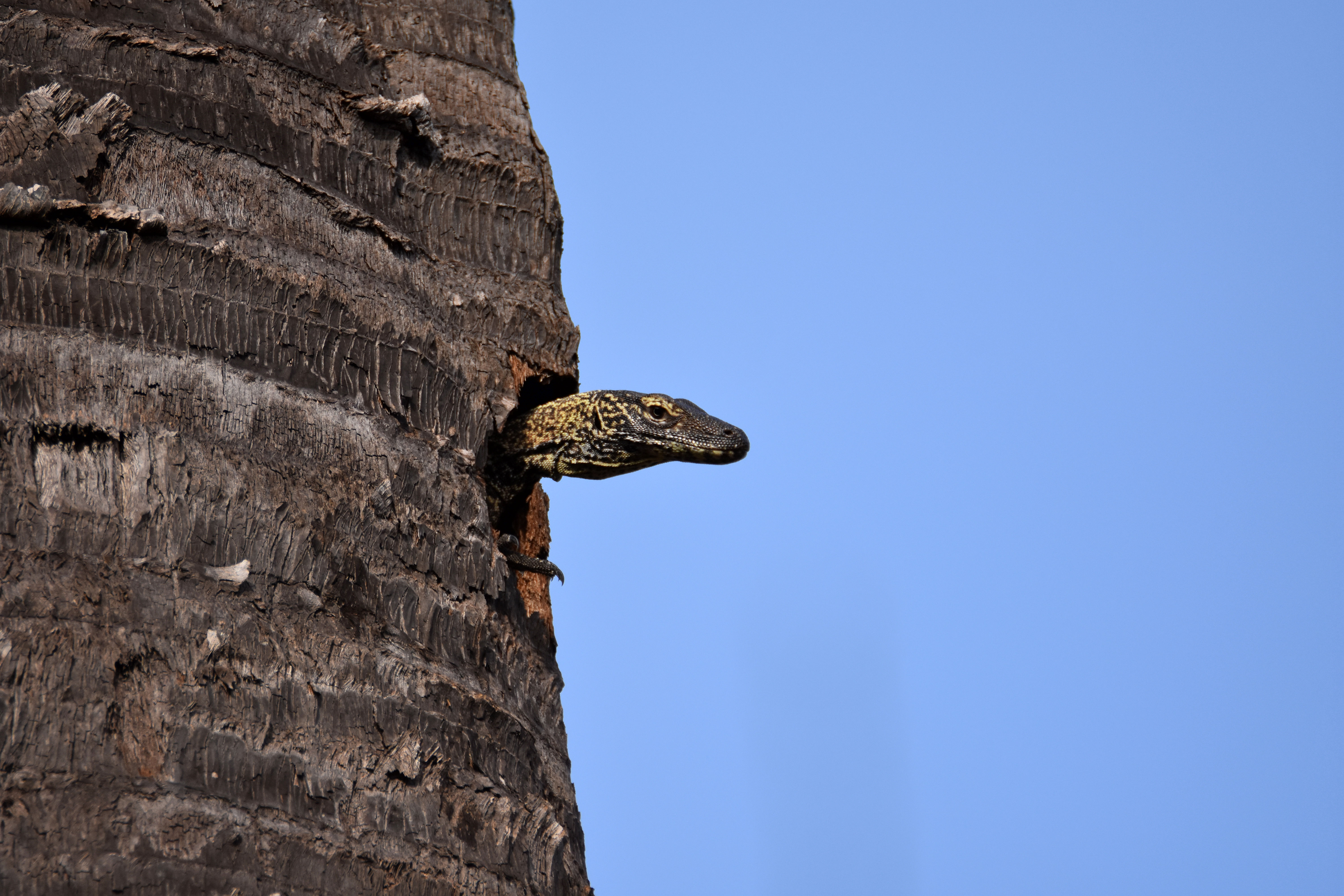
The young dragons were somewhat more appealing, until we saw one kill a rat and swallow it whole! They themselves live in trees to avoid being swallowed whole by the large dragons. You see what I mean about them not being very cuddly!
Baby Komodo dragon in a palm tree.
You are well looked after by guides and guards when you go ashore on Rinca and Komodo Islands. They walk in front and behind you carrying sticks to ward off any overly curious dragons. But for the most part, the dragons seemed to recognise that tourists were not their usual prey item, or perhaps they just weren’t hungry! People do live in villages on these islands, alongside the dragons. Not something I would like to do, I must confess.
Local guide on Komodo Is
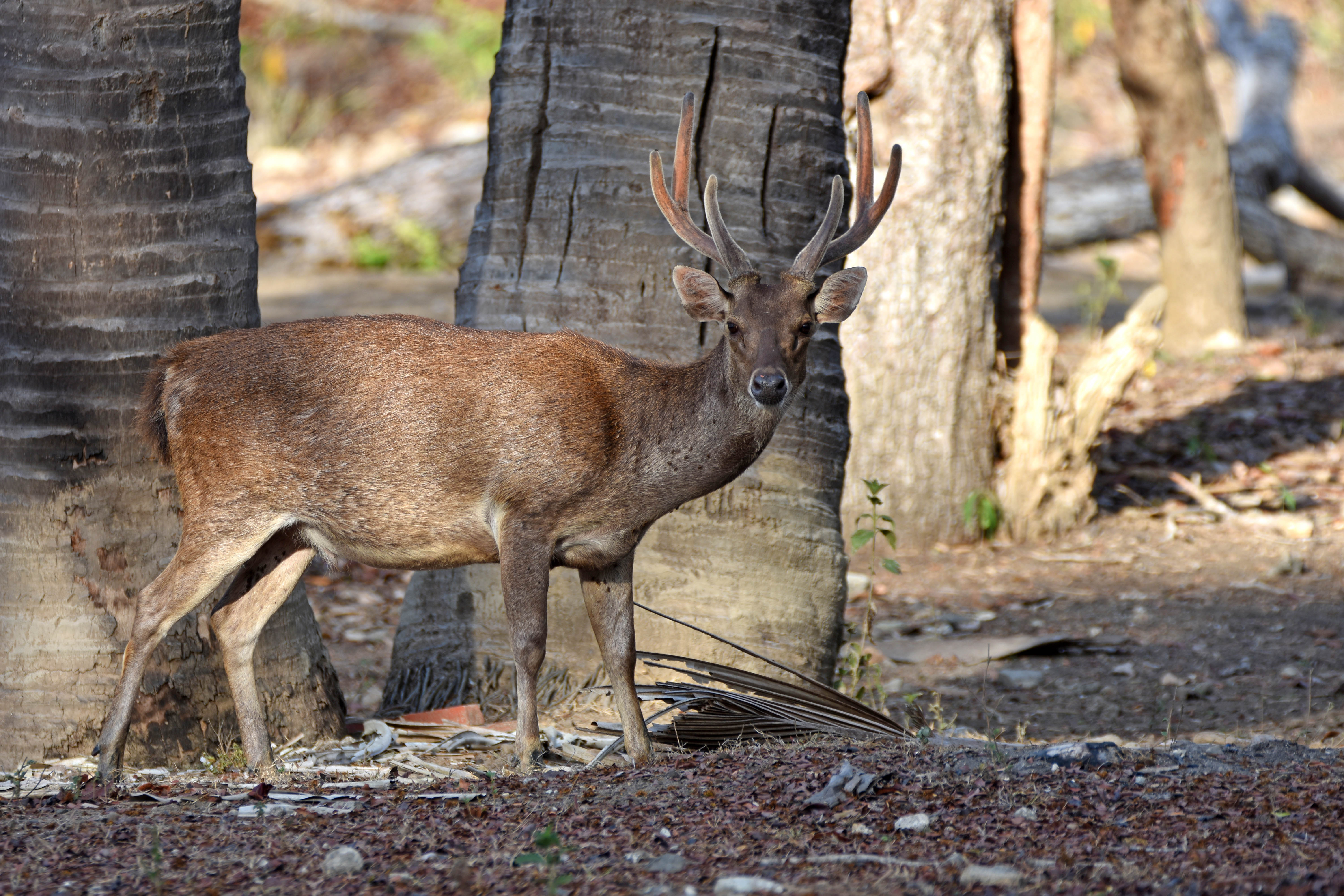
What the Komodo dragons do like to eat, together with water buffalos, are the endemic Timor Deer. I felt rather sorry for these beautiful creatures, but perhaps it is just the old and sick ones which get taken. They did not seem at all concerned about the presence of the dragons.
Timor deer on Rinca Island
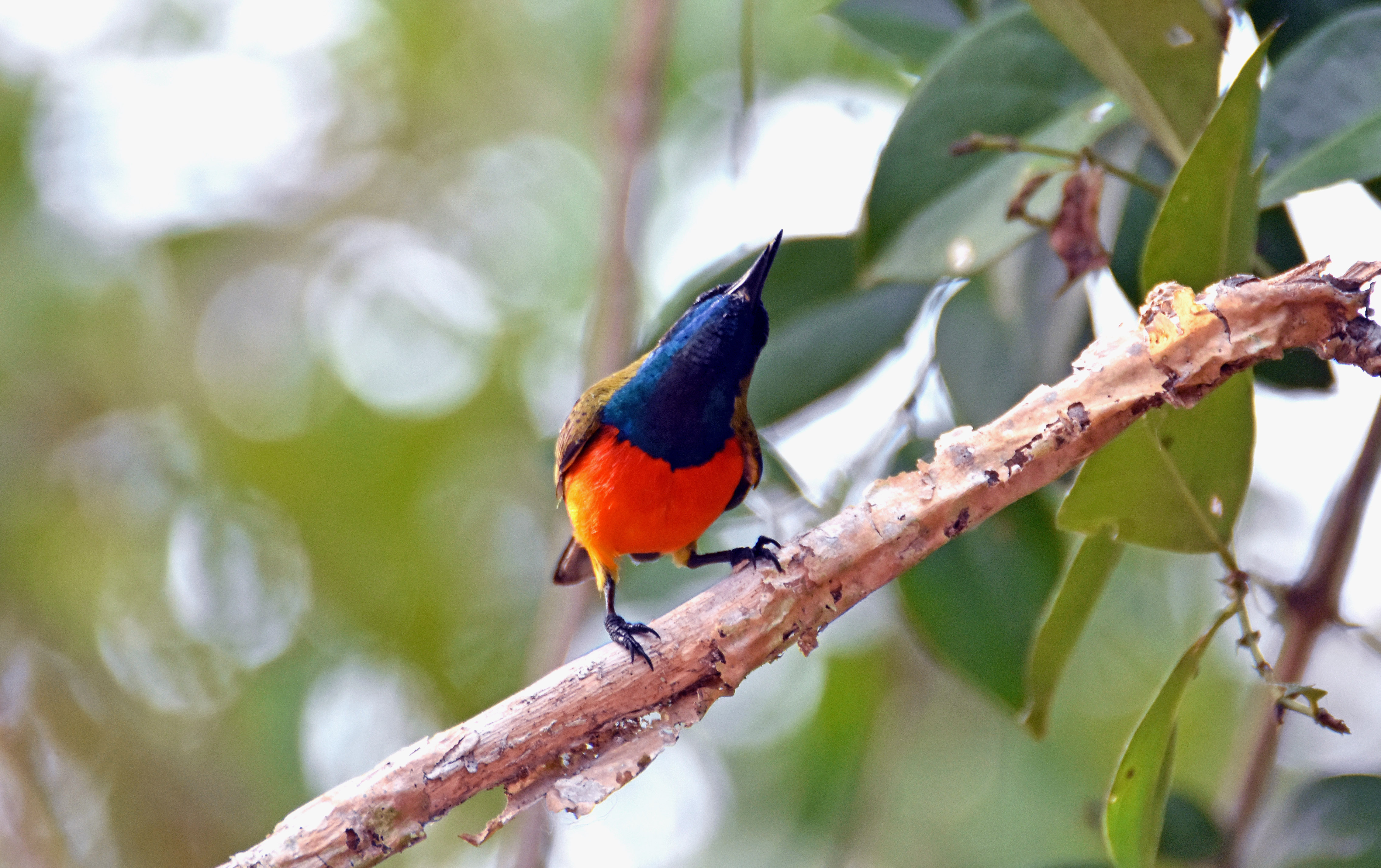
These islands are quite dry but nevertheless support a good many bird species. One of the highlights for me was the Flame-breasted sunbird. This one did not stay around for very long, just long enough for me to grab a quick shot of it before it flew off.
Flame-breasted sunbird (Cinnyris solaris)
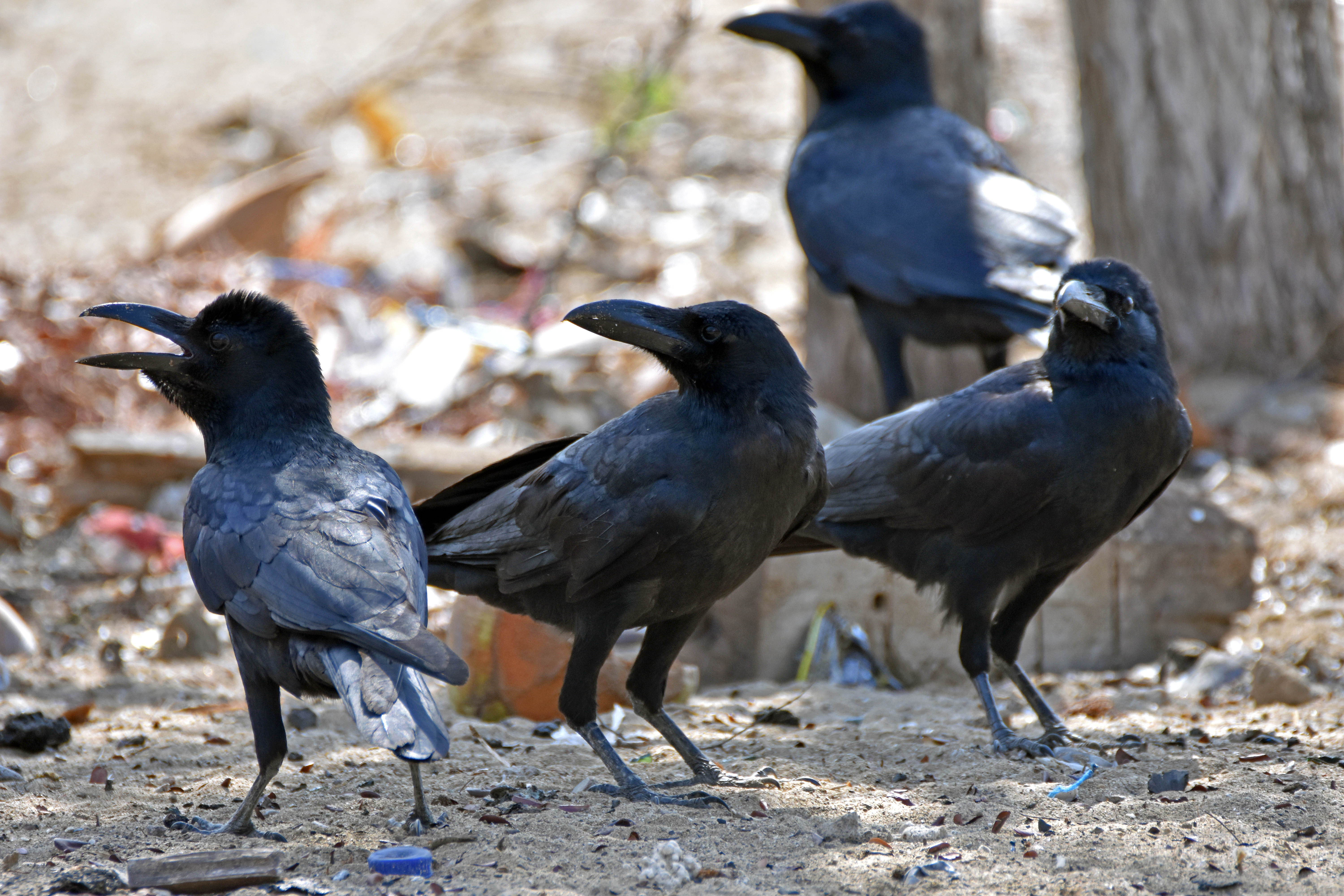
One very noisy and garrulous inhabitant of these islands, are the Jungle or Large-billed crows. These large members of the crow family really have attitude! They strut around like they owned the place; perhaps they do!
Jungle or Large-billed crow (Corvus macrorhynchos)
They did not look as though they were at all concerned to be living on an island with dragons. They are obviously too fast and able to fly off before any dragon could catch them.
Komodo dragon (Varanus komodoensis) on Komodo
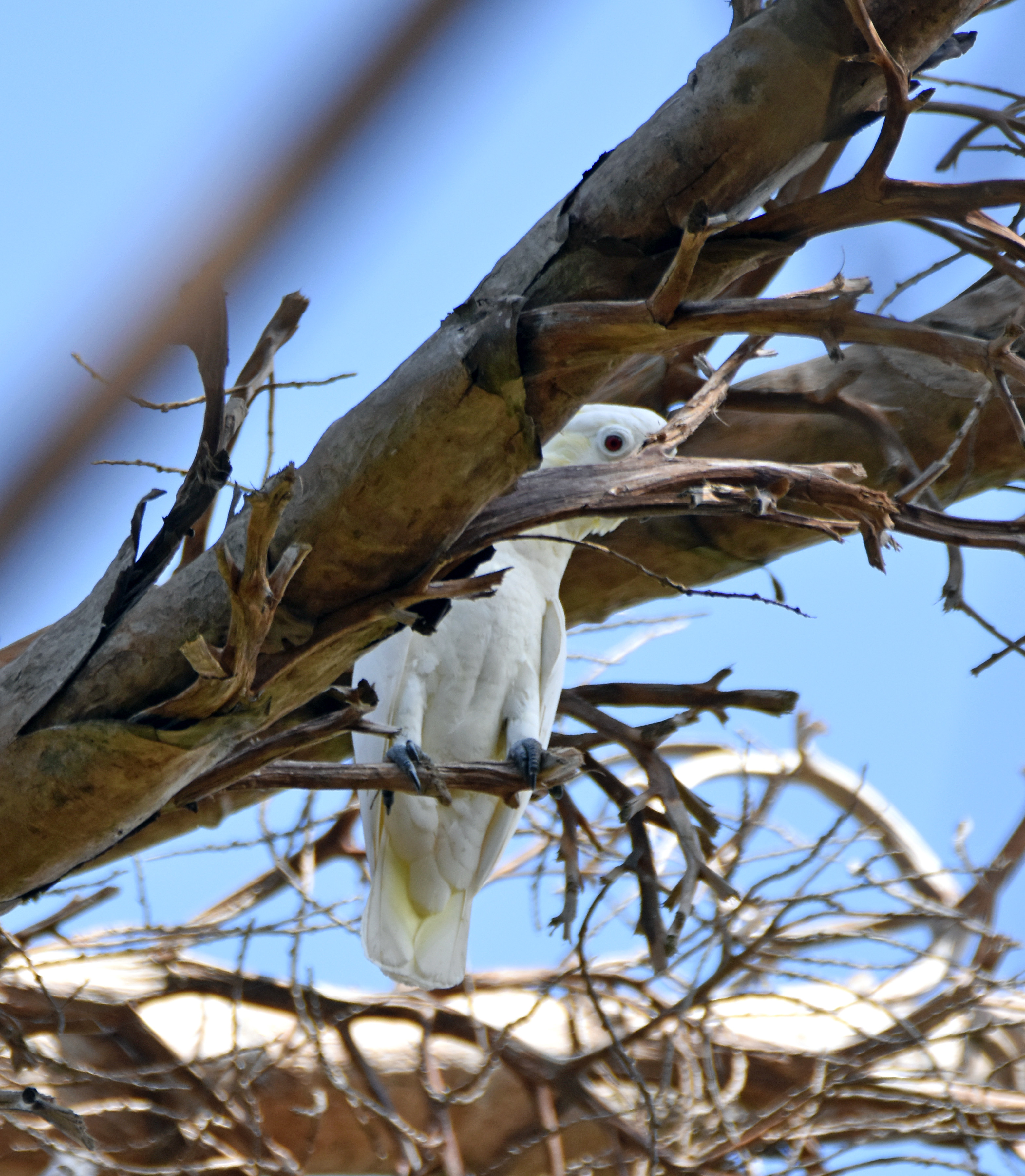
It was also nice to see plenty of Yellow-crested cockatoos on Komodo Is, although they were a little shy. Here’s one peeping through the trees (below)! These birds have been driven to local extinction in many parts of S E Asia by trapping for the pet trade. Here at least, they seem to well-protected and relatively abundant.
The yellow-crested cockatoo (Cacatua sulphurea) on Komodo
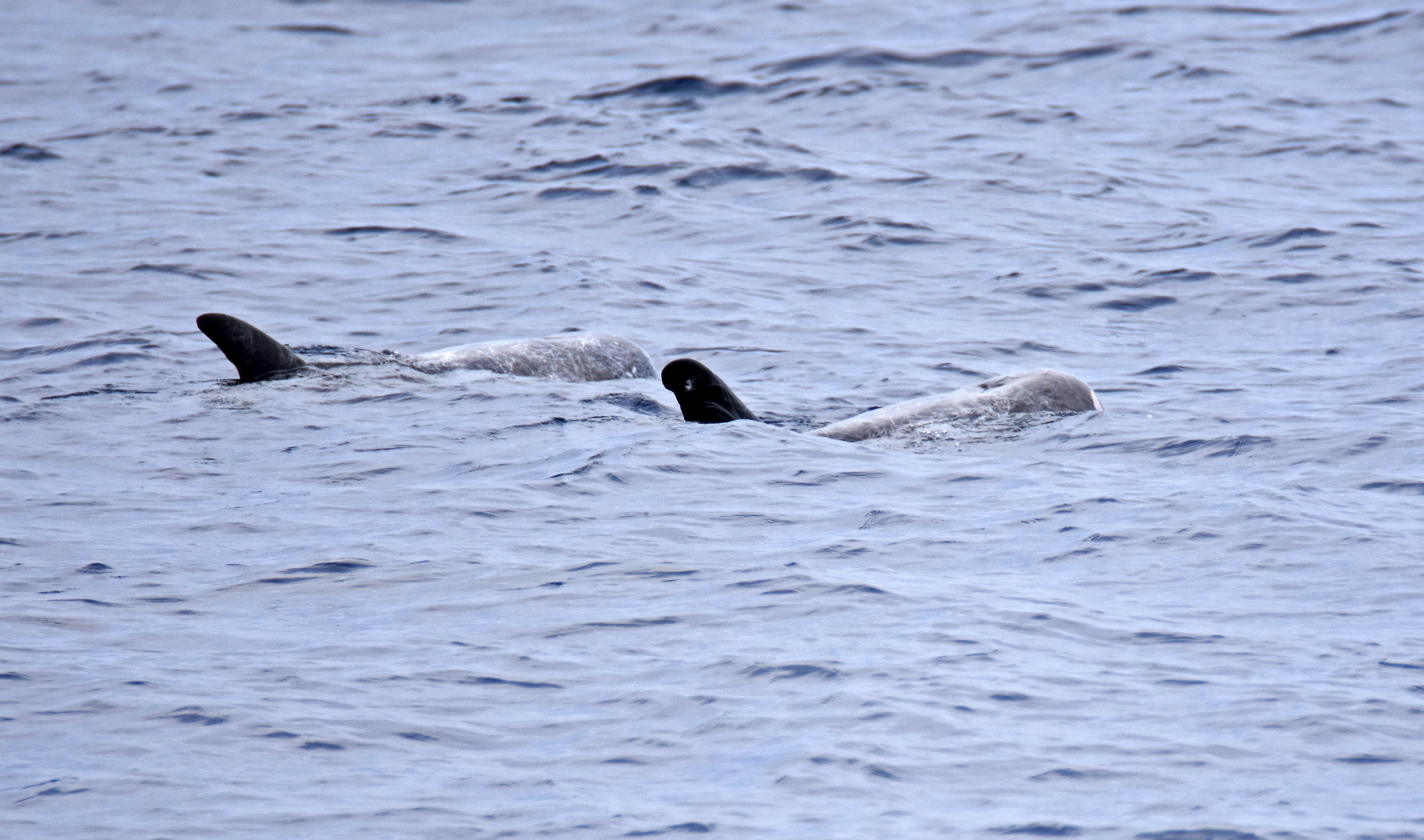
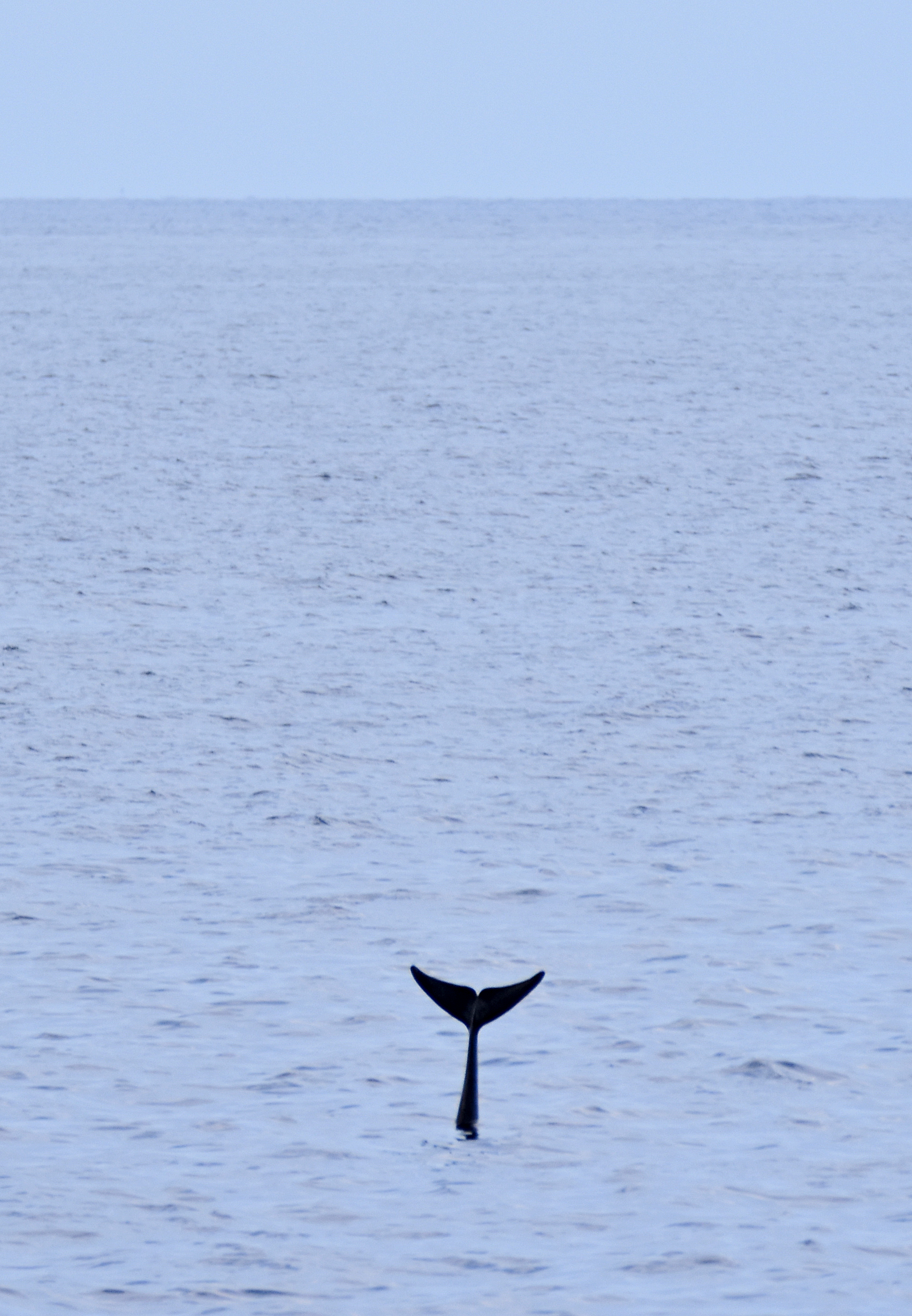
Finally, it was time to leave the Komodo national park and sail further east to our point of departure, at Maumere, on Flores. Not before we ventured south out into the open ocean, where we came across another sperm whale. We also came across the rather strange, highly scarred, Risso’s dolphin, which have a habit of waving their tails in the air. No doubt communication to each other, but what were they saying?
Risso’s dolphin (Grampus griseus) showing their highly scarred bodies – caused by fighting?Risso’s dolphin (Grampus griseus) tail waving
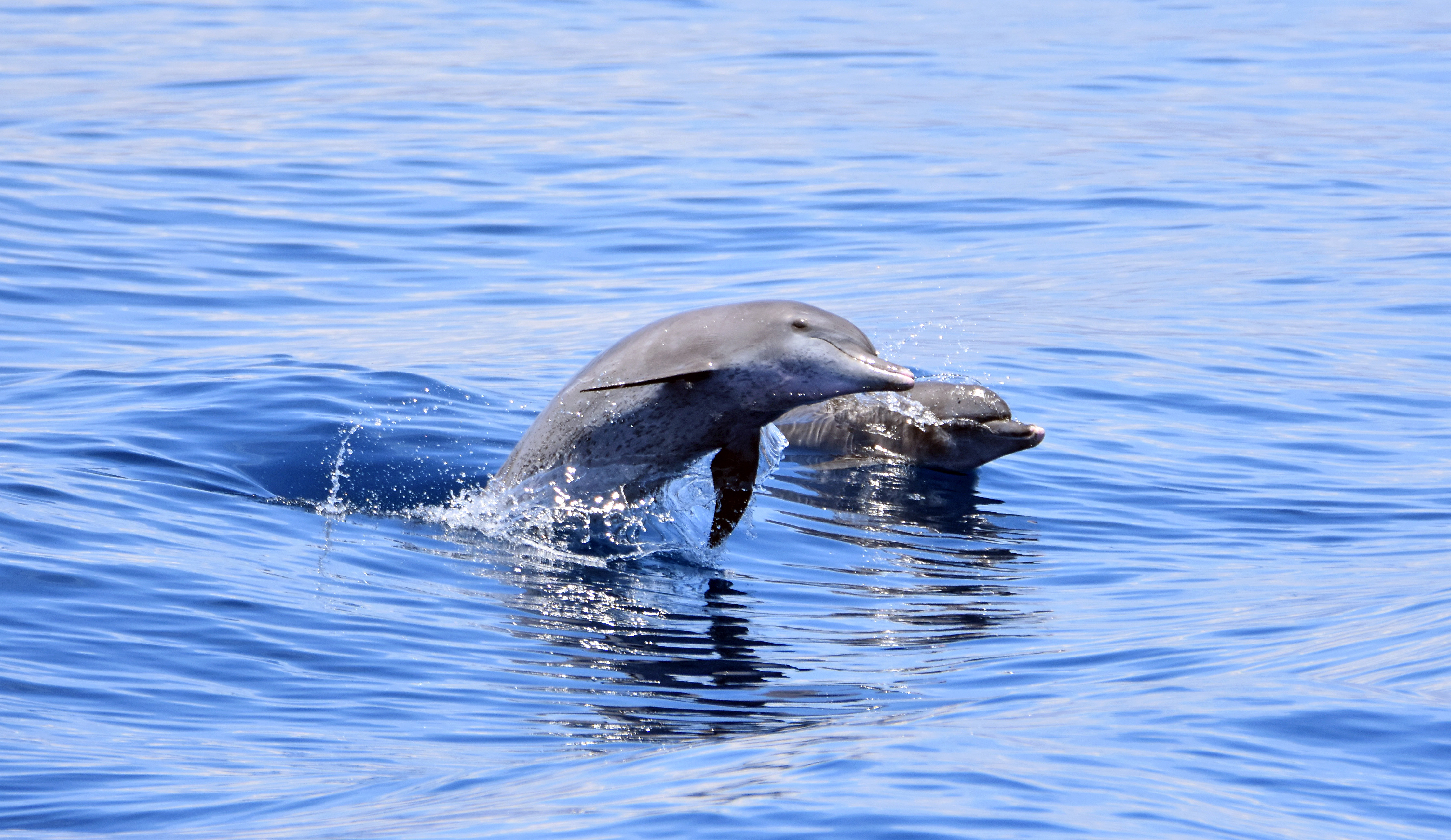
On they way back, cruising along the north coast of Flores we came across some Bottle-nosed dolphins. Sitting at the back of the ship I managed to get this lucky shot (below). Photographing dolphins is not easy! They are very fast-moving and I managed to miss them leaping out of the water on most occasions; but this time I got lucky.
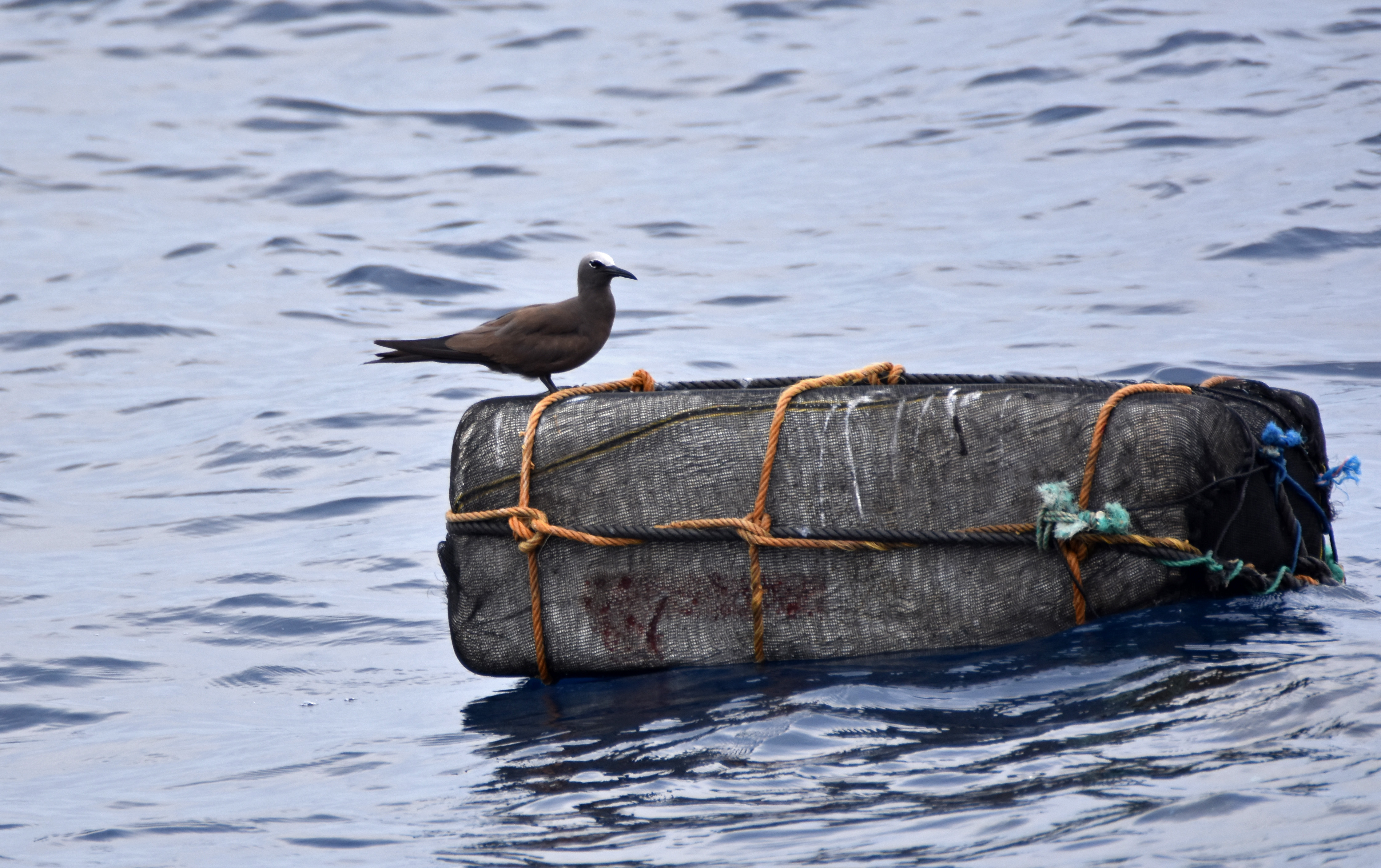
There were also some very nice Brown noodies sitting on fishing floats as we came into the port of Maumere.
Brown noody (Anous stolidus)
Dear reader, I hope you enjoyed this snap shot of my travels in this region, but I don’t want you to think it was a complete idyll. One of the persistent negatives was the ubiquitous presence of plastic pollution. We are filling up the seas with plastic and it is not a pretty sight. Even in the national park waters one came across plastic pollution and it is only going to get worse unless we take some drastic measures to stop producing plastic and discarding it carelessly. I’ll say no more. There are plenty of good websites devoted to highlighting this problem.
Plastic pollution
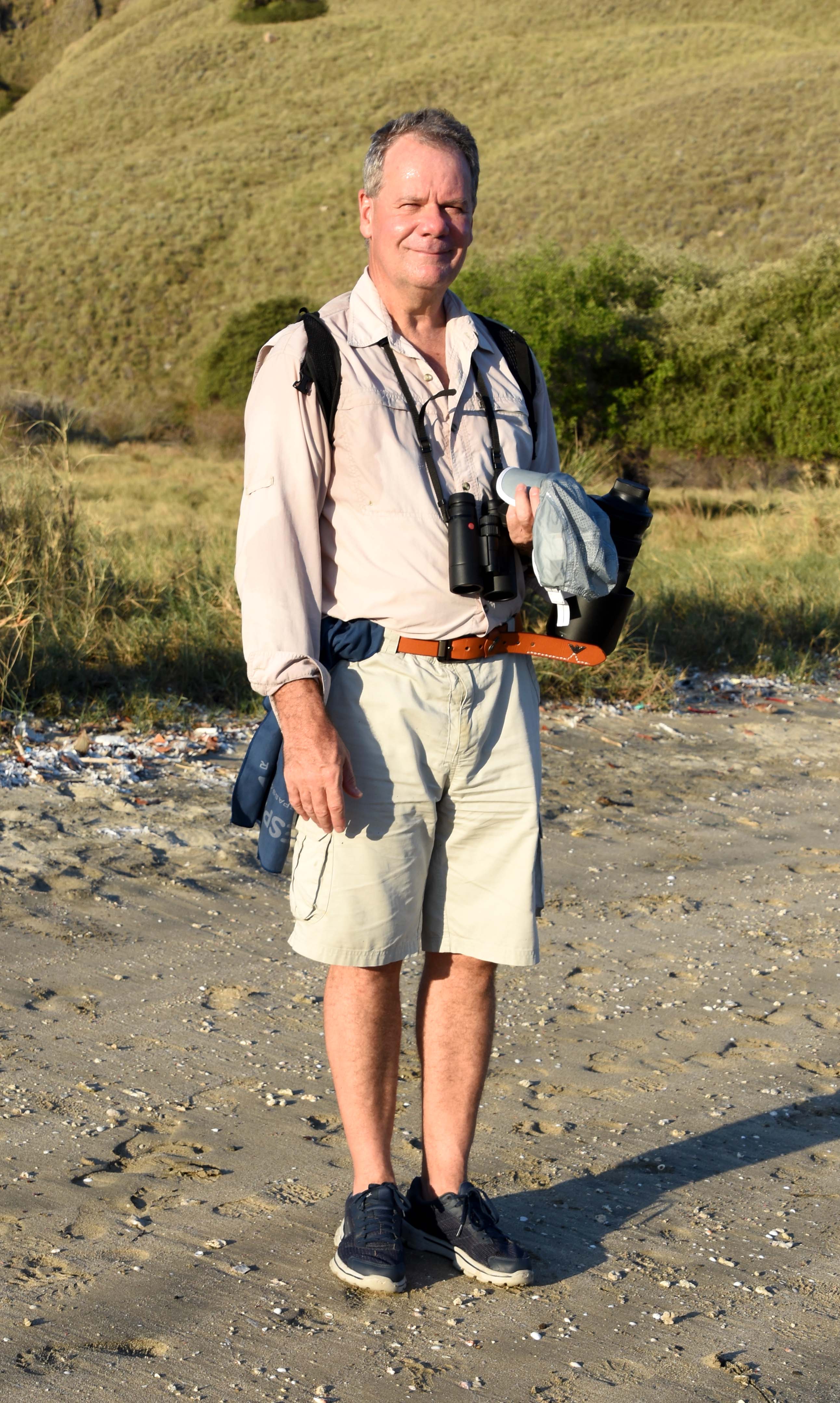
I would recommend a visit to Komodo NP. It is a world-famous location but was not over-run by tourists and from what I could see, the Indonesians seemed to be doing a good job of protecting and managing it. I’ll finish with a photograph of myself, looking hot but contented after a spell of bird-watching.
Like many people, I love going to the zoo, but I am also acutely aware that for many animals confinement must be a torture. The only justification then, for creatures which suffer from being locked up, must be that there is no habitat left for them, or they are threatened with severe poaching or extinction, so that they are being bred for eventual reintroduction.
Tibetan or Sichuan takin (Budorcas taxicolor tibetana) male – protected but still threatened by poaching
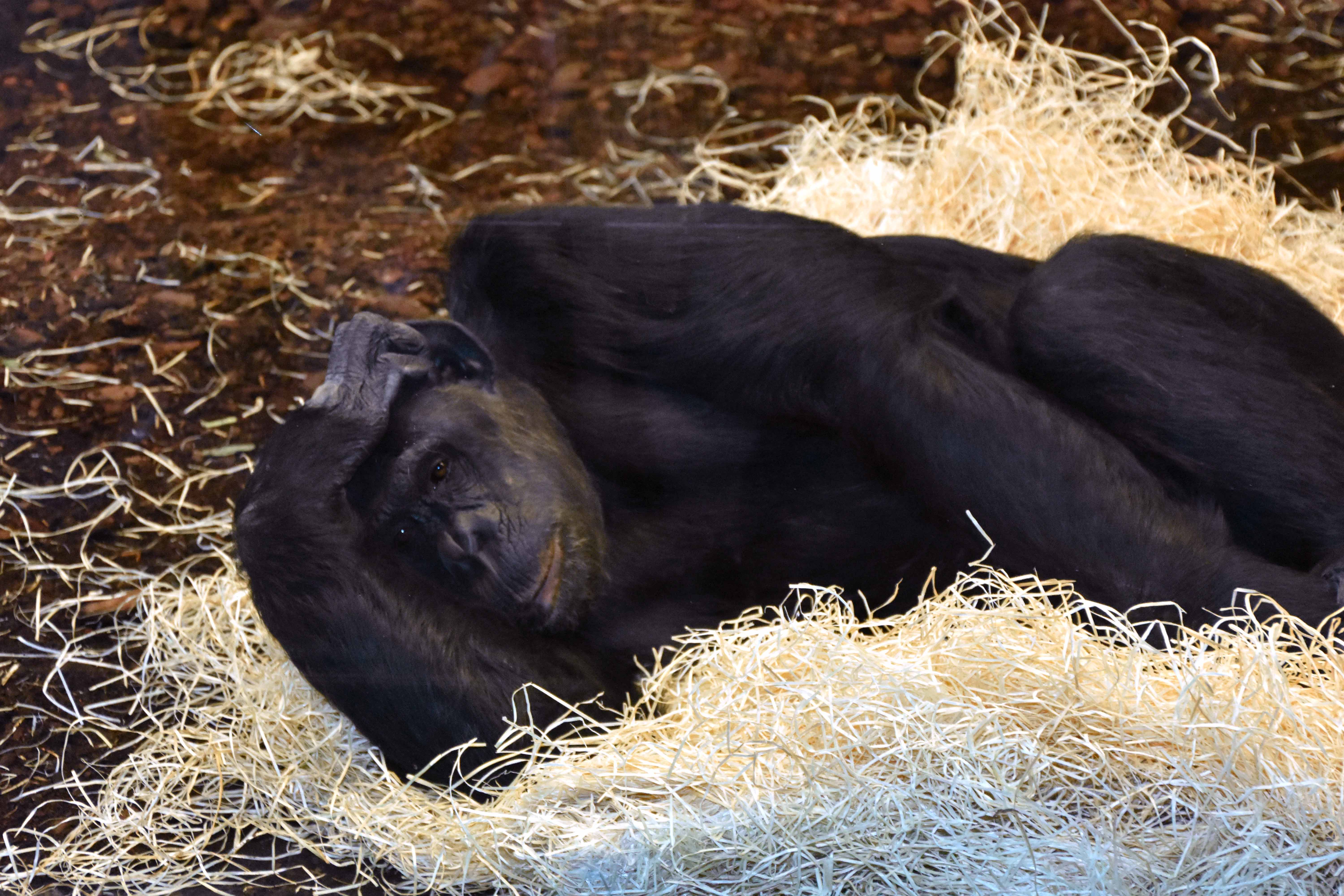
In the best zoos, animals are kept for our education and amusement. Hopefully, through awareness and a little education people become will become more concerned about the species they see and therefore more likely to help with their conservation. We are animals and we have a certain ability to empathize with other animals if we care to. There is also a lot of anthropomorphizing that goes on in zoos, but that is half the fun. It’s hard not to identify with the feelings of an animal like this chimpanzee, seemingly lost in its own thoughts, lying on a nice bed of straw.
Chimpanzee Berlin Zoo
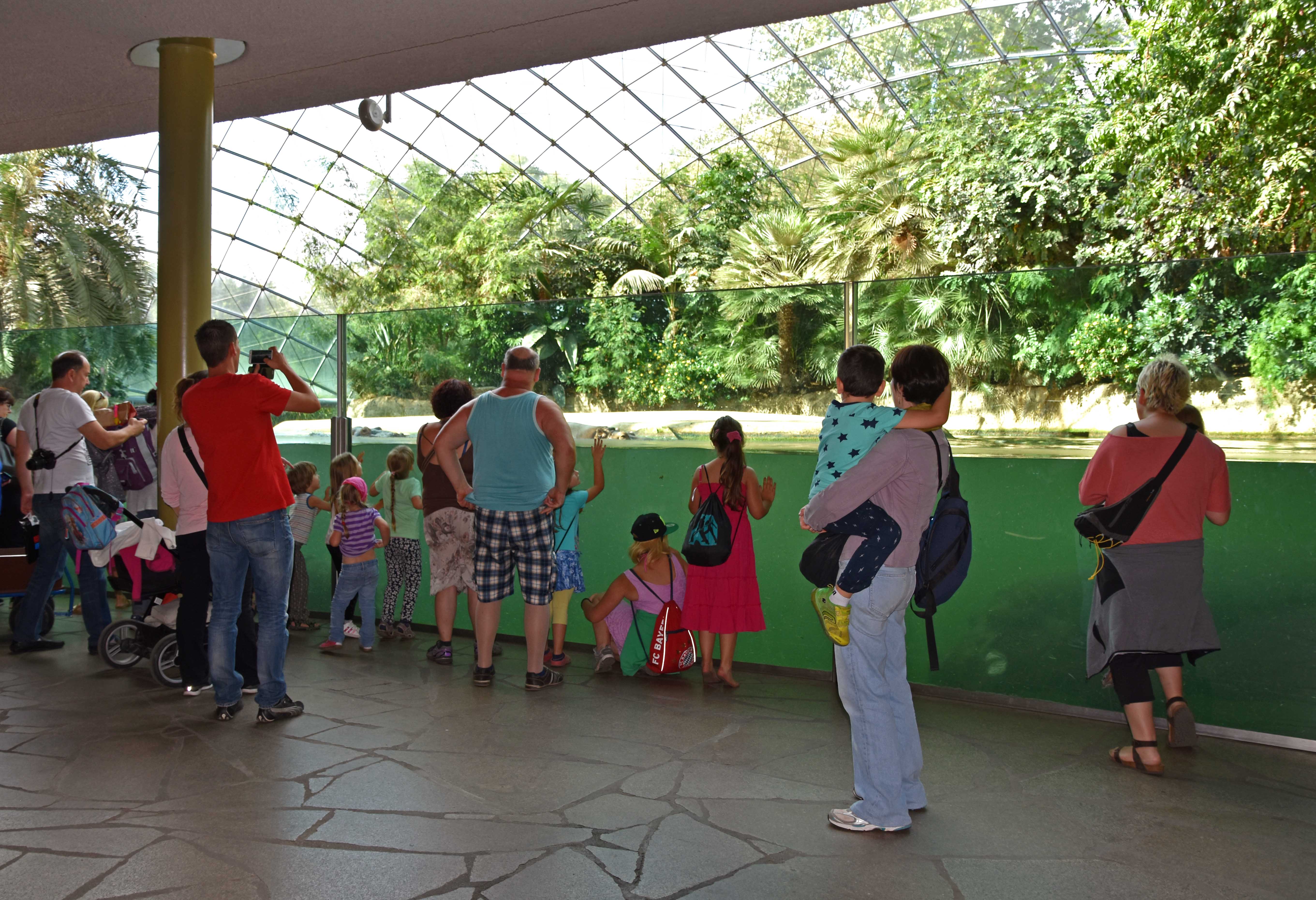
Any way, zoos are here to stay, and the good ones use their ticket money to do conservation work. Berlin Zoo is undoubtedly a fine zoo and one of the most visited in Europe with over 3 million entries per year (1). Their 18,600 animals look well looked after and they are quite innovative in how some of the animals are displayed. Like the hippos, which can be seen strolling along under water, through a glass-fronted panel on their pool (below). (2)
The hippo tank Berlin Zoo
Berlin Zoo was first opened in 1844, being the first zoo in Germany. The animals were donated by Frederick William IV, King of Prussia. The zoo was virtually destroyed during World War II, and reportedly only 91 of 3,715 animals survived (1). Fortunately, things have improved since those days and I would recommend it to anyone with an interest in animals.
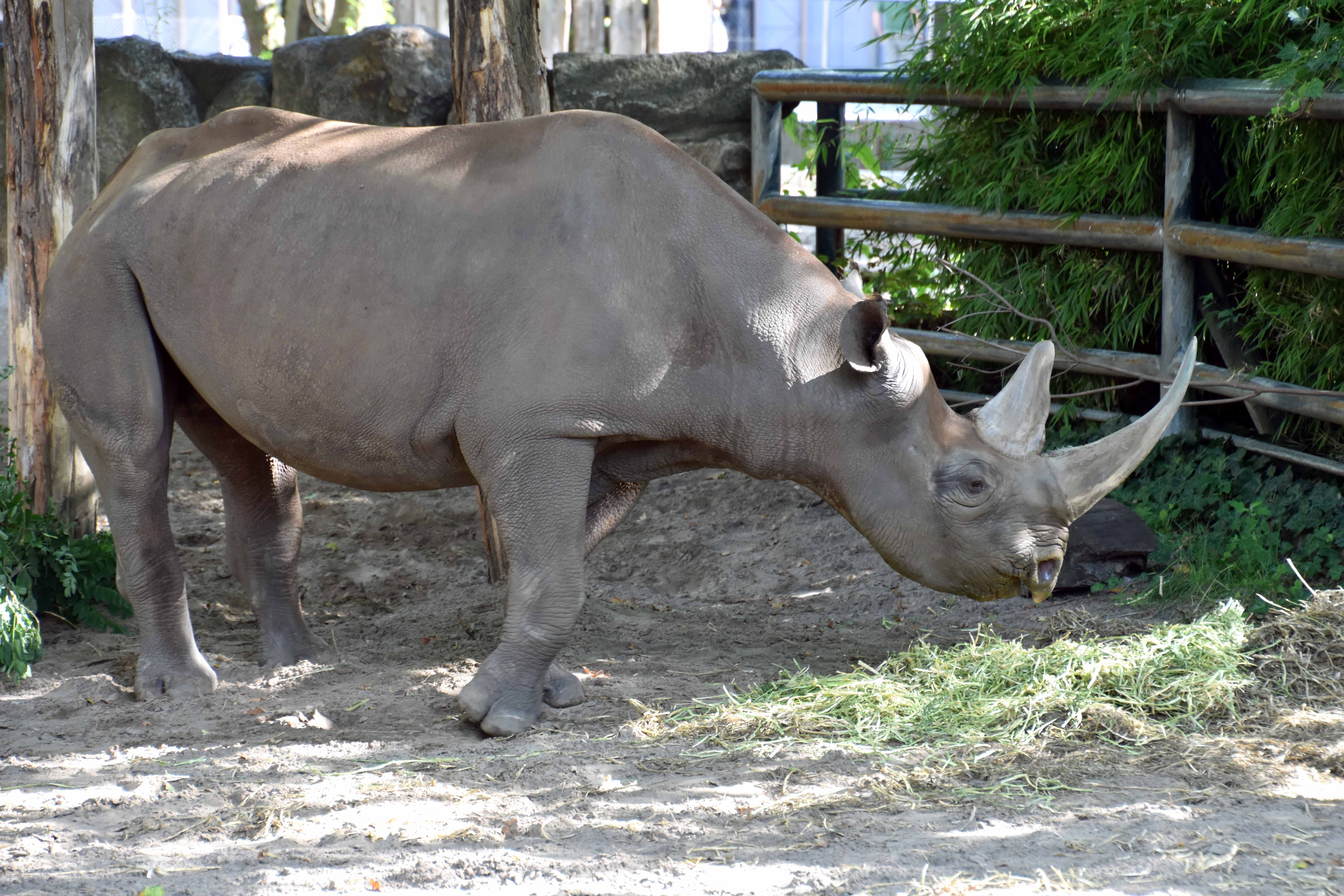
Black rhinos (Diceros bicornis) are critically endangered as a result of poaching for their horns. Despite the fact that the horn is just composed of keratin – the same as our hair and fingernails – there are enough stupid, superstitious and downright evil people around who will pay huge sums of money to get hold of it.
Black rhinoceros (Diceros bicornis) Berlin Zoo
Much of the demand for rhino horn is said to emanate from Vietnam (3), where depressingly, it is seen as a status symbol. The ignorance and stupidity of people – human beings – never ceases to amaze me. Anyway, at least this individual with his (or her?) beautiful horn is safe from the poachers.
Black rhinoceros (Diceros bicornis) Berlin Zoo
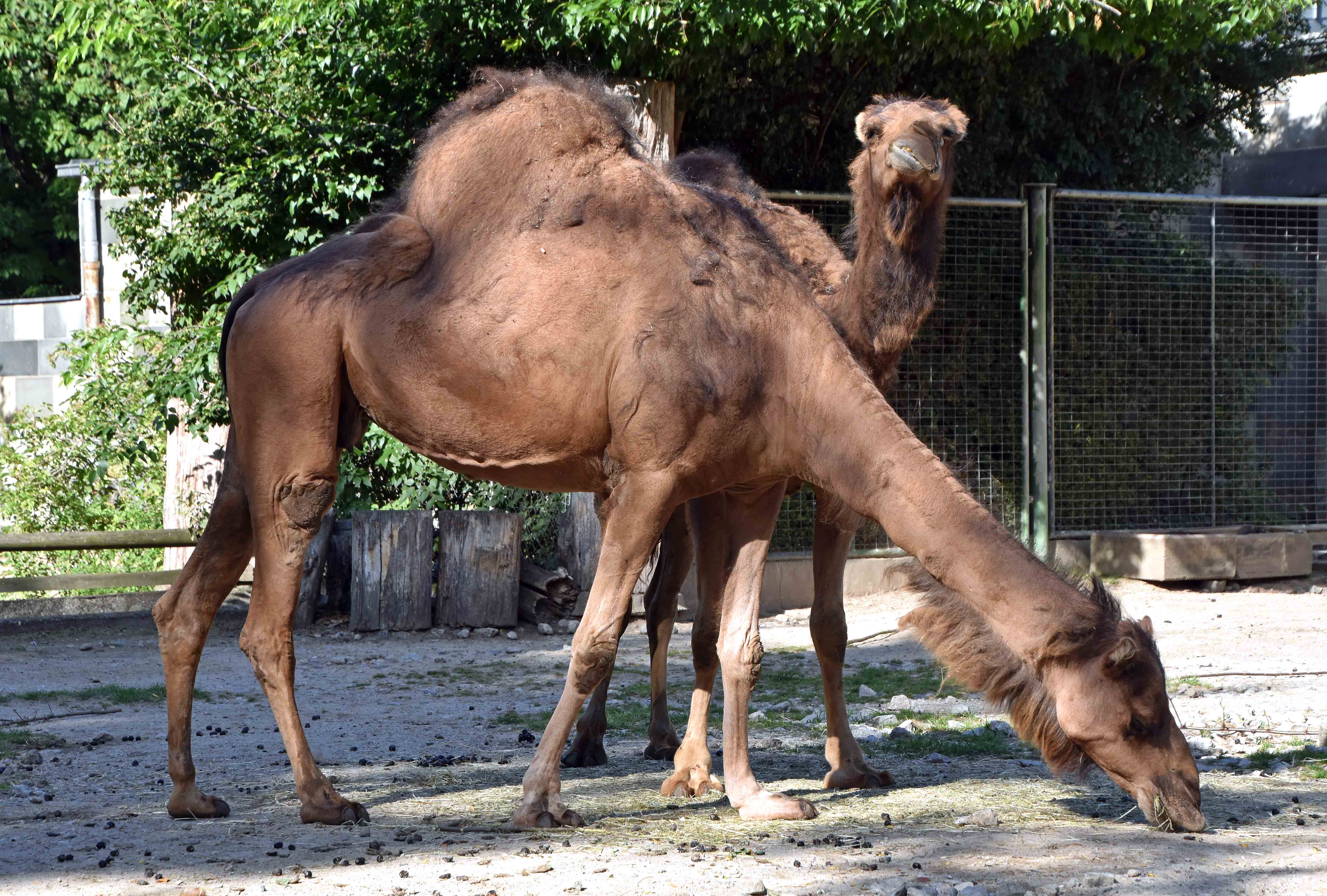
The Dromedaries or Arabian camels (Camelus dromedarius) looked happy enough.
Dromedary or Arabian camel (Camelus dromedarius) Berlin Zoo
When I passed by later I noticed the camels were having a bit of a lie down!
Dromedary or Arabian camel (Camelus dromedarius) lying down
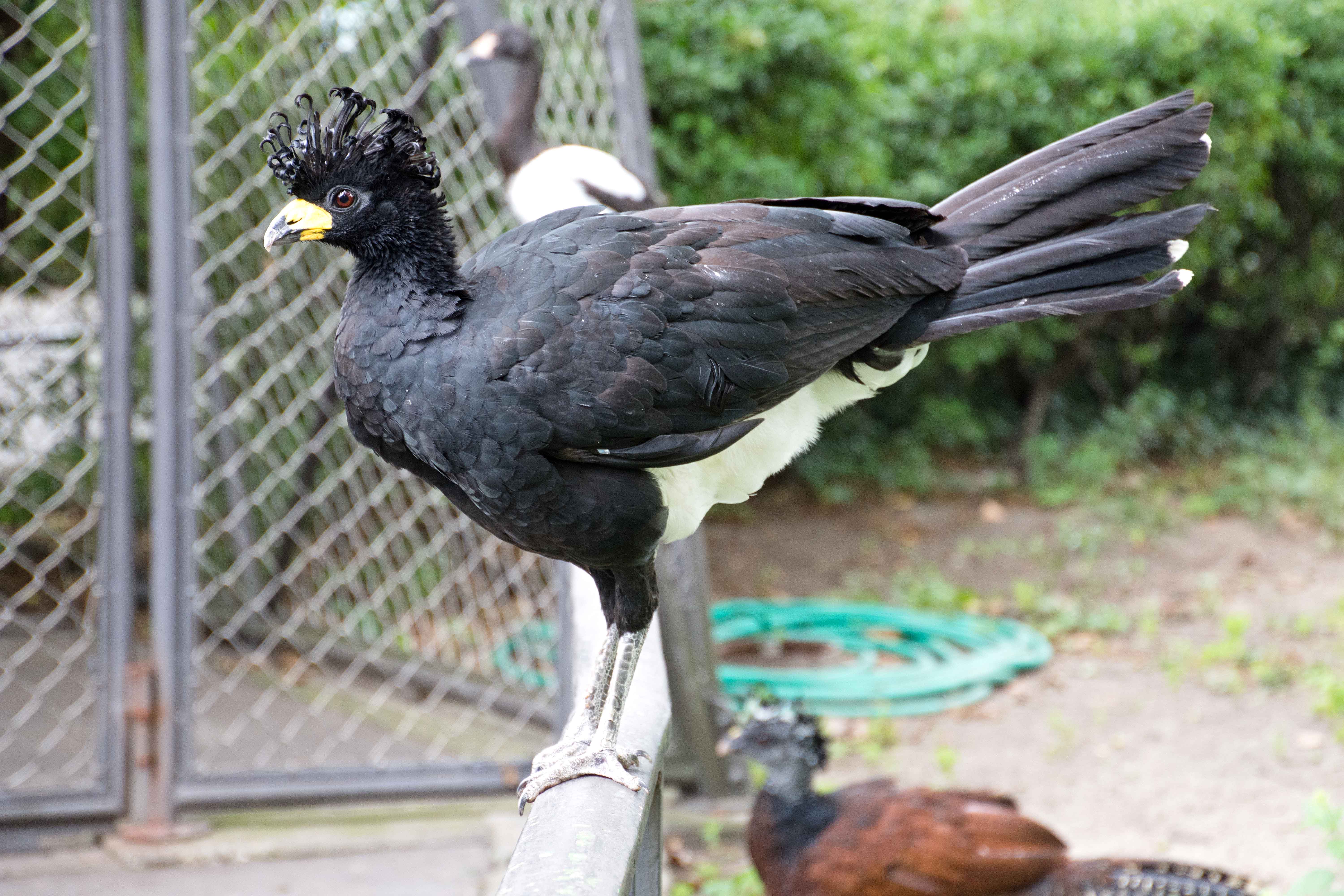
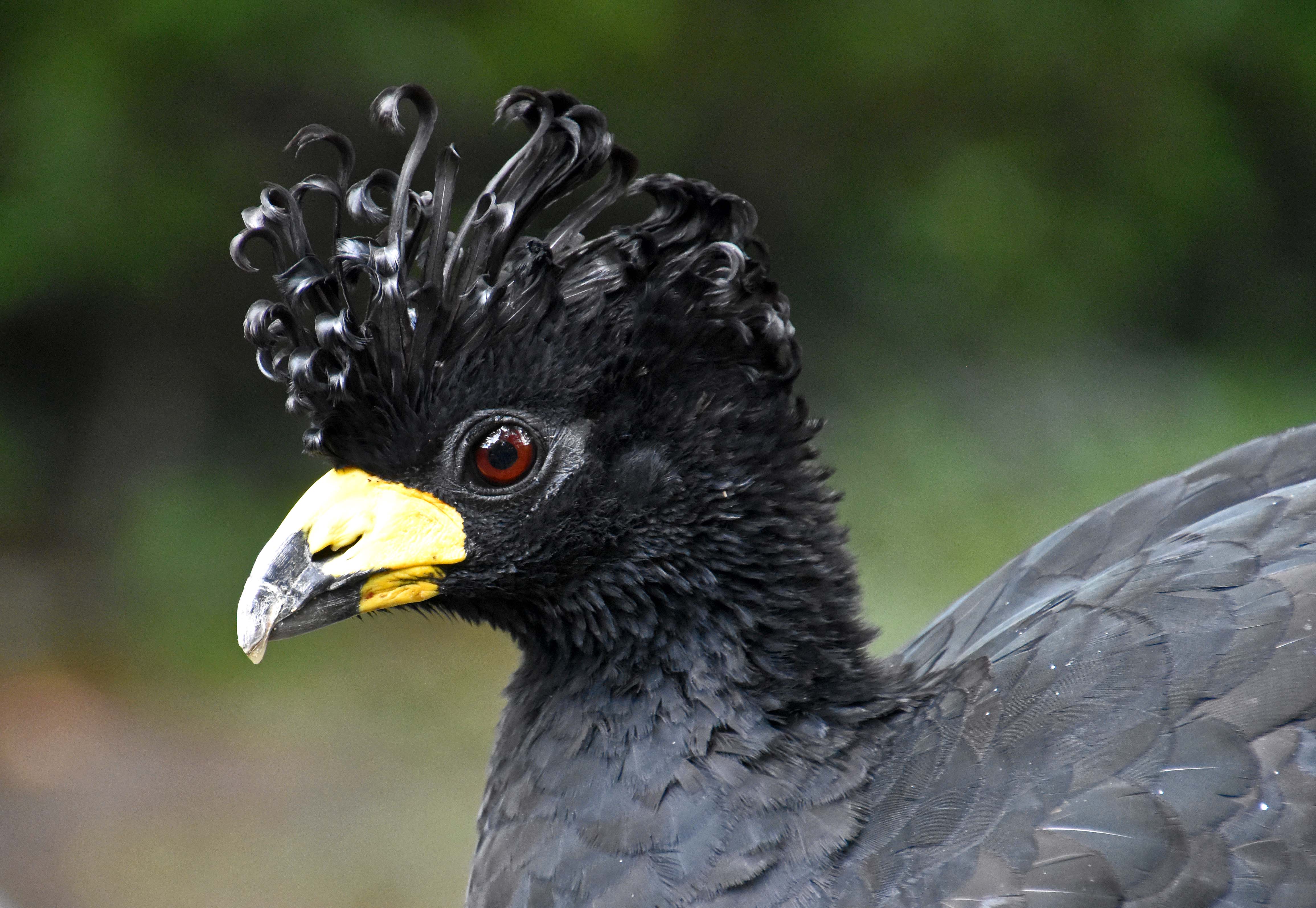
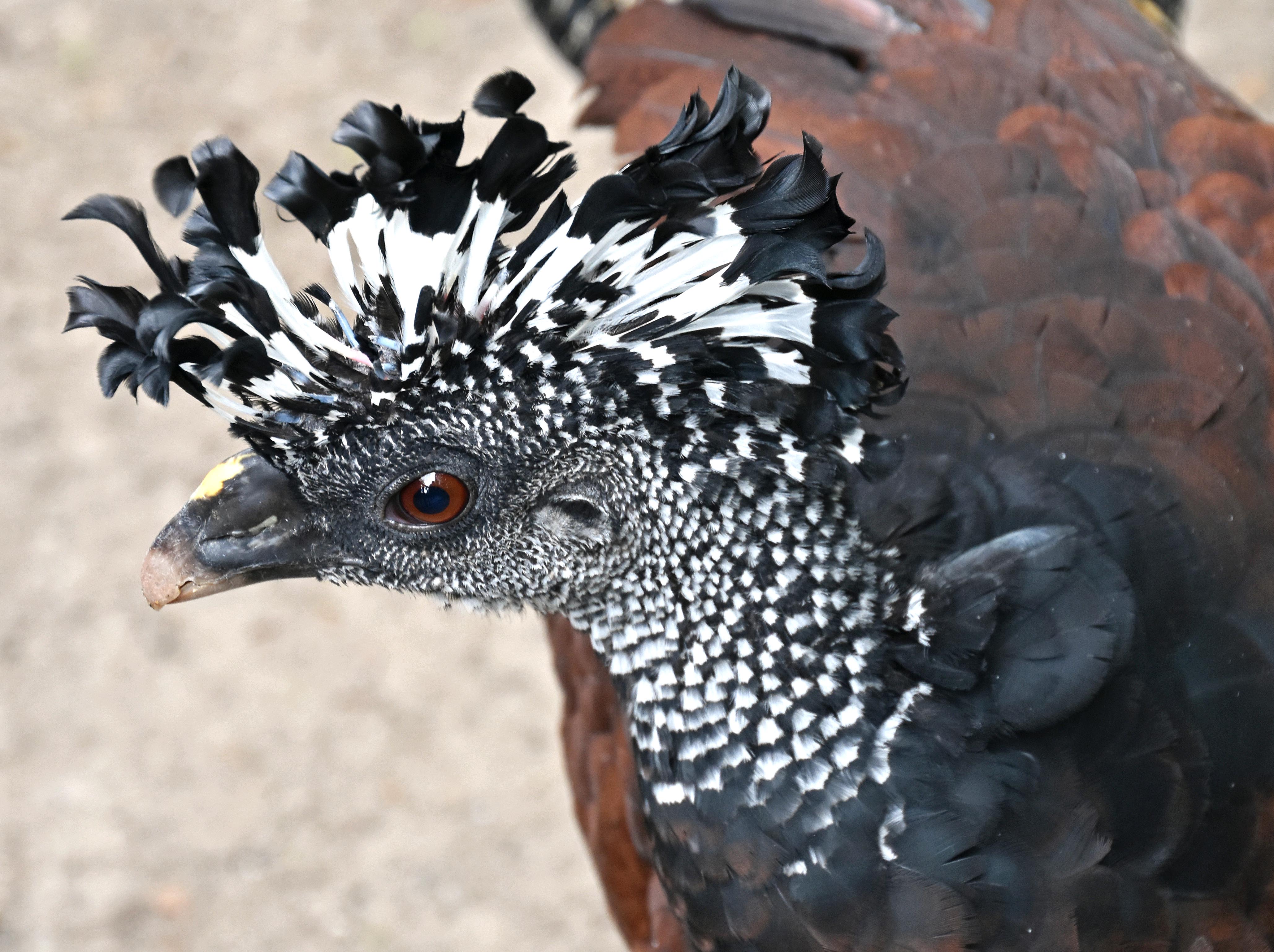
There are a number of bird houses in Berlin Zoo where it is possible to walk through the enclosures and experience being inside with the birds. In one house, there were a pair of curassows waiting to greet ever visitor, no doubt looking for something to eat between meals.
Bare-faced curassow (Crax fasciolata) male standing on a railing
They were remarkably tame and had clearly adjusted well to captivity; perhaps they were bred in captivity. Both male and female had beautiful head feathers.
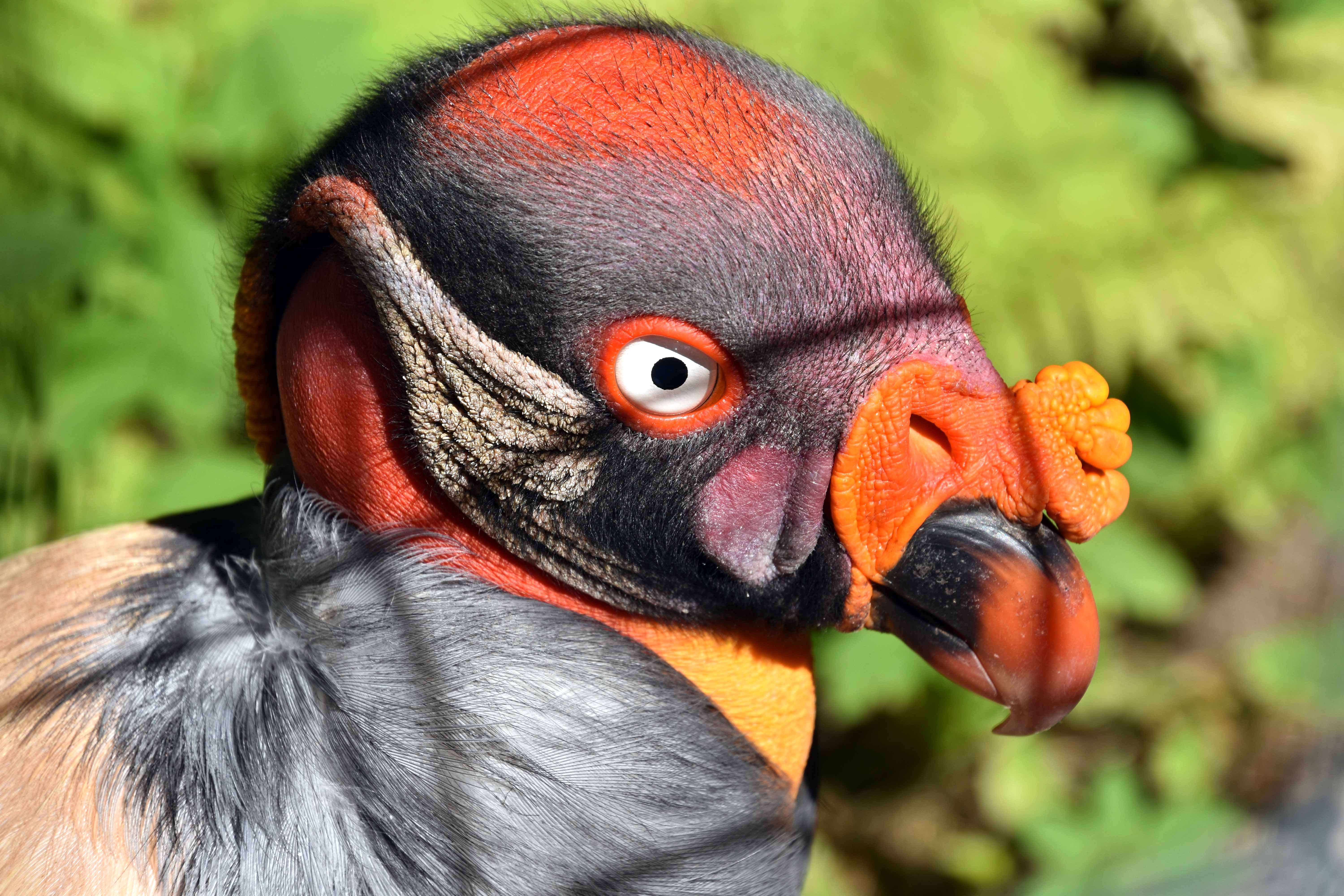
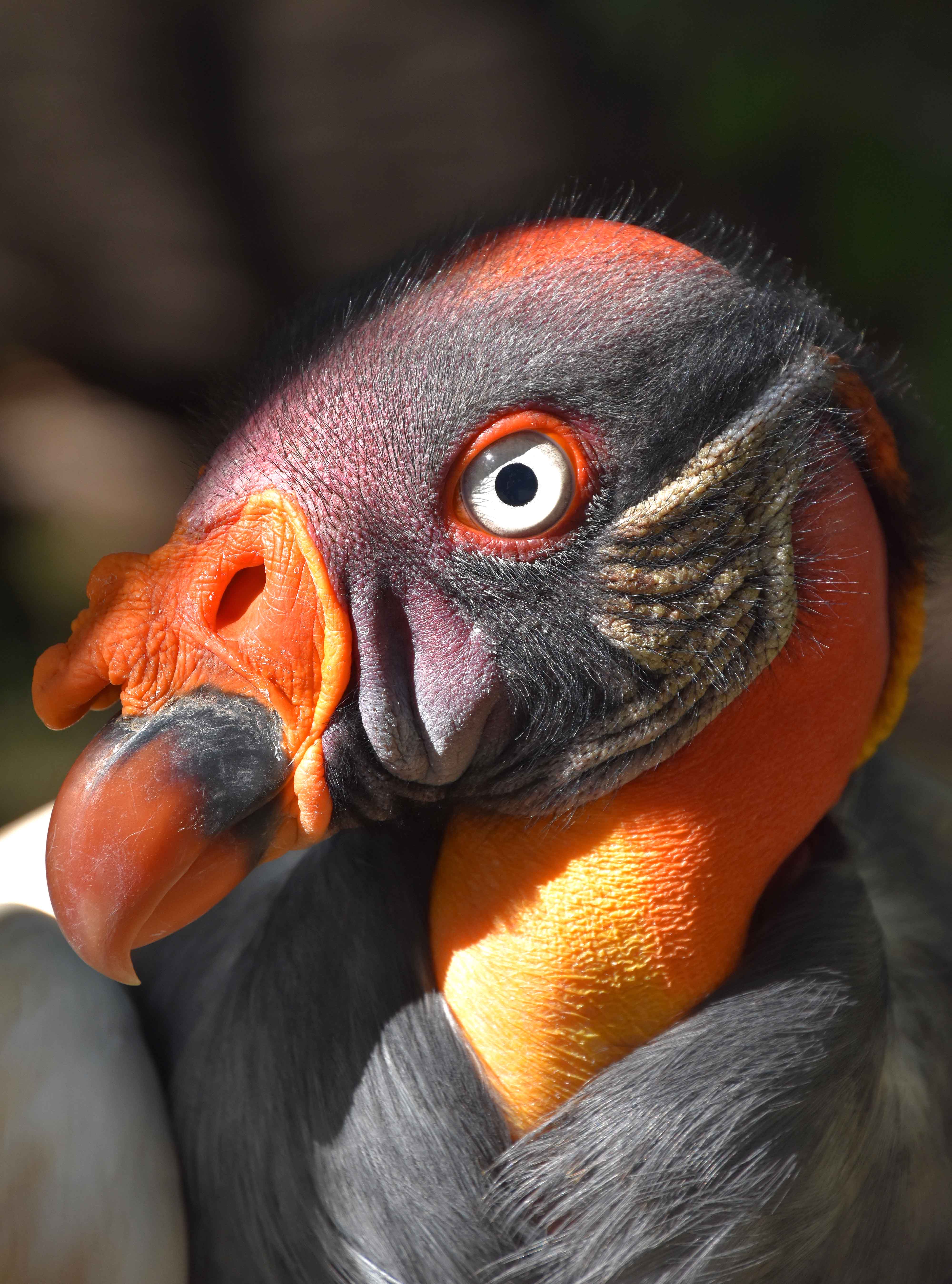
Another bird which seemed very relaxed and at ease with the stares of visitors was the King vulture (Sarcoramphus papa).
King vulture (Sarcoramphus papa) Berlin Zoo
The bird did not seem to mind the fact that I had my camera right up against the cage trying to capture an image of it without the shadows from the fencing!
King vulture (Sarcoramphus papa) Berlin Zoo
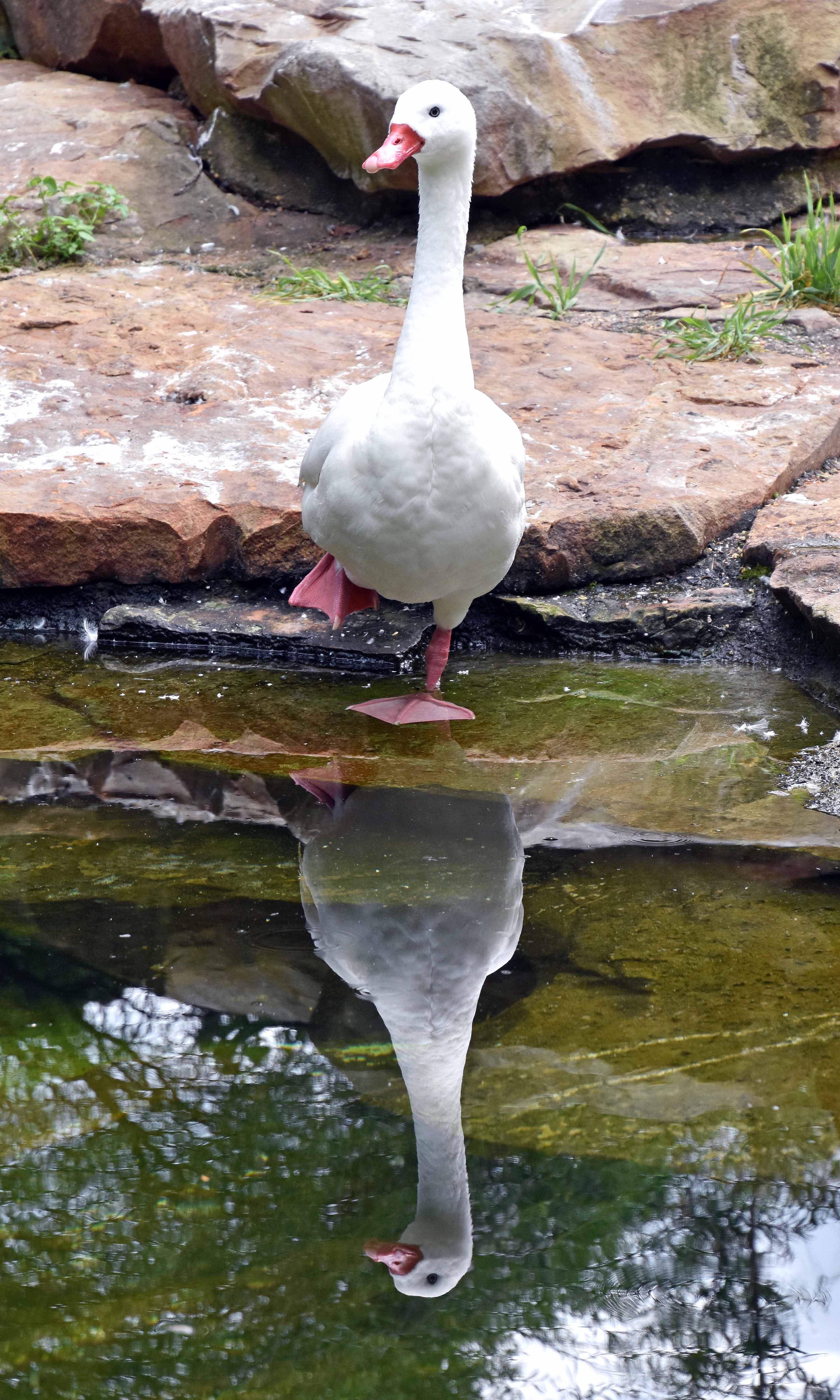
A Coscoroba swan (Coscoroba coscoroba) was resting one leg, but I couldn’t help noticing that its wings had been clipped, presumably to prevent it trying to fly back to South America, where it originated from.
Coscoroba swan (Coscoroba coscoroba) Berlin Zoo
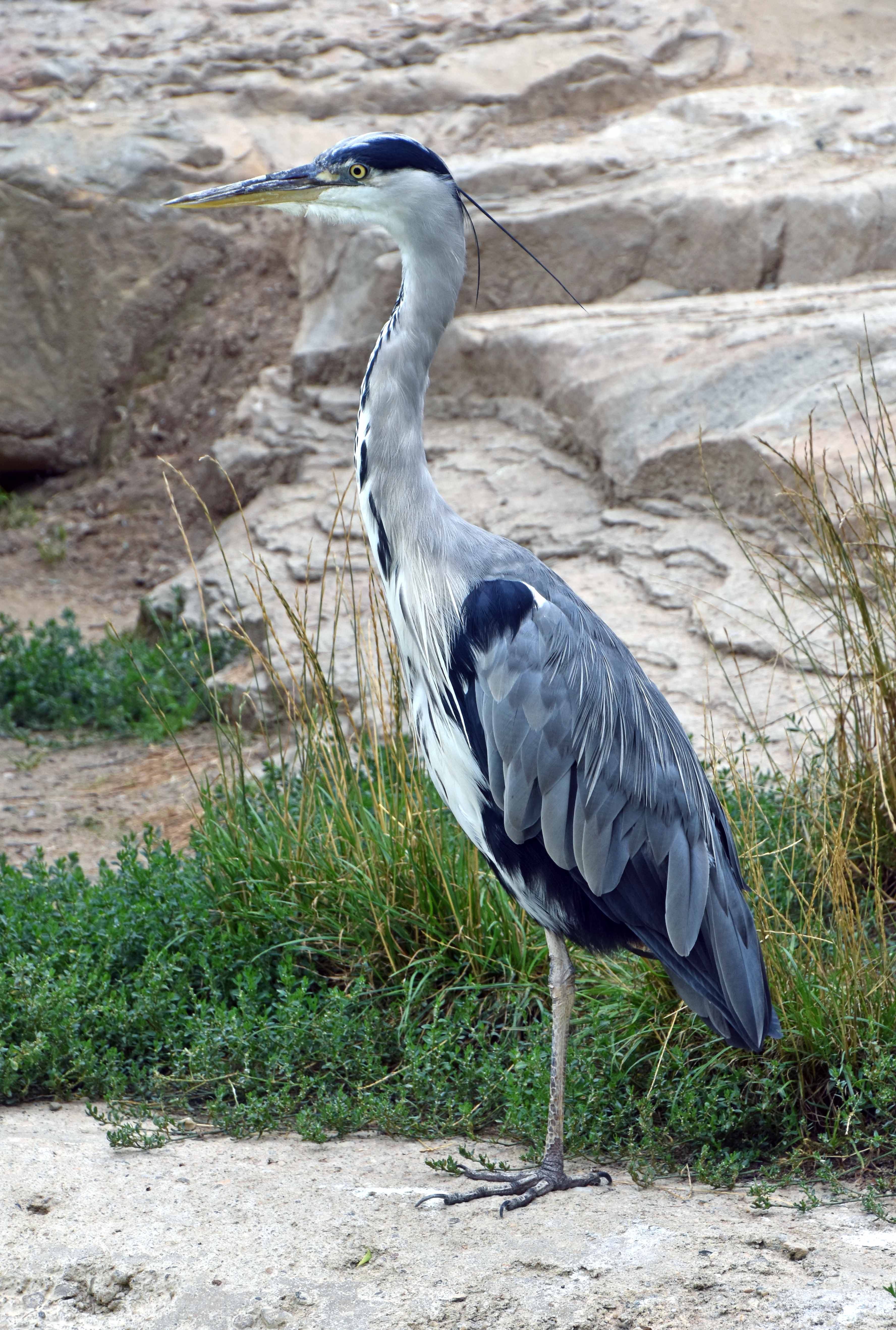
Some birds are free to come and go, like this elegant Grey heron (Ardea cinerea), waiting to see if there are any spare fish in the seal enclosure. Doubt it!
Grey heron (Ardea cinerea) at Berlin Zoo
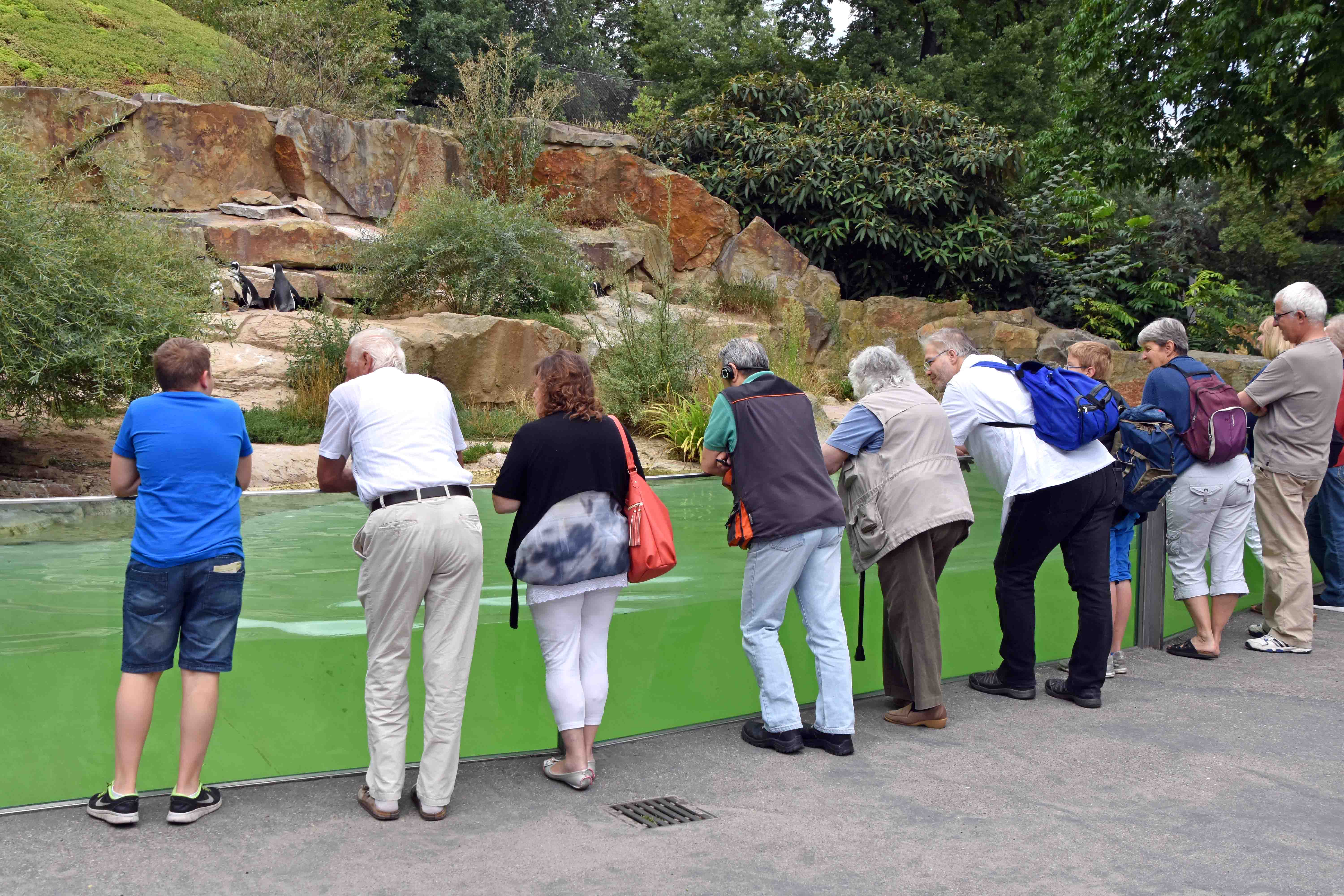
The nice thing about Berlin zoo is that, for the most part, it is possible to get quite close to the animals – like these people (below) watching penguins – and there are some great glass fronted tanks.
People watching penguins at Berlin Zoo
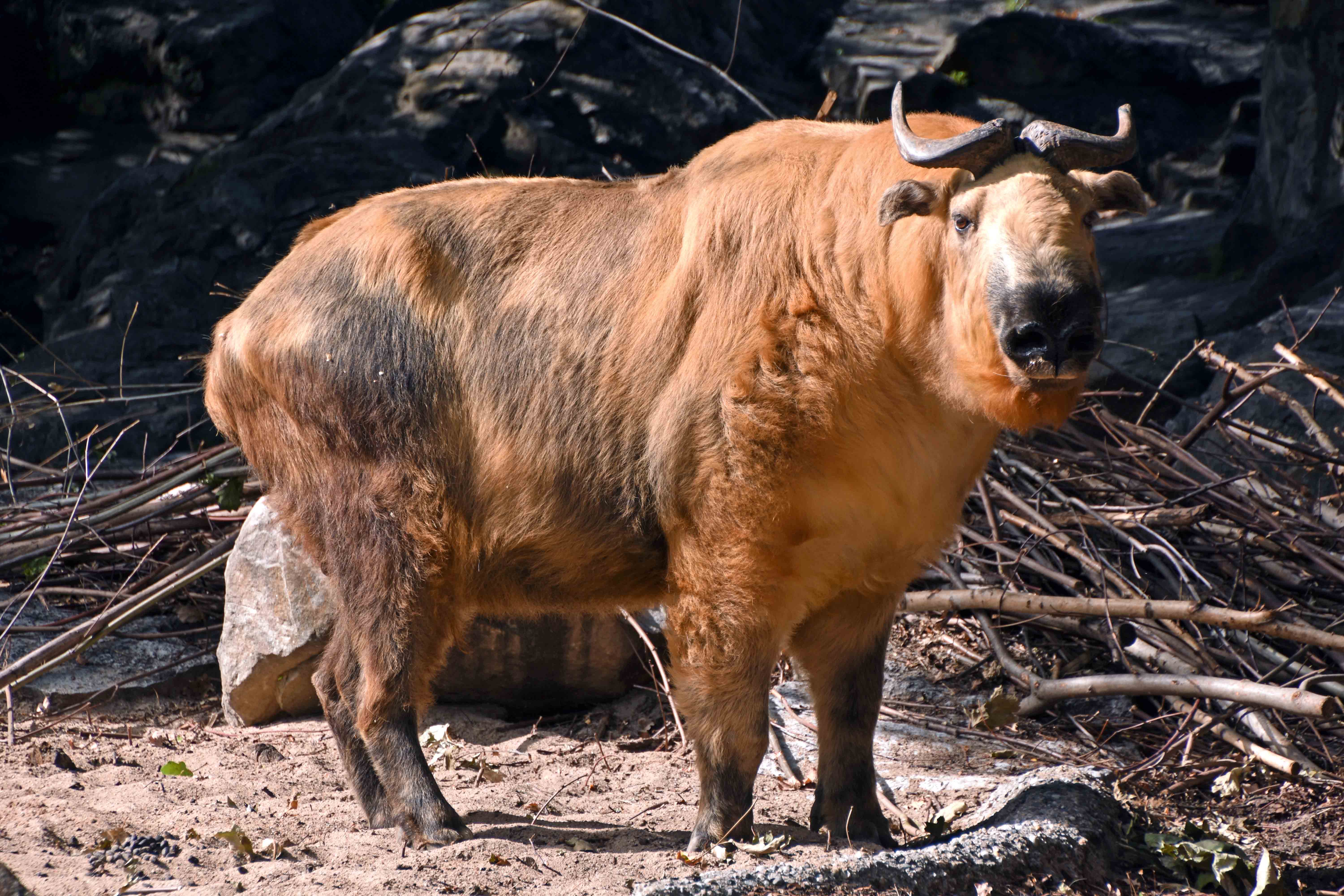
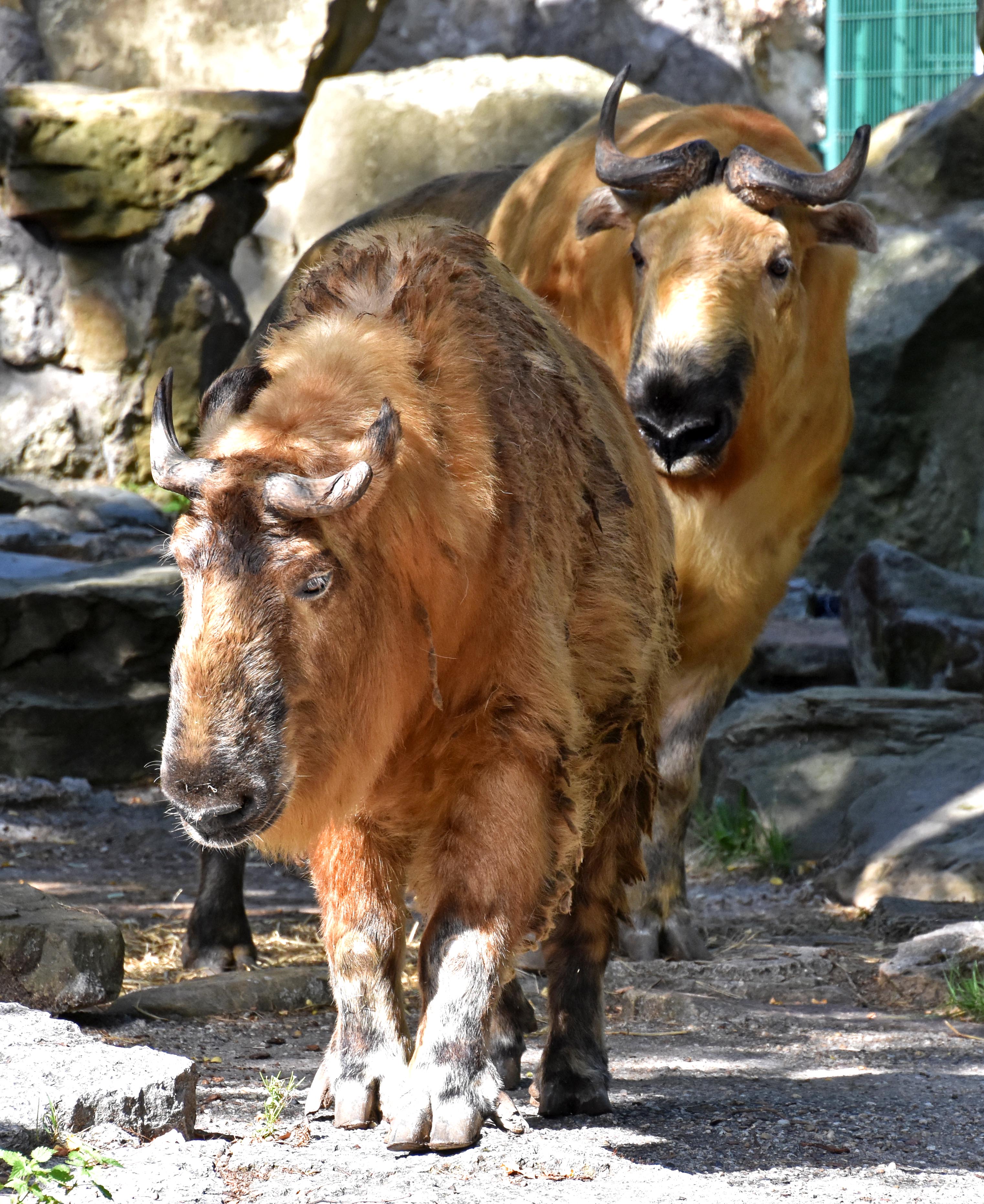
It’s always interesting to come across animals that you have never heard of. I had never come across this magnificent animal called a Tibetan or Sichuan takin (Budorcas taxicolor tibetana) – pronounced tah-kin – before. It is called a goat antelope and there are four subspecies; this one is found along the eastern margin of the Tibetan plateau and is well adapted to live in the cold Himalayan mountains with its thick fur and broad nose used to warm up the cold air it breathes in.
Tibetan takin (Budorcas taxicolor tibetana) male
Although protected, the Sichuan takin is still threatened by poaching for it valuable fur alas. A magnificent animal.
Tibetan takins (Budorcas taxicolor tibetana) male following the female
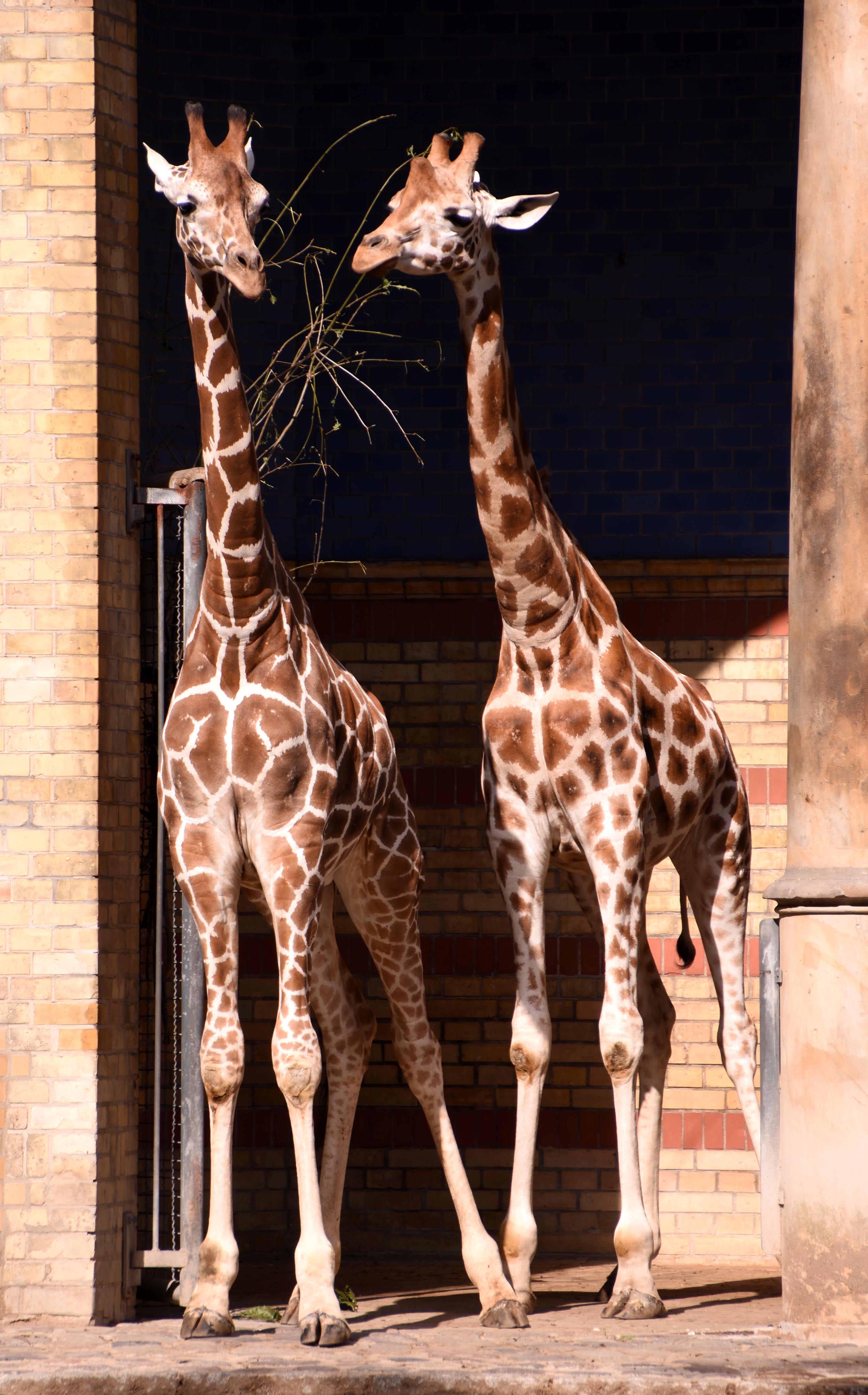
I particularly enjoyed watching these two giraffes cavorting about in the sunshine. Although they were different subspecies – one was a Rothschild and the other a Reticulated giraffe – they were clearly pals and enjoyed each others company.
Giraffes (Giraffa camelopardalis) Berlin Zoo
The Reticulated giraffe was much more skittish and went racing around the paddock. When they came back together the other one gave it a playful butt with its head, as if to say, you silly thing!
Giraffes (Giraffa camelopardalis) Berlin Zoo
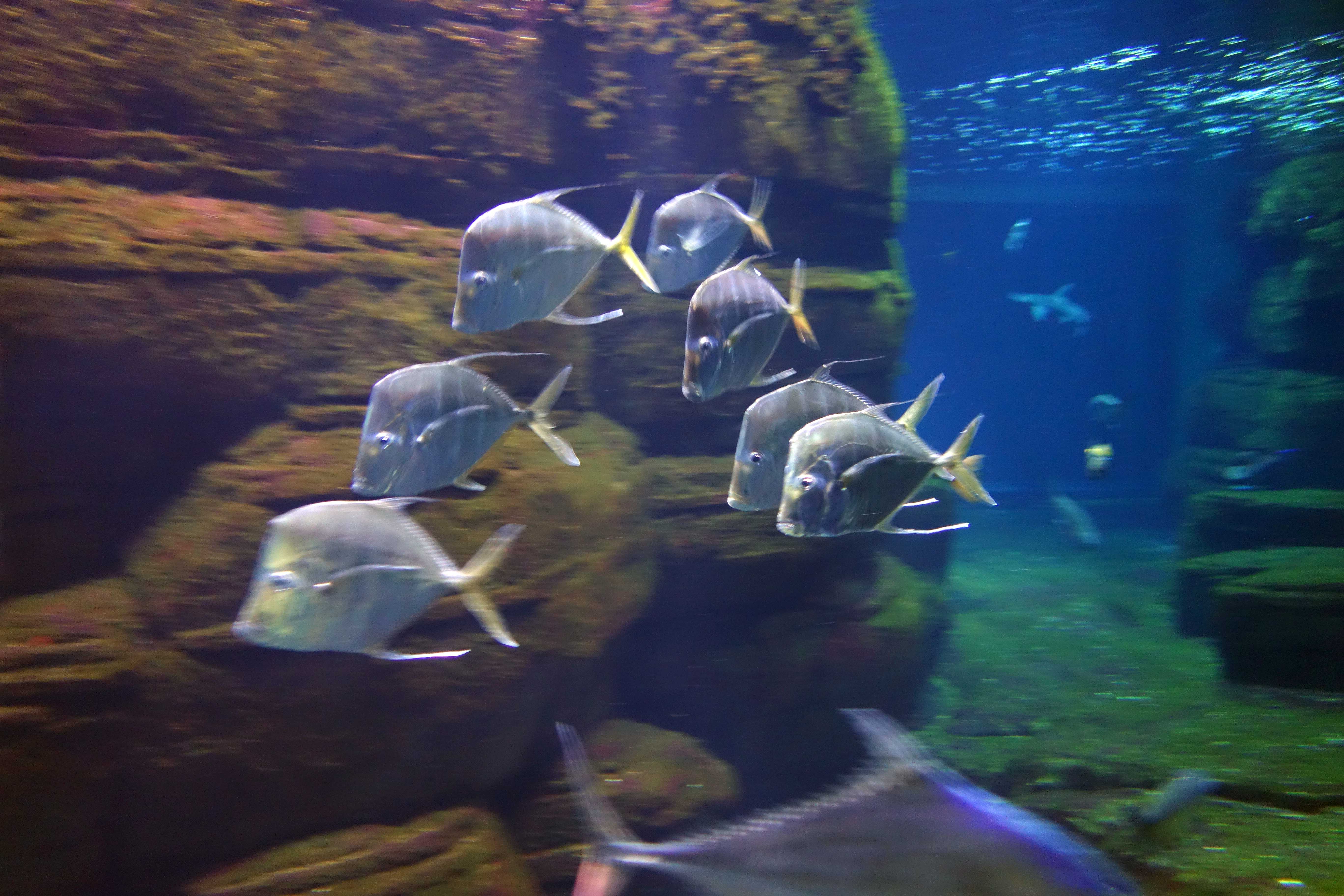
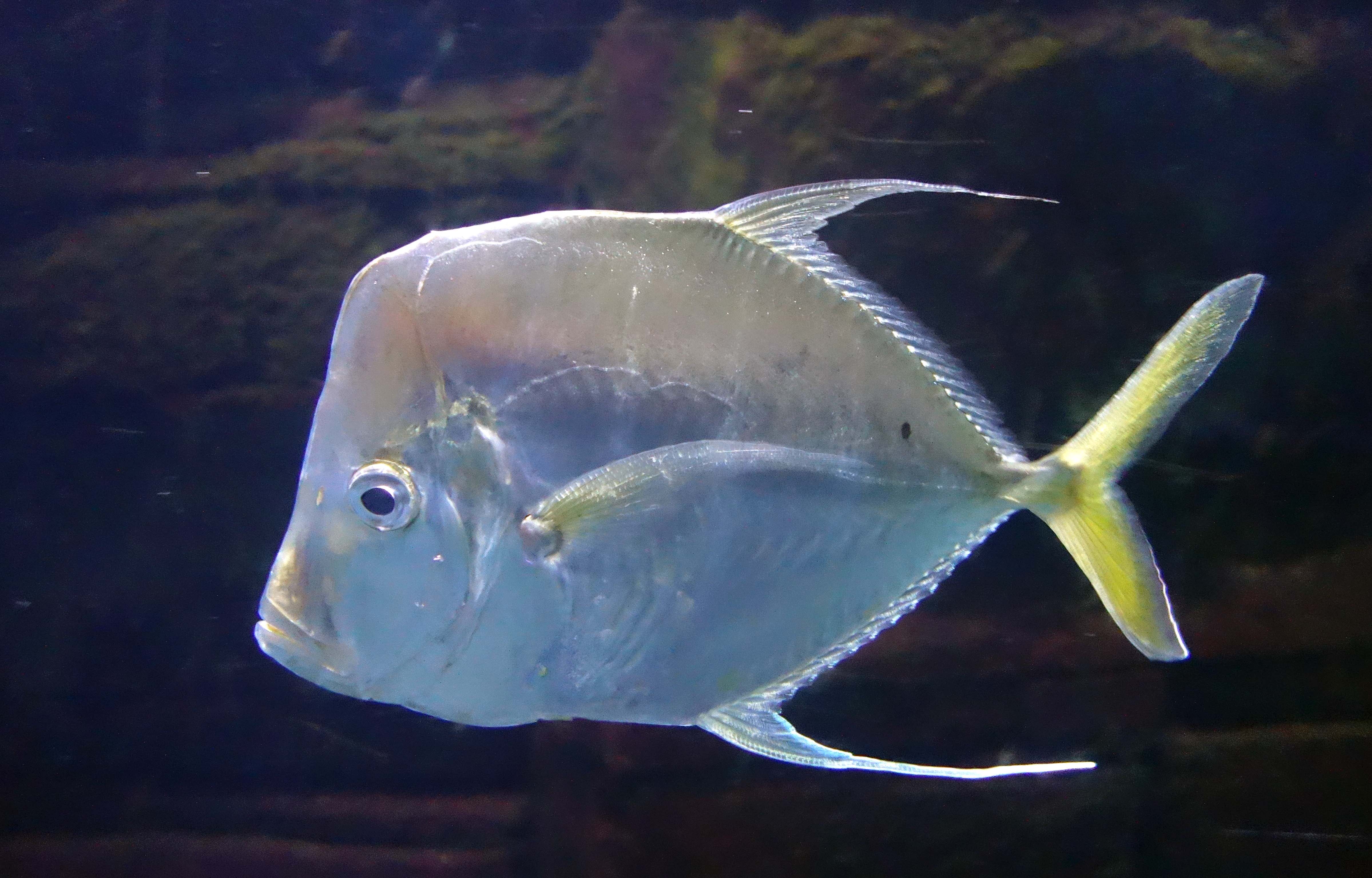
There is an excellent aquarium attached to the zoo with three floors of fish, reptiles, amphibians, invertebrates and so on. I particularly enjoyed the large tanks, like this one full of Indian threadfish (Alectis indica) which raced round and round and round!
Indian threadfish (Alectis indica) in large tank
These fish, also called diamond trevally, are a member of the jack family, which unfortunately for them are important commercial and game fish.
Indian threadfish (Alectis indica) Berlin Zoo
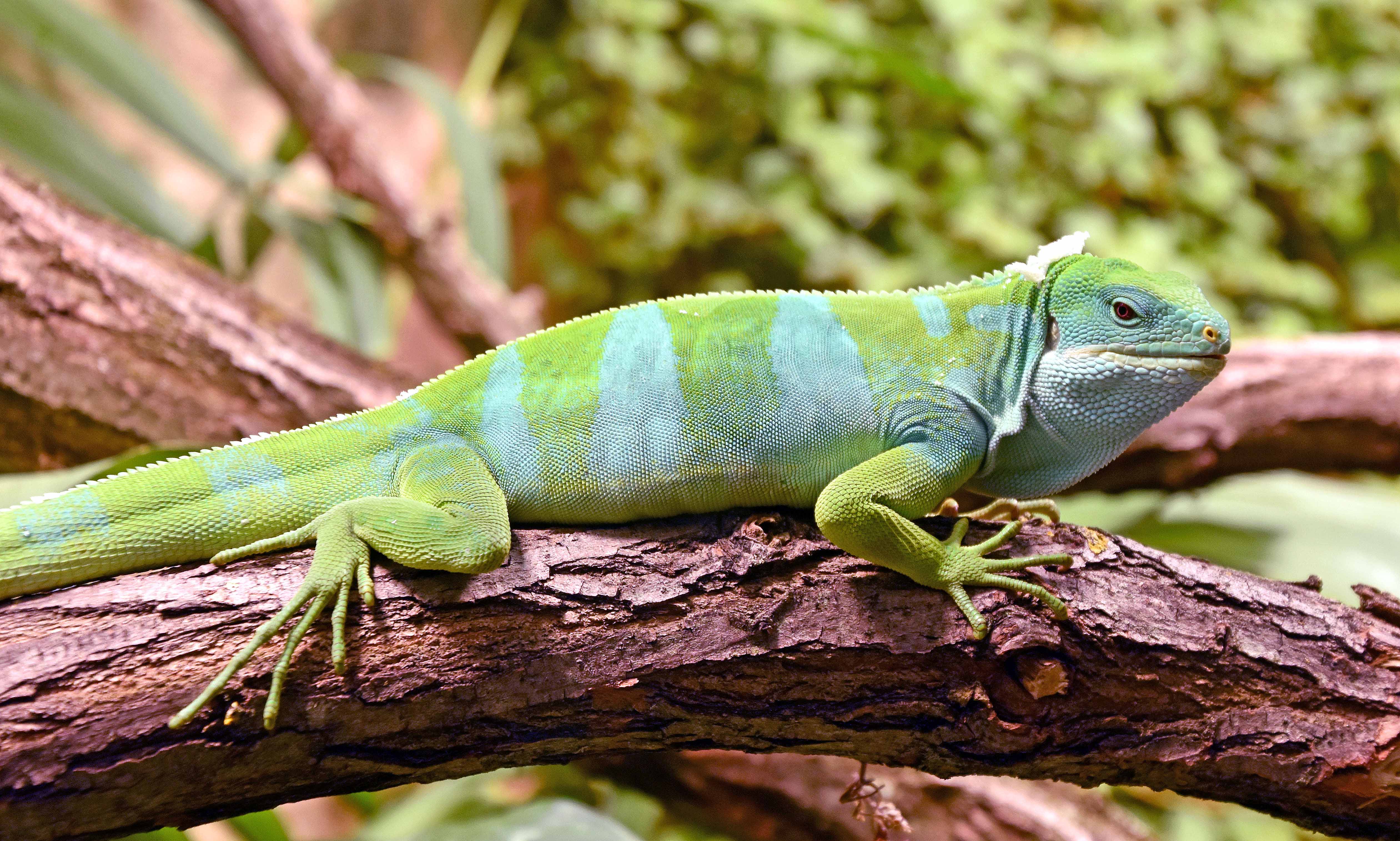
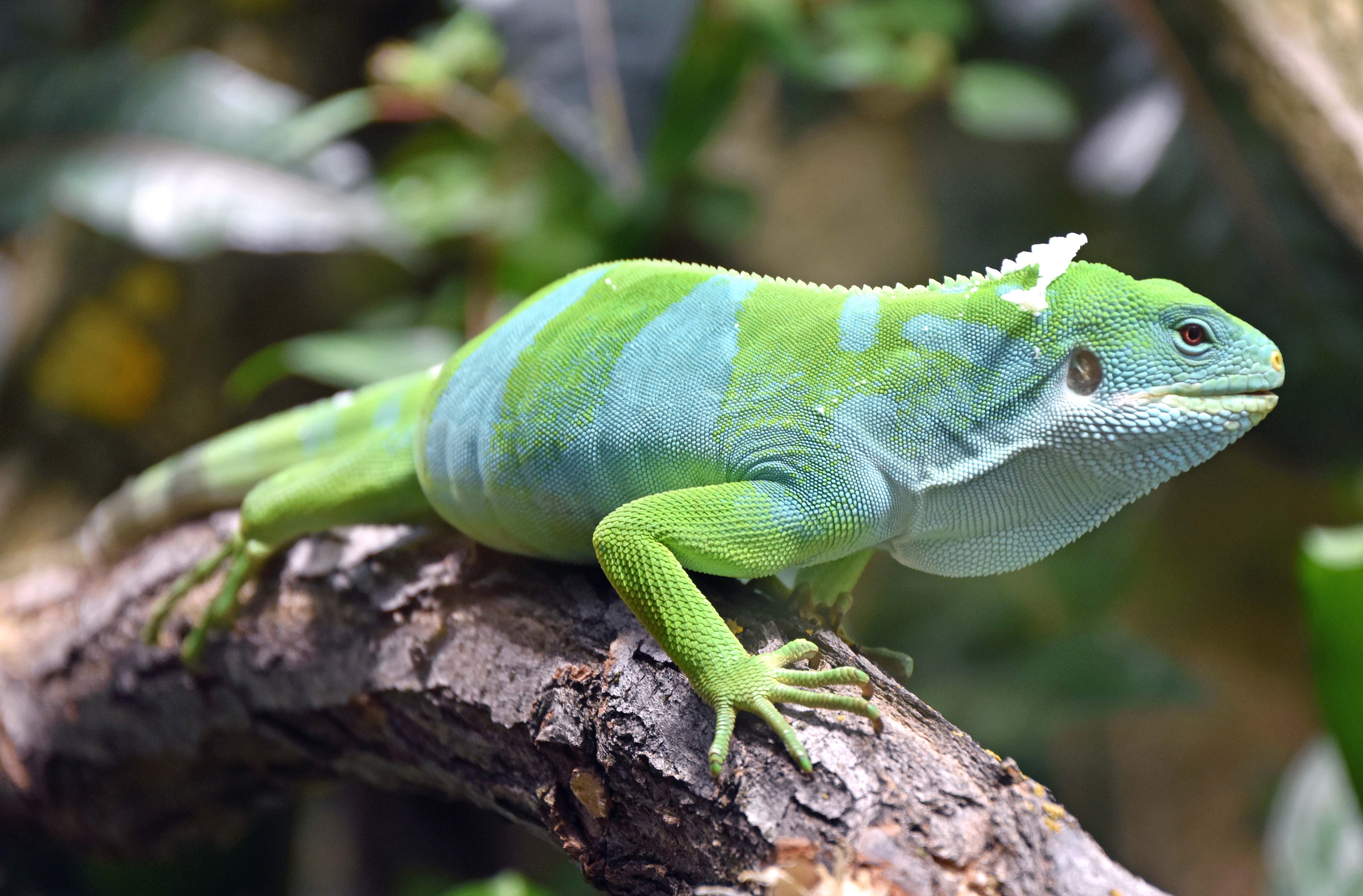
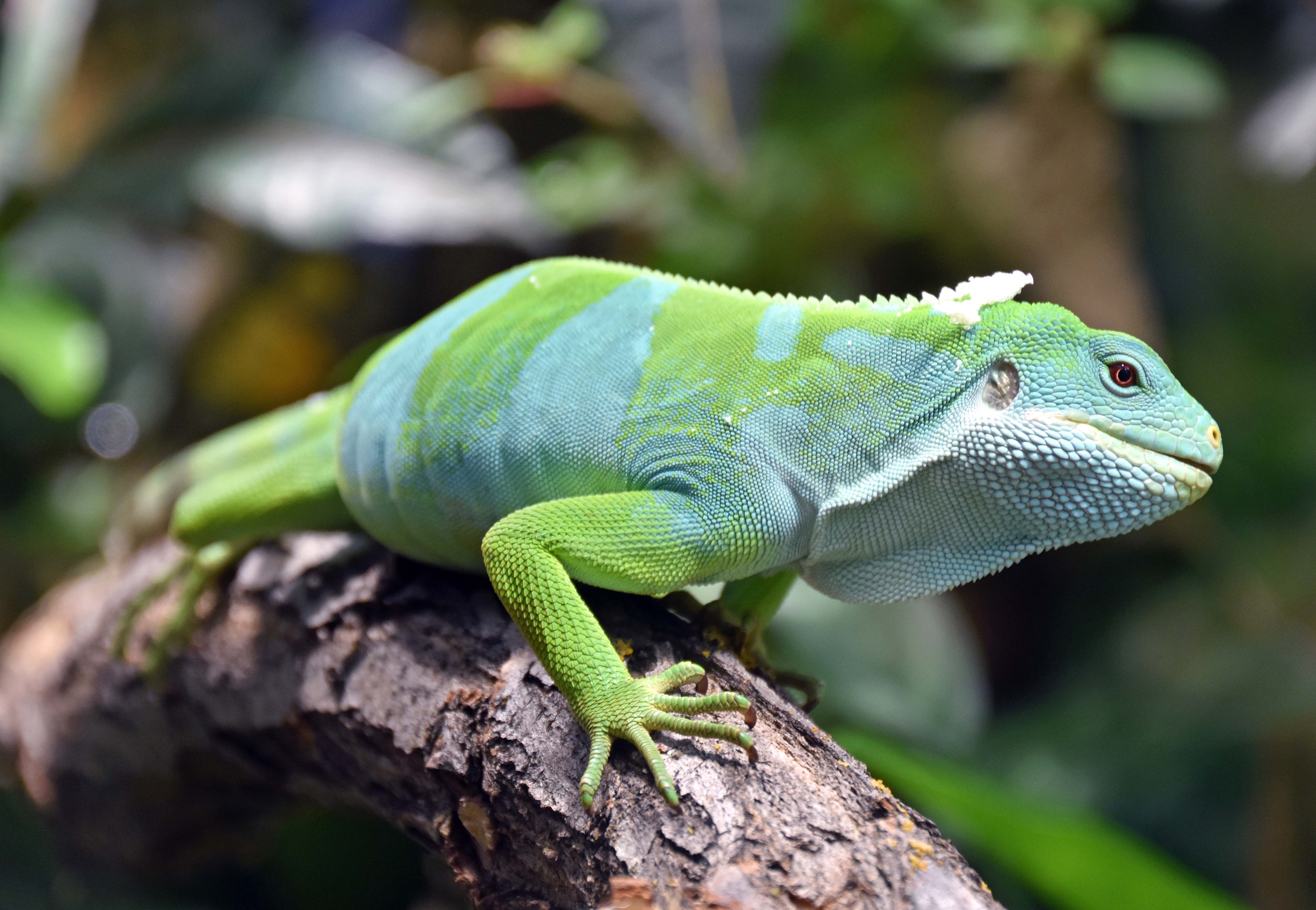
Not all of the reptiles were easy to see, but this beautiful Fiji banded iguana (Brachylophus fasciatus) – shown below- was showing right in front of the glass. It is endemic to some of the south-eastern Fijian islands, where it is reportedly declining due to depredations by introduced species, including cats, rats and the mongoose. As a consequence it is classified as Endangered by the IUCN (Red List of Threatened Species)(4). According to Wikipedia, the Fijian government maintains that the entire zoo population of Fiji banded iguanas was obtained illegally or descended from smuggled animals. I’m not sure what this means; do they want them back? If the population has declined by 50% and remains endangered, it might be a good idea to keep some in zoos, as long as they are well looked after.
This individual Fiji banded iguana was newly moulted so the colours were very fresh and vibrant. The male has the pale-blue bands and emerald-green colouration shown in these photos.
Fiji banded iguana (Brachylophus fasciatus)
These iguanas can live for up to 25 years in captivity apparently. Perhaps their long lifespan is down to the fact that they don’t do much! The tympanic membrane is very clear in these photos.
Fiji banded iguana (Brachylophus fasciatus)
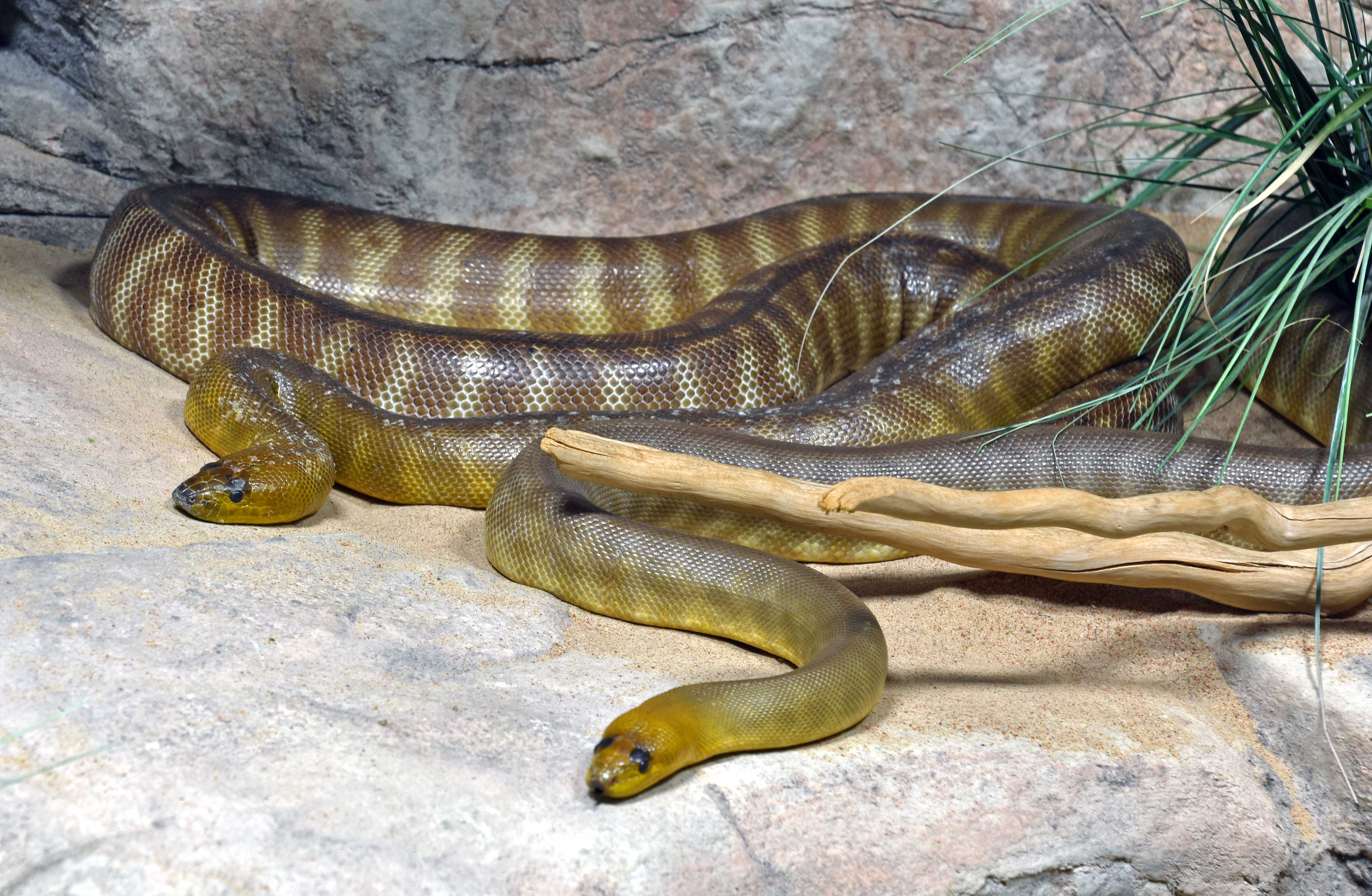
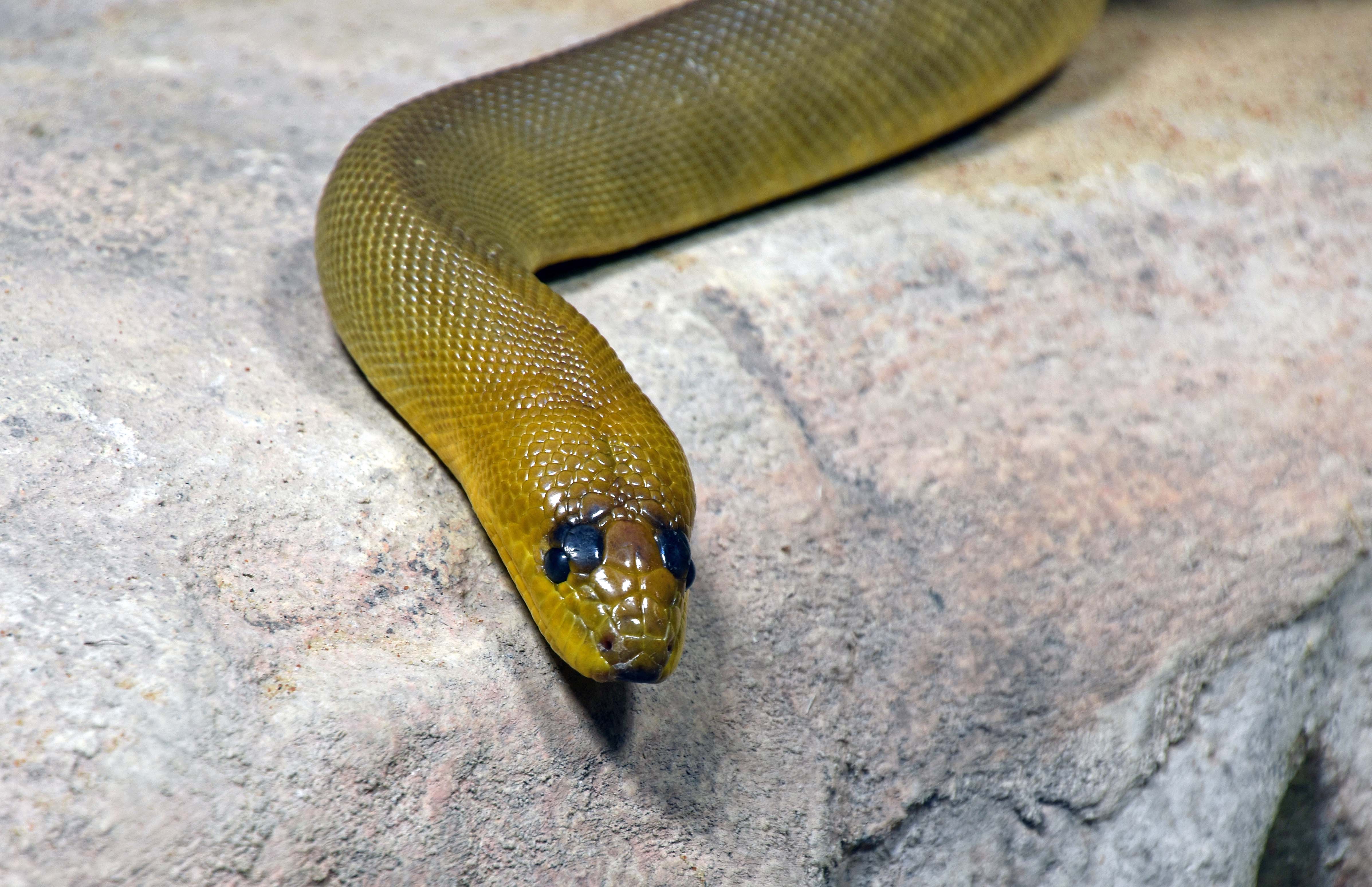
The Woma python also known as Ramsay’s python (Aspidites ramsayi) is a rather strange but elegant looking snake from Australia.
Woma pythons (Aspidites ramsayi)
They are said to be rather docile and ‘easy to handle’ in captivity. They have nice black eyes and markings above the eyes.
Woma python (Aspidites ramsayi)
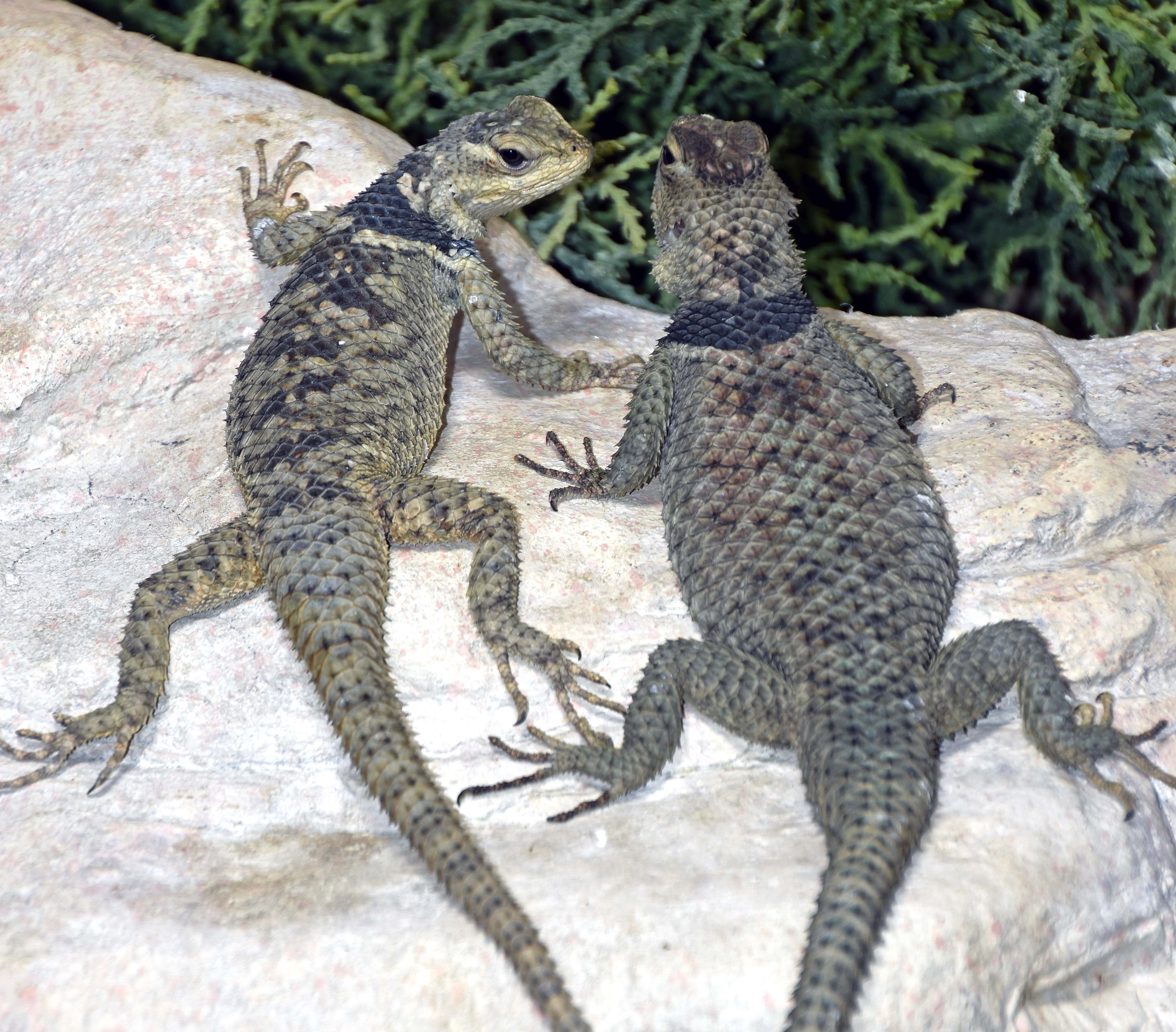
These blue spiny lizards (Sceloporus serrifer) are native to southern Texas and Mexico; they are often kept in zoos. They have a nice blue collar around their neck and shoulders (below).
Blue spiny lizards (Sceloporus serrifer)
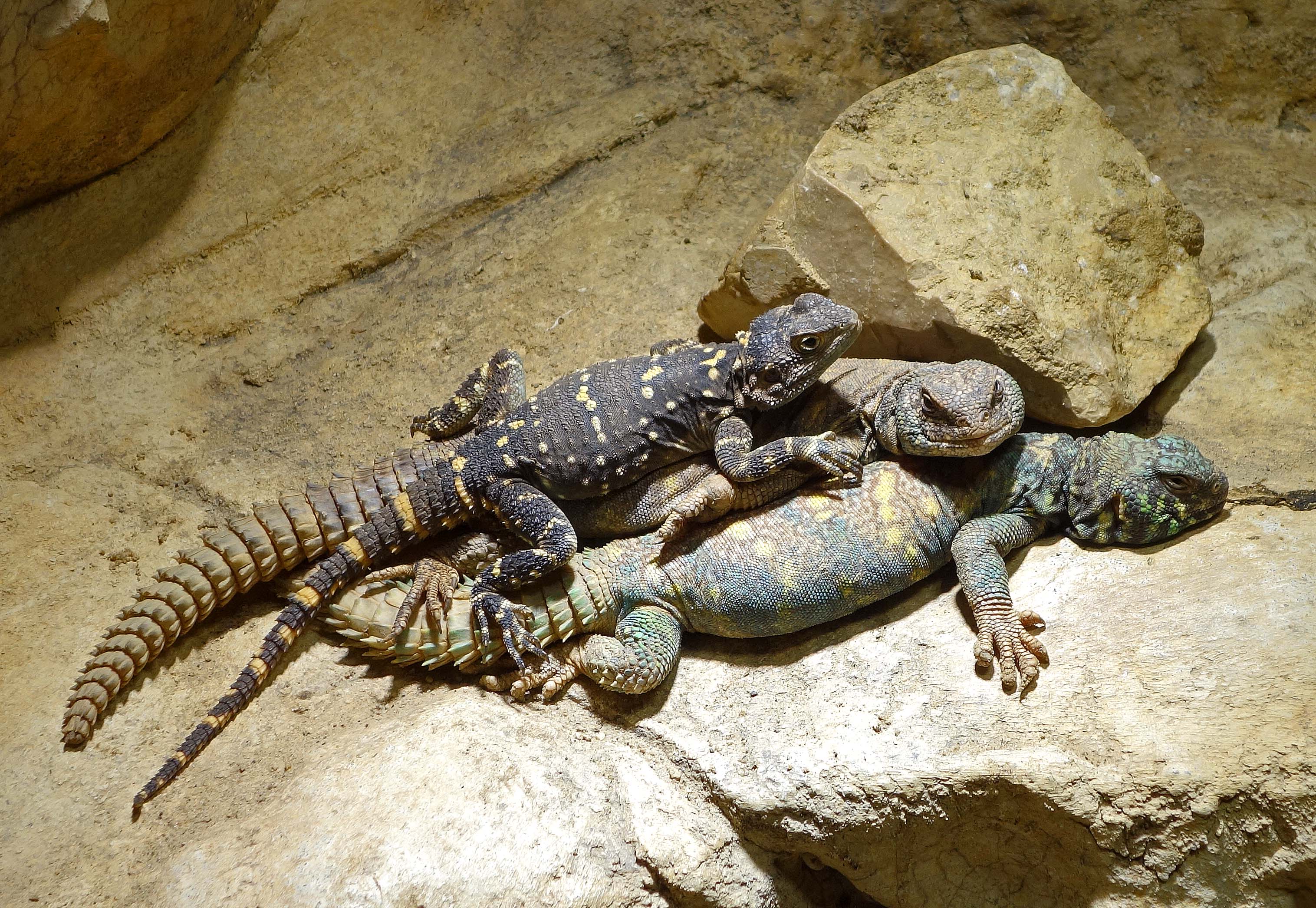
There was a nice pile of reptiles – a Black Agama on top of two Ornate spiny-tailed lizards – keeping each other warm, or company.
Black Agama on top of two Ornate spiny-tailed lizards
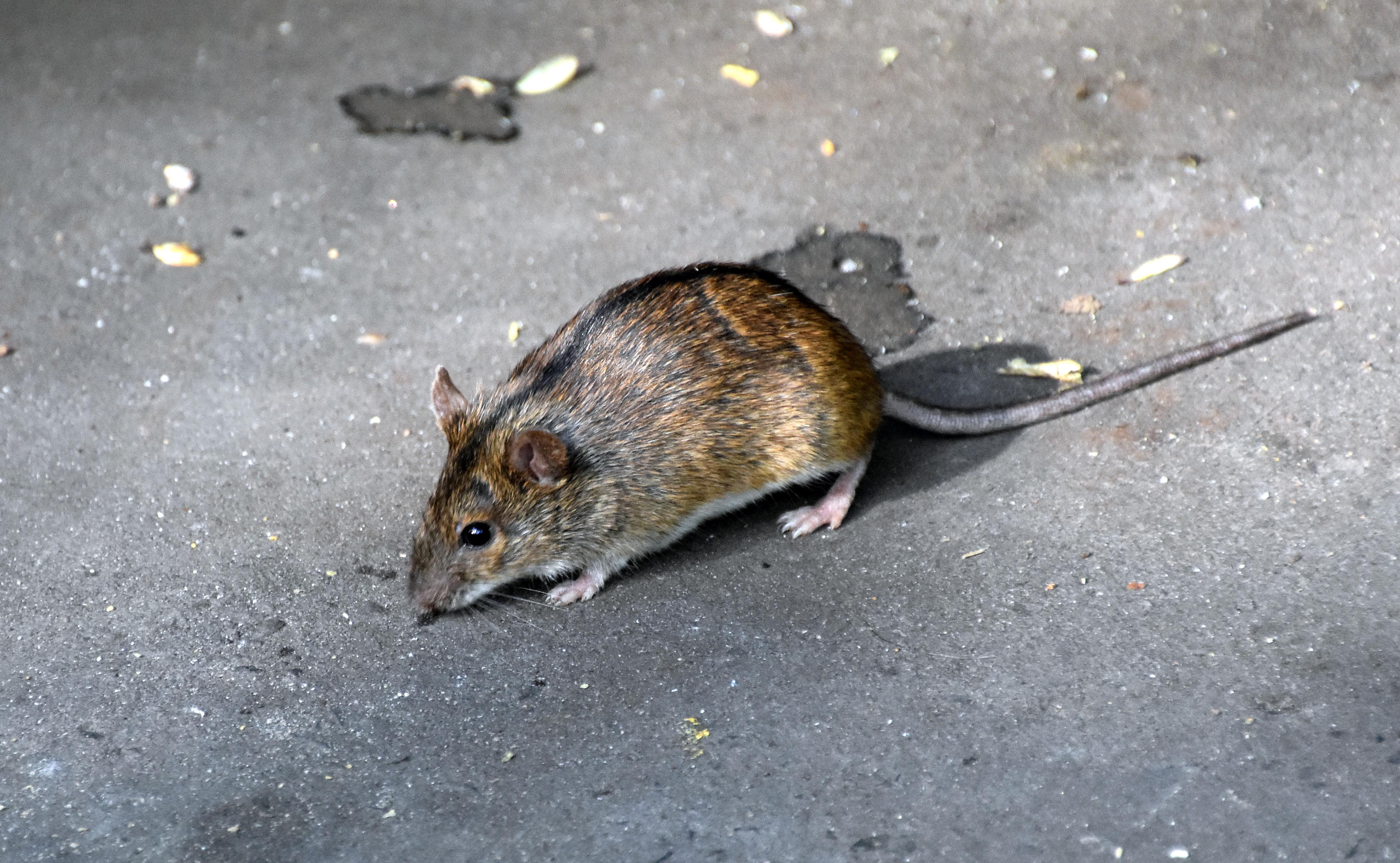
As I was on my way out, a Striped field mouse (Apodemus agrarius) popped out from under a hedge looking for scraps. This mouse has a dark stripe running along the length of its back; it occurs in eastern Europe, with western populations extending into Germany in the north and N Italy in the south. He was here of his own volition; feeding on the waste left by us greedy humans! Nice to see him/her though.
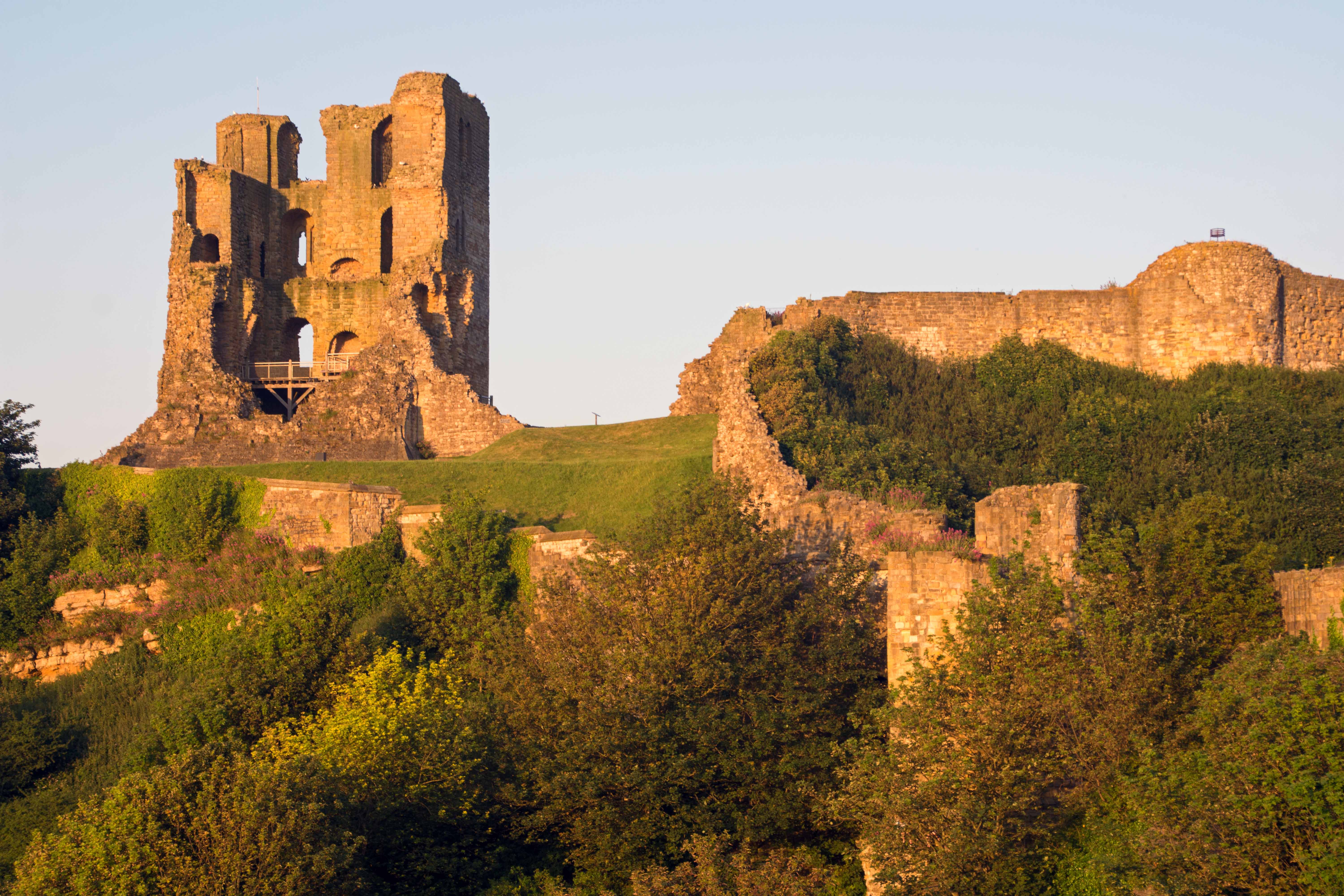
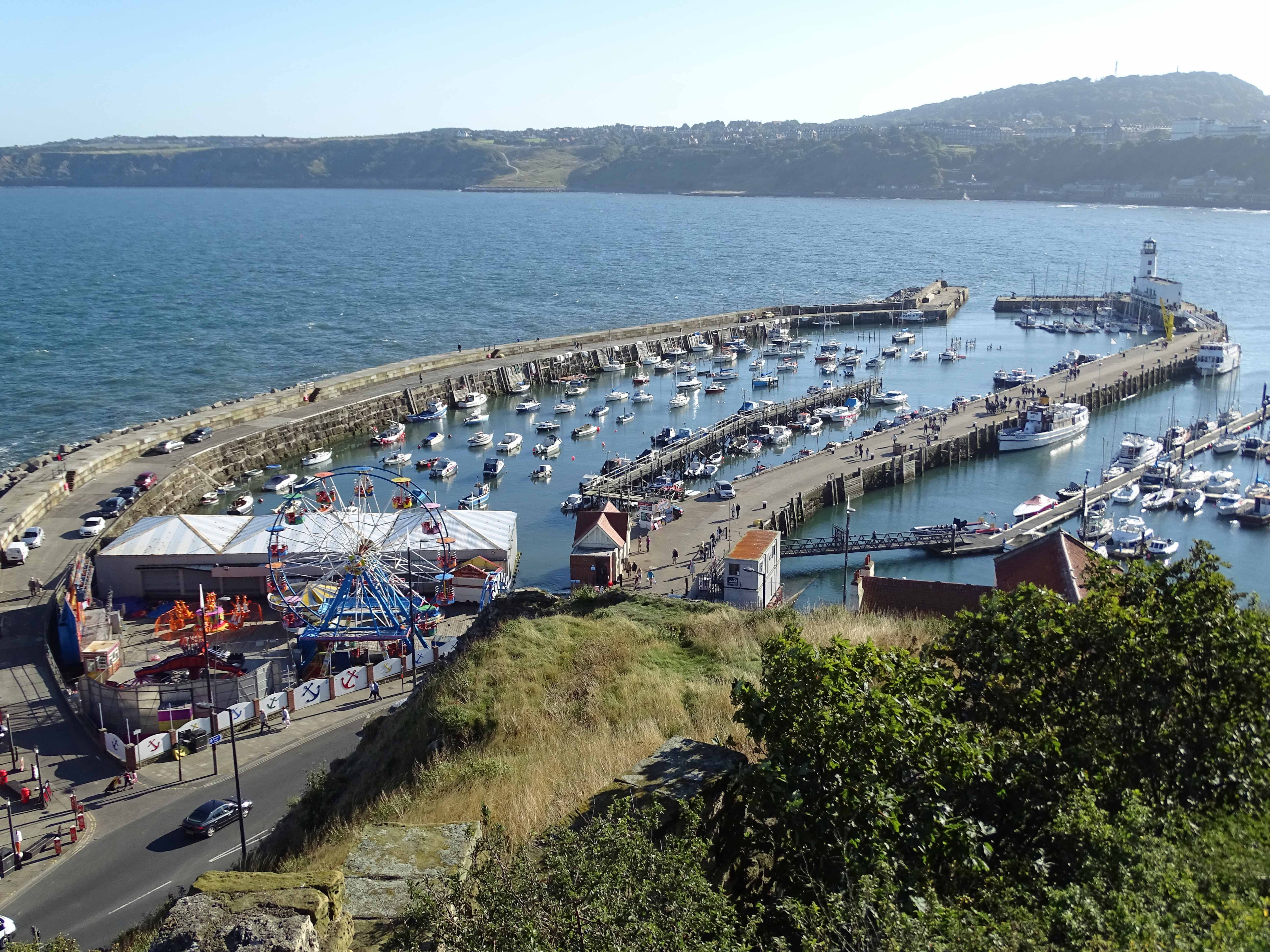
Scarborough Castle in North Yorkshire is managed by English Heritage, and occupies a superb position on a promontory between two bays (North and South Bays) overlooking the harbour and Old Town in Scarborough.
Scarborough castle at sunset
The castle was founded in 1138 under the reign of King Stephen and extensively rebuilt in 1159 by Henry II. This monarch spent the princely sum of £650 on the castle over the next ten years, constructing the great tower, or keep, between 1159–69. Later on, King John spent £2,291 on the creation of an outer wall in 1202–6, and then an extension of the wall down to the cliff in 1207–12 (1). There are superb views of Scarborough harbour from the walls of the castle.
Scarborough harbour from below the castle walls
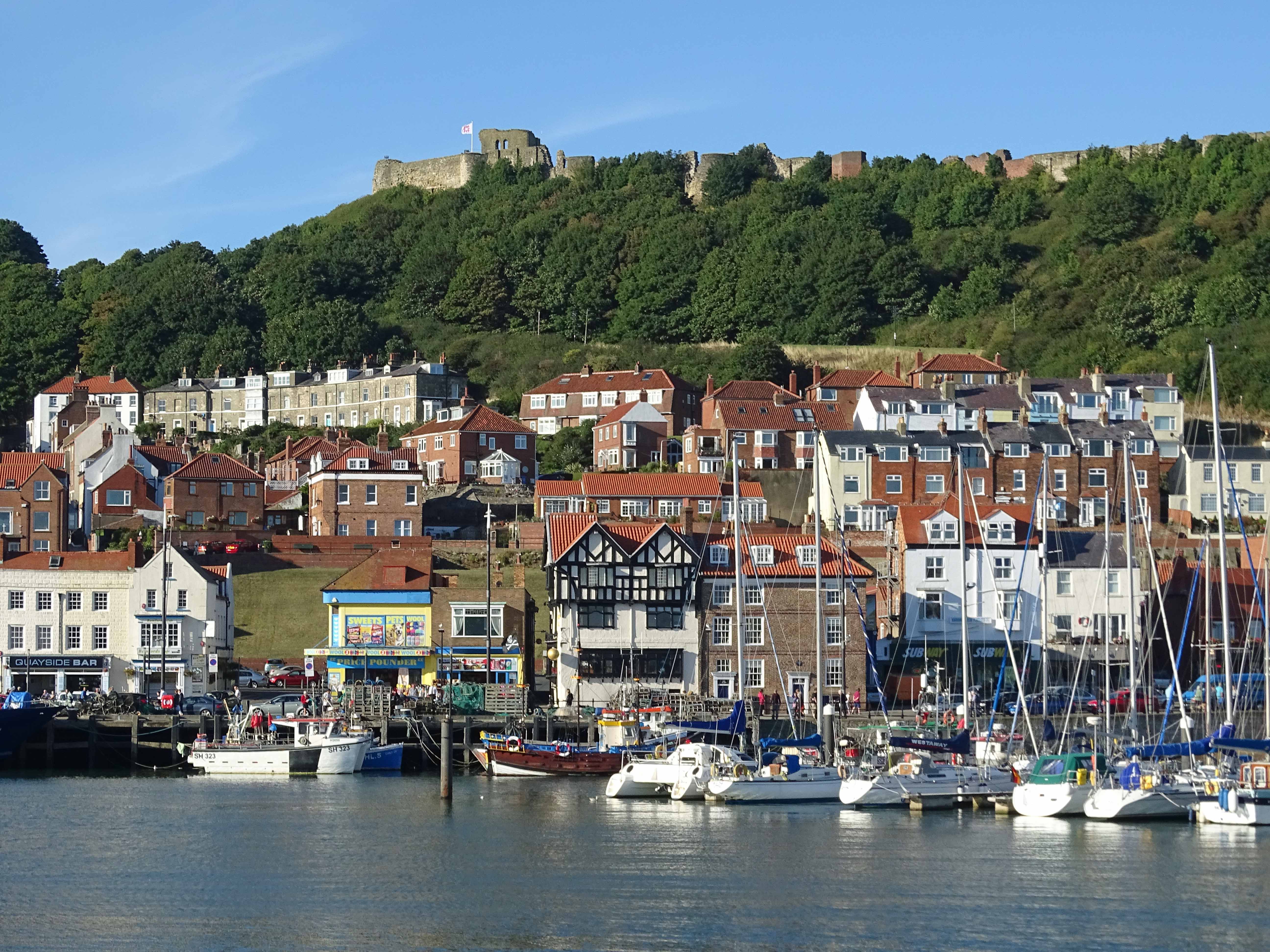
The view from the harbour looking upwards shows the extent of the castle walls.
The walls of Scarborough castle from the harbour
The castle saw two prolonged sieges during the English Civil War of the 17th century, after which it was partially destroyed on the orders of the then Parliament. In February 1645 the parliamentary army captured the town of Scarborough but the royalist soldiers retreated into Scarborough castle (1). They held out until July 1645, despite being bombarded by what was then the largest cannon in the country, called the Cannon Royal, from the 12th-century St. Mary’s Church located below the castle (2).
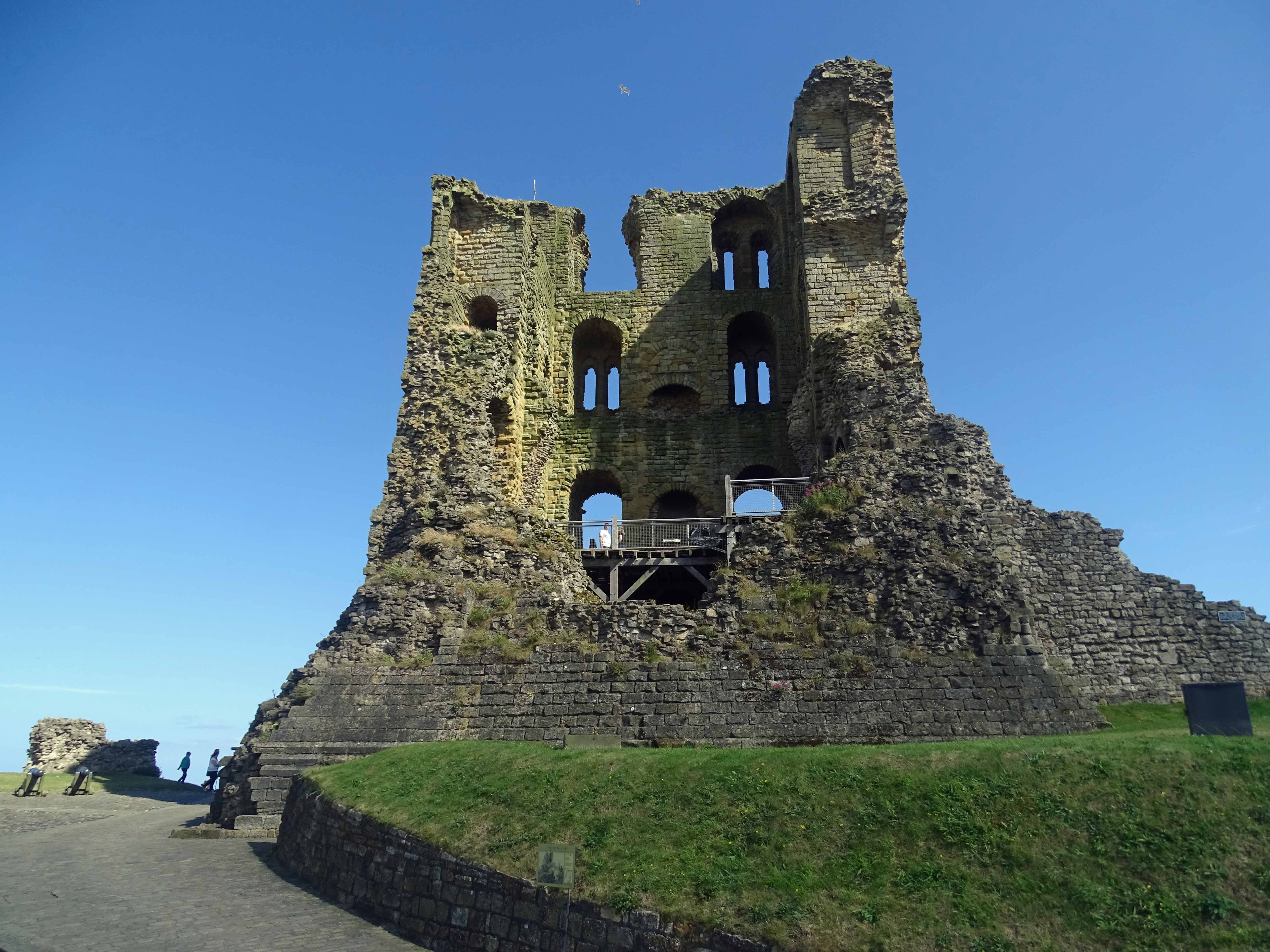
Castle Keep
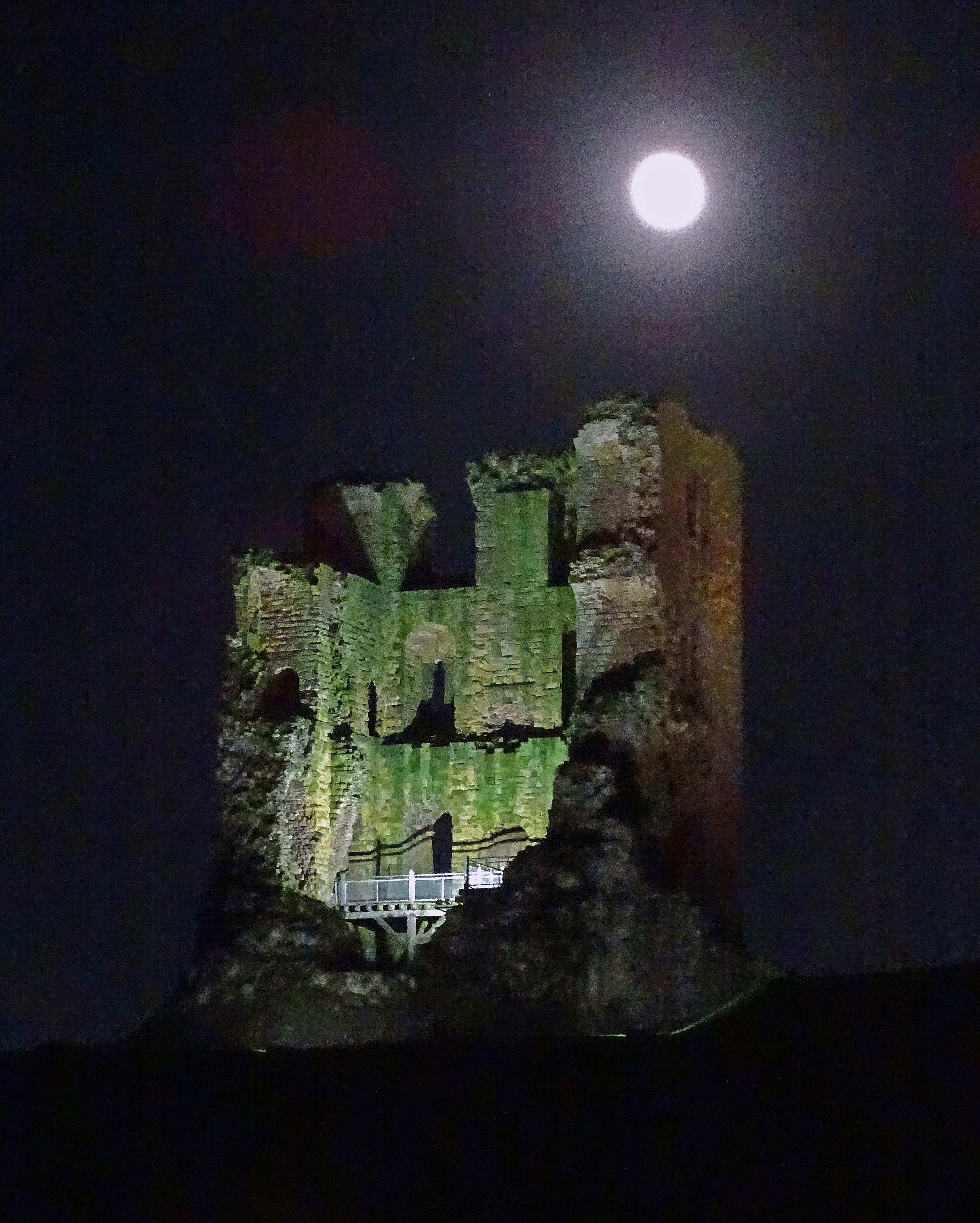
The castle was again besieged in 1648; from July to September of that year. This time the parliamentarians severely damaged it so that it would not fall into royalist hands again. The west face of the keep had already been destroyed by canon in the preceding battles. Unfortunately the keep was never repaired, but it is still an impressive sight, especially when it is illuminated at night.
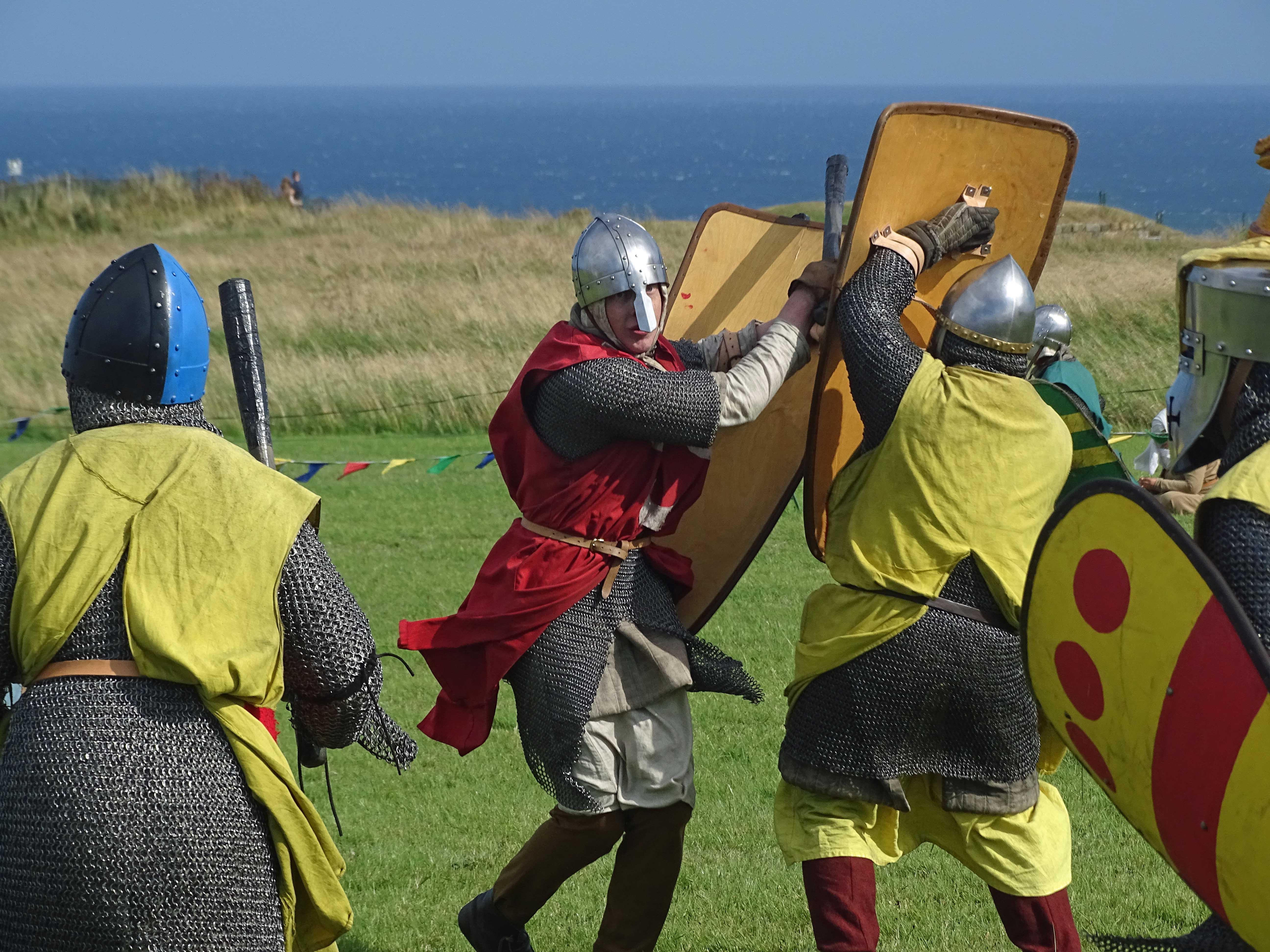
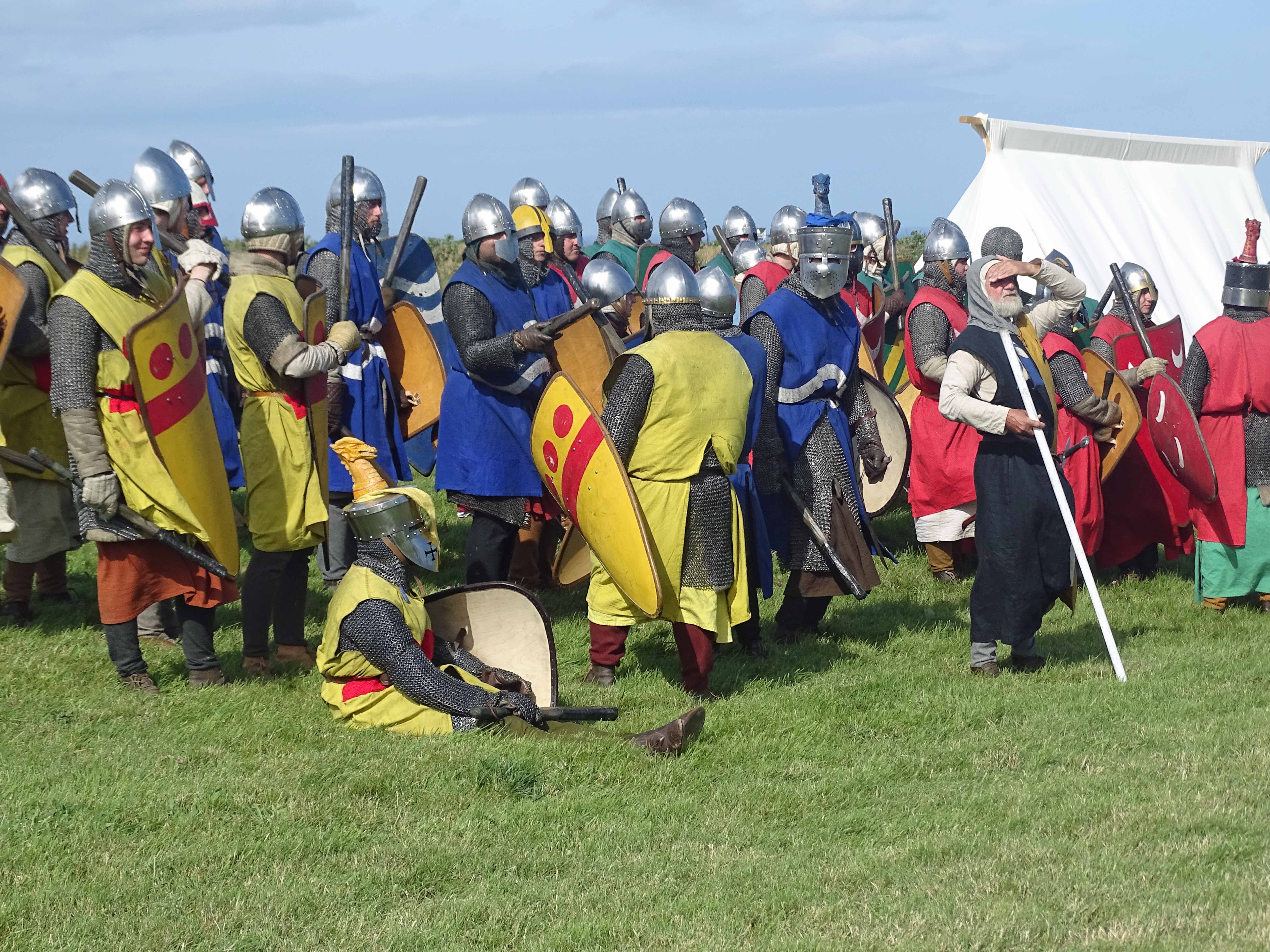
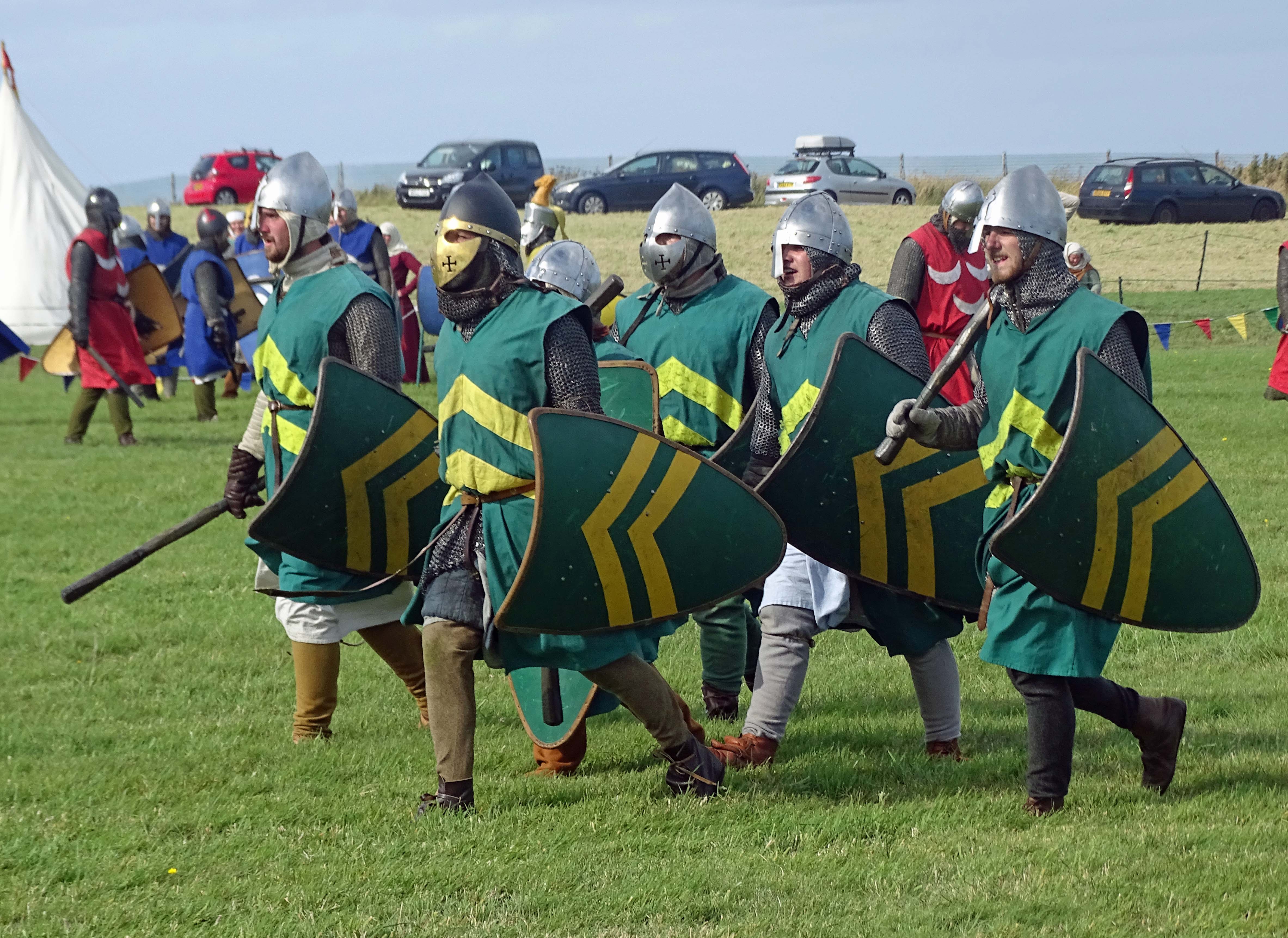
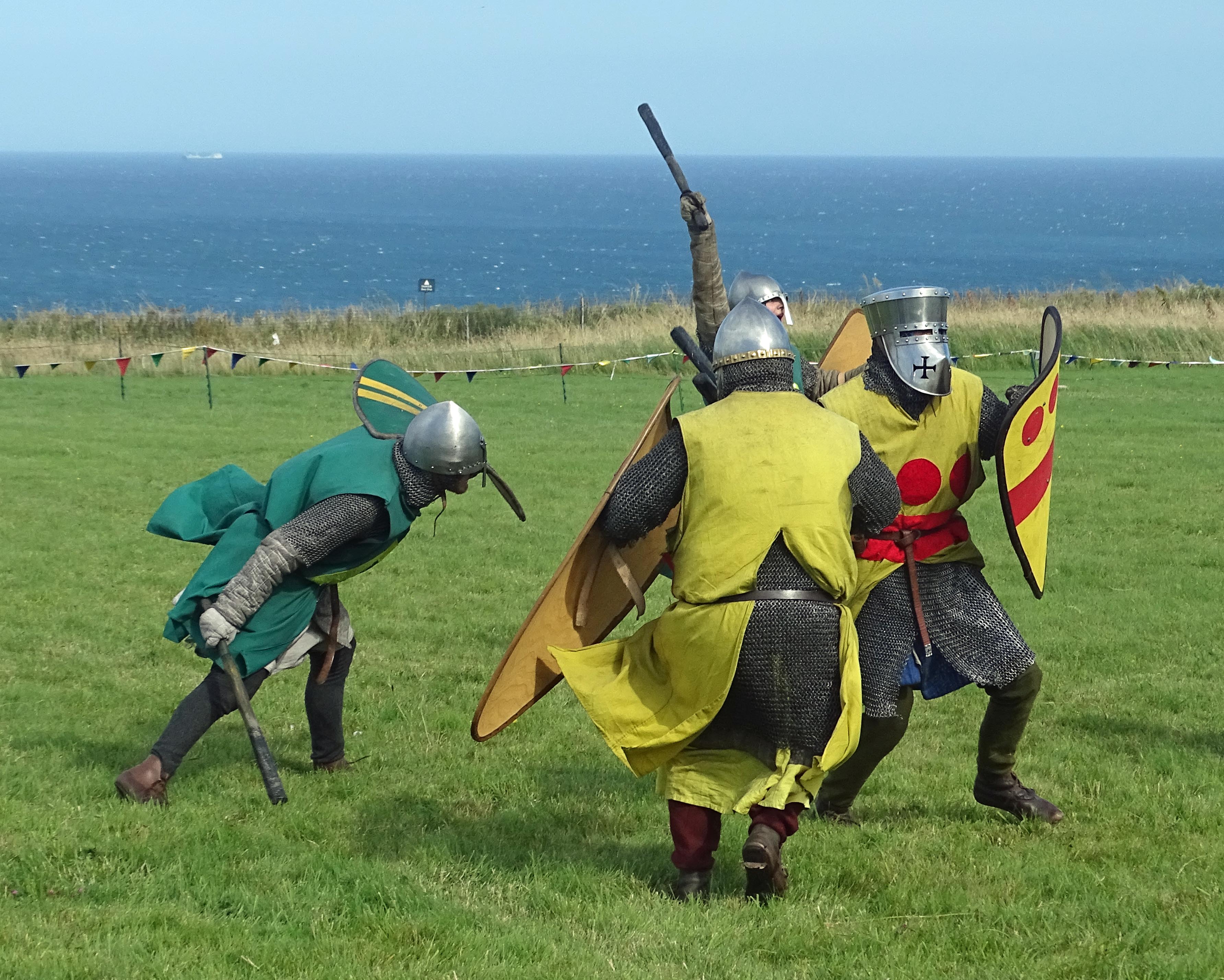
Today saw a re-enactment of medieval fighting in Anglo-Norman times when the castle was first constructed. The good-humored battles involved four teams of knights jousting with shields and clubs.
Teams assembling to do battleMembers of the blue team assembling
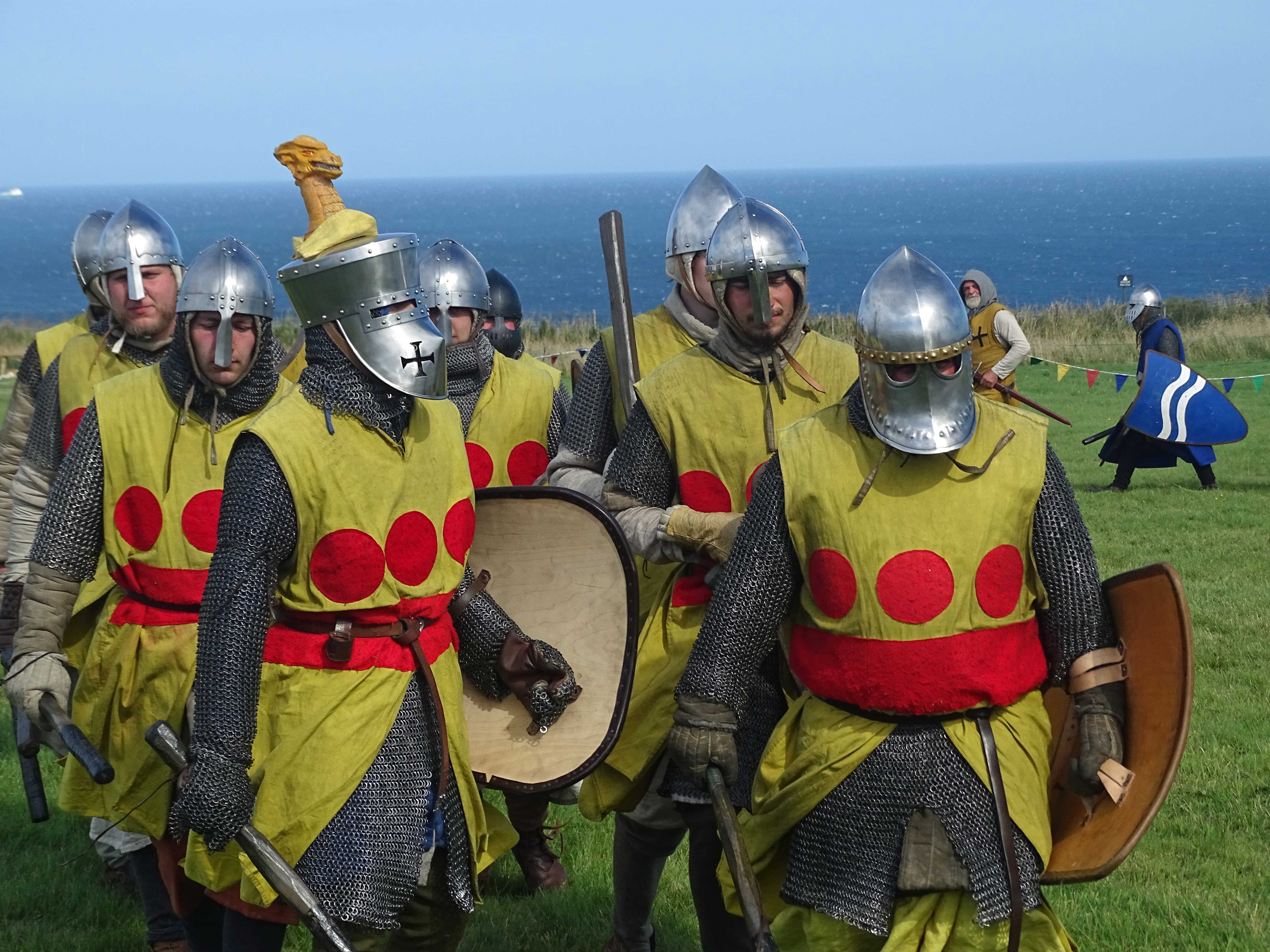
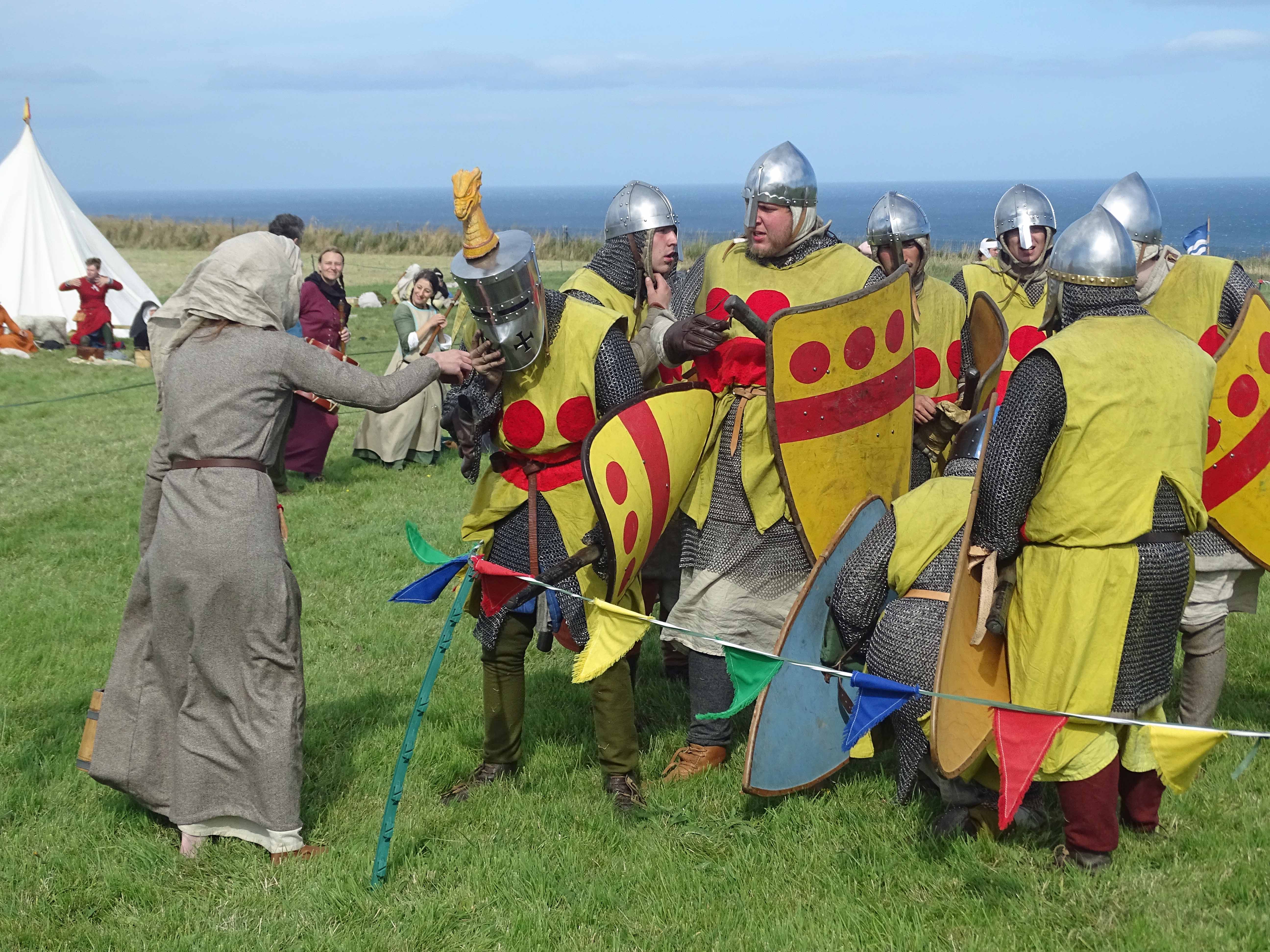
The aim of the sport was to try to knock off a Crest (known as a dragon) from on top of the helmet of one of the knights. The others members of his team try to protect him from the opposition.
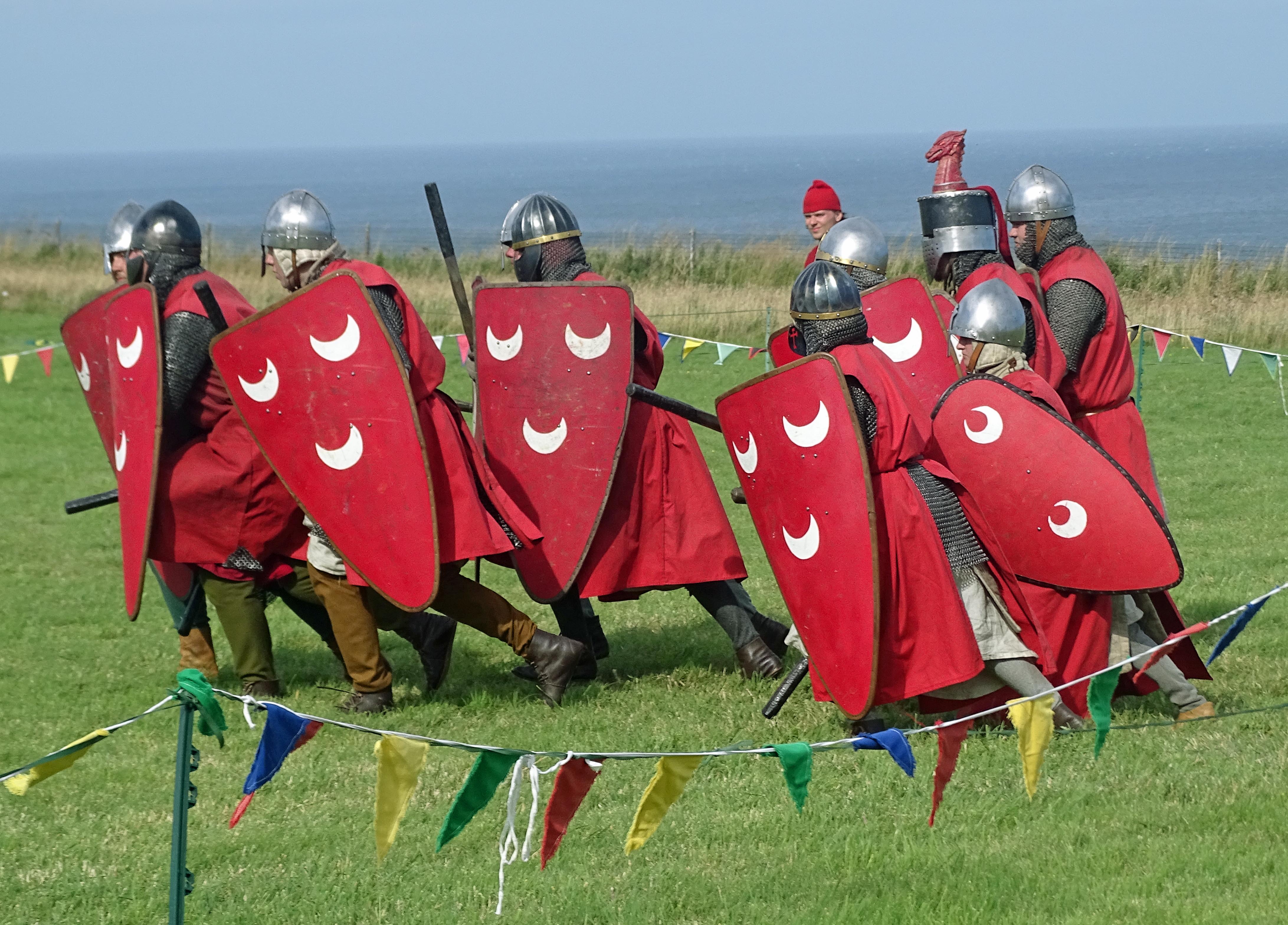
Yellow team of knights with Crest on top of helmetThe Green teamThe Red team
Battle ensues below.
Battle ensues
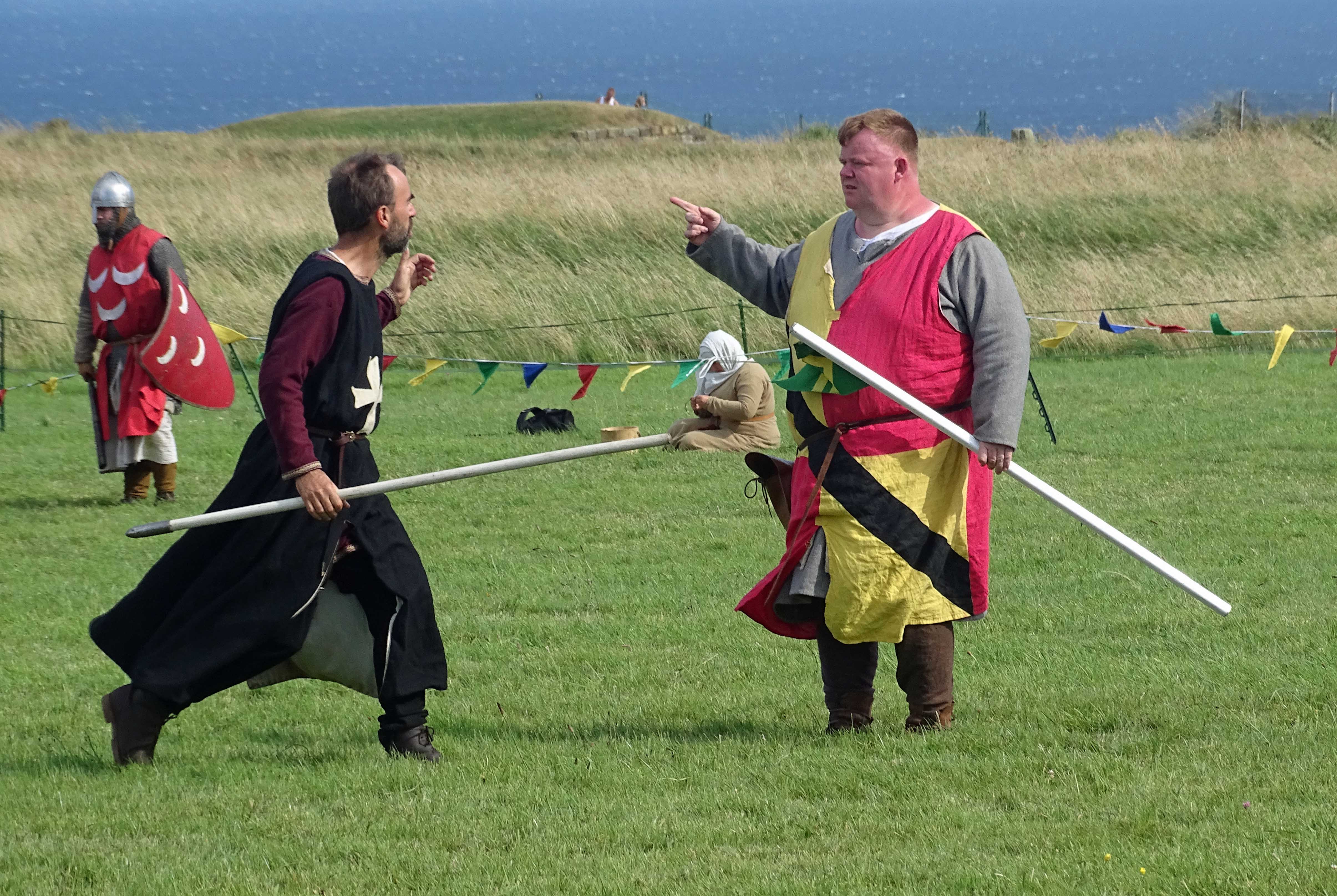
To ensure fair play, the proceedings were overseen by a Knight Marshall and his Heralds.
Knight Marshall and Herald
The battle was thirsty work and the knights stopped to take on water!
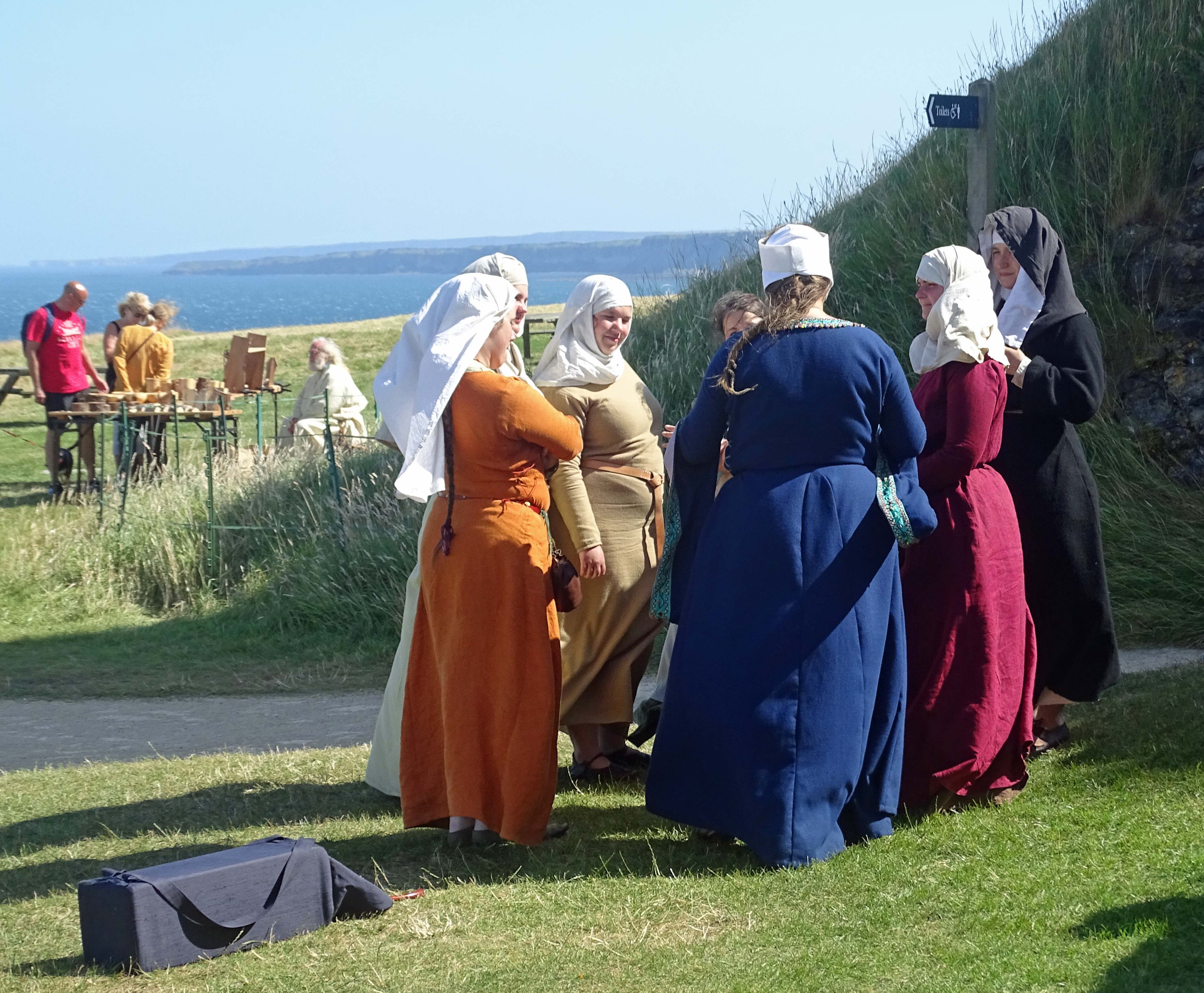
Knights stopping to drink waterGirl with water buckets relaxing on the grassLadies in medieval costumesAudience watching the knights with the damage keep of Scarborough castle in the background
All good fun and much enjoyed by the crowd of onlookers.
The third and final stage of the Tour de Yorkshire cycle race began at Middlesbrough and ended up in Scarborough, 196 km later. The course of the race can be viewed on the race website (1) and the ups and downs are shown on the Cycling Weekly site (2).
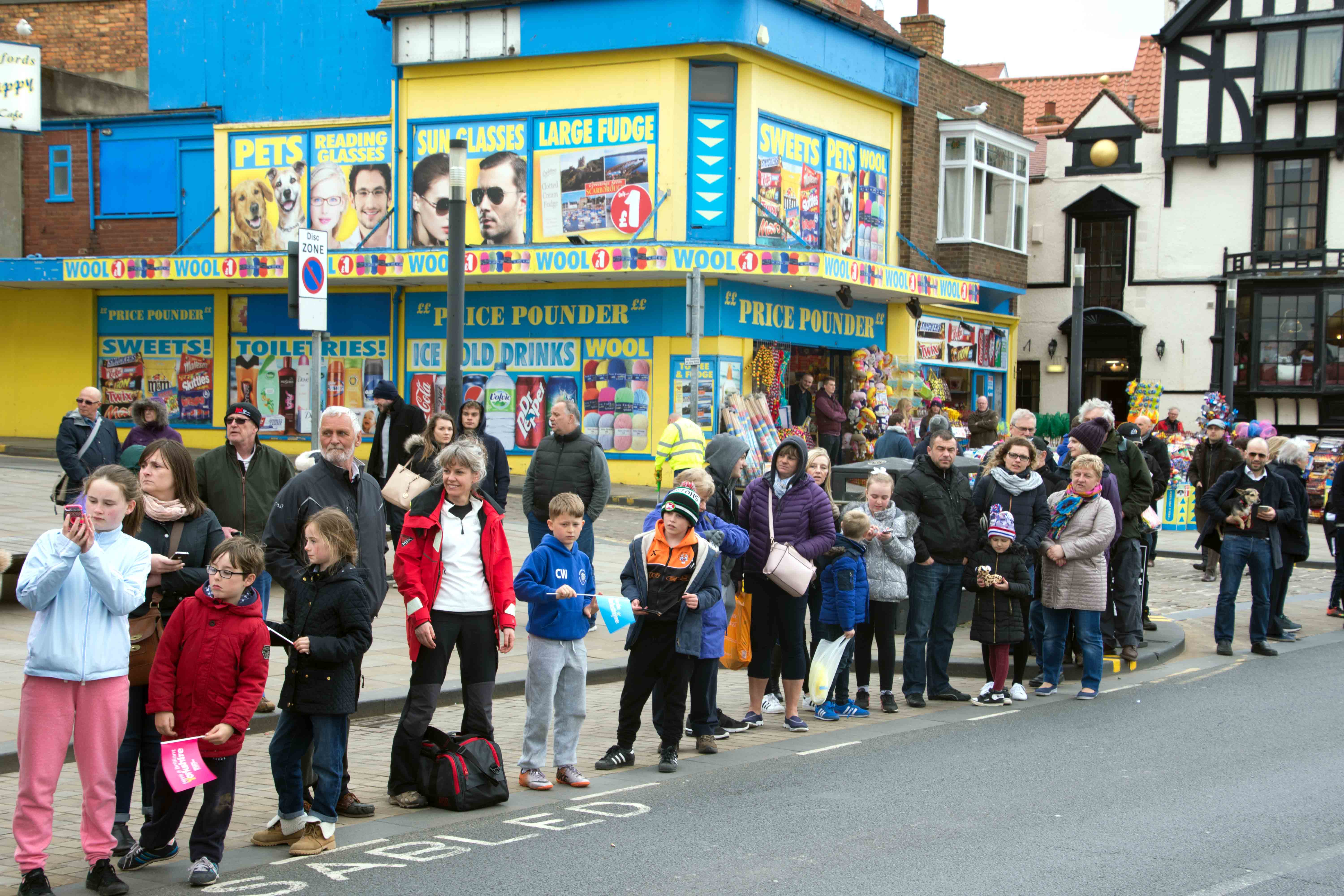
Prior to the arrival of the racers it was a very relaxed atmosphere.
Laughing policeman Scarborough
Spectators awaiting the cyclists could see where they were on a giant monitor screen.
Giant monitor screen showing the race live
Spectators waited in anticipation of the riders.
Waiting for the Tour de Yorkshire riders to arriveSome young fans awaiting the riders
Numerous police cars and motor bikes heralded the arrival of the cyclists.
Police car in front of riders
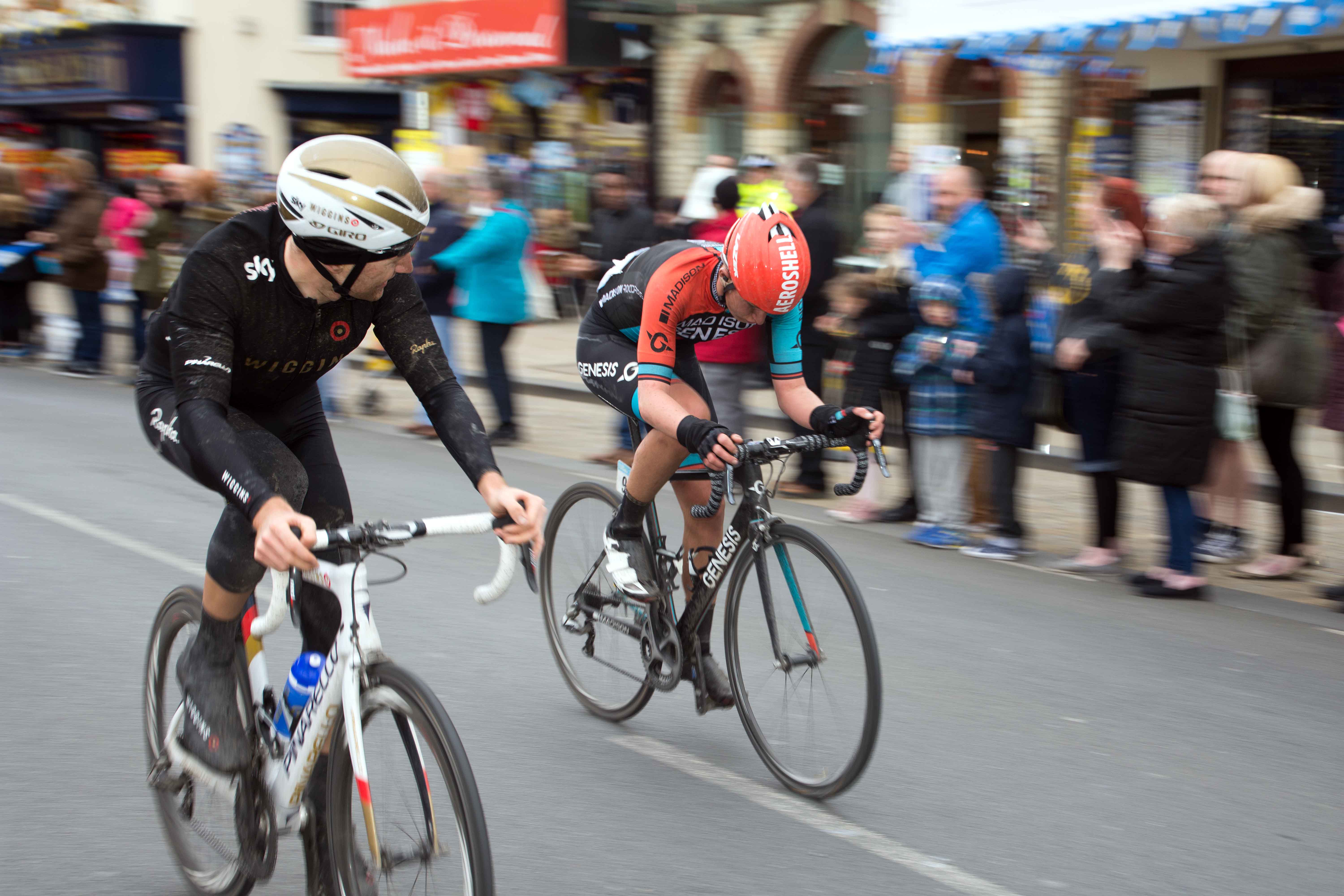
It was a cold and windy day and the riders must have been exhausted after the gruelling ride, which included six hill climbs. Despite this, there was still a sprint to the finish and only six seconds between the race winner – Frenchman Thomas Voeckler – and the Irish rider Nicolas Roche who came second in this stage. I managed to grab this shot as the two front riders passed beside the harbour in Scarborough, a couple of kilometres from the finish.
Thomas Voeckler leading Nicolas Roche
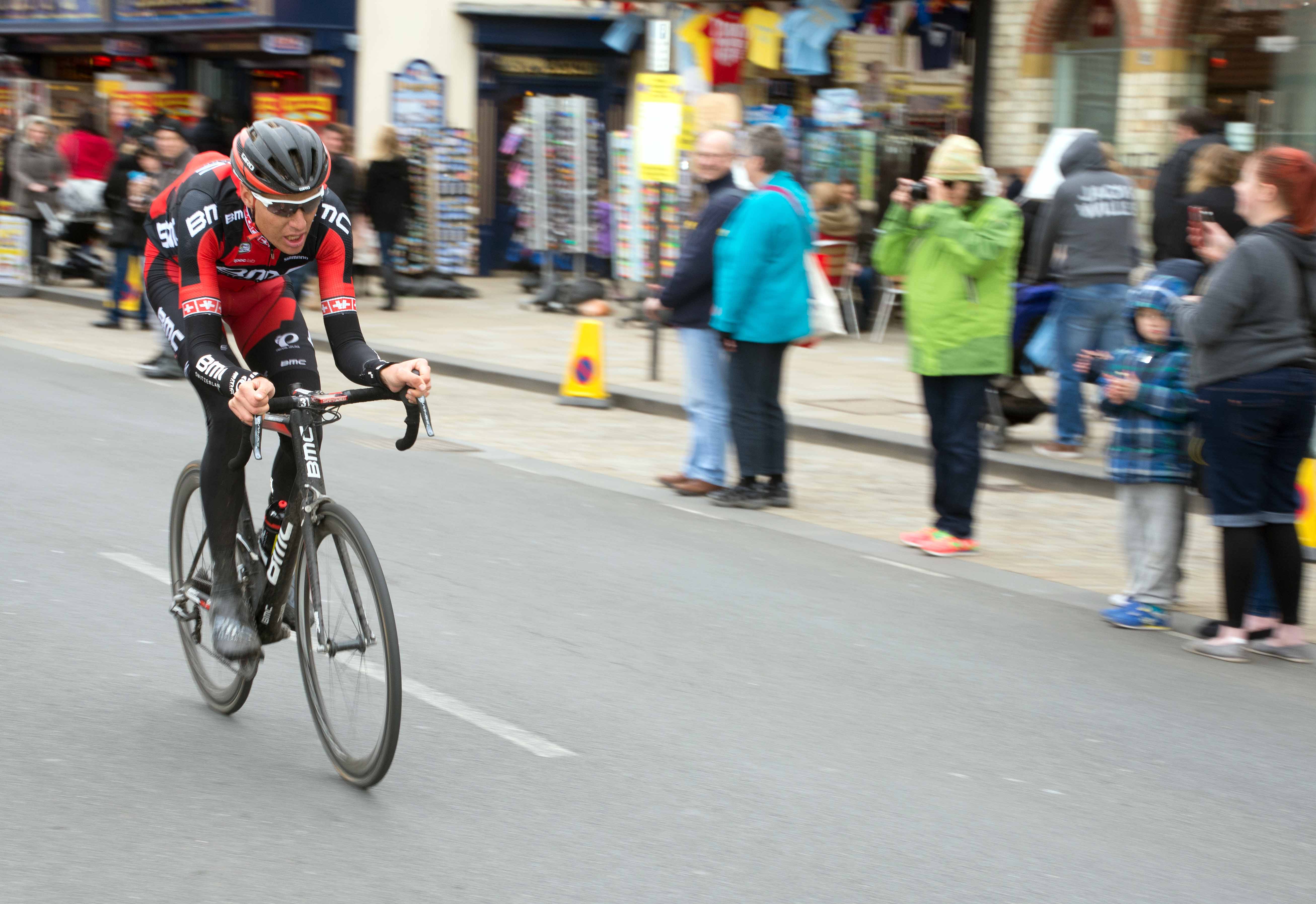
I got better shots of some of the following riders, although I am not able to put names to those further down the rankings.
Team Sky ridersRiders near the finish of Stage 3, Tour de YorkshireRiders near the finish of Stage 3, Tour de YorkshireA rider near the finish of Stage 3, Tour de Yorkshire
Support cars carrying spare bikes followed the riders.
Support car following riders
A lorry came along at the end telling everyone that the race was over and the road was open again.
End of the cycle racing
Race results of the Tour de Yorkshire 2016 can be seen on the Cycling Weekly website (3).
Depending upon your age and inclination, the Thai New Year Songkran water festival is either your worst nightmare, or a lot of wet fun! Personally, I do enjoy it in moderation, but eventually get fed up of being continually doused in water and need to retreat to my hotel.
Getting wet along Beach road, Pattaya
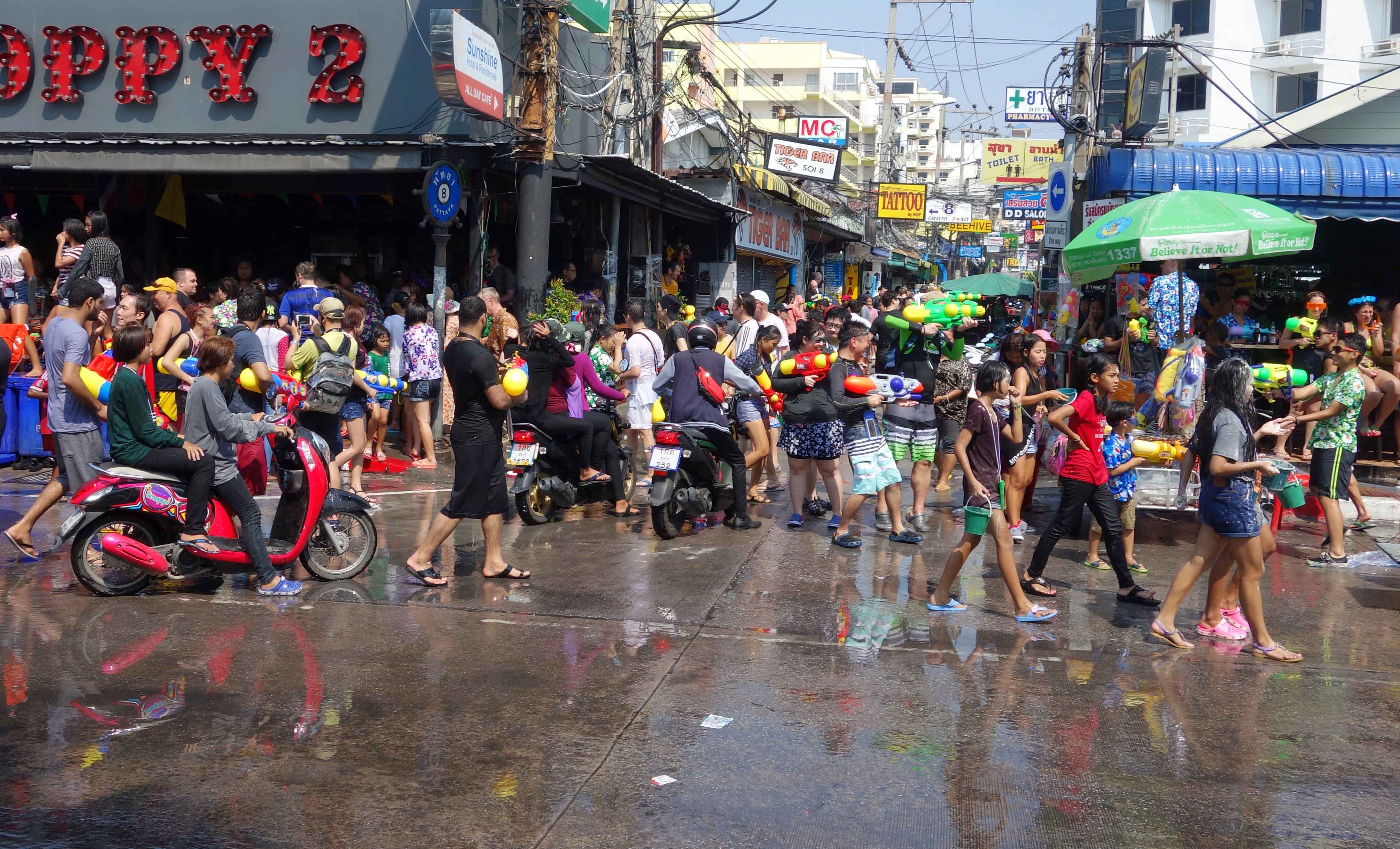
Officially, Songkran only lasts three days in most of Thailand, but in Pattaya it goes on for a full nine days, which spanned the 10-19th April this year (2016). The extended days are called “Wan Lai” and this is when the all out water fights really get going.
Water fights by Soi 8, Beach Road, Pattaya
Fortunately, the action is largely localised so it is still possible to get about without getting too soaked. Unless you catch a songtau (pick-up style open backed taxi) that is; these are subjected to continual dousings by people throwing buckets of water. So I find it is easier to walk!
Wet revellers on 19th April, Pattaya
What started out as a traditional festival celebrating the Thai New Year, and marked by the throwing and sprinkling of water, has rather degenerated into an all out orgy of water fights. The availability of large, powerful and cheap plastic water pistols has facilitated the process.
Tourists armed with water pistols
The really big party is held on the last day, 19th April this year, in Pattaya. People come from all over Thailand to participate. It is a family day, with lots of food stalls along the beach road.
Plenty of refreshments available
Children of all ages enjoy the day, which was particularly hot this year in Thailand.
Family fun
Songkran is a family occasion and traditionally a way to show respect to your parents for example, by water pouring over their palms. Paying reverence to ancestors is also an important part of the Songkran tradition, and Buddhas appear in many shops, malls and hotels, which people anoint by pouring flower scented water over the statue. Buddhist monks also anoint devotees with water as a sort of good luck blessing.
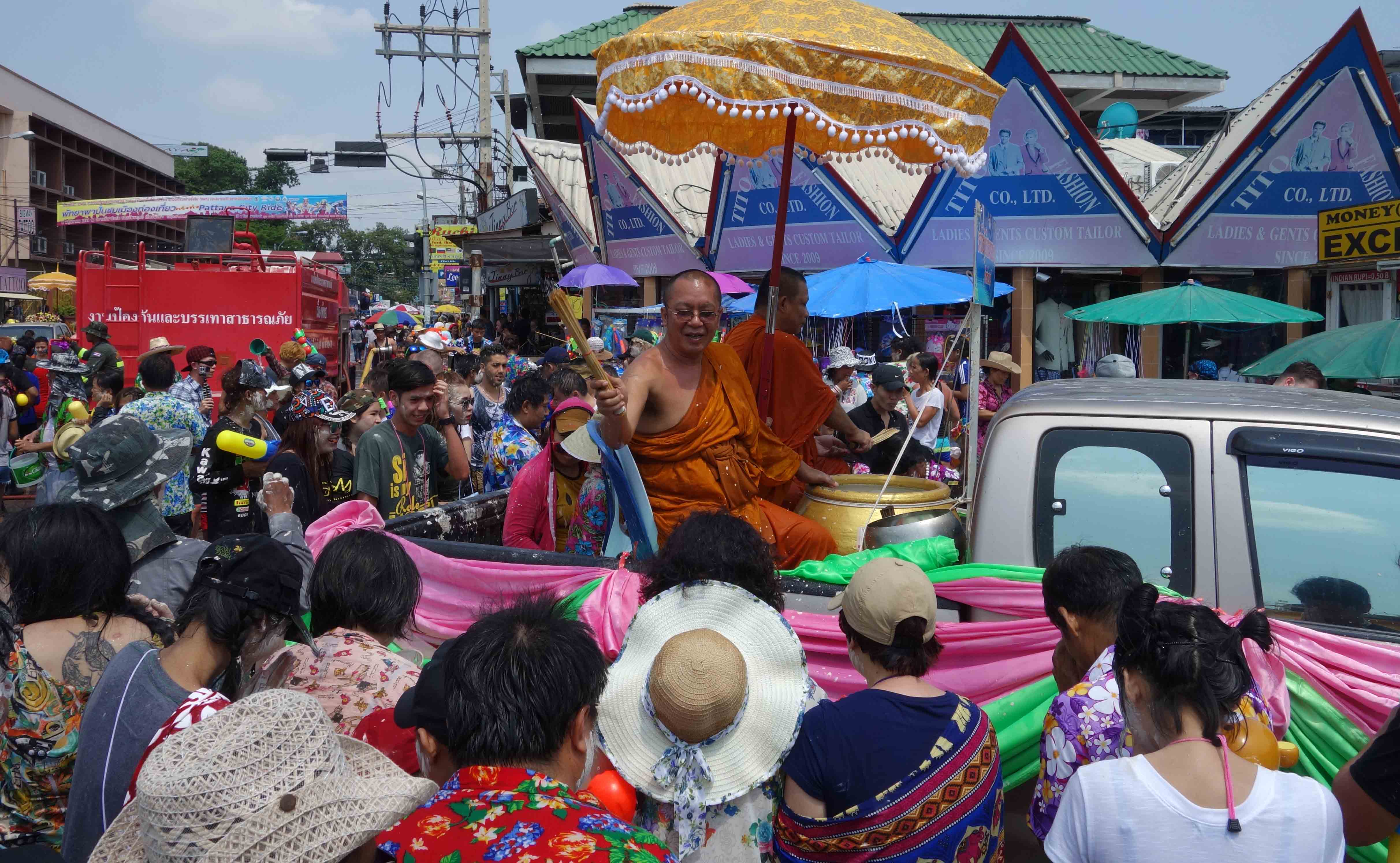
Buddhist monks blessing people with water
In the following picture, the monk appears to be covering his eyes as he passes by a GoGo bar! But it is just a coincidence.
Monk delivering watery blessing along Beach Road, Pattaya.
I rather like these images, because for me they capture some of the apparent contradictions of Thai society. Thais are tolerant and fun loving; they tend not to be as judgemental as Westerners (I think).
Monk blessing th crowd on 19th April 2016, Beach Road, Pattaya.
As always in Thailand, lots of delicious food was available to fortify the participants. I do admire these ladies, surely the backbone of Thai culture, who prepare these meals from small portable kitchens all over the country.
Lady cooking eggs to fortify revellers
The salads were amazing!
Delicious vegetables on the table for customers to enjoy by the beach, Pattaya
Songkran is a noisy, very wet, fun time. For those with sufficient stamina it is fun to be continually drenched with water on a very hot day. Being blasted with very loud pop music is also part of the experience! It helps to be young! This throng of mainly young people were enjoying the music of a band playing in the Central Mall, Pattaya, whilst being drenched with water from fire hoses.
Crowd at Central Mall, Pattaya, on 19th April 2016Fire hose
These youngsters were enjoying themselves!
Boys with water pistols
Oh I forgot to mention the face paint (wet powder)! The protective glasses are a good idea as some of the water pistols are very powerful.
Girls with face paint and protective glasses, 19th April 2016, Pattaya
This man seemed to be getting into the spirit of the occasion. His dancing reminded me of a bird!
Dancing man, Pattaya
Would I go again to Pattaya at this time of year? Maybe not, as I am a bit of an old git(!), but it was fun to see it once.
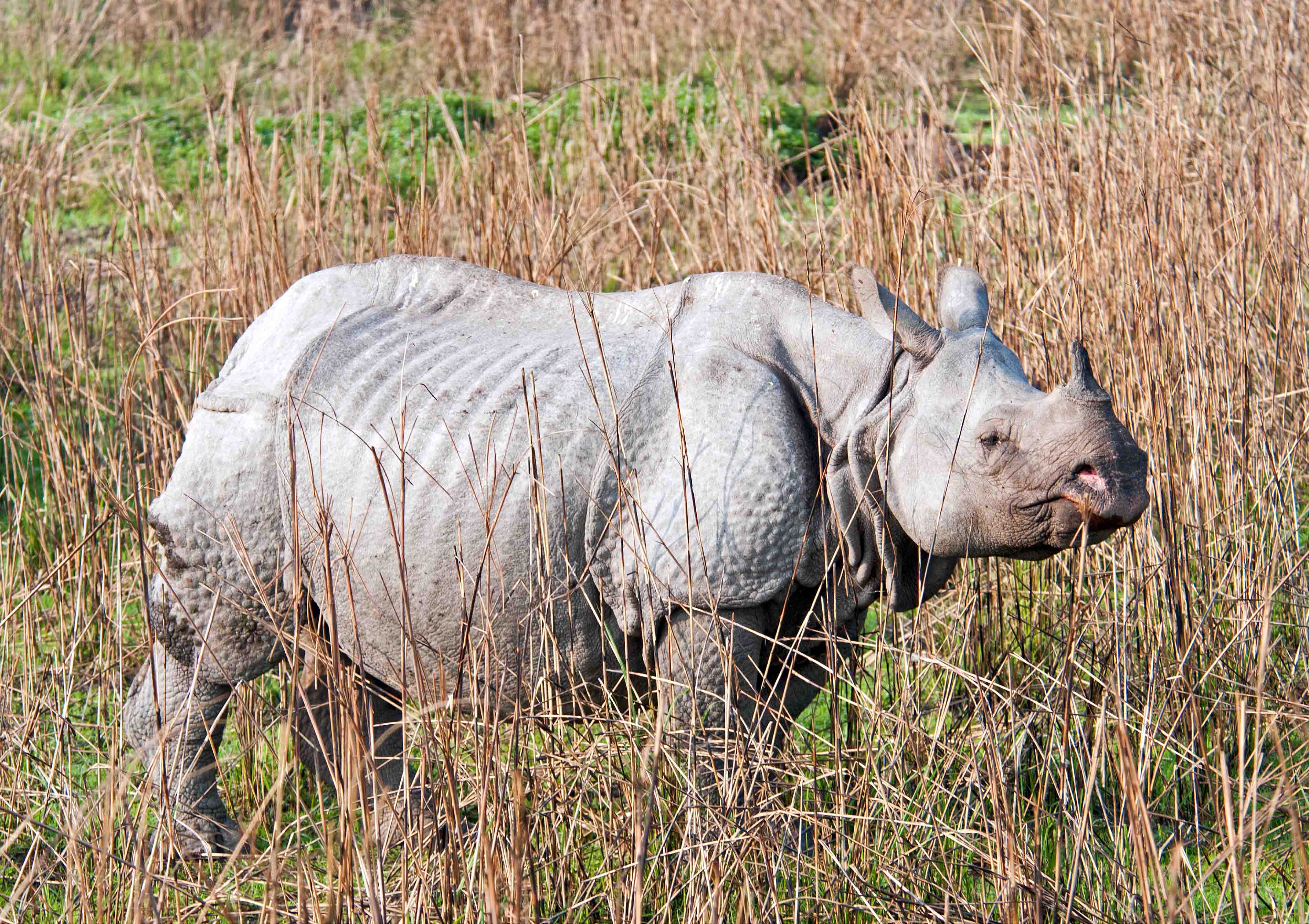
Kaziranga National Park covers an area of 430 sq kms along the southern bank of the river Brahmaputra, in the province of Assam, in NE India. The park is famous for having the largest remaining population of the Great Indian one horned rhinoceros (Rhinoceros unicornis). These magnificent mammals are amongst the largest rhinos in the world, with some males weighing up to 2.7 tonnes (ref 1).
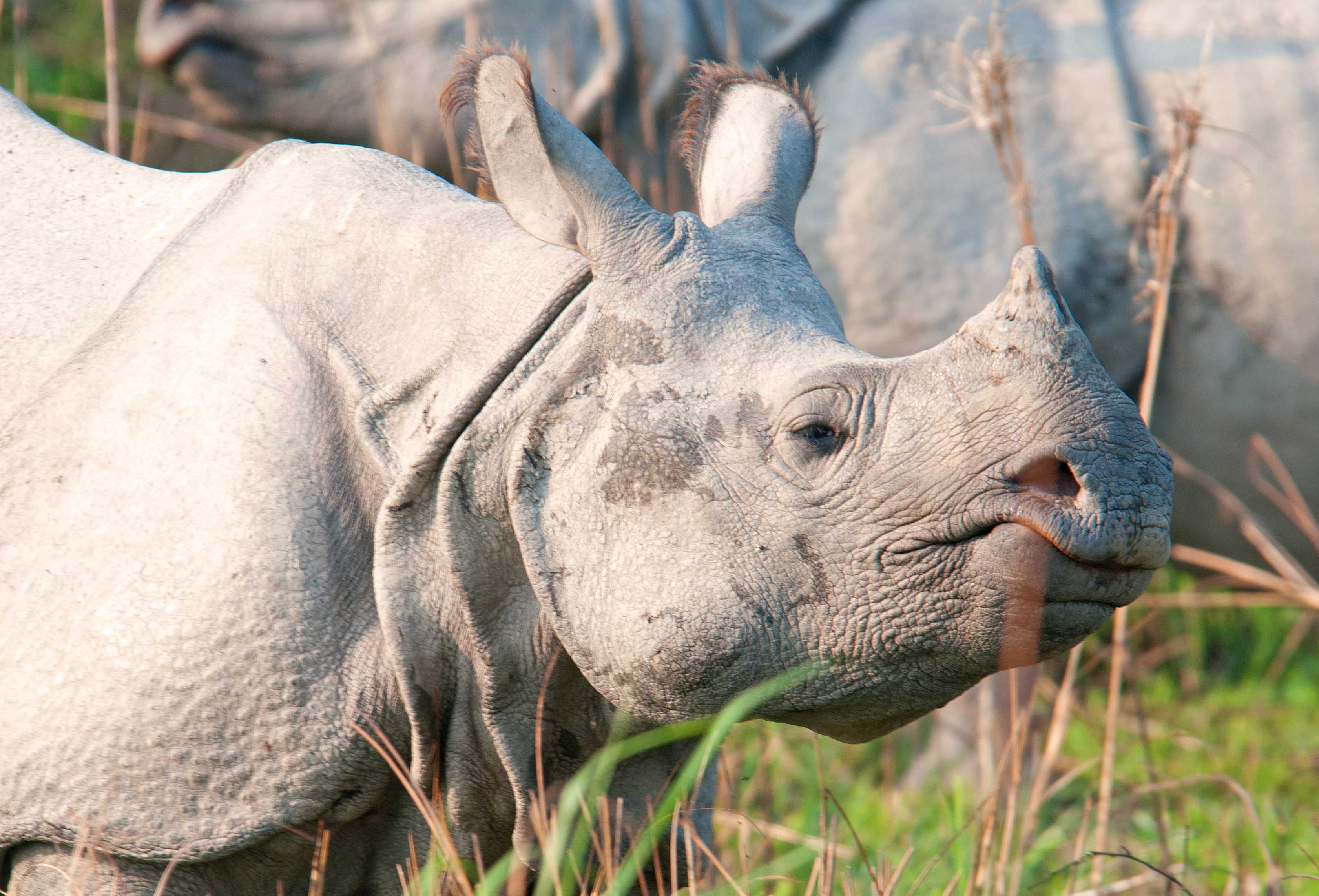
Indian rhinoceros (Rhinoceros unicornis) juvenile
The horn of the Indian rhino is often relatively small compared to that of African rhinos, but that does not stop some being killed for it. As most people know – apart from the fools who purchase it – rhino horn is just keratin, the same material as our fingernails. Any suggestion that it has any special properties is complete nonsense. Nevertheless, these wonderful animals are killed because there is a demand for the horn in traditional Chinese medicine. The current worldwide surge in demand for rhino horn has been primarily driven by demand for horn in Vietnam according to WWF (ref 2). It is hard to believe that people could be so ignorant as to pay huge sums for this totally useless product – only useful to the rhino – and thus threaten its existence.
Indian rhinoceros (Rhinoceros unicornis)
Although not on the awful scale seen in Africa, where rhino poaching has reached a crisis – at least 1,312 rhinoceros were illegally killed in Africa in 2015 – Indian rhinos are regularly killed by poachers. Official figures for the numbers of rhinos poached in Kaziranga NK in recent years are as follows: 2012 (11), 2013 (27), 2014 (27), 2015 (17) (ref 3). Although, these numbers are relatively low compared to the total population, I am sure that without the heroic efforts of the forest guards, many more would be killed. Poachers are willing to risk their lives to hunt these animals (refs 4, 5).
Indian rhinoceros (Rhinoceros unicornis)
The rhinos are counted every two years in Kaziranga, and the estimate carried out over 24-27 March 2015, yielded a total of 2,401 ± 100 (ref 3). Of the adults, there were more female rhinos (882) than males (663). The total for the species as a whole in India and Nepal is 3,555, according to WWF (ref 1). So it is clear just how important Kaziranga NP is for the preservation of this species, as well as for the many other animals in the park. The good news, is that despite the threat of poaching the rhino population is increasing, with numbers up considerably from a figure of 1,672 in 1999.
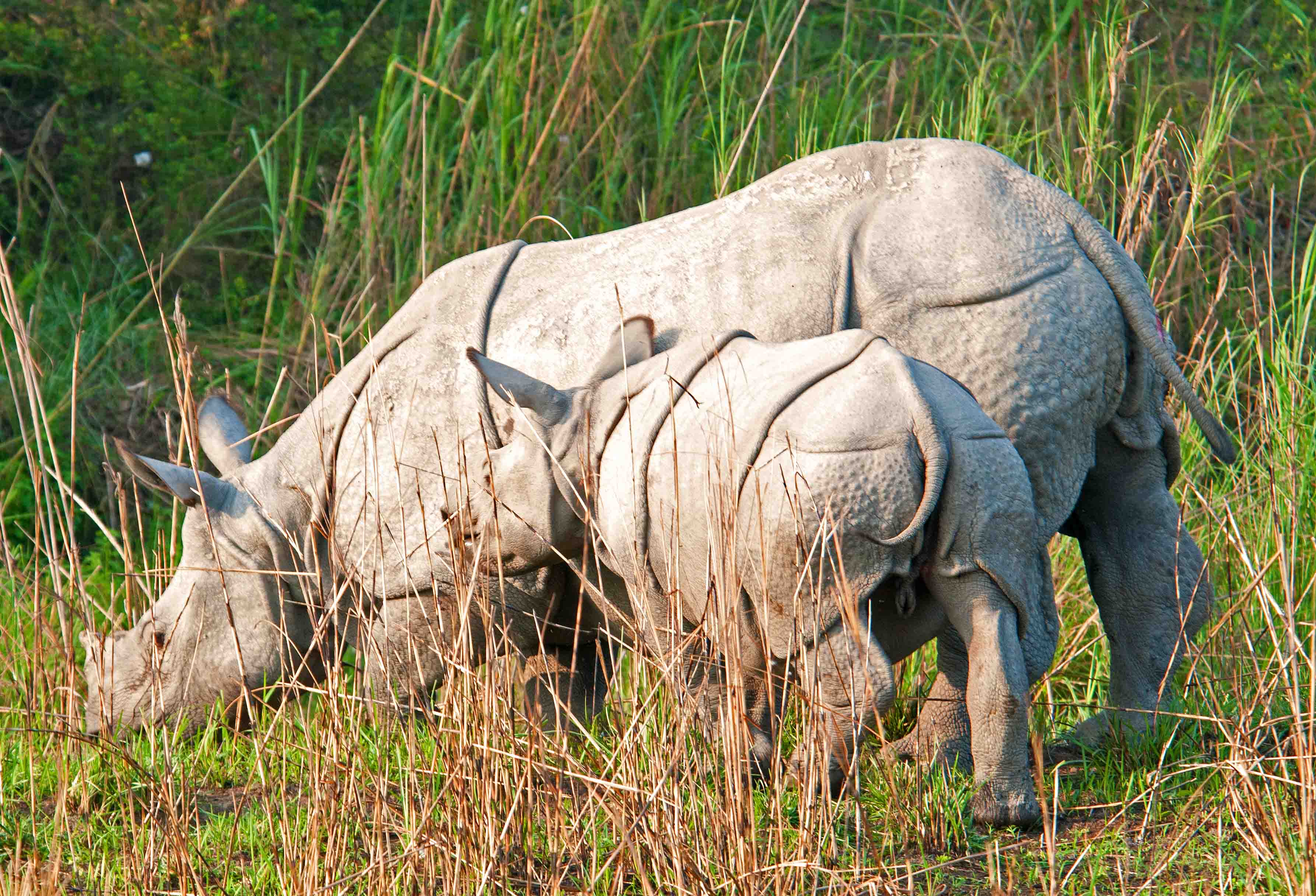
Indian rhinoceros (Rhinoceros unicornis) mother and calf
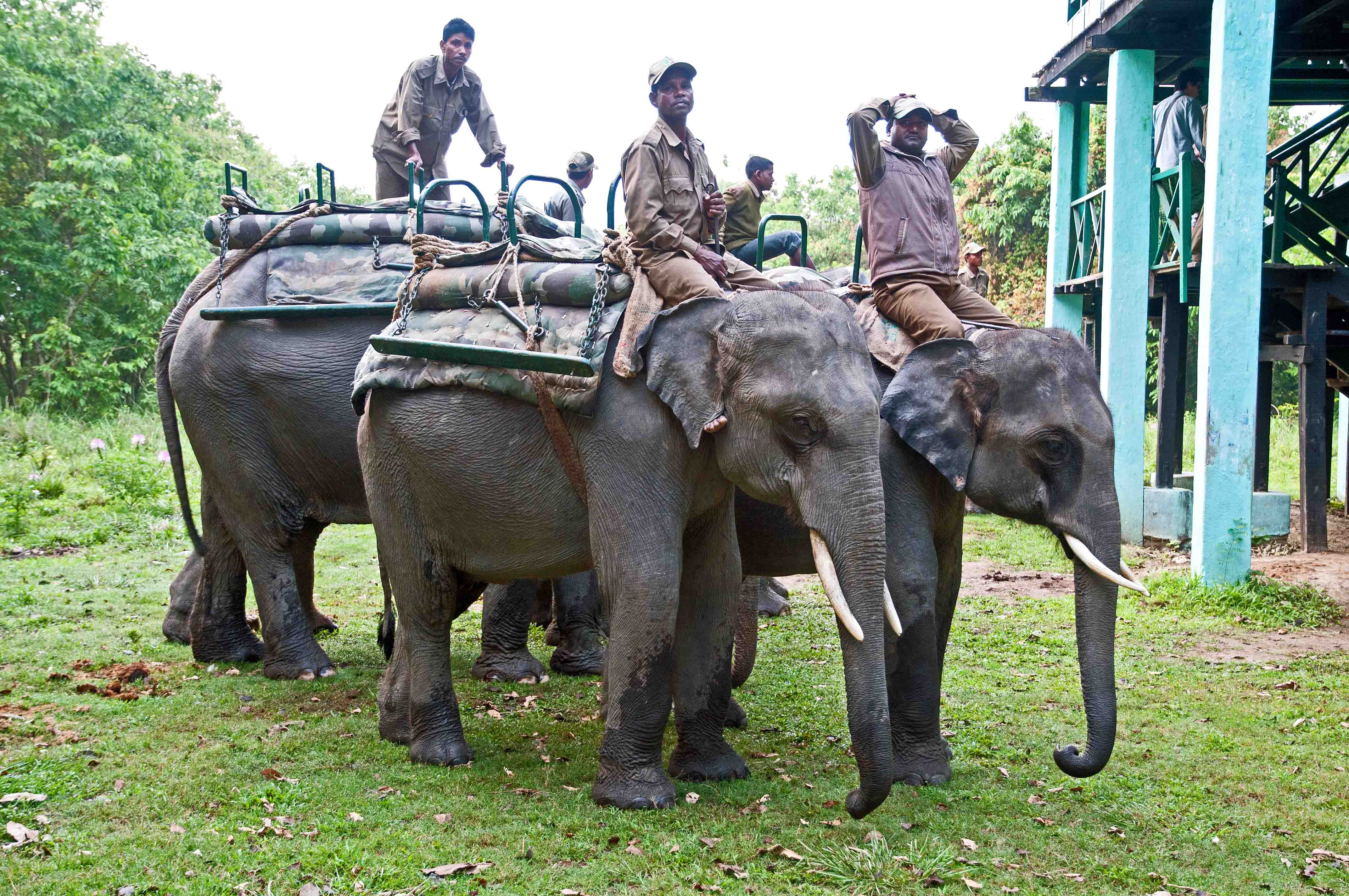
The best way to see and photograph the rhinos is on top of an elephant. The working elephants and their mahouts wait patiently for tourists to climb aboard them (below).
Elephants and Mahouts
Whilst sitting atop an elephant is certainly the best and safest way to view the wildlife, I found it surprising uncomfortable! My legs did not open wide enough to straddle the wide body of the beast!
Riding on an elephant
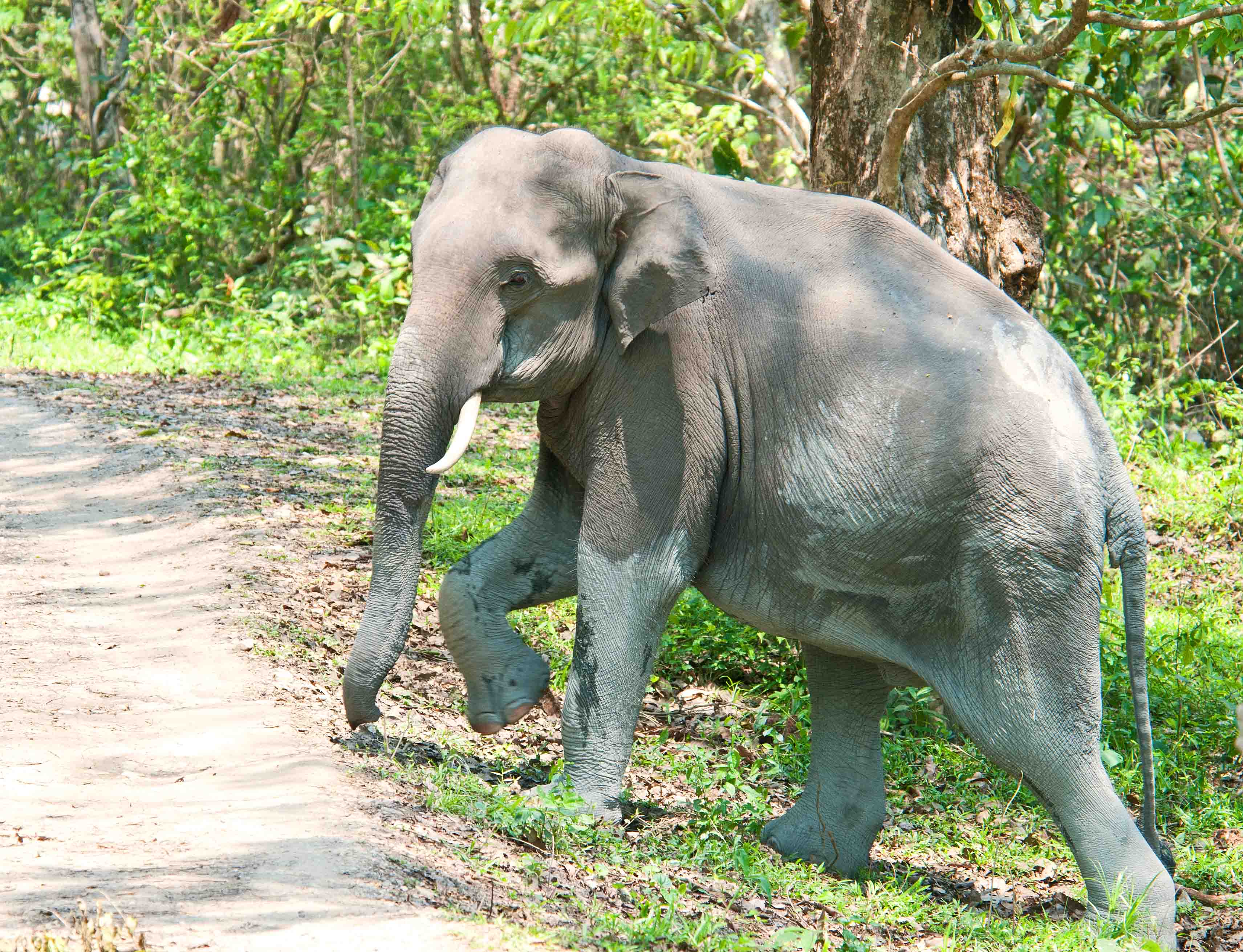
A total of 35 mammalian species have been recorded from the park. Apart, from the rhinos, two other iconic species which can be seen in abundance are Indian elephants (Elephas maximus indicus) and Wild water buffaloes (Bubalus arnee). There are well over a thousand wild Indian elephants in the park, and it was a joy to see them up close, such as crossing the road (below).
Indian elephant (Elephas maximus indicus) crossing road in Kaziranga NP
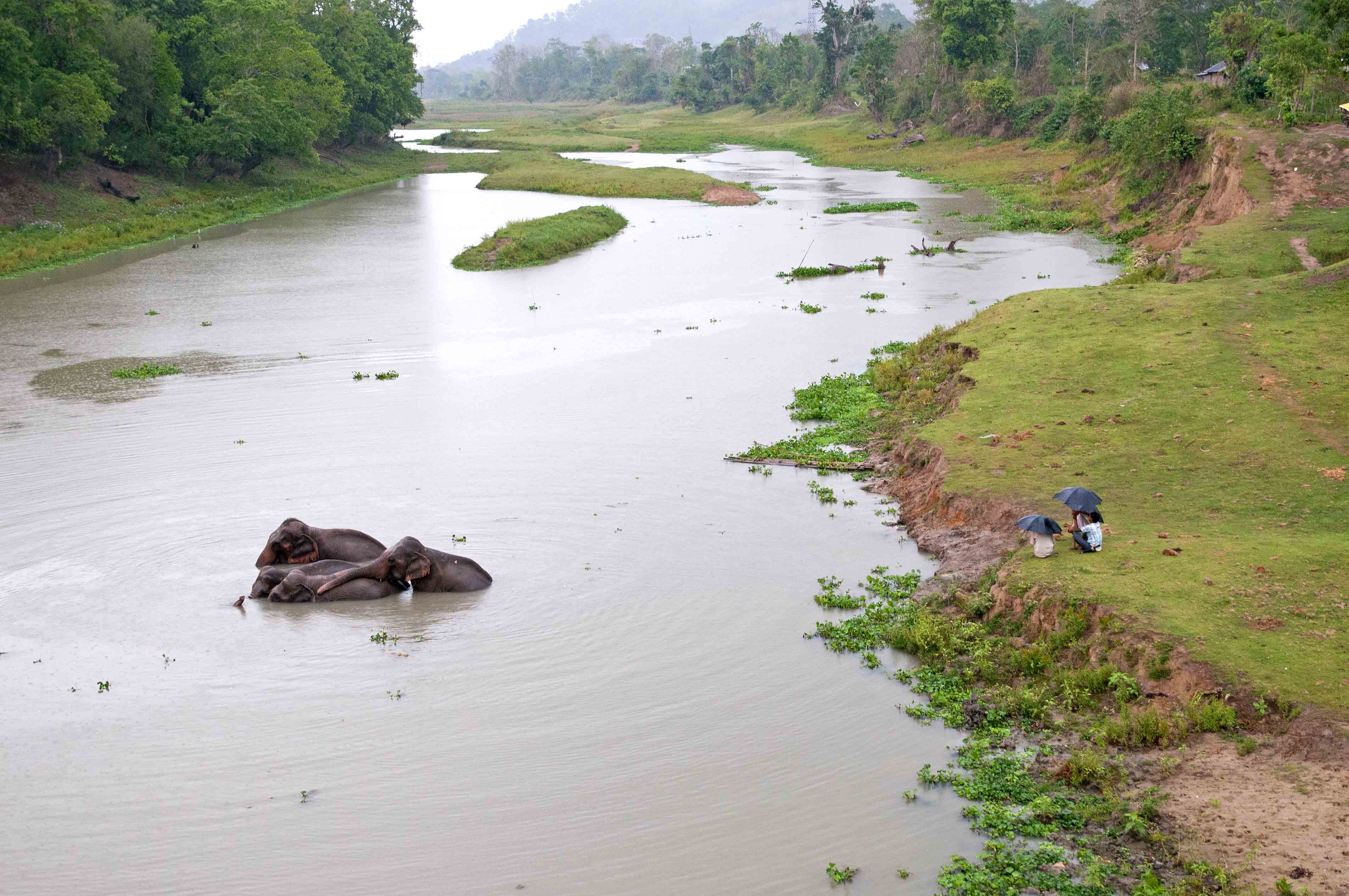
I felt a bit sorry for the working elephants, but they seem to be well cared for and it was nice to see them having a bath in the river.
Elephants bathing in the rain
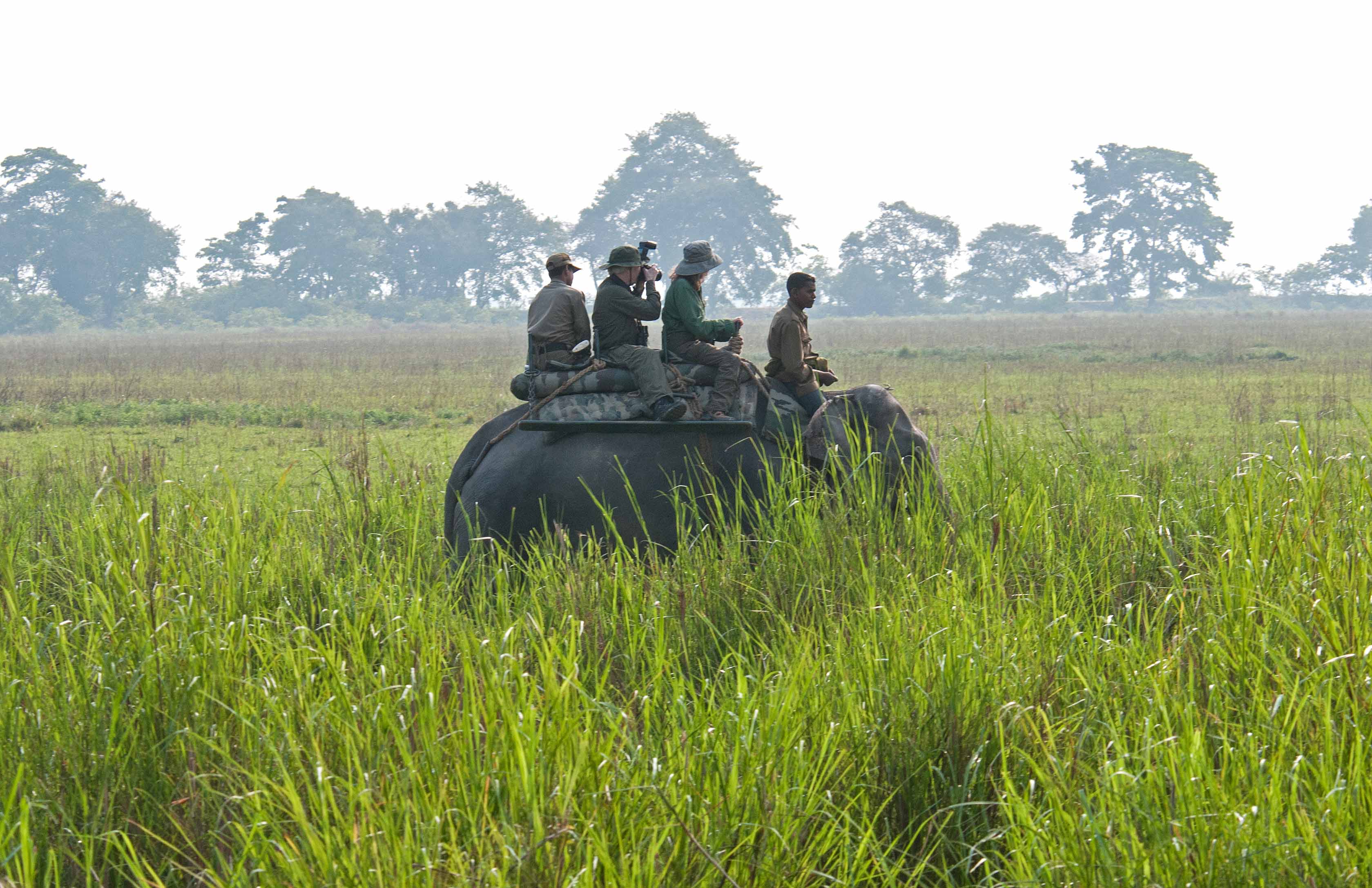
Without the elephants to ride on, it would not be possible to walk through the elephant grass, or wade through the marshes. Did I mention the tigers?!
Elephant ride through long grass in early morning
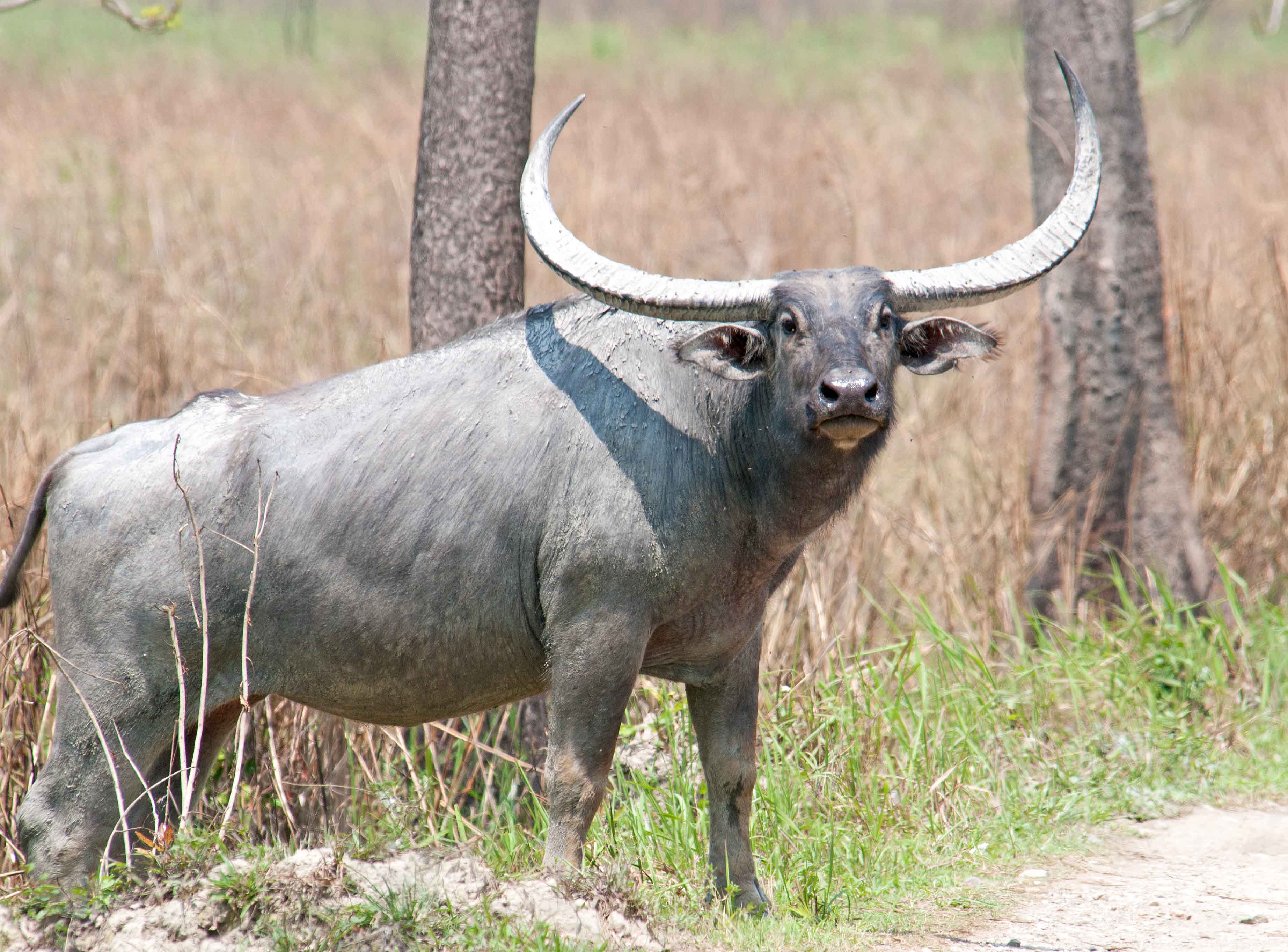
My next favourite mammal was the wild water buffaloes, of which there were 1,666 in 2001, so maybe more today. These are much bigger and more feisty than the domestic water buffalo (Bubalus bubalis), with which they can interbreed. The males have an impressive set of horns.
Wild water buffalo (Bubalus arnee) male crossing road
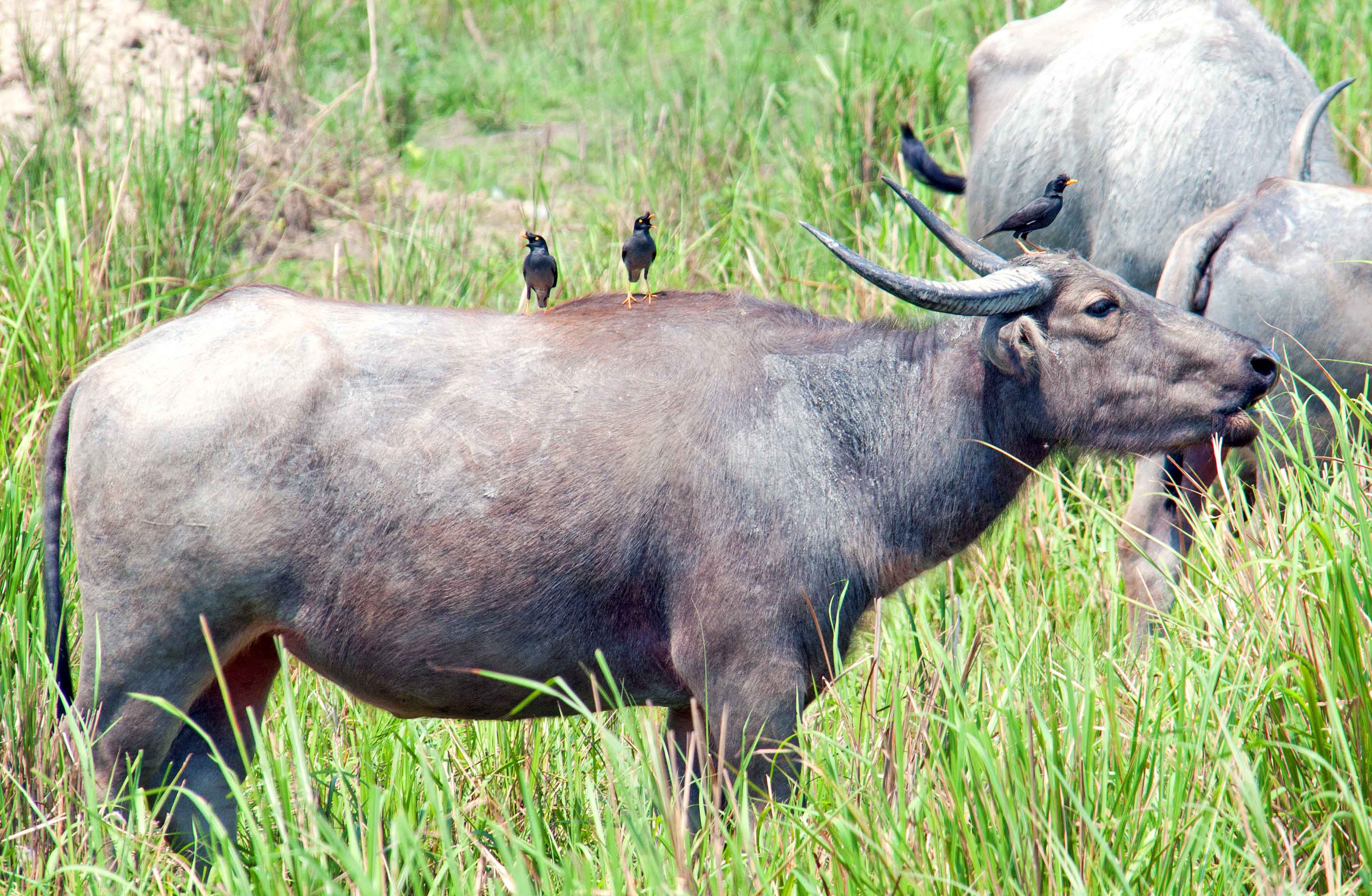
They are a sort of mobile snack shack for flocks of Jungle myna birds, which perch on top of them, looking to ticks I suppose.
Wild water buffalo (Bubalus arnee) with Jungle Mynas
It was great fun to see these wild buffaloes enjoying a mud bath! This photo also shows the close association between buffaloes and cattle egrets; the birds follow the buffaloes around pouncing on any insects disturbed by the large bovids.
Buffalo mud bath
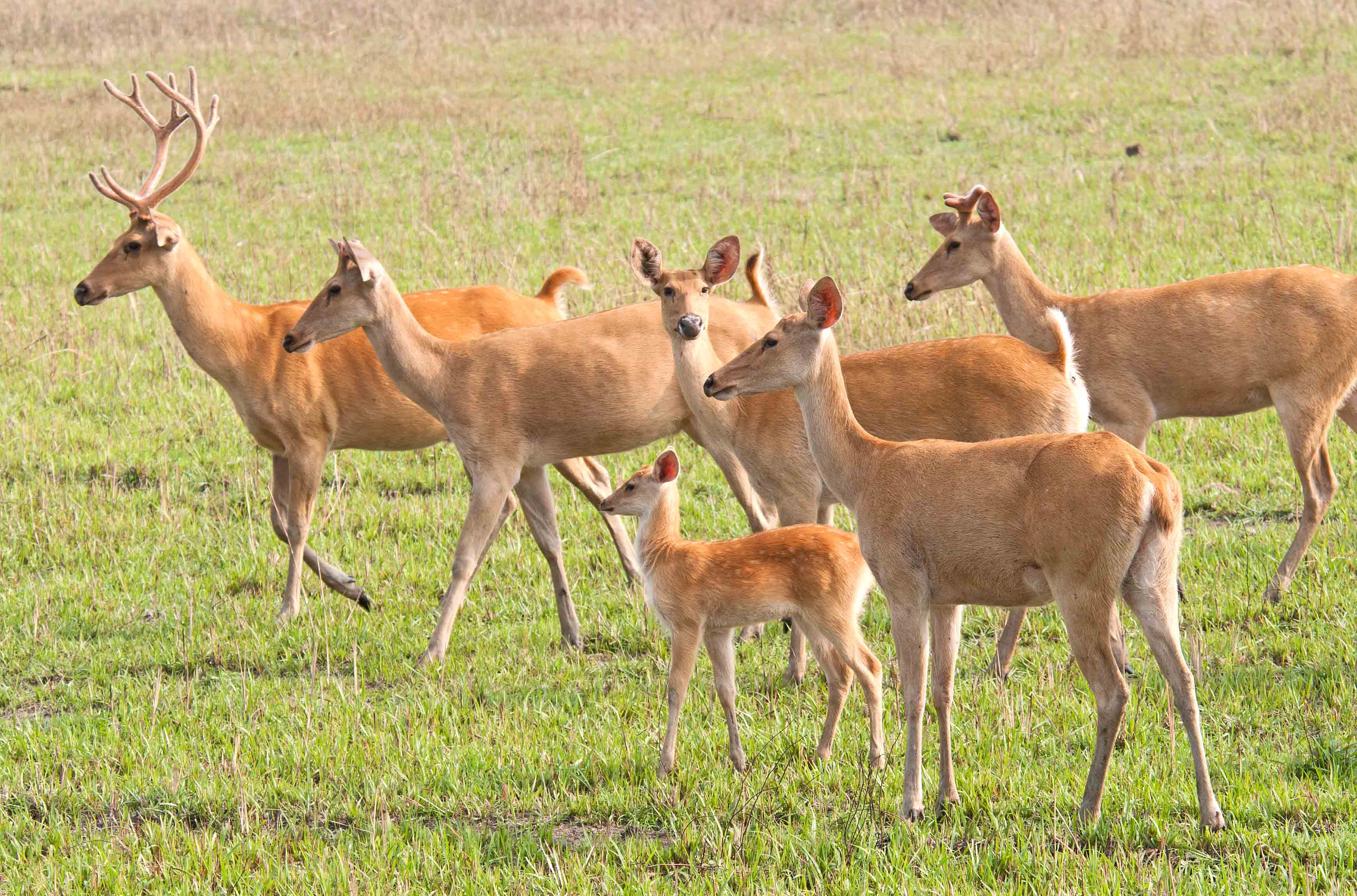
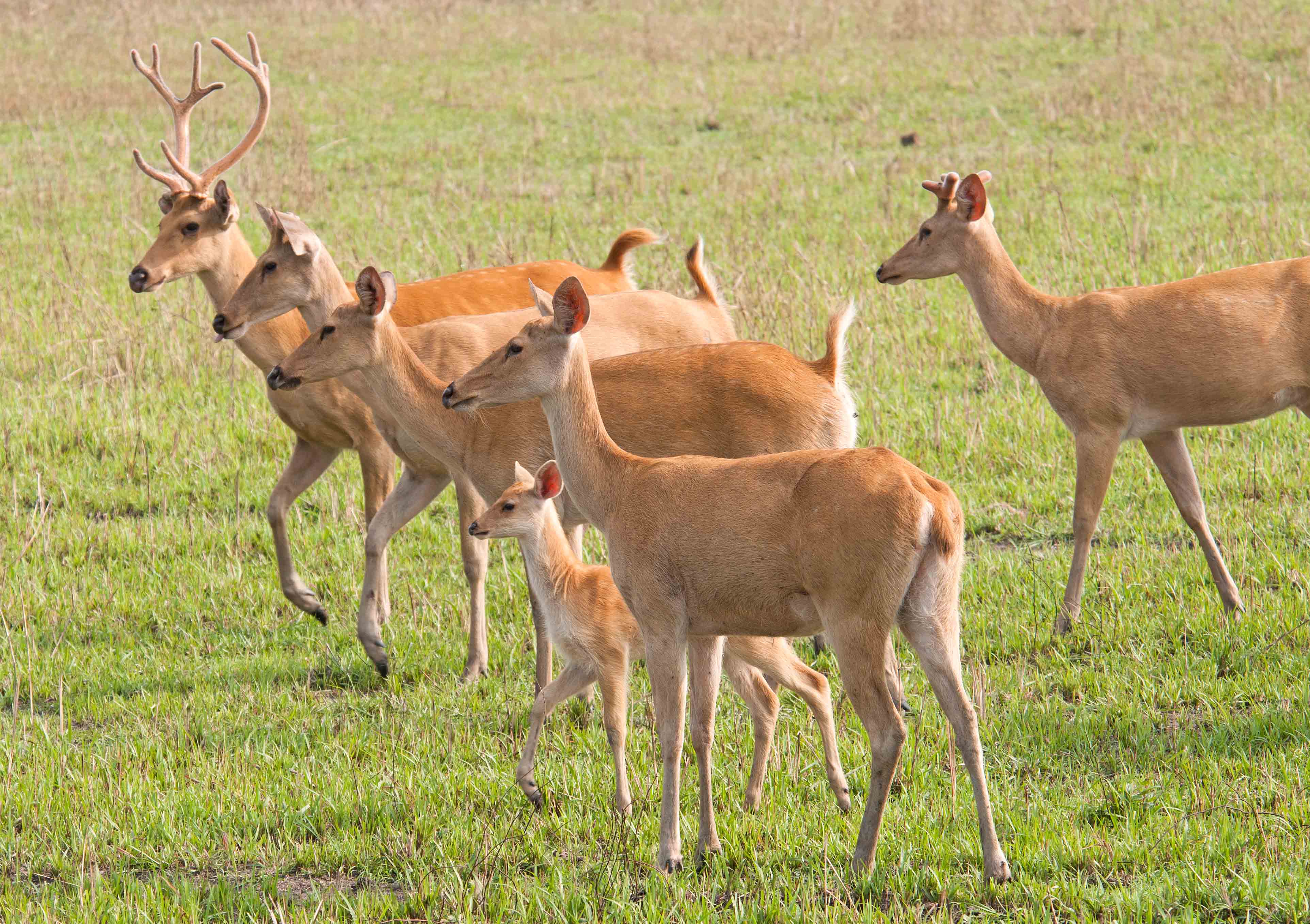
There are a number of species of deer in the park, but for me the most beautiful were the barasingha (Rucervus duvauceliisyn.Cervus duvaucelii), or swamp deer.
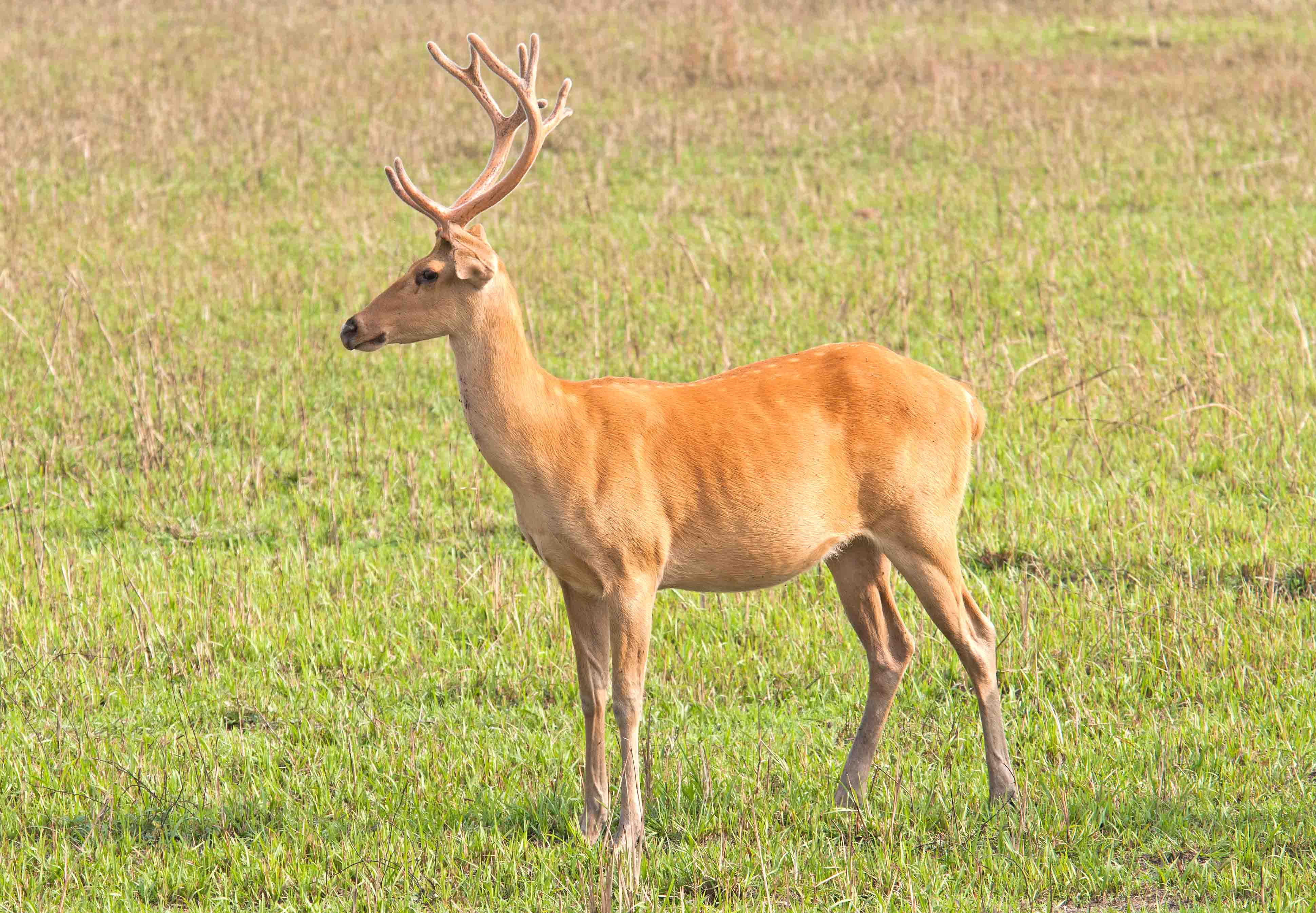
There are three subspecies of this lovely deer in India, and the ones present in Kaziranga NP are Eastern swamp deer, R. d. ranjitsinhi (Grooves 1982), of which there are reportedly about 700 present. The females are smaller than the males – stags can weigh up to 280 kg (below) – and the young deer are spotted (see above).
Eastern Swamp deer (Rucervus duvaucelii ranjitsinhii) male
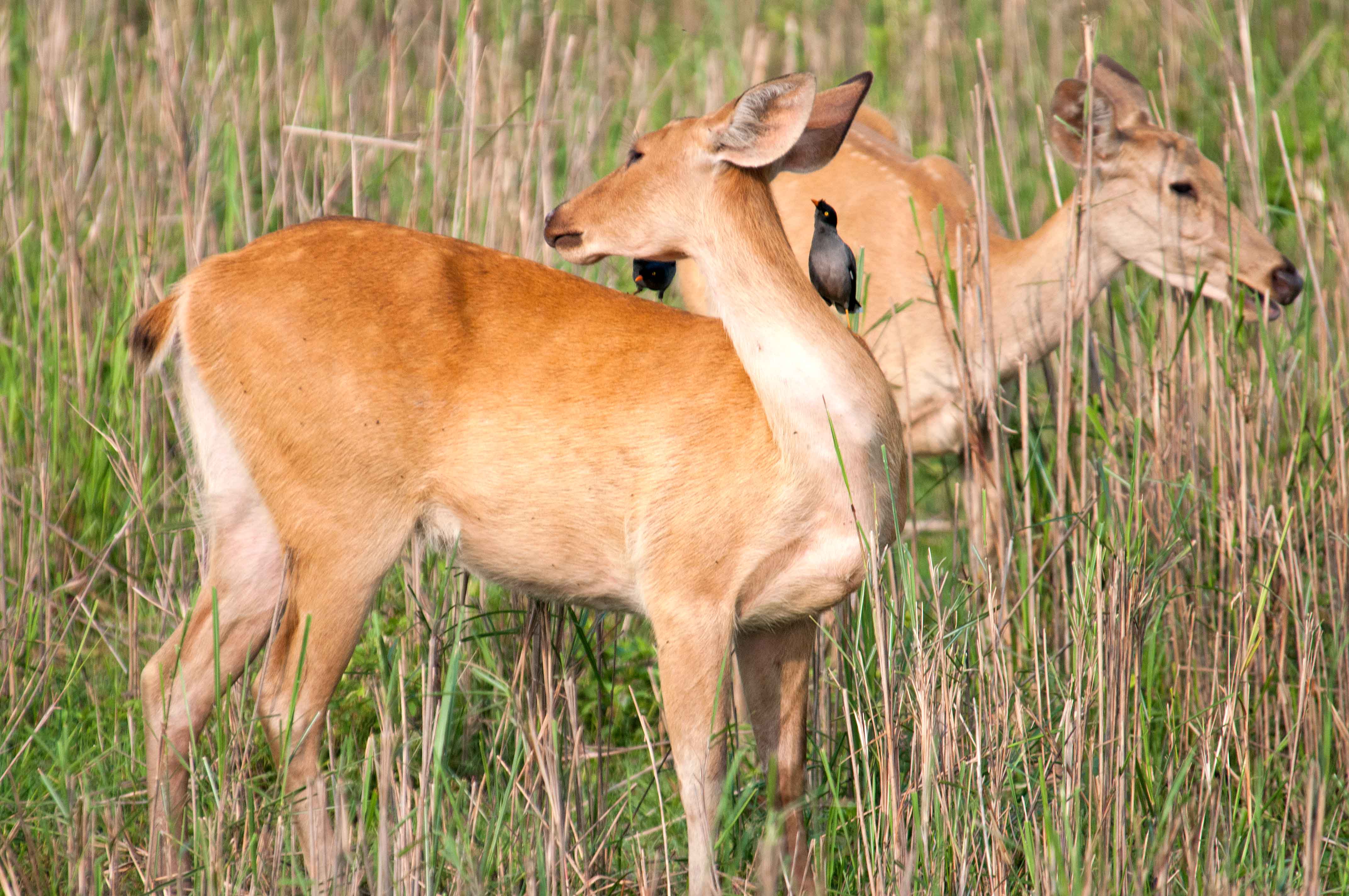
The jungle mynas also provide a tick-pecking service to the deer as well as the buffaloes!
Barasingha or Swamp deer female with Jungle mynas
The deer are keeping a sharp lookout in the following photo and there is a very good reason for them to be wary and alert!
Eastern swamp deer
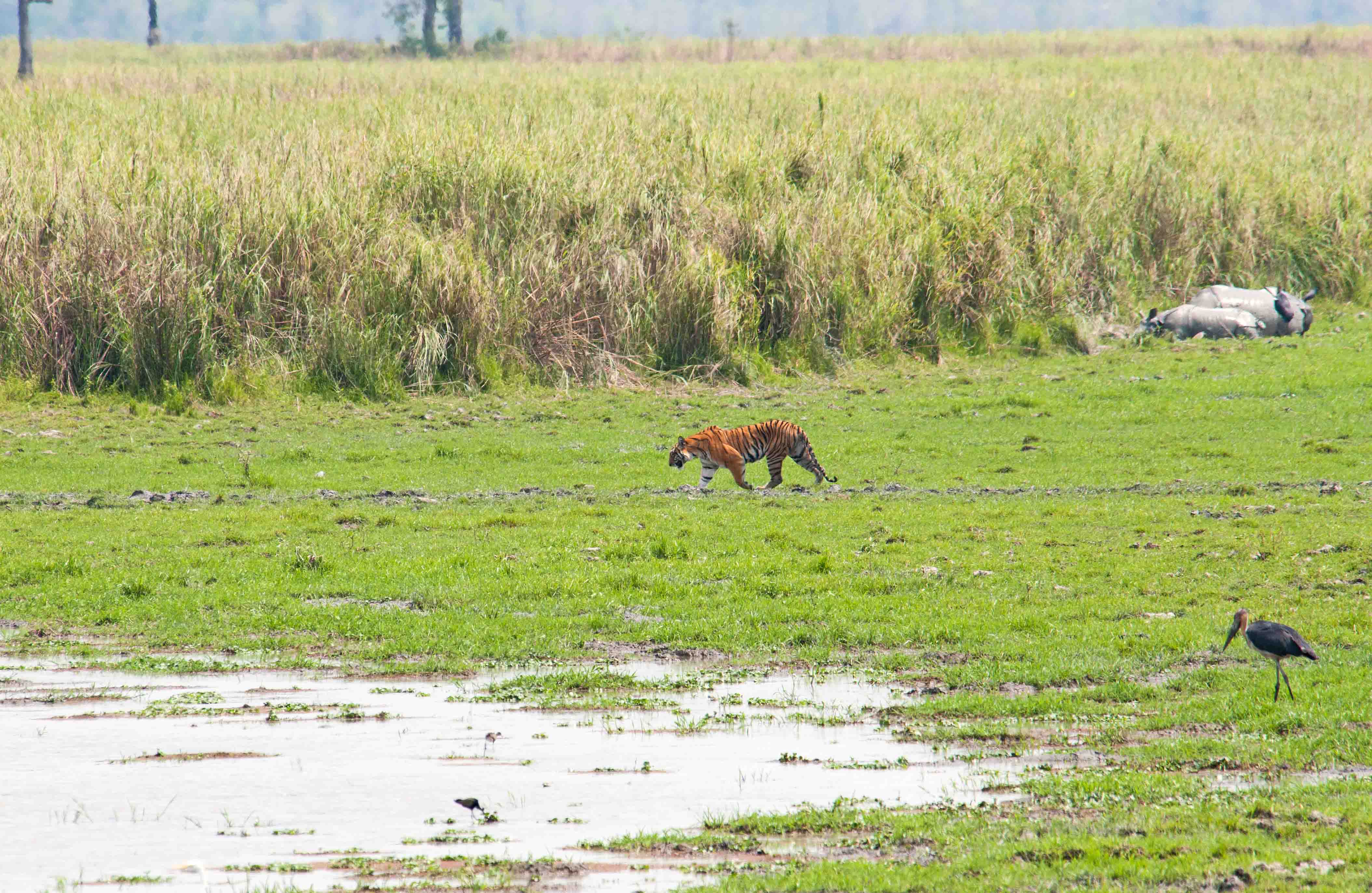
The reason is of course is the Royal Bengal tiger (Panthera tigris tigris)! Tiger numbers have been increasing in the park which now boasts one of the highest densities of tiger in India. There are believed to be more than 125 in Kaziranga NP, out of a total of 167 tigers counted in Assam (ref 6).
Tiger and rhinos, Kaziranga NP, Assam
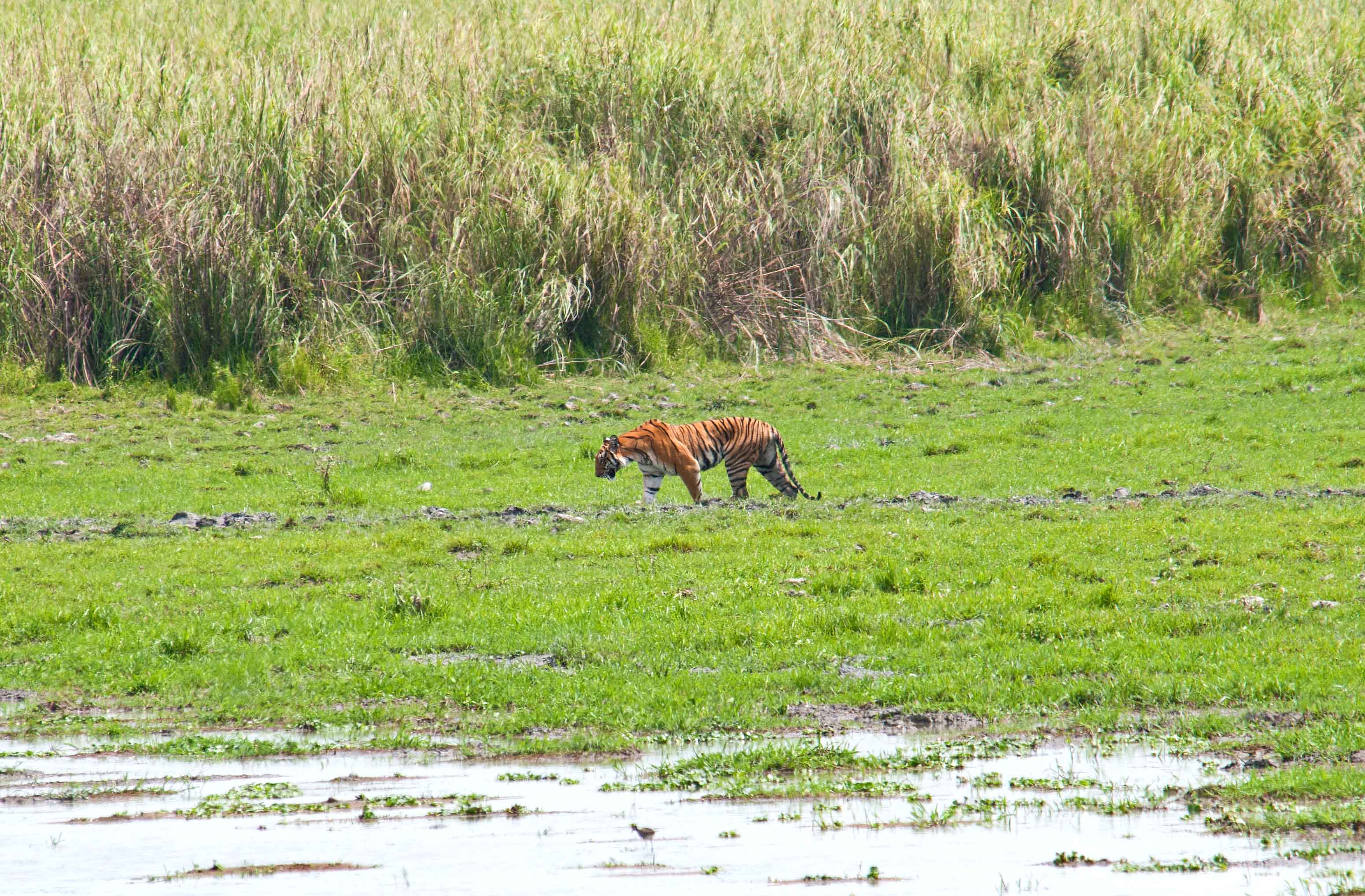
In the short time I spent there, I saw tigers on two separate days. We were said to be very lucky and indeed it was a huge privilege to see these animals in a such a magnificent setting.
Tiger crossing
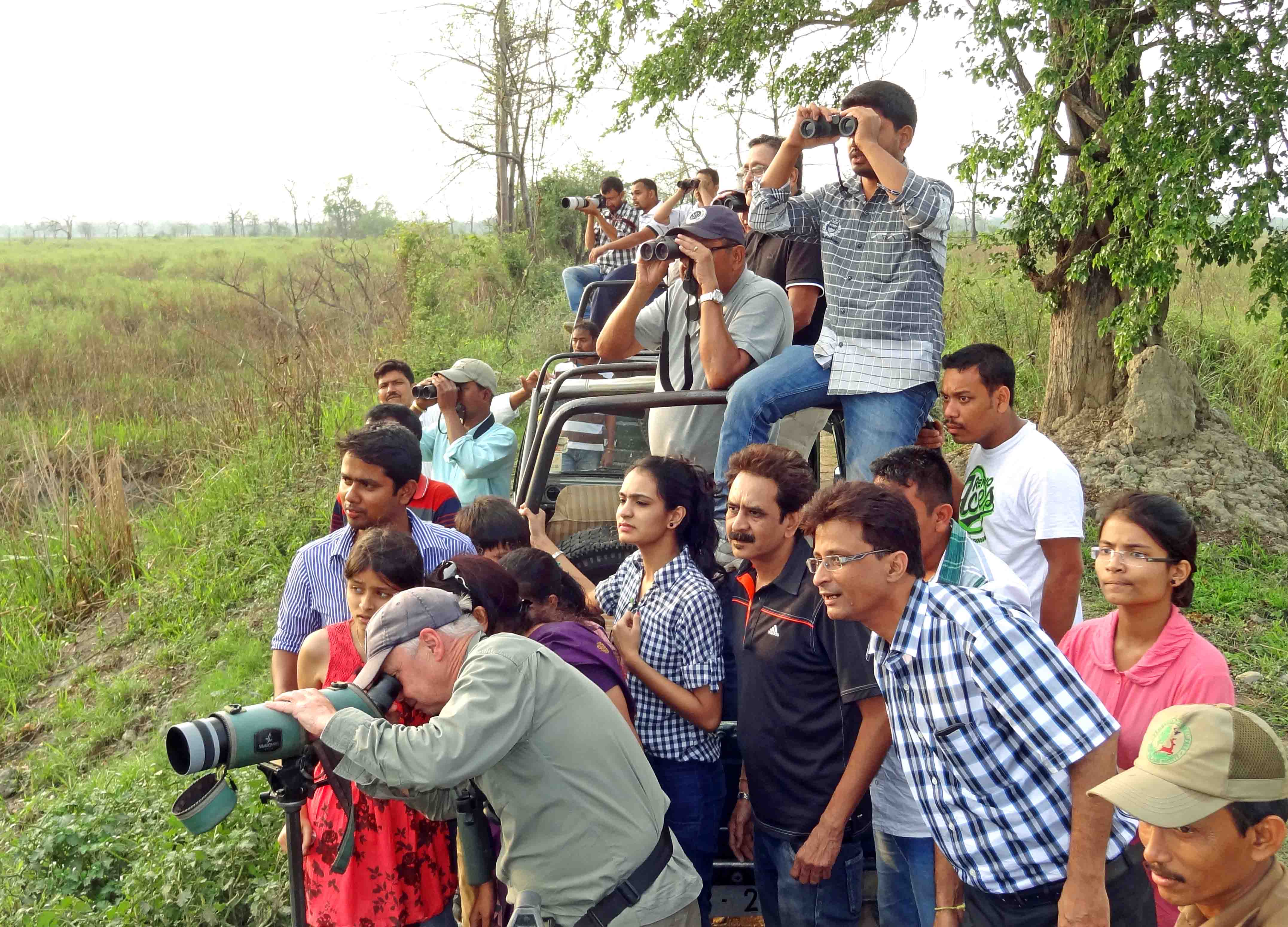
It was amazing to see how exited people were – me included! – to see a tiger for the first time, which gives me a little hope for their long term future.
Watching the tiger
It is said that the reason that the tigers are doing so well here is the relative freedom from poaching in Kaziranga NP as well as the abundance of game for them to hunt. In a world full of so many horror stories involving wildlife destruction, it is a pleasure to be able to finish this travelogue on a positive note.
The park was officially declared UNESCO World Heritage Site in 1985, and it certainly lives up to this recommendation.