People have been living on the island of Tresco, in the Scilly Islands, for over 5000 years, and visiting these islands by boats from the Cornish mainland as long ago as 6000/7000 BC. The islands would have looked very different back then, covered in oak, ash and elder trees, with roe deer and wild boar in the woodlands. The sea was much lower than it is today and the first settlers in the Neolithic grew oats and barley on the fertile lowlands of the ancient land they called Ennor (used by J. R. R. Tolkien’s for the fictional lands of Middle-earth).
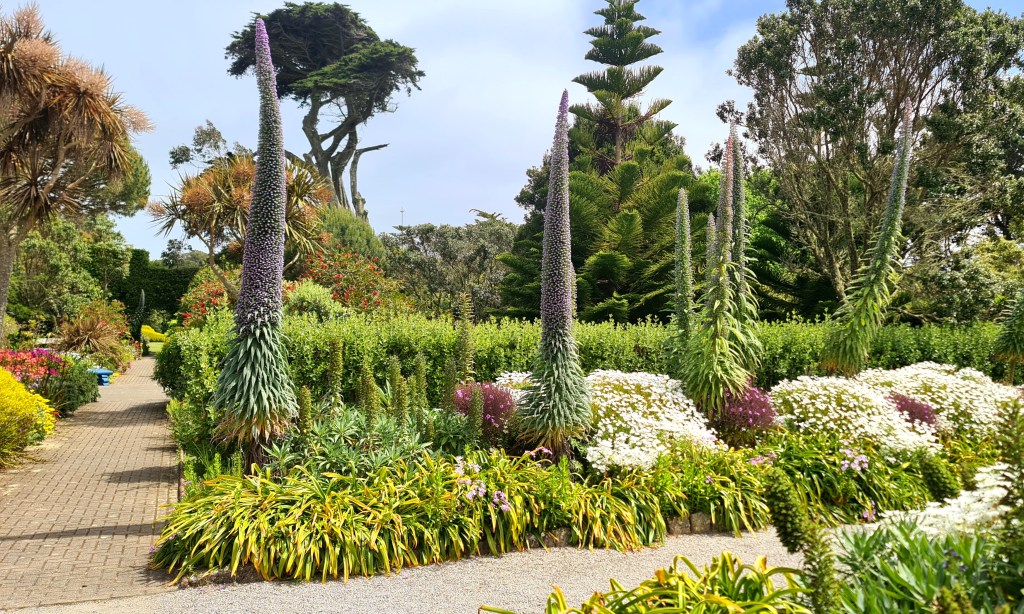
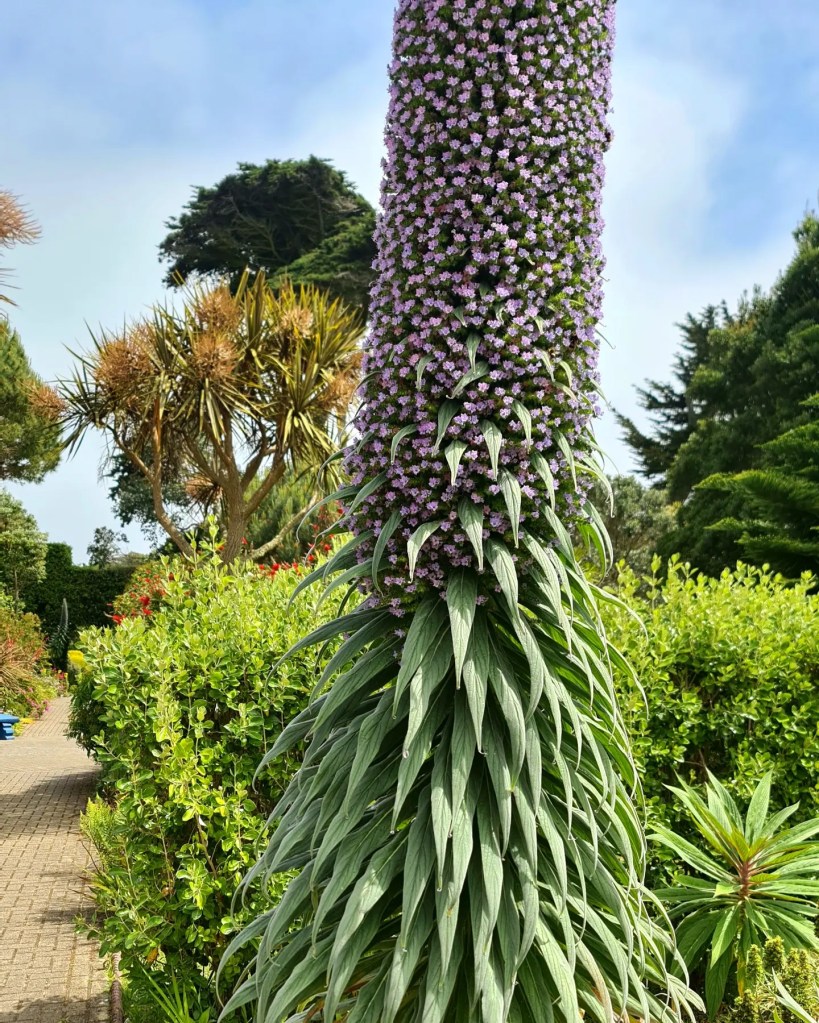
Echium pininanaEchium pininanaEchium pininana
Echium pininana, the tree echium, is in the borage family Boraginaceae. It is endemic to the Canary Islands, where it is restricted to the island of La Palma.
Bumblebee on unidentified flower
The Scilly Islands were still a single island when the Celts arrived around 500BC. The Romans also colonized Ennor, they called it Insulae Sillinae, which remained a single island until at least AD 400. Today, the Scilly Islands comprise some 55 islands and islets, of which Tresco is the second-biggest, measuring about 3.5 km (2.2 mi) by 1.75 km (1.09 mi). This was my second visit to the island, and on both occasions I was blessed with good weather, if a bit windy!
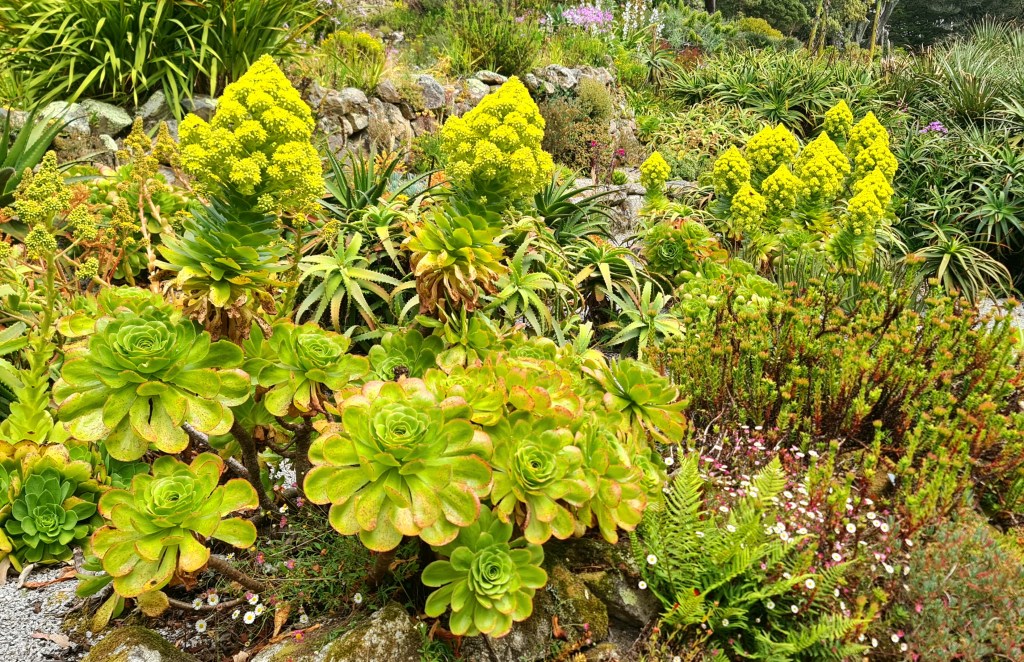
Aeoniums
Benedictine monks first built an abbey on Tresco, founded in 964 AD, and appear to have introduced many new herbs and flowers, such as chamomile, wild thyme and tansy. The ruins of the original abbey can still be seen in the Abbey Gardens. Rents for the Scilly islands was reportedly paid to the crown in puffins! Which seems rather hard on these little birds, which still breed on the islands, albeit in small numbers (about 100 pairs). So there must have been many more puffins on these islands back in the Middle Ages! A reminder that wildlife was often much more abundant in the past (see shifting baselines).
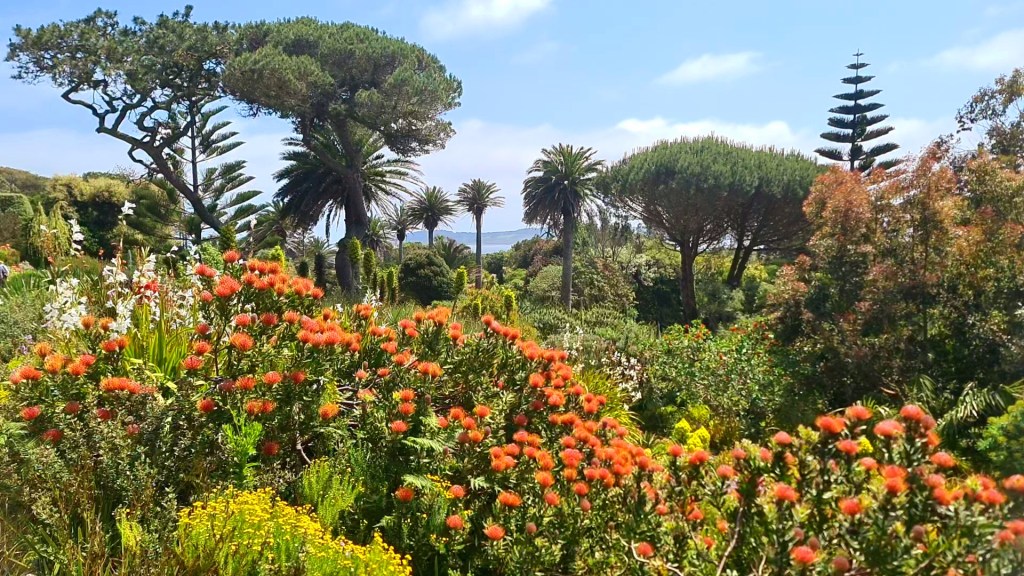
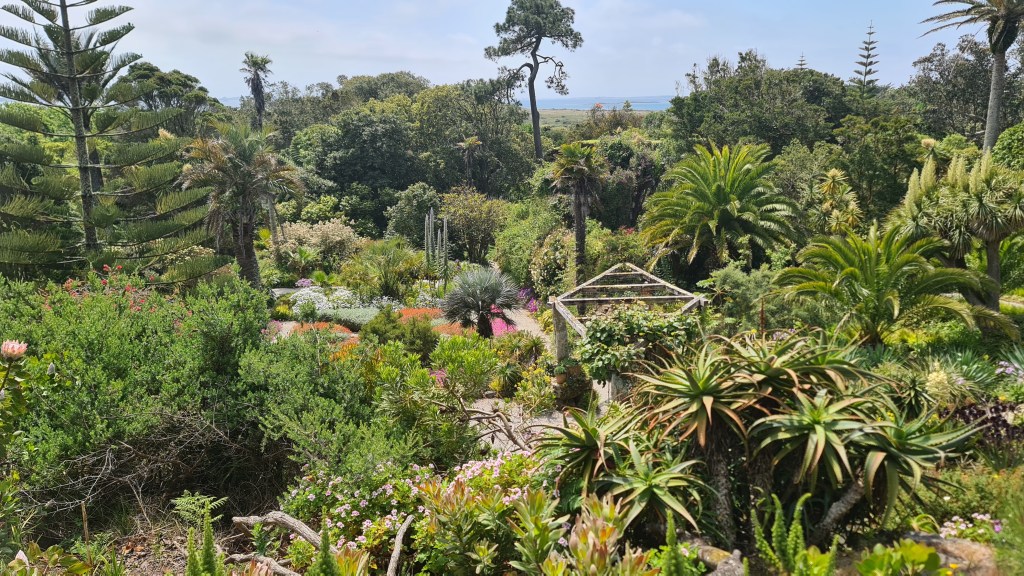
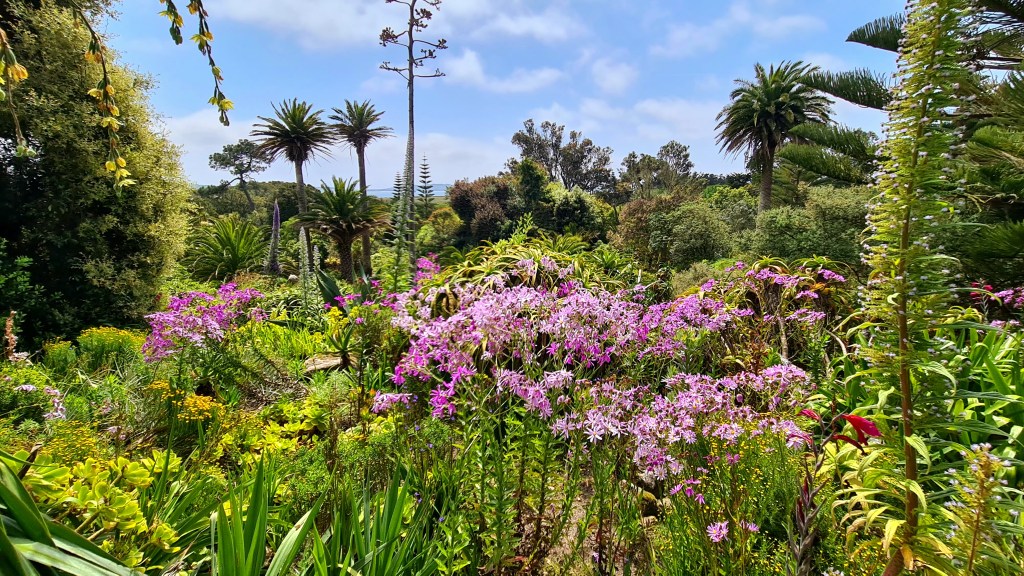
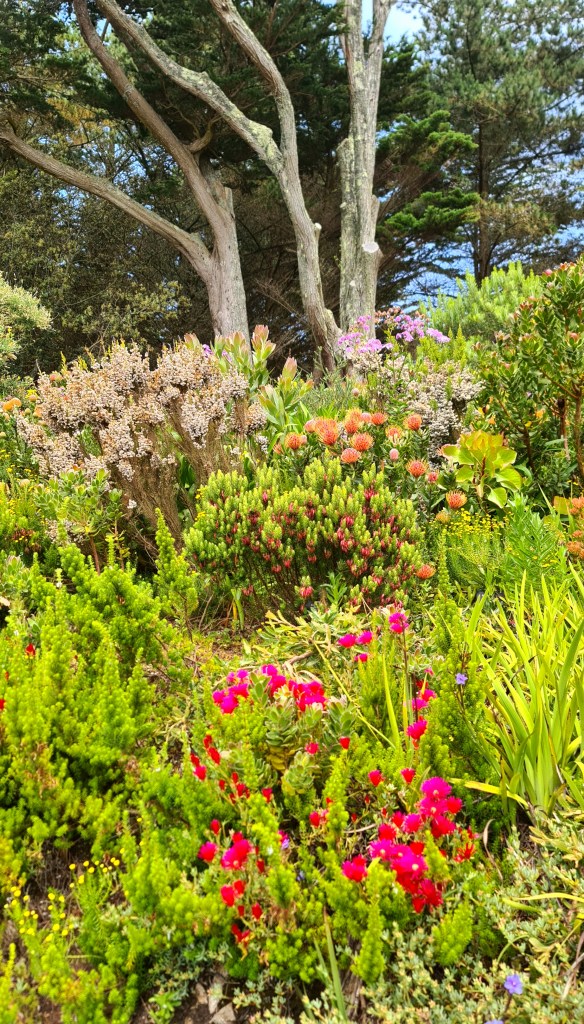
Tresco Abbey Gardens in May 2023
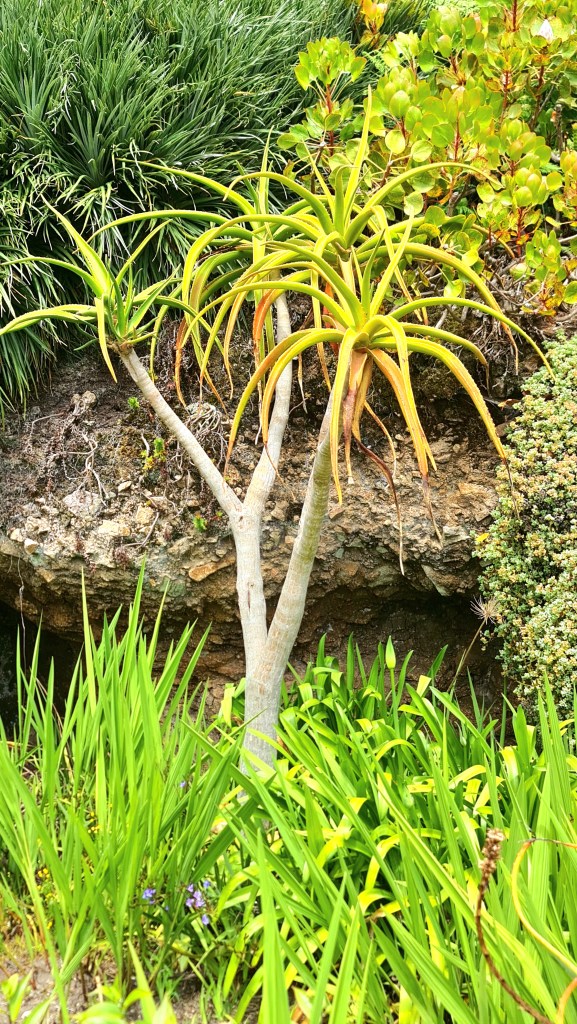
Plants have been introduced into the gardens from all over the world, albeit obtained in many instances via Kew Gardens, including from South Africa, Australia, New Zealand, Chile, and the the Canary Islands. The mild climate of the Scilly Islands, bathed as they are by the Gulf Stream, provide a wonderful, virtually frost-free habitat for such exotics, sheltered by salt-tolerant Monterey Pine and Cypress trees from California.
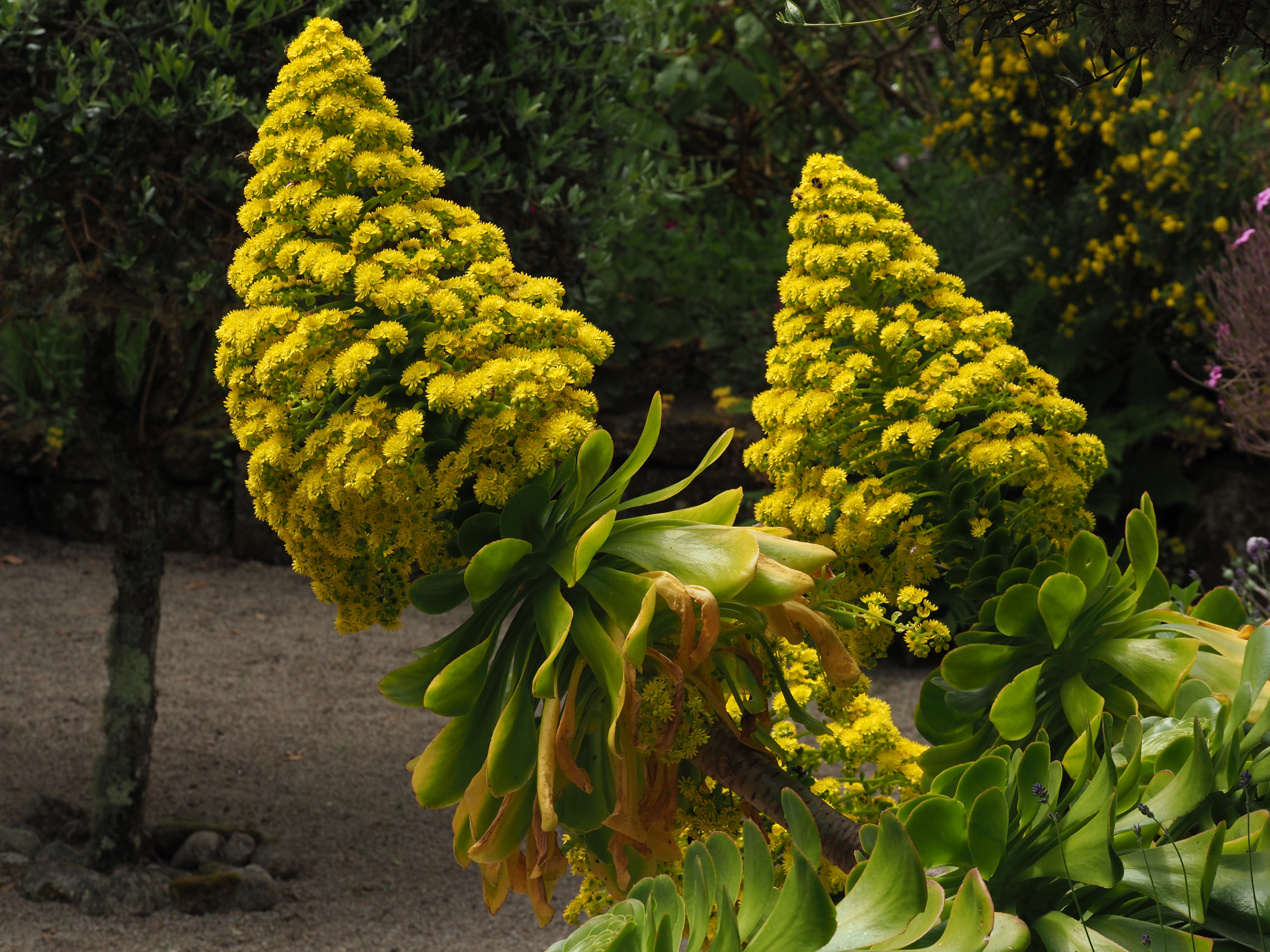
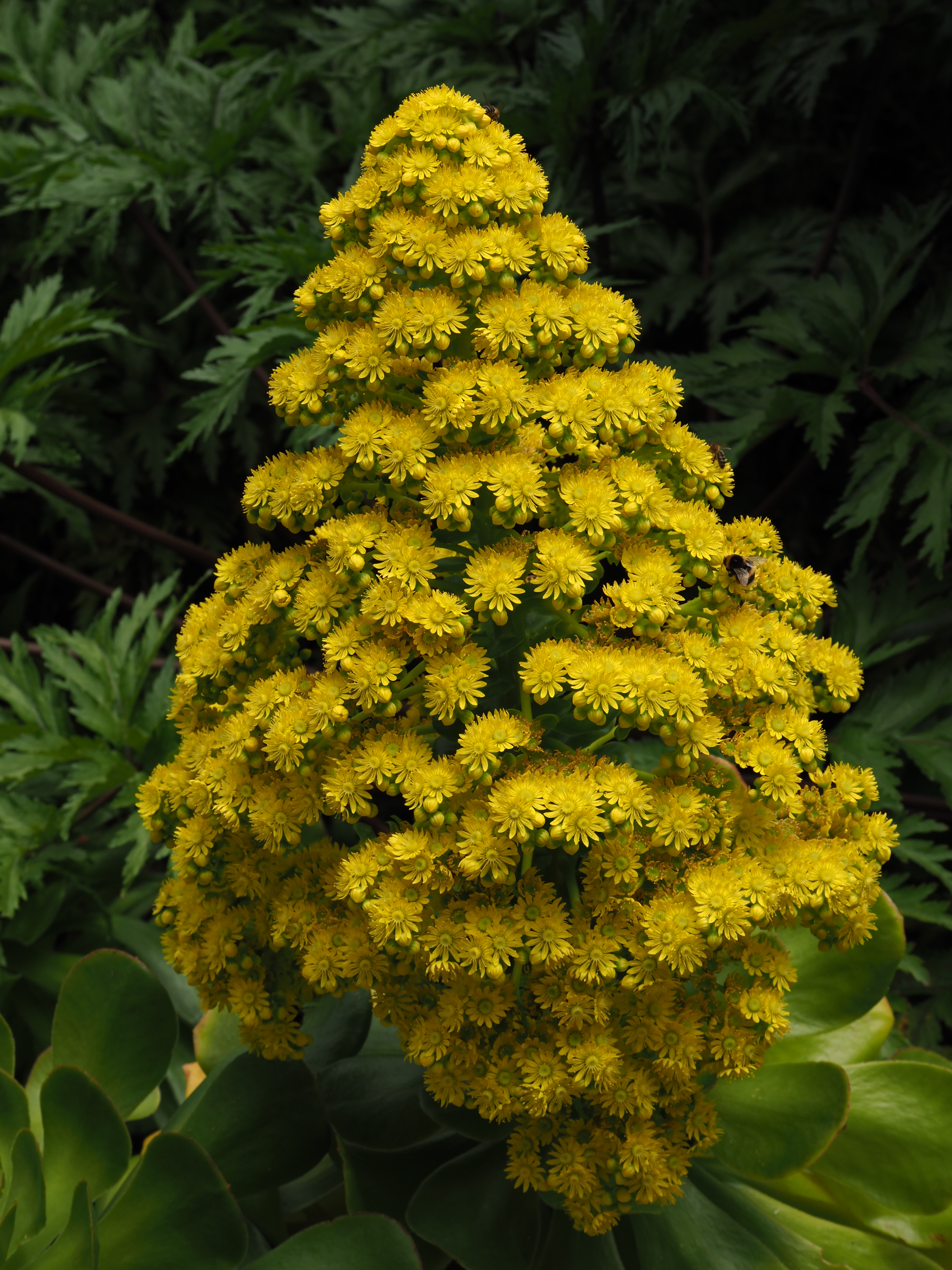
A yellow flowering succulent
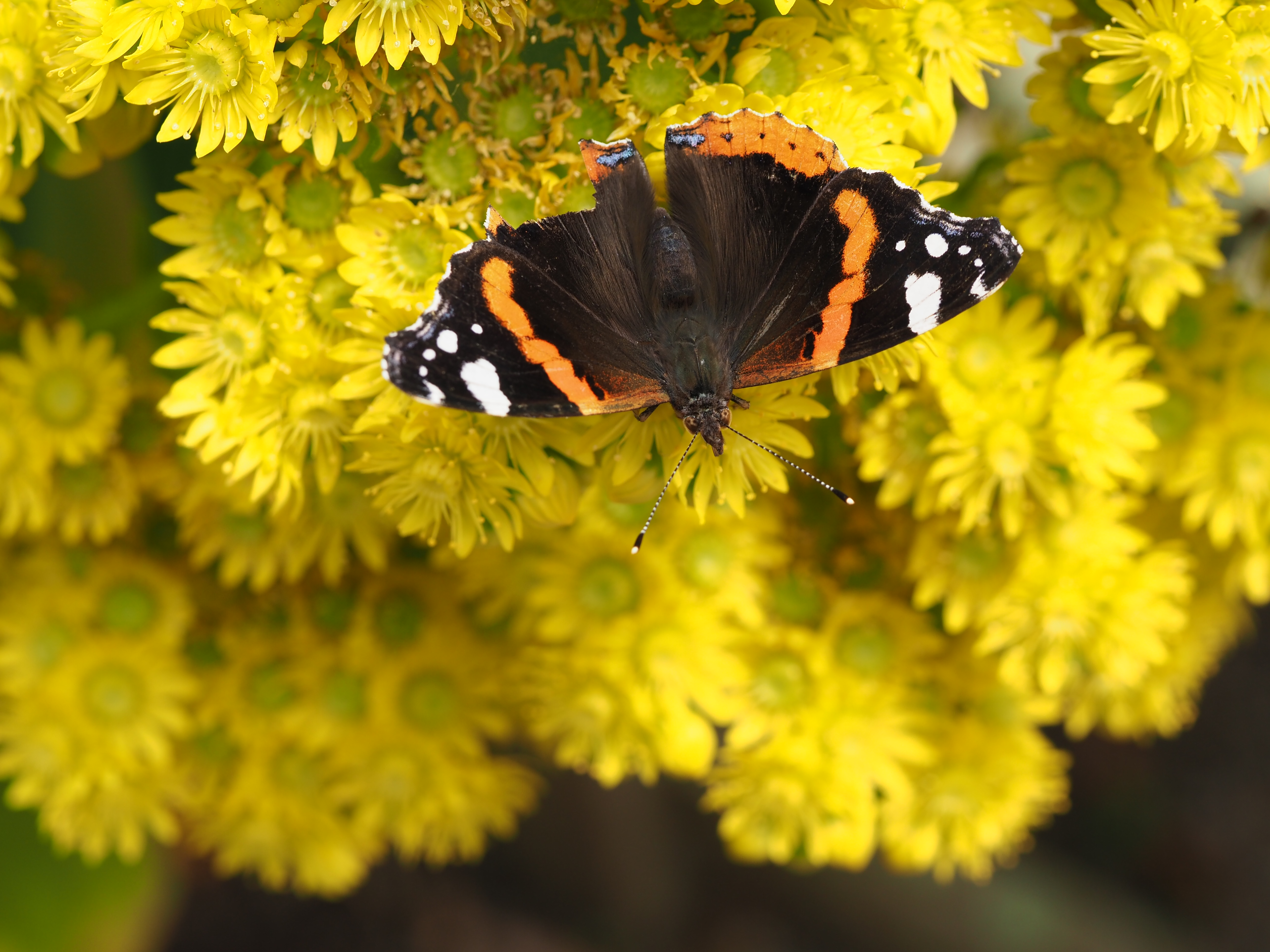
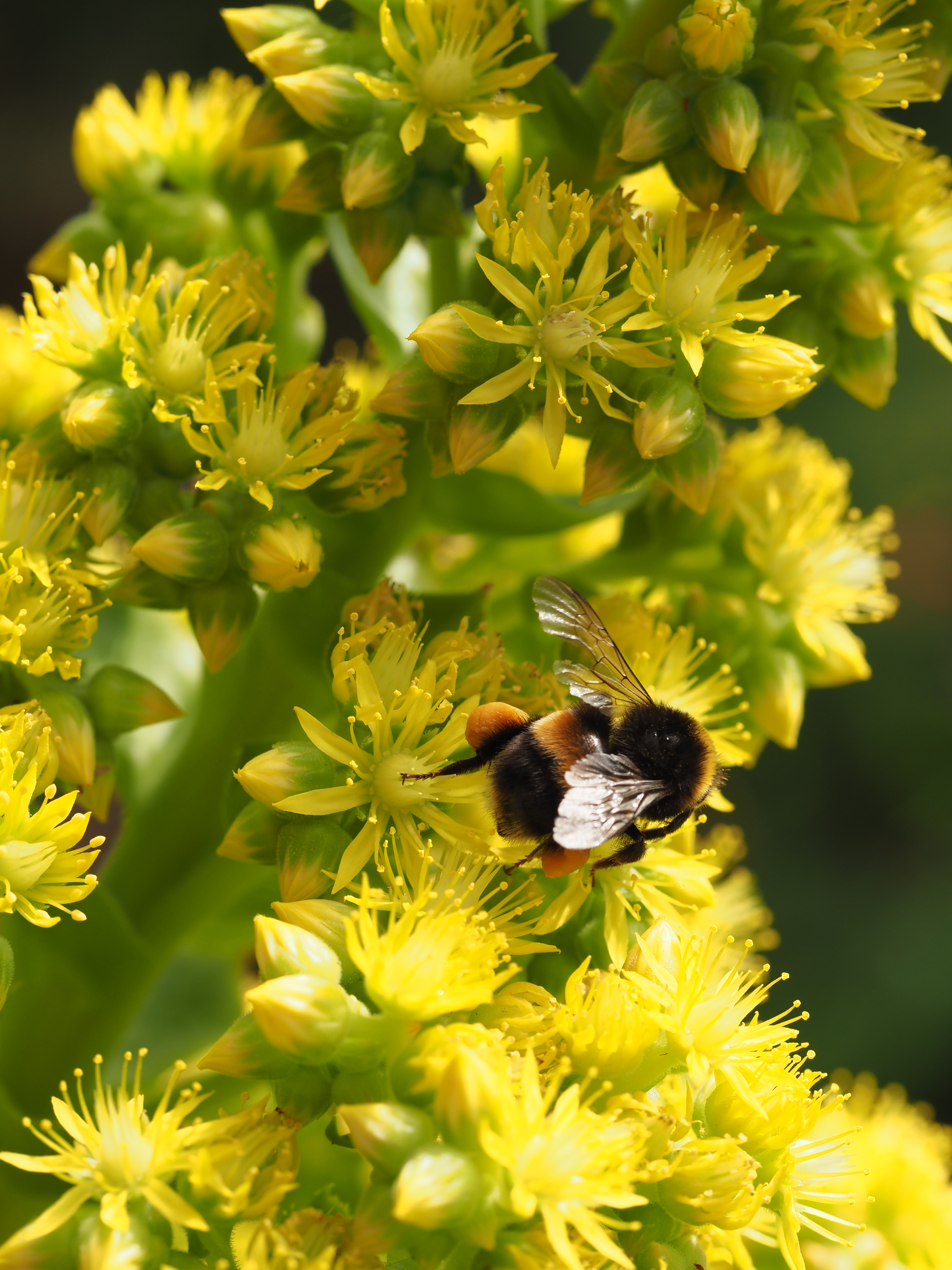
The magnificent Aeonium arboreum ‘Zwartkop’ (Crassulaceae) – a succulent which is endemic to the western Canary Islands is a magnet for all sorts of insects, including bumblebees and butterflies (below). Although it is beautiful and fascinating in my opinion, this plant is considered to be invasive weed in some places, such as Australia.
Aeonium arboreum ‘Zwartkop’Aeonium arboreum ‘Zwartkop’Red admiral butterflyBumblebee laden with pollen
I came across a remarkable flowering agave plant from South America (below). These succulent plants belong to the family Asparagaceae and like many agaves, Furcraea parmentieri is monocarpic, which means that the rosettes die after flowering. At maturity, this plant explodes into flower, producing a tall, spectacular inflorescence (below)
The gardens we see today, were the creation of a wealthy Victorian landowner called Augustus Smith, who in 1834 acquired the lease on the Isles of Scilly from the Duchy of Cornwall for £20,000; the equivalent of a few million pounds today. Still, quite a bargin I think. His title, Lord Proprietor of the Isles of Scilly, gave him the power to make a number of changes and reforms reforms to the islands. He built his home on Tresco, and started the Tresco Abbey Gardens, introducing many exotic plants and carrying out landscape planting.
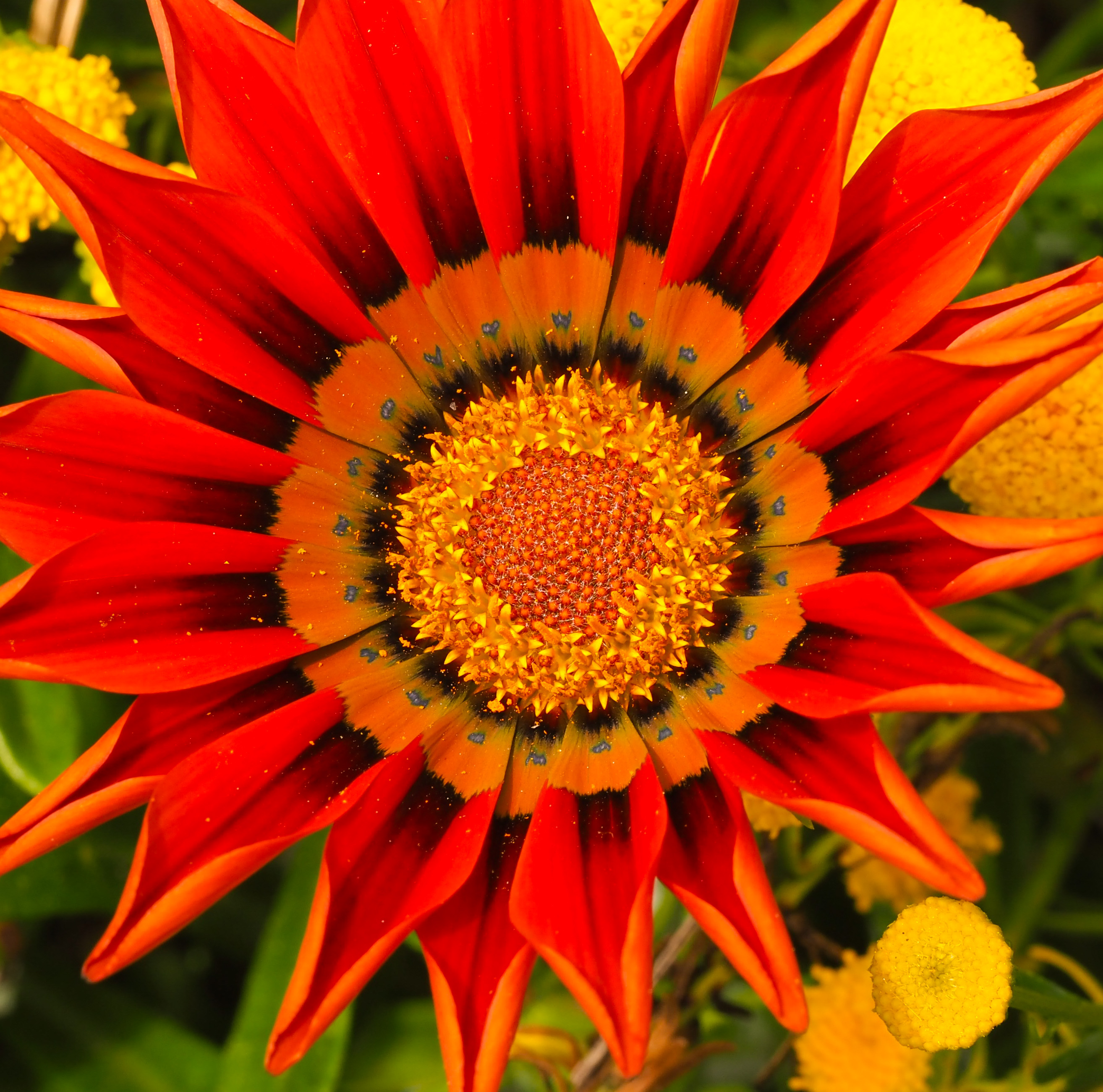
Gazania is a genus of flowering plants in the family Asteraceae, native to Southern Africa, where they typically appear in the late spring and often in bloom throughout the summer into autumn.
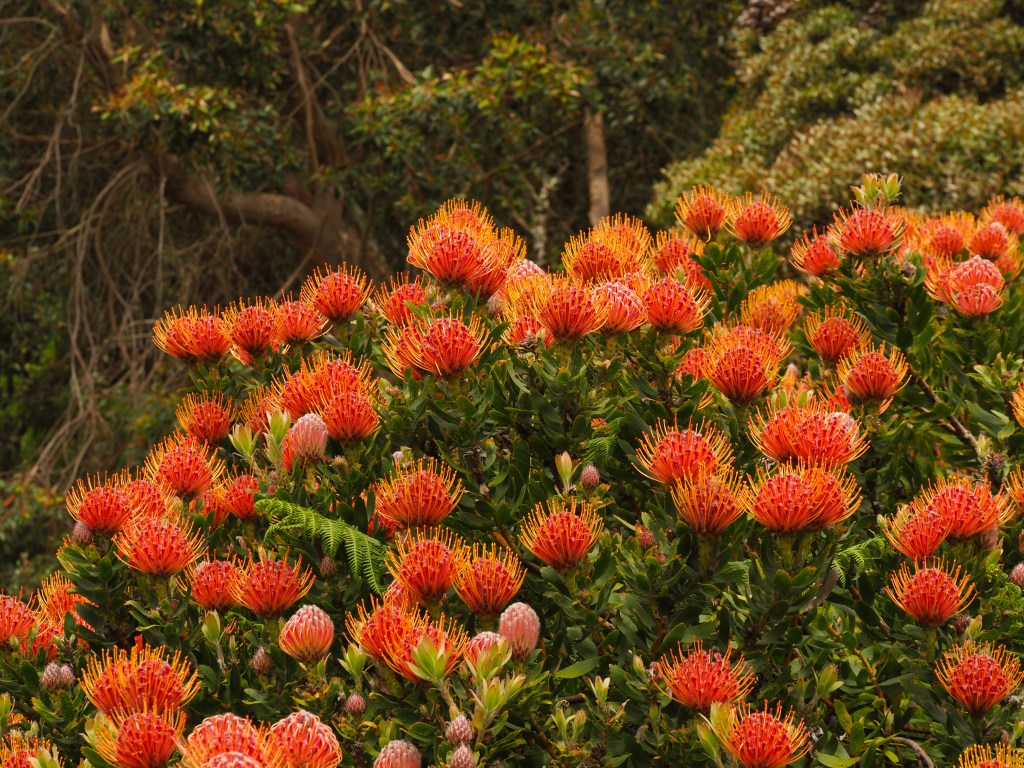
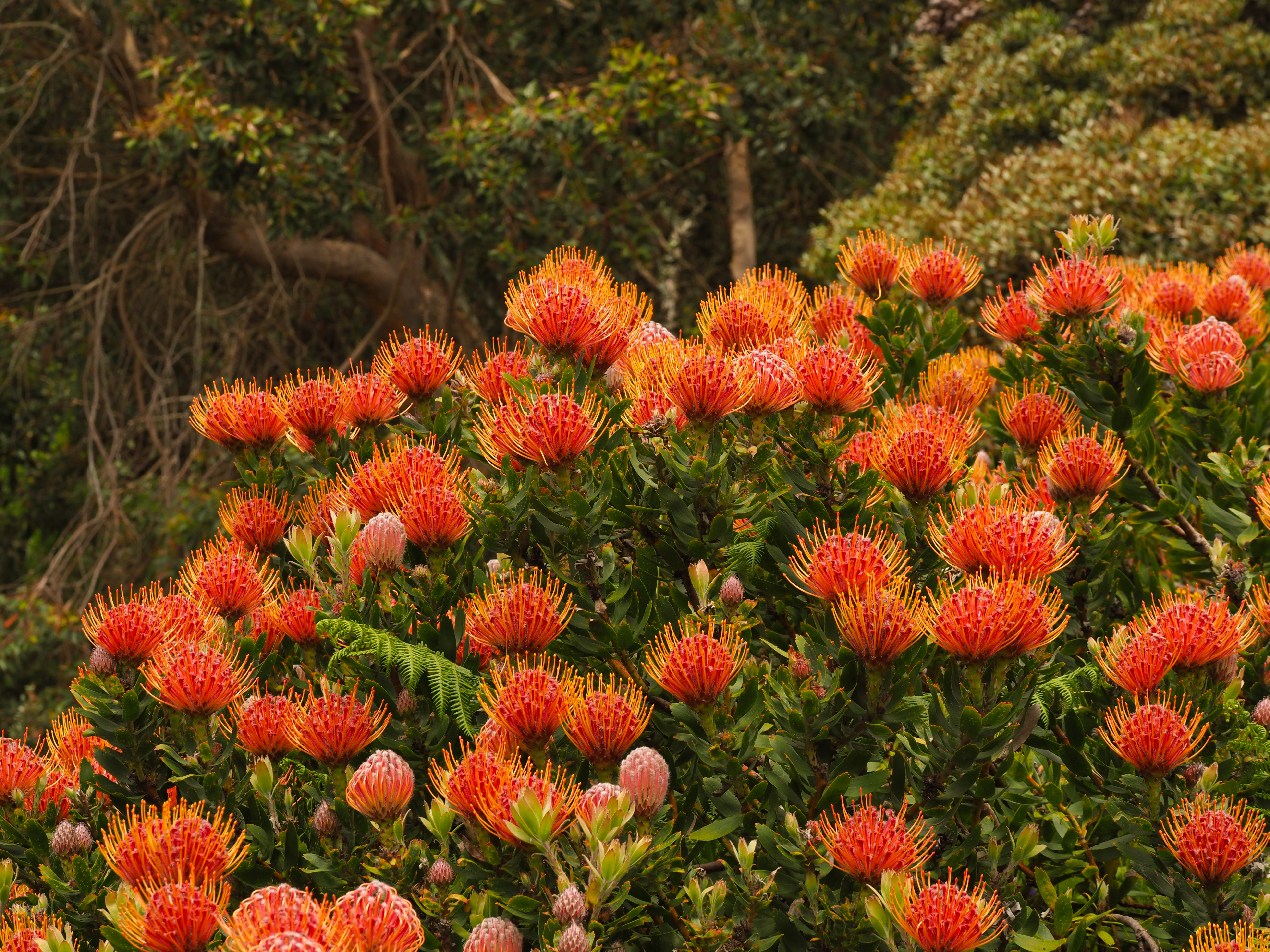
Gazania flower from South AfricaPincushion flowers (Leucospermum cordifolium)
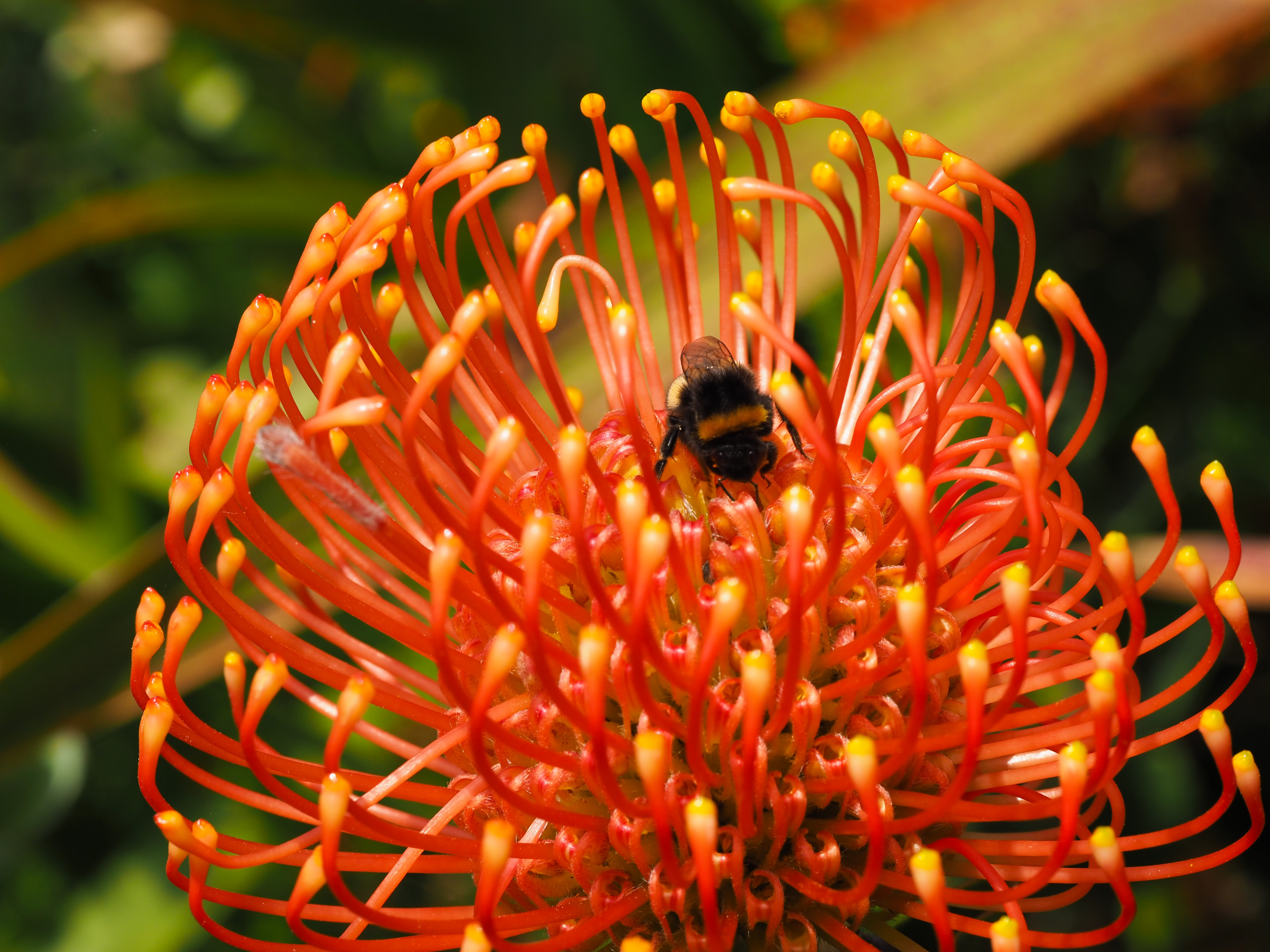
The bumblebees liked the pincushion flowers (below), despite their being exotics from South Africa – they have pollen and nectar just like native flowers – and almost looked like they were trapped in a ‘bee cage’ made by the individual florets!
Bumblebee in Pincushion flower head, Leucospermum cordifoliumBumblebee in Pincushion flower head, Leucospermum cordifolium
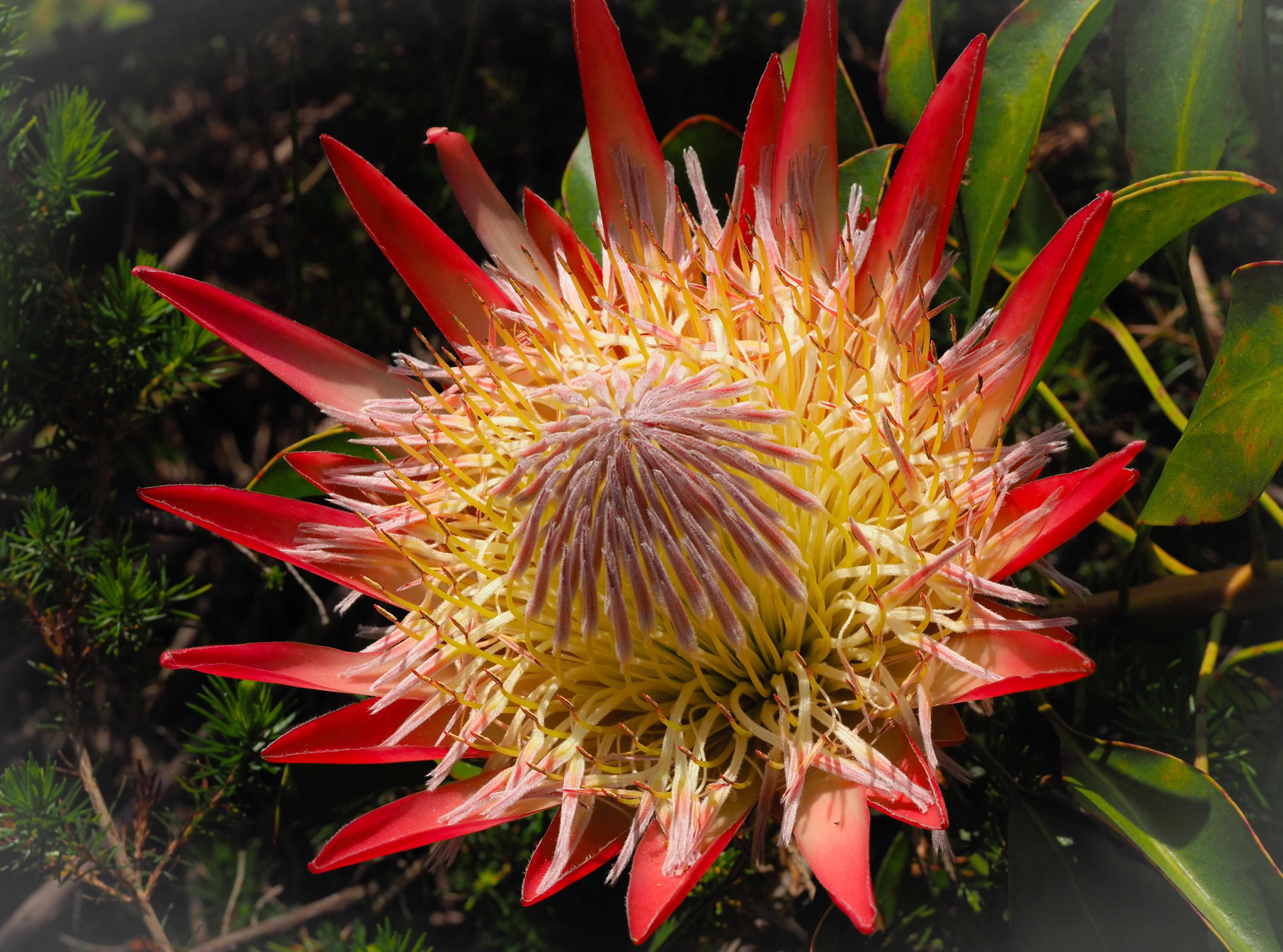
Proteas are one of my favourite flowers, and it was a treat to come across the magnificent King protea, Protea cynaroides (Proteaceae).
King protea Protea cynaroides
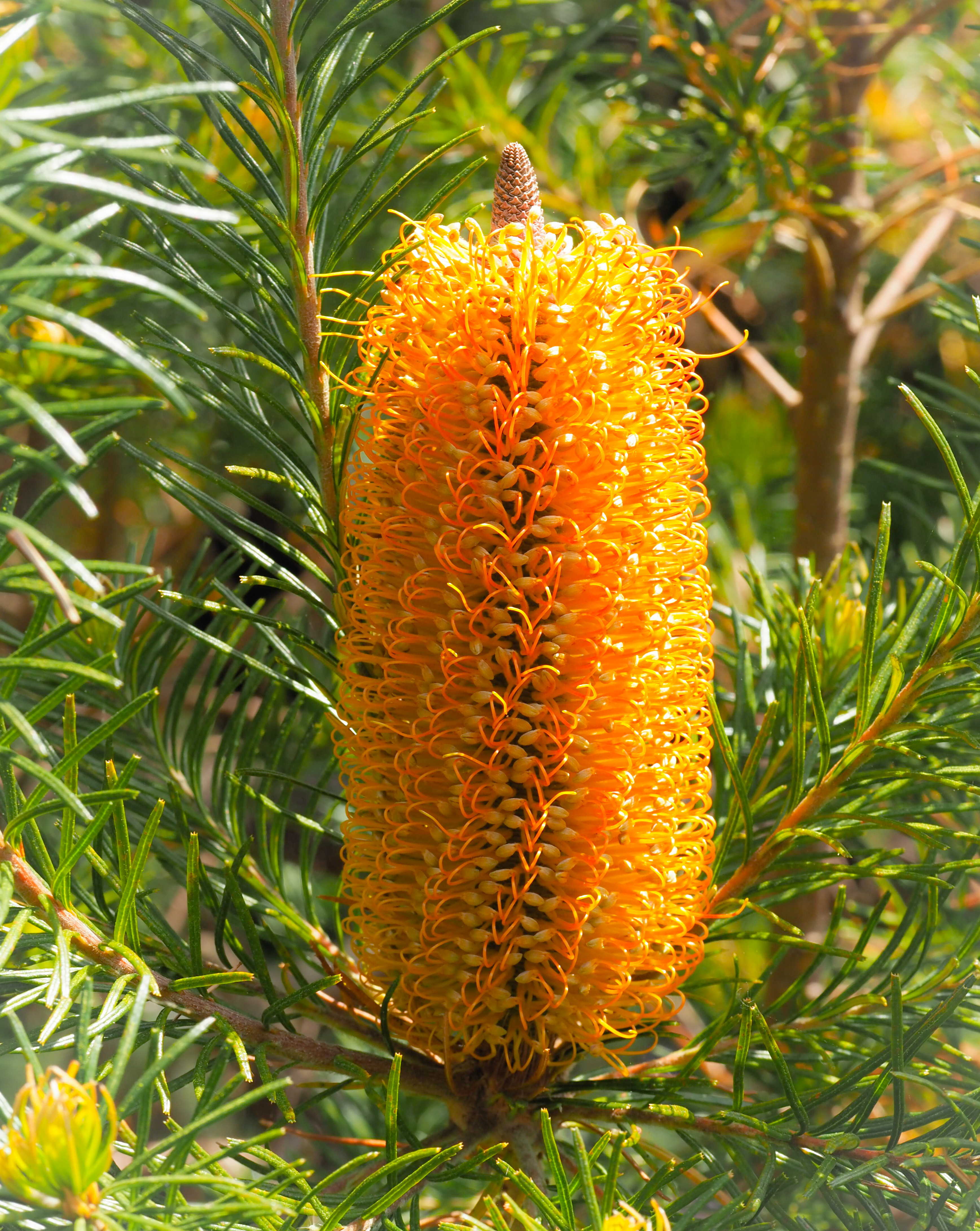
Banksia plants are also in the family Proteaceae and there are around 170 different species in Australia (below).
Banksia spinulosa (I think!)
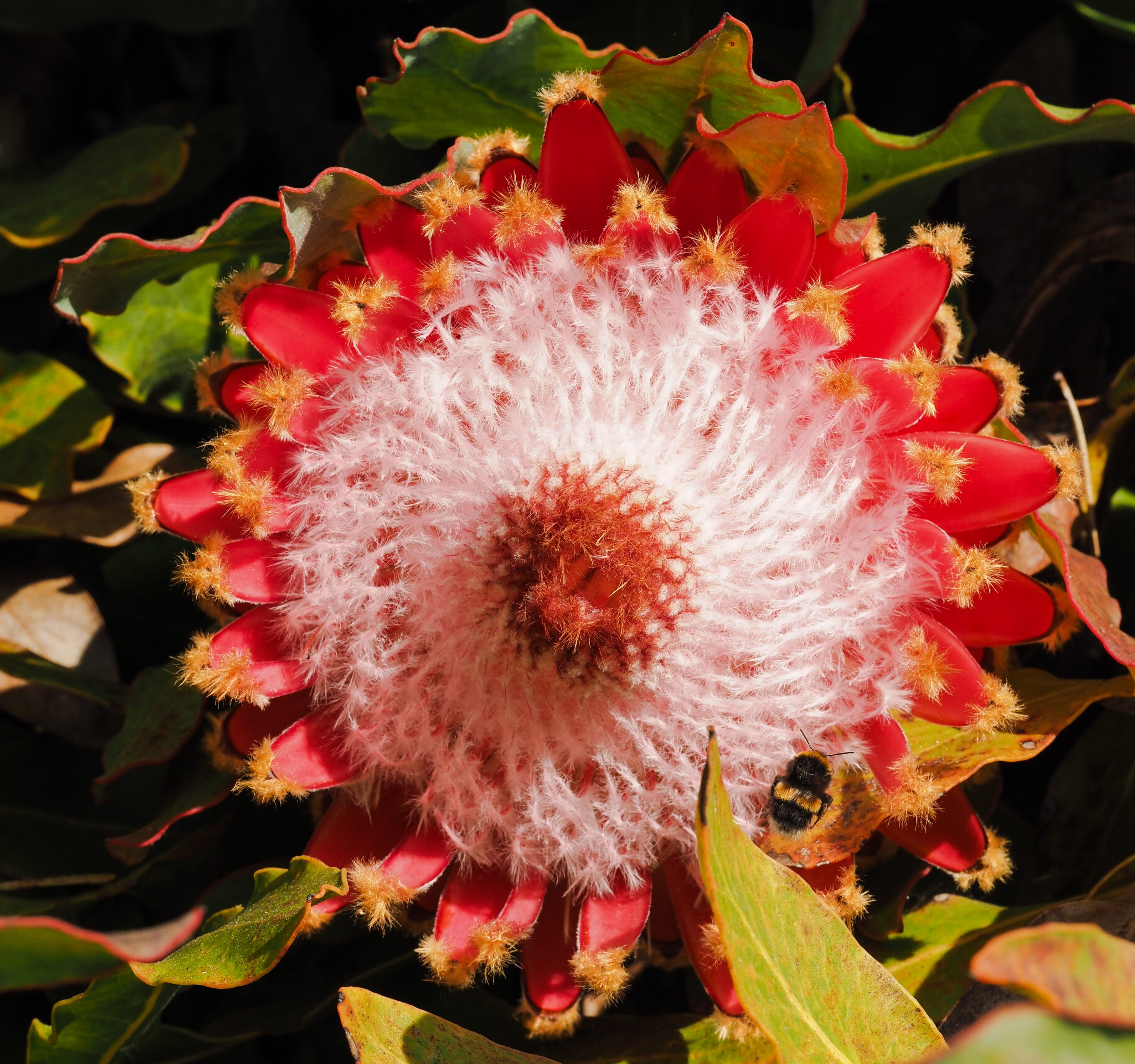
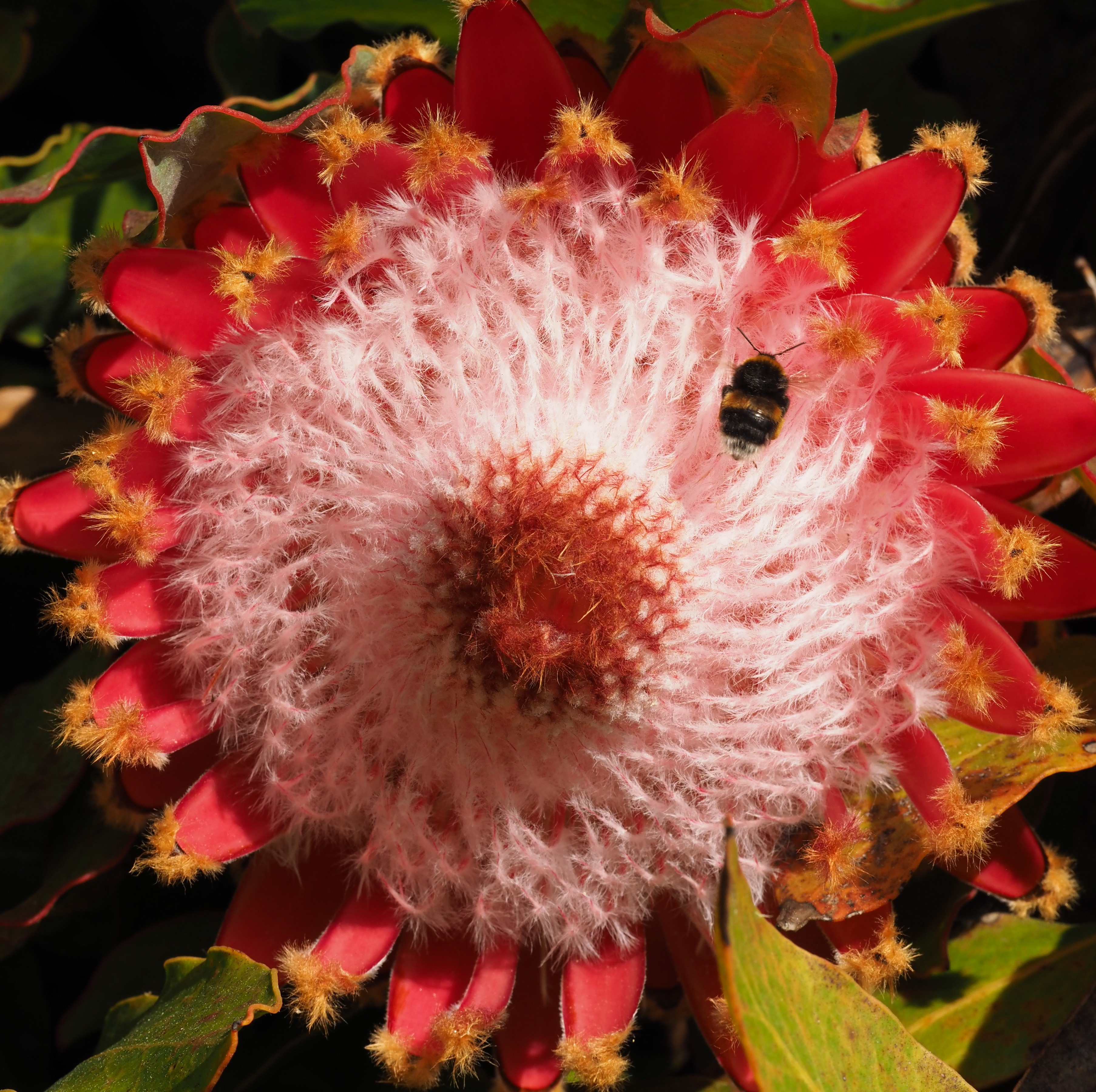
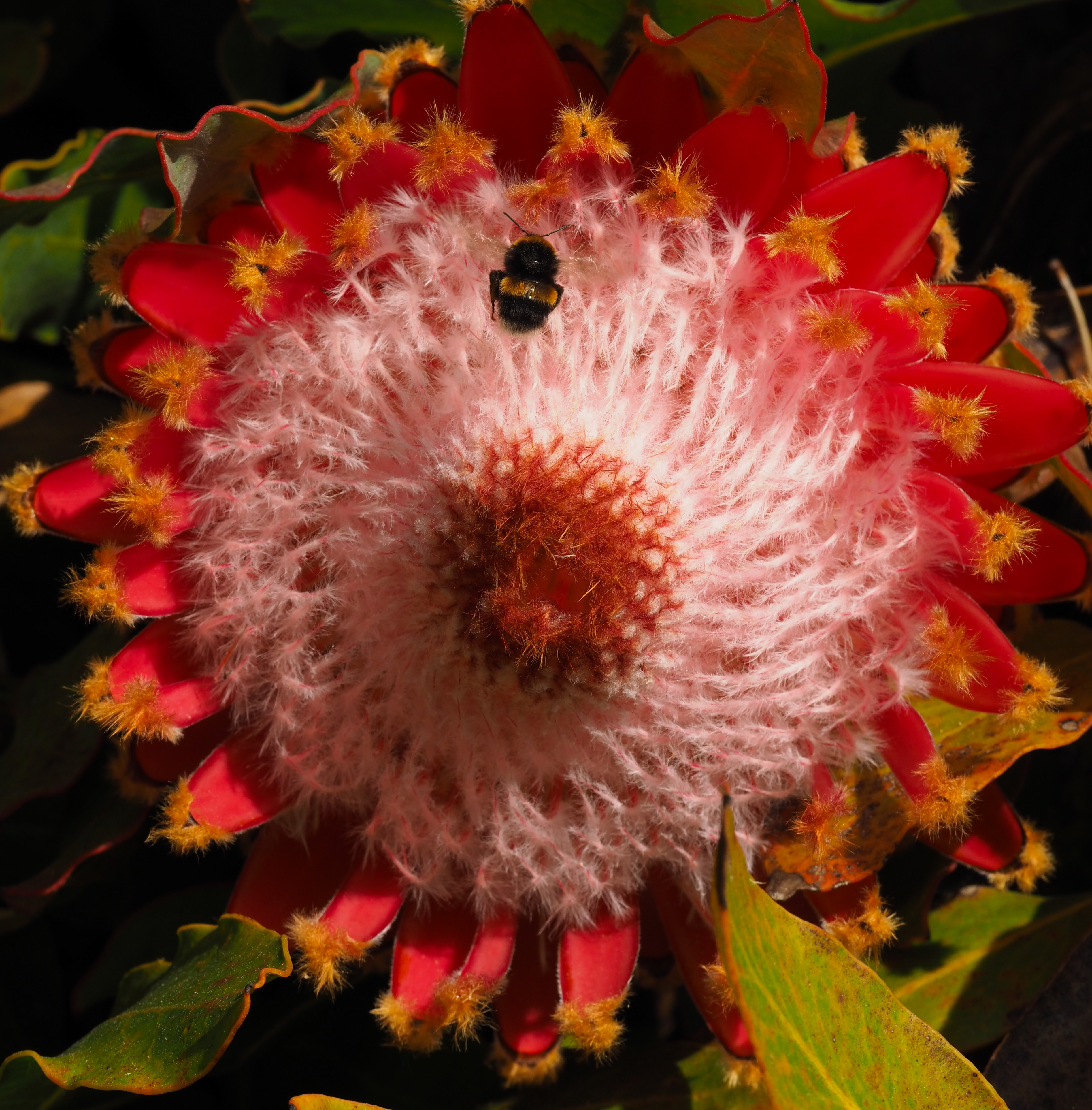
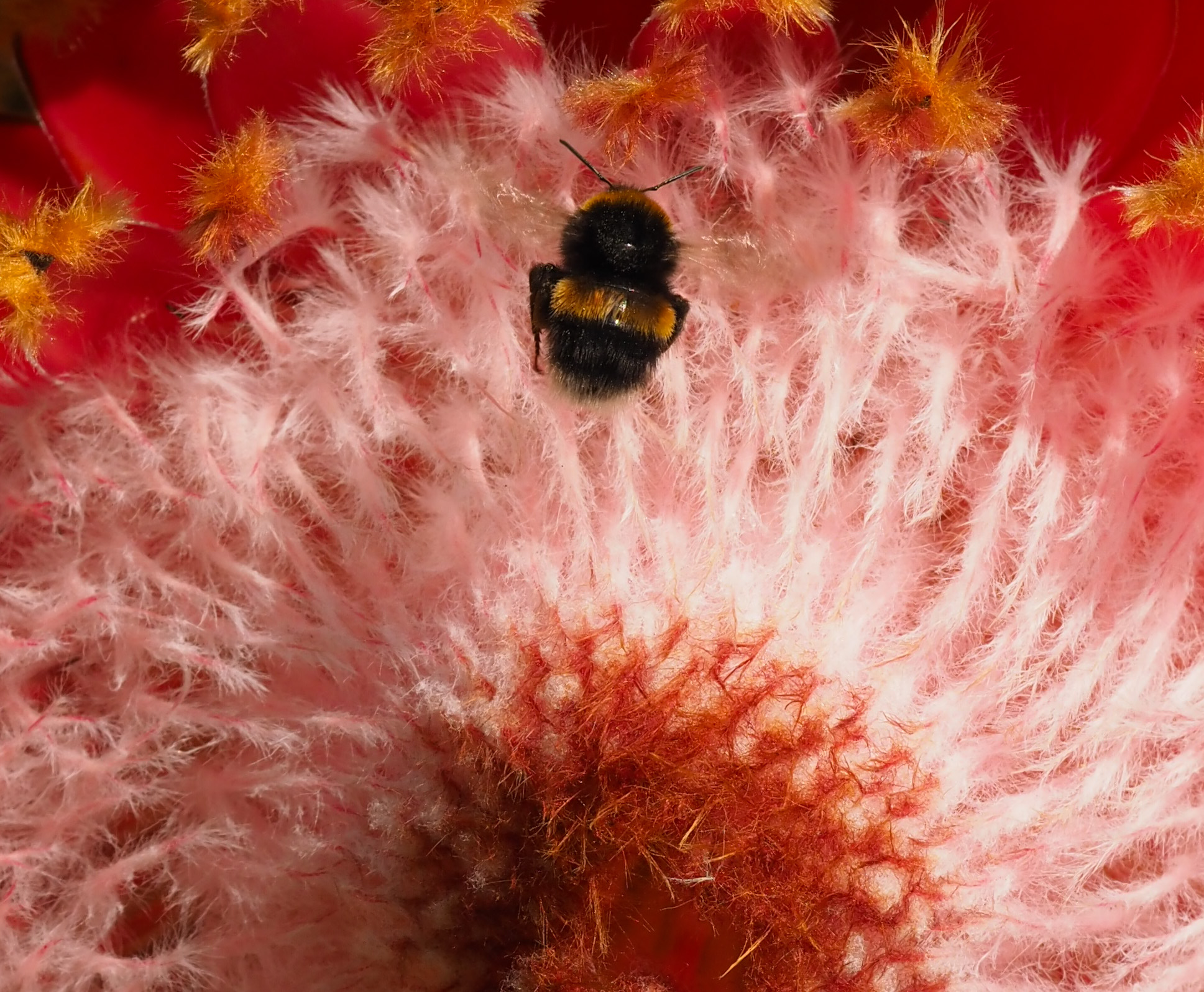
And another species of South African protea was in flower and being visited by a bumblebee (below), which obligingly moved about as I photographed it! Protea magnifica.
Protea magnificaProtea magnificaProtea magnificaBumblebee on Protea magnifica
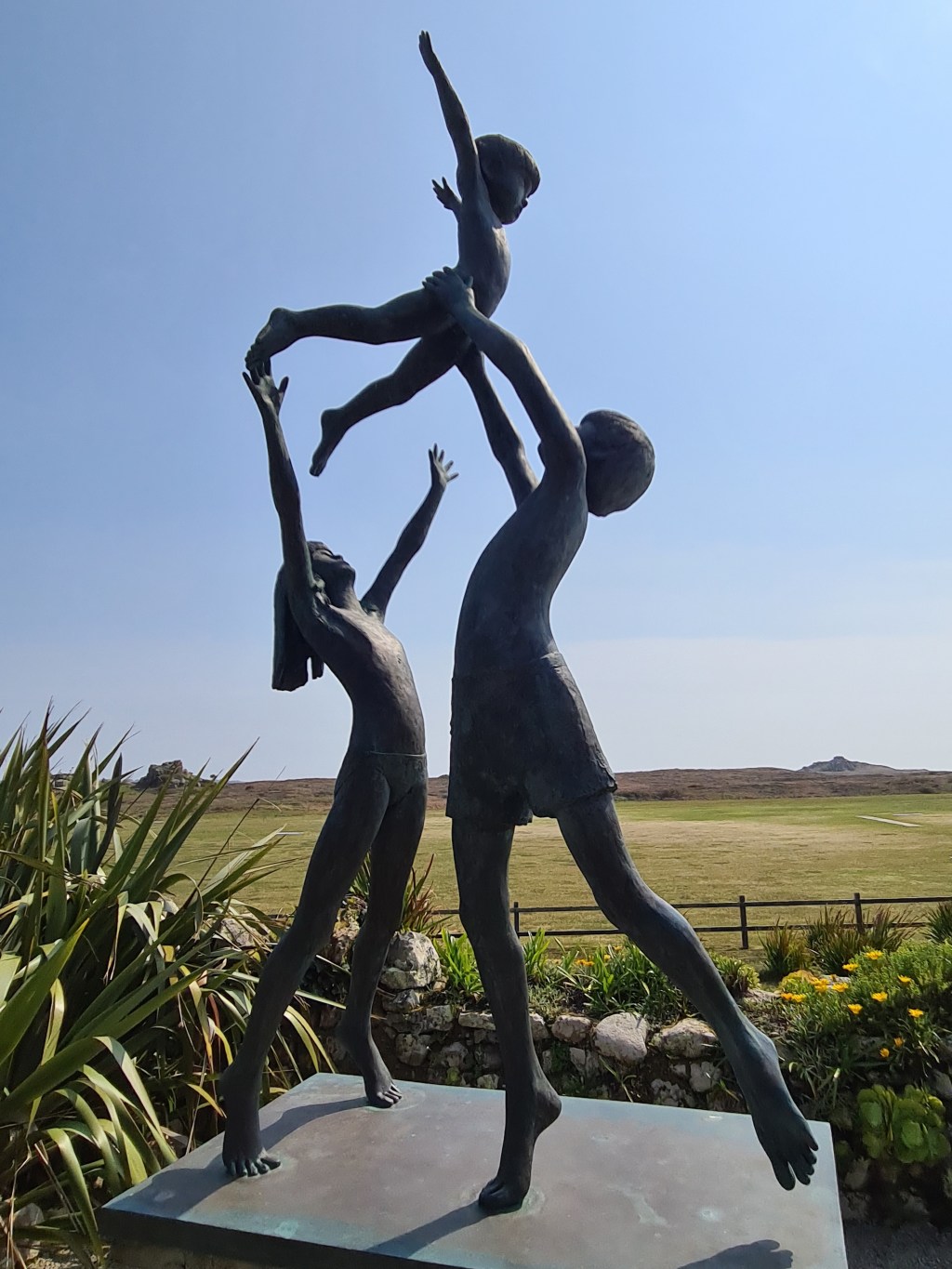
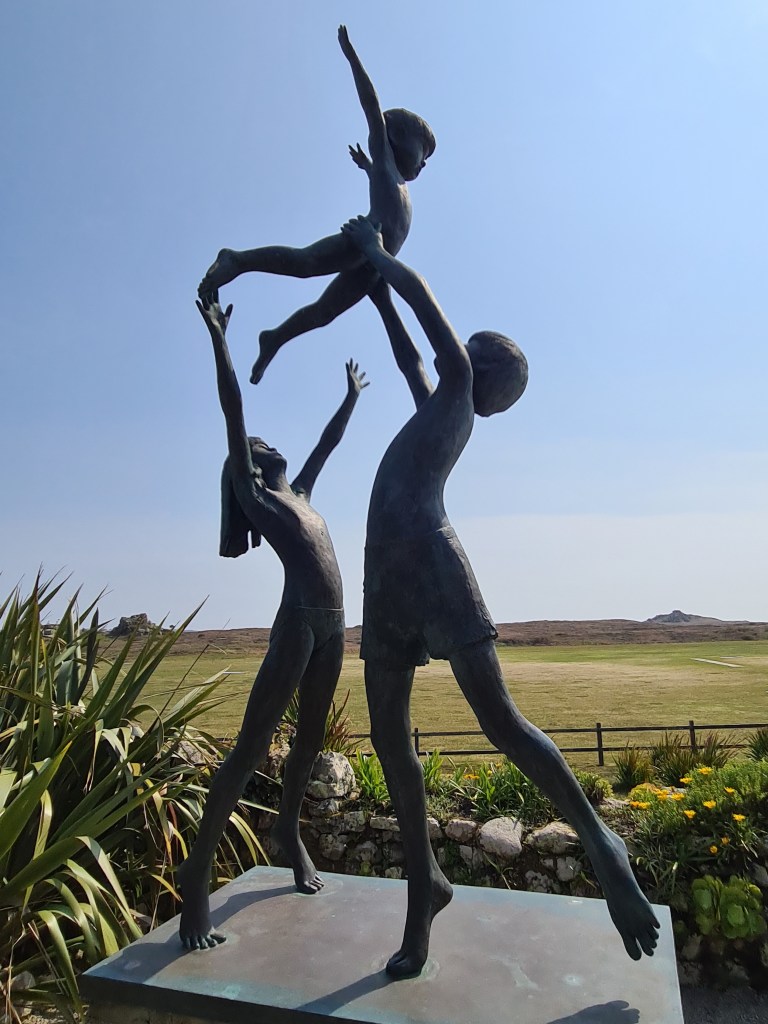
This blog was inspired by seeing some small children enjoying themselves by sitting on a seat. I had just walked past this comfortable looking bench (outside a pizza shop), thinking it would be nice to sit down, but a sensible adult voice in my head said: “that seat is reserved for customers”. But that didn’t stop two young children taking great delight in jumping up and sitting on the attractive wooden bench. Saying to their parents, “Come and sit here!”
Bronze carving of children by David Wynne, Tresco Abbey Gardens, Isles of Scilly.
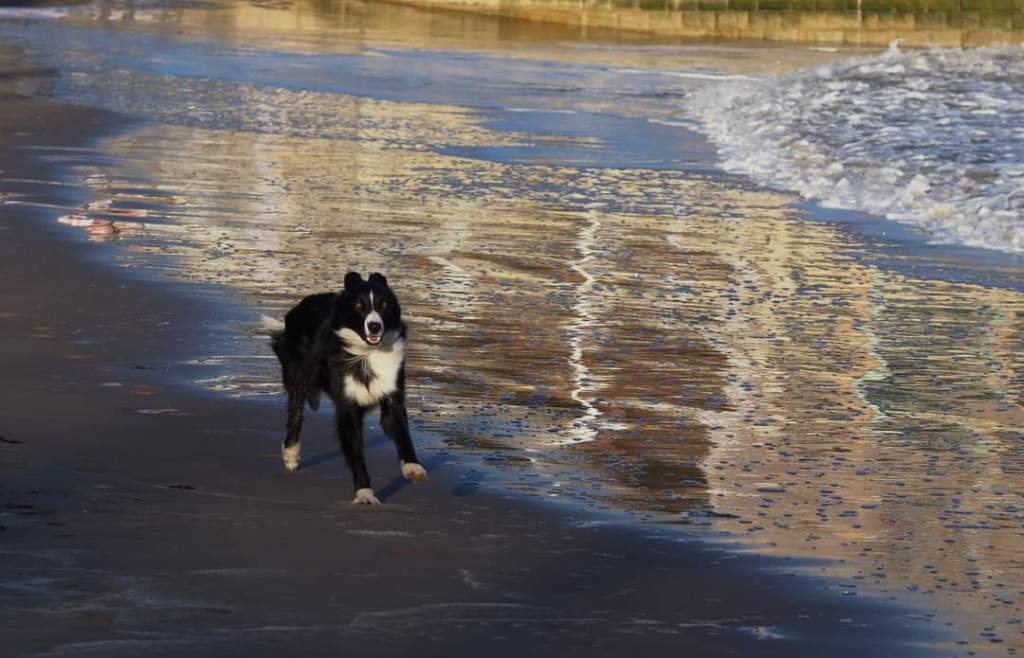
It reminded me that there are simple pleasures in life that children (and animals) are often more tuned into, i.e. free of reservations and hesitations, than adults. Fresh air, rolling in the grass, and running on a beach are all primal activities where we abandon our cares and concerns for a while. Just being alive and free (to play). Watch a dog or a child if you need to (re)learn these simple pleasures!
The joy of running on a beach is universal!
Warm sunshine
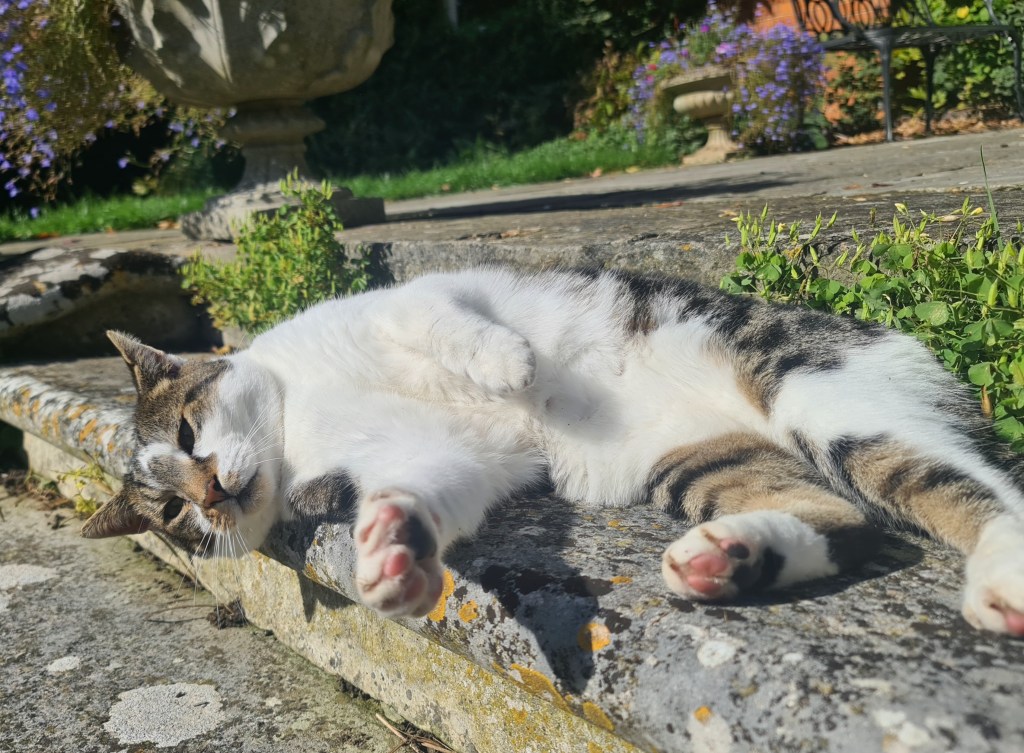
Who doesn’t like to sit in the sun, especially on a winter or spring day, when the sun’s rays warm up our bodies in the still chilly air. Cats are past masters (i.e. particularly good) at this! They don’t need to be told how to relax and chill out!🤣
Basking in the winter sunshine!
Colour
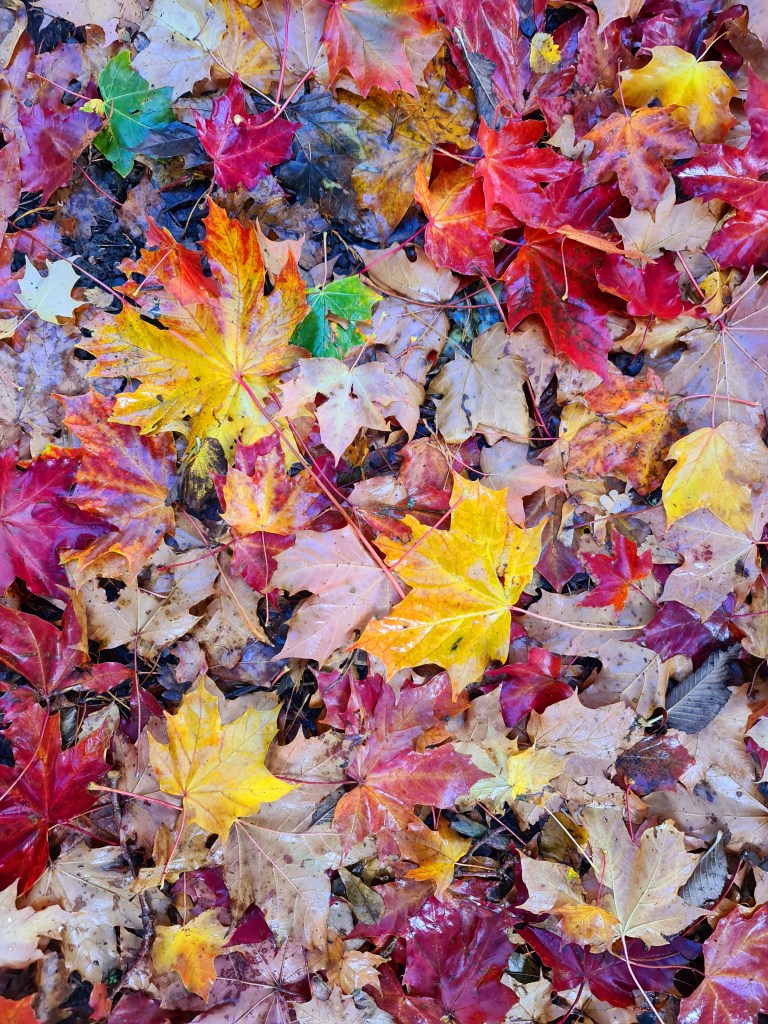
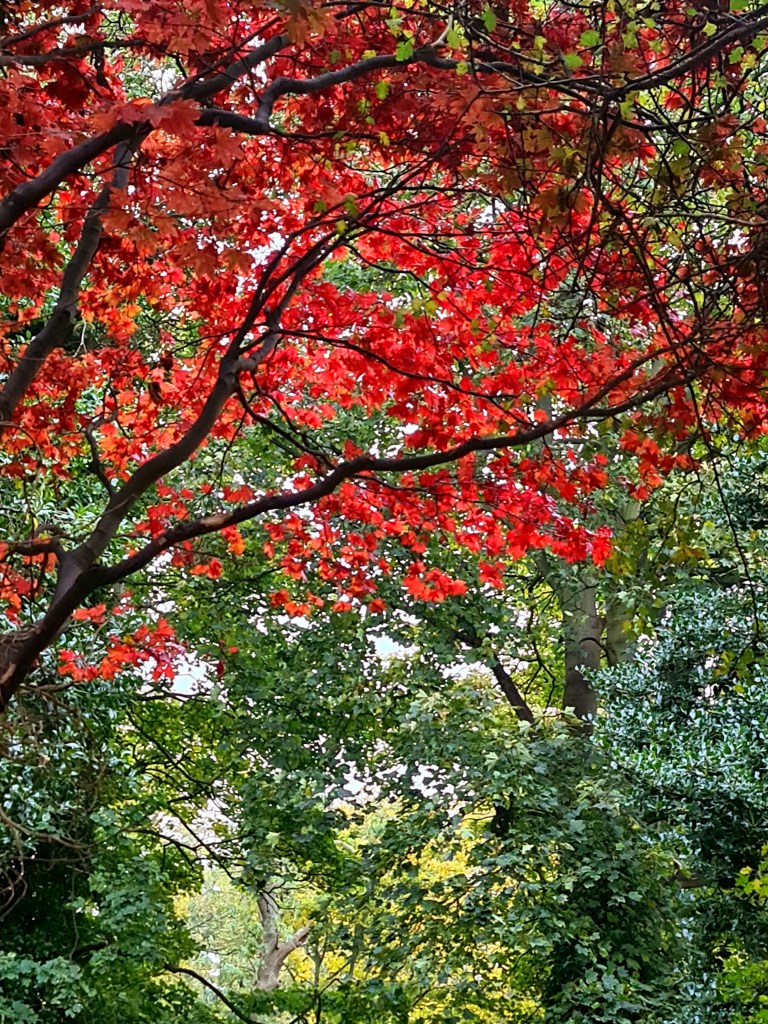
For those of us lucky enough to see colours, the different wavelengths of the electromagnetic spectrum provide a joyousness bordering on the spiritual. Painters, from Van Gogh to David Hockney, use colours to evoke moods and emotions. Spiritual experiences for the millions of us who visit art galleries.
The colours of fallen leavesRed and green are complementary colours
The Old Masters also knew how to use colour to tell a story.
Detail of painting by Fra Angelico (1423-4) in the National Gallery, London
All of the senses provide us with opportunities to experience joy. The simple pleasure of sniffing a fragrant flower or the happiness-inducing sound of bird song. The laughing Kookaburra may be an exception? But I love hearing them too!
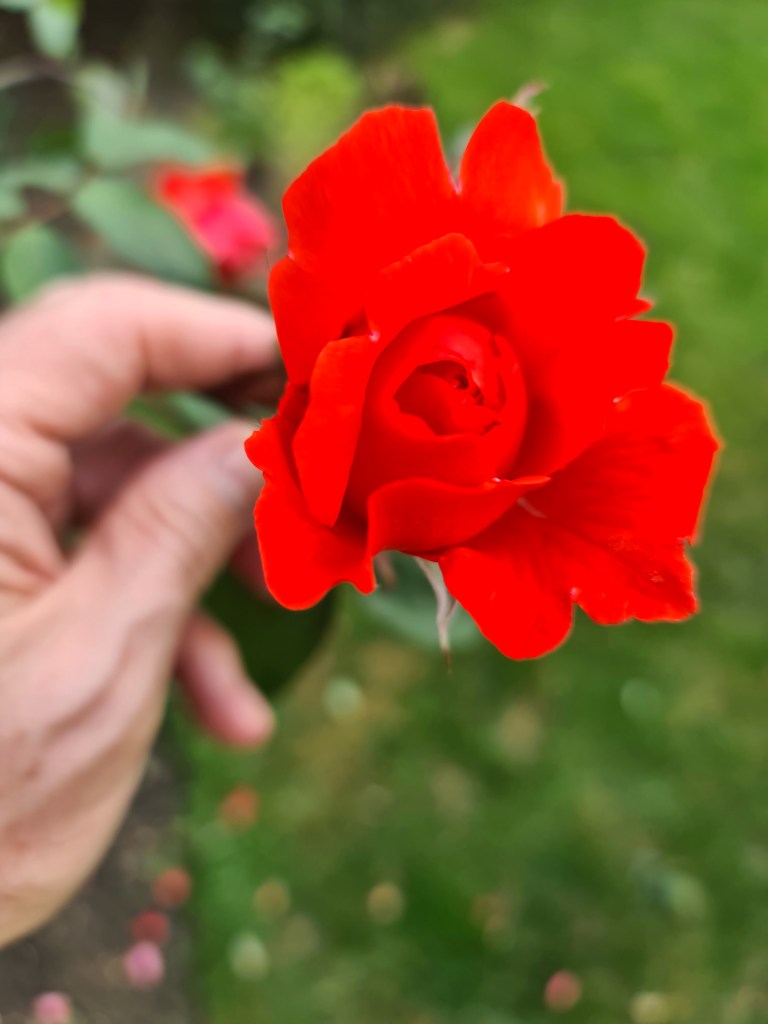
Smell a rose and feel uplifted!
Sunsets
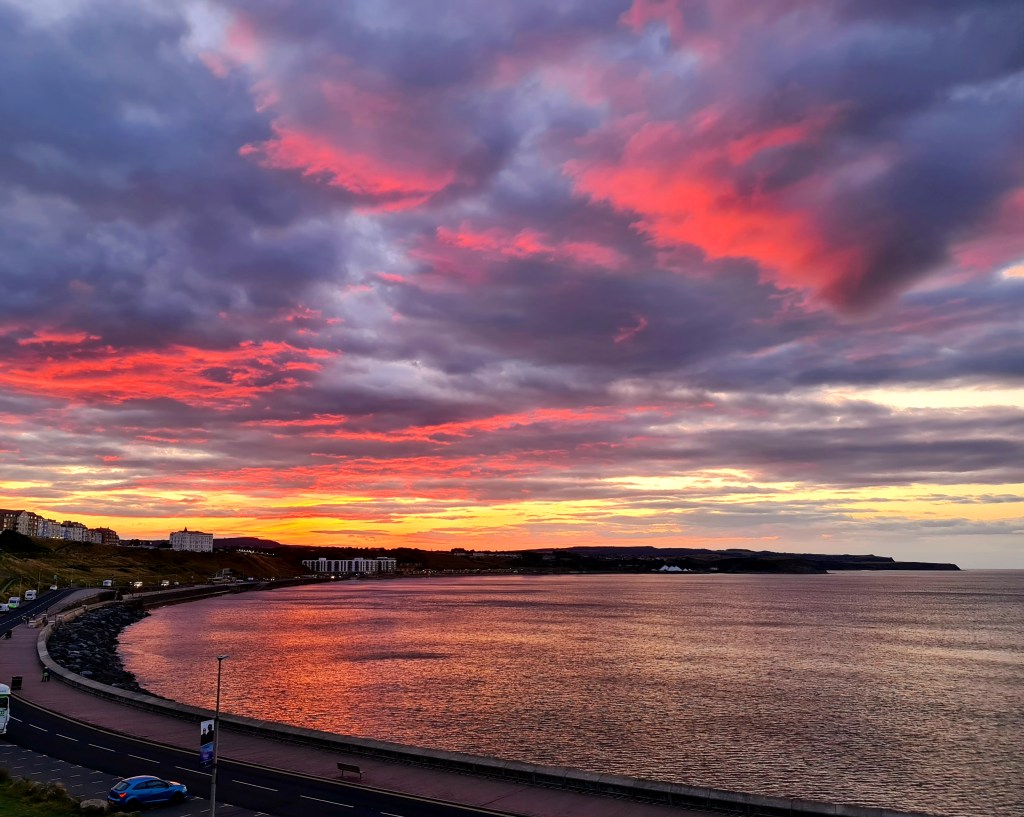
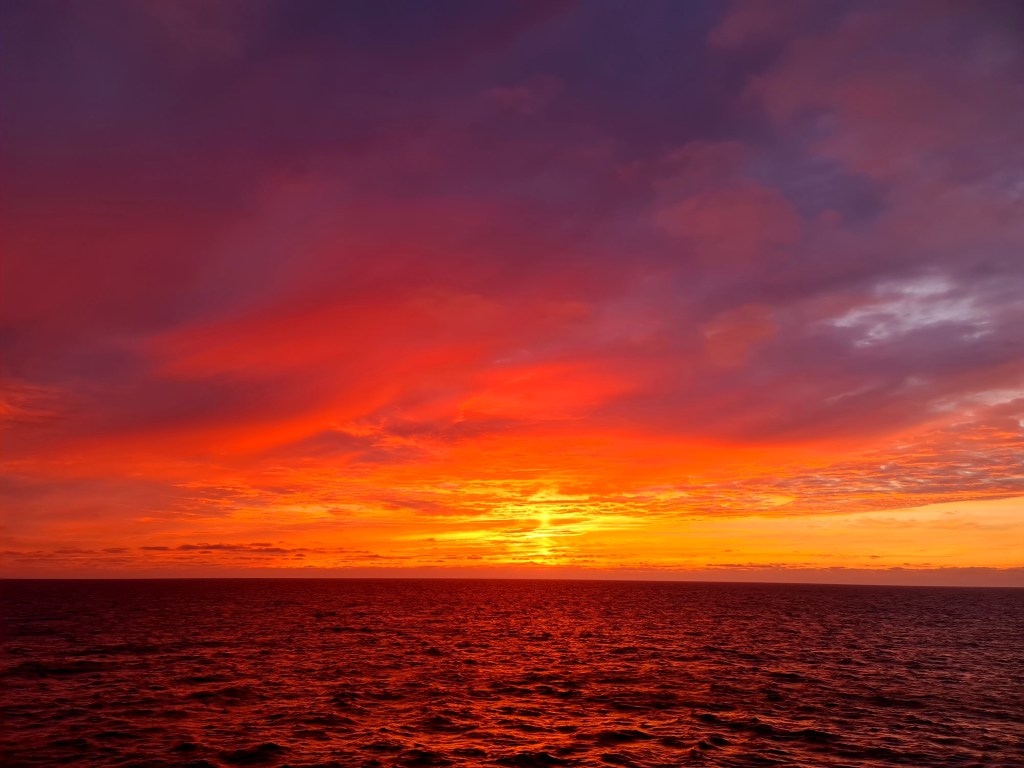
Blue and violet colours get scattered out by air and dust particles as the sun ‘sets’ and light has farther to travel through our atmosphere. This usually leaves mainly the brighter red and orange colours to fill the sunset skies and uplift our spirits.
Sunsets are free!
Dancingand skipping
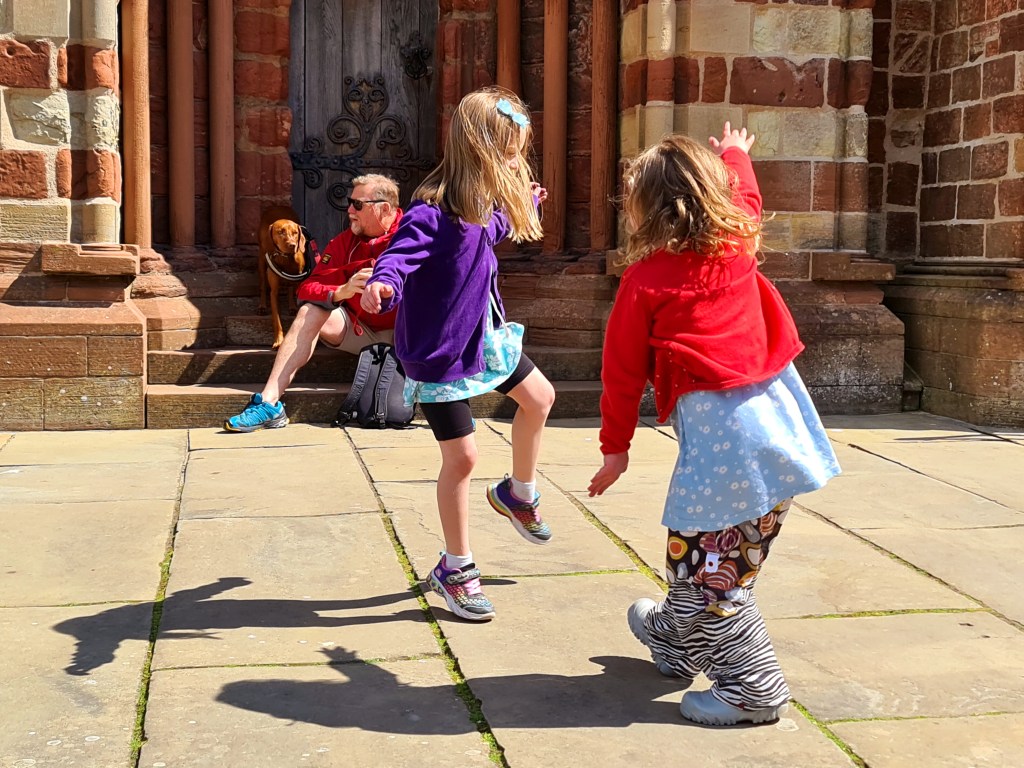
We all need to move and benefit hugely from simply using our muscles. Walking, running, jumping, hopping, leaping, and skipping emerge naturally as children develop. Whilst we might not be able to continue skipping as we get old, why not (!), movement releases endorphins and helps relieve stress.
Dancing is a tonic!
Food for free
Richard Mabey’s book Food for free,first published in 1972 (and in print ever since), tapped into the deep foraging instincts of our neolithic and palaeolithic past. Nature provides for us, if we take care of it that is, and don’t over-exploit it.
Being in nature
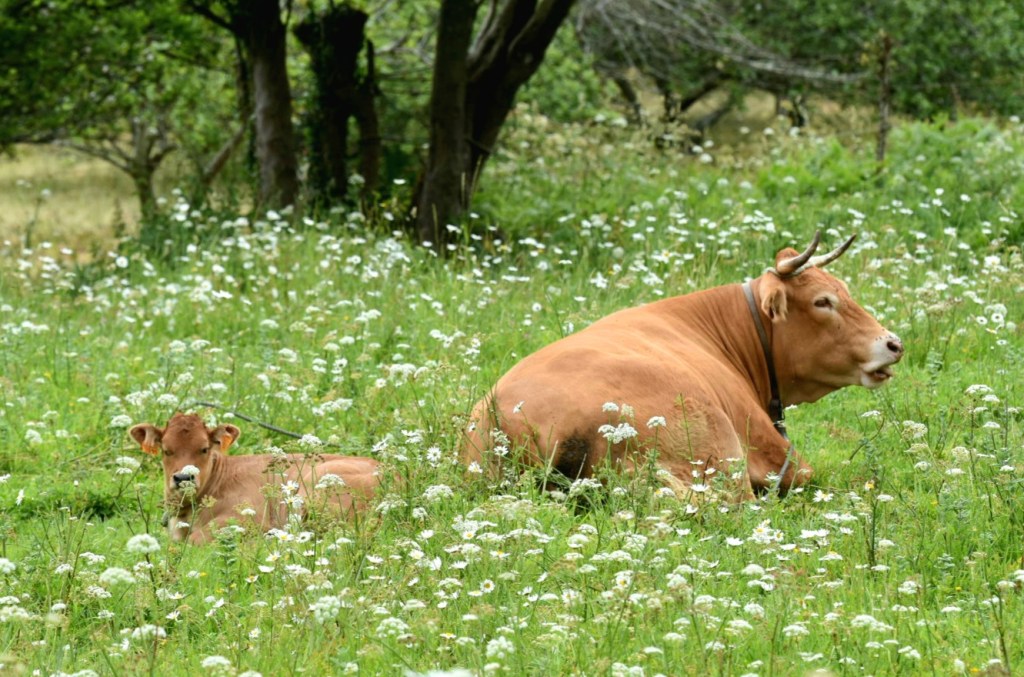
You don’t need to teach a cow the benefits of spending time in the countryside!
Relax!
Walking
Walking is, for me, one of the best simple pleasures in life.
Walking frees the mind
Meditate, day-dream
Although not everyone can do it, the pleasures and benefits of cat-napping are manifest, especially in cats! Meditation calms the mind and promotes good health, but we often don’t leave space for such down-times in our busy lives.
Meditate on something nice!
Sleep and dreaming
Sleep is a state of reduced mental and physical activity, and altered consciousness, which most animals need to some extent. Whether you are a koala bear (which can sleep for 22 hours a day) or a giraffe (which only need a few hours shut-eye!) we all need to ‘recharge out batteries’ and dreaming is a vital part of this activity.
“Hope springs eternal in the human breast“ (Alexander Pope), and life renews itself every year in the Spring. All organisms can also renew themselves by the process, perhaps we should say the miracle, of reproduction.
Hope (and the Spring) spring eternal
Health and well-being
And finally, for many of us, just being well after a period of illness – Long Covid in my case – is a joy in itself, and one we often take for granted. Whilst remembering all those who are not so well but hopefully still able to access some of the simple joys of life that make it so special.
All photos by Raymond JC Cannon, except where stated.
Bird Island Research Station, Bird Island, South Georgia Dec 1982
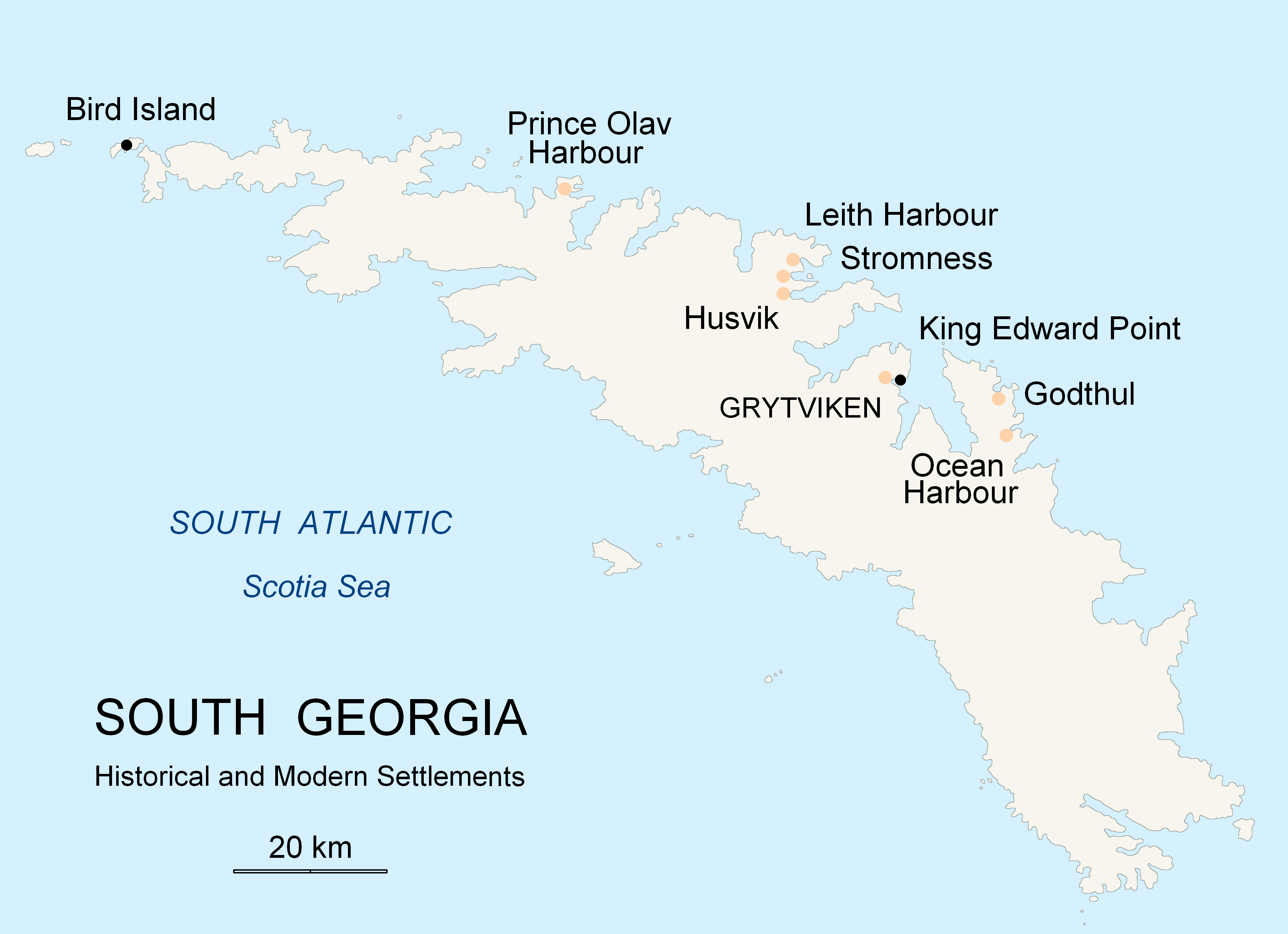
Bird Island lies off the north-west tip of South Georgia, (Lat. 54°0’0″S, Long. 38°2’59″W) (below).
Map of South Georgia (By Apcbg – Own work, Wiki CC BY-SA 3.0)
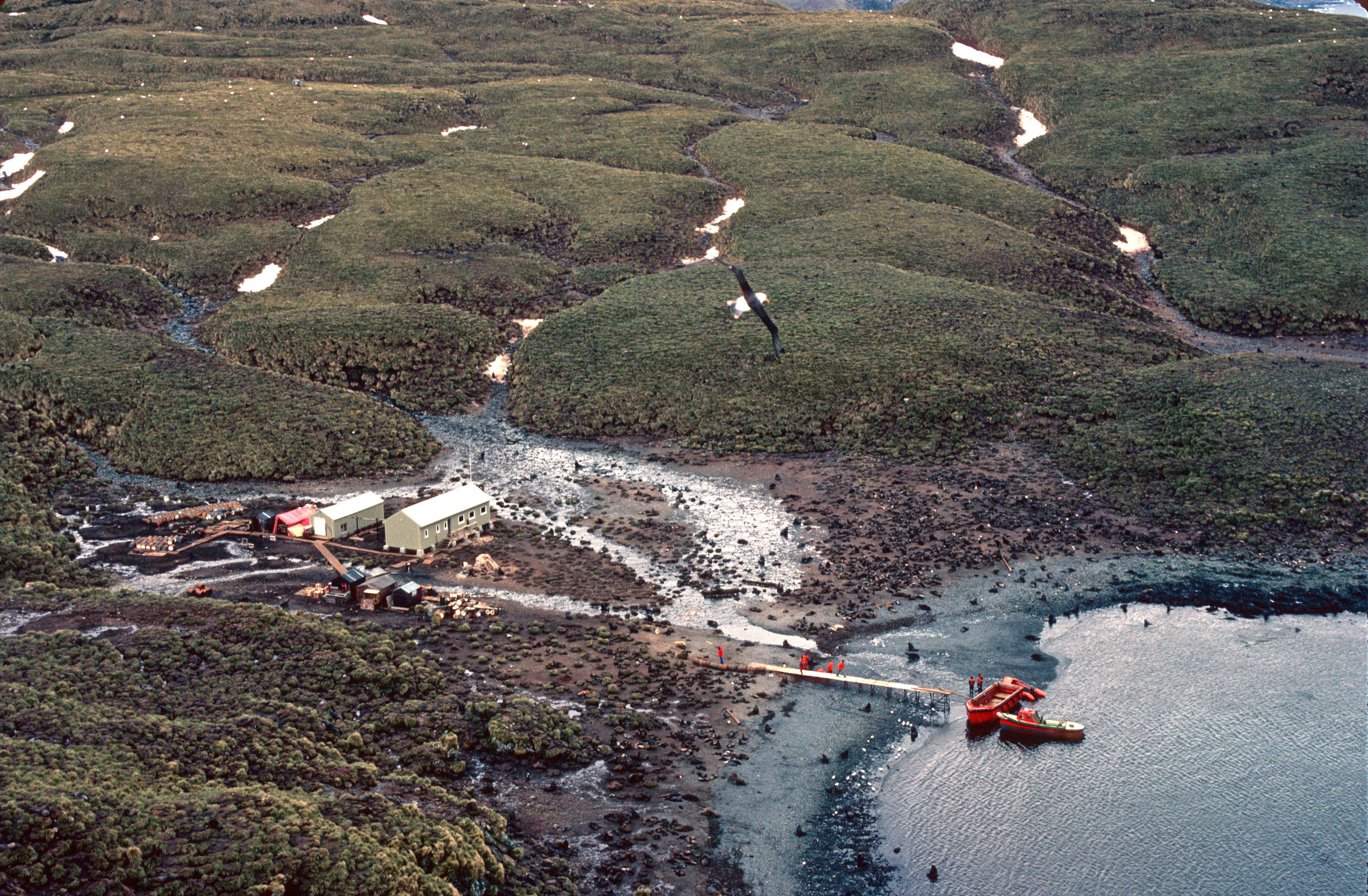
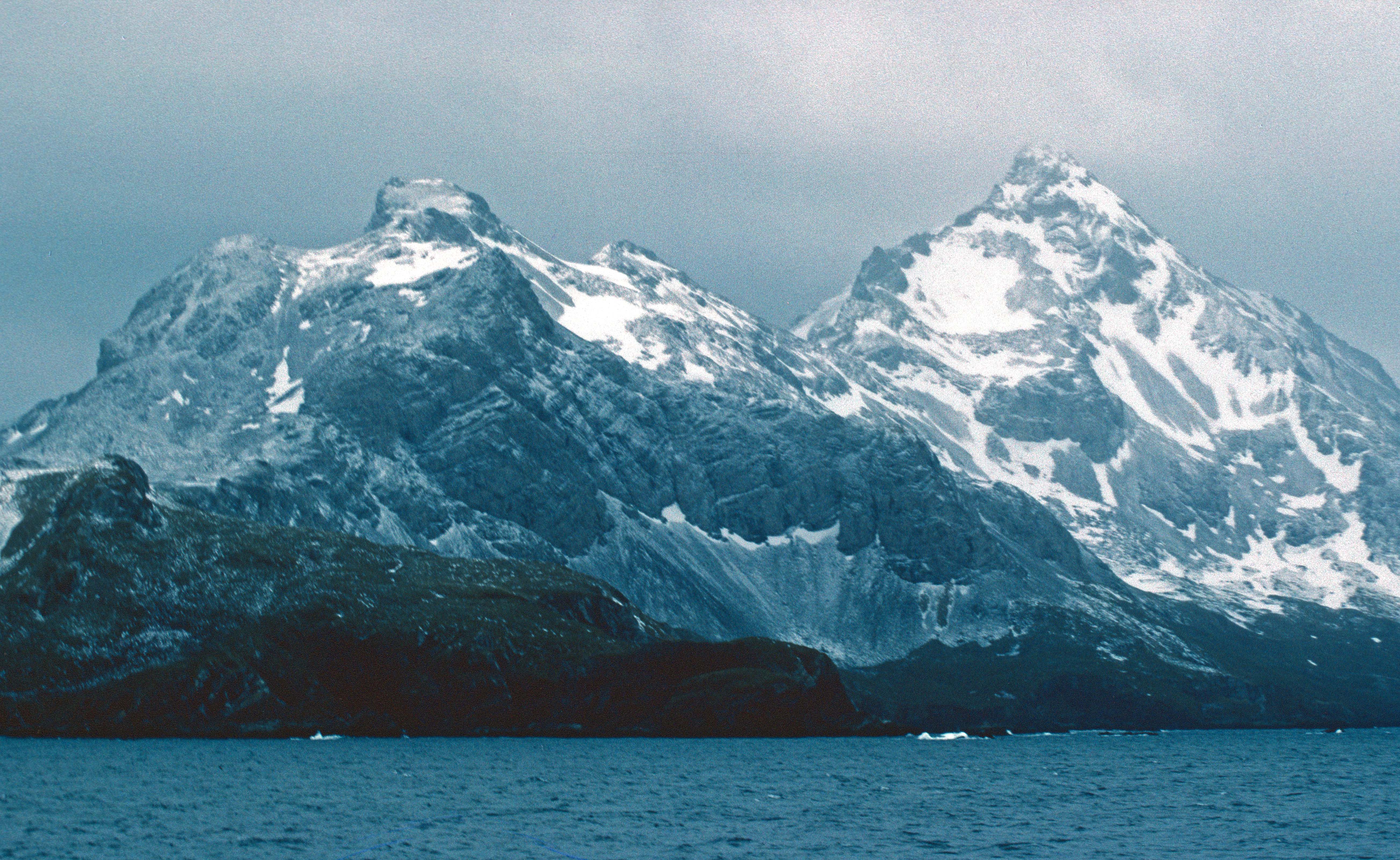
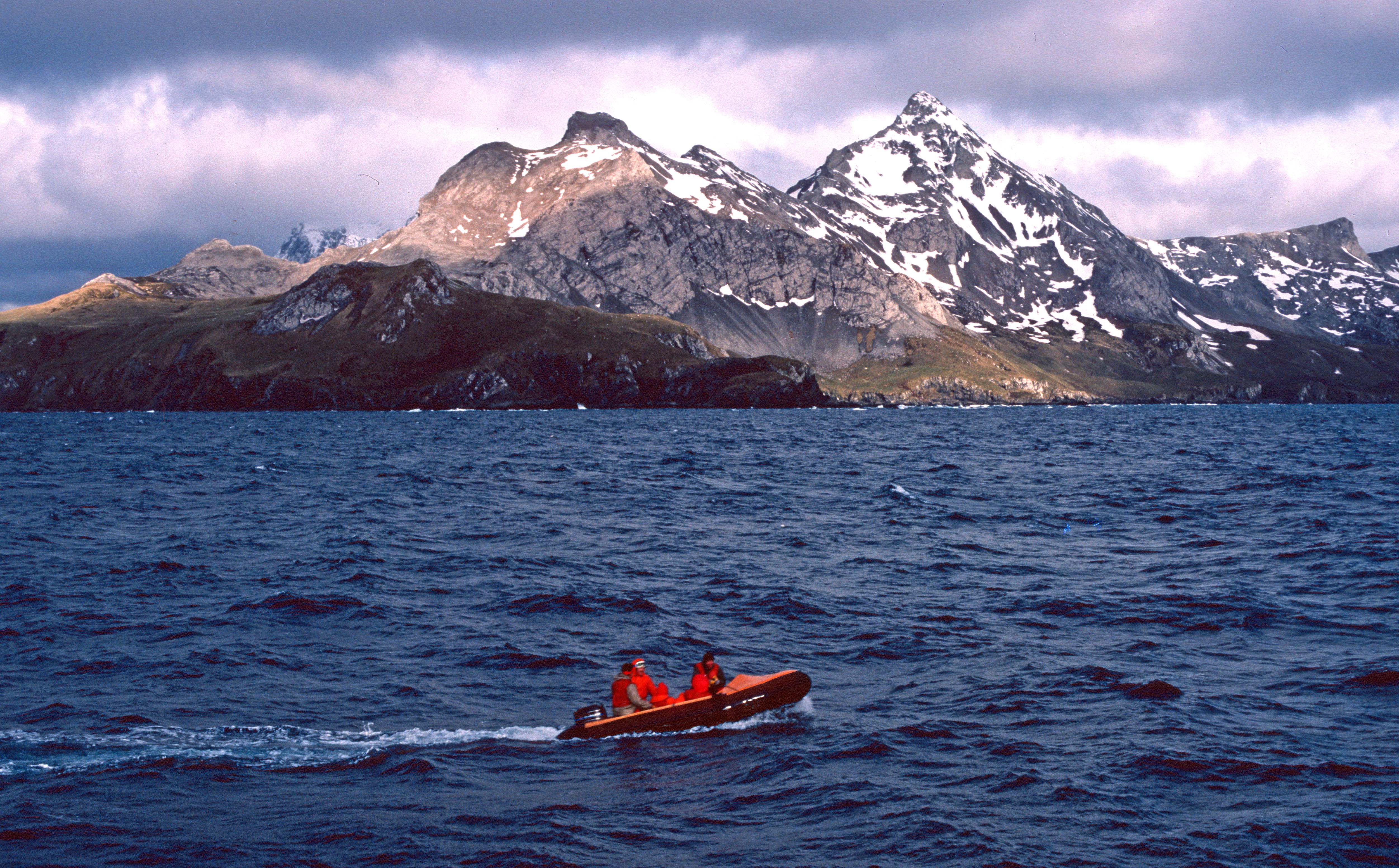
South Georgia near Bird Island (1982)
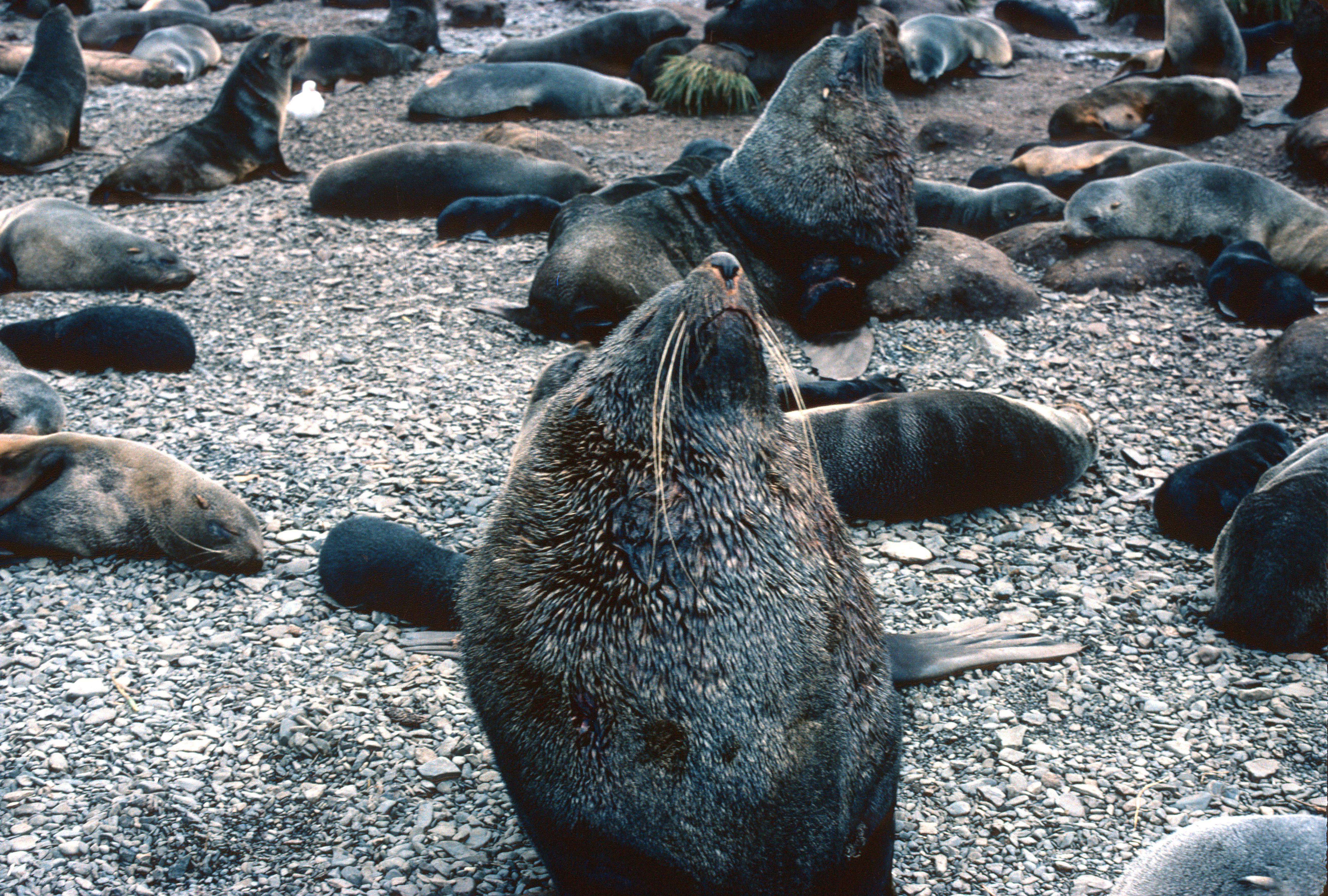
There is a small research station – Bird Island Research Station – which is run by the British Antarctic Survey, and is ideally suited – being right in the middle of a huge fur seal colony! – to study the amazing wildlife present on this small island, which is only about 3 miles long.
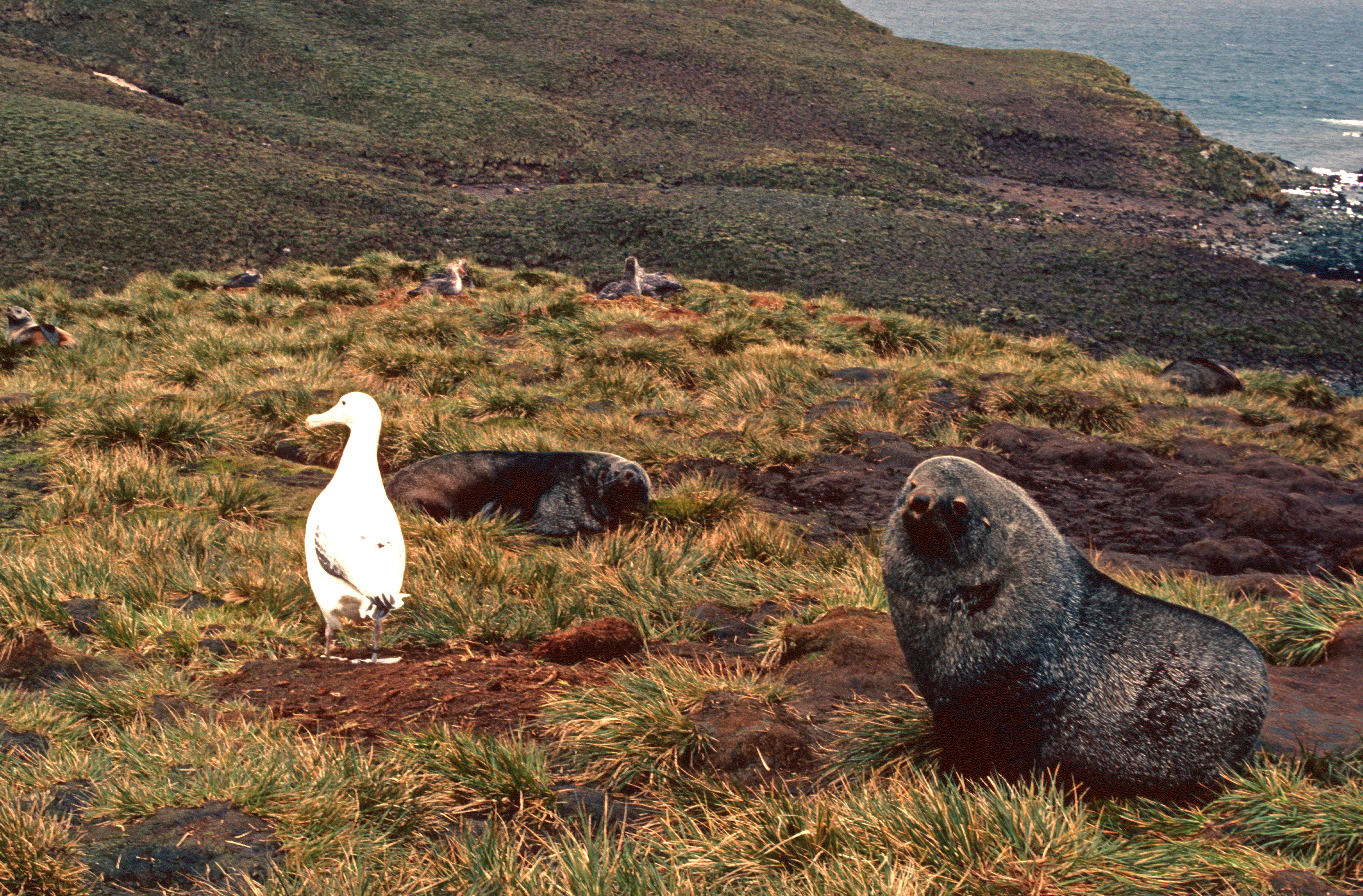
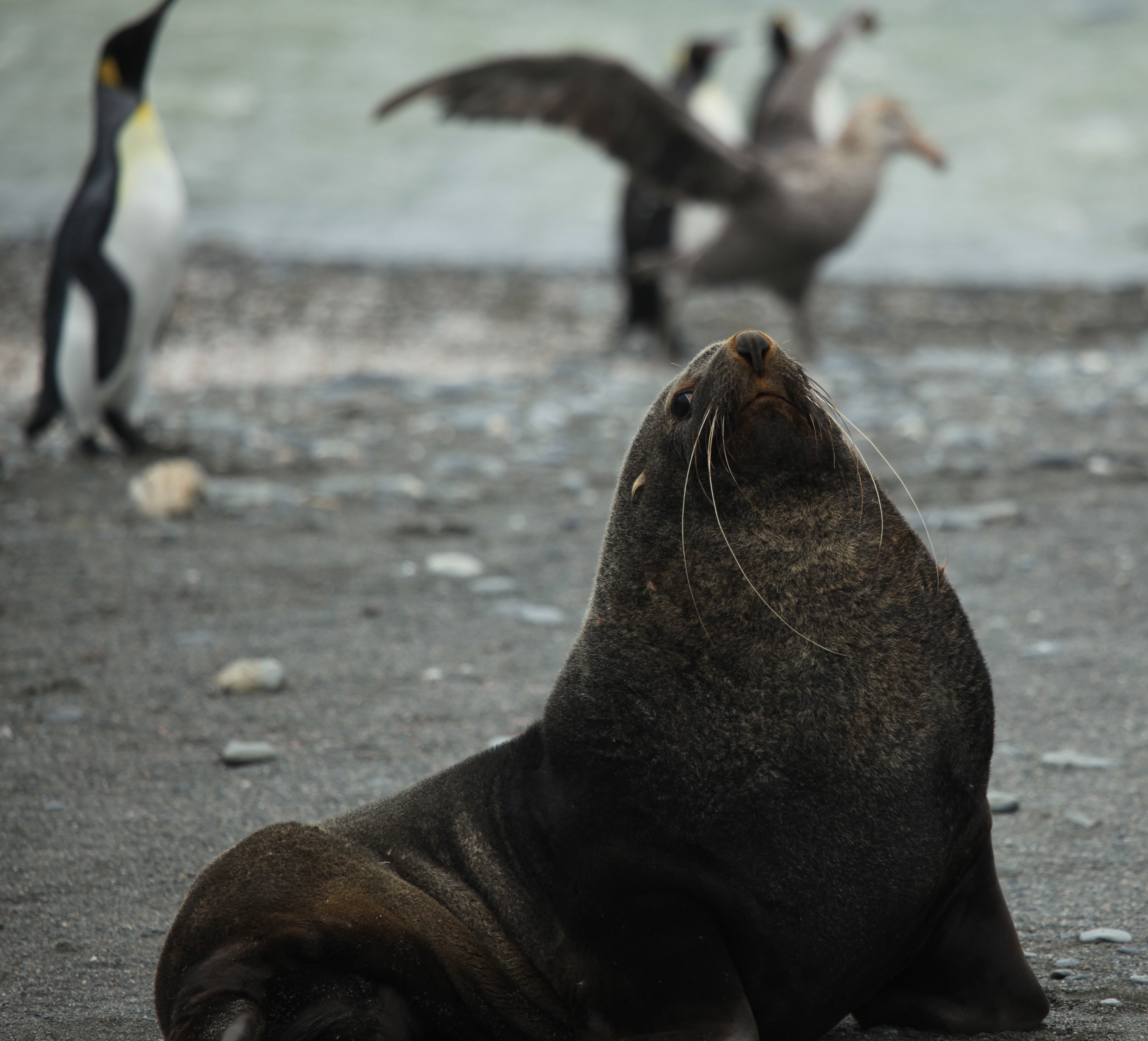
Antarctic fur seal and Wandering Albatross on Bird Island (1982)
According to Wikipedia (the figures may not be completely up-to-date) there are, on this small island:
65,000 Antarctic fur seals (around 1 for every 6 m2 (65 sq ft) of the island)
We arrived on Bird Island on 1st Dec 1982, having previously sailed all the way up to Montevideo and back, on the RRS John Biscoe, to collect more personnel to take south. (N.B. it was not possible for civilians to fly via the Falkland Islands at the time). See previous blog here.
South Georgia near Bird Island (1982)
Although we had a limited time at this location, and the priority was to resupply the base (see below), I was very keen to get ashore and see some of the wildlife.
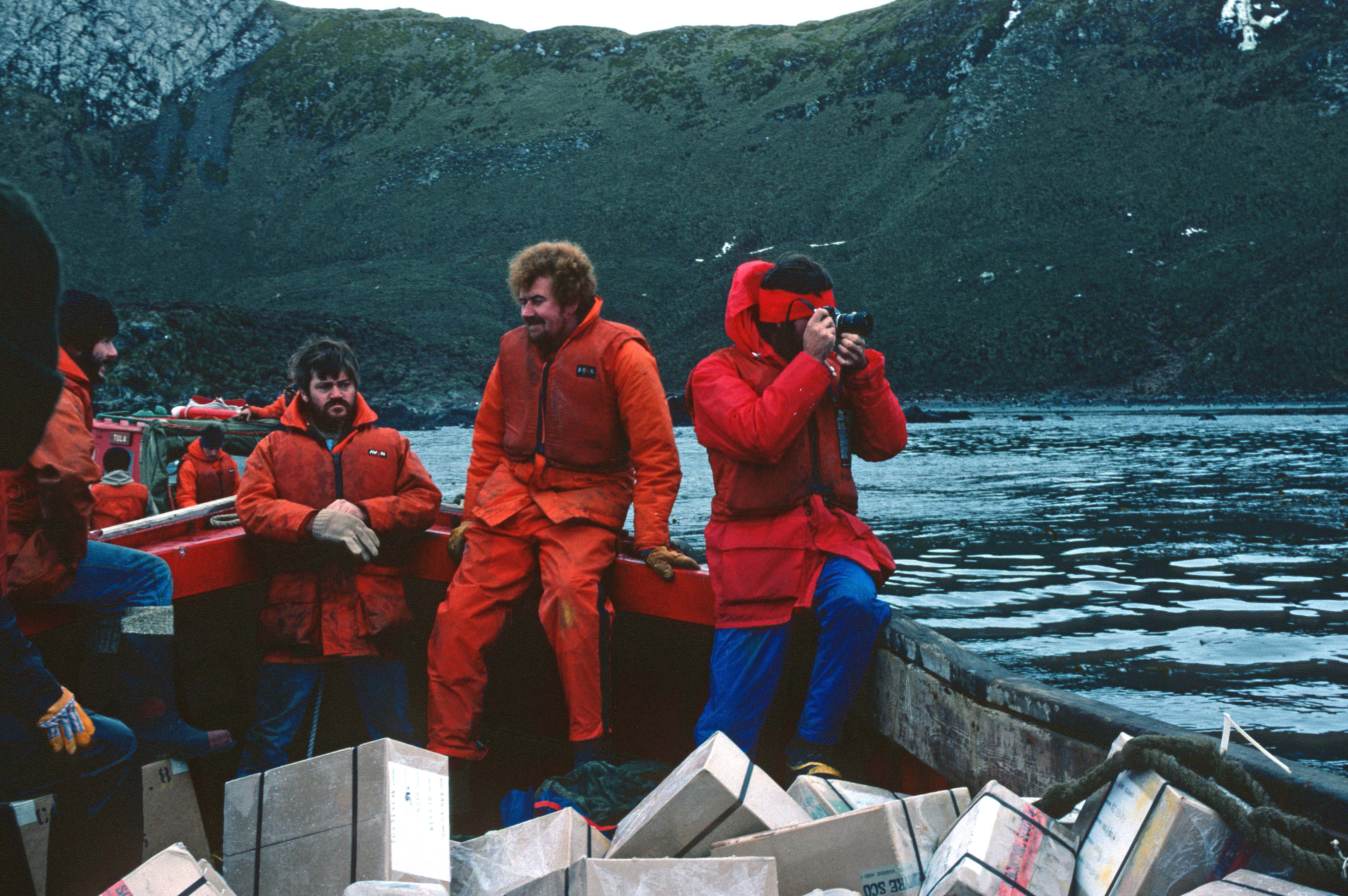
Going ashore in the scow, Bird Island
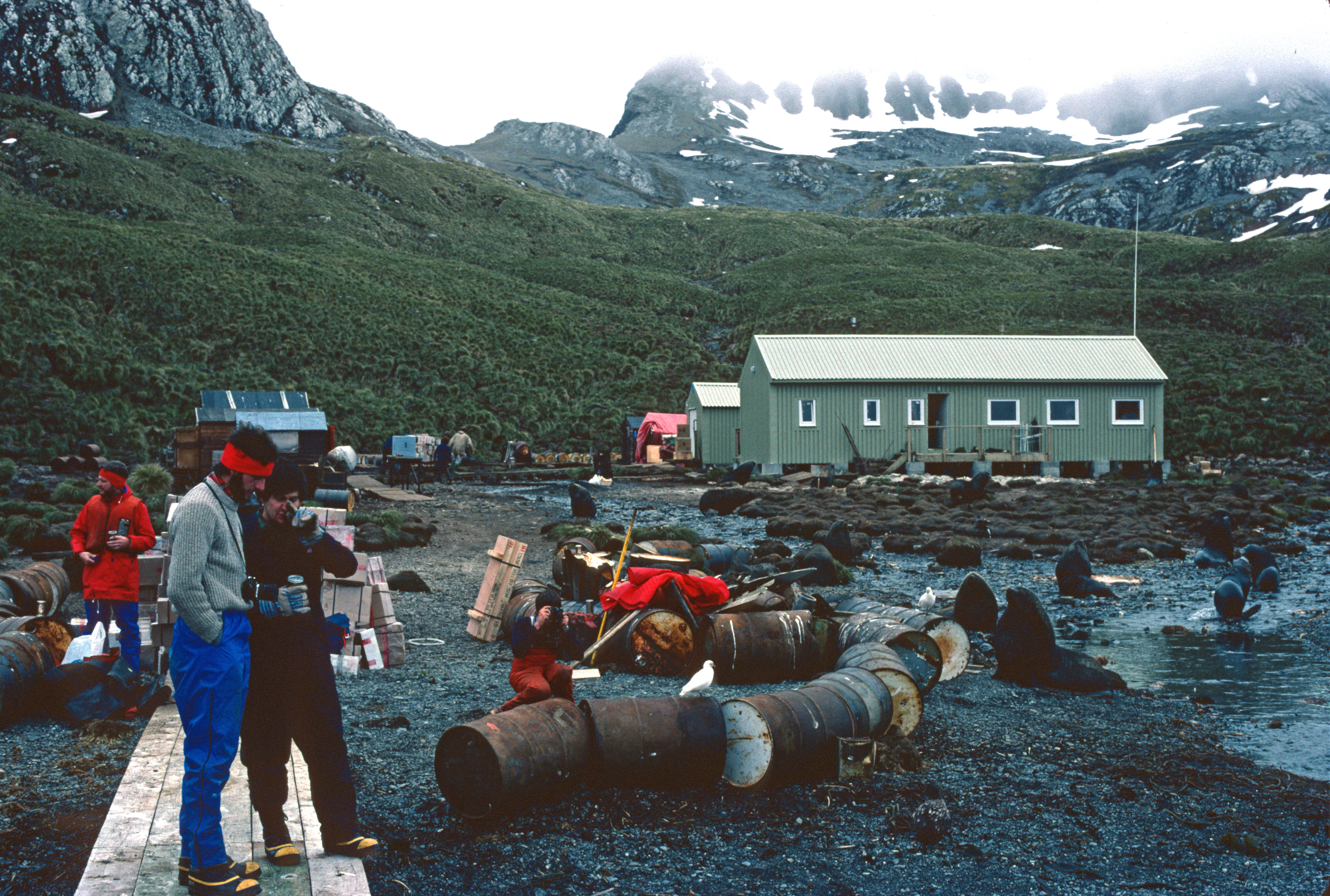
We all mucked in and helped with the unloading. Parcels and supplies were carried from the scow (above), up the beach and along a temporary plank walk (below) to the base.
Bird Island, South Georgia 2 Dec 1982
Because we were walking through a breeding colony of Antarctic fur seals, the large, territorial males had to be temporarily walled off behind a row of oil drums, to dissuade them from sinking their teeth into our thighs!
Antarctic fur seal (Arctocephalus gazella) colony, Bird Island
The large males are very splendid fellows in the middle of their large harems (above).
Antarctic Fur Seal (Liam Quinn Flickr (CC BY-SA 2.0)
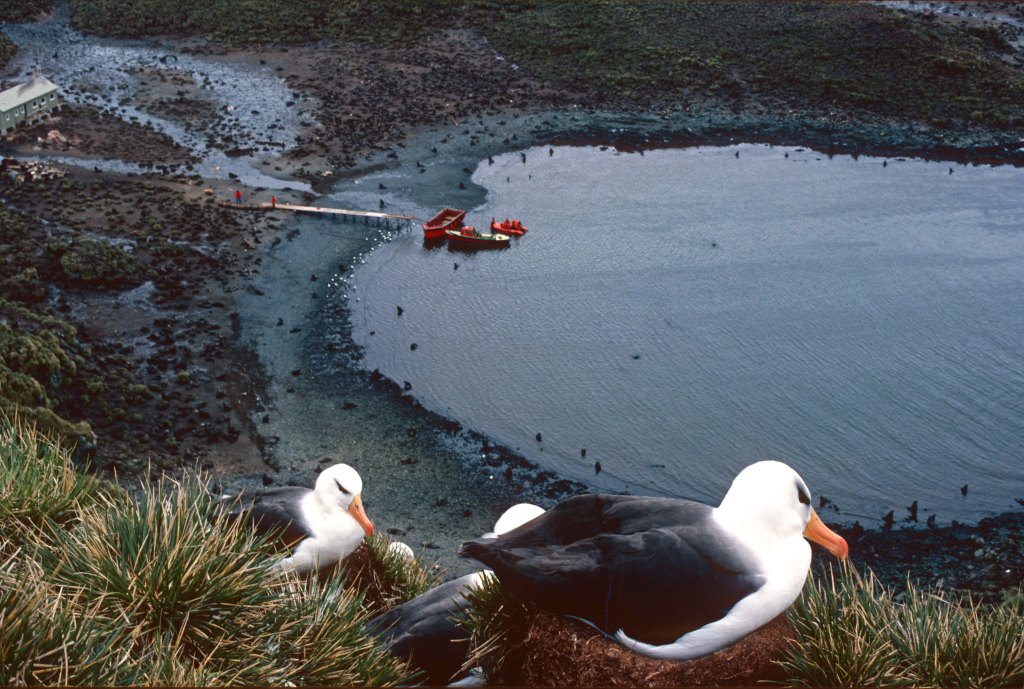
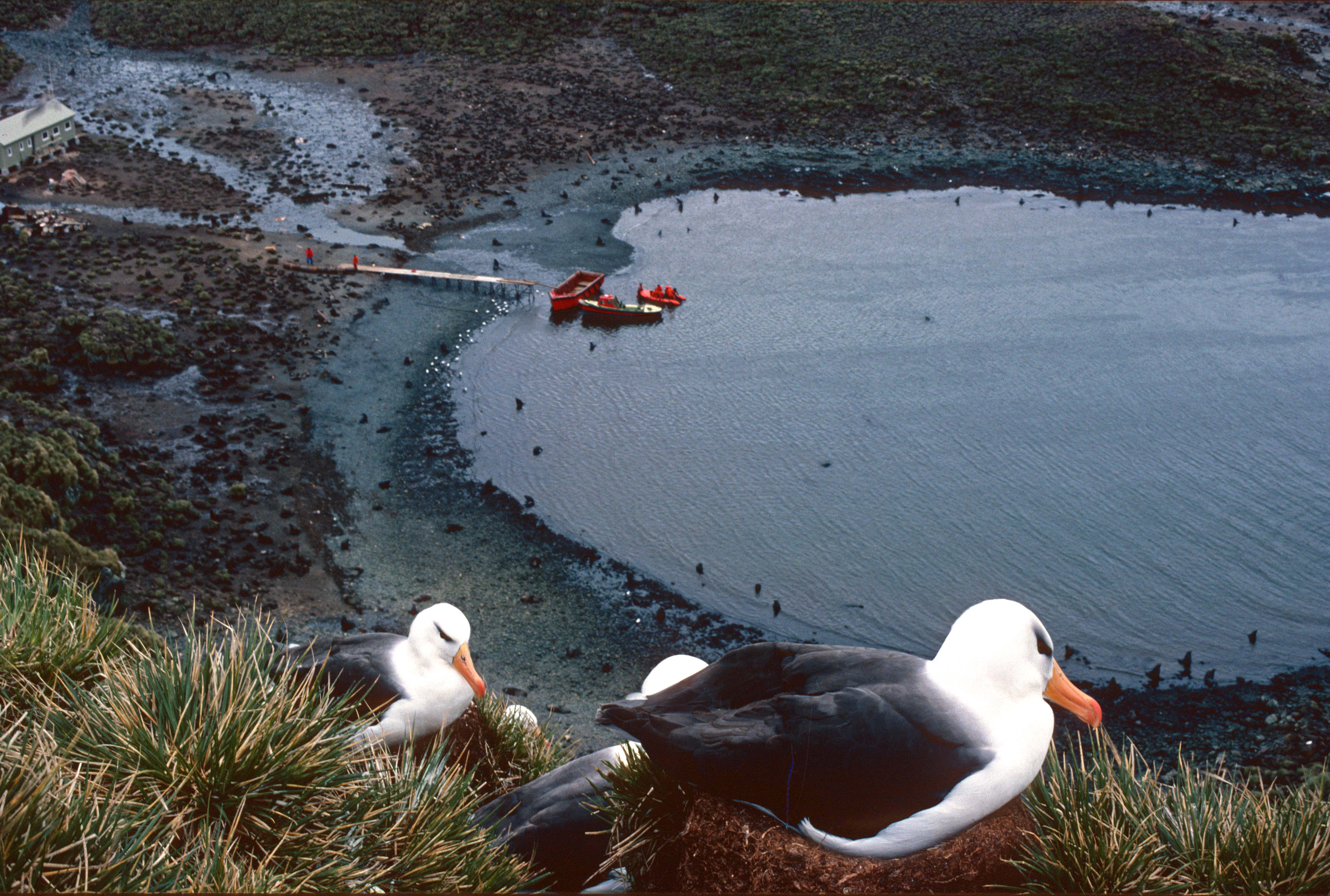
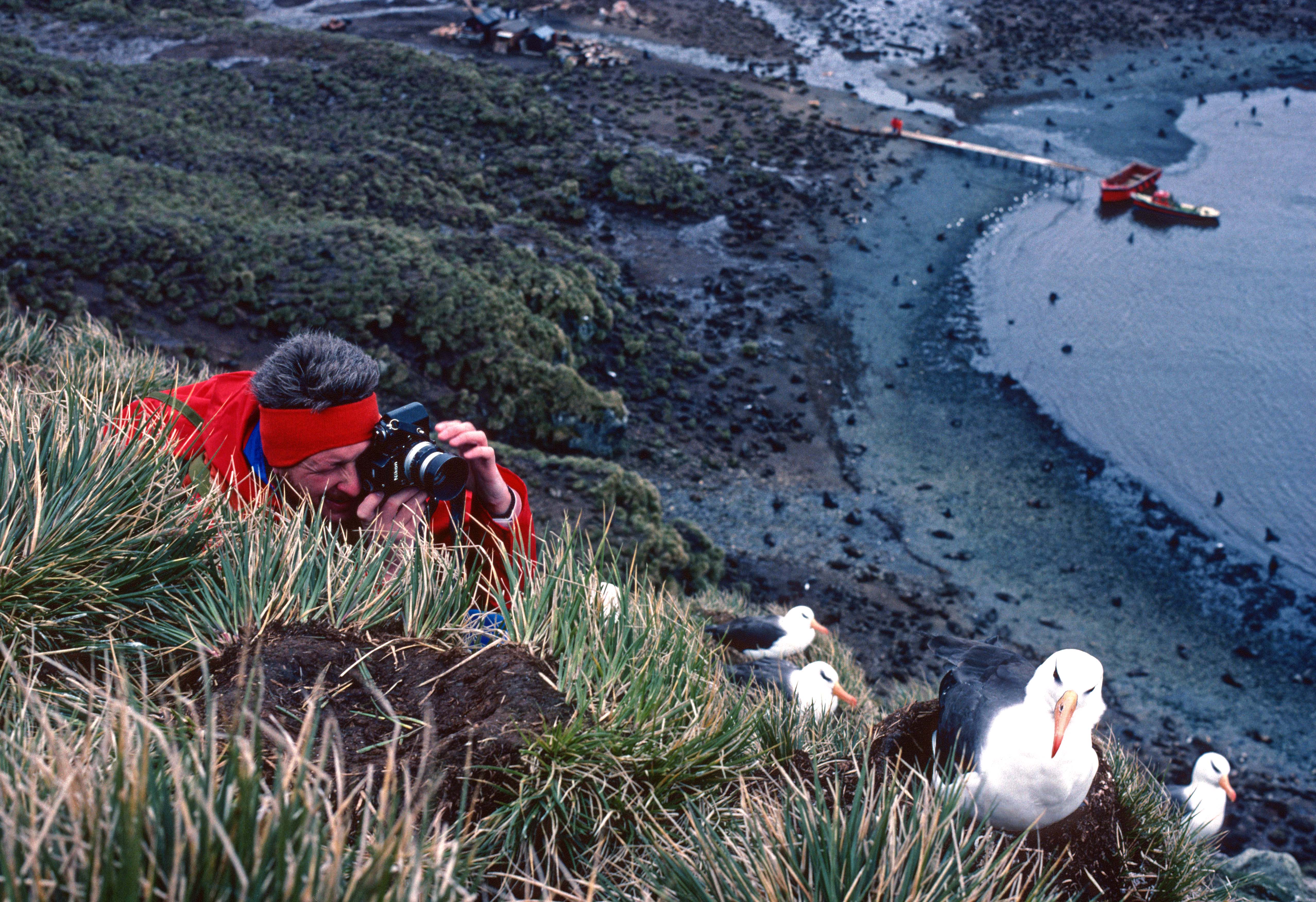
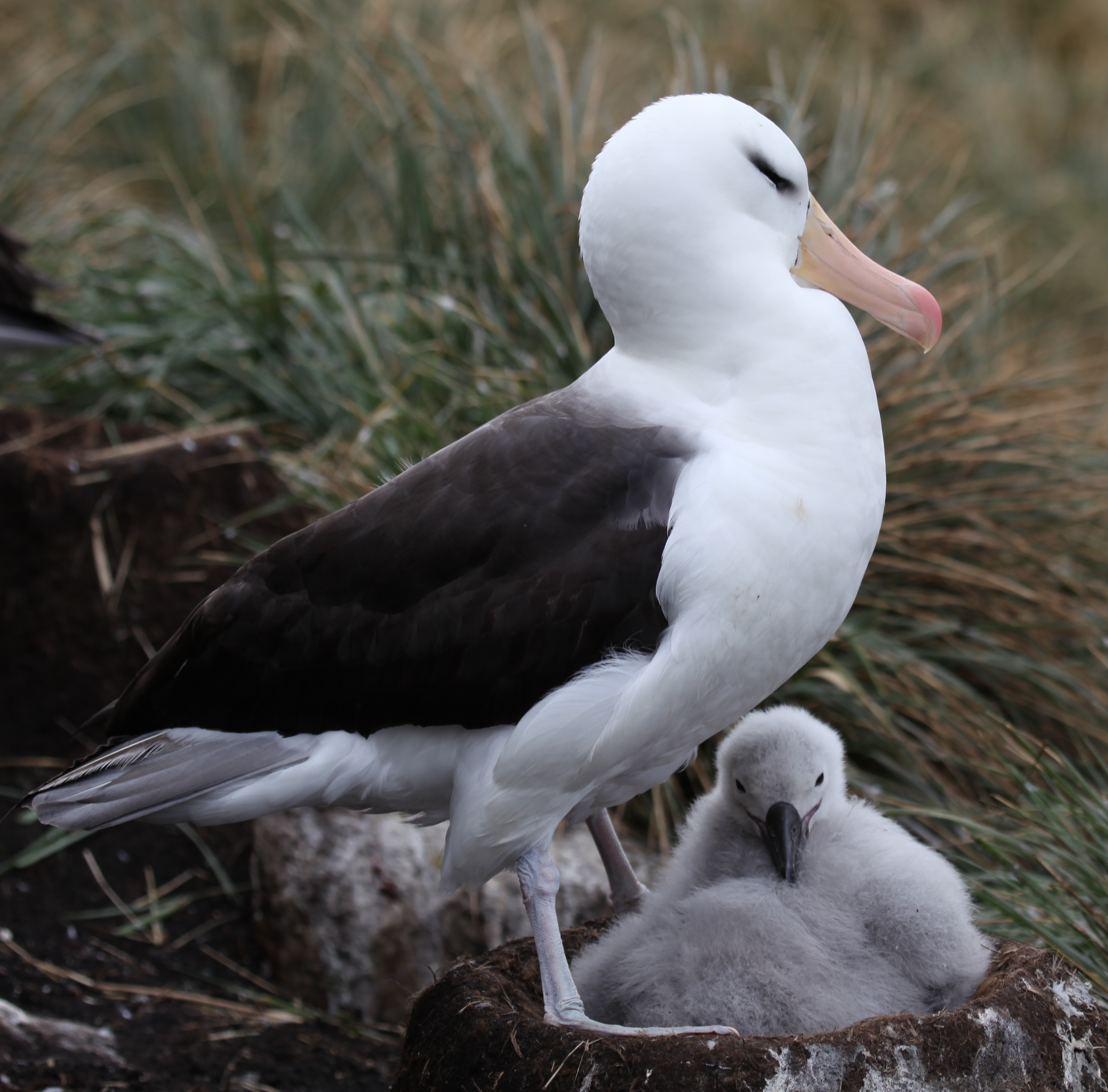
Once we had finished unloading, some of us climbed up the nearby hill to photograph some of the Black-browed albatross (Thalassarche melanophris) which were nesting above the base (below).
Black-browed albatross (Thalassarche melanophris) Bird island, South Georgia
We probably came too close to these birds than we should have done (below), but none of us had long lenses in those days!
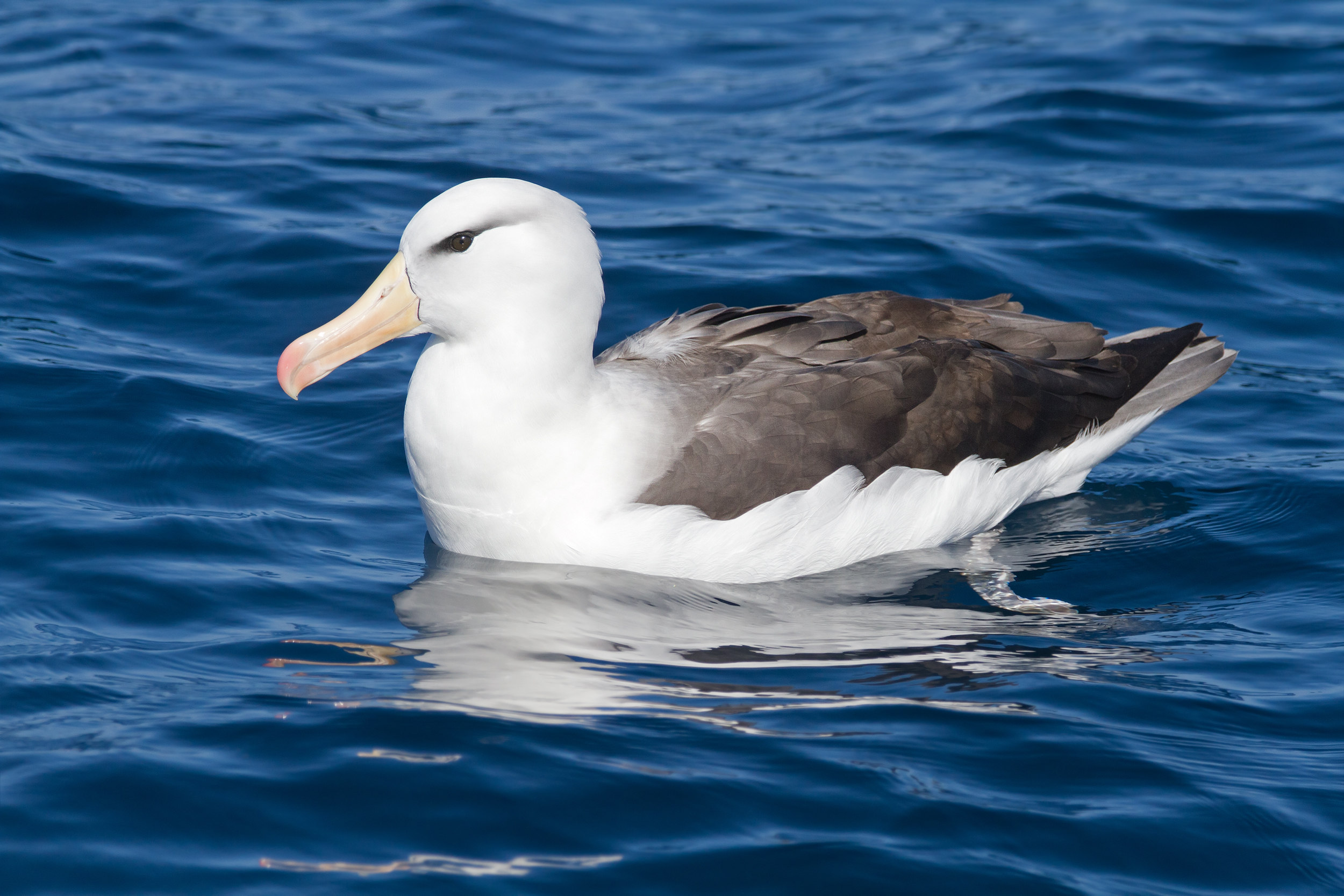
Black-browed albatross (Thalassarche melanophris) Bird island
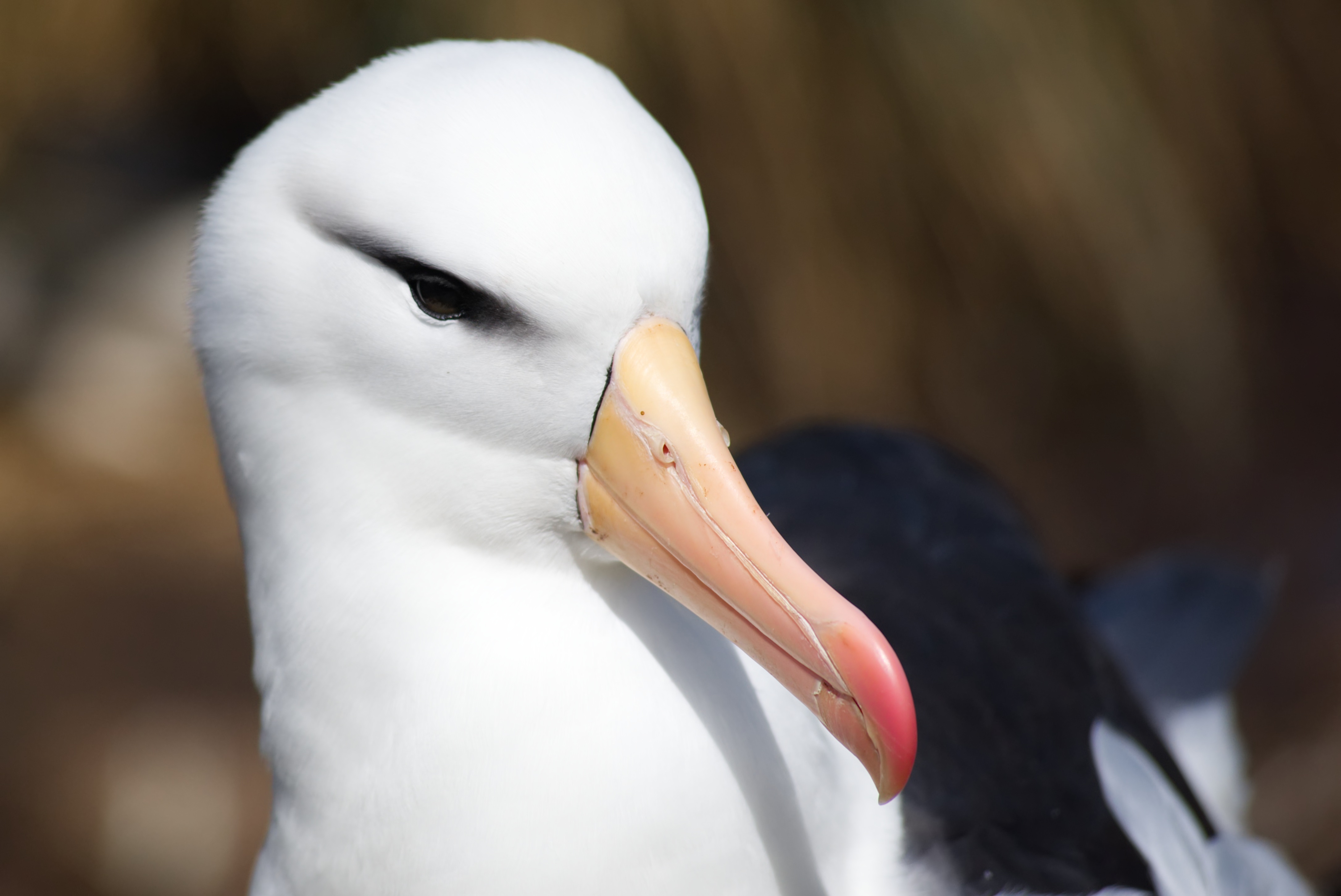
I will include a few more recent pictures of these graceful birds (below) which some photographers have donated to the Creative Commons, meaning that they are licensed to copy and in any medium or format (CC BY-SA 2.0). Otherwise photographs are usually ‘All Rights Reserved’ and cannot be copied and reused without permission (and often with payment) from the photographer. I suspect that most people who cut and paste images off the internet are unaware of these rules; but that’s getting off the point. It is just great that some photographers allow their images to be used freely, like some shown in this blog.
Black-browed Albatross (Thalassarche melanophrys) On West Point Island in the Falkland Islands. Liam Quinn from Canada (Wiki CC BY-SA)
Black-browed albatross, falkland islands (Image by Claudia Kirchberger from Pixabay)
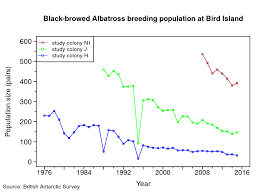
Unfortunately, the Black-browed albatross population on Bird Island has been in a long-term decline in breeding numbers since the mid-1970s (see graph below). It shows how numbers of birds have declined markedly since I visited in 1982.
Population trend of the Black-browed Albatross at Bird Island
Tragically they are often “caught on fishing hooks (bycatch or incidental catch), by longline trawlers. Read more about this terrible crisis which is decimating albatross numbers, here and here.
Another majestic bird breeding on Bird Island is the Wandering Albatross (Diomedea exulans) (below).
Wandering albatross (Diomedea exulans) Photo by Bernard Spragg. NZ (Flickr CC) CC0 1.0 Universal (CC0 1.0)
There was a Wandering albatross chick wandering about the base, getting in the way of our unloading, which had to be persuaded to go elsewhere for the day!
Wandering albatross (Diomedea exulans) chick, Bird Island, South Georgia, 1982
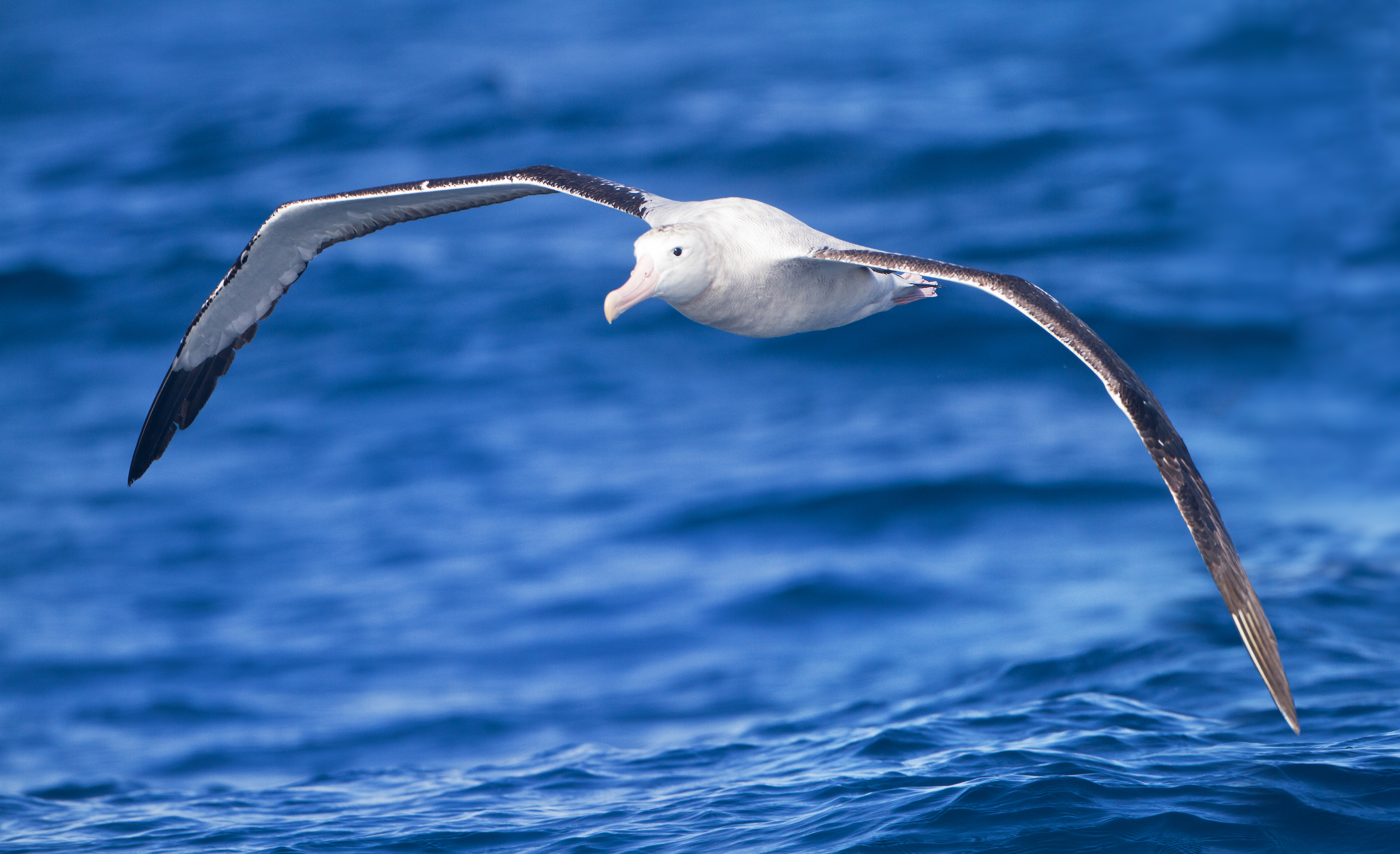
The wandering albatross has the longest wingspan of any living bird, typically ranging from 2.51 to 3.5 m (8 ft 3 in to 11 ft 6 in).
Wandering albatross (Diomedea_exulans) in flight (By By JJ Harrison Own work, Wiki CC BY-SA 3.0. See his website: https://www.jjharrison.com.au/)
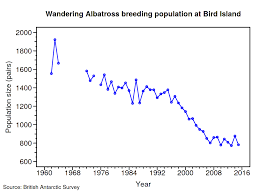
Unfortunately, it’s the same tragic story again, with Wanderers declining in numbers between the mid 1990s and the mid 2000s (>4% per annum), although the rapid downturn appears to have stabilized, with numbers remaining relatively stable over the last 7-8 years, “albeit at a substantially reduced level compared with the number of breeding pairs present in the 1960s and with no signs yet of a recovery in numbers.” (See graph and reference below).
Population trend of the Wandering Albatross at Bird Island
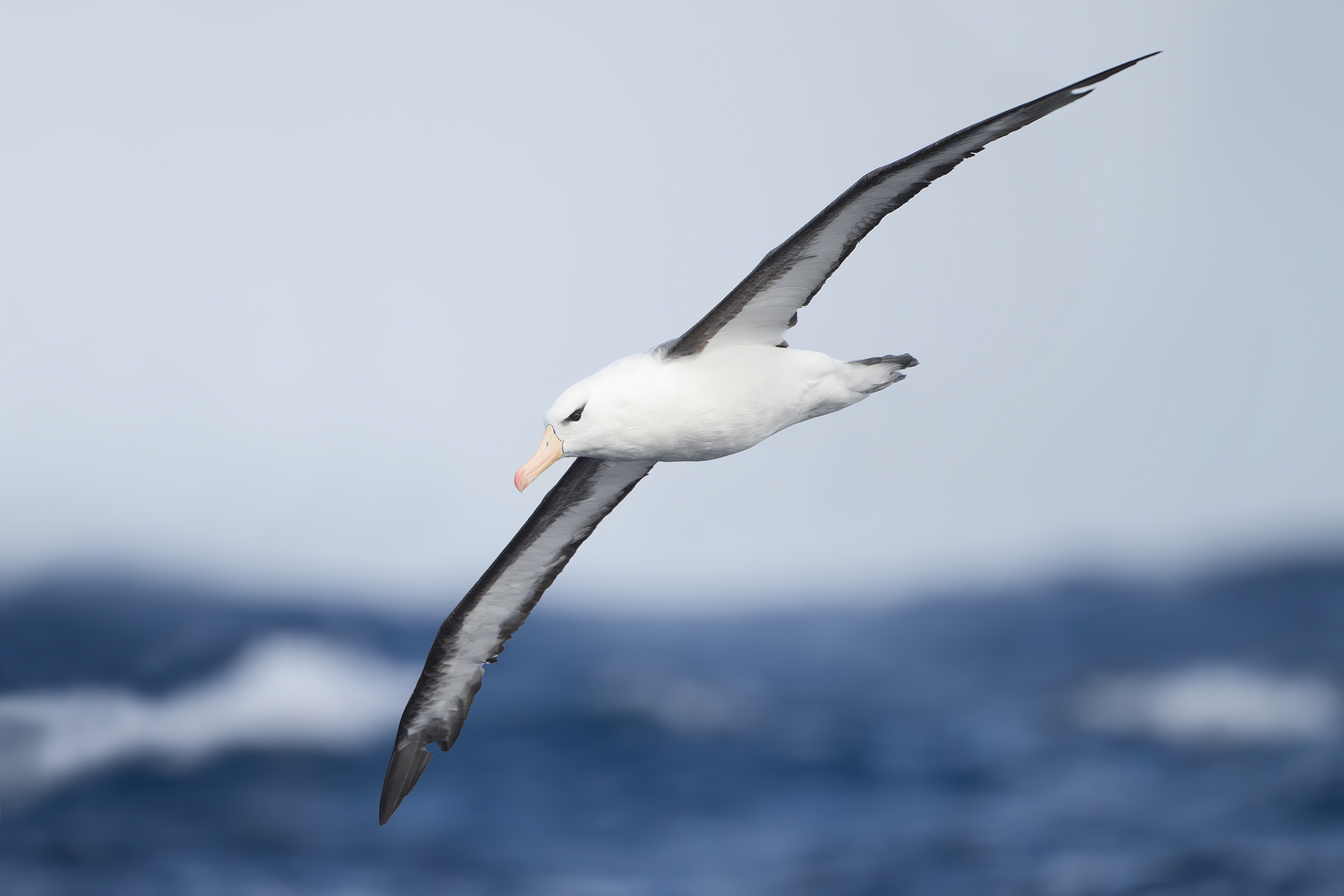
Black-browed Albatross (Thalassarche melanophrys) By JJ Harrison Own work, Wiki CC BY-SA 3.0. See his website: https://www.jjharrison.com.au/)
We can only hope that with more people visiting the Antarctic, and becoming aware of the fact that these magnificent creatures are getting caught up on fishing lines, or ingesting our plastic rubbish floating in the oceans, that more is done to say the thousands that are getting killed each year. Especially by illegal fishing: see here and here.
Black-browed Albatross (Thalassarche melanophrys) in flight (By JJ Harrison Own work, Wiki CC BY-SA 3.0, see his website: https://www.jjharrison.com.au/)
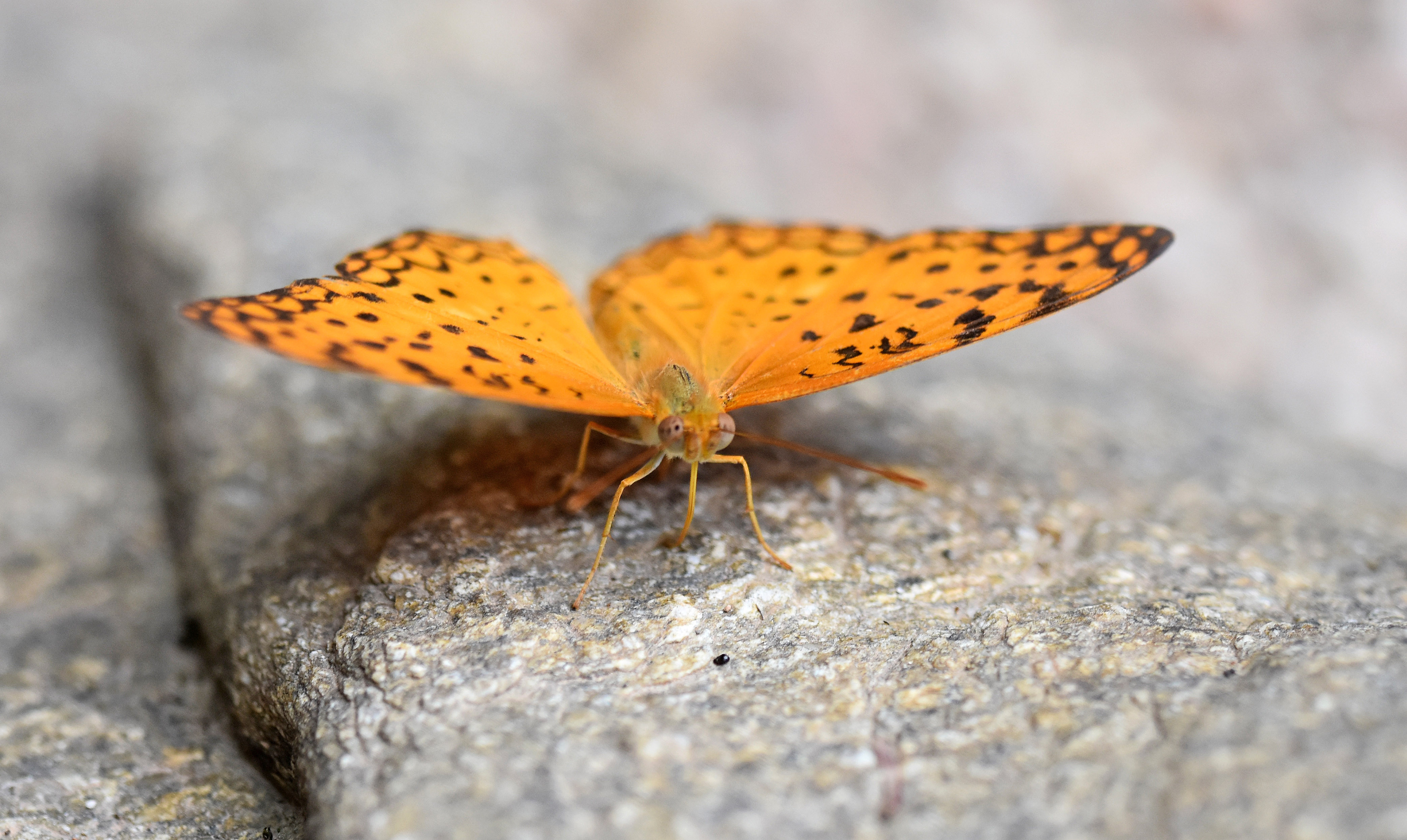
Common Leopard Butterfly (Phalanta phalantha) mud-puddling at Mae Klang waterfall, Doi Inthanon, Thailand.
It was a very hot day when I visited Doi Inthanon, Thailand’s highest mountain (at 2565 metres or 8415 feet), in early May this year. Temperatures in Chiang Mai city had reached 40 deg C the day before, but it was much cooler up the mountain. There are large tracts of different types of forest on this mountain – Doi Inthanon National Park covers an area of about of about 482 square kms – but it is often shrouded in cloud near the top.
Forest on Doi Inthanon, by the Royal Chedis (or stupas) at about 2140m.
Unfortunately, the top of the mountain was rather cloudy on 7th May, so we headed further down, stopping off at a number of waterfalls, where I hoped to photograph butterflies.
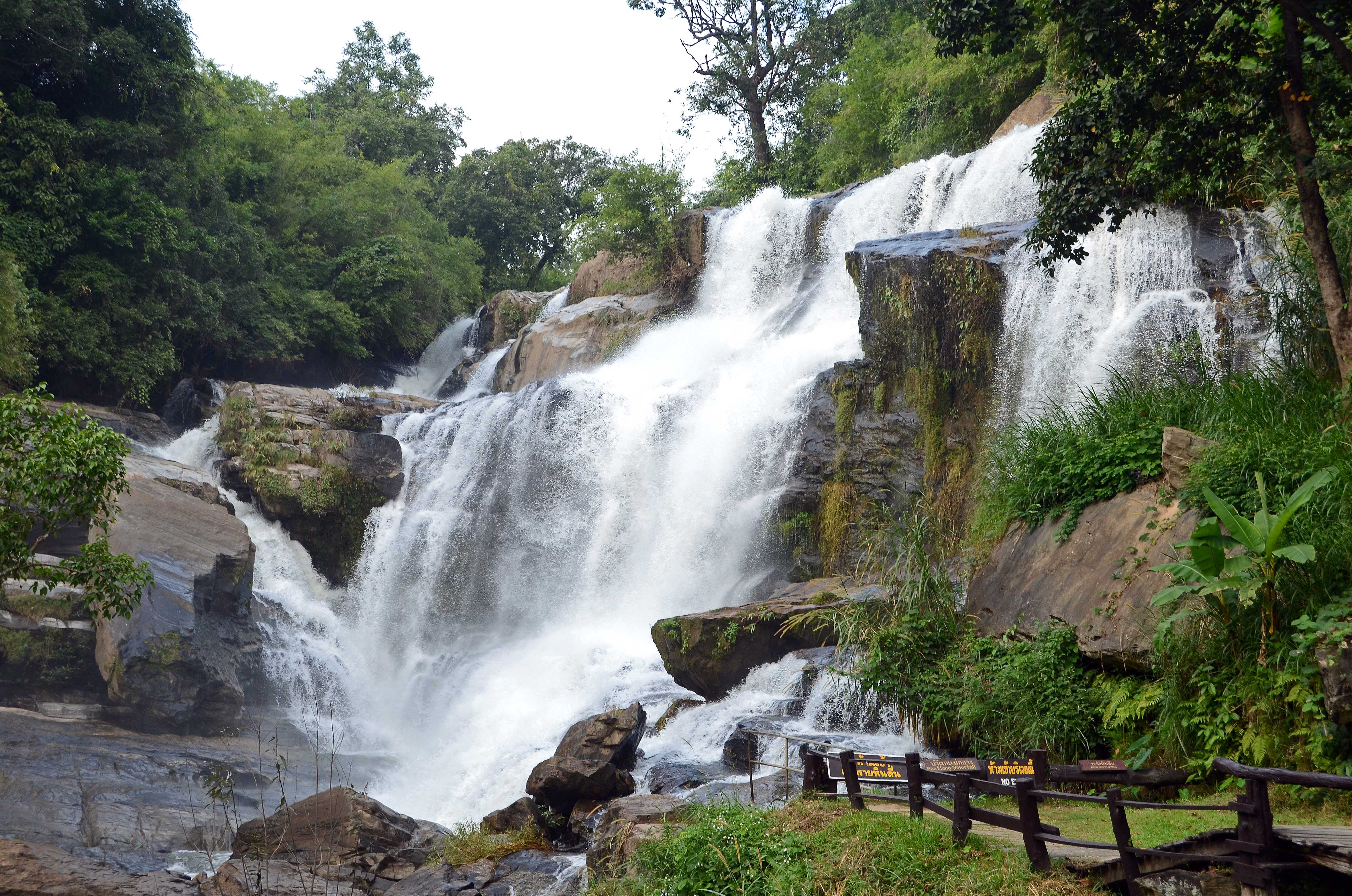
Wachirathan Falls, Doi Inthanon, Thailand, May 2017.
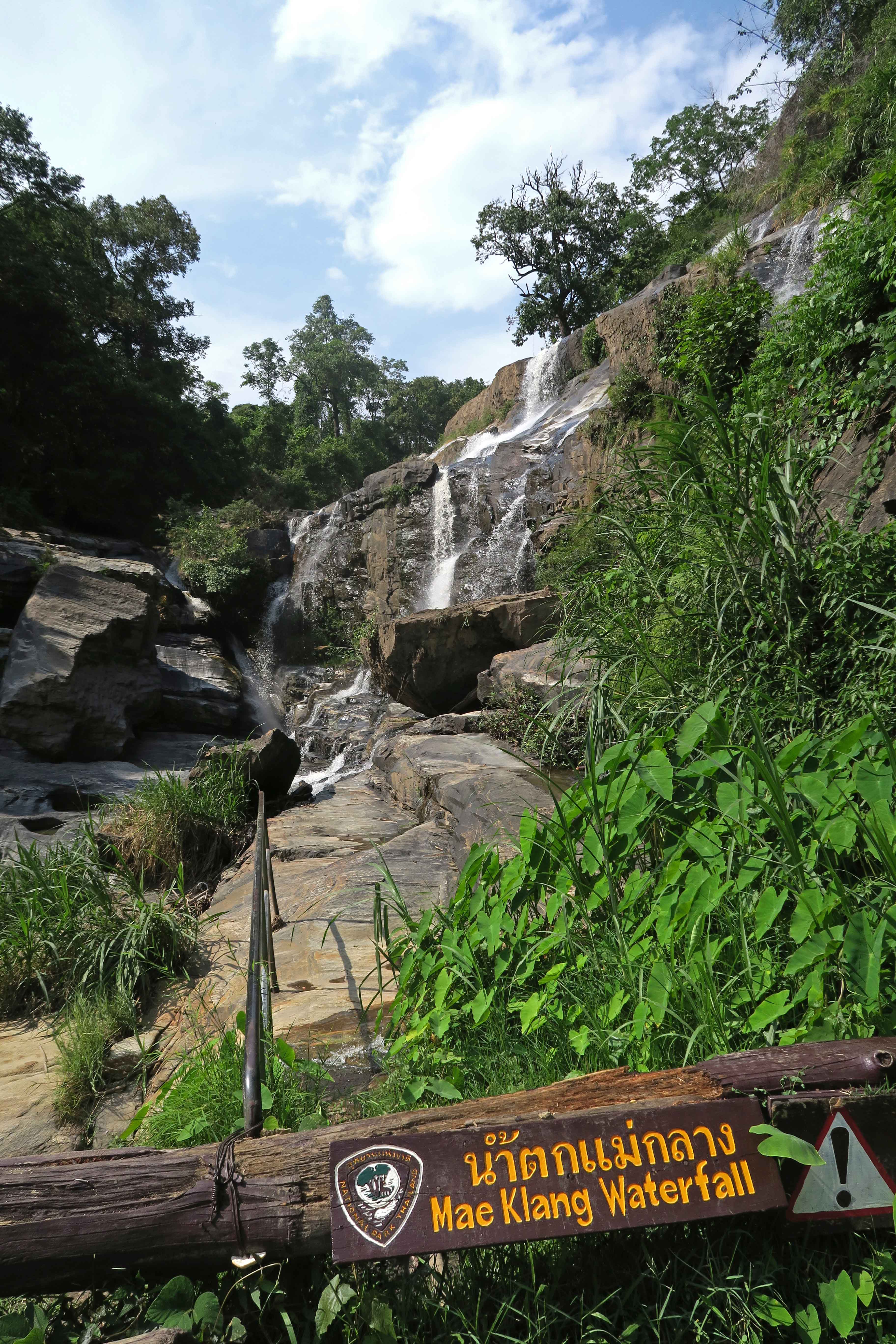
One of the most beautiful falls on the mountain is Wachirathan Falls, just over 20 km into the NP, which is a magnificent spectacle, even in the dry season. Unfortunately, there were not many butterflies about, or the ones that were flying about were rather inaccessible, so I decided to head further down to the ever popular Mae Klang Waterfall. This lies just outside the boundaries of the NP, so is more heavily visited by picnickers and sightseers.
Mae Klang Falls on 7th May 2017
There was much less water flowing than in previous visits; compare the photograph above (taken in May, before the rains have arrived) with that taken in November (at the end of the rainy season) in a previous year.
Mae Klang waterfalls 8 Nov 2013
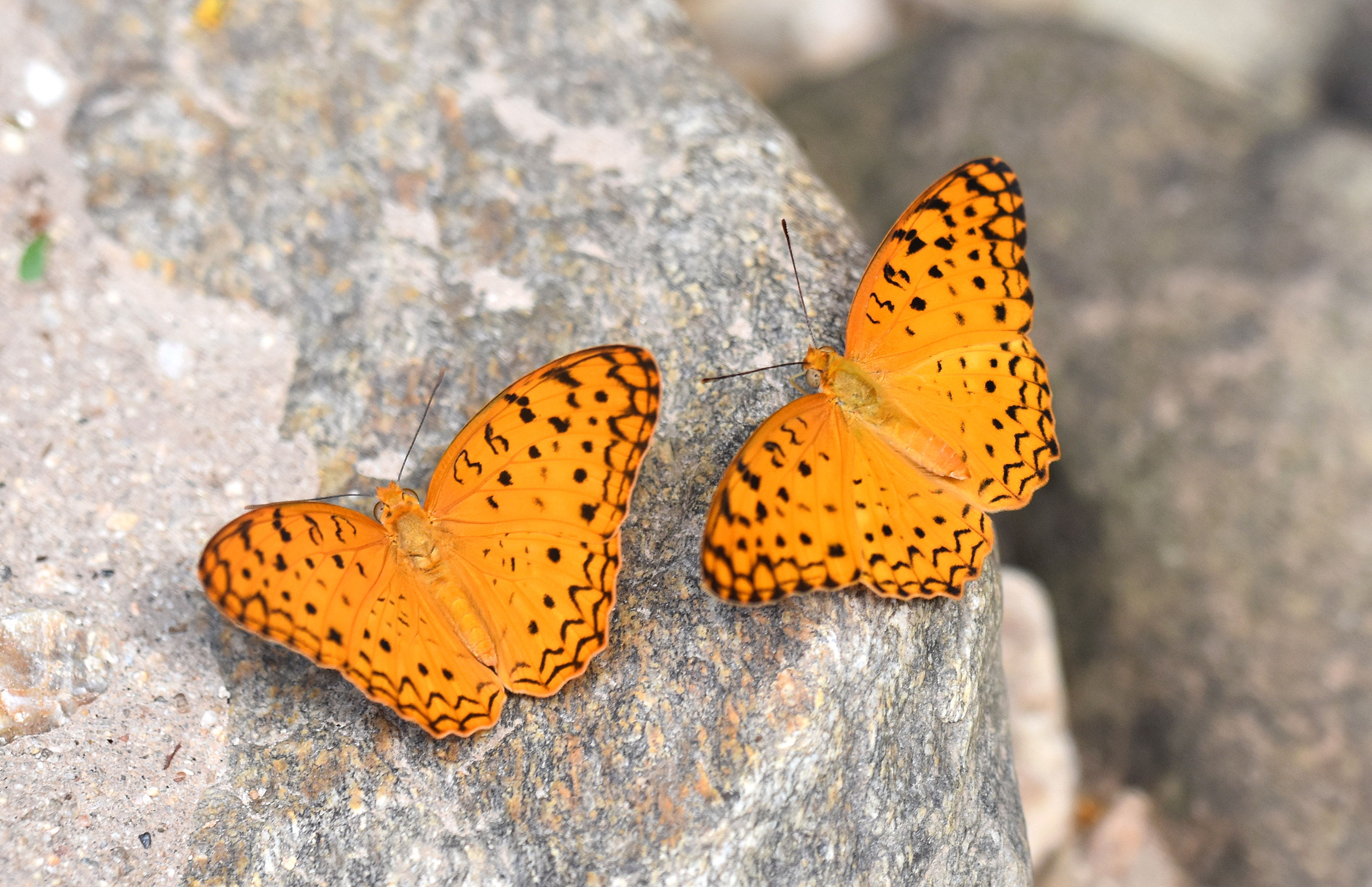
Mae Klang waterfall is at an altitude of about 1,200 m or so, so is much hotter than further up the mountain, and there were plenty of butterflies around! The problem was that because of the high temperatures, the butterflies were flying about so fast it was very difficult to photograph them! One of the more obliging species was the Common Leopard Butterfly (Phalanta phalantha), which were present in quite large numbers along the stream beds next to the river.
Common Leopard Butterfly (Phalanta phalantha) mud-puddling at Mae klang waterfall, Doi Inthanon.
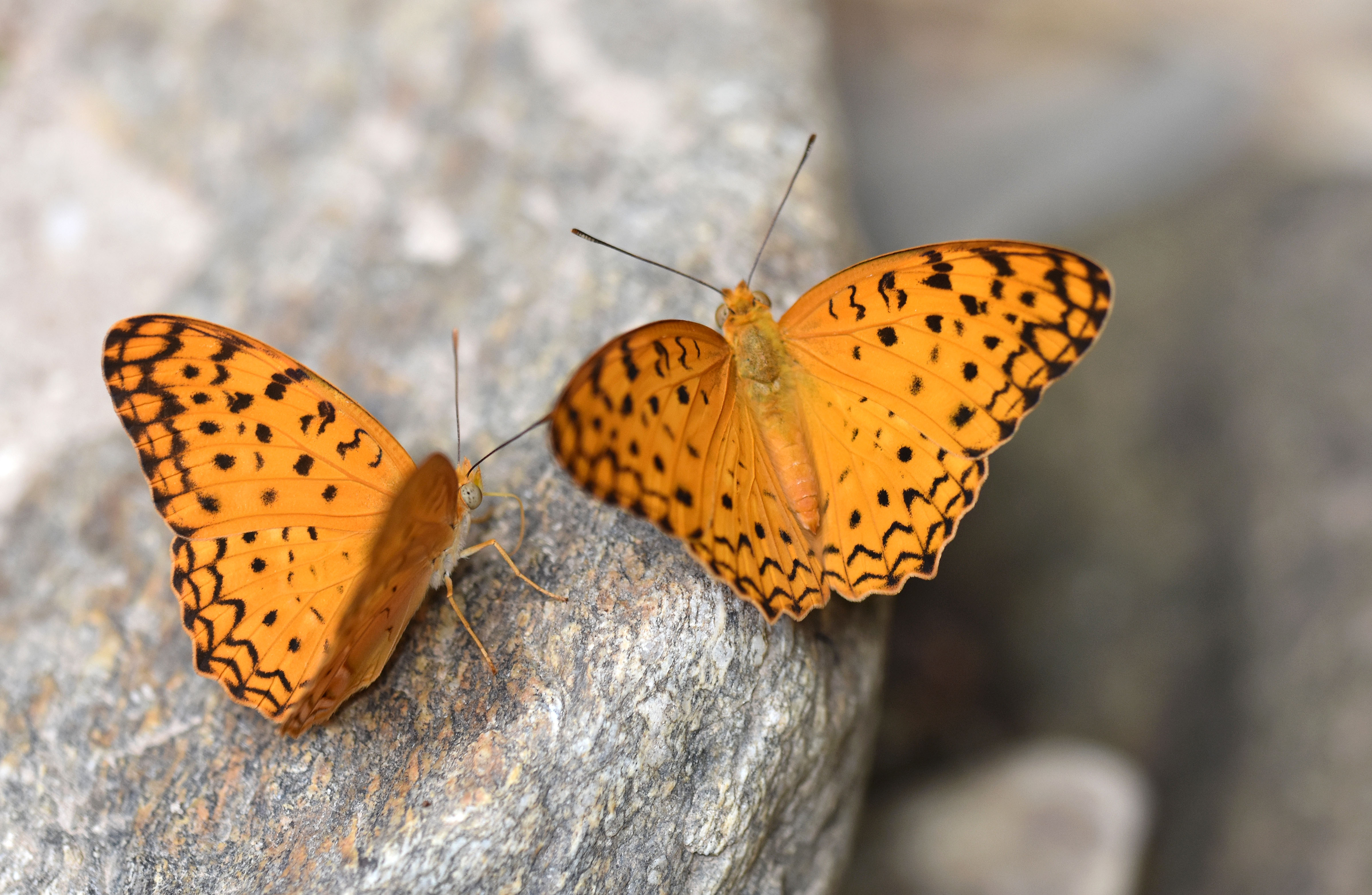
The butterflies were ‘puddling’ or ‘mud-puddling’ as it is called; they are trying to absorb sodium (in the form of sodium chloride, salt) or nitrogen (in the form of amino acids) from moist substrates such as mud, animal excrement, rotting fruits, carrion, dung, bird droppings, sweat, tears and so on (See 1: See you down the puddle). Curiously, many of these Common Leopard butterflies were sucking up moisture from the rocks themselves (below). There must have been a thin layer of water on the rocks, which may have produced a solution of salts or minerals attractive to these insects.
Common Leopard Butterfly (Phalanta phalantha) Mae klang, with extended proboscis
Despite being engaged in mud- or moisture-puddling, the butterflies did not stay put for long, and usually flew off as soon as the lumbering photographer approached them! I did not manage to get as close as I would have liked, but after taking dozens of shots, I managed to get a few usable ones.
Common Leopard butterfllies (Phalanta phalantha)
These butterflies take about three weeks to develop from egg to adult (at 28 deg C) and the larvae feed on flowering plants in the Willow family (Salicaceae) including Flacourtia inermis and Salix babylonica (Links 2 and 3).
Common Leopard butterfllies (Phalanta phalantha) on rocks
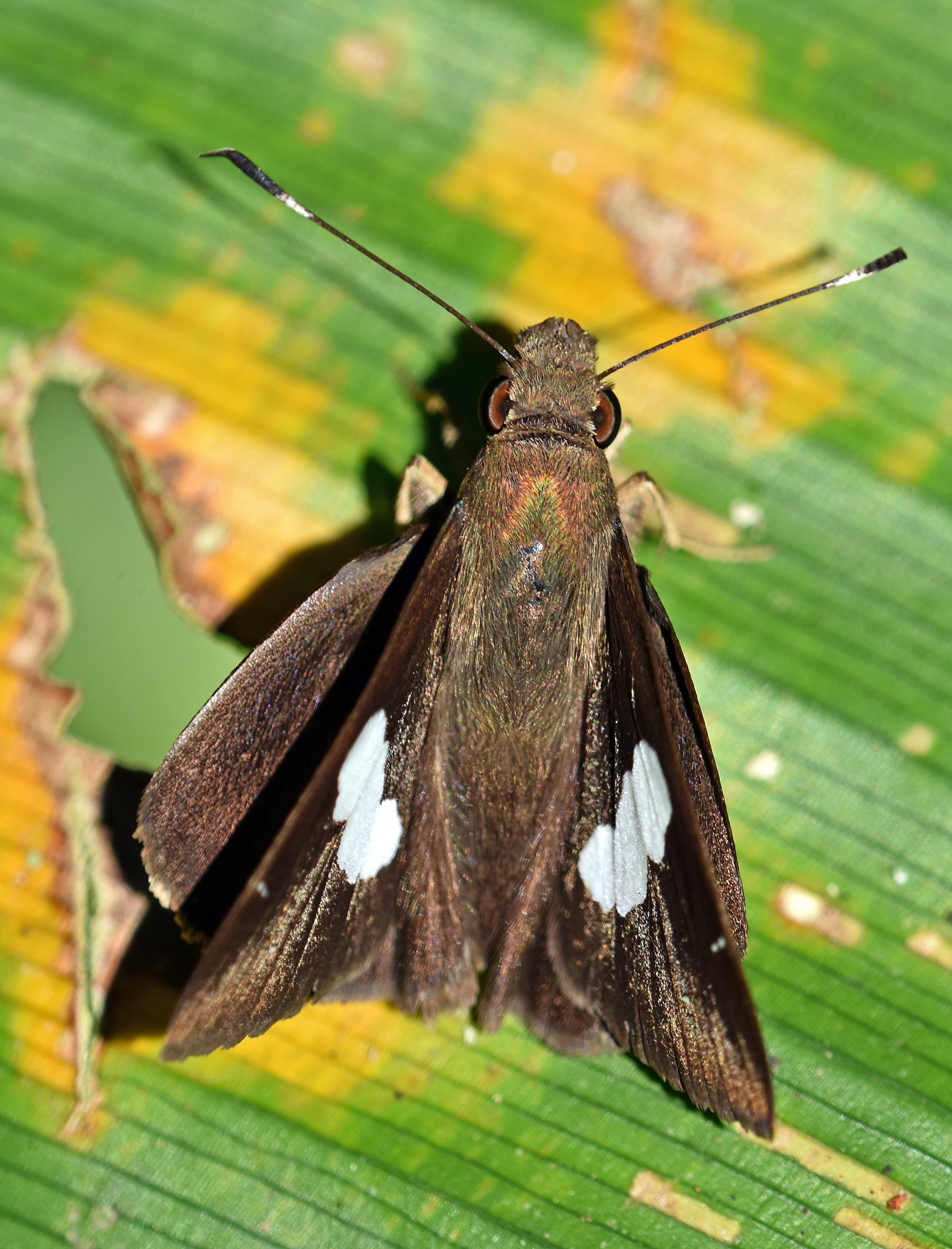
There were also quite large numbers of yellow/green butterflies flying about, at amazing speeds! One often sees pictures of stationary butterflies, which fail to do justice to the extraordinary vitality of these insects. Butterflies can be very fast fliers – especially the nippy little Skippers, which can reach speeds of up to 60 km per hour! Skippers are shaped like little jet fighters! As the following photograph illustrates.
Spotted Demon (Notocrypta feisthamelii alysos). A Skipper from Chiang Dao, Thailand.
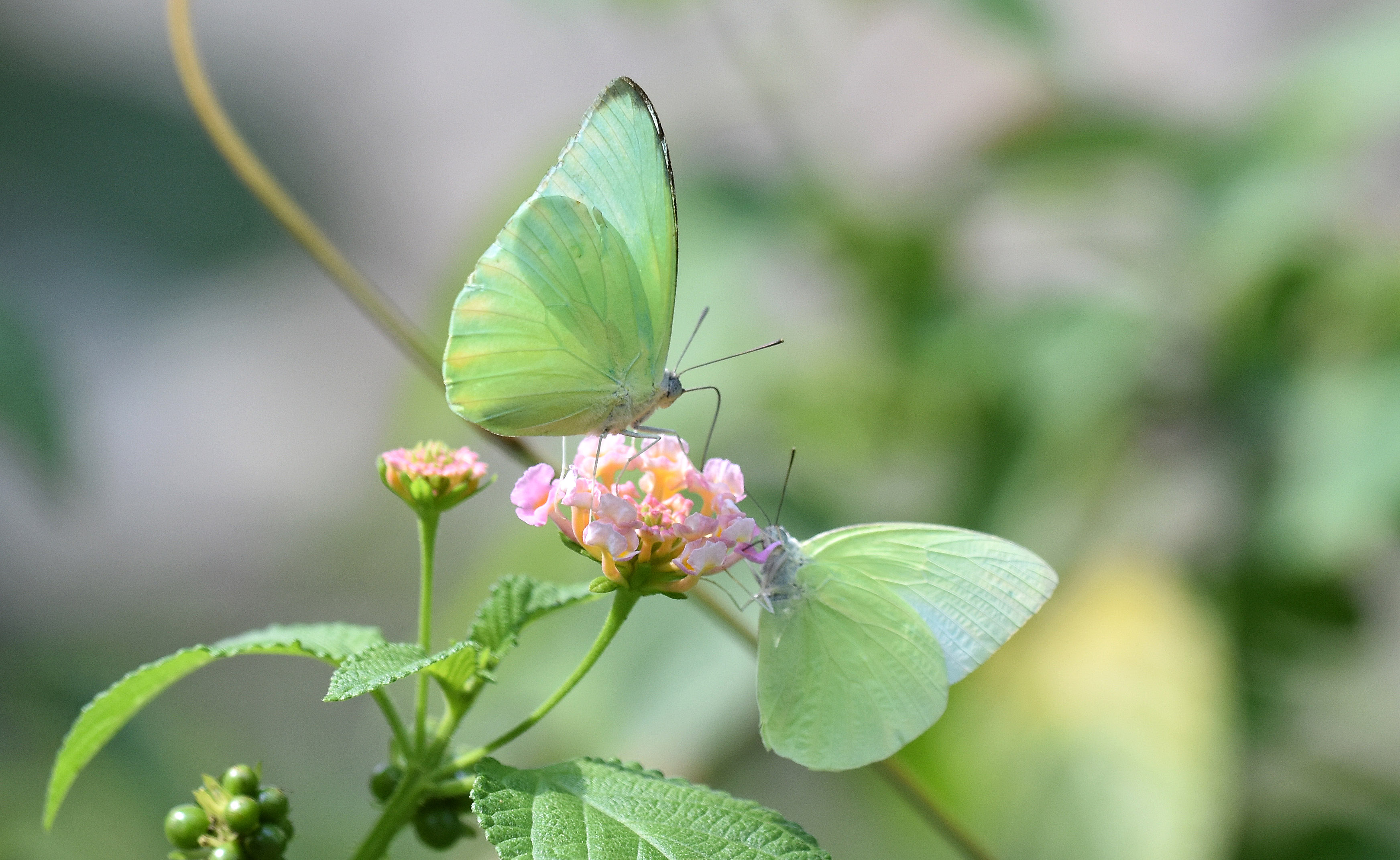
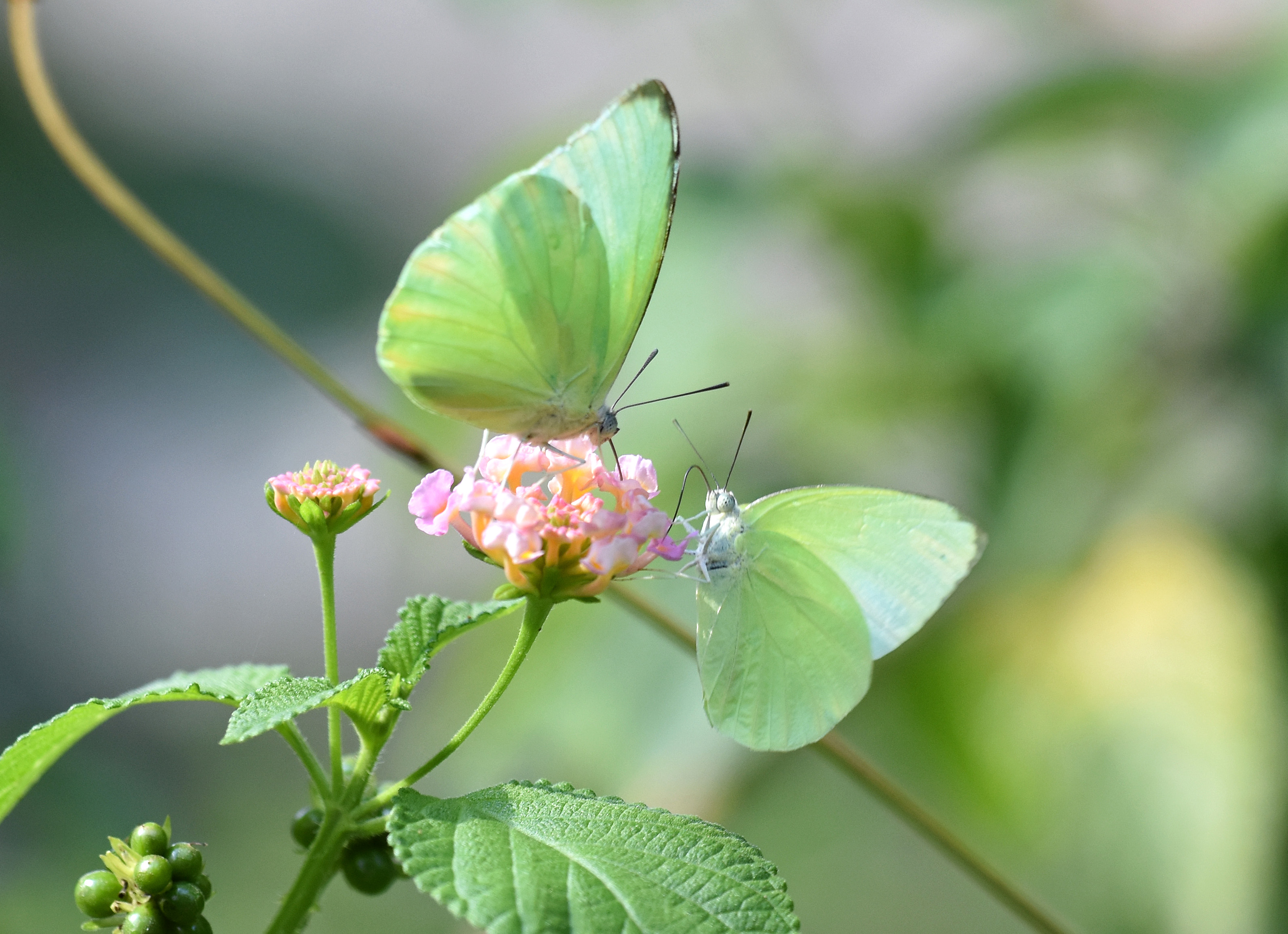
I did manage to grab a couple of photographs of the lively yellow/green butterflies, which turned out to be Lemon Emigrants, feeding on nectar from Lantana flowers.
Lemon Emigrant (Catopsilia pomona pomona) Mae Klang
Lemon Emigrants (Catopsilia pomona pomona) Mae Klang
I also came across this little skink – a Streamside Skink (Sphenomorphus maculatus) – on the rocks near the waterfalls (below).
Streamside Skink (Sphenomorphus maculatus) Mae Klang, Doi Inthanon, Thailand.
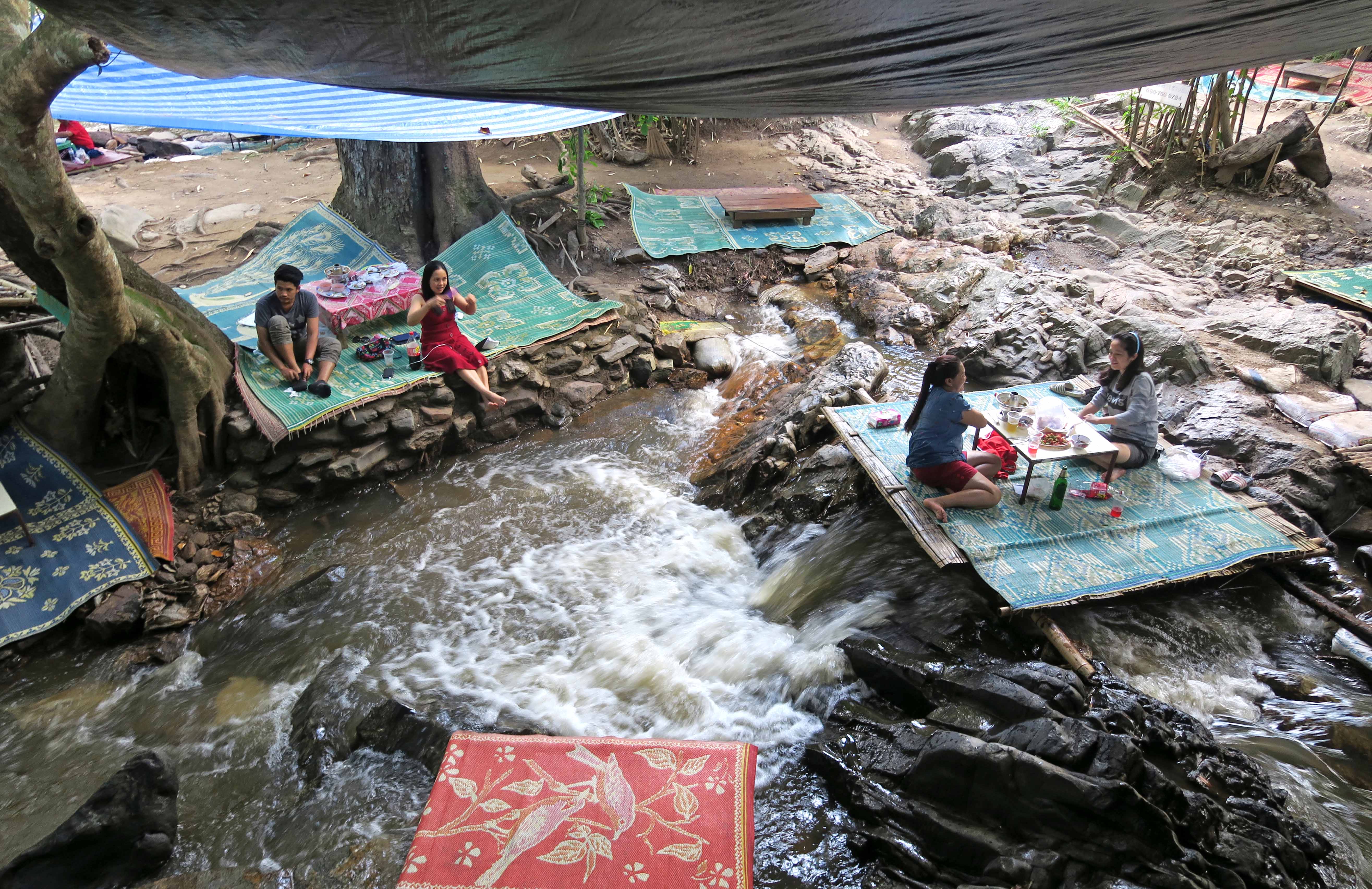
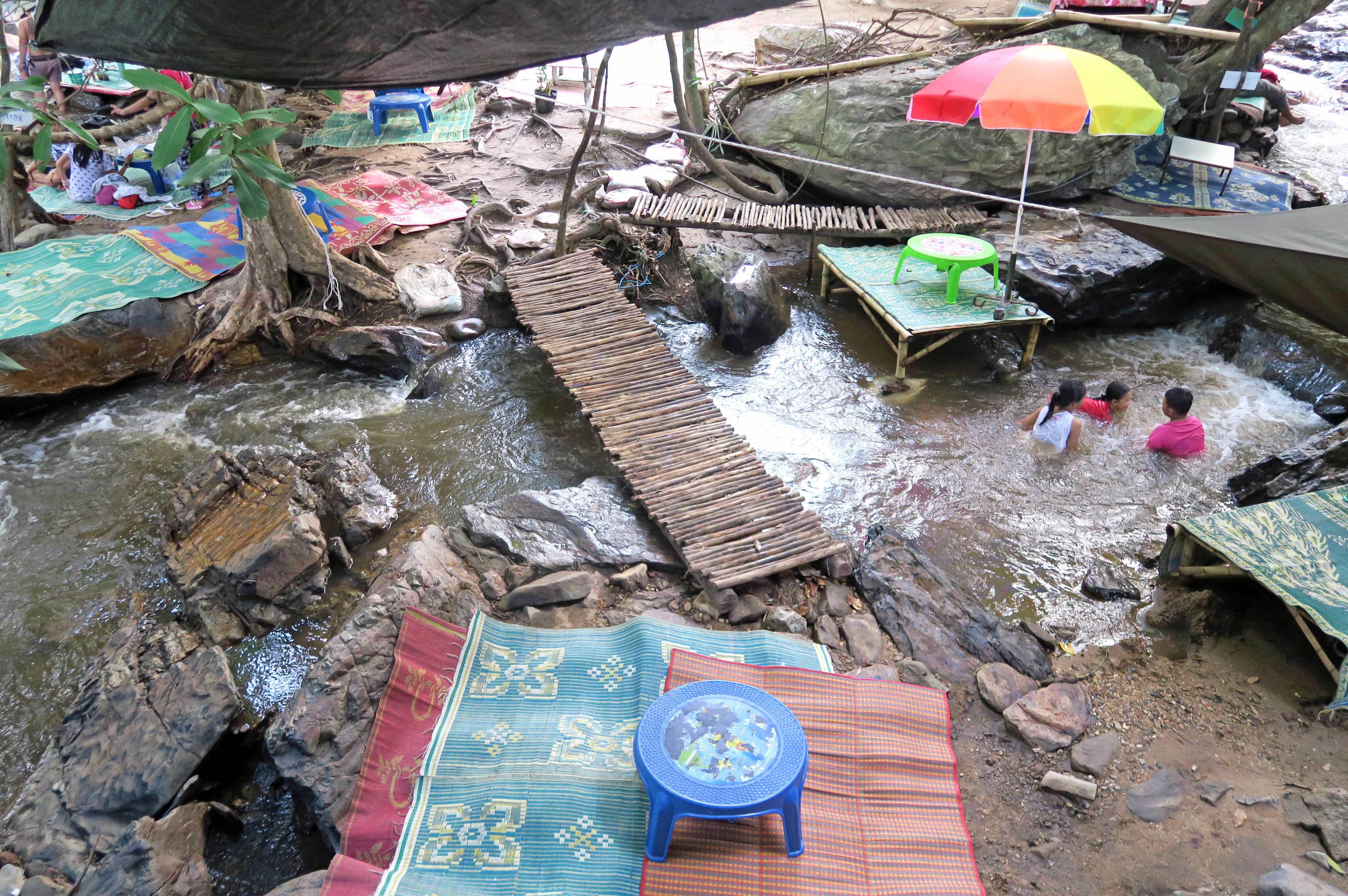
The waterfalls are a good place to cool off on a hot day, and people like to sit and relax on the rocks beside the streams. There are plenty of small restaurants and vendors nearby providing food and snacks for visitors.
Mae Klang Falls. People sitting and eating by the streams.
Mae Klang Falls bathers
So even when temperatures are unbearably hot, there are many places to go to chill out, whether you are a butterfly, skink or primate!
Rayalu, M. B., Kumari, V. K., Naidu, M. T., & Atluri, J. B. (2014). Life history and larval performance of the Common Leopard butterfly, Phalanta phalantha Drury (Lepidoptera: Rhopalocera: Nymphalidae). International Journal of Advanced Research in Science and Technology, 3, 191-195.
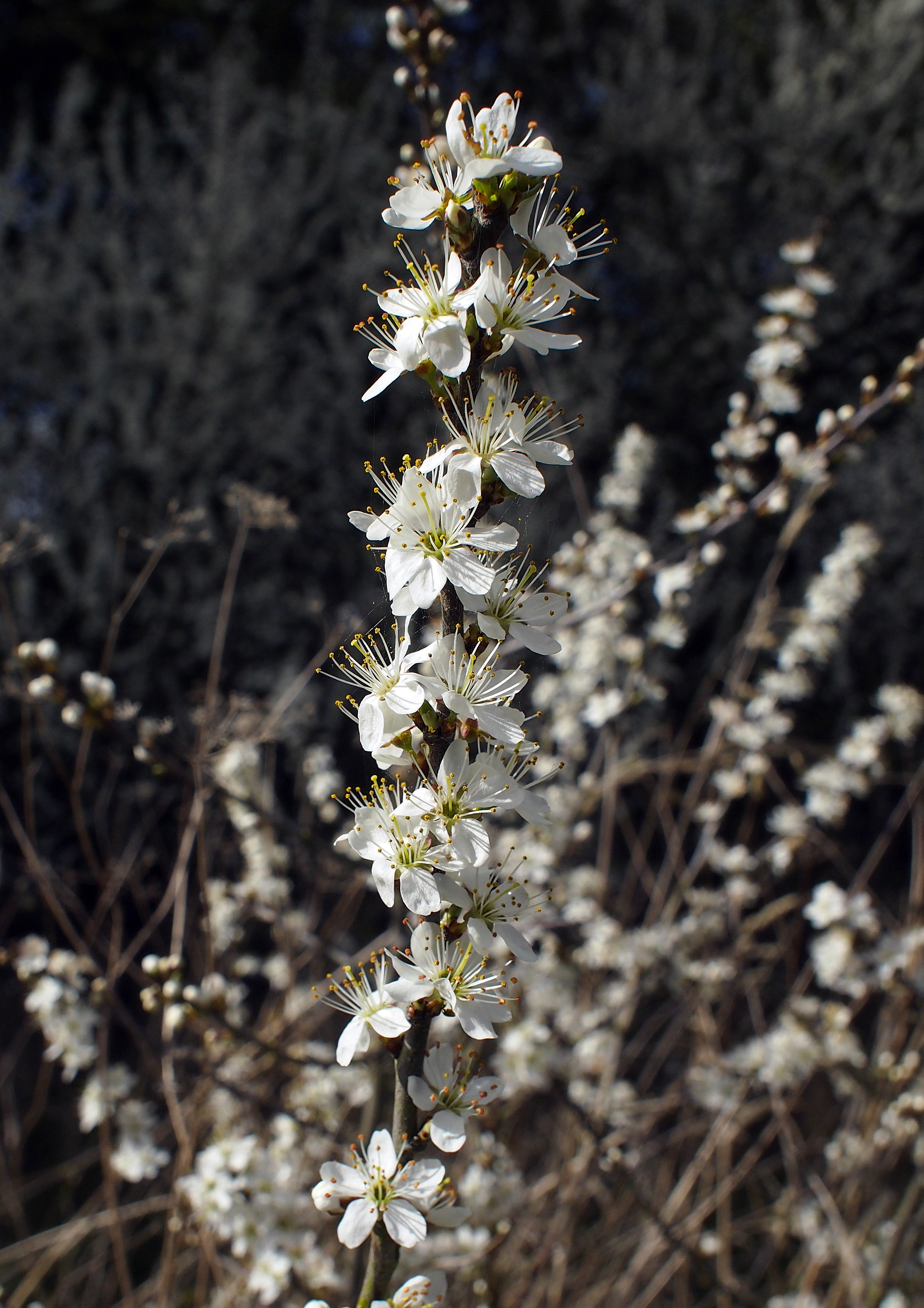
Spring has come early this year. The world is warming up; 2016 was the warmest year since record-keeping began (in 1880). (1) Perhaps 2017 will be even warmer? The countryside in Bedfordshire is waking up; shaking itself free of winter’s cloak and putting on a new dress of green leaves and spring flowers! Sprays of blossom are appearing, like this Blackthorn (Prunus spinosa) twig (below).
Blackthorn (Prunus spinosa) blossom on 1st April
One of my favourite walks, is between Sharnbrook and Felmersham and back, in Bedfordshire. An easy stroll along the banks of the Great Ouse towards the village of Felmersham and then back through the Felmersham Gravel Pits, which are a 21.6 hectare Site of Special Scientific Interest. I took these photographs along this walk on 1st April 2017, with a small camera (an Olympus Pen EP-3 fitted with a 17mm lens; 34mm equivalent).
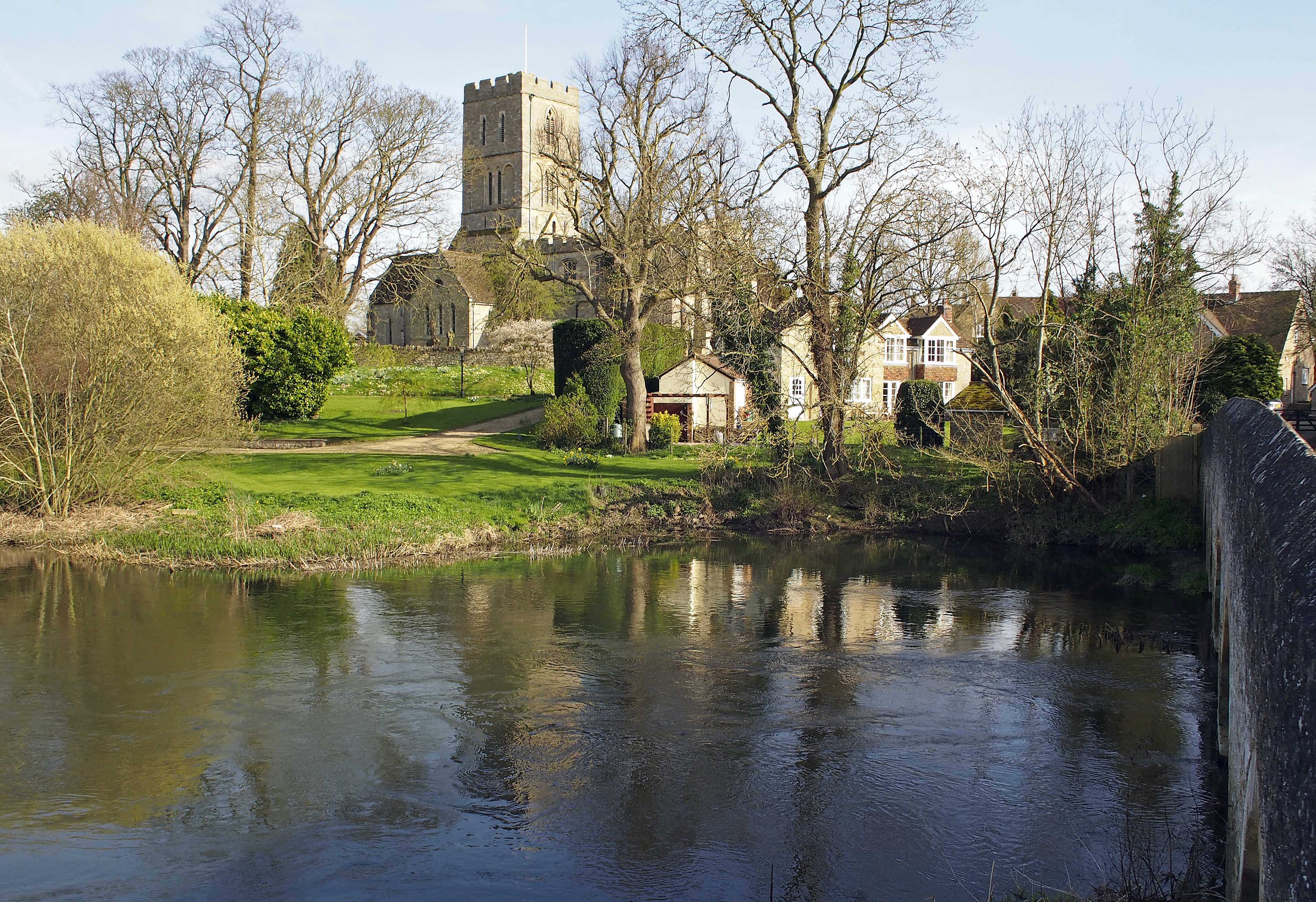
St Mary’s Church at Felmersham was build between 1220 and 1240; it doesn’t look that old! (2)
St Mary’s Church, Felmersham next to the Great Ouse, Bedfordshire
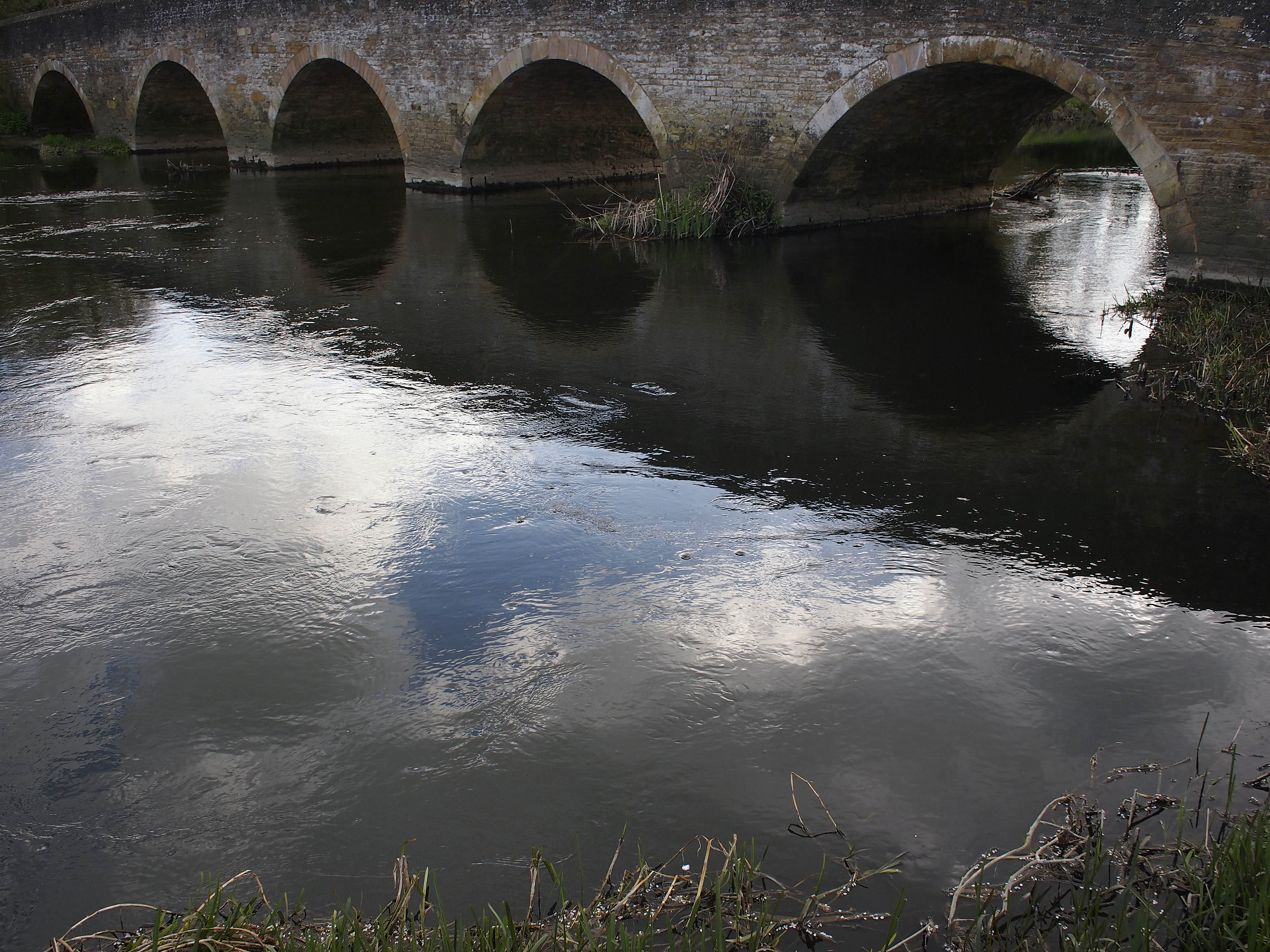
The 5-arched stone bridge, on the other hand, looks very old, but was ‘only’ built in 1818!
Stone bridge over the Great Ouse at Felmersham
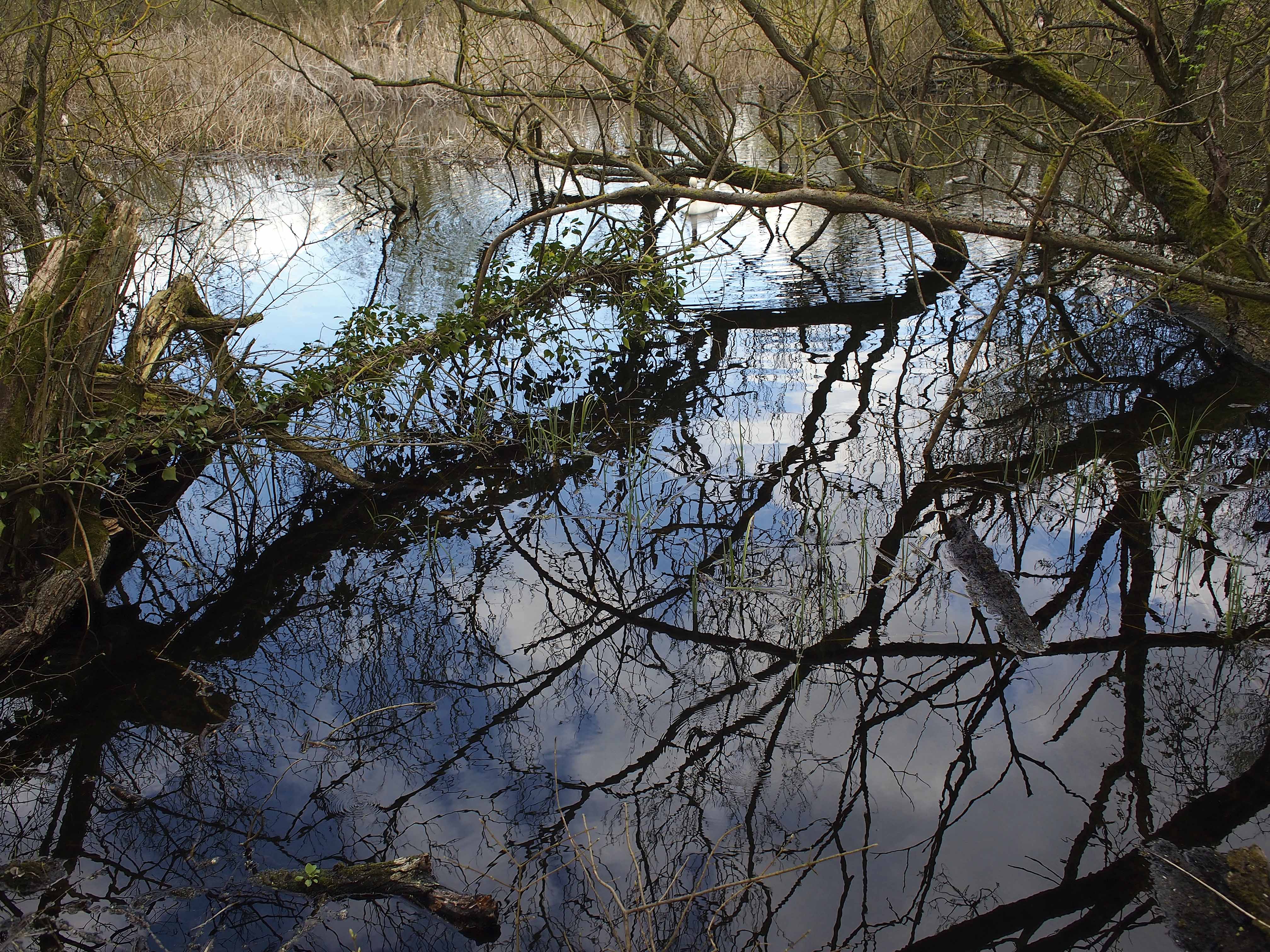
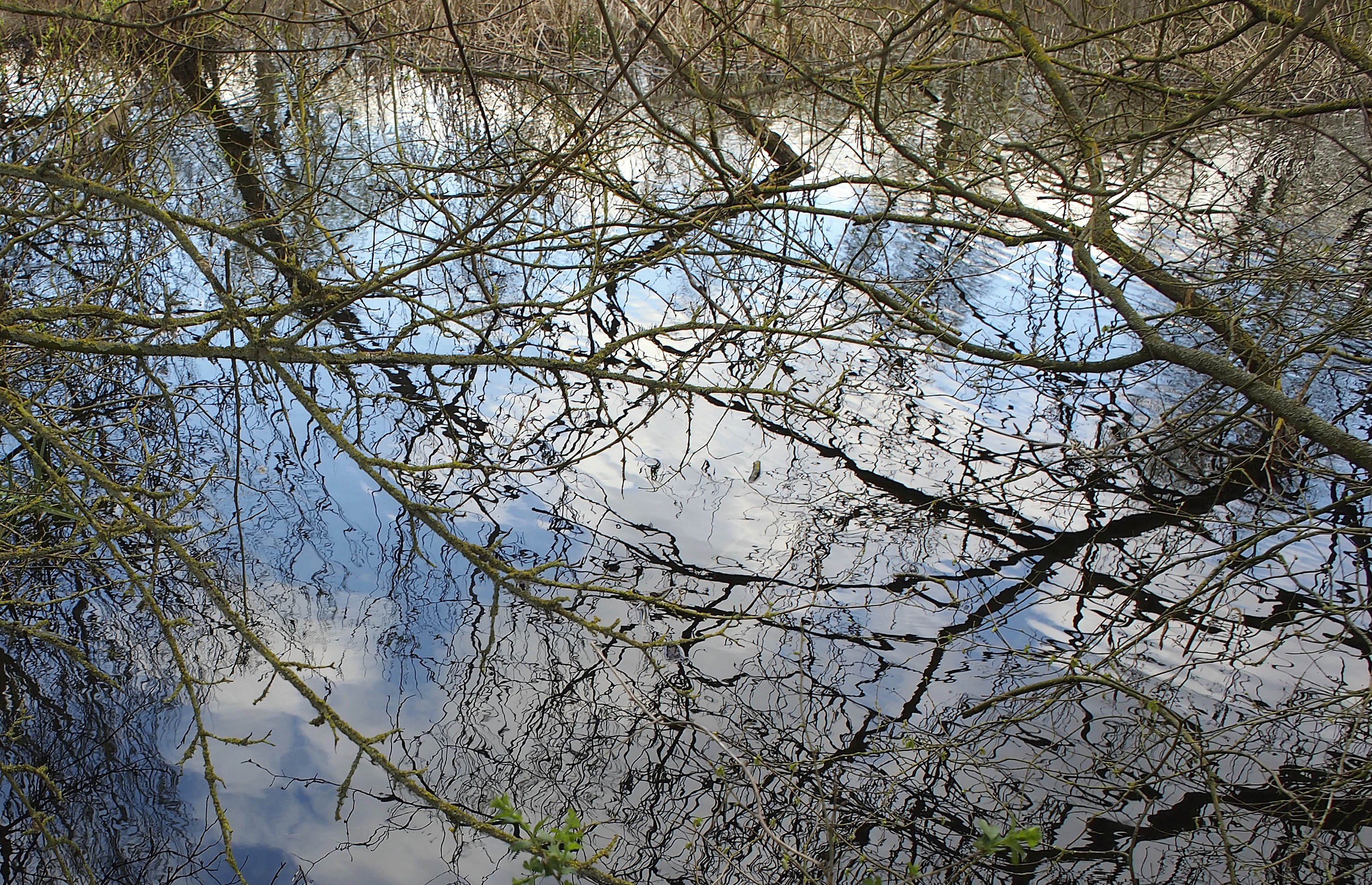
The gravel pits in the Nature Reserve were dug out during the second World War when the gravel was used in the construction of local war-time air fields. (3) The pits are now lakes and much beloved of waterfowl, including ducks, geese, swans, grebes and so on. It is a magical place that I have visited for many years; very relaxing to walk beside the lakes and ponds and reflect on the reflections!
Felmersham gravel pits, Bedfordshire
There are certain spots where I must have taken dozens of pictures, but the scene is always changing; not only through the year, but also from year to year as the vegetation grows, or is cut back by conservators to create spaces for nature.
Reflections in the lake. Felmersham gravel pits, Bedfordshire
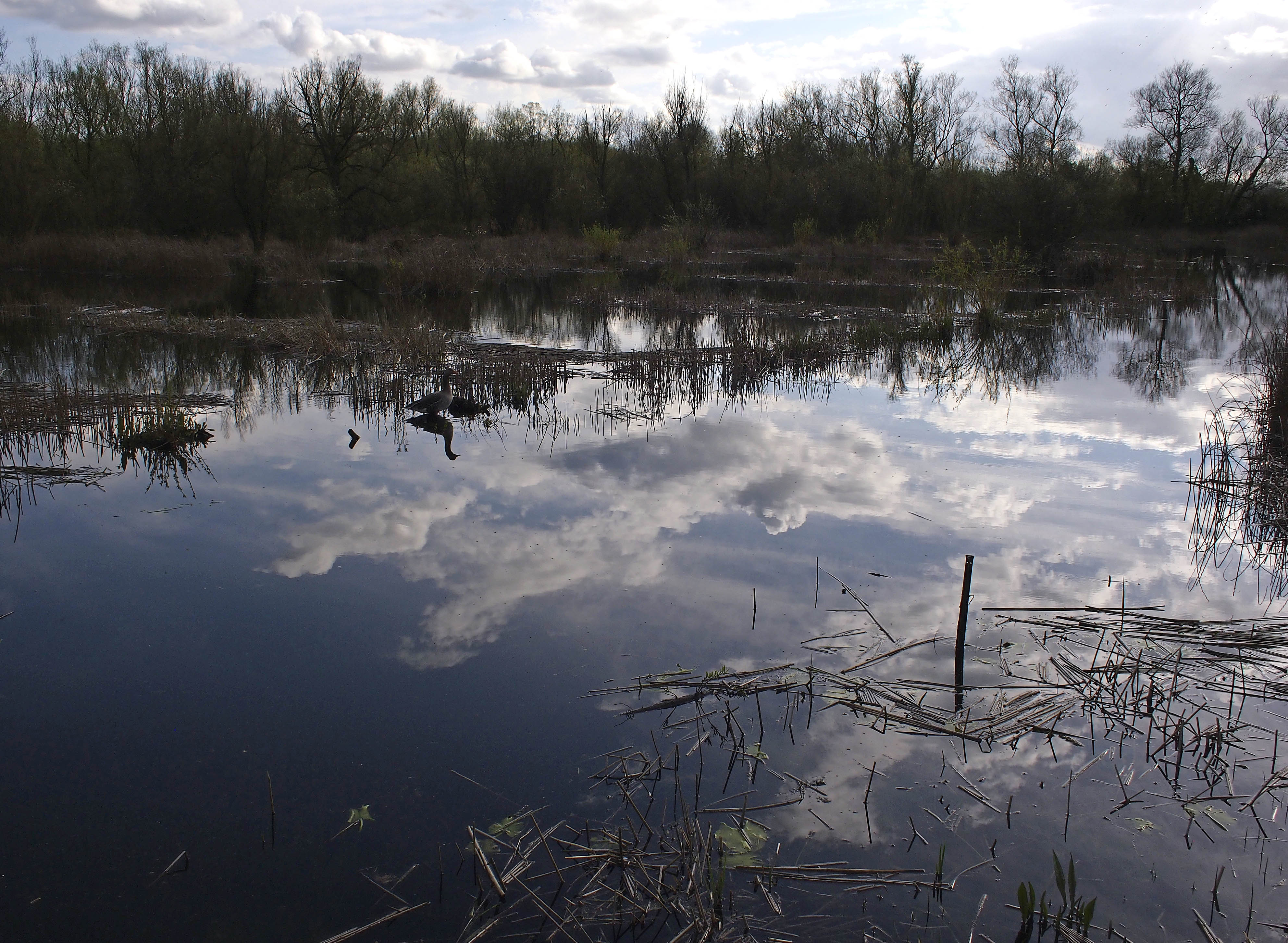
Spot the goose! No fishermen at this time of year. Angling is apparently by Wildlife Trust permit only. (4)
Felmersham gravel pits, Bedfordshire.
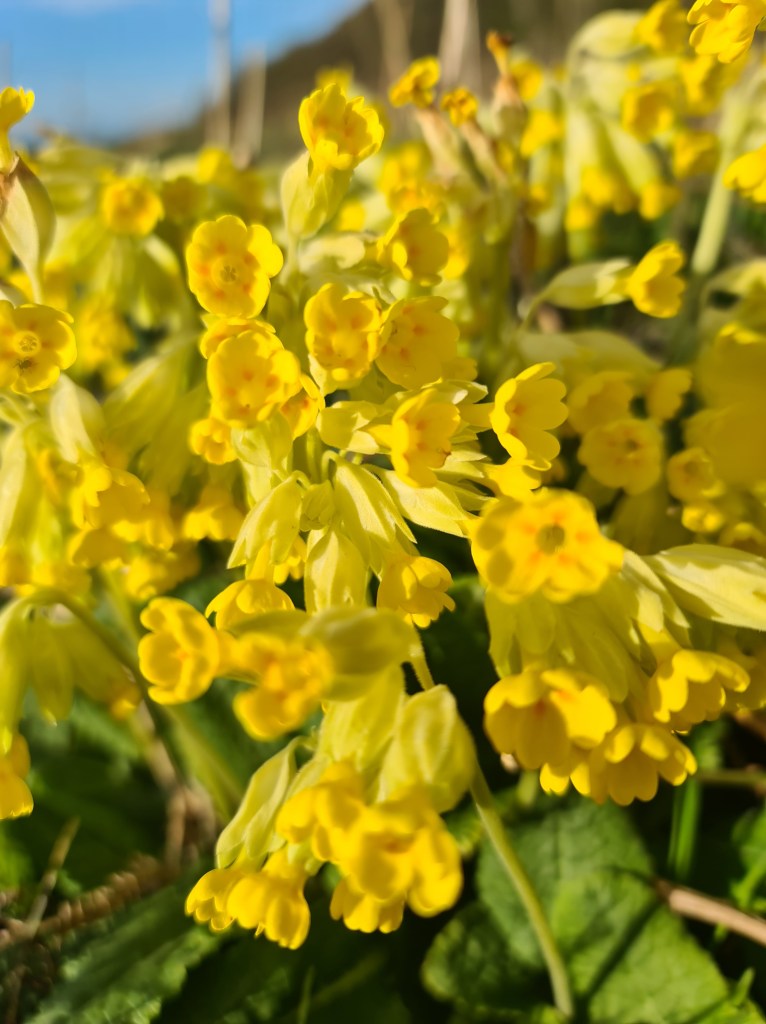
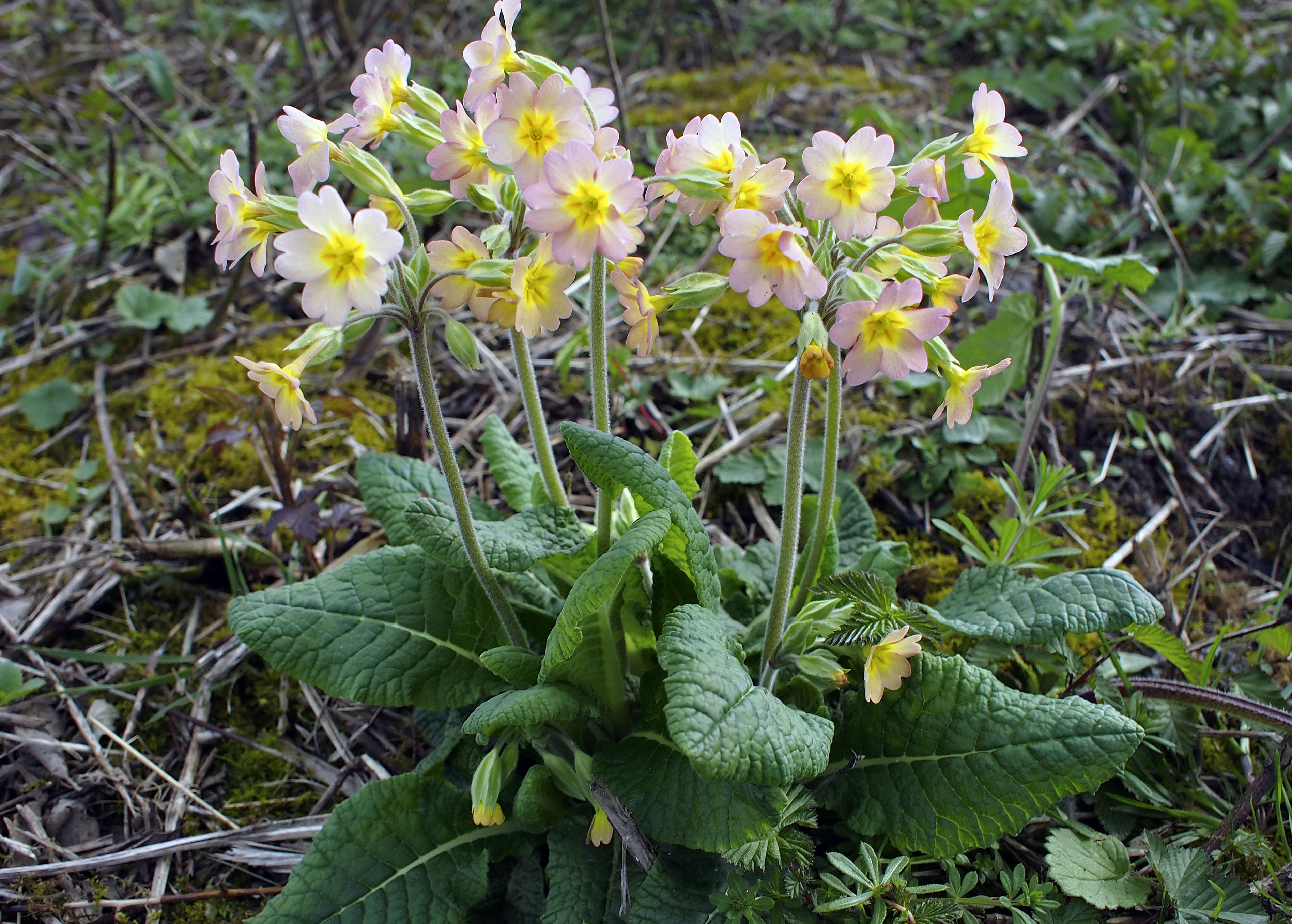
Some new flowers were starting to appear on 1st April. The primroses have been out for some time, but this was the first time I came across cowslips. These had wonderful colours; were they wild or garden escapes? I don’t know.
Pink and yellow Primulas
Red Primula veris, Coronation cowslip
The vegetation beneath the water was also blooming! Large water-lily leaves could be seen (below).
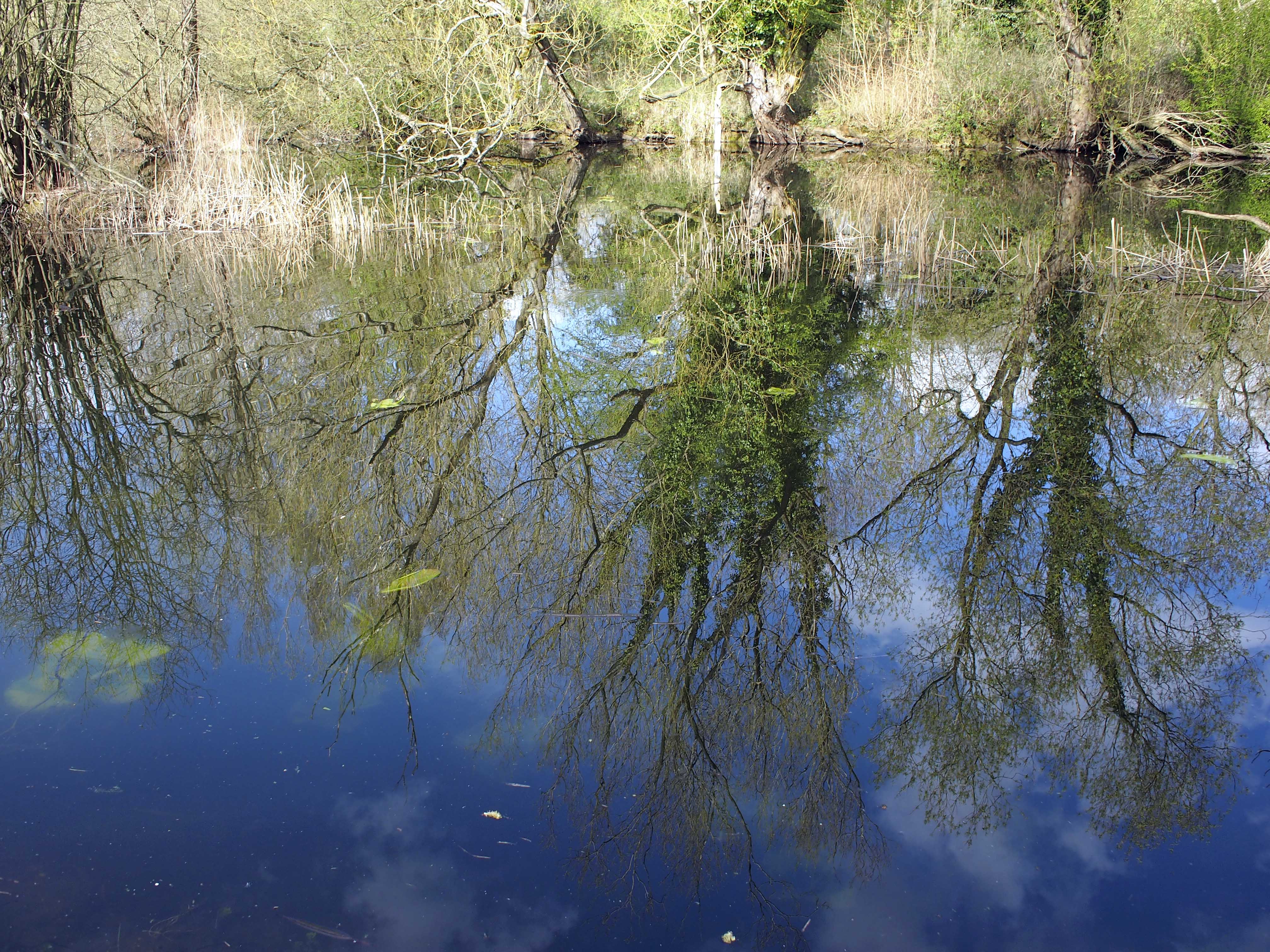
Trees reflected in the water, with green plants underwater.
This year’s reeds have not yet emerged, however. The brown reeds are leftover from last year (below).
Reeds on Felmersham gravel pits, Bedfordshire.
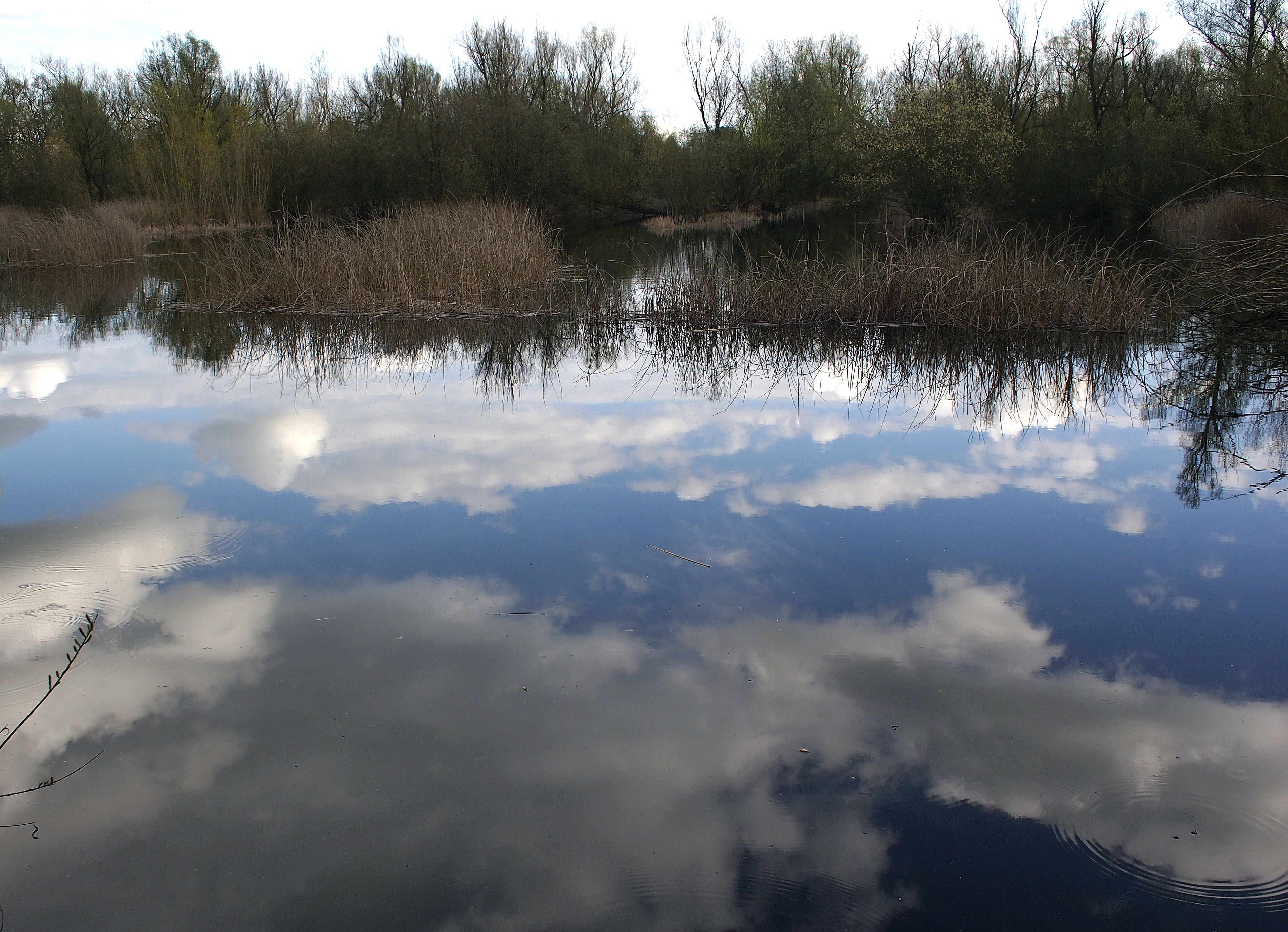
Clouds reflected in Felmersham gravel pits, Bedfordshire.
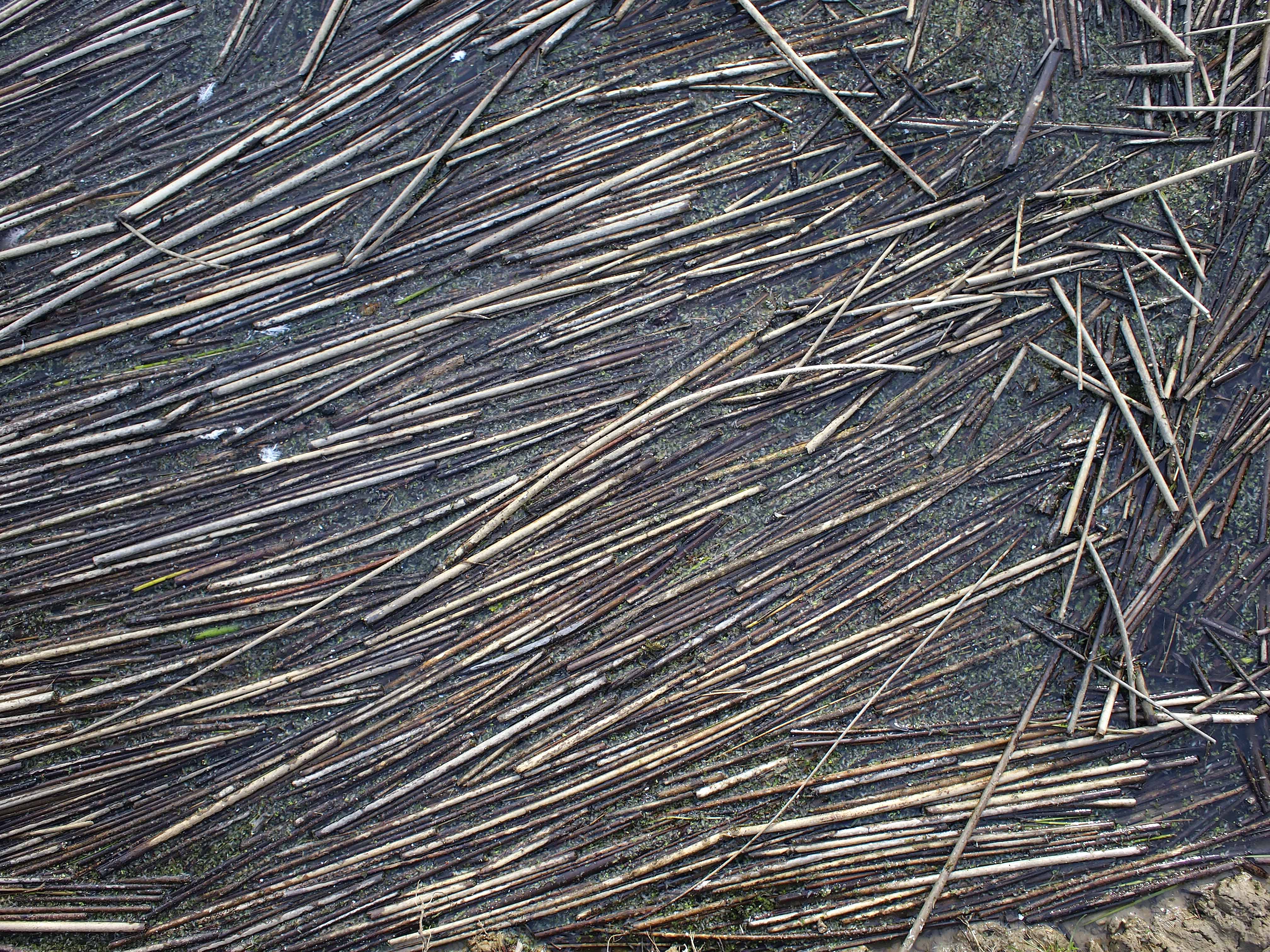
In one corner of a lake, reeds had been piled up by the wind along the bank.
Reeds floating on the water.
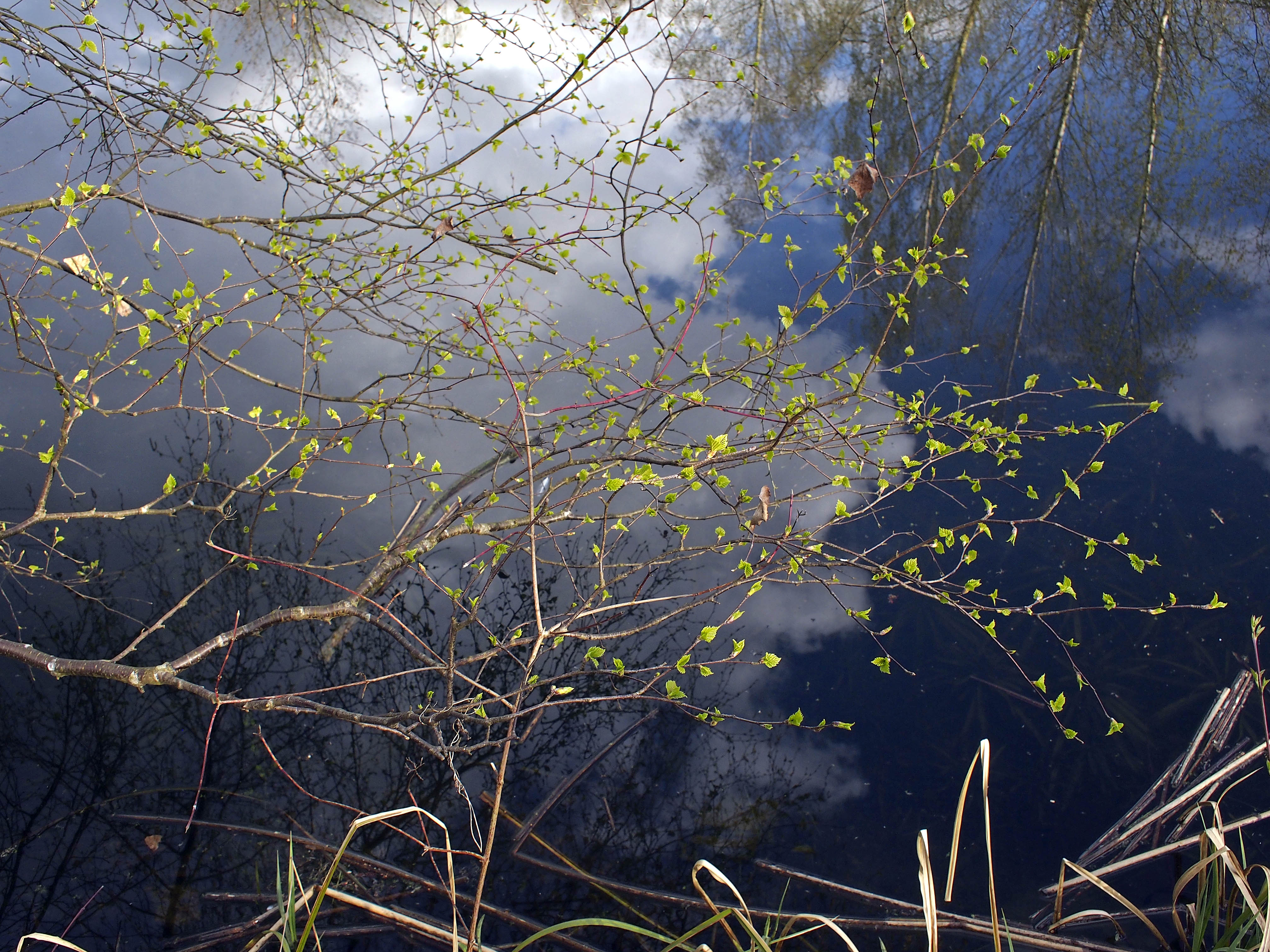
Trees vary from species to species in terms of when their leaves first appear. The leaves on this bush overhanging the water, were just starting to appear, breaking out of their buds.
New leaves emerging on overhanging bush.
One of the pleasures of travelling a familiar path is that you see old favourites in a new light, as well as coming across new things. The world is always changing and it is our blessing to be able to witness it, albeit briefly.
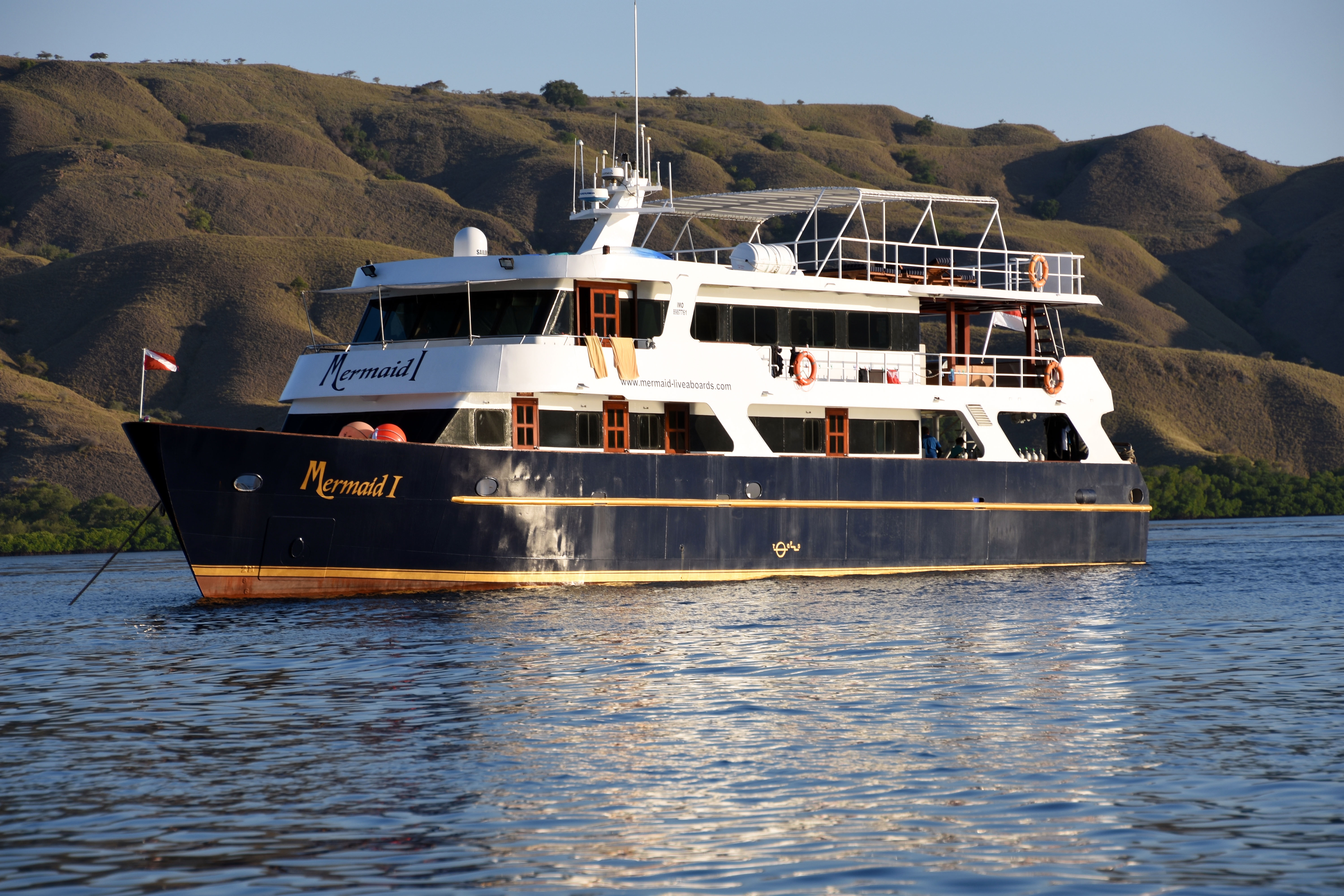
I recently had the pleasure of cruising from Bali to Flores – via the Komodo National Park – aboard the very well-appointed little ship, Mermaid I (1). This liveaboard dive vessel is usually chartered by divers to explore the water of Komodo and Raja Ampat in Indonesia, but our trip had a different mission: we were on the look out for cetaceans, led by the very knowledgeable marine biologist Chas Anderson (2). I booked the holiday through Wildwings and thoroughly enjoyed the 10 days we spent – snorkelling, bird-watching and cetacean sighting – in Indonesian waters (3).
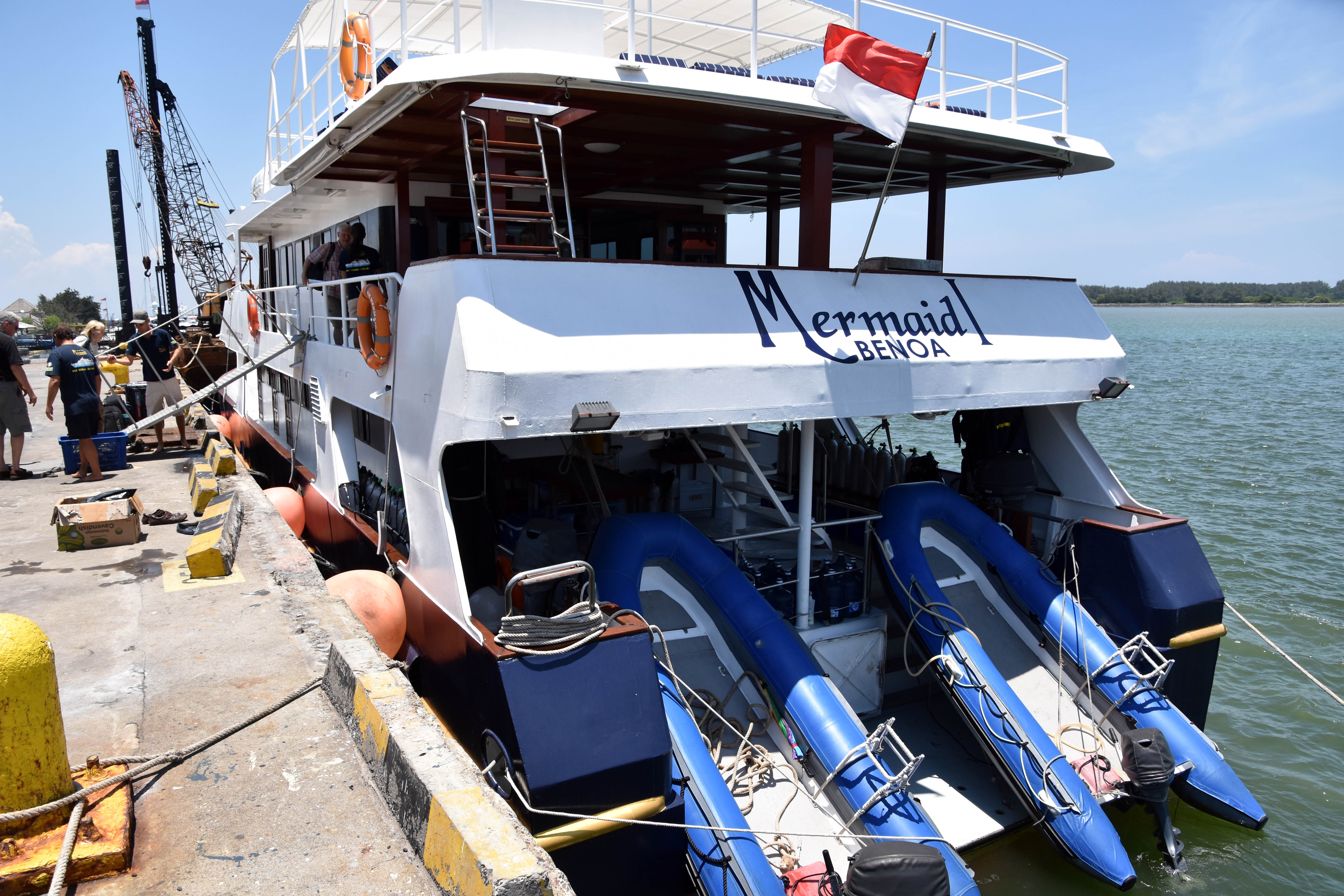
Mermaid I at Benoa Port, Bali
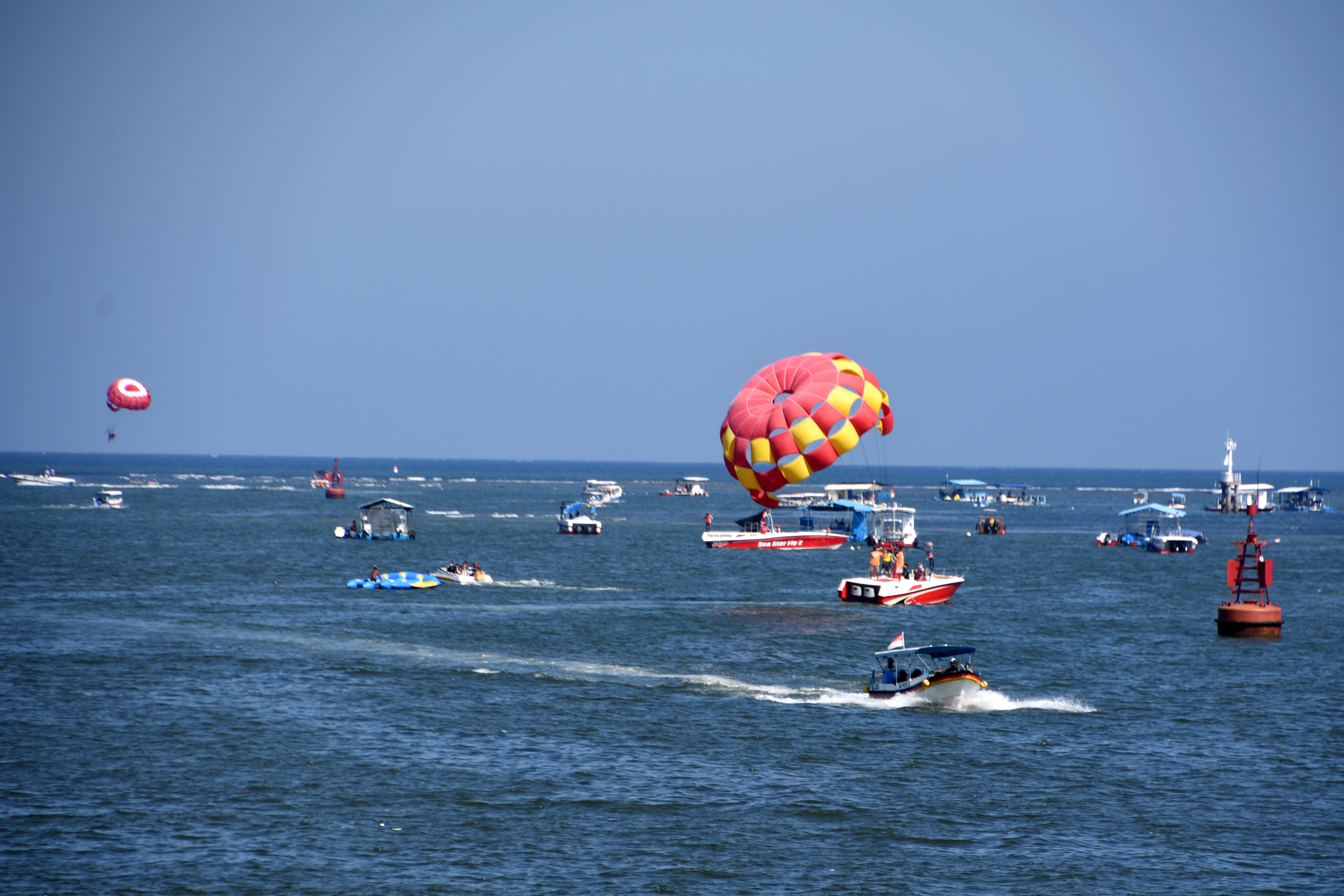
We boarded Mermaid I at Benoa Port, Bali, and set sail out into the waters of the Badung Strait – between Bali and the small island of Nusa Penida – and then further on into the Lombok Strait. There was a buzz of boating activity going on as we left the harbour.
Pleasure craft and para-gliding outside Benoa Port, Bali
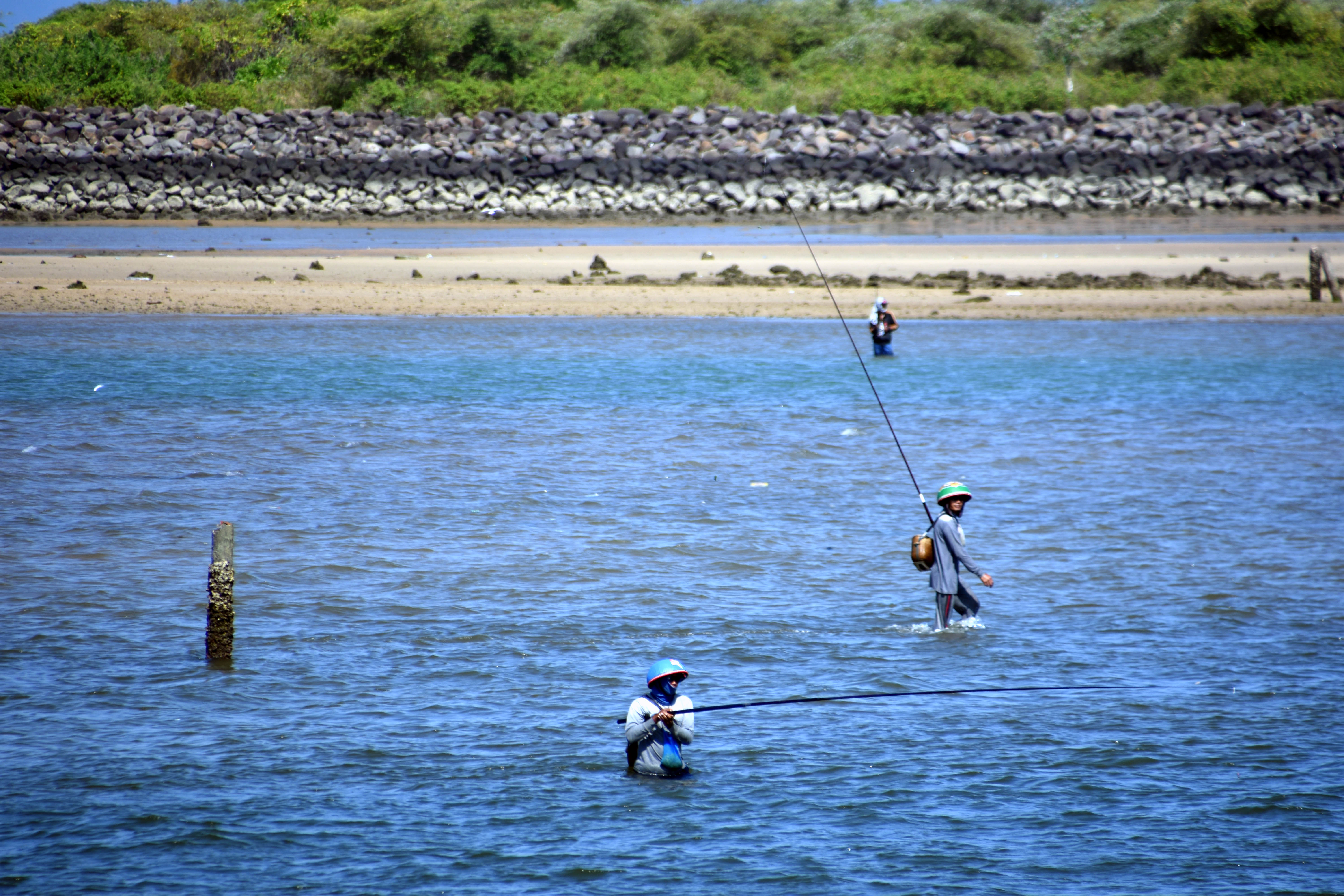
But what was more interesting, were the local fisherman standing waist-deep in the water with their long fishing rods and wicker baskets to keep the fish.
Fisherman in the sea outside Benoa Port, Bali
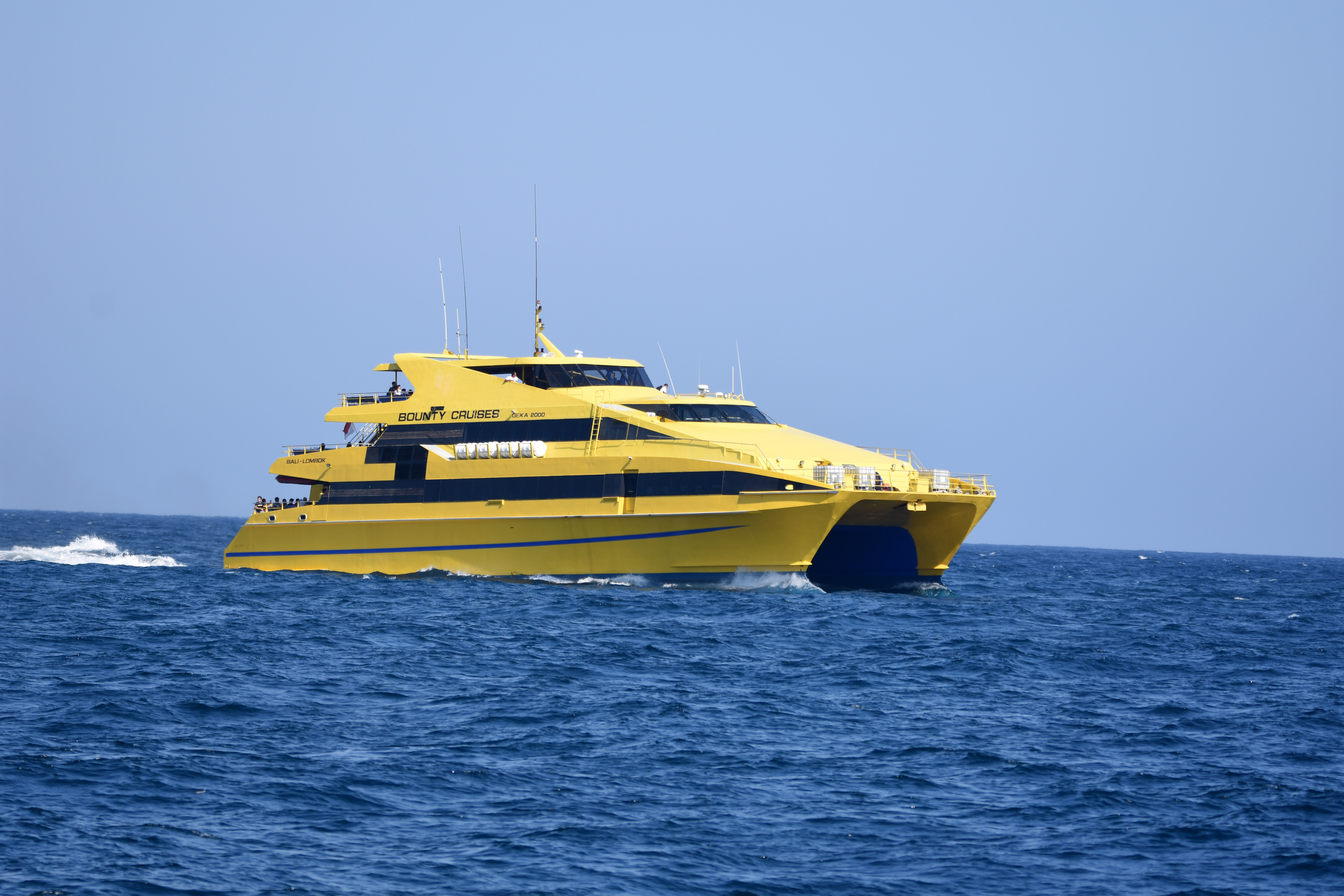
The famous faunal boundary – called Wallace’s Line – runs down the Lombok Strait, between Bali and Lombok, and is a line separating birds and animals of two separate ecozones: Asian (or Indomalayan) and Australasian. Today there are plenty of modern boats whisking tourists across this narrow, but deep strait, that still remains a barrier for many species.
Catamaran travelling from Lombok to Bali
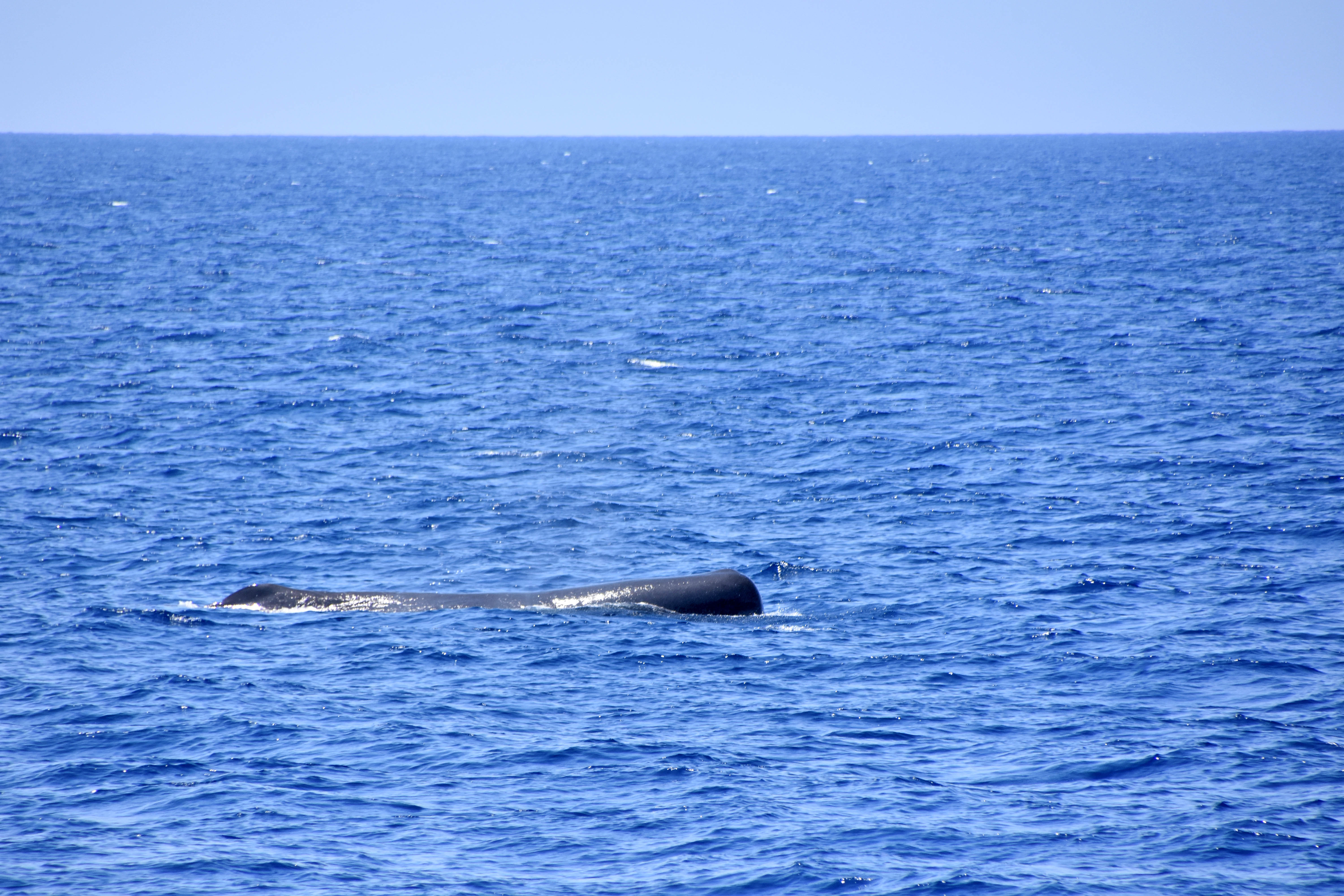
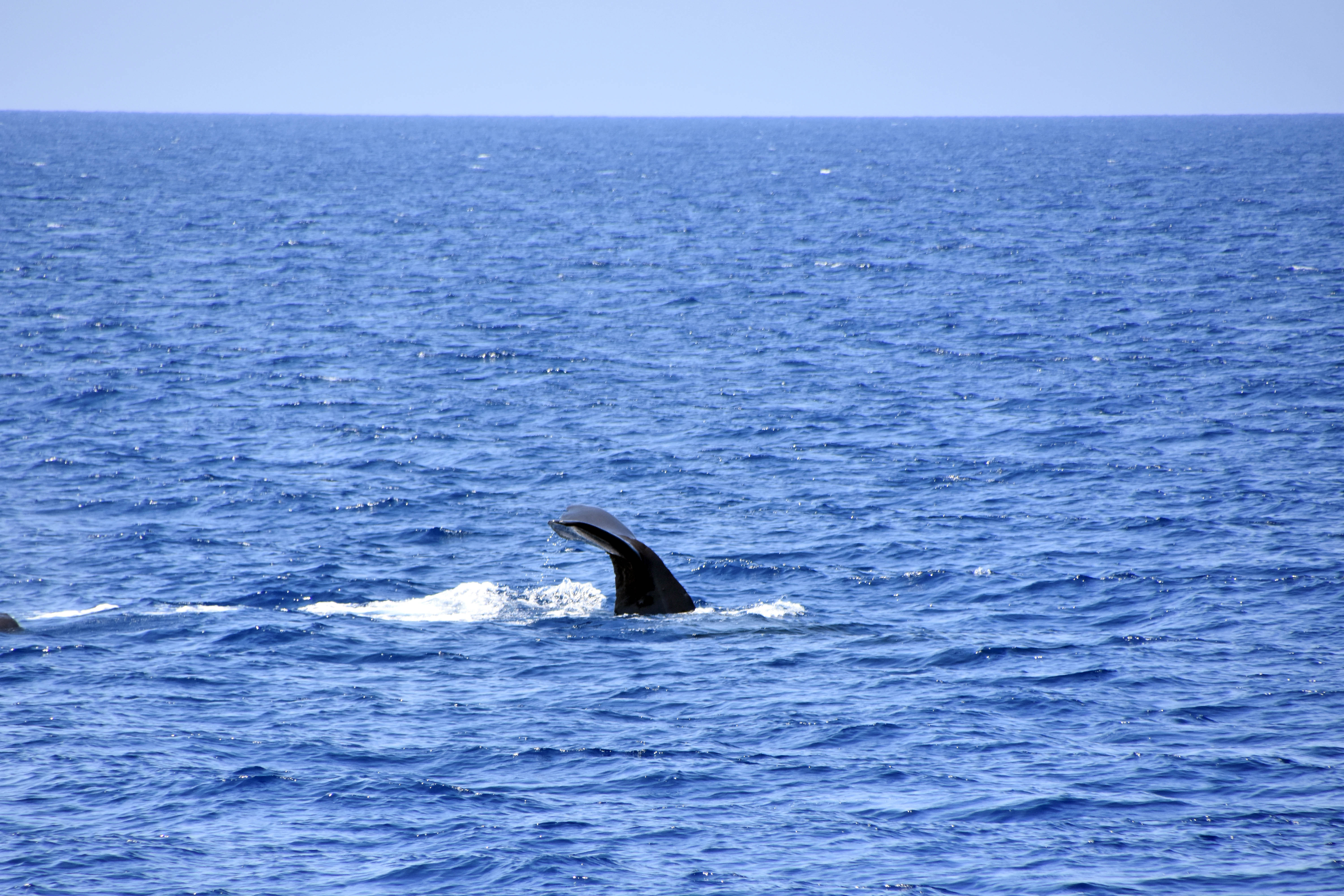
We sailed east, passing to north of the large island of Sumbawa, heading towards our first landfall: the small island of Satonda. On the way, we were fortunate enough to come across a large sperm whale; these cetaceans make deep dives – as far as 3,000m – in pursuit of large squid and fish. This individual flashed its flukes and dived down as we approached slowly towards it.
Sperm whale (Physeter macrocephalus) on the surface
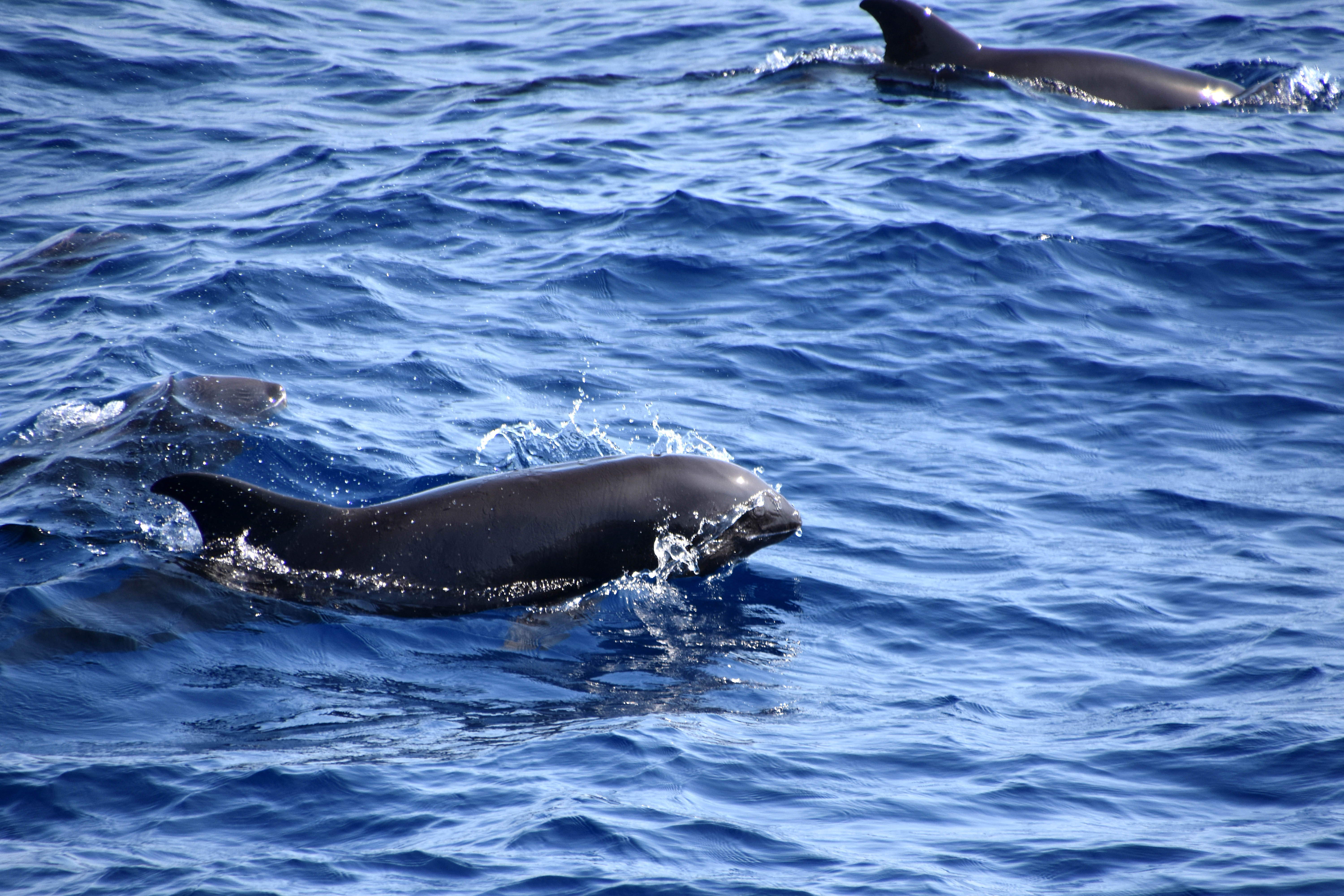
On the way to Satonda Island, we saw many different types of dolphins, including Melon-headed whales (Peponocephala electra) with their rounded heads (below).
Melon-headed whales (Peponocephala electra)
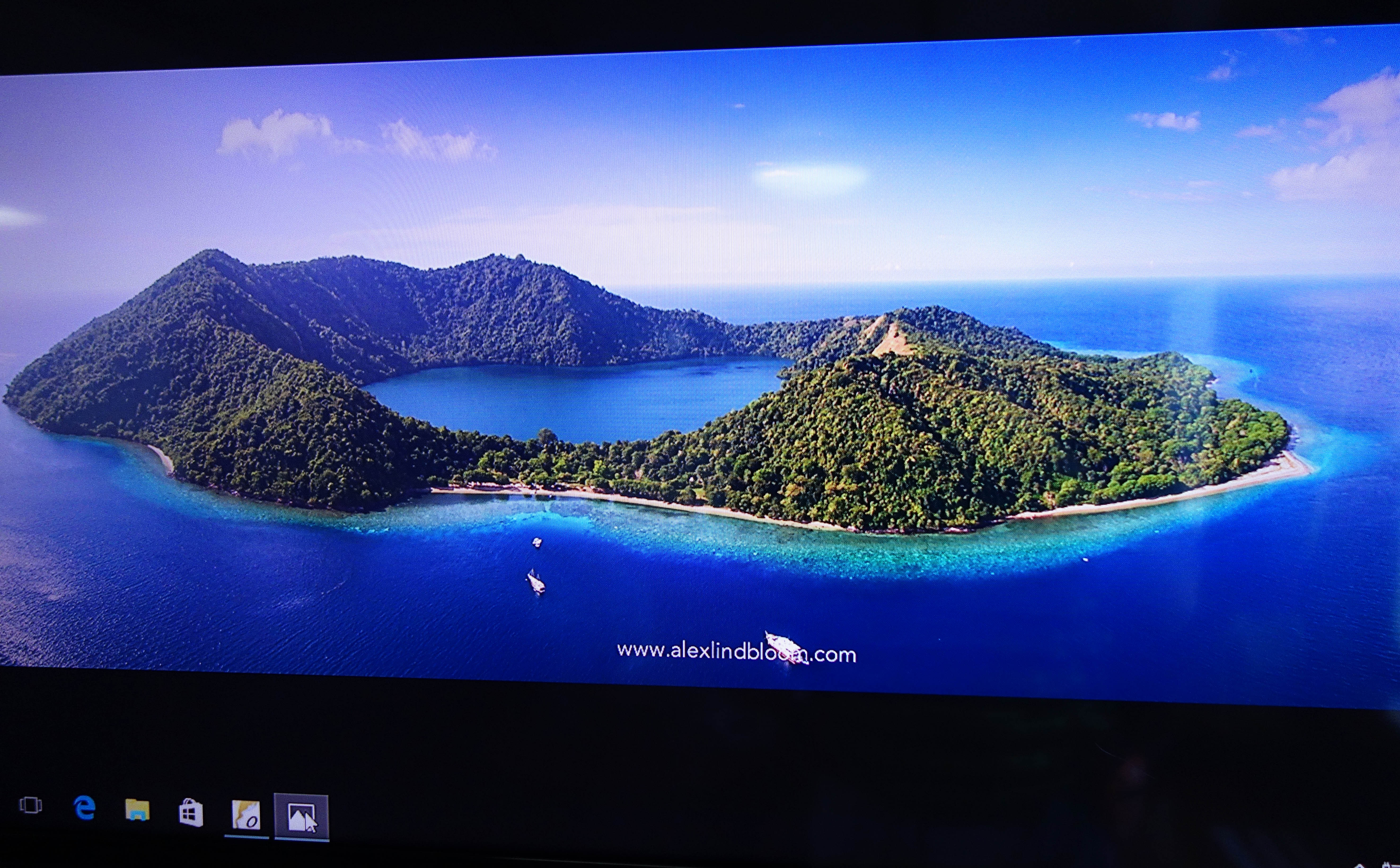
Satonda Island is the top of an extinct volcano with a lake where the crater used to be. I took this screen shot (below) off the introductory talk on Mermaid I.
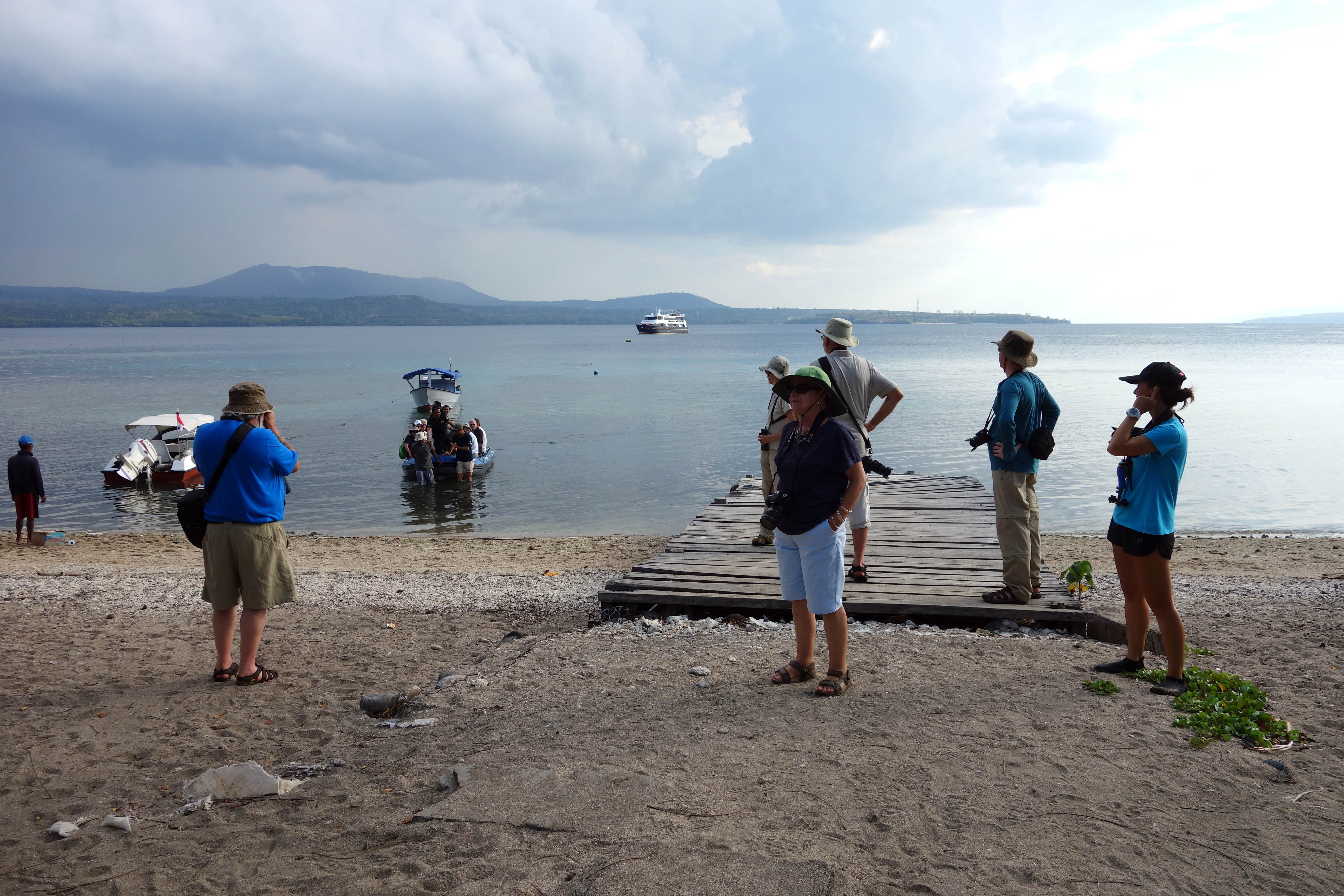
We decamped and spent an enjoyable couple of hours walking on this island, looking out for birds and butterflies.
Landing on Satonda
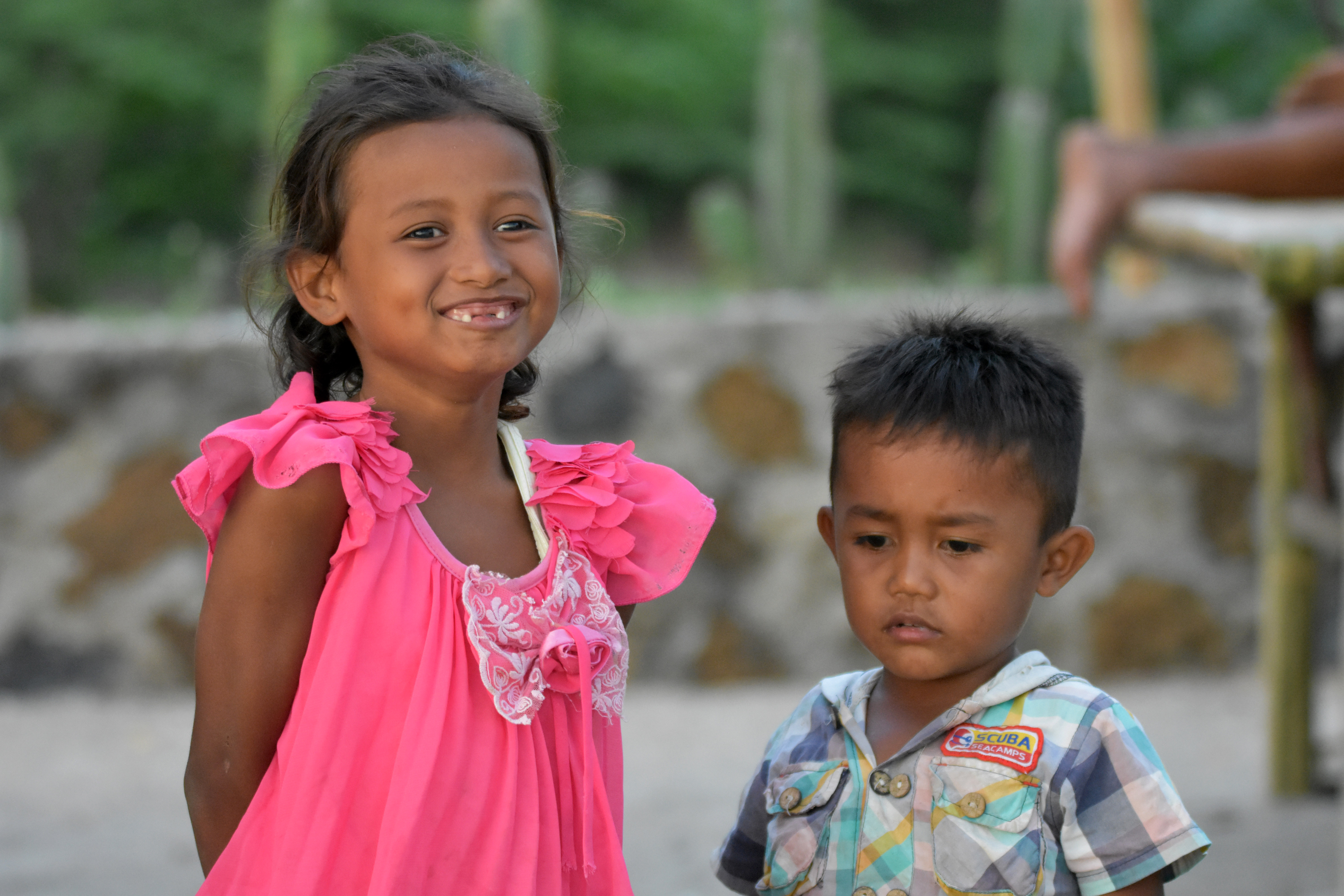
There are no villages on this island, which is a protected area, but there are a few families (of park guards) living there, including these delightful children.
Children on Satonda Island, Indonesia
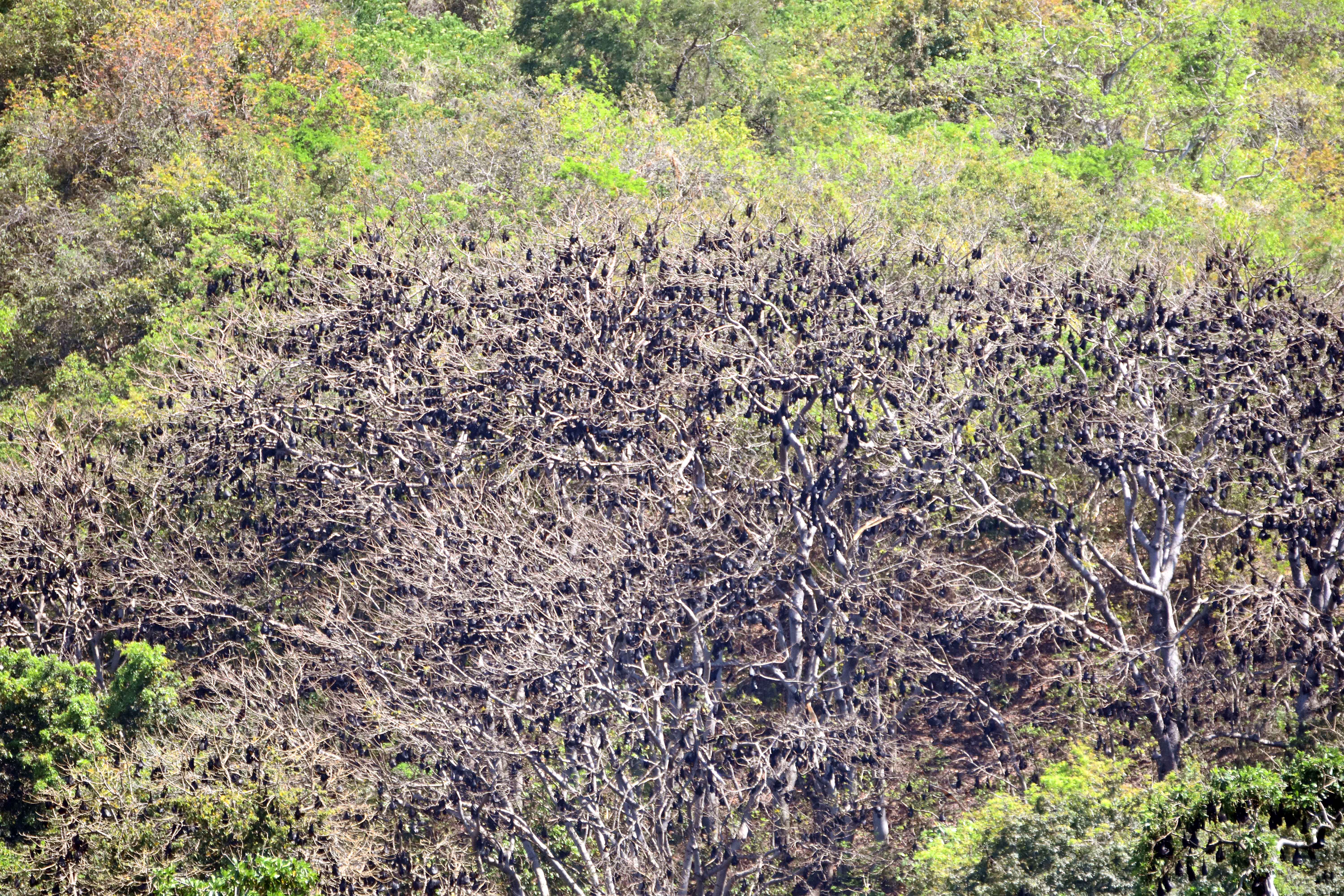
The main residents on Satonda are fruit bats, of which there must be tens, if not hundreds of thousands. Alas, we did not get to see them close up, but we did see their roosting colonies, which covered the trees on one part of the island (below). They fly off each night across the waters to the much larger islands of Moyo and Sumbawa. Unlike their smaller, insect-feeding relatives, these bats feed on fruits, so are seen as pests by some farmers. Happily they can return to their safe island home and escape retribution for their light-fingered ways. After all they were there first, long before humans arrived and started planting fruit trees!
Colony of fruit bats roosting on Satonda Island, Indonesia
After leaving the island behind us, we returned to our lookout posts, searching the seas ahead for dolphins (and birds for some).
On the lookout for birds and dolphins in front of the bridge of Mermaid I
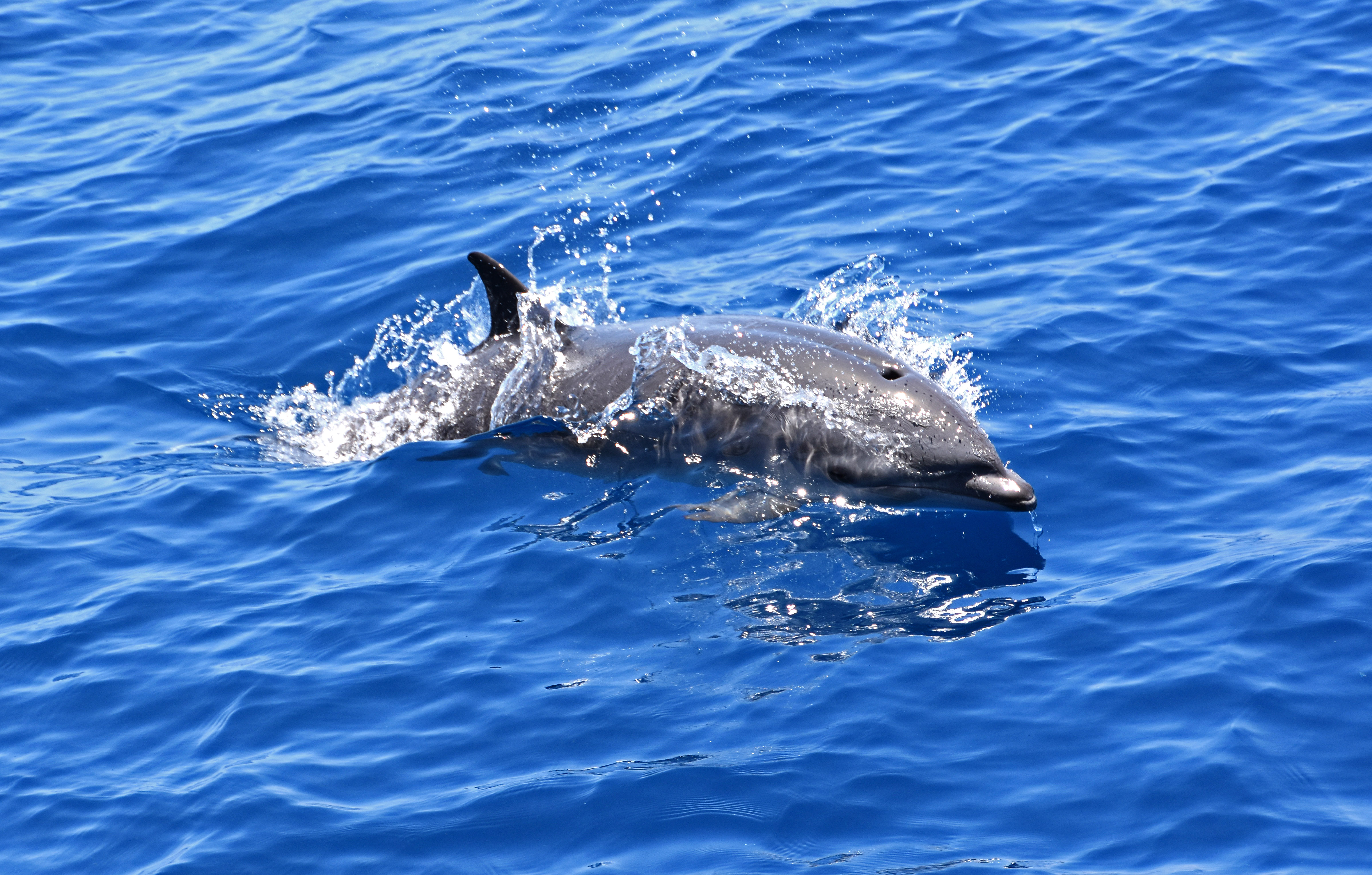
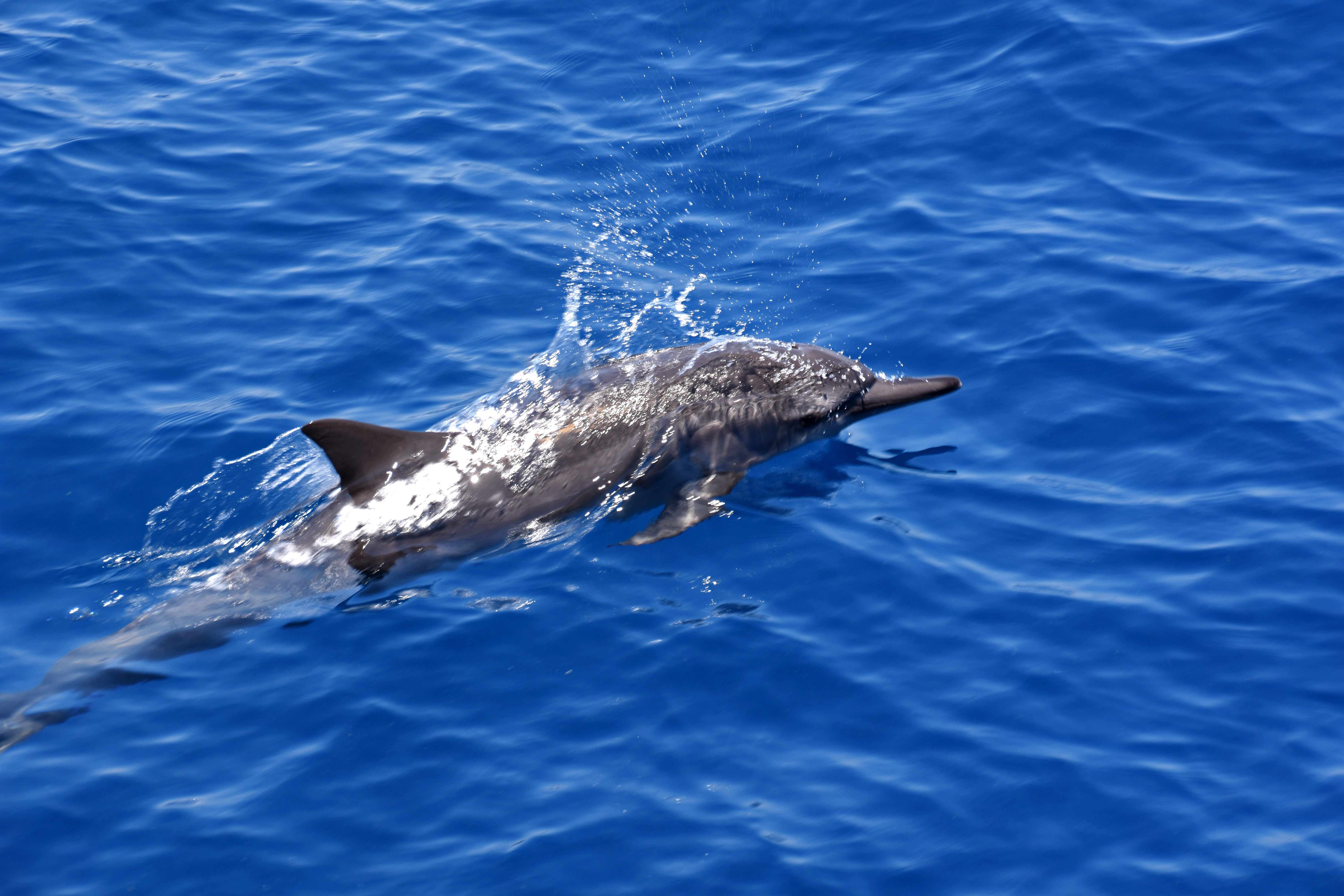
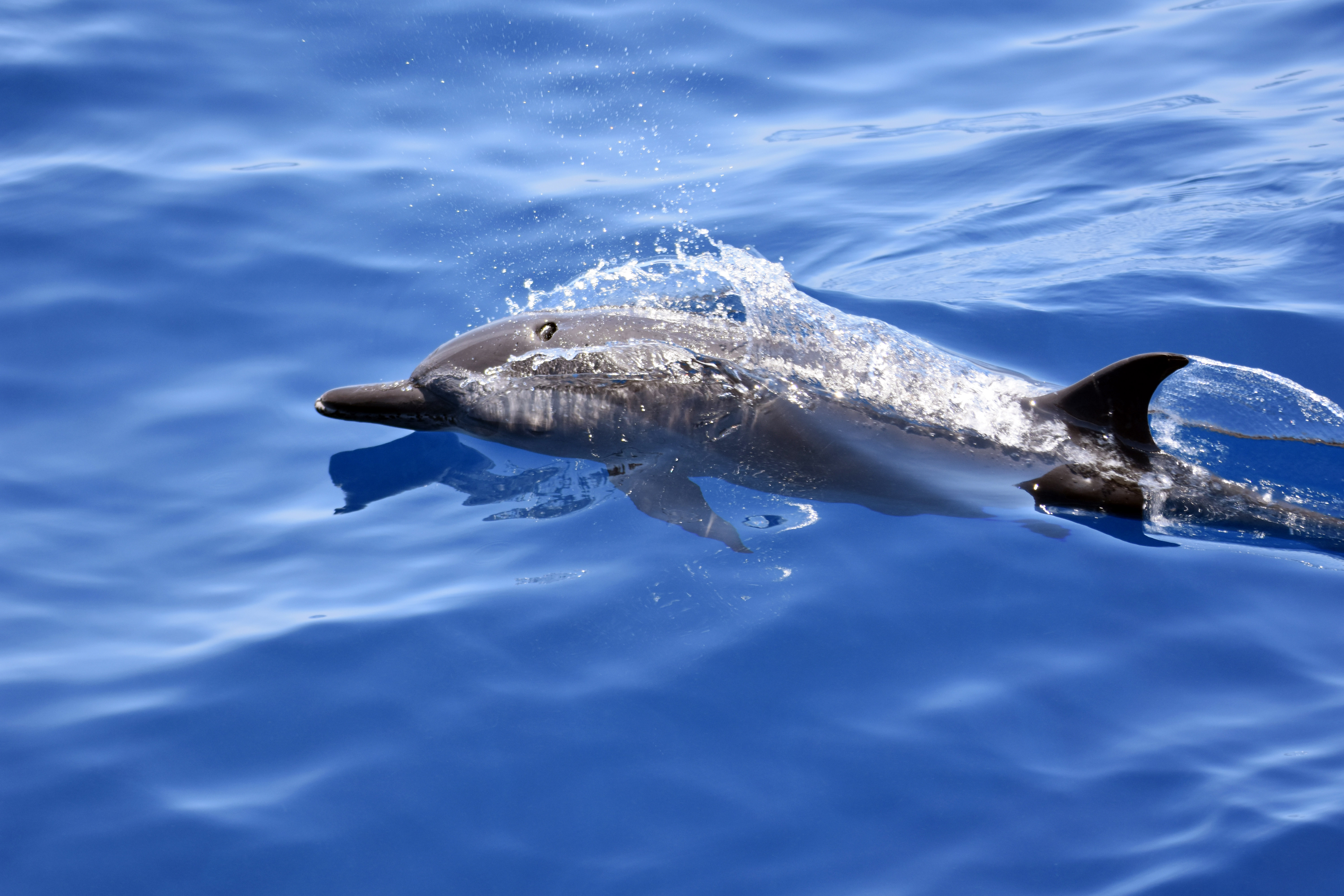
We did not have to wait long and were rewarded with sighting of a number of dolphins species, including: Frazer’s, Pantropical spotted and Spinner dolphins.
Fraser’s dolphin (Lagenodelphis hosei)
Spinner dolphin (Stenella longirostris)
Pantropical spotted dolphin (Stenella attenuata)
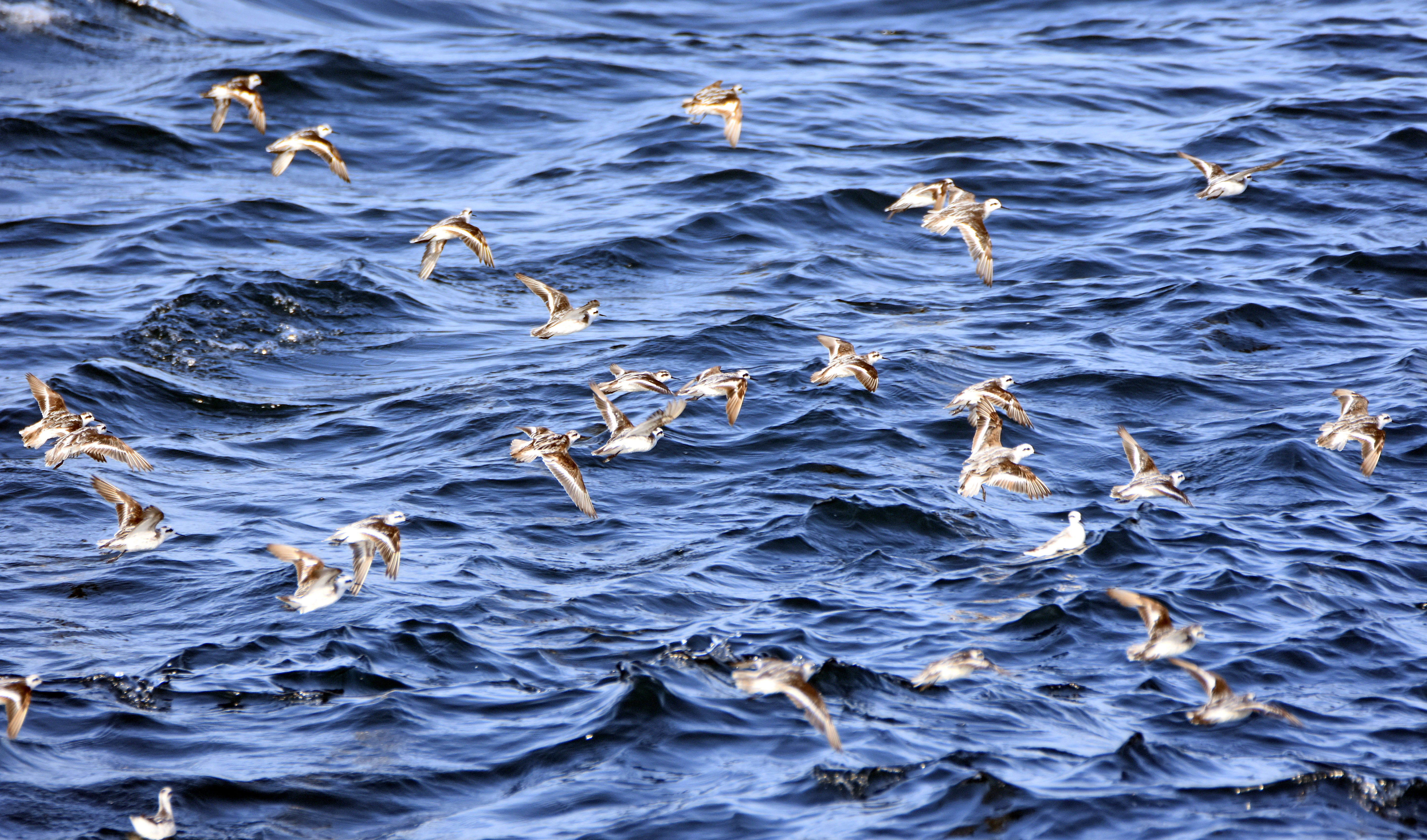
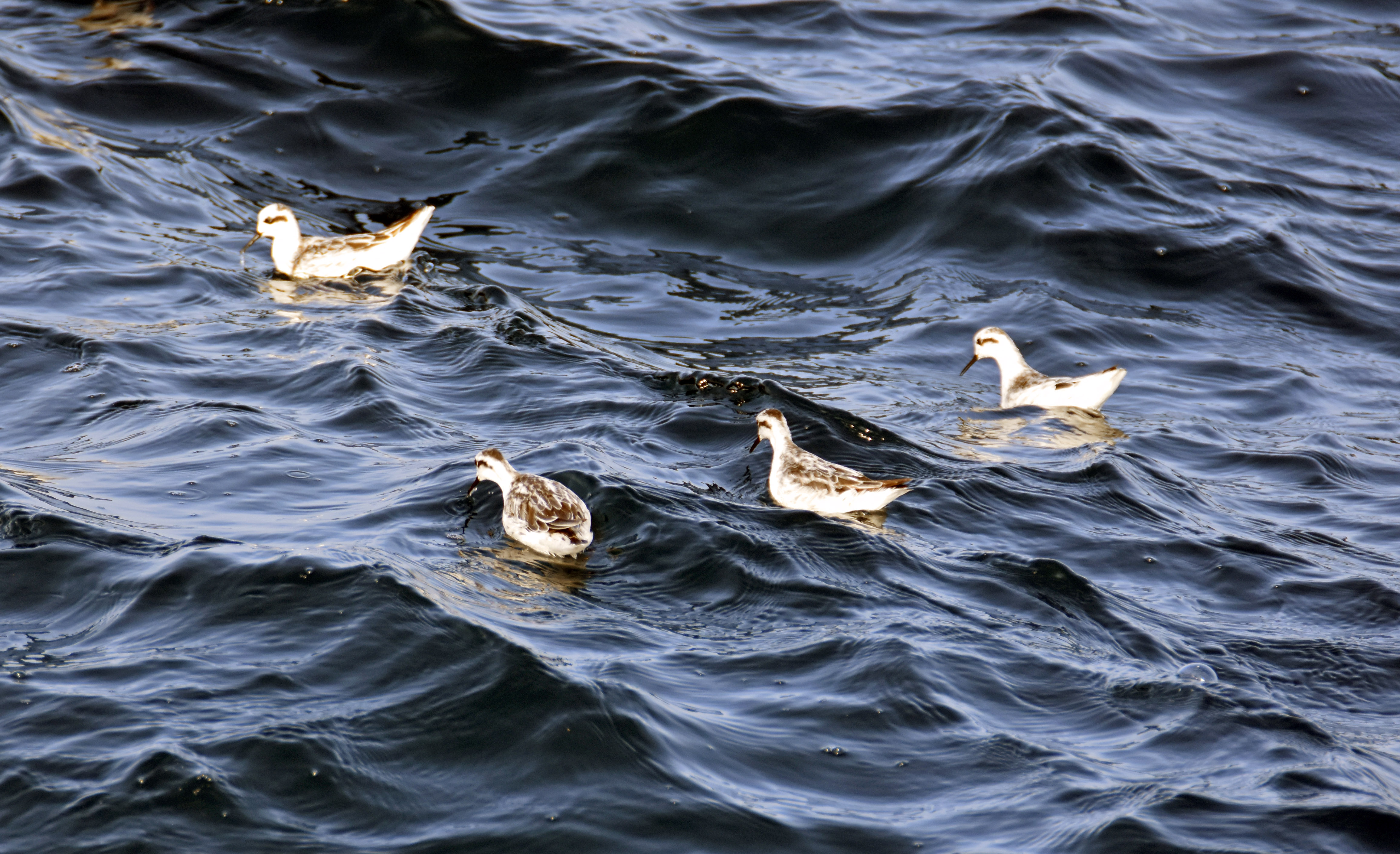
There were also lots of sea birds, especially Red-footed and Brown boobies, which I will save for a separate blog! One species which was very abundant, was the red-necked phalarope (Phalaropus lobatus). This little wader spends the northern winter in these tropical waters and we came across flock after flock of these birds (below). They seemed to me to be wonderfully adapted to oceanic life, bobbing away on the surface, pecking at tiny marine invertebrates.
Red-necked phalaropes (Phalaropus lobatus)
Red-necked phalaropes (Phalaropus lobatus) feeding at the surface
It was very interesting to sail along the northern coast of Sumbawa, which seemed to be largely uninhabited, past the huge volcano of Tambora (2,851m). It exploded in 1815 in what was the largest volcanic explosion in recorded history!
Mt Tambora on Sumbawa Island, Indonesia
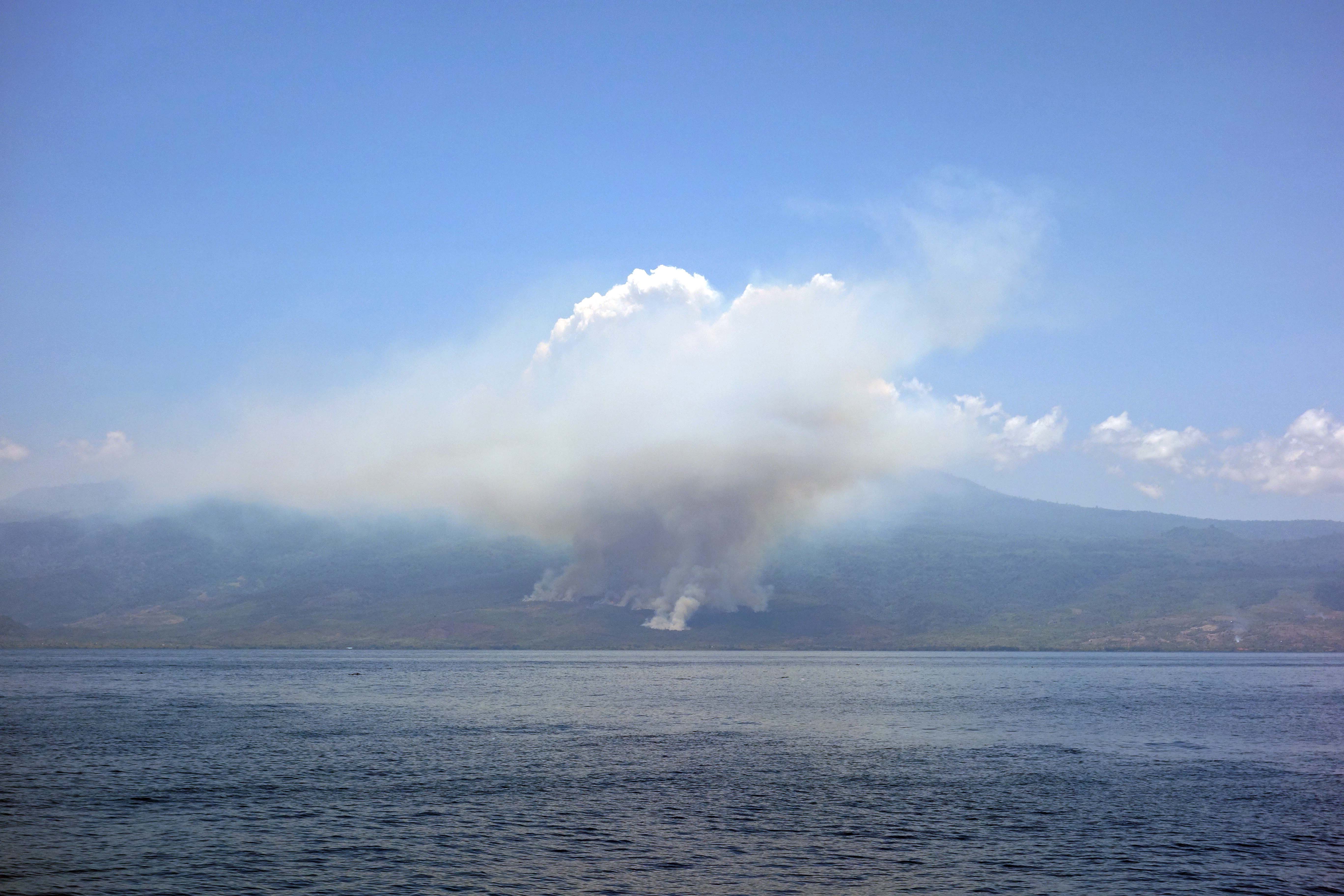
Although this part of Sumbawa looked very unpopulated, there was alas, evidence of burning, which was disappointing to see.
Burning on Sumbawa in October 2016
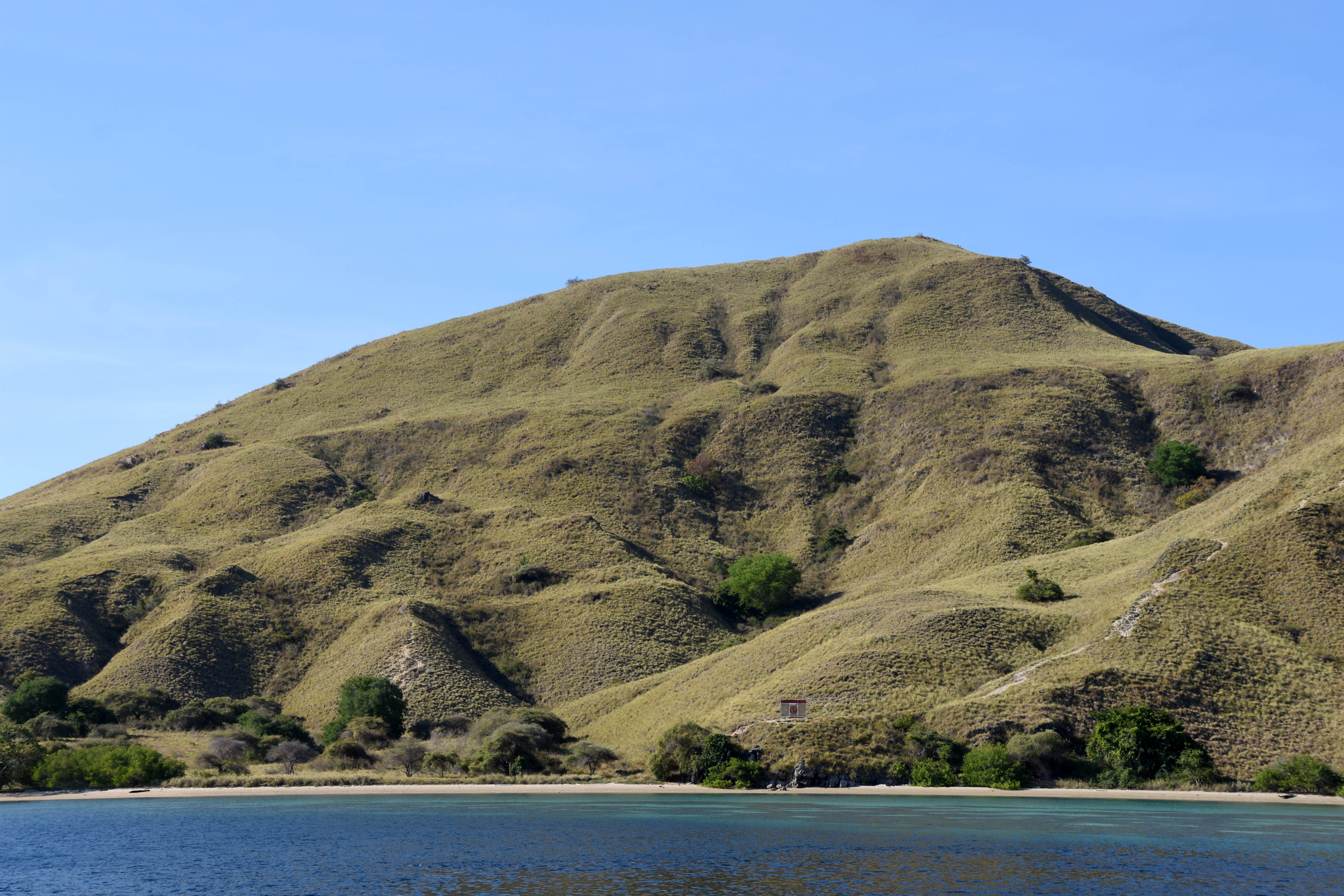
The highlight of the trip was of course the Komodo National Park, which fully lived up to expectations. There were lots of opportunities for snorkelling, usually once or twice a day, as well as excursions on islands in the archipelago that lies between Sumbawa and Flores. The largest of these islands are Komodo and Rinca, and we were able to visit both of them. Although it was quite hot, it was nice to get off the ship and go bird watching on dry land for a change.
Going ashore on Komodo Is
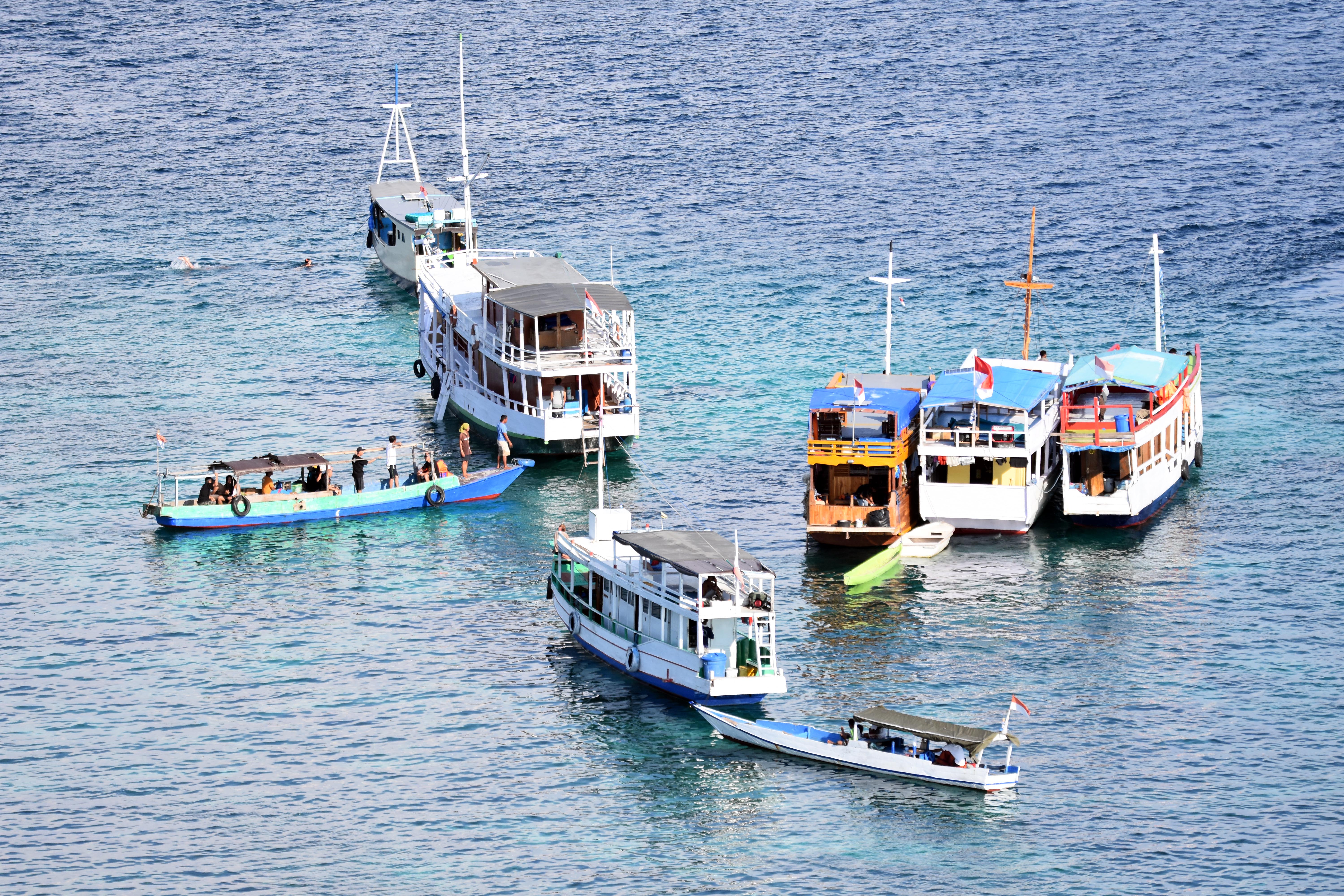
Most of the boats which visit these islands come from the nearby island of Flores, especially from Labuanbajo. I felt rather privileged to be on our smart little ship, although I guess we were paying for it!
Local tourist boats off Komodo
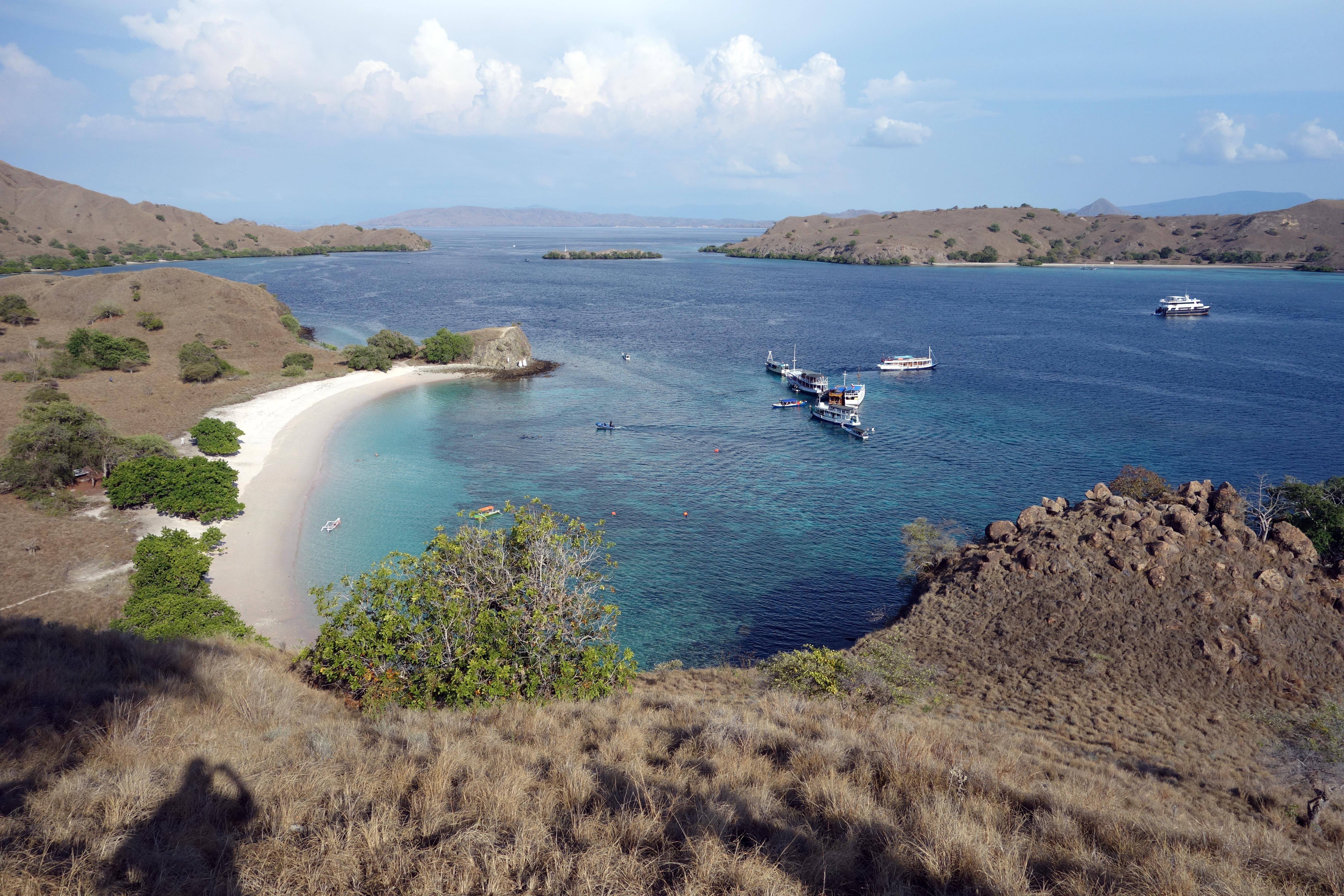
I particularly enjoyed walking about on the tiny island of Gili Lawa, just north of the main Komodo island.
Gili Lawa Island
Here we saw a number of birds, including Collared kingfisher, Zitting Cisticola, Pied Bushchat and the rather beautiful, White-breasted Woodswallow (below).
White-breasted woodswallow (Artamus leucorynchus)
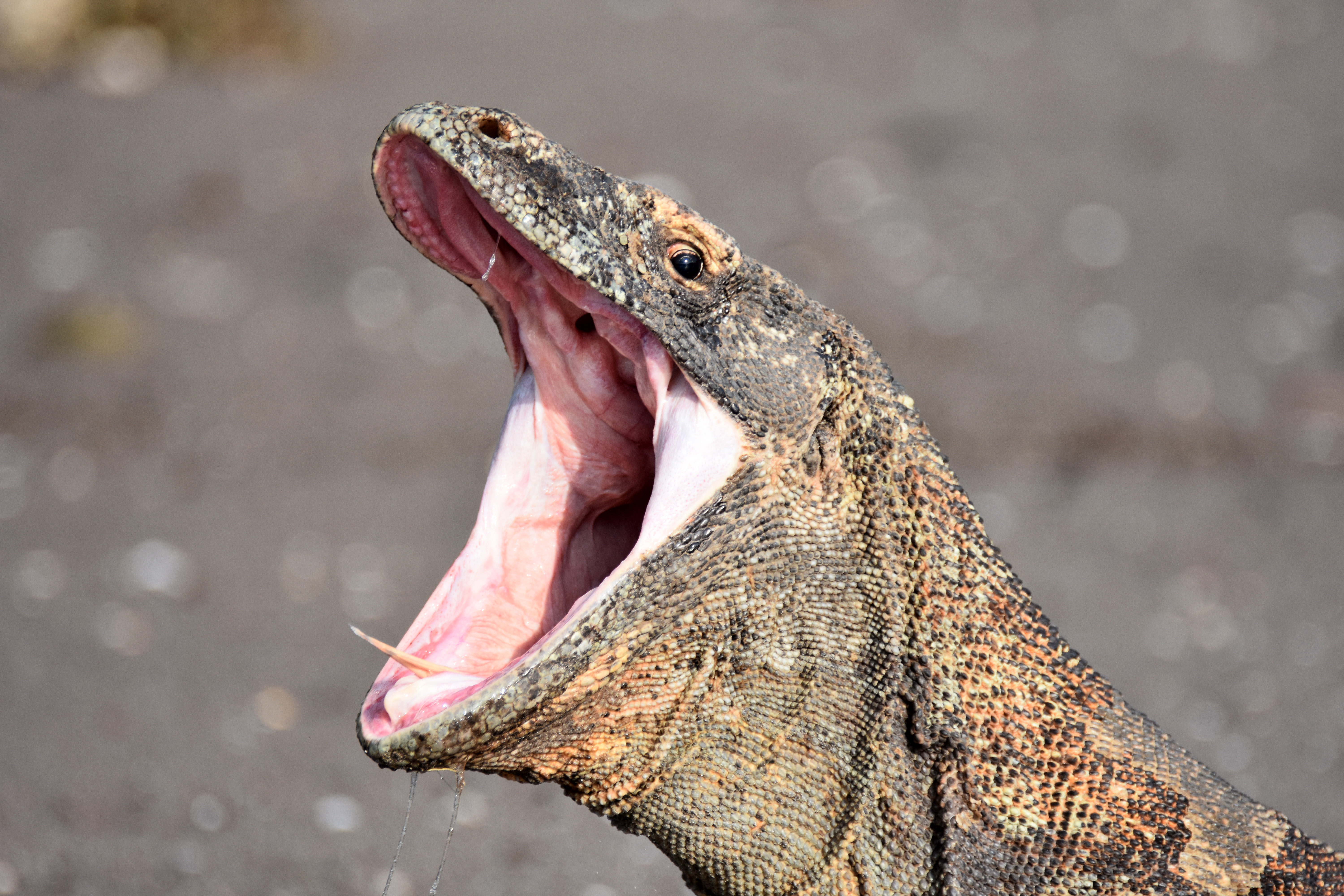
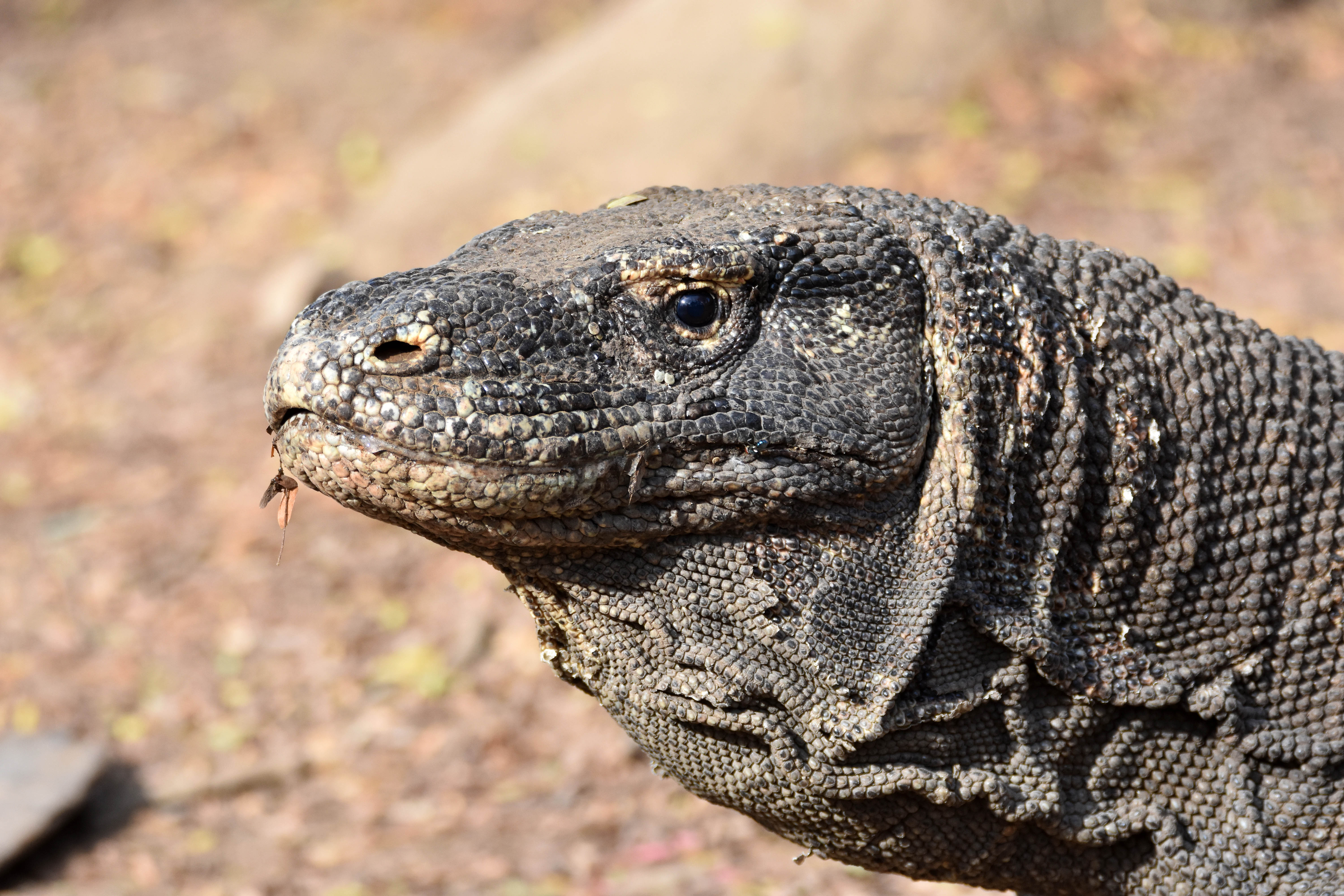
These were of course, sites were there were no Komodo dragons, otherwise it would not have been possible to wander about by ourselves (accompanied by a member of the crew). The first dragons we saw were on Rinca island. I have written about these reptiles in a separate blog on my Nature Notes site (4). They are impressive beasts, but not my favourite animal, although they cannot help the fact that they have poisonous saliva and carnivorous habits!
Komodo dragon (Varanus komodoensis) on beach with mouth open
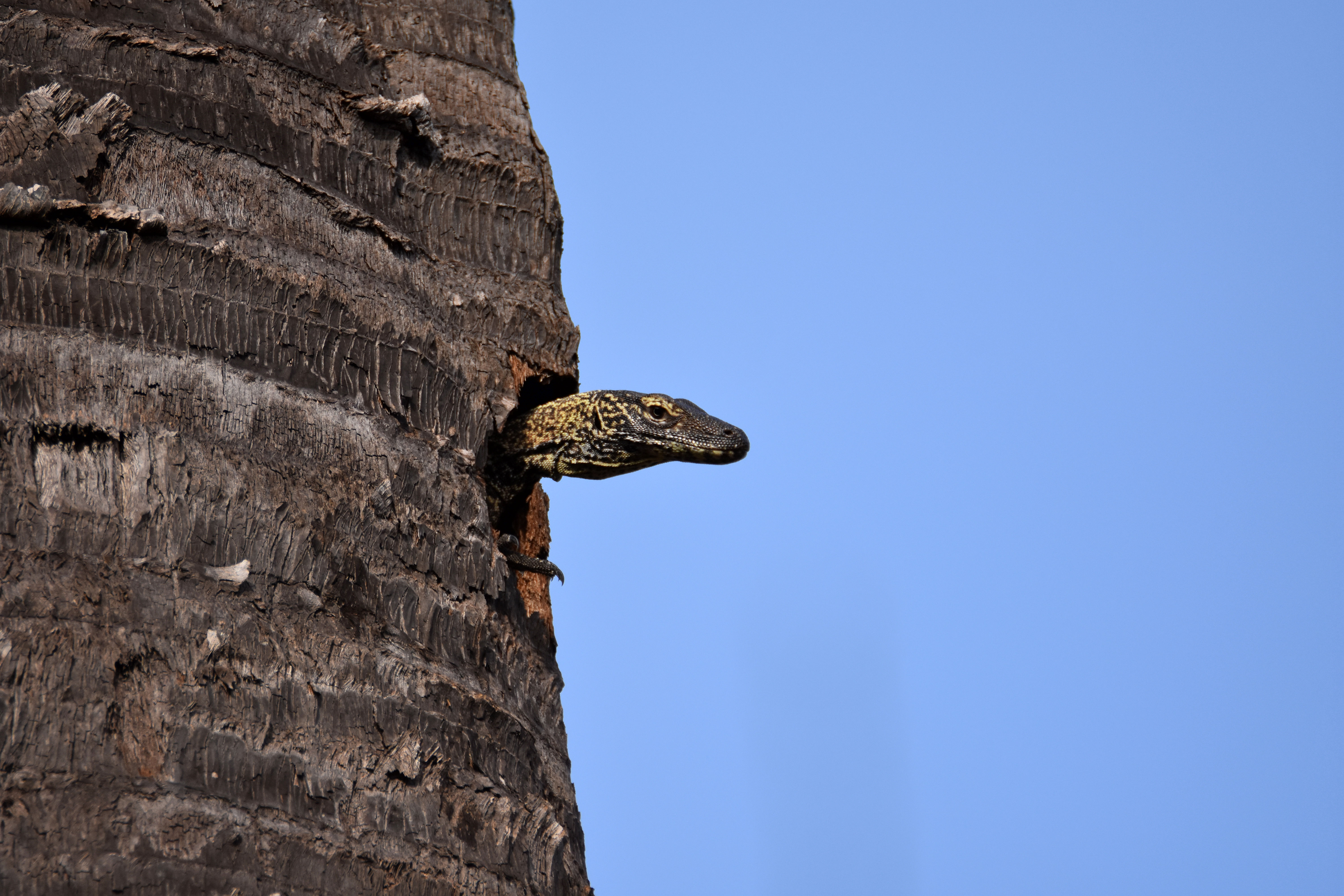
The young dragons were somewhat more appealing, until we saw one kill a rat and swallow it whole! They themselves live in trees to avoid being swallowed whole by the large dragons. You see what I mean about them not being very cuddly!
Baby Komodo dragon in a palm tree.
You are well looked after by guides and guards when you go ashore on Rinca and Komodo Islands. They walk in front and behind you carrying sticks to ward off any overly curious dragons. But for the most part, the dragons seemed to recognise that tourists were not their usual prey item, or perhaps they just weren’t hungry! People do live in villages on these islands, alongside the dragons. Not something I would like to do, I must confess.
Local guide on Komodo Is
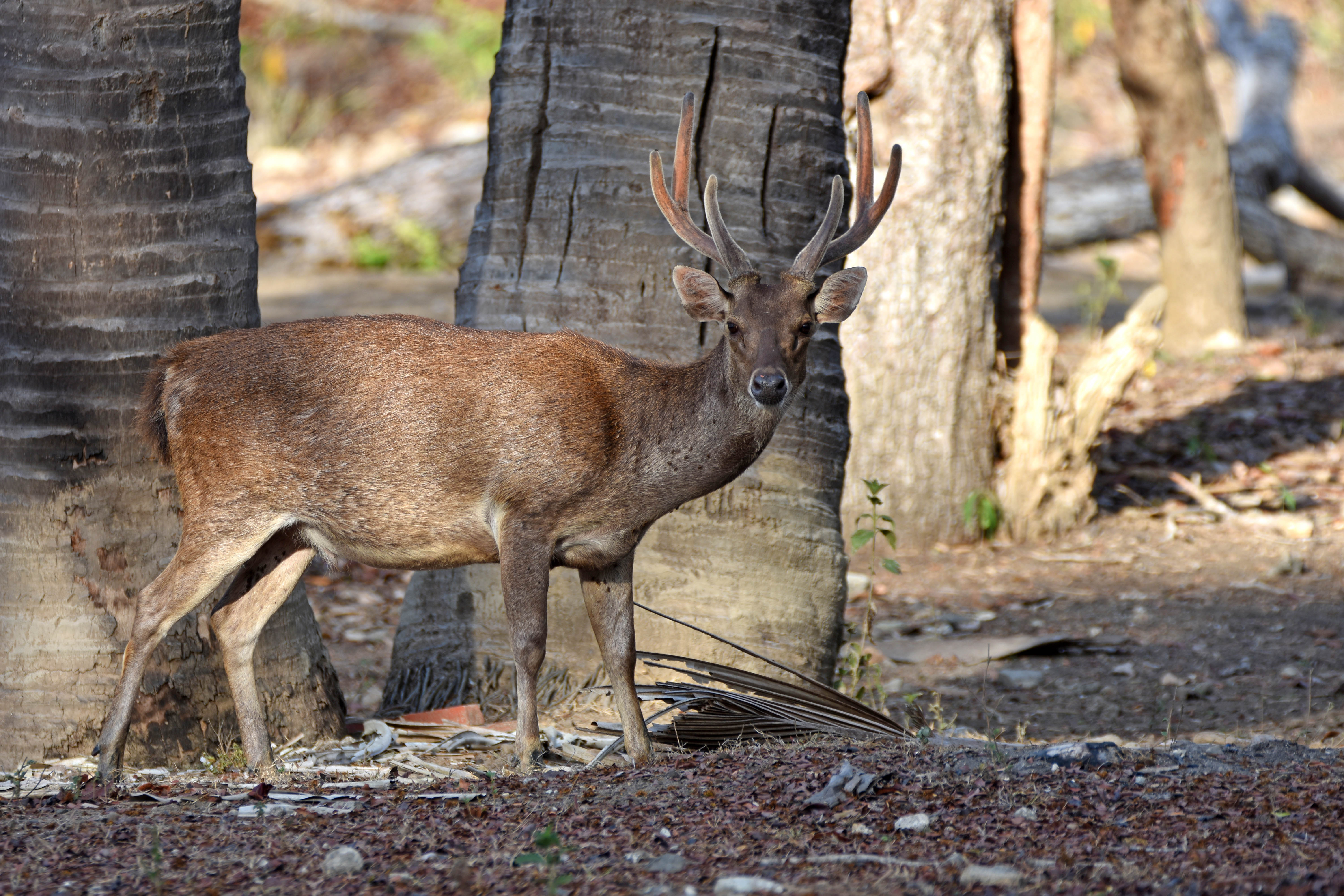
What the Komodo dragons do like to eat, together with water buffalos, are the endemic Timor Deer. I felt rather sorry for these beautiful creatures, but perhaps it is just the old and sick ones which get taken. They did not seem at all concerned about the presence of the dragons.
Timor deer on Rinca Island
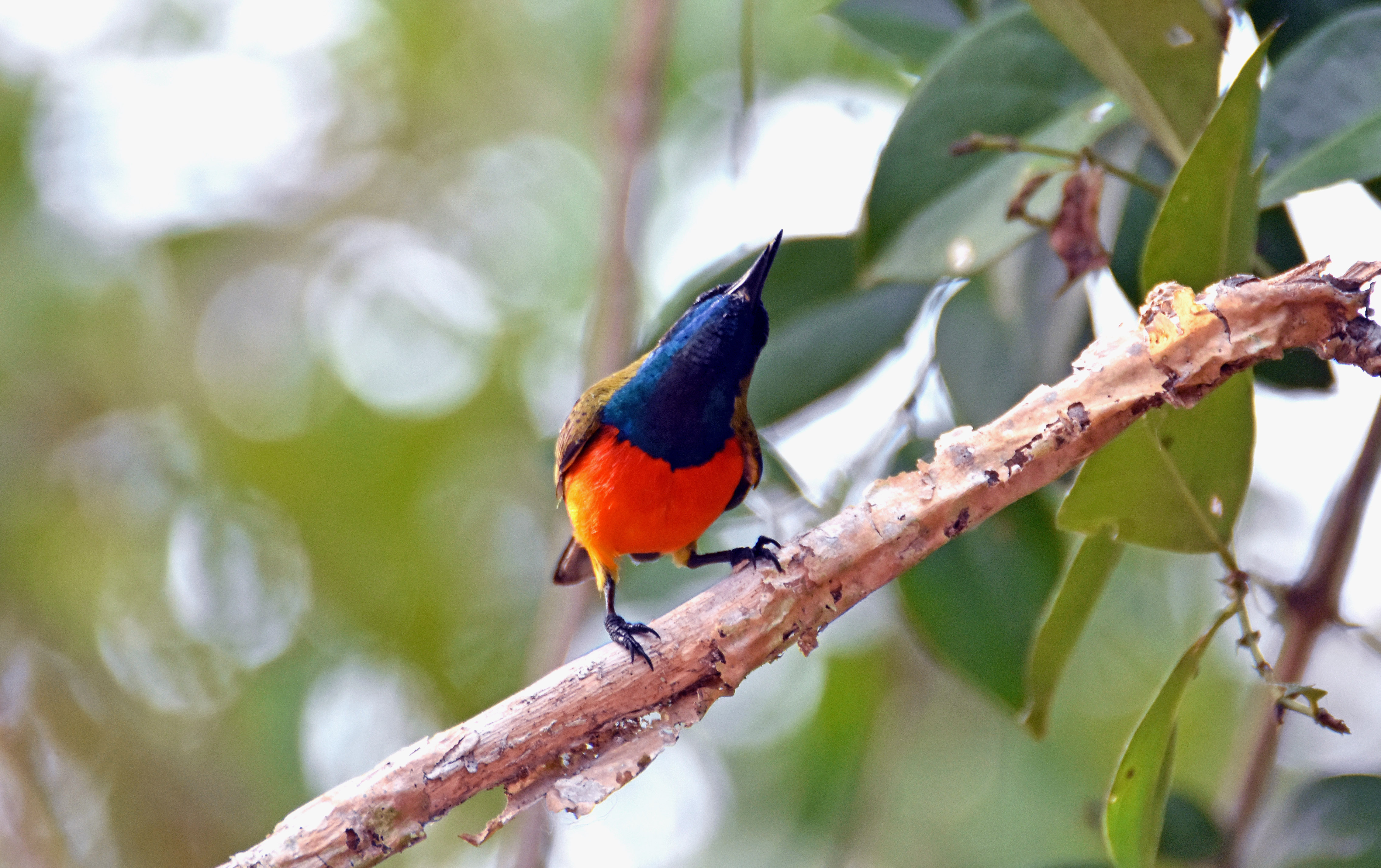
These islands are quite dry but nevertheless support a good many bird species. One of the highlights for me was the Flame-breasted sunbird. This one did not stay around for very long, just long enough for me to grab a quick shot of it before it flew off.
Flame-breasted sunbird (Cinnyris solaris)
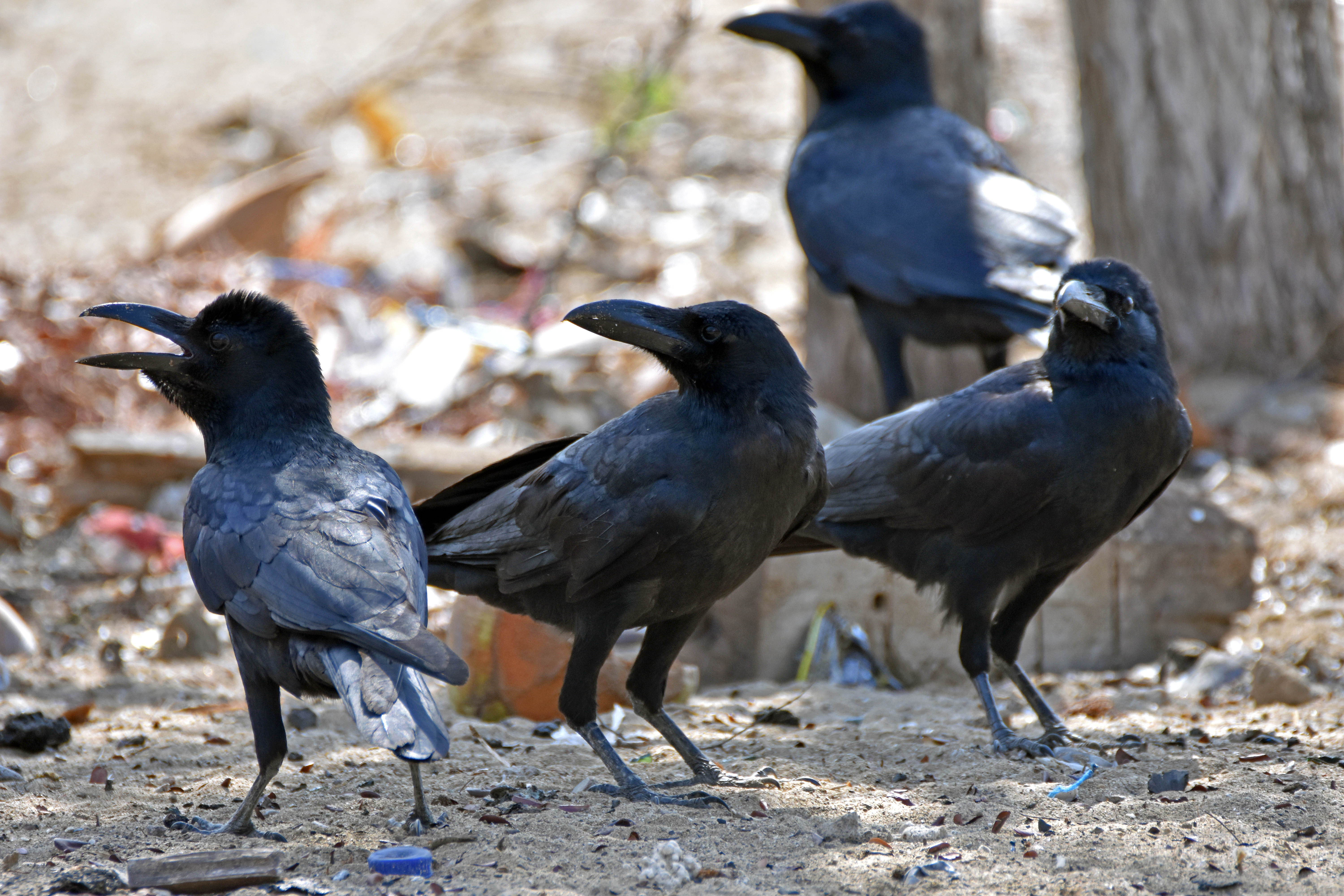
One very noisy and garrulous inhabitant of these islands, are the Jungle or Large-billed crows. These large members of the crow family really have attitude! They strut around like they owned the place; perhaps they do!
Jungle or Large-billed crow (Corvus macrorhynchos)
They did not look as though they were at all concerned to be living on an island with dragons. They are obviously too fast and able to fly off before any dragon could catch them.
Komodo dragon (Varanus komodoensis) on Komodo
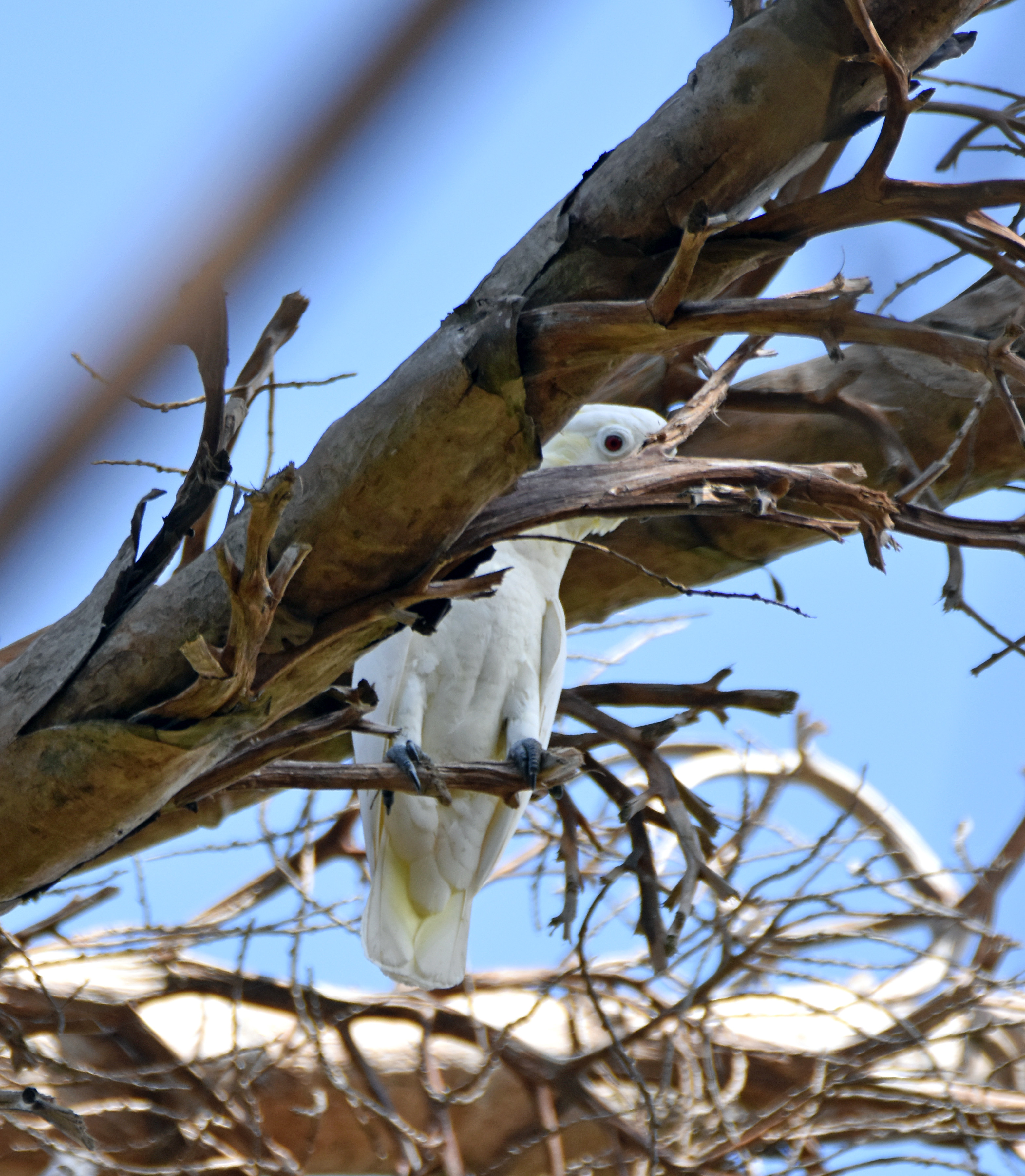
It was also nice to see plenty of Yellow-crested cockatoos on Komodo Is, although they were a little shy. Here’s one peeping through the trees (below)! These birds have been driven to local extinction in many parts of S E Asia by trapping for the pet trade. Here at least, they seem to well-protected and relatively abundant.
The yellow-crested cockatoo (Cacatua sulphurea) on Komodo
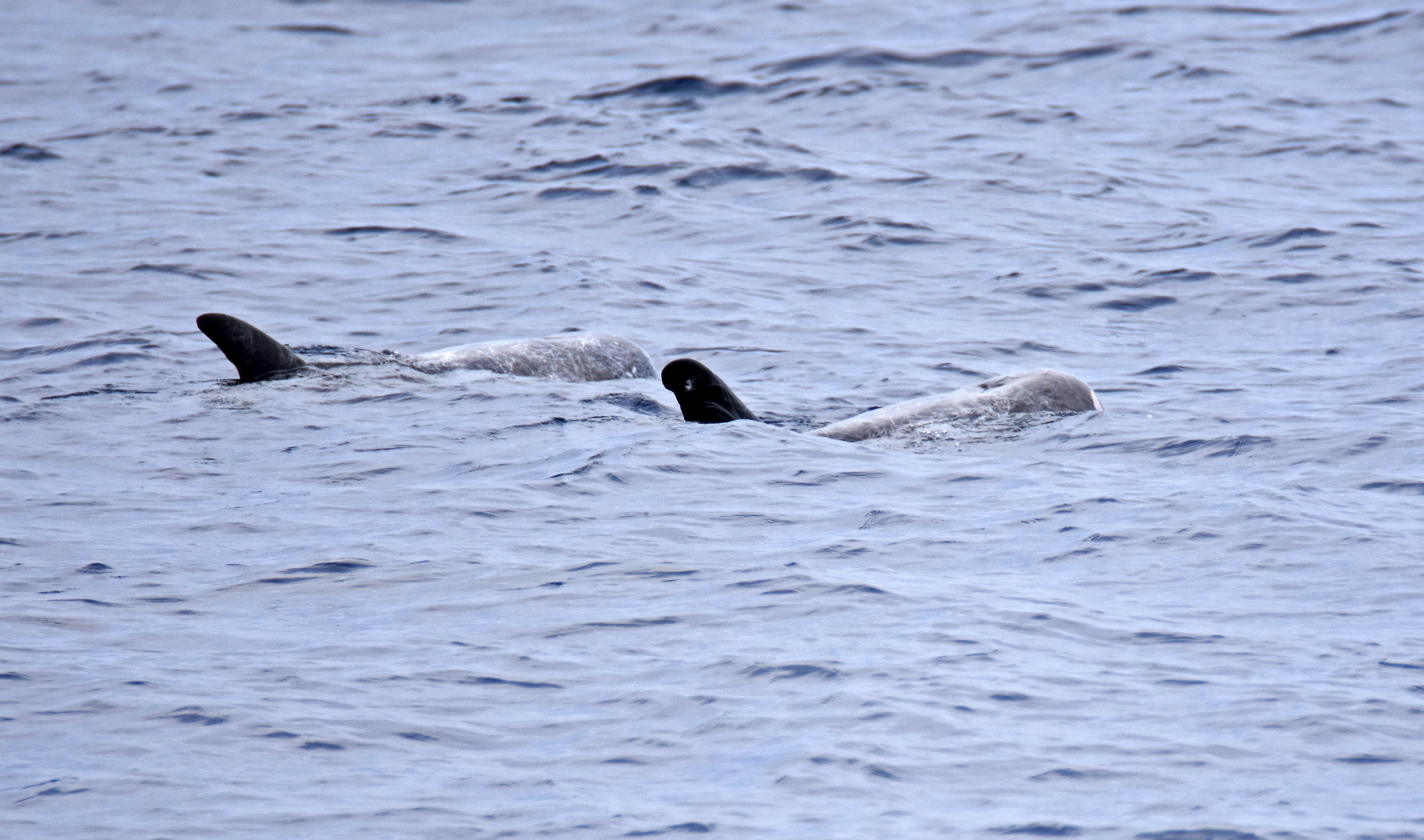
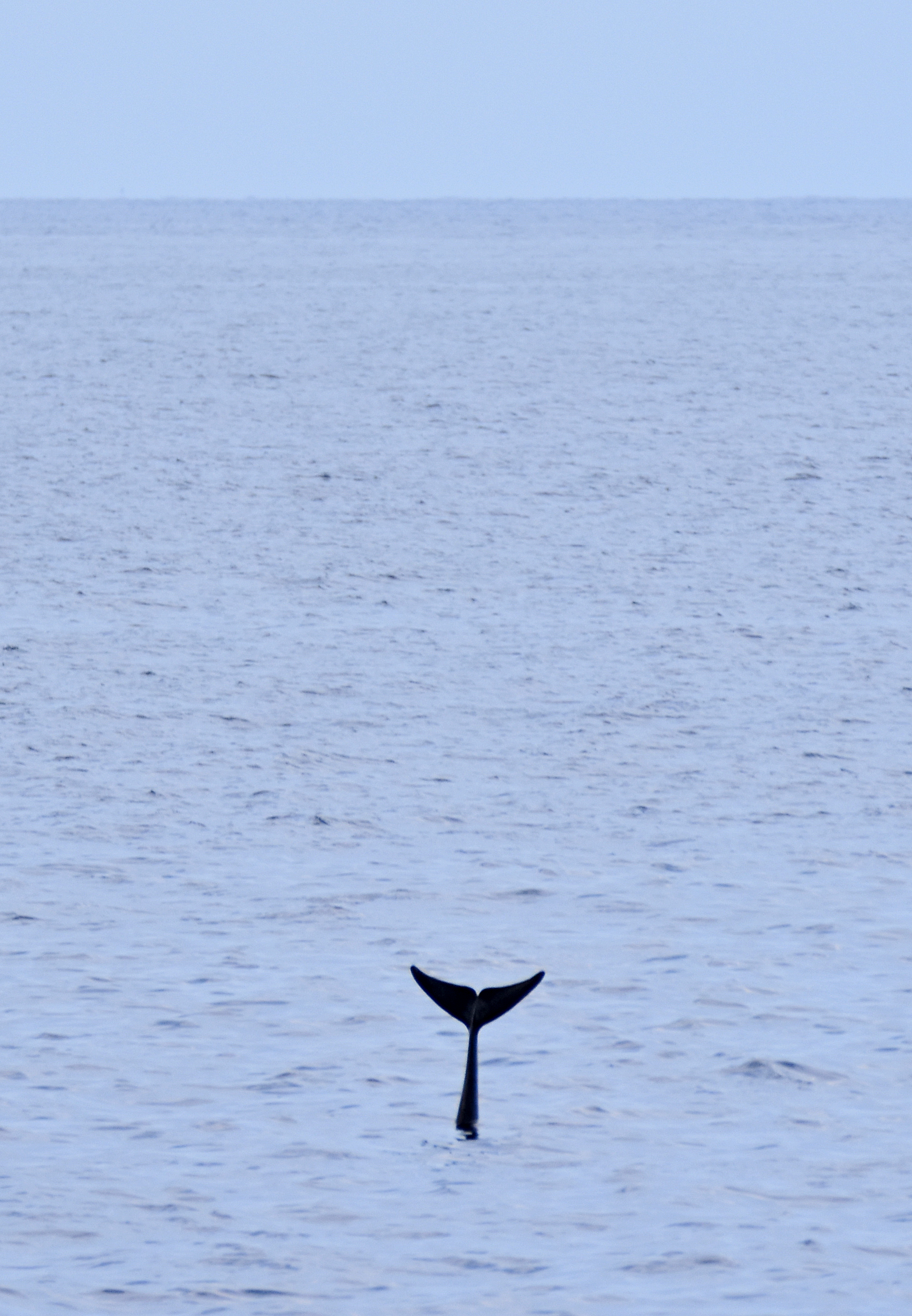
Finally, it was time to leave the Komodo national park and sail further east to our point of departure, at Maumere, on Flores. Not before we ventured south out into the open ocean, where we came across another sperm whale. We also came across the rather strange, highly scarred, Risso’s dolphin, which have a habit of waving their tails in the air. No doubt communication to each other, but what were they saying?
Risso’s dolphin (Grampus griseus) showing their highly scarred bodies – caused by fighting?
Risso’s dolphin (Grampus griseus) tail waving
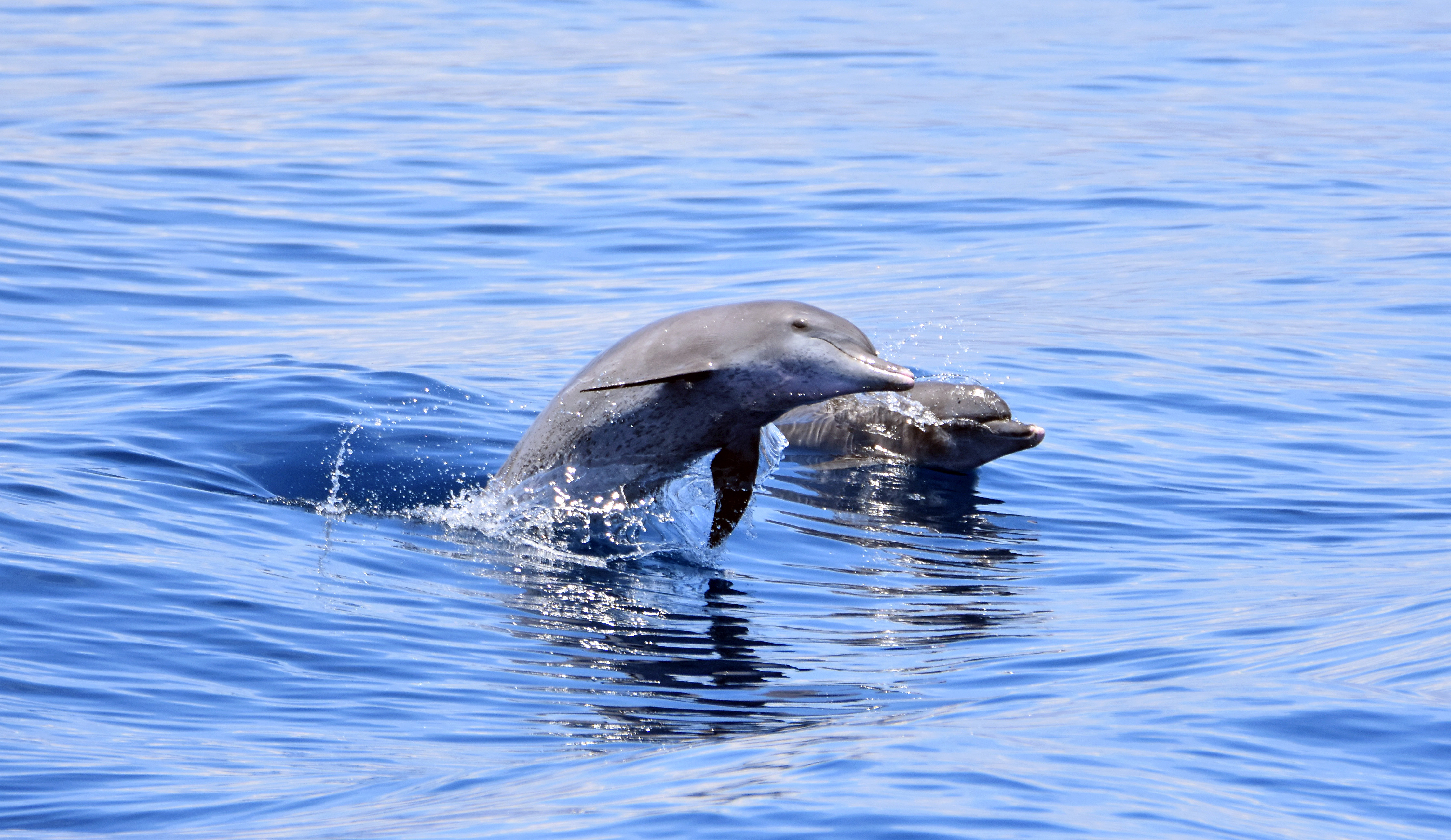
On they way back, cruising along the north coast of Flores we came across some Bottle-nosed dolphins. Sitting at the back of the ship I managed to get this lucky shot (below). Photographing dolphins is not easy! They are very fast-moving and I managed to miss them leaping out of the water on most occasions; but this time I got lucky.
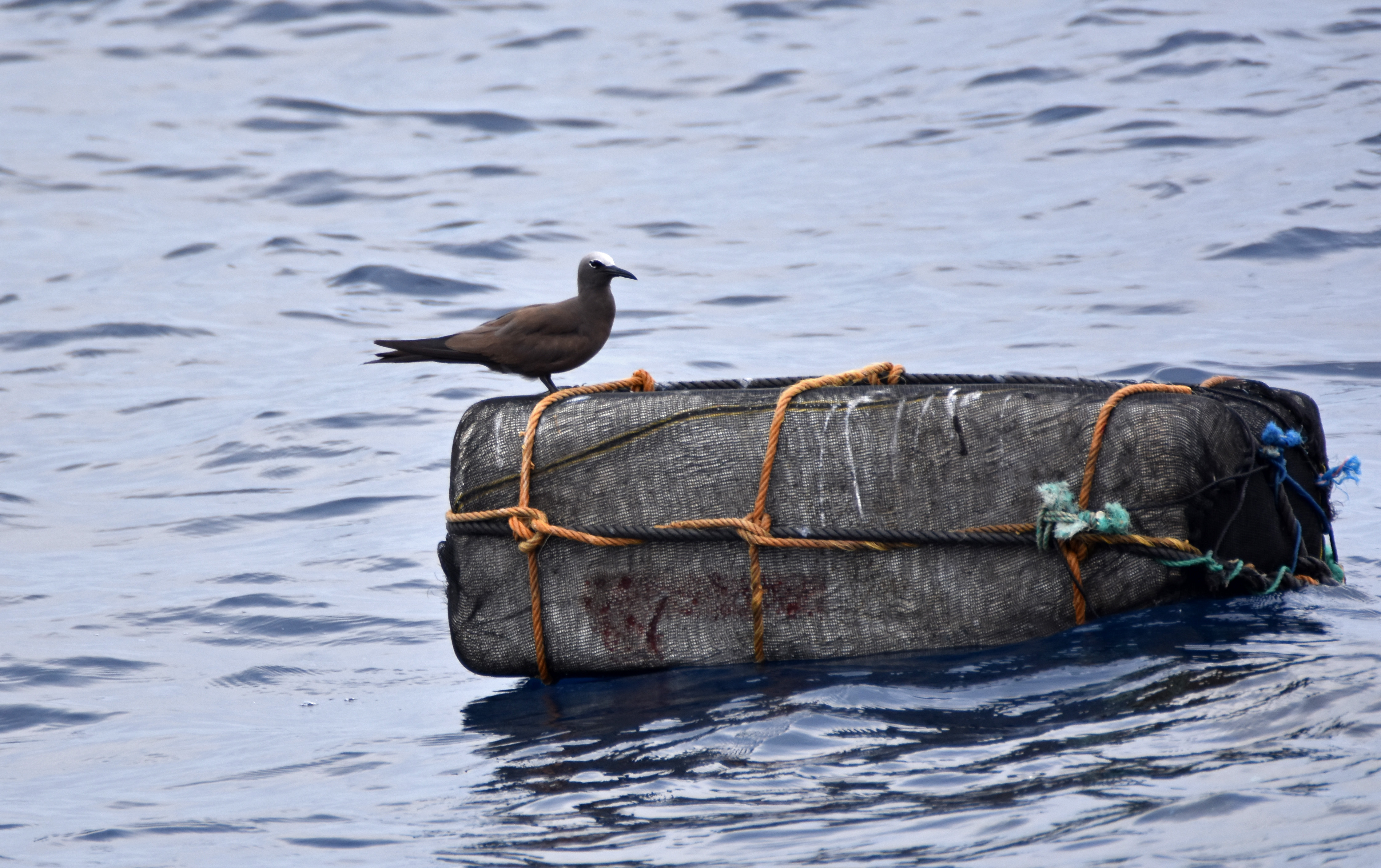
There were also some very nice Brown noodies sitting on fishing floats as we came into the port of Maumere.
Brown noody (Anous stolidus)
Dear reader, I hope you enjoyed this snap shot of my travels in this region, but I don’t want you to think it was a complete idyll. One of the persistent negatives was the ubiquitous presence of plastic pollution. We are filling up the seas with plastic and it is not a pretty sight. Even in the national park waters one came across plastic pollution and it is only going to get worse unless we take some drastic measures to stop producing plastic and discarding it carelessly. I’ll say no more. There are plenty of good websites devoted to highlighting this problem.
Plastic pollution
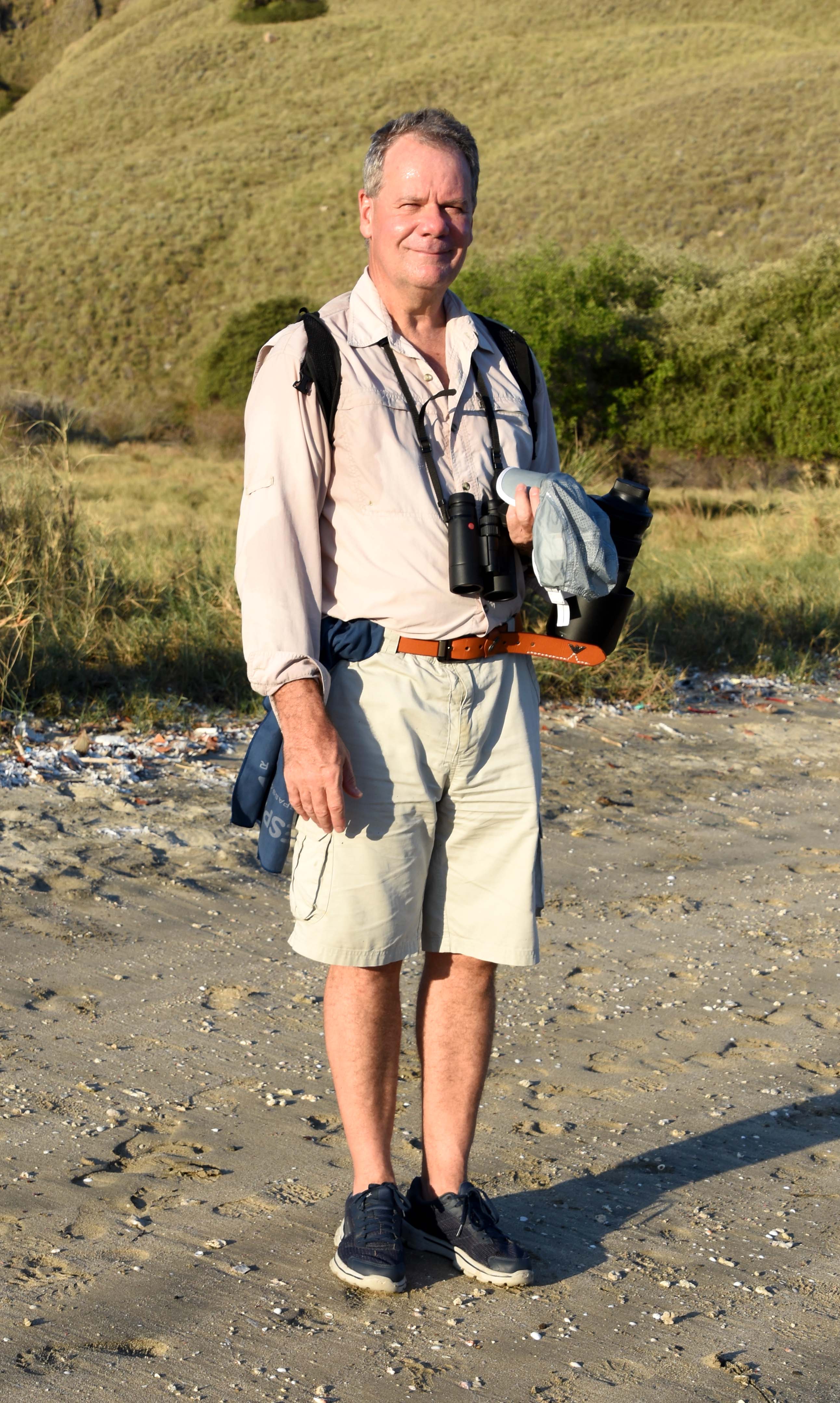
I would recommend a visit to Komodo NP. It is a world-famous location but was not over-run by tourists and from what I could see, the Indonesians seemed to be doing a good job of protecting and managing it. I’ll finish with a photograph of myself, looking hot but contented after a spell of bird-watching.
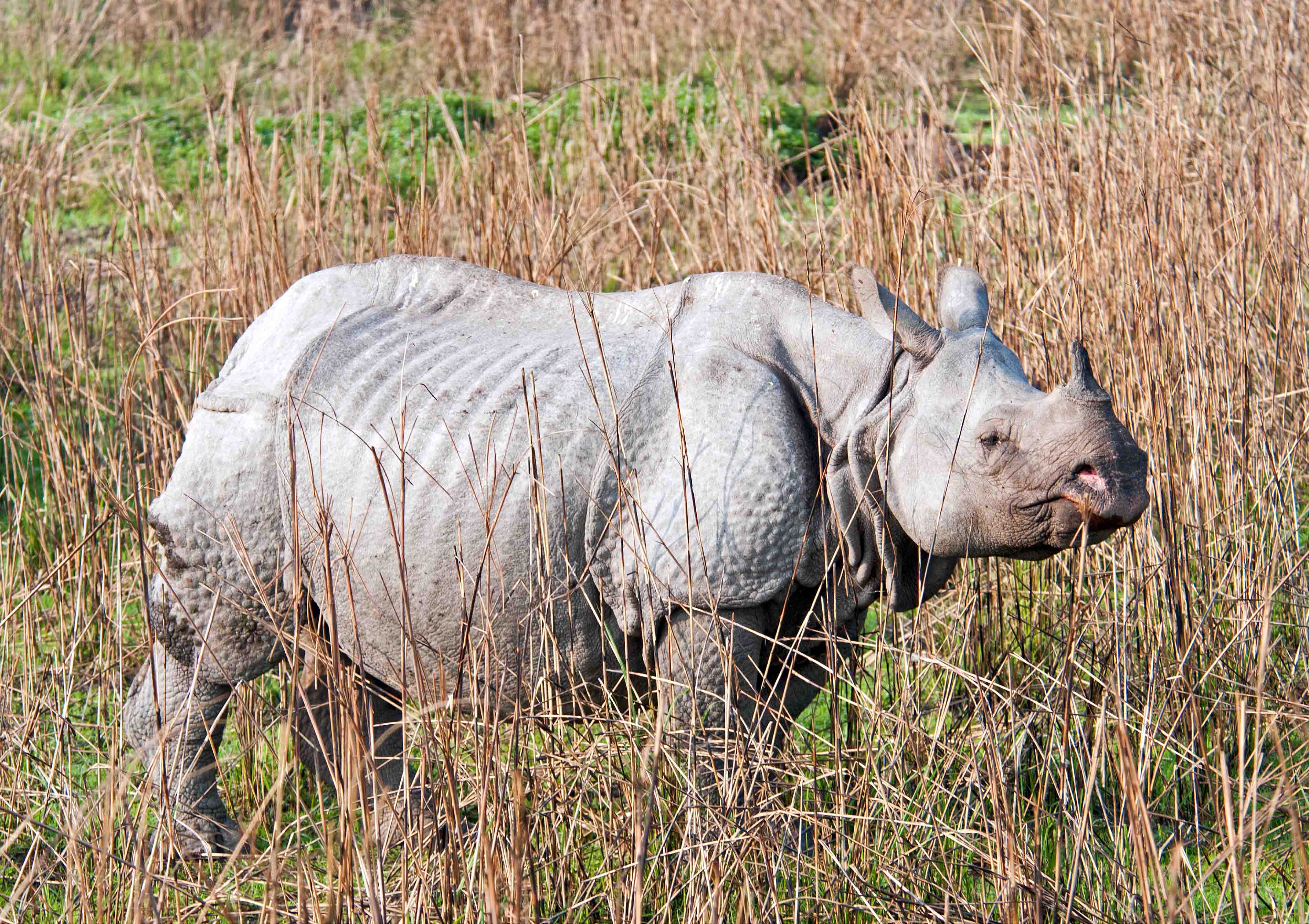
Kaziranga National Park covers an area of 430 sq kms along the southern bank of the river Brahmaputra, in the province of Assam, in NE India. The park is famous for having the largest remaining population of the Great Indian one horned rhinoceros (Rhinoceros unicornis). These magnificent mammals are amongst the largest rhinos in the world, with some males weighing up to 2.7 tonnes (ref 1).
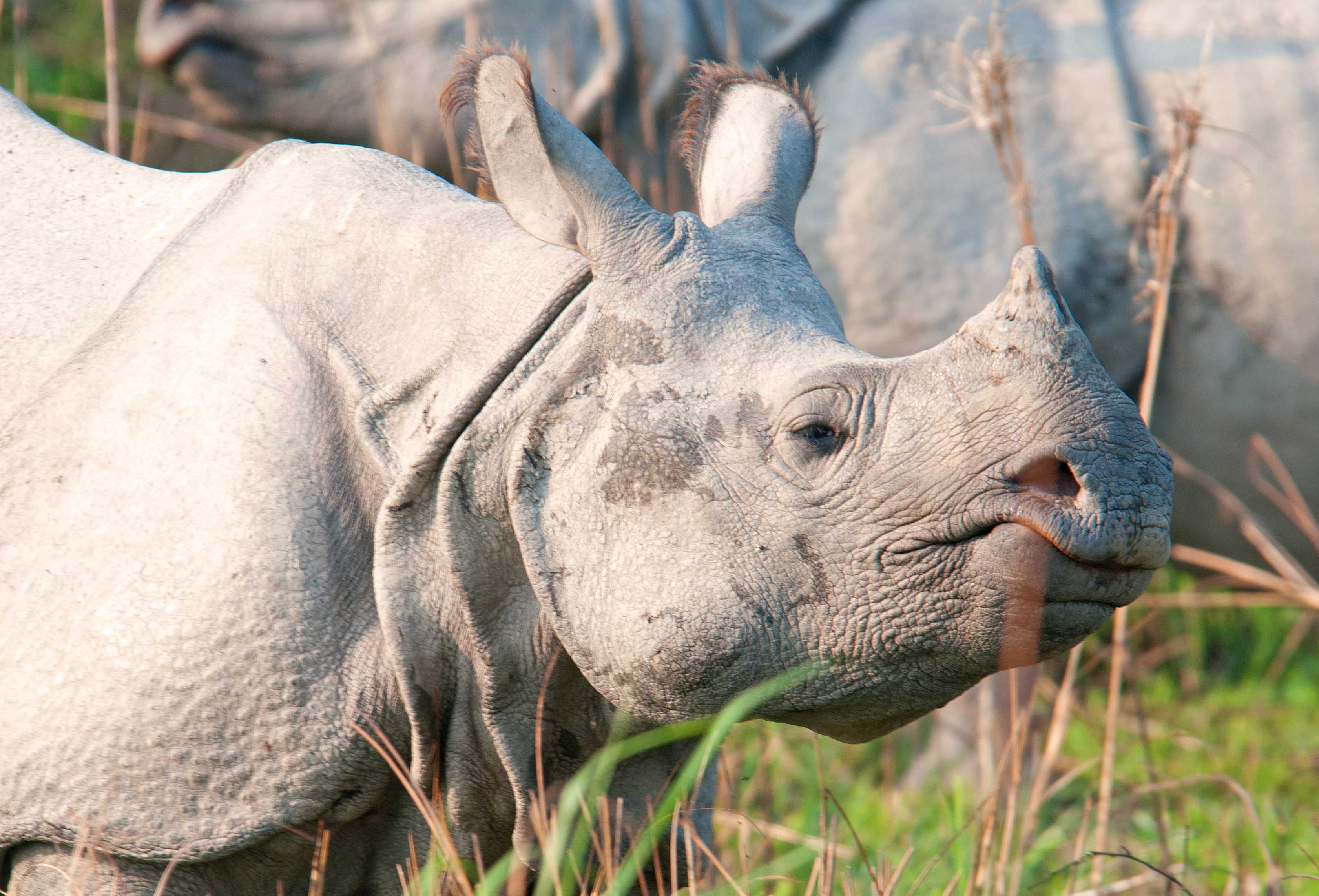
Indian rhinoceros (Rhinoceros unicornis) juvenile
The horn of the Indian rhino is often relatively small compared to that of African rhinos, but that does not stop some being killed for it. As most people know – apart from the fools who purchase it – rhino horn is just keratin, the same material as our fingernails. Any suggestion that it has any special properties is complete nonsense. Nevertheless, these wonderful animals are killed because there is a demand for the horn in traditional Chinese medicine. The current worldwide surge in demand for rhino horn has been primarily driven by demand for horn in Vietnam according to WWF (ref 2). It is hard to believe that people could be so ignorant as to pay huge sums for this totally useless product – only useful to the rhino – and thus threaten its existence.
Indian rhinoceros (Rhinoceros unicornis)
Although not on the awful scale seen in Africa, where rhino poaching has reached a crisis – at least 1,312 rhinoceros were illegally killed in Africa in 2015 – Indian rhinos are regularly killed by poachers. Official figures for the numbers of rhinos poached in Kaziranga NK in recent years are as follows: 2012 (11), 2013 (27), 2014 (27), 2015 (17) (ref 3). Although, these numbers are relatively low compared to the total population, I am sure that without the heroic efforts of the forest guards, many more would be killed. Poachers are willing to risk their lives to hunt these animals (refs 4, 5).
Indian rhinoceros (Rhinoceros unicornis)
The rhinos are counted every two years in Kaziranga, and the estimate carried out over 24-27 March 2015, yielded a total of 2,401 ± 100 (ref 3). Of the adults, there were more female rhinos (882) than males (663). The total for the species as a whole in India and Nepal is 3,555, according to WWF (ref 1). So it is clear just how important Kaziranga NP is for the preservation of this species, as well as for the many other animals in the park. The good news, is that despite the threat of poaching the rhino population is increasing, with numbers up considerably from a figure of 1,672 in 1999.
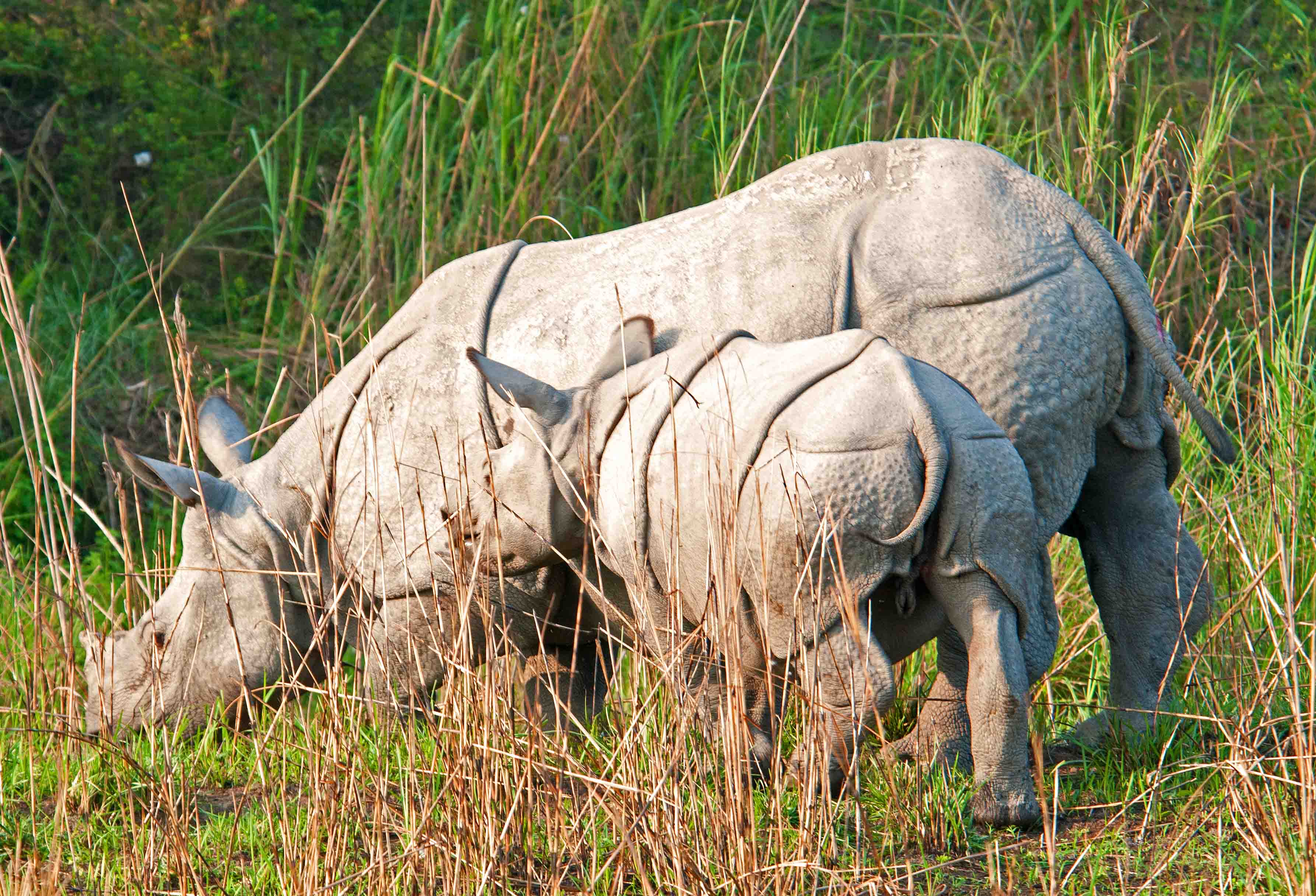
Indian rhinoceros (Rhinoceros unicornis) mother and calf
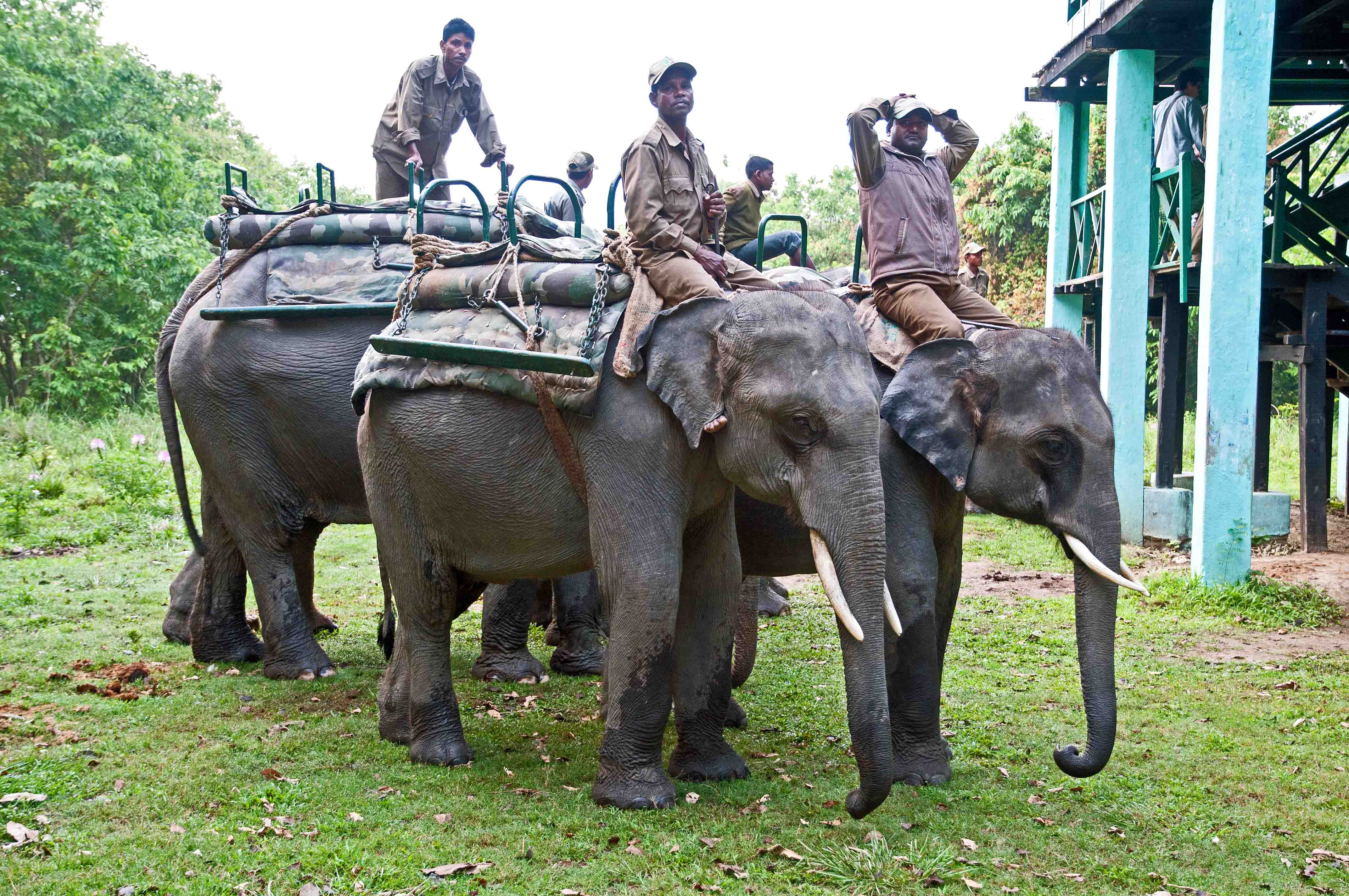
The best way to see and photograph the rhinos is on top of an elephant. The working elephants and their mahouts wait patiently for tourists to climb aboard them (below).
Elephants and Mahouts
Whilst sitting atop an elephant is certainly the best and safest way to view the wildlife, I found it surprising uncomfortable! My legs did not open wide enough to straddle the wide body of the beast!
Riding on an elephant
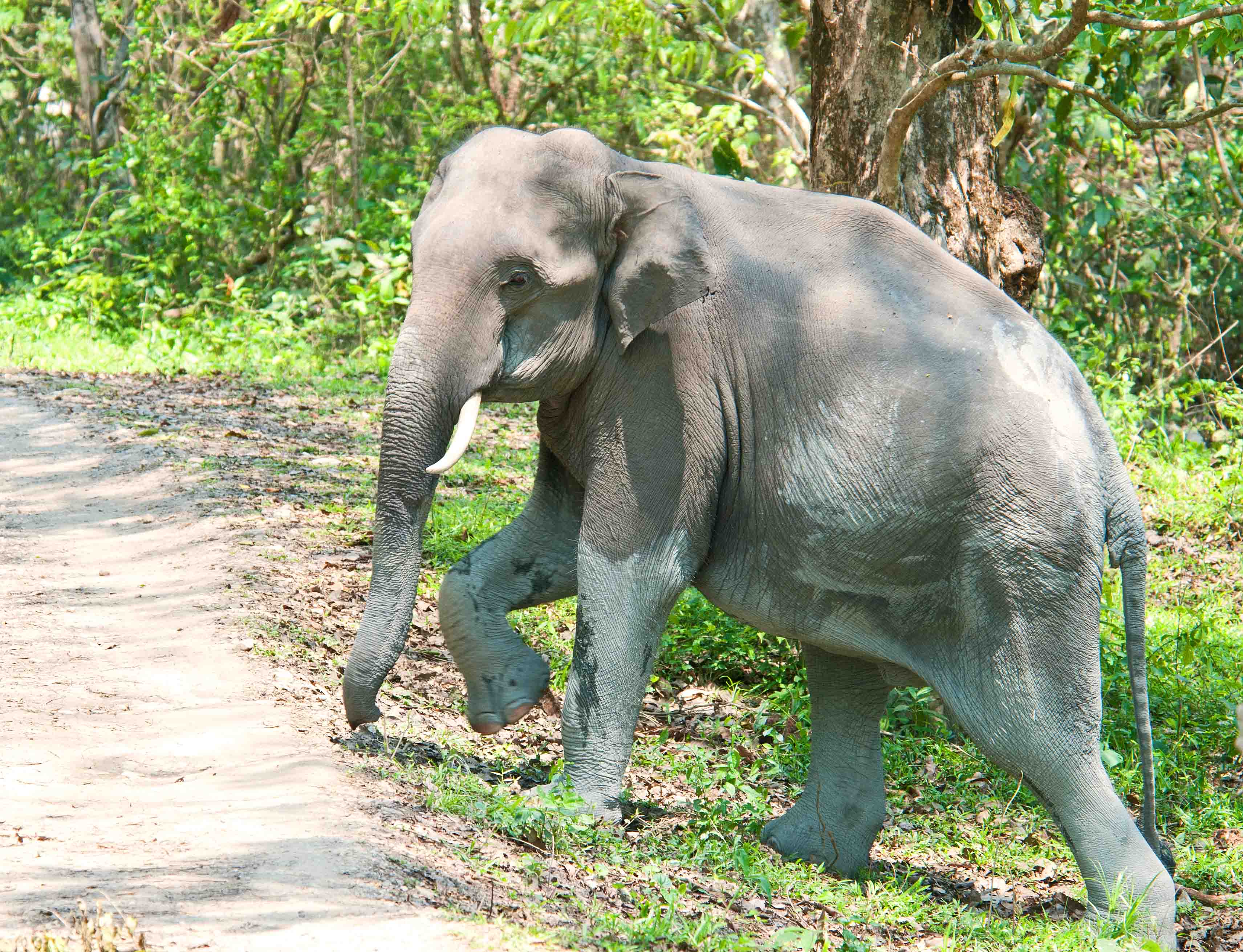
A total of 35 mammalian species have been recorded from the park. Apart, from the rhinos, two other iconic species which can be seen in abundance are Indian elephants (Elephas maximus indicus) and Wild water buffaloes (Bubalus arnee). There are well over a thousand wild Indian elephants in the park, and it was a joy to see them up close, such as crossing the road (below).
Indian elephant (Elephas maximus indicus) crossing road in Kaziranga NP
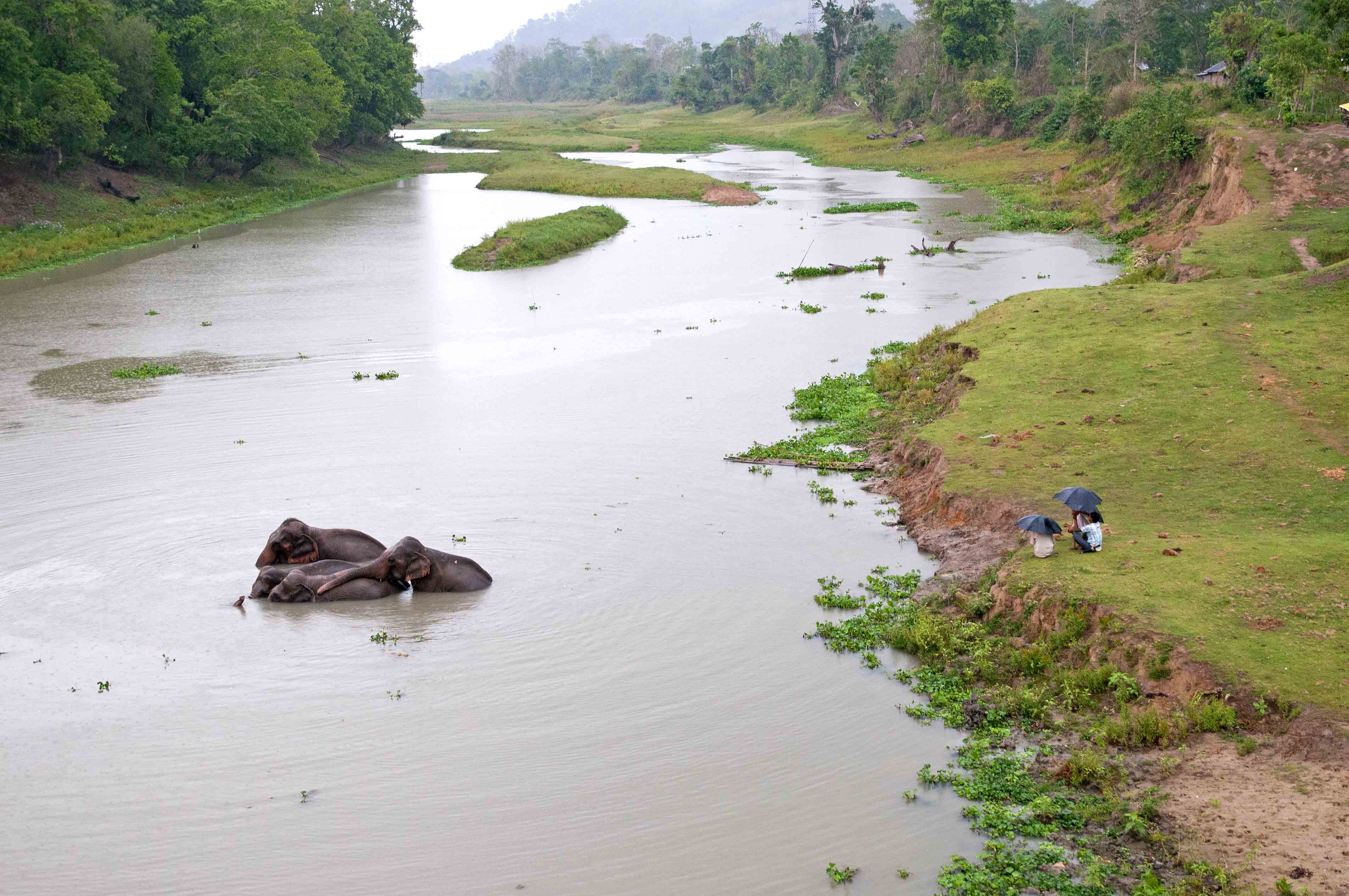
I felt a bit sorry for the working elephants, but they seem to be well cared for and it was nice to see them having a bath in the river.
Elephants bathing in the rain
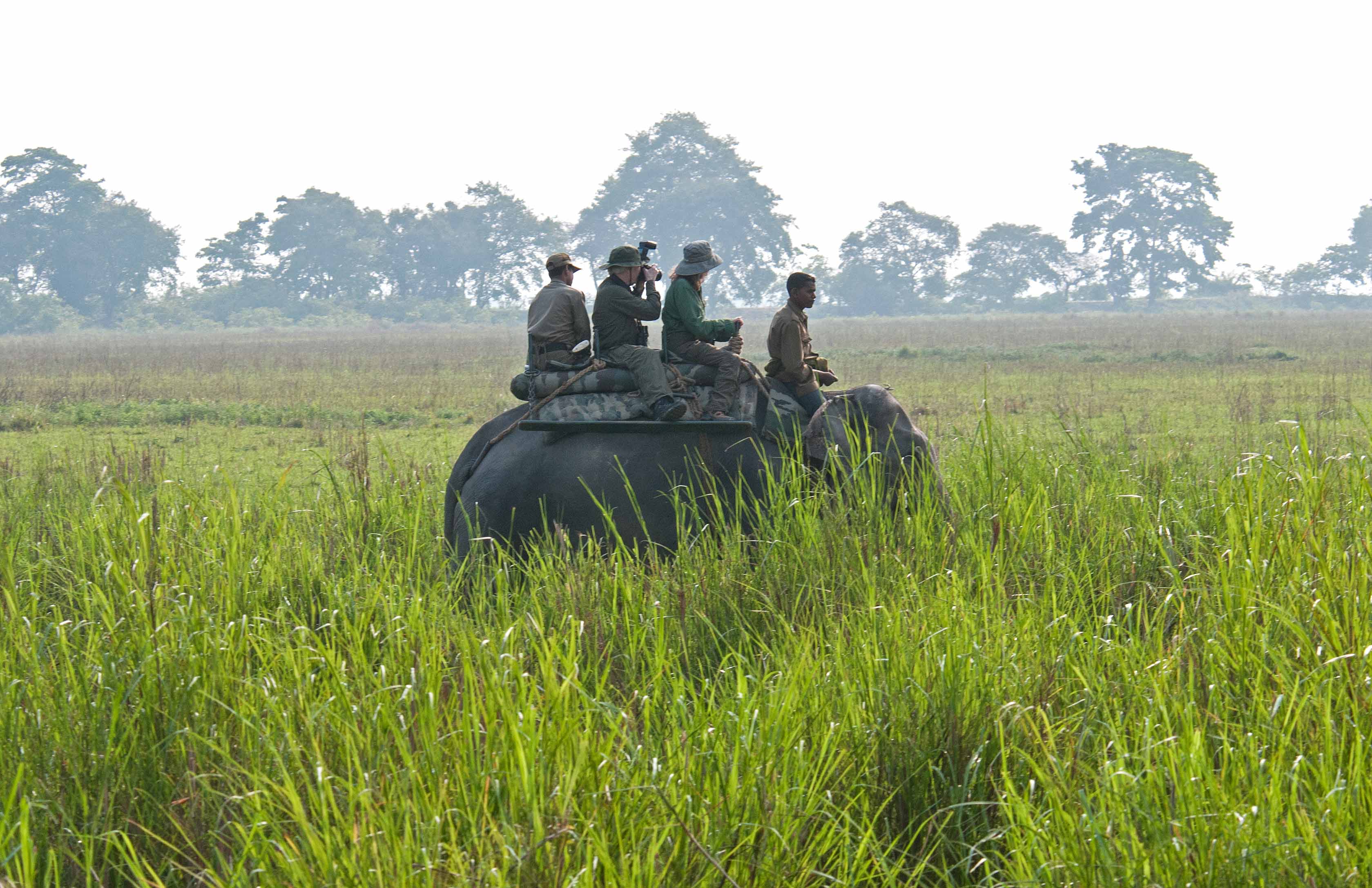
Without the elephants to ride on, it would not be possible to walk through the elephant grass, or wade through the marshes. Did I mention the tigers?!
Elephant ride through long grass in early morning
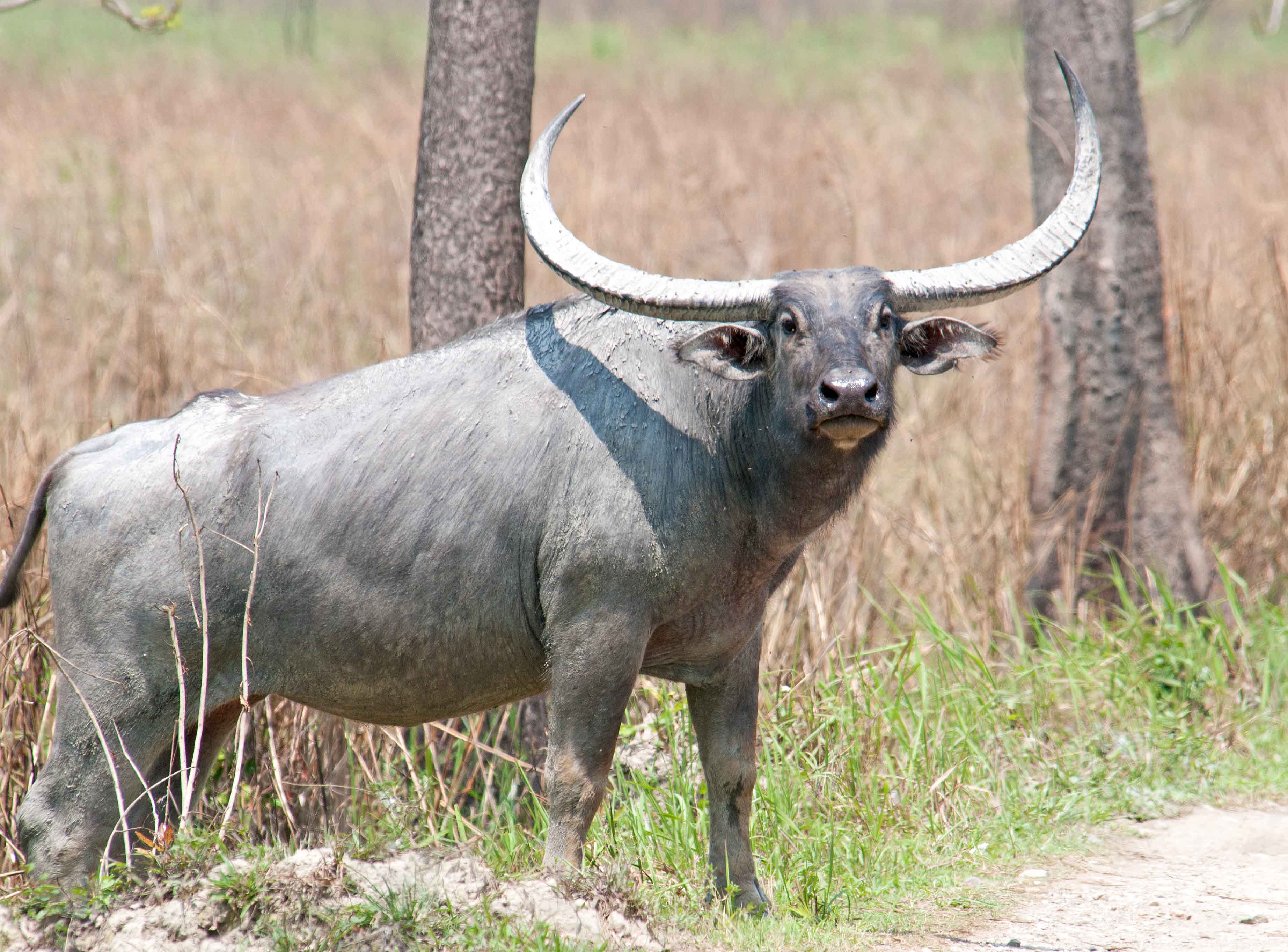
My next favourite mammal was the wild water buffaloes, of which there were 1,666 in 2001, so maybe more today. These are much bigger and more feisty than the domestic water buffalo (Bubalus bubalis), with which they can interbreed. The males have an impressive set of horns.
Wild water buffalo (Bubalus arnee) male crossing road
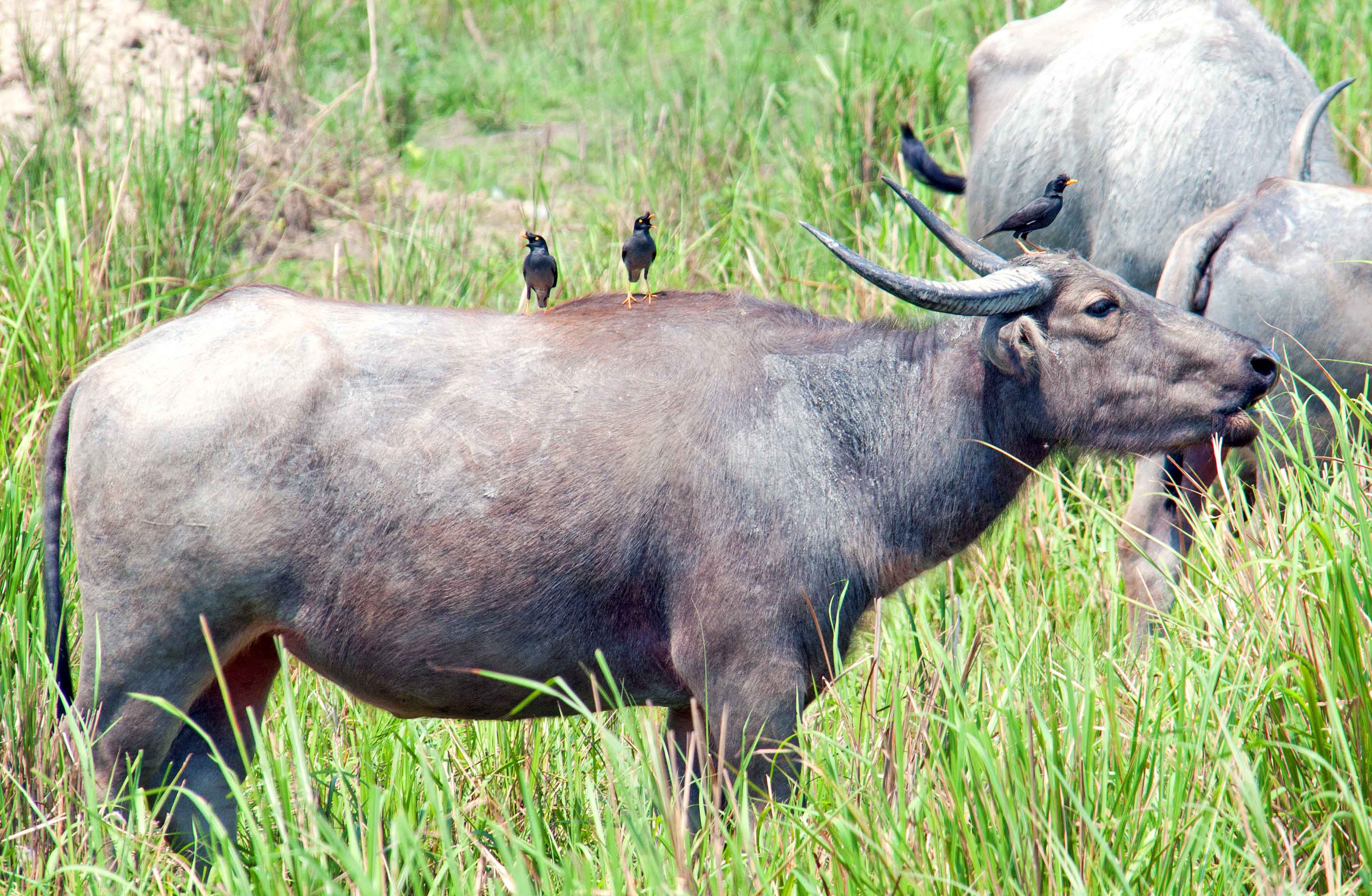
They are a sort of mobile snack shack for flocks of Jungle myna birds, which perch on top of them, looking to ticks I suppose.
Wild water buffalo (Bubalus arnee) with Jungle Mynas
It was great fun to see these wild buffaloes enjoying a mud bath! This photo also shows the close association between buffaloes and cattle egrets; the birds follow the buffaloes around pouncing on any insects disturbed by the large bovids.
Buffalo mud bath
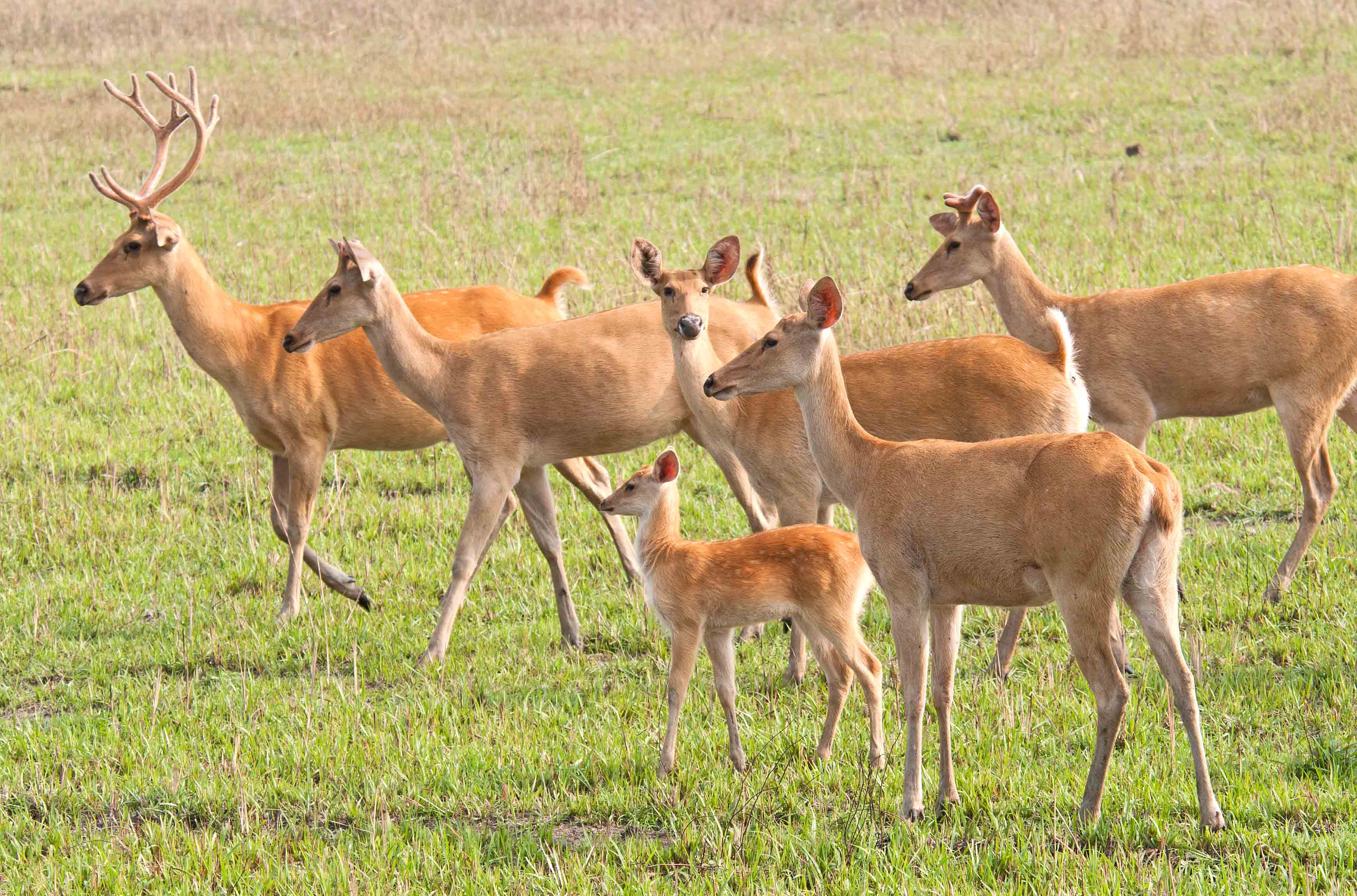
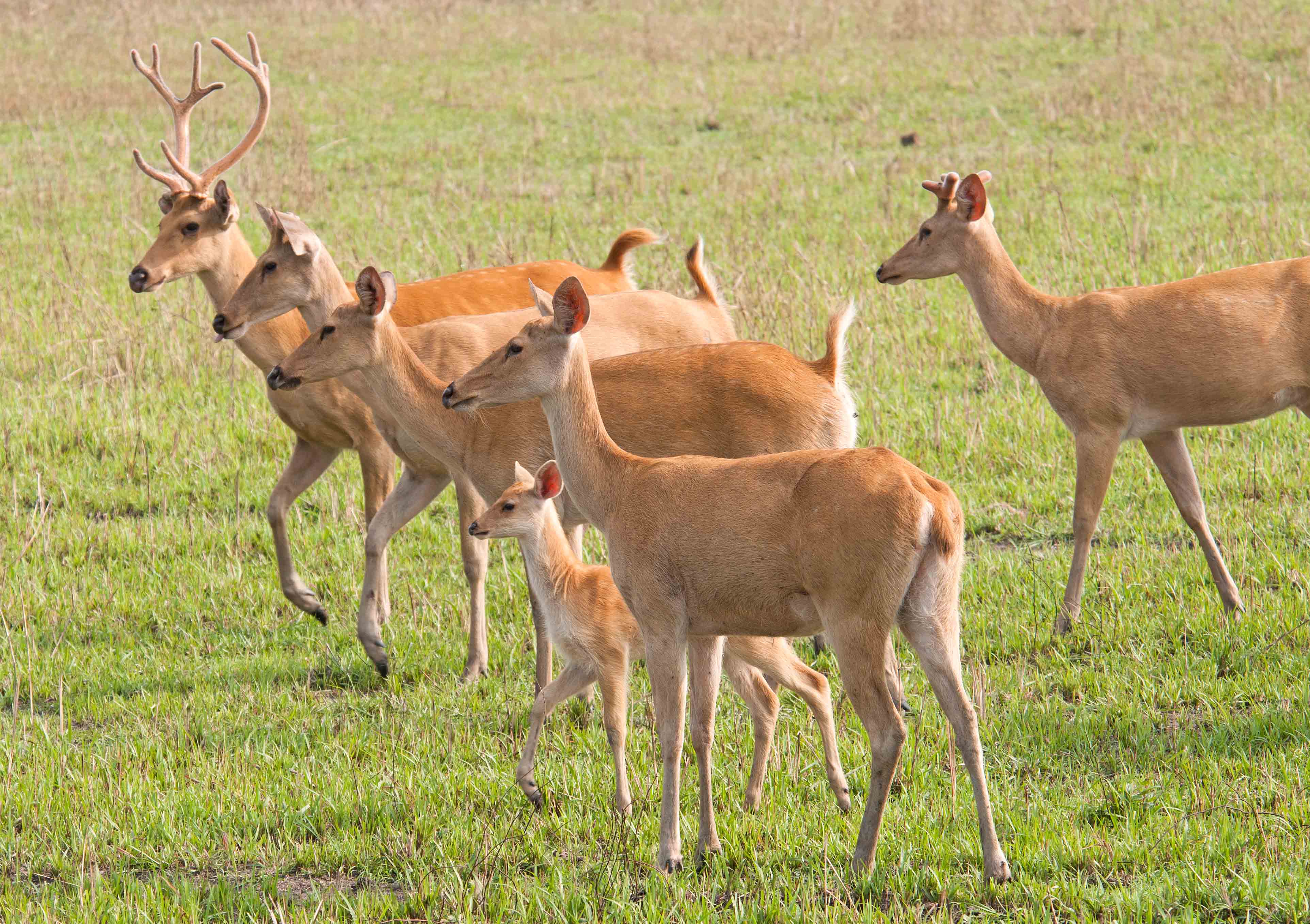
There are a number of species of deer in the park, but for me the most beautiful were the barasingha (Rucervus duvauceliisyn.Cervus duvaucelii), or swamp deer.
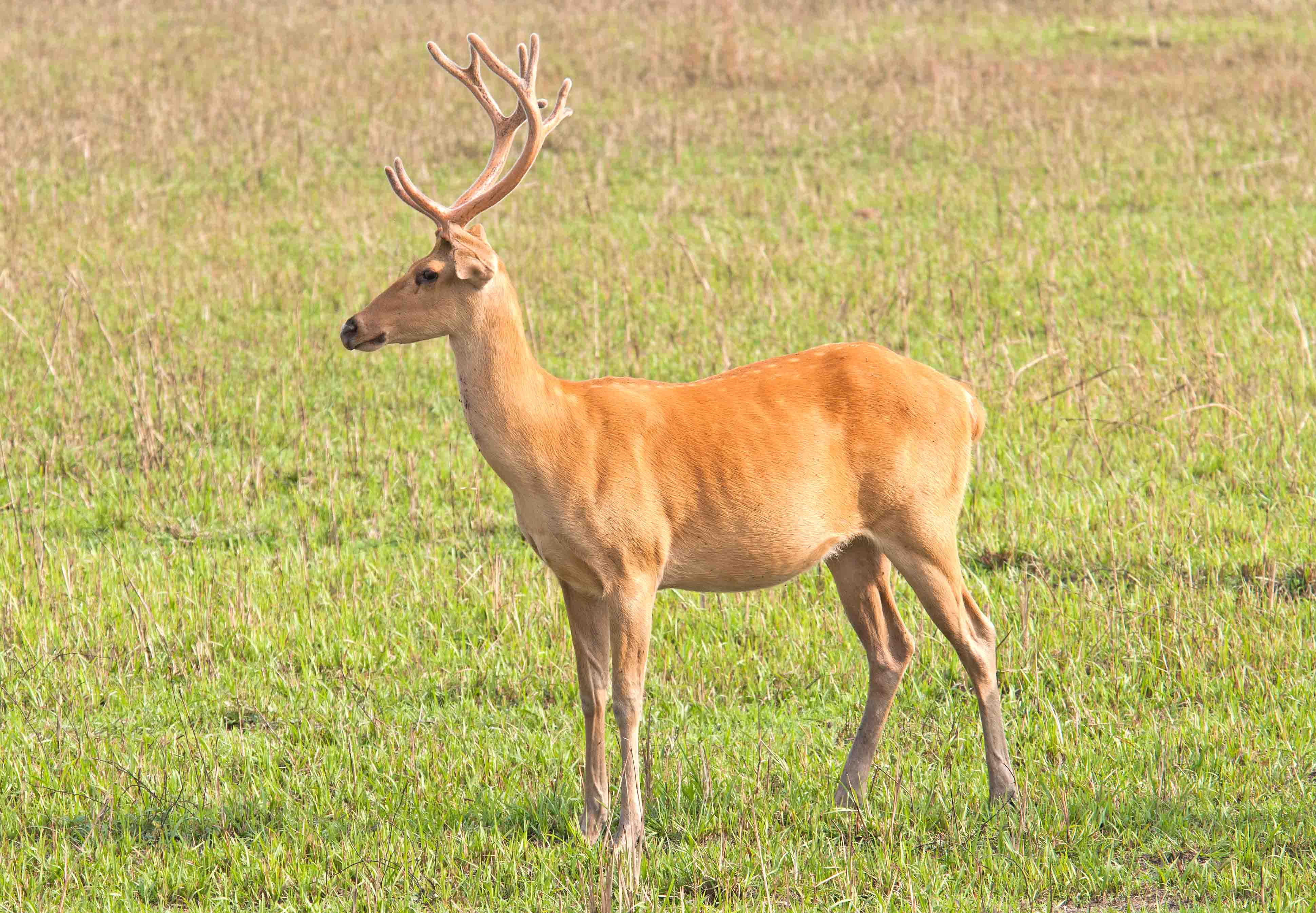
There are three subspecies of this lovely deer in India, and the ones present in Kaziranga NP are Eastern swamp deer, R. d. ranjitsinhi (Grooves 1982), of which there are reportedly about 700 present. The females are smaller than the males – stags can weigh up to 280 kg (below) – and the young deer are spotted (see above).
Eastern Swamp deer (Rucervus duvaucelii ranjitsinhii) male
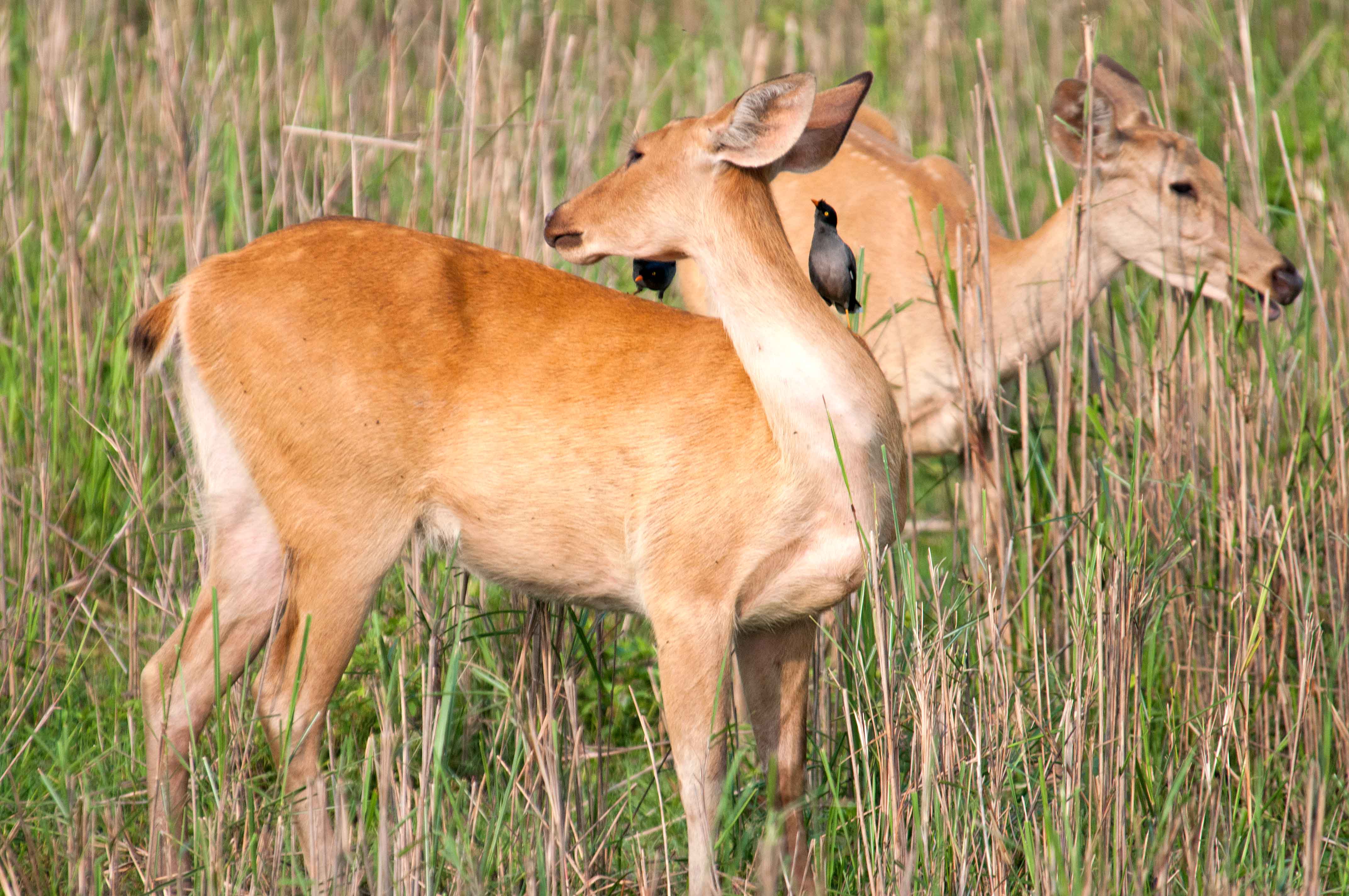
The jungle mynas also provide a tick-pecking service to the deer as well as the buffaloes!
Barasingha or Swamp deer female with Jungle mynas
The deer are keeping a sharp lookout in the following photo and there is a very good reason for them to be wary and alert!
Eastern swamp deer
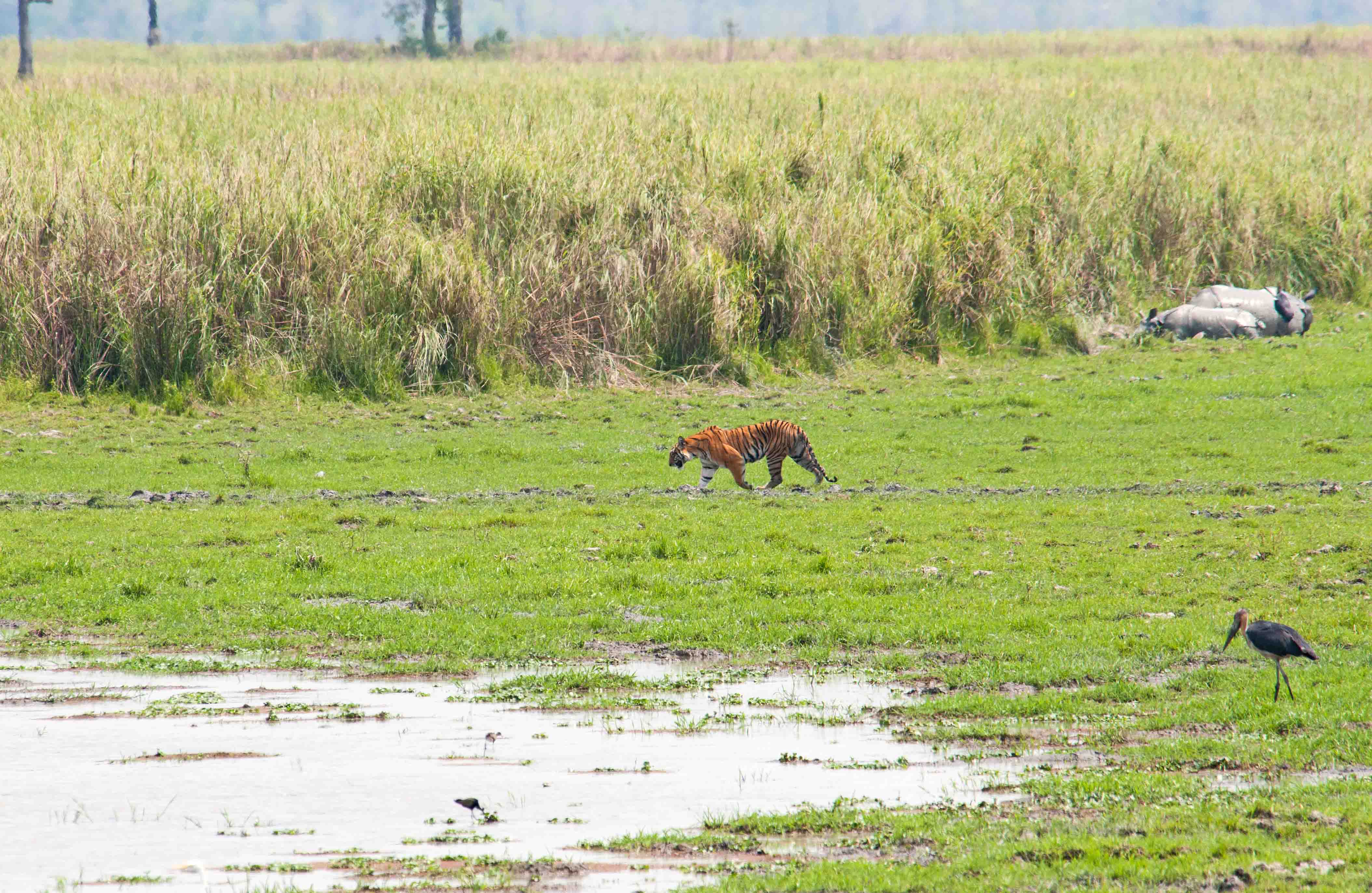
The reason is of course is the Royal Bengal tiger (Panthera tigris tigris)! Tiger numbers have been increasing in the park which now boasts one of the highest densities of tiger in India. There are believed to be more than 125 in Kaziranga NP, out of a total of 167 tigers counted in Assam (ref 6).
Tiger and rhinos, Kaziranga NP, Assam
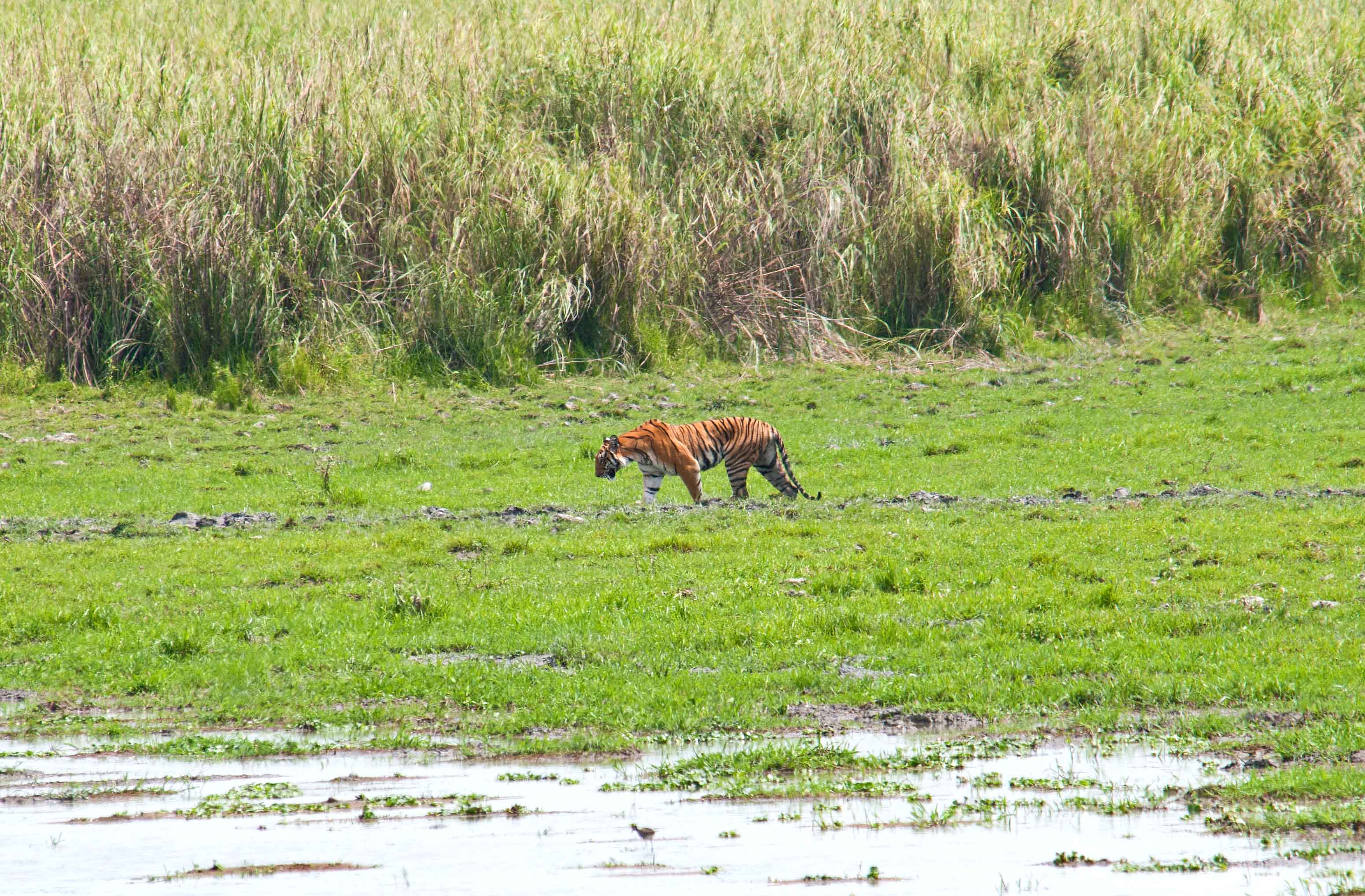
In the short time I spent there, I saw tigers on two separate days. We were said to be very lucky and indeed it was a huge privilege to see these animals in a such a magnificent setting.
Tiger crossing
It was amazing to see how exited people were – me included! – to see a tiger for the first time, which gives me a little hope for their long term future.
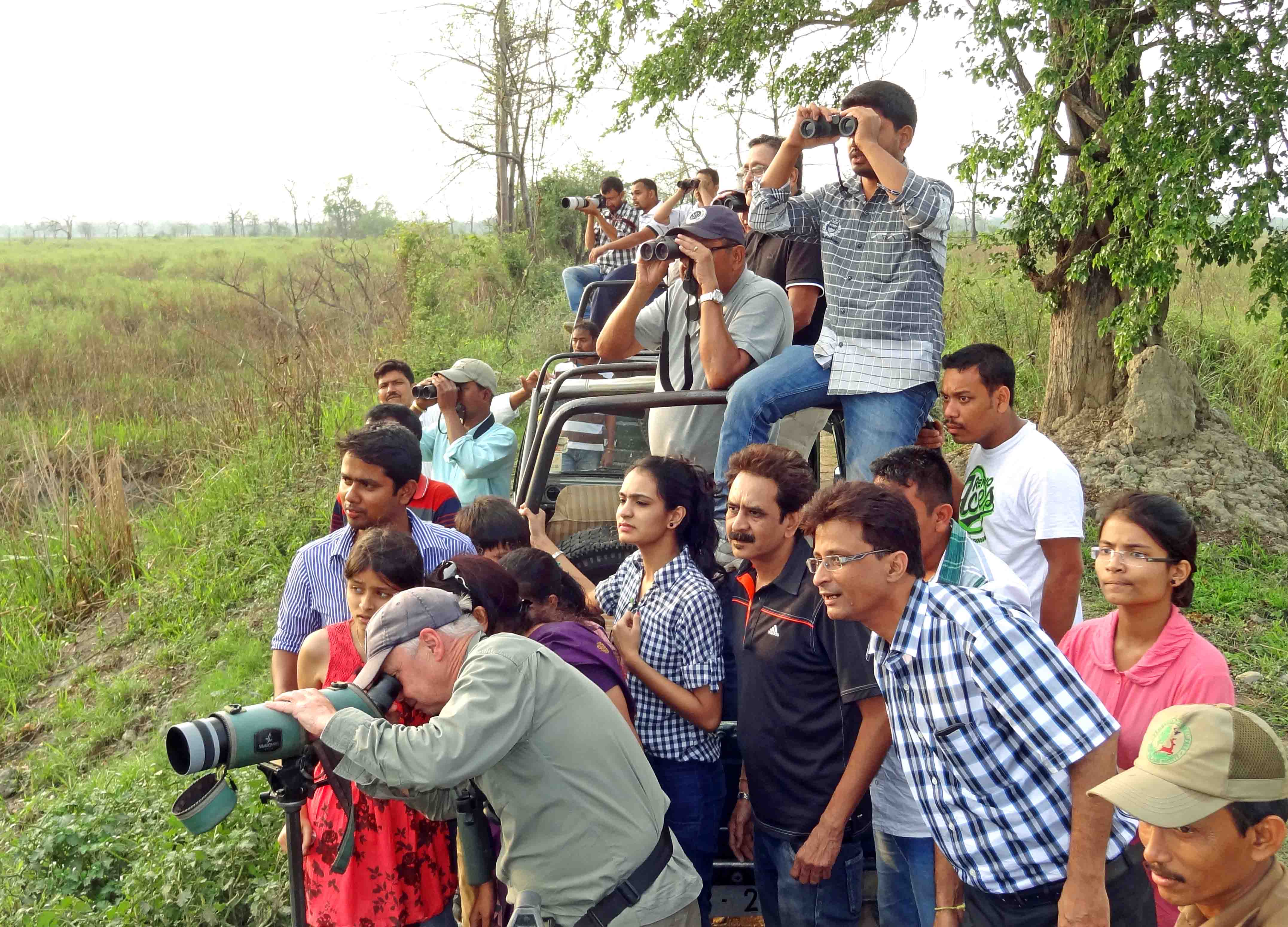
Watching the tiger
It is said that the reason that the tigers are doing so well here is the relative freedom from poaching in Kaziranga NP as well as the abundance of game for them to hunt. In a world full of so many horror stories involving wildlife destruction, it is a pleasure to be able to finish this travelogue on a positive note.
The park was officially declared UNESCO World Heritage Site in 1985, and it certainly lives up to this recommendation.
If you find yourself passing through La Coruña airport in northern Spain any-time, make sure you have a look at the frogs. This small airport is located in the suburbs of La Coruña – also called A Coruña in Spaanish – and is one of a number of gateways into the province of Galicia. A far cry from the hustle and bustle of Heathrow airport – where flights on the airline Vueling depart from – it is relaxed and uncrowded, with a great restaurant. They even serve you a delicious soup from a steaming hot cauldron at your table. Imagine that at Heathrow!
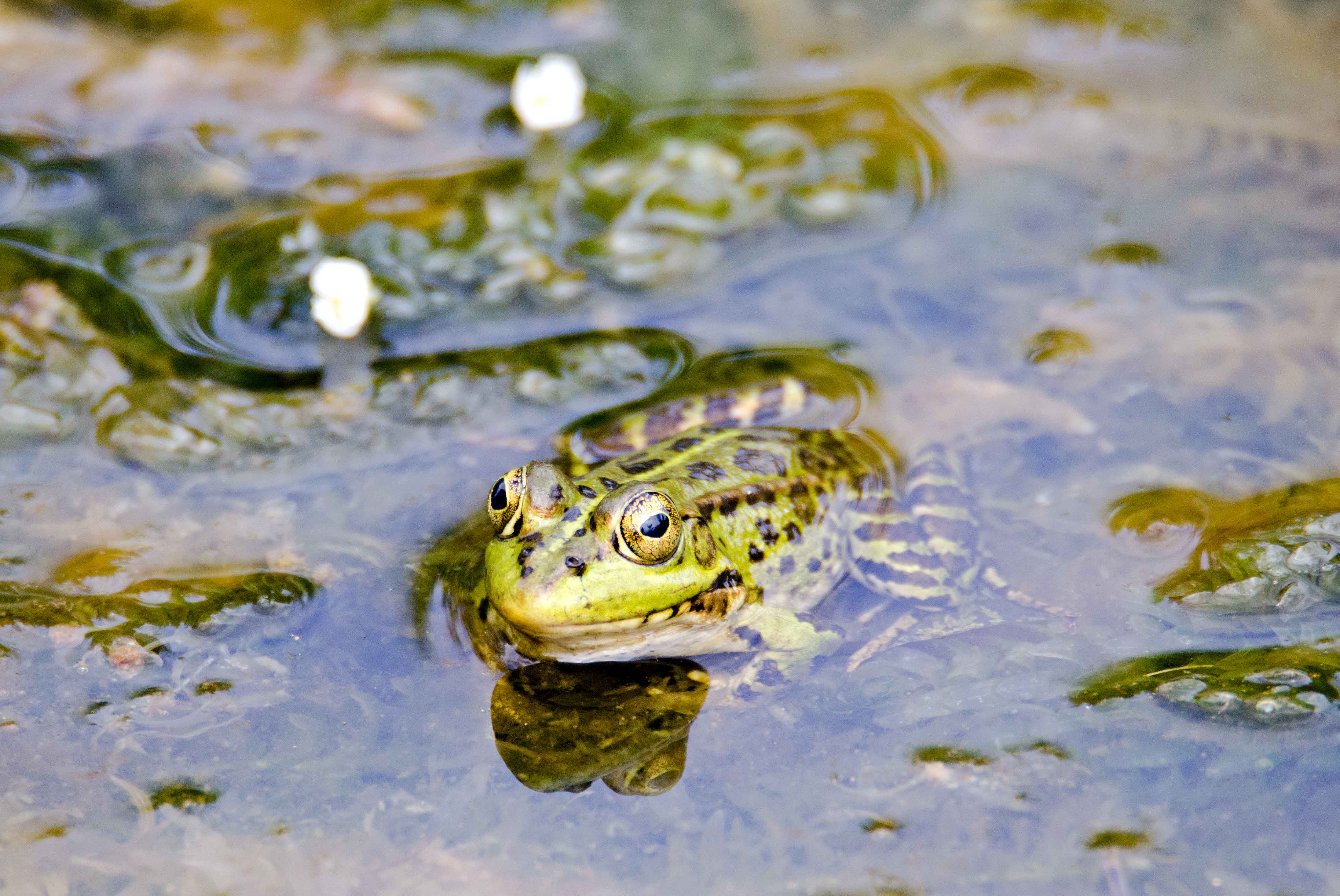
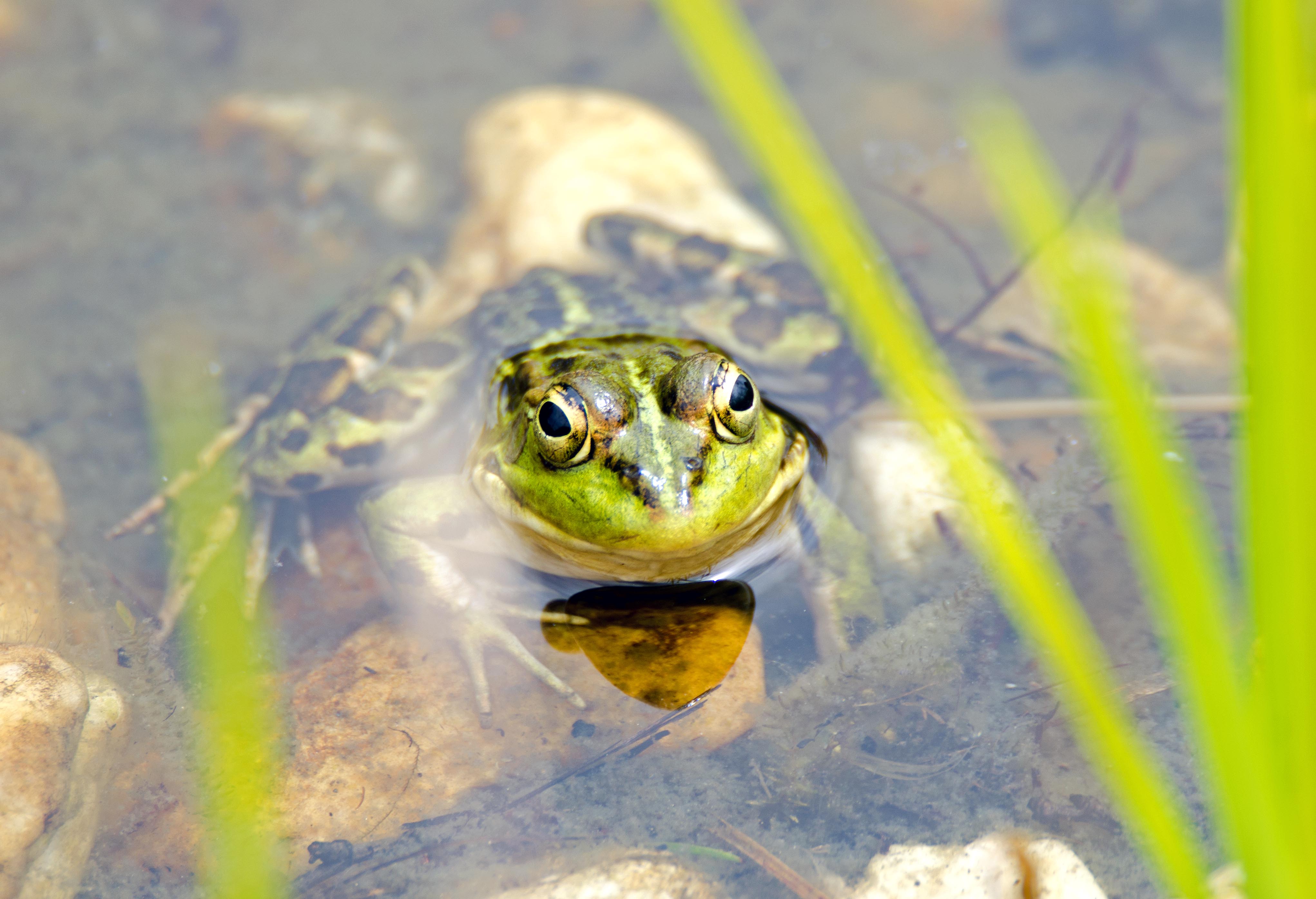
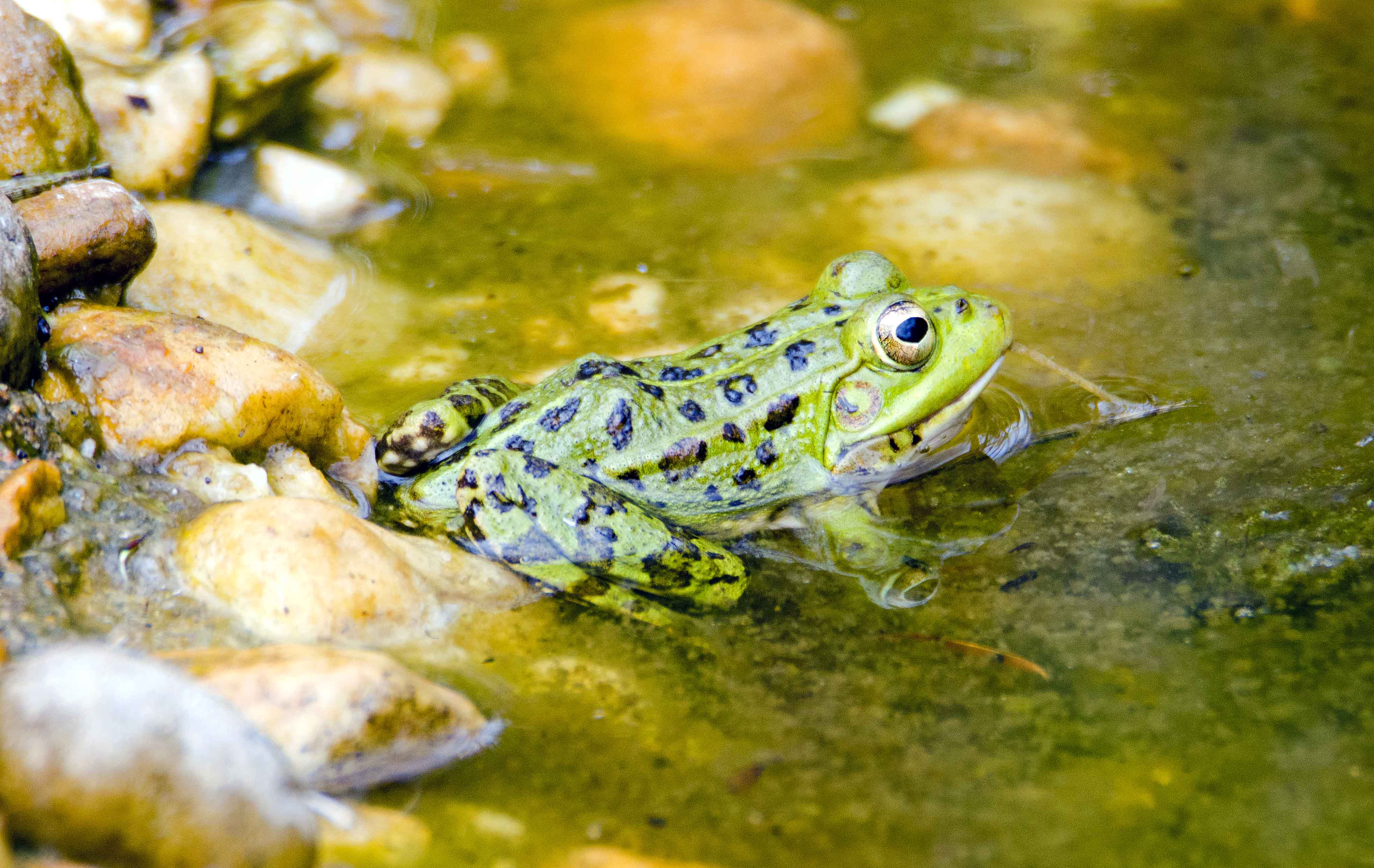
Perez’s frog (Pelophylax perezi)
It’s always fun landing at this airport, which is located on a hill about 7 km from the city centre. But what I have come to appreciate as I have passed through this little airport over the years, is that it is a really good place to see Perez’s frog (Pelophylax perezi), also known as Iberian water frog, Iberian green frog, or Coruna frog. I’m not joking! There is a series of ponds at the at the northern end of the airport, just by the road leading out of the airport, and close to the car park. It is easy to find it as there is an example of the traditional Galician stone gain store (or horreo) besides the ponds.
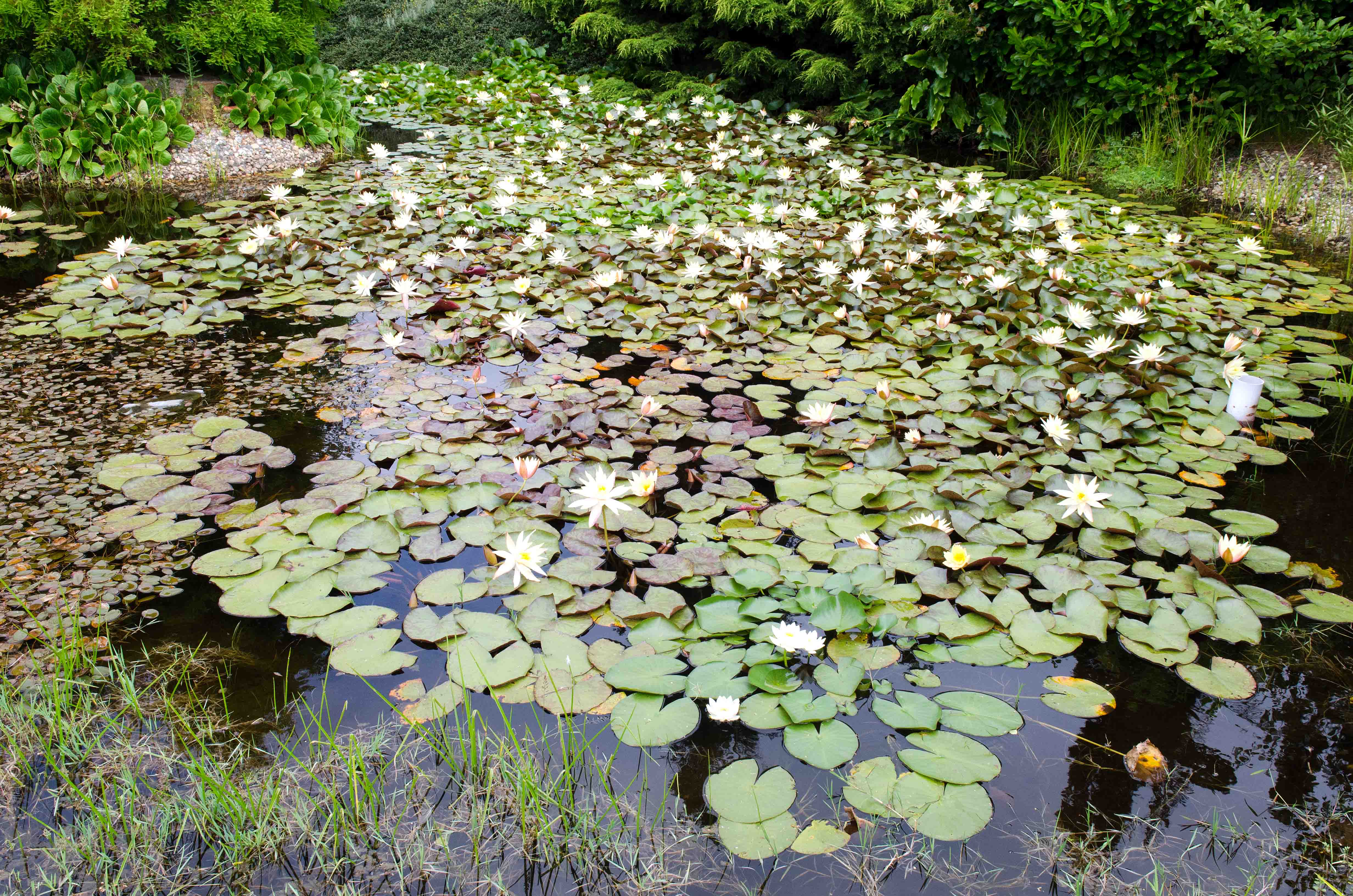
Frog pool or lily pond at La Coruna airport
The ponds themselves are covered in water lilies on which the frogs can be seen resting, if you approach carefully. More likely you will hear plop, plop, plop as all the frogs hear your footsteps and jump into the safety of the water!
Perez’s frog (Pelophylax perezi) La Coruna airport
This frog species is not endangered (although amphibians are vulnerable everywhere), as is widely distributed and common across the whole of the Iberian Peninsula and is found in southern France, and elsewhere where it has been introduced, like Madeira, the Balearic and Canary Islands.
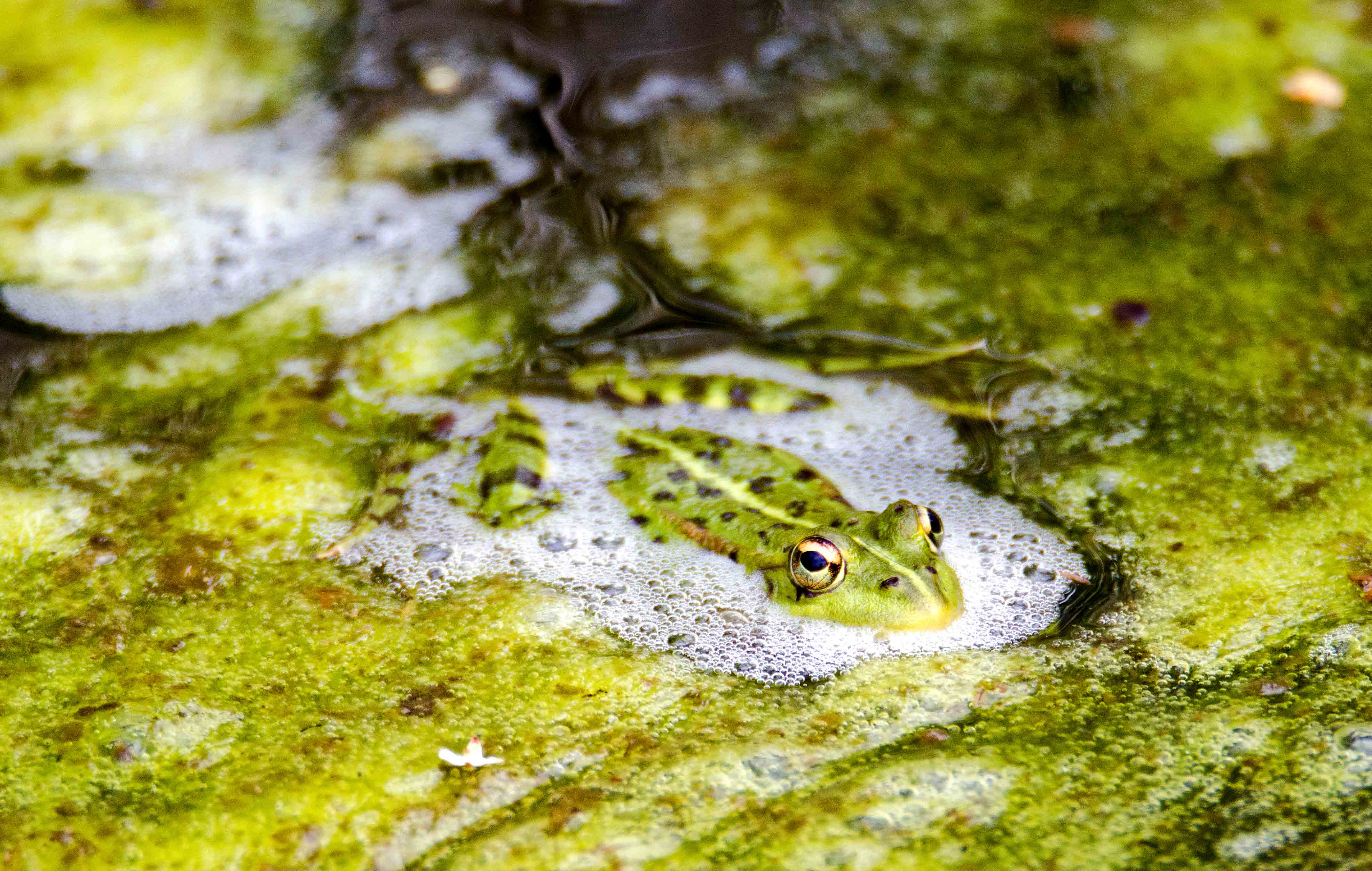
Perez’s frog (Pelophylax perezi) with bubbles
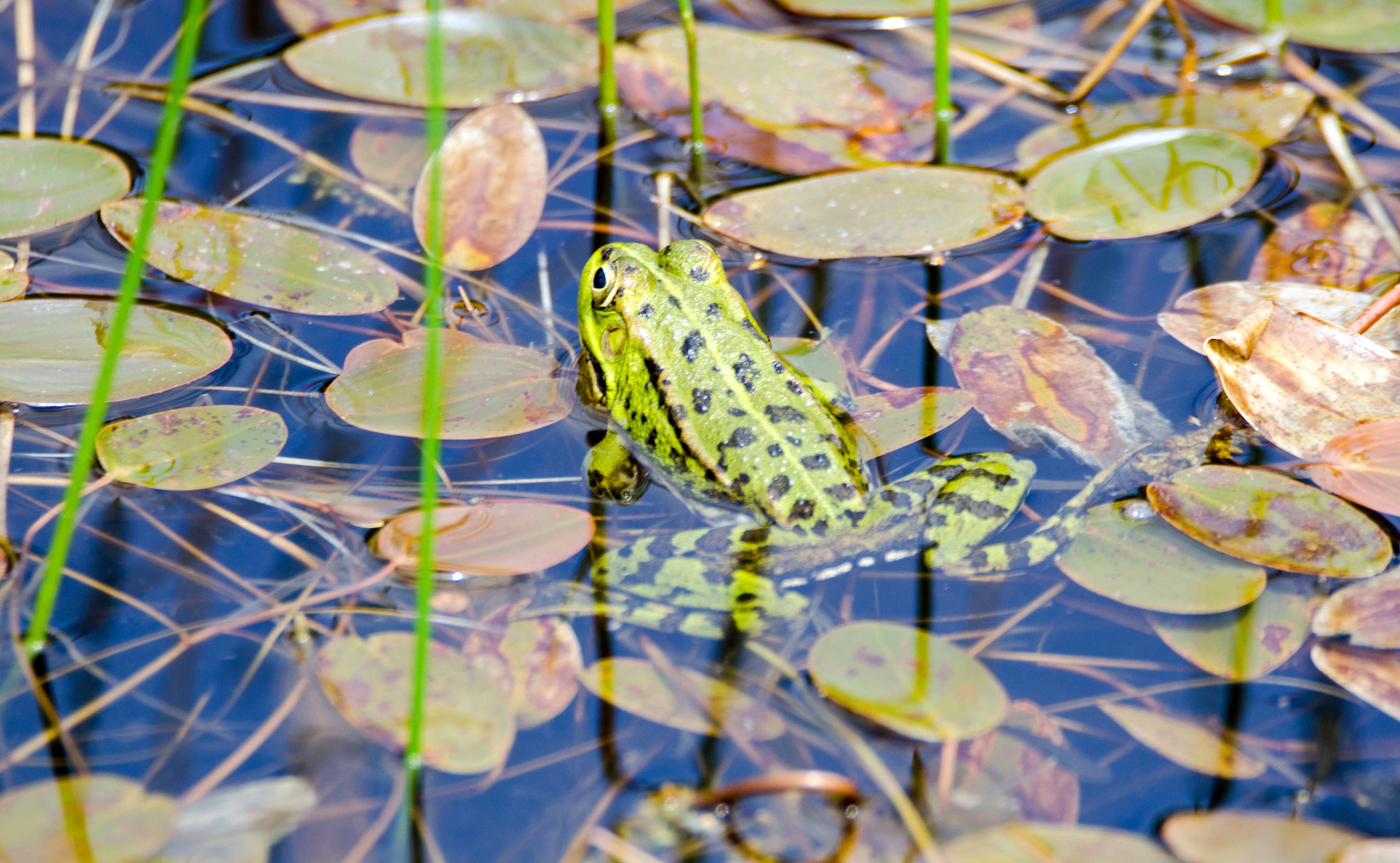
They are highly variable in colour and patterning, and look a lot like the Marsh frog (Pelophylax ridibunda) which is what I thought they were when I first came across them (1). Confusingly, they also hybridise with each other to form a type of hybrid frog!
Perez’s frog (Pelophylax perezi)
So whilst not being unusual, you might not come across a better place to see them whist visiting Spain or Portugal, and it is a good way of whiling away some time waiting for a flight. They are particularly vocal and lively, jumping around and inflating their vocal sacs, during the breeding season (Spring) (1).































 Ray's ramblings