Category: UK

  • Katie the kittiwake – a story for children (of all ages!)

    Katie the kittiwake – a story for children (of all ages!)

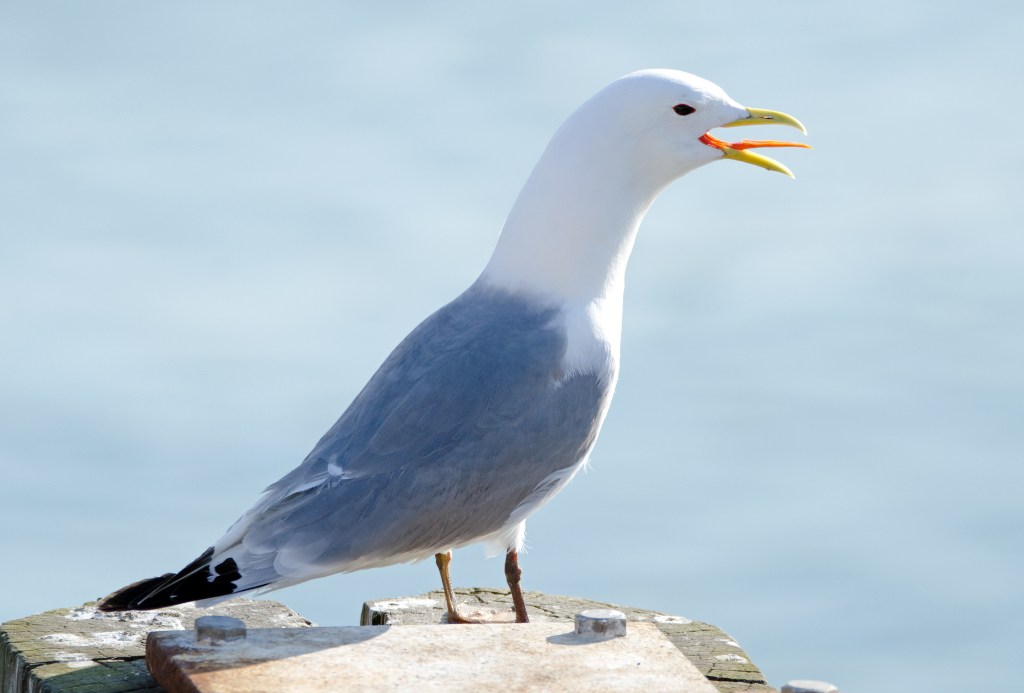
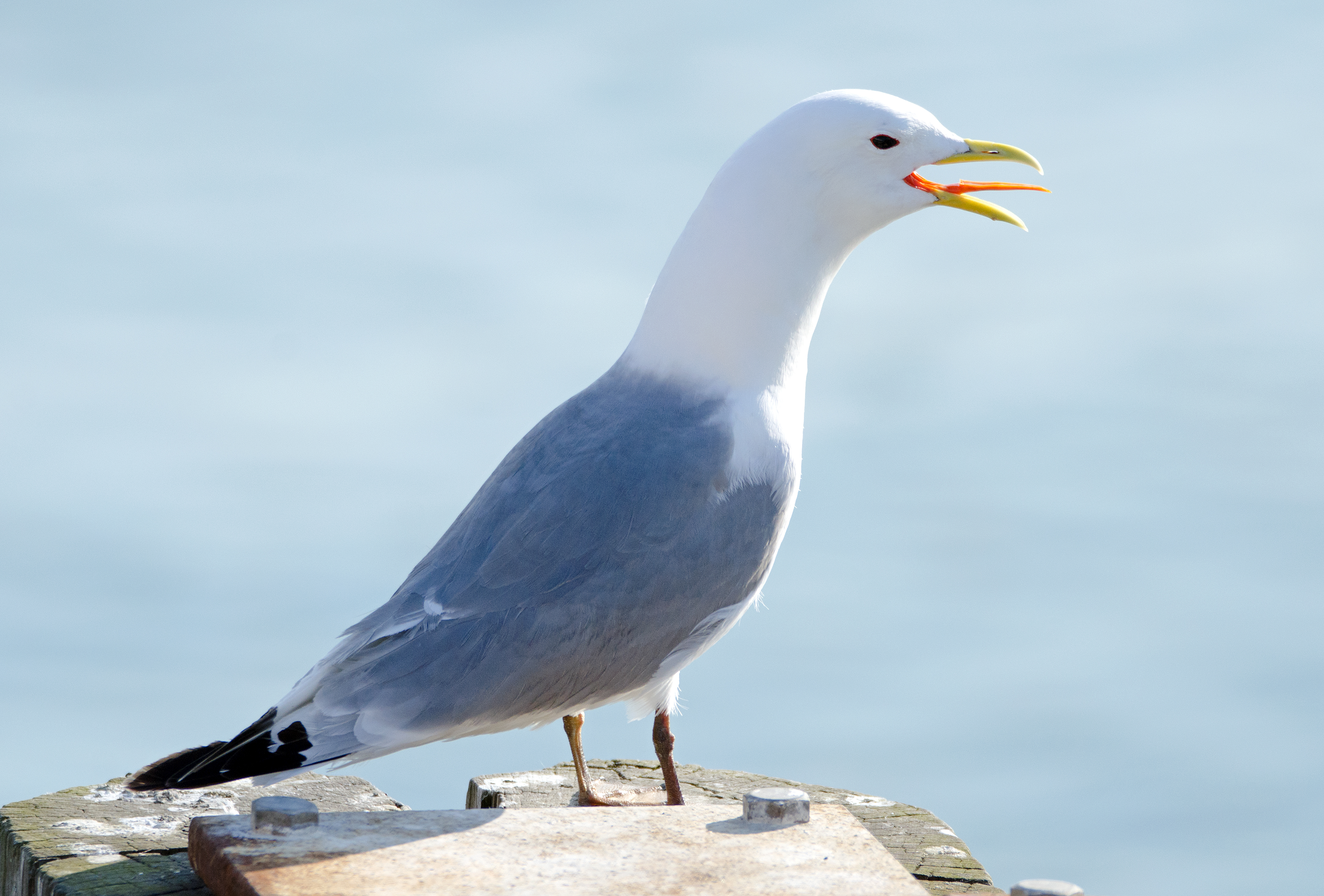
    Black-legged kittiwake (Rissa tridactyla) adult, just like Katie’s parents!

    Katie was born – if born is the right word for a bird which hatches out of an egg – on a ledge, three storeys up, above the back entrance to Mark’s and Sparks.
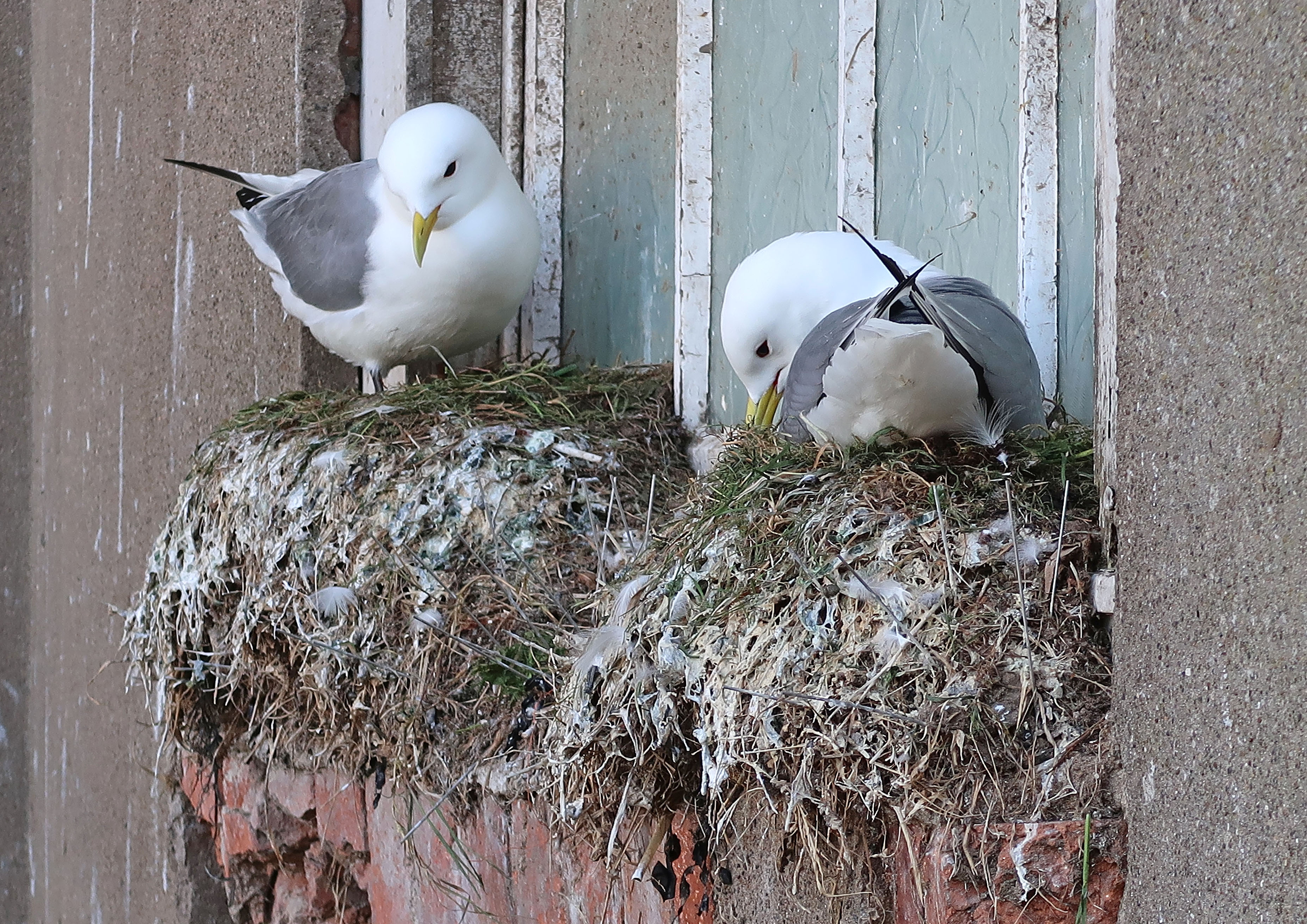
    Kittiwakes nesting on a window ledge, just like Katie’s parents

    Katie’s parents had nested there for many years and brought up all of Katie’s brothers and sisters on this tiny ledge. Katie’s parents had been together for five years. Before that her Mum, Flo, had been married to another bird, Sid, but tragically he had died in a terrible storm in the mid-Atlantic whilst coming back from Newfoundland. Yes he was a Canadian.

    Kittiwakes don’t need aeroplanes to cross oceans, they just fly across, stopping to rest and feed on the surface of the sea, whenever they need a break. But sometimes, even the most experienced birds get caught in a storm and perish.

    Katie’s Mum waited anxiously for weeks for Sid to return, but gradually she came to realise that he was not coming back, and rather than sit and grieve for her lost love for years and years, she decided to get on with her life and make a new start.

    A handsome young kittiwake called Harold had been hanging around and making eyes at Flo for some time. He was a lot younger than her, but she was a good catch, still in her prime and with plenty of valuable experience. Wisdom counts for more than youth in kittiwake lives. Harold was happy to find such a clever and wise partner and soon the pair settled down together.
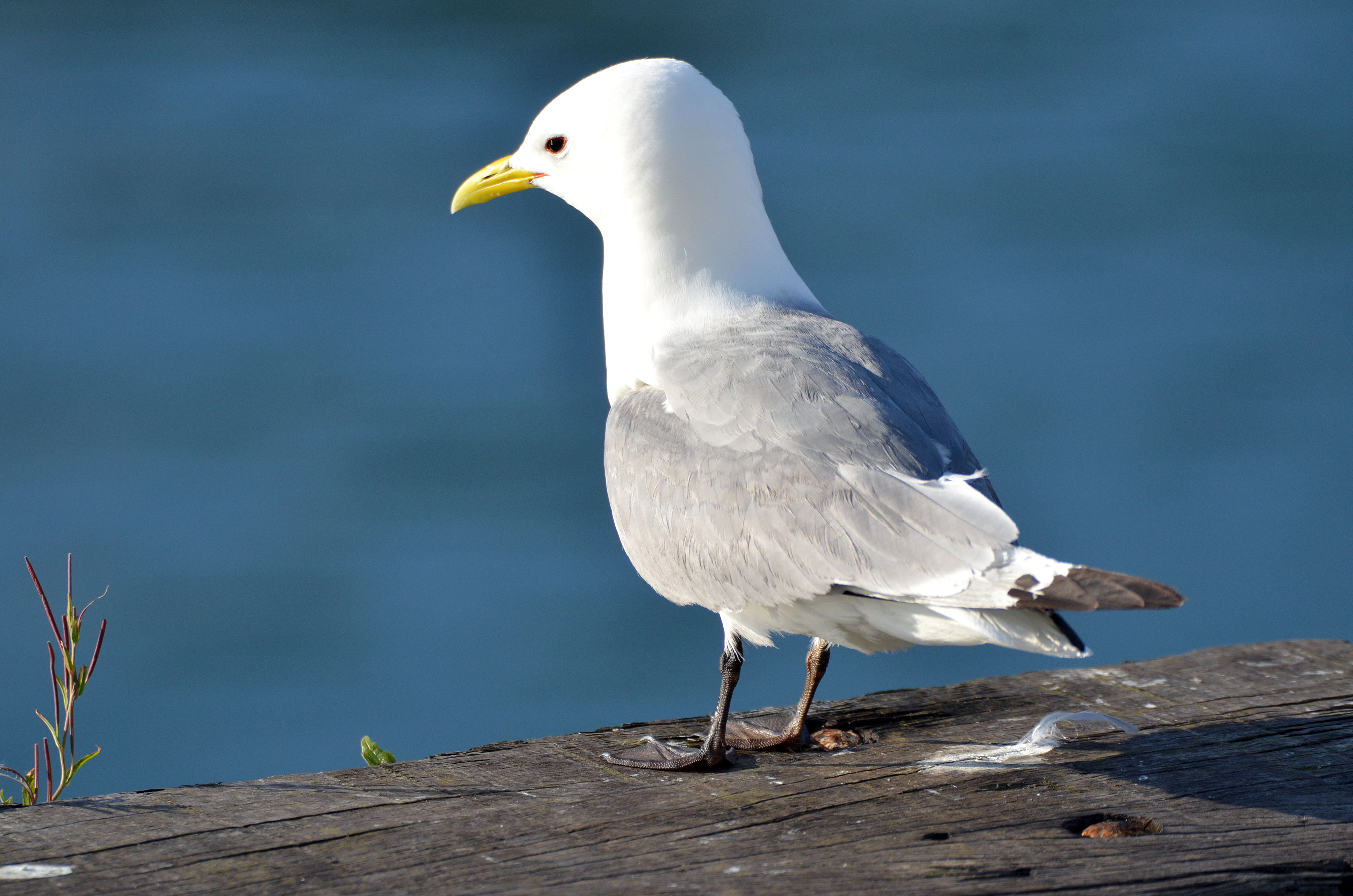
    A handsome adult Black-legged kittiwake (Rissa tridactyla), just like Harold!

    Kittiwakes live for a long time. Flo was already 23 and had successfully raised 29 chicks so far. It was a big family.  Harold was only 15, but together they had already had eight offspring. Katie was their ninth. Sometimes, some of Flo’s other children, all grown up now with their own partners and families, would fly over and scream a greeting. Only Flo knew who they were.

    The oldest known kittiwake lived for more than 28 years in the wild. There are probably even older birds.

    Harold was from Norway, and despite having lived in England for five years, he still had a slight accent. Kettiwoke, kittiwoke, he would cry, and all the other kittiwakes would laugh! Harold doesn’t know how to speak proper, they would say, before screaming “kittiwake, kittiwake” in the local accent.

    Kittiwakes nesting on Castle cliffs, Scarborough. Like Katie’s ancestors did!

    Katie’s ancestors used to live on cliffs overlooking the North sea, but long ago her great, great, great great grandfather – still affectionately known in the family, as Old Bob – decided to start a new life in the town. Other kittiwakes had started to nest on ledges high up on buildings. They looked very much like cliffs to a kittiwake, but had the advantage of being much more protected and secure – and best of all, there were no terrible peregrines there. Peregrines were hawks which made the lives of kittiwakes a constant nightmare: suddenly swooping down out of nowhere and snatching a poor gull out of the air. The victim was then killed and eaten in front of all his friends and family! What a terrible fate. Peregrines lived on the cliffs like the kittiwakes, so to get away from them was a real blessing, and since Old Bob made the move, together with his faithful partner Gladdis, generations of their descendants had grown up in relative safely, high above the same street where Katie now lived.
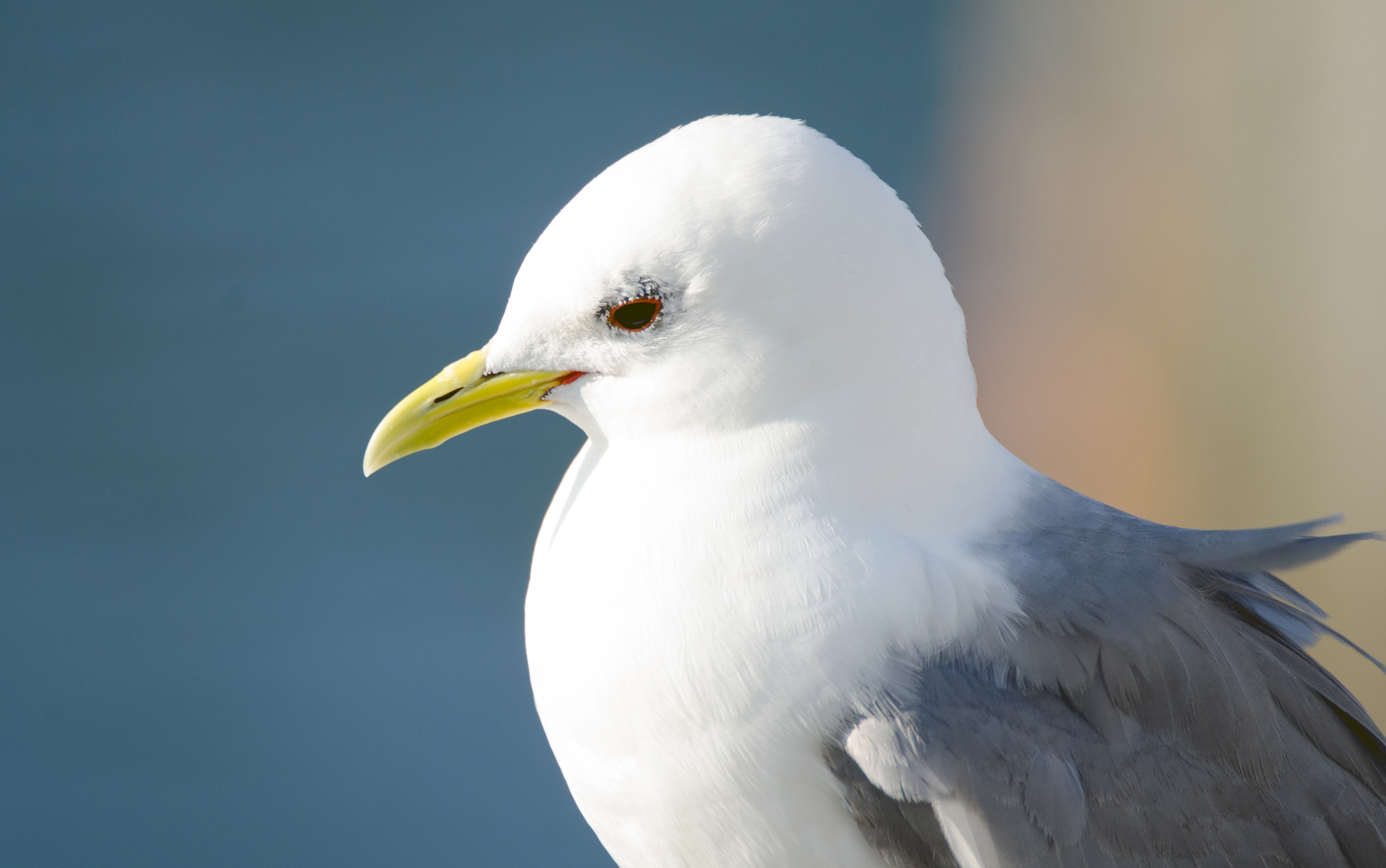
    Close up of adult Black-legged kittiwake (Rissa tridactyla) like Katie’s parents

    This year, when Flo and Harold returned to their ledge at the start of summer, there were some horrible spikes sticking up. Some human had put them there to try and stop the kittiwakes from nesting. Harold and Flo were a bit worried at first, but they knew what to do, they had watched other birds with the same problem. For 10 days they flew back and forth from the seaside, bringing bits of seaweed, mud, discarded fishing nets and anything else they could find; pilling it up over and between the spikes, until their little hill of material rose above the sharp projections, and they had a comfortable platform on which to lay their eggs.

    Katie hatched out on the 5th July. Although she was balanced on a ledge 30 foot up above the pavement, there was no danger of her falling. She knew how to stay safe. Millions, probably billions, of kittiwakes  had balanced on ledges for millions of years. Those that had vertigo,wobbly knees or poor eye sight had all fallen off already! Those that were left were the descendants of expert balancers, surefooted seabirds than never put a webbed foot wrong, or felt a tinge fear, and were happiest high up and safe.
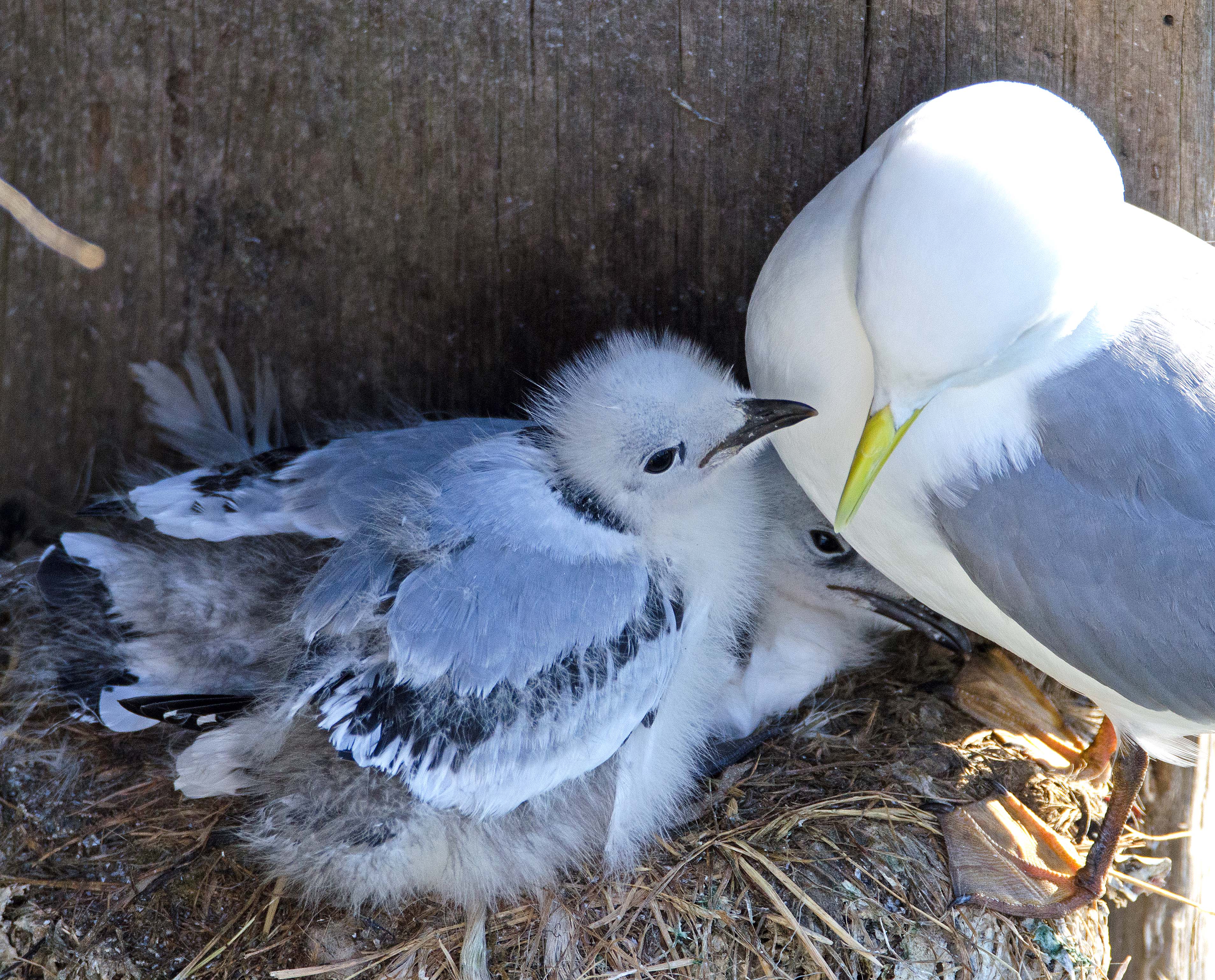
    Black-legged kittiwake chicks, mid July

    Katie loved the smell of food which came up from the supermarket below. Gulls have a very good sense of smell, and she could smell the freshly baked bread, sandwiches, fruit and lots of lovely things. But Katie’s parents only brought her fish. Fish, fish, fish every day.

    “I’m fed up of fish!” Katie told her parents. Why can’t I have something else!? But you’re a kittiwake sweetheart, her mother said; kittiwakes eat fish.

    “But Glenda gets chips!” Said Katie. Glenda, was her friend; a young herring gull who lived on the roof next door. Glenda’s parents brought her all sorts of different food: chips, bits of sandwiches, ice creams, even the odd sausage roll! “Why can’t I have some chips like Glenda”? Katie she said, petulantly.

    Herring Gull (Larus argentatus) chicks on a rook, just like Katie’s friend Glenda

    Well we don’t pick things up off the street like those gulls, said her father. We fly out to sea and bring you back fresh fish every day. Only the best for our little Katie!” She smiled. She knew her parents meant well and cared for her, but she still longed to try all those delicious things she saw people, gulls – and even pigeons! – eating every day. When she grew up, she thought, then she would eat chips and ice creams.
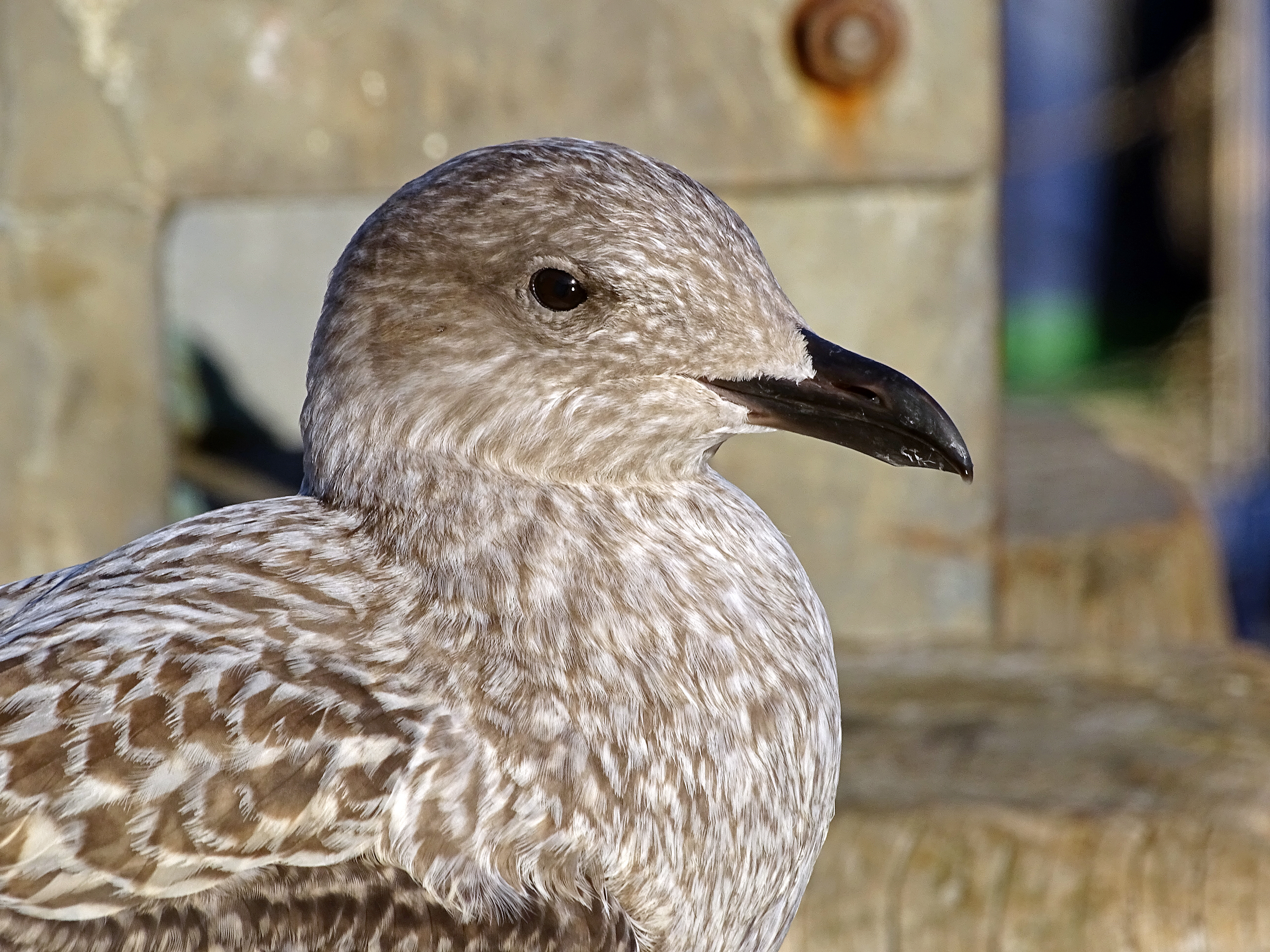
    A young Herring Gull (Larus argentatus), just like Glenda!

    There were lots of other kittiwakes on ledges nearby. They were always screaming and making a fuss, especially when one of the parents came back from a trip to the ocean. Some of the other chicks were getting quite large and starting to flap their wings.

    Kittiwakes nesting on window ledge, like some of Katie’s neighbours

    “You are going to to have to fly soon” said her father. “We will fly down to the sea and try some swimming”.

    “I don’t want to” screamed Katie. “I don’t want to go to the sea. I just want to walk around the streets with Glenda!” Glenda had just left the roof now – well falled off really! – and was walking up and down the street making pathetic begging noises.

    “Squeak, squeak, squeak” she cried, as her herring gull parents looked down anxiously from above.

    “No, I’m not going to sea” said Katie. “I’m going to stay on land and go to school. In fact, I want to be an astronaut; the first kittiwake in space!” She laughed!

    “Don’t be silly said her mother” Kittiwakes don’t go to school and they definitely don’t go into space” she laughed! “We will teach you everything you need to know. We’ll fly off together and spend the winter on the open ocean. You will learn how to fish, how to ride out a storm, and how to take care of yourself”. You’ll meet a nice kittiwake boy and then you’ll settle down together.”

    “Shan’t!” said Katie. “Shan’t, shan’t, shan’t!”
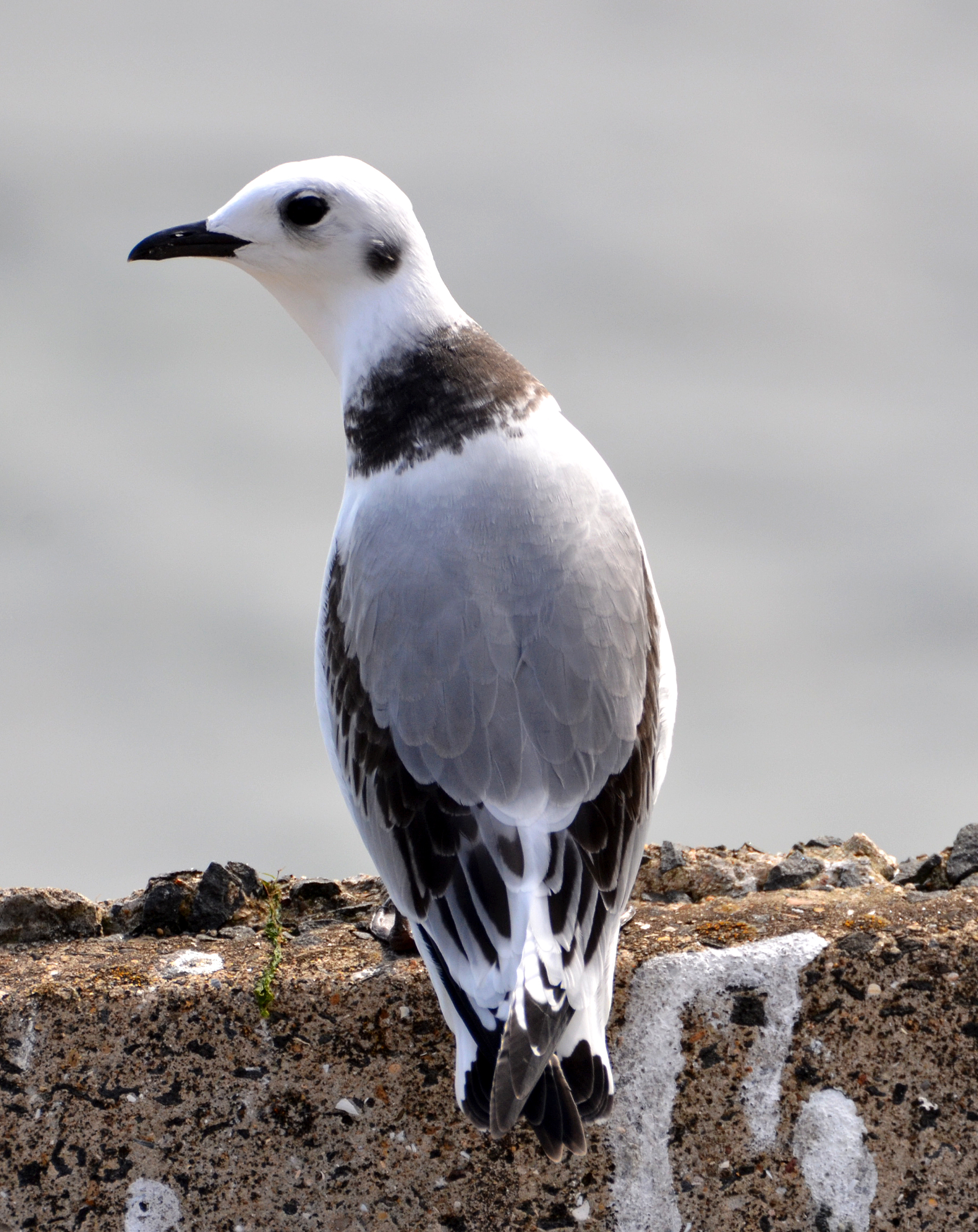
    Newly-fledged kittiwake chick, just like Katie!

    Find put about what happened to Katie in the next installment of Katie the Kittiwake.
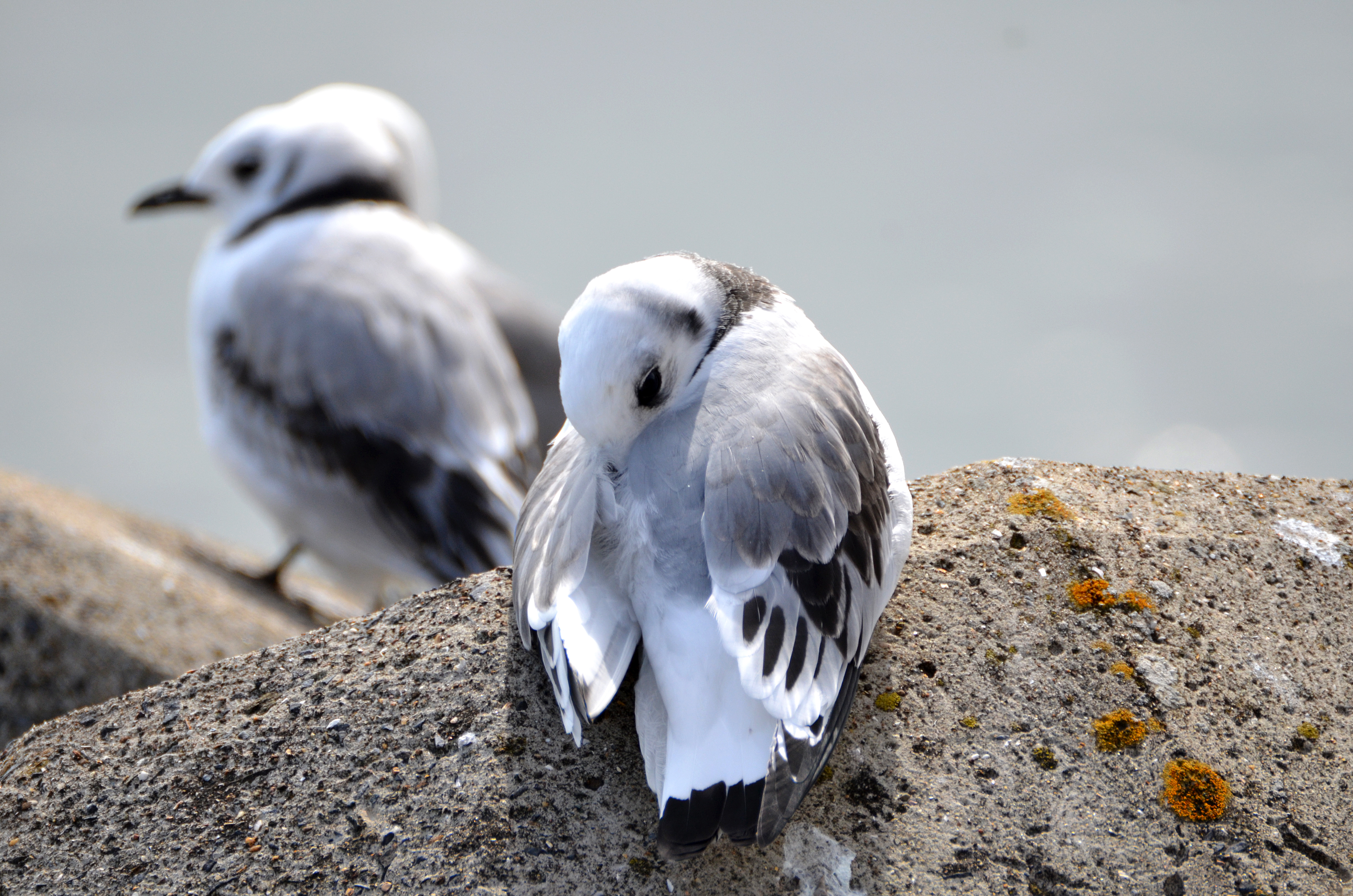
    Newly-fledged kittiwake chicks
  • Bread of heaven

    Bread of heaven

    28 June 2019
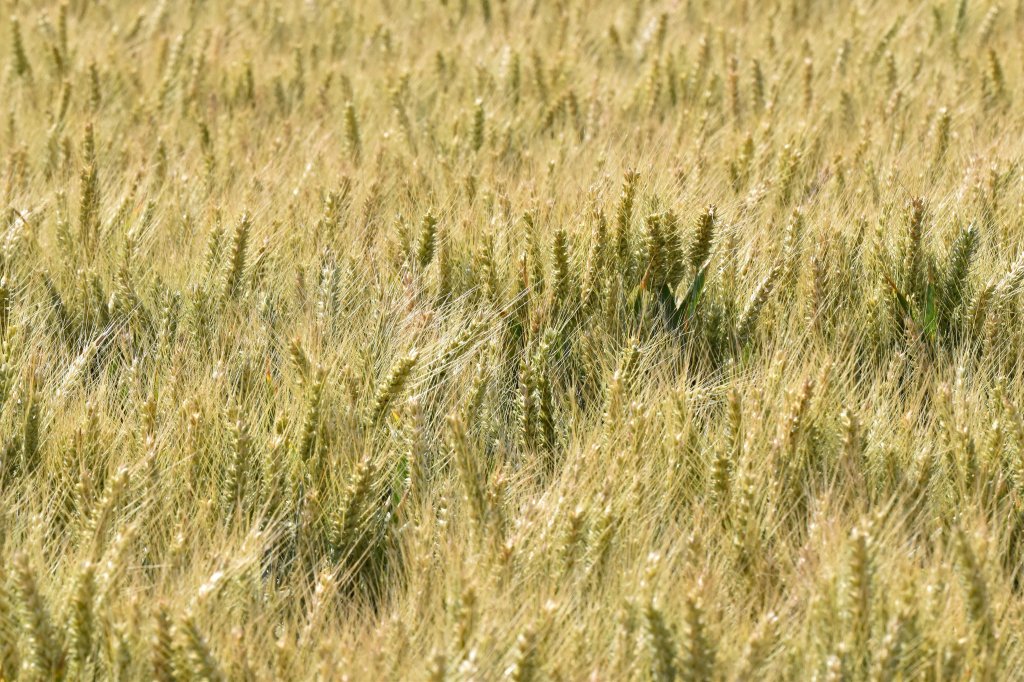
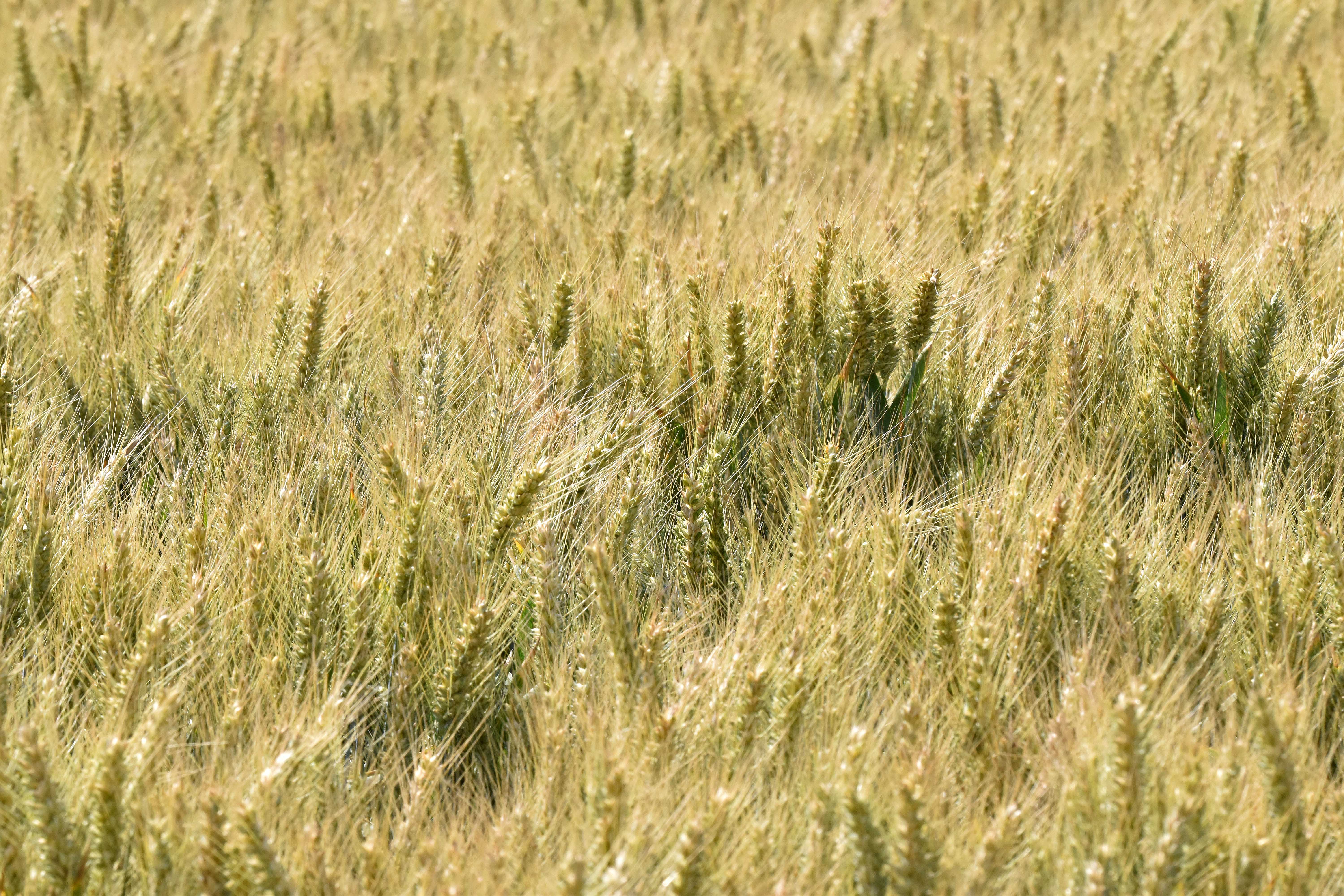
    Wheat growing on 28 June 2019, Beds, UK

    We tend to take bread pretty much for granted these days. There seem to be abundant supplies – indeed much of it goes to waste – in every supermarket I go into (in the UK). But it was not always that way! There have been many times of bread shortages in the past. There was a Bread Crisis in Britain, 1795-96, when the country was fighting wars with France. Poor harvests and extreme cold even led to a bread riot in 1795. There were shortages of bread during the First World War, and bread was also rationed after WWII, for a couple of years.

    28 June 3019
    Wheat growing on 28 June 2019. Bedfordshire

    Could it happen again? I think the answer is probably not, unless we do something very stupid! UK farmers now supply most of the wheat (as well as oats and rye) required by flour millers. I was surprised to learn that flour mills now source more than 80% of their wheat from British farmers, compared to less than half of that in the late 1970s (Grain Chain, 2016).

    11 July 2019
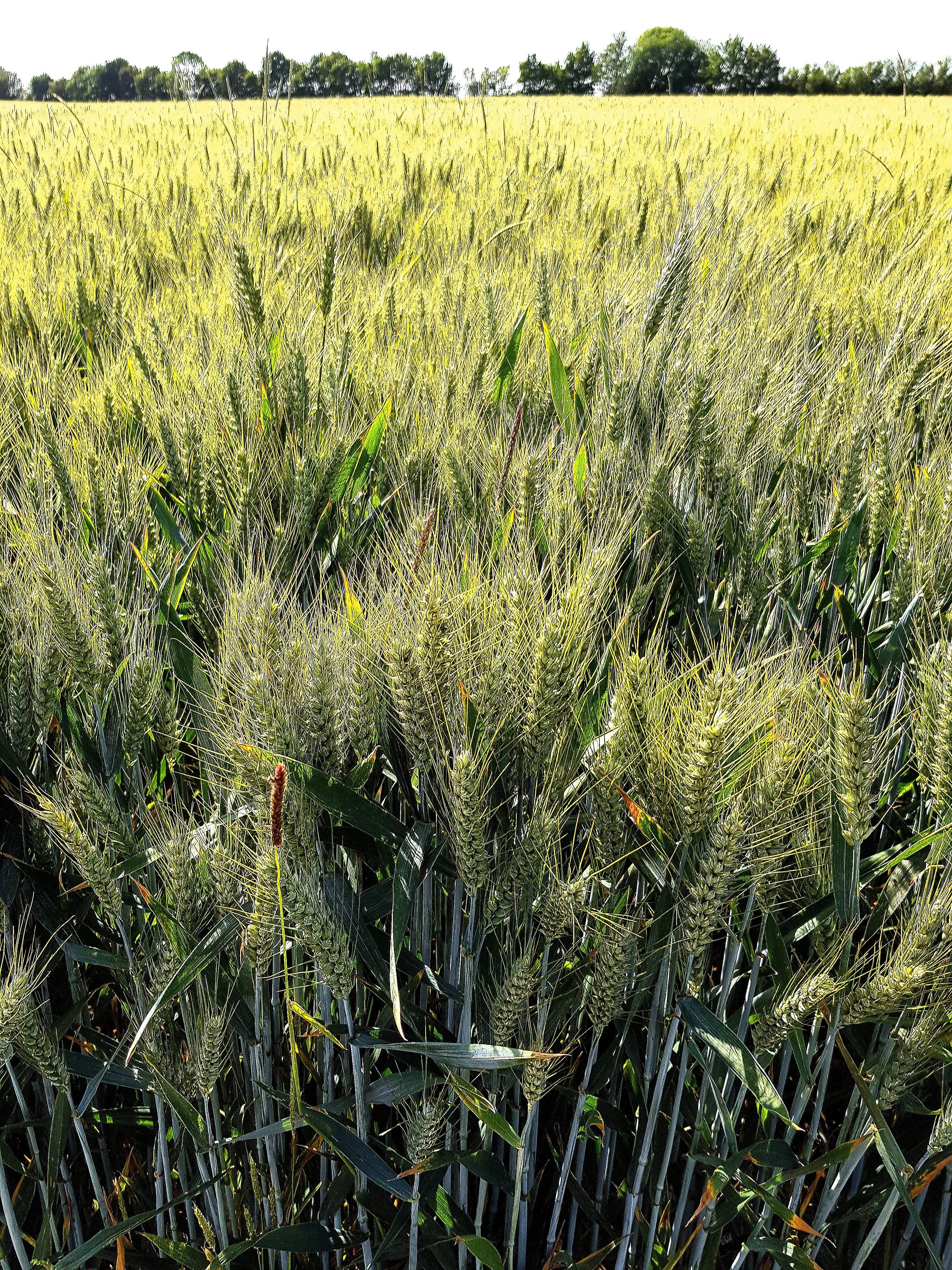
    Wheat growing on 11 July 2019. Bedfordshire

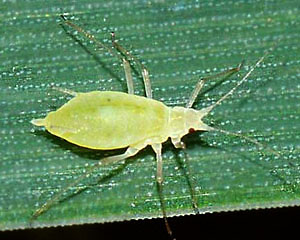
    One reason I have an interest in wheat, is that for one period of my life (studying for a PhD) I spent a lot of time sitting in a wheat field! Studying this lovely creature (below). Very high populations occurred in 1979; there were hundreds of these aphids on each tiller, with billions (maybe trillions) taking to the air at the end of July that year!

    The rose-grain aphid (Metopolophium_dirhodum) Influentialpoints.com [CC BY 3.0 (https://creativecommons.org/licenses/by/3.0)%5D
    Wheat (Triticum aestivum) growing on 12 July 2019. Beds, UK

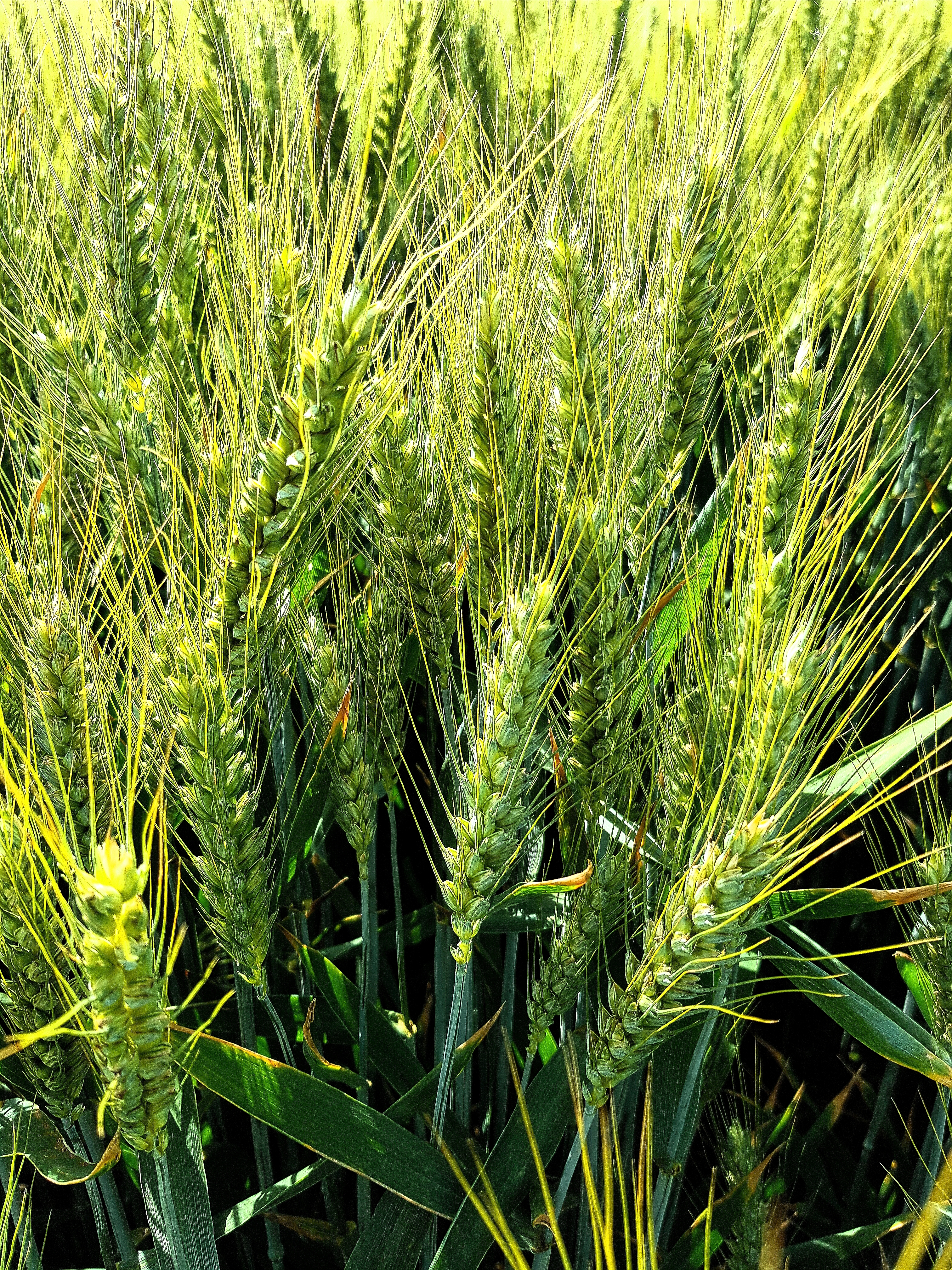
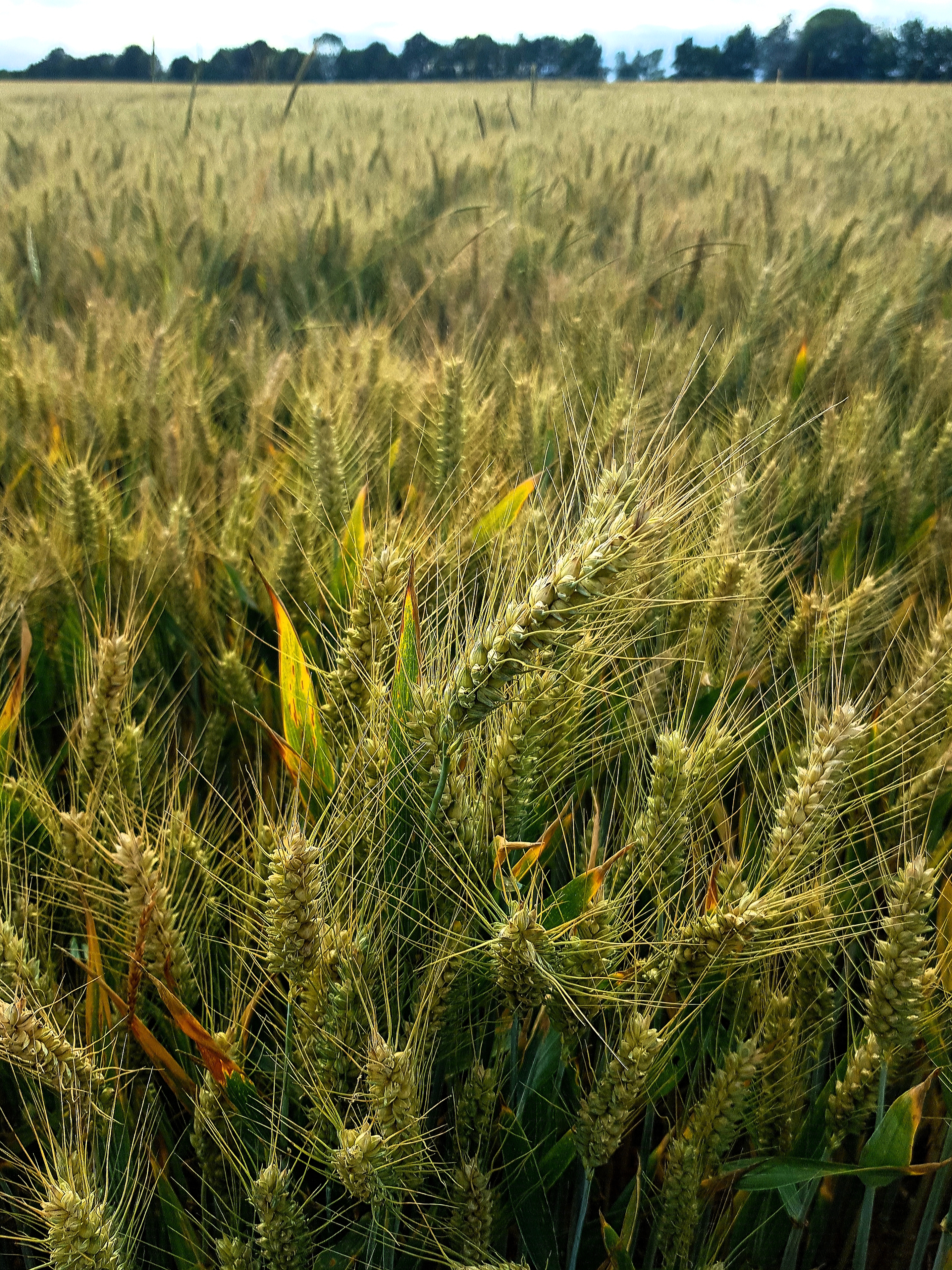
    Wheat – most of which is winter wheat (planted in the autumn) – is a classic monoculture; a single crop stretching out to the horizon (below). Farmers get about 8 tonnes per hectare on average, resulting in a total British harvest of somewhere between 15 to 17 millions tonnes. That sounds good, but we are a fairly small producer on a world scale, although the EU as a whole is the largest producer (just above China).

    29 July 2019
    Wheat (Triticum aestivum) on 26 July 2019, Beds, UK

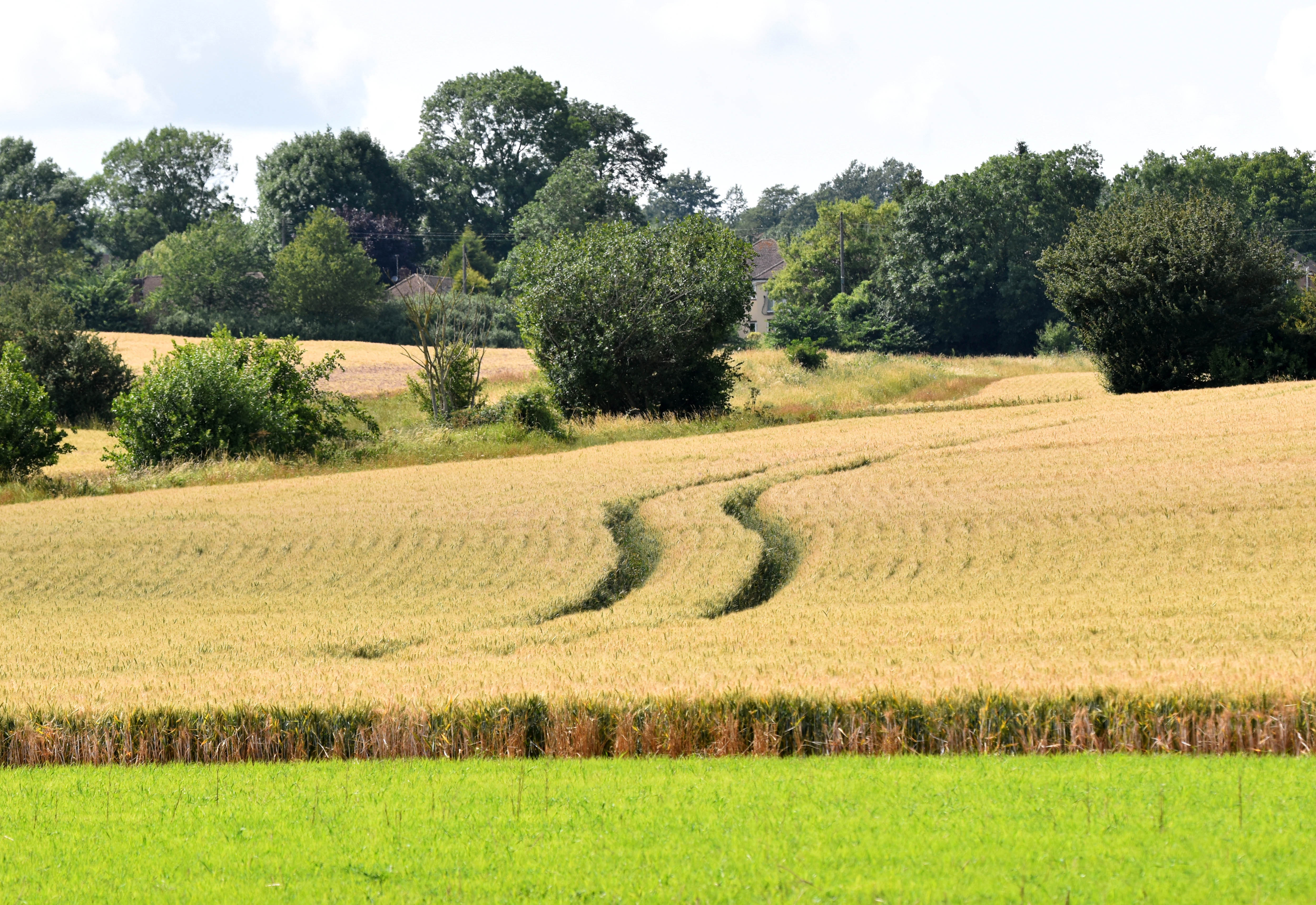
    So, it seems to me that UK farmers are doing a good job on the whole, although how sustainable the whole system is, is another matter. We rely on a few varieties of wheat, grown as monocultures, reliant on inputs of fertilisers and pesticides. Farmers from the past would no doubt be puzzled to see the wheelings (below) left in fields to make these applications!

    Wheelings to allow tractor access in a wheat field, Beds, UK

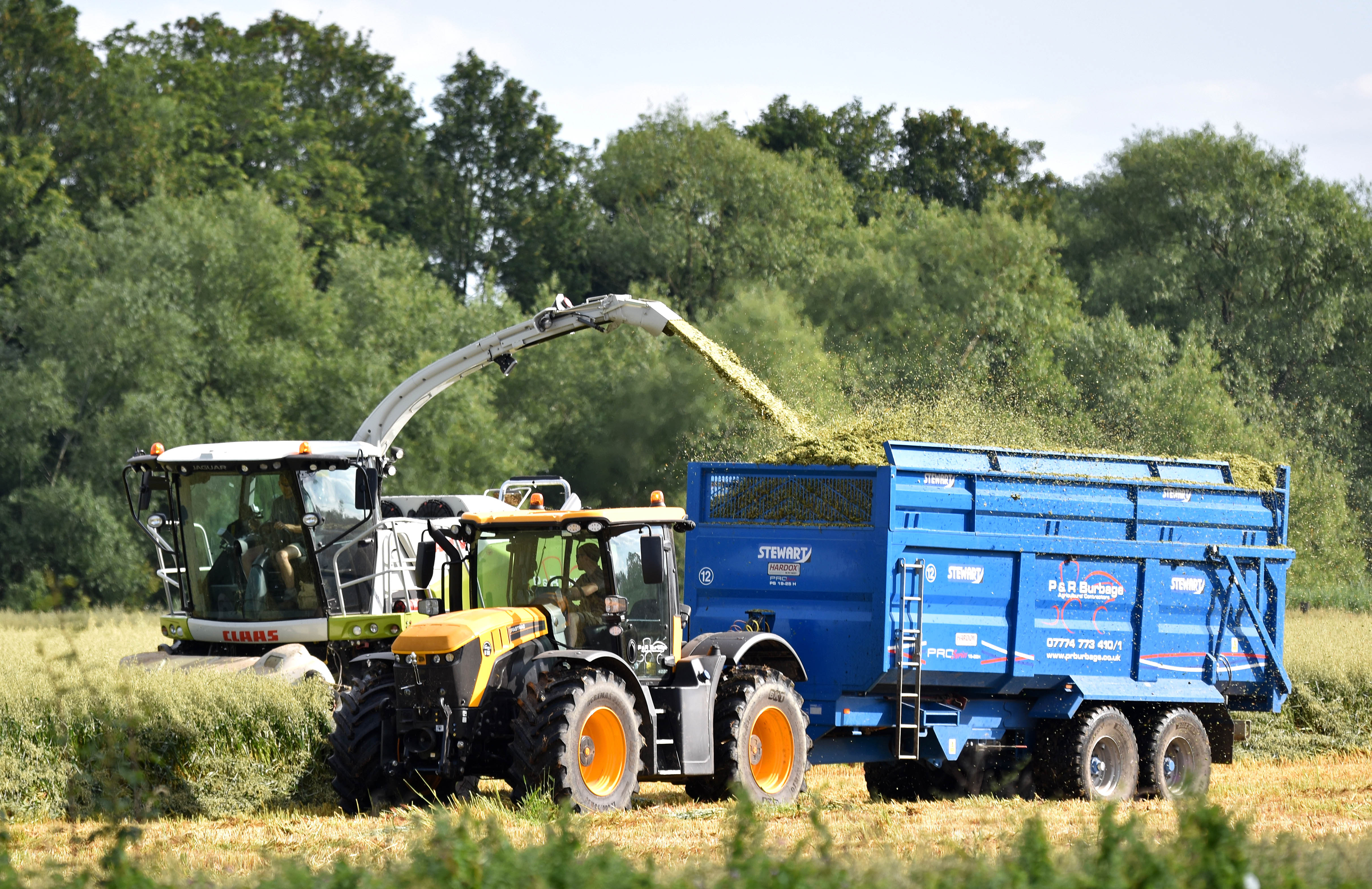
    Similarly, the carbon footprint is not exactly light! We now have huge tractors and harvesters. The tractors race around country roads carrying their massive trailer loads (below); the fields at harvest time are a dangerous place (and not just for field mice!); I don’t think anyone gets out of their vehicles if they can help it. The drivers sit in their comfy cabins listening to their favourite music!

    Harvesting oats on 15 July 2019. Beds, UK

    Some might argue that all this industrialisation is the price we must pay for our current abundance, but vast amounts of bread are wasted, almost 900,000 tonnes of bread every year, reportedly. Nearly,  half the bread produced here in the UK, 44%, is thrown away! So, I think this shows, that a little more care and respect for the sacred loaf, could free up resources to enable a more sustainable production system, with more attention on preserving the health of the soil and the well-being of the wildlife that lives in and around these fields.

    Reference

    Cannon, R. J. C. (1986). Summer populations of the cereal aphid Metopolophium dirhodum (Walker) on winter wheat: three contrasting years. Journal of applied ecology, 101-114.

  • Tour de Yorkshire comes to Scarborough

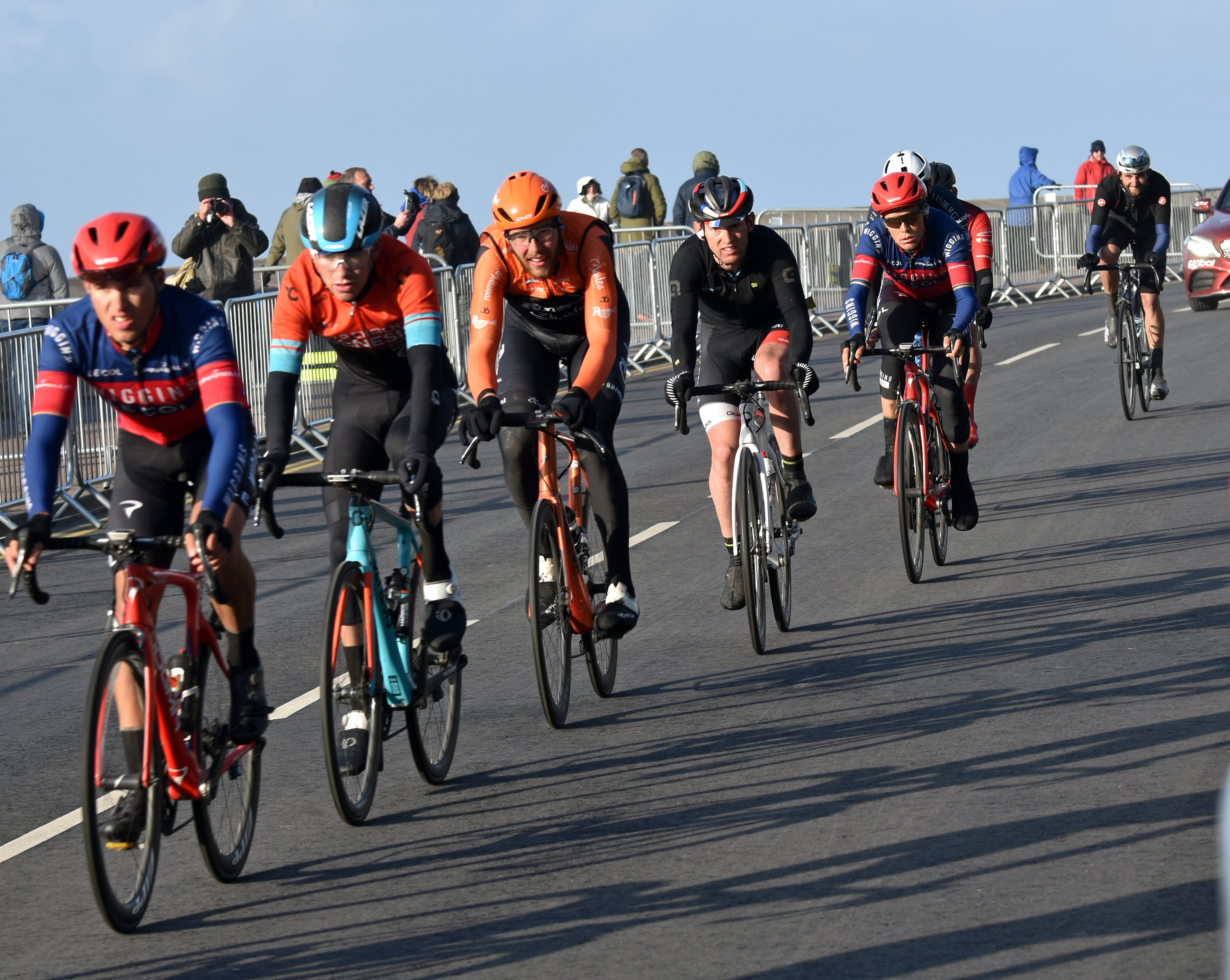
    Tour de Yorkshire finish 4 May 2019

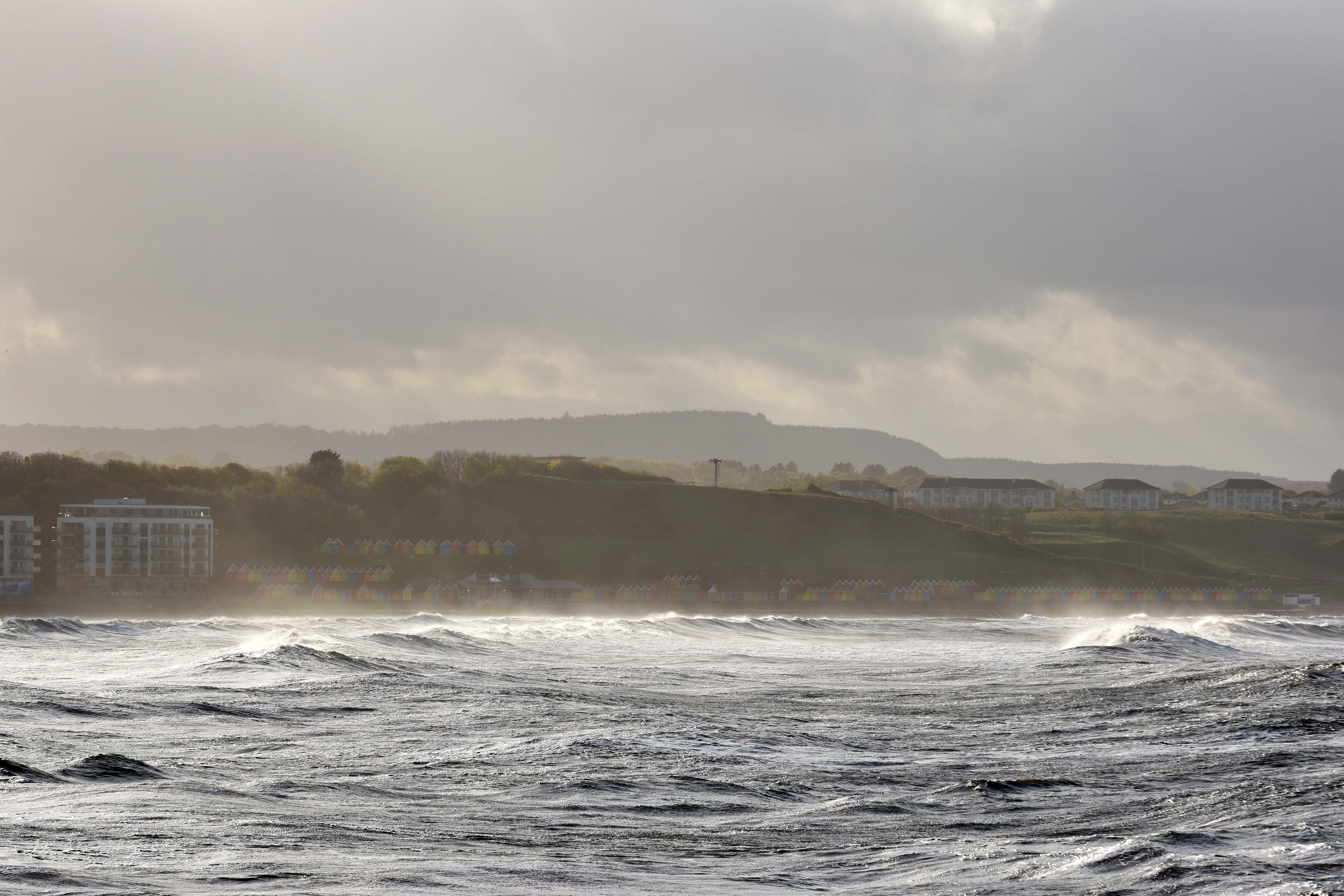
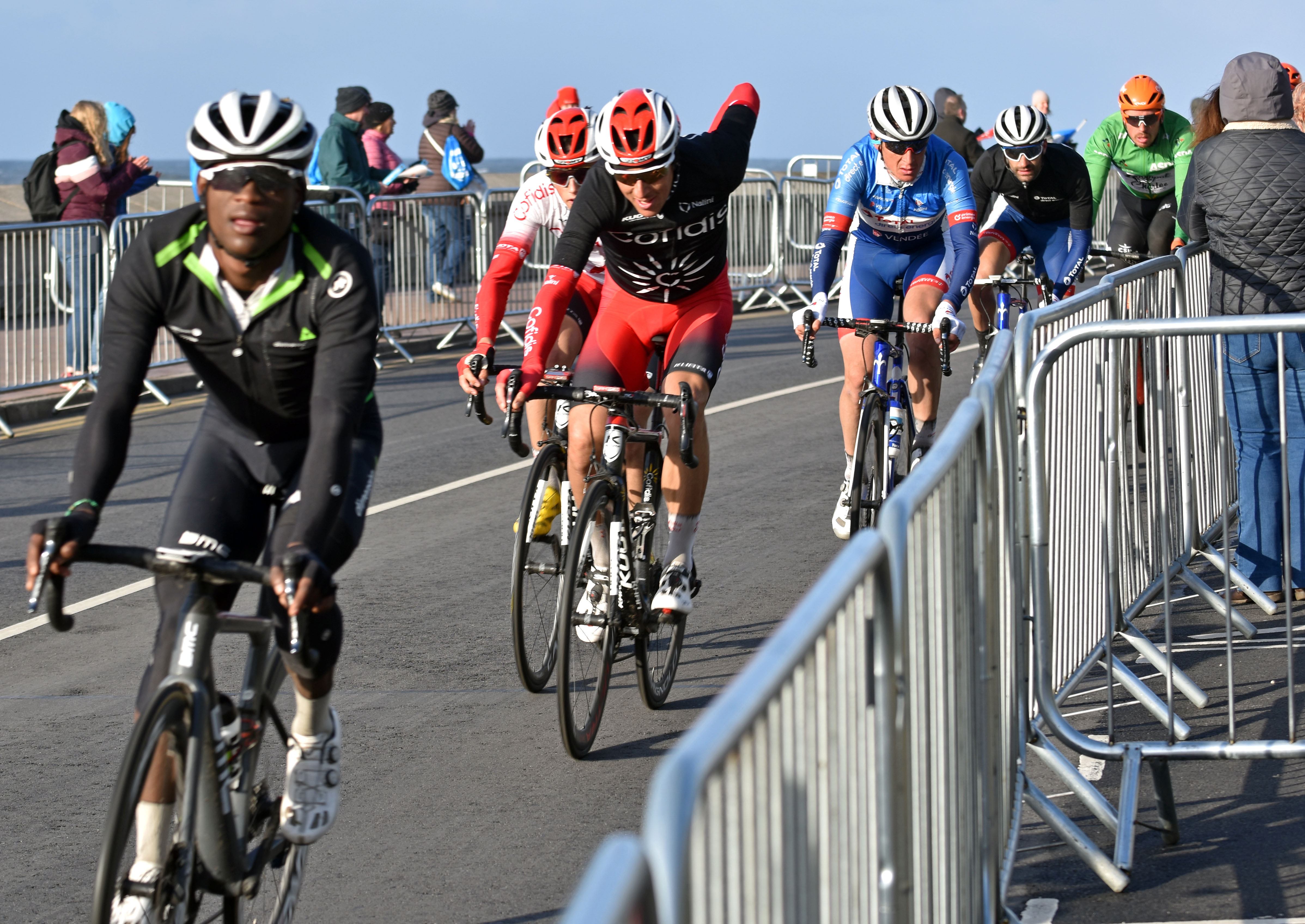
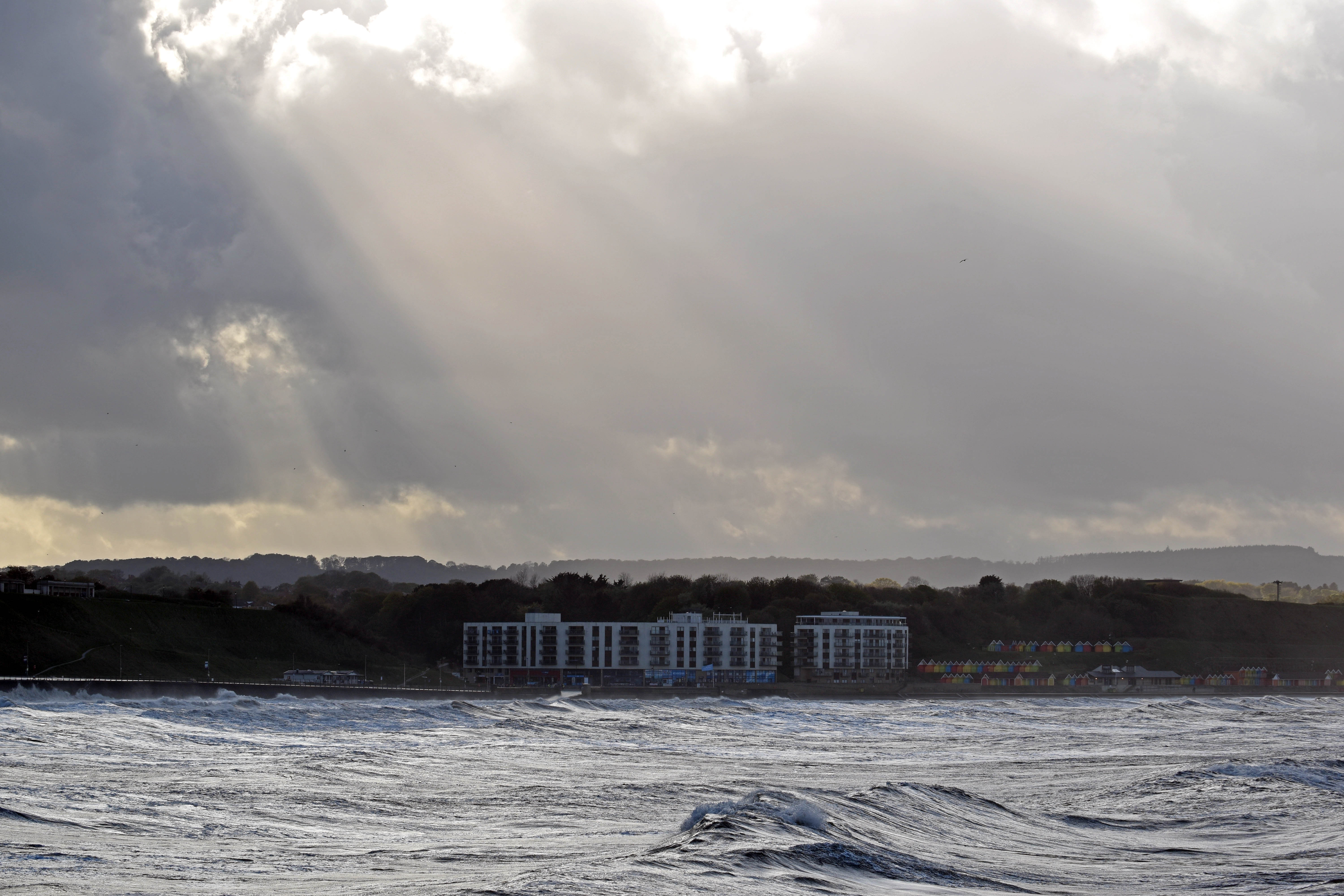
    It was a cold and windy day here in Scarborough today (4th May 19), for the finish for Stage 3 of the Tour de Yorkshire 2019, cycle race. The waves were sweeping into North Bay, driven by a strong wind. It must have been grueling to have cycled 135 km in this weather. The men’s race finished about 18:30. The women’s race had taken place earlier.

    North Bay Scarborough

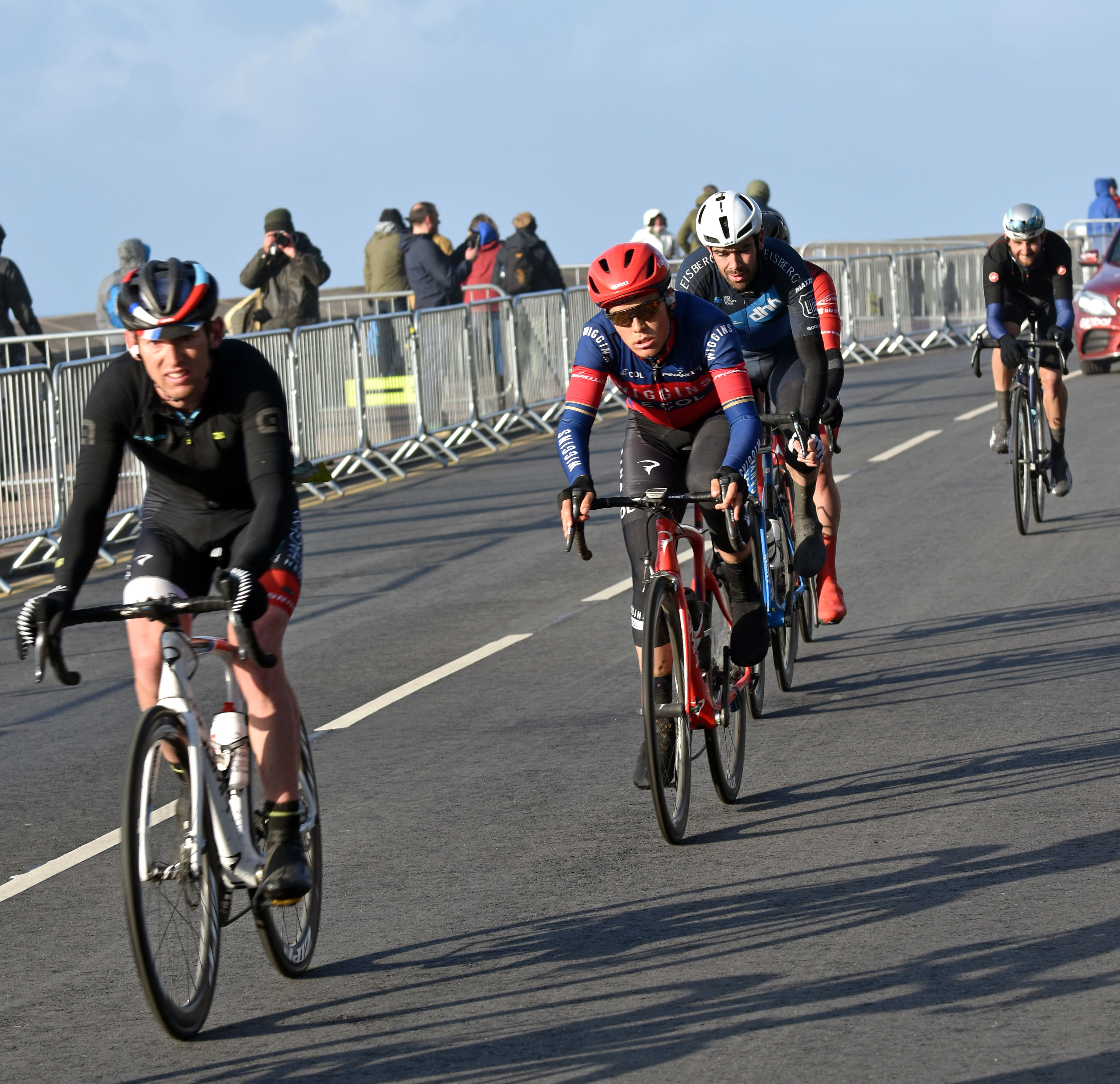
    I have no idea who the individual cyclists are, but some people may recognize them.

    Tour de Yorkshire finish 4 May 2019

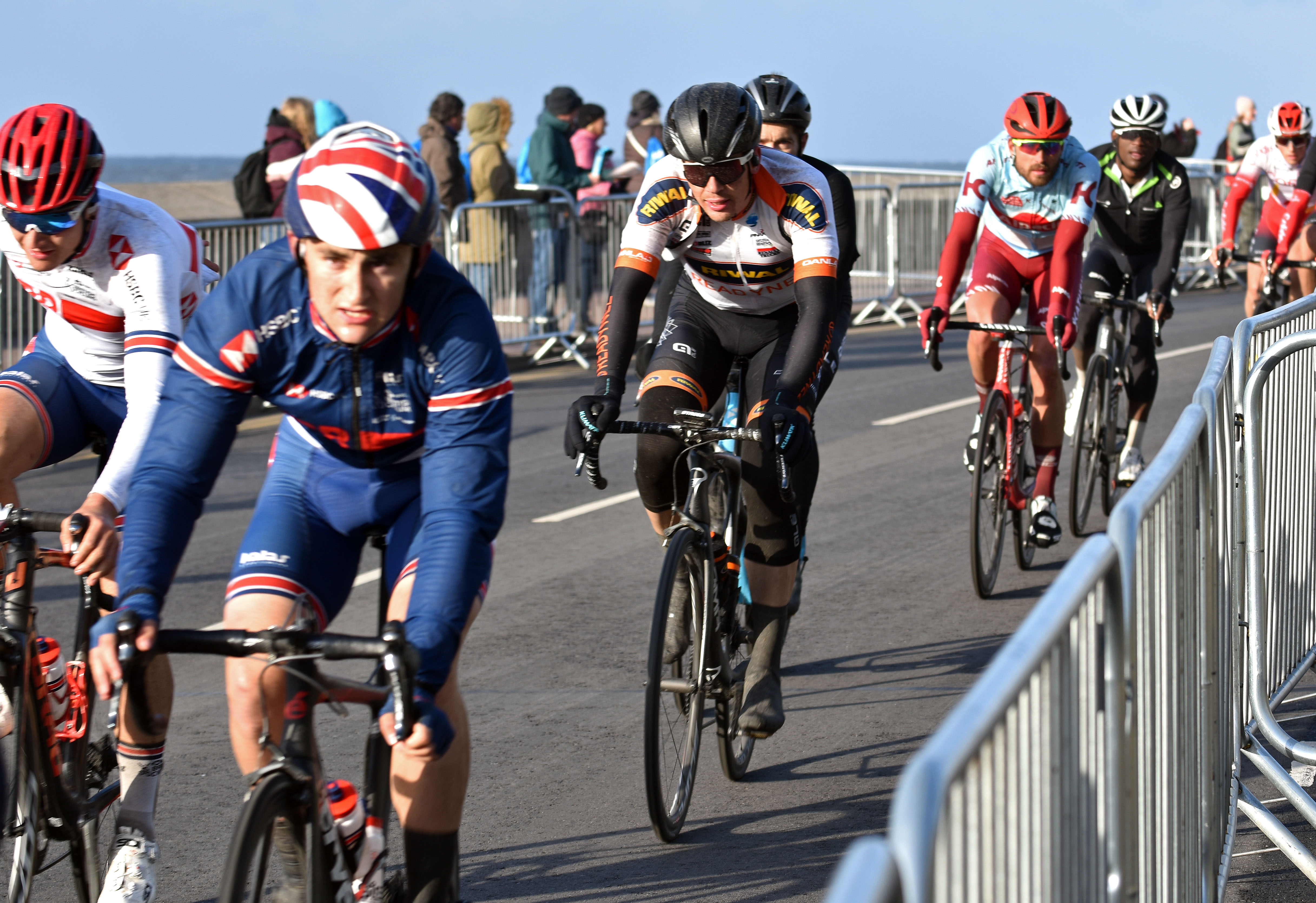
    I missed the winners! The light was so bad that it was hard to get any useful shots. But then the sun came out for a few minutes and I managed to get some photos of the later riders.

    Tour de Yorkshire finish 4 May 2019

    The crowd had waited patiently in the cold for the riders to arrive, but those beneath the large screen could follow the progress of the race via the helicopter video. Sadly two riders crashed out.

    Tour de Yorkshire finish 4 May 2019

    For race details of the men’s race, see here.

    It was all over in a flash, but exciting and one cannot help but be impressed (and in awe) of the cyclists who could cycle so far and so fast, in such awful weather!

    North Bay, Scarborough
  • Tournament: Joust and Melee at Scarborough Castle

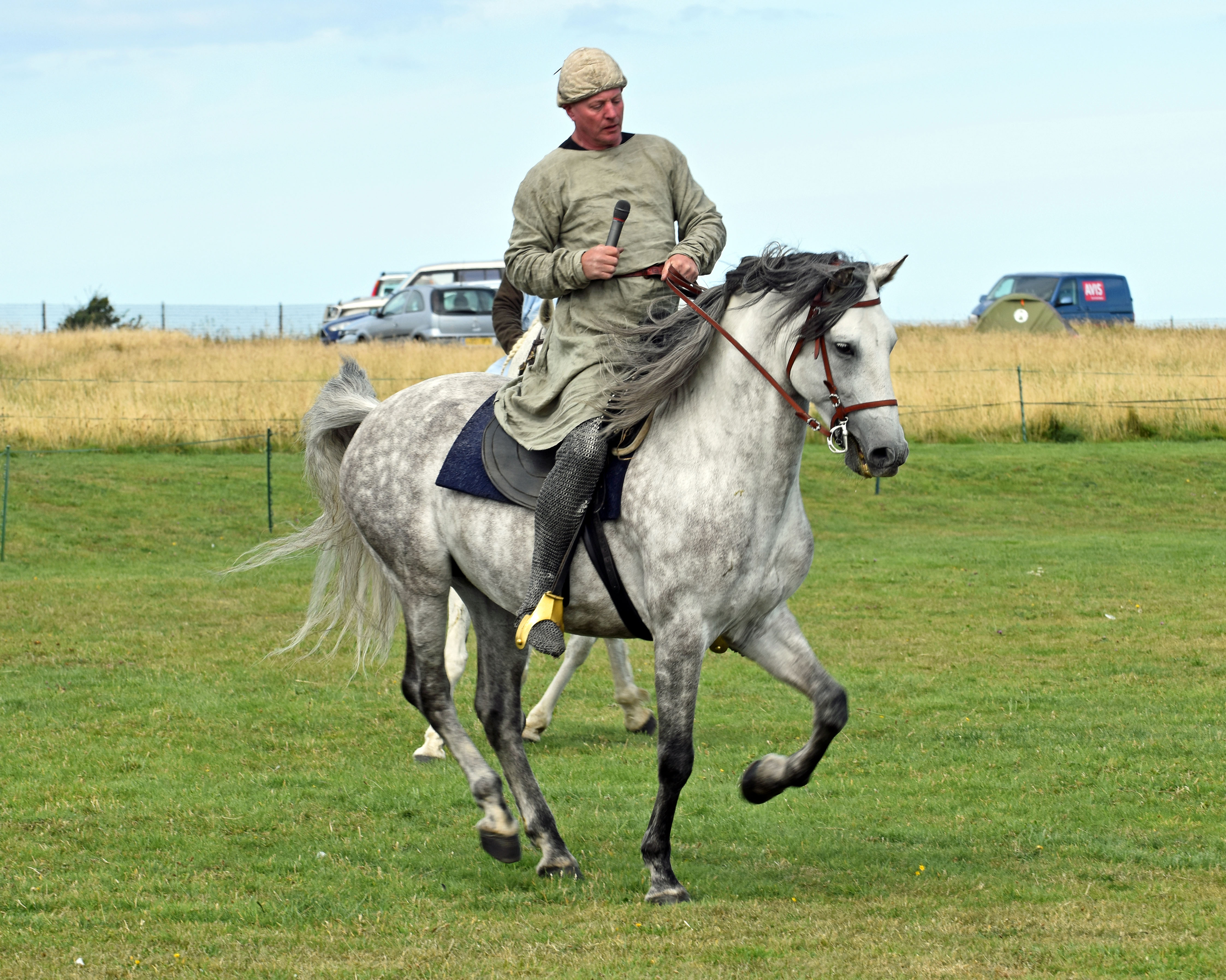
    Mounted knights were great horsemen

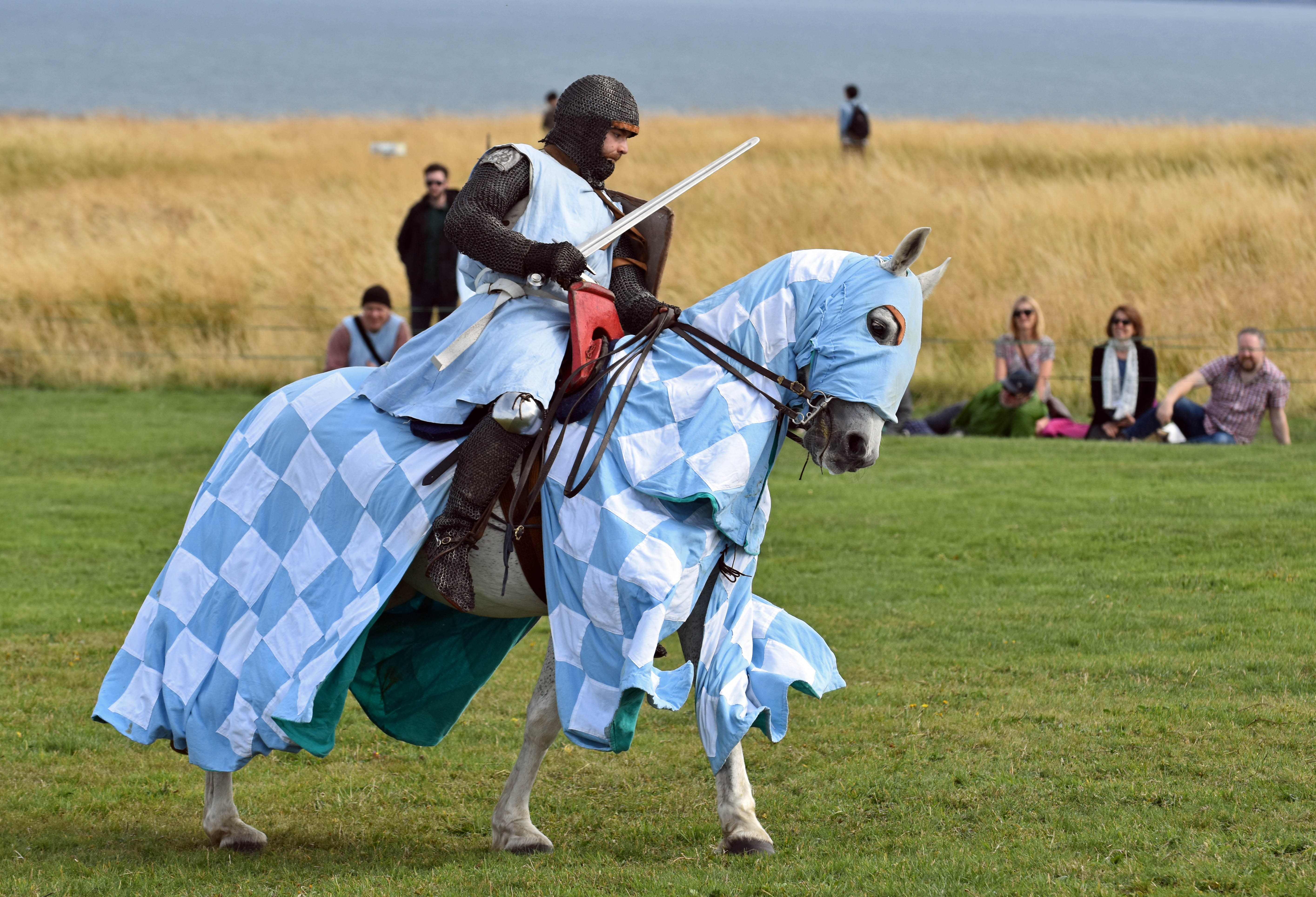
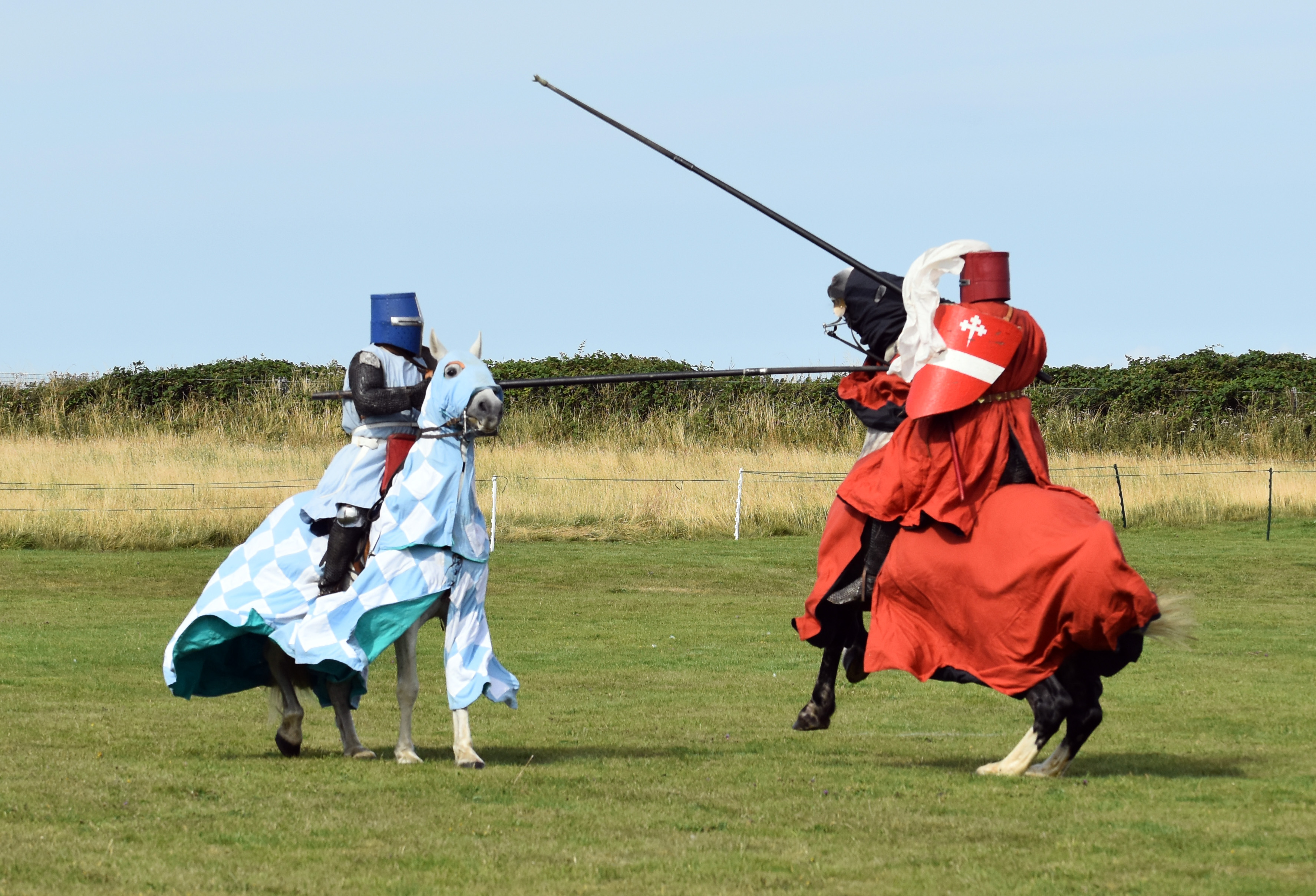
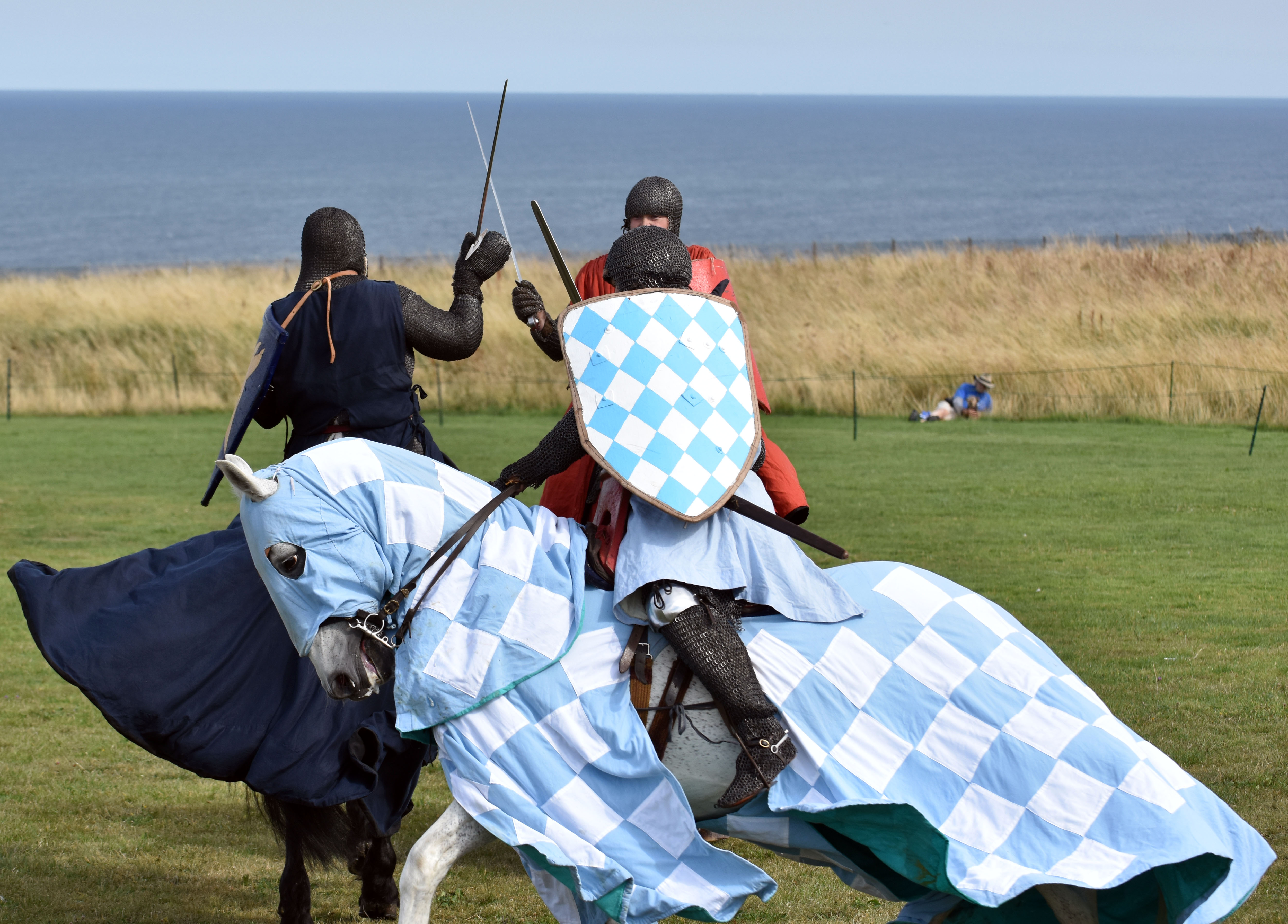
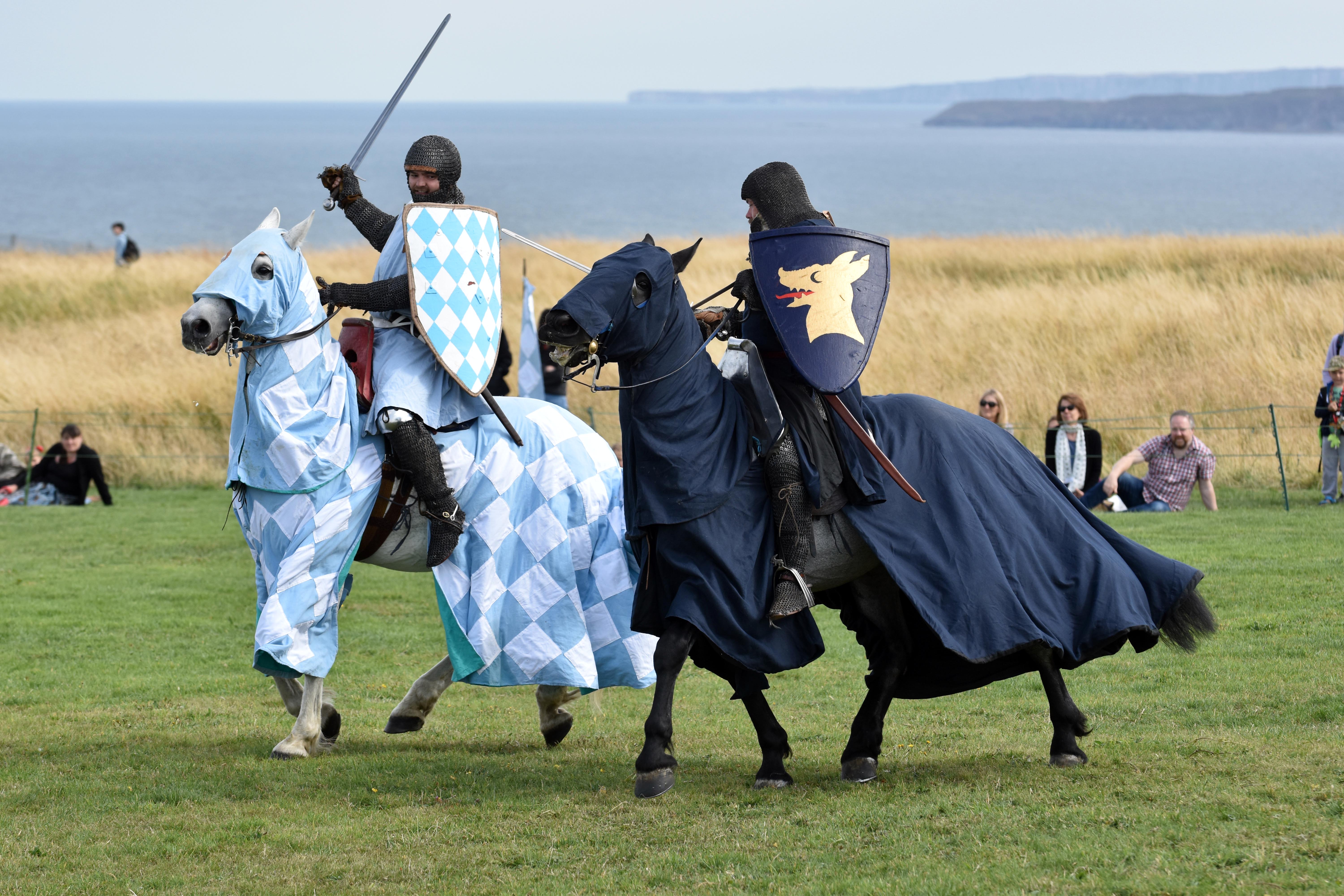
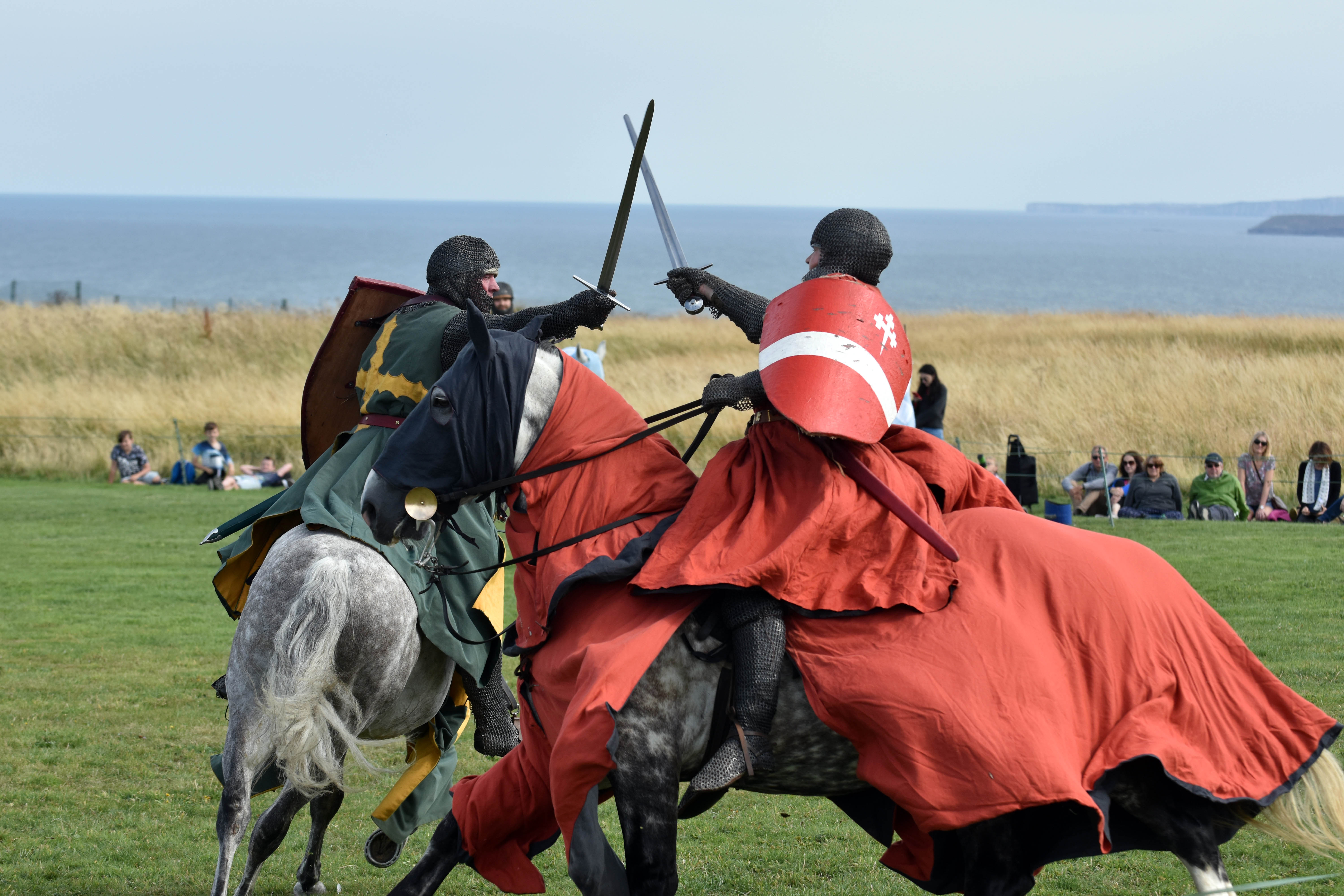
    A Medieval tournament is being held at Scarborough castle this weekend, 11-12th August 2018, the highlight being a display of horsemanship and mock fighting/jousting.

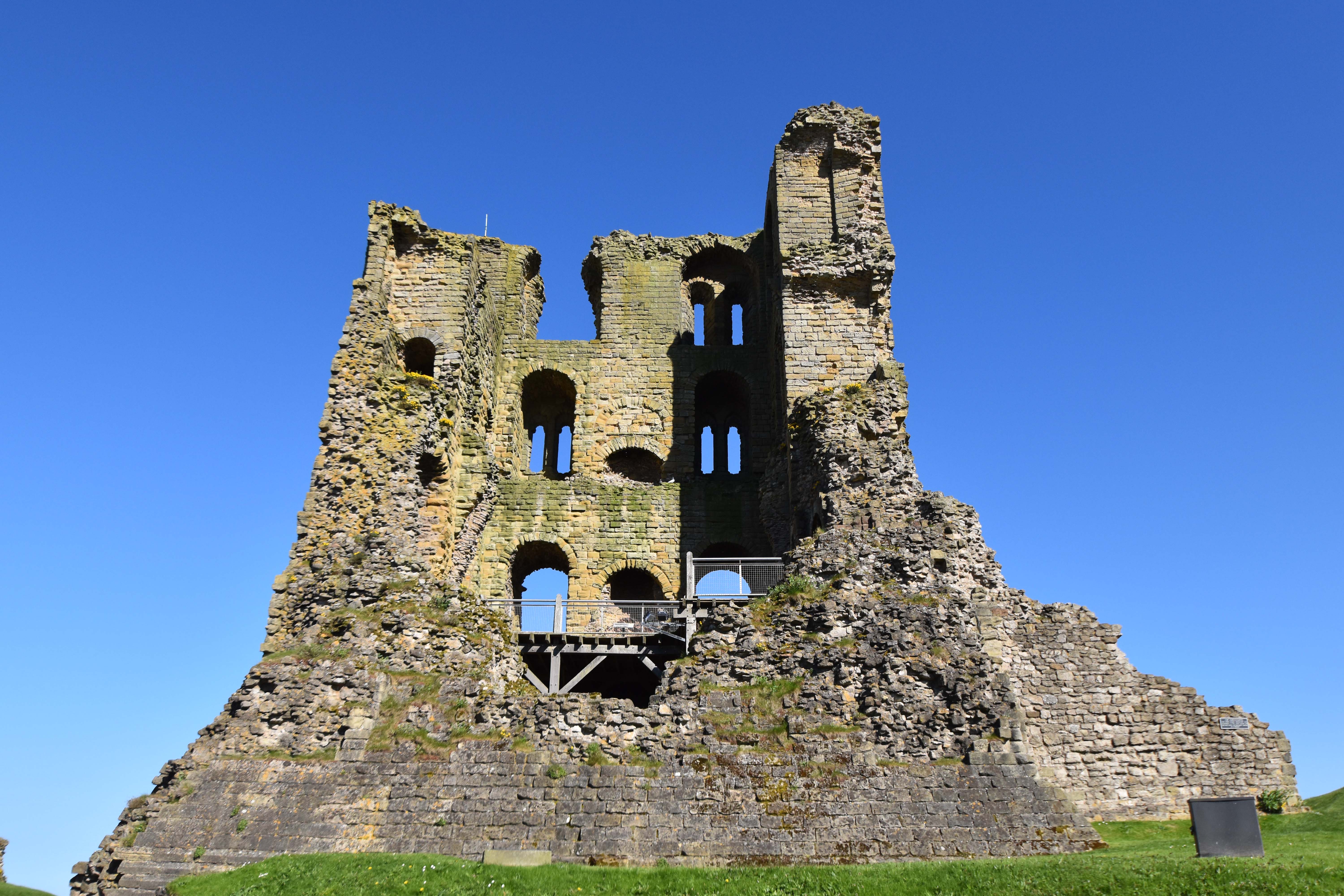
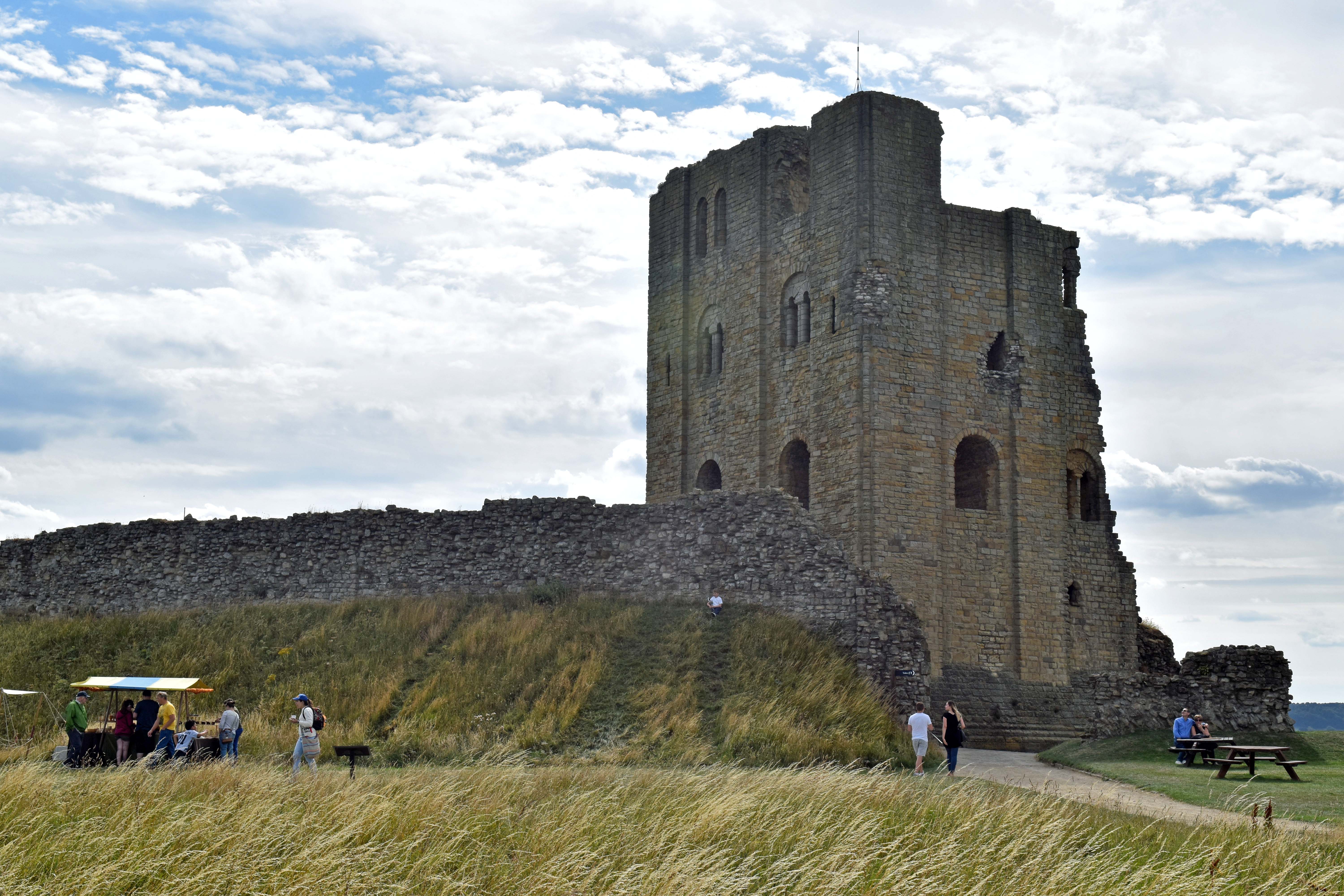
    Norman Keep of Scarborough castle, destroyed in the Civil War

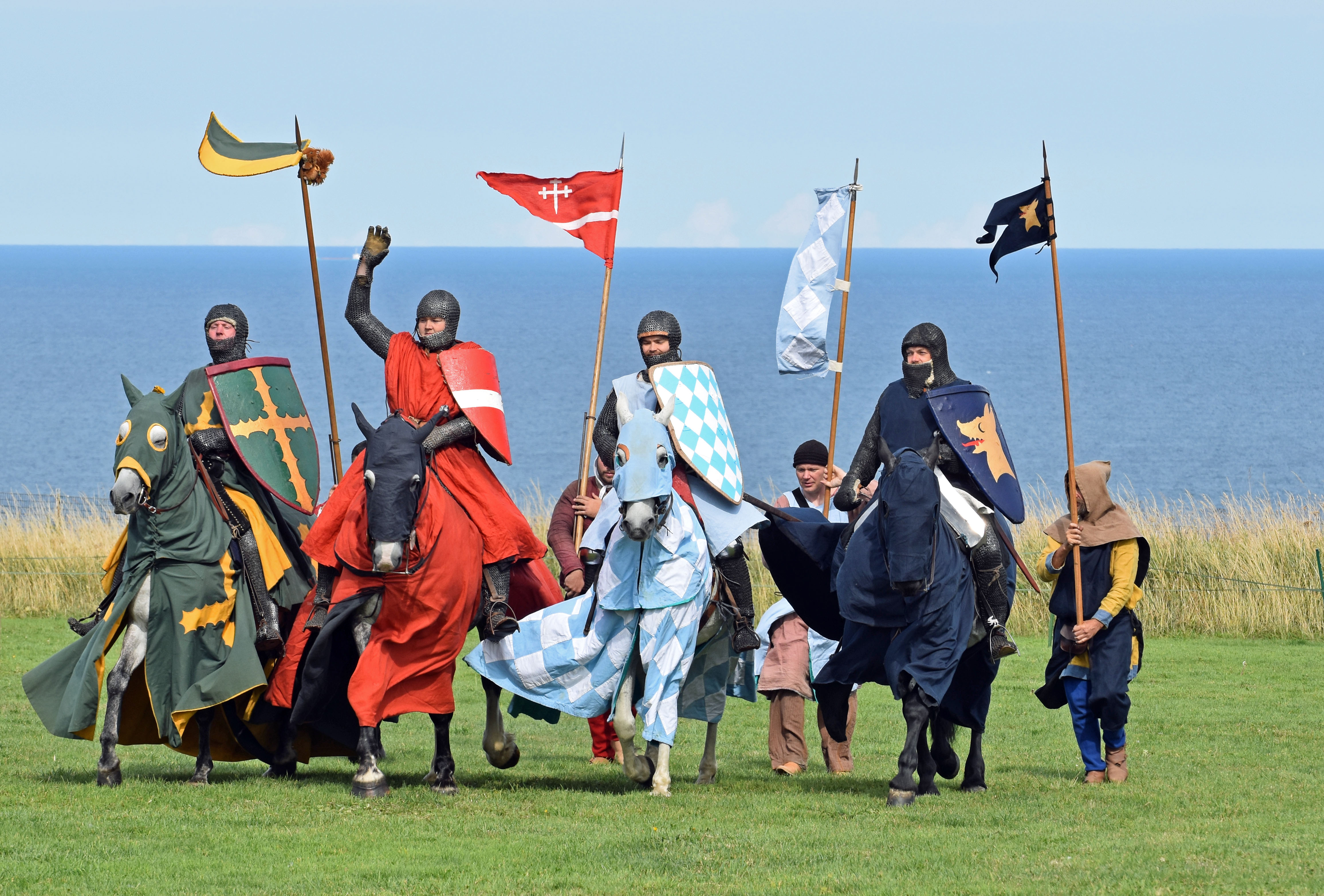
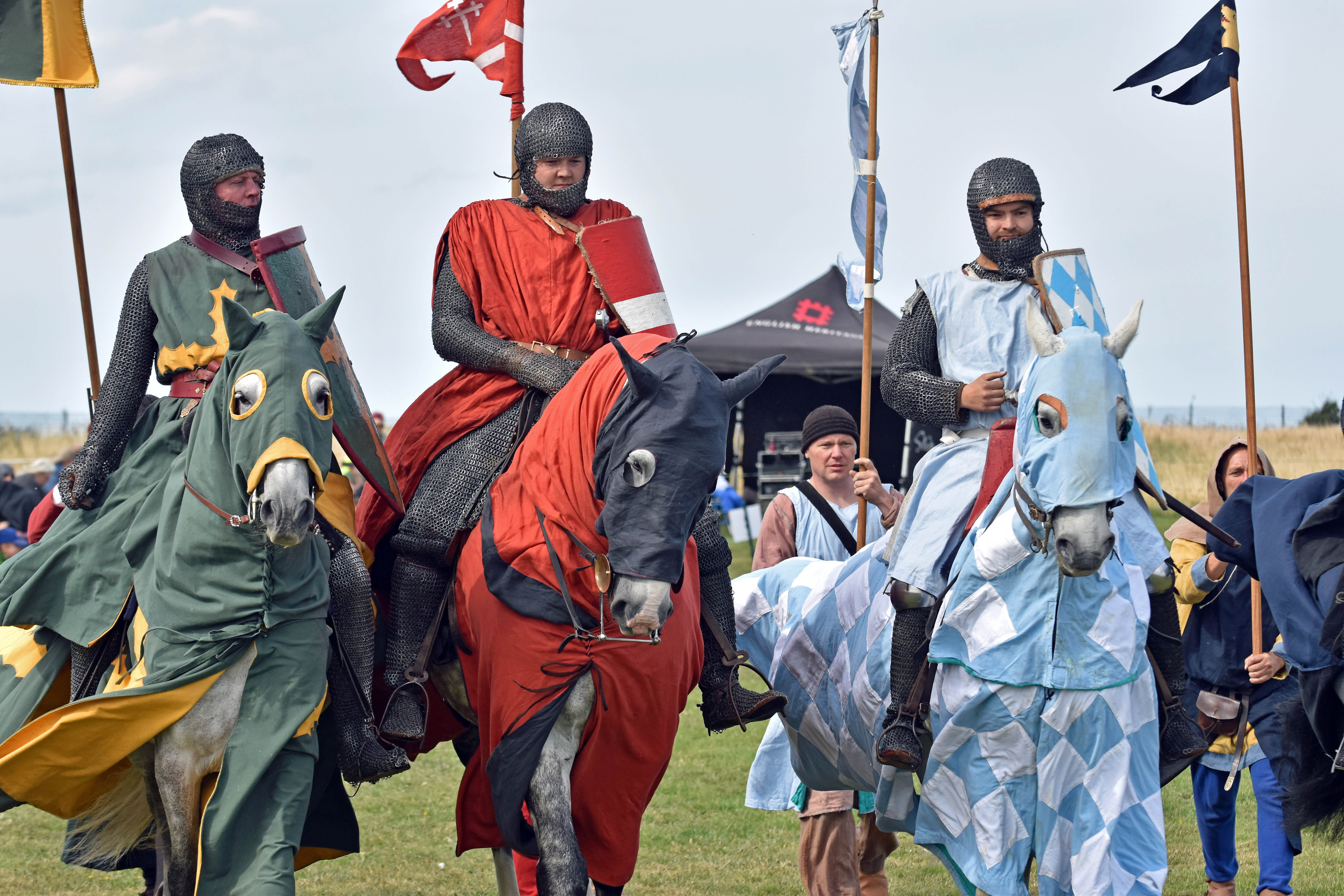
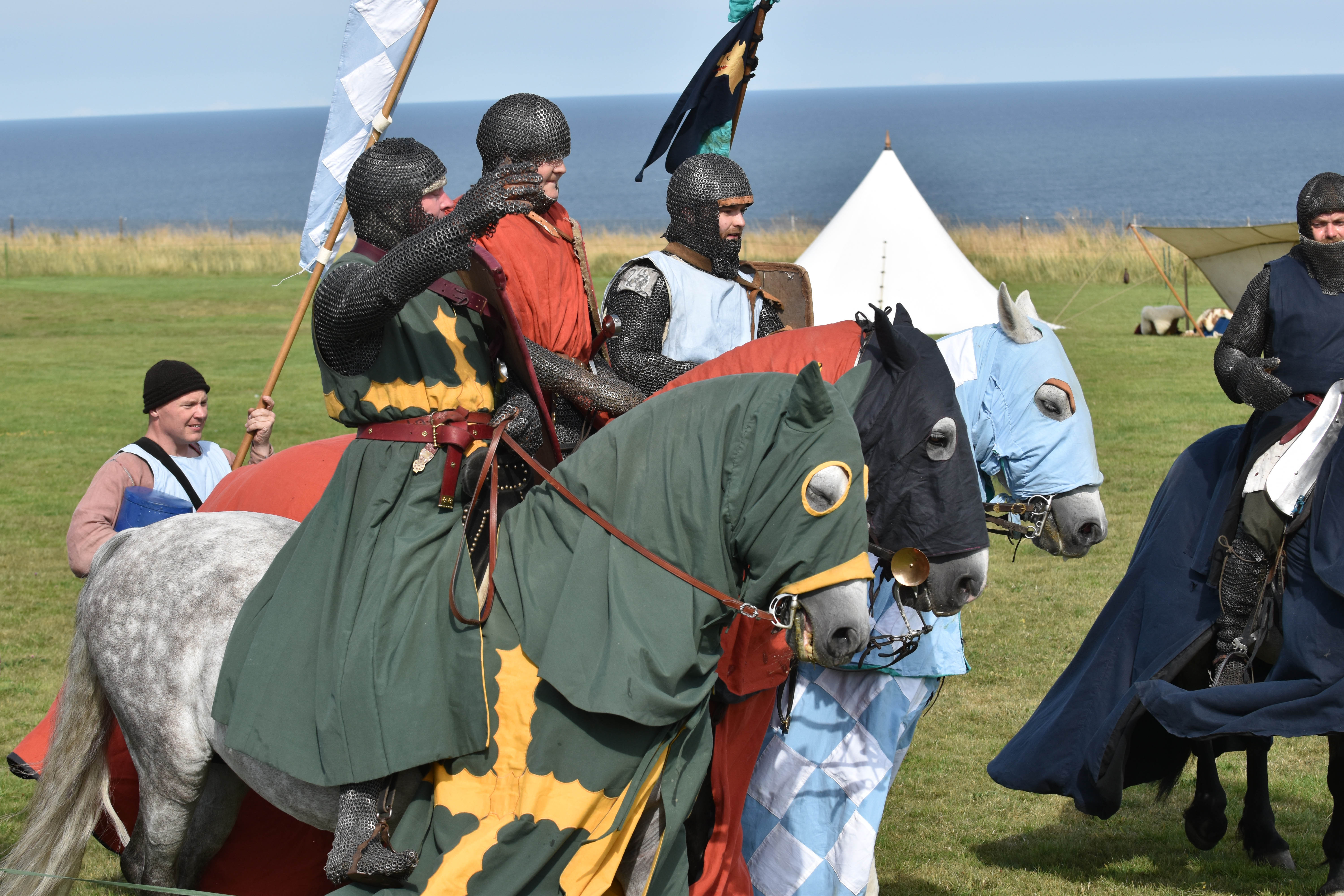
    Jousting was a Medieval contest of strength, skill and horsemanship. This reenactment was staged by a company called Historic Equitation and involved four mounted horses decked out in colours as they might have been back in the 13th century. Fighting on horseback clearly required great deal of horsemanship, and this was beautifully displayed during the reenactment of jousting and fighting with swords.

    Scarborough castle – keep and moat

    There was an initial demonstration of how the horses were trained for warfare in the 13th Century, followed by a mock tournament an hour or so later.

    Rider explains how the horses were trained and used in the 13th Century
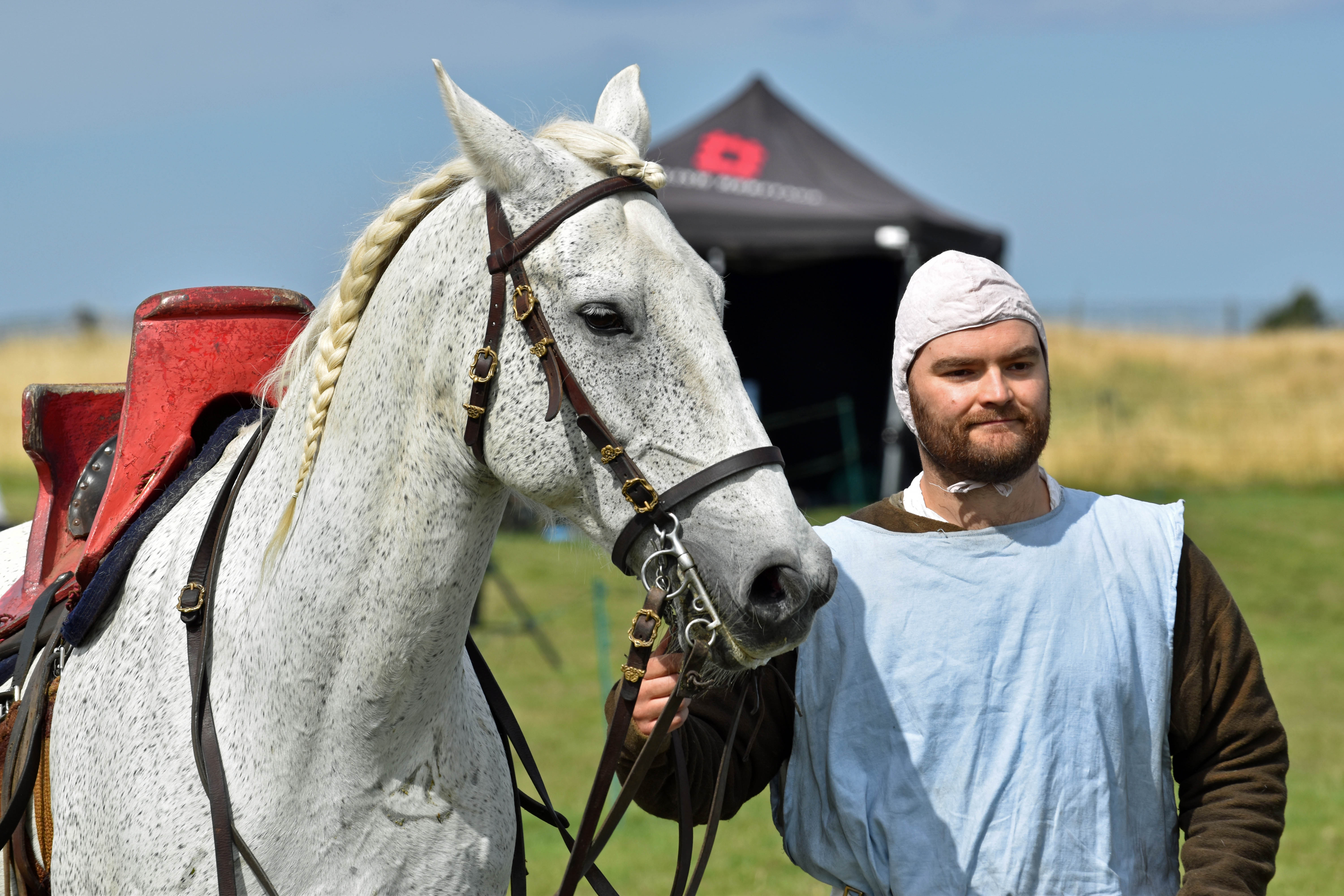
    Bay horse with braided mane

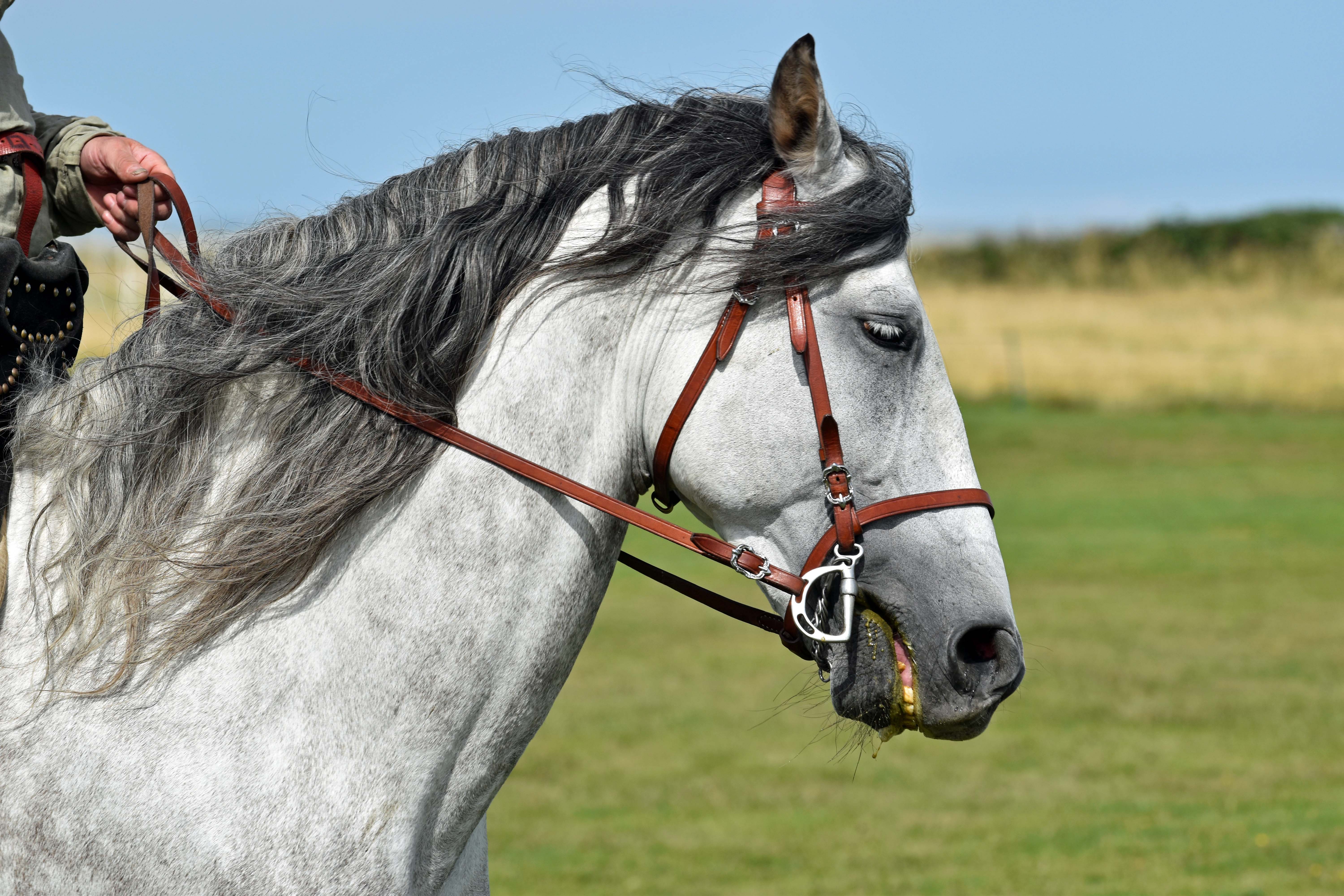
    The horses were the stars of this show!

    Beautiful horse, superbly ridden

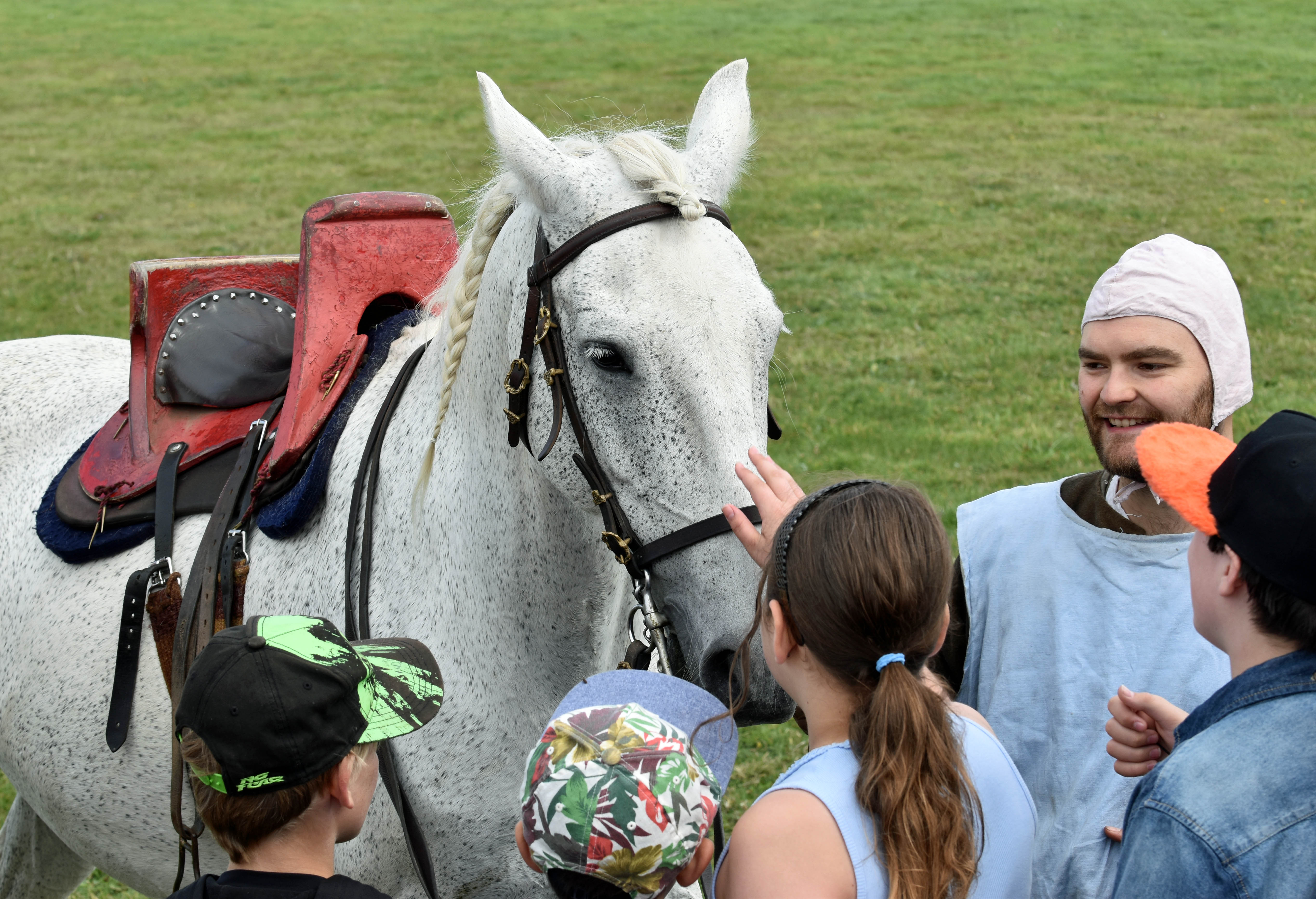
    The horses seemed to enjoy it and were amazingly relaxed and happy to be petted by people in the audience after the first show.

    Horse with traditional jousting saddle, designed to protect the delicate regions of the knight!

    The jousting and fighting was a bit of fun and allowed children to wave flags and root for one of the four mounted knights.

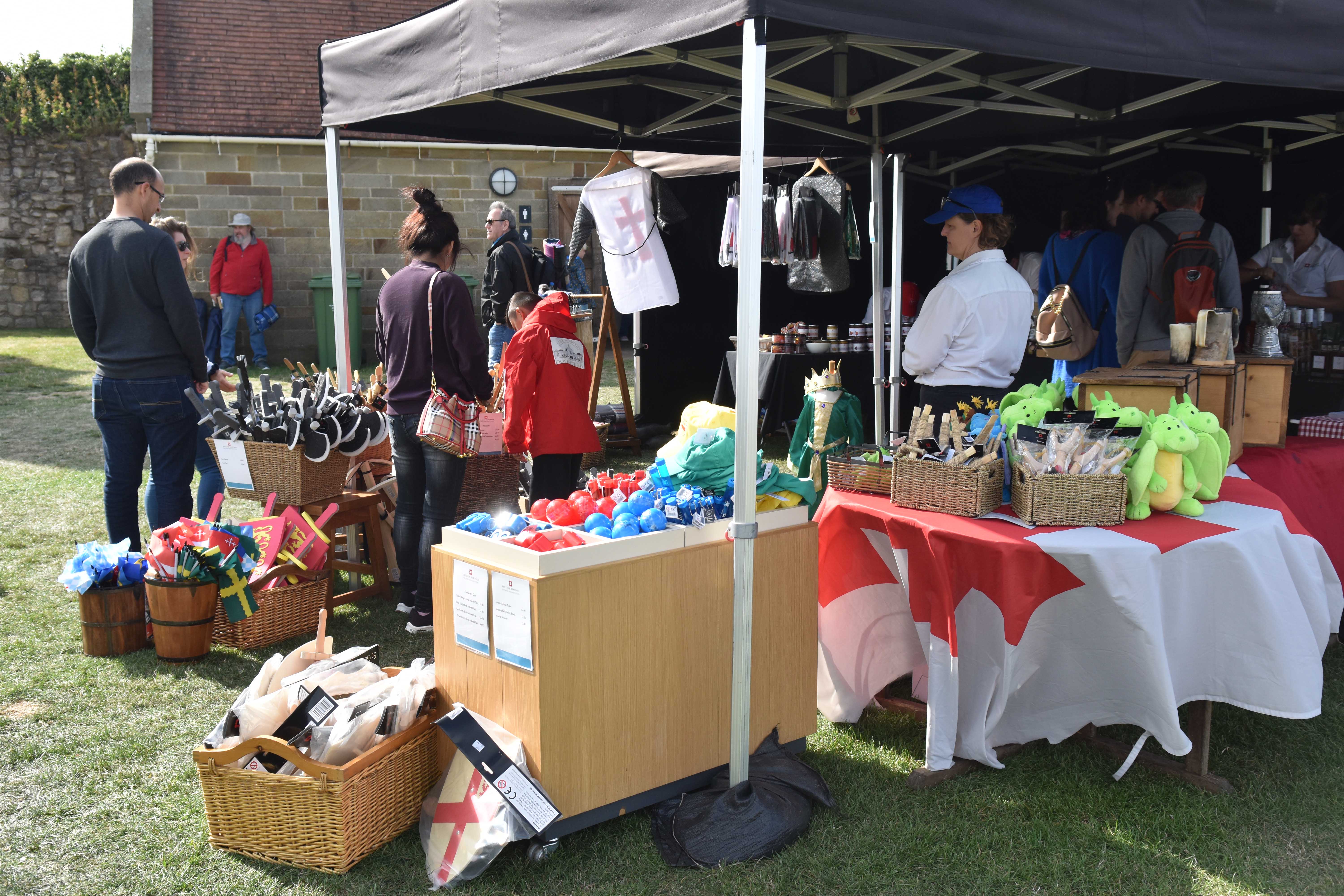
    English Heritage flag seller

    The contest begins!

    The knights enter the arena!
    Three of the knights

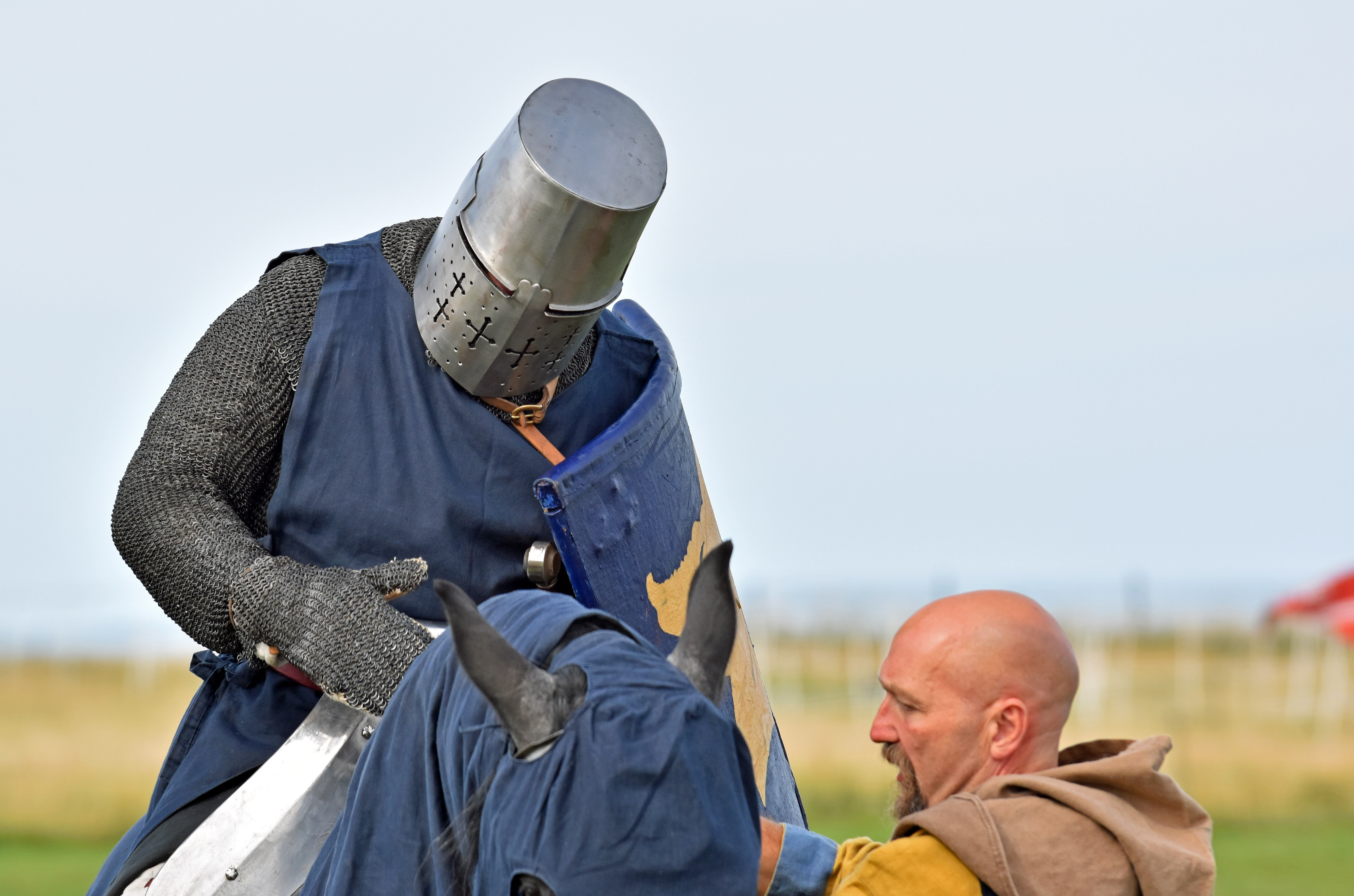
    It must have been very difficult to ride and maneuver the horse wearing a helmet with such a restricted field of view!

    Traditional helmet

    The jousting was done with wooden lances!

    Jousting is not easy!

    A Medieval knight had to learn to fight, but at the end of the day, he was only as good as his horse and horsemanship.

    Fighting with swords

    I took hundreds of photographs, handholding a Nikon F2.8 70-200mm lens; these are just a few of the more dynamic images.

    Horse and jouster
    Horsemanship
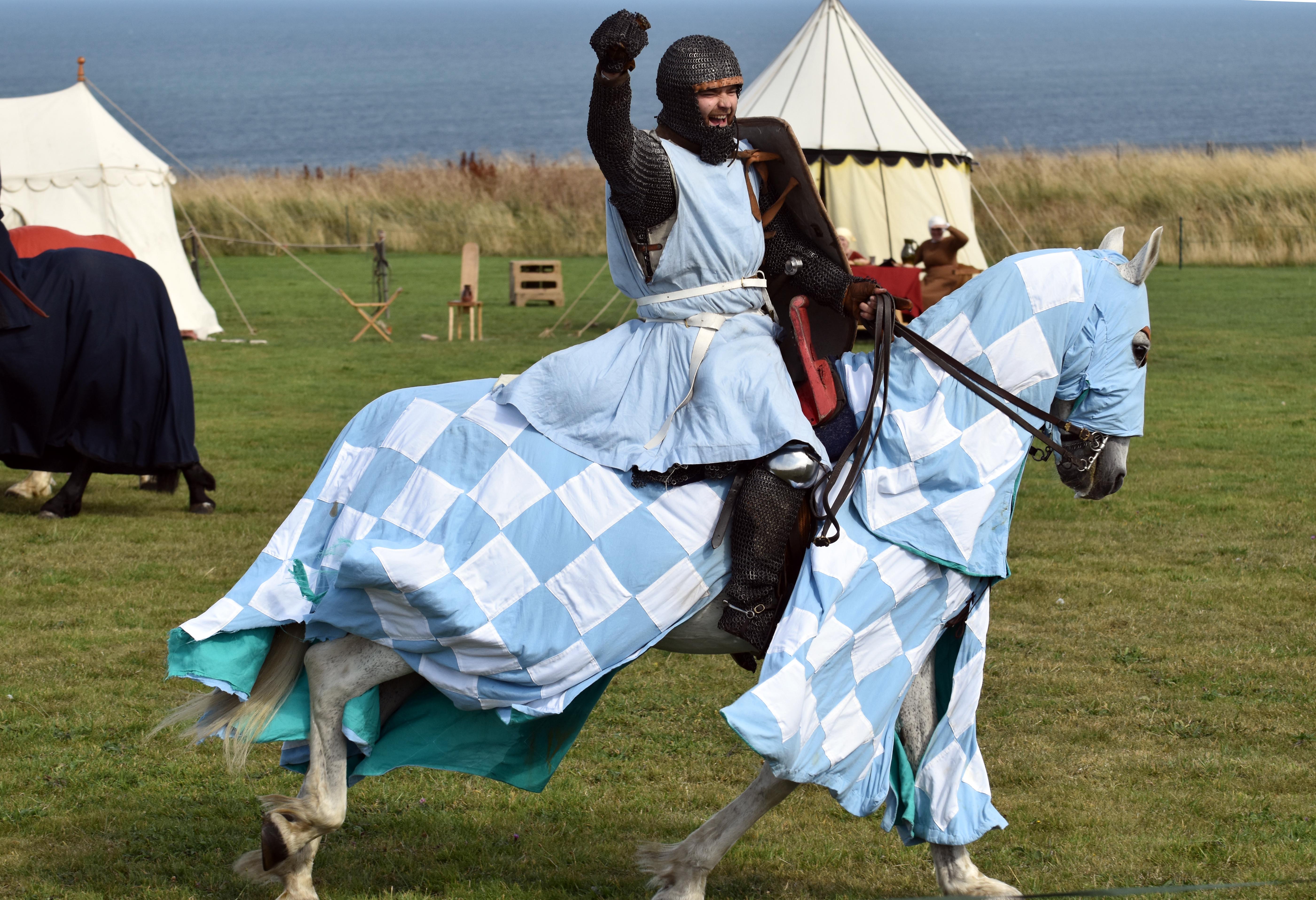
    The blue knights
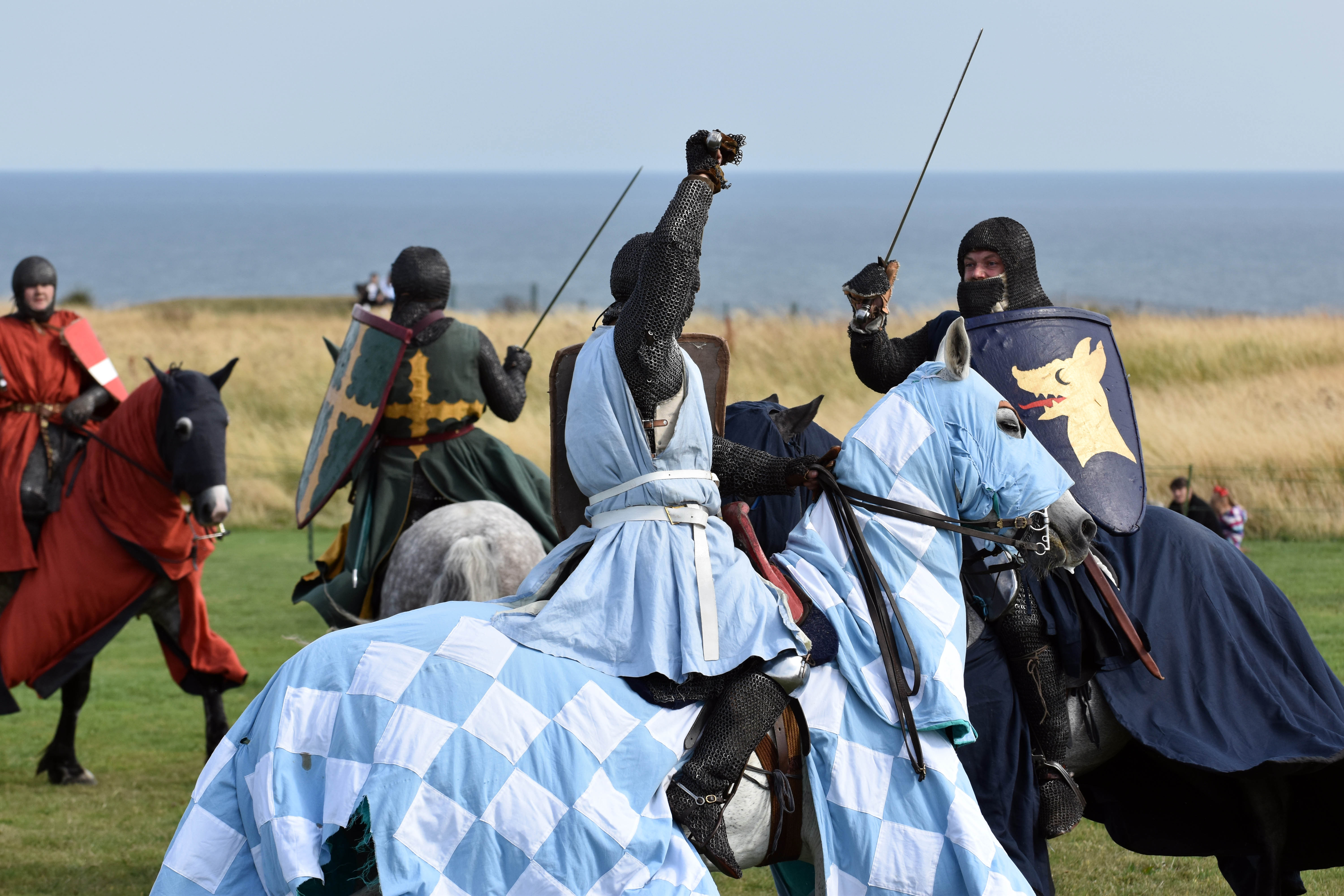
    The clash of swords
    Turning
    Into battle!
    All four knights in close contest
    The knight who won the biggest cheer
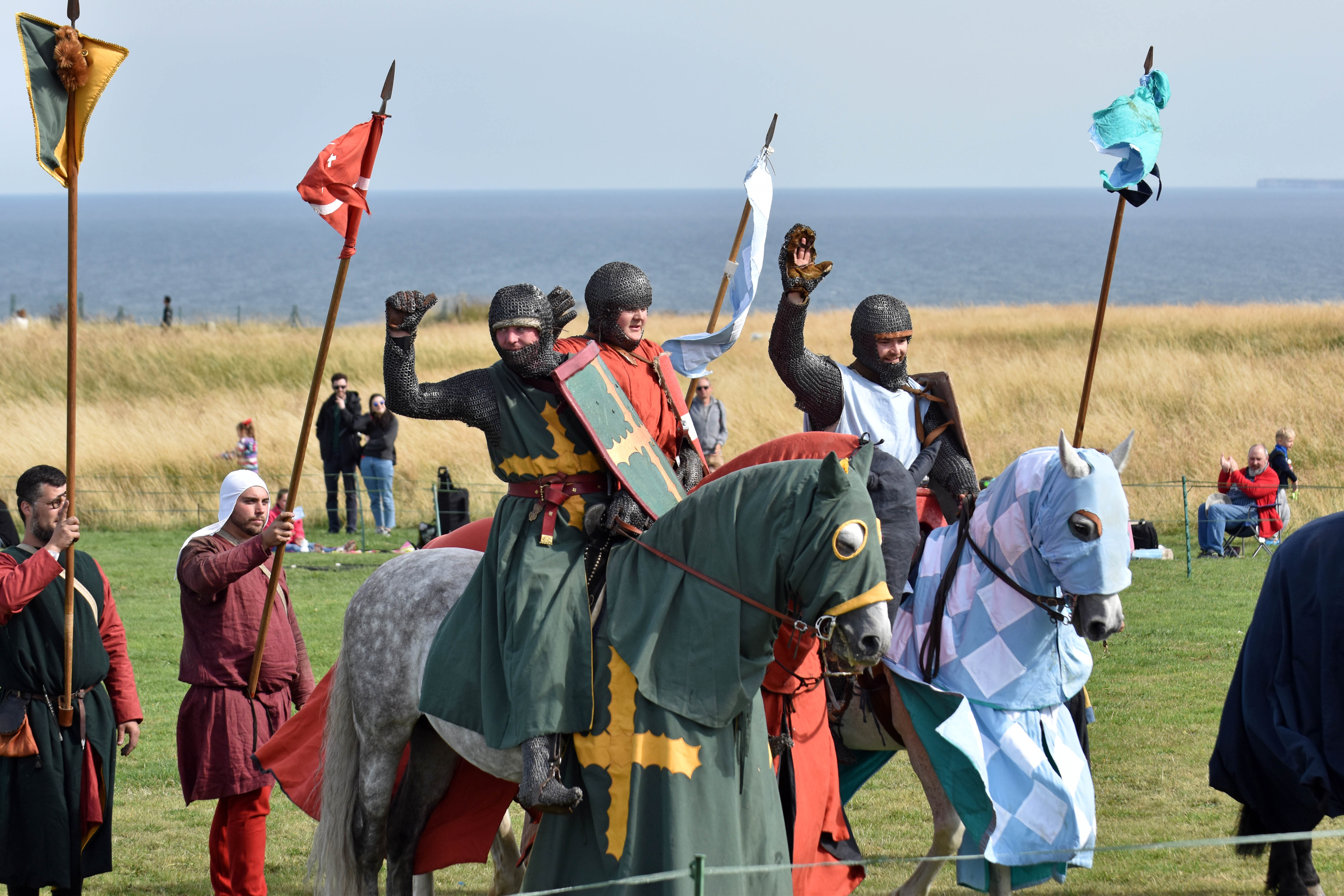
    The end of the tournament
    A colourful lineup
    Leaving the field

    There appeared to be some Medieval stable maids who removed the garments and saddles from the horses!

    Removing the coats and saddles

    There were plenty of other fun things to do, like archery and wine tasting!

    Medieval merchandise
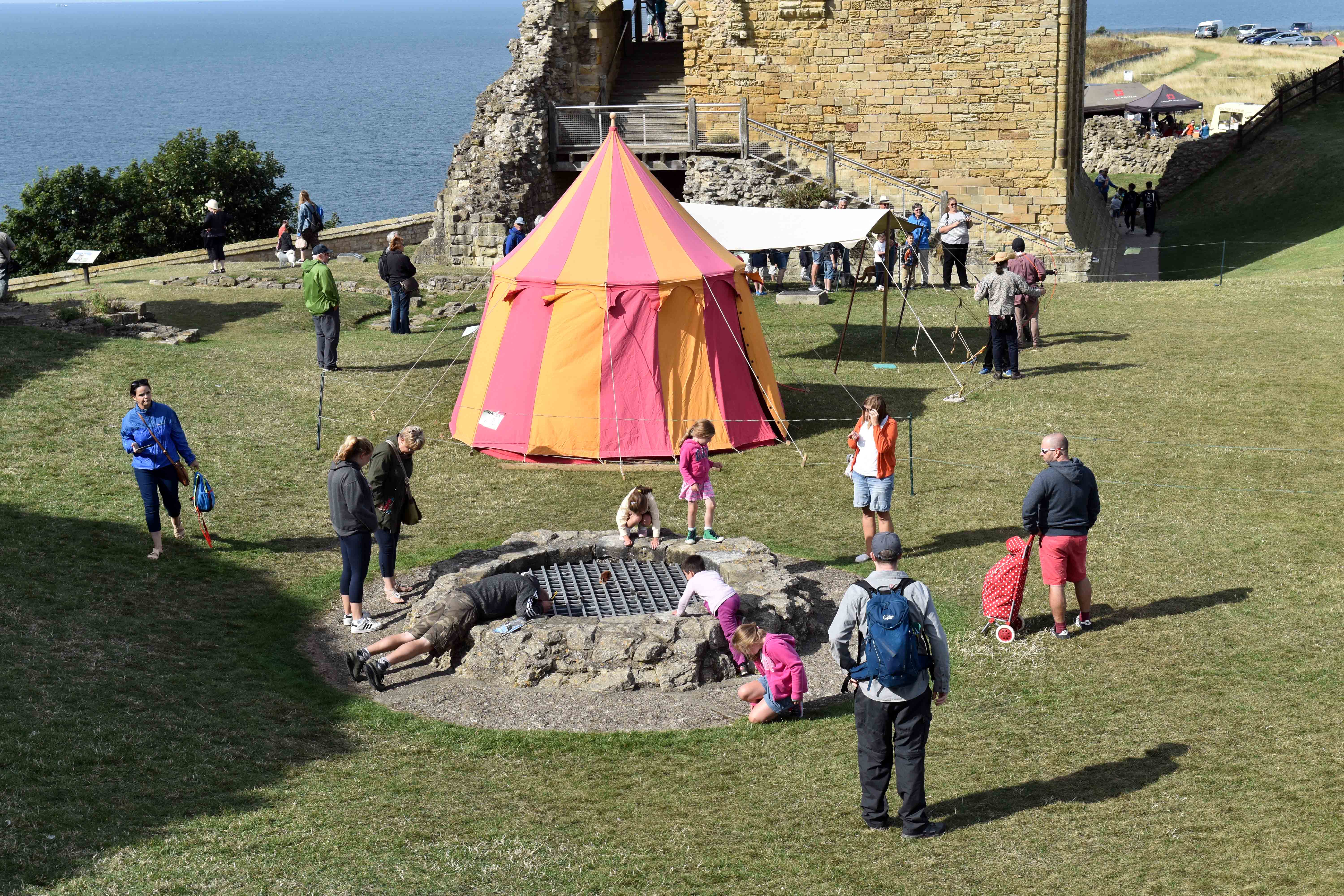
    The old well within the castle – inside the moat. It’s deep!
  • A walk in the countryside on 1st April

    Felmersham Gravel Pits, Bedfordshire

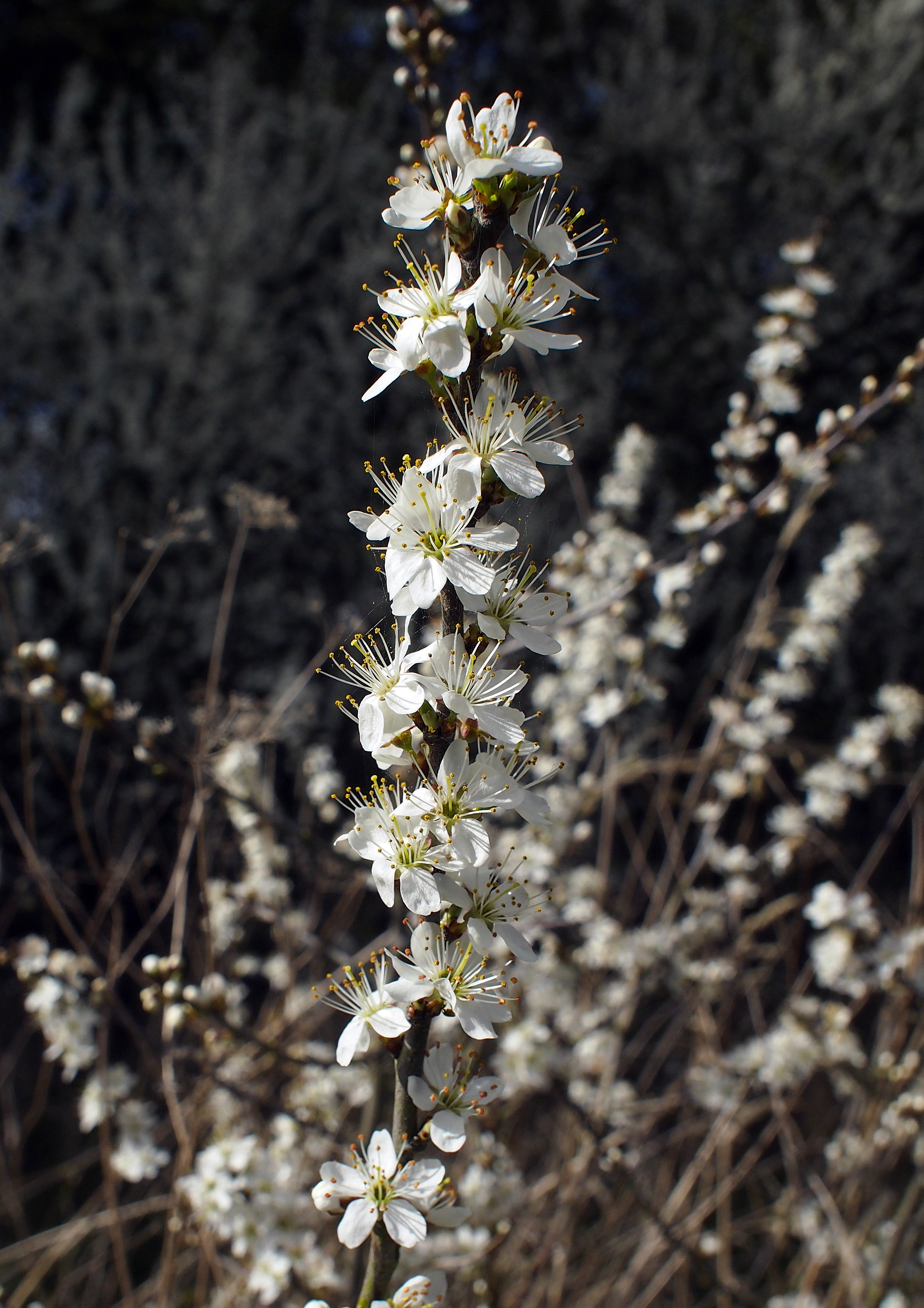
    Spring has come early this year. The world is warming up; 2016 was the warmest year since record-keeping began (in 1880). (1) Perhaps 2017 will be even warmer? The countryside in Bedfordshire is waking up; shaking itself free of winter’s cloak and putting on a new dress of green leaves and spring flowers! Sprays of blossom are appearing, like this Blackthorn (Prunus spinosa) twig (below).

    Blackthorn (Prunus spinosa) blossom on 1st April

    One of my favourite walks, is between Sharnbrook and Felmersham and back, in Bedfordshire. An easy stroll along the banks of the Great Ouse towards the village of Felmersham and then back through the Felmersham Gravel Pits, which are a 21.6 hectare Site of Special Scientific Interest. I took these photographs along this walk on 1st April 2017, with a small camera (an Olympus Pen EP-3 fitted with a 17mm lens; 34mm equivalent).

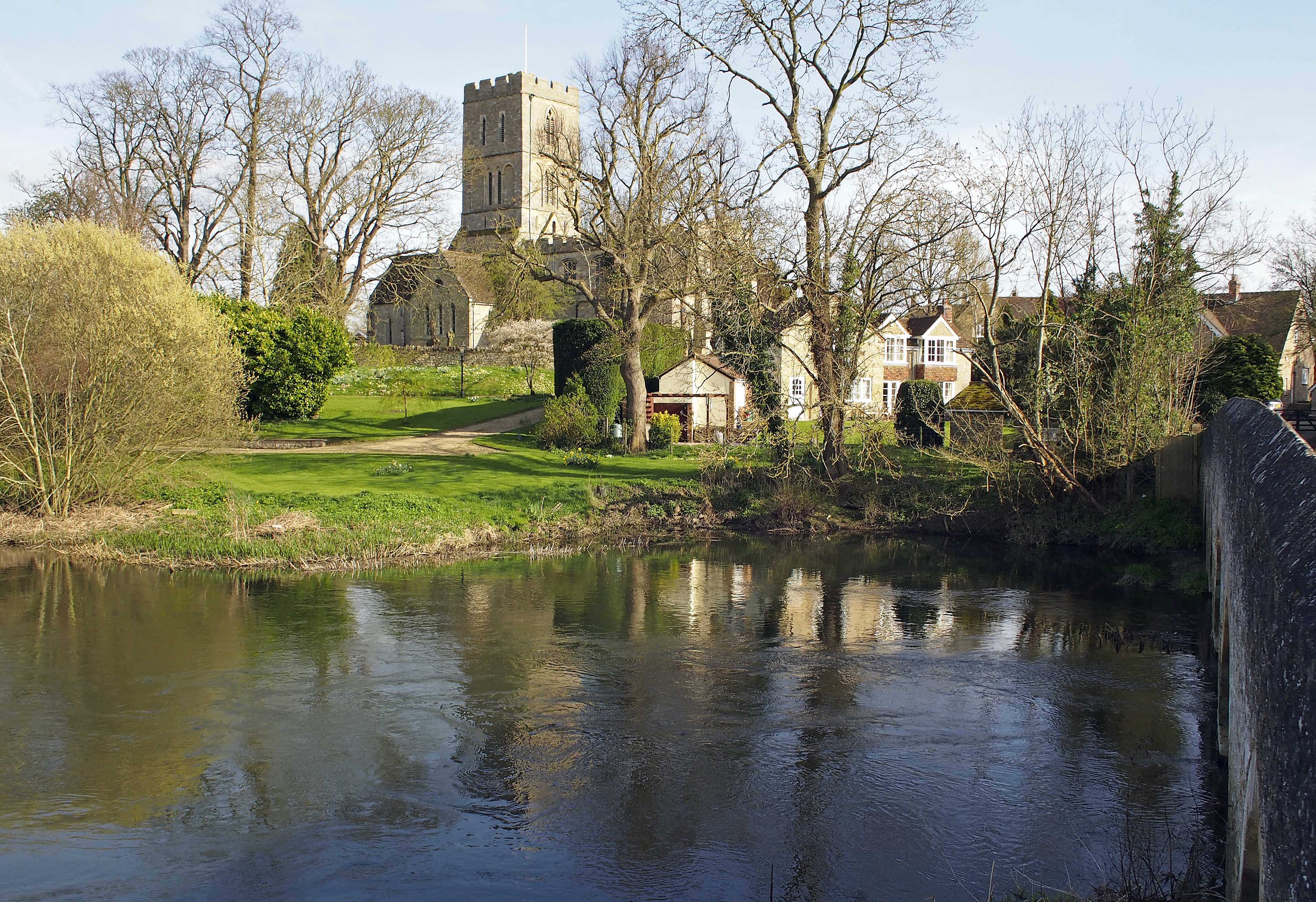
    St Mary’s Church at Felmersham was build between 1220 and 1240; it doesn’t look that old! (2)

    St Mary’s Church, Felmersham next to the Great Ouse, Bedfordshire

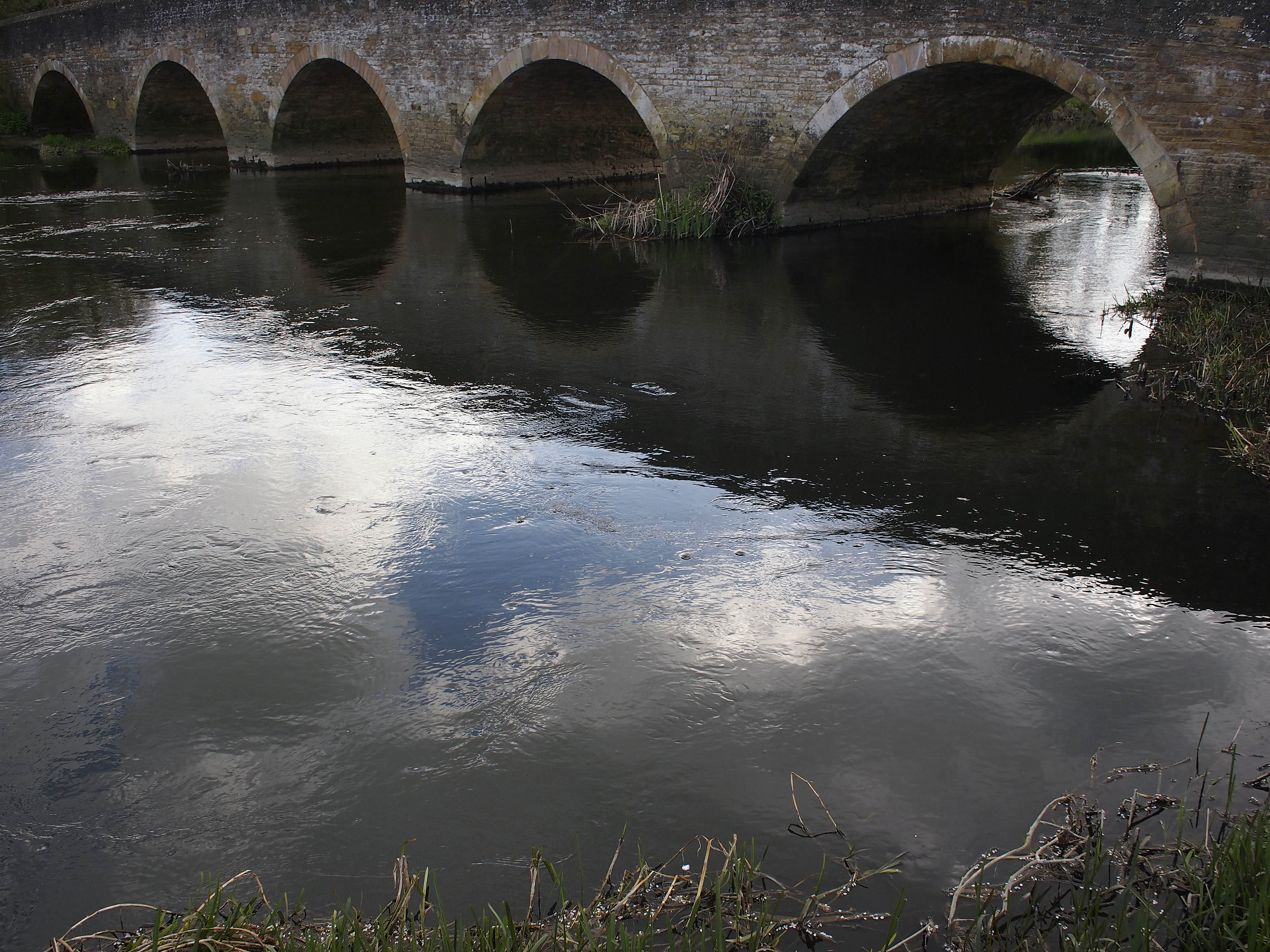
    The 5-arched stone bridge, on the other hand, looks very old, but was ‘only’ built in 1818!

    Stone bridge over the Great Ouse at Felmersham

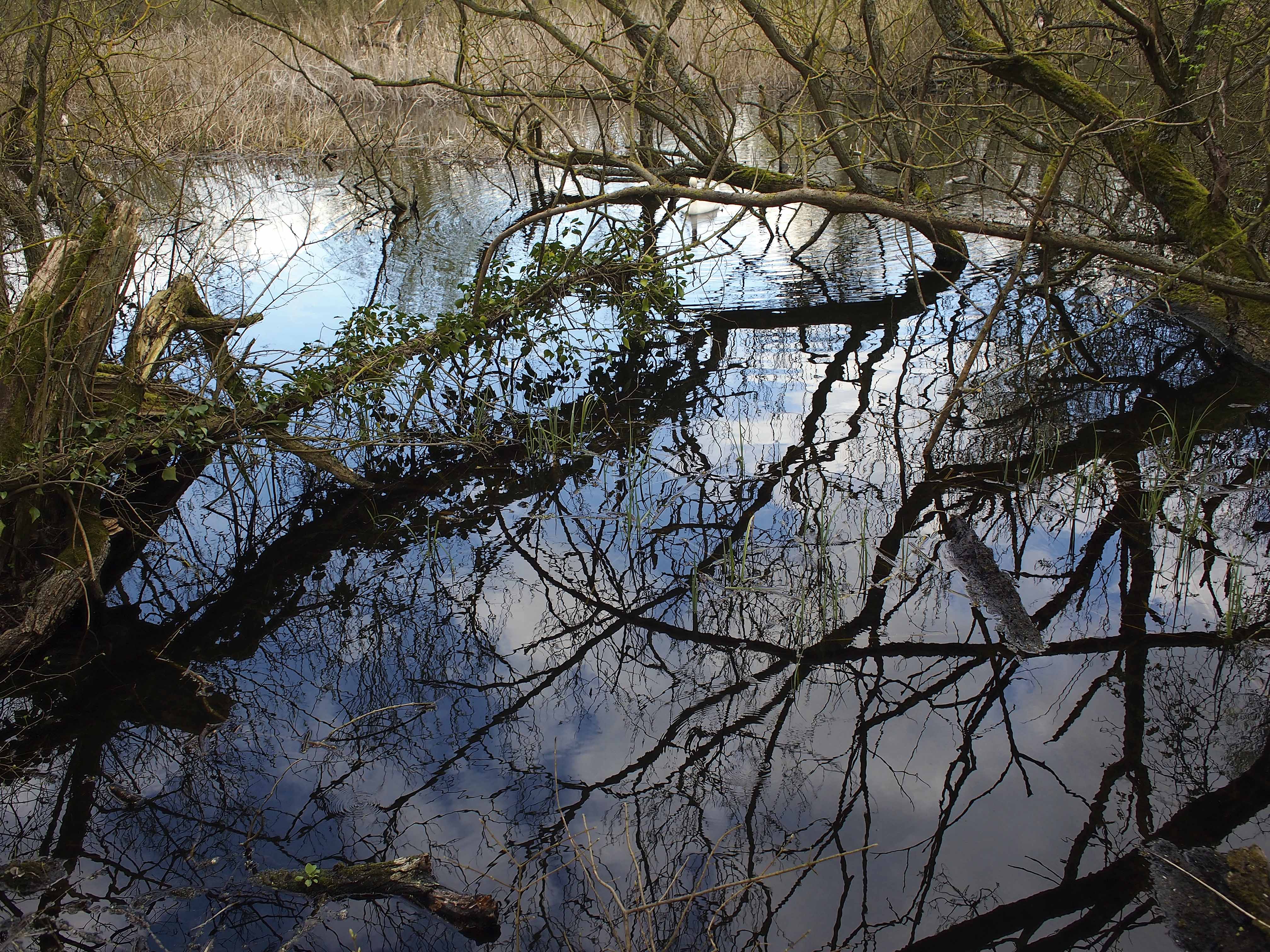
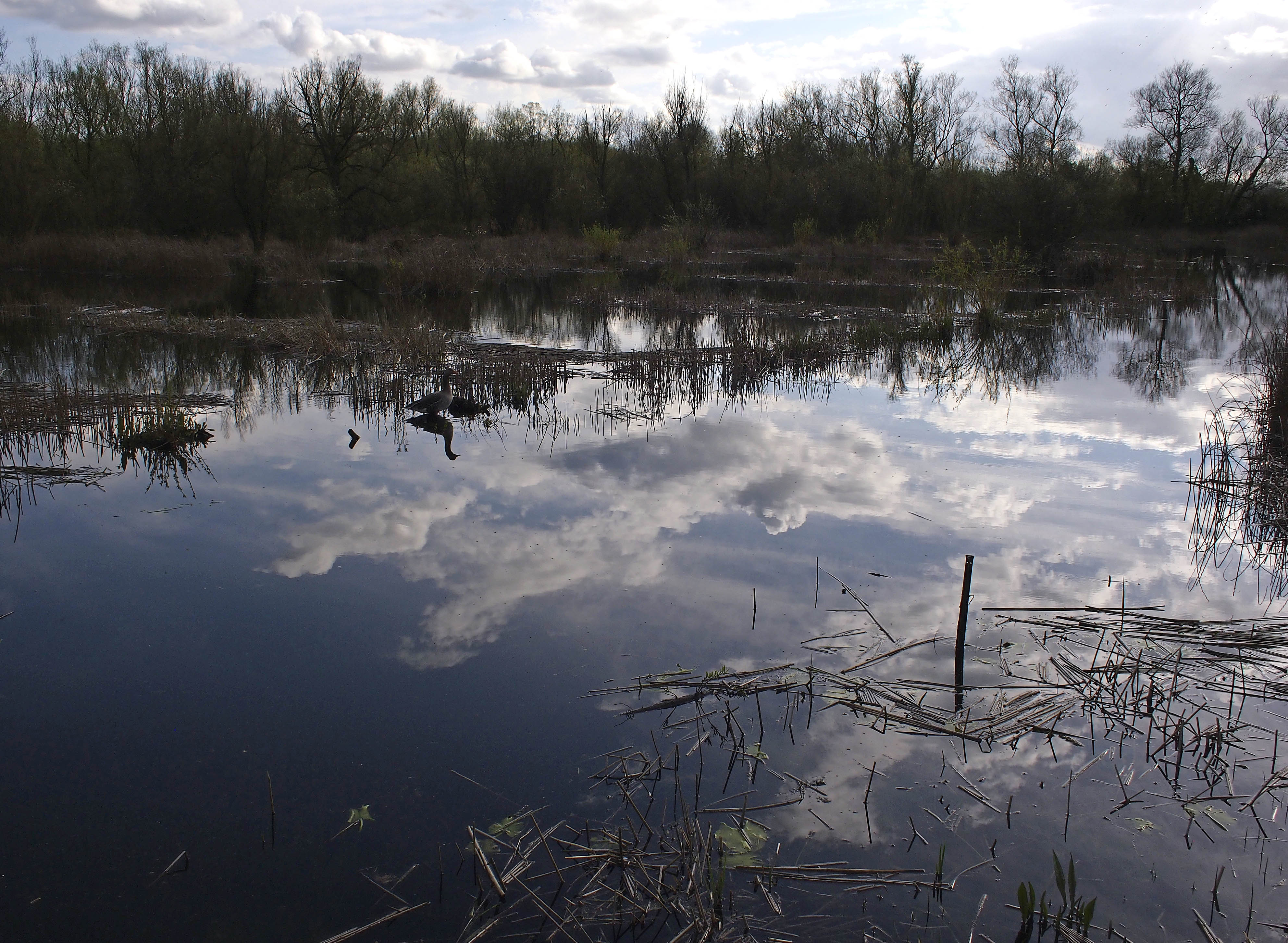
    The gravel pits in the Nature Reserve were dug out during the second World War when the gravel was used in the construction of local war-time air fields. (3) The pits are now lakes and much beloved of waterfowl, including ducks, geese, swans, grebes and so on. It is a magical place that I have visited for many years; very relaxing to walk beside the lakes and ponds and reflect on the reflections!

    Felmersham gravel pits, Bedfordshire

    There are certain spots where I must have taken dozens of pictures, but the scene is always changing; not only through the year, but also from year to year as the vegetation grows, or is cut back by conservators to create spaces for nature.

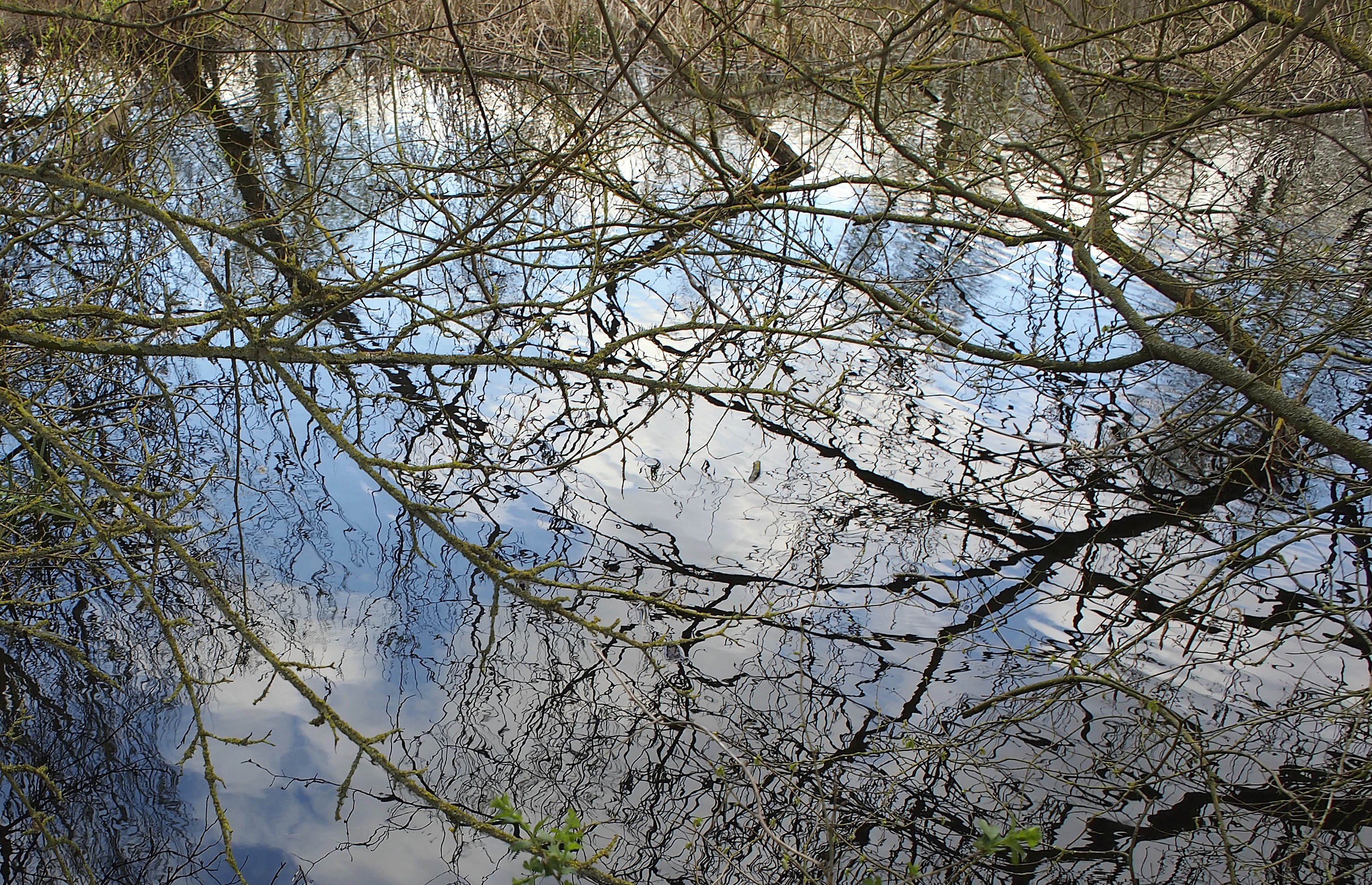
    Reflections in the lake. Felmersham gravel pits, Bedfordshire
    Spot the goose! No fishermen at this time of year. Angling is apparently by Wildlife Trust permit only. (4)

    Felmersham gravel pits, Bedfordshire.
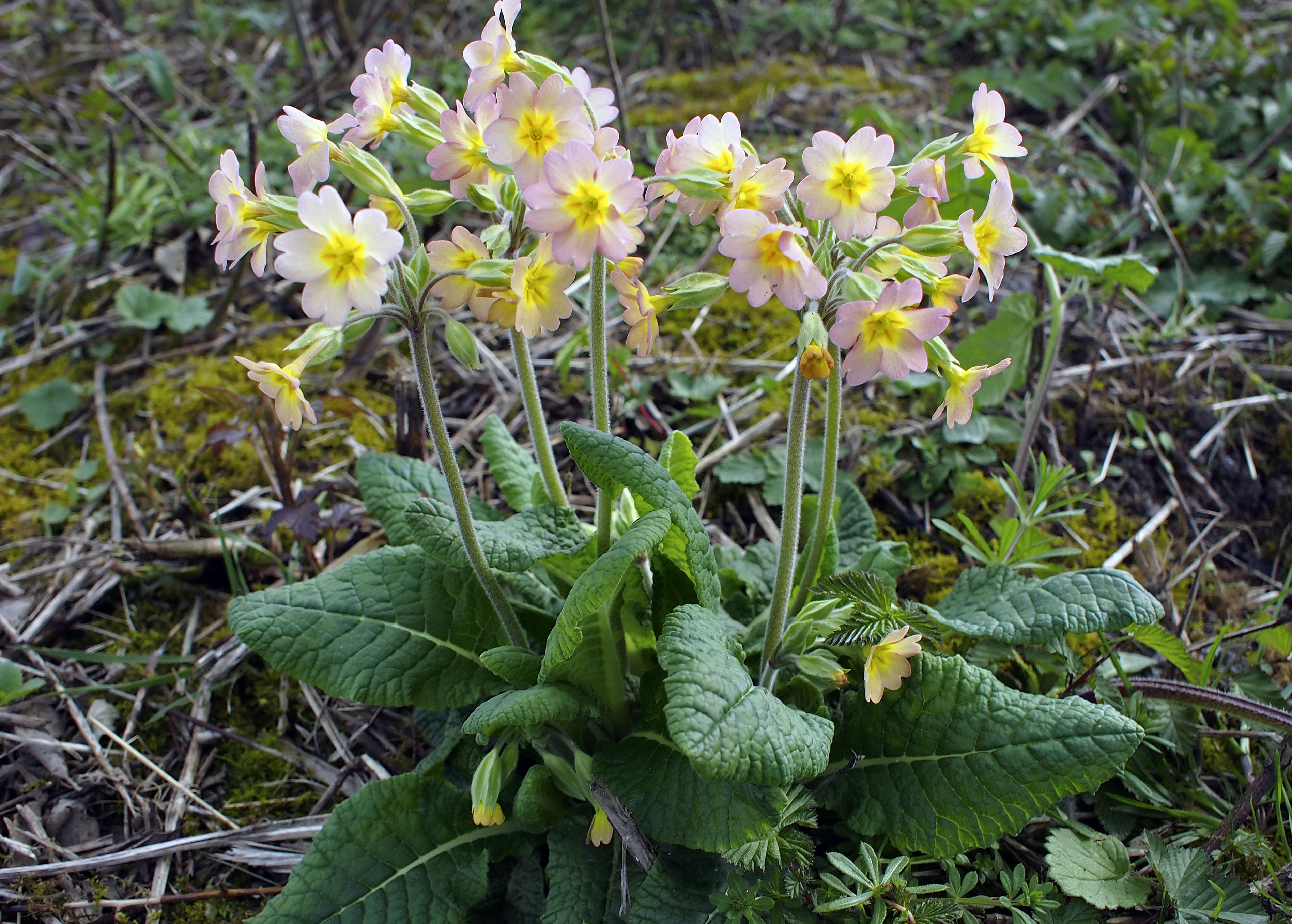
    Some new flowers were starting to appear on 1st April. The primroses have been out for some time, but this was the first time I came across cowslips. These had wonderful colours; were they wild or garden escapes? I don’t know.
    Pink and yellow Primulas
    Red Primula veris, Coronation cowslip

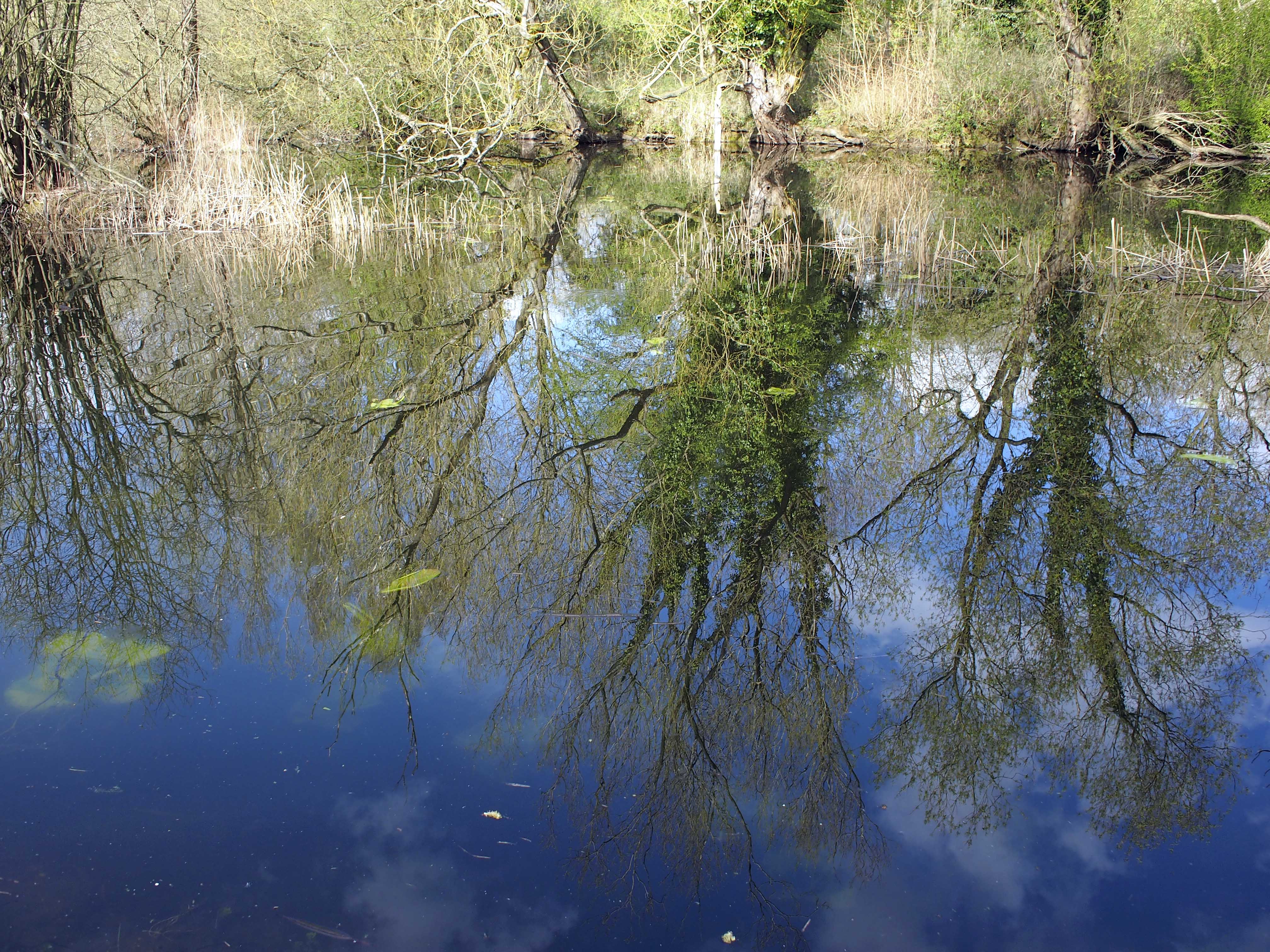
    The vegetation beneath the water was also blooming! Large water-lily leaves could be seen (below).

    Trees reflected in the water, with green plants underwater.

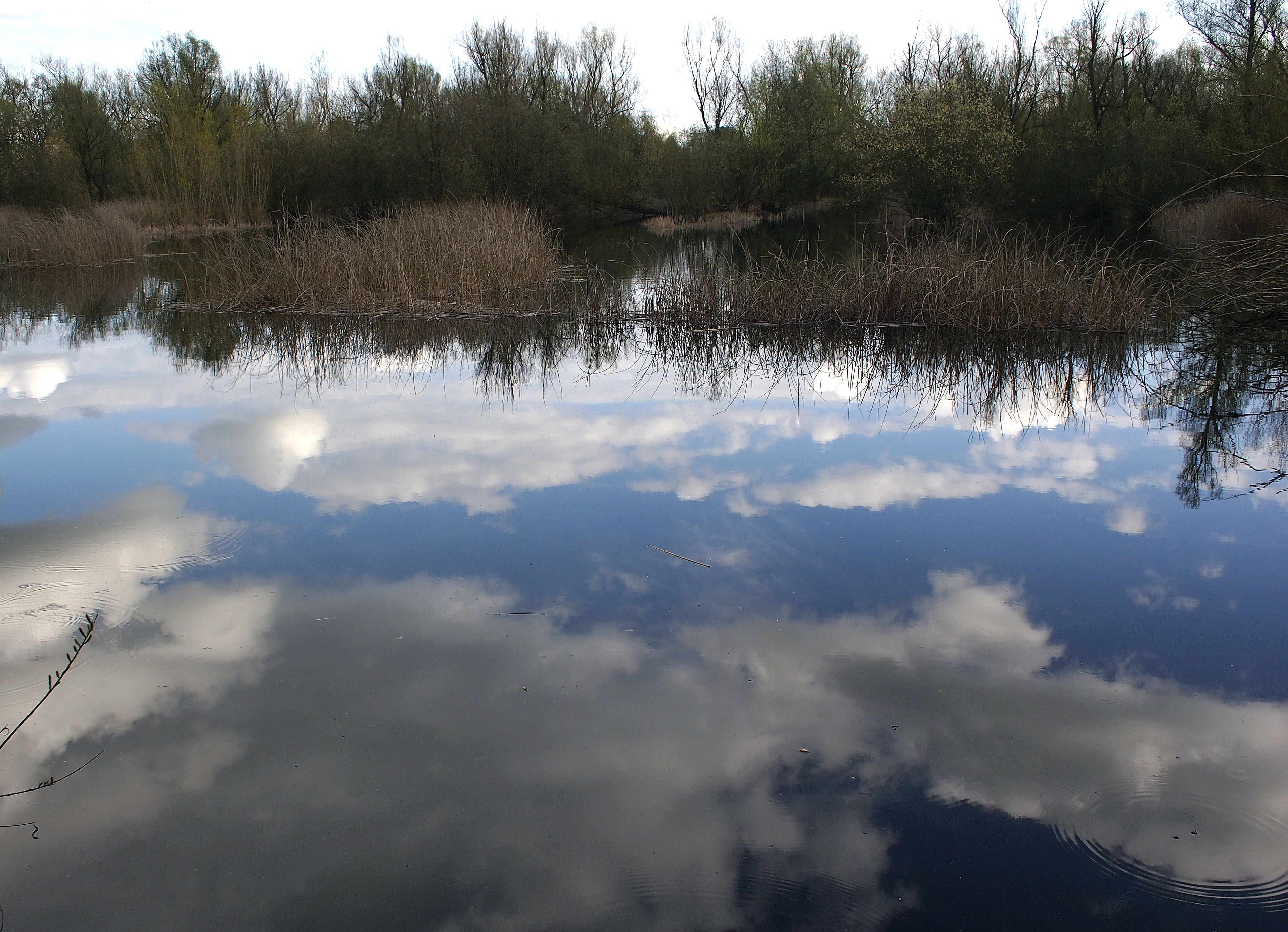
    This year’s reeds have not yet emerged, however. The brown reeds are leftover from last year (below).

    Reeds on Felmersham gravel pits, Bedfordshire.
    Clouds reflected in Felmersham gravel pits, Bedfordshire.

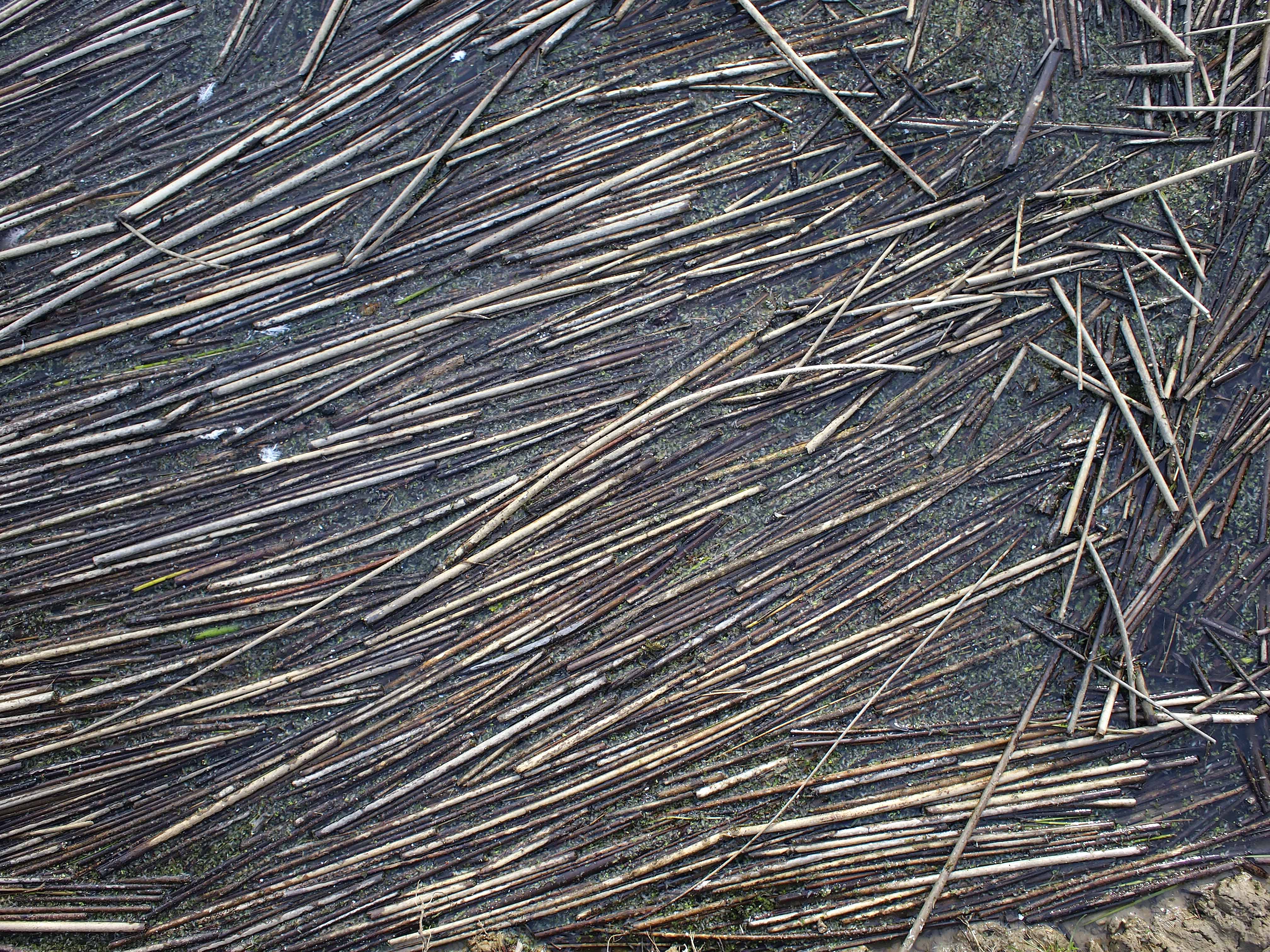
    In one corner of a lake, reeds had been piled up by the wind along the bank.

    Reeds floating on the water.

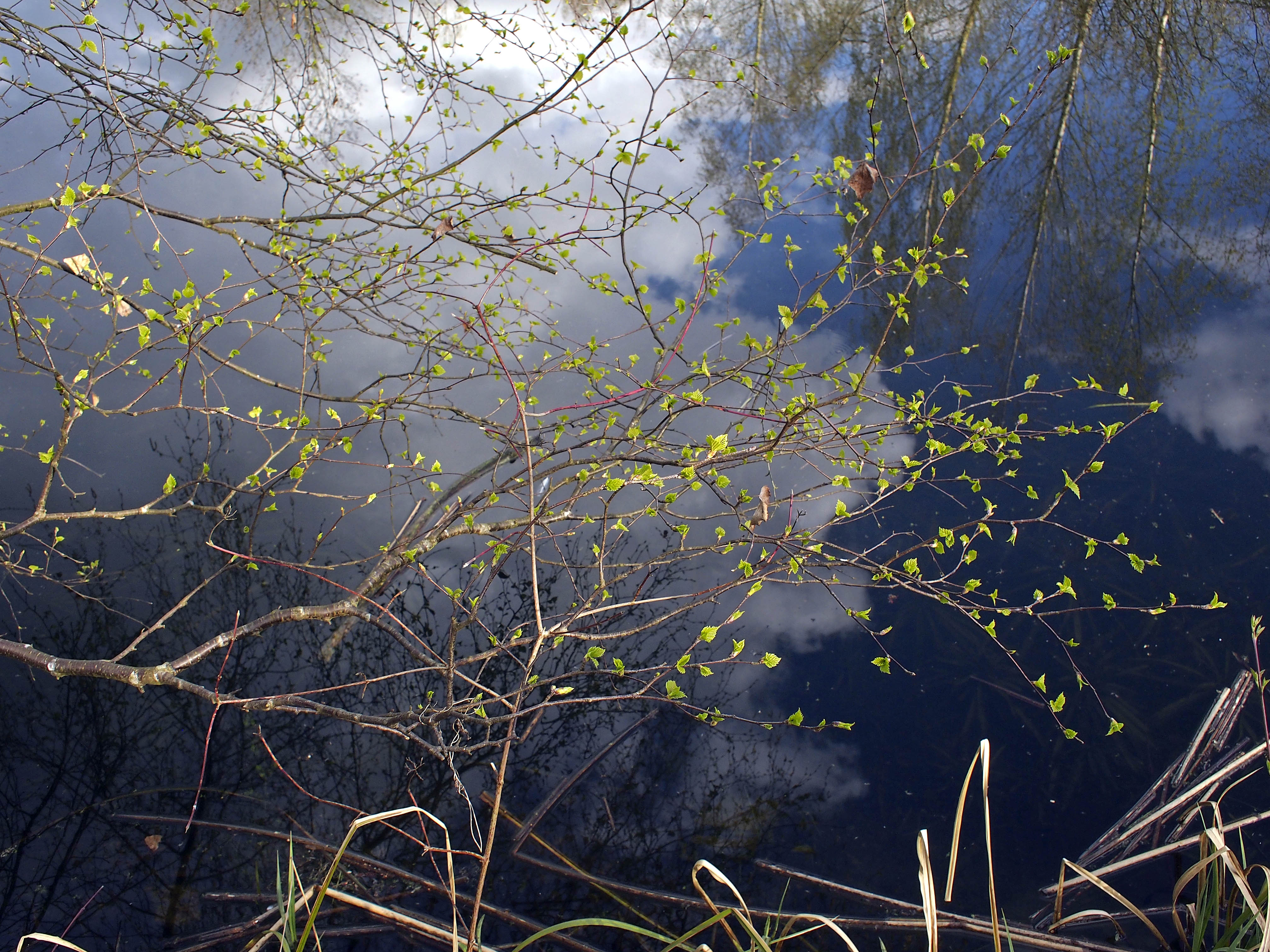
    Trees vary from species to species in terms of when their leaves first appear. The leaves on this bush overhanging the water, were just starting to appear, breaking out of their buds.

    New leaves emerging on overhanging bush.

    One of the pleasures of travelling a familiar path is that you see old favourites in a new light, as well as coming across new things. The world is always changing and it is our blessing to be able to witness it, albeit briefly.

    1. https://www.nasa.gov/press-release/nasa-noaa-data-show-2016-warmest-year-on-record-globally
    2. http://www.felmersham.net/church.htm
    3. http://www.felmersham.net/nature.htm
    4. http://www.wildlifebcn.org/reserves/felmersham-gravel-pits
  • Clash of Knights! Scarborough Castle

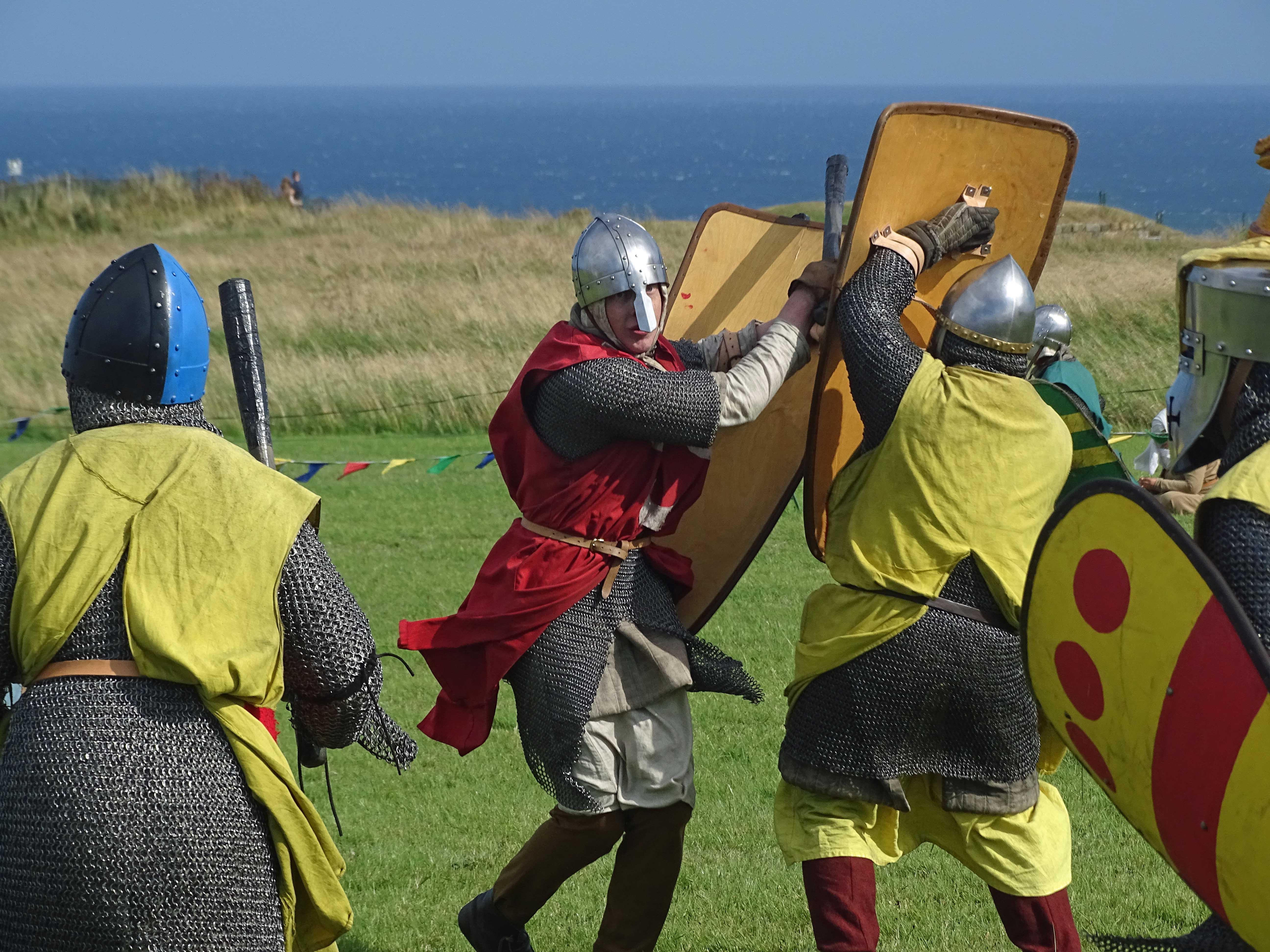
    Clash of knights!
    Clash of knights!

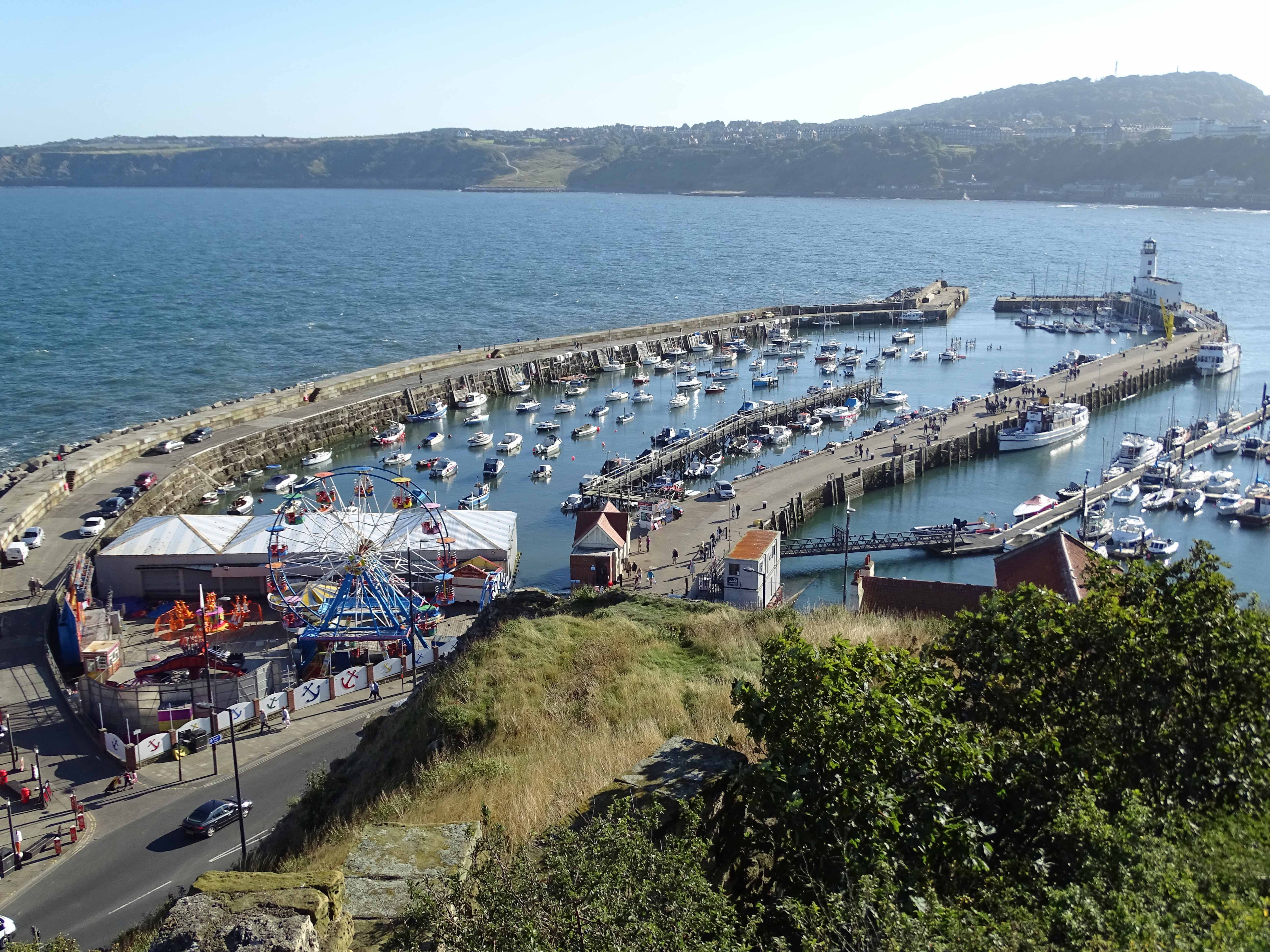
    Scarborough Castle in North Yorkshire is managed by English Heritage, and occupies a superb position on a promontory between two bays (North and South Bays) overlooking the harbour and Old Town in Scarborough.

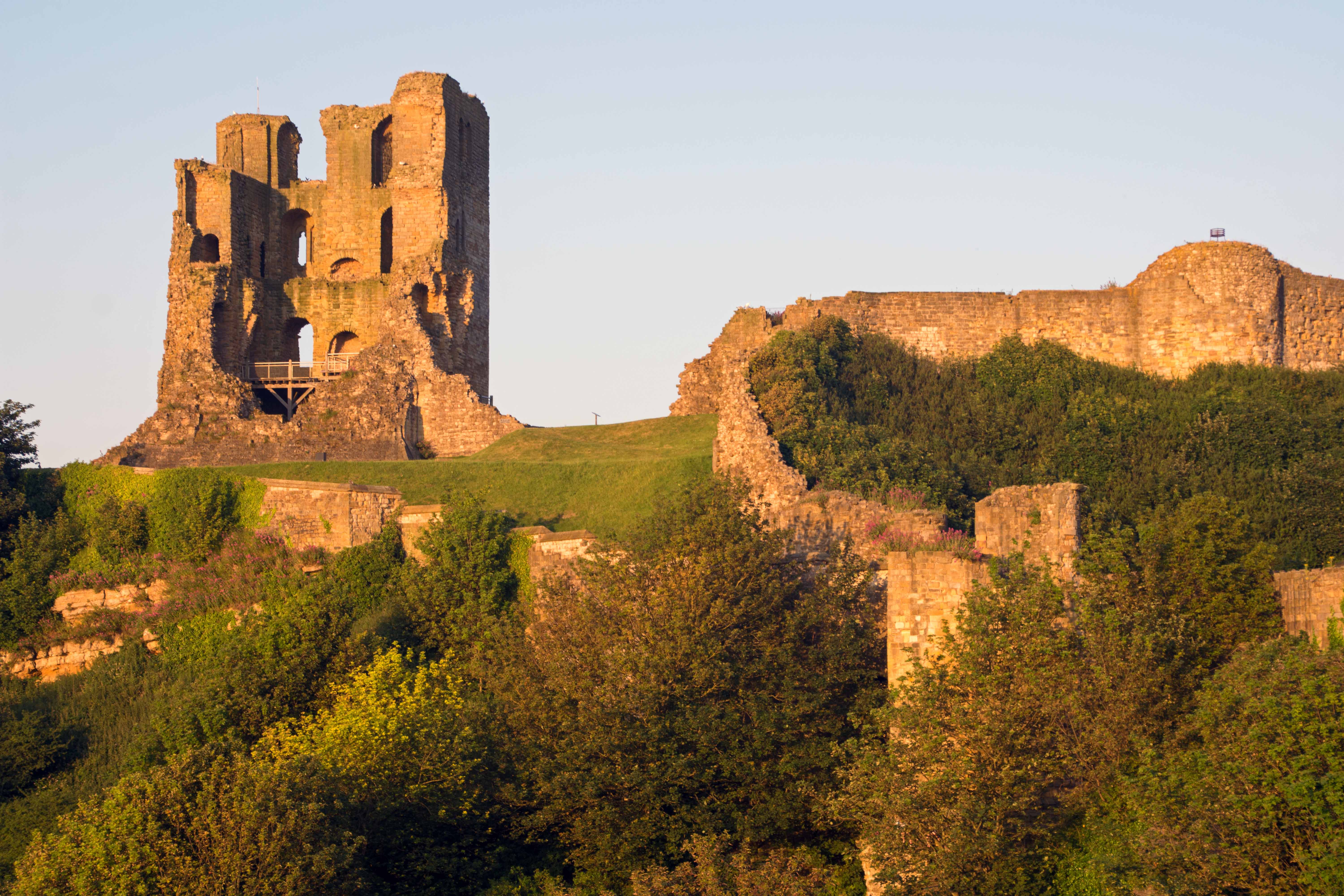
    Scarborough castle at sunset
    Scarborough castle at sunset

    The castle was founded in 1138 under the reign of King Stephen and extensively rebuilt in 1159 by Henry II. This monarch spent the princely sum of  £650 on the castle over the next ten years, constructing the great tower, or keep, between 1159–69. Later on, King John spent £2,291 on the creation of an outer wall in 1202–6, and then an extension of the wall down to the cliff in 1207–12 (1). There are superb views of Scarborough harbour from the walls of the castle.

    Scarborough harbour from below the castle walls
    Scarborough harbour from below the castle walls

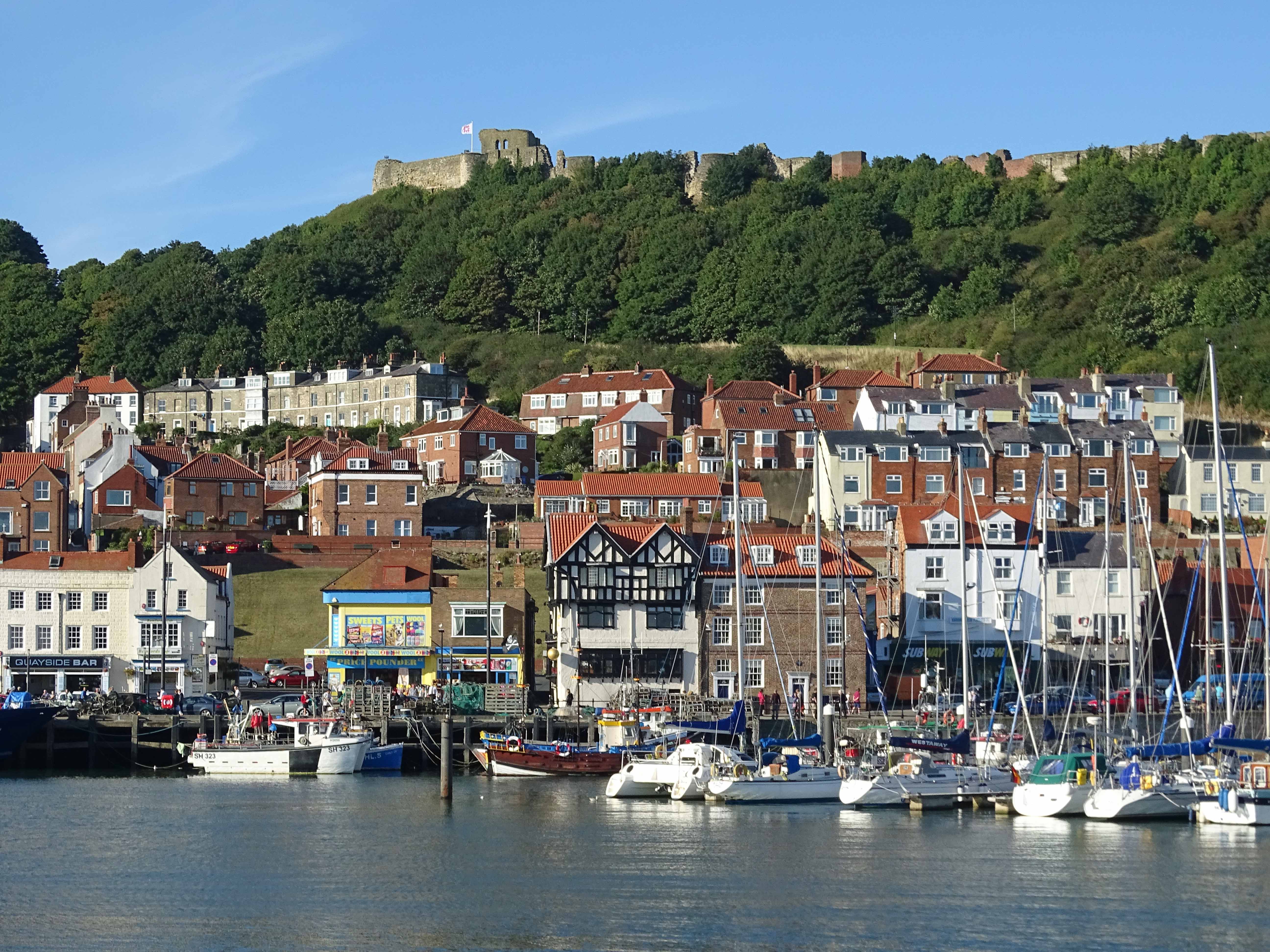
    The view from the harbour looking upwards shows the extent of the castle walls.

    The walls of Scarborough castle from the harbour
    The walls of Scarborough castle from the harbour

    The castle saw two prolonged sieges during the English Civil War of the 17th century, after which it was partially destroyed on the orders of the then Parliament. In February 1645 the parliamentary army captured the town of Scarborough but the royalist soldiers retreated into Scarborough castle (1). They held out until July 1645, despite being bombarded by what was then the largest cannon in the country, called the Cannon Royal, from the 12th-century St. Mary’s Church located below the castle (2).

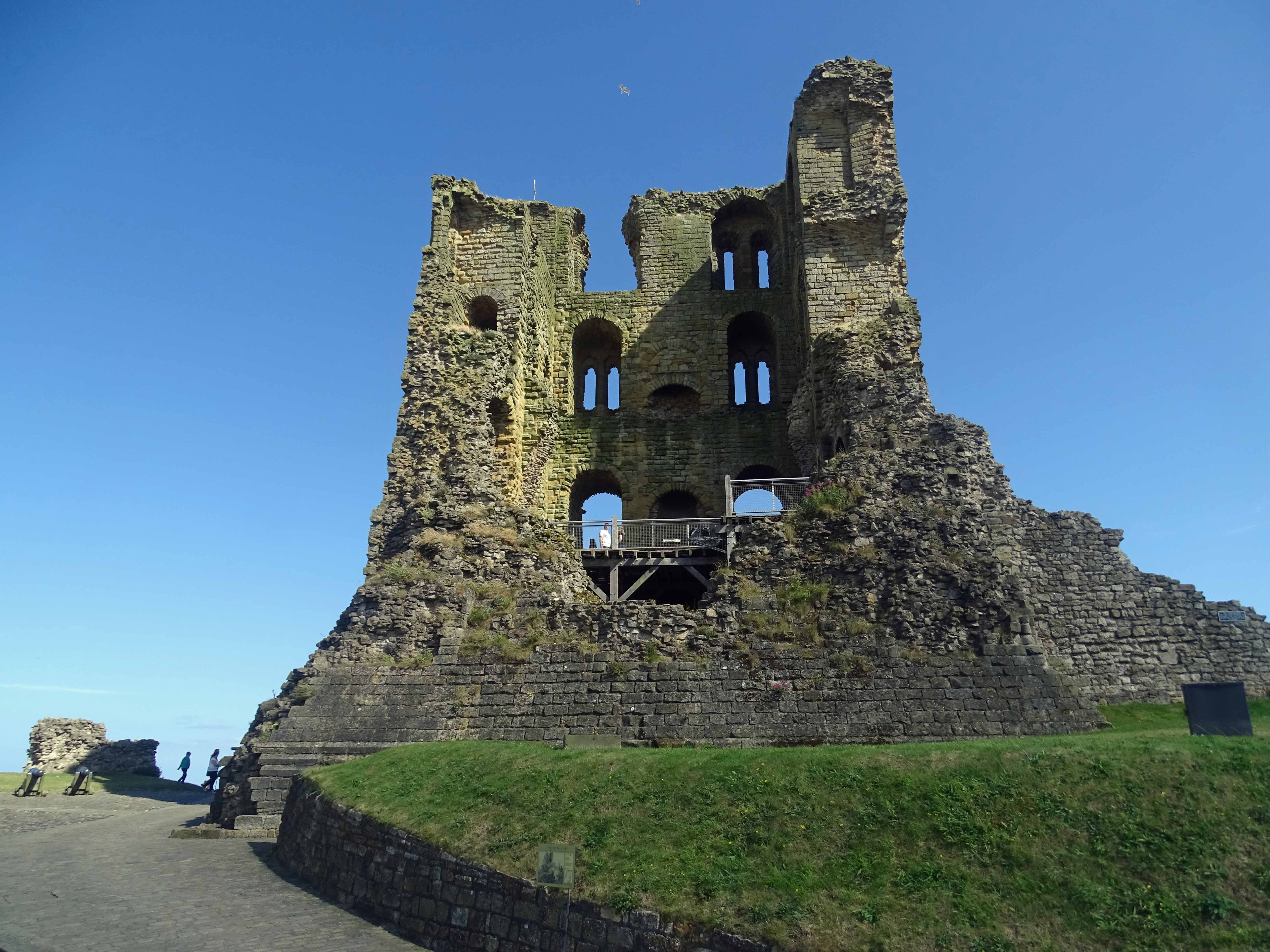
    Castle Keep
    Castle Keep

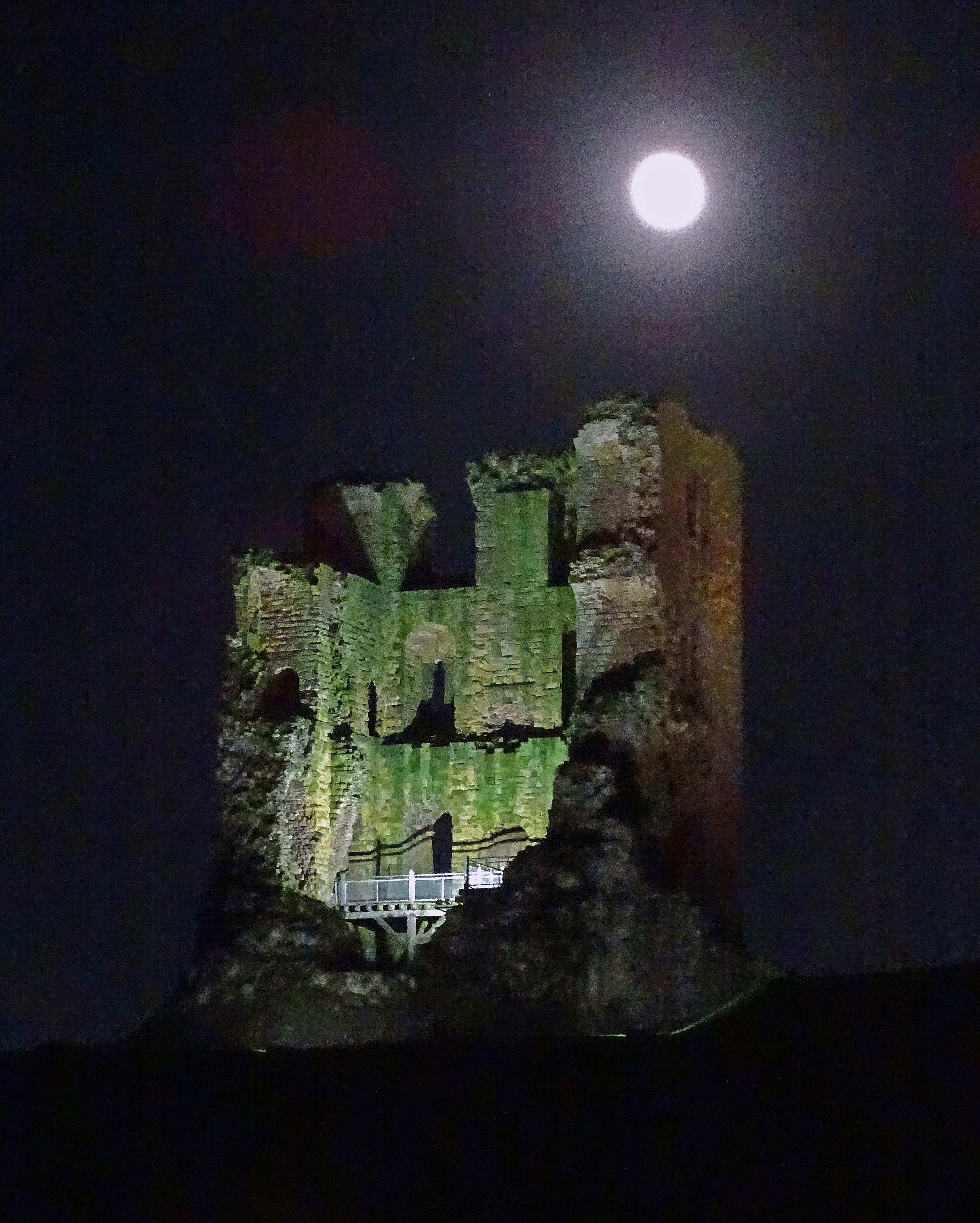
    The castle was again besieged in 1648; from July to September of that year. This time the parliamentarians severely damaged it so that it would not fall into royalist hands again. The west face of the keep had already been destroyed by canon in the preceding battles. Unfortunately the keep was never repaired, but it is still an impressive sight, especially when it is illuminated at night.

    Castle with moon

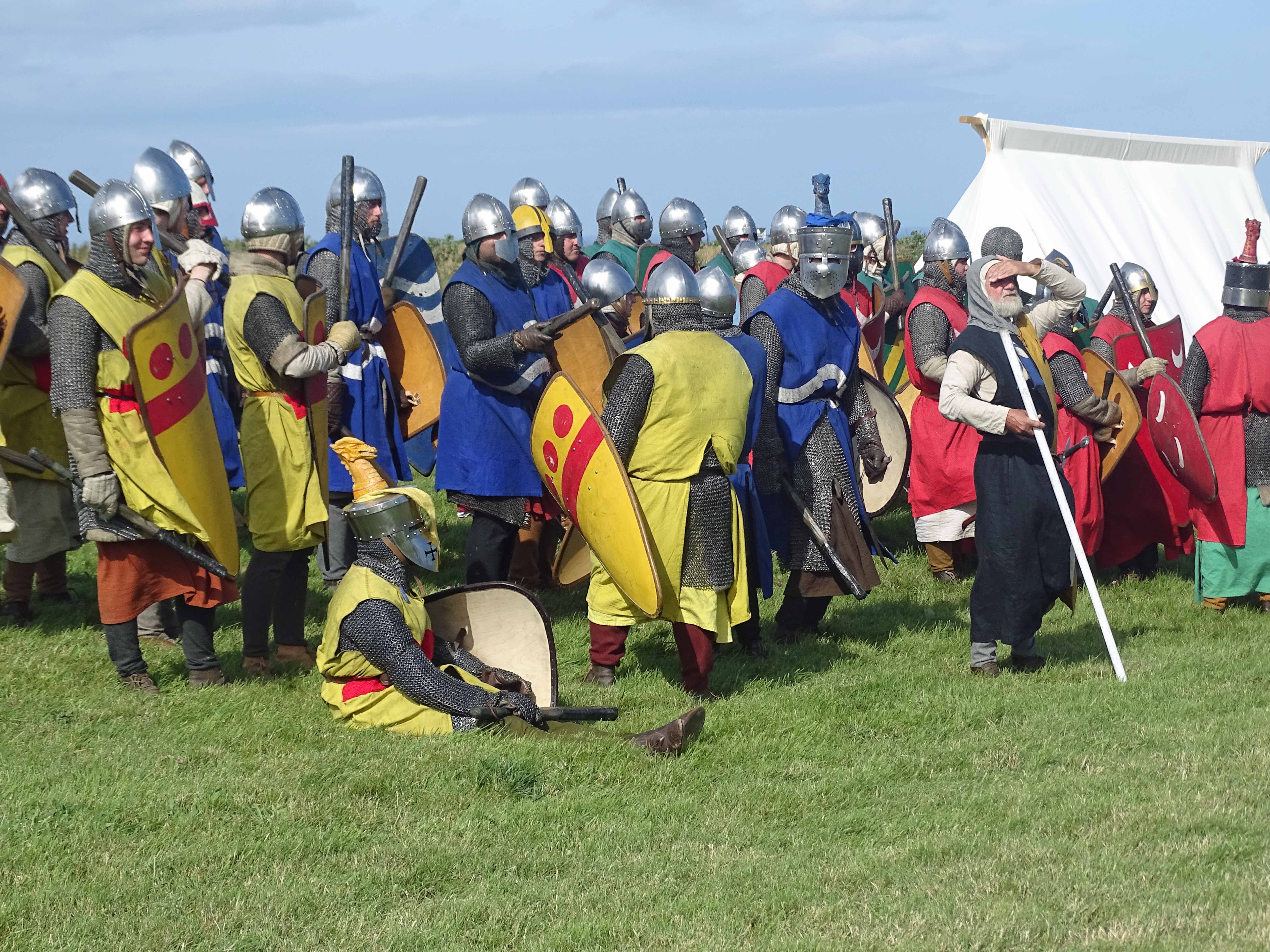
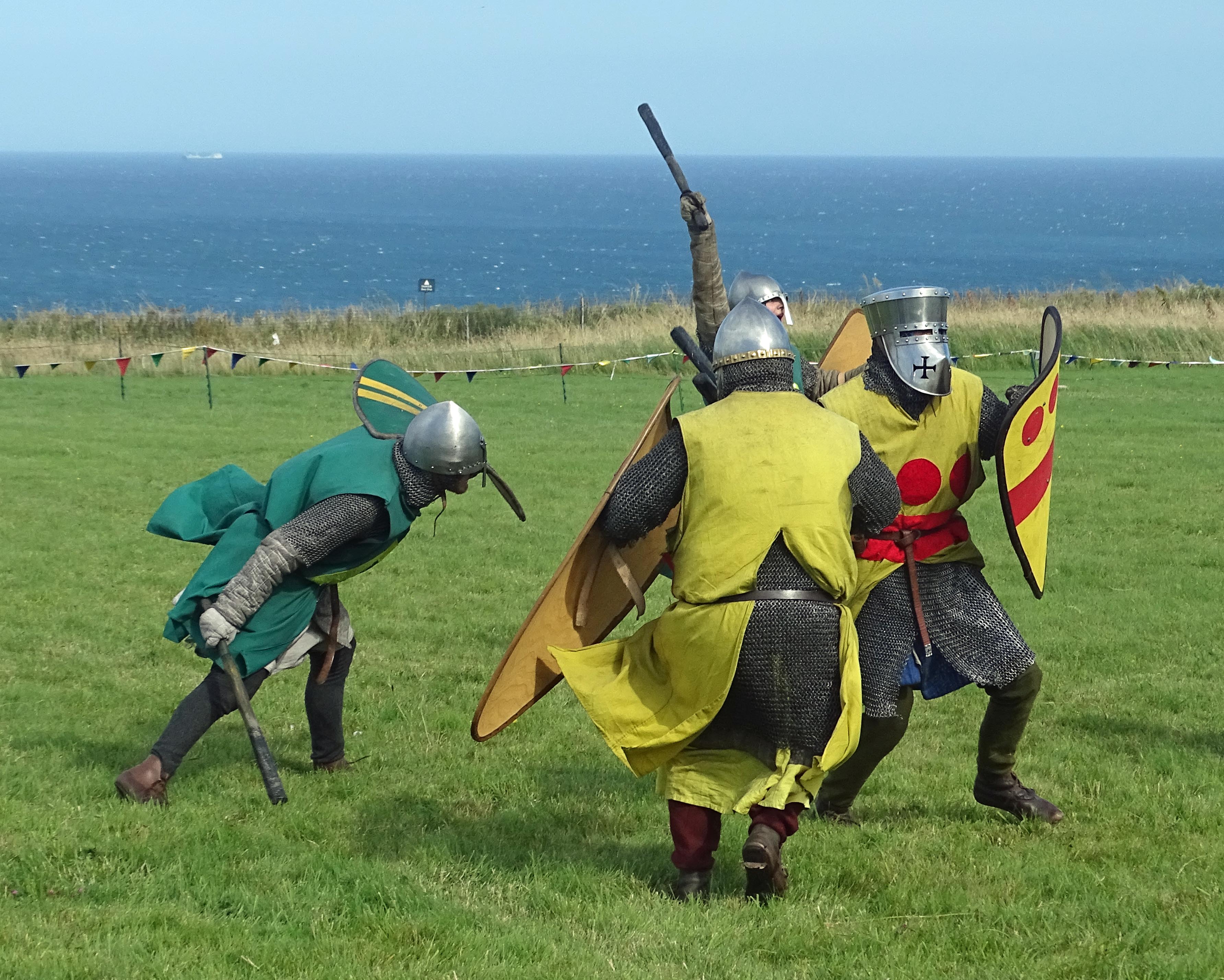
    Today saw a re-enactment of medieval fighting in Anglo-Norman times when the castle was first constructed. The good-humored battles involved four teams of knights jousting with shields and clubs.

    Teams
    Teams assembling to do battle
    Members of the blue team assembling
    Members of the blue team assembling

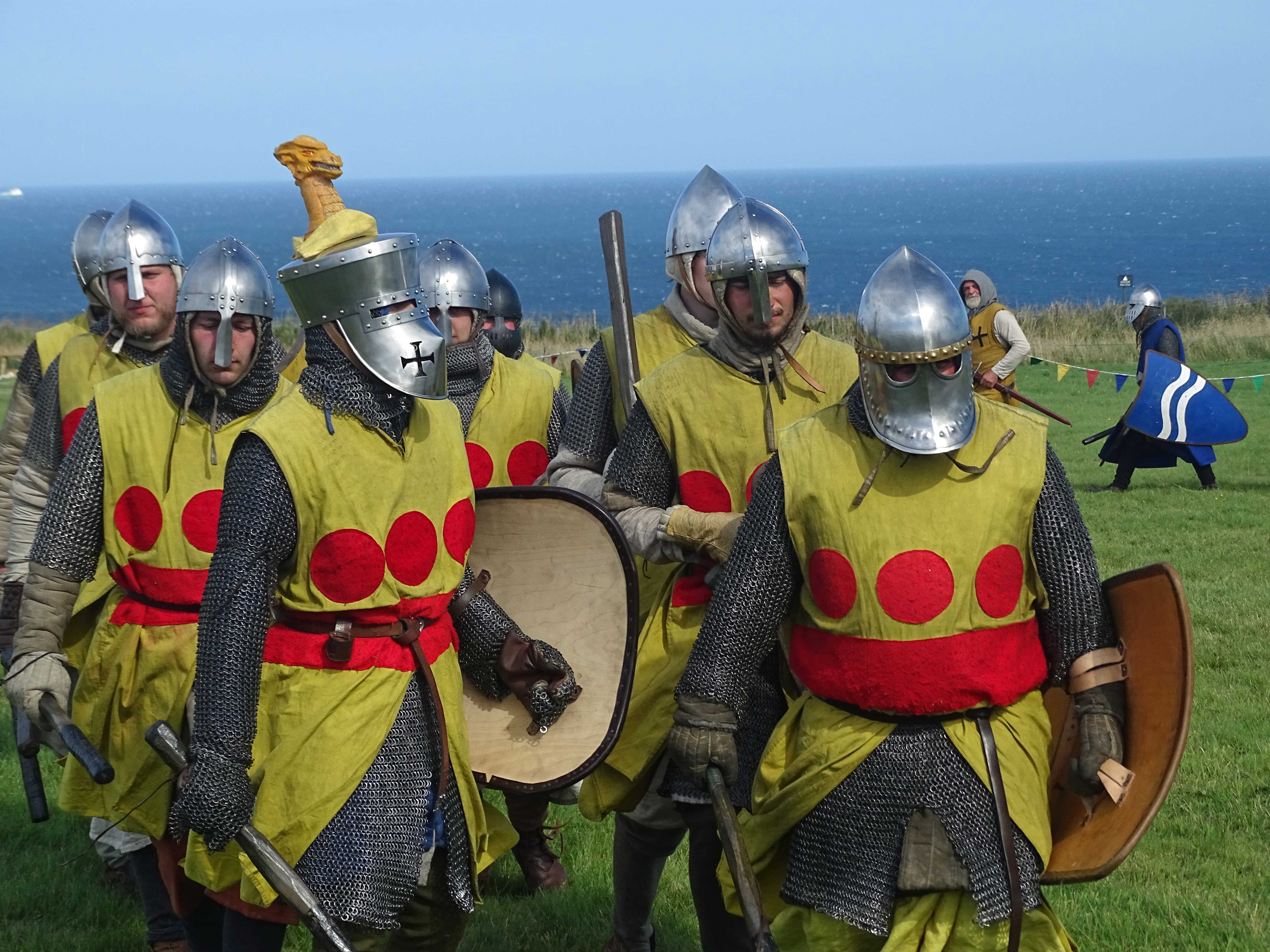
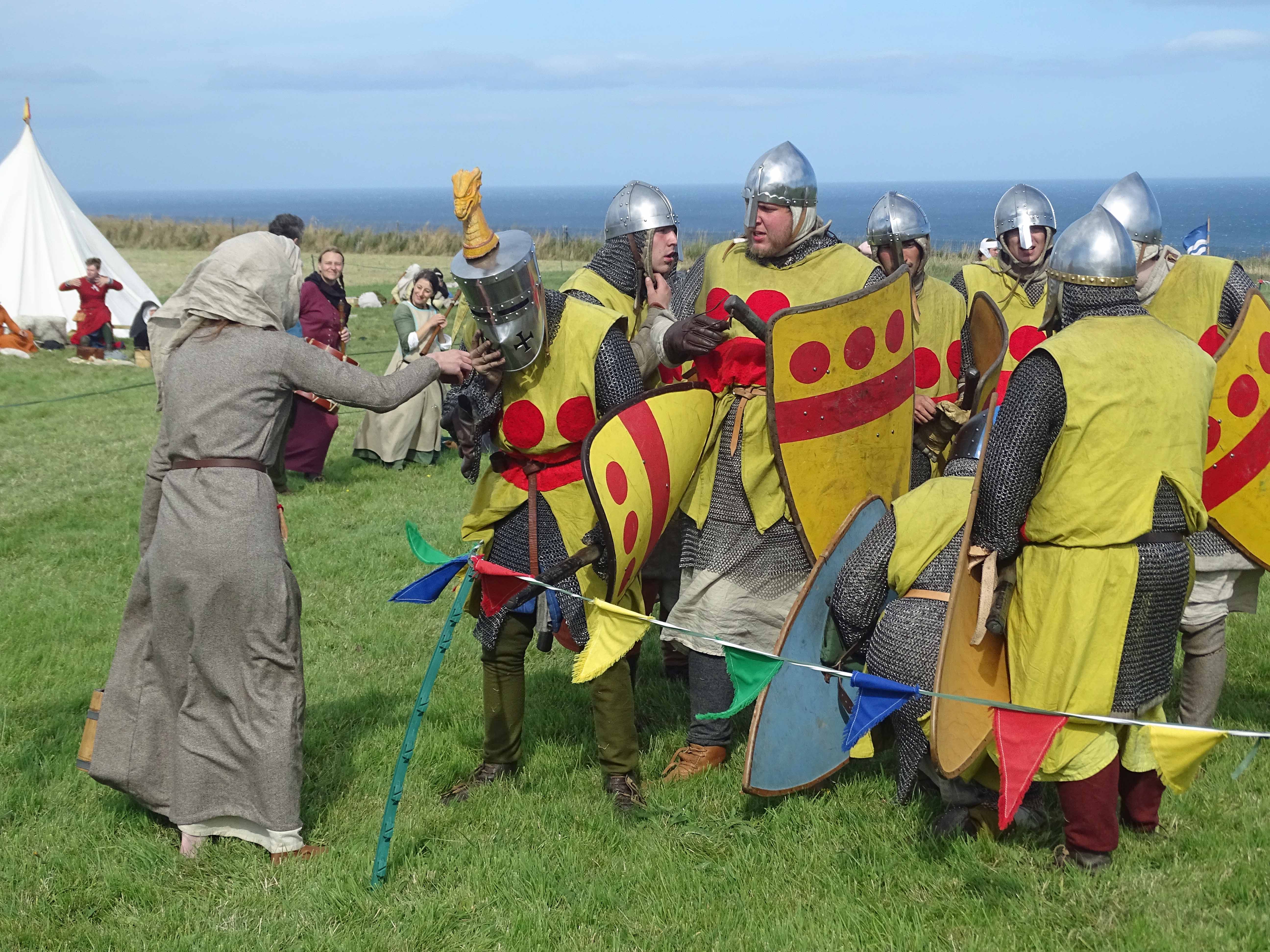
    The aim of the sport was to try to knock off a Crest (known as a dragon) from on top of the helmet of one of the knights. The others members of his team try to protect him from the opposition.

    Yellow team of knights with Crest on top of helmet
    Yellow team of knights with Crest on top of helmet
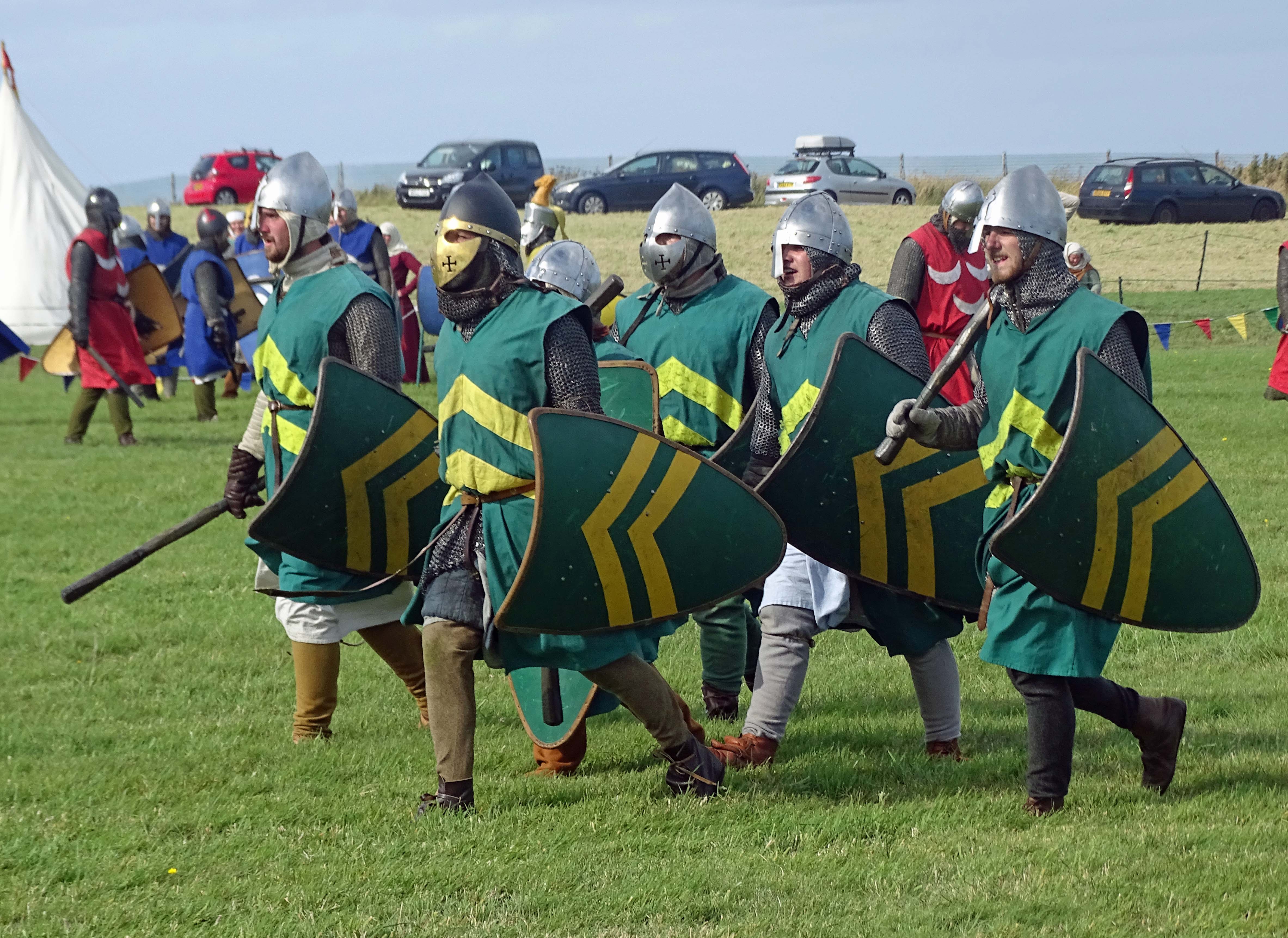
    The Green team
    The Green team
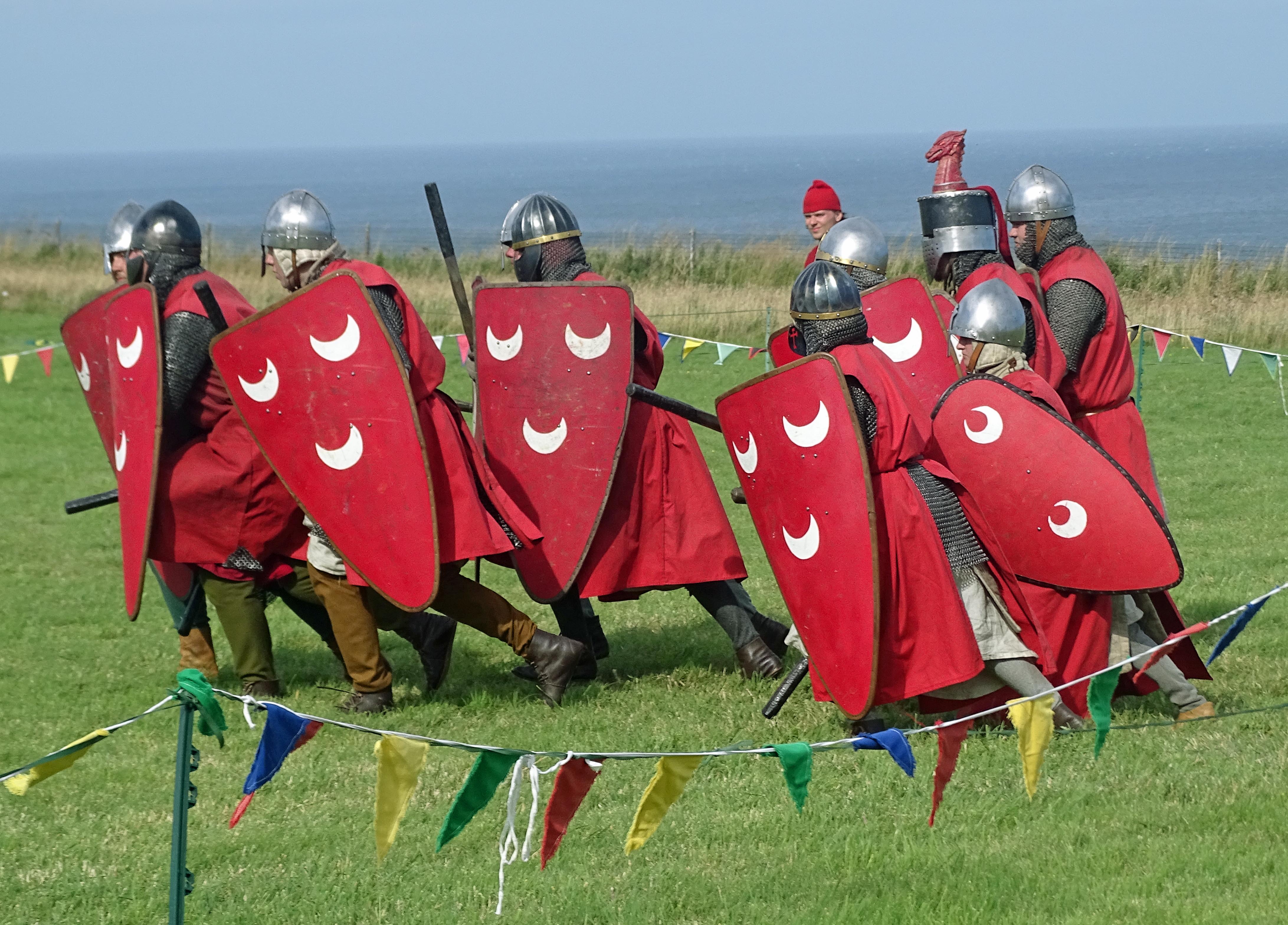
    The Red team
    The Red team

    Battle ensues below.

    Battle ensues
    Battle ensues

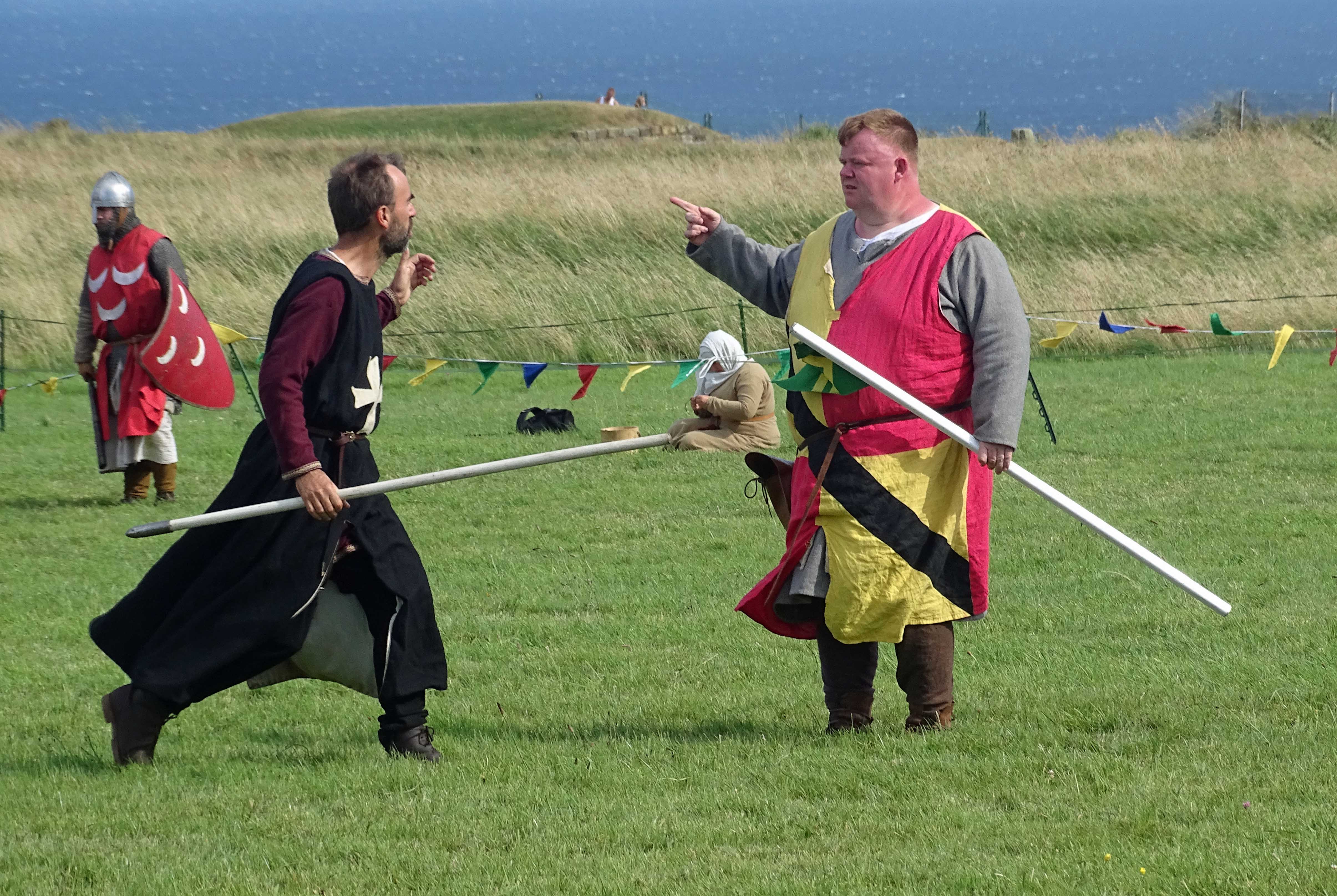
    To ensure fair play, the proceedings were overseen by a Knight Marshall and his Heralds.

    Knight Marshall and Herald
    Knight Marshall and Herald

    The battle was thirsty work and the knights stopped to take on water!

    Knights stopping to drink water
    Knights stopping to drink water
    Girl with water buckets relaxing on the grass
    Girl with water buckets relaxing on the grass
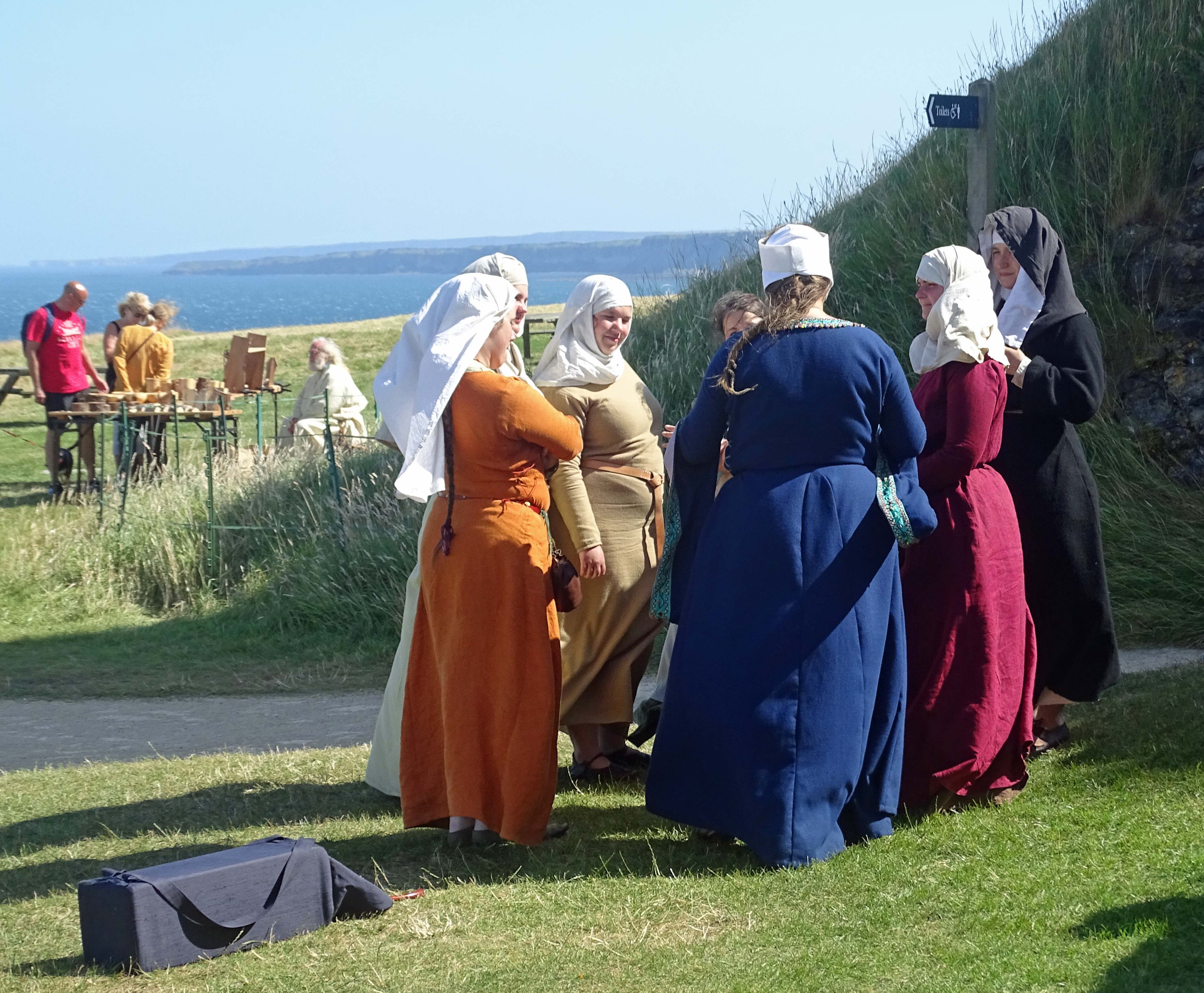
    Ladies in mediaeval costumes
    Ladies in medieval costumes
    Audience watching the knights with the damage keep of Scarborough castle in the background
    Audience watching the knights with the damage keep of Scarborough castle in the background

    All good fun and much enjoyed by the crowd of onlookers.

    1. http://www.english-heritage.org.uk/visit/places/scarborough-castle/history/#footnote-8
    2. https://en.wikipedia.org/wiki/Scarborough_Castle
  • Tour de Yorkshire, Stage 3, May 1st 2016

    The third and final stage of the Tour de Yorkshire cycle race began at Middlesbrough and ended up in Scarborough, 196 km later.  The course of the race can be viewed on the race website (1) and the ups and downs are shown on the Cycling Weekly site (2).

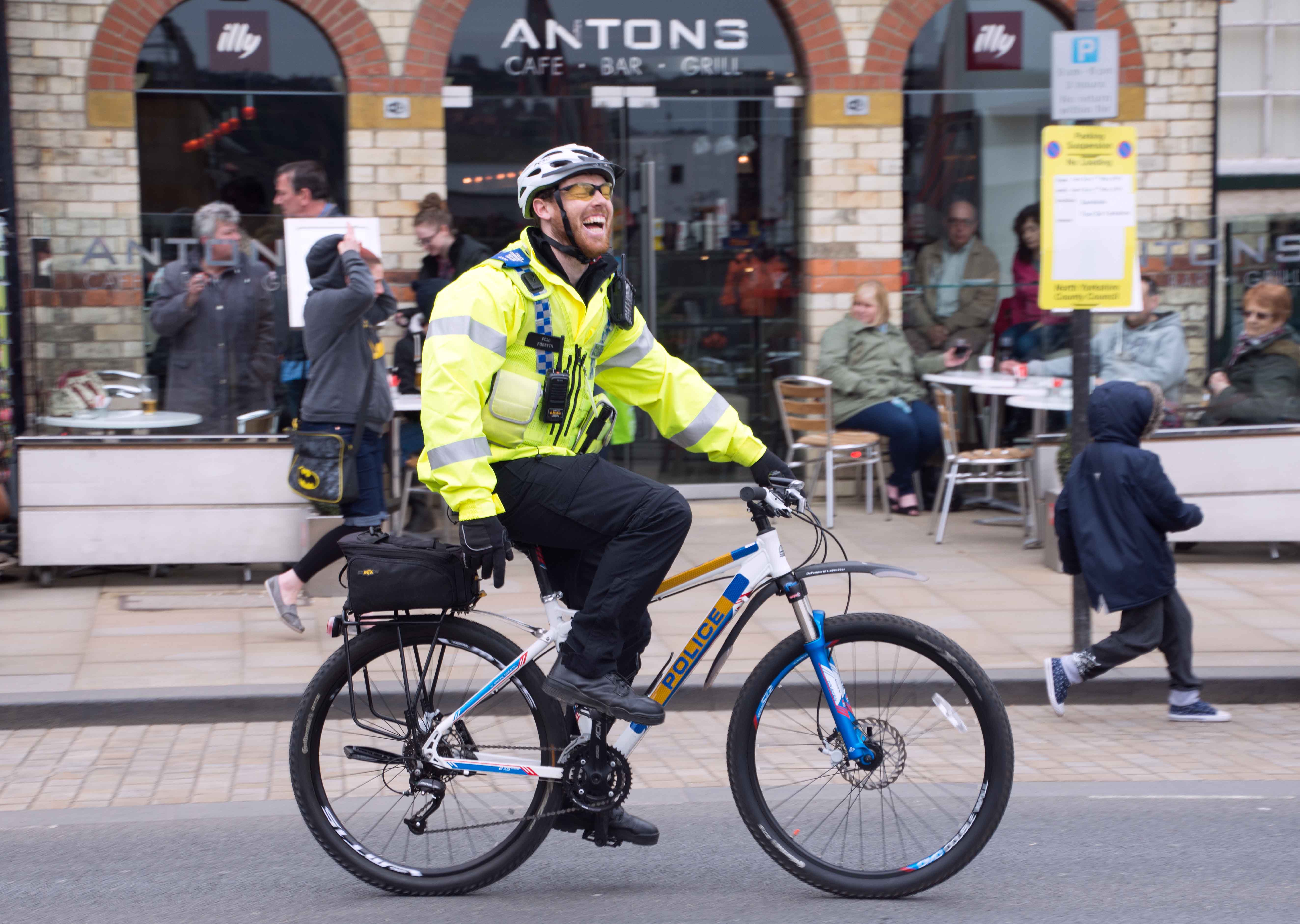
    Prior to the arrival of the racers it was a very relaxed atmosphere.

    Laughing police man Scarborough
    Laughing policeman Scarborough

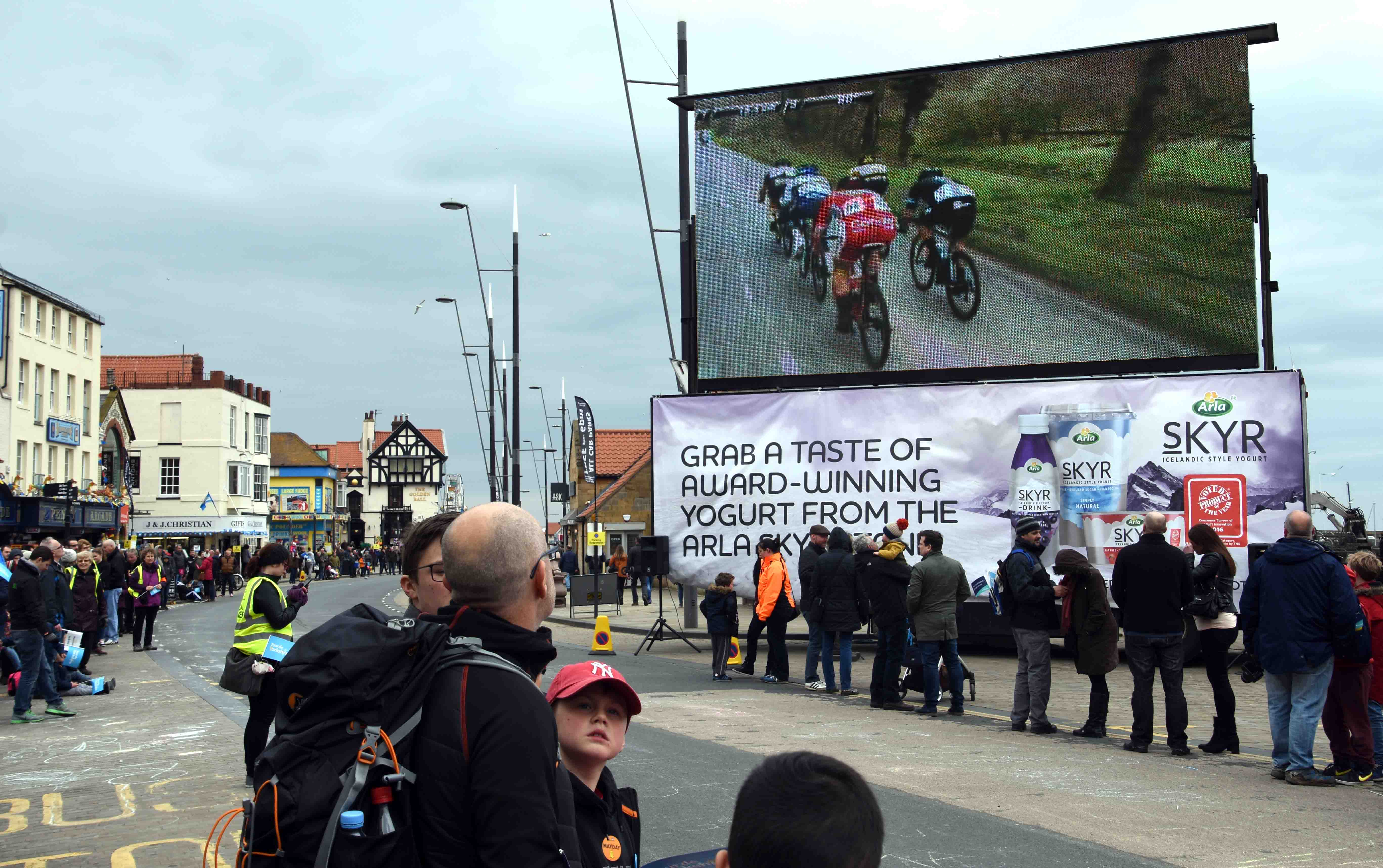
    Spectators awaiting the cyclists could see where they were on a giant monitor screen.

    Giant monitor screen showing the race live
    Giant monitor screen showing the race live

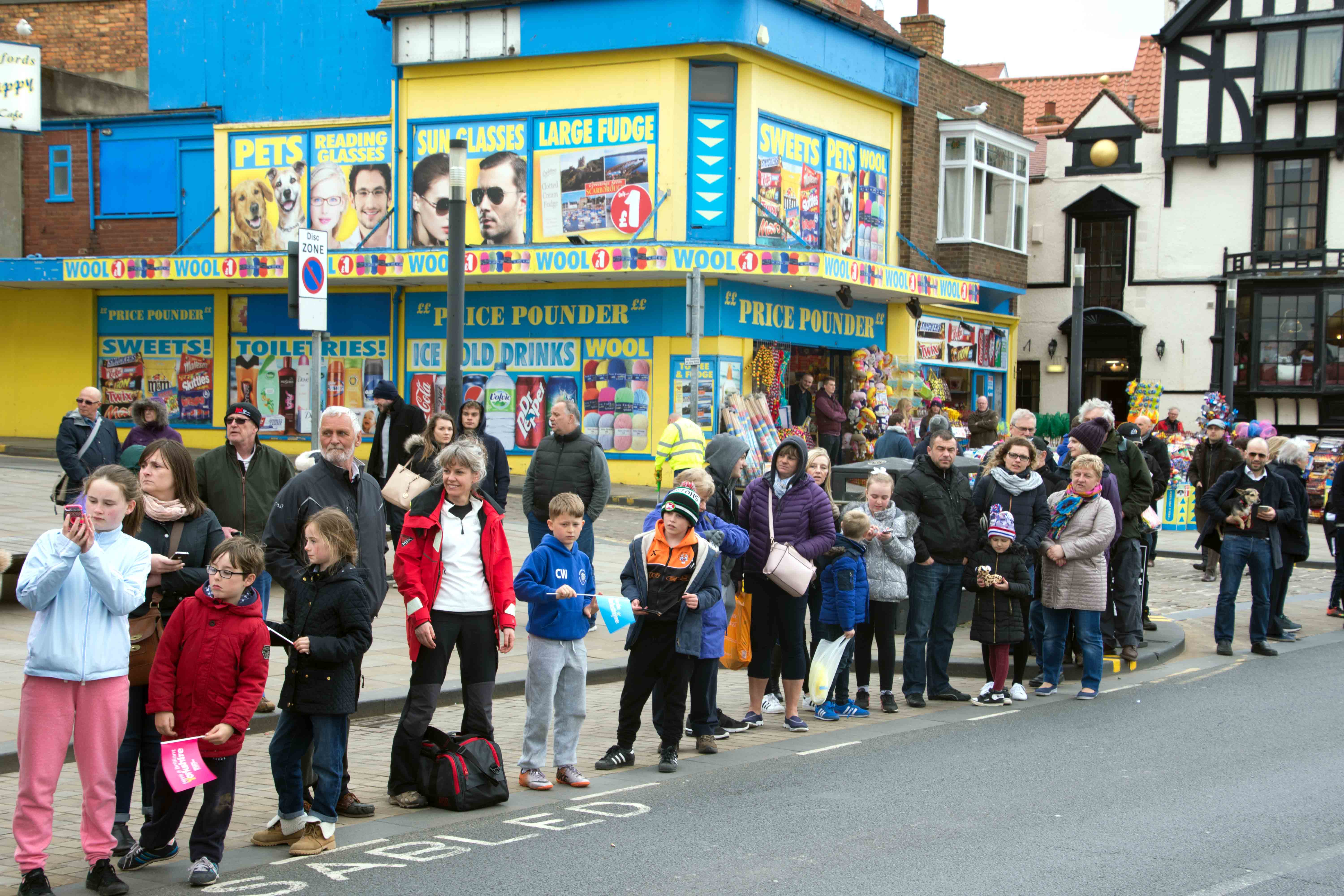
    Spectators waited in anticipation of the riders.

    Waiting or the Tour de Yorkshire riders to arrive
    Waiting for the Tour de Yorkshire riders to arrive
    Some young fans awaiting the riders
    Some young fans awaiting the riders

    Numerous police cars and motor bikes heralded the arrival of the cyclists.

    Police car in front of riders
    Police car in front of riders

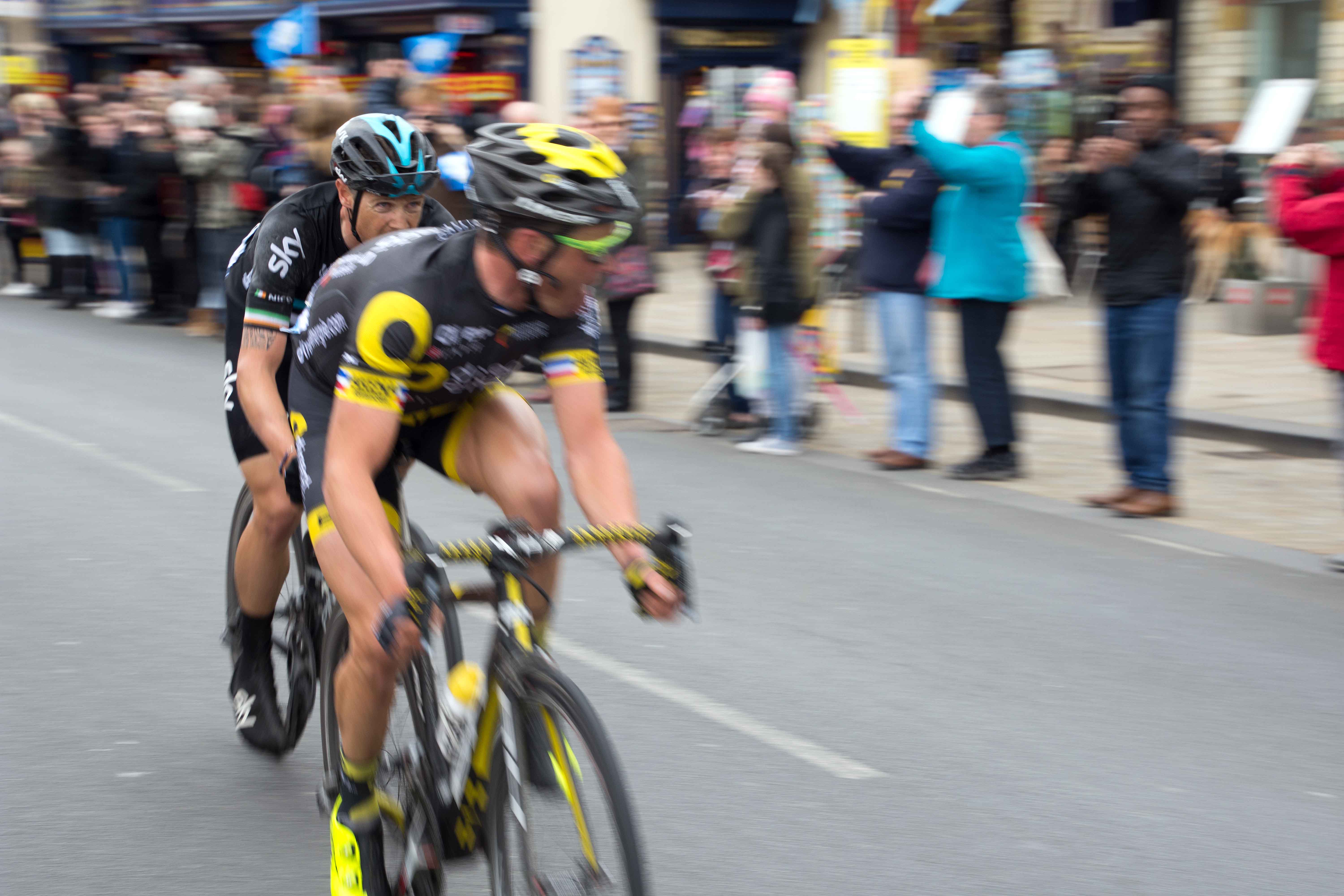
    It was a cold and windy day and the riders must have been exhausted after the gruelling ride, which included six hill climbs. Despite this, there was still a sprint to the finish and only six seconds between the race winner – Frenchman Thomas Voeckler – and the Irish rider Nicolas Roche who came second in this stage. I managed to grab this shot as the two front riders passed beside the harbour in Scarborough, a couple of kilometres from the finish.

    Thomas Voeckler leading Nicolas Roche
    Thomas Voeckler leading Nicolas Roche

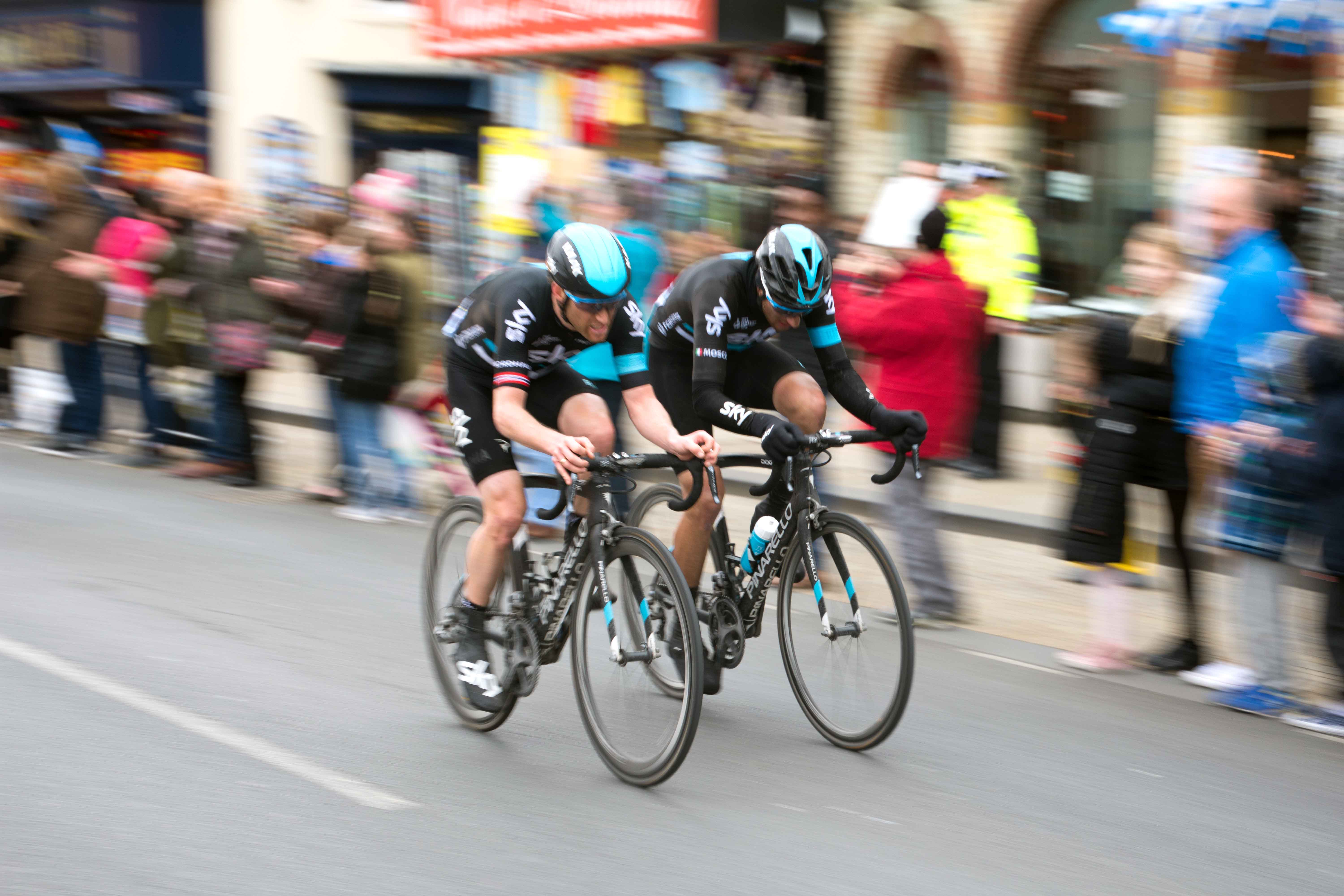
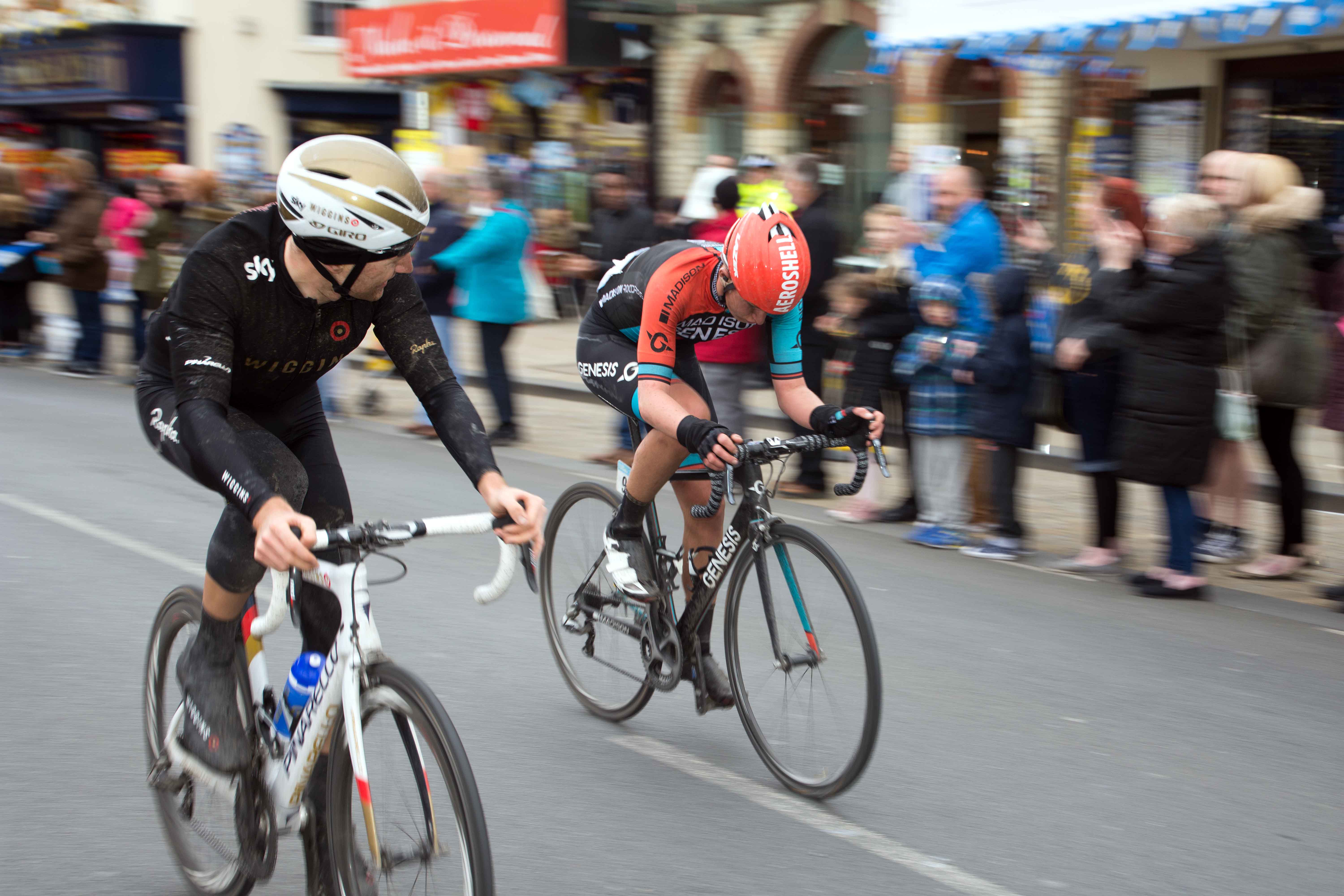
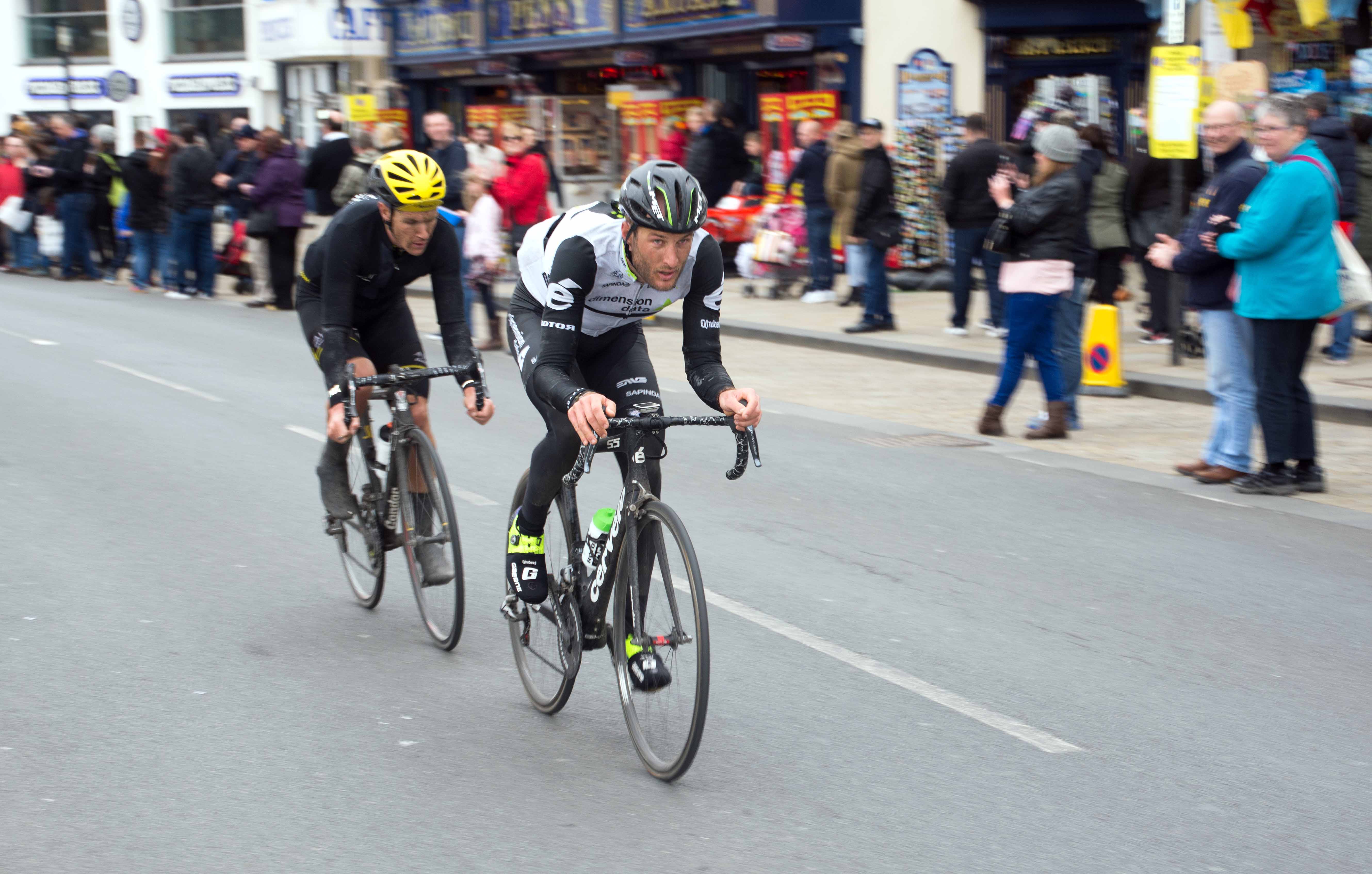
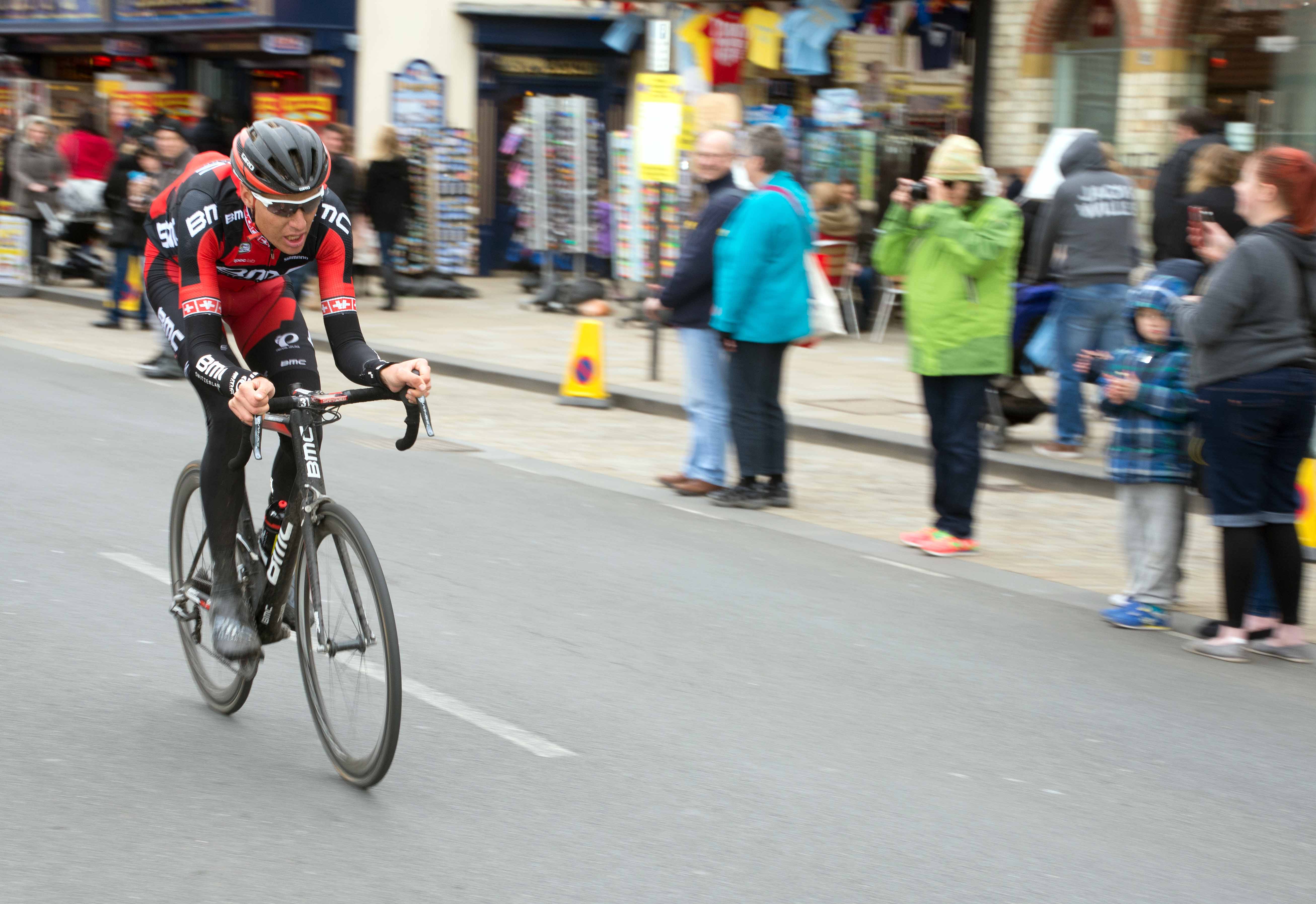
    I got better shots of some of the following riders, although I am not able to put names to those further down the rankings.

    Team Sky riders
    Team Sky riders
    Riders near the finish of Stage 3, Tour de Yorkshire
    Riders near the finish of Stage 3, Tour de Yorkshire
    Riders near the finish of Stage 3, Tour de Yorkshire
    Riders near the finish of Stage 3, Tour de Yorkshire
    A rider near the finish of Stage 3, Tour de Yorkshire
    A rider near the finish of Stage 3, Tour de Yorkshire

    Support cars carrying spare bikes followed the riders.

    Support car following riders
    Support car following riders

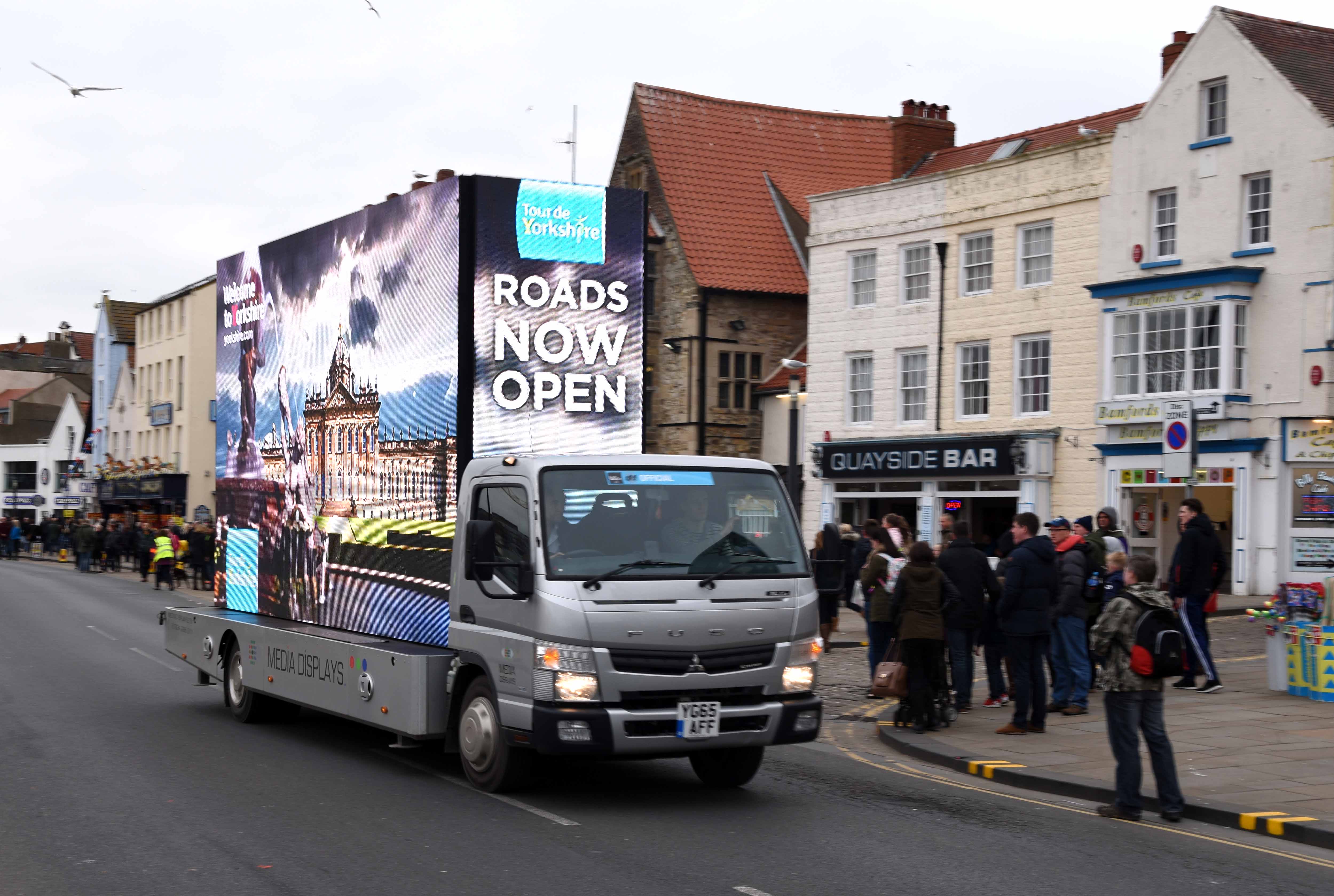
    A lorry came along at the end telling everyone that the race was over and the road was open again.

    End of the cycle racing
    End of the cycle racing

    Race results of the Tour de Yorkshire 2016 can be seen on the Cycling Weekly website (3).

    1. http://letour.yorkshire.com/stage-3/map
    2. http://www.cyclingweekly.co.uk/news/racing/british-racing/tour-de-yorkshire-times-where-to-watch-156008
    3. http://www.cyclingweekly.co.uk/news/racing/thomas-voeckler-wins-tour-de-yorkshire-223434
  • Scarborough harbour reflections

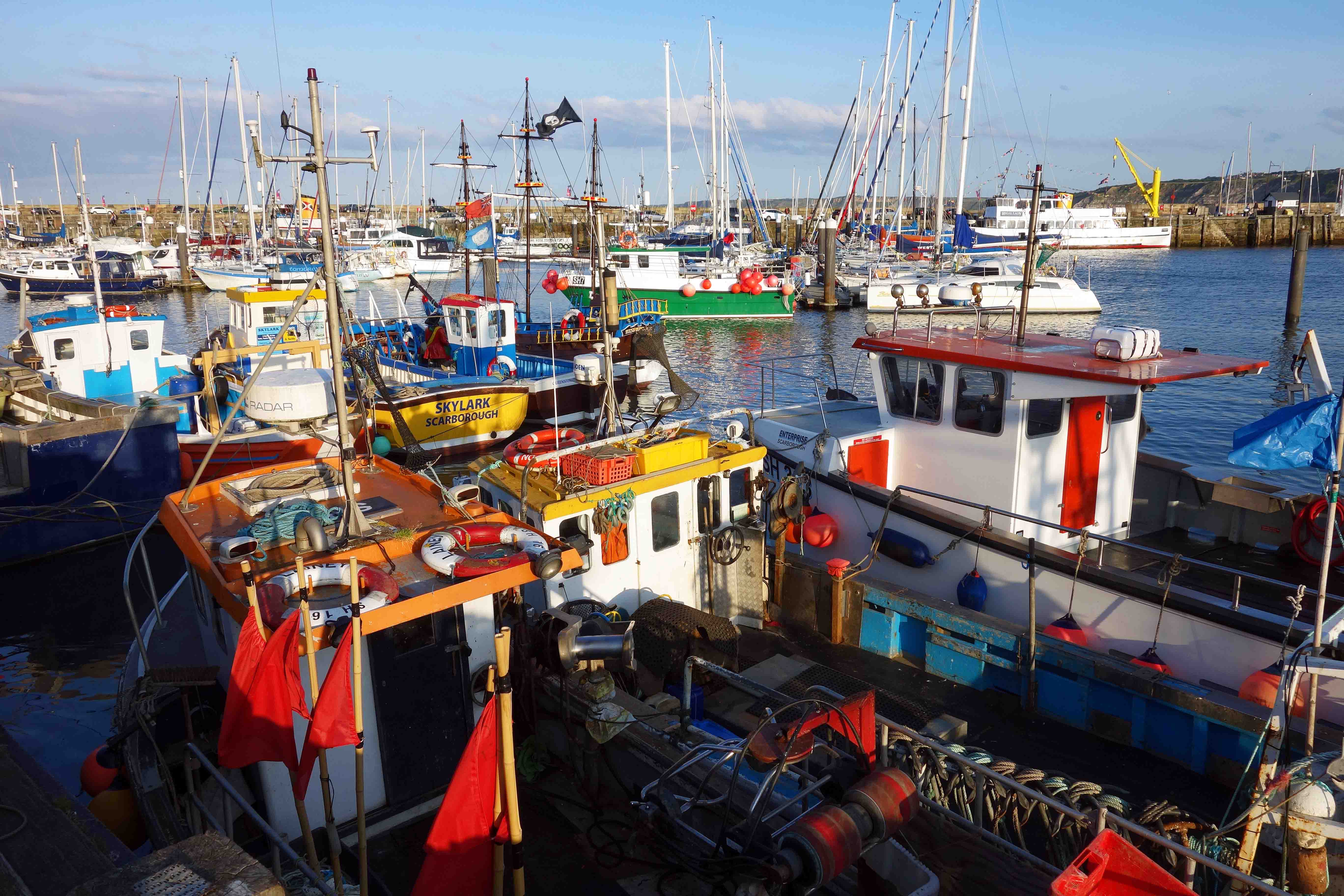
    Fishing boats in Scarborough
    Fishing boats in Scarborough

    The small harbour in Scarborough, North Yorkshire, is a photographer’s delight, with a diverse collection of colourful fishing boats and pleasure craft. There are also lots of colourful shops and amusement arcades along the sea front.

    Colourful tea shop called the Tea Pot
    Colourful tea shop called the Tea Pot

    During the summer, the sun sets late in the evening and the so-called ‘magic hour’ – when colours are at their richest and most saturated – occurs between 8 and 9 pm or even later. One thing that really attracts me are reflections.

    Colourful fishing boats produce attractive reflections
    Colourful fishing boats produce attractive reflections

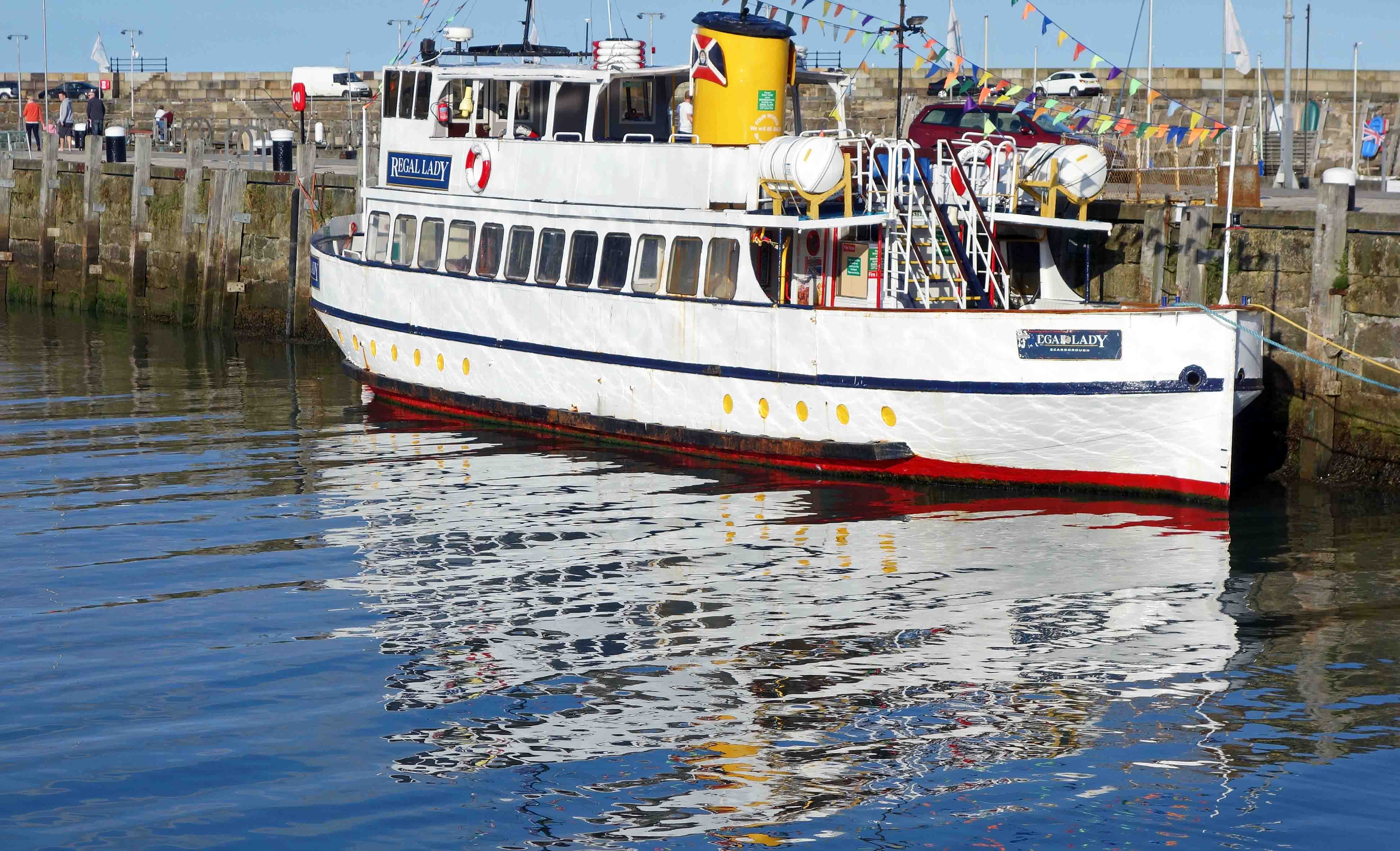
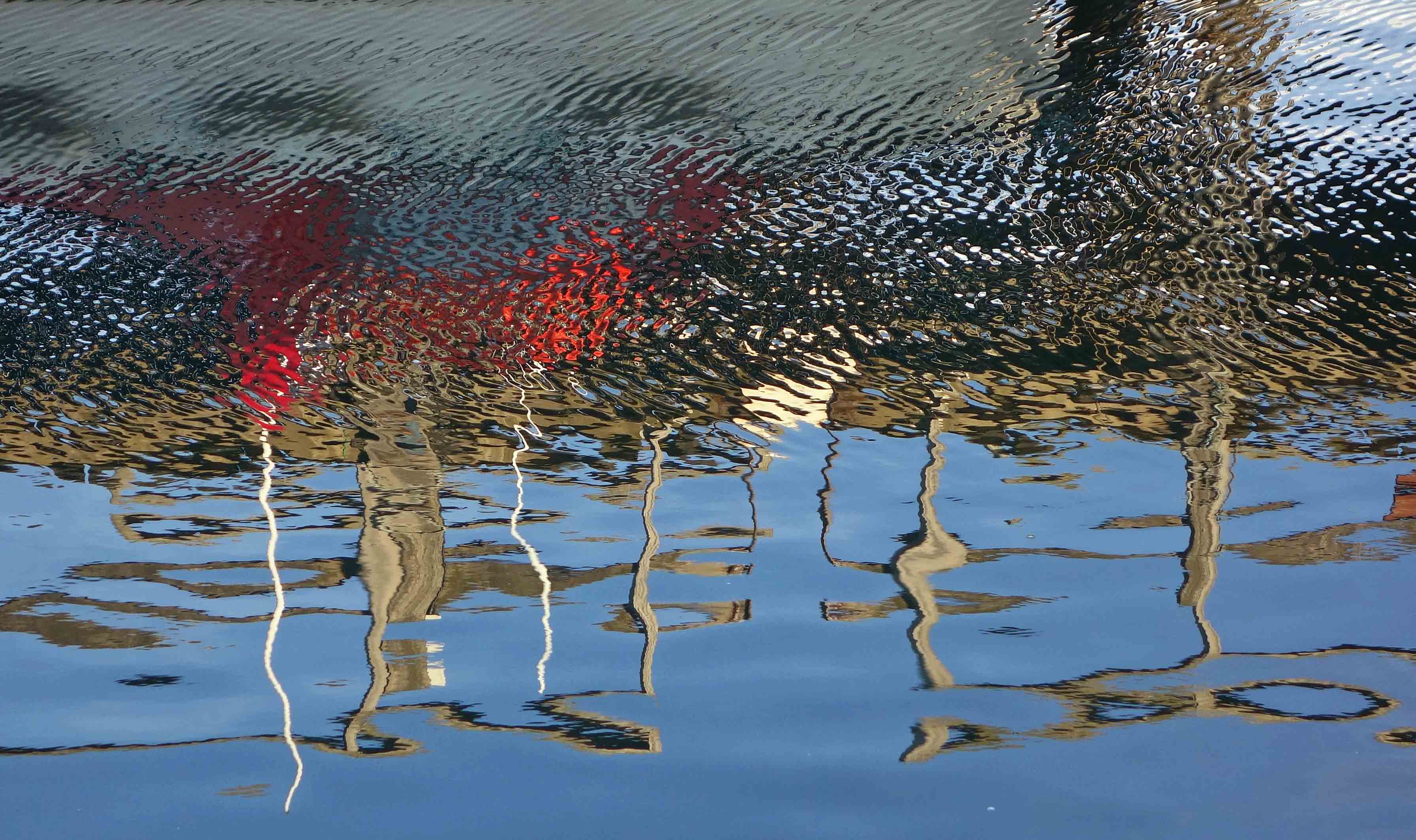
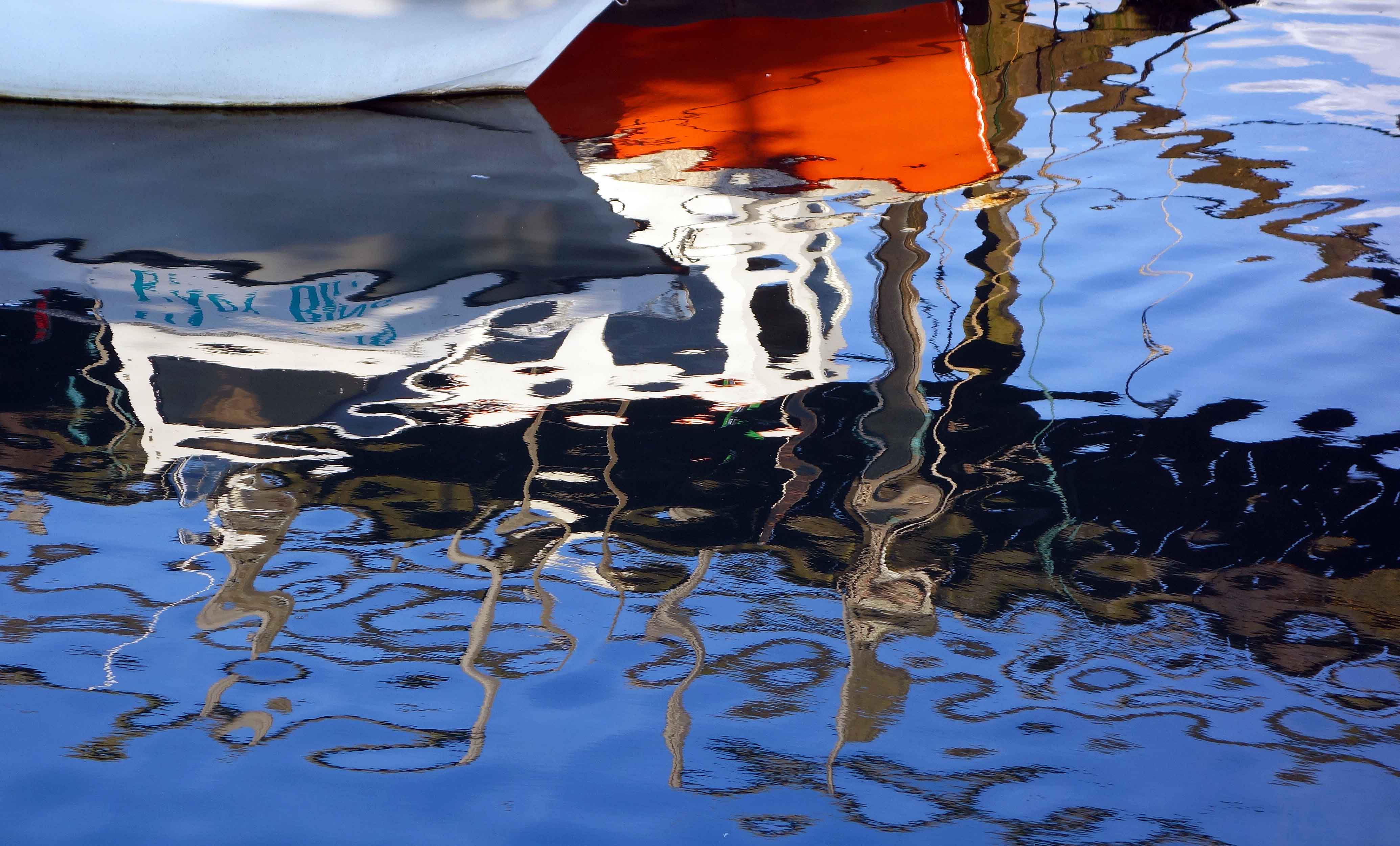
    Brightly coloured reflections offer the possibility of sampling them to obtain abstract images. The reflections need to be bright – so sunshine is a must – and the images must offer the possibility of selecting an area which might be aesthetically interesting to focus on.

    Regal Lady - ship with a nicely broken up reflection
    Regal Lady – ship with a nicely broken up reflection

    If there is an art to this process, it is choosing the right sort of reflection – which is fairly easy! – and then selecting an area which seems to offer something pleasing to the eye. This is highly subjective of course, and to some extent, a matter of personal preference. Some people like abstract images more than others.

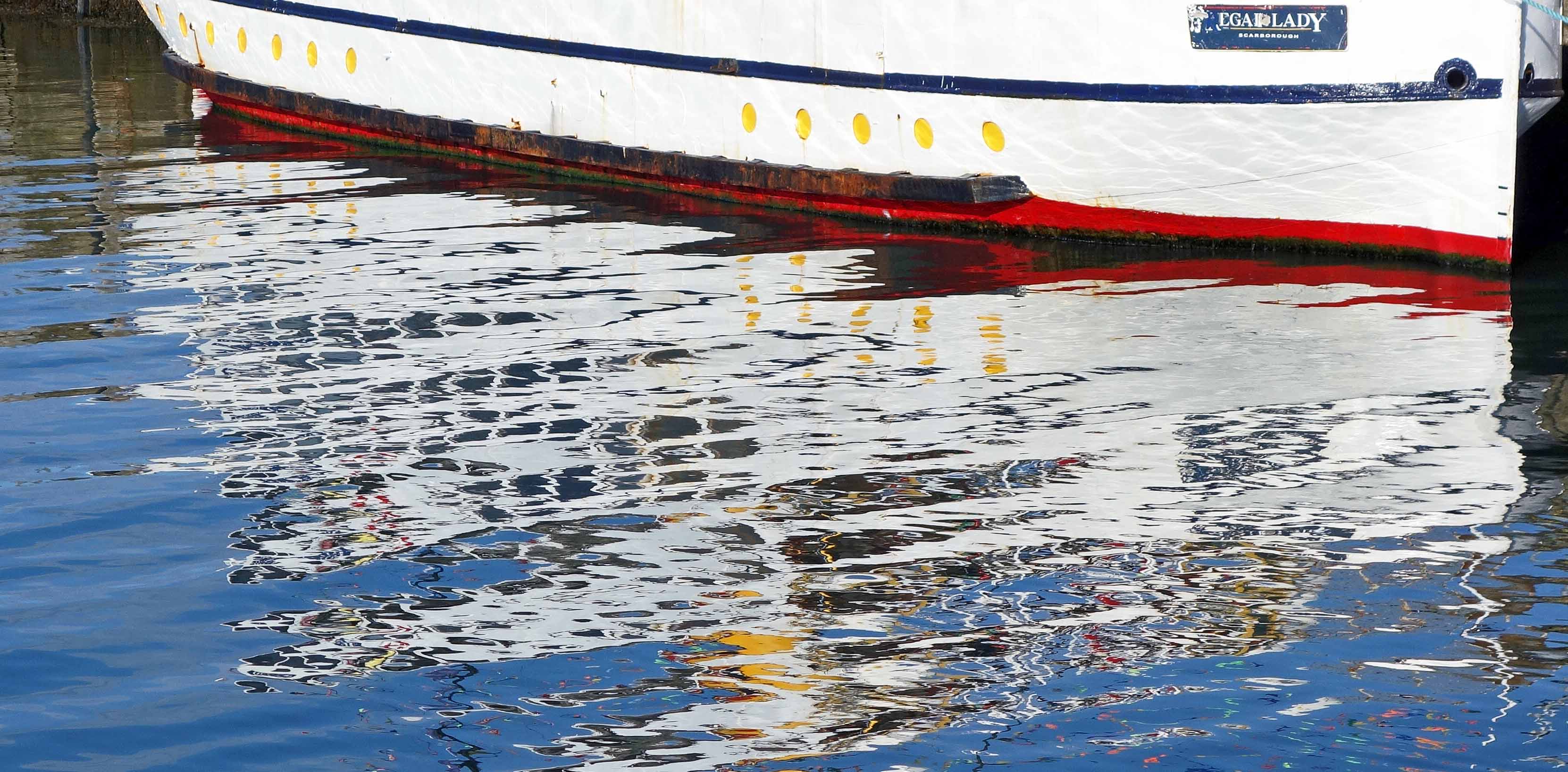
    Regal Lady reflection in more detail, i.e. cropped
    Regal Lady reflection in more detail, i.e. cropped

    Sometimes, I think it is preferable not to crop too much. To leave quite a lot of the object which is being reflected, i.e. the boat, in the picture. To some extent it depends on how attractive they are in their own right.

    Boats reflected in the harbour
    Boats reflected in the harbour

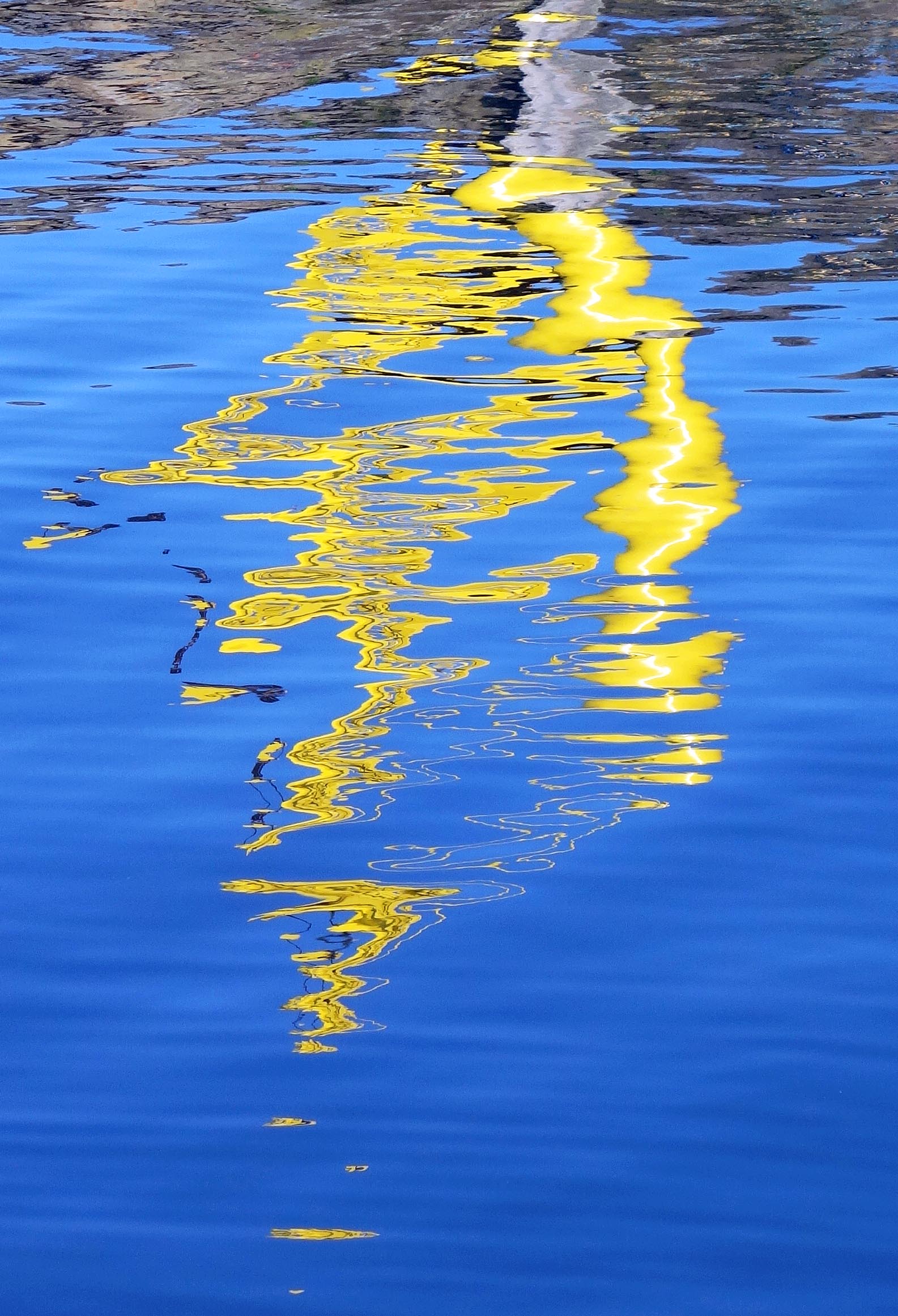
    Some objects are not particularly interesting or attractive in their own right, but are very interesting when broken up in the reflection. I think this applies to the yellow davit in the following picture. I focussed only on the reflection, which because of the interesting shape and bright colour, is interesting by itself. Well at least to me!

    Reflection of a bright yellow davit in the harbour
    Reflection of a bright yellow davit in the harbour

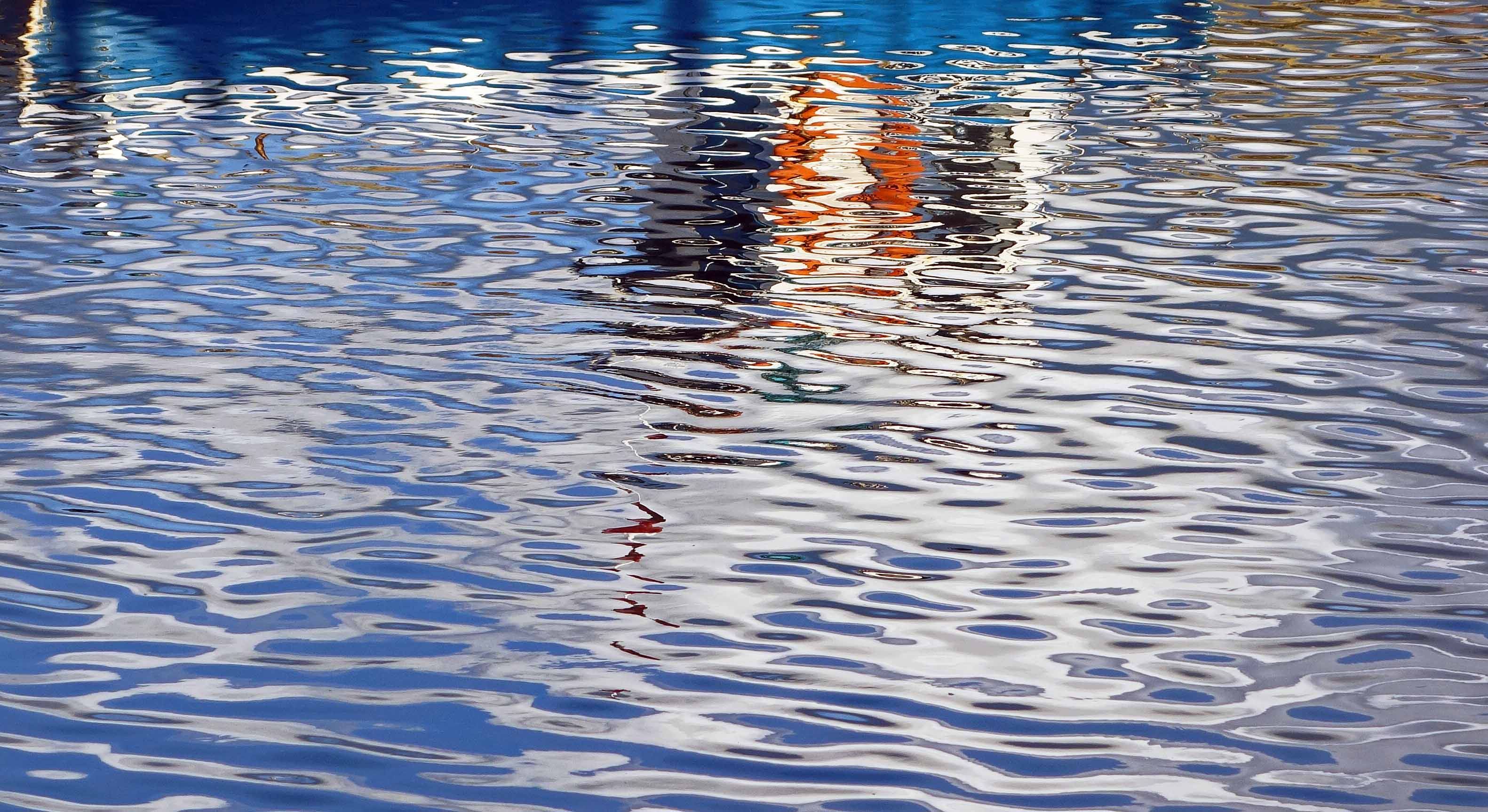
    Reflections are best when the water is calm and smooth, but moving just enough to break up the outlines. They are of course, ever changing, and it can be interesting to take repeated images of the same spot and record the changing reflection. Ripples can however, offer a different perspective, breaking up the colours and shapes into much smaller, rounded shapes, as below.

    Ripples on a reflection
    Ripples on a reflection

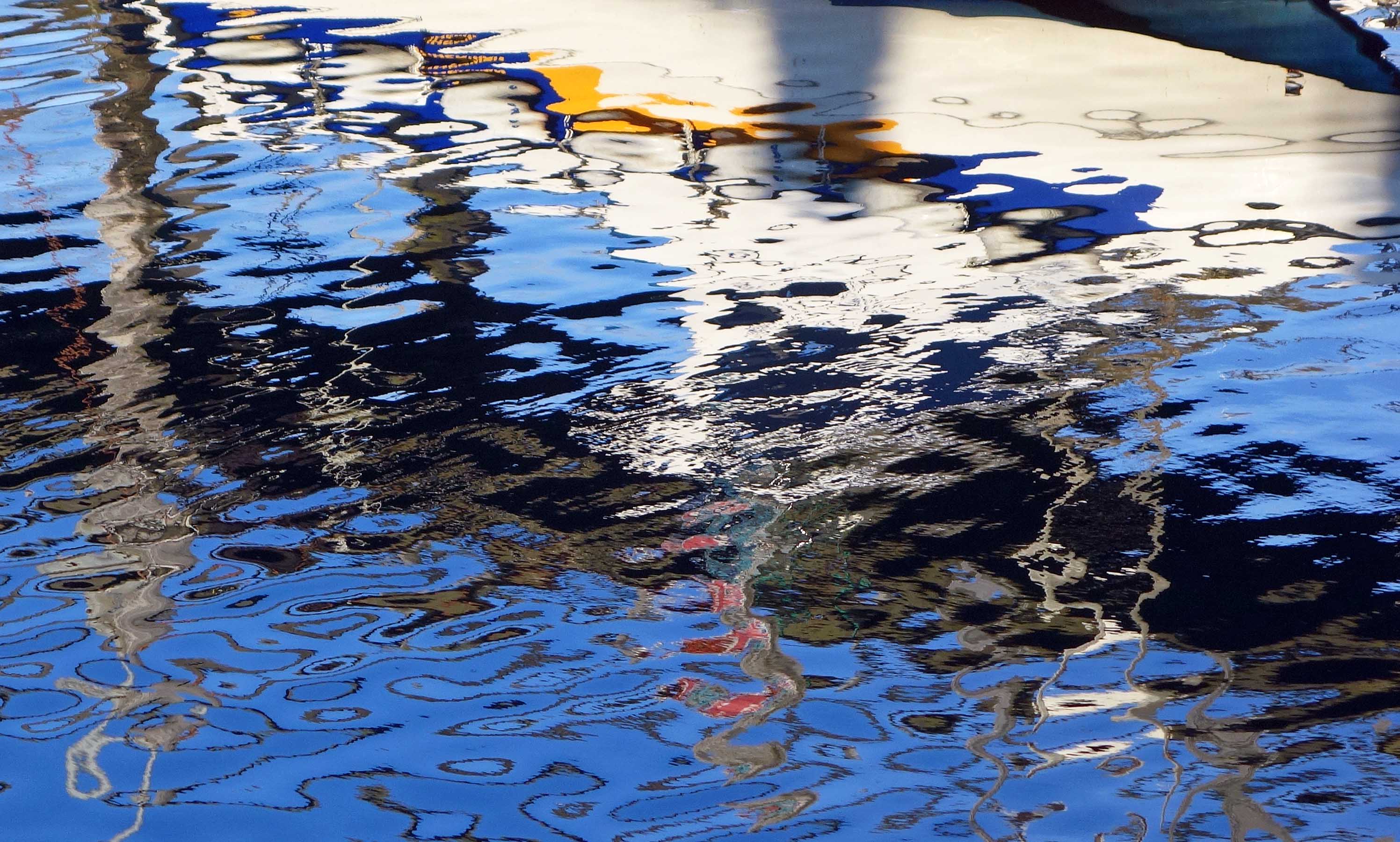
    My own preference is for highly abstract, severely cropped images of reflections; there are endless possibilities. But these are not to everyone’s taste, and it needs a certain quality of original image to produce good outlines when cropped. There is scope for cropping even further in the following two photographs.

    Boat reflection, cropped
    Boat reflection, cropped
    Another boat reflection, cropped
    Another boat reflection, cropped

    When I first started taking photographs of reflections and sampling from them, I was blown away at the possibilities for producing abstract images and cropped them severely. I now think that such reflections work best at an intermediate scale, cropped and selected, but not too much, so that the original photograph is still not too altered. It puts more emphasis on trying to get the image right ‘in camera’ as it were, and not over-processing them afterwards, great fun though it is! The image shown below is an example of a photograph that was cropped, but not too heavily, and I think it works well  because the original choice of what to photograph worked out well. It also depends on what sort of lens you have. There is always an element of luck in getting a good image, but perseverance and practice pay off! Personally, I think there is an awful lot of luck in photography, but if you do it often enough, you get lucky!

    Reflection of boat in harbour
    Reflection of boat in harbour

    The approach, of getting it right ‘in camera’ applies to all sorts of photography; I know it is Steve McCurry’s dictum, when taking portraits, and he is about as good as it gets (1). But sampling from images is another sort of art, of sorts, and there is scope for a lot of post-processing if that is what you enjoy. It is always good to get some feedback on such images, and putting them on National Geographic My Photos, for example, is a good way of discovering if other people like your choices (2).

    A yacht name reflected in the water
    A yacht name reflected in the water

    All of these images were taken with a small compact camera (Sony RX).

    1. http://stevemccurry.com/blog/reflections-portraiture

    2. http://yourshot.nationalgeographic.com/profile/237466/