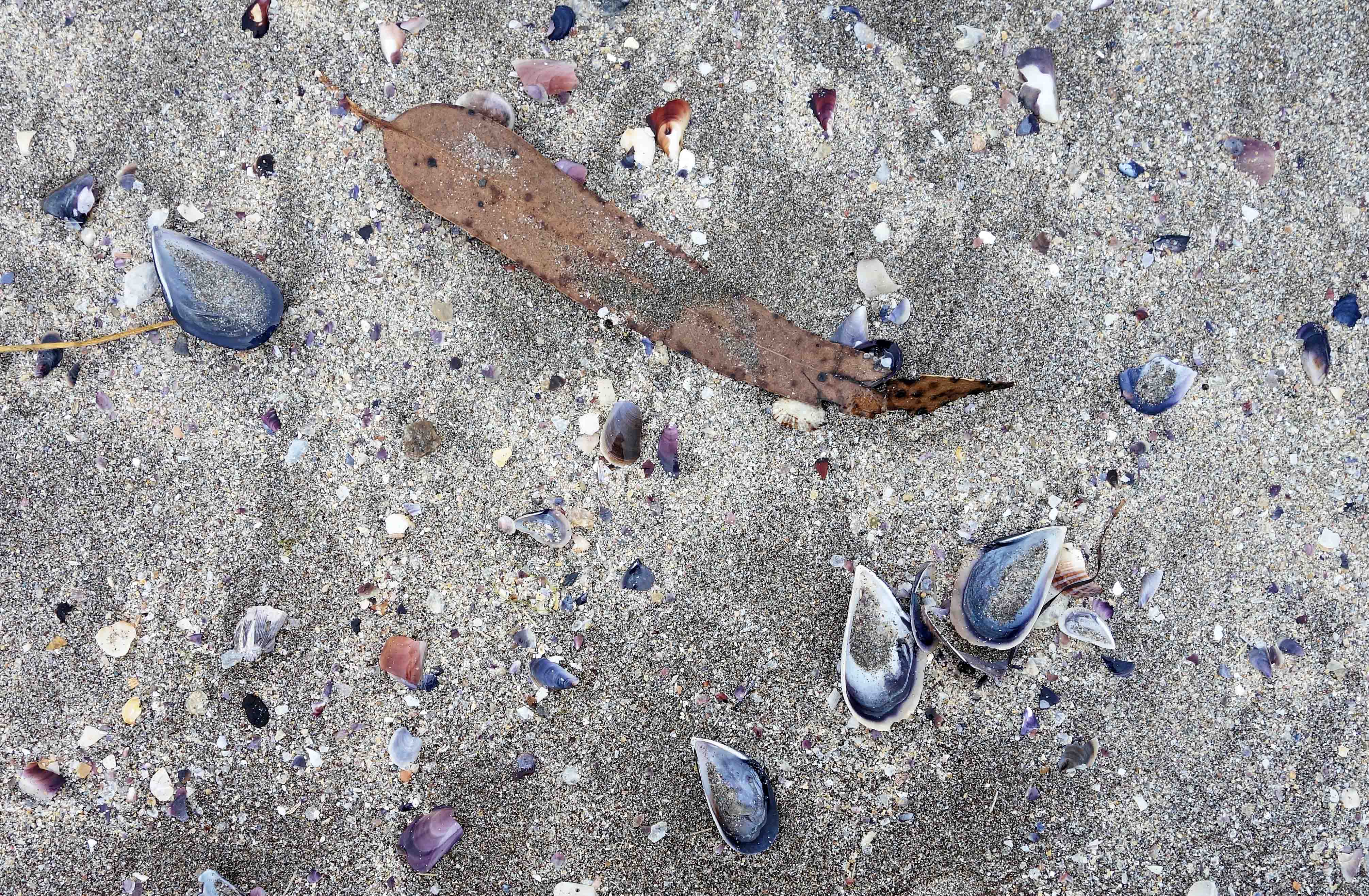
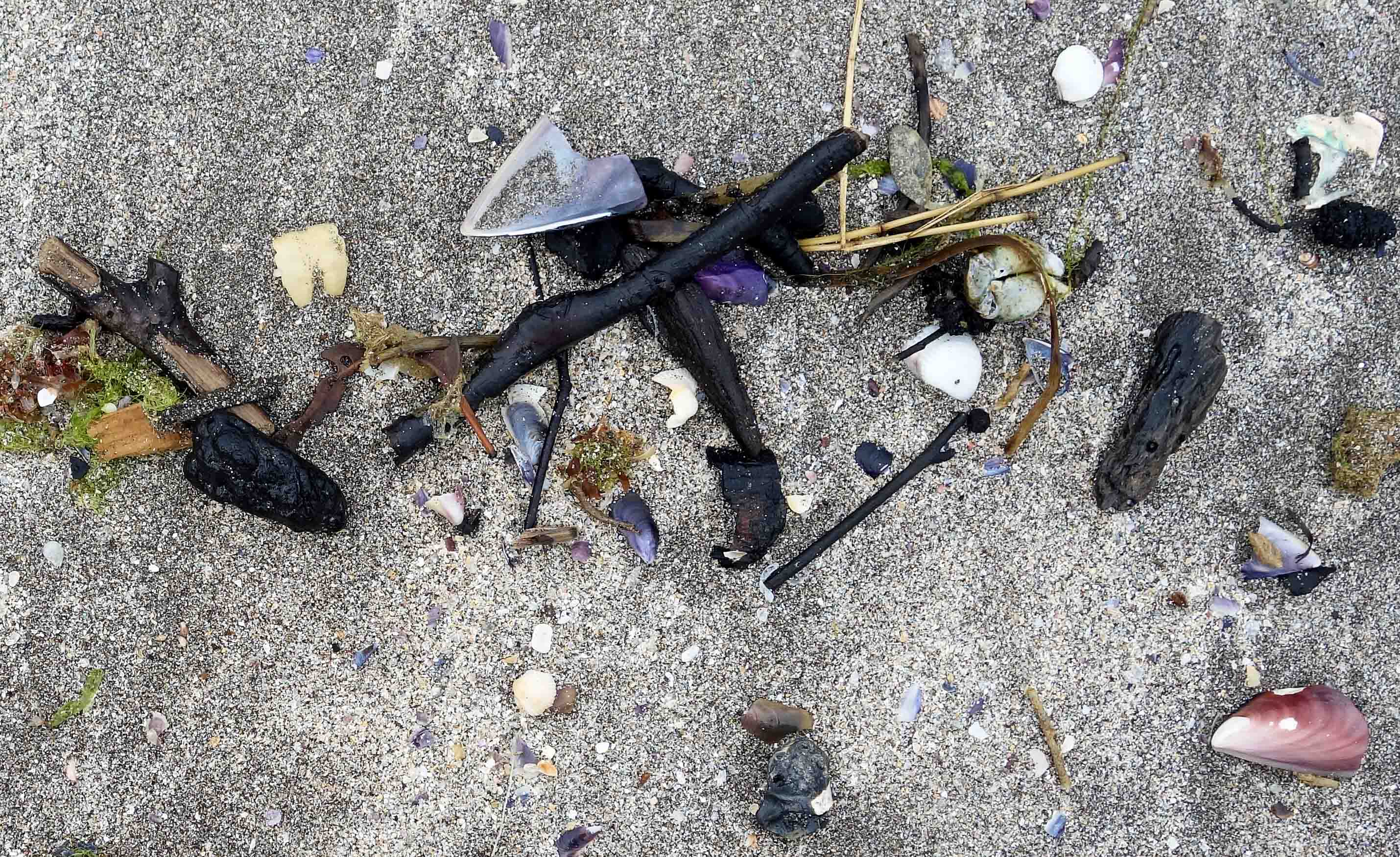
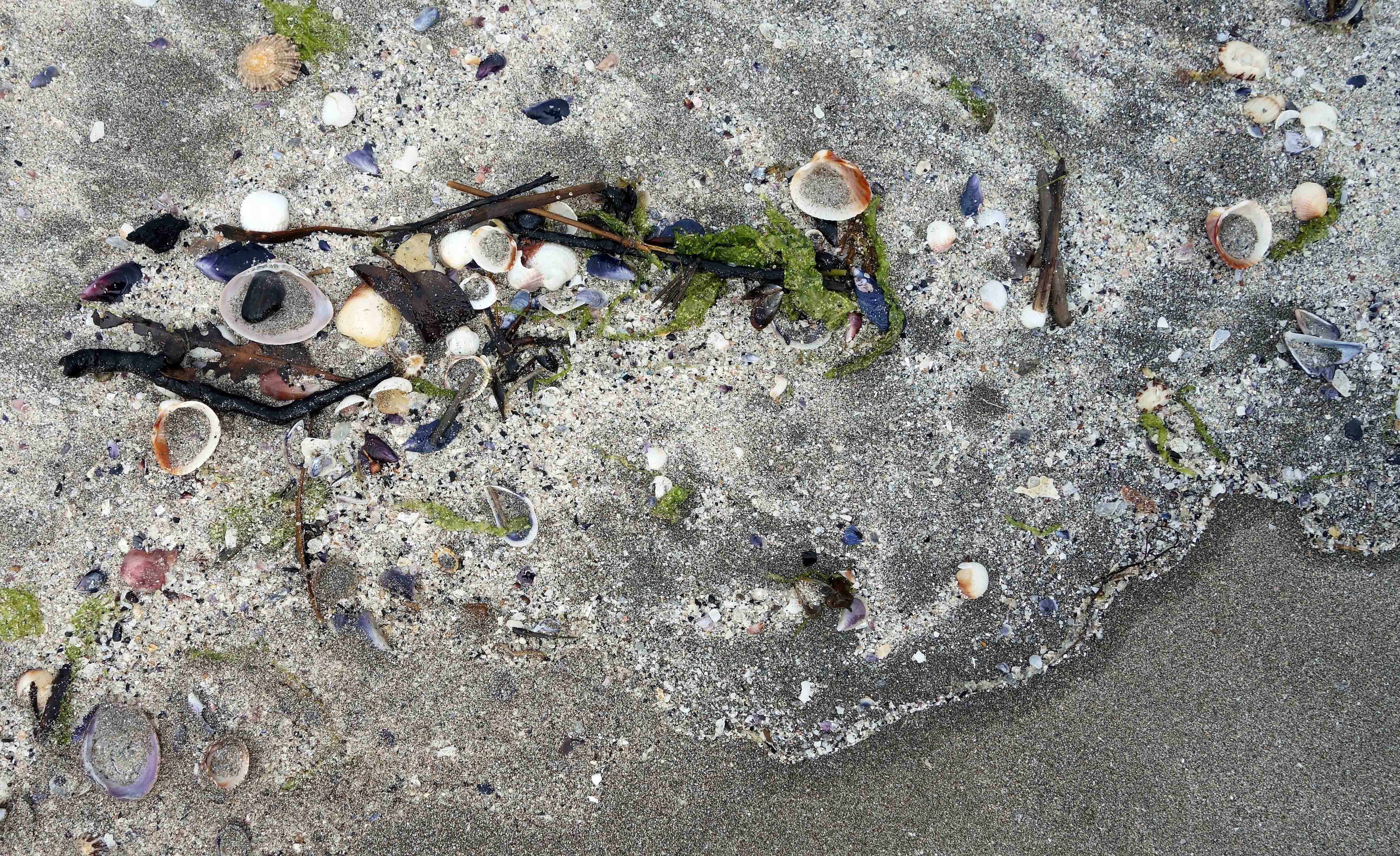
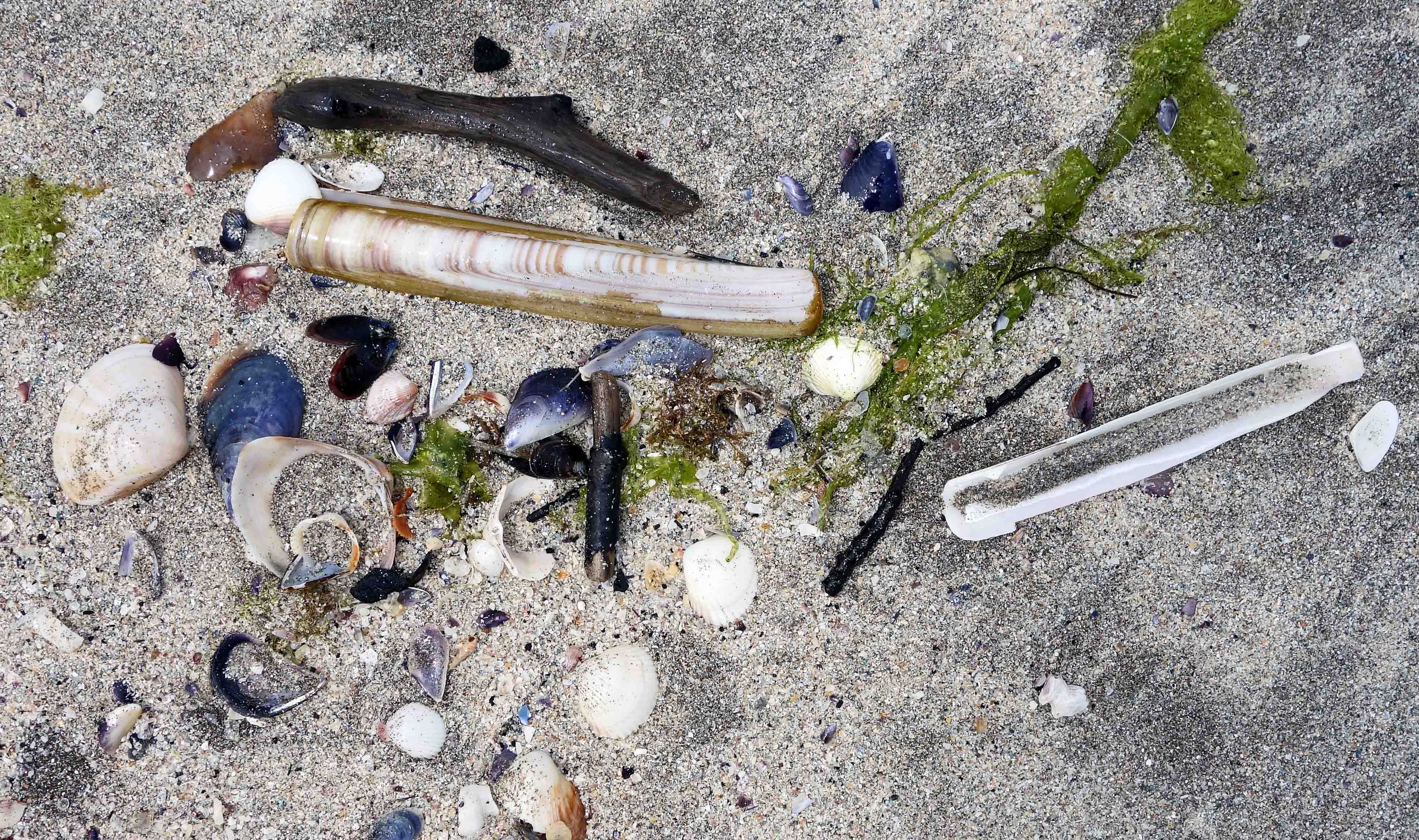
We humans can create ‘works of art’ in many ways. We might collect shells and drift wood and use them to make representational works like Picasso did so skilfully. Or we could grind up natural elements like soil or minerals and apply them to a canvas. Or we could rely on Nature to produce a pattern, as here by waves washing up and down a beach, moving the shells, leaves and pieces of wood in ‘random’ pattens. But these arrangements follow a natural order; shells lie flat (rarely on their sides); smaller grains move father and faster than larger stones; wood floats and settles; and all the pieces get pushed into a narrow zone produced by the waves – advancing and retreating – a tide line.
Tide line
Walking along a tide line, we might select in our camera lens certain features, patterns or accumulations as our fancy dictates. What drives this selection is a certain aesthetic, but what determines a given selection – a quick glance and then a largely unconscious choice looking through a viewfinder – is a matter of taste, and is probably not worth thinking about too deeply.
Tide line
Rather, walk and get into a rhythm where the choice is spontaneous and natural. Not all compositions will work, but occasionally – with a little skill (we can all do it) – something of beauty emerges. Back home on the computer – the modern atelier – the photographer/artist can fine tune his selections, crop and polish, until something pleasing, but still rather intangible emerges.
Tide line
All of these images were taken with a compact camera (Sony RX I) whilst walking along Morouzos beach (1), Ria Ortigueira, on an overcast day (31st May 2015).
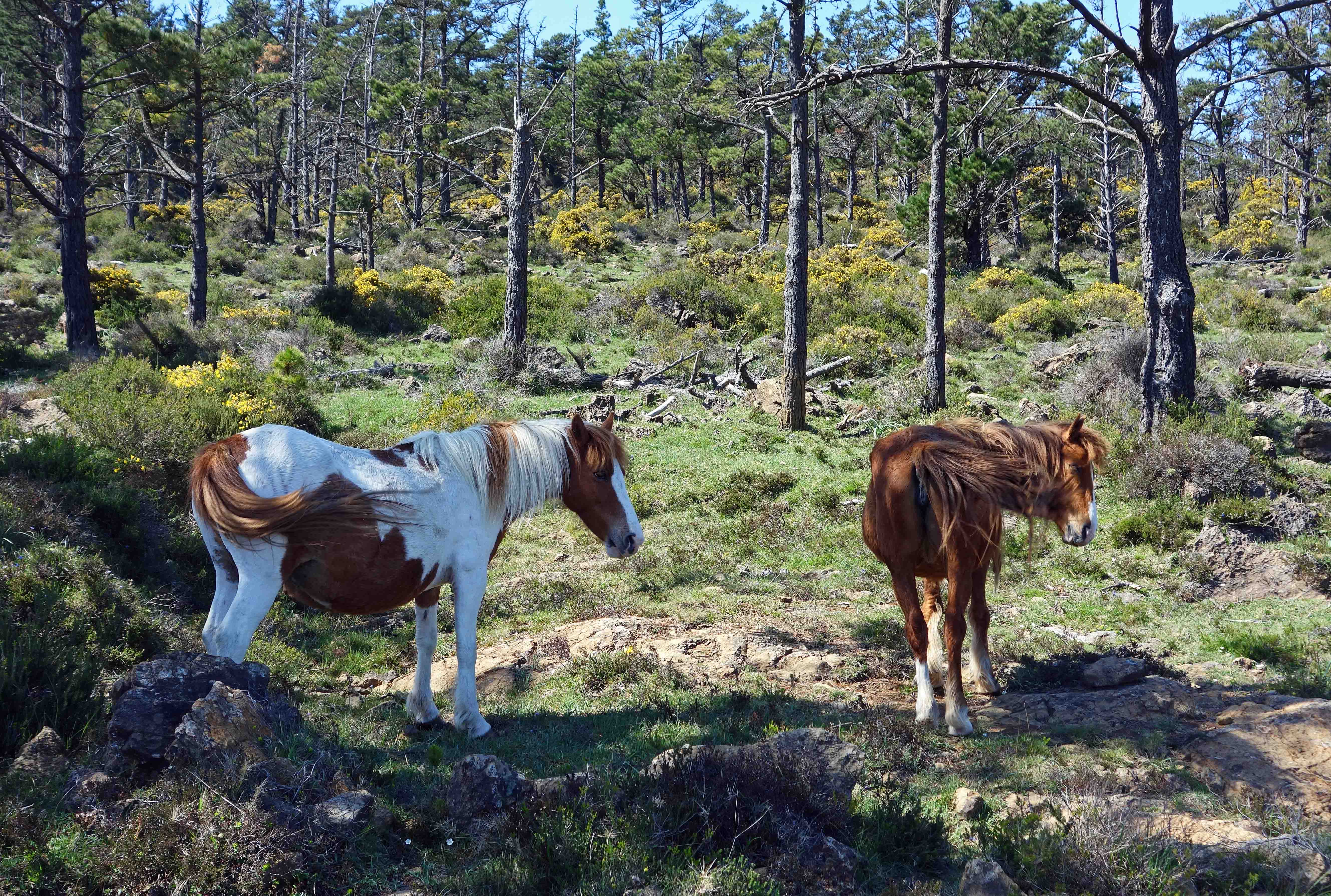
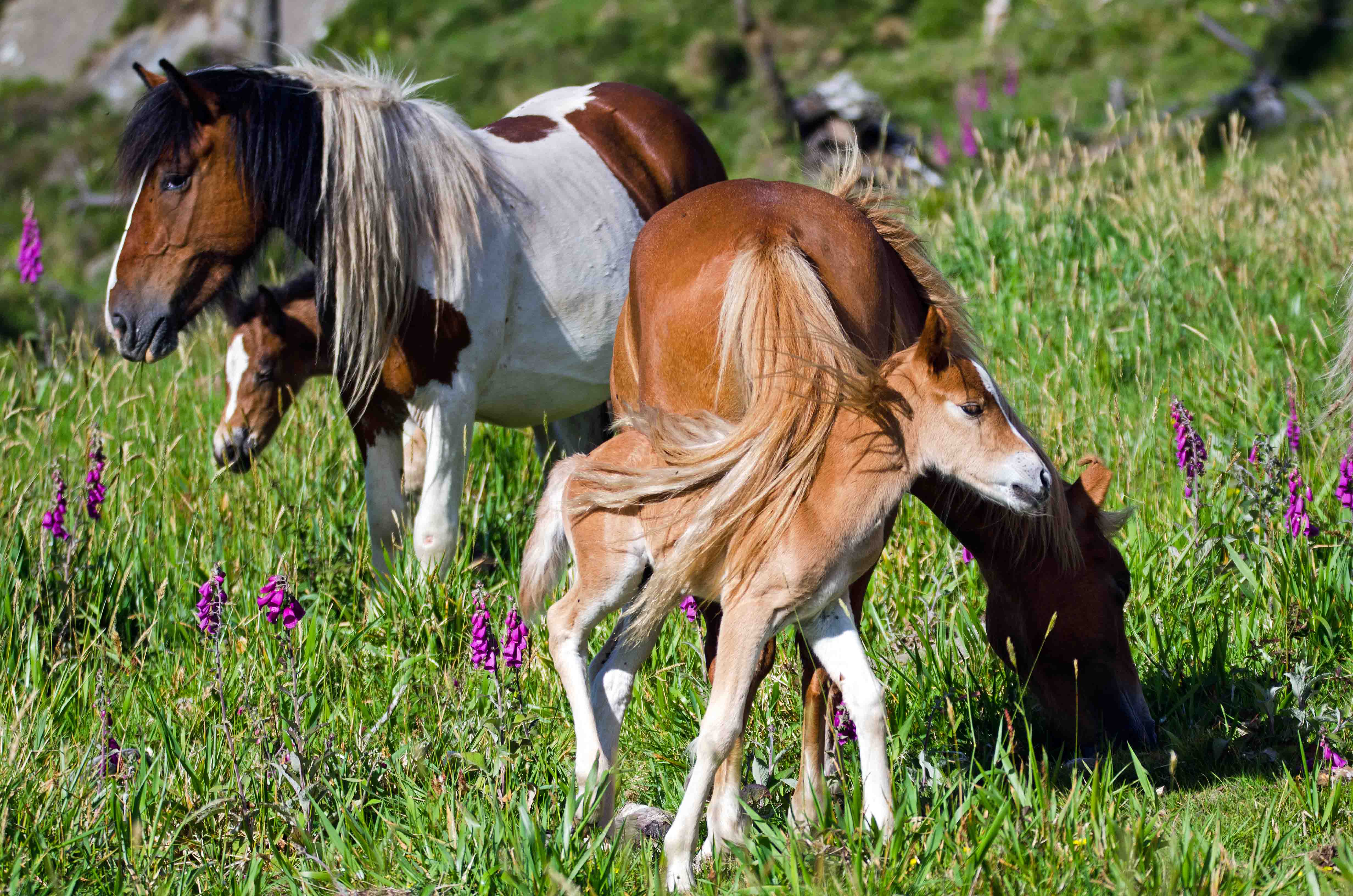
Galician ponies in their traditional habitat on Serra da Capelada, northern Galicia, Spain
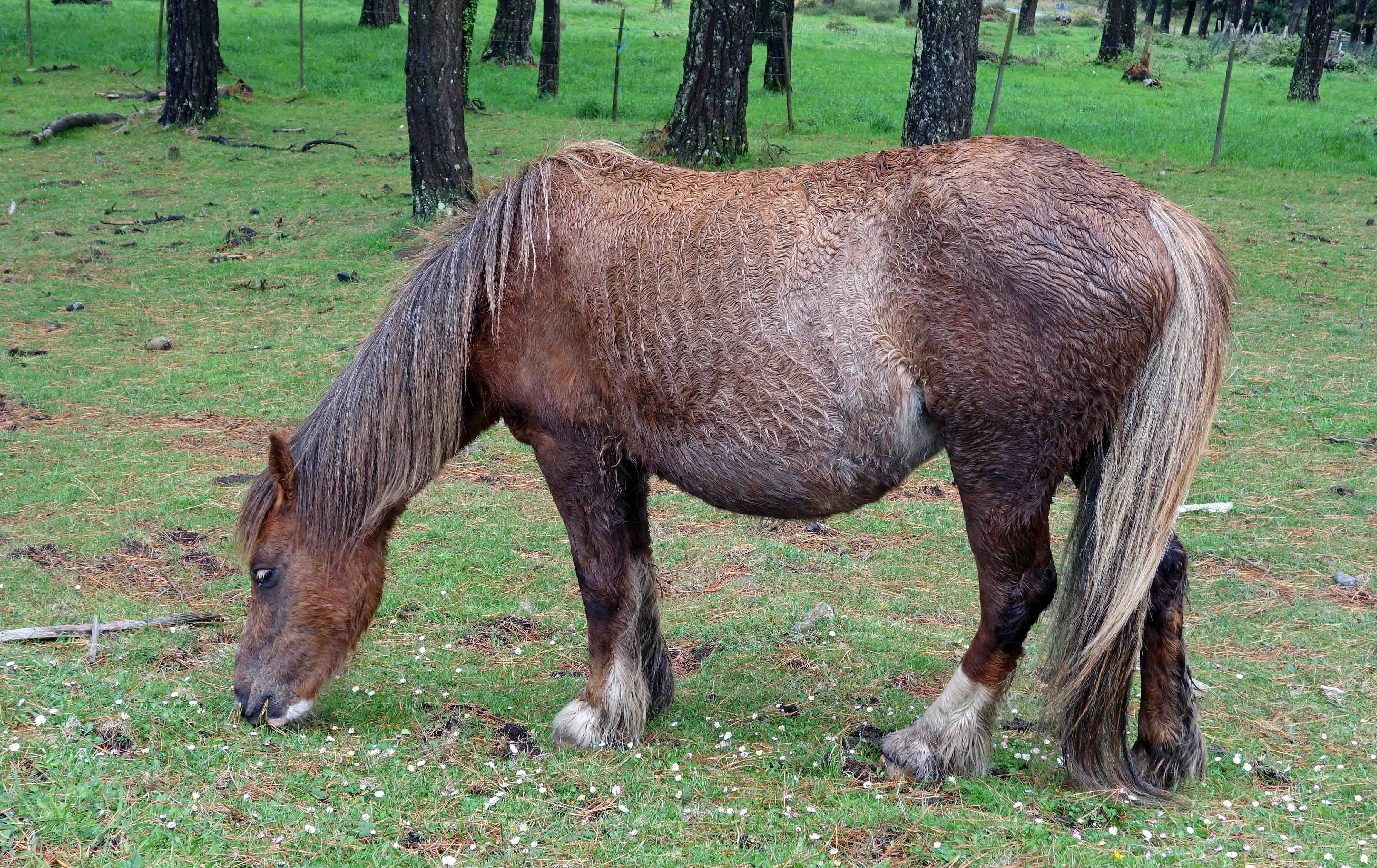
Galician ponies are a hardy breed of short-bodied, semi-feral horses which live on the mountains of Galicia, in NW Spain. They are said to be derived from a mixture of Celtic horses, Roman horses and horses brought to Spain by ancient Germanic tribes (the Swabians), and subsequently cross-bred with other breeds. They are however, superbly adapted to the rugged conditions found on the hills of Galicia, often clad in shaggy coats, highly resistant to the rain and mists of this Atlantic climate.
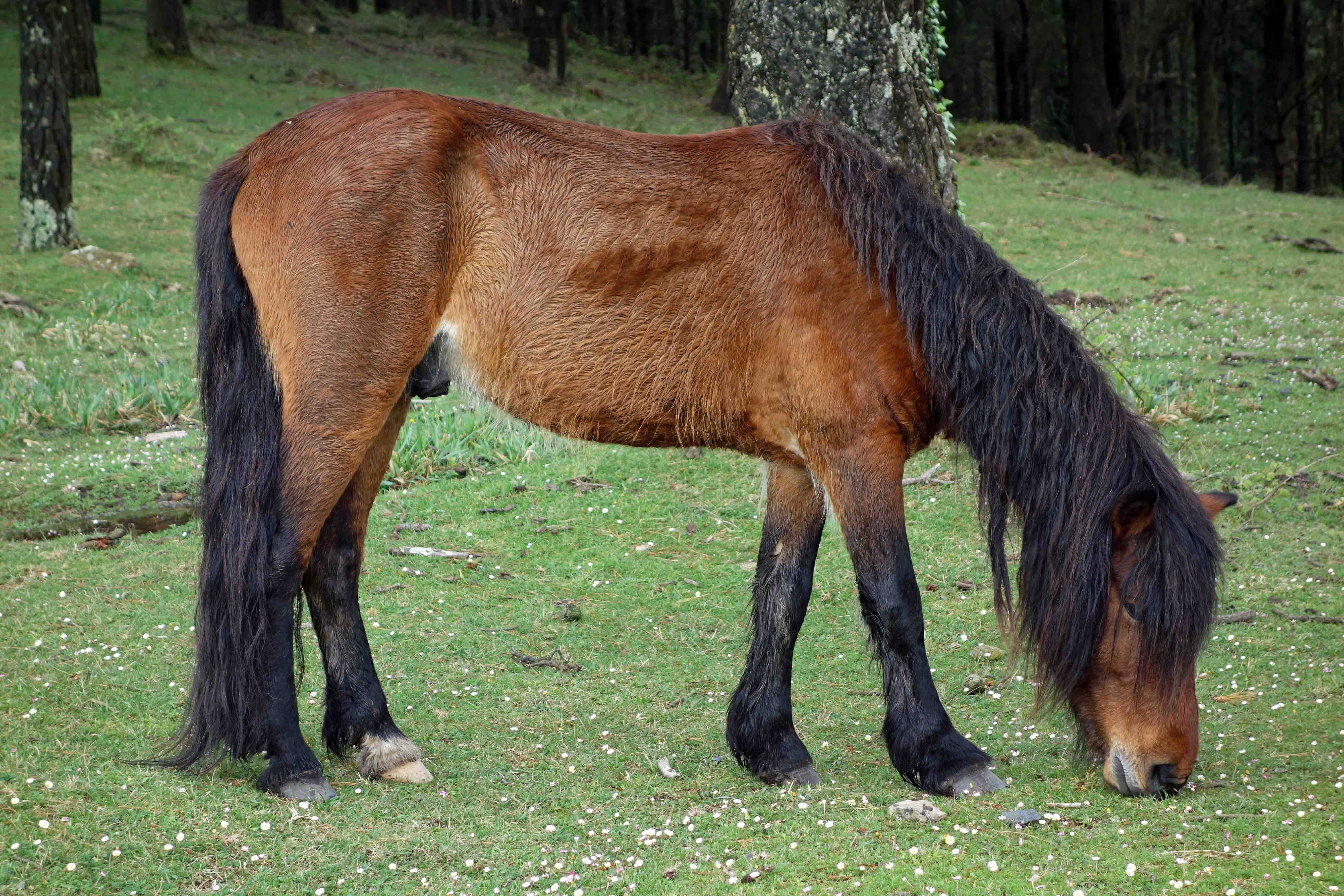
Galician pony with slightly wet coatGalician pony on rugged hillside
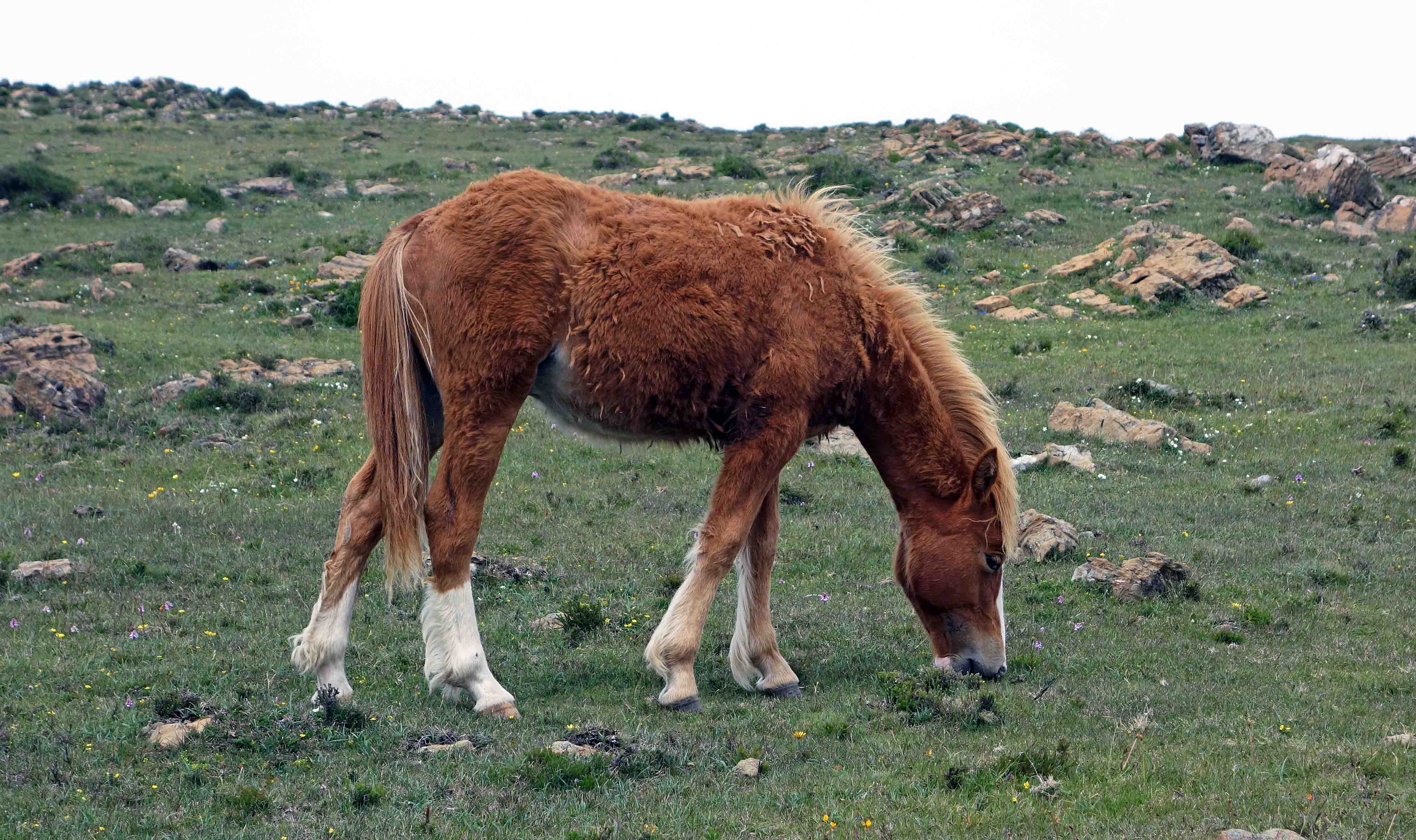
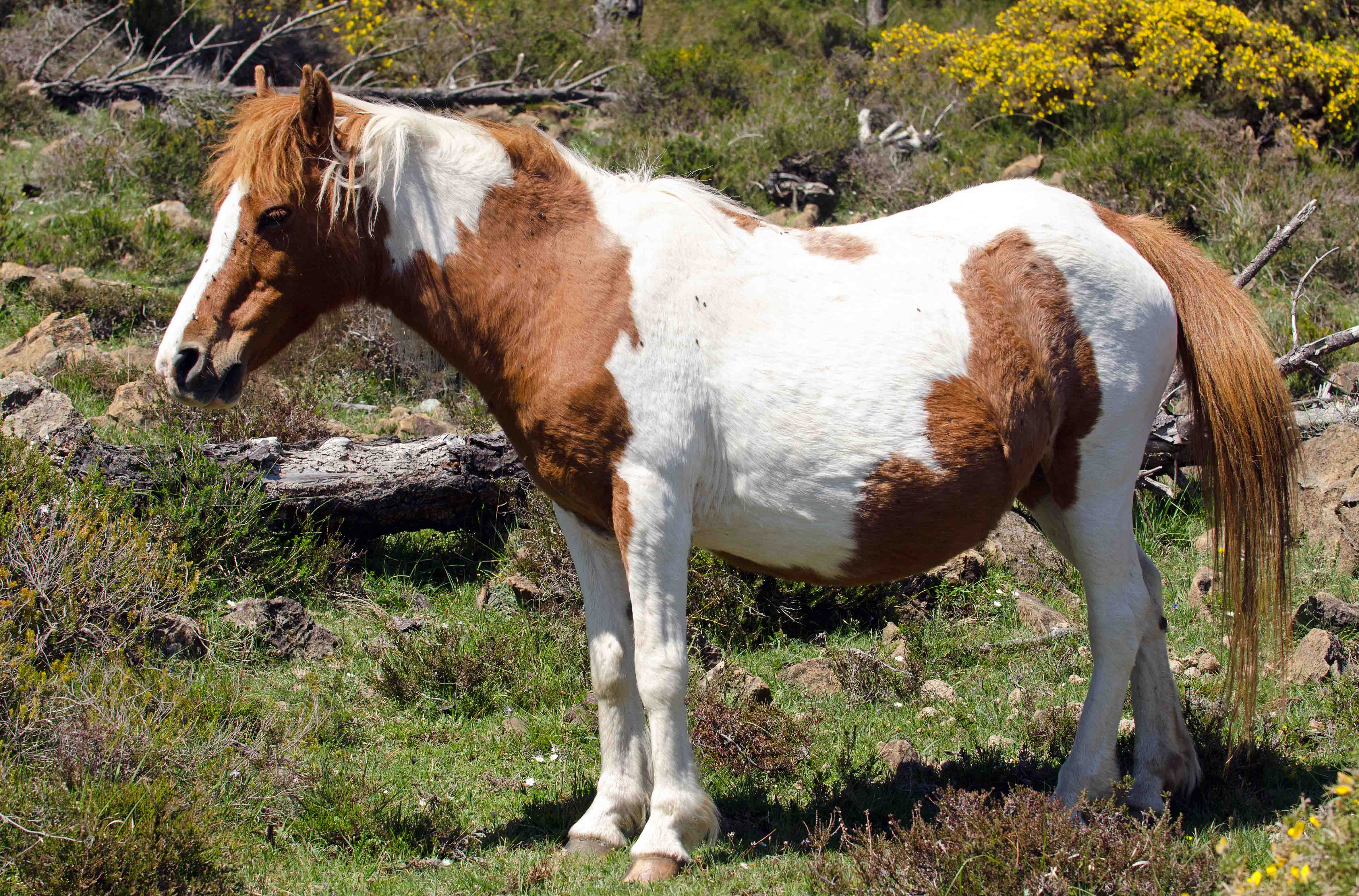
Galician ponies are mainly chestnut, or bay coloured (i.e. light reddish-brown to very dark brown), but there are plenty of white ones, and piebald (brown and white) ones.
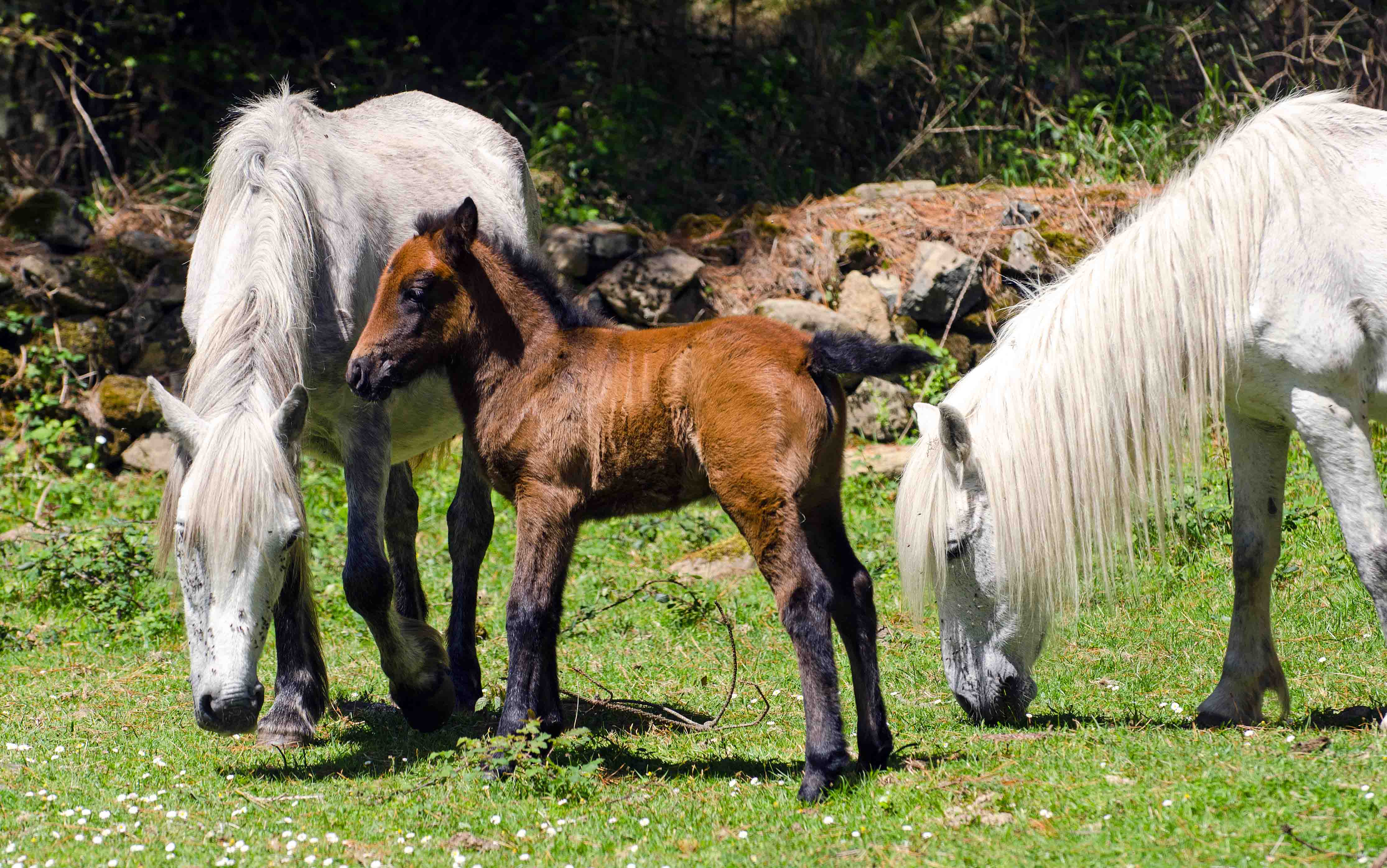
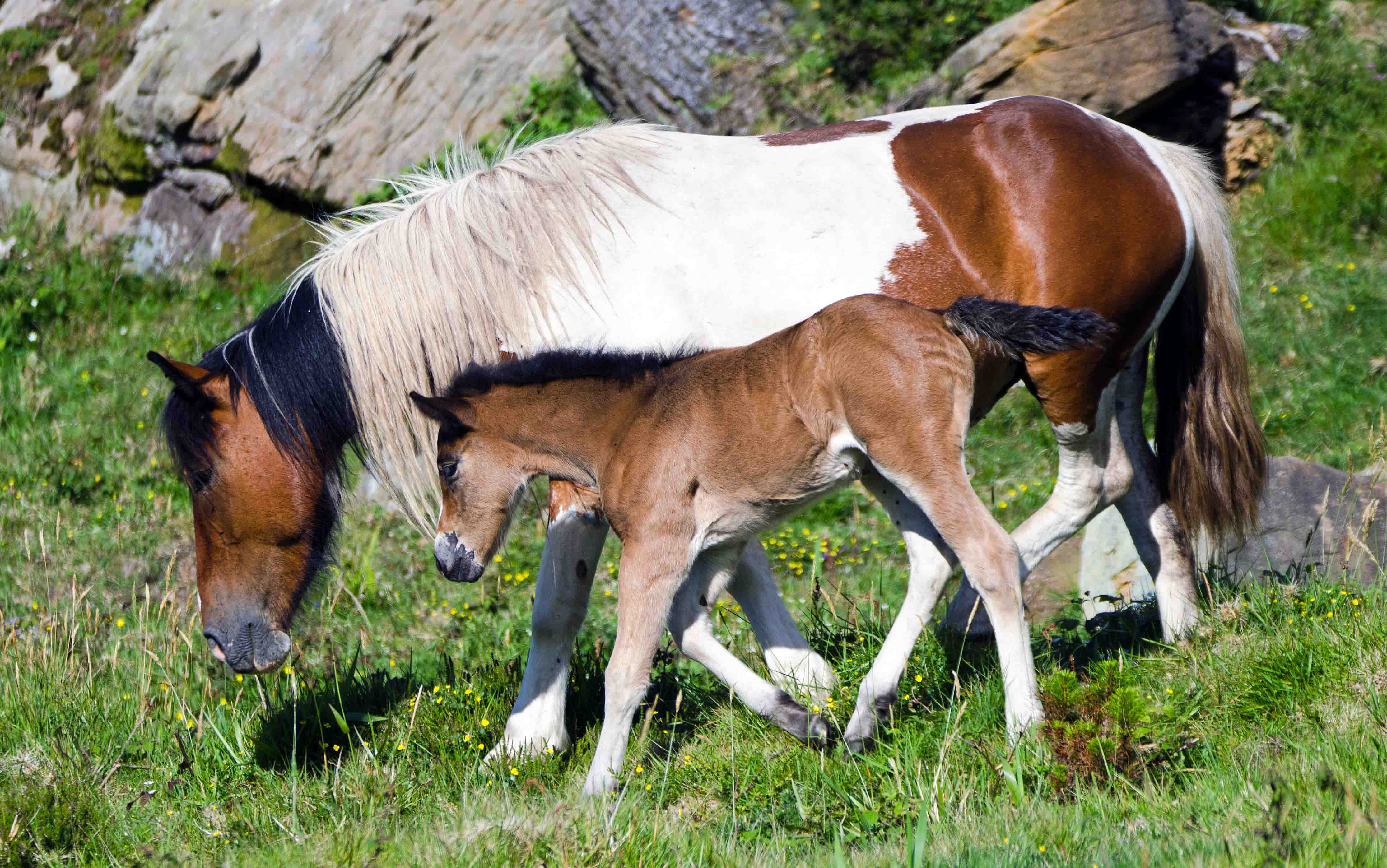
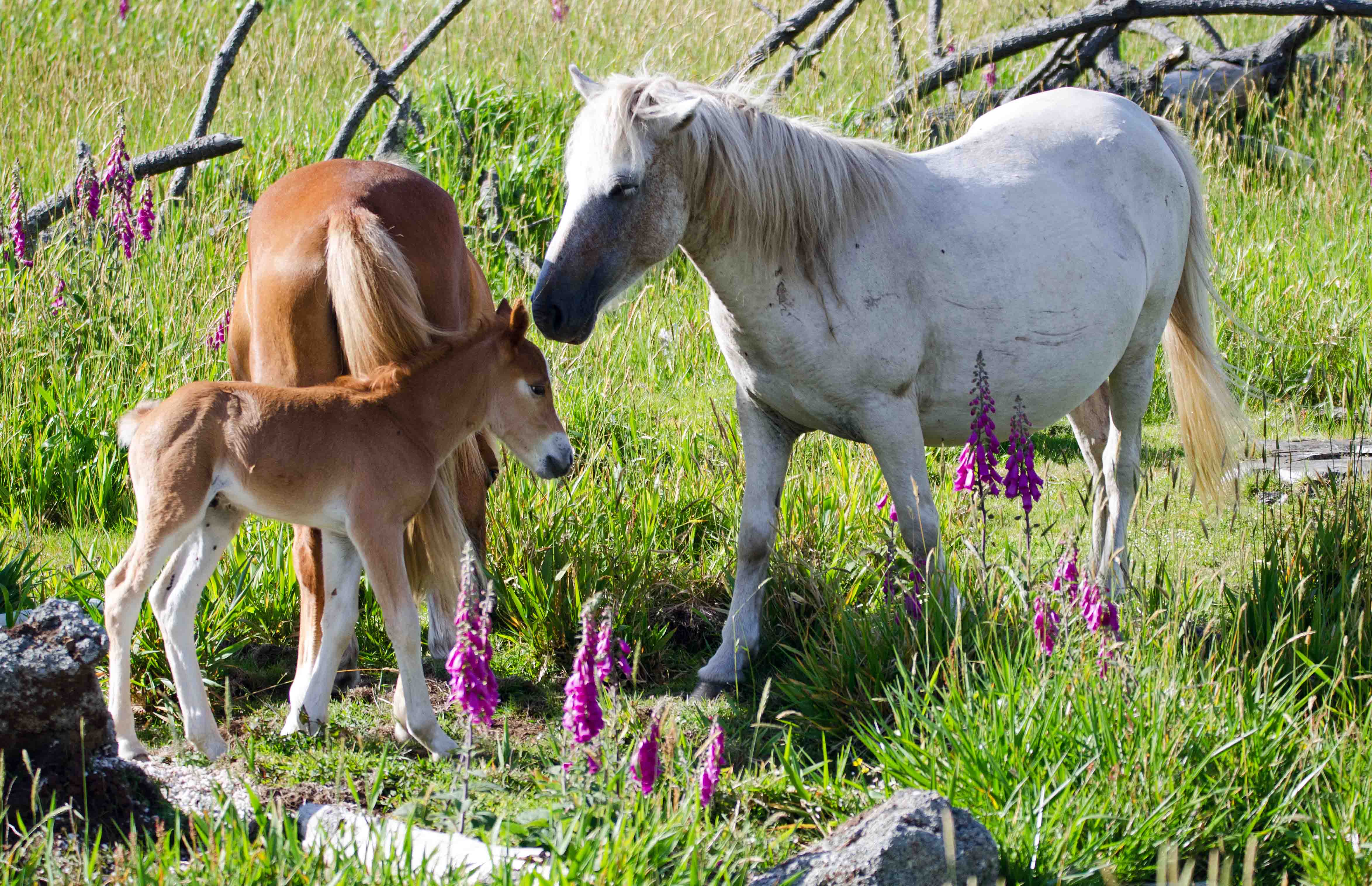
Piebald ponyWhite mares with brown foal
There are said to be different types of Galician ponies in different parts of Galicia, but they all have a straight profile, strong legs, and are between 1.20 and 1.30 meters in height (12.2 – 13.2 hands on average) (References 1, 2).
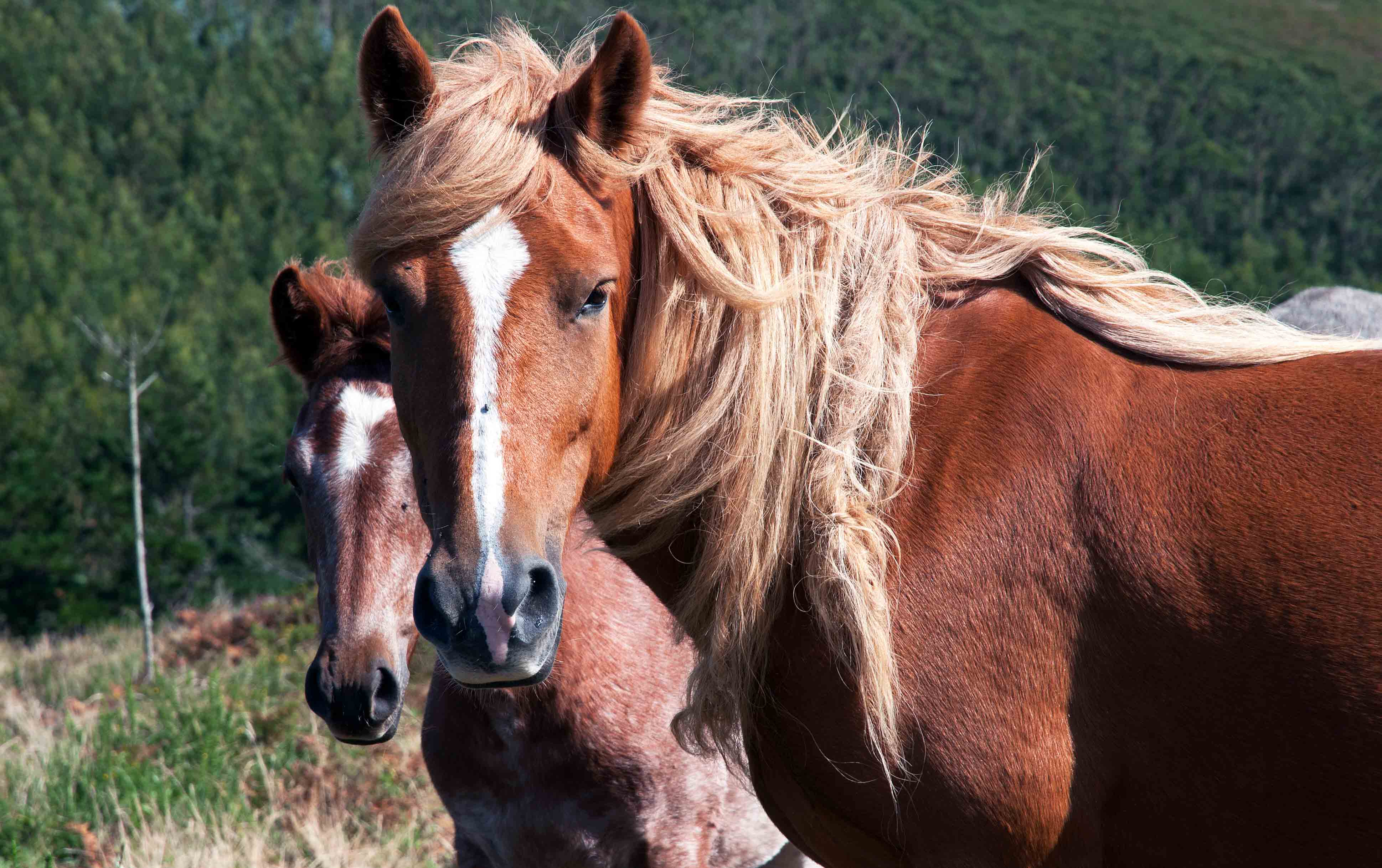
Chestnut pony with blonde mane
They were traditionally bred for meat and horse hair (which was used for brushes), but they are now mostly used for riding or simply as a tourist attraction decorating the hill sides. Many are however, not tame. Although quite tolerant of people, in my experience of trying to take photographs of them, they can be shy, but very protective of their foals.
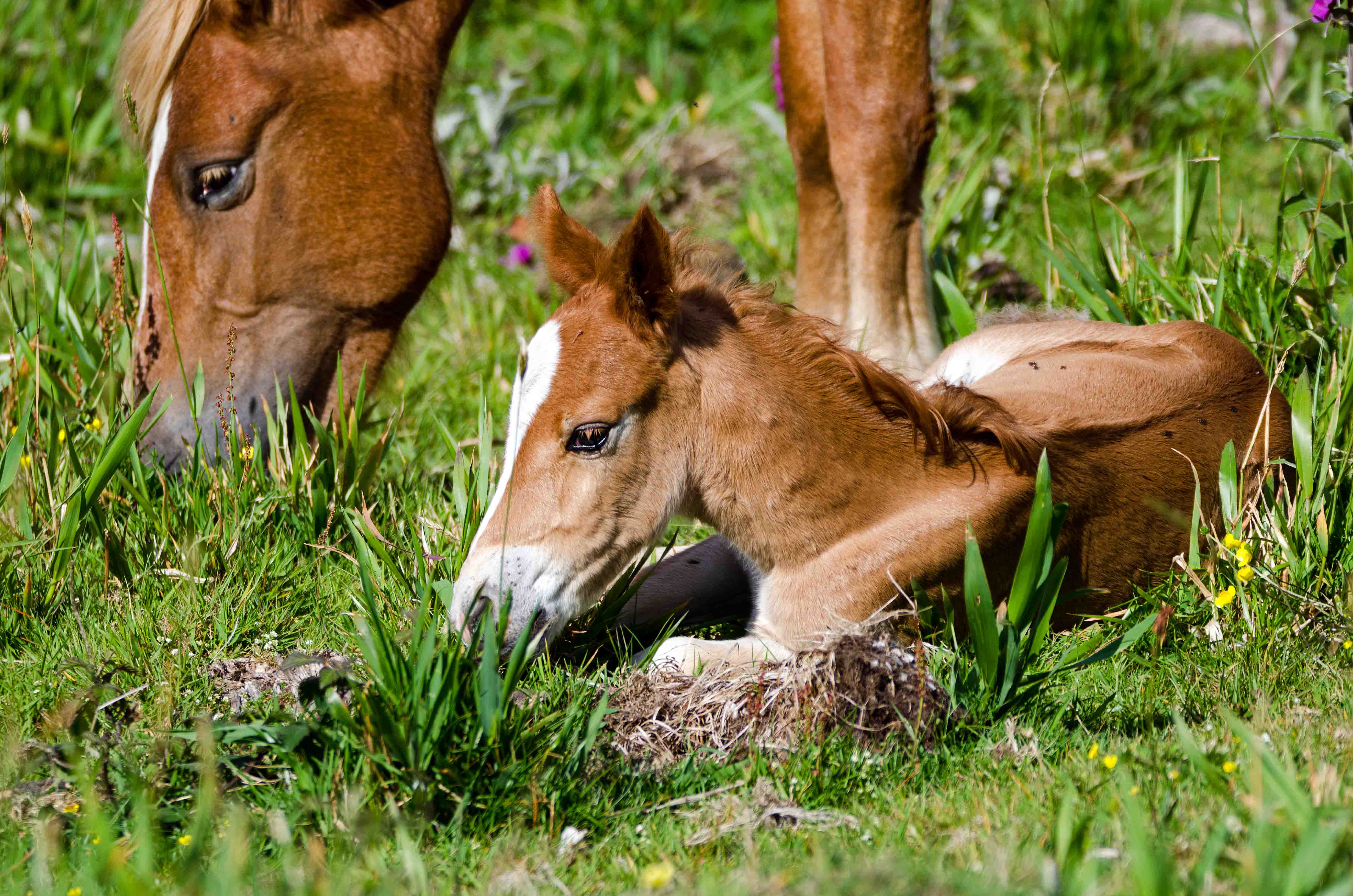
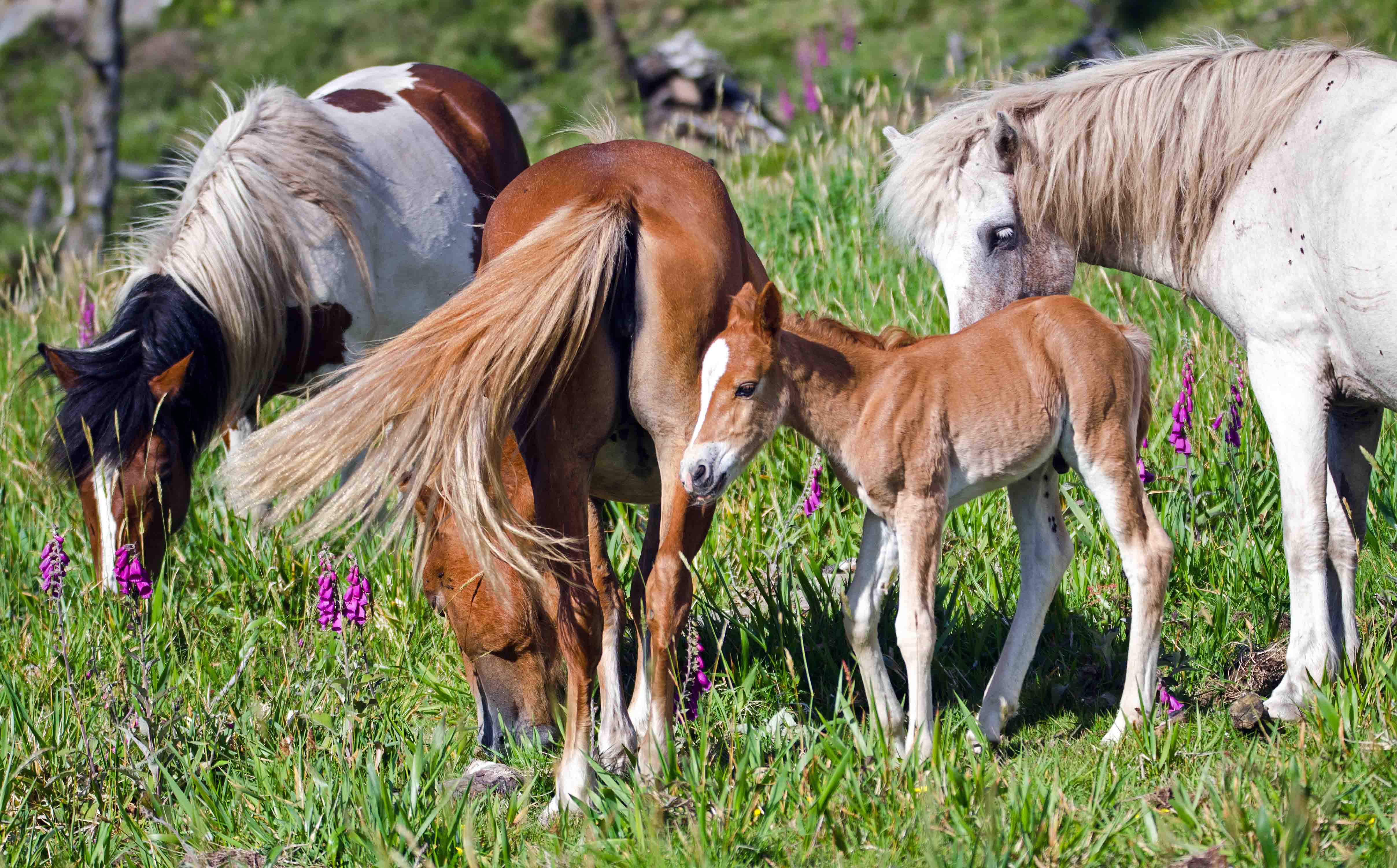
White mare and chestnut foalPiebald mare and foalVery young foal
They said to be rounded up just once a year, in a ceremony called rapa das bestas, where the foals are separated from their mothers, marked and deloused. I am not sure if this practice – which is a rather dramatic affair as the horses are wrestled to the ground by men – occurs everywhere though. In the past the manes and tails were cut for the hair, and wonderful hair it is! The manes are often long blonde locks as shown below.
Mare with golden mane and foal
The stallions are not so common as the mares, presumably they would fight with each other if kept at too high a density.
Galician pony stallion
It’s hard not to be impressed by the natural, semi-wild lives these animals live in a beautiful countryside. Idyllic when the sun is shining in early June – as in the following sequence – but no doubt a different matter during the cold, wet winters. Nevertheless, they are perfectly suited to this climate, having lived here for thousands of years. They are a living legacy.
The white horse was not the mother, but was very tender and caring of the foalAn idyllic scene of mares and foals on a Galician hillside in early JuneFoal brushing through its mother’s tail
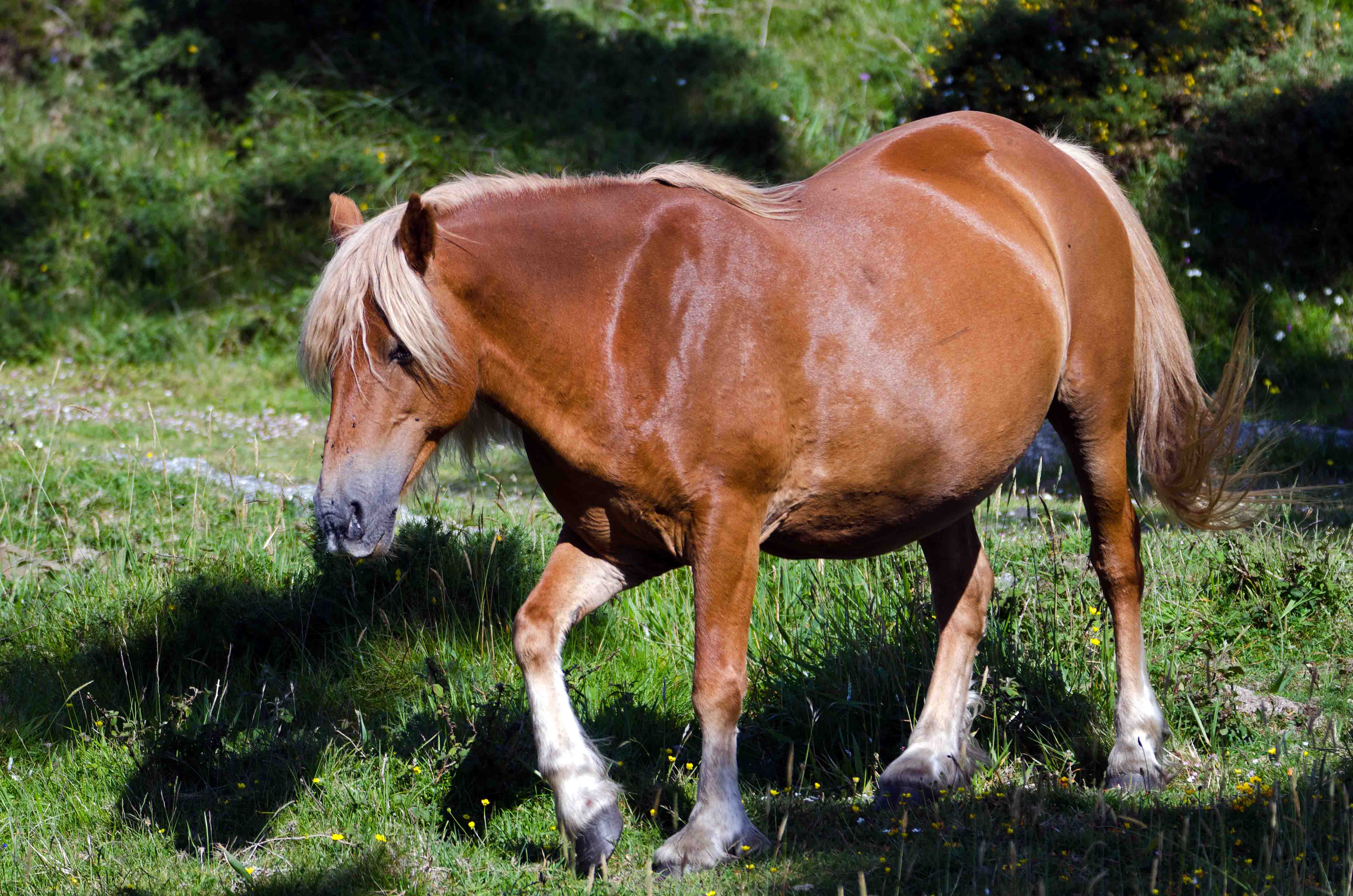
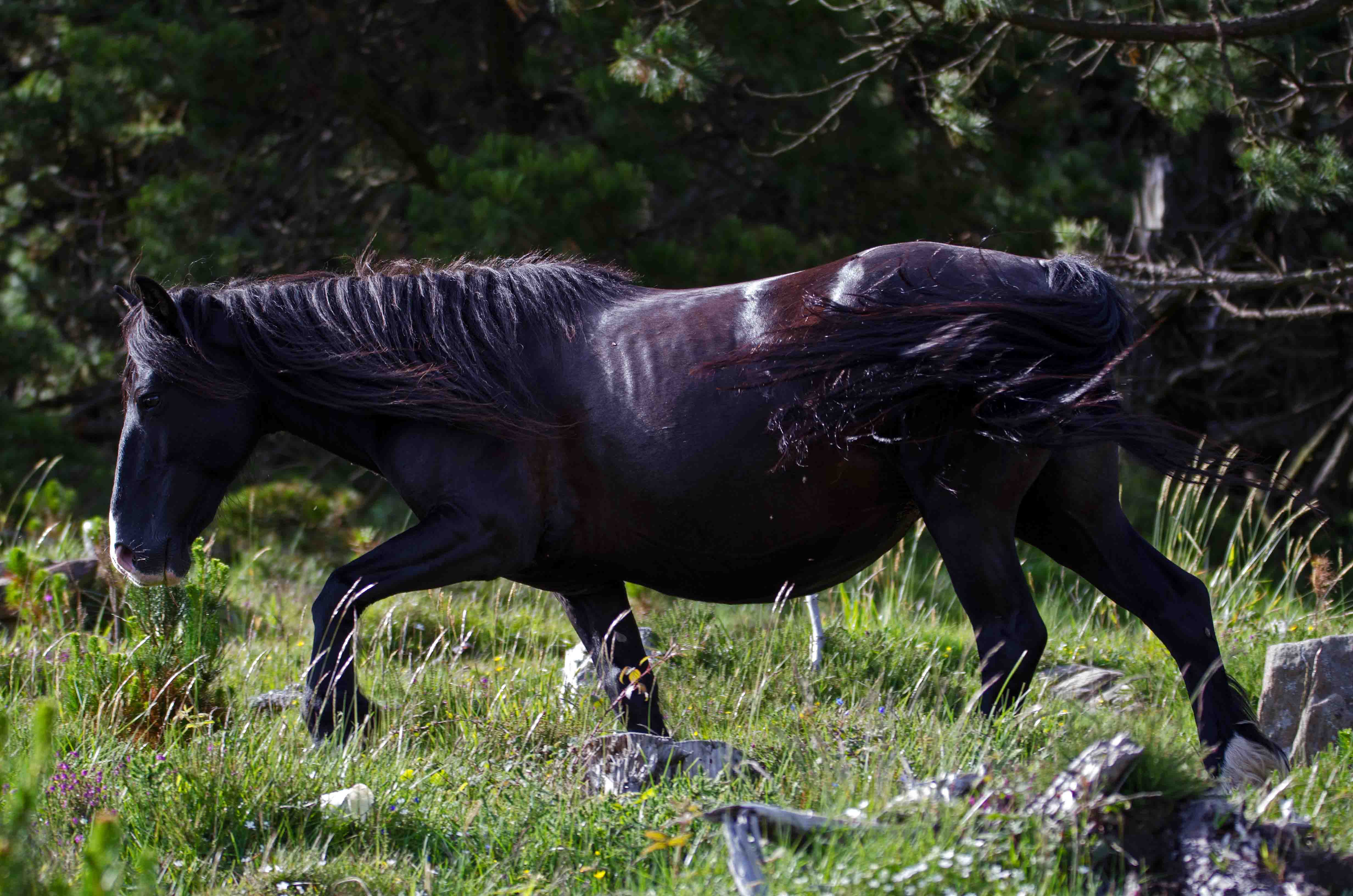
This magnificent dark, reddish-brown horse – below – was very flighty, and took off as soon as I arrived where the horses gathered, in my car. I am not sure if all the horses on the hillsides in Galicia are traditional Galician ponies, but they are magnificent animals.
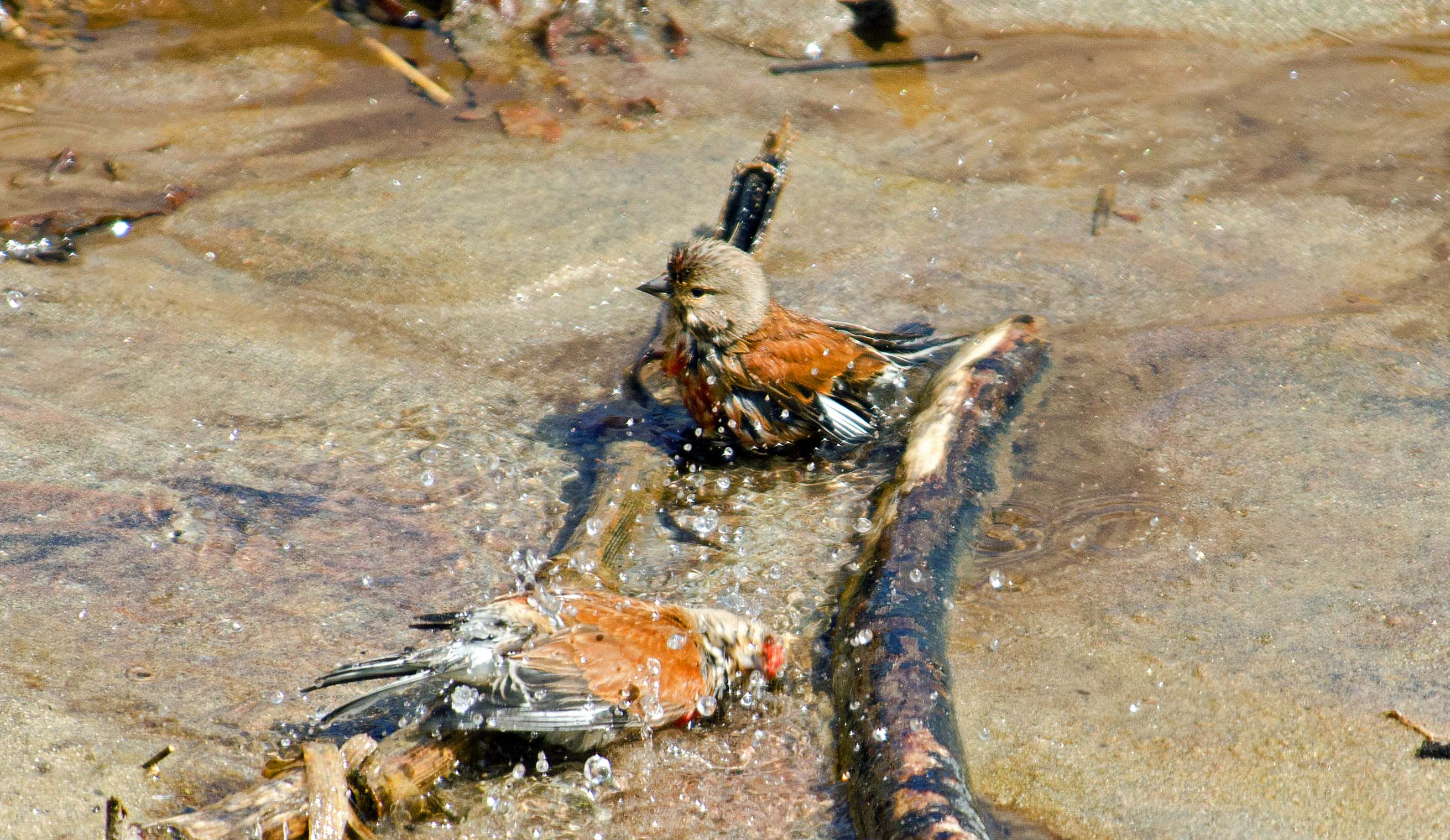
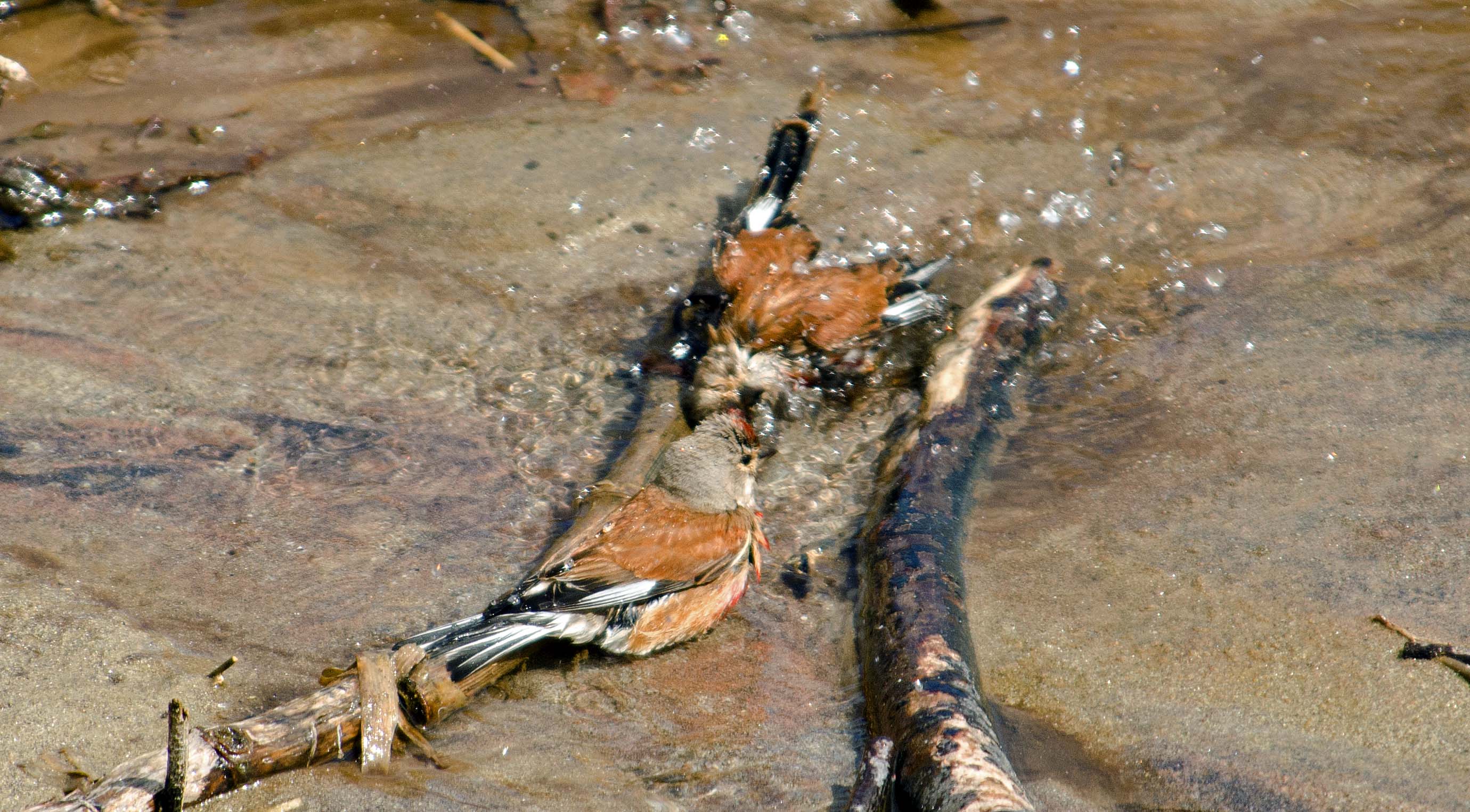
I came across a small flock of Common Linnets (Carduelis cannabina) having a bath in a small stream flowing onto the beach at Fornos, near the town of Cariño, in Galicia, Spain (1).
Linnet bathing
Linnets (Pardillo in Spanish) are quite common in Spain, and flocks can be seen throughout the year along both sides of the Ria Ortigueira. These birds were bathing and preening in late April.
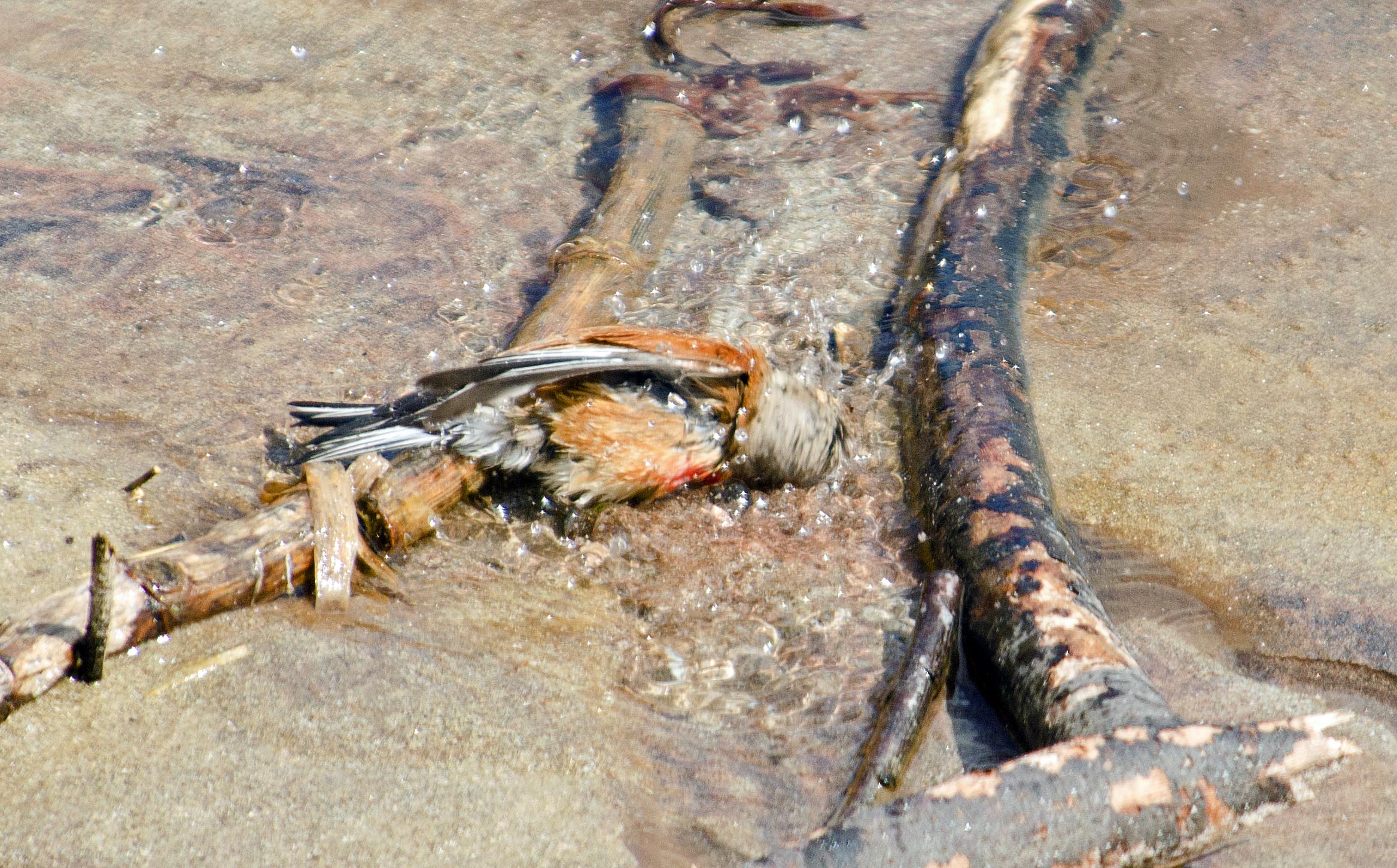
Linnets bathing
There’s not a lot to say about them, but it is interesting to see how vigorously they bath and how they shake their heads rapidly to and fro.
Linnet bathing
Where there were two males together, I got the impression that one would bath and the other would keep a watch out; but this might just have been a co-incidence.
Linnets bathing
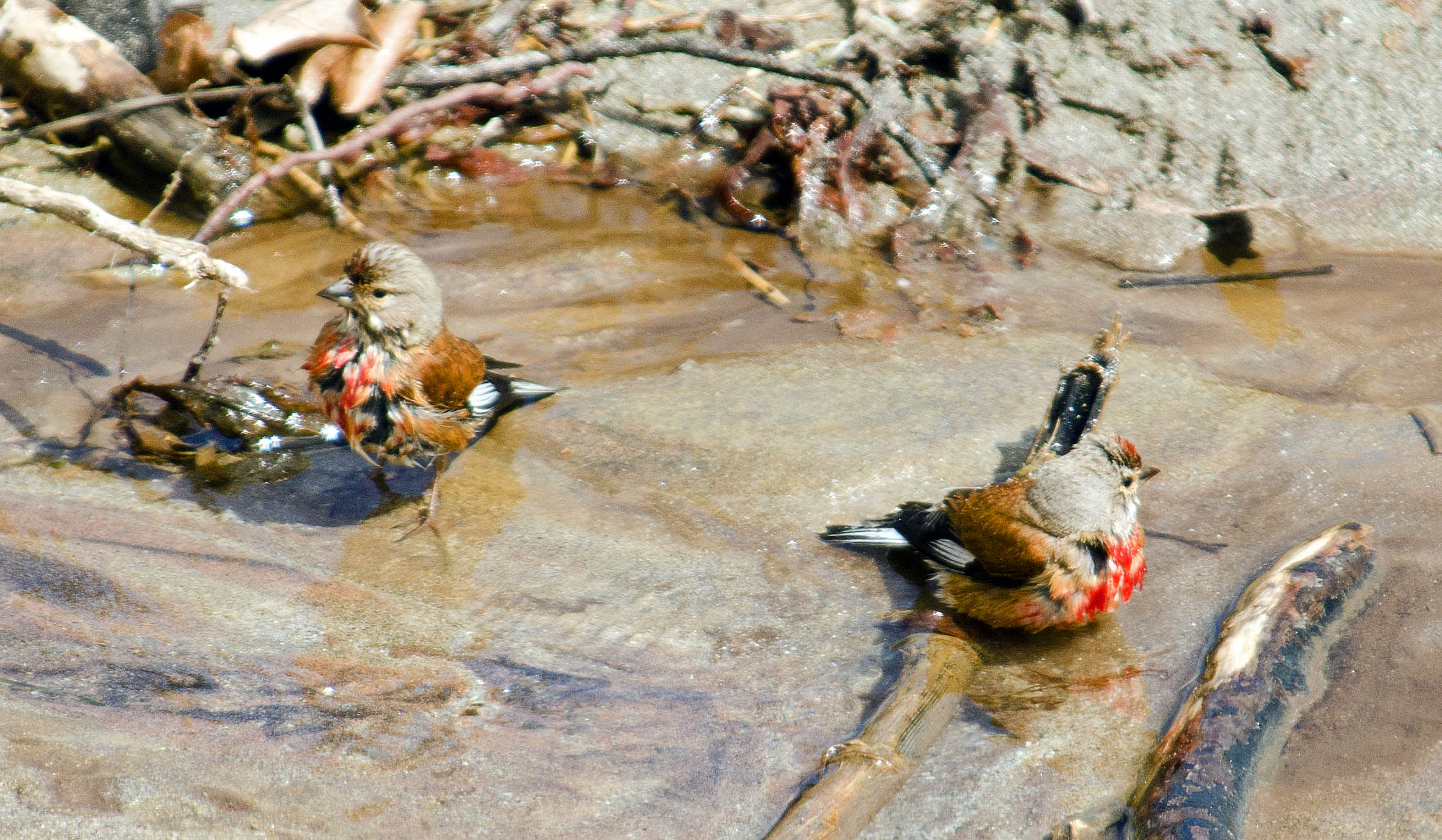
They also seem to like to get water right up under the breast feathers. Who wouldn’t! The two males in the following photo appear to have lifted up their breast feathers and you can see black under the red and white feathers. Must be wearing a vest!
Common Linnet (Carduelis cannabina) two males with raised breast feathers
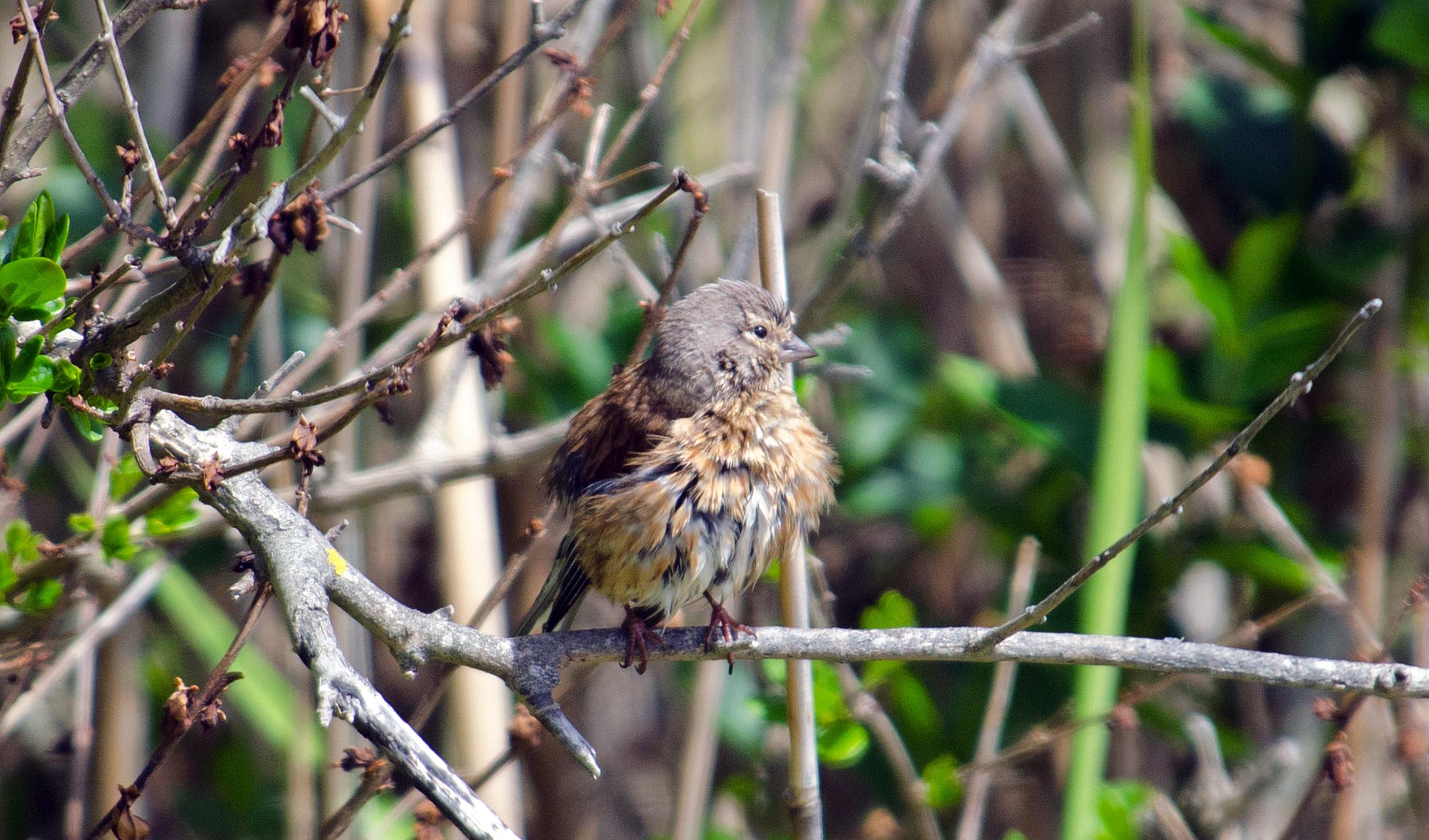
After bathing they spend some time sitting and preening and generally drying off. You can see glimpses of black (skin?) under the feathers on this female (below).
Common Linnet (Carduelis cannabina) female drying feathers
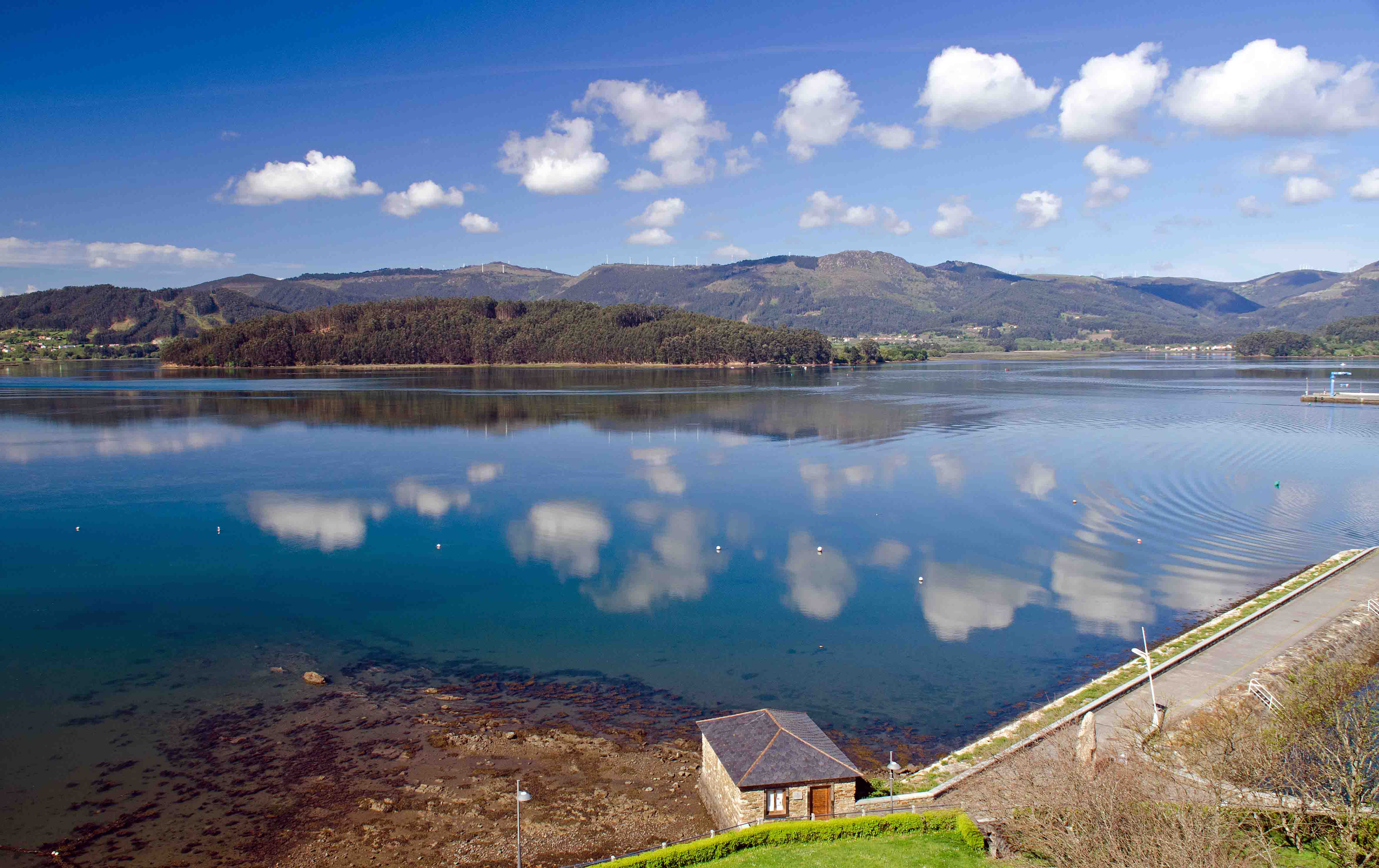
Polarising filters are easy to screw onto a lens, and if used with care, add a whole new dimension to your photography. In particular they darken blue skies and alter the tone and translucency of water as well. I fitted a 77mm polarising filter onto the front of my two favourite Nikon lenses (17-55mm f2.8 and 70-200 f2.8) and had some fun taking images during a visit to Galicia, Spain. On the wide-angle lens, the polariser really enhanced the colour of both the sky and the water in the above photograph. It really emphasised the reflections of the little white clouds. You can of course vary the extent of the polarising effect, by rotating the lens, and the choice of how much polarisation to create is really a matter of choice.
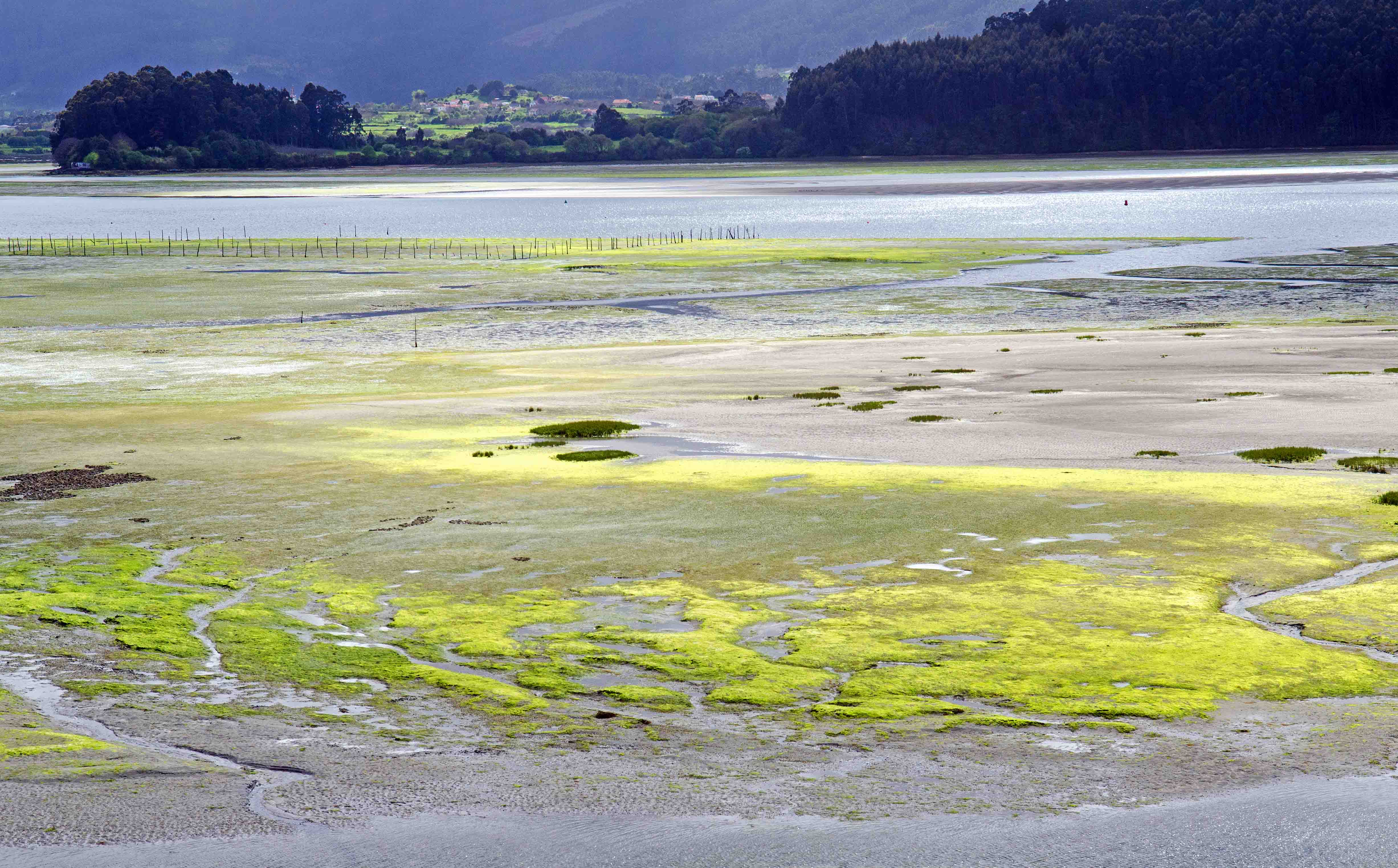
Mud banks Ortigueira with polariser
Another effect of a polariser is to increase the colour saturation and enhance the green colours in a photograph. I think I managed to this in the above photograph, – using the 70-200mm lens – where the green vegetation on the mud banks at low tide, is nicely saturated. A polarising filter will decreasing the amount of light passing through the lens – by up to two f-stops I understand – but the light meter of a modern camera will evaluate the light passing through the lens and adjust the exposure accordingly. Nevertheless, a polarising filter works best I think in bright light.
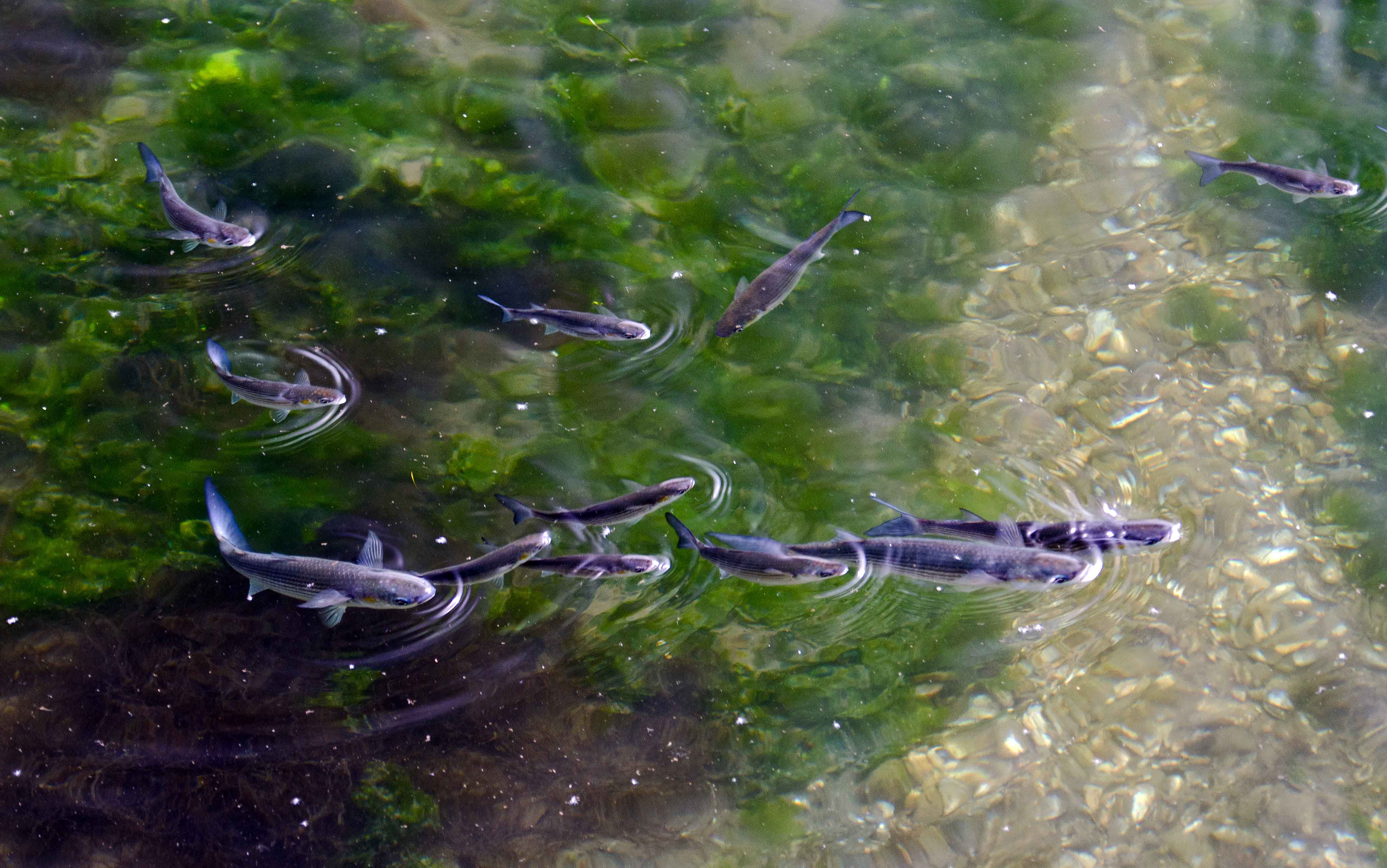
Fish swimming in the Ria Ortigueira; taken with polarising filter
One area where a polarising filter really comes into its own, is when looking down through water. The filter really worked well in cutting down on reflections producing more transparency into the water, when used on the 70-200mm to capture these fish swimming in the Ria. All of these images were taken around the town of Santa Marta de Ortigueira, which is located at the head of the Ria Ortigueira, Galicia, Spain. A Ria is a coastal inlet, or drowned river valley that leads into the sea, and there are many beautiful Rias in NW Spain.
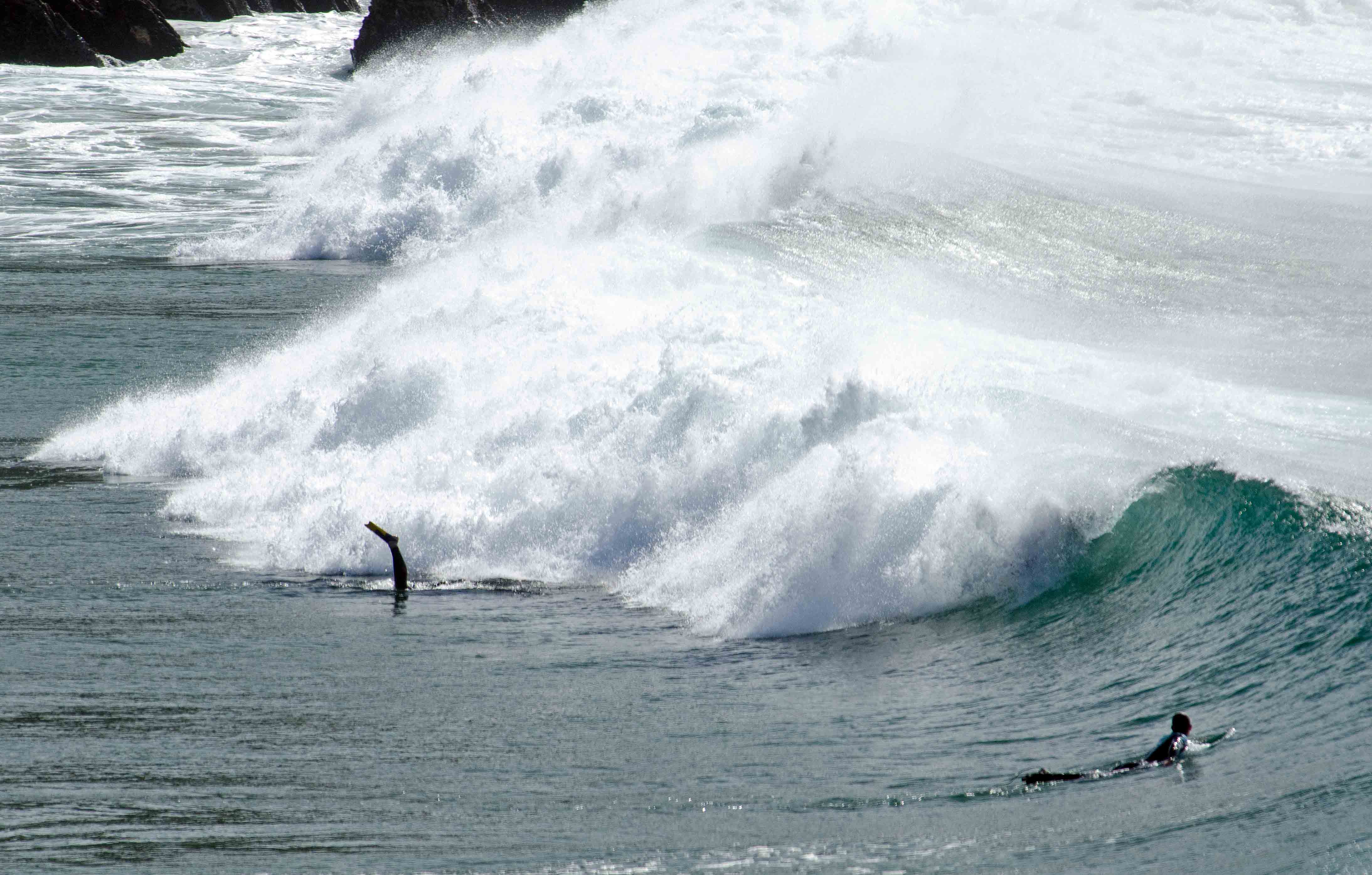
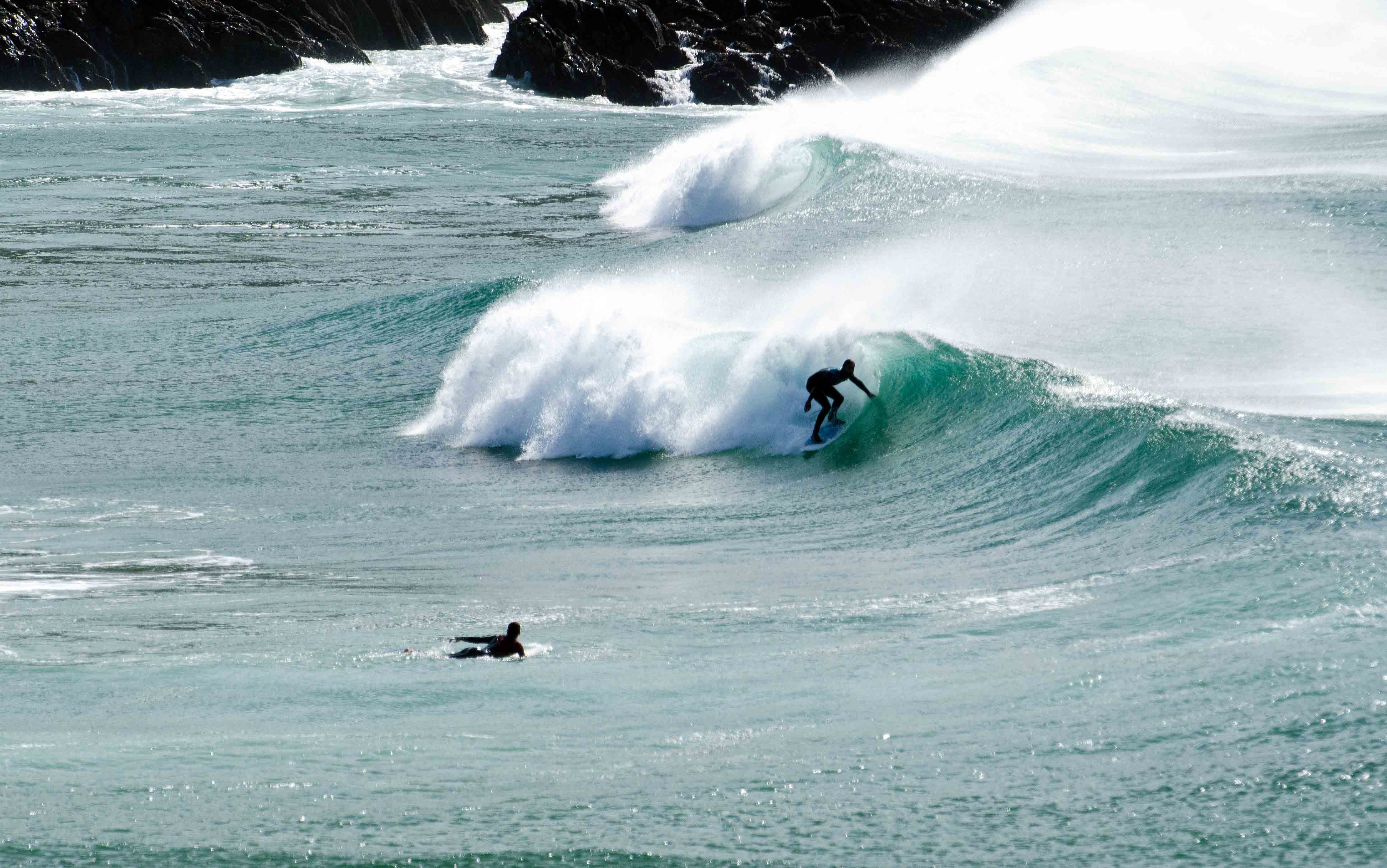
Esteiro beach – or Playa de Esteiro de Bares in Spanish – is a beach used by surfers in northern Spain, in the Province of Galicia. It is a beautiful wide strip of sand that is rarely busy. Apart from the surfers, there are a few dog walkers, the occasional tourist and the odd, flower-sniffing entomologist, such as myself!
Esterio beach, empty on a calm day
It is located near the Cabo Estaca de Bares (or Cape of Bares) on the road tp Viveiro. There is an attractive headland on the east side of the bay, which affords a good, elevated view of the surfers in the breaking waves. I have visited this spot before looking for flowers (and wrote a blog about a lovely Dianthus (‘pink’) flower called Dianthus monspessulanus on my other blog (Ray Cannon’s Nature Notes) (1). There is an excellent aerial photograph of this beach on Pinterest (2).
Surfing at Esterio beach, Galicia
Surfing looks great fun, but it is clearly difficult to do well, and I have never tried it myself. Probably, I enjoy taking photographs more than I would surfing, who knows. I’ll have to try it sometime.
Surfing at Esterio beach
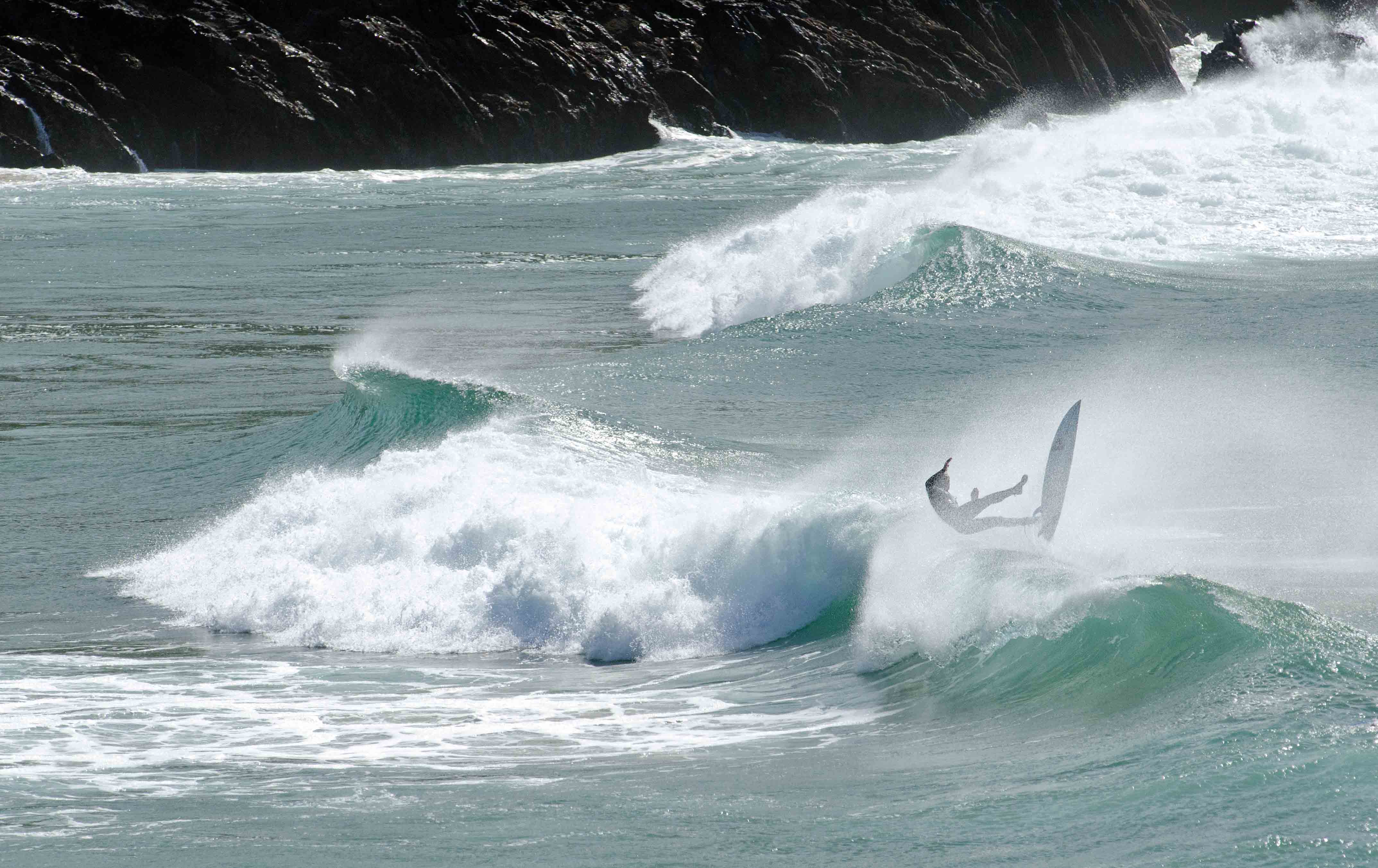
There is not much to say about these photographs. This set was taken recently, on 23 April 2015. I don’t know any of the surfers, but it would be nice if they could see themselves and hopefully enjoy the images (at least the ones where they are upright!).
Surfing at Esterio beach
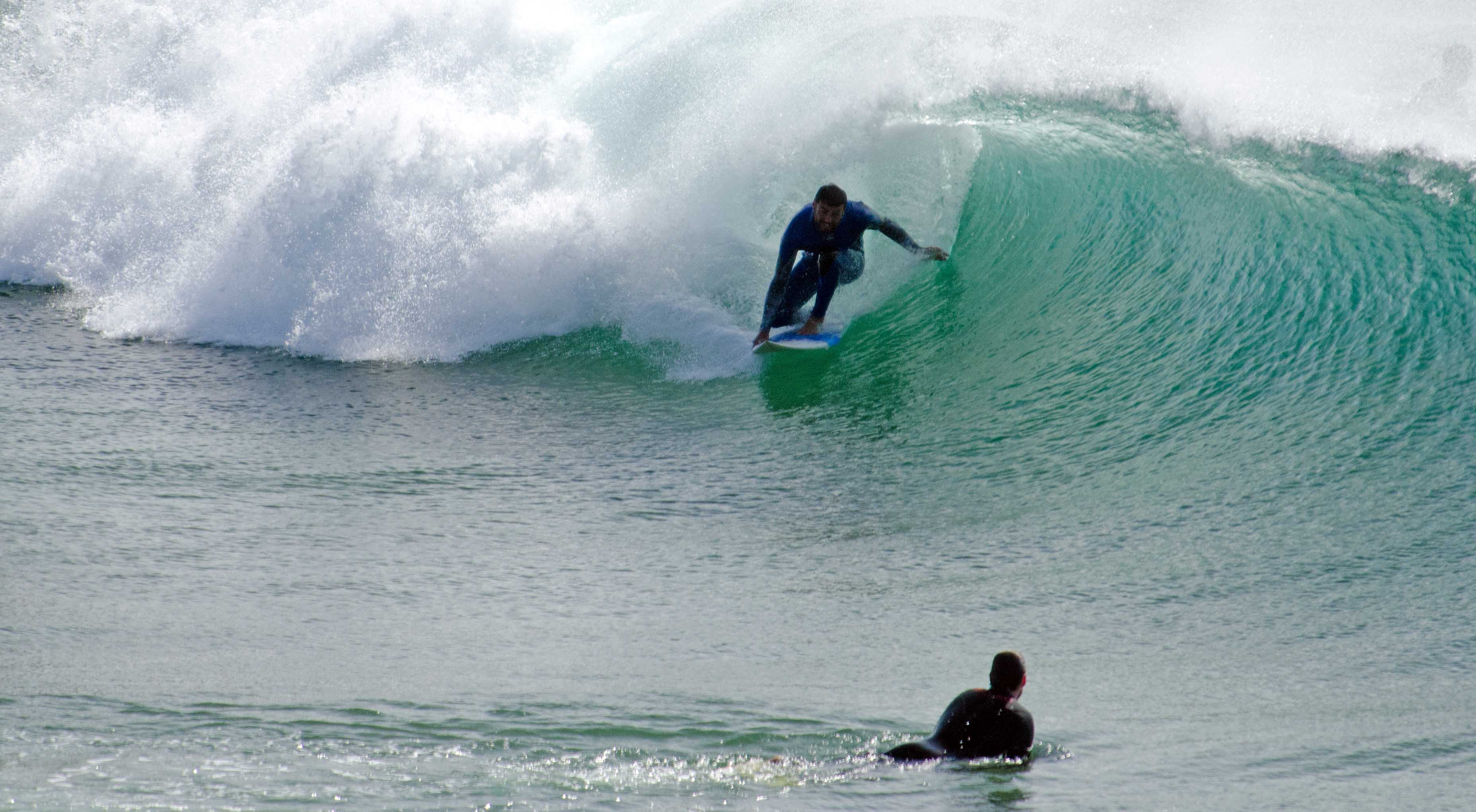
The surfers wait in the water for a good wave. Judging the best place to be to catch the waves is obviously quite an art. The action happens quickly, and even a good surf run only lasts for a few seconds. I selected a shutter speed of 1/1000th of a second, which was probably OK. It is more a matter of when to press the shutter, as it is hard to judge whether a given surfer will have a successful run. The most dramatic photographs were when there was a ‘wipe out’! Sorry guys! But the ones where the surfer is riding the surf and trailing his hand against the wave are also nice. I particularly like the following image, where the surfer is completely encased by the wave, although it is hard to make out that there is a person inside the breaking wave.
Surfing at Esterio beach; surfer encased by breaking wave.
I visited Lauca National Park in northern Chile, in April 2007. I had a Sony DSC-R1 camera in those days, and I only took Jpegs. I went back over the photographs I took recently – taking the time to edit a few in Adobe Photoshop – and was surprised to find that I could improve the original shots quite a lot!
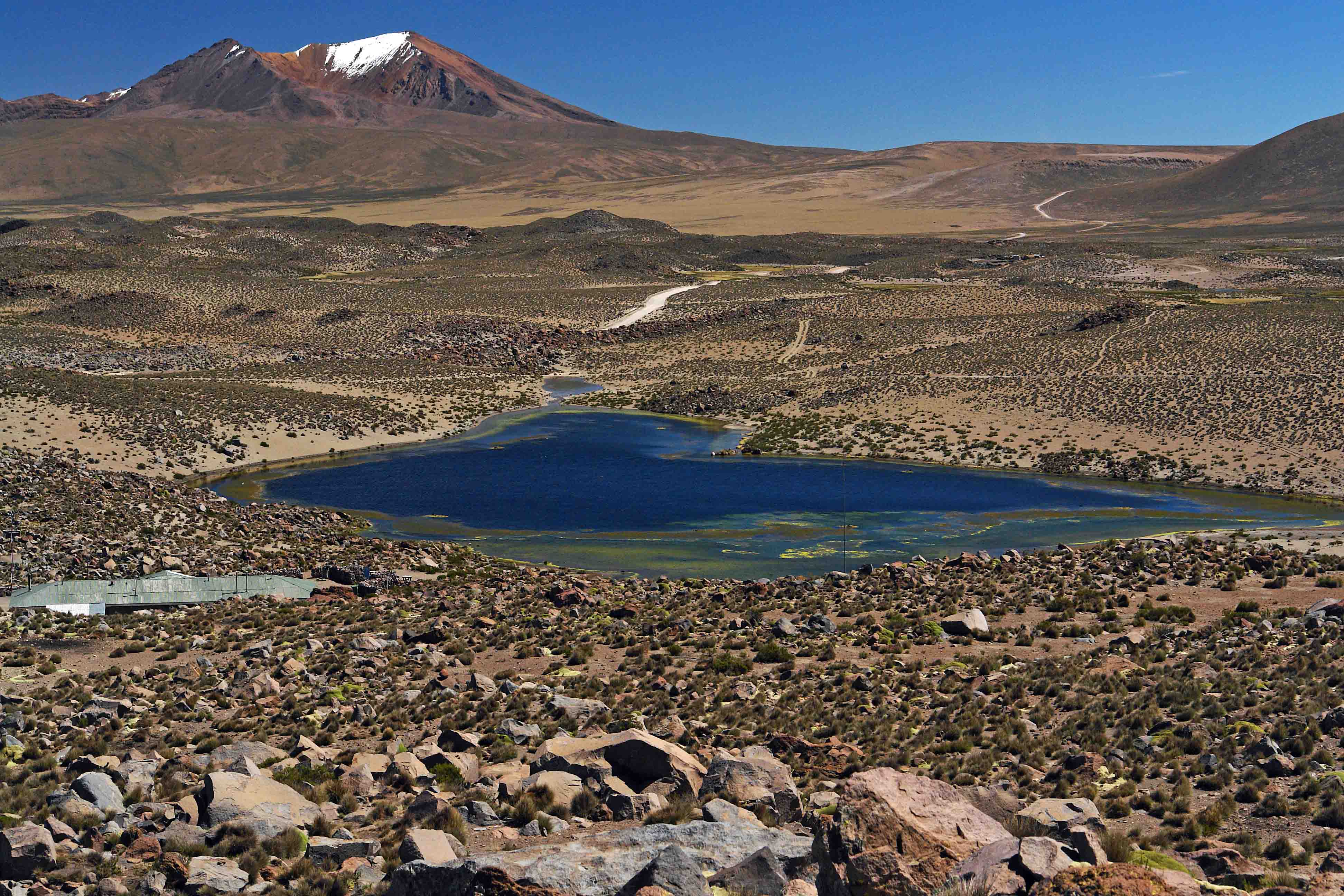
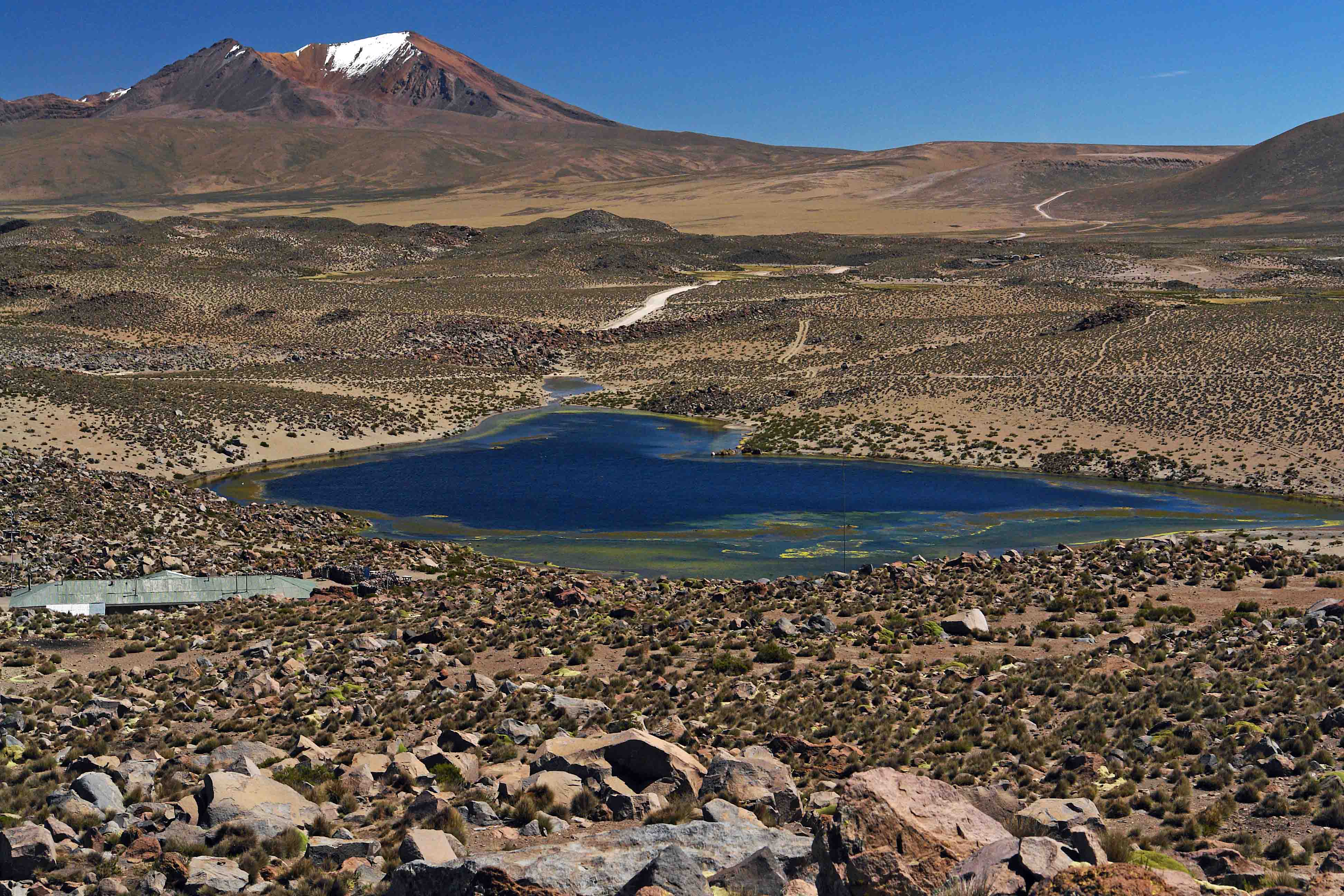
Lauca National Park with lake
Lauca NP is a stunningly beautiful area (1,379 km2 ) of altiplano (high plateau) encompassing lakes and mountains. I drove there from the city of Arica (145 km east) on the coast. It is a remarkably journey as one gradually passes through a series of ecosystems, from completely dry desert (where it never rains and there are no plants!), moving up into areas with slightly more rainfall and a few cacti, then into the pre-puna (2900–3900 m) before reaching the so-called puna steppe shrublands above 4000 m .
There are no cacti at first, until about 800m, where presumably it rains very occasionally. Otherwise, the only vegetation is in the valley bottoms, feeding off any moisture that remains from streams which occasionally flow down off the Andes, to the east.
Desert landscape of northern Chile (Chile Norte)
The river valleys running through the desert get their water from the mountains and are incredibly fertile, growing all sorts of wonderful produce, such as fruit and olives.
Desert valley on the road from Arica to Lauca NP, northern Chile
The strange Candelabra cacti (Browningia candelaris) occur in an attitudinal zone – perhaps between 1,600 and 2,000m – in the still very dry landscape on the way up to the altiplano.
Candelabra Cactus (Browningia candelaris)
There are plenty of shrubs, lakes and wetlands on the altiplano itself. The wetlands are called ‘bofedales’ and are dominated by a type of rush, Oxychloe andina (Juncaceae).
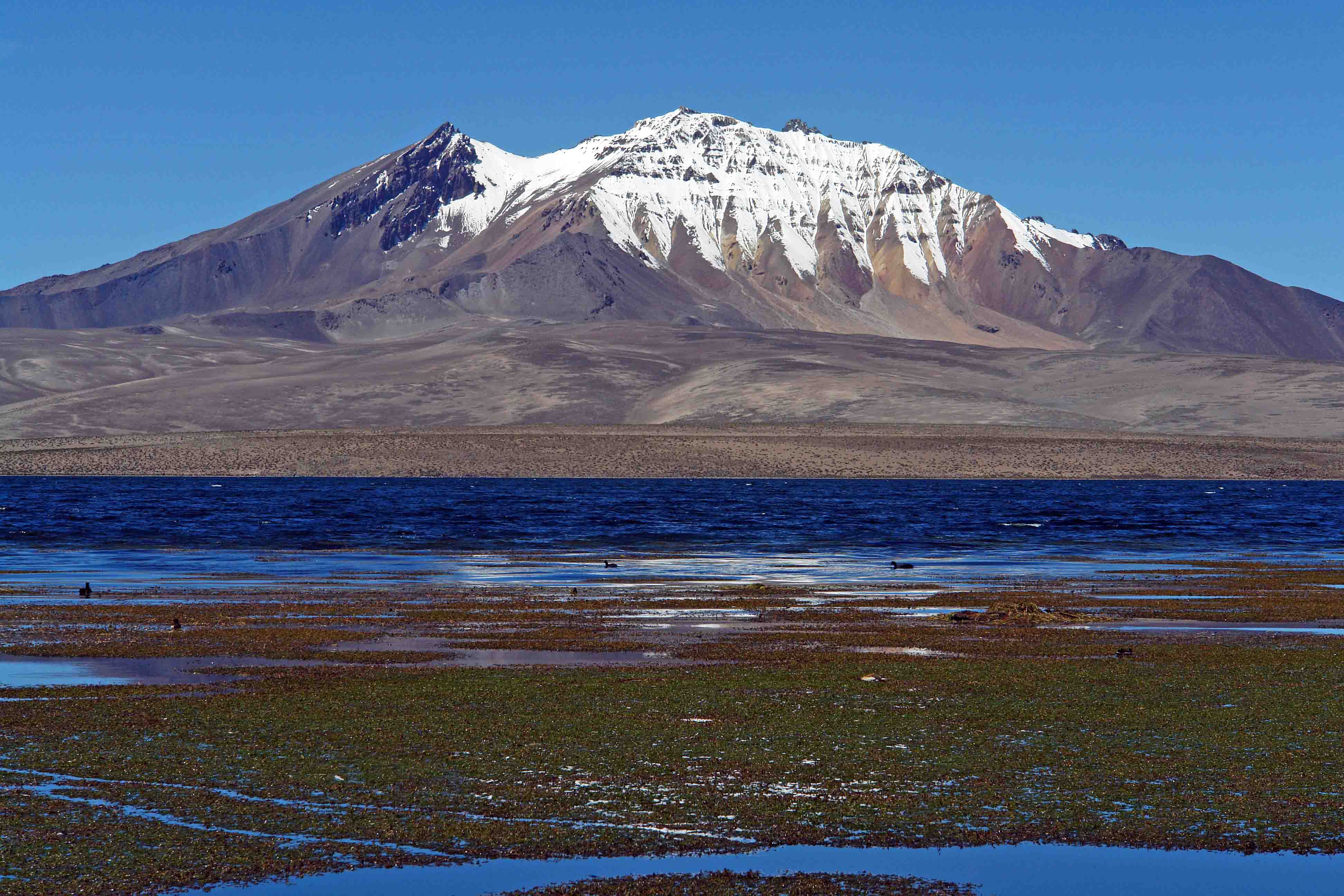
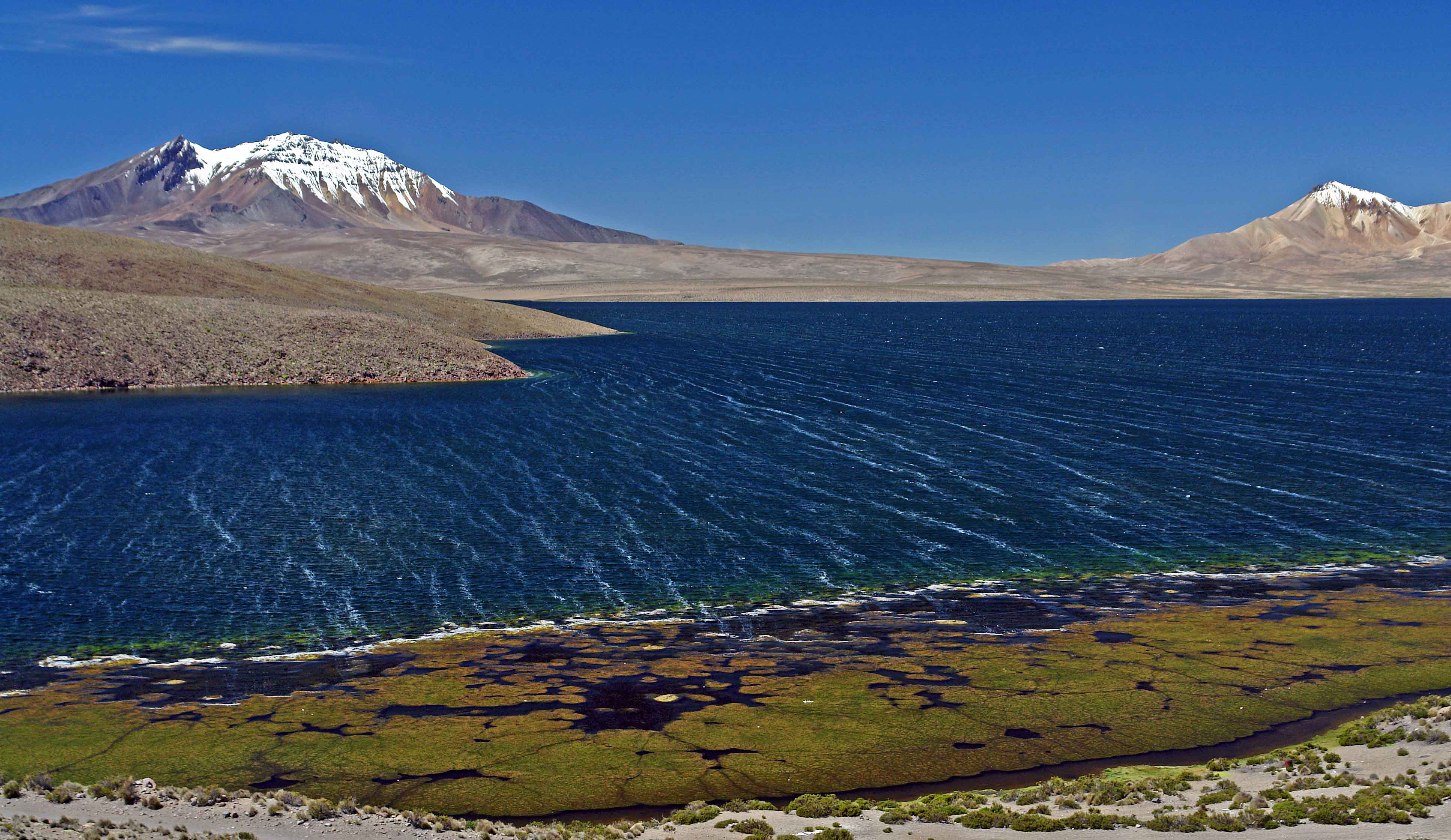
Lauca National Park with lakeBofedales wetlands on the altiplano in Lauca NPLauca National Park
The park contains Lago (or lake) Chungará, which is apparently, the highest lake in the world, at 4518 m. I certainly felt quite breathless at this location, despite having spent the previous night at the small town of Putre (c. 3,500m), to acclimatise. It was windy, and one could only imagine how cold it would be once the sun had gone down!
Lake Chungara on a windy day
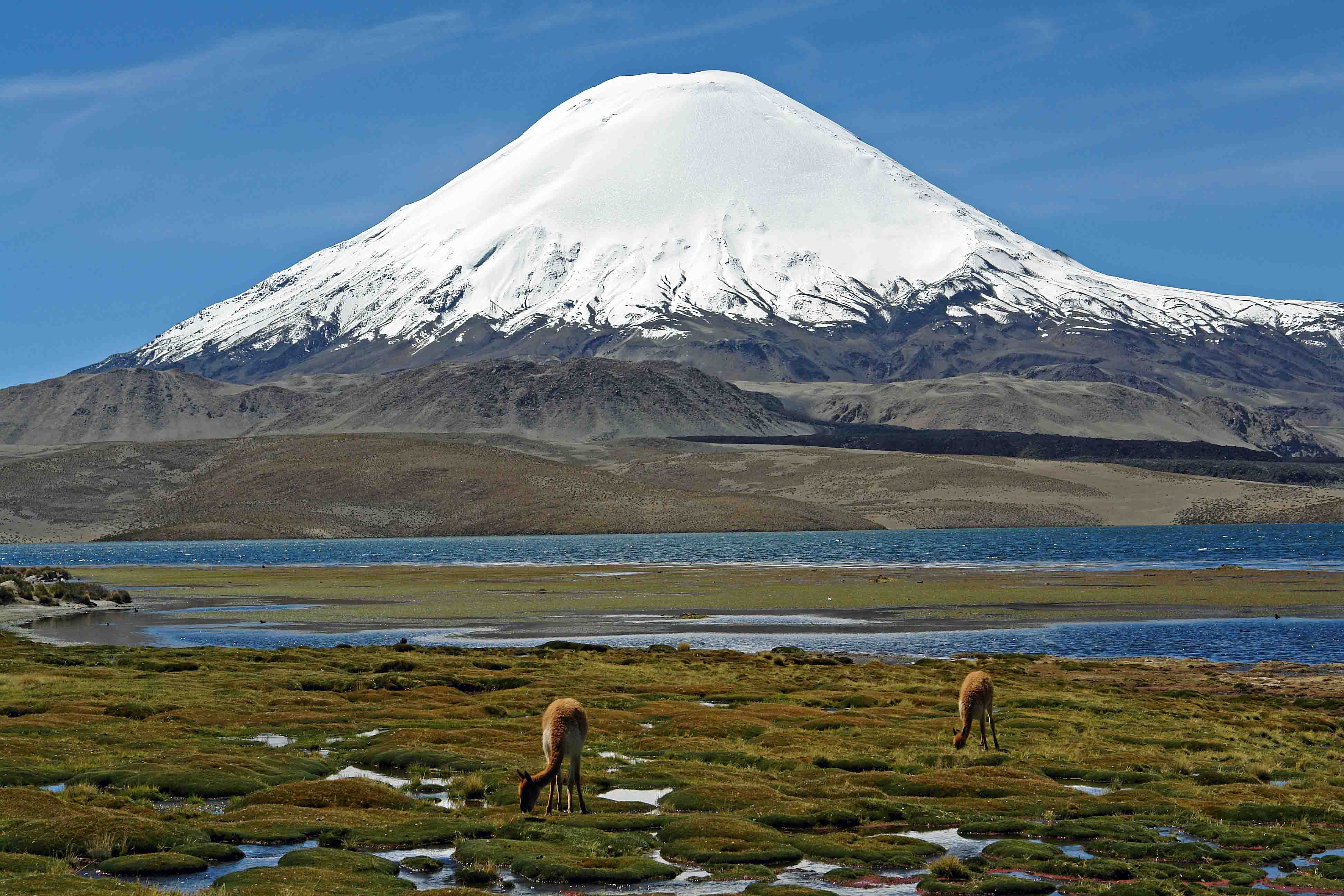
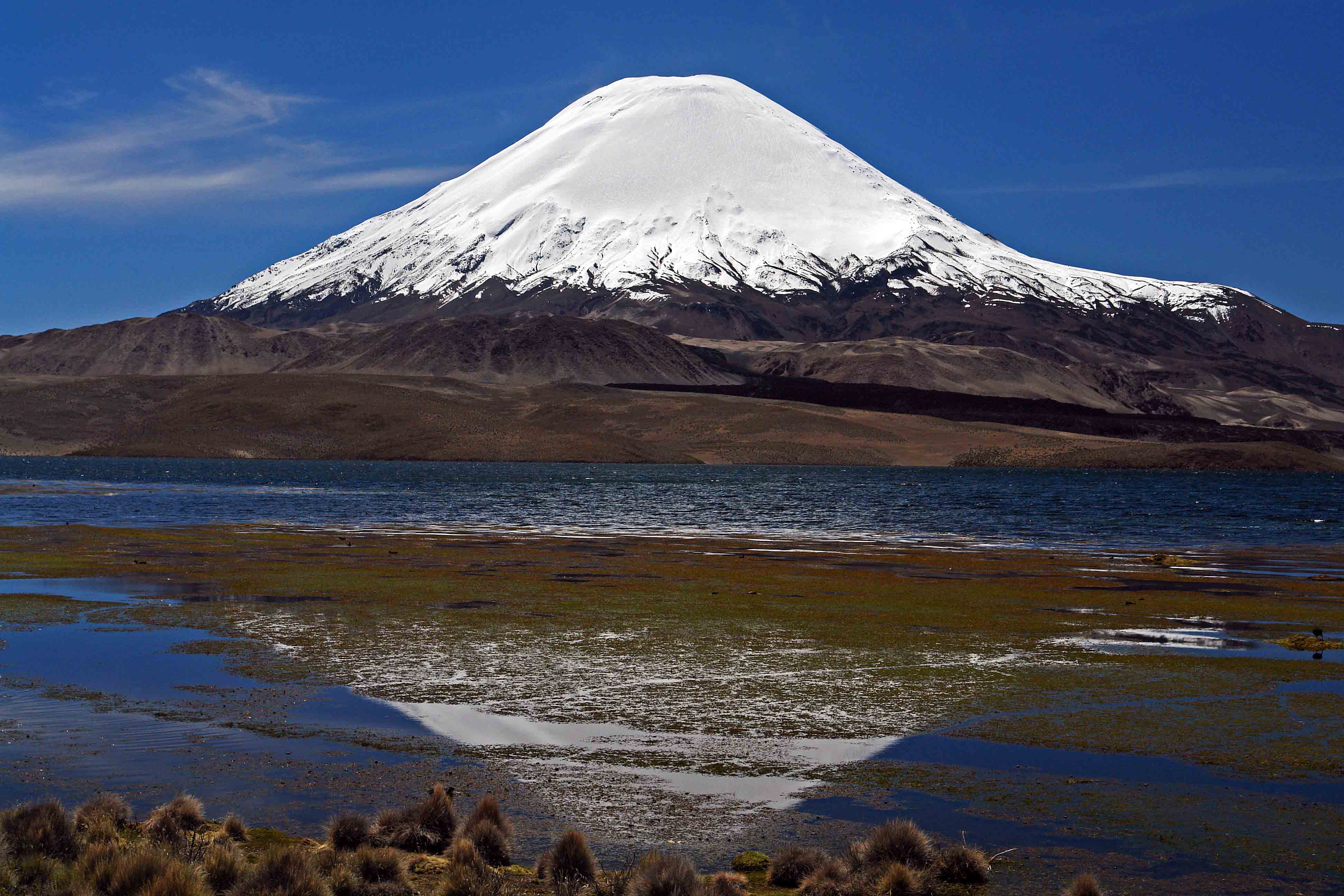
Parinacota is a snow-clad volcano which dominates the surroundings; its smooth slopes rising up to 6,348 m (20,827 ft). The volcano is said to be ‘potentially active’ whatever that means, but it has not erupted since about 290AD ± 300 years.
Parinacota volcano from lake Chungara
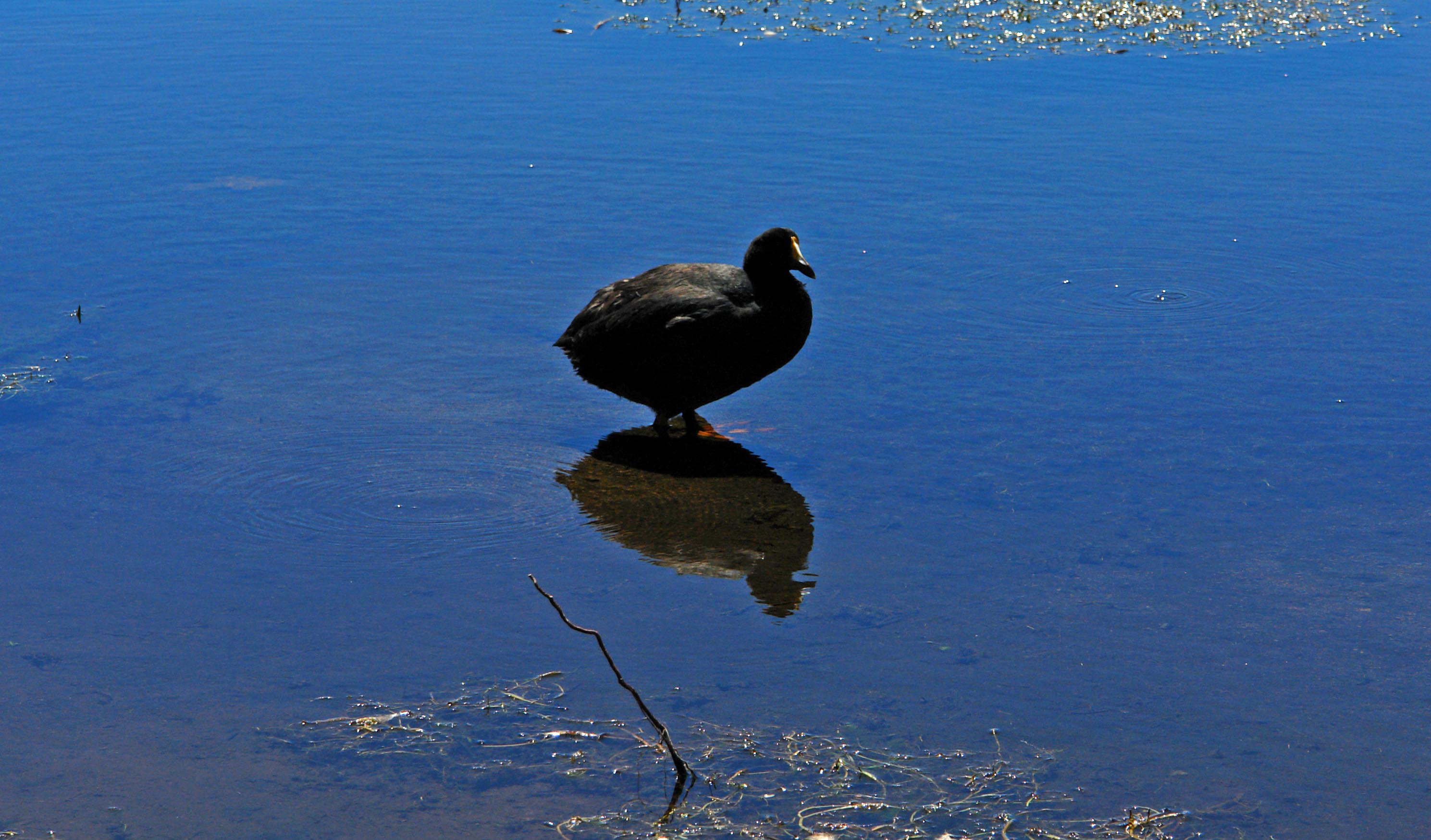
There are lots of interesting birds in this area. The only one I will mention is the Giant coot (Fulica gigantea), which is a strange flightless creature, rather different from coots we get in lakes in England.
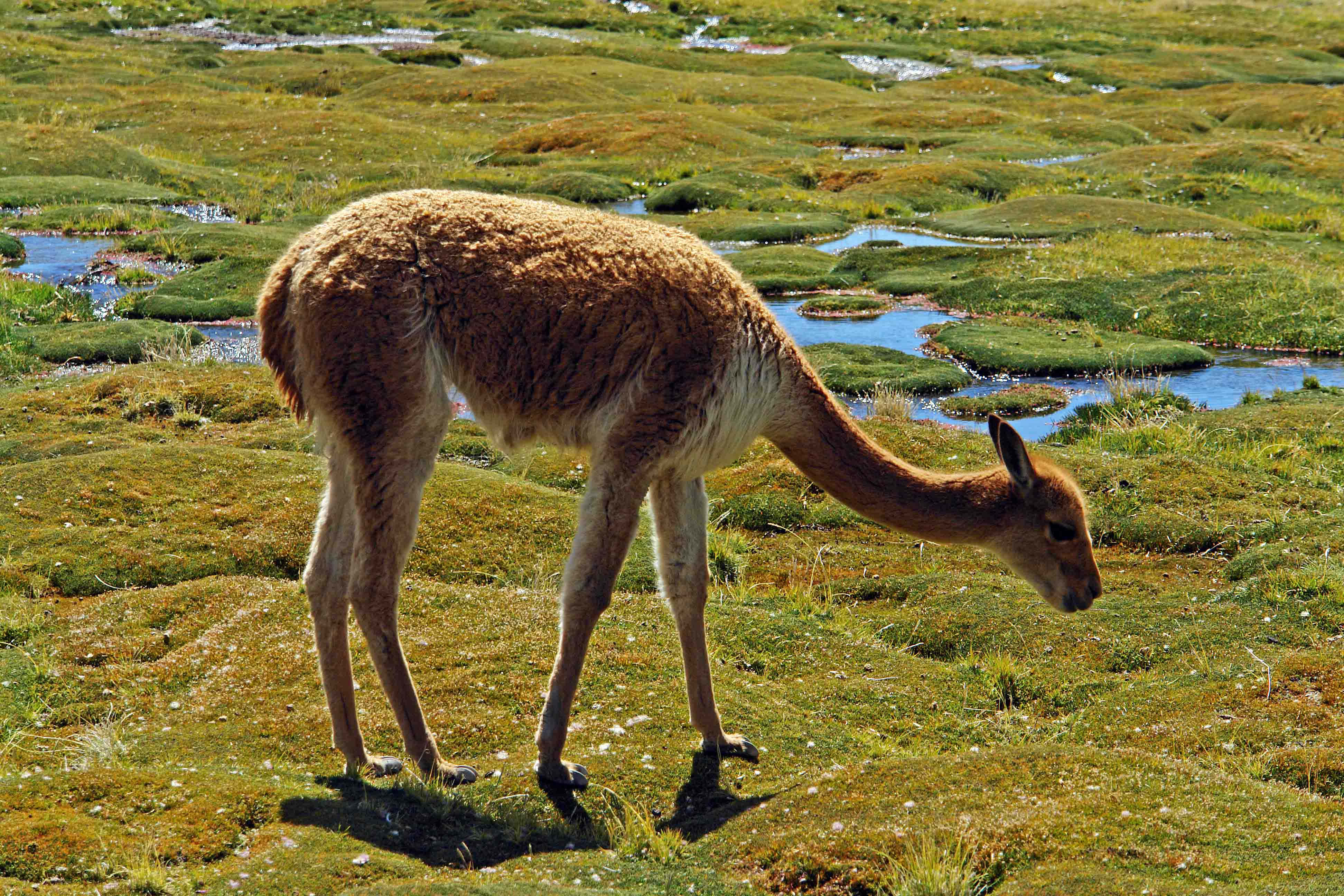
Vicuñas (Vicugna vicugna) are also quite common in this national park. They are very are attractive animals, which also produce the best wool; an exteremely fine, warm and thus, expensive fleece.
Vicuña (Vicugna vicugna)
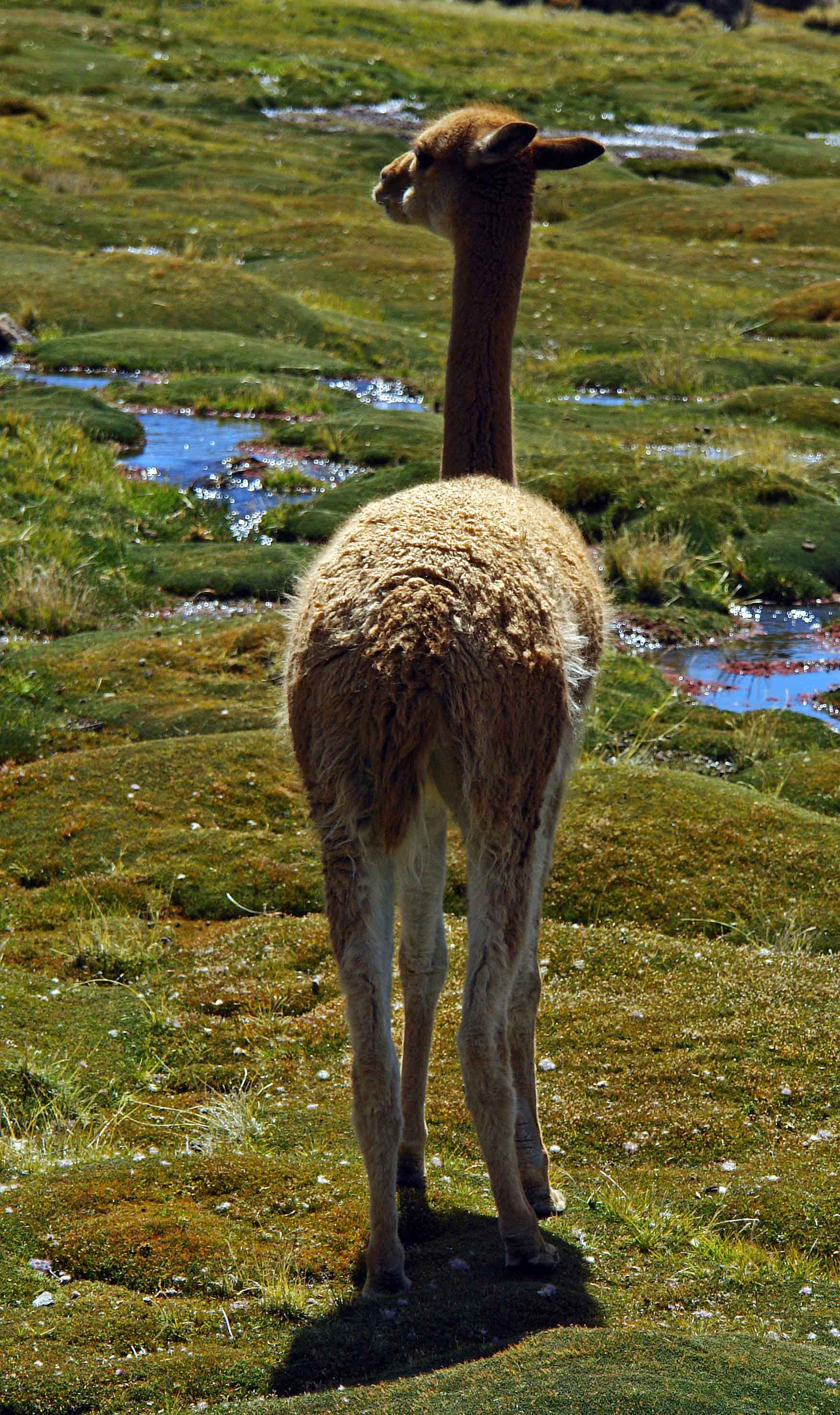
They live between 3,200 to 4,800 m in the Andes, where it must get very cold at night, so they must have evolved this very fine wool – finer than cashmere – to help them survive.
Vicuña (Vicugna vicugna) showing wool from the back
This is a spectacular region, one of the most interesting places I have ever visited, and I would love to go back there again some day (God willing).
Parinacota (volcano)
Rundel, Philip W., and Beatriz Palma. “Preserving the unique puna ecosystems of the Andean altiplano: a descriptive account of Lauca National Park, Chile.”Mountain Research and Development 20.3 (2000): 262-271.
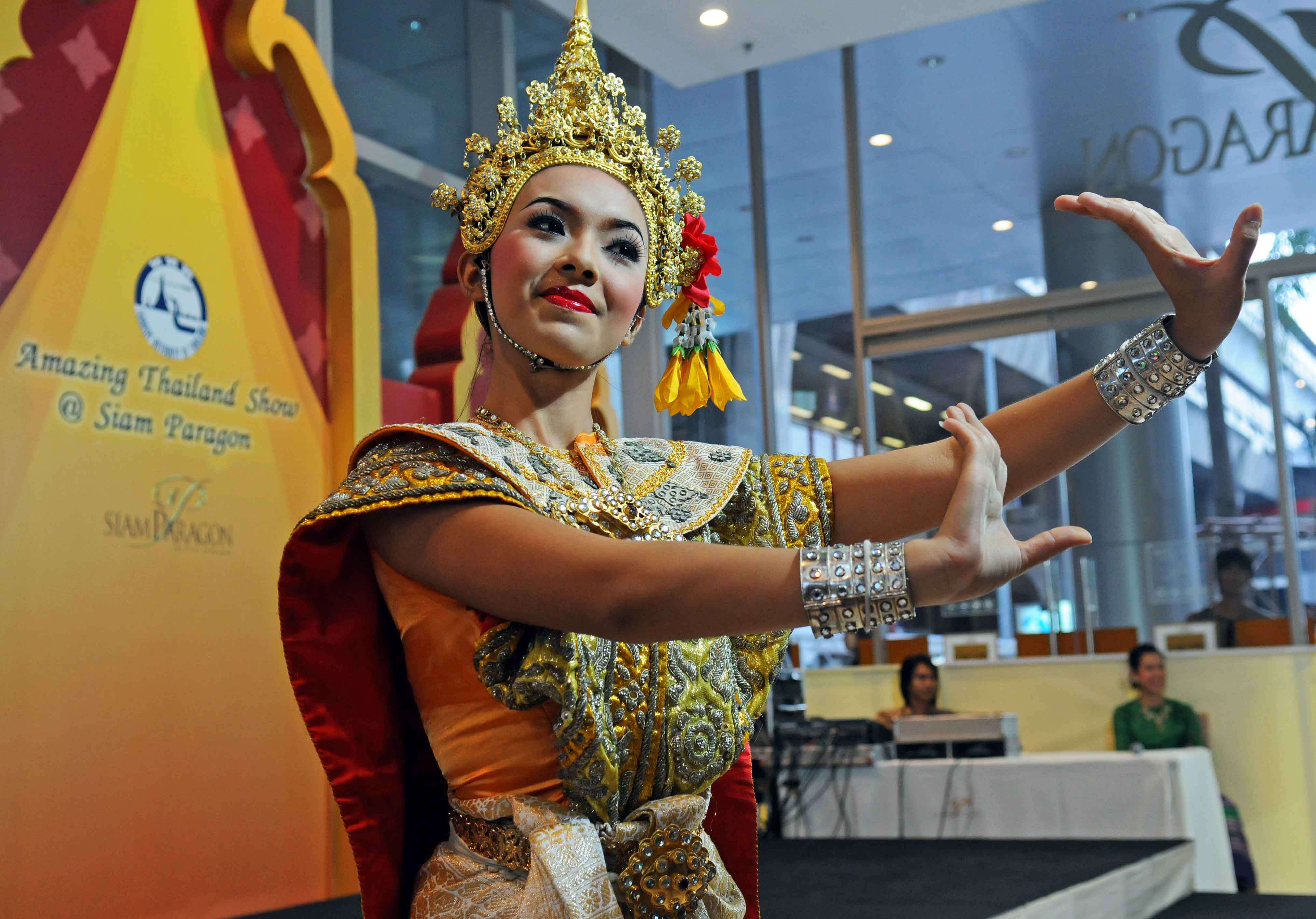
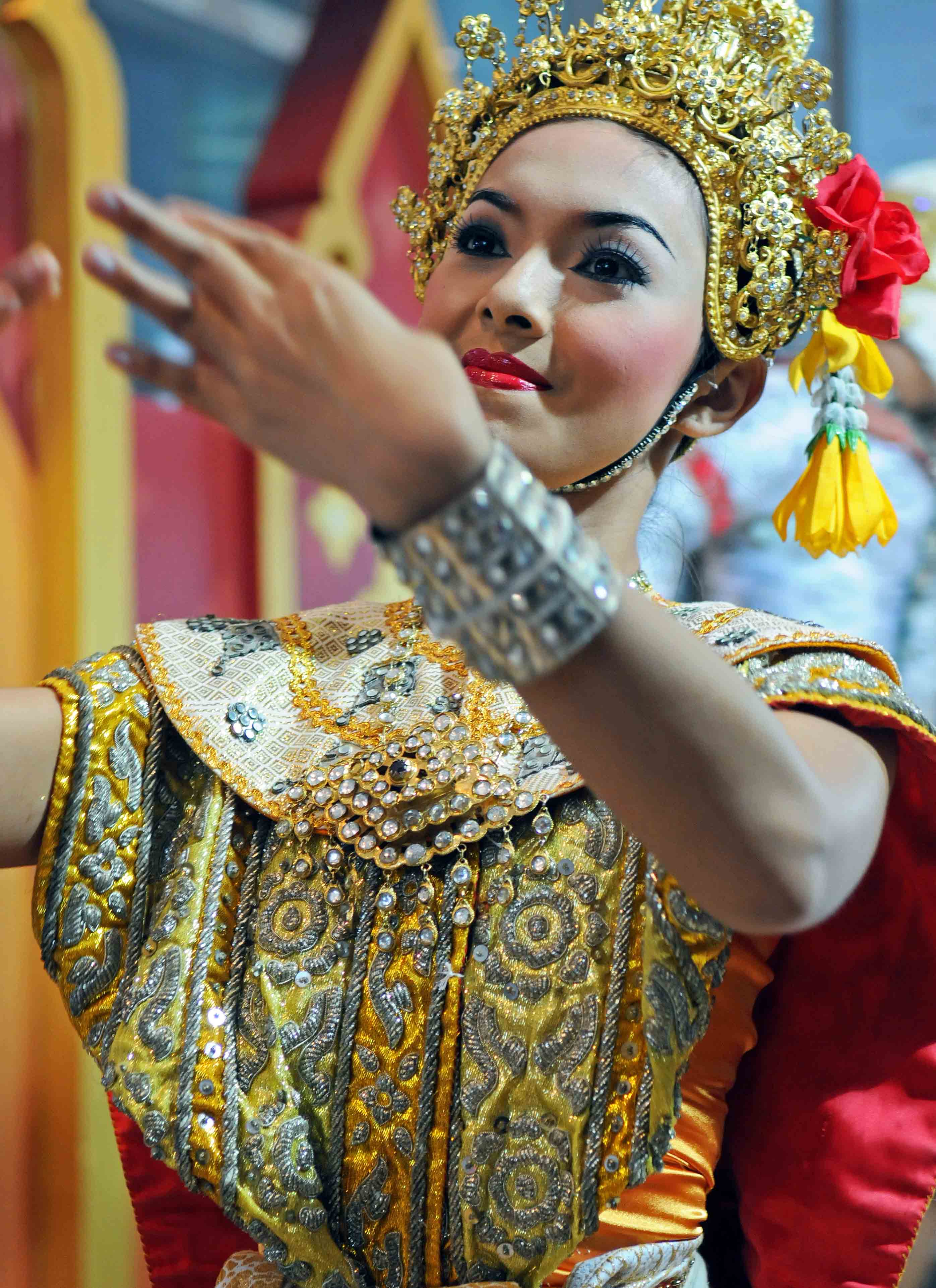
I love watching Thai dances, the delicate hand and leg movements and the beautiful music. Not to mention the grace and beauty of the dancers themselves!
Dancer in Bangkok (Siam Paragon department store)
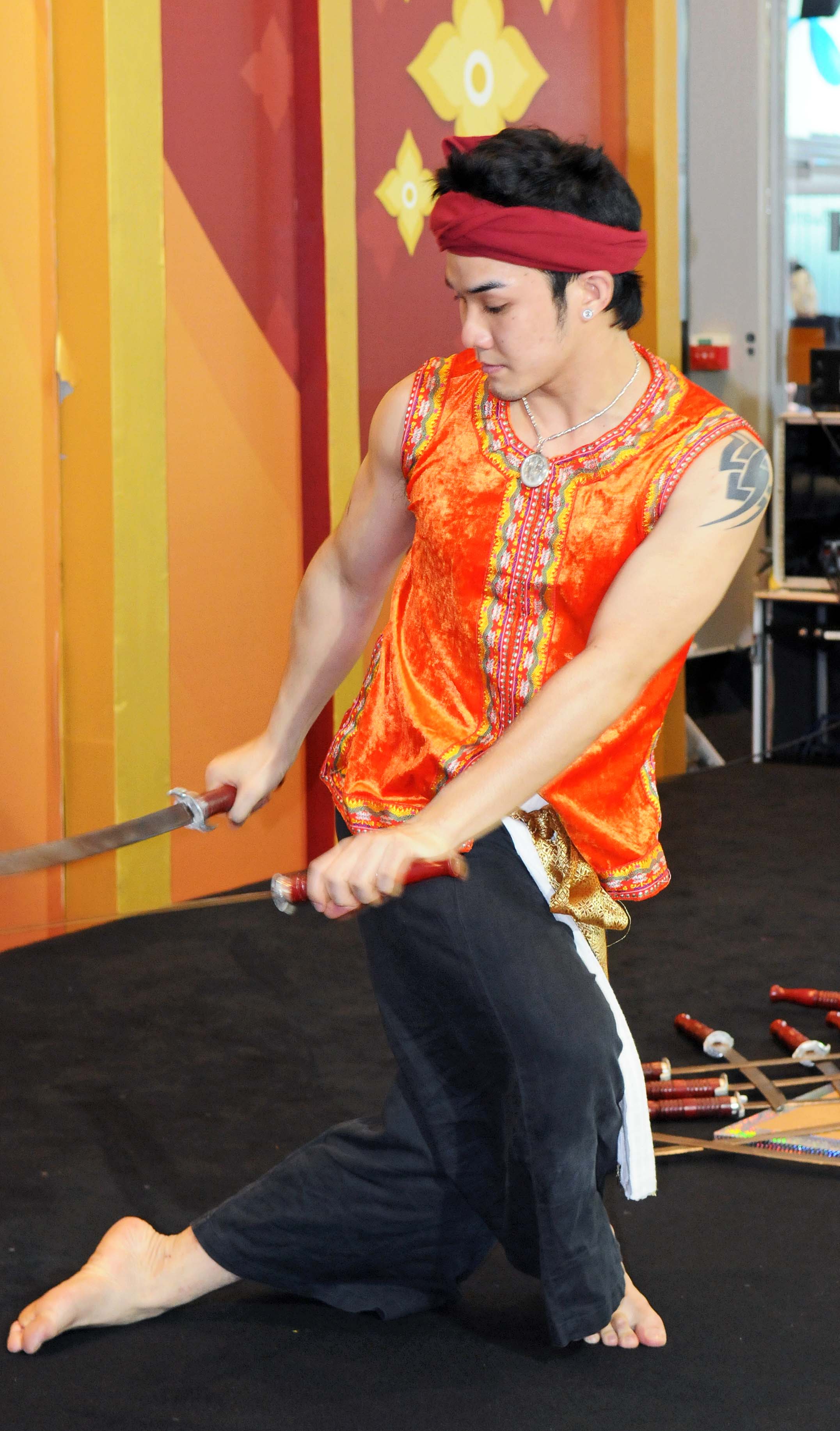
There are many different types of dance in Thailand, all sorts of regional dances with different styles and meanings. For example, sword dances were inspired by types of combat that were typical in ancient times and were no doubt useful in terms of training speed and agility of the dancer/fighter.
Sword dancer
Over the years of travelling in Thailand, I have snapped the occasional dancer, but as anyone who has tried it knows, it is not easy to capture the grace and fluidity of a dancer in a still photograph. Sometimes it works just by chance! This girl (below) was dancing as she moved along the street with the annual Flower Festival parade in Chiang Mai (2014). The festival started late in the afternoon that year, and the sun had set when I took this photograph, so the dancers were at least spared the heat of the midday sun, as in previous years. She is wearing the traditional brass finger nails which amplify the movements of the fingers.
Dancer in 2014 Flower Festival, Chiang Mai
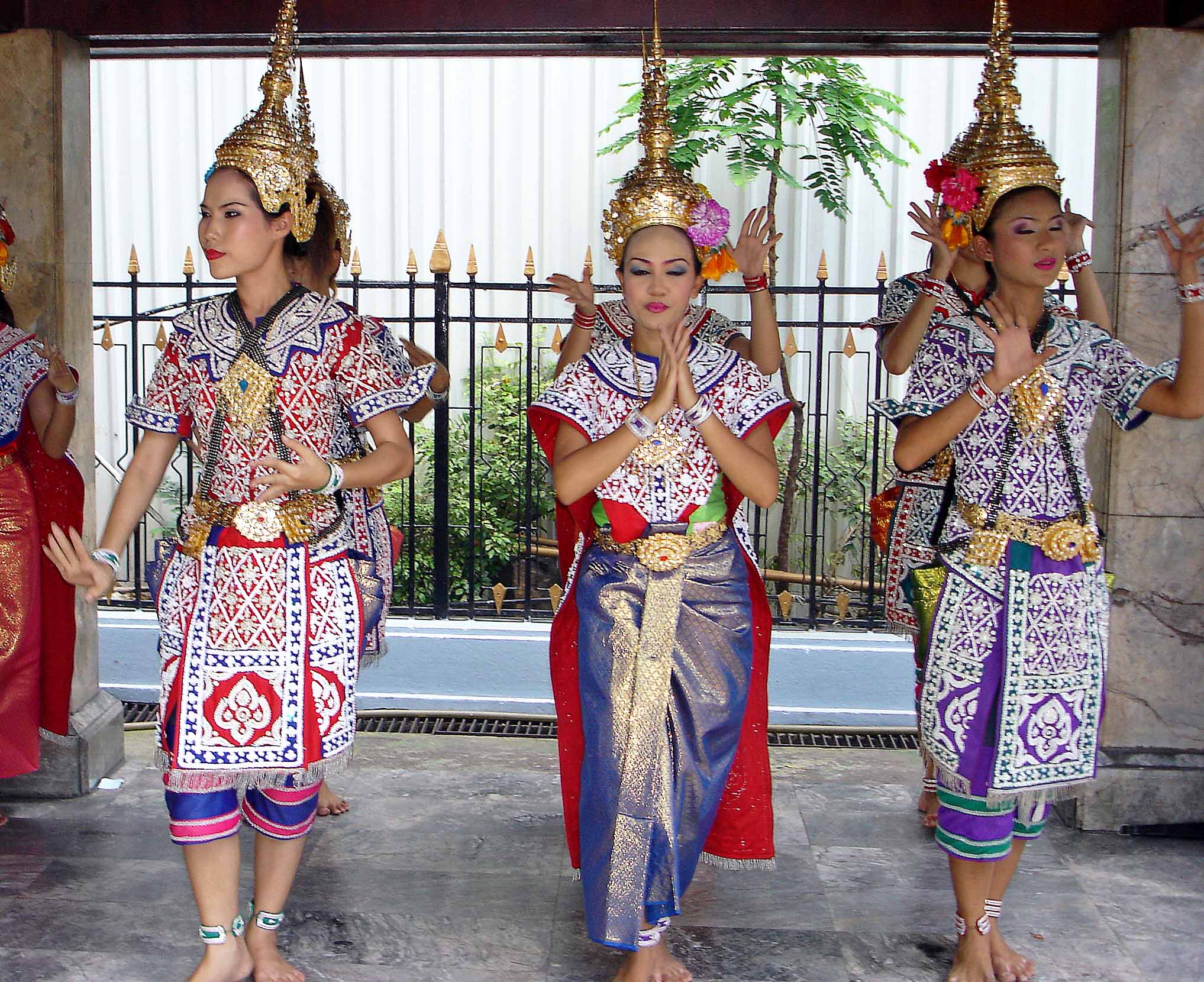
These traditional Thai dancers (below) were performing at the Erewan shrine in central Bangkok, where worshipers donate money for them to dance. They perform these elaborate dances all through the day in temperatures in the mid 30 degrees C or above. It is incredible that the look as cool and unflustered as they do.
Dancers at Erewan shrine, Bangkok
These Thai dances and hand movements have meanings, which unfortunately I do not understand, although I would like to learn. The extremely elastic finger movements in which the fingers are stretched backwards are an aesthetic of the dances familiar to all Thais, but special training is needed to do it properly (without breaking ones fingers that it!). It is a symbol of grace and elegance.
Hand movementsHand movements by Thai dancer
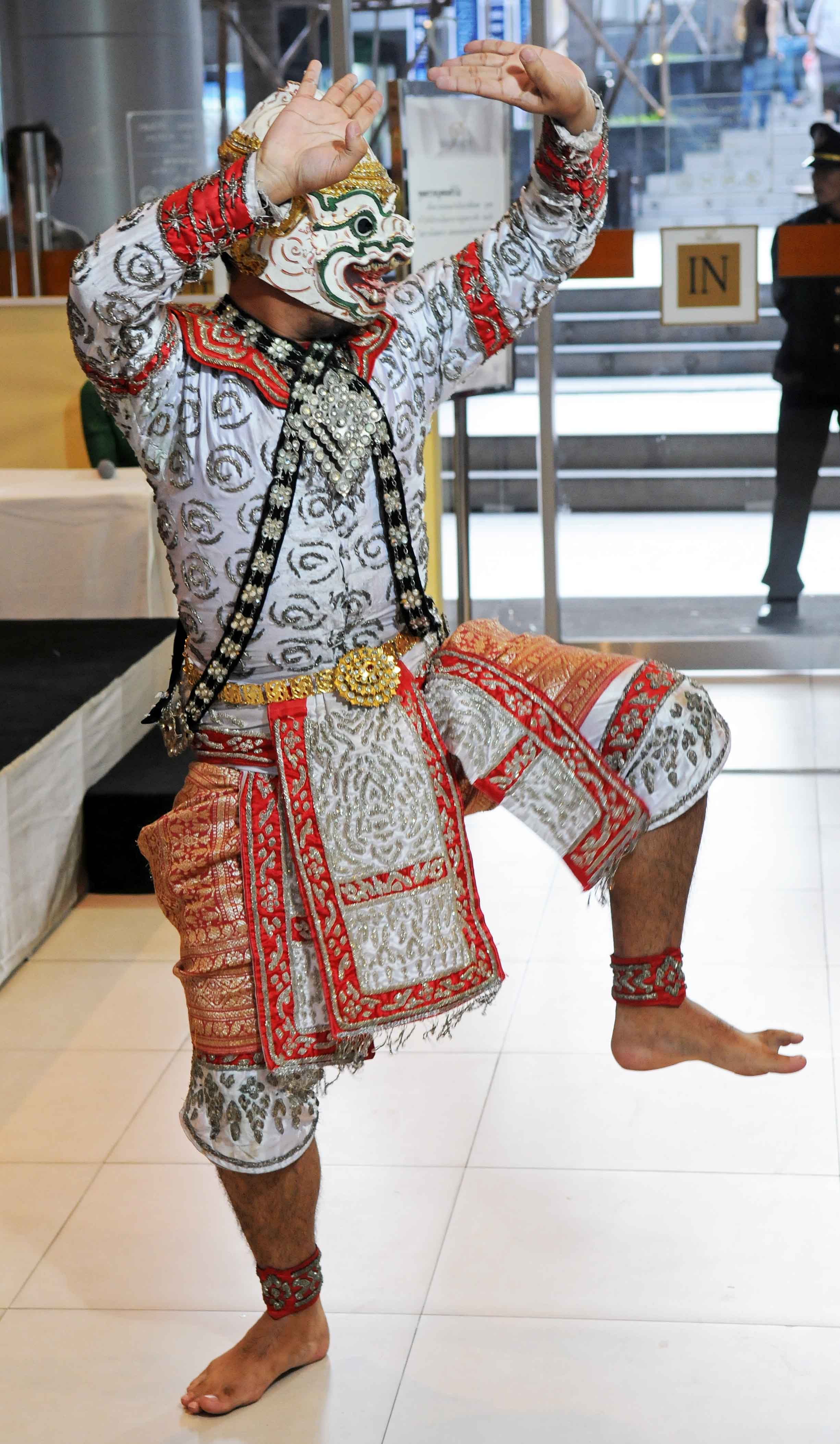
The khon (classical masked dance) was originally performed as entertainment in the royal court and features episodes from the Ramakien (the Thai version of the Ramayana) with masked characters which will be familiar to most Thai school children, like Hanuman the monkey mask (shown below).
Dancer wearing khon mask of Hanuman, the magical monkey
The grace and beauty of these dancers has a universal appeal, even if we farangs (foreigners) don’t really understand the symbolism of the dances, as the Thais themselves do.
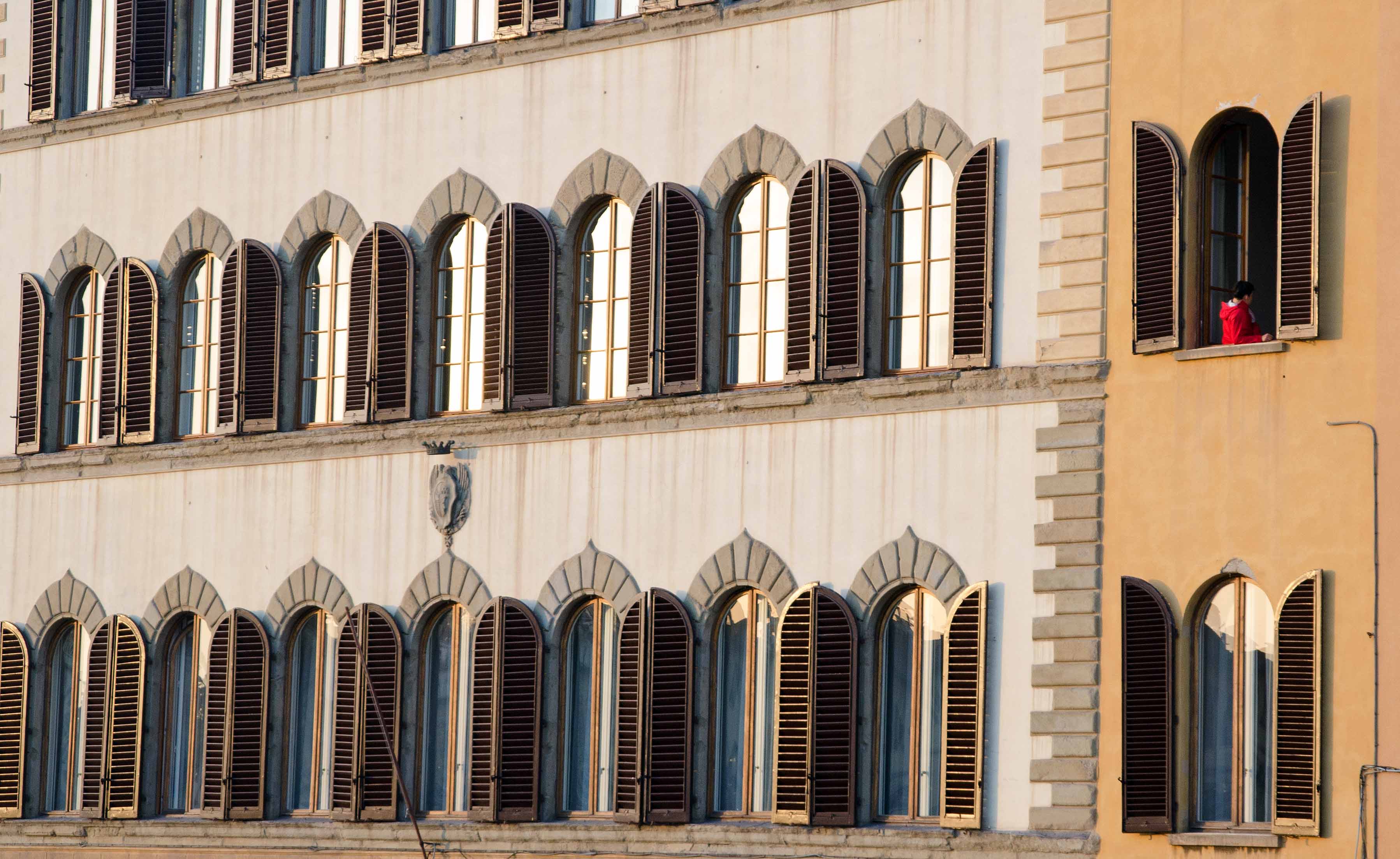
Boy in red jacket at the window, River Arno, Florence
Including a small area of red can sometimes do wonders for a photograph! With this in the back of my mind, I am always alert to something red appearing in my image finder!
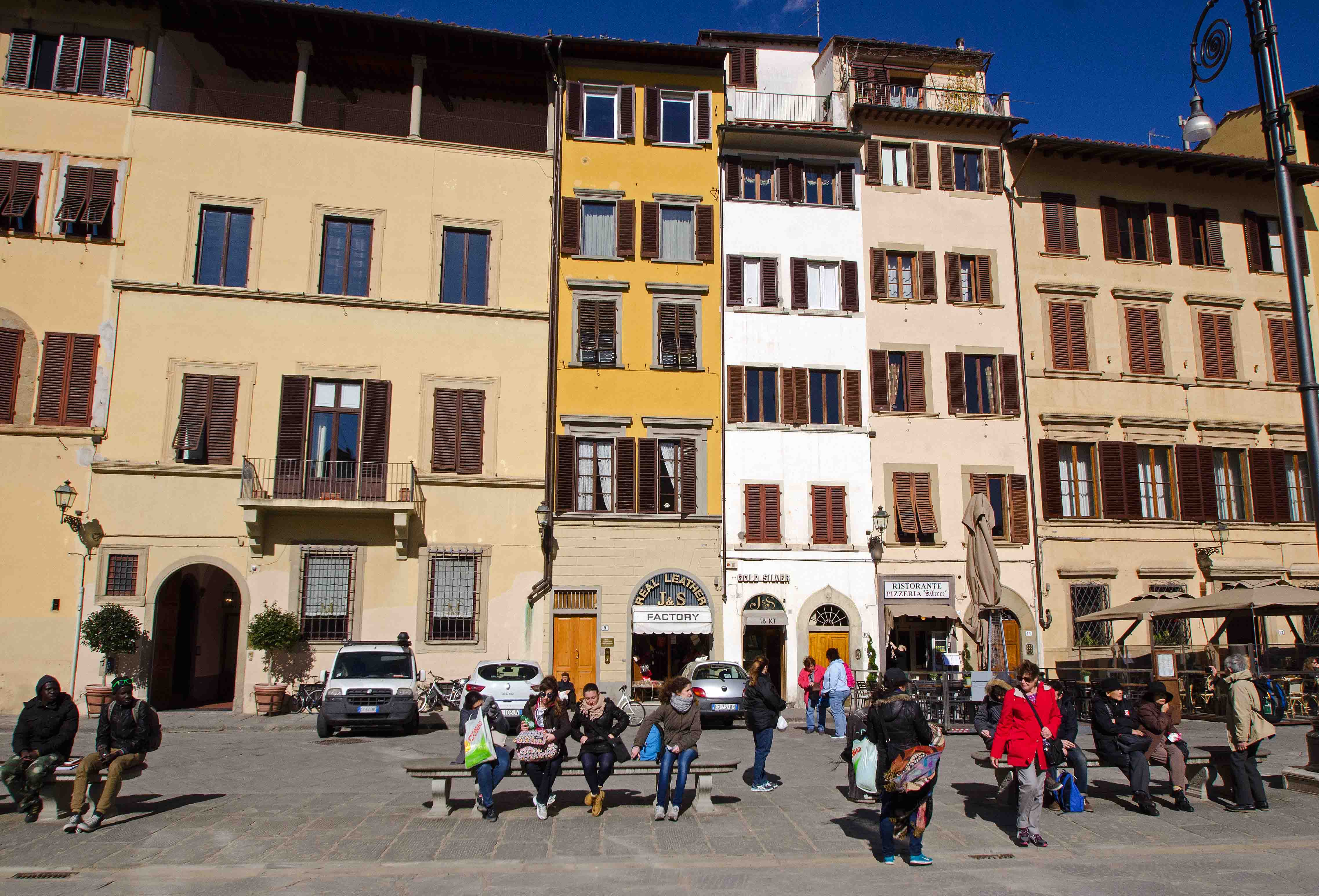
Piazza Santa Croce
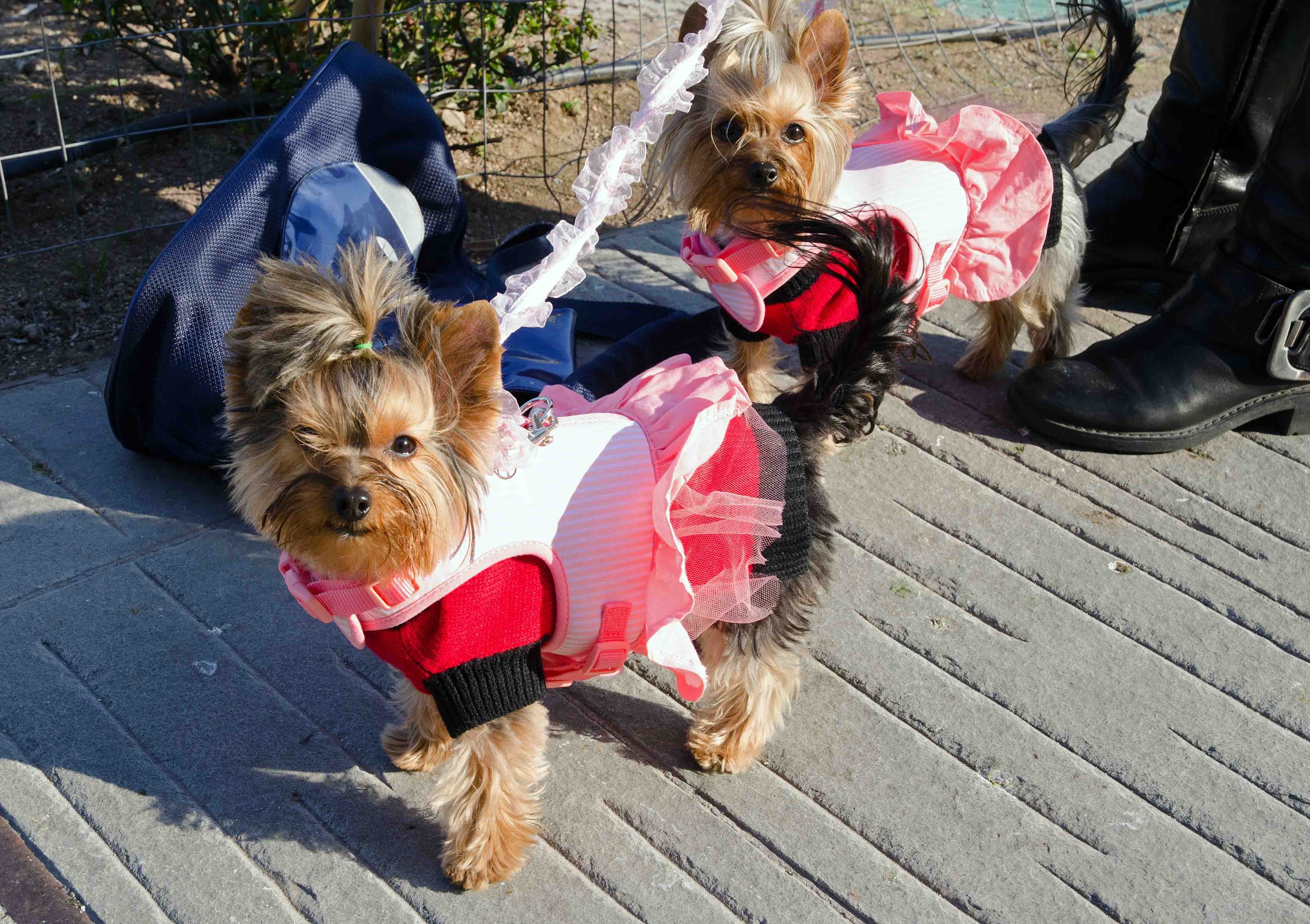
Whether it works or not, probably depends on a lot of other factors, like what else is in the photograph! But there is no doubt, that if you get it right, a small focal point of red can catch the eye and improve a photograph. I will leave readers to decide whether this works or not, in any these photos which I took recently in Florence, Italy.
Dogs in red and pink outfits
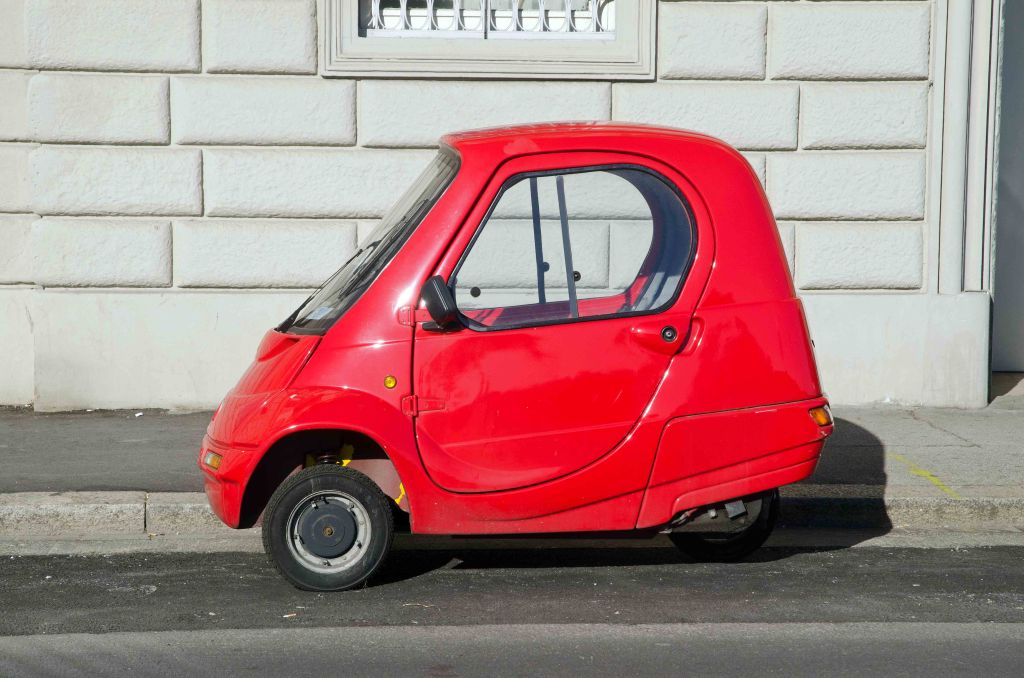
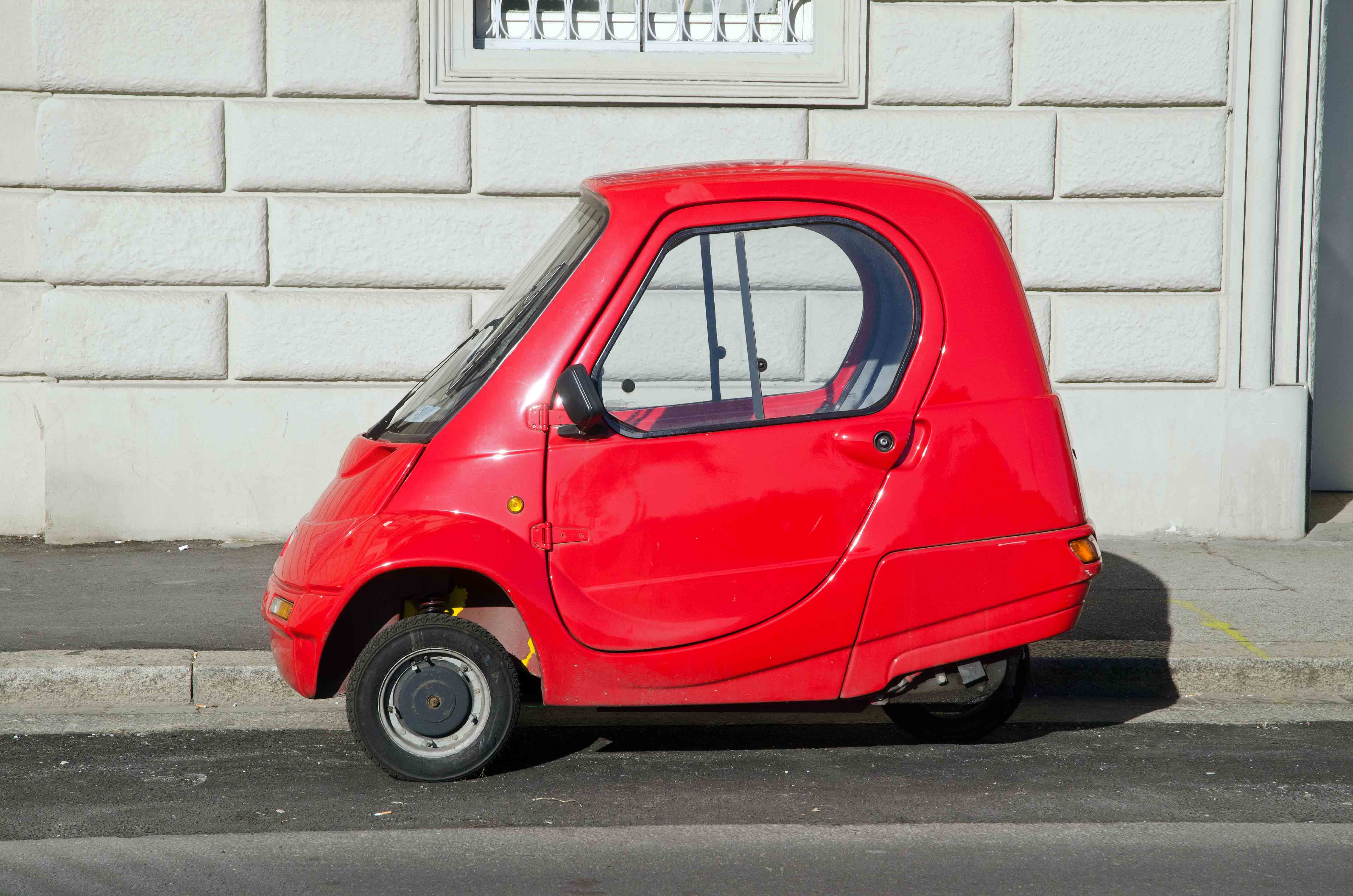
Red is a warm colour and in general, warm colors will appear to advance, i.e. to stand out in a picture or photograph. But the effect also depends on the surrounding colours and – I think – on how much space (area) they take up in a photo. The relative brightness of different colours – whether they are in light or shade – will also affect the result. If red takes up the majority of the photograph, like this tiny red car (below), then the effect gets a bit lost although I still like the result!
Tiny red car, Florence.
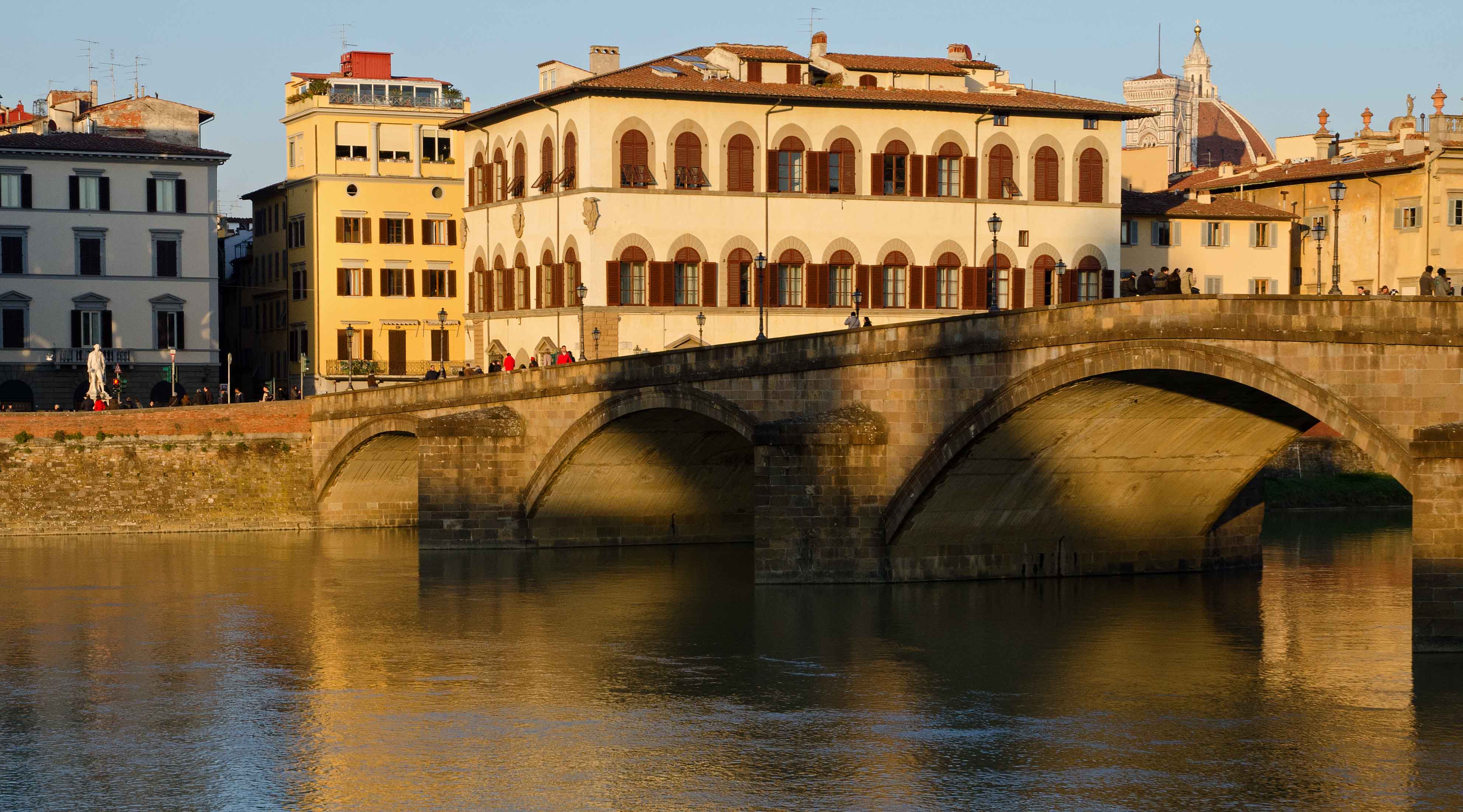
At the other end of the scale, if the red areas are too small, like these red jackets in this river shot (below), then the effect is also diluted.
River Arno at sunset
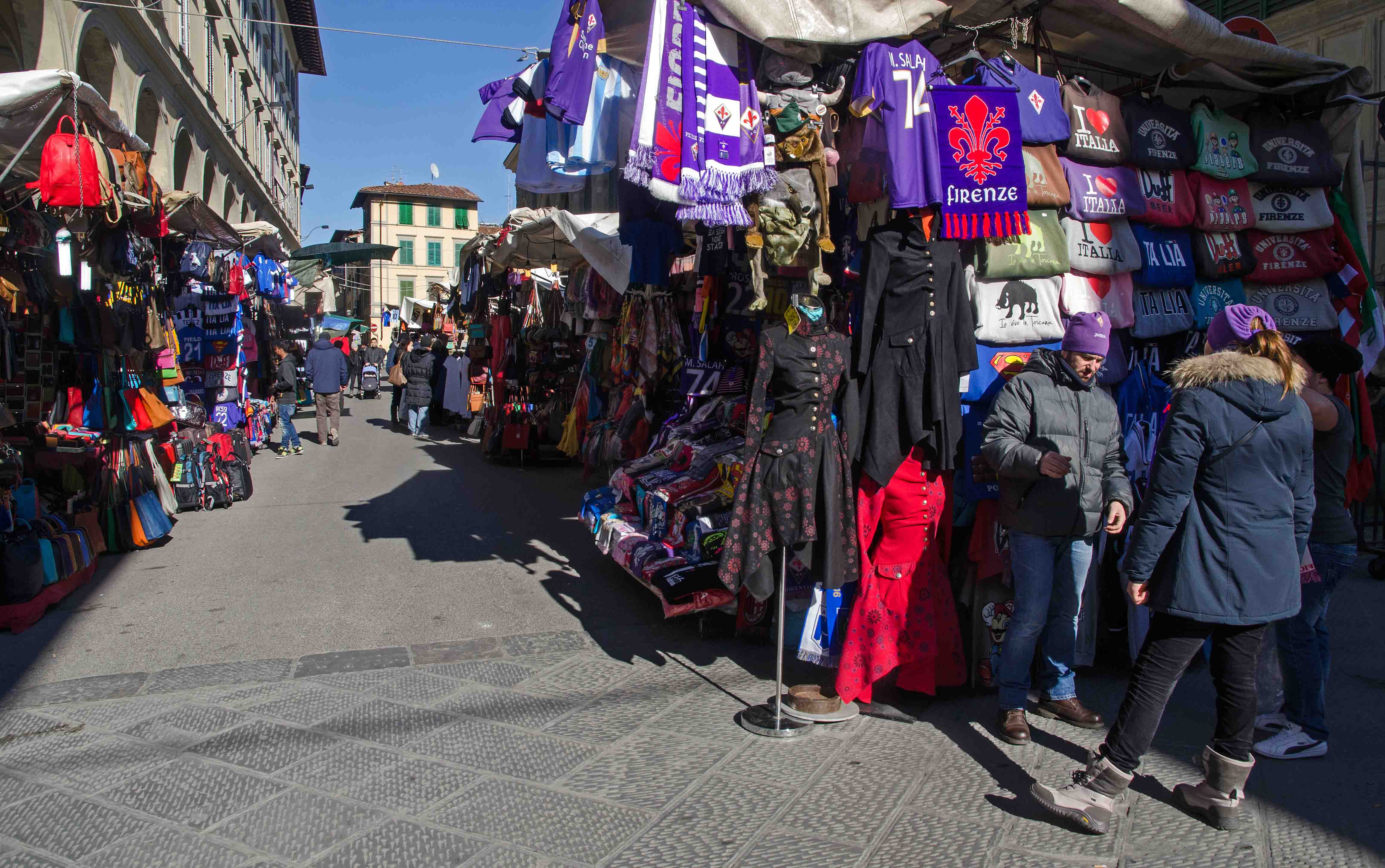
The effect is also a bit muted if there are multiple red areas in a photo, as in this street market scene below.
Street market, Florence
In conclusion, I think it works best to highlight an otherwise fairly ordinary photo, like the first one (above).
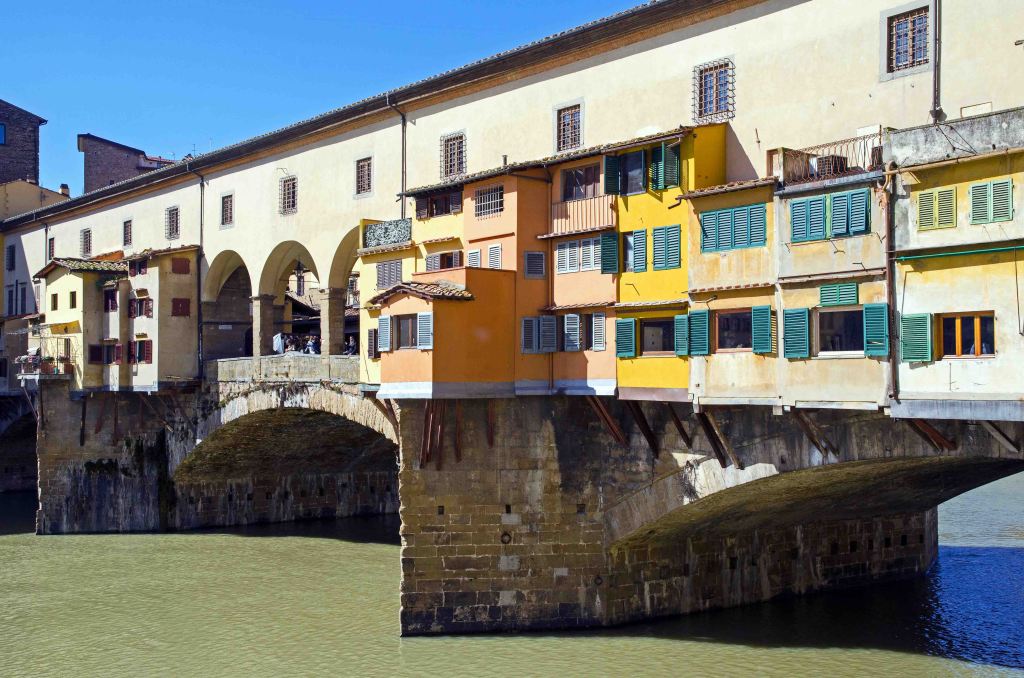
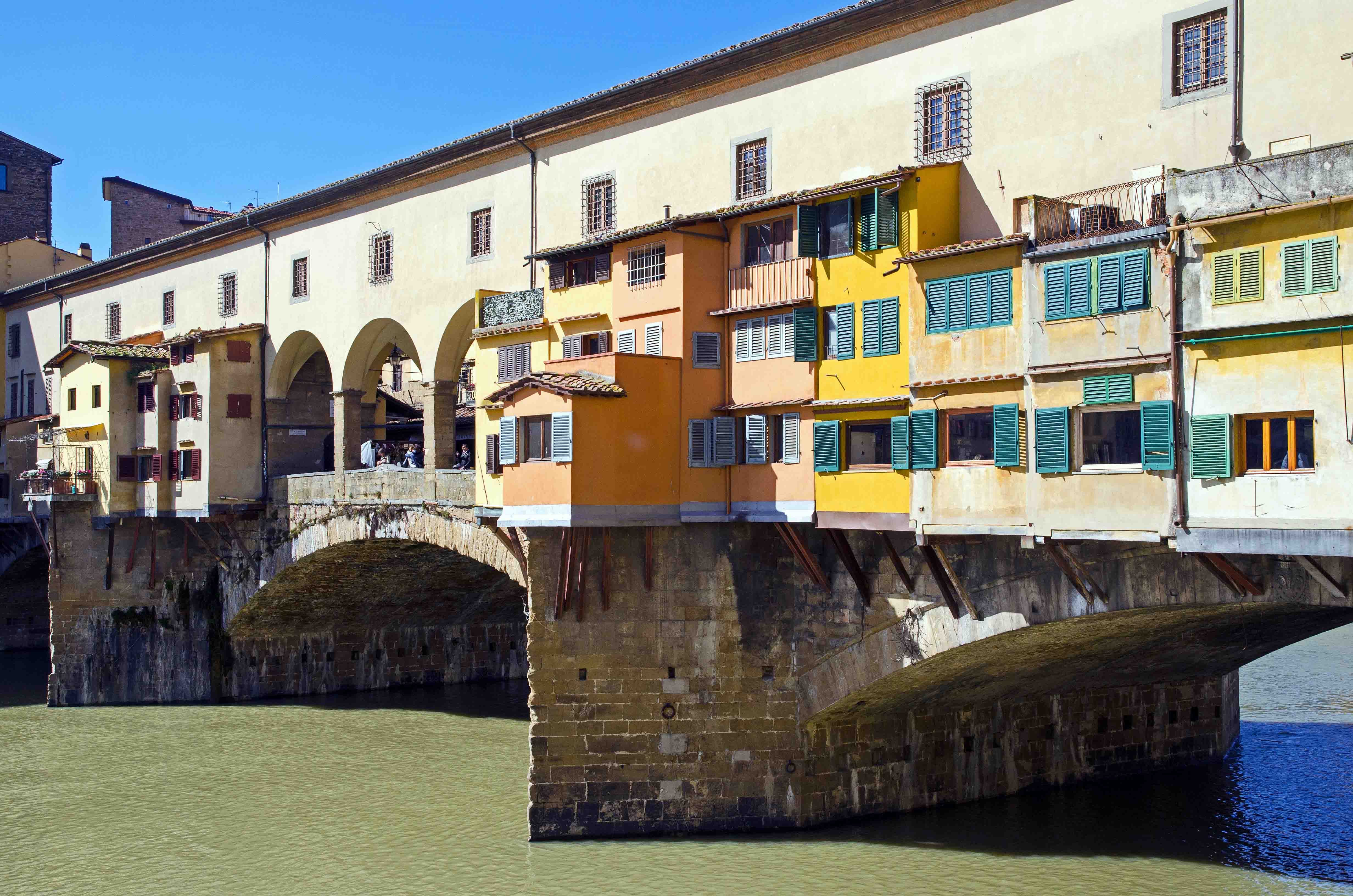
The Ponte Vecchio, or ‘Old Bridge’, is a mediaeval bridge across the River Arno in Florence. The existing bridge dates from 1345, although there were bridges at this location as far back as Roman times. It is of course, one of the most famous sights in the world, and huge numbers of tourists from around the world visit this bridge every year. It is a thing of beauty, both in terms of its elegant structure and its beautiful colours.
The Ponte Vecchio
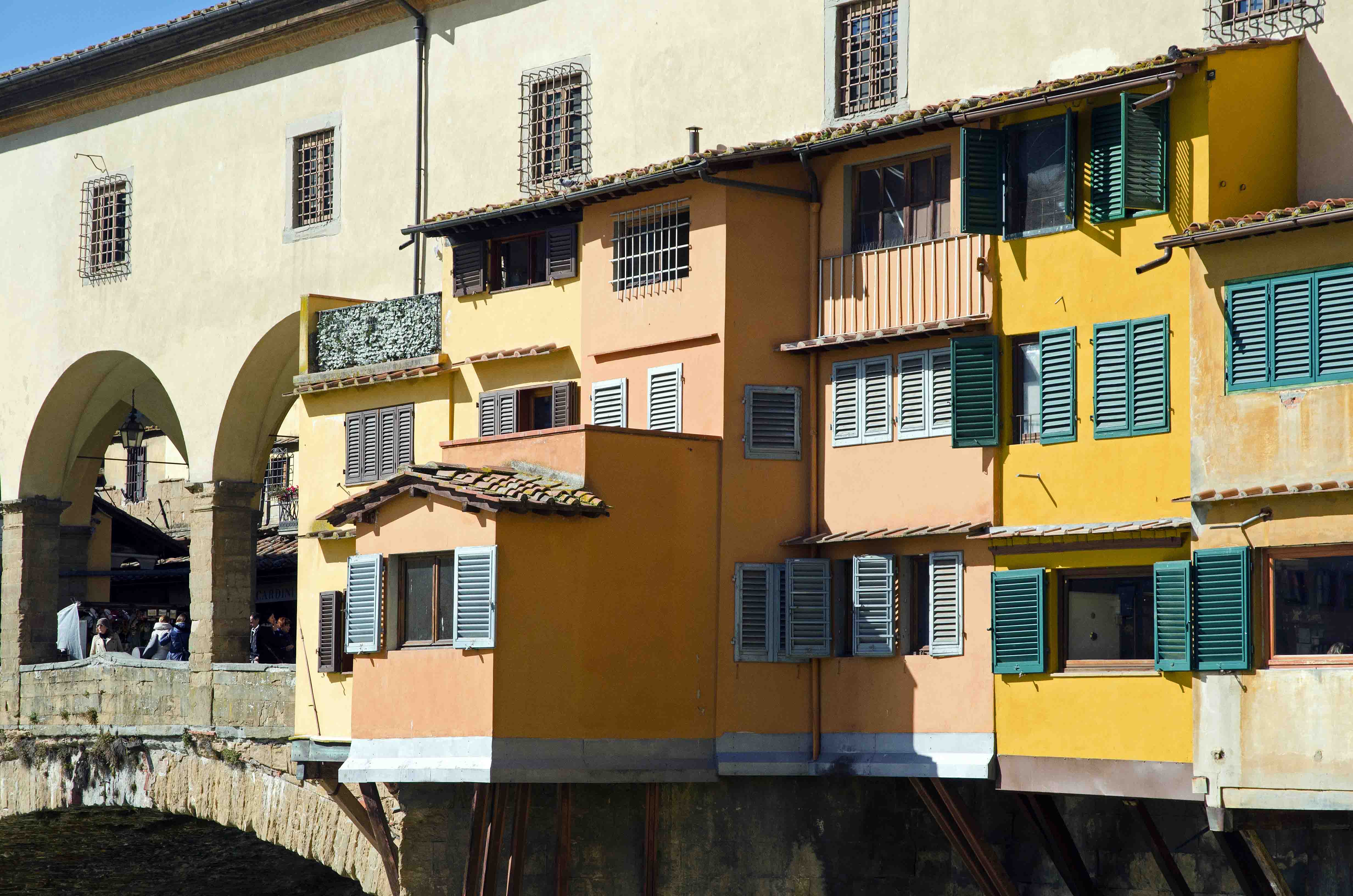
The small shops which hang off the sides of the bridge are painted in attractive pastel colours.
Ponte Vecchio
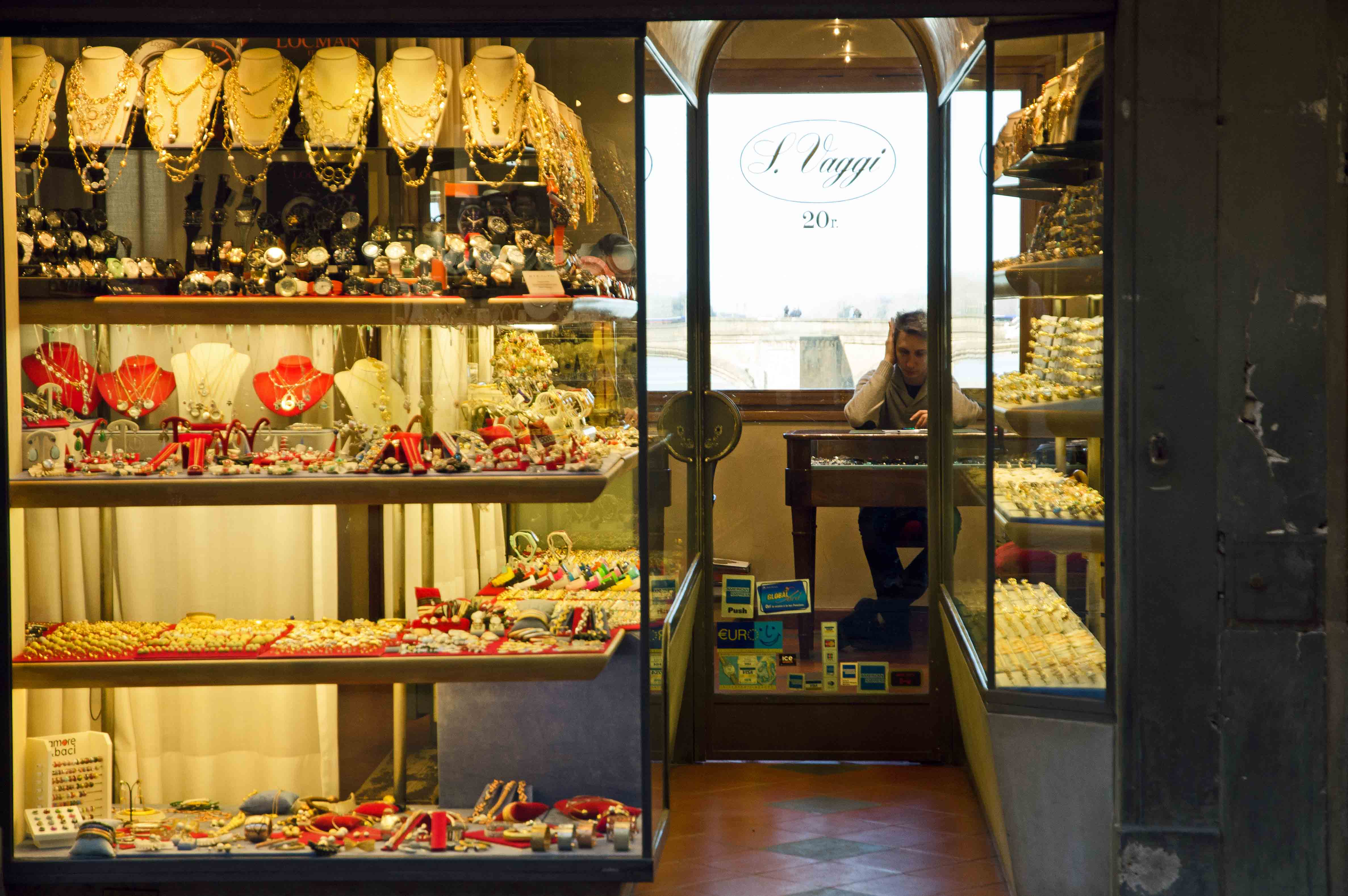
Originally, there were a variety of different shops, including butchers, fish mongers and tanners of hides; all practices where I imagine it was a convenient location to throw things into the river! Today, and since 1593 incredibly enough, there are only jewelery shops on the bridge. They did not seem to be doing much trade, although everybody was looking! Maybe one in a thousand buy something?
Jewlery shop on Ponte Vecchio
There were also street vendors – immigrants from north Africa – selling their wares on the bridge. They either sold sticks for taking selfies, or – it seemed to me – rather poor reproductions of paintings (below). They played a continual game of cat and mouse with the local police, scooping up their wares and hurriedly moving on when the blue-coated police arrived.
Street vendors on the Ponte Vecchio
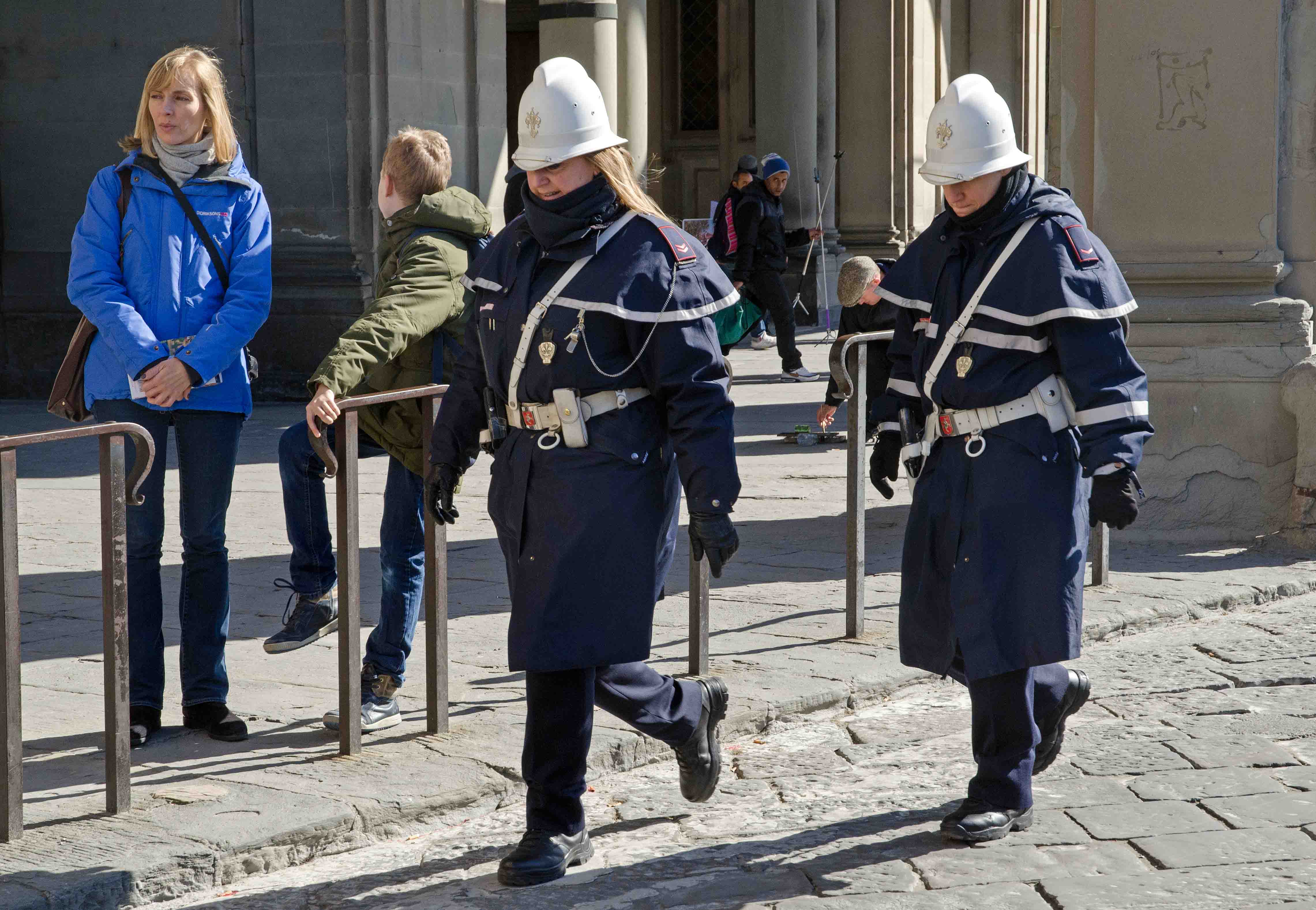
The local municipal police (polizia municipale) – in the white custodian helmets – seemed to me to be doing a good job, but were a lot less intimidating than the Carabinieri, who were usually tall young men in sun glasses!
Local municipal police (polizia municipale) Florence
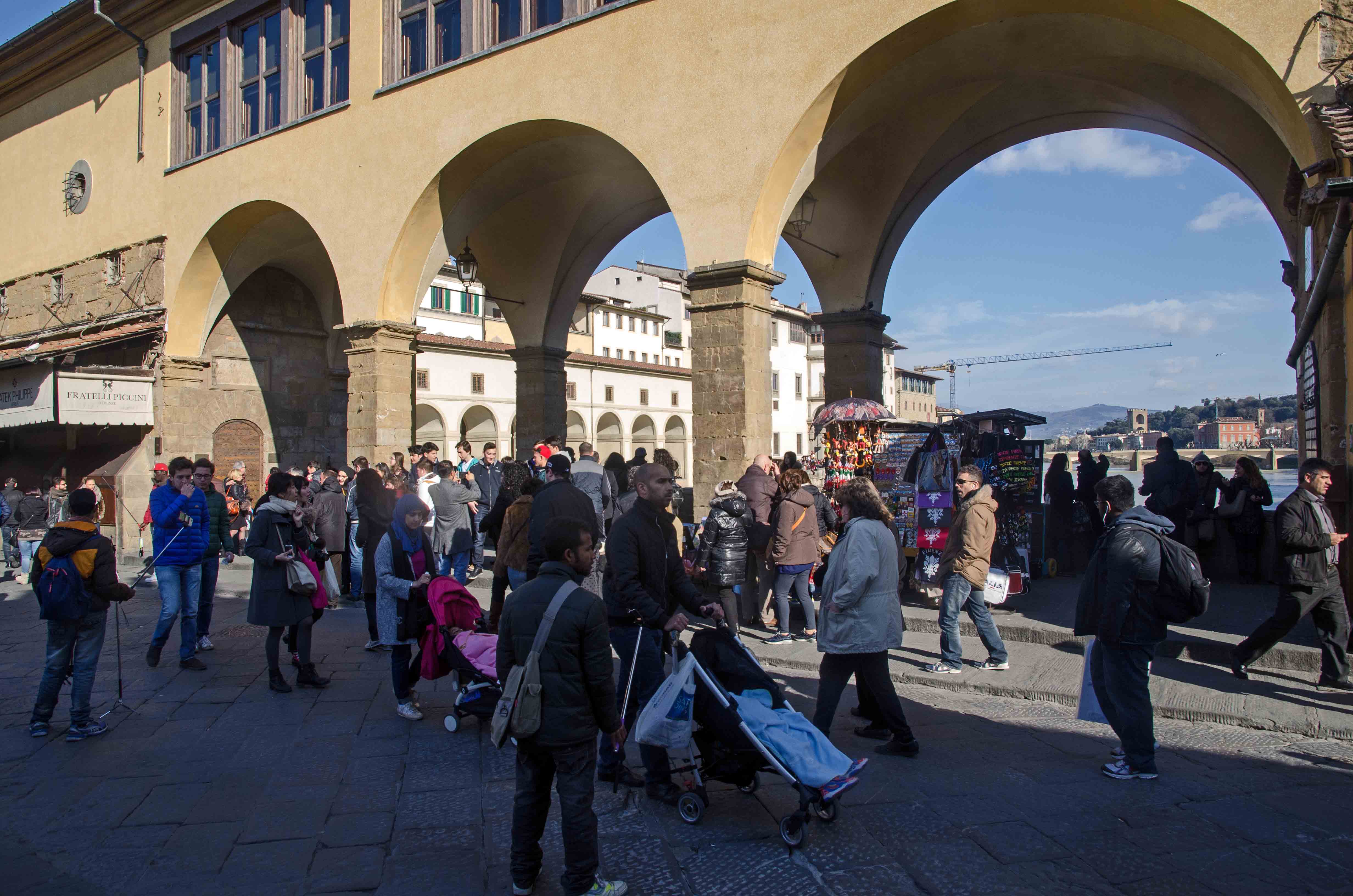
We all want to visit famous places and see them for ourselves. Once we have done that we can tell our friends, post blogs on the Internet and share pictures on Facebook, Instagram or wherever. Unless one is completely elitist, this has to be a good thing, but with well over 7 billion people on the planet, it means that some places are going to get quite crowded. That said, I did not find the bridge unduly crowded when I visited in March, but I guess it does get very busy in the summer. Florence is also a fairly big city, so apart from the main sites (Ponte Vecchio, the Duomo etc.), it is not too difficult to sidestep the crowds if you visit out of season. I did not take a selfie (on purpose) but I am glad a went and saw this iconic structure for myself. I would however, have loved to have seen it in Medieval times, with all the hustle and bustle of a functioning market.
On the Ponte Vecchio
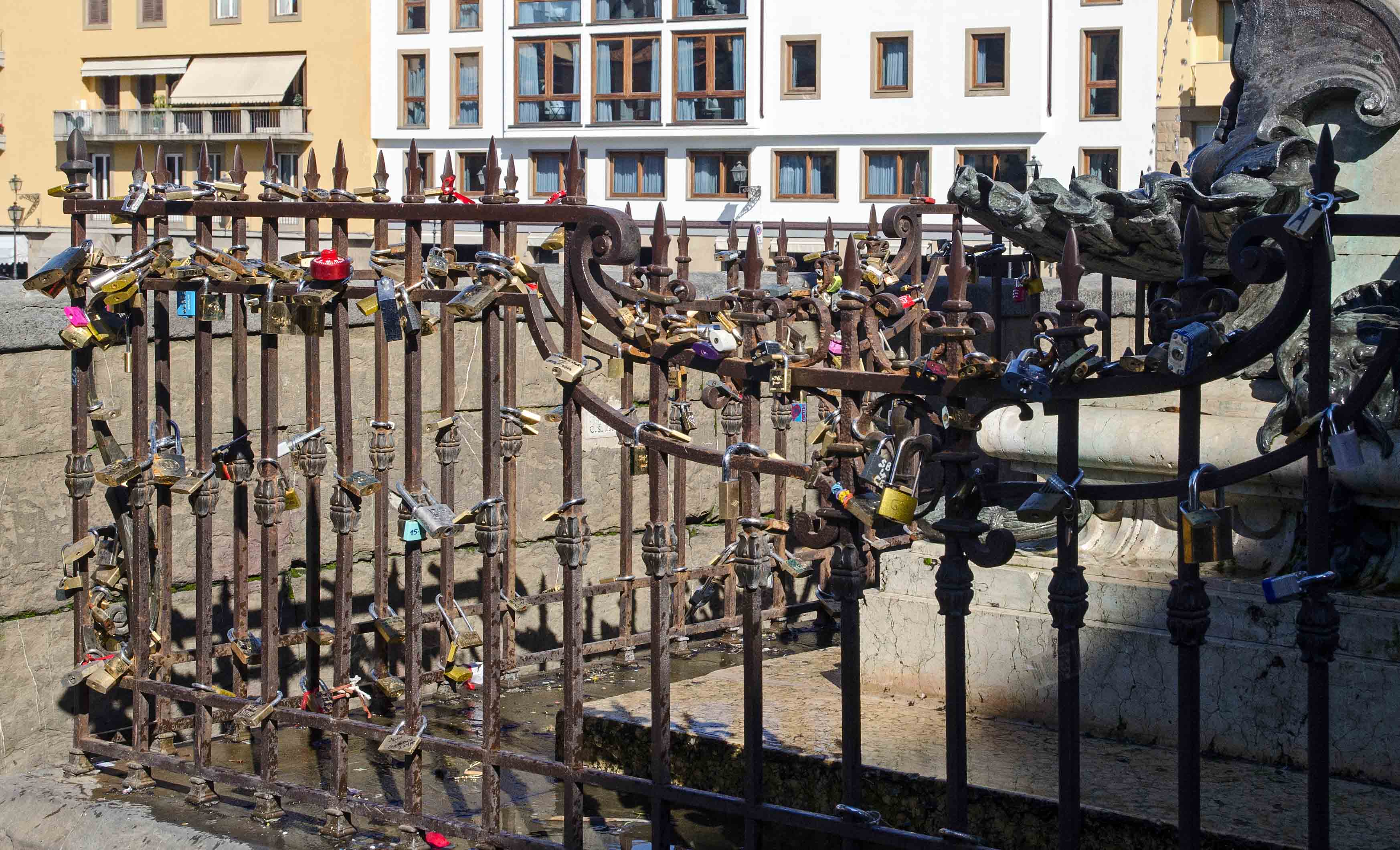
I noticed a large number of padlocks attached to some iron railings on the bridge and wondered what these were. Apparently, there is a superstition that if you and your loved one attach a padlock to somewhere on the bridge, and then throw the key into the river, your love will last forever. Quite a nice sentiment, although as a result of the large number of people who now want to do this, there is now a €160 penalty for anyone caught attaching a lock! Maybe its better just to make a wish?