
Wat Rong Khun (วัดร่องขุ่น) is a unique temple situated near Chiang Rai. It is the life work of a Thai artist called Chalermchai Kositpipat – with an army of assistants – and is an extraordinary creation of buildings, statues and murals, all of which are very modern but nevertheless in the Buddhist tradition. It is easier to illustrate this temple using photographs than to describe it in words.

From a distance it looks like a traditional Thai Buddhist temple (Wat), albeit incredibly ornate and all white. On closer inspection, it becomes apparent that this is no ordinary temple, since it contains all sorts of allegorical art works, part art gallery, part religious building.
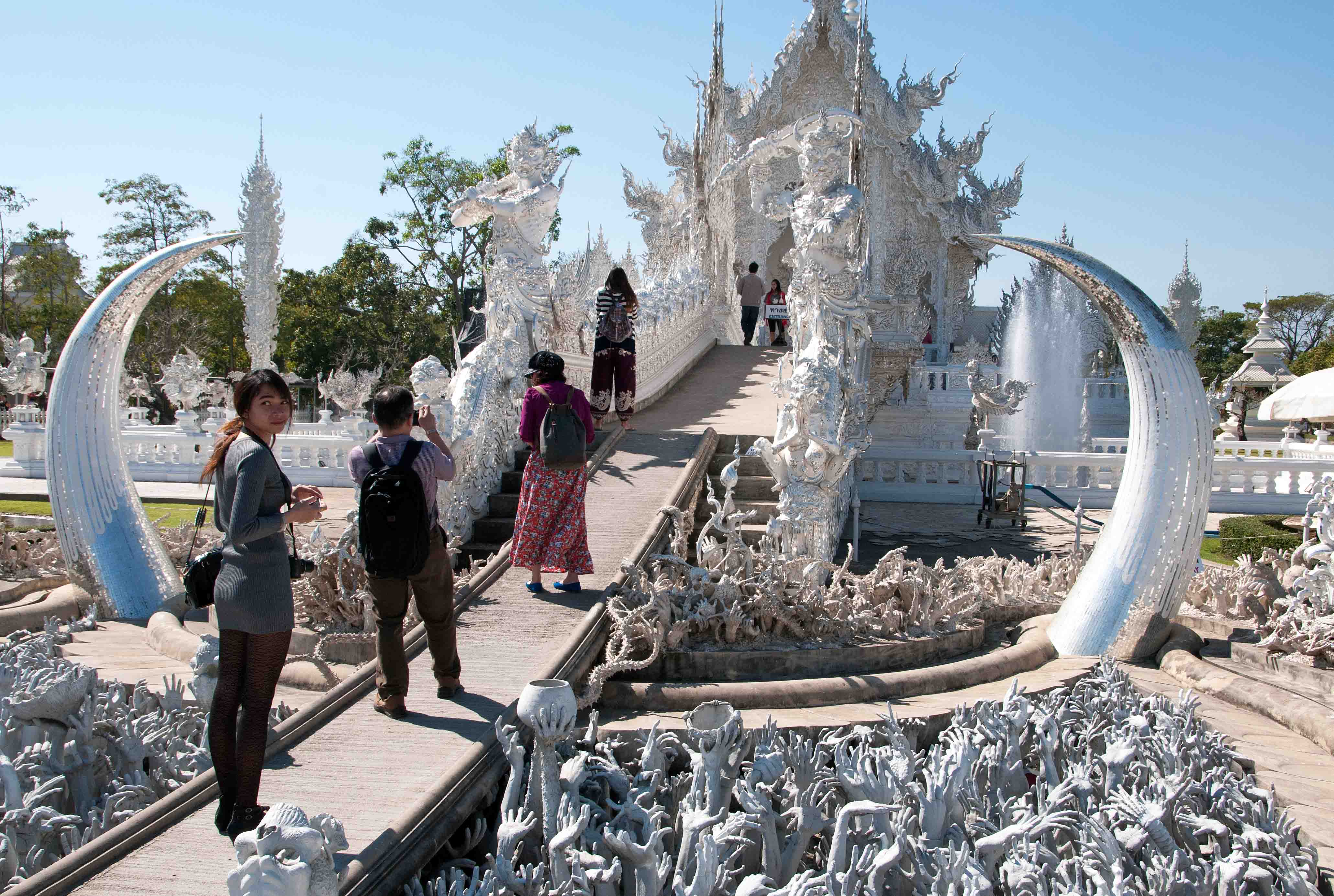
At first one crosses the bridge of ‘the cycle of rebirth’ past a pit of outstretched hands. These are presumably humans beings locked into a cycle of continual rebirth as a result of their unrestrained desire for pleasure. The sea of hands was a very potent symbol of human suffering.
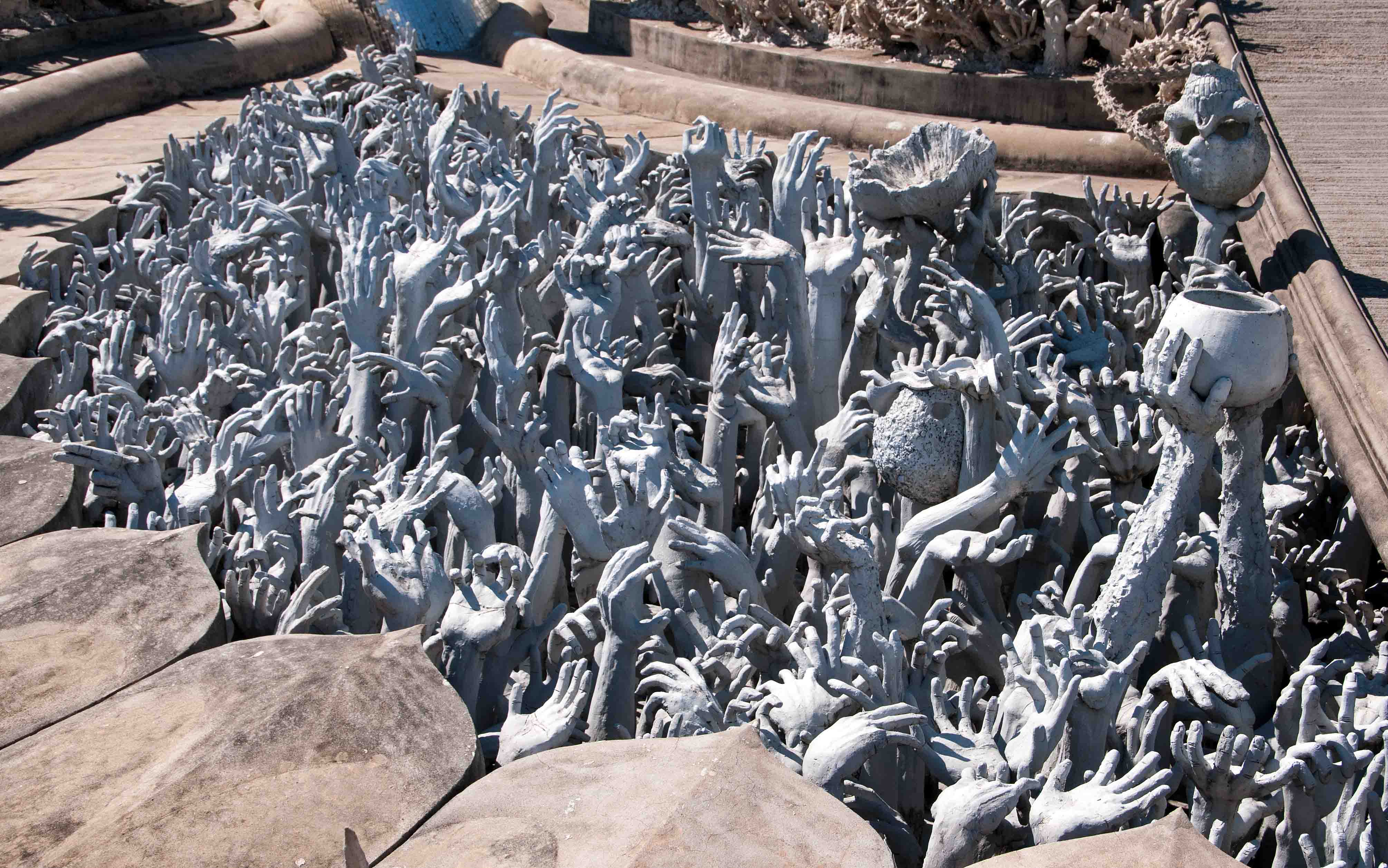
Outstretched hands
The bridge itself is the way towards happiness: a Buddhist pathway involving letting go of temptations, greed, and desire. There are some vivid and gruesome exhibits elsewhere in the temple of the evils of temptations such as alcohol and smoking.
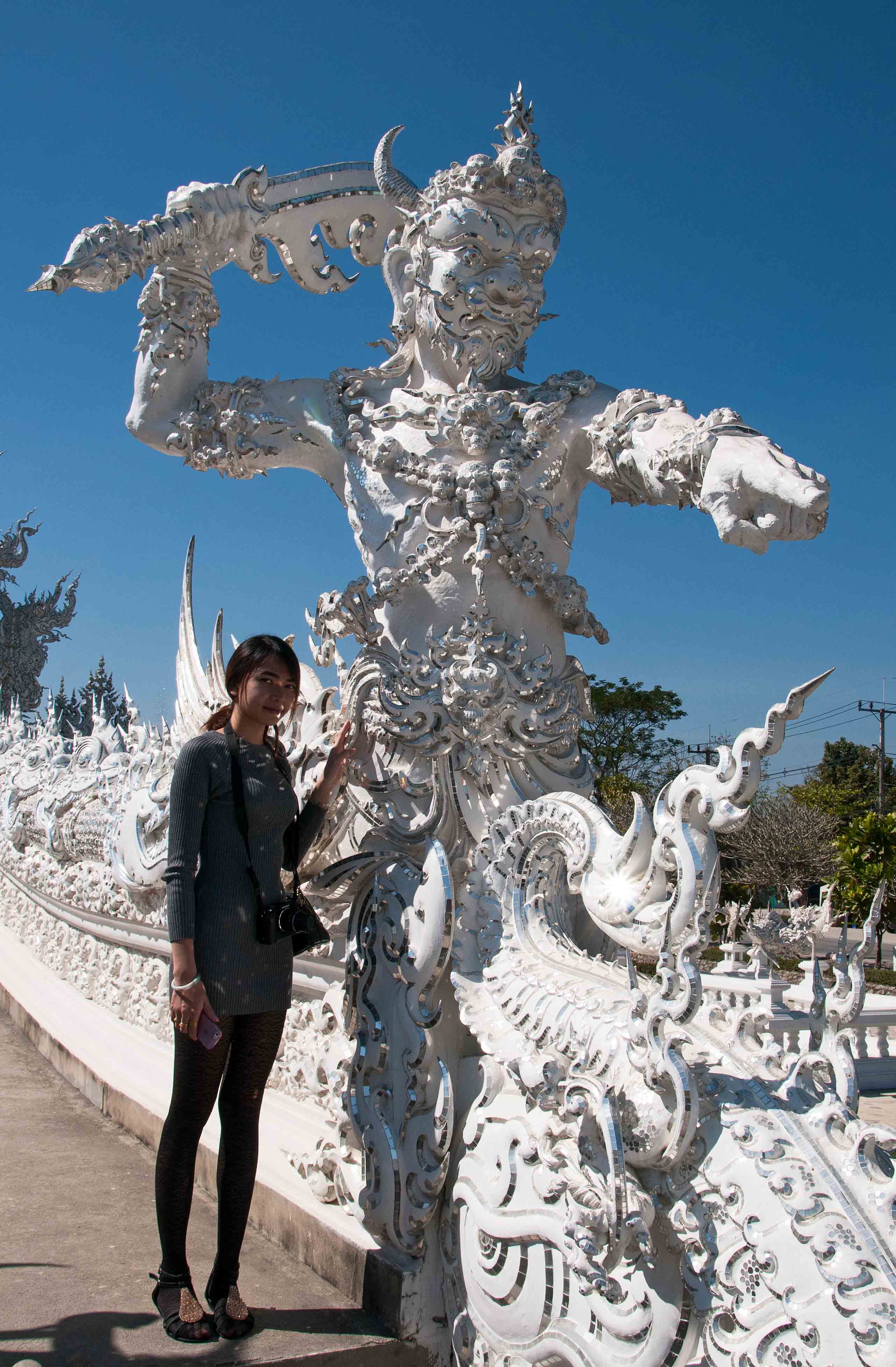
Once across the bridge, the visitor arrives at the ‘gates of heaven’, guarded by two giant mythical creatures (Rahu and Ketu I think).
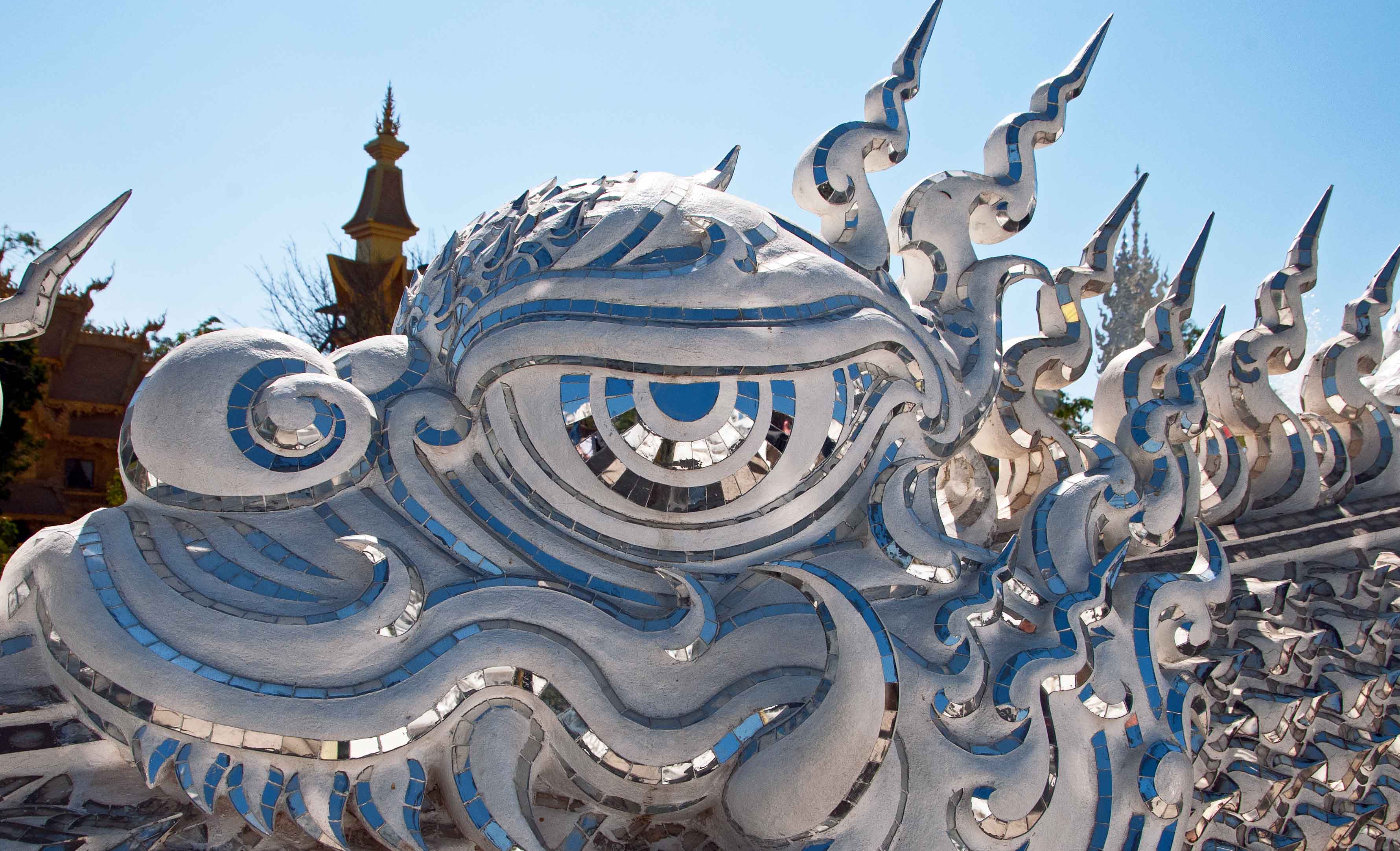
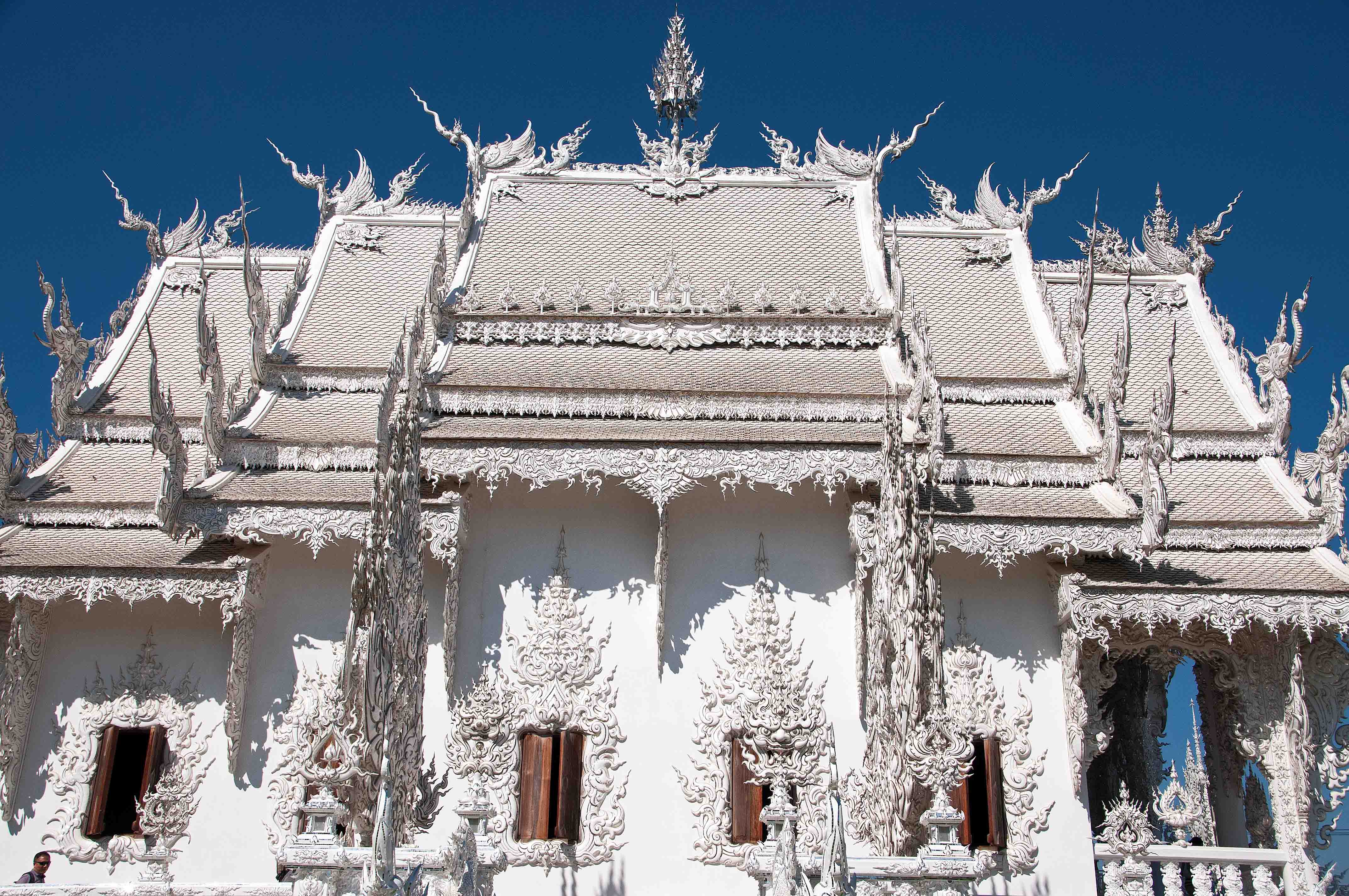
The main building, called the ubosot is an extraordinarily ornate and beautiful building, decorated with glass and elaborate carved nagas, extending outwards from the roof.
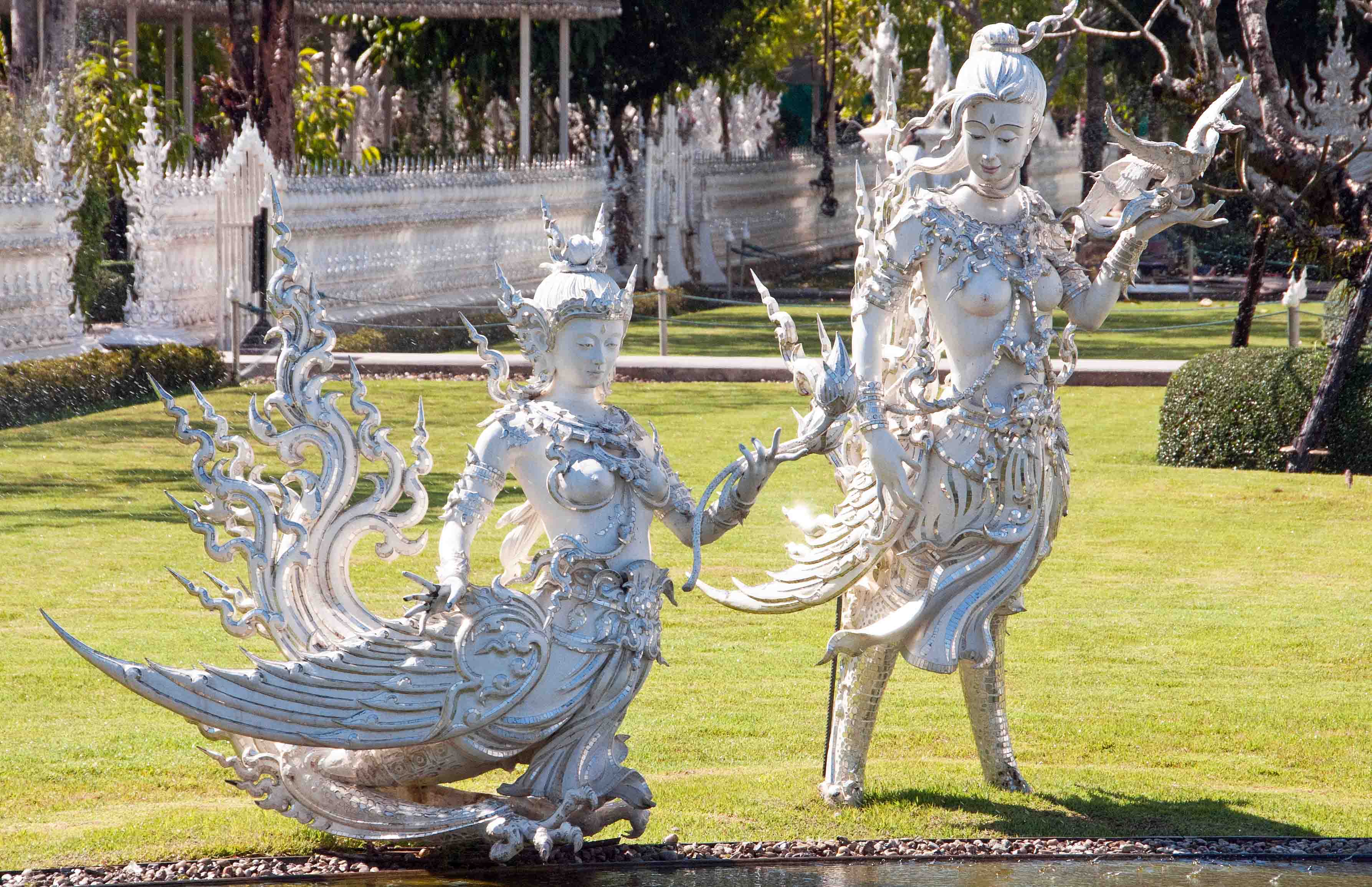
Two Kinnarees are positioned next to the lake. A Kinnari (or kinnaree) is an angelic half-woman, half-bird (in Thailand), an eternal lover who can fly between human and spiritual worlds. A symbol of feminine beauty and grace, which these statues certainly are.
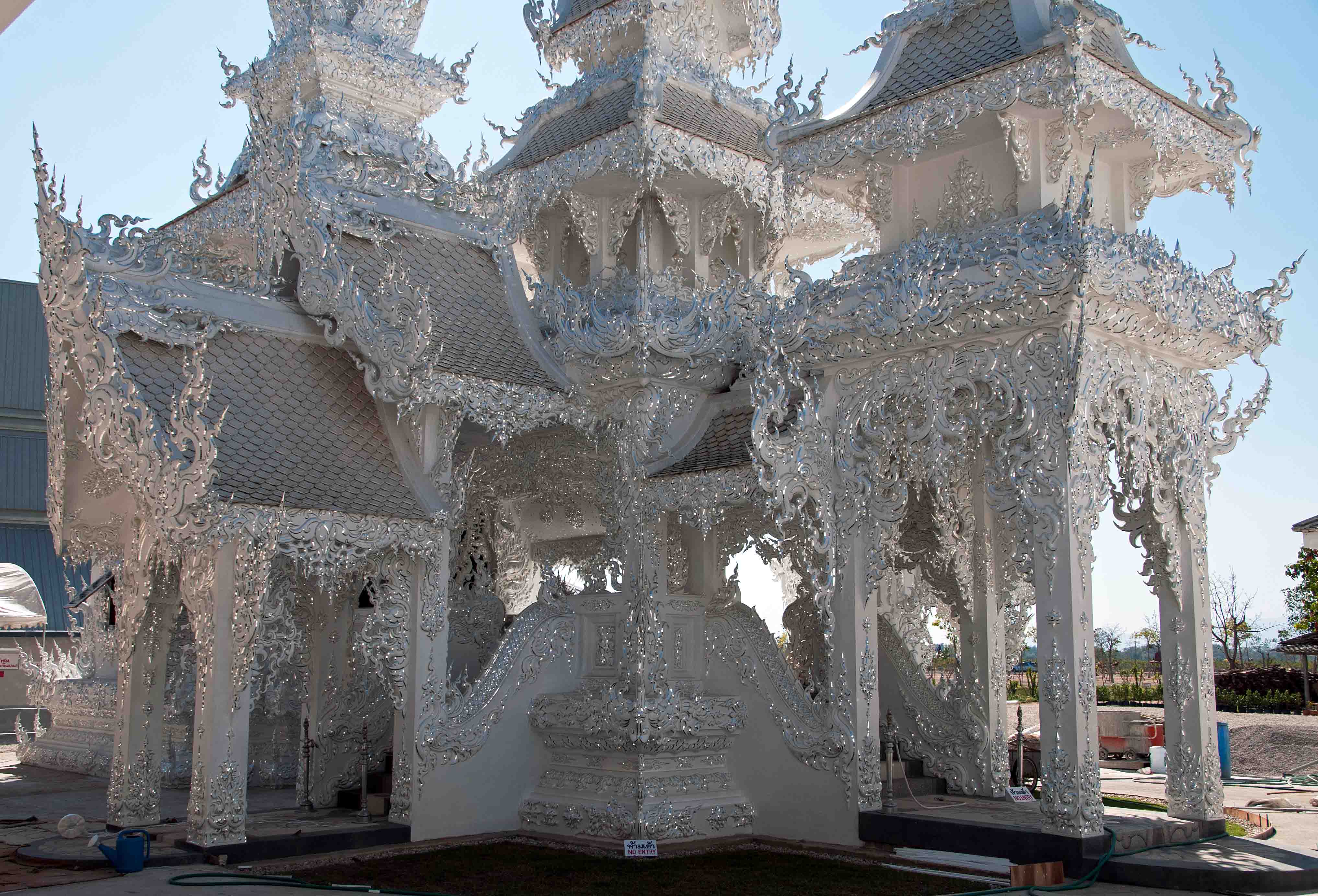
There are a variety of other buildings at Wat Rong Khun, in various stages of completion. How they fared in the earthquake (see below) I am not sure. The head of a large Buddha statue reportedly fell off.
What I most liked at Wat Rong Khun were the statues. Many were still being carved in the workshops (below).

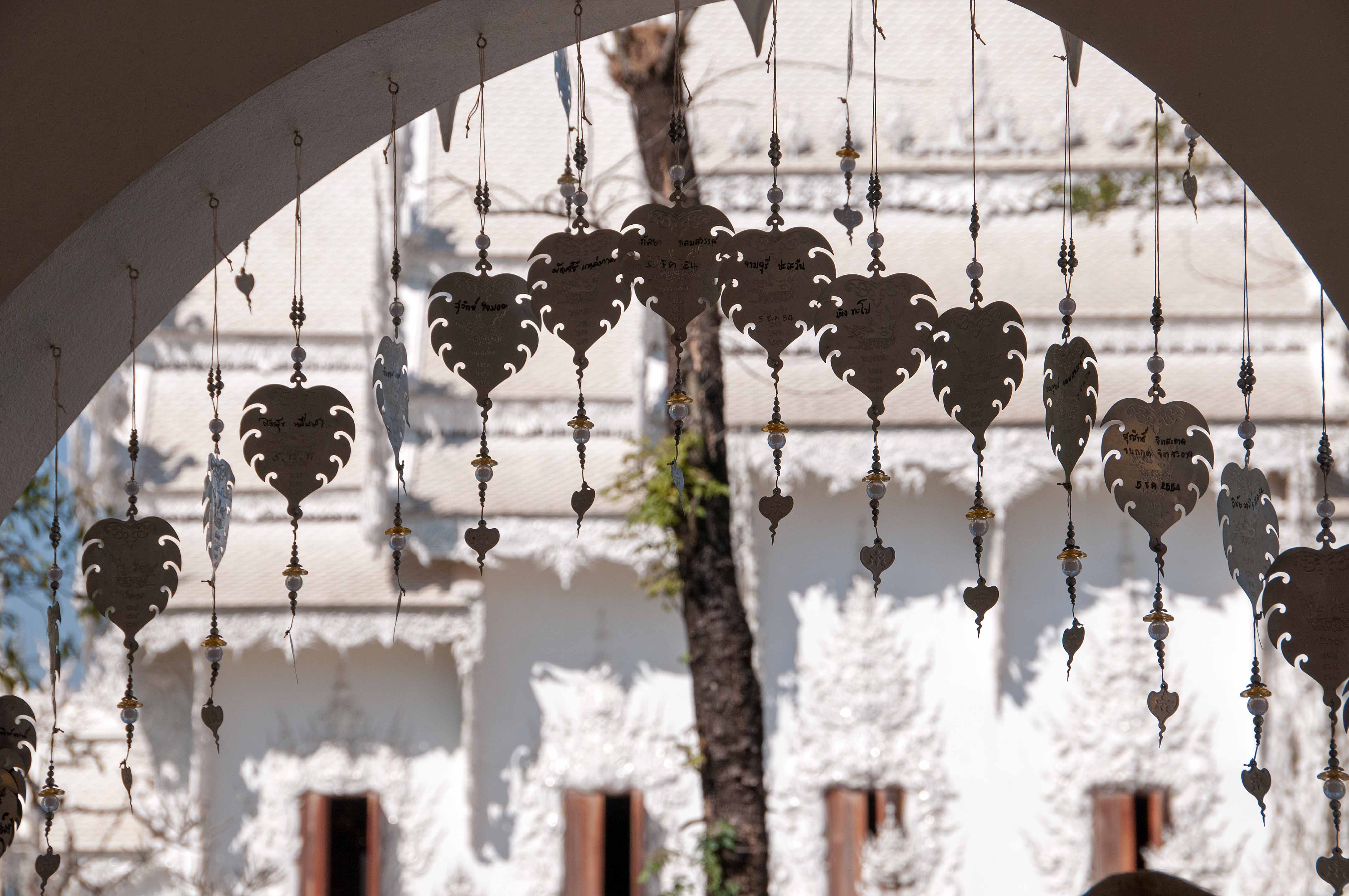
One of the buildings I liked most at Wat Rong Khun was the wishing well. The building itself housed a water-filled wishing pond filled with coins; Thai Buddhist wishing pendants were hung from the eaves (below).
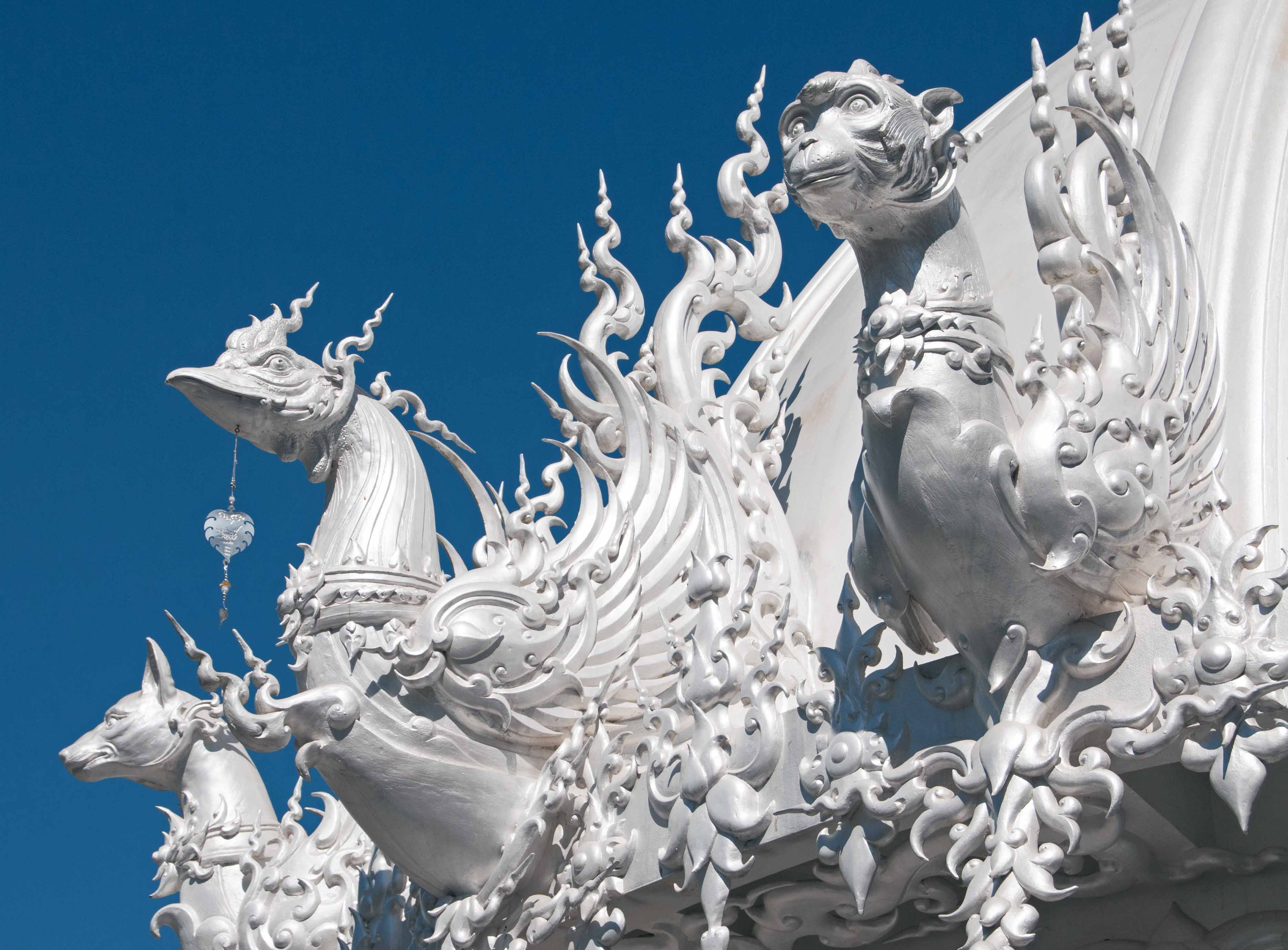
The roof of the wishing well building was adorned with the most beautiful statues, representing the animal signs of the zodiac (monkey, chicken goat etc.). These were the highlight of the whole temple for me and I took photographs of them all; they are worth featuring in a separate blog.
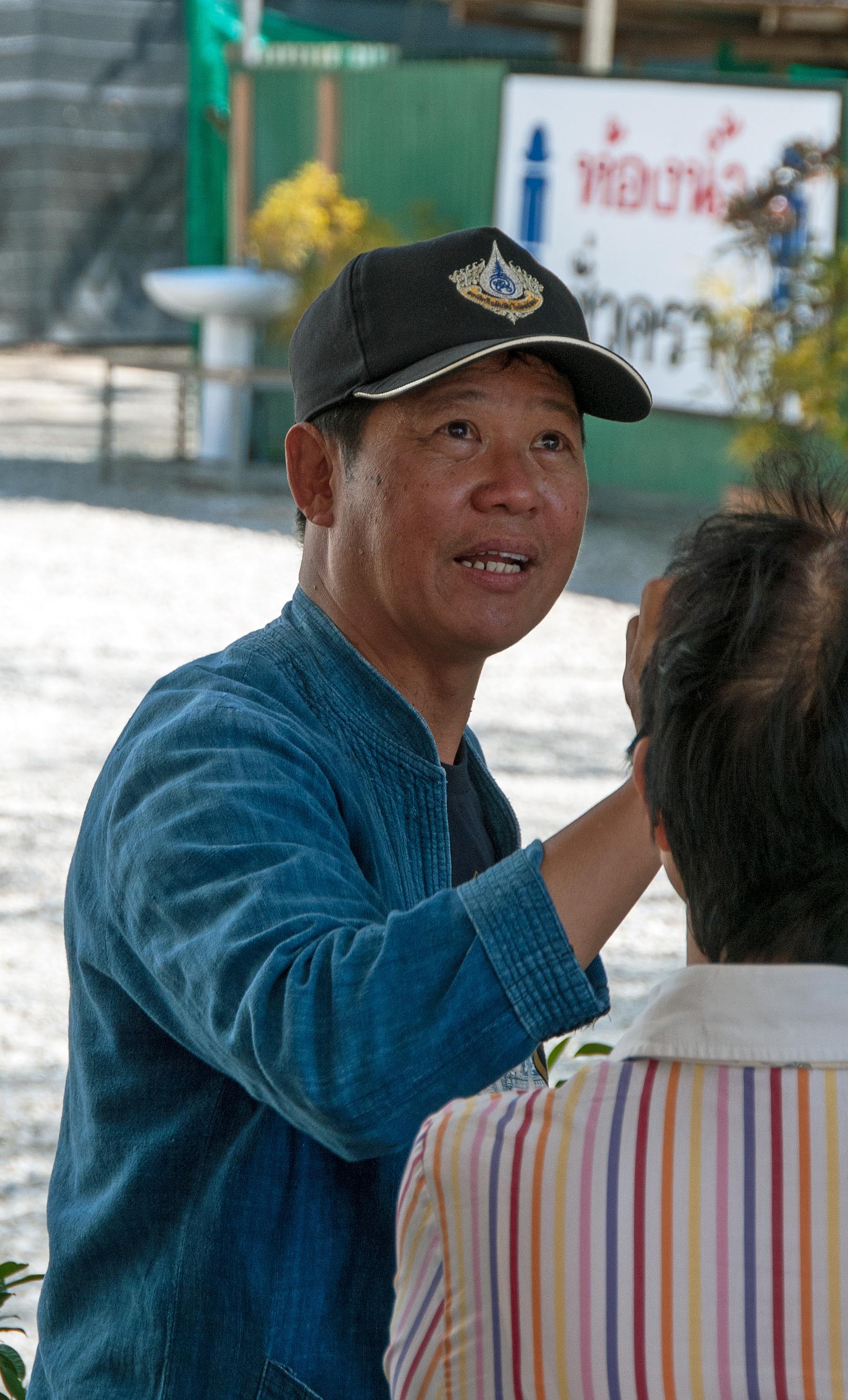
We were fortunate to see the artist, Chalermchai Kositpipat, during our visit. He was talking to some Thai visitors.
Update
I visited the white temple in February 2014, when these photos were taken. In May 2014, a nearby earthquake of magnitude 6.3 caused substantial damage to Wat Rong Khun (1). The artist must have been devastated by the destruction, and according to media reports, initially appeared to give up hope of restoring it. The buildings in the compound were however, structurally unharmed by the quake, and buoyed by huge public support, the artist and his team have reportedly taken up the challenge of restoring the temple to its former glory (2, 3). The murals on the walls and ceiling of the ubosot, which took nearly 20 years to complete, were apparently destroyed. It will be interesting to see if these are restored exactly as the were before, or whether Chalermchai will decide to create something new.
2. https://www.facebook.com/pages/Wat-Rong-Khun/133021290072176#
3. http://en.wikipedia.org/wiki/Wat_Rong_Khun
 Ray Cannon's travel and photography blog
Leave a comment