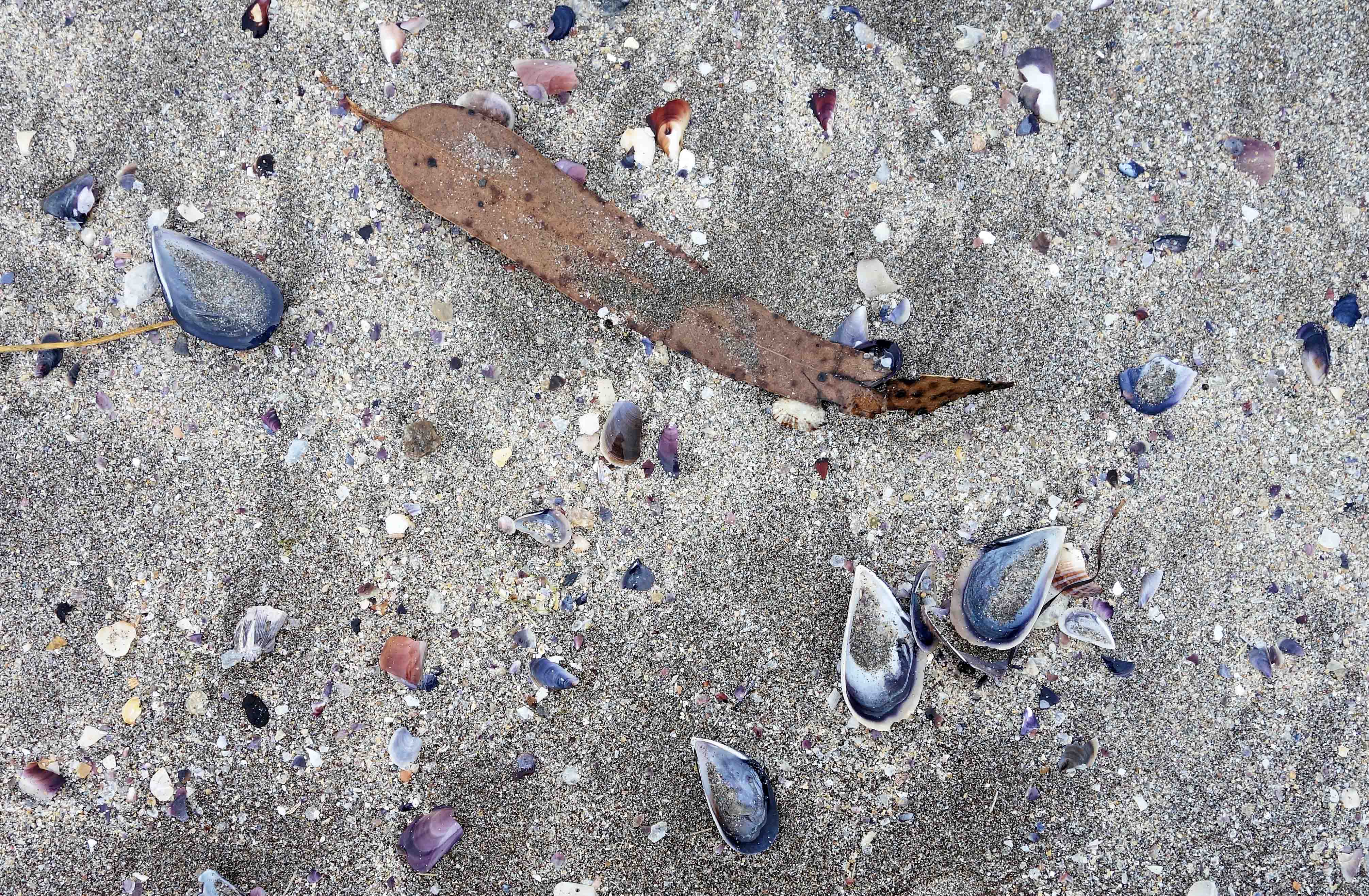
We humans can create ‘works of art’ in many ways. We might collect shells and drift wood and use them to make representational works like Picasso did so skilfully. Or we could grind up natural elements like soil or minerals and apply them to a canvas. Or we could rely on Nature to produce a pattern, as here by waves washing up and down a beach, moving the shells, leaves and pieces of wood in ‘random’ pattens. But these arrangements follow a natural order; shells lie flat (rarely on their sides); smaller grains move father and faster than larger stones; wood floats and settles; and all the pieces get pushed into a narrow zone produced by the waves – advancing and retreating – a tide line.
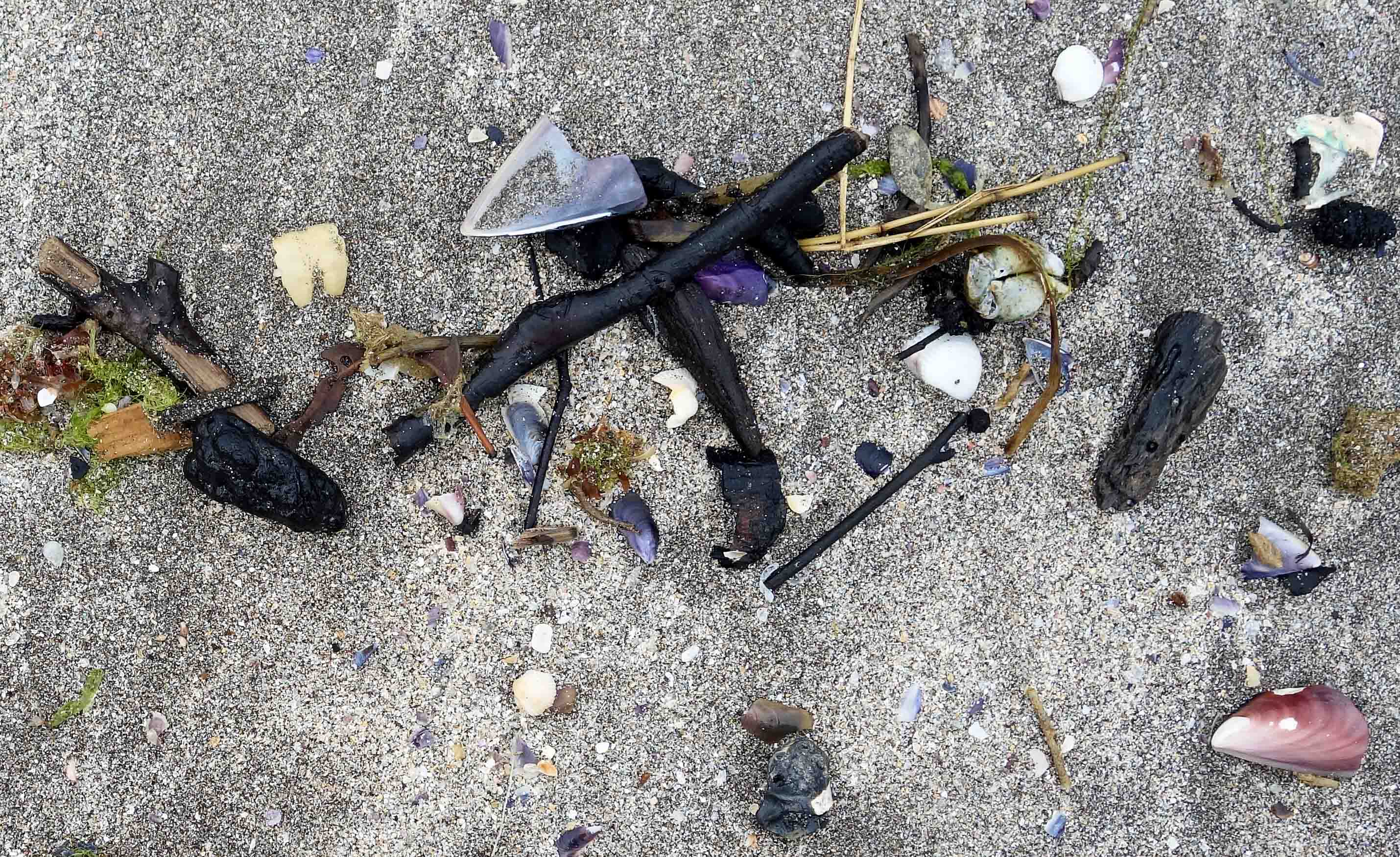
Tide line
Walking along a tide line, we might select in our camera lens certain features, patterns or accumulations as our fancy dictates. What drives this selection is a certain aesthetic, but what determines a given selection – a quick glance and then a largely unconscious choice looking through a viewfinder – is a matter of taste, and is probably not worth thinking about too deeply.
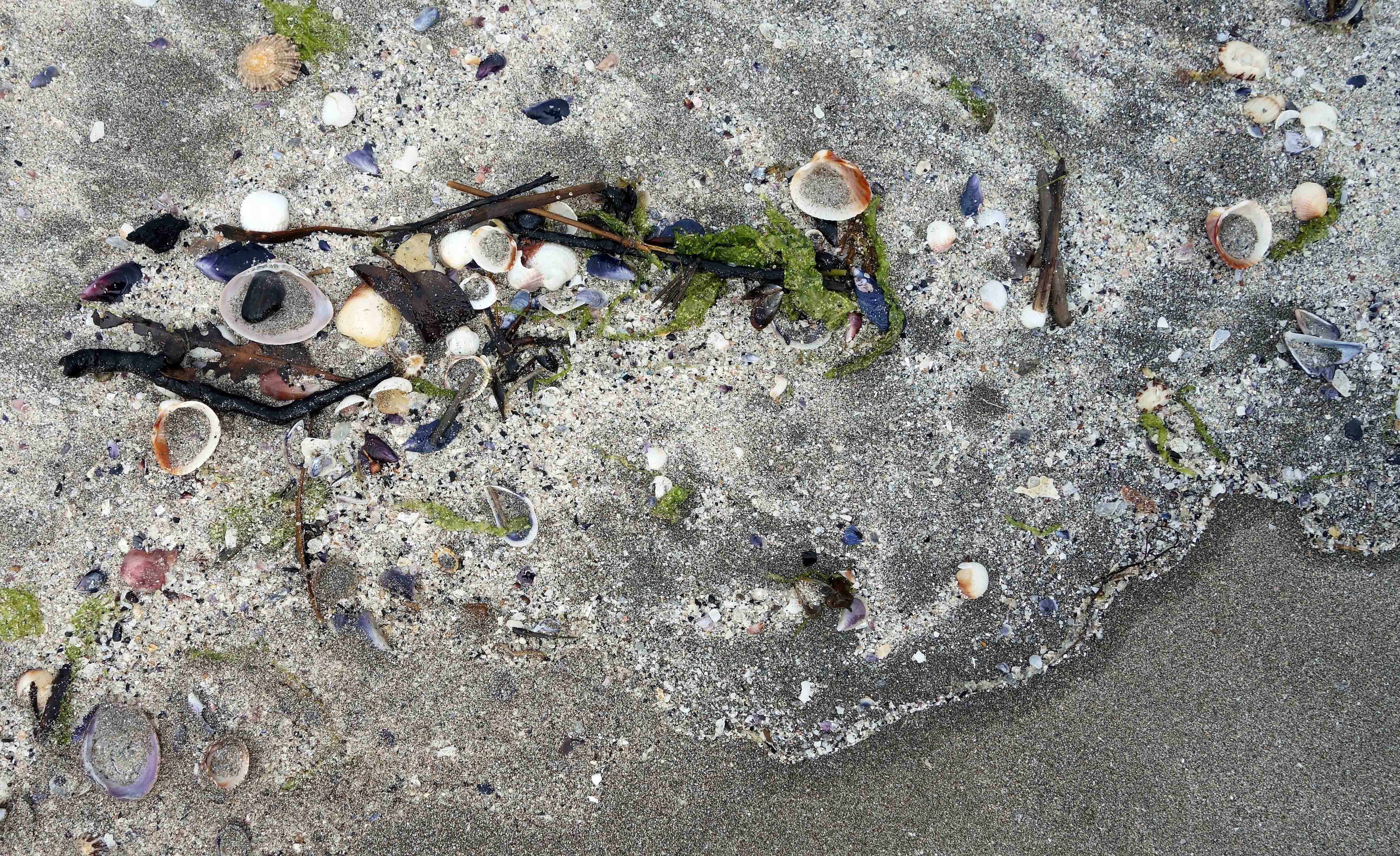
Rather, walk and get into a rhythm where the choice is spontaneous and natural. Not all compositions will work, but occasionally – with a little skill (we can all do it) – something of beauty emerges. Back home on the computer – the modern atelier – the photographer/artist can fine tune his selections, crop and polish, until something pleasing, but still rather intangible emerges.
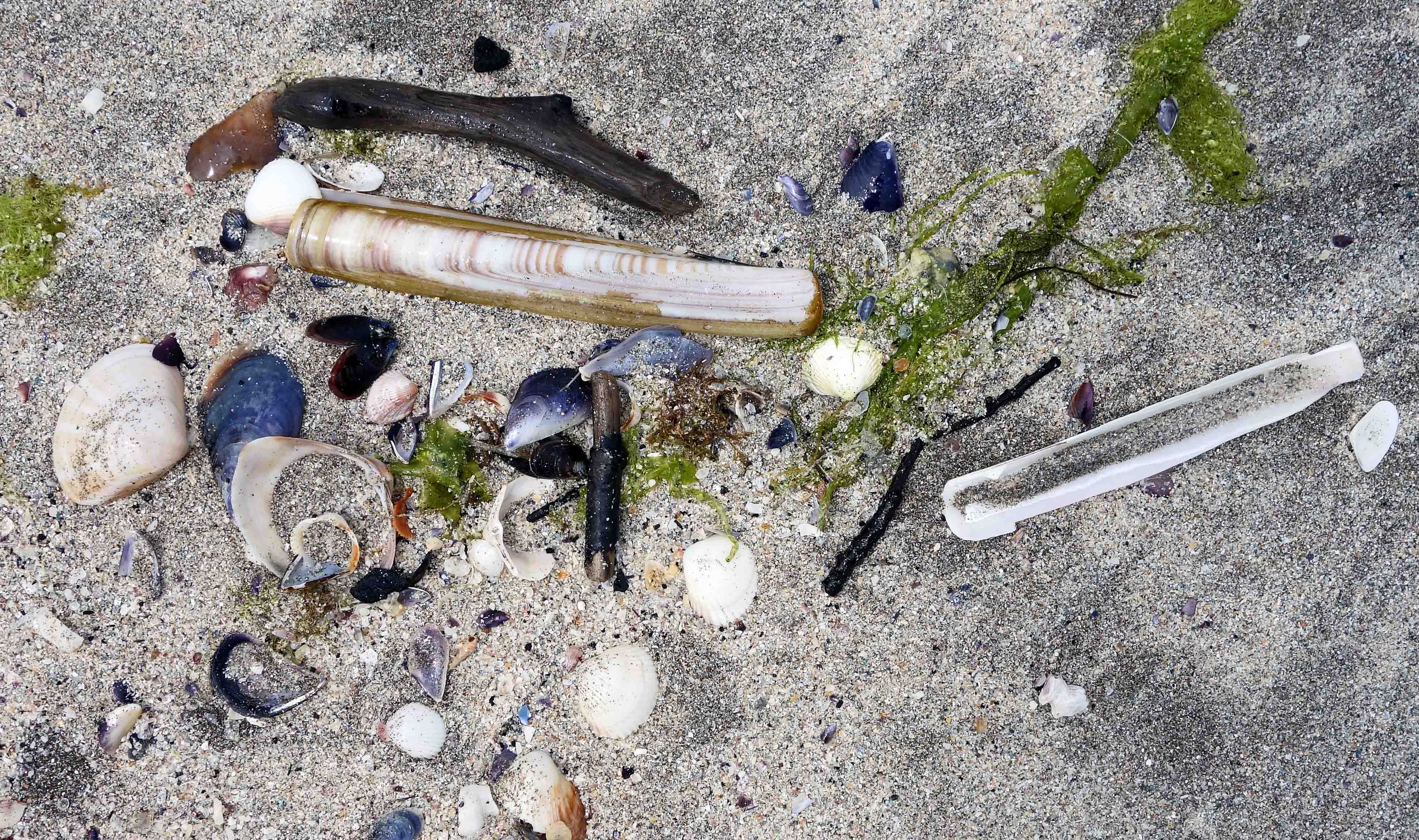
All of these images were taken with a compact camera (Sony RX I) whilst walking along Morouzos beach (1), Ria Ortigueira, on an overcast day (31st May 2015).

1. http://rcannon992.com/2014/05/12/ria-de-ortigueira-a-special-place/
 Ray Cannon's travel and photography blog
Leave a comment