Scarborough got a new lifeboat station in 2016, and shortly afterwards, in 2021, a brand new lifeboat to go with it!
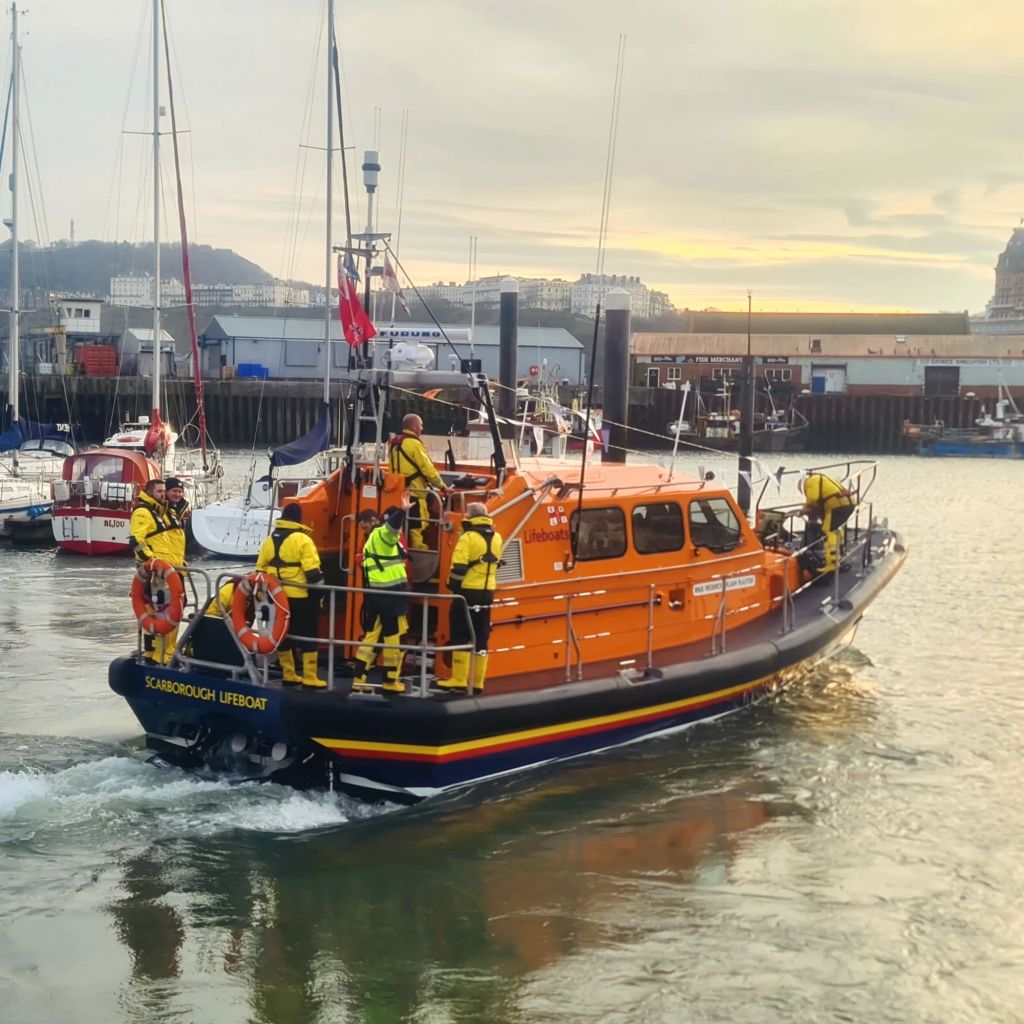
Frederick William Plaxton in the harbour
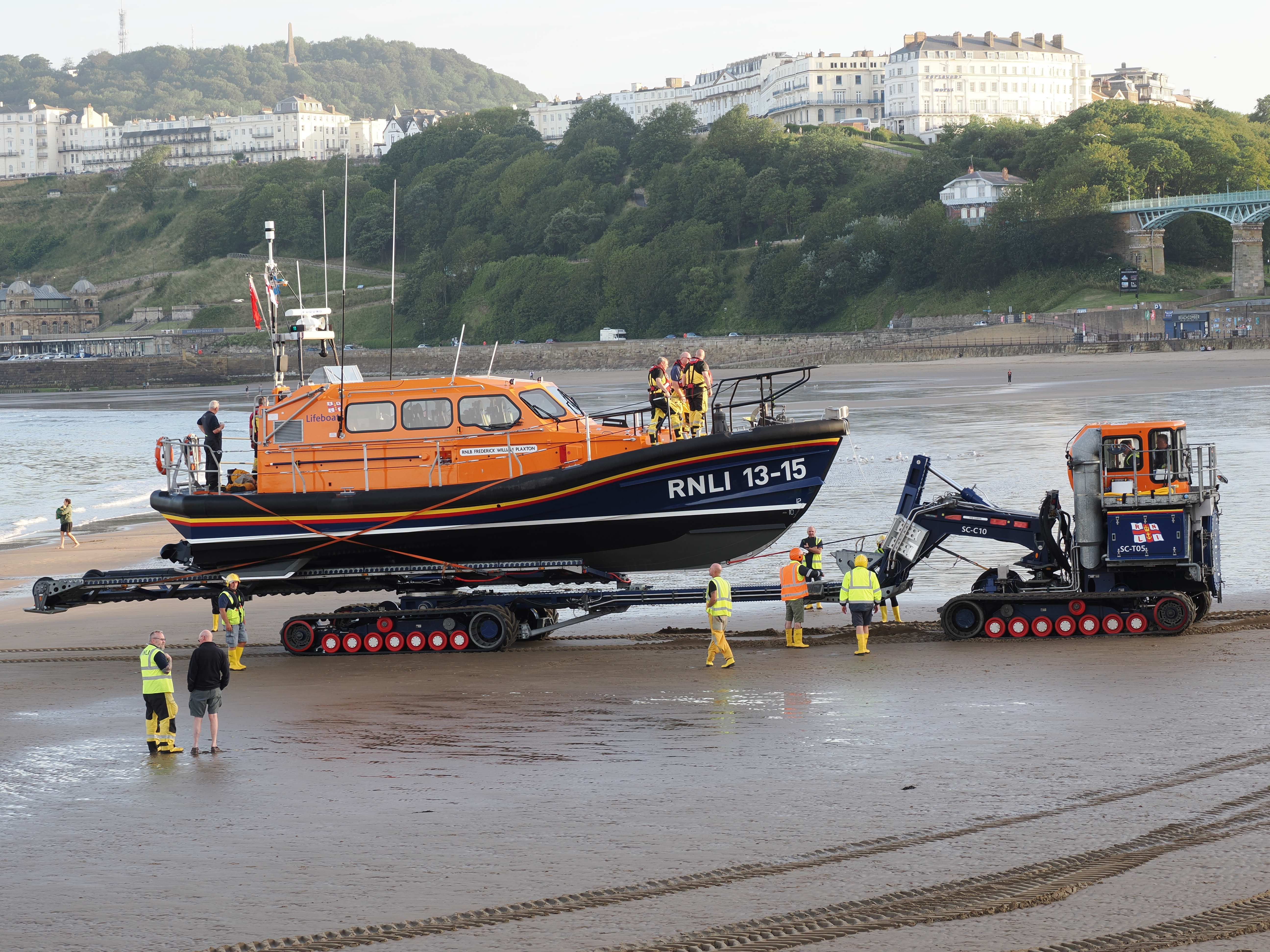
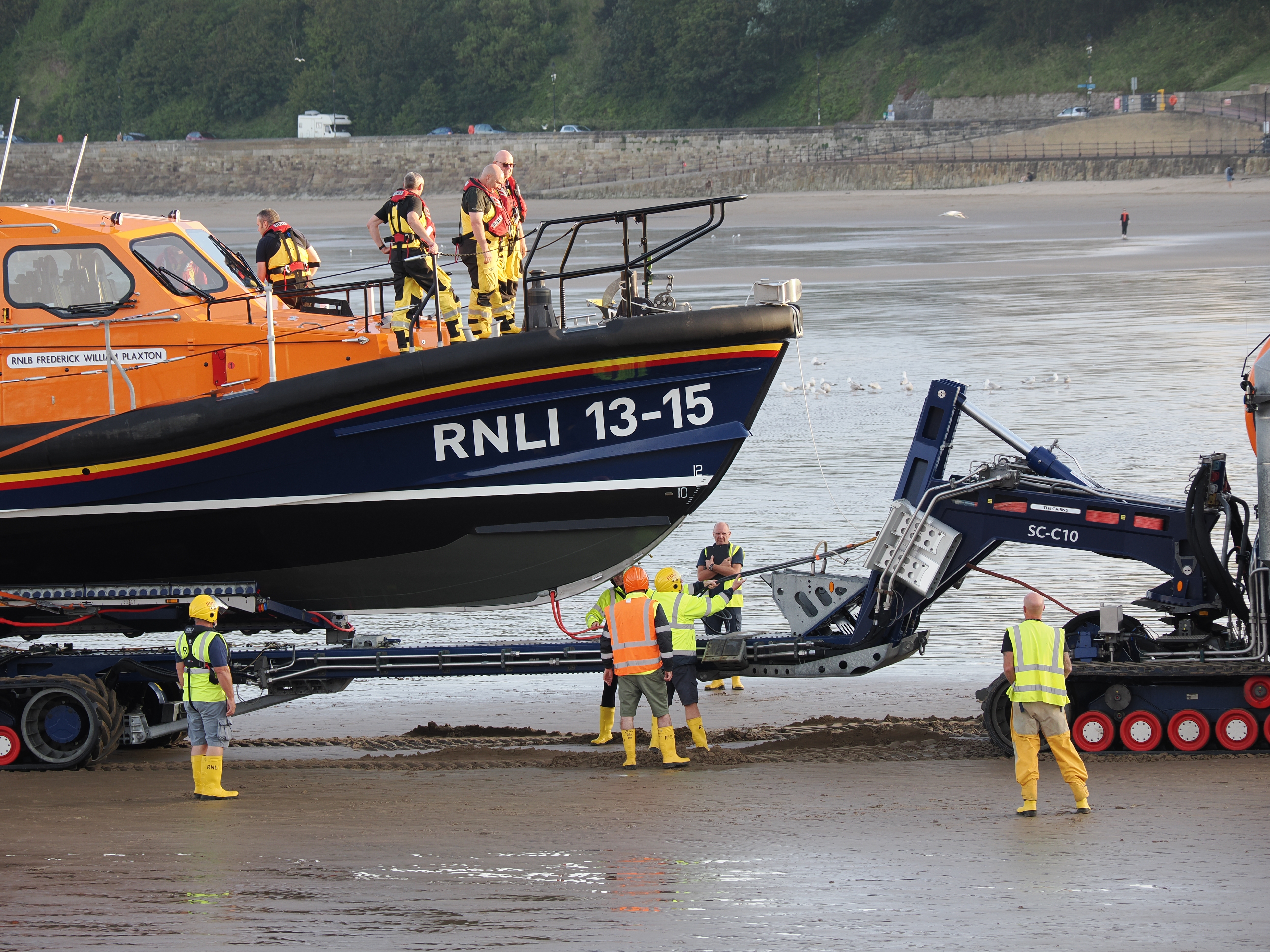
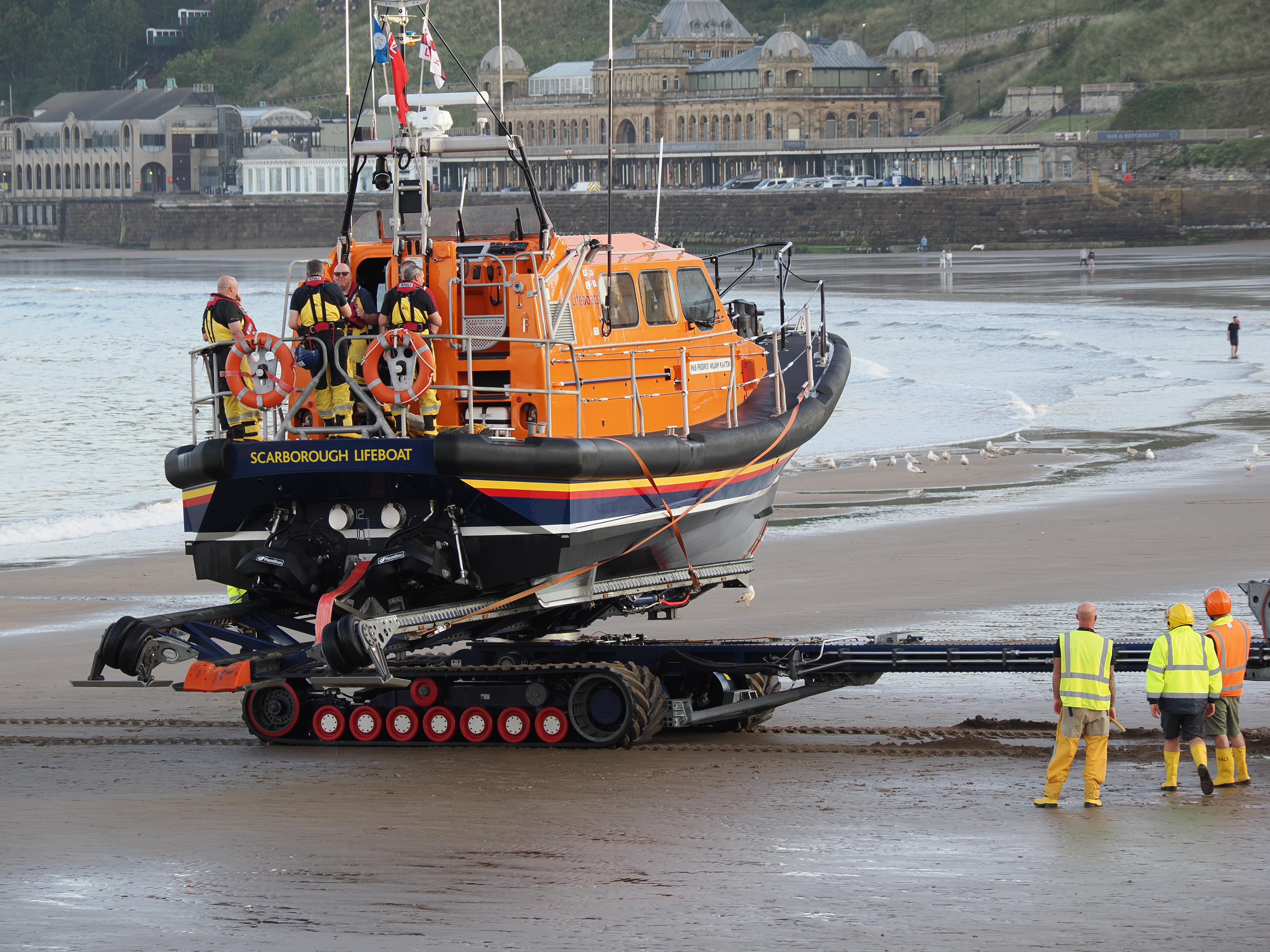
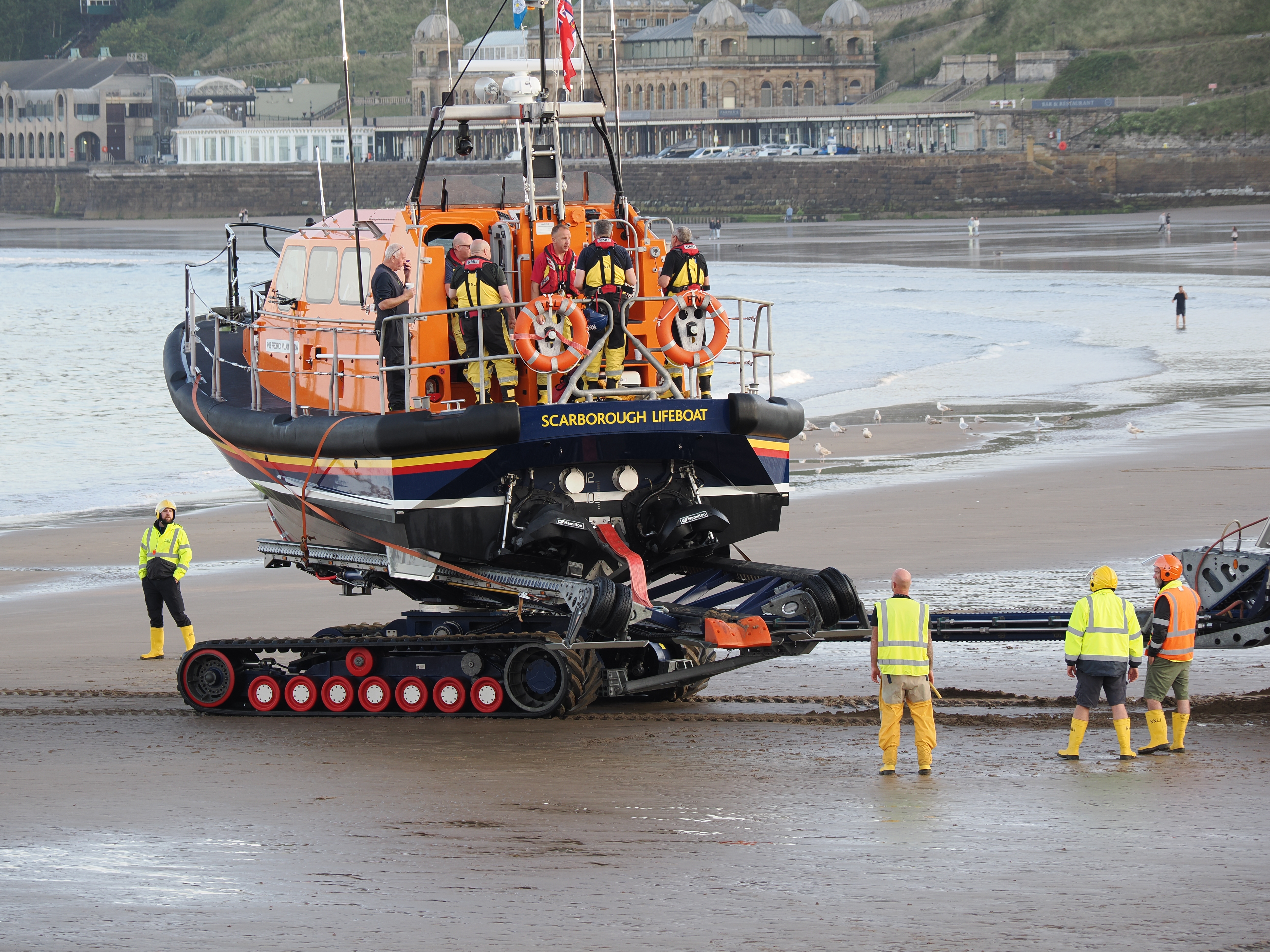
The all-weather Shannon-class lifeboat was named after Frederick William Plaxton, the founder of Scarborough coach building firm Plaxton Ltd. It cost in excess of £2 million pounds and is capable of reaching a speed of 25 knots.
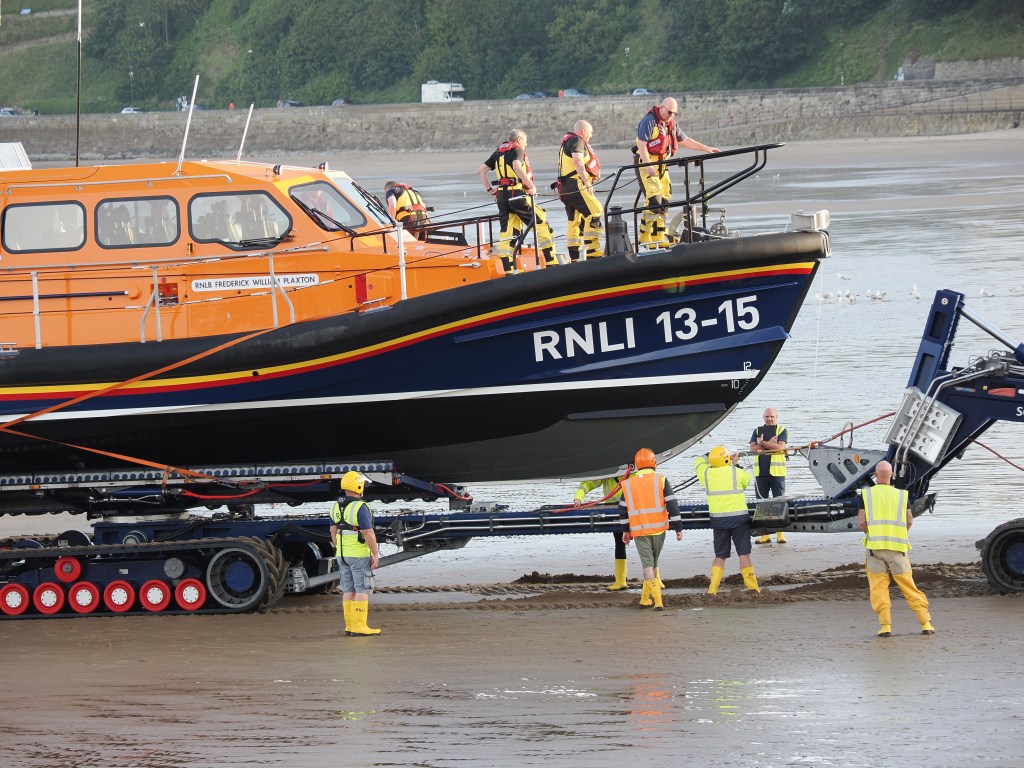
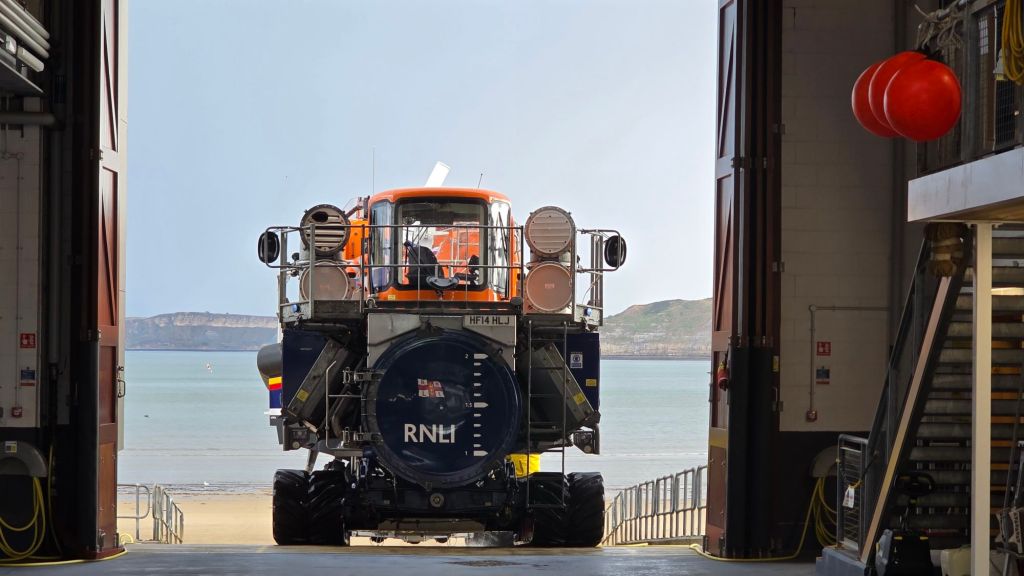
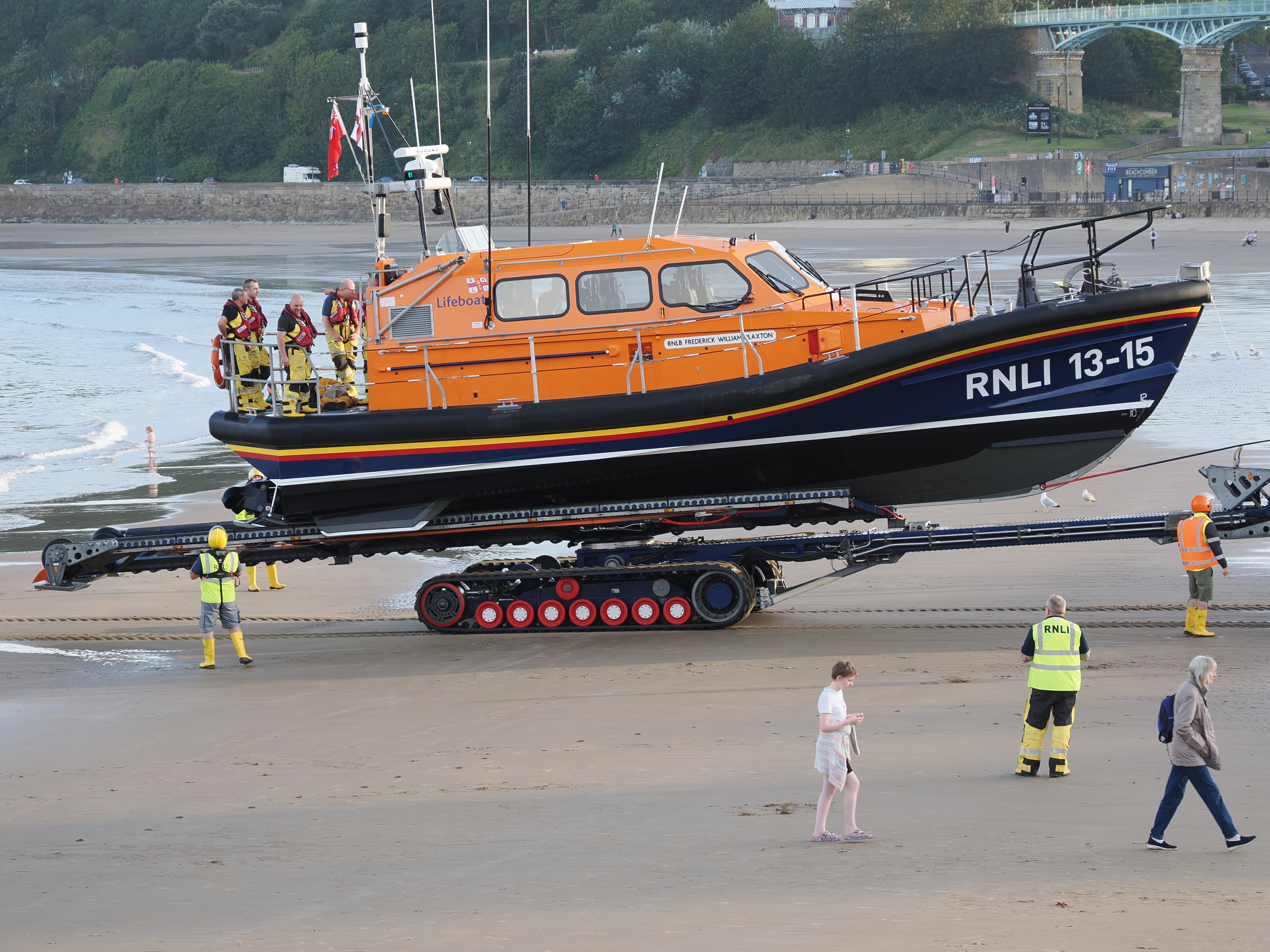
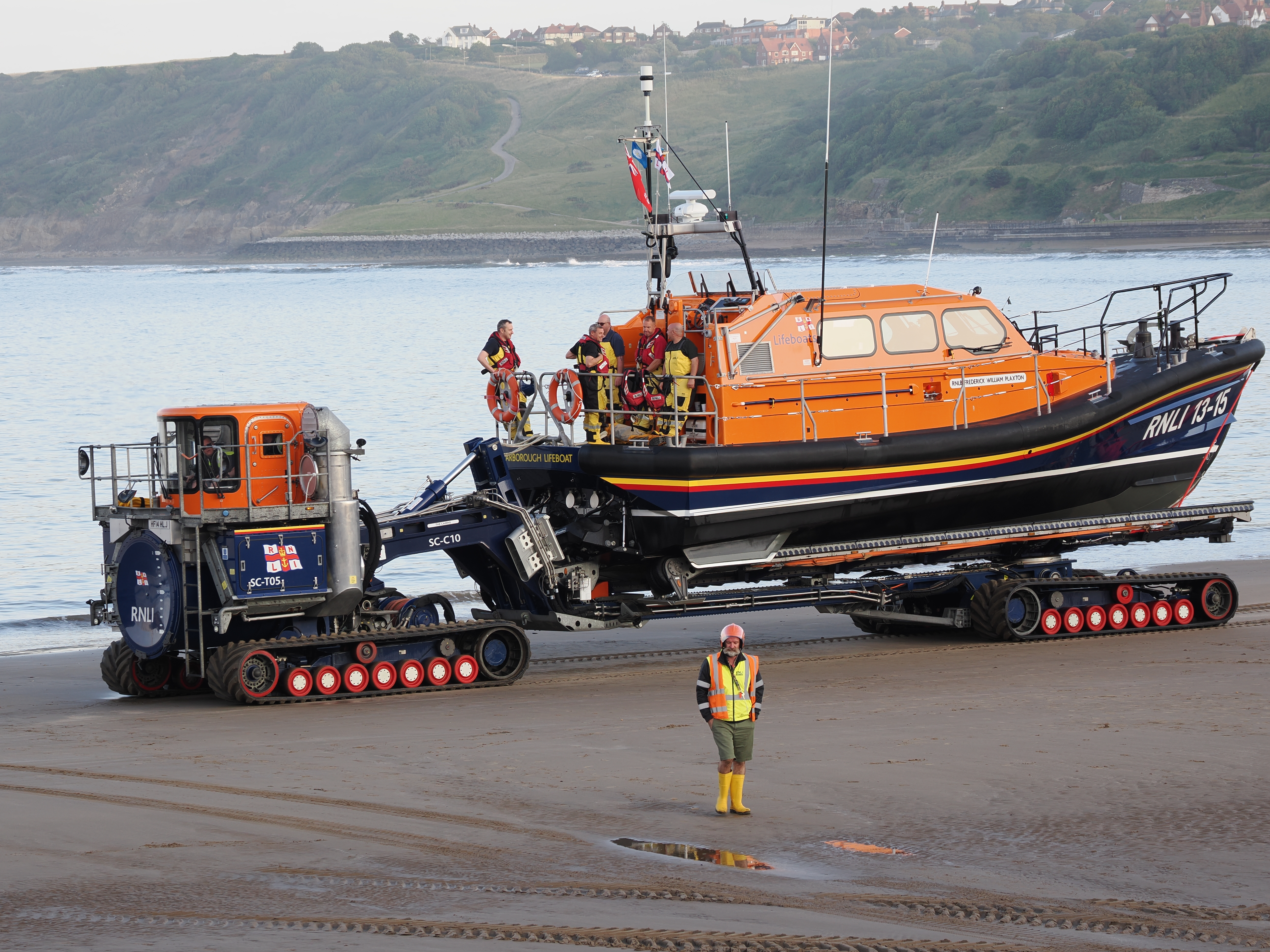
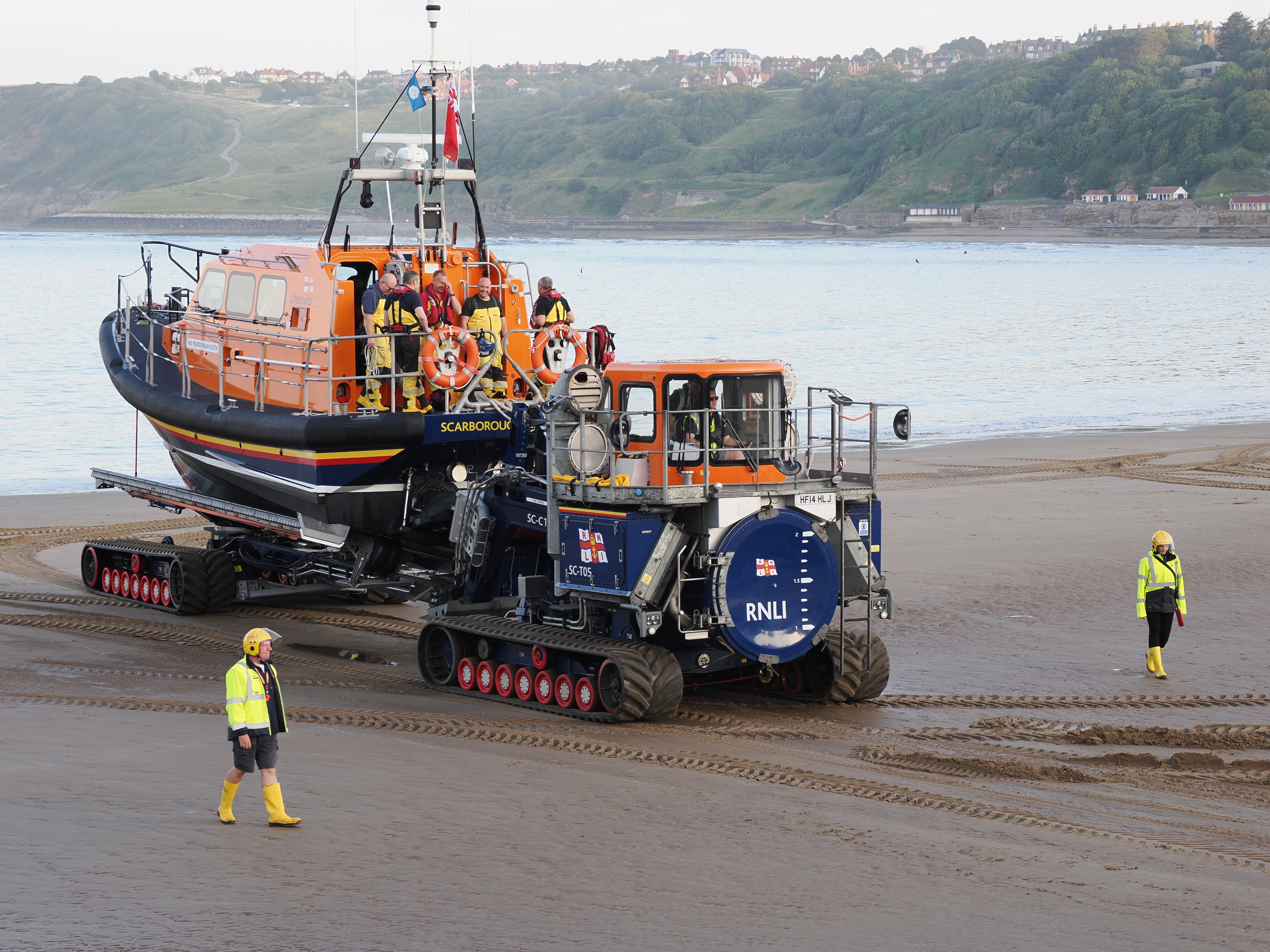
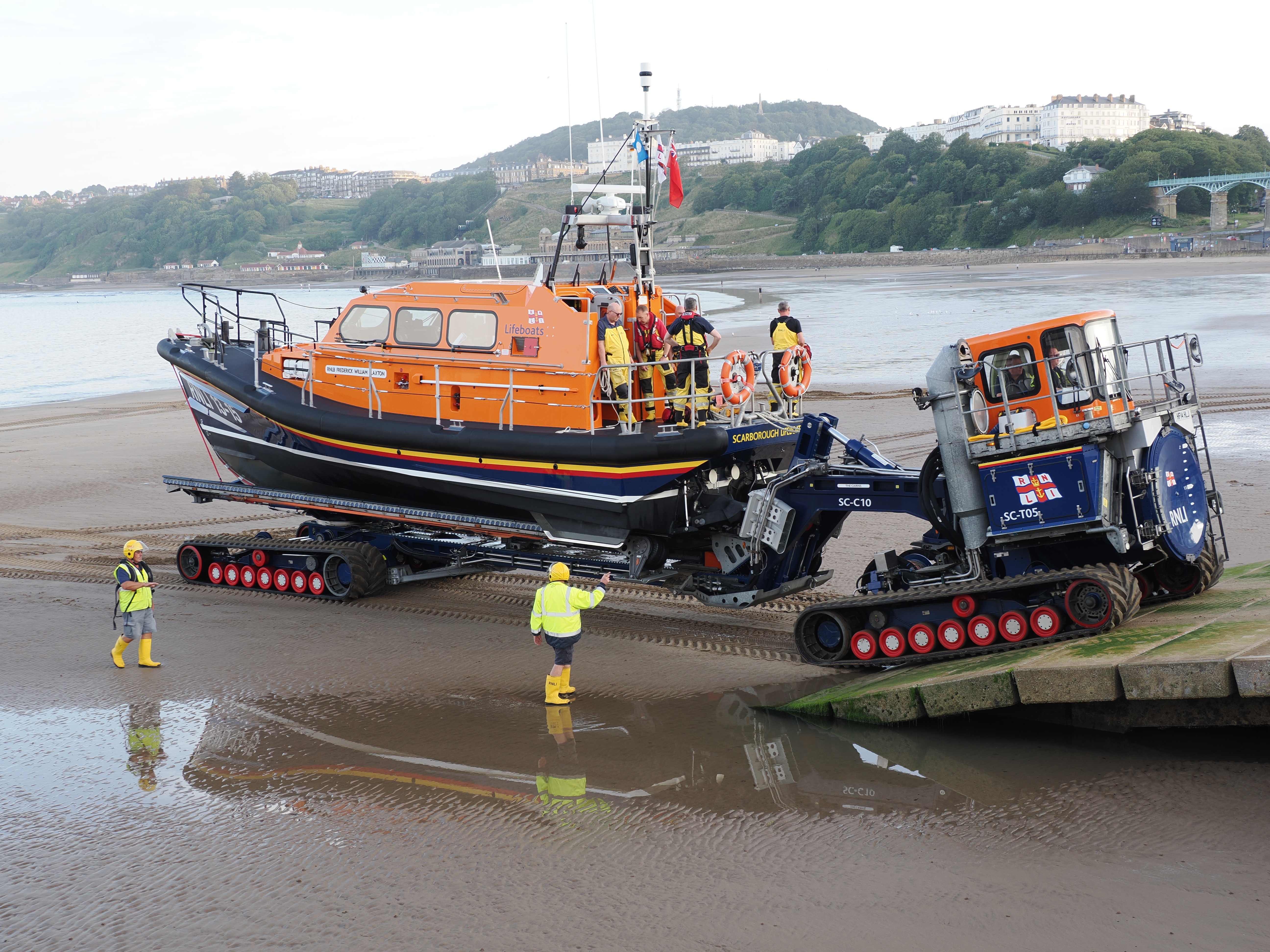
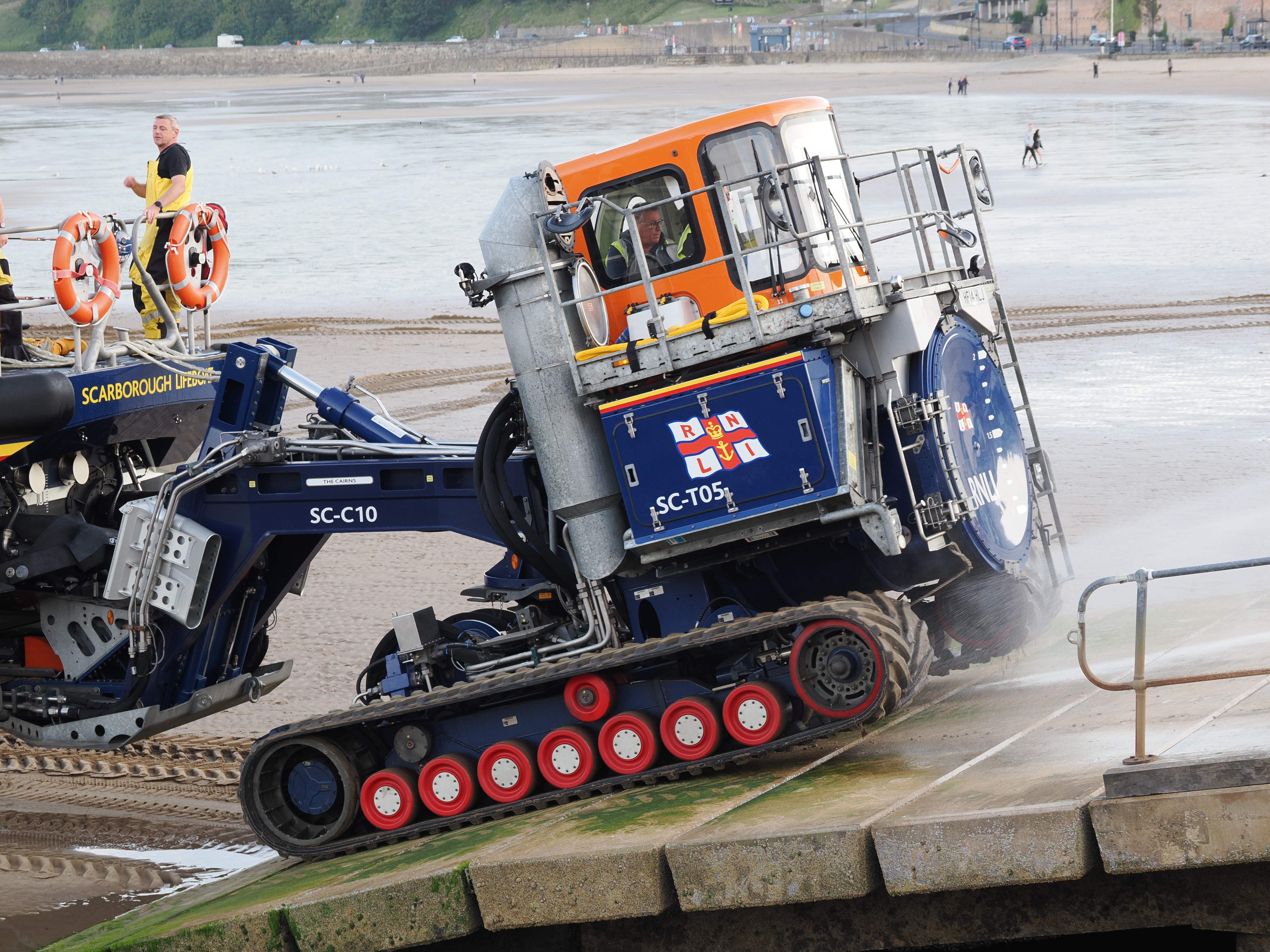
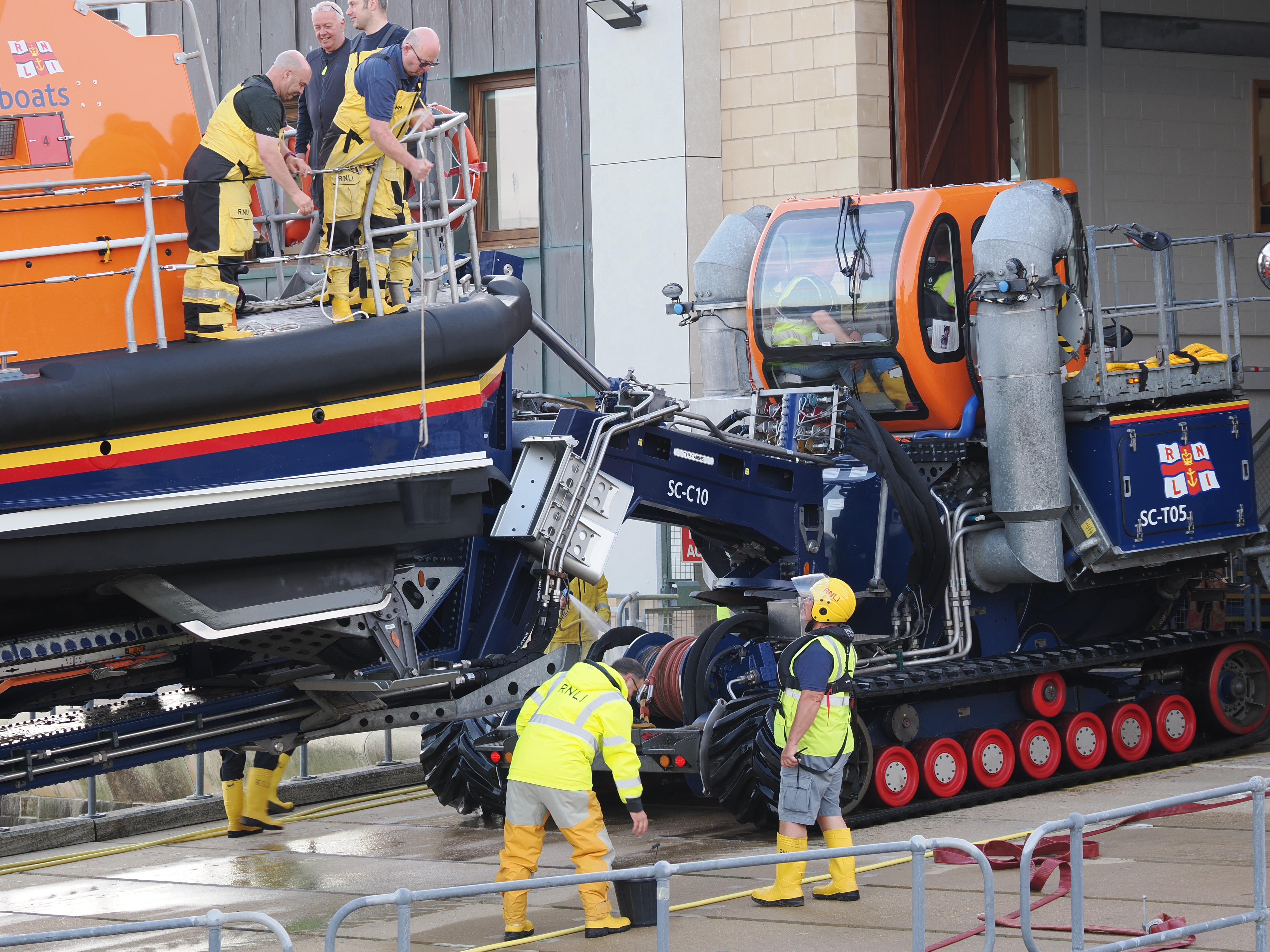
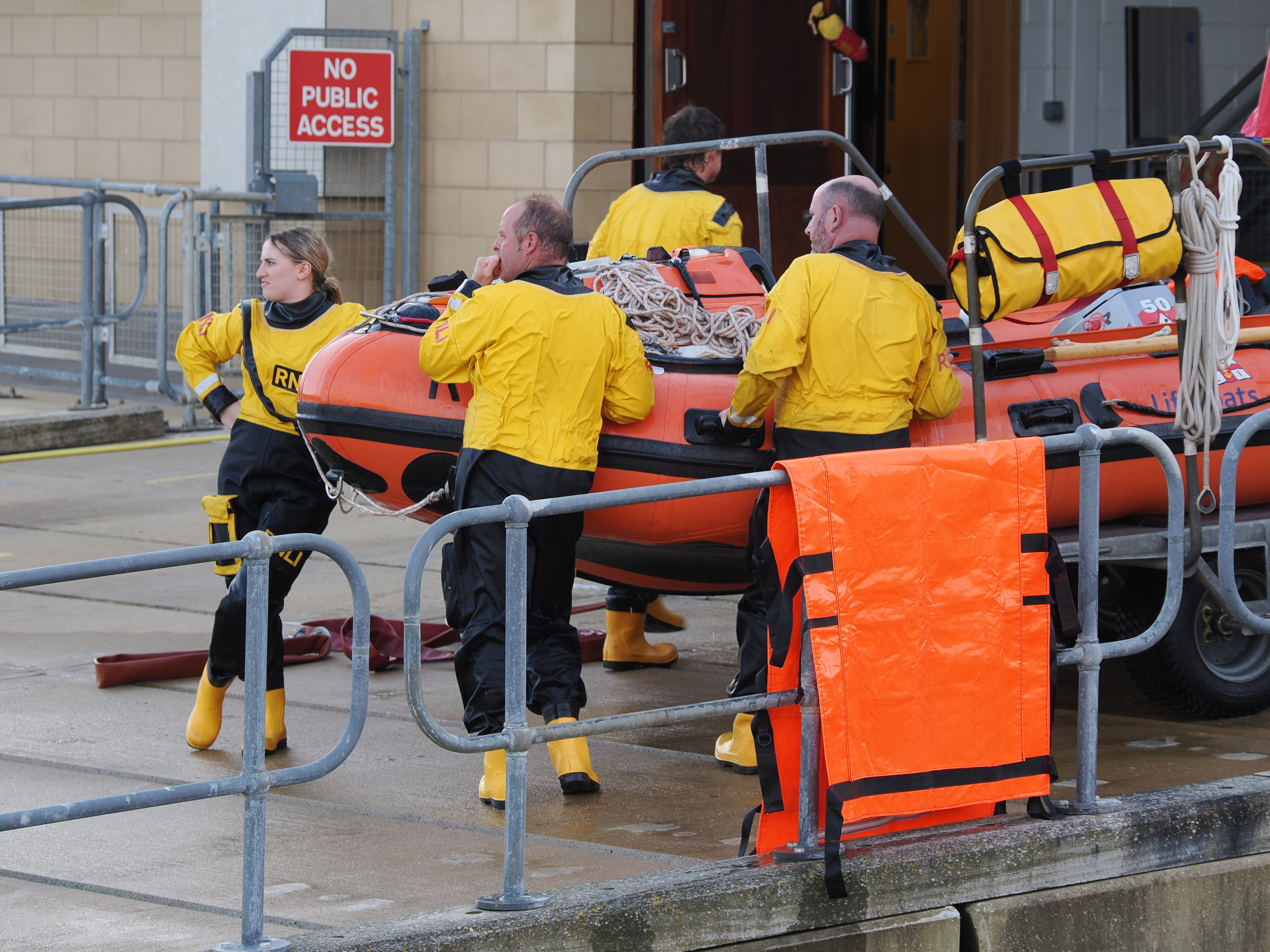
The lifeboat is launched and recovered using a Shannon Launch and Recovery System (SLARS): a tracked vehicle which transports the lifeboat from the boathouse to the sea, tilts to act as a slipway for launching, and then uses a powerful winch to haul the boat back onto the carriage for recovery.
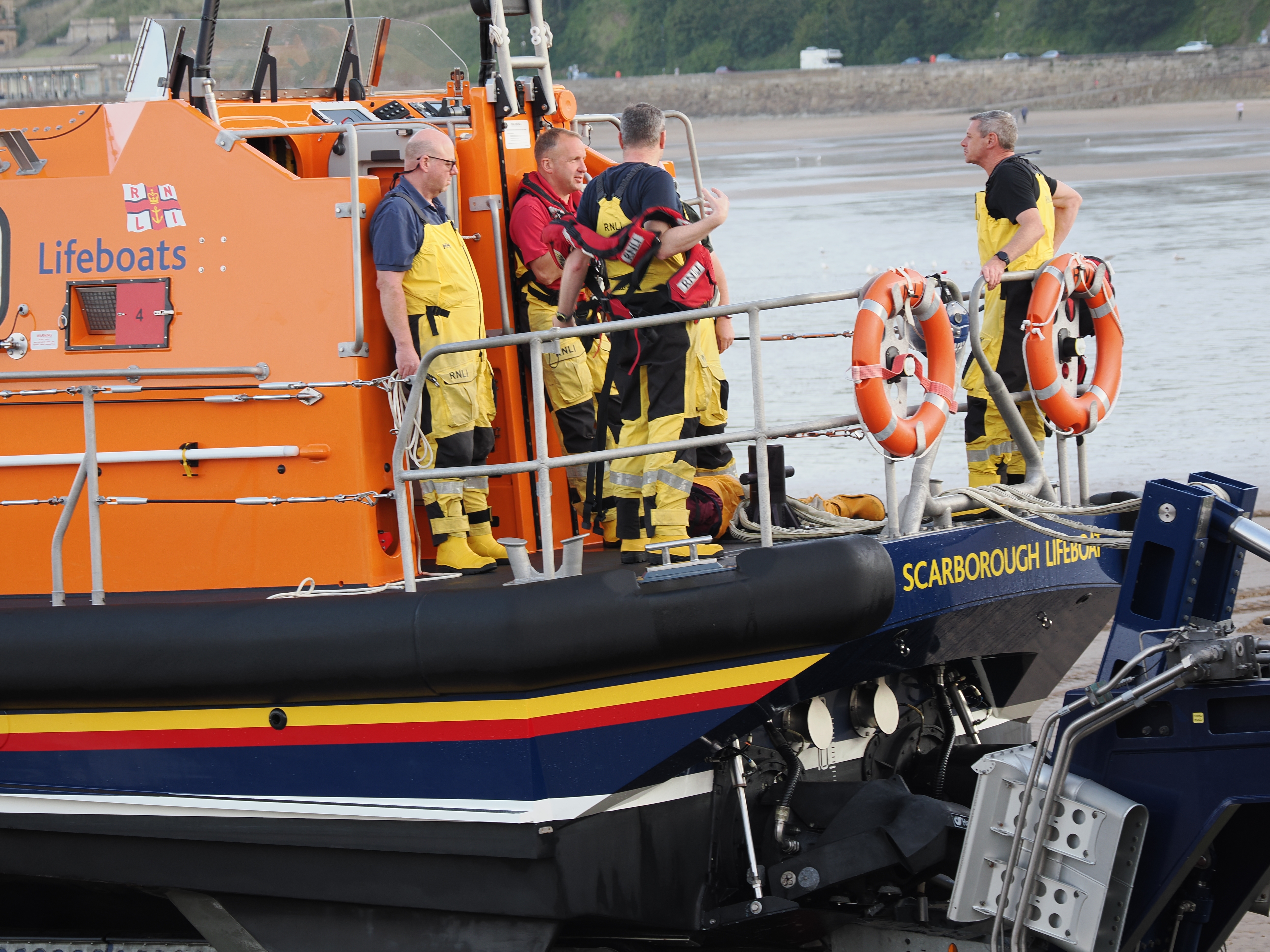
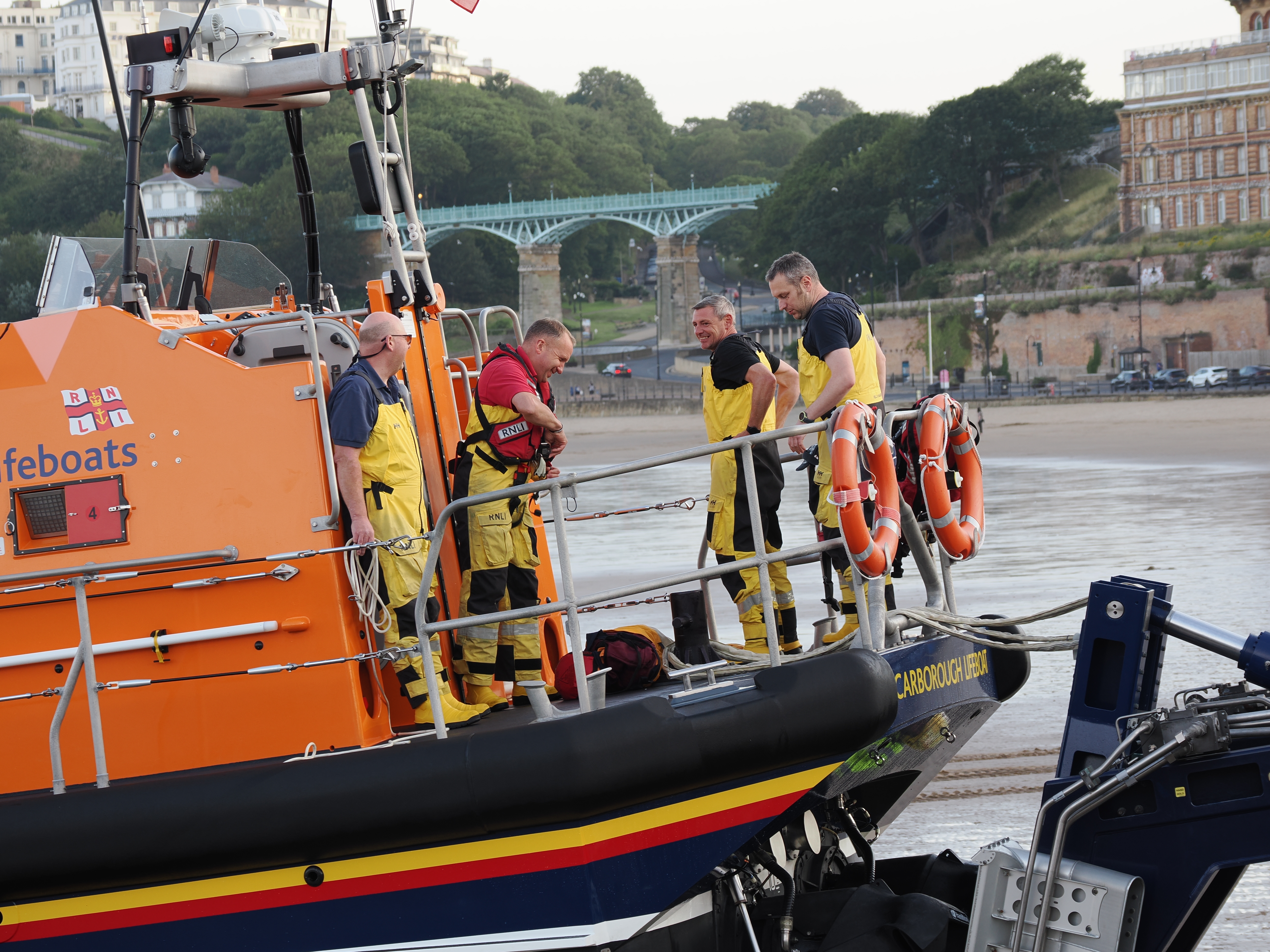
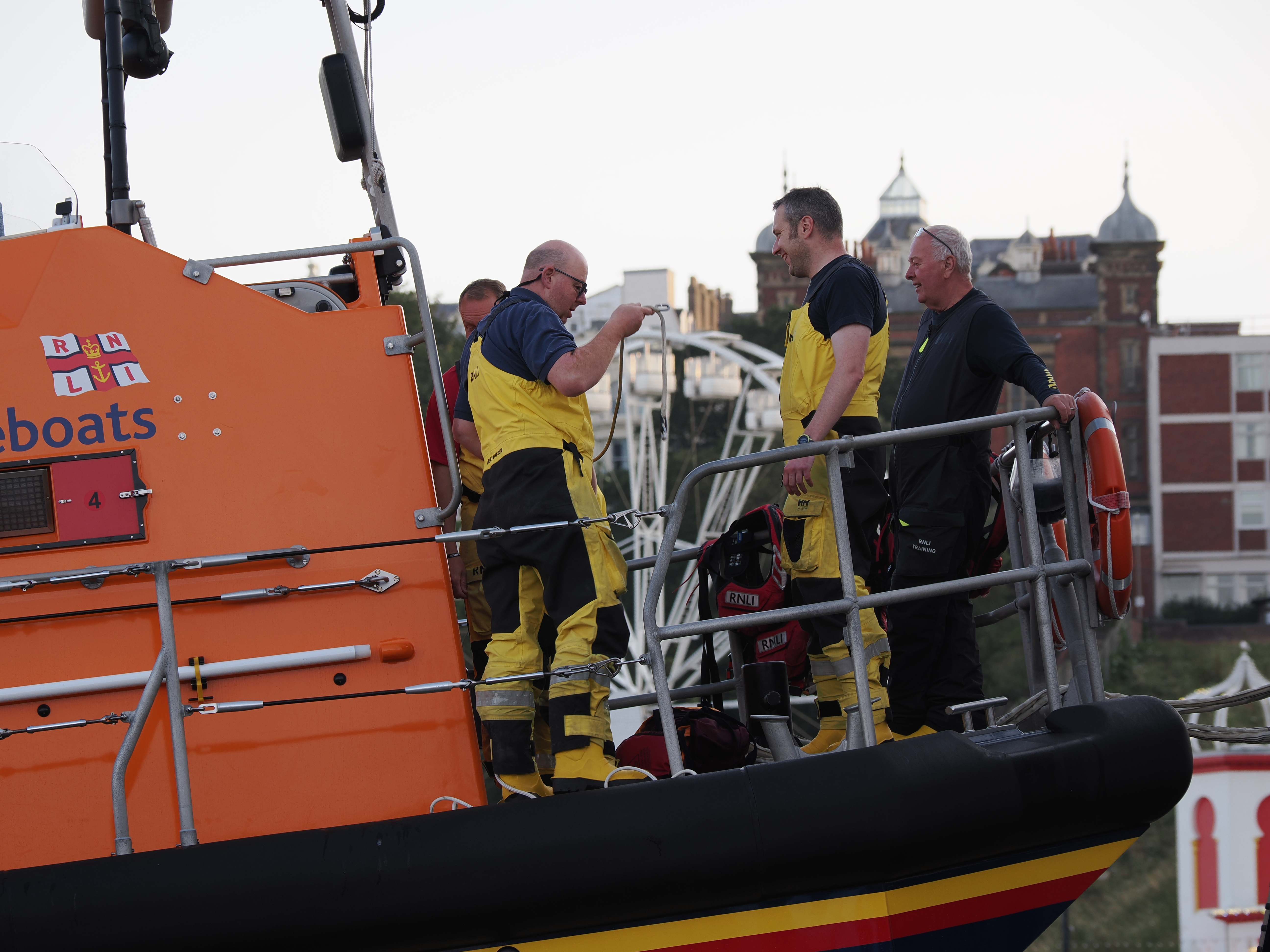
Earlier this year (July 2025) I photographed the whole procedure of recovering the lifeboat at low tide on Scarborough’s South Bay.
Recovering the Frederick William Plaxton lifeboat on 8 July 2025 (1)Recovering the Frederick William Plaxton lifeboat on 8 July 2025 (2)Recovering the Frederick William Plaxton lifeboat on 8 July 2025 (3)Recovering the Frederick William Plaxton lifeboat on 8 July 2025 (4)
Just so it does not feel left out, there is another smaller lifeboat called D-856 John Wesley Hillard IV, a D-Class inshore lifeboat, which arrived on on Thursday 10 June 2021. It had come in a bit before the larger one on 8th July (see below).
D-856 John Wesley Hillard IV, a D-Class inshore lifeboat, Scarborough
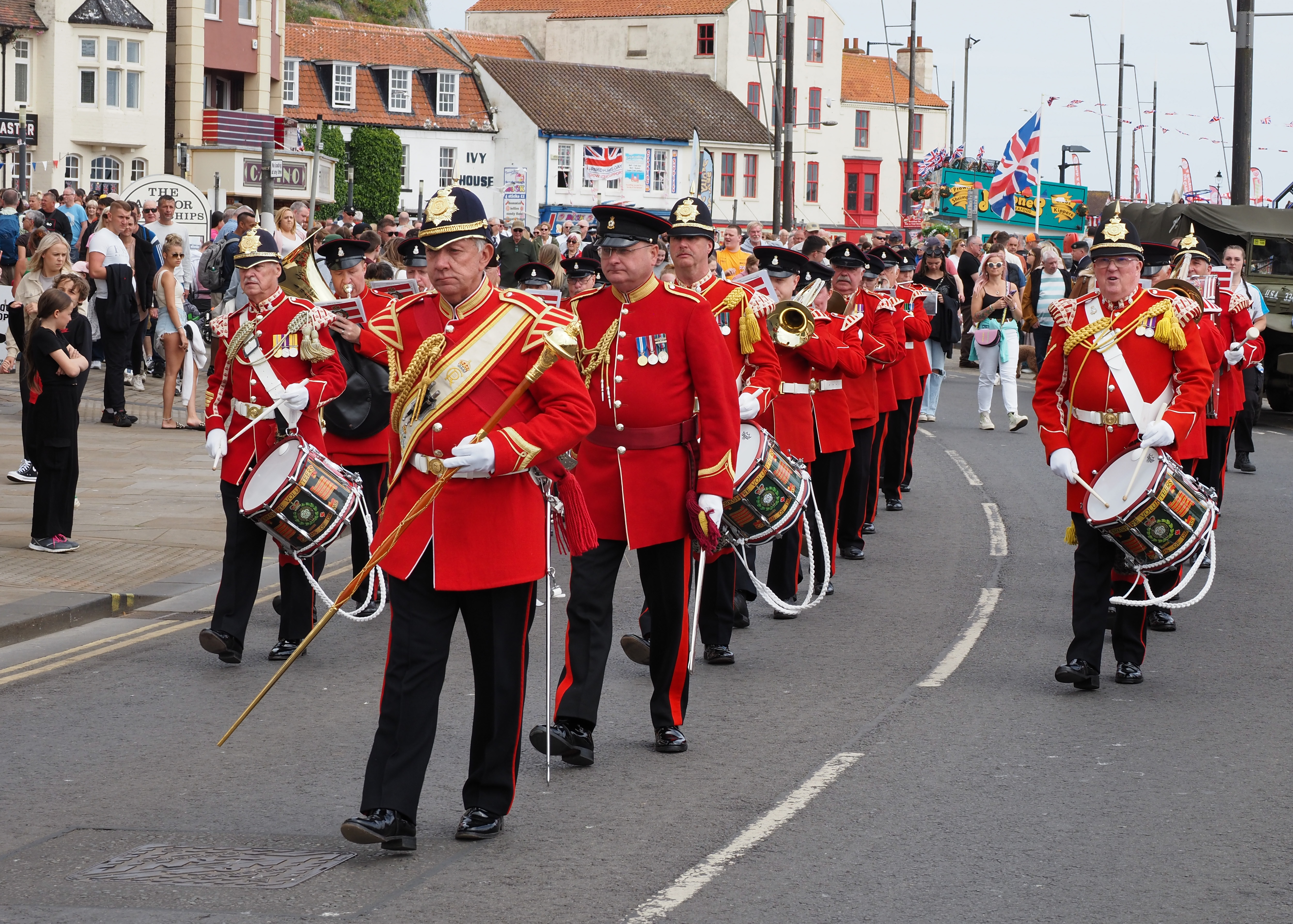
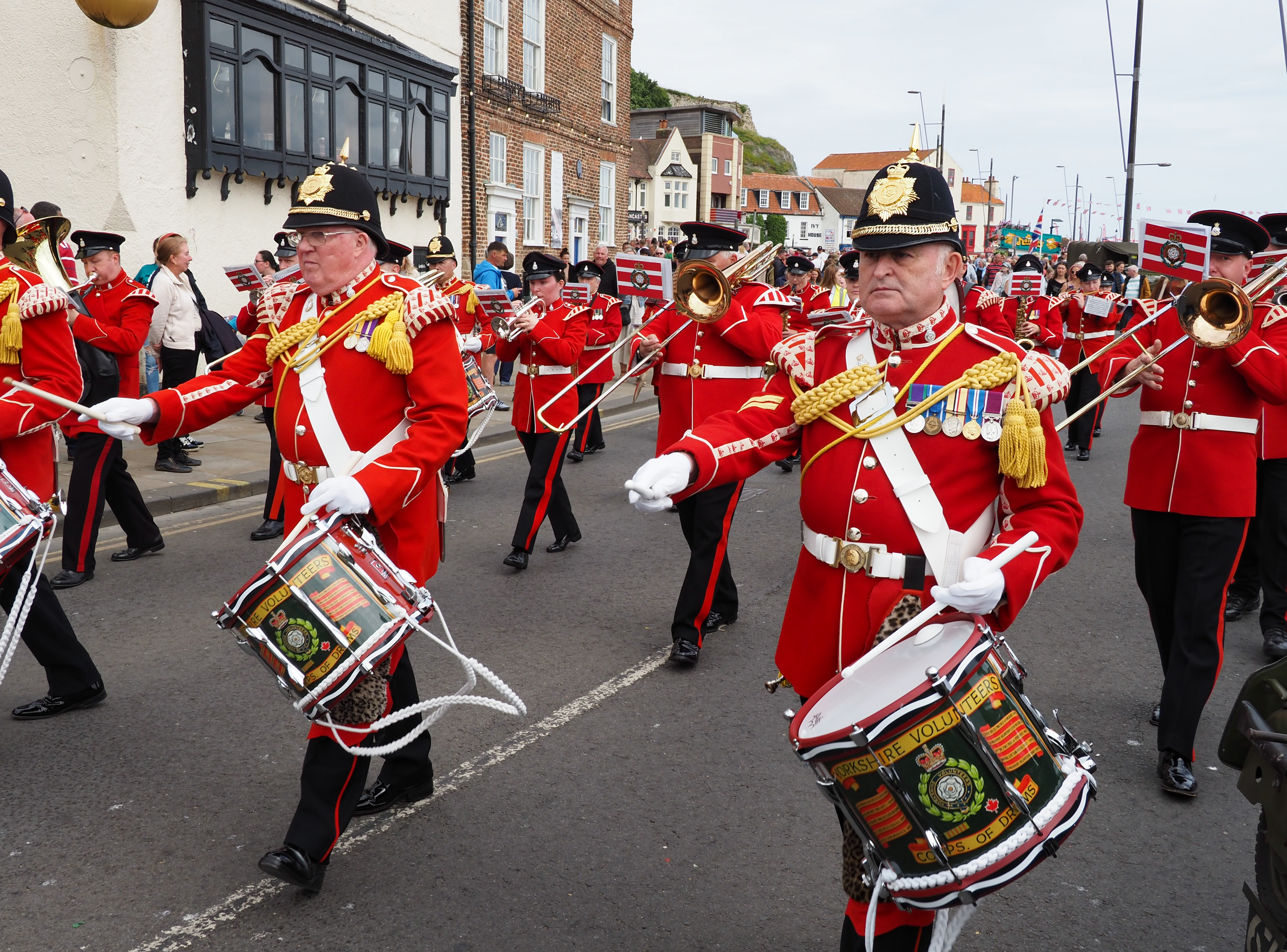
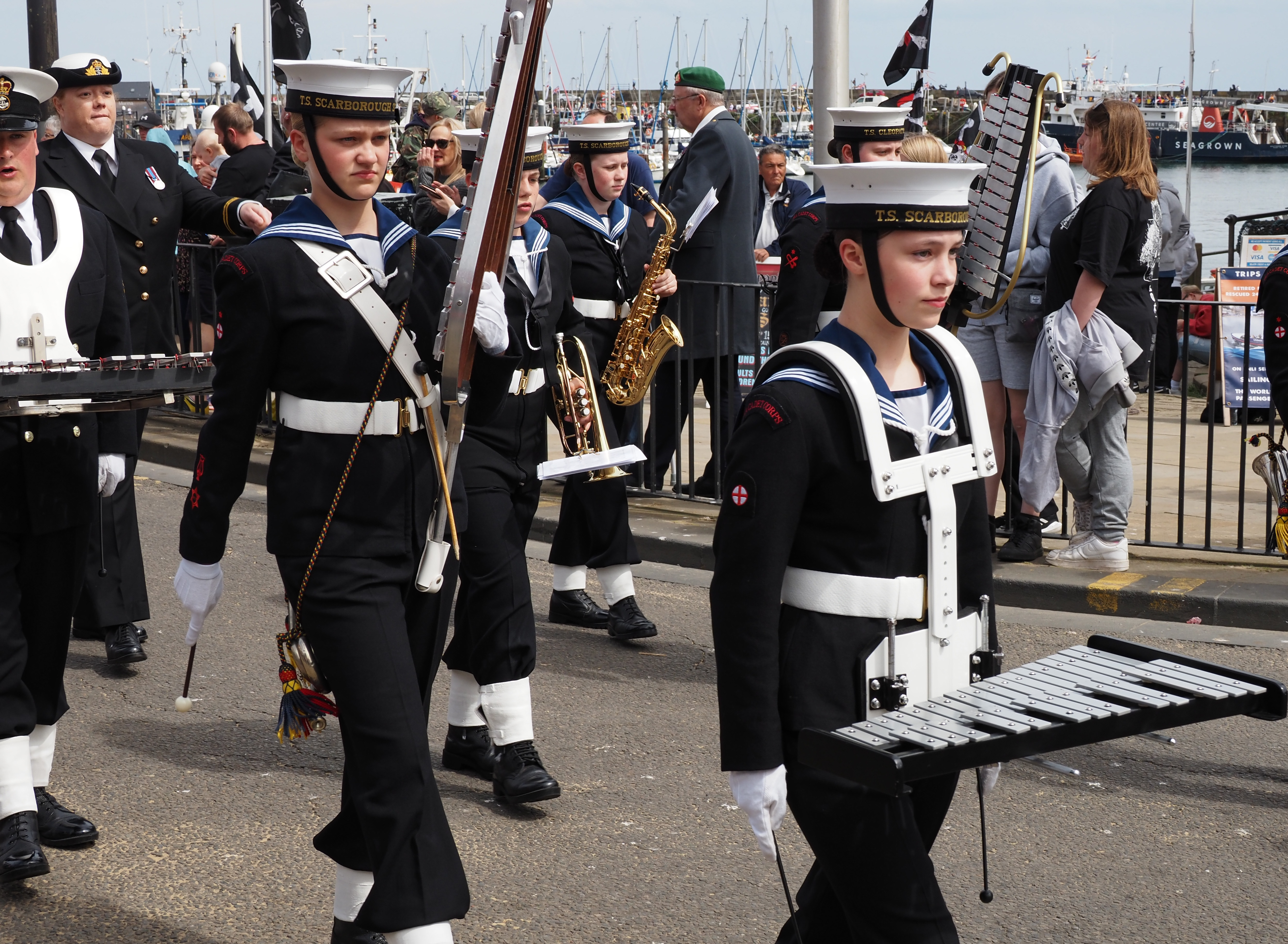
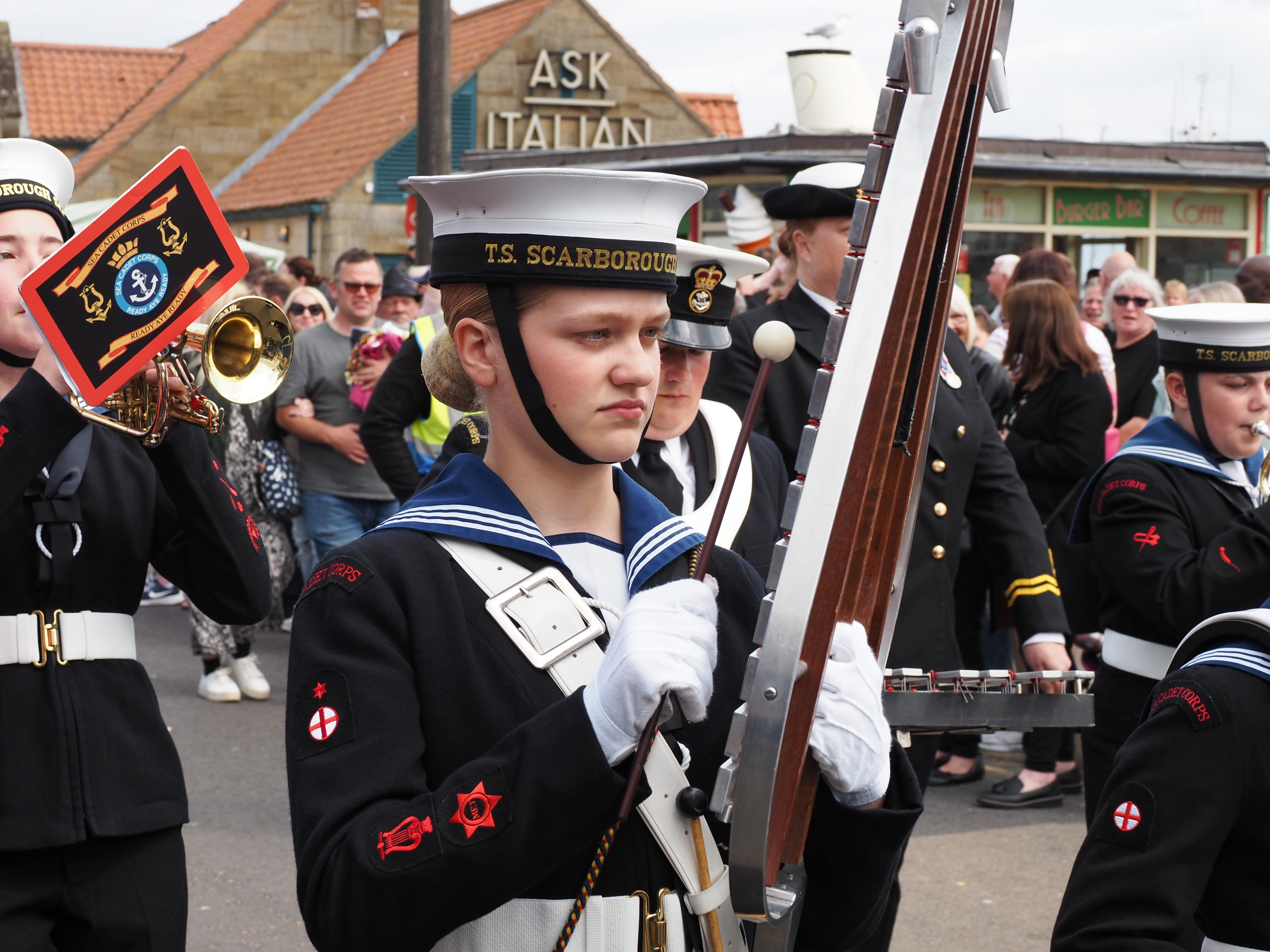
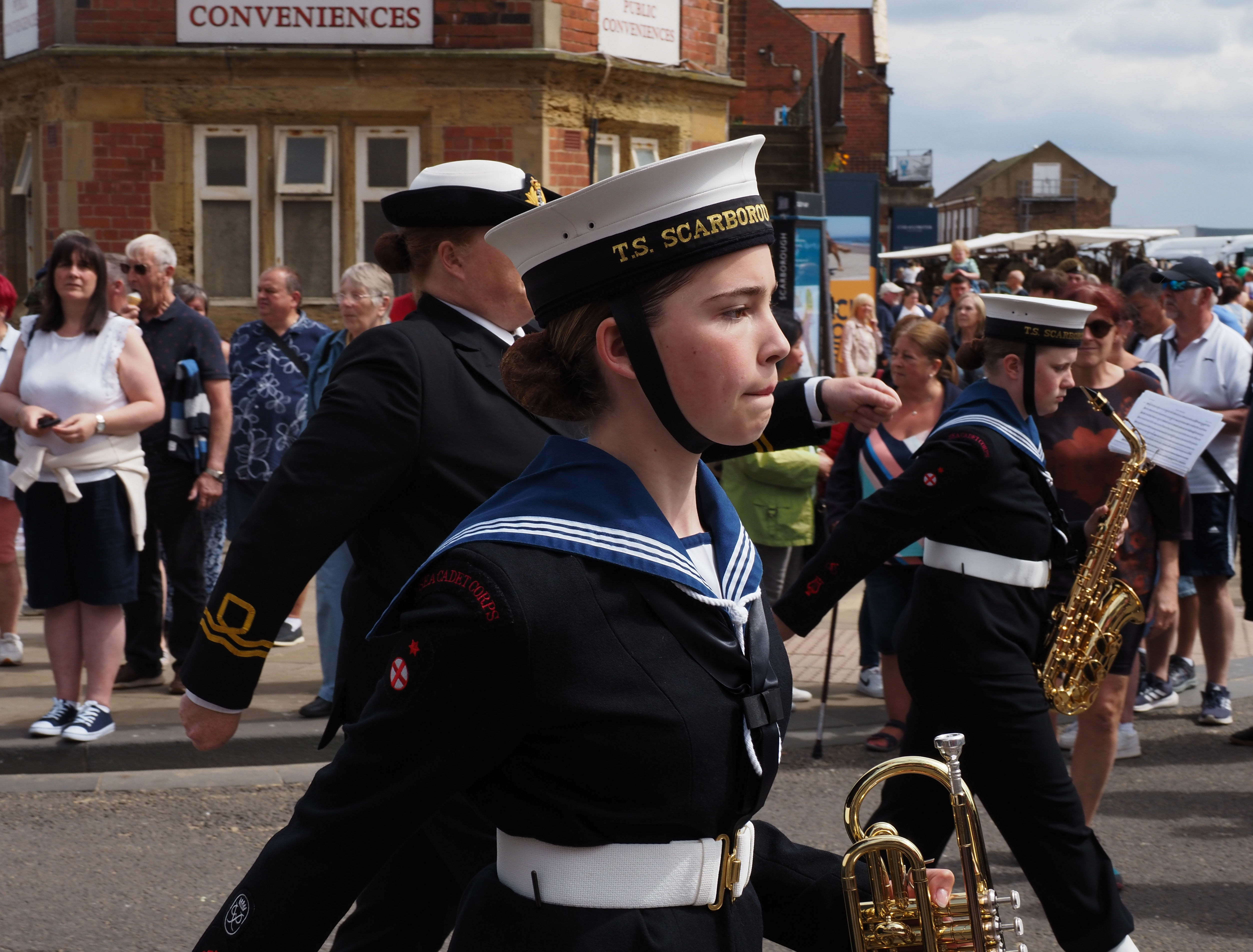
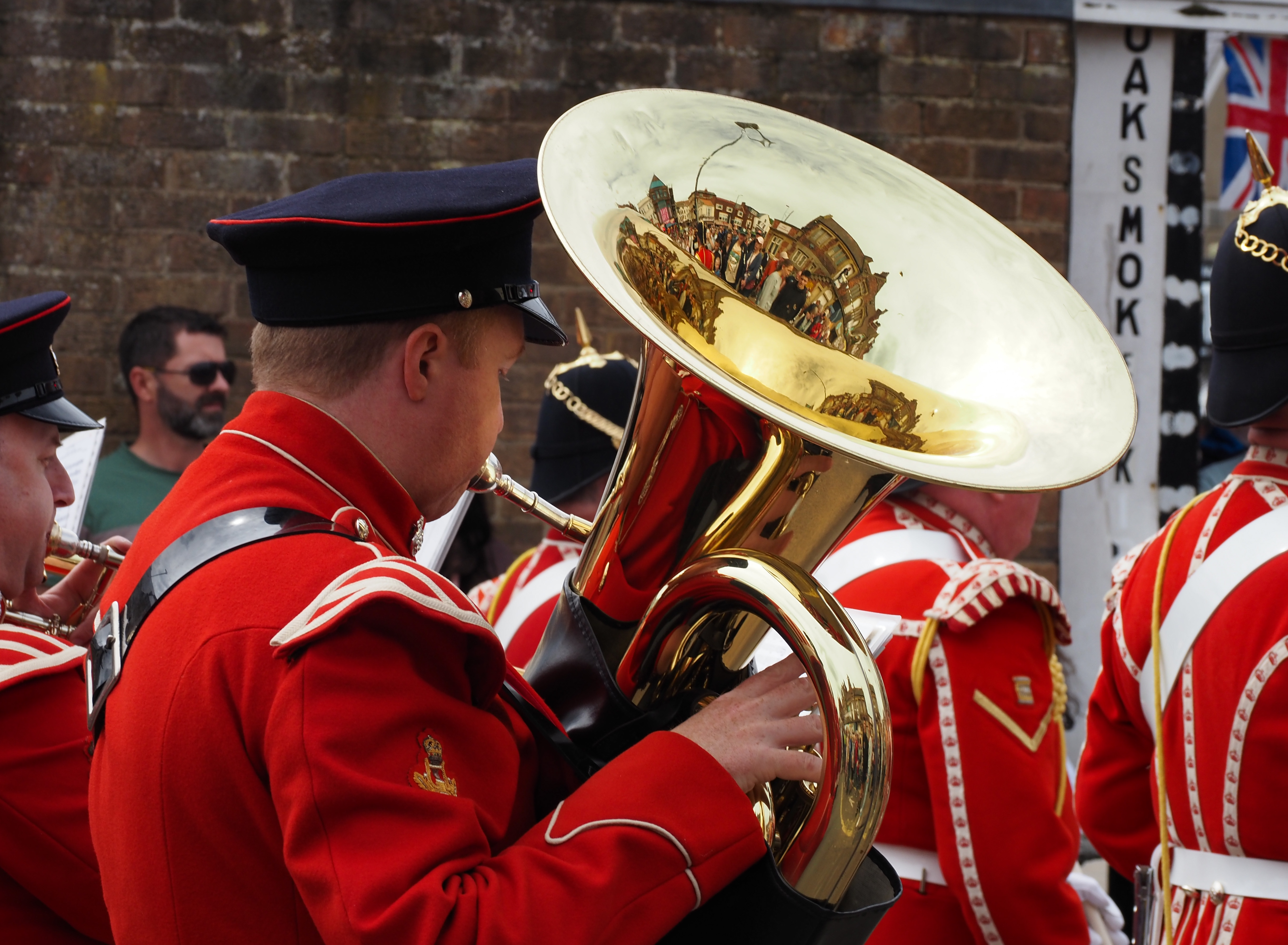
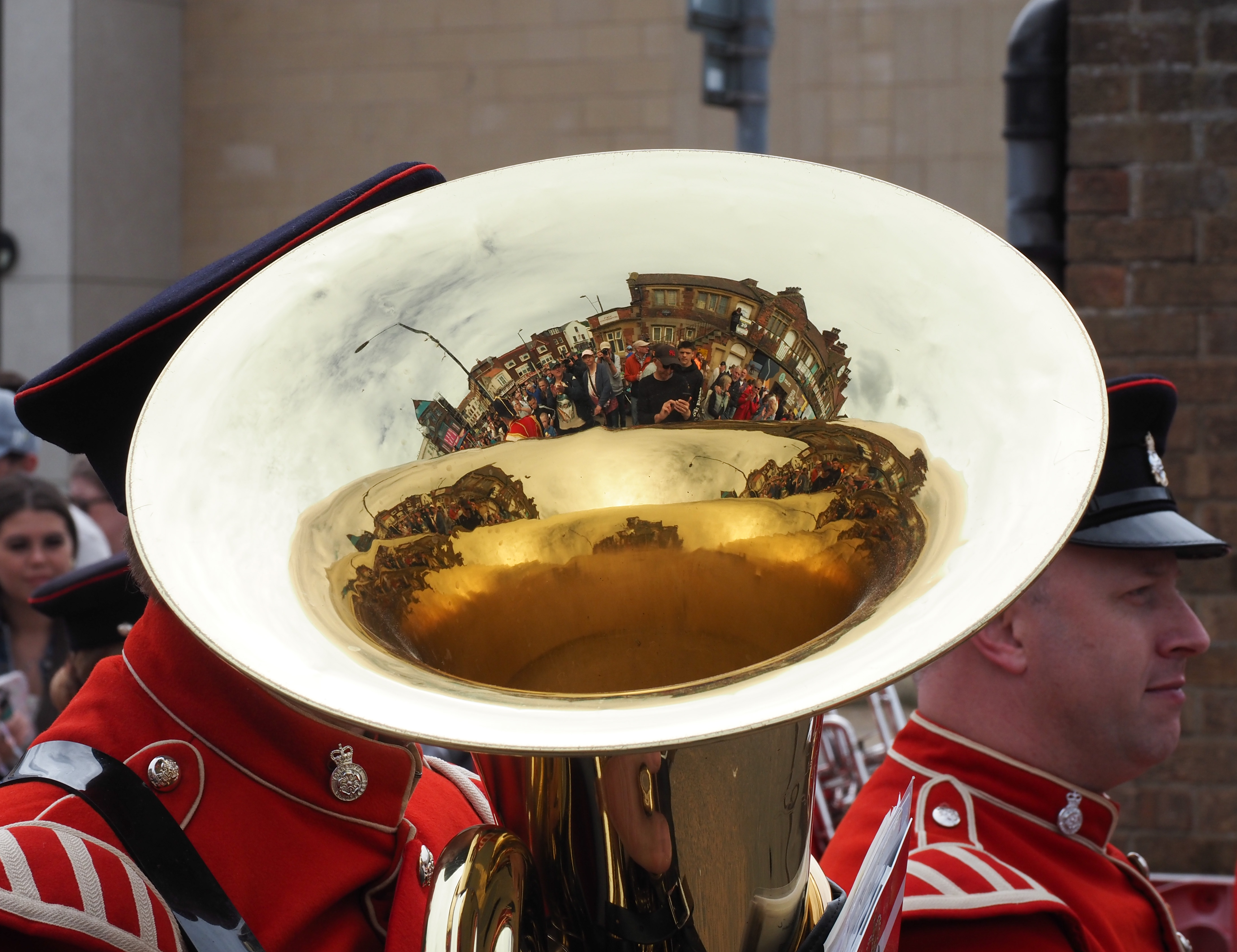
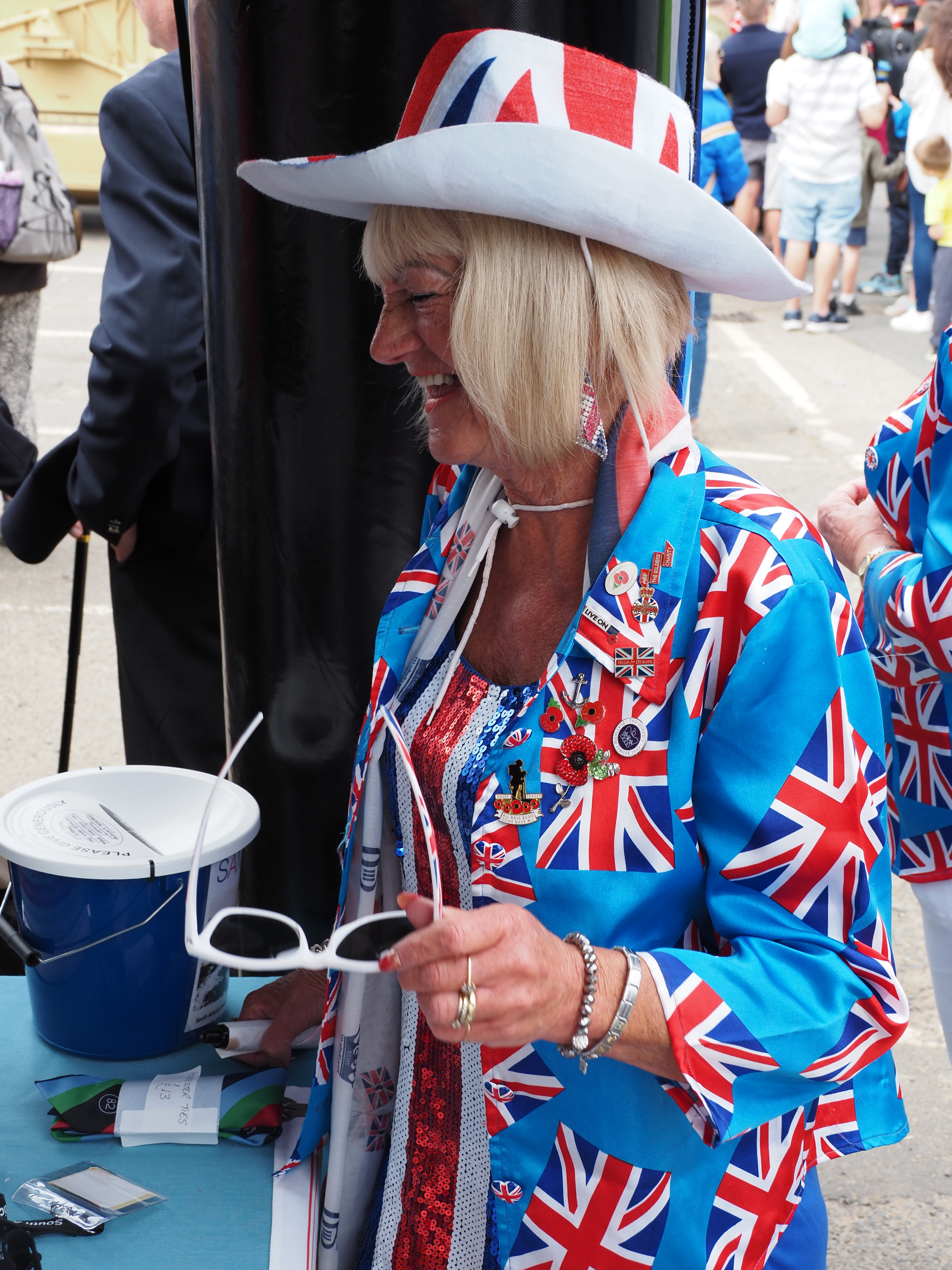
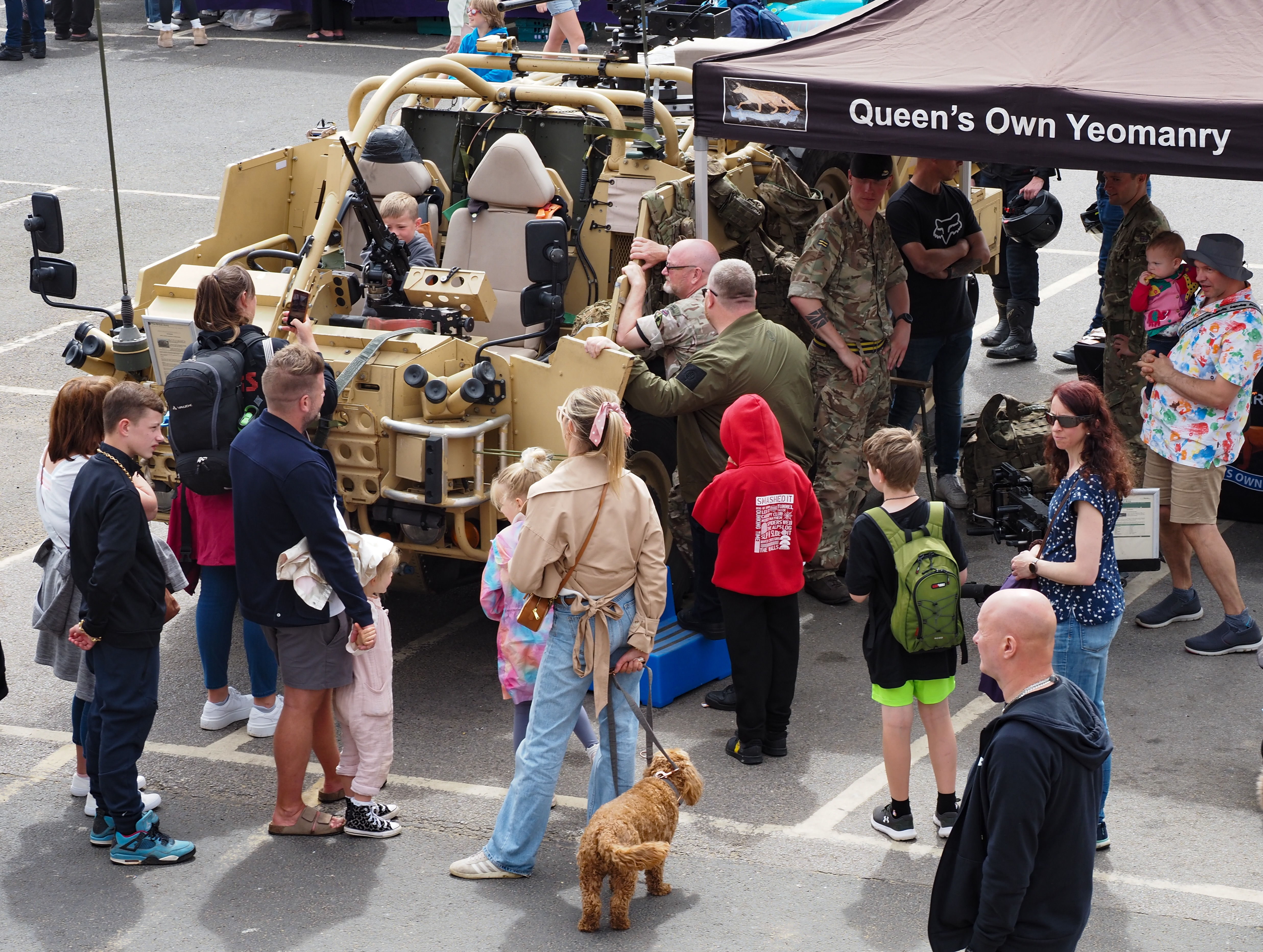
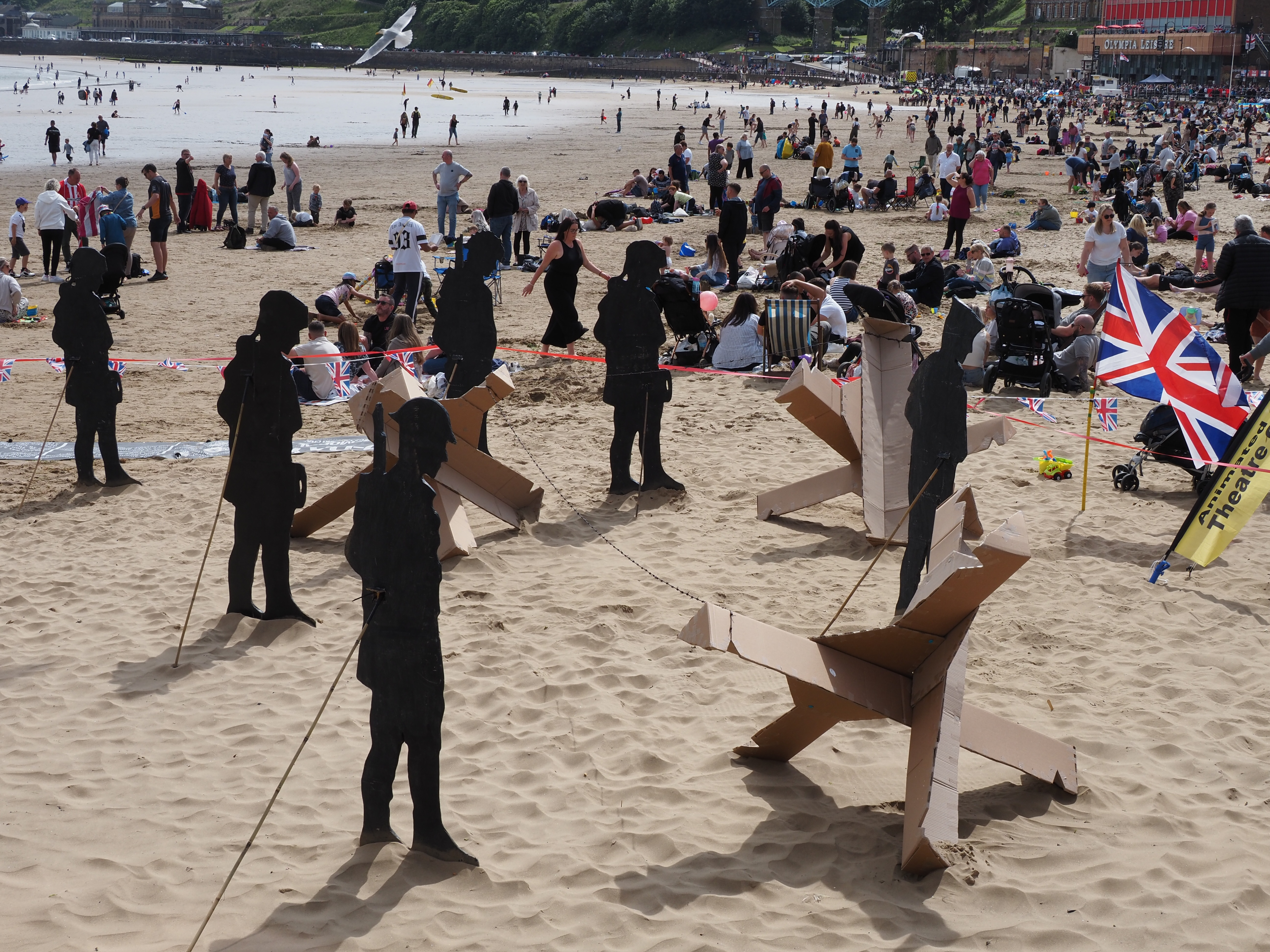
Saturday 29th June 2024 was Armed Forces Dayin Scarborough; an annual event celebrated around the country to commemorate the service of men and women in the British Armed Forces.
Whatever you may think about celebrating the contributions of ex-servicemen and women, it is a great opportunity for photography! Personally, I think we owe these veterans a huge debt.
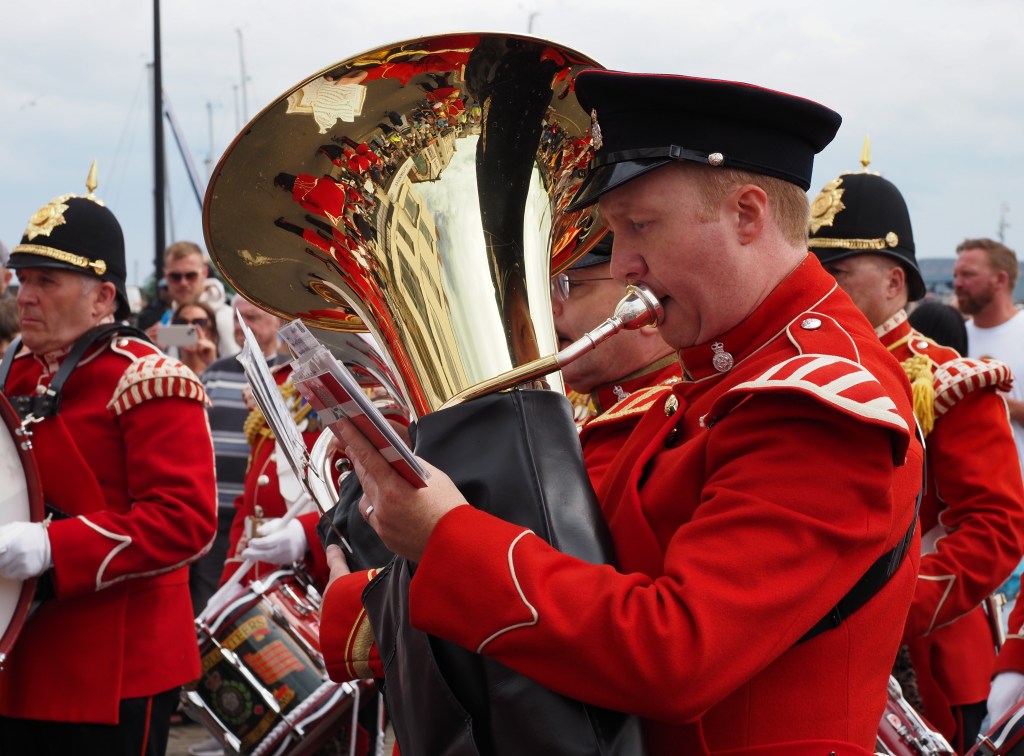
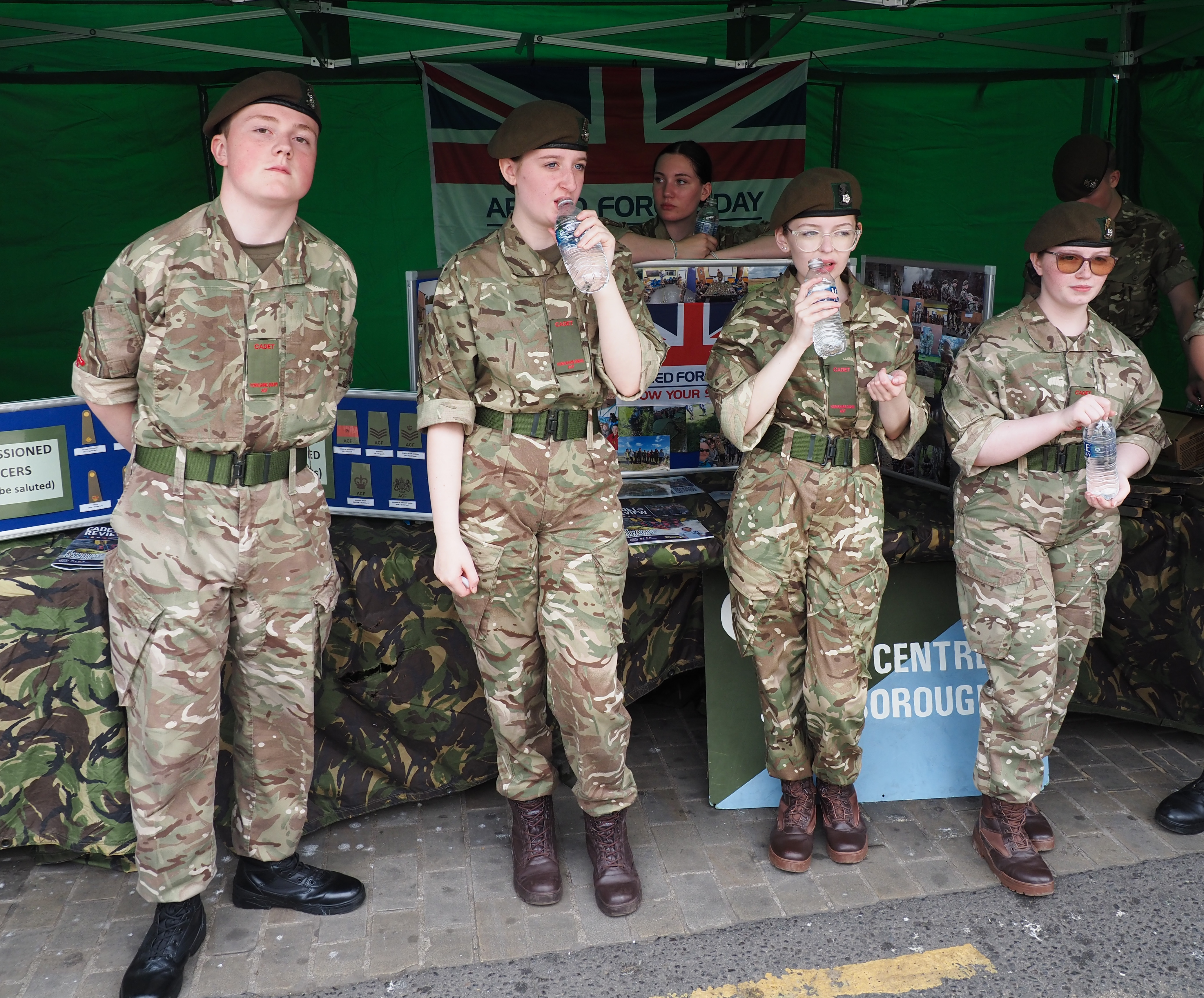
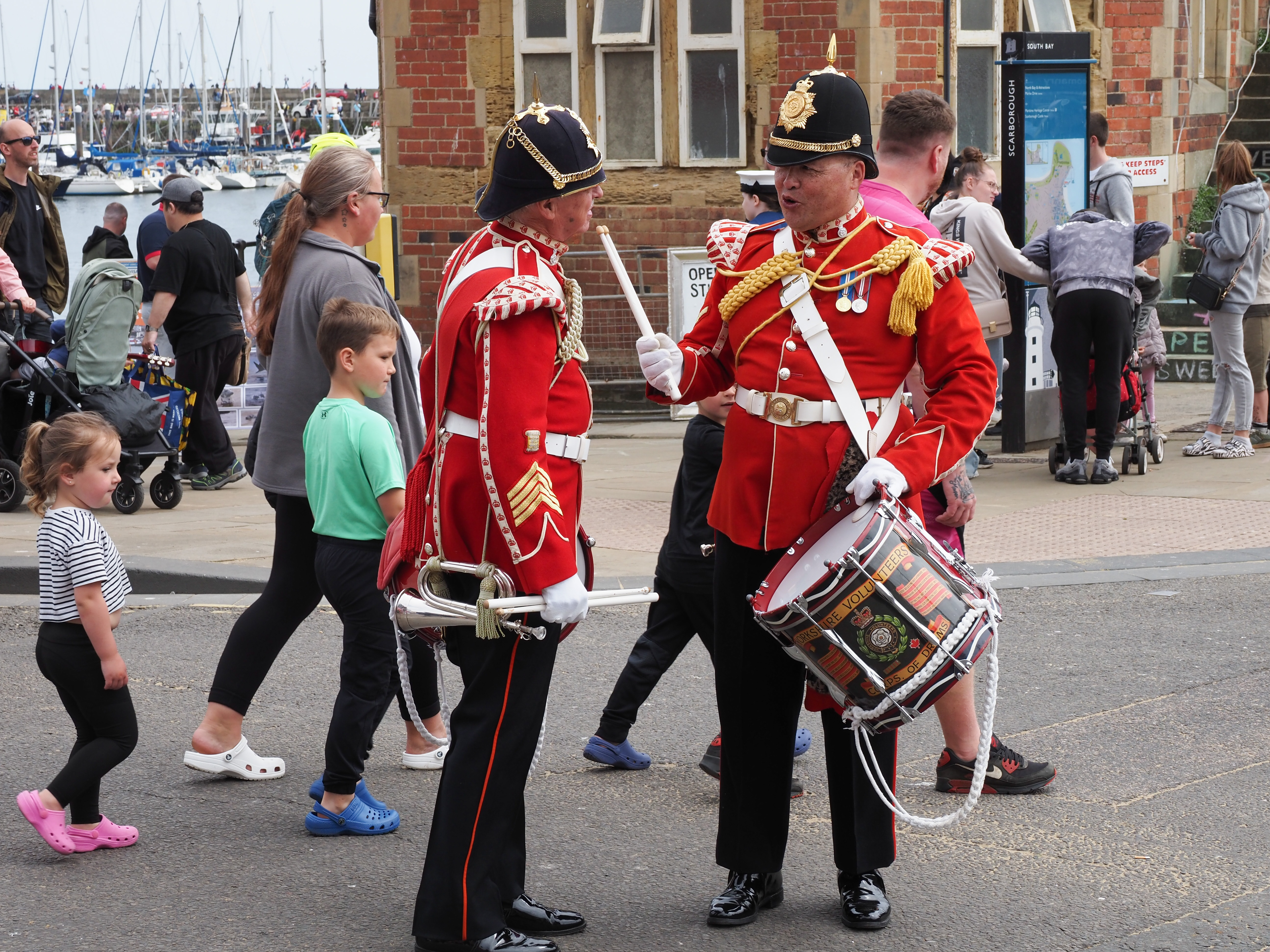
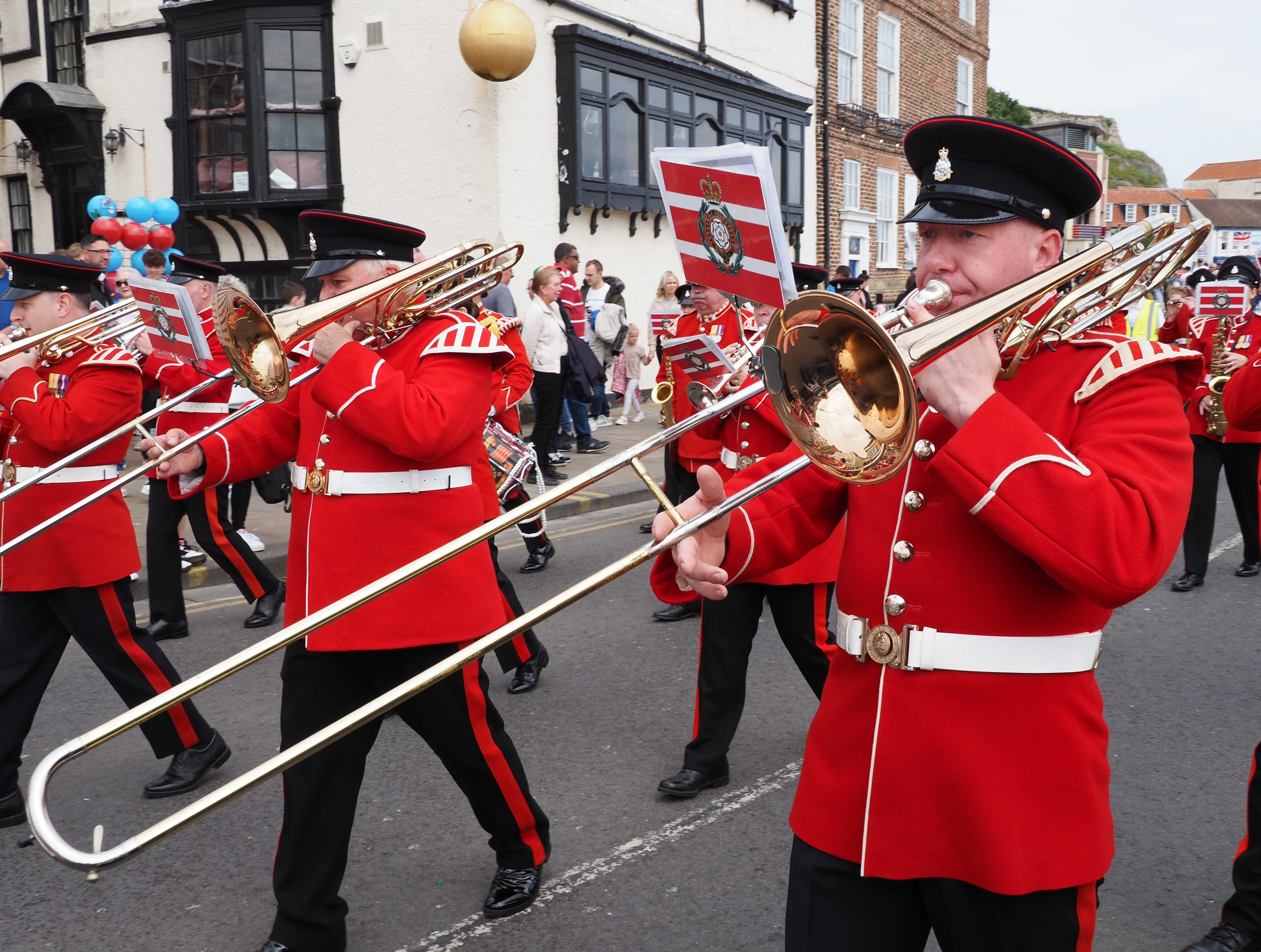
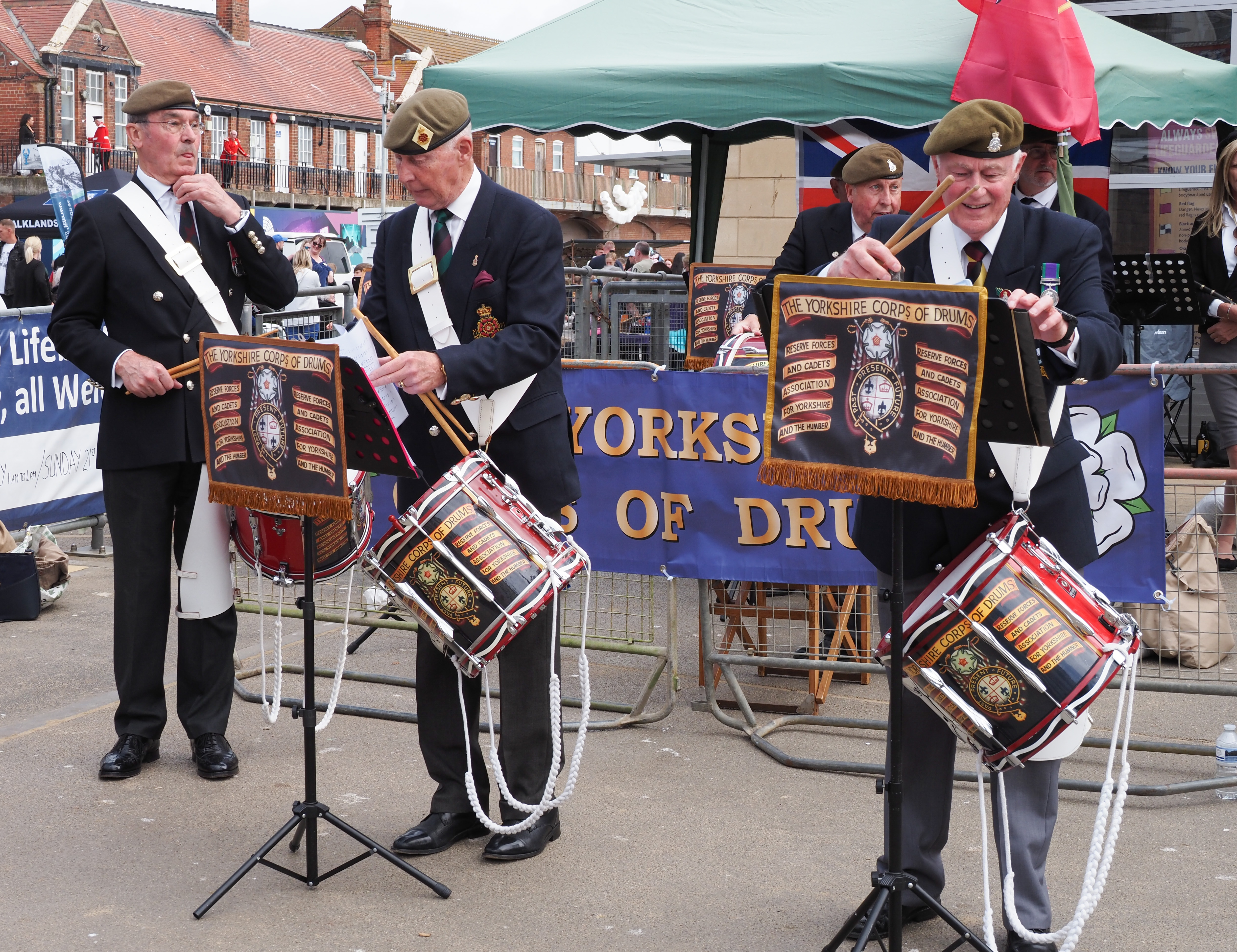
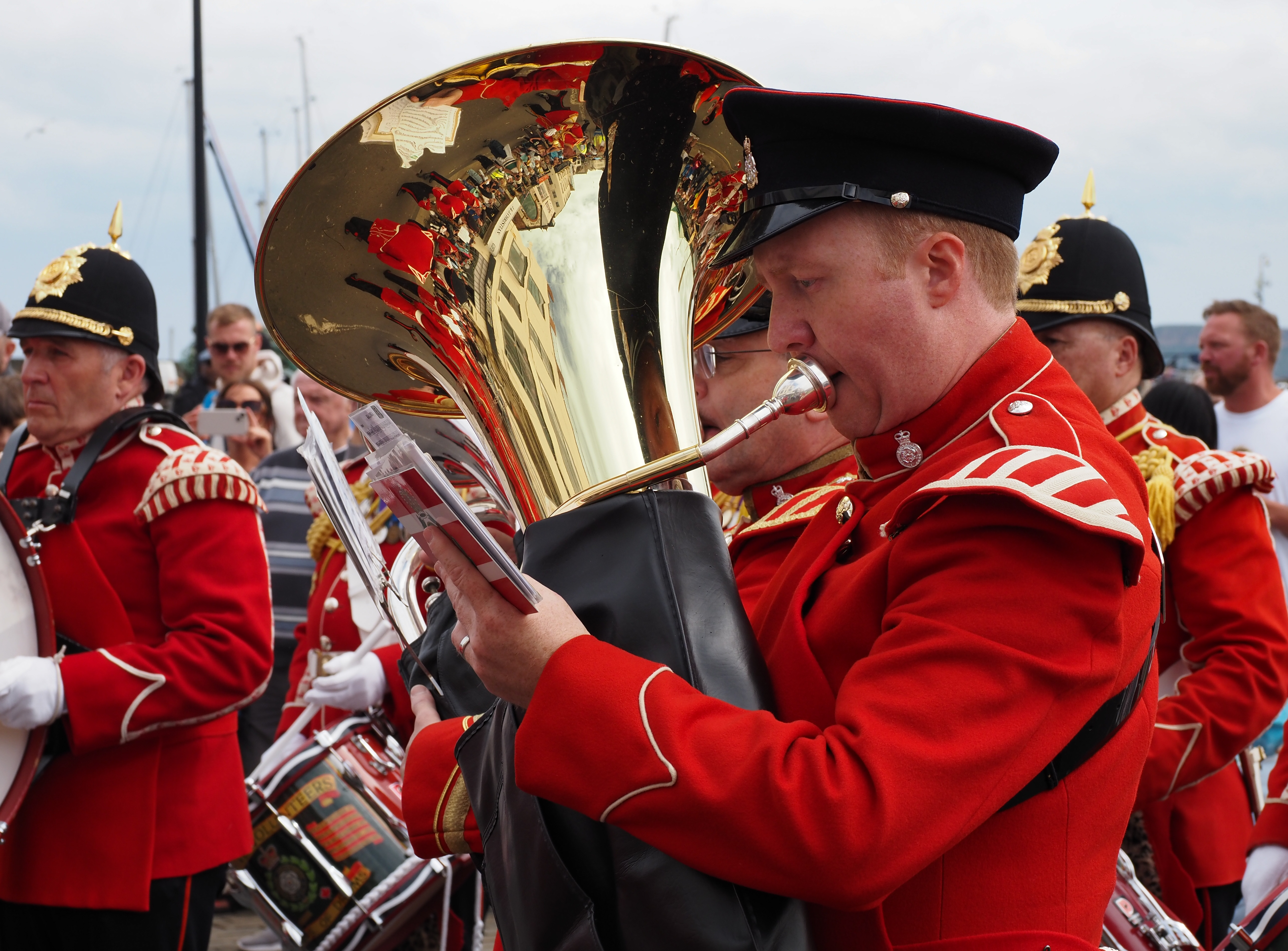
I went down to the seafront to try and capture some interesting images; there were bands, marches and stalls; what follows is an eclectic series of images; just things that caught my eye.
Let’s start with the bands.
The band of the sea cadets was rather more youthful!
I love a good reflection, and highly polished tubas are great for capturing curved panoramas of the surroundings!
Some images of people and street scenes.
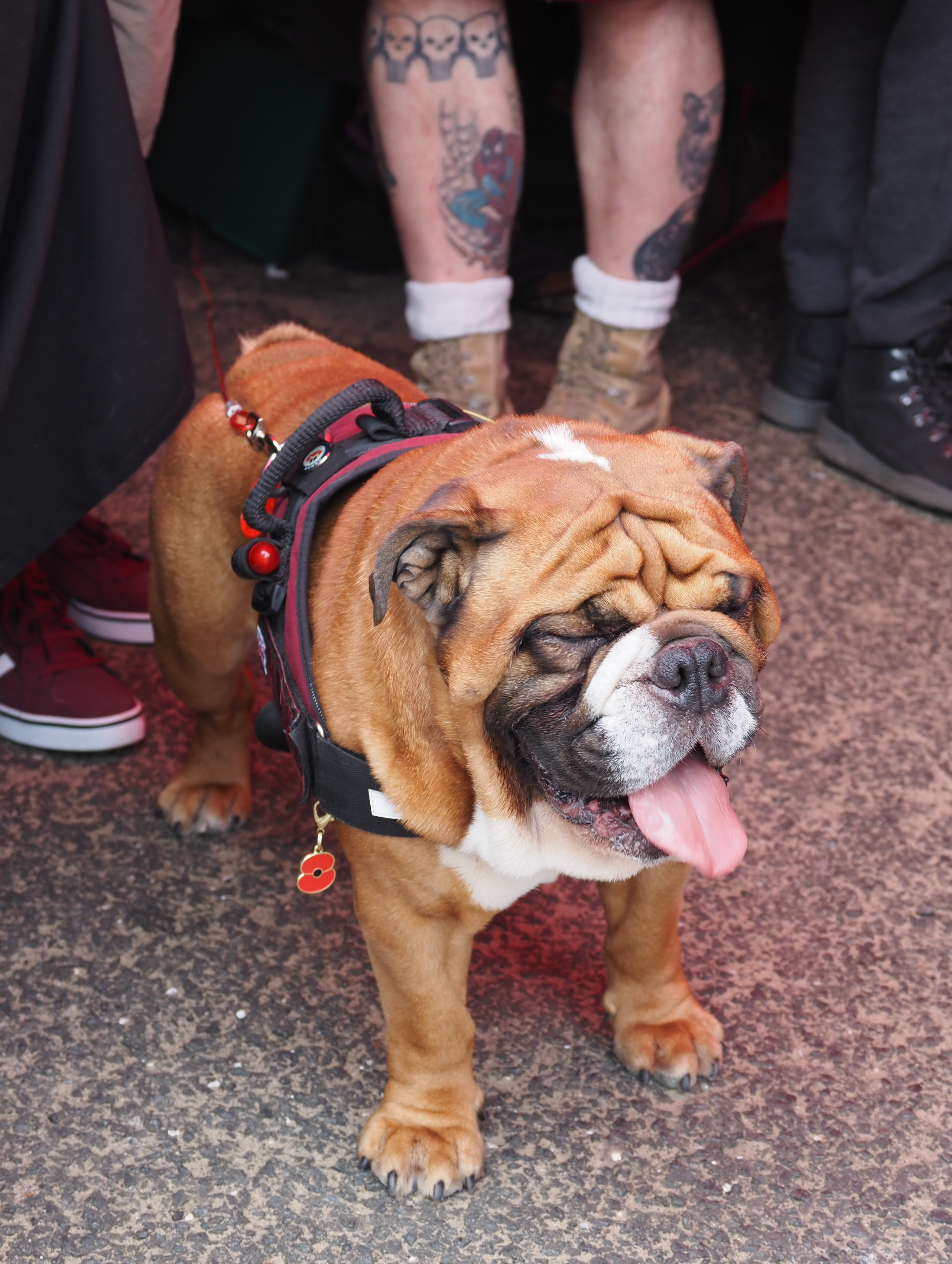
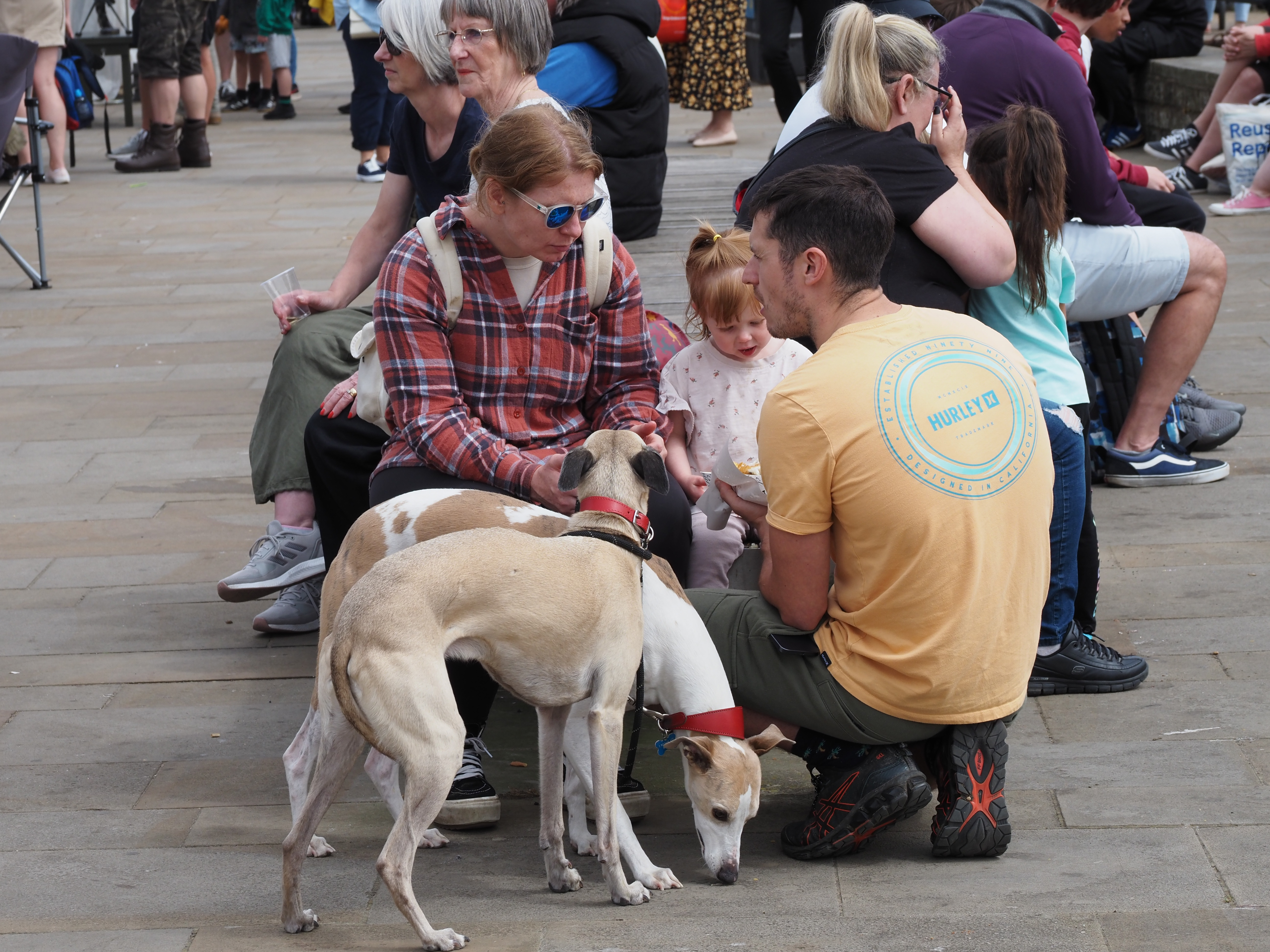
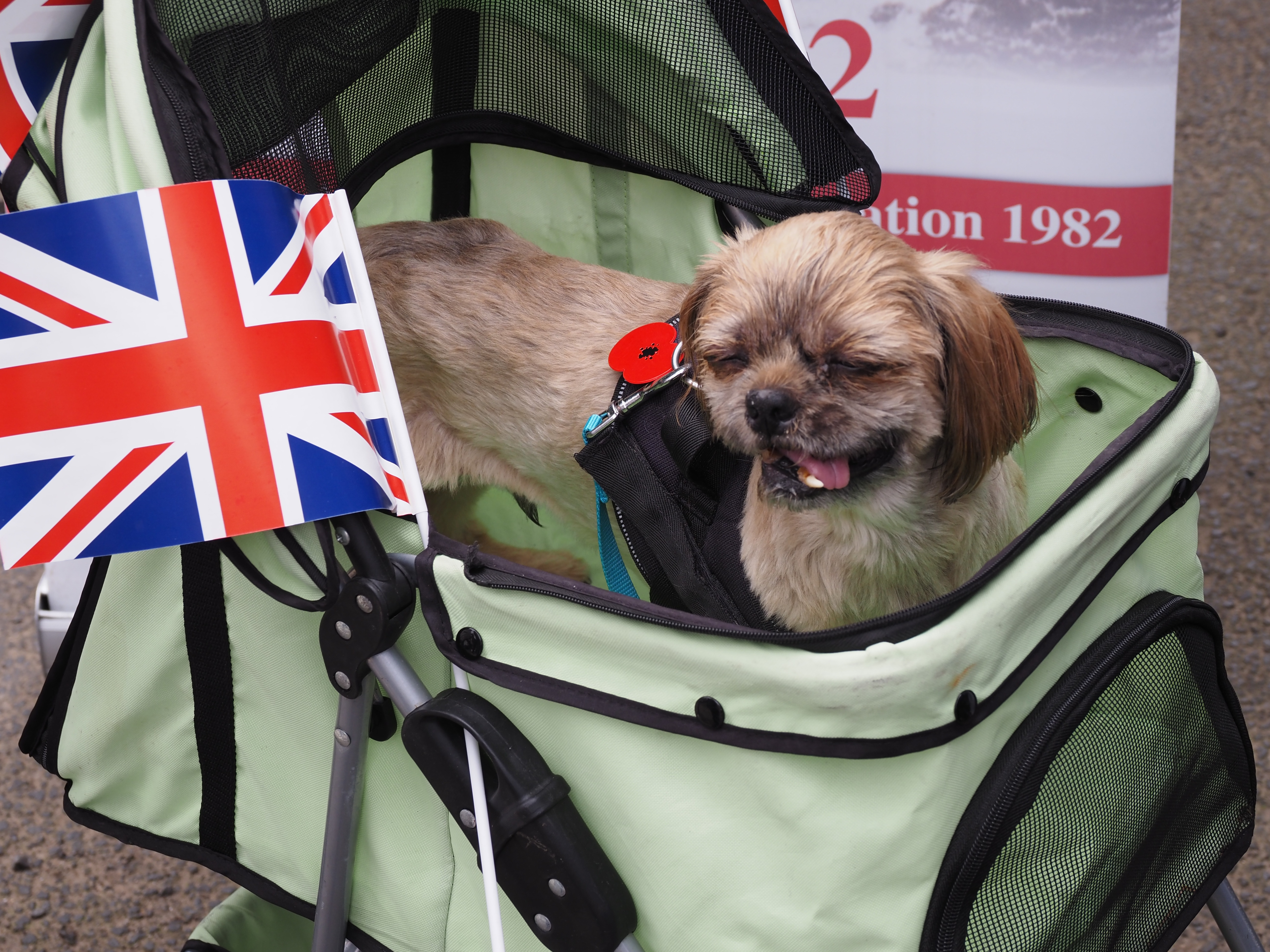
And, of course, it wouldn’t be Britain without the dogs!
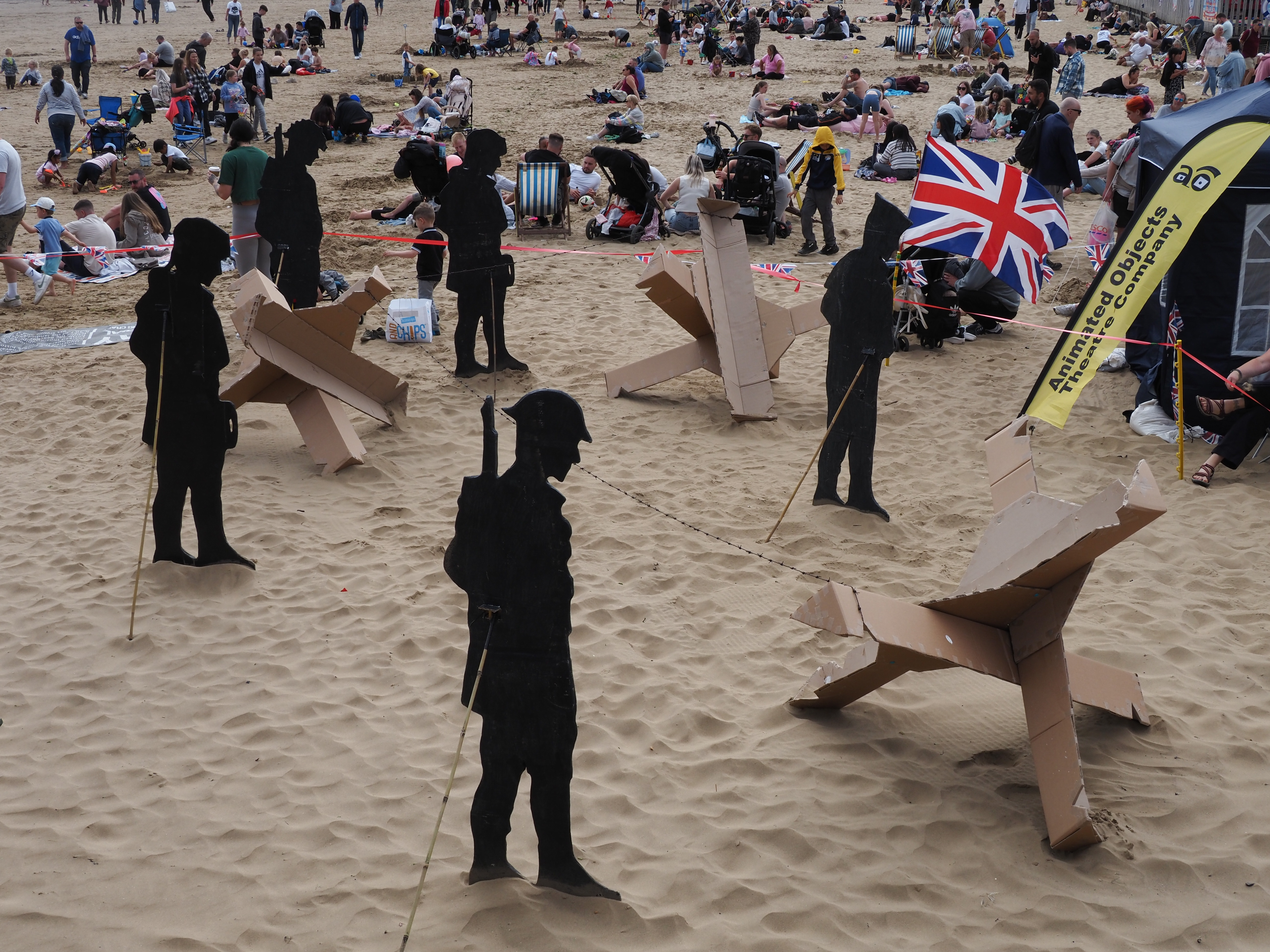
This year was the 80th anniversary of D-Day.
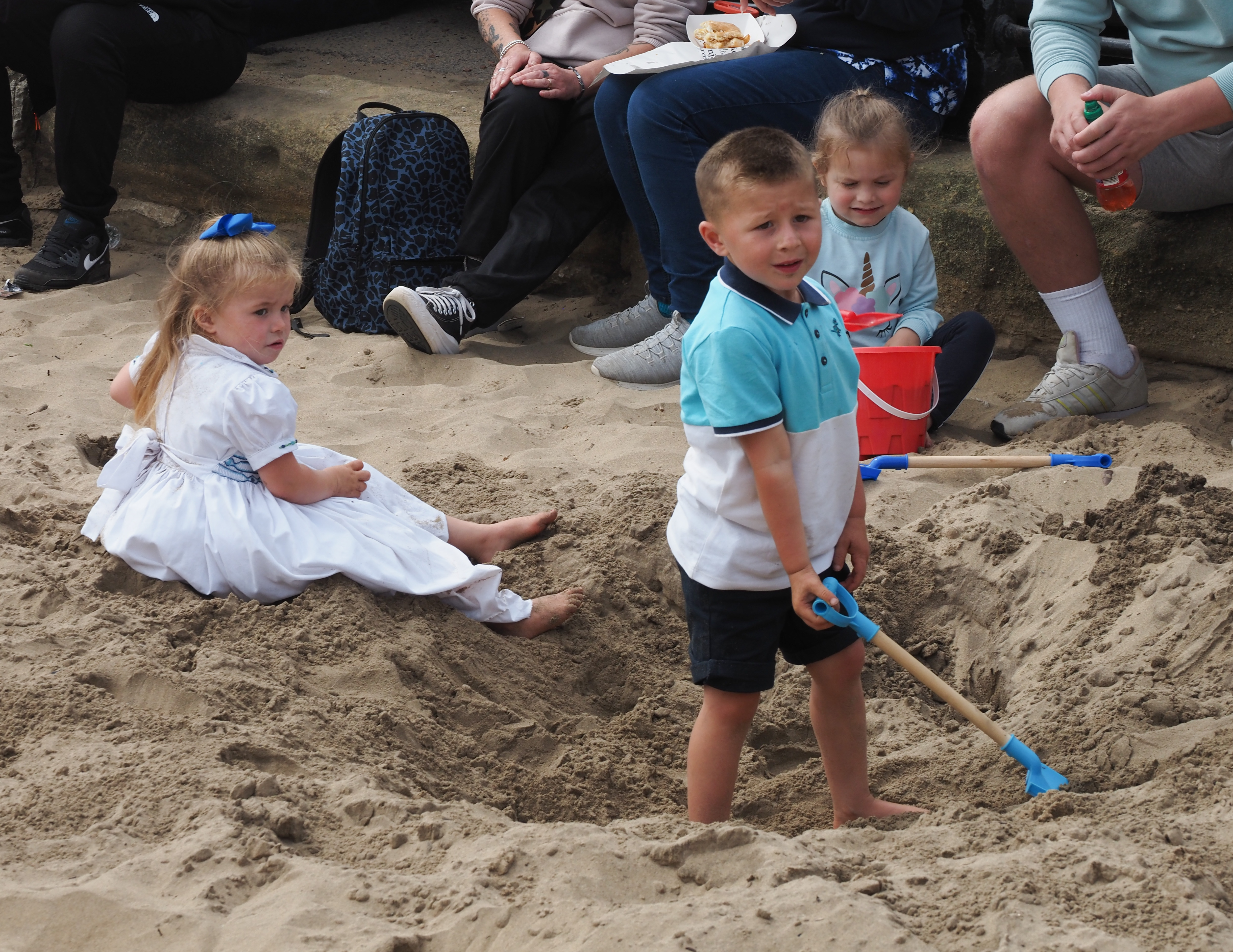
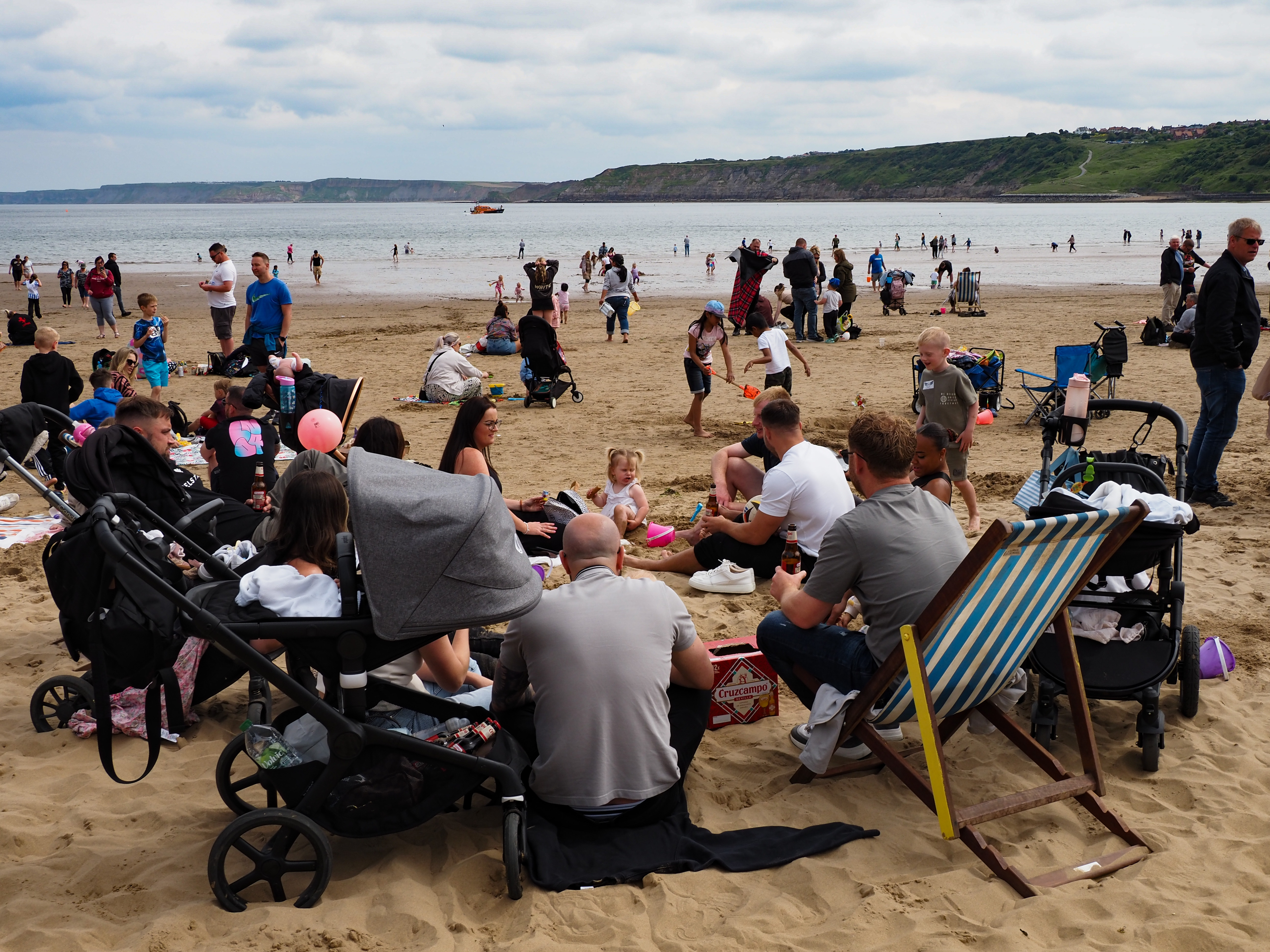
Finally some images from the beach. It was only 18 deg C, but the sun came out and the hardy northerners (not me!) were even venturing into the water!
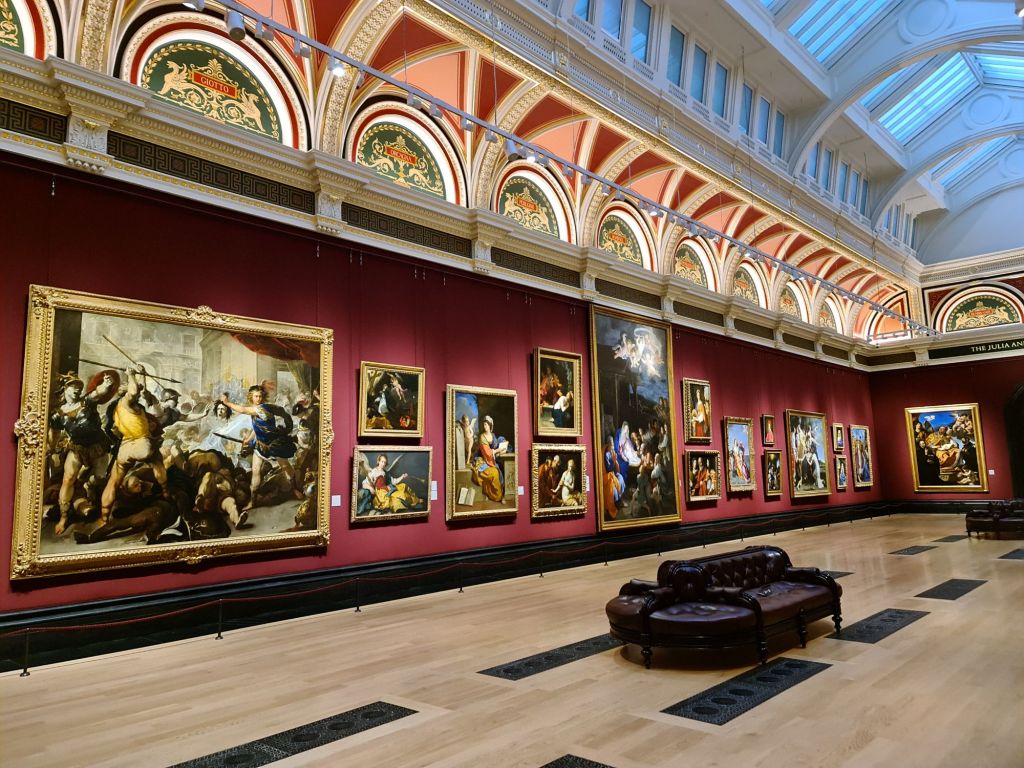
I often visit the National Gallery when I am in London. There is always something new to see or old favourites to revisit and admire.
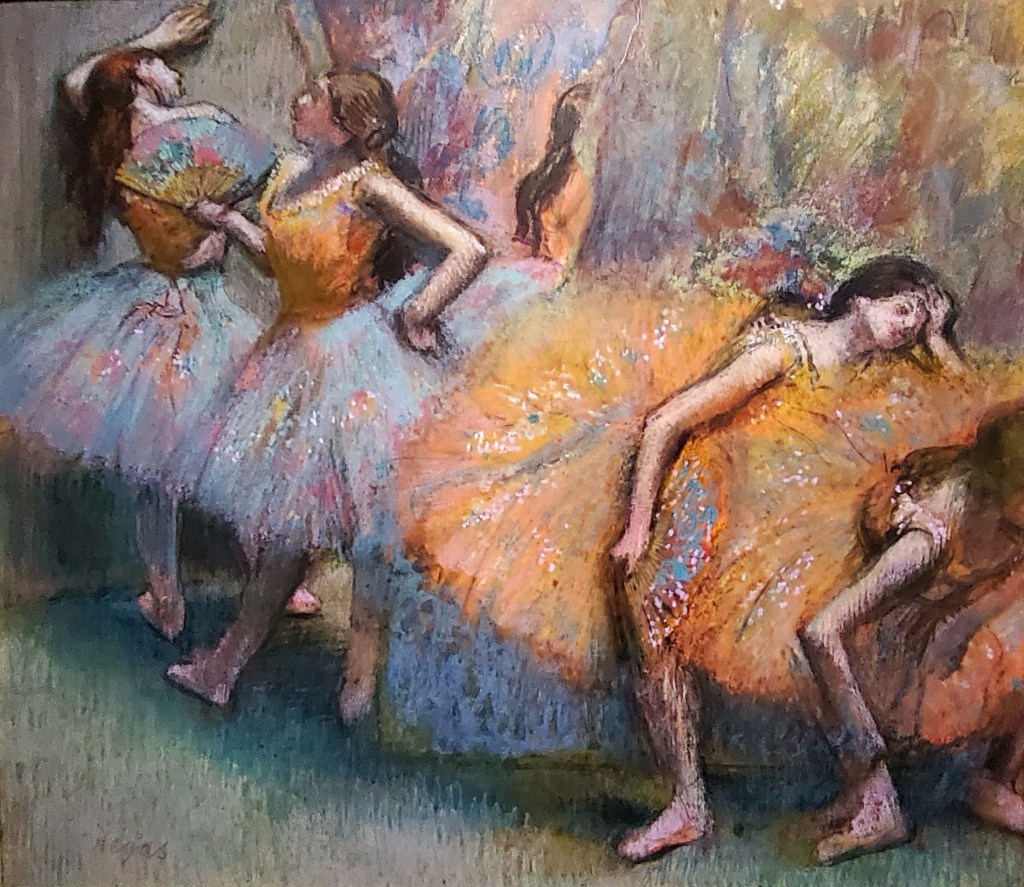
When I was younger, I was completely taken by Impressionist artists, like Degas (below), and would generally walk rather briskly through the Old Master galleries, containing Renaissance painters and the like.
Edgar Degas, Ballet Dancers, pastel on paper laid on panel, 1888 (The National Gallery, London)
I still love the more modern works, but I have become more and more fascinated by the older styles of painting; not just the incredible techniques of Old Masters like Leonardo da Vinci and Rafael – to name just two – but also the wonderful colours and strange compositions of some very early paintings (see below).
Francesco Pesellino
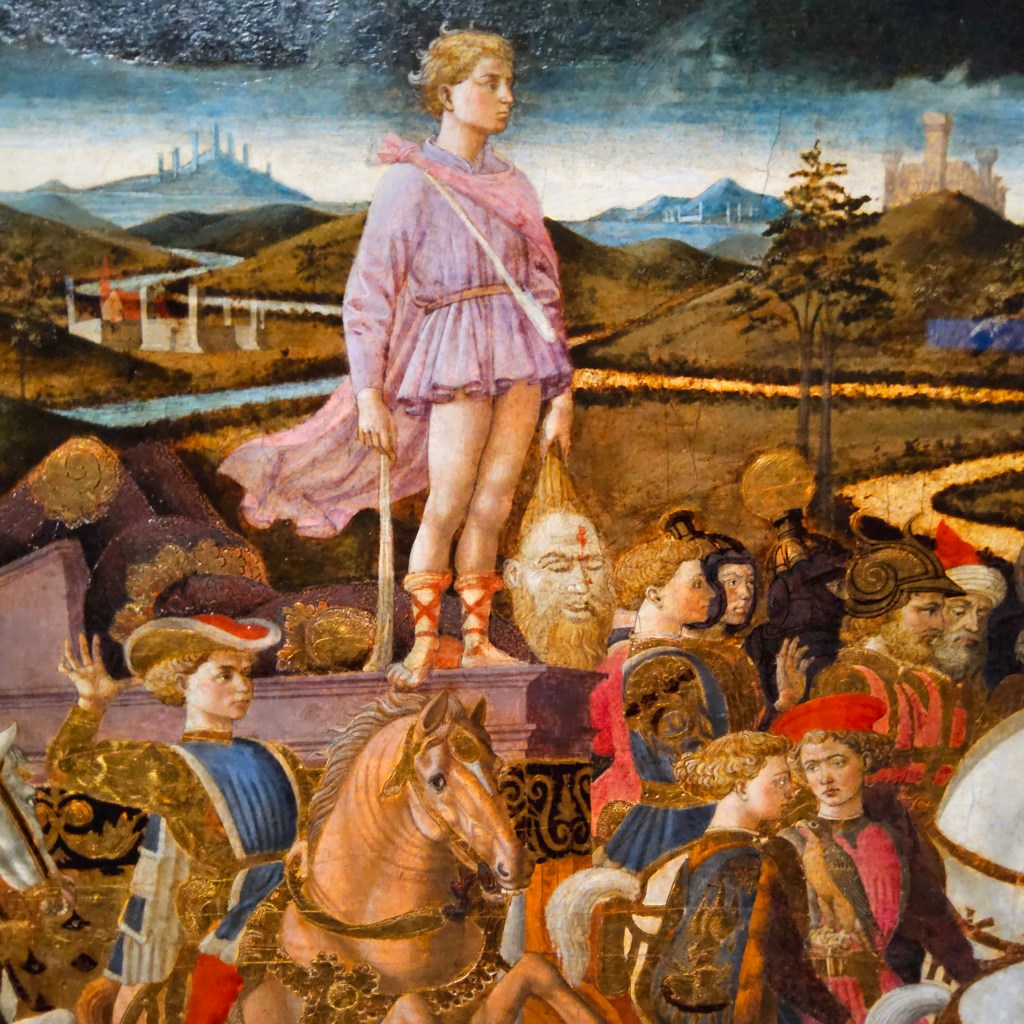
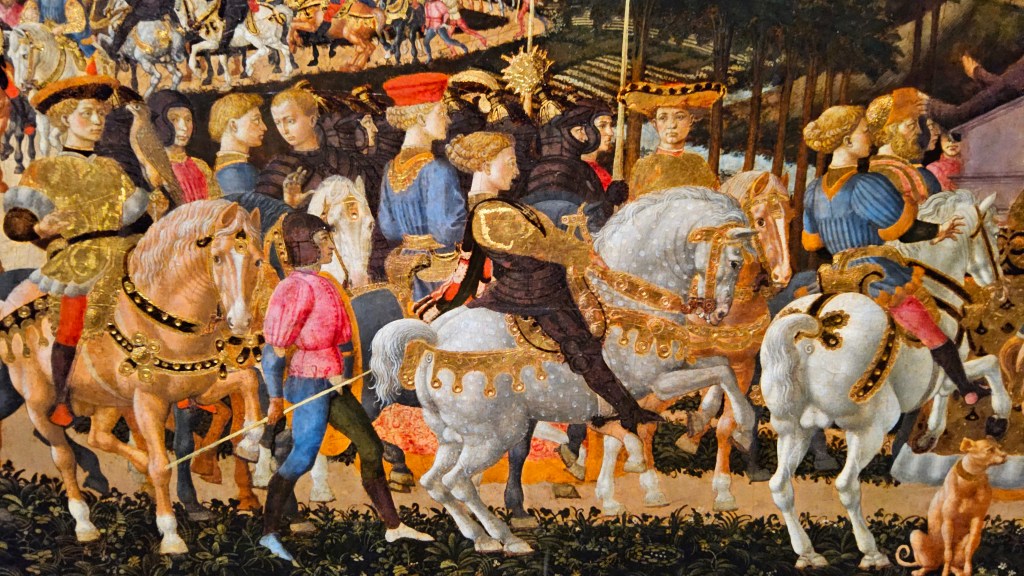
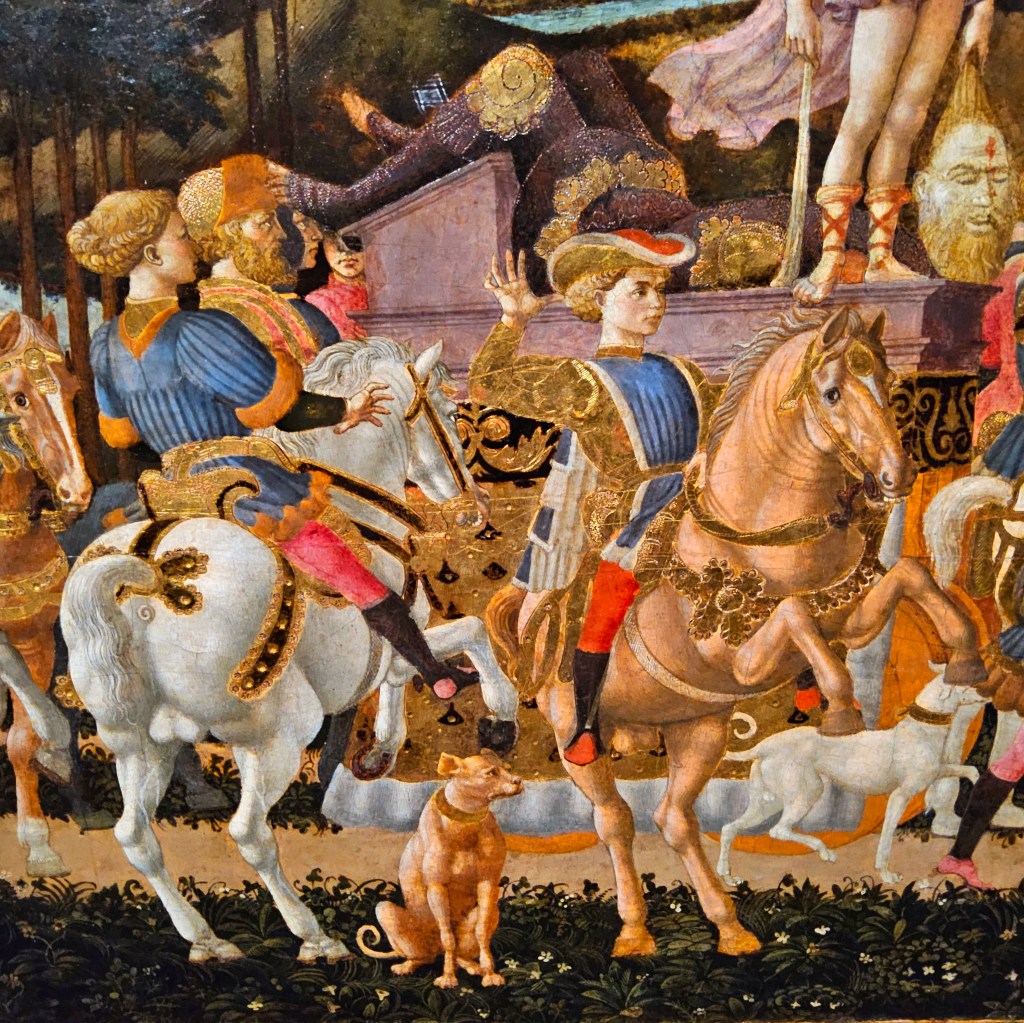
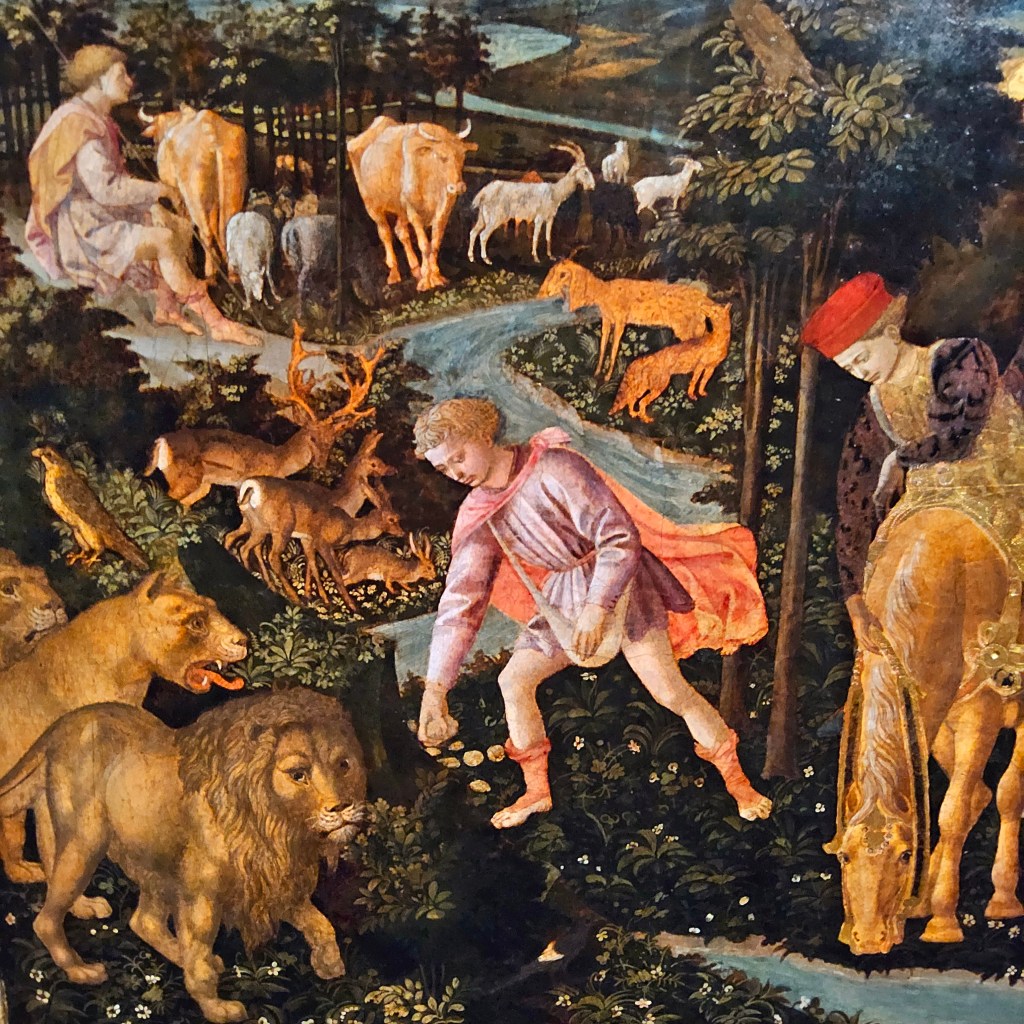
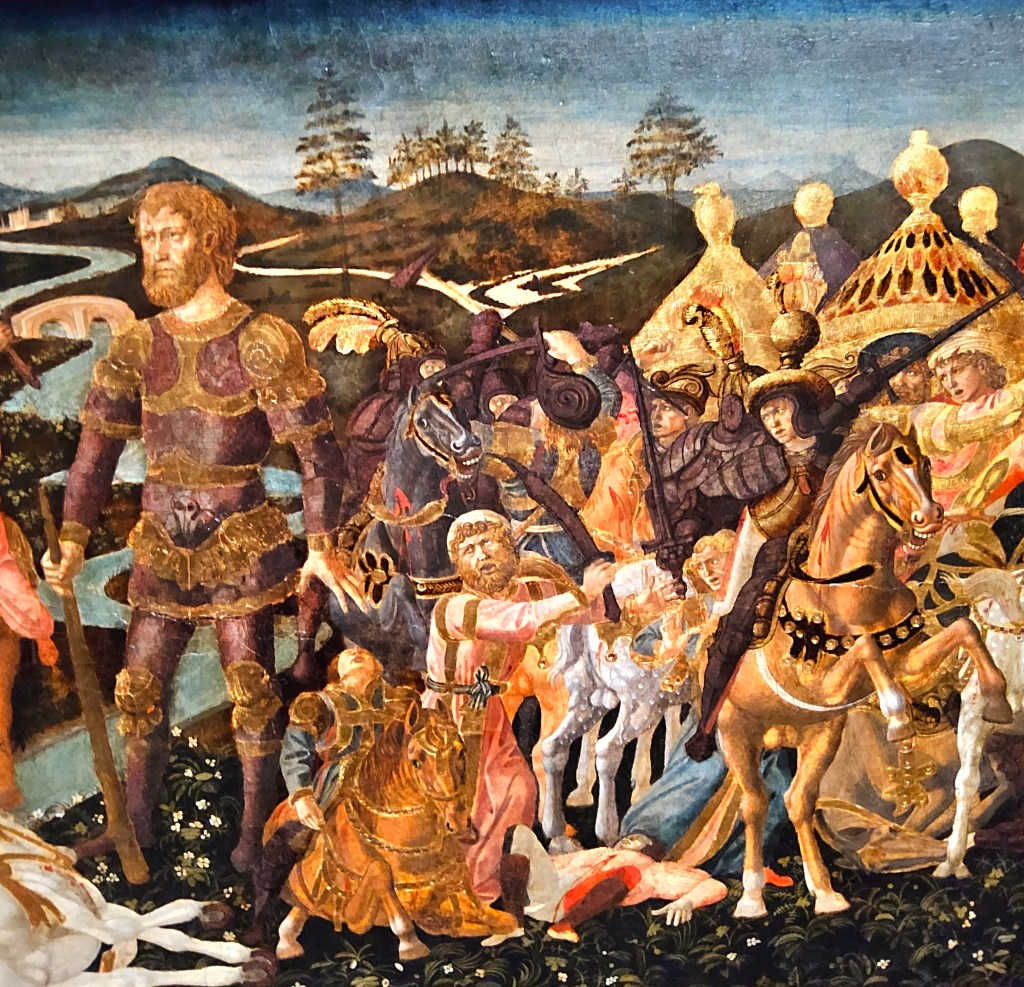
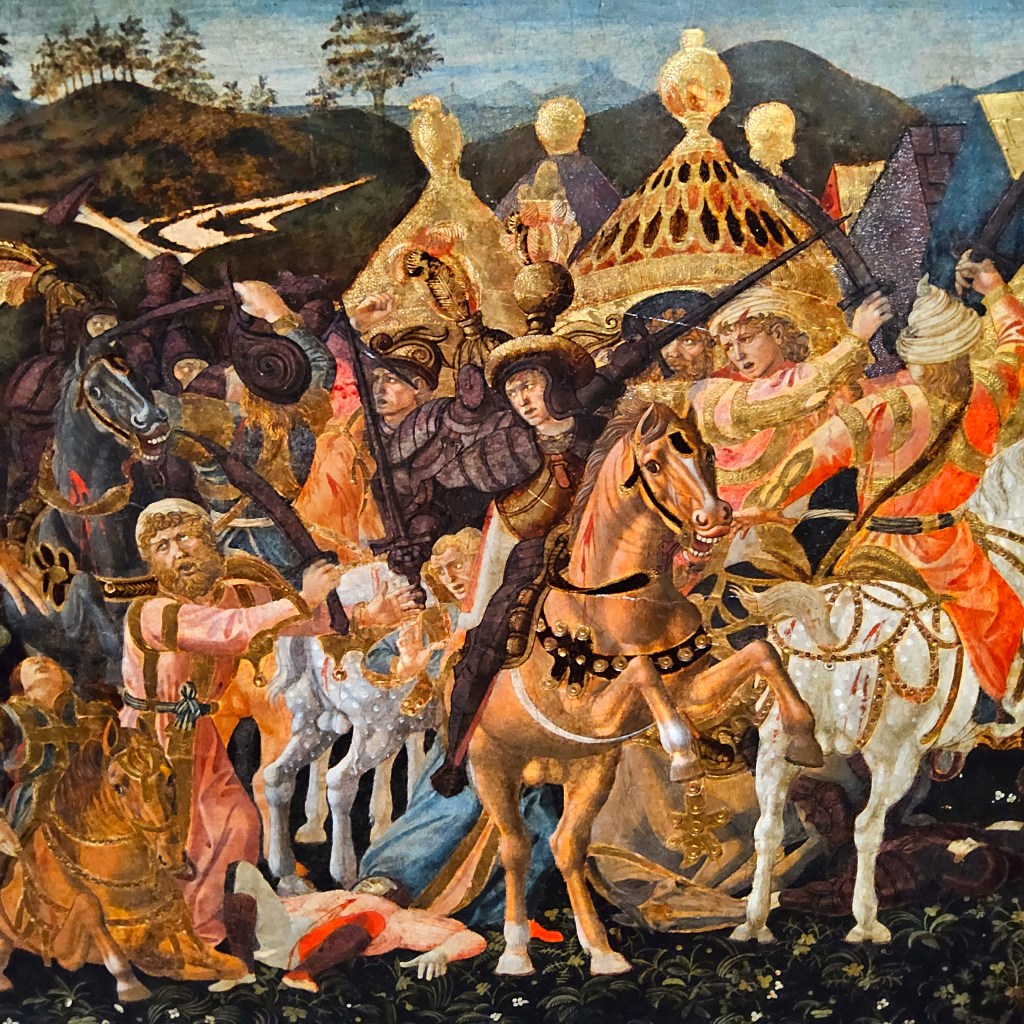
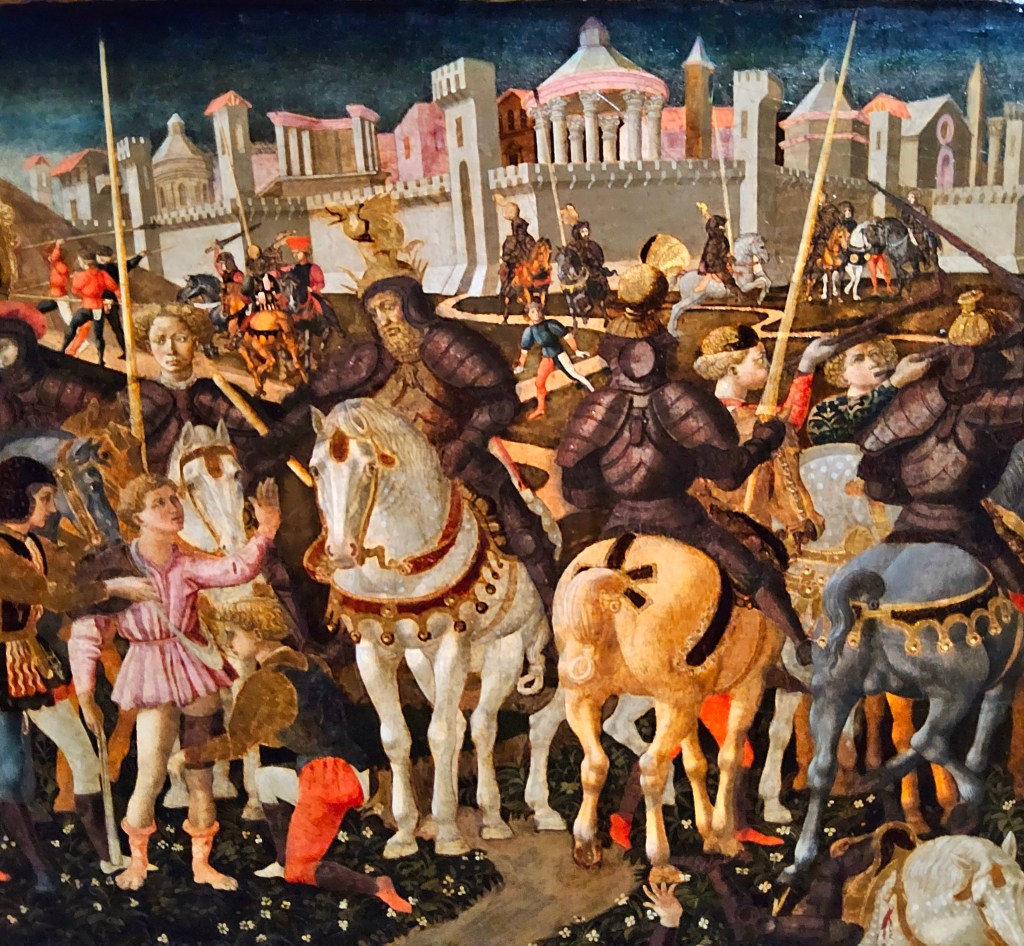
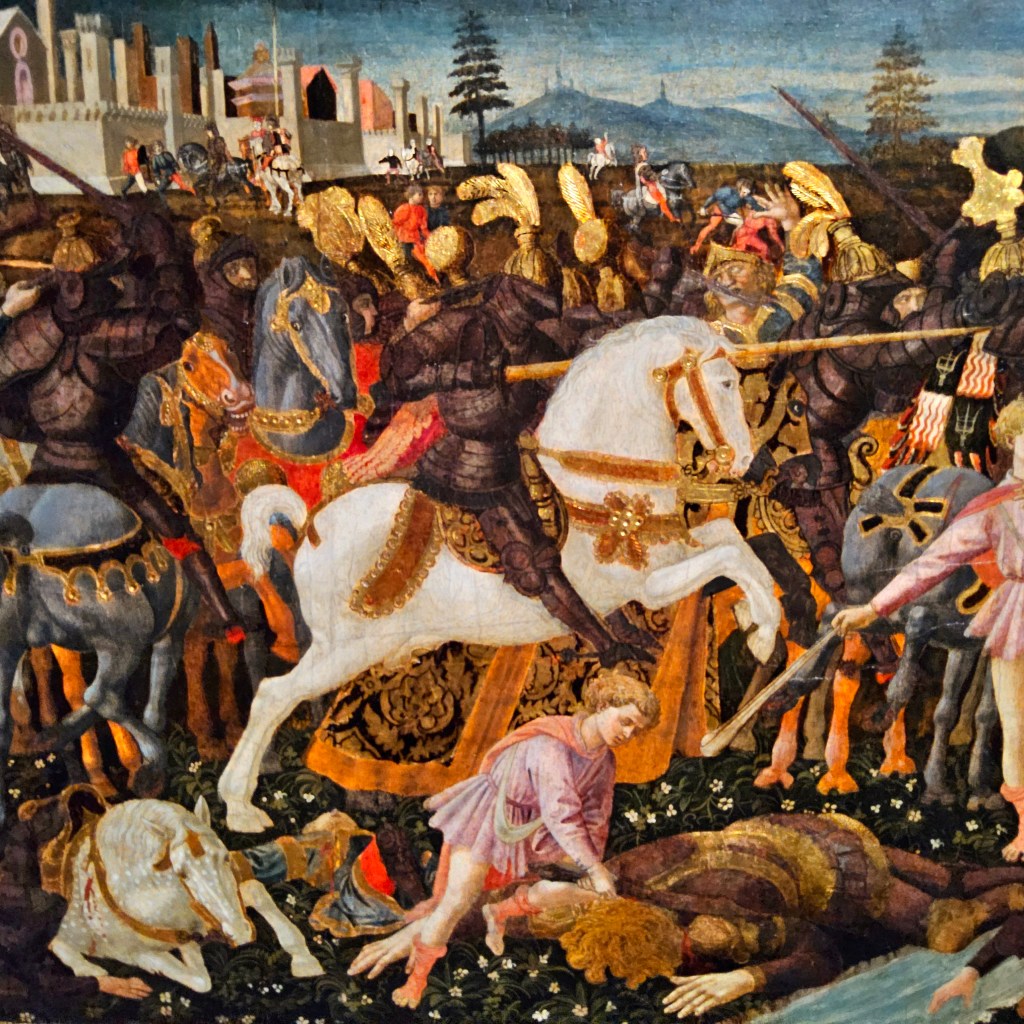
A highlight of the visit was a small, free exhibition of works by the Italian Renaissance painter Francesco Pesellino (c. 1422 – 1457). I had not come across this artist before, and he is, it seems, something of a forgotten master, who died very young (aged only 35). The centrepiece of the exhibition is two panels depicting the Story of David. An extraordinary work of art that apparently took about 10 years to complete.
The Triumph of David (1445-55) by Francesco Pesellino. Public domain, via Wikimedia Commons
The panels were only acquired by the NG in 2000 and have only recently been put on display after a lengthy period of conservation.
The Story of David and Goliath by Francesco Pesellino. Public domain, via Wikimedia Commons
There was a scrum of people trying to get a good look at the panels, and the gallery had supplied magnifying glasses in order to obseve the details of these paintings, which was incredible. I used my tablet phone to take some pictures, also featured here and here.
Details from the Story of David Panels by Francesco Pesellino.
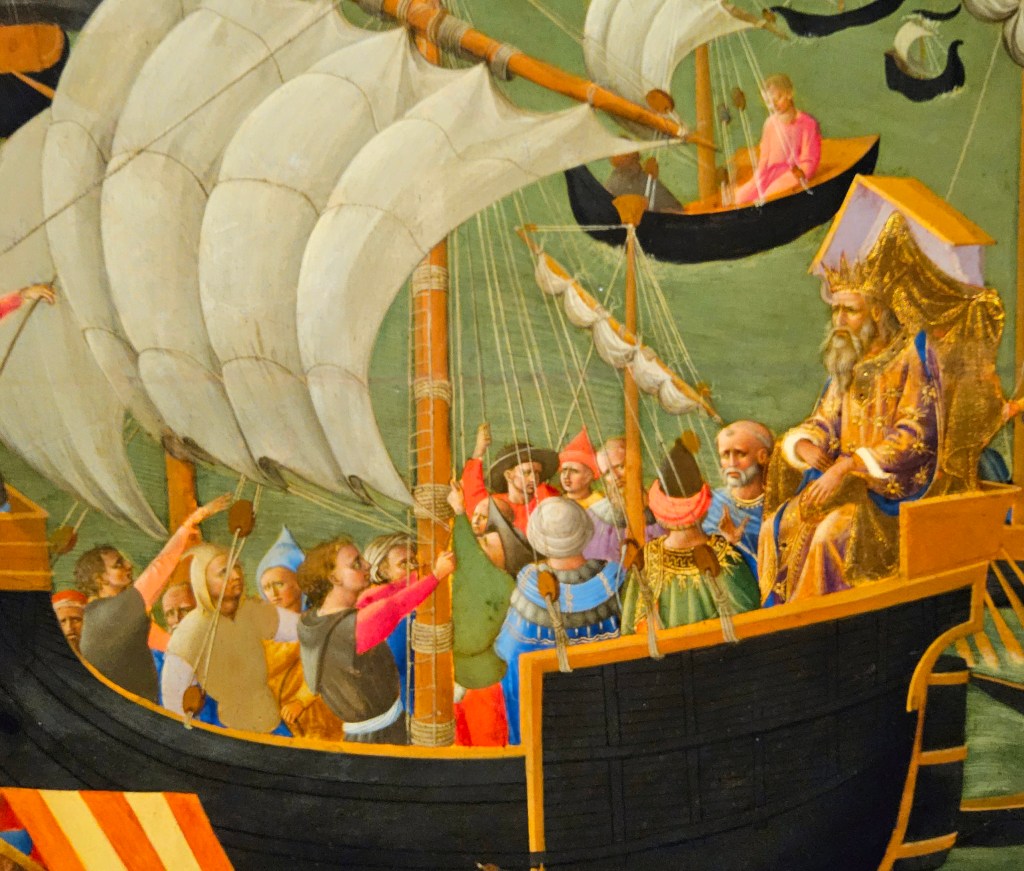
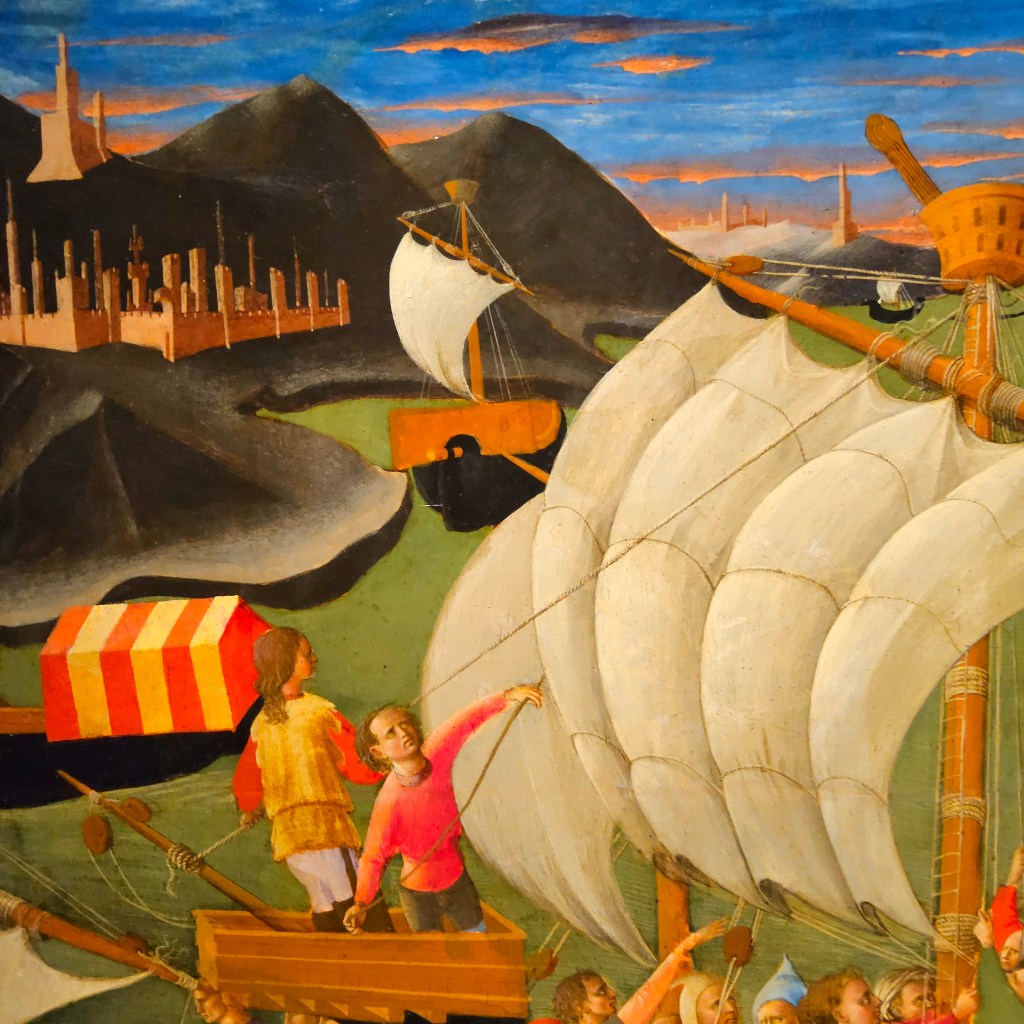
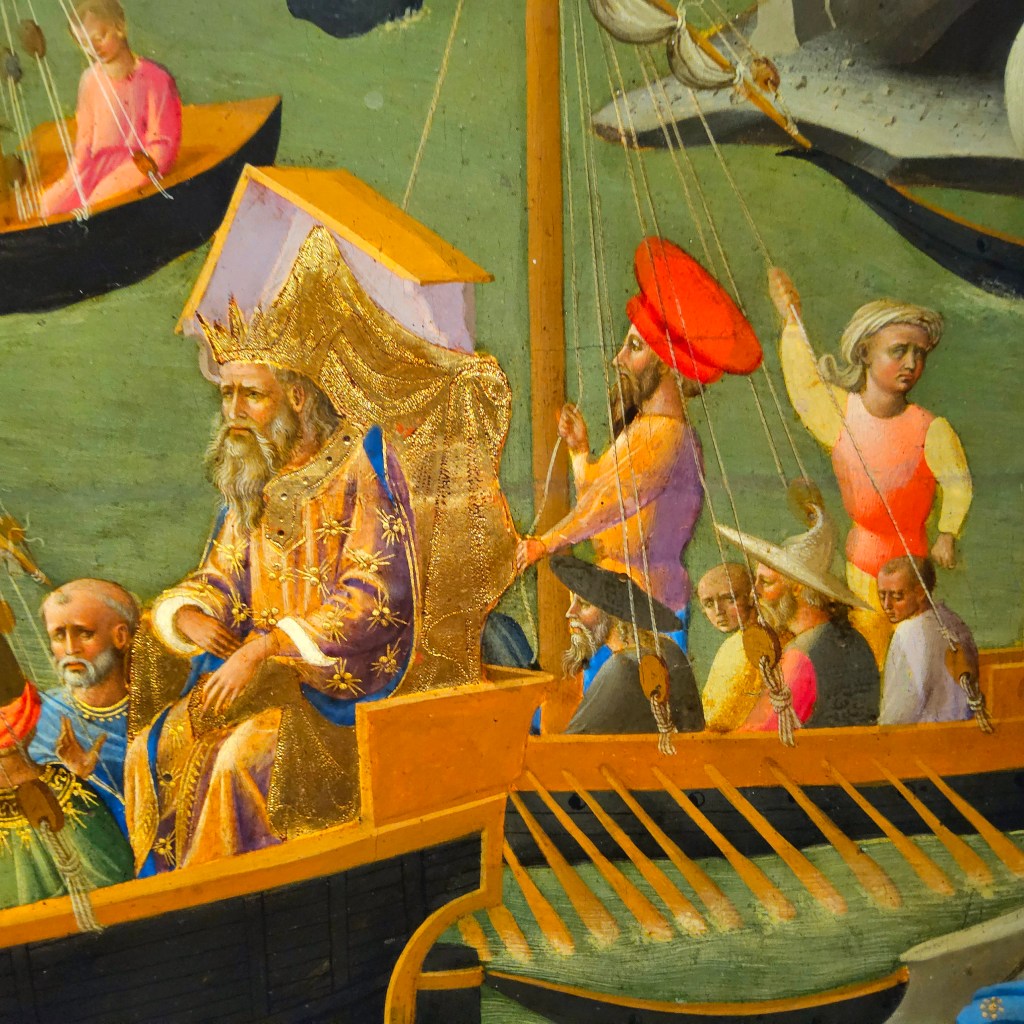
Another fascinating painting by Pesselino was calledKing Melchior Sailing to the Holy Land painted c.1445–1450 in tempera, oil, and gold on panel (below). These early paintings, as well as being gorgeous works of art, also tell us a great deal about what life was like in Medieval times; the boats, the costumes, the different sorts of people.
King Melchior Sailing to the Holy Land by Pesellino. National Gallery, London.
Again, it is fascinating to look at the details. It is not so long ago that it was strictly forbidden to take photographs in an art museum! Now everyone is snapping away, mostly with mobile phones. It is a great opportunity to look again, more carefully, and more attentively, perhaps, at something one only just glanced at earlier.
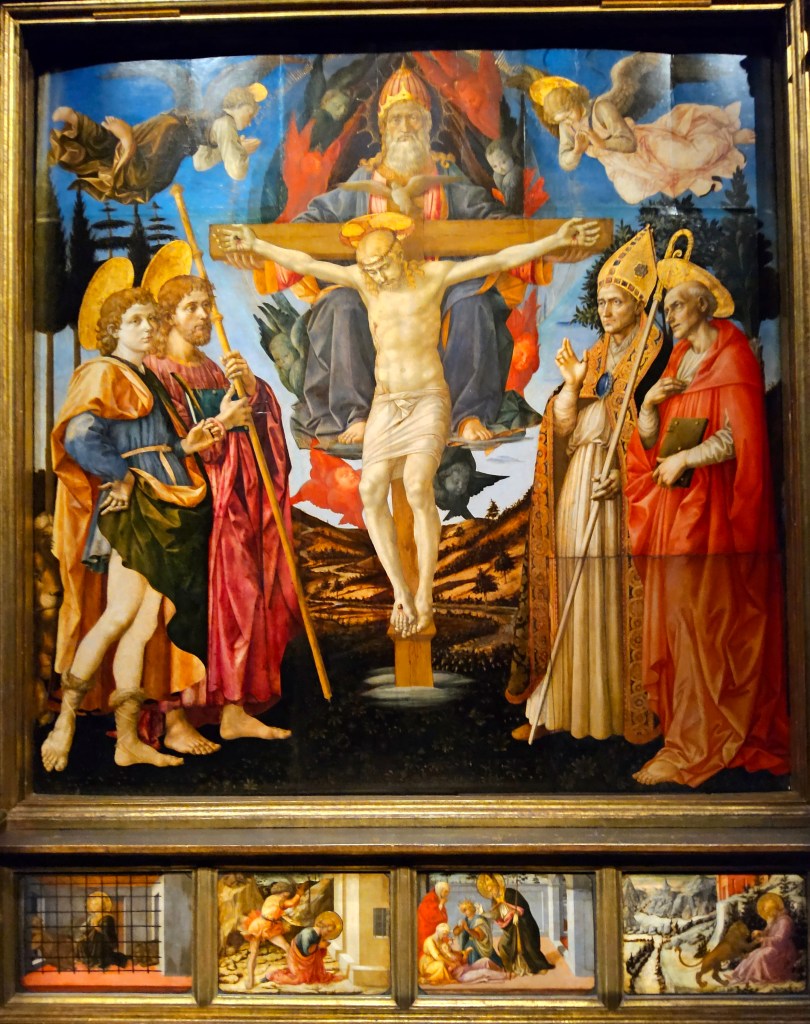
The Pistoia Santa Trinità Altarpiece is a 1455-1460 egg tempera, tempera grassa and oil on wood painting, begun by Pesellino and completed by Fra Filippo Lippi and his workshop.Detail from Francesco Pesellino, ‘Virgin and Child’, about 1455
New acquisition
This lovely painting caught my attention, just by chance. It turns out that it is a recent acquisition (2022) by the Gallery. This Portrait of a Girl (c. 1650) by Isaack Luttichuys (pronounced ‘Lootickhouse’) (1616–1673), was accepted in lieu of Inheritance Tax by HM Government from the estate of someone called George Pinto, a banker who died in 2018. The painting was used to settle £46,818 worth of tax, according to this press release, which seems very good value to me as it really is an exquiste painting from this Dutch master.
Portrait of a Girl (about 1650) by Isaack Luttichuys. National Gallery
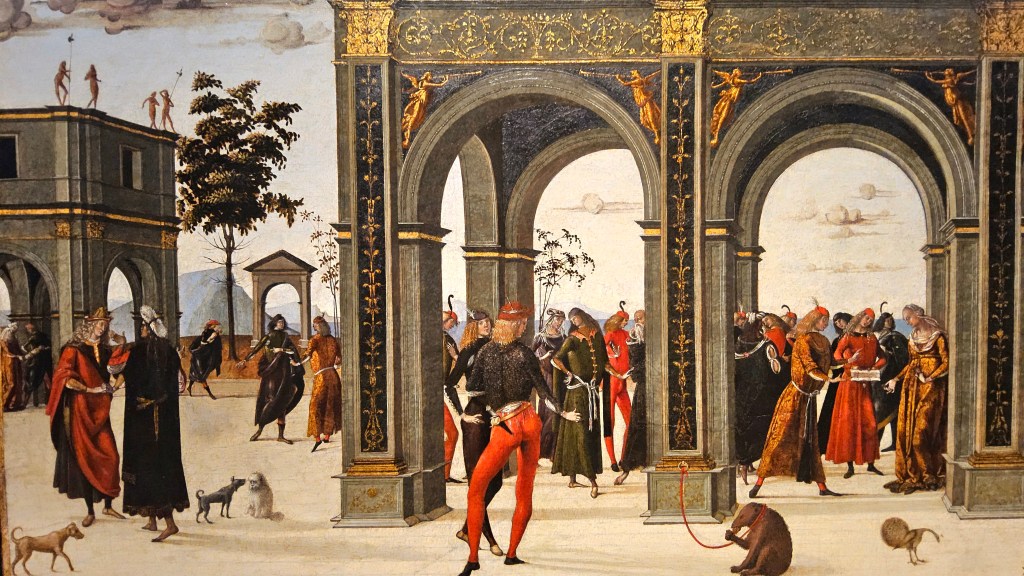
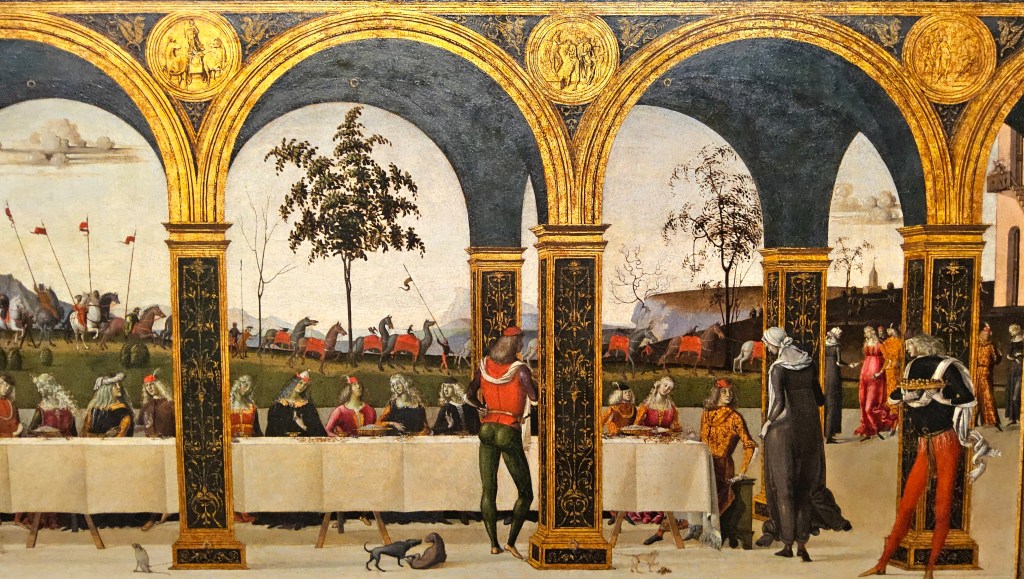
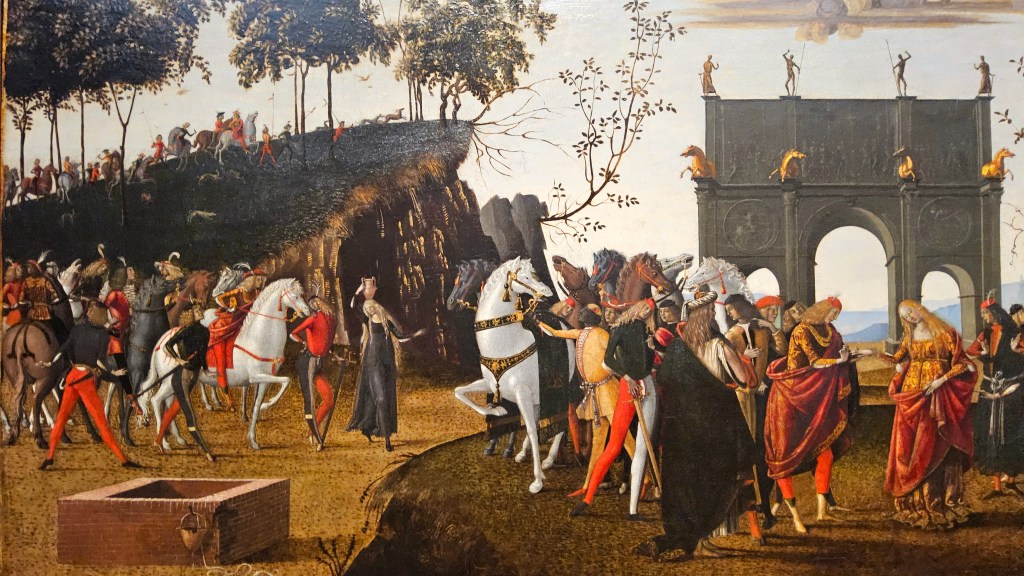
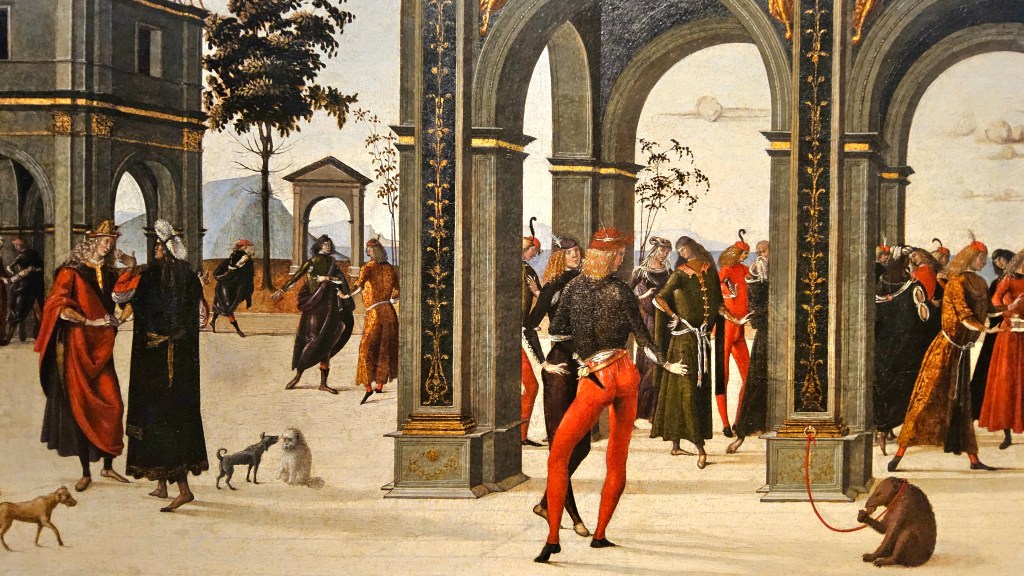
Finally, I came across some paintings I had not noticed before, called The Story of Griselda, Part I, II, and III. It is not known who painted the work, other than he was an Italian artist who specialized in panel painting and worked in Umbria around 1490. He is, therefore, called the Master of the Story of Griselda.
Details from Master of the Story of Griselda (active about 1490-1500)
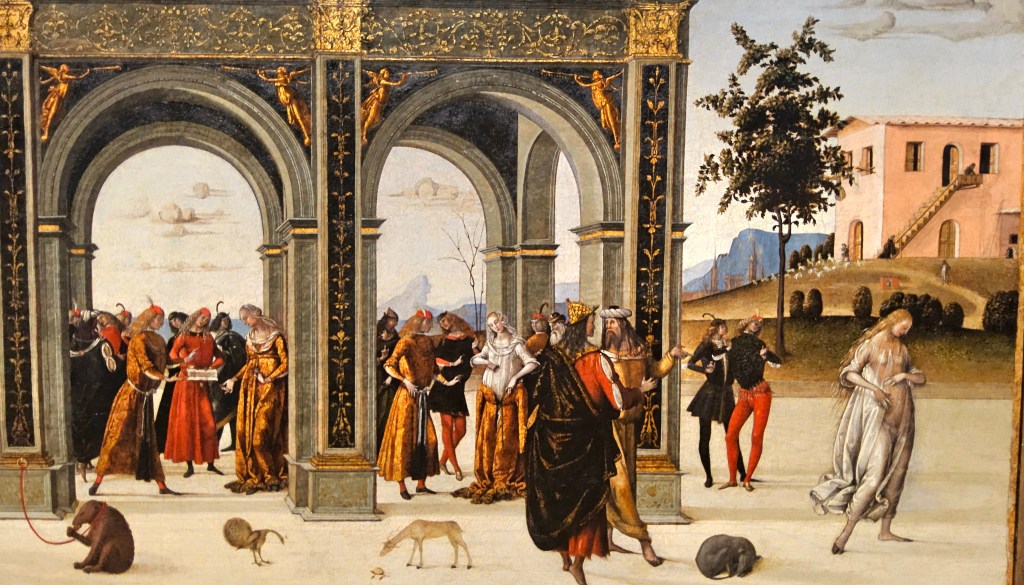
The paintings tell the story of a young peasant woman called Griselda, based on The Decameron, a 14th-century work by Boccaccio. It is a very misogynistic story about a beautiful woman who was put through a series of emotional ordeals by her husband to test her loyalty to him. The tale is also described here. Margaret Atwood did a funny, spoof version of the tale.
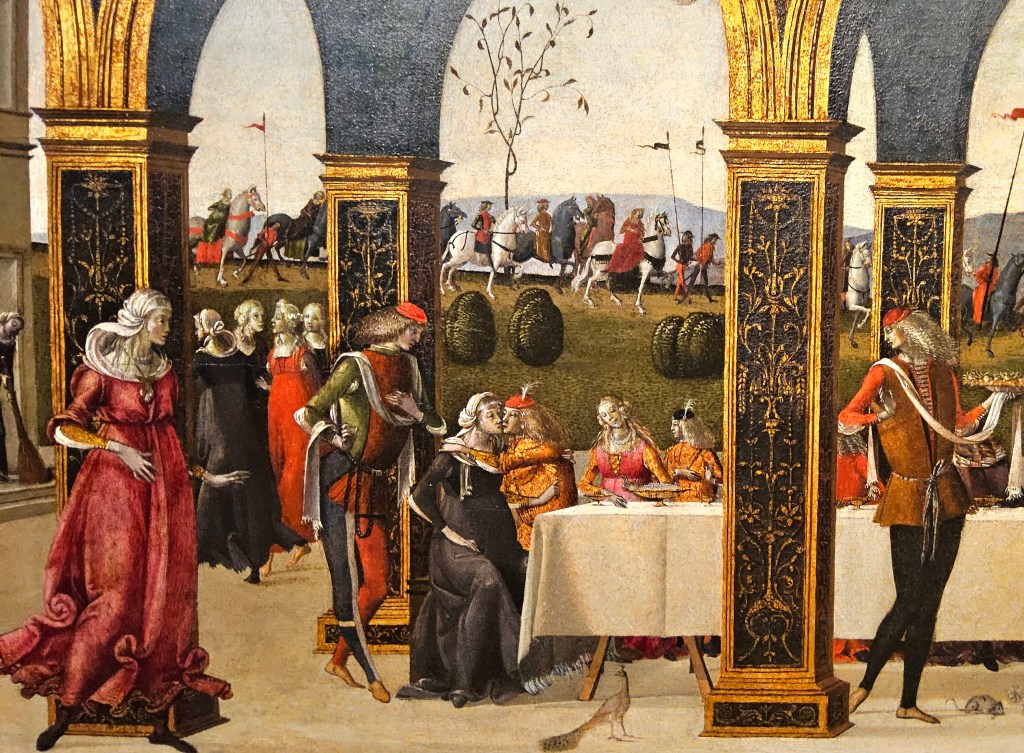
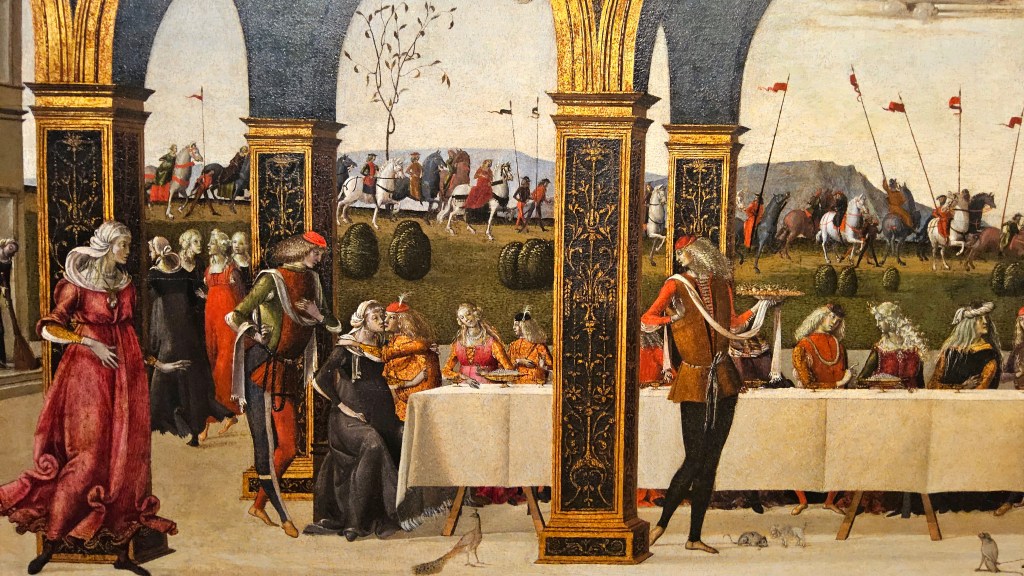
Details from Master of the Story of Griselda (active about 1490-1500)
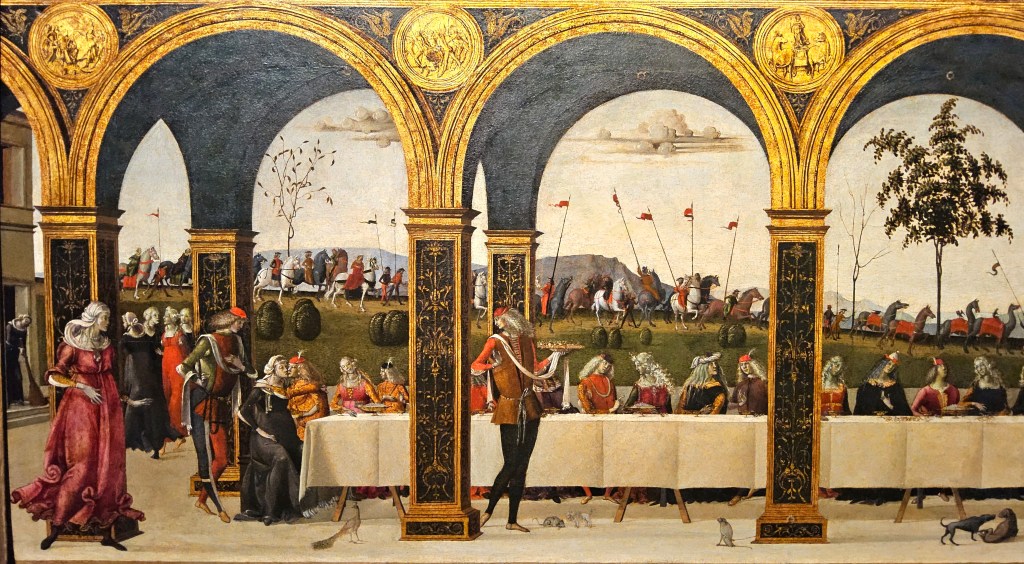
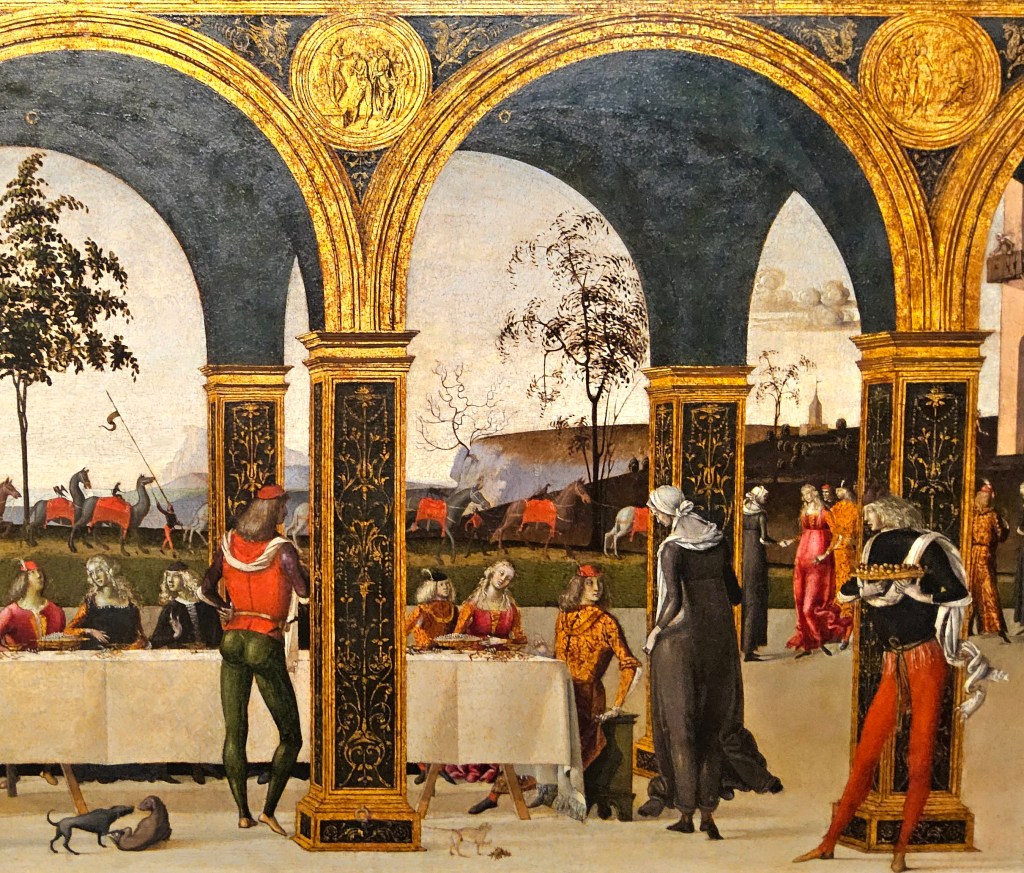
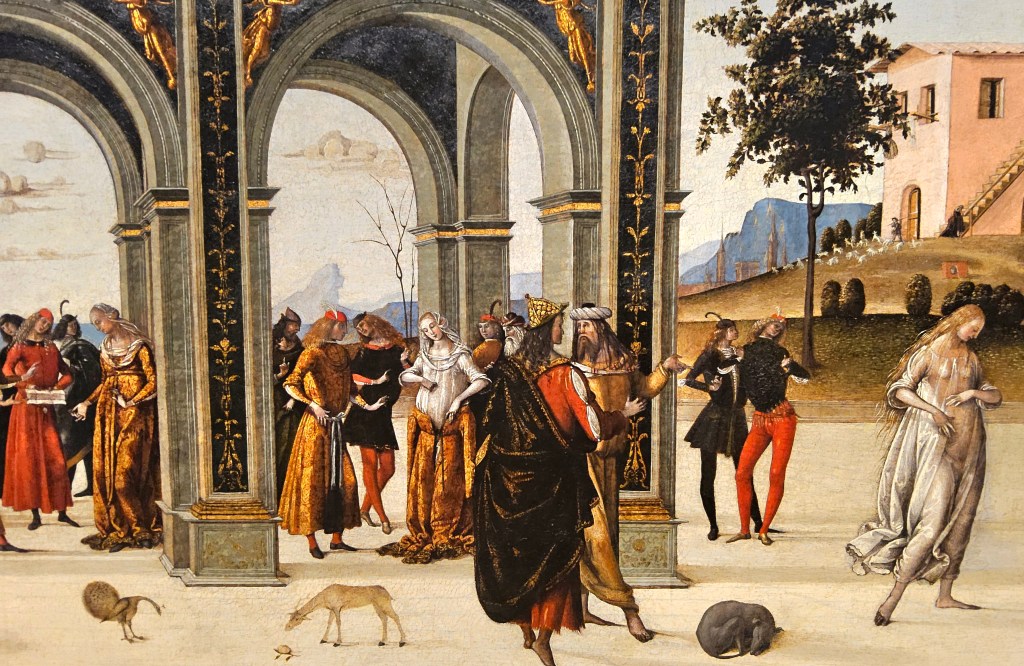
I love the little animals and the camp waiters! In fact, everyone seems to be bowing or posing or trying to look cool, with heads turned to one side and hands on hips! All deliciously camp to our eyes, but no doubt, a highly stylised portrait of renaissance men and women.
Details from Master of the Story of Griselda (active about 1490-1500)
People have been living on the island of Tresco, in the Scilly Islands, for over 5000 years, and visiting these islands by boats from the Cornish mainland as long ago as 6000/7000 BC. The islands would have looked very different back then, covered in oak, ash and elder trees, with roe deer and wild boar in the woodlands. The sea was much lower than it is today and the first settlers in the Neolithic grew oats and barley on the fertile lowlands of the ancient land they called Ennor (used by J. R. R. Tolkien’s for the fictional lands of Middle-earth).
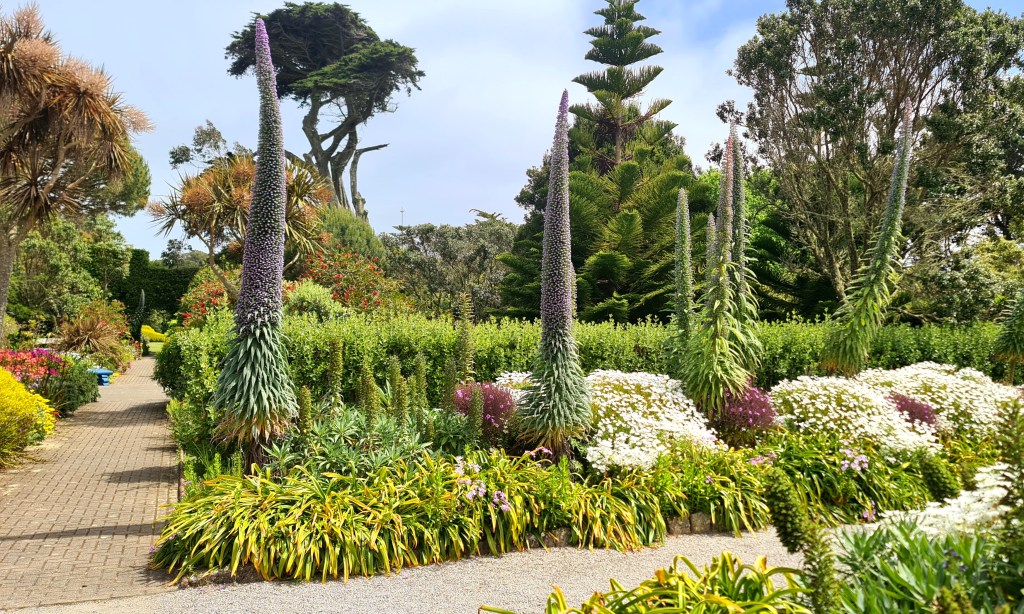
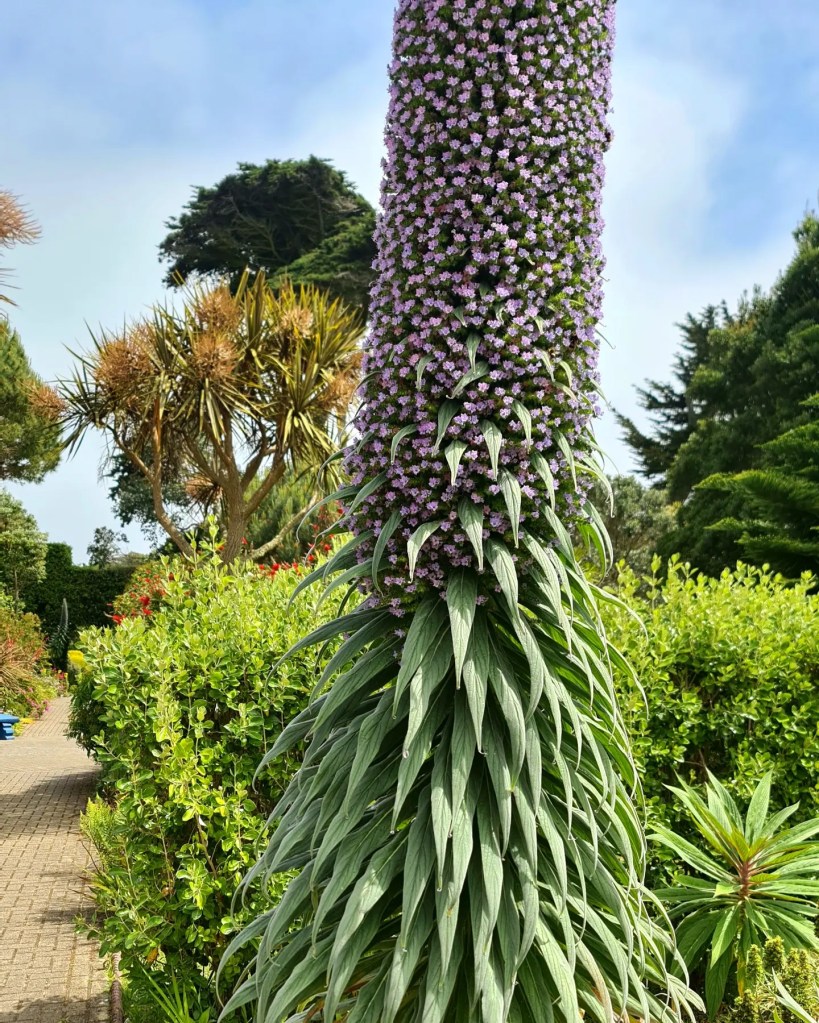
Echium pininanaEchium pininanaEchium pininana
Echium pininana, the tree echium, is in the borage family Boraginaceae. It is endemic to the Canary Islands, where it is restricted to the island of La Palma.
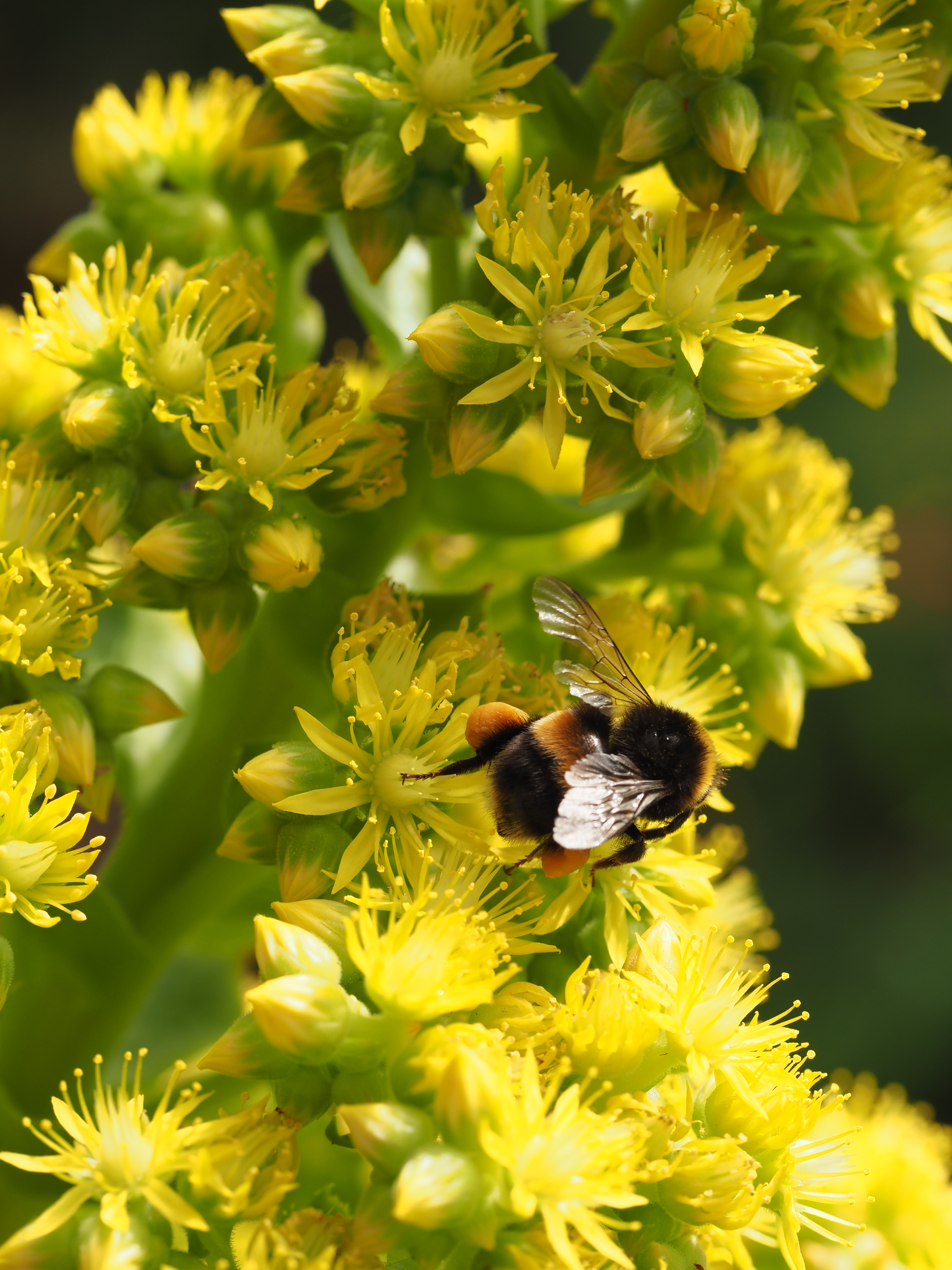
Bumblebee on unidentified flower
The Scilly Islands were still a single island when the Celts arrived around 500BC. The Romans also colonized Ennor, they called it Insulae Sillinae, which remained a single island until at least AD 400. Today, the Scilly Islands comprise some 55 islands and islets, of which Tresco is the second-biggest, measuring about 3.5 km (2.2 mi) by 1.75 km (1.09 mi). This was my second visit to the island, and on both occasions I was blessed with good weather, if a bit windy!
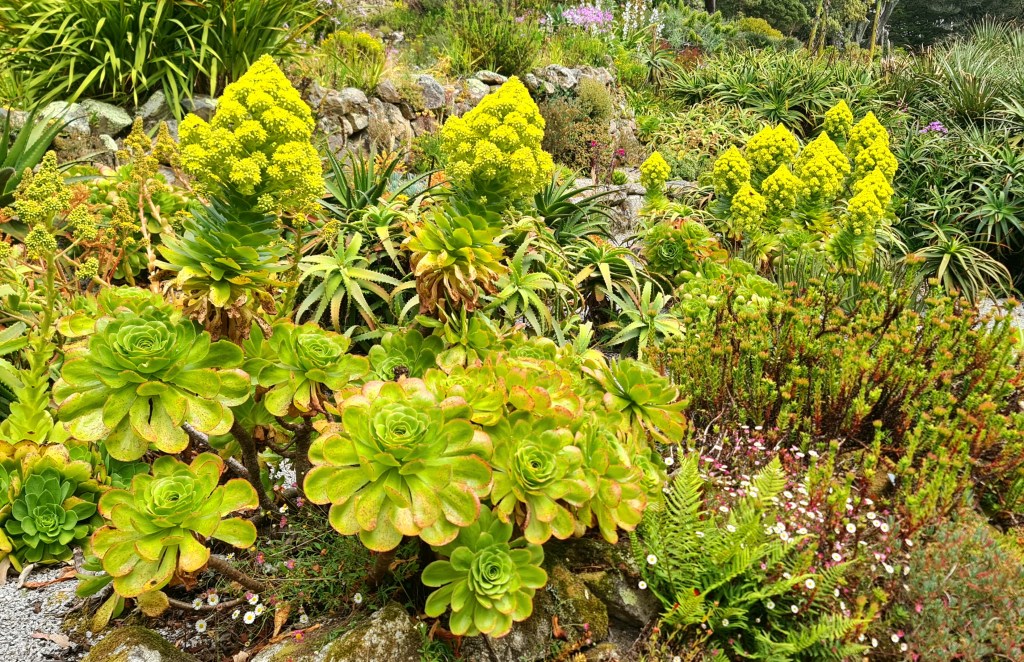
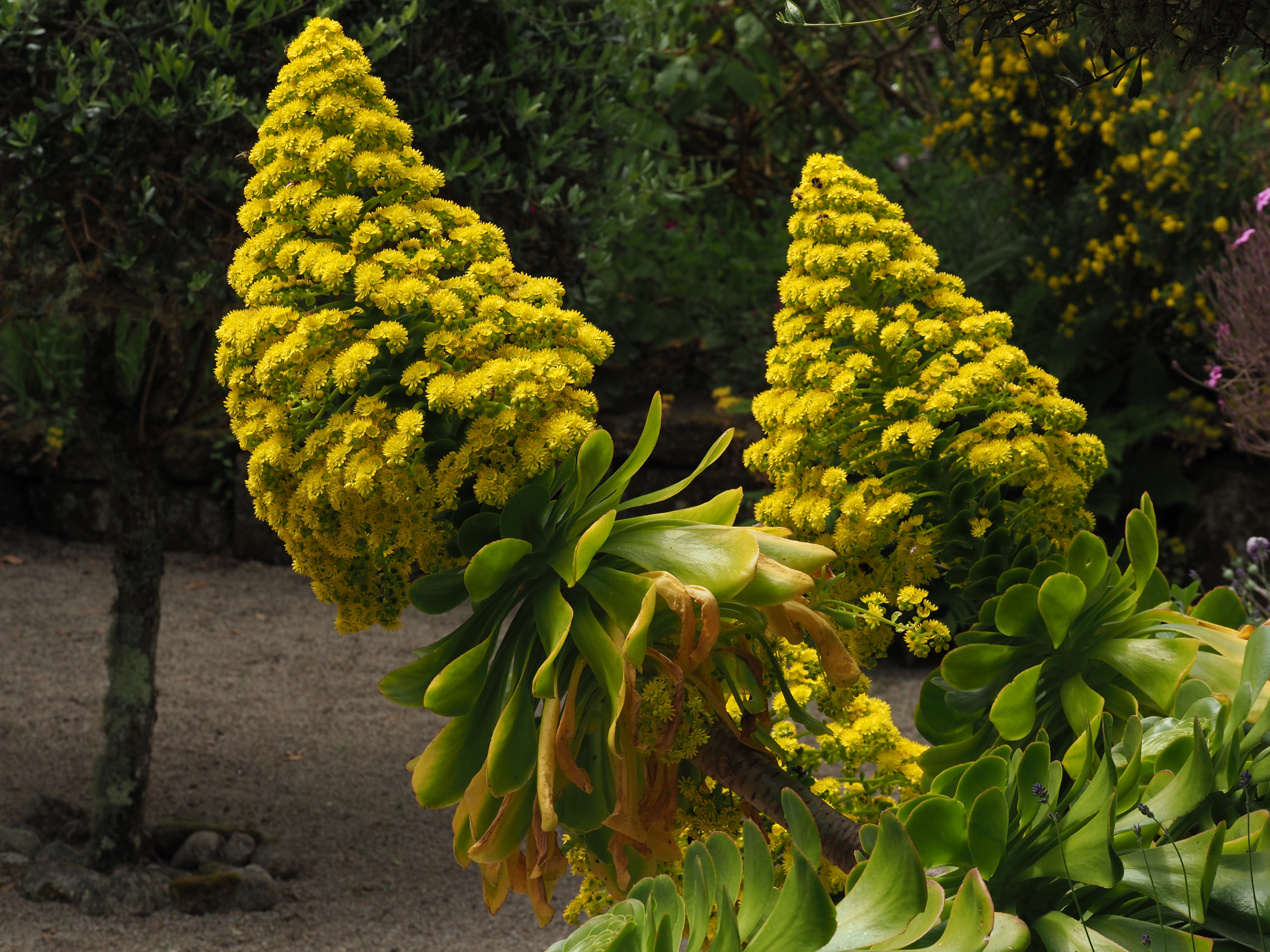
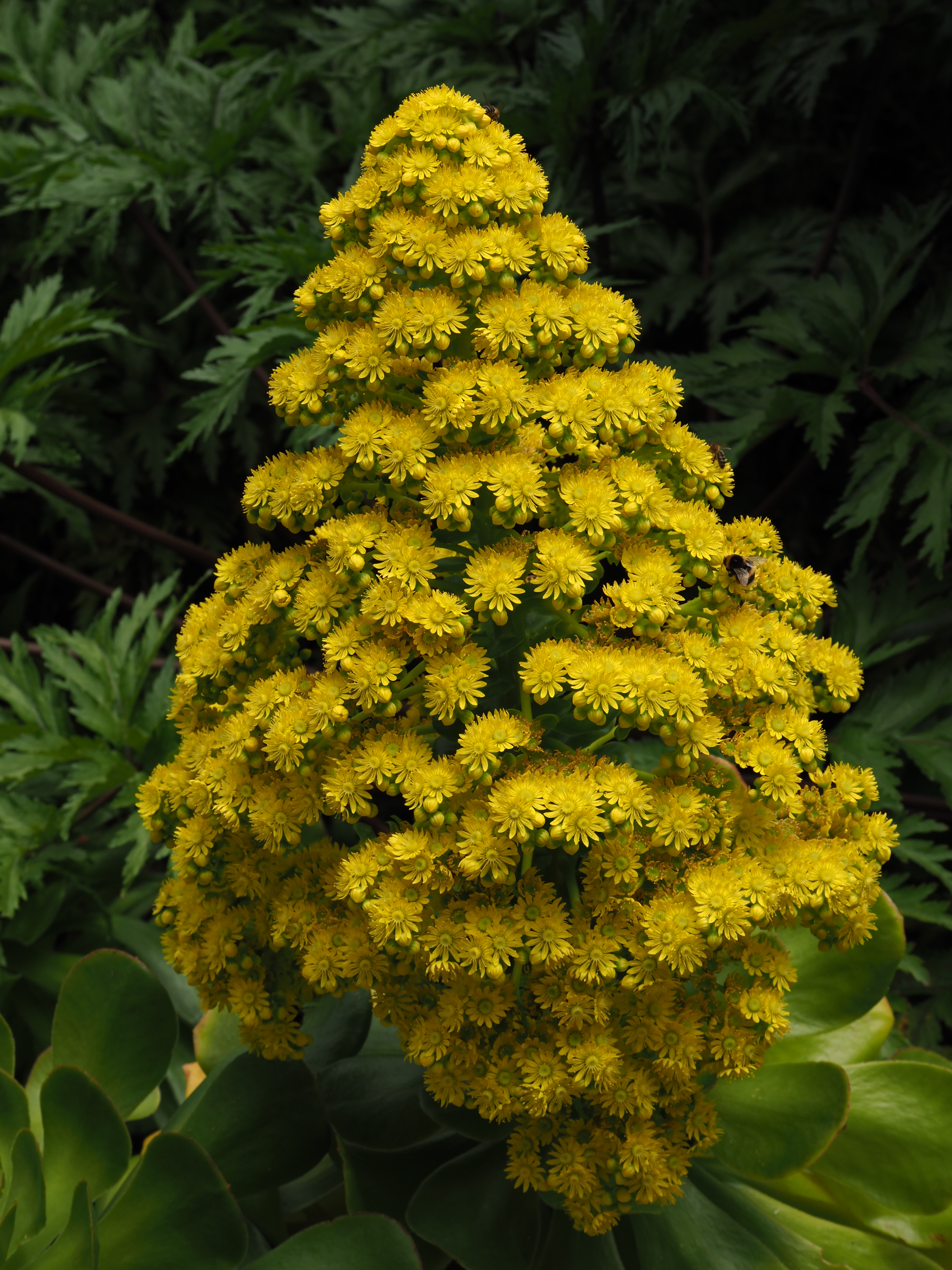
Aeoniums
Benedictine monks first built an abbey on Tresco, founded in 964 AD, and appear to have introduced many new herbs and flowers, such as chamomile, wild thyme and tansy. The ruins of the original abbey can still be seen in the Abbey Gardens. Rents for the Scilly islands was reportedly paid to the crown in puffins! Which seems rather hard on these little birds, which still breed on the islands, albeit in small numbers (about 100 pairs). So there must have been many more puffins on these islands back in the Middle Ages! A reminder that wildlife was often much more abundant in the past (see shifting baselines).
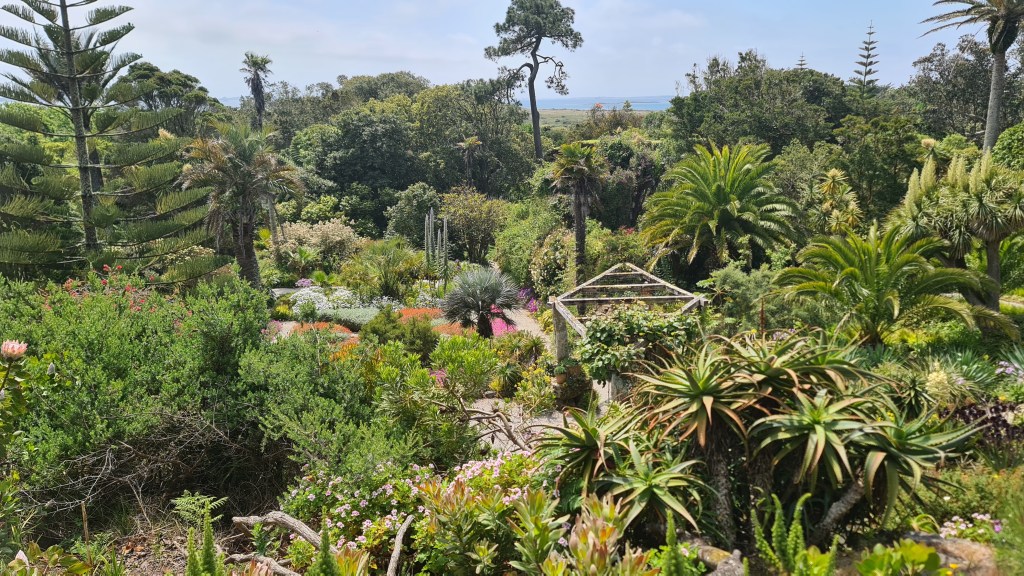
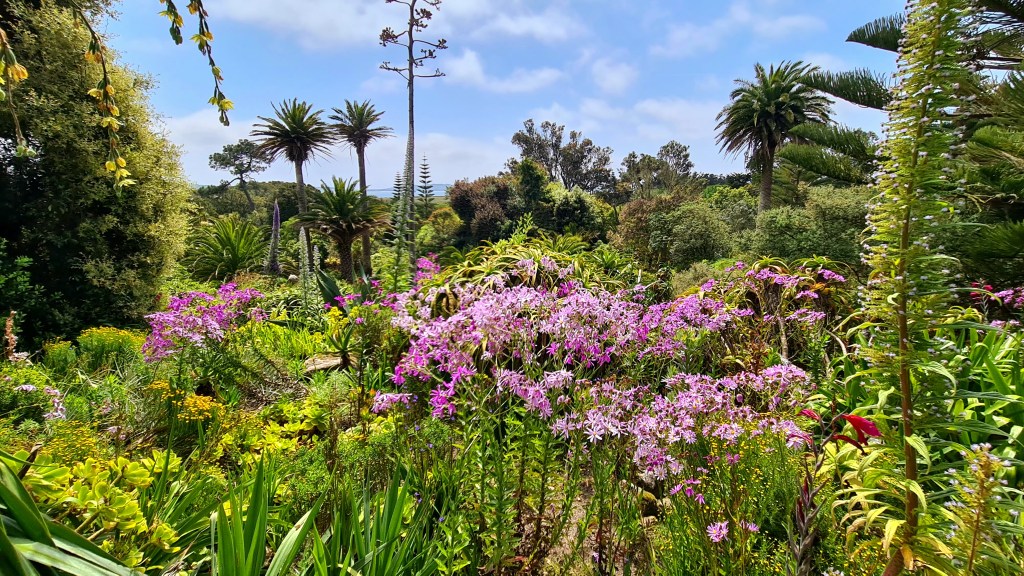
Tresco Abbey Gardens in May 2023
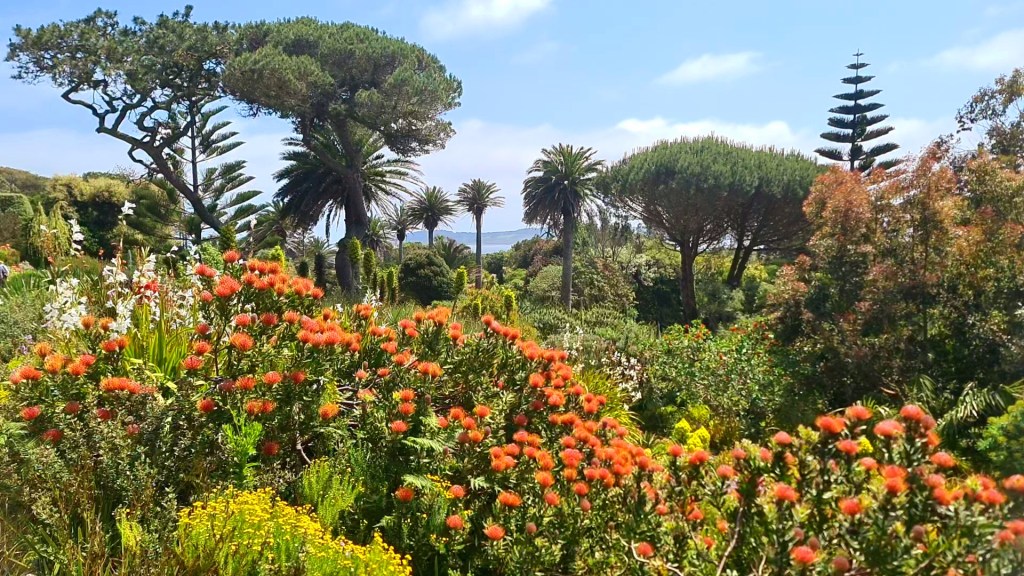
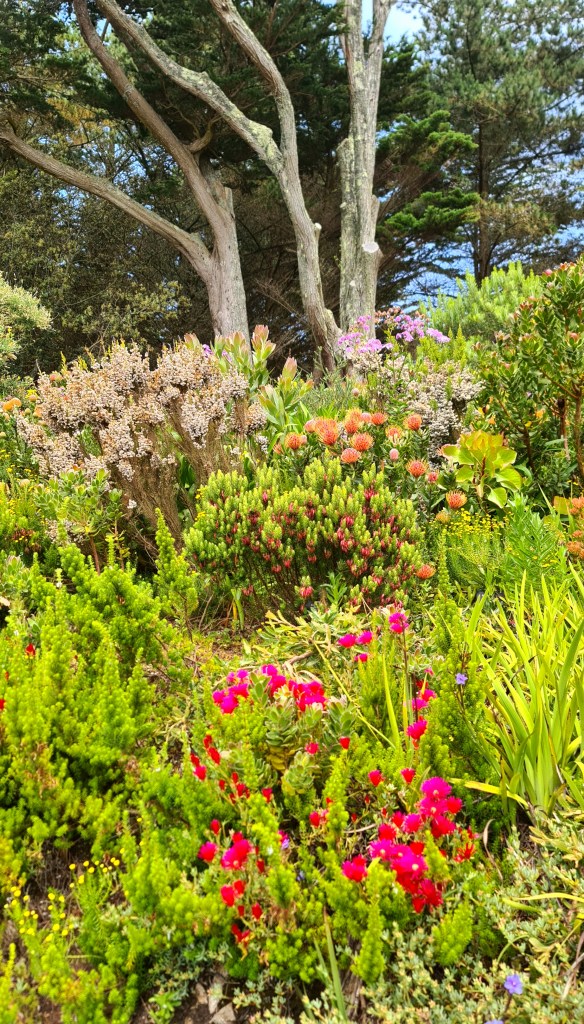
Plants have been introduced into the gardens from all over the world, albeit obtained in many instances via Kew Gardens, including from South Africa, Australia, New Zealand, Chile, and the the Canary Islands. The mild climate of the Scilly Islands, bathed as they are by the Gulf Stream, provide a wonderful, virtually frost-free habitat for such exotics, sheltered by salt-tolerant Monterey Pine and Cypress trees from California.
A yellow flowering succulent
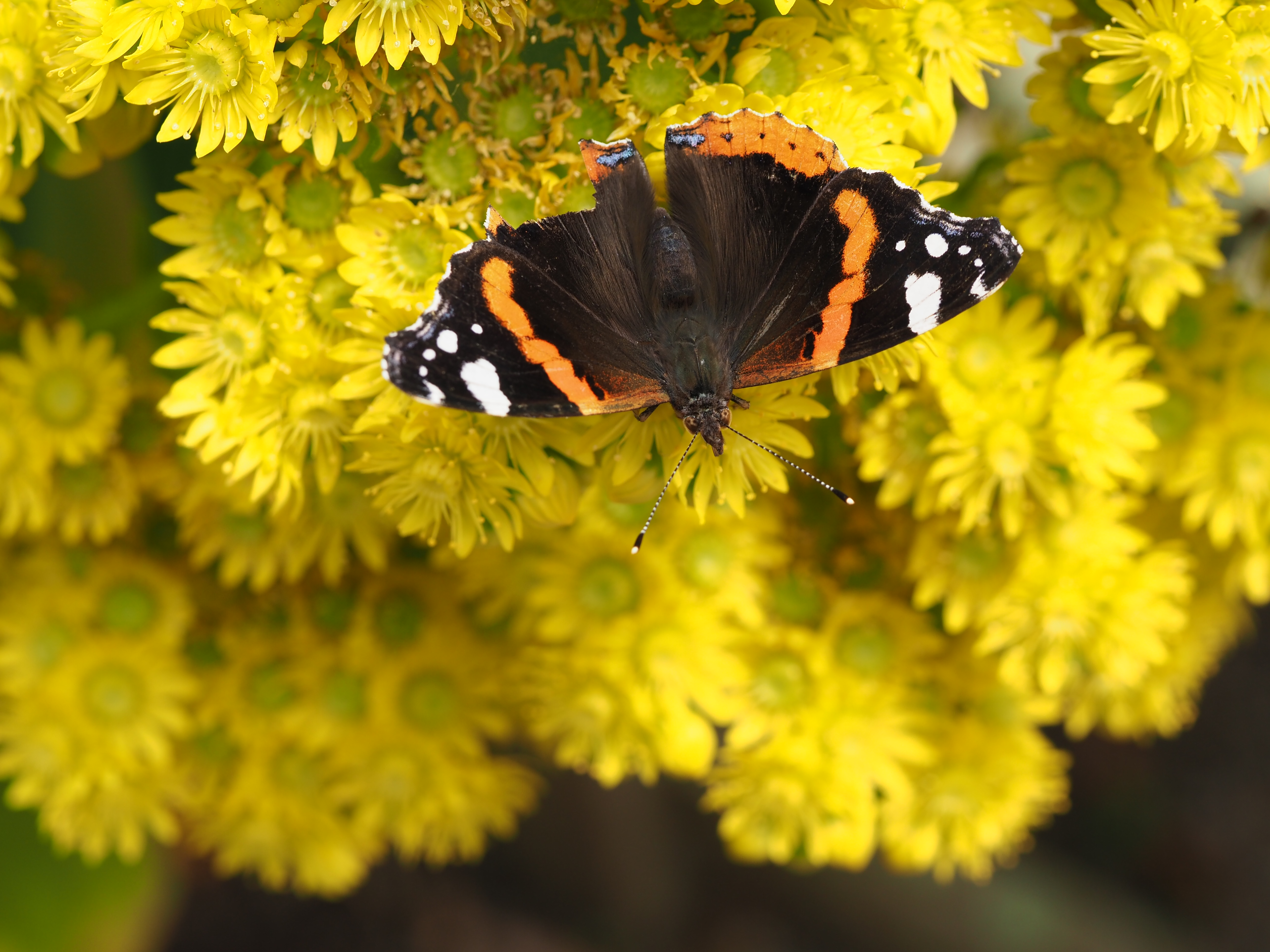
The magnificent Aeonium arboreum ‘Zwartkop’ (Crassulaceae) – a succulent which is endemic to the western Canary Islands is a magnet for all sorts of insects, including bumblebees and butterflies (below). Although it is beautiful and fascinating in my opinion, this plant is considered to be invasive weed in some places, such as Australia.
Aeonium arboreum ‘Zwartkop’Aeonium arboreum ‘Zwartkop’Red admiral butterflyBumblebee laden with pollen
I came across a remarkable flowering agave plant from South America (below). These succulent plants belong to the family Asparagaceae and like many agaves, Furcraea parmentieri is monocarpic, which means that the rosettes die after flowering. At maturity, this plant explodes into flower, producing a tall, spectacular inflorescence (below)
The gardens we see today, were the creation of a wealthy Victorian landowner called Augustus Smith, who in 1834 acquired the lease on the Isles of Scilly from the Duchy of Cornwall for £20,000; the equivalent of a few million pounds today. Still, quite a bargin I think. His title, Lord Proprietor of the Isles of Scilly, gave him the power to make a number of changes and reforms reforms to the islands. He built his home on Tresco, and started the Tresco Abbey Gardens, introducing many exotic plants and carrying out landscape planting.
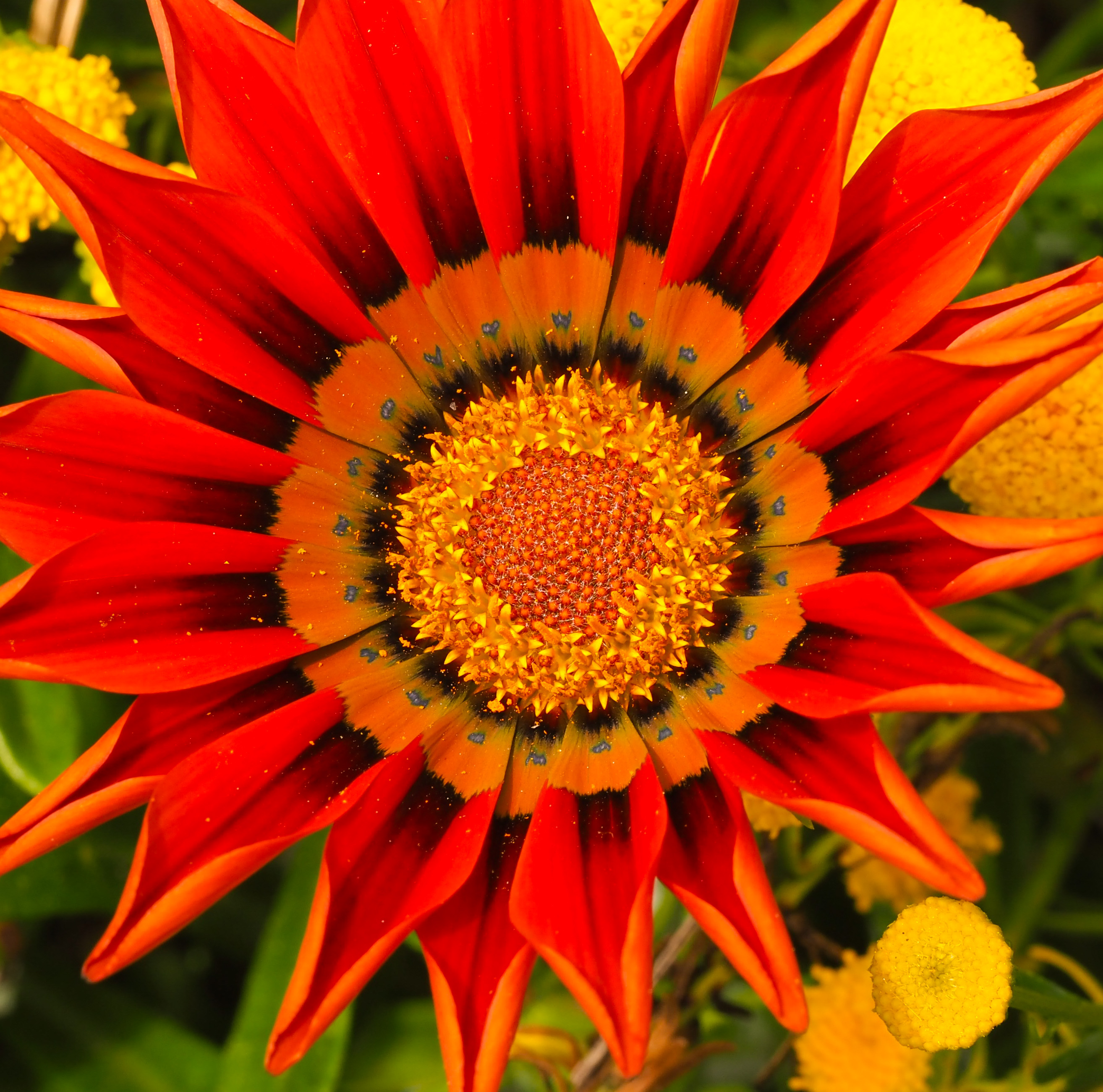
Gazania is a genus of flowering plants in the family Asteraceae, native to Southern Africa, where they typically appear in the late spring and often in bloom throughout the summer into autumn.
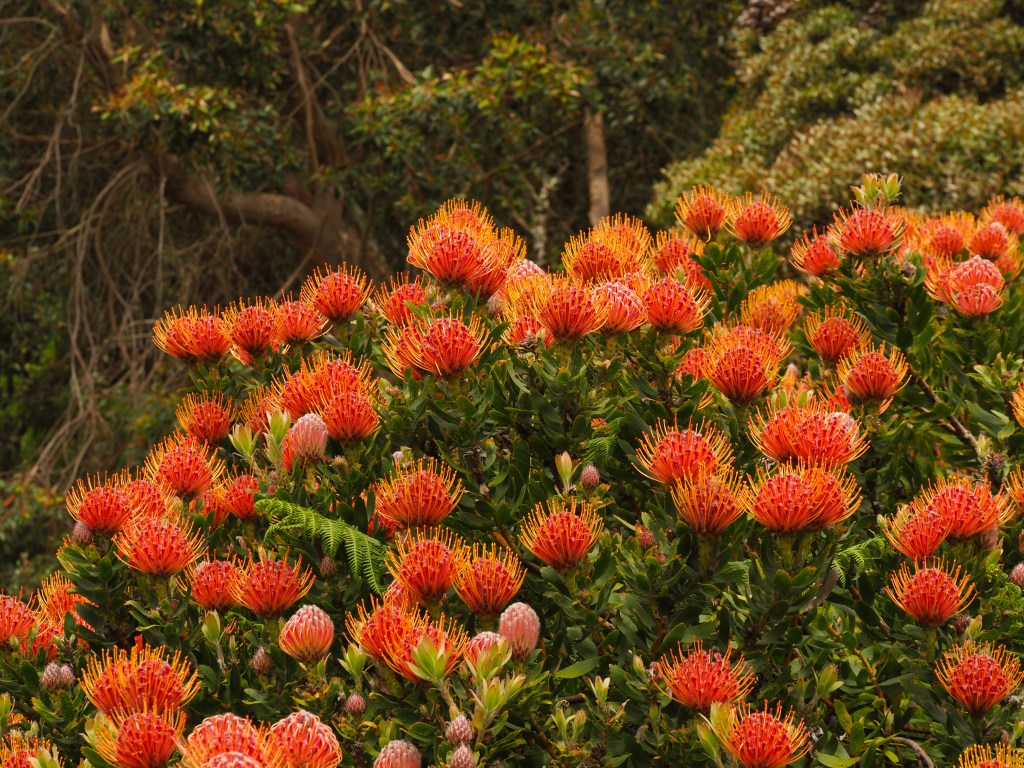
Gazania flower from South AfricaPincushion flowers (Leucospermum cordifolium)
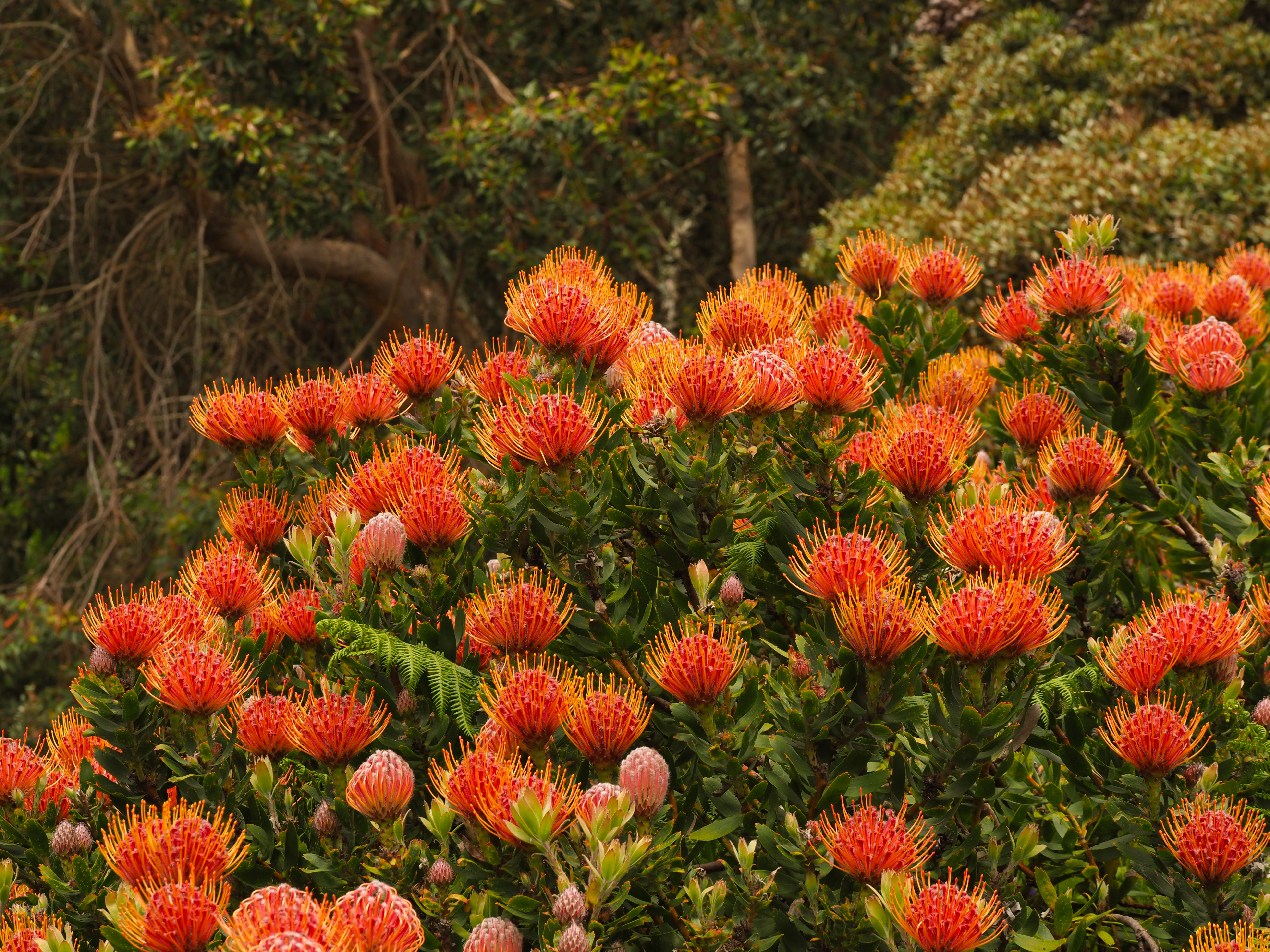
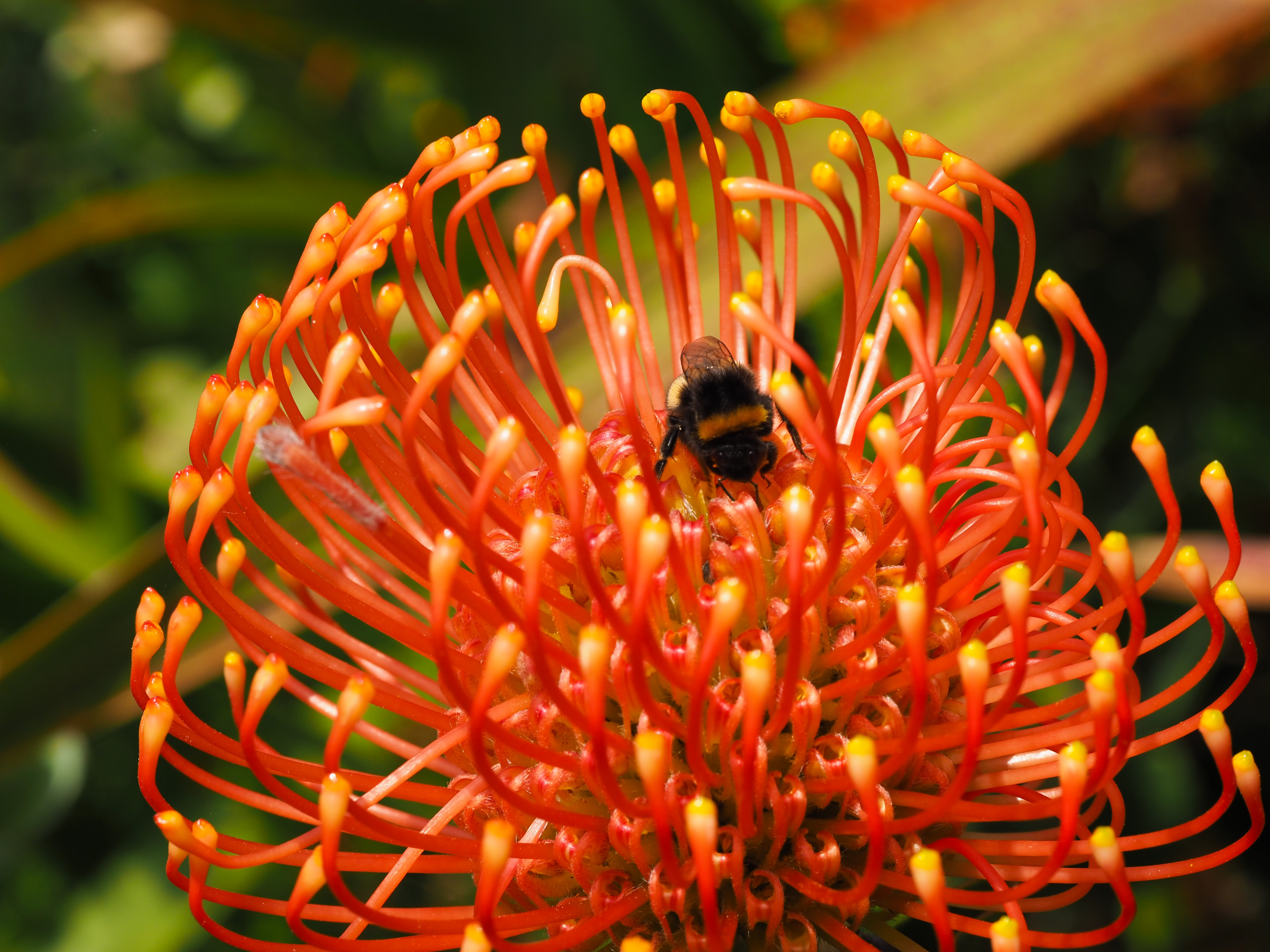
The bumblebees liked the pincushion flowers (below), despite their being exotics from South Africa – they have pollen and nectar just like native flowers – and almost looked like they were trapped in a ‘bee cage’ made by the individual florets!
Bumblebee in Pincushion flower head, Leucospermum cordifoliumBumblebee in Pincushion flower head, Leucospermum cordifolium
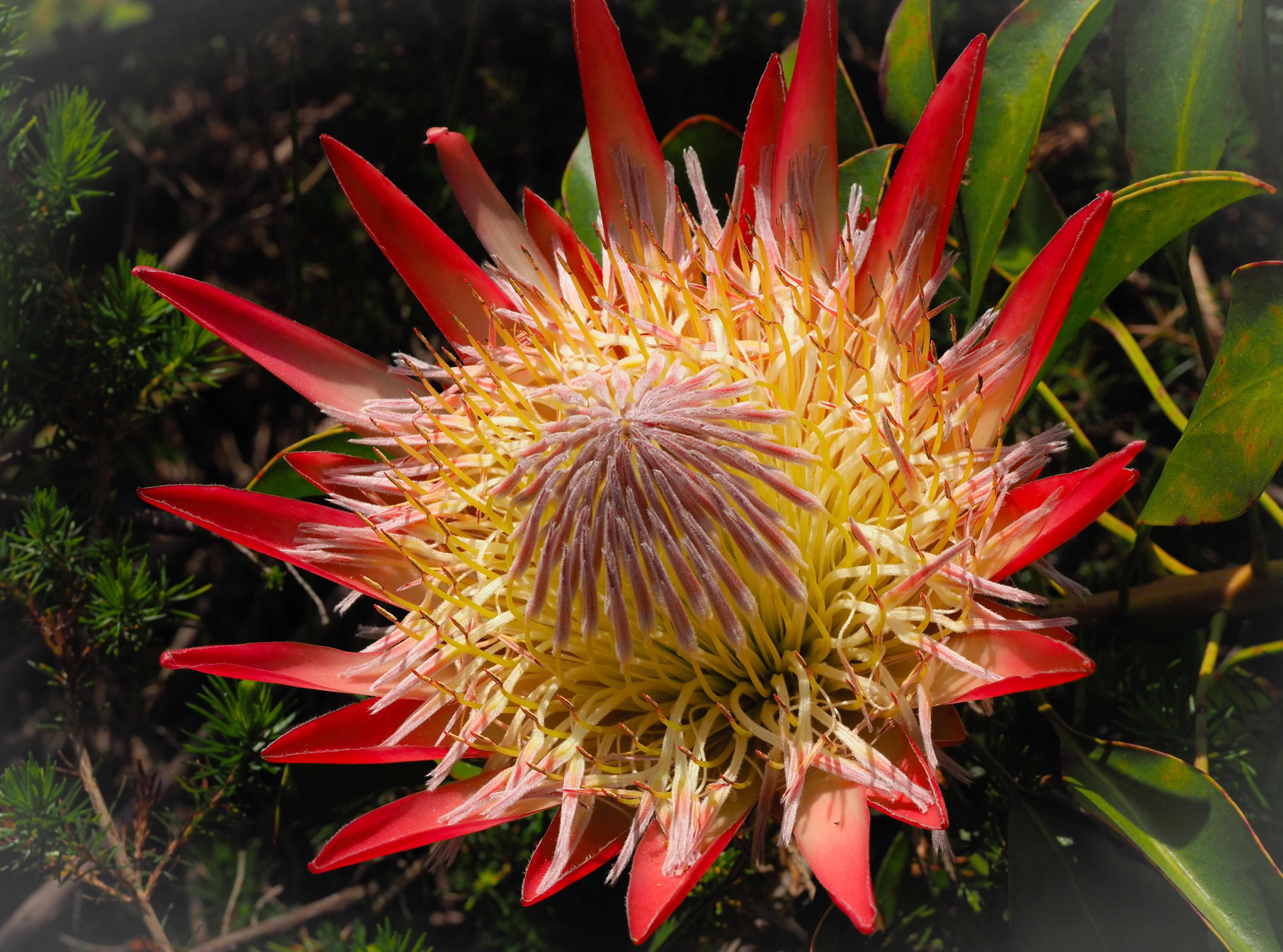
Proteas are one of my favourite flowers, and it was a treat to come across the magnificent King protea, Protea cynaroides (Proteaceae).
King protea Protea cynaroides
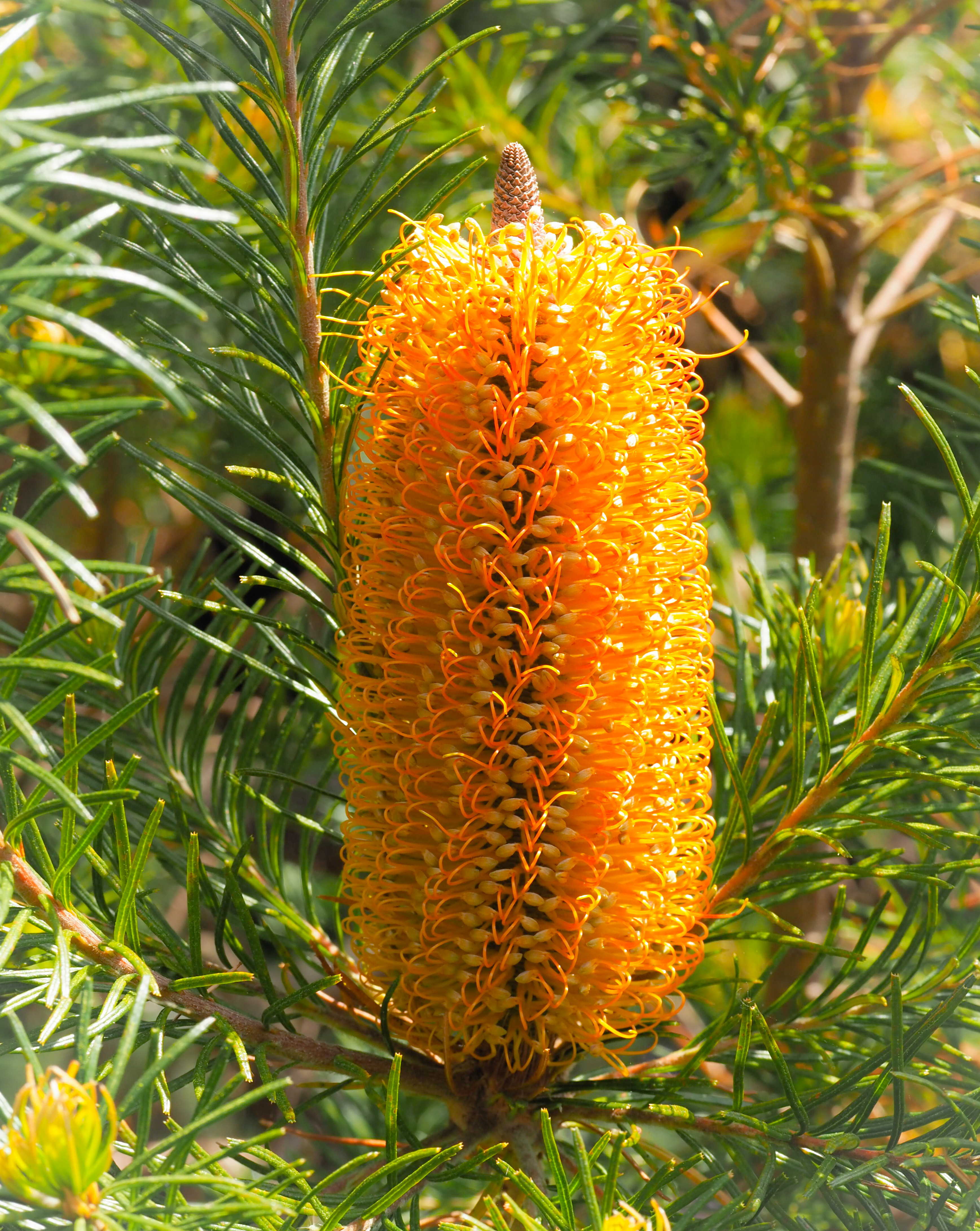
Banksia plants are also in the family Proteaceae and there are around 170 different species in Australia (below).
Banksia spinulosa (I think!)
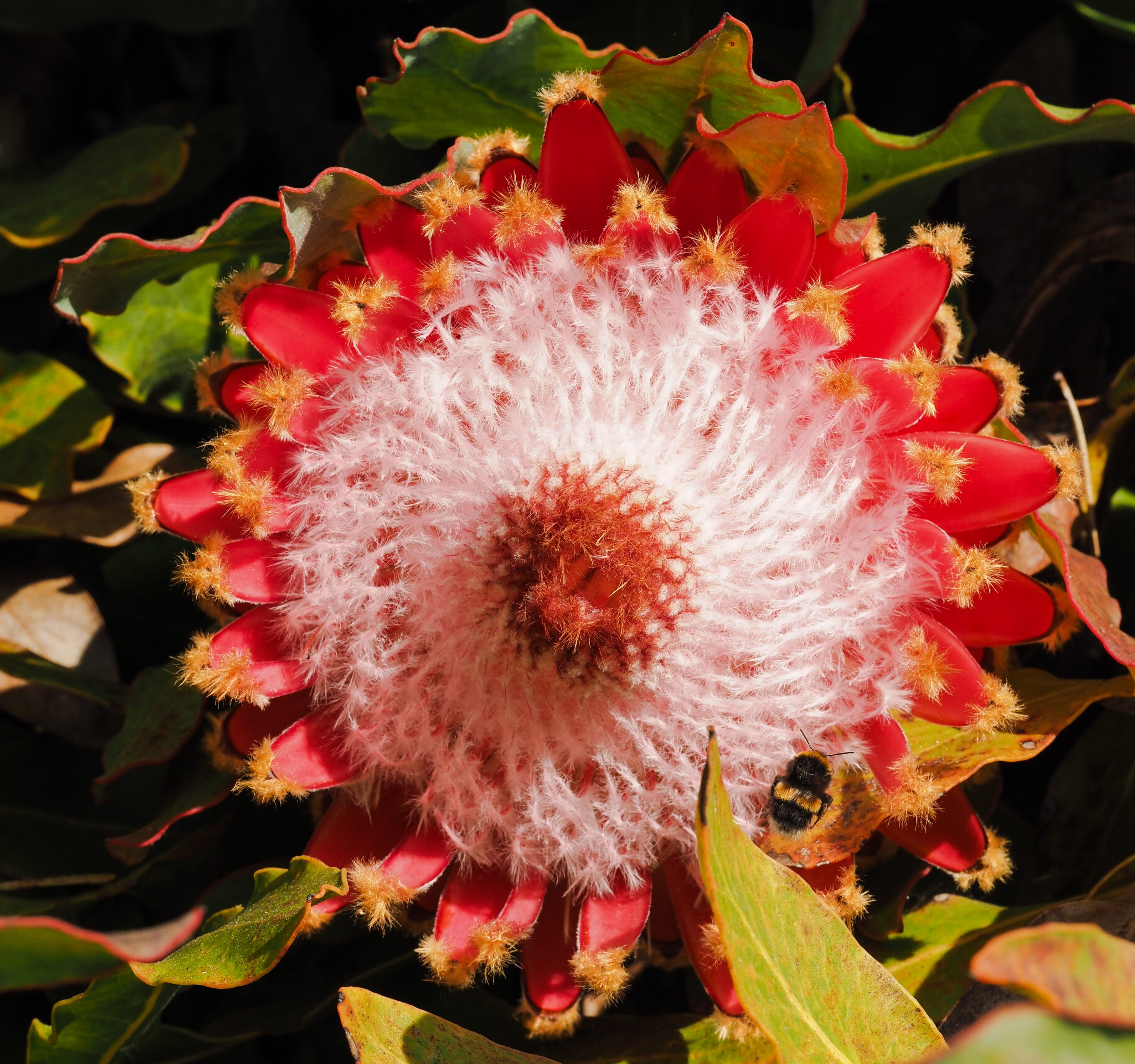
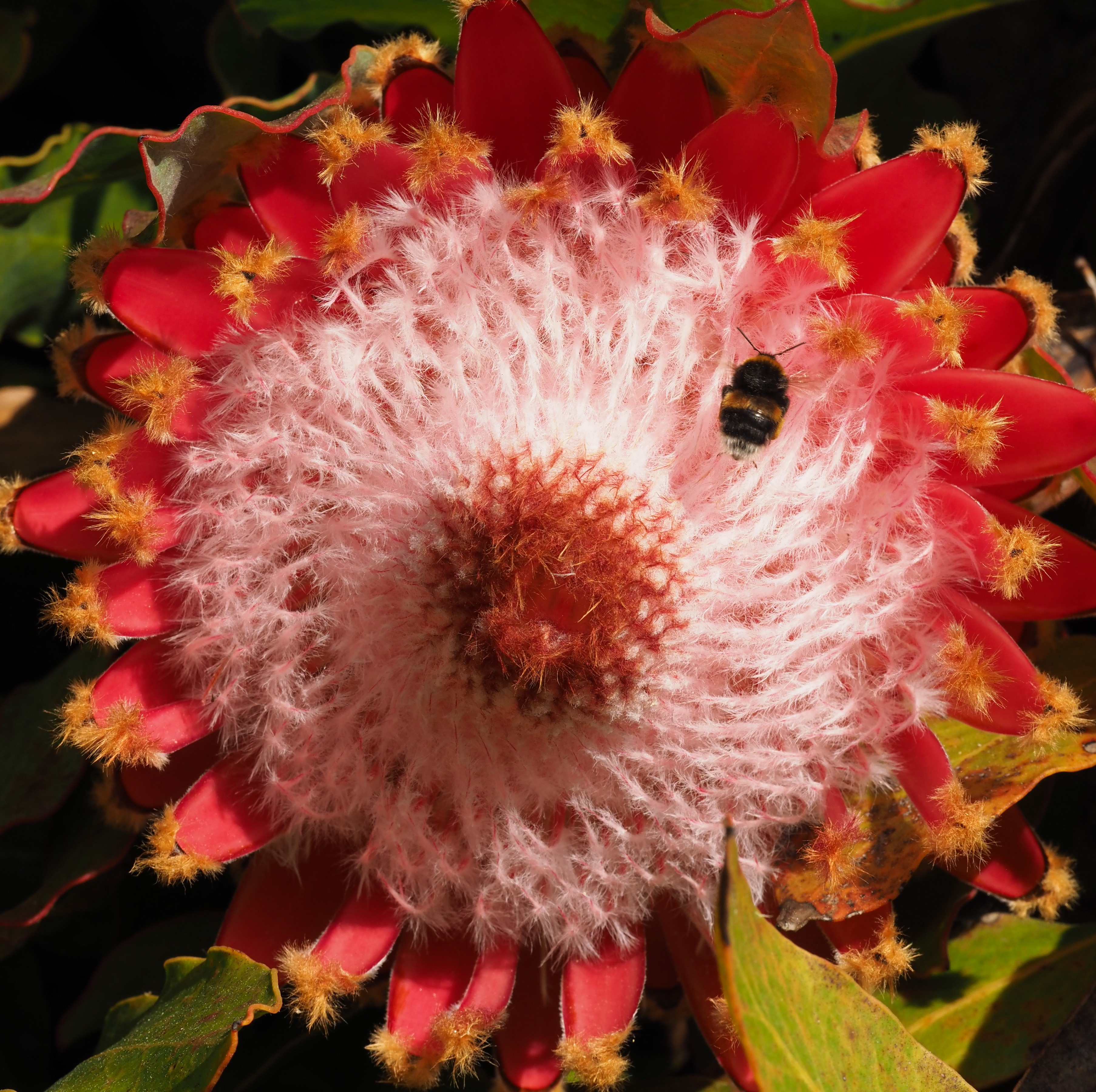
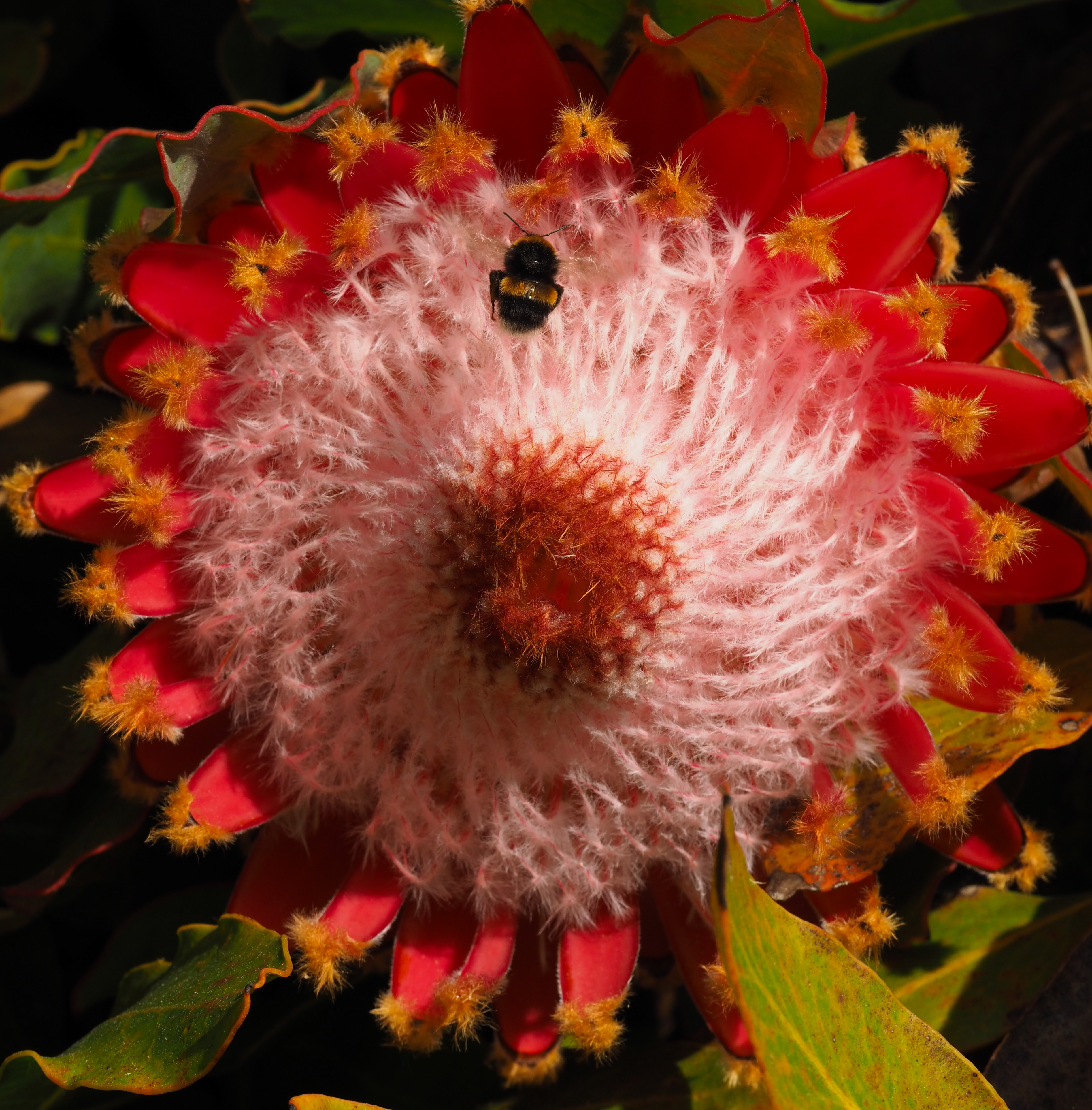
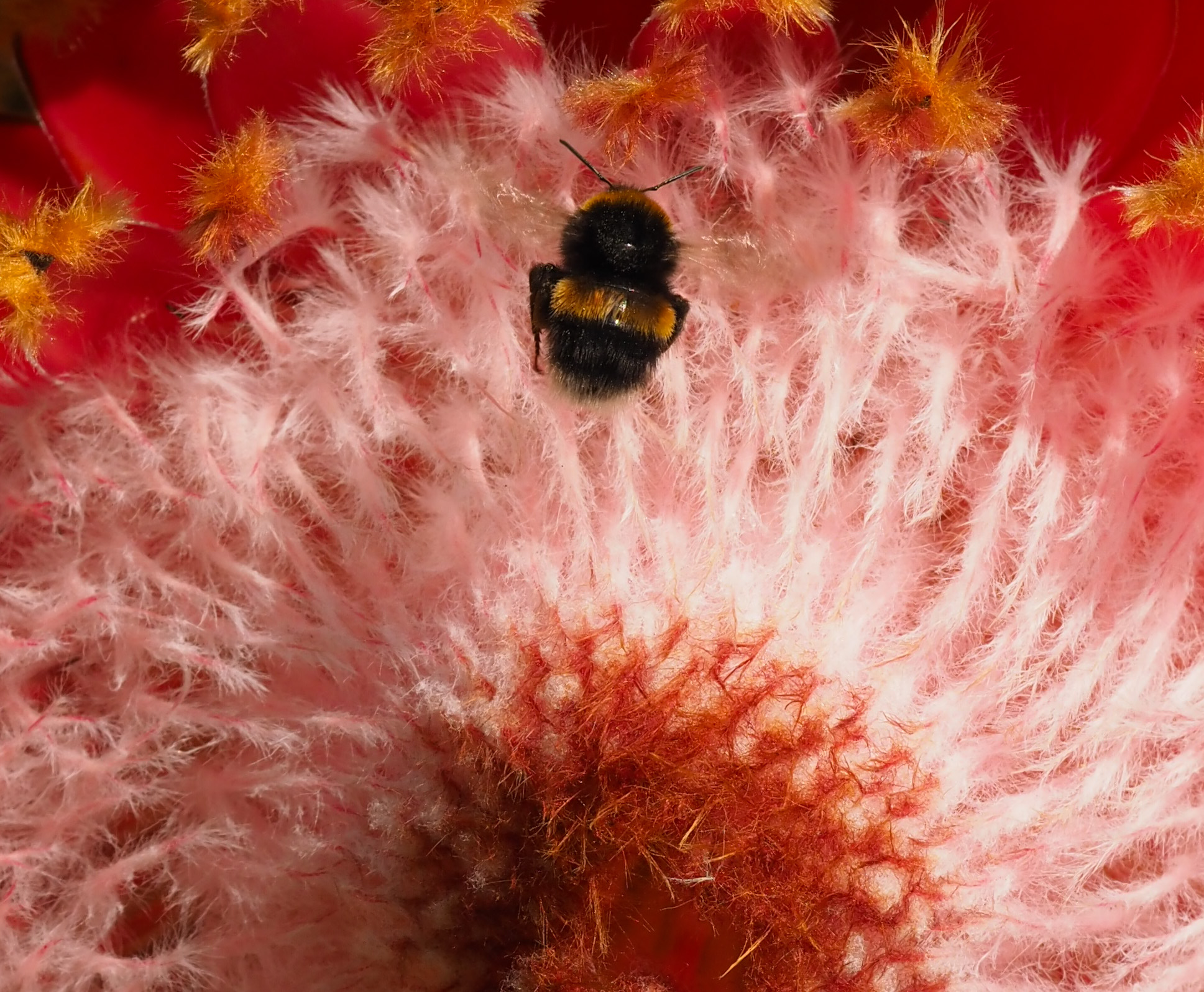
And another species of South African protea was in flower and being visited by a bumblebee (below), which obligingly moved about as I photographed it! Protea magnifica.
Protea magnificaProtea magnificaProtea magnificaBumblebee on Protea magnifica
Soay lamb in May 2023. Photo by Raymond JC Cannon St Kilda is an isolated archipelago situated about 40 miles west of the Outer Hebrides in Scotland. The three main islands, of which the largest is Hirta, are the remains of an ancient volcano which blew its top about 55 million years ago. The other main islands are Soay […]
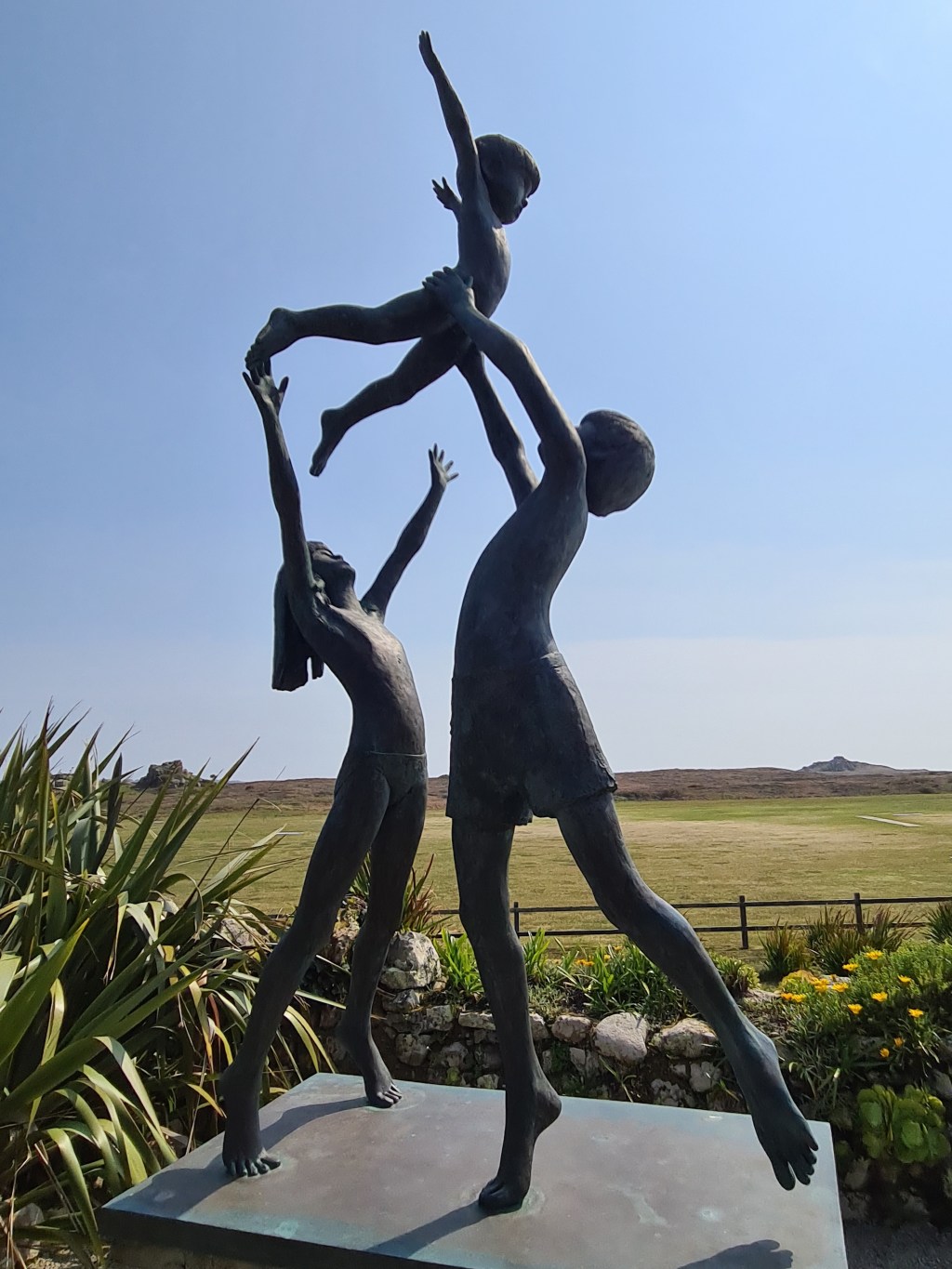
This blog was inspired by seeing some small children enjoying themselves by sitting on a seat. I had just walked past this comfortable looking bench (outside a pizza shop), thinking it would be nice to sit down, but a sensible adult voice in my head said: “that seat is reserved for customers”. But that didn’t stop two young children taking great delight in jumping up and sitting on the attractive wooden bench. Saying to their parents, “Come and sit here!”
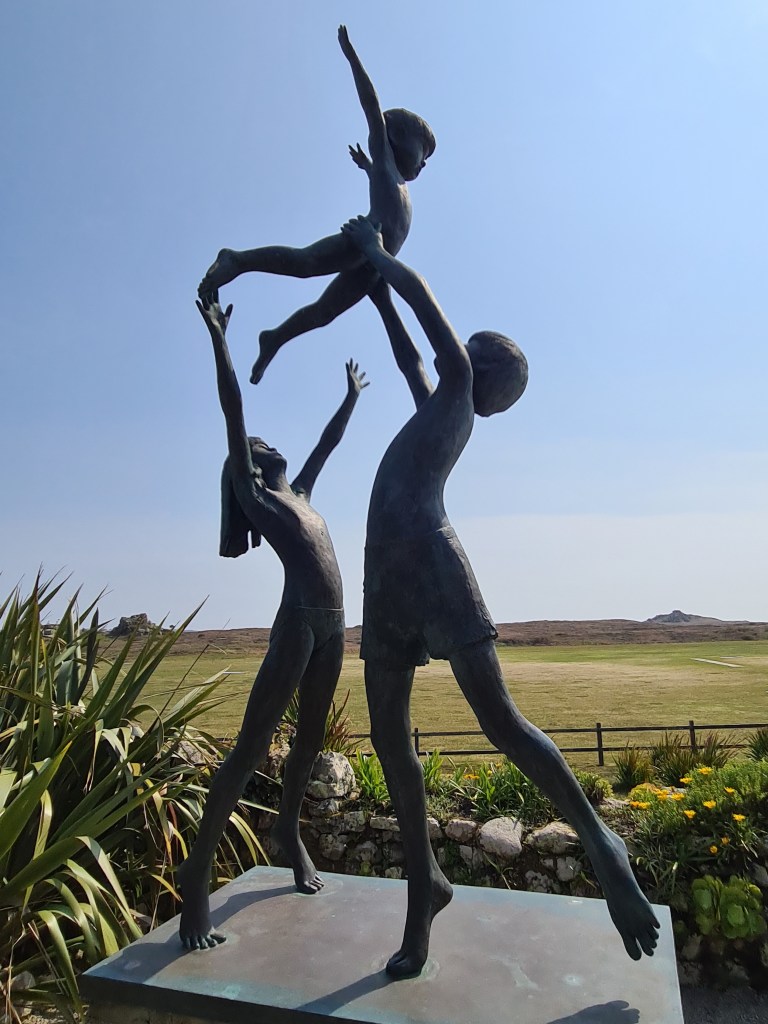
Bronze carving of children by David Wynne, Tresco Abbey Gardens, Isles of Scilly.
It reminded me that there are simple pleasures in life that children (and animals) are often more tuned into, i.e. free of reservations and hesitations, than adults. Fresh air, rolling in the grass, and running on a beach are all primal activities where we abandon our cares and concerns for a while. Just being alive and free (to play). Watch a dog or a child if you need to (re)learn these simple pleasures!
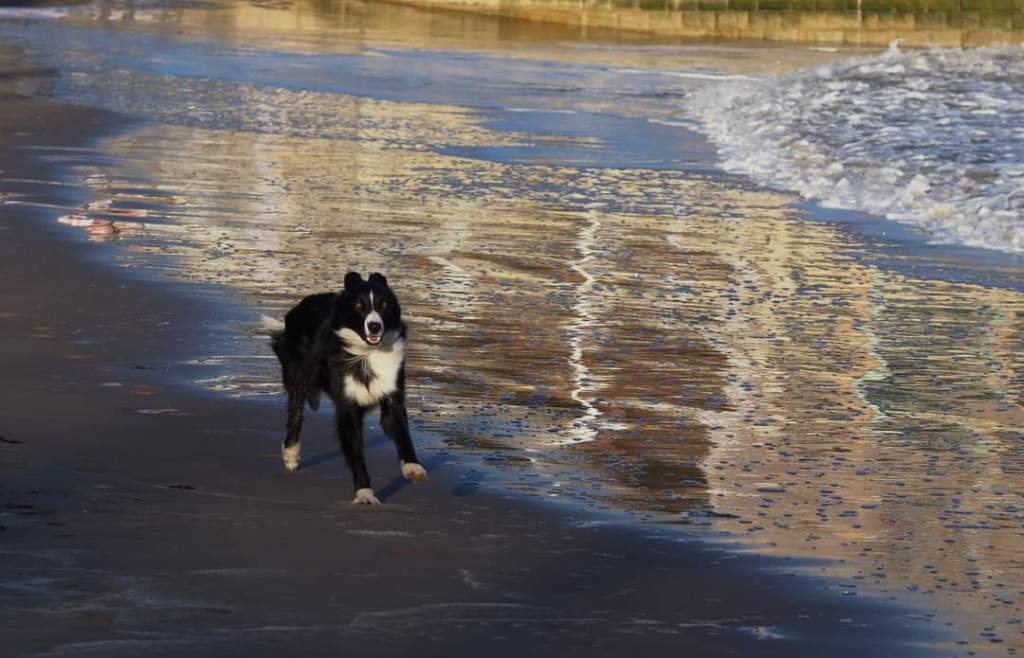
The joy of running on a beach is universal!
Warm sunshine
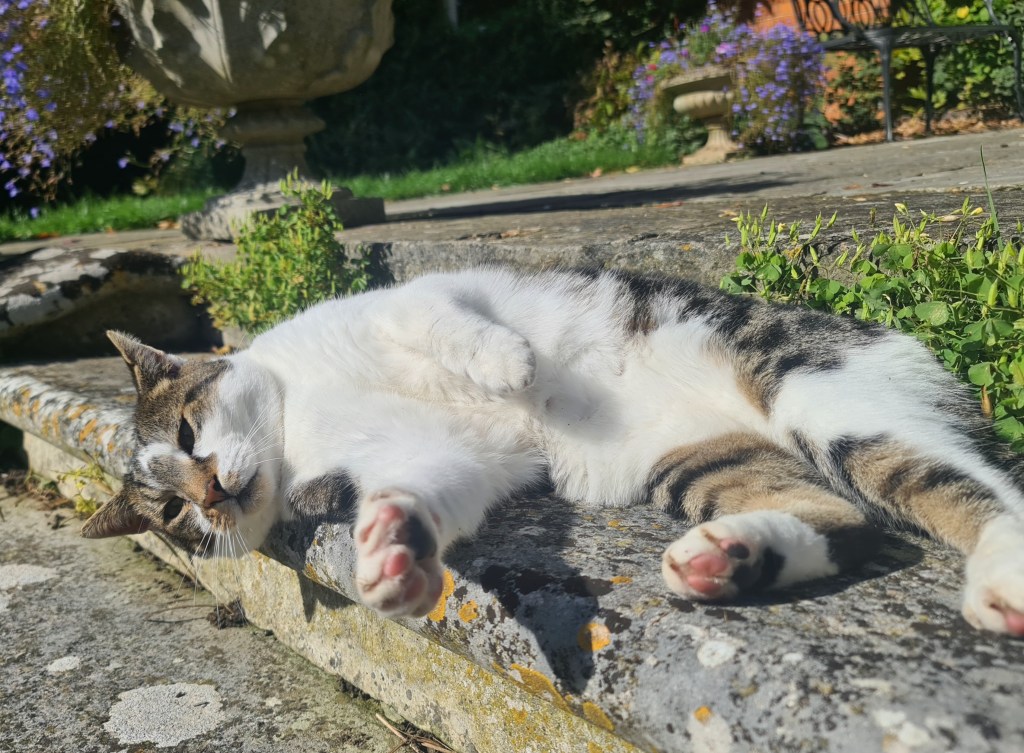
Who doesn’t like to sit in the sun, especially on a winter or spring day, when the sun’s rays warm up our bodies in the still chilly air. Cats are past masters (i.e. particularly good) at this! They don’t need to be told how to relax and chill out!🤣
Basking in the winter sunshine!
Colour
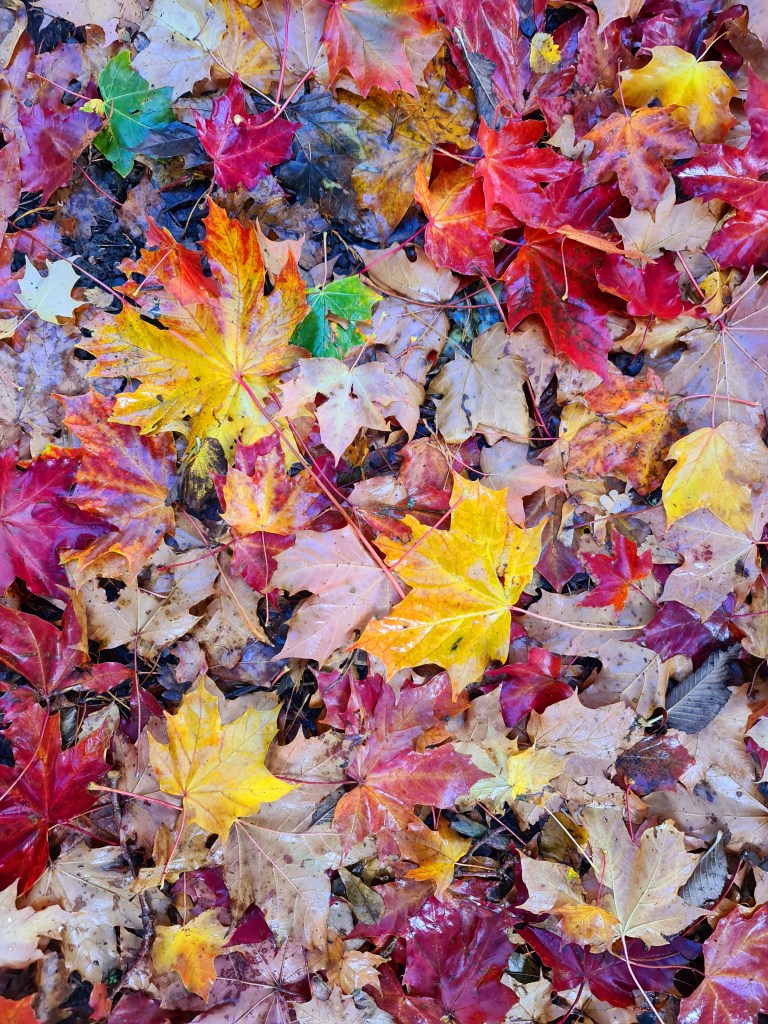
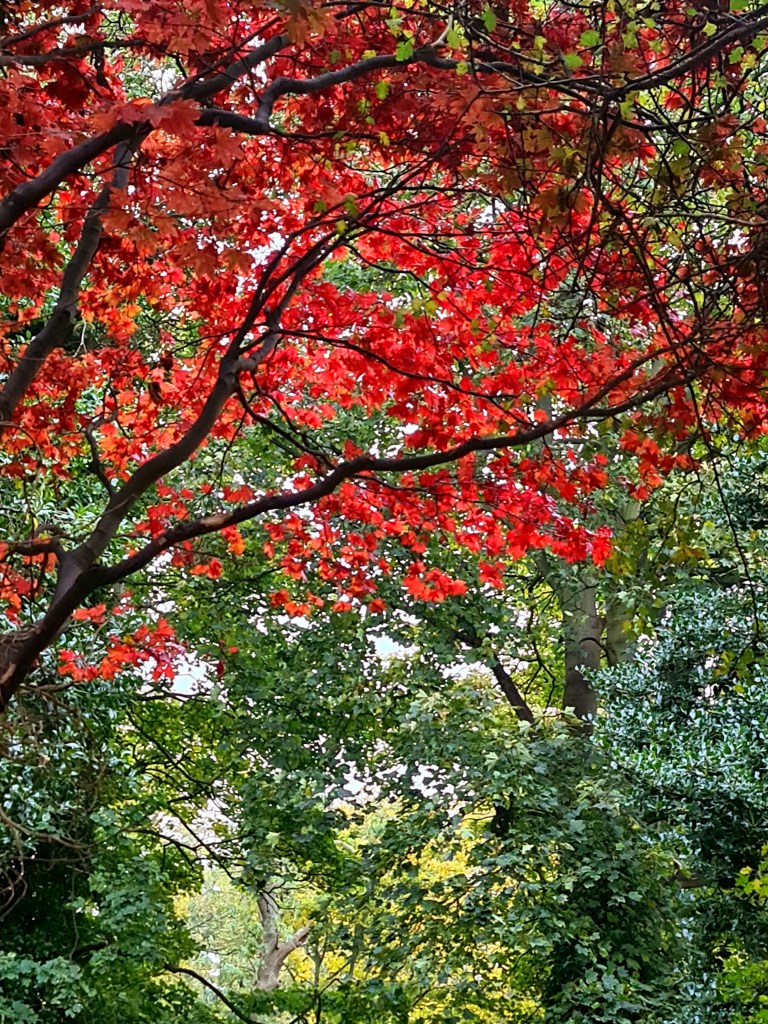
For those of us lucky enough to see colours, the different wavelengths of the electromagnetic spectrum provide a joyousness bordering on the spiritual. Painters, from Van Gogh to David Hockney, use colours to evoke moods and emotions. Spiritual experiences for the millions of us who visit art galleries.
The colours of fallen leavesRed and green are complementary colours
The Old Masters also knew how to use colour to tell a story.
Detail of painting by Fra Angelico (1423-4) in the National Gallery, London
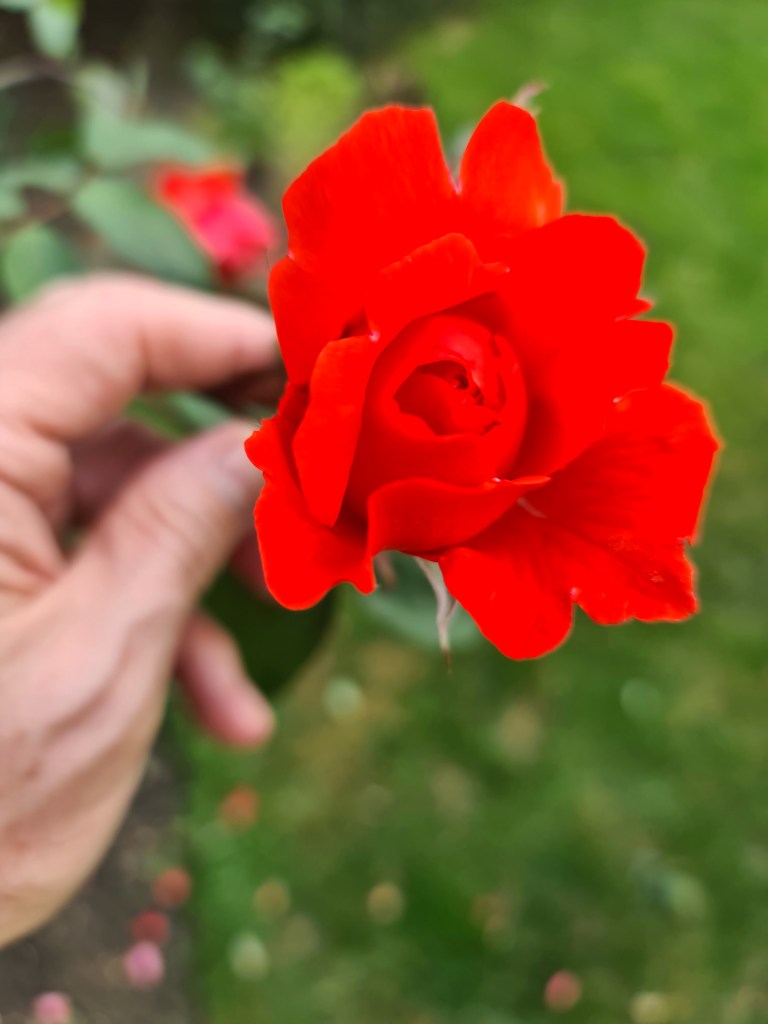
All of the senses provide us with opportunities to experience joy. The simple pleasure of sniffing a fragrant flower or the happiness-inducing sound of bird song. The laughing Kookaburra may be an exception? But I love hearing them too!
Smell a rose and feel uplifted!
Sunsets
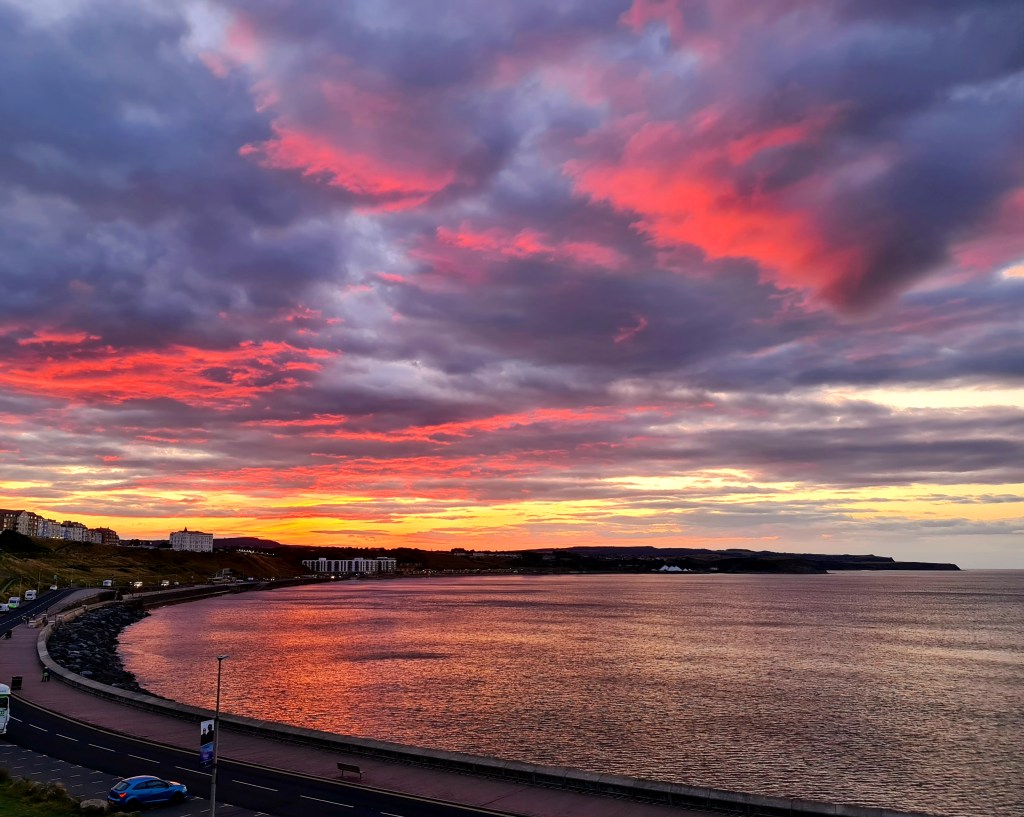
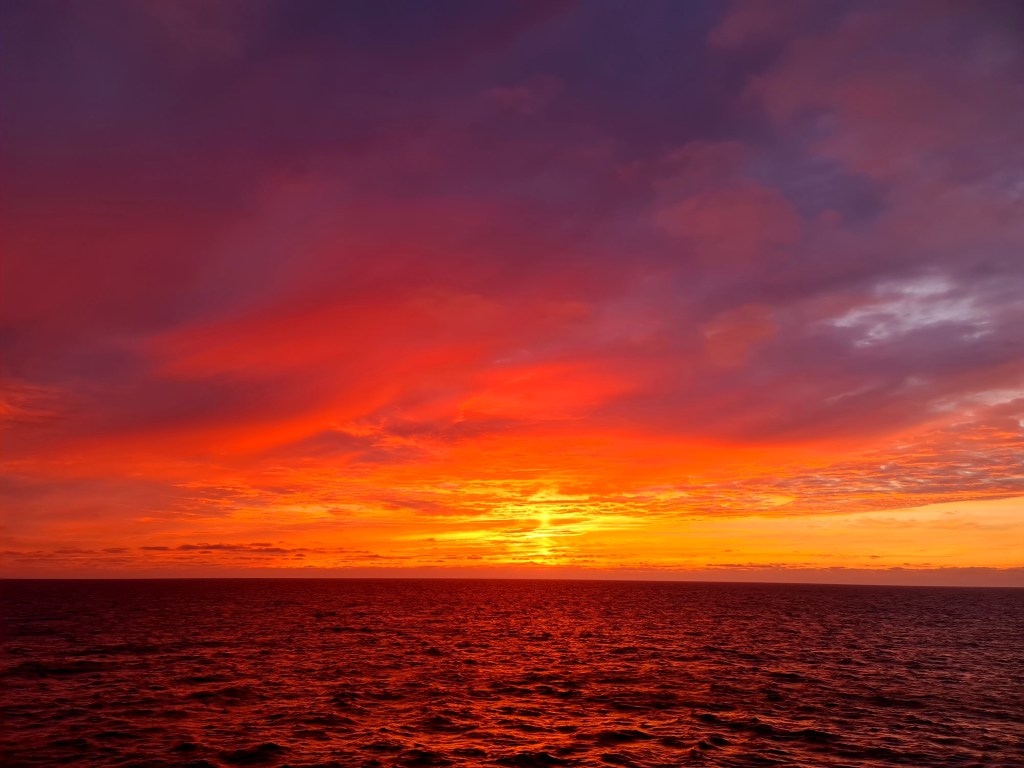
Blue and violet colours get scattered out by air and dust particles as the sun ‘sets’ and light has farther to travel through our atmosphere. This usually leaves mainly the brighter red and orange colours to fill the sunset skies and uplift our spirits.
Sunsets are free!
Dancingand skipping
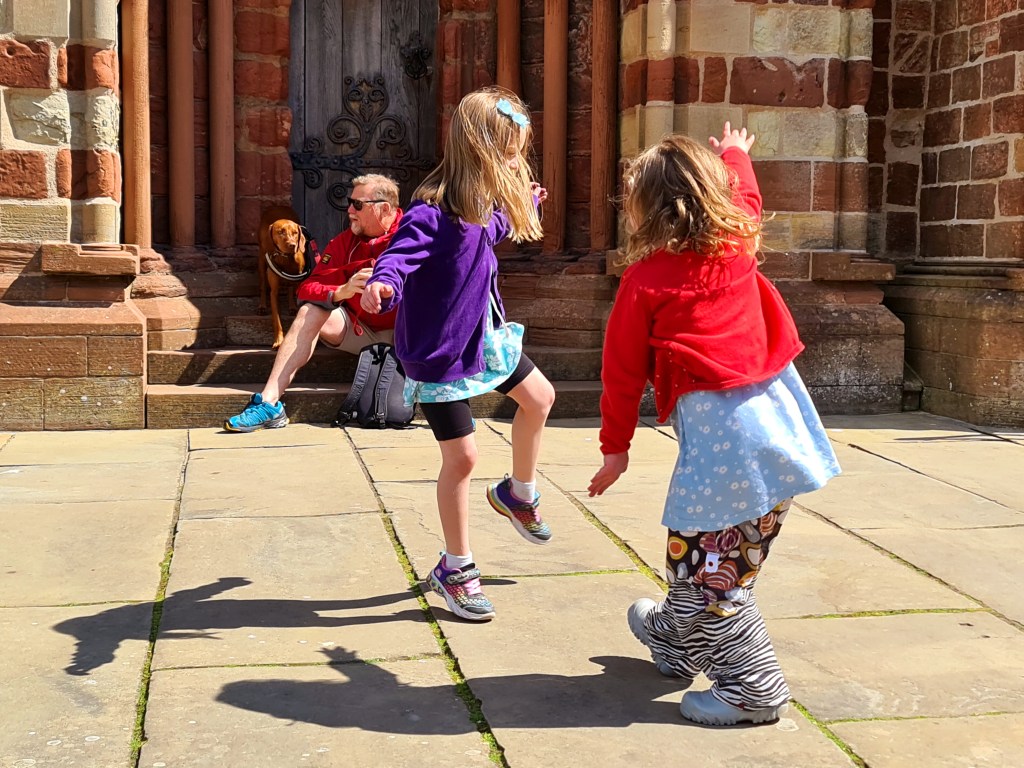
We all need to move and benefit hugely from simply using our muscles. Walking, running, jumping, hopping, leaping, and skipping emerge naturally as children develop. Whilst we might not be able to continue skipping as we get old, why not (!), movement releases endorphins and helps relieve stress.
Dancing is a tonic!
Food for free
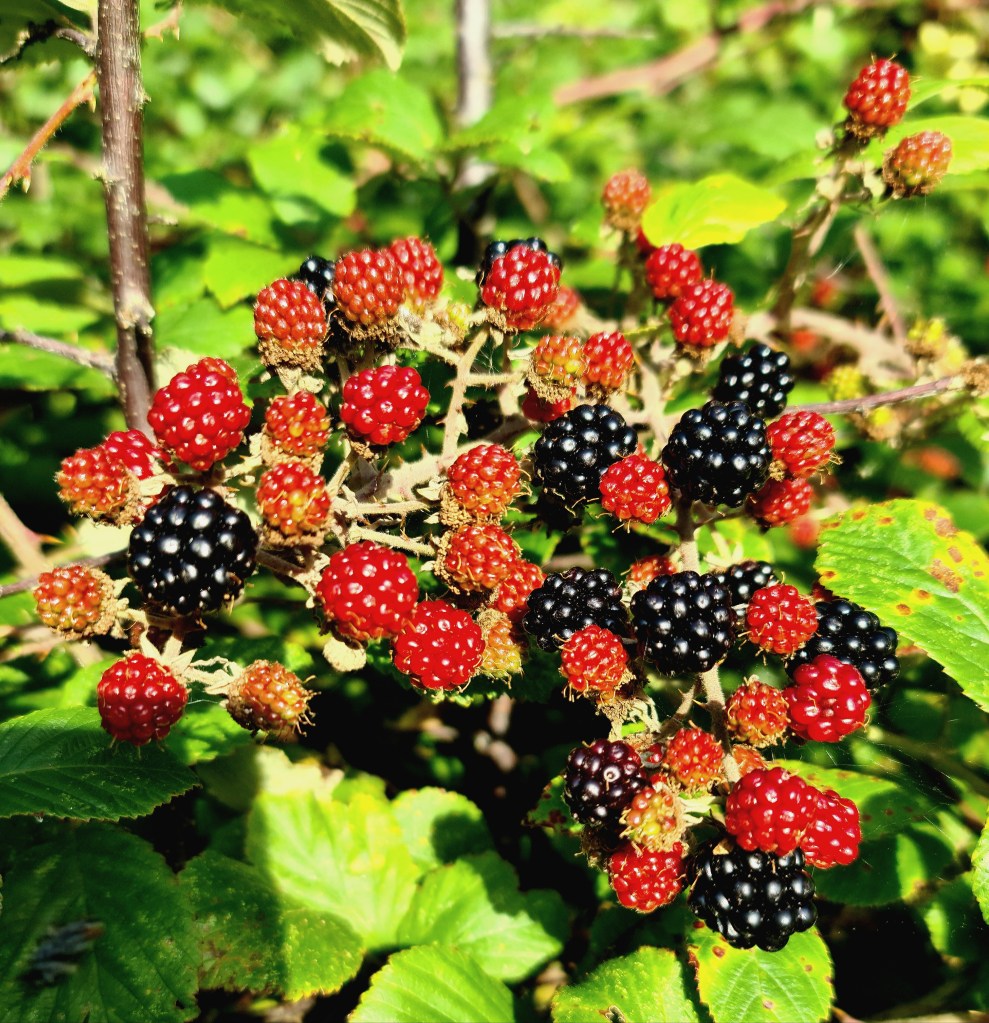
Richard Mabey’s book Food for free,first published in 1972 (and in print ever since), tapped into the deep foraging instincts of our neolithic and palaeolithic past. Nature provides for us, if we take care of it that is, and don’t over-exploit it.
Being in nature
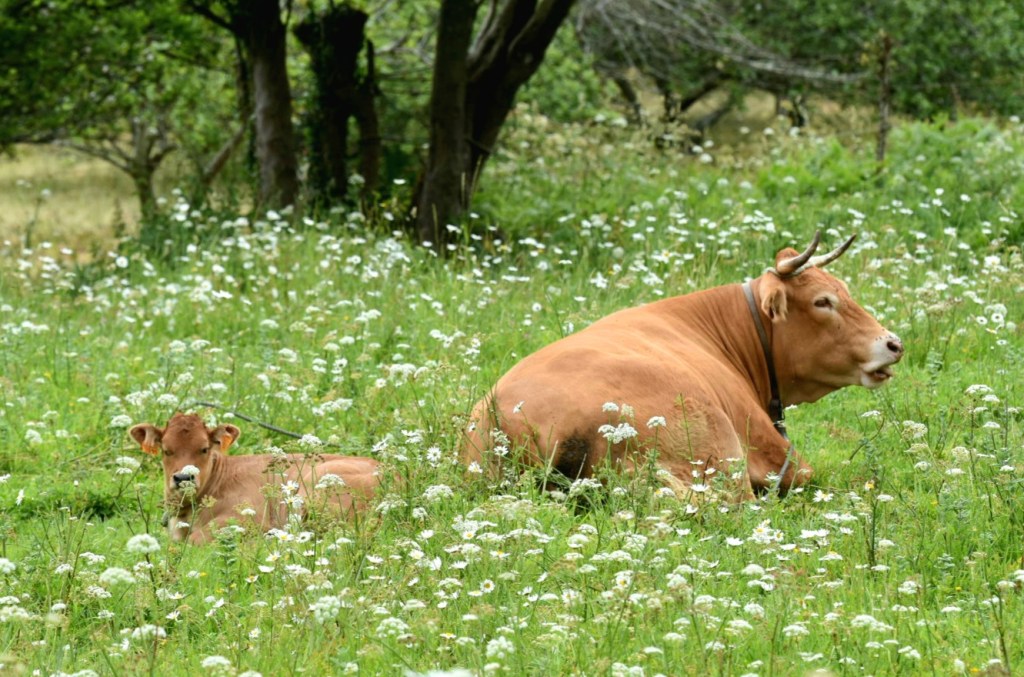
You don’t need to teach a cow the benefits of spending time in the countryside!
Relax!
Walking
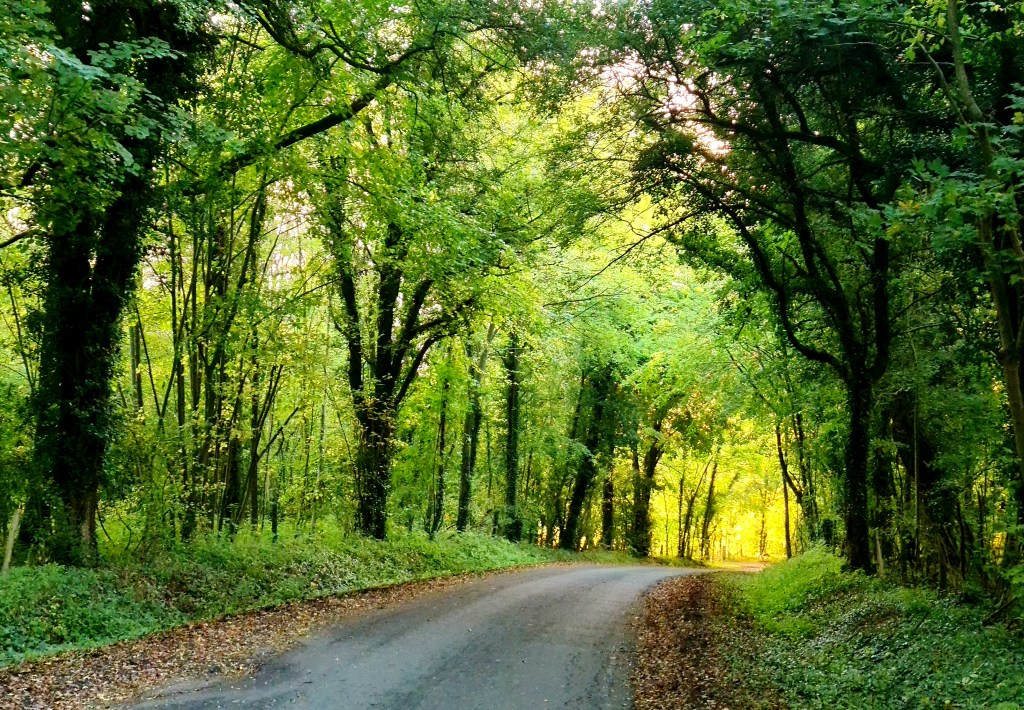
Walking is, for me, one of the best simple pleasures in life.
Walking frees the mind
Meditate, day-dream
Although not everyone can do it, the pleasures and benefits of cat-napping are manifest, especially in cats! Meditation calms the mind and promotes good health, but we often don’t leave space for such down-times in our busy lives.
Meditate on something nice!
Sleep and dreaming
Sleep is a state of reduced mental and physical activity, and altered consciousness, which most animals need to some extent. Whether you are a koala bear (which can sleep for 22 hours a day) or a giraffe (which only need a few hours shut-eye!) we all need to ‘recharge out batteries’ and dreaming is a vital part of this activity.
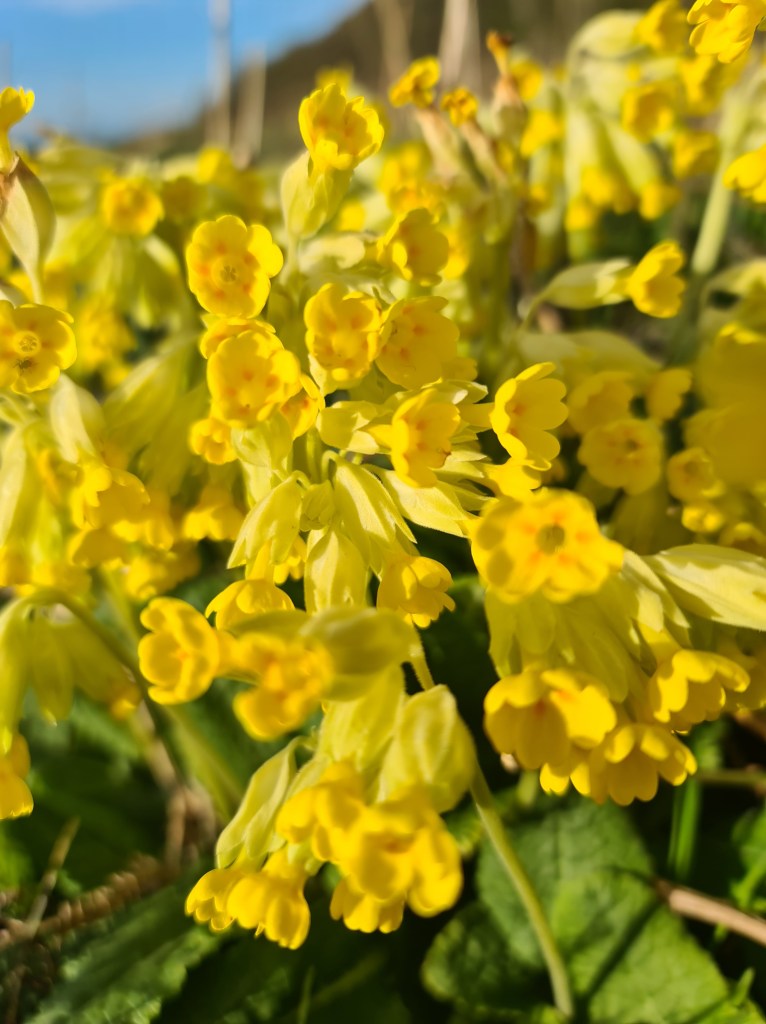
“Hope springs eternal in the human breast“ (Alexander Pope), and life renews itself every year in the Spring. All organisms can also renew themselves by the process, perhaps we should say the miracle, of reproduction.
Hope (and the Spring) spring eternal
Health and well-being
And finally, for many of us, just being well after a period of illness – Long Covid in my case – is a joy in itself, and one we often take for granted. Whilst remembering all those who are not so well but hopefully still able to access some of the simple joys of life that make it so special.
All photos by Raymond JC Cannon, except where stated.
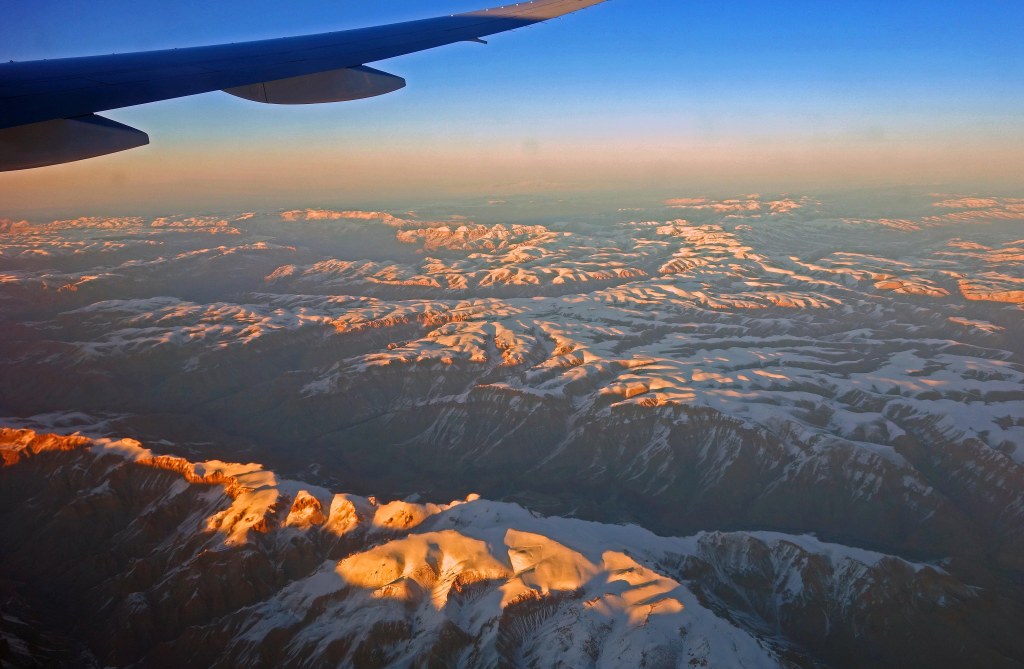
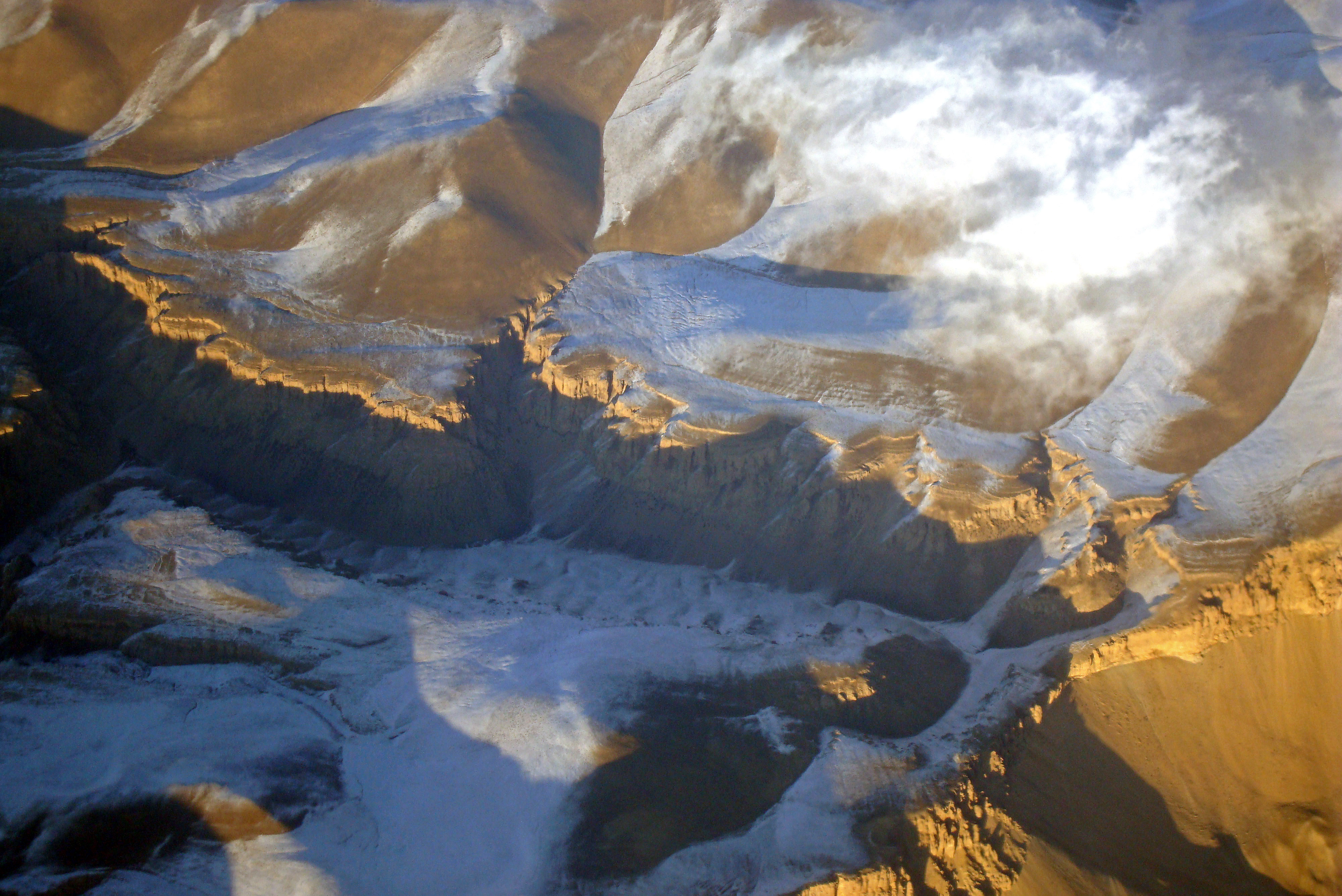
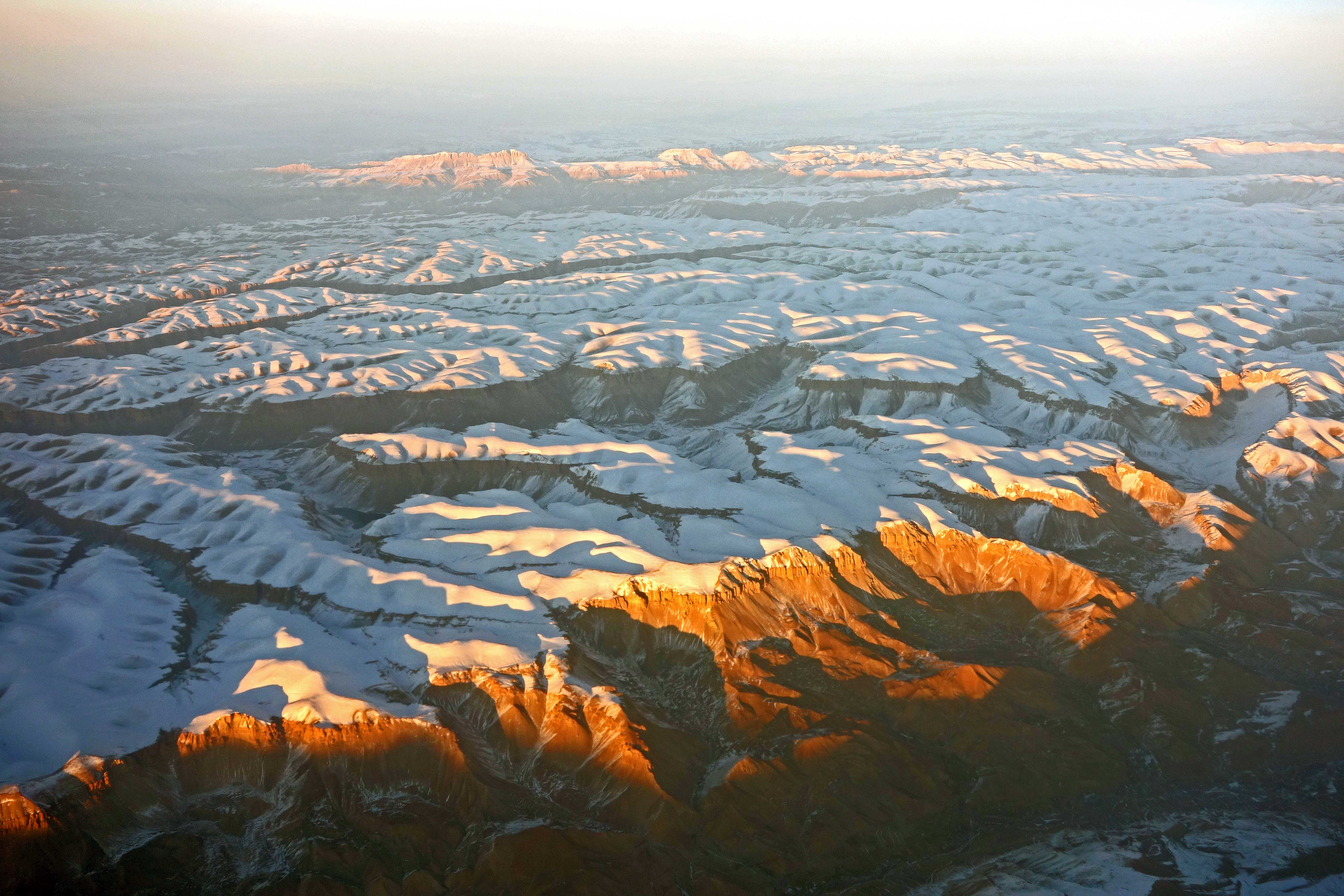
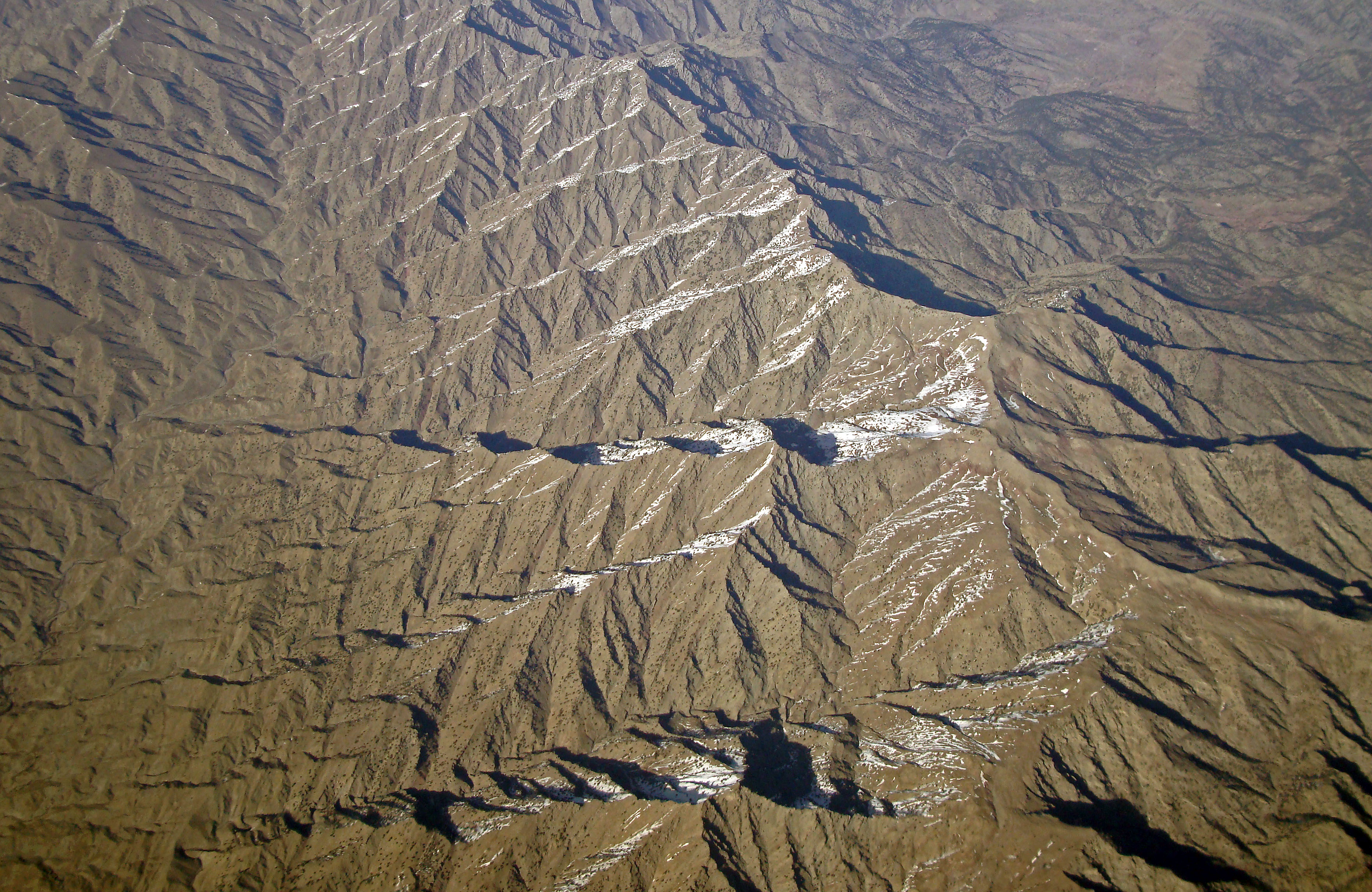
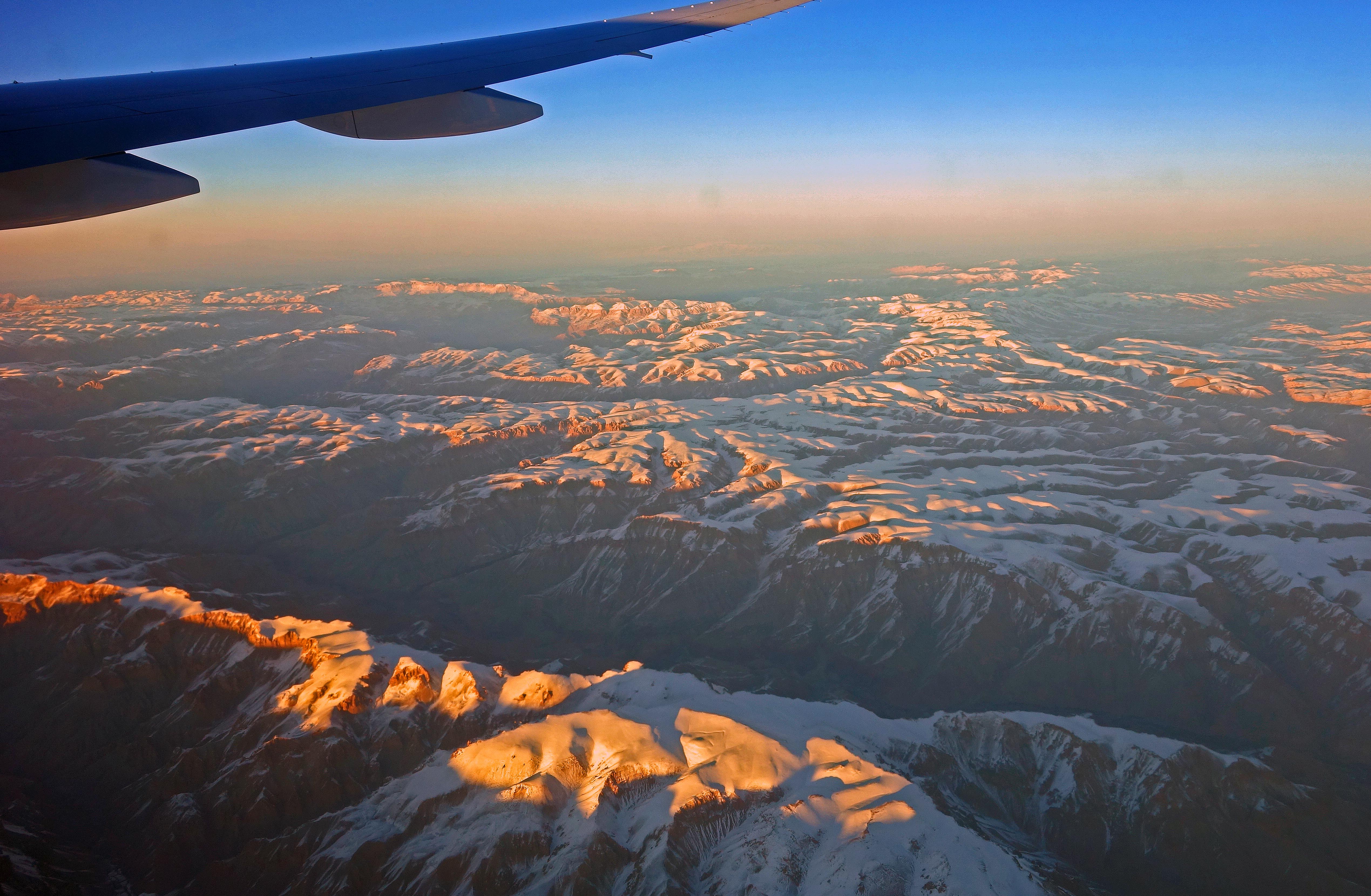
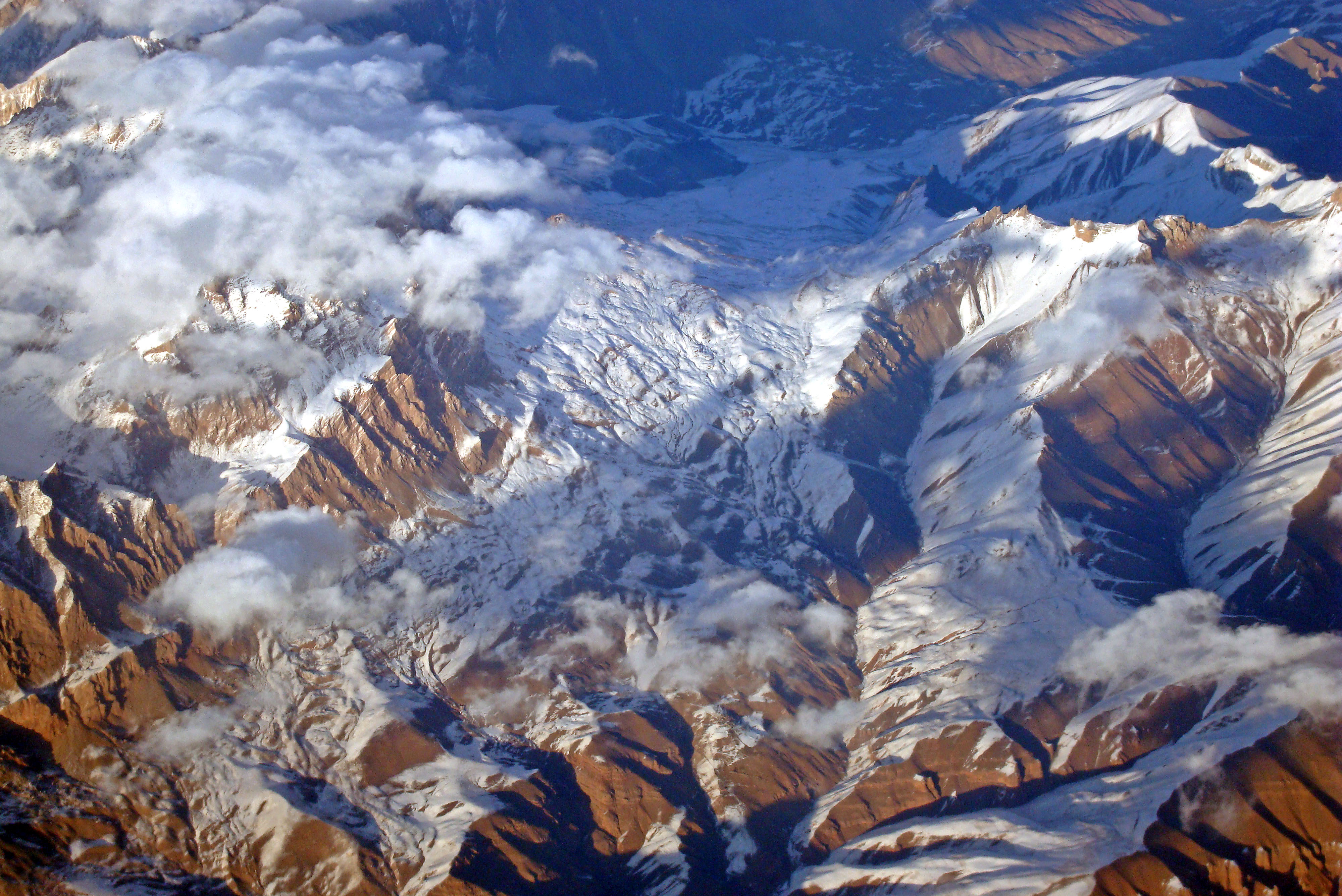
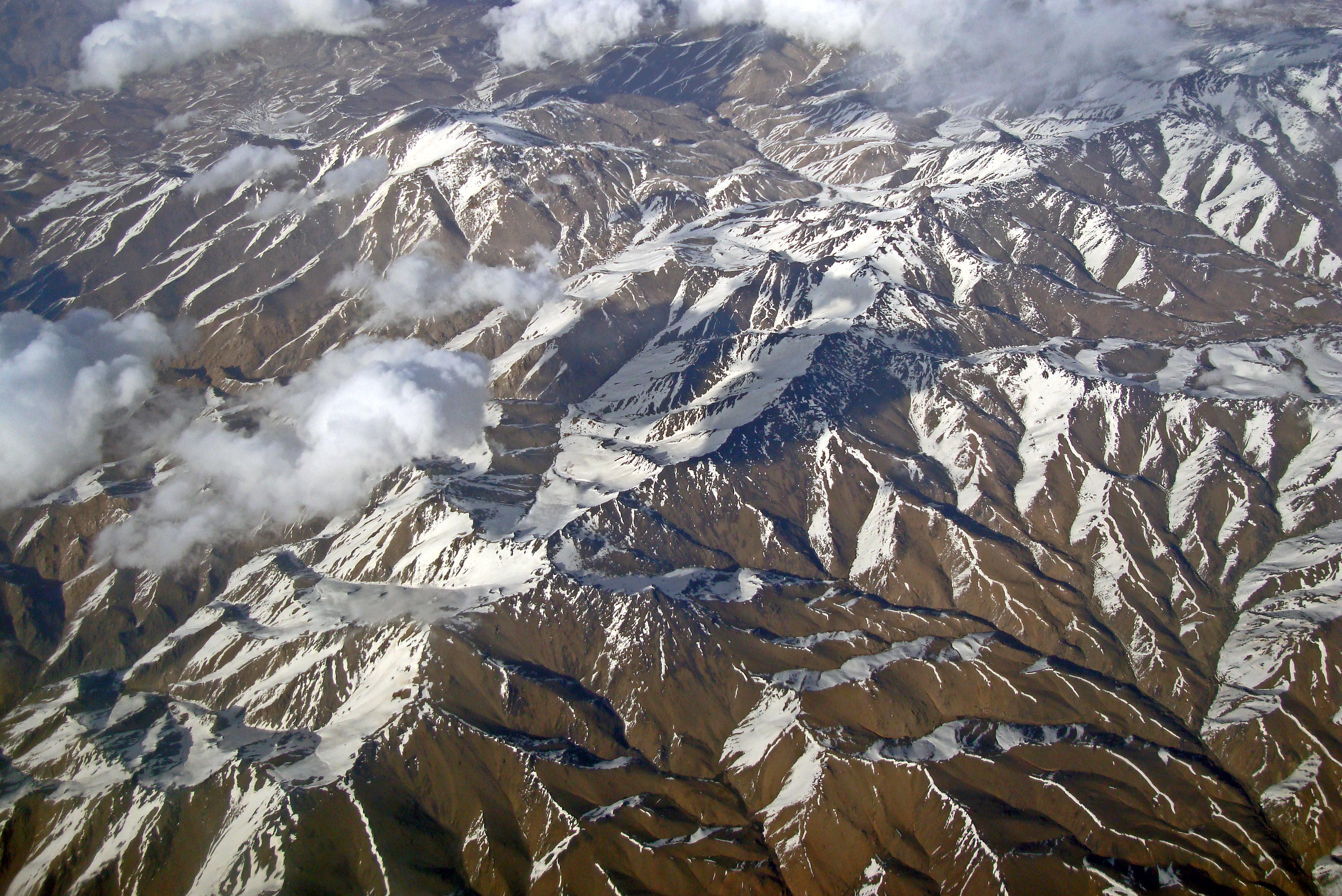
I have flown over Afghanistan many times – probably too many for the health of the planet – on the way to countries in South East Asia, and back. When conditions have permitted, I have stuck my compact camera against the window and grabbed some shots of the amazing mountain scenery.
Afghanistan from the air, 2015
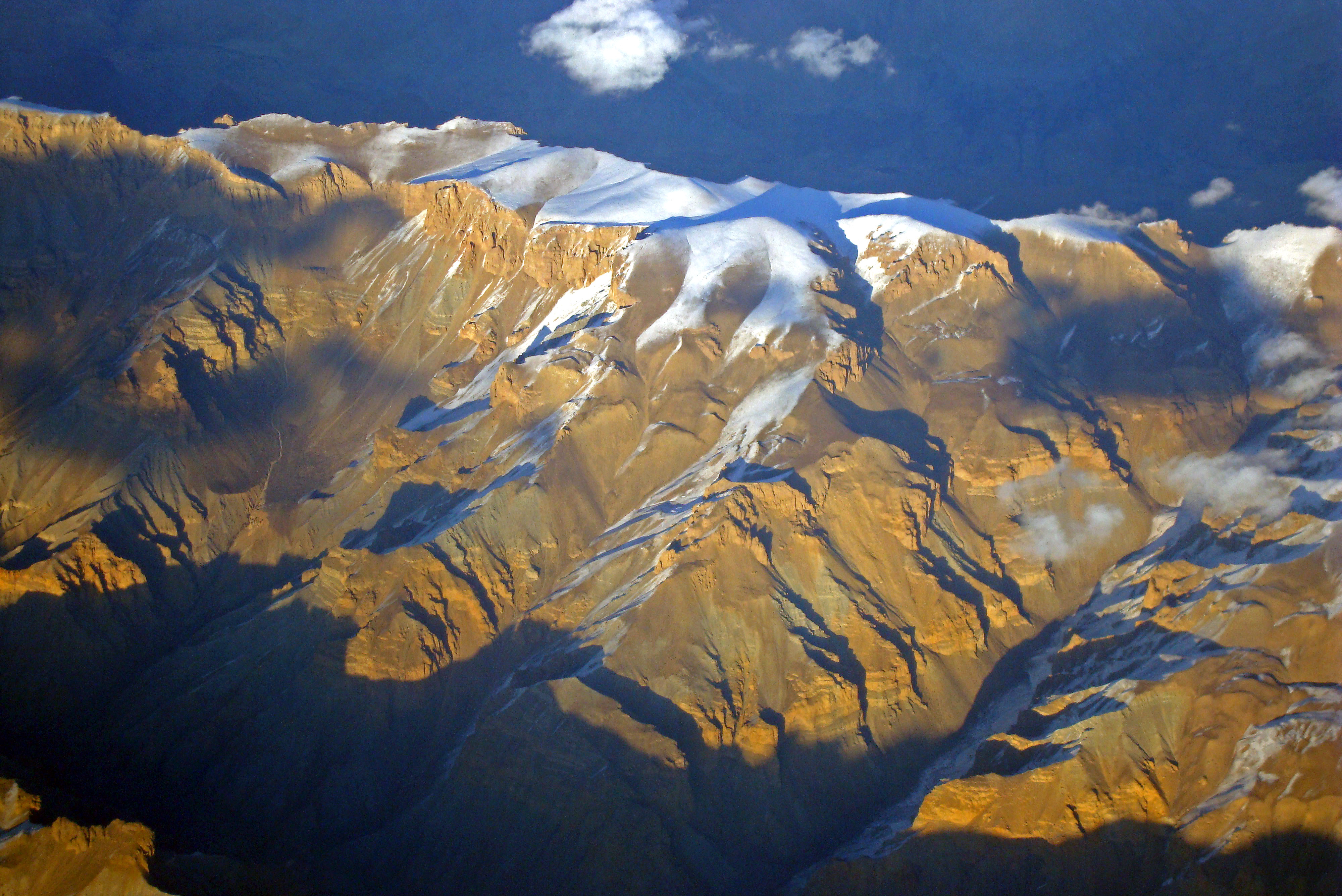
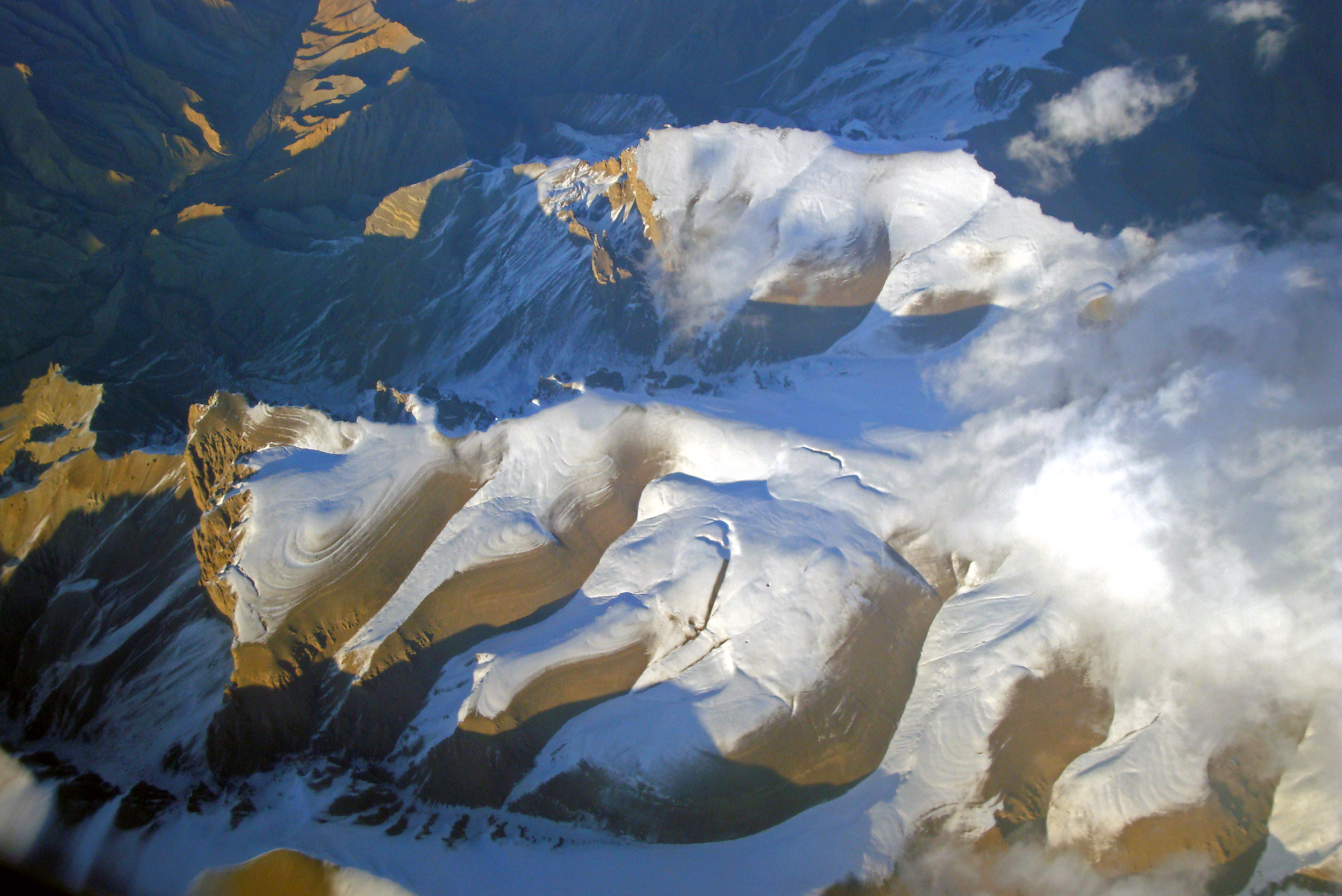
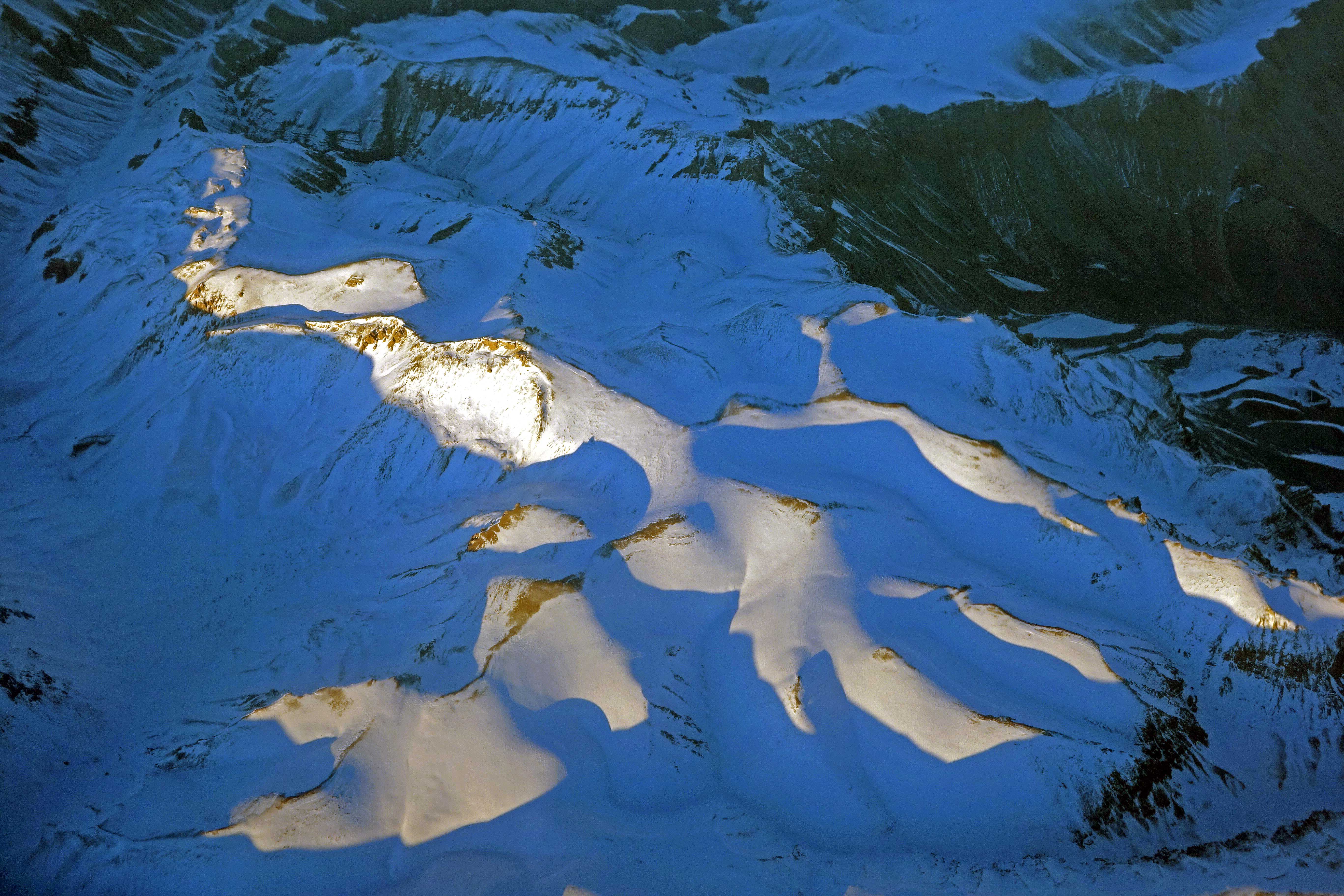
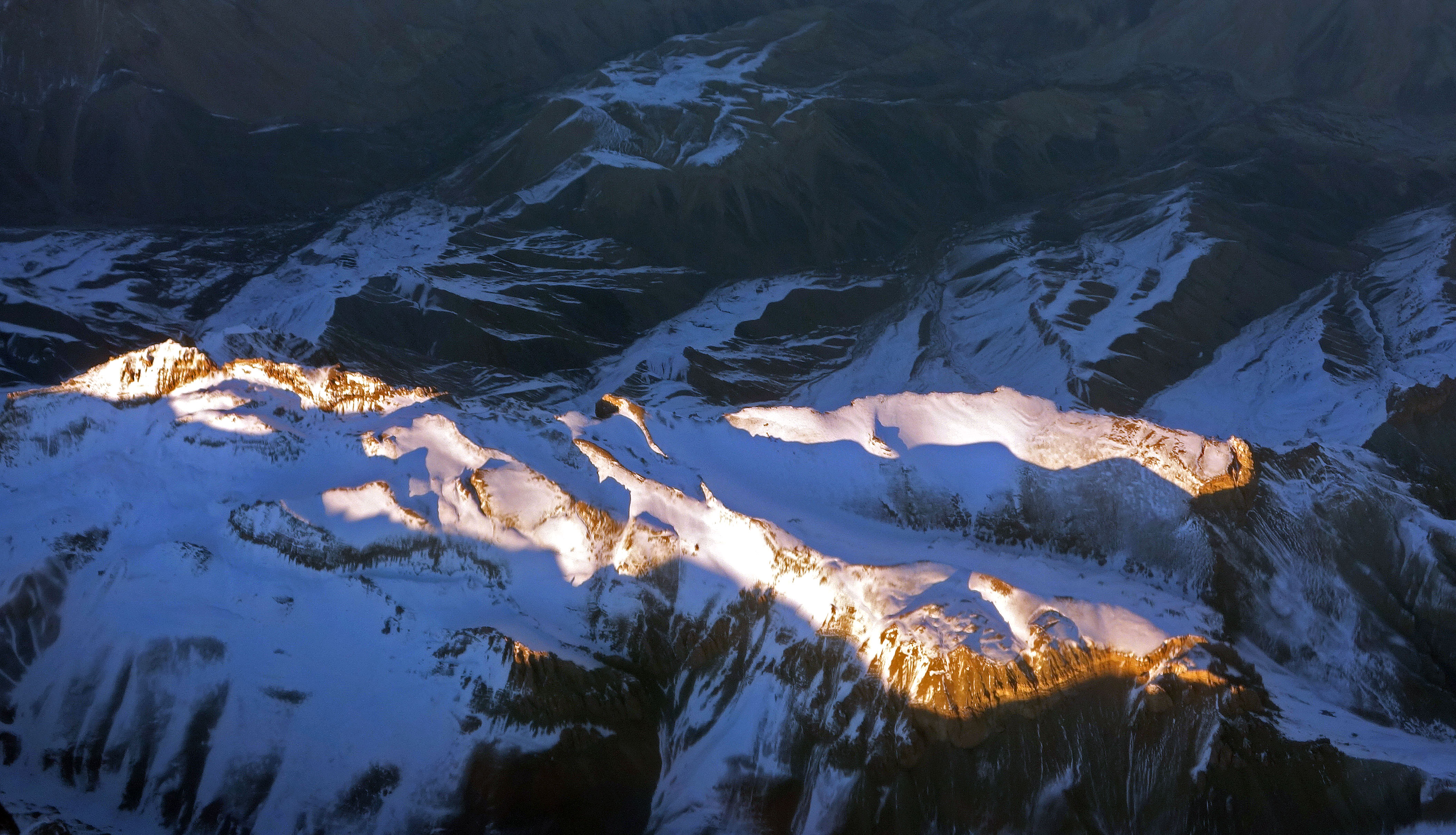
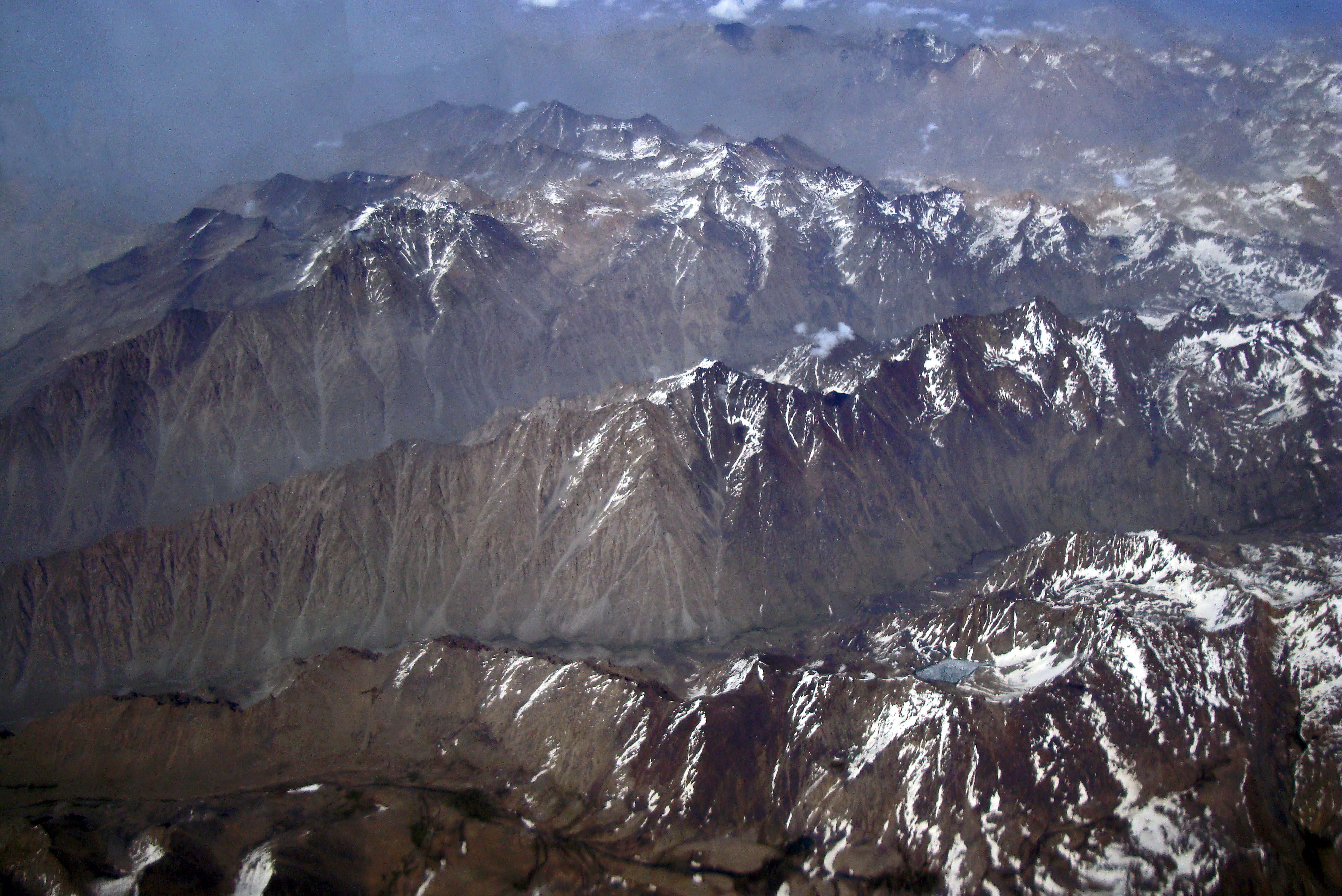
Looking back at some of these images (which date from 2008 and 2015) I am struck by how beautiful this war-torn country looks from 35,000 feet. So I have chosen some of the better ones and sharpened them up slightly.
Afghanistan snow capped peaks, 2008
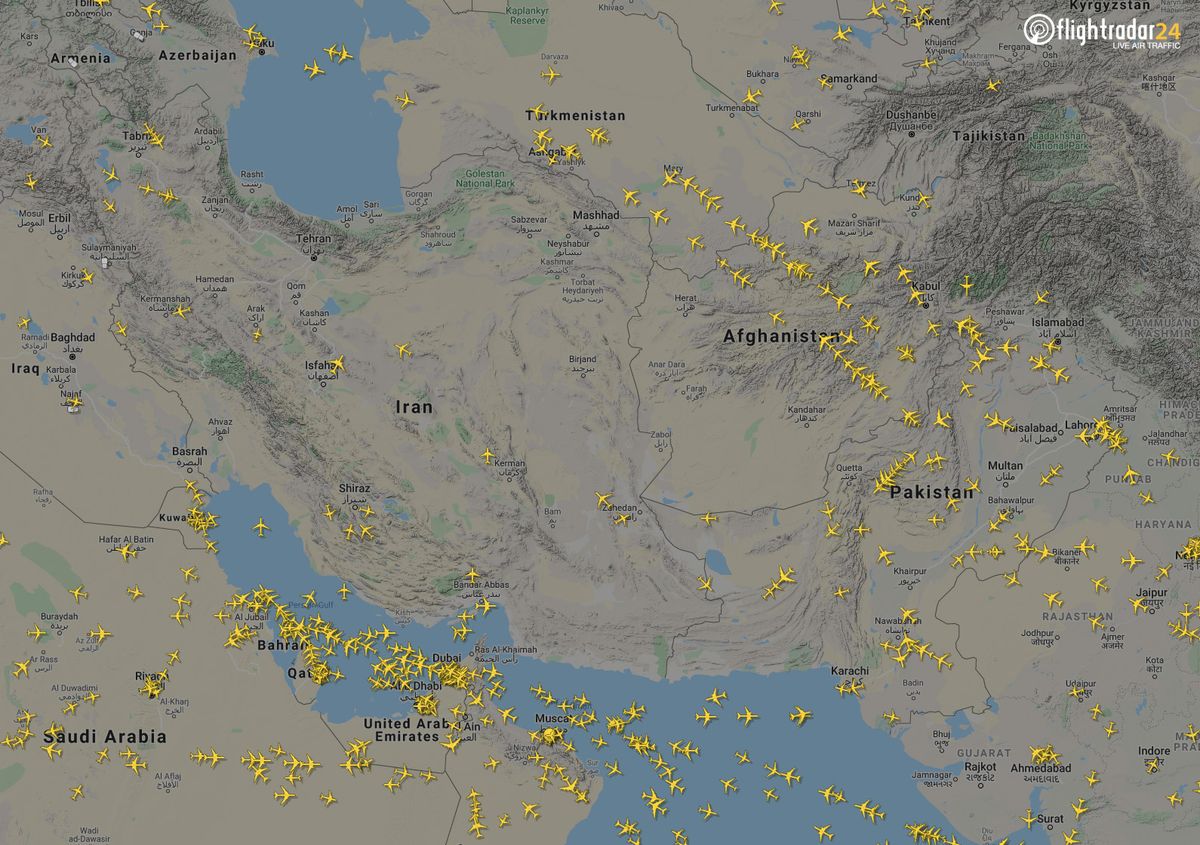
Flights on great circle routes from Bangkok, Kuala Lumpur and Singapore, to London, have, in recent decades tended to fly on a route which (going West) passes from India, across Pakistan, Afghanistan and over the deserts of Turkmenistan. One tends to be awake on daytime return flights.
Afghan airspace Jan 21 2020. Source Flightradar
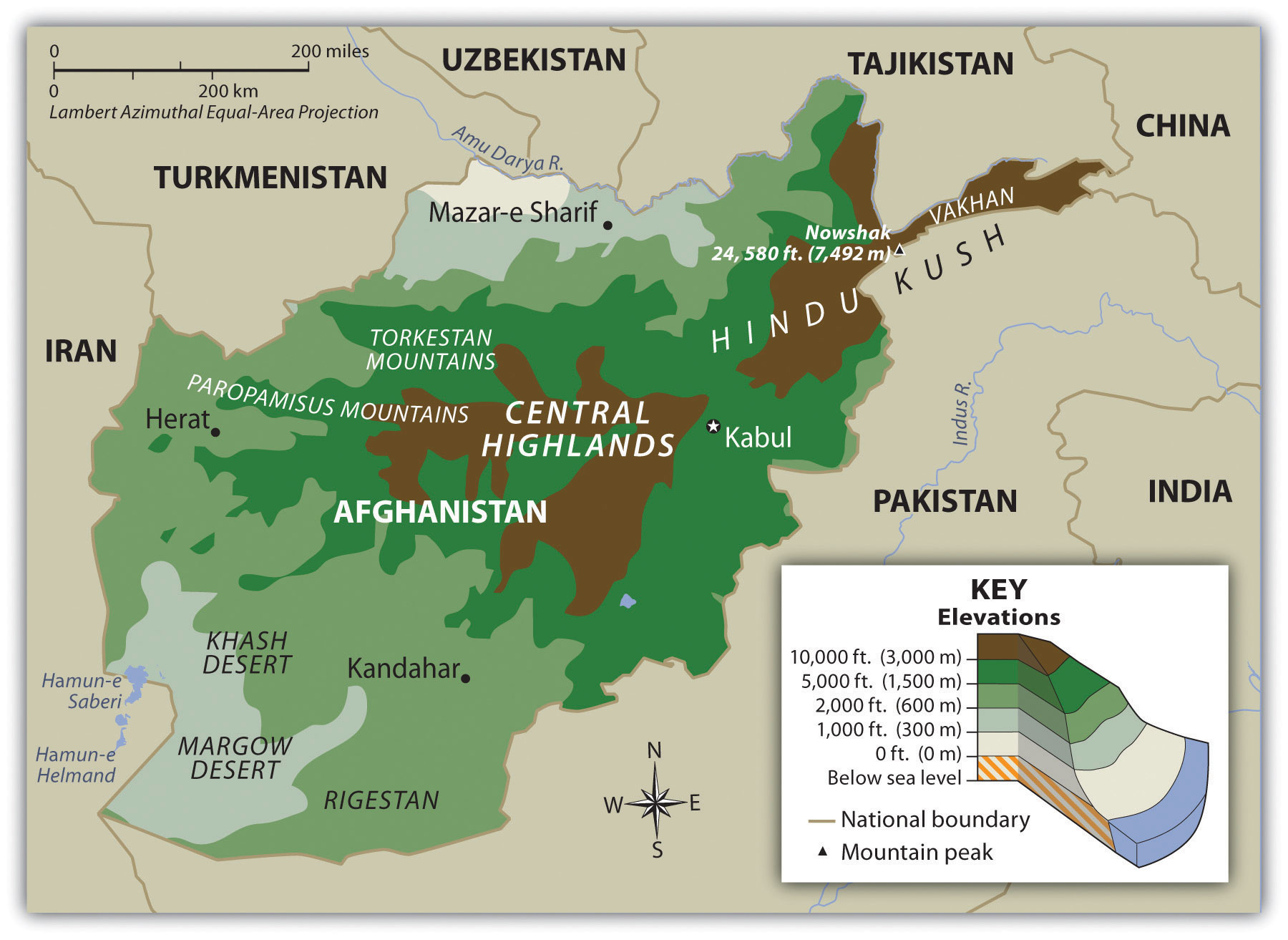
Of course, individual flight paths vary, so it is not easy – especially after a long passage of time – to determine exactly what one was seeing out of the window. Nevertheless, the map shows that this route passes over the Central Highlands to the west of Kabul. These mountains are an extension of the Hindu kush system and diminish in height as they stretch westward. Nevertheless, toward the middle, near Kabul, they still tower up from 4,500 to 6,000 meters; whilst further west, they attain heights of 3,500 to 4,000 meters.
Elevation map of Afghanistan
The highest mountain in Afghanistan, Noshaq, is the second highest peak of the Hindu Kush Range at 7,492 m (24,580 ft), and is situated on the border between Badakhshan Province in Afghanistan and Pakistan’s Khyber Pakhtunkhwa province. I.e. to the north of these flight routes.
Approaching Afghanistan from the East, 2008
I am always excited to see amazing geographical features from the air, and my heart sinks when the air stewardesses move through the cabin closing all the window shutters, so people can sleep. I am also surprised that more people are not as excited as I am to look down upon these natural wonders!
Afghanistan snow capped peaks, 2008
There is no doubt in my mind that Afghanistan must be a spectacular country to visit, were it not for the rather considerable security considerations.
Sunlit peaks of Afghanistan, 2015
I am just about old enough to remember the hippies going to India on the Hippy Trail. Old, brightly painted buses, full of marijuana-puffing hippies passed through Iran and Afghanistan on their way to India, and back! One of the consequences of this hippie culture was the Afghan coat, a long sheepskin coat with fleecy collars and sleeves. I never had one!
Afghanistan from the air, 2015
The hippie trail came to an end in the late 1970s, largely as a result of the Iranian Revolution and the Soviet invasion of Afghanistan. Alas, things have not really improved since then, and only between 15,000 and 20,000 tourist visas are issued annually, according to this Wikipedia website on tourism in Afghanistan.
Sunlit peaks of Afghanistan, 2015
Nevertheless, were it to become safe again, I am sure a lot of people would love to visit this country and see it’s amazing geography and meet the people.
Afghanistan snow capped peaks, 2008
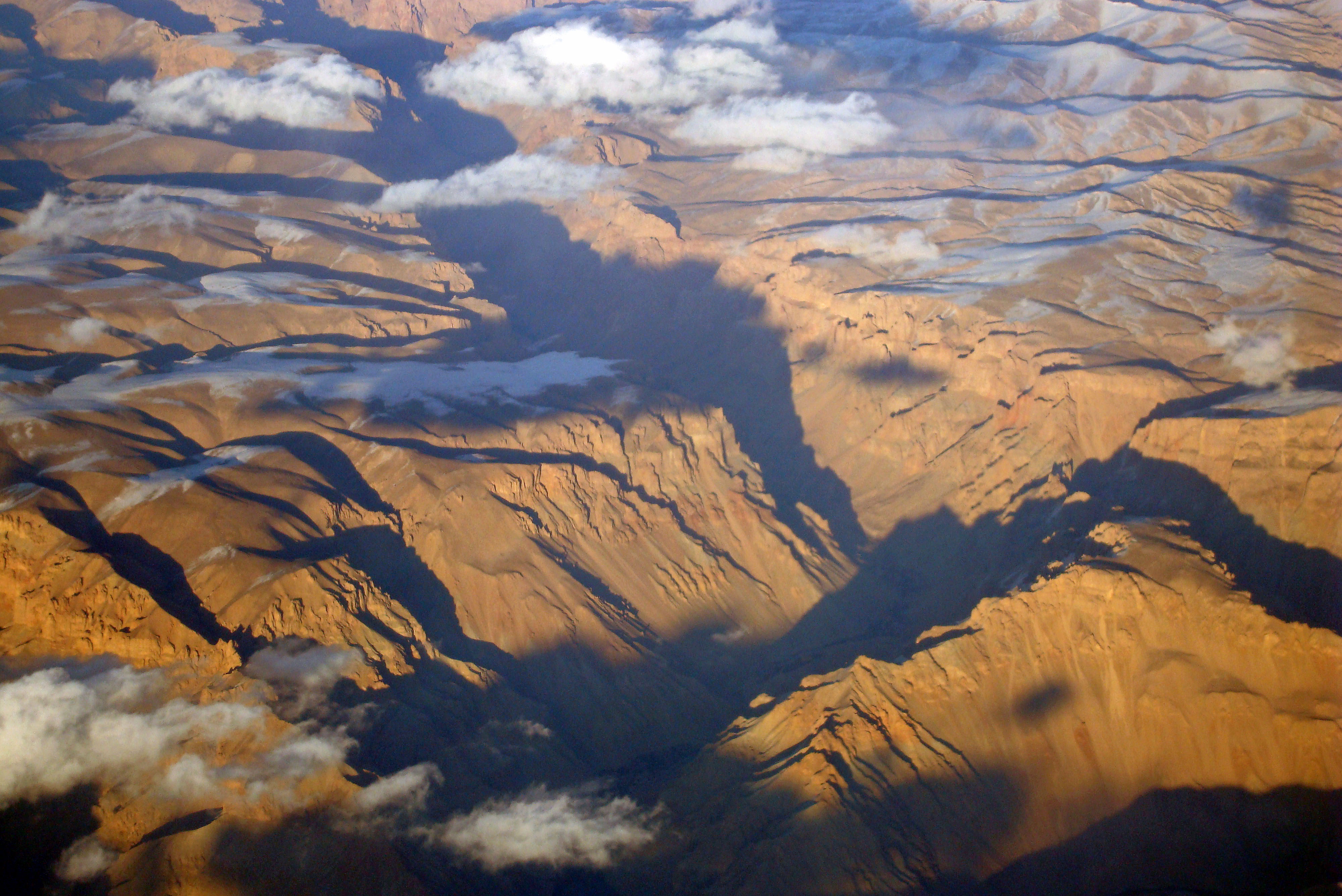
I will finish with one photo of an extraordinary feature , which I remember looking down on, and being awestruck: a giant canyon (below) that seemed to be as large as the Grand Canyon.
Huge canyon in Afghanistan, 2008
I am not 100% sure, but I think that this might have been part of the Band-e Amir National Park, which has been described as Afghanistan’s Grand Canyon.
Afghanistan from the air, 2008
One day, I am sure, peace will return to this nation and millions of tourists will visit these stunning places.
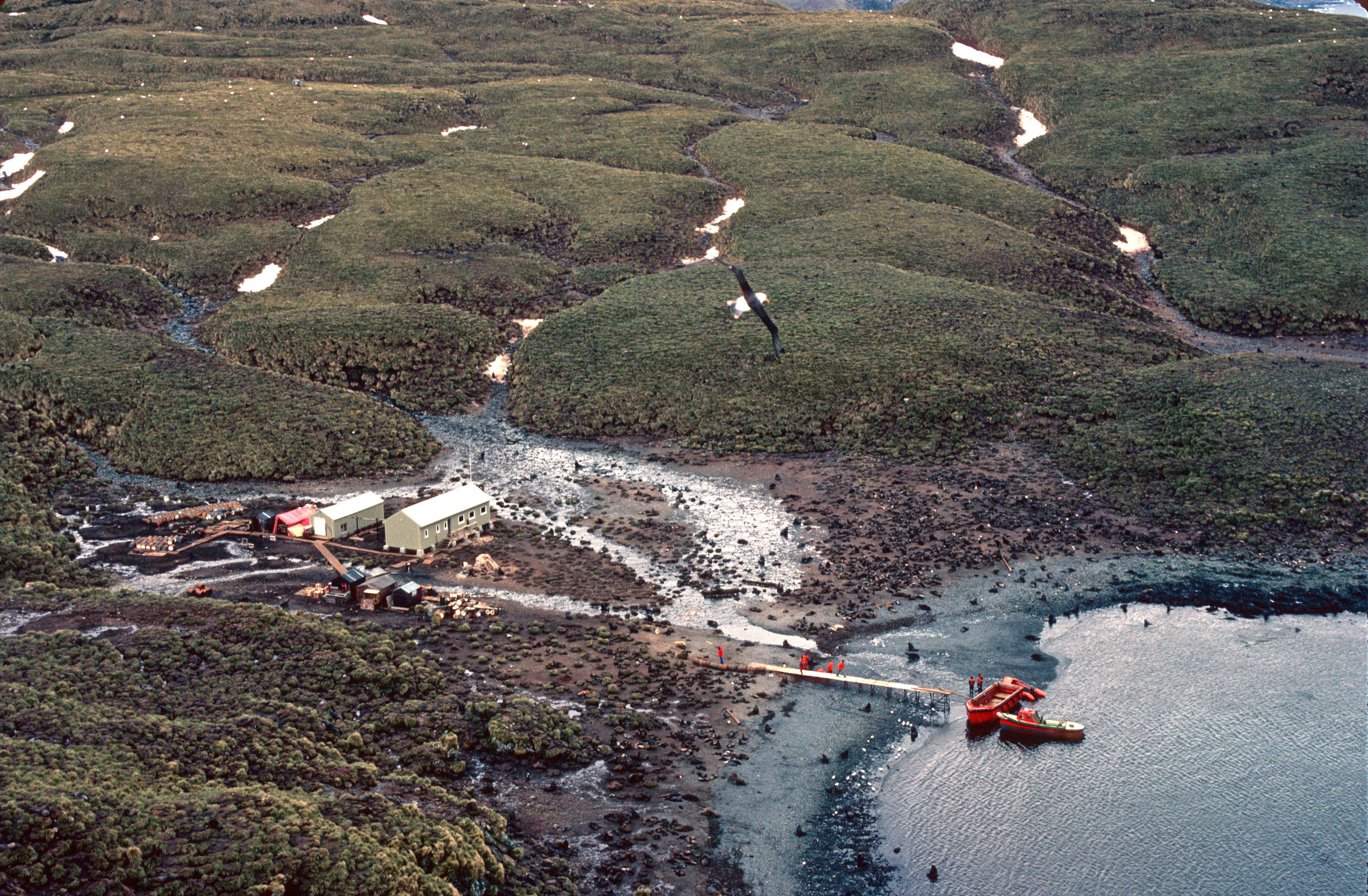
Bird Island Research Station, Bird Island, South Georgia Dec 1982
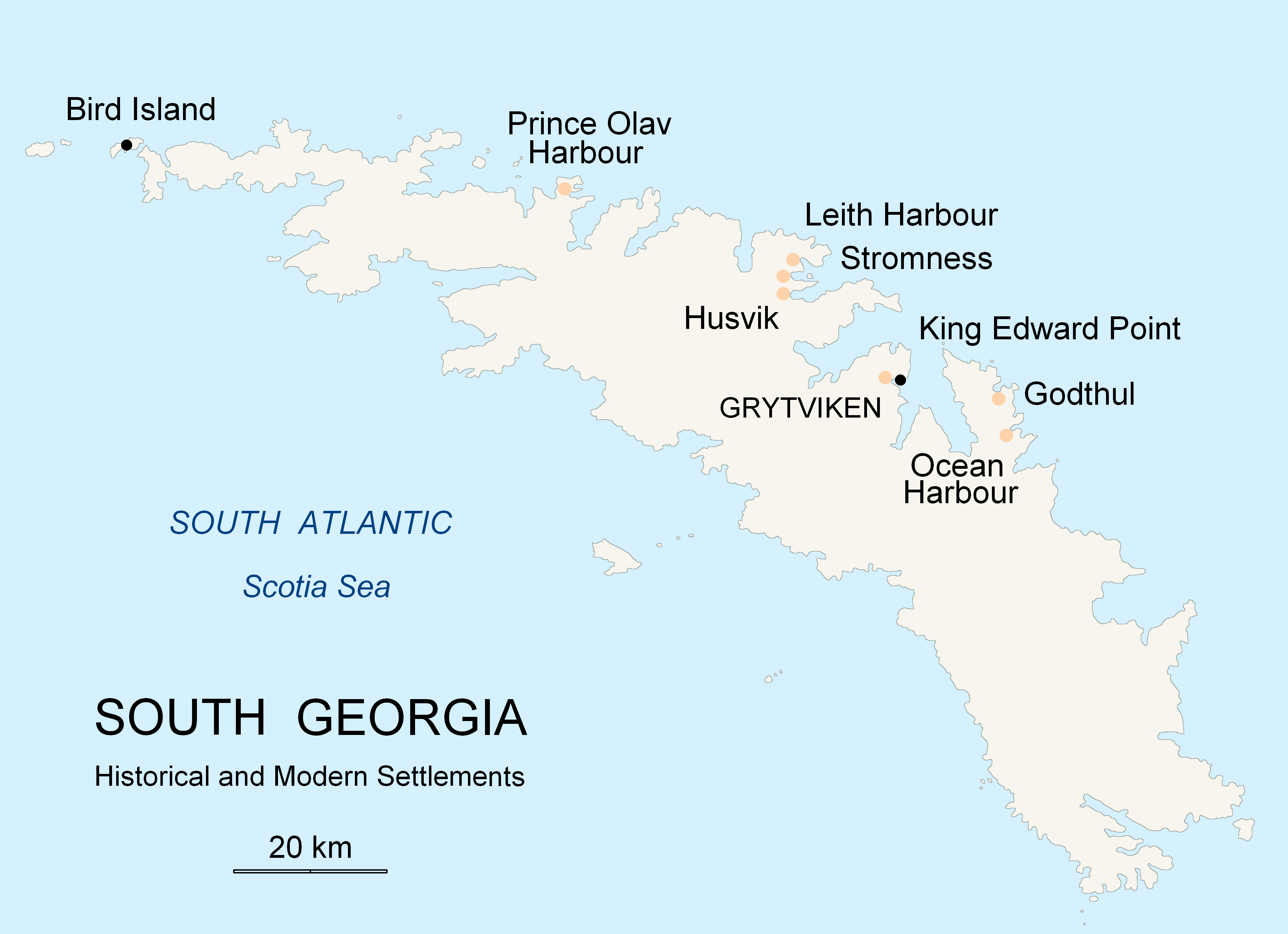
Bird Island lies off the north-west tip of South Georgia, (Lat. 54°0’0″S, Long. 38°2’59″W) (below).
Map of South Georgia (By Apcbg – Own work, Wiki CC BY-SA 3.0)
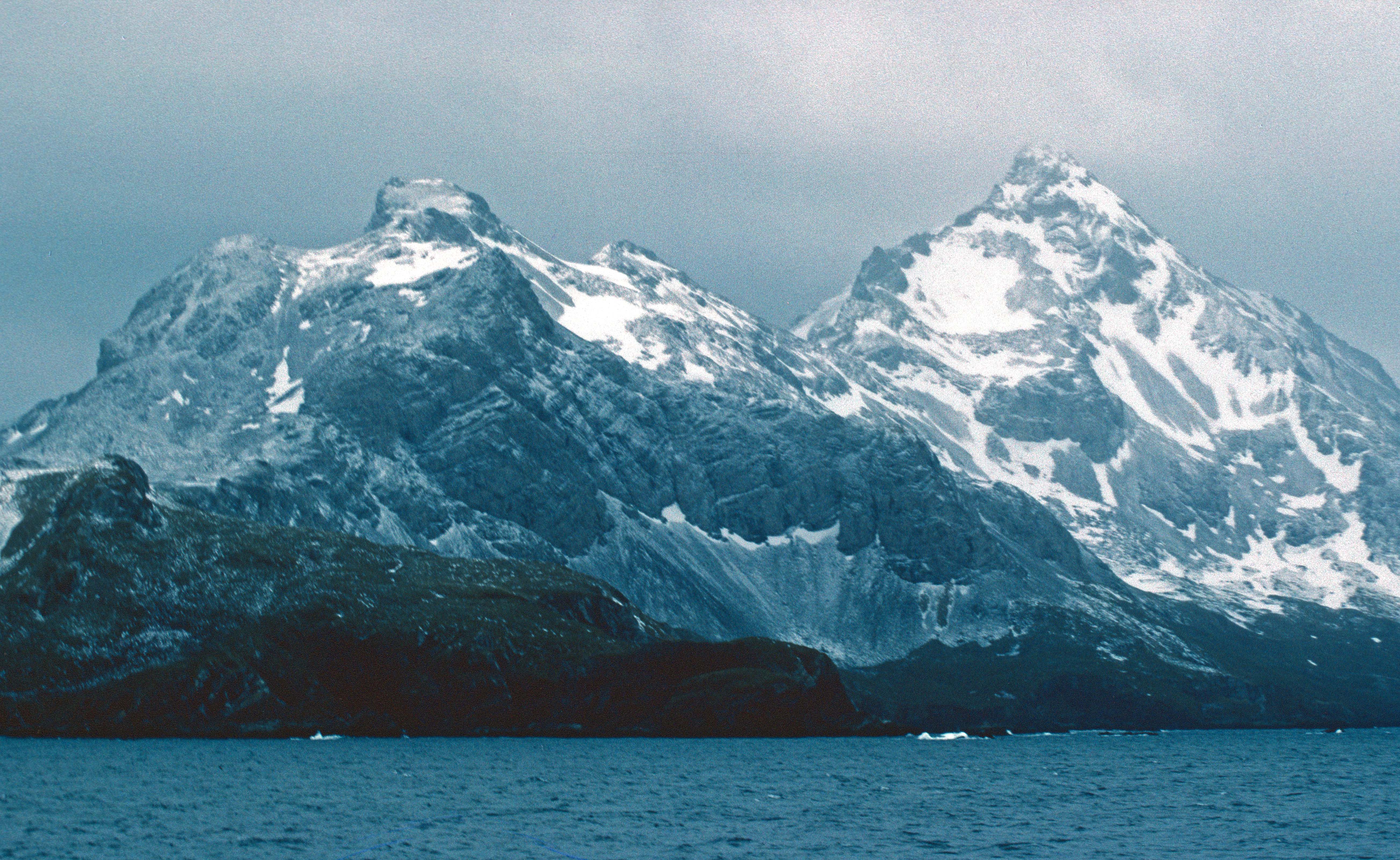
South Georgia near Bird Island (1982)
There is a small research station – Bird Island Research Station – which is run by the British Antarctic Survey, and is ideally suited – being right in the middle of a huge fur seal colony! – to study the amazing wildlife present on this small island, which is only about 3 miles long.
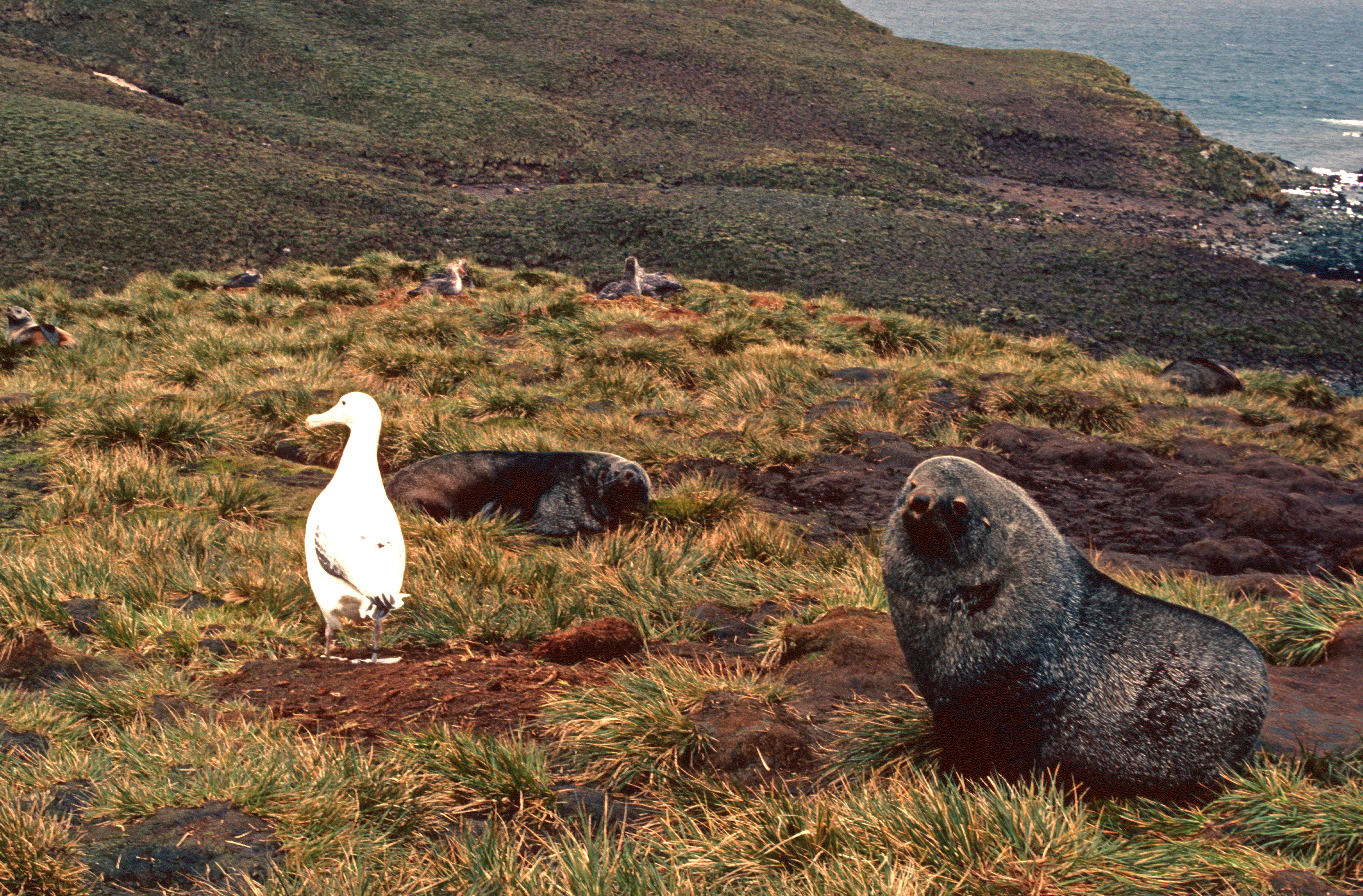
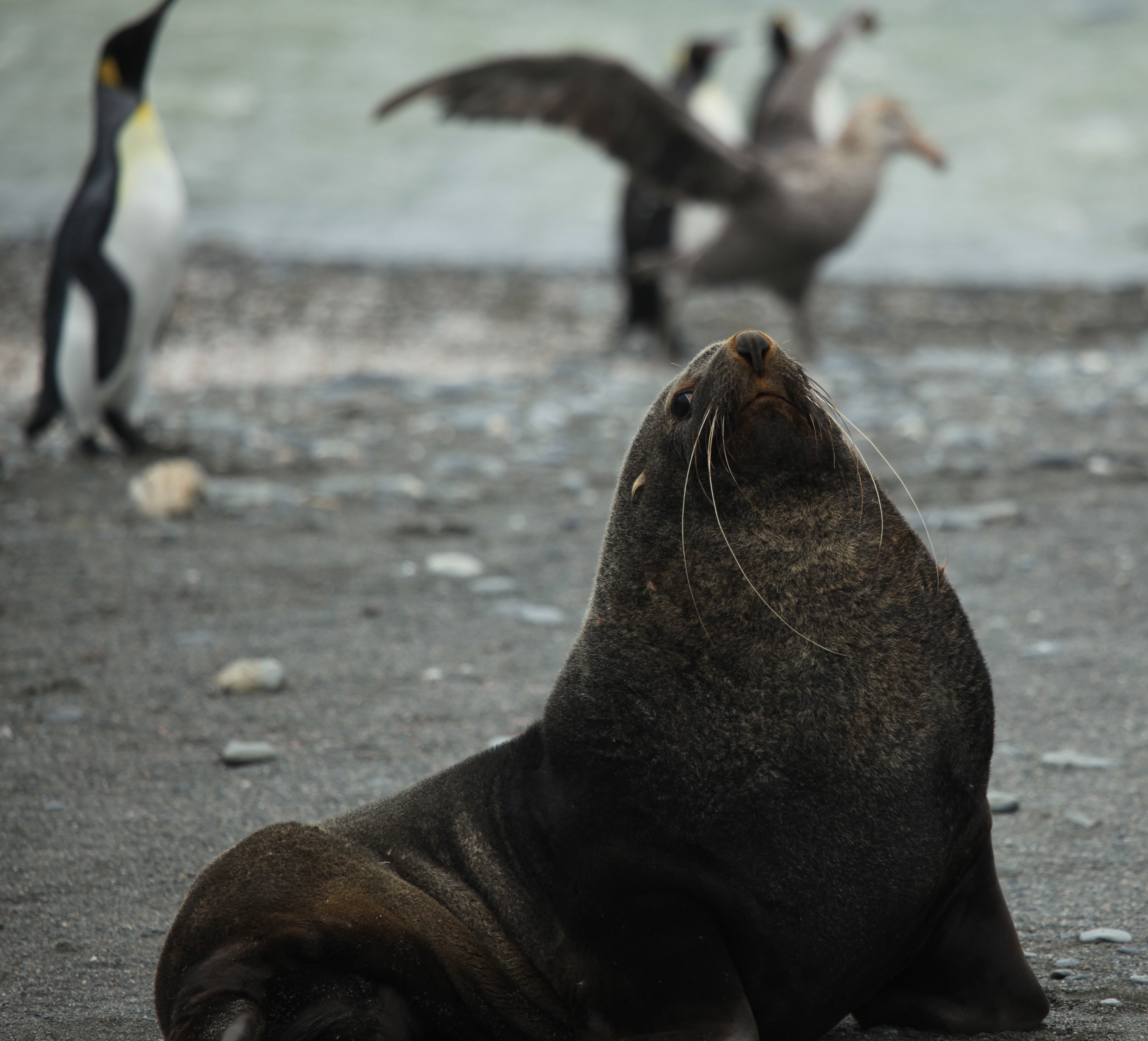
Antarctic fur seal and Wandering Albatross on Bird Island (1982)
According to Wikipedia (the figures may not be completely up-to-date) there are, on this small island:
65,000 Antarctic fur seals (around 1 for every 6 m2 (65 sq ft) of the island)
We arrived on Bird Island on 1st Dec 1982, having previously sailed all the way up to Montevideo and back, on the RRS John Biscoe, to collect more personnel to take south. (N.B. it was not possible for civilians to fly via the Falkland Islands at the time). See previous blog here.
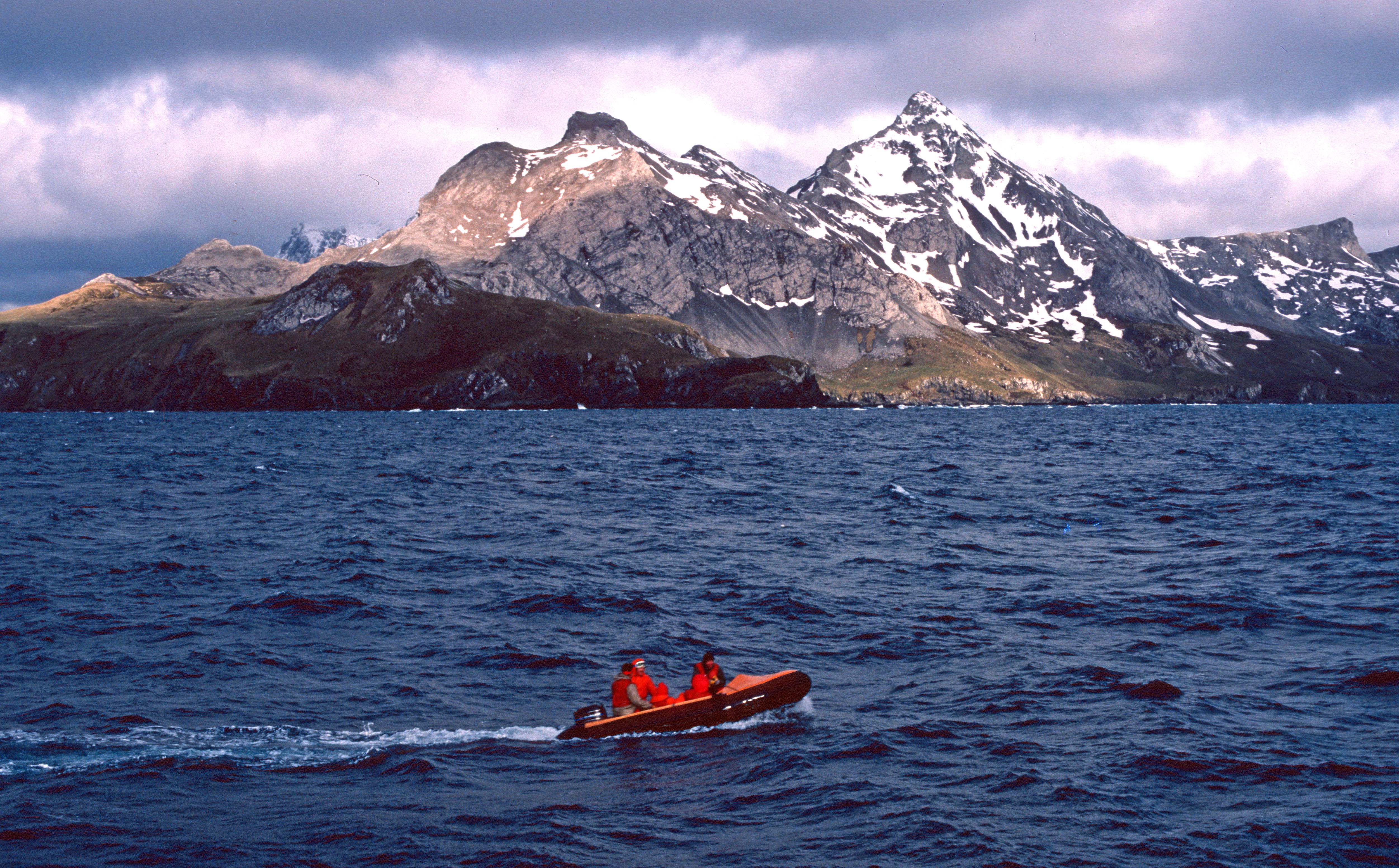
South Georgia near Bird Island (1982)
Although we had a limited time at this location, and the priority was to resupply the base (see below), I was very keen to get ashore and see some of the wildlife.
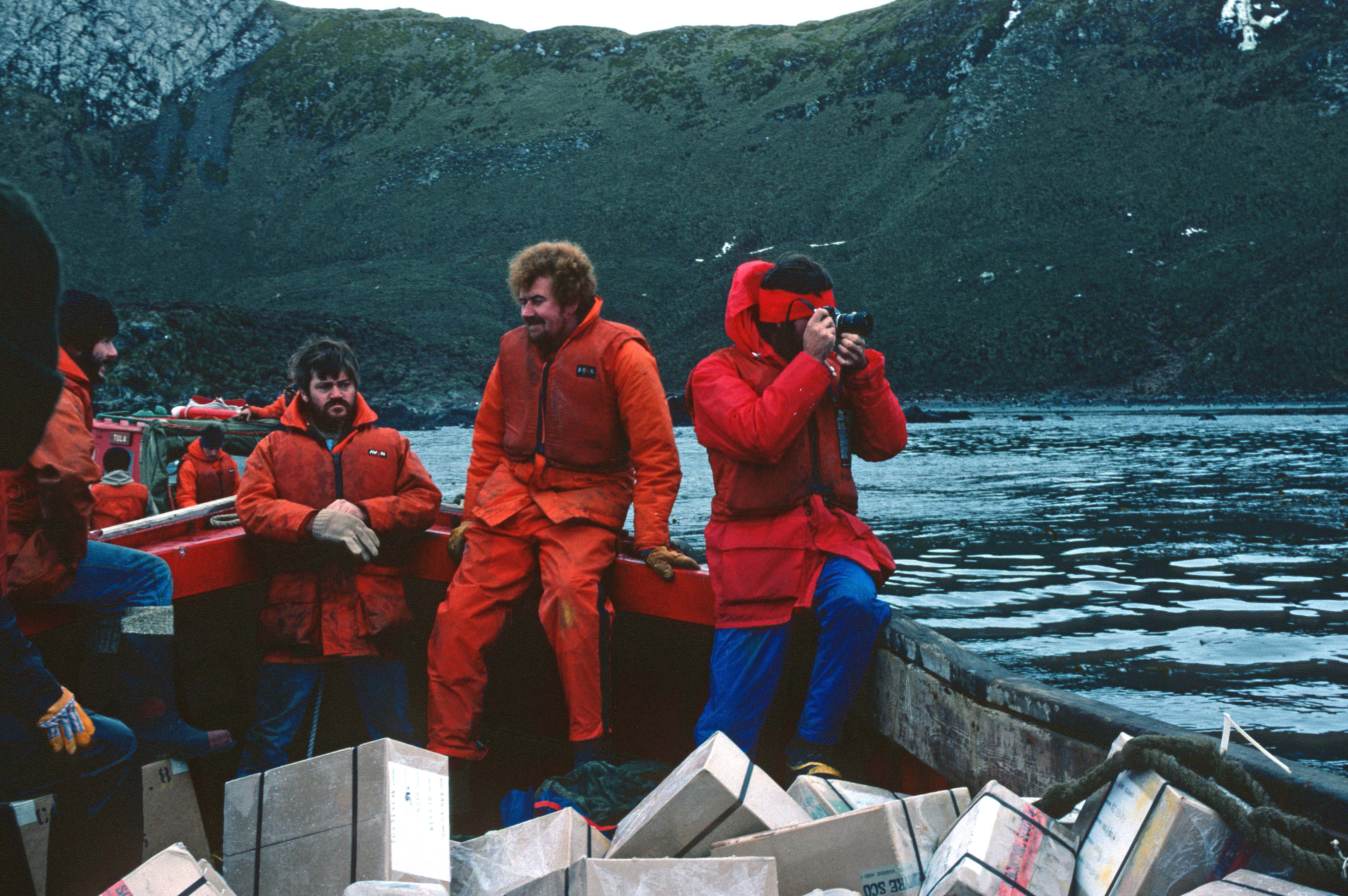
Going ashore in the scow, Bird Island
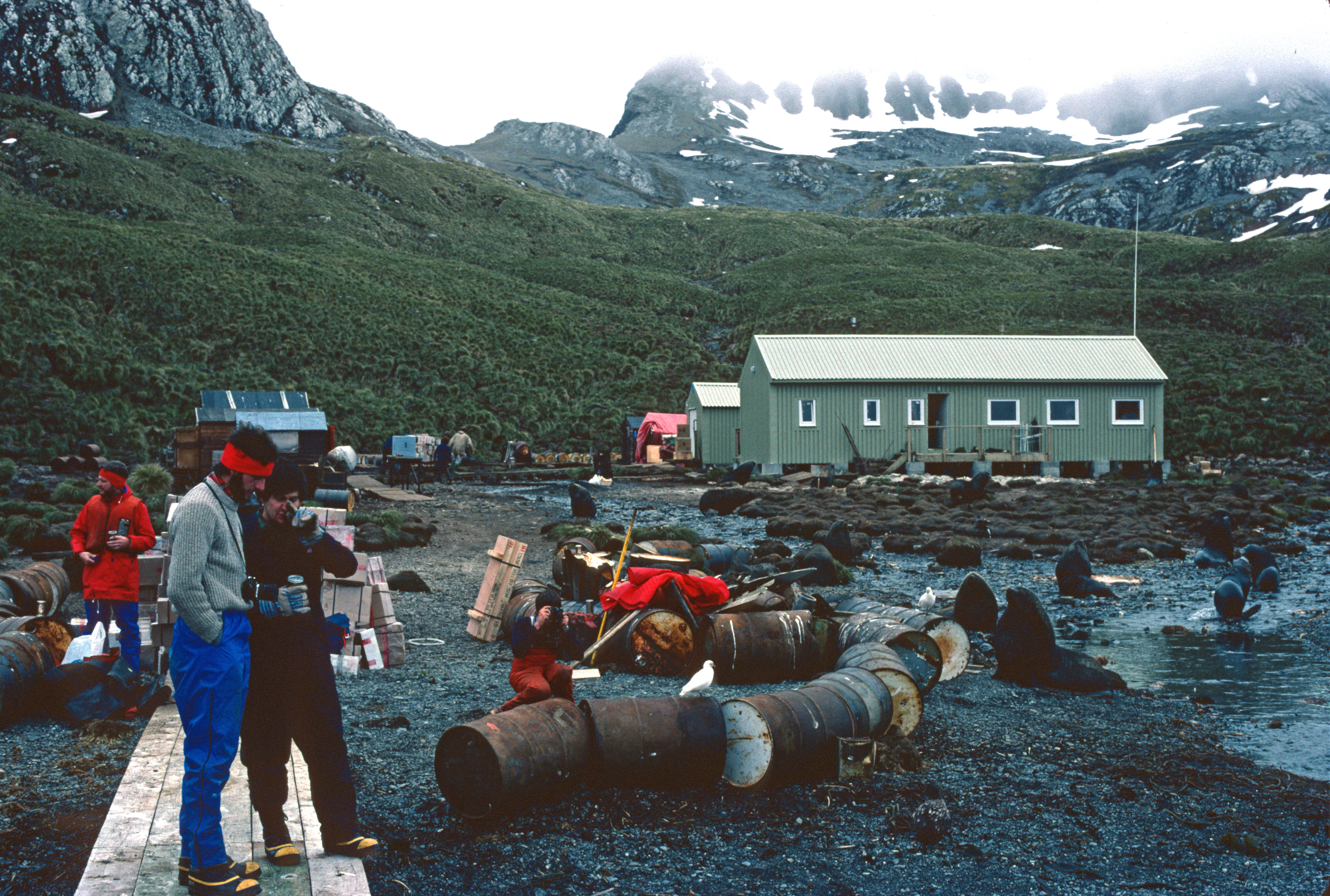
We all mucked in and helped with the unloading. Parcels and supplies were carried from the scow (above), up the beach and along a temporary plank walk (below) to the base.
Bird Island, South Georgia 2 Dec 1982
Because we were walking through a breeding colony of Antarctic fur seals, the large, territorial males had to be temporarily walled off behind a row of oil drums, to dissuade them from sinking their teeth into our thighs!
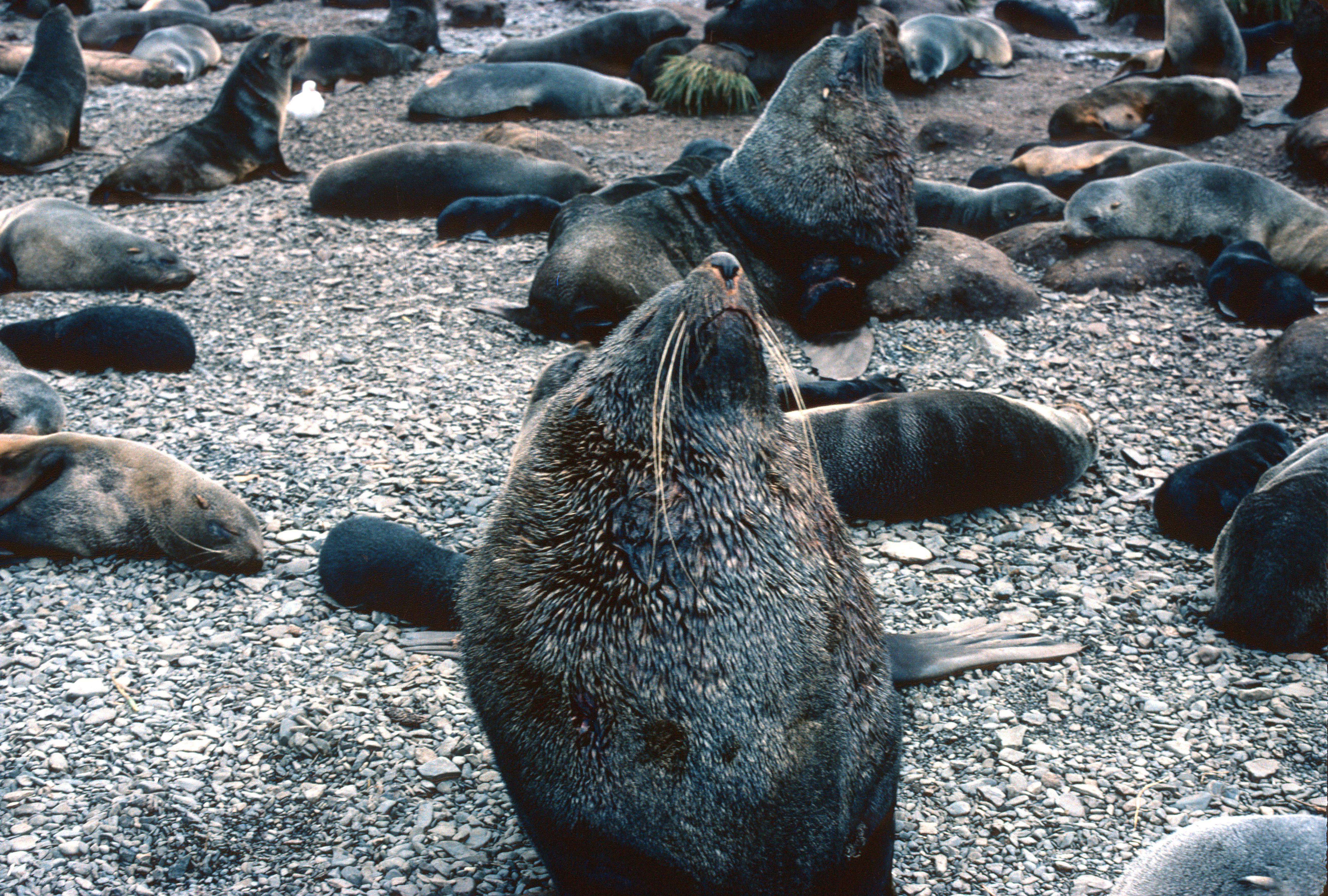
Antarctic fur seal (Arctocephalus gazella) colony, Bird Island
The large males are very splendid fellows in the middle of their large harems (above).
Antarctic Fur Seal (Liam Quinn Flickr (CC BY-SA 2.0)
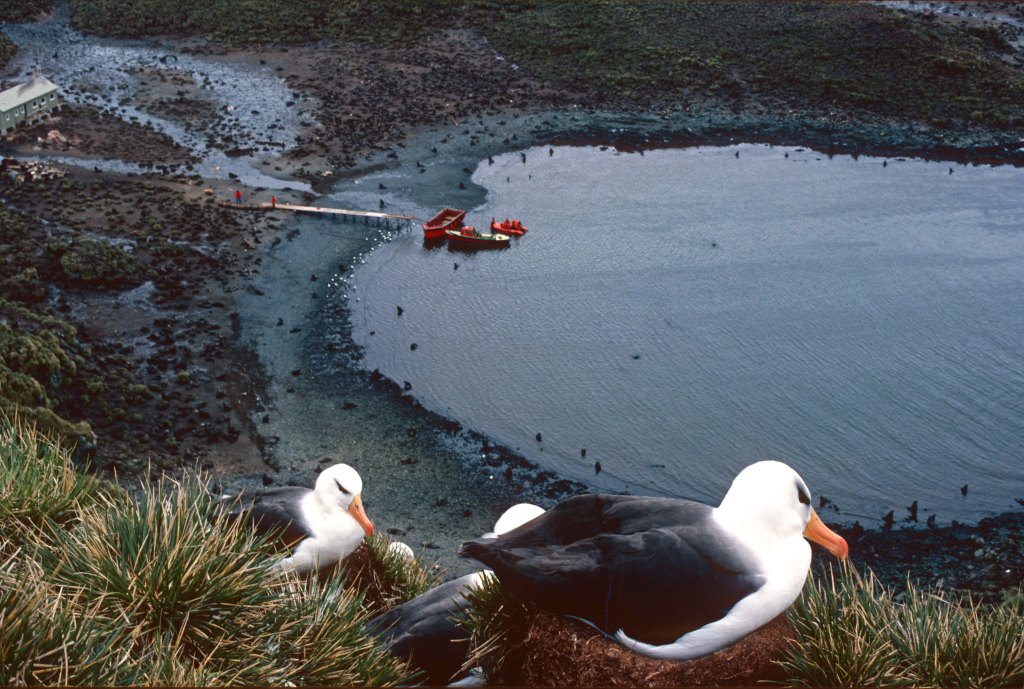
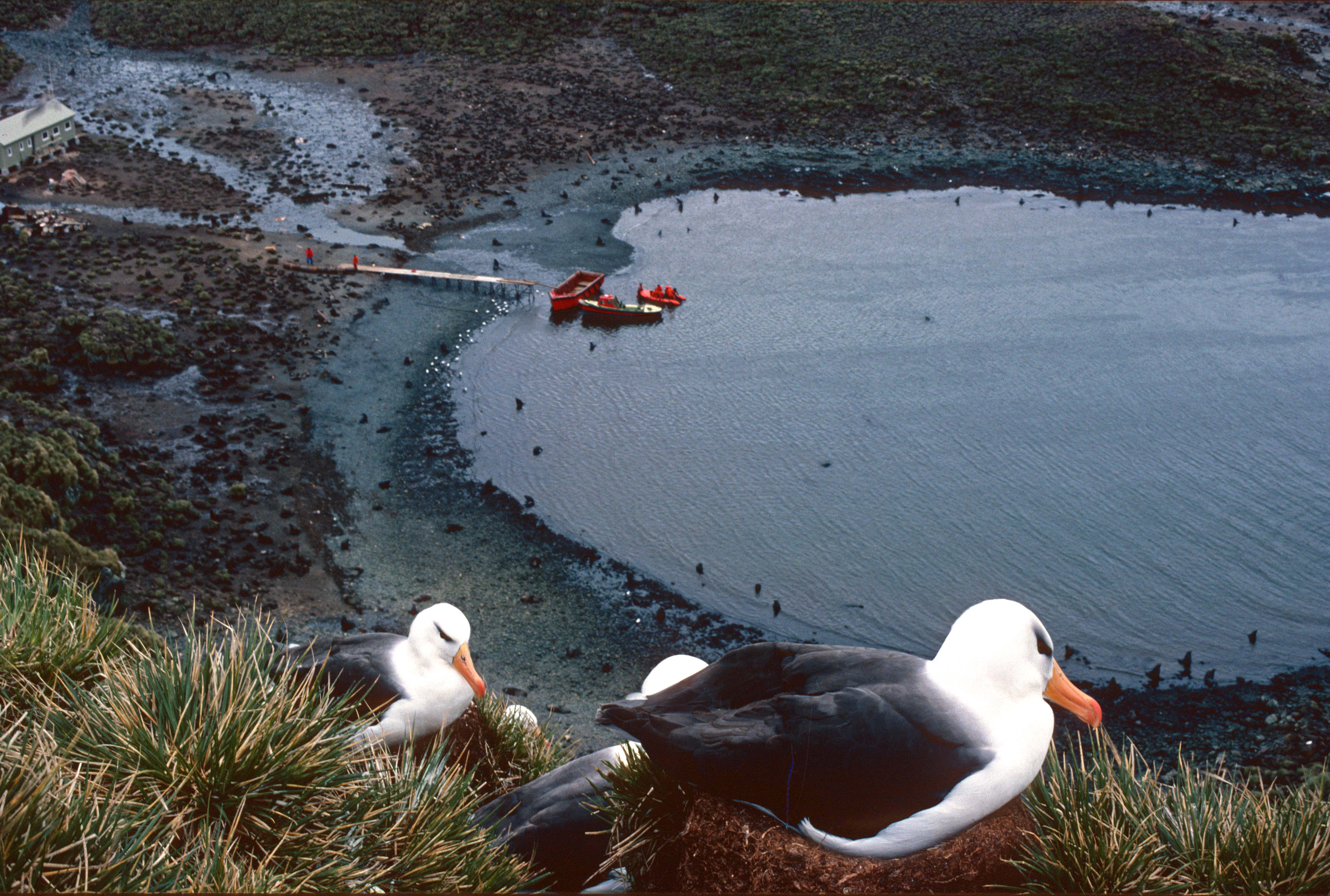
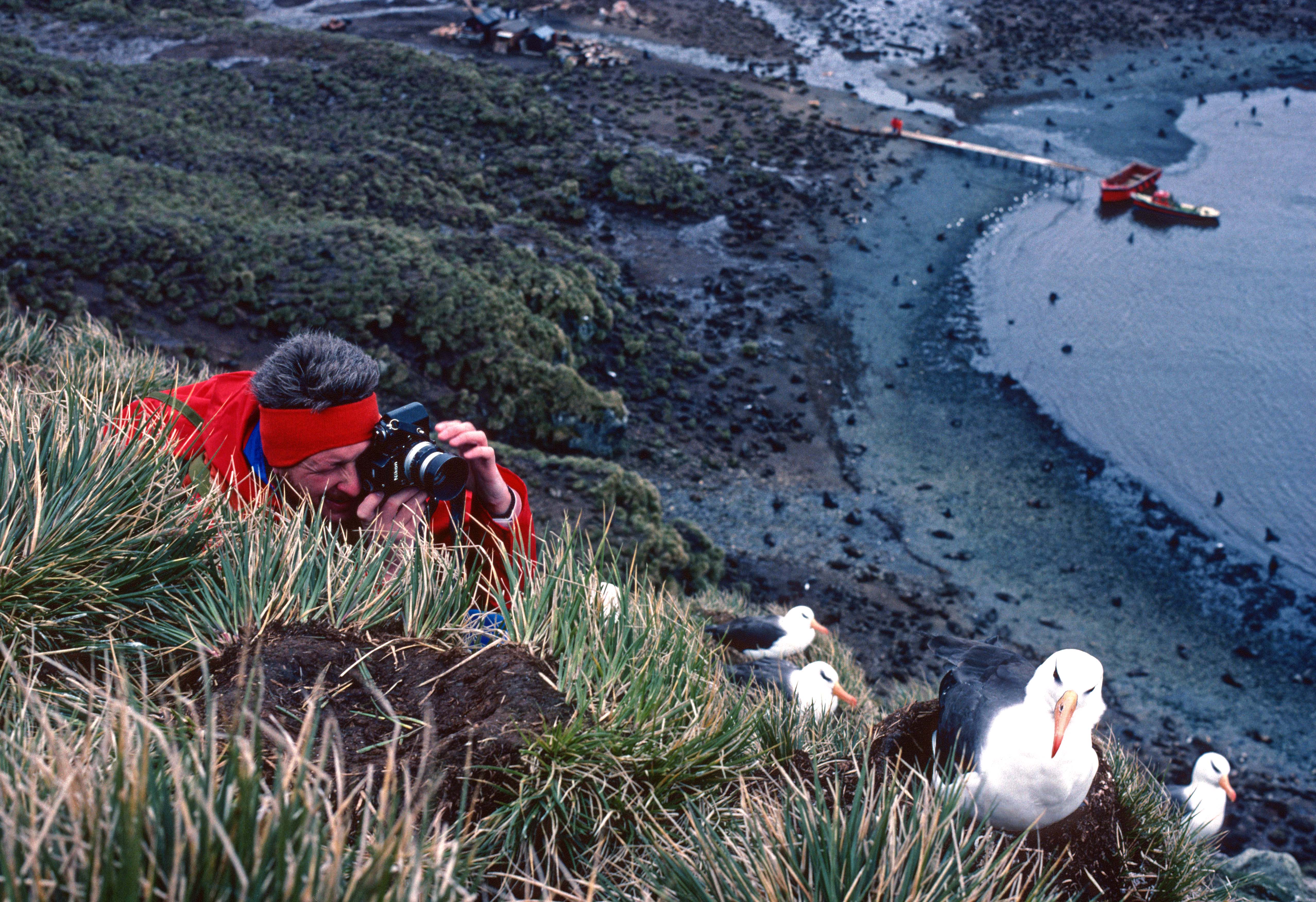
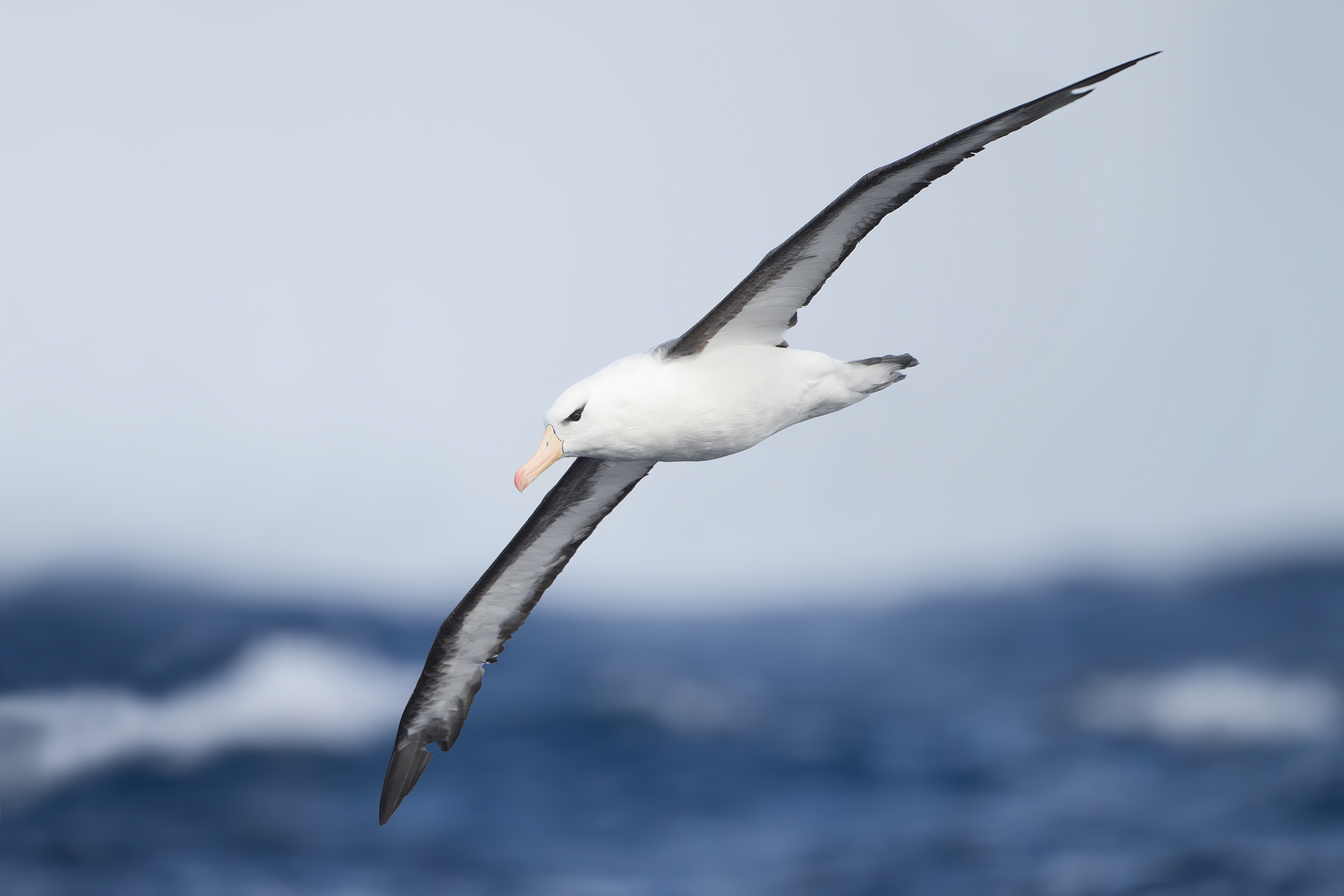
Once we had finished unloading, some of us climbed up the nearby hill to photograph some of the Black-browed albatross (Thalassarche melanophris) which were nesting above the base (below).
Black-browed albatross (Thalassarche melanophris) Bird island, South Georgia
We probably came too close to these birds than we should have done (below), but none of us had long lenses in those days!
Black-browed albatross (Thalassarche melanophris) Bird island
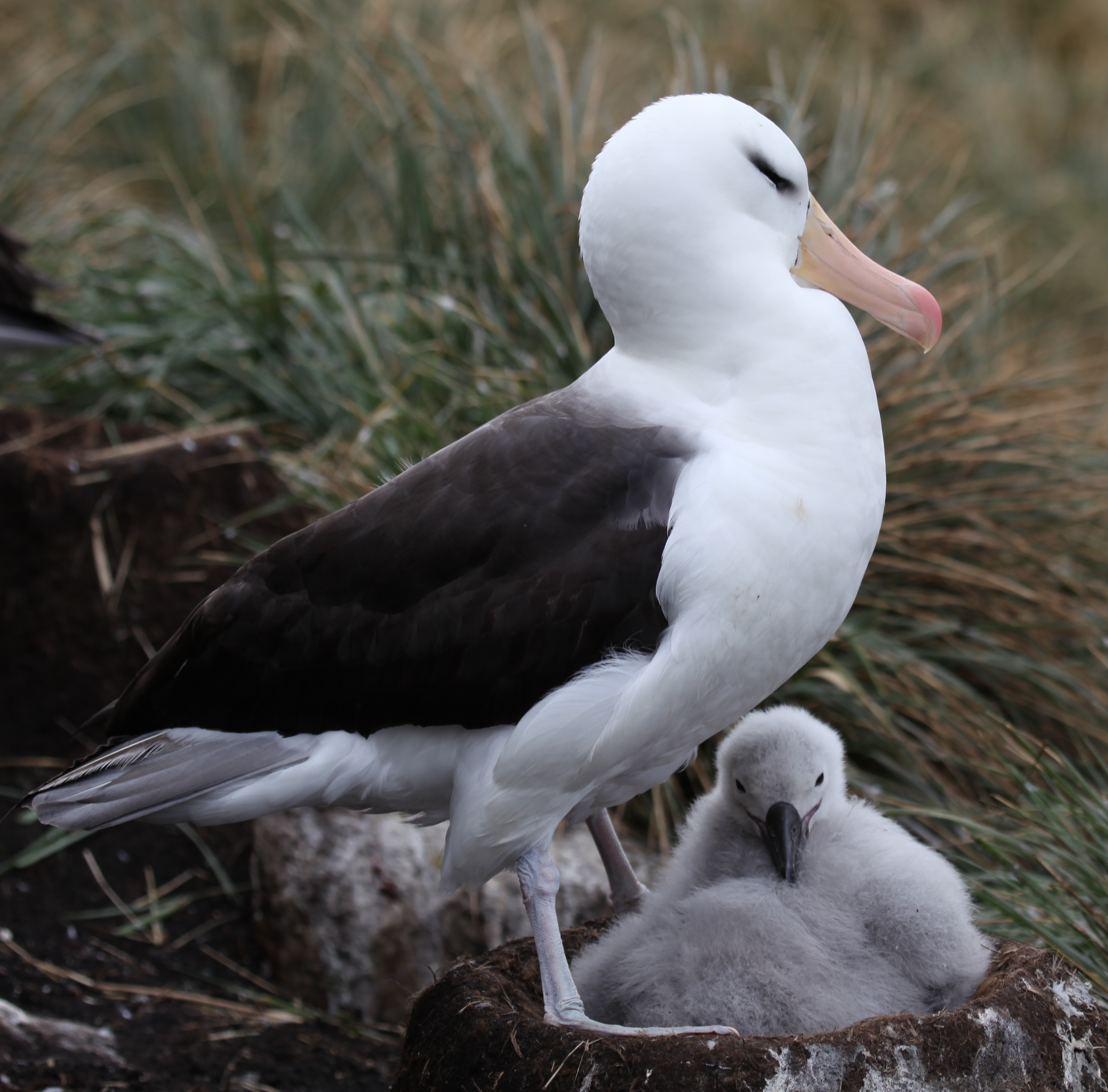
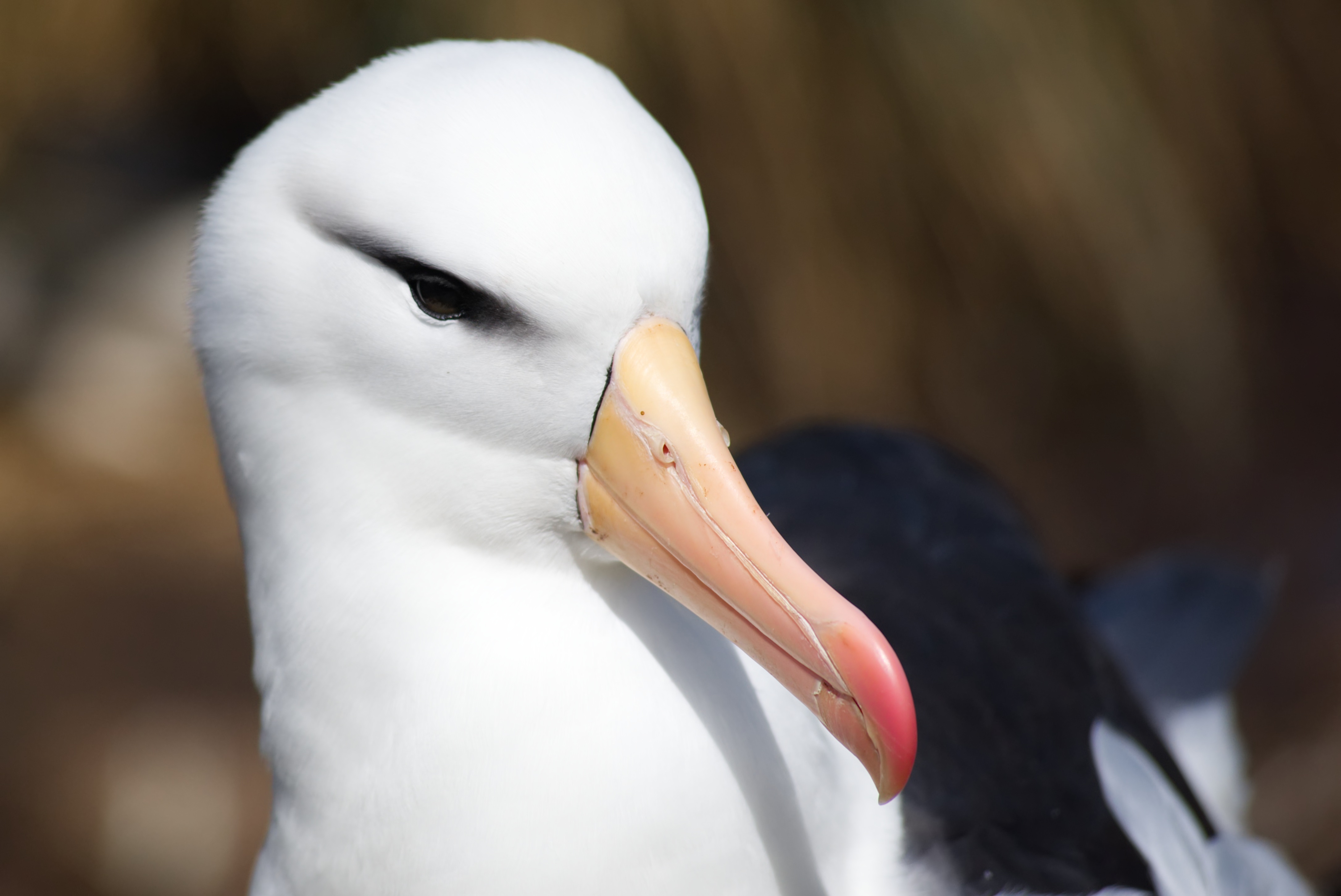
I will include a few more recent pictures of these graceful birds (below) which some photographers have donated to the Creative Commons, meaning that they are licensed to copy and in any medium or format (CC BY-SA 2.0). Otherwise photographs are usually ‘All Rights Reserved’ and cannot be copied and reused without permission (and often with payment) from the photographer. I suspect that most people who cut and paste images off the internet are unaware of these rules; but that’s getting off the point. It is just great that some photographers allow their images to be used freely, like some shown in this blog.
Black-browed Albatross (Thalassarche melanophrys) On West Point Island in the Falkland Islands. Liam Quinn from Canada (Wiki CC BY-SA)
Black-browed albatross, falkland islands (Image by Claudia Kirchberger from Pixabay)
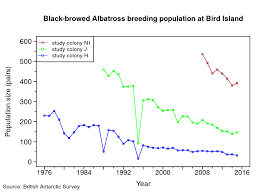
Unfortunately, the Black-browed albatross population on Bird Island has been in a long-term decline in breeding numbers since the mid-1970s (see graph below). It shows how numbers of birds have declined markedly since I visited in 1982.
Population trend of the Black-browed Albatross at Bird Island
Tragically they are often “caught on fishing hooks (bycatch or incidental catch), by longline trawlers. Read more about this terrible crisis which is decimating albatross numbers, here and here.
Another majestic bird breeding on Bird Island is the Wandering Albatross (Diomedea exulans) (below).
Wandering albatross (Diomedea exulans) Photo by Bernard Spragg. NZ (Flickr CC) CC0 1.0 Universal (CC0 1.0)
There was a Wandering albatross chick wandering about the base, getting in the way of our unloading, which had to be persuaded to go elsewhere for the day!
Wandering albatross (Diomedea exulans) chick, Bird Island, South Georgia, 1982
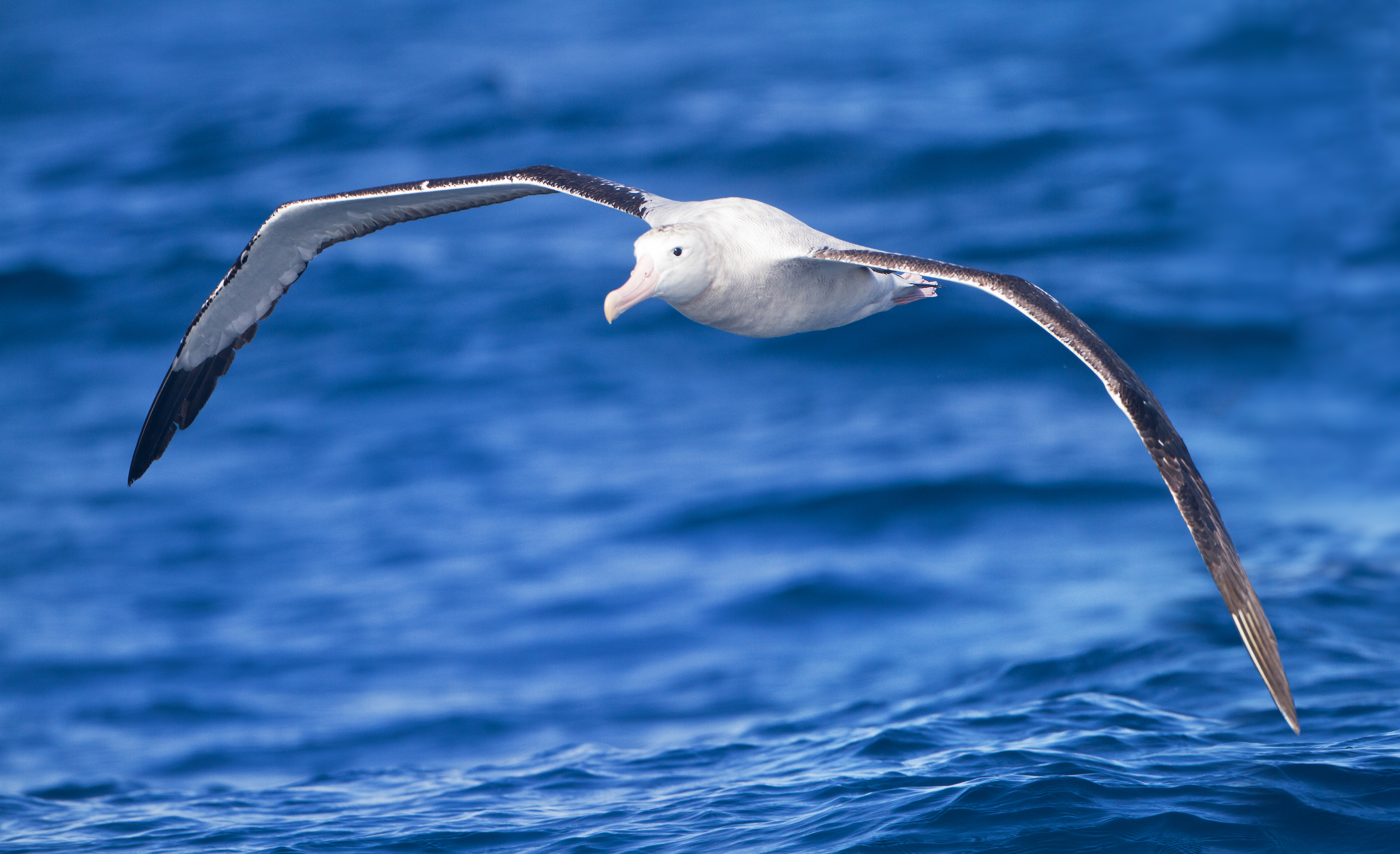
The wandering albatross has the longest wingspan of any living bird, typically ranging from 2.51 to 3.5 m (8 ft 3 in to 11 ft 6 in).
Wandering albatross (Diomedea_exulans) in flight (By By JJ Harrison Own work, Wiki CC BY-SA 3.0. See his website: https://www.jjharrison.com.au/)
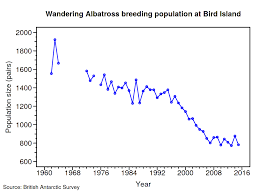
Unfortunately, it’s the same tragic story again, with Wanderers declining in numbers between the mid 1990s and the mid 2000s (>4% per annum), although the rapid downturn appears to have stabilized, with numbers remaining relatively stable over the last 7-8 years, “albeit at a substantially reduced level compared with the number of breeding pairs present in the 1960s and with no signs yet of a recovery in numbers.” (See graph and reference below).
Population trend of the Wandering Albatross at Bird Island
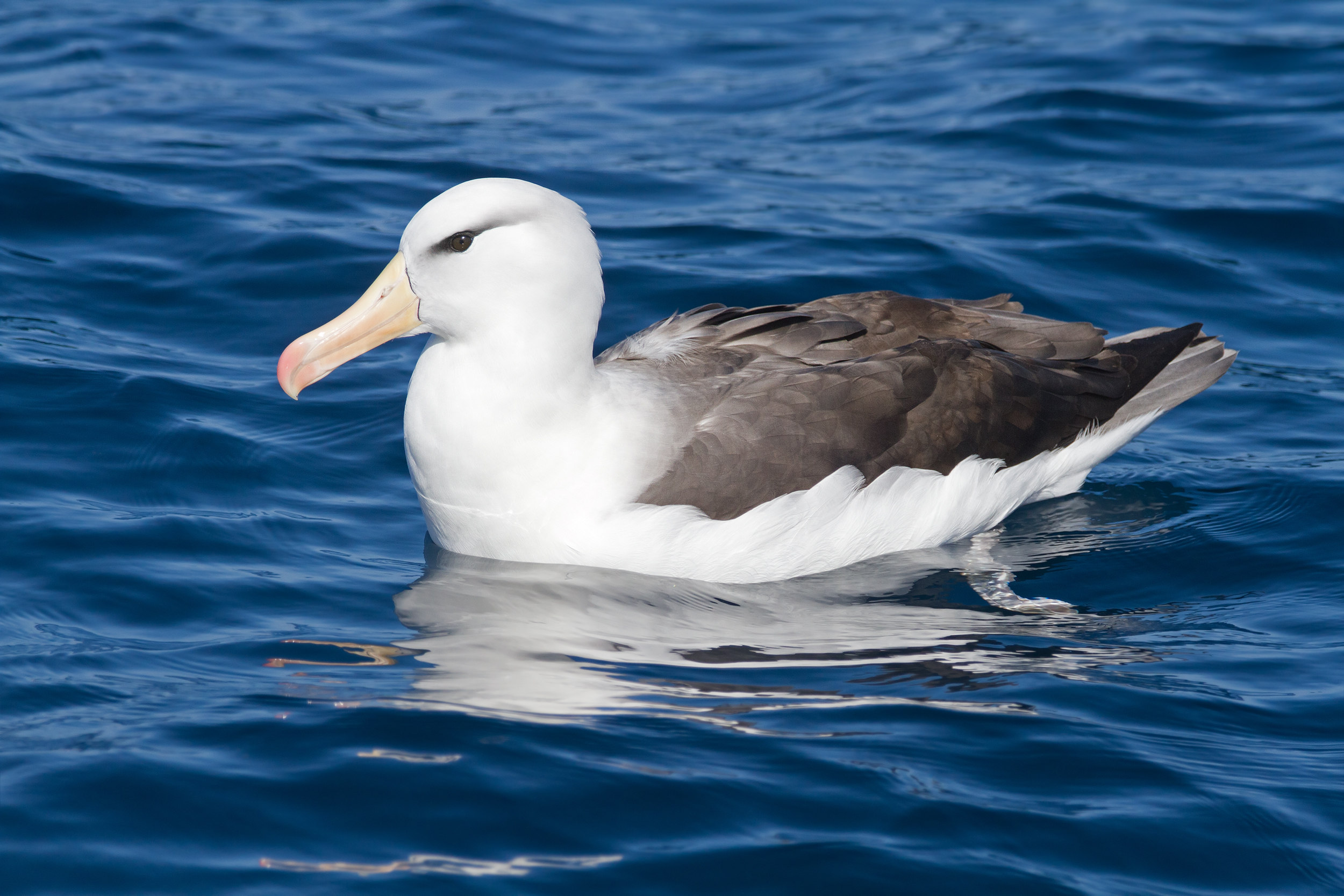
Black-browed Albatross (Thalassarche melanophrys) By JJ Harrison Own work, Wiki CC BY-SA 3.0. See his website: https://www.jjharrison.com.au/)
We can only hope that with more people visiting the Antarctic, and becoming aware of the fact that these magnificent creatures are getting caught up on fishing lines, or ingesting our plastic rubbish floating in the oceans, that more is done to say the thousands that are getting killed each year. Especially by illegal fishing: see here and here.
Black-browed Albatross (Thalassarche melanophrys) in flight (By JJ Harrison Own work, Wiki CC BY-SA 3.0, see his website: https://www.jjharrison.com.au/)
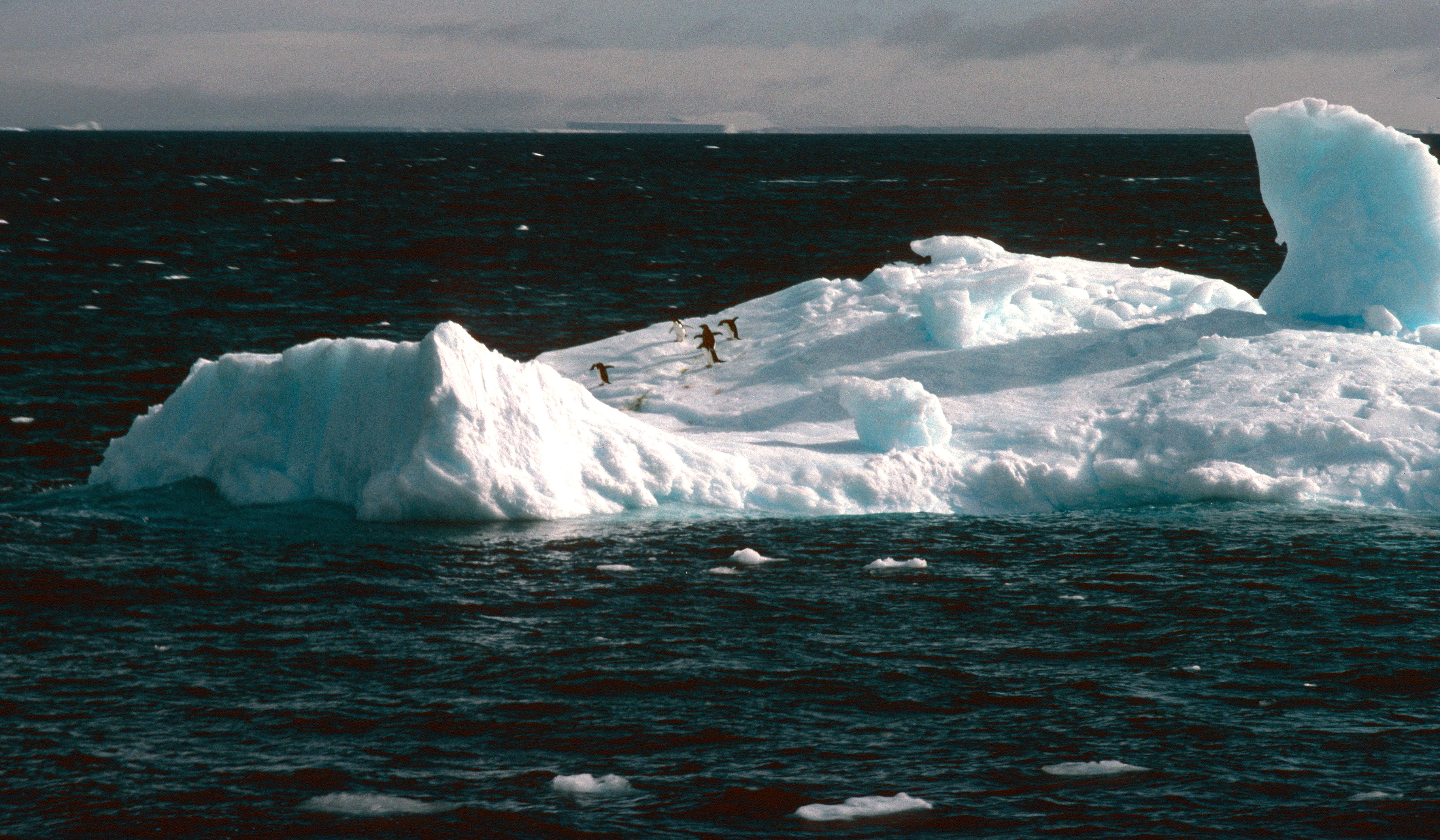
Adelie penguins on an ice floe, Antarctic Peninsula
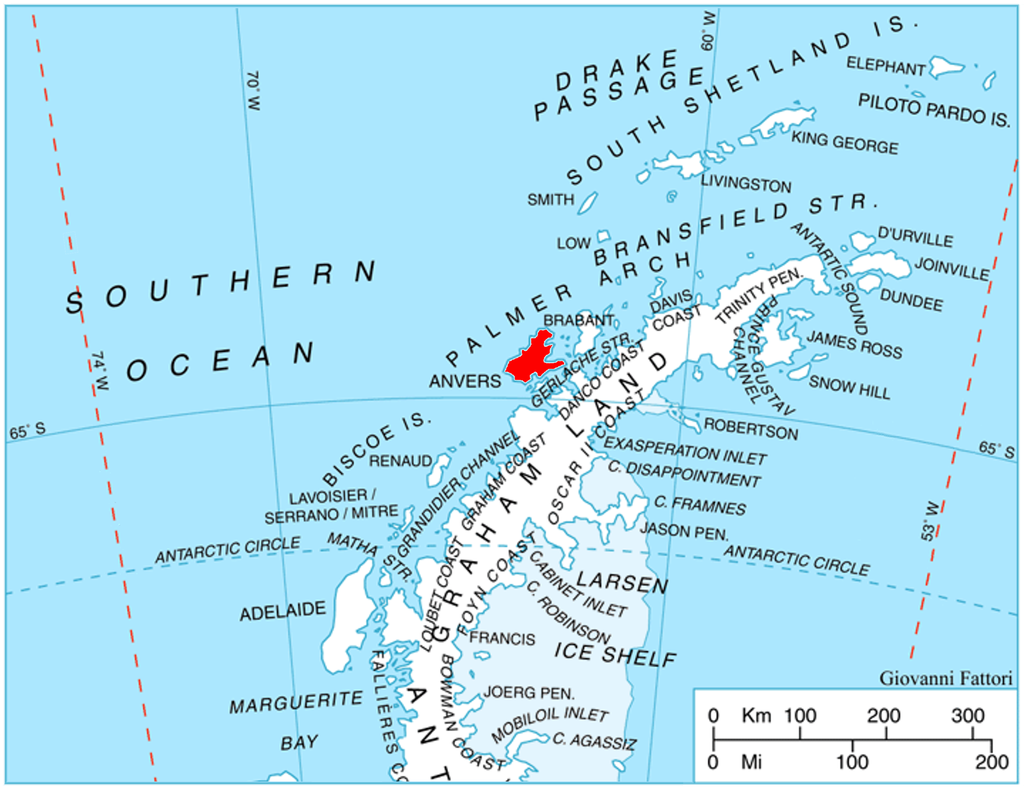
Continuing my journey aboard the British Antarctic Survey ship, RRS John Biscoe, in 1982, we left James Ross Island, heading around the Antarctic Peninsula towards Wiencke Island in the Palmer Archipelago of Antarctica. Our first destination was to be Damoy Point, a transit point, where personnel and stores were unloaded and then flown further south to the BAS research station, Rothera (Station R).
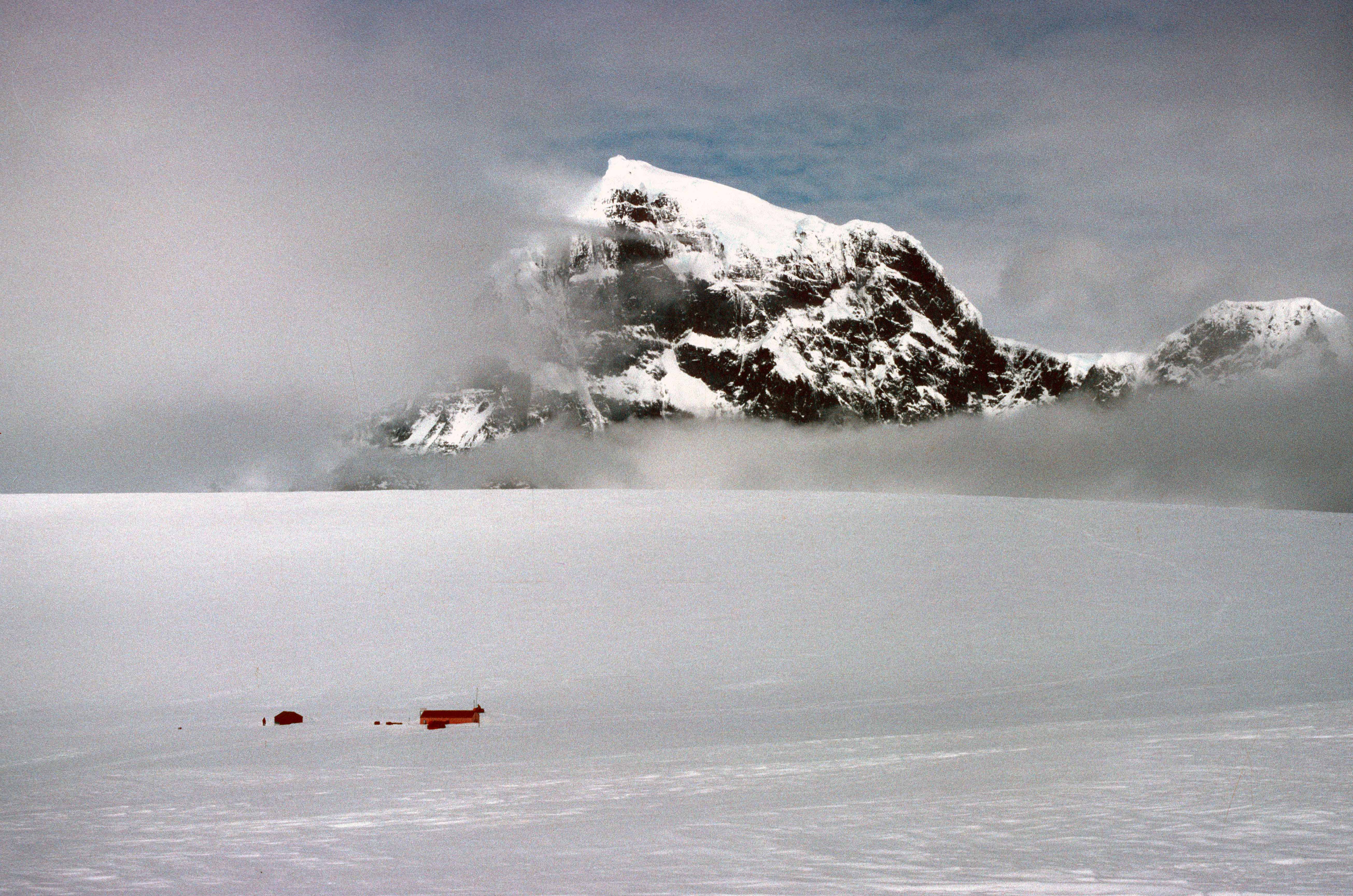
Damoy Hut, Dorian Bay, Wiencke Island. 1982
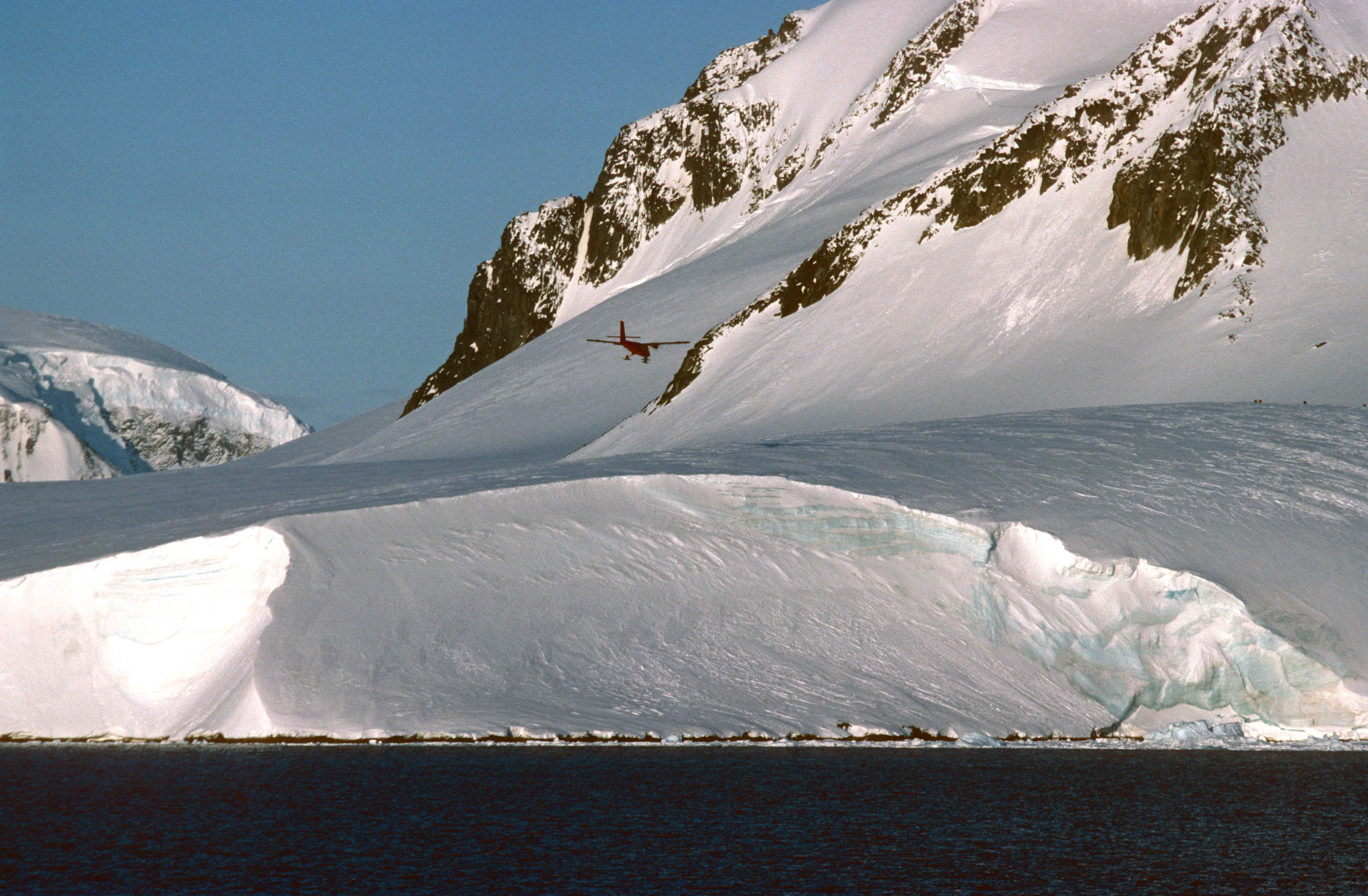
There was very little to see at Damoy (64 deg and 49 mins south) just two tiny little huts (above) and a temporary snow runway on the glacier above (see below).
Twin Otter landing on the glacier at Damoy Point, Nov 1982
It was not possible to sail all the way south to Rothera (67 deg 34 mins) this early in the season, due to sea ice, so people and supplies were flown down by aircraft. The De Havilland Twin Otters (below) flew down from Canada every season, all the way down South America and across the Drake Passage to the Antarctic Peninsula.
BAS Twin Otter (Alan Light Wiki CC)
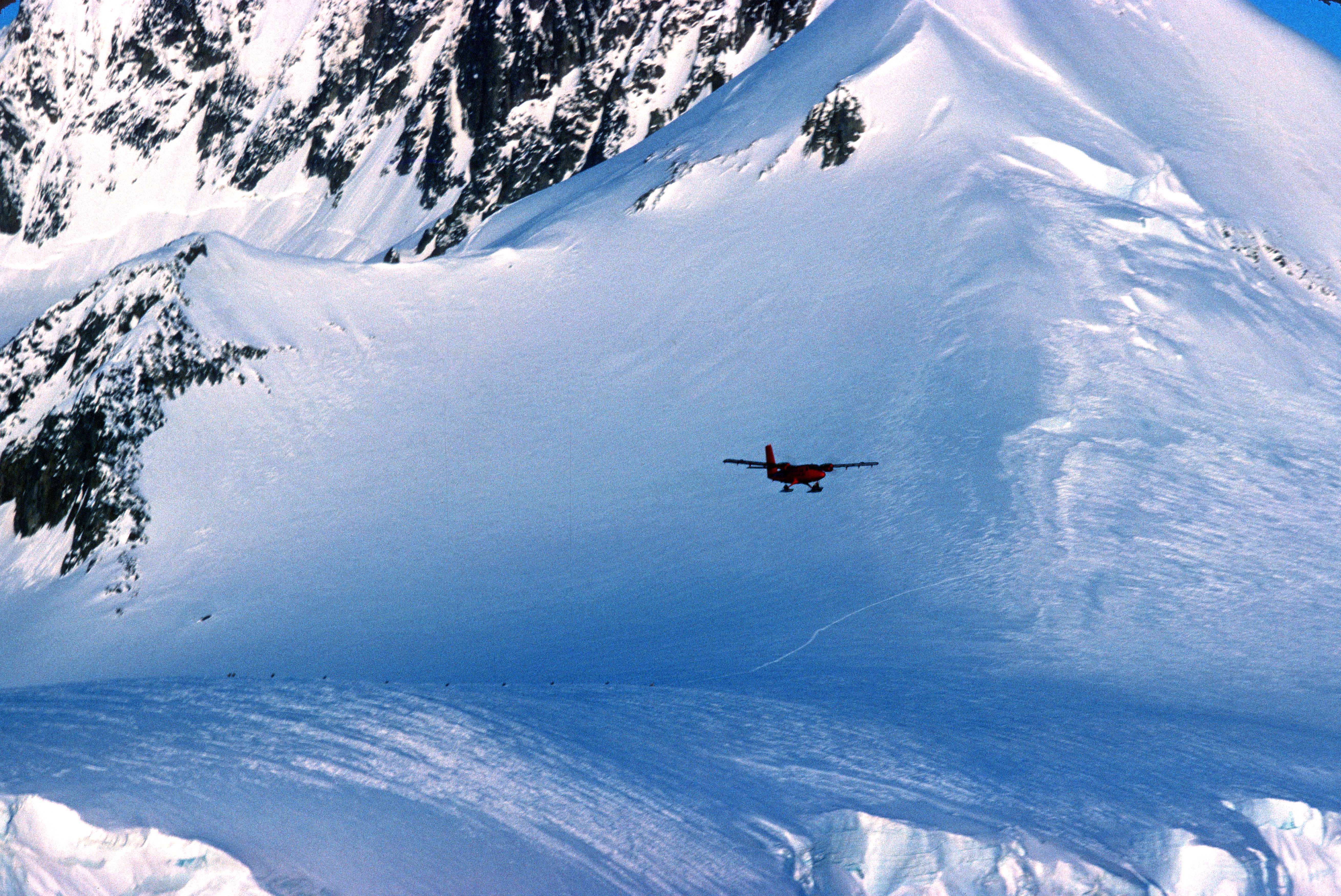
It was amazing to see these little, but highly versatile, planes landing on the ice above the huts, on the 400m skiway which ran along the spine of the glacier (below). All they needed was a row of red fuel drums to mark out the landing site.
BAS Twin otter aeroplane landing at Damoy Point. Nov 1982
The Damoy Point hut was established in 1975 and used until 1993/94, I think. After that date, the British Antarctic Survey started flying directly from the Falkland Islands to Rothera base (which is now Britain’s largest research station), so the Damoy Air Facility was no longer required. The hut is now designated a Historic Site and Monument, and is visited by cruise ships, I understand.
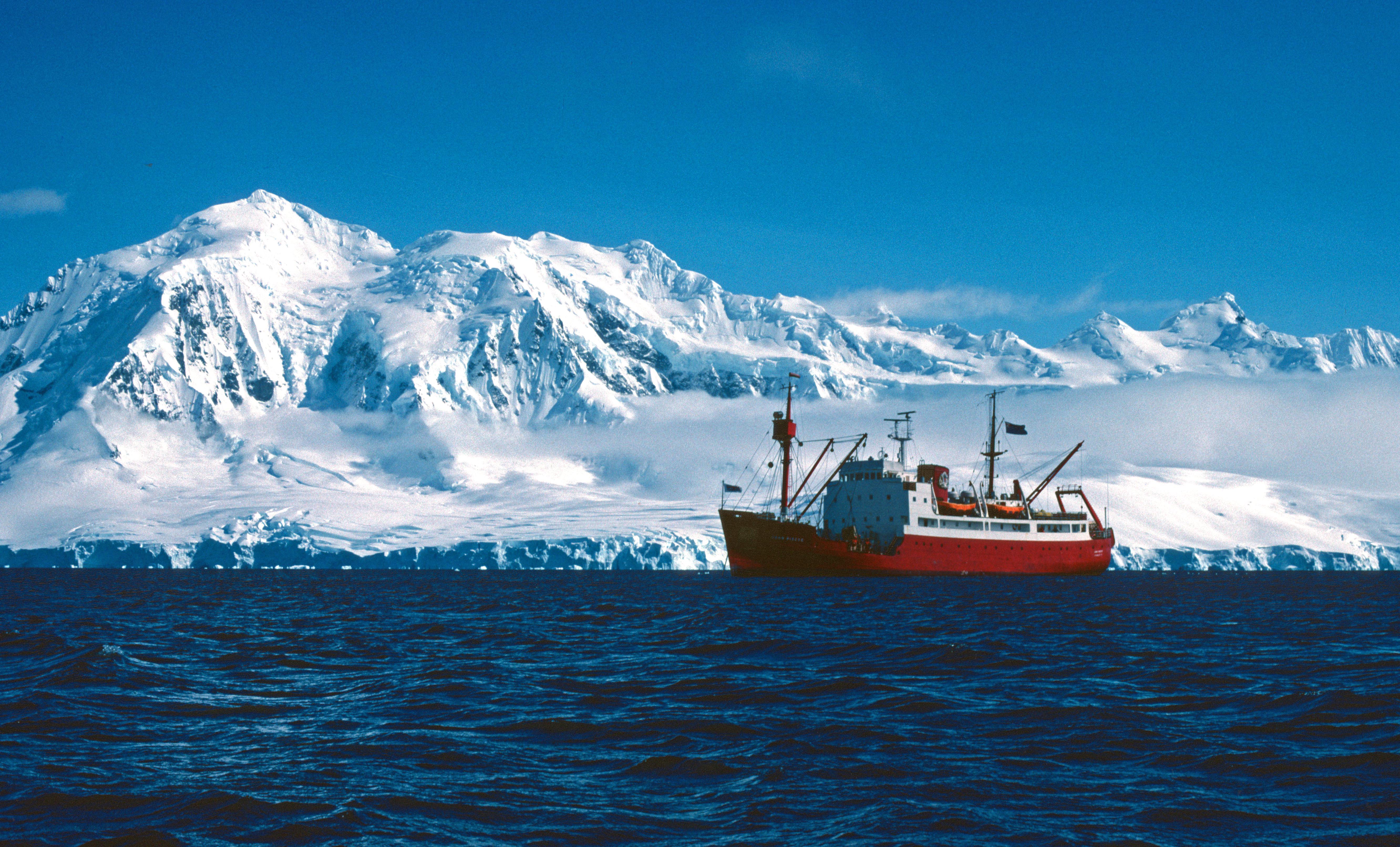
BAS ship the RRS John Biscoe off Anvers Island. Nov 1982
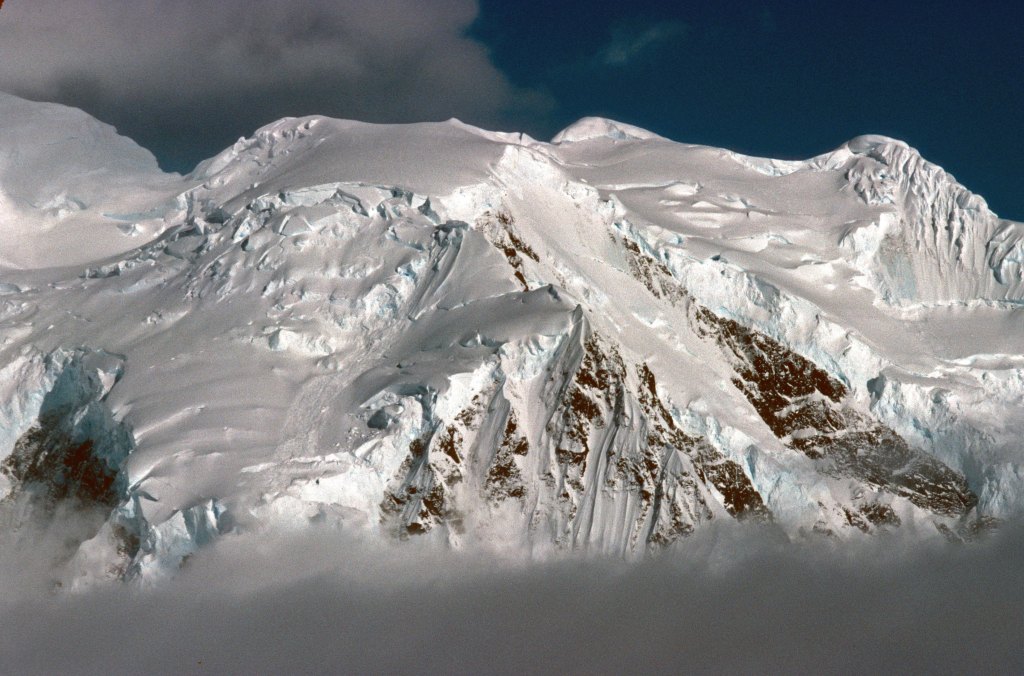
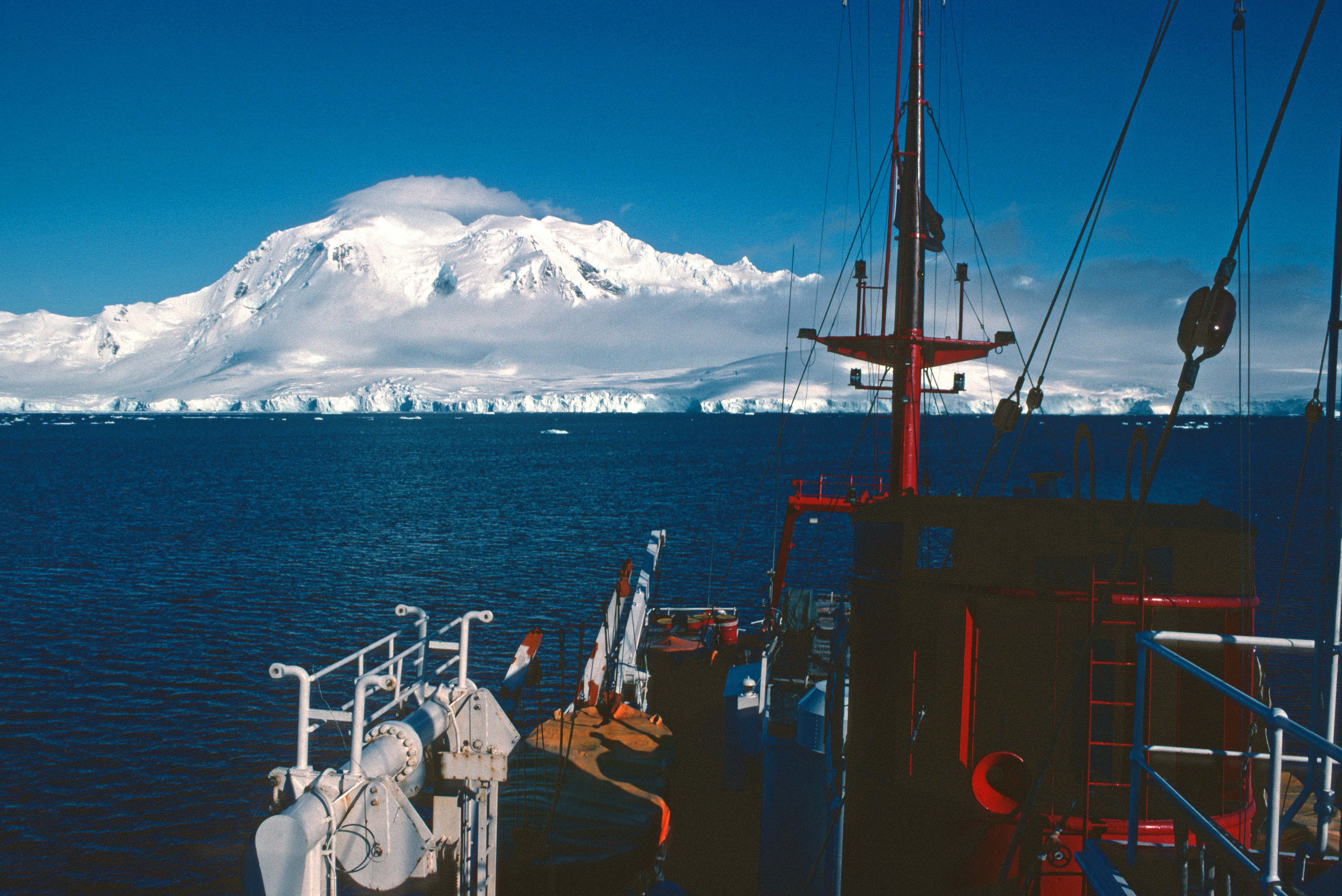
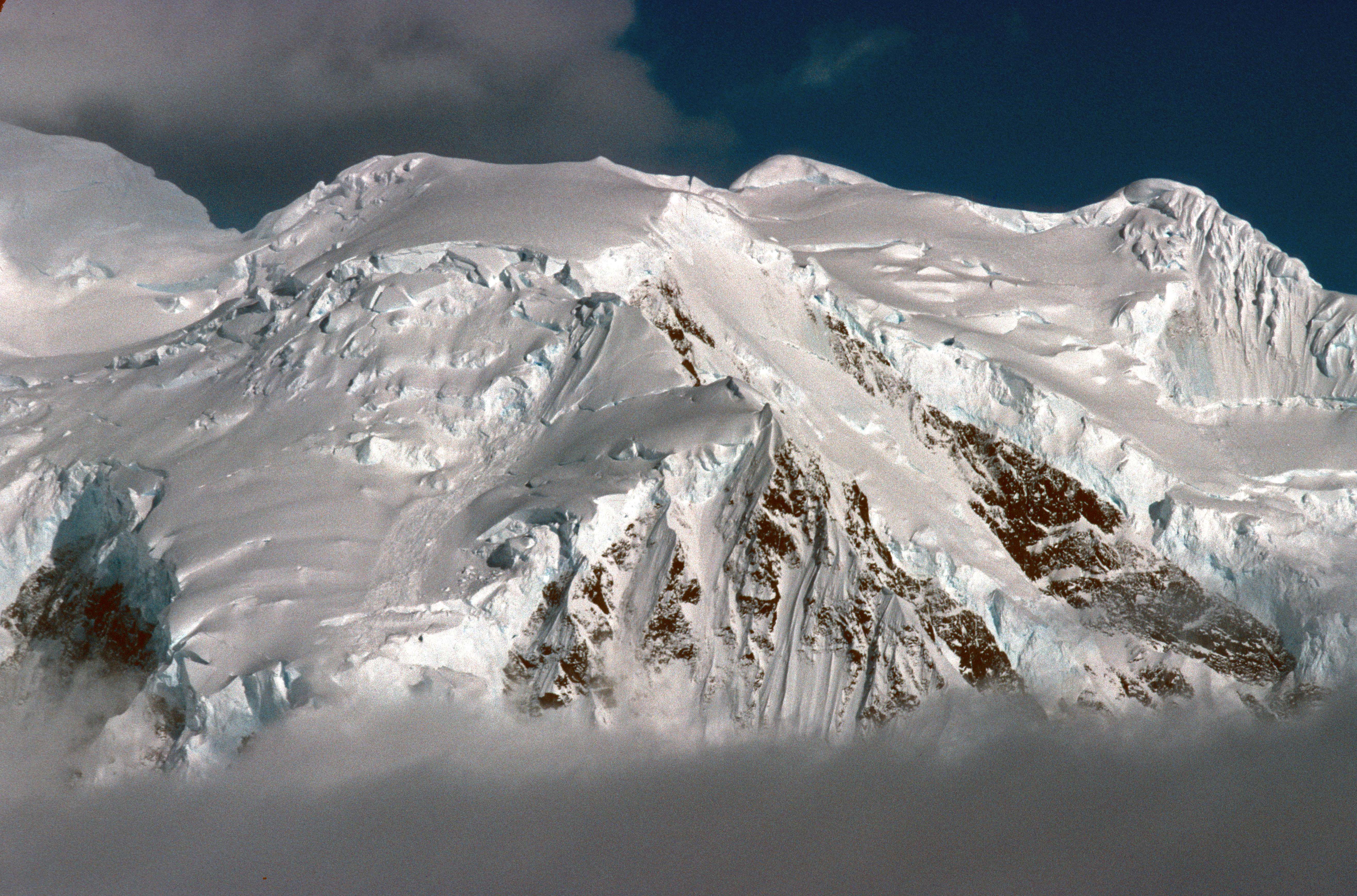
The location off the west coast of Wiencke Island, Antarctic Peninsula, was a beautiful place (above). Mount Français (2,760 m), on Anvers Island (below) loomed above the ship.
Mount Français (2,760 m), Anvers Island from RRS John Biscoe
Anvers Island, Antarctica (GNU Free Documentation License)
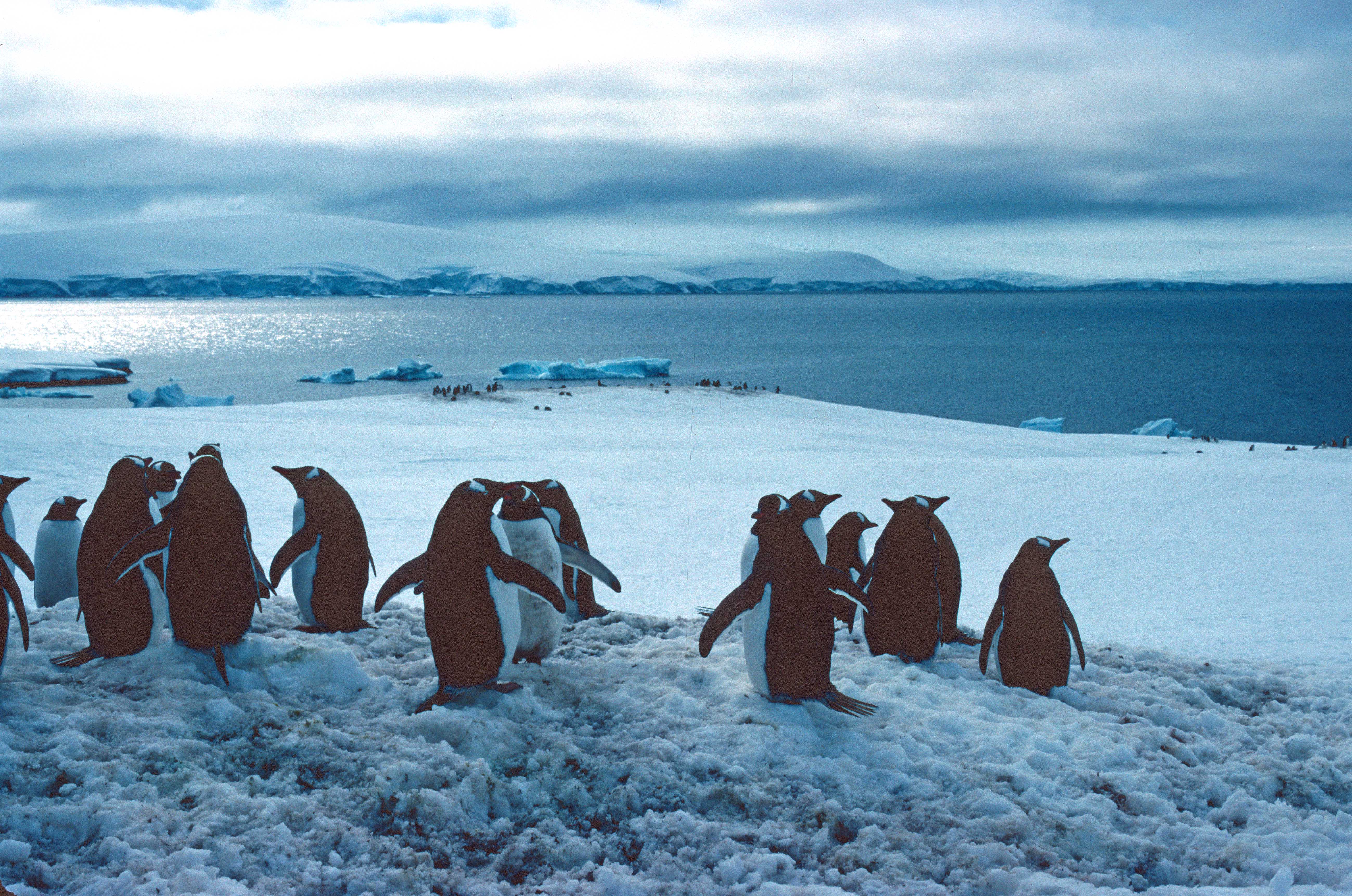
One of the nice things about arriving at Damoy Point so early in the austral season (10th Nov), was that the penguins had only just returned to their colonies (below).
Newly returned Gentoo penguins (Pygoscelis papua) at Point Damoy
Gentoo penguins (Pygoscelis papua) are probably my favourite penguin and it was interesting to see them standing around on their colonies, waiting for the last of the snow to melt away.
Gento penguins (Pygoscelis papua)
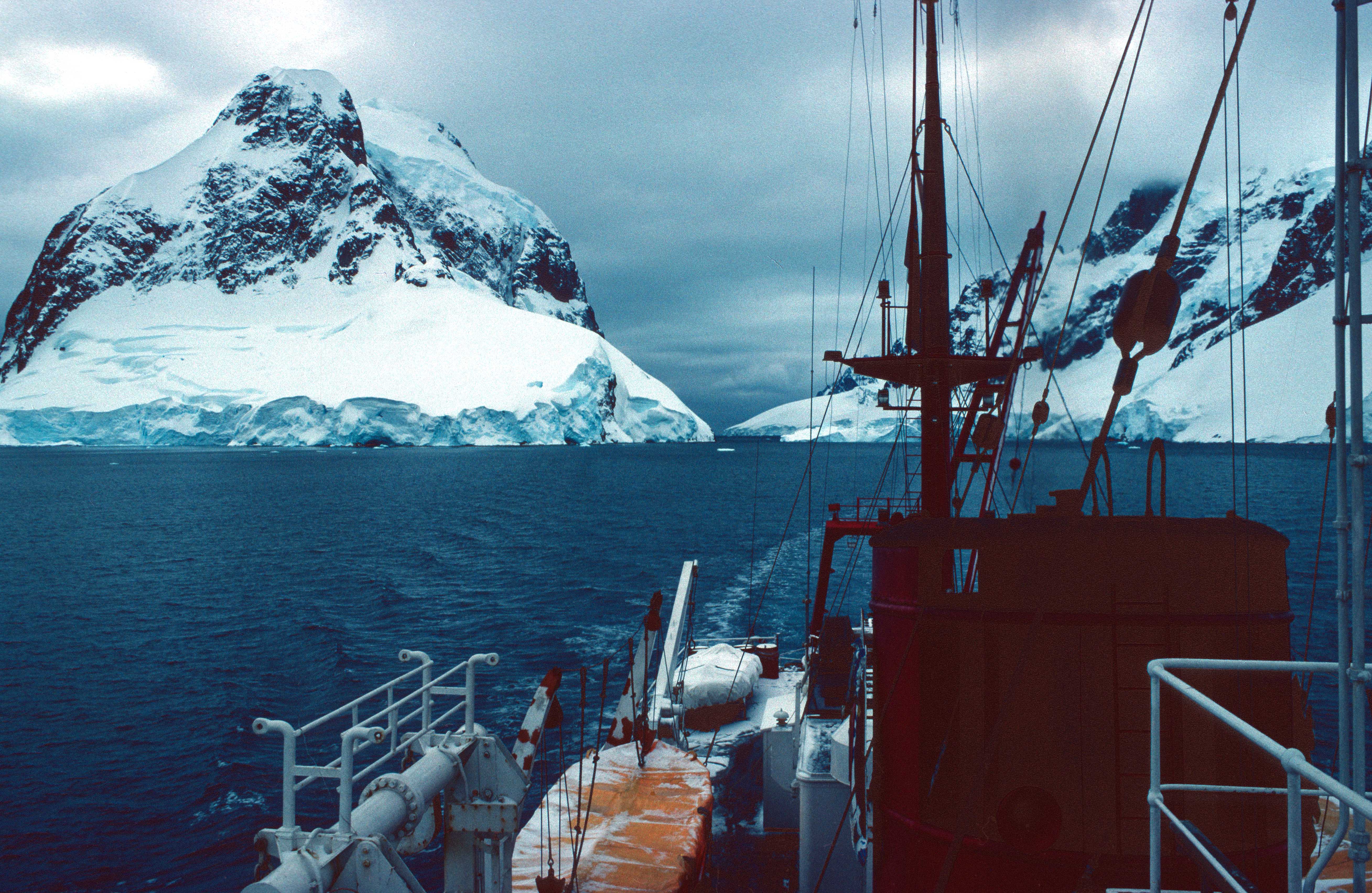
After dropping off the people heading further south by plane, we also set a southerly course, heading for the BAS base, Faraday Station (Station F), about 40 nautical miles away. This short journey took us through one of the most spectacular places on the Antarctic Peninsula: the Lemaire Channel (below).
RRS John Biscoe entering the Lemaire channel, Antarctic Peninsula (1982)
The Lemaire Channel is a narrow strait between the Kiev Peninsula and Booth Island, and is affectionately known as “Kodak Gap” because everybody who visits takes pictures here. It’s not hard to see why, although I have had to include a modern photograph (below) to illustrate the stark beauty. It was rather a dull day when we sailed though in 1982 (above).
Lemaire Channel, Antarctic Peninsula (Liam Quinn from Canada, Wiki CC BY-SA)
The Antarctic Peninsula is a vast area of stunning natural beauty, and not surprisingly many cruise ships visit the islands and wildlife sites along this finger of land and ice. In 1982, one of the few passenger ships to visit this area was the MS Lindblad Explorer, which I had the pleasure of going aboard a few times (in 1983/84). Since then, cruising to the Antarctic has taken off so to speak (at least it had prior to the current Covid-19 pandemic). At least 50 different cruise ships, of all shapes and sizes, visit the Antarctic each year, taking some 45,000 people (perhaps less, numbers vary). It’s not hard to see why as it is undoubtedly the most beautiful and unspoiled area in the world. But it is also fragile, and the land and wildlife need protecting and managing to ensure that it is not despoiled by the many threats – climate change, irresponsible tourism, invasive species, over-fishing, mineral exploitation etc. – that an expanding human population pose to it.
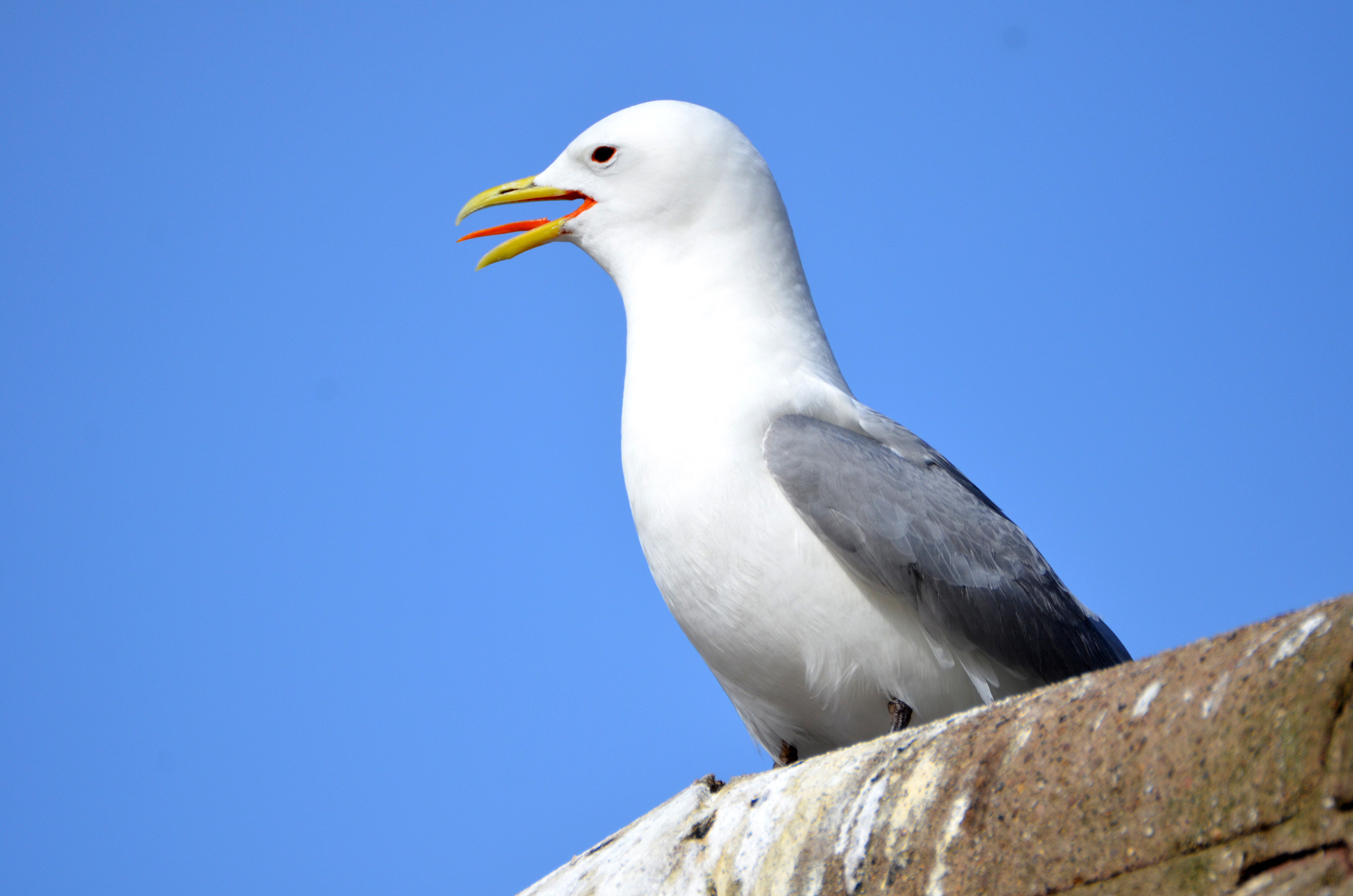
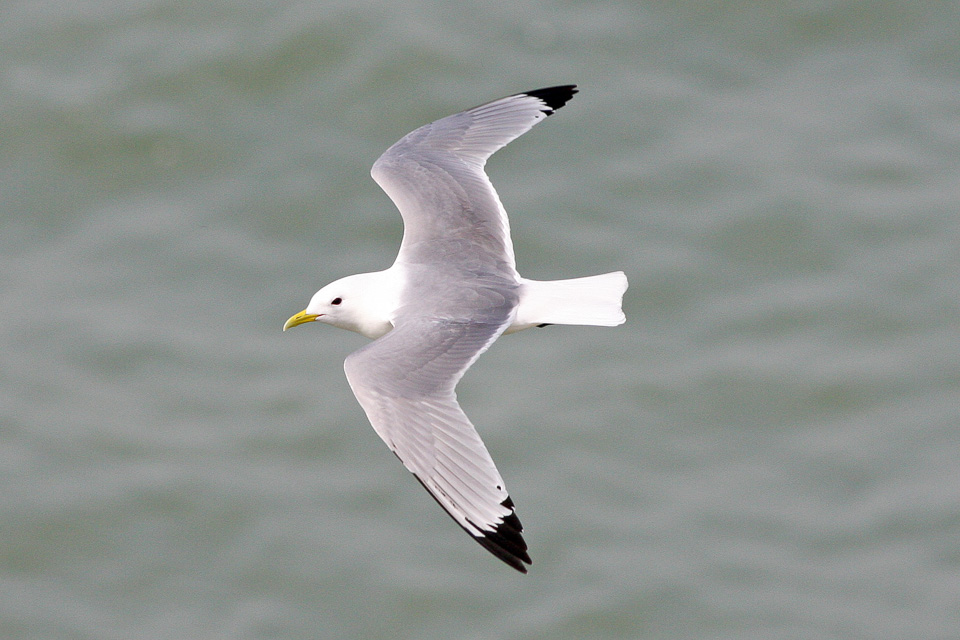
The Kittiwake nests are all empty now in Scarborough; on the cliffs and in the town, the birds have all gone. Long gone. Gone to sea.
Katie did not want to go to sea; she wanted to stay on her ledge above Marks and Spencer and try all the lovely food her gull-friends on the roofs around her were eating. But it was not to be. Her parents had looked after her and fed her well all through the summer, but now they were tired and needed a break. They wanted to go to sea. Katie would either have to come with them or look after herself, but she was quite incapable of finding food. Walking about the town begging for chips, like the herring gulls, looked like fun, but she didn’t think she could do it. Her legs were too short and she was not cut out for street life. Reluctantly, she came to conclusion that Yes, it was time to go. So one day in late August they all set off.
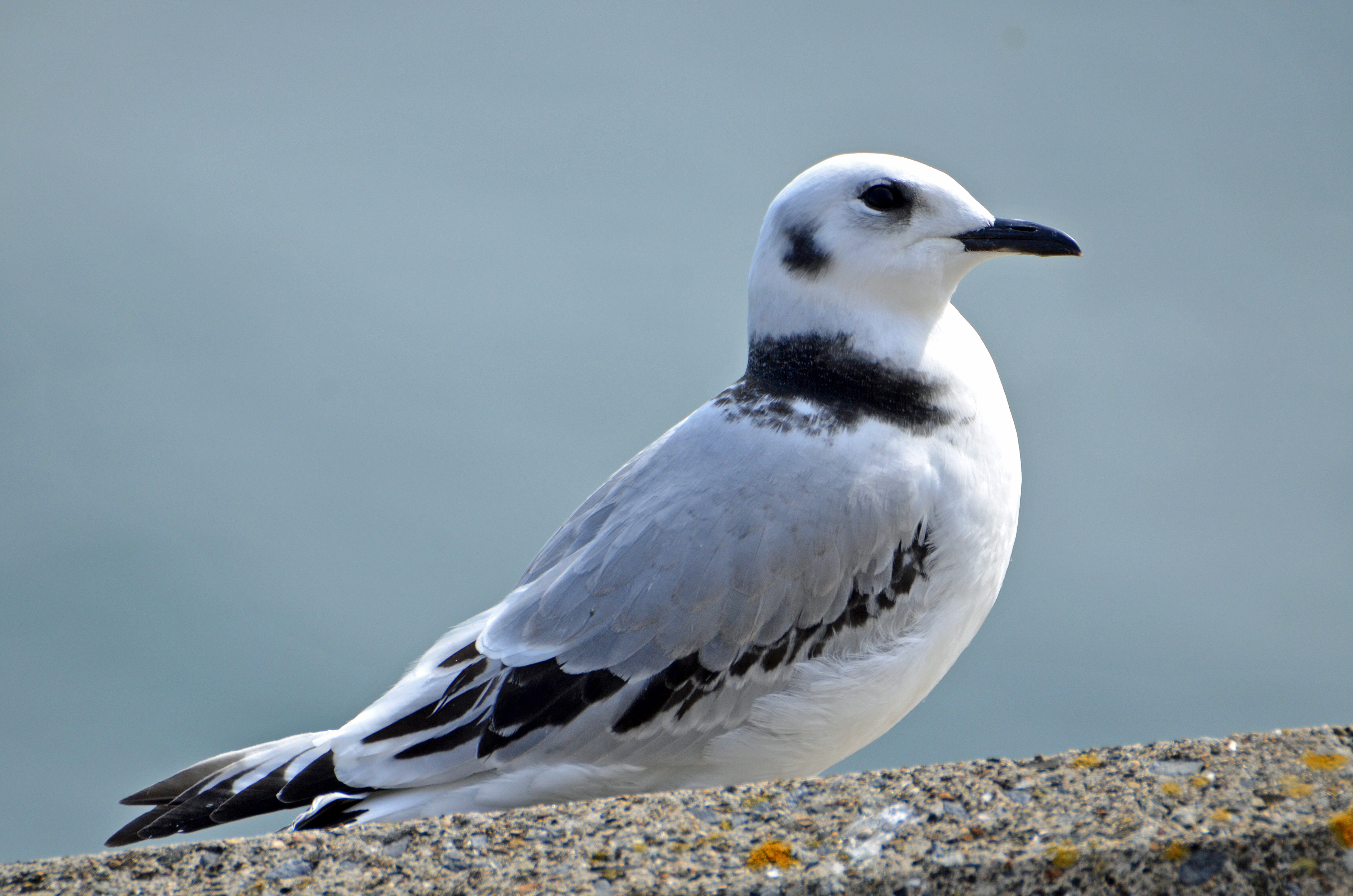
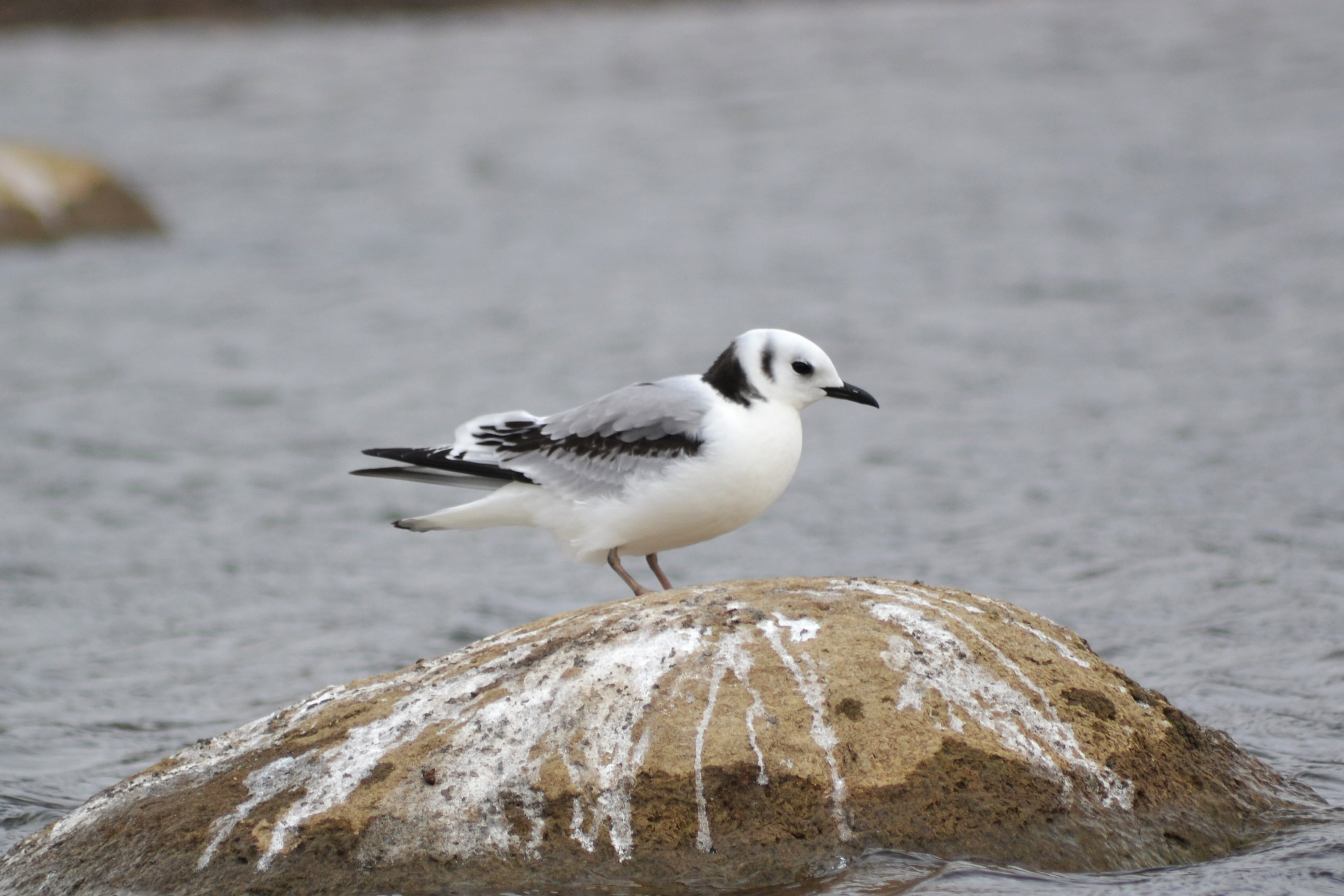
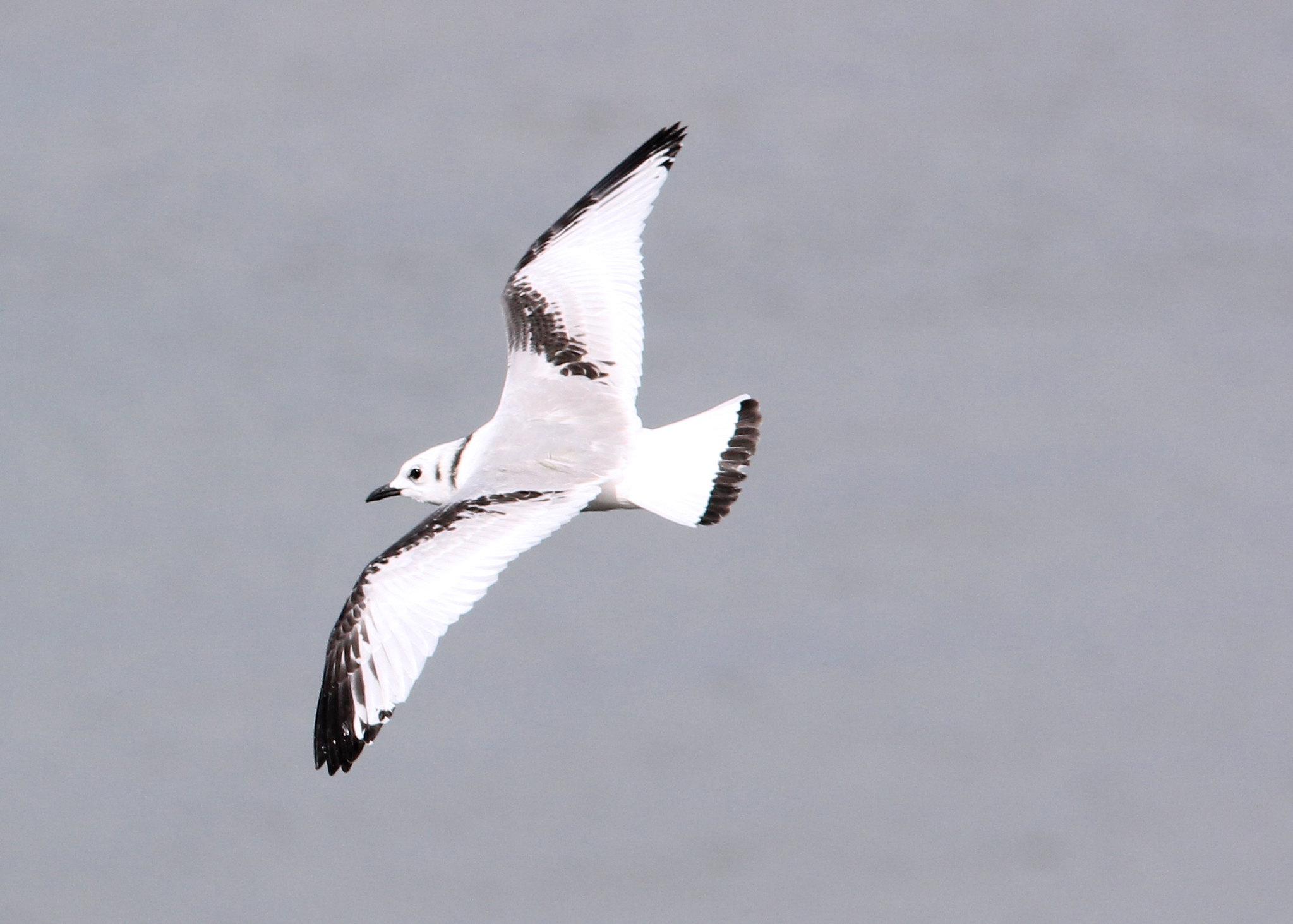
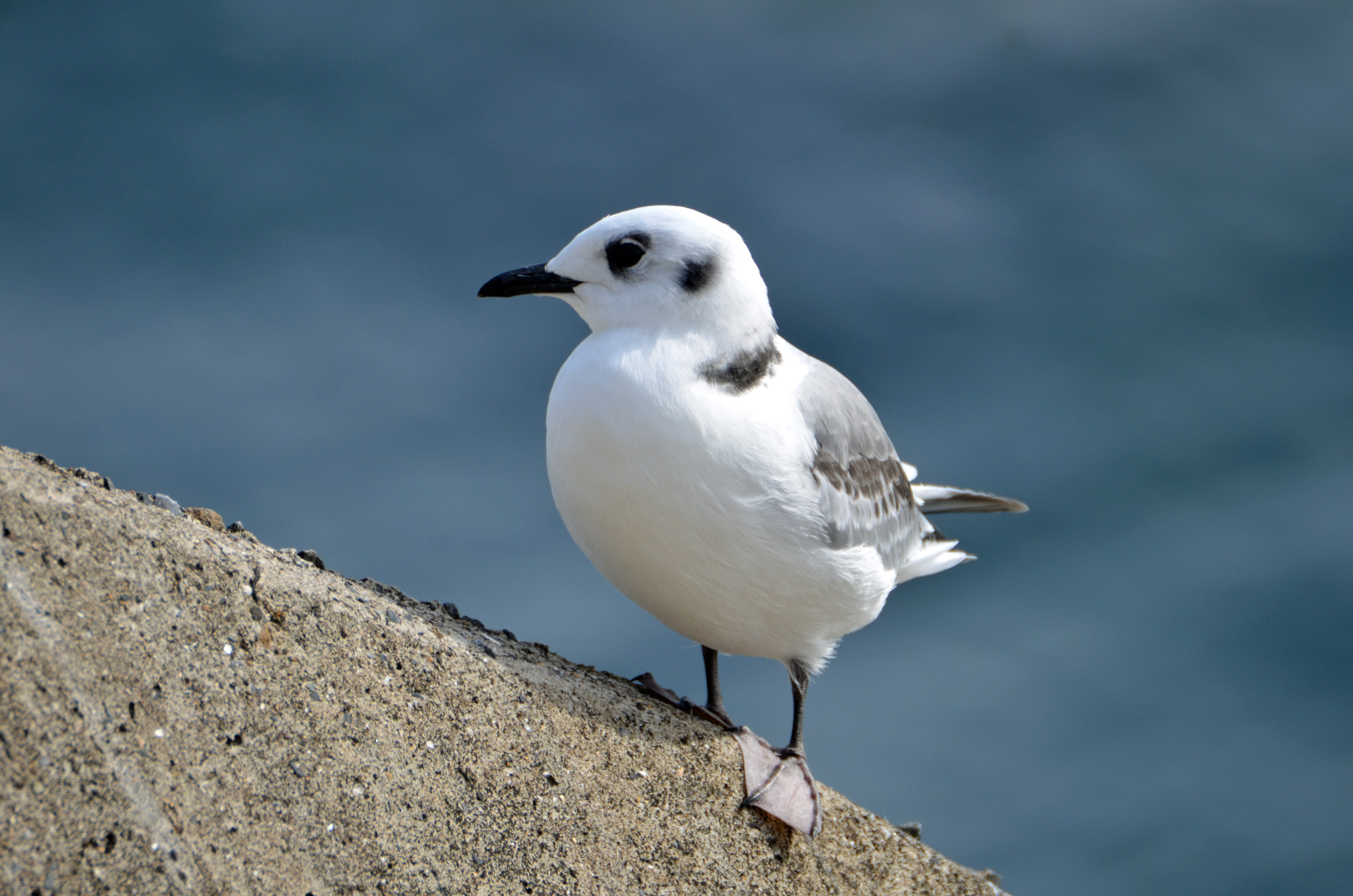
Newly-fledged Kittiwake chick just like Katie!
Katie had been down to the sea a few times with her parents. She had had a go at sitting on the ocean and trying to peck at the occasional morsel that passed by, but she had never really been out to sea. She had not flown far out, far away from the land. She had just jumped in and out, and sat on the sea wall smelling the ocean and watching all the other gulls.
This time was different. Her parents looked serious and in no mood to put up with her reservations. Her Dad, Harold, said: ‘Come on Katie. If you don’t come with us now, you will sit here and starve. A Kittiwake has to go out to the sea. The ocean is where we really belong. You’ll see.’ So off they went; flying high and further out than Katie had ever been before.
A lot of other gulls were leaving Scarborough at the same time, and soon they joined up with others in a large flock, heading north along the coast. The were soon joined by some other Kittiwakes flying over from the land. ‘Where do you come from?’ Katie asked one of them. ‘Newcastle’ he replied, in a strange accent she had not heard before. ‘Ooh eye, its great there said one of the older gulls; we have nests on a bridge, high above the river’. ‘Oh I was born on a bridge’ said one of the other birds from Scarborough. ‘It’s great, you have a lovely view and it’s very safe. There were so many of us, all close together on the bridge.’ ‘Sounds just like Newcastle’ said the newcomer. ‘So we have something in common then’ he said, flying closer to the bird from Scarborough who happened to be a female. ‘Perhaps we should stick together for a while’ he smiled. Yes Kittiwakes can smile, only they can see it. Humans don’t know what a Kittiwake smile is!
In winter. many kittiwakes move in small flocks …. Some flocks include both adults and first-year birds, but I doubt if there is any kinship between the individuals, as pairs and their offspring separate once they leave the colony in autumn. (Coulson, 2011).
Newly-fledged Kittiwake chick in July. Just like Katie before she went to sea!
After joining up with all the new birds from Newcastle, Katie looked around to see where her Mum and Dad had gone. They weren’t there. She couldn’t see them anywhere. ‘Where’s my Mum and Dad?’ screamed Katie! They’ve gone!
‘You are on your own now’ said one of the older birds from Newcastle. ‘You probably won’t see them again until next year now.’
Since Kittiwakes are not fed by their parents after they leave the nest sites, successful (and rapid) dispersal to good feeding sites is probably critical for the survival of the juvenile birds. (Wernham et al., 2002).
‘How am I going to survive!’ moaned Katie. ‘I don’t even know how to catch fish!’ ‘Don’t worry’ said the older bird. ‘Stick with us and we’ll show you. You’ll soon get the hang of it’. ‘Yea stick with us’ said some of the other juveniles. ‘Our parents have left us as well! We’ll be OK if we stick together’. So off they flew; a small flock of adults and juveniles, not related, but with a shared purpose and common interest. Flying into the unknown, but armed with the instincts and adaptations millions of years of evolution had provided them with. Enough to give them more than a sporting chance of surviving in this new world.
Katie and her companions flew north helped by a strong wind blowing from the south-west. They made rapid progress and were soon up near the coast of Norway.
‘My Dad came from Norway’ said Katie, excitedly. ‘Let’s go and find him! ‘It will be like looking for a needle in a haystack’ said one of the older birds. ‘What’s a needle and what’s a haystack said Katie’, confused. ‘Forget it’ said the older bird. Stick with us and we will look after you’. ‘OK’ said Katie, looking wistfully across to the foreign shoreline they were flying next to.
‘We are going to go much further north, and then we will head over to Greenland for the winter’. Greenland sounds nice thought Katie. It should be warm there by the sound of it. Little did she know!
Some young Kittiwakes probably remain on the other side of the Atlantic, off Newfoundland and Greenland (Wernham et al., 2002).
They flew on, stopping off to rest and feed on the surface of the sea at night. Eventually the reached a new land. A strange place with huge cliffs and thousands and thousands – hundreds of thousands – of Kittiwakes. Katie had never seen so many Kittiwakes. They joined up with the huge flocks and Katie started chatting to some of the other juvenile birds.
Hundreds of thousands of Kittiwakes nest at Diskobukta on Barent’s Island (Barenstøya), Svalbard Archipelago, where they are preyed upon by Arctic foxes.
‘Where do come from’ asked one of them. ‘Scarborough’ said Katie.
‘Where is that?!’ the other bird asked. ‘It’s a town far to the south from here. I was brought up on a ledge above Marks and Spencer’ said Katie. What’s that?’ said the other bird. ‘It’s a shop’ said Katie. ‘That sells food’.
‘Are there foxes there?’ said the newcomer. ‘Well a few’ said Katie, ‘but we don’t see them much’. ‘Here the foxes try and eat you’ said the local bird. It’s a nightmare I can tell you. My sister was taken by a fox. I can’t wait to get away from the land and head out to sea!’
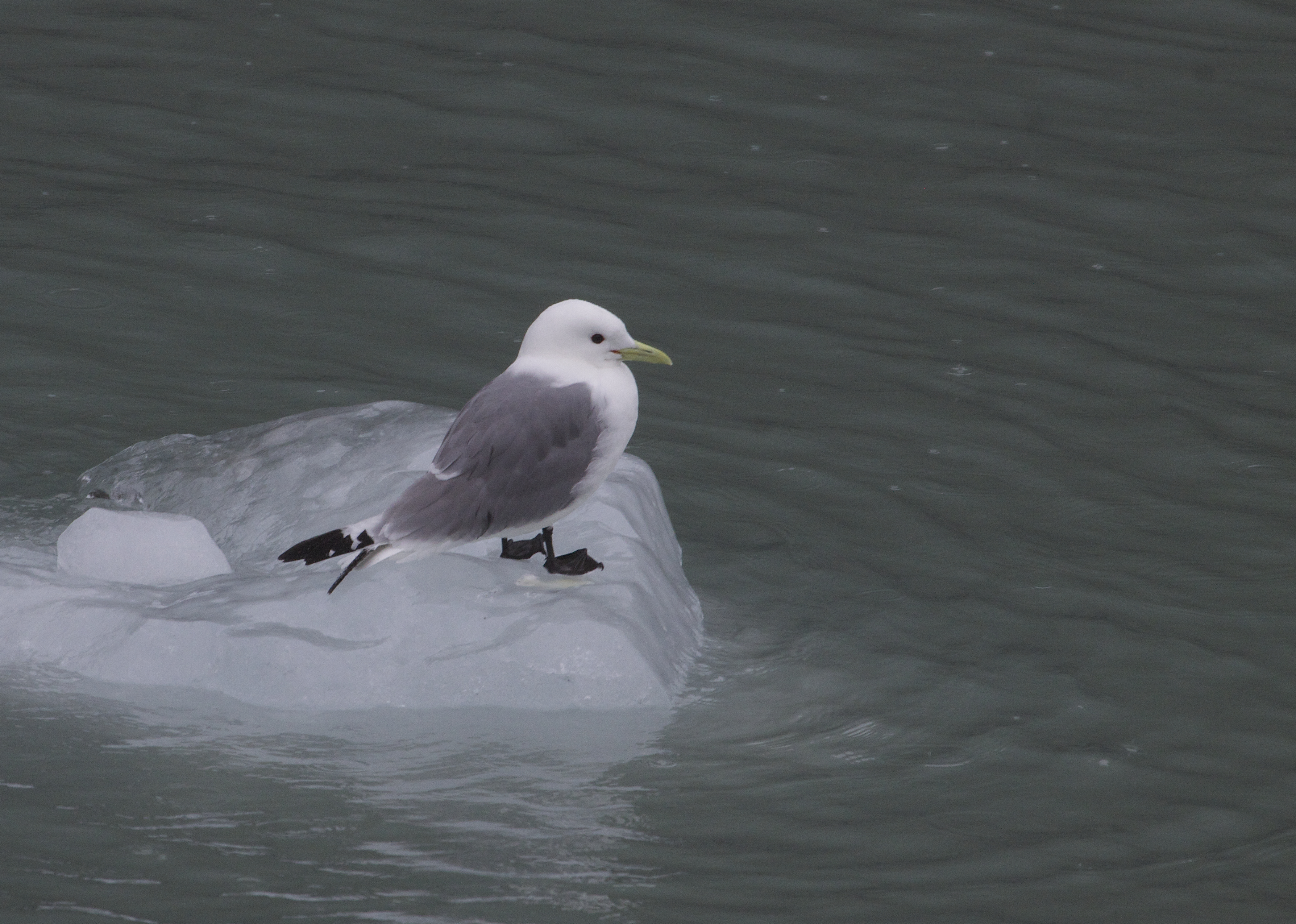
So off they flew travelling west this time. Soon they saw something floating in the sea. ‘What’s that?’ asked Katie. ‘It’s ice stupid! Haven’t you ever seen ice before?’ ‘No’ said Katie. It looked very strange, and she was not sure if she liked it. ‘Look, you can stand on it’ said one of her new friends’ swooping down and landing on a small lump of ice.
In winter, some Kittiwakes remain as far north as the Arctic Circle, so how do these birds feed and survive in the total darkness? The answer is not known. Some may feed behind fishing boats using floodlights, whilst others may be attracted to luminous prey. (Coulson, 2011).
What happens next? Will Katie survive the winter and learn to look after herself? Find out in the next installment of Katie the Kittiwake!
References
Coulson, J. (2011). The kittiwake. A&C Black.
Wernham, C., Toms, M., Marchant, J., Clark, J., Siriwardena, G., & Baillie, S. (2002). The migration atlas: movements of the birds of Britain and Ireland. T & AD Poyser.