We tend to take bread pretty much for granted these days. There seem to be abundant supplies – indeed much of it goes to waste – in every supermarket I go into (in the UK). But it was not always that way! There have been many times of bread shortages in the past. There was a Bread Crisis in Britain, 1795-96, when the country was fighting wars with France. Poor harvests and extreme cold even led to a bread riot in 1795. There were shortages of bread during the First World War, and bread was also rationed after WWII, for a couple of years.
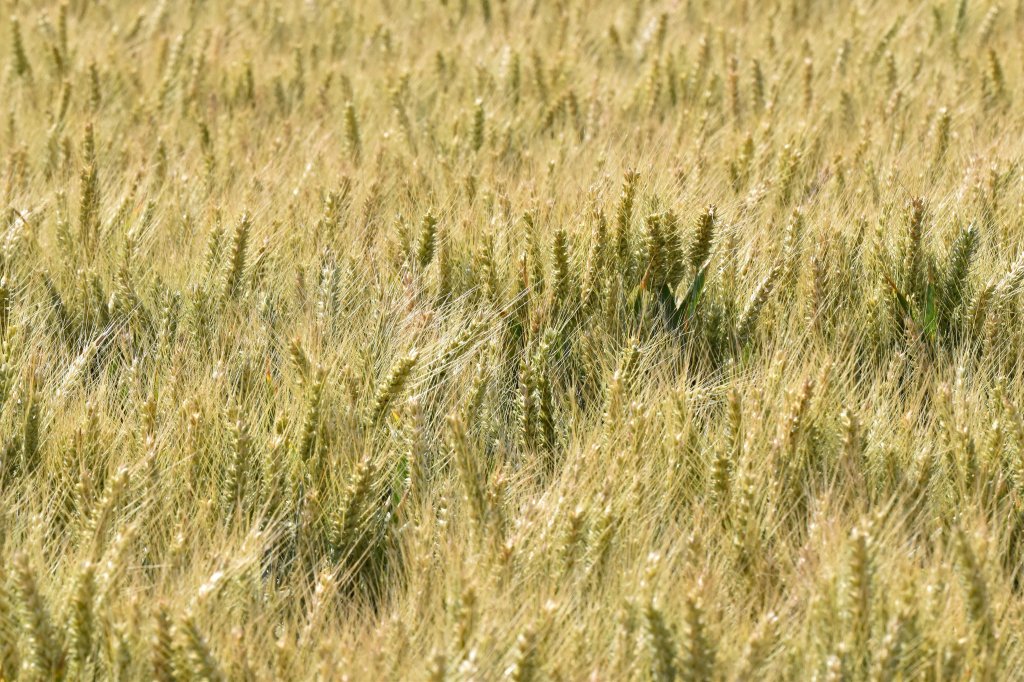
Wheat growing on 28 June 2019. Bedfordshire
Could it happen again? I think the answer is probably not, unless we do something very stupid! UK farmers now supply most of the wheat (as well as oats and rye) required by flour millers. I was surprised to learn that flour mills now source more than 80% of their wheat from British farmers, compared to less than half of that in the late 1970s (Grain Chain, 2016).
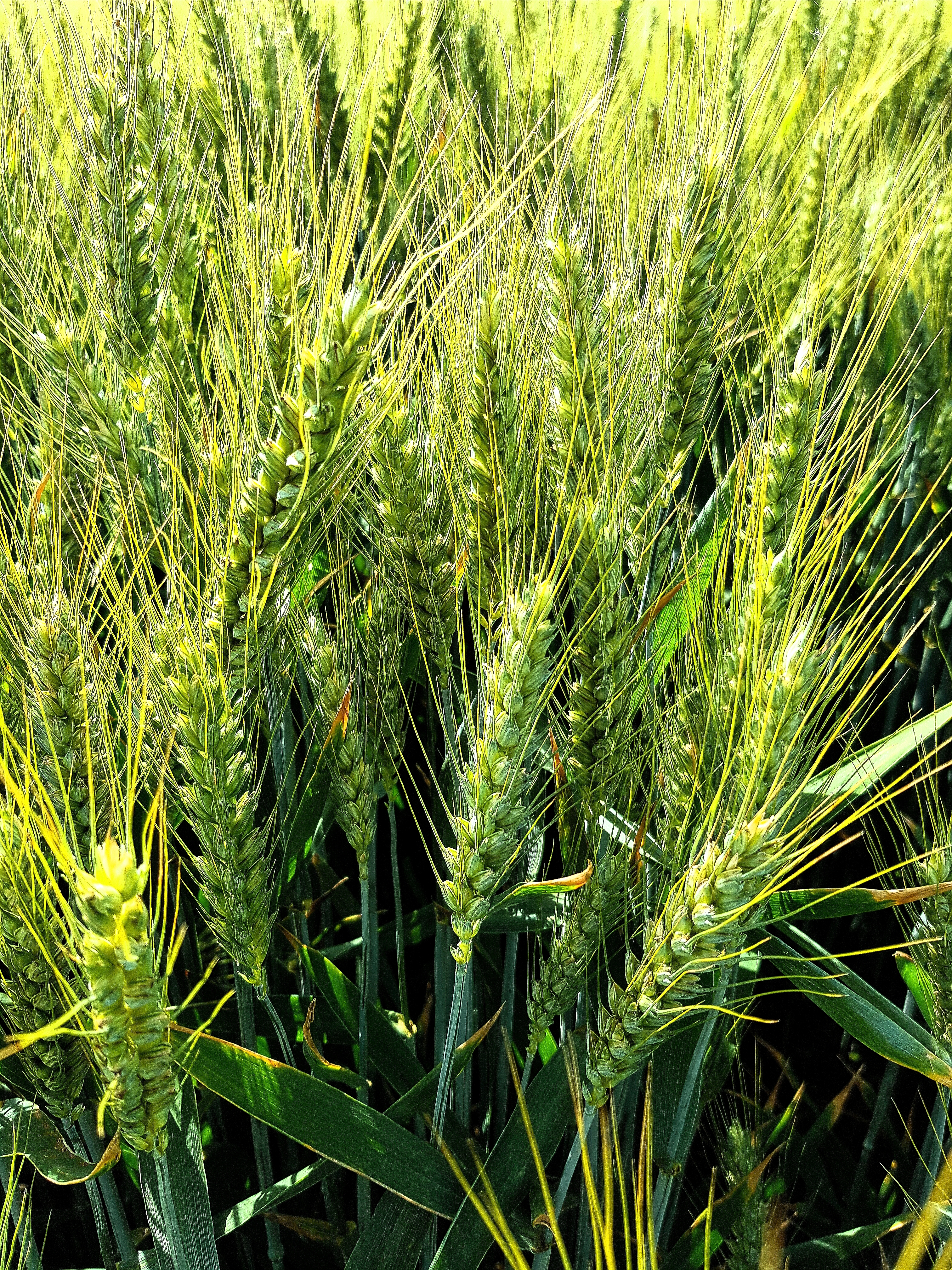
Wheat growing on 11 July 2019. Bedfordshire
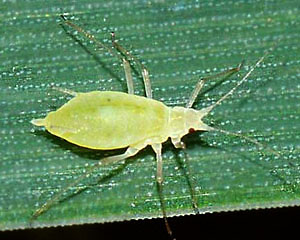
One reason I have an interest in wheat, is that for one period of my life (studying for a PhD) I spent a lot of time sitting in a wheat field! Studying this lovely creature (below). Very high populations occurred in 1979; there were hundreds of these aphids on each tiller, with billions (maybe trillions) taking to the air at the end of July that year!
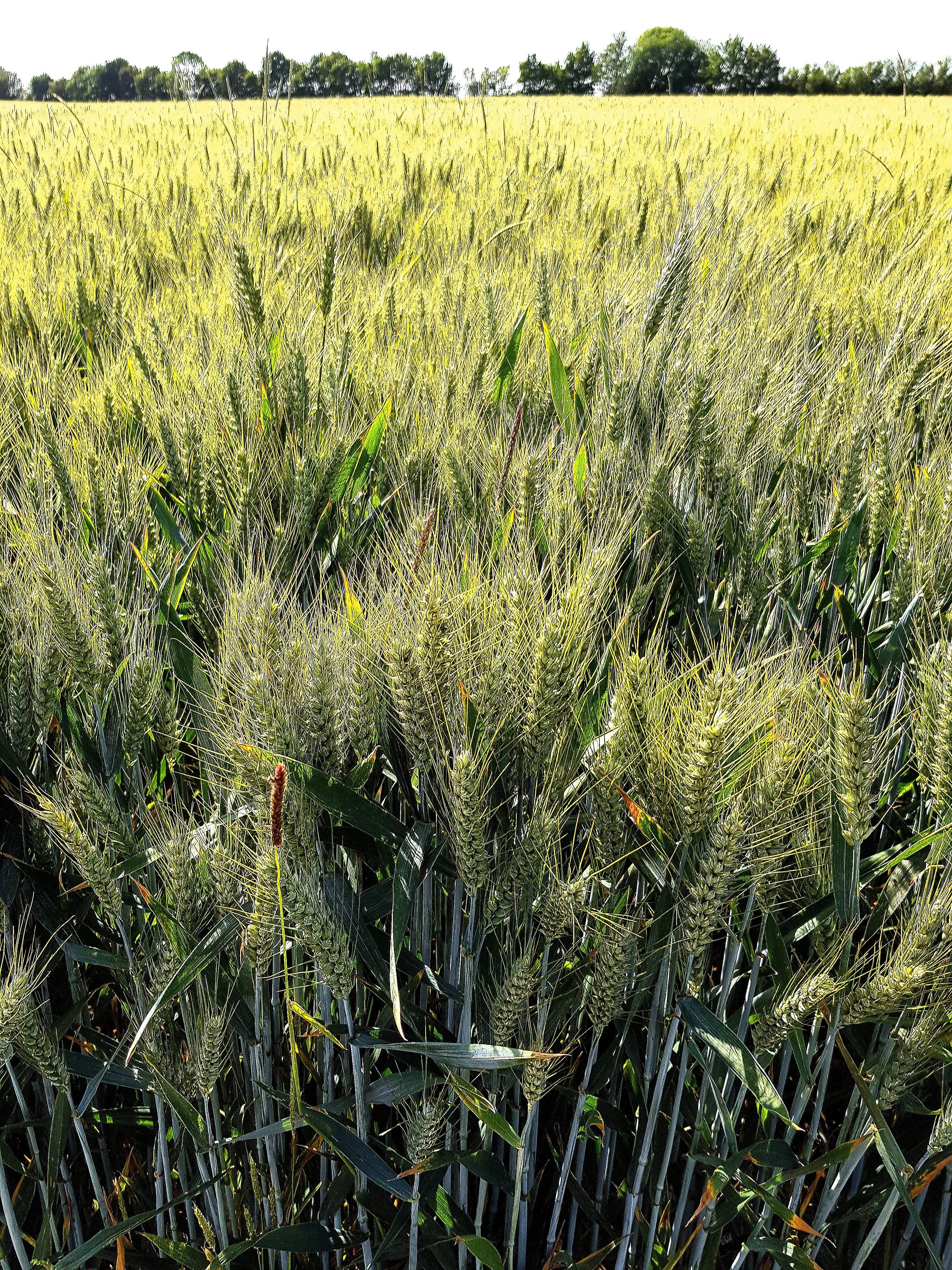
The rose-grain aphid (Metopolophium_dirhodum) Influentialpoints.com [CC BY 3.0 (https://creativecommons.org/licenses/by/3.0)%5DWheat (Triticum aestivum) growing on 12 July 2019. Beds, UK
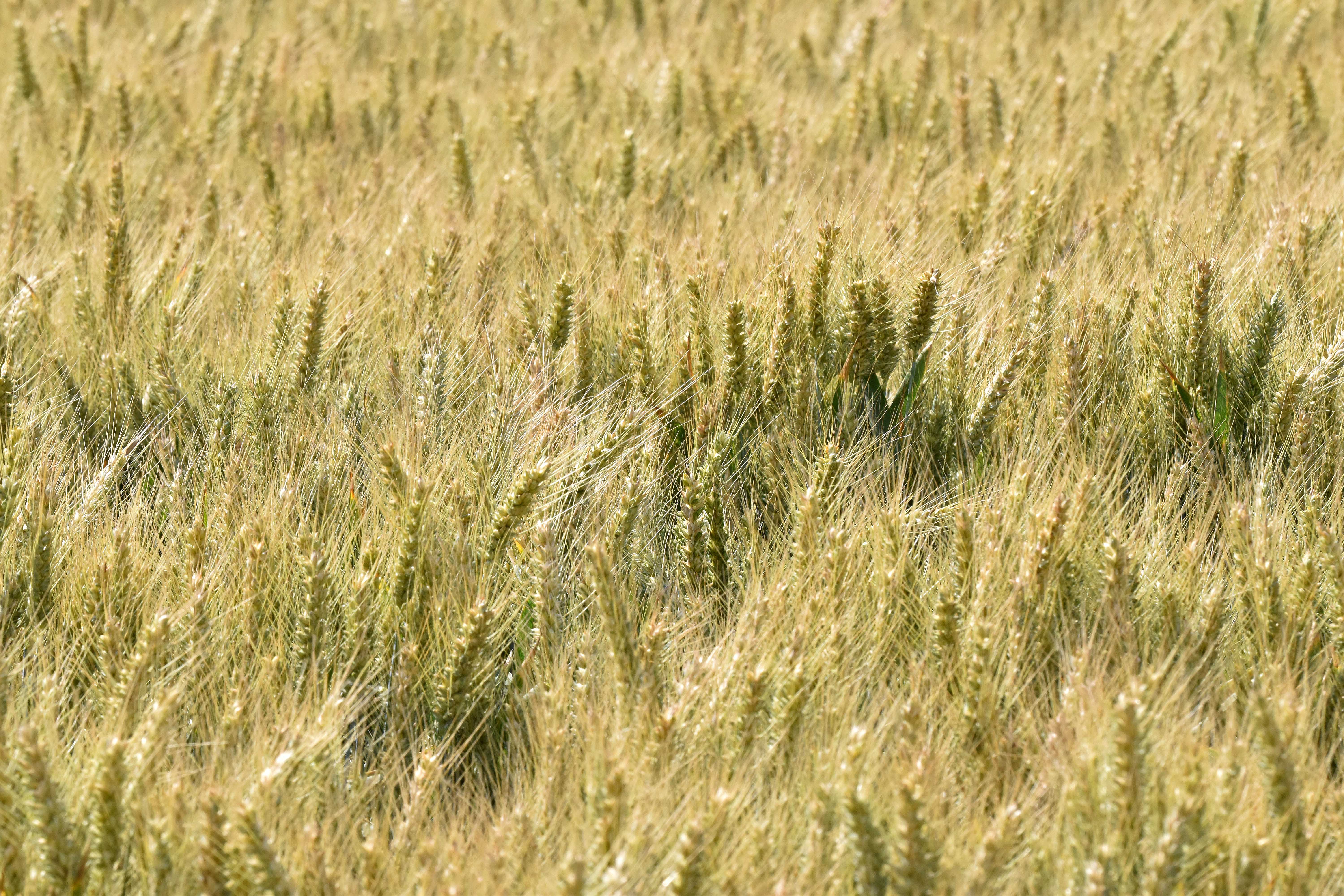
Wheat – most of which is winter wheat (planted in the autumn) – is a classic monoculture; a single crop stretching out to the horizon (below). Farmers get about 8 tonnes per hectare on average, resulting in a total British harvest of somewhere between 15 to 17 millions tonnes. That sounds good, but we are a fairly small producer on a world scale, although the EU as a whole is the largest producer (just above China).
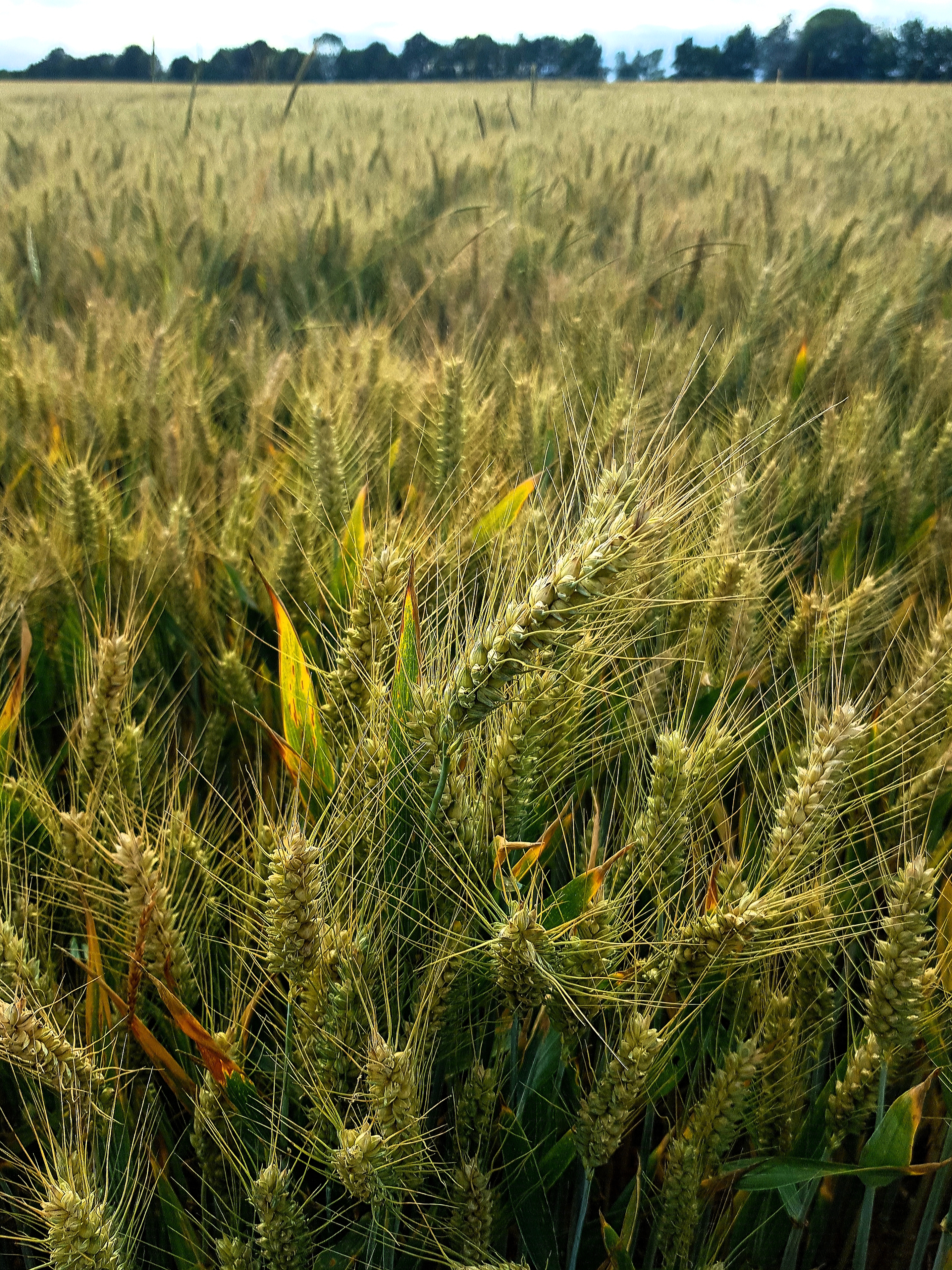
Wheat (Triticum aestivum) on 26 July 2019, Beds, UK
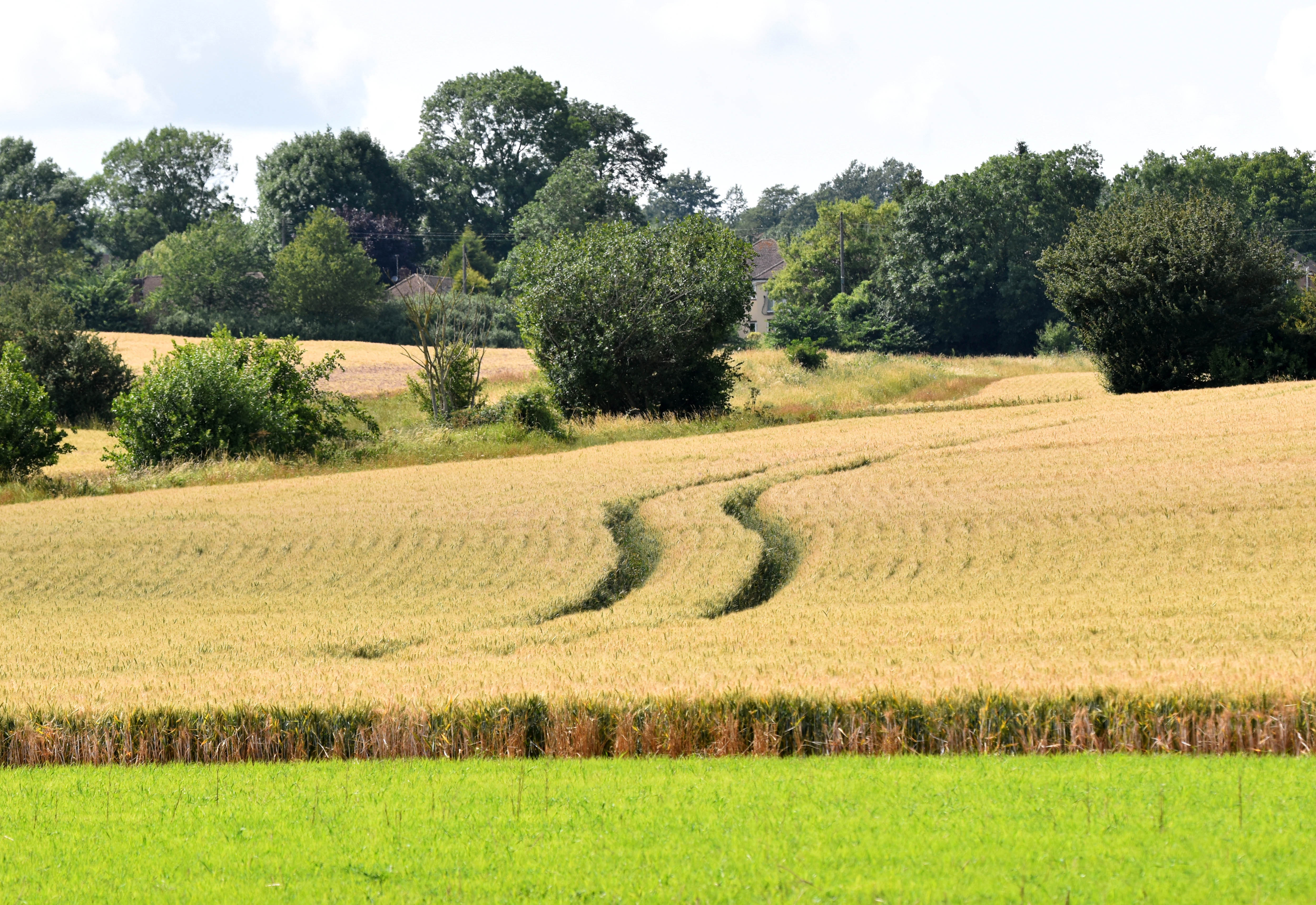
So, it seems to me that UK farmers are doing a good job on the whole, although how sustainable the whole system is, is another matter. We rely on a few varieties of wheat, grown as monocultures, reliant on inputs of fertilisers and pesticides. Farmers from the past would no doubt be puzzled to see the wheelings (below) left in fields to make these applications!
Wheelings to allow tractor access in a wheat field, Beds, UK
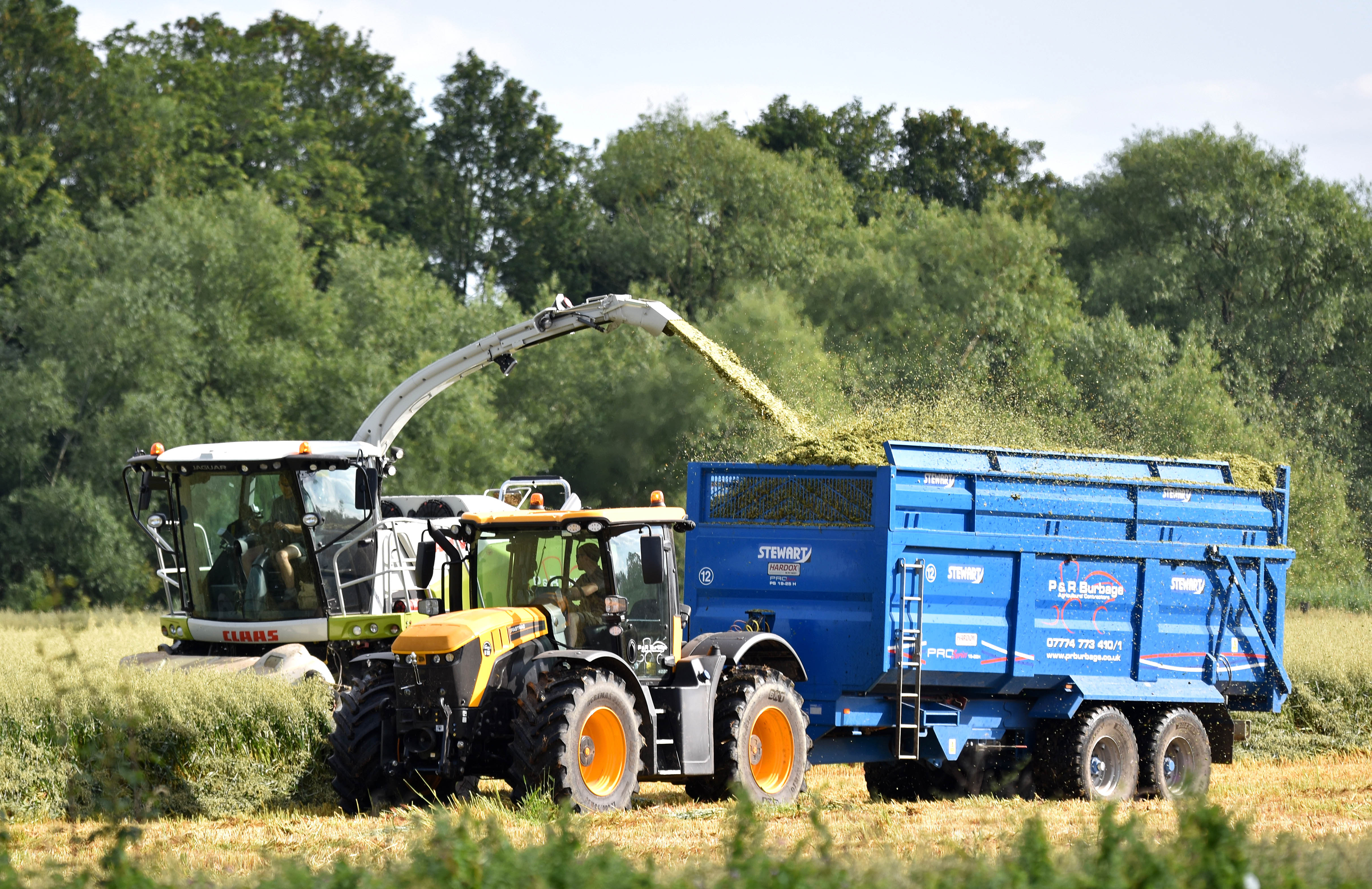
Similarly, the carbon footprint is not exactly light! We now have huge tractors and harvesters. The tractors race around country roads carrying their massive trailer loads (below); the fields at harvest time are a dangerous place (and not just for field mice!); I don’t think anyone gets out of their vehicles if they can help it. The drivers sit in their comfy cabins listening to their favourite music!
Harvesting oats on 15 July 2019. Beds, UK
Some might argue that all this industrialisation is the price we must pay for our current abundance, but vast amounts of bread are wasted, almost 900,000 tonnes of bread every year, reportedly. Nearly, half the bread produced here in the UK, 44%, is thrown away! So, I think this shows, that a little more care and respect for the sacred loaf, could free up resources to enable a more sustainable production system, with more attention on preserving the health of the soil and the well-being of the wildlife that lives in and around these fields.
Reference
Cannon, R. J. C. (1986). Summer populations of the cereal aphid Metopolophium dirhodum (Walker) on winter wheat: three contrasting years. Journal of applied ecology, 101-114.
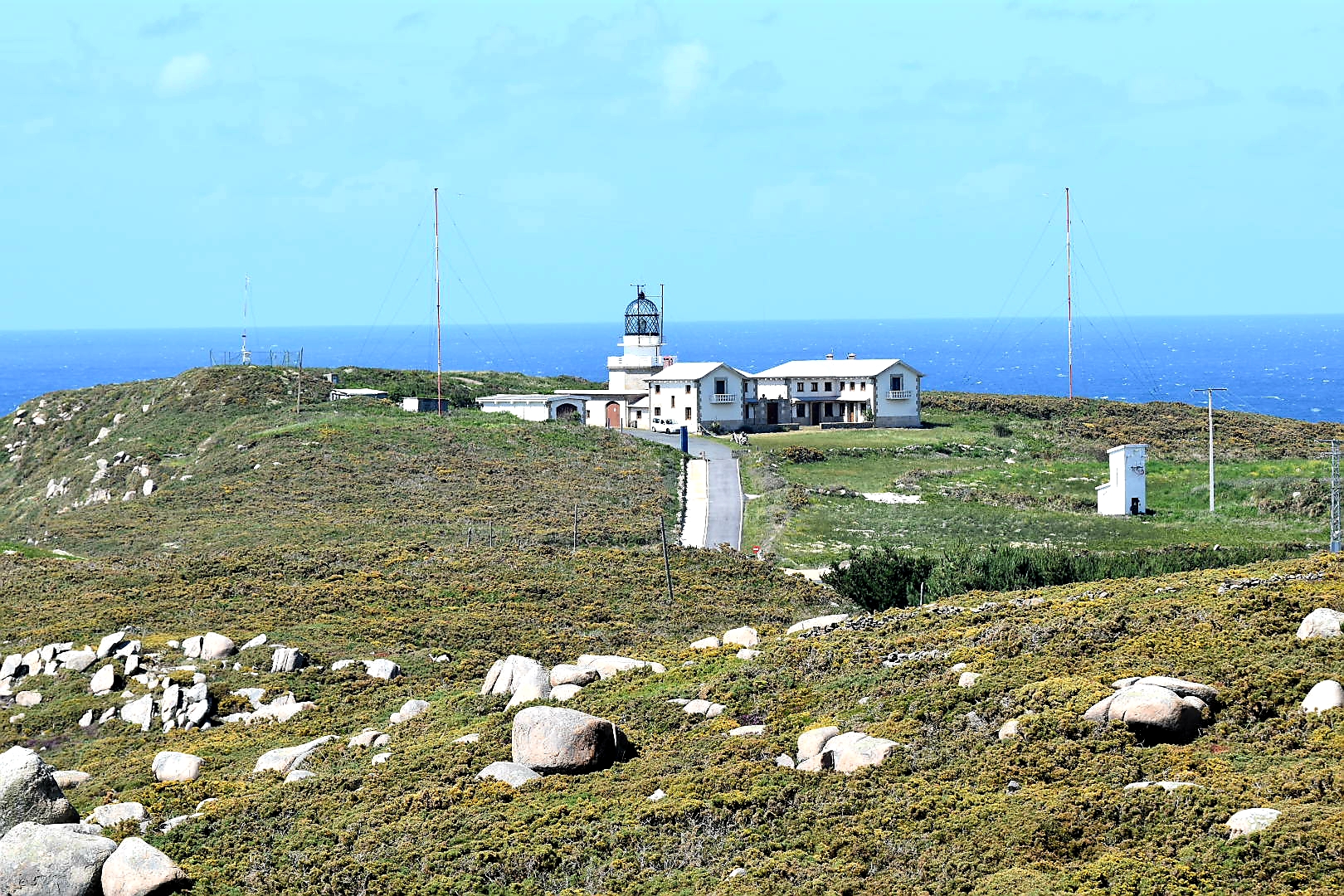
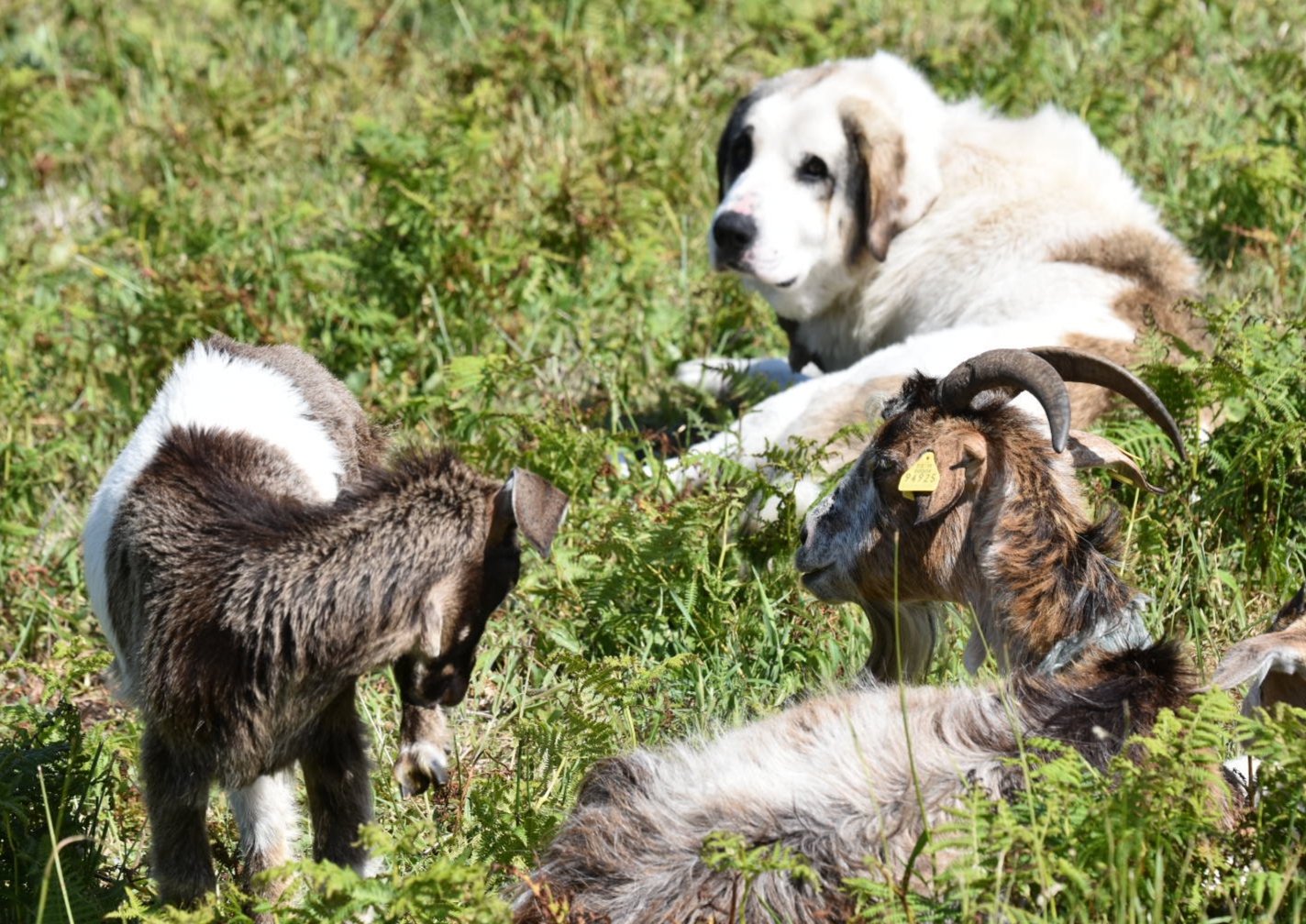
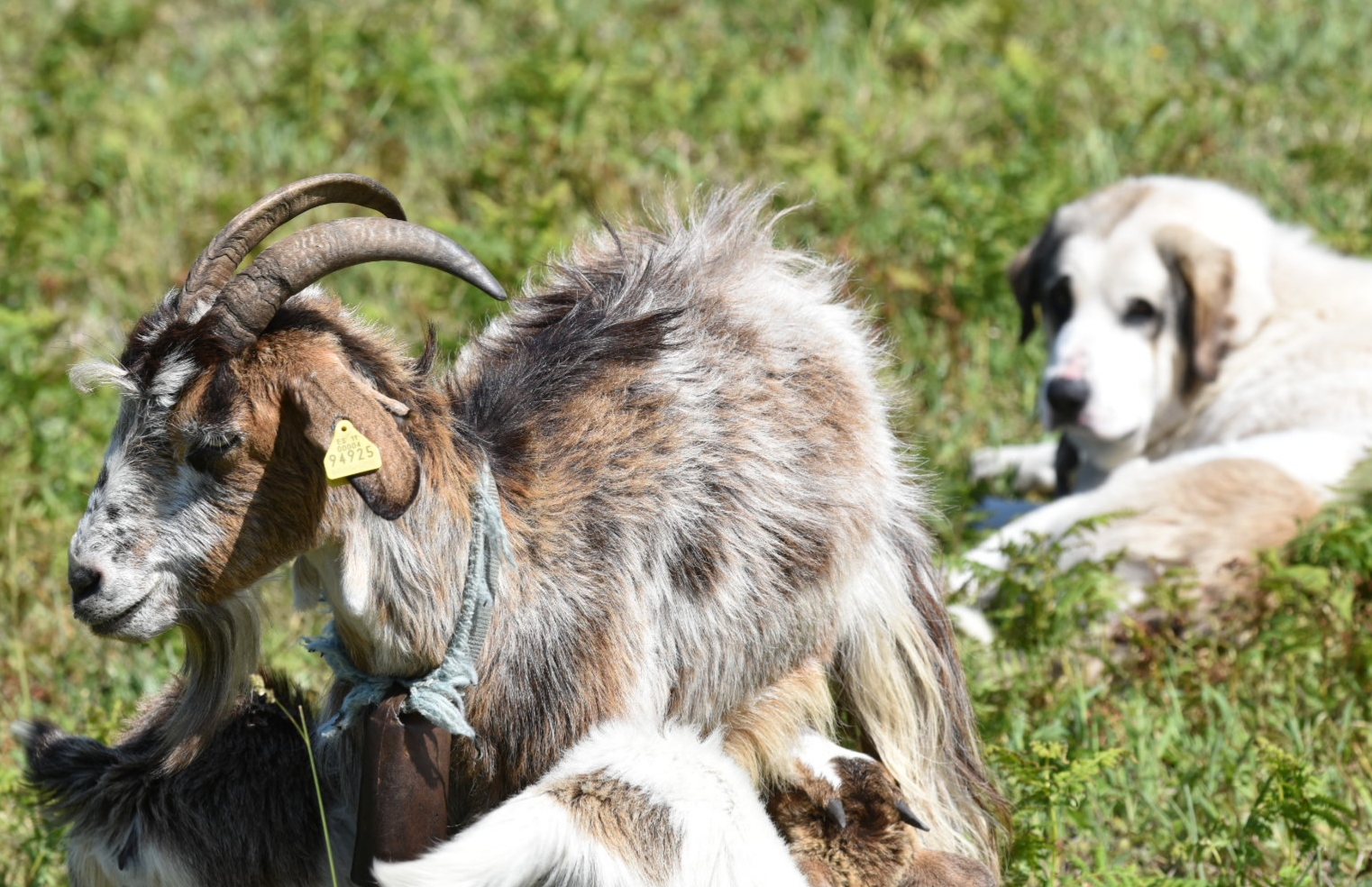
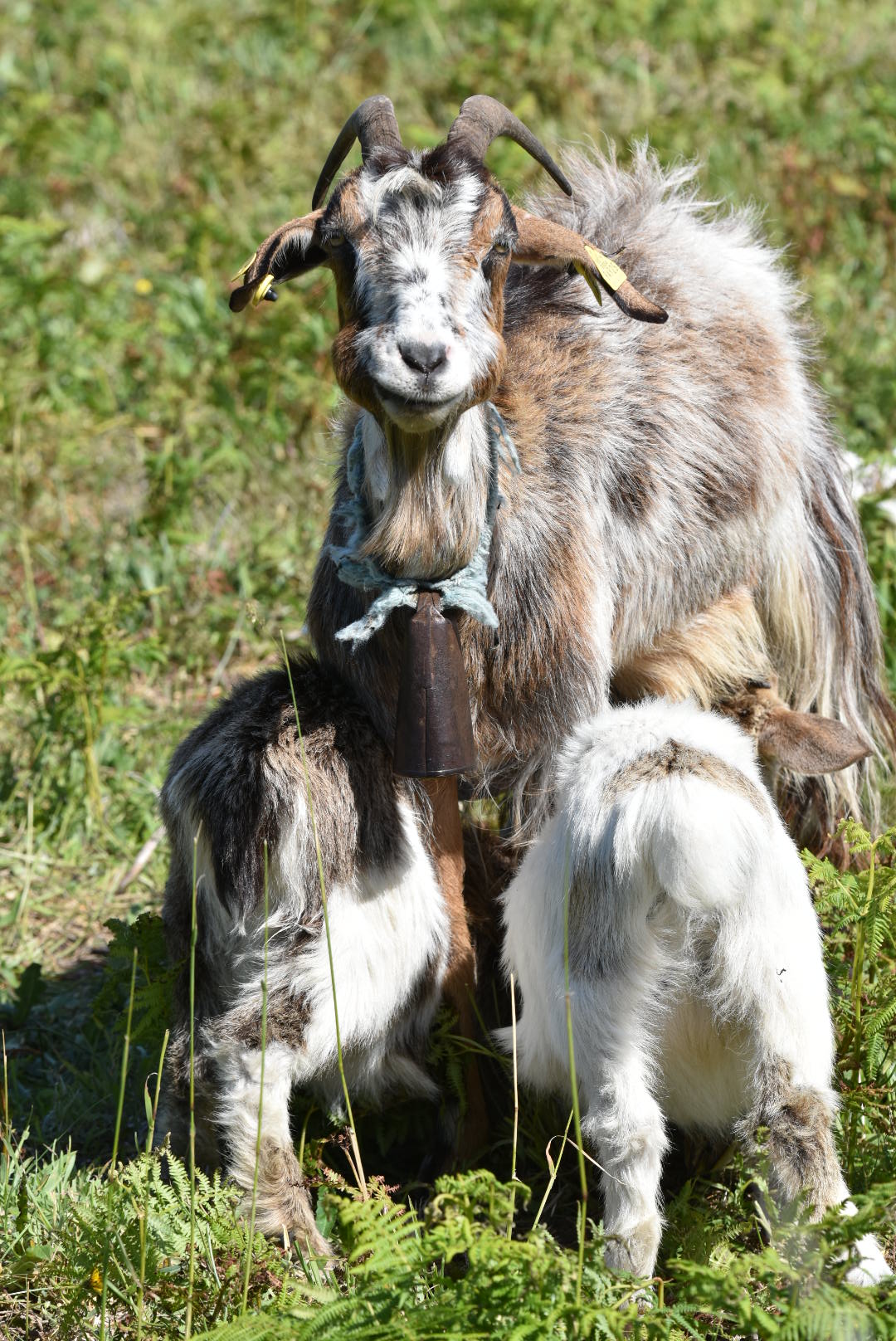
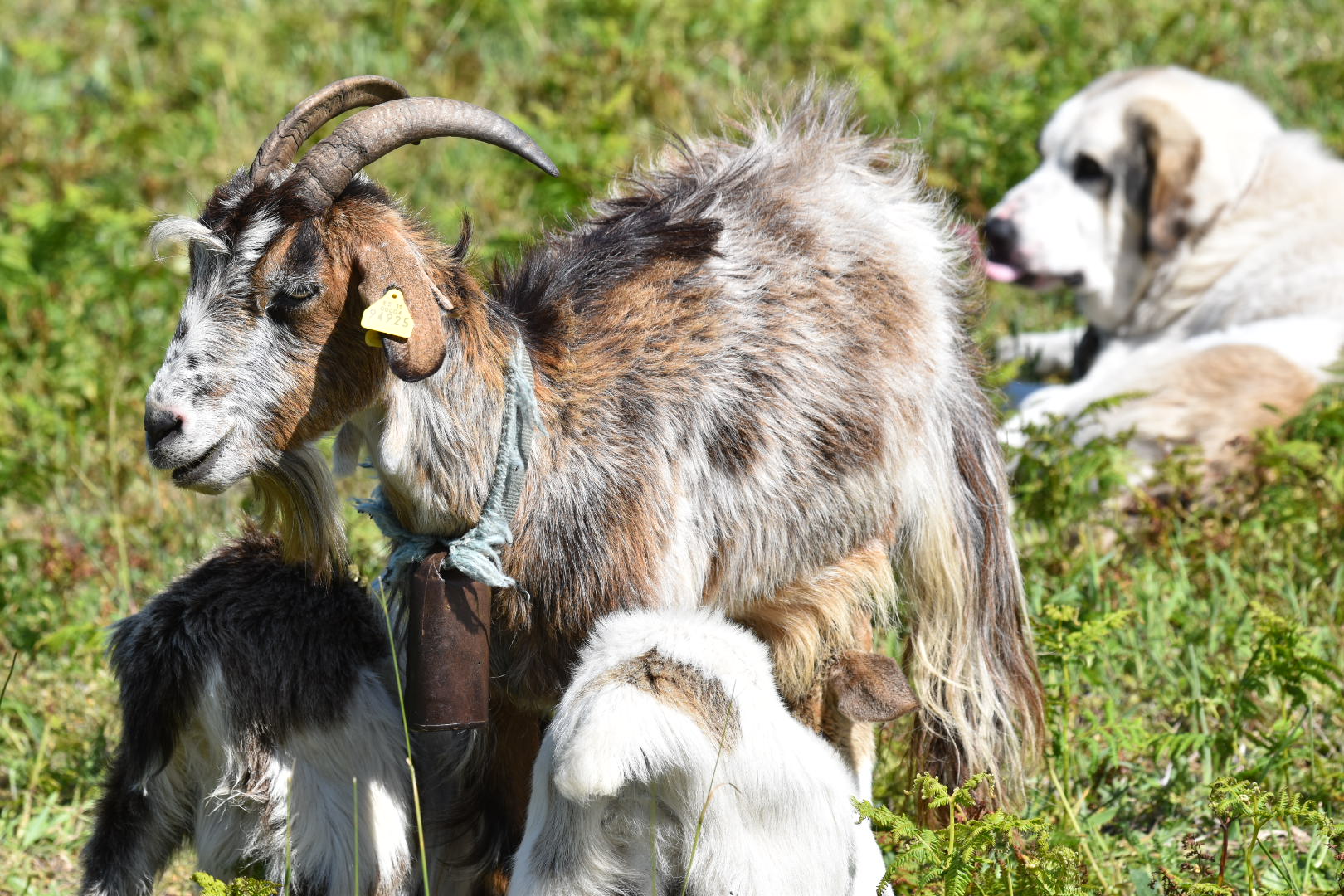
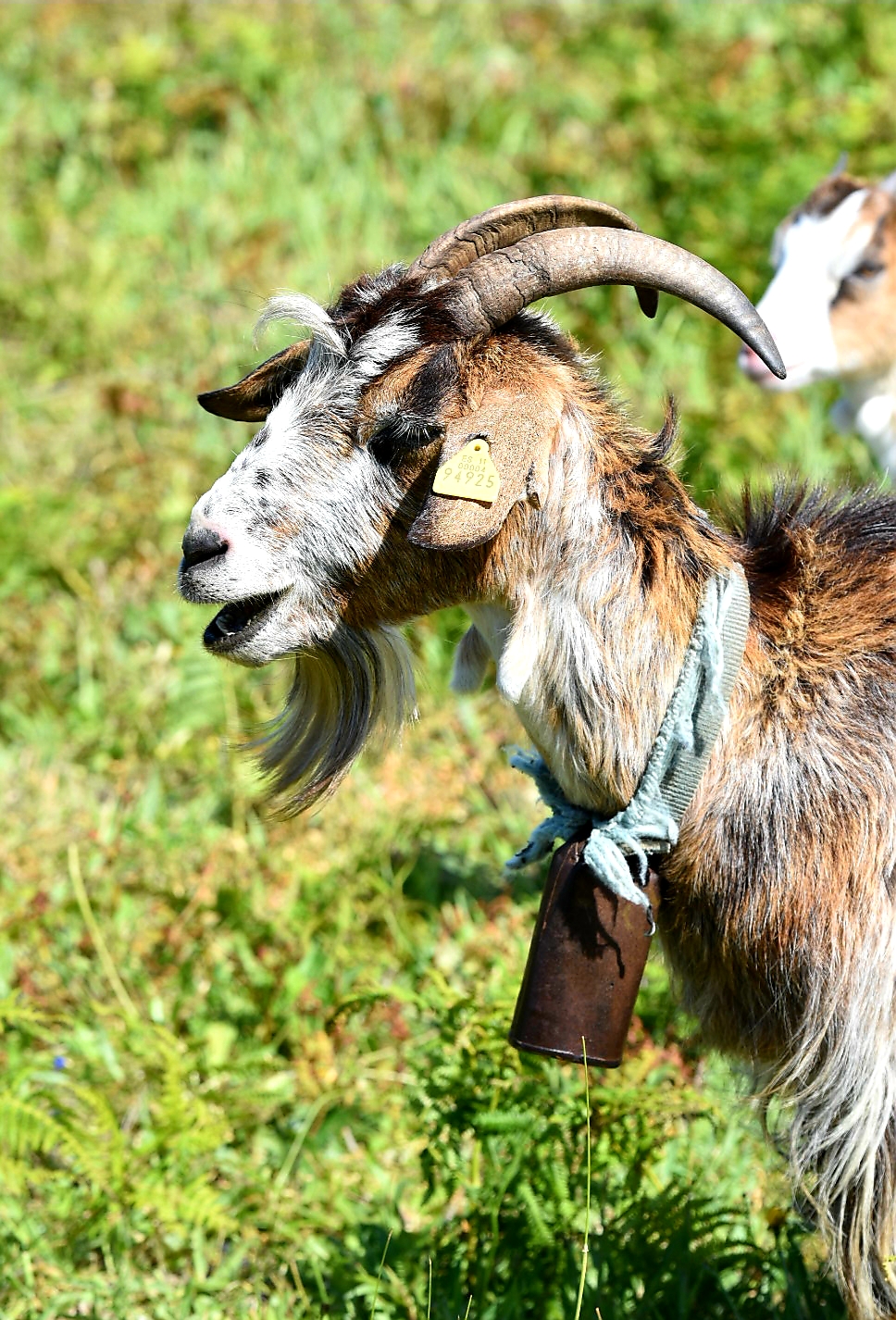
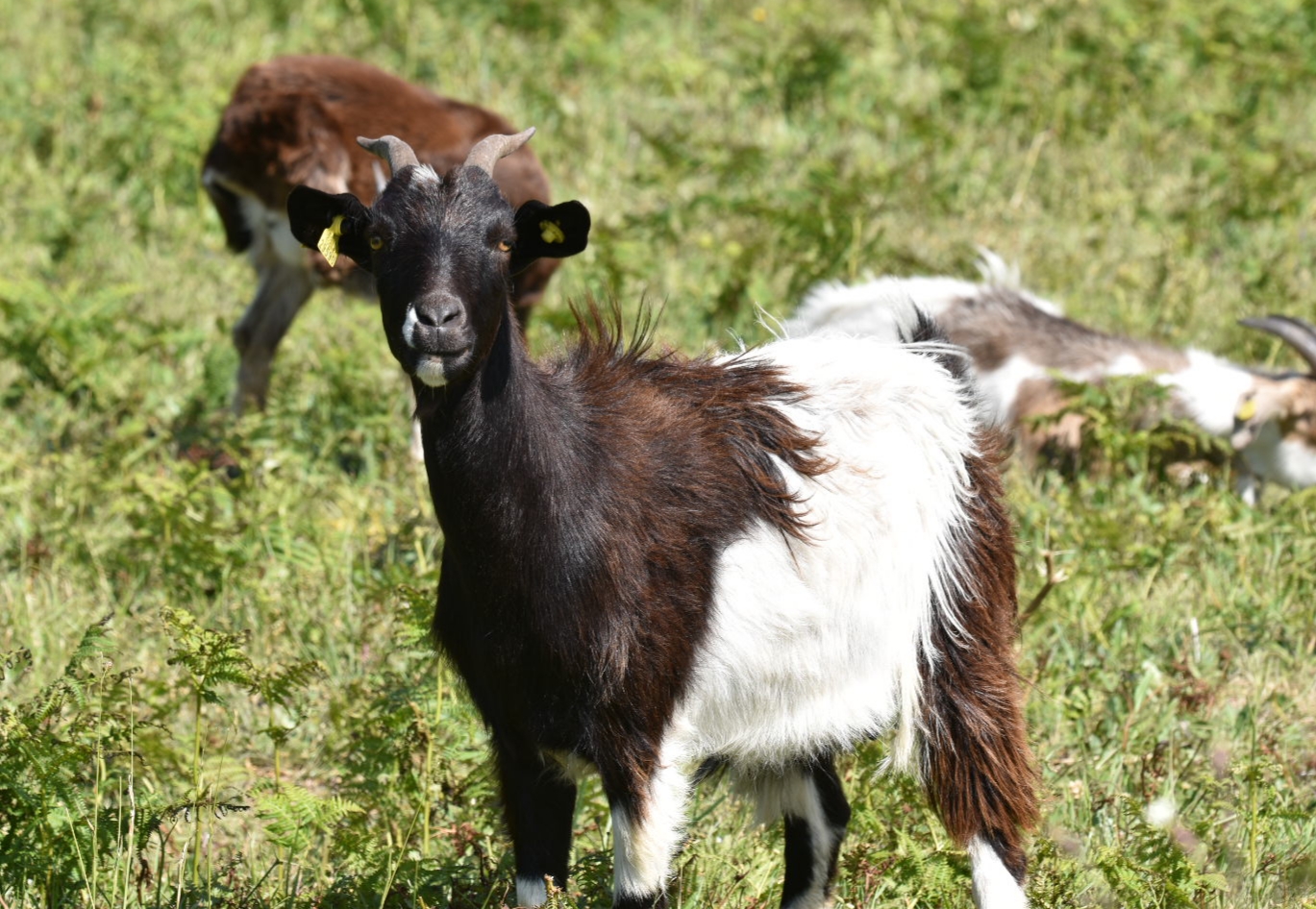
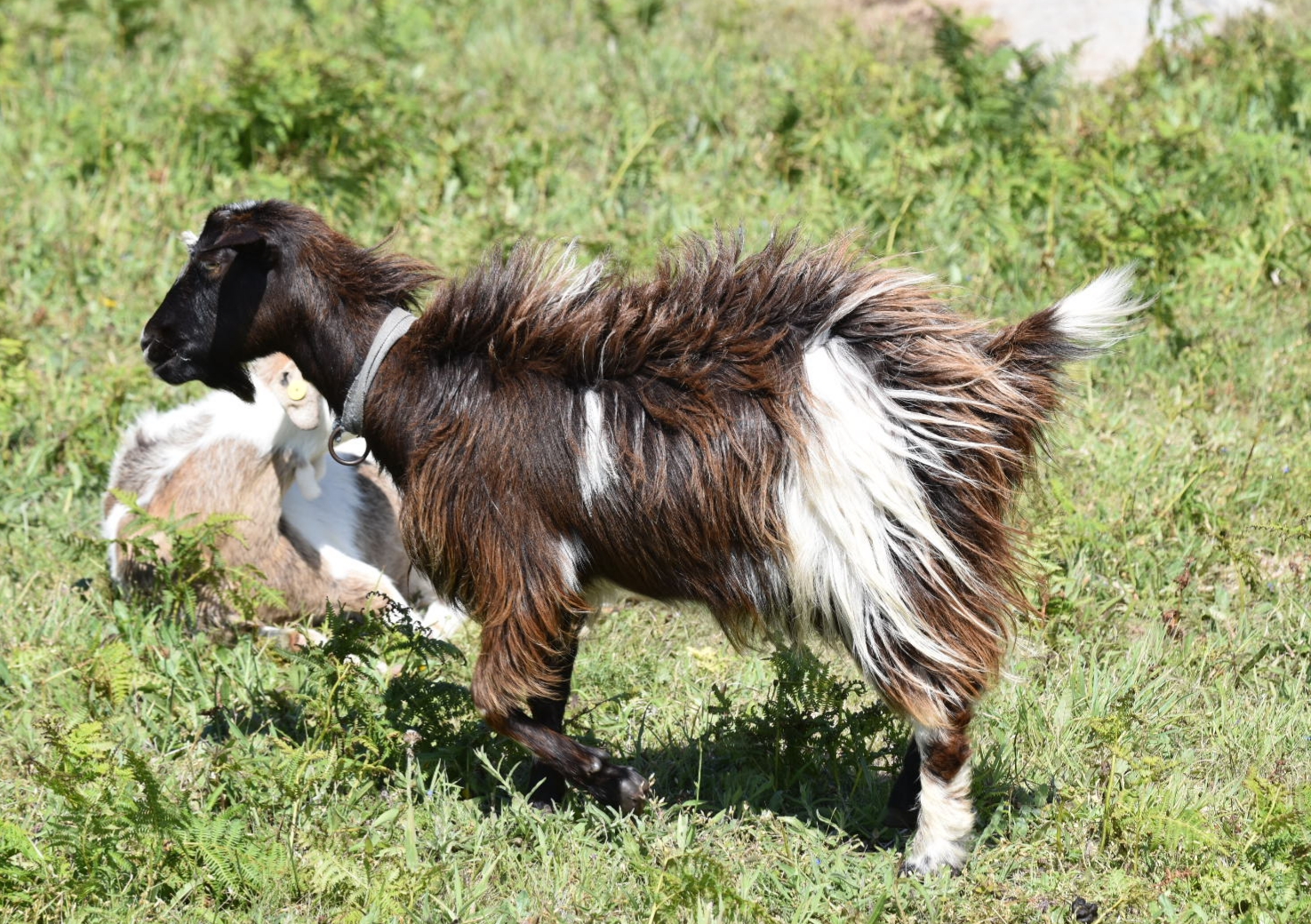
I came across a flock of goats with a large white dog, near Cabo de Bares in Galicia, Spain. There is a lighthouse nearby.
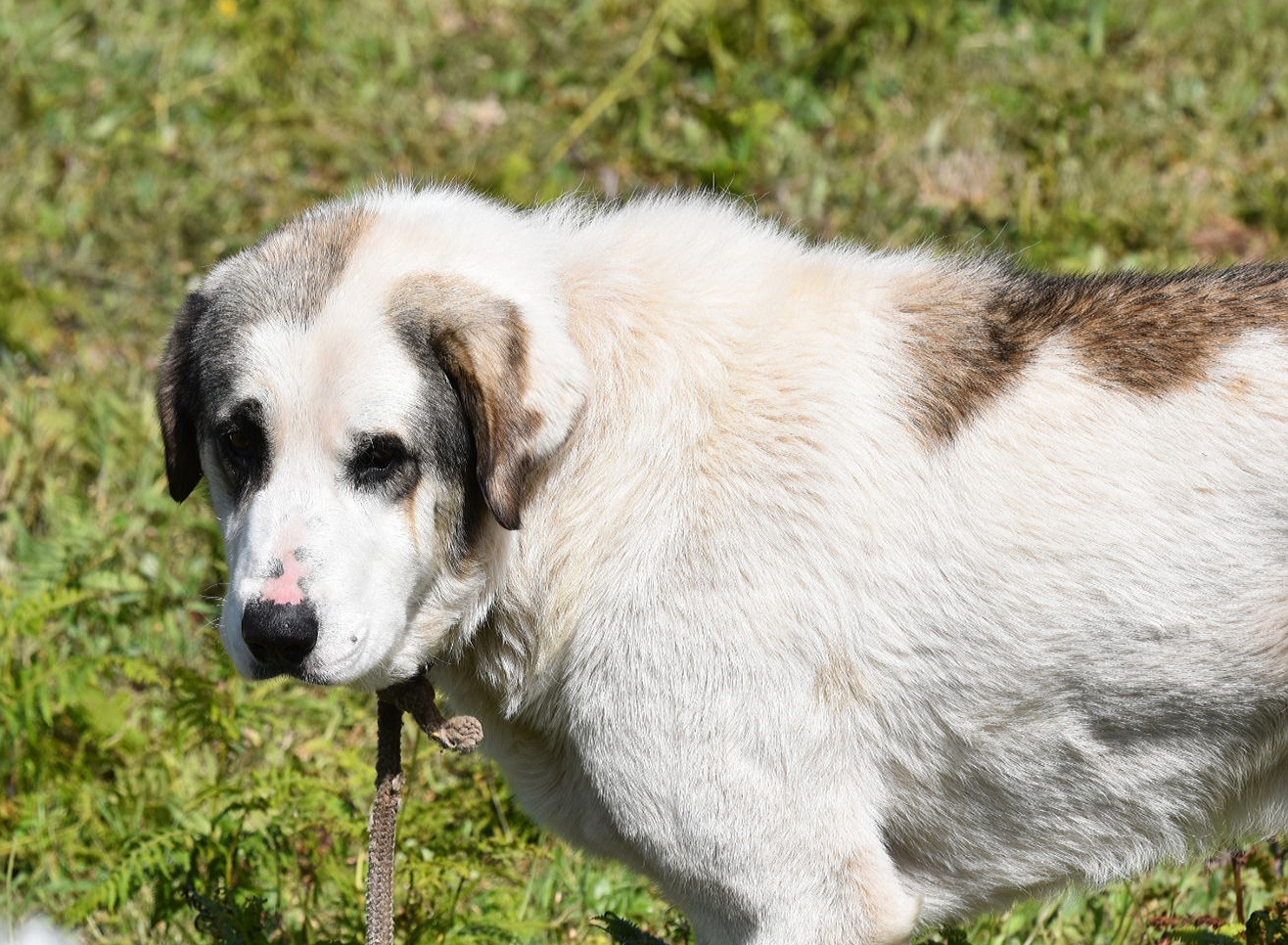
The dog was very passive and did not react much when I approached the group and started taking photographs.
Livestock guardian dogs (LGD) as they are called and apparently being used more frequently these days to guard flocks of goats and sheep (and even chickens) from wolves. I knew that there were wolves in northern Spain, but I was surprised to learn that they are found right up to the coast in Galicia where these photographs were taken.
The above map indicates that wolves occur right up to the northernmost Capes, including Cabo Bares where I saw this flock.
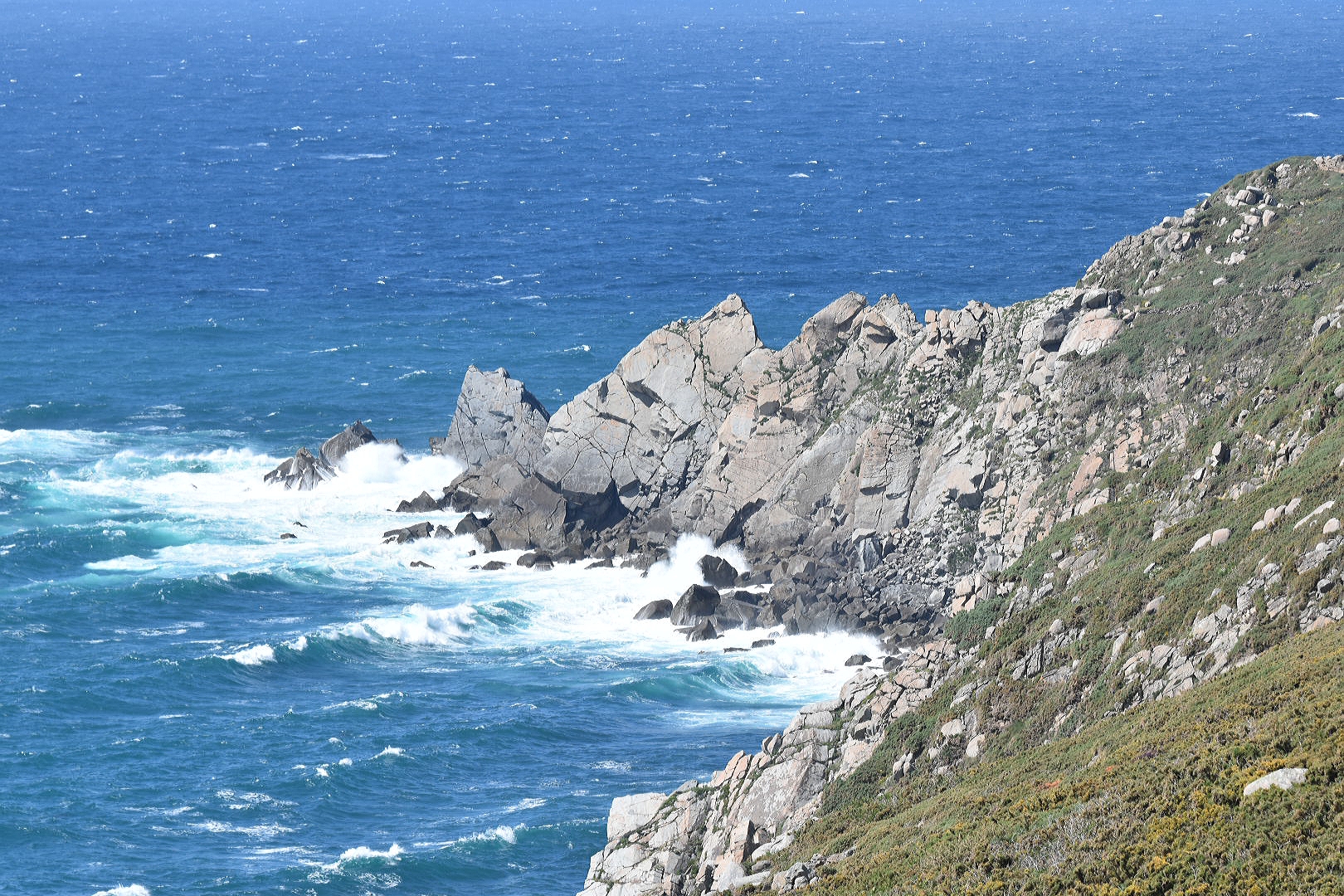
Cabo de Bares, Galicia, Spain
The dogs are placed at an early age with the flock they come to guard, so that they form a close bond and defend them relentlessly against predators.
If the wolves attack, these dogs will stand and bark and hopefully that will be enough to deter the wolves. I think that this particular breed is a Pyrenean Mountain Dog, but I am not certain. Anyway, the goats seem happy enough!
Sadly, some of these working dogs suffer a shorter lifespan than dogs which are kept as pets. Hopefully, they have pleasant and satisfying lives in their beautiful surroundings.
I will look out for more of these LGDs now that I know they exist. There are an estimated 2,000-2,500 wolves in Spain, the biggest population in western Europe. The hunting of wolves is banned in Portugal but still allowed in some parts of Spain.
I should finish by saying that I am assuming that this dog is there to guard against wolves. I did not speak to the farmer. The wolves are distributed over a vast area at a maximum density of about 7 wolves per 100 square kilometers according to the Wikipedia article. So quite how big a threat they are, in this particular location, I don’t know.
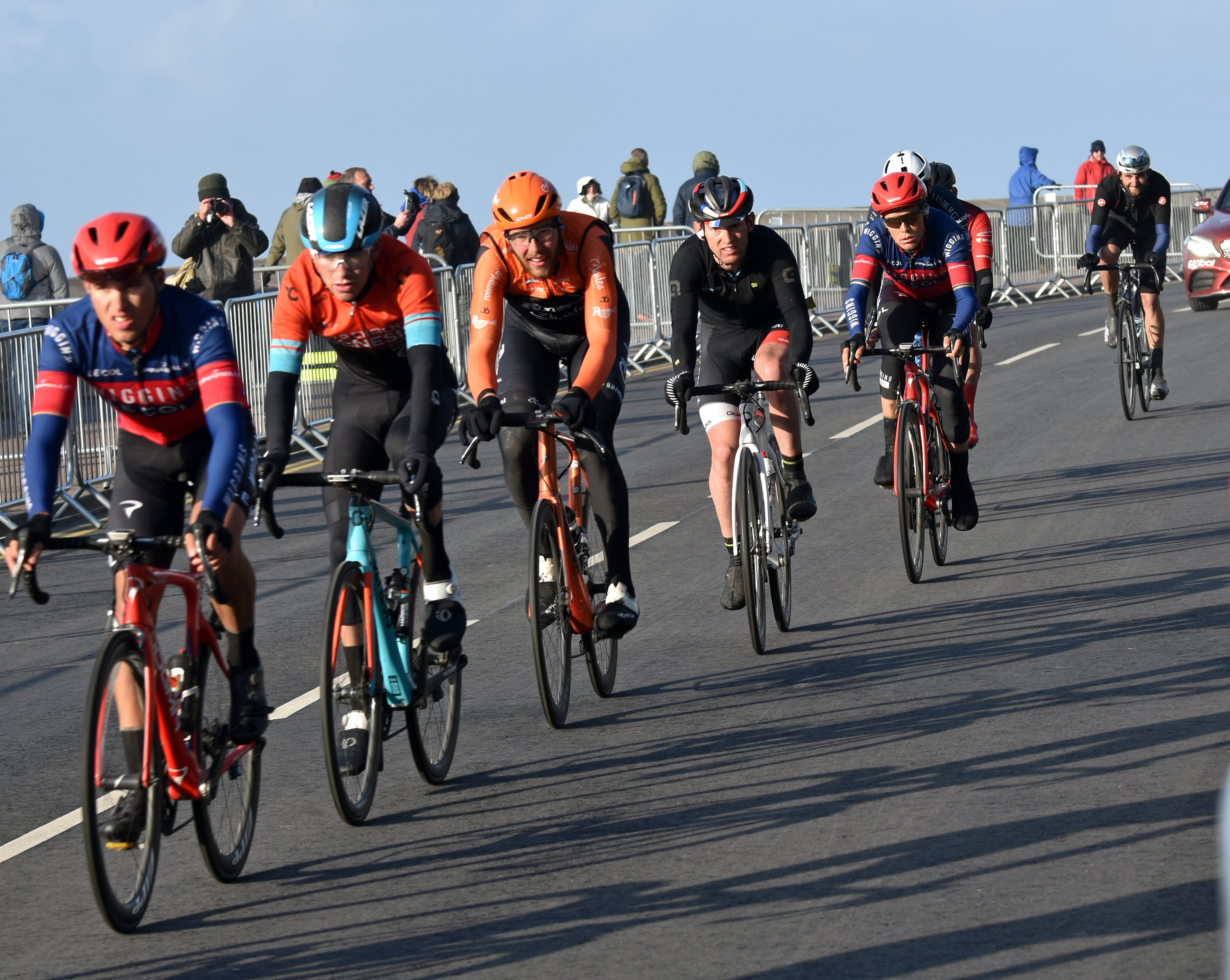
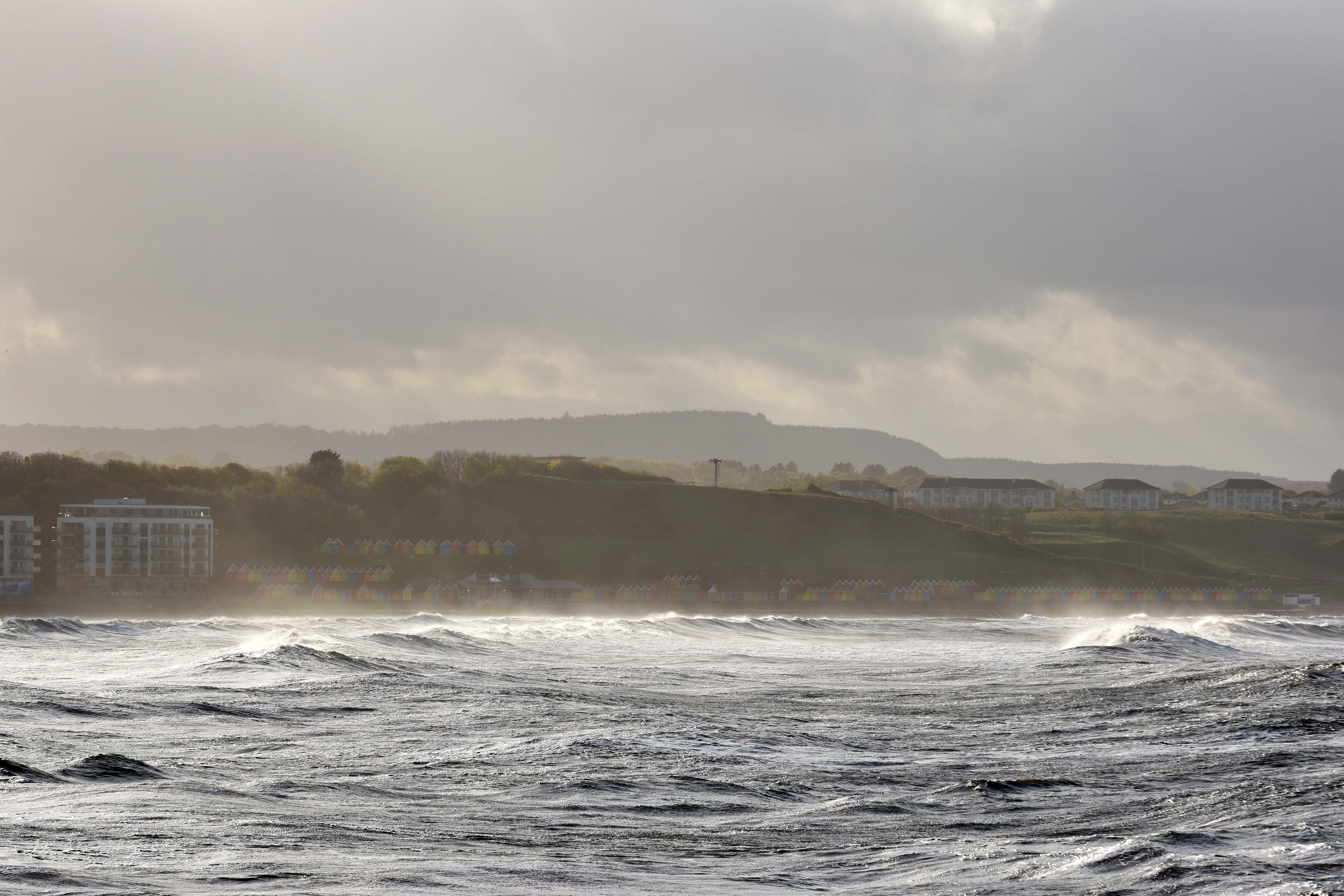
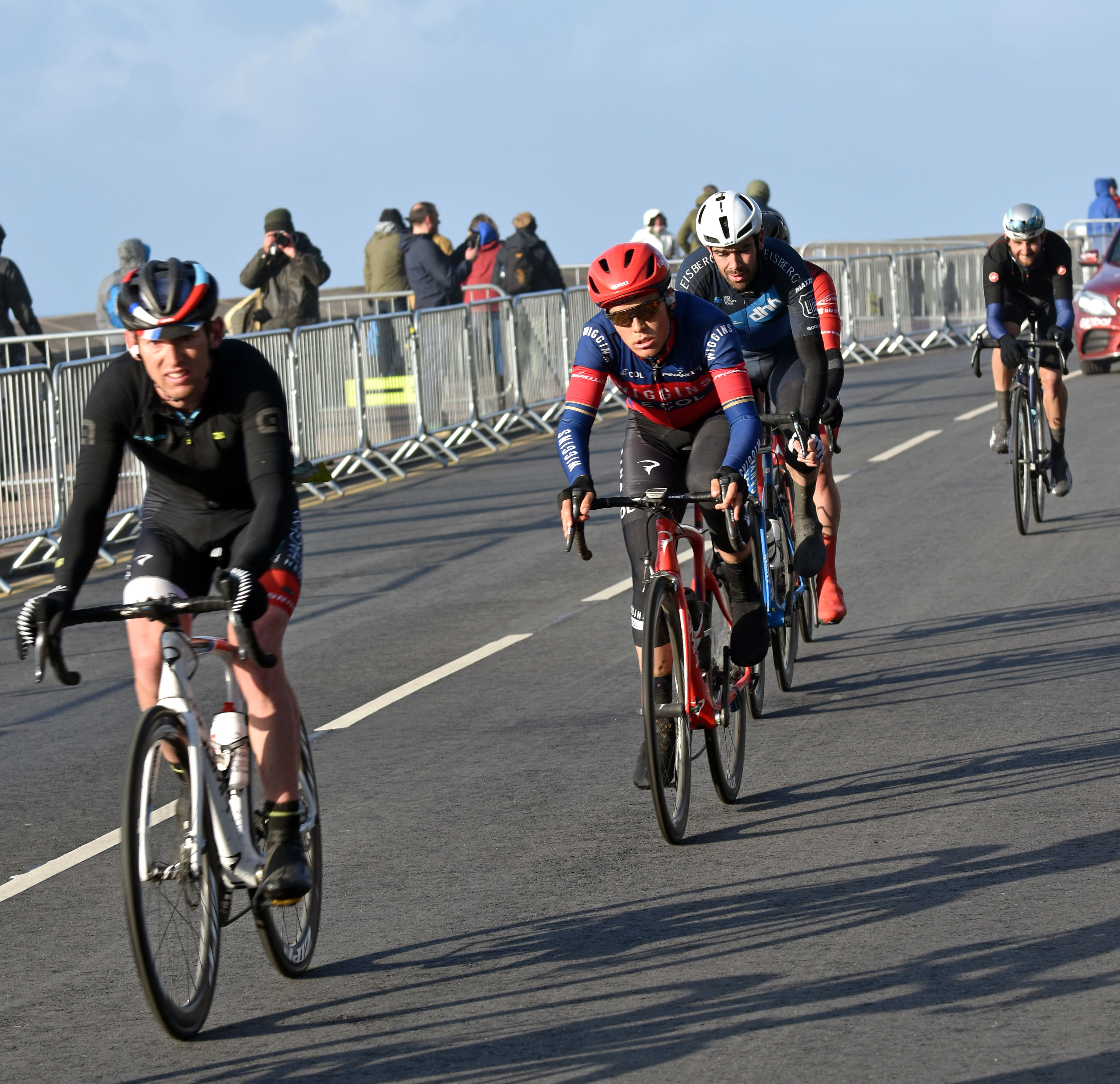
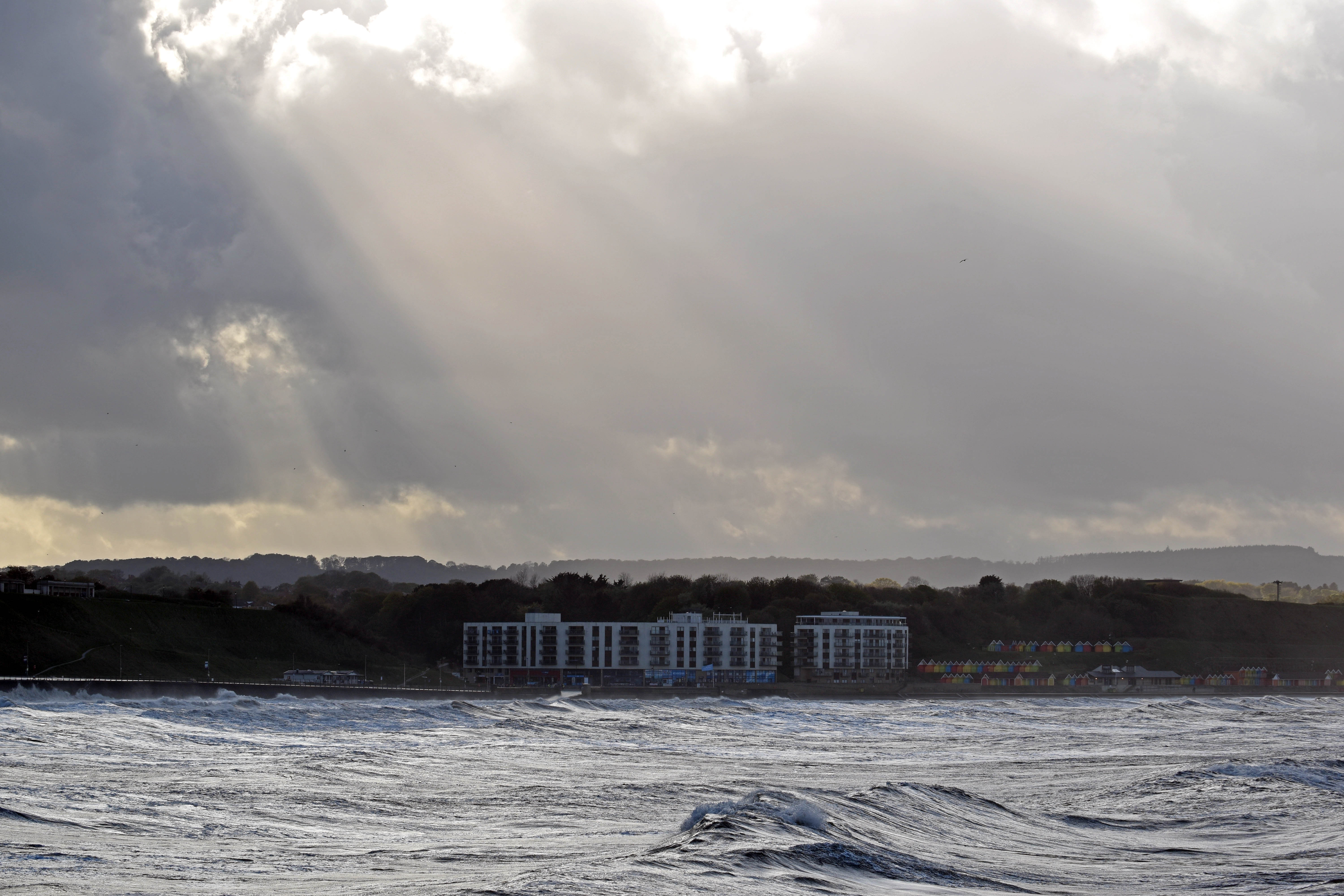
It was a cold and windy day here in Scarborough today (4th May 19), for the finish for Stage 3 of the Tour de Yorkshire 2019, cycle race. The waves were sweeping into North Bay, driven by a strong wind. It must have been grueling to have cycled 135 km in this weather. The men’s race finished about 18:30. The women’s race had taken place earlier.
North Bay Scarborough
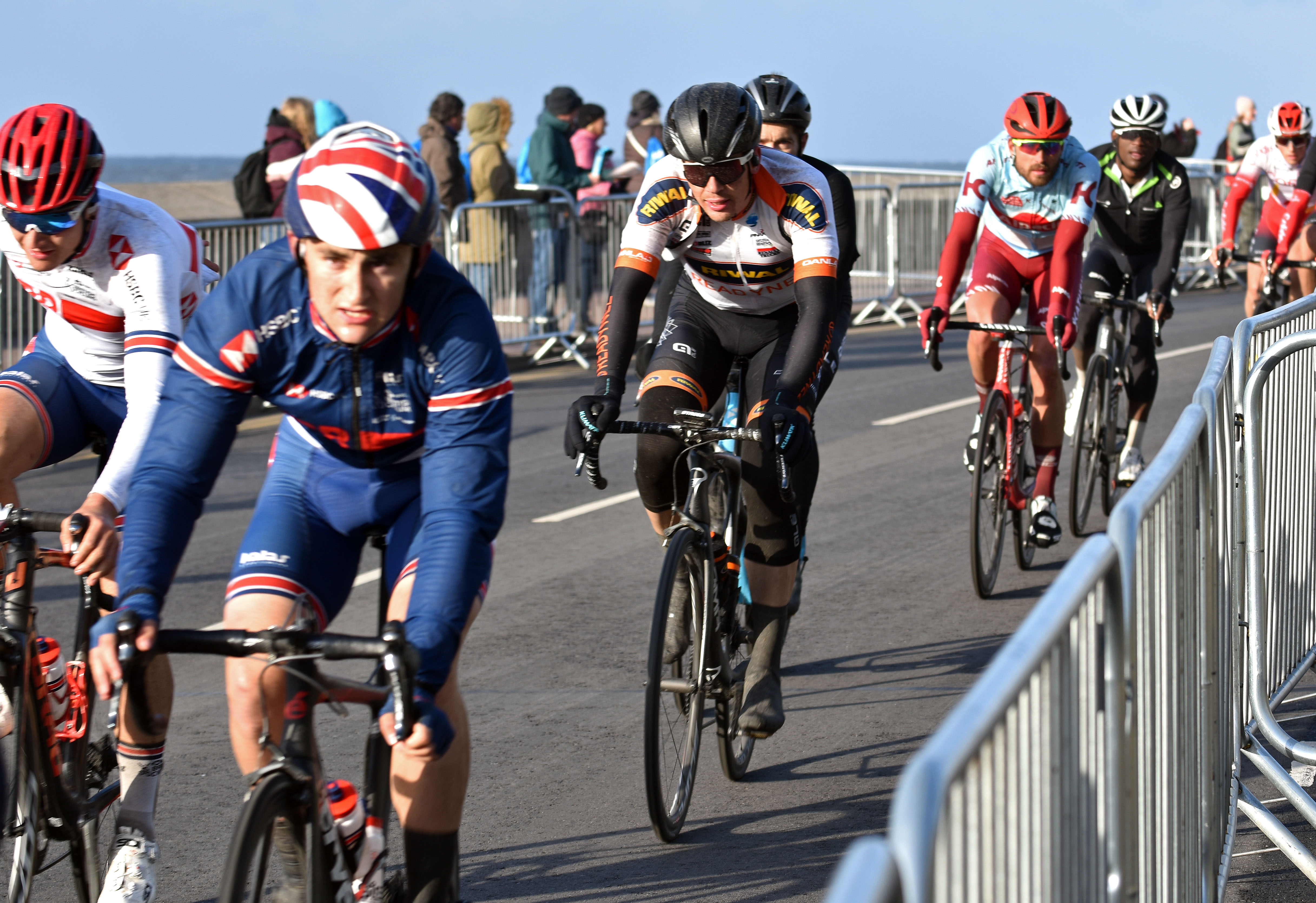
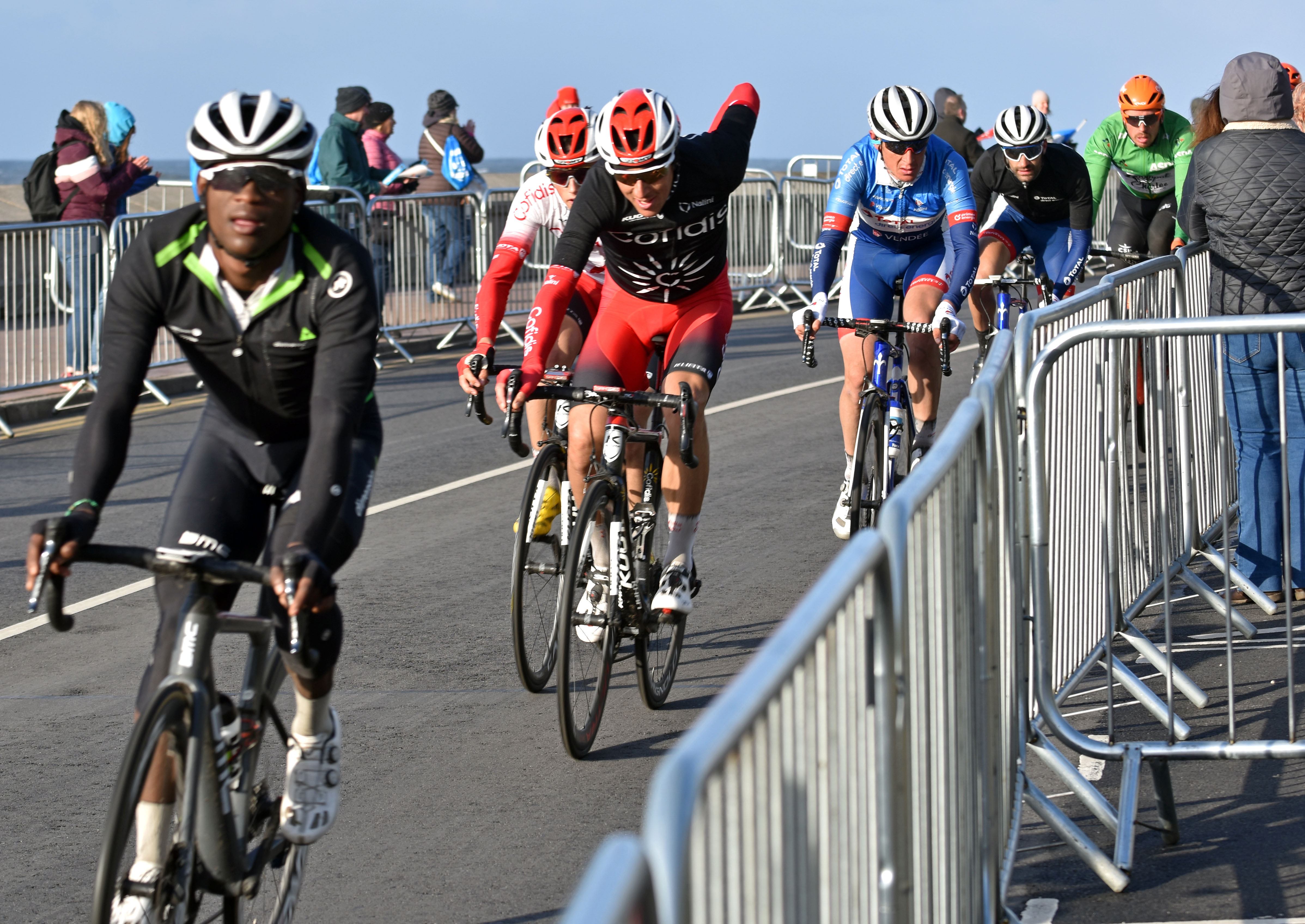
I have no idea who the individual cyclists are, but some people may recognize them.
Tour de Yorkshire finish 4 May 2019
I missed the winners! The light was so bad that it was hard to get any useful shots. But then the sun came out for a few minutes and I managed to get some photos of the later riders.
Tour de Yorkshire finish 4 May 2019
The crowd had waited patiently in the cold for the riders to arrive, but those beneath the large screen could follow the progress of the race via the helicopter video. Sadly two riders crashed out.
It was all over in a flash, but exciting and one cannot help but be impressed (and in awe) of the cyclists who could cycle so far and so fast, in such awful weather!
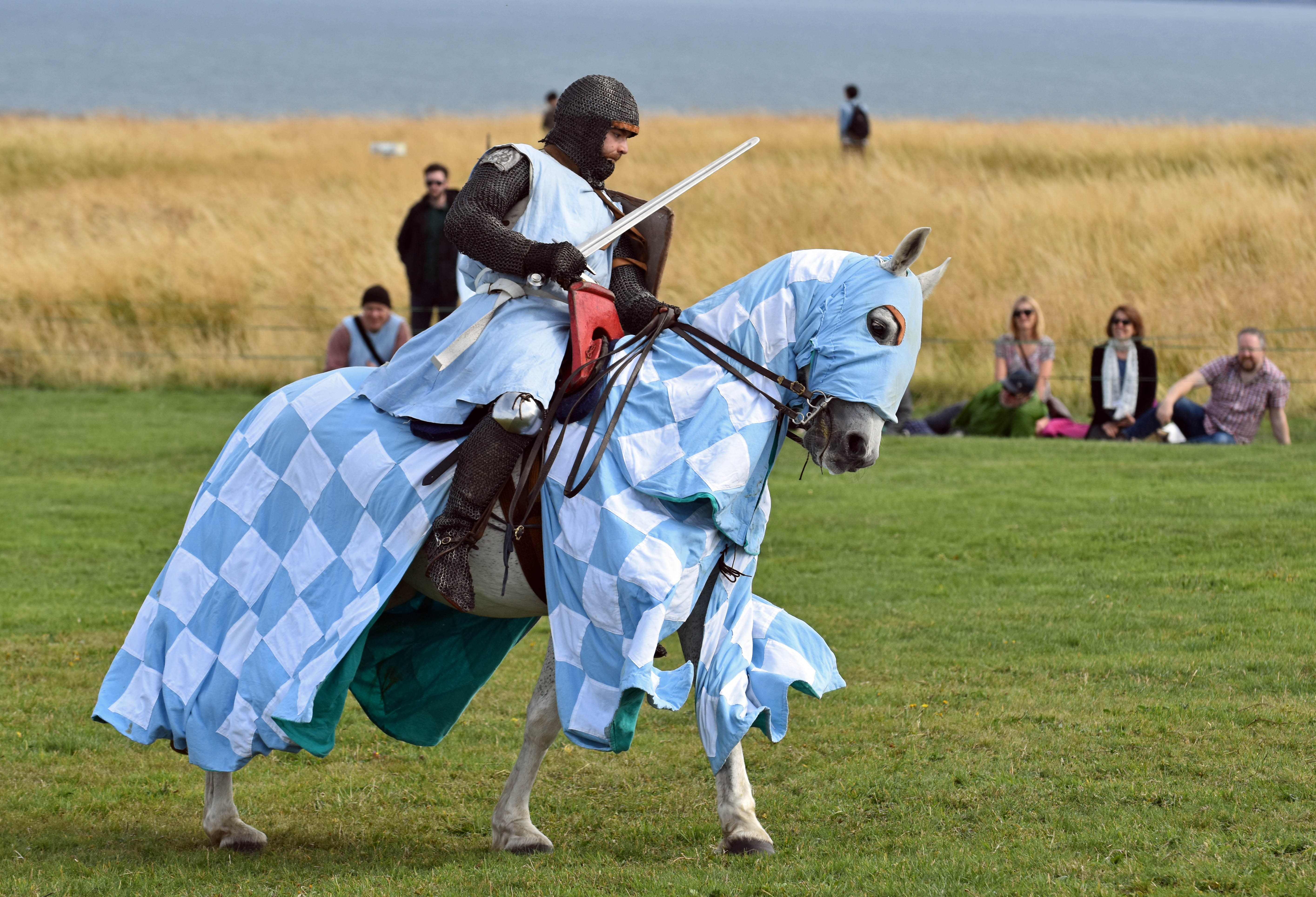
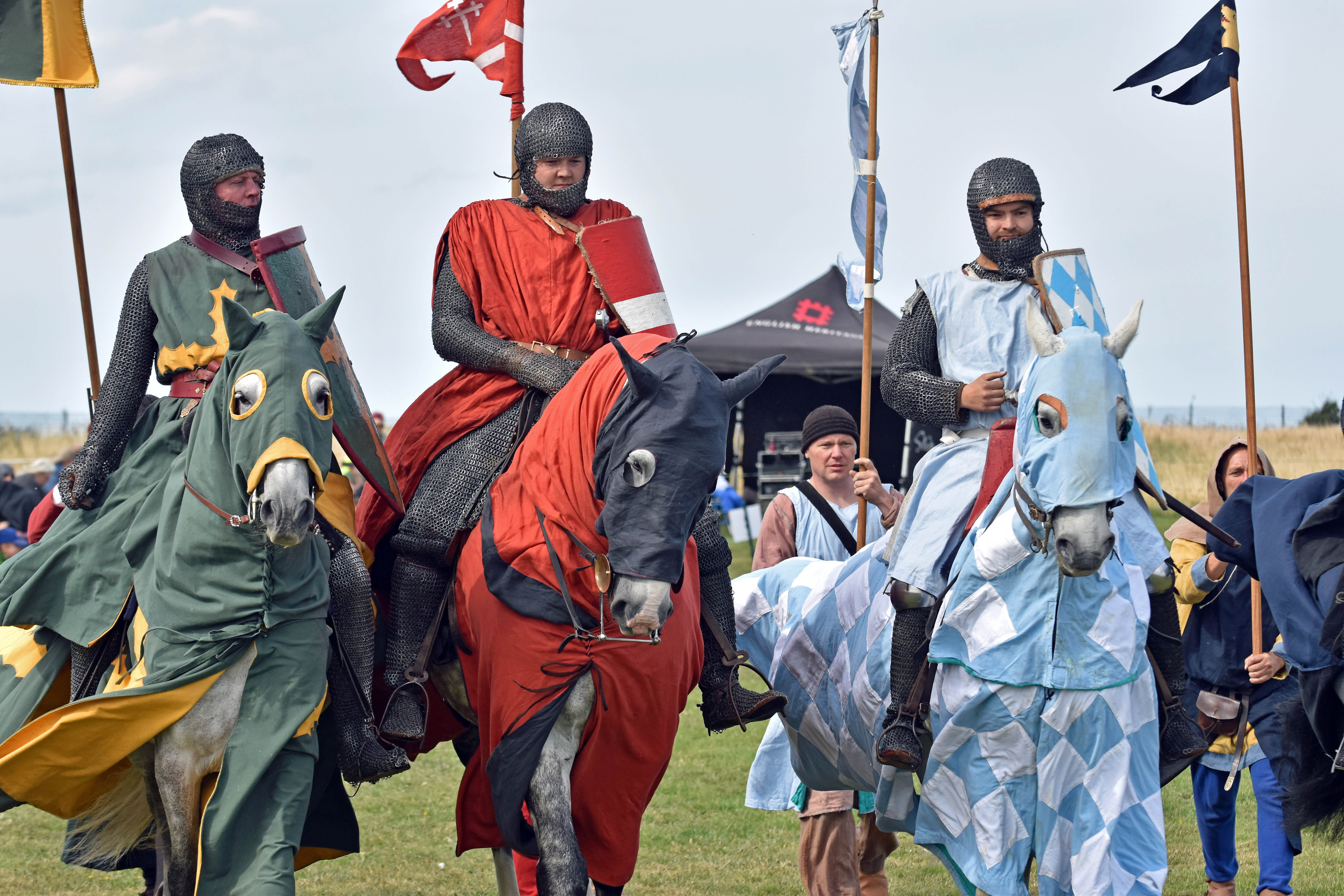
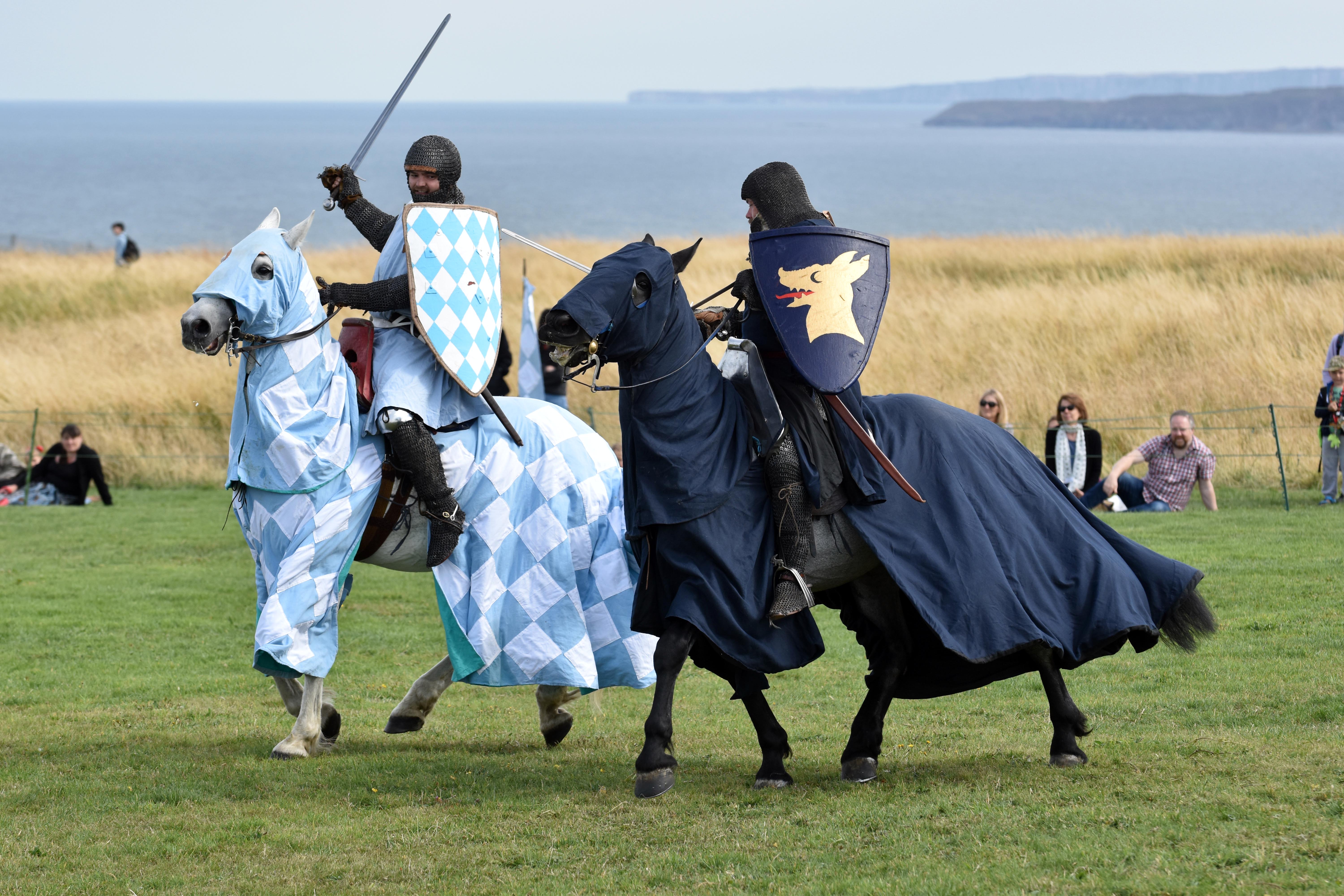
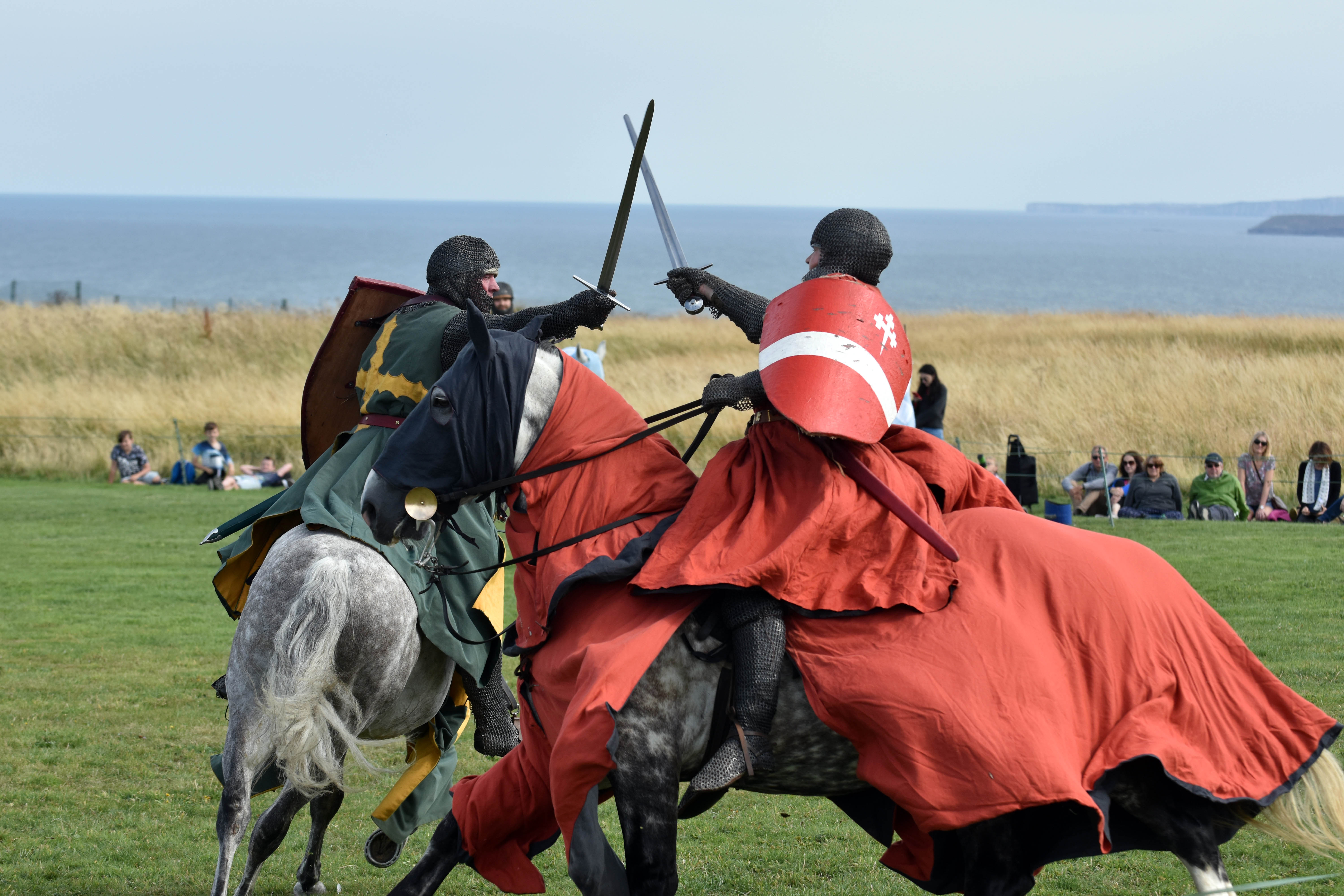
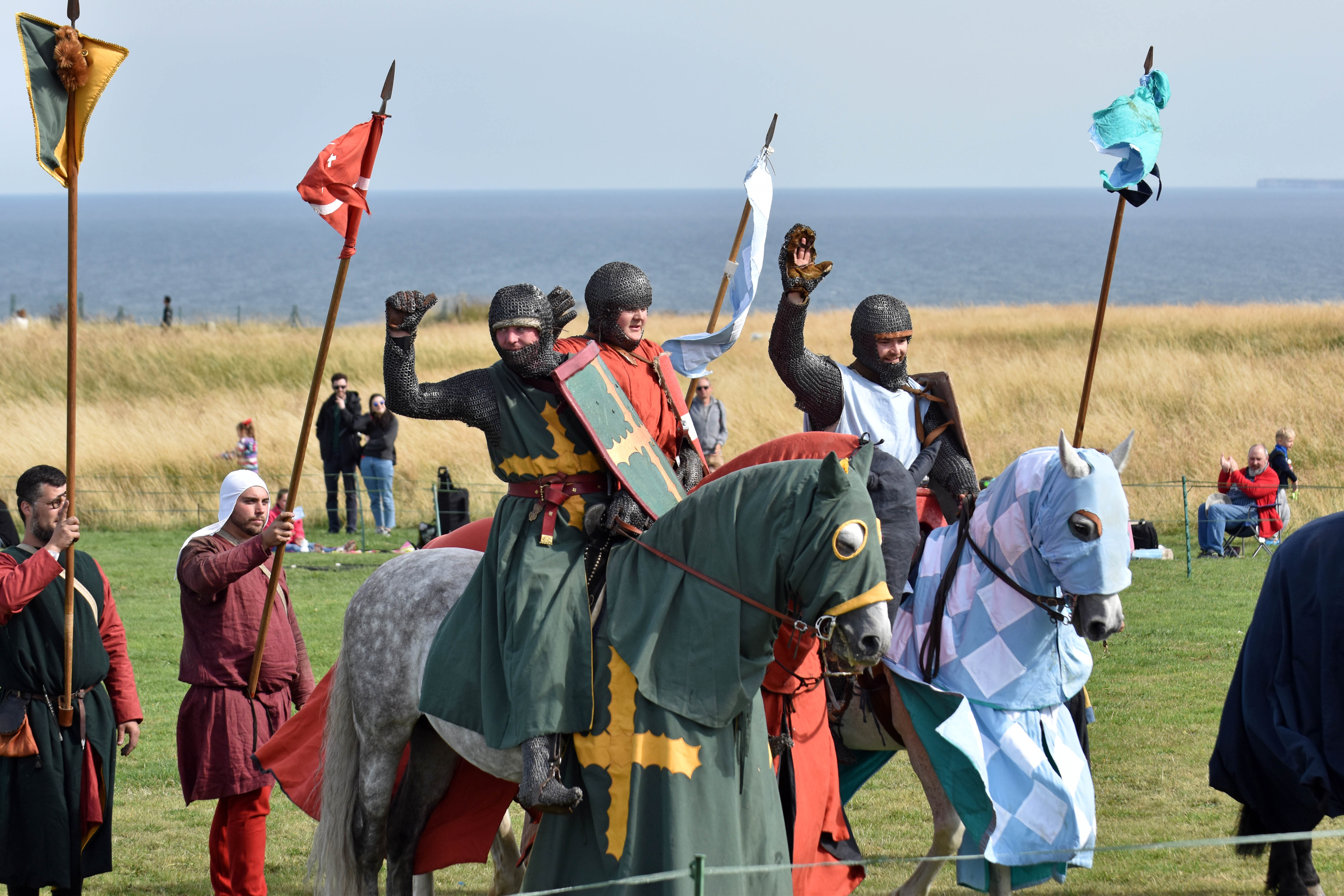
A Medieval tournament is being held at Scarborough castle this weekend, 11-12th August 2018, the highlight being a display of horsemanship and mock fighting/jousting.
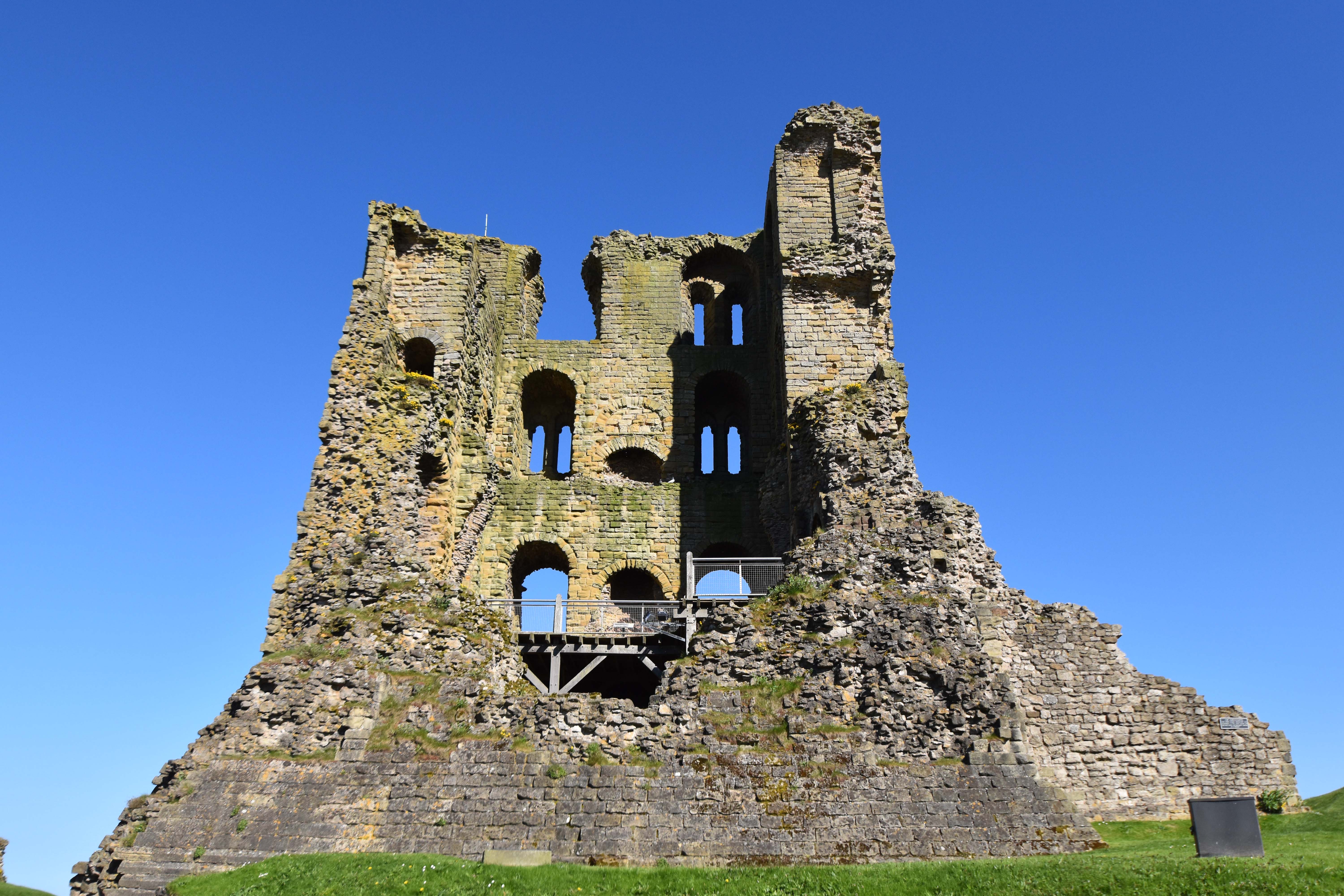
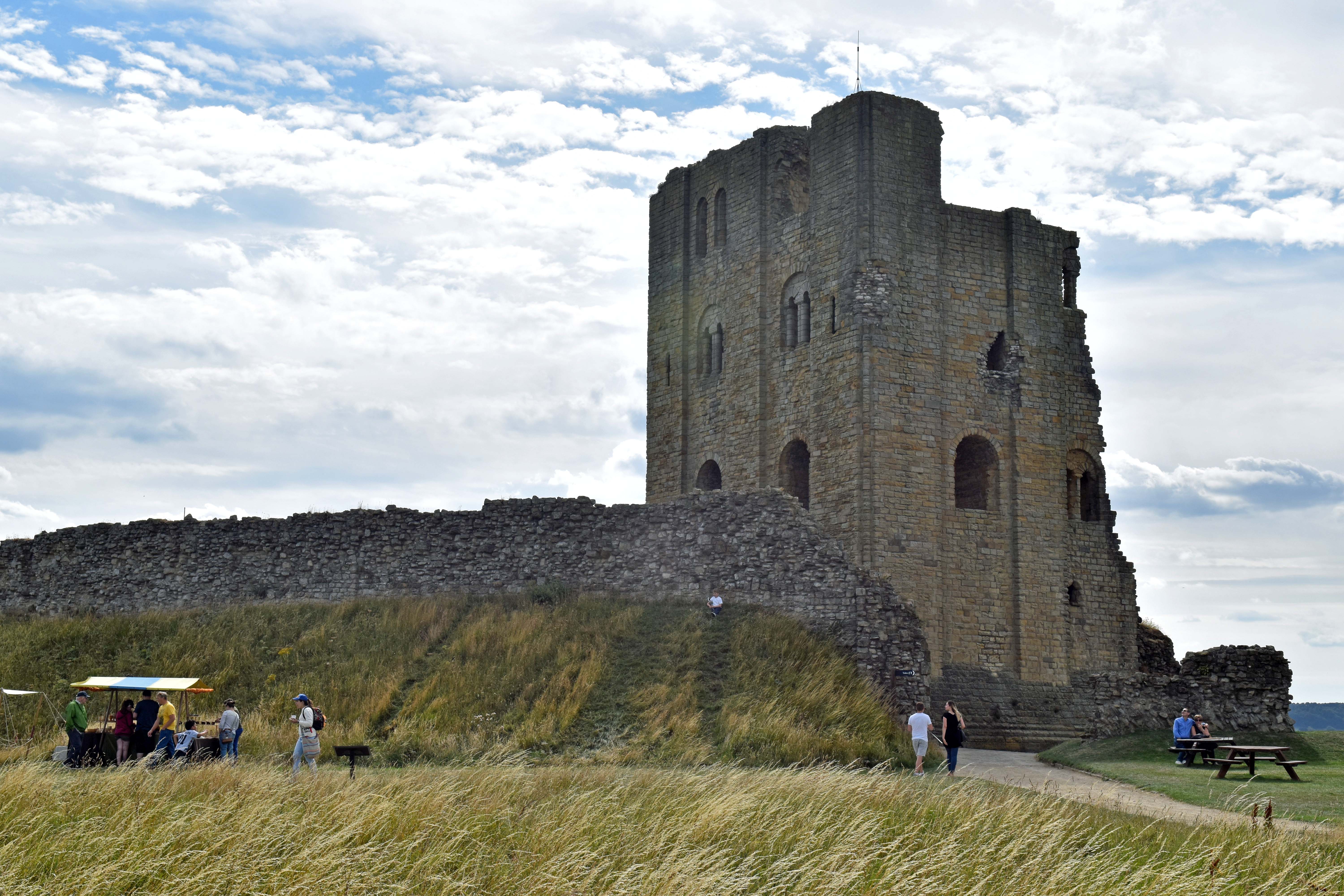
Norman Keep of Scarborough castle, destroyed in the Civil War
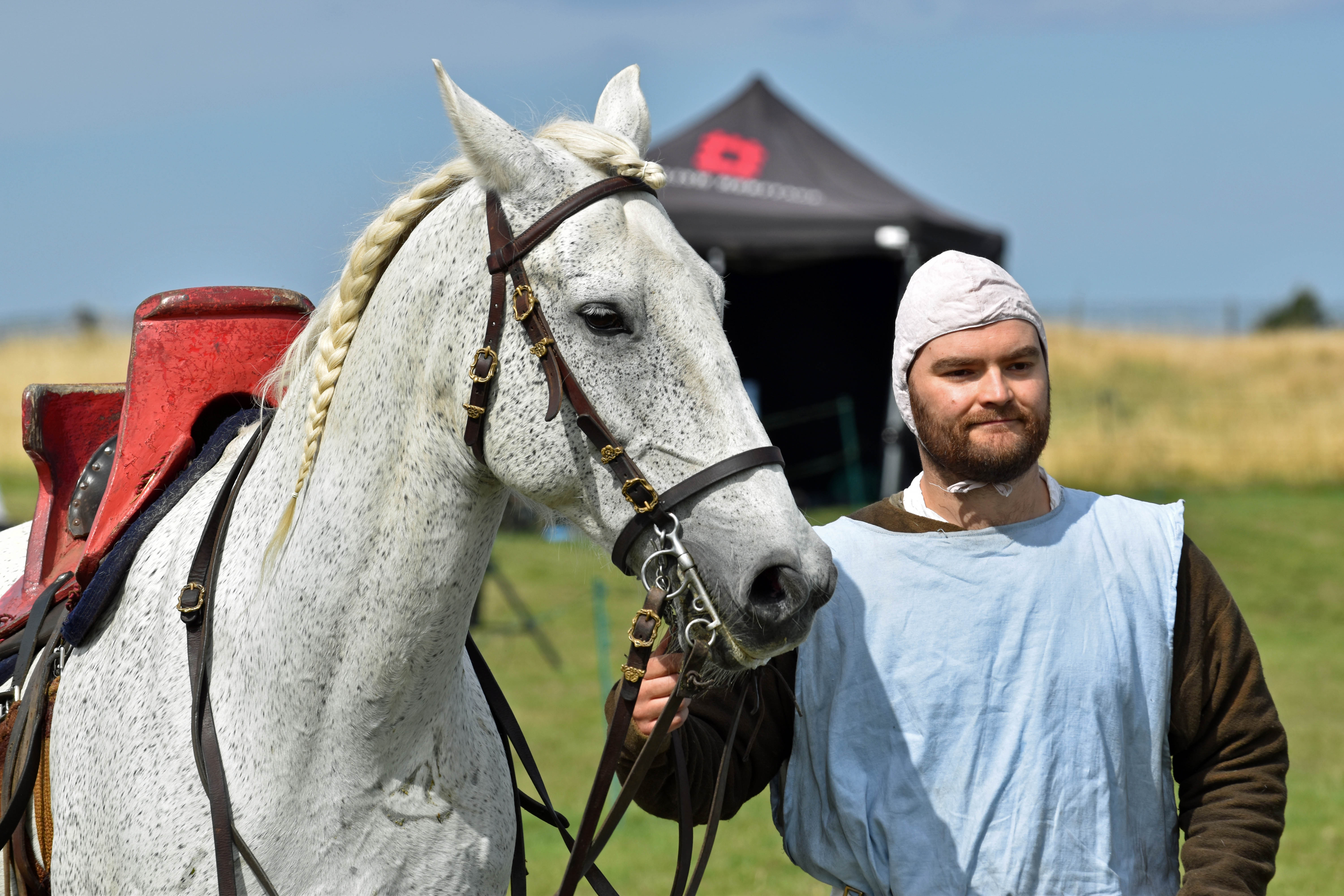
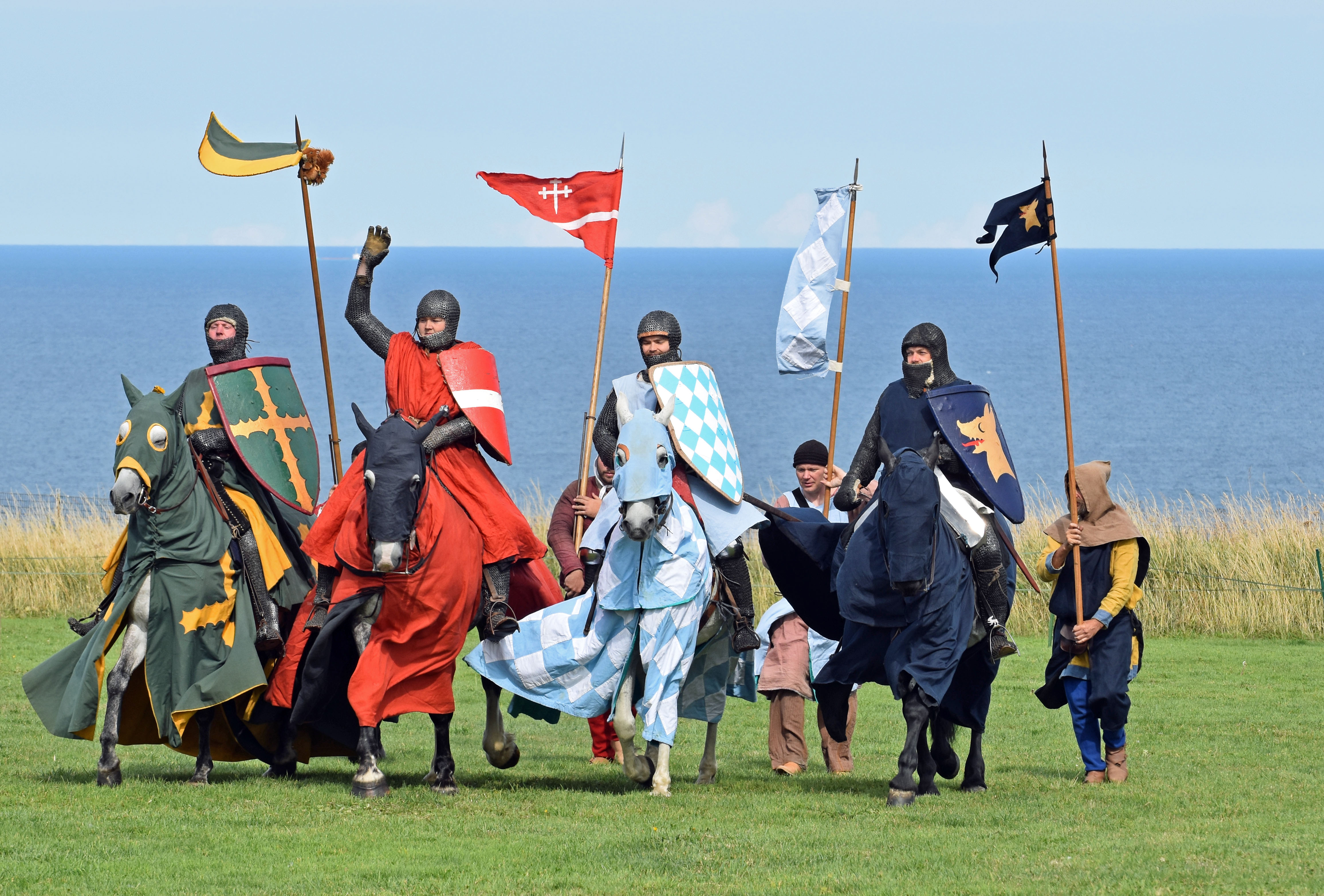
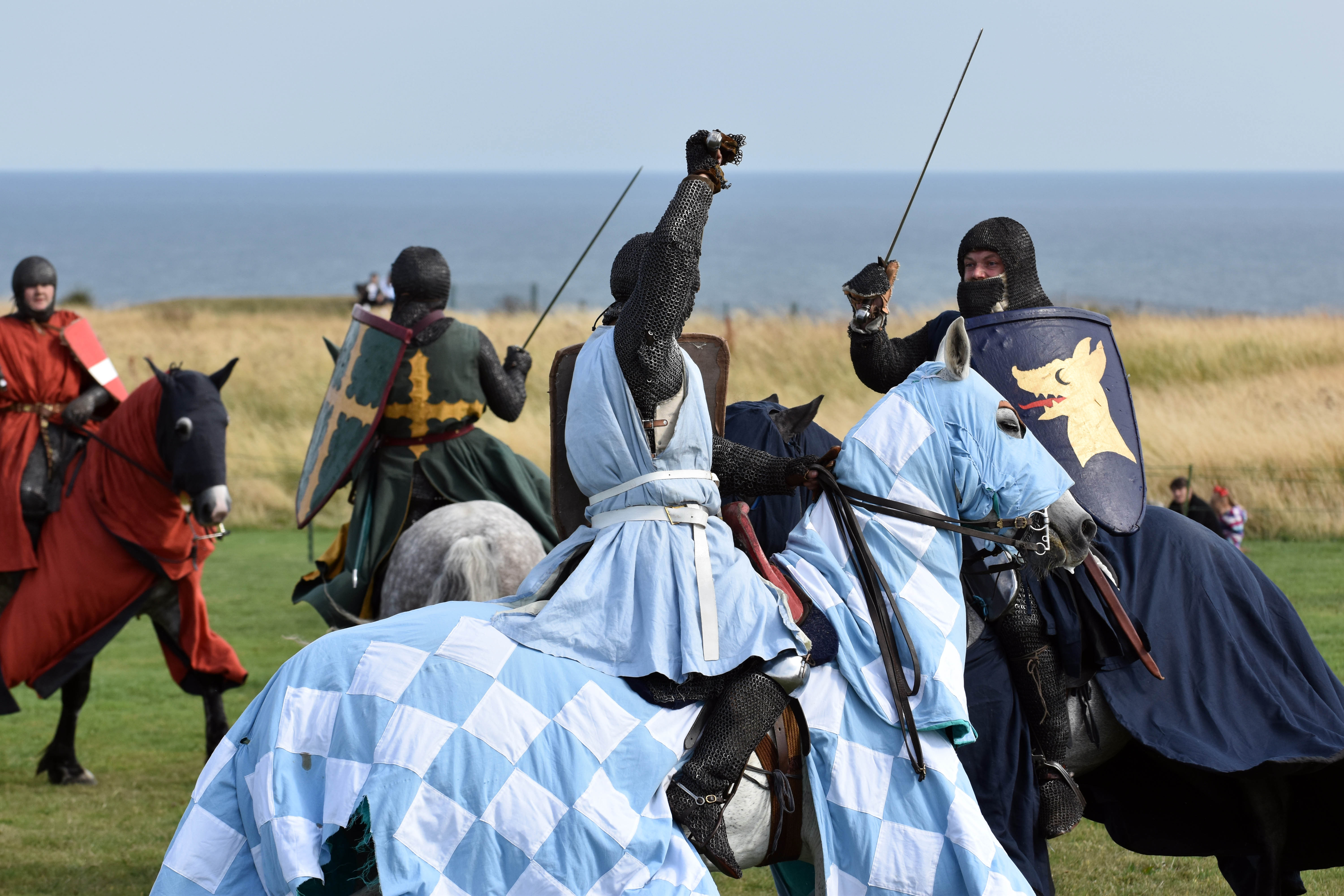
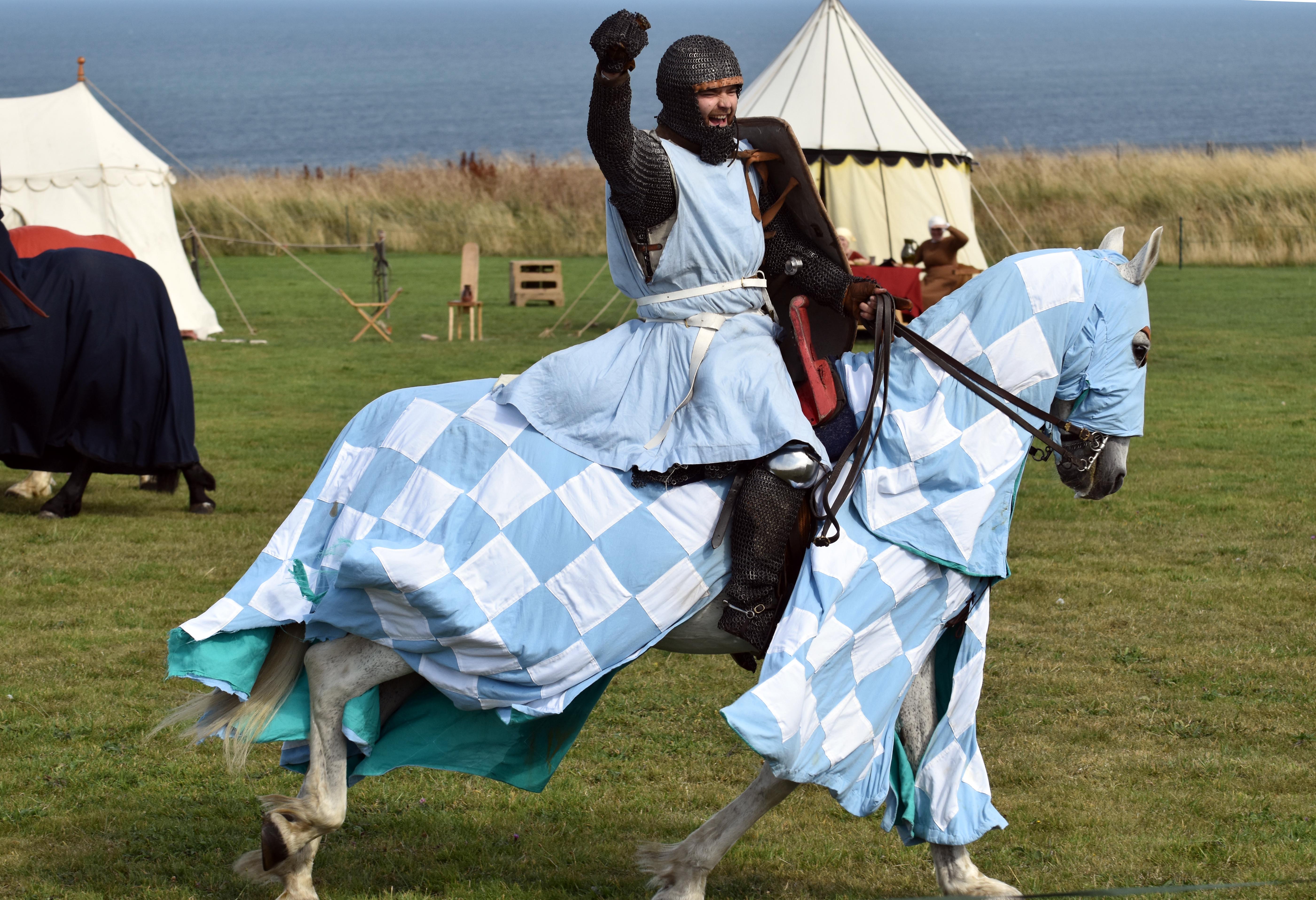
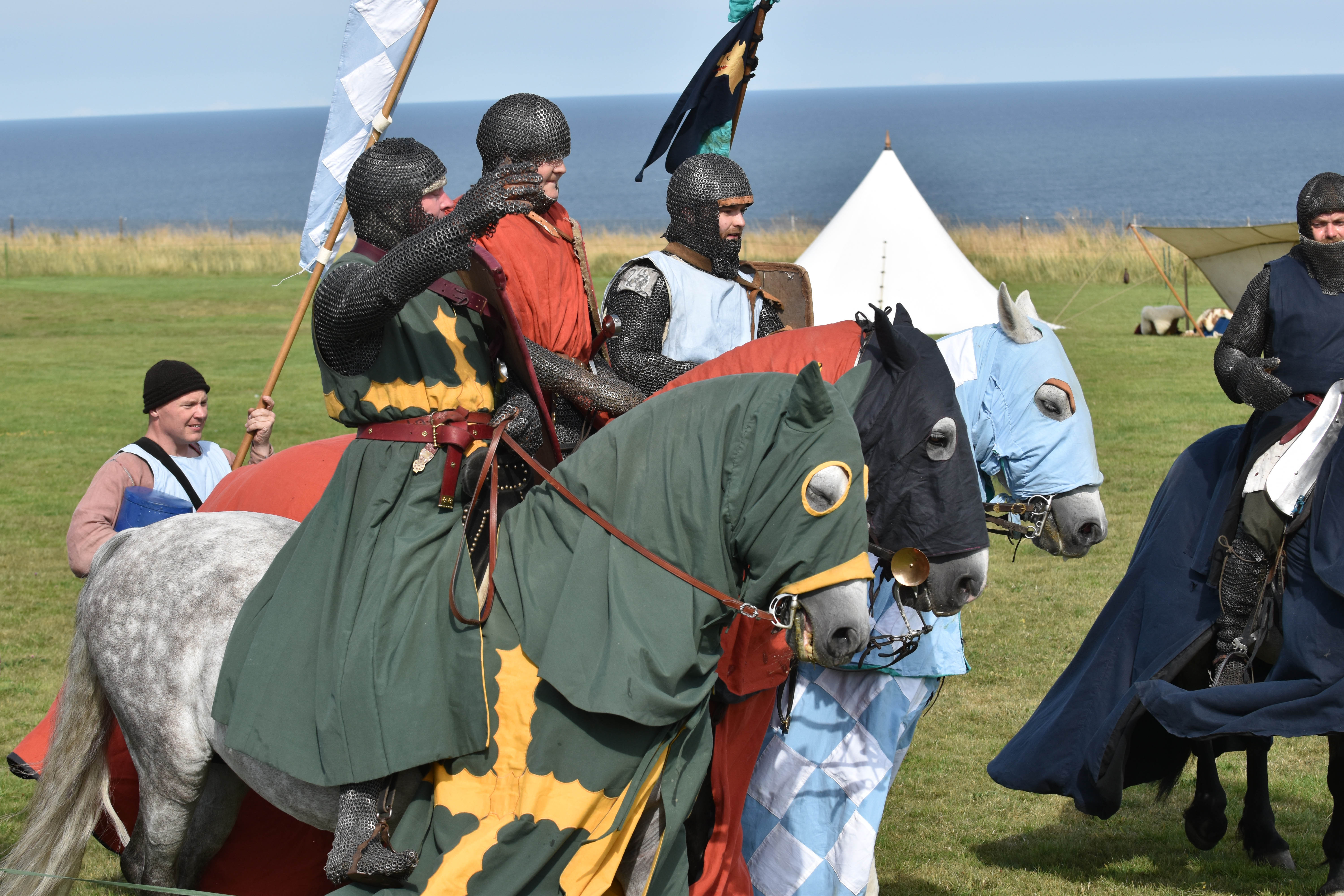
Jousting was a Medieval contest of strength, skill and horsemanship. This reenactment was staged by a company called Historic Equitation and involved four mounted horses decked out in colours as they might have been back in the 13th century. Fighting on horseback clearly required great deal of horsemanship, and this was beautifully displayed during the reenactment of jousting and fighting with swords.
Scarborough castle – keep and moat
There was an initial demonstration of how the horses were trained for warfare in the 13th Century, followed by a mock tournament an hour or so later.
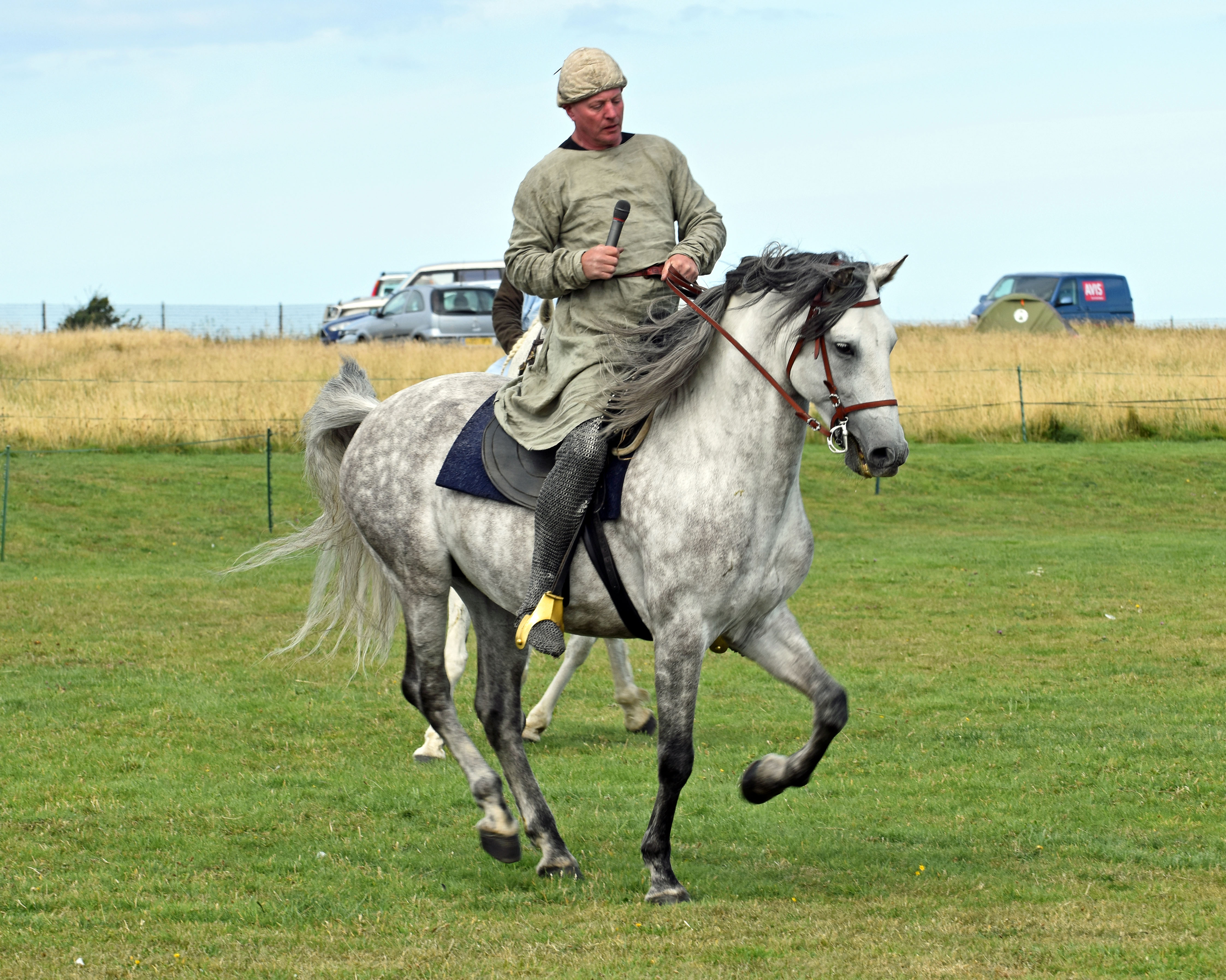
Rider explains how the horses were trained and used in the 13th CenturyBay horse with braided mane
The horses were the stars of this show!
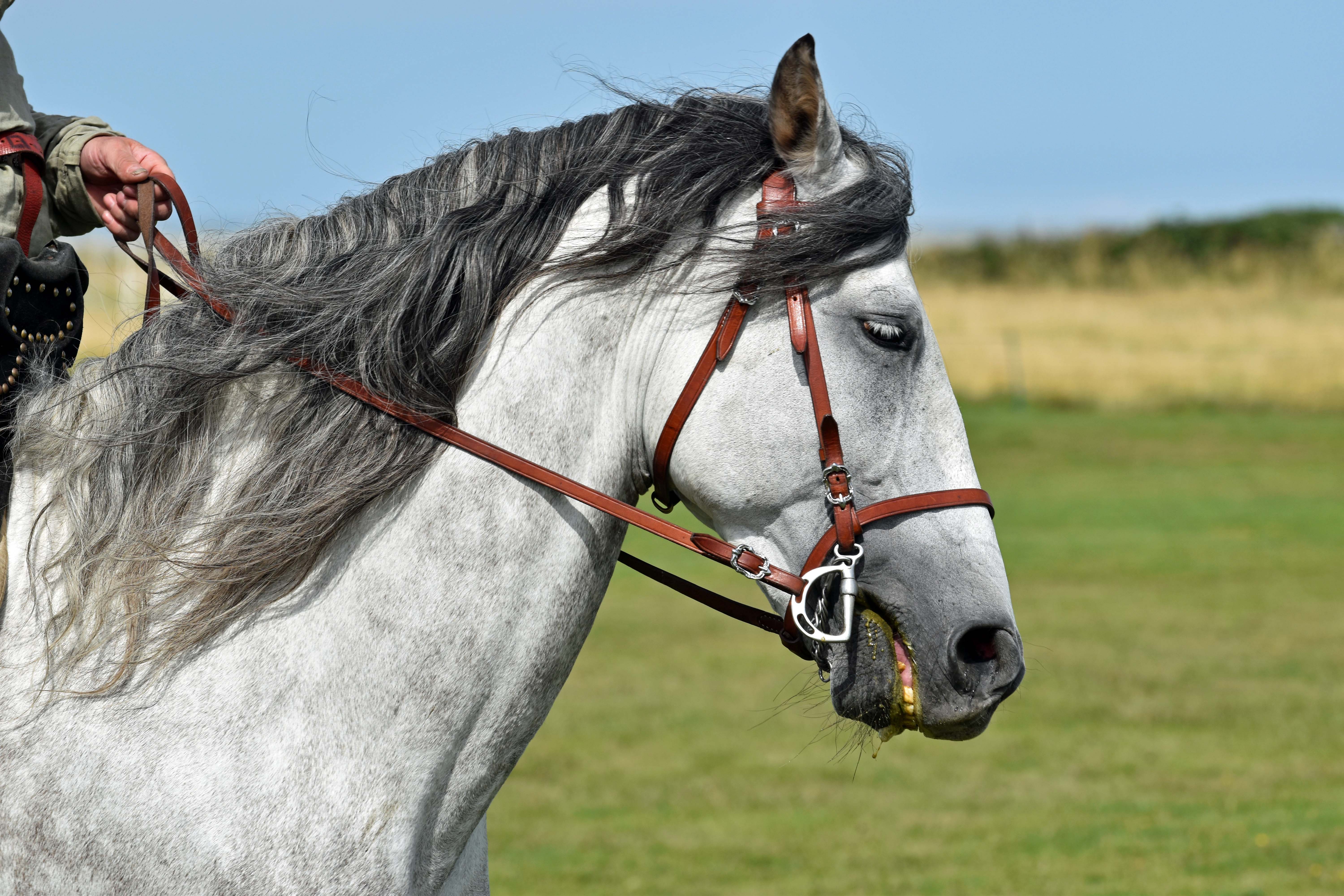
Beautiful horse, superbly ridden
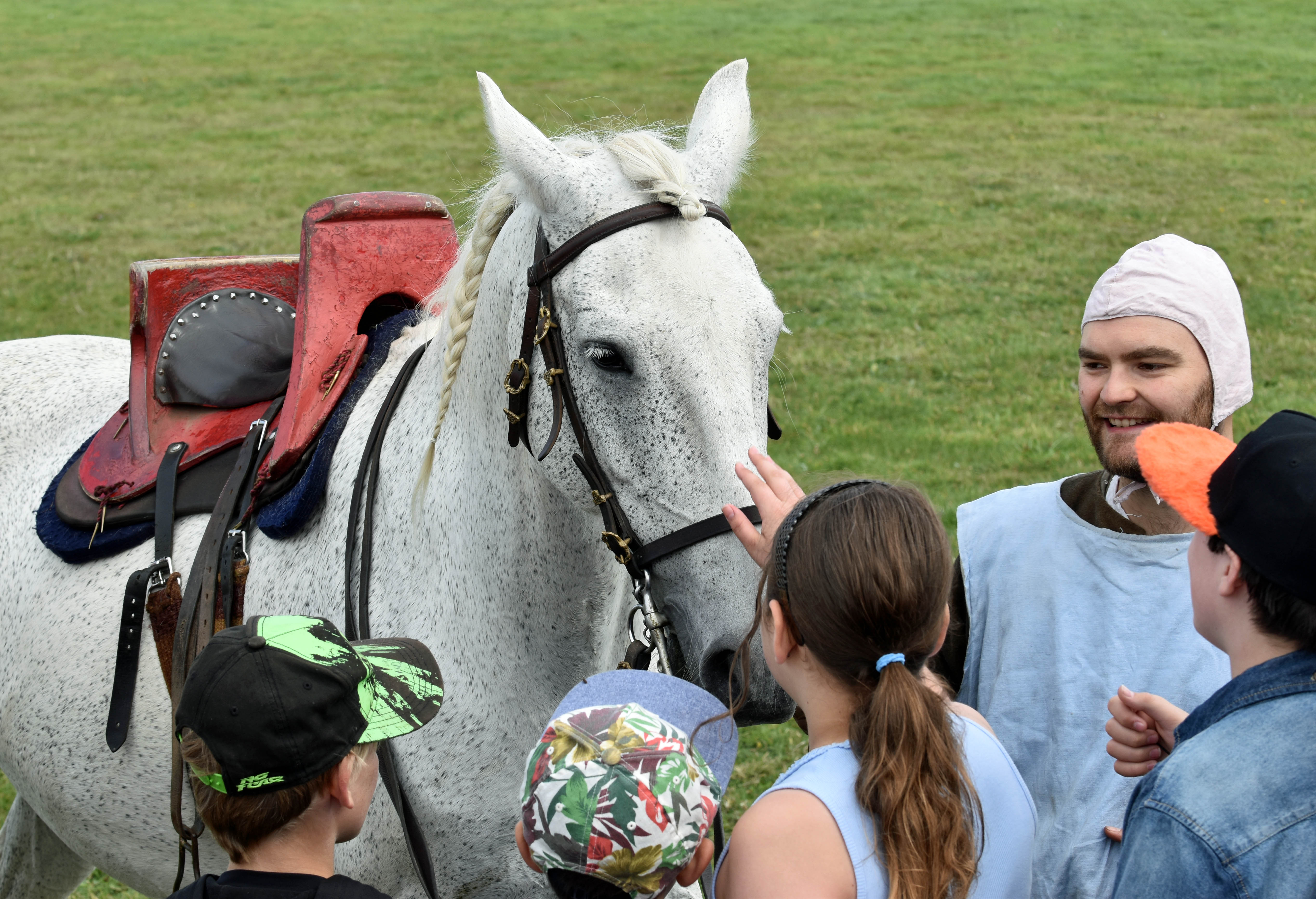
The horses seemed to enjoy it and were amazingly relaxed and happy to be petted by people in the audience after the first show.
Horse with traditional jousting saddle, designed to protect the delicate regions of the knight!
The jousting and fighting was a bit of fun and allowed children to wave flags and root for one of the four mounted knights.
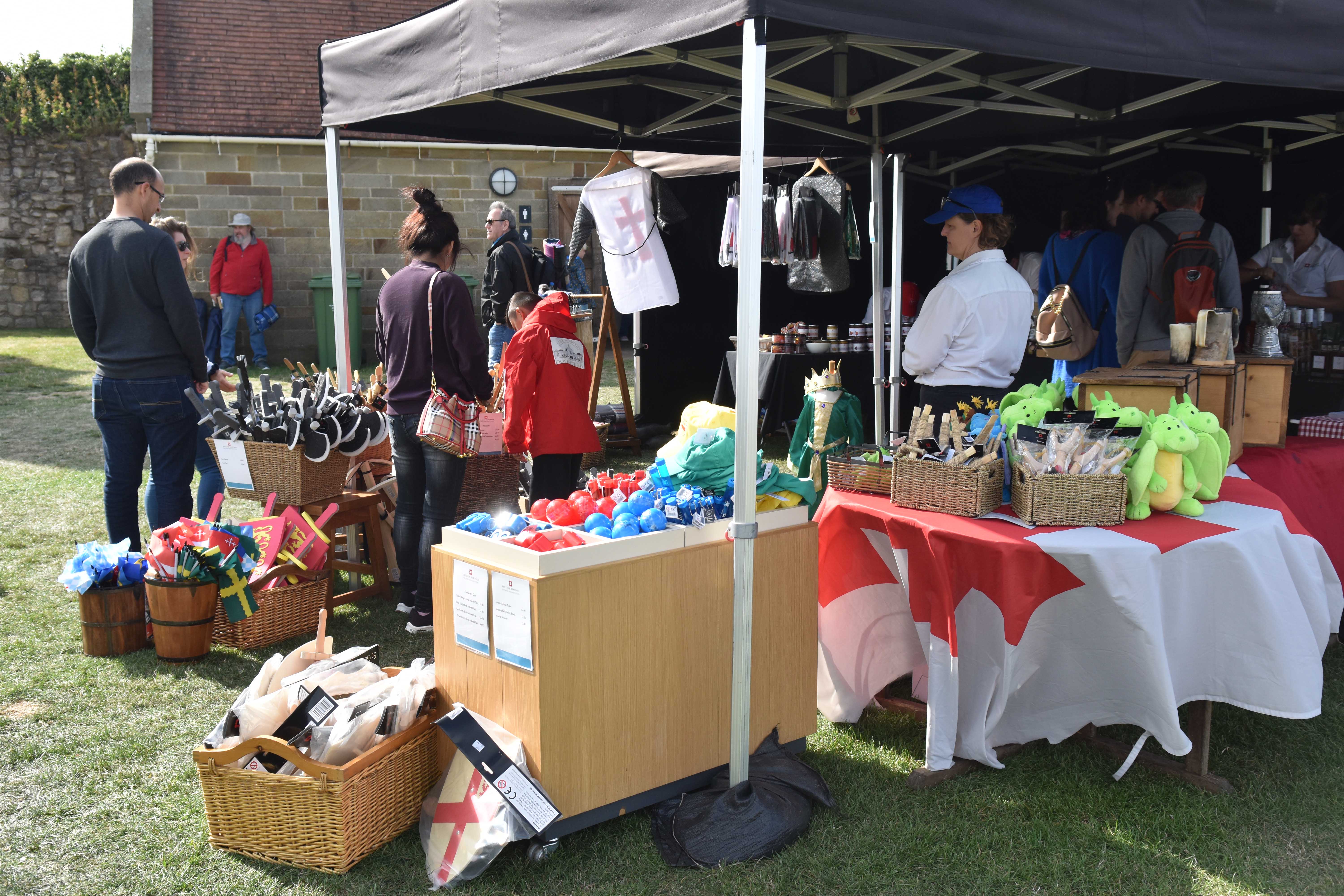
English Heritage flag seller
The contest begins!
The knights enter the arena!Three of the knights
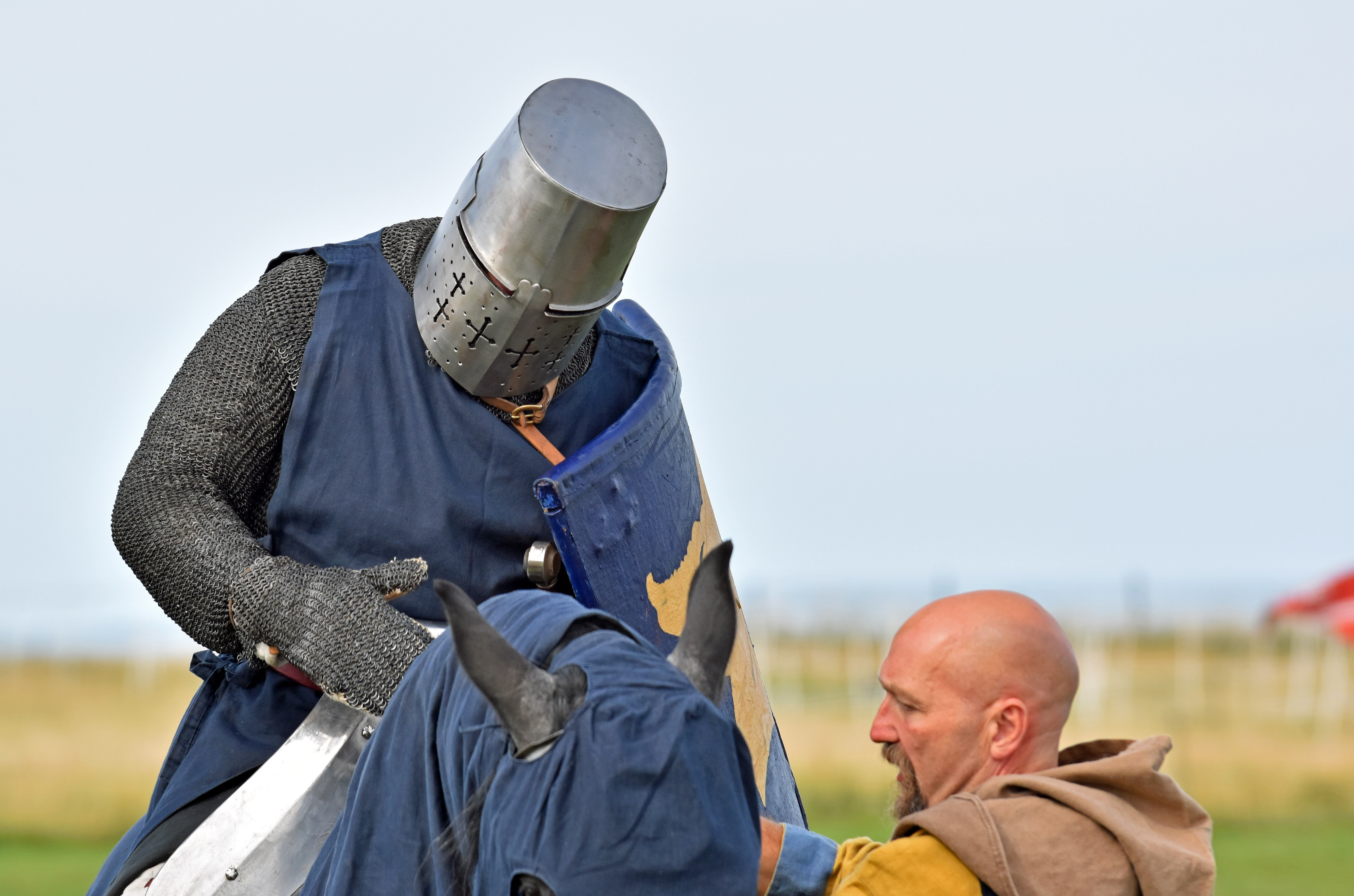
It must have been very difficult to ride and maneuver the horse wearing a helmet with such a restricted field of view!
Traditional helmet
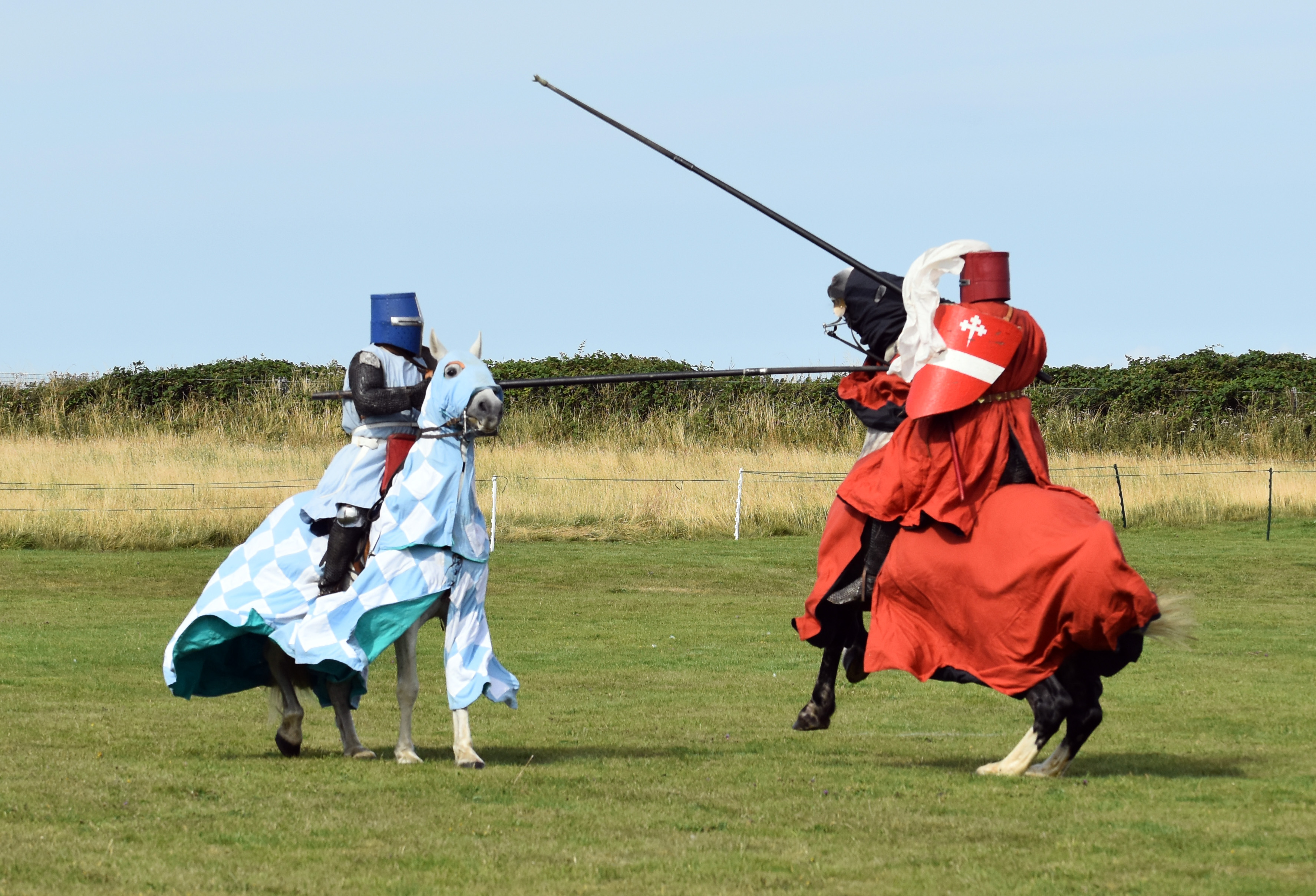
The jousting was done with wooden lances!
Jousting is not easy!
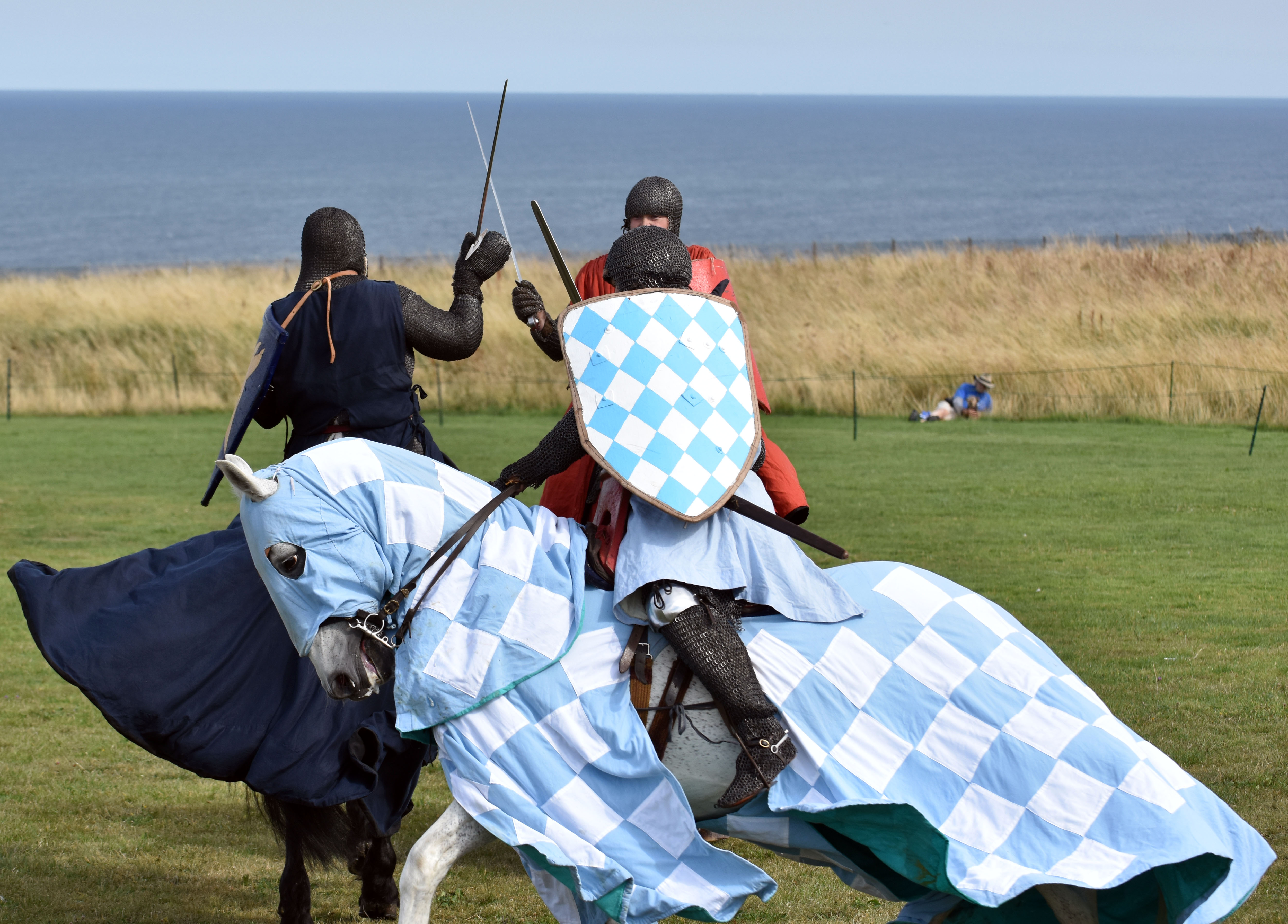
A Medieval knight had to learn to fight, but at the end of the day, he was only as good as his horse and horsemanship.
Fighting with swords
I took hundreds of photographs, handholding a Nikon F2.8 70-200mm lens; these are just a few of the more dynamic images.
Horse and jousterHorsemanshipThe blue knightsThe clash of swordsTurningInto battle!All four knights in close contestThe knight who won the biggest cheerThe end of the tournamentA colourful lineupLeaving the field
There appeared to be some Medieval stable maids who removed the garments and saddles from the horses!
Removing the coats and saddles
There were plenty of other fun things to do, like archery and wine tasting!
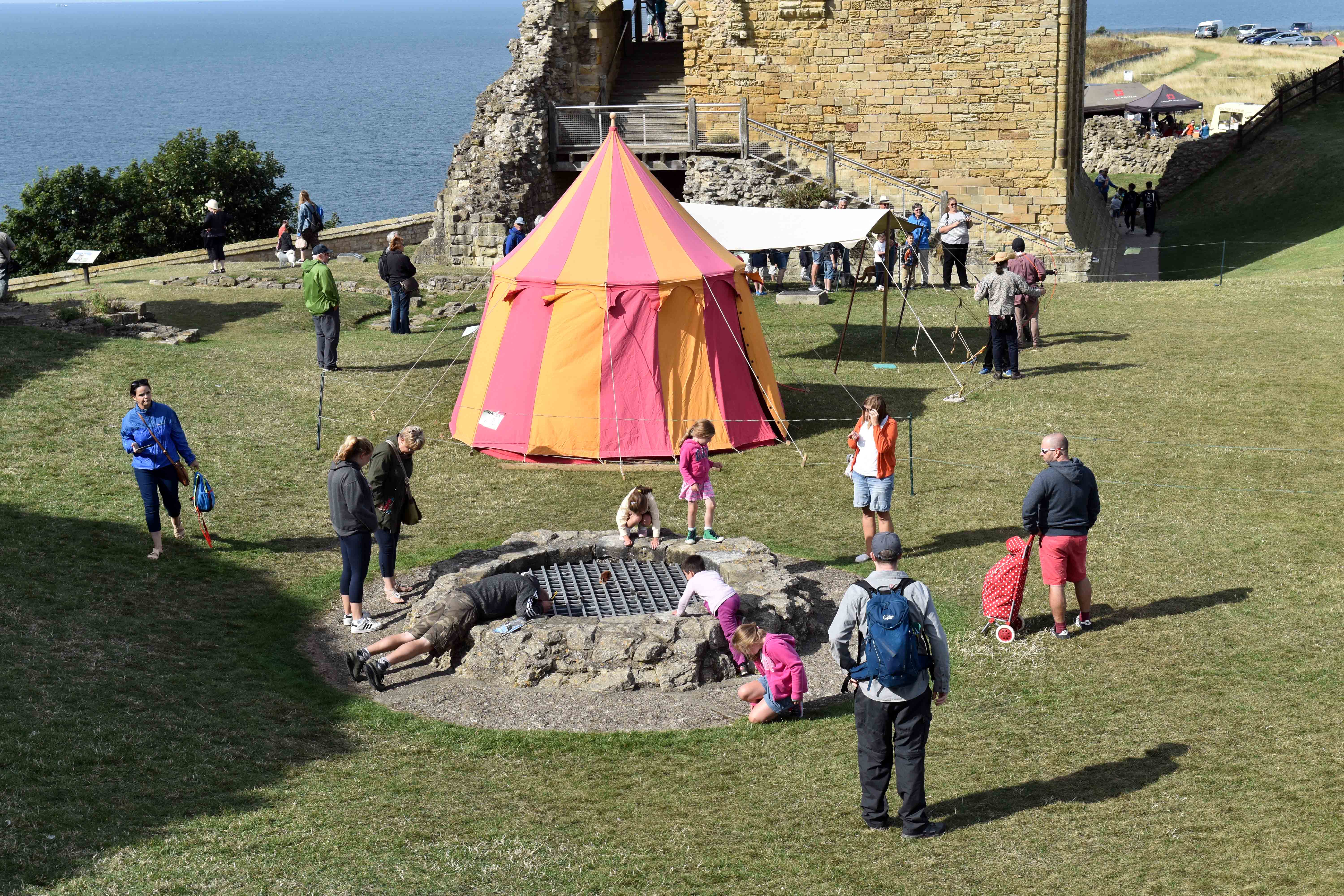
Medieval merchandiseThe old well within the castle – inside the moat. It’s deep!
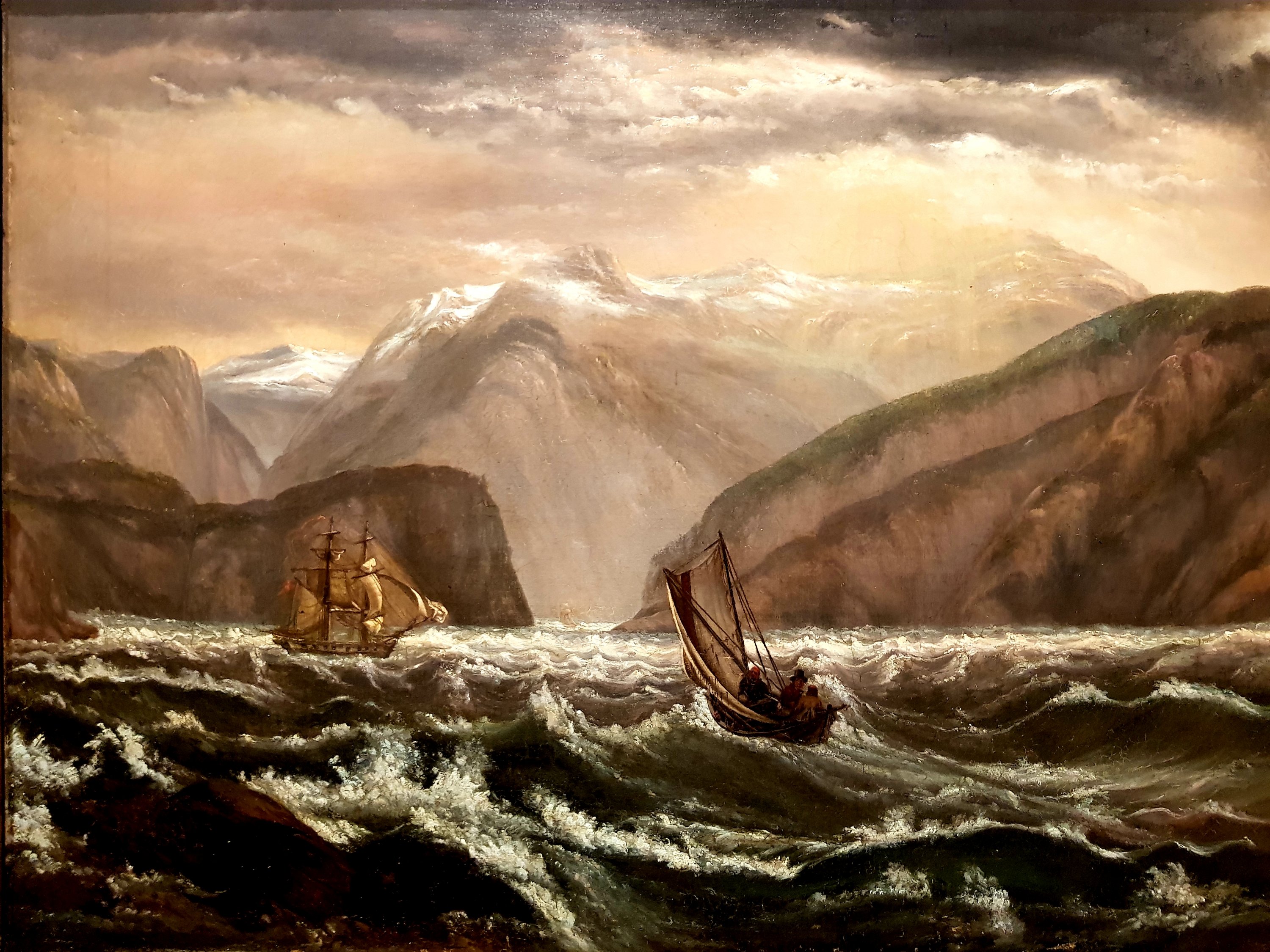
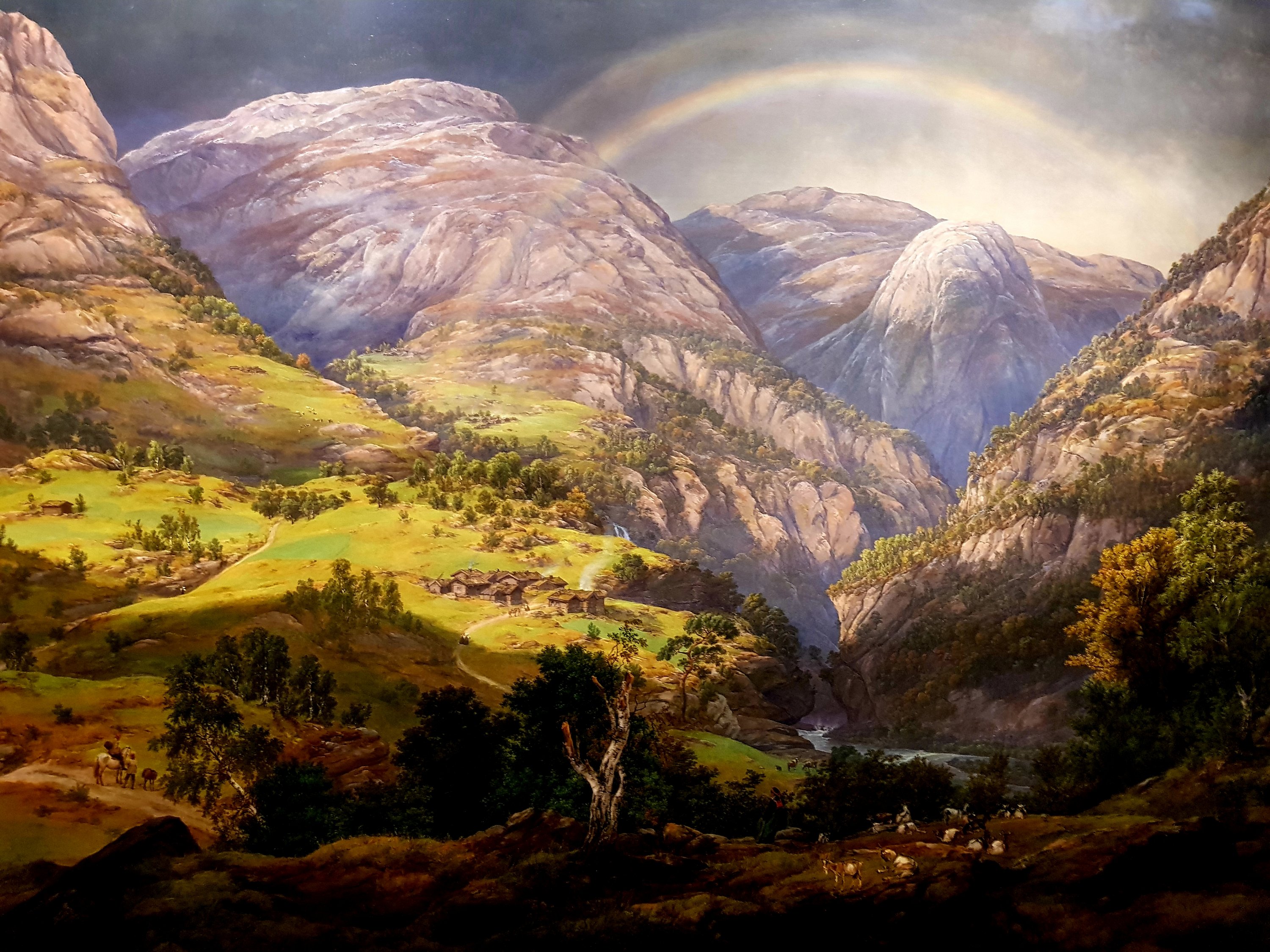
I recently did a short cruise to Norway on the Boudicca, a nice 28,388 ton cruise ship of the old style, meaning that it looks like a ship and not a block of flats! Unlike the choppy seas shown in the painting (above) from the KODE Art Museum in Bergen, we had excellent weather and the water was like the proverbial mill-pond on most days (below in Flåm).
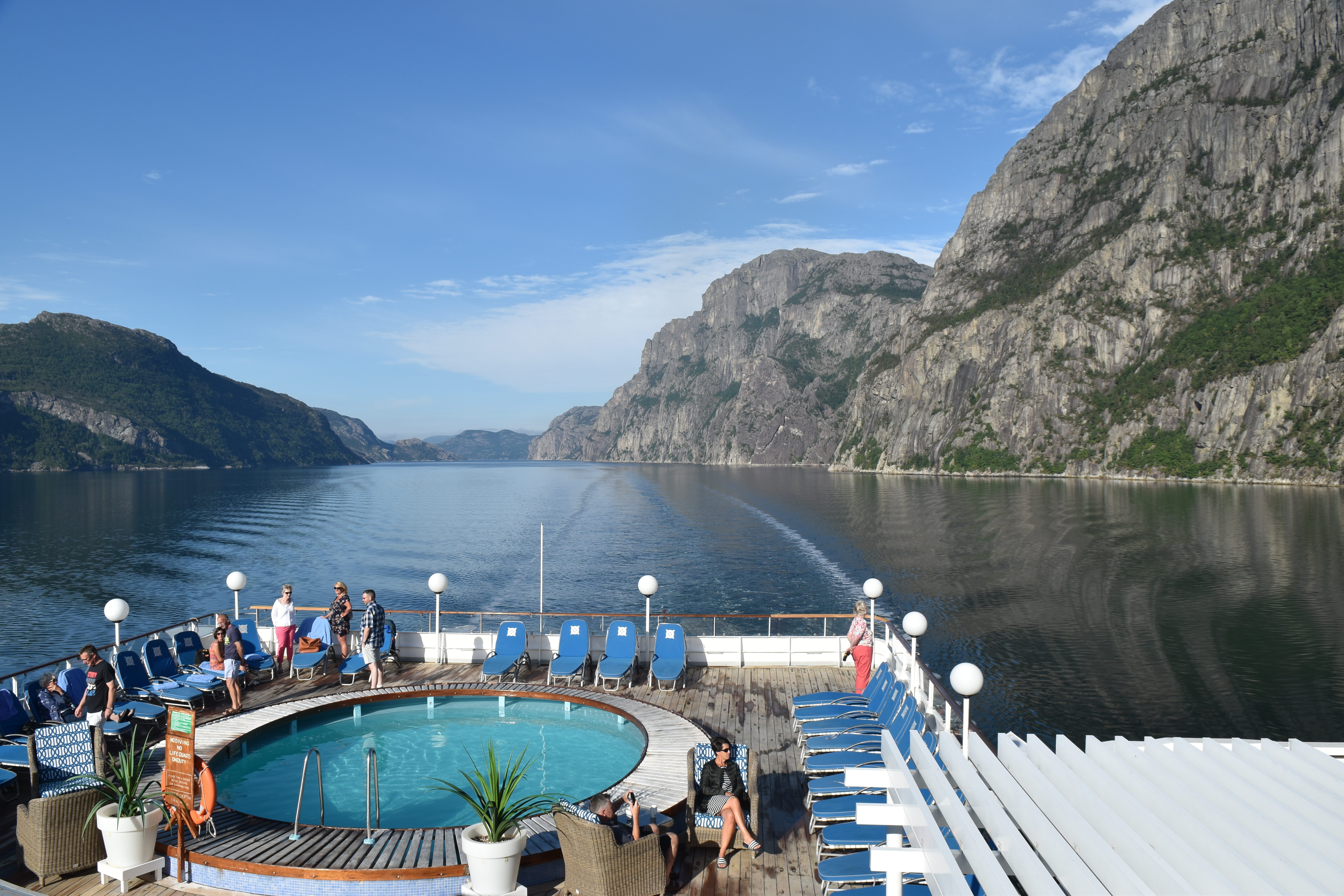
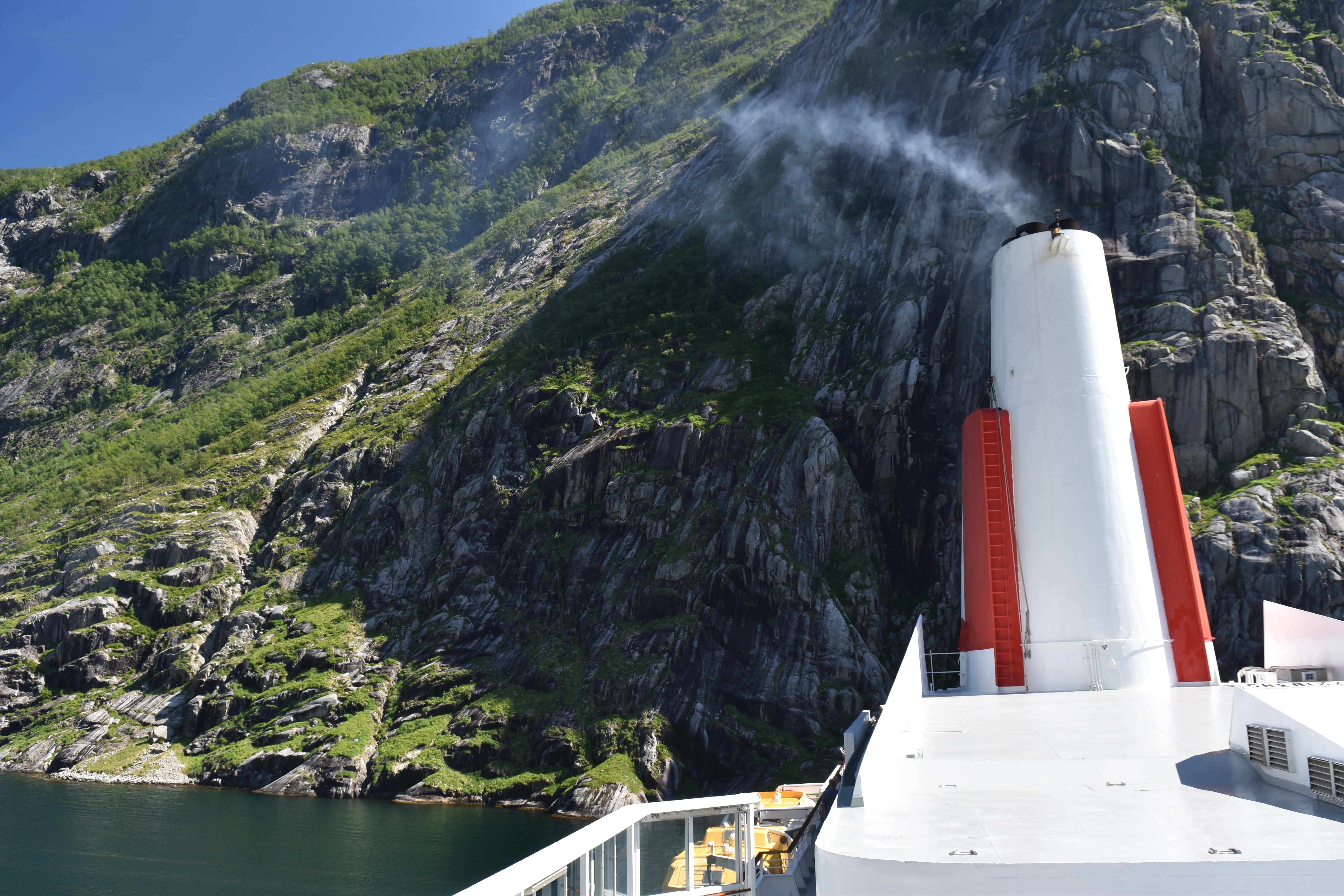
The Boudicca is smaller than many cruise ships so it is able to enter some of the smaller fjords, such as the 42-km long Lysefjord (Light Fjord) in SW Norway (below).
The Boudicca in Lysefjord
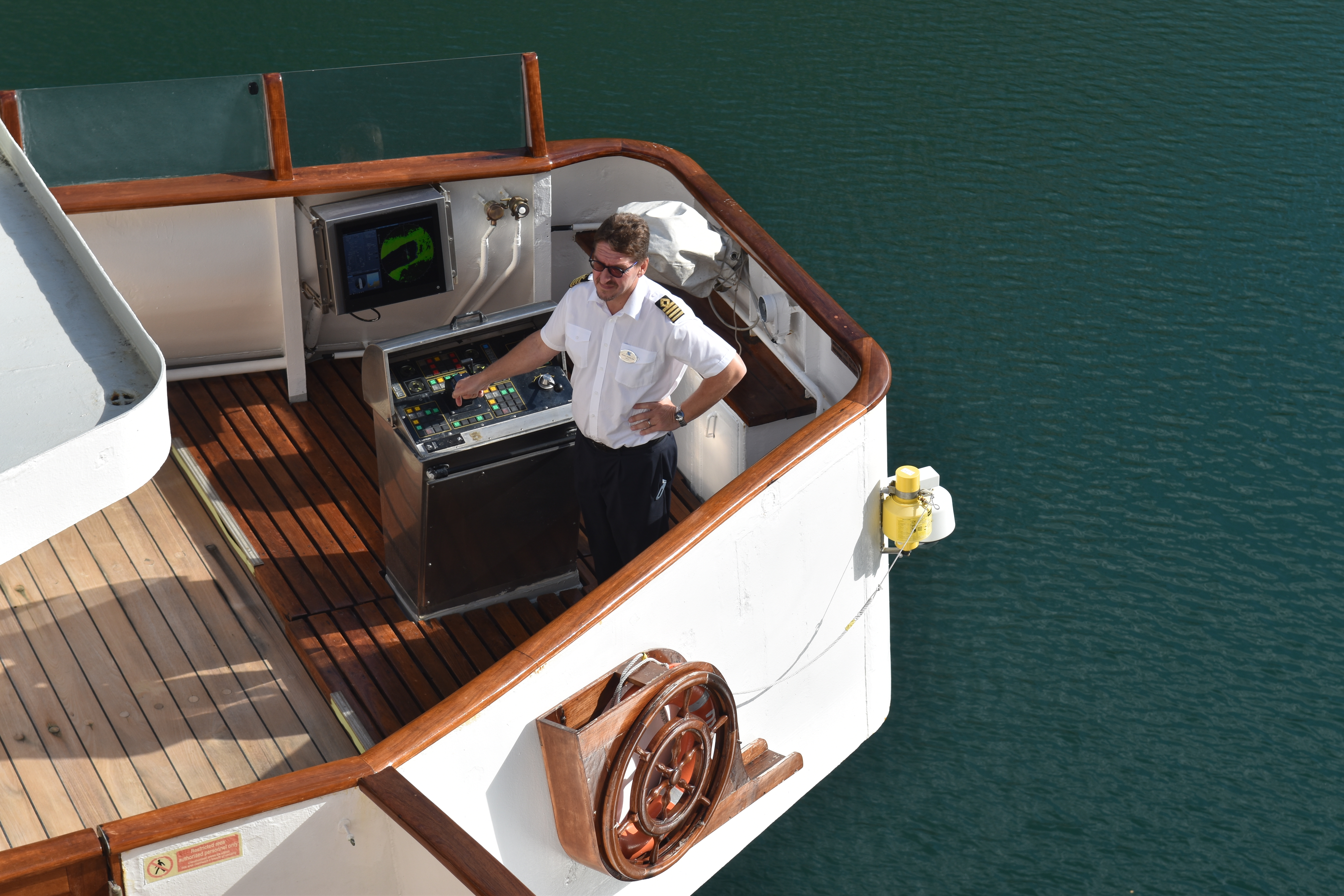
The captain took a very hands-on approach to maneuvering his ship in this narrow fjord (below).
Captain Mikael Degerlund on the Boudicca
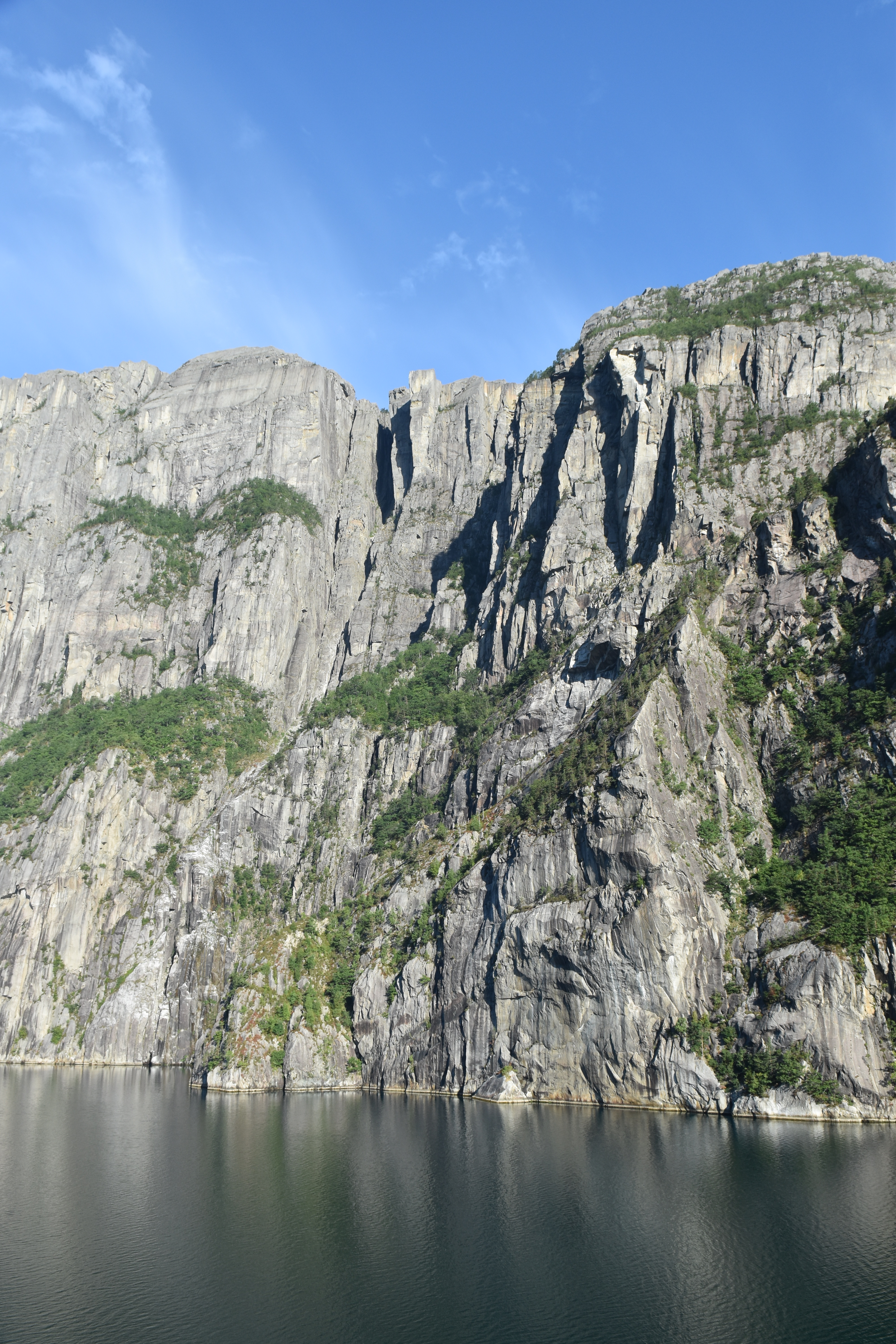
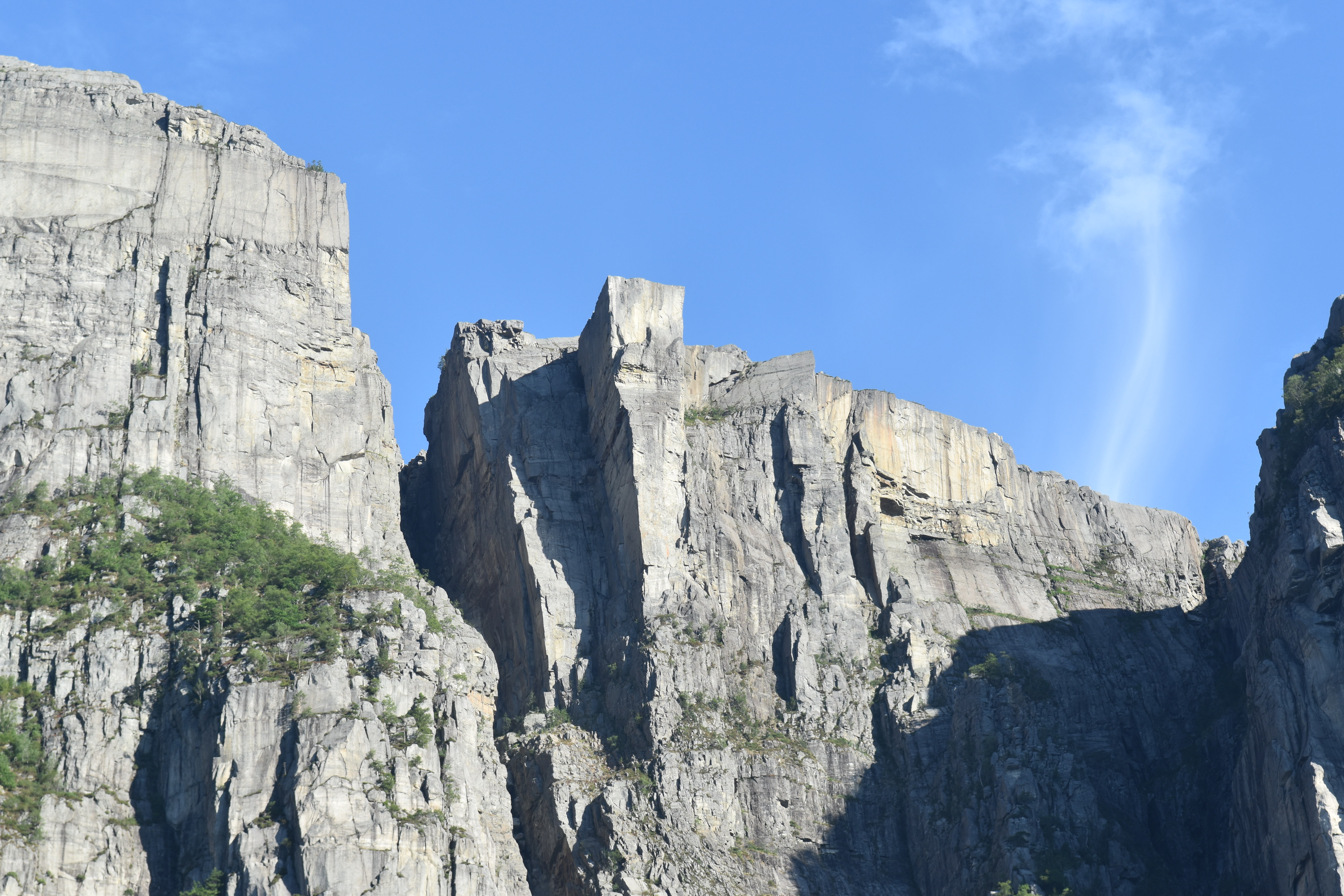
The spectacular granite walls of Lysefjord have created some remarkable features, like the famous Preikestolen, or Pulpit Rock (below) which is a near-perfect square, flat-topped rock with sheer drops (600m down) on three sides.
Preikestolen or Prekestolen (Preacher’s Pulpit or Pulpit Rock) in Lysefjord, Norway
The ‘Pulpit’ is easier to see in this photograph (below). I must say that I was much happier looking up at it than I would have been standing on the edge of the precipice (no fences!).
Pulpit Rock
What is so impressive about these landscapes is their scale. The sheer size of the fjord walls is simply breathtaking and has clearly inspired many artists over the centuries, as a visit to the art galleries of Bergen revealed (below).
Traditional painting from KODE 3 art gallery in Bergen, Norway
Cruises of this sort are a mix of sightseeing and on-board activities, such as song and dance shows. The standard of the shows put on by the singers, dancers and musicians was impressive; there were two shows a night of the action-packed, in this case, rather British (below) programme numbers!
Show time on board the Boudicca
The next fjord we visited was Jøsenfjorden, another small fjord rarely visited by cruise ships. It was necessary to spin the ship round on its axis to turn it around at the end of the fjord.
Turning the ship around by 180 degrees in the fjord
There’s lots to do on the ship, from deck quoits to sun bathing, although sometimes there’s competition for the best places!
Aft on deck 7 of the Boudicca
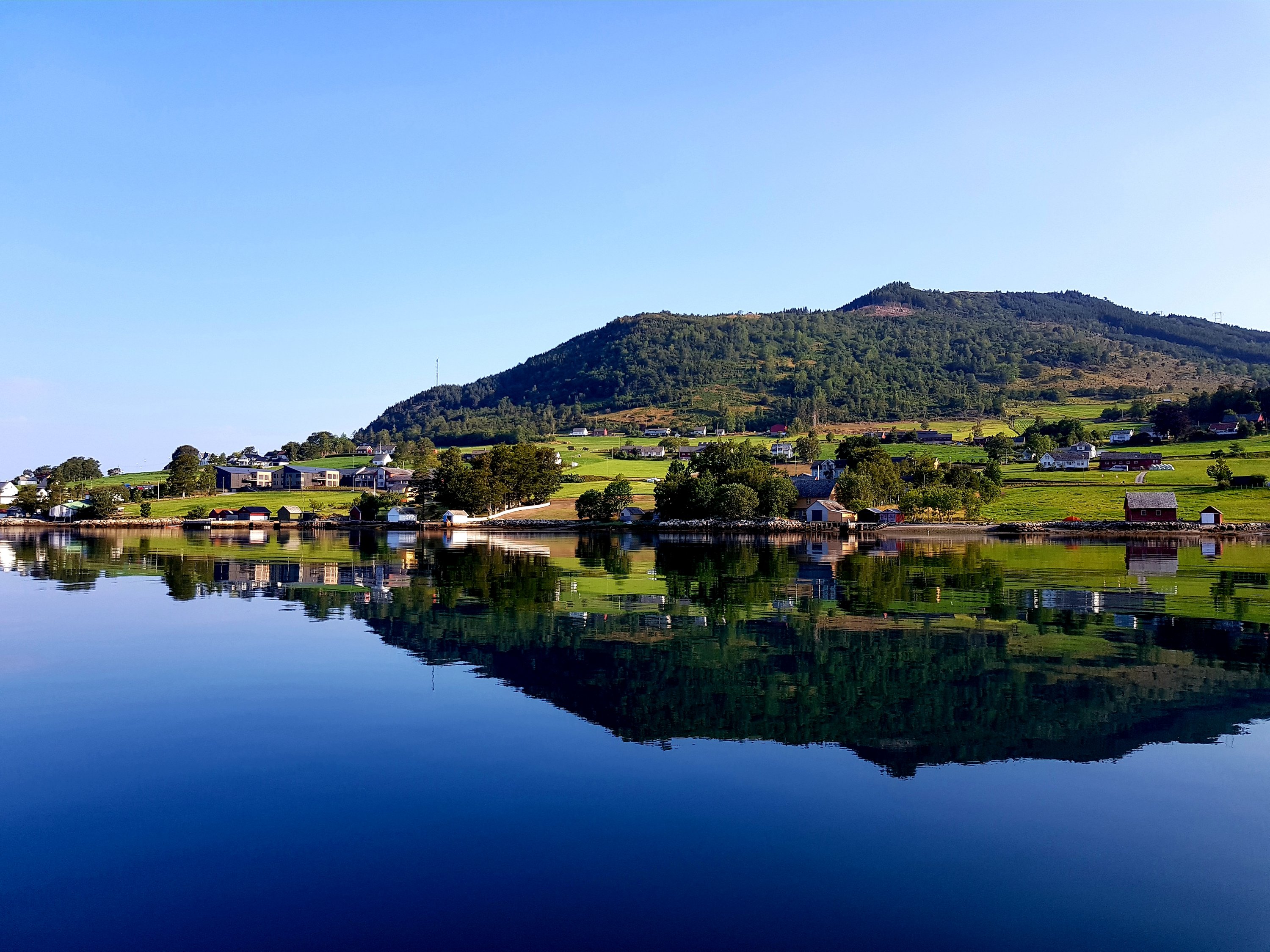
Our first port of call was the small town of Rosendal. There were lots of tours on offer from this location, but I opted for a hike around the countryside. I was first off the ship in the early morning, on a perfectly still day (below).
Coming ashore at Rosendal, Norway
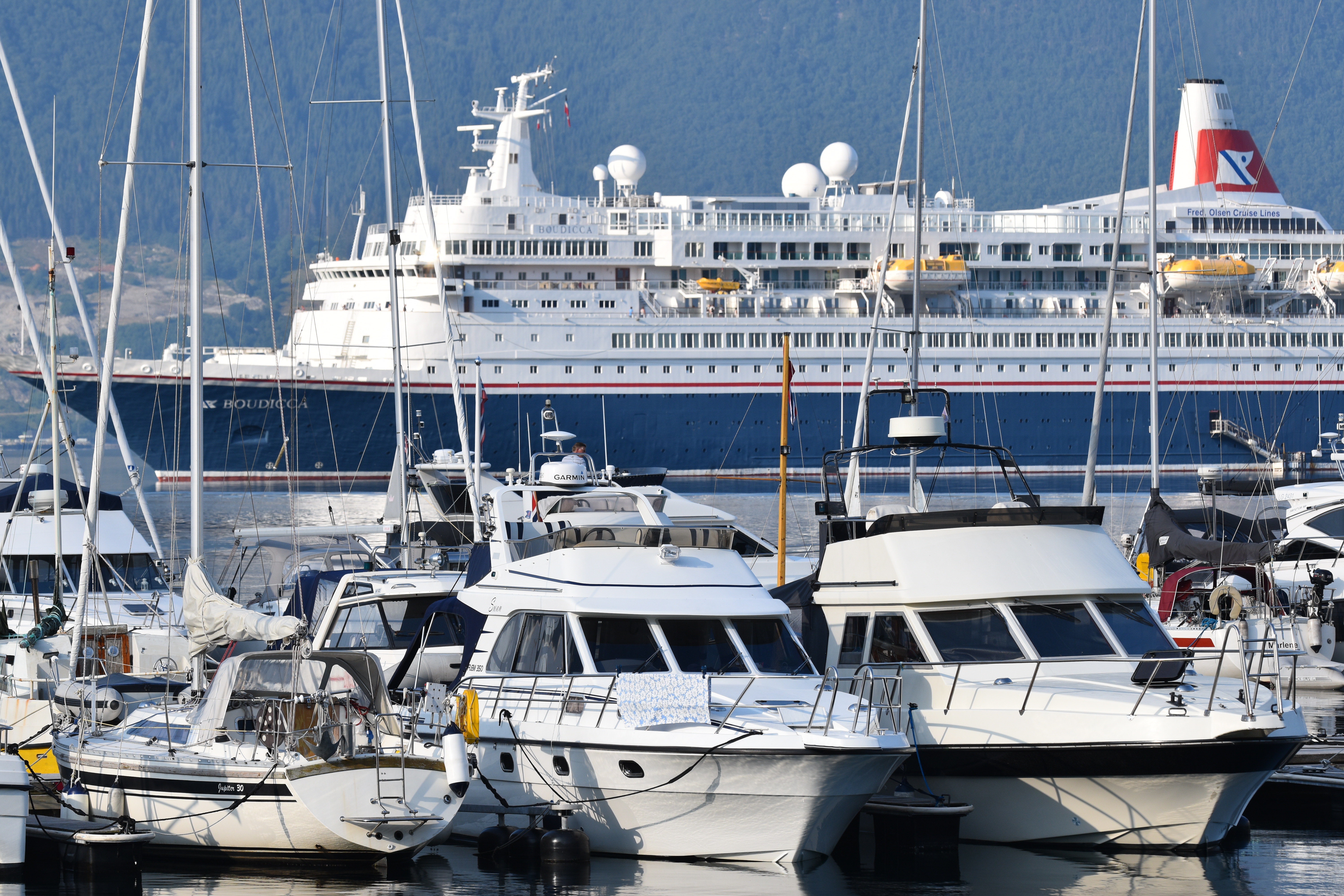
There were lots of boats and yachts in the harbour; Norway is a rich country with a GDP per capita above US$70,000, thanks to the oil they own and the capital they have wisely invested.
Yachts in from of the Boudicca at Rosendal, Norway
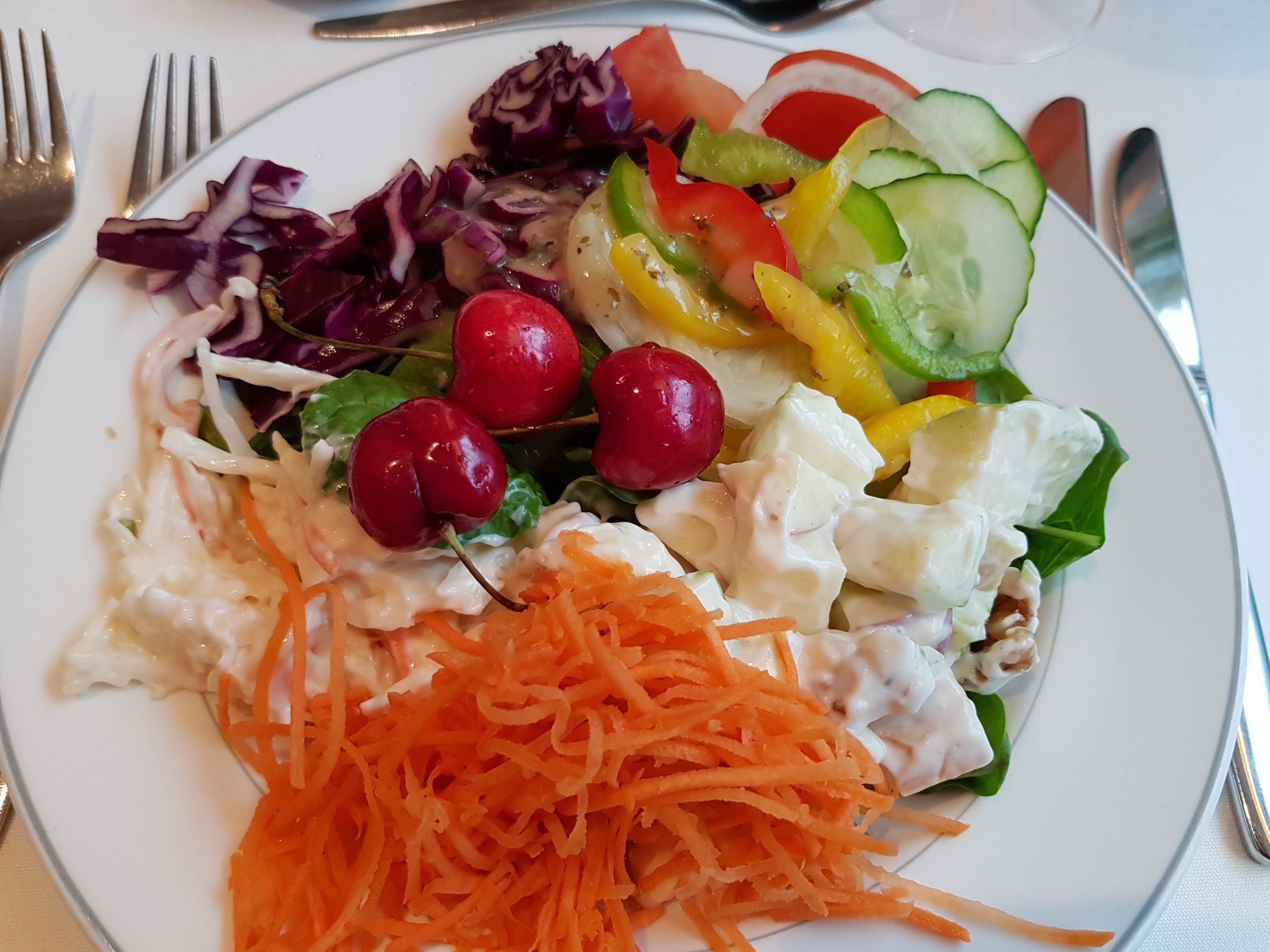
One of the best things about a cruise on a Fred Olsen ship such as this, is the food! There are lots of healthy (and sugar-free) options, and the vegetarian dishes were also very good. The problem is that it is hard to say no! And you very quickly get used to luxuries like fresh cherries in your salad!
Salad with cherries for lunch on board the Boudicca
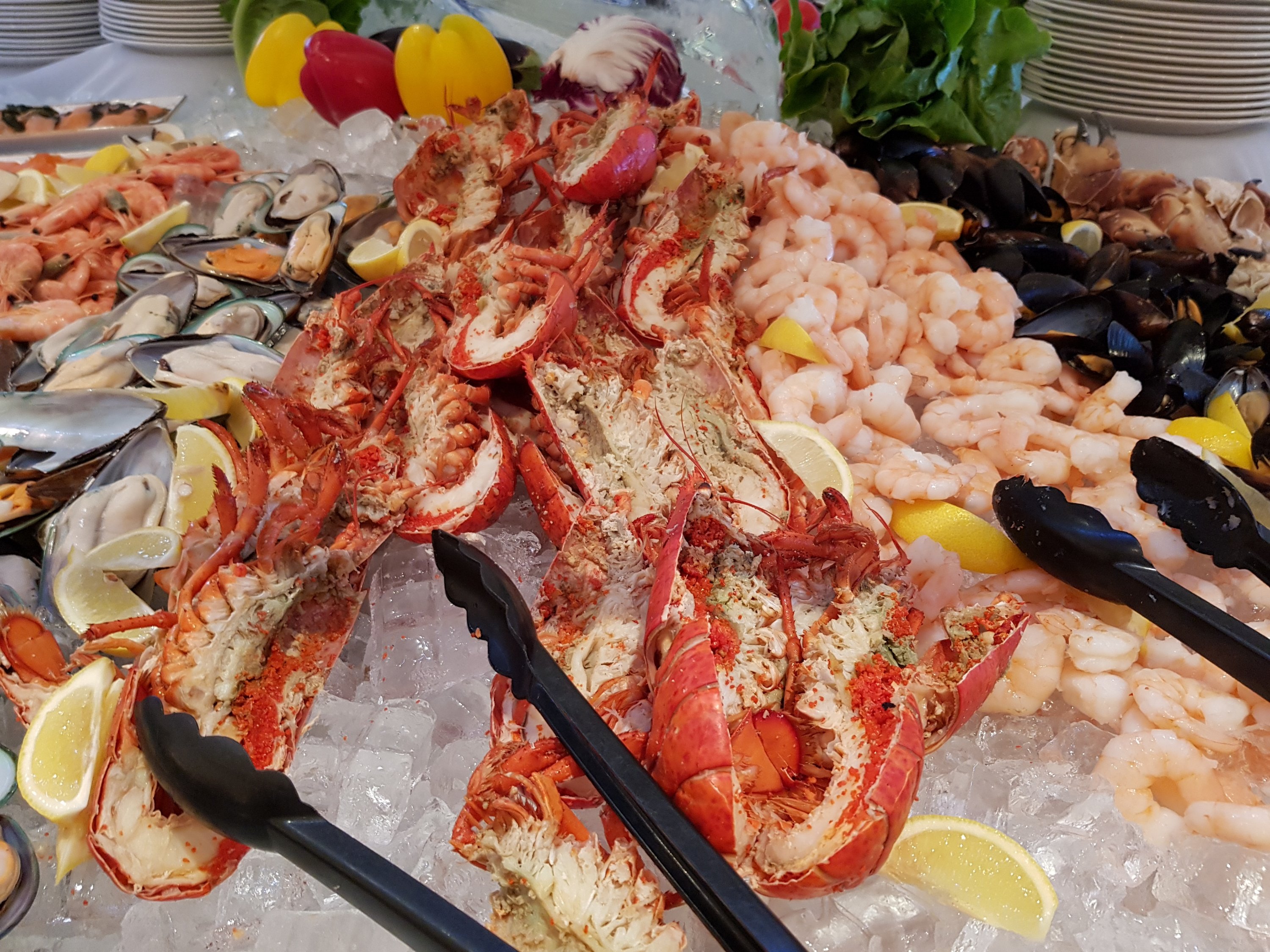
The sea food was also good (even though I don’t eat it!).
Sea food spread for lunch on the Boudicca
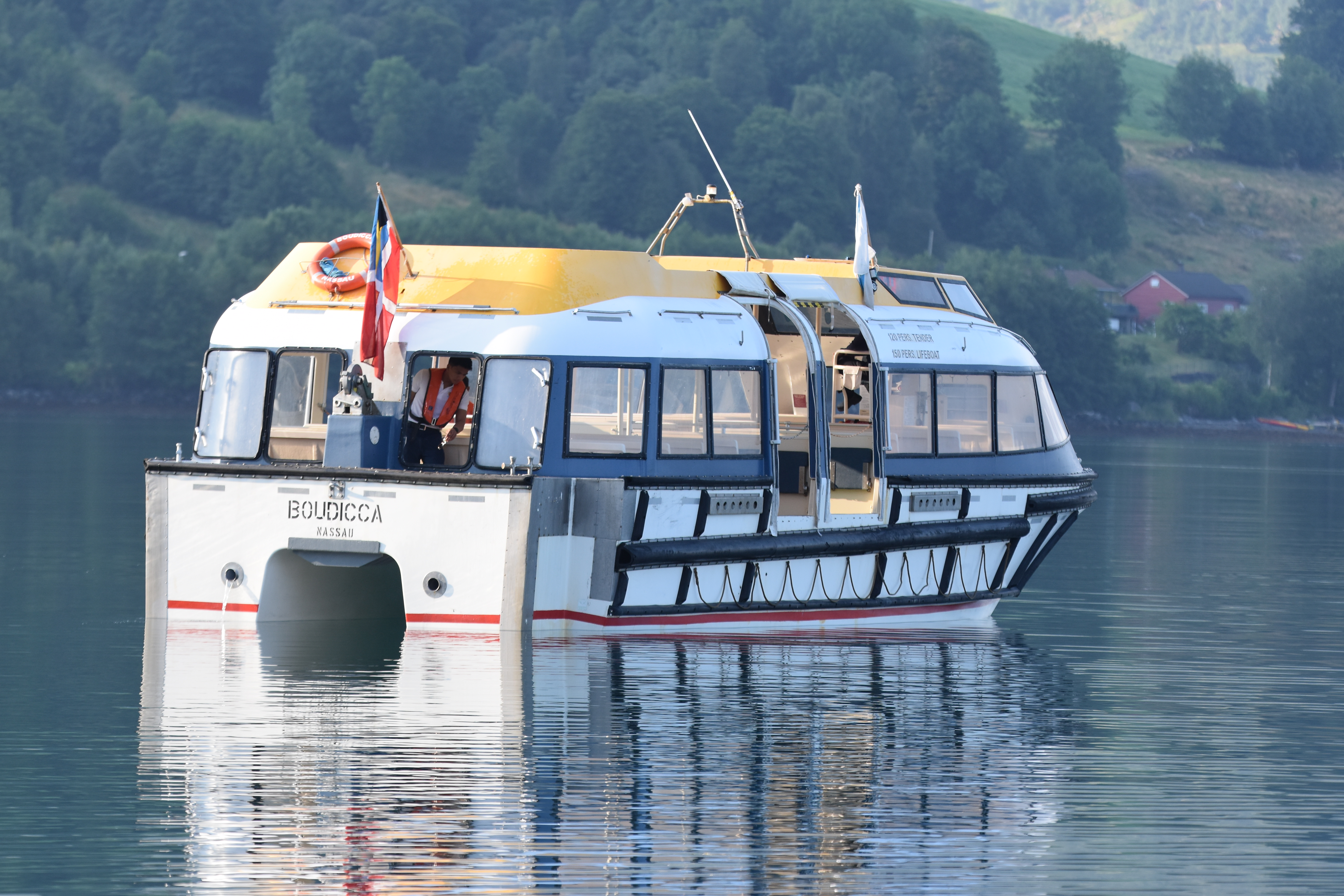
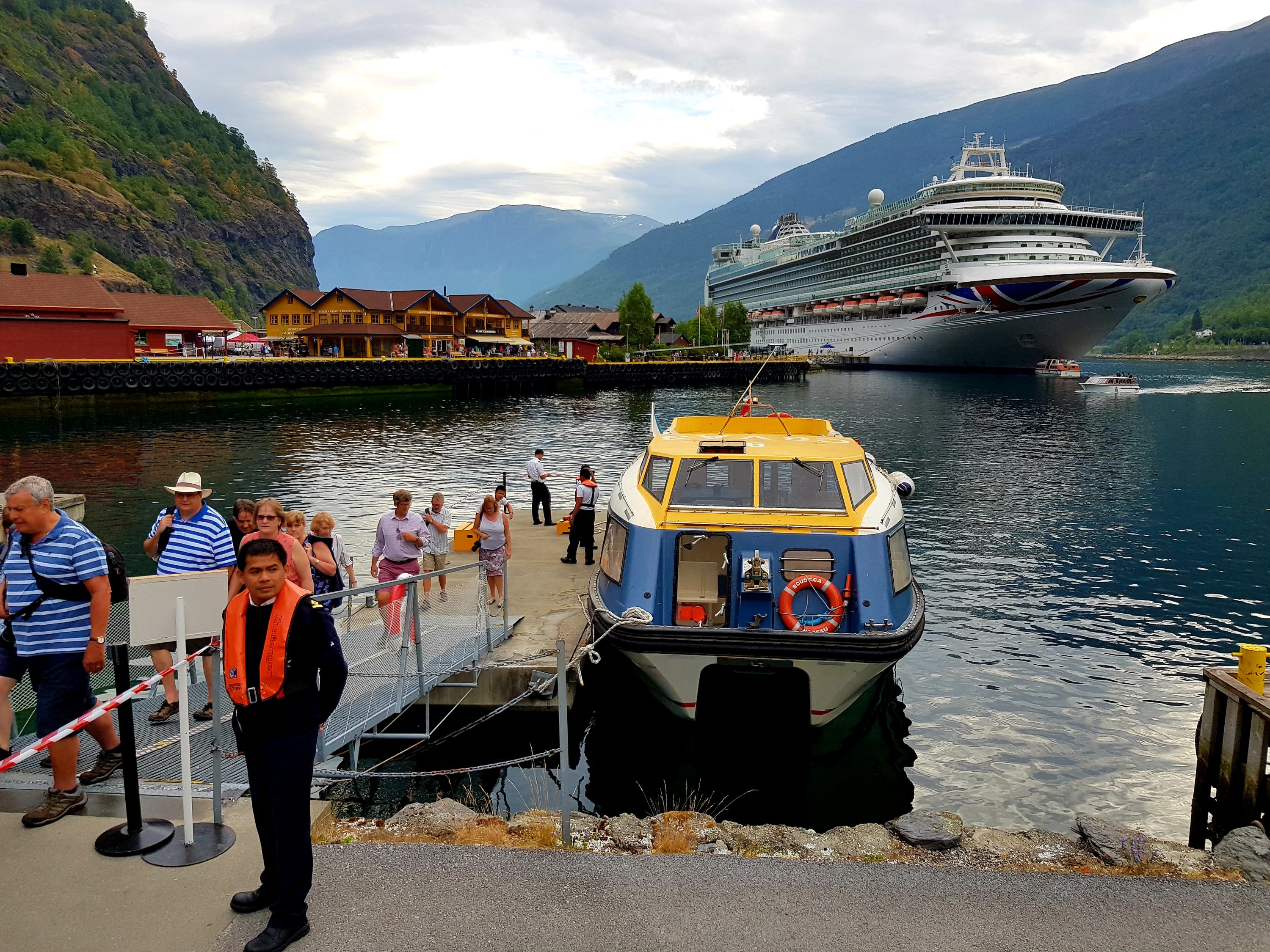
For the first two ports of call we went ashore on tenders. It’s quite fun going ashore on these spacious crafts, although they are not easy to launch and recover.
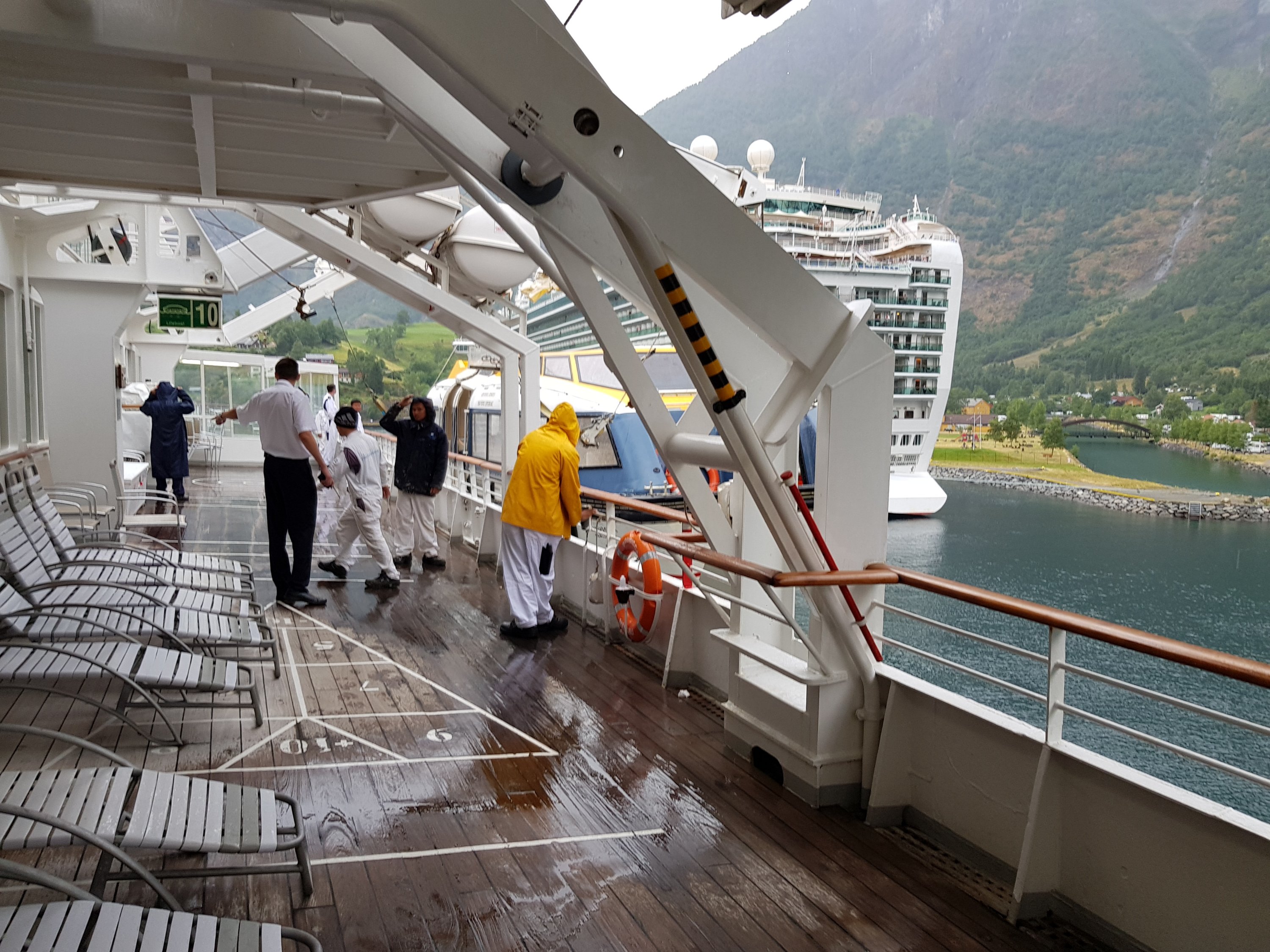
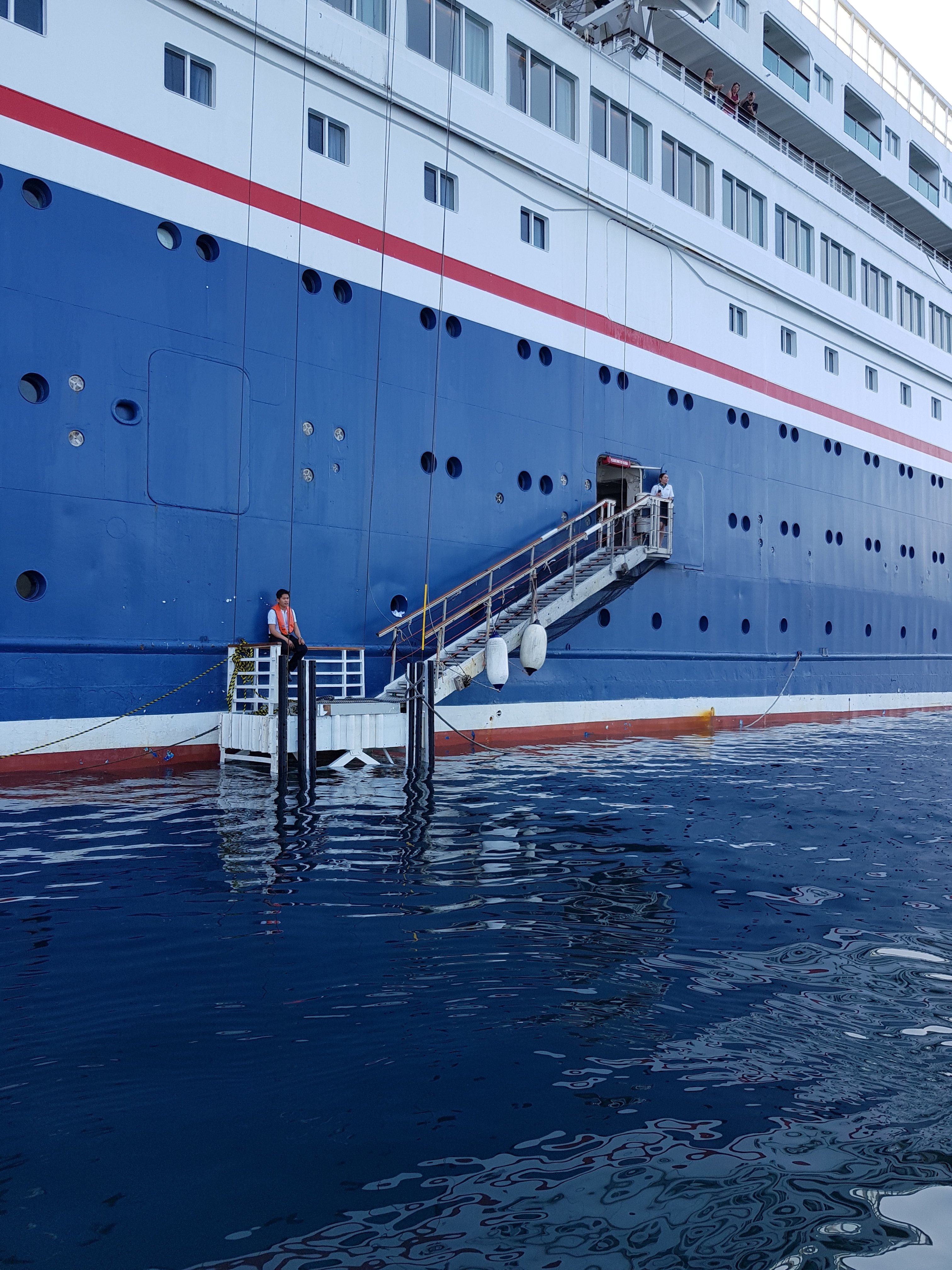
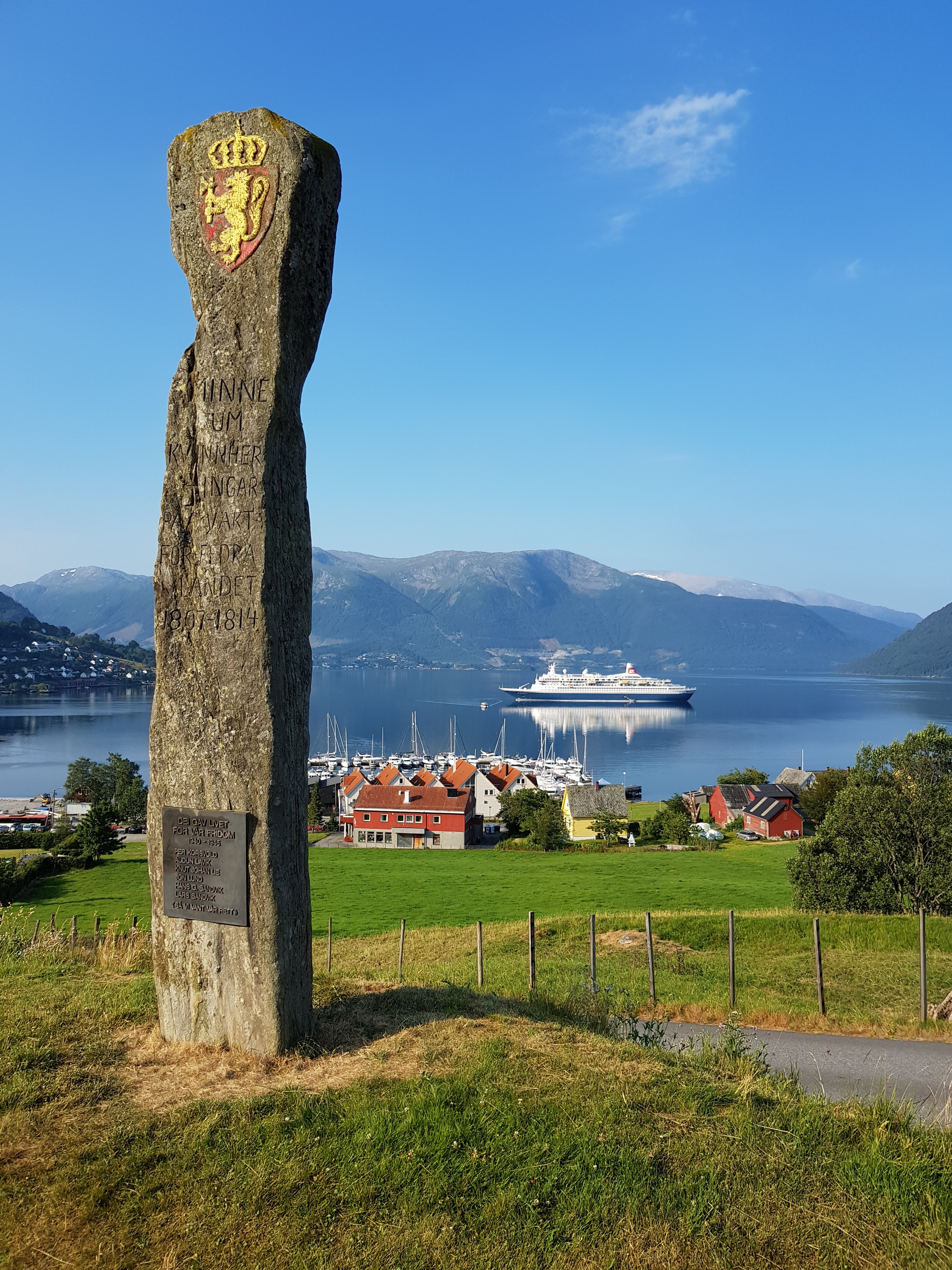
Tender from the BoudiccaRecovering the tender aboard the Boudicca, at Flam, NorwayView of the Boudicca from a tenderWalking the gangplank!A War Memorial at Rosendal, Norway, with the Boudicca in the background
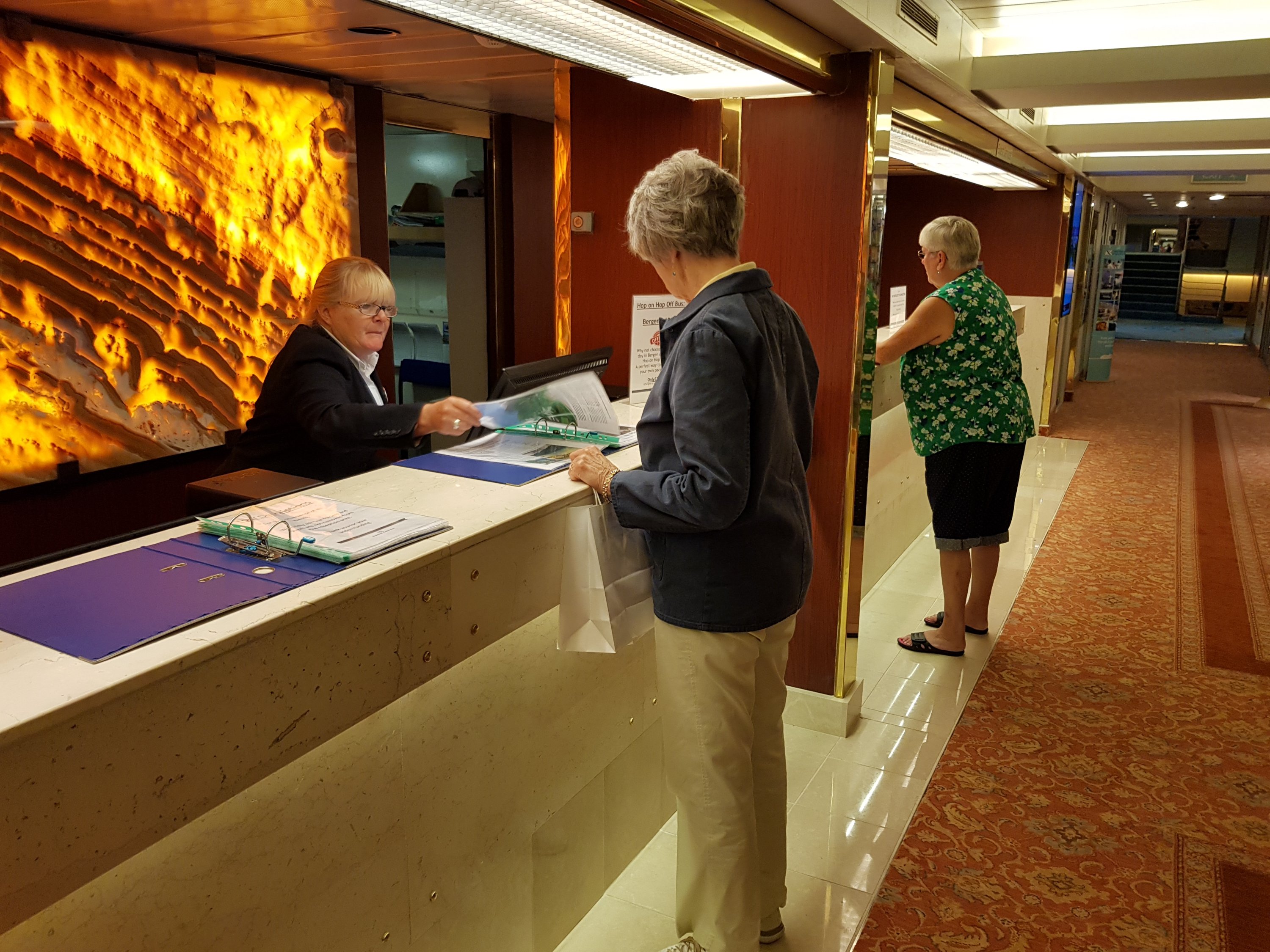
There were many additional tours which could be booked on board (below), but for those who like walking, just mooching around for a few hours ashore, is a much cheaper option!
Looking at the tours brochure.
The geography of the Norwegian fjords is incredibly complex, with a myriad islands, rocks and shoals, so a local pilot is taken on board (below).
Small boat delivering the local pilot.
There were at least two ship’s photographers on board (both from Bali!) and they did a very good job of photographing everybody, such as when we got on (below) and off the ship and at all the special events such the Captain’s cocktail night.
Boarding the Boudicca at Dover.
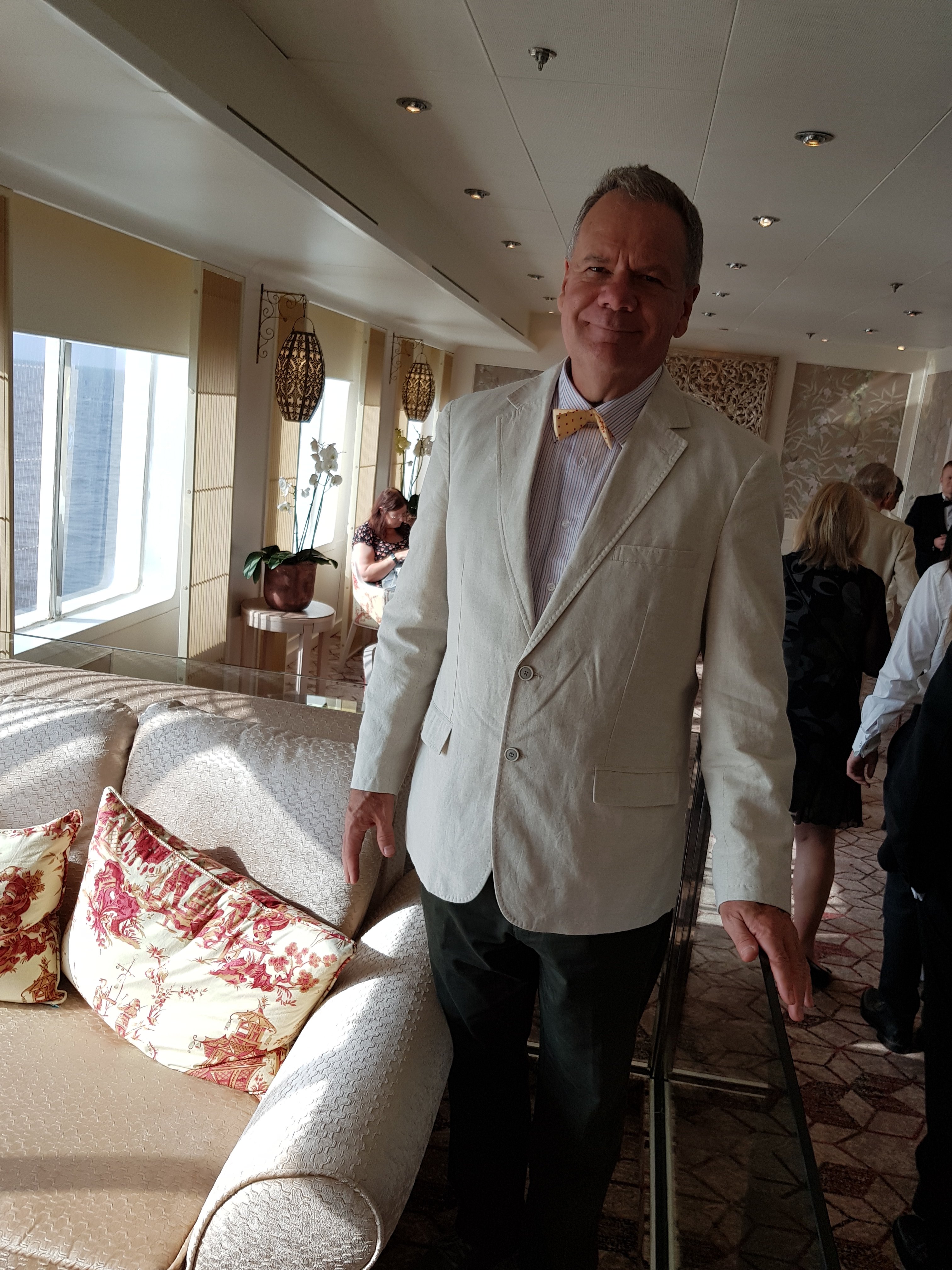
If you want to go to some events, like the Captain’s cocktail night and formal dinner, it is necessary to dress up a bit (below). This was the first time I had worn a bow-tie for at least 30 years!
The author in his crumpled dinner jacket!
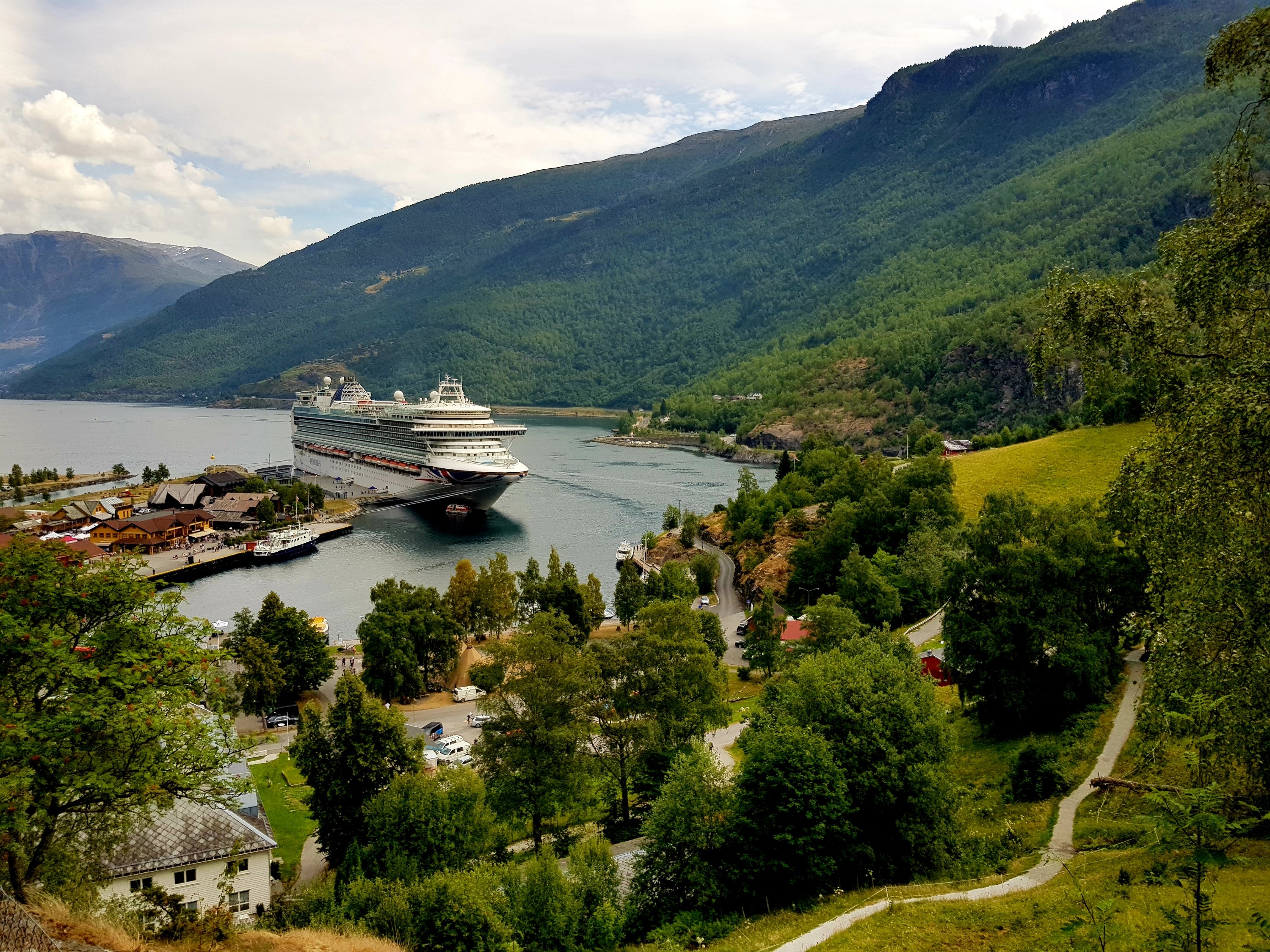
The second port of call was Flåm, at the head of Aurlandsfjorden (below), with a large cruise ship (the 115,055 ton Azura) berthed at the small dock.
Ship’s tender at Flåm, Norway
It is said that nearly 500,000 visitors arrive at this tiny little village of Flåm, which is a gateway to many places and offers a variety of tours, including the famous Flåmsbana railway (£55 return!).
Flåm, Norway
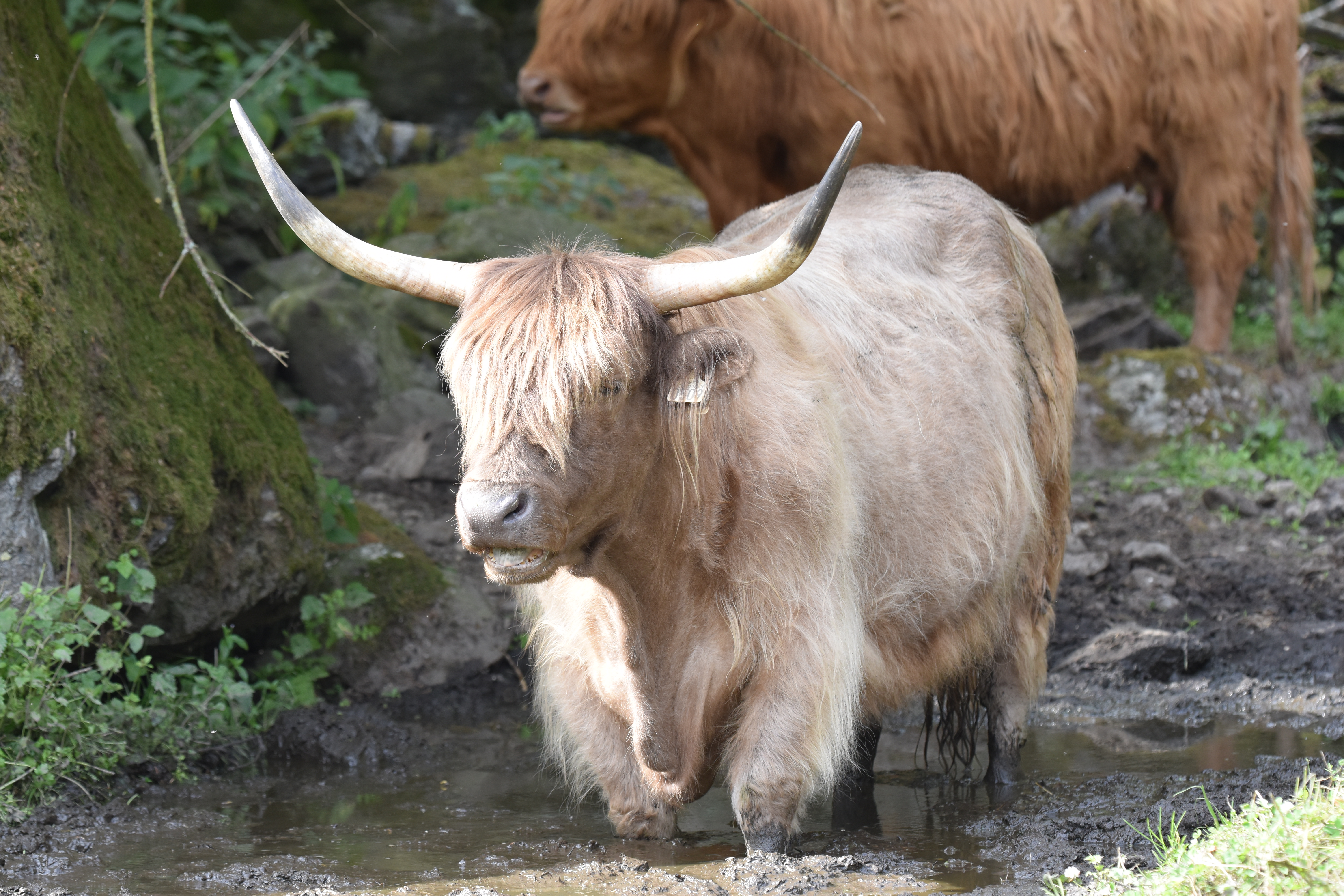
Once again, I opted for a long walk and enjoyed the local scenery, including these rather handsome Highland cattle!
Highland cow enjoying a mud bath in Flam, Norway.
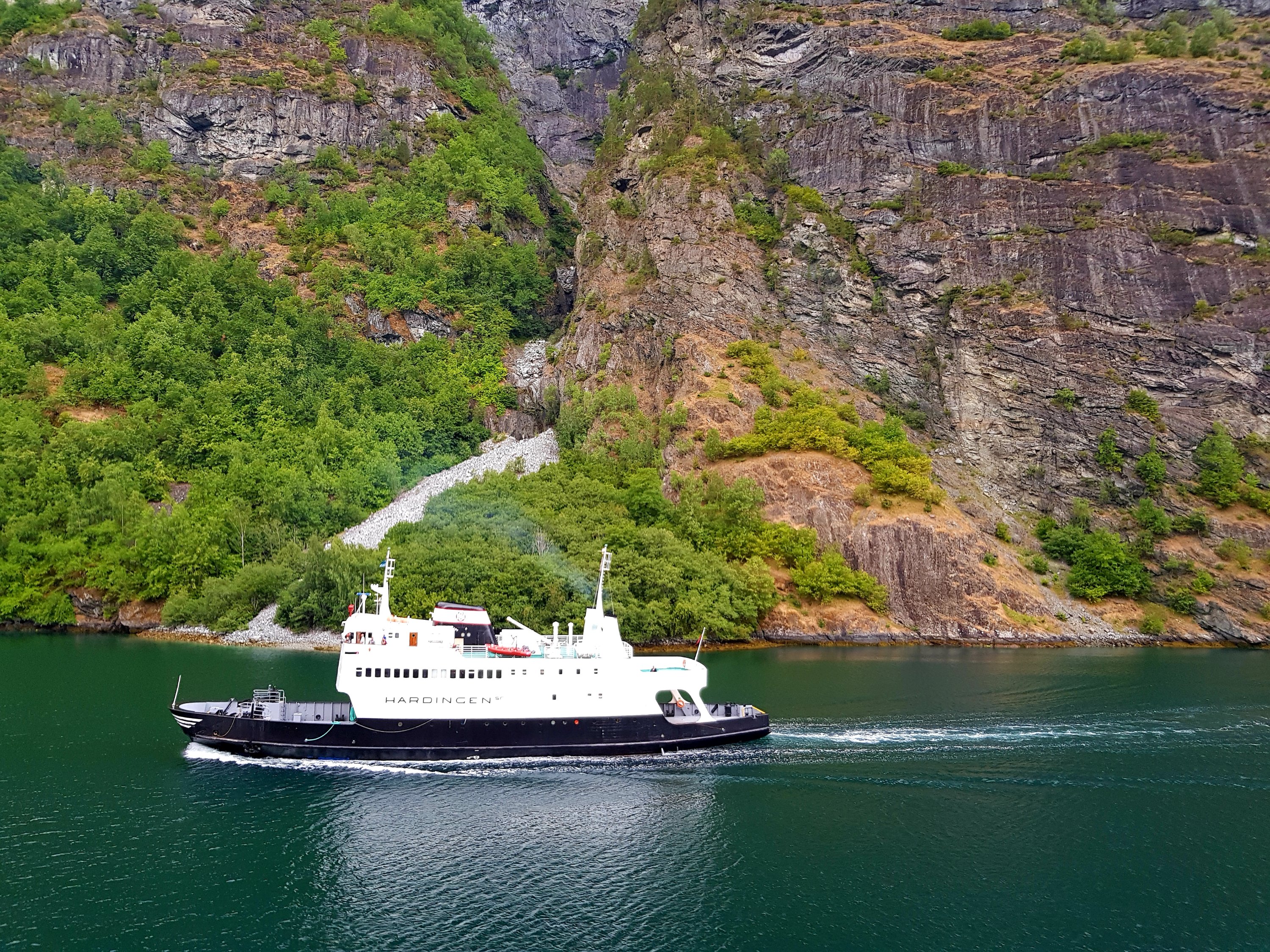
We saw lots of local ferries moving up and down the fjords (below), and if I went back this would be the way I would try to see more of the country.
Local ferry, Norway
One of the last fjords we visited on this cruise was the spectacular Nærøyfjord (below). This 17 km fjord was appropriately narrow (Naeroy!) in some sections, the thinnest being only 250m wide.
The spectacular Nærøyfjord with highly folded rock strata
Entrance to Nærøyfjord, if I remember correctly!
The scenery was very dramatic at dusk as we sailed up the Sognefjord on the way out to sea and on to the final port of call, Bergen.
Sunset on Sognefjord
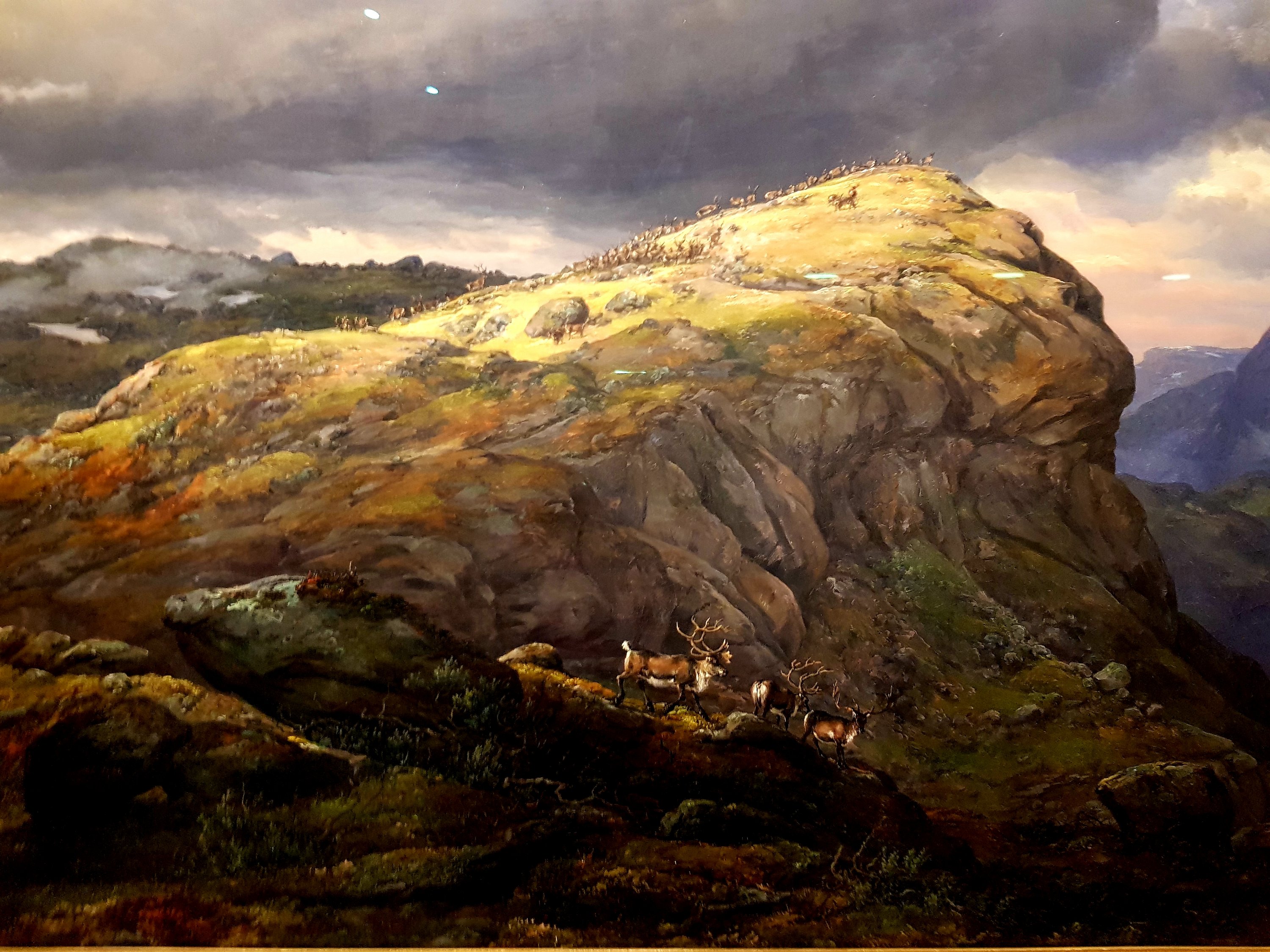
This brief glimpse of the fjords of Southwest Norway stimulated my imagination and it was easy to see how people imagined the landscape to be full of trolls! It is however, a wild landscape with all sorts of living animals, including reindeer (below), elks, wolves, bears and last but not least lemmings! Lots to explore in the future if I get a chance.
The spectacular Norwegian landscape caught in paint. KOBE museum, Bergen.
Finally, a word about the crew, who were fantastic. They were from many nationalities, although predominantly Philippino, Indonesian and Thai and they all did a great job, cheerfully and efficiently.
The friendly ship’s photographer Sita, at the other end of a lens for a change!
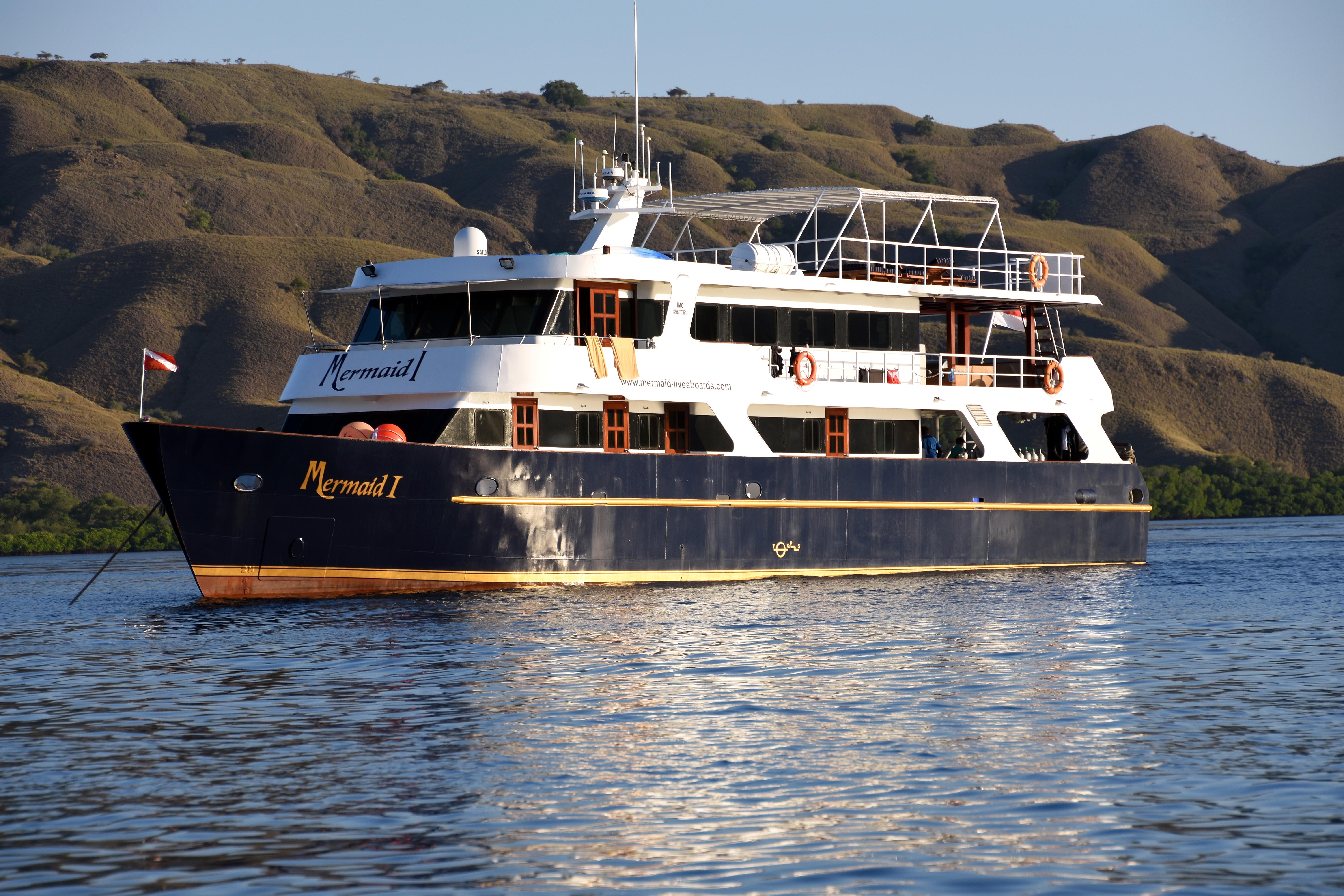
Last year (October 2016) I was lucky enough to do a wonderful wildlife cruise in Indonesia, from Bali to Flores, on a small ship called MV Mermaid I (1). These ships are usually used as dive boats, but this trip was devoted to looking out for dolphins, whales and birds – which I described in my previous blog (1) – and we also had plenty of opportunities to go snorkeling.
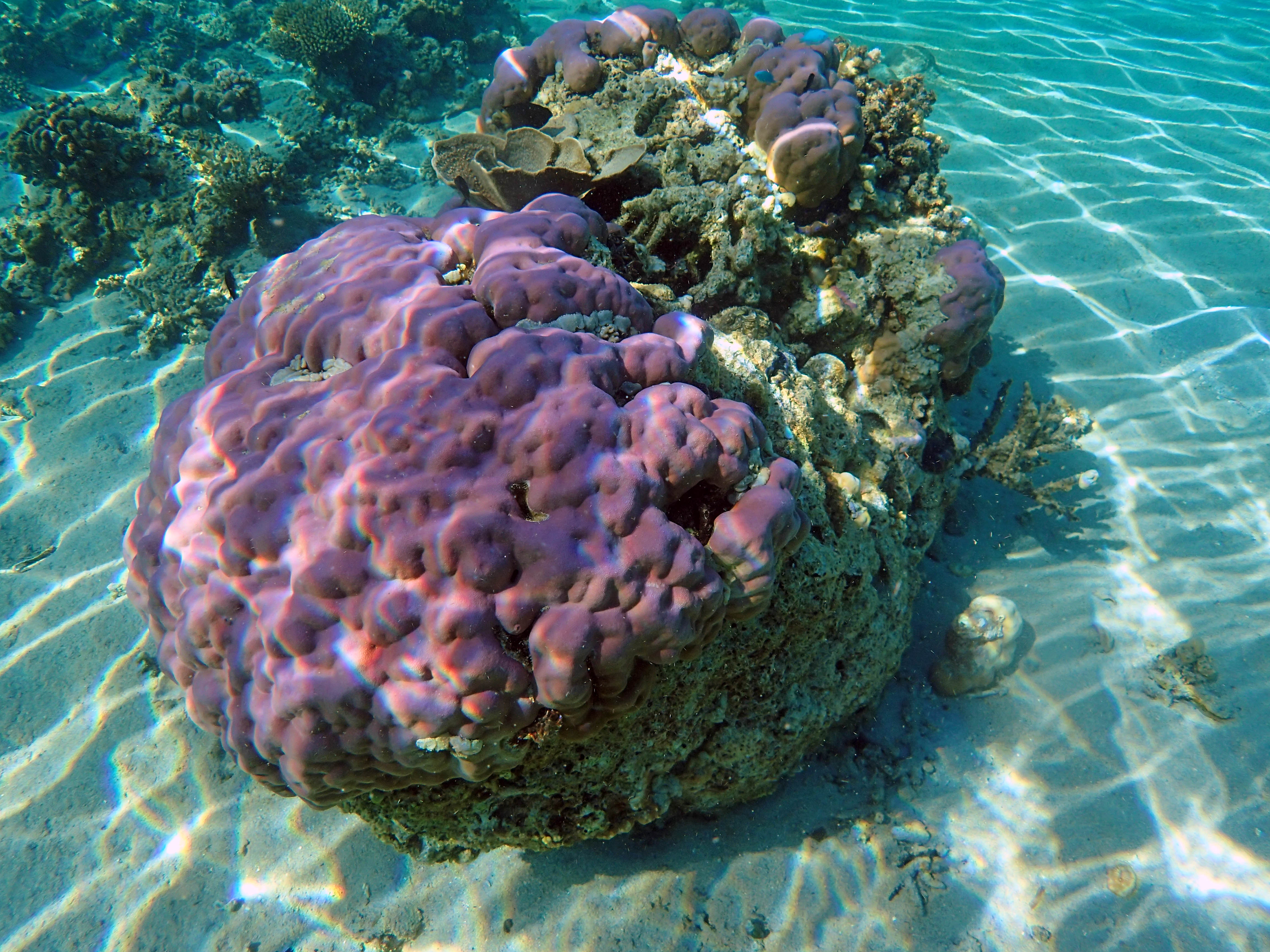
Coral head with pink encrusting coral
I took these underwater photographs with a Olympus Tough TG-5 GPS Waterproof camera, mostly with a fish eye converter attached. Unfortunately, I let some seawater in at one stage, and it never recovered from being bathed in seawater. Fortunately, I managed to capture quite a few underwater images before it died!
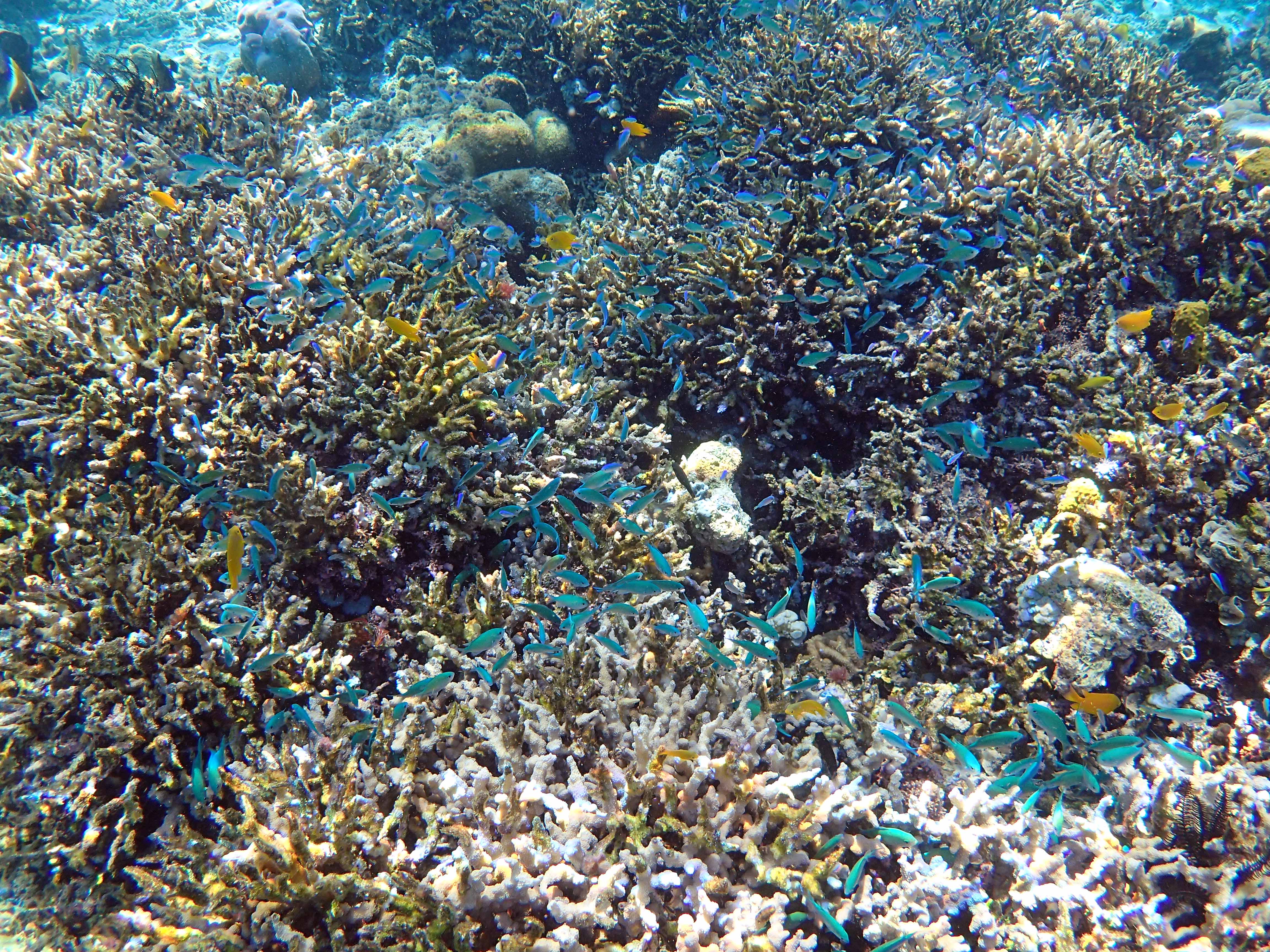
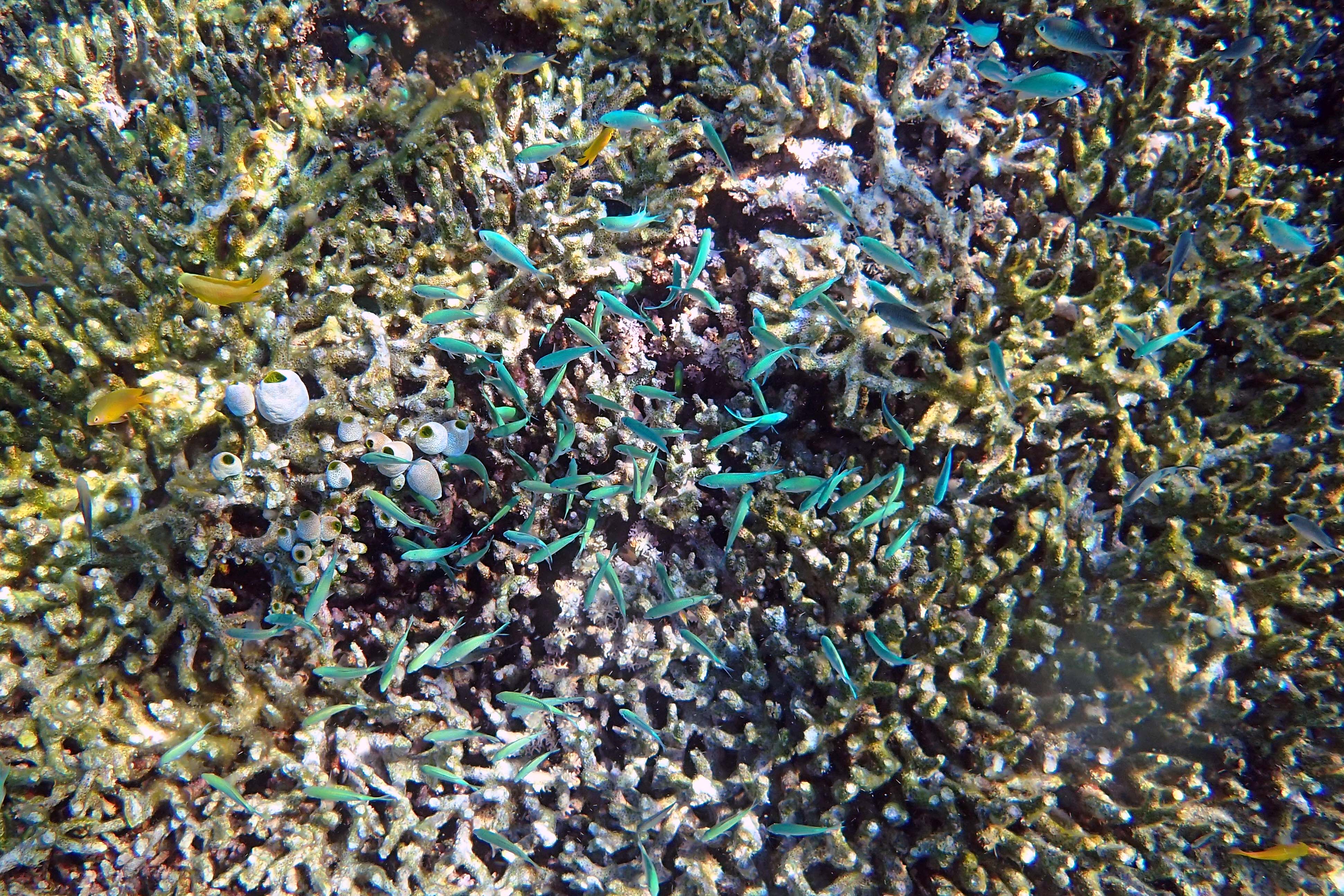
Coral with shoal of small blue fish
I wish I had kept a note of where each of the shots were taken (!) but perhaps it does not matter. It was fun to try to capture some of the amazing underwater world, mainly within the Komodo National Park. For those wanting to know exactly where we stopped off to snorkel, the trip report is available online (3).
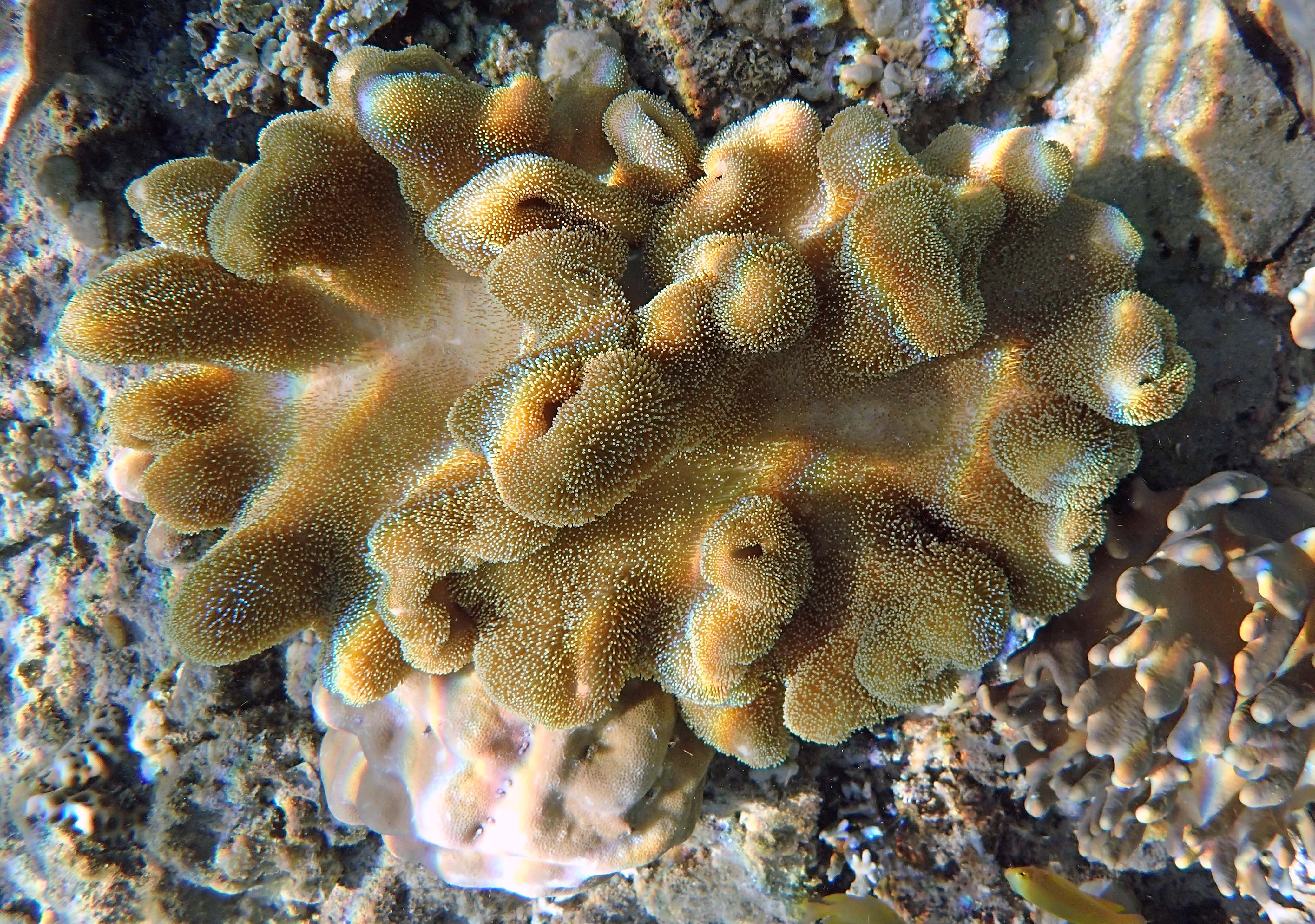
Soft coral
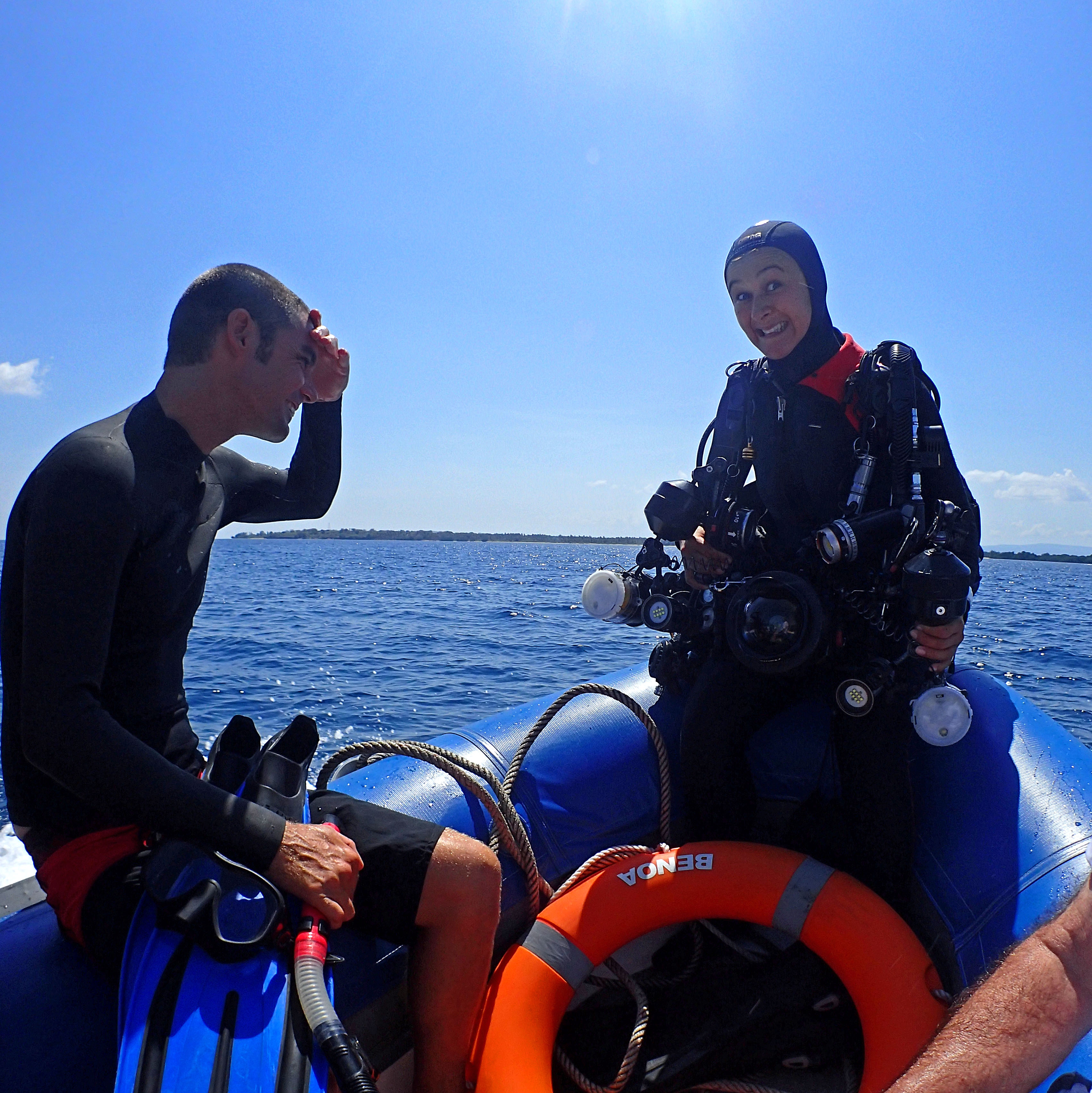
We were given instructions about the site before each snorkel dive and taken to the coral reef in the small ‘zodiacs’. The Mermaid I dive staff accompanied us and videoed each dive.
Mermaid I dive staff and photographer
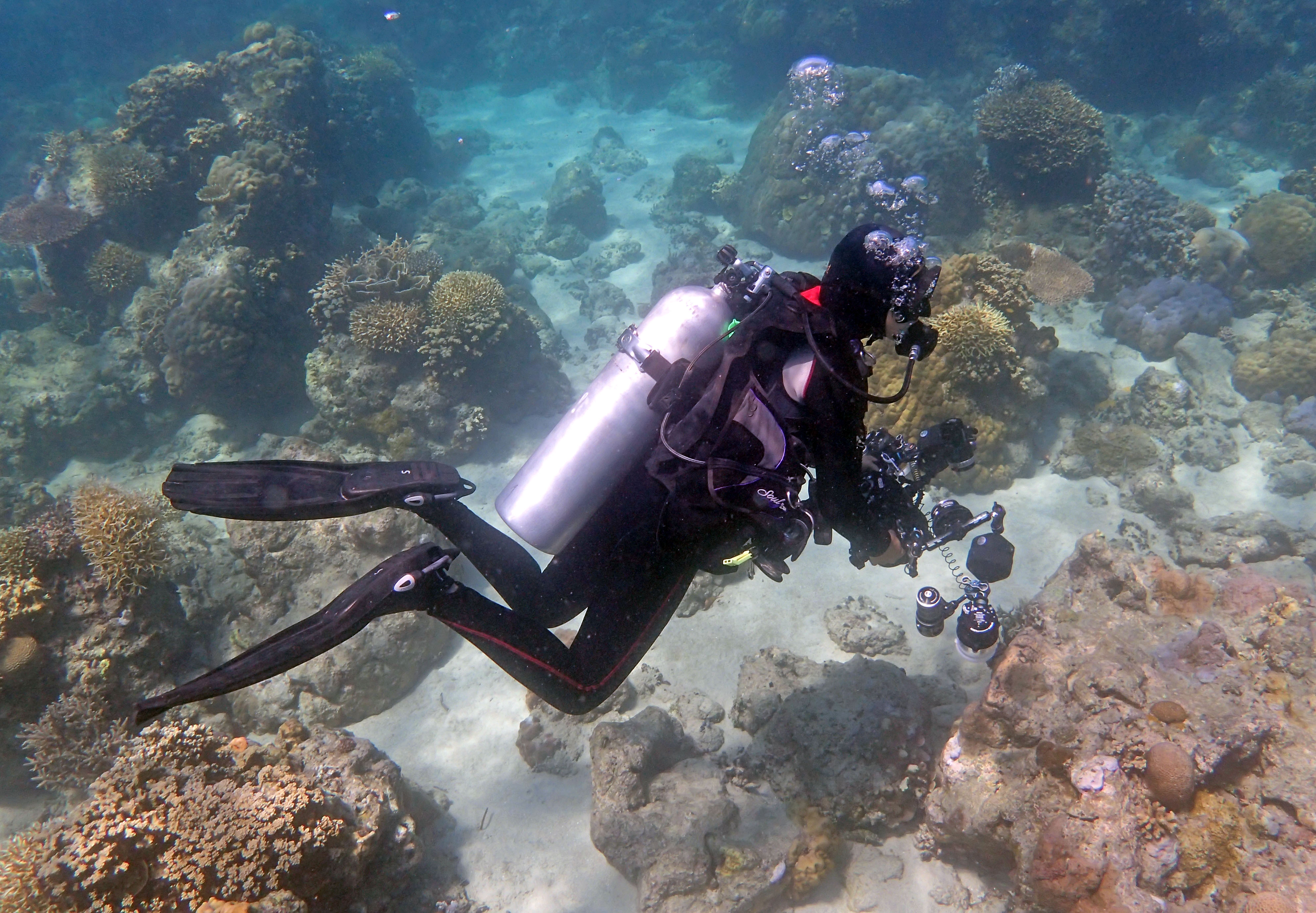
There is no question you see more whilst diving, but I have never managed to take a course and I am quite happy just snorkeling.
Scuba diver filming the action
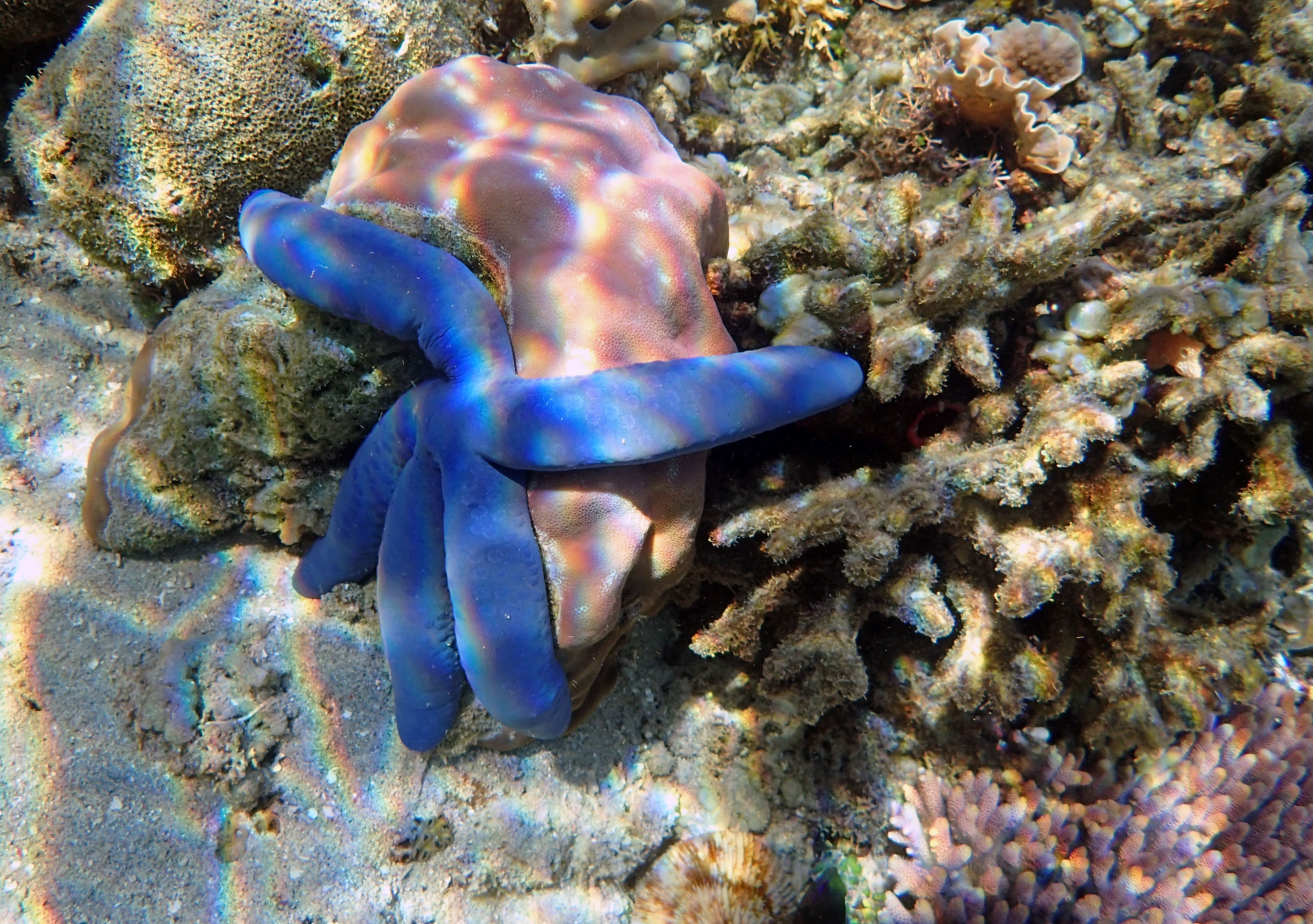
The water was relatively shallow, so it was quite straightforward to swim down and photograph the more interesting inhabitants of the reef, like this gorgeous blue starfish.
Blue starfish (Linckia laevigata) and pink coral
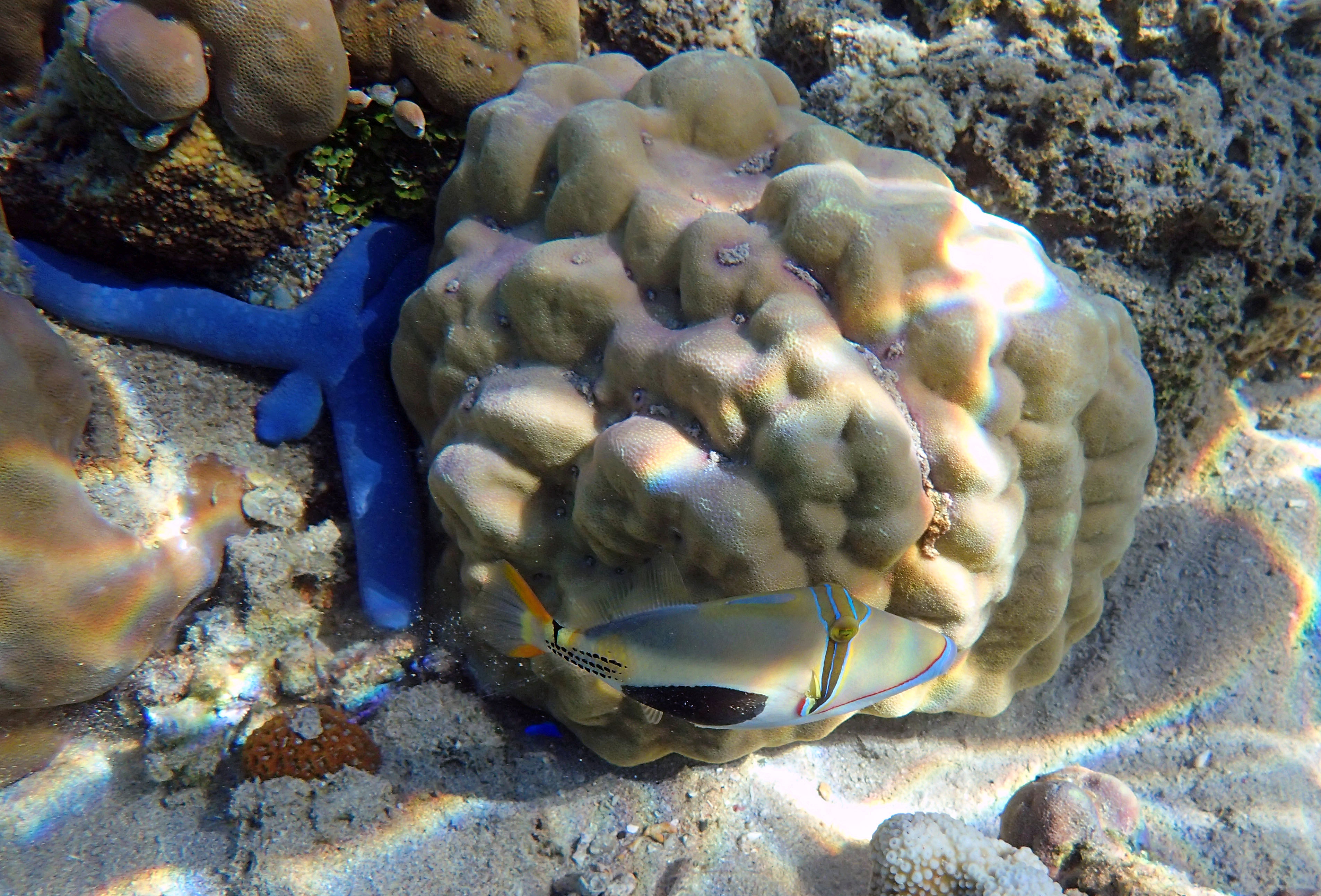
Fish were a little bit more cautious, but I managed to get fairly close to this trigger-fish (I think it is!). They bite! Feisty characters who think they own the place; well I guess they do!
Blue starfish (Linckia laevigata) and trigger fish
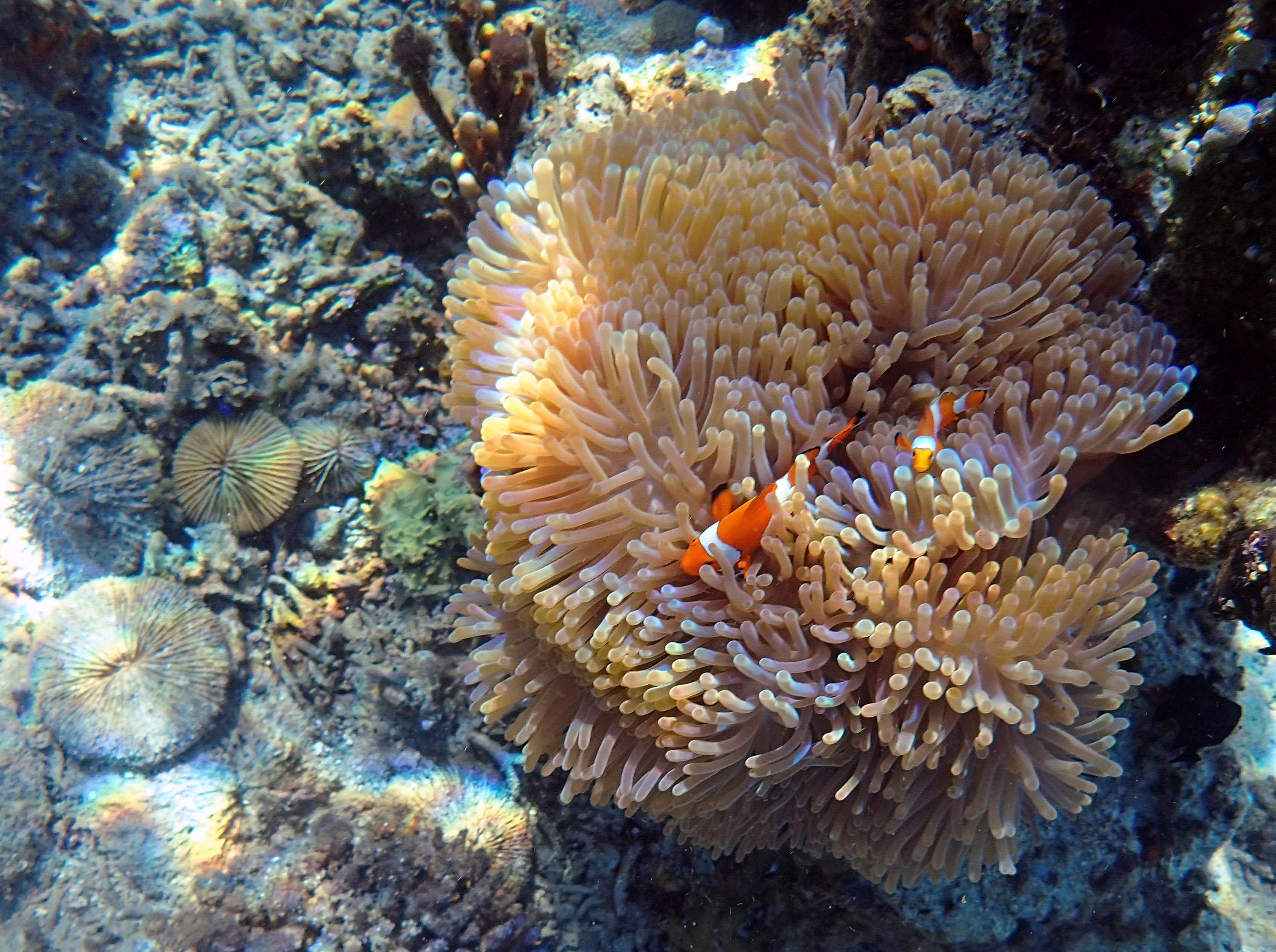
It was a treat to see the famous Clownfish, which lives within a sea anemone’s poisonous tentacles, and has been immortalized by Disney.
Clownfish (Amphiprion sp.) and anemone
The shoals of small iridescent fish – which darted into the crevices in the coral at any sign of danger – were mesmerizing.
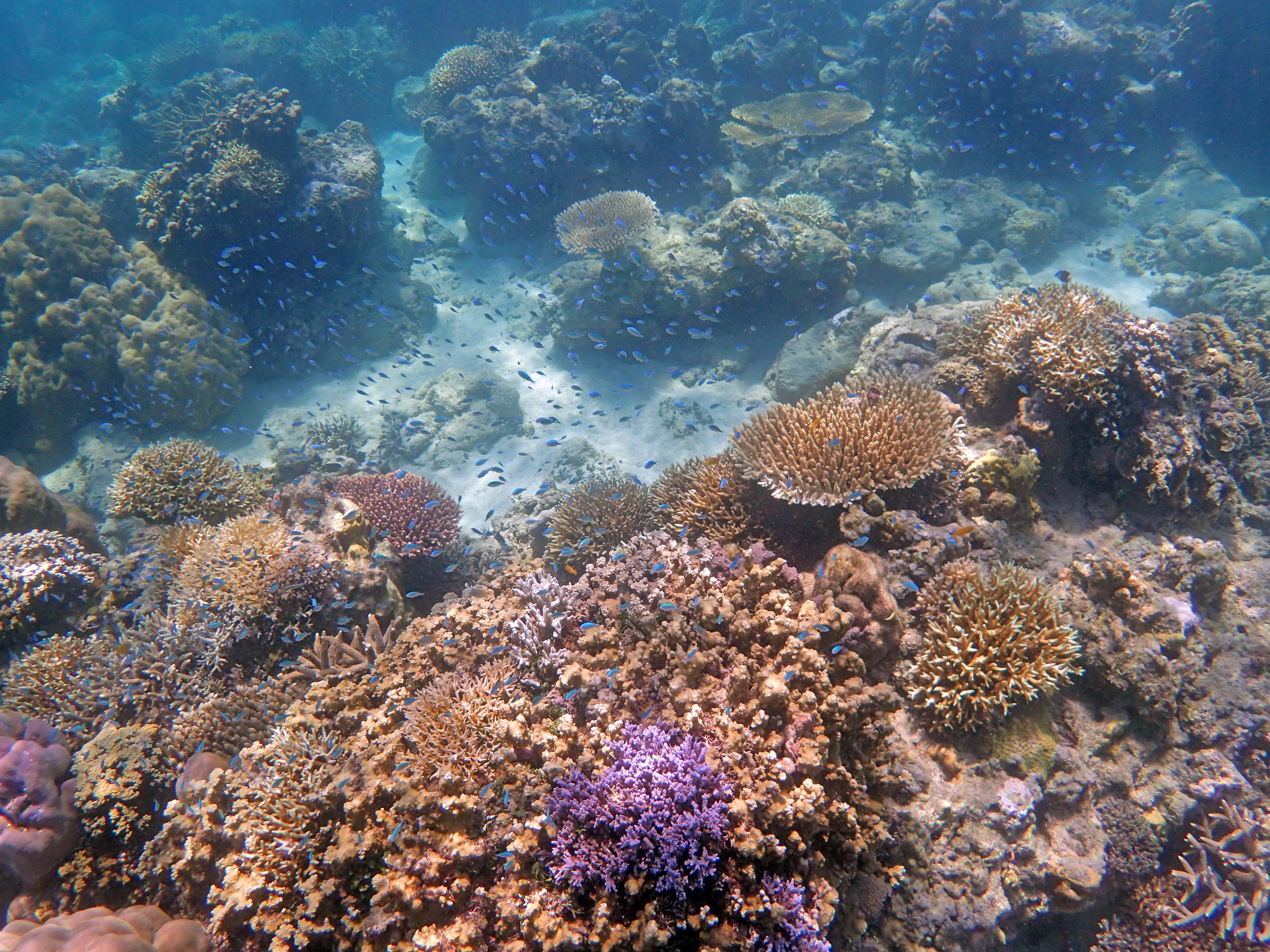
Small blue damsel-type fishCoral reef in Komodo NP
I was very happy to see how beautiful and unspoilt the coral was – at least at the places we visited in Komodo NP – although outside the protected areas may be another story. How people can fish using dynamite is difficult to comprehend; so short-sighted and stupid; but blast fishing, as it is called, does still occur, alas. (4)
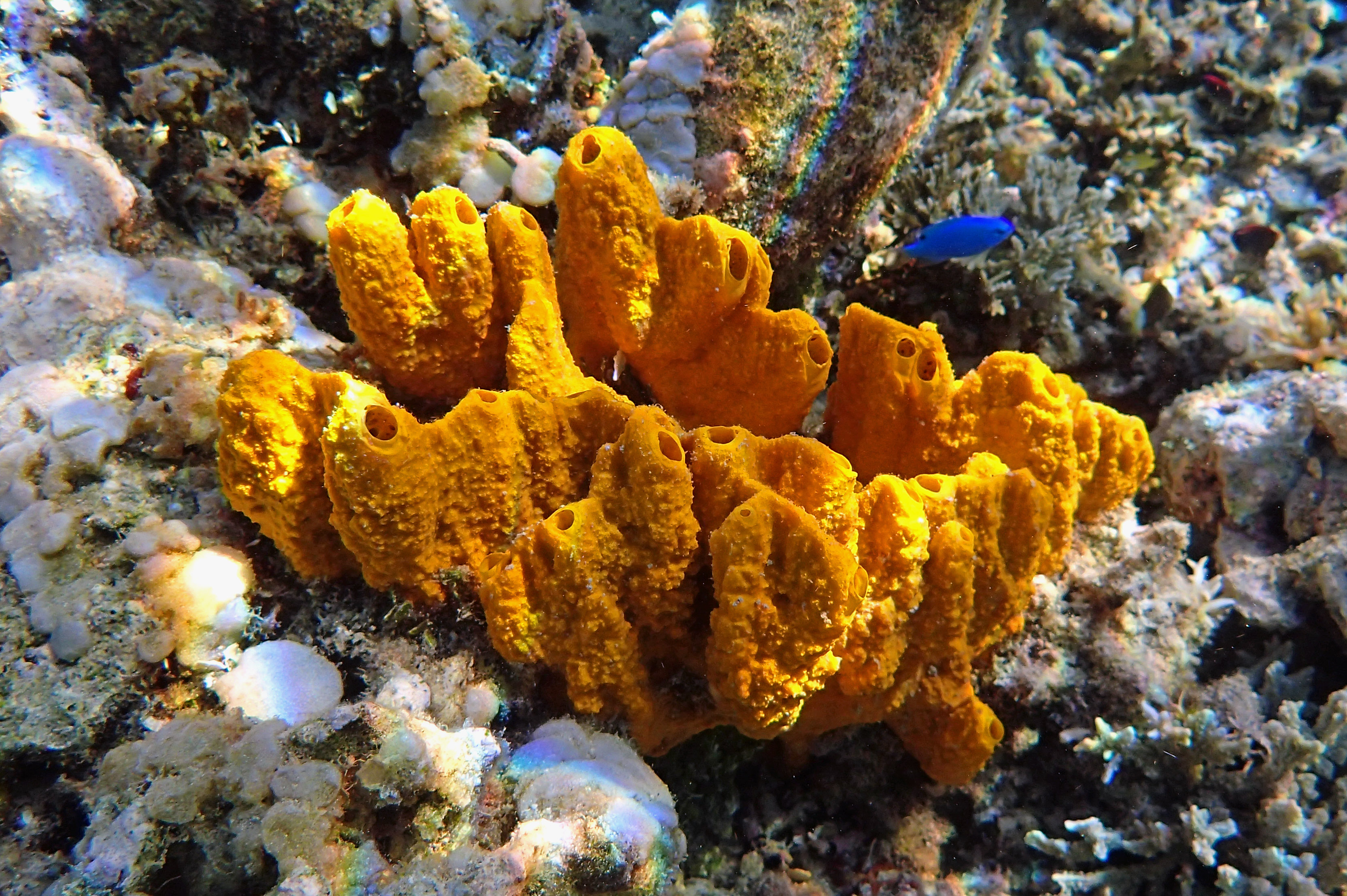
Yellow sponges
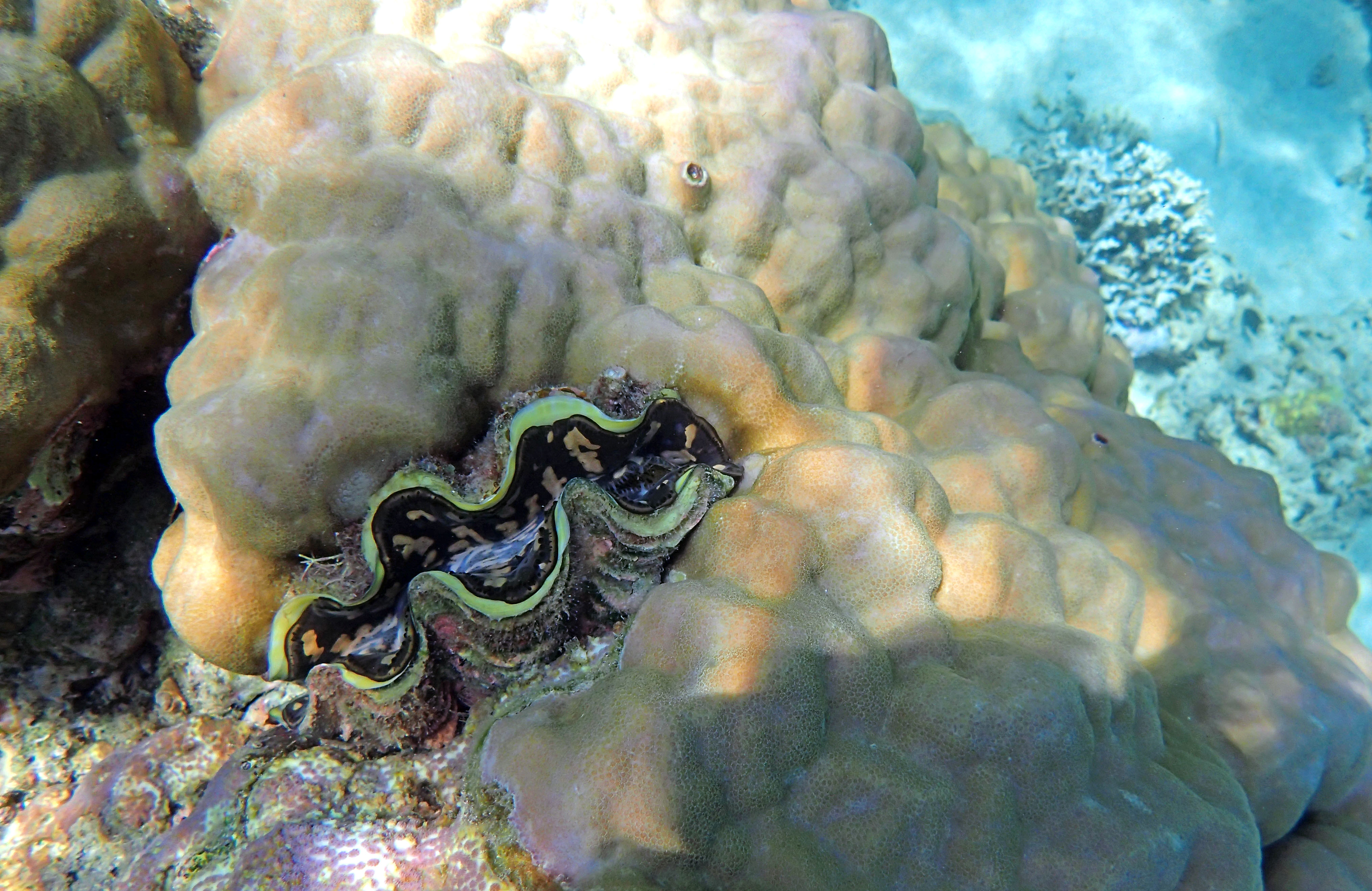
It was fun to see some giant clams. Some of them are so tightly cemented onto the coral that all you see is the beautiful soft mantle undulating along the rims of the shell.
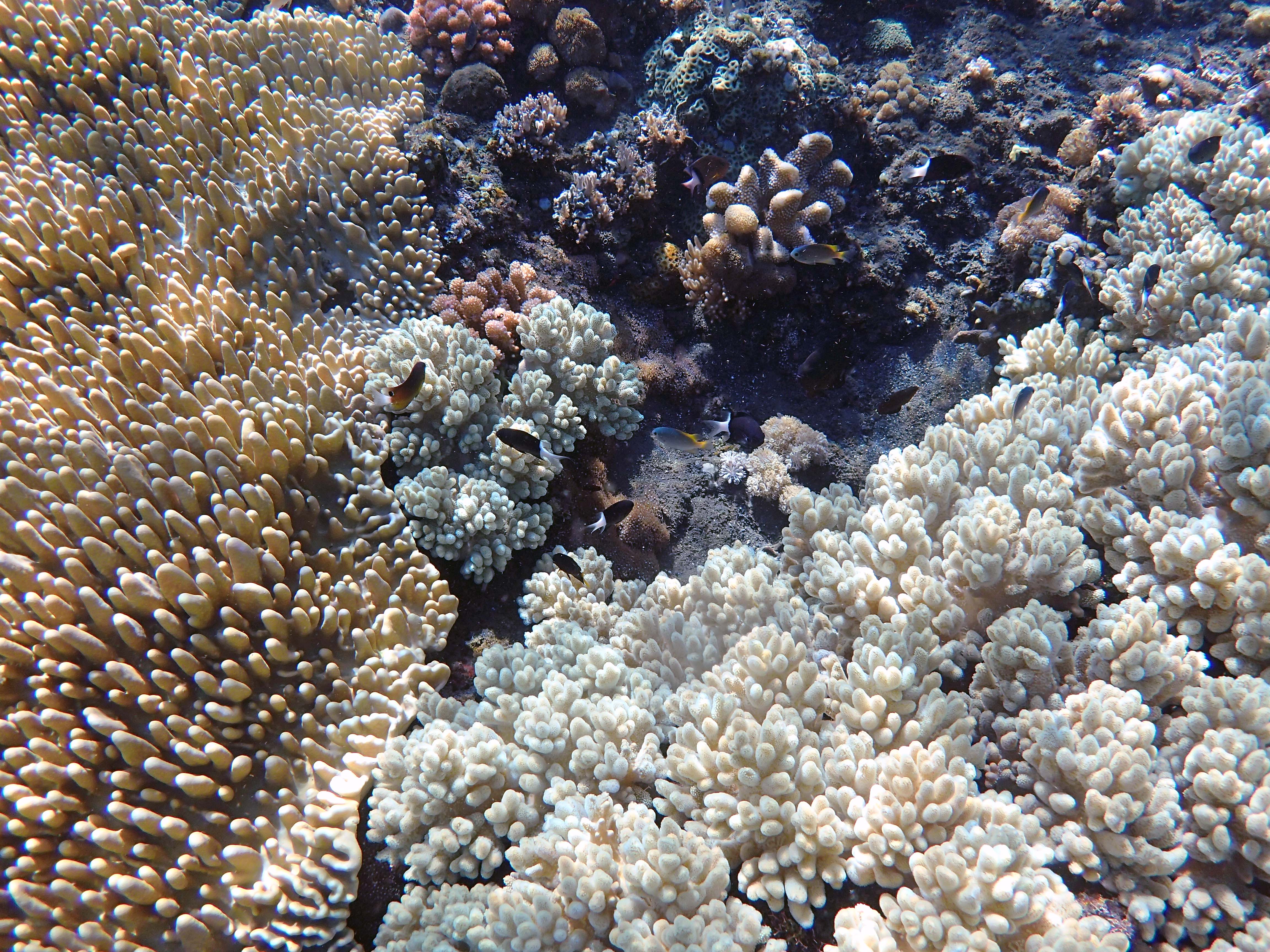
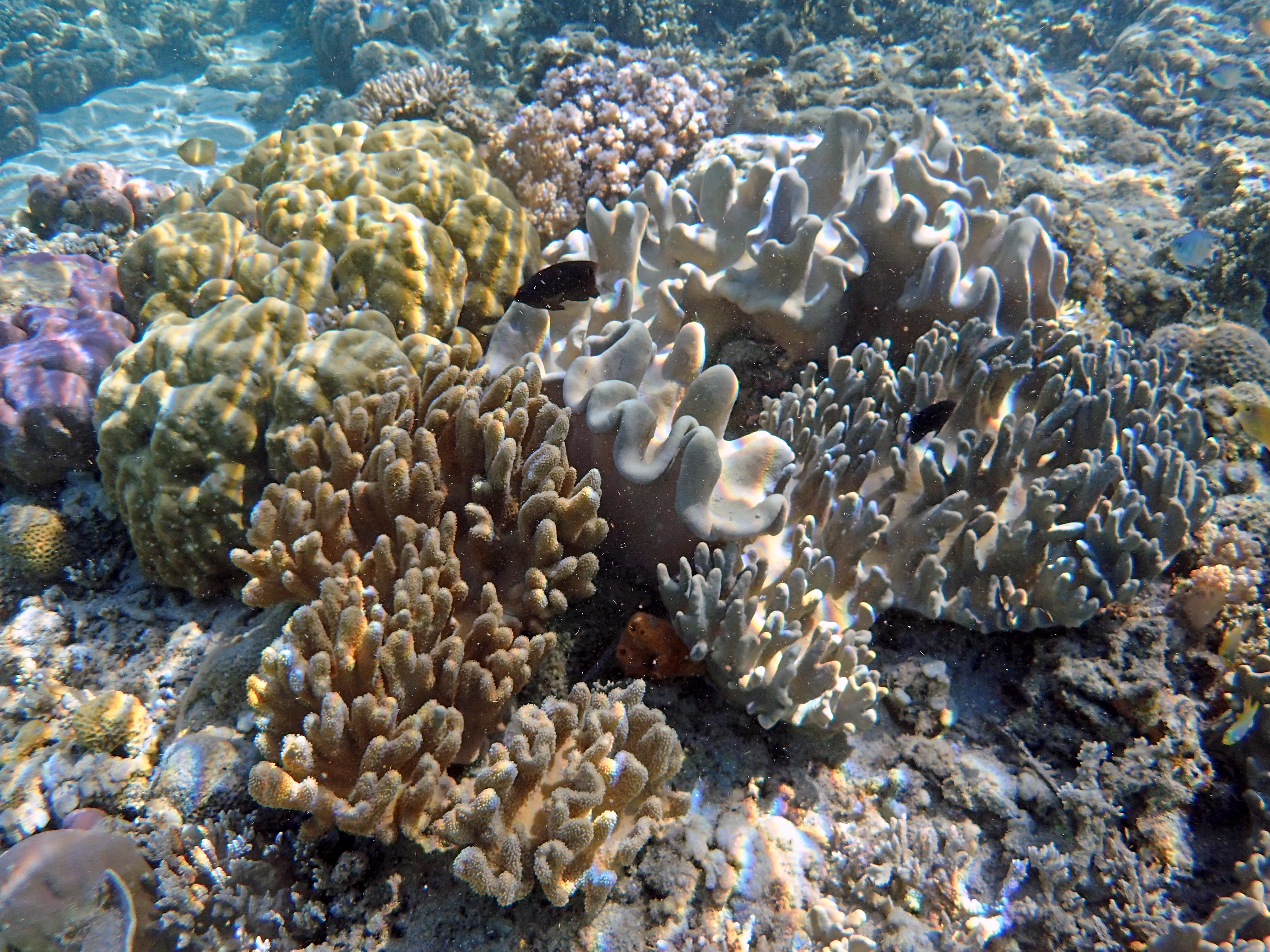
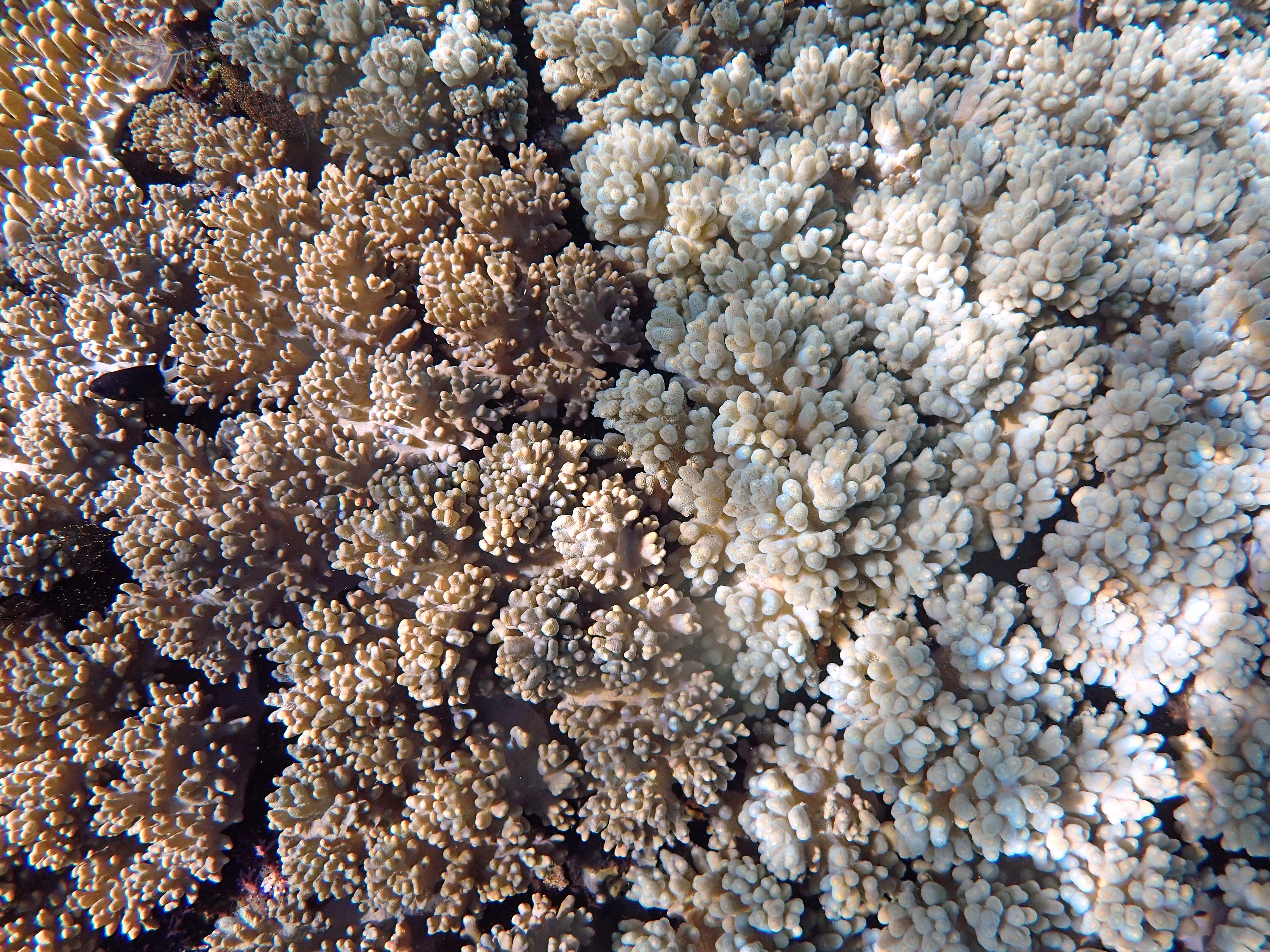
I think, what I most enjoyed seeing were the corals. They come in all shapes and sizes, soft and hard, with a myriad of different textures.
Corals with different texturesA variety of different corals
The boundaries between different coral types were often sharp and I suppose they were competing with each other for space on the reef.
Boundary between two types of coral
I should have made more use of the library of books on board the Mermaid I, and sorted out the names and species of all the different soft and hard corals, but it was more relaxing to just sit back and watch; just enjoying the spectacle without necessarily putting a name to it all. Next time perhaps! I certainly would like to know what this purple creature is (see below).
Strange purple soft coral?
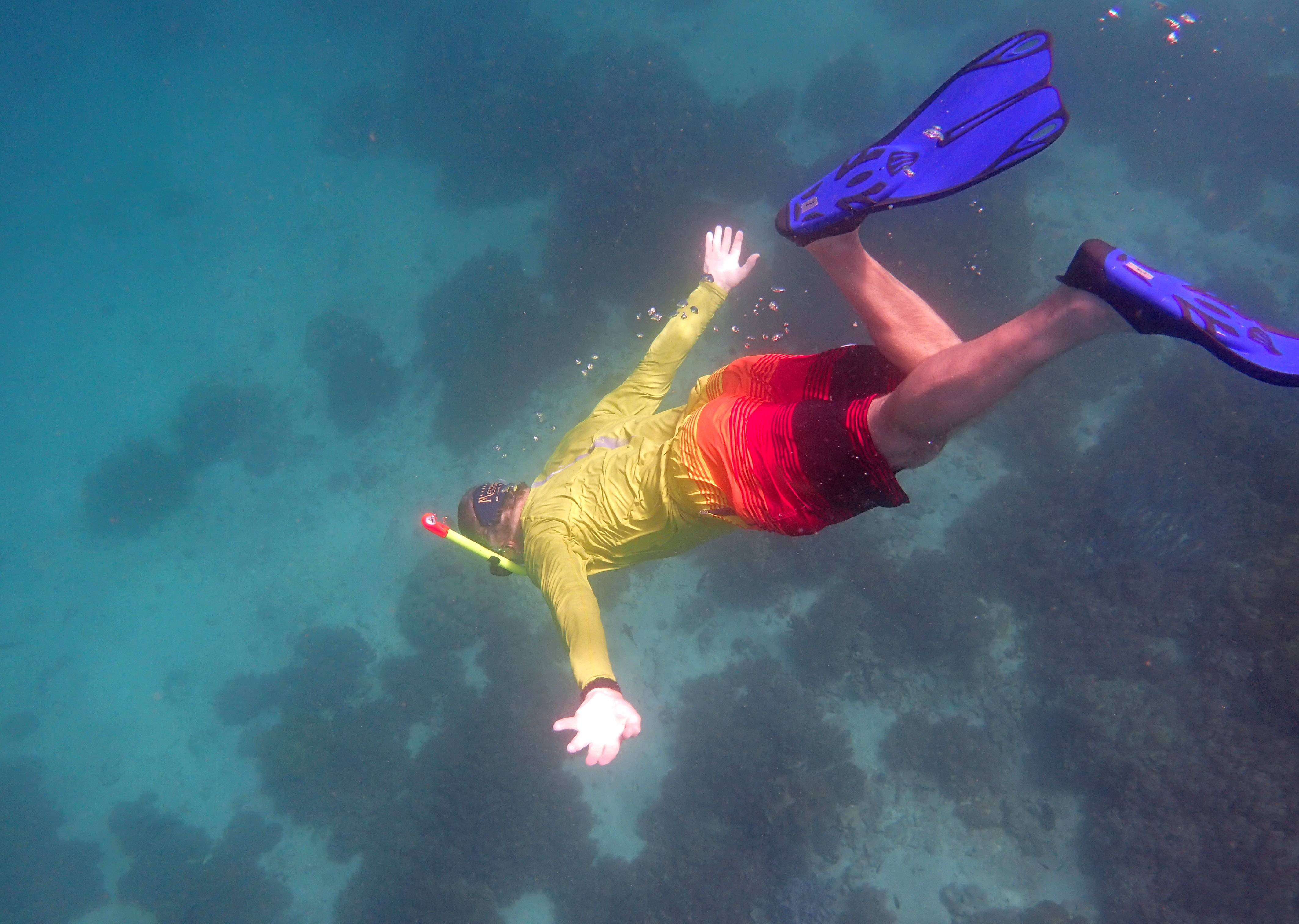
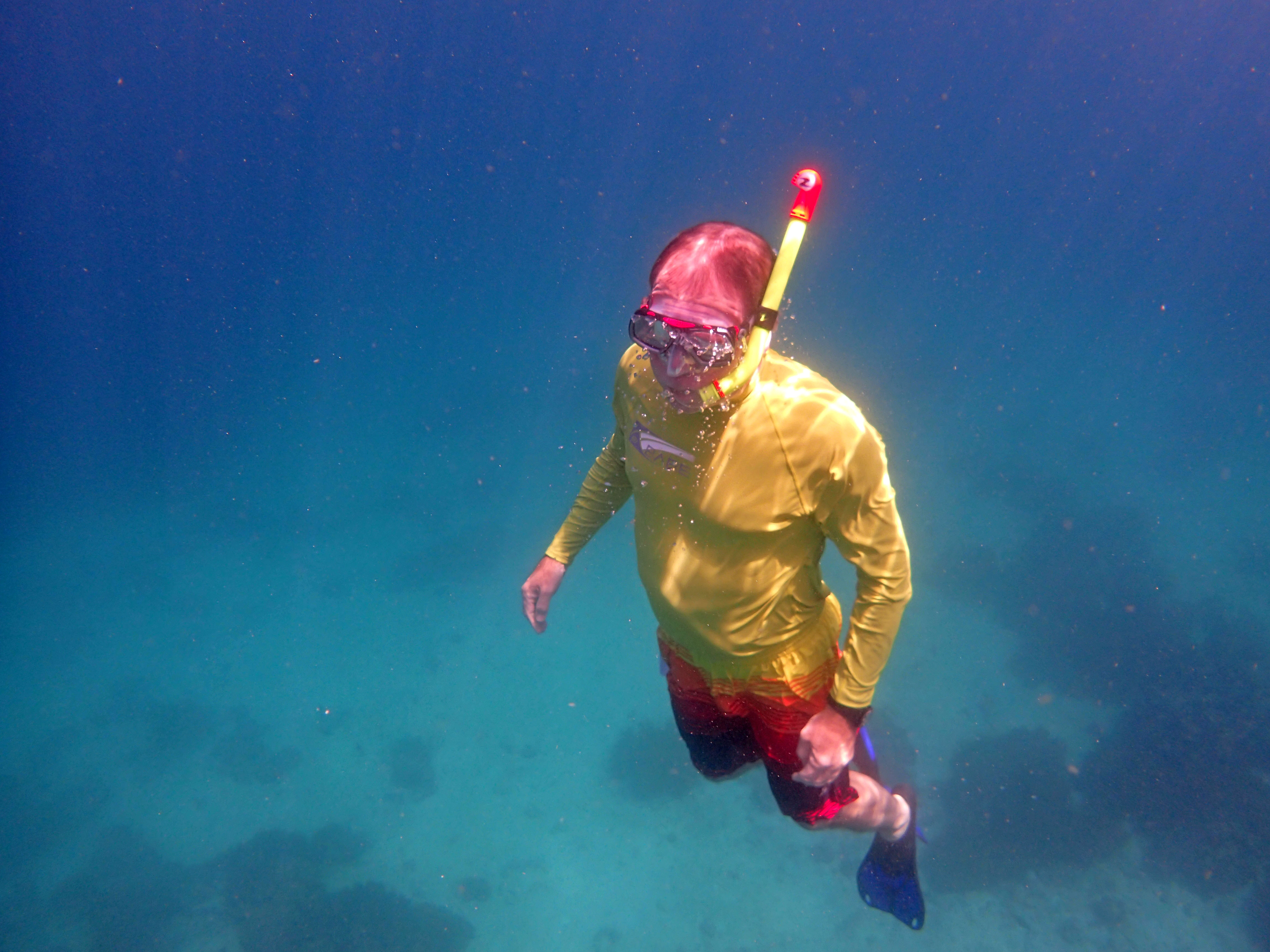
It was a wonderful experience, a sort of dream, but eventually we had to wake up and leave our underwater somnambulations. Here I am coming up for air!
Coming up for air.
And I can’t finish without a shot of the boat (sorry, ship!) Mermaid I.
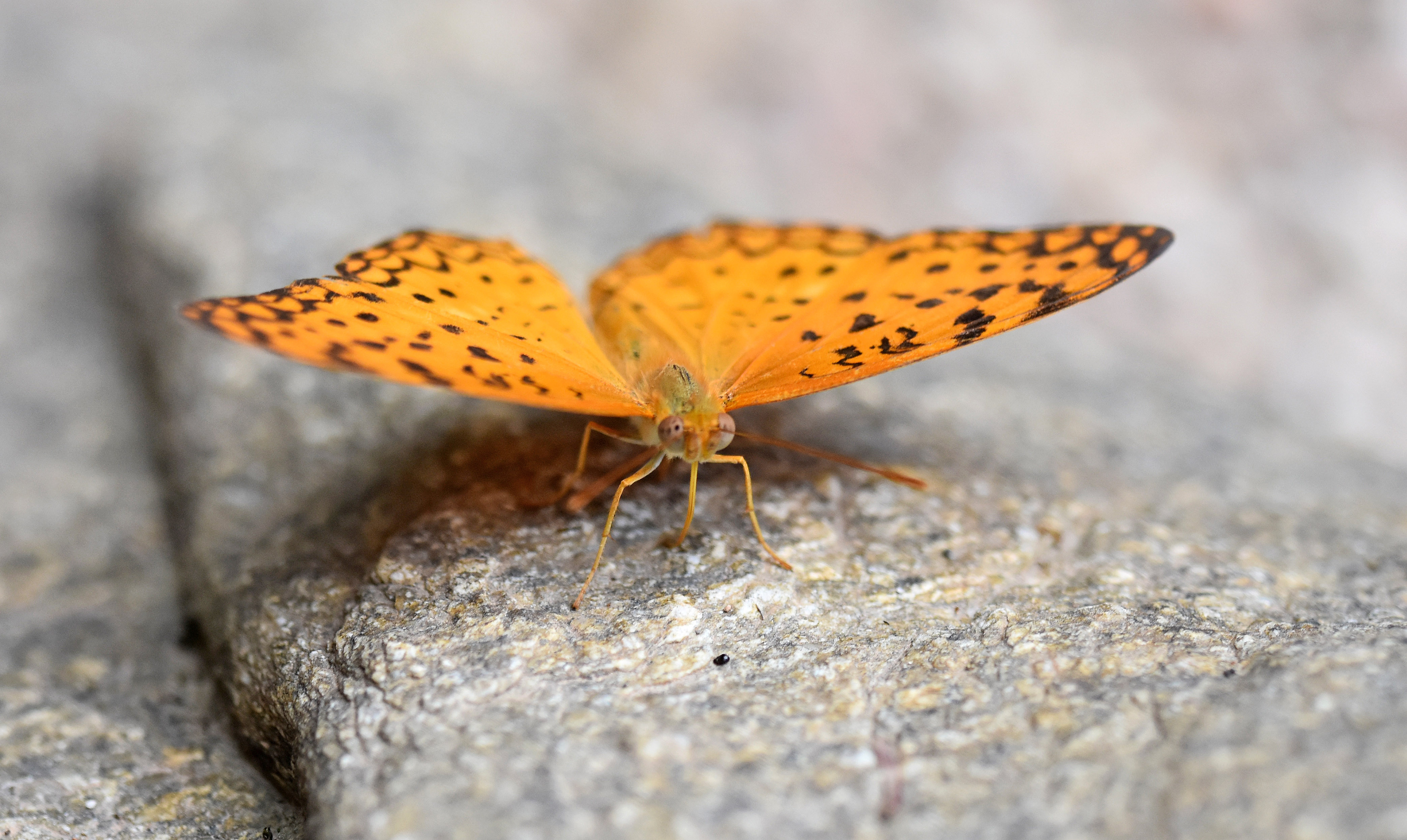
Common Leopard Butterfly (Phalanta phalantha) mud-puddling at Mae Klang waterfall, Doi Inthanon, Thailand.
It was a very hot day when I visited Doi Inthanon, Thailand’s highest mountain (at 2565 metres or 8415 feet), in early May this year. Temperatures in Chiang Mai city had reached 40 deg C the day before, but it was much cooler up the mountain. There are large tracts of different types of forest on this mountain – Doi Inthanon National Park covers an area of about of about 482 square kms – but it is often shrouded in cloud near the top.
Forest on Doi Inthanon, by the Royal Chedis (or stupas) at about 2140m.
Unfortunately, the top of the mountain was rather cloudy on 7th May, so we headed further down, stopping off at a number of waterfalls, where I hoped to photograph butterflies.
Wachirathan Falls, Doi Inthanon, Thailand, May 2017.
One of the most beautiful falls on the mountain is Wachirathan Falls, just over 20 km into the NP, which is a magnificent spectacle, even in the dry season. Unfortunately, there were not many butterflies about, or the ones that were flying about were rather inaccessible, so I decided to head further down to the ever popular Mae Klang Waterfall. This lies just outside the boundaries of the NP, so is more heavily visited by picnickers and sightseers.
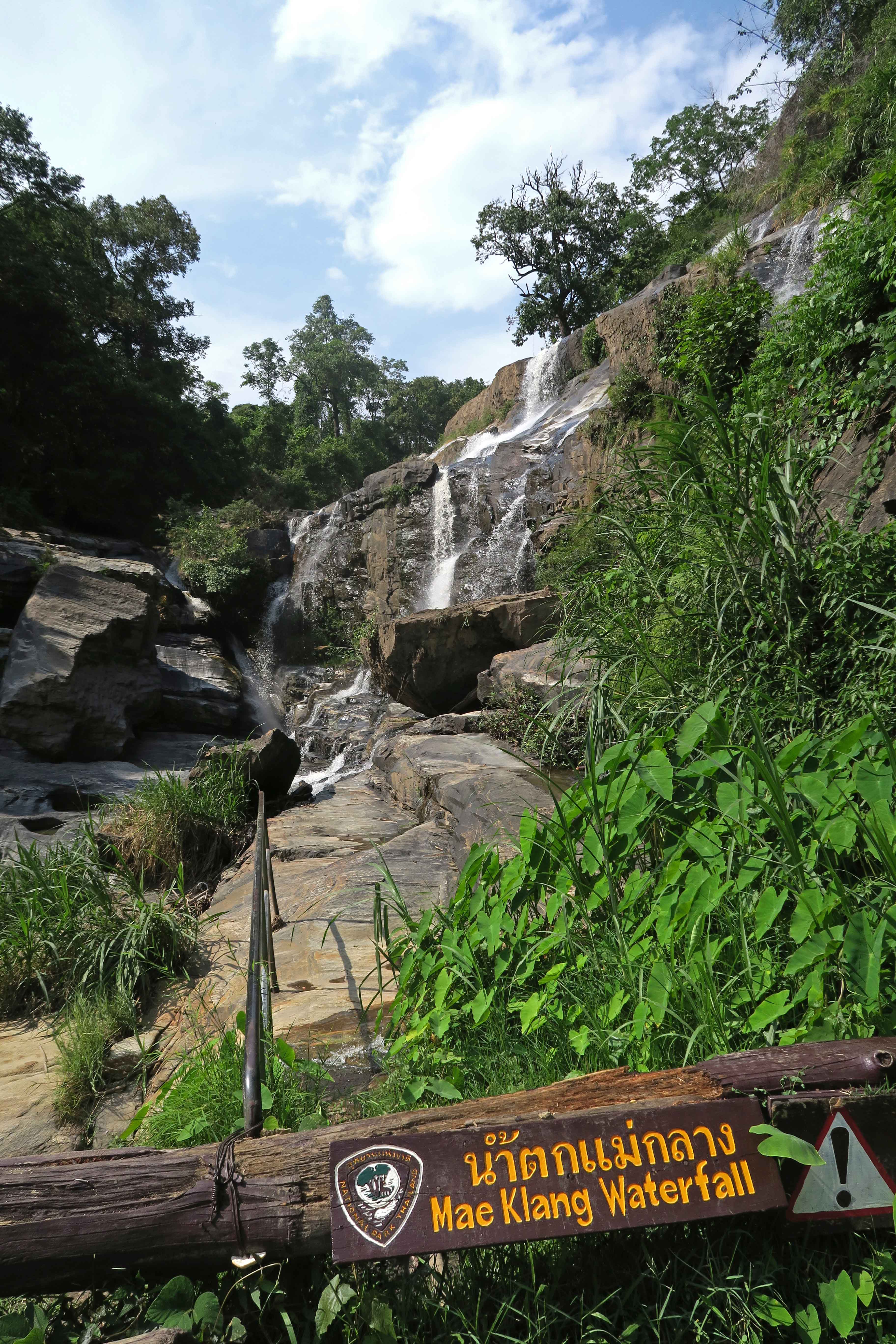
Mae Klang Falls on 7th May 2017
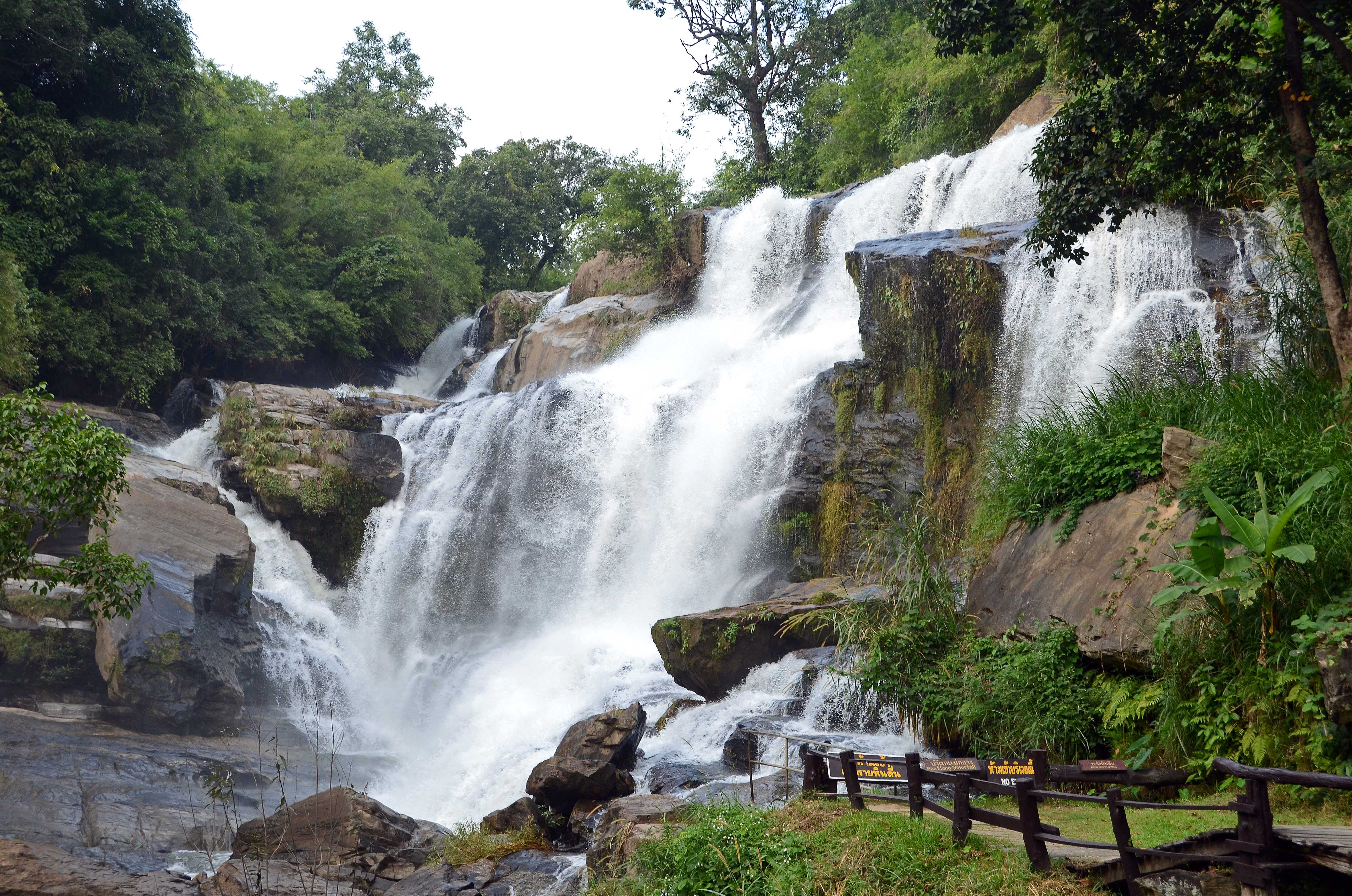
There was much less water flowing than in previous visits; compare the photograph above (taken in May, before the rains have arrived) with that taken in November (at the end of the rainy season) in a previous year.
Mae Klang waterfalls 8 Nov 2013
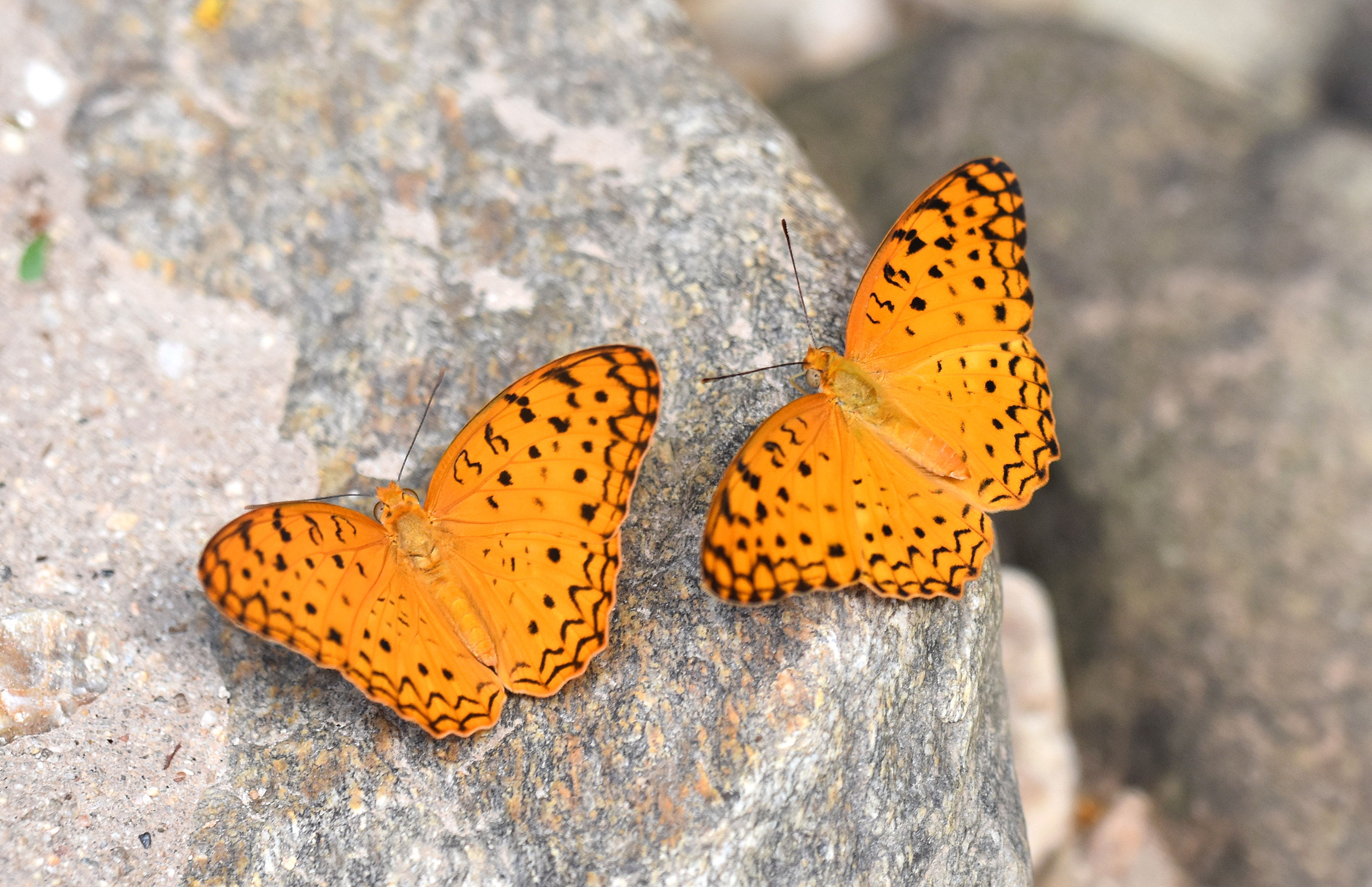
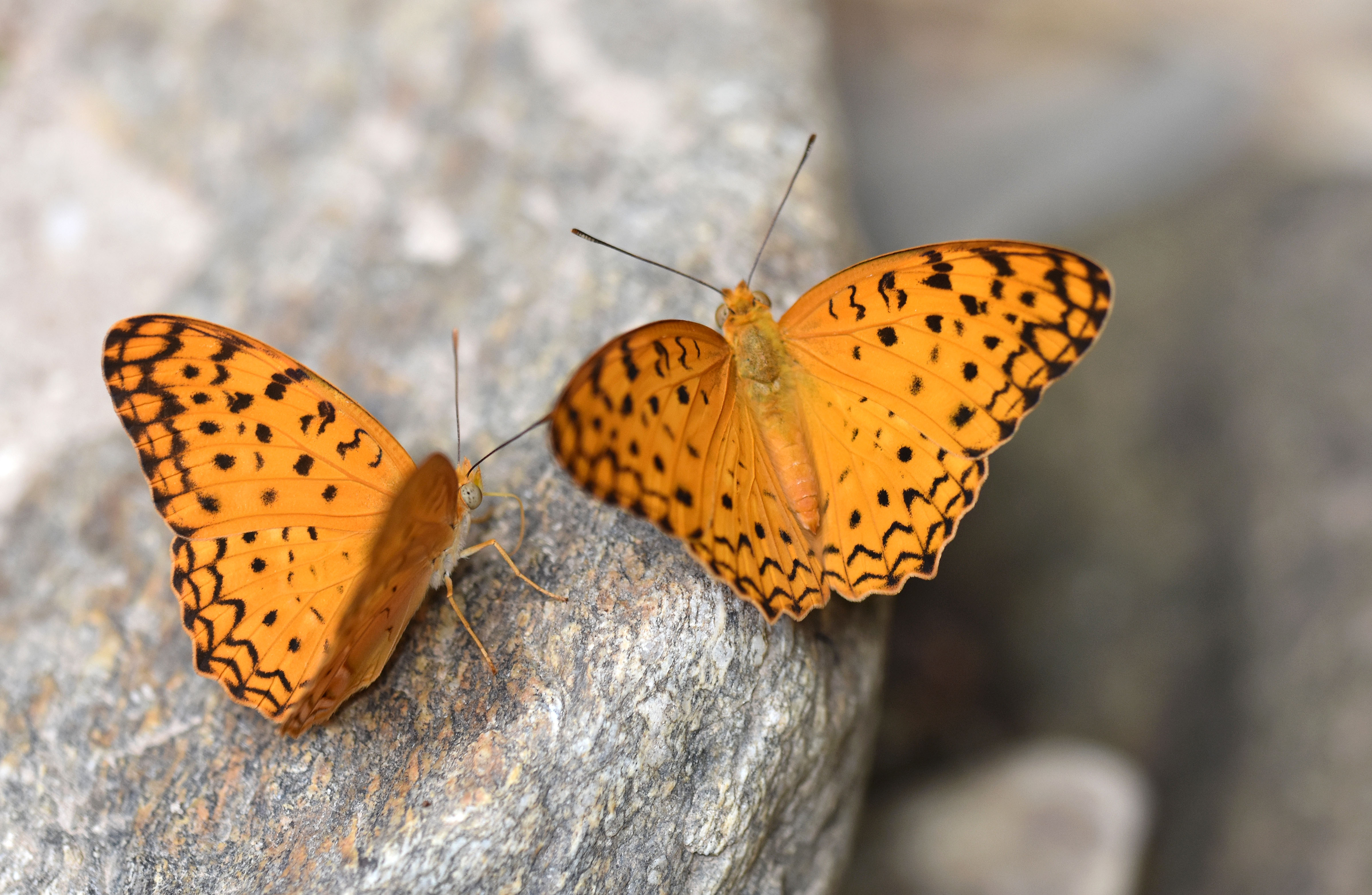
Mae Klang waterfall is at an altitude of about 1,200 m or so, so is much hotter than further up the mountain, and there were plenty of butterflies around! The problem was that because of the high temperatures, the butterflies were flying about so fast it was very difficult to photograph them! One of the more obliging species was the Common Leopard Butterfly (Phalanta phalantha), which were present in quite large numbers along the stream beds next to the river.
Common Leopard Butterfly (Phalanta phalantha) mud-puddling at Mae klang waterfall, Doi Inthanon.
The butterflies were ‘puddling’ or ‘mud-puddling’ as it is called; they are trying to absorb sodium (in the form of sodium chloride, salt) or nitrogen (in the form of amino acids) from moist substrates such as mud, animal excrement, rotting fruits, carrion, dung, bird droppings, sweat, tears and so on (See 1: See you down the puddle). Curiously, many of these Common Leopard butterflies were sucking up moisture from the rocks themselves (below). There must have been a thin layer of water on the rocks, which may have produced a solution of salts or minerals attractive to these insects.
Common Leopard Butterfly (Phalanta phalantha) Mae klang, with extended proboscis
Despite being engaged in mud- or moisture-puddling, the butterflies did not stay put for long, and usually flew off as soon as the lumbering photographer approached them! I did not manage to get as close as I would have liked, but after taking dozens of shots, I managed to get a few usable ones.
Common Leopard butterfllies (Phalanta phalantha)
These butterflies take about three weeks to develop from egg to adult (at 28 deg C) and the larvae feed on flowering plants in the Willow family (Salicaceae) including Flacourtia inermis and Salix babylonica (Links 2 and 3).
Common Leopard butterfllies (Phalanta phalantha) on rocks
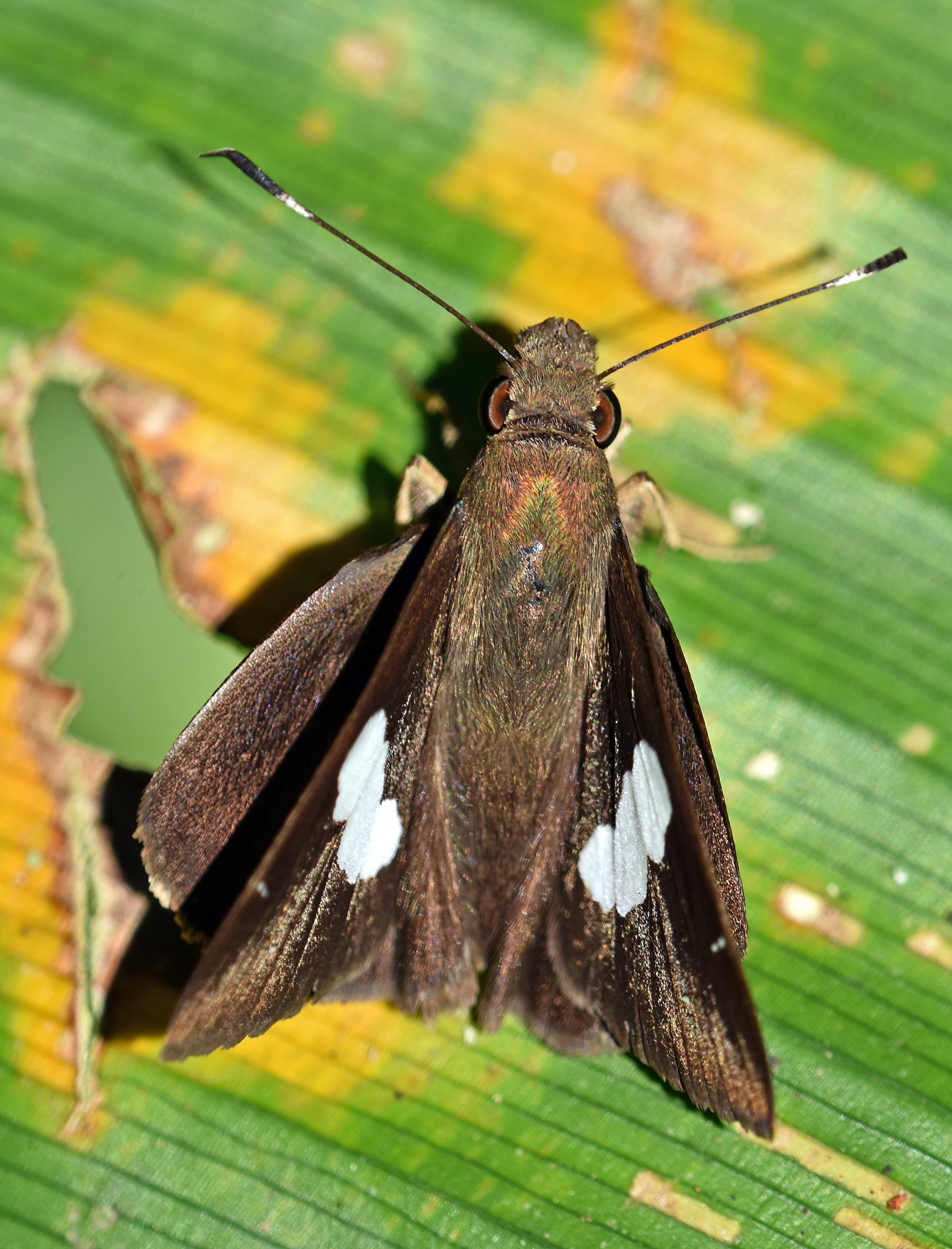
There were also quite large numbers of yellow/green butterflies flying about, at amazing speeds! One often sees pictures of stationary butterflies, which fail to do justice to the extraordinary vitality of these insects. Butterflies can be very fast fliers – especially the nippy little Skippers, which can reach speeds of up to 60 km per hour! Skippers are shaped like little jet fighters! As the following photograph illustrates.
Spotted Demon (Notocrypta feisthamelii alysos). A Skipper from Chiang Dao, Thailand.
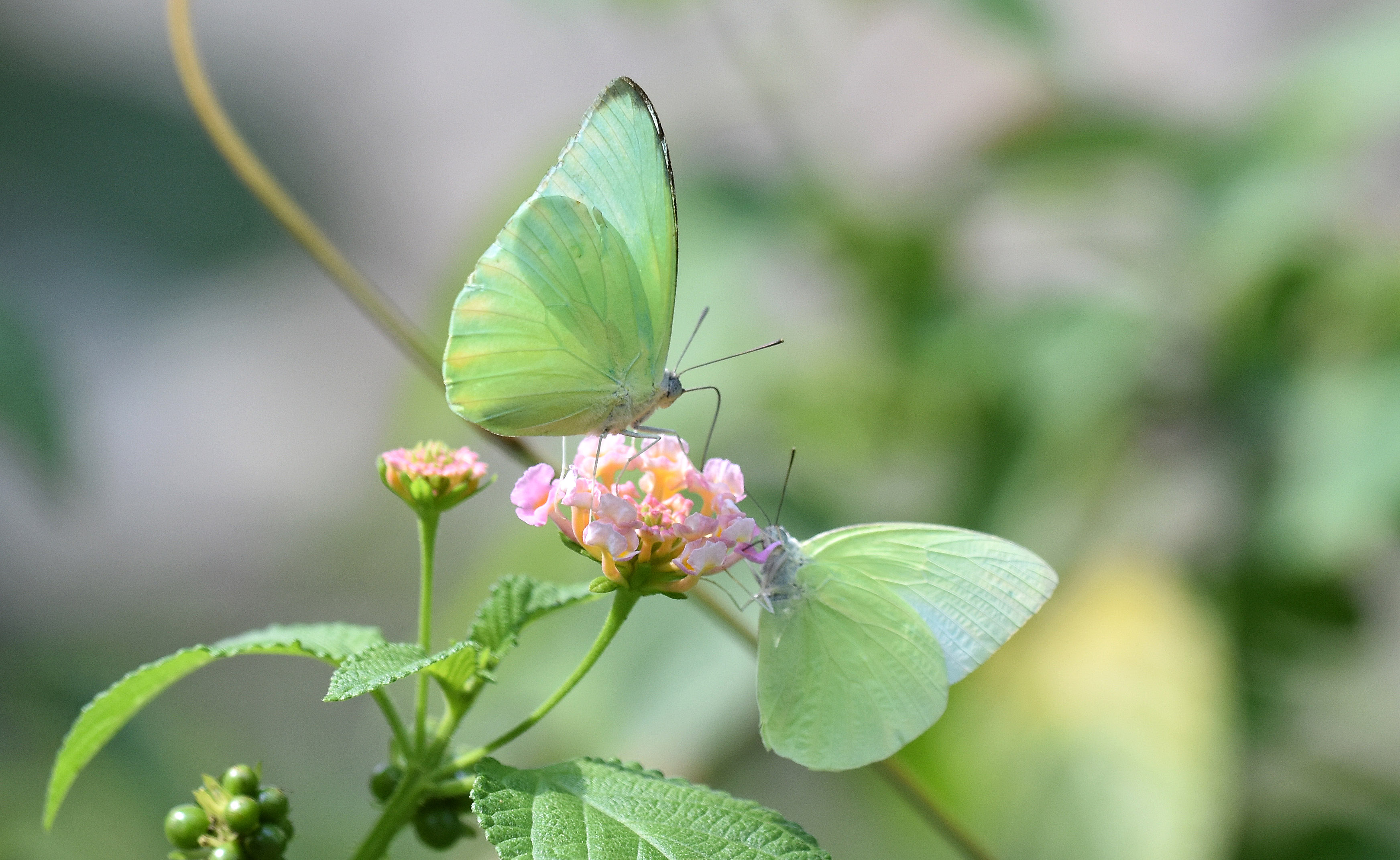
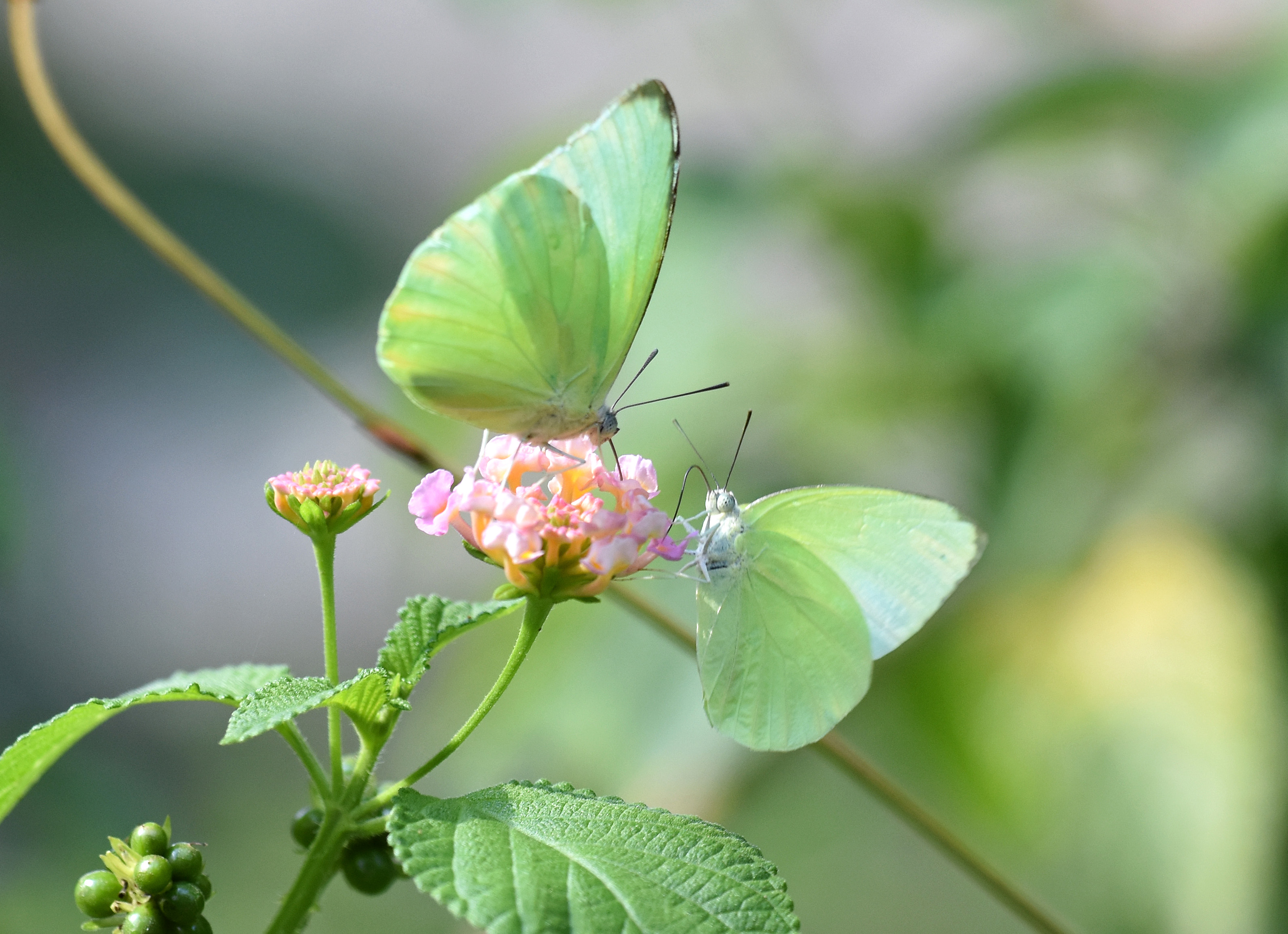
I did manage to grab a couple of photographs of the lively yellow/green butterflies, which turned out to be Lemon Emigrants, feeding on nectar from Lantana flowers.
Lemon Emigrant (Catopsilia pomona pomona) Mae KlangLemon Emigrants (Catopsilia pomona pomona) Mae Klang
I also came across this little skink – a Streamside Skink (Sphenomorphus maculatus) – on the rocks near the waterfalls (below).
Streamside Skink (Sphenomorphus maculatus) Mae Klang, Doi Inthanon, Thailand.
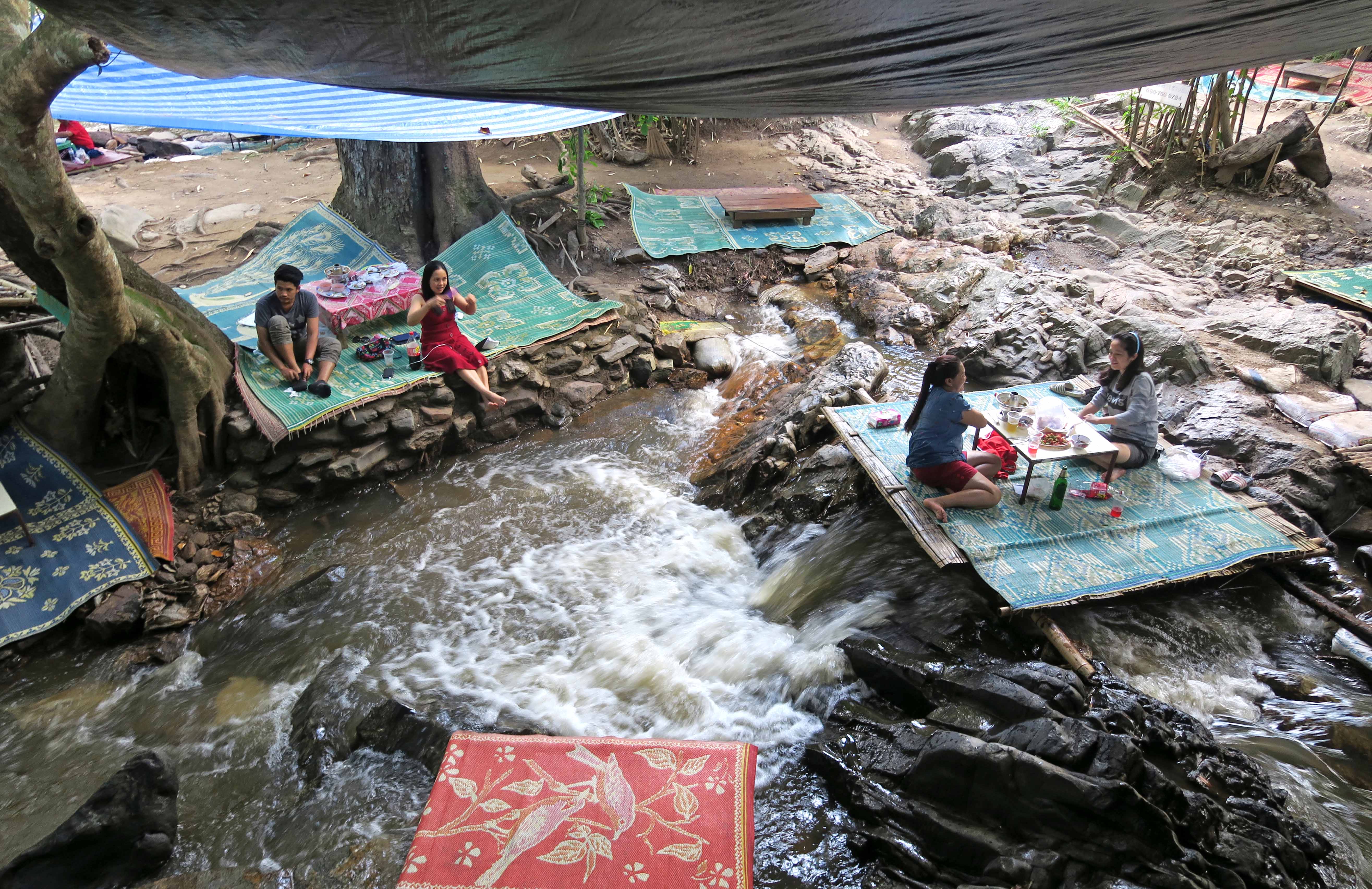
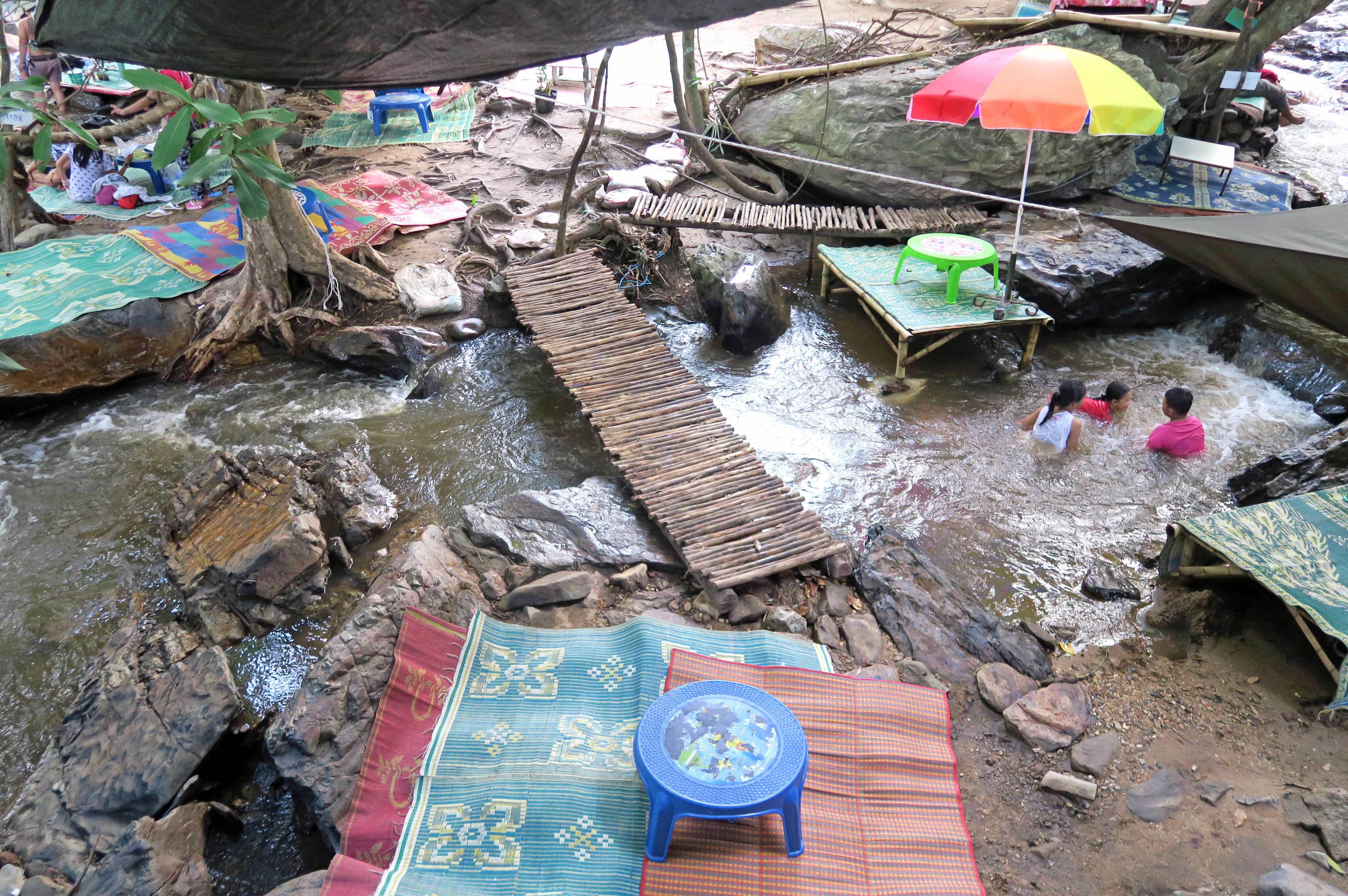
The waterfalls are a good place to cool off on a hot day, and people like to sit and relax on the rocks beside the streams. There are plenty of small restaurants and vendors nearby providing food and snacks for visitors.
Mae Klang Falls. People sitting and eating by the streams.Mae Klang Falls bathers
So even when temperatures are unbearably hot, there are many places to go to chill out, whether you are a butterfly, skink or primate!
Rayalu, M. B., Kumari, V. K., Naidu, M. T., & Atluri, J. B. (2014). Life history and larval performance of the Common Leopard butterfly, Phalanta phalantha Drury (Lepidoptera: Rhopalocera: Nymphalidae). International Journal of Advanced Research in Science and Technology, 3, 191-195.
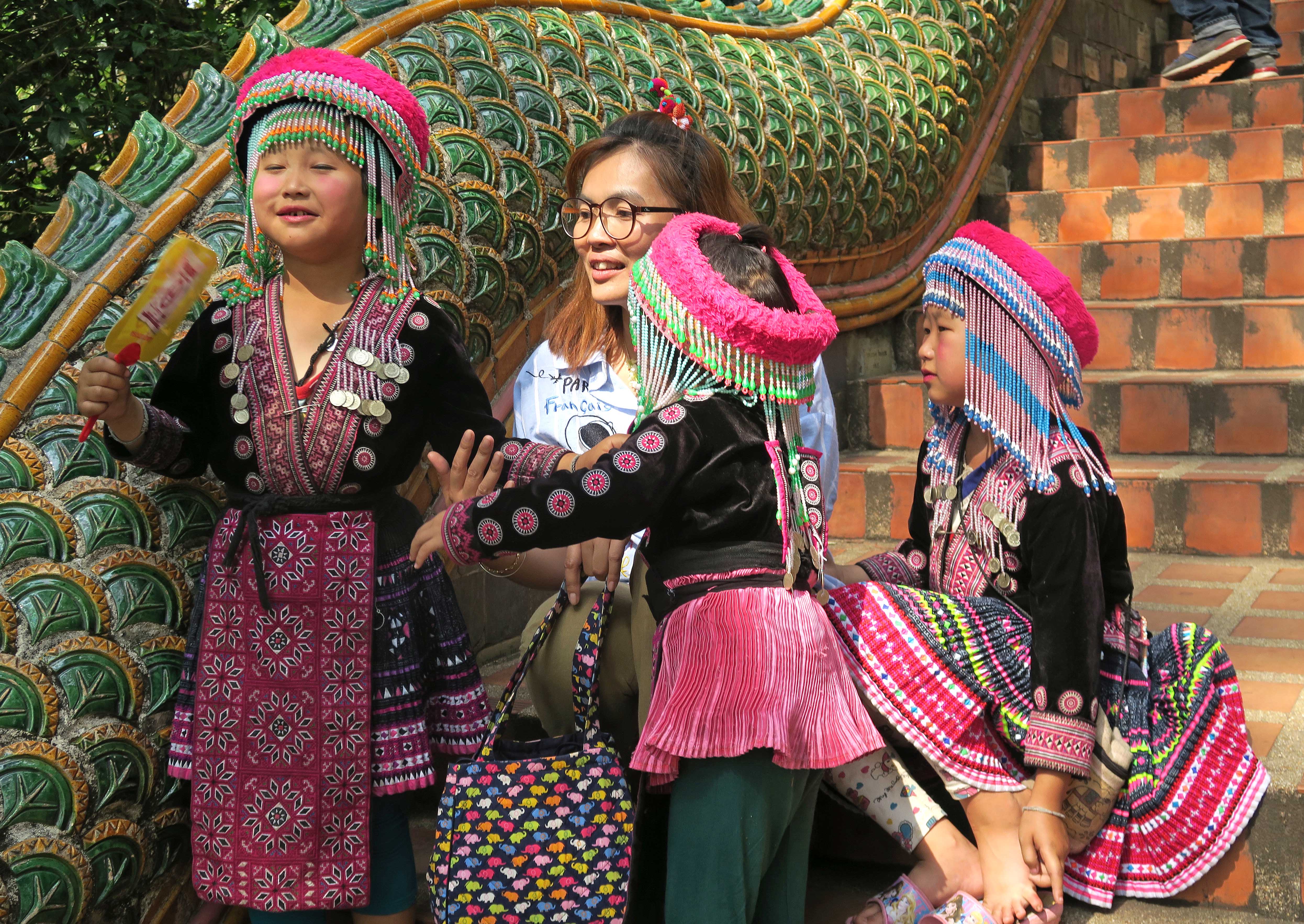
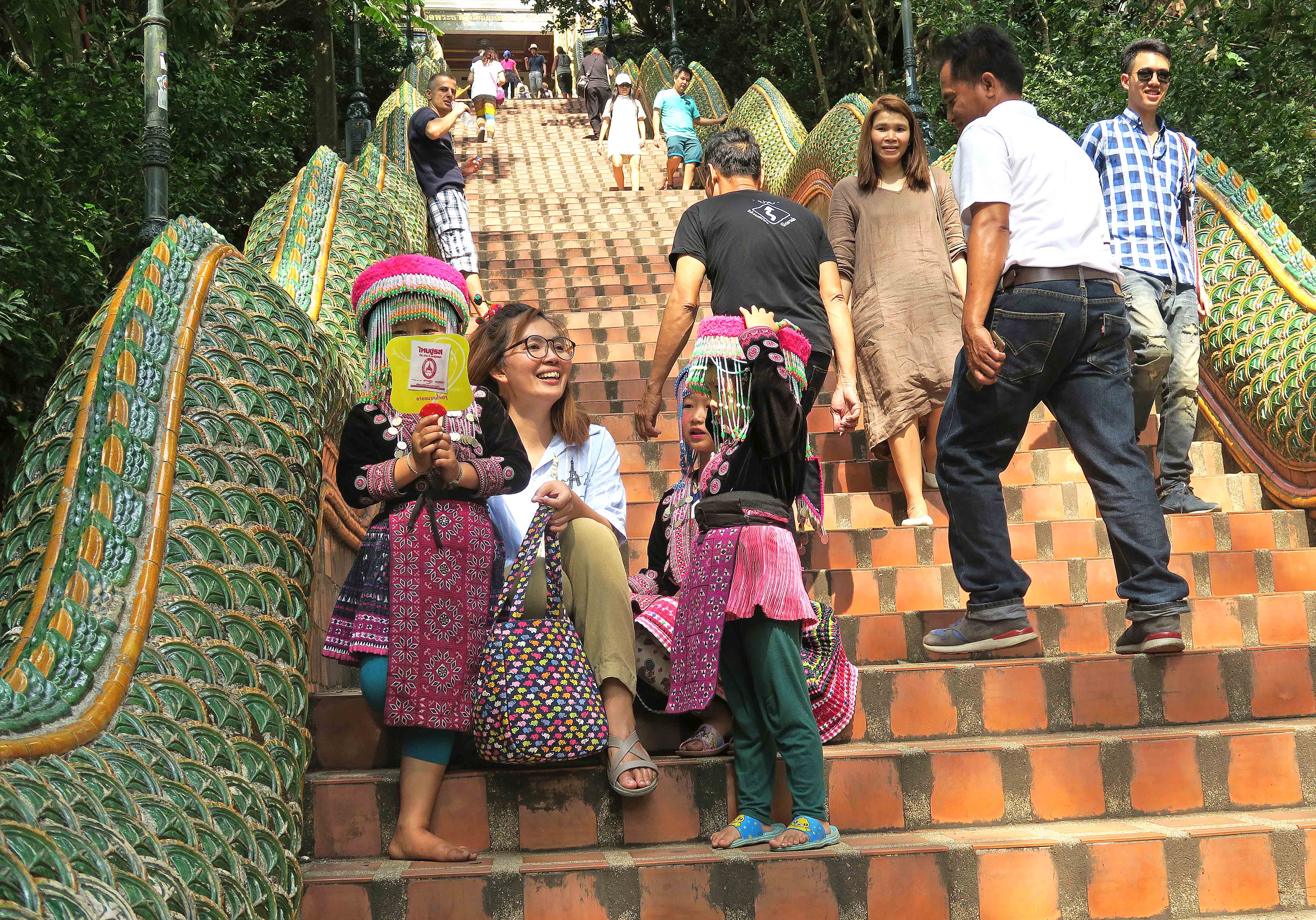
Hmong girls posing with a tourist in May 2017 on the steps of Wat Phra That Doi Suthep, Chiang Mai, Thailand
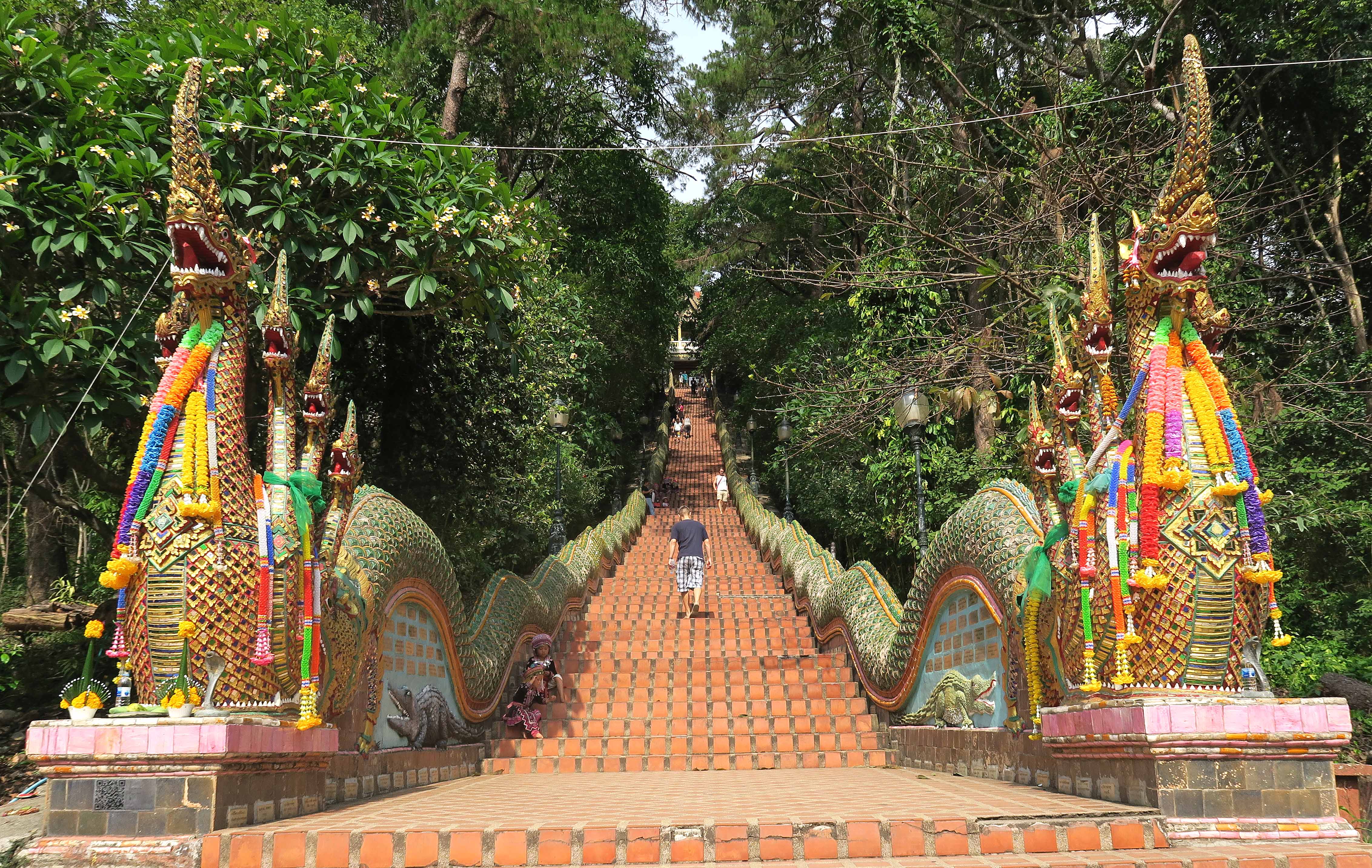
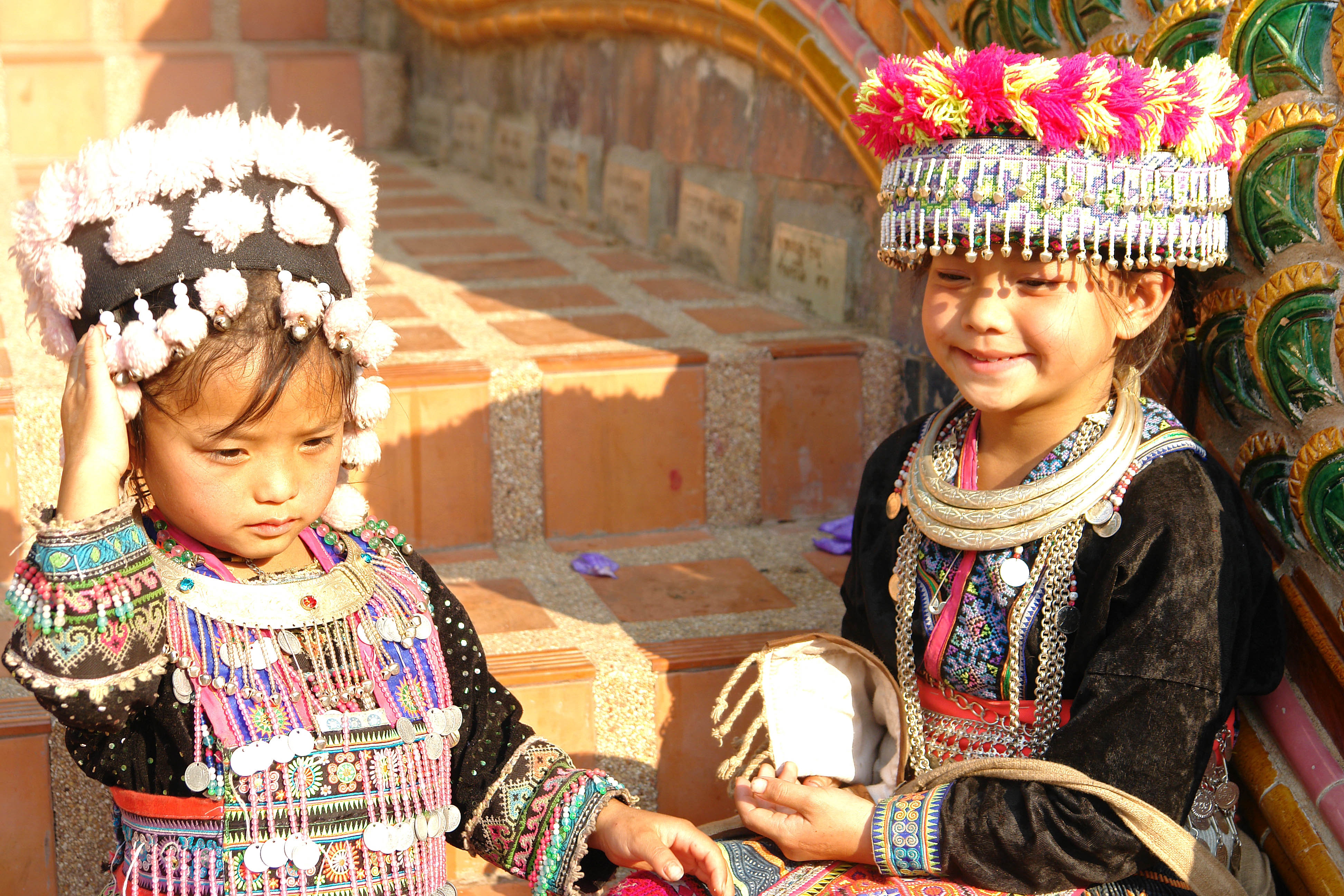
Anyone who has visited the beautiful temple – Wat Phra That Doi Suthep – on the mountain above Chiang Mai, in northern Thailand, and has walked up the long flight of stairs rather than taken the funicular lift, will have seen the lovely little girls in Hill tribe costumes who sit on the bottom of the steps – and half way up – posing for photographs. They are dressed in traditional Hmong costumes.
There are over 300 steps up to the pagodas on Wat Phra That Doi Suthep
Over the years I have visited this temple a number of times and have pictures of what must be different generations of youngsters sitting on the steps, going back to 2005.
Hmong girls on the steps of Wat Phra That Doi Suthep in 2005Hmong girls on the steps of Wat Phra That Doi Suthep in 2005
The girls don’t just dress up in these gorgeous costumes for fun, although they clearly enjoy interacting with tourists, they usually ask for payment. A few coins. Although, being so young they are not very aggressive in asking. Nevertheless, in my estimation they must accumulate a fair bit of money over the course of a few hours. I could be wrong, but I have the impression that they are little gold mines!
Hmong girls on steps of Wat Phrathat Doi Suthep Buddhist temple, Doi Suthep, Chiang Mai, Chiang Mai Province, Thailand. May 2017.
Nevertheless, I was very surprised to learn that two of the girls had been accused of stealing a tourist’s watch! (Links 1 and 2, below) A British tourist who had posed for a photograph with the girls, subsequently found that her watch was missing and accused them of stealing it. In the photograph, one little girl has her fingers next to the watch, but the evidence is circumstantial. The photograph and story went viral, and like millions of other people around the world I was left with the impression that this was the end of the story.
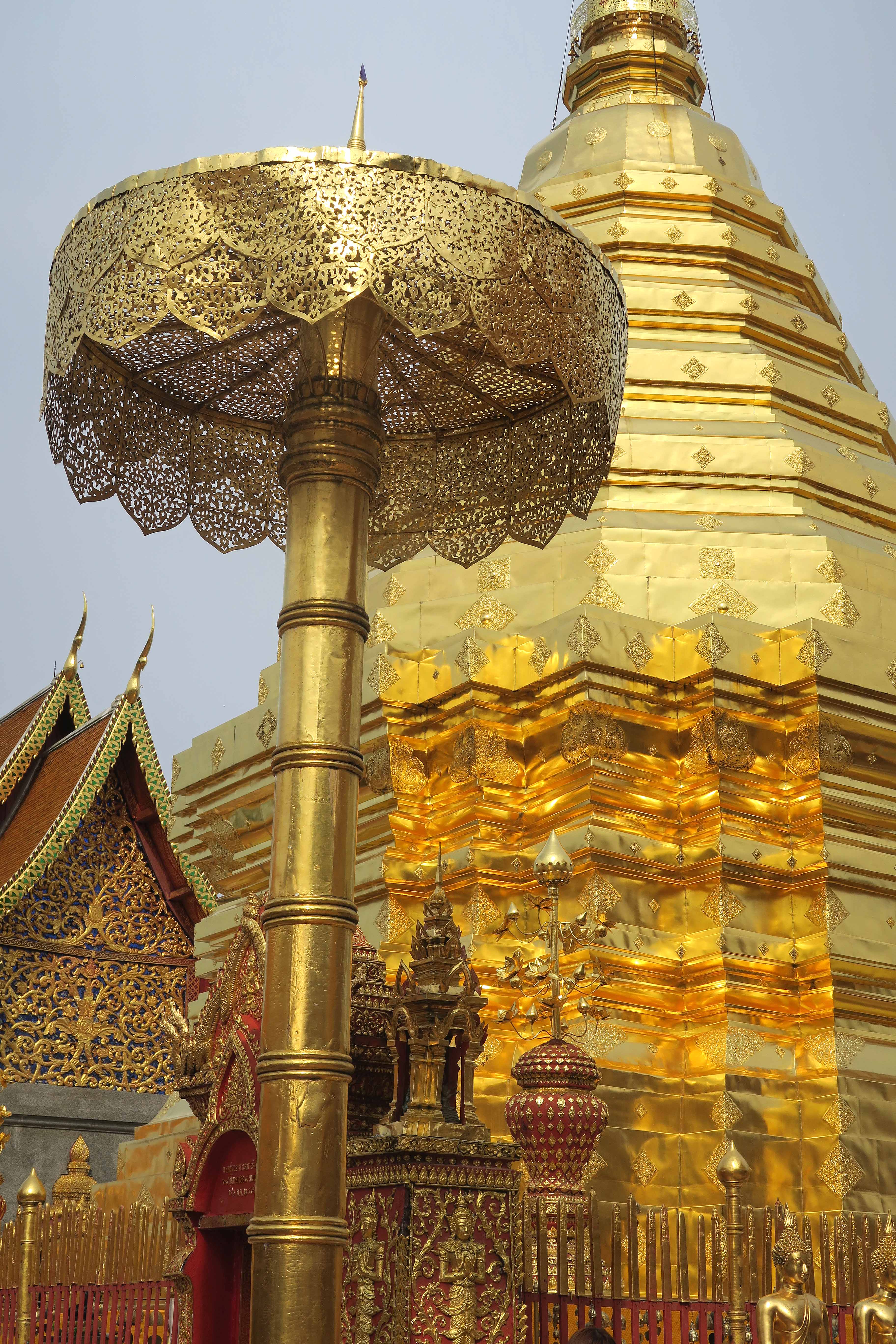
Golden umbrella on Wat Phra That Doi Suthep, Chiang Mai Province, Chiang Mai, Thailand.
It was a good story! Innocent-faced little ‘treasures’ pocket a tourist’s watch! But it turns out that it was false (See Link 3) The tourist eventually found the watch, but by then the damage was done. There are still articles on the Web accusing the children of theft (4).
This is one little apocryphal story (definition: of doubtful authenticity, although widely circulated as being true) which thanks to the power of social media, reached millions of people around the world, and left most of them with the impression that it was true. Well maybe there are child pick-pockets, and perhaps I am naive, but my impression is that they were innocent. What it demonstrates however, is that once a story has ‘gone viral’ there is very little that can be done to change it, whatever the facts may be. This is why politicians – who could I mean?! – are prepared to lie and promote falsehoods; they know that if the story is juicy enough, or salacious, it will get picked up by social medias – which we all use – and shared or spread by us all. I suppose all we can do is to remain skeptical, cautious about things until proven beyond reasonable doubt; perhaps not believing everything we see or read and remaining open to alternative explanations!
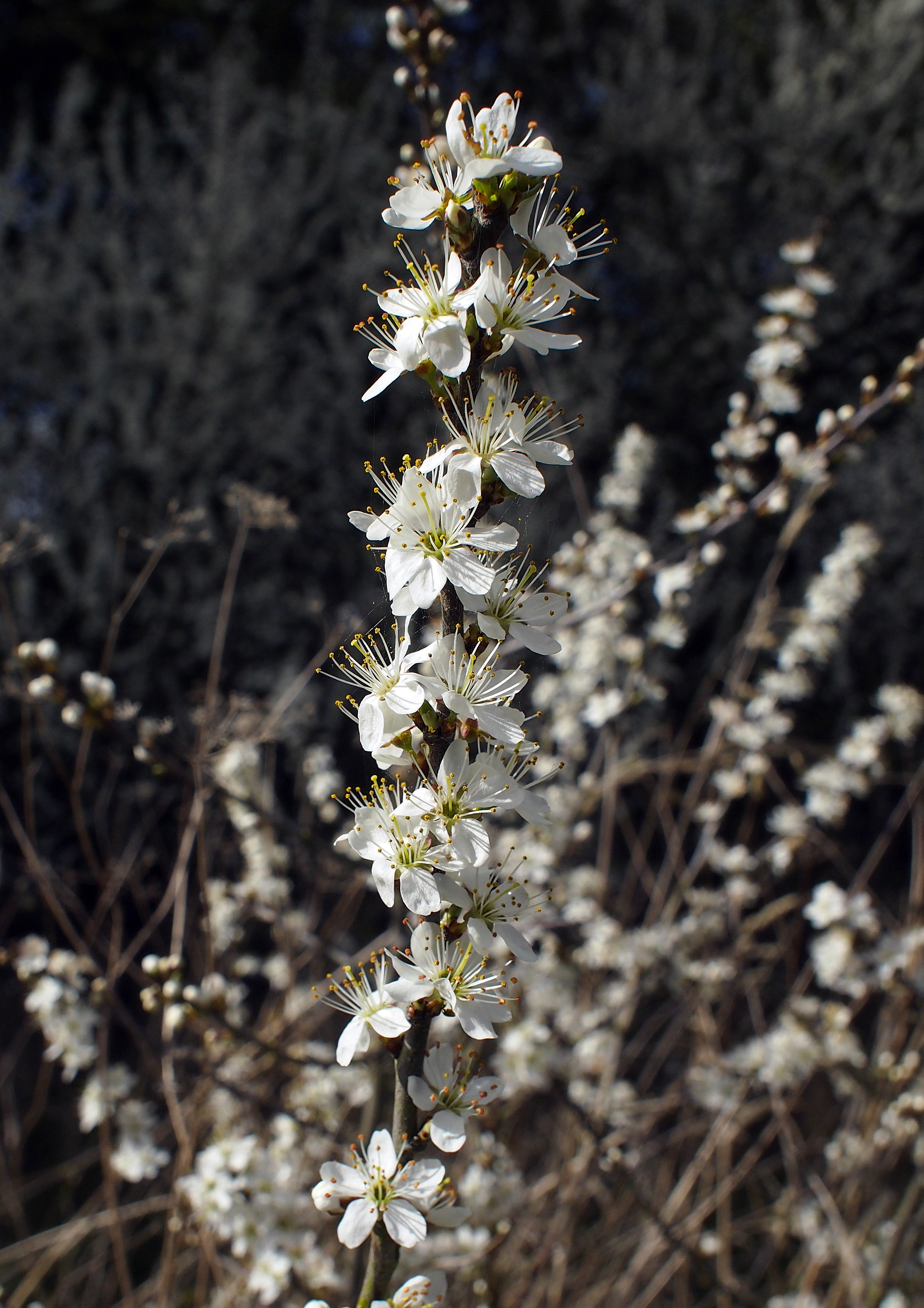
Spring has come early this year. The world is warming up; 2016 was the warmest year since record-keeping began (in 1880). (1) Perhaps 2017 will be even warmer? The countryside in Bedfordshire is waking up; shaking itself free of winter’s cloak and putting on a new dress of green leaves and spring flowers! Sprays of blossom are appearing, like this Blackthorn (Prunus spinosa) twig (below).
Blackthorn (Prunus spinosa) blossom on 1st April
One of my favourite walks, is between Sharnbrook and Felmersham and back, in Bedfordshire. An easy stroll along the banks of the Great Ouse towards the village of Felmersham and then back through the Felmersham Gravel Pits, which are a 21.6 hectare Site of Special Scientific Interest. I took these photographs along this walk on 1st April 2017, with a small camera (an Olympus Pen EP-3 fitted with a 17mm lens; 34mm equivalent).
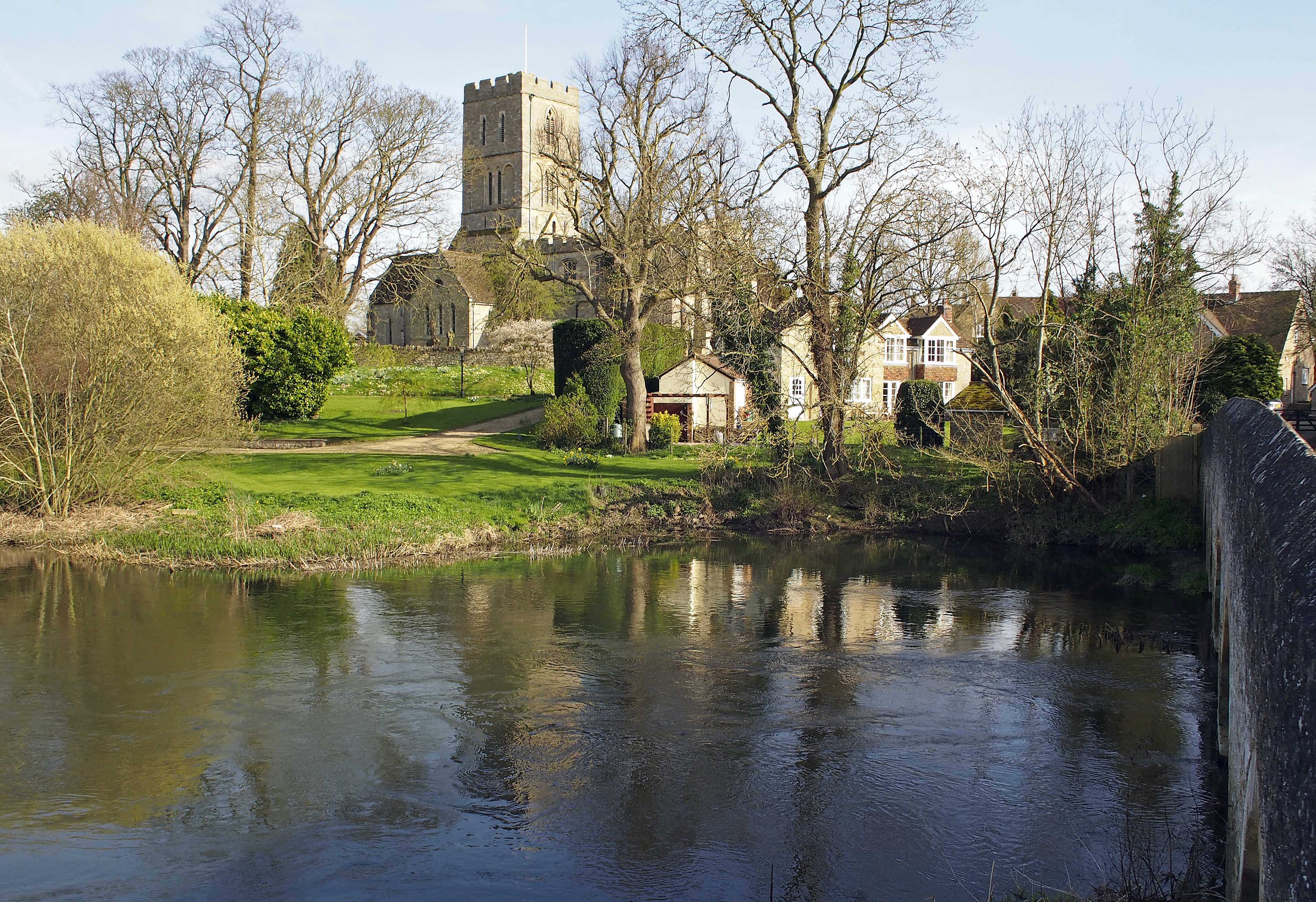
St Mary’s Church at Felmersham was build between 1220 and 1240; it doesn’t look that old! (2)
St Mary’s Church, Felmersham next to the Great Ouse, Bedfordshire
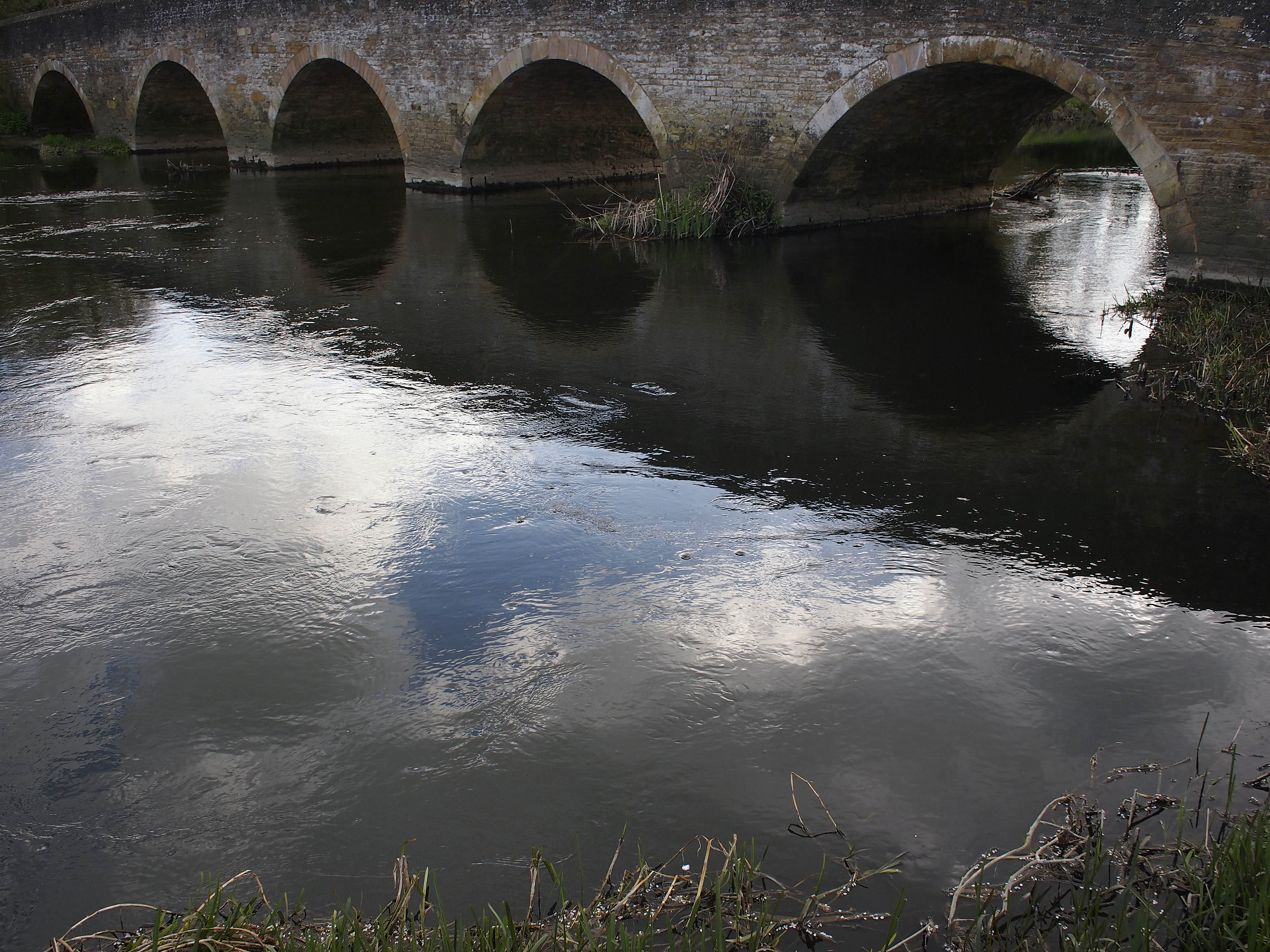
The 5-arched stone bridge, on the other hand, looks very old, but was ‘only’ built in 1818!
Stone bridge over the Great Ouse at Felmersham
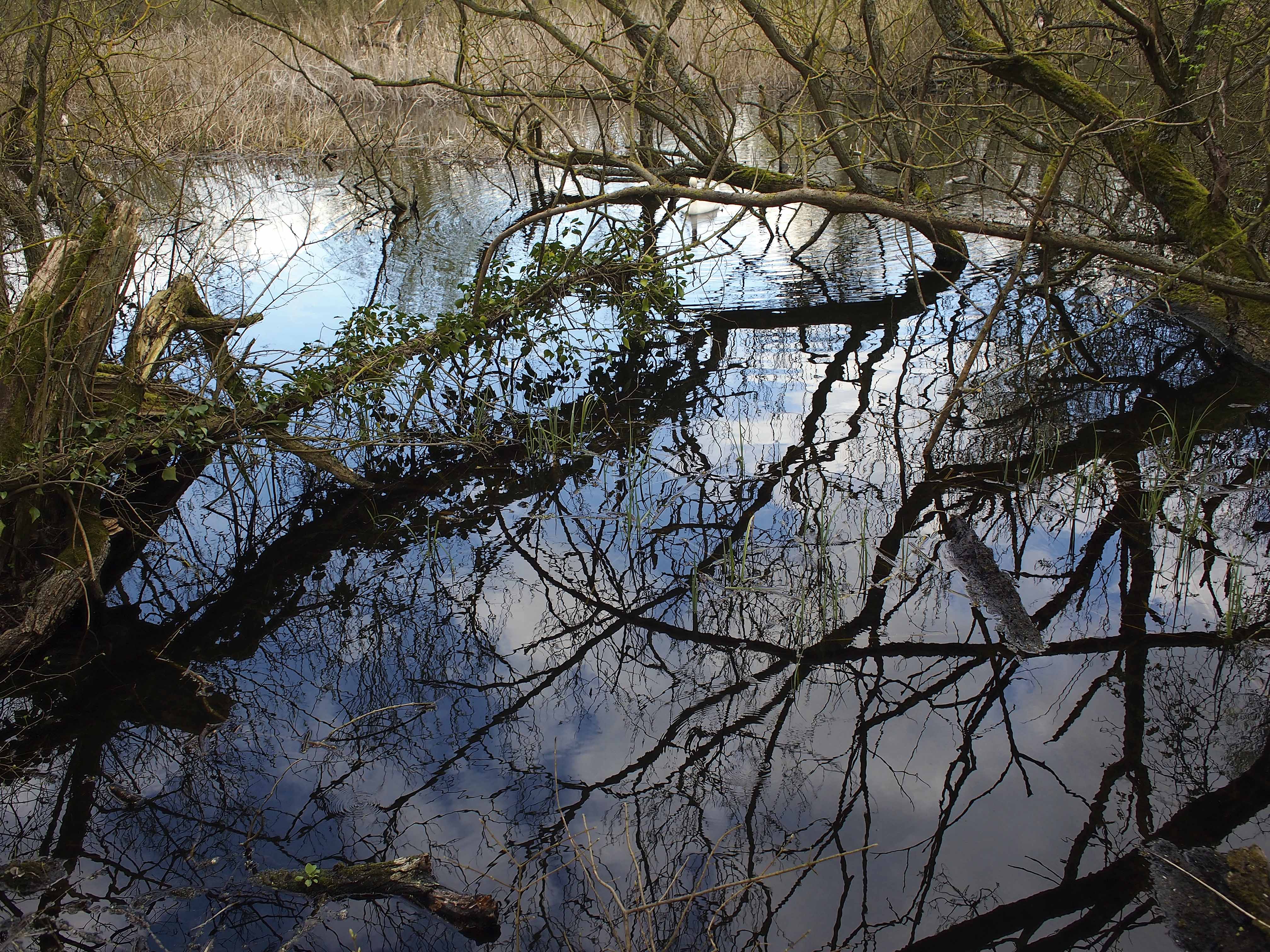
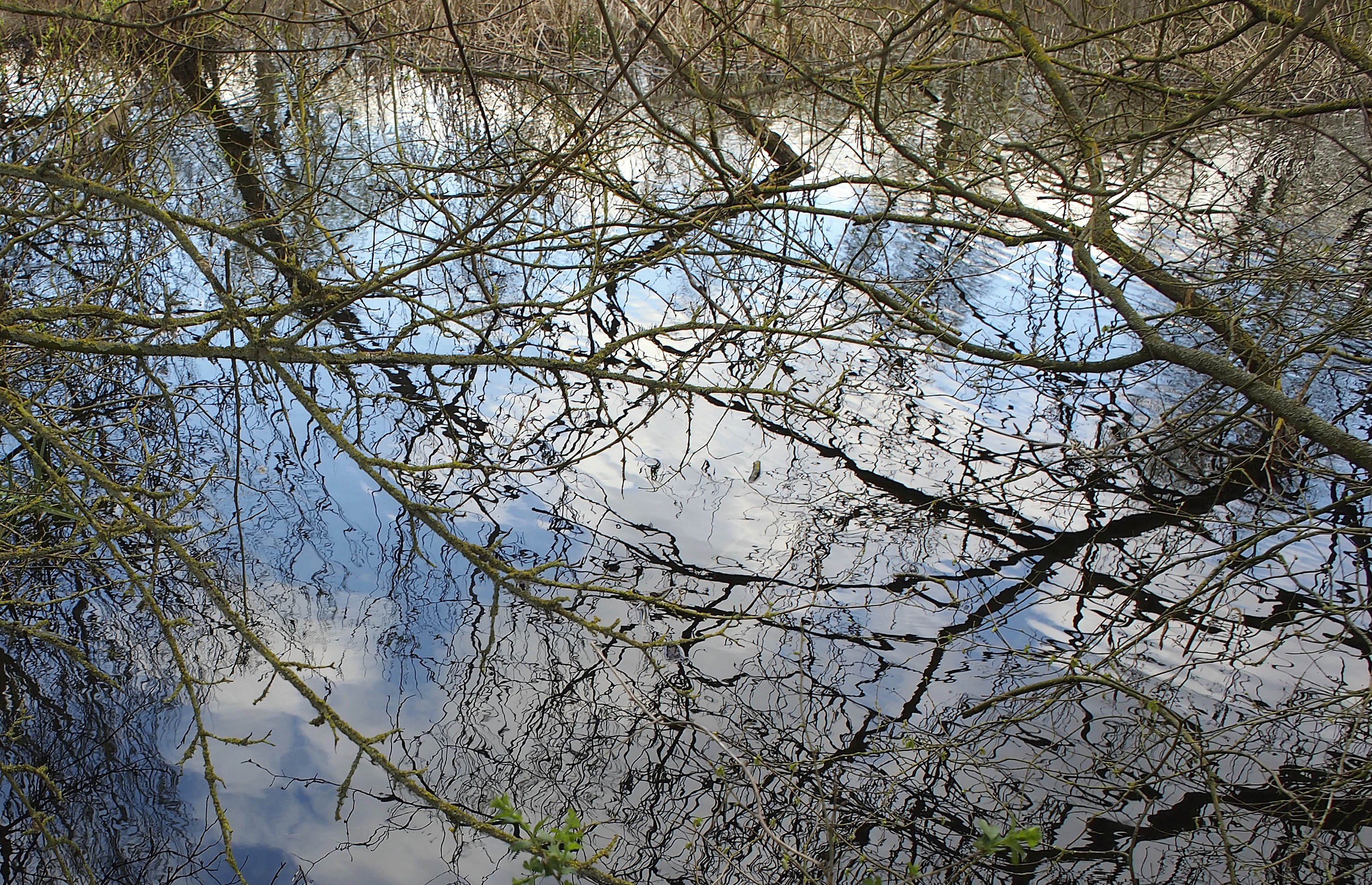
The gravel pits in the Nature Reserve were dug out during the second World War when the gravel was used in the construction of local war-time air fields. (3) The pits are now lakes and much beloved of waterfowl, including ducks, geese, swans, grebes and so on. It is a magical place that I have visited for many years; very relaxing to walk beside the lakes and ponds and reflect on the reflections!
Felmersham gravel pits, Bedfordshire
There are certain spots where I must have taken dozens of pictures, but the scene is always changing; not only through the year, but also from year to year as the vegetation grows, or is cut back by conservators to create spaces for nature.
Reflections in the lake. Felmersham gravel pits, Bedfordshire
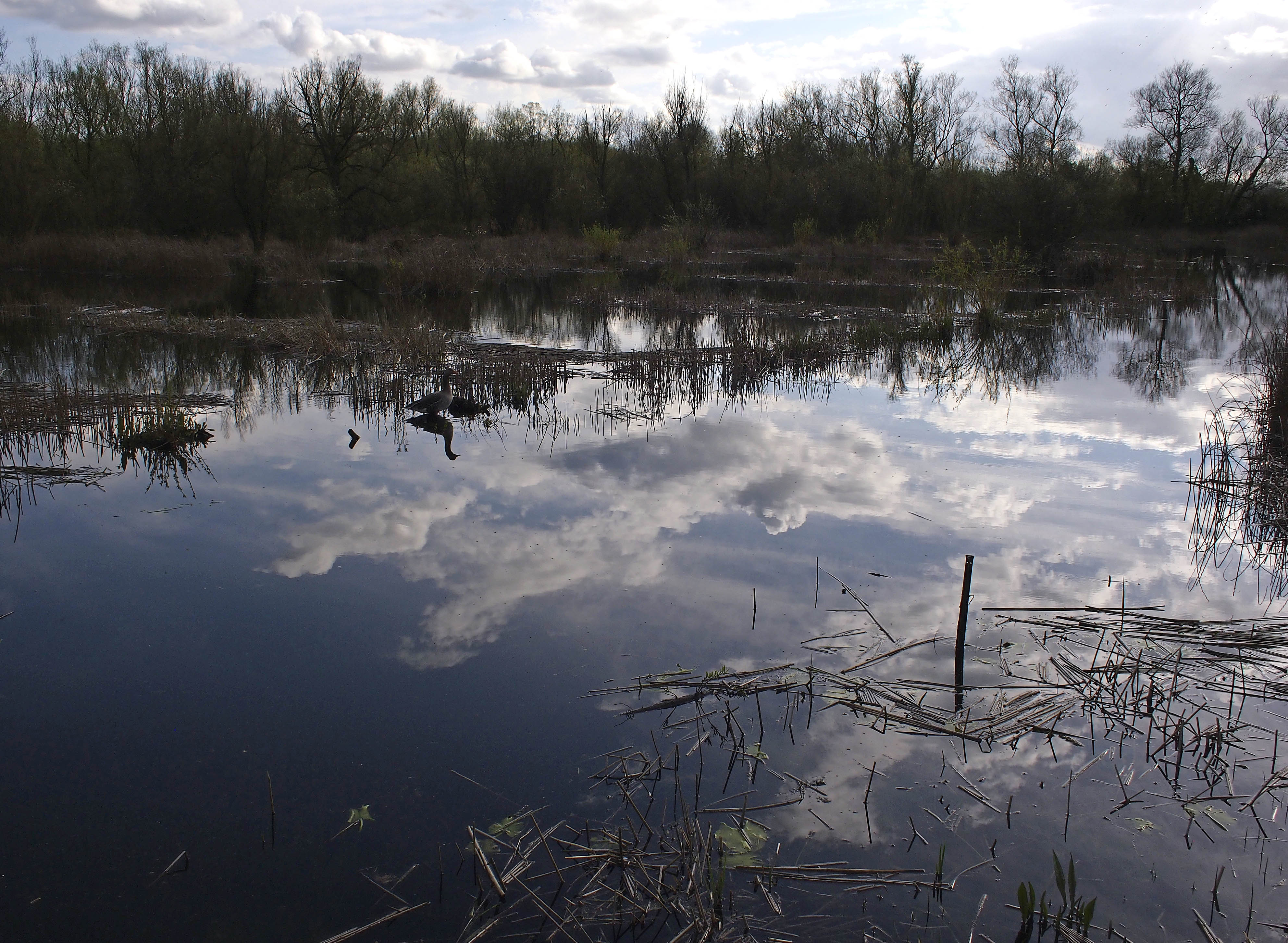
Spot the goose! No fishermen at this time of year. Angling is apparently by Wildlife Trust permit only. (4)
Felmersham gravel pits, Bedfordshire.
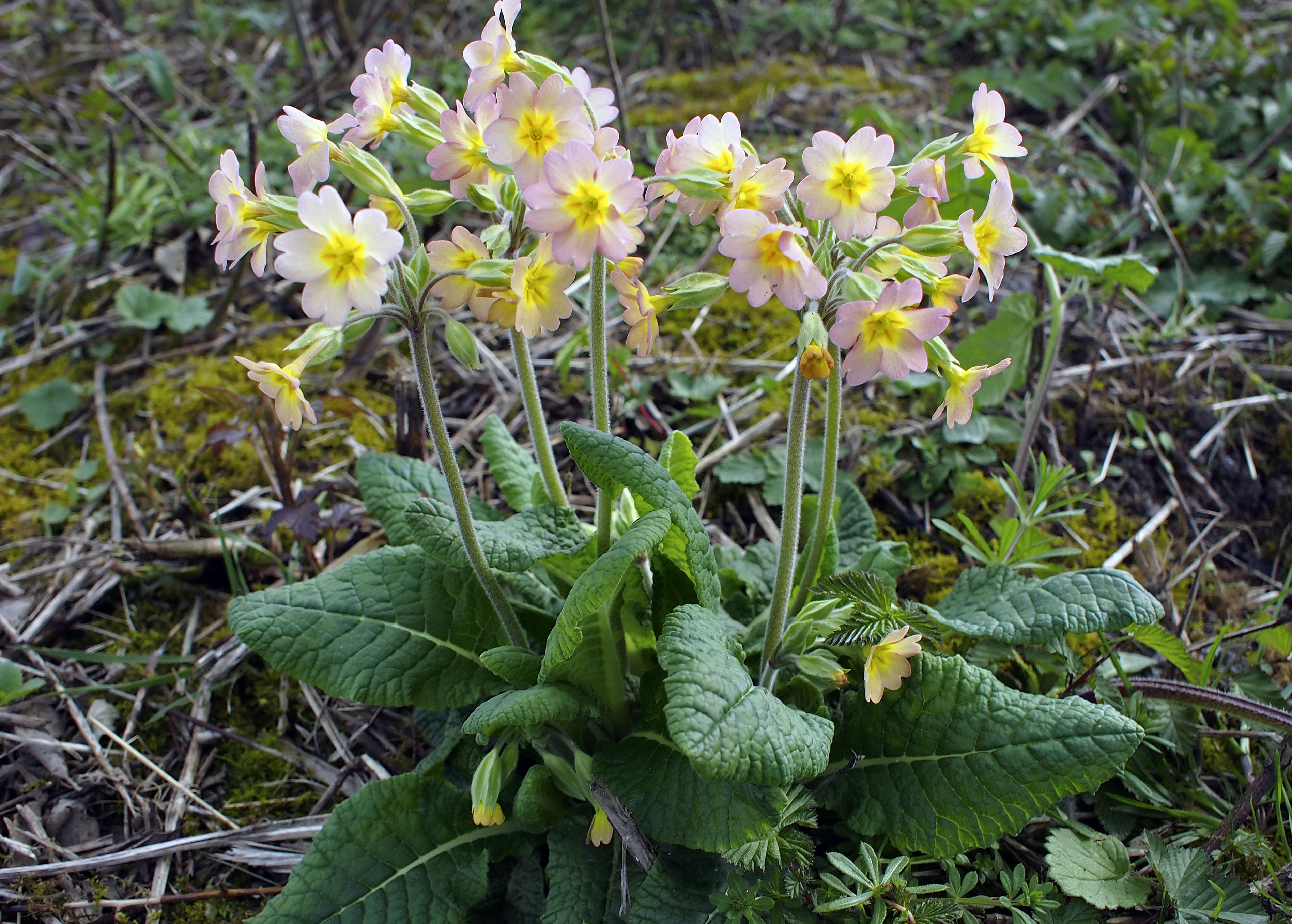
Some new flowers were starting to appear on 1st April. The primroses have been out for some time, but this was the first time I came across cowslips. These had wonderful colours; were they wild or garden escapes? I don’t know.
Pink and yellow PrimulasRed Primula veris, Coronation cowslip
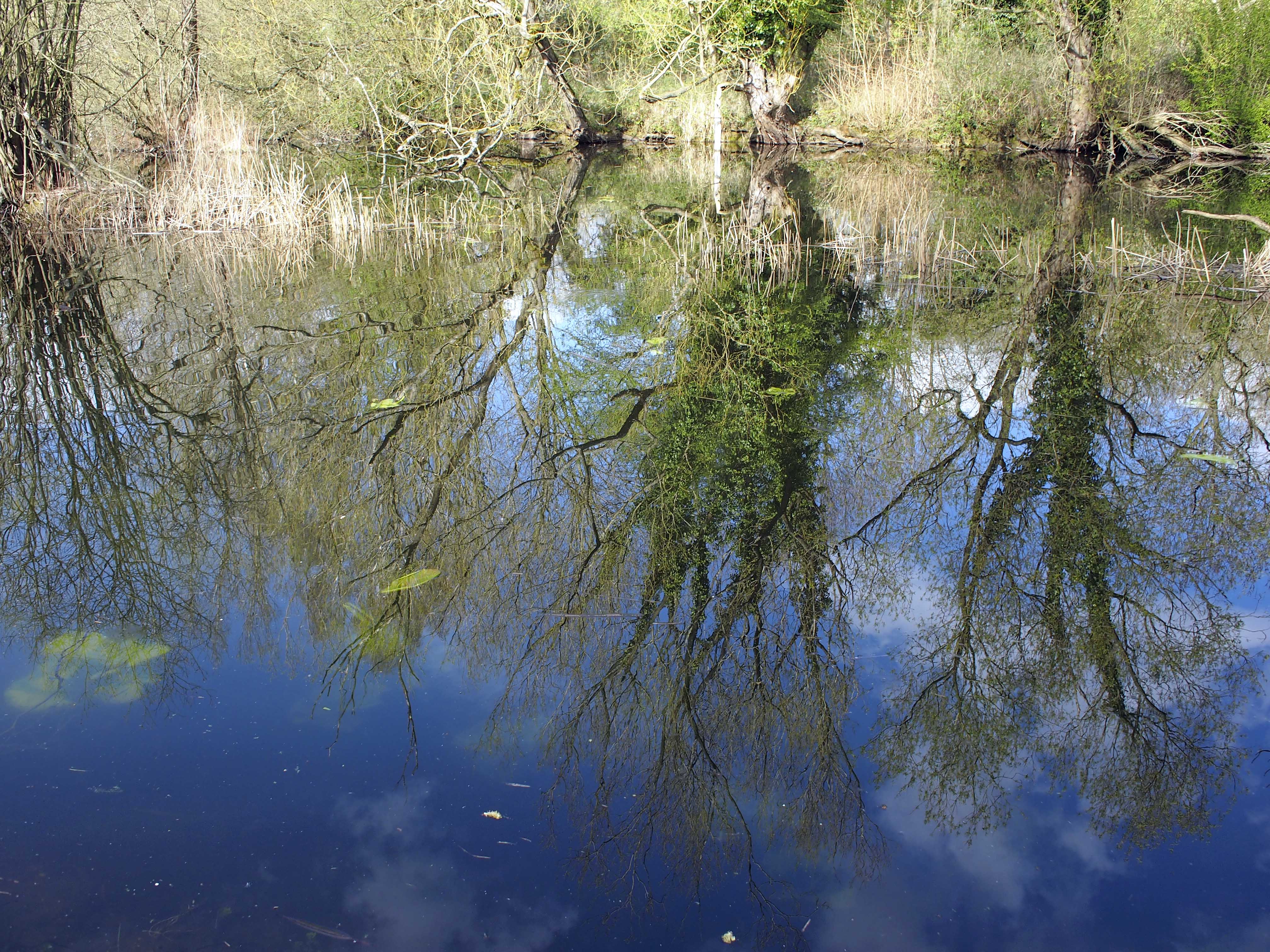
The vegetation beneath the water was also blooming! Large water-lily leaves could be seen (below).
Trees reflected in the water, with green plants underwater.
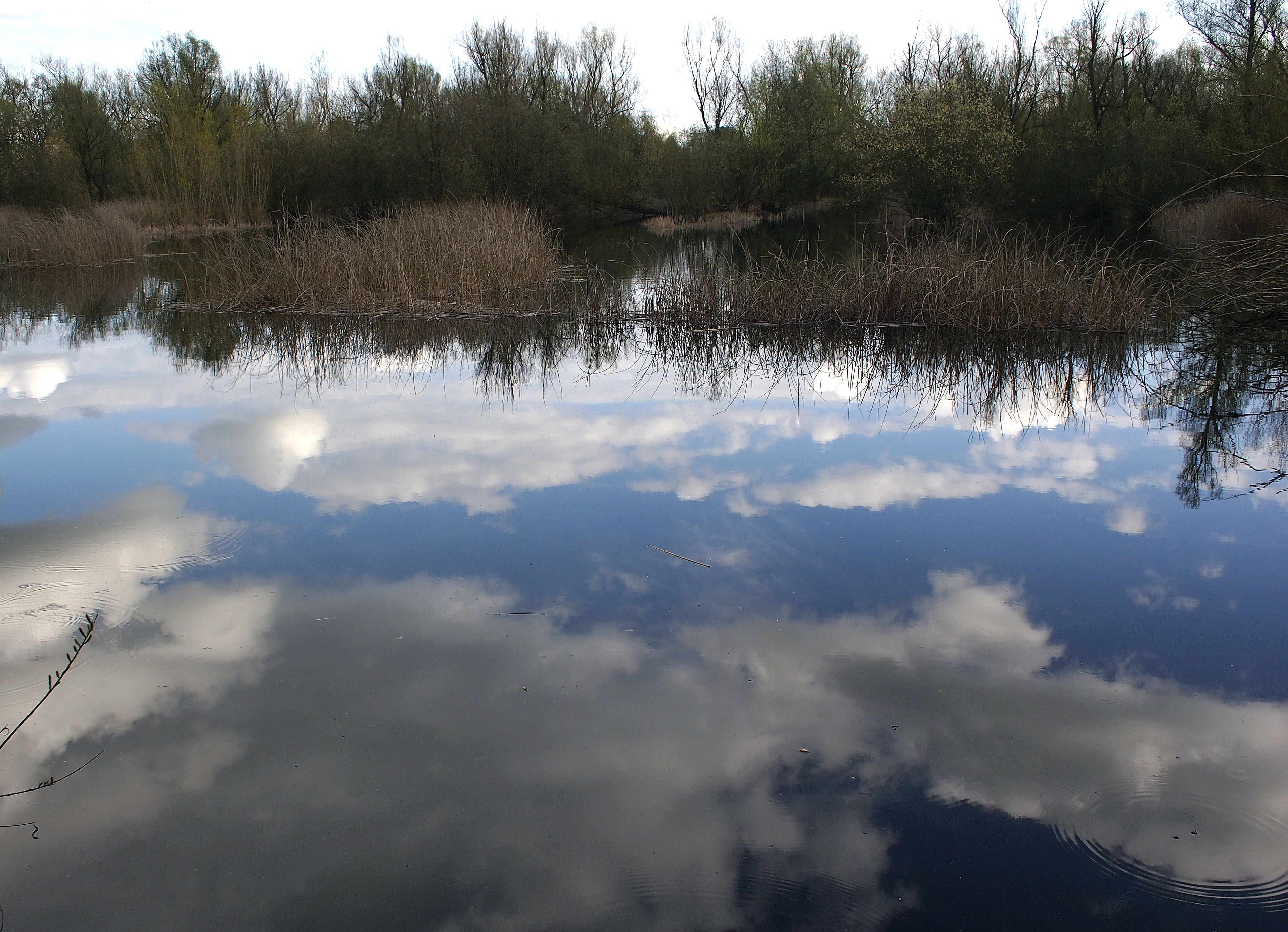
This year’s reeds have not yet emerged, however. The brown reeds are leftover from last year (below).
Reeds on Felmersham gravel pits, Bedfordshire.Clouds reflected in Felmersham gravel pits, Bedfordshire.
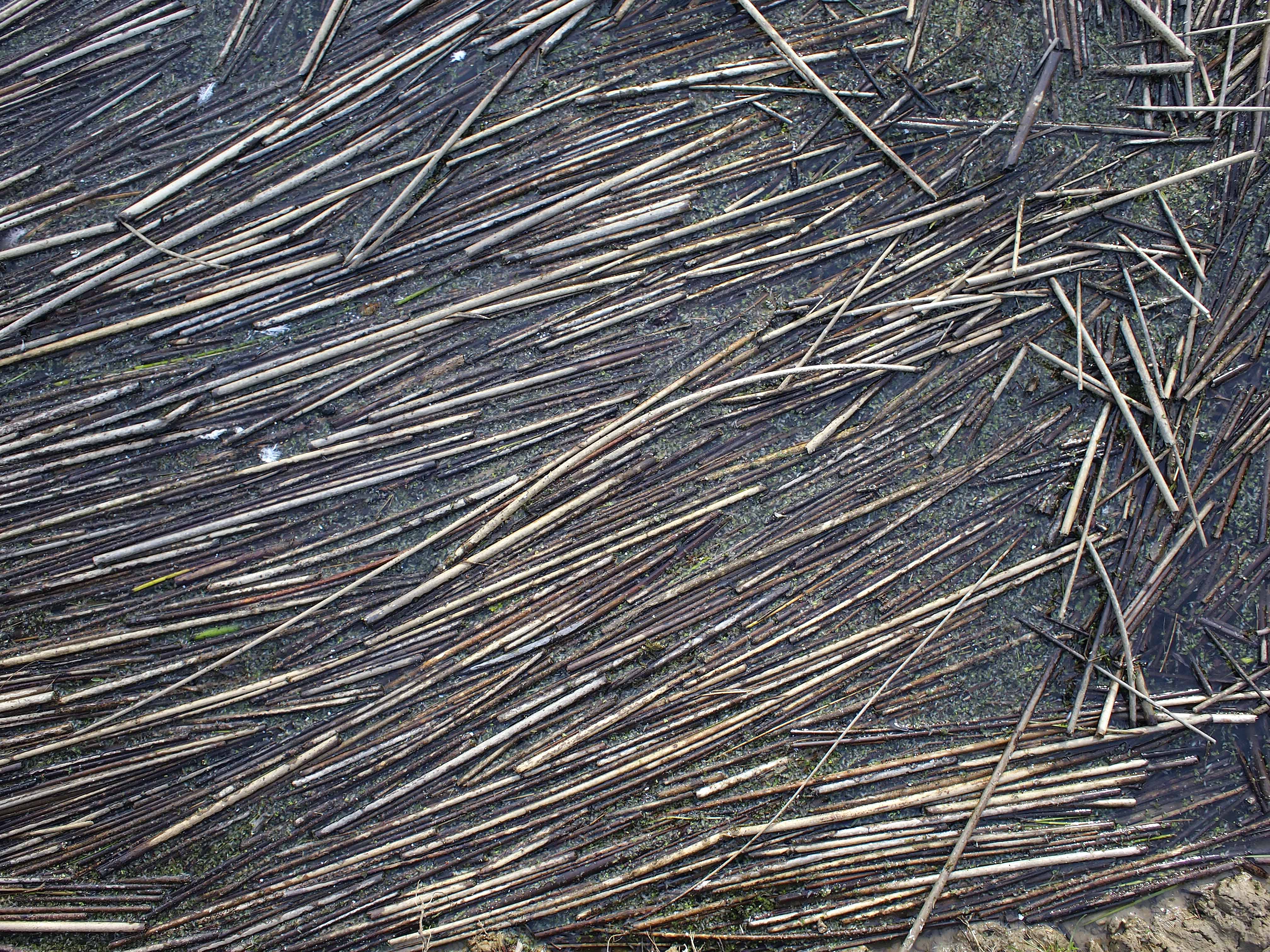
In one corner of a lake, reeds had been piled up by the wind along the bank.
Reeds floating on the water.
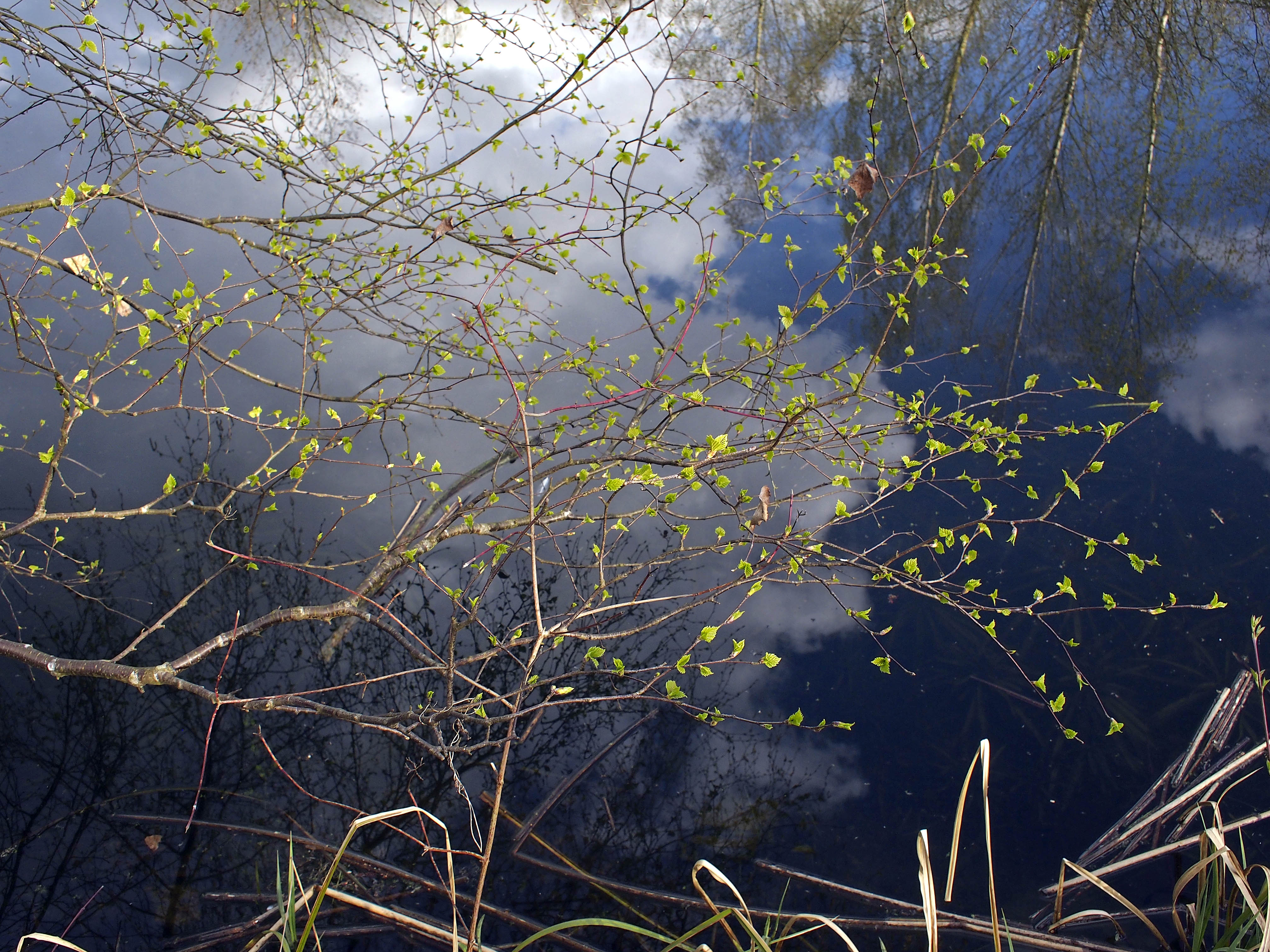
Trees vary from species to species in terms of when their leaves first appear. The leaves on this bush overhanging the water, were just starting to appear, breaking out of their buds.
New leaves emerging on overhanging bush.
One of the pleasures of travelling a familiar path is that you see old favourites in a new light, as well as coming across new things. The world is always changing and it is our blessing to be able to witness it, albeit briefly.
Like many people, I love going to the zoo, but I am also acutely aware that for many animals confinement must be a torture. The only justification then, for creatures which suffer from being locked up, must be that there is no habitat left for them, or they are threatened with severe poaching or extinction, so that they are being bred for eventual reintroduction.
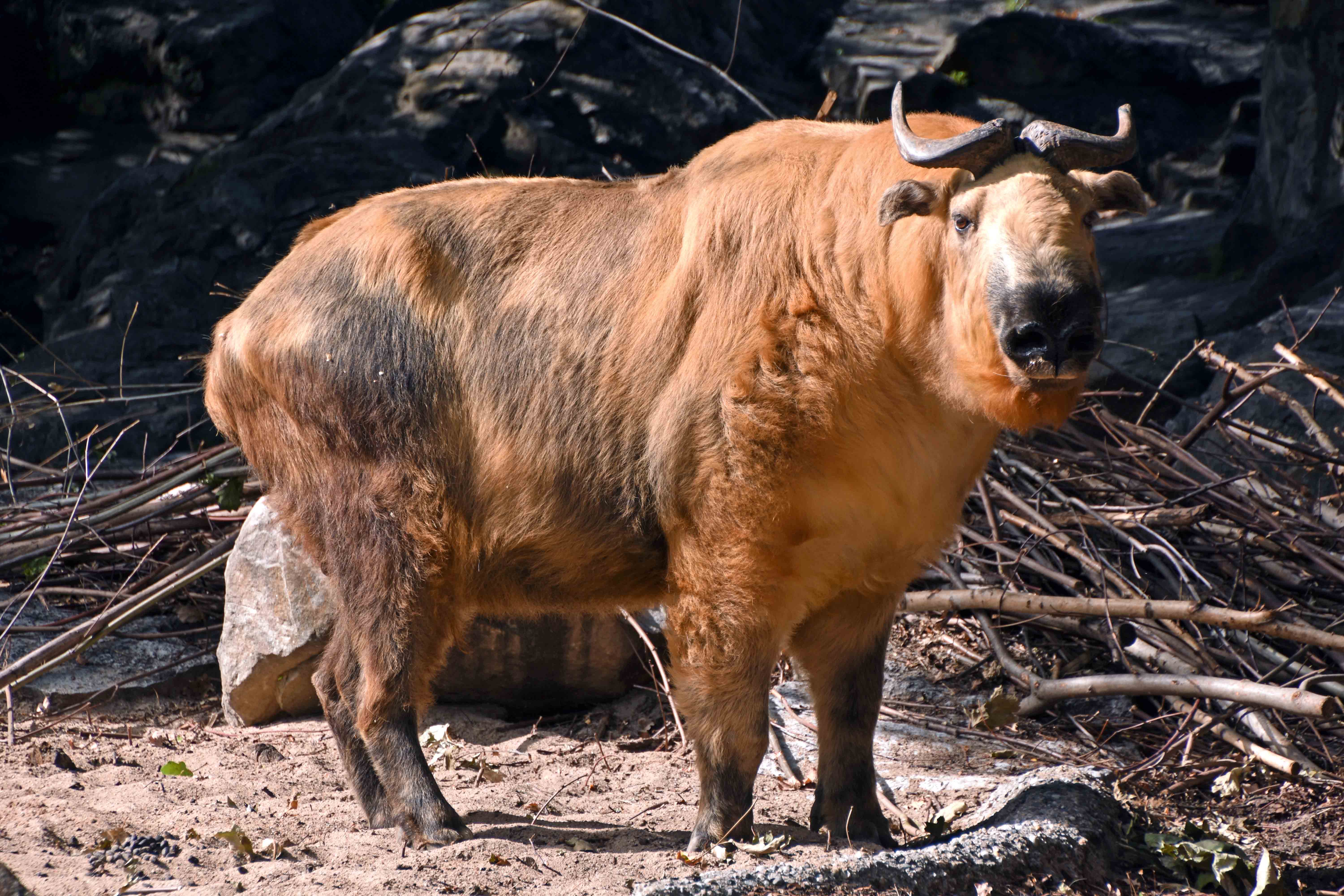
Tibetan or Sichuan takin (Budorcas taxicolor tibetana) male – protected but still threatened by poaching
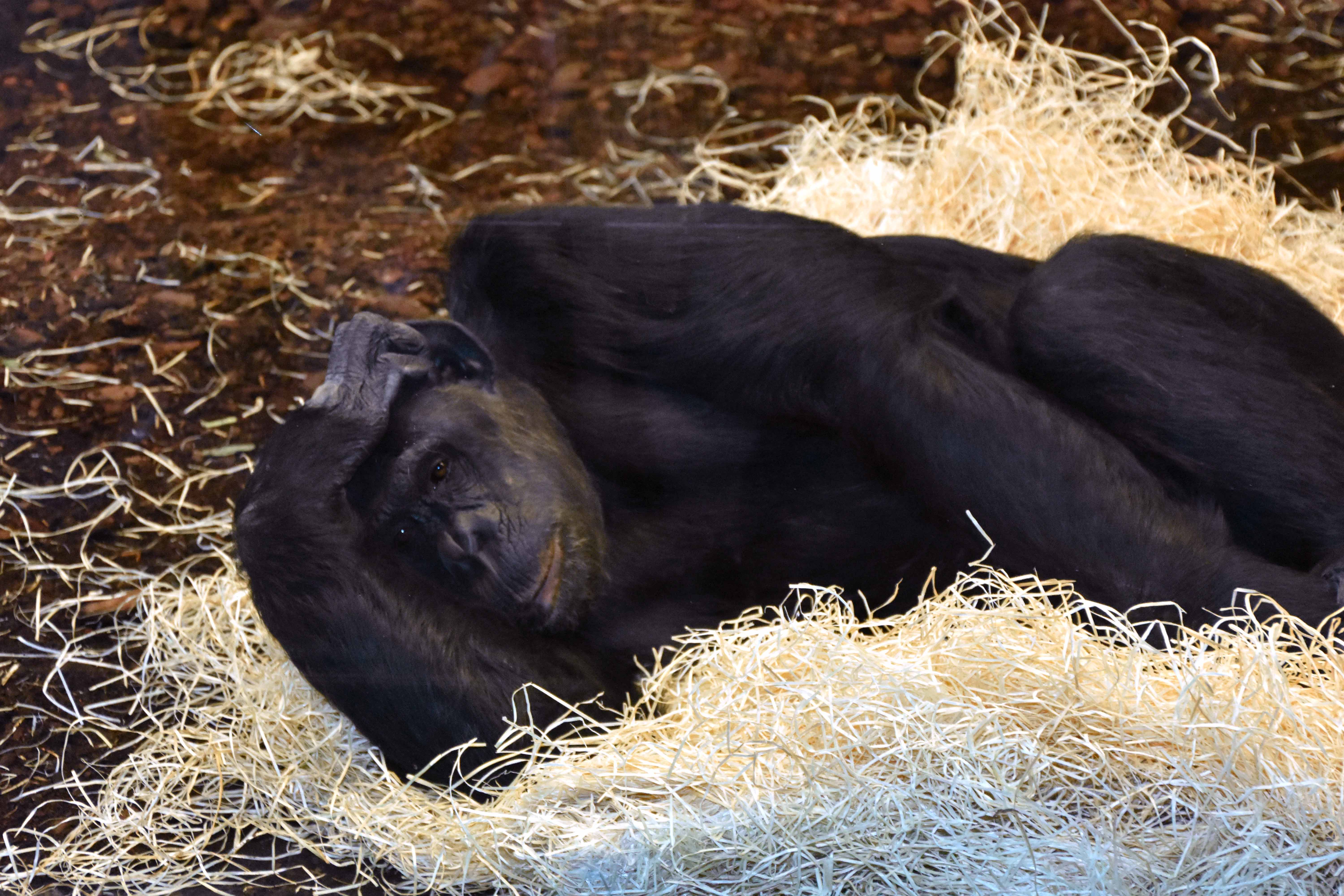
In the best zoos, animals are kept for our education and amusement. Hopefully, through awareness and a little education people become will become more concerned about the species they see and therefore more likely to help with their conservation. We are animals and we have a certain ability to empathize with other animals if we care to. There is also a lot of anthropomorphizing that goes on in zoos, but that is half the fun. It’s hard not to identify with the feelings of an animal like this chimpanzee, seemingly lost in its own thoughts, lying on a nice bed of straw.
Chimpanzee Berlin Zoo
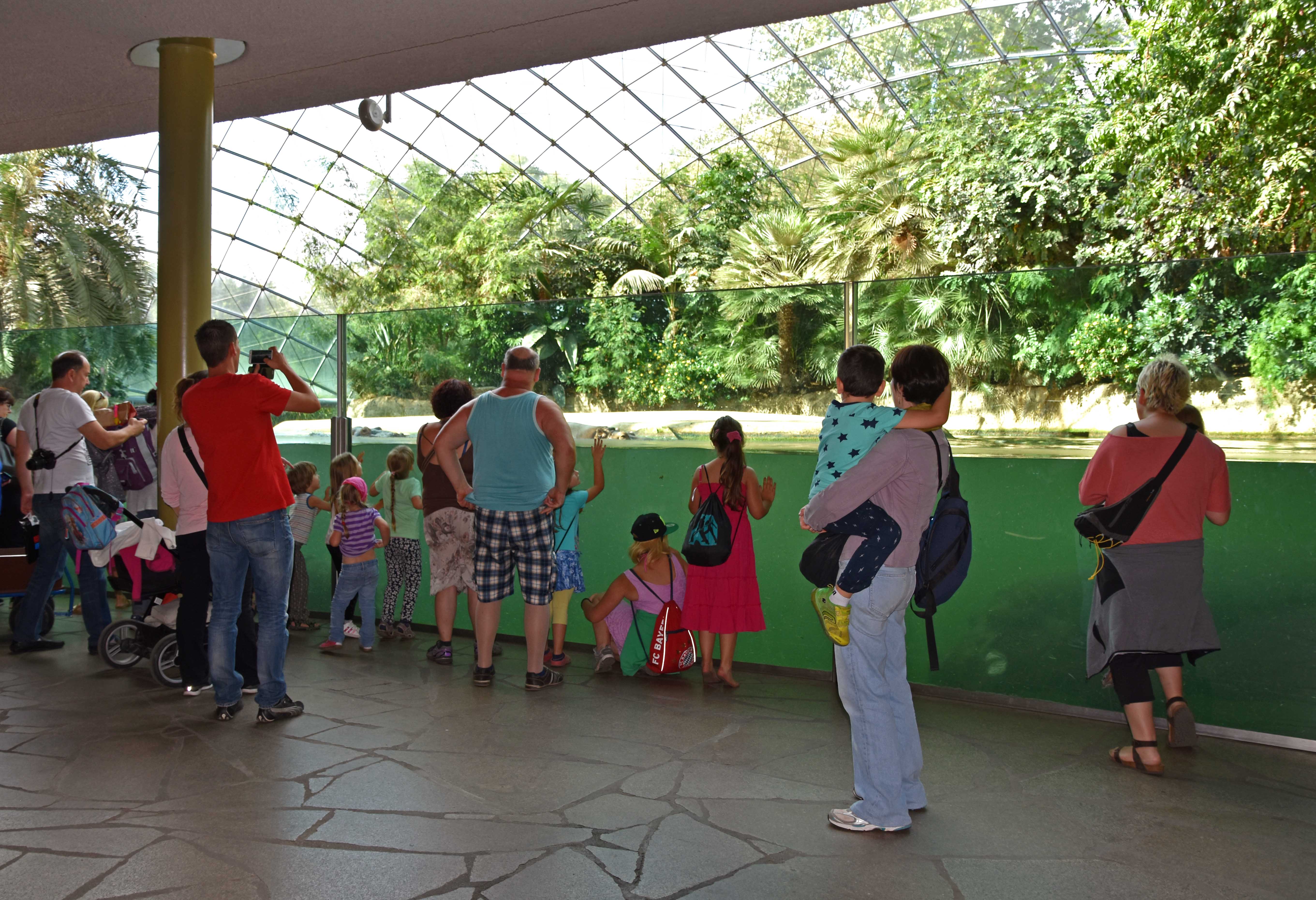
Any way, zoos are here to stay, and the good ones use their ticket money to do conservation work. Berlin Zoo is undoubtedly a fine zoo and one of the most visited in Europe with over 3 million entries per year (1). Their 18,600 animals look well looked after and they are quite innovative in how some of the animals are displayed. Like the hippos, which can be seen strolling along under water, through a glass-fronted panel on their pool (below). (2)
The hippo tank Berlin Zoo
Berlin Zoo was first opened in 1844, being the first zoo in Germany. The animals were donated by Frederick William IV, King of Prussia. The zoo was virtually destroyed during World War II, and reportedly only 91 of 3,715 animals survived (1). Fortunately, things have improved since those days and I would recommend it to anyone with an interest in animals.
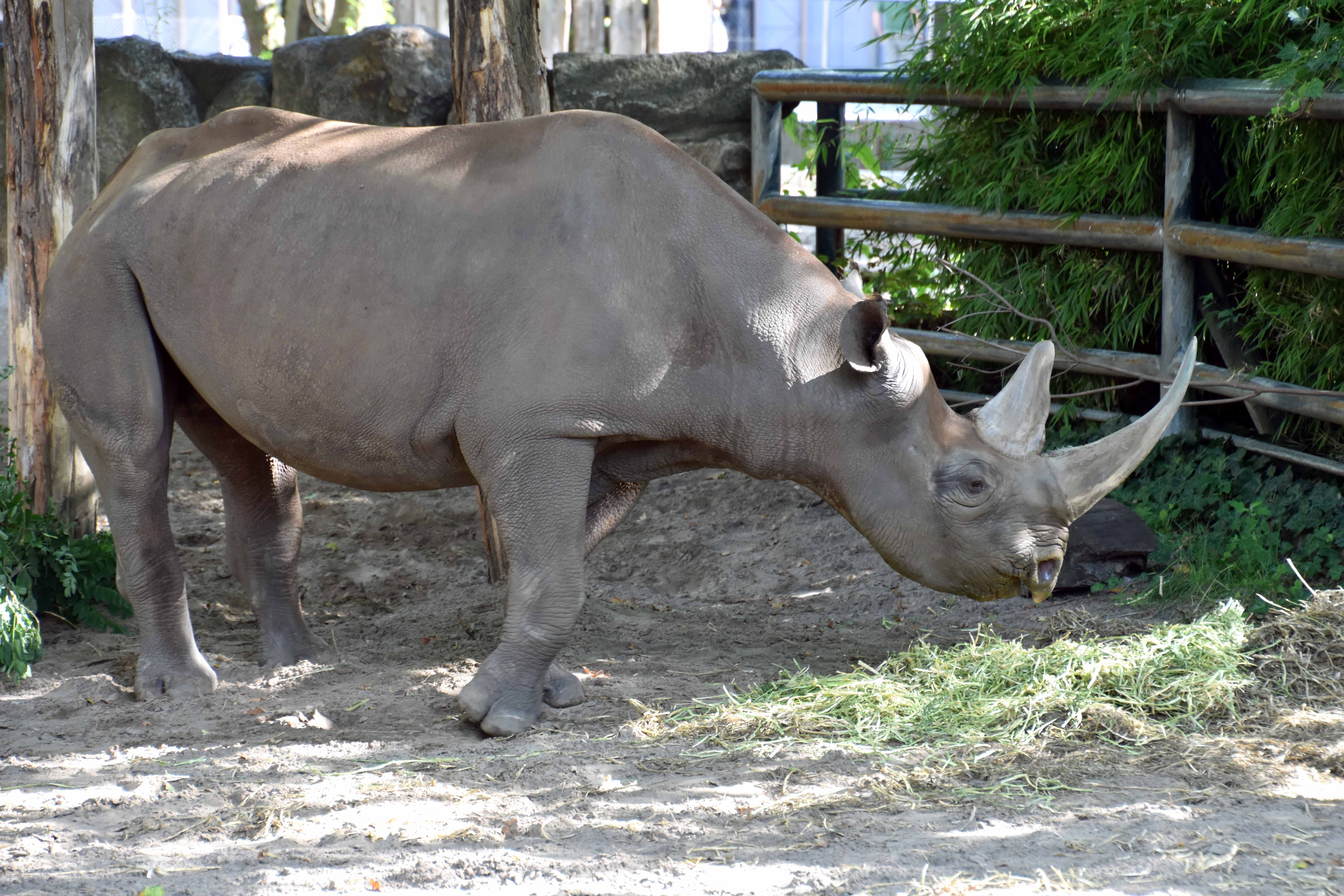
Black rhinos (Diceros bicornis) are critically endangered as a result of poaching for their horns. Despite the fact that the horn is just composed of keratin – the same as our hair and fingernails – there are enough stupid, superstitious and downright evil people around who will pay huge sums of money to get hold of it.
Black rhinoceros (Diceros bicornis) Berlin Zoo
Much of the demand for rhino horn is said to emanate from Vietnam (3), where depressingly, it is seen as a status symbol. The ignorance and stupidity of people – human beings – never ceases to amaze me. Anyway, at least this individual with his (or her?) beautiful horn is safe from the poachers.
Black rhinoceros (Diceros bicornis) Berlin Zoo
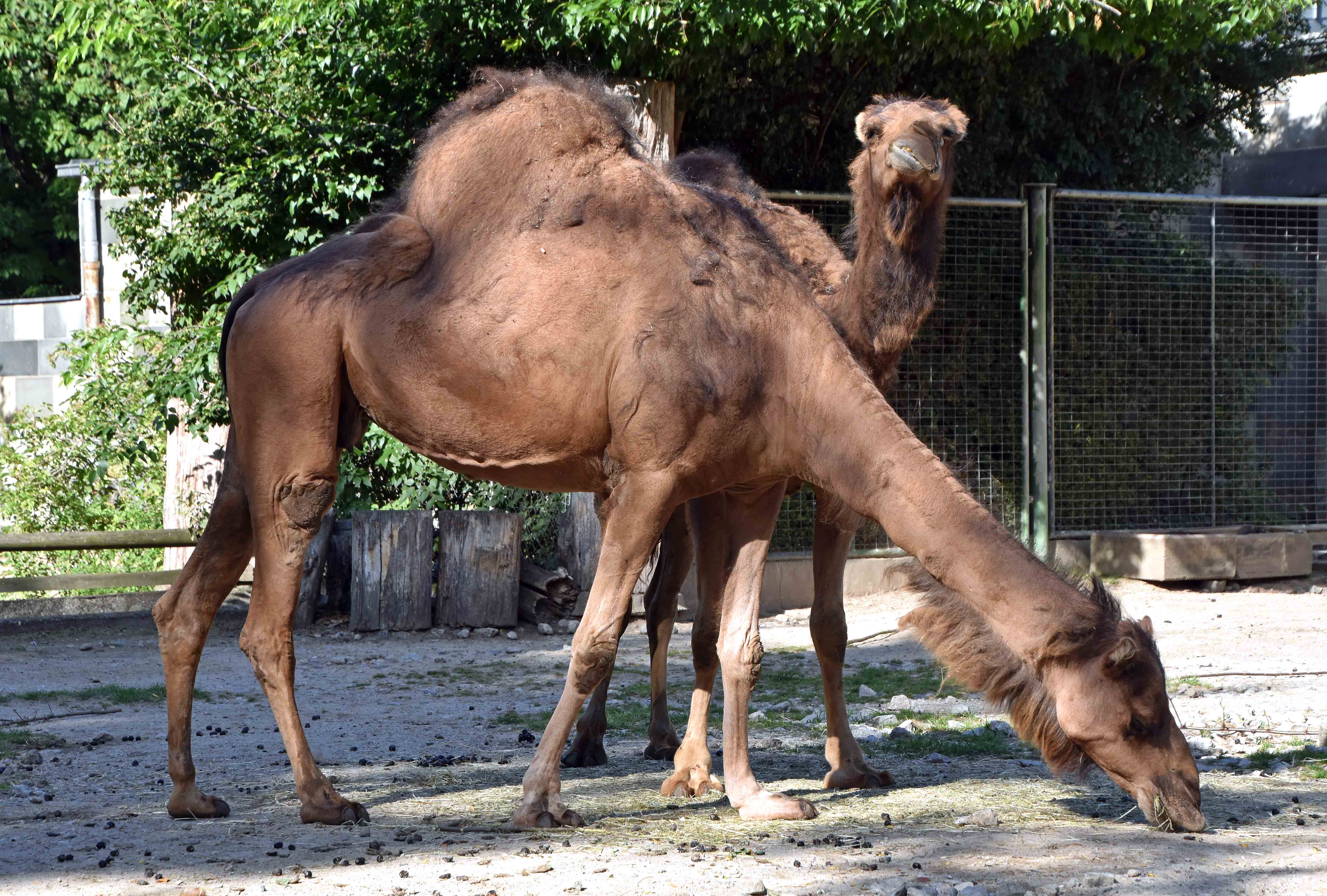
The Dromedaries or Arabian camels (Camelus dromedarius) looked happy enough.
Dromedary or Arabian camel (Camelus dromedarius) Berlin Zoo
When I passed by later I noticed the camels were having a bit of a lie down!
Dromedary or Arabian camel (Camelus dromedarius) lying down
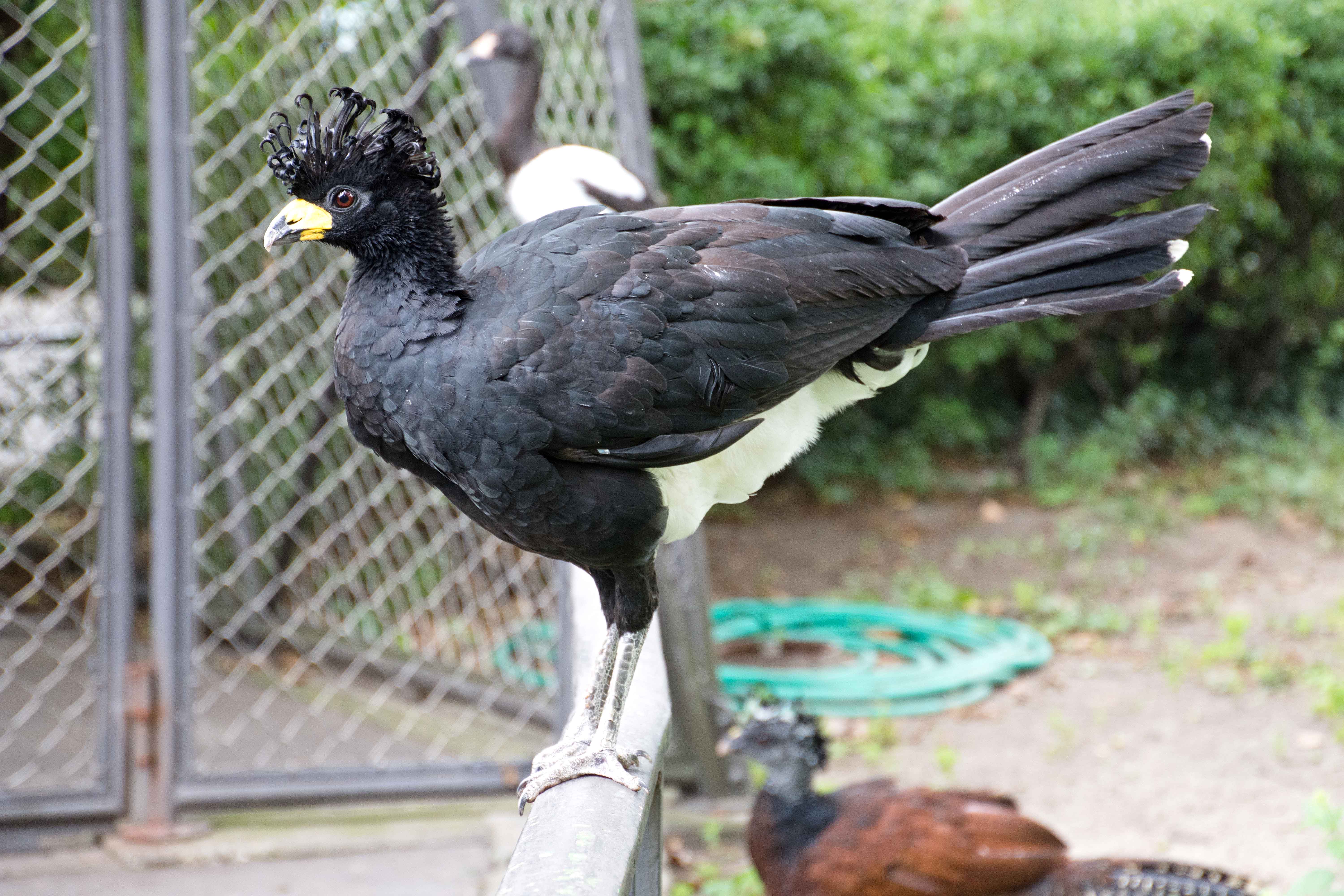
There are a number of bird houses in Berlin Zoo where it is possible to walk through the enclosures and experience being inside with the birds. In one house, there were a pair of curassows waiting to greet ever visitor, no doubt looking for something to eat between meals.
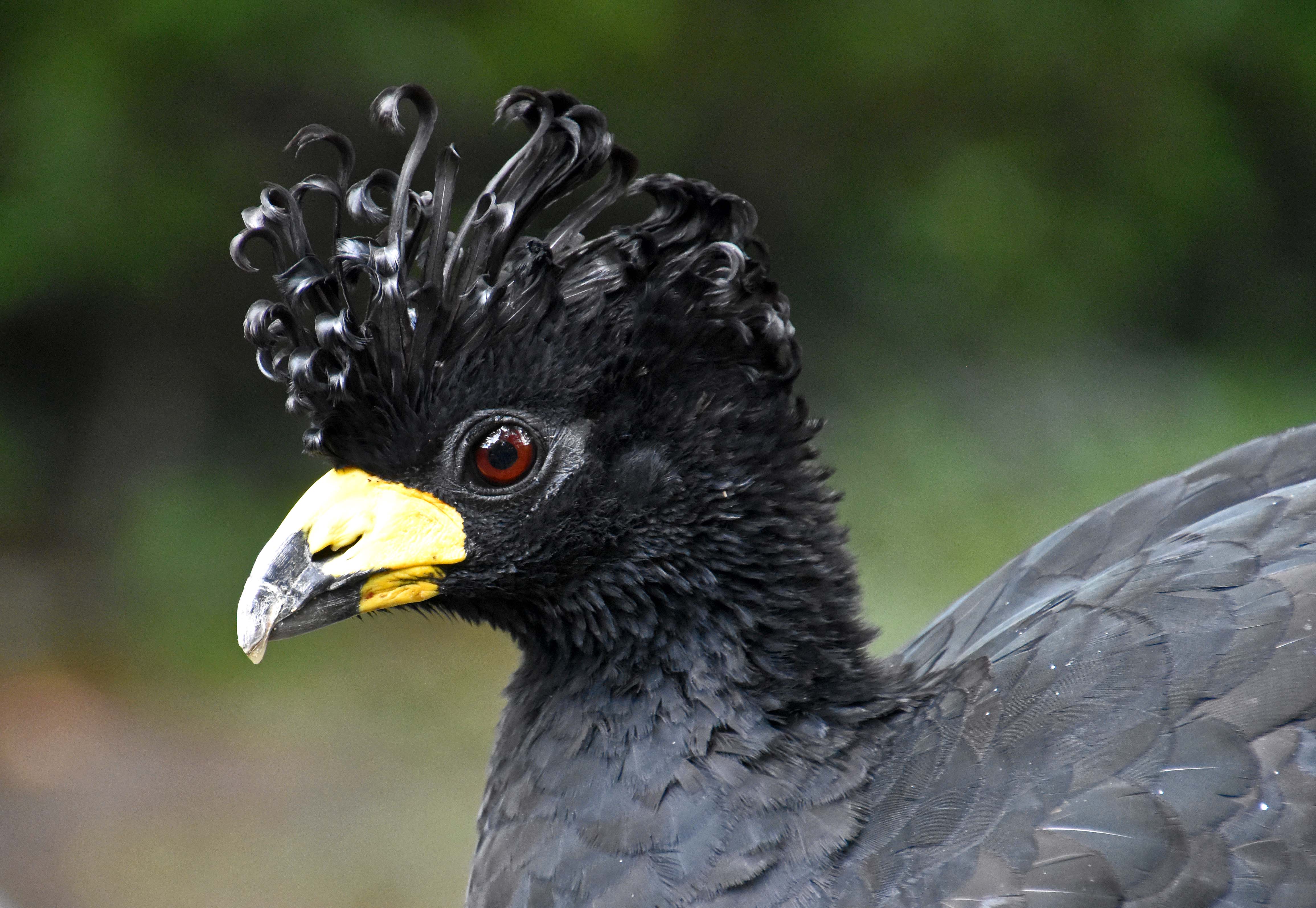
Bare-faced curassow (Crax fasciolata) male standing on a railing
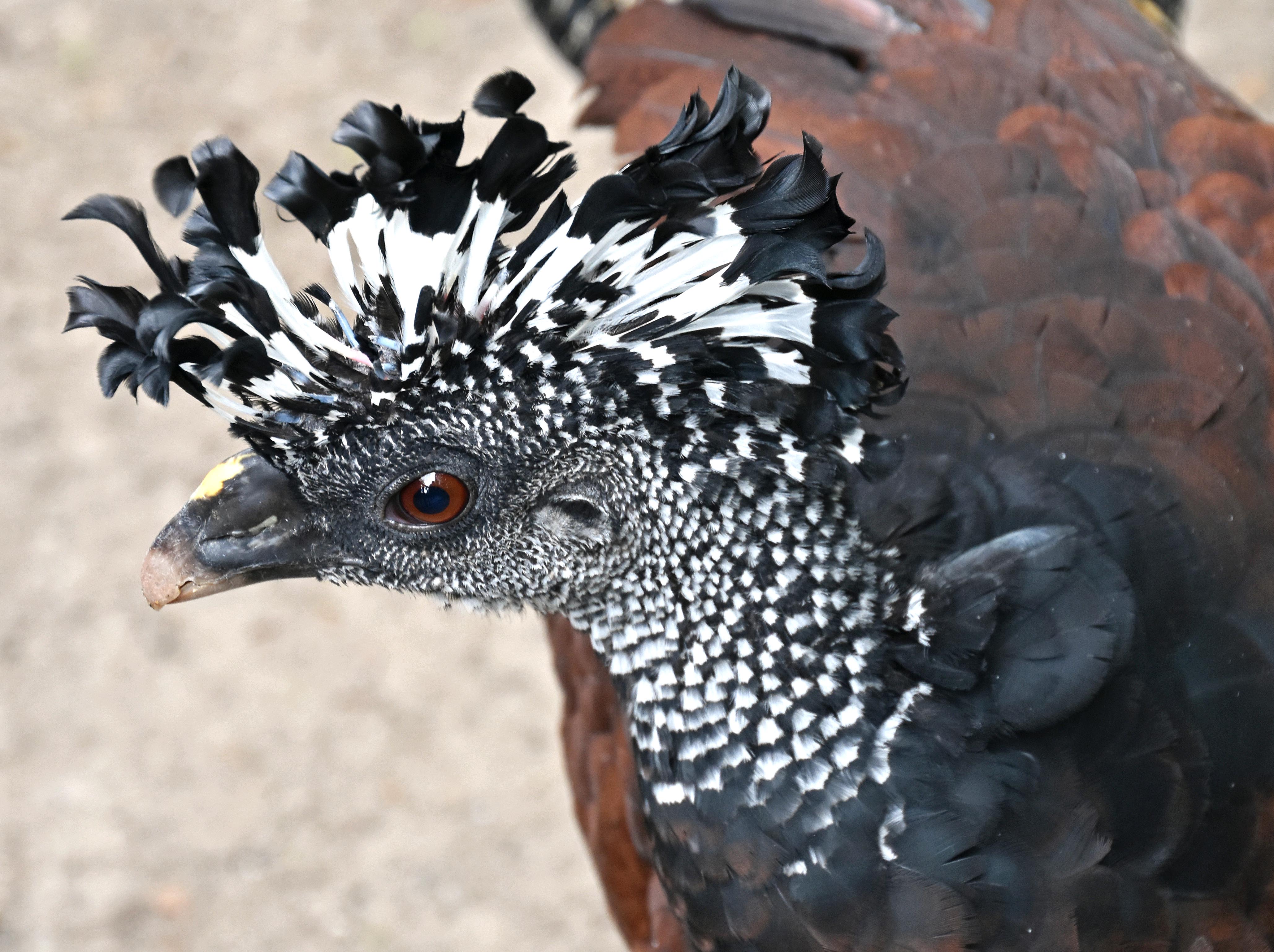
They were remarkably tame and had clearly adjusted well to captivity; perhaps they were bred in captivity. Both male and female had beautiful head feathers.
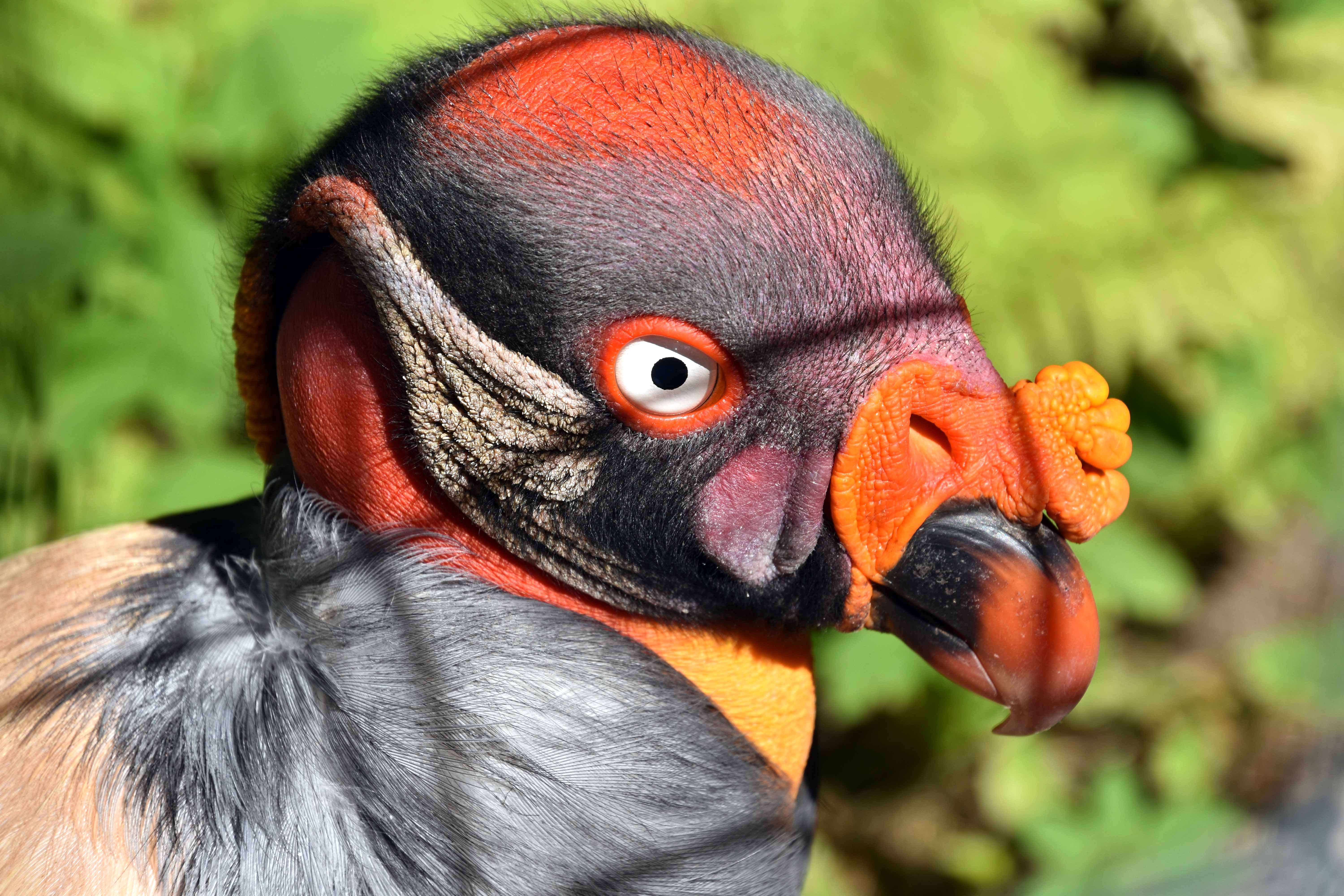
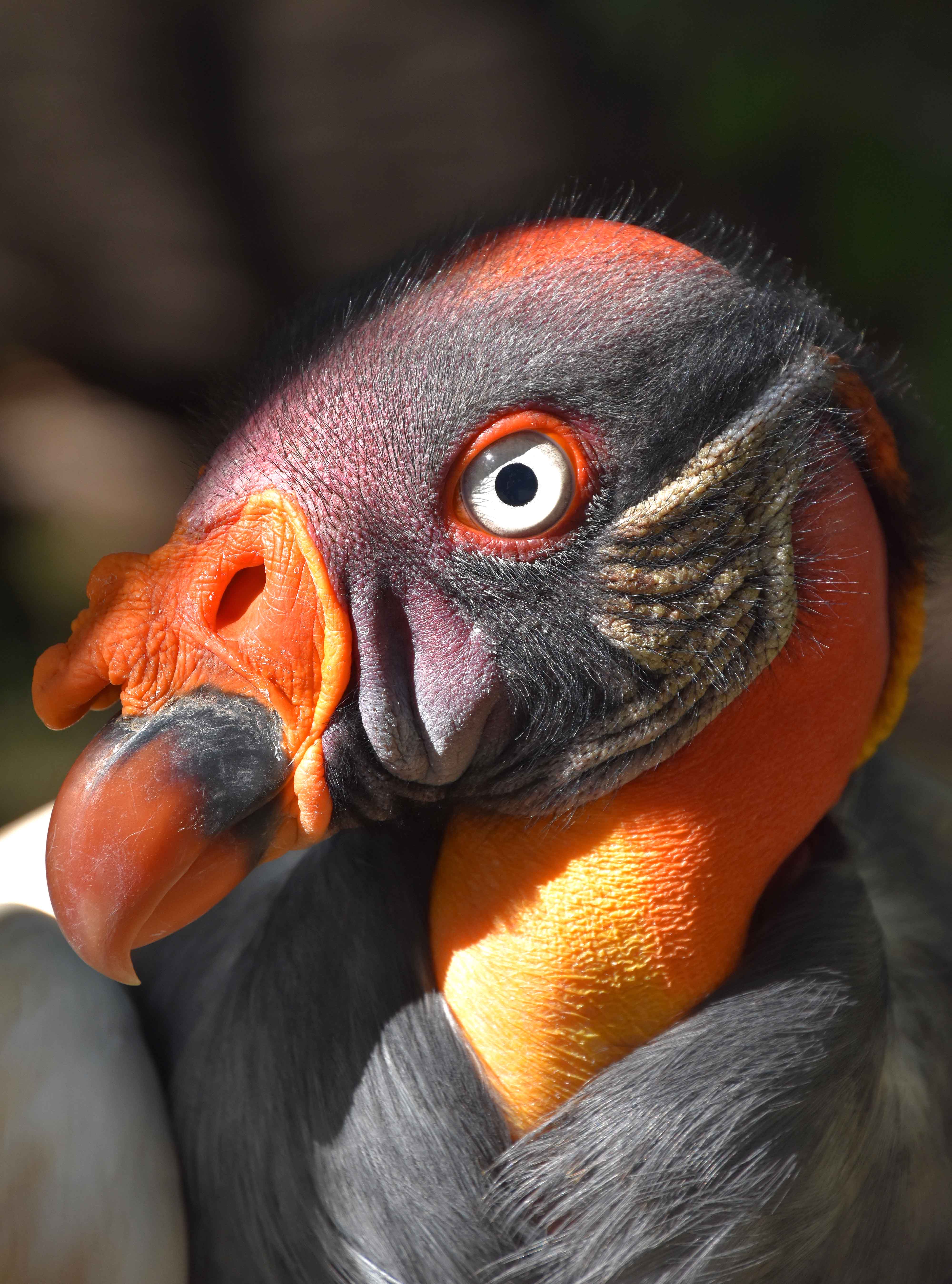
Another bird which seemed very relaxed and at ease with the stares of visitors was the King vulture (Sarcoramphus papa).
King vulture (Sarcoramphus papa) Berlin Zoo
The bird did not seem to mind the fact that I had my camera right up against the cage trying to capture an image of it without the shadows from the fencing!
King vulture (Sarcoramphus papa) Berlin Zoo
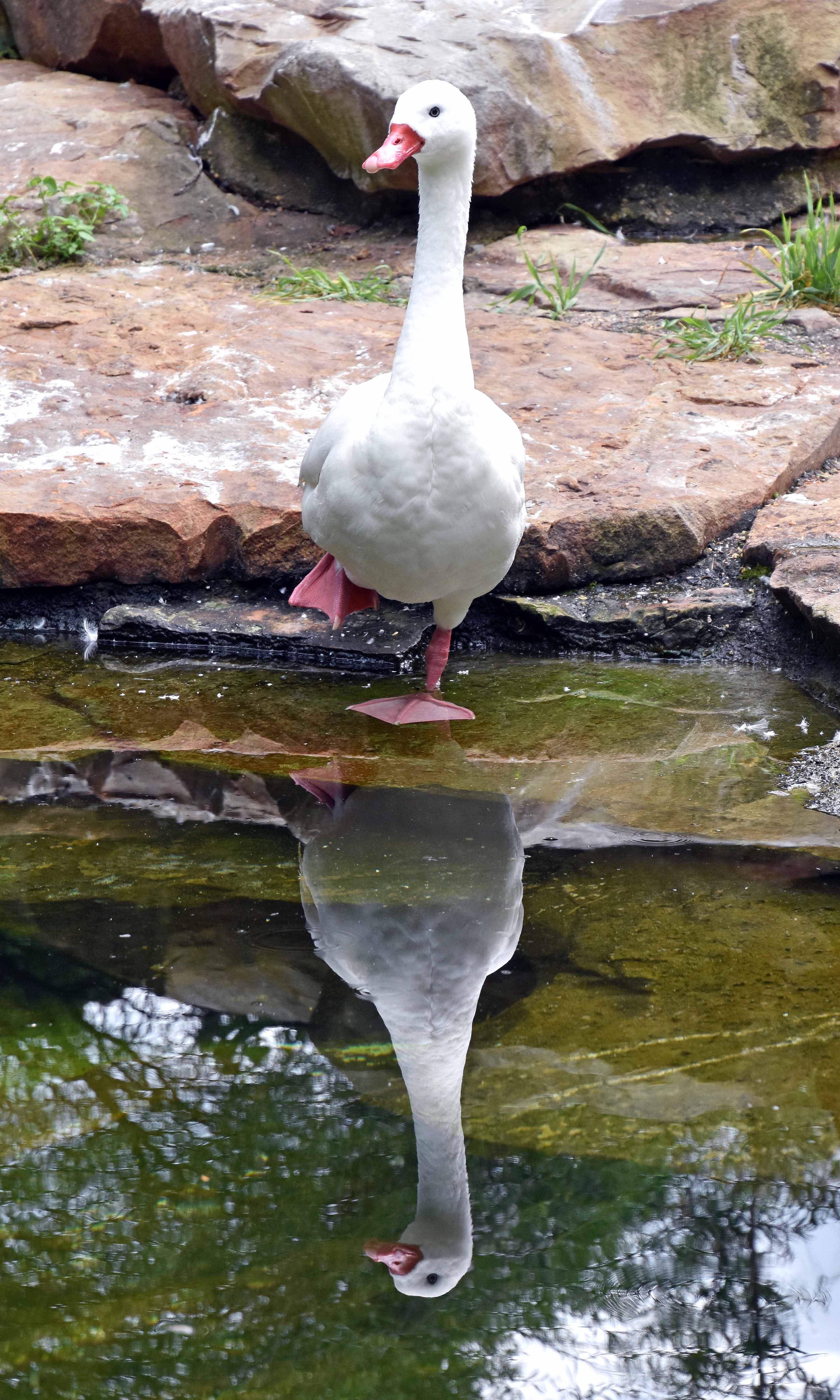
A Coscoroba swan (Coscoroba coscoroba) was resting one leg, but I couldn’t help noticing that its wings had been clipped, presumably to prevent it trying to fly back to South America, where it originated from.
Coscoroba swan (Coscoroba coscoroba) Berlin Zoo
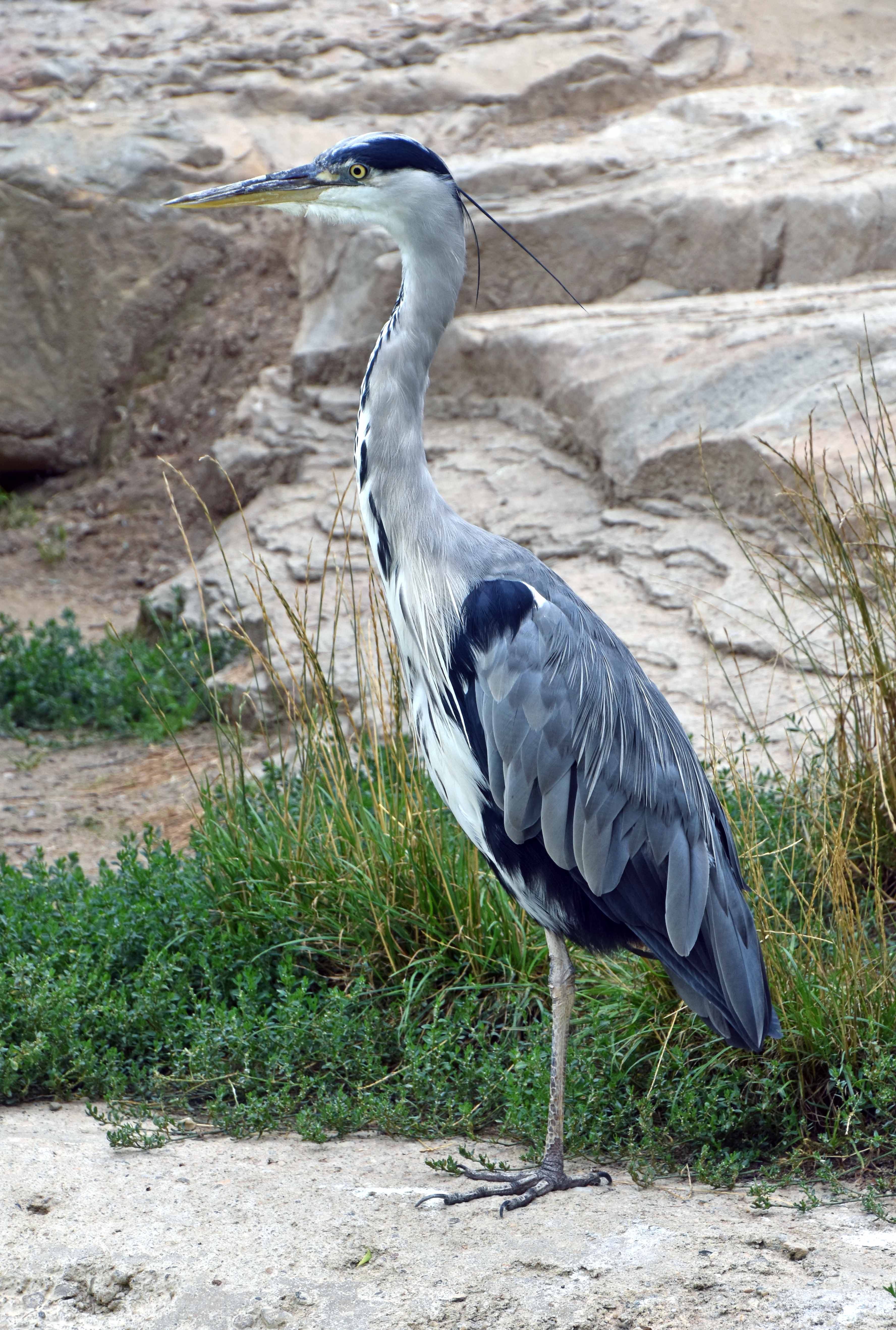
Some birds are free to come and go, like this elegant Grey heron (Ardea cinerea), waiting to see if there are any spare fish in the seal enclosure. Doubt it!
Grey heron (Ardea cinerea) at Berlin Zoo
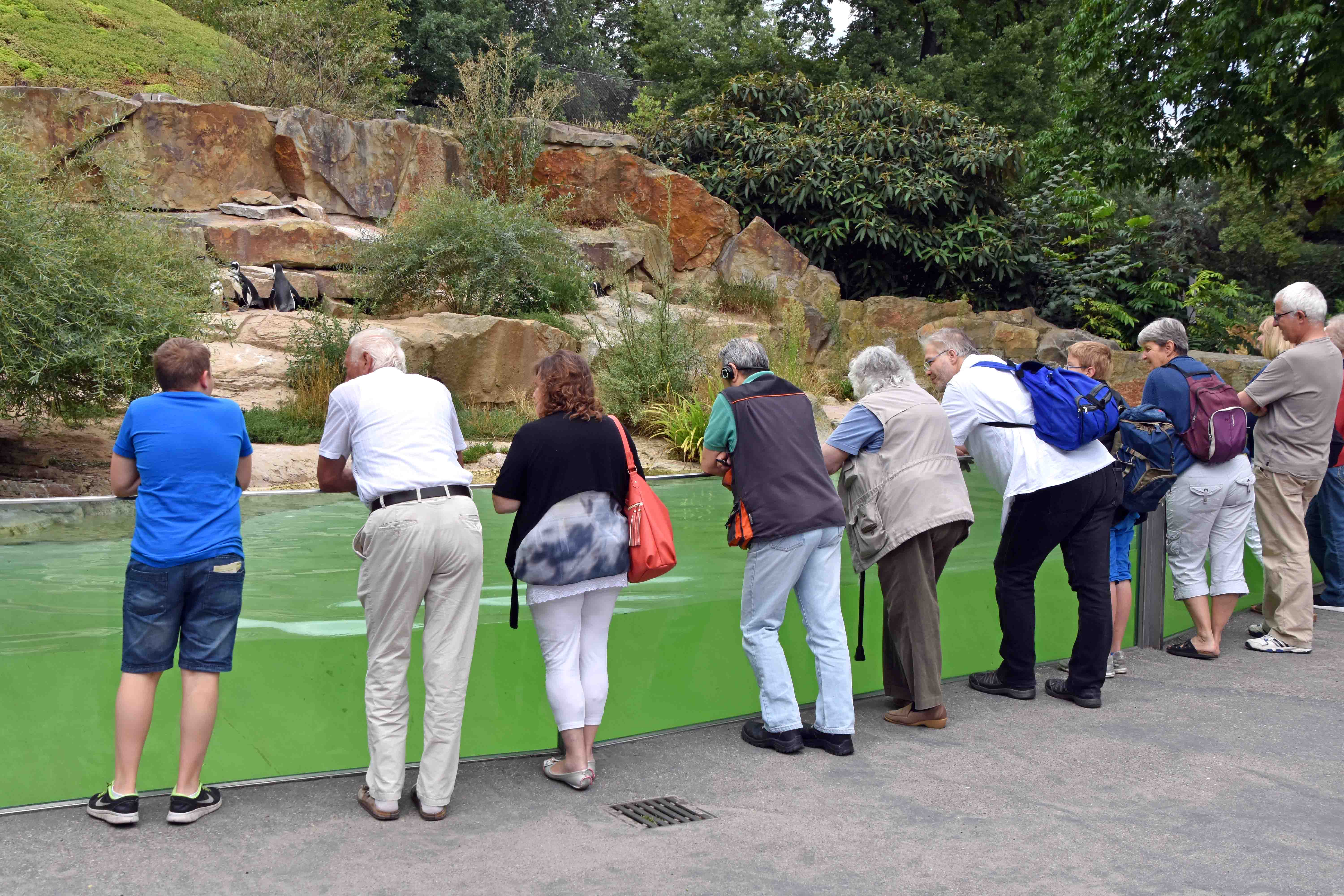
The nice thing about Berlin zoo is that, for the most part, it is possible to get quite close to the animals – like these people (below) watching penguins – and there are some great glass fronted tanks.
People watching penguins at Berlin Zoo
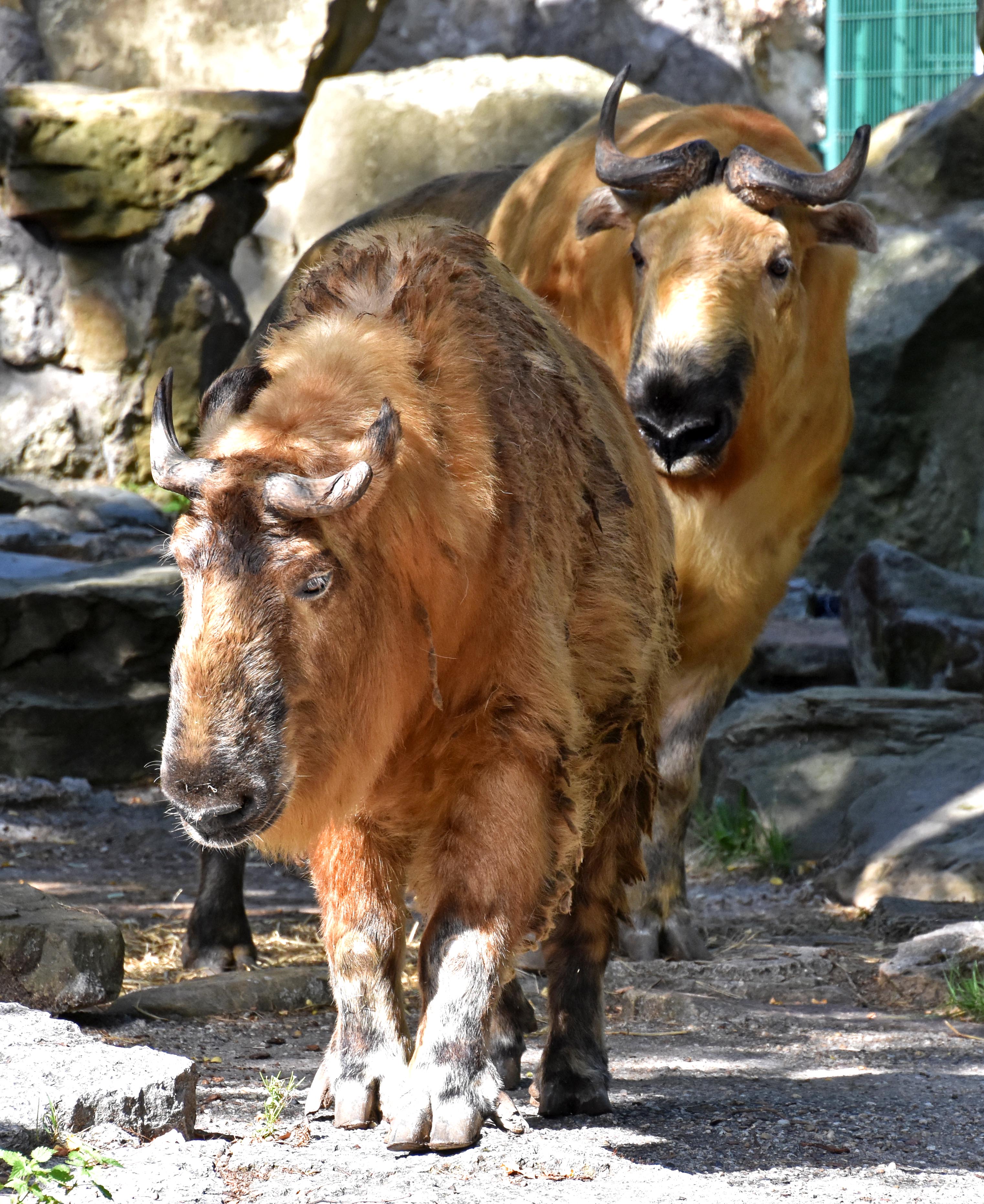
It’s always interesting to come across animals that you have never heard of. I had never come across this magnificent animal called a Tibetan or Sichuan takin (Budorcas taxicolor tibetana) – pronounced tah-kin – before. It is called a goat antelope and there are four subspecies; this one is found along the eastern margin of the Tibetan plateau and is well adapted to live in the cold Himalayan mountains with its thick fur and broad nose used to warm up the cold air it breathes in.
Tibetan takin (Budorcas taxicolor tibetana) male
Although protected, the Sichuan takin is still threatened by poaching for it valuable fur alas. A magnificent animal.
Tibetan takins (Budorcas taxicolor tibetana) male following the female
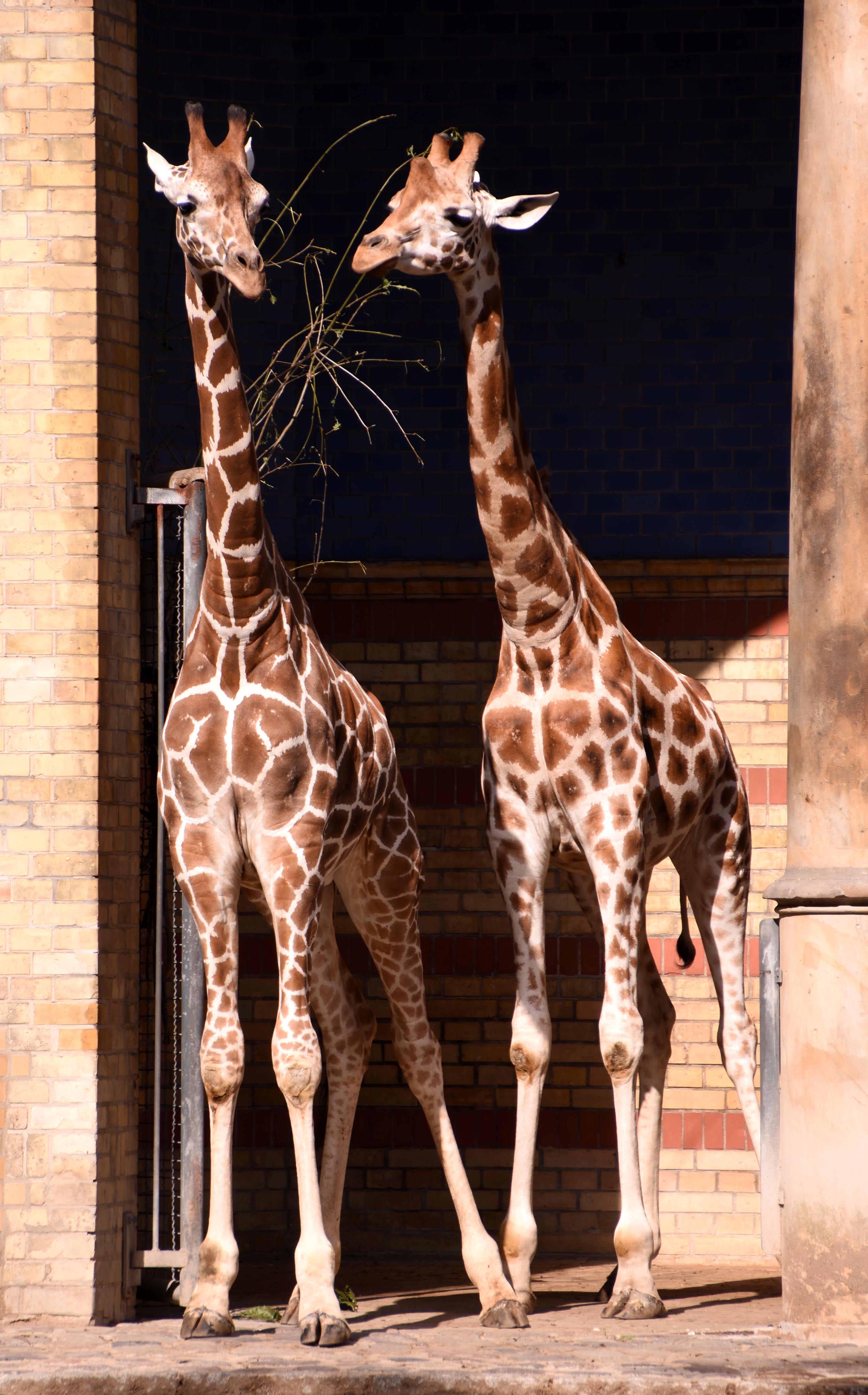
I particularly enjoyed watching these two giraffes cavorting about in the sunshine. Although they were different subspecies – one was a Rothschild and the other a Reticulated giraffe – they were clearly pals and enjoyed each others company.
Giraffes (Giraffa camelopardalis) Berlin Zoo
The Reticulated giraffe was much more skittish and went racing around the paddock. When they came back together the other one gave it a playful butt with its head, as if to say, you silly thing!
Giraffes (Giraffa camelopardalis) Berlin Zoo
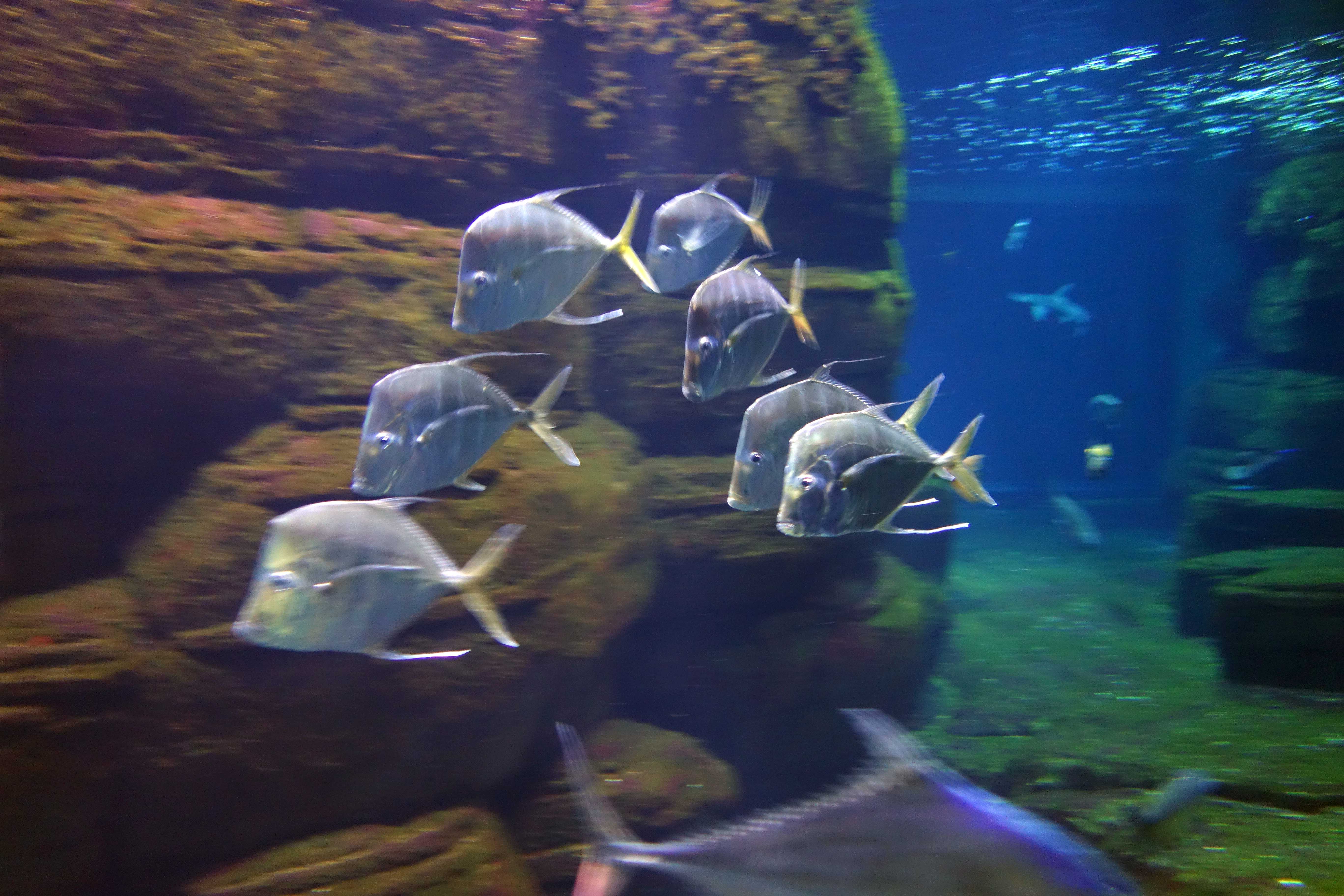
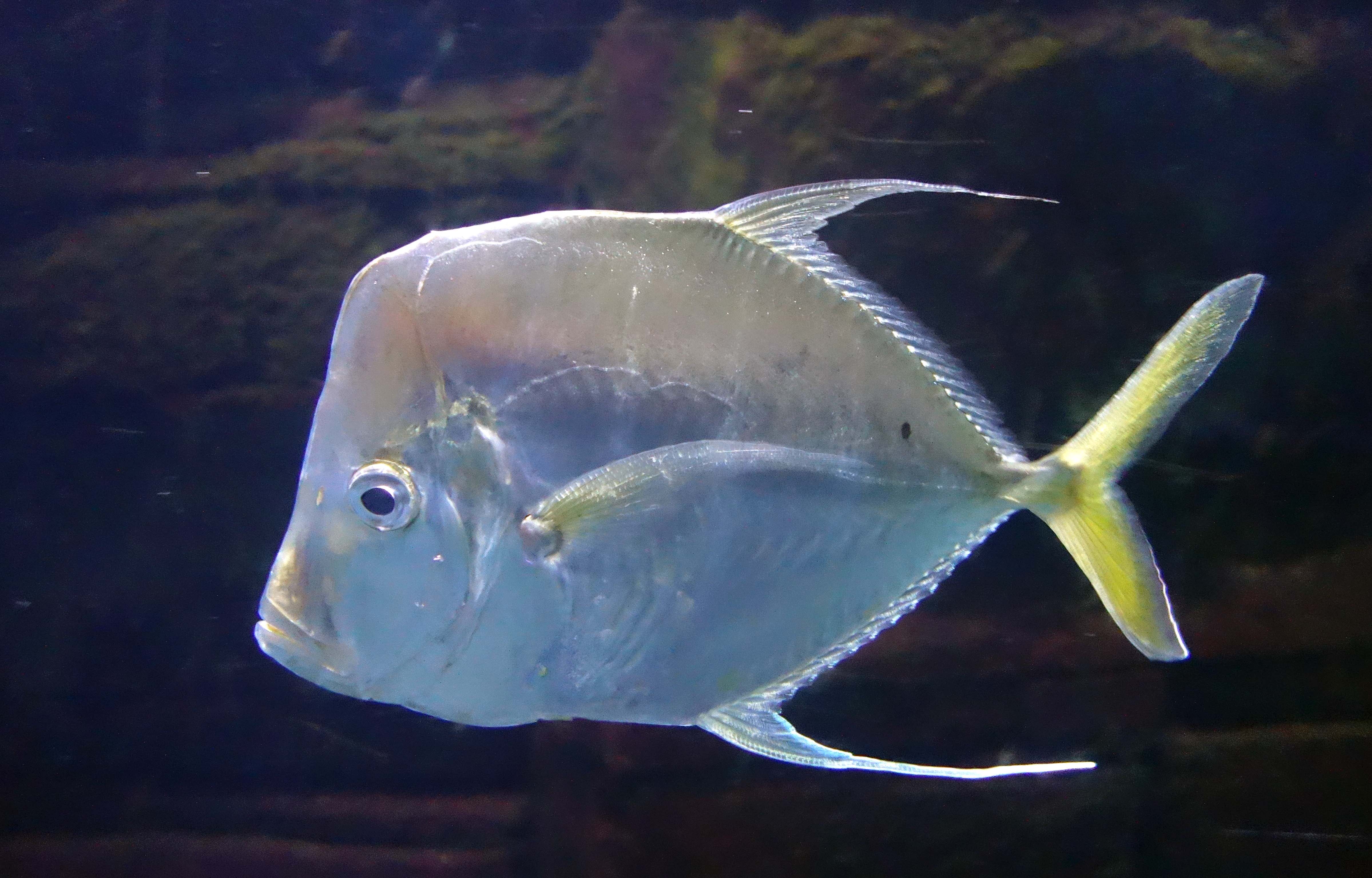
There is an excellent aquarium attached to the zoo with three floors of fish, reptiles, amphibians, invertebrates and so on. I particularly enjoyed the large tanks, like this one full of Indian threadfish (Alectis indica) which raced round and round and round!
Indian threadfish (Alectis indica) in large tank
These fish, also called diamond trevally, are a member of the jack family, which unfortunately for them are important commercial and game fish.
Indian threadfish (Alectis indica) Berlin Zoo
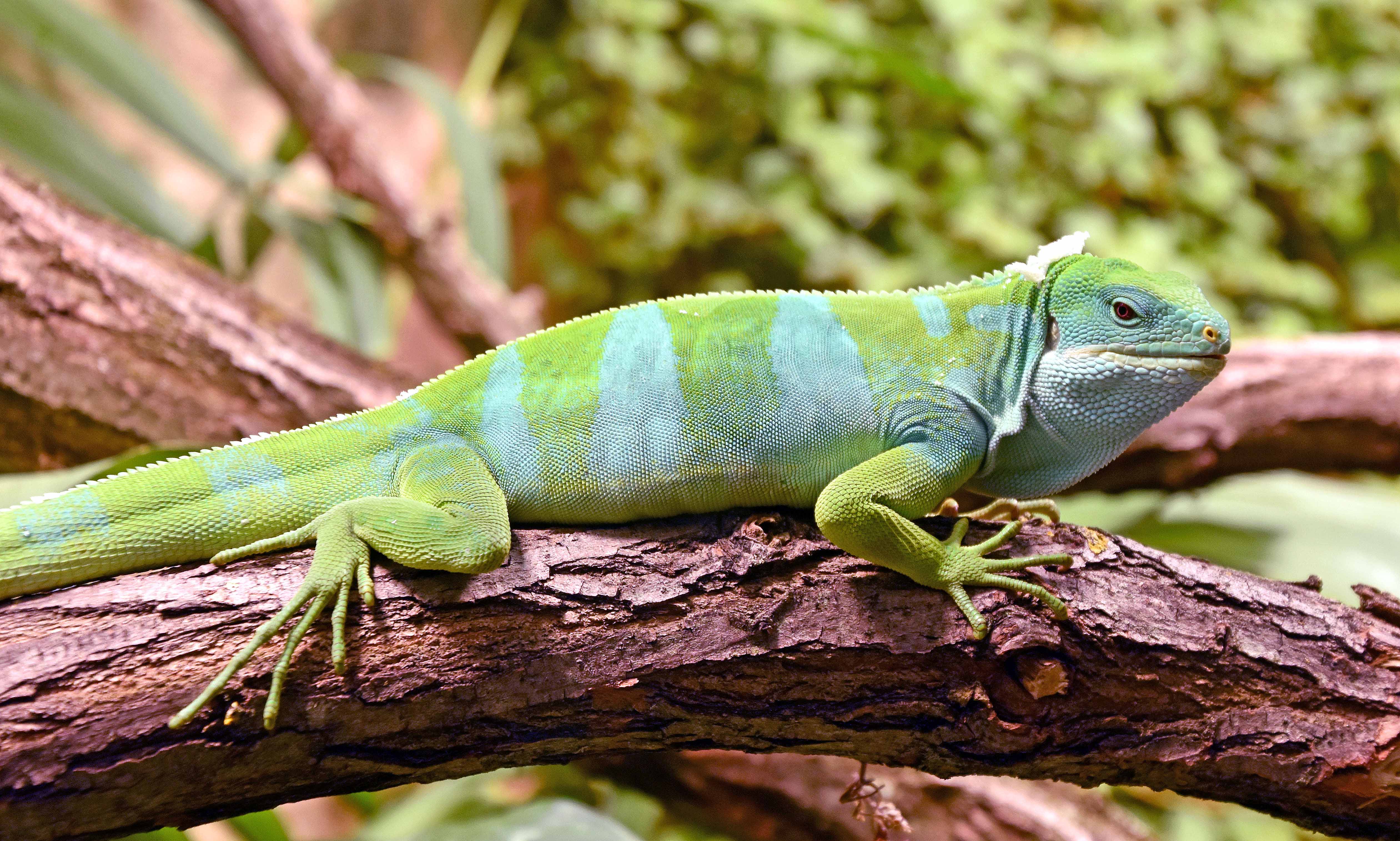
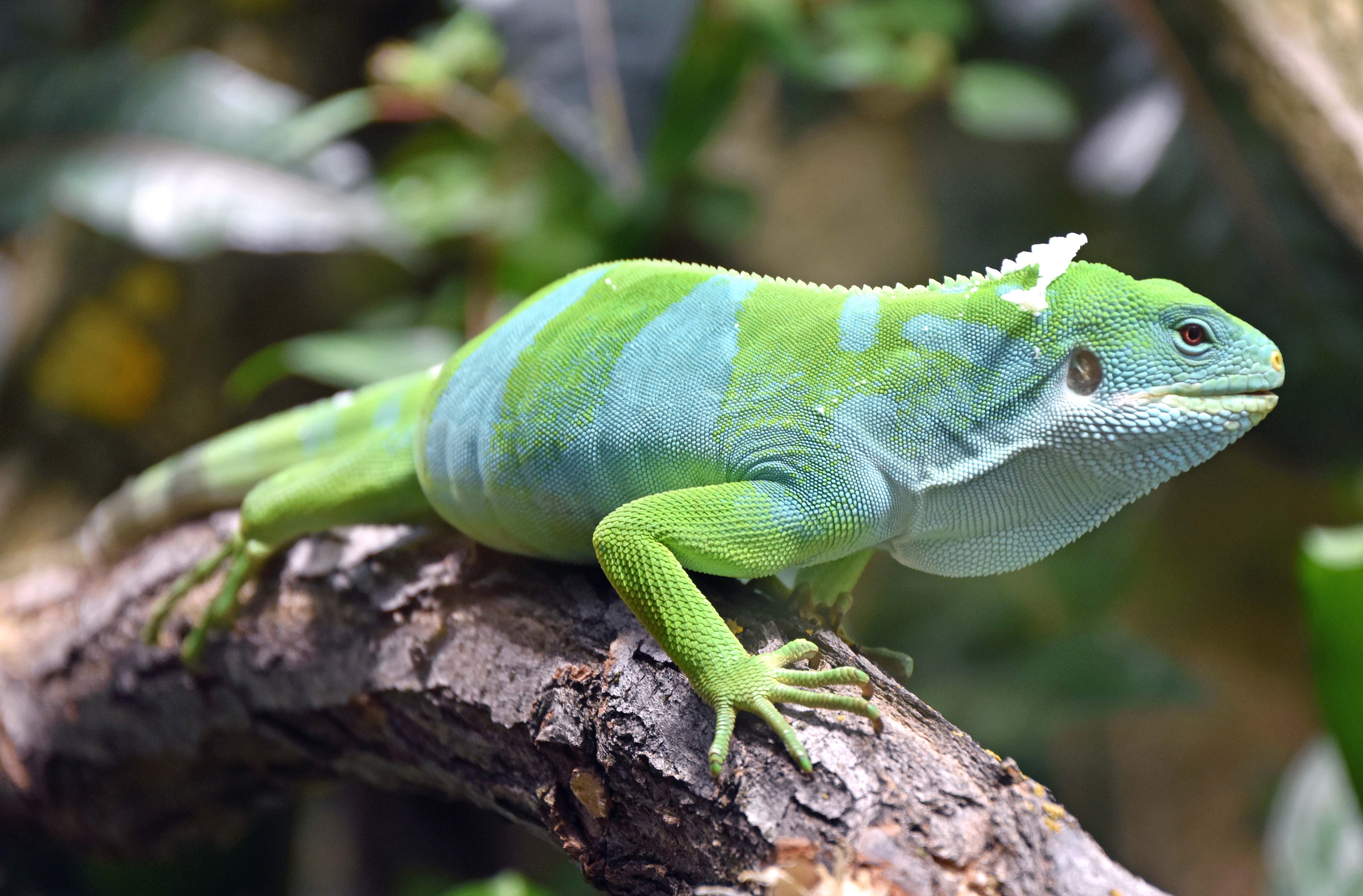
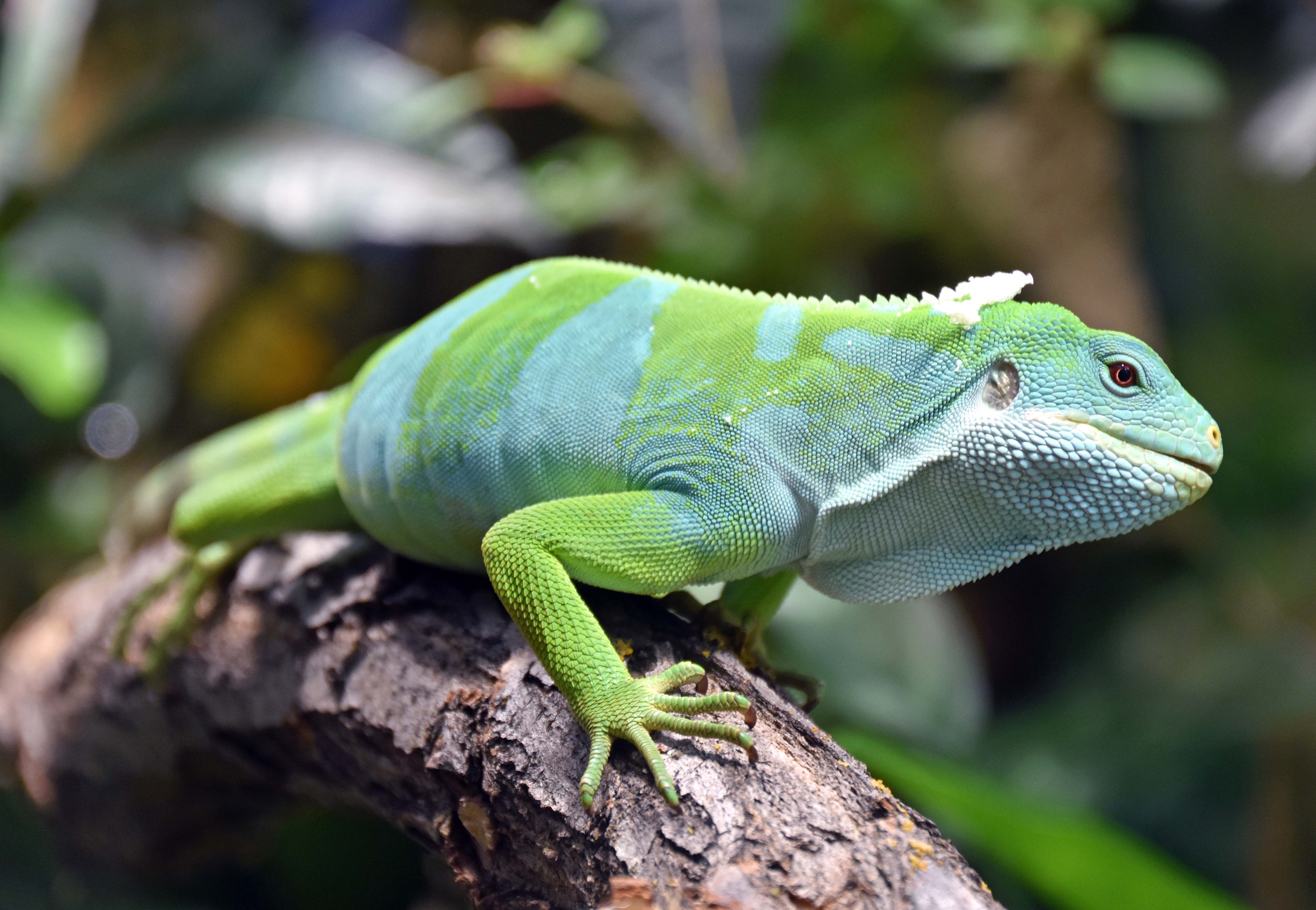
Not all of the reptiles were easy to see, but this beautiful Fiji banded iguana (Brachylophus fasciatus) – shown below- was showing right in front of the glass. It is endemic to some of the south-eastern Fijian islands, where it is reportedly declining due to depredations by introduced species, including cats, rats and the mongoose. As a consequence it is classified as Endangered by the IUCN (Red List of Threatened Species)(4). According to Wikipedia, the Fijian government maintains that the entire zoo population of Fiji banded iguanas was obtained illegally or descended from smuggled animals. I’m not sure what this means; do they want them back? If the population has declined by 50% and remains endangered, it might be a good idea to keep some in zoos, as long as they are well looked after.
This individual Fiji banded iguana was newly moulted so the colours were very fresh and vibrant. The male has the pale-blue bands and emerald-green colouration shown in these photos.
Fiji banded iguana (Brachylophus fasciatus)
These iguanas can live for up to 25 years in captivity apparently. Perhaps their long lifespan is down to the fact that they don’t do much! The tympanic membrane is very clear in these photos.
Fiji banded iguana (Brachylophus fasciatus)
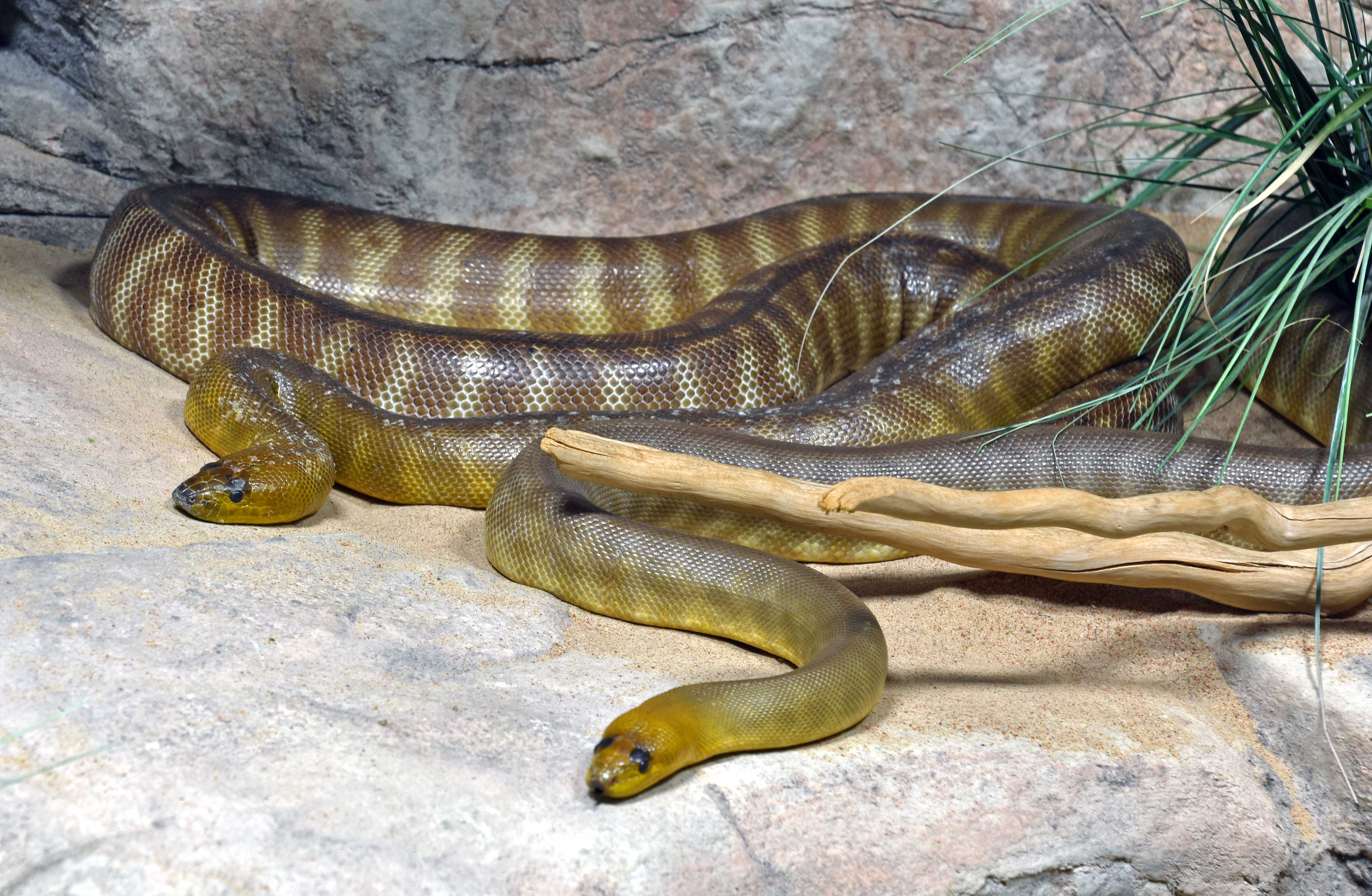
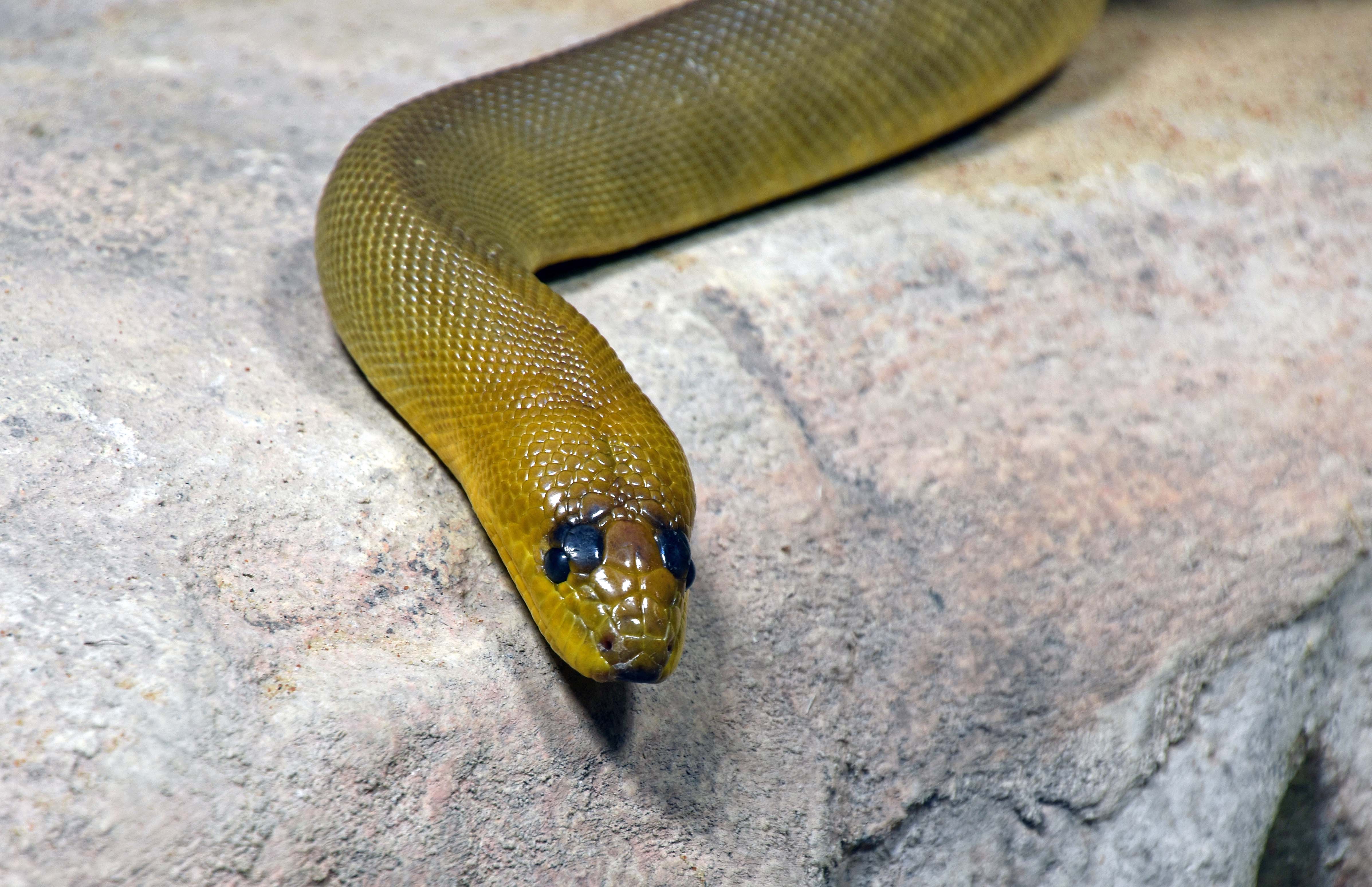
The Woma python also known as Ramsay’s python (Aspidites ramsayi) is a rather strange but elegant looking snake from Australia.
Woma pythons (Aspidites ramsayi)
They are said to be rather docile and ‘easy to handle’ in captivity. They have nice black eyes and markings above the eyes.
Woma python (Aspidites ramsayi)
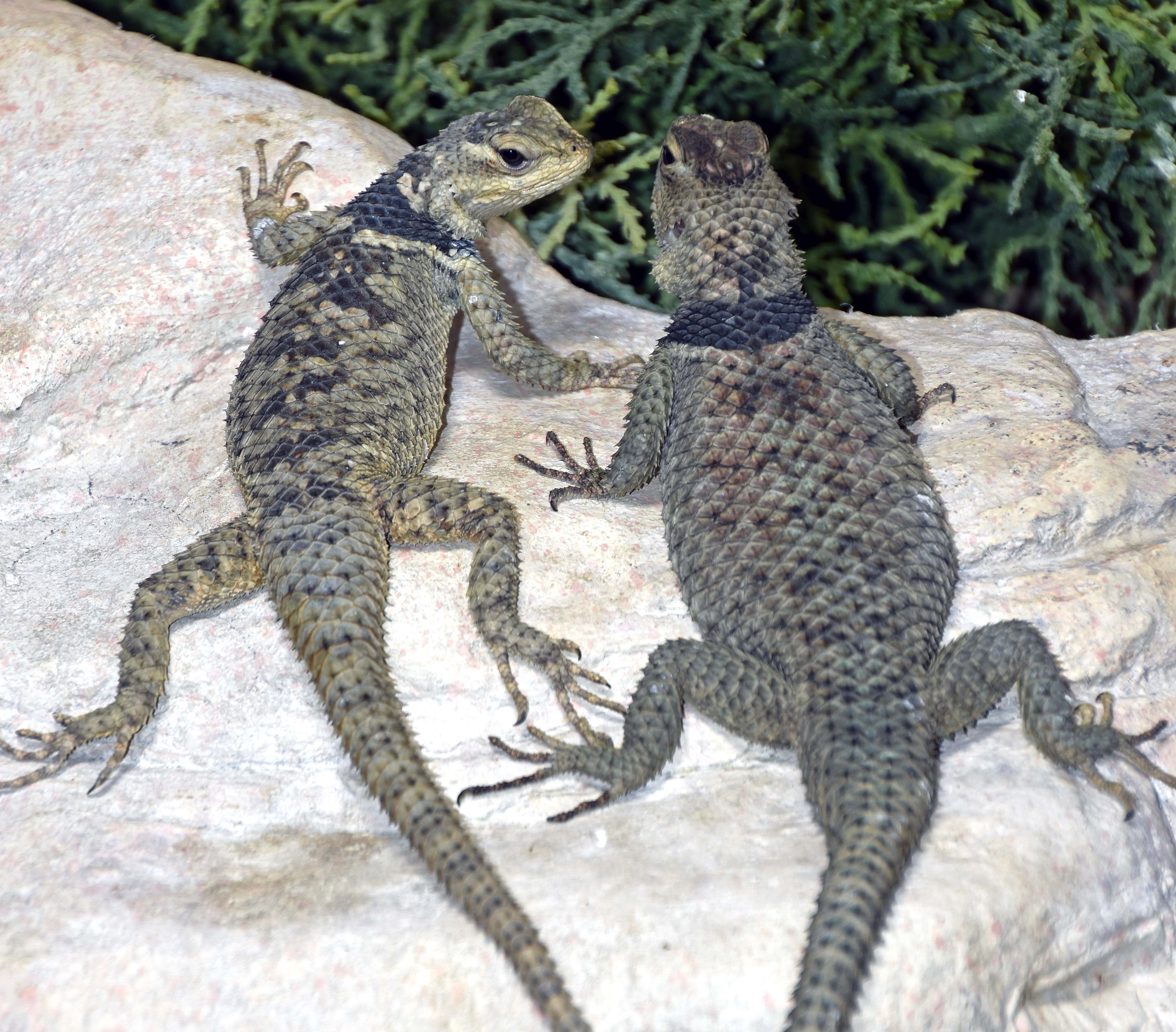
These blue spiny lizards (Sceloporus serrifer) are native to southern Texas and Mexico; they are often kept in zoos. They have a nice blue collar around their neck and shoulders (below).
Blue spiny lizards (Sceloporus serrifer)
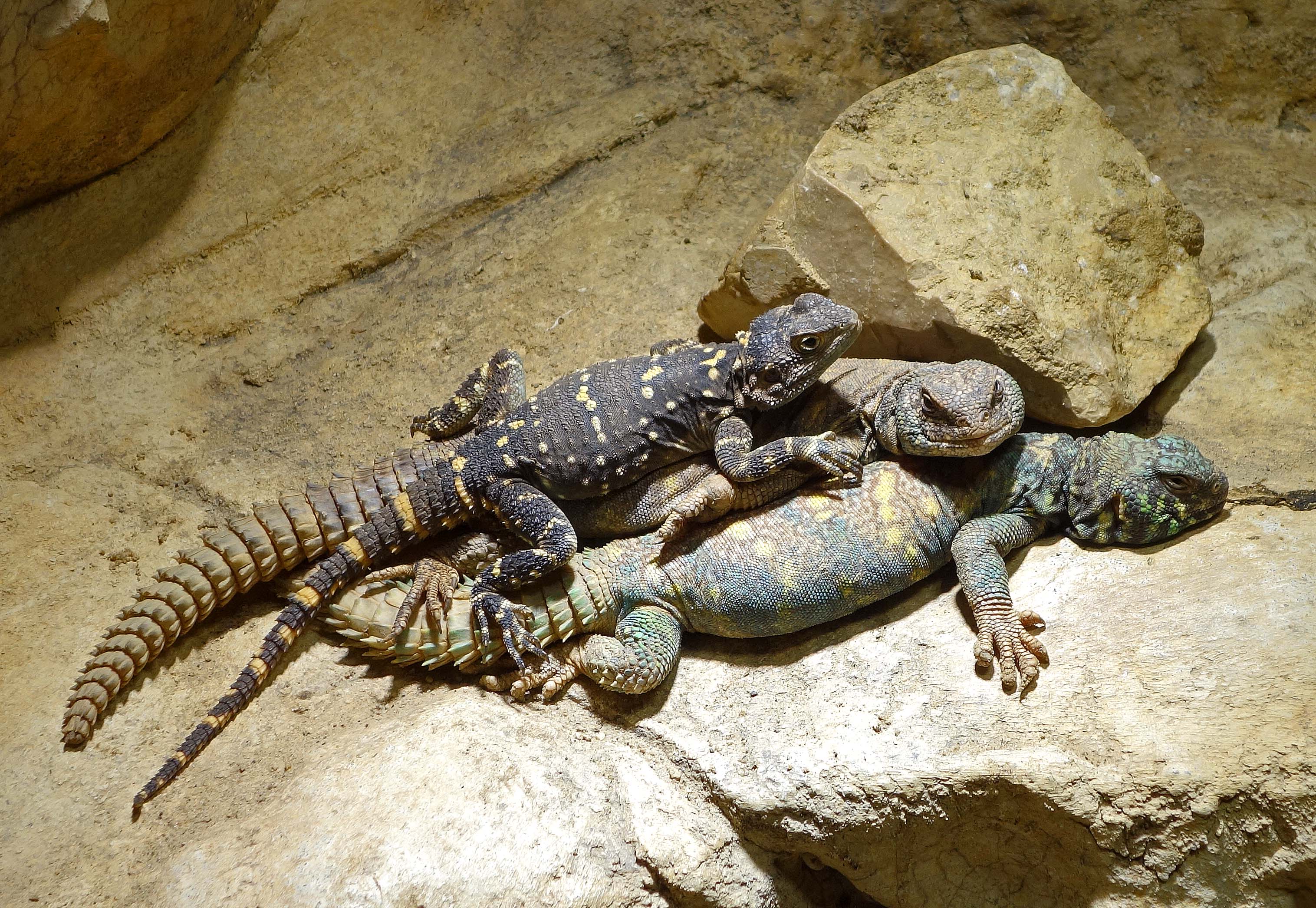
There was a nice pile of reptiles – a Black Agama on top of two Ornate spiny-tailed lizards – keeping each other warm, or company.
Black Agama on top of two Ornate spiny-tailed lizards
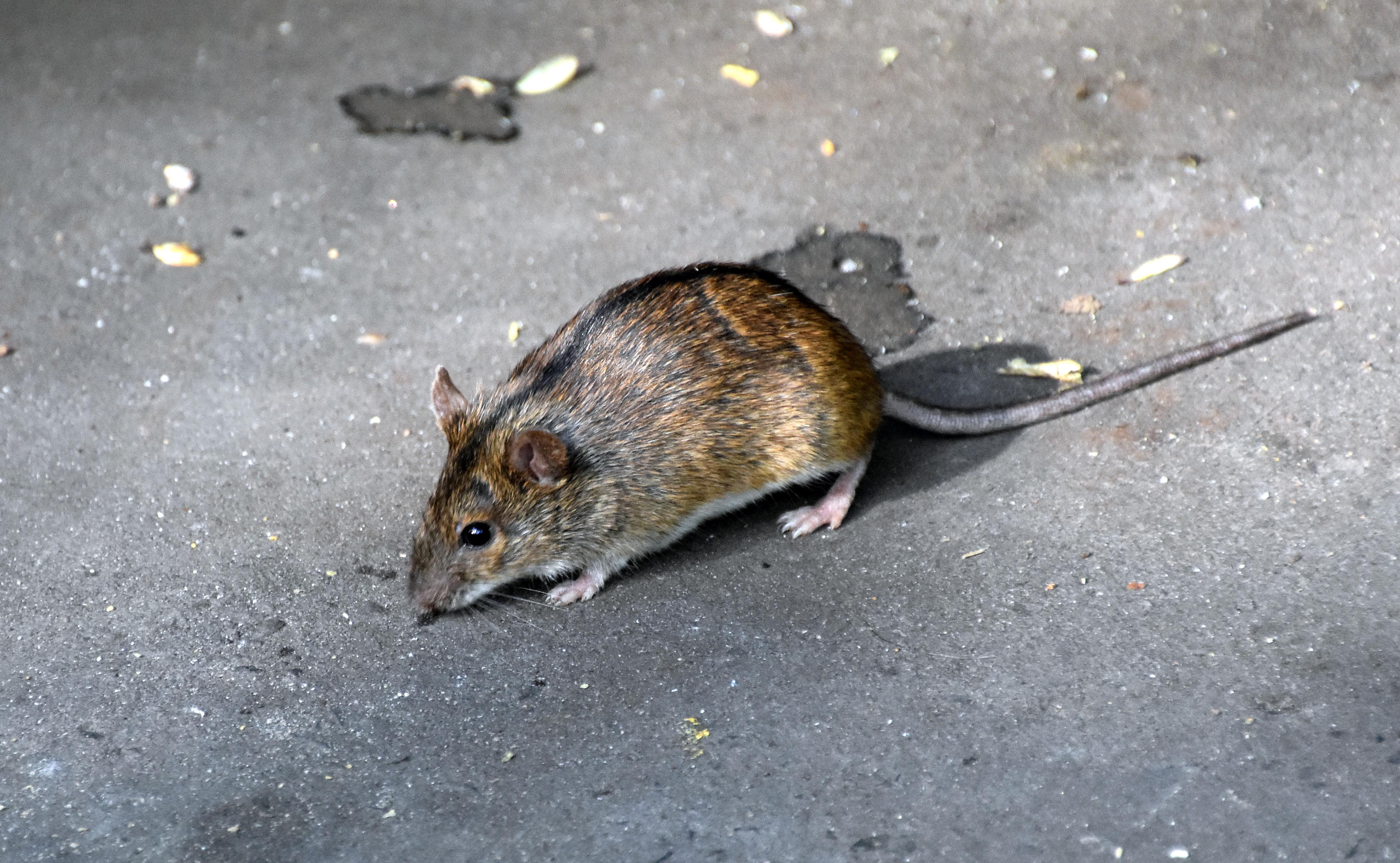
As I was on my way out, a Striped field mouse (Apodemus agrarius) popped out from under a hedge looking for scraps. This mouse has a dark stripe running along the length of its back; it occurs in eastern Europe, with western populations extending into Germany in the north and N Italy in the south. He was here of his own volition; feeding on the waste left by us greedy humans! Nice to see him/her though.















 I recently did a short cruise to Norway on the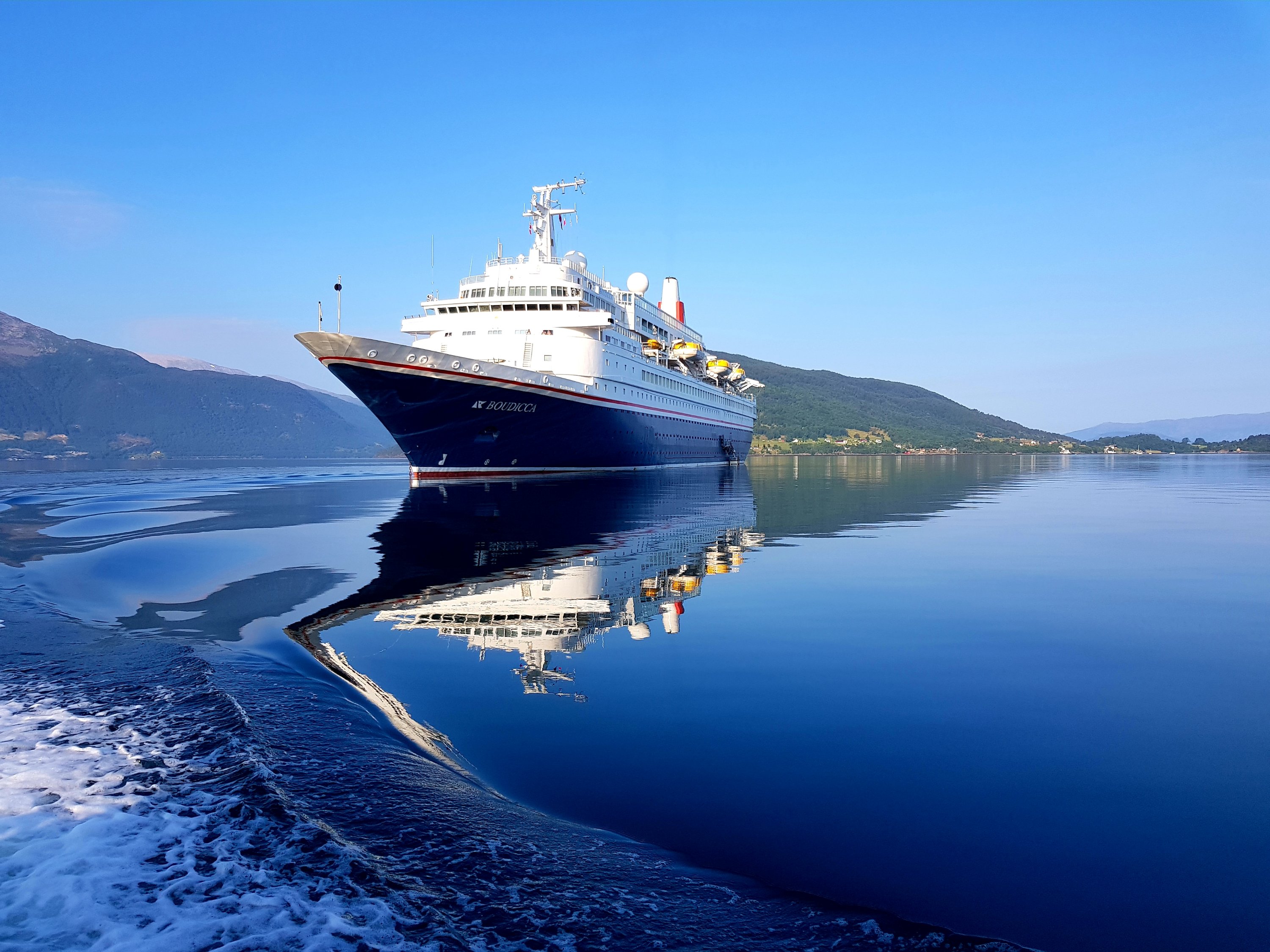






















 Ray's ramblings