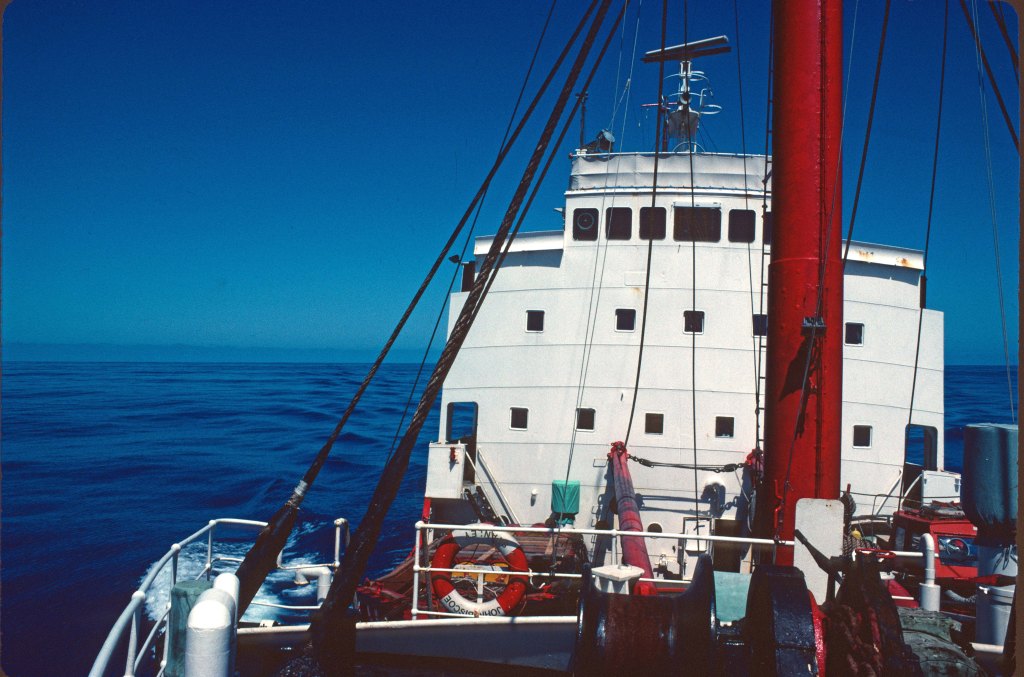
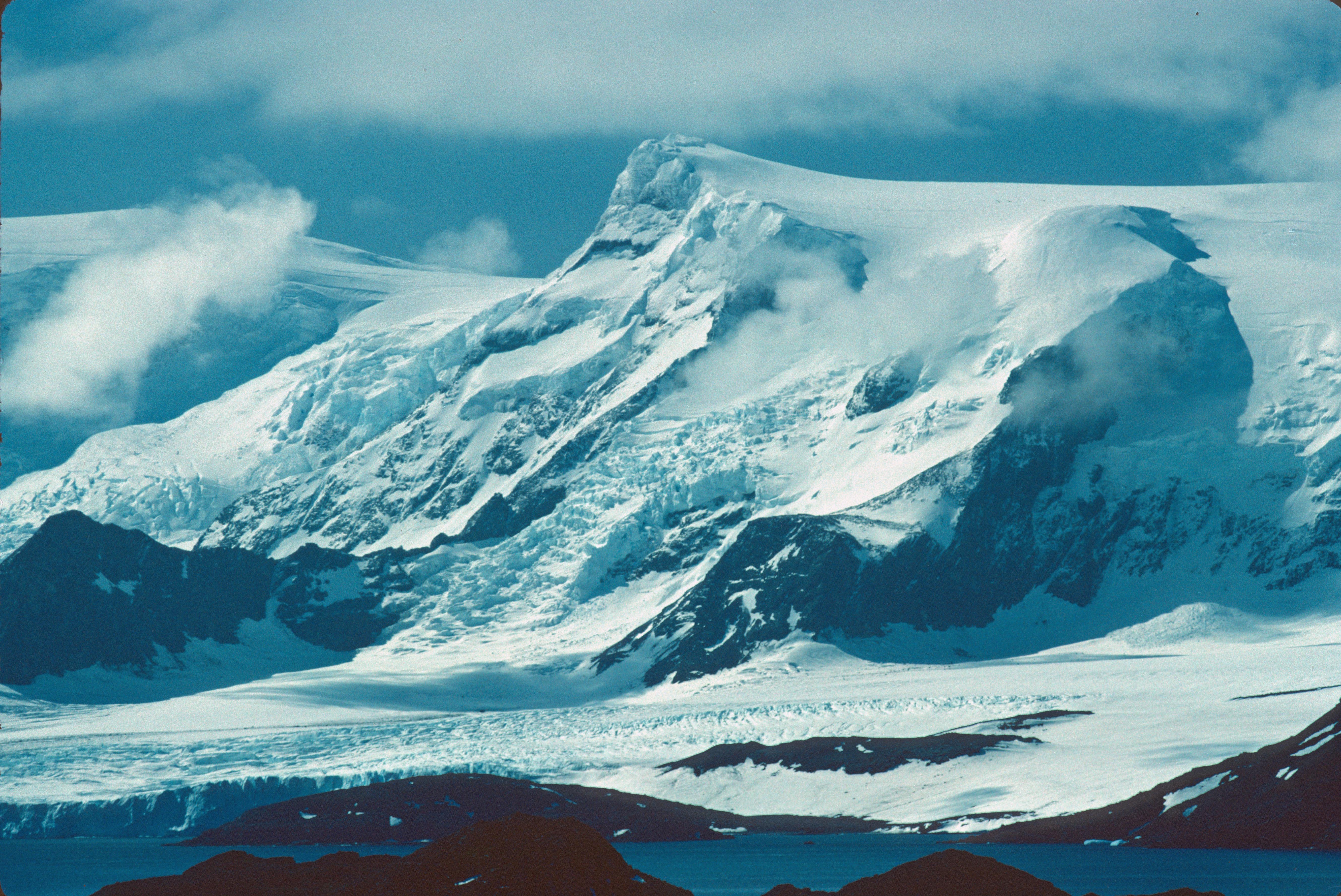
On 21st September 1982, I boarded one of the British Antarctic Survey’s ships, RRS John Biscoe, bound for the Antarctic. I was heading for the BAS base on Signy Island, in the South Orkney Islands (above and below), where I was going to spend 18 months studying the cold hardiness of the few insect and mite species that are found there.

Family and friends came to see us off at Southampton; an emotional farewell for some, especially those ‘FIDS’ who were going to be away for the full BAS tour of two and half years. The word FID, as I was soon to learn, is slang for someone living and working in the Antarctic (for the British Antarctic Survey), a term derived from the name Falkland Islands Dependencies. I was to be on board for the next three months.

It was not that long after the end of the Falklands War, (Spanish: Guerra de las Malvinas) and the John Biscoe had been moored alongside the SS Uganda which had been used as a hospital ship in the Falklands war (below). Strangely enough, I had spent a wonderful two weeks on the Uganda as a schoolboy, in 1970, back in the days when it was used for school cruises. But that is another story!

Our little ship (1,554 tons), the RRS John Biscoe, looks a lot smaller in these photographs, than I remember, but we felt very safe and secure in her. Her steel plates were riveted together – they don’t make ships like that any more – and she was, technically speaking, 100 A1 ice strengthened (below). More importantly, she and her crew – under the command of Captain Malcolm Phelps – had completed many journeys to the Antarctic and back (since 1956).
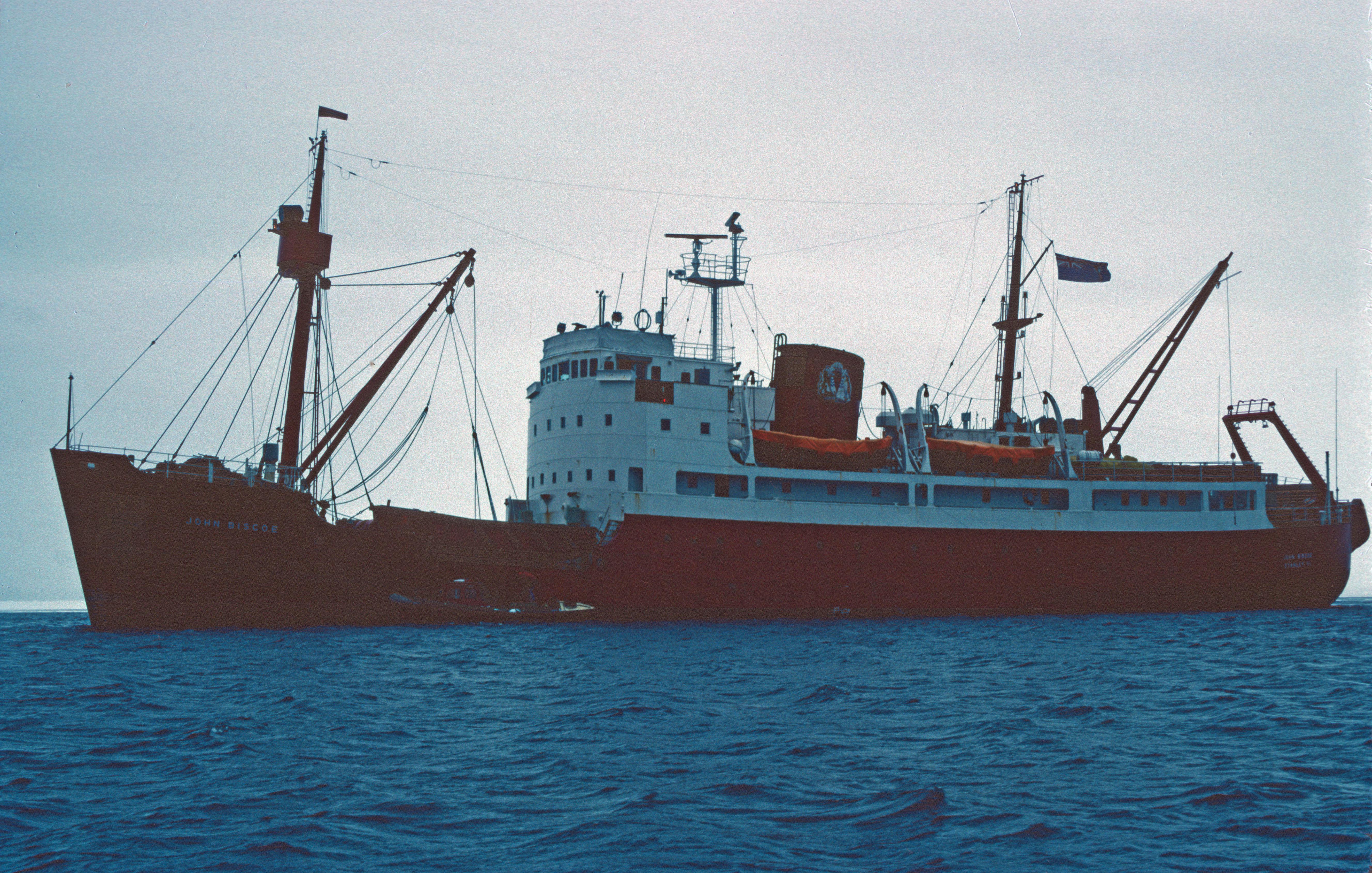
The Biscoe, as we called her, was a tough little ship, as we soon found out when we ran into some rough weather in the Bay of Biscay (below). Little did I know at the time, that this sort of weather was nothing at all compared to what lay in store for us further south in the Atlantic!

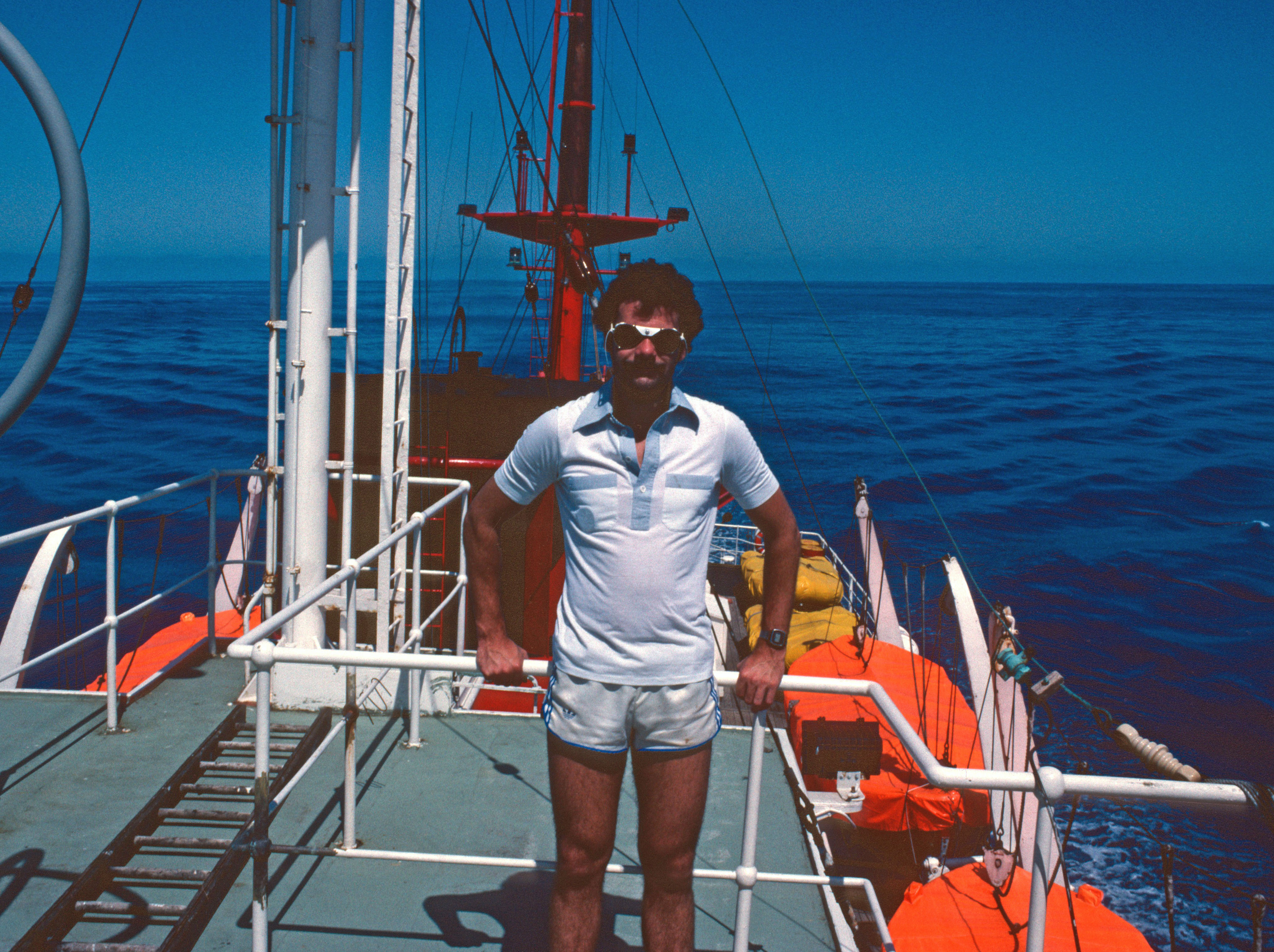
The journey down was a delight. We ‘Fids’ were not required to do an awful lot on board ship. There was a ship’s crew, mostly made up of tough Falkies (from the Falkland Islands), and they did not have any use for us, over than to do a bit of chipping and painting, to keep the ship looking nice.
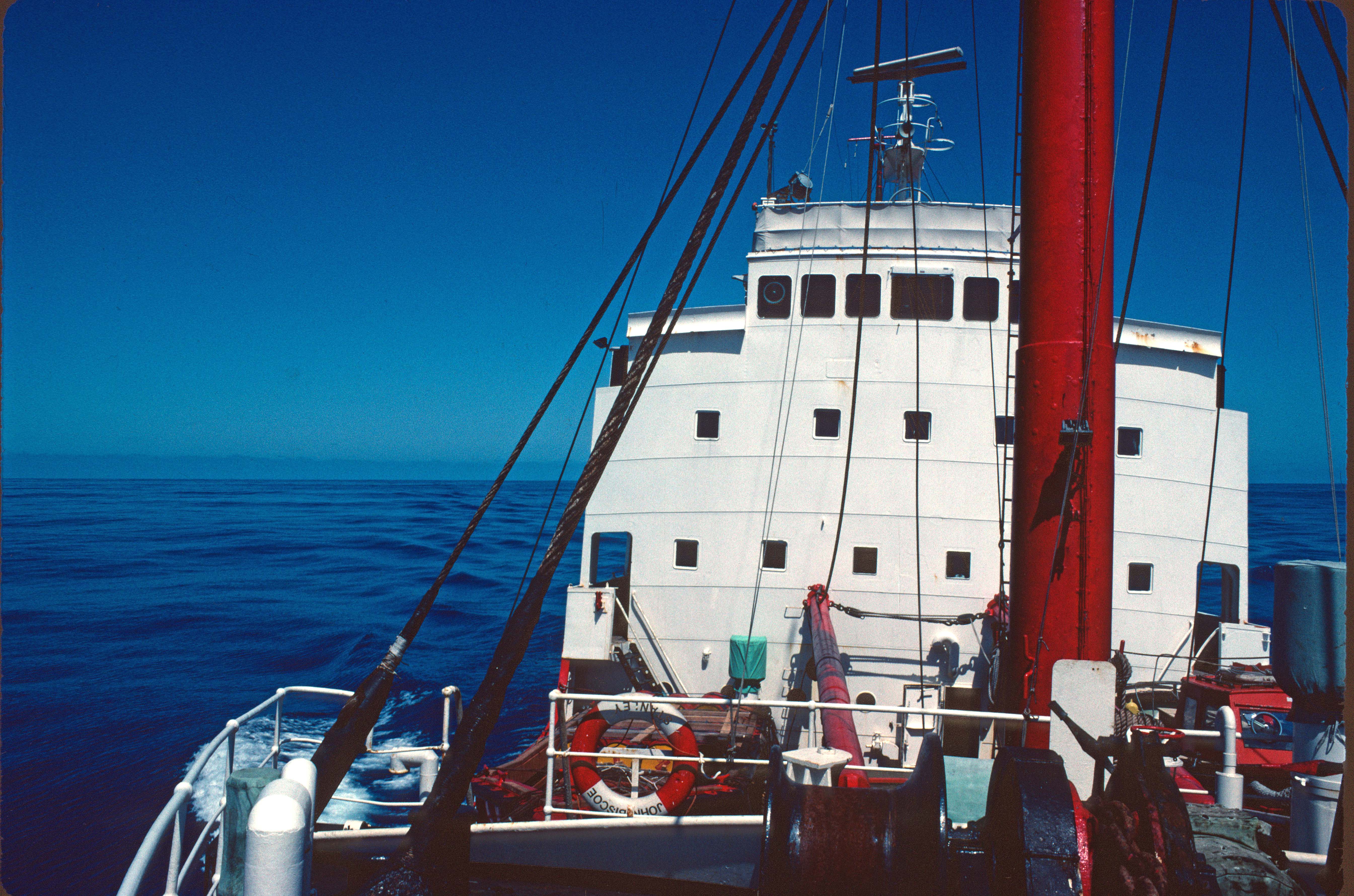
I soon learnt that it was a ship not a boat; toilets were called the heads; forward was aft; a tea break was a smoko, and so on. Fids got to do things like sweeping the bridge and waking up the Mate at 4 am. The fact that some of us had two dgrees (BSc and Phd) cut no ice on the ship, we were the bottom of the pile on board. I didn’t mind and spent my time working – writing up a paper from my Phd research – and sunbathing.
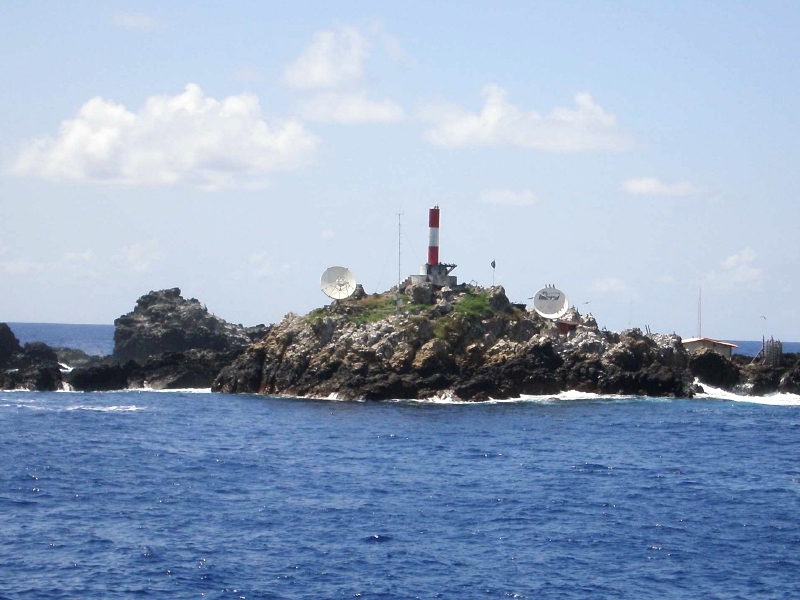
It was a long journey down the length of the Atlantic at 12 knots (!) and it took about three weeks to reach our first port of call, Rio de Janiero, Brazil. There were no stops en route, although we did sail close to the Cape Verde Islands and the Saint Peter and Saint Paul rocks – a group of 15 small islets and rocks in the middle of the Atlantic Ocean owned by Brazil (below).
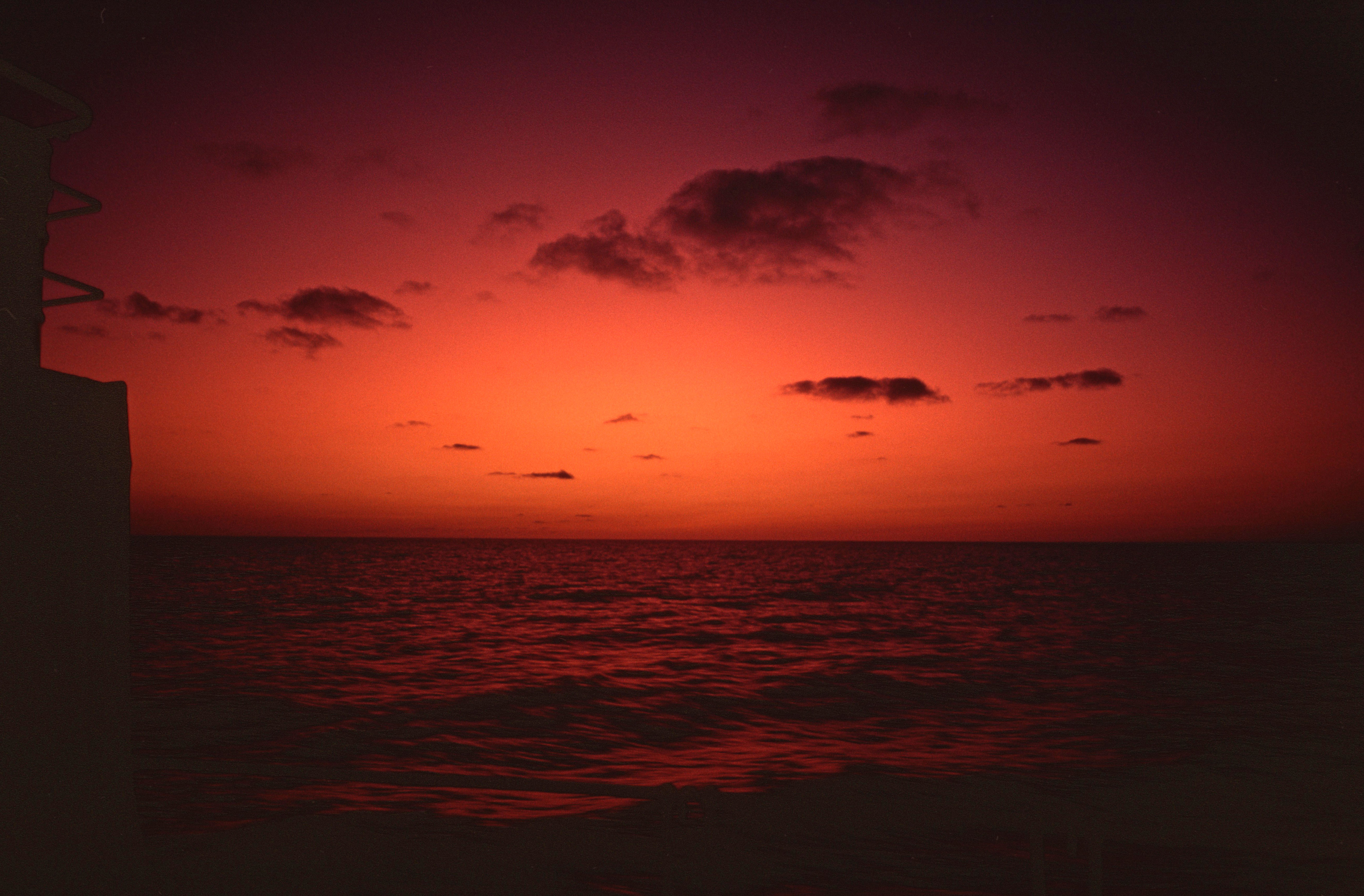
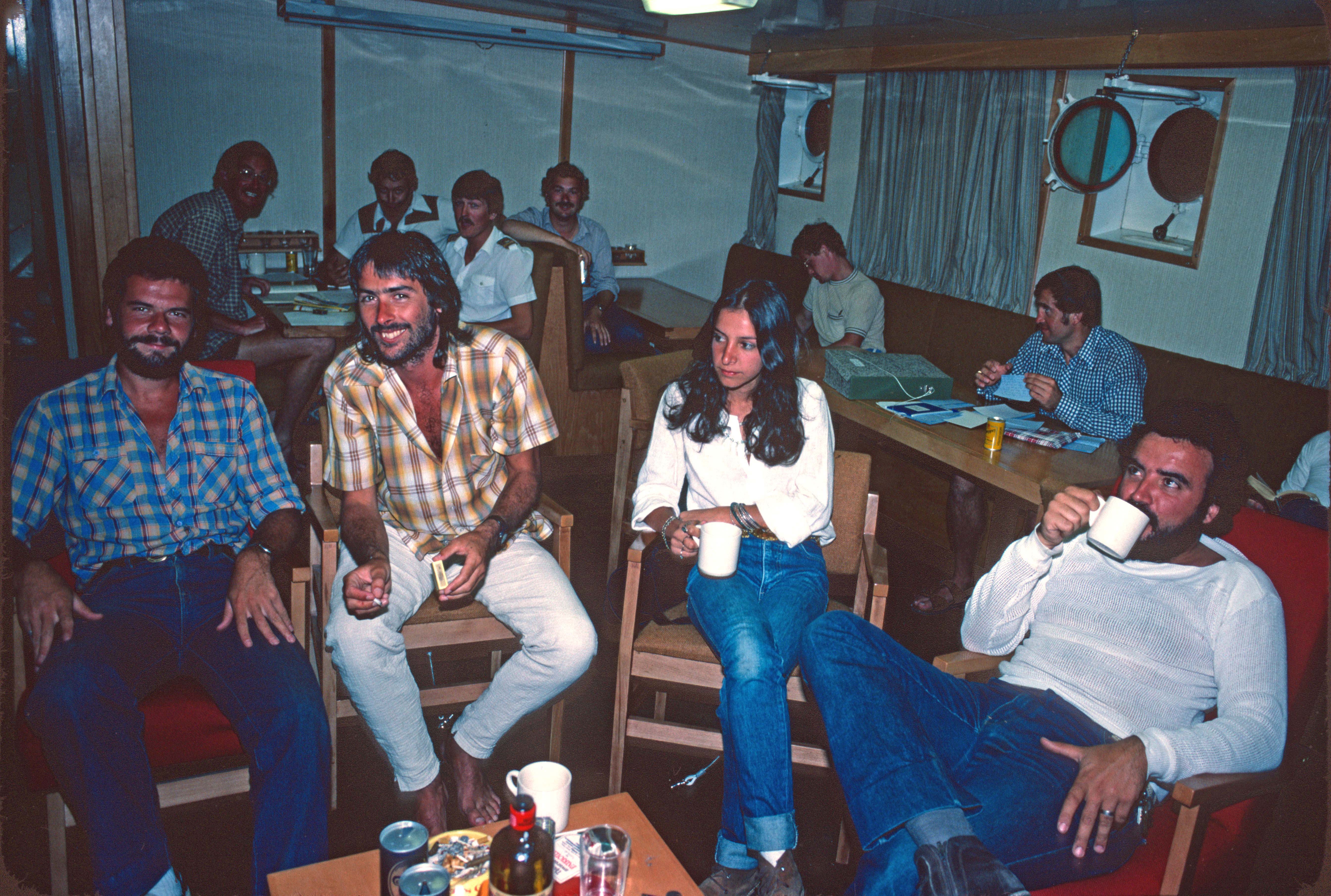
Luckily there was plenty of alcohol on board (duty free!) so one of the daily rituals was to observe the sunset (below), clutching a glass of your favorite tipple!
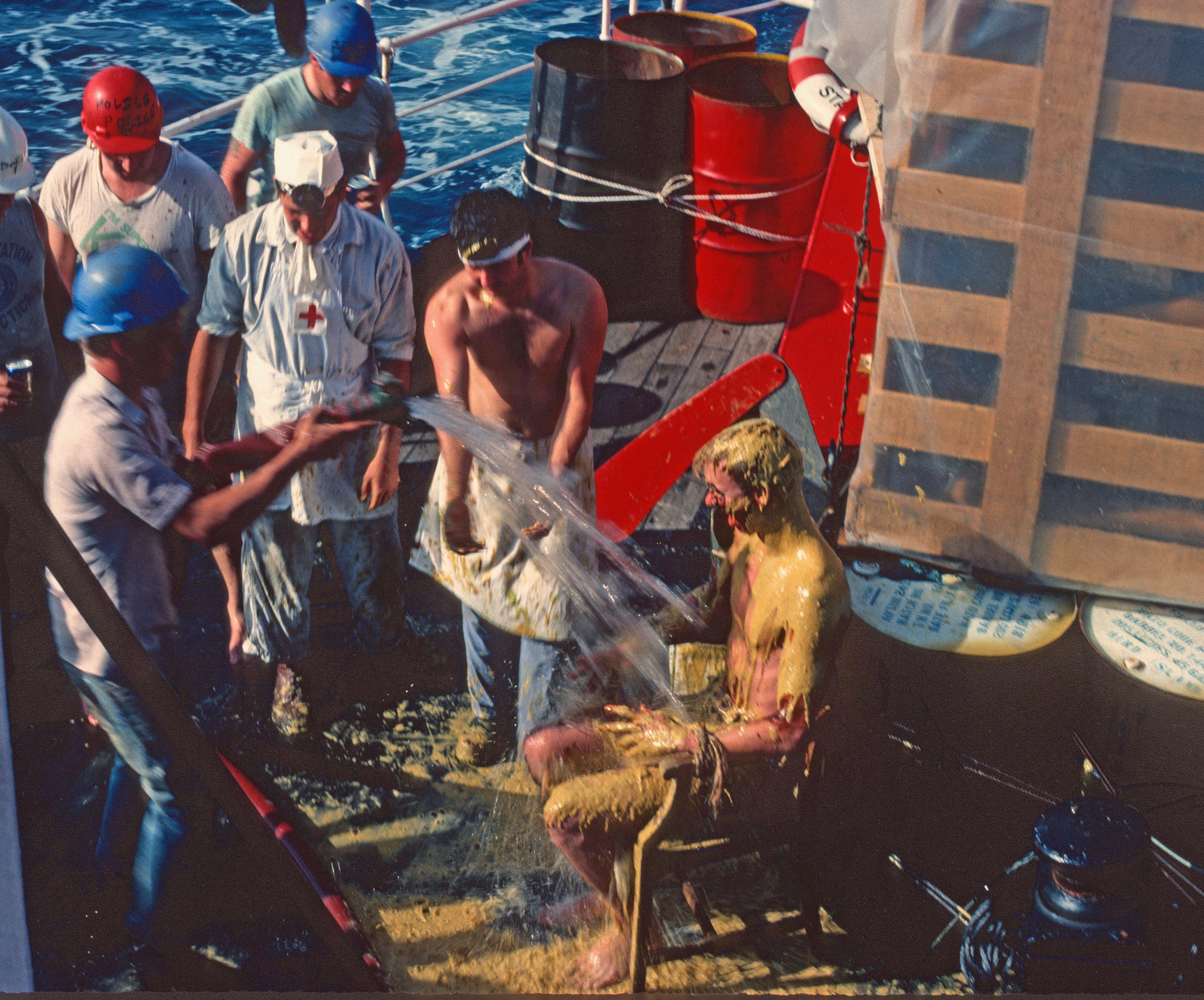
Another time honored tradition was that of the Crossing the Line Ceremony. I can’t say that I enjoy these rites of passage, and luckily I escaped on this occasion as I had crossed the equator before on a ship.
This period of steady ocean travel was one of the most peaceful and enjoyable experiences of my life. I recall seeing a pod of spinner dolphins moving along in an opposite direction to us; the odd ocean sunfish swimming along just under the surface and seabirds of course. I am ashamed to say that I was not a bird watcher at the start of this adventure, but I was an avid birder by the time we returned to the UK (in 1984).
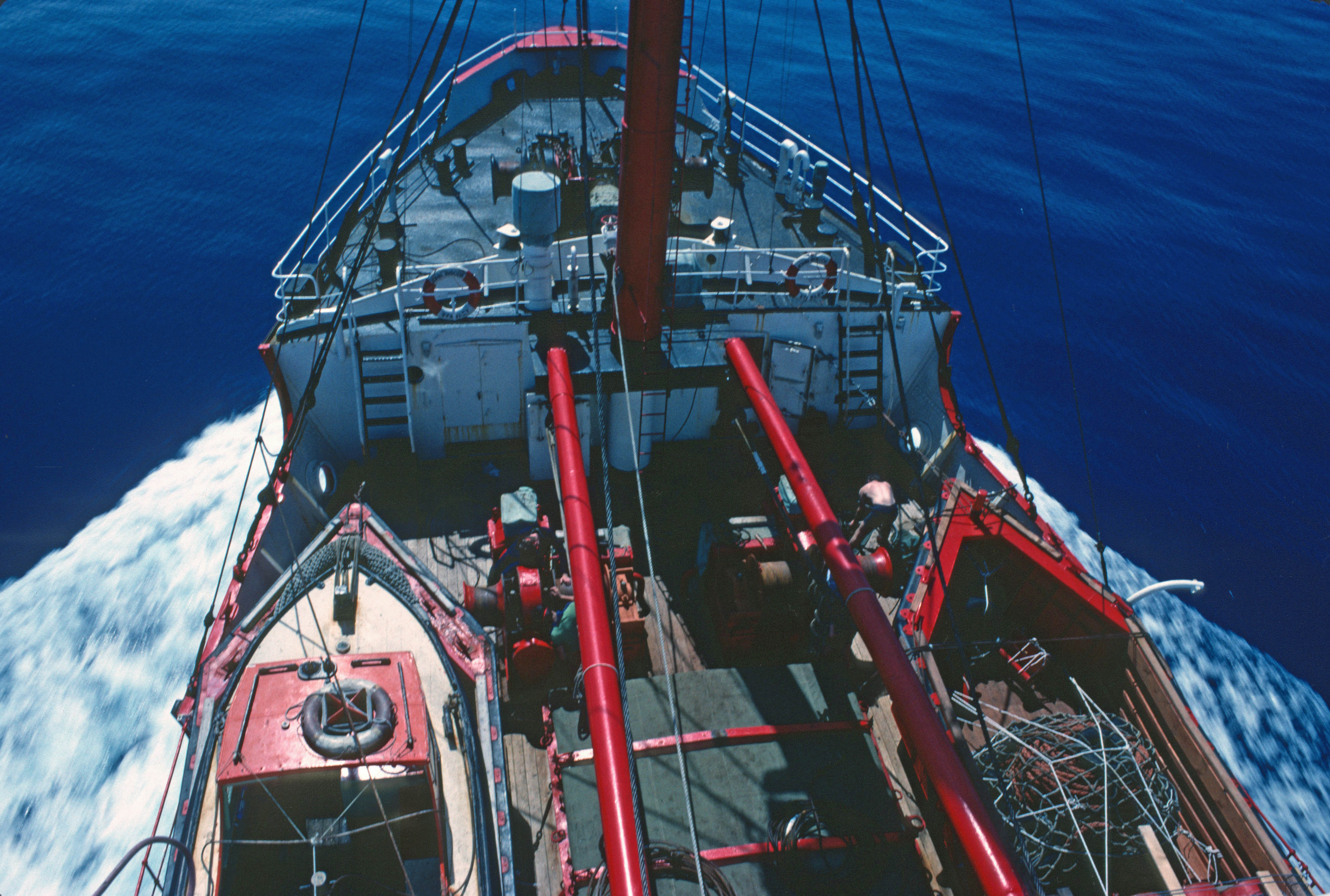
I probably should add, that the British Antarctic survey only recruited men to overwinter in the Antarctic in those days! Fortunately, it is a very different state of affairs these days, and the Director of BAS is now a woman: Professor Dame Jane Francis. Much could be written about this policy, which did not change for a further 10 years or so (see here: The evolving role of women at BAS) after I went to the Antarctic, but that is not my purpose here.
We eventually arrived in Rio de Janeiro about the 11 Oct 1982, and we were let loose to sample the delights of the city for a couple of days, whilst the ship refueled and stocked up on fresh food.
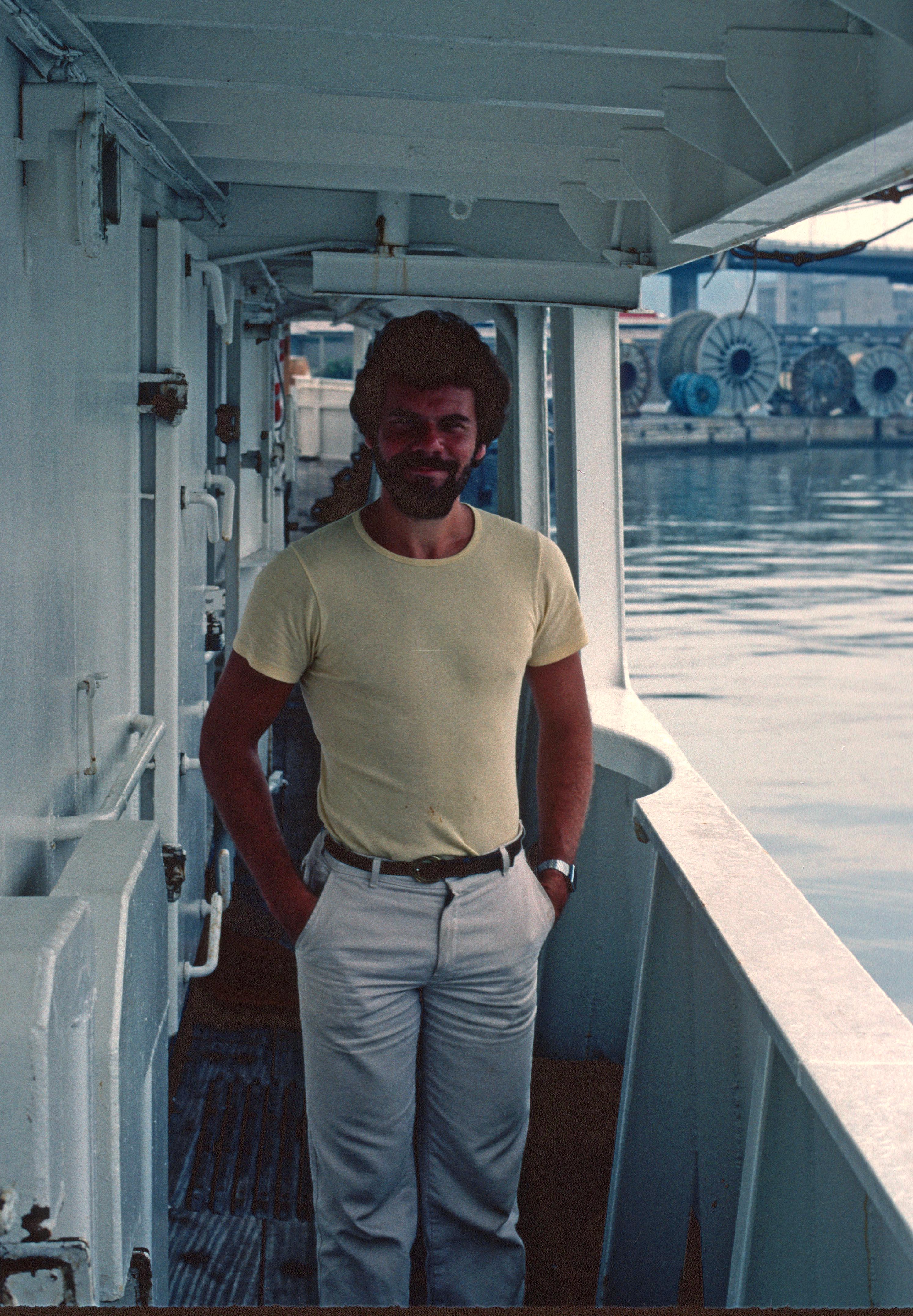
After leaving Rio, we headed out into the Atlantic, bound for the Falkland Islands. As a result of the Falklands conflict, we had to steer clear of Argentinian territorial waters as we sailed south. Soon after leaving Rio we ran into an almighty storm, which reached Storm Force 12 on the Beaufort scale at one point. At those wind speeds, the definition between sea and sky becomes blurred and air is filled with foam and spray. I took the following photo (below) long after the peak, when we were certainly not allowed on deck and had to lie down in our bunks wedged between the mattress and the bulk head. Even going to the toilet (sorry, heads!) was a dangerous activity.
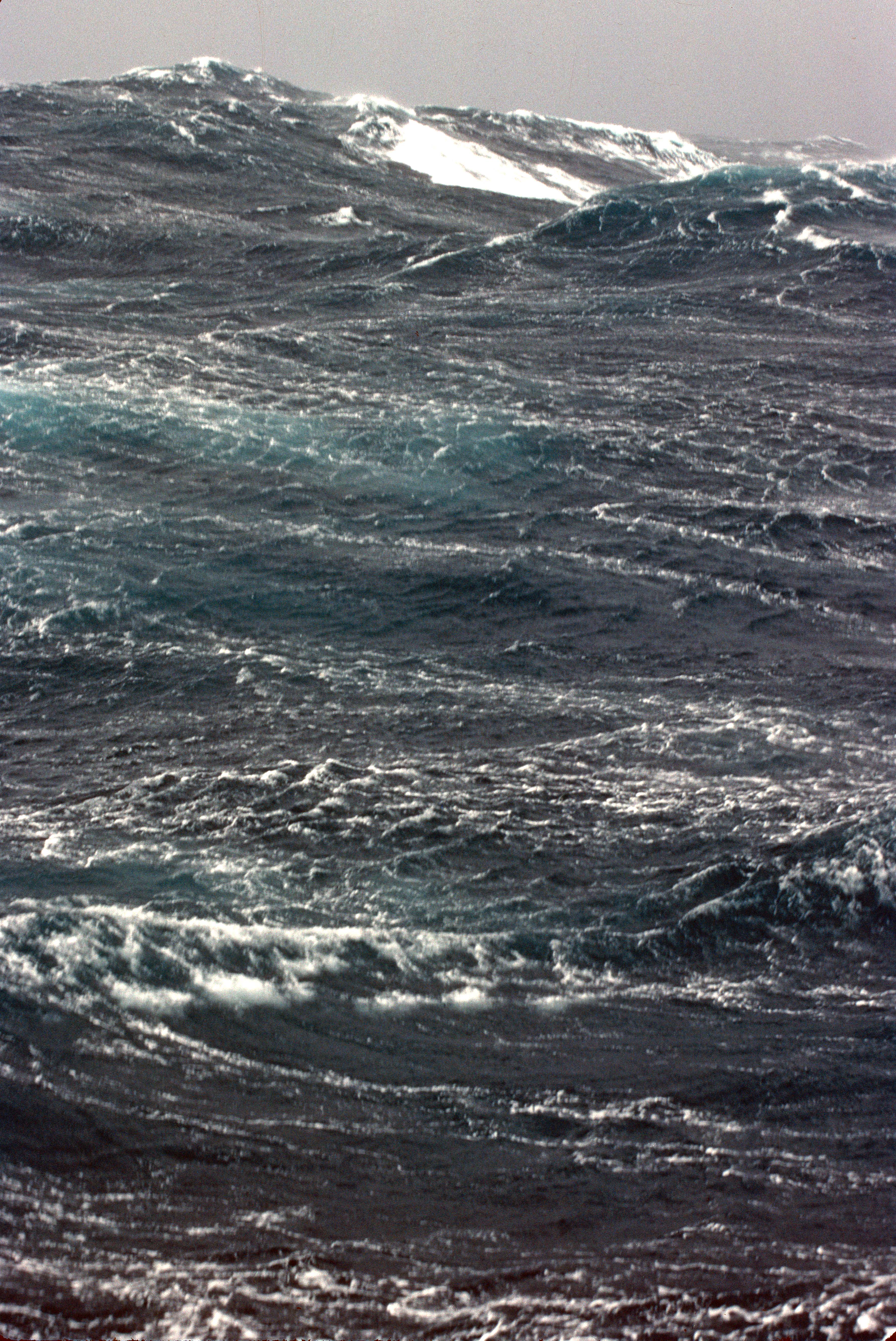
To make matters worse, the ship gradually started to lose power during the storm. The fuel pumps started to pack up, and one by one the cylinders started to give up. Eventually we were left bobbing about in the open ocean. Fortunately, by the time the ship lost power completely, the storm had abated. The rumour was that the Brazilians had spiked (adulterated) the fuel we loaded in Rio, as an act of support for the recently defeated Argentinians. Whether this was true or not I don’t know, but it meant that we had to wait for an ocean-going tug to come out from southern Brazil and tow us into port, where we stayed for about 8 days (waiting for spare parts to be flown out from the UK).
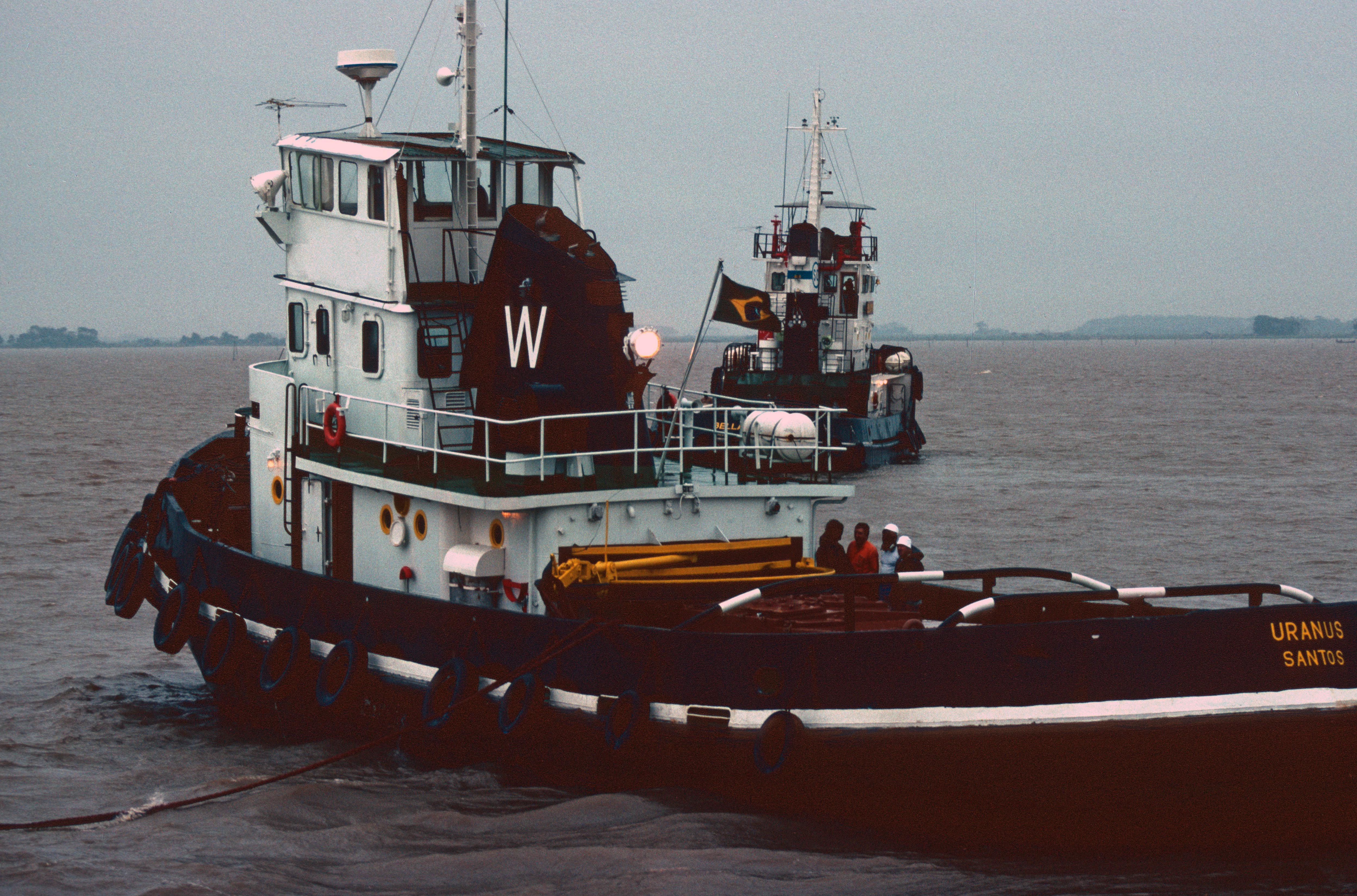
We eventually arrived in the southern Brazilian city of Rio Grande do Sul , on 22 Oct 1982.

The inhabitants of this small city were very welcoming and it was a great experience to get a taste of southern Brazil.

Local people were allowed to visit the ship, so we got to know, and experienced the hospitality of some of them. I am sad to say that I have never been back to this part of the world, but I would like to.
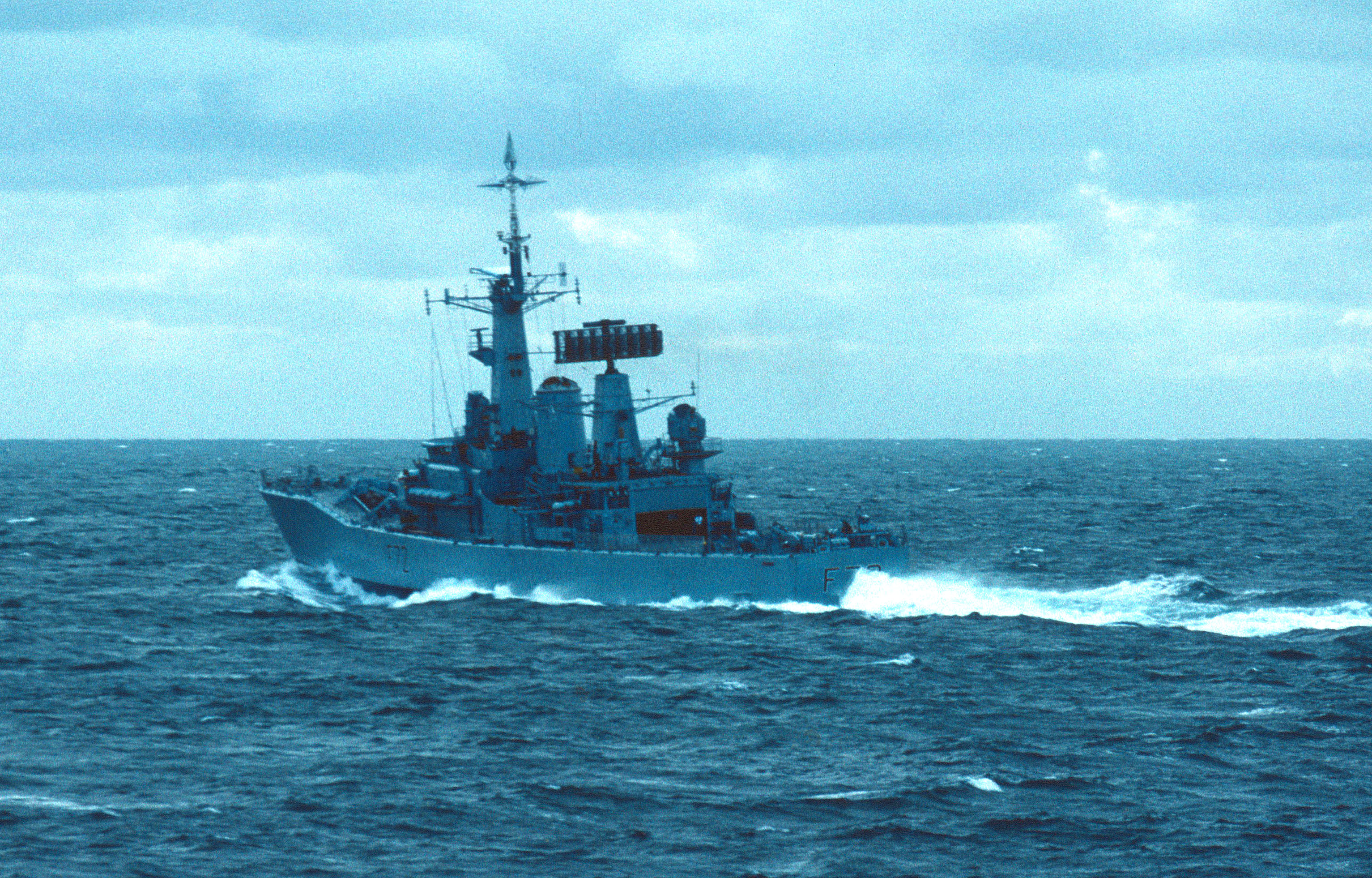
After leaving southern Brazil, we sailed south towards the Falkland Islands. As we entered into the Falkland Island exclusion zone, we were buzzed by a RAF Hercules aeroplane, just checking out who we were I suppose. Early the next day, as we got closer to the islands, a Royal Navy frigate (HMS Phoebe) appeared, going much faster than our stately 12 knots.
We did not stay long in the Falkland Islands and were not allowed to wander far from the ship. The war had only ended a few months previously and there was still a lot of activity going on, most notably mine clearance operations. The only time I managed to get ashore was to get my tooth fixed by an army dentist!
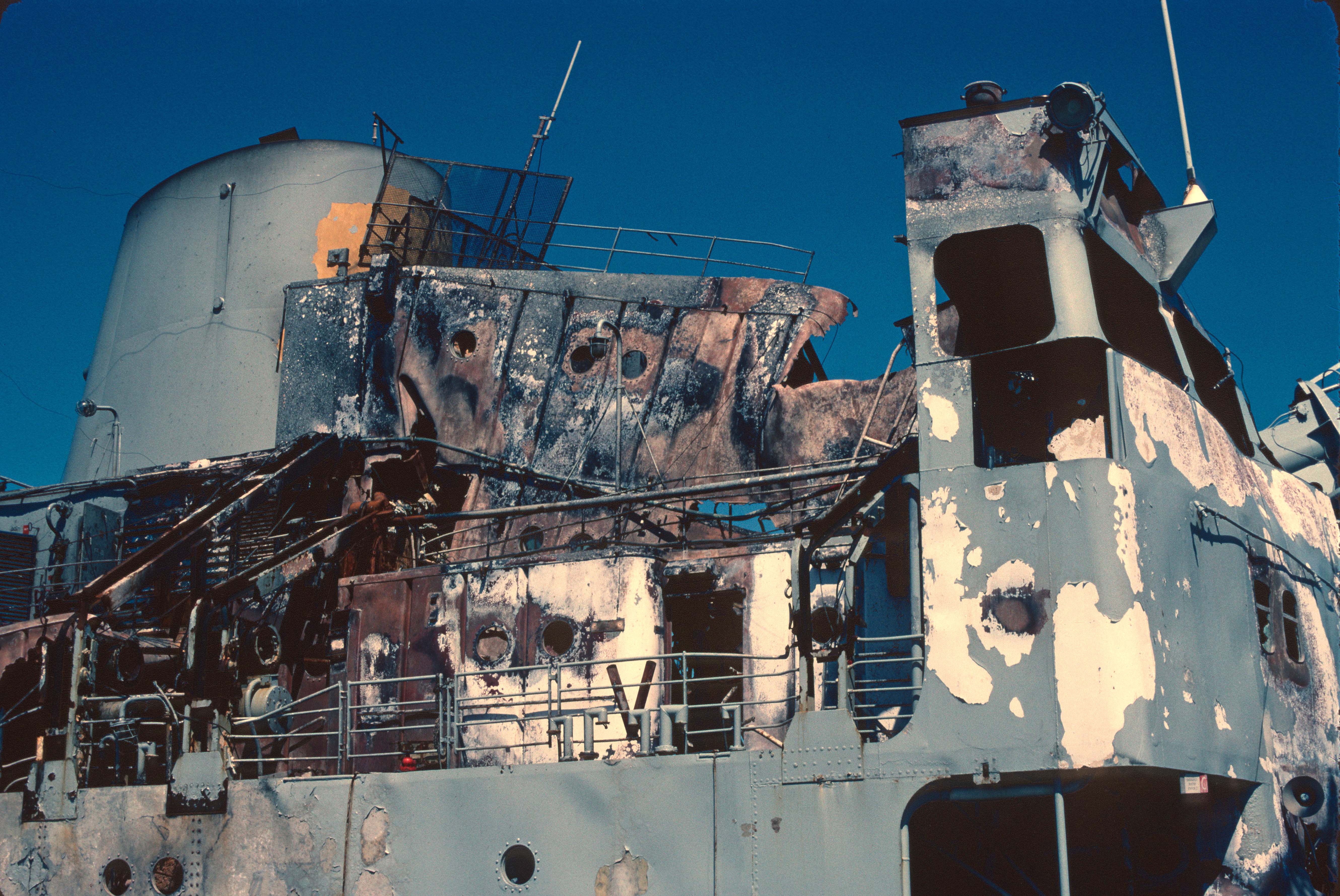
Because of all the ships that were still there, we had to tie up against the burned out hulk of the RFA Sir Tristram (below), which was badly damaged at Fitzroy on 8 June 1982. It was however, still being used as an accommodation ship.
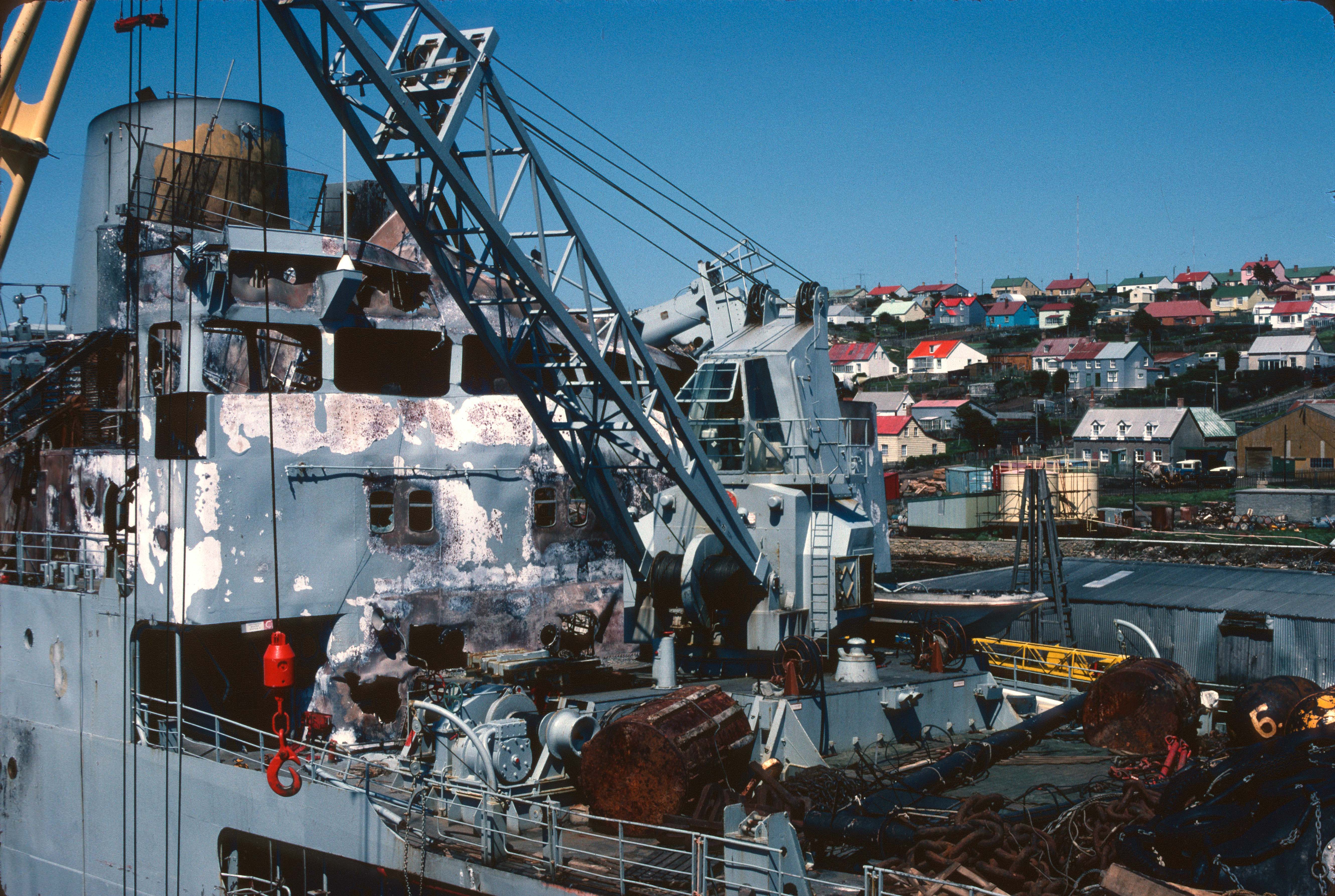
The awful damage to this ship, and its sister ship RFA Sir Galahad was inflicted during the Bluff Cove air attacks in 8 June 1982, during the Falklands War. A total of 56 British servicemen were killed, and 150 wounded in this bombing, and is was harrowing to walk around the remains of the ship. One couldn’t help but imagine what a horrifying inferno it must have been for the Welsh Guards on board. Horrific events were suffered by both sides in this conflict.
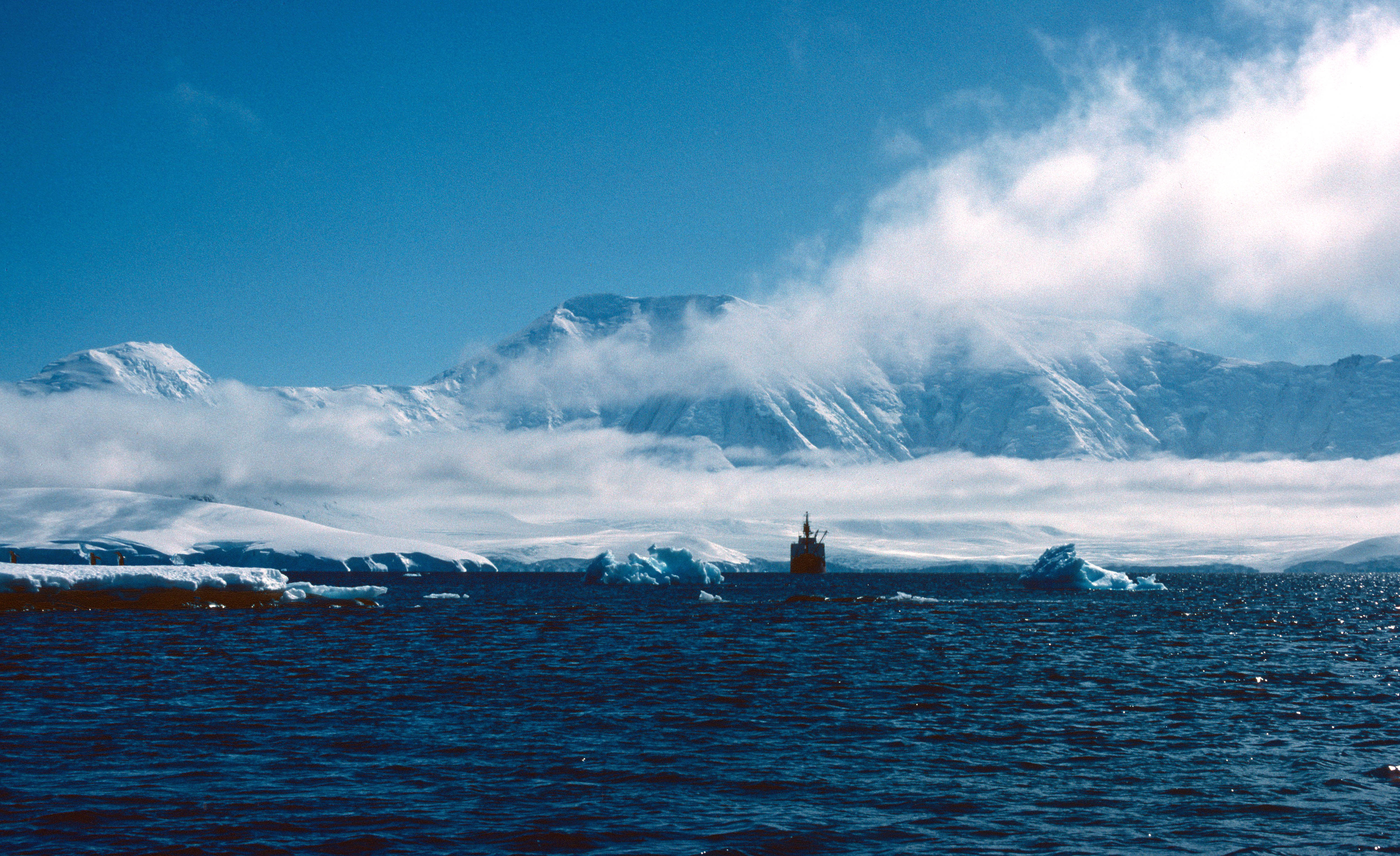
After a brief stop in Port Stanley, we left the Falkland Islands in early November 1982, heading south across the Drake Passage, bound for the Antarctic Peninsula (which I will descibe in a following blog).
All photographs were taken by me using an Olympus OM10 film camera, using Kodachrome film. The rather ageing transparencies were digitised using a Nikon Coolscan V.
 Ray Cannon's travel and photography blog
Leave a reply to Journey to the Antarctic: The Antarctic Peninsula (1982) – Ray Cannon's travel blog Cancel reply