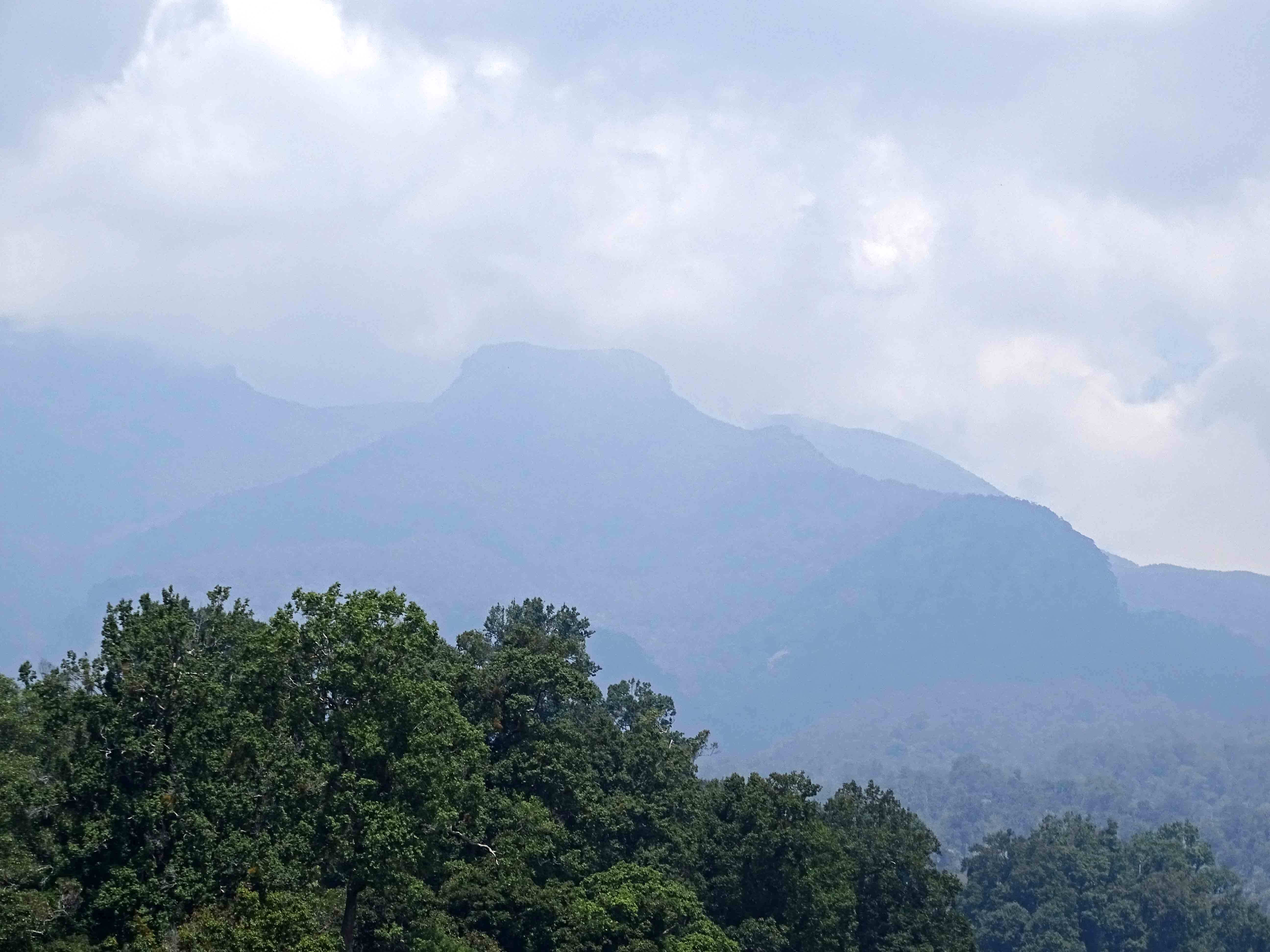
I have to confess at the outset that, unlike Alfred Russel Wallace, I did not manage to reach the top of this imposing mountain! Although the upper section of the mountain was closed and off-limits in August 2015 – something to do with a national holiday – I could have got higher if my knees had not given out! OK, Wallace was still only 38 years old, when he and his companions (two local hunters and two ‘coolies’ to carry his baggage!) successfully scaled both the twin volcanoes of Mount Gede (2,958 m) and Pangrango (3,019 m) in 1861 (1). My excuse was that I was considerably older and already worn out from two days of walking in the extensive botanical gardens (2). Next time I will make sure that I am fresh, as I definitely want to go back and get to the top.
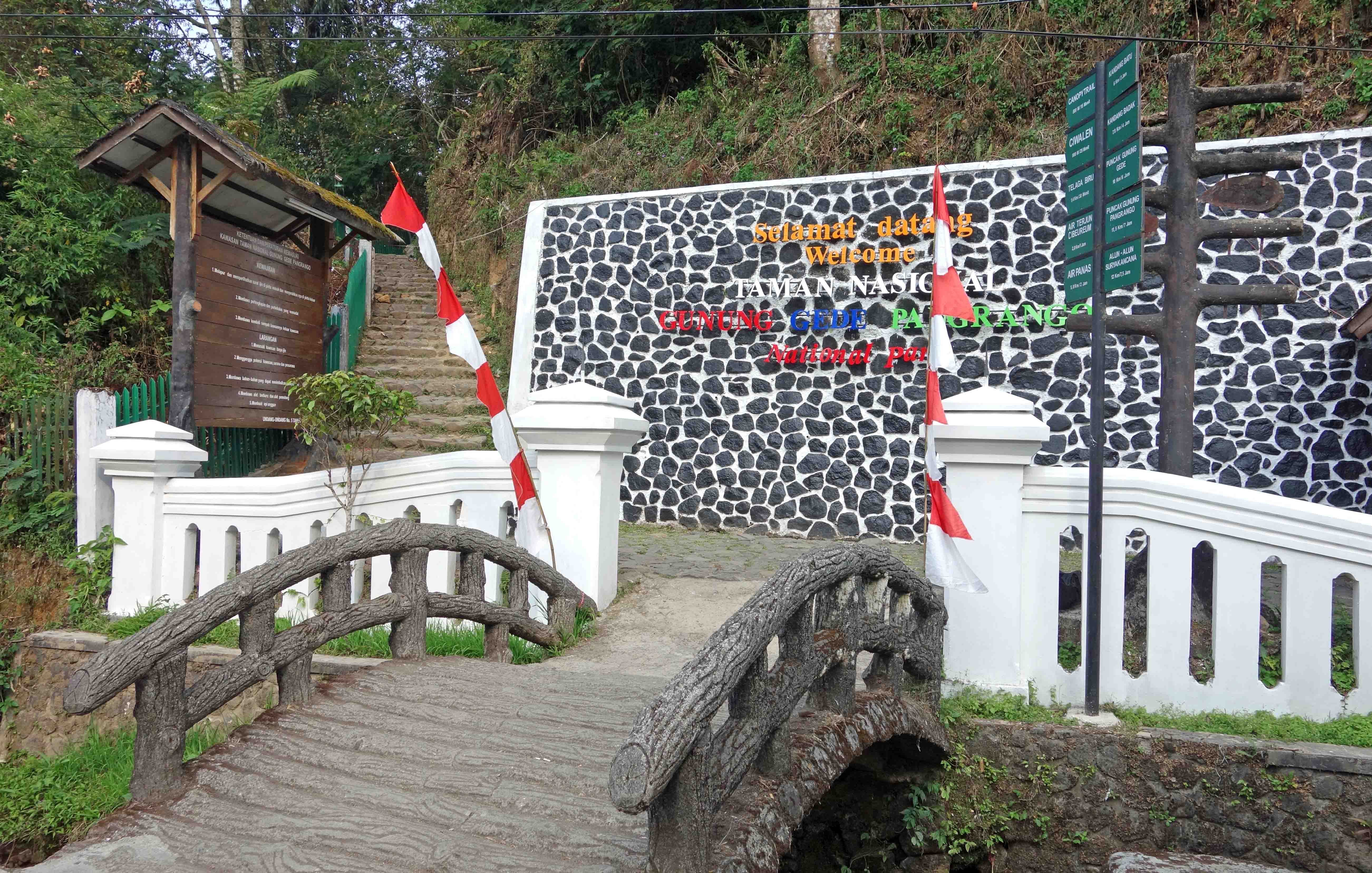
Nevertheless, I did manage to get a fair way up the mountain, so can a least make a partial claim to have followed Wallace, and it gave me further confirmation of the vigour and curiosity of this remarkable Victorian naturalist.
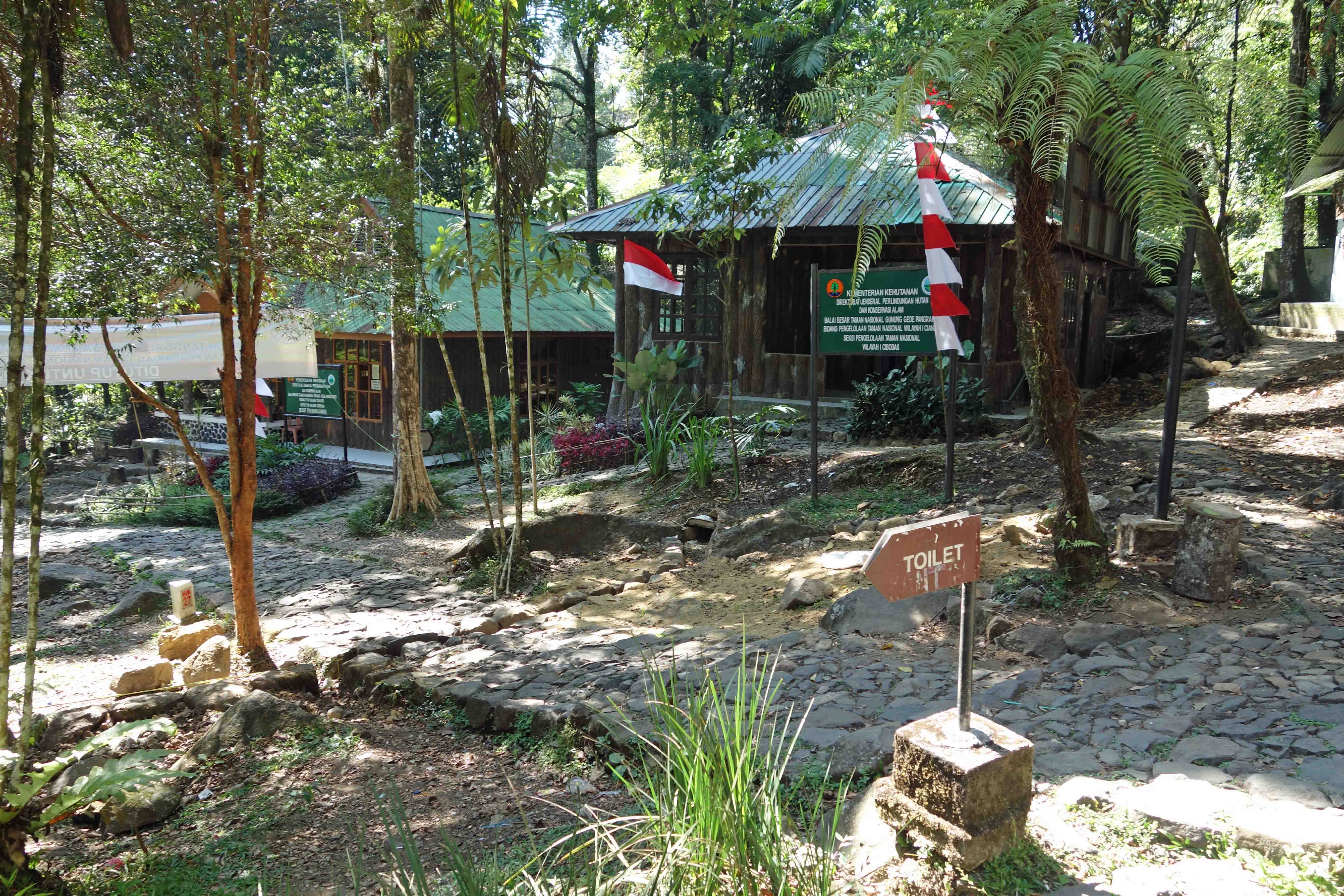
After paying the relatively steep entrance fee for foreigners (it’s a lot cheaper for Indonesians), I had a delicious cup of sugary white tea (tea tarik) to fortify me for the climb.
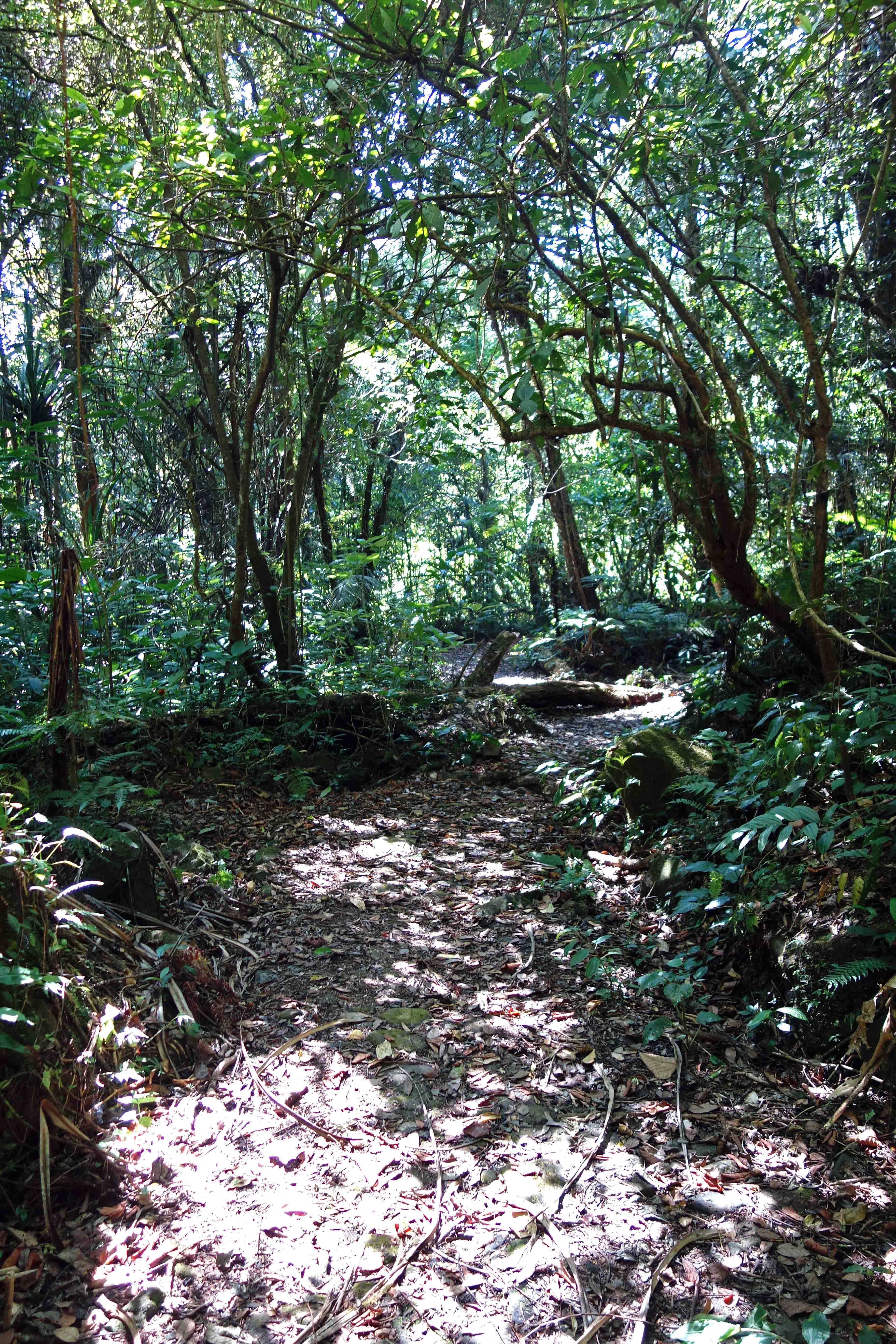
The first part of the trail is, as Wallace describes it in The Malay Archipelago, ‘a tolerably steep ascent through a grand virgin forest’. Whether or not it is still virgin forest today is hard to say, but the birding is good and the forest appears to be very healthy despite the large numbers of people who troop up the trail, particularly the first section which leads to the Cibeureum Waterfalls (at about 1,625 m). Most of the 15,000 hectares of the park are probably inaccessible.
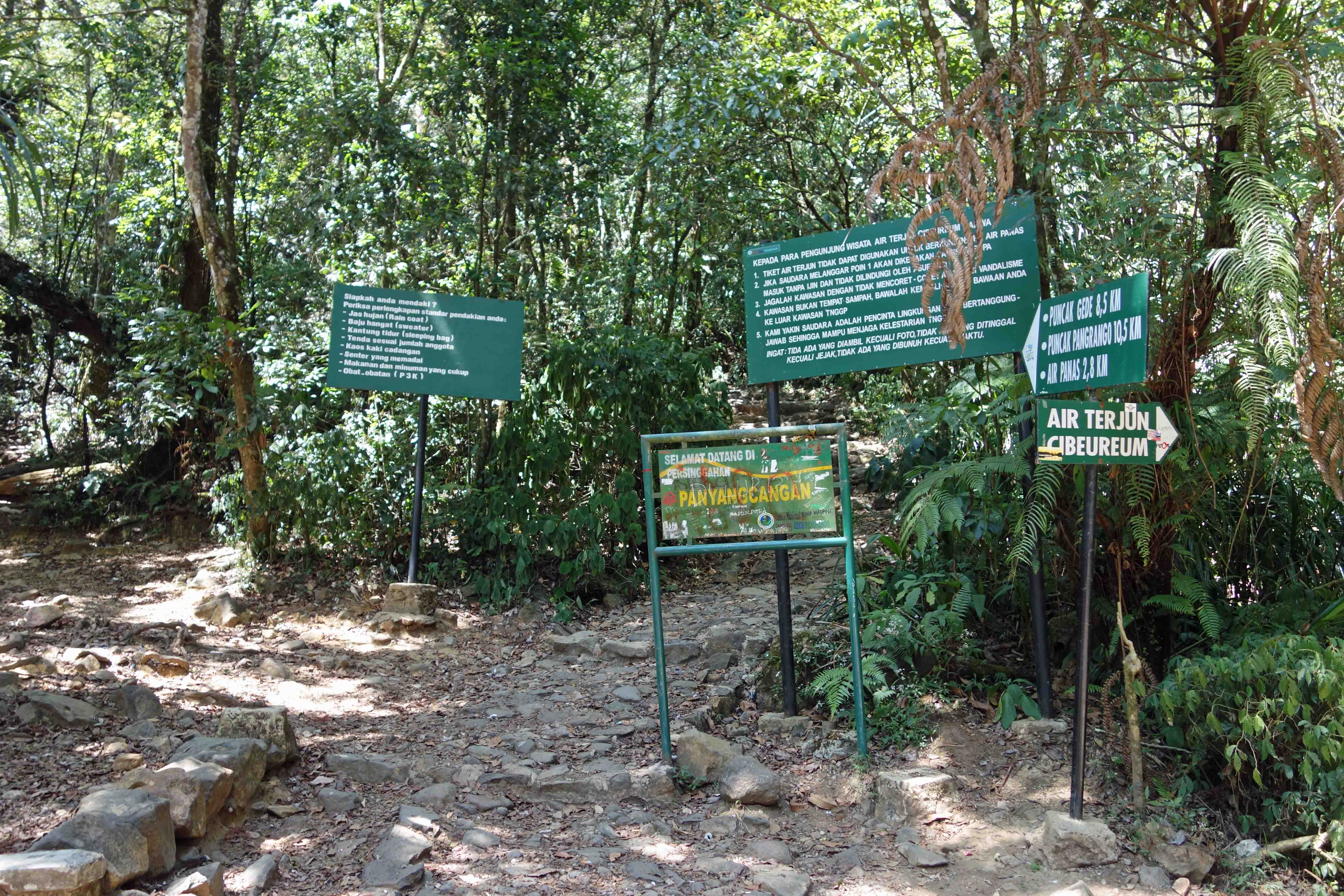
Wallace was struck by the ‘immense number of ferns’ on the route and recounts ‘continually stopping to admire some new and interesting forms’. His ability to notice (and collect) plants, birds and insects is impressive, but he was a highly experienced tropical naturalist, having spent about four years in the Amazon before his extensive travels in what is now Indonesia.
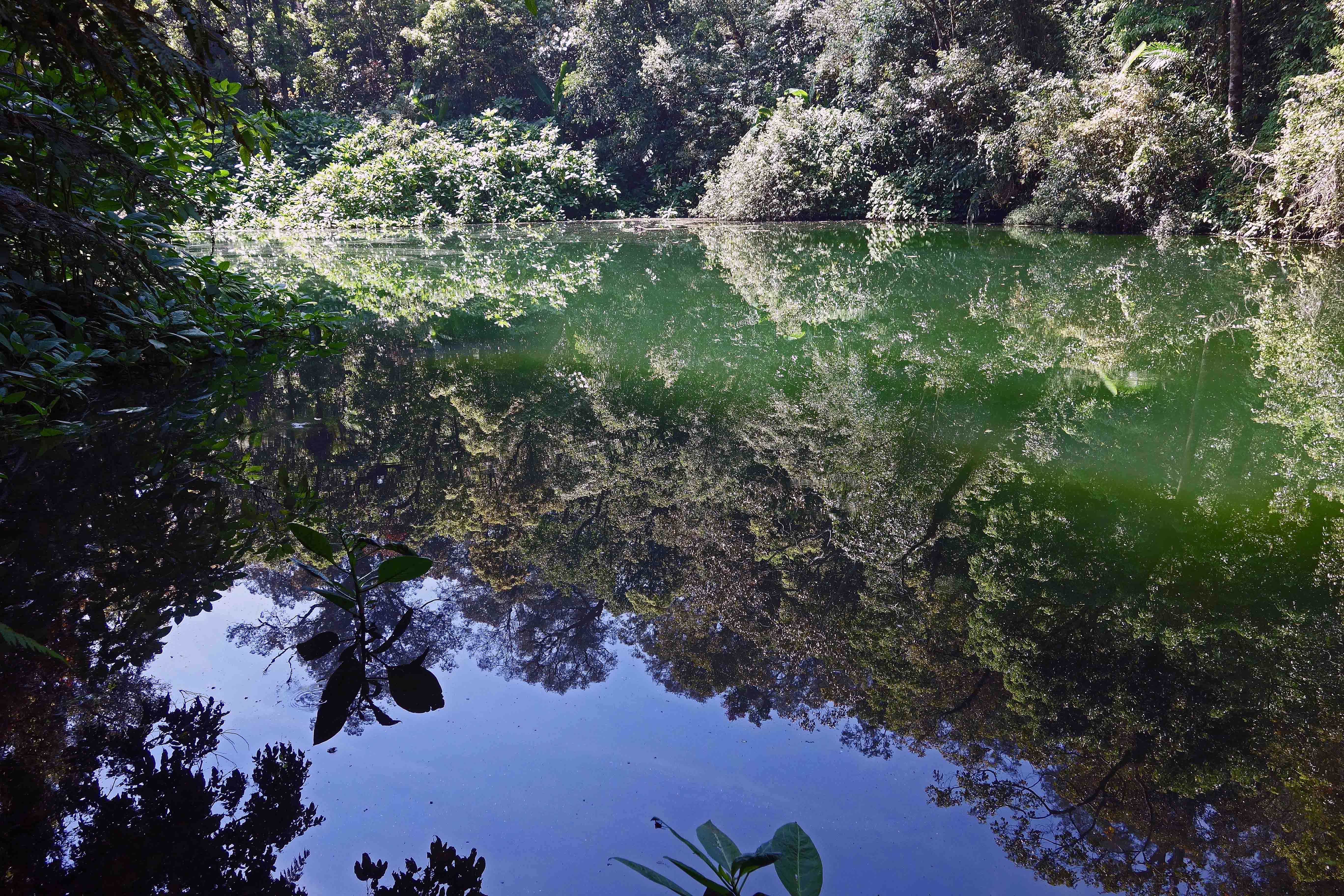
I almost missed The Blue Lake, but I was very pleased when I stopped to admire it, as a large flock of Sunda minivets (Pericrocotus miniatus) arrived in a nearby tree. These are endemic to Indonesia, Sumatra and Java, and Wallace had already obtained a specimen of this bird on his way to the mountain (1).

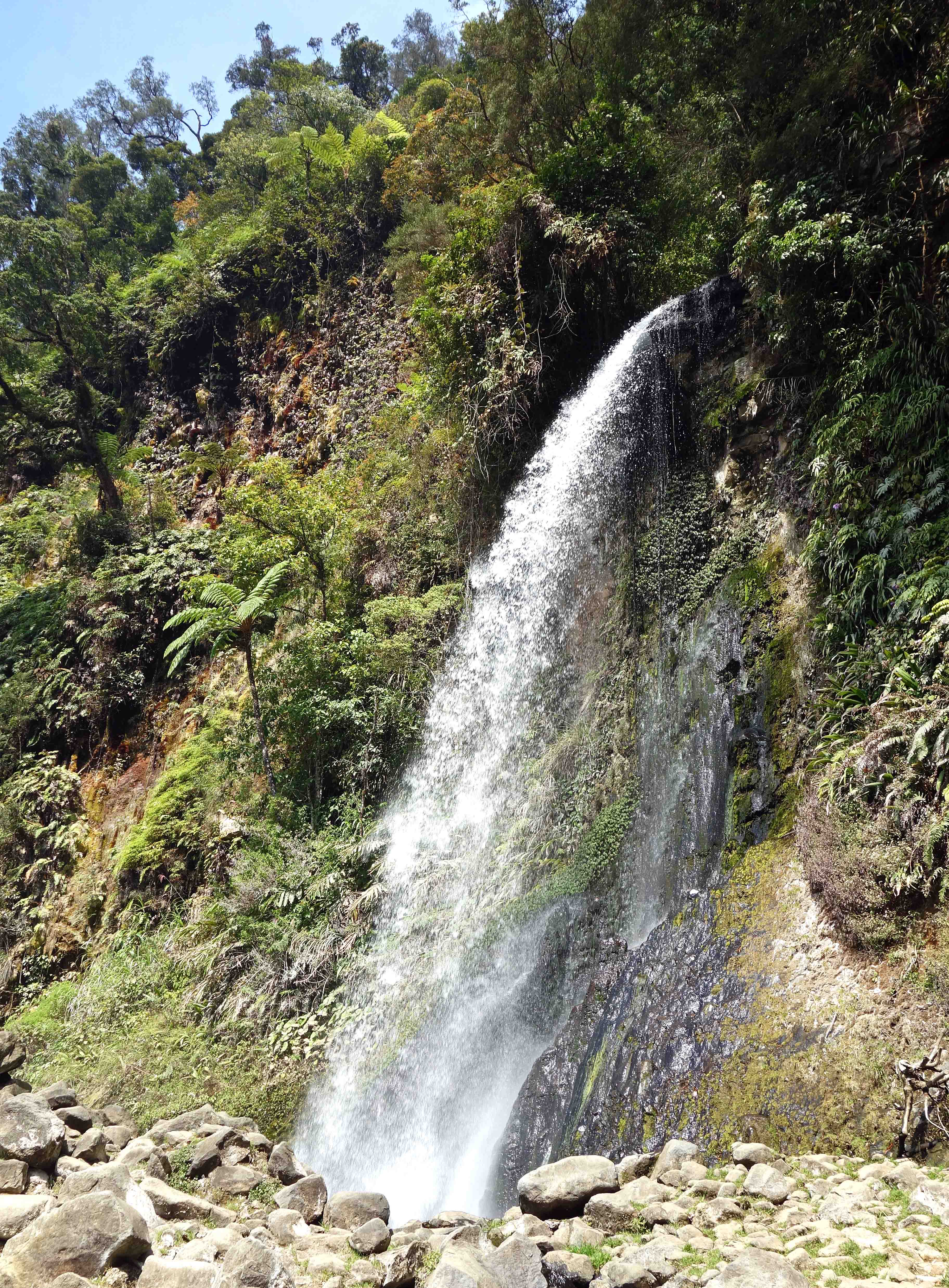
Most people on the trail seemed to have target of reaching the Cibeureum Waterfall, which is not too taxing a climb. As well as the waterfall, there are a number of fine tree ferns on the slopes (below).
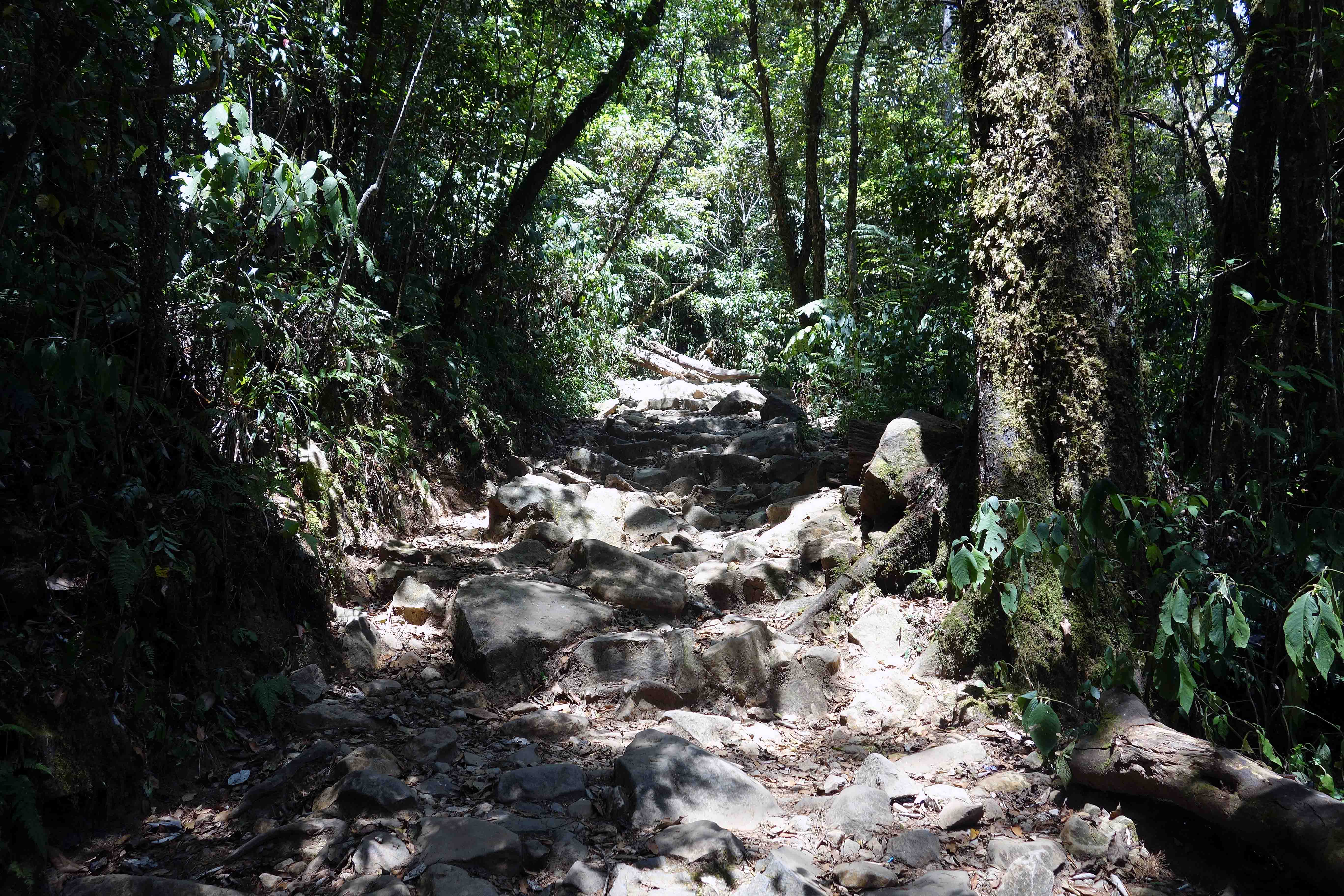
After the turn-off to the waterfall, the trails becomes ‘narrow, rugged and steep’ as Wallace described it (1). The path is very rocky and someone must have laboured long and hard to construct this access way to the peak.
Nevertheless, there is much to look at during rest breaks (!) on the trail, such as the gorgeous Blue nuthatch (Sitta azurea). It appears that Wallace did collect this species from West Java – which was only first described some 30 years before in 1830 (3) – since there is a hand-written letter from A R Wallace in the Natural History Museum concerning this species (using a former name) where he refers to ‘a bird of mine’. Presumably one he collected and donated to the museum?
As well as many birds, I was fortunate enough to come across some beautiful tiger butterflies (Zinken’s tiger, Parantica albata) – also called danaids – which are endemic to Java (below).
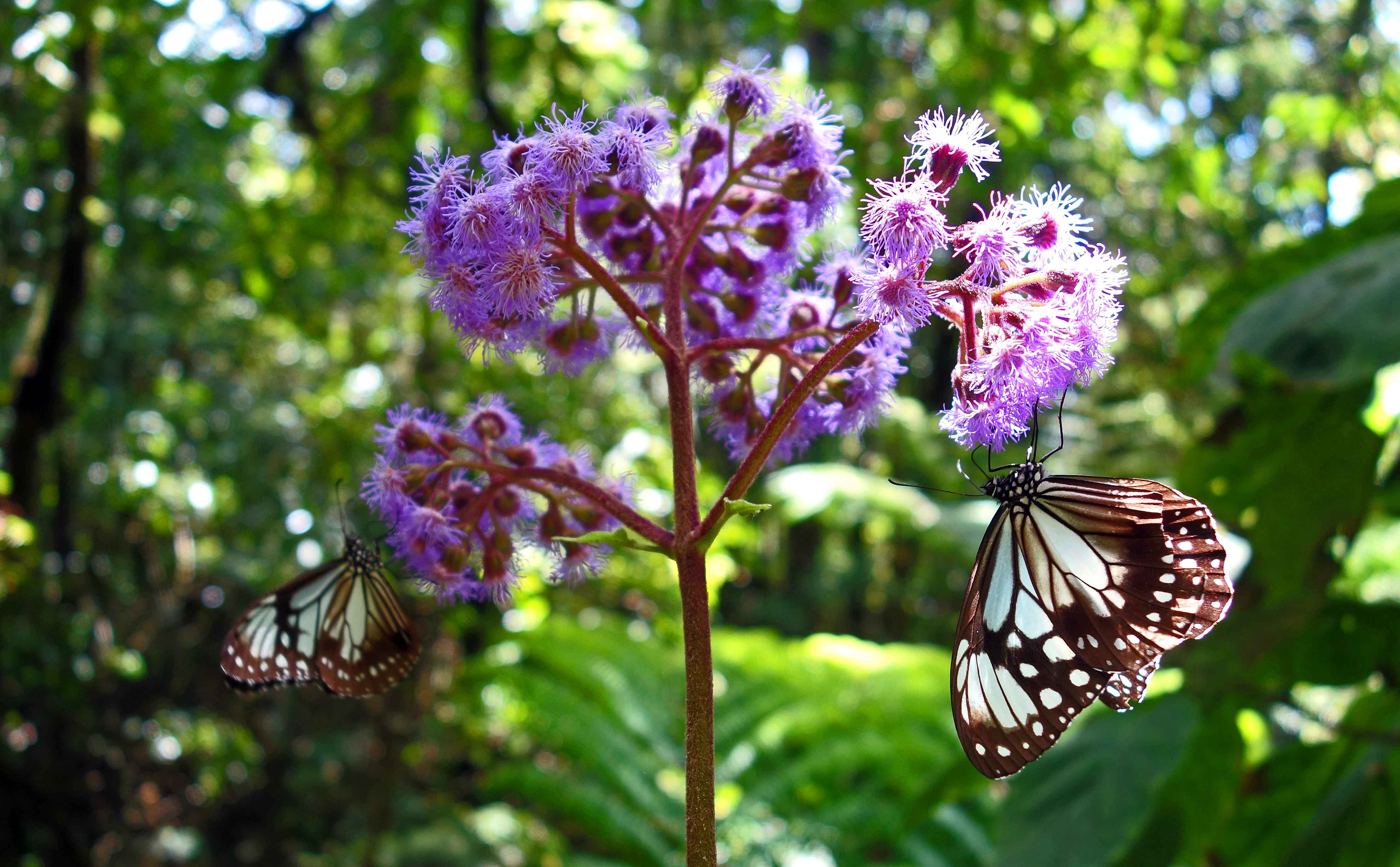
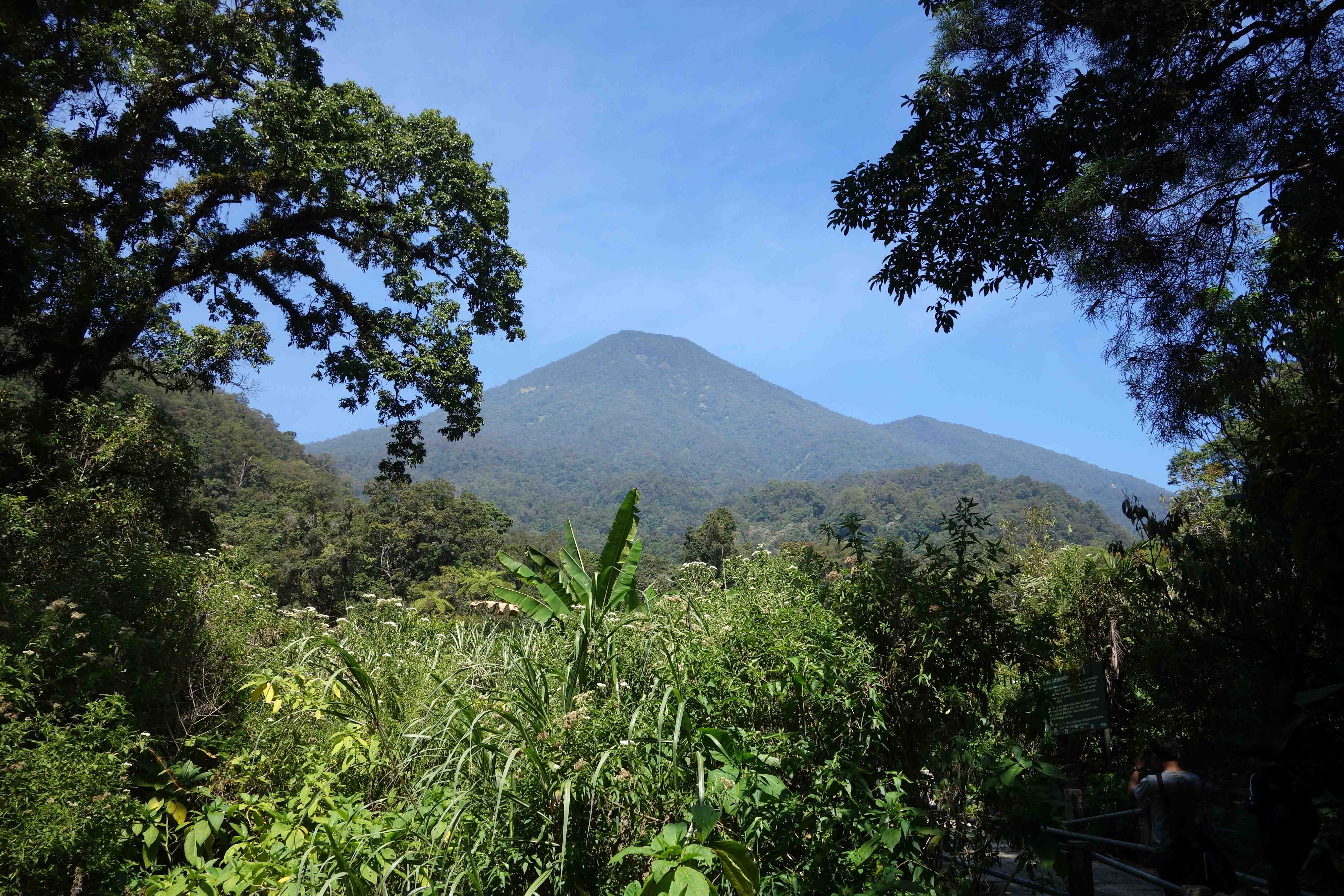
Alas, I never made it to the Hot Springs/Air Panas (2,150 m) and turned around at about 2,000m, to save my knees. There is much to see beyond this point, and Wallace describes in detail the flora on the higher slopes of the volcano, much of which was of a temperate kind, familiar to him from his botanising in England. So I would like to go back, not only to see the impressive volcano itself, but the birds, insects and plants to be found on the top of these mountains. Like many climbers today, Wallace camped near the top and took time to explore both peaks. I had to be content with a view of Mount Pangrango from the trail on the way down (below).
- Wallace, Alfred Russel. The Malay Archipelago: the land of the orang-utan and the bird of paradise; a narrative of travel, with studies of man and nature. Courier Corporation, 1869.
- https://rcannon993.wordpress.com/2015/10/18/wandering-after-wallace-cibodas-botanical-gardens/
- https://en.wikipedia.org/wiki/Blue_nuthatch
- http://www.nhm.ac.uk/research-curation/scientific-resources/collections/library-collections/wallace-letters-online/5678/6531/T/details.html


 Ray Cannon's travel and photography blog
Leave a comment