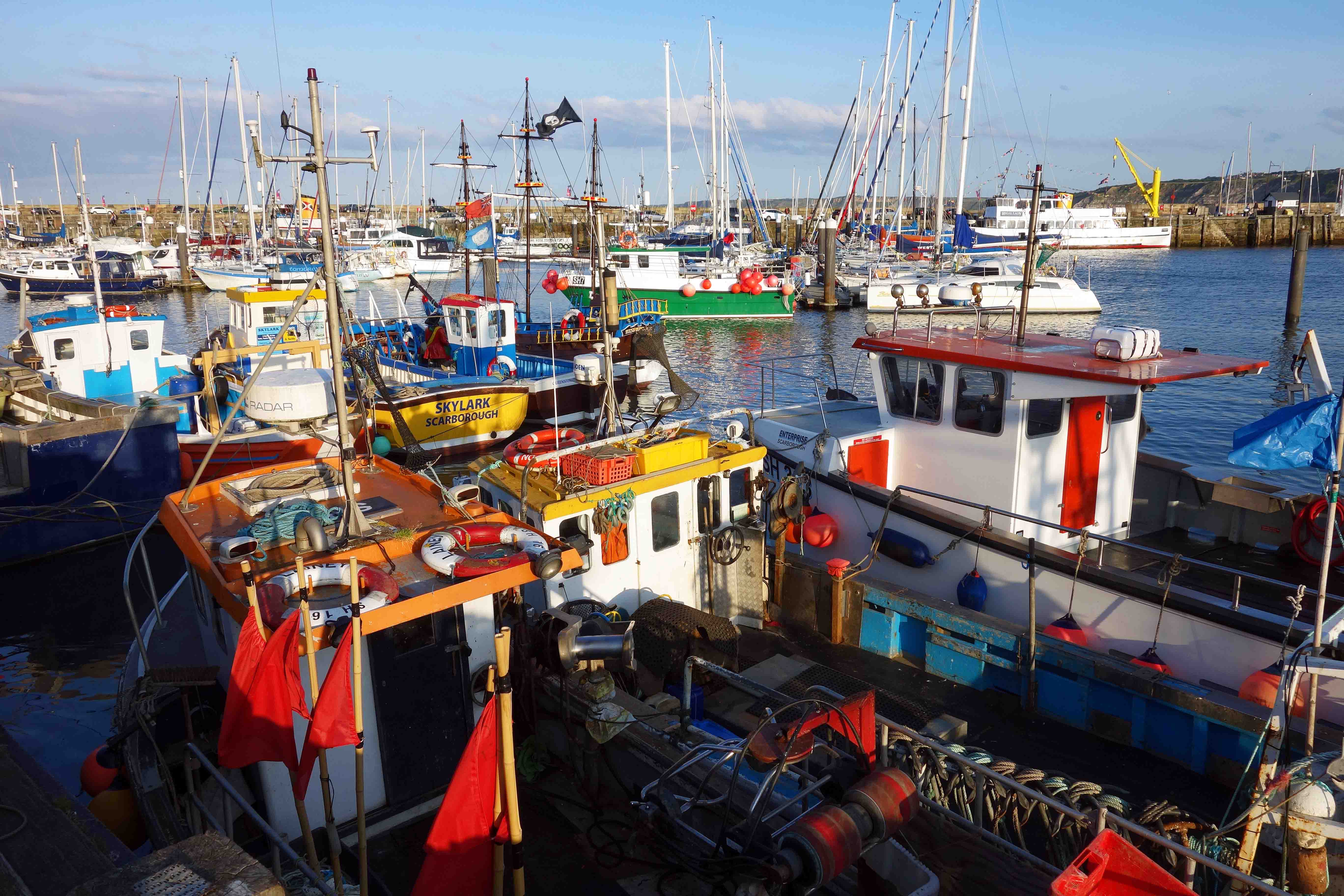
The small harbour in Scarborough, North Yorkshire, is a photographer’s delight, with a diverse collection of colourful fishing boats and pleasure craft. There are also lots of colourful shops and amusement arcades along the sea front.

During the summer, the sun sets late in the evening and the so-called ‘magic hour’ – when colours are at their richest and most saturated – occurs between 8 and 9 pm or even later. One thing that really attracts me are reflections.

Brightly coloured reflections offer the possibility of sampling them to obtain abstract images. The reflections need to be bright – so sunshine is a must – and the images must offer the possibility of selecting an area which might be aesthetically interesting to focus on.
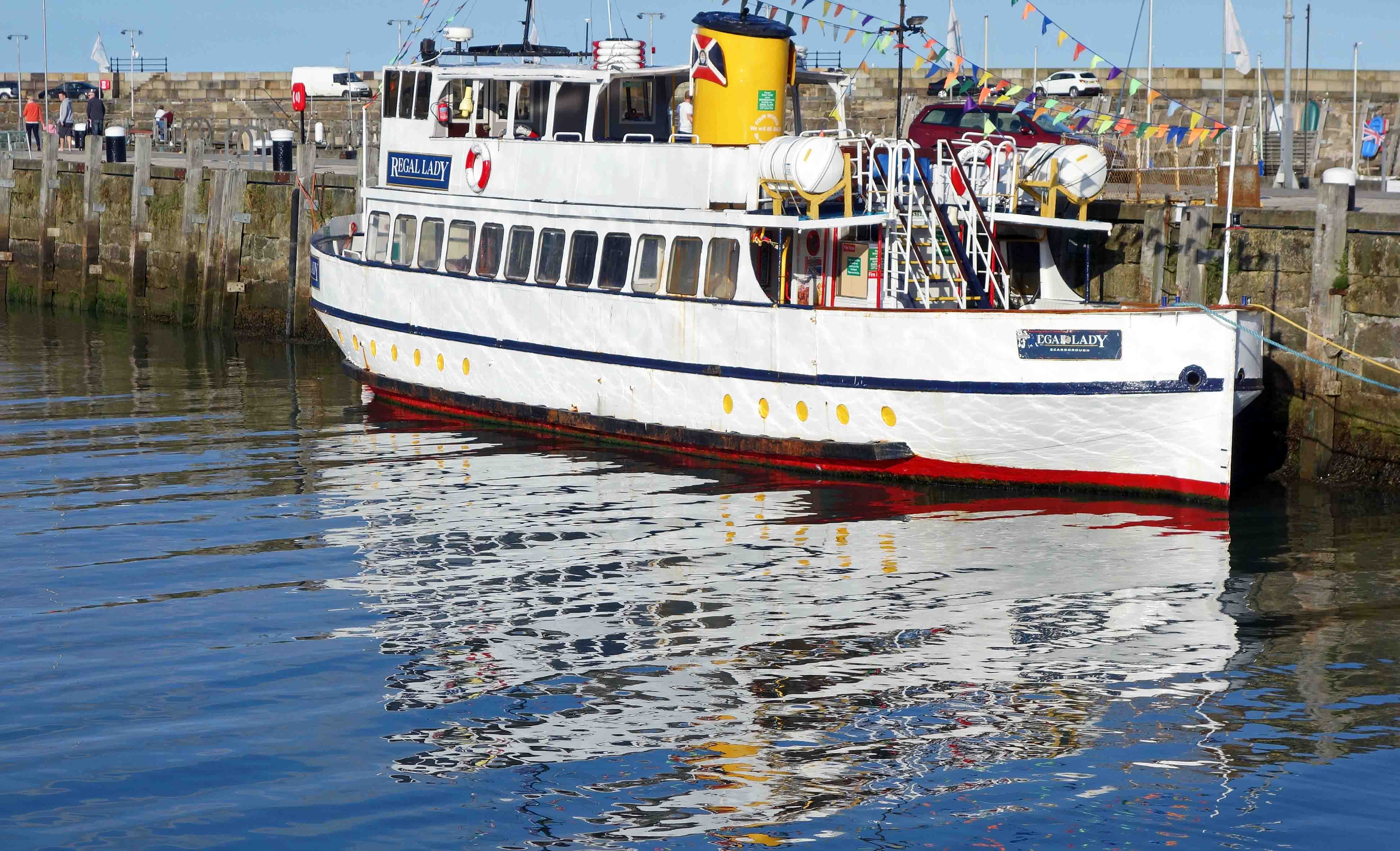
If there is an art to this process, it is choosing the right sort of reflection – which is fairly easy! – and then selecting an area which seems to offer something pleasing to the eye. This is highly subjective of course, and to some extent, a matter of personal preference. Some people like abstract images more than others.
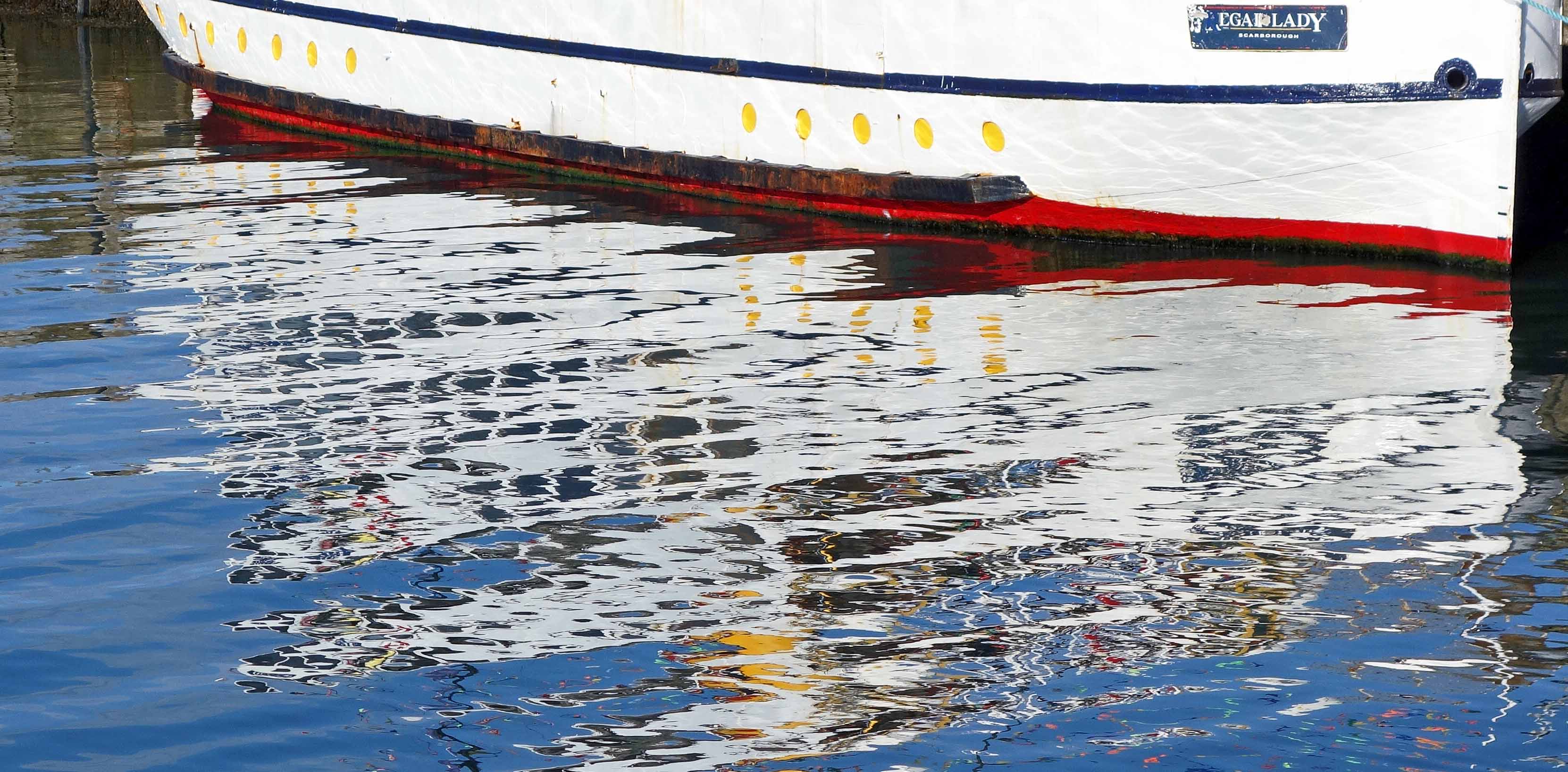
Sometimes, I think it is preferable not to crop too much. To leave quite a lot of the object which is being reflected, i.e. the boat, in the picture. To some extent it depends on how attractive they are in their own right.

Some objects are not particularly interesting or attractive in their own right, but are very interesting when broken up in the reflection. I think this applies to the yellow davit in the following picture. I focussed only on the reflection, which because of the interesting shape and bright colour, is interesting by itself. Well at least to me!
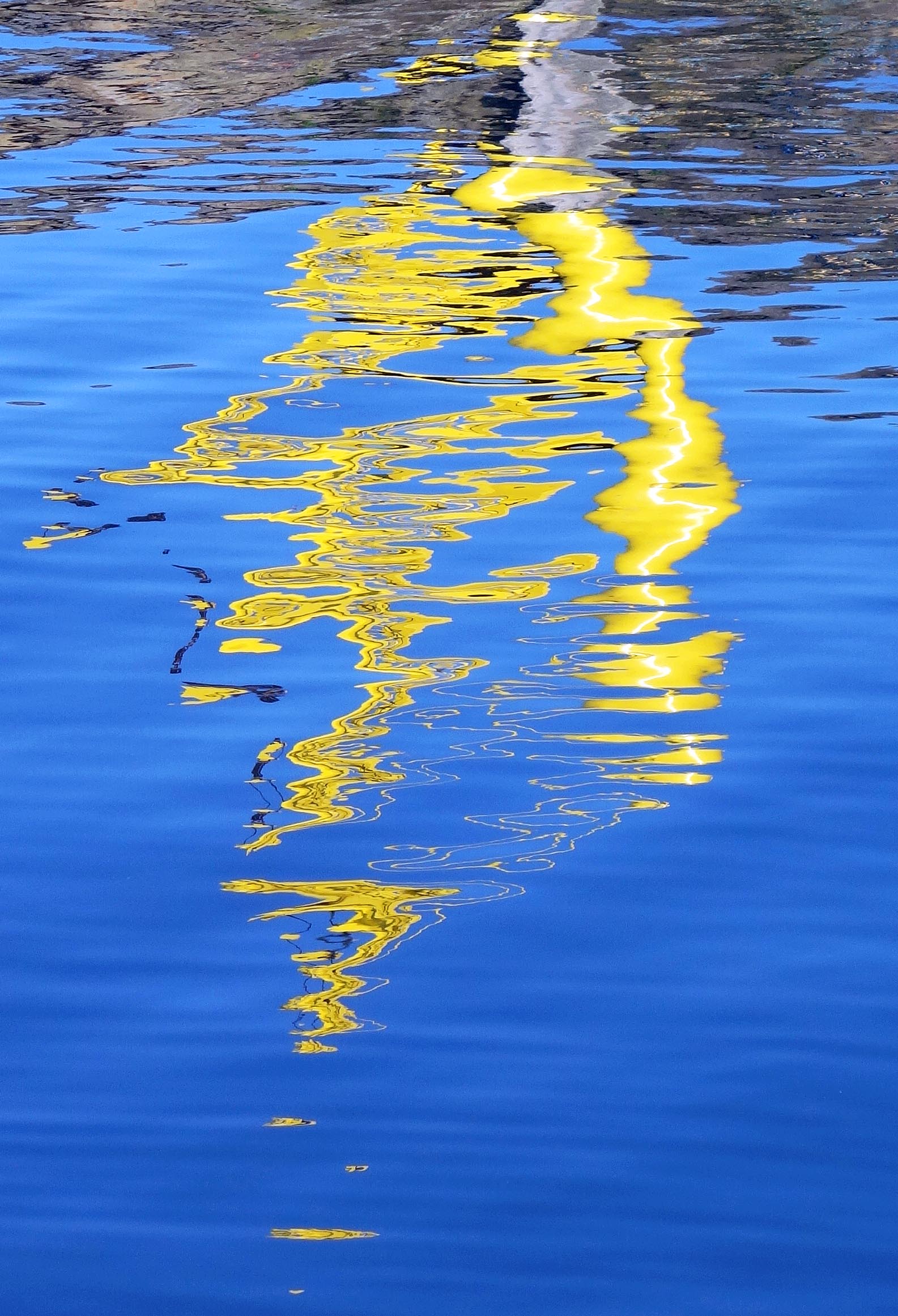
Reflections are best when the water is calm and smooth, but moving just enough to break up the outlines. They are of course, ever changing, and it can be interesting to take repeated images of the same spot and record the changing reflection. Ripples can however, offer a different perspective, breaking up the colours and shapes into much smaller, rounded shapes, as below.
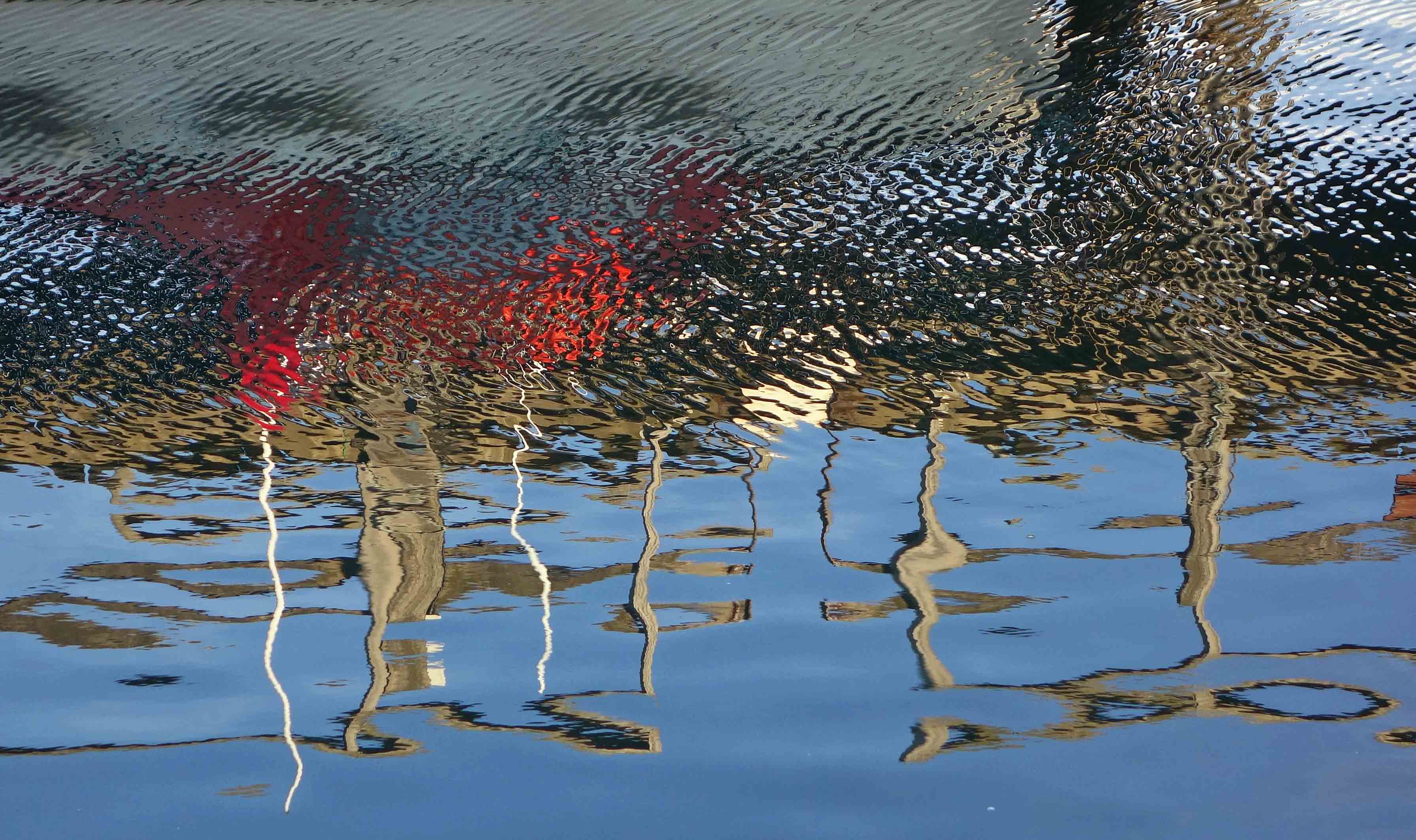
My own preference is for highly abstract, severely cropped images of reflections; there are endless possibilities. But these are not to everyone’s taste, and it needs a certain quality of original image to produce good outlines when cropped. There is scope for cropping even further in the following two photographs.
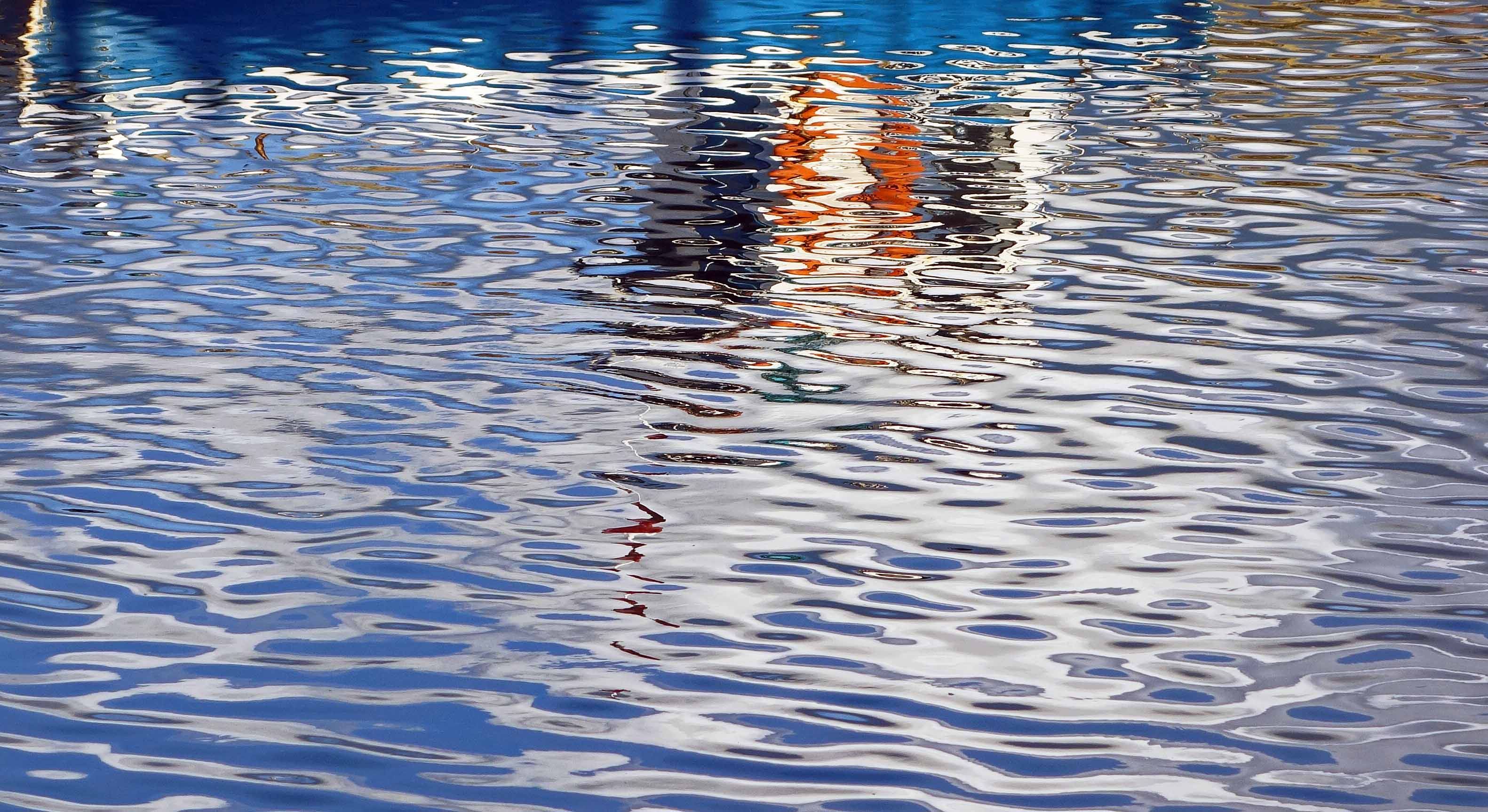
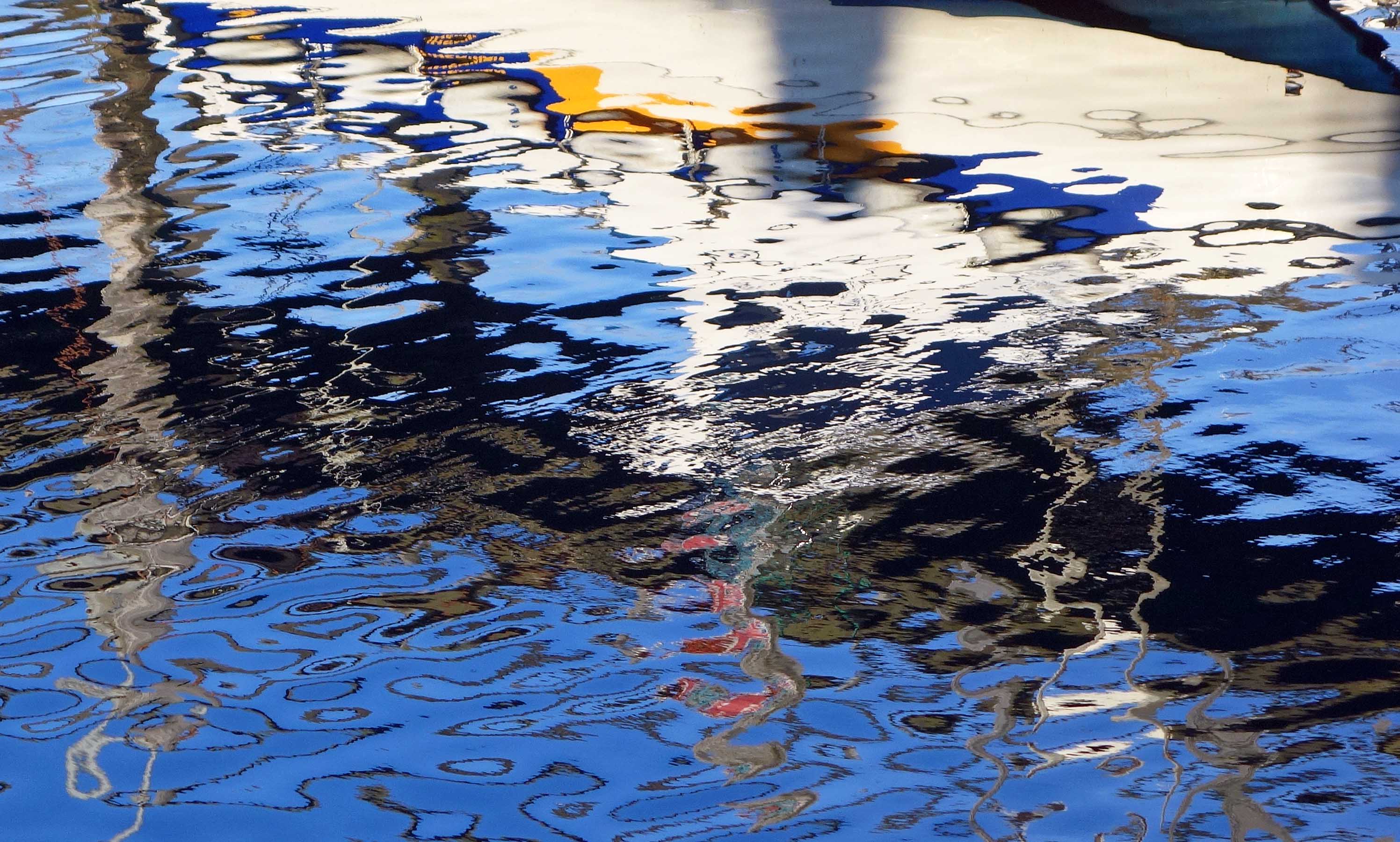
When I first started taking photographs of reflections and sampling from them, I was blown away at the possibilities for producing abstract images and cropped them severely. I now think that such reflections work best at an intermediate scale, cropped and selected, but not too much, so that the original photograph is still not too altered. It puts more emphasis on trying to get the image right ‘in camera’ as it were, and not over-processing them afterwards, great fun though it is! The image shown below is an example of a photograph that was cropped, but not too heavily, and I think it works well because the original choice of what to photograph worked out well. It also depends on what sort of lens you have. There is always an element of luck in getting a good image, but perseverance and practice pay off! Personally, I think there is an awful lot of luck in photography, but if you do it often enough, you get lucky!
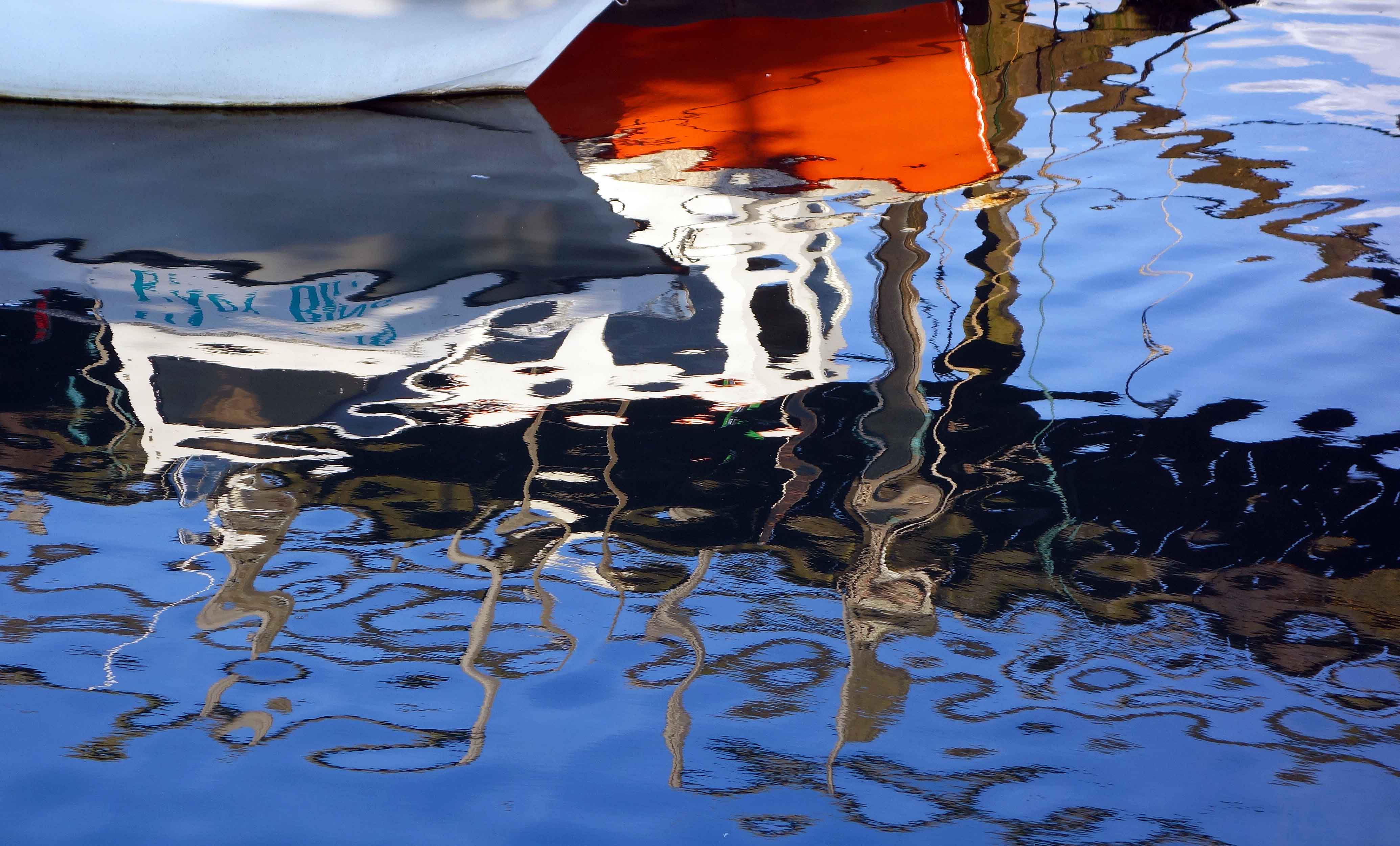
The approach, of getting it right ‘in camera’ applies to all sorts of photography; I know it is Steve McCurry’s dictum, when taking portraits, and he is about as good as it gets (1). But sampling from images is another sort of art, of sorts, and there is scope for a lot of post-processing if that is what you enjoy. It is always good to get some feedback on such images, and putting them on National Geographic My Photos, for example, is a good way of discovering if other people like your choices (2).

All of these images were taken with a small compact camera (Sony RX).
1. http://stevemccurry.com/blog/reflections-portraiture
2. http://yourshot.nationalgeographic.com/profile/237466/

 Ray Cannon's travel and photography blog
Leave a reply to Patterns: ancient and modern – Ray Cannon's travel blog Cancel reply