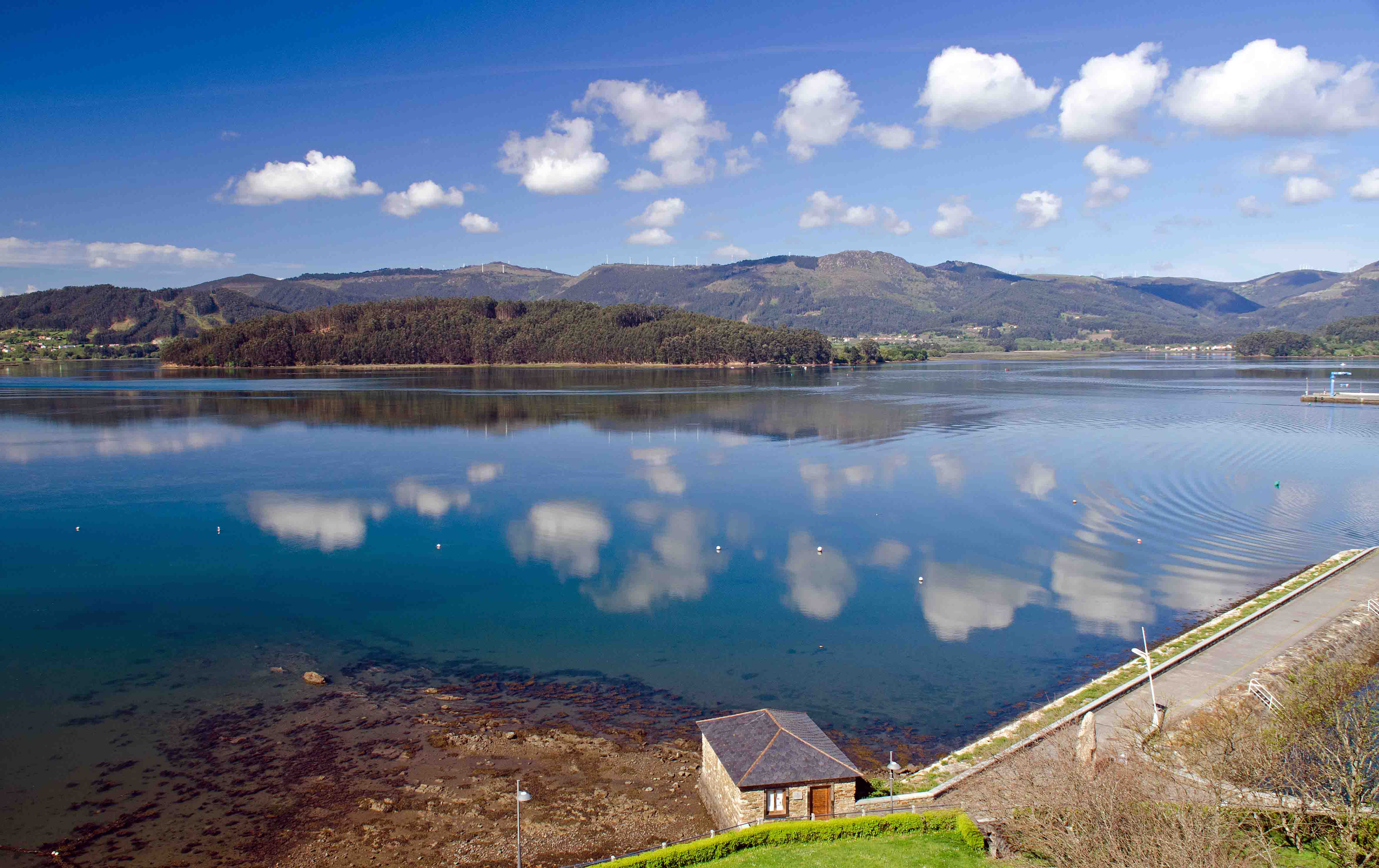
Polarising filters are easy to screw onto a lens, and if used with care, add a whole new dimension to your photography. In particular they darken blue skies and alter the tone and translucency of water as well. I fitted a 77mm polarising filter onto the front of my two favourite Nikon lenses (17-55mm f2.8 and 70-200 f2.8) and had some fun taking images during a visit to Galicia, Spain. On the wide-angle lens, the polariser really enhanced the colour of both the sky and the water in the above photograph. It really emphasised the reflections of the little white clouds. You can of course vary the extent of the polarising effect, by rotating the lens, and the choice of how much polarisation to create is really a matter of choice.
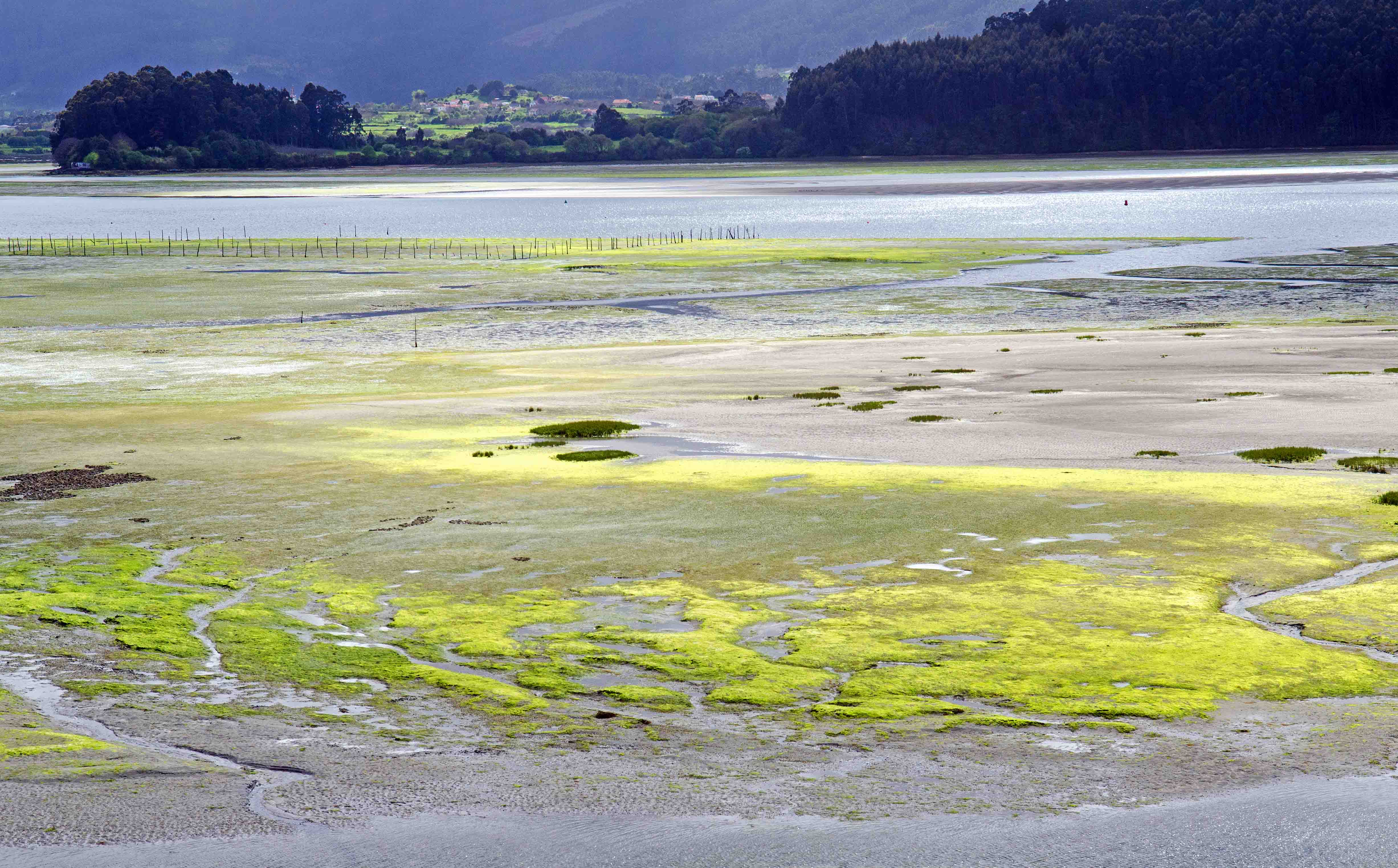
Another effect of a polariser is to increase the colour saturation and enhance the green colours in a photograph. I think I managed to this in the above photograph, – using the 70-200mm lens – where the green vegetation on the mud banks at low tide, is nicely saturated. A polarising filter will decreasing the amount of light passing through the lens – by up to two f-stops I understand – but the light meter of a modern camera will evaluate the light passing through the lens and adjust the exposure accordingly. Nevertheless, a polarising filter works best I think in bright light.
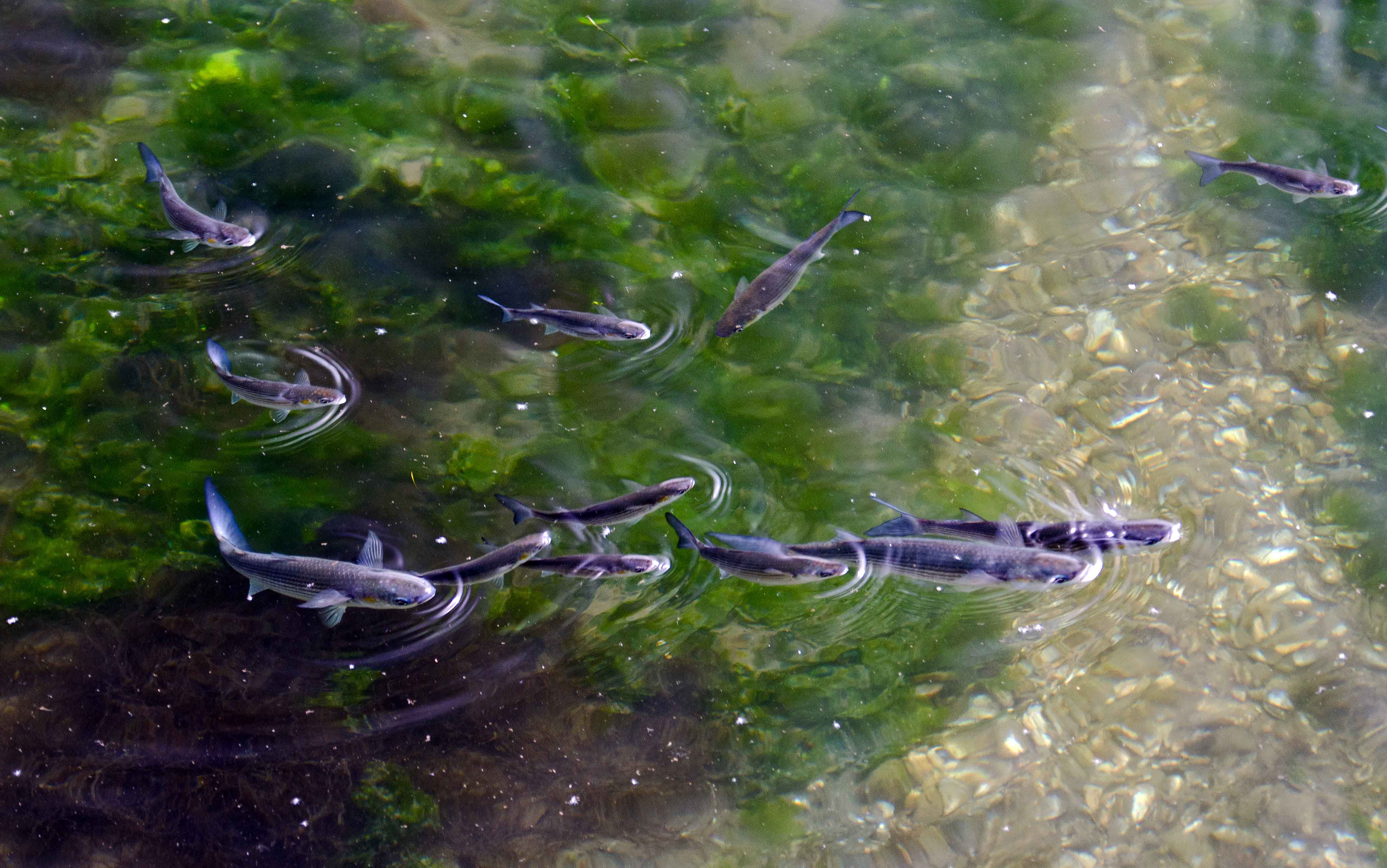
One area where a polarising filter really comes into its own, is when looking down through water. The filter really worked well in cutting down on reflections producing more transparency into the water, when used on the 70-200mm to capture these fish swimming in the Ria. All of these images were taken around the town of Santa Marta de Ortigueira, which is located at the head of the Ria Ortigueira, Galicia, Spain. A Ria is a coastal inlet, or drowned river valley that leads into the sea, and there are many beautiful Rias in NW Spain.
 Ray Cannon's travel and photography blog
Leave a reply to Pick up a polariser! | Ray Cannon's nature notes Cancel reply